

Publisher: Namco-Bandai Games
Developer: Tri-Crescendo
Release Date: 9/17/2007
Available On


I don’t know how else to put this, but Eternal Sonata is probably one of the best (if not THE best) RPGs of this generation (yes, next-gen is now this gen; it’s been almost four years now, C’mon). The best part about Eternal Sonata is the graphics, story, music, and unique battle system.
To make this as easy as possible to understand, I’ll start with the story. ES does something different that I’ve never seen in a game before, and that uses a fictitious story with something that’s nonfiction. ES is about the famous pianist Chopin from the early 1800s. ES follows the life of Chopin when he was struck with tuberculosis and left Warsaw, Poland, due to the war with Austria at the time. While the real Chopin is sick in bed, you enter into his mind and into the world that he created while trying to recover. Chopin is now Frederic, and you run into several unique and lovable characters while trying to defeat the evil Count Waltz. Forte Castle (where Waltz lies) is supposed to represent Austria, and Chopin wants to go back and defeat the evil leader so he can go home. The reason why Chopin runs into these colorful characters is that they all have separate reasons to see the count (I won’t explain why due to spoilers). After you beat each chapter, stills of Europe will play, as well as a piece of Chopin’s music and pieces of his life will be told. Everything flows and ties in perfectly, and it makes it one of my favorite RPG stories of all time.

Now I’m going to go right into the battle system, with this being the meat of the game. ES doesn’t have a random battle system (thank God!) since I think we’re finally beyond that. Every enemy you see is in real-time, and you can avoid them if you want (like in numerous other RPGs). Instead of having magic, ability points, and some sort of super attack, ES does away with all that. You have a battle counter that lets you decide what you need to do. After this runs out, your action counter (about 5 seconds) counts down when you start moving, and you use the A button to attack with your main weapon. Magic, Special Abilities, or whatever you want to call them, are on your Y button, and you can use them as many times as you want throughout your turn. So, if you attack until your turn is just about up and then hit the Y button, you can do some devastating damage. Of course, you have items that heal, poison, and revive KOs, and there are tons of them, but there’s nothing special about these that you haven’t seen before. When it comes to guarding, you have a “chance” button (B), and if you hit the button when it appears on screen, you will block the enemy’s attack, greatly reducing the damage by about 90%. Sometimes the button will stay longer than other times, but it’s all about timing, and this helps keep the action up.
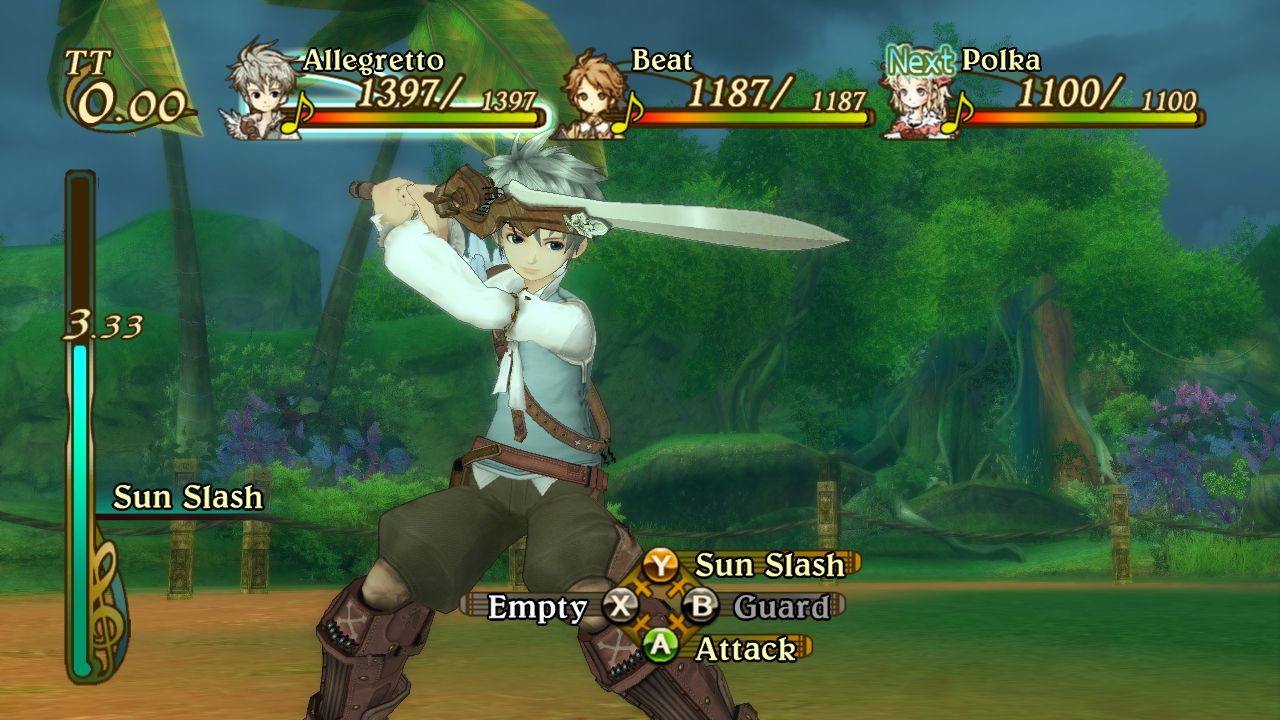
When you get your party leveled up, battle rules change from losing time on your counters to being able to chain special attacks to moving faster in battle. Every time you hit an enemy, you “queue” up power, and then when you use your special attack, it’s that much more powerful. Every character gets two abilities: light and dark. On the battlefield, you’ll see shadows and light areas; when you are in a dark area, you’ll use a dark attack, and when you are in a light area, you’ll use a light attack. This is really great and can help keep things mixed up. Watch out, though some enemies transform into stronger monsters when they are in the dark. The level design in this game can vary sometimes since some of it has labyrinthine dungeons that require a FAQ to even remotely understand how to navigate. A lot of these are partly due to puzzles that require a lot of backtracking that really gets under your skin. Now that the battle system is out of the way, let’s talk about production values.
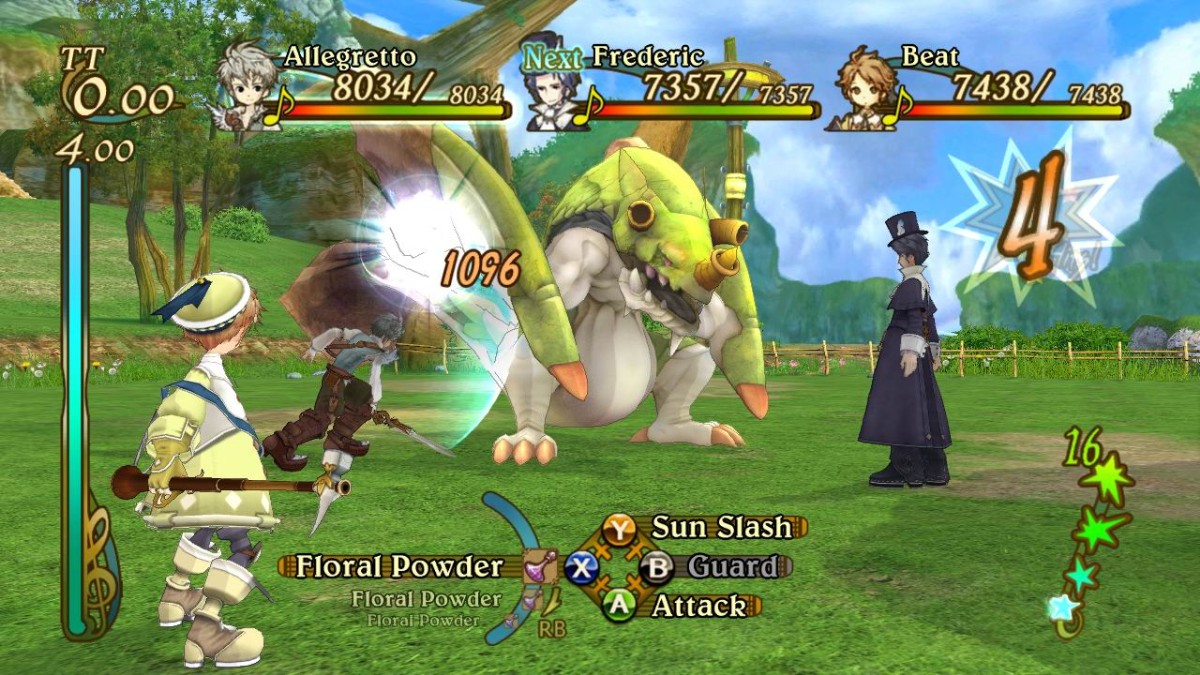
Eternal Sonata uses some outstanding music, especially when Chopin’s pieces are used. The graphics are just absolutely gorgeous, with bright color palettes and unique architecture I’ve never seen in a game before. Eternal Sonata is also one of the JRPGs that also includes Japanese voice acting, and I highly recommend this over the American voice actors. Just turn the English subtitles on, and you’re good to go since the Japanese voice actors fit the characters better and are just superb. The game is easier than most JRPGs, but maybe this is a good thing. Everyone wants a stupidly hard RPG that takes over 100 hours to beat, and that’s not always necessary.
Eternal Sonata will take you 20–30 hours to beat, depending on your play style, and even has a “game finished” save so you can go back from the beginning at whatever level you finished. It’s sad to know Eternal Sonata got great reviews but had poor sales, so I hope you pick this up and experience the best RPGs of all time.

Reviewed On


 thebinarymessiah.com
Try multiplayer. A lot of fun !