Patchwork Heroes is one of those strange, quirky games that makes you really appreciate indie games. Heroes are all about strategy and are less puzzle-like, and I liked this a lot. You play as a team of kids who are hell-bent on destroying airships and scrapping them for parts. There’s really no story involved, but the cutscenes break up the levels nicely.
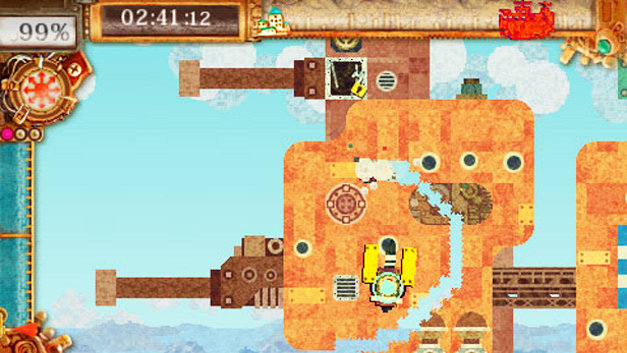
The main mechanic of the game is sawing parts off a 2D ship. Each ship is measured in feet at the beginning of the stage, and your goal is to cut it all off. There are obstacles on the ship, such as enemies and even prisons, that have your friends trapped. If you break them out, you can use them as bombs to blow up parts of the ship that can’t be cut by your saw, such as metal. Some enemies can patch up what you cut, so you have to distract them by cutting an area that’s not near your target and watching them fall.
You can find power-ups that let you move faster, slow downtime, etc. Once you saw off enough pieces, you can get a special power that will let you continually see up to a certain amount of time without stopping. After you sawed off almost the entire ship, you had to avoid the self-destructing bombs and saw off one final piece. While all this sounds easy, it’s kind of fun at the same time. The graphics are really charming, and the 2Dness of them brings the whole game to life.
I honestly think this is one of the best sleeper handheld hits of the year. It should have gone multi-platform on the DS and iPhone and would have done better on touch screens. Nevertheless, Patchwork Heroes is a great game to pass the time and shouldn’t be passed up.
The echo series is a very cerebral puzzle series that really is not for everyone, and echoshift is no exception. The game just makes you really think and screws with your perspective in a way that requires a lot of trial and error, and mainly memorization.
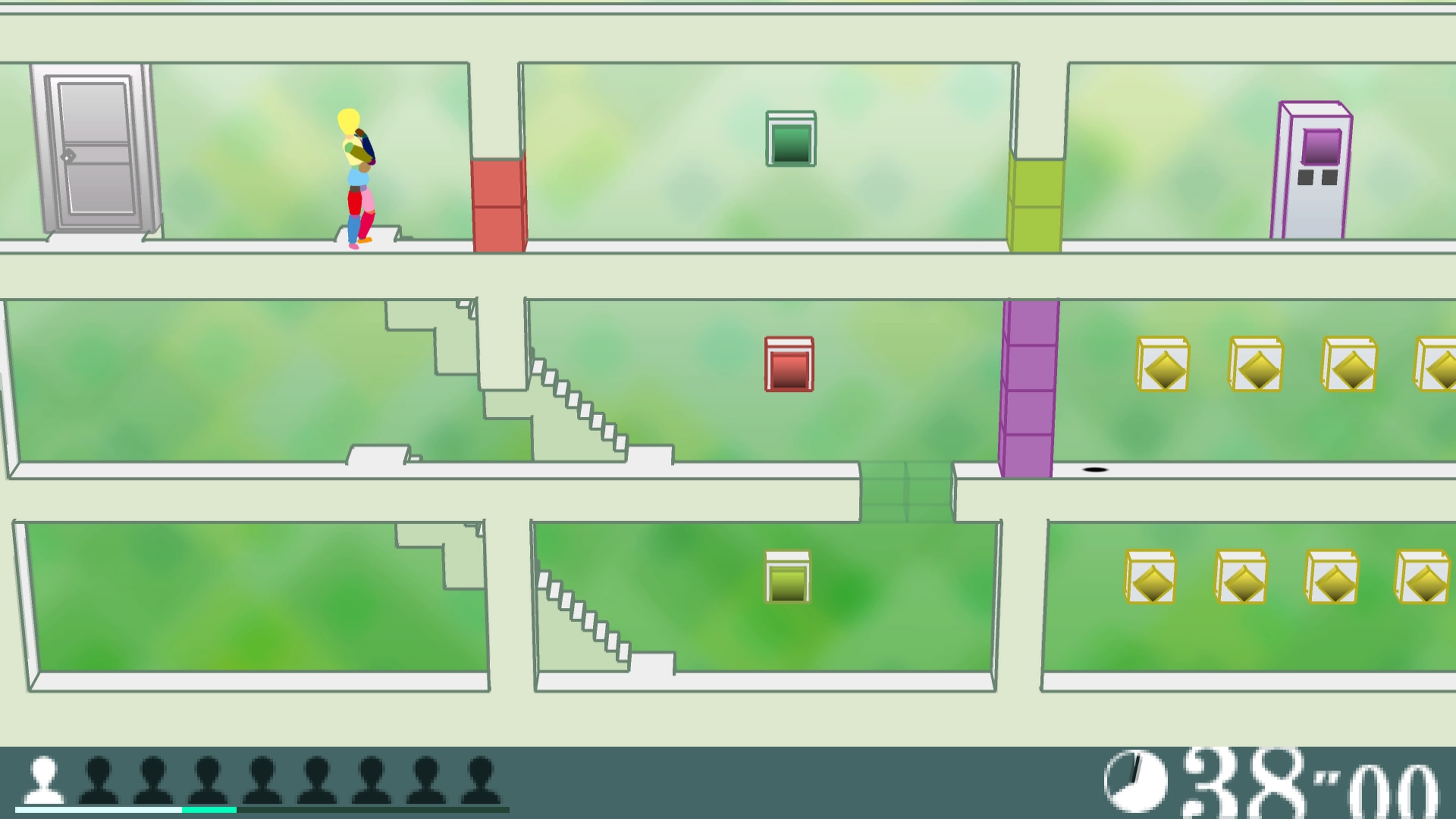
echoshift lets you directly control your echo, but this game uses a time mechanic instead of perspective. Every level is a 2D side view, and you are mainly pressing switches, walking through doors, and basically trying to find the fastest route to the exit. You get 50 seconds for your first echo to try and clear the way. Then your echo will do what you just did. This is the key element in echoshift to solve puzzles, since you can’t always solve them in 50 seconds.
Let’s say you have five sets of switches, but you can only do three in 50 seconds. There are 5 blocks on each set, and only one is the right switch. You would have your first echo solve three, then while that echo redoes what you did, you go solve the third (the final switch your last echo will press), and then you solve the last two. Confused? I don’t blame you since it takes a lot of critical thinking to get these 50 or so levels solved. You get rated on how many echos you had to use, and if you beat the level, you can go back and solve the version to find the key, which really has no purpose.
The graphics are very simple, just black and white, and all the items you interact with are in color. The game is also very slow-paced, so only the patient will find any fun in this game. Echoshift is one of those rare puzzle games that makes you think so much that your brain will explode, and I can’t stress this enough. There were times when I was too tired to think to play this game, but it gets the thinking juices flowing and can be a good exercise to get into the flow of school or any office work.
Awww, good ‘ol GTA on the PSP once again. We had two great outings so far with Liberty City Stories and Vice City Stories, which were your standard traditional GTA games that were executed almost flawlessly. Chinatown Wars is a great treat because it is not a “mini” version of past console GTA games but the first top-down GTA game since GTA 2, but this time it doesn’t suck.
There are a lot of new elements in Wars, but we’ll get to that eventually. You play as a Chinese guy (instead of all those Italians and that one black guy…) named Huang, who is supposed to deliver a sword to his dead dad’s boss so his uncle can become the new leader of the triad. It turns out the sword gets stolen, and you are on a wild goose chase to find it. Like previous GTA games, this one’s story has great plot twists all the way to the very last mission, and it will keep you playing for hours. Since this is a port from the DS, there is no voice acting but drawn panels with written dialogue, which is just fine for this type of game.
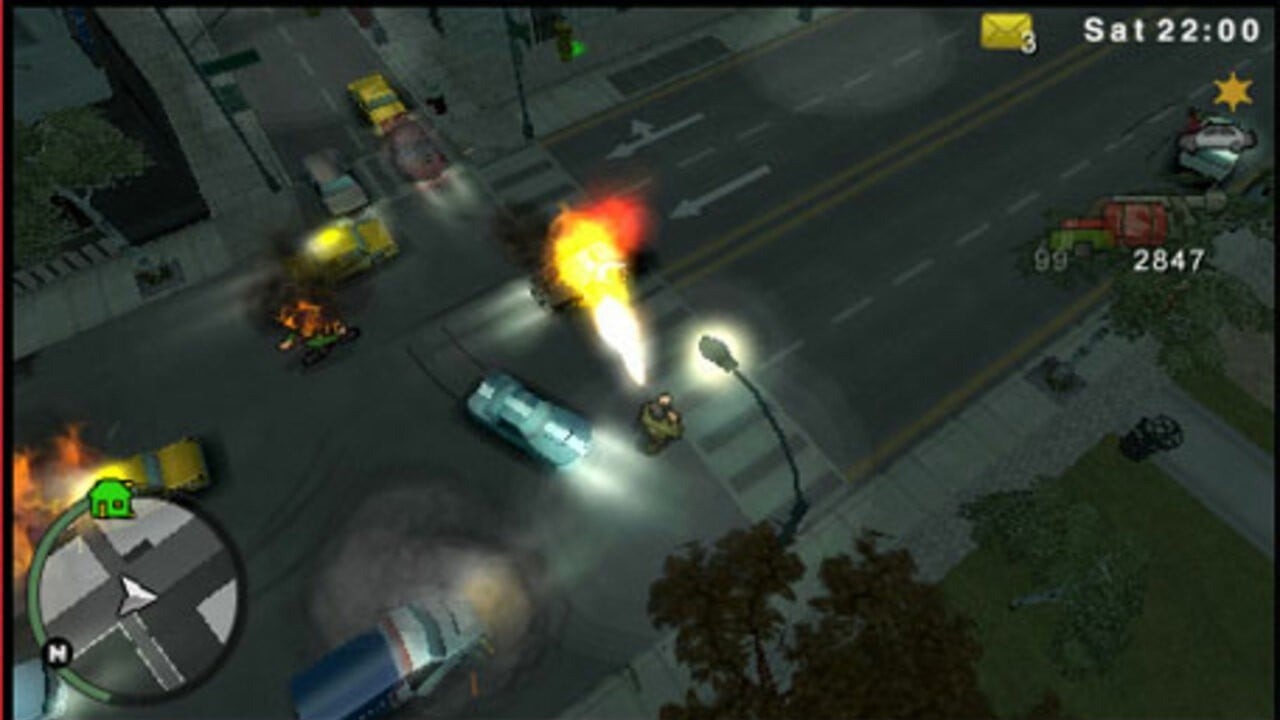
If you’re thinking top-down GTA hinders gameplay, you’re dead wrong. The controls are so smooth and easy to use. Unfortunately, lock-on targeting is still an issue, but everything you love in a GTA game is here plus some. You can sprint, jump, shoot, and toss grenades all in you’re criminally intent glory. Controlling the cars in this game is sweet and smooth (unlike GTA 4), and they turn without a fuss. You can shoot from your car or pretty much anywhere.
The GPS system is similar to GTA4‘s, with lines telling you the best route to your destination, and using cabs can get you there faster. One thing that you can’t do, however, is use cabs during a mission, so you are forced to drive yourself, which is fine. Missions vary from escorting to shooting people up to blowing things up, and so on, just like in other GTA games. Wars have a great variety of missions, from using boats to homing in on wireless signals, so you never feel bored.
One disappointment is that you don’t get your huge income from completing missions. You get it from dealing drugs. Yeah, it’s a new element, and not one that’s warmly welcomed. You can deal with anything from weed to heroin to coke, but you have found these dealers through tip-offs you receive in your email. Sometimes you even get rewarded with drugs on missions instead of cash, and lots of times nothing at all. You’re going to need lots of green if you want weapons, especially through the express order from your phone feature. Having it delivered can be a bit tedious, but it works. You can also hijack certain vans for drugs and ammo if you’re low on cash as well.
One of the most noticeable additions are the minigames that were carried over from the DS. Anywhere from attaching a bomb to opening a panel in a car to rummaging through trash for guns to assembling a sniper rifle, there are some pretty fun and interesting mini-games. These don’t hinder gameplay but make you feel more involved in minute details, which have always been missing in previous GTA games. Another great addition is how you shake off cops. You get your wanted level, then underneath are icons of cop cars, and if you make them crash hard, they disappear, and it lowers your wanted level. Each level adds a car, so getting 15 cars to crash can take a long time.
The game also looks amazing and has a cell-shaded style in terms of graphics, but the game is still full of life. This is probably one of the best-looking PSP games out right now, and this includes no load times. Chinatown Wars is superior to the DS version and may also be a reason to buy a PSP if you haven’t already. The game is short for GTA standards, so if you just do the main missions, you can beat the game in less than 10 hours.
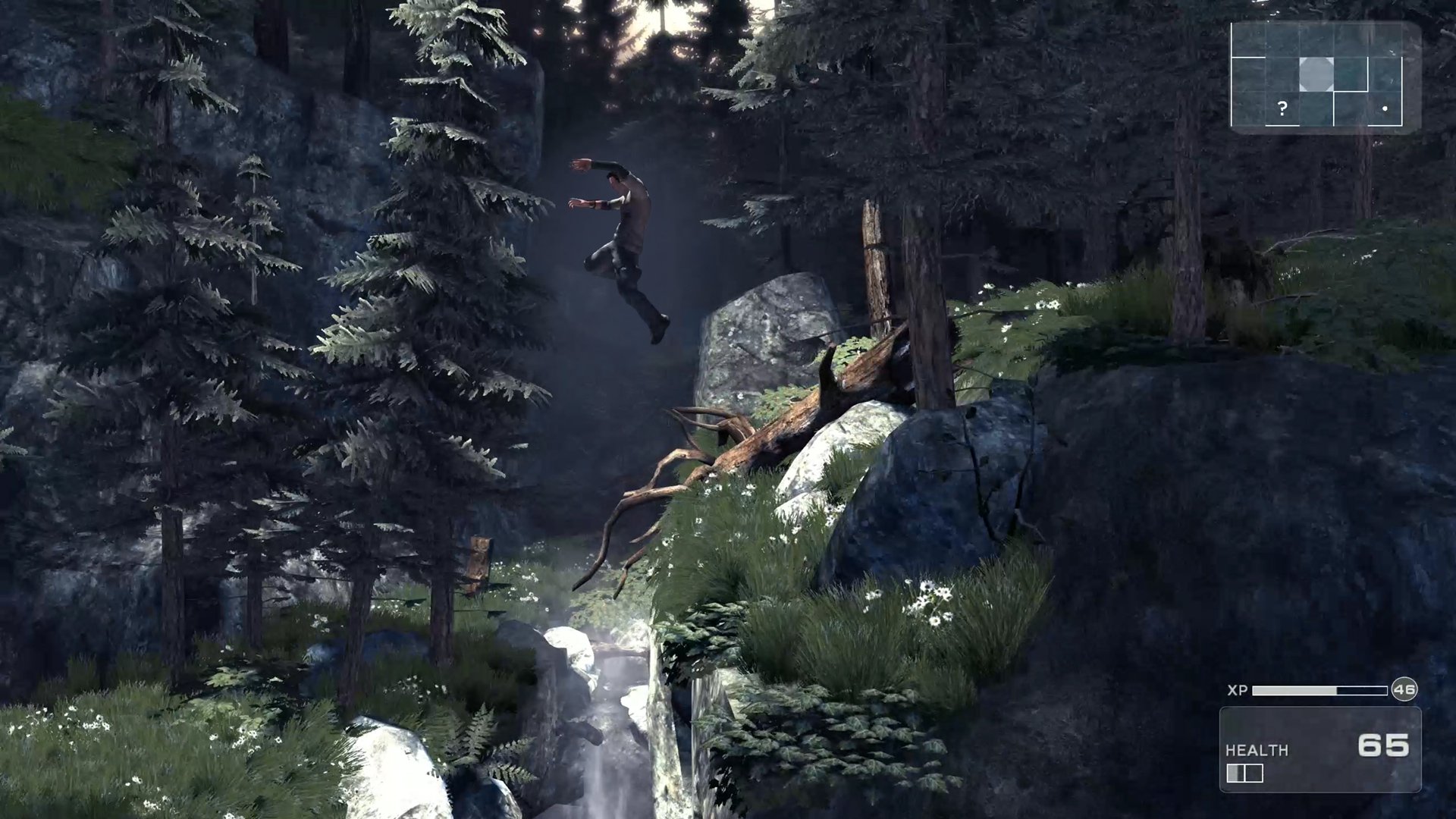
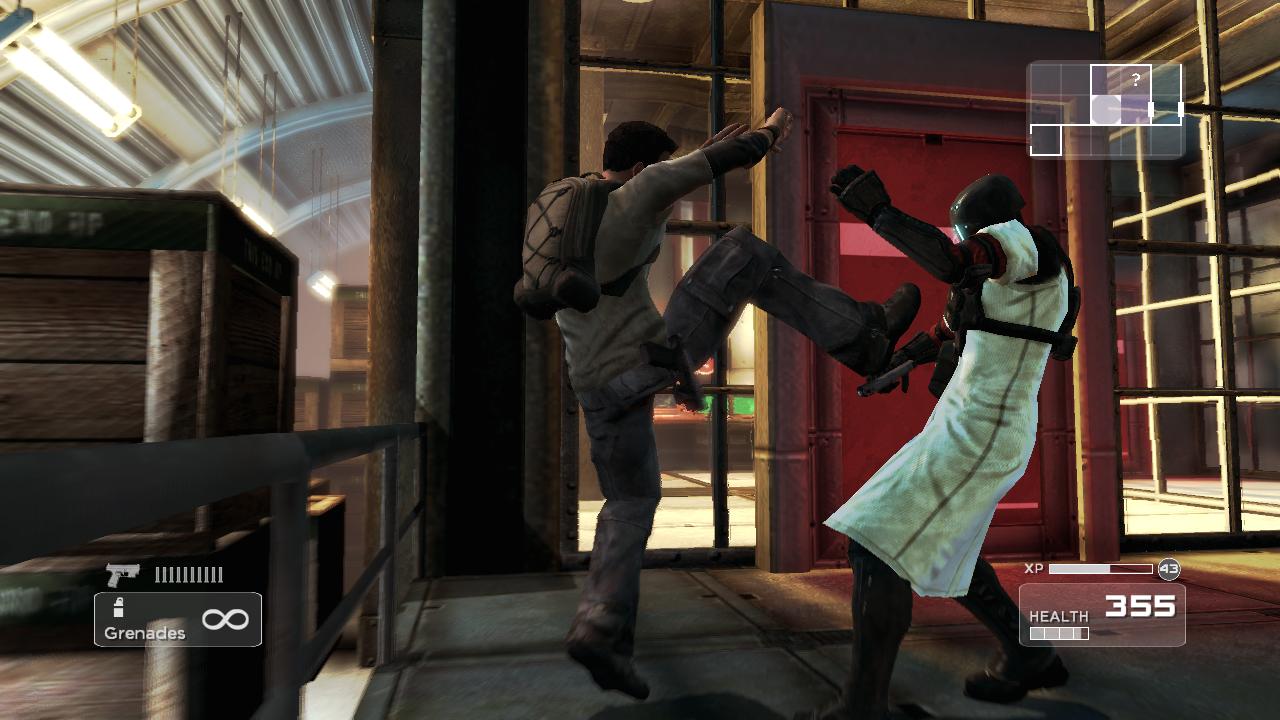
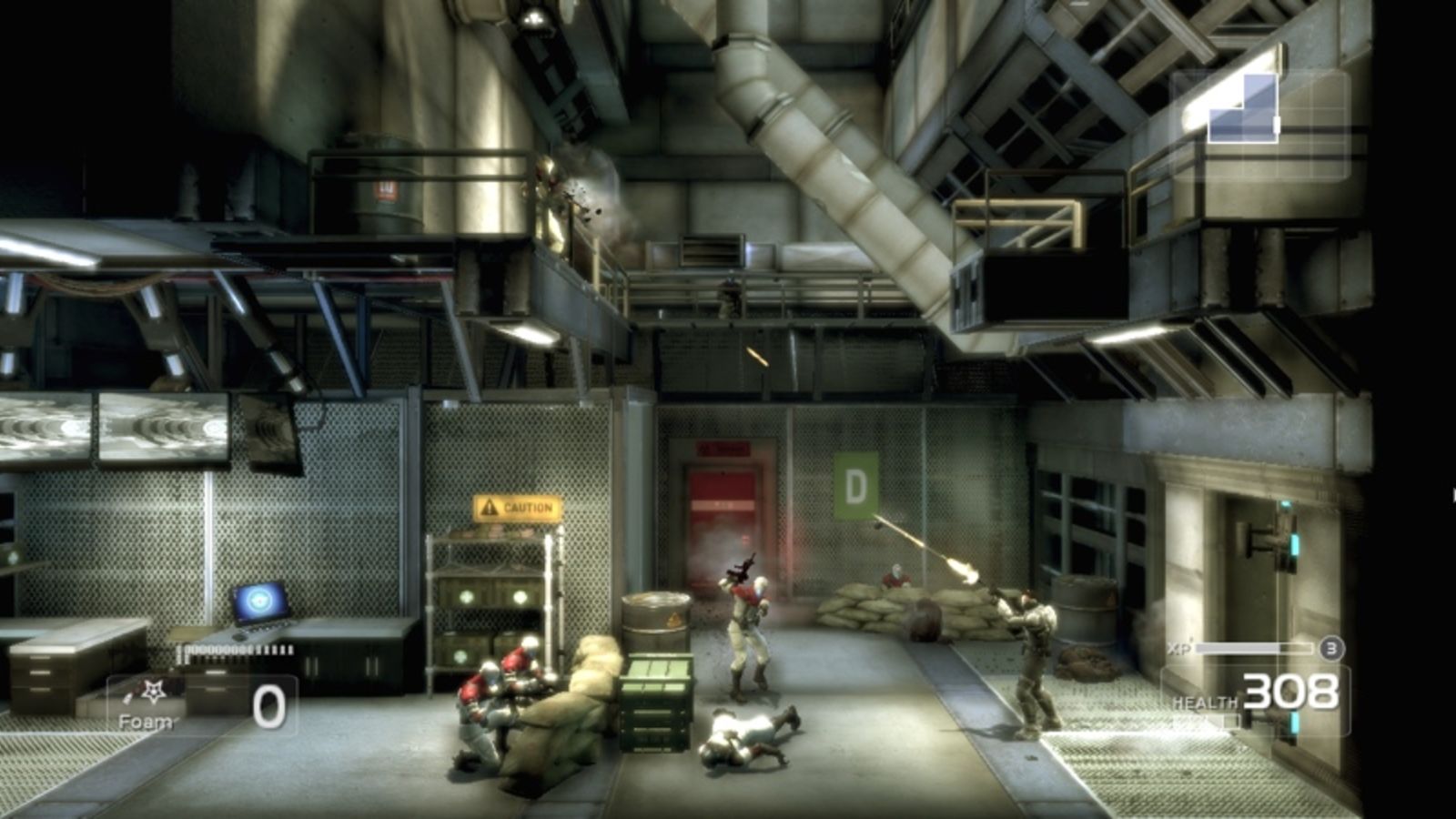
Finally, a really good XBLA game is finally out after waiting for what seemed like forever. Most people have dubbed Shadow Complex a cross between Metroid, Contra, and Castlevania, but that isn’t true at all. Shadow Complex has its own unique take on the Metroid formula but perfects it. Yeah, I said it. Metroid gets very tiresome with the same upgrades in every game, the same labyrinthine levels, and a not-so-interesting story. Sure, Samus is hot, but that doesn’t make Metroid feel the same with every iteration. Shadow Complex has a not-so-complex story where you, Jason Flemming (yeah, some name for a hero), go out hiking with your new girlfriend when suddenly strange soldiers attack. They are a group called the Progressive Restoration and hope to change the world with the mind of some freaking weird. While the story isn’t anything special, it’s the gameplay that is.
The game, first off, uses a flashlight system that is very interesting. Different blockades can only be destroyed with different weapons, i.e., orange is bullets, red is missiles, purple is the foam gun, green is grenades, etc. Some parts of the levels will really stump you unless you whip out your trusty torch and shit it around the room. Forget what color is for what weapon? No problem since you can pause the game and look it up in the weapon description screen. Speaking of weapons, Shadow Complex has some great ones. My personal favorite is the foam gun, which allows you to stun enemies and get behind them or over them. Slowly throughout the game, you will also upgrade your machine gun to an eventual killer shotgun during the last part of the game. The game also shows some pretty cool enemies with giant mechs you have to fight, but the regular soldiers tend to be pretty generic.
When it comes to level design, the game does kind of copy Metroid with the squared-off map system, but it’s better. When you pause the game, you get a blue line that shows you where to go, and all you have to do is follow the squares and figure out how to get through each room. Not only are there weapons to get, but upgrades for your armor are also needed to get through levels. You get a jetpack, super boots (as I like to call them), and a dampener that allows you to run at super speed. These upgrades are fun to use and essential to getting through the game.
The puzzles in the game are really not that hard to figure out since most of the game relies on destroying parts of the environment with your weapons and finding them with your flashlight. Sure, you have levels to pull, crawling through ducts, and riding elevators, but it’s nothing that’ll make you scratch your head. I do need to mention the shooting mechanics, however, since you rotate your stick in a 360-degree manner and just point in the direction of an enemy (foreground or background), which is kind of weird at first, but you will get used to it.
When it comes to a show-stopping graphical showcase, Shadow Complex has it using Unreal Engine 3. Should I say more? It’s better to run around in a 2/3D world than to hop on a turret and shoot in full 3D. Shadow Complex is also the biggest XBLA game, coming in at almost 900 MB. The audio is great, with good voice acting and great sound and music. I highly recommend this game to platform fans, shooter fans, and anyone looking for a well-spent $15. If you get bored with the single-player game, go into the Challenge Grounds and test your skills against many challenges.
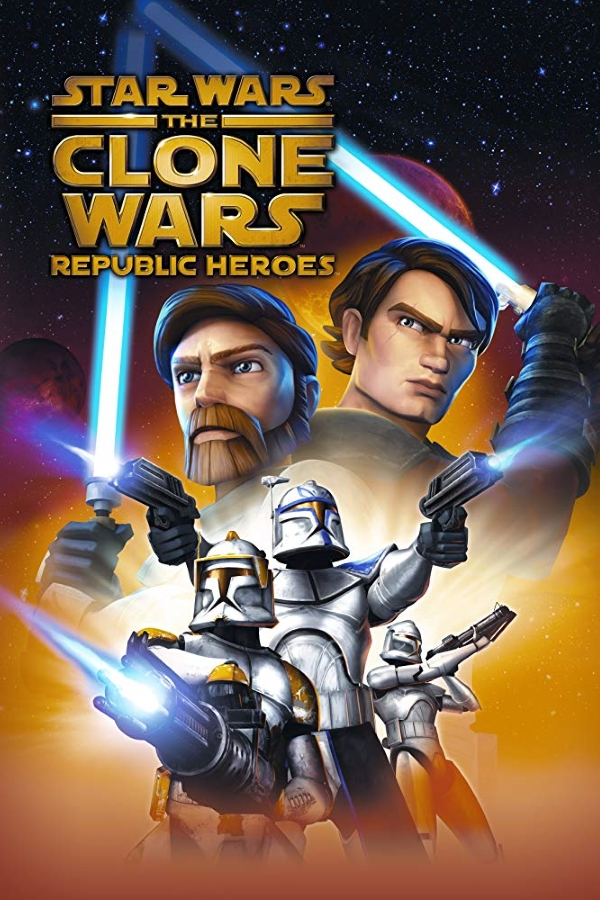
The new Star Wars: The Clone Wars series is a cartoon/CGI spin-off of the Clone Wars era of Star Wars, complete with 20’s Anakin. While the cartoon series is something to be desired, the game is the same way. The story is about, well, the Clone Wars, and, um, yeah, you know, I know nothing about the cartoon series except the fact that I did watch the Clone Wars cartoon movie. I don’t know what the big deal was since it was mediocre at best with a strange art style, but enough of that. The best part about Republic Heroes is the co-op and the fact that you play as many Star Wars heroes as possible. You start out playing as Anakin and Snips, while branching off and playing as Republic soldiers, Obi-Wan, and even Aayla Secura (hot). The bad part is they all play the same game using mindless saber hacking (mash square forever), force pushing, and jumping. You can build a combo bar that lets you increase your saber throw power, but it’s no big deal. Playing as soldiers lets you shoot and toss grenades and shoot rocket launchers, but it’s all pretty much the same.
You can “Droid Jack,” which I found completely useless since you can’t move these droids when they are jacked; all you can do is use their “ability” while staying still. This varies by Droid since some can shoot, some stomp, etc. The levels tend to be pretty short, lasting about 10–15 minutes each, but I haven’t gotten to the thing that kills the game. It’s the jumping. Yes, since the game has pretty nicely large environments, the game stays linear with platforms that have that “sticky” jumping thing going on where you jump and then stick to it. The camera is what kills this, in turn, since the camera is so far back that the characters look almost like ants on-screen, and judging jumps is really hard this way.
Not only is Droid hacking useless, but upgrades are as well. You pick up blue orbs that you experience, but you lose them when you start a new level. How can you collect enough orbs in 10–15 minutes for the more powerful attacks? Beats me. You really don’t need them anyway since I played 3/4 of the way through without any upgrades, and that goes to show how easy this game is. I mean, you can’t even die in this game because you get a checkpoint every five seconds and you can just respawn there, so I found a life bar pointless. All enemies have around the same health, and this includes destroyer droids all the way to battle droids and beyond. All your Clone Wars enemies are in here, but seriously, it’s not much variety. You do rarely get a fun vehicle driving section, but they are so short and so rare that you wish, “I want another one of those.”.
Co-op is what really brings the game to life, since your AI-controlled buddy is retarded. Each person can take separate paths, but you really have to work together to get all the orbs and artifacts, but that’s if you don’t beat each other up over the bad platforming and terrible camera. Yeah, the graphics are decent and the audio is good, but that doesn’t save this mediocre Star Wars game from the bargain bin.
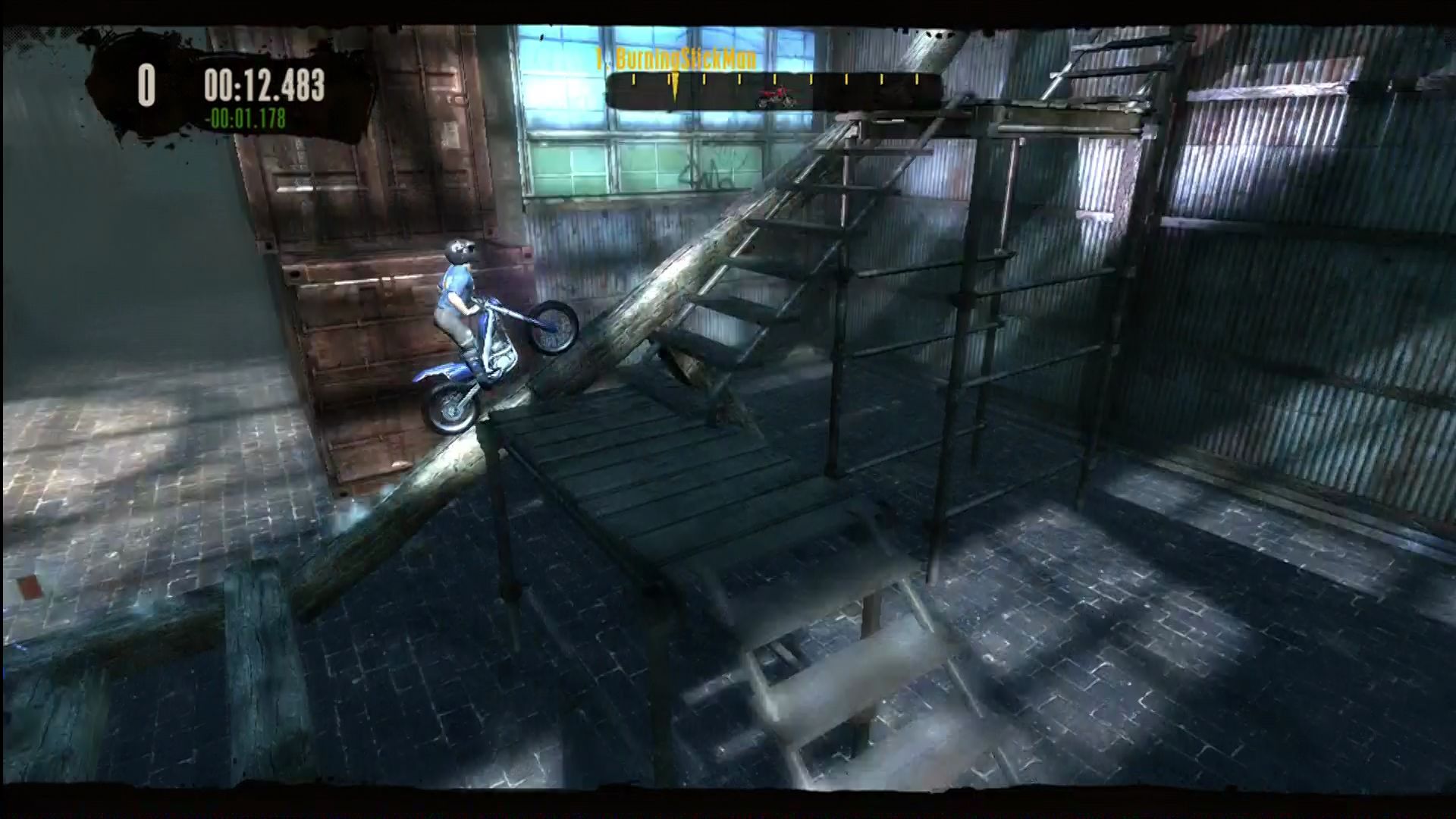
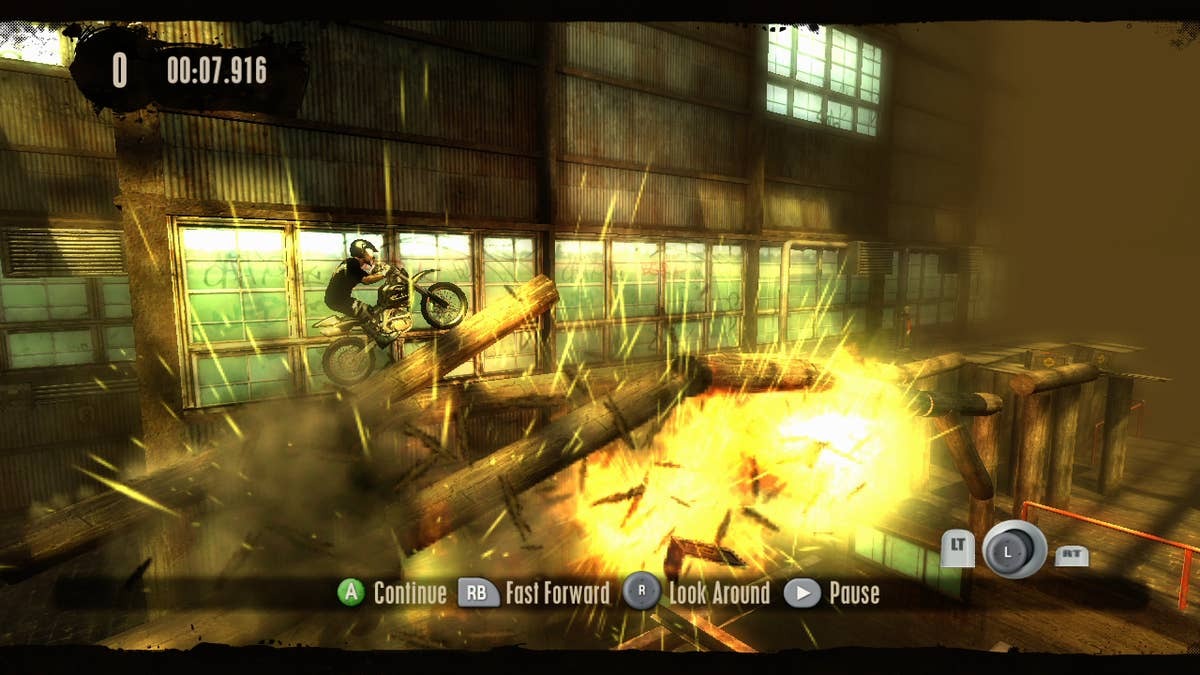
Trials HD is a game that PC gamers will recognize thanks to the amazing (yet buggy) Steam. Trials HD is very simple but hard to master, and it is a motocross physics game. The basic goal is to get from one end to the other using physics and the environment around you, and to also make the best time.
Trials start out with a simple tutorial to get you familiar with the controls, and they are easy but hard to master. You use the weight of your body by leaning back and forth to hit jumps just right. These jumps are crazy, with huge leaps, teeter-tottering beams, and even a super hard move to master that has you jumping off the ground over large pipes. The game is a 3D/2D side scroller, and the tracks are built out of junk such as wood, tires, cones, ropes—you name it. There are four different difficulties to master and three different medals for each track. The medals are based on a time limit, and these limits are fair, but there’s a catch. Yes, yes, I know. Just listen. You can retry as many times as you want, but to get the gold medal, you have to be perfect or screw up within the designated limit. Some tracks have a no-restart qualification, and the harder tracks will let you restart over ten times for a gold medal. Yeah, they get that tough. Most of the tracks you’ll be on for over an hour just mastering the tricky maneuvering, while some you can just blow through.
The physics engine is spot on, though, since the bike feels just right and you have complete control of where it goes. Later on, on the more difficult tracks, you will need to master the control of the bike. Throttle and weight distribution are the base elements of making your fastest time. If you just hold the throttle, you’ll fall backward, and if you brake too hard, you’ll fly forward.
There are also mini-games that help you with your skills, such as climbing, ball rolling (which is impossible), bumpers, and just flying off your bike and seeing how far your ragdoll man can go. Most of these mini-games are fun, but a select few are just a nightmare, especially getting the gold medal. Trials HD also looks great with HDR lighting, high-res textures, and the next-gen fix that you would expect out of a $15 arcade game. The money is well worth the investment thanks to the level editor, which allows you to make your own easy or god-awful track and upload it online. There’s not much else to say about this complicated yet simple game. If you love physics games, go for it; if you love racing, go for it; if you love retrying a lot, go ahead.
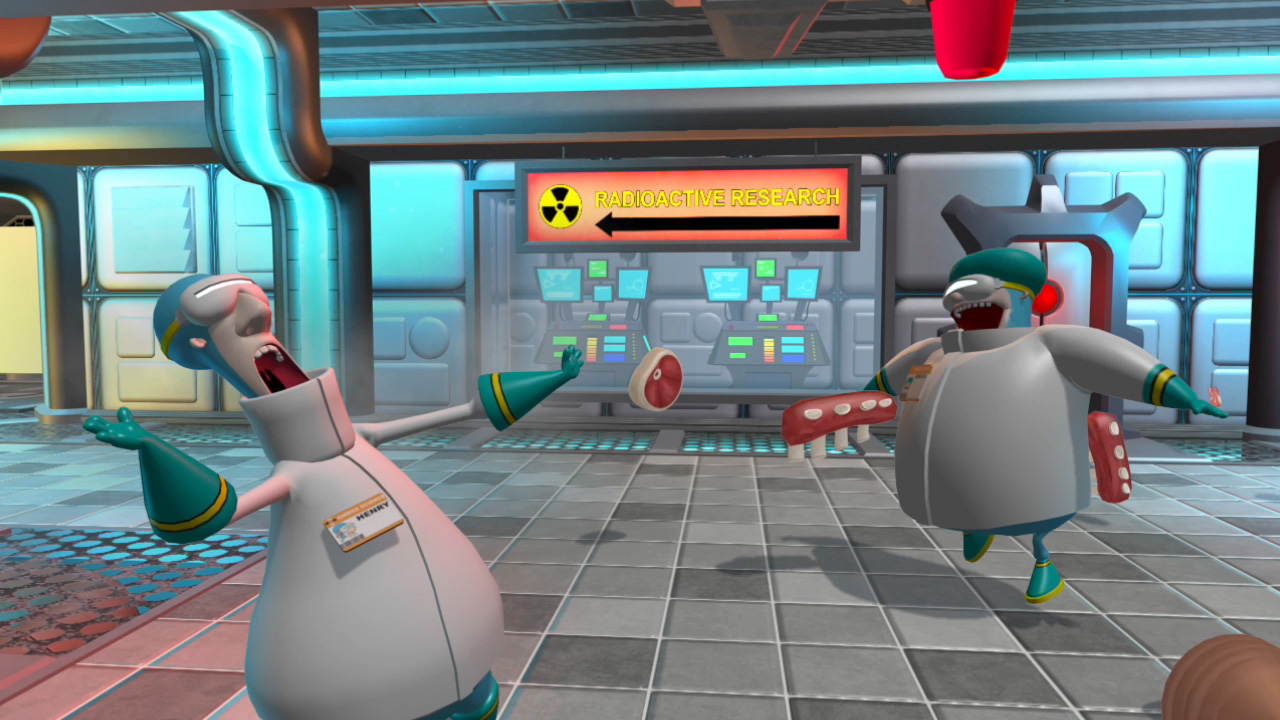
Remember games like Sonic the Hedgehog, TMNT, Kid Chameleon, or even Mario? Yeah, well, we haven’t seen a game like that in a while (especially a 2D one), and that’s what makes ‘Splosion Man so great. It brings back that classic, challenging platformer goodness with a great sense of humor and a loving character. ‘Splosion Man pits you against a bunch of mad scientists obstacles and traps trying to capture you while you run rampant, trying to escape.
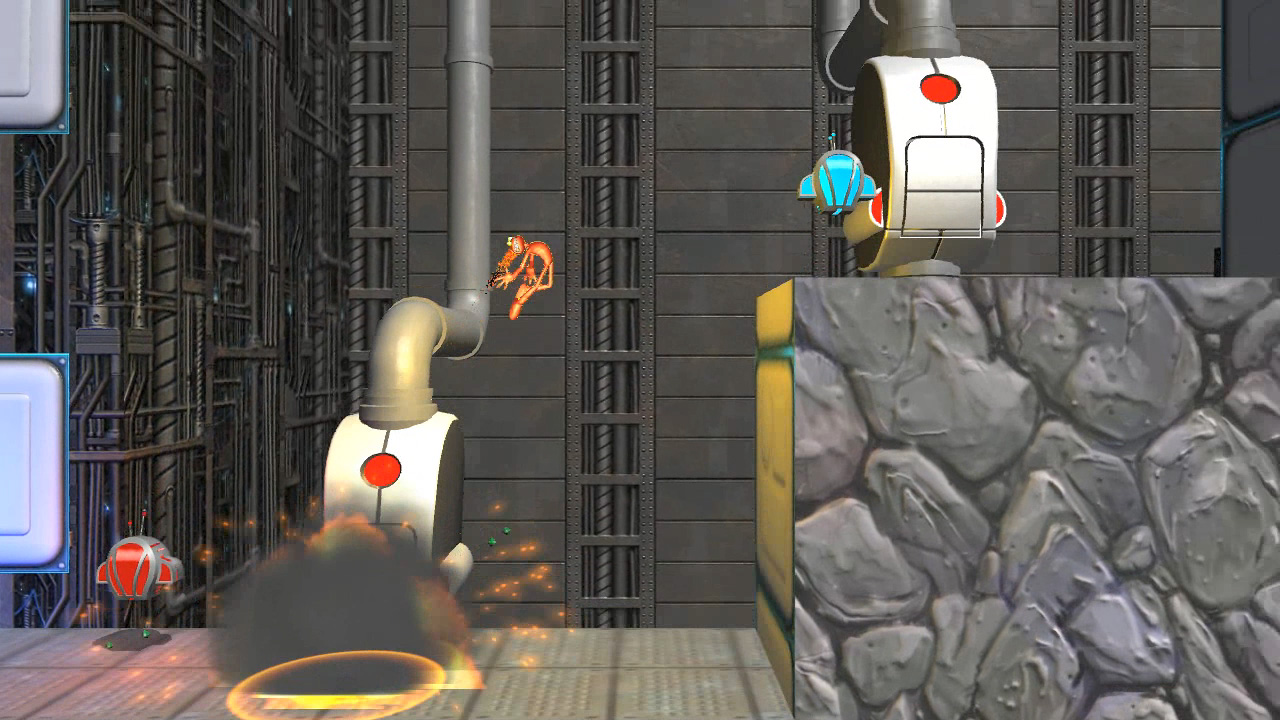
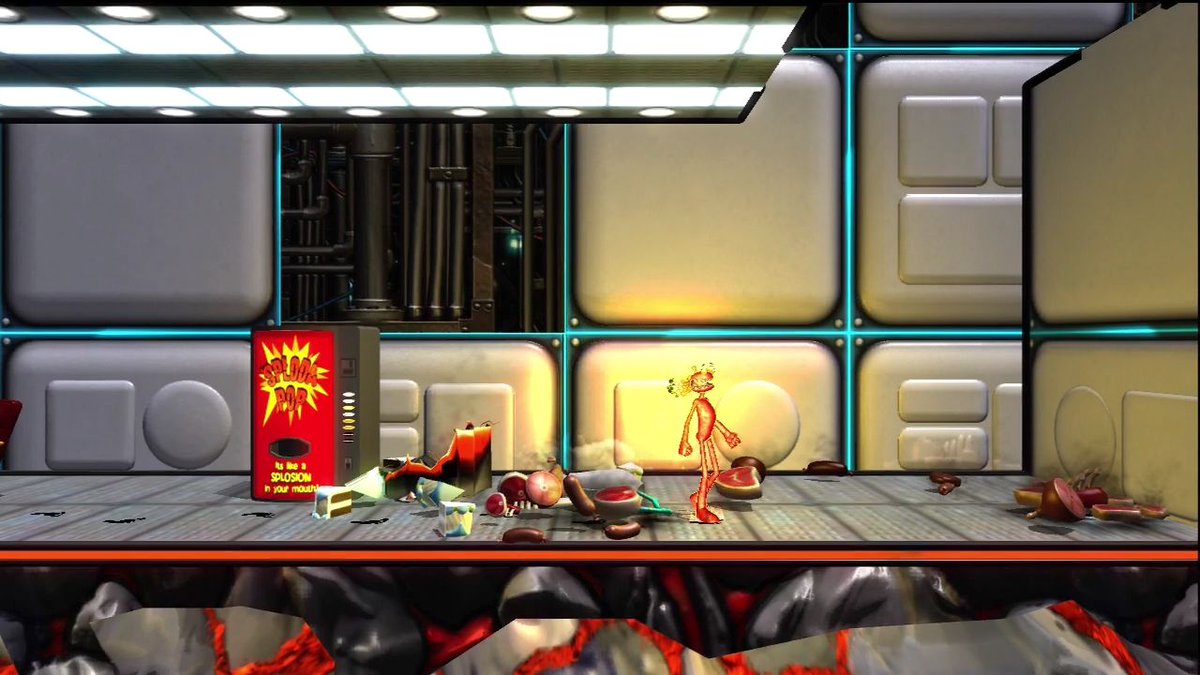
As the name implies, you have the ability to explode, but not just as many times as you want. You can explode three times in a row, then you must “recharge” yourself by staying on the ground for a few seconds or clinging to a wall. Exploding allows you to jump, break glass, hit switches, and pretty much do anything because this is the core gameplay. You have different obstacles to overcome, such as jumping gaps; you may need a green canister to shoot you across a huge gap; exploding barrels will give you a slight boost since there may be huge open areas above a death pit that are just barrels. The idea would be to explode yourself on each barrel and “hop” across the huge gap. Most of the time, scientists will pull levers that block your way, and you must figure out how to get to them. Giant closing walls may come down on you from either side, and you’ll need to jump your way up and out. You may run across electrified fields, and you must find the switch to turn them off. Then you can kill the scientist and be on your merry way. There are dozens of different traps and obstacles, and it would take forever to describe them all, but one thing is certain: you need to use your exploding powers to get through them.
When it comes to boss fights, they are epic and rather tough. They all involve some form of exploding or evading, which must be mastered. That’s the beauty of this game; you can conquer the controls, but it takes practice to master them. The later levels require precise jumping, exploding, and timing, or you will meet your death. Speaking of death (unlike older platformers), checkpoints are fair and plentiful, so you are sure not to get too frustrated. Trial and error here is abundant, but it’s forgiving. What I mainly love about the character you play is the noise he makes. He runs around looking goofier than ever, making airplane noises, barking noises, and just overall maniacal laughs that make you laugh every time. The achievements, on the other hand, are pretty easy to get and take a bit of thinking to figure out. Most of them require finishing certain objectives, and some require finding hidden items. Like any platformer, it was impossible to find items, and these are cakes. Yes, they even make a joke about the Portal reference in the achievement description. Hell, there’s even a real-life ‘Splosion Man video during the credits roll. Speaking of that, the game has great co-op play both online and offline, so you and a friend can master the power of exploding. You even unlock a theme and gamer picture for all your effort.
So to conclude, ‘Splosion Man is a fine platformer that does something original that we have never seen before. Whether it’s the epic boss fights, the ability to explode, or the levels that just make you feel giddy, ‘Splosion is worth every penny and will hopefully make an explosive sequel.
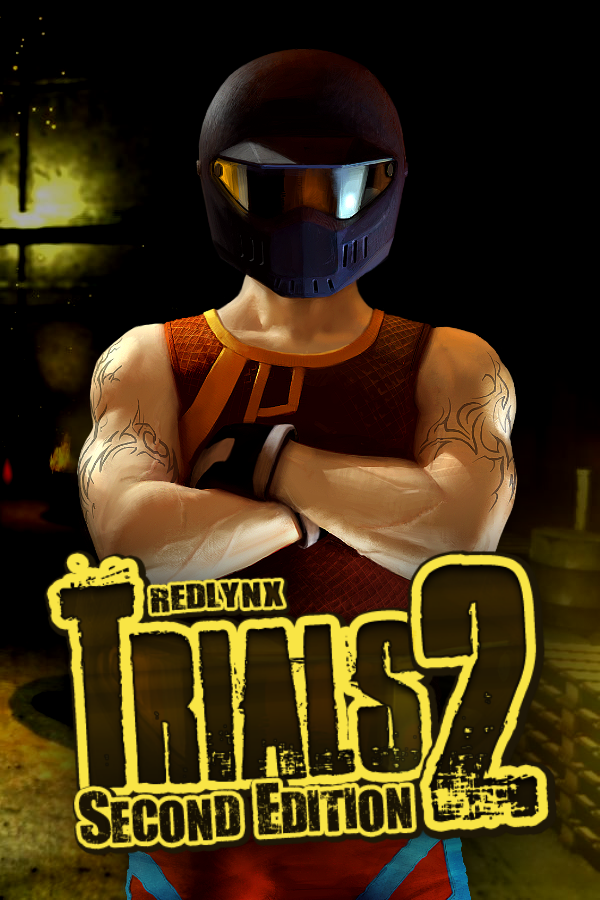
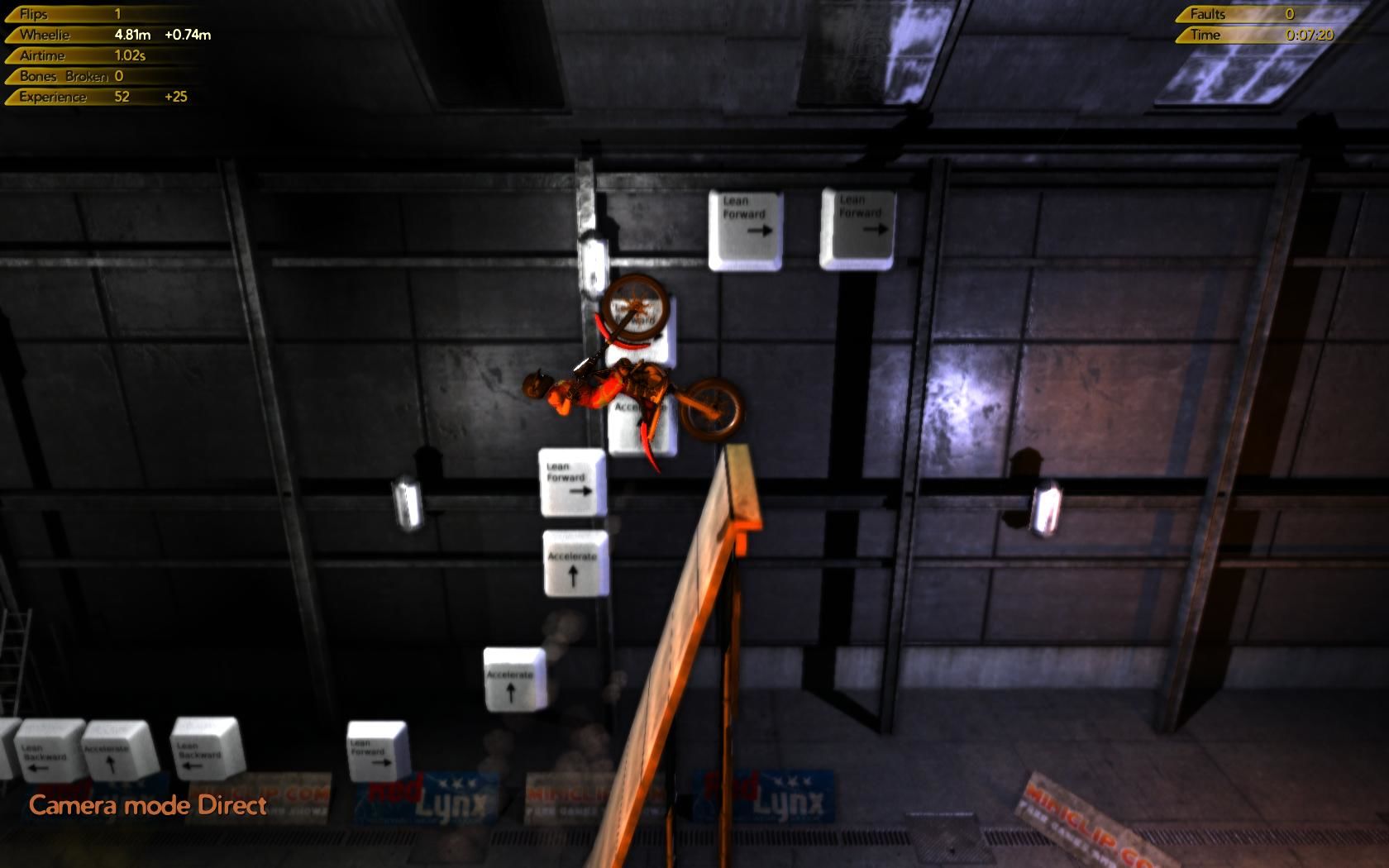
Now I’ve never played the original Trials, and in fact, I never heard about it until I saw it on Steam. Trials is a motocross physics game that gives you control of a poor soul on a dirt bike, and you have to safely get him through and over obstacles. The game is a side view, so think of it as a 2D scroller; you don’t have to control in a 3D environment; you just go forward and backward. You can adjust your bike in three different positions, and this affects gravity and inertia, so leaning forward helps you go up steep hills; lying flat helps you go under low-hanging obstacles and level your bike out in the air; and it also helps you go down steep hills. Most of the game consists of going up steep ramps and jumps and using precision to go over the craziest jumps you’ll ever see.
Some consist of extreme ramps (leaning forward) and then maybe going down three smaller ramps (leaning back), and you have to adjust the speed with all of this. Trials 2’s physics are superb and feel very real; the graphics are excellent with shadows, motion blur, depth of field, and high-res textures. You need a pretty beefy rig to get this running at full speed, but when you do, you’ll love it. There are online leaderboards and Steam Achievements, so there are plenty of reasons to replay courses.
There are three sets of courses: easy, medium, and hard. Each set requires more accuracy, precision, and skill. They get longer and crazier as you go, so watch out! As the name implies, Trials 2 has a ton of trial and error, so you’ll be hitting backspace to reset your guy more times than you can count (sometimes I was resetting over 100 times for the same spot). I highly recommend Trials 2 to any physics/puzzle game fan or any racing fan. With it only being $10 on Steam, it’s a bargain.
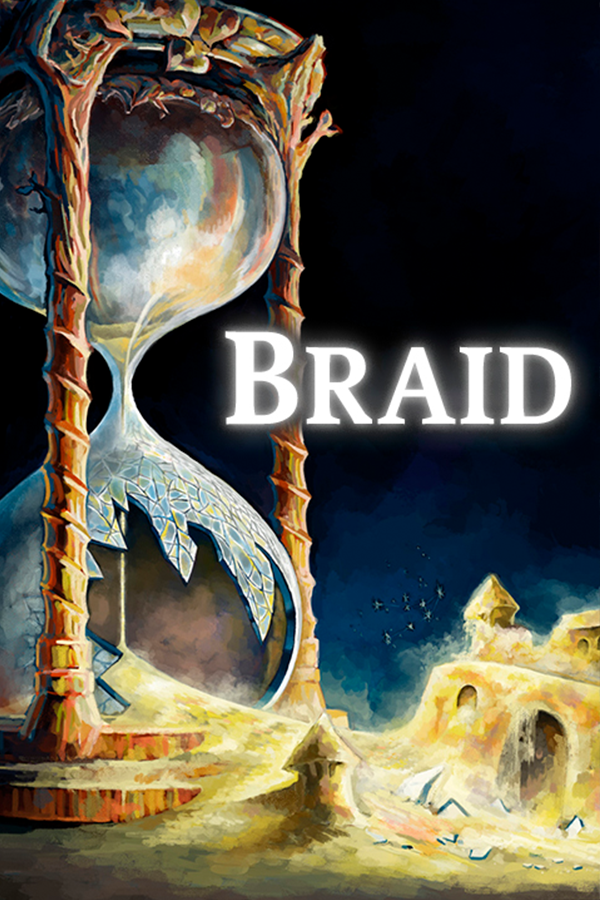
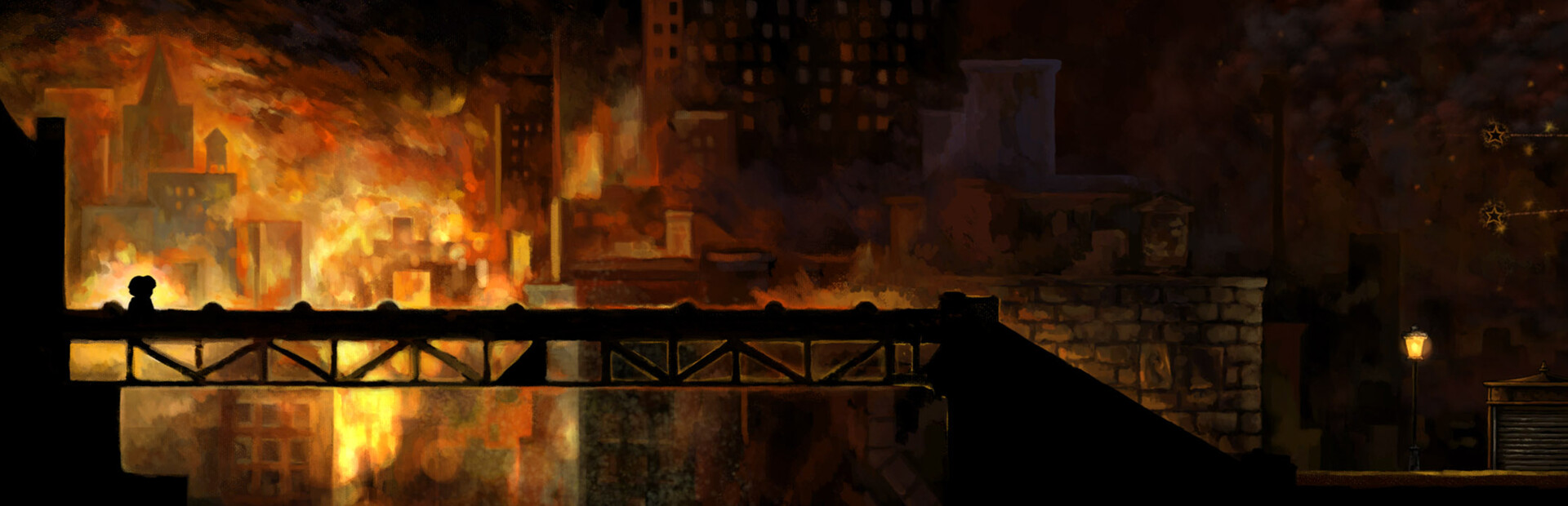
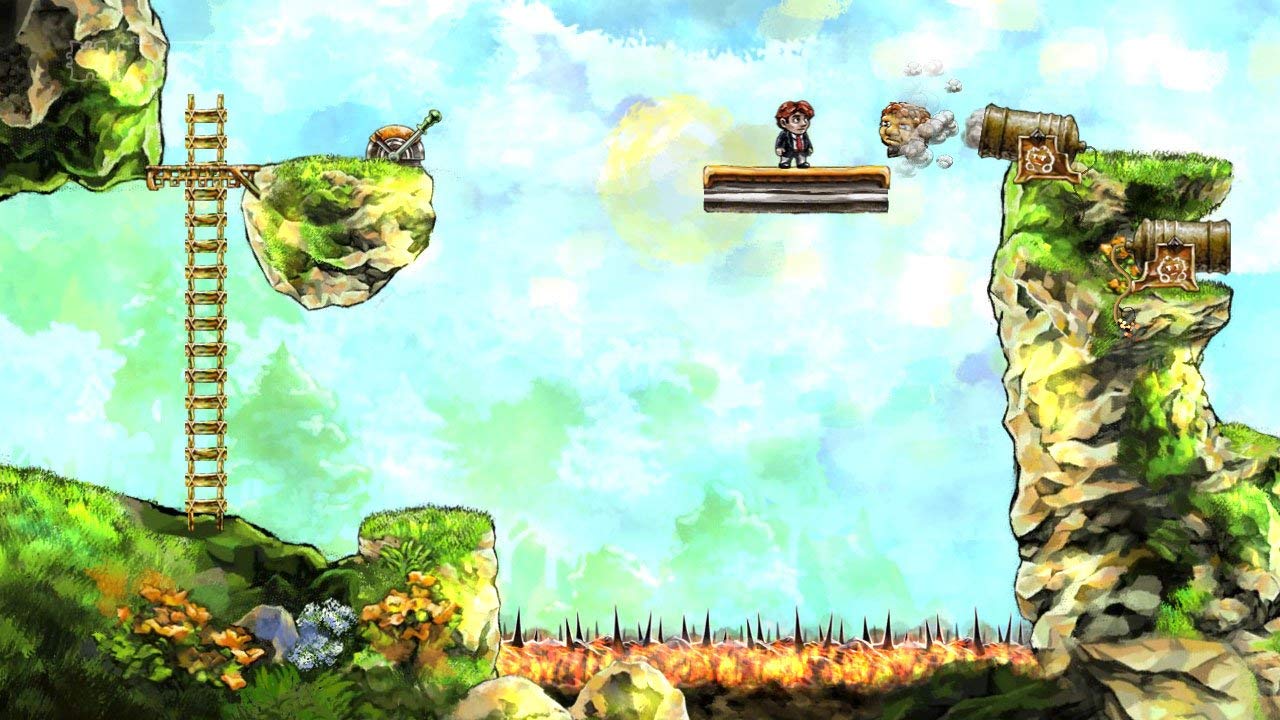
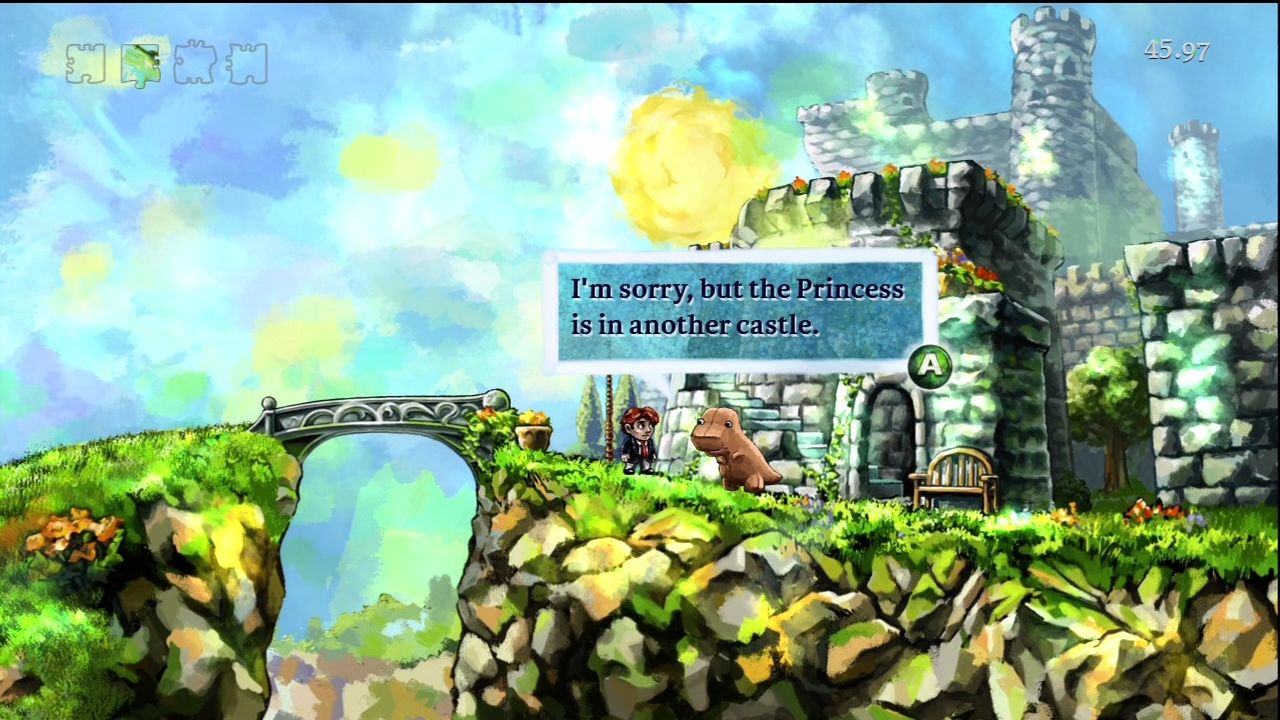
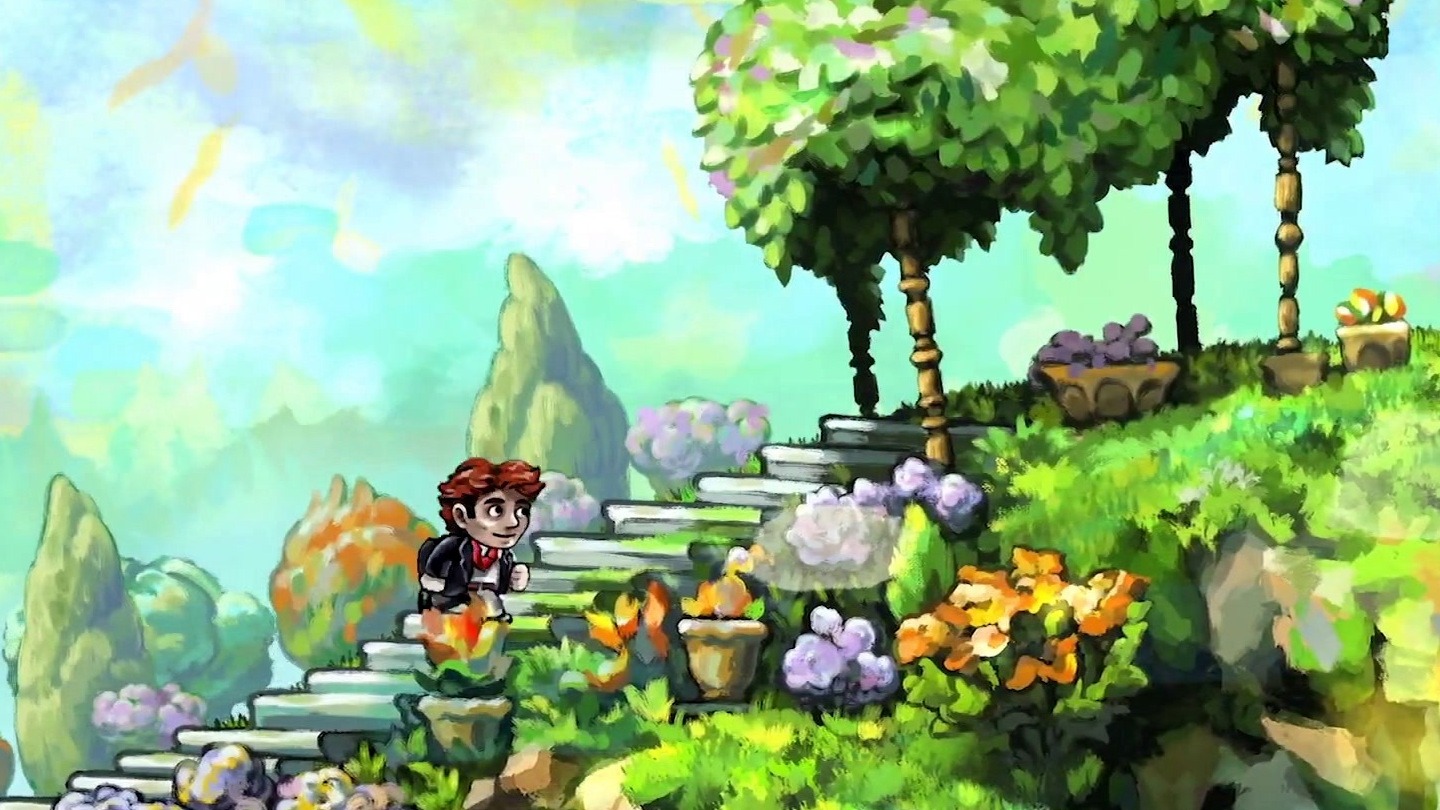
Braid is one of those WTF games where you think you know what’s going to happen, then it turns around and slaps you in the face. The story of Braid is very interesting, but it doesn’t really matter until the last level. You start the game off on world 2, then you end with world 1, and that’s the piece of the story that makes your brain go funny. This is what I love about Braid; it has a wonderful story along with beautiful pastel or watercolor backgrounds. The music is very moody and inspiring, and I just love the whole package. The main attraction to Braid is the whole-time mechanic. Each world uses time in a different way to solve unique (yet not hair-tearing) puzzles. Instead of dying and starting all over, you can rewind time—all the way until you enter the level if you have to. This is a very hard mechanic to explain, but you have to use the enemies as jumping springs. You have to jump on them just right to get on that higher ledge. Sometimes you have to alter their paths using time to get to where you need to. When some platforms and enemies are green, they are unaffected by time.
You can rewind time to get a moving platform underneath them, but they don’t go back in time; they just keep walking. Sometimes everything is moving backward in the level, and you have to alter the way the enemies are moving. If you walk forward, everything moves backward. One world has you using a ring that slows down time, but only around the bubble it creates. This lets you slow down cannon fire, slow down enemies so you can use them in the right manner, etc. One world even has you using your own shadow to help you. When you walk to where you need to be but you have to throw a switch that moves a platform on the other side of the level, you just rewind time back on the platform, and your shadow retraces your steps and hits the switch. This game is just so mind-blowing that it’s extremely hard to explain. The objective is to collect all the puzzle pieces and complete the puzzle to finish the world.
The game has about seven worlds and can be beaten in about 6–8 hours, depending on your IQ. If you like puzzles that truly bend your brain in ways unimaginable, then go for Braid. This game is too hard to describe in words; you just have to play it. For $15, it’s definitely worth it, thanks to all these awesome elements put together.
I don’t think there will be anything like this out there again, and this not being done by a major developer is very surprising. I hope this game gets the XBLA GotY award because there’s just so much to the time-traveling aspect that it’ll just wow you.
First, I have to mention that the game isn’t brutally difficult like previous NG games. The game is actually a perfectly set difficulty that will challenge you but won’t make you tear your hair out. You play as Ryu Hayabusa, who has to stop the Fiends from taking over the world with the Dark Dragon Stones. You are the last member of the Dark Dragon Clan, and you must protect your lineage. While the story isn’t anything special, the game does sport beautiful cut scenes that were tailored for the dual screens. The graphics are also the best on the DS, with beautiful pre-rendered backgrounds, high-res textures, and character models.
You basically execute all attacks through the touch screen by slashing enemies. You can use your projectile weapons by tapping enemies. I have to report that this works superbly, and the controls are actually more responsive than in console games. You can use your mana power for devastating attacks, but you can only use these once until you get to another save point. The save points are generously scattered throughout the short levels, so things won’t get too hard for you. You can do other moves, such as slashing up to jump and then slashing down to do a slam attack. You get all the moves in Ninja Gaiden (Xbox), but there aren’t any new ones. While all of this sounds excellent, it does get old by the end of the game. However, the game has some fun boss fights to keep things interesting.
You can solve puzzles by blowing out flames, lighting torches, hitting orbs, etc., but nothing will strain your brain. The game is very short, and you can beat it in about 6 hours. There are 13 chapters, but the levels are really, really short (you can beat most of them in 20 minutes or so). Overall, the game is really well done, and any action fan needs to own it, especially if you’re getting ready for Ninja Gaiden II (X360).













































 thebinarymessiah.com
Try multiplayer. A lot of fun !