The story is probably the second most important aspect of a game next to the gameplay. A good story can be memorable, impactful, controversial, enlightening, frightening, and any other emotion humans can feel. We didn’t have many games with memorable stories this year, but there were some out there that stood out.
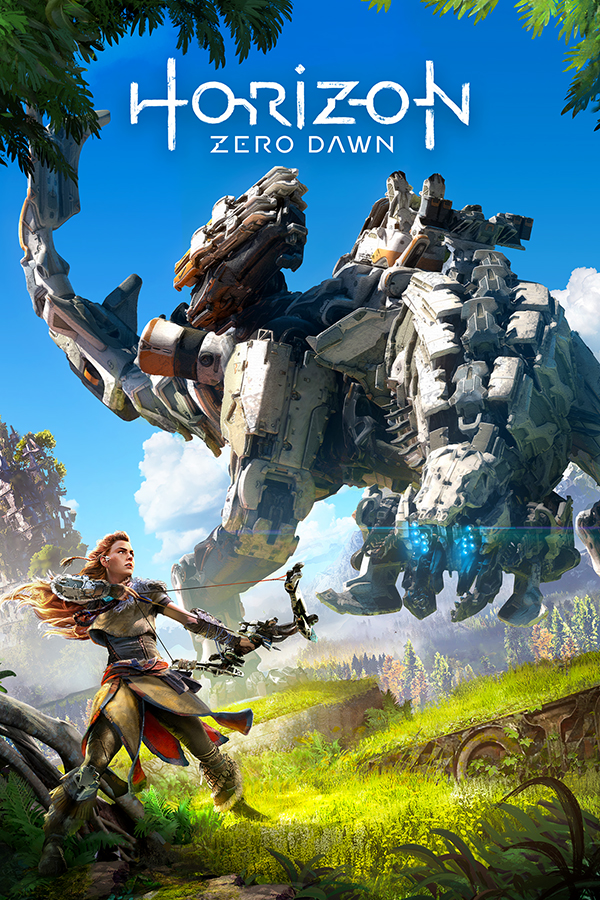
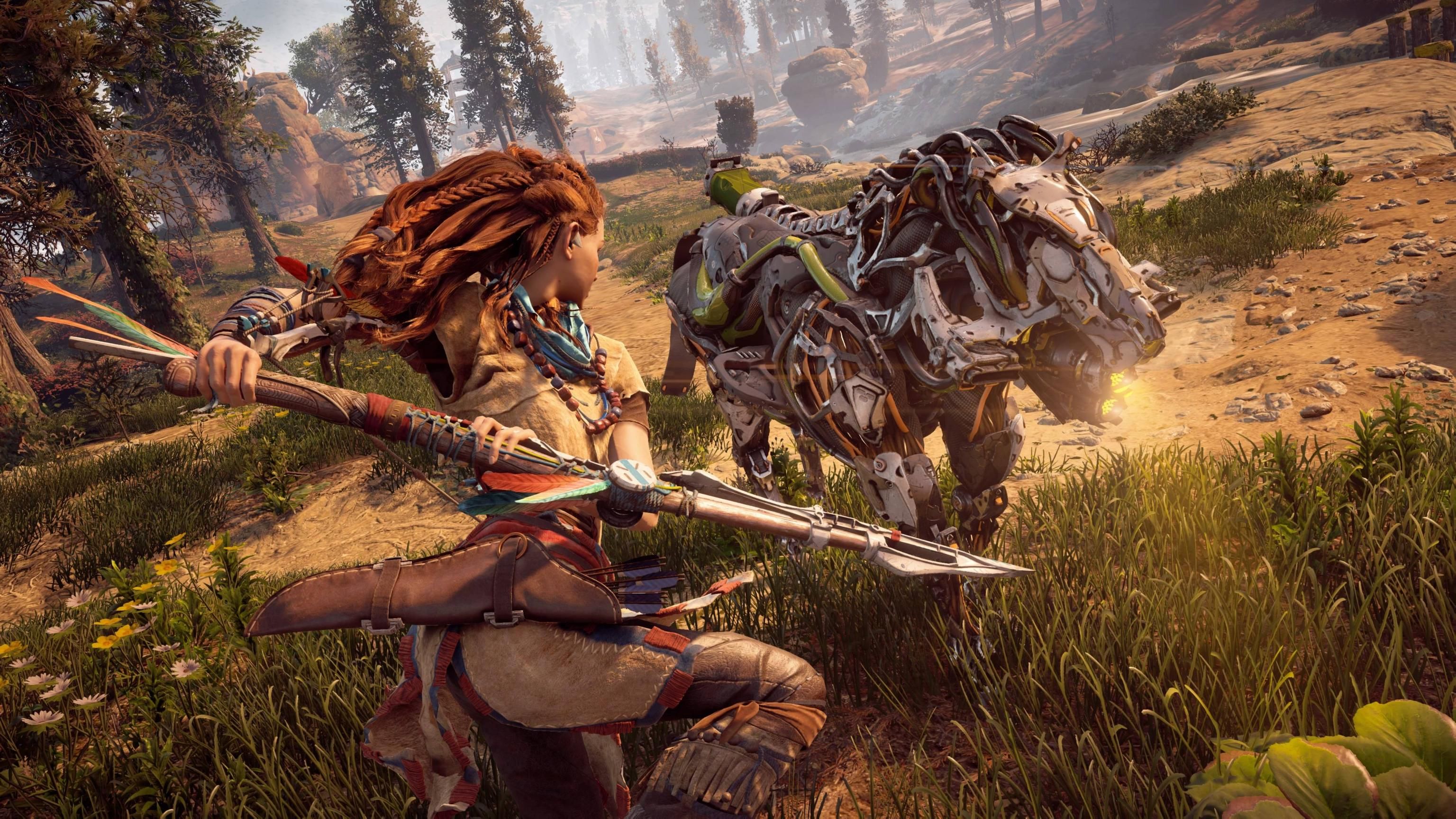
Horizon told a story of humanity years after we destroyed ourselves and the aftermath we would suffer. The story was focused globally and internally with the main characters trying to discover who they are making something of themselves. Horizon’s story was memorable, kept you drawn in, and multi-leveled in many ways.
The best voice acting in games aren’t just the best delivery, but how it fits into the game. Is the character tortured, insane, or psychotic? Delivering the characters the way we would see them in person is how a game delivers the best voice acting.
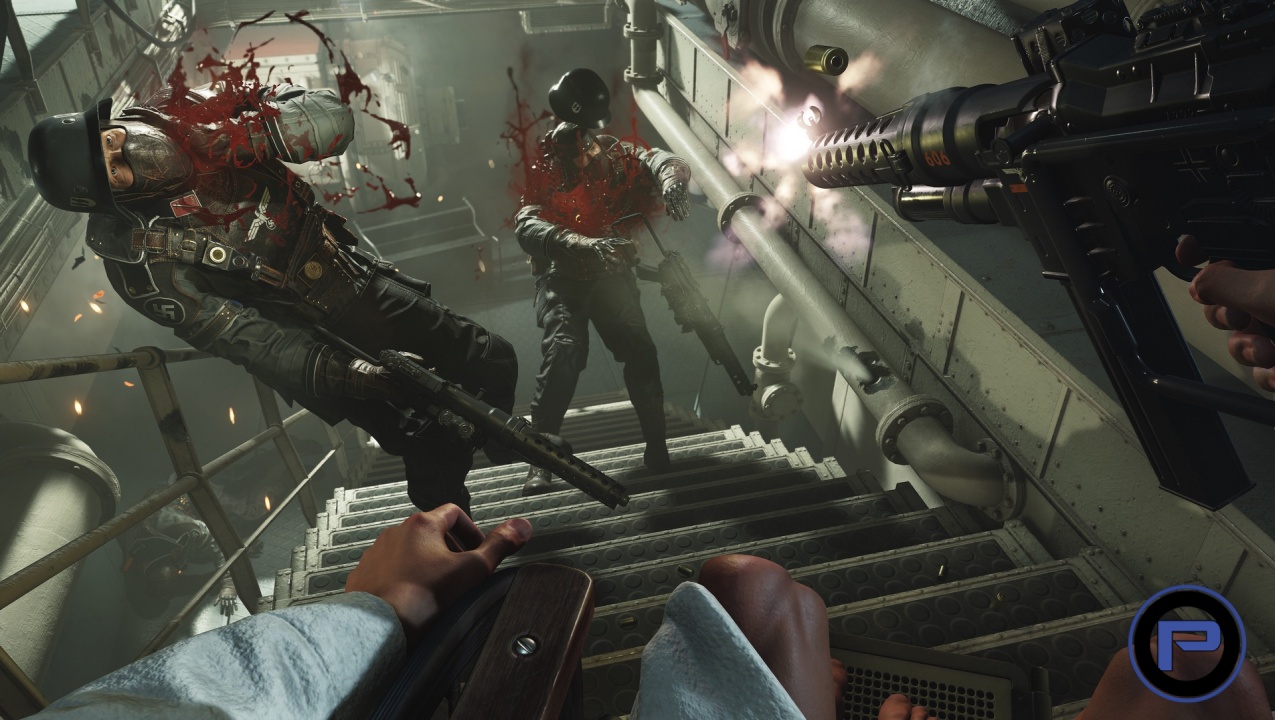
Wolfenstein doesn’t just have good actors, but each voice type fits the actor, and you feel the personality of the characters bleed off the screen. From BJ to various resistance members, I felt sucked in and became attached to the characters more thanks to the amazing voice acting.
This was a weird year for RPGs. We didn’t get many big names, but the ones we did were lackluster or not the game changers they normally are. However, picking apart the list, we did get some awesome RPGs that are bound to keep you busy for hours.
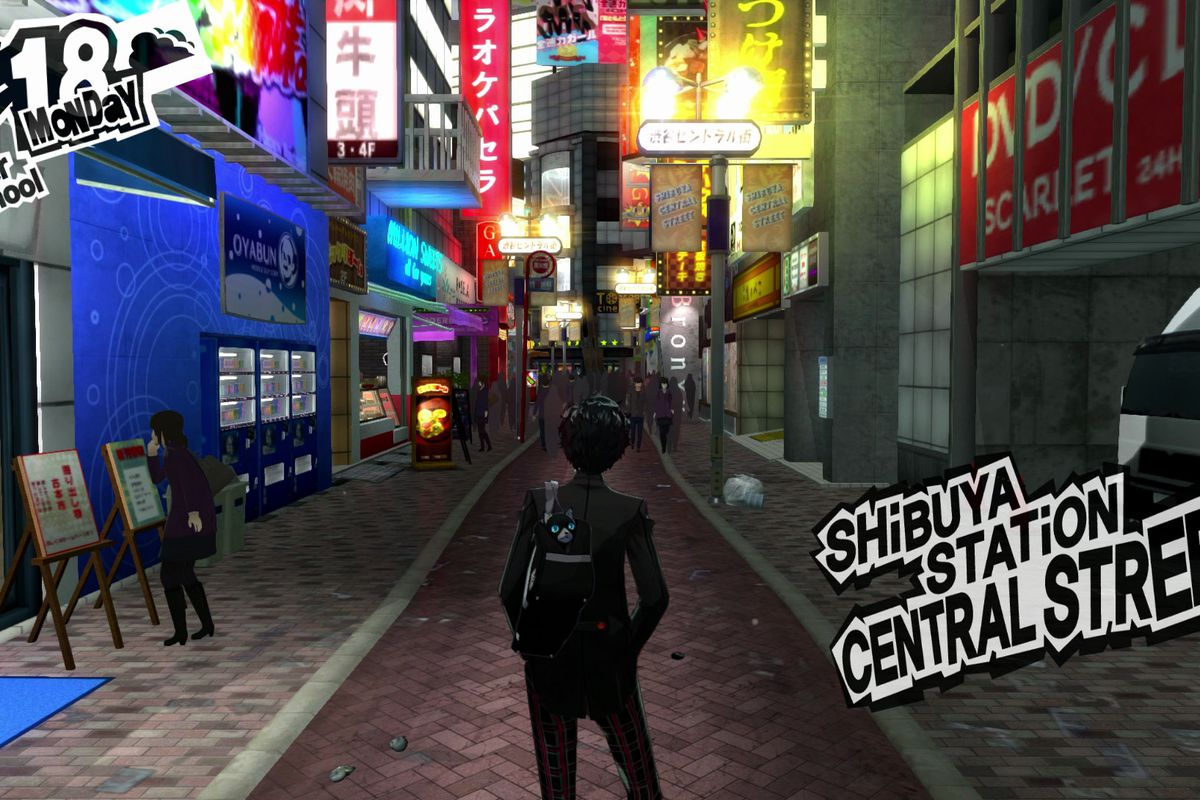
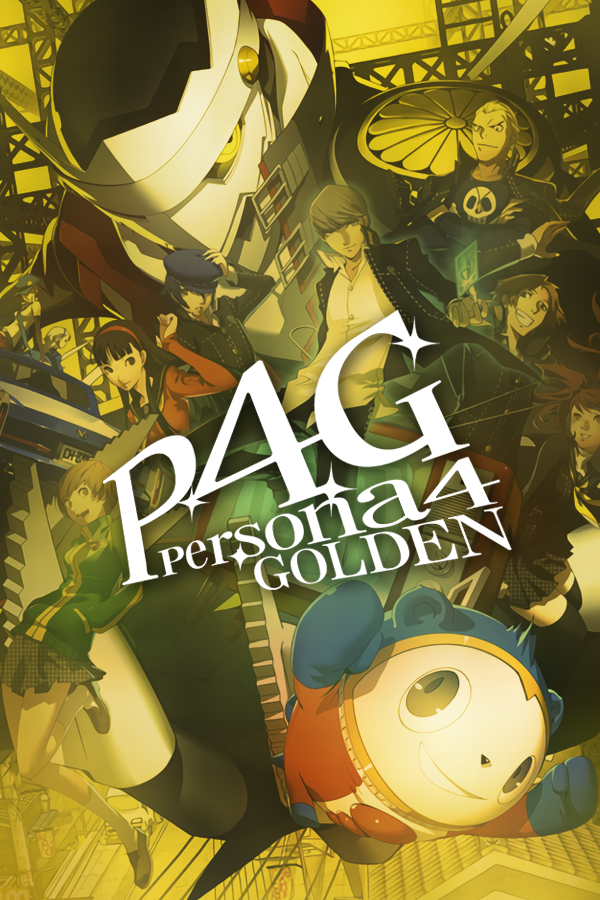
Persona 5 isn’t just a small improvement over the last game. We get a whole new cast, story, redone combat system, and more streamlined gameplay. Out of all the RPG sequels, this one had the best changes.
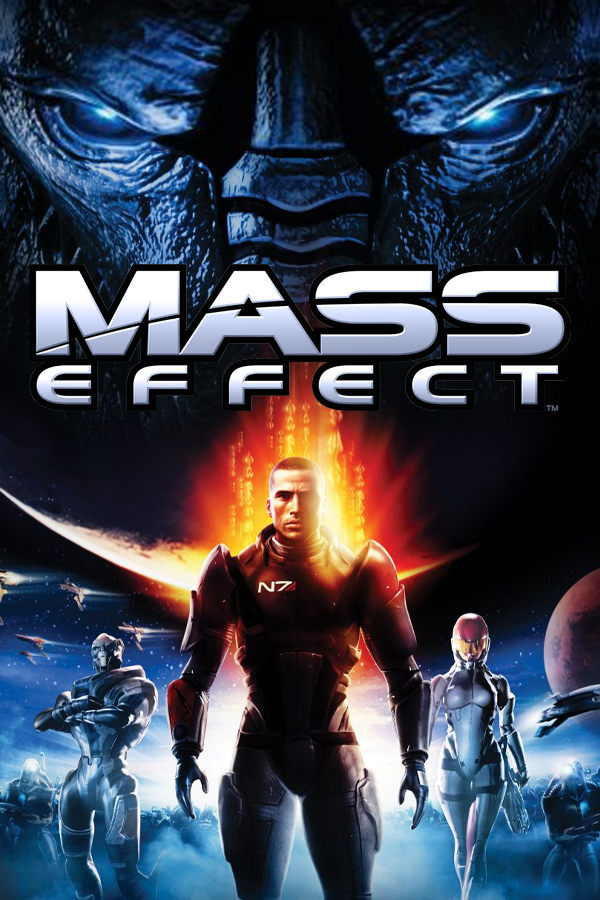
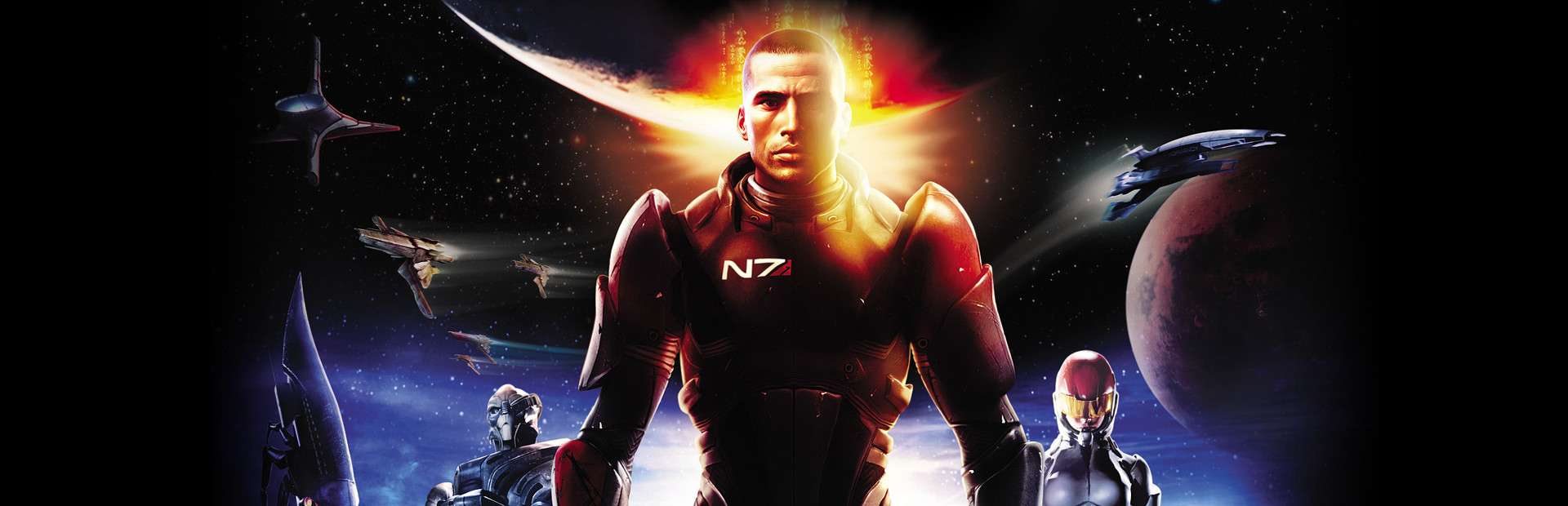
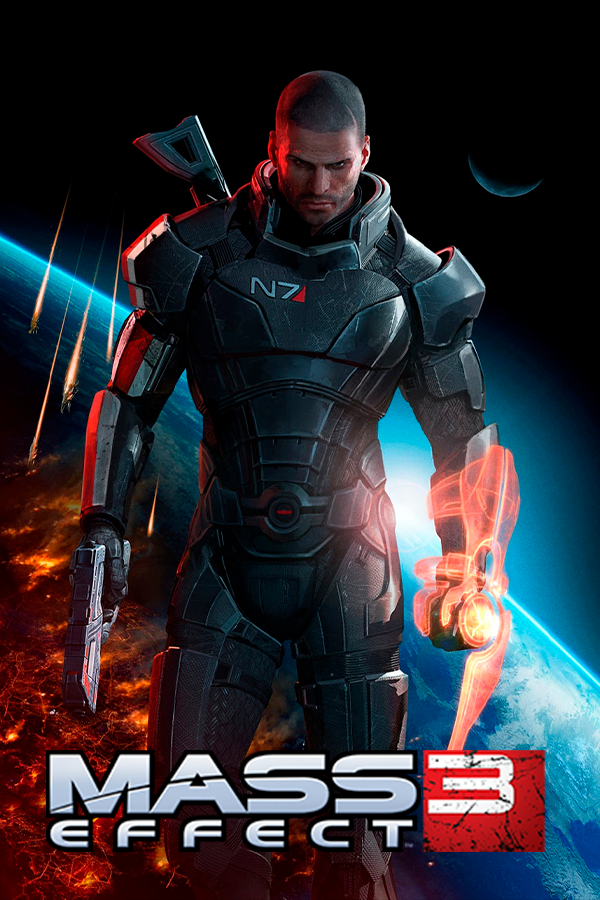
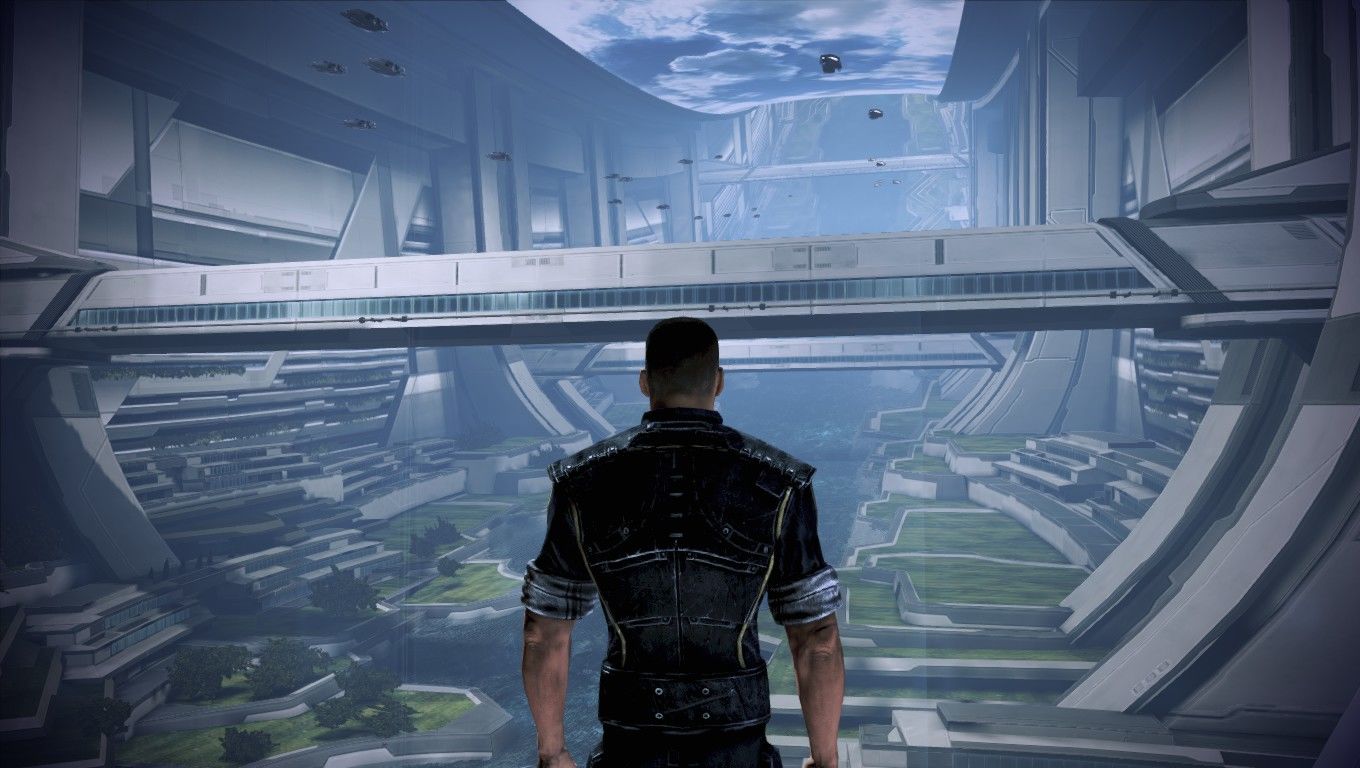
Mass Effect made such a huge impact on me and the gaming world that no one probably expected. To create such a vast universe of fans of Star Wars is just incredible. BioWare pulled it off, and each game is very memorable. Mass Effect 3 pulls all the punches this time around and is the epic climax to the Reaper invasion that is sent to wipe out all organic life in the galaxy. Of course, Commander Shepard is supposed to fix this along with his or her recruits that you brought along throughout the series. Never before has a game spread so much across a trilogy. I have never kept a game save so sacred as I have my Mass Effect save because every choice you make carries heavily throughout the whole series.
It was obvious in ME2 how choices carried over, but ME3 is huge. Main characters will die; some that died in the last games will have an impact on how ME3 turns out. Instead of going around recruiting people like in the last two games, you are recruiting entire war assets for the War on the Reapers. You are trying to bring whole nations together and making huge decisions that will impact the galaxy for the rest of time. Things like whether or not you should cure the Krogan genophage, help the Council, help Cerberus, or just say screw it and make everyone’s lives hell. You have choices here, and they will make you think a lot. Never before as a shooter have I cared about seeing certain races die or get hit. Seeing the Turian homeworld Palaven get creamed left me feeling sad and determined to make choices that helped them. In this game, some civilizations actually get wiped out due to your choices. Some are just as subtle as helping someone out on the Citadel with a side mission that decides whether the Elcor, Hanar, Batarian, and Volus survive or not. This game is so big and bold.
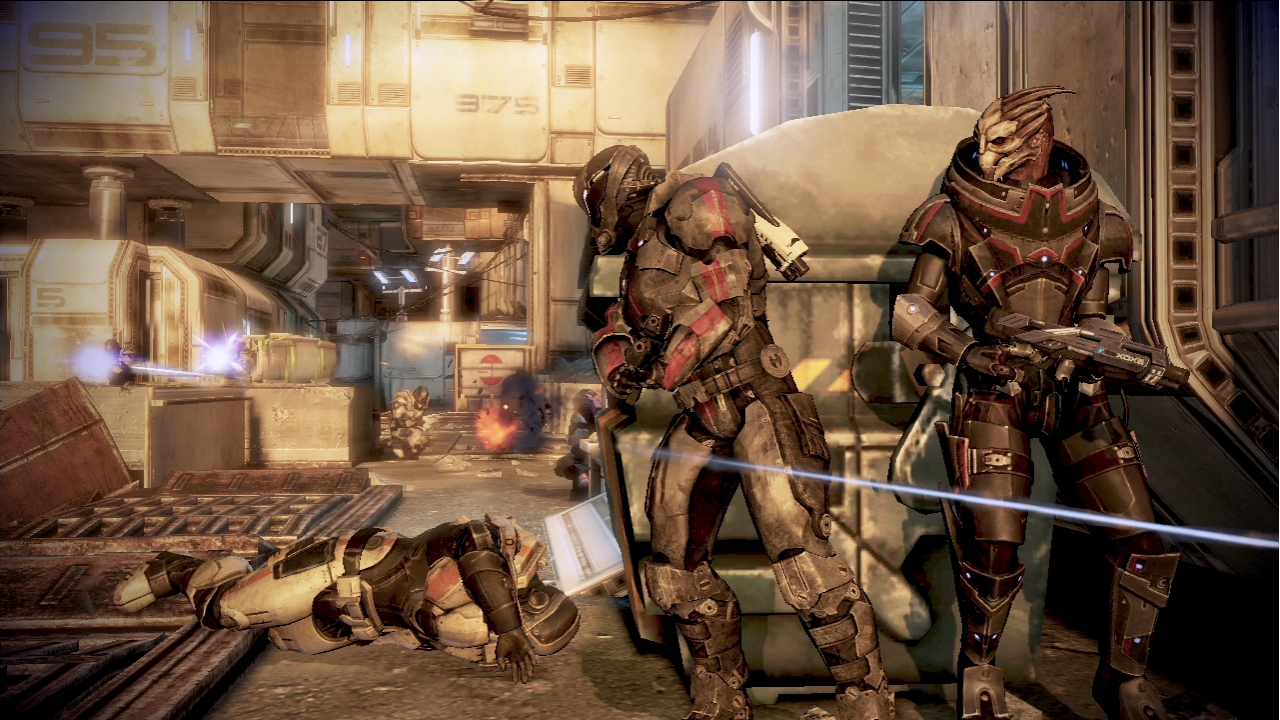
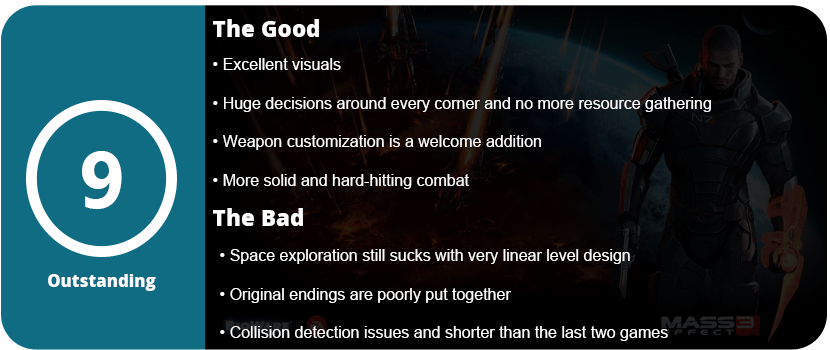
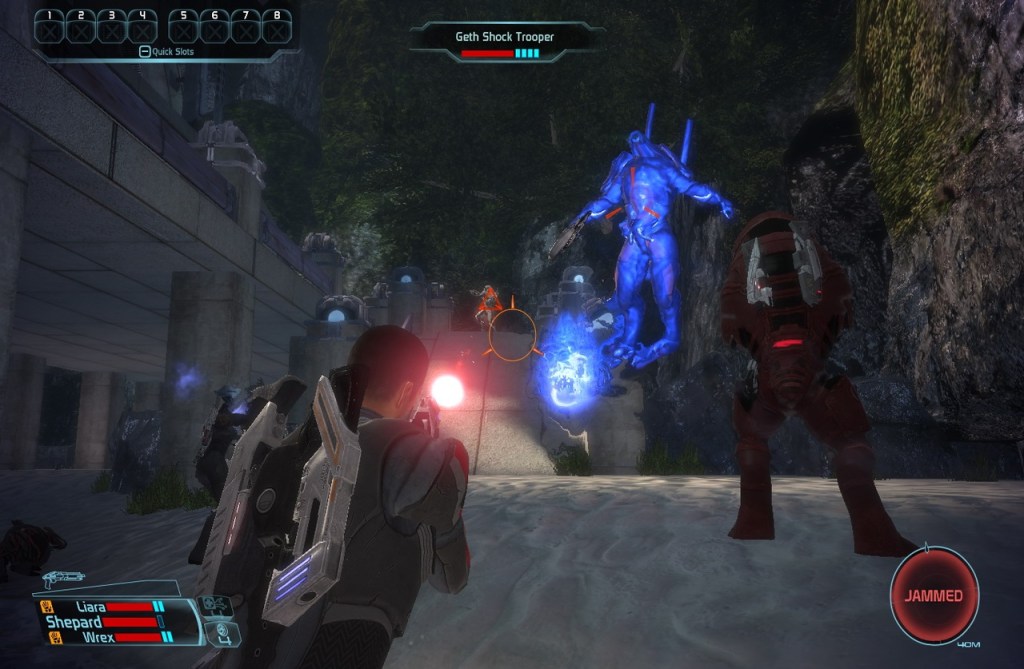
Aside from the obvious story, the gameplay has improved a lot. The action and shooting are more refined and feel better. There are whole new weapons, a cover system, as well as a dodge and roll mechanic that comes in handy. Everything just feels tight, and weapons hit heavy. Speaking of weapons, you can now customize them by adding mods to improve damage, stability, accuracy, and even clip capacity. You can now buy mods through shops on the Citadel in Normandy instead of running around on every planet trying to get what you need. You can also buy armor and have more customization options for your character, which is very welcome. You also can’t carry every weapon with you anymore. I guess the goal was to balance the game more. Each weapon you have will add weight, which can be reduced by upgrading weapons. Carrying every weapon with you will slow you down and reduce the recharge speed of biotic powers, so choose carefully.
The overall structure of the game is just more streamlined, less messy, and less annoying. Small side missions are usually stuck in the Citadel, where you have to find an item for someone during space exploration. Exploration in space still isn’t fun, but it’s a lot better than scanning every damn planet for resources. They have completely scrapped this time around, so everything is just bought with credits, which is how it originally should have been. You can still scan, but you do it on the map, and EDI will tell you if she finds something. Certain planets will have a war asset or an item someone on the Citadel is looking for. If you scan too much, the reapers will come after you, and you have to high-tail it out of the system before they catch you and come back after a mission has been completed.
Almost everything you do in this game is big, and I can’t think of any mission that felt small, like in the last two games. ME3 is just huge in scope, and there are some memorable and impressive moments. The story is very cerebral, but here’s the catch: If you have never played a Mass Effect game before, go back to the first one and start from the beginning. You just won’t appreciate every decision if you jump right in. The comic that explains the last two games isn’t enough and doesn’t do this excellent and amazing sci-fi series justice. Only fans who have played through the last two will appreciate this game and truly feel that every decision is personal.
The controversy about the endings is understandable. I got to use the Extended Cut DLC while playing this, and after some research, the ending would stink without it. Without any spoilers, the ending gives you three choices at the end this time around instead of two. The choices are explained more, and there are some extra shots stuck in the endings to make more sense of it all. The original endings were just sloppy and, to be honest, lazily put together. BioWare did everyone a service by offering these endings for free.
Overall, Mass Effect 3 looks amazing, plays well, and has some of the most memorable choices I have ever had to make in a game. This is about all life as we know it, not just some city or civilization. This is about all organic and synthetic life, and what ME has done for the gaming world is a huge feat that I haven’t seen since Star Wars. This is a true sci-fi masterpiece that all fans of the genre will love. If I did have any complaints, it would be the original endings, and there are some issues like collision detection and linearity; the game feels shorter than the last two games; and the space exploration pretty much stinks. These are minor, though, and don’t really bring it down much.
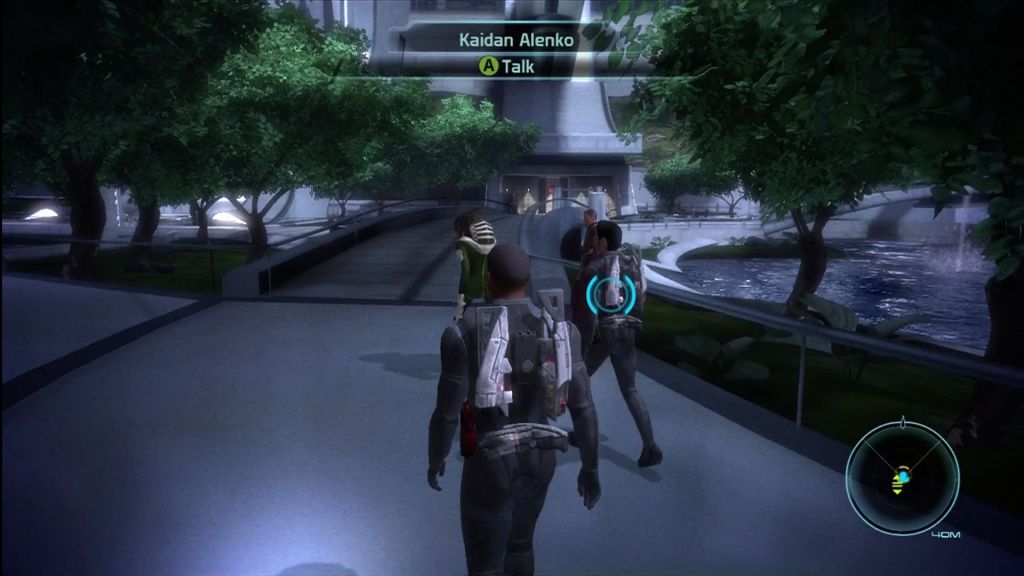
Where should I begin? Well, let’s start with the story. You play (put the first name here) Shepard, who is a US Navy Alliance officer and tries to work his or her rank up the galactic ladder. A Turian named Saren tries to unleash a supposed extinct alien race that’s older than time itself. Can you stop him in time while uncovering the past? With that out of the way, let’s start with the presentation. Mass Effect has some of the best graphics, sound, voice acting, and production values of any game I’ve ever seen next to Gears of War (courtesy of Microsoft’s bank account). The game is packed with tons of extremely detailed textures and models, remarkable never-before-seen character animations, and BioWare’s next-gen dialog engine.
Just like any BioWare game (KotOR, Jade Empire), you decide the fate of the game through your interactions with people. You can intimidate them, charm them, or just plain use force. With the dozens of alien races and characters you’ll encounter, there are limitless possibilities. The game has third-person gunplay mixed with role-playing elements. You can upgrade your character through an easy-to-use upgrade menu, where you can upgrade tons of stats and attributes. You also have powers that you can use. Along with you are two other squad members of your choosing, and you can give them simple orders. You can hack objects to obtain new weapon upgrades, different types of ammo, and even more armor. There are even a few vehicle sessions as well, and this helps mix up the gameplay.
You travel around by using the mass effect relay system, which can shoot you throughout the galaxy. You can travel to different worlds to collect different types of resources, complete side missions, and more. While all this is wonderful, the game does have some major issues. The frame rate can never keep up. It’s always skipping and chugging, and there’s a constant texture pop-up as well. There are also random load times every so often. The game is also very short for BioWare standards, ending in about 15-20 hours, and with all side missions (about a dozen), maybe 25–30. While there is no co-op or online play, the game is still fun, very cinematic, and a wonderful masterpiece.
Best RPG can be either full of action, slashing, or a JRPG. What defines the best RPG is a game with an excellent story, memorable characters, and a very fun combat system, or an element that revolutionizes the genre.
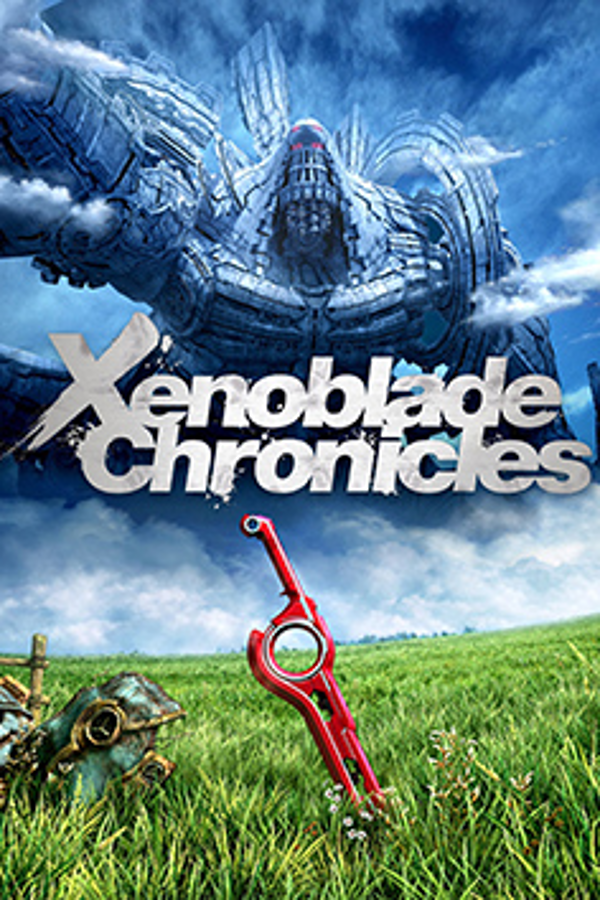
Xenoblade Chronicles
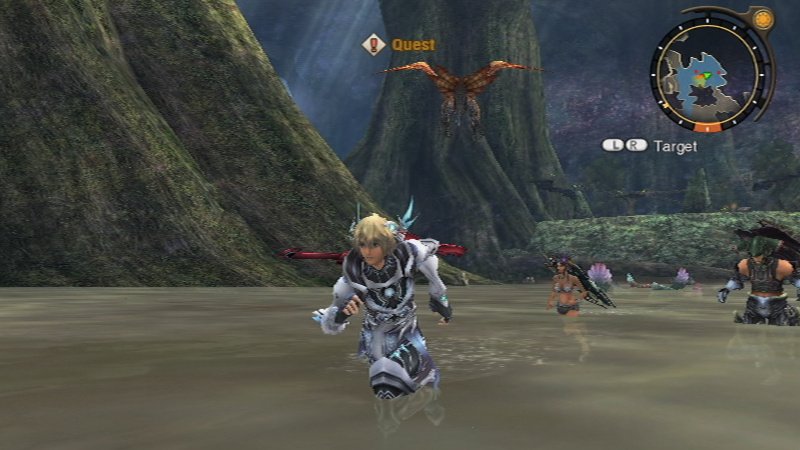
Xenoblade is so great because it finally breaks the typical JRPG formula that everyone has been tired of for the past 10 years. With an awesome story, memorable characters, and an extremely fun combat system what is there that you can’t like? Mass Effect 3 was a close second, but it feels a lot like the last game, and Xenoblade actually breaks a seemingly never-ending curse on JRPGs. The biggest achievement is hundreds of side quests that don’t grate, and there’s no level grinding!
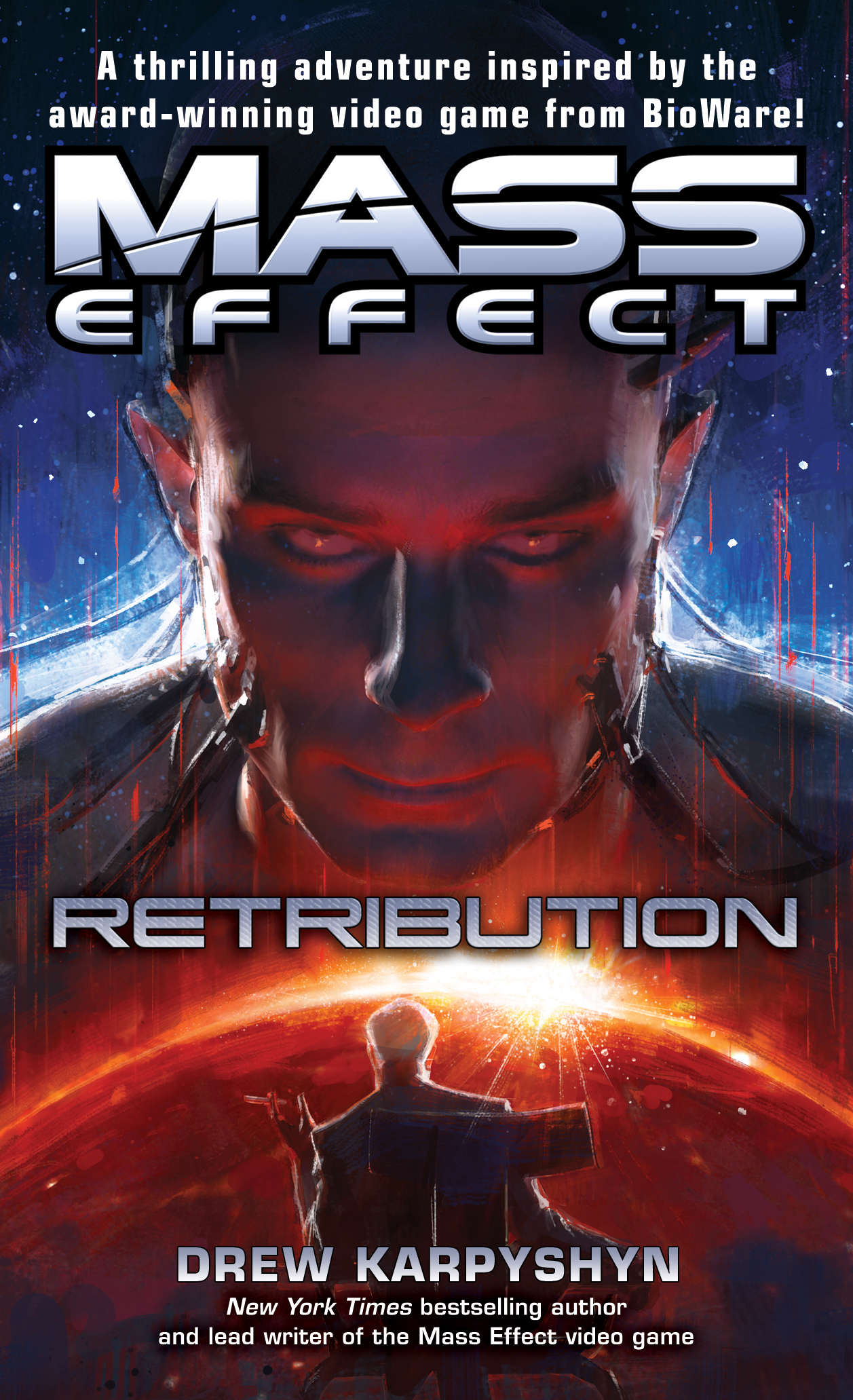
The final book in the trilogy by the creator of the Mass Effect universe, Drew Karpyshyn, is just as great as the other two. Kahlee Sanders and Admiral David Anderson are trying to track down Paul Grayson, who has become something more than human. The Illusive Man wants to stop the Reapers but is going about it the wrong way. The book has a great cat-and-mouse narrative, and Drew’s way of writing will keep you turning the pages. The book has a lot of twists that seem predictable, but it takes a sudden turn, and that’s why Drew’s writing is so brilliant. The story itself is very well-paced and has a great final conclusion, so fans won’t be disappointed.
Everything leading up to this book fits right into the story, and all the lore from Mass Effect fits right in, so the book feels like Mass Effect. I never felt detached from the world, nor did I feel the book was losing ground at all. Drew has a way of writing by sticking to the viewpoint of each character in each scene, so the scene will seem like it’s missing pieces, but by the end of the chapter, that whole scene comes together in one nicely flowing, cohesive event. This is also why the game is brilliantly paced and works so well. It may seem more of the same for some people, but I felt each book had a very unique story, and they flowed together nicely.
Fans of the last two books need this one, but don’t bother picking it up until you read the last two, or nothing will make sense here. This is exactly how video game books should be written. Smartly integrating new characters that run parallel to the game’s characters and story without leaving big gaps in the plot that can’t be filled by either game or book. This series is one of my favorite video game novel translations and stands as a masterpiece in that niche.
Don’t get me started; books based on video games are a lot better than movies and are a great way to tide you over until a sequel is released, and Ascension is no different. While the Mass Effect game stars Sheperd (or your character), Ascension creates new likable characters like Kahlee Anderson, Paul and Gillian Grayson, Hendel, and other characters.
The book is about a girl named Gillian who is part of the Ascension Project, which is a study on biotics in humans. Paul is part of a black ops group called Cerberus, and he takes Gillian into the lawless Terminus Systems to protect Gillian from being experimented on. Kahlee Sanders and Hendel follow to take her back, thinking Paul is trying to kill his own daughter. Without giving major plot twists away, Paul is fighting drug addiction, Kahlee uses sex as a stress reliever, and Hendel is an overprotective chief of security.
The book really sticks to the Mass Effect lore, with all the alien races present, and really uses a lot of Mass Effect terminology. I found that Drew was able to describe locales really well, so if you have played the Mass Effect game, you can get an idea of what these places might look like. While the book changes between two different people, the book just flows and has smooth transitions. If you have played Mass Effect, the book isn’t confusing at all, and you really feel like you’re back in the game.
The length of the book is perfect, running about 350 pages, so you can finish it within a week. Each chapter gives you a great dose of excitement, and I feel each chapter really closes well, so it makes it one of those “just one more chapter” type books, and I love those. When you put the book down, you’ll be thinking about what’s happening next, since the suspense in the book is astounding. What makes the book stand out is the fact that you can get inside these characters’ heads and really see what’s messing them up and making them do these things. If you loved Mass Effect, get this book, but it’s really only for fans of the game.
































 thebinarymessiah.com
Try multiplayer. A lot of fun !