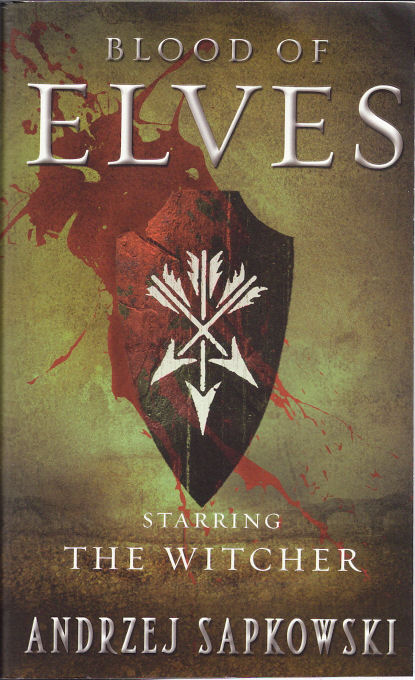
Geralt of Rivia finds himself stuck in a strange spot. He gives seed to a child who is the key to a throne that two sides of a country are fighting over. Of course, he finds her, takes her in, and trains her as the first female witch, but she is destined for more. I can’t say much more than that without giving away key details, but the story isn’t as amazing or big as you might expect.
I have to say that this book isn’t as good as The Last Wish simply because of the lack of fights and too much talking. There is a lot of drier political talk, but overall, there aren’t any fights with Geralt against creatures. This is what The Witcher is all about, so instead we get sections of the book dedicated to different characters like Dandelion, Yennefer, Merigold, and even Zigran. While those characters are interesting and the main characters in the games, it’s all just dialog and no action. Sure, it can be really entertaining at times, but the book is even lacking a lot of humor.
That isn’t even the biggest problem. Here you have the Nilfgaardians trying to take the throne of Cintra, while there might be some sort of plot against the kings of the good guys trying to steal the throne. There is never a climax, even though you think there might be one. The story feels cut in half because it ends in a weird spot. If there wasn’t so much talking and more action, maybe we could get a conclusive story like The Last Wish. There’s lots of talk about genocide from the elves, plus talk of war, but none of it ever really happens. I felt this book was the exact opposite of The Last Wish and the games. Of course, fans of the games will come looking for this book, but they probably won’t like it due to the lack of action. I counted all two major battles in the whole book, so that’s a lot of talking in between.
Despite all this, the characters shine through, and new ones that aren’t in the games are great. You will like what is here, but just don’t expect tons of action. If the book wasn’t so dry in spots, had a climax, and didn’t lead you on constantly, it would be a lot better. However, hardcore fans will still dig this despite the missteps.
By now, most gamers know who Geralt of Rivia is, but for book bugs, they may have no idea. Geralt is a witch. A monster slayer is for hire, but monsters are dying off, and work is becoming harder to come by. Witchers are getting desperate, and there aren’t many left in this world. The Last Wish is actually a book full of a few tales about Geralt’s adventures, but this is just the first half of the book. The last half explains the relationship between him and Yennefer, which isn’t explained a lot in the games. This was also something I didn’t like about the book because I felt it was very choppy and uneven. There isn’t a continuous tale, but a series of them, and while this would be OK, the last third of the book is a continuous tale.
Despite the odd pacing, the book has excellent characters, and fans of the game will have the pleasure of getting to know them better. Favorite characters such as Dandelion, Nenneke, and Yennefer are in the book, but only Triss Merrigold is mentioned a few times. Remember, the book was written before the game, so if you have played the game first, reading about stuff that is in the game is pretty awesome, but you also get more detailed insight into what is in the game. There is a lot of action in the book, but it’s spread far between chapters, and there is a lot of talking in the book, so fans of the game may not like this.
One thing I also didn’t like was how the author starts chapters. He jumps right in the middle of something, and it takes a couple of pages to find out where you are, who’s talking about who, and what’s really going on, so sometimes you have to go back and re-read those pages once you do find out. The rest of the book flows very well, though, and the book is just easy to absorb thanks to the smooth writing.
I also wish Andrzej would have delved deeper into the lore and world of this book. A lot of prophecies, religions, and other worldly things are mentioned but not explained. I wanted to know more about this great world, but it just concentrates on the immediate surroundings of what the characters are involved in. Some people may prefer this since some don’t like authors dredging on about lore, but some actually do.
Other than those few complaints, The Last Wish is an excellent book with wonderful characters, good action, and an excellent backbone for fans of the game. Even people who don’t play games will love The Last Wish and what it has to offer fantasy fans.
Action RPGs these days are really iffy due to the fact that they tend to feel too formulaic. They usually have good stories, but the graphics are horrible, the combat is clumsy, and the quest system is yawn-worthy. The Witcher 2 takes what was great from the first and makes it even better to form one of the greatest action RPGs of this generation.
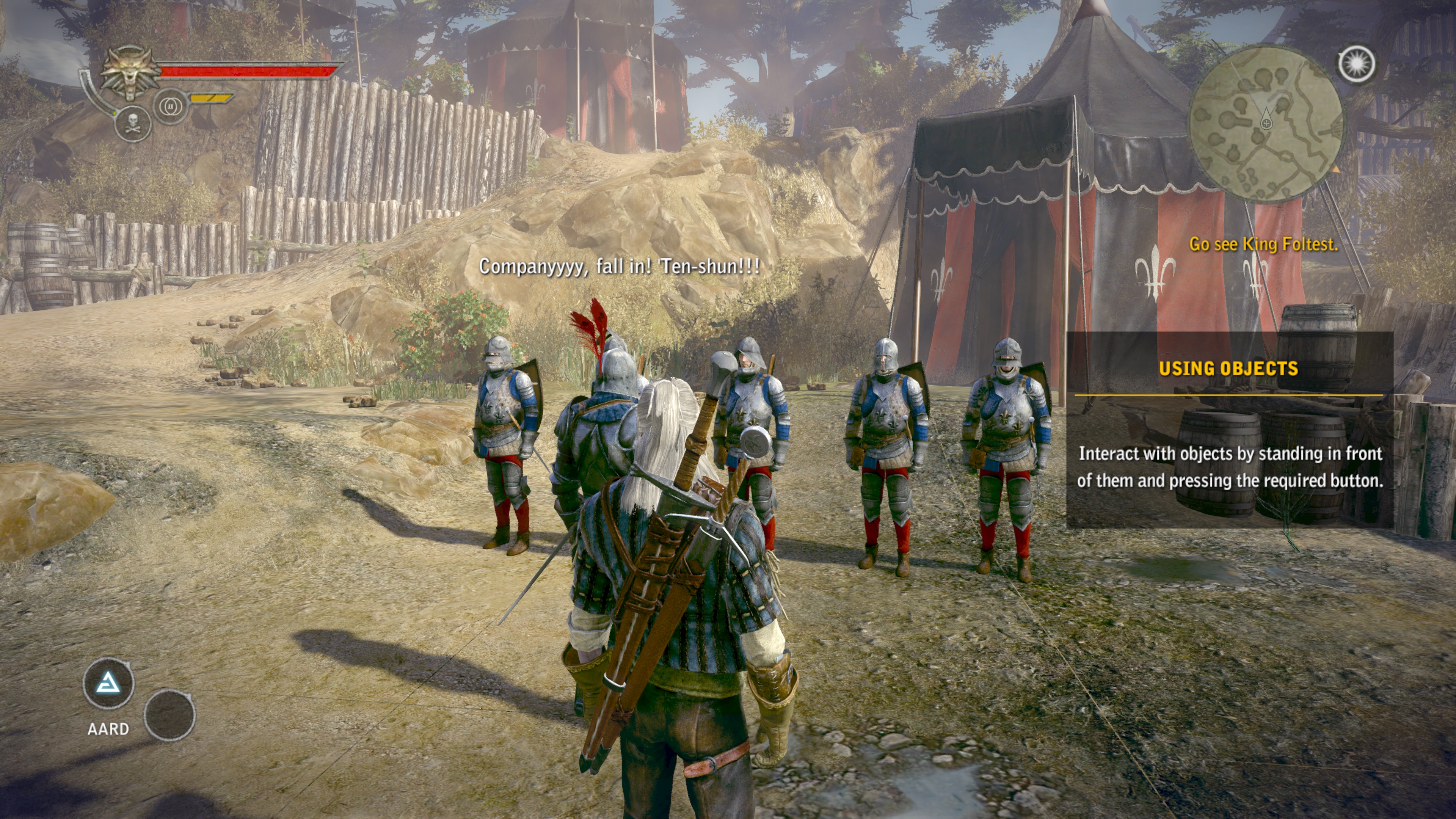
You play, once again, as Geralt of Rivia, a witch who got framed for assassinating King Demavend and must prove his innocence. The story is heavy on politics but is also very deep and feels just like the novels. Triss Merrigold also returns with her beautiful red hair and all. You will also see other familiar faces, such as Zoltan Chivay and Dandelion. The new faces are strong, likable, and memorable characters that you will grow to love or hate, respectively, throughout the course of this 20- to 30-hhour game. Geralt himself is even stronger this time around, with more problems than you can shake a stick at. You learn to respect him more and see just how much this poor man can take. CD Projekt really shows you the roots of both good and evil in humanity in such a realistic fashion, and that’s what really drives the characters home.
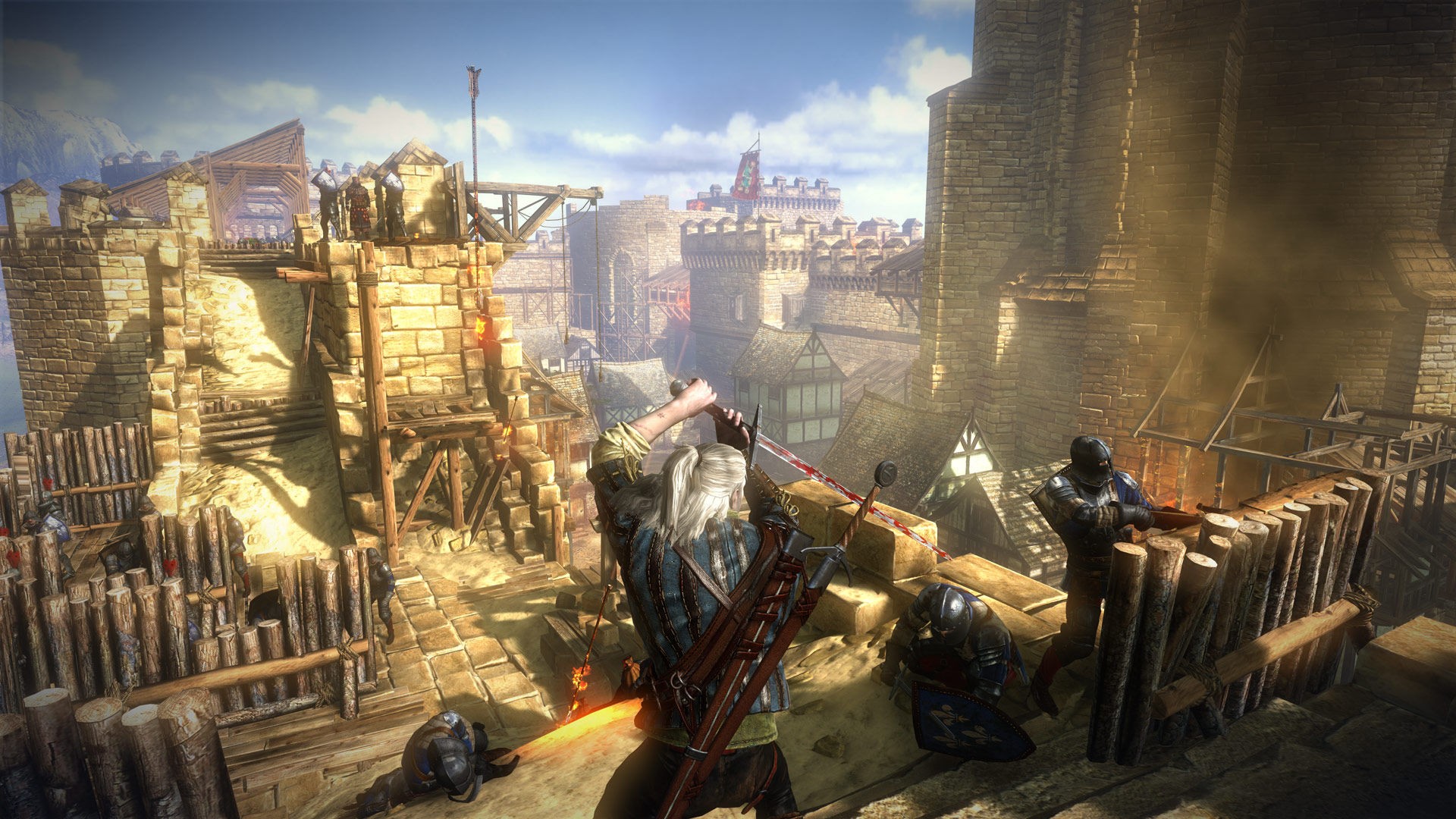
The combat in The Witcher 2 is better than the first game because gone are the timed sword swings and stances. You now just have light and heavy attacks, but you can block and counter-attack (when you unlock the skill), and you still use the steel/silver sword combo. Steel is for people, and silver is for monsters. Combat was very hard to do when the game first launched, but patches as of late have fixed this for multiple blocking and faster responses. The combat isn’t great and is clumsy, especially early on when you aren’t very strong and towards the end of the game. Combat will make you smash your monitor in frustration in the beginning because you have to learn to just hit once or twice, dodge, run around, hit another couple of times, rinse, and repeat 50 times. Yeah, it’s one of those games in the beginning. After you level up enough, you can cut down enemies in just a couple of swings, and groups of 7–10 won’t really bother you.
Of course, you can equip better armor, weapons, and so forth, but The Witcher lets you do other things like equipping trophies that are found on bosses that increase stats, using sword enhancements such as oils, whetstones, runes, and armor enhancements (kind of like Monster Hunter?). This adds a lot of depth to the customization of your loadout, which has endless possibilities. I think the biggest improvement is resource gathering and alchemy because it’s so simple and easy now. Just gather resources as you go, and you can meditate and create potions that increase your vigor (for signs; more on that later), vitality (health), a potion that lets you see in the dark, damage-increasing potions, etc. The only problem is that you can’t drink them from the menu; you have to use them before a fight. This is my biggest beef with the game because if you are low on health in a fight, you’re screwed unless you took a swallow potion beforehand. The premeditated potion drinking is a big flaw in the game, I think, but some hardcore RPG players may like this.
The Witcher is also famous for its signs because witchers can’t use magic like sorcerers or mages can. There are six different signs, and they use chunks of vigor but recharge over time. These signs are vital to winning in combat, especially against bosses, so learn to use them in tandem with sword combos, and you can win even the toughest fights. One last thing you can use in combat is Places of Power, which you find with your wolf medallion. Activate it, and you may find, out in the woods or in wild places, signs of power that give you temporary stat boosts. These come in handy early in the game (especially in Flotsam) when you are at a low level.
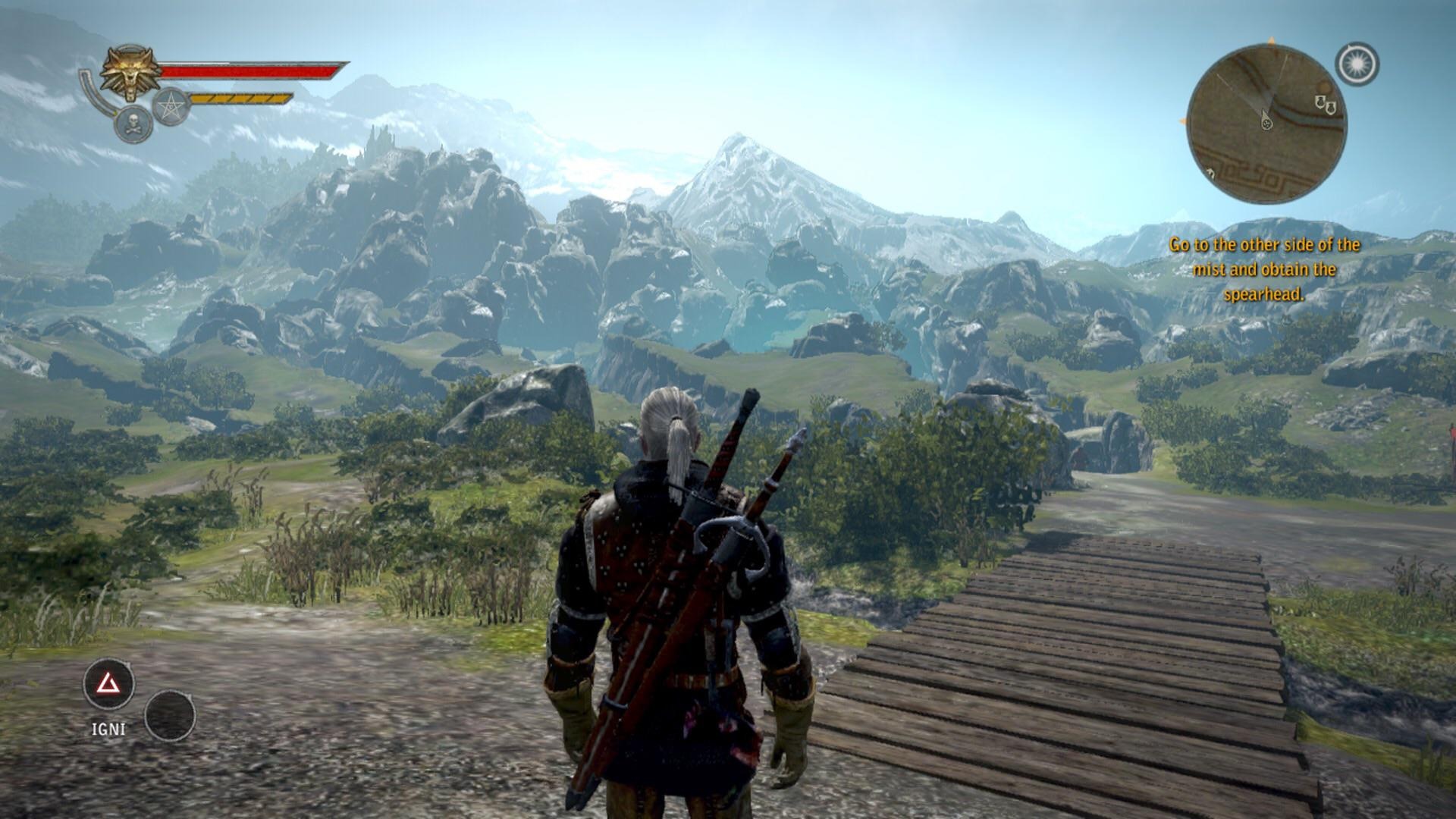
The story also has moral decisions thrown in there that really change the outcome of the story. Of course, there are multiple playthroughs (but no new game, sadly), so you can see what each decision will bring. There are a lot of plot holes in the story that aren’t filled until the very end during dialog, which I found odd, so if you get confused, just hang in there until the final moments of the game. Overall, my biggest issue is the potion use, combat, and the huge difficulty spikes. The graphics are groundbreaking, with gorgeous lighting, highly detailed textures, amazing landscapes, and varied environments with nice weather effects. The character models look superb, and the voice acting is top-notch. This game just shows that indie developers can make games look great. You do need a monster rig to run the game on high settings (especially with Ubersampling enabling you to probably need dual GPUs and a high-end quad-core CPU). Other than that, The Witcher 2 is amazing in every way and should not be missed by anyone.














 thebinarymessiah.com
Try multiplayer. A lot of fun !