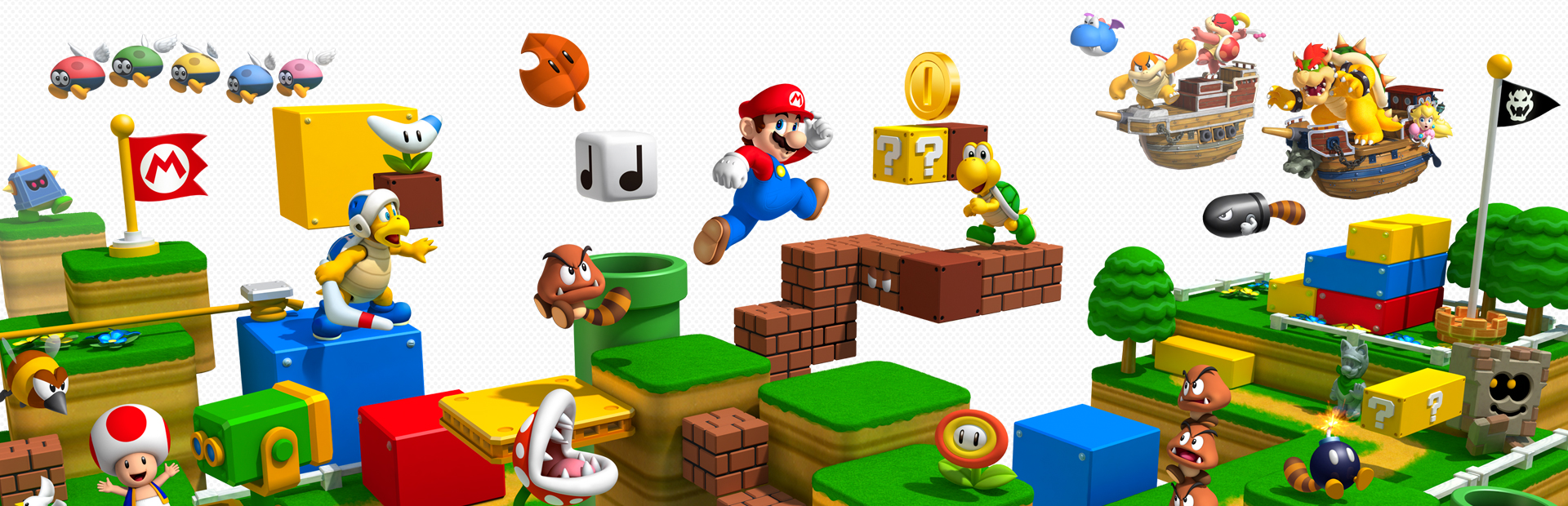
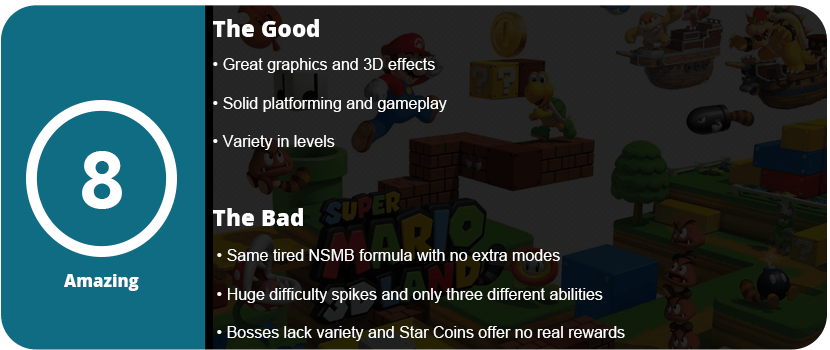
Here we are again. Another Mario game to prove how good the new Nintendo system is. Super Mario 3D Land is another addition to the New Super Mario Bros./Galaxy formula that pushed Mario into a new generation. Honestly, I’m tired of it, but it still proves to be solid and entertaining.
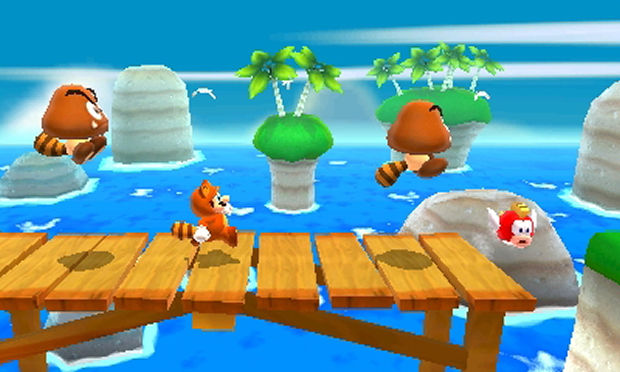
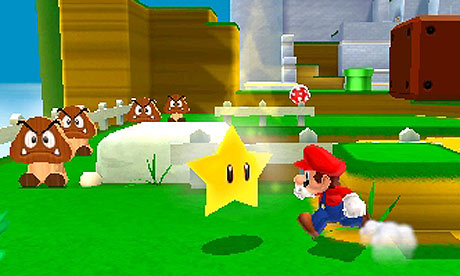
The game has 8 worlds to play through, and each stage is completely different, so at least there’s variety. Each world feels like a mini-game from Super Mario Galaxy mixed with a New Super Mario Bros. level. The whole point is to just get to the end, but there are 3-star coins in each level. Here’s the problem with collecting all those: There’s absolutely no reward for doing so; it’s just to scratch the completionist’s OCD itch. Mario has his usual NSMB abilities, like the fire flower, Tanooki suit, Boomerang suit, and white Tanooki suit. Honestly, the game lacked any new abilities, which is a shame. I found that the Tanooki suit was vital to winning some levels and even getting some star coins.
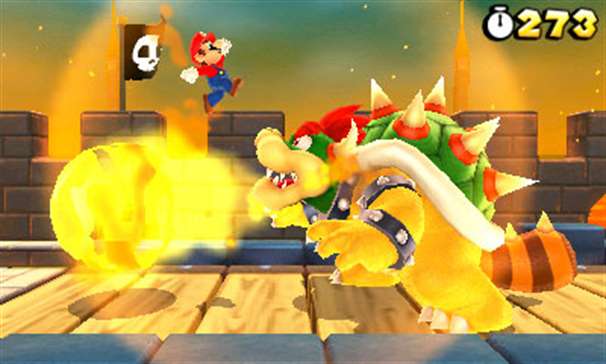
At the end of each world, you fight Bowser, but there’s no variety to it. You work your way up to him, then you just avoid his attacks until you get to the button that knocks him into lava. Every so often, you will fight Bowser Jr. or the Koopa Twins, but they are all very easy. Speaking of easy, the first six worlds are a breeze with nearly zero challenges. The enemies are easy to avoid, and if you die more than five times, you get the White Tanooki suit, which makes you invincible through the whole level. They basically just let you cheat your way through. I really hated this, but at the last word, I found that I needed it because the game went from super easy to extremely difficult in no time flat. It took over an hour to beat the final Bowser level.
The 3D effects are pretty nice and work well here. There are a few instances in levels where 3D will benefit you to see the level layout better, but just like most 3DS games, it’s just for flash and not gameplay. I did find the graphics to look crisp and very pretty for a 3DS game, but they still look like Super Mario Galaxy and haven’t changed one bit. I’m bored of it. There are no extra modes, and once you beat the game, it’s hard to have a reason to come back. The story in the Mario games is pretty simple, so I won’t even go there.
The severe lack of challenge through 70% of the game just really brings the experience down. Enemies are a breeze to avoid, and there’s just nothing new to the overall Mario formula to make it groundbreaking like Mario used to be. Nintendo has been riding this formula for so long that it’s no wonder people keep buying it. I thought this would be kind of like Mario 64 in the sense that it revolutionized the genre and console; this game had that potential. While the game is just plain fun, I wanted a challenge. I wanted something new, like more abilities, a new art style, new enemies, and just a larger challenge. When you hit World 7, you will be in for a world of hurt because the game is just so damn hard. It’s the way the level is laid out; enemies are placed in tricky spots, but it’s not the fair type of hard.
Overall, Super Mario 3D Land is a fun game, but not the genre-changer that everyone thought. It sticks with the same tired NSMB/Galaxy formula that everyone is getting tired of. There’s no challenge 70% through the game, and the bosses lack variety. There are no extra modes, and the star coins offer no reward. What we have is just a fun Mario game with great graphics and 3D effects, that’s all.
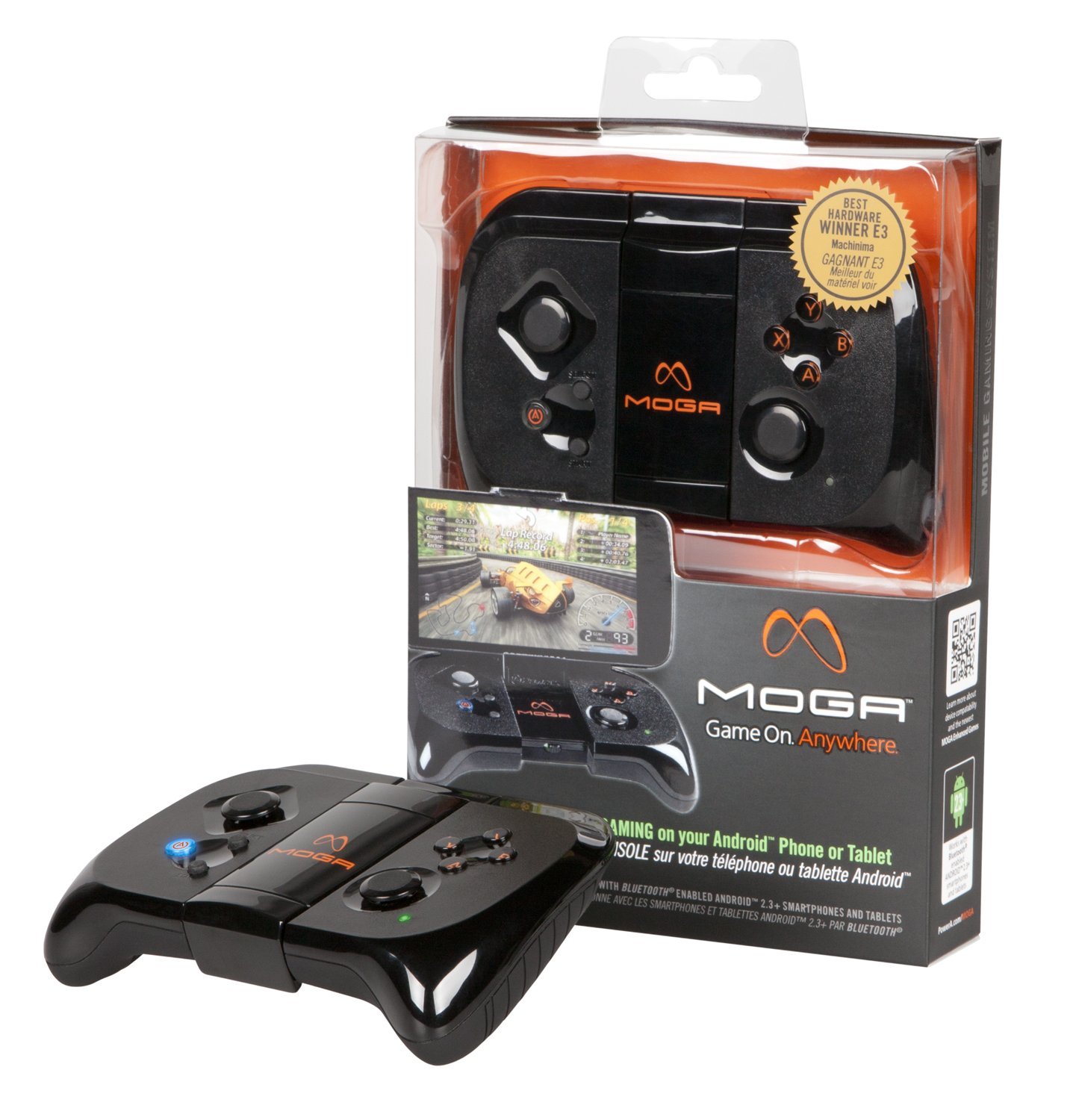
Now that gaming on tablets and phones is becoming more serious and popular, companies are coming out with dedicated controllers for your devices. PowerA was one of the first ones out of the gate with their Moga series of controllers. This is the mobile version that holds your phone while you play. It’s Bluetooth, so there are no cords tethered to your device. The controller is very well designed and sturdy; it doesn’t feel cheap at all.
I love the ergonomics of this controller. The middle of the controller has a flip-up phone holder. It can hold up to 6″ phones, so everything up to the Samsung Note II. The top and bottom of the clip have rubber grips so your phone doesn’t slip out, and it keeps it from getting scratched. Getting the controller to connect is a breeze. The initial setup is done with the Moga Pivot app, which also scans your device for games that can be played with the controller. You can also navigate and launch these apps with the controller. The controller sits well in your hands and is powered by 2 AA batteries, each housed on either side of the controller. PowerA went for minimalism with this controller, and they nailed it.
The only issue with the controller is that it feels too rigid. The buttons aren’t very soft and make a loud clicking sound. The thumbstick nubs are a bit stiff, and there’s no D-pad. I like the L and R triggers, which feel great for shooting games and racing. I wish the controller had analog sticks rather than nubs. It’s really hard to adjust to these in a shooter; I had to turn the sensitivity way down in the game to make it feel somewhat normal. The controller is also lacking bumpers, which could have fit just fine. So there’s a bit of a learning curve with this controller.
At least it comes with two free games: Pac-Man and Sonic CD. It also includes a really nice leather case to hold your controller in. The biggest issue of all is that there aren’t many games that support this thing. There is a free universal driver app to use in emulators, which is probably the main reason why someone would buy this. I was able to play a GBA, SNES, PS1, and Genesis emulator with no issues. Other than this, this is well worth the $40 for anyone looking for a controller without having to buy special cables, root, or buy expensive apps.
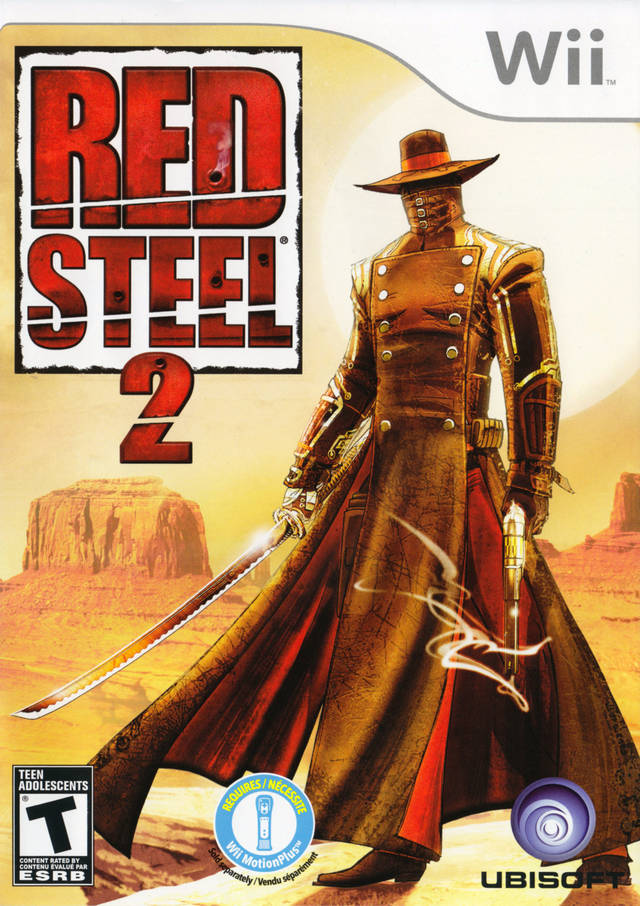
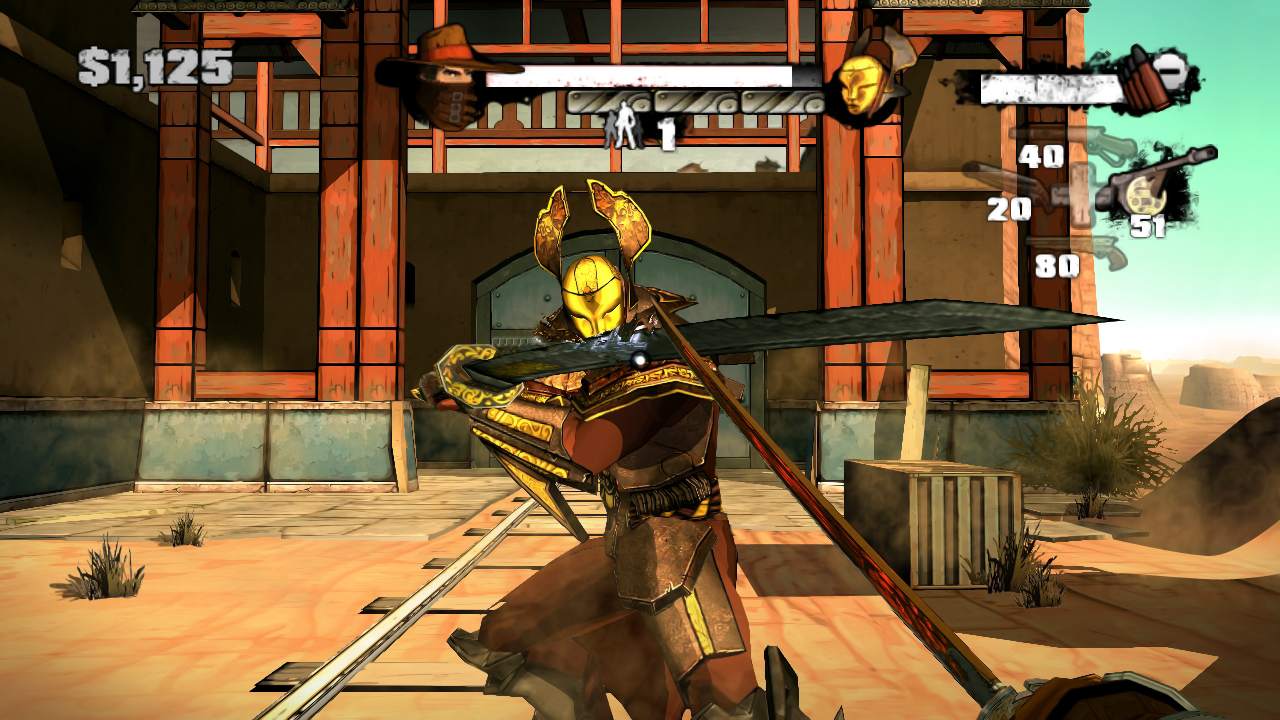
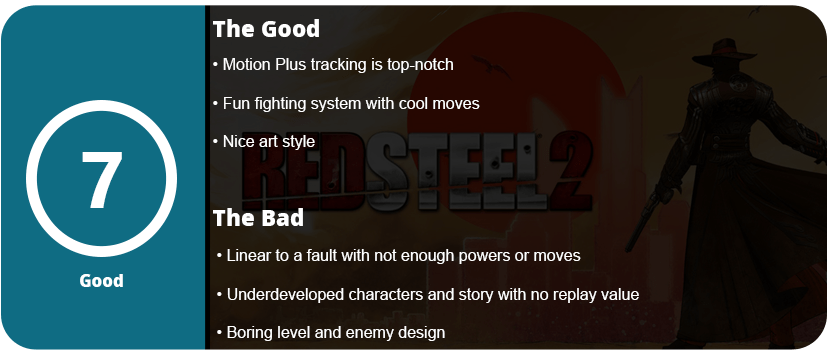
The first Red Steel was a highly anticipated on-rails shooter. Back when the Wii came out, people were excited for the arcade-style FPS experiences it could bring home, but Red Steel failed on that delivery with bad controls, a bad story, and uninteresting enemies to kill. Ubisoft must have just thrown everything out the window because they took the same characters and put them in a Chinese/Japanese/Wild West format with a new art style. There’s still not much content, and it’s pretty bland, but the use of the Wii Motion Plus is top-notch and shouldn’t be missed.
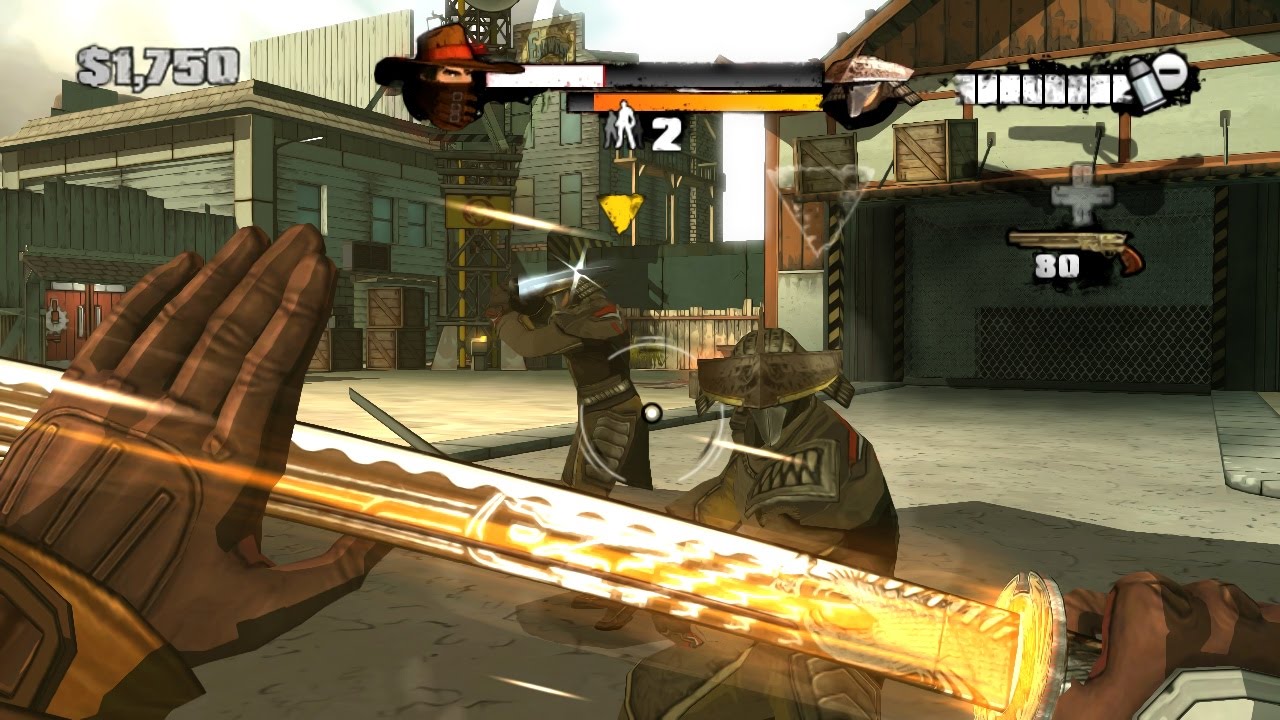
The story is pretty quick and basic. You are the last of the Kusagari clan who is trying to stop the Katakana clan from getting a hold of ore to forge another powerful Sora Katana. Yeah, pretty boring; the characters are underdeveloped; and the whole story is a toss-up. Nothing memorable here at all. You’re here for the action. The game has two basic mechanics: swordfighting and gunplay. The game does a good job of auto-locking on enemies while you switch around with Z. Thanks to Motion Plus, you can swing with 1:1 accuracy, unlike any other Wii game out there. Hold your arm all the way back for a power attack; holding A+B allows you to charge your attack. Swing up to throw an enemy into the air, and swing down to throw them down. It’s pretty cool to see and do, but you unlock other powers and make moves along the way.
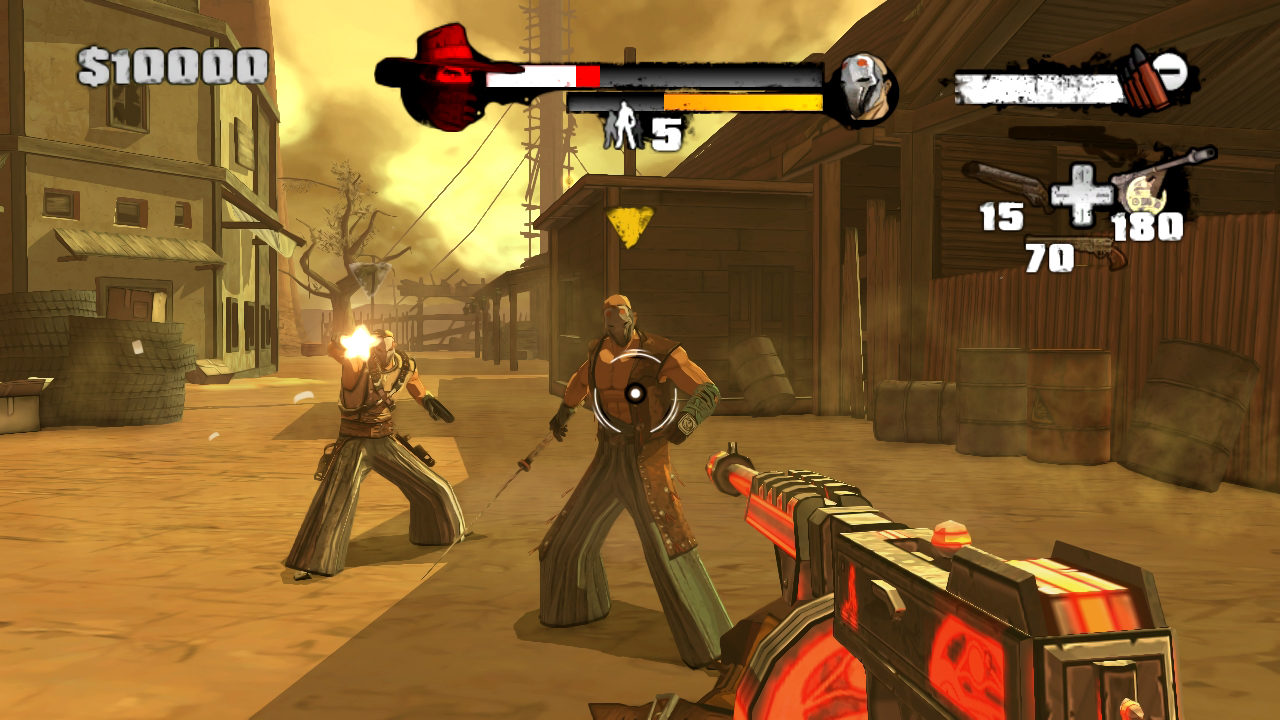
The shooting feels great and works really well. Besides shooting enemies, you can break stuff open to collect gold, which is used to buy upgrades, powers, armor, and health. There are side missions peppered throughout the game, but they are pretty uninteresting, and by the end of the game, you will just want it to end. See, the whole 1:1 sword fighting is fun, but there aren’t very many moves, and the game is extremely hard until you unlock them all. The enemies are pretty generic, but there is enough variety to which you have to adjust your strategy. You can’t just go around flailing your arm and hoping to win. You also can’t use every attack on every enemy. There are finishers you can use, and you must use them to your advantage. Some moves are nearly instant kills on some enemies, so learn which attack works best on what enemy.
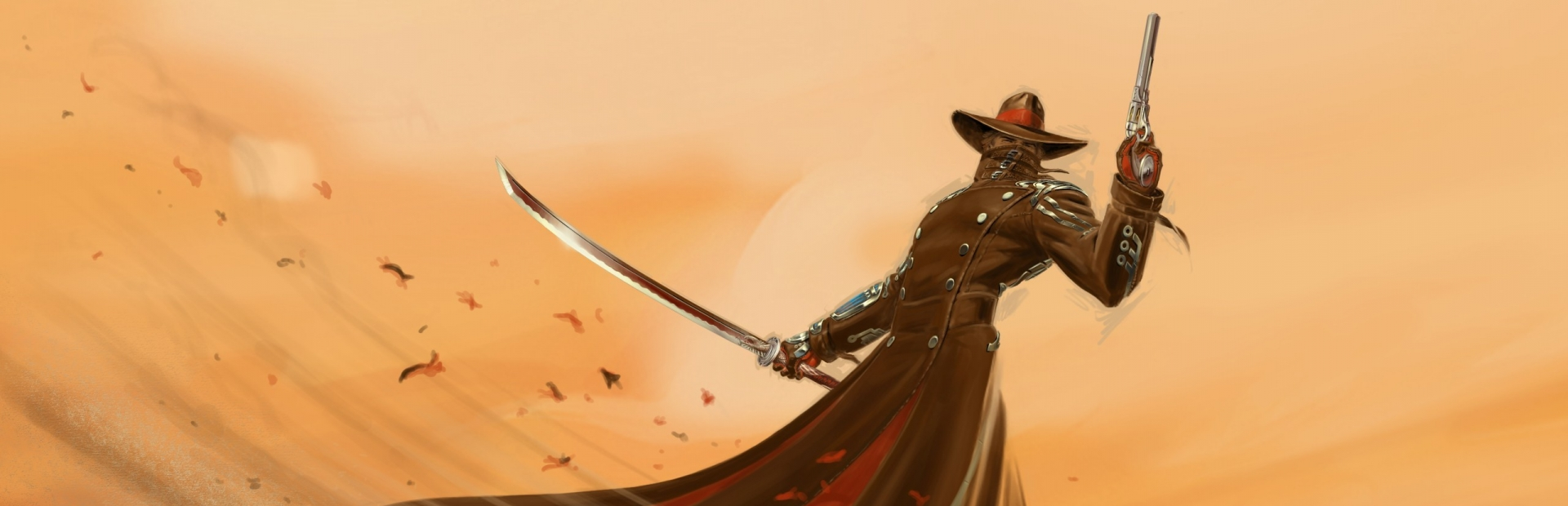
The art style reminds me a lot of Borderlands, but it looks nice for a Wii game. While the art may look nice, it’s very bland. There are just a lot of blank, brown deserts and empty towns. The game is also very linear; while you can climb up a ledge to find some coins, it doesn’t go beyond that. After about 1/4 through, it just felt like the same thing and never ended. I wish there was more variety because the fighting system is excellent and shows how great the Wii can be. Once you beat the game, it’s hard to have a reason to come back. There’s no multiplayer, but there are challenge missions.
In the end, Red Steel 2 gives players a solid fighting system, but it’s wrapped around bland level design, linearity, underdeveloped characters and story, and a sheer lack of content. That’s not to say the game isn’t worth playing; by all means, go ahead. The Motion Plus tracking in this game is fantastic and really makes you feel like you’re sword fighting and shooting a gun. If only Ubisoft had spent six more months fleshing the game out more, it could have been one of the top games on Wii.
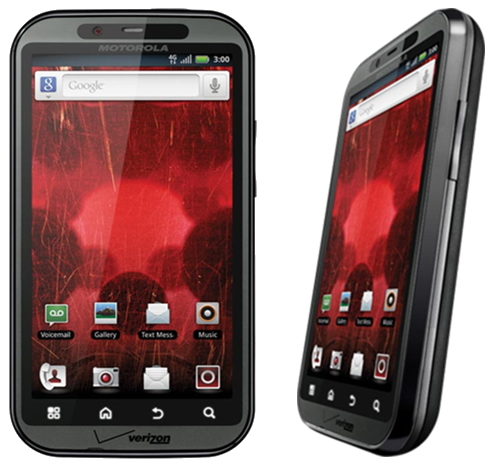
The Android family is growing exponentially and feels like a train hurtling down the track at 200 MPH with no stop in sight. The whole platform has grown in just a couple of short years with a quality market (and market storefront), more quality apps, and games, and now the addition of books and movies just makes the Android market feel like something to compete with the App Store. The devices are also really utilizing the system, and thanks to Google allowing open resource development of the platform, we get some really great apps and features on the phone that the iPhone, Blackberry, and other phones just can’t do.
Out of the Box
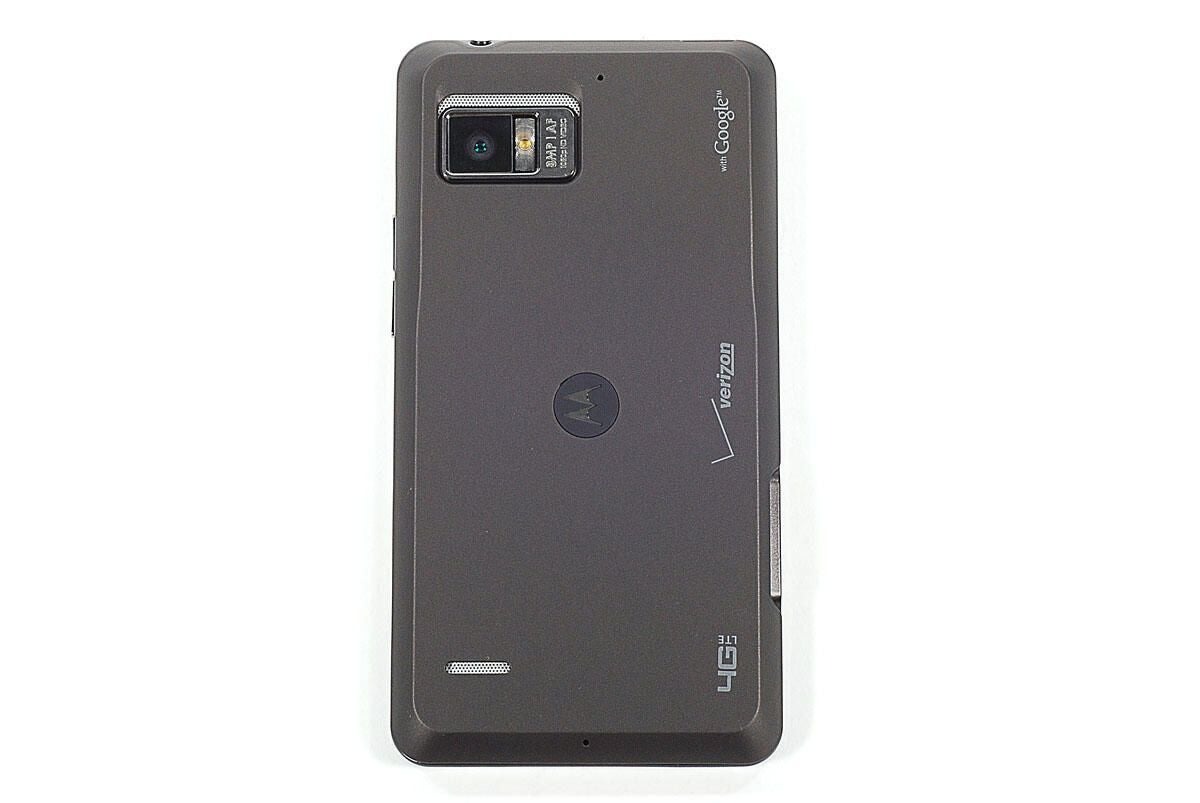
The Bionic has a great-looking box, but there’s not much beyond that. It comes with the standard battery, charger, USB cable, and 16GB micro SD card (cha-ching!) (I’ll cry if a phone comes with a car charger.) The phone came with a SIM card, which is new to Verizon and Droid phones. This is a 4G SIM card and is needed to activate 4G. When you boot it up, you can act like normal, but there’s one feature that was enabled on my phone that kept me on the phone with Verizon for over an hour until I scoured the internet myself. A certain little voice privacy feature was enabled that keeps your 3/4G off and, for some reason, was also enabled on my old Droid. Thankfully, disabling this turned my 3G back on, but that wasn’t really a problem with the phone itself. Once that’s all done, you’ll notice how fast the phone boots up (there’s even a neat Droid Bionic logo animation and sound!). Transformers anyone?) So let’s go over some of the hardware features.
Hardware Features
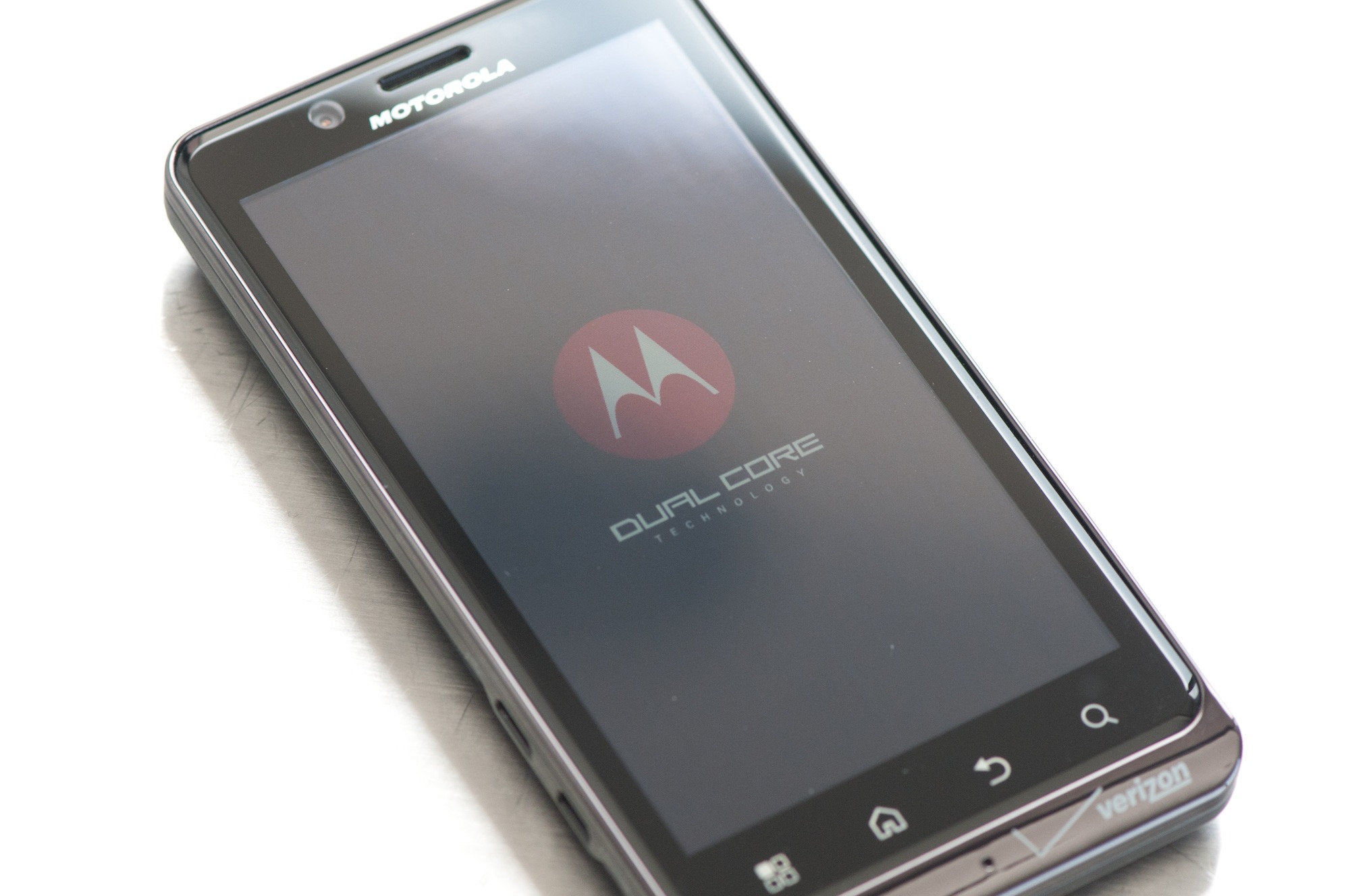
The first thing you’ll notice is that the speed of the phone is as fast as a computer. That’s the 1 GHz dual-core processor running everything for you at lightning speed. Why dual-core? Everything is just twice as fast and lets you multitask like never before without any type of slowdown or lag that you might even get on single-core 1Ghz phones. Compared to the iPhone 4S, it’s actually faster with an ARM Cortex-A9 processor. Yes, the iPhone 4S does have the same processor type, but it’s under-clocked at 800 MHz per core, so you’re losing about 25% speed over the Bionic unless you jailbreak your iPhone and overclock the processor.
The GPU is also slightly faster than both the iPhone 4 and 4S (they both have the same GPU) with a PowerVR SGX540 at 304 MHz, while the new iPhones both have an SGX535 model. The Bionic has faster and more memory with 1 GHz DDR2 memory, which is as fast as a computer, while both iPhones still use eDRAM and only have 512 MB. This means extra speed, faster app switching, and the ability to have more apps open without suffering from slowdown, lag, or crashes.
The Bionic also has 8GB of internal memory with the option of SD cards (up to 32GB), so with the standard model, you get 22GB of memory (maximum 40GB), while the iPhones are stuck with just the internal memory and you have to pay huge dollars for more space. The camera is about on par with the 4S with 8MP and 1080p support that lets you take panoramic photos, super high-quality video, and photos, and has an excellent flash. The front-facing camera is just 1.3 MP for video calling.
The only thing that the iPhone really trumps the Bionic on are the displays. The iPhones have 960×640 resolutions with 326 ppi, and the Bionic has 960×540 resolutions with 266 ppi. It’s not much, but it does make a difference when you compare the two. The Bionic does have a huge 4.3″ screen, which stomps on the iPhone’s 3.5″ screen, and is a true qHD screen (true 16:9 ratio), which is perfect for watching movies. The Bionic also has a mini-HDMI port for connecting to your TV, and even other high-end phones don’t have this yet. The Bionic has a higher contrast ratio of 800:1, while the iPhones have 800:1. This means it can display more colors and resemble more of an HDTV than a phone display.
Software Features
When you start using the phone, you will see it has so many great features over old Android phones, the iPhone, and Blackberry. First off, let’s talk about data management and sharing. The phone now comes with a file manager, so you can transfer files from your internal storage to your SD card as well as connect to your computer wirelessly and share files. The phone also supports DLNA, which can sync your media via Wi-Fi and upload media to your computer. The phone also gives a few options when you connect to your computer via USB. Instead of just the mass storage device option, you get a PC Mode that allows you to connect via a Motorola laptop or installs the MotoHelper driver on your PC and lets you access the SD card and internal storage. The software will also show any missed calls, texts, etc., which is a nice touch.
There are some nice pre-installed apps, such as the built-in camera apps, which give you a good range of options for video and photos; you now have a download manager; and MotoPrint, which allows you to connect to a wireless printer via W-Fi. There’s also a task manager, which is very useful to kill stubborn (read: poorly programmed) apps that won’t close. It also has an auto-kill list for when the screen goes out for 2 minutes. This helps preserve battery life (you’ll need it), but the phone does a good job of doing this on its own. You can turn the phone into a mobile hotspot (remember, it’s extra per month for this feature), plus all the standard apps like the task scheduler, calculator, and alarm are nice.
The market has a great storefront and has tons of quality games, apps, books, and movies now. The market just allows you to really make the phone your own, reflects your personality, and gives you so many options. The phone really has just so many great features built-in that make things so much easier for transferring data and media, as well as using the cameras and all the nifty hardware.
One thing I have to mention is that the games run smoothly on this phone. Using the PlayStation and SNES emulators, I can get games to run at 400 FPS with all the quality options enabled. All the high-end 3D games run without a hitch, and you will be unstoppable game-wise, especially if you can switch from a hardware-hungry emulator to the browser to check an FAQ, switch back, answer a call, or text someone, all without any slowdown and with all those running in the background.
When it comes to the basic phone features, it sounds great; the speakers sound sweet; calls are clear; and typing on the keyboard is easy with the huge screen. You won’t miss a pull-out keyboard with this phone.
It’s Not Perfect
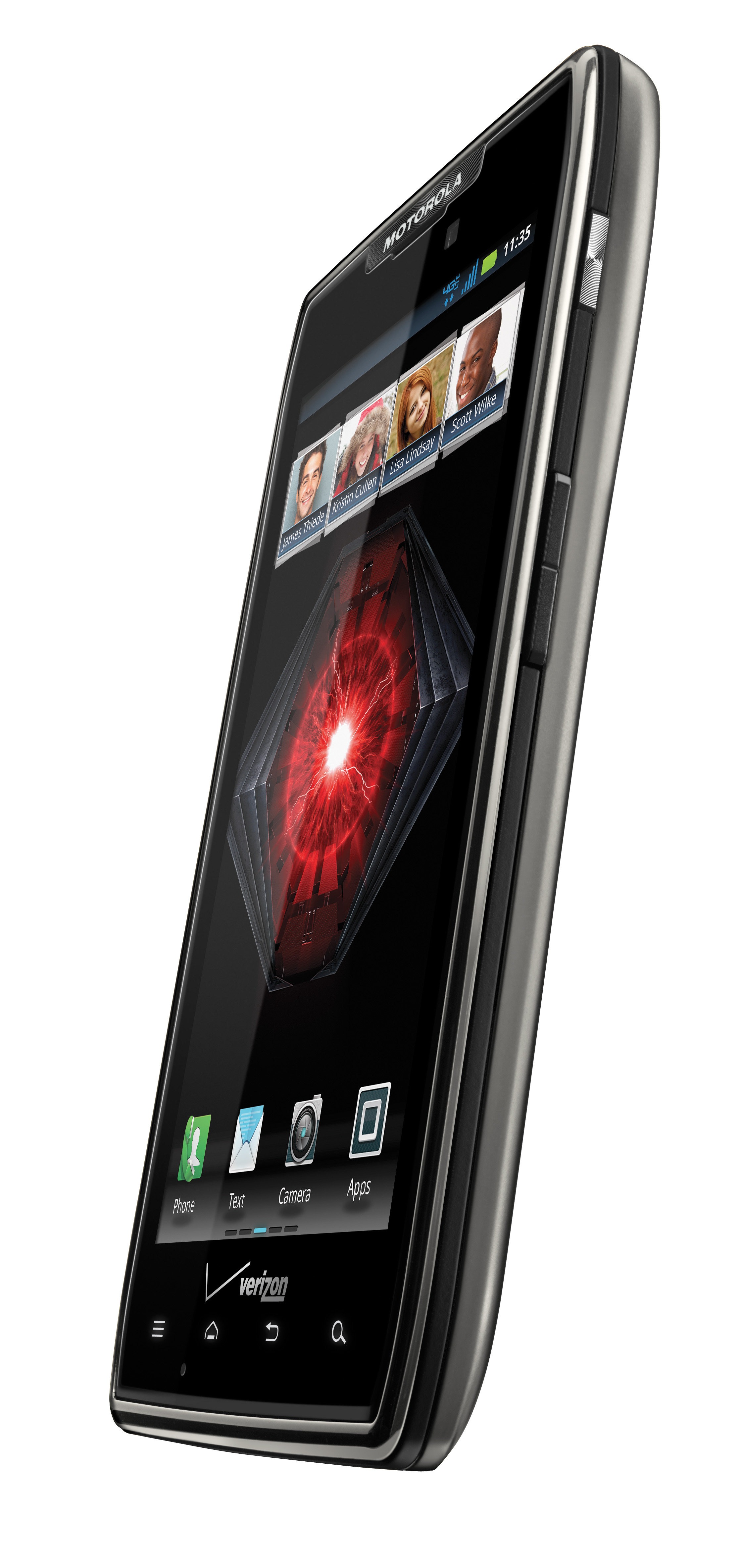
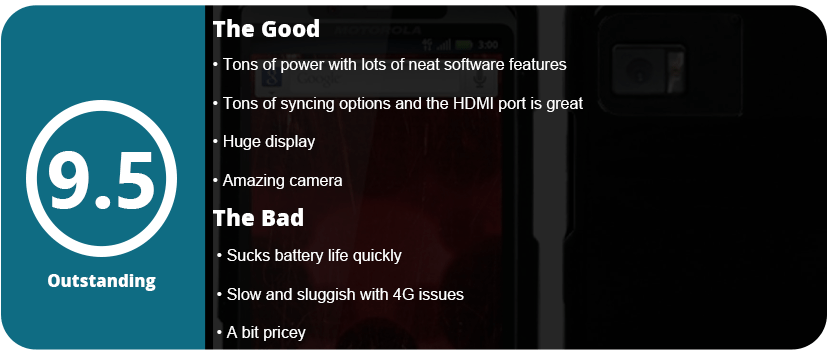
The phone isn’t perfect; however, the battery is probably the biggest issue with this monster sucking it dry within a few hours. Sure, you can use battery-saving apps, and the phone has a built-in battery saver, but if you surf the net a lot or play games all the time, have a charger with you at all times. There also seems to be an issue with mobile networking, because it fades in and out a lot. I’m not sure if that’s my area or the phone itself. While 4G LTE is lightning fast (there’s a world of difference in speed), it’s only available in a few areas (mainly big cities), so I don’t even get it in my area. By 2013, Verizon said the whole country would get it, so we’ll have to see. There also isn’t a camera button on the phone, and a lot of people are used to this. The volume and power buttons are also really small and sometimes hard to press when you’re not looking. Other than that, this is an amazing phone and should be bought by every Android lover!
Update (6/17/13)
Now that I have had this phone for a full 2 years, I hate the thing. I have the same problem I did with the original Droid. I went through two years of crappy firmware updates, 4G constantly dropping out, sluggish, unresponsive everything, but at least the battery issue got fixed, but it took an entire year. I don’t know what happens with Motorola phones, but after 6 months, they just tank on you. I tried resetting the phone to factory defaults and replacing the phone, but neither worked. It would sometimes take minutes for a browser to load, and typing would be delayed up to 10 seconds, and it was frustrating and annoying. It also doesn’t help that the phone is huge and heavy compared to phones that are out now. It finally got the 4.2.2 Jellybean update about 3 months ago, but it runs worse on that OS than the 2.3 it came with. I will never buy a Motorola phone again. Sometimes the language would change randomly, but at least it didn’t reboot on its own like my last phone. While the Bionic is discontinued now and has been replaced by the Droid Razer and Razer Maxx, I feel mad about Motorola abandoning their Bionic users. The phone was the last to get the 4.0 ICS update, and even that had bugs of its own. Just don’t ever buy a Motorola phone; they are all the same.
Apple finally met its match; the Samsung Galaxy S III has sold more units than the iPhone 4 and 4S combined. That’s a serious feat. Why do you ask? Because Android OS gives you complete freedom to do what you want, not what Samsung wants. There is no iTunes that you are tethered to; you can put what you want on your phone; you can buy expandable media; the choice is yours. People loved that, and the S3 took off due to the form factor and Samsung’s smart marketing ideas. With the S4, Samsung has created the most powerful smartphone on the planet. Honestly, I won’t even compare the S4 to the iPhone 5 much because it is more powerful than that phone and the iPad 3.
Out of the Box
The box itself is actually pretty nice. It has a wood texture on it, letting you know you bought something classy, something with character—not a robot clone like the iPhone 5. Like wood, you can shape it and do what you want with it—make furniture, do some wood burning, or break it into pieces. Like wood, the S4 has endless customization options. The S4 comes with earbuds that are better than the iPhone earbuds, as well as three different earpieces for different size preferences. You will also have to put the battery in yourself, the back cover, and for some carriers, the 4G SIM card. Assembling your phone also lets you know that it’s yours; it’s not assembled in the box like an iPhone, and it gives you a bit more attachment to your phone. This sounds weird to some people, but it’s true; there’s a reason for all this.
Welcome to Android
For people who have used Android for a while (like me since 2.2), you will love the 4.2.2 Jellybean OS. Samsung’s personal touch is amazing, with many power-saving options, a great shutter menu, and the speed and precision of a high-end PC. Think I’m kidding? There is virtually zero lag even with multiple apps open, but that’s not the first thing you will notice.
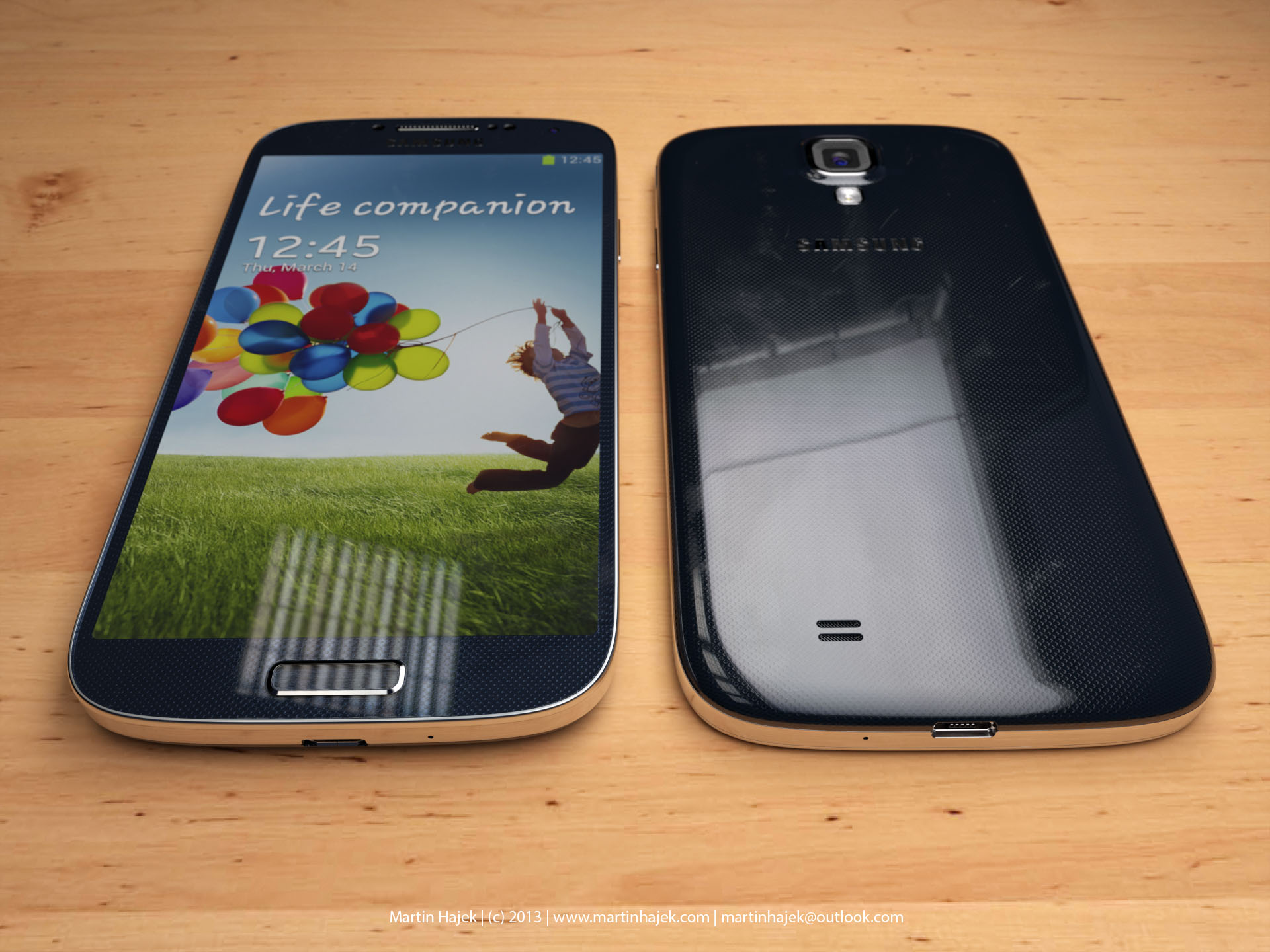
The phone itself is the thinnest and sleekest phone around. Especially for the power under the hood. The 5″ Super AMOLED display is gorgeous and rivals that of high-end HDTVs. It has a 1920×1080 resolution; that’s a full 1080p resolution, which is the same quality as a TV. The screen is also 441 PPI, which is twice that of most other high-end phones. You are looking at pure, eye-catching, crisp visuals for movies, games, and photos. Nothing out there beats it. It also feels great; it’s a perfect rectangle with rounded edges. It has aluminum sides to make it look modern, and it also comes in black and white. I prefer the black because it looks sleeker, and the white makes it look like a stretched-out iPhone 4S. The volume rocker is very thin and blends in with the phone, and the same goes with the power button. The S4 has a home button like the iPhone and is unlike most other Android phones. It has a menu and back soft key, but no search soft key like other phones. I found this simple, and honestly, it looks like a better iPhone.
Under the Hood
For people who care or don’t care, the S4 is one of the most powerful phones on the market. It has a 1.9 GHz (there are 1.6 and 1.4 GHz models available) quad-core Krait 300 CPU. That is damn fast, even faster than most high-end tablets. It sports an SGX PowerVR 544 GPU, which will let you play the best games out there but is also extremely fast, and current games don’t quite push it to its limits; it’s a tri-core GPU to boot. In fact, it’s just one up from the PlayStation Vita GPU, and everyone knows it can produce near-PS3-quality graphics. The S4 has 2GB of LPDDR3 RAM, which means tons of room for app switching, and you won’t have any slowdowns. You also get a 13 MP camera, yeah. It’s the same quality as a high-end point-and-shoot, and the quality is amazing. There is also a 2 MP front-facing camera, which is better than most phones’ 1.3 or 0.3 MP FFC. This allows extra precision when using the smart gestures later. The battery also has a Near Field Communications chip, which allows for NFC to beam to other devices. You can also mirror your screen on another device to show them something. The S4 also features DLNA file sharing for computers and other devices.
Air Gestures
With the combination of the gyroscope, front-facing camera, and smart screen, you can do things on your phone without even touching it. One feature lets you wave your hand in front of the screen to answer a call, hold the screen with two thumbs and use the gyroscope to look around your pictures, wave your hand in front of the screen to scroll pictures, and various other features. One other feature lets you hover your finger above an image to preview it before pressing it. Honestly, these features are gimmicks and nothing more than something to show off to the public. The biggest issue is that there is a serious battery drain. Keeping the FFC and smart screen features on just sucks your battery dry in a few short hours.
Smart Screen
A few features are here, including scrolling pages with the tilt of your head or tilting your screen. It doesn’t respond as well as you think and sucks your battery down. You can also use Smart Stay, which will turn the screen off when you look away, and Smart Pause, which will pause the video when you look away. This all keeps your FFC on and will drain your battery in no time as well.
The Little Things That Matter
In the end, there are little things that are there for customization. Multi-Window allows you to quickly switch apps with a drawer at the side of your screen. There’s a great power-saving mode that underclocks the CPU and can turn off haptic feedback as well as dial back the color resolution on the screen. You will need these because the battery does not last long in the S4 with everything turned on. There’s also a little feature that lets you make your own vibration patterns, which are really interesting. You can have widgets and shortcuts on your lock screen, which most phones need third-party apps for; you can control the phone with your voice; and you can unlock the screen with your voice. This may seem pointless to some people, but the fact that Samsung put it in here means they care about the consumer. They give you all these tools, and you can decide if you want them or not; they are not forced on you. One thing that I do need to mention is that there is a lot of bloatware on the phone that needs to be disabled. I disabled nearly 30 apps that I would never use and just used up space and resources.
In the end, the Galaxy S4 is one of the most customizable and powerful smartphones on the market, and I would go as far as to say THE most. I have never had a phone that gave me so much freedom, so much power, and such great picture quality. The biggest problems are with the battery and the gimmicky features that help drain that battery. The air gestures and smart screen are for lazy people or people who like to show off; it actually takes more effort to use these than to just use the screen. Despite this, the S4 gives you endless possibilities with the most powerful and efficient mobile OS on the market. You are a fool not to own this phone.
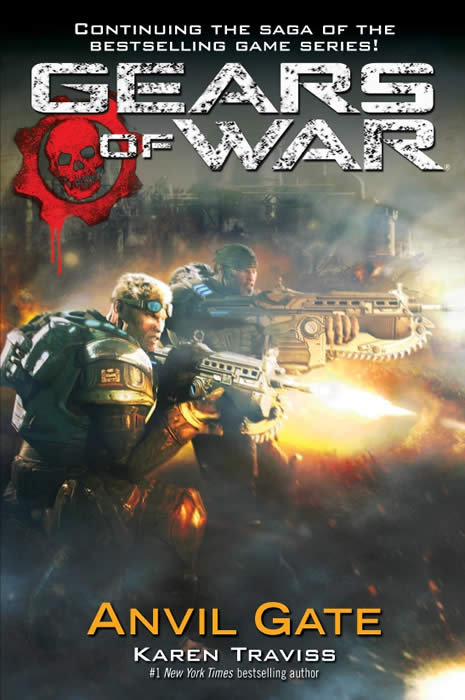
The siege on Anvil Gate has always been a mystery to Gears of War fans. Mainly because the Pendulum Wars are never talked about in the games. The Pendulum Wars was a 70-year war between the Coalition of Ordered Governments and the indies, or independent nations. They didn’t want to be ruled under the COG, so they fought for it. The book jumps between just before the events of Gears of War 3 and a few decades prior as Colonel Hoffman during the siege of Anvil Gate. The recent events are the continuing survival of humanity, the search for more immunization, and the discovery of polyps and lambent stalks (seen in Gears 3).
I have to say that Anvil Gate doesn’t really go anywhere. It’s a more descriptive narrative than anything else. There’s not as much dialog as in other Gears books, and that’s a shame. The book doesn’t really focus on Delta Squad as much, but mainly Hoffman and Baird. All the events seen in Gears 3 are told here in this book, which is a great insight. The constant shaky line between the COG and Gorasnaya (the COG’s main enemy during the Pendulum Wars) is interesting to see, as is how they deal with the indies wreaking havoc and making things harder for everyone. I honestly can just say that Anvil Gate really shows you how hard it is to survive in the Gears universe. Not something the games can really portray. Sure, it looks hard to survive, but the day-to-day stuff isn’t really talked about.
There really aren’t any new characters if you have been reading all the Gears books, which is fine with me. The relationship between Hoffman and Mataki, as well as the occasional quips of Dom thinking about Maria, are interesting. We also get to see more about Marcus’ childhood and how Anya Stroud’s mother, Helena, and Marcus’ dad, Adam, served together. It kind of brings all the little strands together and ties the knots. All the little questions that you get from playing the games are answered here in a nice, cohesive tale.
I just wish there was some more action and some more shocking twists. The story just kind of ends and is really just a tale that puts all the pieces together for you—nothing spectacular or complex—but non-Gears fans won’t appreciate the novel at all. If you really love the Gears universe and want more insight on the Pendulum Wars (besides Aspho Fields), then give this a gander.
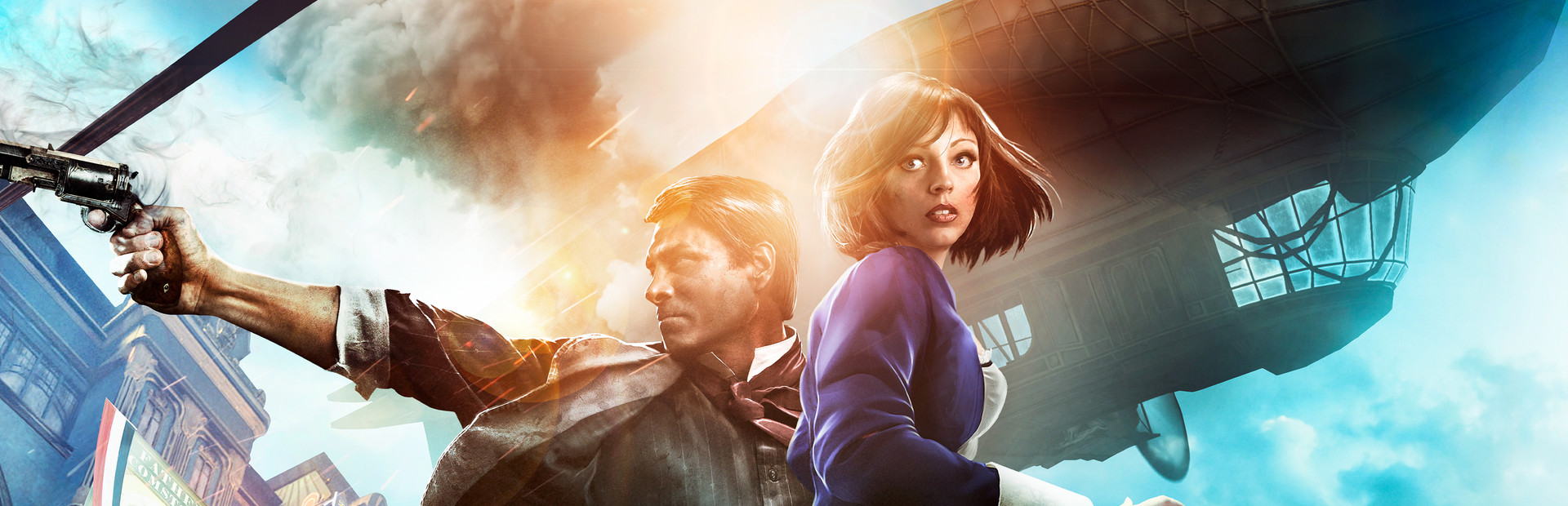
Well, here it is. One of the most anticipated games of the decade. BioShock was a masterpiece that raised the bar for storytelling in games as well as graphics and atmosphere. The underwater city of Rapture was loved by most gamers and became an instant classic. Infinite raises the bar yet again, and I have to say that this is one of the most beautiful and well-made games I have ever played, but even beautiful things have flaws.
The beginning of the game is just breathtaking and spectacular. It’s probably my favorite opening to any game. I honestly can’t explain much about the story because everything would be a spoiler. All I can say is that you are a man named Booker DeWitt who needs to bring back a girl from the floating city of Columbia named Elizabeth. If he brings her back, he can wipe away his debt from gambling. The story progresses into a huge twist ending, fully cuts you loose, and doesn’t quite answer every question. The ending will shock you and even make my jaw drop. It’s a beautiful ending that is going to have gamers talking about it for years to come.
BioShock’s story is also told through the journey. There are no pre-rendered cutscenes or anything to break the flow. A lot of the story is told through hidden journals, like in previous games. There are a lot of similarities to older BioShock games, but everything is improved upon. The combat system still uses guns and magic attacks; however, you get Vigor this time around. They are replenished with salts that you find instead of Eve Hypos. Honestly, the Vigors don’t seem as useful as the Plasmids did. I pretty much stuck with a couple through the whole game because there are so many guns that these end up being more useful. Crow’s Trap is one of my favorites. You can send angry crows at enemies to pick and stun them, or you can lay traps. My favorite was the shock vigor. It can stun enemies, but later on, it can chain across enemies and make their heads pop. There’s one for fire; Bronco lets you throw enemies into the air; there’s a tentacle one that pulls enemies towards you; and there’s also one that allows you to charge enemies and cause damage. They sound neat, and they look neat in action, but the combat is more fast-paced and challenging than in previous games.
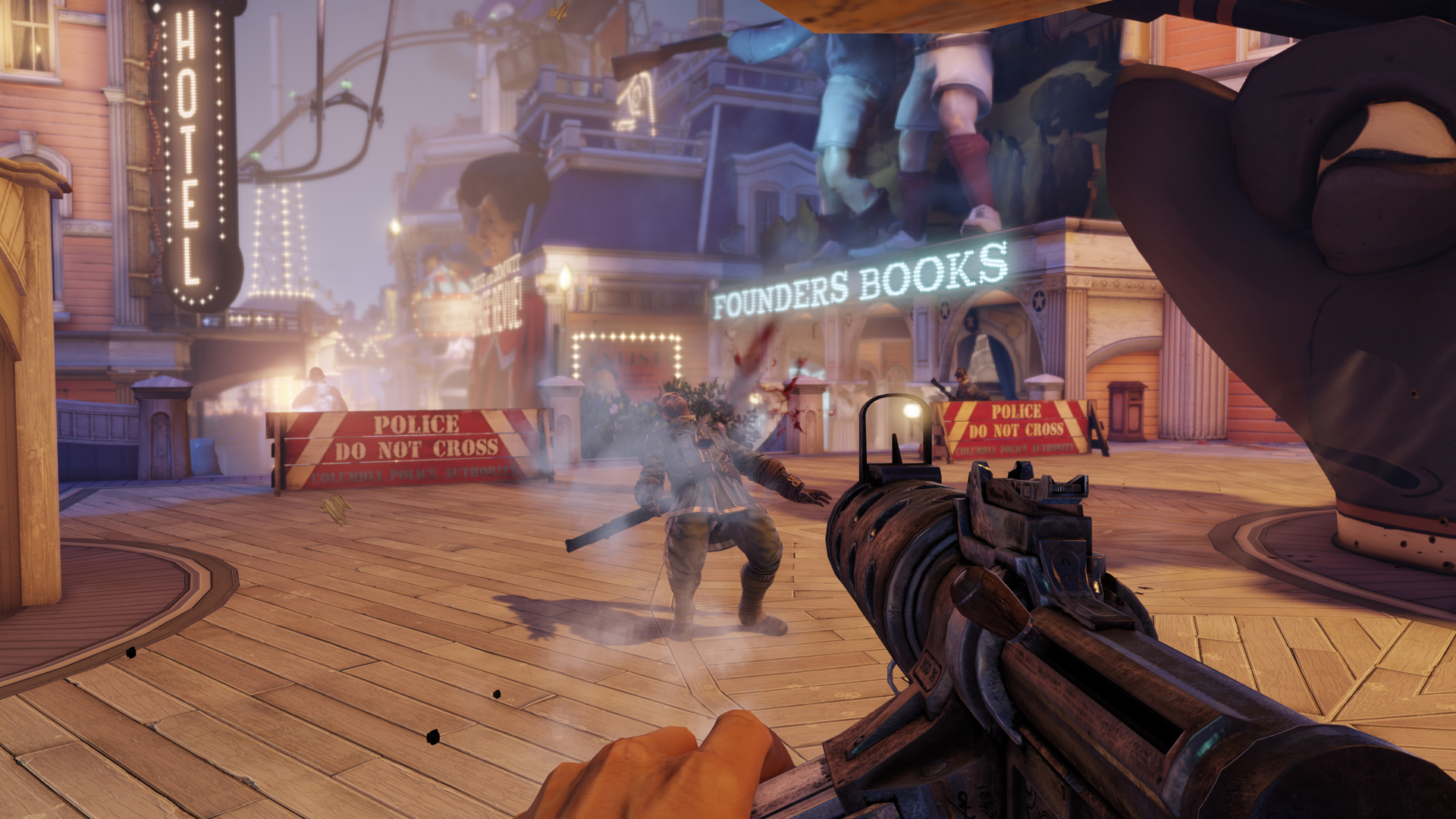
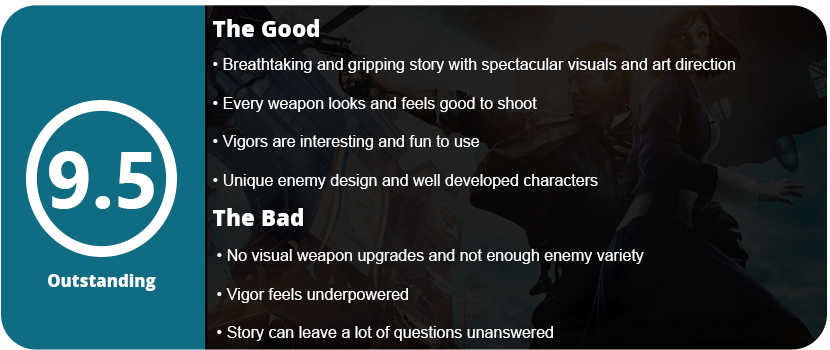
The guns feel so great to shoot in this game. There are pistols, sniper rifles, shotguns, and the typical ones for shooters. Hail Fire and Volley Gun shoot grenades; there’s an M1 Carbine, a repeater, and various others. Honestly, I wish there were more unique weapons like in older BioShocks, but at least they feel good to shoot, and there are plenty of them. I didn’t really need to resort to Vigor unless I had a lot of people after me or had large enemies to deal with.
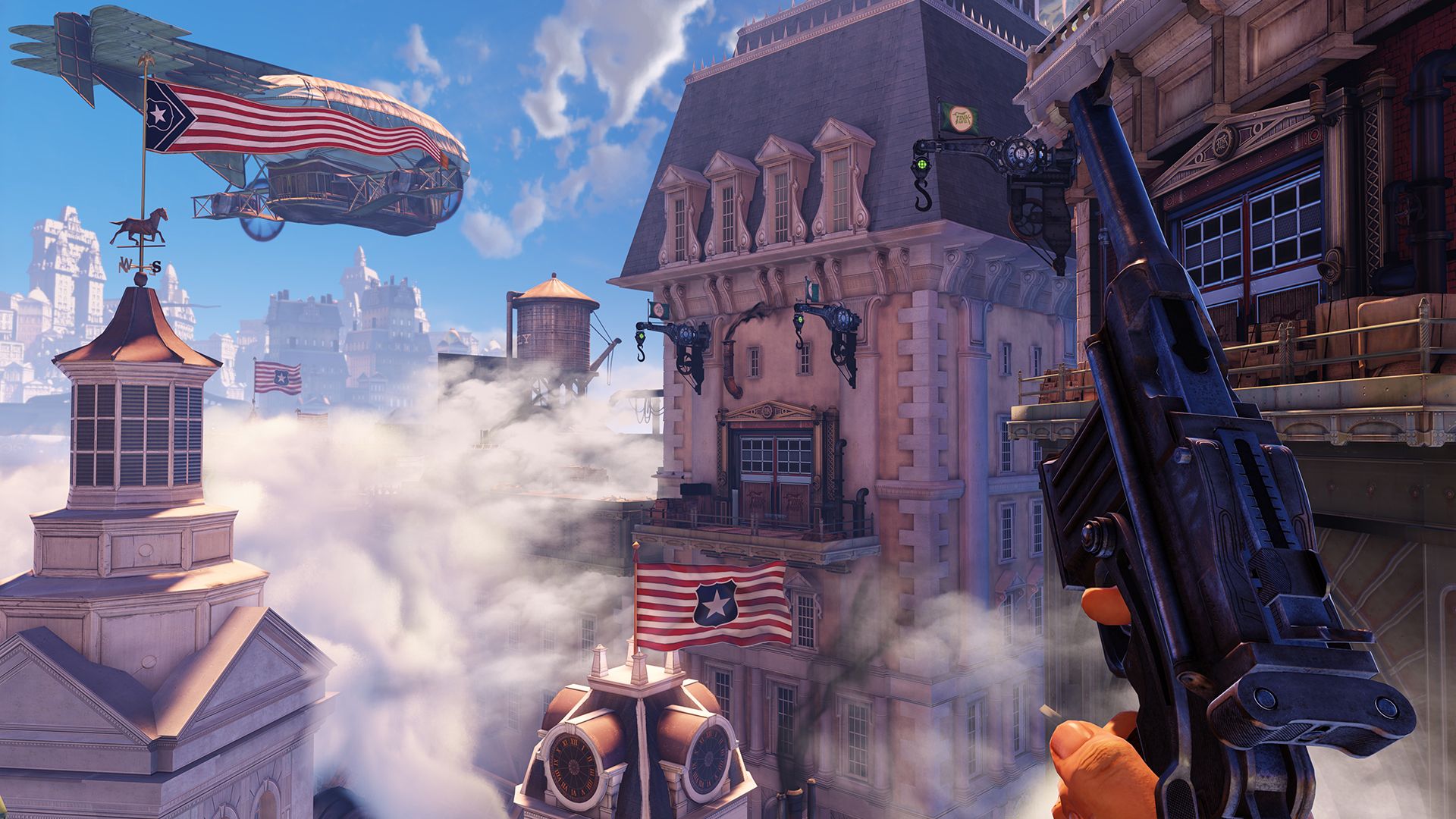
Speaking of enemies, the ones in Infinite are some of the most imaginative since BioShock 1. There are various human enemies, but the Patriots and Handymen are awesome. There are also various creatures and some fun boss fights as well. I just wish there was a larger variety. There are different reskins of these enemies, but I really just wanted more to shoot at. The Patriots have chain guns that are hard to bring down but are weak in the back. Handymen are rarely encountered, but they are giant lumbering beasts and bosses on their own. Infinite gives you more exploration options during combat. Using the Skyline is so fun and magical. You can slow down, reverse, and hop down wherever you want. You can shoot from these skylines, so it adds a tactical element the series needs. You even get a better melee weapon that has gruesome finishing kills that will make you cringe.
Combat is just very solid in Infinite, but by the end of the game, it started feeling repetitive, and all that kept me going was the story and new places to explore. Infinite has a lot of secrets that need to be opened with lockpicks that you can find. You can equip gear that adds attributes, and you can upgrade weapons via stations around Columbia, like you did in BioShock. You can also upgrade your Vigors, which is nice; there are a lot of upgrades, and you won’t get them all in one playthrough.
When it comes to visuals, Infinite is one of the most beautiful and original games ever made…ever. On PC the DirectX 11 upgrade looks fantastic, the lighting is amazing, and the art style the team went for will blow your mind. I spent the first few hours just staring at everything because of how beautiful it looked. The pacing is spot-on, and the story makes you care about all the characters, or hate them. Ken Levine and his team are masters of their art and it’s proven here. This may even be his opus, but only time will tell. There’s nothing out there like Infinite; this is probably one of the few shooters in years that has tried to use the genre for what it’s good for. There’s no multiplayer, but you don’t need it. I also wish there were visual upgrades to the weapons like in BioShock 1, but those are minor gripes. Honestly, it’s hard to complain about this game other than the lack of enemy variety, the fact that Vigors feel underpowered, and the fact that there are no visual upgrades on weapons. The story is fantastic and gripping, and this game will hopefully live on to be one of the best ever made.
Here we go again: another Call of Duty. When will it ever end? Before you start the hate-mongering, just know this: Call of Duty still has some of the best online multiplayer you can get. At least Black Ops tried to change the series a bit with new modes and experimented with what Modern Warfare established; it also had a much more interesting storyline and decent characters. Black Ops II is the same way, but it’s too late to really matter.
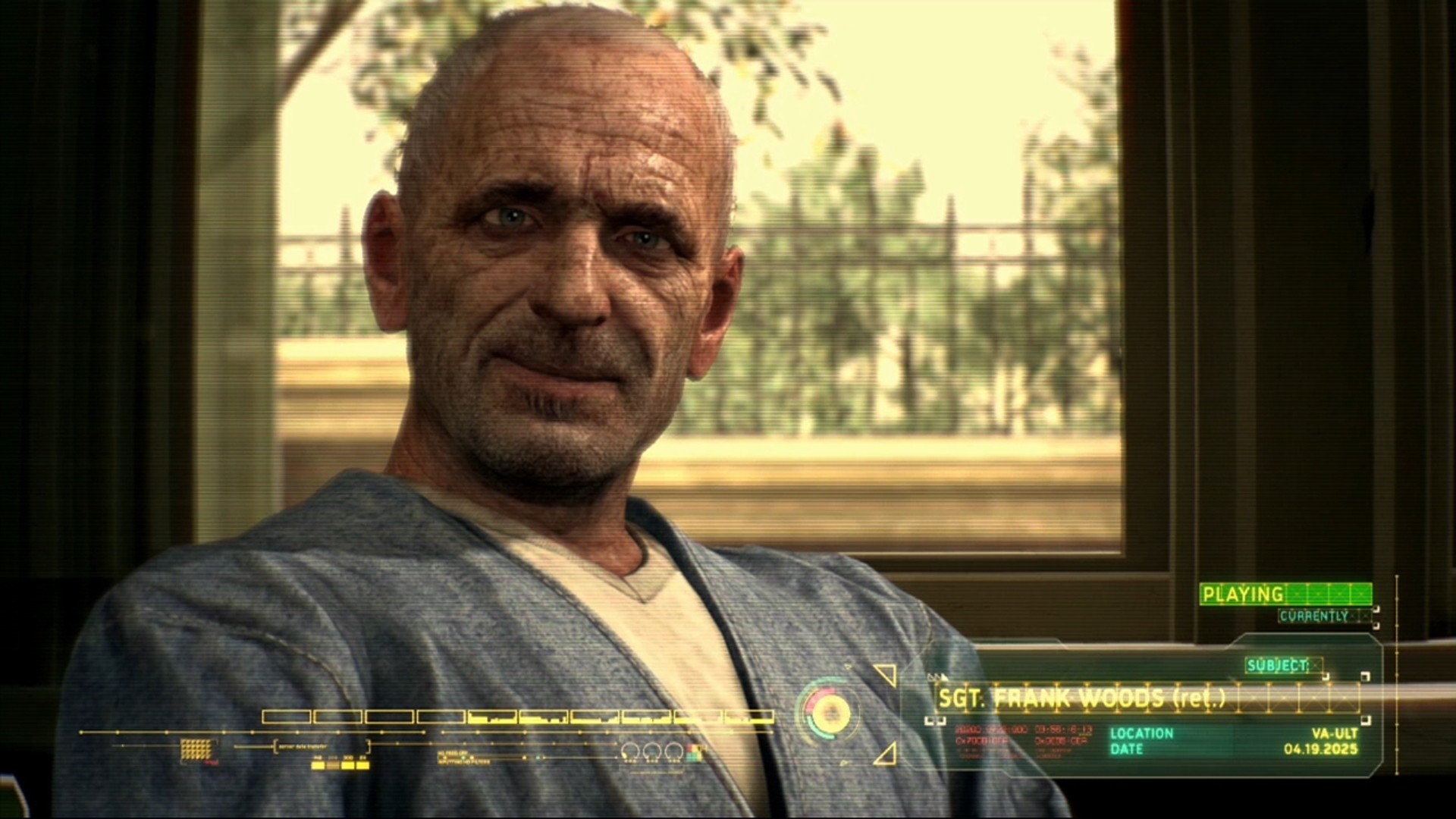
The game picks up where the first left off; if you haven’t played it, good luck figuring it out. Alex Mason is searching for a man named Raul Menendez. This is one sick puppy. This guy is a terrorist and more evil than you can imagine. The story jumps around from Mason’s son, Alex, to David Mason back in the Cold War. If you notice something, this game is more futuristic. It’s set in 2025, so there is some cool tech that’s just out of reach for today. Things like cloaking devices, VTOLs, and various other guns. The game just jumps between the first Cold War and the second. During the first one, you are trying to figure out what made Menendez crack. You later jump to the second one with Mason and Harper, using the information you got from a guy who was in the cold war with Mason. It’s a bit confusing and seems pretty boring at first. Later on, the story really picks up and gets really interesting; I actually liked it. It’s not fantastic, and it’s no Assassin’s Creed, but it’s pretty good for an FPS.
The campaign is still a shooting gallery, but it doesn’t seem that way thanks to the great level of design and a lot of cinematic one-off moments. Moments like jumping on turrets and driving various vehicles and aircraft, among others. It’s all fun, and not a single level feels the same, but the underlying core is still there: shoot everything that moves. The AI is still pretty dumb, but I like how you can customize your loadout before a mission. There are many unique and fun guns, unlike the Modern Warfare series. Later on, you will be able to play through special side missions called Strike Force Missions, which are pretty much just a capture-and-hold mode or siege. Those side missions all feel the same and are pretty repetitive. It’s not as fun as online because of the dumb AI; you have to do everything yourself.
After you finish the entertaining story, it’s multiplayer time! The old Black Ops modes return, like One in the Chamber and Last Man Standing. Of course, all the others from the entire series are here. Honestly, the biggest change is that killstreaks have been replaced with scorestreaks, which I prefer. It was so hard to get more than 3-4 kills in a row for most players. Now you get streaks based on your score, which lets you use the cooler, more powerful ones more often. However, I found the maps to be pretty mediocre. I learned to like a few, but they are lacking a bit in some way.
Zombies returns and is as fun as ever; there are more modes and an 8-player co-op; it also has a full-on online component, unlike the previous game. There’s quite a bit of content here, and you will be coming back for hours to come. I just don’t understand why Treyarch couldn’t break the mold a bit more. I like the multiple endings and how choices in the story can change the ending. But there are things here like Jimmy Kimmel’s likeness at one end and Avenged Sevenfold at the end of one. I mean, really? Are 14-year-olds really going to buy this because Avenged Sevenfold is in it? I really hate how developers do this and can’t just use their own ideas. It’s a cop-out or sell-out, whatever you want to call it. I also don’t understand why the campaign can’t be a bit more intelligent gameplay-wise, like Battlefield 3. I blame the young gamer’s instant gratification issue on that, but who knows?
What’s here is a solid game and hopefully the last of the Black Ops series. The Wii U version looks a bit better than consoles, and you can play the whole game on the gamepad, which is nice; there are no shoehorned gimmicks for it. I did notice that the gamepad’s analog sticks are a bit sensitive, and I had some trouble adjusting.
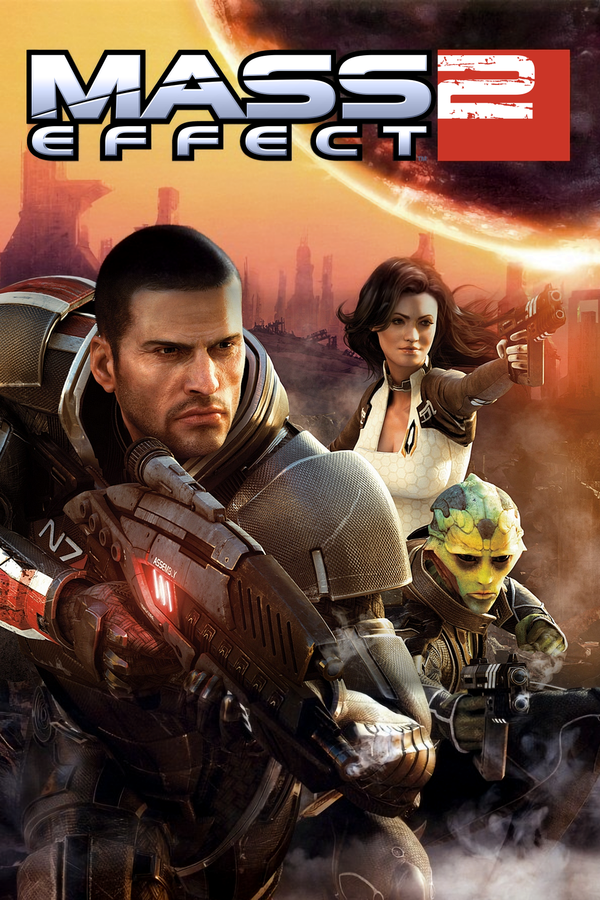
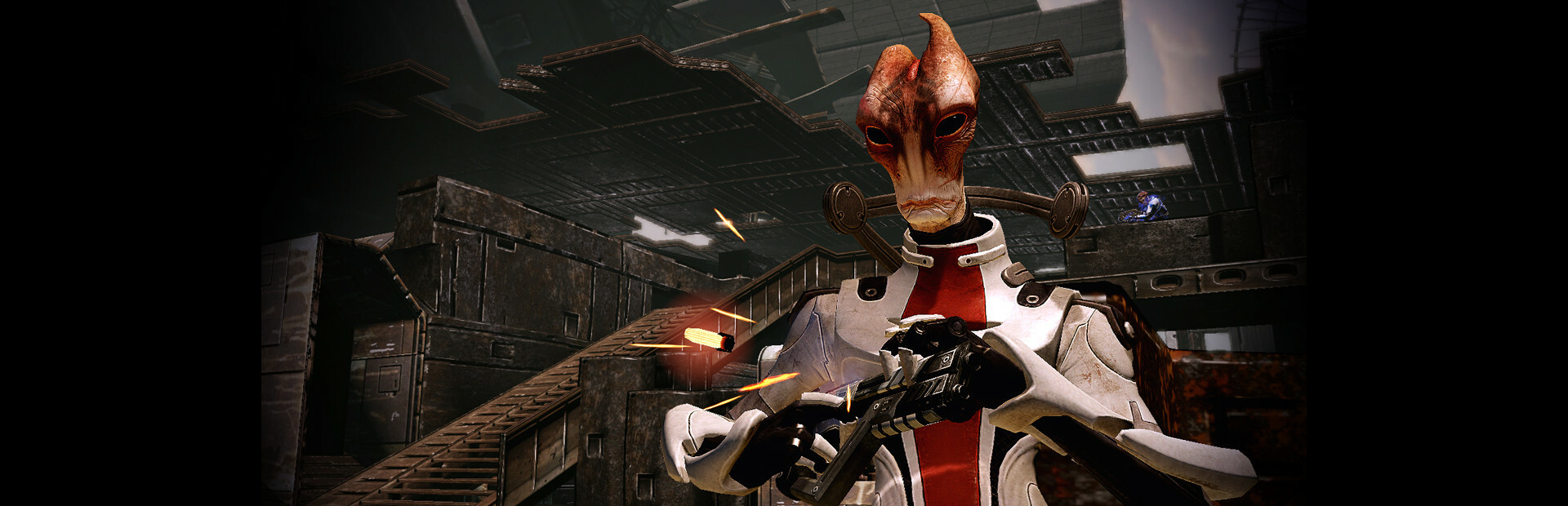
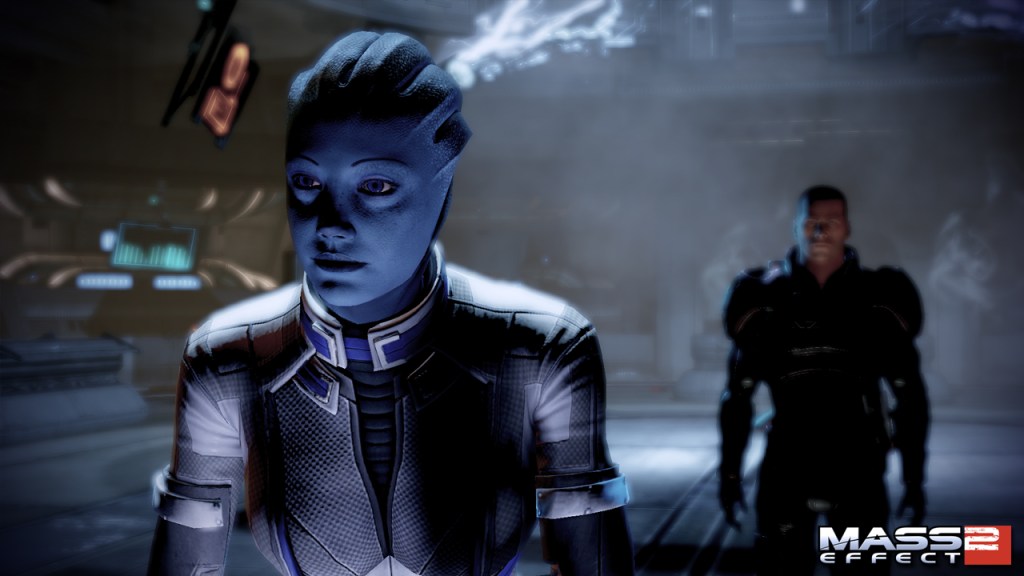
BioWare has to be some of the most talented beings on the face of the planet because these guys can just pull whole new cultures, religions, and universes out of their asses like it was yesterday’s dinner. Mass Effect has a rich, amazing universe attached to it with believable races, characters, religions, and cultures, and it feels like a whole alternate universe that could exist. Mass Effect 2 expands on this for fans of the original (yeah, don’t play it unless you played the first, seriously). Not only is this just a direct sequel, but all your actions from the original game affect the outcome of this one. Mass Effect 2 has Command Shepard being remade as a machine almost after the Normandy gets destroyed by collectors. Cerberus fixes you up for 2 years, and now you have to rebuild your team, find your previous ones, and stop the Collectors from destroying the human race and working with the Reapers.
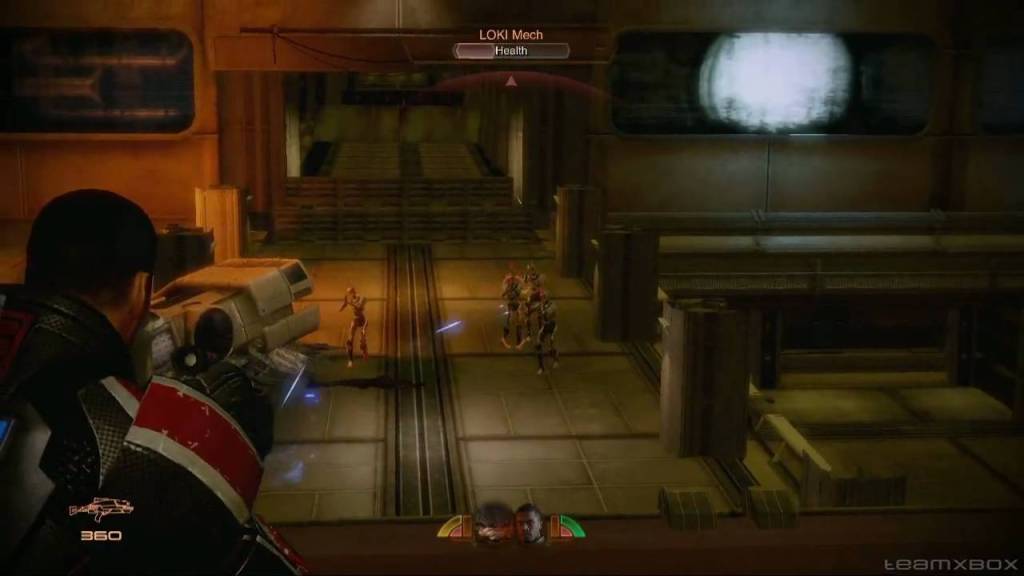
Mass Effect 2 has so many changes that were much-needed, and the game just feels tighter, more fluent, and action-packed. The action is the keyword here since a lot of the mundane RPG elements were stripped. To get an idea of what was improved, I’ll start with squad management. Instead of finding armor for each type of race and maintaining every stat of that armor and the character, you no longer manage your team’s armor, just yours. You also no longer have to go find armor like the original. Armor can be bought from world markets, and you equip each piece in your cabin on the Normandy 2. You can even change the color and scheme of the armor as well as your casual clothes. This is great, and I love it because micromanaging armor in the first game was a real pain. The same goes for weapons. You no longer have to find and add each element to every weapon, like ammo types and add-ons, because those are now gone as well. Instead, you find weapons during missions or in markets. You can equip them via a loadout, and the same goes for your squad.
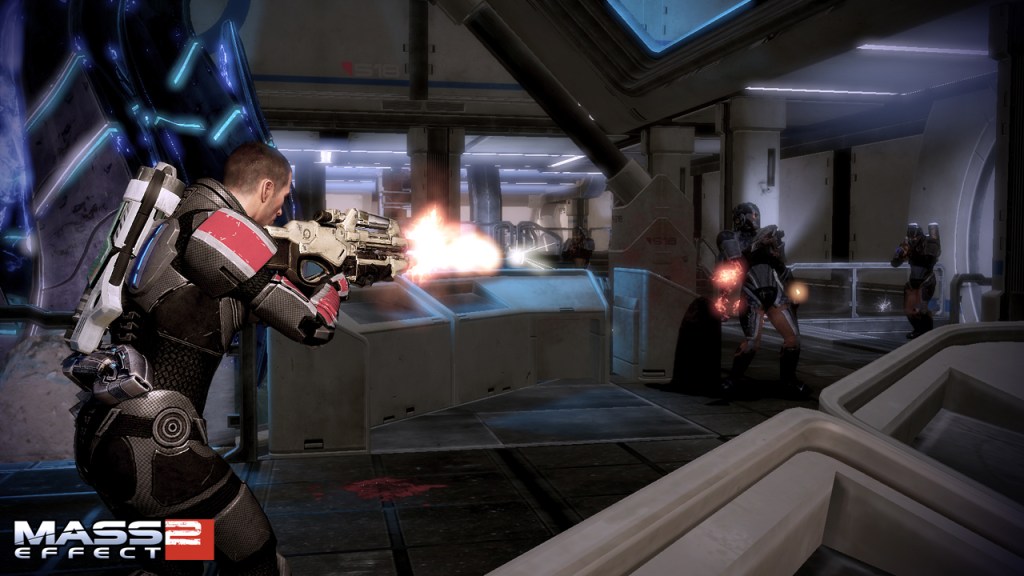
Let’s talk about the radial menus here. You get three ammo types: cryo, incinerate, and disruptor. Each can be used for certain enemies. Your powers are activated here too, but you can now map them to buttons. When shooting weapons, you no longer have a “heat gauge” but actual ammo. The weapons draw heat to a “clip,” which is discharged once it gets too hot. If you run out of these clips, your weapons won’t fire, thus solving that annoying heat meter crap from the first game. This helps the game feel like a solid shooter instead of a game that doesn’t know if it’s an action game or a straight RPG.
The shooting and fighting in the game are now really solid, and you just feel so powerful with all these guns at your disposal. You can upgrade everything (including your ship, and this has outcomes during the last mission) by finding research projects while on missions. This solves all the RPG elements from the last game, so it feels like a solid shooter. Don’t get too upset; there are still RPG elements, but they are only for upgrading your teammates and yourself. Instead of upgrading every single element, such as each ammo type and every biotic type, you only have about 4–6 traits to upgrade. This includes your main character’s ability, biotic or ammo types, and any other special skill. Each one can be upgraded up to level 4, and after that, you get a choice between two special bonus perks. This makes the leveling feel more solid, fluid, and resourceful.
Another great improvement is the galaxy map navigation. No longer are you just a cursor floating around the map, but you actually move your ship. When you are outside solar systems traveling in dead space on the map, you use fuel, but the biggest improvement is no more excavating resources via the stupid rover vehicle. In fact, all vehicle control has been stripped from the game. Instead, you use a scanner on unexplored planets, and when the controller vibrates, you will see your meter spike over a certain gauge. This will be one of the five resources used to upgrade things in the game. While it sounds more repetitive, it’s nice to break up the action of the game and get some downtime.
If those don’t sound like enough of an improvement, how about the story? The story is still as epic and emotionally engrossing as the first, if not more so. There are a couple of new races added, such as the vorcha, drell, and batarians. There are new characters that you can recruit, and they are all as loveable and memorable as in the first game. Of course, all your old pals return, but my favorite part about the game, which isn’t in any other, is how your original save carries over.
If you had a relationship with a previous mate, you will see that in the game, saving and killing certain characters from the past will pop up in the sequel, reflecting certain outcomes of missions. If you chose the renegade or paragon path, it will reflect off your character with red scars and reddened eyes if you were a badass. You truly feel like you were dead for two years, and all your choices in the past came back to haunt you. It’s a mind-trip, and it really makes you that much more involved in the story. Every choice you make during dialogs affects what you do, and BioWare is the master of this.
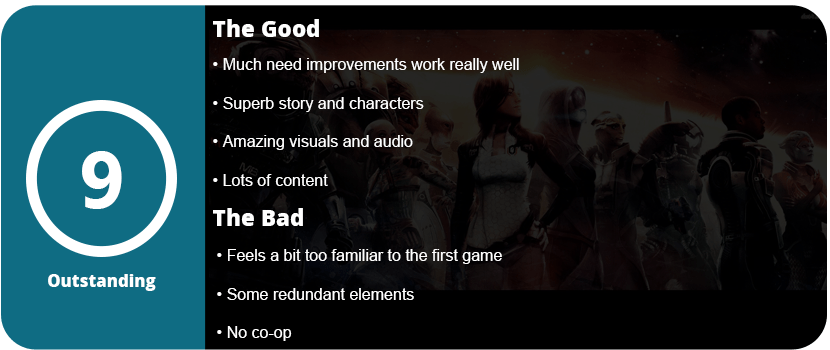
The only reason why this one scores lower than the original is that most of this has been seen in the original and isn’t anything new for fans of Mass Effect. The new additions just keep the score really high but don’t give us that new feeling. With improved graphics and the same amazing voice acting, Mass Effect 2 will keep fans busy for a good 25–30 hours, but watch what you do because it will affect your outcome in Mass Effect 3.
BUYING A NEW COPY: This will grant you access to a free content update that’s normally $15 for free. This includes a new character, Zaeed, and two other missions that involve the crash of Normandy. While this update is not worth $15, buying a new copy makes you feel like you’re truly getting your money’s worth.
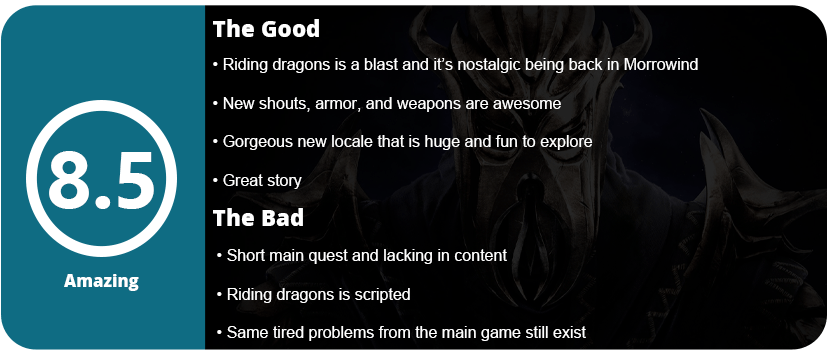
The splashing of waves, the grass between your toes, the ash in your eyes, and Dunmer at your feet. Ah, it’s nice to be back in Morrowind! I was surprised when I found out Dragonborn took place on Solstheim, which is a volcanic island just off the coast of Morrowind. You arrive there due to a strange, occult thing happening. People are building relics in their sleep—basically, sleepwalking and building. You ask around about a guy named Miraak, and people say he sounds familiar, but they can’t quite remember. As you ask around in the main city, Raven Rock, you will be greeted by Devin Mallory’s brother and various other people who are very interesting to talk to.
I first have to mention that Dragonborn has some of the best art in any Elder Scrolls game. When you start getting the Black Books and travel to Apocrypha (Hermaes Mora’s territory), you will be stunned. It’s very Lovecraftian with the Lurker and Seeker enemies. There are strange tunnels that move, walls made of sticks, floors covered in paper with arcane writing, and strange magic and objects. I loved these areas and enjoyed them immensely. However, the main quest line is super short; there are more side quests here, which is good, I guess. The final fight with Miraak (not a spoiler, it’s obvious) is very challenging, and you get to ride freaking dragons! This is probably the most powerful thing added to an Elder Scrolls game. I love the new shouts, such as Bend Will. This will make enemies fight alongside you. The new Bonemold and Chitin armor looks awesome, as do some new weapons. There’s quite a bit here, a nice chunk of the game, and a great final goodbye to Skyrim.
Many of the quests are more puzzle-related and quite challenging. It was nice to be really challenged by exploration in Dragonborn. One final quest has you finding cubes in an old Dwemer ruin. You have to place them in a certain order and run around finding them to open up new parts. The enemies are challenging, and I found it all quite fun. There’s plenty of Morrowind lore here for longtime fans and newcomers who don’t know much about it.
I warn you, though, that you need to be at least level 20 to start this. I came in at level 7 and got my butt handed to me by the Ash Spawn, the first enemies you will encounter. I died in just one hit, so be careful. I also hated how there was no place to train for smithing, and there was only one major town. At least you can fast travel to and from Skyrim via the map and not by boat every time. I was also upset that you didn’t get to ride dragons until the final quest, and it’s very brief. Also, be warned: Miraak will steal all your dragon souls if you kill dragons in Solstheim. He’s a real bastard.
Overall, Dragonborn is a solid and final DLC for Skyrim. It is much better than Dawnguard in the sense that the story is more interesting, but there aren’t two sides to play. Being able to ride dragons is a major addition to the game; the enemies are interesting and challenging; the art looks fantastic; and the lore is great.












































 thebinarymessiah.com
Try multiplayer. A lot of fun !