A new character is very important to a game because it can make it or break it. There are also hundreds of memorable characters out there so making a new one and trying to make it on the list is hard. There were very few new characters created this year, but among the few, there was only one that was very strong.
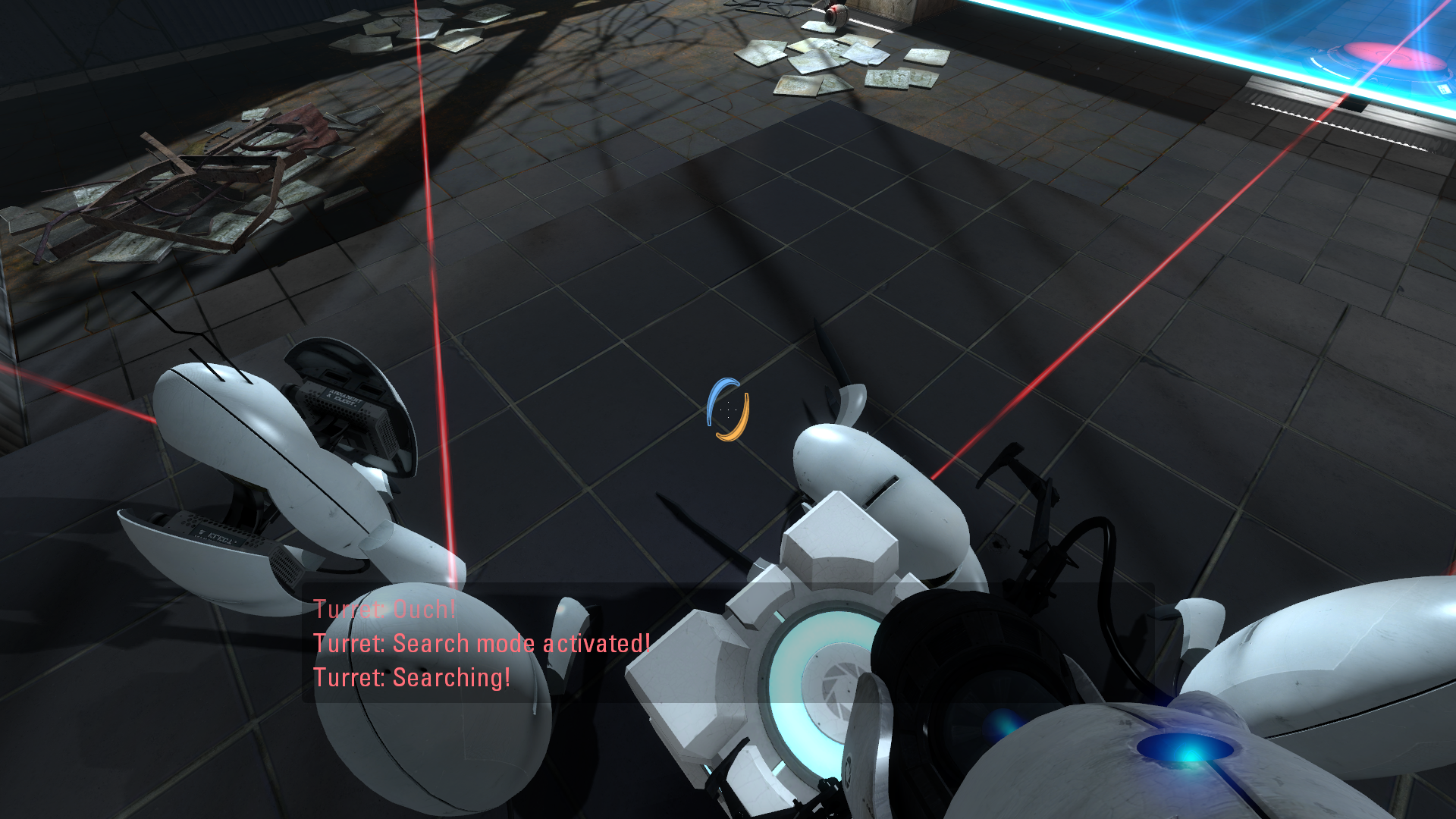
This was an easy pick this year. Wheatley is a very funny and strange character, but being just a blinking orb makes him all that harder to pull off. It’s his personality and voice acting that really make you remember him and put him among the best. His British humor mixed with the insane world of Portal 2 really makes you want to hear him talk and come back into the world. Wheatley’s character is perfectly balanced and you get doses of him throughout the game, and you just can’t help but love him.
Voice acting is what delivers the personality in characters, and good voice acting is key to any good game. What makes it the best is a wide variety of personalities delivered by the voice actor and thus bringing out the greatness of characters. Good voice acting makes them unique, lovable, and makes you become attached to them. This year had some great AAA titles with amazing voice acting, but only one can take the prize.
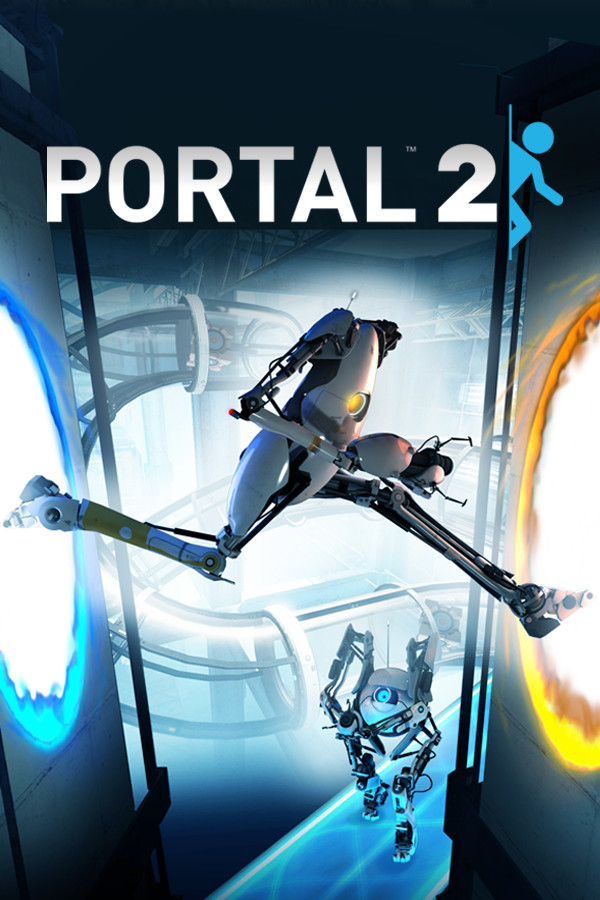
Portal 2 delivers some amazing characters through witty whimsical writing and some talented voice actors. Portal 2 doesn’t just have good voice acting but diverse, funny, and unique voices for characters that are one of a kind. This is what made it top the others and is definitely something to be remembered. With characters like Wheatley, GlaDOS, Turrets, Cave Johnson, and other characters you just can’t beat that.
Graphics are great when it comes to textures, resolutions, and lighting but what about the art itself? Some games are living breathing pieces of art and are one of a kind. Sometimes a game may be inferior technically but surpass in style and better art. This year was more geared toward technical showcases, but there were a few artsy games that popped up.
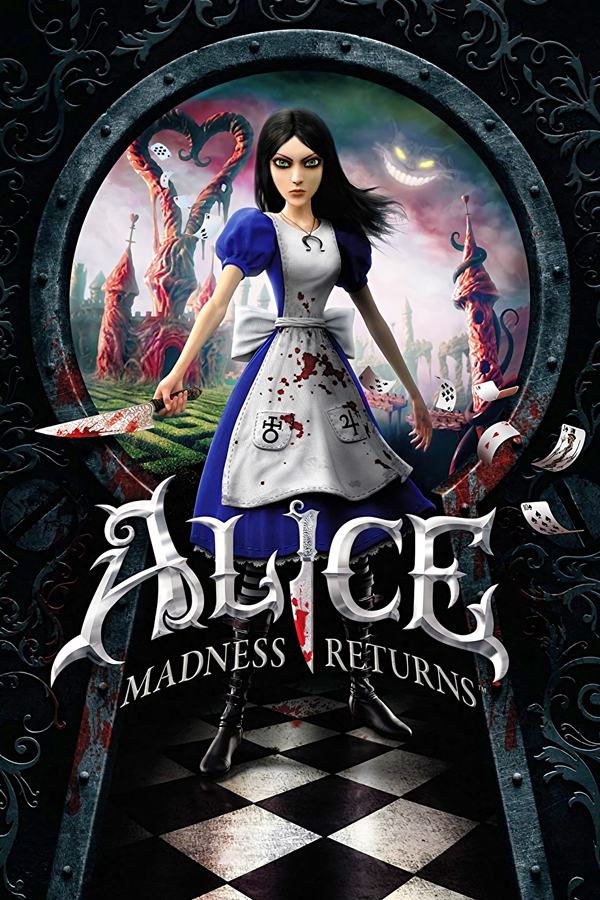
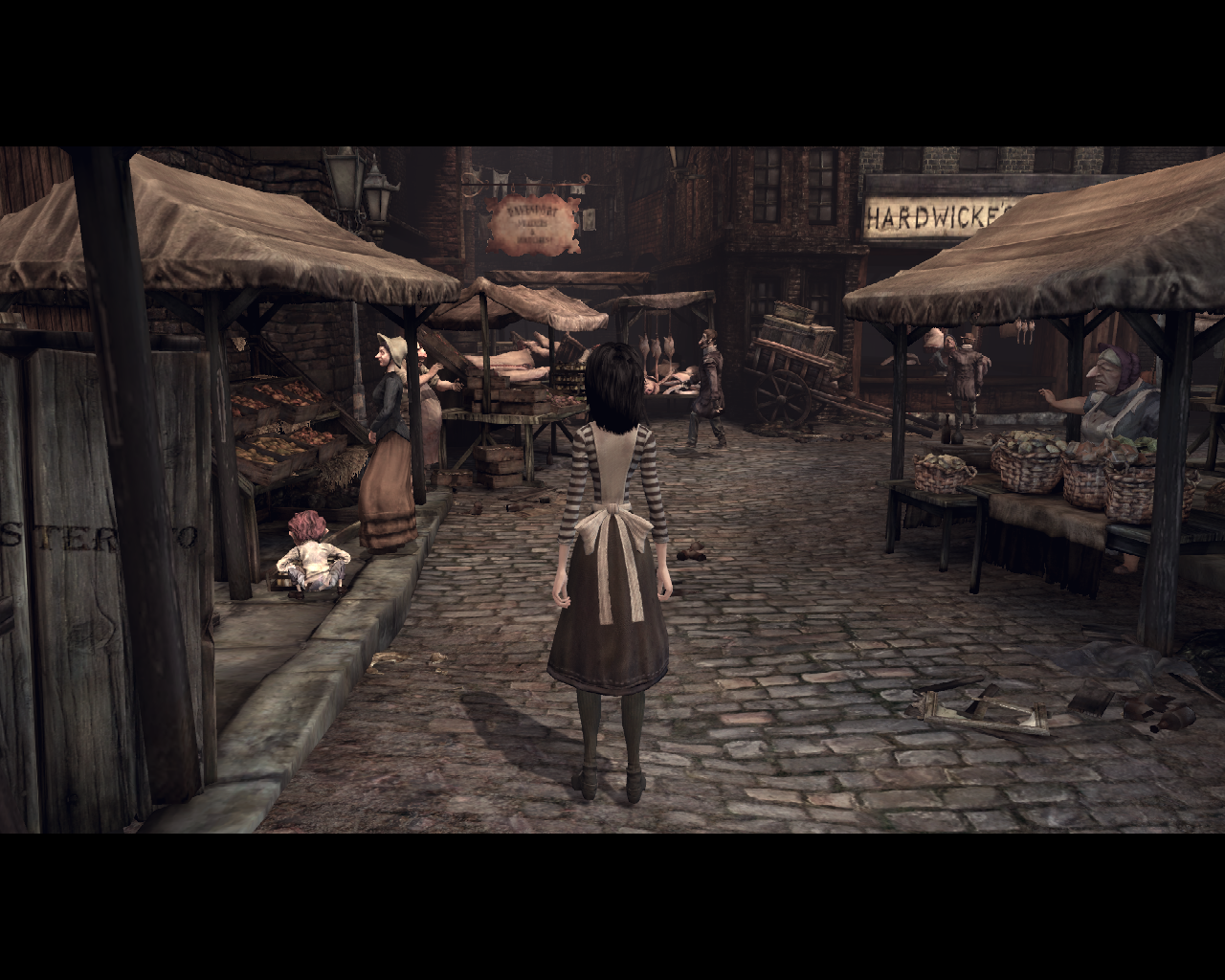
Alice won over everything else because it is just oozing with art and substance from American McGee’s crazy mind. It brings out the darkness in Alice in Wonderland and every single speck on the screen has something unique about it. It has been a long time since something like this has come out where you want to hang every screenshot on your wall. Alice truly deserves this award hands down, but all I can say is you have to play it to understand why.
A great story is usually memorable and you will talk about it for years to come. You need good characters, voice acting, and a lot of other elements to make a good story. Usually, there has to be a great ending as well as some twists and turns, but it also has to make sense. A good story is probably the hardest thing to find in the video game world, but there were a lot of great ones this year, but there can be only one.
This was the toughest category this year. With so many great stories I could only choose one. Gears of War may be considered a meat head’s game, but the story branching over the three games is full of great characters and a struggle for survival that eats at your heart. These people are fighting a genocidal race of bugs, and in the meantime, they are losing their loved ones right in front of their eyes. The delivery from the voice actors just makes you care so much about Delta Squad, but overall the ending and story in Gears 3 finish the story with a tightness that most sequels can’t really pull off.
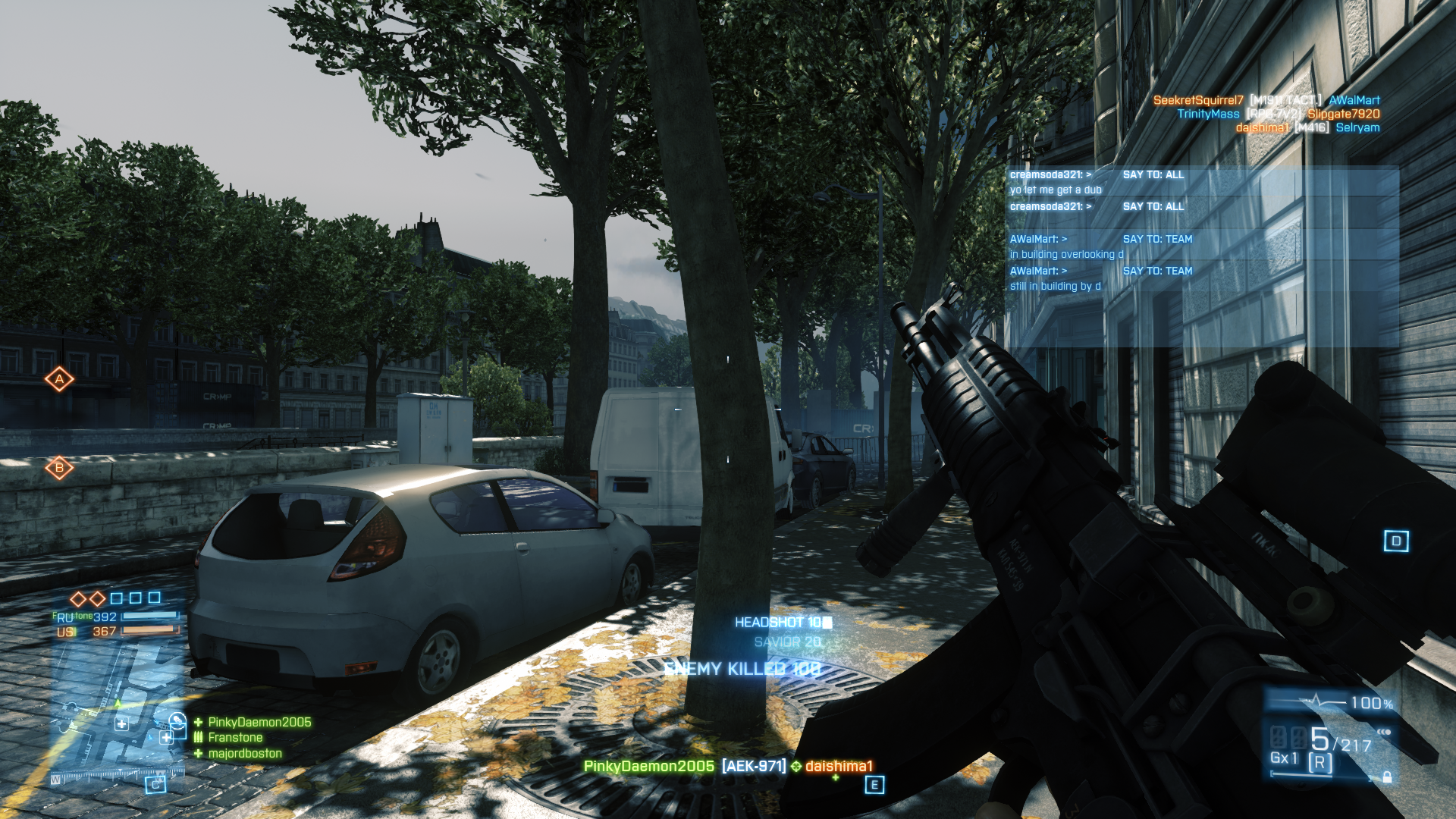
Great sound design isn’t the music but everything else you hear. Not only is variety good, but it has to match and be unique to the game and atmosphere. Everything from the wind blowing through cracks, swords clashing, breathing, grass rustling, and bullets whizzing it all makes the audio experience.
What makes the Battlefield series in the general top most games in sound design is the audio directional placement and just the sheer realism of battle. No other war game has pulled off such rich and visceral sound from bullets whizzing by your head to being able to find a sniper from distance and direction. Everything sounds hyper-realistic, but also completely ensnares you into the battle. This realistic and technically phenomenal achievement puts it over the top of everything else.
An atmosphere is what delivers emotion and overall feelings in the game. The atmosphere can make a game scary, colorful, cartoony, or make you feel alone and sad. Atmosphere much matches and represent the idea of the game. Sometimes the atmosphere isn’t delivered right and can make a game feel boring, or just look bad.
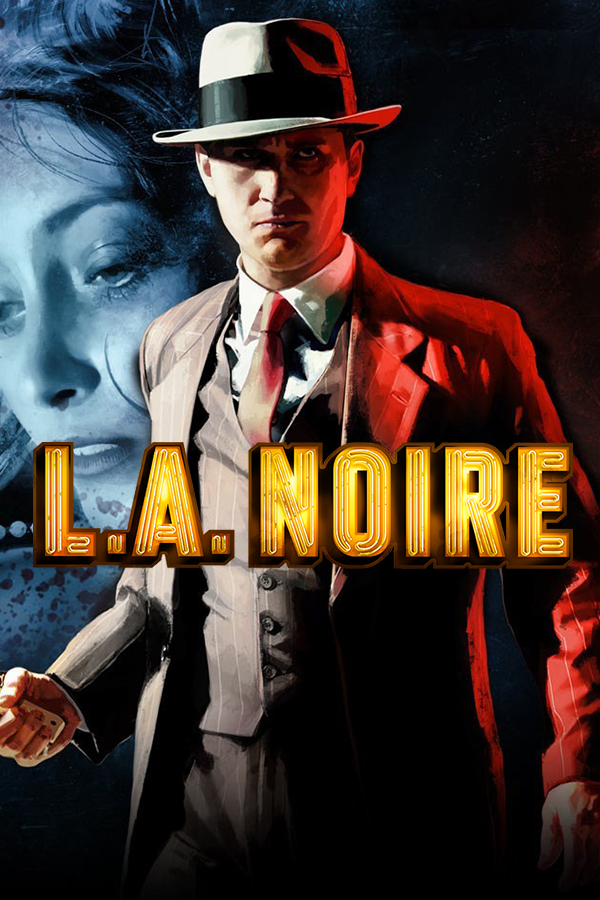
The Best Atmosphere category was even harder than last year’s because so many great AAA titles came out with strong atmospheres. There were also some games I didn’t get a chance to squeeze into the runner-up’s area so that tells you how well this category did this year. While some of the others may have better art to back up their atmosphere L.A. Noire does something that most can’t: Make an atmosphere without fancy art or licenses. L.A. Noire is a new IP and pulls off a 1940’s era in realistic detail and really pulls you in and brings you into a time period that most games don’t explore outside World War II. L.A. Noire had amazing visuals to back it, but to make the game feel so true to an era is very hard to do. You don’t need fancy art for that.
The Best Music award goes to a game that delivers emotion, atmosphere, and tension through the game’s soundtrack. Whether it be orchestral, licensed, or anything else it must feel just right.
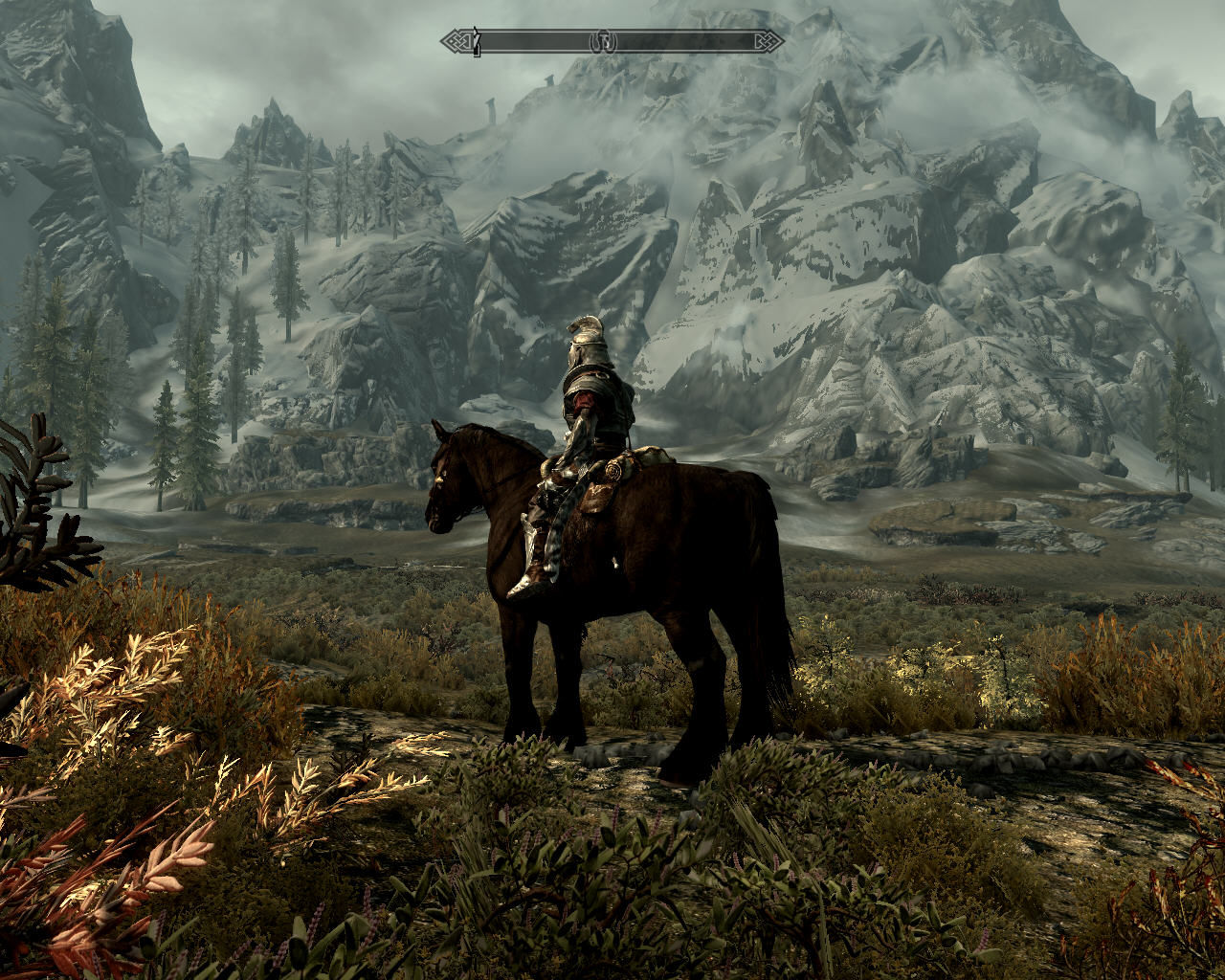
This was a tough call against Portal 2, but Skyrim came out on top thanks to composer Jeremy Soule’s amazing passion for the Elder Scrolls game. Every piece of music moves you and sucks you into the world like no other video game soundtrack can do. There are dozens of songs and each is masterfully composed and that is extremely hard to do. Every piece fits everything you do, see, hear, or interact with within Skyrim. The sweeping and dramatic theme song to the softer tones of exploring the world is perfect and nothing can match this kind of instrumental beauty.
Mortal Kombat 4 was probably the most carefully watched game in the series due to abandoning the 2D root and going for 3D. No one knew what was going to happen to the series, and a lot of fans lost hope, thinking the silky smooth controls and excellent digitized graphics would go by the wayside in 3D. However, the game featured excellent visuals (for the time), and the silky smooth controls stayed despite some slippery and awkward animations. The fourth game also introduced some new characters who I thought were some of the weakest in the series. So despite the weaker roster, we got some pretty good fatalities and excellent stages to fight in.
The new characters like Kai, Jarek, Fujin (a weak attempt at making another Raiden), and Tanya were pretty “blah.” They didn’t have the same impact as the classic characters, but some returned, like Scorpion and Sub-Zero, Sonya, and Johnny Cage, who came back for the first time since MK2. The run button and combos were carried over into 3D, which were smooth as well as a first stab at moving in a 3D environment. You would hit a button to kind of strafe to the side to avoid attacks, and this added a whole new level of strategy. Weapons were introduced in free form now, and every character had one. Get hit, though, and you lose the weapon until you can pick it back up.
The fatalities were extremely brutal, some of the best the series has seen, and they looked even better in 3D. This leads to a new level of detail and creativity that can’t be done in 2D. This was also a slow departure from other “alities,” and the series stuck with just fatalities. A new boss was introduced as Shinnok, and Goro returned as the mini-boss. The game carries over a lot of elements that make it still feel classic, but then injects some new stuff as well. I really felt the game was well balanced and was exactly what the first MK in 3D should be. Overall, MK4 is a classic and did an amazing job of transferring over to 3D, which was very difficult. This, of course, paved the way for all future MK games, but we can always look back on MK4 as children.
What better way to end an era for a fighting genre than to throw it all into one big game? MKT does just this, so for people only familiar with the 3D era, this is what Armageddon was based on. Every MK character up to Ultimate Mortal Kombat 3 is in here, plus all the mechanics from UMK3 that everyone loved. The game introduces a new aggressor meter, which is the predecessor of the power meter in the new MK. Getting attacked will increase it (which is just text at the bottom that fills up, which I really hate), and then you do extra damage while in aggressor mode. The combo system is still intact, as are the weapons from UMK3.
The 2D games were silky smooth, and the graphics look great in Trilogy. Every level, as well as a lot of fan-favorite music, is in the game (you can pull the soundtrack right off the disc). Using the run button, pulling off a 5-hit combo, and then blocking, jumping around, and using all the signature moves brings back a great feeling of nostalgia. There are some secrets hidden here, such as a special code screen (1-button Fatalities are awesome), plus some original outfits like Raiden and Kano’s original outfit, which also unlocks their original Fatality. Of course, the game is best played with two people, but a single player is also a lot of fun.
There are a few minor problems, like Shang Tsung’s morphs requiring loading, loading times between menus and fights, and the game freezing sometimes, which is no good. I also wish maybe Test Your Might would have come back, but this really just feels like Mortal Kombat: The Greatest Hits. I also hate how cheap the computer can be on even normal difficulties, plus Shao Kahn is one of the cheapest bosses in gaming history, so good luck beating him. Overall, this is the ultimate MK experience for the 16-bit era that made history. If you loved the older MK games, then Trilogy is exactly what you need, plus this is probably the last time you’ll see Animalities and Brutalities.
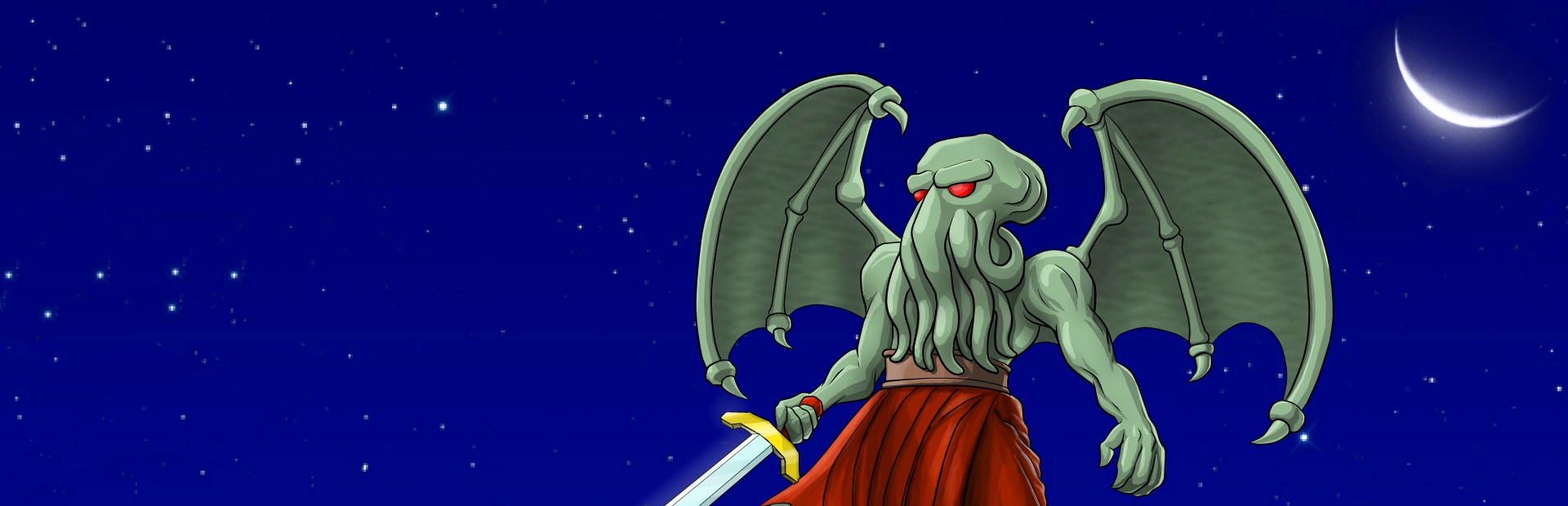
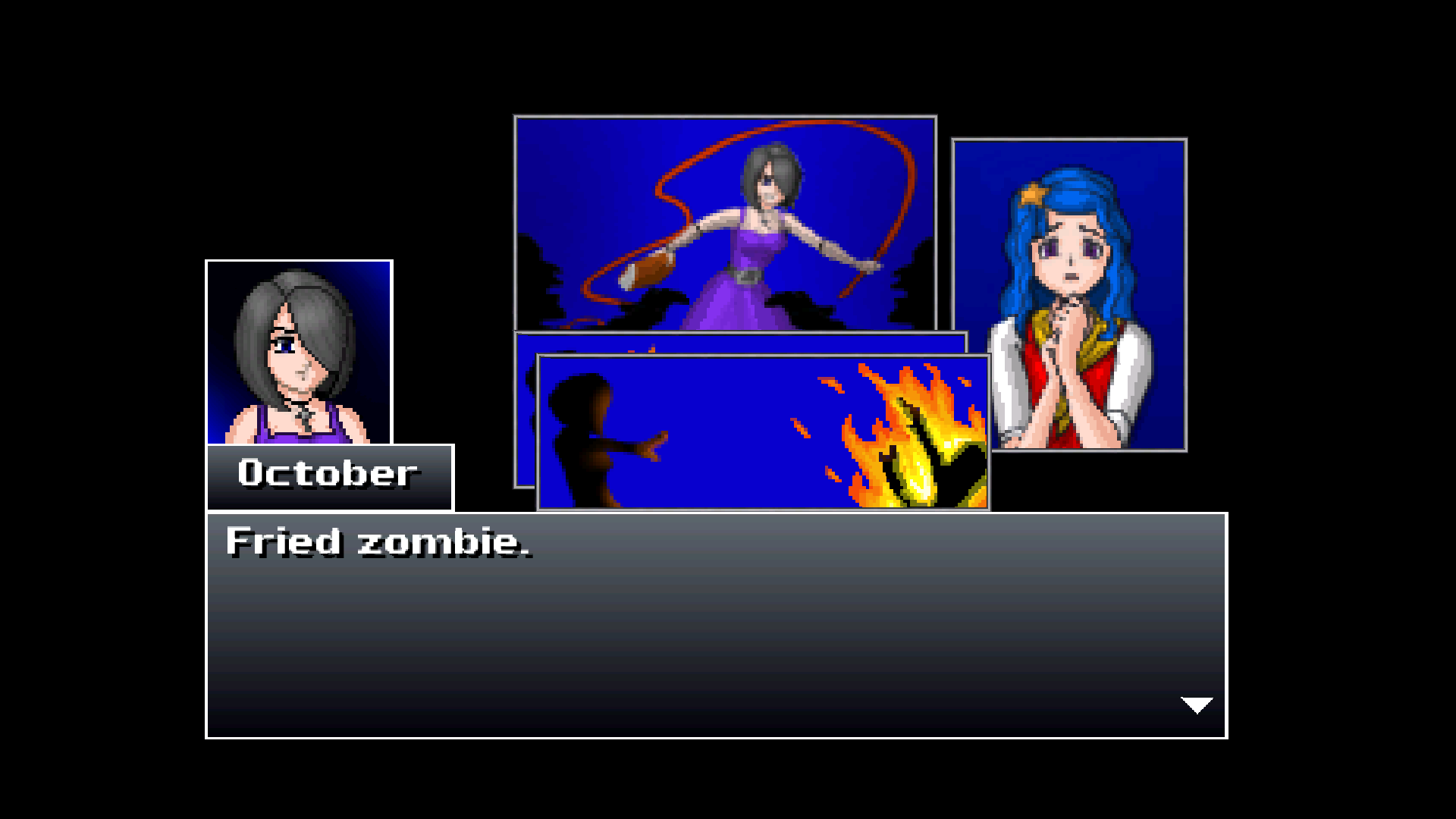
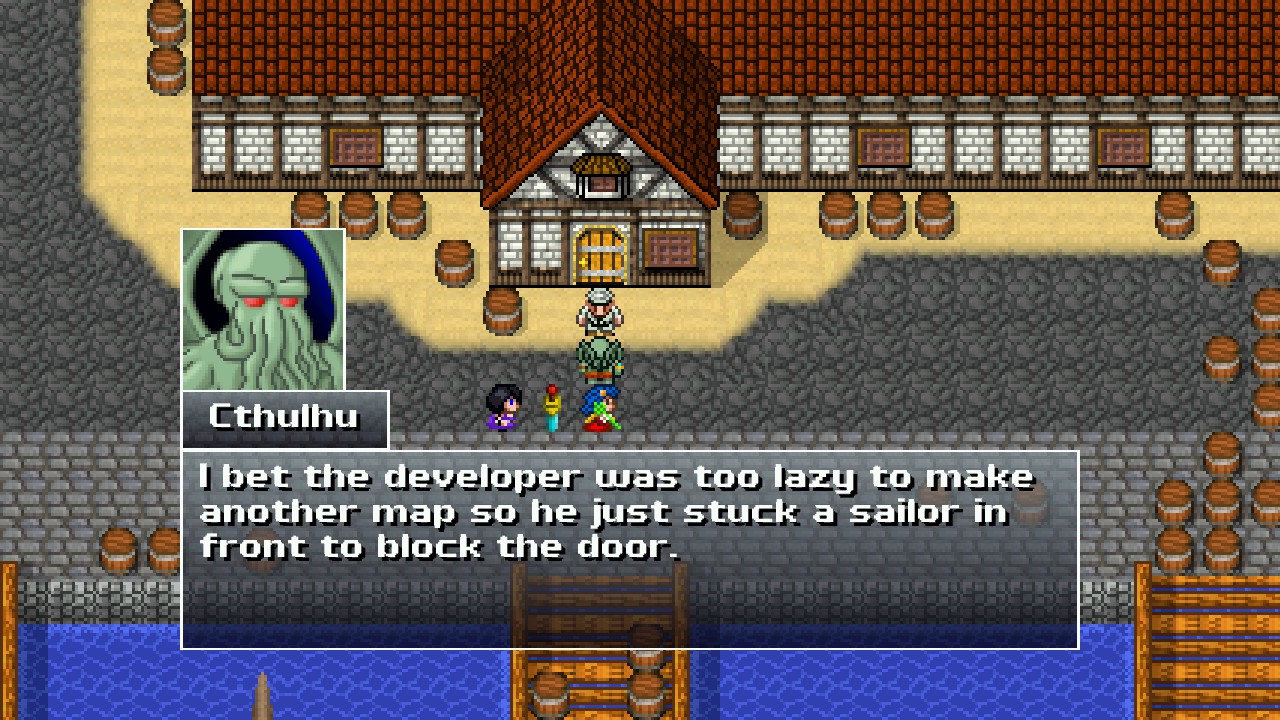
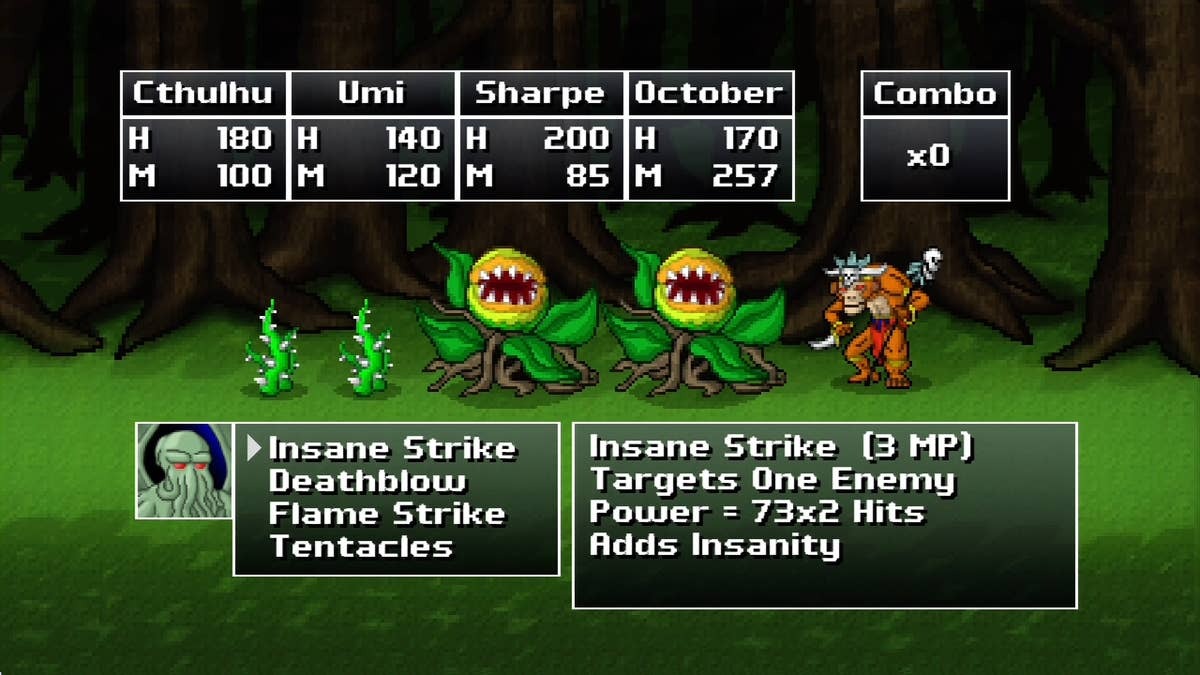
The Cthulhu series from H.P. Lovecraft hasn’t seen much love in the form of games, but indie developers Zeboyd picked it up and turned it into a whimsical/parody 8-bit RPG, and it’s done very well. You play as Cthulhu and pick up many party members along the way, but the whole point of the game is the great dungeon crawling that harkens back to the ’80s. You can attack like any RPG, but you have tech attacks that are more powerful and magic, and then you can unite with other members to combine devastating attacks. There are a ton of different attacks you learn when you level up, and you get a choice between two different things to level up with either stats or an attack, so by the end of the game, each member has a huge arsenal to use.
The game is very close to the mythology, with bosses that are from the story, towns named after the exact towns from the stories, and art-style matches. The music is amazing, with sweeping orchestral scores (in 8-bit midi audio, mind you) that really move you and sound great. The story is hilarious, with Cthulhu trying to redeem himself and become a true hero to raise his city of R’lyeh, but his interaction with characters in the world is really funny. Of course, the game wouldn’t be complete without a huge map to explore that has some secret dungeons, plus the environments and dungeons vary with lots of loot and chests to find.
However, the game’s biggest flaw is the extreme difficulty later on in the game, as well as the constant random battles that really drag the experience down. The developers tried to tone this down by disabling random battles after you do 25 of them, but you will probably go through a dungeon before you hit that number. I also didn’t like how if you don’t level up high enough, the end boss is impossible to beat, but each dungeon just really racks up the difficulty and requires you to grind a bit to get through the dungeon. I also didn’t like how you don’t really need a strategy to beat the enemies because you can just use the same one over and over through several dungeons. This causes the feeling of repetition to set in and makes you want the game to just end a little faster.
While the visuals are nice and give you a feeling of nostalgia, they don’t look good in HD, and the lack of battle animations and everything else that goes along with 8-bit graphics grates on your eyes after a while. However, the Cthulhu license is rarely explored, so any game to do so is welcomed, but this game is probably for hardcore RPG fans.






































 thebinarymessiah.com
ORC is probably the worst game in the entire series. It's objectively awful. Being bad isn't different. Different is Outbreak…