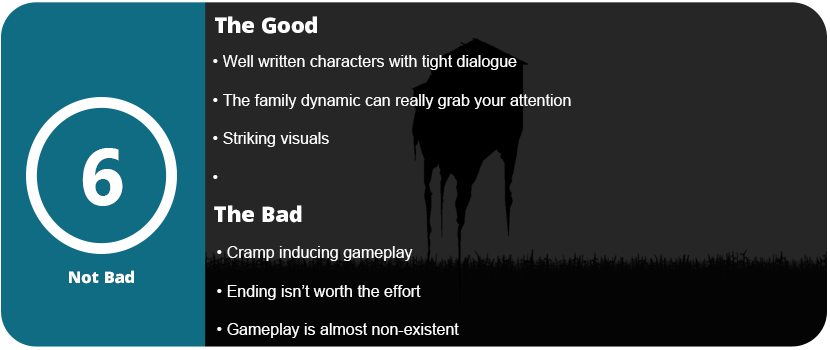
Analog horror is a huge fascination for me. After exploring this idea on YouTube and seeing Local 58 and Gemini Home Entertainment, I became hooked. It’s a mix of 90’s nostalgia, analog media, and that feeling of older technology being unclear and playing tricks on your senses. Home Safety Hotline tries its best to be the next analog horror viral sensation, but it doesn’t quite hit the nail on the head like the above-mentioned videos. While this is a video game and not a series of videos, I will say that it captures the atmosphere well.
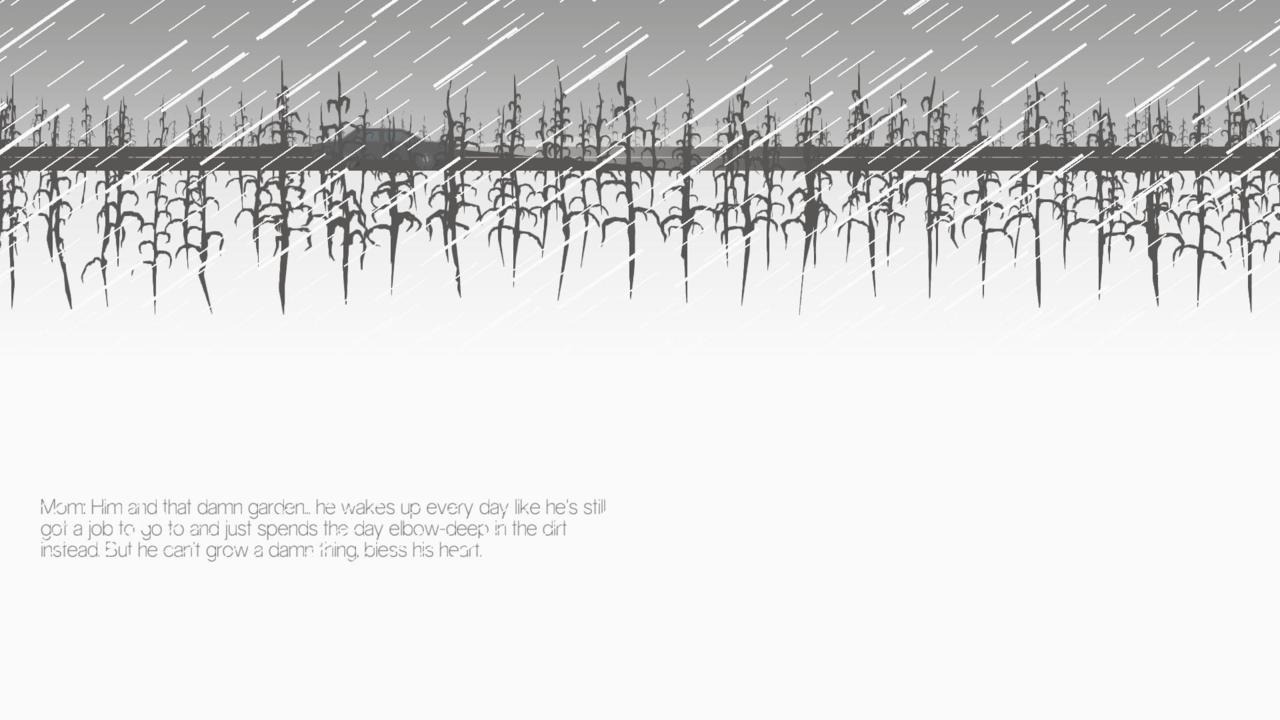
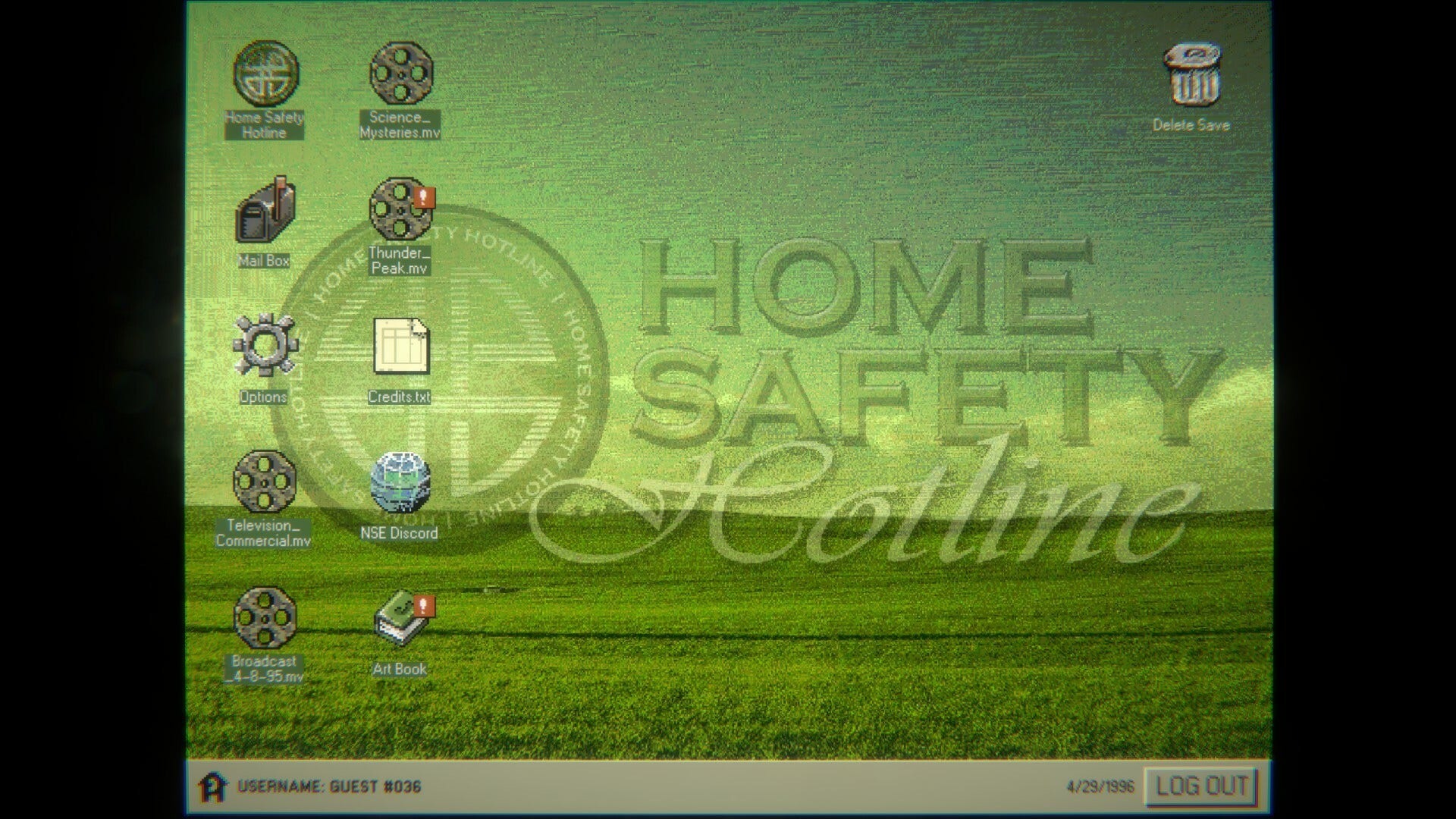
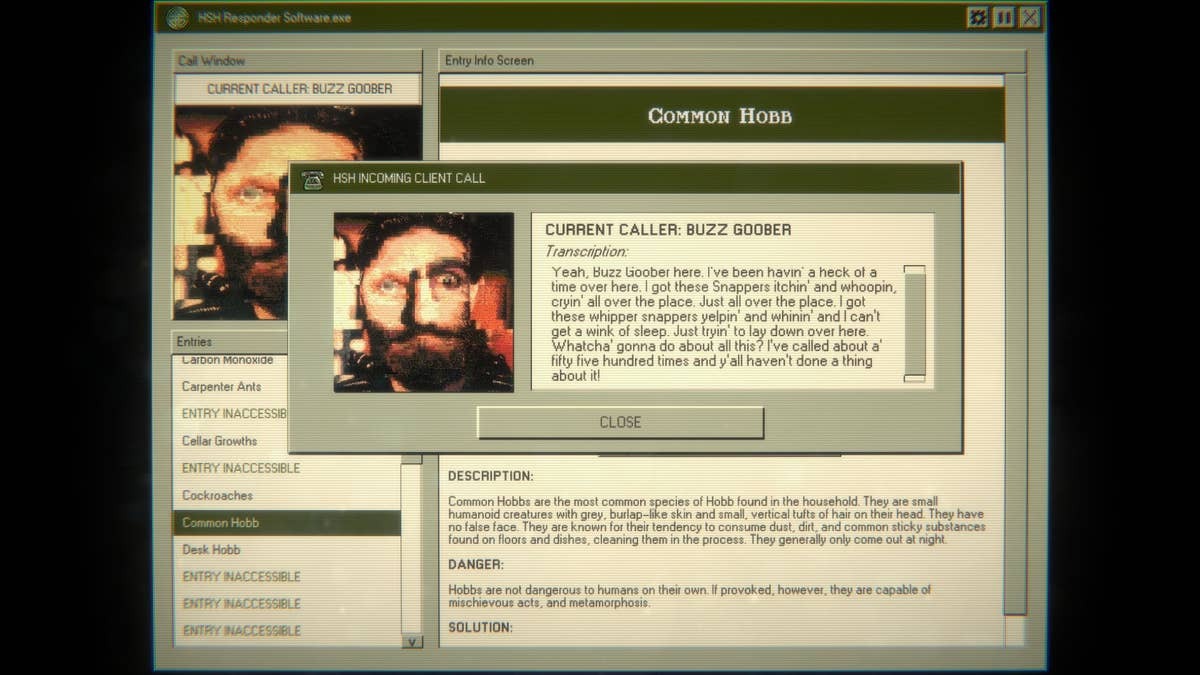
You are an employee, plopped down in front of a 90’s beige box, and you are presented with a desktop. You will see exclamation marks on items that have new information. There are videos you can watch on the desktop as well as check your email, and then the main program is where you will spend most of your time. Once you launch this program, you clock in and are presented with a series of informational links. You are answering calls and have to prescribe the correct Home Safety Hotline information package to the caller regarding their problem. Entries are locked until you progress through the days of the week and give the correct answers.
It’s incredibly important to read every single entry thoroughly and actually remember it. You want to remember the symptoms and signs these things cause people. At the beginning, you get basic information about things like ants, bats, moles, and flies. As the days move on, the analog horror part starts to come into play. Stranger and stranger entries for things like Spriggans, Hobbs, Cellar Grottos, and Reanimations. The artwork is superb and accompanies these entires as well as some audio entires. It’s creepy for sure, but never quite the same. Turn on the lights and get goosebumps vibes. There’s some cheese added to this game that takes away from the realism factor. Analog horror is so great because it seems like it could be real. Some of the drawings, while good, don’t look like they were captured on video or with a crappy digital camera. They look drawn-in. The videos on the desktop are some of the best parts of the game that capture that analog horror atmosphere.
This is a riddle or puzzle game, so you have to guess the correct answers or get fired and have to restart the day. After each call, there is a ten-second pause until the phone rings again, but when you put the caller on hold, there is no time limit or penalty. You can take your time, read all of the entries, and make your decision. Some calls are obvious, while others are vague, and they can get quite tricky towards the end. There are anomalies and disturbances that accompany analog horror, such as weird phone calls, network interruptions, and strange messages. While I would have liked more of this, what’s here is fine for a short horror game.
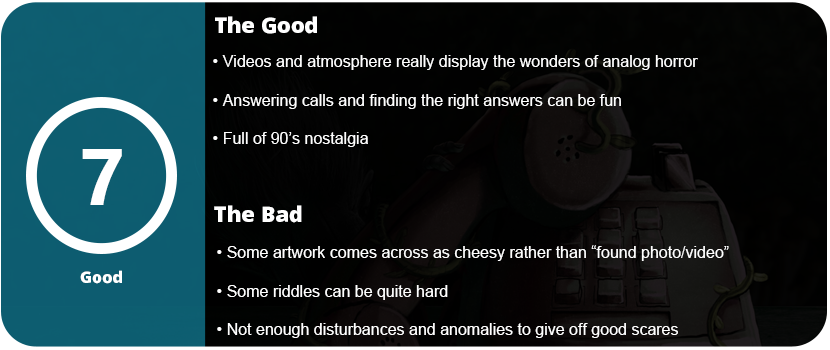
Overall,Home Safety Hotline starts out pretty disturbing and odd, but slowly evolves into cheese, and it kind of ruins the whole vibe. Being an employee at a mysterious hotline is fun, and there is a lot of potential for a sequel or something more. Solving the riddles is fun, and the artwork and entries created give a slow trickle of “what the hell is going on here?” vibes, but it never quite peaks like some of the classics in the genre.
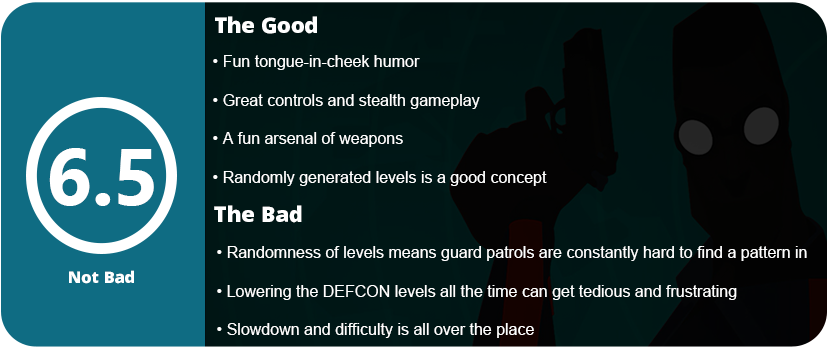
Dead to Right: Retribution was a surprising sleeper hit. The series never got the backing it deserved and is, sadly, another dead franchise lost to time that will probably never be revived again. Reckoning tried to take Retribution and squeeze it down to a handheld form factor, but it just didn’t quite work out. That’s not to say Dead to Rights couldn’t make a good portable game, but this wasn’t it. It’s a quick, cheap cash grab with no thought or effort put into it.
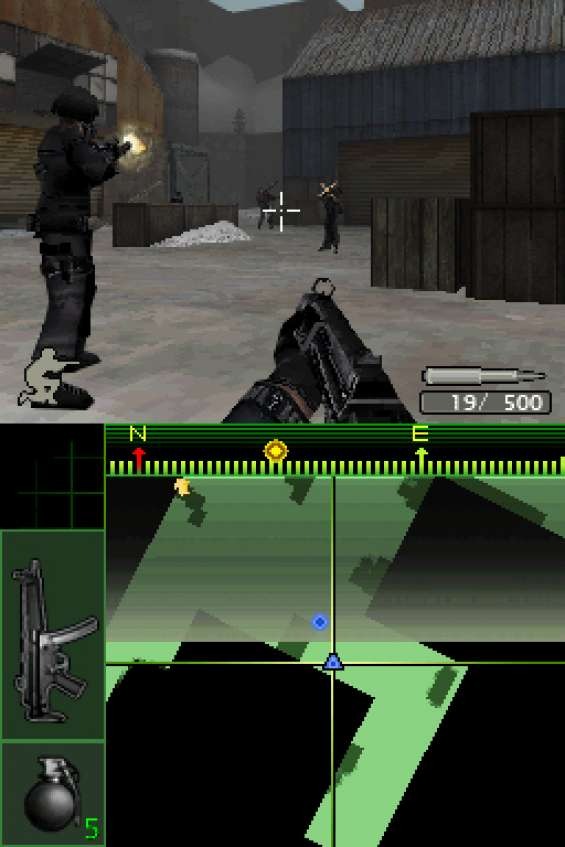
There is zero voice acting in this game, so the “story,” if you can even call it that, is narrated by a few lines of text and a cutscene. I will describe one level, and then you can copy and paste that about a dozen times, and there’s the game. You run around using the lock-on feature to kill enemies in boring, drab, and cramped levels and just blast them with whatever you have. It doesn’t matter what you use, as the game automatically switches weapons once you run out of ammo. Ducking behind cover is pointless, as you can’t shoot out from it, so your best bet is to run around like a madman and mow down everything in your path. That could be fun, but here it’s not. The camera swings around every which way, so cycling enemies is pointless as you will also cycle through explosive objects like cars and barrels, which are handy for large crowds.
This just continues forever. Some areas have fewer enemies than others, but once you shoot your way through, you kick down a door and move on to the next boring area to continue this process. Weapons range from silenced pistols, machine guns, and even a heavy.50 caliber machine gun, but who cares? Dual-wielding is always the way to go for one-handed weapons. You want to do the most destruction as quickly as possible. Enemies chew through your health with larger weapons, and life and armor pickups aren’t very common. There are no throwables like grenades, which would have come in handy as well.
There’s one gameplay feature in the console version, and that’s bullet-time. You can dodge and slow-mo your way through enemies, but I found this pointless as the environments are too cramped for this. You can send your dog Shadow out to get a one-hit kill, but the bar needs to refill. I saved this for large groups of enemies. Every so often, a boss will be thrown at you, but they all play and act the same. Just mow them down until they die. The entire game can be finished in under two hours as well, and then there’s a multiplayer mode that you can even subject your friends to.
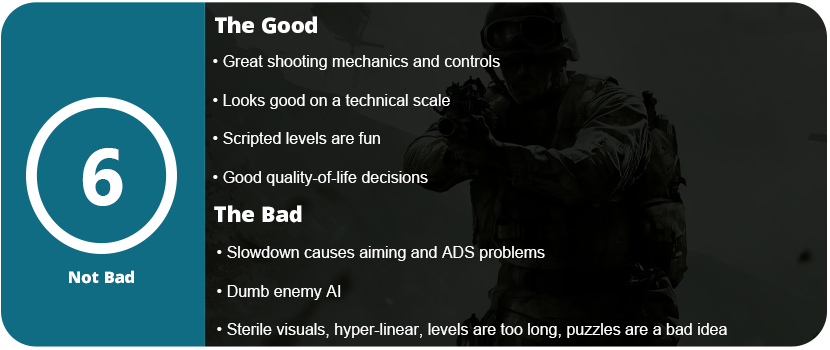
Overall, Reckoning suffers from the same issues many PSP games did. A lack of a second analog nub means no camera control, and no one wanted to write a smart camera that could follow the player or change the controls around to work better. The game looks incredibly ugly, probably one of the worst-looking games on the system, and it’s repetitive, boring, and plays nothing like the console version.
Simulator games that mimic mundane, everyday jobs can be surprisingly cathartic and relaxing. The zen-like repetitive tasks that give you the serotonin boost of progress over time, organization, or customization flood Steam and are eeking out onto consoles if they become popular enough. Sadly, most aren’t done very well and either have janky mechanics, a very low budget, or feel like copy and paste or an asset flip. Very few do it well, with PowerWash Simulator, Truck Simulator, Cooking Simulator, and PC Building Simulator being some of the top kings that do it right. House Flipper was one of those, and it felt janky but had so much potential. It was almost there, and I feel they got there with House Flipper 2, but there’s still tons of room for improvement.
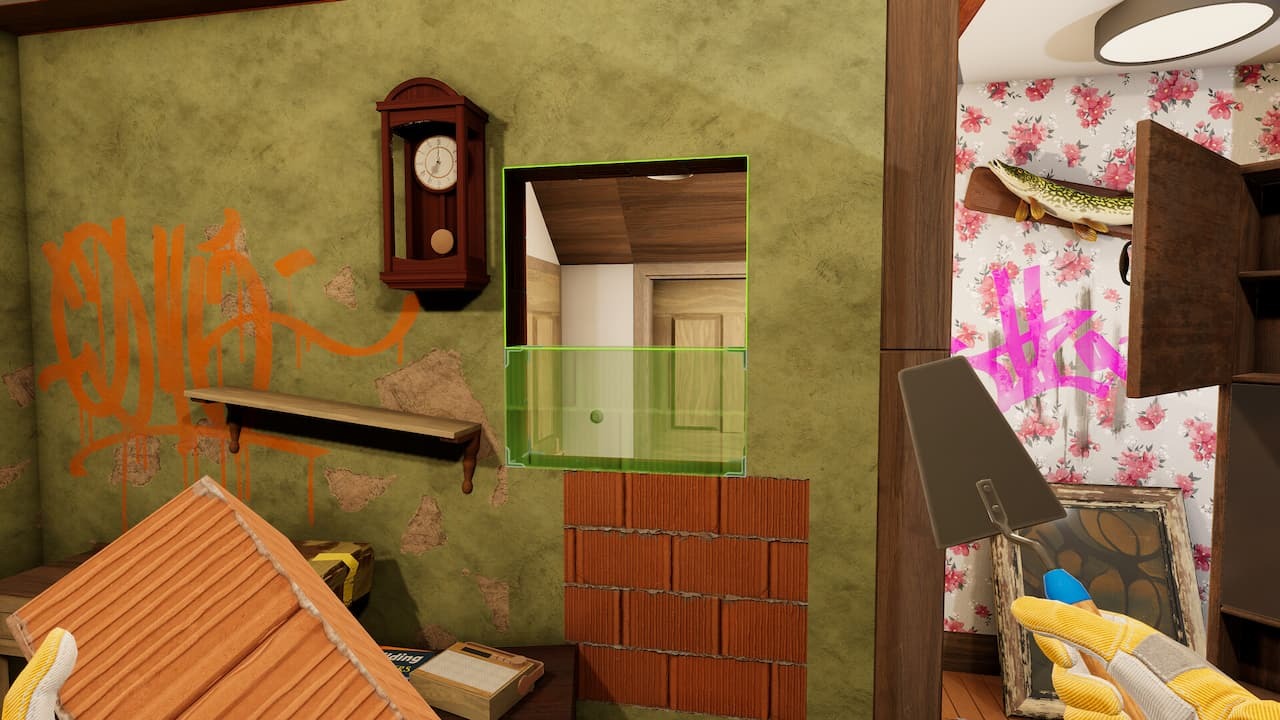
The first thing you will notice are the much improved graphics. Better lighting, effects, higher resolution textures, and an overall better-feeling game. It feels less low-budget and more like how it really should be. There’s also a lot more variety, and the game’s new grid-based placement system completely rewrites how the game plays. Forget everything you knew from the first game. That game feels essentially like the foundation for this new vision the developers have. The game now has a story mode, which is of course unimportant and pretty much filler, but there is some voiced dialogue and you can answer phone calls. Your email map that you take jobs from is sectioned into different types of neighborhoods. Rich, suburbs, oceanside, rural, etc. Once you accept a job, the game starts very slowly. Just simple cleaning, washing windows, picking up trash, and selling items. That’s about it for a good while. The perk system still exists but feels more useful. As you do each type of job, you will be able to make it faster, better, and more efficient for much larger jobs.
Just the simple tasks of trash pickup and cleaning are much better. You eventually get spray that can turn all the dirt soapy, it’s easier to wipe up, and things go faster. Trash pickup eventually expands your pickup grid, so it goes faster. Vacuuming is better and looks nicer. Leaves, coffee beans, rice, marbles, and many other forms of dirt are new and present, so it doesn’t feel so repetitive. Stains range from paint to foot prints now as well and can be on any surface. When you start demolishing, building, painting, and surfacing, some of the most repetitive and boring tasks from the first game are more fun now. The entire game is based on a 1×1 block grid system, so these tasks let you fill out a grid on a wall or floor and fill that in more efficiently. Demolishing lets you hold the button back and fill out a grid. As you get more perks, this grid fills. Painting now lets you select a border, and you can just fill it with your brush. Eventually, your brush gets bigger, and you use less paint.
The same goes for surfacing and building. You can select borders for the building and fill in the bricks this way. Everything just goes faster, feels more satisfying, and feels less like a chore. When you buy objects from the quest list, you can place them easier thanks to this 1×1 block system. You can place any item anywhere, even stack items, as long as it fits. There are so many more items to choose from, and they look better as well. Just the effects of paint trying and demolishing walls crumbling better add to a much better overall experience. I also like how assembly is now stripped away from building and left as a mini-game. There are only a dozen objects you can assemble, and it’s time-based. These were done in your workshop and are much more detailed. They come together like IKEA furniture, where you drill holes, hammer wooden pegs, and attach every screw. This makes remodeling homes less tedious, and your assembly score gives you discounts in the store. Now you can just place radiators, tubs, showers, etc. without having to assemble every single one.
When you finish the story, you can still complete jobs, build homes from the ground up, and just have fun in sandbox mode. There isn’t a lot of story content—about 15-20 hours—but you will blow through it due to how much fun you are going to have. This is one of the best job simulator games next to PowerWash Simulator, and I can’t wait for the third game to see where the developers will go with it. My only real complaint is that the requested furniture doesn’t have the required layout, which would have been nice. You can just throw it all in the middle of the floor, and it counts as complete. This makes buying furniture pretty boring unless you just want to make these homes look nice without any type of reward. As it stands, House Flipper 2 is a night-and-day improvement over the original and is heading in the right direction.
Telltale is mostly known for licensed adventure games such as The Wolf Among Us and The Walking Dead. They shut down and started back up, and now they probably don’t have the money to license these franchises anymore. I actually prefer this. Telltale has created their first original IP in years, and it has so much potential. The biggest takeaway from this game is the usual Telltale style of storytelling and choice-making. You think you know what you’re going to choose ahead of time and how it will pan out in your head, but things always make a left turn and change on you, and you’re left speechless. They are also, sadly, known for having almost no gameplay and very dated visuals.
Gameplay is more frequent in this game, but you just control your character in a walking simulator situation, walking or gliding down long hallways. There are a couple of elementary puzzles thrown in, and that’s your lot for gameplay. It’s fine, as I go into Telltale games for the story and characters and not much else. You can use zero-G movement in some areas and move around that way. You can also optionally scan a few items here and there for collectibles, but it’s very limited and linear in scope.
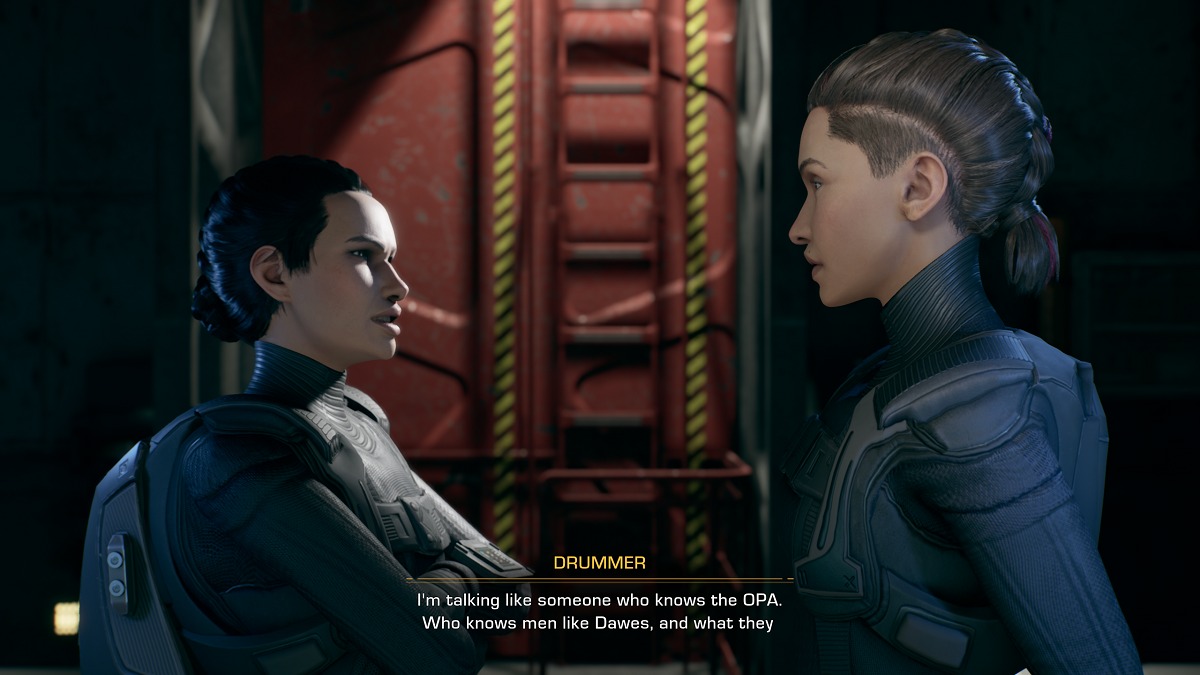
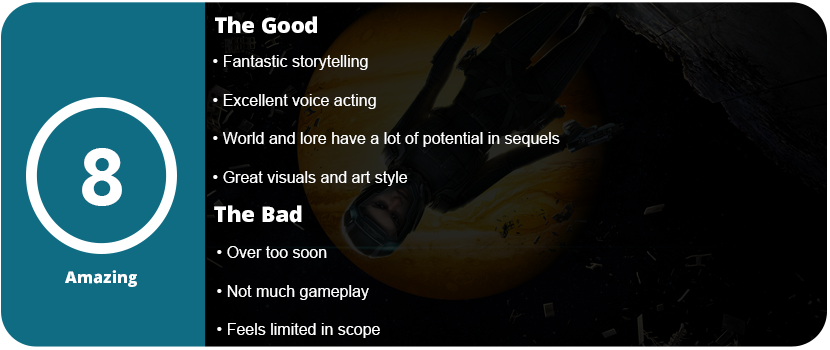
The best part about the game is the atmosphere, characters, and overall story. While this game is the beginning of a larger story arc that will give us more lore and behind-the-scenes politics on the goings-on of this world, this game solely focuses on establishing Captain Drummer as a brand new protagonist, and I love her so much. She has a lot of charisma and is a dark and brooding character without being cringy and formulaic. Her voice actress does a fantastic job portraying this. The other characters are written in your typical telltale manner, which allows you to constantly hate or like a character and then suddenly doubt everything in the end. The cast is small, but the game has a fantastic pace that keeps things interesting.
You’re essentially scrappers, and there is an established order of inners: people who live inside the astroid belt and those who love outside of the astroid belt. There are pirates involved, and there is a secret treasure that everyone is fighting over. I don’t want to go too much into the story, but the game’s atmosphere is dark and haunting, but there’s no horror. The monster here is the human element and just how brutal we can be to each other in a split second. I found the ending very satisfying, and it opens up for a clear sequel that hopefully expands this entire universe that Telltale has created.
The visuals are a huge improvement over their past games. While they aren’t ground-breaking and are required to run on previous generation hardware, the stylized visuals look great, and the blacks, whites, and grays really make you feel alone and claustrophobic all the time. The voice acting is top-notch, as always, and the only thing I left with was wanting more from this series. I also wanted more gameplay, as quick-time events are incredibly dated and there are other things you can do for adventure titles other than these dated gameplay elements. More side quests, an actual gameplay loop, and more side dialogue would be nice to be able to expand upon everything. As it is, the game takes 6-7 hours to finish, but it’s incredibly enjoyable, and I couldn’t put the game down.
Kingdom Hearts has a special place in my heart. I remember when the first game came out, and it was talked about by a lot of people on the school grounds. I was in junior high when it was released, but I didn’t get it until it was a Greatest Hits release at $20. I found it hard at the time and never finished it. When the second game came out, I rented it from GameFly and actually cried at the ending. It was so memorable and engrossing for me as a teen.
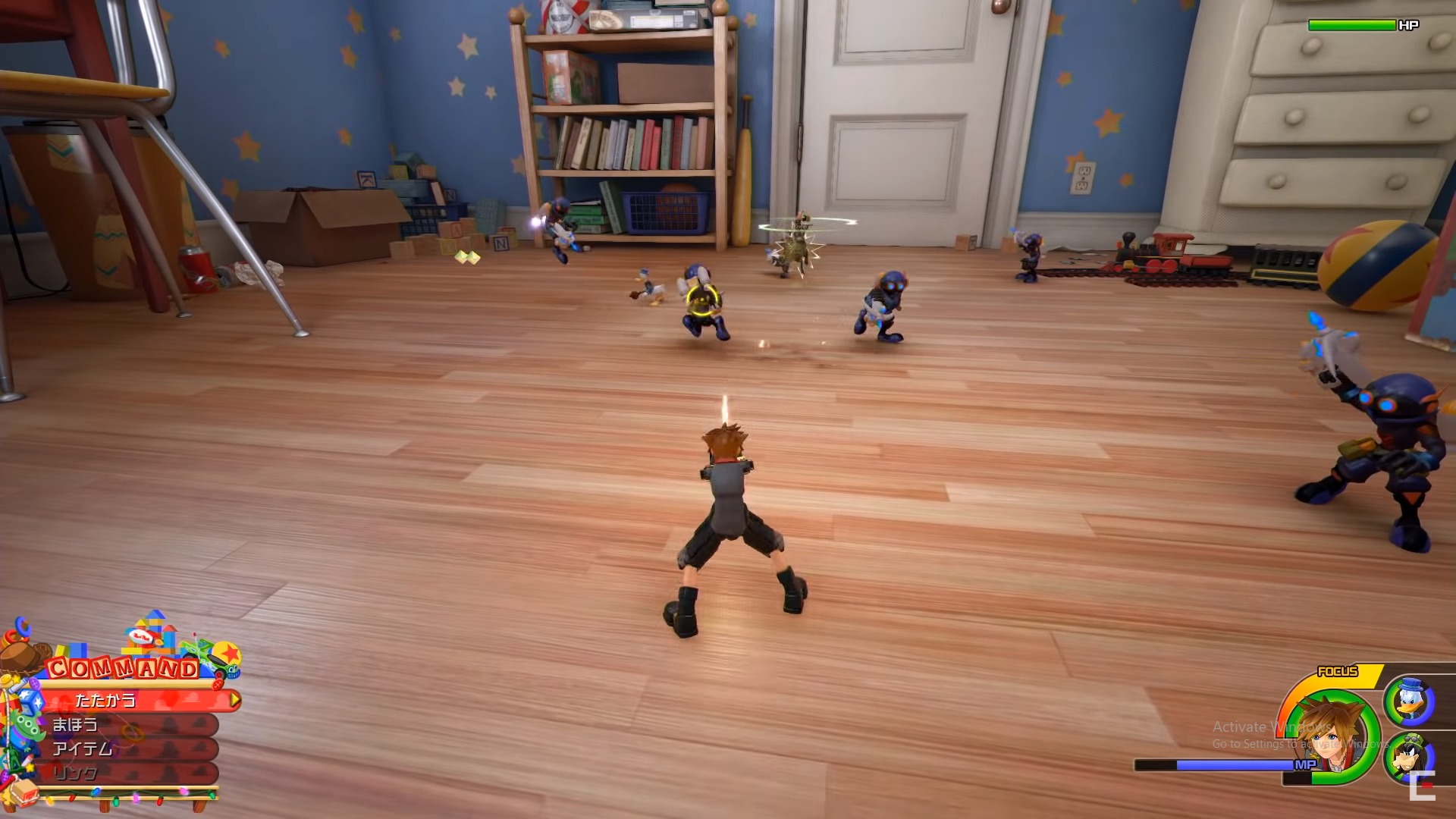
Here we are, almost 15 years later, with the third installment in the mainline series. I was insanely excited and didn’t follow any previews or reviews for the game leading up to actually getting around to buying this game. I played the first area of Hercules (again?) and got to Toy Box (Toy Story!) and lost interest. Yeah, the game hasn’t really evolved all that much. My biggest problem with Kingdom Hearts III is the lack of imaginative level design and the use of mostly modern Pixar movies. The best part about a new Kingdom Hearts game is discovering what the next Disney movie will be that you get to explore. It’s like a surprise each time, and I loved that with previous entries. This was the first time I was praying it wasn’t another modern Pixar movie.
While Hercules was very cinematic, scripted, and looked great, it’s an overused Disney movie in the series. Toy Story was exciting, especially when we were in Andy’s room, but we wound up in a generic boring mall? It was such a boring level to get through, and I didn’t feel anything like the movie. We then move on to Repunzel. Why? Another issue with this game is playing each movie scene by scene around the second act. We’re stuck at a generic forest level here. After this, we get into Monsters Inc., which is actually pretty cool, but it’s a generic monster factory. Then it’s…FROZEN?! Why Frozen? We even get a literal, scene-by-scene, shot-by-shot rendition of the “Let It Go” song. If I wanted that, I would just watch the movie. A generic snow level awaits us here.
Then we go back to Pirates of the Caribbean, of all movies. I appreciate that the visuals are improved enough to give us realistic versions of this movie and not the cartoony one we got last time, but I didn’t care as the original voice cast wasn’t present again. And it’s based off of the third film for some reason. I liked the fact that you get to sail an open ship and go find crabs to upgrade your ship, but I skipped all of this. The ship steers like a hot-wheeled car, and the generic seaside town and ship battles weren’t very interesting. Then we finally arrive at Big Hero 6, which is also pretty cool, but it’s a generic large map of San Francisco, and it is incredibly boring. That’s it. No more worlds, and you are stuck in the last level for about 10 hours doing boss rushes like every other RPG has done, and this seriously needs to stop to just bloat game time.
Even if you like or dislike these Pixar movies, the fact is that the levels are incredibly boring, and each one plays out the same way. You get through several mini-bosses, fight waves of enemies, collect some stuff, and fight the movie’s main antagonist. Every world is a generic feeling with no life from the movie injected into it. The reliance on playing through scenes of these movies isn’t what I want in a Kingdom Hearts game. I want a unique experience at each level that makes me feel like I’m part of that world. Not just some character who crashed the movie in the middle of its runtime.
I can go on and on about how much I hated the uninspired level design and repetitive nature of each world, but then there’s the Gummi Ships. I hated these in the first game, and I really don’t like them here. I like that the Gummi Ship part is a large open map that you can explore freely between worlds, but there’s nothing interesting here. You fly around collecting parts, Munni, and you can find shooter waves flying around that have levels and stars attached to them. Upgrading your ship but being able to buy parts to put together blueprints is a staple of the series, but I just don’t find it interesting. A new alpha Gummi part can be attached now to help fight in battle. It’s essentially a satellite ship flying around yours. There are speed tunnels all over the place, asteroids, and various obstacles, but I just wanted to get to the next world.
Finally, there’s the combat itself. I never really cared for Kingdom Hearts‘ combat. It works, it’s fine, and it can be fast-paced, but you fight the same Heartless over and over again, and the game is heavily reliant on keyblade transformations. Actual attacking and magic have taken a back seat. I rarely touched magic, and it felt useless. I was just attacking until I got my three pips and I could transform my keyblade into a more powerful weapon and execute its finishing move. This does the most damage and is a must for bosses, or you won’t survive at all. The final act of the game pits you against around a dozen bosses, one after another, and it’s a frustrating chore. You can still use Link commands, but they aren’t that great this time around, and I felt like they hindered battle more than anything. The goal was to attack and get a few combos in, transform my keyblade, execute attractions that put you on famous Disney park rides that do damage, and just rinse and repeat. Items are useful for sure, and it’s important to keep abilities tagged, as adding combos and modifiers to combat really gives you an edge. However, this all gets so repetitive, and you just stop caring before you get to the third world.
Then there’s the story, which I haven’t even touched on yet. It makes zero sense, even to people who have played the series up until now. My main interest was in the little stories inside each world. I never cared for the overarching Kingdom Hearts story. It’s a bloated, overcomplicated mess involving Organization XIII, and Final Fantasy isn’t even a part of this story anymore. Xehanort was the X-Blade. Aqua is trapped in a world, I think, where there are multiple versions of everyone. Yeah, I don’t know. Go watch a comprehensive timeline explanation on YouTube instead. Sadly, each world is just a retelling of each movie, which I could just go watch if I wanted to. At least the visuals are really good, and everything is bright, colorful, and full of life.
The voice acting is also hit-and-miss, but mostly terrible. Haley Joel Osment as Sora again was a bad choice; he’s just not a good voice actor. Outside of some of the mainline Disney characters, the voice acting is just wooden and awkward. Most Disney films don’t retrain their original voice actors. Especially in Pirates of the Caribbean…again. What’s worse is the writing. The script feels like it was written by a grammar school student. It’s just the most basic lines, replies, and banter. It’s just enough to get through each scene. There’s a lot of nothing being said by most of these characters. Shouting each other’s names a lot, and a lot of “You will never stop us!” or “I will defeat you!” over and over again. Yawn.
So, there’s a lot I don’t like here. The lack of older Disney movies, the complete absceneness of Final Fantasy stuff, and the fact that each movie is just a scene-by-scene replay of the original movie are boring. The levels feel generic, uninspired, and repetitive, and the combat, while flashy, uses an overreliance on keyblade transformations, attraction attacks, and links and magic. Enemies repeat far too often, and the final act is nothing but a frustrating slog of a boss rush. The story is insanely and wildly confusing and unnecessarily complicated, but at least the visuals are a nice treat. If you didn’t like previous games in the series, this does nothing that will convince you to like it now.
Side note: I was incredibly disappointed by Utada Hikaru’s song with Skrillex on this one. Both Simple and Clean and Passion/Sanctuary are classics and some of Utada’s best work. This song was terrible and wasn’t a good start to the game for me.
Awarded Game of the Year Best Single-Player Game Most Evolved Sequel Best Multi-Platform Game Most Exciting Return Best Graphics, Technical Best Voice Acting Best Story Best Atmosphere
Nominated Best Sound Design
Marvel’s Spider-Man 2
Awarded Best PlayStation Exclusive Best Action-Adventure Game
Nominated Least Evolved Sequel Best Graphics, Technical Best Sound Design Game of the Year
Starfield
Awarded Best Microsoft Exclusive
Nominated Best RPG Best New Character
Valve
Awarded Best Year in Gaming
Cypher 007
Awarded Best Apple Arcade Game
The Legend of Zelda: Tears of the Kingdom
Awarded Best Nintendo Exclusive
Nominated Best Single-Player Game Least Evolved Sequel Most Exciting Return Game of the Year
Nominated Game of the Year Best Action-Adventure Game Best Single-Player Game Best Multi-Platform Game Most Exciting Return Best Graphics, Technical Best Atmosphere
Nominated Best Single-Player Game Most Evolved Sequel Best Multi-Platform Game Most Exciting Return Best New Character Best Voice Acting Game of the Year
Game of the year doesn’t always been the most expensive or best selling. It has to be one of the most well-rounded games of the year or be revolutionary in some way. A great story, fun characters, excellent gameplay, and great visuals also help, but it’s not always a factor. This is the hardest category to pick every year and this year was probably one of the hardest in a long time. Usually, there are only a few obvious choices, but not this time.
Alan Wake II may not be everyone’s Game of the Year, but it was more my type of game this year. I love single-player narrative driven stories with cinematic elements. They were my Achille’s Heel growing up as a kid during the PS2 era and they are something I just enjoy so much. Alan Wake II‘s mix of live action cut scenes, action, atmosphere, story, and gameplay all combine for something truly unique and out of left field this year. No one expected this game to be this good.
Well, this category isn’t something you want to see any games in, but they exist every year, and as time goes on it’s actually harder to find the games to put in here due to how many there are. That’s not a good thing. Many games disappointed this year from buggy launches, unfinished products, being a dud in a loved series, or just plain sucking.
The Lord of the Rings: Gollum
It’s sad to see a franchise that’s known for high-quality games get put into this category. Gollum suffered from a terrible development cycle that has a whole story behind it. What we got was an unfinished and incomplete game that no amount of patches can fix or restore.
Action games are staples of video gaming. The best AAA titles duke it out for the crown of this genre and many a series have been considered the greatest of all time. A great action game should have insanely fun gameplay, incredible visuals, and something to make the game feel like you are in it.
Marvel’s Spider-Man 2
Insomniac Games somehow manages to top themselves with every release. Spider-Man 2 continues to make you feel like Spidey with smooth web-swinging, some the best visuals this side of consoles, and just tons more gameplay and things to do.
A game that evolves the most isn’t always the best game out there. Bringing a series back from the dead in spectacular ways, fantastic reboots, or fixing a long-running broken series can go a long way. There were many greatly improved sequels that did little to halt the progress of what it went out to achieve.
Alan Wake II is a far cry from the first. Sadly, it makes playing the original game more difficult as it feels so dated in comparison. It’s not just the visuals that evolved, but the entire game just feels like a new IP or reboot rather than a sequel. This type of effort and evolution is rare in video games and only some of the best can pull it off.
Try multiplayer. A lot of fun !