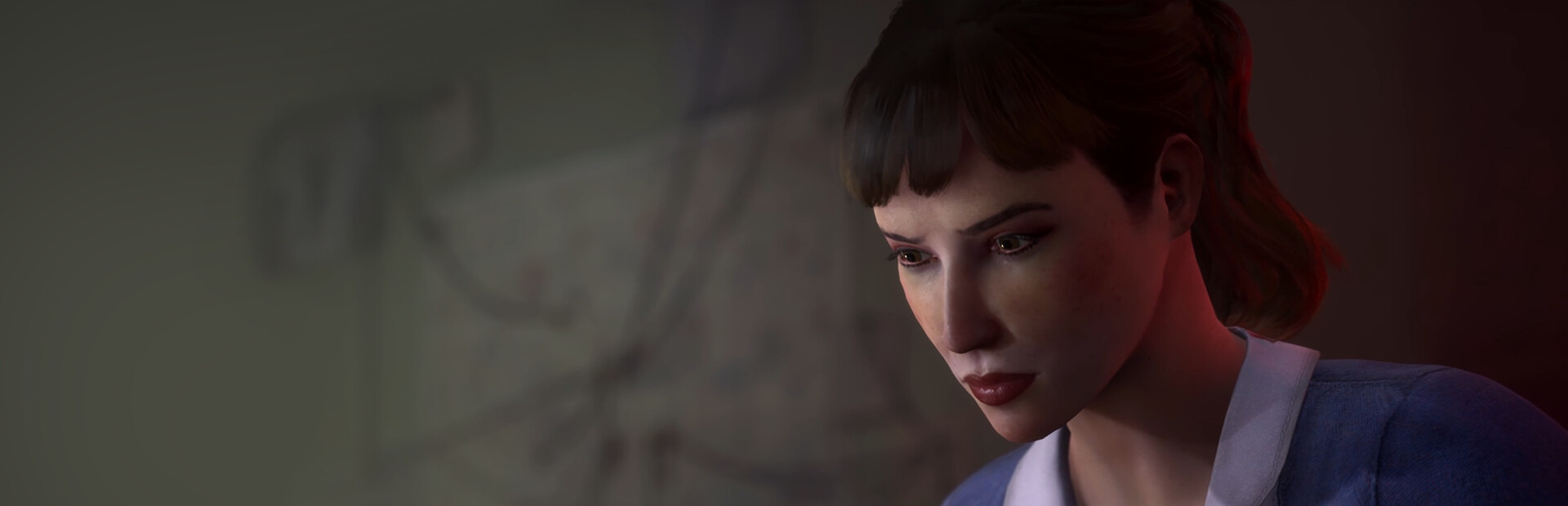
When a studio says they take inspiration from adventure games like Life is Strange, I pay attention. We follow a maid during the late 1950s, working in a hotel for a crass boss. You are basically a snoop and end up getting involved in a mystery of a love triangle, and you take it upon yourself to get co-workers involved, and the entire thing spirals out of control. Is this game a lesson on minding your own business or doing what you think is right?
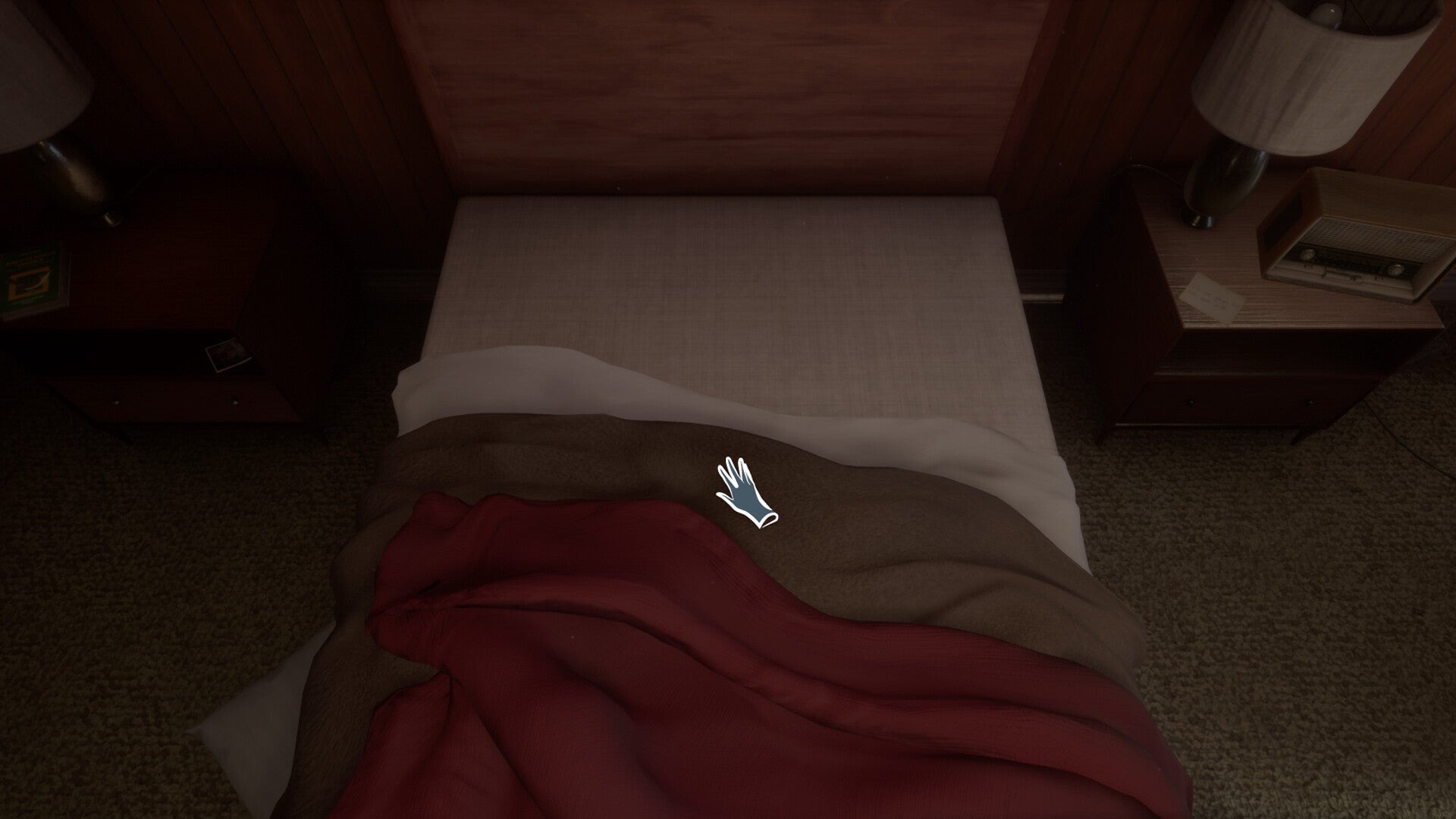
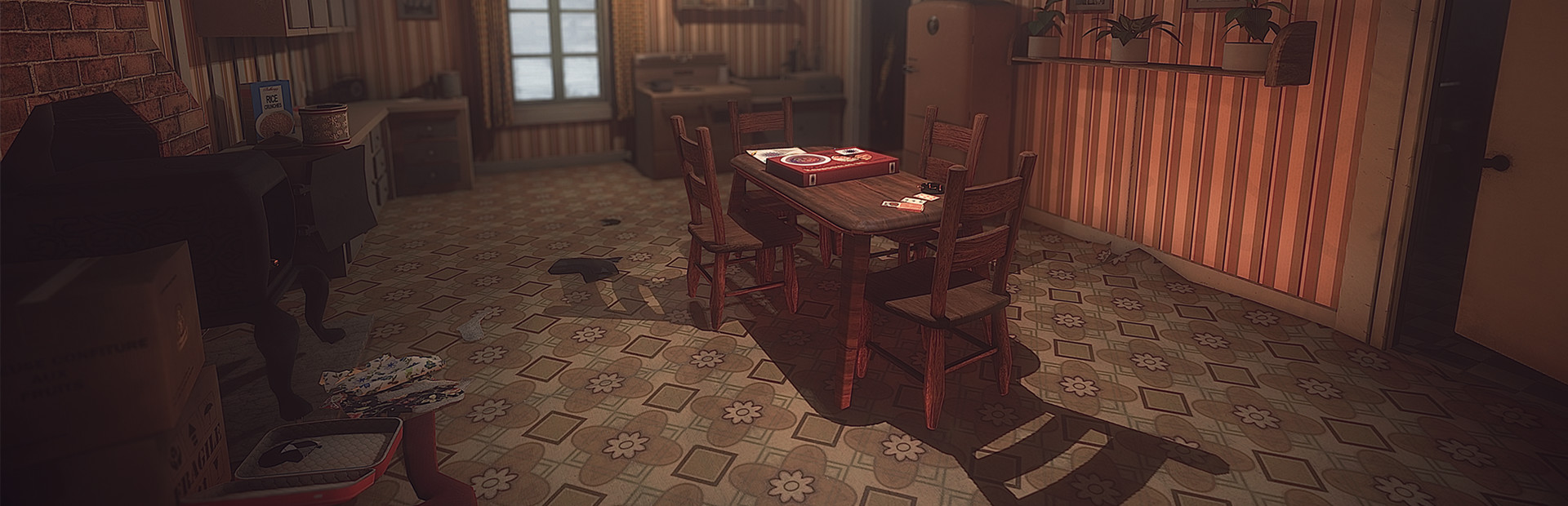
You play as Ms. Roy. You start out by getting to know your co-workers, learning the game’s mechanics, and starting your amateur sleuthing. There’s not much to the game’s mechanics. You can interact with dozens upon dozens of objects, mostly letters you end up reading, and either throw them away or just inspect them. You spend your time between three floors. The fifth floor, the basement, and the lobby You eventually pick a male or female co-worker to help you dig into other people’s business, but you also have a job to do. You need to clean and tidy up each room, and all of your actions have consequences towards the end of the game. I don’t want to say what can or can’t cause these, as it can really spoil the ending, but just know that picking things up and keeping them is something the game tells you to think about the most.
Inspecting items doesn’t really matter as you’re putting them back down, but scouring all the drawers, every item, no matter how simple it seems, might give you a clue to figure out what’s happening in the love circle you want to so desperately be a part of. Sometimes you need to go to the basement and get items you don’t have, and there are a few puzzles thrown in. These aren’t difficult either. matching up pieces of paper, deciphering a code, or just finding a few clues here and there. You can hear Roy’s inner dialogue to help give you hints, and you can read everything you picked up in your inventory.
Outside of interacting with objects and solving the occasional puzzle, there isn’t anything else to do. There’s no exploring, character interactions are scripted, and there are only three characters in the entire game. This is a very short game with a runtime of about 3 hours. I do have to give credit to the developers for creating such a tense mystery at that time and actually giving the characters some depth. It’s not long enough to really give an entire backstory like other adventure games, but they cut out the nonsense and get to the meat of what they want to do and the story they want to tell. The writing is well done, and the voice acting is pretty excellent too. Your choices also really do matter, but the physical interactions with objects make you realize what you could have done differently as the final moments of the story pass.
The visuals aren’t anything impressive, but the game looks period-correct, and it’s not ugly. The lip syncing is off, but the characters look good, and they have a unique look and a lot of character in their personalities. Sadly, my biggest complaint is that I wanted to know more about these characters. The game focuses solely on this mystery, but just enough personality in the characters pokes through that this could have been a much longer game. I wanted to know more about Ms. Roy and who she is as a person. That’s what made Life is Strange so great. It focused a lot on the characters, who they are as people, and their lives. There’s a lot of potential here for something greater, but the end product of an interesting and gripping mystery is done well enough. This makes for a fun evening with choices that really matter, but that’s about it.
A lot of games tell the lives of soldiers during WWII, but not many talk about civilian life. Specifically, the lives of the Japanese and Russian civilians who were dragged into the war against their will, and many didn’t support what their governments were doing. Torn Away tells the life of a Russian child whose village was destroyed and all residents were dragged into labor camps by the Nazis. Our protagonist, Ansya, wound up in a women’s labor camp with her mother, and you follow her as she escapes and deals with loss after loss, trying to make it to more relatives in another village.
The game starts inside a house, and you learn to interact with objects, complete small and simple mini-games, and gather various objects. Ansya likes to talk to her dolls, and she ends up having her inner dialogue narrated by her mitten, Comrade Mitten, through the journey. As most know, children like talking to dolls and objects that they get attached to. Sometimes this can be a coping or comfort measure, especially after severe trauma. The game changes the pace constantly, going from side-scrolling platforming sections to first-person walking sections and sections in which you are finding objects in small houses. It changes up the gameplay quite a bit, and the game never gets dull. The original Russian voice acting is great, and the overall tone nails the atmosphere of dread during the war.
A lot of the sadness is portrayed by the visuals. A beautiful style of water colors and washed-out lines. It’s almost like a child’s blurry memory. There are a lot of foreground and background objects similar to other side scrollers like Limboor Inside. This can give a sense of scale for a small child in a big adult world as well. Every area was different and felt unique, and there was always a sense of foreboding danger. The second Ansya felt safe, something would happen, and she would be on the run again. The story never gets gut-wrenchingly sad or depressing, as the story isn’t long enough to portray this. There was a lot of focus on gameplay, unlike most walking simulators, so the story isn’t the sole focus here.
Gameplay-wise, the platforming is the worst part of the game. The animations and speed are slow and sluggish, and I constantly died trying to hop over objects. There’s no momentum, and Ansya just kind of hops like you’re picking her up and setting her down. There are occasions where you can solve a really simple puzzle, like dragging boxes around to climb up onto a ledge or gathering objects to create something in a certain order, but nothing that will strain your brain cells. There are stealth sections thrown in where you have to avoid spotlights and flashlights by running between boxes. It’s nothing challenging, but the constant change in pace helps keep your interest in an otherwise bloated genre of boring walking simulators.
With that said, Torn Away is a fun evening time killer, and the story is just sad enough to keep you hooked, but there is nothing memorable here in the end. This isn’t something like Valiant Hearts that will sear its story and traumatic events into your brain. What’s here is better than most walking simulators, as it offers some great gameplay and an entertainingly sad story with great visuals.
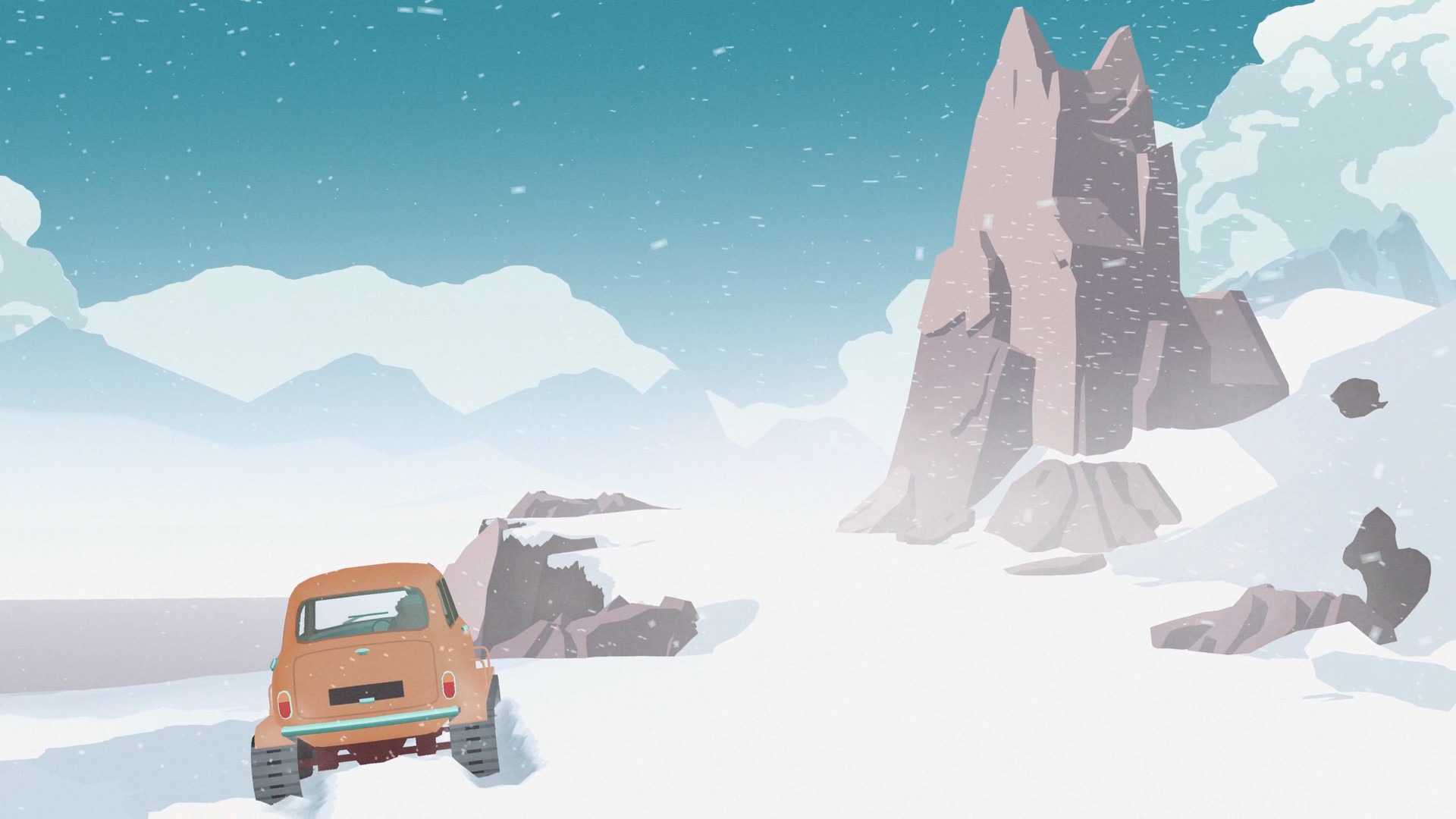
The Cold War was a rough time, and you really feel it in the South of the Circle. You play Peter, a British scientist struggling between love, his career, and being stranded in the Antarctic during one of the most strenuous times with Russia. Peter is a climatologist and ends up meeting a Scottish woman, Clara, who is protesting the war. He ends up torn between her companionship, his career, and the present times of him stranded at a remote research station trying to find rescue.
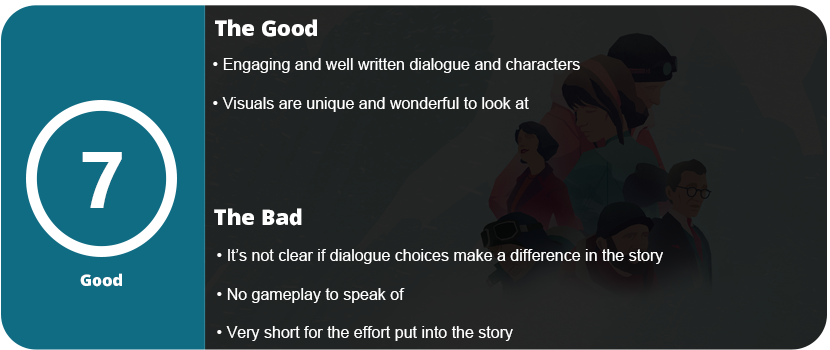
I don’t want to spoil the story because that’s all that South of the Circle has going for it and is the only reason to keep playing. There is almost zero gameplay outside of pressing buttons for dialogue choices. These come in the form of emotion bubbles that range from neutral, scared, sad, happy, and so on. I don’t quite know if this effects the overall story path, as my choices almost seemed to not matter. As Peter is talking to people, a bouncing red ball means a scared response. A blue ball hanging low means a sad response. A sun icon will make Peter respond joyfully, etc. These come up pretty frequently, so you’re always pressing something. Occasionally, you can move Peter around and interact with the rare object here and there, but that’s all there is to it. There are no puzzles or anything like that.
You follow this linear path of Peter trying to find people at this station while seeing flashbacks. You start in the middle, and as you move forward in the story, the flashbacks start from the beginning. It’s very entertaining, and I was interested in the story until the end thanks to the well-written dialogue and fantastic voice work. The visuals are striking in the sense that they almost look rotoscoped. There is motion capture for this minimalistic style of art, and it’s quite captivating.
The entire game is a linearly scripted adventure and lasts less than four hours. It’s a bit longer than most super-short story-driven walking simulators, and the excellent writing will keep you hooked. All of the characters have depth, and you actually have feelings for certain characters, despite some having only a short time on screen. Scenes can get intense and emotional, and you can feel the dread that Peter is facing in his struggle for survival. It’s just so well done, and it’s sad there isn’t more gameplay attached to it. It’s one of the better walking simulator stories I’ve finished in recent years.
Overall, South of the Circle provides an entertaining, well-acted, and well-written story and script, but the lack of gameplay makes you question whether this is just enough here to be an excuse for a game. The art is fantastic, and the motion capture is enticing. I wish the dialogue choices were a little more obvious about what they did or if they changed anything at all.
Walking simulators can be really great or really terrible. There is usually no in-between, but somehow Kona manages to accomplish this unremarkable achievement. You follow Carl Faulbert, a private investigator, who arrives in a remote other Canadian town to discover something is lurking around and killing its residents. The plot itself is mostly uninteresting, and details are really only explained in found notes. There is a narrator who explains things throughout, but he mostly just asks questions and never answers anything for us.
The game starts out fairly simple, and it’s an illusion of how the rest of the game is. You walk around in first-person view, interact with objects, and drive your truck. You can pull out your map in the truck to figure out where to go. You have an inventory system and can pick up objects to store, such as duck tape, hardware, flares, matches, etc., but most of these items are useless, and you don’t ever use half of the consumables. The game isn’t open-world, but there is a giant area to explore. You can wander off the beaten path or main road to find campfires to light, objects to pick up, documents to read, and various other things, but this is purely for achievements only. Wandering around the town is a chore due to the slow walking speed and short sprint speed. You have heat, sanity, and health; however, the heat meter helps drag the game down further. Yes, this is a remote area in the cold, but needing to find a specific object to obtain a jacket from a person you may never find without a walkthrough is pretty annoying. Once you get the jacket, your heat meter never becomes an issue. There are wolves spread out in the wilderness off the main road, and these can harm you. Hit them with a hammer or hatchet, or shoot them with a gun, and they’re gone. There’s an option to throw steaks at them if you want to hunt for achievements too.
The game always feels clunky in some way. Having to constantly pull out your map to check your surroundings gets tiresome, and never knowing exactly where to go will make people quit early on as well. You just wander into each house marked on the map and hopefully figure out how to make your way north until you reach the end of the game, which isn’t satisfying and doesn’t make me excited for a sequel. You can only save at campfires, and if you don’t have matches, a firestarter, or a log, you can’t save. Your inventory space is limited, so you must drag your items around in the back of your truck, and then if you need something, it’s a hike back.
You have a camera and can take photos, but again, this is mostly for achievements. Achievement hunters would love this game, but outside of that, the gameplay is mostly repetitive or pointless. The visuals are great and hold up well even today, but you are mostly seeing just white and log cabins. There isn’t anything artistic or unique about this game, which makes it a very boring game to look at. The narrator does a good job, but what’s the point if he doesn’t help progress the story? I only kept pushing forward to see if the story got more interesting or had a really awesome ending that made all of the mind-numbing walking worthwhile.
Overall, Kona has its place for a certain crowd. I love walking simulators, but many often waste my time with forgettable stories, boring settings, or mind-numbing gameplay. Kona has more gameplay than any other walking simulator has a right to, but if you cut all of it out and only let the player drive down the main road, that effort put into all the extra exploration stuff could have been put into a better story. As it stands, Kona doesn’t do any one thing particularly well.
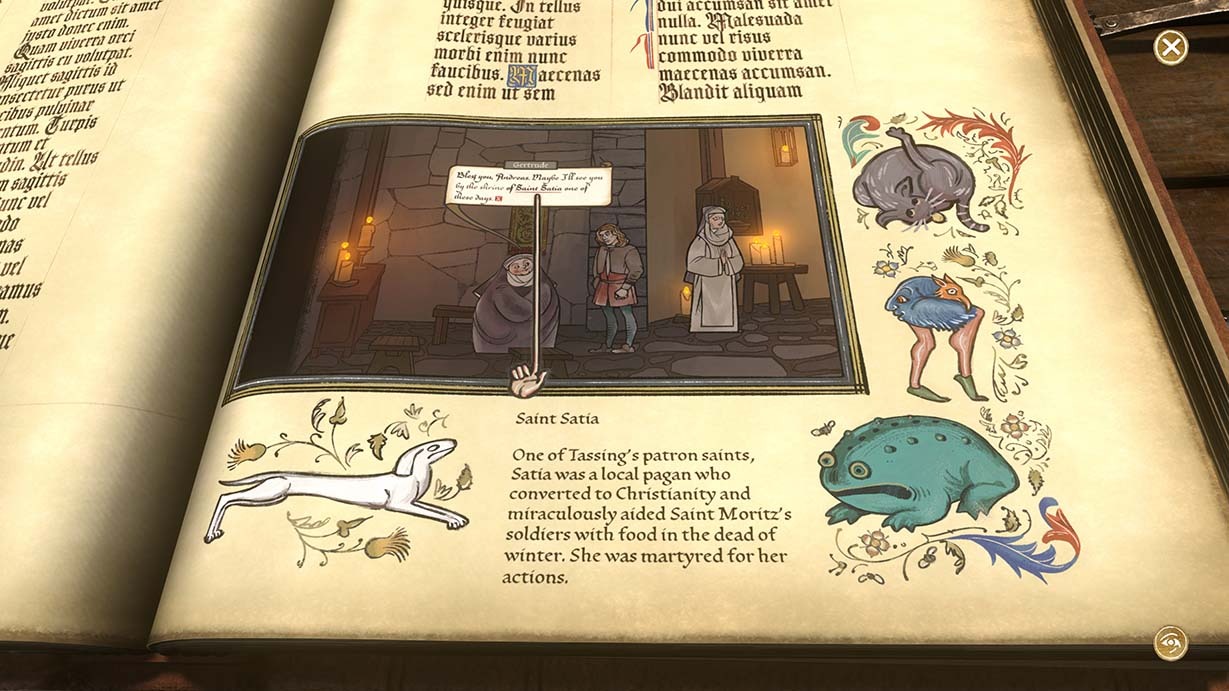
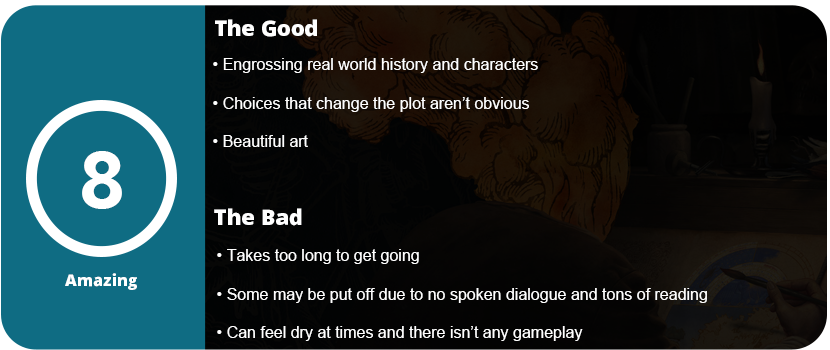
1518 is the year of Pentiment’s main plot. You play Andreas Maler. An art apprentice works for the church at Kiersau Abbey near Tassing. This is solely an adventure game with no spoken dialogue, so there is a lot of early plot development, and it’s very slow to start. I put the game down several times due to how long it took for the game to actually start getting interesting. There really aren’t any gameplay mechanics to learn, so you mostly just follow the objective marker on your map and talk to people. There is a rare puzzle thrown in, but it isn’t challenging at all. This is a choice-based adventure game, so your dialogue choices can decide who lives or dies in this game.
There is a lot of history to learn, not just about the town of Tassing and the Holy Roman Empire in general, but also about the characters. There are a lot of characters, and thankfully, the writers did a good job portraying their personalities throughout. Towards the end of the game, everyone feels like familiar old friends, and you can feel and watch these people grow and change over time. While there are a lot of characters, the game does eventually start moving at a steady pace. There are no RPG elements, but you do get to choose specialties and subjects you are experienced in, such as languages, trades, and visited areas. This can help unlock dialogue boxes that have icons next to them. The conversations feel very organic, and you can’t tell whether there are big choices or not, which is kind of nice. It feels more realistic in the sense that when the consequences come up, you have no idea how it happened, but in a good way. There isn’t a way to predict a major plot twist this way, and it can add to replayability.
While the dialogue is well written and the characters are mostly interesting, the game feels very dry and dull at times. There is a lot of proper real history, and to help learn more about this without a ton of nauseating exposition by the characters, certain terms are underlined in red, and you can press the back button, and a little snippet will explain what that means. This makes all of this optional and helps keep the story moving along, which was a great choice. The game is still very dry, and I feel a lot of people will put this down due to the real history and less fantasy. Having no spoken dialogue might also put a lot of people off. There are a lot of ambient sound effects and some pretty good music here and there, though.
Once I got past the first act, I was glued to my Steam deck. The plot was quickening, and this murder mystery story was becoming more and more enticing. Sadly, the third act starts out dry again and takes a while to pick up, but when it does, it’s very engaging. There also aren’t any side objectives, stories, or anything like that. The main plot takes over 10 hours on its own due to just how much dialogue there is.
The visuals are wonderful and one of the best parts of the game. The paper-cut-out art style is beautiful and fits the setting very well. There are a lot of colors, and you get to see every season and various forms of art within the game, as well as architecture. It’s a very engrossing game visually, and it never gets boring to look at. With that said, this is still a text adventure with visuals to help it along. There isn’t any gameplay, side objectives, or mini-games, and the game takes too long to pick up and get interesting to keep the casual curious gamer interested. Investing 10+ hours into this game might also seem daunting for those who don’t enjoy reading books or like history. I love both, and it’s fine for the type of people it is trying to reach.
With retro gaming becoming as huge as it is—bigger than ever!—the Analogue Pocket has found itself to have received the status of a unicorn over the last 3–4 years. The Pocket was first announced in late 2019 as a first wave of pre-orders. I personally missed out and was ready to wait for wave two—and then COVID hit. All throughout the pandemic, the Pocket was released in very limited batches, but only for those who pre-ordered during the first wave. Open pre-orders eventually came, but shipments would take over 6 months. Analogue has just finally caught up over the last few months, and hopefully they will be in stock in their store soon. With that said, the Glow in the Dark Pocket was their first limited edition version, and I somehow magically got one. I’ve sat in line for special edition releases of other types of electronics before and have never had any luck. You click the add to cart button, and usually you are put in a virtual line. This time I was greeted with a complete purchase page, and I jumped for joy.
Now that you know how hard it is to find this thing, you can imagine how excited I was to finally get one in my hands. These things have been scalped online for years for 3–4 times the price. The Glow in the Dark Pocket sits on Mercari and eBay for $500–$800 as of the time of this writing. The dock goes for as much as the pocket is new. It’s insane and completely unfair. I did order a dock and Game Gear adapter, as those are readily in stock on Analogue’s site as of this writing, but I also pre-ordered the other three adapters for the Neo Geo Pocket Color, TurboGrafx-16, and Atari Lynx.
Unboxing
The box itself is rather heavy. It’s a premium package with a nice little QR card inside a tiny little envelope that gives access to the quick start guide. I would have loved to see a physical manual, but these take up a lot of room, and things change over time. You don’t want to ship devices with outdated manuals, but I digress. The pocket itself has a screen film and a film over the back of the unit itself. When I picked it up, I was surprised at how heavy it was. This is what I’m assuming, with the battery taking up most of the bulk. The plastic shell is really thick, and the overall feeling is very minimalistic. This isn’t a flashy system with different colored buttons, weird laser cutouts, RGB buttons, or anything silly like that. This is a very serious-looking device, but it’s sleek and sharp, similar to Sony’s design DNA from the PSP. There’s a power and volume buttons on the left, a microSD slot on the right, a GameBoy link cable, USB-C, and a 3.5mm headphone jack on the bottom. The rear has a ridged texture, the cartridge slot, the Analogue logo, and shoulder buttons, and that’s your setup.
I’m happy to see the pocket has stereo speakers. That is useful for GBA games that have stereo output options. The front gives you unlabeled face buttons, a D-pad, a FPGA logo, and three little buttons at the bottom acting as Start Select and the Analogue or Home button. The 3.5″ LCD screen is vivid and colorful, but it has a high resolution of 1600×1440. So you’re gaming in 1440p on a handheld. Pretty cool. The FPGA does a fantastic job of upscaling everything.
Software and OS
When turning on the device for the first time, you are greeted with a tutorial on how to navigate the OS and what each button does. This is a really cool thing, and more consoles need to do this! Remember, this has no wifi or Bluetooth chip inside of it, so it’s not spending all of its time getting you to sign up for some service like current-generation consoles do. Once you drop into the OS, it’s just a simple black-and-white list. You can play the cartridge currently inserted or play an open FPGA core (more on this later). view the library, Memories (save states and screenshots) go into Tools for developers and tweak settings for each built-in core. There are also settings inside to dump the memory cache to the SD card and various other advanced things, most likely for troubleshooting. The OS is very basic and simple, but it doesn’t need to be anything else. Sadly, there is no custom OS right now for a more advanced user interface, even if you do want one.
Playing Games
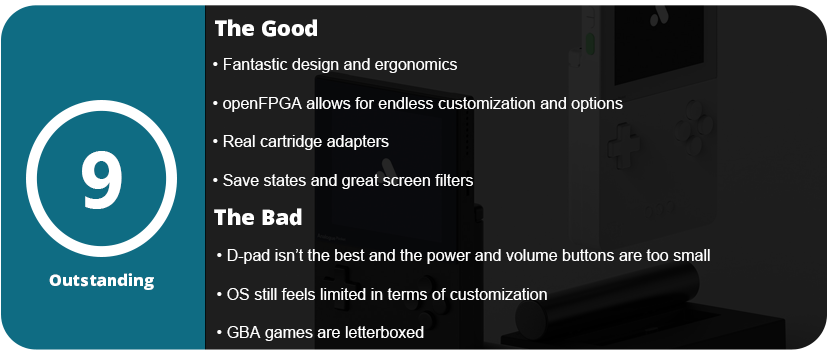
This is why you have one, right? Let’s start with the original GameBoy games. Each core has a filter you can use, and this is important to get the feeling of the game right. Instead of a million useless ones, Analogue gives you three for each core. Their own analog filter removes scanlines, grids, and smoothing. You just get raw pixels, and this is how we play older games on the Switch or any other device running emulators. It looks sharp and utilizes the hardware of the pocket. There are also original modes that add scanlines (which don’t look half bad but darken the screen a lot) or add the original grid back. There are also color filters for the GameBoy Light, Pocket, green, and red from the Virtual Boy. GameBoy Color is the same without the color filters but adds a different scanline option. These filters only work on original cartridges and not emulated games, so keep that in mind. Systems also have options for different display ratios, which is nice. GBA games will have borders, but you get used to them. The sound is amazing, and some cores have different audio options to tune everything to your liking.
When it comes to actually playing games, they feel great. The pocket is nice to hold in the hands; the button mapping can be customized and moved around; but the Dpad isn’t perfect. It’s not the best when it comes to rolling your thumb around. It’s a bit stiff, but it gets the job done. The face buttons feel nice, with two convexed and two concaved, similar to the SNES controller, but the three small buttons at the bottom are tiny and hard to press with bigger fingers. While the buttons aren’t 100% perfect, they are fine for 8 and 16-bit games. We’re not playing competitive shooters here.
Customization
Just recently, the open part of the FPGA was released, and emulated cores are now available. Any 8- and 16-bit system can be run to your heart’s desire now, but you lose access to those fancy screen filters and resolution settings as a result. They also play perfectly, though. I played through SNES, Genesis, NES, GameBoy Color, and GameBoy, and they all ran perfectly fine. Some Genesis games that need six buttons use the shoulder buttons, so it’s a bit awkward, but you can play these on the dock with a controller, so that can help eliminate that problem. Getting some emulators working like the Neo Geo is a royal pain because you need specific ROMs and BIOS files to get anything to run. But once you do, it’s worth it. I wish the OS itself was more customizable, such as having a wallpaper or varied themes. Startup images would be fun too. Maybe one day the OS will open up, or someone will hack it and give us that option.
Overall, the Analogue Pocket is a retro handheld gamer’s dream. You can play any games you currently own or emulate them on the microSD card. While it took years for the FPGAs to become open source, they are finally here, and if you have been holding out, this is the time to get one. This thing is great for those who love both worlds. Physical cart-owning purists and those who don’t own a single cart and just want to emulate. While we will never see physical adapters for certain systems, you can still rock both worlds and have all of your 8 and 16-bit favorites on the go. The battery life is great, the buttons feel good minus the Dpad, and it has all the modern trimmings for a reasonable price.
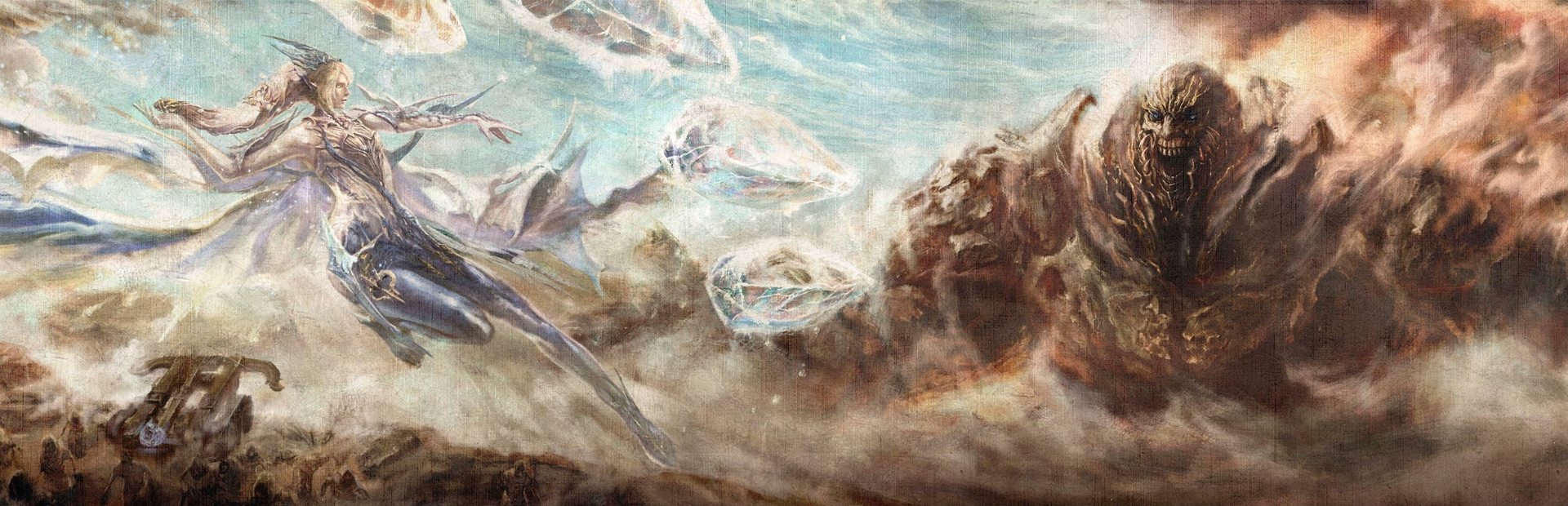
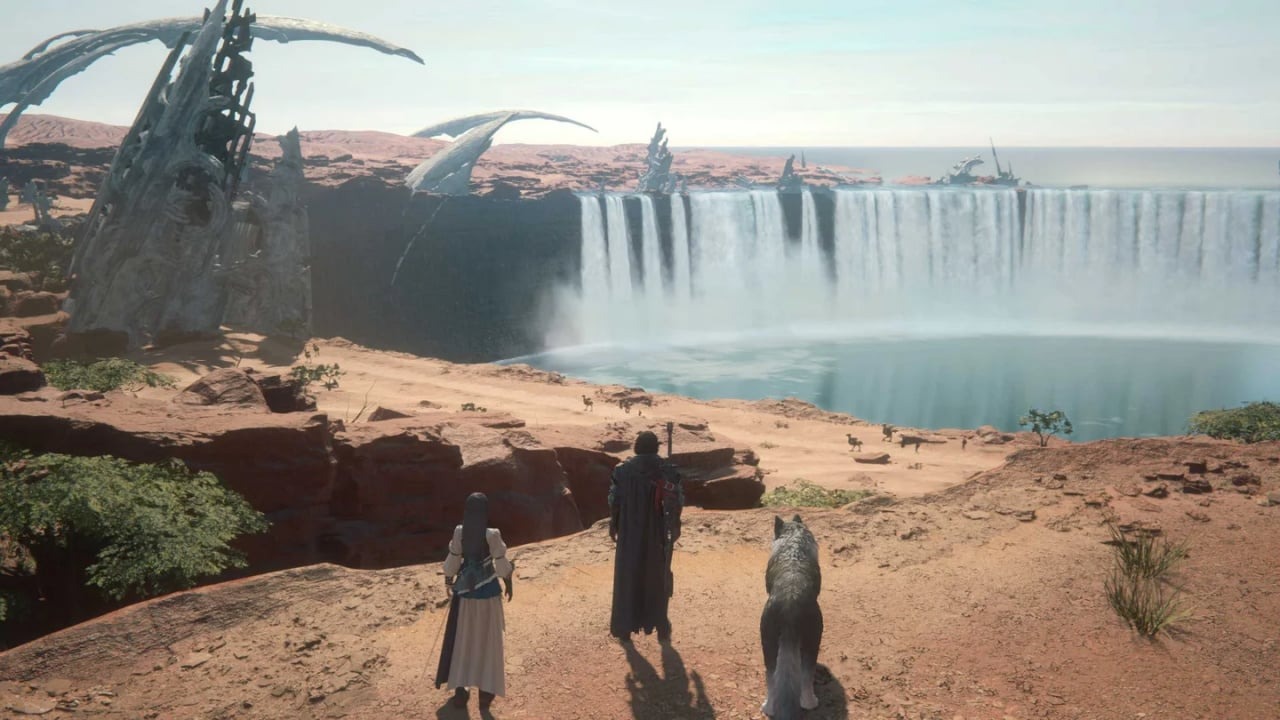
Well, here we are again. Nearly 40 years later, we are, surprisingly, only at number sixteen. Of course, there have been spin-offs, remakes, and remasters all strewn throughout the timeline. The games have gotten bigger, more epic, and more cinematic, and they have started to abandon the traditional JRPG formula they helped create. This is probably the most action-oriented mainstay game to date, with cinematic quick-time events and mega boss fights.
First and foremost, this is not an open-world game like Final Fantasy XV was. There are large open areas, but this is a very linear-driven game. The main focus is on the main quests, and then there are side quests that we will talk about later. The game slowly introduces the combat system and the way the mechanics work over the course of the first fourth of the game. My favorite part, and the biggest draw to this game, is the sprawling story that is heavily inspired by Game of Thrones. There are various kingdoms at war with each other over the mothercrystals that supply magic to the people. These kingdoms are governed by interesting characters, and there is even in-house fighting and scrapping, just like in Game of Thrones. Plenty of betrayal, deceit, and various ways of hurting another person Each kingdom has an Eikon (or Aeon), and these are the famous ones we all know, such as Ifrit, Bahamut, Phoenix, and Shiva. Each Eikon is used during battles and war, but there’s a blight coming that’s sweeping the land, and the kingdoms are warring over land that hasn’t been plagued. I don’t want to go into anymore detail as it might spoil the story, but there is a useful Time Lore feature that can be used during cut scenes to read about what is going on. Despite how deep the story is, it’s not confusing or hard to follow at all thanks to this Time Lore feature.
There isn’t much to explore in this game. You can run around the open fields, collecting sparkling orbs that contain healing items or stuff used to forge equipment. There are occasional treasure chests with pendants and other items, but looting and forging take a backseat in this game. Enemies are found on the field and can be engaged in real time. This makes the game feel faster-paced and reduces the need to slog through hours of turn-based grinding. In towns, you can take on sidequests that are green marks and can fast travel to any area that’s been unlocked or a travel crystal has been discovered. Later on in the game (probably way too late), you can unlock a Chocobo to ride, as some areas can be pretty vast and you will visit many multiple times. There are a few dozen areas to explore, but sadly, there’s nothing but pretty sights in most of them. There is no substance to the exploration. You mainly just use the enemies to grind a bit until you outpace the enemies, and then the area is literally useless to you. Thankfully, many of these areas are never visited again after the first time, unless a side-quest takes you there.
Combat is obviously one of the biggest draws to the game, but it’s more flash than substance. There is only a single melee attack button, a magick button, and a dodge button. The game focuses a lot on dodging and parrying, as enemies and bosses are fast-paced and can spam insanely powerful moves. You have to master being defensive, or you will die a lot in this game. Sadly, most of the combat is focused on using your abilities and quelling cooldowns. Each Eikon you unlock gives you abilities. Shiva gives you ice abilities, Titan, Earth, and so on. You gain ability points and can unlock new abilities and upgrade some through a skill tree, but I felt this was mostly useless. By the end of the game, you have already unlocked most of them; however, abilities need to be switched out according to the enemy types. You have offensive and defensive abilities. There is also a single fully upgraded mega ability per Eikon, and these are a must-have during the final chapters. They take a long time to cool down, but they inflict mega damage and can really give you an edge in battle. I sadly hated that I only used my standard melee attack when abilities were cooling down, and then there is the rage meter, which is also used in between. It’s similar to an MMO, where you just queue up attacks based on damage and availability. There’s almost no skill involved outside of defense.
This makes combat boring after so long. Sure, it looks cool, and there are a lot of well-done animations and effects, but when you get to the large Eikon battles, they just look cool. Some even take place in space on a cosmic level, but those are even simpler with just basic melee combos and the occasional ability. If the game didn’t look as slick as it does, the combat would be mostly inexcusable for how simplistic and formulaic it is. I never quite hated it, as you do have to stay on your toes, but I never really felt powerful enough, no matter how leveled up I was. I wish I could have devastating combos and not have to rely so heavily on my abilities or rage meter. Bosses’ health meters will slowly chip away and can seem to take forever to defeat. Thankfully, the game is forgiving and will start you over at checkpoints with recovered health items. At least on easier and normal difficulties.
You can buy new gear, but it’s very simple and rudimentary. You get a sword, a bracer, and a third piece of armor, and that’s it. You can use the forge to enhance them with materials or just buy new ones. You end up with so much Gil because there’s nothing worth buying. The only expensive items are things like songs for the jukebox at your hideaway. That’s it. You also don’t get to play as any other characters, so you’re just stuck with Clive. There isn’t a full party to outfit here. I always had the best gear because there wasn’t anything else to focus on. It almost seems pointless.
There’s nothing else to do outside of all of that, except maybe bounty hunts. These are just optional mini-bosses. Mini-bosses are enemies with yellow stagger bars that take much longer to defeat. They pop up often and can bog down the flow of the game. They also repeat very frequently and damage sponges. I’m not a fan of these mini-bosses. However, the rewards for doing these bounty hunts and side quests are points you can use to get material packages, which is pointless as you end up with plenty of Gil to buy whatever you want. The sidequests themselves are boring fetch quests that you would see in an MMO. Hunt these enemies, talk to this person, deliver this item, etc. I gave up about two-thirds through the game on these.
The game does look absolutely fantastic. Every area is oozing with color, atmosphere, and excellent effects. The characters look good, and the English voice acting is top-notch for once. We are a long way from Tidus’ infamous cringy laugh from Final Fantasy X. I really enjoyed the story and the darker tone of this game. It’s a gory, brutal, and harsh world that’s a stark contrast from other light-hearted JRPGs from Square Enix with the typical whining, spiky blonde-haired boy saves the world scenario. It was a breath of fresh air, and I wish the gameplay and exploration didn’t take a back seat. This is more of an action game than an RPG.
Horror games from the 1990s to the mid-2000s hold a special place for me. These games were genuinely unique in the sense that they focused so much on the atmosphere that they may have been shunned in critic reviews, sold poorly, and generally ignored during their time, but we have come to love them later on. Horror games have rarely been made the same since. Fatal Frame was a very unique series that took the genre to new heights with interesting gameplay mechanics that steered away from guns and running away from things. Your Camera Obscura was your weapon and puzzle solver, and the first game won gamers over, but it had unfair difficulty and had clunky controls. The second game fixed a lot of this and was later upgraded further for Xbox. This would also, sadly, be the last game in the series on Microsoft’s green beast of burden.
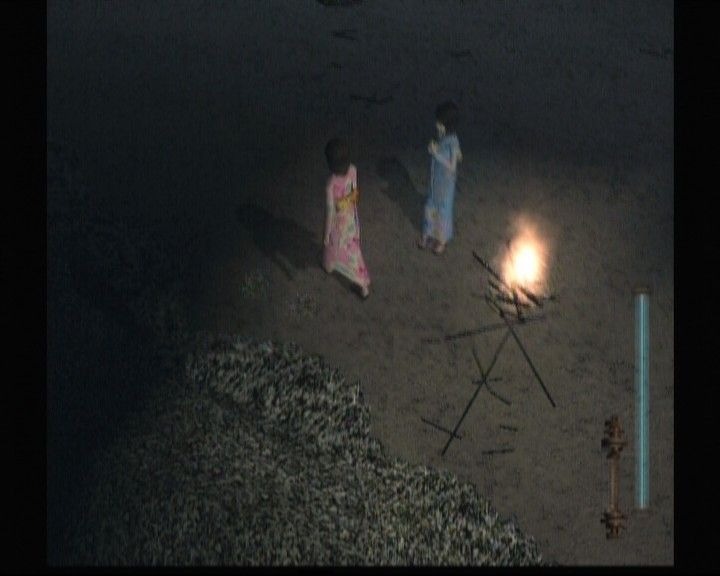
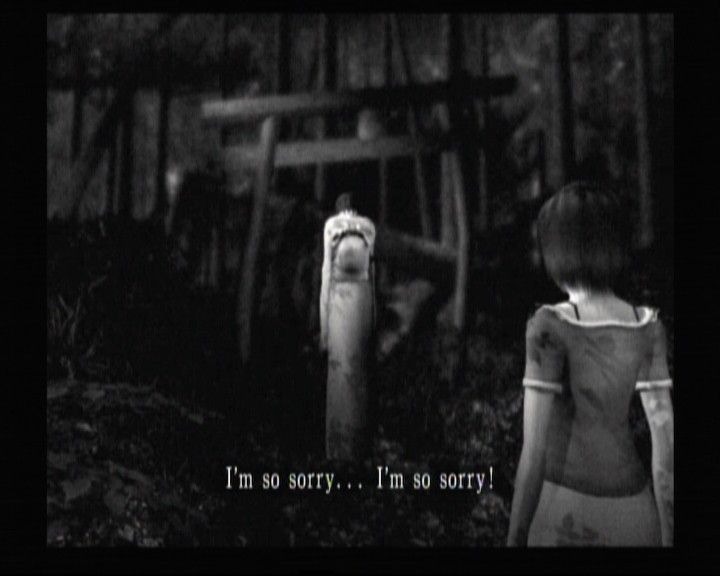
You play as new characters this time around. Twin sisters Mio and Mayu Amakura You are trying to solve the mystery of the “Crimson Sacrifice Ritual” in All God’s Village, a fictional town in Japan. This isn’t a journalistic setting; instead, just two girls are playing in their favorite spot when a dam collapses and Mio falls. The original sacrificee wants revenge and her own twin sister back, and you both are prime candidates. The story is rather interesting and very dark and creepy. I enjoyed it quite a bit, as it surprisingly had more depth than most horror games of the time. Most of the story is told through texts you find (there are a lot) and not so much in cut scenes. There are crystals you can now pick up and listen to on your radio, and these are rather haunting. I enjoyed these quite a bit. The voice acting is surprisingly decent (for the time), and the voices of the dead can really make you feel uneasy.
Of course, the main attraction is the Camera Obscura. Once again, you use this to kill ghosts and see things that aren’t there. It’s more refined this time around, with better controls. You can switch to proper FPS controls, which makes playing much easier. Upgrades are more robust, as are equipped add-ons. You can find add-ons throughout the game, with some being passive and some requiring you to charge your camera. You can equip up to three add-ons and swap between them while in camera mode. These range from Blast, See, Stun, Slow, etc. These can be upgraded along with your basic functions, like in the first game. Finding passive ghosts and taking photos of them (if you’re quick) can give you Spirit Points as well as fighting spirits. You need spirit orbs to slot in to be able to advance to the next upgrade level. Each power has three levels. I highly recommend upgrading your basic stats first. Spirit Points are more plentiful than in the first game, which is a good thing.
Just like in the first game, your goal is to take a photo as close to the spirits’ faces as possible to be able to take a Fatal Frame shot. There is a meter that powers up around the circle in the center, and when it hits red, you need to be quick. There is a red flash at the top that tells you when it’s best to use a power-up. On rare occasions, you can get a two-photo combo for massive damage. There are film types in this game, and thankfully the weakest is unlimited. This means you won’t ruin your game (like in the first one) if you run out of film. The game will just become insanely hard. Higher types are plentiful, and I never ran out, but I recommend saving the Zero film for the final boss. There’s less than 10 in the entire game. I also found healing items incredibly plentiful, and I never ran out.
My biggest complaint is the backtracking and navigation. It’s hard to figure out where to go next. There are obscure objectives, and some things won’t trigger until you enter the correct room. This is a much bigger game than the first. With three large houses and the village itself to explore, I had to use a walkthrough throughout most of the game because I just kept getting lost, but that’s par for the course for survival horror games of this era. I found the visuals to be fantastic, even by today’s standards. Great textures, models, and lighting are amazing. The Xbox really shows off what the series can do here, and it’s a shame the third game never got a port.
Overall, Fatal Frame II is a fantastic upgrade over the first. Just make sure you have a guide handy. The controls are much improved, the camera system is more robust, enemies are actually fun to fight this time around, and bosses are challenging. The story is interesting enough, and the lore is creepy and unsettling. The atmosphere alone is worth playing through this game for. Haunting music, a few jump scares, creepy ghost designs, and insanely unsettling throughout.
Gylt, a Stadia (RIP) exclusive upon release, is a stealth game in a similar vein to Alan Wake. You play as a little girl trying to save her cousin Emily from monsters in a strange town, and you don’t know where you are on top of all this. You slowly get introduced to new gameplay mechanics and fight a couple of bosses.
Gylt’s short length means there’s pretty much no story or character to capture your interest or care about. In the four hours it takes to complete the game, there is zero world-building. There’s even a creepy old guy that we never find out what his purpose is or why he’s even present. We don’t know anything about the main character or Emily. It’s like starting 1/4th through a book and ending at the halfway point. I felt like there was a lot missing. There is no context, exposition, or anything like that. You can go around collecting journals, birds, and whatnot, but what’s the point? I won’t collect things in a game if I don’t feel connected to the world in some way. There’s no motivation to push me to want to find out the small details. Gylt has pretty much none of that.
When it comes to gameplay, Gylt is a run-of-the mill stealth action game. The puzzles are elementary, giving no challenge to the players at all. You have two tools at your disposal. A flashlight and a fire extinguisher. The flashpoint can not just light your way, but a focused beam can remove objects, bust pustules on enemies to kill them, and the extinguisher can freeze enemies, freeze water, and put out fires. This is all fine and dandy, but there’s nothing challenging to go along with these tools. You will be plopped into a room with a single moveable ladder. It’s obvious from one glance around the room that it goes against the wall with the vent. However, you must destroy three eyes with your light to unstick the ladder. It’s pointless filler gameplay. Even the light-switching puzzles are dull and simple.
Unlike Alan Wake, the focused flashlight to kill enemies just doesn’t feel as fluid, and I understand combat isn’t the main focus of Gylt. You are supposed to use it as a last resort—if you get caught at all. Most of the enemy patrols are easy to bypass as there are a ton of objects to hide around, and the game pretty much points a finger at your most direct path. There is a central hub with buildings that connect, and these are your main levels. Each level usually requires some sort of master key to get to its boss, and this is the only time the game was challenging or changed the pace. There are two bosses, and one focuses on combat and the other on stealth. I wanted more of this, but as the game dragged on, it never got more challenging.
The voice acting is good, the cut scenes are hand drawn, and overall, the visuals are nice. Pick any 3D animation studio in the last 20 years, and that’s how your game looks. It’s dark and moody, but never scary. A few monster designs are a little interesting and different, but nothing crazy. Also, don’t expect the game to push your systems to their limits. This game may look nice artistically, but technically it’s nothing special, and that’s also okay.
Overall, by the end of the game, I had no reason to care for anything I came across. The characters aren’t fleshed out, there’s no back story to any single thing in the game, and I’m left just moving on from this game and will most likely forget about it in an hour. I love indie games that are short and sweet, but many are forgettable with passable gameplay and mostly decent visuals. This is becoming a trend lately, and it’s kind of scary. I can’t really recommend Gylt unless you want a short, spooky evening, but don’t expect anything but average gameplay.
Resident Evil: Village is one of the best games in the series. It delivered dark horror that continued from VII, great level design, awesome characters, and an overall fun experience. Shadows of Rose ends up feeling like a super mini-RE game and runs for about three hours. You play as Ethan’s daughter Rose this time around, learn more about her kidnapping, and revisit a couple of areas as her, with new powers to boot.
The game plays exactly like Village did when you were Ethan. The only difference is that Rose is slower and not as strong as Ethan. You also only get two weapons in the DLC. A pistol and a shotgun. As a trade-off, you can use your anti-mold powers to interact with the environment and counter enemy attacks. You get to upgrade this over time through the story and can eventually slow down enemies with it and repel some. You end up revisiting Dimitrescu Castle and the home of the creepy doll, as well as a small section of the village. It’s nice to go back to these areas, but they are completely different with Rose present. There are also a couple of boss fights thrown in for good measure. The first third of the DLC is all action and shooting-oriented. You can still craft health and ammo, and you only find two upgrade parts for your pistol (none for the shotgun). The second third of the game is focused on stealth and puzzle-solving. The final third of the game is more cinematic-oriented and rather short.
I felt Capcom did a good job reusing these areas and constantly mixing up the gameplay. The stealth sections felt tense, the puzzle solving was simple enough to not need a walkthrough or guide, and the boss fights were pretty fun and interesting. It felt like Village all right, and the only question is whether or not the ending to Rose’s story is worthwhile. It’s included in the Winter’s Expansion, which includes a third-person mode and Mercenary missions, so I would say so. However, there is no reason to go back and visit this DLC, unlike the main game. The powers aren’t interesting enough to come back to either. They are mostly used to clear obstacles and stun enemies, and that’s about it.
Rose herself isn’t a very interesting character. I feel I don’t have any reason to care about her, and she wasn’t talked about enough in the main game. I feel she could have potential, but would need her own main game to pull this off. There isn’t much story in the DLC to begin with, and I was left with more questions than answers. I just shrugged at the end and didn’t give it a second thought. Most people come for the action and gameplay and not for the story.



































 thebinarymessiah.com
ORC is probably the worst game in the entire series. It's objectively awful. Being bad isn't different. Different is Outbreak…