While console exclusives are slowly dying this category will never disappear. Some games may remain console exclusive one year and then go multi-platform. Some are just designed that way in the beginning. This allows all gamers to play a game and share the experience.
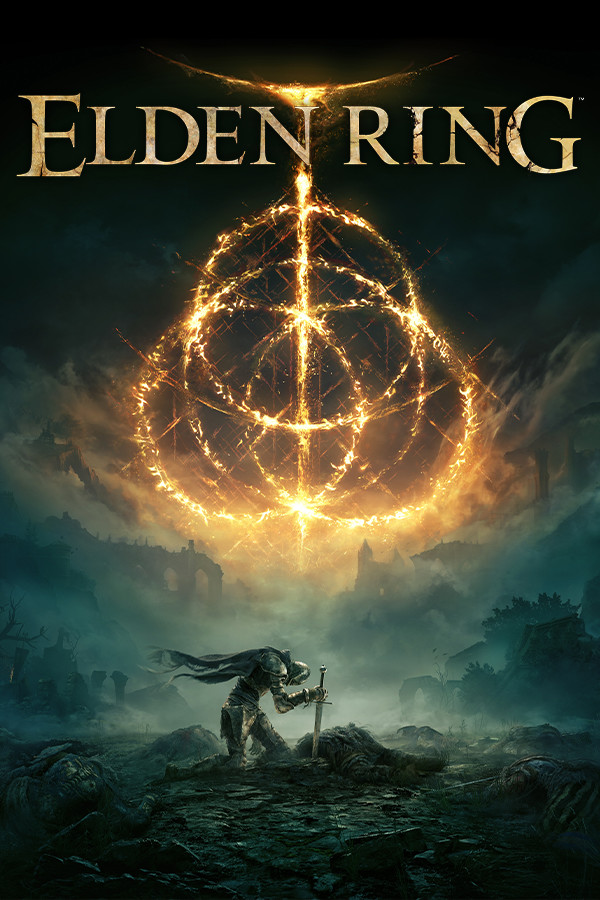
Elden Ring
It’s not often that a game full of so much lore yet so little storytelling can be as compelling as Elden Ring. The combat can be addictive once you master it. The learning curve can be monumental or impossible for some, but the patient will be rewarding with one of the most beautiful and interesting games ever made. No matter what system you it on you’re going to have a great time.
A game that evolves the most isn’t always the best game out there. Bringing a series back from the dead in spectacular ways, fantastic reboots, or fixing a long-running broken series can go a long way. There were many greatly improved sequels that did little to halt the progress of what it went out to achieve.
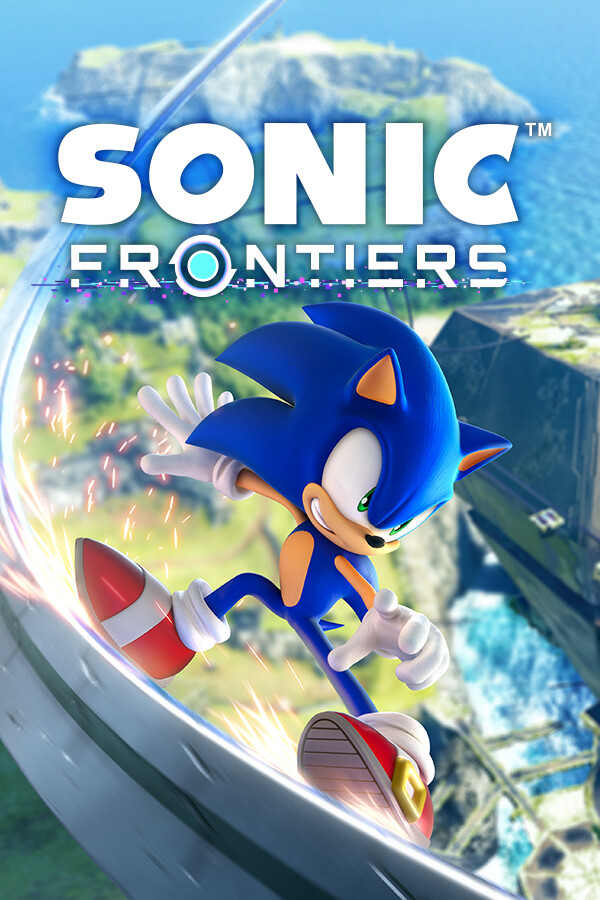
Sonic Frontiers
Sonic Frontiers is a perfect example of what to do and not to do. Spending 20 years to make a good game in a long running franchise isn’t good and Sonic Team probably holds a world record for it. Somehow they finally found the magic. An open world design which is a first for the series. More advanced combat with combos, parrying, and dodging, a unique fast travel system, great graphics, and bite-sized 2D stages thrown in. If they keep this up this can be a home run for the series.
Being least evolved doesn’t always mean bad. Sometimes it can be a good thing as if it ain’t broke, don’t fix it. But, that’s not the best approach to a sequel and can be considered lazy or phoned in. There were a lot of games this year that had sequels that didn’t change much from previous games or stepped back in some places.
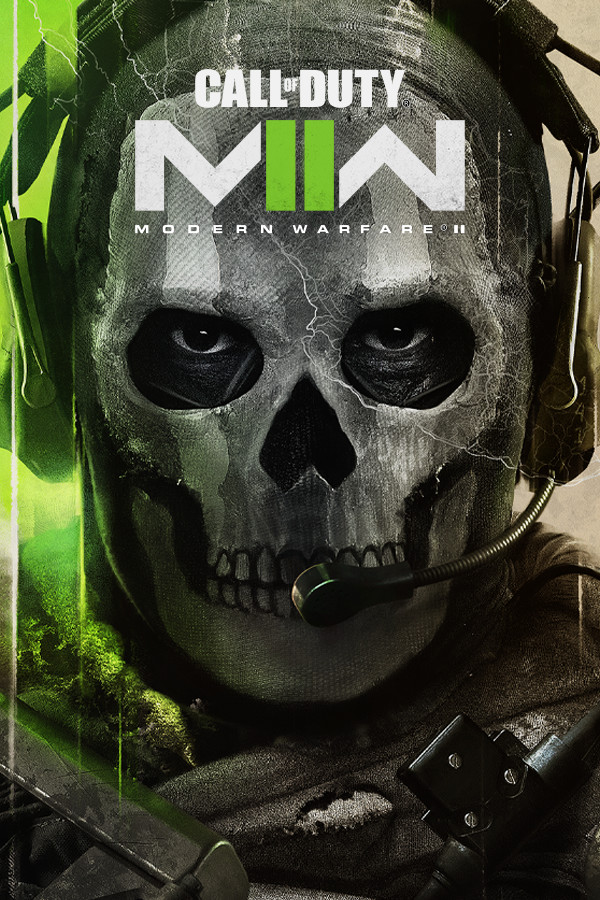
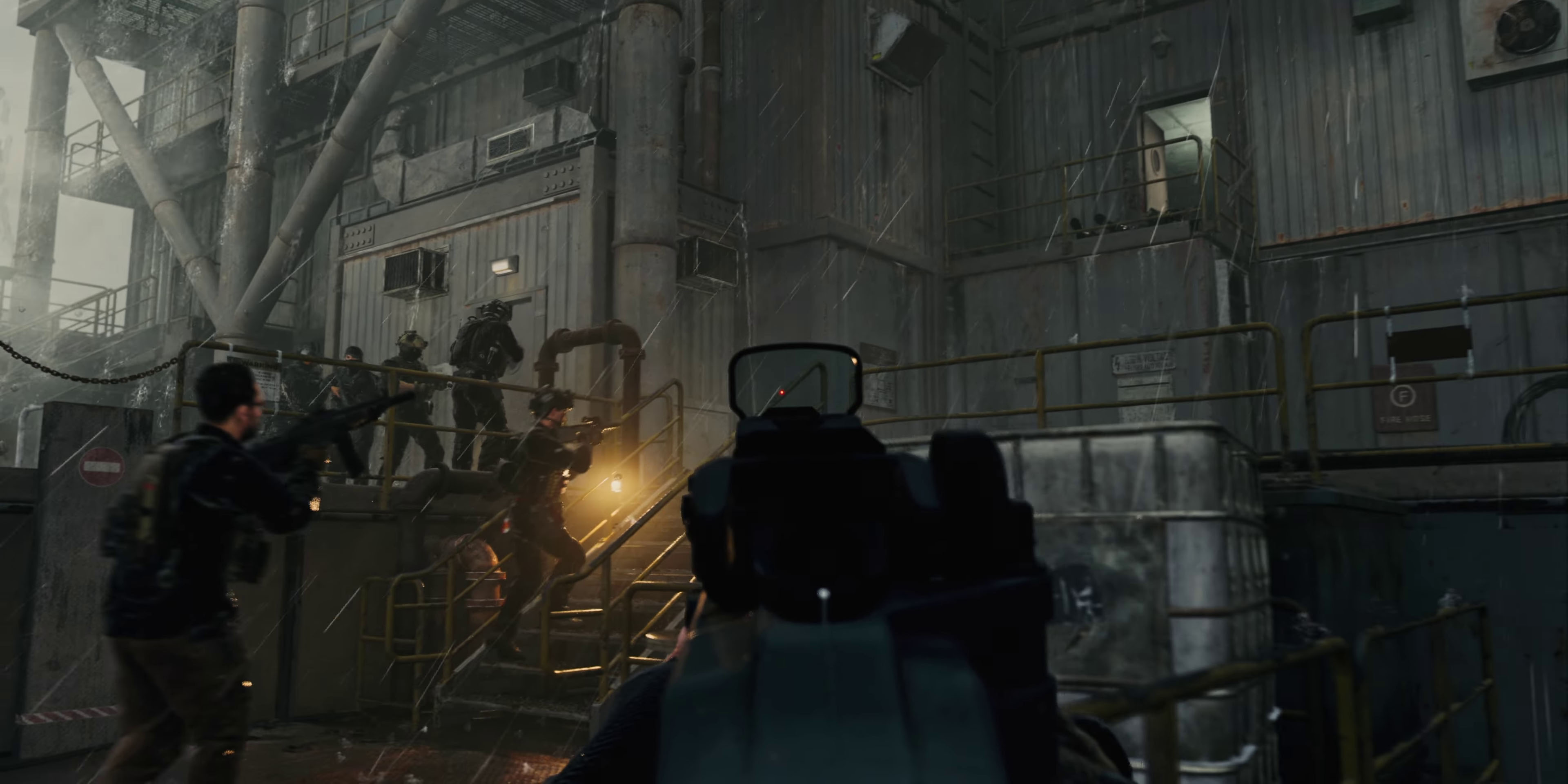
This wasn’t the stark change that 2019’s Modern Warfare was at all. This was more of the same. A lot more of the same. While it’s all good and nothing was ruined there were a few steps backwards such as the UI and the awful stealth missions in the single-player campaign that Cold War did so well. Even the visuals weren’t a huge boost over 2019’s game. Still, it’s a great game with a hell of a multiplayer suite.
Well, this category isn’t something you want to see any games in, but they exist every year, and as time goes on it’s actually harder to find the games to put in here due to how many there are. That’s not a good thing. Many games disappointed this year from buggy launches, unfinished products, being a dud in a loved series, or just plain sucking.
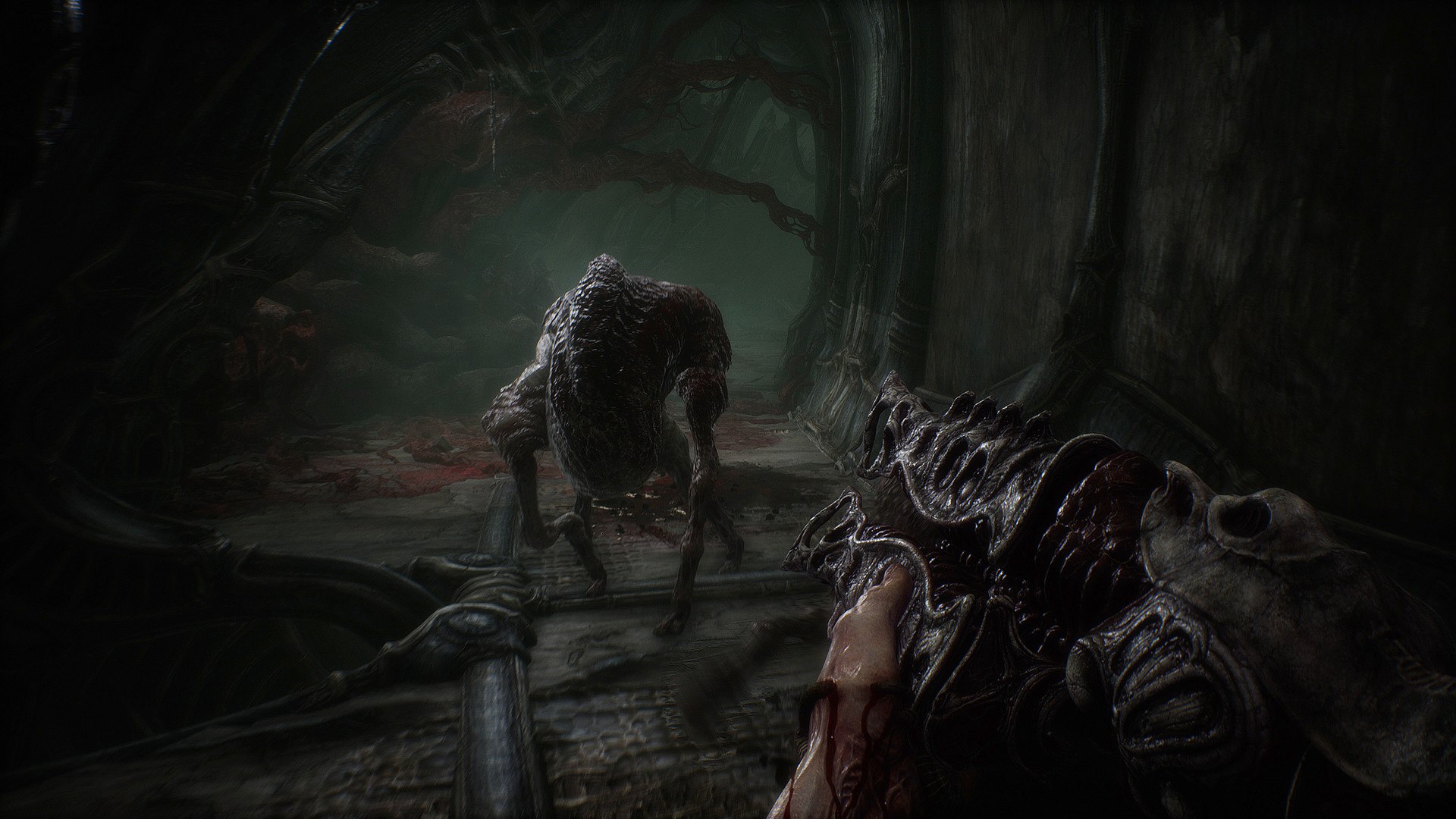
This is one of the toughest awards I have had to give a game to this year. Scorn had so much incredible potential. It’s one of the most artistic and unique looking games ever made. How on Earth do you screw everything else up? The combat is atrociously slow and dull, there is zero story or characters involved, there’s hardly any music, and the puzzles get dull after so long. I wanted this game to be good, and I was utterly shocked at just how not good it was.
Platformers have mostly been ignored by AAA publishers outside of the occasional first-party release. Indie developers have been advancing the series for the last decade and we got a huge variety of great games this year. Many 2D, some 3D, and all a ton of fun.
Sonic Frontiers
They finally did it. Sonic Team finally managed to make a good 3D Sonic game. It may have taken 20 years, but it’s finally here. It may not objectively be perfect platformer, but it advances the series so much that it deserves praise. It’s something that fans have been wanting and it has become a running joke that Sonic Team can’t make a good 3D game. The gameplay loop is addictive, the voice acting is finally good, the graphics are weird, but wonderful, and despite a few hiccups you can’t fault Sonic Team much for it. This game is the start of something grand that tens of millions of fans can finally be proud of.
It seems publishers forgot that single-player games once drove the industry. Gamers love and want them and they have made a comeback over the last five years. 2018’s God of War proved that to everyone selling 23 million copies as of this writing. These games are what gaming is. Zelda, Mario, Dead Space, BioShock, Onimusha, etc. These games define their generations and help form new beloved characters and worlds for generations to love.
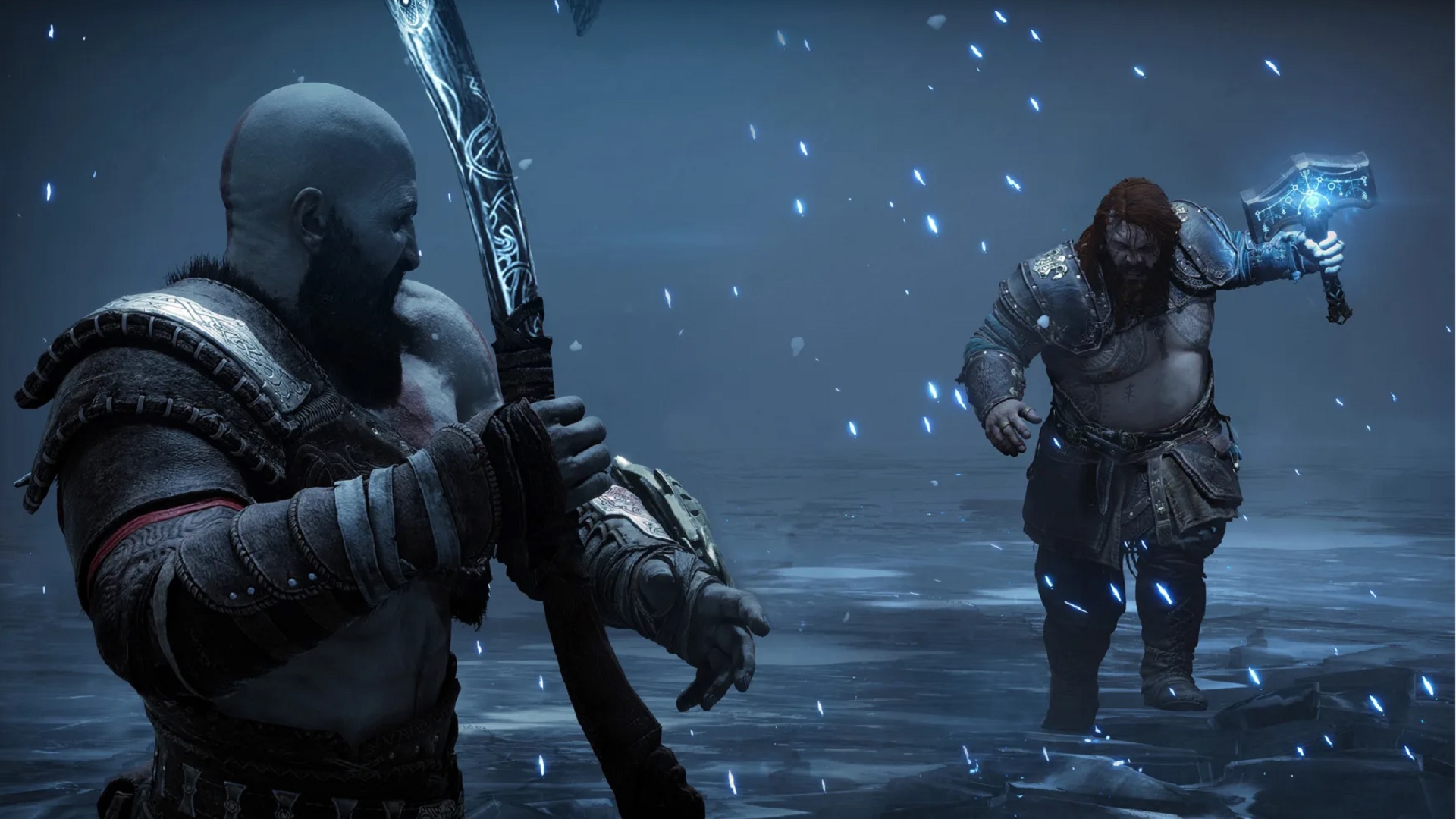
What other series than God of War to continue being one of the best single-player games ever made? Its predecessor helped bring it back and show greedy publishers that gamers want these. Tens of millions of us. Engaging combat, fantastic characters, lore and world building, gorgeous visuals, tons of puzzles and exploration. This is what the core of a fantastic game is and God of War continues to prove this.
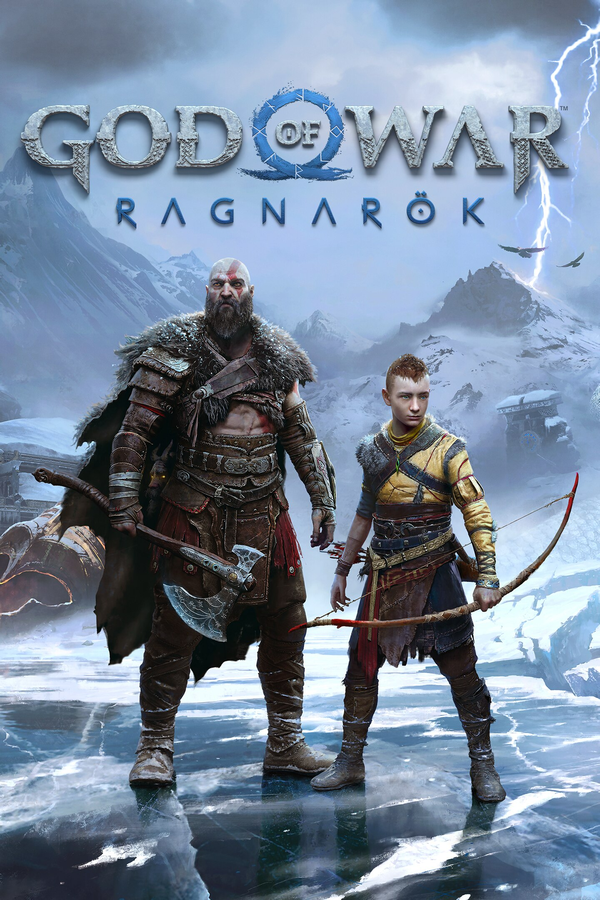
God of War (2018) was a masterpiece of a game. I honestly expected just more of the same with Ragnarok, as I couldn’t imagine how they could improve or add anything. I knew they were reusing many of the same realms, and I thought this would feel more like a short expansion pack relying primarily on endgame challenges. I was dead wrong. This game is about 10 hours longer story-wise and has more explorable realms than the first game. A couple of realms are still used as central hubs, but most are fully explorable, with hours of content in each one. This brings me to the actual story itself. It’s phenomenal, moving, tear-jerking (especially the ending), and has one of the best ending levels I’ve played in over a decade. While there are many improvements over the first game, a few flaws still remain that haven’t been addressed, but they’re minor.
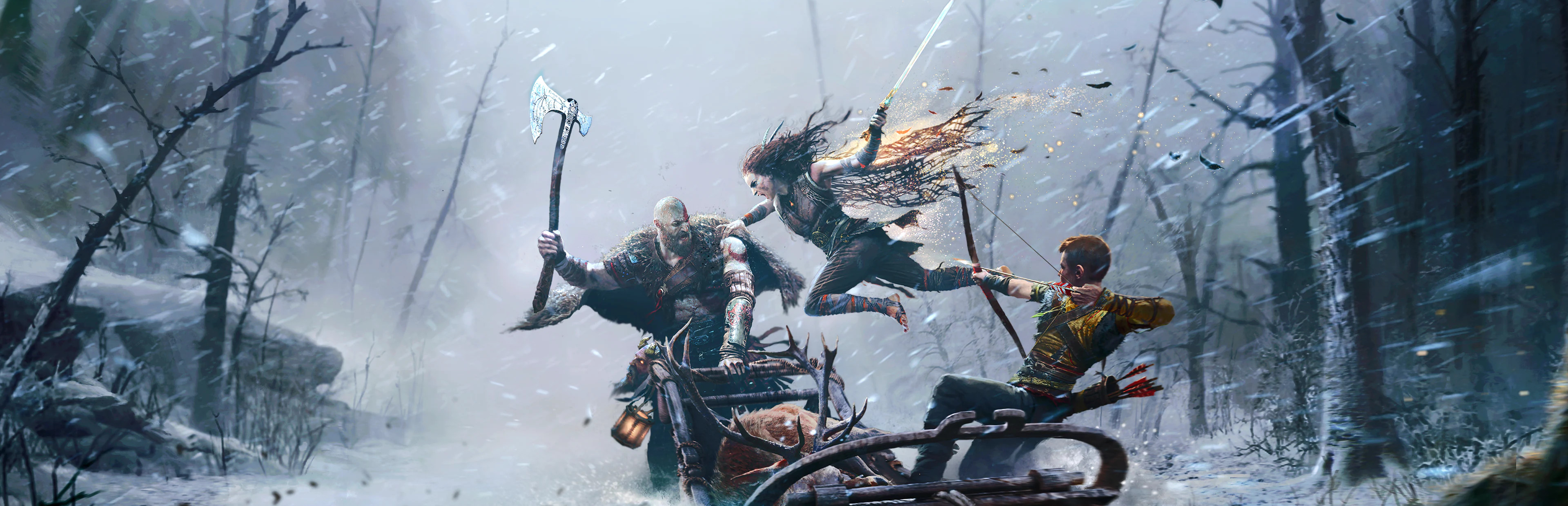
The game starts pretty much right where the first game ended. You’re in a cave with Atreus (who is now a teen), and you ride through a snowy path on a dog sled. I don’t want to explain too much of the story details, as there are some twists and beautiful moments, but every single character here is memorable. All of your favorites from the first game are back, plus a lot of new ones. Thor, Odin, Thrud (Thor’s daughter), Sif (Thor’s wife), Heimdall, and many others just ooze character and charm. Even some of the smaller characters with little screen time make such an impact and are so well written and designed. It’s some of the best writing and character development in any game, period. I just want to say that you won’t be disappointed with the story at all. It does take 20–25 hours to complete the story, but it’s never boring, never dull, and goes off on so many different paths.
You can now play as Atreus in many scenes, and he’s nimble, swift, and a lot of fun to play as. He’s a stark contrast to Kratos’ larger and slower build. He can melee with his bow, shoot arrows, and equip relics that add augments to his arrows. He also has powers. He does have his own assist partners in the game. Without spoiling anything, there are several characters that accompany him on his own journey. You aren’t stuck with the same companion through his sections. The gameplay is just so varied that it never gets dull.
Combat itself has improved some, but it was never flawed before. Animations are tighter and more varied, and you now have three different abilities you can change and equip. These are in the form of relics and amulets. When you hold down L2, you can press R2, circle, or R1 and use cooldown abilities. These are more abundant than in the first game, with a ton of find and collect. These are specifically heavy and light attacks for each of the three weapons, as well as one ability from your amulet. There are passive buffs you can apply to your amulet that can reduce cooldowns and make you more powerful while using certain relics, and equipping any three at the same time grants a special bonus. This is all slowly unlocked for you throughout the story, but to get the most out of this stuff, you have to explore and do all the side stuff to get better buffs and abilities.
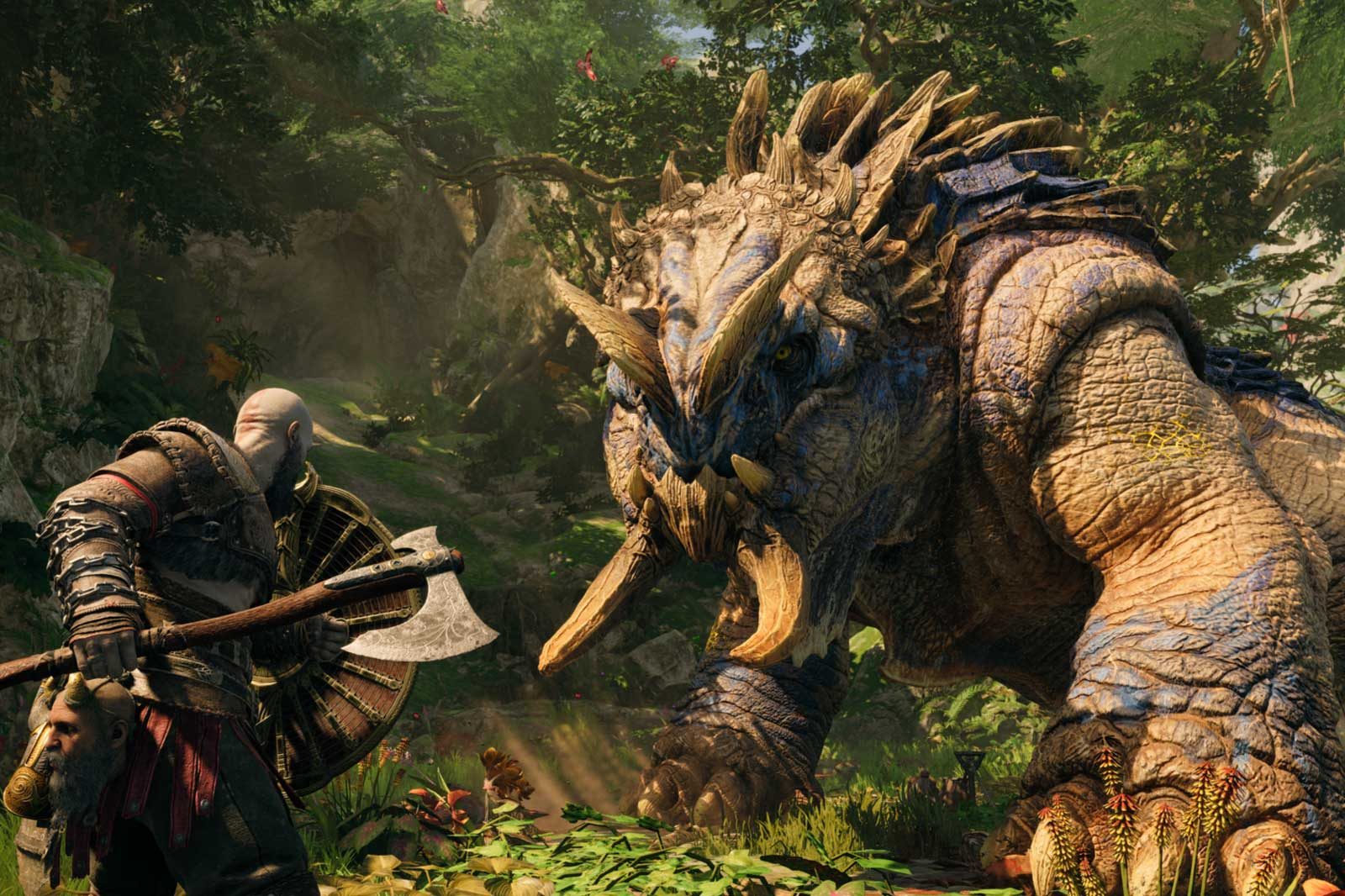
The combat system is just perfect. I didn’t think it could get better, but it does. The only thing I wish I could do is combo in and out of different weapons. That’s the only issue I had with the combat. The additional spear weapon is a treat and adds powerful mid-range attacks, so Kratos is fully balanced. The axe for short-range attacks and the Blades of Chaos for long-range attacks These weapons can be upgraded by defeating bosses throughout the realms for sparks, and they are hard to come by and rare. You must seek them out to increase your equipment level. This is even more important than the first game. Enemies have levels above them just like before, but the side stuff is what mostly relies on this. The hardest enemies in the game are the Berserker bosses, and you must tackle them in a certain order to gain that extra level and be at level 8, which takes a couple dozen hours to get to. The enemies are well-designed; every single boss is different, and even the mini-bosses have been mixed up. We’re no longer spammed with just troll bosses like before, which got quite repetitive outside of the story bosses.
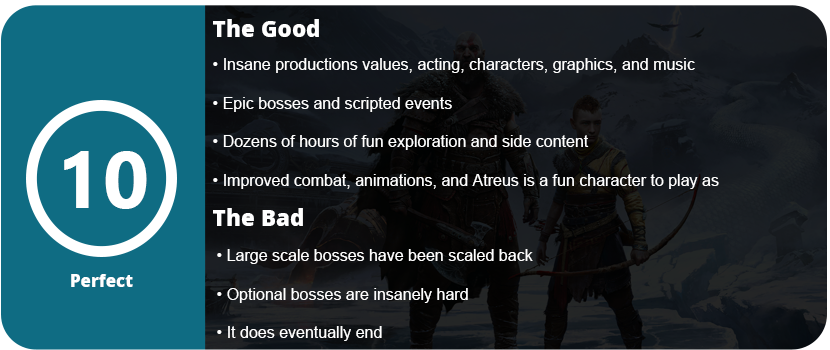
That’s where my first minor complaint comes in. The bosses and large-scale battles are toned down quite a bit in this game, and that was a huge part of God of War‘s DNA. The quick-time events are almost non-existent as well, outside of key scripted scenes. I was a little let down by this, which was probably the only major letdown of the game. The large-scale bosses do exist, but there are only a couple, and they are pretty far apart in the story, but they are still epic nonetheless. All of those cool large-scale bosses are mostly replaced with well-designed smaller bosses that require you to really hone the combat system. It’s honestly no joke either. These optional bosses will kick your ass. Even 35 hours into the game, I was dying a dozen or more times until I memorized every attack pattern and dodged and parried perfectly. This is why having the proper equipment level is key. I would come back even just one level higher, and it would make my time easier. You also get to use resurrection stones, which are highly recommended to always have as you don’t get penalized for using them. There is a new berserker stone as well that gives you full rage.
When it comes to exploration, Ragnarok is full of it. There aren’t just a couple of boat areas like before, but nearly every realm can be traversed by boat, with a lot of areas to unlock, chests to grab, and puzzles to solve. One of Ragnarok’s strengths is its environmental puzzles. These are Zelda-level fun and addictive to find and solve. It’s recommended to do all of the side stuff at the end of the game, when you have all the abilities and weapons needed. The same Relic chests exist as before by finding three runes to hit with your axe, but more ways to solve these have been added. In addition to just mashing square to Atreus and other partners to assist you, there are now two arrow types. Magic and Rune arrows Rune arrows are green and do heavier damage, but magic arrows are purple and can increase fire or ice damage to enemies. These are also used in puzzles. The purple arrows can create domes that can be shot to create a chain reaction of fire to light up runes for puzzles. These can be tricky but fun to figure out.
Your spear can be used to blow open weak points in rocks and be used as a pole to get to new areas. It’s so satisfying to finally go back and get that one chest you saw teasing you or get to that whole new area you knew was above you but couldn’t get to. These teases throughout the story make you want to explore, which I did anyway. I usually did everything I could with my current abilities in the realm before moving on. You can easily spend 5 or more hours in each realm, completing them to 100%. There are still the Muspelheim challenges, Odin’s Ravens, and many more favors to find, collect, and solve. You will easily spend 50–60 hours in this game to complete it to 100%, and it’s satisfying, addictive, and so much fun. The level design is fantastic, as it’s easy to remember nearly everything in the game and where to go. Just a simple chest was easy to remember once I got to that area. There were a few small areas that were a pain to explore, such as near the Abandoned Village in Vanaheim. It’s one of the few areas poorly laid out with confusing paths and easily missable shortcuts, but these aren’t very common.
The production values are the last thing I want to talk about. They are amazing, mesmerizing, and absolutely mind-blowing. I can’t put into words just how well put together this massive game is. Christopher Judge’s performance as Kratos is deeper and has more nuance, and he just is Kratos. Sunny Suljic does a fantastic job, as he’s grown with Atreus and has put his own spin on the character. Odin’s actor, Thor, and everyone in between are perfectly cast. This is Game of Thrones or Harry Potter-style perfect casting. This is one of the best-acted games ever made, and that’s not an exaggeration. I couldn’t get enough of everyone on screen, and there is just so much dialog and acting on screen that it’s insane. The music is also phenomenal. If you loved God of War‘s music before, it sounds just like we’ve grown to love it, but more mature and, of course, varied due to the sheer size of this game. Deep, sweeping horn instruments, a lot of crescendos, and emotional orchestras play away at the perfect tempo. This type of game only comes once in a generation.
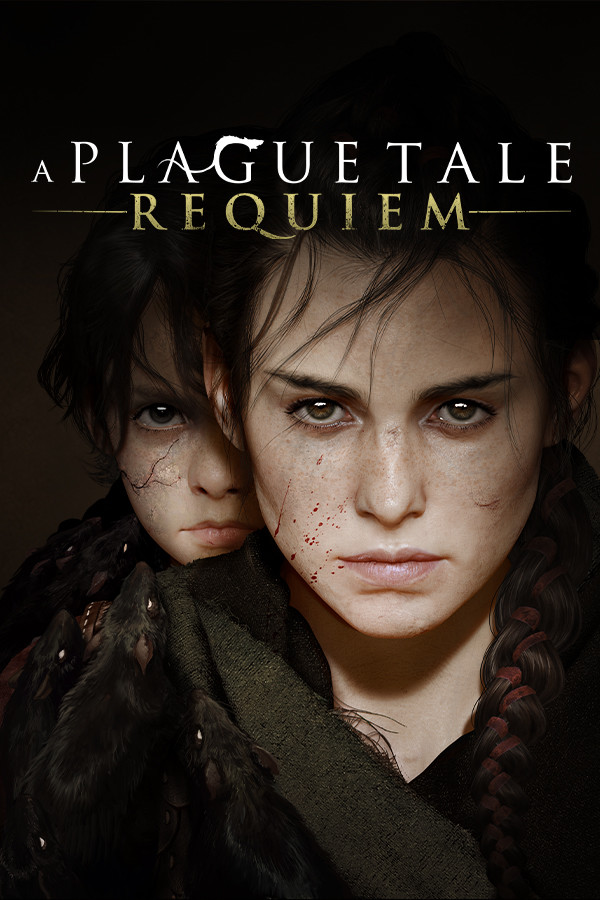
Lastly, I want to talk about the technical side of the game. The graphics look amazing on PS5 and fine on PS4. Sadly, this is a cross-gen title, so the graphics aren’t as impressive as a next-gen-only title like A Plague Tale: Requiem, as you can see where the visuals were held back to be able to scale down to the base PS4. The game looks amazing in 4K 60FPS Quality mode, but a game that requires precise timing plays better in Performance mode at 1440p. However, the best is the VRR mode, which is only available on TVs that have been released in the last year or two. Sadly, this whole VRR and performance and quality mode thing will continue until we are done with cross-gen titles. Loading times are super fast on PS5 as well, so there’s nothing to worry about. Technically, Ragnarok is nothing to worry about, as it’s still one of the best-looking games ever made.
Overall, Ragnarok is a perfect game. It has puzzles, great level design, a huge world to explore, bosses small and large, epic scripted set pieces, and well-acted characters that are always welcome to see on screen. The story is an emotional roller coaster of Kratos learning to let go and Atreus becoming an adult. There’s the larger issue of every realm trying to come together to defeat a common enemy. Combat is easy to learn but hard to master with a ton of armor and equipment to find. Exploring and solving environmental puzzles never gets dull or boring. There are side quests, treasures, and everything in between. This game literally has everything, and just like the greats before it, it is the essence of what a good game is. The only flaws are the lack of quick-time events and large-scale bosses, and the optional bosses are incredibly tough, but that’s not really a flaw in the end. Ragnarok is the best game to come out this generation so far, and like I said at the end of my review in 2018, how can they make this series even better?
One category that is rarely empty or anemic is the action genre. These make up the bulk of gaming and are usually the most popular out of any other genre. This was an incredibly fantastic year for the genre in terms of great storytelling and world-building. We got a little of everything this year and there was something for everyone.
God of War’s action has always been perfect. How can you perfect perfection? Well, by reinventing the way action combat is done once again which is what 2018’s God of War did. Ragnarok just adds more layers with refined animations, balancing, and new things to whack an axe at. It doesn’t get any better than this.
Multiplayer games are a huge thing in gaming. There are a lot of gamers who don’t touch them, but there is a large group who do. What makes a great multiplayer game is how it can bring you back. If the gameplay loop isn’t any fun, if the maps are dull, if the characters and action is boring you won’t want to keep coming back. From shooters, and MOBAs, to co-op adventures, nearly every genre has one.
While the overall suite of online shooting hasn’t changed much from 2019’s entry it has enough changes and tweaks to make this the best online shooter on the market. Call of Duty has done a good job recently re-establishing itself as the king of this while also making a valiant effort in the single-player department. The maps are solid, older maps are returning, and there are enough changes to make this feel like there’s a nice thick added layer of icing on this already rich cake.
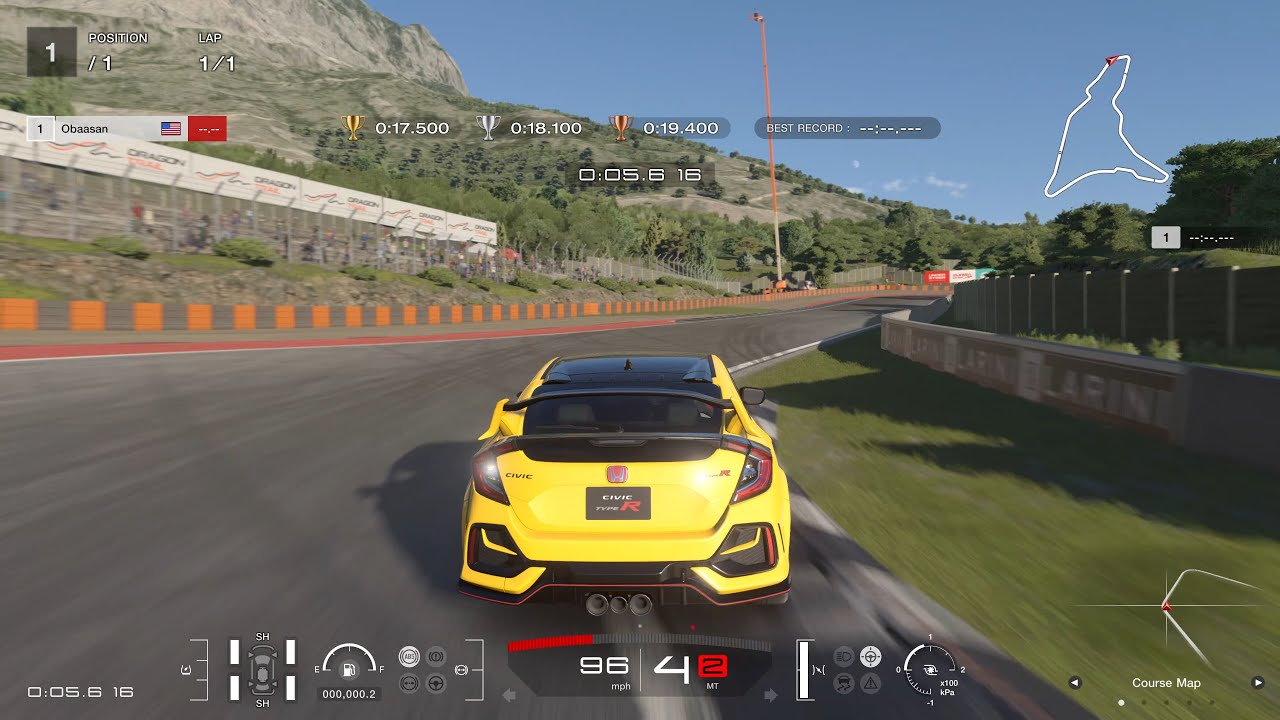
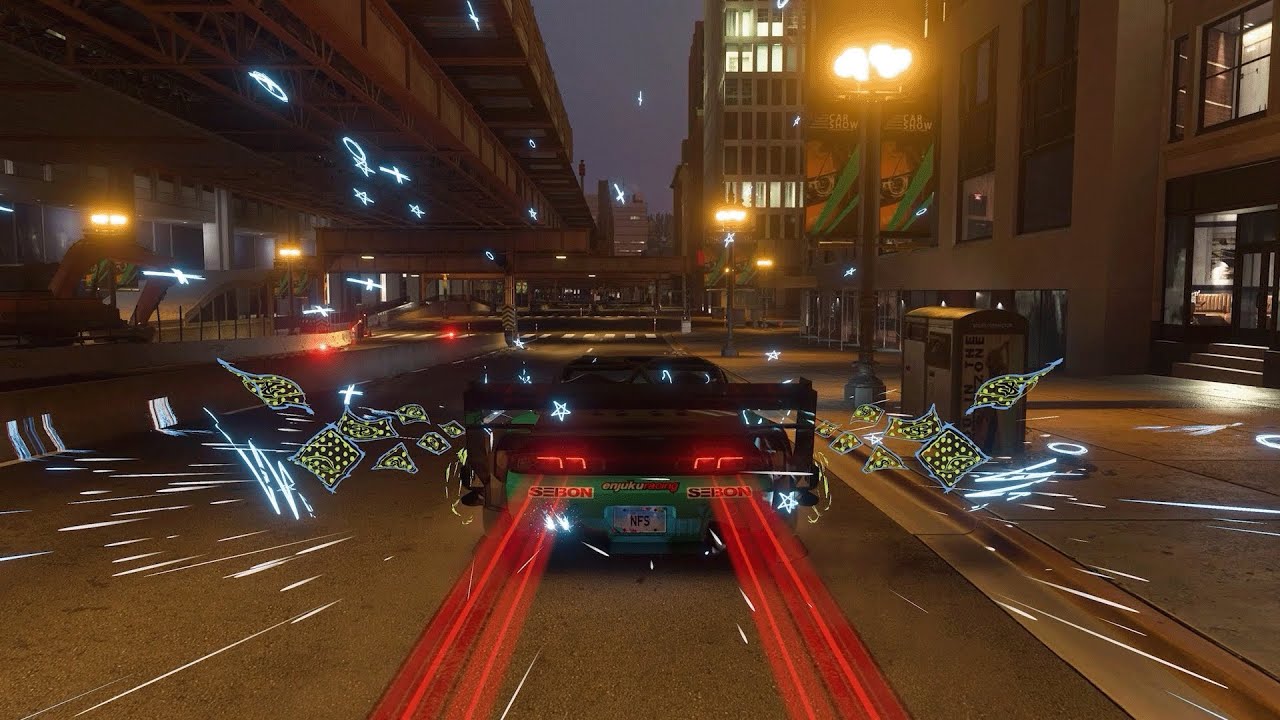
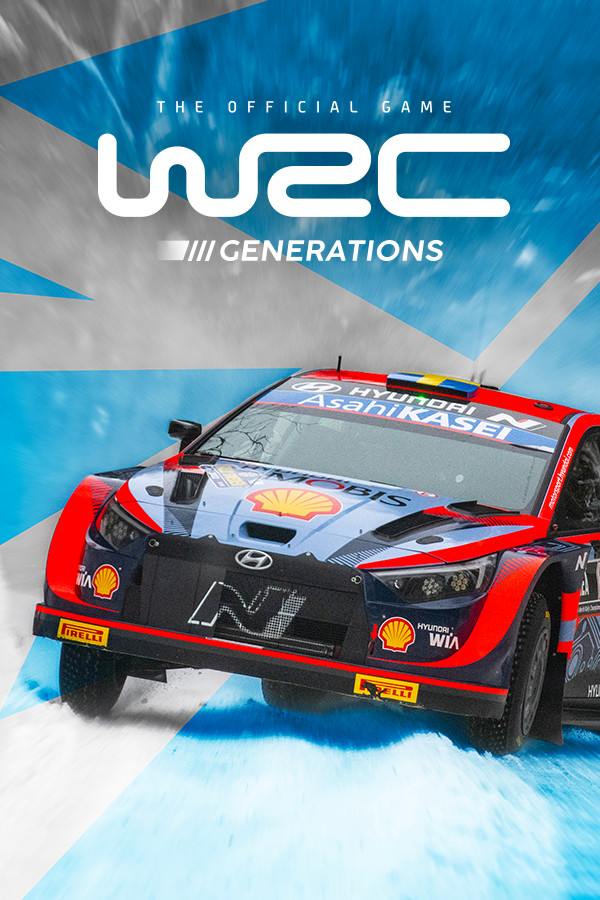
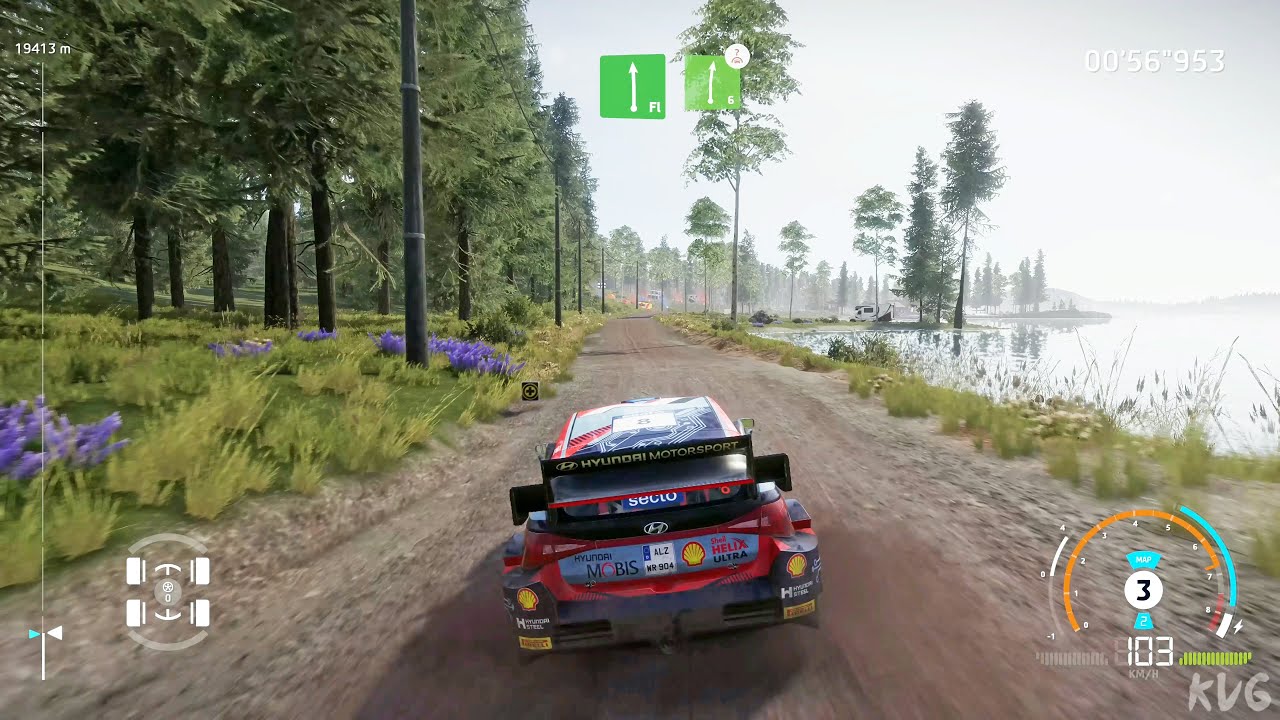
This wasn’t an amazing year for racing games, but what we got were solid sequels. Not all of them pushed the boundaries of their respective series or the genre as a whole, but they were still enjoyable and looked fantastic. This was certainly a strong year for racing sims.
Gran Turismo 7
Perfect thanks to the talented and experienced developer Polyphony Digital. The visuals are amazing, the physics are immaculate, and the race modes are a lot of fun. Mixed with online play, a steering wheel, and a beer you are set for an amazing weekend of racing fun. It doesn’t get any better than this on consoles.











































 thebinarymessiah.com
ORC is probably the worst game in the entire series. It's objectively awful. Being bad isn't different. Different is Outbreak…