Once again, the puzzle genre is rather dried up this year, and I’m afraid one day this category may disappear. Everyone is so worried about the next action game that people don’t want to step back and relax and work their brains.
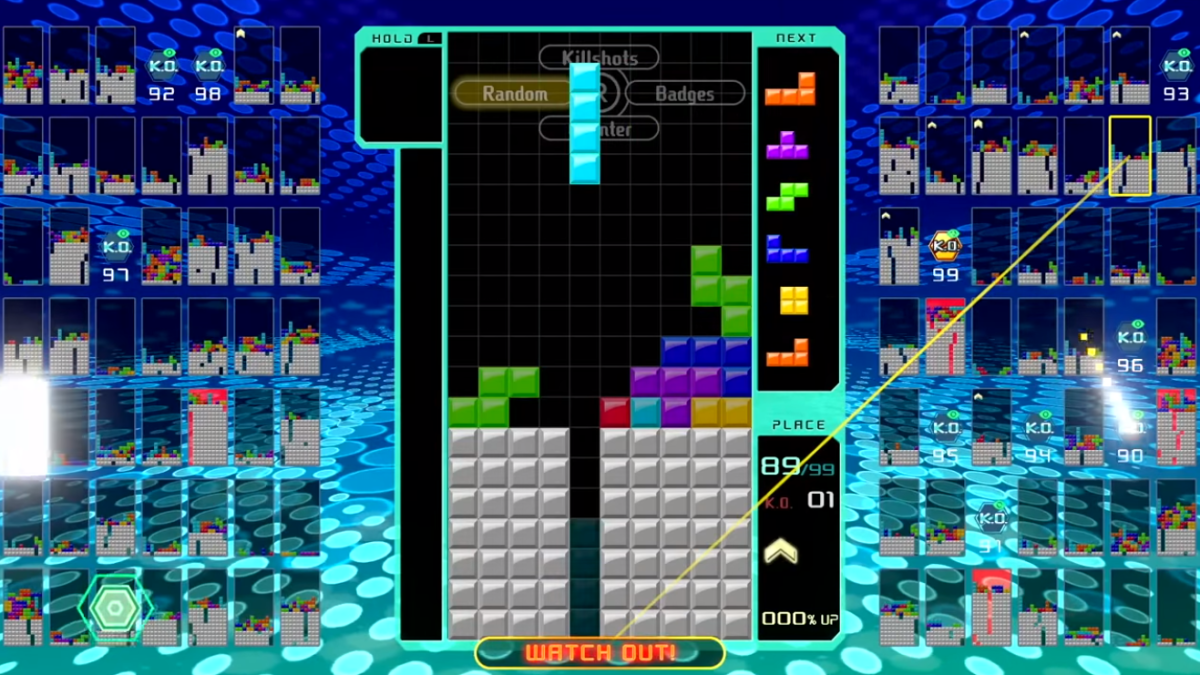
Tetris 99
While we’ve played Tetris dozens of times over before, Tetris 99 brings people together in an online world and feels exciting and fresh. While there were other great puzzle games this year, and you could argue that Tetris isn’t unique, it’s a timeless classic and when to put together with new ideas can become one of the most addictive puzzle games ever like it was on the original GameBoy decades prior.
The Switch had a rocky first couple of years, but 2019 has seen the Switch coming out swinging as Nintendo’s best console since the Wii. The first party games trickle in nicely, but we are getting many ports and some great exclusives from third-party developers that most Nintendo fans would only dream of having. There were actually a couple of games that didn’t make the list as there were just that many awesome games on the system this year.
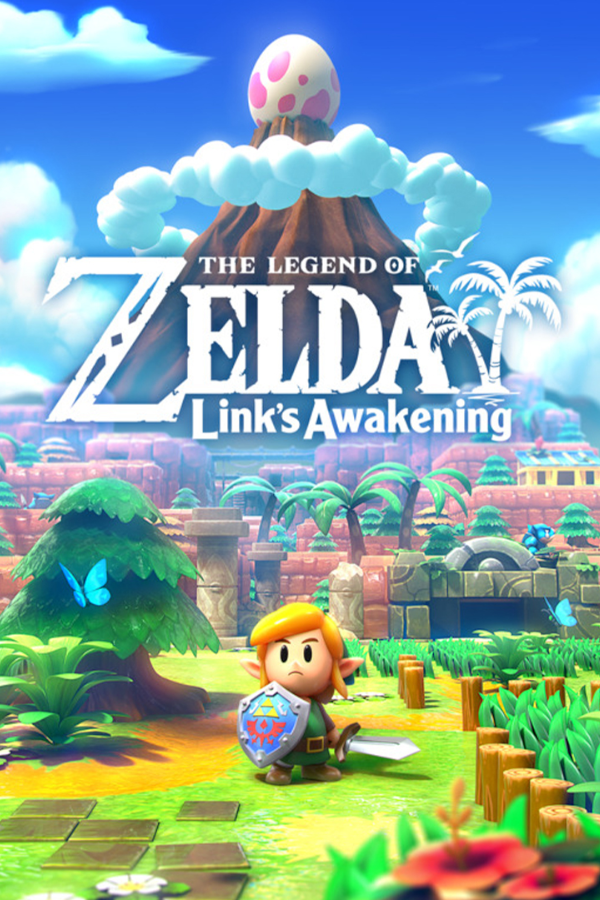
The Legend of Zelda: Link’s Awakening
Link’s Awakening isn’t just a remake, but a re-imagining of the soul of one of the most beloved games of all time. That’s a lot of pressure and not easy to do, but Nintendo just seems to have a magic wand they can wave and can do no evil. The game is beautiful, the puzzles are engaging, and the magic is still there even after all these years.
With this being the PS4’s penultimate year as a steady game console we still saw some amazing exclusives that its rival, the Xbox One, still has yet to deliver. The PS4’s ecosystem is now chock-full of fantastic AAA first-party titles that make the PS4 the must-have system.
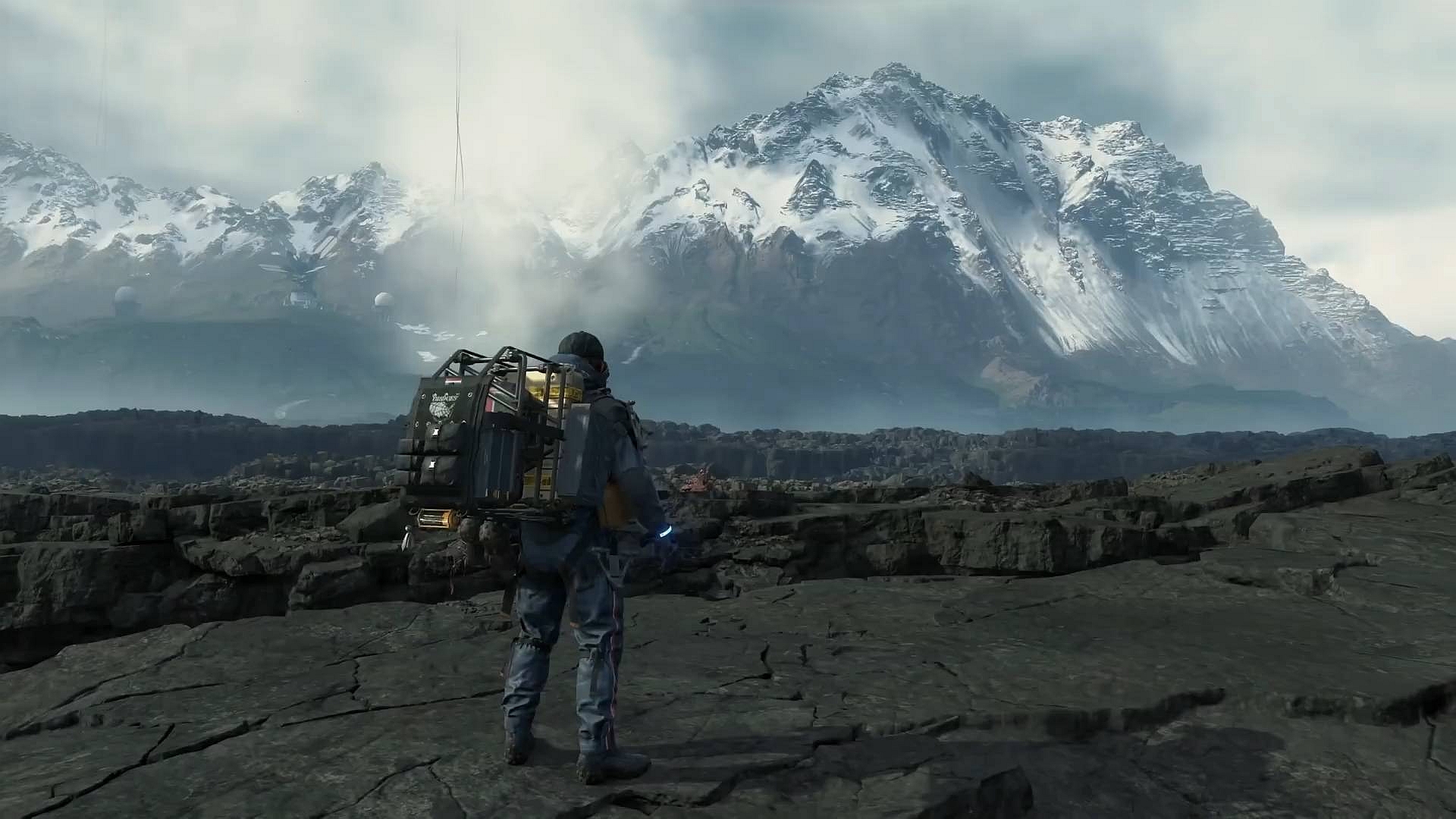
Death Stranding
Death Stranding is a mixed bag at best. You have an ambitious and overly hyped game for the last 4 years and then it’s released as an over-glorified walking simulator with extra steps. The game is praised and hated by many, but you can’t deny the ambition Kojima had. With a AAA cast of characters, phenomenal visuals, and some pretty whacky ideas, Death Stranding makes the PS4 stand out more than any other time.
The mobile genre is becoming harder and harder to filter out the awful microtransaction laden garbage, but a few gems still shine through every year. What makes mobile gaming so appealing is the pick-up-and-play and the constantly increasing power of cell phones.
Sky: Children of Light
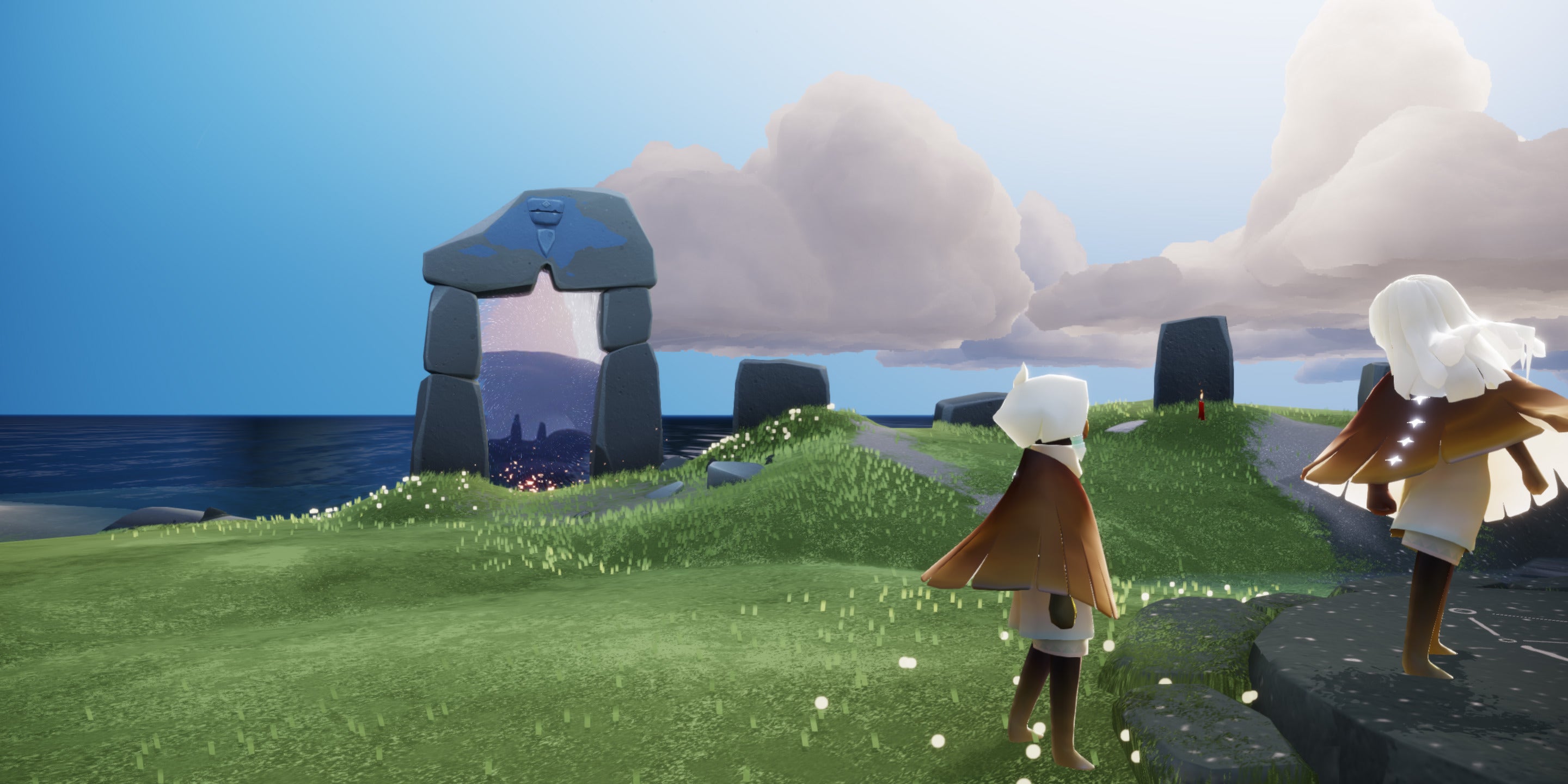
Created by the minds behind Journey, thatgamecompany really knows how to make minimalist games appealing. With simple controls and fantastic visuals, you play through a community filled adventure with little hand-holding and the ability to explore and sail across the wind. There’s no other experience like it on mobile devices.
PC has been stronger than ever. Never before have there been as many PC releases alongside consoles. However, the PC is still unique with its own controls and power that consoles just can’t provide. It was a tough year spanning across many genres.
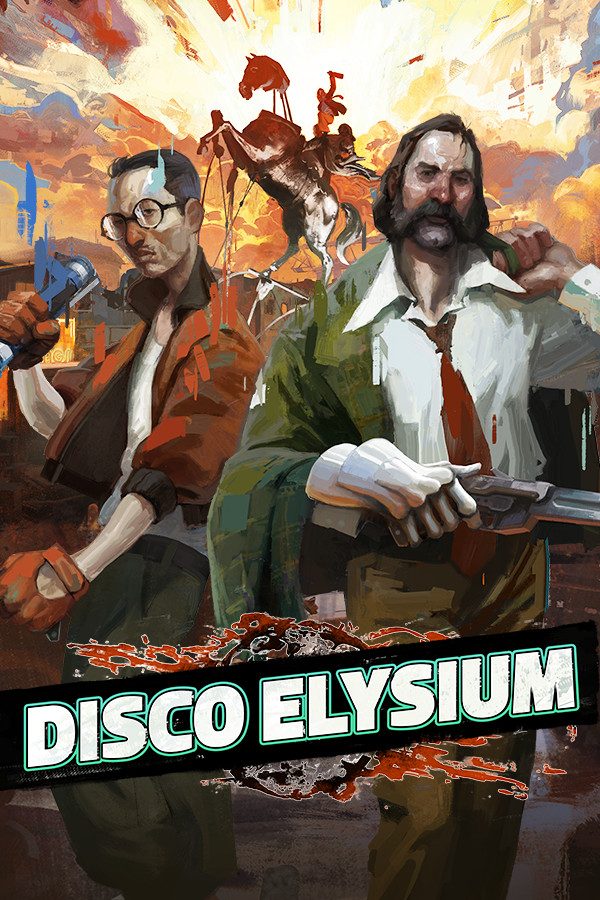
Disco Elysium
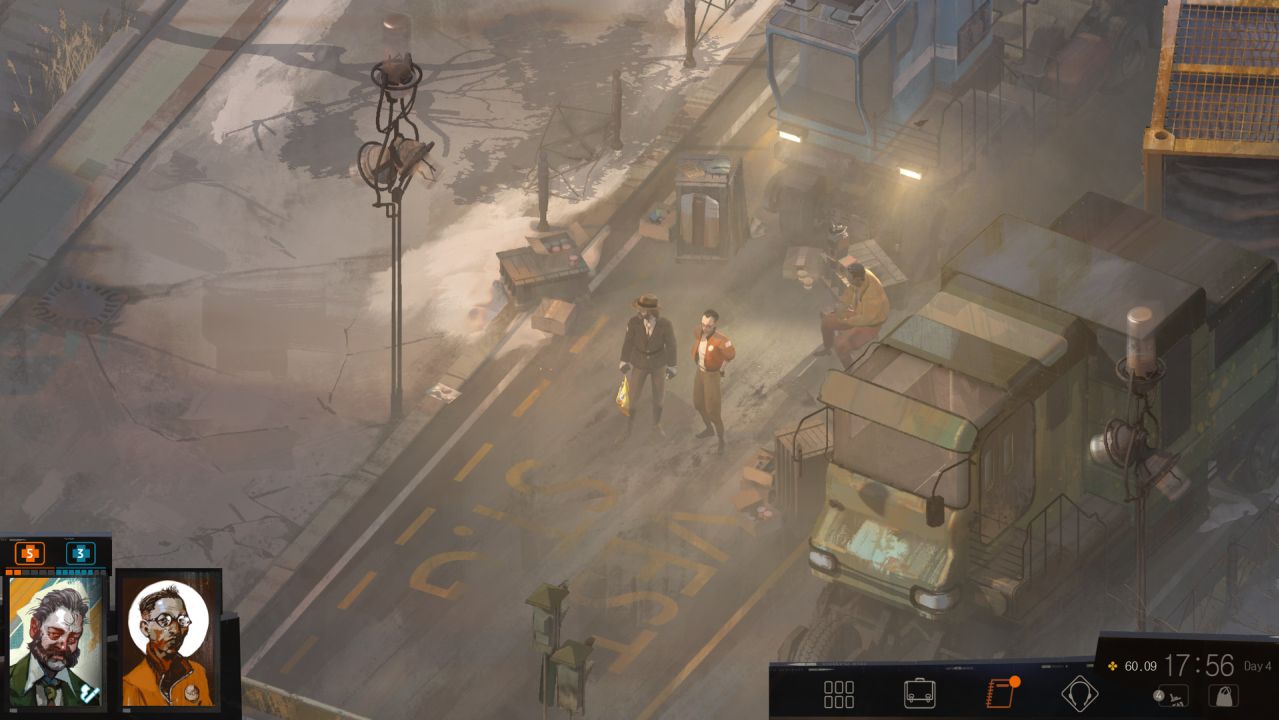
Disco Elysium is a rare gem that only gets released maybe once a decade. This is what makes PC gaming so unique. A point and click RPG with a gorgeous art style, story, characters, and so many possibilities to choose from. It’s what made the PC so appealing as a gaming device decades ago, and Disco Elysium nails that need.
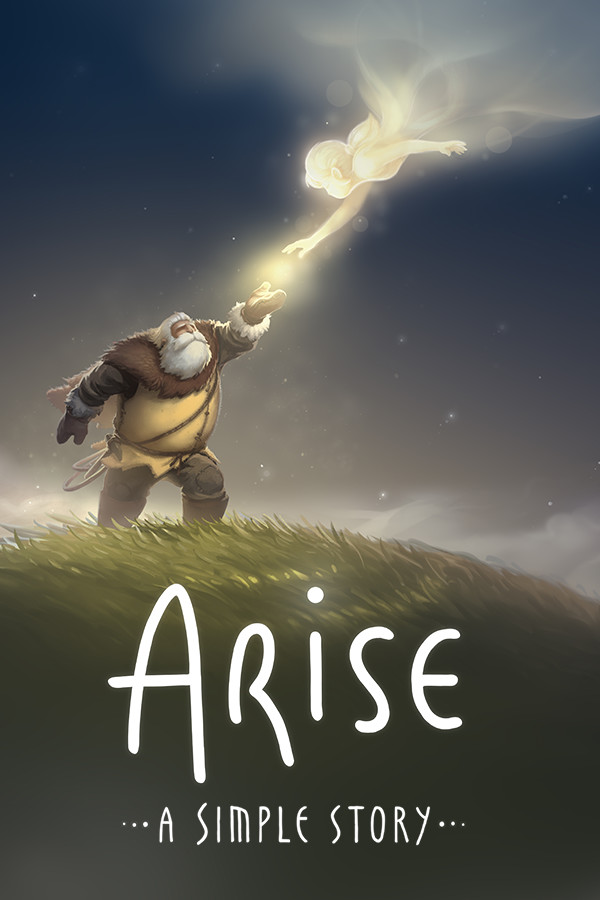
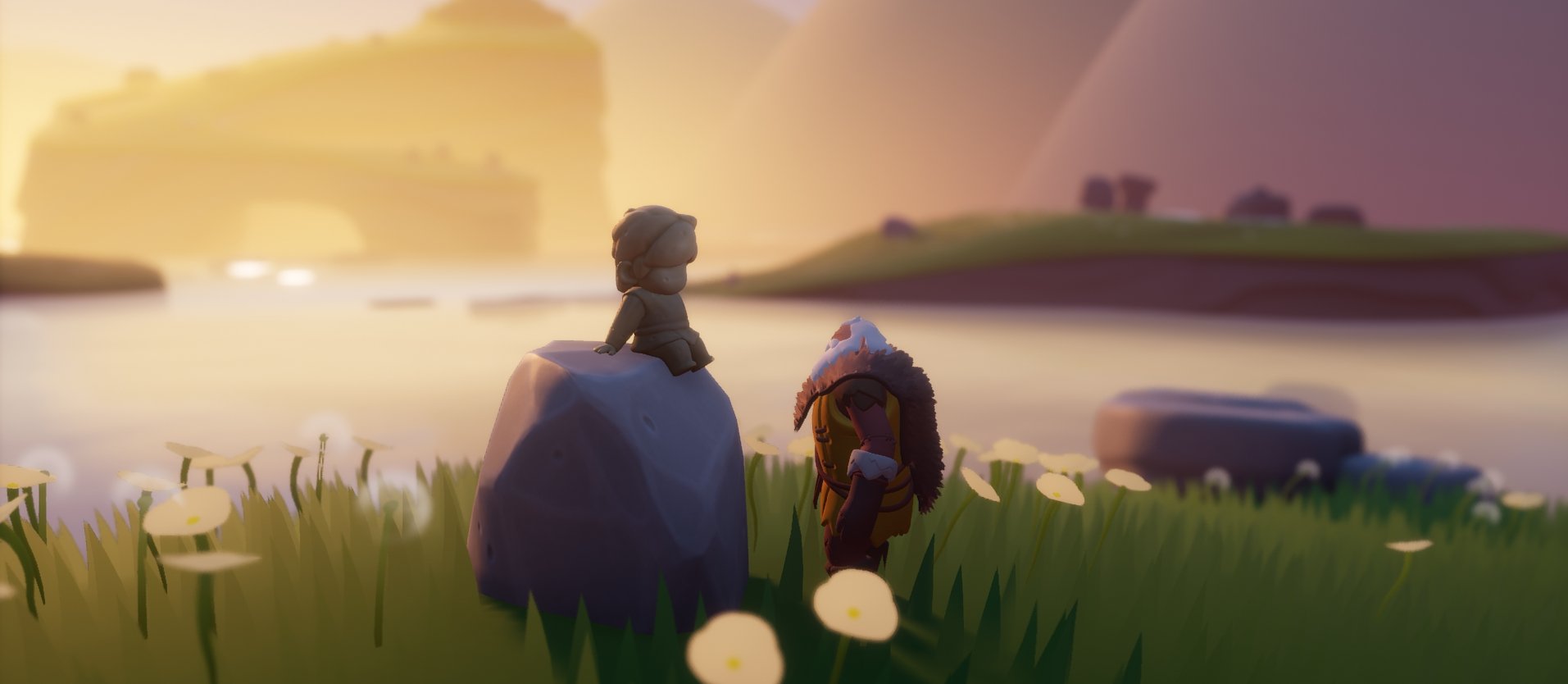
Simple is a great word to put in the title because this game is very simple—almost too simple—and it’s a continuing issue with these “artsy-fartsy” games that have been out since Echochrome was released over 10 years ago. Journey is still the game that does this best and hasn’t been topped. While Arise actually has gameplay, unlike similar games, it still has no purpose, meaning, or story. You play as an old man who is clearly remembering his past, be it meeting his wife, surviving harsh journeys as a child, or various problems that arose with his own child, but these are told with just statues posing to show an image or an idea, and it’s never really clear.
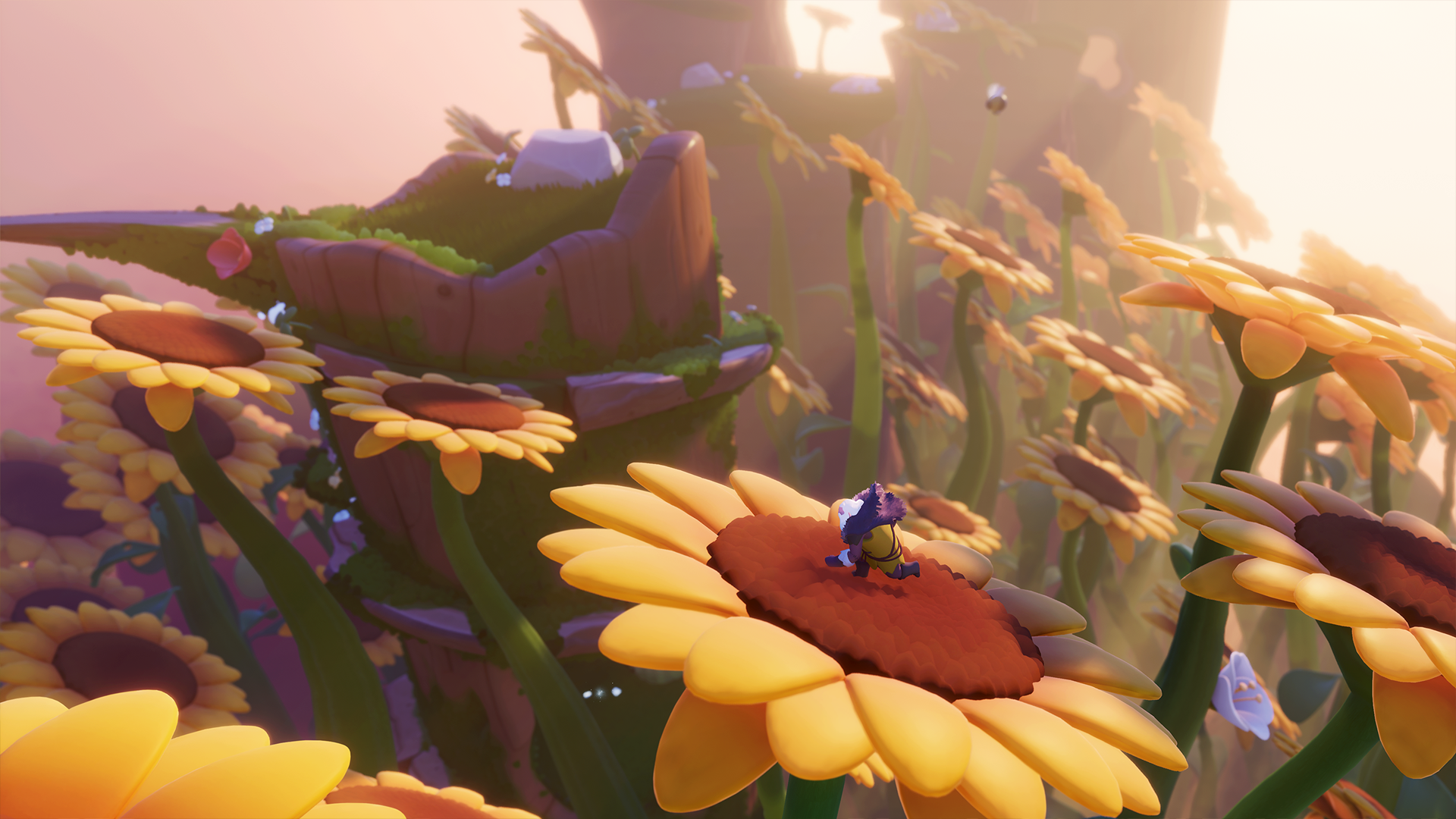
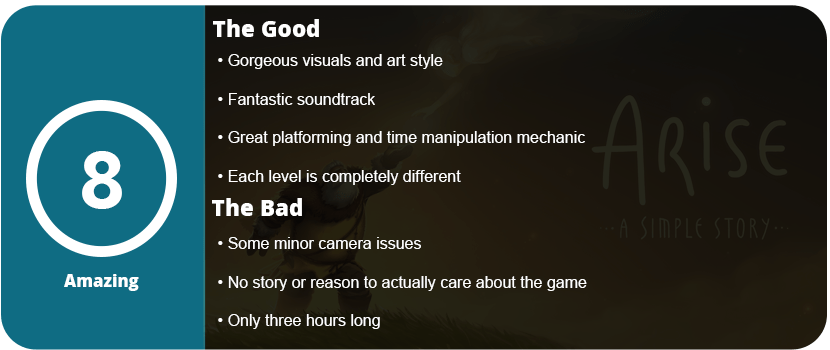
The majority of Arise is composed of great platforming, with varied environments and time manipulation at your disposal. One level has you rewinding and fast-forwarding time to freeze or thaw water, causing platforms to appear and disappear underwater. Another is a level where you just leap across lily pads, and moving time makes the pads spin around. Another level is on a mountainside, and you use the time to rewind time to use the destruction of the cliffside as platforms. It’s very unique and fun, and I had a blast figuring out how to get across each level, which has different uses from the time manipulation and varied levels, making the 3-hour adventure never seem stale.
However, a few issues arose with weird camera angles, and I couldn’t make out where I was jumping and made poor judgments. I even ran into an issue where a sparkly wind would carry me across a level and dump me on a lilypad, only to fall right through it—about half a dozen times. Outside of this, the game wasn’t hard to figure out, and I flew through the game in no time. The music is fantastic and has a sweeping orchestral score similar to Journey. But, unlike Journey, there just isn’t a purpose or story really told here, and I want this fanciful art to stick with me. I know I’ll forget Arise in a few weeks, while I still remember my three playthroughs of Journey from 7 years ago like they were yesterday.
The visuals are superb, with a gorgeous art style and lighting effects. I particularly like how each level has a feeling behind the platforms. The lilypads feel squishy, while another level’s bouncy round cells feel like rubber. There’s so much to look at and take in that on a really nice TV or monitor, the colors will pop and dazzle you. The seven levels bring something new to the game, and each one takes around 20 minutes to finish. There are even some areas where ghosts will kill you if you don’t manipulate the forest fire around you to provide light, and another level has you pausing time to light up the area with lighting strikes. It’s just such a shame there’s no reason to finish the journey other than to see the gorgeous levels.
Overall, Arise doesn’t break the cycle of artsy indie games having no story or purpose, but it at least has great gameplay, unlike the majority of them. I wanted to feel the emotions the old man was going through, but how can I when there’s no context? Developers need to understand that they may understand and feel what’s going on, but we, as players, have no clue. A few statues and an old man looking sad don’t tell us anything. Play Arise for the visuals and platforming, but don’t expect something to tell your friends about.
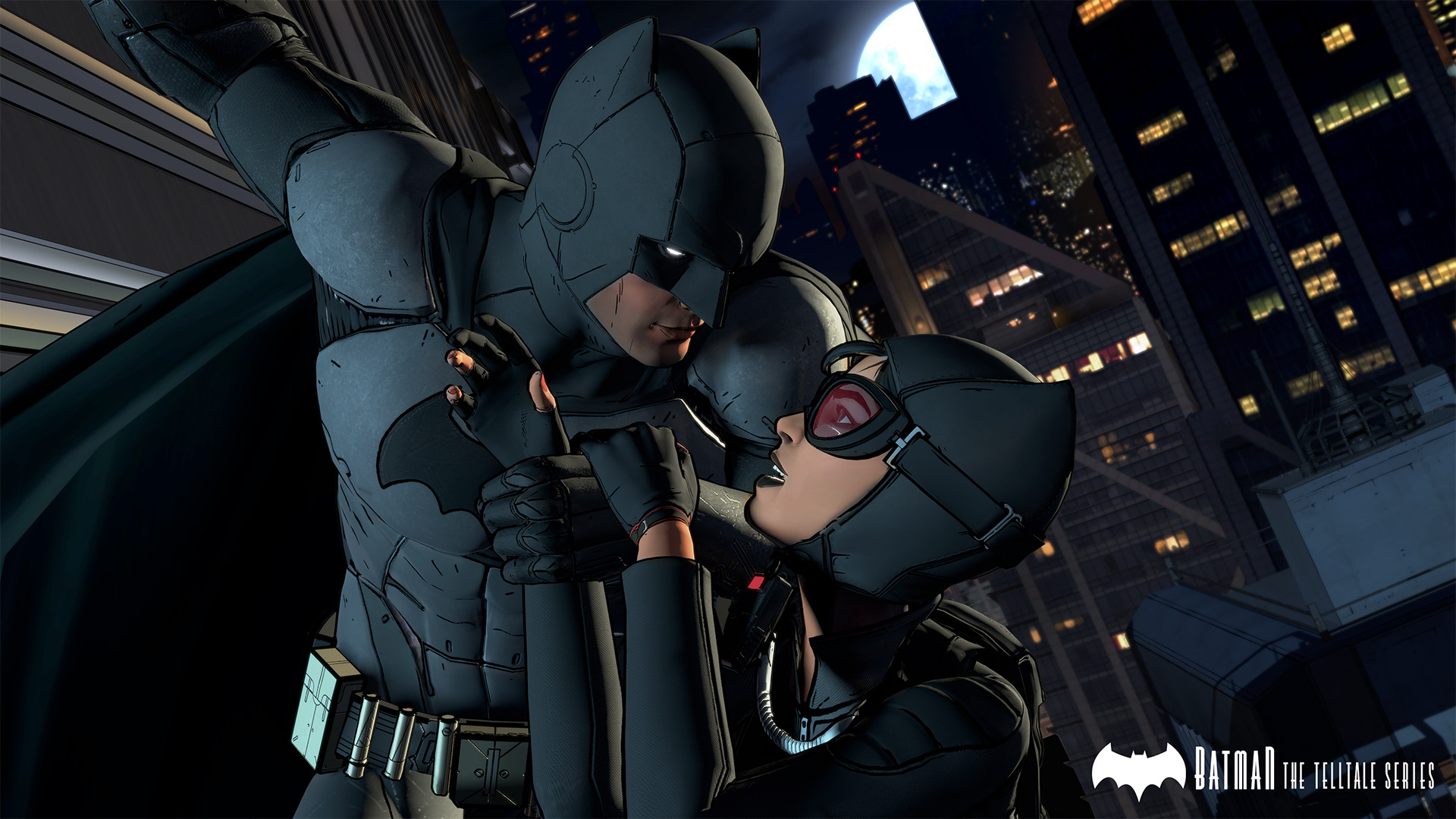
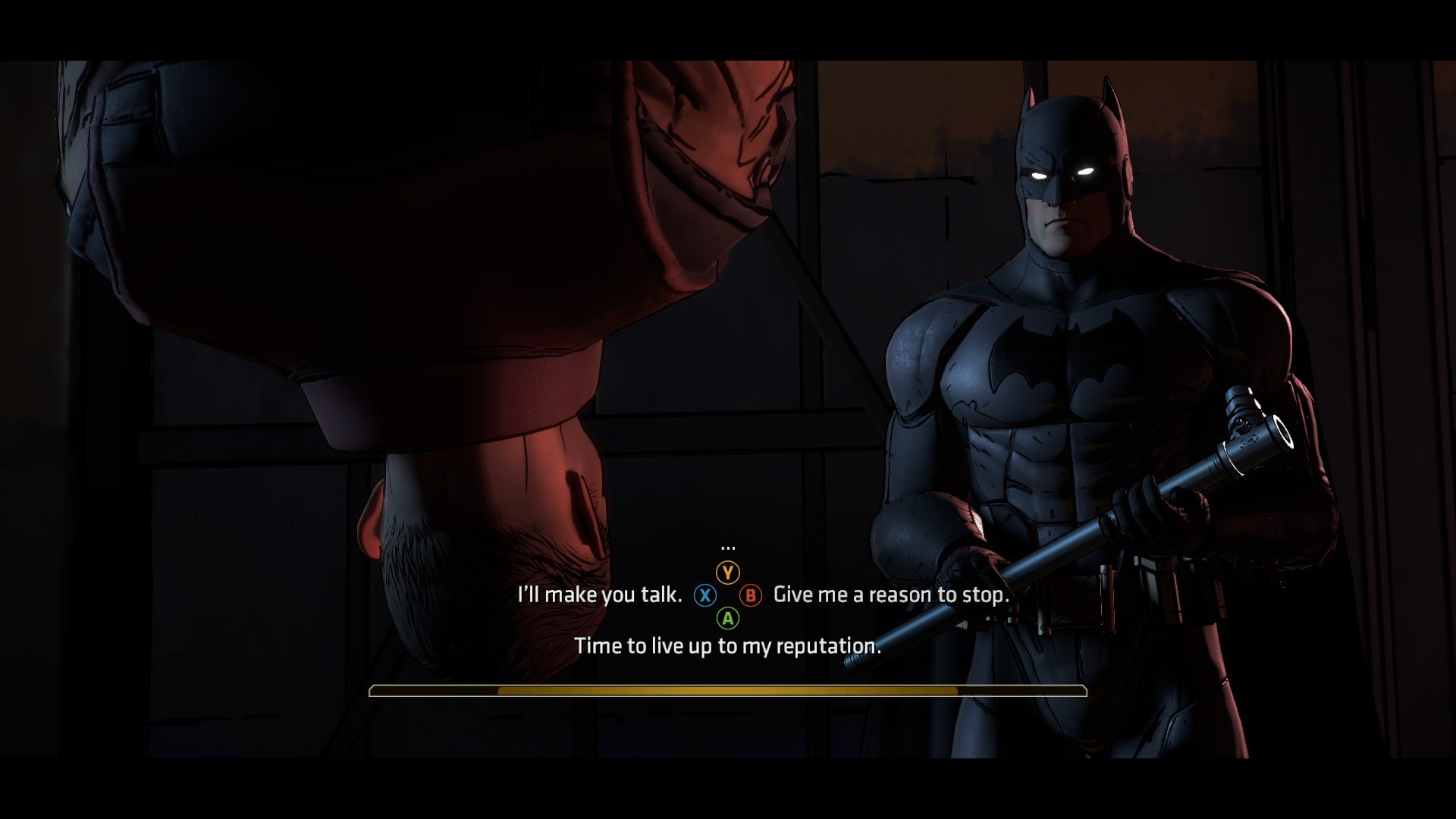
Batman has seen a great run over the last decade or so with Christopher Nolan’s film trilogy, the Arkham game trilogy, and now a story-driven adventure game. Batman tells a story I have personally never heard, with the game digging into Bruce Wayne’s darker past and finally revealing the truth about his parents and discovering their past. The game isn’t’ afraid to kill off characters and actually becomes quite violent, and I was hooked every last minute, but it’s not the story or characters that have issues, but Telltale’s tired way of telling these stories.
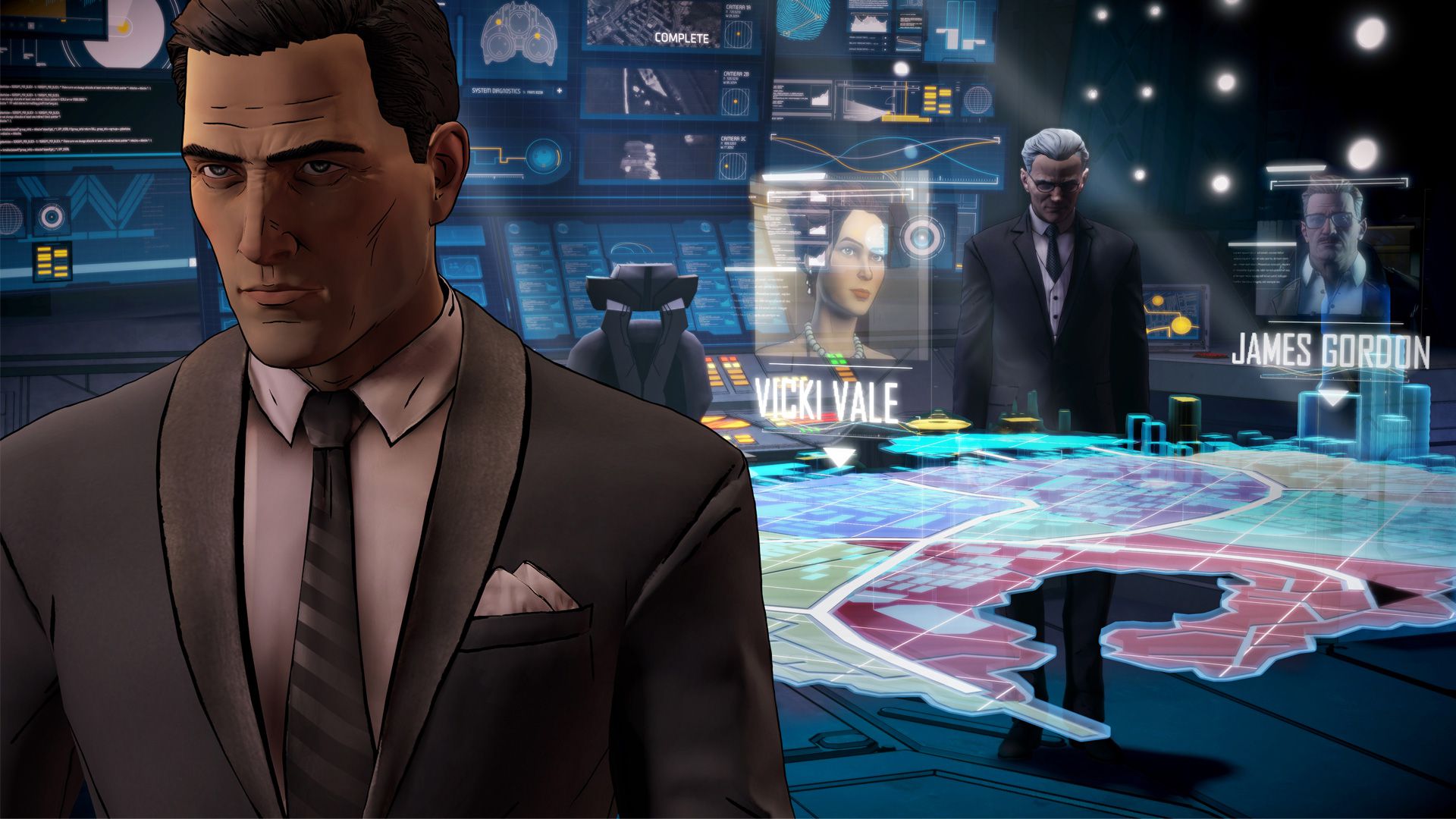
I’ll have to give them credit; they cleaned up the graphics engine a bit, and the button prompts and commands look sleeker, especially during action sequences, but the game is still an interactive movie, probably more so than any other Telltale adventure game. Rarely do you get to actually control Batman or Bruce, and only during investigative scenes do you get to link clues together. This is one gameplay element that’s been used multiple times, and I like it, but it’s not really a puzzle either. You walk around examining clues and can link two of them together to figure out what happened at a crime scene. It’s easy and obvious which clues go together, so some better puzzle-solving would have been nice.
The second gameplay segment is dialog choices, and most are timed just like previous Telltale games, but I feel the smaller dialog choices have less of an impact. The game will tell you when someone will notice or remember what you said, but unlike The Walking Dead, I don’t know when that comes into play. The Walking Dead is done so well that I can recall what I said in a previous decision that made that character act the way they do. Now either the writing is so good it’s that seamless or it was an afterthought. I want to know when my choices change things, even the little ones. There are times when you have to make two large choices that obviously will affect the story, but these are immediate changes that you see in front of you.
The third gameplay segment is quick-time events, but they’re sleek and feel like part of the action. Of course, these are incredibly easy, and I never once messed up, as the game gives you plenty of time to hit the button prompts to see the well-choreographed fight scenes play out that are actually quite cool. Outside of those three gameplay segments, there’s no other gameplay present. Puzzles are seriously lacking, as they gave the Arkham games some brainpower behind all that fighting, and I feel the game could have been better enjoyed as a game with these put in.
Thankfully, you’ll just mow through the five episodes that take less than an hour each to complete because the story is so good. Seeing the origins of Harvey Dent become Two-Face, The Joker, Catwoman, and Gordan, and seeing Bruce face his own dark past, is just cool, especially for a Batman fan such as myself. It tells a story that no other medium has told, and that’s what got me hooked. I don’t want another origin story as to how Bruce became Batman; I don’t want to see him fight more villains and fight his inner demons. The dredging up of the past and seeing Bruce and Batman actually fail and become nothing is fantastic, makes Batman seem vulnerable, and adds depth to the story arc.
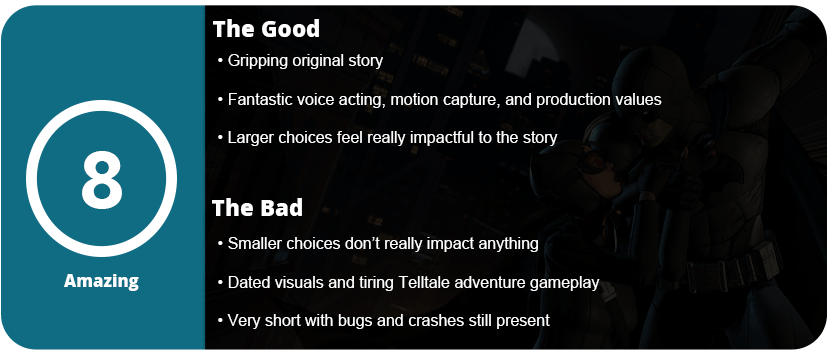
Overall, Batman: The Telltale Series is a must-play for any Batman fan. I don’t think non-Batmanfans will care for this game, especially when knowing more about the lore and arc of the series makes the game that much more interesting. The visuals are decent, but I’m tired of seeing Telltales comic-looking graphics, and they are still dated and full of bugs and problems. I ran into graphical glitches and crashes, and at one point, my Xbox shut down mid-game for no reason. The voice acting is top-notch and the overall production values are good, but I’m tired of Telltale’s way of telling stories in the same manner for every game. Smaller dialog options are lost in the seamless transition between scenes, and only the larger choices stand out, which is a shame. Towards the end of the game, I stopped caring about which choices I made outside of the large ones because I wasn’t seeing any differences. Even in the last dialog scene with Alfred in episode 5, the game said, “Alfred will remember that,” but why? It’s the last scene with him, and it won’t make a difference if he remembers it or not. With that said, this is a great story and not much else.
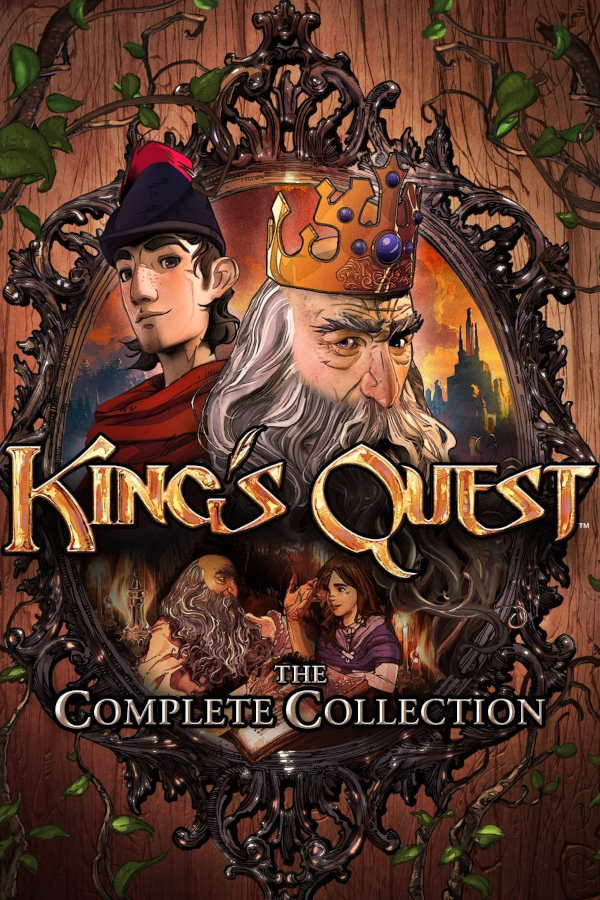
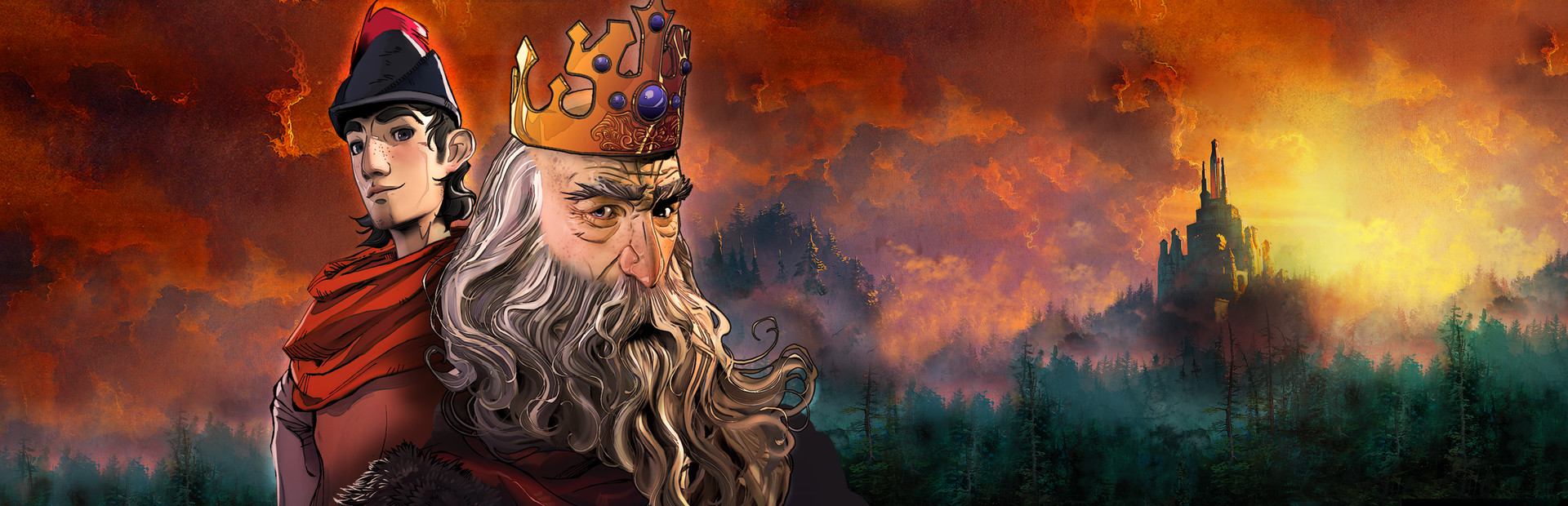
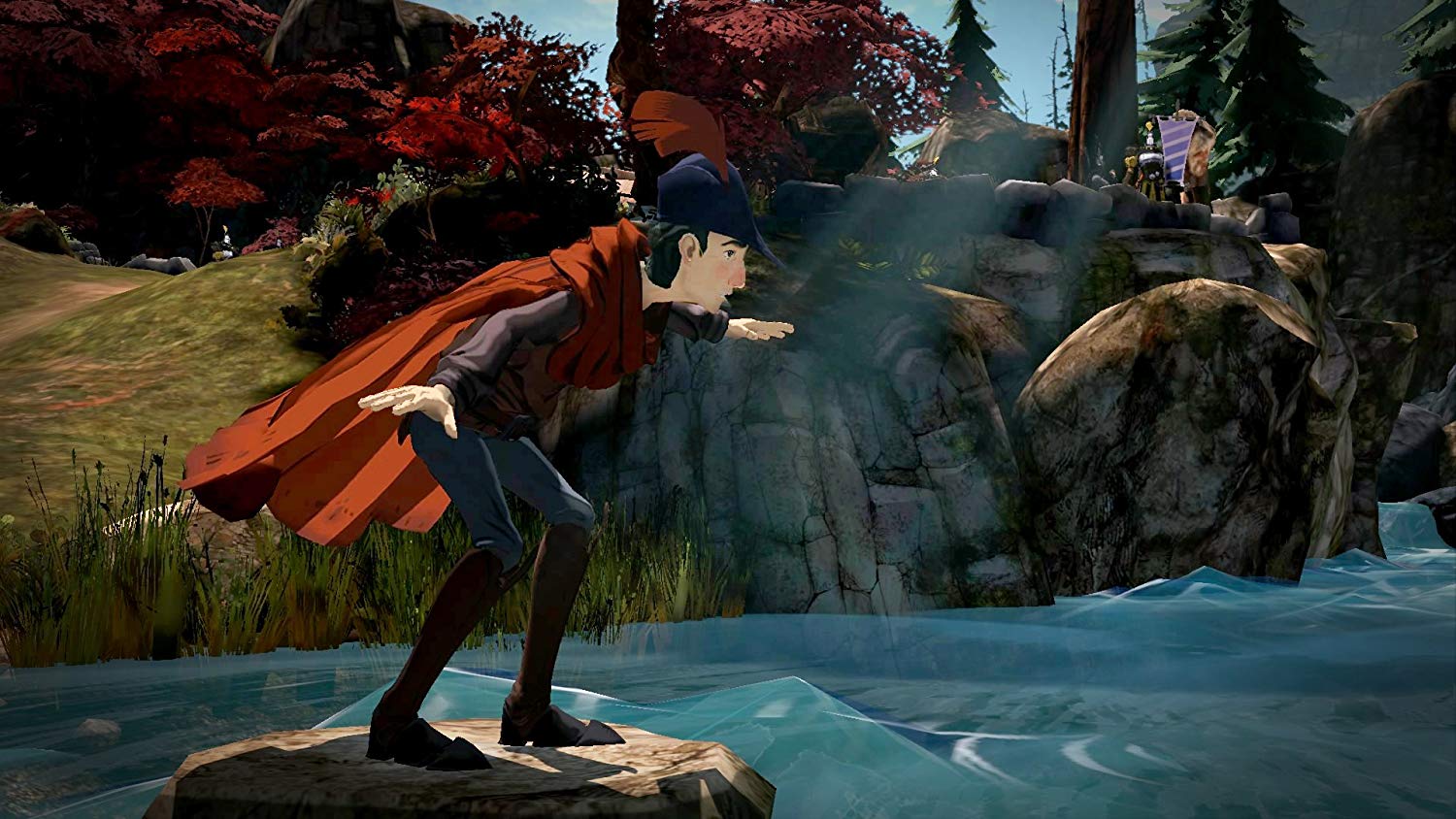
King’s Quest is one of the oldest gaming franchises, as it dates back to the 8-bit gaming era on IBM PCs and Commadore 64, but it’s not very well known for being a PC-exclusive series. It also hasn’t been updated in a couple decades, so to see Sierra themselves publish this franchise got people excited, but King’s Quest landed in an era when The Walking Dead and Telltale Games’ way of doing adventure games reigned supreme. King’s Quest is a retelling of the lives of King Graham and his family and his struggle to rebuild the kingdom of Daventry.
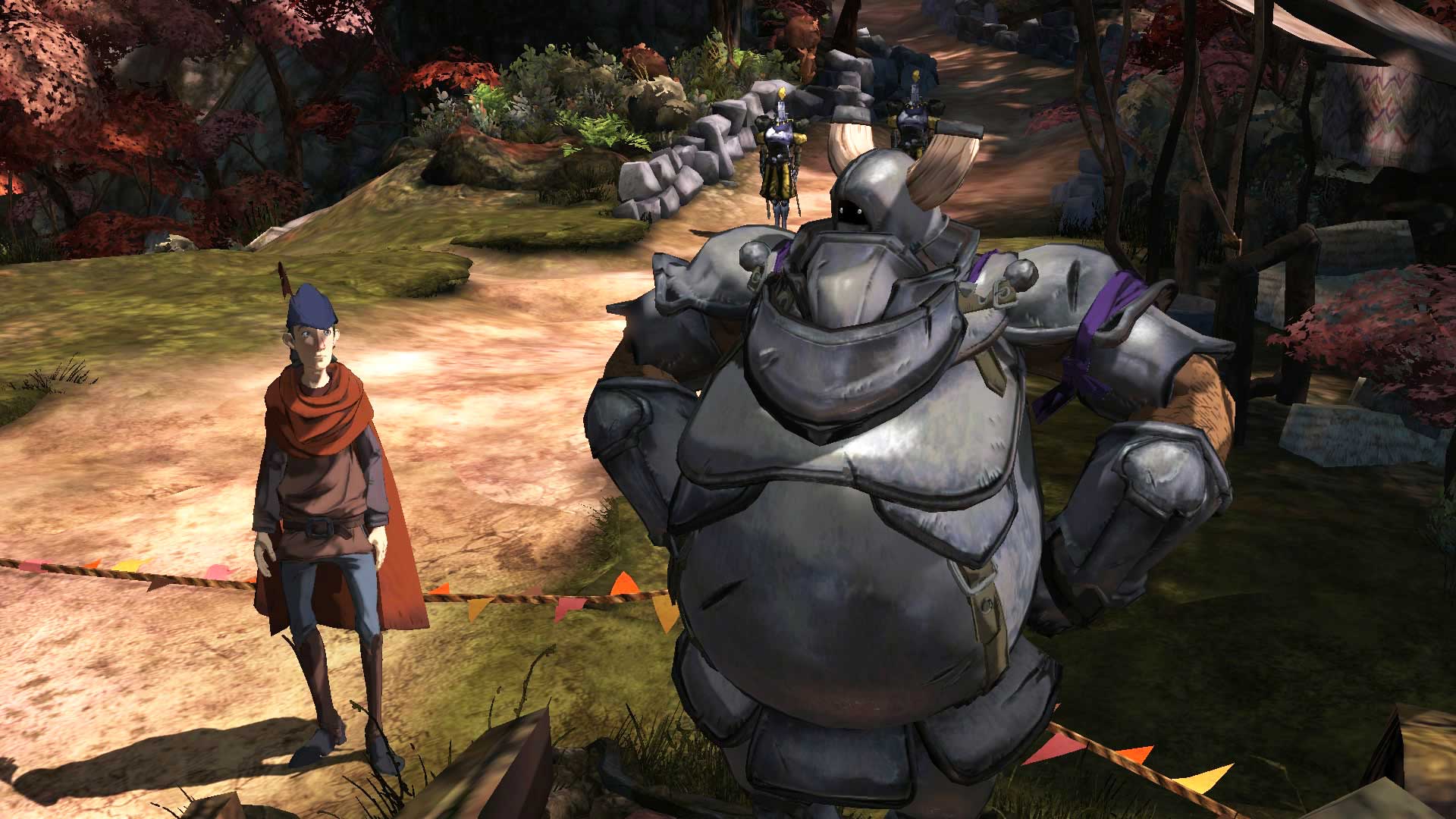
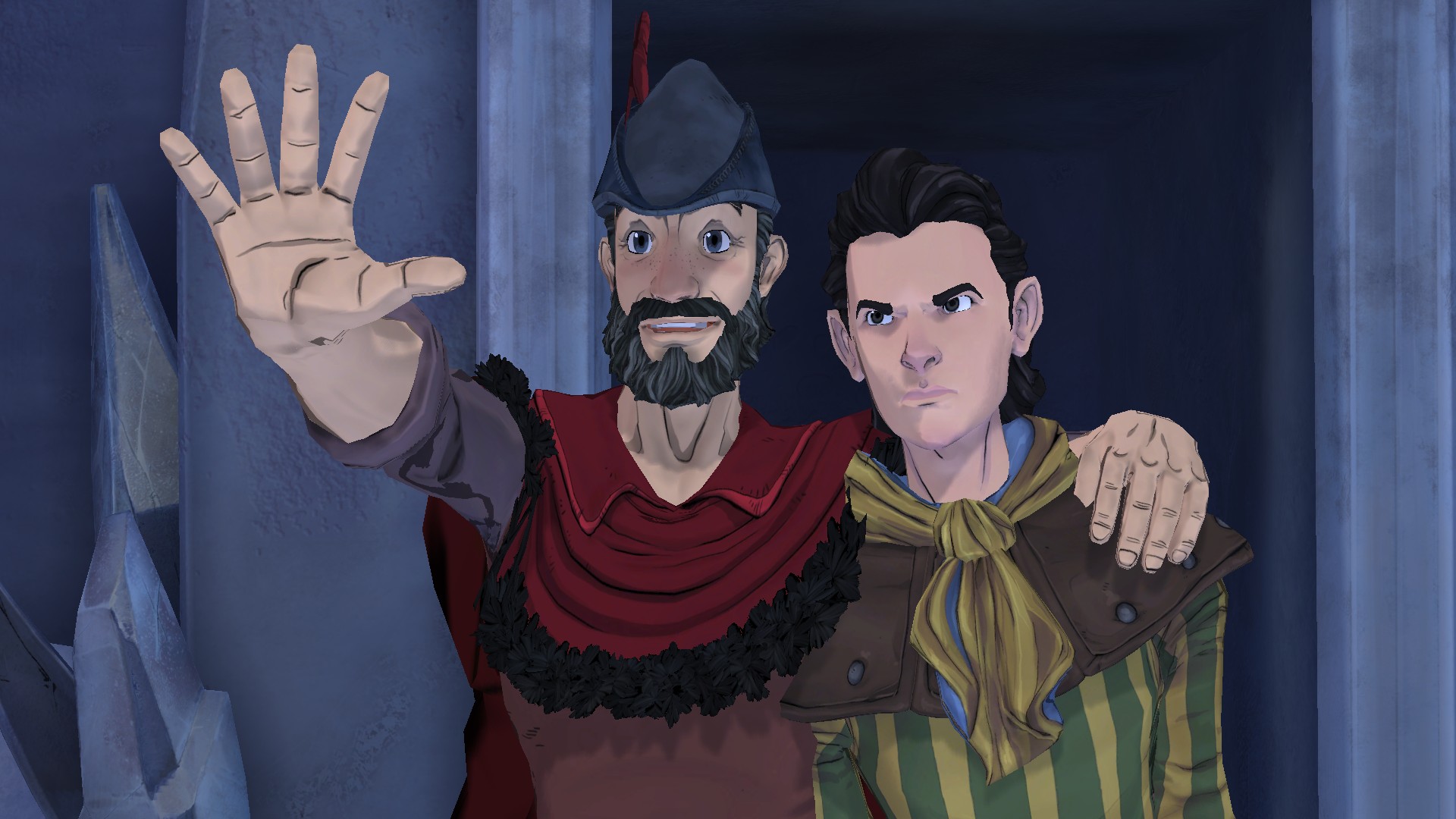
Chapter 1 starts out great with Graham trying to take down a dragon and steal a magic mirror. Graham’s past adventures are told through older Graham telling them to his granddaughter, voiced by Christopher Lloyd. The typical adventure game stuff happens with walking around, talking to people, examining objects, trying to figure out which objects go where to progress, and the occasional button tapping and switch pulling. Chapter 1 has an action-oriented beginning segment, and then the rest is set in Daventry with lots of backtracking and object hunting, which I am not a fan of. I prefer the Walking Dead style of adventure games in which you walk around the immediate area, discover a few things, and have dialog choices and lots of scripted gameplay. Even games like Life is Strange do the exploration just right. I feel King’s Quest relies on this too heavily, and it drags the game down in later chapters.
Once you get to Daventry, you have to complete a series of trials to become king, and you meet pretty much every main character in the game. I found the humor to be nice, if not cheesy; the voice acting was great; and the art style is decent, but the graphics are seriously dated. I also found some of the object hunting very vague and hard to figure out what to do, and this was present throughout every chapter. I also didn’t like how you couldn’t skip dialog and cut scenes in the first chapter only. Outside of the constant backtracking through Daventry, the game is well-balanced and fun. There are a few logic puzzles thrown in for good measure, too.
Chapter 2 is where things fall flat with just a giant cave area to explore, and you must rescue some of the characters, but it’s not explained that you can lose all the characters for the rest of the game if you don’t do things in a certain order. The object hunting vagueness is never more annoying than in Chapter 2, with the entire chapter’s completion relying solely on this. I could never figure out what objects were supposed to do what and go where, and sometimes I flat-out missed objects. You are supposed to sleep every day, and each day the characters lose health. I didn’t know this until after day 3, and I lost two characters. Eventually, I found out I did everything completely wrong and was left with one character, and the rest are out of the story throughout the entire game. It’s very unfair and difficult, and it wasn’t really all that fun.
Chapter 3 is probably the best, as it feels more like other adventure games. A little bit of object hunting, but mostly story and action sequences. It was really fun, and the story at this point was picking up and felt faster-paced. Then, when Chapter 4 hit, it slowed completely down with nothing but puzzles. There are about 20 or so puzzles in this chapter; some are easy, and some just make zero sense no matter how you look at them. It was better than object hunting, as this chapter had the least amount of that, including backtracking. Chapter 5 mixes everything up as the story concludes, but you go back to exploring the same Daventry as Chapter 1 all over again, and it’s just so tedious and boring. The ending consists of insanely difficult logic puzzles; a few are fun, but most of them make no sense. Then the game ends with an object-hunting epilogue chapter that is also a chore fest.
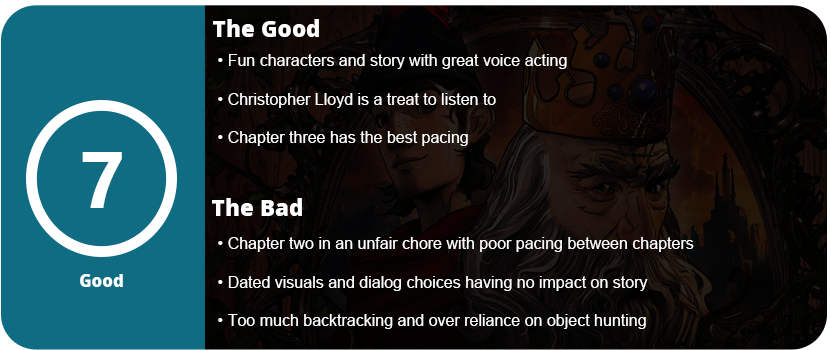
King’s Quest just couldn’t pick one style of gameplay. One chapter is object-hunting heavy, while another is all story and action, and the next is all puzzles. It’s very disorienting and makes the game feel like a chore to play, despite the interesting characters and fun stories. I loved hearing Christopher Lloyd speak, and there were a few nice plot twists, but nothing too crazy. The story is forgettable for sure, but it has a nice conclusion that doesn’t have a cliffhanger. But who is this game for? King’s Quest fans, for sure, and maybe adventure game fans, but fans of just modern adventure games might be turned off by the old-school shortcomings of this game.
Overall, King’s Quest is a fun 10-hour romp through medieval times, and following the goofy King Graham and co. through their adventures is fun while it lasts. The game suffers from poor pacing, indecisive gameplay choices, dated visuals, and some incredibly vague puzzles. With the small price tag these days, this is a fun weekend play-through if you want something to veg out on or play with someone by your side. I would have wished the dialog choices had more meaning, as most of them are pointless no matter what you choose, and there is no real way to sway to the story outside of Chapter 2’s character-starving mechanic. I enjoyed King’s Quest, but there’s just so much more it could have been.
When you’re desperate to bring a franchise back, what do you do? Well, two things: either reboot the entire series into something new or bring the series back to its roots. Activision chose the latter, and somehow it just brilliantly worked. See, Call of Duty 4 was something groundbreaking and revolutionary in the first-person shooter genre. With a fantastically cinematic campaign, an interesting protagonist (Cpt. Price), and addictive multiplayer that had you grinding for perks and weapon unlocks, it was fast-paced and fluid with well-designed maps. Infinity Ward had created magic that took the world by storm. Of course, what do you do with a franchise that’s this successful? Milk it to death with yearly sequels for over a decade until it kills itself. That’s actually what happened to Call of Duty twice! While the peak of the series was with Black Ops 1, the latest Black Ops 4 was a complete disaster. With every iteration, there was a less than stellar campaign and boring multiplayer. So, all those wonderful memories you had with Call of Duty 4 can now come back as this is a prequel to that game. Keep those memories in mind because we’re going to come back to them later.
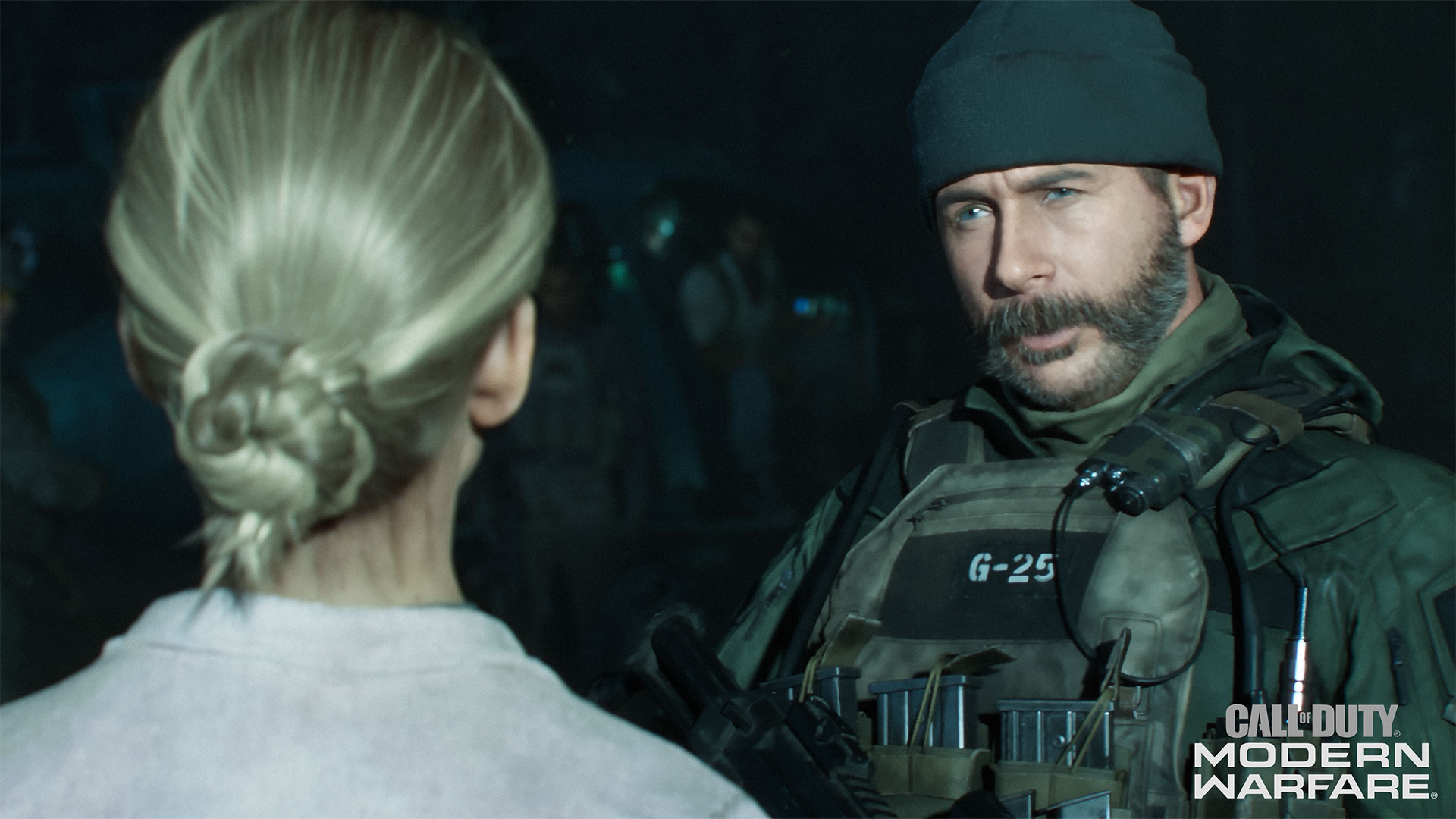
Call of Duty has never been well known for its amazing story, but Modern Warfare tries, at least with the game taking place in Russia and the Middle East. You are trying to find out who stole a toxic bioweapon, and you team up with a rebel group in the Middle East to stop the Al-Quatala terrorists from unleashing it on the world. It’s a typical modern terrorist plot, but it’s enough to get the job done. At least the characters are interesting. With you playing Adam, Garrick, and Farah, Adam is part of the US Army, and Garrick is part of the SAS. Farah is the rebel group trying to break her people free from Al-Quatala, and the Russians selling the bioweapons aren’t helping. Each character is actually really good to watch and pay attention to on-screen. Of course, Cpt. Price has this awesome presence that you can’t look away from. His voice acting and motion capture are amazing, and it’s nice that they tried to breathe actual life into these characters. Remember when I said to remember those CoD4 moments of nostalgia? Well, when Cpt. Price comes on screen for the first time or you see the ending, you get goosebumps and can’t help but smile and think, “It’s back!”
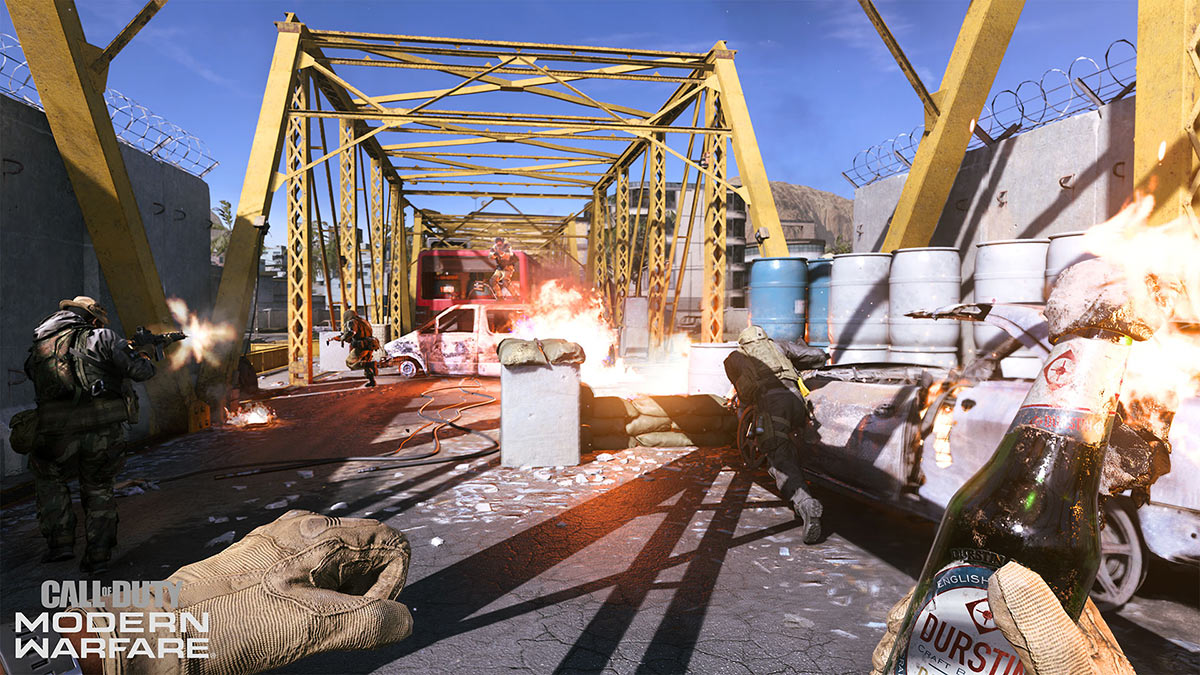
The campaign is short but sweet. Running for about 6 hours, each and every level is unique and different, with a ton of scripted cinematic moments. There’s even a level where you play as a child and have to sneak out of your village. Infinity Ward really tried with this game, and the campaign is actually replayable and incredibly fun to go through. The game is familiar to any Call of Duty fan, but you can feel the original’s fingerprint throughout the entire game. From nighttime stealth missions to explosive-bombastic firefights, modern warfare covers every base, the pacing is spot on, and it never gets boring. The shooting itself is very familiar with the first three Modern Warfare games, with various real-world military weapons fine-tuned and balanced just right. There’s a play style here for everybody, from spewing rounds with the PKM to running around corners with an M80 shogun to picking off enemies with a Dragunov sniper rifle. The balance of weapons leads to the feeling of movement and the satisfaction of bringing someone down. The four-way spread of the reticle when you’re hitting an enemy and the sound it makes to let you know you’re on target have changed the way you can now slide around corners and mount walls. It’s a formula that only works in Call of Duty, and it’s never been better than it has been here.
Once you finish the campaign, it’s off to multiplayer, which is where the meat of the game is. This also feels very familiar and brings back old Call of Duty balancing and modes such as Team Deathmatch, Headquarters, and various other modes. This is the first Call of Duty game since Modern Warfare 2 that has had me coming back over and over again for more carnage. The gameplay is perfect, and while the weapons are still being balanced through patches, the expensive map packs are now gone in favor of free maps and a battle pass similar to what Battlefield is doing.
Acquiring new unlocks comes much quicker and more steadily than in previous games. Nearly after every match, I was unlocking something, whether it was a paint job, a perk, or an attachment. There are so many playstyles available for players, and the maps allow them all. Hand back and pick off enemies, set up camp in a sniper position, or run around with a shield and shotgun like a lunatic—it’s all up to you. The Killstreaks and Perks are back to basics, with UAVs, Cluster Strikes, and Apache helicopters raining havoc down, including white phosphorus and the new Juggernaut armored suit. It’s a reason to play better and stay alive, as the best Killstreaks are for the elite players who are the best. The game can also seem frustrating at first, as you will die a lot and not get any kills when you first start out. Modern Warfare has a special feel to it that every player needs to get down. Learn the maps, every nook and cranny, the shortcuts, and how the flow of each map is laid out. That is key.
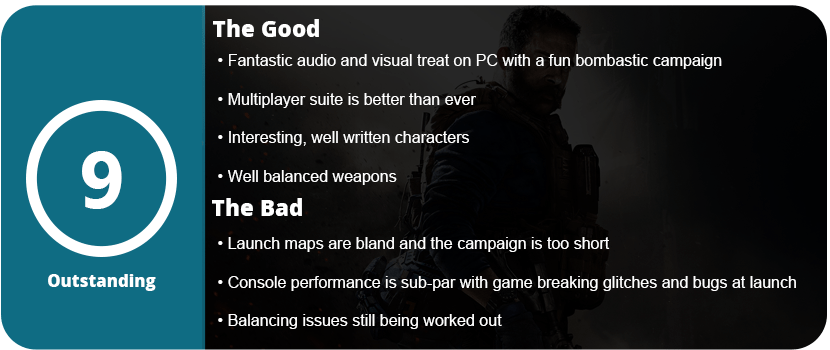
Speaking of maps, the launch maps are rather generic. While they aren’t designed poorly, they just aren’t that interesting, with just an overall generic feeling to them. While more maps are to come, the 10 maps included just don’t feel as memorable as previous games. With a few maps being specific to Ground War, which is an all-out huge battle to take over choke points, the smaller maps just leave too much room for campers with blind corners and are easy to hide in pockets. Overall, they’re still fun, and I don’t have any other complaints about multiplayer than the map quality. I do enjoy the new cross-play feature, which is a first for Call of Duty. PC, Xbox, and PlayStation players can play together with symbols indicating what system and device the players are using in the lobby before a match starts. It’s a great way to keep longevity alive, as PC activity usually dwindles towards the launch of a new game, but with three combined user bases, the game is sure to stay alive for much longer.
The last thing I want to talk about is the visuals in the game. They are out of this world amazing thanks to a new game engine and implementing RTX Ray Tracing on PC for Nvidia GPU users. The lighting is fantastic, and the engine is so well optimized that I’m able to get triple-digit frames with RTX on and the graphics maxed out in certain scenes. The textures and models look fantastic, and the lighting is just incredible. Running through certain scenes and levels just made my jaw drop, and this is easily one of the biggest technical marvels of the year, hands down. However, that is just for PCs. I did play this on the original Xbox One console, and it looks like garbage with tons of blurring, poor frame rate, and stuttering. I’m sure the PS4 looks the same if now worse, and the Xbox One X and PS4 Pro versions are better performance-wise but don’t hold a candle to the PC version.
Overall, Modern Warfare is one of the best shooters in the last decade and the best in the entire series. It took way too long for the series to get back on track, but it’s here and better than ever. With groundbreaking visuals, an addictive multiplayer suite, and tons of maps to come, there’s not much to not like about this game.
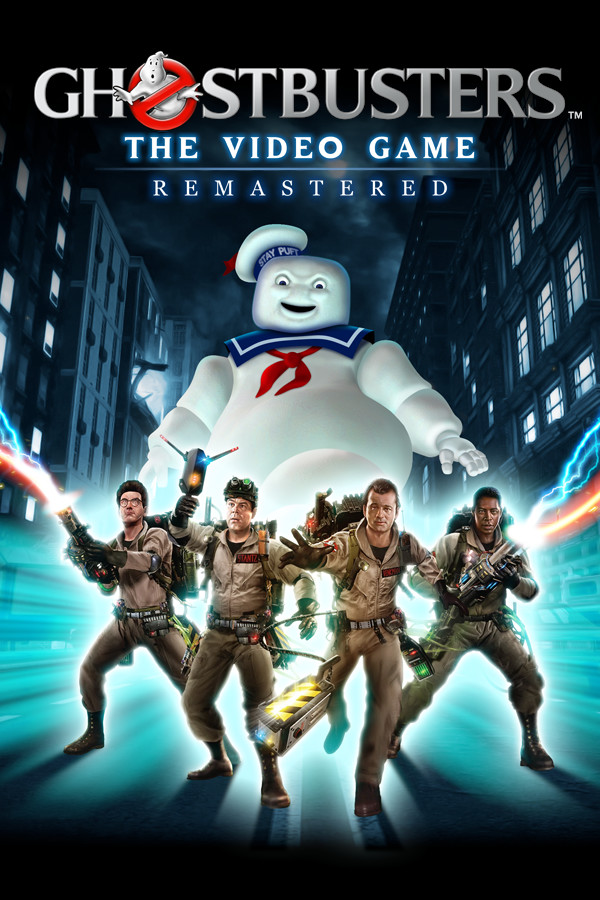
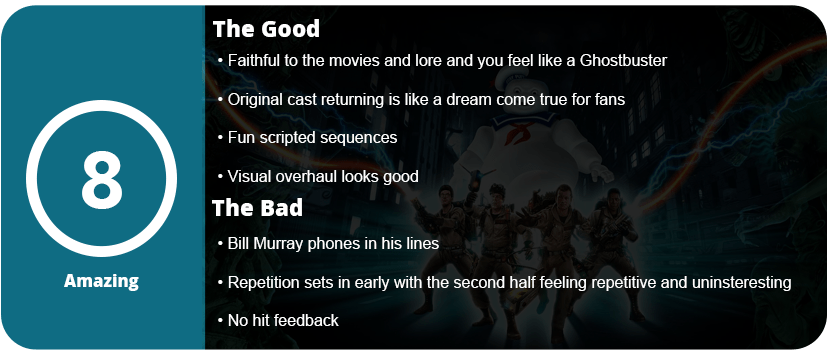
Ghostbusters is one of the few franchises out there that doesn’t get enough attention. With Ghostbusters 3 floating around for decades, most fans gave up hope completely. Then, what turned out to be the script for the third movie pretty much turned into what we have today. With all the original cast coming back to voice the game, it was like a dream come true. While not the best game ever, it was incredibly faithful to the franchise and made every Ghostbuster fan happy, including myself. This was one of my favorite movies growing up as a kid, and to play as a Ghostbuster was just awesome.
Here, we have a remastered version of the 2009 game instead of a fourth game, but this is great as it will spark new interest in the franchise. I highly recommend watching the two movies before diving into this game, because there are a lot of references to those movies that won’t make sense unless you have watched them, as they aren’t explained, including many Easter eggs. You play as a rookie Ghostbuster who just recently got hired, the fifth Ghostbuster, and fight alongside the original four, voiced in their original glory. It’s just amazing and gets my fanboy juices flowing hearing the original cast together. While the game isn’t exactly a movie, it feels like a larger evolution of the mythos and lore of Ghostbusters, taking you from the ghostly issues of New York to a global scale and bringing us into the ghost realm, which most people expected in the third movie.
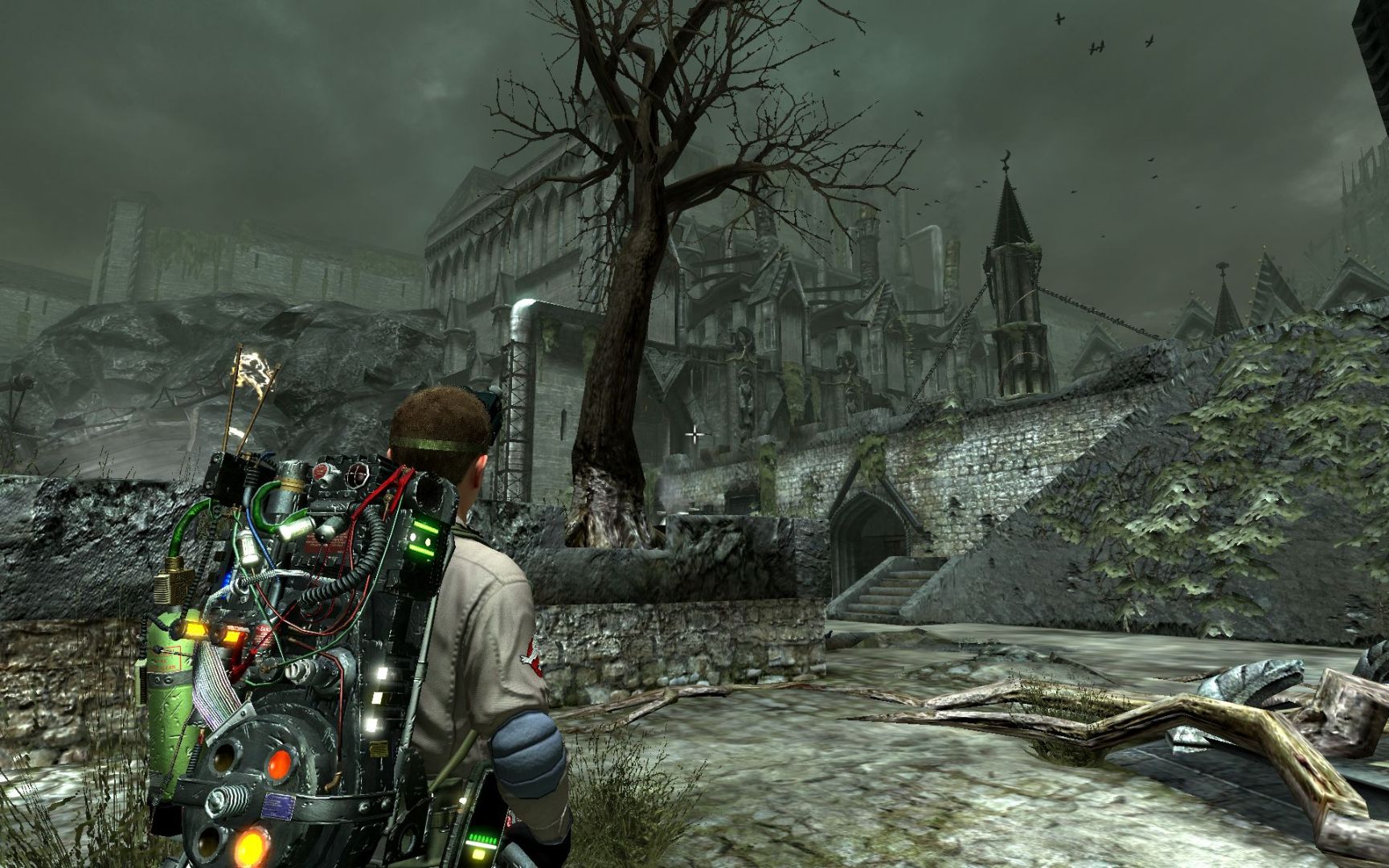
The game has many locales from the movies, such as the Ghostbusters’ headquarters, the Sedgewick Hotel, and the Public Library. Ghosts from the movies and news made it in, and it’s a blast to see. You really feel like an actual ghostbuster in this game. You have your pack strapped on with all its fictional science tech flashing and buzzing, and you can shoot your stream at ghosts to whittle down health and finally capture them and bring them into the box just like in the movies. It looks and sounds exactly as it should, and it’s pretty awesome. That is, for the first level, then it does start getting old. That’s the major issue with this game: repetition sets in early, and there’s no change in gameplay outside of a few scripted events, which I think there should have been more of.
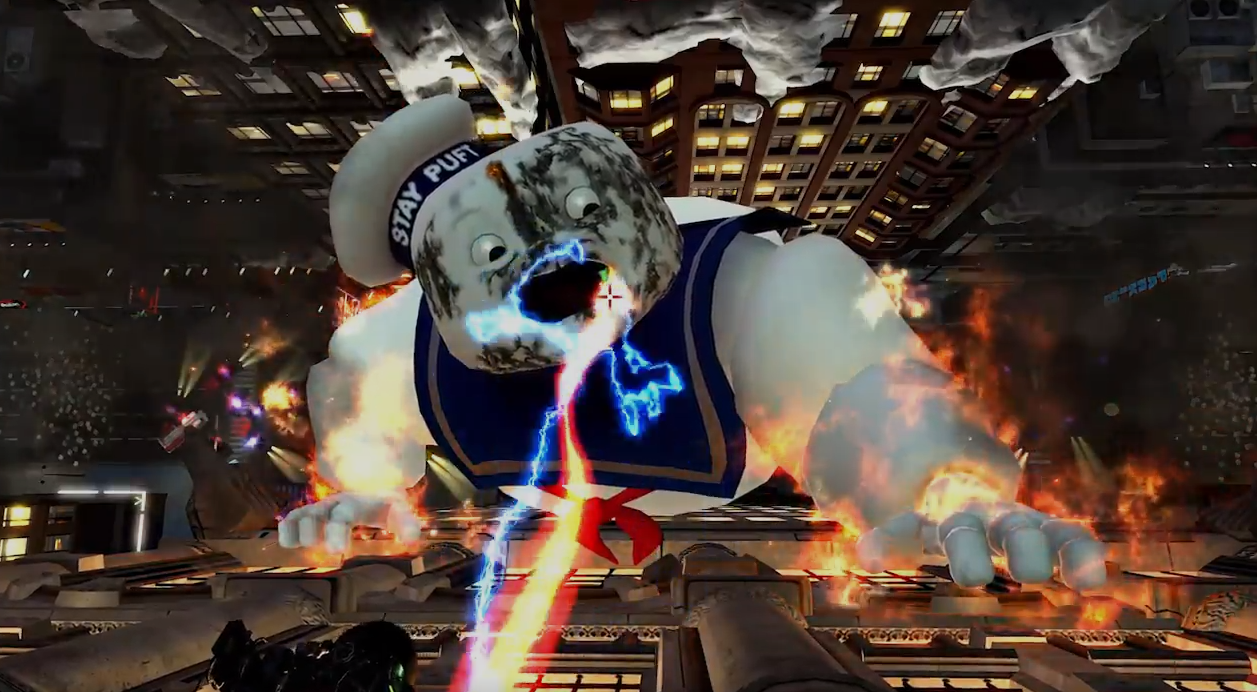
Fighting and capturing ghosts aren’t the only enemies, as there are smaller ones that can get blasted away. Then you have a boss fight at the end of each level. Of course, my favorite level in the whole game is when you fight the Stay Puft, but as you progress more in the game and get to more original content, it just isn’t as memorable or exciting as the first half of the game, which used more stuff from the movies. Locations feel generic, the ghosts aren’t interesting to look at, and there are far fewer scripted events. The game even gets downright punishing thanks to the constant need to revive teammates every 5 seconds. I spent more time reviving everyone than I did capturing ghosts. Once everyone is down and you go down, the game is over. I felt this was one of the worst parts of the entire game and brought it down a bit. It doesn’t help that shooting ghosts has zero feedback outside of a circular health bar getting smaller. There’s no hit feedback or anything, and it’s not very satisfying.
Due to the lack of a cover system, you run around shooting at these guns aimlessly, and once you bring them down into the box, it’s on to the next scene. I loved hearing the banter between the original cast, but sadly, Bill Murray phoned the whole thing in, as his voice acting is terrible and is a huge contrast to Harold Ramis, Dan Akroyd, and Ernie Hudson’s excellent work. It’s still great to hear them crack jokes and sarcasm at each other, and it breaks up the monotony of running around linear hallways shooting ghosts.
With that said, the game has aged well and is really only suited for fans of the movies, but there are things that could have been fixed, like better hit feedback, the need to constantly revive everyone, and the boring later levels. I would have liked to have driven the Ecto-1 at some point. I would have liked to explore more of the Ghostbuster’s personal life, as these are established, well-known characters that everyone loves. I don’t just want to go from scene A to Z with nothing in between. Even though there is a decent epic plot that involves the realms of reality and the afterlife colliding together, I wanted more, and Ghostbusters missed that opportunity. The visual enhancements are nice, and the game runs decently on Switch with only occasional slowdown, but what this feels like is Ghostbusters fast food and not a steak dinner.














































 thebinarymessiah.com
Try multiplayer. A lot of fun !