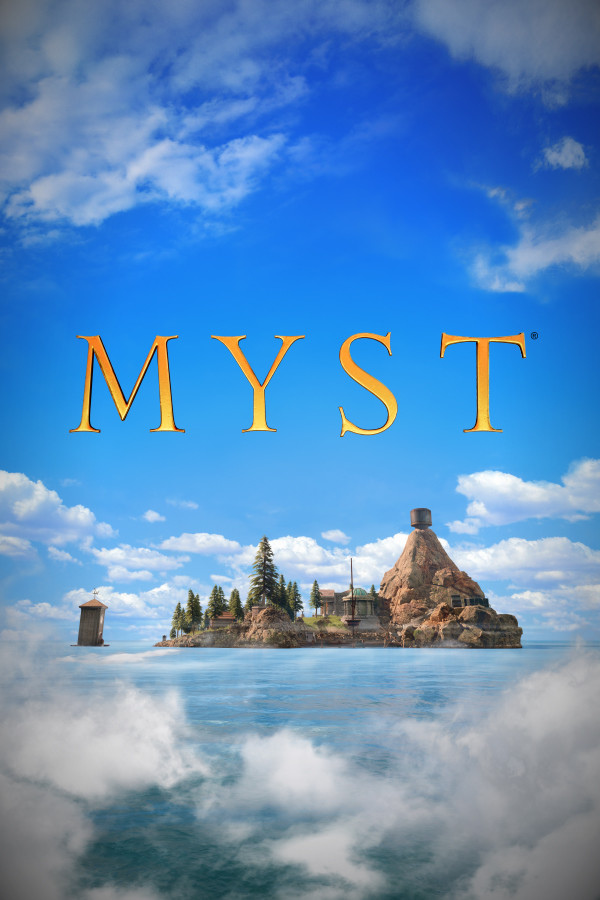
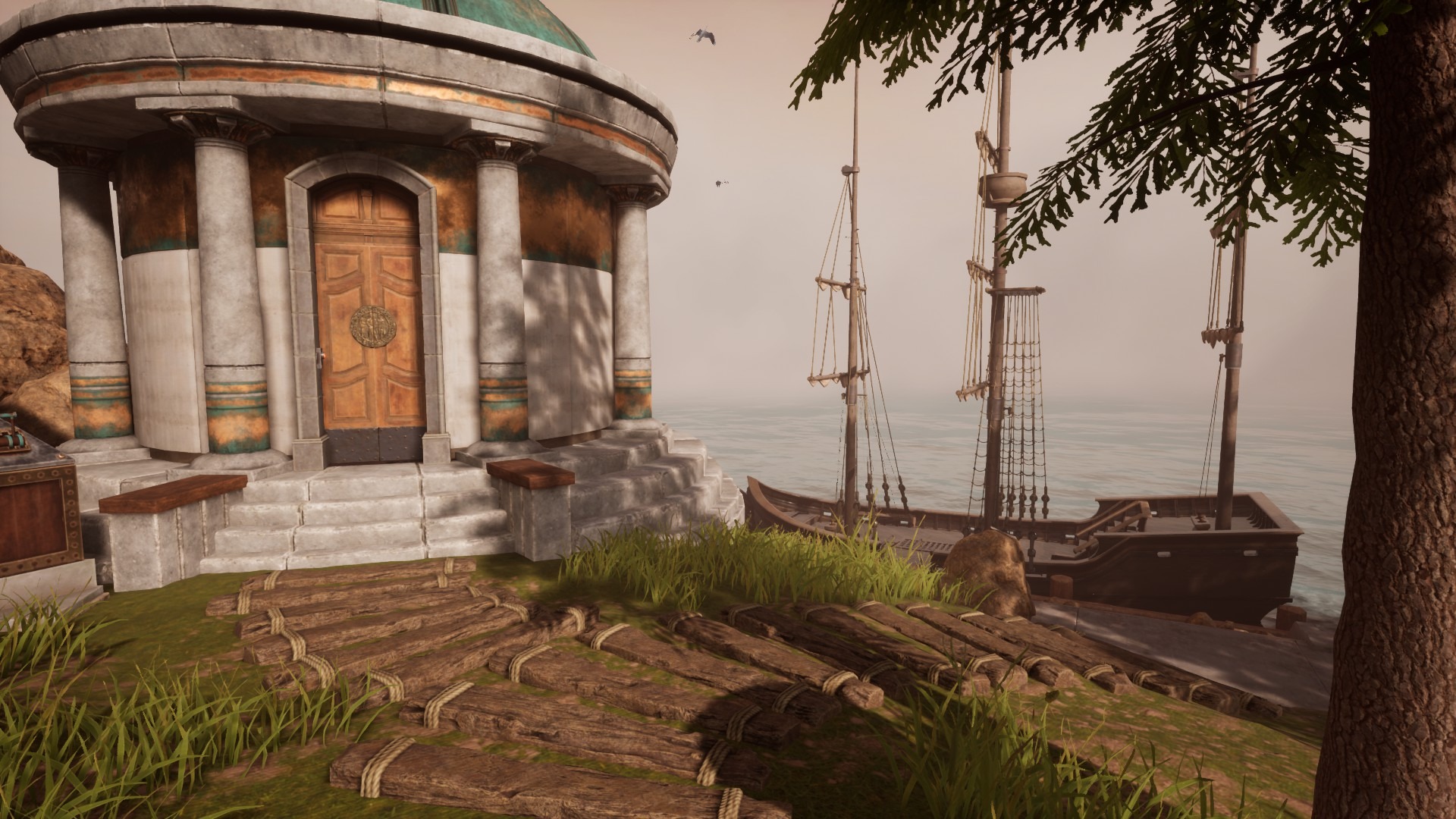
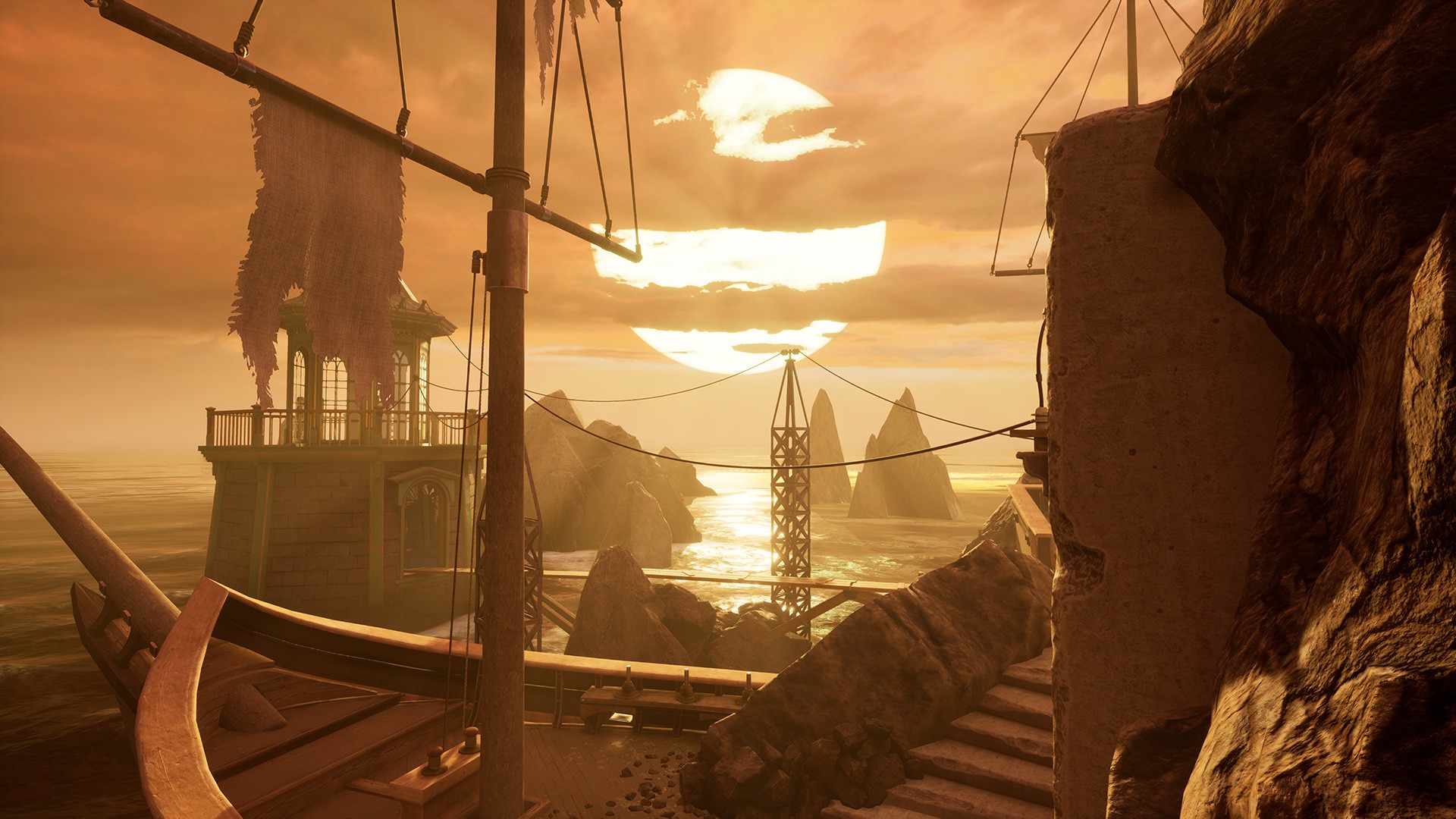
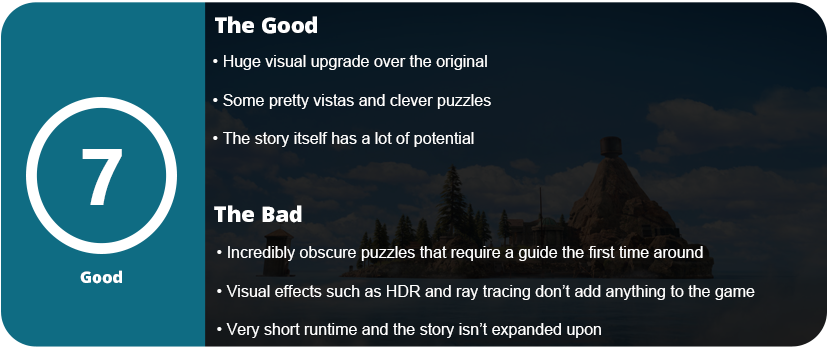
Myst is notorious for its incredibly complex puzzles, yet its captivating world and style captivate and compel exploration. I remember and recall playing Myst III in the early 2000s in my local library, having only seen copies of the game on the shelf for various systems at stores throughout the years. However, I refrained from playing it due to its incredibly complex puzzles, which even a small child would struggle to understand. Cyan completely remakes the game in real-time, so you can freely walk around these areas, unlike previous versions, which were fixed pre-rendered images.
Myst isn’t very story-heavy, but the world is interesting, and as you explore the main island, you eventually learn the pattern of how to travel to other islands and get to the ending. Technically, you can reach the end of the game in two minutes (there’s an achievement for it, and I got it after many frustrating tries), but you also want all four endings, so I recommend following a guide the first time around. This game is very landmark-heavy, so it’s important you remember where everything is. The main island has a hub that will transport you to the islands, but you must solve the puzzle to unlock their doors.
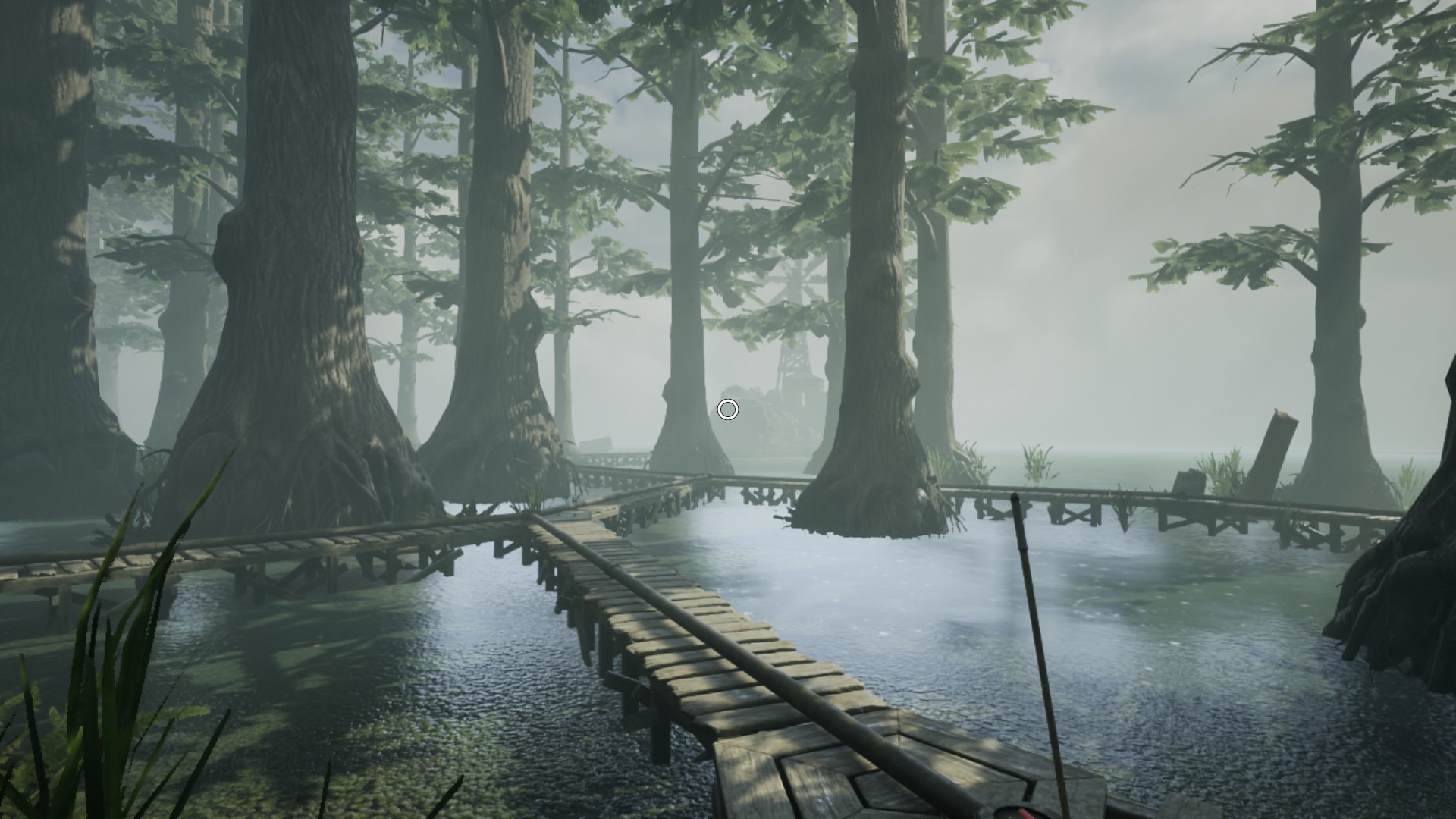
You can follow this pattern by locating a map in the main library and directing the laser to various locations. Once you have done this, you can go up the library elevator and look for a single clue to help unlock the door to that island. These puzzles on the island are fairly easy and not hard to figure out at all, and each island’s puzzle gets progressively more complex and obtuse. Channelwood Island is the easiest, with just levers that you need to flip to make water run through a pipe to power elevators and bridges. It’s very straight-forward. By the end of the game, you are using audio cues to determine what direction a train goes via a compass rose. These sounds are from another island, which you hopefully wrote down or memorized. It’s very overwhelming at first, but doing a guide playthrough allows you to do randomized playthroughs later to get the last few achievements.
Outside of the run button, the gameplay is very simple. You interact with objects, and that’s pretty much it. Each island has a very linear path, so you can’t get lost, but the cryptic symbols on doors and switches may scare some players and turn many away. I did run across a glitch here and there, such as an achievement not popping up or getting stuck in the game world (there’s a reset option, thankfully), and you can save anywhere, which is nice. Despite the pleasant music and voiced dialog in the cutscenes, the game still feels dated, even with effects like HDR and ray-tracing enabled. The textures are fairly low-resolution, and the lighting just feels very artificial. There’s also a low draw distance, so outside of the island you are on, there’s just endless fog. I would have liked to have seen more stuff in the distance.
Overall, Myst is mostly for those who played it years ago, in 1993, but newcomers who crave brain-scraping puzzles will love this game. With a guide, you can breeze through the game in about 2 hours, but I went back and got all but three achievements, as they were fun to get. Once you get to know the island and the puzzles, the game becomes more fun with random playthroughs. Even though the puzzle solutions vary, you already know how to solve them, which is half the fight.
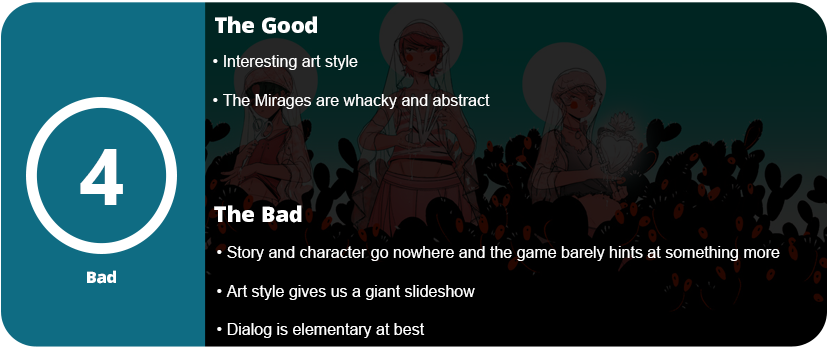
I’m not the biggest fan of visual novels. Most visual novels, or VNs as the community likes to call them, either lack a compelling story or engaging characters, or they drag on for more than 30 hours without achieving anything. Mediterranea Inferno drew me in because of its visual style and advertised player choices that could shift the story. While this does exist, the story is incredibly basic, with some very elementary writing and characters that are as interesting as a wet napkin.
The game’s inclusion of queer culture may offend many people, but for individuals like me, it suggests that the story could feature some intriguing characters. The game takes place in modern-day Italy, amidst the COVID-19 pandemic (it’s mind-boggling to think we’ve built entire game stories around this pandemic), and depicts the disintegration of these three friends during that period. The overall story hints at how COVID broke friends apart and how the isolation and lockdowns made it difficult for all three of these men to maintain their social lifestyles.
This VN is very “slice-of-life,” with not much going on. The endings express no inner turmoil, and there is no gameplay. The choices you make during Mirages imply that the characters might be taking drugs at these moments. A mysterious character appears and offers a strange fruit that you can peel or turn down to alter the story a bit. You get coins to purchase these fruits by interacting with objects in the mirages. This game’s best ending for each character requires four tarot cards, but only one character can get them in one playthrough. There are three days and three nights to live through.
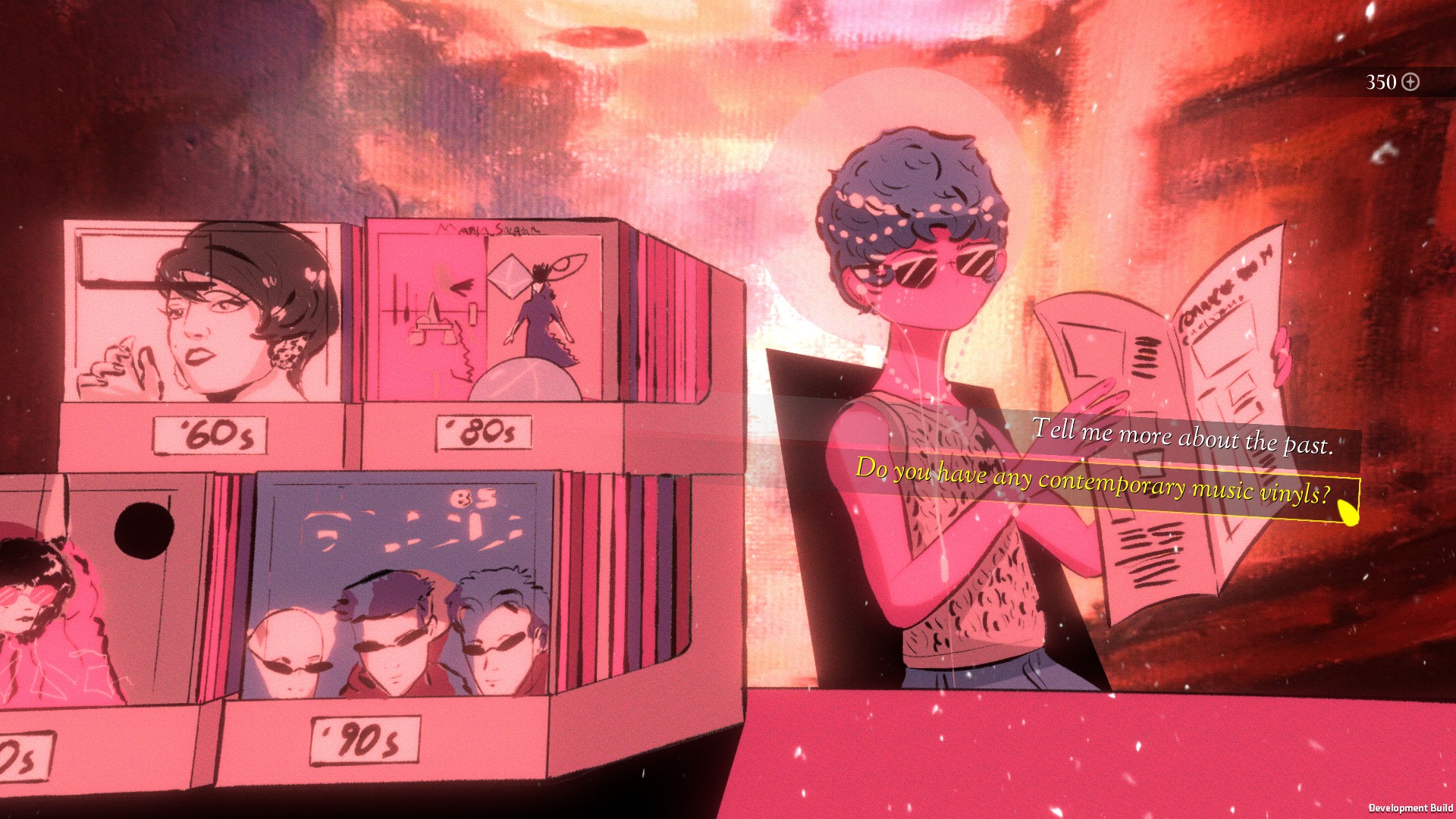
We learn a small amount of backstory for each of the three men here, but it’s mostly just dialog about complaining or what feels like random, boring daily conversations. I almost wanted to stop the game after the first day, but I kept going, hoping that there would be some crazy plot twist. Sadly, this never happened. I can’t spoil too much of the story (like it matters with how bad it is), but there’s not much here for anyone. Those who enjoy storytelling, queer gamers seeking a connection with LGBTQ+ characters, or anyone seeking a visually appealing game will not find it appealing. The art, while hand-drawn, just isn’t very appealing at all. The game is mostly just a giant slideshow, with an occasional low-poly 3D model thrown in for good measure.
By day three, I just didn’t know what to really expect anymore. The Mirages are weird, abstract, and poetic, but nothing means anything in this game. There’s no reason to care or keep moving. Early on in the game, there’s no hook to keep you in your seat. Most people will click away before the end of the first day. I understand it takes time to set up a story, but for a game that only has a 2-hour runtime, there isn’t a lot you can do. Overall, there’s not much here to recommend, as there aren’t too many redeeming qualities in this game.
Another independent horror game featuring a convoluted narrative and characters we find uninteresting. I keep giving these games chances, and while a lot of them nail their main monster and atmosphere, almost none can bring home a good story or good characters. This game is based on Taiwanese mythology and the 2020 film of the same name. I have never seen or heard of the film, but the folktale is interesting. A group of six university students challenge the curse on the bridge near Tunghu University and accidentally “trigger” it. You spend a lot of the game running from ghosts of sorts and finding objects in the first person.
The game begins with a promise for the entire setup. The number of voiced lines and cutscenes suggests a promising story. The voice acting is in Taiwanese and is pretty adequate for what the story needs. The first scene of the game has you running around a small park, hiding from a ghost, and trying to escape. The monsters are fairly well done, but they are nothing we haven’t seen before. Pale skinned girls with long black hair, red eyes, and really skinny. There are a few more imaginative monsters, such as a possessed mannequin, but after so many exposures to this ghost, it’s not scary anymore.
There are a few Asian horror tropes, such as a random limb grabbing something when you open a cupboard, or the main ghost appearing behind someone and showing a single eye. These cheap jump scares detract from the overall game experience and give the impression of a cop-out. Despite this, the atmosphere was rather tense, and just wandering the halls and hearing the ominous music and strange sound effects made me stay on edge for the entire game. The stealth sections were my least favorite parts, and it seems that non-combat horror games tend to focus primarily stealth. The ending sequence was the most frustrating, as these are all trial-and-error events. When caught, you must restart and complete the run in a single attempt because you are unsure of the correct path to take. The ending sequence requires you to restart each time, and you must collect many objects that increase the frustration. I ran into a glitch where a locker wasn’t in the spot I needed, and I couldn’t progress anymore.
Most of the game tells you exactly where to go, and there are signs everywhere that help guide you. There aren’t many puzzles in the game, and the ones that are present are relatively simple. The majority of the game involves revisiting the same locations with six distinct characters, and while their narratives should eventually converge, they never do. The timeline lacks clarity, and the explanation of the school’s shifts and changes remains elusive. Is it a hallucination or is it actually happening? Even reading the flavor text in journals doesn’t explain anything. I’m so tired of the poor storytelling in these games. I feel like there is some sort of love story involved, but I couldn’t really figure it out.
In the end, there’s nothing really here for anyone unless you want a cheap 3-hour horror adventure. If it weren’t for the flawed stealth mechanics, I would have enjoyed this game more, but even the graphics fall short of expectations. It uses Unreal Engine 5, and it is very poor at that. The entire time I thought it was Unreal 4 or even 3. However, the lighting effects give the impression that it’s Unreal 5. They are pretty decent, but the texture and modeling are horrible. Even cranked up to max, the game just doesn’t look good. With that said, The Bridge Curse has a lot of potential but falls flat in too many areas.
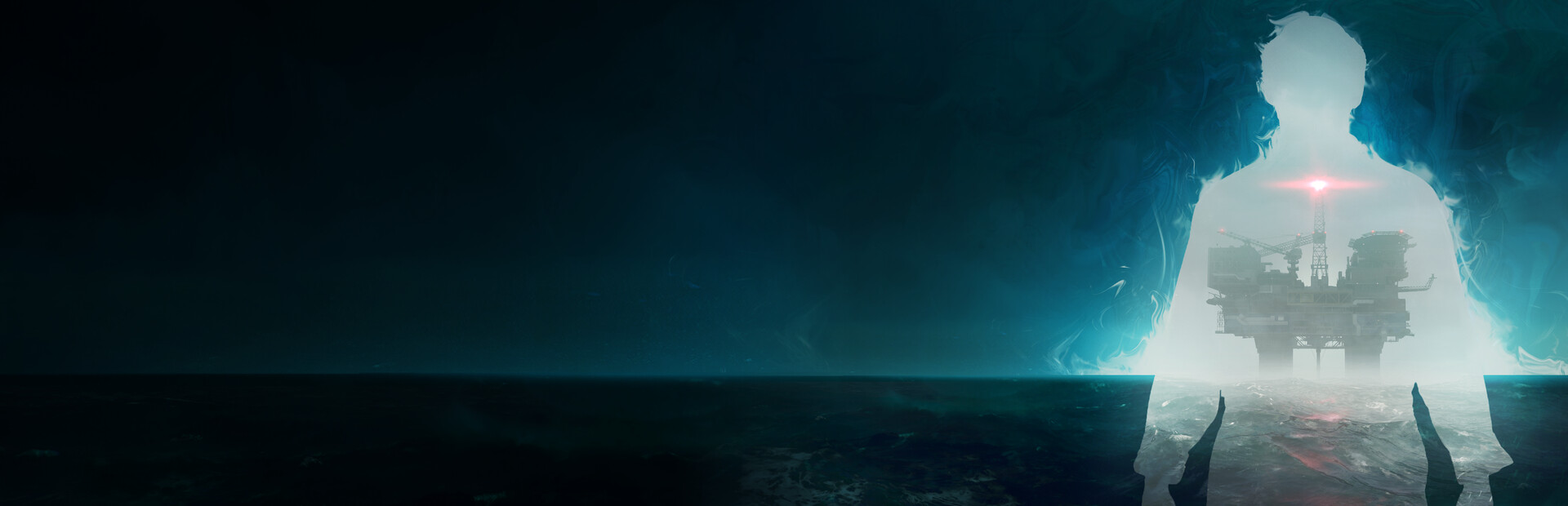
Megalophobia. Thalassophobia. Claustrophbia. These are three things I am afraid of, and all of them are present in this game. You play Caz McCleary, an oil rig worker. The Scottish oil rig began operations in the mid-1970s. The game starts out just fine, with everything being peachy. You explore your cabin and get a phone call from your boss to report to his office. We also come across a less than pleasant letter from Caz’s wife. There are problems back home, and the story only touches on this every so often.
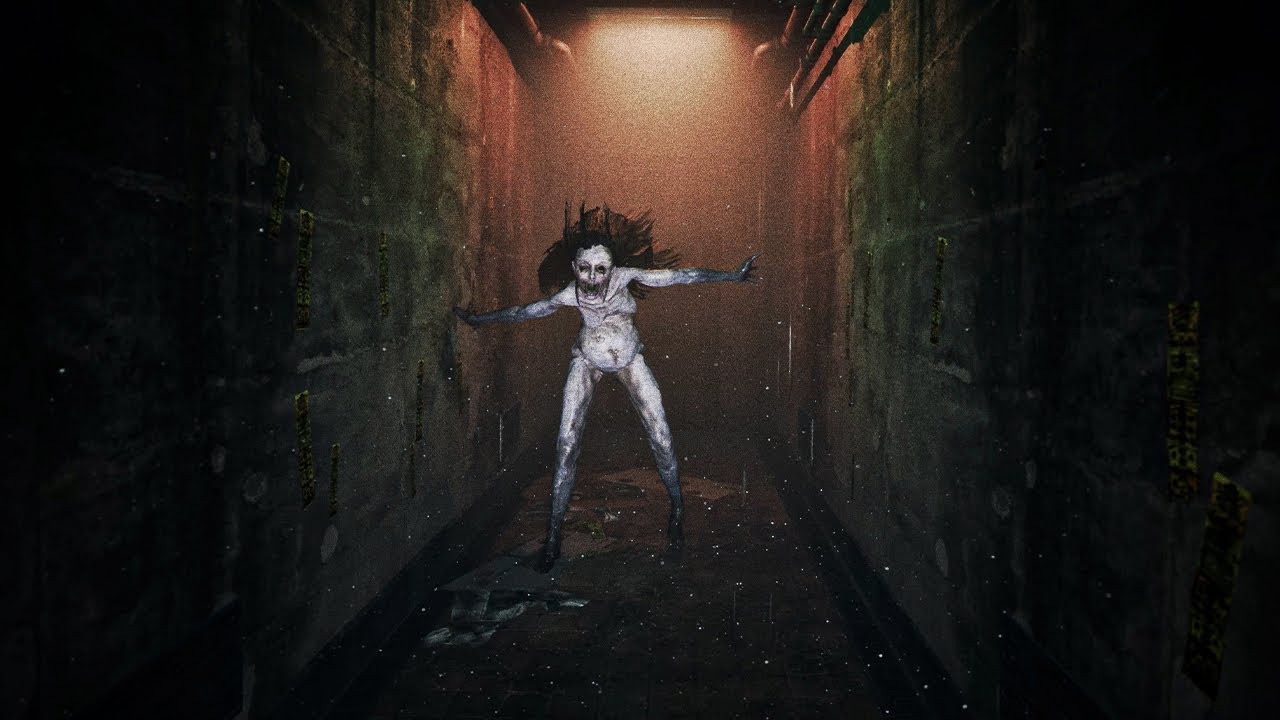
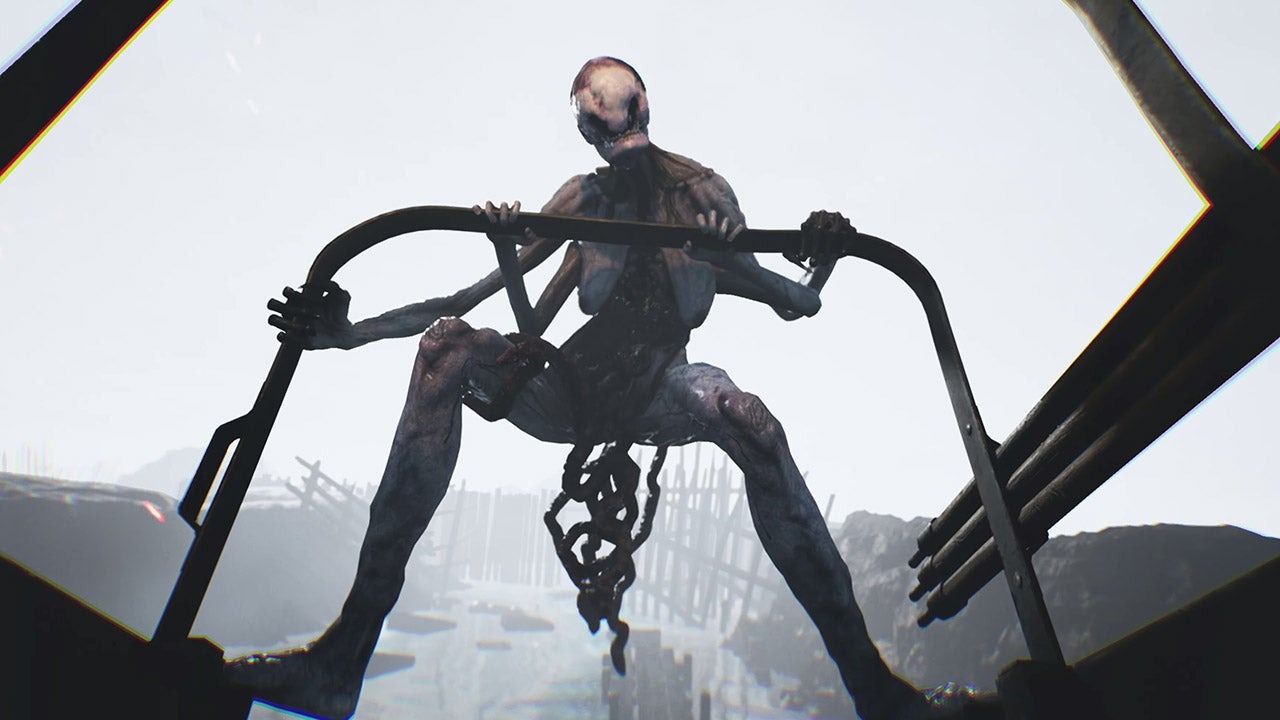
As you arrive at Rennick’s office, you learn about the game’s little mechanics. You can grip and hold on to ledges and ladders, press buttons, and break open locks and vents. Outside of interacting with objects, there isn’t much gameplay. There aren’t even any puzzles here. The stealth sections when you are hiding from monsters and the scripted events are the biggest gameplay elements. The game is well-paced, and I didn’t want to put it down. There is a good balance between running around, climbing things, and hiding from monsters. There are primary areas where you can conceal yourself, such as vents, holes, and various containers. To send the monster running in the opposite direction, you can throw objects, and any form of running or walking will alert the monster. These monsters are truly amazing, and the entire entity you encounter is a blob of flesh with twisted faces and limbs protruding everywhere. There are multiple monsters, each with their own unique appearance.
Most of the game has you just going from goal to goal, climbing around on monkey bars, ladders, opening doors, popping vents, flipping switches, and answering phones. A couple of times I had to grab a fire extinguisher, put out a small fire, or turn on a heater to warm up. This experience goes far beyond the typical walking simulator that The Chinese Room is known for. There are numerous ambient sound effects and moments of terror, which extend beyond just the presence of monsters. Being stuck on a crumbling hunk of steel in the middle of the ocean will terrify anyone. At times, the prospect of climbing around on the rig and even swimming in tight spaces during floods can evoke a sense of panic. The lighting effects also help, with your flashlight not reaching the surface of the water and barely lighting up small crawl spaces.
The story, sadly, doesn’t really go anywhere. Caz’s backstory remains largely unexplored, focusing only on domestic issues, and the presence of side characters is insufficient to pique our interest. Caz has a lot of inner dialogue, but it’s mostly just cussing at himself and situations. The game’s opening effectively established a potential deeper narrative. The voice-acting is great, and I really wanted more from this game. The game never touches on the origins of this monster and its existence, which I find intriguing. I enjoy games with a lot of scripted events and cinematics, and I don’t mind the lack of traditional gameplay. But I need something else for the payoff, and that’s usually a story. The visuals are excellent, utilizing Unreal Engine 5 to its fullest potential, but they fall short of making this game something I will remember for a long time or want to revisit. There are no collectibles or ways to explore. This is a very linear game, and you can only go down one path.
Overall, Still Wakes the Deep is fun, but it lasts with a very tense and terrifying atmosphere, from the monsters to the closed-in spaces and lack of hope. The exploration of Caz’s backstory falls short, leaving us uncertain about the nature of the monster and its purpose. The stealth sections don’t overstay their welcome, but the lack of traditional gameplay may turn a lot of players away. The visuals are fantastic, with lumen lighting effects, great water effects, and creepy sound effects.
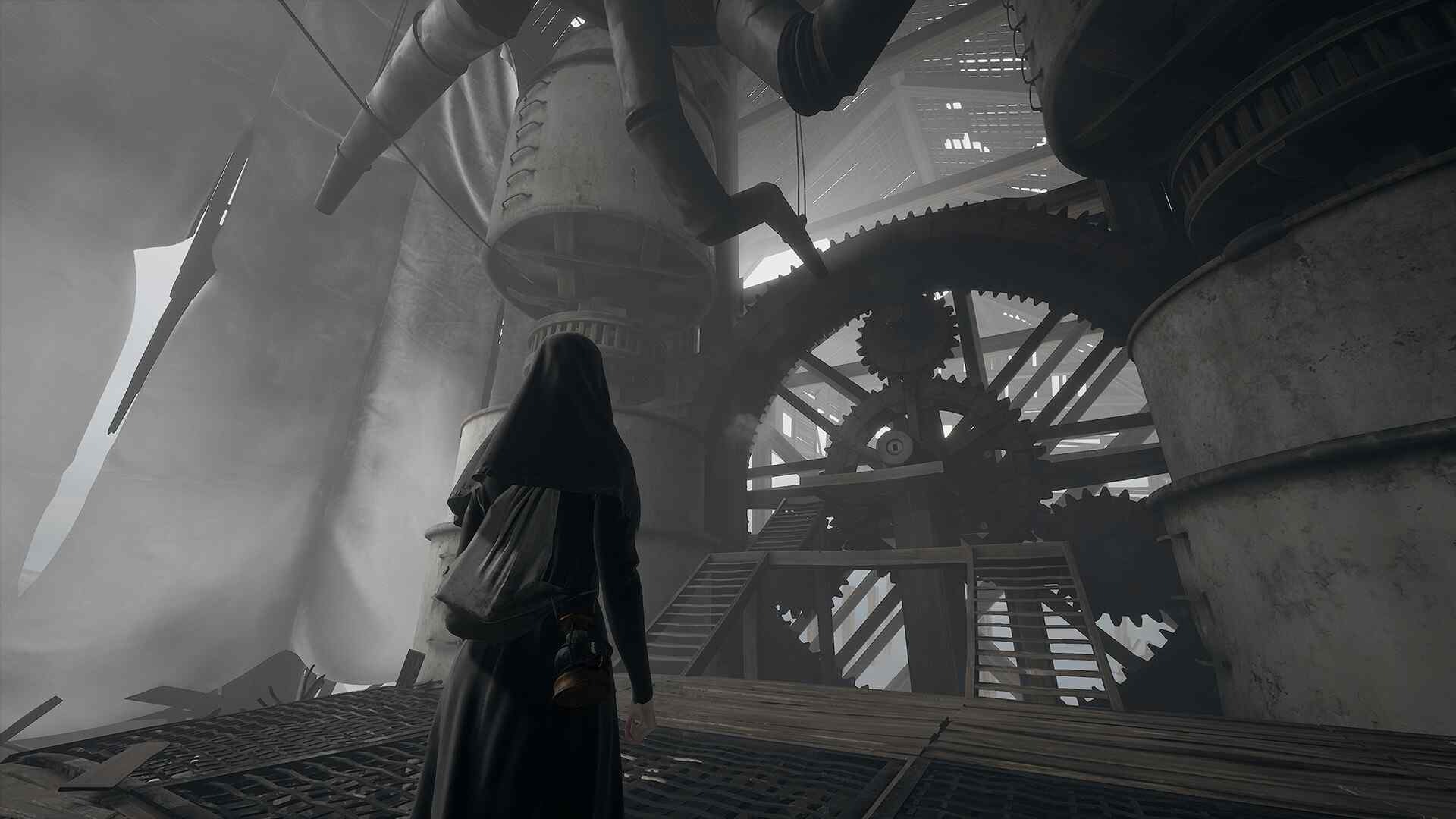
I wouldn’t call Indika a surreal game. Stepping into this adventure, I got a sense of the game being a bit odd, but it’s a lot more normal than initially perceived. You play the role of Indika, a nun who hears the devil in her head. One of the numerous 8-bit mini-games, where you collect coins, introduces the game to you. These 8-bit mini-games tell the story of Indika’s childhood and who she was before she became a nun. You can complete mundane tasks in the game, such as filling a barrel with water by going back and forth from the well, but you can’t run. The game’s narrative and experience require this, which may annoy some players. In her convent, Indika faces bullying and lacks acceptance. Indika’s hallucinations also contribute to this situation. I also want to stress that this is not a horror game. With its various locales and settings, the atmosphere is so well done, and the narrative is spot-on.
The majority of Indika’s adventure involves her leaving the confines of her convent to deliver a letter to the main overseeing body. The story unfolds during the harsh industrial revolution in Russia. Indika encounters a young man who has escaped from prison, and they both attempt to reach the capital and enter this building, although their motivations differ. Along the way, you will discover puzzles, but mostly you are walking and listening to dialogue. This is mostly a walking simulator, after all, but a very well done one. The most challenging parts of the game are the 8-bit mini-games that require platforming and precision.
The atmosphere in Indika is just so well done. The girl’s mental state is enigmatic; we struggle to understand her thoughts; she appears solitary despite her lack of conversation, and she yearns for a companion. However, her religious beliefs and temptations, as per the voice of the devil within her mind, persistently pull her in. Many times, the young man disappears, and Indika accepts this, believing she will never see him again, only to later encounter him and experience conflicting emotions. She yearns for feelings, yet she is hesitant to commit to them in the long run. It’s a fascinating dilemma that most adventure games tend to forget. If we are to engage in this amount of walking, we should either establish a deeper connection with these characters or observe their degree of isolation.
Puzzles range from moving objects with cranes or machines to climbing an elevator shaft in a specific way. There are collectibles spread out that give you more coins or points. These tend to be religious iconographies. The devil tears Indika’s world in half in a few instances, prompting her to pray. This is part of the puzzle-solving process. Praying restores the world to its normal state, while not praying allows you to navigate through a divided world. Regrettably, we only get to explore this puzzle-solving system a few times, despite its intriguing nature. Despite no combat in this game, despite needing to run from a couple of creatures, but everything is always changing, and the game never gets boring. The oddball fisheye camera angle or sudden cut to another scene makes the game feel almost avant-garde.
The visuals are fantastic, and Indika’s habit physics are realistic. The melting snow on the ground looks incredibly convincing, and I almost felt every single setting that I walked into. There are moments of claustrophobia, pain, fear, and a severe cold. Odd Meter has done an excellent job of making you feel all of these things just by walking through most environments. Overall, Indika is one of the best walking simulators I have ever played, and it’s a shame it only lasts for a few hours. For once, I wanted a game like this to go on longer, unlike borefests like Everyone’s Gone to the Rapture or The Vanishing of Ethan Carter.
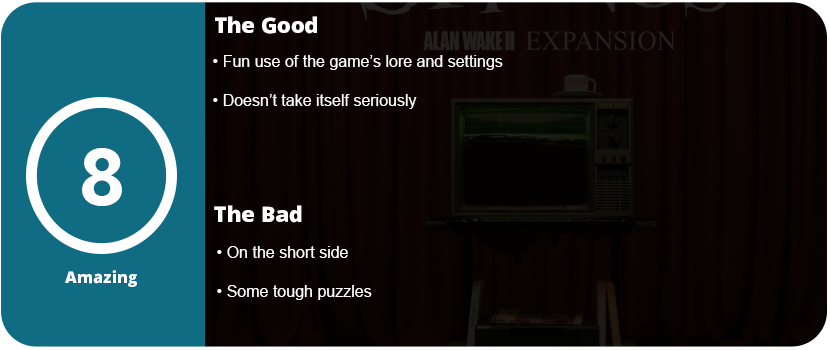
The original Alan Wake DLC wasn’t anything special. It felt forced, with more questions than answers. I was hoping the original game would let us play episodes of Night Springs. This is a fictional TV show that plays on TVs in the game and is reminiscent of The Twilight Zone. Night Springs takes Alan’s writing and adds a silly or strange twist. This is a three-part mini-episodic DLC, with each episode taking less than an hour to complete. Mr. Door hosts the series, the only live-action component of the DLC, and that’s fine.
In the episode, you play the cheery waitress working at the Oh Dear Diner. This is an action-oriented episode where you’re blowing enemies left and right. You get a rifle, a shotgun, and seemingly unlimited ammo, but that’s okay. These episodes are all about having fun over being serious and focusing on survival. You are chasing down Alan’s fictional brother in this story, and I won’t get into any more details. This episode is entertaining and doesn’t take itself too seriously. It’s a fantastic way to open the DLC.
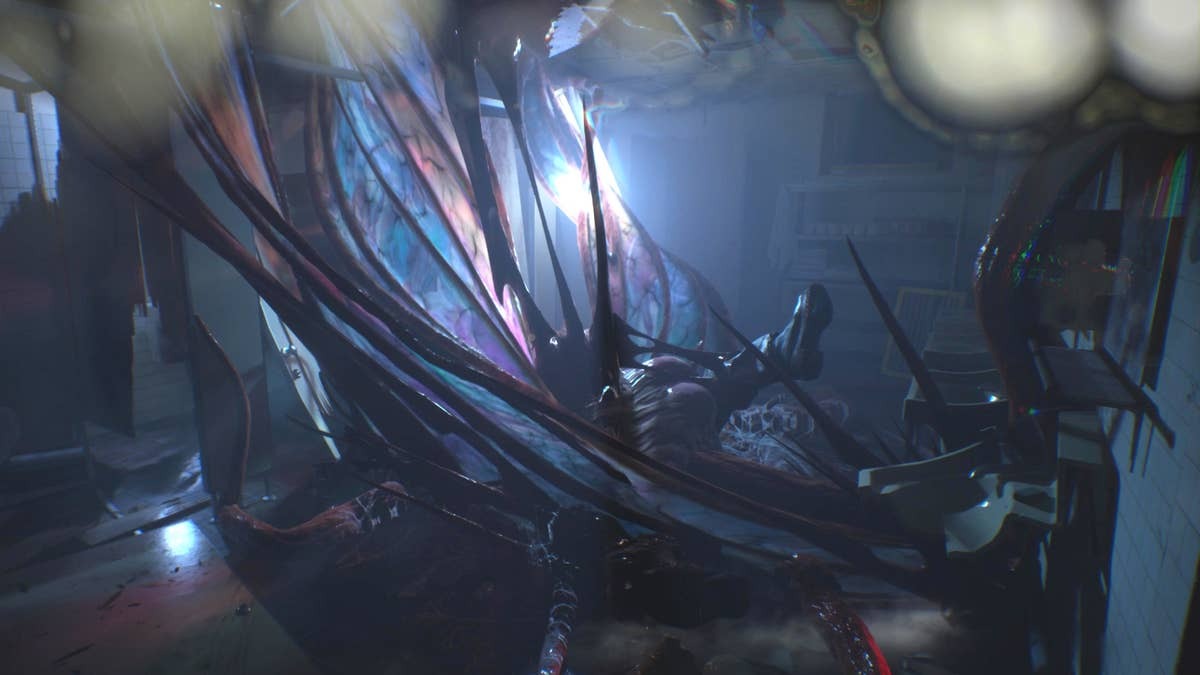
In the second episode, you play Jesse from Control. If you haven’t played Alan Wake II before, there’s a connection between the two games, though I won’t reveal how. This is more horror-focused, with a small stealth section in Coffee World. It’s entertaining, but not quite as much as the first episode. It’s pleasing to see more of the two game worlds connecting, however. There are a couple of thought-provoking puzzles that require math and may upset some people, but they really do make you think.
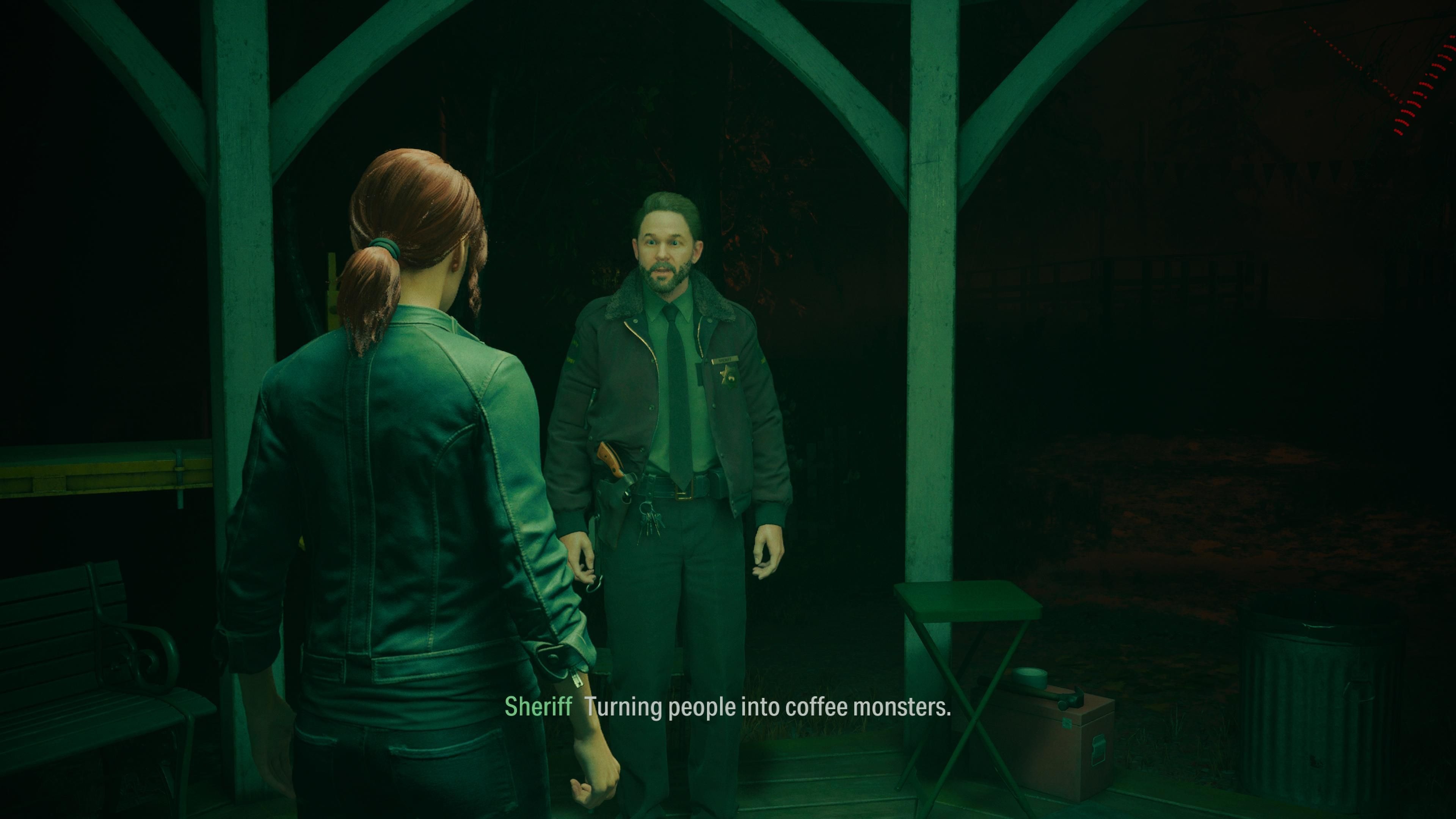
The third episode is a fictional superhero parody in which you play the role of Sheriff Breaker. Here, the game breaks the fourth wall, and you are talking to the game director himself, Sam Lake, who has become a bit of a celebrity lately. This is the most “Alan Wake“-type episode of time travel and dimensional shifting. It’s the most thought-provoking episode, but it does consist of a single puzzle that I found completely confusing and difficult to understand, but not as challenging as episode 2’s puzzles.
Night Springs is both a fun distraction and an intriguing dive back into the game. It doesn’t take itself too seriously, and we finally get to play an episode of the TV show. I would have preferred a slightly longer duration for each episode. Consider extending each episode to 2-3 hours, incorporating more action and shooting. What’s here is a lot of fun, but only those who really love the world and story of Alan Wake II will find interest.
Back in the mid-2000s, there were many God of War clones, and that trend continues with the 2018 reboot. Banishers is essentially a God of War clone, almost to a T, barrowing many elements such as combat, exploration, storytelling, and the upgrade system. However, there’s a hint of “Eurojank” present that I just can’t shake. While the story, setting, and lore are interesting enough (the key word is “enough”), the game never excels to the heights of the game it’s trying to become.
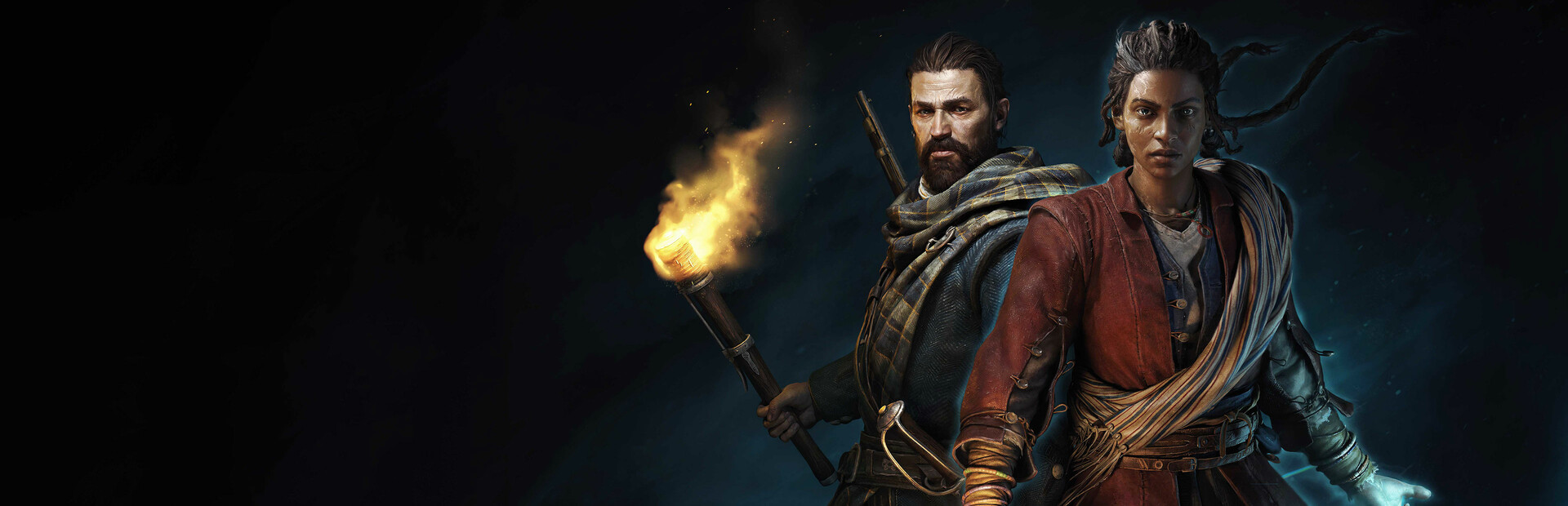
You play Red Mac, Raith, and Antea Duarte. Lovers who are now separated by the plane of the dead. Banishers are people who go around removing hauntings from people, places, and objects, but they can also pass judgment and execute the living for doing wrong to those who previously lived. It’s an interesting concept, but sadly, the game never goes into more detail about it. How can these people just kill the living based on what the dead say? What are the laws and rules surrounding this? The game also doesn’t go into the background or history of the Banishers. This is something that God of War did well. We need a lot of backstory if we’re going to spend 25+ hours in a game like this. The entire game is just pretty “good,” but never memorable or amazing. It always just falls below that mark. While I found the world and atmosphere of New Eden fascinating, the way the story and world are unfolded to the player are boring, mundane, or just not interesting. Reading material is pointless and doesn’t add to anything.
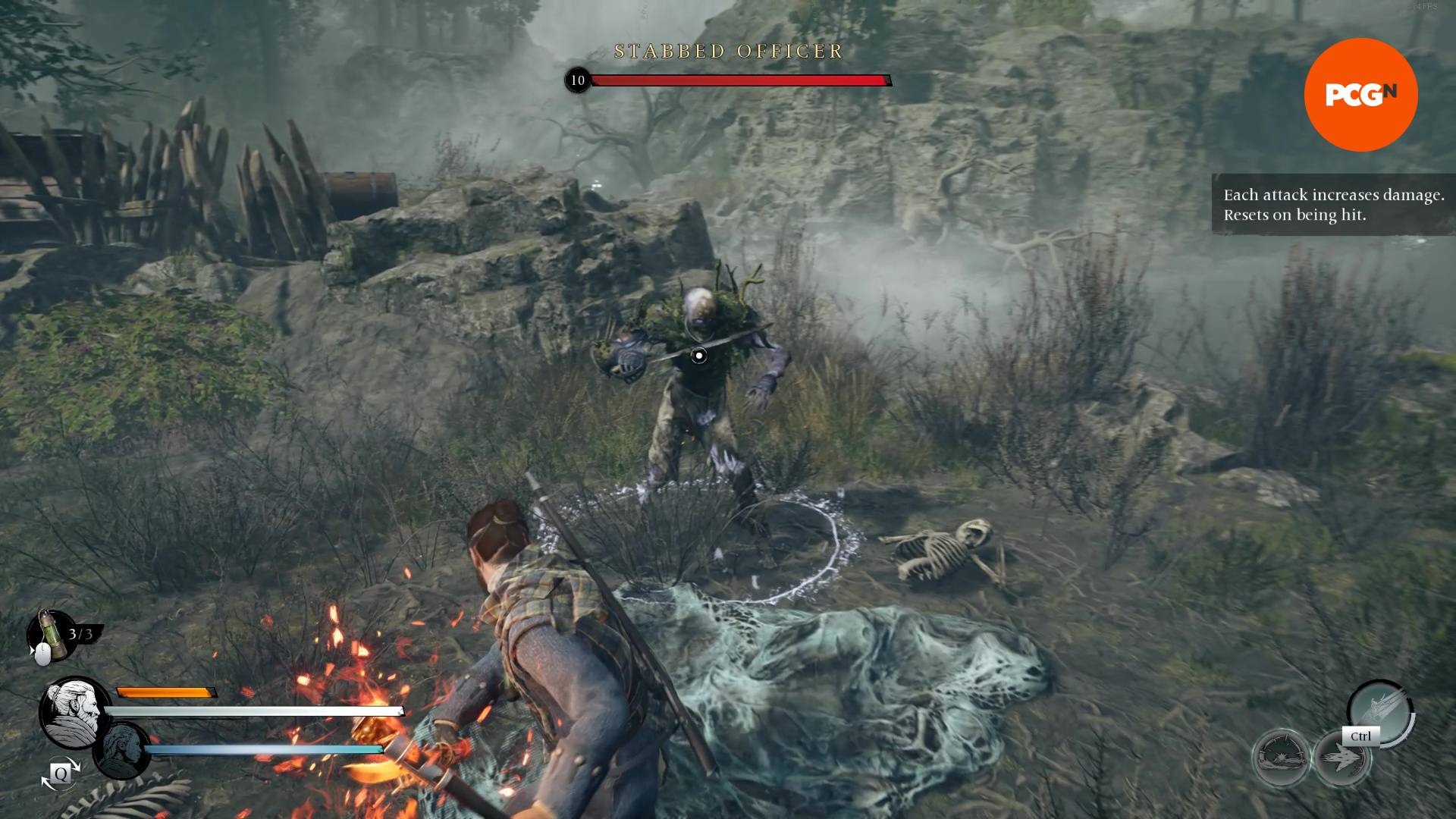
Let’s just start with the combat. Heavy and light attacks make up the basis of combos, but you can switch to Antea in the ghost plane, who has more powerful attacks. Her bar isn’t HP, but an energy meter. Hit decrease this as well as using your attack powers. You can refill this bar by fighting as Red in the real world, but he doesn’t have any special attacks, and this really kept me from creating a strategy or learning how to beat enemies. Red just light and heavy attacks enemies (with a heavy charge attack), and the game tells you Red does more damage to ghosts and Antea does more damage to possessed bodies, but it never really seemed to be effective. You can parry attacks, which the game heavily relies on for more damage, and Red has a gun that you get about 1/4th through the game; it’s a one-shot rifle that requires a reload. This can sometimes do a lot of damage, but the enemies are so boring and uninteresting that there’s no distinguishable feature or stat to build strategies in your head. Ghosts are pretty easy, while anything else can damage sponges. I just couldn’t combo or create a meaningful pattern for defeating enemies, and it made combat one of the least enjoyable parts of the game. It also just feels slightly clunky and sluggish.
The upgrade system feels almost as useless. You get experience for Red and Antea by completing side quests (called hauntings), which grant you additional damage for certain attacks, but I never really got to unlock any new combos or powers. Antea’s three powers are found during the story, so the upgrade tree is just boring, and I never felt powerful enough and couldn’t even use skills to become more powerful. This also bleeds over into the equipment system. Red can equip rifles, blades, outfits, and potion bottles, which increase attributes, but no matter how high they were, I always felt just too weak to really get an edge over the enemies. Antea can equip various accessories to help her attributes, but nothing felt powerful or meaningful.
This leads to the exploration and hunting gameplay loop that’s identical to God of War, but without the enjoyment. Why do I want to hunt chests and haunted objects, fast travel back, and open new paths with new powers if all this equipment feels useless and haunting cases only give me a single esence for the skill tree when it also feels pointless? They are fun at first, and the haunting cases are like mini-murder mysteries you can solve, but they also play out the same way. Some lead to small boss fights, some are just item gathering quests, and they all add to the main story choice (I won’t spoil it) for the ending, but they are all optional. There is a lot of side content here, but I gave up about halfway through because I just didn’t feel any of the rewards were worth it.
With that said, the game looks pretty good for an Unreal Engine 4 game. There is a lot of detail in the environments; they are varied, and the atmosphere is thick and heavy, but everything just teeters on not quite being enough on every front. The ability to even upgrade equipment doesn’t help make you feel like you’re growing as a player or character. I felt just as weak from the beginning of the game to the end and wound up dying quite a bit. Some side content, like the void walking dungeons, is tedious and boring, and the only redeeming value is exploring the world and picking up all these items and chests. I just wish the rewards were better.
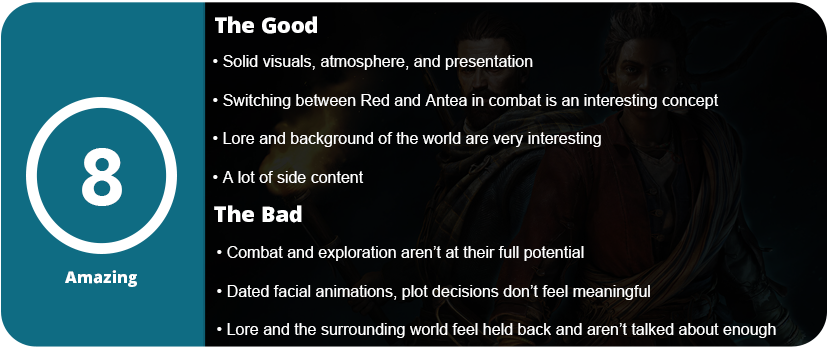
Overall, Banishers has a lot of interesting concepts going for it, and the voice acting is good (the facial animations are very dated). I wanted to know more about this world, but the game just doesn’t give it up. The side content is questionable, the combat is too clunky, and there’s no strategy or really good combo system implemented to make it stand out from the crowd. There aren’t really any puzzles, and the story is predictable towards the end, making you feel like your choices are almost meaningless. I feel like if DONTNOD had another go, they could get a lot more right. As it stands, this feels like a “Eurojank” God of War.
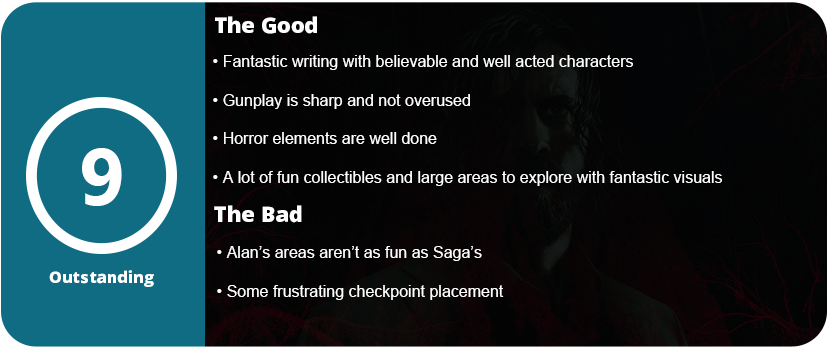
The original Alan Wake is one of my favorite horror games of all time. Its gameplay may not hold up well today, but overall, the game is still solid. The atmosphere really pulled me in when the game was released, and here I am now, 13 years later, living in the PNW near where the first game was inspired. The story was full of mystery and suspense and always saw-sawed between being confusing and then suddenly making sense—always being a mystery. The story of light vs. dark and the definition of insanity play a big role in the world of Alan Wake, and that goes even further in the sequel.
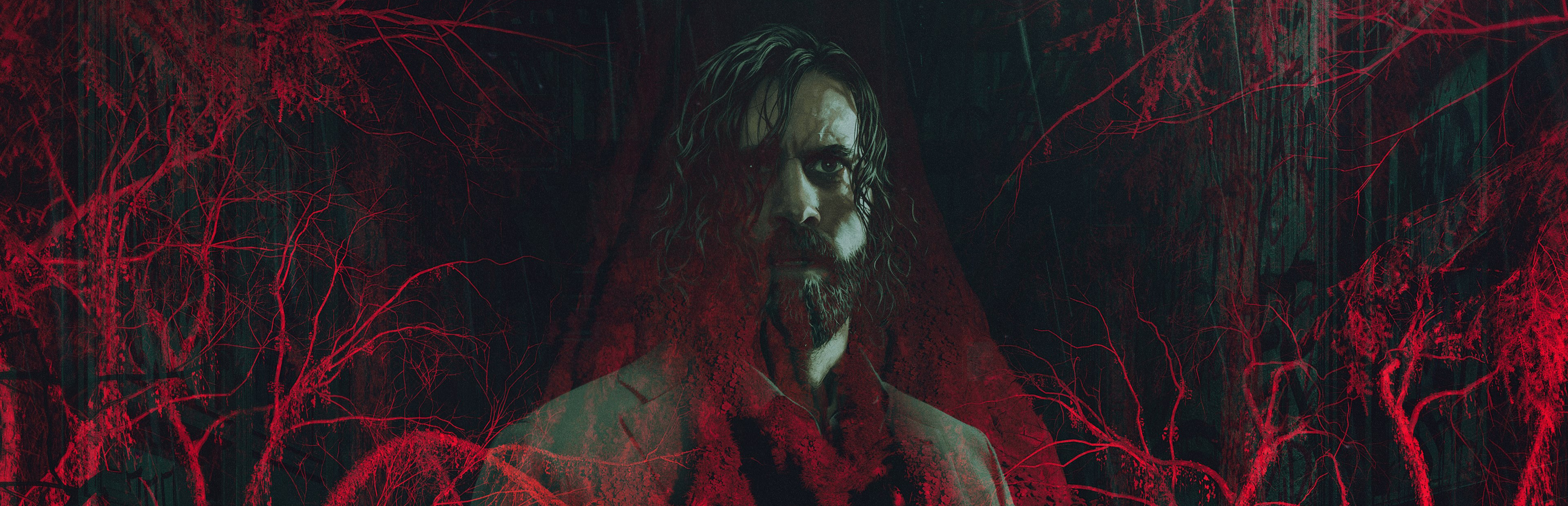
Alan Wake II is pretty much an entire reboot on the surface. Taking some design questions from Remedy’s previous entries, like Quantum Break and Control, they have integrated the series into their “Remedyverse” (you can borrow that one if you want!). The story has an entirely new way of being told via live-action cutscenes and in real-time. The new playable character, Saga Anderson, is introduced as an FBI agent who is investigating cult murders in the town of Bright Falls. She gets sucked into the story of Alan as he tries to write his way out of his own madness and destroy the main antagonist from the first game, Scratch. The story continues that constant teetering of not making much sense and then wrapping around multiple times to have it all click, but I highly recommend playing the first game (there’s a remastered version out now) before playing this one, as there are many references. I also recommend playing Control first as well, as the stories are intertwined.
The game starts out so much different than the first game. Instead of a long, drawn-out, time-ccut scene of sunshine and beauty, you are tossed straight into something straight out of Silent Hill. You’re a naked, bloated man running from cultists. It’s a crazy way to start a game, and it shows the cinematic quality and effort put into this game. However, you control Saga first, and this is where the first half of the game starts. You jump between Alan and Saga, but their levels are unique on their own. Saga’s side is more action-oriented and collectible hunting. There are three main large areas in the game. Watery, Bright Falls, and Cauldron Lake. Bright Falls is a main hub town that you can walk around in and also find collectibles. These range from cult stashes, breaking open locks with a screwdriver or boltcutters (found later in the game), Alex Casey lunchboxes, and nursery rhymes. These are all fun to find, and they all reward you with different things. The lunchboxes give you manuscript scraps used to unlock weapon perks; the rhymes unlock charms; and the cult stashes have various usable items in them.
The combat itself is familiar from the original game, but it’s more refined and feels like a solid third-person shooter. You still blast the darkness from vulnerabilities to make them vulnerable to your gunfire, but it’s less frequent. Alan Wake felt like an action title and less like a survival horror due to so many enemies thrown at you at once. Like any survival horror game with guns, the best ones are locked away and require puzzle-solving skills to acquire them. Usually it’s a three-digit code, and you need to figure out the clues in the room you are in. It’s usually not super hard, and the answer is right in front of you. You just need to be observant. Weapons feel good to shoot, and while there aren’t many, they feel unique. The pistol, shotgun (sawed-off, double-barelled, and pump variety), crossbow, revolver, and hunting rifle make up the majority of your weapons, but Saga and Alan’s sides play differently even with combat.
Alan isn’t a fighter. He has much more limited ammo than Saga gets and usually only has the revolver and flare gun through most of the game. The shadows usually won’t attack you if you side-step them, but in some cases, they require you to fight. He has less health than Saga, and his levels are mostly backtracking puzzle-solving-style affairs. This leads me to talk about the Mind Place. This is essentially an interactive pause screen that would normally be a menu with flipping pages. It’s a room that loads instantly, and you advance the story here. Saga’s Mind Place is more complicated and involved. She has cases on the wall, and as you discover things, you can place evidence on said wall, and when you find everything for that chapter, the case will be solved. However, solving these cases isn’t required. You just need to place the main ones to advance the story. She also has a profiling section in which she can talk to characters in her mind. This gives her ideas when she is stuck and needs to move on further. There are also areas to listen to radio programs you found, TV shows, and manuscripts.
Alan’s Writer’s Room is similar, but you use it less often. Instead of profiling and cases to solve, Alan can switch scenes he finds through echos found throughout the levels. These are black-and-white orbs that shimmer, and you must align them with the camera to activate the scene. This is where a lot of the puzzle-solving comes in, and honestly, it is the weakest part of the game. Switching between scenes can become frustrating because you don’t know which one you need to be in to access a certain area. When you switch scenes, rooms get closed off and new ones open. This also doubles down on the light-holding feature. Alan can absorb certain bright lights that open up a new path in that room. Some areas have up to three or four lights that need to be absorbed or put back in a certain order, and it can cause frustration. I didn’t like this part of Alan’s story. You can switch between Saga and Alan at any time with portals in certain levels and play any chapter in any order. Alan’s side is mostly cinematic adventure stuff with a lot more storytelling than Saga’s. Saga has larger areas to explore (three whole large maps), and Alan is mostly confined to one small area and kept inside various buildings in a more urban setting.
Outside of the Writer’s Room scene switching and the confusing mess some of the levels can be, the game is solid with a 15-20 hour play time. There is so much content in this game that it’s hard to hate it. The visuals are state-of-the-art and push PCs and consoles to their absolute limits and beyond. On PC, Alan Wake II sports the latest ray-tracing and path-tracing tech and mesh shaders, which have been crippling the highest end of hardware. Unless you have a 4xxx series RTX card that can utilize the DLSS Frame Generation, you’re going to struggle with ray-tracing. Even with DLSS on balanced and ray-tracing set to medium (and other settings optimized through guides online), I would dip below 60FPS at 1440p. Without ray-tracing, the game runs much better, but this is one of the few games where RTX actually makes the game a different experience.
The game’s horror elements are full of haunting atmospheres and fewer jump scares. There are a few, but they were done well and got me good. The monster designs are well done, but not overdone and made to be unbelievable. The game straddles reality and fiction just right to make this seem like it could really happen. The story really does a good job of making Saga and Alan worthwhile and memorable characters and delves deep into their backstory and psyche. Very few AAA games can do this right. Alan Wake II is not just one of the best games of 2023, but of all time. This is how you can do a sequel without making it a full-on reboot or changing very little. The entire game rides the middle ground on every level, which makes it nearly perfect.
World War I was a horrific time in the world. The creation of mustard gas and the deaths of 20 million people are just a couple of things that came from that war. You play Paul von Schmidt, a German man who returned from the war. Paul and his brother Johannes are raised by their father, who is a wartime cripple. Over the course of the game, you explore Paul’s mind and how he feels and represents the events of his childhood and the trauma from the war. Sadly, most of this is only pieced together by letters found throughout the game, as the cut scenes themselves explain little and just muddle the otherwise generic feeling of the story.
The game is broken up into two gameplay styles. An adventure/walking simulator-style mansion exploration where you solve puzzles. This part of the game is rather dull and uninteresting. Many other games do house explorations better (Layers of Fear, Gone Home, What Remains of Edith Finch) as the game slowly opens the house to you, but the key is to find objects to solve puzzles and find something that triggers a dive into Paul’s mind and thoughts. Each chapter (there are three) consists of one of his family members represented as a horrific monster. You can either choose to kill them or let them live to get different endings. Most of these “boss fights” require you to flip switches and run away for the most part, but they are rather intense, so I didn’t mind them.
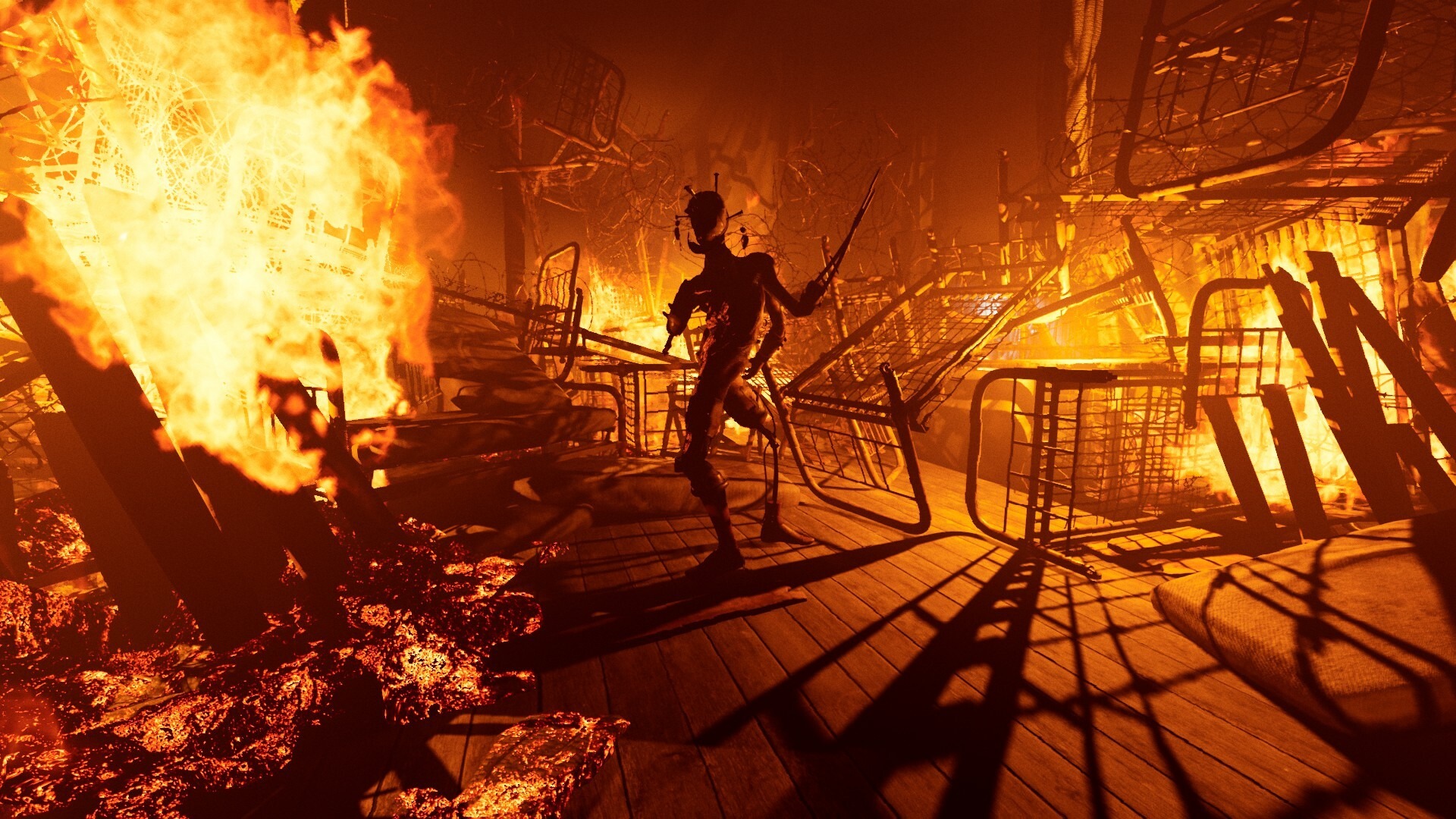
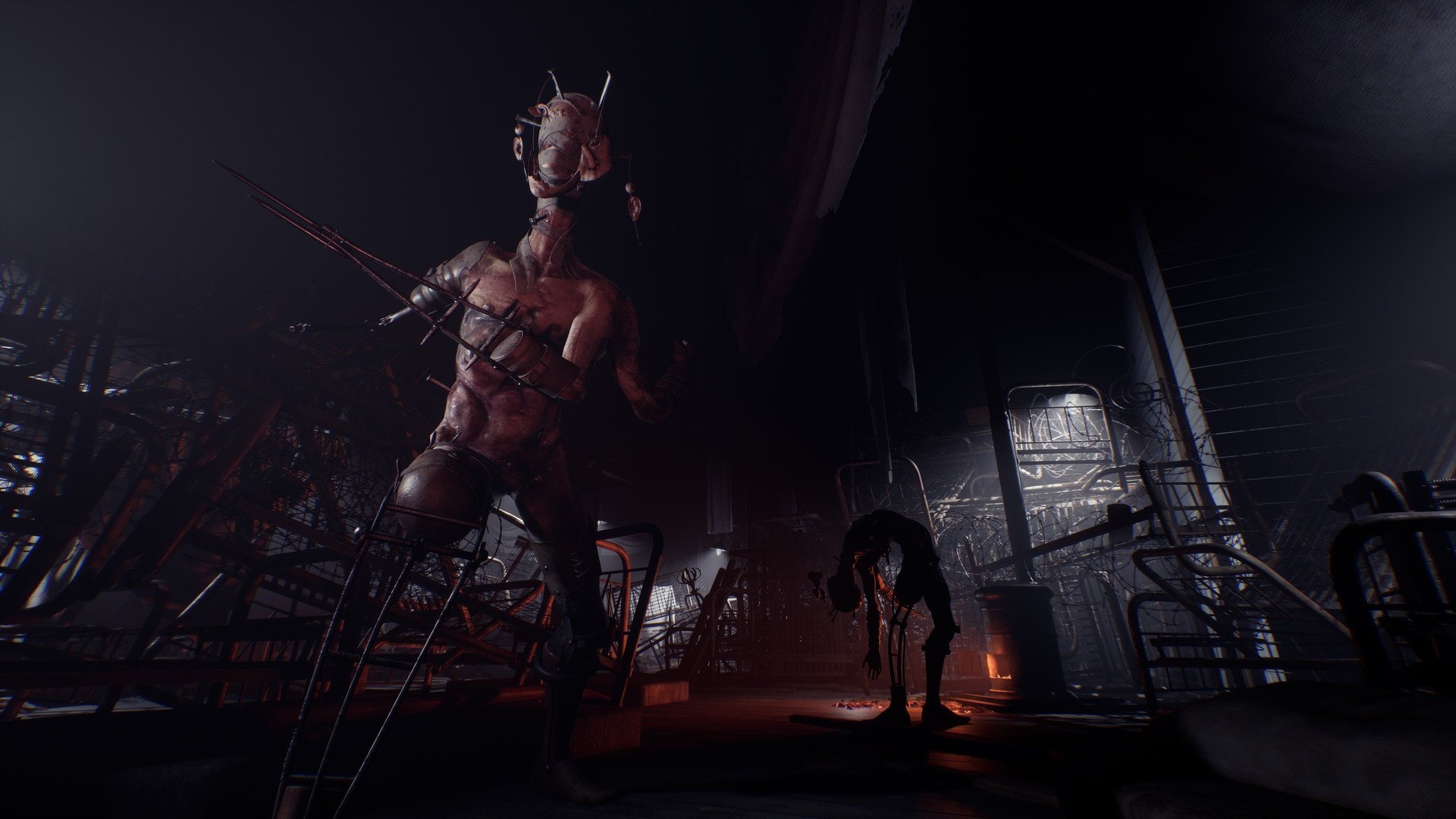
The second part of the game is the trenches gameplay, in which the horror part sets in. You need to run around solving the occasional puzzle while also hiding from enemies. There is no combat in this game, so you have to sneak around and find your way through the dark in various environments. The creature designs are awesome, but this is probably the most exciting part of the game. It was intense sneaking past enemies, and thankfully there’s only one small section in each chapter, but the horror elements that are actually good can be counted on one hand. There are moments in which each main monster is introduced, and these scenes are fairly creepy, and outside of weird sound effects and haunting ambience, there’s not much else here. The game does portray the gruesome horrors of the war, with bodies spread everywhere, the barbaric medical practices, and the overall brutal nature of everything people endured during that time.
With the game being as linear as it is, there isn’t a lot of room for exploration outside of finding dog tags, and this only grants an achievement. There are a few extra gameplay items you can find, such as a pickaxe to break down walls, a dynamo flashlight, a gas mask, and wire cutters to cut down barbed wire, which is actually quite annoying. The barbed wire moves and is related to the story (I won’t spoil why), and you have to cut the non-moving wire or it will grab you, and that will trigger a quick-time event. This could have been done better. To be completely honest, all of these items don’t really add anything to the game. The gas mask is used a few times to get through corridors with some gas, and it lasts a few seconds. The flashlight is annoying to use, as it only lights up for a few seconds before needing to be charged again.
The game overall isn’t very exciting. The horror elements fall flat, and the walking simulator-style gameplay is void of almost any gameplay. The story itself is convoluted and difficult to figure out if you don’t read the papers spread throughout the game. The visuals are at least good, if not necessarily unique or interesting, because of the monster designs. There are nice lighting effects, but the character models are something to be desired. The mansion areas are also a chore to play through, and it just feels like mindless wandering through rooms to find objects.
Overall, Ad Infinitum doesn’t do anything particularly well or is interesting enough to not be forgettable. There are some good horror moments, but they aren’t anything special, and the game overall lacks a cohesive story or a way to tell it. There are many games out there that are similar and do a better job of everything listed.
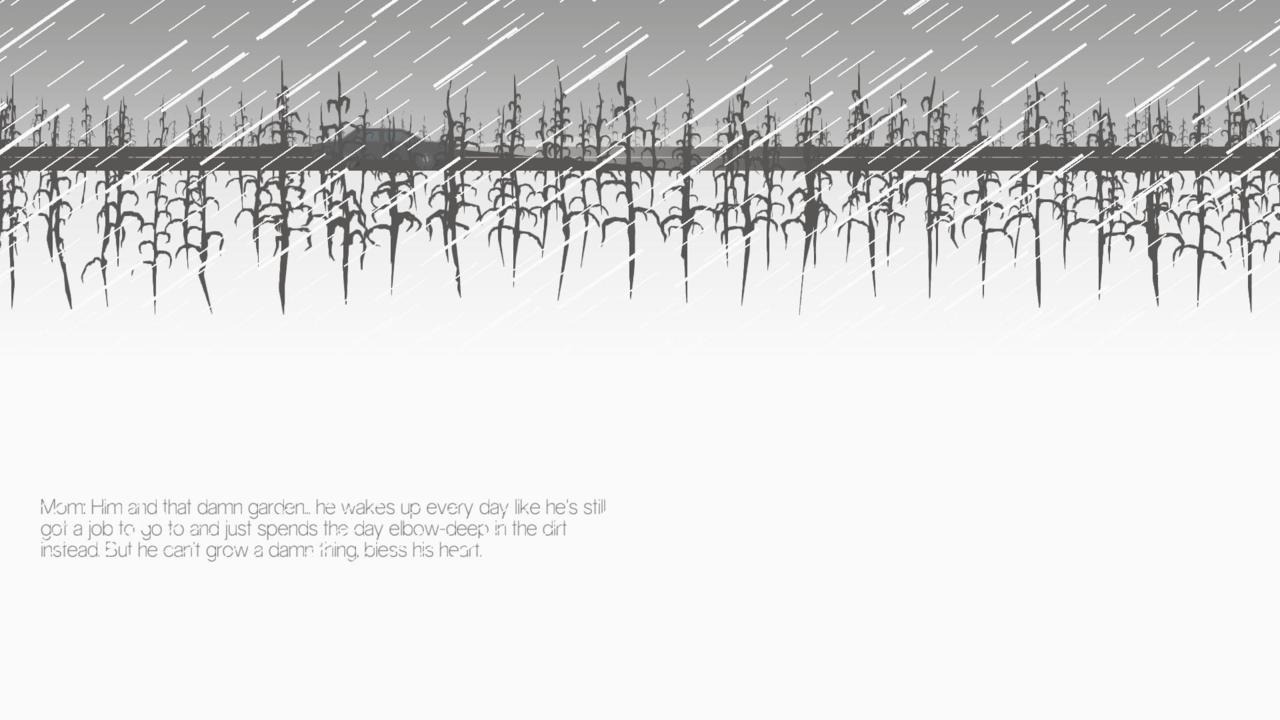
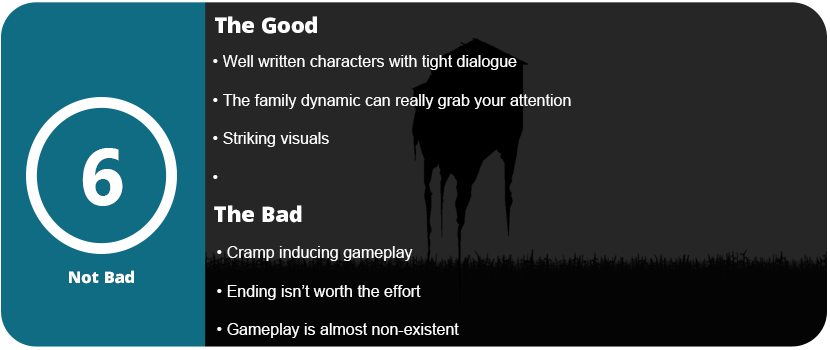
Minimalistic, story-driven games can be quite memorable and fantastic. The lack of gameplay requires you to have a laser focus on the story and characters, and the subtle gameplay can bring a visual element that no other medium can provide. Three Fourths Home isn’t one of these, sadly. While the visuals are striking and minimal, the story and writing have so much potential, but they are let down by a short and disappointing ending.
You play a teenage girl named Kelly who is driving home in a violent storm in rural Nebraska while talking to her family on the phone. Gameplay consists only of holding down a button to continue driving and choosing a few dialogue options. Holding down a single button for the entirety of the game is a really dumb idea. It introduces hand cramps and constantly breaks your focus on the story. You can honk your horn and turn off your lights, which is entirely pointless, and you can’t move the car at all. You can also choose to turn the radio on and off. There is no spoken dialogue in the game, but this requires you to make up voices and visuals for the game in your head. This may sound really dumb to most people, and some might argue that you should just read a book, and in this specific context, this would be a better medium for this story.
Choices in dialogue don’t seem important at first, but your response to your family plays into how they react to you on the phone. I guess multiple playthroughs could be worth it as there are a couple of different endings, but with how mundane the gameplay is, no one will want to sit through the hand cramps to make it worthwhile. I had issues with the controls, causing me to choose the wrong option as well. You need to skip through dialogue with a button to advance each line while holding down another to keep driving, and some times you wouldn’t know that a dialogue option would be coming up and you would just advance forward.
See, with minimal games like this, you need some sort of gameplay hook to keep it interesting enough. Three Fourths doesn’t do this at all. The mom, dad, and brother are all interesting characters, and you slowly learn about this family dynamic through this phone call. You learn about why you “ran away,” what kind of person the dad is, whether or not this is a broken home, etc. The dialogue is tight and interesting enough to keep you glued until the end, that is, if the hand cramps don’t send you packing first. I also wish more was going on visually. Occasionally, a background object will be brought up in the conversation, but it’s just black-and-white visuals without any type of payoff. The visuals, gameplay, and everything else are just an excuse to call this interactive story a game, and it does the bare minimum to qualify as that.
Most games like this have a story that ends in sudden tragedy to flip the entire thing on its head and stun the player, but this one doesn’t really do that either. If it did and the pay-off was incredible, all of this could be worth it, and there are plenty of games similar to this that pull that off. As it stands, Three Fourths Home is a well-written story in a terrible game with an even worse gameplay mechanic.




















































 thebinarymessiah.com
good