Another independent horror game featuring a convoluted narrative and characters we find uninteresting. I keep giving these games chances, and while a lot of them nail their main monster and atmosphere, almost none can bring home a good story or good characters. This game is based on Taiwanese mythology and the 2020 film of the same name. I have never seen or heard of the film, but the folktale is interesting. A group of six university students challenge the curse on the bridge near Tunghu University and accidentally “trigger” it. You spend a lot of the game running from ghosts of sorts and finding objects in the first person.
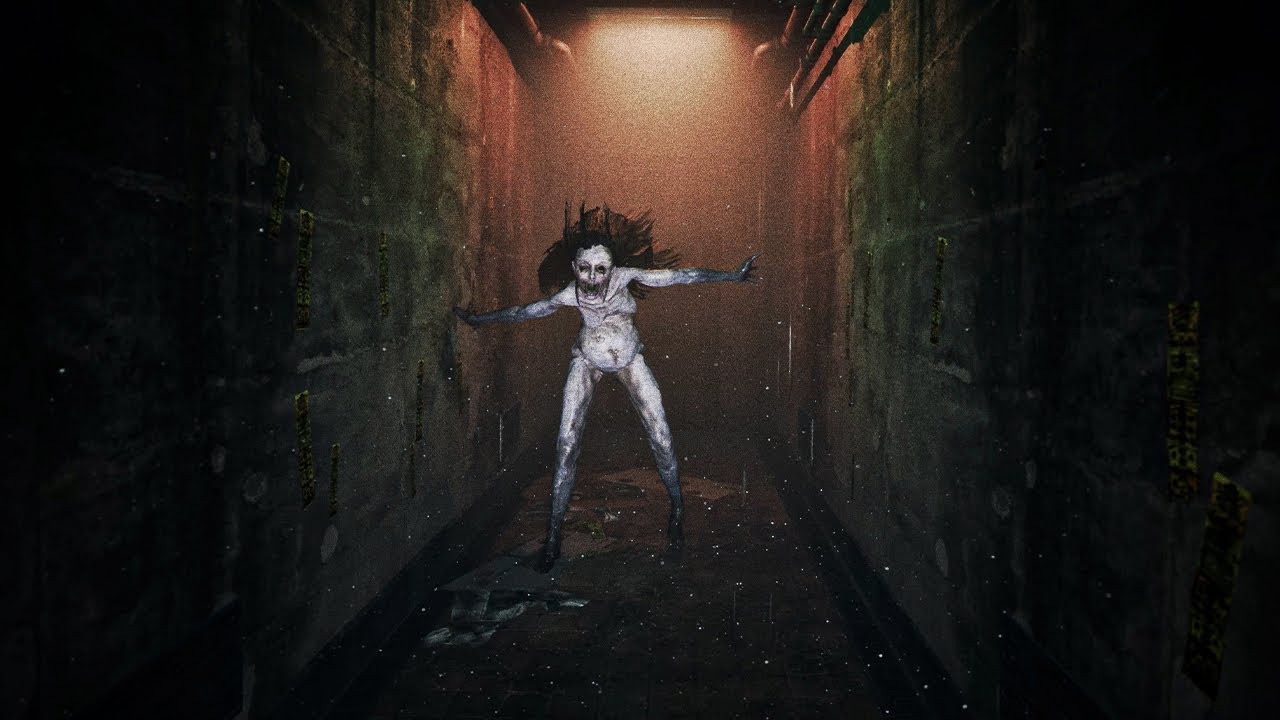
The game begins with a promise for the entire setup. The number of voiced lines and cutscenes suggests a promising story. The voice acting is in Taiwanese and is pretty adequate for what the story needs. The first scene of the game has you running around a small park, hiding from a ghost, and trying to escape. The monsters are fairly well done, but they are nothing we haven’t seen before. Pale skinned girls with long black hair, red eyes, and really skinny. There are a few more imaginative monsters, such as a possessed mannequin, but after so many exposures to this ghost, it’s not scary anymore.
There are a few Asian horror tropes, such as a random limb grabbing something when you open a cupboard, or the main ghost appearing behind someone and showing a single eye. These cheap jump scares detract from the overall game experience and give the impression of a cop-out. Despite this, the atmosphere was rather tense, and just wandering the halls and hearing the ominous music and strange sound effects made me stay on edge for the entire game. The stealth sections were my least favorite parts, and it seems that non-combat horror games tend to focus primarily stealth. The ending sequence was the most frustrating, as these are all trial-and-error events. When caught, you must restart and complete the run in a single attempt because you are unsure of the correct path to take. The ending sequence requires you to restart each time, and you must collect many objects that increase the frustration. I ran into a glitch where a locker wasn’t in the spot I needed, and I couldn’t progress anymore.
Most of the game tells you exactly where to go, and there are signs everywhere that help guide you. There aren’t many puzzles in the game, and the ones that are present are relatively simple. The majority of the game involves revisiting the same locations with six distinct characters, and while their narratives should eventually converge, they never do. The timeline lacks clarity, and the explanation of the school’s shifts and changes remains elusive. Is it a hallucination or is it actually happening? Even reading the flavor text in journals doesn’t explain anything. I’m so tired of the poor storytelling in these games. I feel like there is some sort of love story involved, but I couldn’t really figure it out.
In the end, there’s nothing really here for anyone unless you want a cheap 3-hour horror adventure. If it weren’t for the flawed stealth mechanics, I would have enjoyed this game more, but even the graphics fall short of expectations. It uses Unreal Engine 5, and it is very poor at that. The entire time I thought it was Unreal 4 or even 3. However, the lighting effects give the impression that it’s Unreal 5. They are pretty decent, but the texture and modeling are horrible. Even cranked up to max, the game just doesn’t look good. With that said, The Bridge Curse has a lot of potential but falls flat in too many areas.
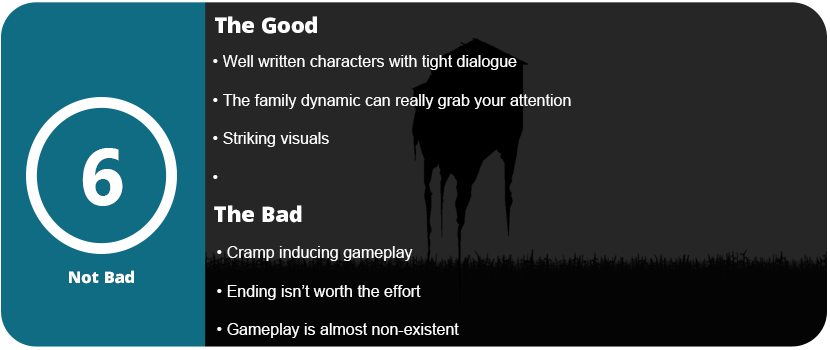
Minimalistic, story-driven games can be quite memorable and fantastic. The lack of gameplay requires you to have a laser focus on the story and characters, and the subtle gameplay can bring a visual element that no other medium can provide. Three Fourths Home isn’t one of these, sadly. While the visuals are striking and minimal, the story and writing have so much potential, but they are let down by a short and disappointing ending.
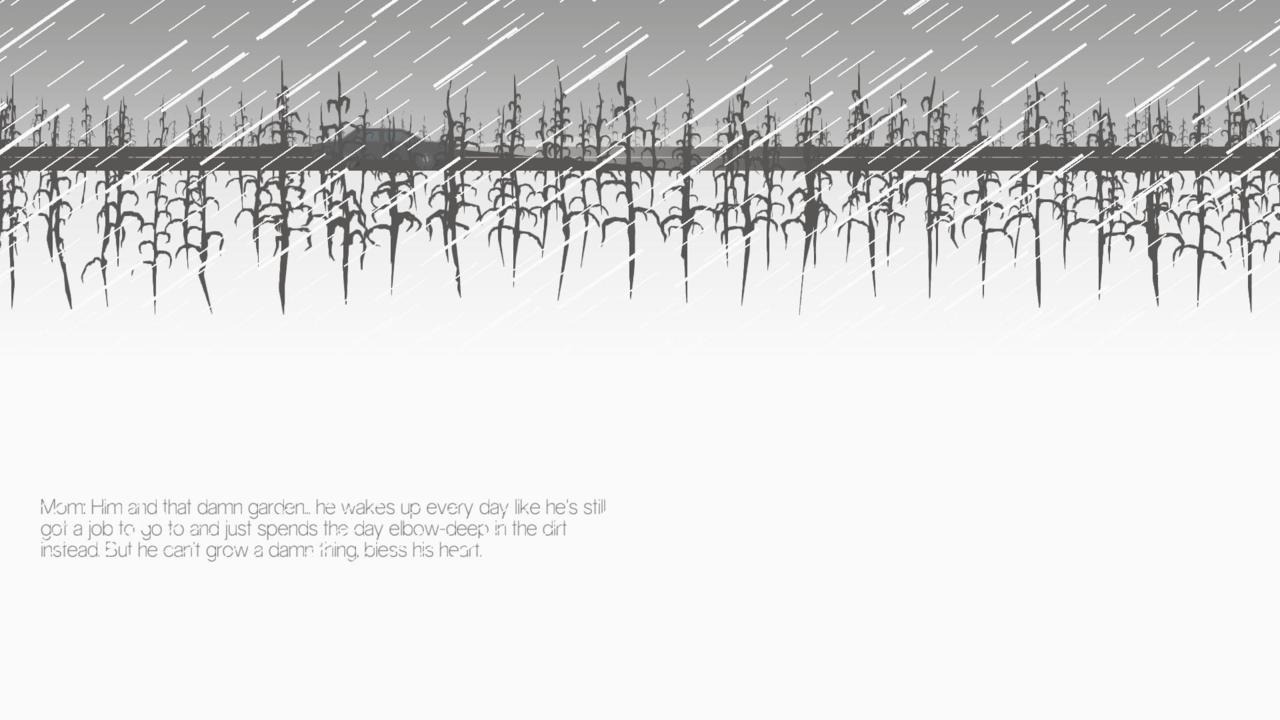
You play a teenage girl named Kelly who is driving home in a violent storm in rural Nebraska while talking to her family on the phone. Gameplay consists only of holding down a button to continue driving and choosing a few dialogue options. Holding down a single button for the entirety of the game is a really dumb idea. It introduces hand cramps and constantly breaks your focus on the story. You can honk your horn and turn off your lights, which is entirely pointless, and you can’t move the car at all. You can also choose to turn the radio on and off. There is no spoken dialogue in the game, but this requires you to make up voices and visuals for the game in your head. This may sound really dumb to most people, and some might argue that you should just read a book, and in this specific context, this would be a better medium for this story.
Choices in dialogue don’t seem important at first, but your response to your family plays into how they react to you on the phone. I guess multiple playthroughs could be worth it as there are a couple of different endings, but with how mundane the gameplay is, no one will want to sit through the hand cramps to make it worthwhile. I had issues with the controls, causing me to choose the wrong option as well. You need to skip through dialogue with a button to advance each line while holding down another to keep driving, and some times you wouldn’t know that a dialogue option would be coming up and you would just advance forward.
See, with minimal games like this, you need some sort of gameplay hook to keep it interesting enough. Three Fourths doesn’t do this at all. The mom, dad, and brother are all interesting characters, and you slowly learn about this family dynamic through this phone call. You learn about why you “ran away,” what kind of person the dad is, whether or not this is a broken home, etc. The dialogue is tight and interesting enough to keep you glued until the end, that is, if the hand cramps don’t send you packing first. I also wish more was going on visually. Occasionally, a background object will be brought up in the conversation, but it’s just black-and-white visuals without any type of payoff. The visuals, gameplay, and everything else are just an excuse to call this interactive story a game, and it does the bare minimum to qualify as that.
Most games like this have a story that ends in sudden tragedy to flip the entire thing on its head and stun the player, but this one doesn’t really do that either. If it did and the pay-off was incredible, all of this could be worth it, and there are plenty of games similar to this that pull that off. As it stands, Three Fourths Home is a well-written story in a terrible game with an even worse gameplay mechanic.
Telltale is mostly known for licensed adventure games such as The Wolf Among Us and The Walking Dead. They shut down and started back up, and now they probably don’t have the money to license these franchises anymore. I actually prefer this. Telltale has created their first original IP in years, and it has so much potential. The biggest takeaway from this game is the usual Telltale style of storytelling and choice-making. You think you know what you’re going to choose ahead of time and how it will pan out in your head, but things always make a left turn and change on you, and you’re left speechless. They are also, sadly, known for having almost no gameplay and very dated visuals.
Gameplay is more frequent in this game, but you just control your character in a walking simulator situation, walking or gliding down long hallways. There are a couple of elementary puzzles thrown in, and that’s your lot for gameplay. It’s fine, as I go into Telltale games for the story and characters and not much else. You can use zero-G movement in some areas and move around that way. You can also optionally scan a few items here and there for collectibles, but it’s very limited and linear in scope.
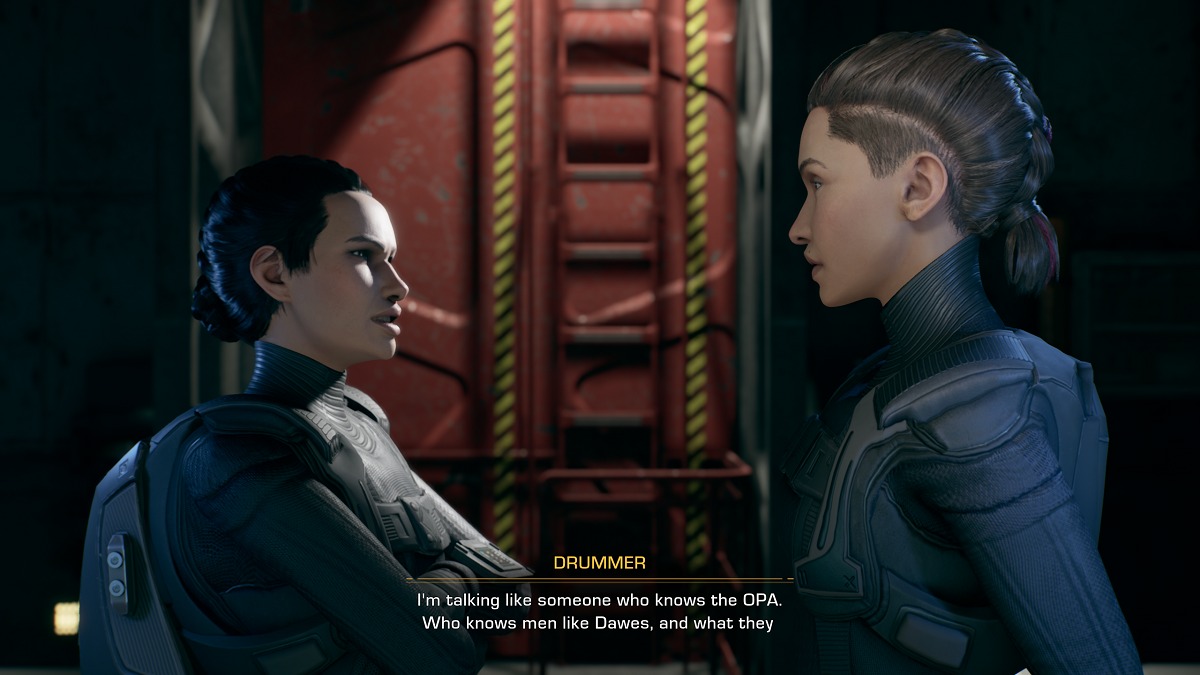
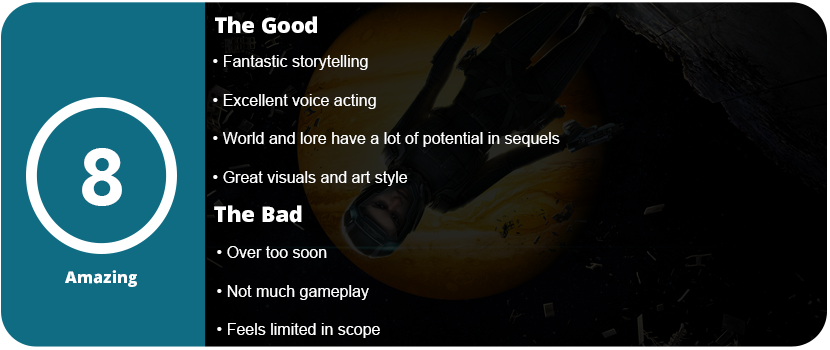
The best part about the game is the atmosphere, characters, and overall story. While this game is the beginning of a larger story arc that will give us more lore and behind-the-scenes politics on the goings-on of this world, this game solely focuses on establishing Captain Drummer as a brand new protagonist, and I love her so much. She has a lot of charisma and is a dark and brooding character without being cringy and formulaic. Her voice actress does a fantastic job portraying this. The other characters are written in your typical telltale manner, which allows you to constantly hate or like a character and then suddenly doubt everything in the end. The cast is small, but the game has a fantastic pace that keeps things interesting.
You’re essentially scrappers, and there is an established order of inners: people who live inside the astroid belt and those who love outside of the astroid belt. There are pirates involved, and there is a secret treasure that everyone is fighting over. I don’t want to go too much into the story, but the game’s atmosphere is dark and haunting, but there’s no horror. The monster here is the human element and just how brutal we can be to each other in a split second. I found the ending very satisfying, and it opens up for a clear sequel that hopefully expands this entire universe that Telltale has created.
The visuals are a huge improvement over their past games. While they aren’t ground-breaking and are required to run on previous generation hardware, the stylized visuals look great, and the blacks, whites, and grays really make you feel alone and claustrophobic all the time. The voice acting is top-notch, as always, and the only thing I left with was wanting more from this series. I also wanted more gameplay, as quick-time events are incredibly dated and there are other things you can do for adventure titles other than these dated gameplay elements. More side quests, an actual gameplay loop, and more side dialogue would be nice to be able to expand upon everything. As it is, the game takes 6-7 hours to finish, but it’s incredibly enjoyable, and I couldn’t put the game down.
Kingdom Hearts has a special place in my heart. I remember when the first game came out, and it was talked about by a lot of people on the school grounds. I was in junior high when it was released, but I didn’t get it until it was a Greatest Hits release at $20. I found it hard at the time and never finished it. When the second game came out, I rented it from GameFly and actually cried at the ending. It was so memorable and engrossing for me as a teen.
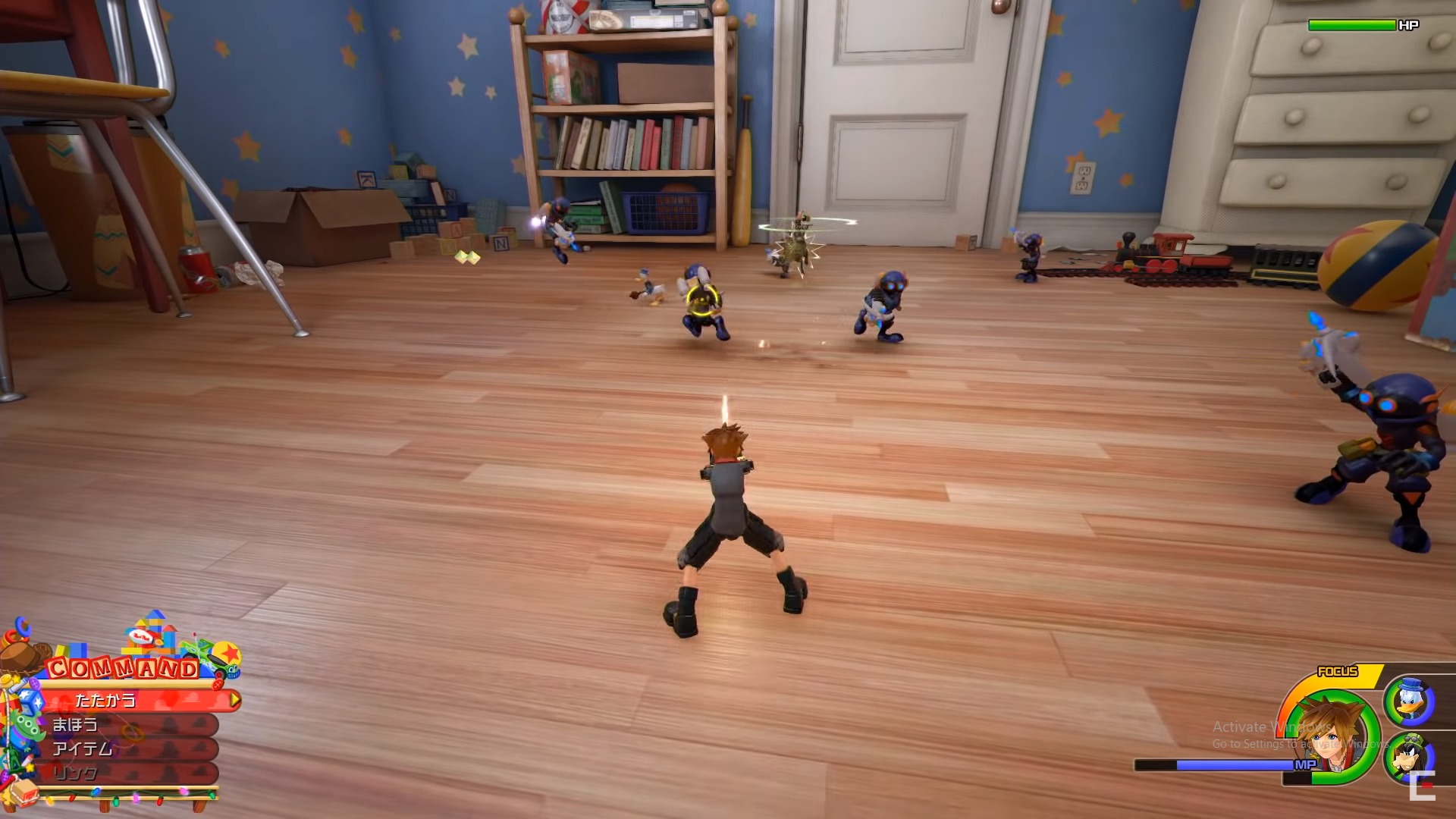
Here we are, almost 15 years later, with the third installment in the mainline series. I was insanely excited and didn’t follow any previews or reviews for the game leading up to actually getting around to buying this game. I played the first area of Hercules (again?) and got to Toy Box (Toy Story!) and lost interest. Yeah, the game hasn’t really evolved all that much. My biggest problem with Kingdom Hearts III is the lack of imaginative level design and the use of mostly modern Pixar movies. The best part about a new Kingdom Hearts game is discovering what the next Disney movie will be that you get to explore. It’s like a surprise each time, and I loved that with previous entries. This was the first time I was praying it wasn’t another modern Pixar movie.
While Hercules was very cinematic, scripted, and looked great, it’s an overused Disney movie in the series. Toy Story was exciting, especially when we were in Andy’s room, but we wound up in a generic boring mall? It was such a boring level to get through, and I didn’t feel anything like the movie. We then move on to Repunzel. Why? Another issue with this game is playing each movie scene by scene around the second act. We’re stuck at a generic forest level here. After this, we get into Monsters Inc., which is actually pretty cool, but it’s a generic monster factory. Then it’s…FROZEN?! Why Frozen? We even get a literal, scene-by-scene, shot-by-shot rendition of the “Let It Go” song. If I wanted that, I would just watch the movie. A generic snow level awaits us here.
Then we go back to Pirates of the Caribbean, of all movies. I appreciate that the visuals are improved enough to give us realistic versions of this movie and not the cartoony one we got last time, but I didn’t care as the original voice cast wasn’t present again. And it’s based off of the third film for some reason. I liked the fact that you get to sail an open ship and go find crabs to upgrade your ship, but I skipped all of this. The ship steers like a hot-wheeled car, and the generic seaside town and ship battles weren’t very interesting. Then we finally arrive at Big Hero 6, which is also pretty cool, but it’s a generic large map of San Francisco, and it is incredibly boring. That’s it. No more worlds, and you are stuck in the last level for about 10 hours doing boss rushes like every other RPG has done, and this seriously needs to stop to just bloat game time.
Even if you like or dislike these Pixar movies, the fact is that the levels are incredibly boring, and each one plays out the same way. You get through several mini-bosses, fight waves of enemies, collect some stuff, and fight the movie’s main antagonist. Every world is a generic feeling with no life from the movie injected into it. The reliance on playing through scenes of these movies isn’t what I want in a Kingdom Hearts game. I want a unique experience at each level that makes me feel like I’m part of that world. Not just some character who crashed the movie in the middle of its runtime.
I can go on and on about how much I hated the uninspired level design and repetitive nature of each world, but then there’s the Gummi Ships. I hated these in the first game, and I really don’t like them here. I like that the Gummi Ship part is a large open map that you can explore freely between worlds, but there’s nothing interesting here. You fly around collecting parts, Munni, and you can find shooter waves flying around that have levels and stars attached to them. Upgrading your ship but being able to buy parts to put together blueprints is a staple of the series, but I just don’t find it interesting. A new alpha Gummi part can be attached now to help fight in battle. It’s essentially a satellite ship flying around yours. There are speed tunnels all over the place, asteroids, and various obstacles, but I just wanted to get to the next world.
Finally, there’s the combat itself. I never really cared for Kingdom Hearts‘ combat. It works, it’s fine, and it can be fast-paced, but you fight the same Heartless over and over again, and the game is heavily reliant on keyblade transformations. Actual attacking and magic have taken a back seat. I rarely touched magic, and it felt useless. I was just attacking until I got my three pips and I could transform my keyblade into a more powerful weapon and execute its finishing move. This does the most damage and is a must for bosses, or you won’t survive at all. The final act of the game pits you against around a dozen bosses, one after another, and it’s a frustrating chore. You can still use Link commands, but they aren’t that great this time around, and I felt like they hindered battle more than anything. The goal was to attack and get a few combos in, transform my keyblade, execute attractions that put you on famous Disney park rides that do damage, and just rinse and repeat. Items are useful for sure, and it’s important to keep abilities tagged, as adding combos and modifiers to combat really gives you an edge. However, this all gets so repetitive, and you just stop caring before you get to the third world.
Then there’s the story, which I haven’t even touched on yet. It makes zero sense, even to people who have played the series up until now. My main interest was in the little stories inside each world. I never cared for the overarching Kingdom Hearts story. It’s a bloated, overcomplicated mess involving Organization XIII, and Final Fantasy isn’t even a part of this story anymore. Xehanort was the X-Blade. Aqua is trapped in a world, I think, where there are multiple versions of everyone. Yeah, I don’t know. Go watch a comprehensive timeline explanation on YouTube instead. Sadly, each world is just a retelling of each movie, which I could just go watch if I wanted to. At least the visuals are really good, and everything is bright, colorful, and full of life.
The voice acting is also hit-and-miss, but mostly terrible. Haley Joel Osment as Sora again was a bad choice; he’s just not a good voice actor. Outside of some of the mainline Disney characters, the voice acting is just wooden and awkward. Most Disney films don’t retrain their original voice actors. Especially in Pirates of the Caribbean…again. What’s worse is the writing. The script feels like it was written by a grammar school student. It’s just the most basic lines, replies, and banter. It’s just enough to get through each scene. There’s a lot of nothing being said by most of these characters. Shouting each other’s names a lot, and a lot of “You will never stop us!” or “I will defeat you!” over and over again. Yawn.
So, there’s a lot I don’t like here. The lack of older Disney movies, the complete absceneness of Final Fantasy stuff, and the fact that each movie is just a scene-by-scene replay of the original movie are boring. The levels feel generic, uninspired, and repetitive, and the combat, while flashy, uses an overreliance on keyblade transformations, attraction attacks, and links and magic. Enemies repeat far too often, and the final act is nothing but a frustrating slog of a boss rush. The story is insanely and wildly confusing and unnecessarily complicated, but at least the visuals are a nice treat. If you didn’t like previous games in the series, this does nothing that will convince you to like it now.
Side note: I was incredibly disappointed by Utada Hikaru’s song with Skrillex on this one. Both Simple and Clean and Passion/Sanctuary are classics and some of Utada’s best work. This song was terrible and wasn’t a good start to the game for me.
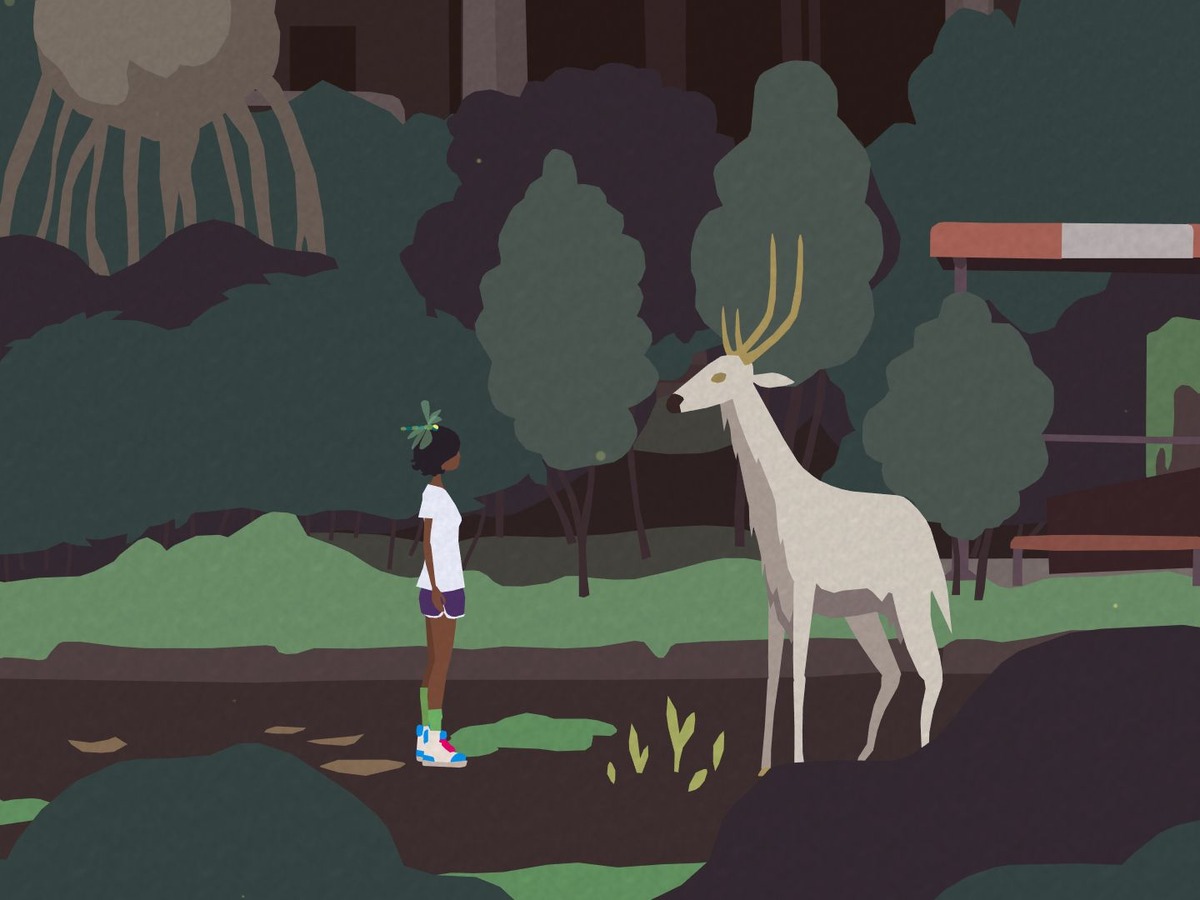
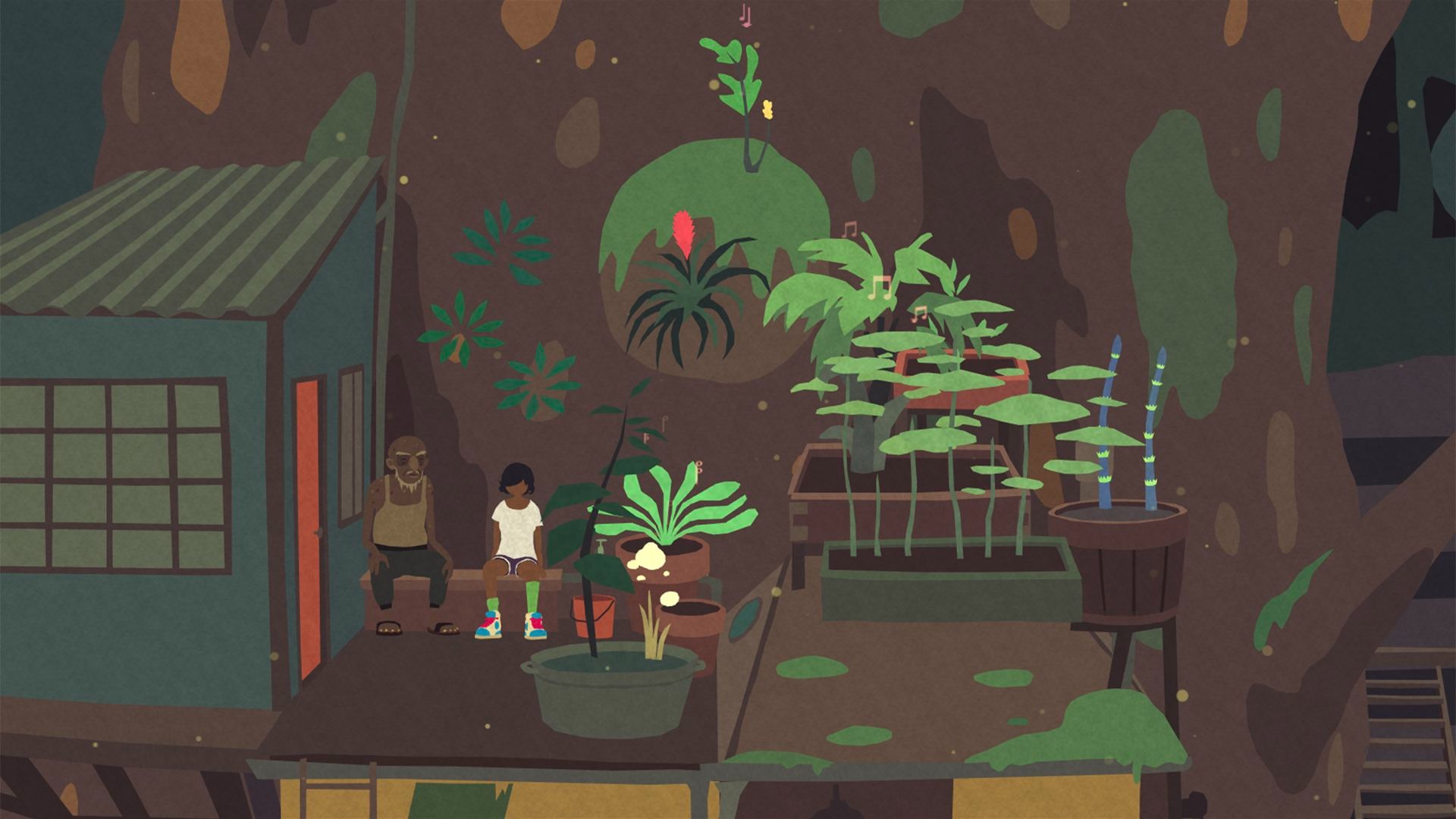
You play as Kai. A girl is sent away to a strange village in a post-apocalyptic world to re-connect with her extended family. You spend the entire game walking around to the various dozen or so screens, collecting seeds, planting gardens, and learning more about your past and the ties between the village and your family.
I have to give credit to the developers for their tight and well-written dialogue. The characters have, well, character. For the short time you spend in the games (under 4 hours), you really get to know these people, and the dialogue is written in a way that feels organic and like you’re listening in on a conversation. Talk of relationship issues, depression, carelessness, death, suicide, and many other emotions that we face in ourselves and amongst our own families. There’s an atmosphere that’s both uncomfortable and familiar. You will plant your own life in this game and strategize relating to certain characters or hating them. It’s just so well done.
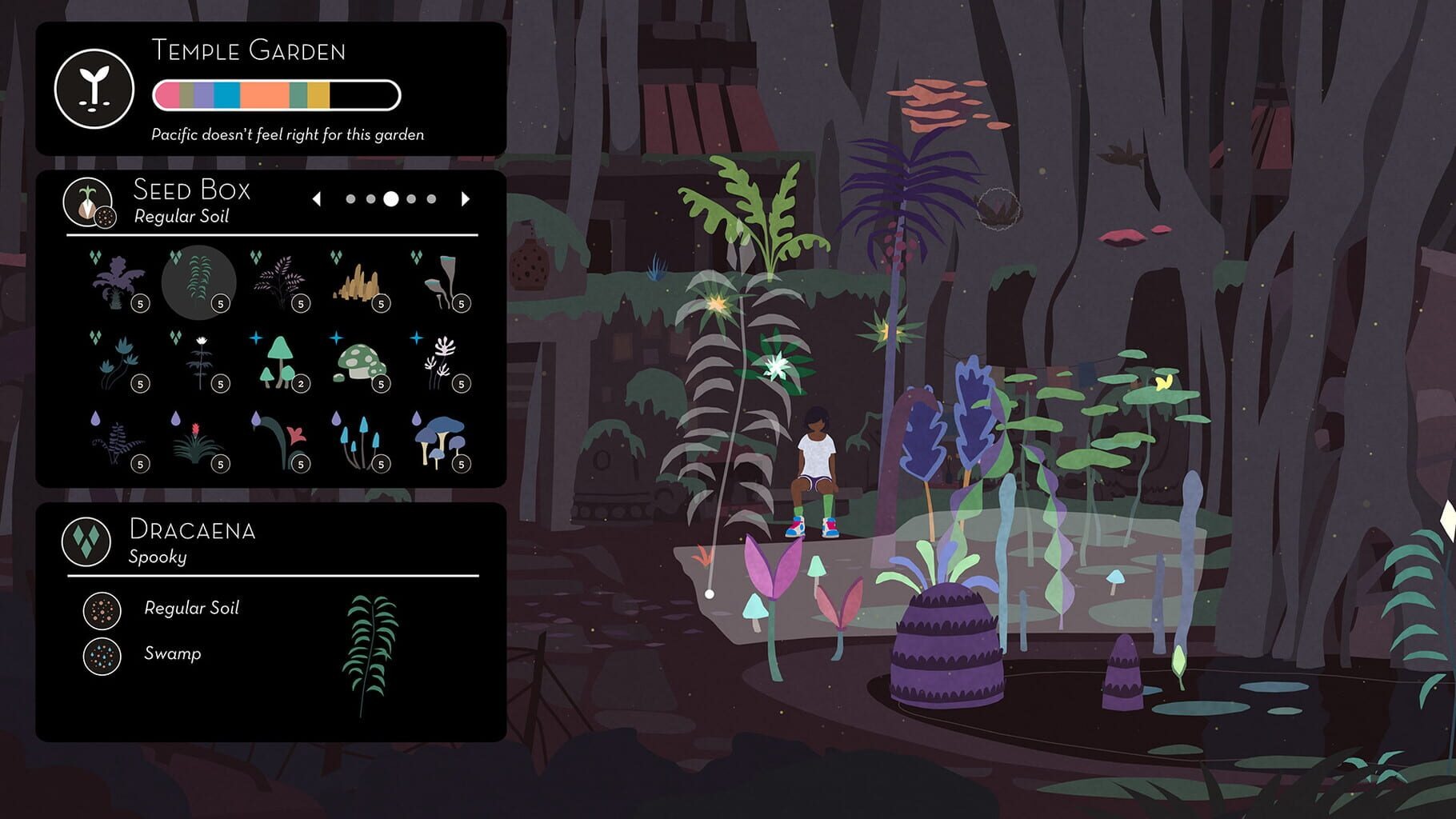
As for the rest of the game, there’s something to be desired. As you walk around the screens, you will see a hand icon over anything you can pick up. These are usually plants, and you need the seeds to plant gardens to advance the story. There are eye icons for objects that Kai will comment on and a clock icon for an interaction that will advance the story. You never really get lost. Kai’s journal gives hints on who to talk to and what area you need to be in. Using a little common sense and learning the screens and where everyone resides helps a lot. As you pick up seeds, you learn songs that help you grow the garden. Each seed grows based on its song, so it’s recommended to plant seeds of that type. You can place the seeds with an outline of the plant that will tell you if there’s enough space for it. Sing the song a few times, plant enough seeds, and your garden grows. You can then harvest the plant for what you need to advance the story.
Don’t get this confused with something akin to Animal Crossing or Stardew Valley. This isn’t a farming simulator at all. The planting and gardening are rudimentary at best and mostly uninteresting. I just threw seeds around until I filled up the meter, spammed the correct song, harvested, and off I went. I was more interested in the characters and the story. There’s a mystery behind the village that I couldn’t wait to unravel, and unfortunately, gardening got in the way. I did love the music; it’s amazing and good enough to listen to outside of the game.
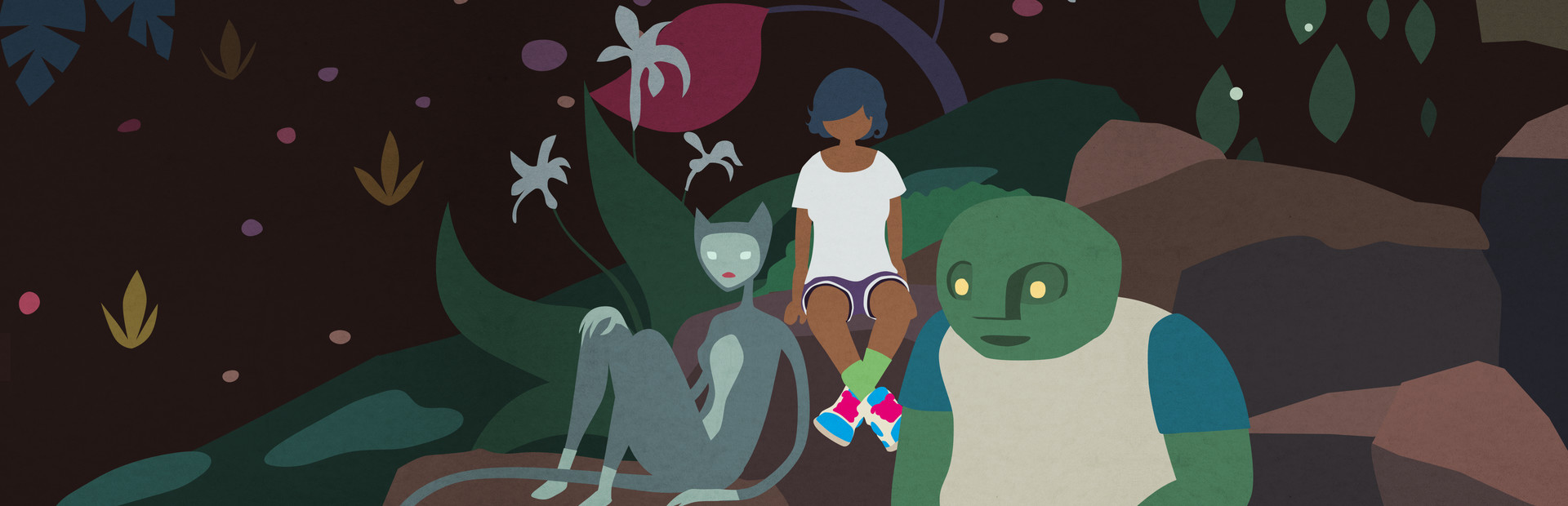
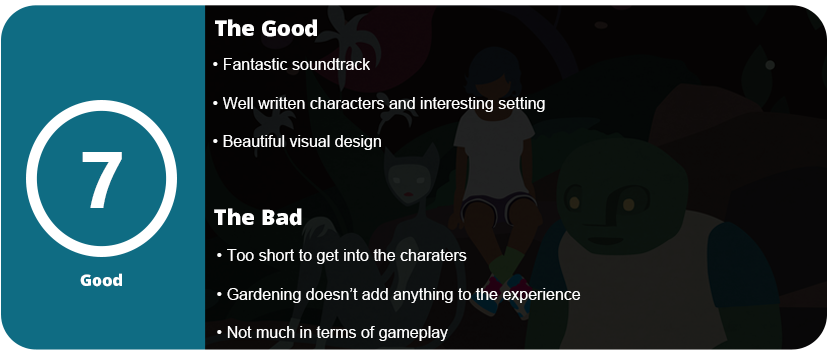
The art style is well done. It’s bright and colorful, but it can be really dark when needed. The characters have unique humanoid designs that seem familiar but are still alien, and the paper cut-out look just fits so well. I just wish the story was a bit longer, as I wanted to get to know the characters more. I can’t really complain about gameplay, as you do move around constantly and patterns change and mix up, so it never really gets boring. This is a great little adventure game that can kill an evening, and you might have a new favorite OST.
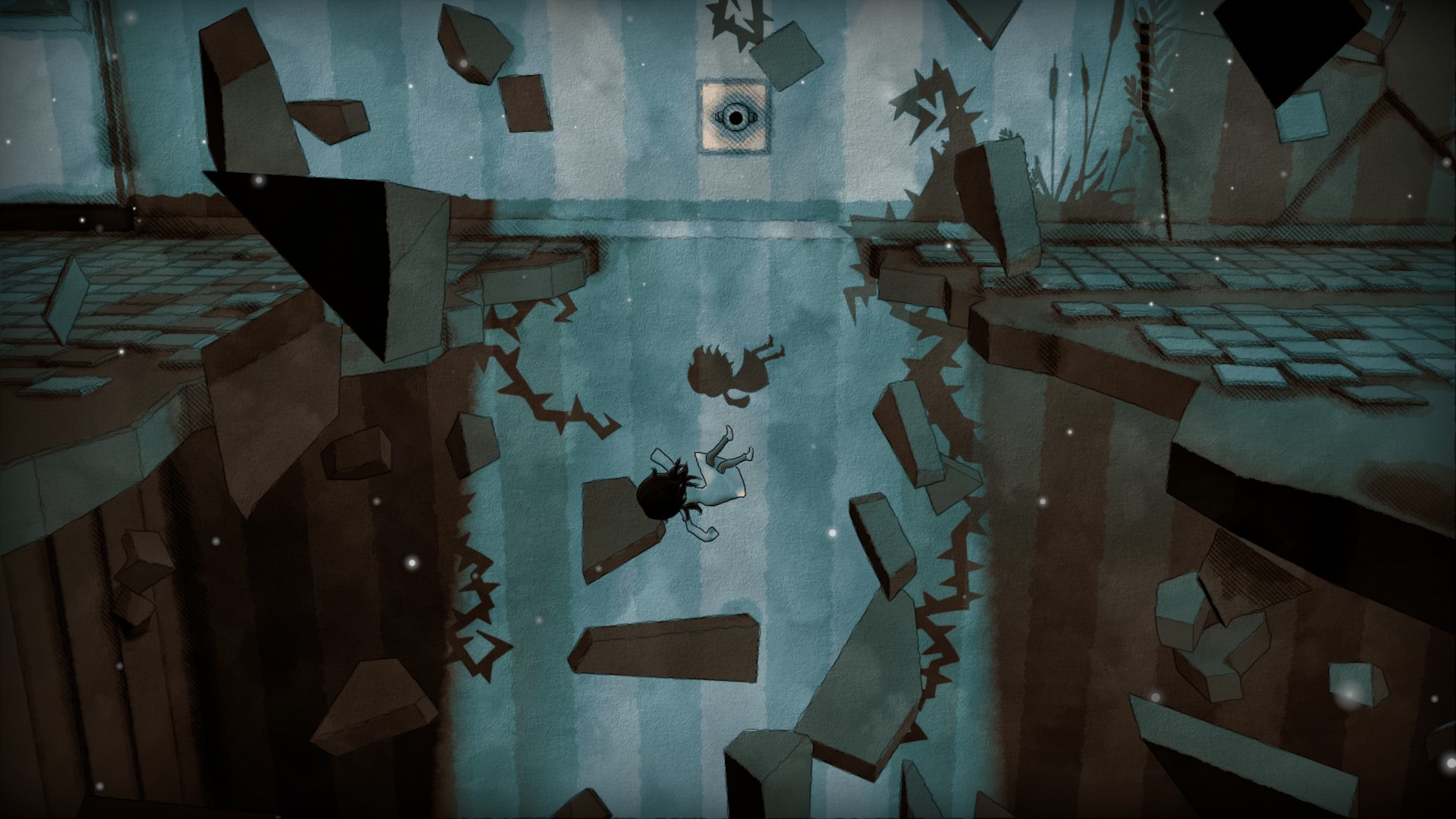
2D walking simulators seem to be a whole new genre of their own, are more interesting, and tend to be better than fully 3D ones. Games like Limbo, Little Nightmares, and Inside are perfect examples of this. There is some light platforming, some puzzle solving thrown in, and maybe a little bit of stealth. While none of those had stories that blew me away, they did make up for it in atmosphere and character. Shady Part of Me sadly doesn’t accomplish any of those things. The only thing going for it is the dual-character puzzles, and that’s about it. There really isn’t even a story to speak of. Yourself, your shadow, and some disembodied voice narrate the entire game with cryptic dialogue that really is either open for translation to the player or is entirely meaningless.
This game reminds me a lot of Limbo and Lost in Shadow. You play as a little girl in a white dress who is afraid of light, and her shadow (always on the wall) is afraid of darkness. You switch between both to help each other advance. Puzzles involve pushing boxes and pulling switches, and in later levels, your shadow can defy gravity and even take over puppet bodies. Most of the puzzles have that “Aha!” moment, which can be satisfying, but there were a few that really stumped me and took a lot of time just fiddling around until something changed. Most puzzles have you manipulating objects in front of lights to make new shadows, move them, or make them grow or shrink. The real girl can’t jump, but your shadow can. This means there is light platforming in the shadow, but nothing complicated.
I did find the aspect of two characters to be a bit tedious. Some areas just have you running to the right to stop in the circle to advance to the next area. You then have to switch to the other character and run that full length again. It’s not a major problem, but it happens too frequently. I also found the rewind feature to be really handy. This prevents constant deaths and restarts. You can rewind as long as you want, so I have to applaud the developers for making this a frustrating mess. A lot of times your shadow will die or you will get caught in light, and it stops the game, but rewinding allows you to see the error you made and correct it. If you fully died every time and went back to a checkpoint, this game would be unbearably frustrating.
Overall, the visuals are great. The sketchbook look and early 20th-century aesthetics are fun, but they’re also nothing memorable. We’ve seen this kind of art style before in other games. That’s the biggest takeaway from Shady Part of Me. It does what it does fine. Nothing more, nothing less. It doesn’t leave a lasting impression like the above mentioned games. Limbo was gruesome and had a memorable atmosphere. Little Nightmares’ ghoulish monsters stood out, and Inside’s dystopian world put you on edge. You will spend around five hours in this game and mostly forget about it the next day.
A lot of games tell the lives of soldiers during WWII, but not many talk about civilian life. Specifically, the lives of the Japanese and Russian civilians who were dragged into the war against their will, and many didn’t support what their governments were doing. Torn Away tells the life of a Russian child whose village was destroyed and all residents were dragged into labor camps by the Nazis. Our protagonist, Ansya, wound up in a women’s labor camp with her mother, and you follow her as she escapes and deals with loss after loss, trying to make it to more relatives in another village.
The game starts inside a house, and you learn to interact with objects, complete small and simple mini-games, and gather various objects. Ansya likes to talk to her dolls, and she ends up having her inner dialogue narrated by her mitten, Comrade Mitten, through the journey. As most know, children like talking to dolls and objects that they get attached to. Sometimes this can be a coping or comfort measure, especially after severe trauma. The game changes the pace constantly, going from side-scrolling platforming sections to first-person walking sections and sections in which you are finding objects in small houses. It changes up the gameplay quite a bit, and the game never gets dull. The original Russian voice acting is great, and the overall tone nails the atmosphere of dread during the war.
A lot of the sadness is portrayed by the visuals. A beautiful style of water colors and washed-out lines. It’s almost like a child’s blurry memory. There are a lot of foreground and background objects similar to other side scrollers like Limboor Inside. This can give a sense of scale for a small child in a big adult world as well. Every area was different and felt unique, and there was always a sense of foreboding danger. The second Ansya felt safe, something would happen, and she would be on the run again. The story never gets gut-wrenchingly sad or depressing, as the story isn’t long enough to portray this. There was a lot of focus on gameplay, unlike most walking simulators, so the story isn’t the sole focus here.
Gameplay-wise, the platforming is the worst part of the game. The animations and speed are slow and sluggish, and I constantly died trying to hop over objects. There’s no momentum, and Ansya just kind of hops like you’re picking her up and setting her down. There are occasions where you can solve a really simple puzzle, like dragging boxes around to climb up onto a ledge or gathering objects to create something in a certain order, but nothing that will strain your brain cells. There are stealth sections thrown in where you have to avoid spotlights and flashlights by running between boxes. It’s nothing challenging, but the constant change in pace helps keep your interest in an otherwise bloated genre of boring walking simulators.
With that said, Torn Away is a fun evening time killer, and the story is just sad enough to keep you hooked, but there is nothing memorable here in the end. This isn’t something like Valiant Hearts that will sear its story and traumatic events into your brain. What’s here is better than most walking simulators, as it offers some great gameplay and an entertainingly sad story with great visuals.
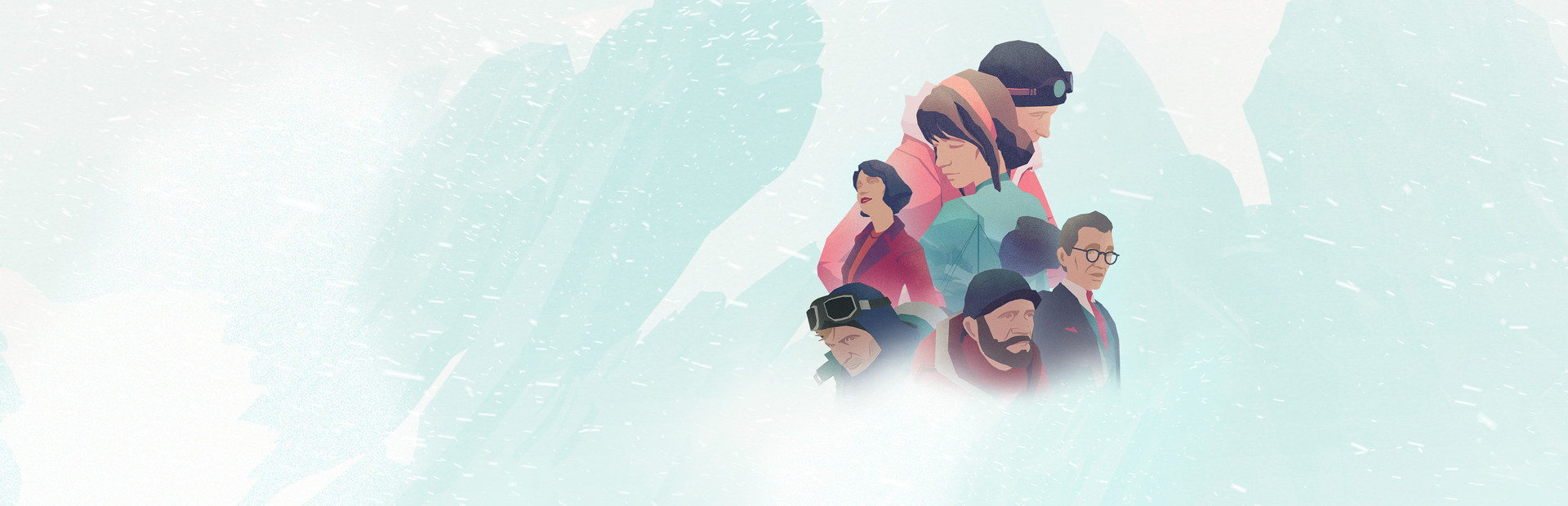
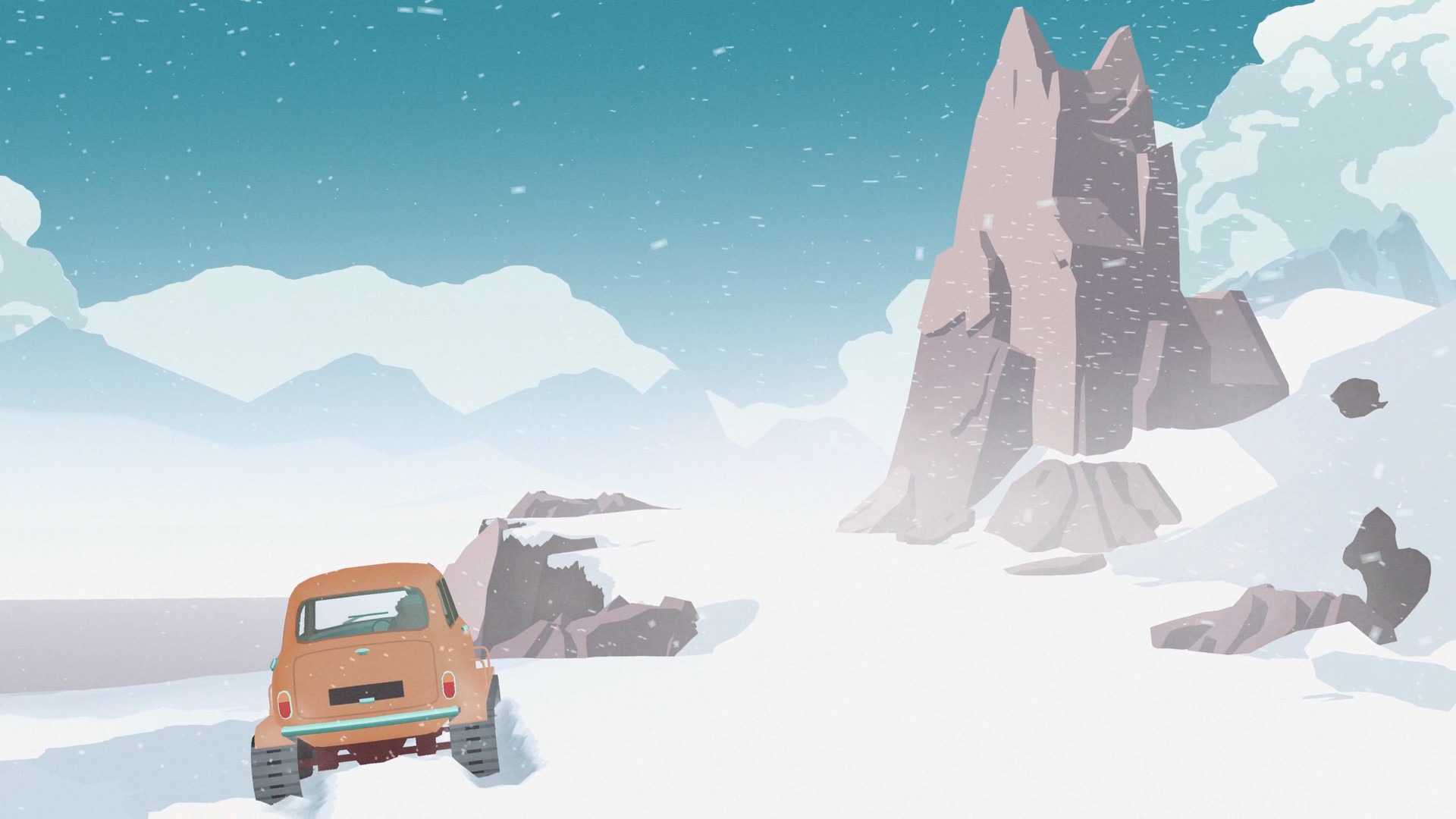
The Cold War was a rough time, and you really feel it in the South of the Circle. You play Peter, a British scientist struggling between love, his career, and being stranded in the Antarctic during one of the most strenuous times with Russia. Peter is a climatologist and ends up meeting a Scottish woman, Clara, who is protesting the war. He ends up torn between her companionship, his career, and the present times of him stranded at a remote research station trying to find rescue.
I don’t want to spoil the story because that’s all that South of the Circle has going for it and is the only reason to keep playing. There is almost zero gameplay outside of pressing buttons for dialogue choices. These come in the form of emotion bubbles that range from neutral, scared, sad, happy, and so on. I don’t quite know if this effects the overall story path, as my choices almost seemed to not matter. As Peter is talking to people, a bouncing red ball means a scared response. A blue ball hanging low means a sad response. A sun icon will make Peter respond joyfully, etc. These come up pretty frequently, so you’re always pressing something. Occasionally, you can move Peter around and interact with the rare object here and there, but that’s all there is to it. There are no puzzles or anything like that.
You follow this linear path of Peter trying to find people at this station while seeing flashbacks. You start in the middle, and as you move forward in the story, the flashbacks start from the beginning. It’s very entertaining, and I was interested in the story until the end thanks to the well-written dialogue and fantastic voice work. The visuals are striking in the sense that they almost look rotoscoped. There is motion capture for this minimalistic style of art, and it’s quite captivating.
The entire game is a linearly scripted adventure and lasts less than four hours. It’s a bit longer than most super-short story-driven walking simulators, and the excellent writing will keep you hooked. All of the characters have depth, and you actually have feelings for certain characters, despite some having only a short time on screen. Scenes can get intense and emotional, and you can feel the dread that Peter is facing in his struggle for survival. It’s just so well done, and it’s sad there isn’t more gameplay attached to it. It’s one of the better walking simulator stories I’ve finished in recent years.
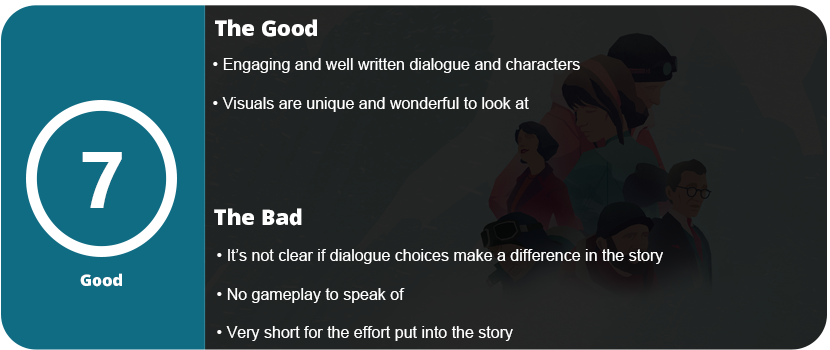
Overall, South of the Circle provides an entertaining, well-acted, and well-written story and script, but the lack of gameplay makes you question whether this is just enough here to be an excuse for a game. The art is fantastic, and the motion capture is enticing. I wish the dialogue choices were a little more obvious about what they did or if they changed anything at all.
Walking simulators can be really great or really terrible. There is usually no in-between, but somehow Kona manages to accomplish this unremarkable achievement. You follow Carl Faulbert, a private investigator, who arrives in a remote other Canadian town to discover something is lurking around and killing its residents. The plot itself is mostly uninteresting, and details are really only explained in found notes. There is a narrator who explains things throughout, but he mostly just asks questions and never answers anything for us.
The game starts out fairly simple, and it’s an illusion of how the rest of the game is. You walk around in first-person view, interact with objects, and drive your truck. You can pull out your map in the truck to figure out where to go. You have an inventory system and can pick up objects to store, such as duck tape, hardware, flares, matches, etc., but most of these items are useless, and you don’t ever use half of the consumables. The game isn’t open-world, but there is a giant area to explore. You can wander off the beaten path or main road to find campfires to light, objects to pick up, documents to read, and various other things, but this is purely for achievements only. Wandering around the town is a chore due to the slow walking speed and short sprint speed. You have heat, sanity, and health; however, the heat meter helps drag the game down further. Yes, this is a remote area in the cold, but needing to find a specific object to obtain a jacket from a person you may never find without a walkthrough is pretty annoying. Once you get the jacket, your heat meter never becomes an issue. There are wolves spread out in the wilderness off the main road, and these can harm you. Hit them with a hammer or hatchet, or shoot them with a gun, and they’re gone. There’s an option to throw steaks at them if you want to hunt for achievements too.
The game always feels clunky in some way. Having to constantly pull out your map to check your surroundings gets tiresome, and never knowing exactly where to go will make people quit early on as well. You just wander into each house marked on the map and hopefully figure out how to make your way north until you reach the end of the game, which isn’t satisfying and doesn’t make me excited for a sequel. You can only save at campfires, and if you don’t have matches, a firestarter, or a log, you can’t save. Your inventory space is limited, so you must drag your items around in the back of your truck, and then if you need something, it’s a hike back.
You have a camera and can take photos, but again, this is mostly for achievements. Achievement hunters would love this game, but outside of that, the gameplay is mostly repetitive or pointless. The visuals are great and hold up well even today, but you are mostly seeing just white and log cabins. There isn’t anything artistic or unique about this game, which makes it a very boring game to look at. The narrator does a good job, but what’s the point if he doesn’t help progress the story? I only kept pushing forward to see if the story got more interesting or had a really awesome ending that made all of the mind-numbing walking worthwhile.
Overall, Kona has its place for a certain crowd. I love walking simulators, but many often waste my time with forgettable stories, boring settings, or mind-numbing gameplay. Kona has more gameplay than any other walking simulator has a right to, but if you cut all of it out and only let the player drive down the main road, that effort put into all the extra exploration stuff could have been put into a better story. As it stands, Kona doesn’t do any one thing particularly well.
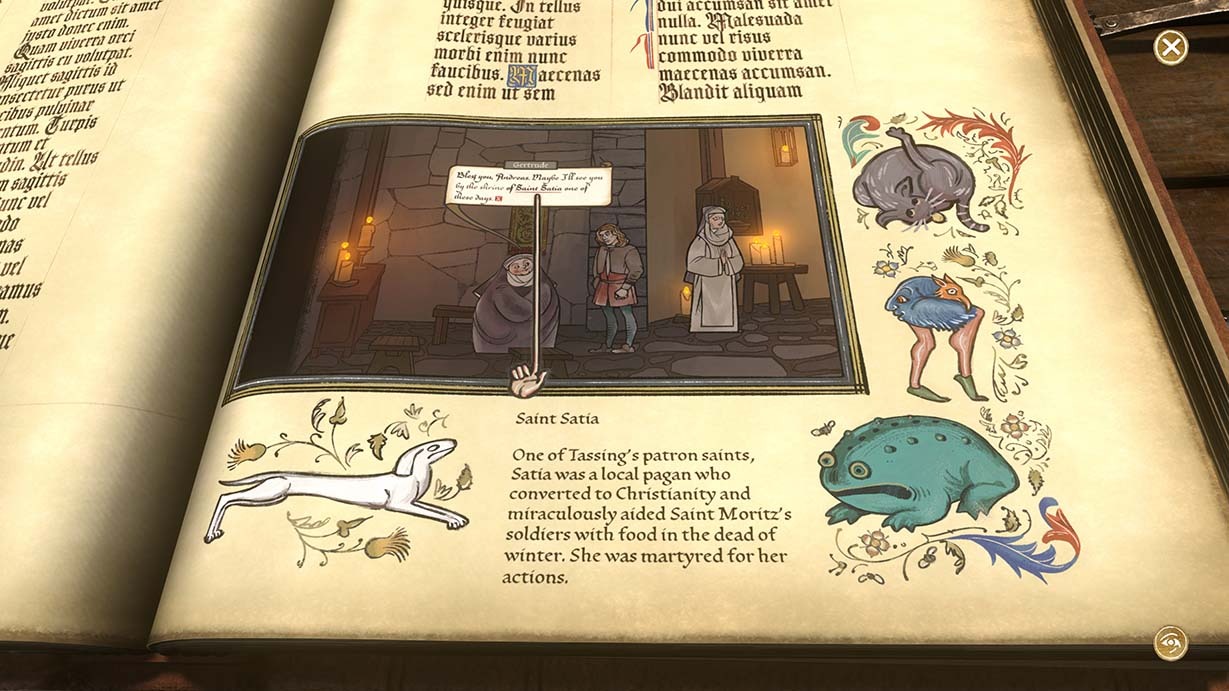
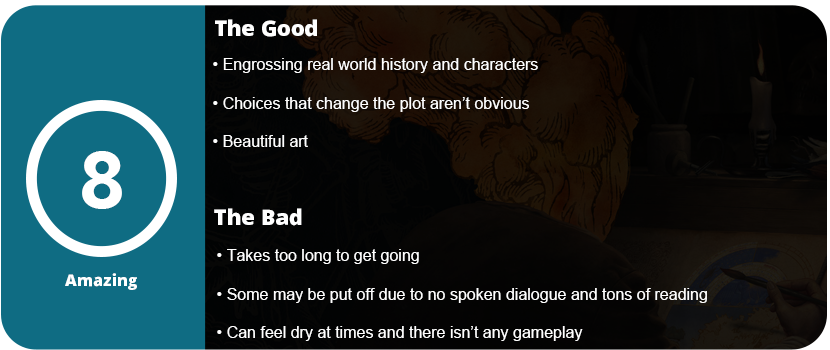
1518 is the year of Pentiment’s main plot. You play Andreas Maler. An art apprentice works for the church at Kiersau Abbey near Tassing. This is solely an adventure game with no spoken dialogue, so there is a lot of early plot development, and it’s very slow to start. I put the game down several times due to how long it took for the game to actually start getting interesting. There really aren’t any gameplay mechanics to learn, so you mostly just follow the objective marker on your map and talk to people. There is a rare puzzle thrown in, but it isn’t challenging at all. This is a choice-based adventure game, so your dialogue choices can decide who lives or dies in this game.
There is a lot of history to learn, not just about the town of Tassing and the Holy Roman Empire in general, but also about the characters. There are a lot of characters, and thankfully, the writers did a good job portraying their personalities throughout. Towards the end of the game, everyone feels like familiar old friends, and you can feel and watch these people grow and change over time. While there are a lot of characters, the game does eventually start moving at a steady pace. There are no RPG elements, but you do get to choose specialties and subjects you are experienced in, such as languages, trades, and visited areas. This can help unlock dialogue boxes that have icons next to them. The conversations feel very organic, and you can’t tell whether there are big choices or not, which is kind of nice. It feels more realistic in the sense that when the consequences come up, you have no idea how it happened, but in a good way. There isn’t a way to predict a major plot twist this way, and it can add to replayability.
While the dialogue is well written and the characters are mostly interesting, the game feels very dry and dull at times. There is a lot of proper real history, and to help learn more about this without a ton of nauseating exposition by the characters, certain terms are underlined in red, and you can press the back button, and a little snippet will explain what that means. This makes all of this optional and helps keep the story moving along, which was a great choice. The game is still very dry, and I feel a lot of people will put this down due to the real history and less fantasy. Having no spoken dialogue might also put a lot of people off. There are a lot of ambient sound effects and some pretty good music here and there, though.
Once I got past the first act, I was glued to my Steam deck. The plot was quickening, and this murder mystery story was becoming more and more enticing. Sadly, the third act starts out dry again and takes a while to pick up, but when it does, it’s very engaging. There also aren’t any side objectives, stories, or anything like that. The main plot takes over 10 hours on its own due to just how much dialogue there is.
The visuals are wonderful and one of the best parts of the game. The paper-cut-out art style is beautiful and fits the setting very well. There are a lot of colors, and you get to see every season and various forms of art within the game, as well as architecture. It’s a very engrossing game visually, and it never gets boring to look at. With that said, this is still a text adventure with visuals to help it along. There isn’t any gameplay, side objectives, or mini-games, and the game takes too long to pick up and get interesting to keep the casual curious gamer interested. Investing 10+ hours into this game might also seem daunting for those who don’t enjoy reading books or like history. I love both, and it’s fine for the type of people it is trying to reach.








































 thebinarymessiah.com
Super, thank you