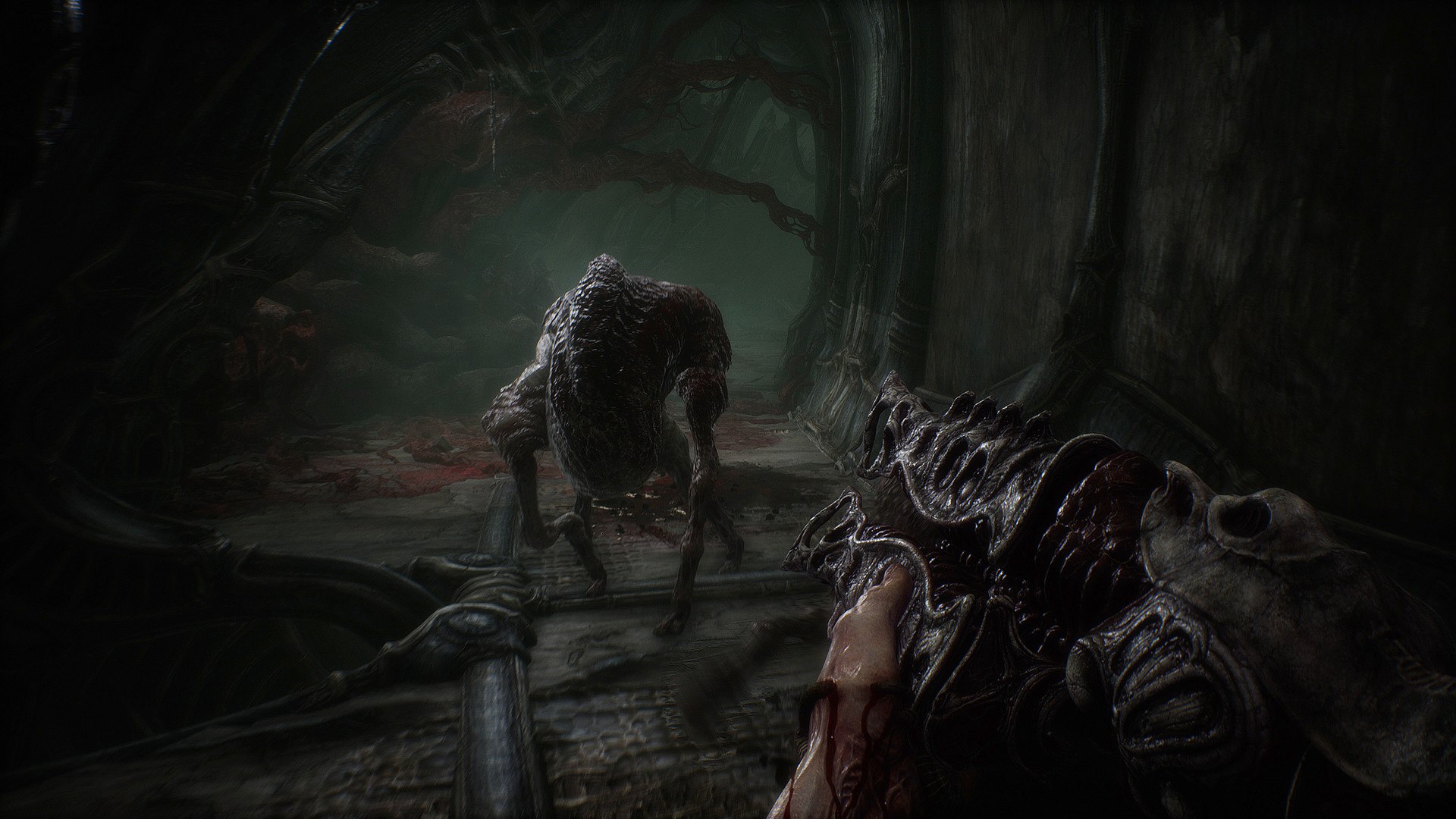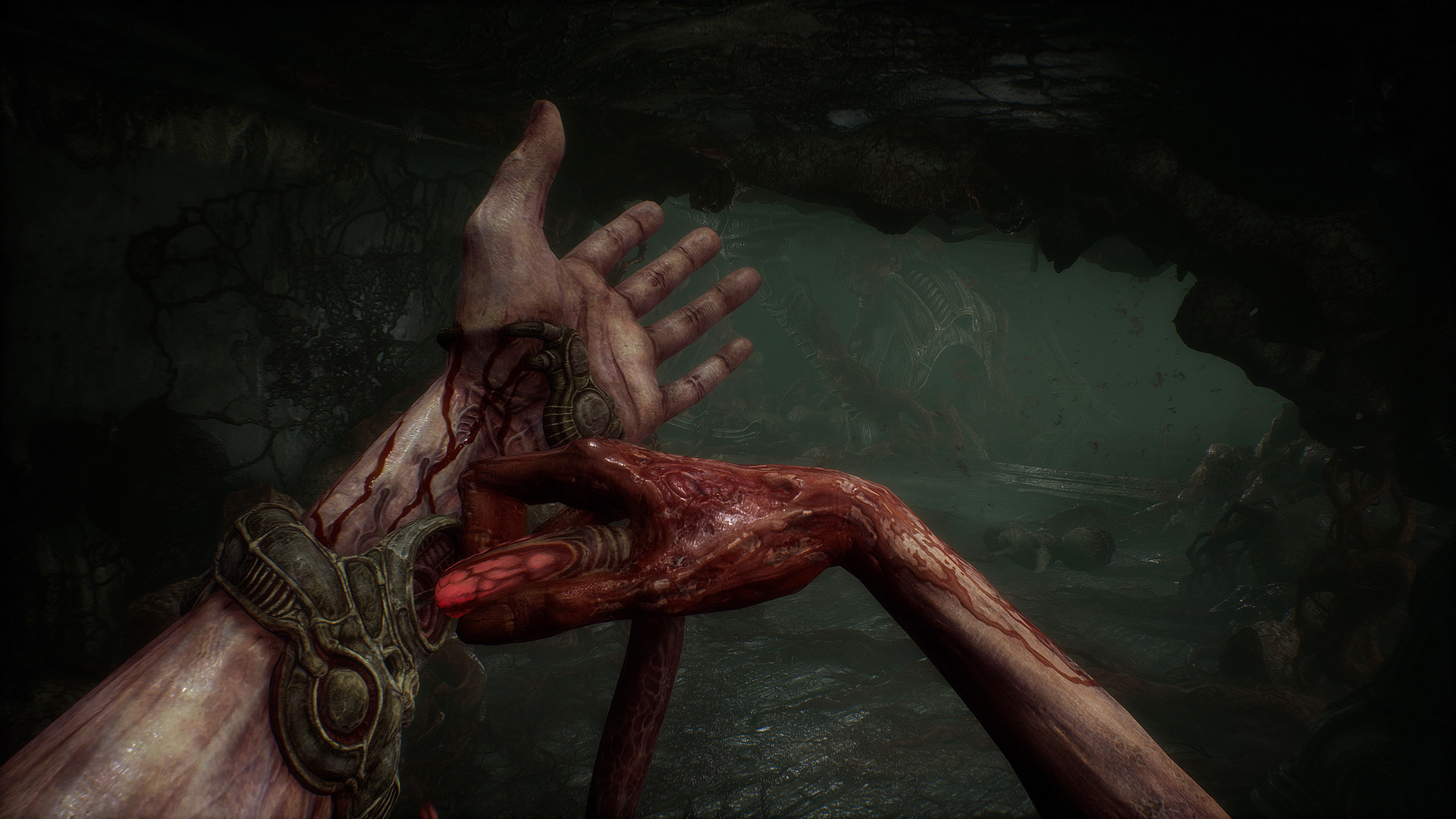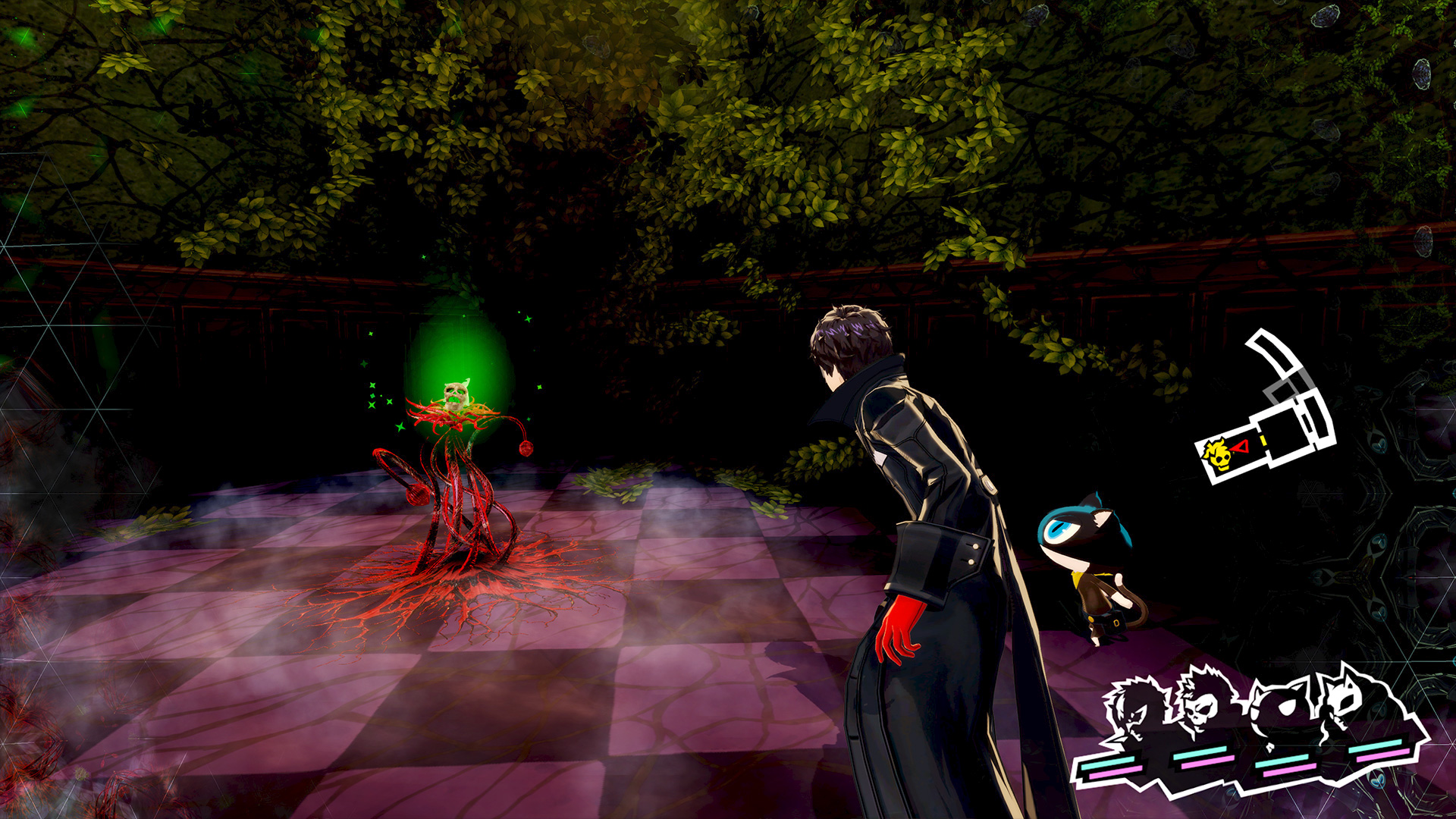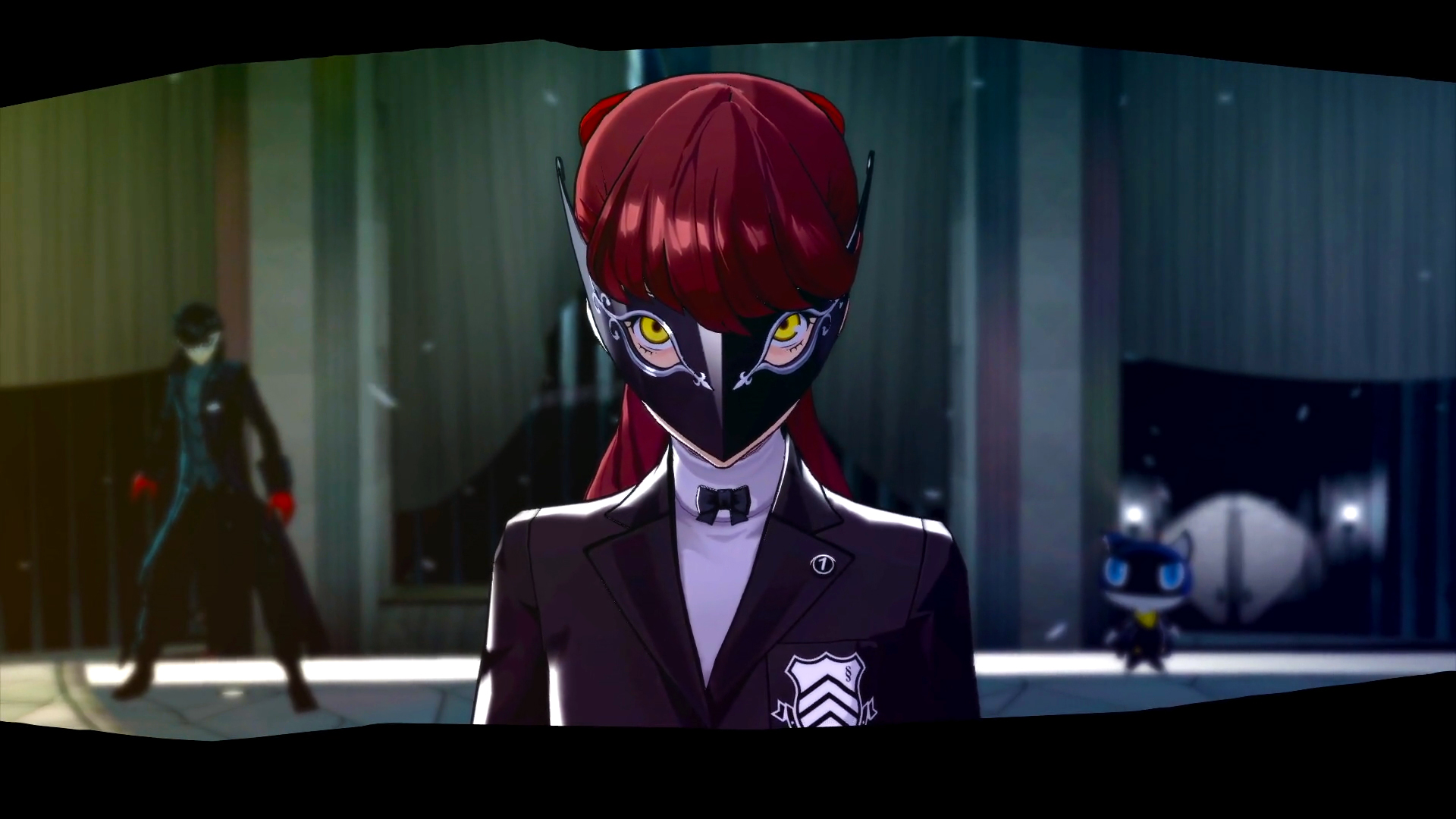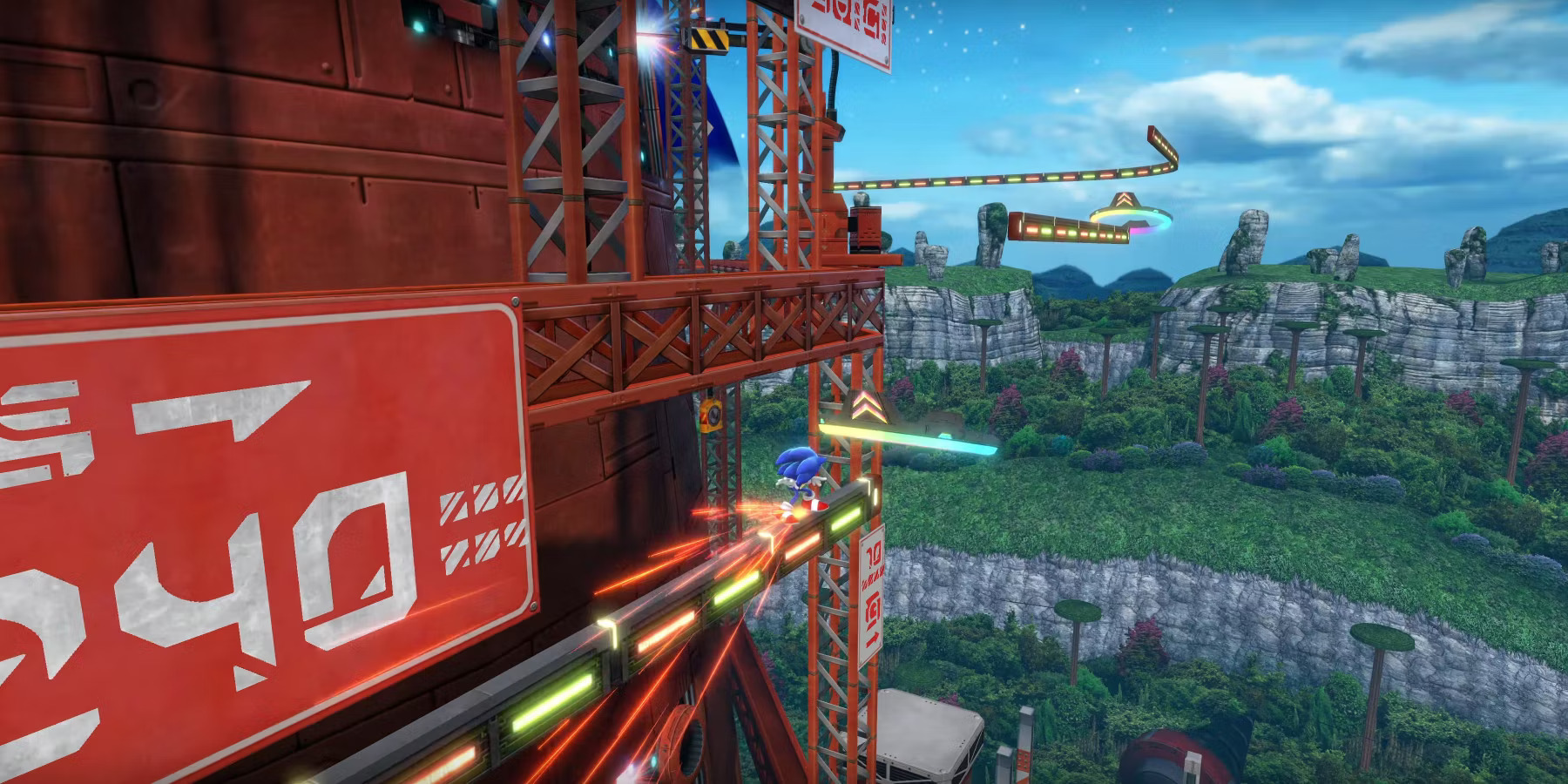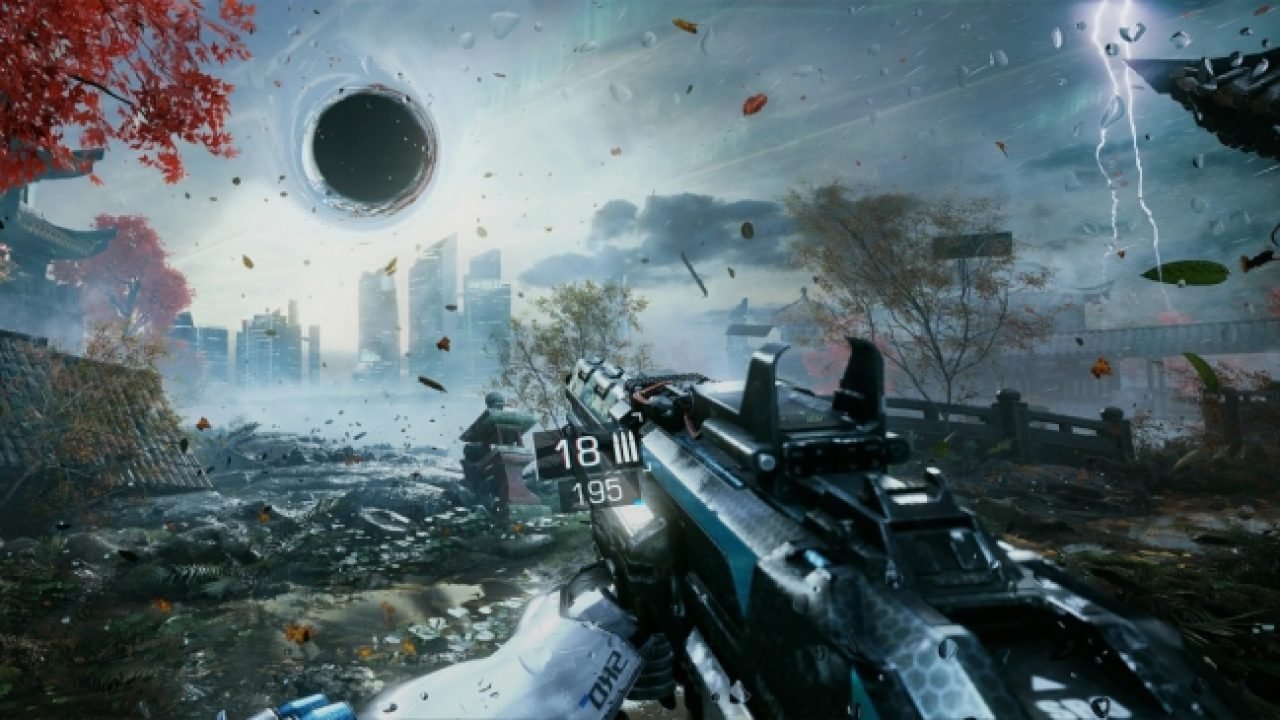
Bright Memorywas an impressive tech demo that was in Steam Early Access a couple of years ago. It had a scantily clad female protagonist (which doesn’t do anything for the game honestly) and a mix of sword and gunplay in the first person which felt fast-paced and punchy. Infinite is the fully released game, and it’s basically a much longer tech demo. You can finish the game in 90 minutes and this leaves nothing for story or character development which is almost non-existent. All I gathered is that there’s a black hole forming near-Earth and you must stop an evil military guy from taking some sort of artifact that will bring Earth back to Feudal Japan? I’m honestly not even sure.
The best part about the game is the gunplay. The swordplay kind of takes a back seat and is only needed in certain situations. You get a standard arsenal of four weapons. Automatic pistol, auto-shotgun, assault rifle, and sniper rifle. Each weapon has an alternate ammo type that’s usually explosive and does massive damage which is best saved for larger enemies and bosses. The weapons feel heavy and punchy, and they are fun to shoot and use. The gunplay was so good that it kept me wanting more from the game. It had a AAA budget quality to it that’s not seen in many indie shooters. The swordplay consists of mashing a single button or launching enemies into the air. There’s a tacked-on afterthought of a skill tree that lets you unlock abilities and upgrade your alternate ammo firepower, but in 90 minutes you upgrade almost everything pretty quickly so it feels trivial.
There is a grapple line for traversing long distances which are scripted, and you can wall run. These ninja acrobatics feels a bit stiff and not as refined as the actual gunplay. In fact, all of the animations feel stiff and like they were hand done. The faces almost don’t animate and thankfully there are less than 10 minutes of total screen time where the camera shows any faces. Your main character, Shelia, is questionable in the sexy department since you hardly ever see her and there are DLC costumes that seem pointless due to the short run time. You can go through the game again on higher difficulties, but I don’t see the point.
The issue with a short game like this is there is no incentive to come back. There are no modes, no multiplayer, and hardly anything to aim for. The visuals in the game are fantastic with great use of ray-tracing, but again the animations are weird. There’s a short scene where you drive a car and it feels really janky and half-baked. Overall, the boss fights are fun, but there are literally only four types of enemies in the whole game so it gets repetitive quickly. At a sale price, this could be a fun evening, but that’s about it.
I’m not the biggest Postal fan as I didn’t grow up with it. With Postal 4being another turd in the series, I can easily say this is the best game in the whole series despite being a spin-off. It takes the meta-humor, gore, and whacky character designs of the main series, puts them into a Doom clone, and does it quite well. You are put into the shoes of the main protagonist who falls asleep on this couch and end up playing the levels of his nightmares. There are plenty of locales, fun weapons, and tons of enemies.
You start the game out like you do in the main games. You are in a lively neighborhood and go, postal because your TV is broken. The game ramps up the difficulty quite nicely as this first level has simple enemies like redneck shotgun MAGA hat-wearing enemies, dogs, and innocent people to slaughter. These people give you Wal-Mart bags that give you health. Later on, you run into floating fat enemies that chuck McDonald’s burgers and cups at you. Mind you they don’t use the actual names in the game, but you can easily tell what they’re making fun of.
Later levels bring on various enemies and there are three main bosses in the game. There are three different campaigns to play in. You eventually go through the desert, asylum, sewer, forest, and swap levels to eventually get to the F4 Expo campaign to take on Leon Dusk (har har) and his space program. Each level consists of mostly linear hallways to shoot through but there are many blocked doors that require certain items or colored keys. Finding these can sometimes be a bit of a pain as the levels can be quite long and labyrinthine and the level design overall isn’t the best among these Doom clones. I honestly felt a lot of the time that the pacing was off with arenas being way too large for the loadout you get (you frequently lose your entire arsenal and have to gain it back again) and it can sometimes feel overwhelming just in terms of getting your bearings. The enemy designs are well done as you know what enemies are weak against what types of weapons. You have enemies that mob you, strong enemies that stand back, and some with long-range weapons.
The humor in this game is a bit different from the main entries as it stays meta and makes fun of current global issues. Coronavirus (it’s literally a boss), various memes like Elon Musk, the toilet paper shortage, and various one-liners that poke fun at what’s been going on for the last five years globally. No racism, sexism, chauvinism, or anything like that is needed to be a fun game. The game pokes fun at things rather than promoting them. Anyone saying “Twitter will end this game” is just creating fake outrage. It’s funny no matter who you are and isn’t offensive. The developers got with the times and actually had to make an effort to be humorous. What a crazy idea right?
With that aside, the game does get really repetitive after the first campaign is over. Previous enemies cycle in, the same 8 weapons can only do so much, and most of them are pretty basic weapons, but a few are unique like the Pussy Blower that shoots cats out and you can recall them to do damage on the way back. Most other weapons are just clever or funny renditions of normal weapons with alt-fire modes. You do get items to use such as slowing down time, refilling a weapon’s ammo, and refilling health, and you also get a piss button. Peeing on things is useless unless you have fire or nitrogen bottles to burn or freeze enemies with your pee. Yeah, it’s pretty funny. There is also an Akimbo item which is probably the most valuable in the game.
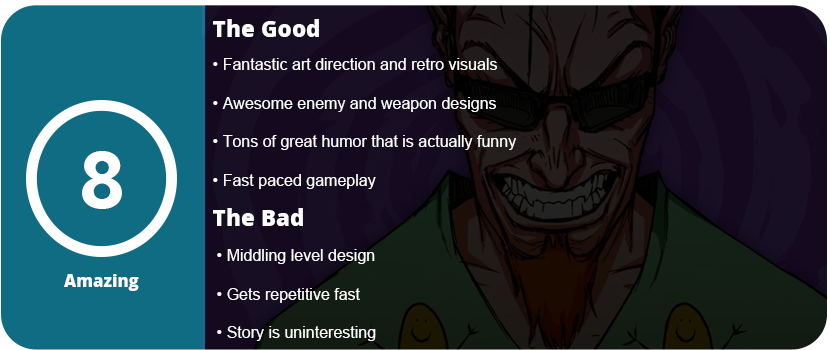
Overall,Brain Damaged has excellent art direction and retro visuals that harken back to the 64-bit era of games like Quake II and Unreal Tournament. The controls are great, the game is fast-paced, the weapons and enemy designs are awesome, there is varied level design, and the humor is actually funny and not offensive just to be offensive. There are plenty of nods to video games, gaming culture, and world events from the last five years that everyone can relate to. If you can get past the repetitious design and so-so-level design problems then you will have a great 5-6 hours on your hands.
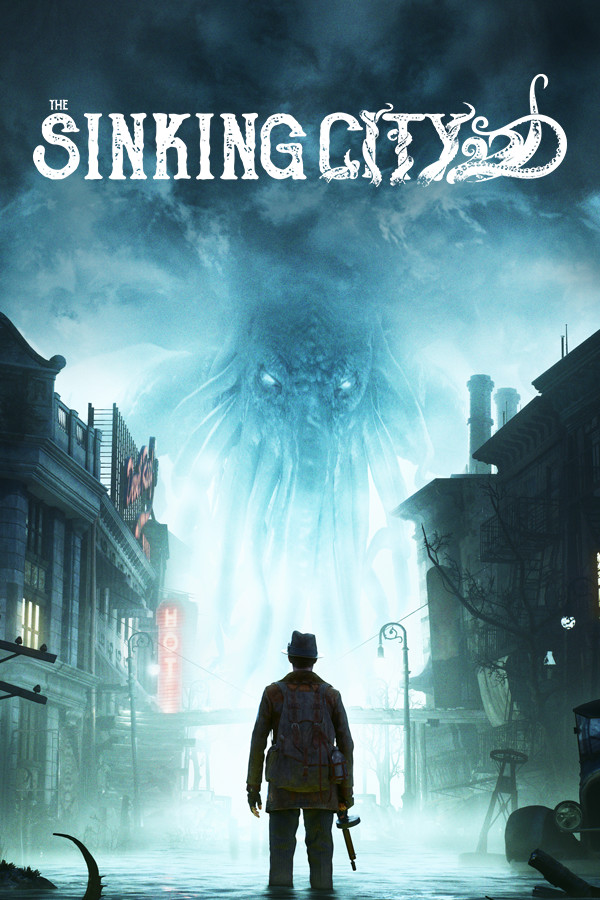
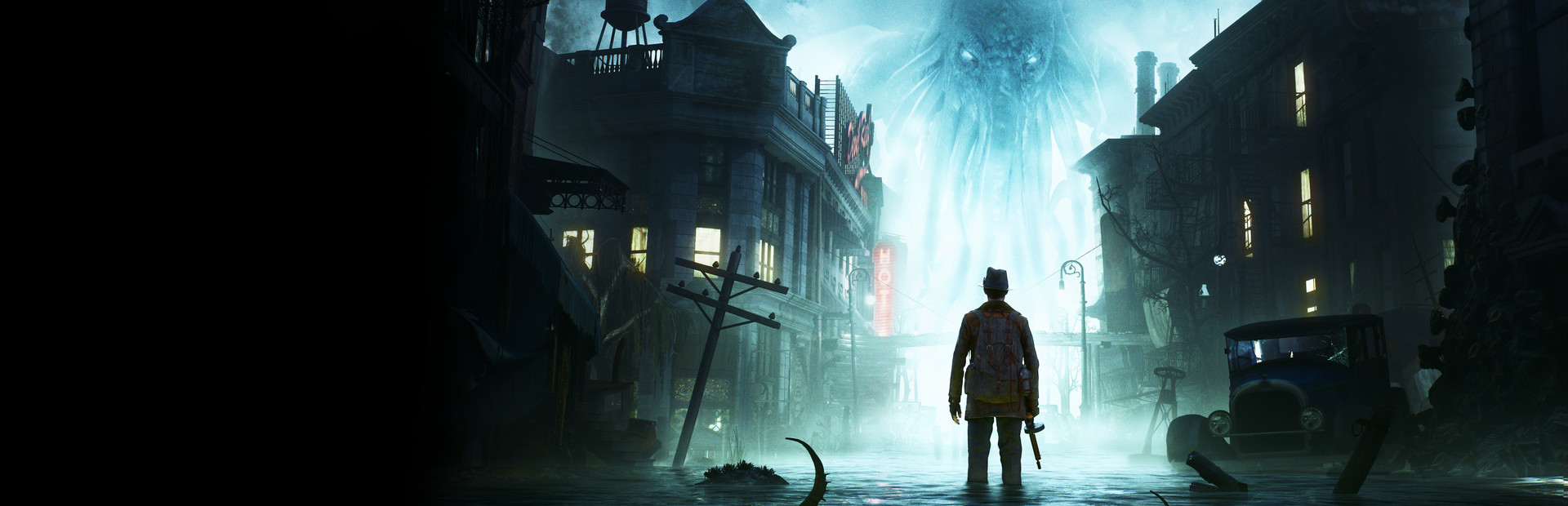
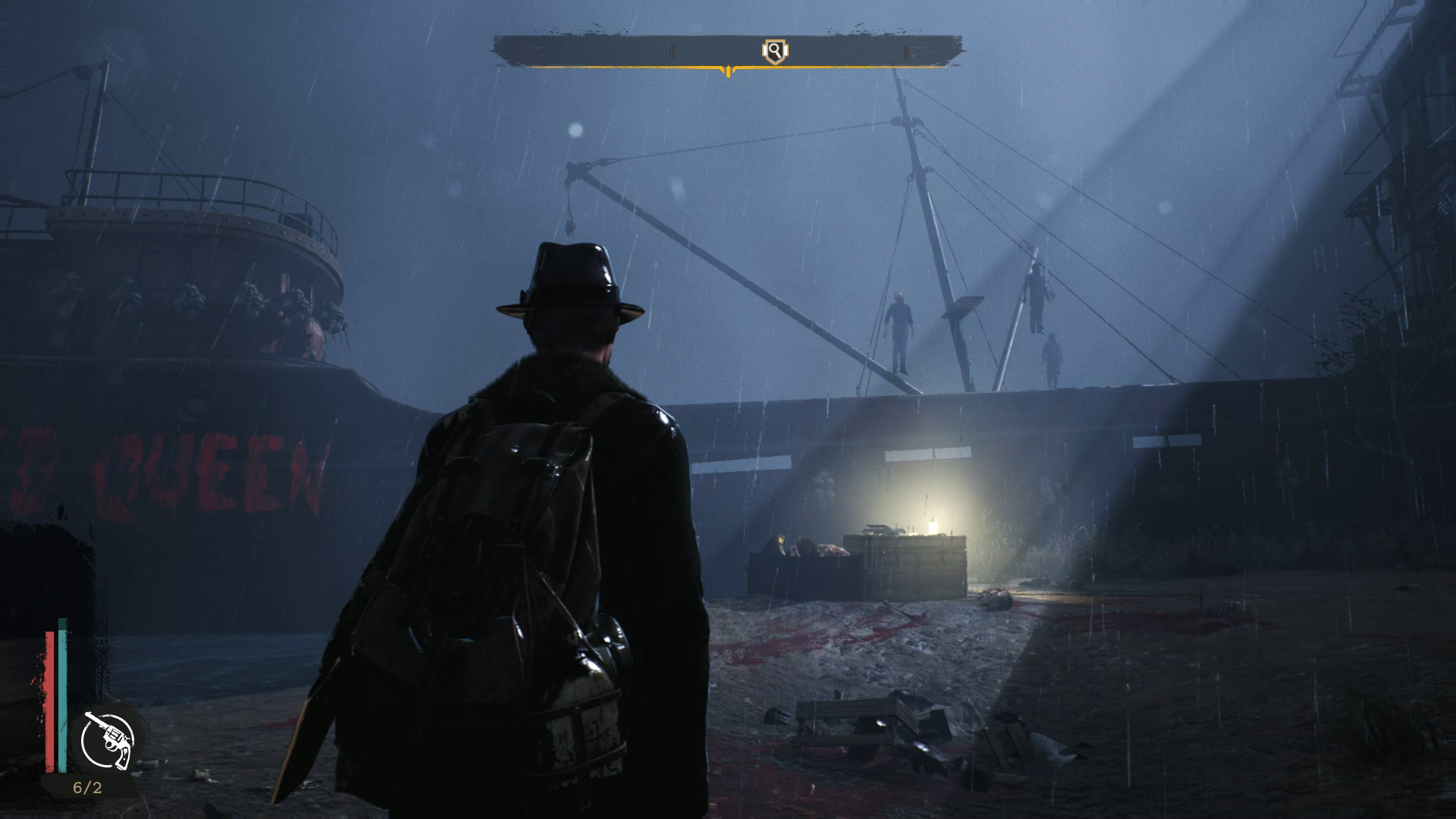
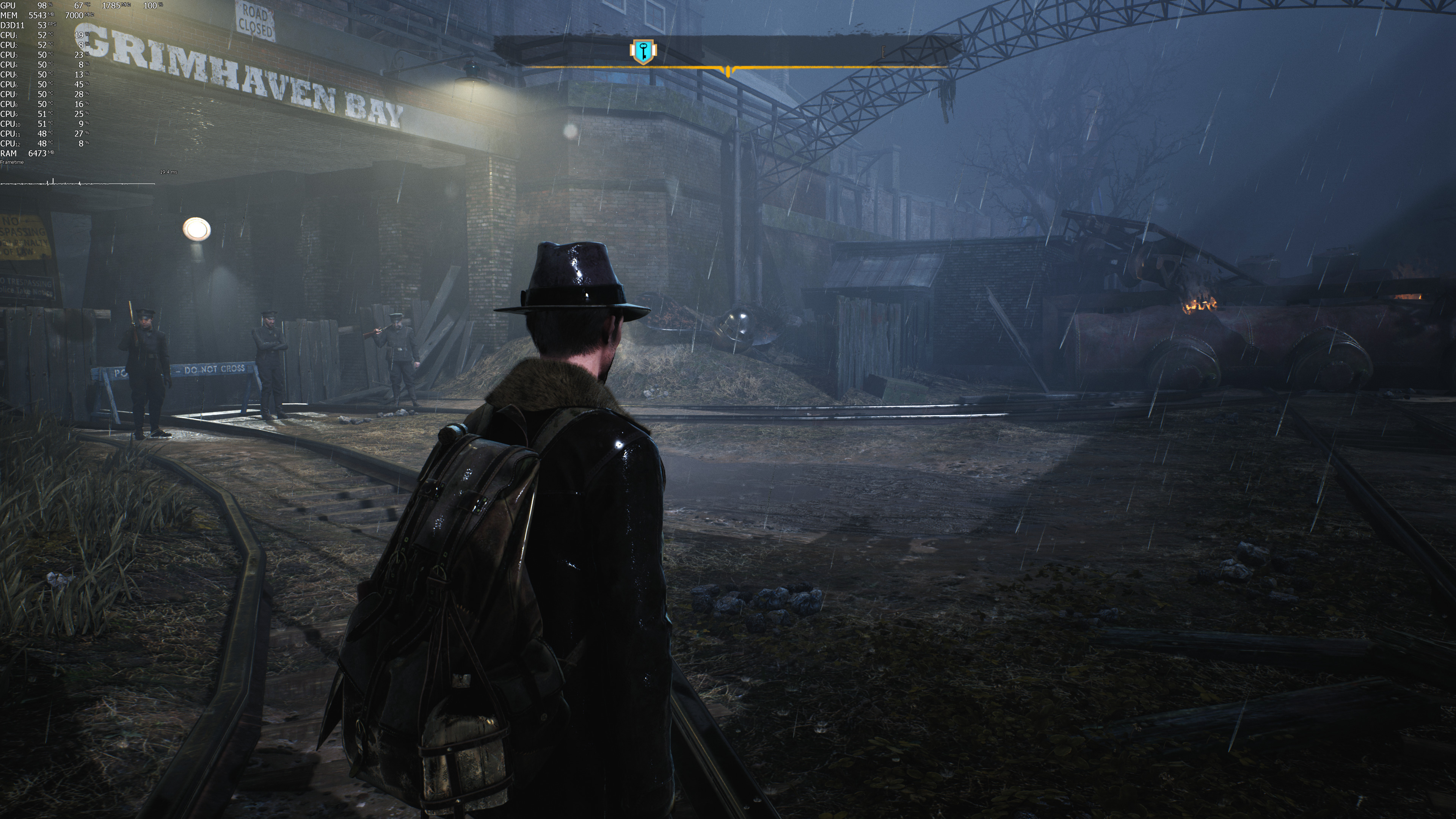
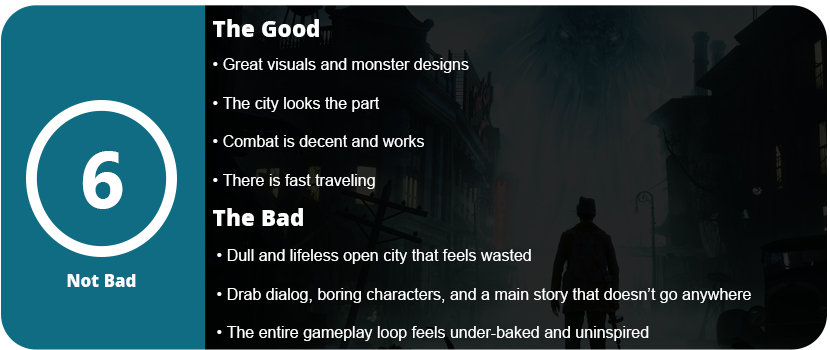
I love Lovecraftian horror, but video games have really struggled to bring these myths to life. Most of the games get the atmosphere and monster design down but can’t nail a good gameplay loop or decent story. By far the best game for this is still Call of Cthulhu: Dark Corners of the Earth. While its gameplay is clunky, it has great storytelling that’s somewhat memorable. The Sinking City does a great job nailing the twisted town of Oakmont with great visuals, but that’s about it. No single gameplay element or loop comes together to create anything interesting or worthwhile enough to make you want to stick around outside of the main story.
Unlike most other Lovecraftian games, this one doesn’t take place in Innsmouth, but it is mentioned that many are fleeing from that town. You play Charles Reed, who is a private eye investigator searching to end his visions. That’s about it, as far as the entire story goes. You bounce around from case-to-case-solving problems of townsfolk in the form of favors to get one step closer to where you need to go. This is where things start falling apart. Not a single character is interesting, including Reed; the dialogue is drab and boring despite the voice work being pretty decent. There are small little stories for each case you can unravel, but I didn’t care about any of them. I just wanted to progress further and hoped there was some cool twist, but that never came.
When you are inside investigation areas, you can examine items and look at objects. There are key evidence items to progress the story and bonus items to complete all evidence for achievements. This is mostly uninteresting, and there are dozens and dozens of these with you just wandering and looking at everything to find any object you can examine. Once you examine everything, you are given clues to advance the case, but nothing is marked on your map for you. You are given a district and then cross streets and have to pin that yourself. I found this kind of interesting until I found out that all of the main story cases are almost always right near fast travel points.
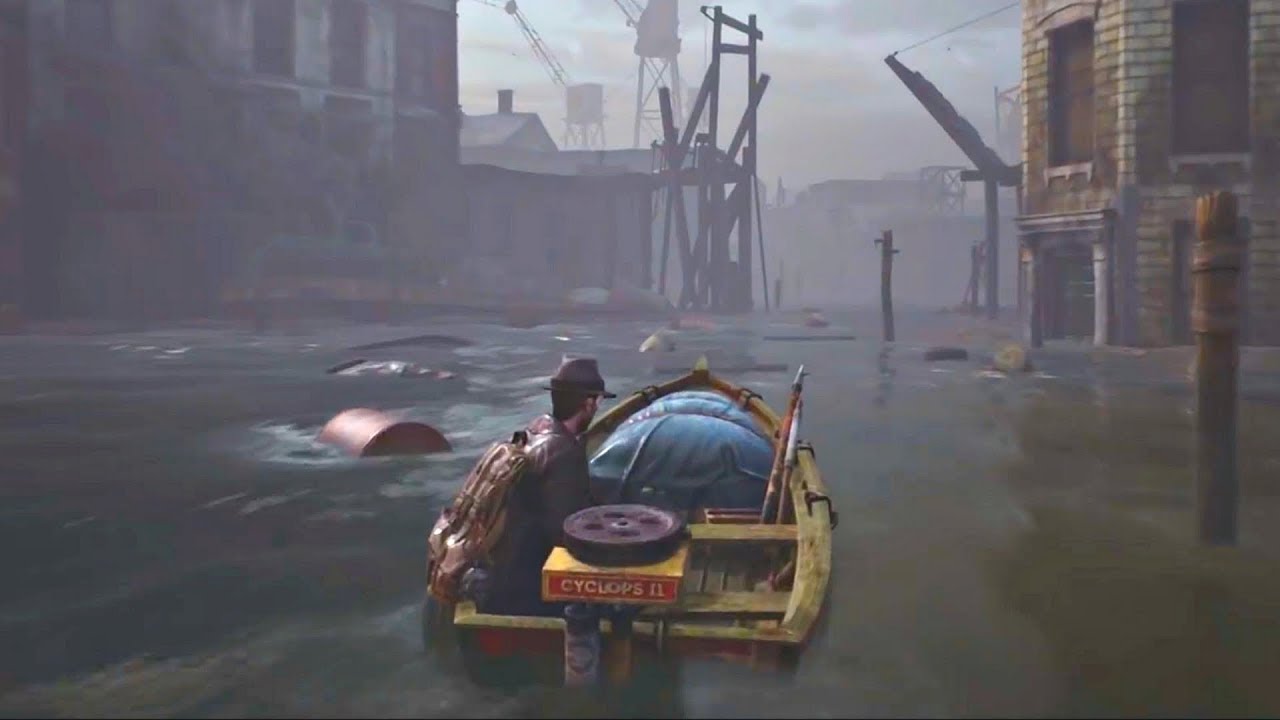
Speaking of fast travel, it’s so necessary because the town of Oakmont is boring and lifeless. Sure, there are people wandering around, but they are just animations to fill space. They don’t make any sound or have any dialog, and there are no stores or anything like that. It’s just linear streets that look pretty broken up with water-logged streets that require a motorboat to navigate. Some areas are sectioned off as infested areas full of monsters and aren’t worth going into for any reason outside of a few side cases that require it.
That gets us into combat, which is another half-baked idea. The game is trying to be a survival horror game by making ammo scarce, but you can craft ammo and health! Sure, but you will literally be scrounging bullets, and some areas have tons of monsters. I got lucky, but usually went down to my last bullet, and aiming carefully is a must. There are five different weapons, including throwables and traps, but honestly, you just start with your weakest gun and work your way up until you’re spent. There’s no strategy to this, all the weapons feel the same and don’t have any weight to them, and there is no cover system. Like any Lovecraftian game, there is a sanity meter, and as this drops, you hallucinate wylebeasts, and they will attack you unless you take psych meds.
There are some underwater levels in which you walk around in a diving suit and avoid hot air vents and a couple of monsters, but it’s slow-paced and even duller as they are all pretty much the same, just with different layouts and an excuse to maybe add filler. You can shoot a harpoon gun to slow the monsters down, but there was no challenge in these six or so underwater areas. There’s a single boss fight, and you occasionally attack humans, which are easy but usually come in large numbers. Part of the appeal of this game is story choice. Choosing who lives and dies doesn’t really affect much except what endings you can choose, which are uninteresting and unfulfilling.
There’s literally nothing else to do in the game. I desperately just tried to find all the fast travel points. I don’t understand making this open-world if it’s so boring and uninteresting to explore and feels so lifeless. The same loop of investigating cases, fighting some monsters, fast-traveling around to the next case, and listening to the dialog is so dull, and I only kept playing because of my love for the lore. If you don’t care about Lovecraftian mythos, then I wouldn’t even bother with this game. I also didn’t bother with any side cases, as the main story takes around 12 hours and drained me. I couldn’t spend another minute in this game.
Overall, The Sinking City is another barely passable Lovecraft-inspired game that gets the atmosphere and looks right but can’t nail any gameplay elements. While none of them are broken or bad, they are just boring and could have been greatly expanded upon. The main story doesn’t really go anywhere; there are no interesting characters, the dialogue is drab, and the bullet scrounging gets tiring because of the number of monsters that get thrown at you. Not to mention
Even if you aren’t a fan of the movies, I want to say right now that the game is based more on the comics and original takes on the characters. I’m actually glad Eidos Montreal went this route. The game features a new story, and even if you don’t like Guardians of the Galaxy, you should enjoy this game as just a pure action-adventure romp. The game is chock-full of humor, clever writing, a great story, and fantastic visuals.
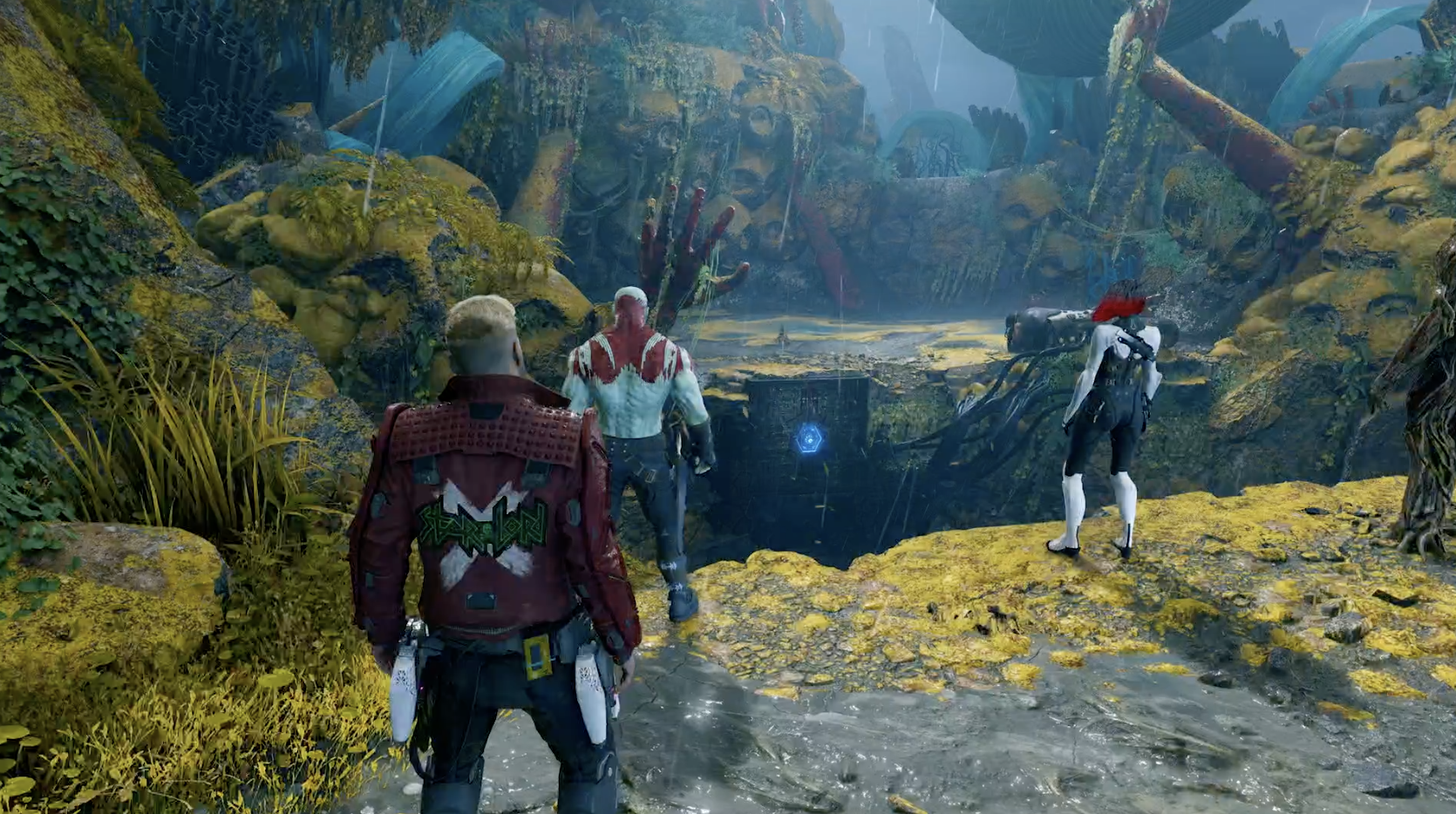
You play solely as Star-Lord, the leader of the Guardians. The game’s length is something I want to mention first, as it’s fairly long. running for at least 15 hours, and there’s honestly not much in terms of venturing off with side quests or anything. This is a very linear game with small side paths that lead to components for upgrades or extra skins, but that’s about it. You start off the game with a story-heavy intro. There’s tons of licensed 80’s rock music, and right away you can see there’s a lot of care and detail put into this game. Fantastic voice work, great sound effects, and tons of great artwork The game consists of two main parts. Exploring planets on a linear path that includes light puzzle elements—well, barely that, to be honest—and some platforming Then there’s the combat, which this game relies heavily upon and uses as filler.
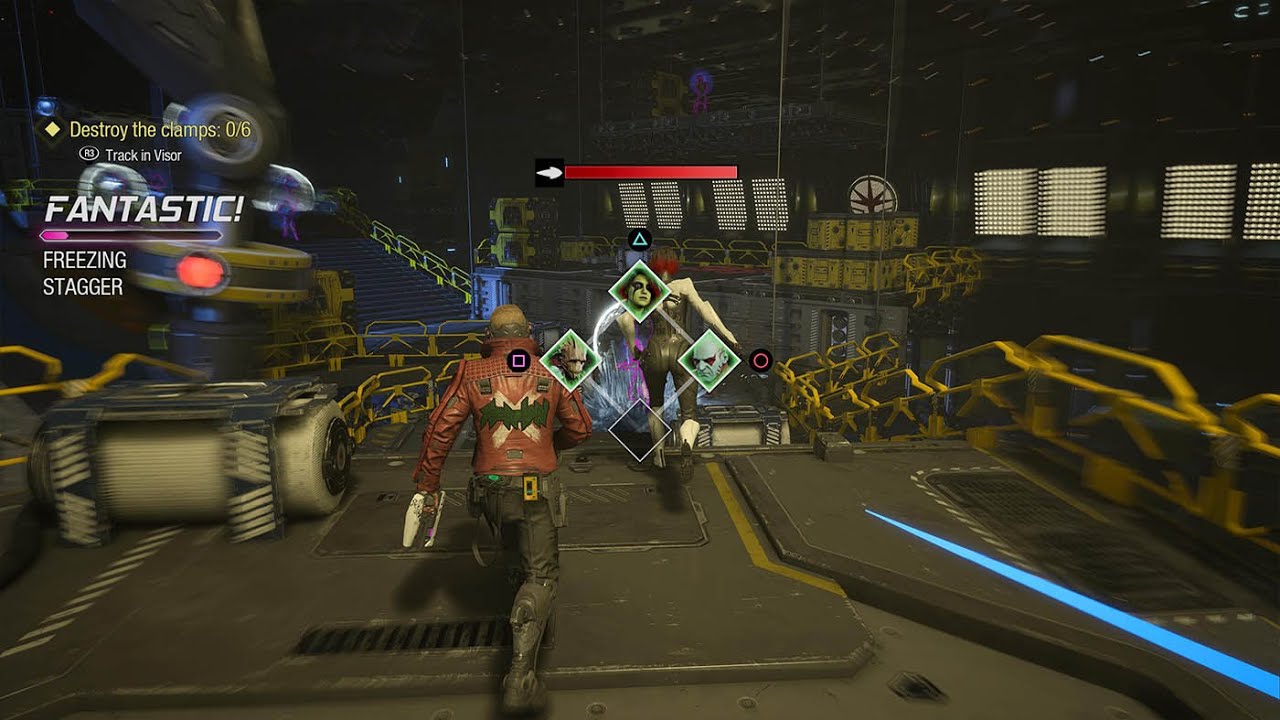
Let’s just get the combat out of the way here. As I stated earlier, you only play as Star-Lord, and you can order your other three teammates around. When you start out, you slowly acquire up to four different abilities for each member, including yourself, and these are acquired with ability points earned through combat. I feel this is meaningless in the end and feel tacked on as there’s not much strategy involved in combat. You can shoot your pistols until your heat meter fills up, and then time the gauge in the green to offload the heat for a burst shot. Then you can mash a melee button as well. Honestly. Star-Lord is fairly weak by himself, and I heavily relied on spamming the abilities of my teammates. Even my own abilities were fairly weak in comparison. Drax is a heavy tank, while Gemora is like a ninja and can jump around, slicing enemies. Groot is eventually upgraded as a healer towards the end of the game, but in the meantime, he can hold enemies in place. Rocket uses explosives and focuses on AOE damage.
This all sounds fine on paper, but in the heat of combat, the different abilities don’t do enough, which is different enough to mean much. I usually just relied on a couple of abilities from each member, mostly AoE-type abilities for maximum damage, and stuck with those through the entire game. I only really used my own pistol barrage ability, as it was the most useful. Enemies come in usually only three varieties. Easy to kill, medium damage and health, and larger enemies with multiple health bars The enemies mostly repeat on their respective planets, and then there are the same Promise enemies over and over again. There are a few boss fights thrown in, but they aren’t anything unique or special.

It’s sad that the combat is a dance of spamming the same abilities from your teammates and running around to stay alive. The fact that you yourself do so little damage is really odd. There are a few other contexts thrown in, like a bar under the larger enemies’ health bar that determines when they are weak. If you spam enough attacks in a row, you can then do an instant kill. There are also a few environmental items that you can order teammates to toss around, but they’re very underdeveloped and rely too heavily on these fundamentally useless abilities. The fact that there is so much combat in the game can make it feel like it’s dragging on far too long and is just there for filler. I much preferred the story elements and more exploration areas than the combat.
The exploration is mostly just running around and listening to the banter of the Guardians, but also light puzzles in which you must match the correct teammate’s ability with the right obstacle. Gemora can slice things open, Drax can punch through walls, Groot can create bridges, and Rocket can hack panels. There are four weapon elements you acquire, such as lightning, ice, fire, and a grapple ability, that are used here as well, but it’s not rocket science. Again, another idea that is undercooked and feels like filler. I mostly enjoyed the choices you have to make during the story, which determine which allies help you during the final events of the game, and the overall voice work and writing are clever, sharp, and really funny. I just wish the rest of the game had the same care attached to it.
That’s not to say it’s downright bad. The controls are responsive, the animations are smooth and look great, and the combat does work. It’s not clunky or a chore to use; it’s just full of underwhelming features. The various planets you explore are fantastic-looking, really draw you in, and make you feel like you’re in the comics. There are intermissions in between in which you are on the Milano ship and can walk around and explore. There are also Easter eggs and lore scattered throughout the game for hardcore fans too. However, the biggest element of all is: is this enough to warrant sitting through 15–17 hours? If you aren’t a huge Marvel, Guardians of the Galaxy, or comic book hero fan, then no. I feel like almost 5 hours could have been cut with less combat thrown in, and the story does go on and on. It’s supposed to, as you get a solid beginning, middle, and end. There’s enough run time here to really get you to connect with each character. I didn’t finish the game and have no clue about anyone or care about anything, like most video game stories these days. It was daring for Eidos Montreal to really push the story through and allow you to grow with these characters, and it paid off.
Overall, with weak and repetitive combat, mostly useless abilities that don’t allow for any type of strategy, and a weak attempt at environmental puzzle-solving, the only saving graces here are the visuals, story, characters, and voice acting. I played this game all the way through because I wanted to see and hear more. It was highly entertaining, but every time I went through a chapter full of nothing but combat, I grumbled and just wanted these parts over with. I then enjoyed exploring various planets but got annoyed with the poor attempt at puzzles. If the
Lone Sails was an interesting puzzle adventure game that took place on a 2D plane. You micro-managed various things on your vessel while acquiring upgrades to overcome new obstacles. Changing tides is exactly the same thing, but on a boat instead.
There is no store or character building at all, and that really stinks. I can tell the world in Far is sad and clearly post-apocalyptic, but the game gives me no reason to care about it other than the puzzles. You start out swimming this time and learning the basics. jumping, climbing ladders, moving objects, and picking them up. You then acquire your ship and learn how to manage your fuel, sails, filling with air or water for submarine controls, cooling your engine, and using your boost power. You acquire these over the course of the game, but fuel management is key. Don’t use fuel unless you don’t have wind, which was the mistake I made. I wound up with tons of fuel at one point without realizing that’s the most I would ever get, and that was 2/3 through the game.
Gathering fuel is done by collecting junk lying around. This isn’t often, and sometimes you will hit a buoy, and below these are caches of fuel. Don’t get lazy and skip them, but sadly, the game never tells you to look out for them either. Each upgrade requires a giant puzzle of a level, and they were never hard or complicated. Mostly, it’s pushing a lever to drop an object into a machine. They’re fun, but not hard. While you’re sailing, there will be long stretches of nothing. Sometimes not even music. This can get quite boring as the micromanagement of the ship gets tiresome after a while. It was fun at first, but I felt like this was the main gameplay loop and not the puzzles. Overall, there are only four upgrades to get, so about 4–5 puzzles in total. You spend at least 2–3 hours just sailing and micromanaging your fuel and sails.
Once in a while, there are cinematic platforming moments in which you just follow a linear path, which was neat because it’s the only action in the game. I just can’t care a lot about this series without some kind of back story or context. Games like Limbo, Inside, and Little Nightmares do this well with storytelling from your environment. There’s not much to tell in open oceans with just wasted buildings. Even the puzzle areas had murals that supposedly told a story, but they really didn’t mean anything. There’s only one neat moment at the very end of the game before the credits roll, and that’s it.
The platforming itself is fine, if not slippery. I constantly found myself wanting to twitch jump around the ship, and I would constantly fall down holes, get stuck on ladders, or not get to where I wanted because of the slippery jumping and physics. It’s also a bit too floaty. The puzzles are the most enjoyable part of the game, and it’s a shame the boating is so tedious and boring most of the time with nothing going on. If it were cinematic or a more interesting management system, I would really like this idea. I didn’t care for it in Lone Sails, and it was doubled down on here.
Overall, Changing Tides looks good for what it is and has a nice art style, but you will quickly forget this game. It’s about 3–4 hours long, and I can’t stress enough that there
Video games that are considered moving art are rare and don’t happen as often as they used to. Games like Shadow of the Colossus, Okami, Journey, Monument Valley, Echochrome, and various games from large to small budgets would be among that crowd. Lost in Random takes visual and character design inspiration from the likes of Tim Burton’s The Nightmare Before Christmas, Alice: Madness Returns, and Psychonauts. Now, I don’t know if those are exact inspirations, but it sure does feel like it. I feel like I’m playing a Tim Burton cartoon.
You play as a girl named Even. The world-building in Lost in Random is very well done. By the end of the game, I completely understood this world and the horrible things people have to go through. There is an evil queen who rules a black die. When she rolls a die, it determines where a child gets sent. There are six realms in the world of random. You are, of course, starting out at the bottom and have to work your way up to Sixtopia, where the evil queen resides. Children are used for something, and the queen also takes your sister Odd back to Sixtopia with her. The people of Random used to have their own dice, and the evil queen didn’t like this, so she took them all away, and only she can decide anyone’s fate.
Each realm is very well done. They all look different, and each realm plays an important role in serving the queen. One realm makes the cards, one realm offers the garbage to create the evil robots, and so on. As you climb through the realms, you meet people and can do side quests, which, surprisingly, aren’t that annoying. You mostly finish them all just by completing the main quests in each area, and I rarely felt any made me go out of my way. Exploring is one of two major parts of the game, and it’s quite enjoyable; in fact, I enjoyed it more than the combat, which there is more of. I loved seeing the beautifully crafted areas, talking to the crazy NPCs, and learning how each realm is dealing with everyday life. This kind of detail isn’t put into games as much these days unless they’re strict RPGs.
As you explore the realms, you can shoot down pots to earn coins to buy cards. Cards are used in combat, but it’s not like Hearthstone or anything like that. This is real-time combat with cards that give you what you need in the battle. You can carry a deck of 15 cards, and there are around 30 or so in the game in total. You can usually carry 2–3 of each one in your inventory. The deck is varied and broken down into categories. Weapons, traps, hazards, assists, and so on. The problem is that because the combat is in real-time, it can drag on and take a while to get any battles over with. You start out with just you and your death. You only get to roll a one at the beginning, and as you climb realms, you get more sides. This is an issue because until you get at least four sides, you can’t roll very high. You must run around the arena, shooting crystals off of enemies, to build up your hand. I find this whole process tedious, which really dampens the combat a lot and nearly kills the fun. Once you have gathered enough crystals, you can roll your die, and that determines the spending points you get. Each card has a number from 0 to 3. The strategy is picking the right cards for the situation and making sure you have a varied deck. You don’t want to be caught without a melee weapon or health, for example.
Once you play your hand, you have to shoot crystals all over again or “blink” through enemy attacks. An important card is Blink Attack, which damages enemies as you dodge because, without a melee card, you’re weaponless. This also drags out combat, as I wish the slingshot would automatically do some damage. You’re stuck just running around shooting crystals and hoping a hazard or weapon card comes up so you can attack and do some damage. This also makes for cheap deaths, especially in the board game areas where there are no checkpoints. Board games have various rules in which a game piece is moved around, and your roll determines the moves. There are hazards, enemies, traps, and obstacles to overcome, and I absolutely hated these. They dragged out the already dragged-out combat, and if you died towards the end, it was another 20 minutes to fight your way back to the end.
As you can see, the combat has some great ideas, like real-time combat mixed with card battling, but getting to that sweet spot is a chore. There is also so much combat in this game. Once you left a town, you just went into one arena after another, and it felt like it would never end. The only reprieve in combat was the boss’s fights as they changed things up. The same five enemies repeat throughout the entire game, and then, after a while, it just becomes a game of survival rather than strategy. You already know how to kill these enemies after the 50th time, so the strategy is gone early in the game. I wound up just equipping the cards that did the most damage, dropped my spending requirements down, gave me more spending points, and required fewer crystals to get to the cards. I stuck with melee weapons, bombs, healing, blink attacks, and poison, and that was about it. Most other cards end up becoming useless as the game gets harder.
Overall, the game also overstays its welcome. The combat isn’t interesting enough to last 10 hours. As you battle your way through six worlds, each with multiple bosses, quests, side quests, and cards to buy, the game grows tiresome towards the end. I just wanted to explore the beautiful worlds and enjoy the scripted events towards the halfway point. Every time another board game came up or another arena, I groaned. That’s not a good thing. I liked the mix of combat types, but getting to that point with the crystal shooting is just such a chore and slows the whole game down. What’s here, though, is a wonderful story, great characters, fantastic voice acting, and a beautiful world to explore.
Adventure games that both have shock value and a good story are rare and hard to come by; sadly, Martha is Dead is not one of those. You would mistakenly think this is some sort of horror game with monsters and demons, but it’s barely even that. This is a ghost story, a story about battling mental illness, and a story about surviving WWII in Axis Italy. You play Guilia, who is Martha’s twin sister. This is a detective game more than anything, with plot twists and an interesting vintage camera system.
The game starts out simple enough. Introducing controls, the plot, character building, and the whole nine yards that adventure games typically put you through. Martha’s best feature is the camera system. While you can take photos anywhere (I don’t know why you would), you need them for specific plot points. Guilia is trying to talk to the White Lady of the Lake and find out why her sister died. This is kind of the first half of the story, as it jumps around so much. The game is very plodding, slow, and constantly leads you on for little payoff. Taking photos for objectives is simple enough. Just get the focus and distance right, and snap the photo. You then get to develop the photo, but instead of taking you through the entire complicated process, the game explains to you what that is and says it cuts 90% out for better gameplay. Why? You just focus and position the negative for exposure and then develop it in liquid, but the point at which you stop it is the same for every photo. A pretty lame “mini-game,” if you ask me, with tons of lost potential.
With the camera feature out of the way, there are other small gameplay things you do, such as a morse code mini-game, which I actually enjoyed. I had to look up a morse code chart online and decipher it myself. That was actually well done and made me think, but that’s the only part that did. 75% of the game is spent in Guilia’s house or the wood’s winding paths. There are a few scenes where you control a motorboat, but it’s just to get to the other side of the lake. You are mostly wandering around at a slow pace, going from point A to point B, and interacting with objects. Go check out the graveyard, go back to the house and develop the photo, go back to the lake and find an underground bunker, go back to the house, and put up a flag. The constant backtracking is tiring and clearly used for filler.
Then the last hour of the game is zero gameplay. It consists of long puppet shows recapping the entire story, like you already didn’t know what happened. The story thinks it’s more complicated than it is. Honestly, the puppet shows are cool-looking, but they didn’t advance the story. The story here gets recapped numerous times in various forms, which is really annoying and makes the player feel dumb. After the puppet show stuff, you just walk around interesting scenes with narration, and that’s it. The best parts of the game are the gory death scenes, which are pretty nutty. They would make Mortal Kombat fans blush. But in total, this is maybe five minutes of the entire game. There’s a bike you can ride, but the control is terrible, and it’s only used to ride around the house and surrounding path, so what’s the point with that?
Then there are the visuals. Yes, the game looks damn good. Crazy detailed textures, amazing lighting effects, and models—and it just looks like a AAA title—but at what cost? The game runs horribly on even my RTX 2080 that’s overclocked. There is ray tracing in the game, but I couldn’t tell the difference between that and ultra-graphics settings. I feel this was put in more for next-gen consoles for a subtle effect. The game has constant stutters, frame drops, weird frame rates with ray tracing on, and even DLSS set to ultra-performance. At 3440×1440, I had scenes that ran at above 60FPS with ray tracing on, and then I would turn around and the frames would drop by over half. Without DLSS? Forget it. The game would drop into single digits one second later, and then inside the house it would be 90FPS. Super terrible optimization all around here, and even with DLSS set to ultra-performance without ray tracing, I still saw dips under 60FPS. Totally unacceptable. DLSS shouldn’t be used as a crutch.
Overall, Martha is Dead mostly relies on shock value for the few scenes that have it. It’s neither a horror game nor a puzzle game. It’s just an adventure game with various story elements tossed together, boring backtracking, and little gameplay to keep you interested. The photo mode is ambitious but purposefully handicapped when it could have been as robust as real-life photography back in WWII. It’s a missed opportunity. The game spoils itself constantly with frequent story recaps, and in the end, there’s a final plot twist. The story runs its course about two-thirds of the way through, and you’re left with a giant recap scene with no crazy finale that most adventure games have.
Simulator games these days are becoming a serious addiction for me. With Power Wash Simulator becoming one of the best zen-like time sinks I’ve ever played in my life (when it’s out of Early Access, I will do a full review) and my past addiction to time management games like Diner Dash, I can easily play this game for hours on end with tunes in the background cranking out cars. There’s not really a story here, obviously, but you start out from scratch with the most basic tools and a small garage, but over time you can expand, make repairs faster, and fix up cars from the ground up even.
You start out with just the basics. One lift, slow examination, mounting, and screwing skills You start with the first of 30-story repairs by doing tire changes, fluid flushes, and basic repairs. The great thing about CMS is that it slowly gets you familiar with how cars work and break down. I felt like the game was rocket science at first and quickly got frustrated. What’s a rubber bushing? Where are they all? Then I realized that all the bushings are tied to the suspension. You eventually learn each section of every car and will start building engines from the ground up, and then entire cars. After about three or four hours I was expanding my garage by adding car washes, another lift, spending XP to make my skills faster, and adding things like a welder to get rid of rust on bodies.
Things get easier and faster once you unlock diagnostic tools like an OBD scanner, a multimeter, and fuel and engine pressure tests. In the beginning, you basically have to take everything apart and look for the completely rusted parts, as those are the ones needing replacement. The beginning cars will tell you what’s wrong so you get the hang of how the gameplay loop works. Later on, every part will be undiscovered, and it’s up to you to diagnose, visually examine (it’s an actual diagnostic mode), and know how to spot fully worn parts. Sometimes you can take a car on a test track to get a wider diagnosis of what’s wrong, then there’s the test path for brakes and suspension. Eventually, you’ll get the hang of what diagnostics work for each condition of a car. If the car won’t start, then you should use your examination mode first, then your OBD scanner and multimeter, and fix those parts. If the engine fires up but won’t drive, then you need to do the other tests. Sometimes none of the tests will tell you what’s wrong, and you have to do exploration diagnostics.
There are other elements like a spring puller for shocks, a tire separator and balancer, and a brake disc lathe, and you can do a small minigame to repair parts that aren’t completely destroyed, of course, once you unlock all these tools. You can even do headlamp adjustments and alignments. It’s fun changing fluids, screwing in parts, and discovering new engine types with more pieces than before, but after you finish the story, all that’s left are random repairs (which are quicker than story missions) and visiting the junkyard and auction to rebuild cars and sell them for more money to turn around and buy more cars, but what’s the appeal in that? Driving the cars on the track is really generic and boring, and the fun part of the game is the mechanic part. I don’t want to collect cars, really. Once I upgraded and bought all the expansions there wasn’t anything left to do.
After about 20 hours, I could build any car with my eyes closed, and this is my main concern with CMS. The individual car systems are limited in scope. Yes, there are many engine types, but they all go together basically the same, just with different parts and varying sizes. It was fun to build an engine on the stand and lower it into the car. I had fun restoring several cars, repainting them, or giving the car performance parts to stick on the dyno. However, if it’s not for a repair, I didn’t feel any satisfaction. Once you rebuild a few cars, you experience the most challenging part of the game. There were a few issues early on in which you could get stuck with no money if you start buying up too much. You need to grind repairs until you get around 30,000 credits and can rebuild and sell a simple car from the junkyard to give you your first serious payment.
The other issue is that everything is canned. all animations, movements, and actions. This isn’t a Surgeon Simulator or a Cooking Simulator. There are no hands you can control in real-time. When you click it apart, there’s an outline of where it needs to go. You hold the mouse button down, and the part appears, as do the screws. You hold the mouse down on all the screws, and you move on to the next part. It’s essentially like building Legos. The overall longevity of the missions outside of the story will determine how much you get out of these limited systems within the cars and various small mini-games. It becomes redundant and almost boring after so long when the entire reaches its peak early on.
What’s here is a satisfying and fun simulator for at least 20–30 hours. You will want to grind the story missions, unlock everything, and experience everything at least once. Restoring cars from just the frame is fun, but I also would have liked more exterior customization. It’s very limited to just doors, windows, hoods, trunks, lights, mirrors, and that’s it. There’s also almost no satisfaction from just buying cars, restoring them, and keeping them to race on a dull track, or selling them for money that isn’t really needed anymore once you unlock everything.
Have you ever wanted to play a game where you are a mail delivery woman? The answer is probably “I have no clue,” but you’re going to find out with this game. You play as Meredith Weiss, a computer programmer who lives in the big city and decides to go back home to the sleepy town of Providence Oaks, Oregon, to help out with her dad’s mail route so her parents can go on vacation. You spend two weeks in this town, and the bulk of the game is mail delivery, but there are also story choices here that decide your relationships with various townspeople.
You start the game off with a little backstory. Your mail co-worker, Frank, picks you up from the airport and drops you off at your parents’ house. You then start your delivery the next day. This is actually quite fun at first. You drive your mail truck around the small town and drop off mail at mailboxes and packages at doors. You get a map with envelope icons for mail and box icons for packages. It’s not too hard to figure out, as there are very few roads and you can’t get lost. There are certain landmarks in which story characters reside, such as Mo’s Diner, Kay’s house (a childhood best friend that you lost contact with), a lumberjack who is trying to prevent corporate apartments from being built, a potato farmer, a teenage mechanic, a general store owner, and a movie rental store owner, and you get to decide what your relationship is with these people. You can fall in love with them, ignore them, or just stay neutral. This is a story about everyday life, and while the characters aren’t very interesting, the overall bigger picture of small-town life is what can drive you in.
After the first day of mail delivery, the game becomes mundane and dull very fast. While the town looks nice to drive around in, you just drive around one big circle along the lake, maybe a few side roads for rural houses, and it’s just stopping the mail truck, getting your own, going to the back, picking the correct package, and getting back in the truck. The same four songs repeat forever on the radio, and having to do this for 12 days just gets so tedious. It’s literally filler to create a “game” in between the story choices. The delivery thing doesn’t add anything to the story at all. You could cut all that gameplay out and just have an interactive novel, and it would probably be a bit better so the developer could focus more on character development. The characters do stand out and all have unique personalities, but they don’t have enough screen time to really fill out.
Every choice leads up to an open mic night at the diner, and your choices up until this point carry out. You also get to decide whether to stay in town and keep delivering mail, run away with someone, or go back to city life and make money. I do commend the developers for capturing the small Pacific Northwest lifestyle. My mother lives in a small town in Oregon, and I also live in the PNW and just love games that capture the feeling up here. There is lots of rain, beautiful scenery, and small lifestyles in the rural areas. The game looks pretty too, but not technically speaking. There are lots of low-resolution textures and models, but the lighting and detail are really nice, but after the first hour, you just see the same scenery on repeat. You spend maybe 3–4 hours in that mail truck trying to pick the most efficient route for the dozen or so people you deliver to daily. The world is devoid of life outside of mindless NPCs that drive around or walk the streets. The town just feels dead and not alive at all.
Overall, you’re not missing anything by not playing this game. The mail delivery mechanics are unique and new, but they aren’t fleshed out enough to stay interesting. The town is too small for a gameplay loop like this, and there needs to be more variety in the 12 days of mundane mail delivery. While the characters do have unique personalities, I didn’t care about them enough to really let my choices sink in. There’s just not enough screen time with them. Just as they start to blossom, the game ends, despite the number of choices available to you to weave your own path. The game does capture the sleepy rural PNW feeling, but the small area is just devoid of any life.
I’ve always been fascinated with space and what planets on the surface look like. Weather patterns, mountain formations, various chemicals, and minerals do certain things with the weather and whatnot. This is what Exo One explores. While there’s a paper-thin story here about a spacecraft being discovered on Earth and NASA trying to use it to launch a crew to Jupiter, The vessel gets lost, I think, and you wind up bouncing around a dozen different planets trying to find your way back to Jupiter. It’s barely there, but it gives you a reason to keep going and provides an overall goal.
The controls take getting used to, and by the end of the game, I never quite cared for them. They seem overly complicated, but you essentially control the ship’s gravity and flight direction. You can roll on the ground to build up power (the orange glow in the center of the ball) and can lift off or smash down to the ground by increasing gravity. You do also have a double jump button, which comes in handy for fine-tuning your flight path. You want to stay in the air as much as possible, as this is your best form of movement. In the air, you can travel farther, as you will be traveling dozens of kilometers on each planet to get to the goal.
Each planet is completely different in the sense that some are covered in oceans, some have no ground, and some have more complicated terrain to get around. Some have little gravity, and some give your ship a bigger boost due to the increase in lightning in the area. You can boost your ship with various things, like flying into clouds, wind paths, particles, and various other boosters. These boosters are usually visible a few kilometers away, and you want to get to them. There are some instances in which navigating has become irritating and frustrating. A couple of planets have strong winds or will cut your controls completely. One planet had me just rolling along the ground for over 10 minutes, using the wind to guide me. The terrain itself seems almost randomly generated, and hills are your enemy. You want to boost downhills and release gravity, going up like a giant ramp. This is impossible in areas with strong winds, as they slow you down.
There are upgrades for your ship that are kind of spread around on some planets. These increase your glide and overall power, and they are helpful, but getting to them can mostly be a chore. Fine-tuning and aiming for a small spot is really frustrating. You can constantly turn around and try again, trying to gain just the right height to reach an upgrade. The enjoyment is the constant momentum you can create via rolling on the ground, boosters, and using clouds to gain altitude. Once you reach the goal, which will be a giant blue light in the sky, you warp to the next planet, and I love the variety. Not a single planet is the same, and soaring over large oceans or weird formations is just awesome. The visuals are fantastic, with great water effects, rain effects, and an overall amazing sense of speed.
There’s not much else to the game except to enjoy the scenery. There are no high scores, no hidden secrets, or anything of that nature. Think of this as a “walking simulator” but up in the sky. The only gameplay is maintaining your flight and fighting elements on some planets. It’s over in about two hours, but it’s a beautiful two hours. If you love exploring planets in games like Mass Effect, you’re going to enjoy this quite a bit.
ORC is probably the worst game in the entire series. It's objectively awful. Being bad isn't different. Different is Outbreak…