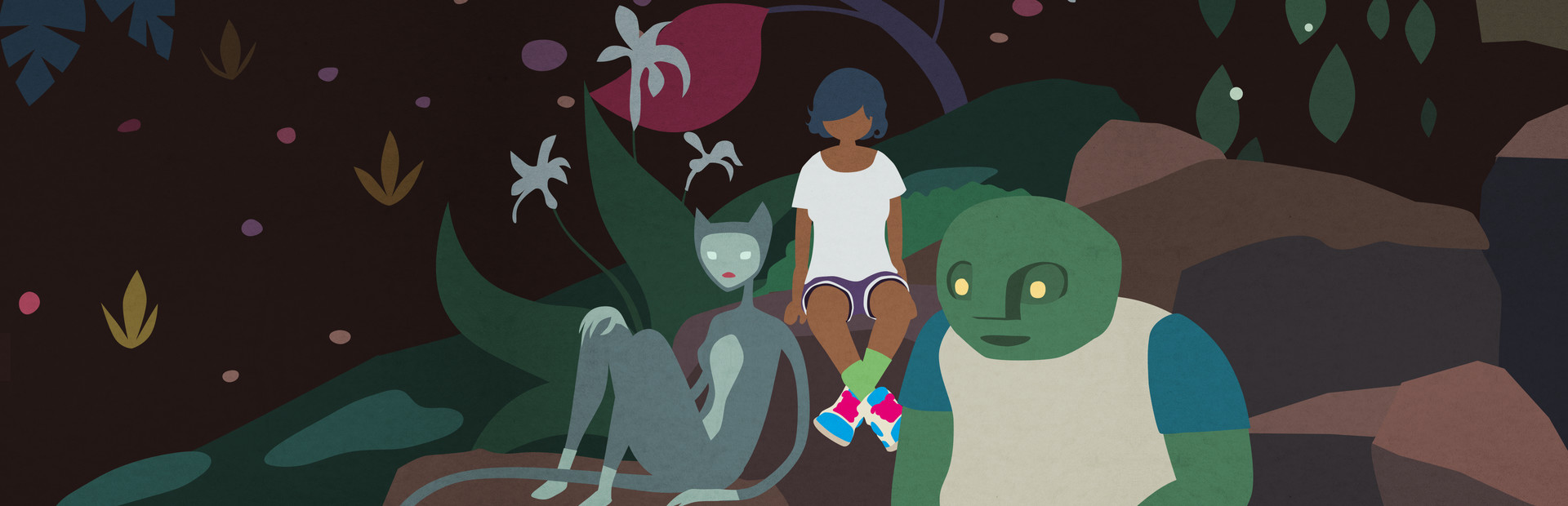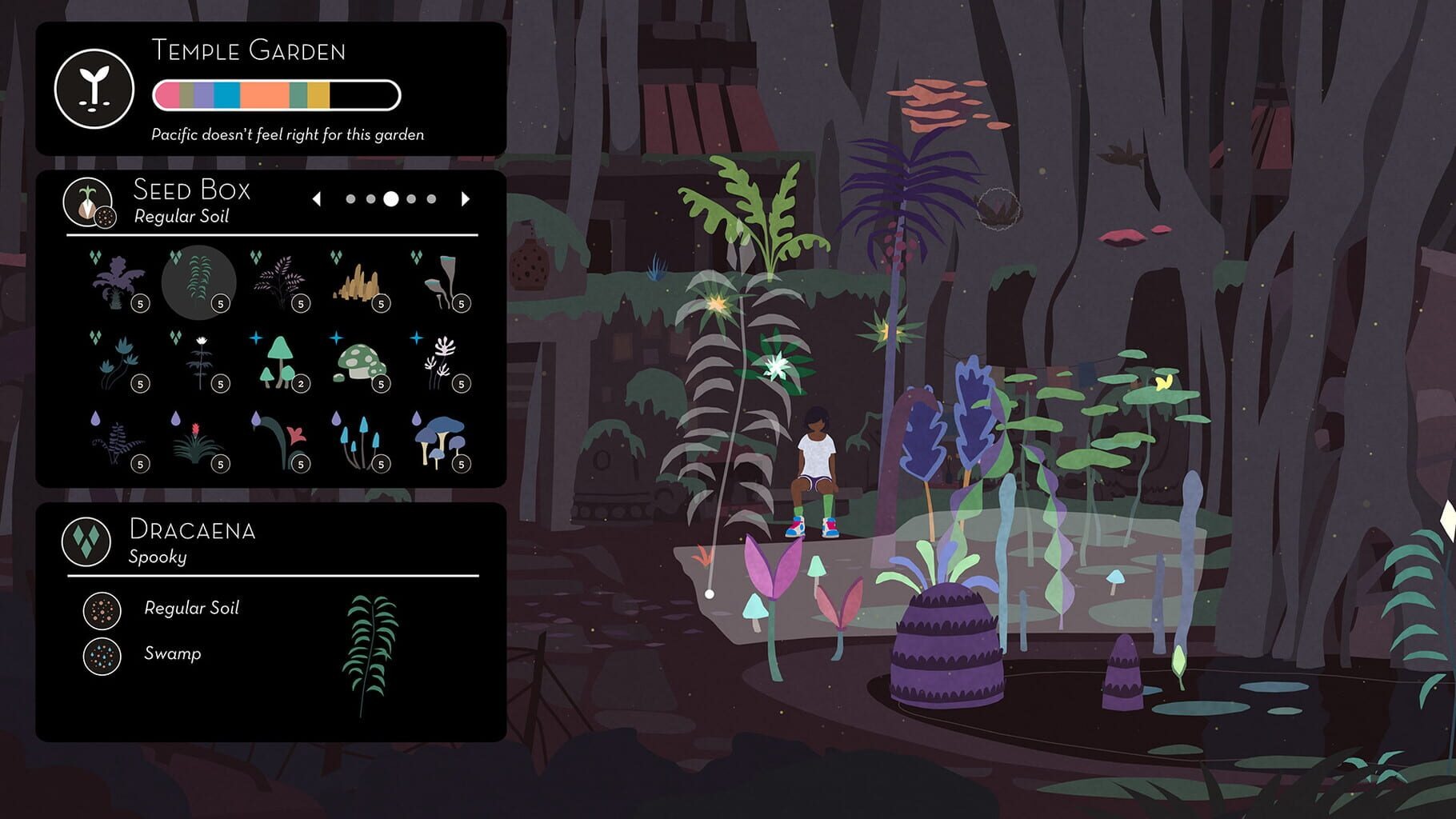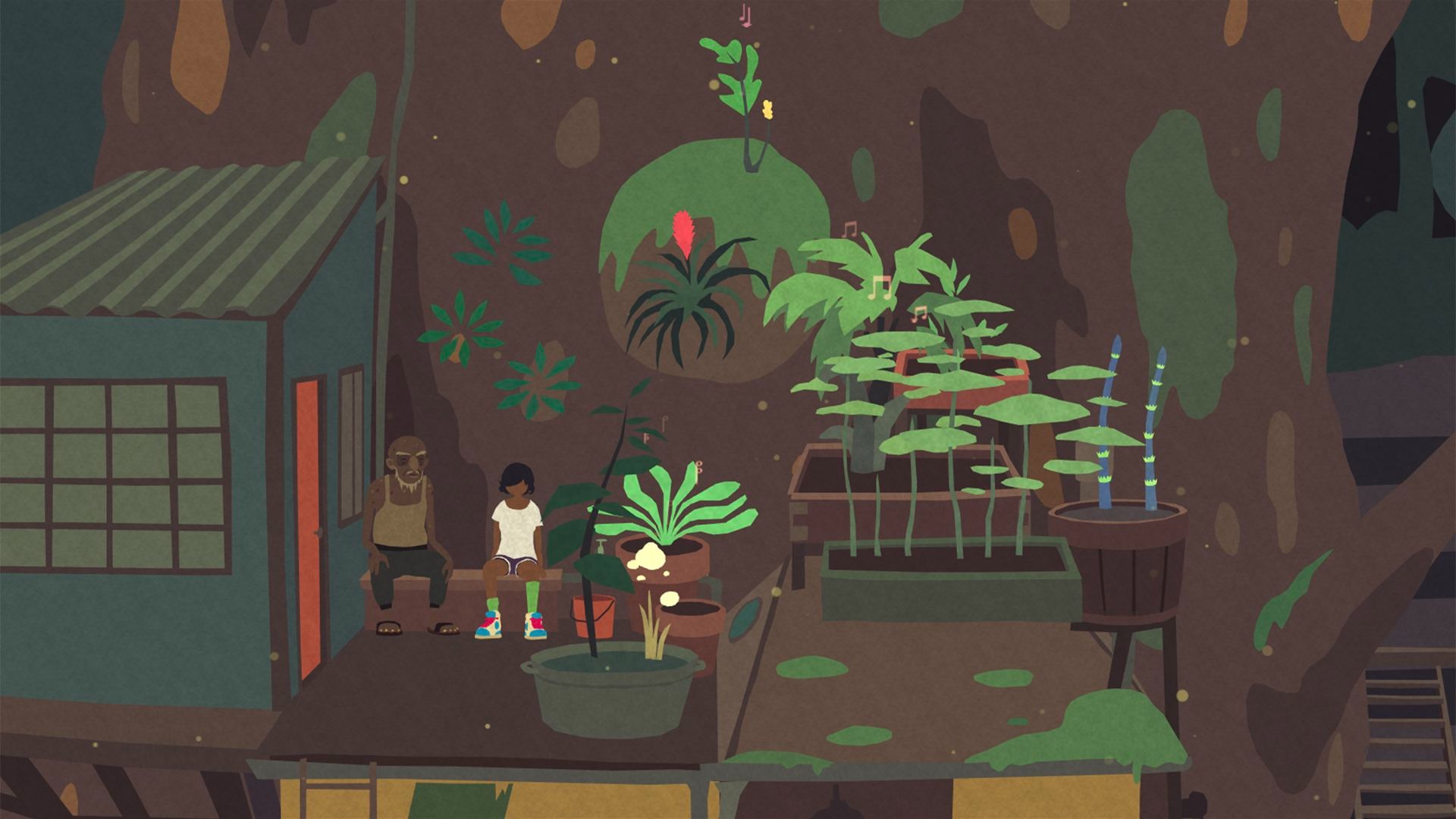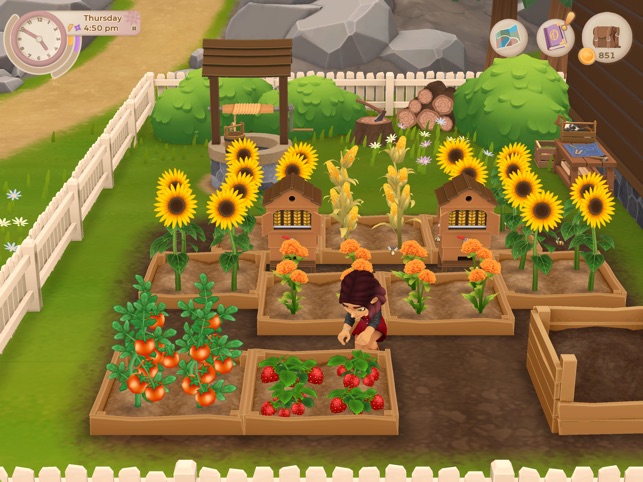
You play as Kai. A girl is sent away to a strange village in a post-apocalyptic world to re-connect with her extended family. You spend the entire game walking around to the various dozen or so screens, collecting seeds, planting gardens, and learning more about your past and the ties between the village and your family.
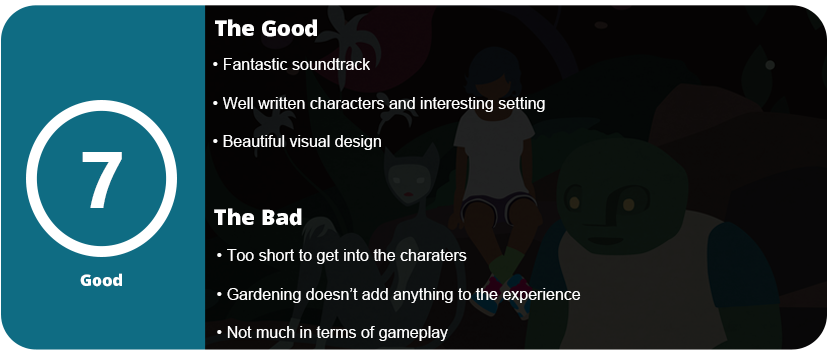
I have to give credit to the developers for their tight and well-written dialogue. The characters have, well, character. For the short time you spend in the games (under 4 hours), you really get to know these people, and the dialogue is written in a way that feels organic and like you’re listening in on a conversation. Talk of relationship issues, depression, carelessness, death, suicide, and many other emotions that we face in ourselves and amongst our own families. There’s an atmosphere that’s both uncomfortable and familiar. You will plant your own life in this game and strategize relating to certain characters or hating them. It’s just so well done.
As for the rest of the game, there’s something to be desired. As you walk around the screens, you will see a hand icon over anything you can pick up. These are usually plants, and you need the seeds to plant gardens to advance the story. There are eye icons for objects that Kai will comment on and a clock icon for an interaction that will advance the story. You never really get lost. Kai’s journal gives hints on who to talk to and what area you need to be in. Using a little common sense and learning the screens and where everyone resides helps a lot. As you pick up seeds, you learn songs that help you grow the garden. Each seed grows based on its song, so it’s recommended to plant seeds of that type. You can place the seeds with an outline of the plant that will tell you if there’s enough space for it. Sing the song a few times, plant enough seeds, and your garden grows. You can then harvest the plant for what you need to advance the story.
Don’t get this confused with something akin to Animal Crossing or Stardew Valley. This isn’t a farming simulator at all. The planting and gardening are rudimentary at best and mostly uninteresting. I just threw seeds around until I filled up the meter, spammed the correct song, harvested, and off I went. I was more interested in the characters and the story. There’s a mystery behind the village that I couldn’t wait to unravel, and unfortunately, gardening got in the way. I did love the music; it’s amazing and good enough to listen to outside of the game.
The art style is well done. It’s bright and colorful, but it can be really dark when needed. The characters have unique humanoid designs that seem familiar but are still alien, and the paper cut-out look just fits so well. I just wish the story was a bit longer, as I wanted to get to know the characters more. I can’t really complain about gameplay, as you do move around constantly and patterns change and mix up, so it never really gets boring. This is a great little adventure game that can kill an evening, and you might have a new favorite OST.
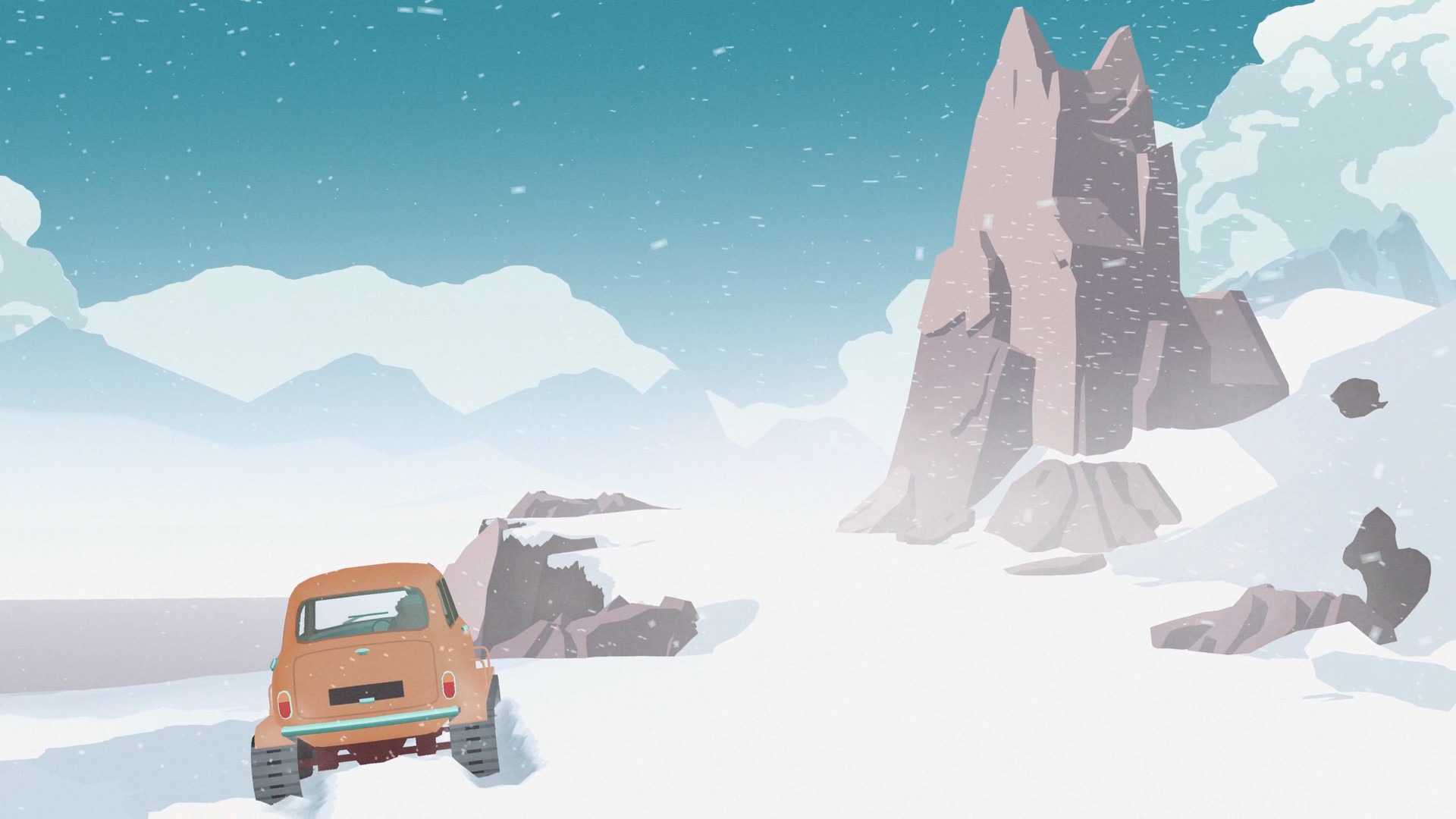
The Cold War was a rough time, and you really feel it in the South of the Circle. You play Peter, a British scientist struggling between love, his career, and being stranded in the Antarctic during one of the most strenuous times with Russia. Peter is a climatologist and ends up meeting a Scottish woman, Clara, who is protesting the war. He ends up torn between her companionship, his career, and the present times of him stranded at a remote research station trying to find rescue.
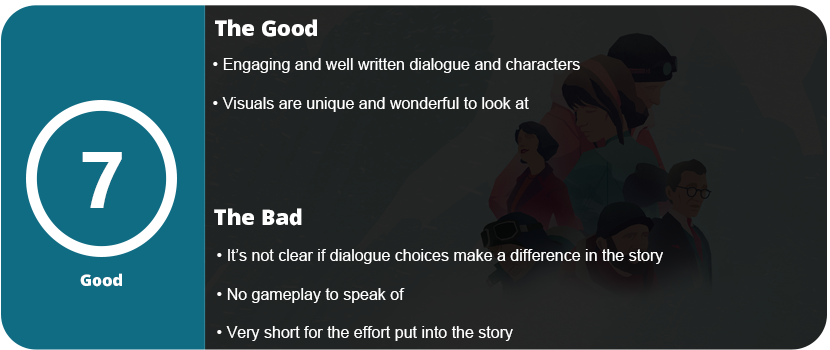
I don’t want to spoil the story because that’s all that South of the Circle has going for it and is the only reason to keep playing. There is almost zero gameplay outside of pressing buttons for dialogue choices. These come in the form of emotion bubbles that range from neutral, scared, sad, happy, and so on. I don’t quite know if this effects the overall story path, as my choices almost seemed to not matter. As Peter is talking to people, a bouncing red ball means a scared response. A blue ball hanging low means a sad response. A sun icon will make Peter respond joyfully, etc. These come up pretty frequently, so you’re always pressing something. Occasionally, you can move Peter around and interact with the rare object here and there, but that’s all there is to it. There are no puzzles or anything like that.
You follow this linear path of Peter trying to find people at this station while seeing flashbacks. You start in the middle, and as you move forward in the story, the flashbacks start from the beginning. It’s very entertaining, and I was interested in the story until the end thanks to the well-written dialogue and fantastic voice work. The visuals are striking in the sense that they almost look rotoscoped. There is motion capture for this minimalistic style of art, and it’s quite captivating.
The entire game is a linearly scripted adventure and lasts less than four hours. It’s a bit longer than most super-short story-driven walking simulators, and the excellent writing will keep you hooked. All of the characters have depth, and you actually have feelings for certain characters, despite some having only a short time on screen. Scenes can get intense and emotional, and you can feel the dread that Peter is facing in his struggle for survival. It’s just so well done, and it’s sad there isn’t more gameplay attached to it. It’s one of the better walking simulator stories I’ve finished in recent years.
Overall, South of the Circle provides an entertaining, well-acted, and well-written story and script, but the lack of gameplay makes you question whether this is just enough here to be an excuse for a game. The art is fantastic, and the motion capture is enticing. I wish the dialogue choices were a little more obvious about what they did or if they changed anything at all.
The PlayStation controller is iconic. It was the first controller that had force feedback built-in and dual analog sticks, and it became a worldwide icon. I remember buying my first DualShock controller as a kid. It was a green one, too. The controller improved with the PS2 by adding pressure-sensitive buttons, but overall it was still the same thing. The DualShock 3 was the most controversial, originally being a six-axis controller with no force feedback due to the lawsuit that Sony was in over their force feedback tech. The DualShock 3 did eventually come out, but the six-axis motion was a gimmick and was never utilized outside of the first two years of the system’s life. It also had triggers that weren’t well done, and the analog stick rubber degraded over time. It just wasn’t a fantastic controller. On the other hand, the DualShock 4 wasn’t the greatest either. The forced light bar needed to communicate with the PlayStation camera so that no one had drained the battery, and the added touchpad didn’t really add to any one experience, just like the SixAxis didn’t. It had improved rear triggers and analog sticks, but that was about it.
Here is the scrapped DualShock name. I have to salute that name, and it will be missed. We are now in the DualSense era. This controller is probably the first ever to be truly as innovative as the built-in analog sticks and force feedback from the DualShock 1. The haptic triggers literally change how a game plays and feels. These aren’t gimmicks. There is a resistive force on the triggers in the game. You can hold down a trigger partially, and it will stick to the motor. Pull down harder to actually shoot a gun or arrow. You can feel the swings of an axe in God of War: Ragnarok. The triggers can even vibrate a bit and feel suddenly loose or tight, like in The Last of Us Part 1. It changes the way I shoot in games. Spider-Man Remastered lets you feel the webs that you shoot with physical force.
This is the best part of the entire controller, and I miss it in every game that doesn’t have it. The rest of the controls are just slightly tweaked for a better hand feel in the grips, and the top light bar was finally removed. However, there are still lights around the touchpad, which is fine. The controller just looks so good now, too. The change to a pure white launch color was strange but also brave. The texture of the controller is improved as well. It doesn’t feel as slippery, and the plastic doesn’t feel as cheap as the DualShock 3 (I’m sorry, but that controller was my least favorite from Sony). The D-Pad also feels better this time around and is less mushy. I also love how the controller is now USB-C and we can finally get away from the micro connector. You still have Bluetooth availability, and it seems to be more compatible with devices than what the DualShock 4 could do. I do like the actual PlayStation logo as the home button now, and the controller retains the speaker and mic features. There is also a mic mute button right on the controller, which is a great feature.
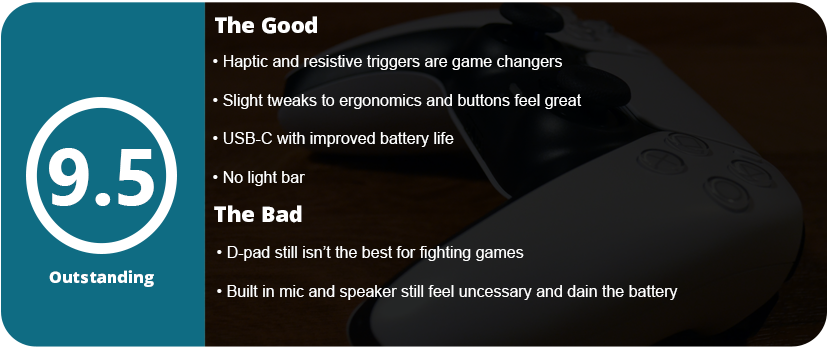
Overall, the DualSense controller is the first controller revolution since the Wii remote and the original DualShock before that. The haptic triggers literally change the way you play and feel the game. There are so many things you can do with this type of resistive technology, and many first-party games are coming out swinging already. The battery life is improved over the DualShock 4, the ergonomics have been tweaked just enough, and finally, get USB-C! I’m not sure how Sony can improve from here.
Resident Evil 4 changed the entire gaming industry. It was one of the most influential games of all time. It actually still kind of is. It showed how drastically you can reboot a game and honestly started the whole reboot craze and is the gold standard to live up to. Take a game that has tank controls and pre-rendered backgrounds and throw it into a third-person shooter with unique control and a well-balanced gameplay loop. It was talked about for years and inspired other games like Gears of War. Resident Evil 4 (2023) is a reboot of a game that mastered reboots. It has the highest standards to live up to. Thankfully the last two Resident Evilreboots were fantastic and took pages from RE4. So, what we get is just a better-remade RE4.
The story itself is supposed to have taken place after RE2. Leon is sent to save the US President’s daughter, Ashley Graham, and that’s about it. There is a new virus that got loose from Umbrella and the Los Plagas will come out of enemies every so often and it happens more as the game goes on. Their heads will pop off and a new tendril-like creature will come out in various forms. You can stop this before it happens when they are on the ground twitching. The characters in the game are pretty simple and have no time to become interesting. Outside of Leon and Ashley the other characters show up for just a few minutes in the game, so the story itself takes a back seat. It’s the weakest part of the whole game.
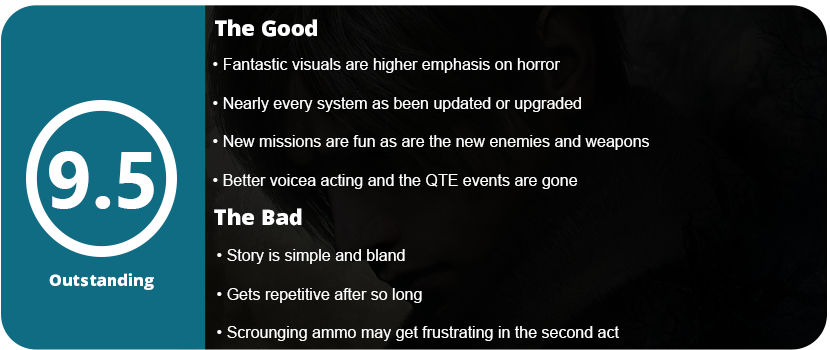
Right off the bat, you will notice an immediate change. Not only are the environments more detailed, but the opening scene has changed as well. We get an all-new voice cast (that’s much better), new music, and updated sound effects, and the overall feeling is more modern and less stiff. You can actually shoot and walk this time around which is a huge change in balance for the game. The knife has also changed as it can be broken but also upgraded. Crates can be stomped on rather than sliced so gameplay flows better. You can acquire boot knives that can be used to ward off enemy attacks up close. You will also notice that quick-time events are pretty much gone. These scenes are now fully playable with you in complete control rather than an actual cut scene.
All of these changes are for the better and add a whole new dynamic to the game. Combat mostly remains the same with enemies slowly lumbering towards you with various weapons. Enemies can throw axes, molotovs, and shoot you with crossbows. Some will shock you with sticks, others will carry shields, and then there are the bigger enemies. Rarely occurring, chainsaw-wielding enemies will appear that require explosives or heavy damage to kill. You need to constantly run and turn back to shoot. Using your surroundings is key. Lure them towards explosive barrels, or funnel them everywhere down a corridor so you can line up headshots. The level design is fantastic as you get little arenas that you can immediately scan and strategize with.
Every time an enemy dies they will drop something. Unlike the original game, this time around a whole new mechanic of crafting has been added. Enemies will always drop something whether it’s resources, gunpowder, health, ammo, or money. You need resources and gunpowder to craft various ammo types. Recipes can be bought from the merchant. You can also buy weapons, armor, resources, health, and various other items. Another new system is the side missions. These can be found posted on walls and convert the older challenges into missions. The blue medallions, tough enemies, shooting rats, or finding certain objects. These are traded for spinels which can be traded for rare items such as exclusive new weapons, treasures, and more. Cases are not just expanded now, but different case types will drop certain items more frequently and new charms can be attached to help lower the cost of sales, increase sell value, drop rates, and so on. These charms are won by completing target practice missions in one of five locations in the game.
That’s a ton of new things already and it’s so well-balanced. It’s a way to take the older systems and tweak them into something new and more fun. You can move around and technically kill enemies easier so with an added crafting system you always get rewarded. There are still treasure maps to buy and valuables to look for which are key to racking up coins. Certain valuables can have jewels inserted into them to increase their sell value so hang onto those gems! On to something much bigger is Ashley herself. Many felt she dragged the experience down. You have to always catch her when you hopped off ledges and she always got captured easily. Now you can send her away, hide her in lockers, and she does most actions on her own now. She’s much less of a burden.
Speaking of Ashely there are stealth elements in the game now by sneaking around and offing zombies, but this is easily ignored. It doesn’t work outside of a couple of zombies and then everyone sees you. The AI walking patterns are too random to sneak through areas, and this wasn’t intended in the original game anyway. While sneaking around zombies is possible sometimes there are new enemies in the game, but I don’t want to spoil anything. Original enemies are updated and look even more grotesque. That’s another theme of the remake. Horror is much more prominent in this game. Like in previous RE remakes the flashlight is added so Leon will whip it out in dark caves and there is a constant sense of tension and dread no matter where you go. The game relies less on jump scares this time around.
There are three acts in the game. The village, the castle, and the island which is split between a mine and a military base. My favorite part is act one which is the most iconic. The castle is okay, but the game gets insanely tough during the second act. Ammo is incredibly scarce. You must be very cautious about what ammo you use and when. Save more powerful ammo like grenades and magnum rounds for the mini-bosses and bosses themselves. Save your sub-machine gun ammo for large crowds and your rifle ammo for enemies are off. The pistol is going to be your main weapon throughout the entire game so always keep a stock of it.
The visuals are a nice upgrade over the previous remakes. Ray tracing has been added, but it’s not great. The RE engine is still insanely well-optimized for lower-end PCs and runs really well. However, there is still no DLSS support so it needs to be manually added through a mod, but even on the Steam Deck, the game runs fairly well. The visuals are top-notch and the art direction captures the vibe of RE4 in a more visceral and raw way. I love it. When you’re all finished with the game you can run through on a New Game+ which is a must as that’s the more fun way to play. Overall, RE4 (2023) is a massive update to an already iconic game and changes nearly everything wrong with it. I just wish the game was a little better balanced and it does get repetitive after so long. You are just walking around shooting zombies with a couple of simple puzzles thrown in. At least the exploration is fun and there’s always something new to look at.
Microsoft isn’t someone to mess with when it comes to controllers. Sure, the original Duke is lauded as one of the worst controllers ever made, and it has its fans, but the Xbox S controller really changed things up. Not to mention their analog stick orientation which is copied to this day by even Nintendo. The Xbox controller made built-in headset plugs a thing too. The Xbox 360 controller was considered the best controller ever made at the time. The ergonomics were fantastic and the later improved rotating D-Pad was a huge plus. The Xbox One controller only made things better with bumper button rumble, and just overall improved ergonomics and build quality. Microsoft messes the least amount with their controllers. They just like making it feel good and work. They also have a battery fetish that a lot of people don’t care for.
Fast forward to today and we have Microsoft’s next-generation controller. It’s probably the least changed compared to other companies, but it continues its design DNA. The ergonomics are slightly tweaked still, the built quality feels even better, and they took the idea of the rotating D-pad and the D-pad from their Elite controllers and made it standard. Xbox has the best D-pad out of all three companies. The bowl-shaped D-pad works so well with fighting games as it feels almost like an arcade stick. It’s very clicky and detents in the right spots. You can roll your thumb around for those quarter-circle moves with ease.
The trigger texture is also improved and feels very bumpy and gritty. The haptic feedback hasn’t changed either, but I guess that’s okay. It’s a stark contrast to Sony’s fantastic DuelSense controller. There isn’t much tech packed into this controller either. It’s probably the most basic controller available right now, but many gamers prefer that. You still get a headset input at the bottom and that’s about it. This feels like the Xbox One 1.5 update rather than a next-gen controller. There is an added share button in the center with Microsoft taking notes from Sony from the DualShock 4 controller. This makes sense with streaming and social media has blown up since the Xbox One debuted. The controller does have a USB-C port just like the DualSense so I applaud Microsoft for not making me get out the USB micro.
You still get your Bluetooth functionality, and they are still using AA batteries. Some praise this as that means this controller will always work and you won’t need to get a battery in a few years and tear it apart. Some hate it saying it’s not very modern of them to do. You can get rechargeable AA which I have been doing since the Xbox 360 era so there’s no need to whine.
Overall, the Xbox Series X|S controller is the least changed, but it still works. Microsoft is the poster child for “if it ain’t broke don’t fix it.” USB-C is nice with the added texture to the bumpers and triggers, but the biggest change is the D-pad. It just feels great. If you liked the Xbox controller up until now then you won’t be disappointed.
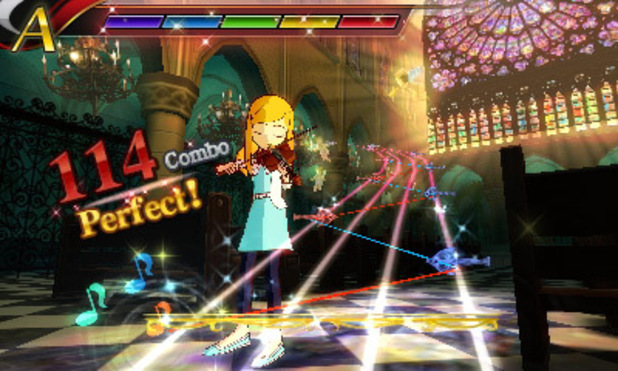
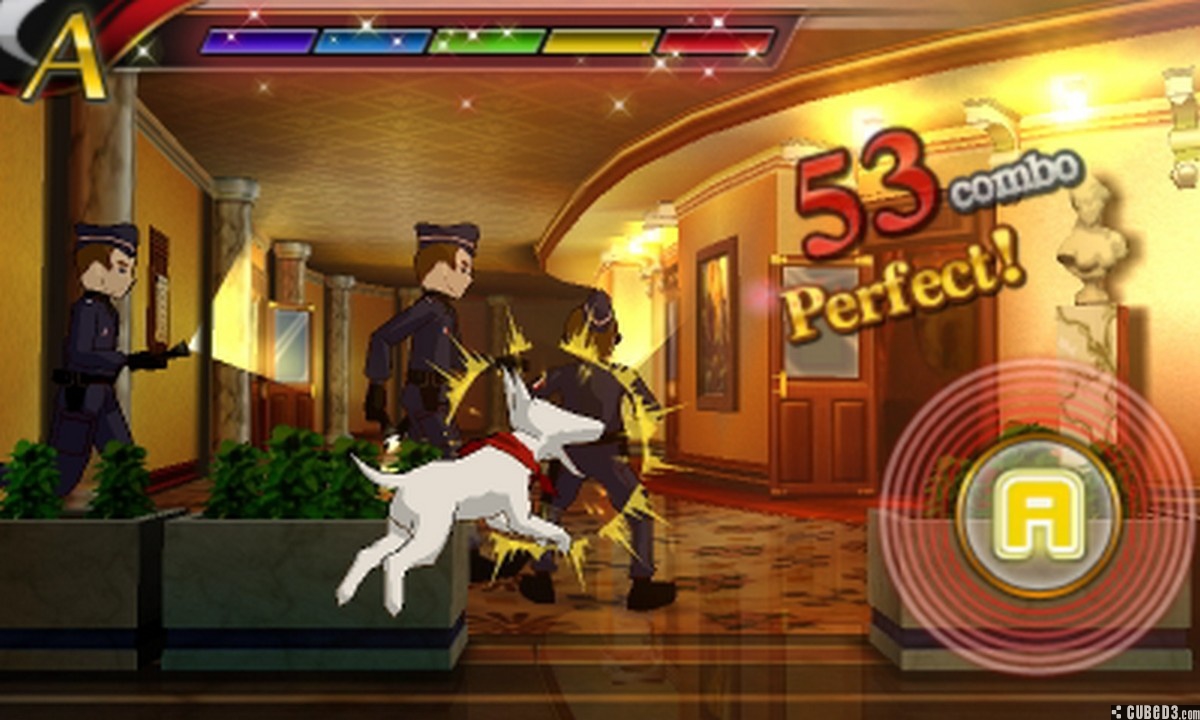
Paris. A thief by night and a regular Joe by day. A strange symbol your father left you. An Anti-Christ that has risen from the grave. This all sounds like an epic recipe for some crazy National Treasure sequel, and honestly, this kind of feels like an anime version of that movie. You play Phantom R and are trying to uncover an ancient mystery that your dad left you as a small boy while stopping the evil Napoleon Bonaparte himself from taking over Paris.
The story really takes itself too seriously for how silly the plot is. During the 5 hours you will spend with this game, I honestly felt no attachment to the characters or story. They’re very cookie-cutter and don’t really develop any type of personality. The spotty voice acting doesn’t help either. There are a lot of characters in such a short game, and many of them only get a few seconds of screen time to shout at you, and that’s about it. It’s a very forgettable game, not just in the story. The visuals are your bog-standard anime-style graphics. The game plays like a rhythm version of Professor Layton on top of all that.
Once you get a hold of your character and can explore the map, you will be presented with still backgrounds on the bottom screen, like in Professor Layton. You then tap away ferociously until stuff happens. You can collect two hidden presents per screen for golden coins that are used to buy aid during mini-games. Some screens will have secrets, such as notes that need to be found to find a secret music page, a soundtrack CD, or objects that produce sounds that are needed to build the master instrument. These hidden items eventually unlock hidden chapters, but I honestly didn’t care enough for any of the characters to learn any backstory from said chapters.
The meat of the game is the rhythm sections, and these are fairly simplistic but frustrating in nature. In most rhythm games, you can get good at it by following the beat of the song. In this game, you don’t ride the entire beat like in most rhythm games. Small sections are cut out with button presses. For example, you do a sequence with A or B buttons like A-B-B-A-B, and that section follows the beat of the song. This would be fine if the entire game wasn’t a Simon Says game disguised as a rhythm game. You have to listen to a sequence of notes and repeat them regardless of the beat of the song. I wound up failing many mini-games because I wanted to naturally tap or press buttons in time with the beat, but just mashing the buttons worked. Increased difficulty means more prompts to remember, and they sometimes play so fast that it’s almost impossible to remember the sequence on the first try.
While I praise the game for giving a variety of mini-game types, they do repeat very often. The games usually require you to tap two buttons or swipe the screen in certain directions. That’s it. In between the rhythm games are mini-game puzzles that are fairly easy and offer no challenge. There are a few Simon Says ones in here too, but the sequence is remembered, so if you mess up, you just start at the last note you messed up on. That offers no challenge and allows you to basically mash all the buttons and not care about the order. While I could find a groove with some rhythm mini-games, there were many that I just couldn’t get into or kept messing up on and didn’t understand why.
Overall, Rhythm Thief is a Simon Says game disguised as a rhythm game. There’s no true rhythm here outside of repeating every pattern in time with a beat. I could do that without a beat. The increased difficulty isn’t about more complicated songs, but just increased speed and more prompts in a shorter time frame. That’s not challenging, just frustrating. The story is nonsensical and takes itself too seriously, with characters that are one-note and don’t have any time to build a personality to care for. While the visuals are nice, it feels way too much like a cousin to Professor Layton and not its own thing.
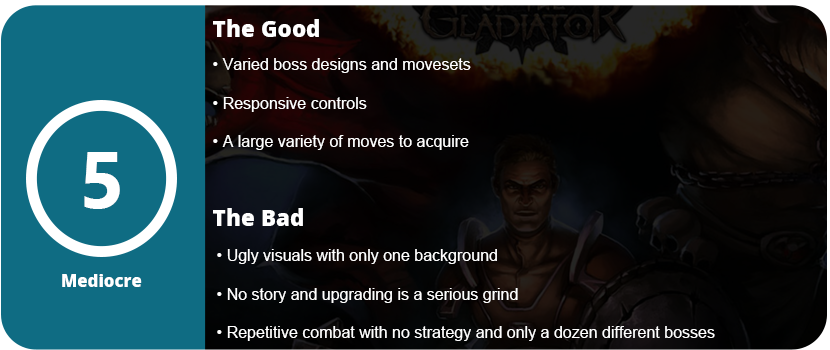
Infinity Blade was a big deal when it was released. It was the Dark Souls of mobile games at the time, before Dark Souls even came out. Chair Entertainment started a revolution that many tried to copy but failed. It was a rogue-lite that had you dying over and over to only use the gold and XP you acquired to level up and get further each time. Some consider it a repetitive grind, but others feel it makes them want to get further and further and find the chiseling of progression addictive. Rage of the Gladiator tries this and doesn’t do any of it very well. Forget a story; it’s pretty much nonexistent outside of a few stills with text.
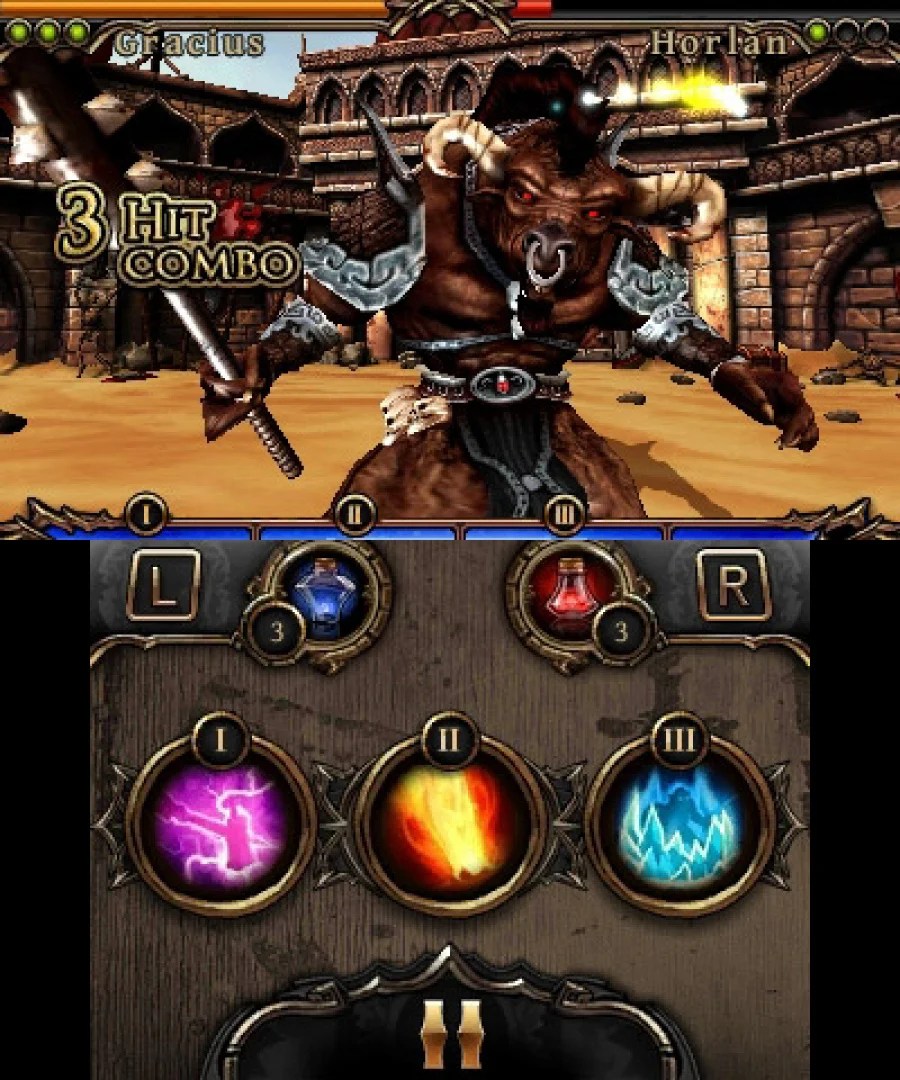
There are ten bosses to fight through. Each one does more damage, has faster moves, and has more of them. Despite this sense of progression in difficulty, the game is very easy. You have to dodge left or right in first person, jump, swing your sword left or right, and even kick when you successfully dodge. You can get a maximum of a 5-hit combo in unless you use a special move before that fifth hit. There’s no strategy involved, and I only died once during my entire playthrough. Moves are easy to predict and rather slow. The repetition gets worse when you have to win three rounds per boss. That’s 30 rounds in total before unlocking medium difficulty. Yeah, you work your way up through hard work, but the moves are just faster, and one or two more are thrown in. You also take more damage.
You can buy weapons, shields, armor, mana, and health potions, acquire passive and offensive abilities, and increase your stats. You win gold after each match and earn one measly XP per match. Yes, it’s a complete grind, and this is leftover from this being a mobile game. At the end of the tenth boss, I was only able to buy two new weapons: a single shield and an armor piece. You can use gold to buy XP, but this system is in favor of grinding or slowing you down enough to make you buy this stuff via microtransactions, which aren’t on the 3DS version. So, instead of rebalancing the game, they kept the grind.
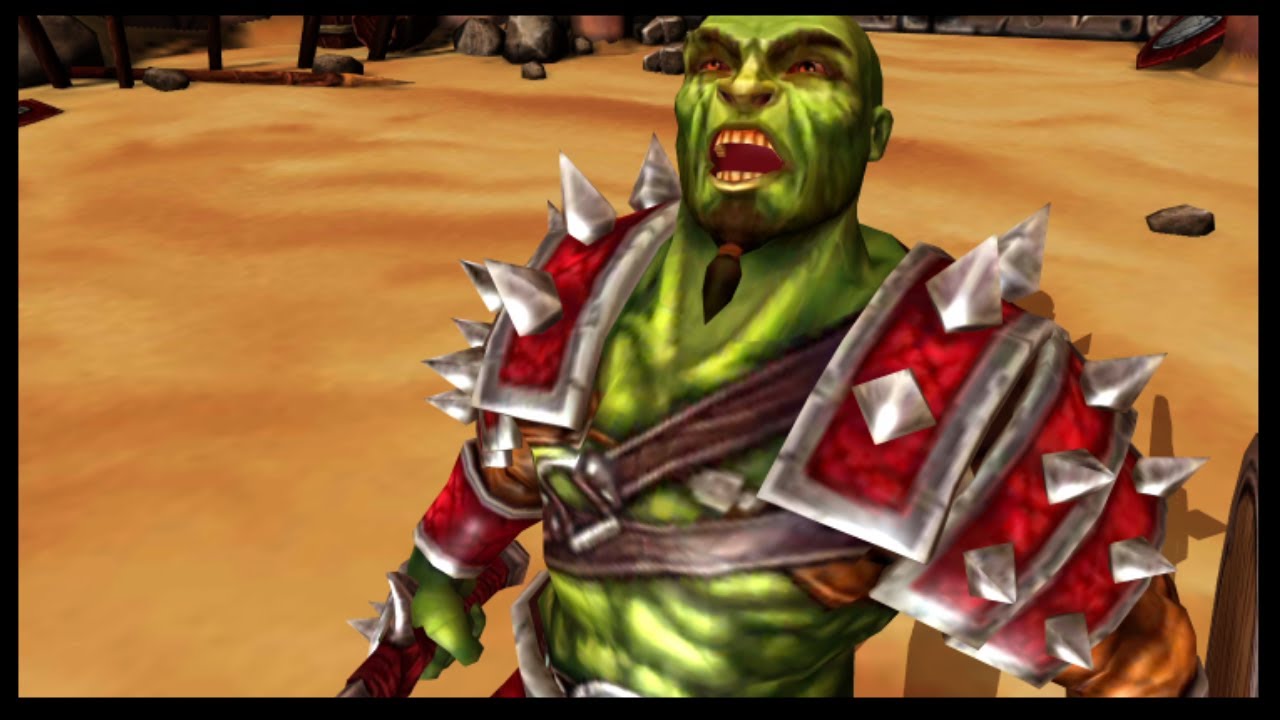
This would be fine if the game was as epic or good-looking as something like Infinity Blade. Instead, we get generic Greek mythology bosses, a ninja, and a Chinese martial arts master, and that’s about it. Medium and Hard difficulties have one additional boss at the end, but they’re not exciting. However, the animations are stiff, the visuals are ugly, and everything is just on repeat forever. There’s no strategy involved in the fights, or even how to go about your attacks. Instead of adding a parry system that allows you to counter an attack, you just dodge. There are a few attacks that can be paired, but they’re only on a few of the bosses. It would even be cool to change up the background, but instead, it’s the same Roman arena forever.
Overall, Rage of the Gladiator is a repetitive, boring, easy, and weak attempt at a genre that has been done better and to death. There’s no rebalancing of the shop or winnings, so you’re grinding as if you can buy these things to advance quicker. The bosses are uninteresting and boring, the game is ugly and drab, and there’s no story to speak of. Shoving a mobile game onto the 3DS was a bad move, and it shows here.
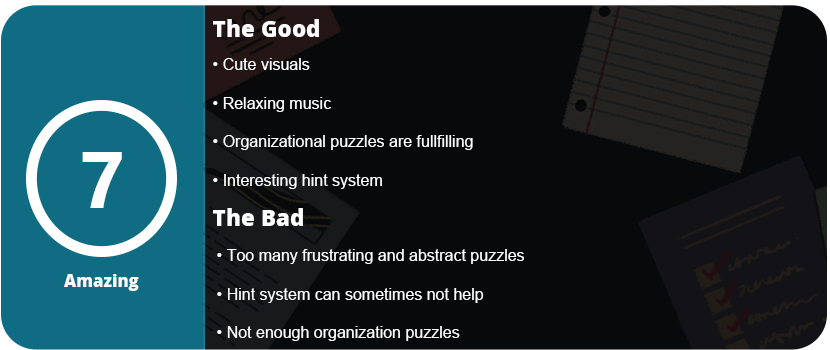
As time goes on, I’ve learned to appreciate engaging casual games that don’t require intense focus. Small adventure games that only take a few hours to beat, relaxing puzzle games that don’t really have an ending, and anything in between are fun to enjoy and veg out on. It has the same effect on me as binge-watching a show.A Little to the Lefttries to be that. It has engaging puzzles and serotonin-squirting organization puzzles, along with cute visuals, but it does come with issues.
The game’s puzzles start out fairly simple. There are around 75 puzzles in the main game, with 365 daily puzzles. Puzzles start out with just straightening photos on a wall, putting cat toys in a basket, arranging a dinner set, aligning colored pencils in a certain order, stacking rugs, etc. These first dozen puzzles are relaxing and really give you a taste of what this game could be. Yes, I said it could be, as the game quickly ramps up the abstractness, and even with a full-on guide and accessible hint system in the game, it still doesn’t make sense. The arrangement puzzles are the absolute worst. These are abstract shapes that don’t snap together but instead are arranged in a specific pattern. The patterns usually make no sense since the pieces are so far apart. These puzzles will frustrate most players and lead you into a false sense of relaxation and simple organization and stacking.
That’s not to say I don’t like a challenge. One puzzle has you sliding a mirror to the left and right and arranging the objects according to the reflection. Another has you stacking cat food cans in colored columns that match. These puzzles were enjoyable. My favorite was the organization puzzle. Put all the junk in the correct cubbies. That’s a lot of fun with the process of elimination. Sadly, there are only about four of those puzzles, and I wanted more. The difficulty is all over the place, but it’s artificial difficulty. The puzzles are just so obscure sometimes that most people may quit the game.
I also found the snapping system pretty broken. Sometimes you place an object in the right spot, and it will snap into place and make a faint ding sound. However, abstract pattern puzzles require two symmetrical objects in the same spot in the scene before they will snap into place. This hinders progress, as there are no tactile hints that you are making progress. There is a hint system that shows you the solution by erasing and uncovering. This was nice, as I would try to just erase one part and still be able to solve the rest on my own. However, even the hints sometimes make zero sense.
Thankfully, you can still move on with the “Let It Be” system, which skips the puzzle for you. There are some puzzles that have two or more solutions, such as sorting from highest to shortest, then by color, and then by matching an image on the same object. While the first solution may seem easy to spot, the additional solutions can be insanely abstract and obscure. I really tried to solve as many as I could on my own, but in the end, I solved maybe a quarter of the puzzles by myself. There were just too many that were frustrating, and I felt I wasn’t making any progress. Some were just me overthinking the puzzle, but some were just poorly designed.
The visuals are cute. It has a pastel, minimalistic look. Lots of colored pencils, charcoal, and watercolor art designs The music is great and relaxing to listen to in the background; it’s just too bad the game isn’t as relaxing. In the end, A Little to the Leftis misleading in its first dozen puzzles and quickly ramps up the abstractness and obscurity too much, requiring too many puzzles to be skipped. The most enjoyable ones are too few. This isn’t a bad game at all. There are fun puzzles peppered throughout the bad ones, and the overall cat aesthetic is enjoyable with great music.
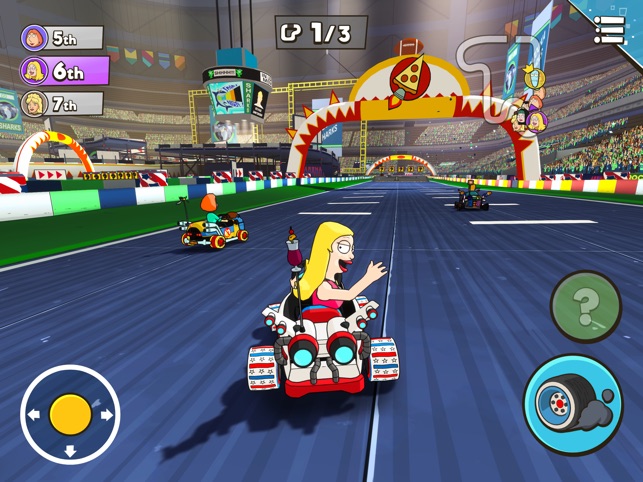
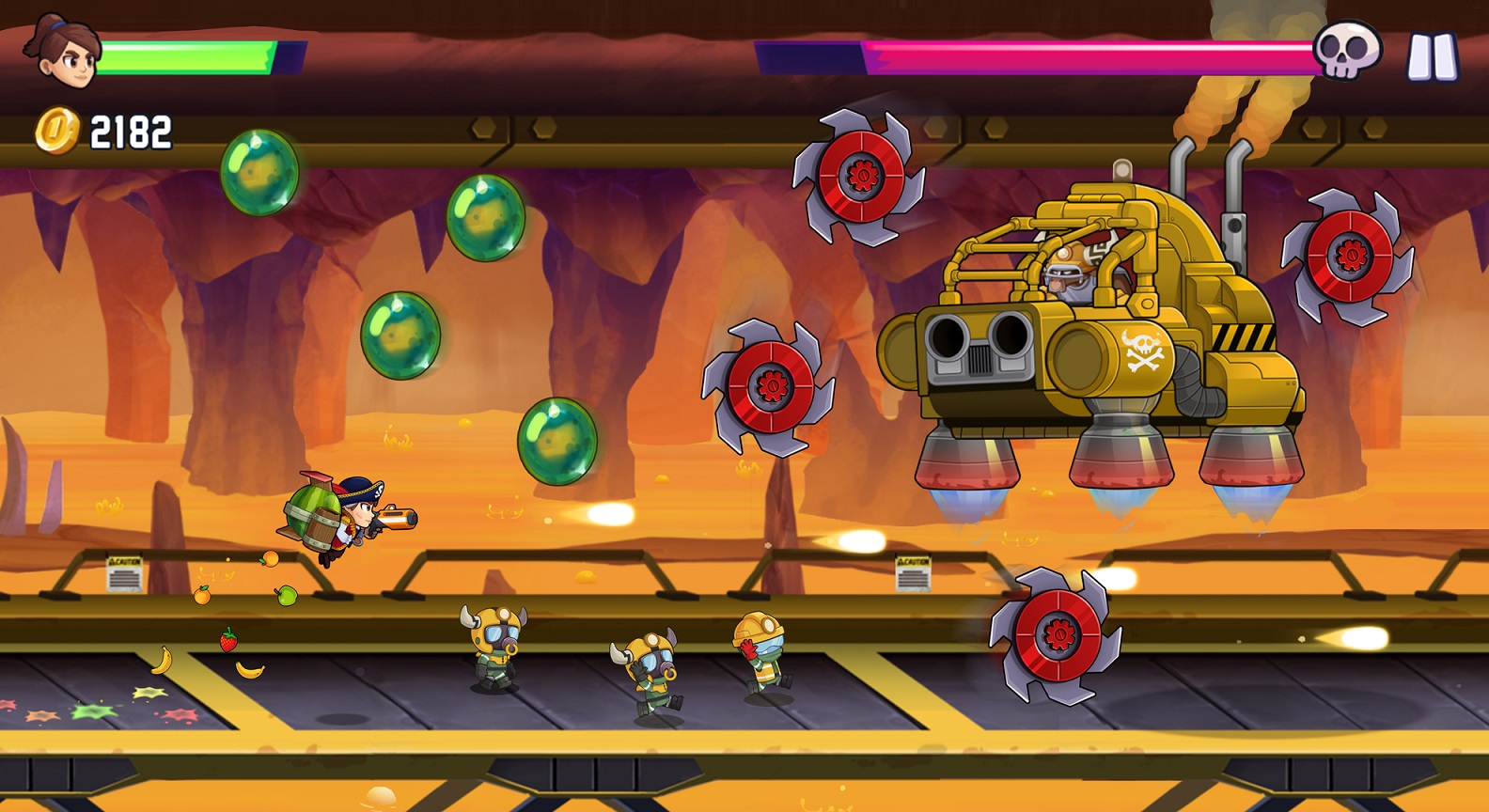
Apple Arcade continues to dominate the mobile platforms with amazing original games that are non-pay-to-win or stuffed with microtransactions. These unique games invoke what gamers love about games and what mobile games should be. Not since the early days of iOS gaming have there been this many awesome games.
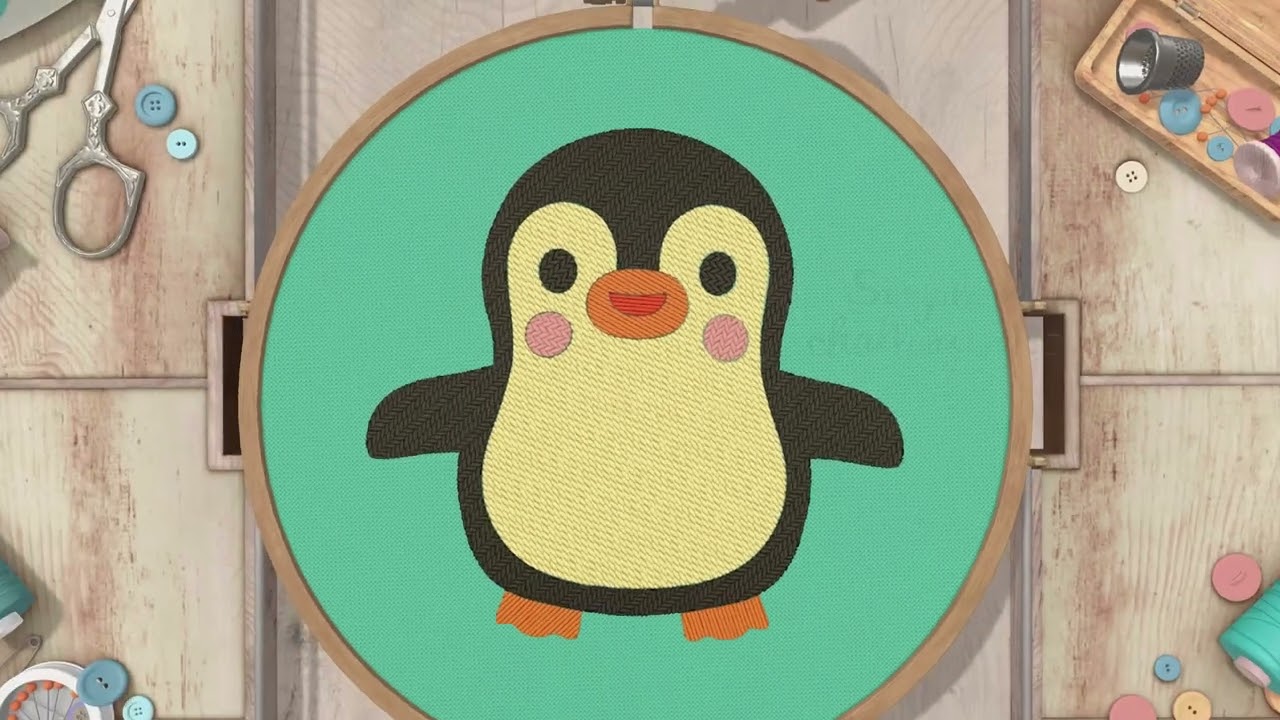
stitch.
A gorgeous and fantastically unique puzzle game that will keep you glued to your screen. The game insists on stress free and relaxing gaming. The bright colors, simulated textures, and overall zen nature of the game is welcoming. The addictive nature of mobile games is a key ingredient to making them great. You want to be able to play for an hour or five minutes, but always want to come back. Stitch has done this without making it frustrating or repetitive.
LucasArts’ SCUMM engine games hold a great fanbase for those who grew up in the 80s computer gaming scene. They were bright and colorful. revolutionary for their time in terms of gameplay and art. They were also later updated with voice acting, which was some of the first of its kind. While the games were short (running around 6 hours per game), they were memorable and had a special sense of humor that was considered top-notch. The series got a much-anticipated remake, starting with the first game. While not much was really added, the entire game was redrawn from scratch with all new lines of dialog recorded by the original cast.
The game definitely plays like an old point-and-click adventure of yore. Clumsy controls (which were never really fixed), slow pace, obtuse object hunting, and no puzzles That’s not to say the game is bad. While it doesn’t feel as modern as The Longest Journey or even David Cage’s games with quick-time events and button pressing, that’s part of the charm. Thankfully, the game has a hint system that slowly gives you more specific hints, including full-on arrows pointing to the exact spot you need to be. This was really helpful and a must-have for first-time players or those who aren’t familiar with this era of adventure games.
The game has two main areas. The first one consists of some small areas, a town, and a large overhead map to get to these areas. Most of the game is spent gathering items and figuring out where and how to use them. You have multiple commands, such as talk to, push, pull, look at, use, open, and close. These are used by pulling up an action command menu, and then you have your inventory. To use these commands, you need to pull up the command menu and then the inventory. This is cumbersome and took a while to figure out. You control Guybrush by clicking around on the ground, but his walk cycle is pretty slow. There’s a lot of backtracking in this game, and this slowed the progress a bit. One thing I didn’t like was the insult for sword fighting. You have to lose to pirates to learn their insults and comebacks. You need to learn enough to defeat the first “boss”. There was a lot of trial and error doing this, and it got really frustrating.
The stars of the show are the characters and the writing. The salesman Stan, for example, is hilarious. Using overexaggerated arm waving and an obnoxious coat to look like a sleazy salesman. The pirate LeChuck doesn’t get much on-screen time, but neither do most of the characters. The main character, Guybrush, is who you will get to know the most. There is an optional dialog for most characters to get to know their personalities more than their backstories. There just isn’t enough time to get to know them more. So, it makes up for funny writing and witty humor, which the game does solidly.
I liked the visuals in this game. The hand-drawn art is beautiful and still captures the classic LucasArts look. Some of the animations feel a bit stiff still, but again, that all adds to the charm. The voice acting is awesome, and there are some funny uses of items and small tidbits of humor thrown in that did make me chuckle. I have to say that this game won’t hold everyone’s attention. It is slow to build up and takes a while to get going. A lot of people might feel lost clicking on everything and not realize what order to do things in, but the hint system makes this game much more enjoyable. I highly recommend this classic remake, but it won’t be to everyone’s taste.
Yep! The fact that I forgot about this game until you made a comment proves that.