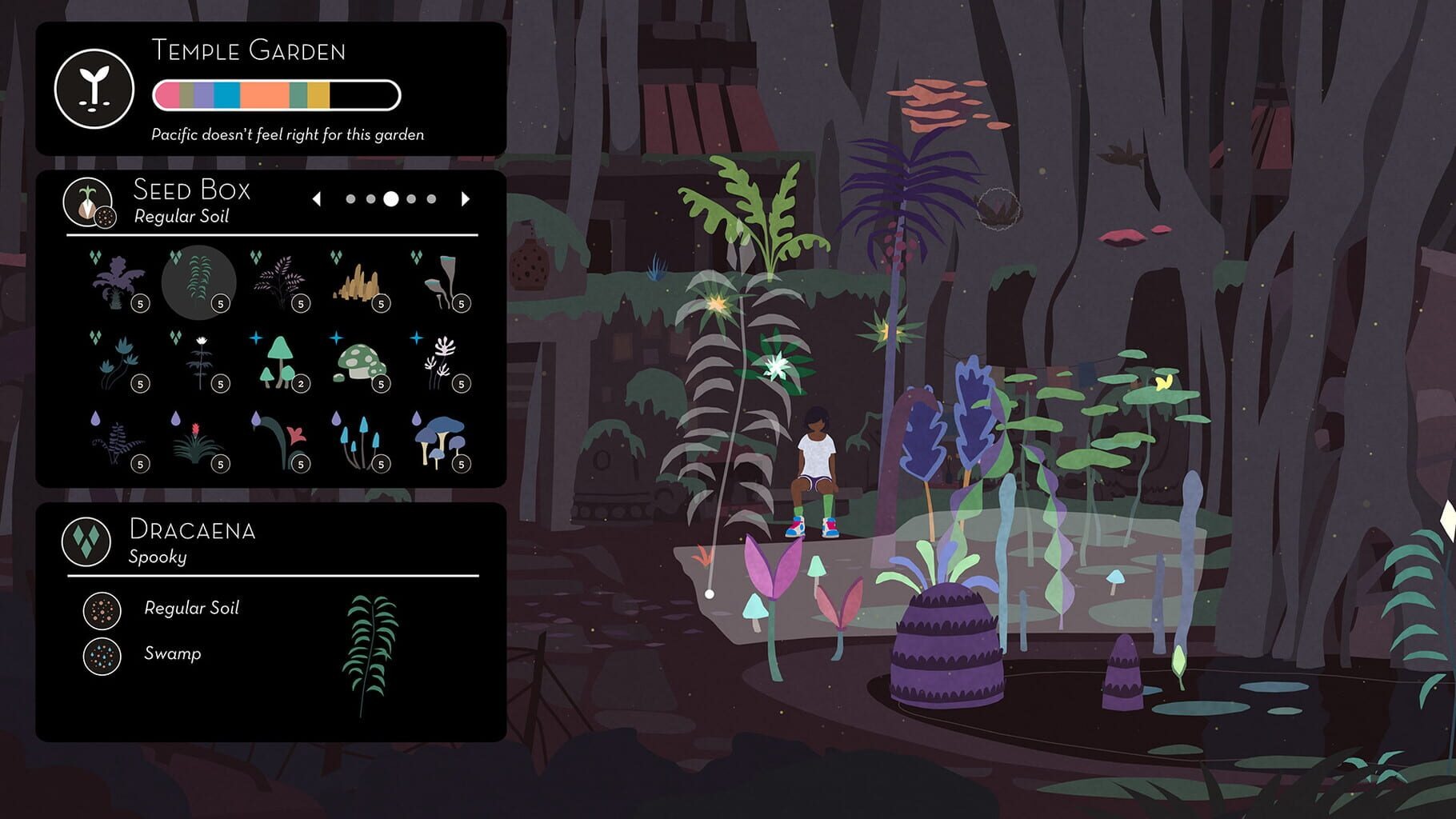
You play as Kai. A girl is sent away to a strange village in a post-apocalyptic world to re-connect with her extended family. You spend the entire game walking around to the various dozen or so screens, collecting seeds, planting gardens, and learning more about your past and the ties between the village and your family.
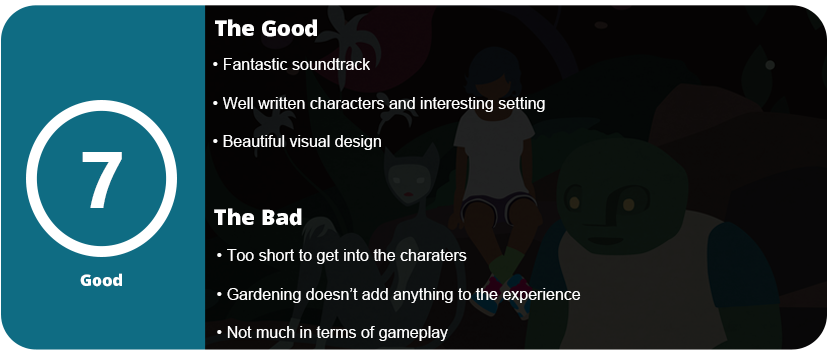
I have to give credit to the developers for their tight and well-written dialogue. The characters have, well, character. For the short time you spend in the games (under 4 hours), you really get to know these people, and the dialogue is written in a way that feels organic and like you’re listening in on a conversation. Talk of relationship issues, depression, carelessness, death, suicide, and many other emotions that we face in ourselves and amongst our own families. There’s an atmosphere that’s both uncomfortable and familiar. You will plant your own life in this game and strategize relating to certain characters or hating them. It’s just so well done.
As for the rest of the game, there’s something to be desired. As you walk around the screens, you will see a hand icon over anything you can pick up. These are usually plants, and you need the seeds to plant gardens to advance the story. There are eye icons for objects that Kai will comment on and a clock icon for an interaction that will advance the story. You never really get lost. Kai’s journal gives hints on who to talk to and what area you need to be in. Using a little common sense and learning the screens and where everyone resides helps a lot. As you pick up seeds, you learn songs that help you grow the garden. Each seed grows based on its song, so it’s recommended to plant seeds of that type. You can place the seeds with an outline of the plant that will tell you if there’s enough space for it. Sing the song a few times, plant enough seeds, and your garden grows. You can then harvest the plant for what you need to advance the story.
Don’t get this confused with something akin to Animal Crossing or Stardew Valley. This isn’t a farming simulator at all. The planting and gardening are rudimentary at best and mostly uninteresting. I just threw seeds around until I filled up the meter, spammed the correct song, harvested, and off I went. I was more interested in the characters and the story. There’s a mystery behind the village that I couldn’t wait to unravel, and unfortunately, gardening got in the way. I did love the music; it’s amazing and good enough to listen to outside of the game.
The art style is well done. It’s bright and colorful, but it can be really dark when needed. The characters have unique humanoid designs that seem familiar but are still alien, and the paper cut-out look just fits so well. I just wish the story was a bit longer, as I wanted to get to know the characters more. I can’t really complain about gameplay, as you do move around constantly and patterns change and mix up, so it never really gets boring. This is a great little adventure game that can kill an evening, and you might have a new favorite OST.
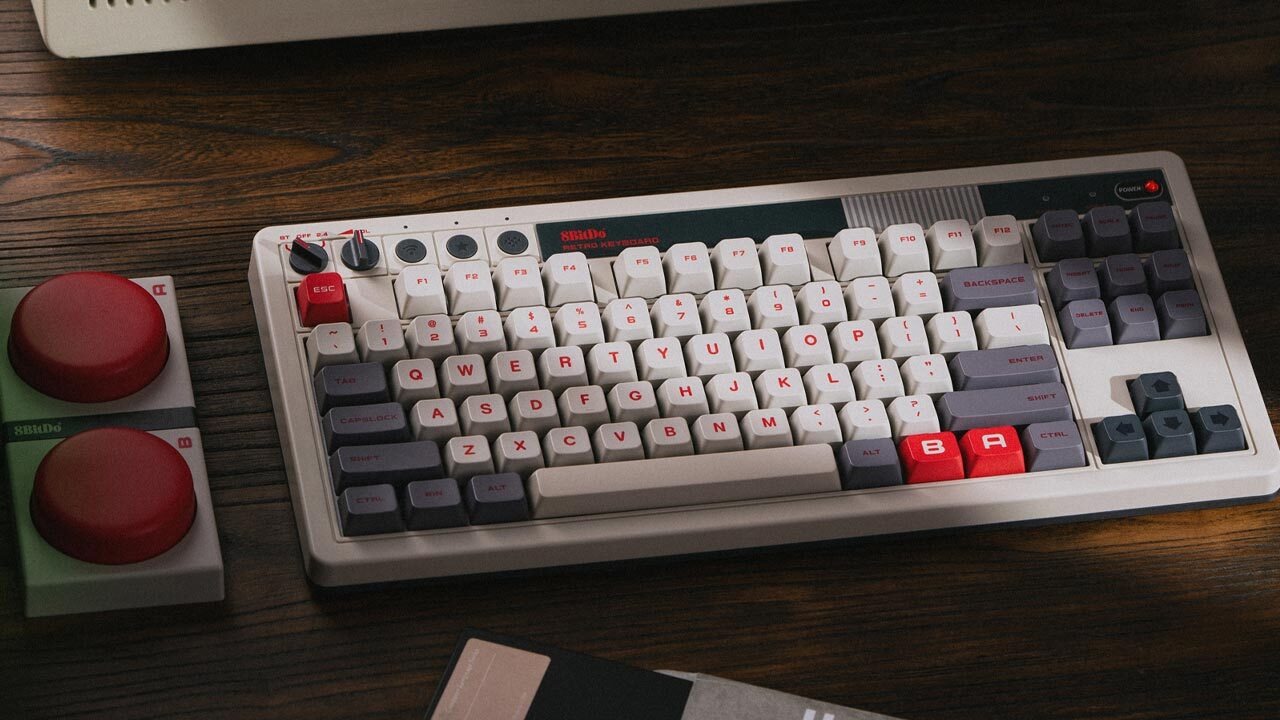
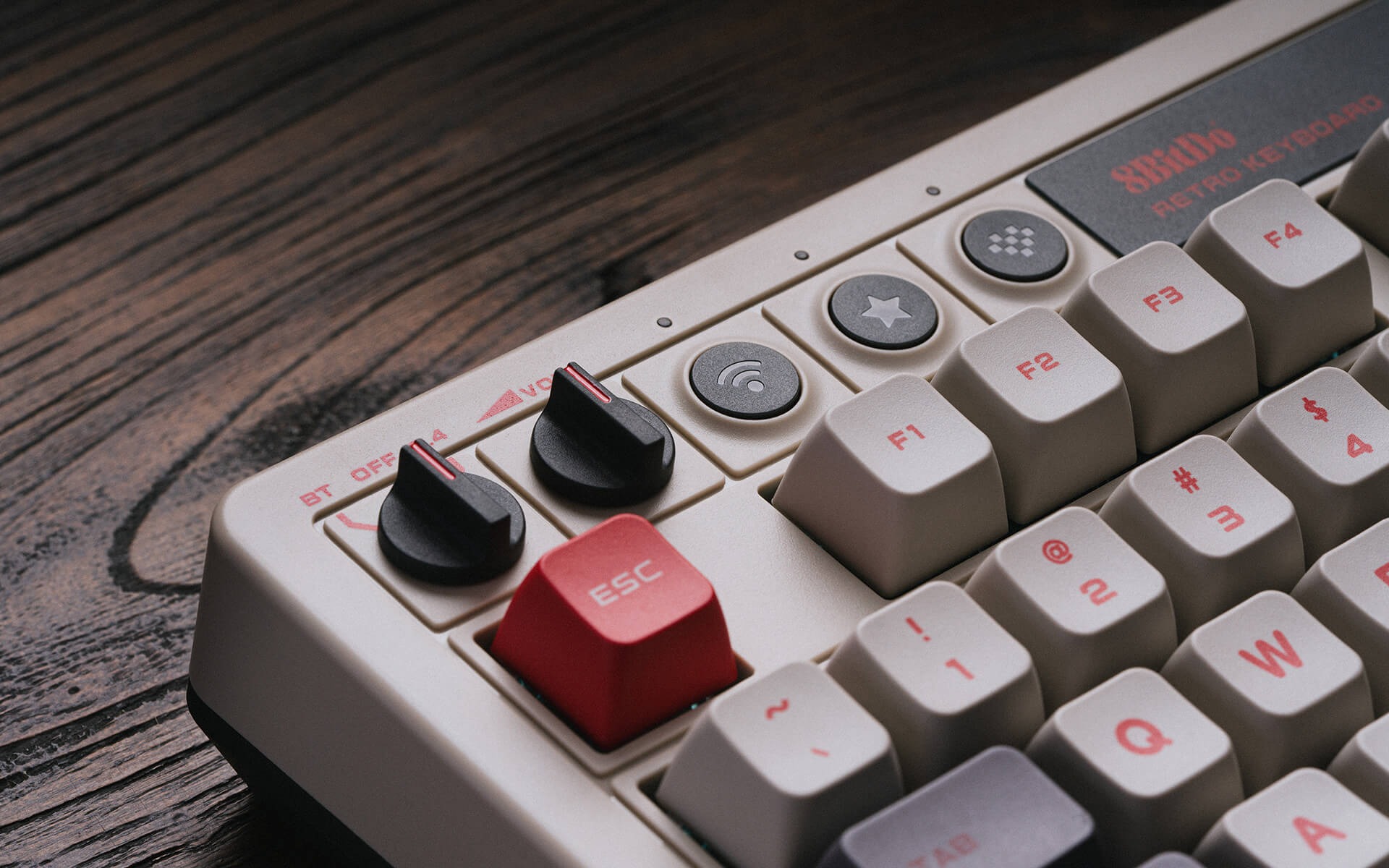
8Bitdo has been killing it over the last five to seven years. They have become a premium AA accessory manufacturer for retro and modern consoles. 8Bitdo has released their first attempt at a keyboard with a retro-themed 70% keyboard with NES and Famicom aesthetics. They also have an 80’s PC vibe with similar layout and styling to that era.
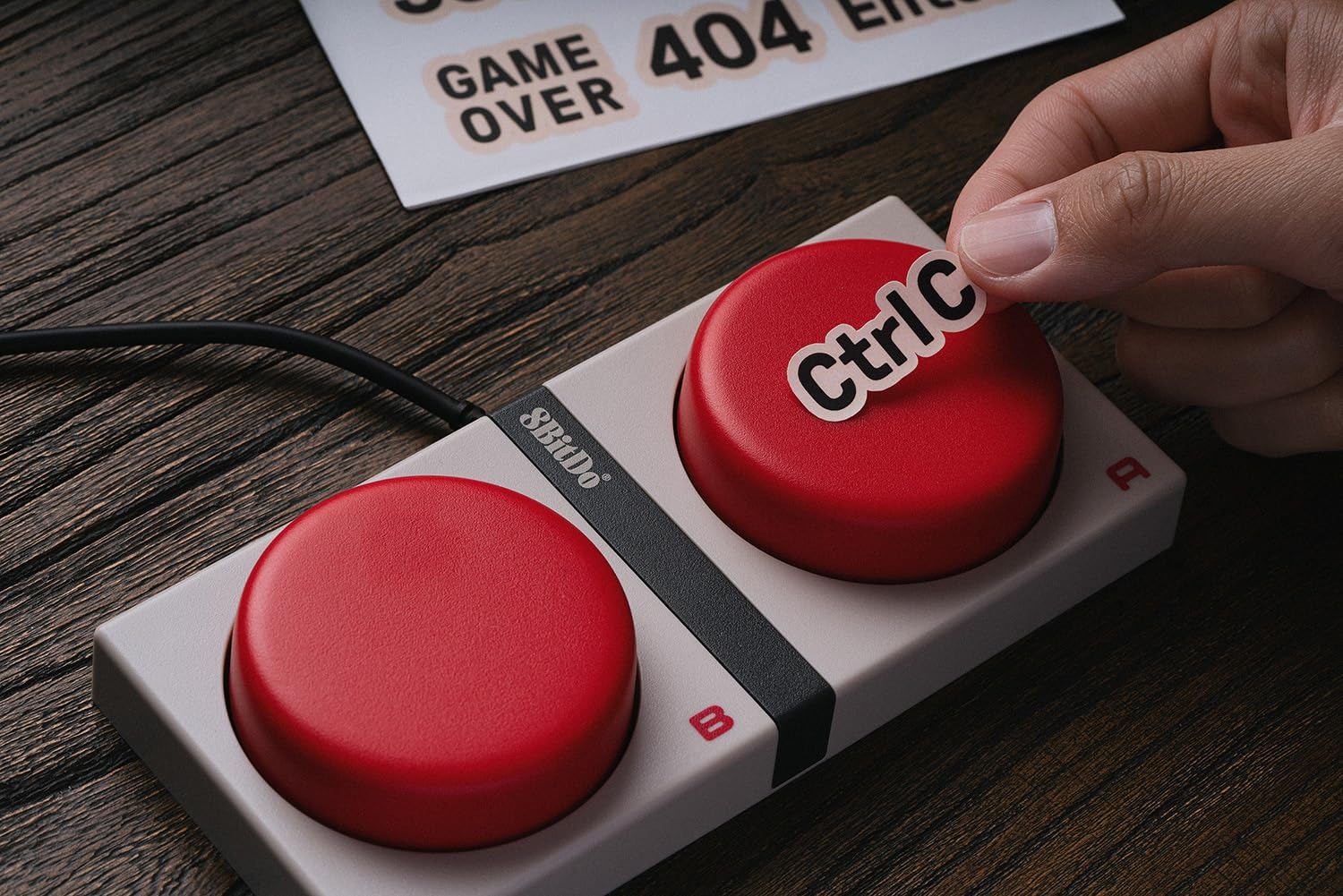
Looks wise, 8Bitdo nailed this keyboard. While I can’t speak for the Famicom version as I do not own it, the NES version looks fantastic. While I’m not a huge fan of the giant A and B buttons, the novelty is appreciated. The keyboard has a sloped angle like the keyboards of the 80’s, with a beige tone and red print on the keys. The fully red escape key and the knobs at the top left are great as well; however, the volume is an infintely turning knob, and the position ends up being irrelevant. This being a TKL keyboard, it will fit on most desks and isn’t super bulky. The bulbous power LED is also a nice touch. This feels and looks like the part for an 80’s keyboard.
The biggest draw to this keyboard is the hotswappable switches. It comes with Kail White V2 switches, but I added Kail Heavy Pro Box Navy switches. I also did a tape mod with five layers of tape, and this keyboard sounds and feels great. I’m glad this keyboard does come with premium switches, and you can add whatever ones you want. 8Bitdo’s versatility and customization are excellent choices. There are four screws located behind the rubber feet on the bottom, and using a plastic pry tool, you can just pop the clips around the panel in the back, and off it goes. It’s an easy keyboard to modify and change around.
It doesn’t just stop with being an 80’s mock keyboard. 8Bitdo’s usual macro buttons are available via their very early and limited keyboard software suite. You can update the firmware and edit your macros with this. It’s still really early, and with its popularity and the number of keyboards, I’m sure 8Bitdo can create a more robust piece of software. There also isn’t any RGB on this keyboard, but that’s probably a good thing given the era it’s trying to recreate, but maybe a white backlight would have been nice. The battery claims it can last up to 200 hours on a single charge. The USB 2.4Ghz dongle snaps into the back so it doesn’t get lost, but there is also a Bluetooth option. This keyboard can work on virtually any modern device.
Overall, 8Bitdo did a great job with their first keyboard outing, and the swappable switches are a plus for longevity and customizability that a lot of non-custom keyboard manufacturers aren’t allowing. The 80’s style rocks, the form factor is great, and it feels good to use. I wish the software was a bit better and the dials felt better to use, and I feel the large buttons are a silly gimmick that just increases the cost. Despite this, it’s a fantastic keyboard.
The PlayStation controller is iconic. It was the first controller that had force feedback built-in and dual analog sticks, and it became a worldwide icon. I remember buying my first DualShock controller as a kid. It was a green one, too. The controller improved with the PS2 by adding pressure-sensitive buttons, but overall it was still the same thing. The DualShock 3 was the most controversial, originally being a six-axis controller with no force feedback due to the lawsuit that Sony was in over their force feedback tech. The DualShock 3 did eventually come out, but the six-axis motion was a gimmick and was never utilized outside of the first two years of the system’s life. It also had triggers that weren’t well done, and the analog stick rubber degraded over time. It just wasn’t a fantastic controller. On the other hand, the DualShock 4 wasn’t the greatest either. The forced light bar needed to communicate with the PlayStation camera so that no one had drained the battery, and the added touchpad didn’t really add to any one experience, just like the SixAxis didn’t. It had improved rear triggers and analog sticks, but that was about it.
Here is the scrapped DualShock name. I have to salute that name, and it will be missed. We are now in the DualSense era. This controller is probably the first ever to be truly as innovative as the built-in analog sticks and force feedback from the DualShock 1. The haptic triggers literally change how a game plays and feels. These aren’t gimmicks. There is a resistive force on the triggers in the game. You can hold down a trigger partially, and it will stick to the motor. Pull down harder to actually shoot a gun or arrow. You can feel the swings of an axe in God of War: Ragnarok. The triggers can even vibrate a bit and feel suddenly loose or tight, like in The Last of Us Part 1. It changes the way I shoot in games. Spider-Man Remastered lets you feel the webs that you shoot with physical force.
This is the best part of the entire controller, and I miss it in every game that doesn’t have it. The rest of the controls are just slightly tweaked for a better hand feel in the grips, and the top light bar was finally removed. However, there are still lights around the touchpad, which is fine. The controller just looks so good now, too. The change to a pure white launch color was strange but also brave. The texture of the controller is improved as well. It doesn’t feel as slippery, and the plastic doesn’t feel as cheap as the DualShock 3 (I’m sorry, but that controller was my least favorite from Sony). The D-Pad also feels better this time around and is less mushy. I also love how the controller is now USB-C and we can finally get away from the micro connector. You still have Bluetooth availability, and it seems to be more compatible with devices than what the DualShock 4 could do. I do like the actual PlayStation logo as the home button now, and the controller retains the speaker and mic features. There is also a mic mute button right on the controller, which is a great feature.
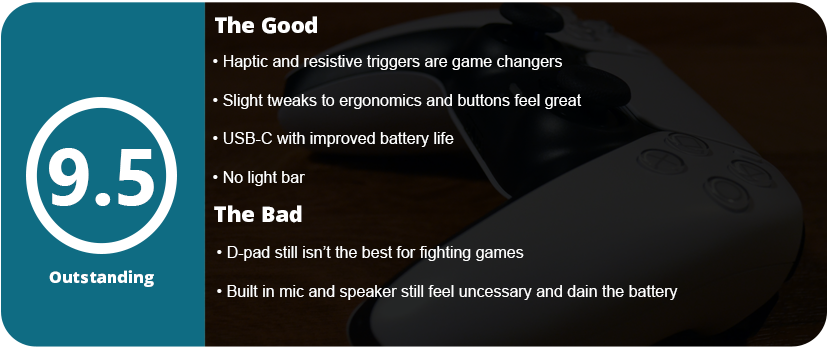
Overall, the DualSense controller is the first controller revolution since the Wii remote and the original DualShock before that. The haptic triggers literally change the way you play and feel the game. There are so many things you can do with this type of resistive technology, and many first-party games are coming out swinging already. The battery life is improved over the DualShock 4, the ergonomics have been tweaked just enough, and finally, get USB-C! I’m not sure how Sony can improve from here.
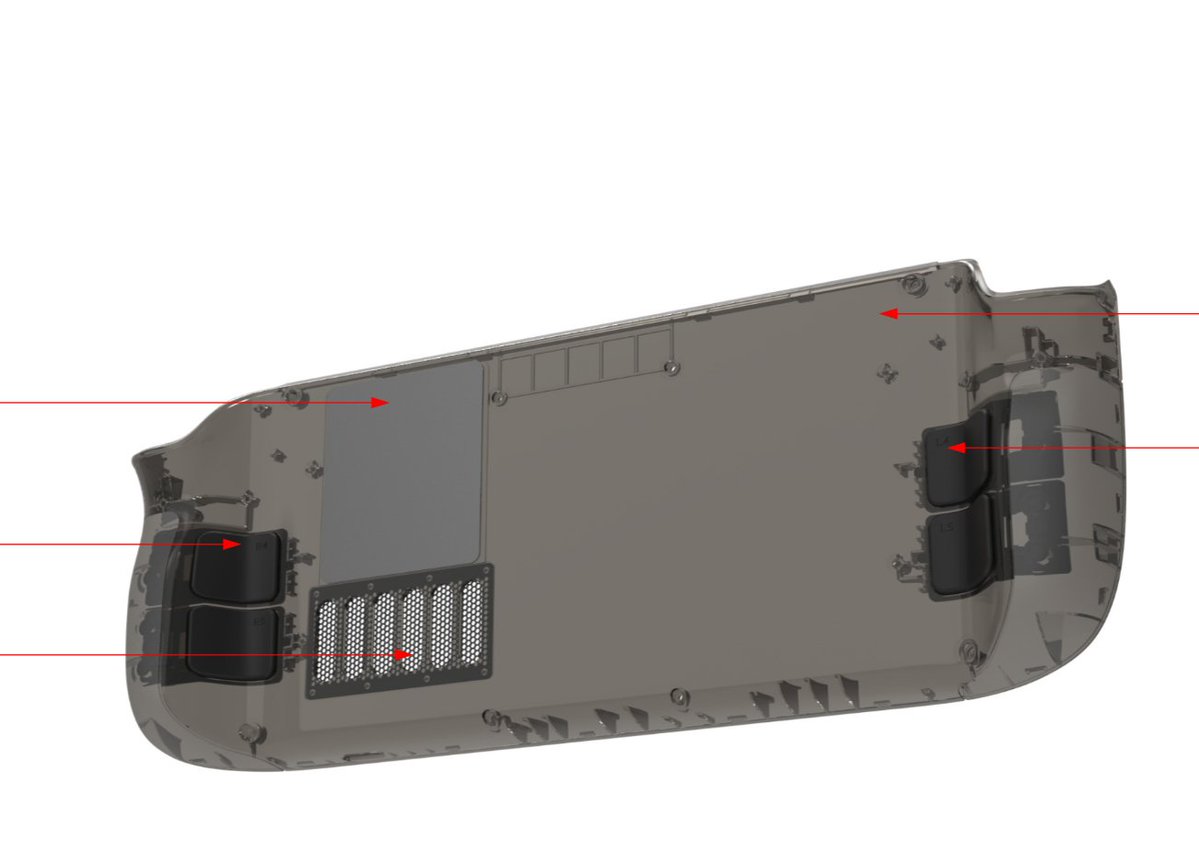
Jsaux, despite being a nobody, took the shot to be the first third party to produce high-quality Steam Deck accessories. It all started with their original dock, and now they have over a dozen accessories available. Their latest and first accessory to modify the deck itself is a transparent back plate. These are high-quality injection-molded plates that feel just like the OEM plates. I was honestly shocked at the quality. They also feature a metal plate with a thermal pad that goes over the APU housing, which the original plate doesn’t have. This keeps heat in one area and away from the back of your hands, which would normally start sweating.
You get a lot of stuff in the box. There is the plate itself, along with three different types of buttons. The standard rear buttons are installed, but you get buttons that raise up and away from the plate, so you have less travel to press the buttons. There are low-height and high-height buttons. I actually like the low height, as I don’t have to squeeze the deck so hard to press the triggers. You also get a screwdriver, a plastic pry tool, extra screws, and some weird anti-static finger gloves, which are stupid, completely pointless, and a waste of packaging. Sadly, the screwdriver and pry tool are garbage. The pry tool broke during the first use, so I had to use a flathead screwdriver to pry the back plate off. The screwdriver is made of very soft metal, so the driver head strips really easily. Thankfully, I had my trusty iFixit kit handy instead.
Once you unscrew the 8 screws on the back (you should use the original screws as they are of slightly higher quality) and snap the new plate on, you’re good to go. It’s a seriously painless installation, and anyone who has never taken a handheld apart before could do it with ease. The plastic feels good, and you wouldn’t know it was a third-party plate when using it. It also looks damn cool. I went with the atomic purple plate as an homage to the GameBoy Color. I played a high-end game for about 30 minutes, and the thermal pad drew the heat away from the rest of the plate so my hands didn’t get sweaty. It’s a fantastic accessory, and for the low price, it’s well worth it.
Is there any reason not to get this? Maybe you don’t like seeing the innards through the backplate, or maybe you don’t like the colors. Don’t be scared about taking the backplate off, as it doesn’t void the warranty with Valve. It’s as easy as replacing the battery cover on a toy. It takes around 20 minutes and is well worth it. If you want a cosmetic update and a way to keep the back cooler, then this is a two-for-one deal that you shouldn’t pass up.
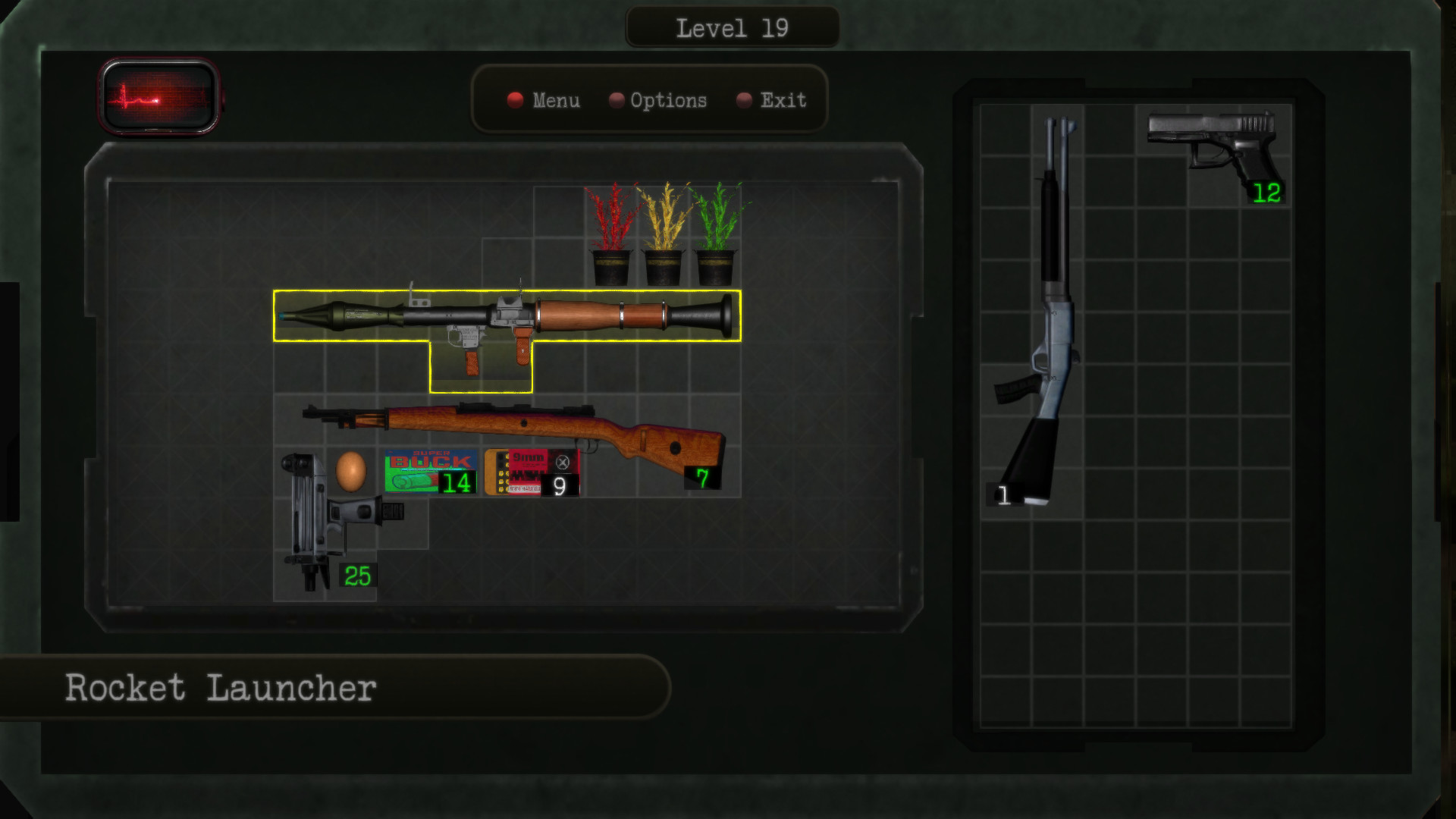
Did you ever play Resident Evil 4 and want to just organize that inventory? It’s kind of satisfying getting all your items in the right spot, so someone thought that should be its own puzzle game. In Save Room, you organize weapons, health, and other items ripped straight from the game it’s inspired by.
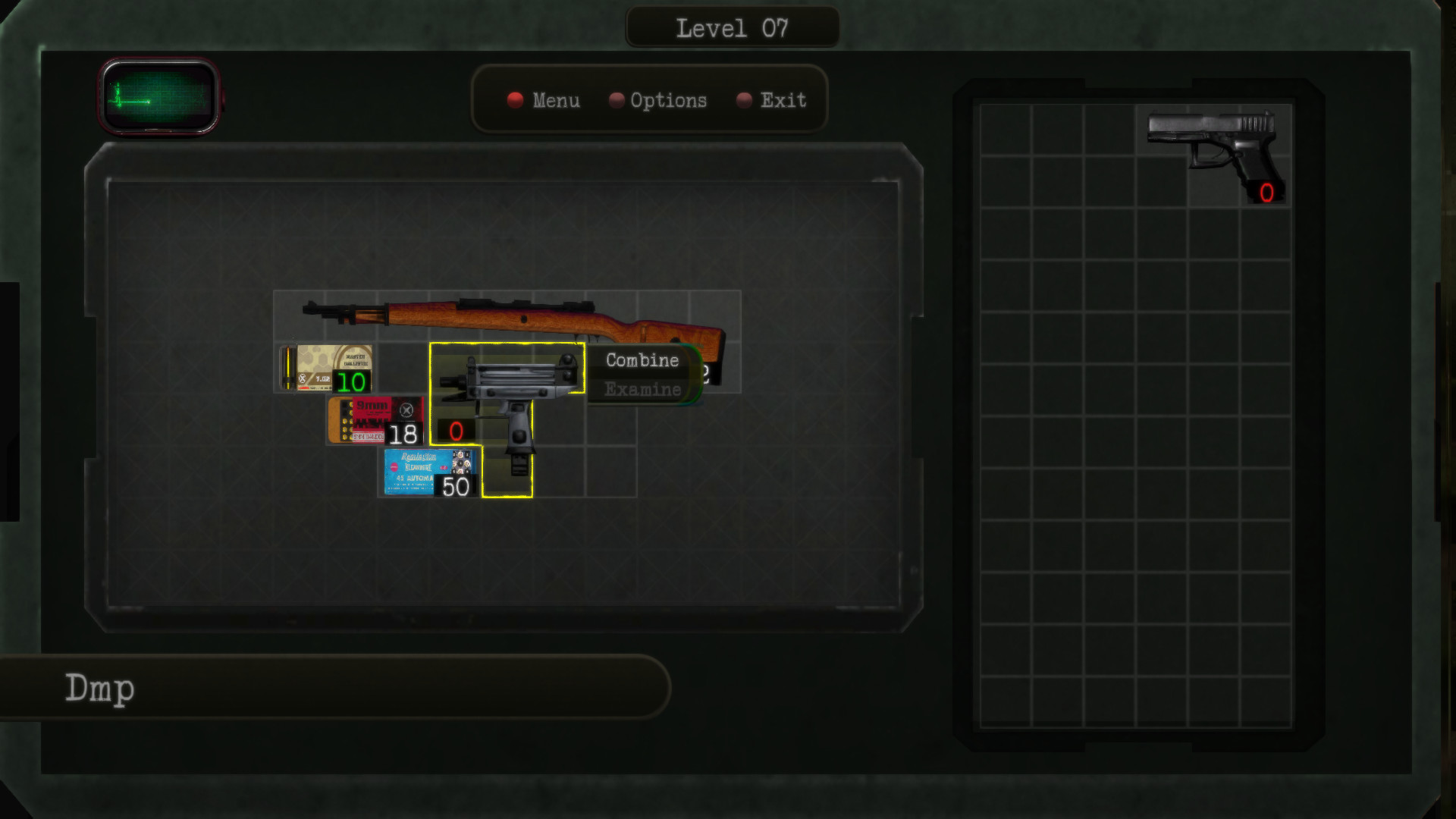
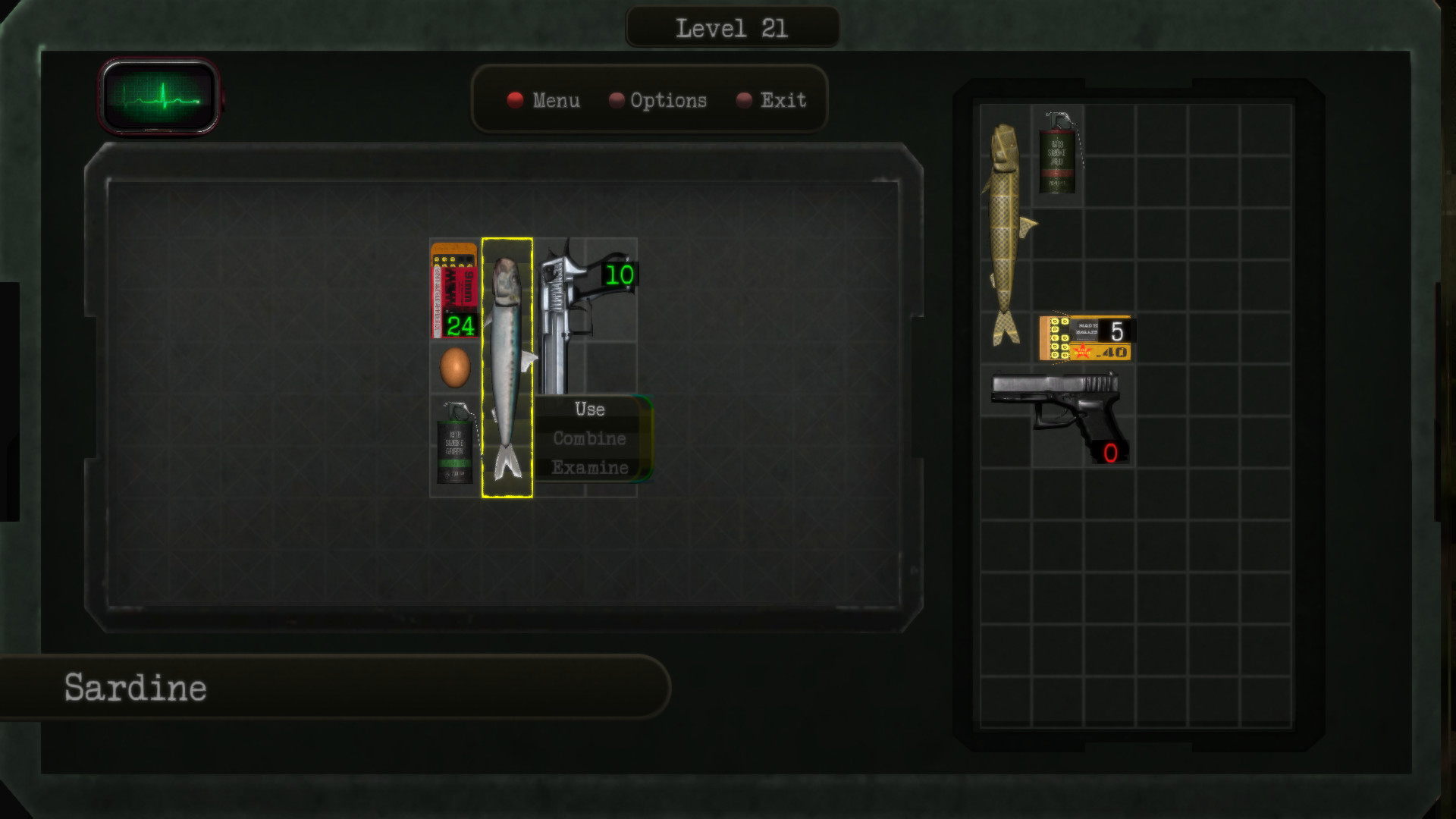
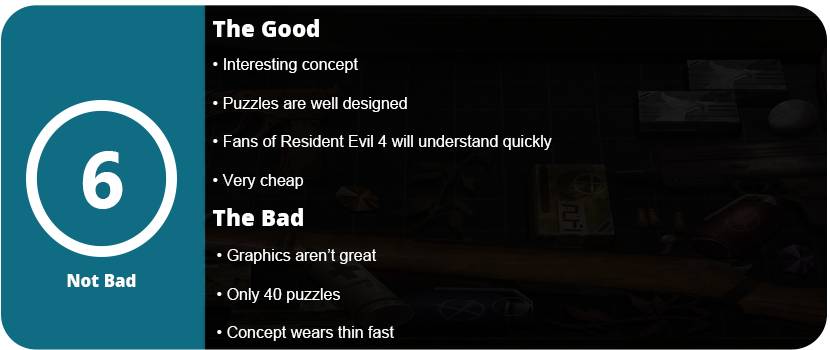
There are only 40 puzzles in total and you can blow through them in just about an hour. On the left is a cache with a grid and on the right are the items you need to fit in there. There are just enough squares to fit every item exactly. You begin with just fitting small pistols and then larger weapons like shotguns and rifles. Shortly after this, you need to organize health items and grenades. Things get more complicated when you start out with too many items.
Well, just like in RE4, you have a health meter and need to refill your guns. You need to do this in a certain order as this is also part of the puzzle. You may have three health items, but can only use two so you must figure out how to combine herbs and also hurt yourself with poisoned eggs and fish to be able to use more health items. Later on towards the last dozen puzzles you start crafting ammo in addition to stacking ammo and reloading weapons.
This all sounds complicated, but if you ever played RE4 you know exactly what to do already. A few puzzles will get your brain juices flowing. Mostly the ones that needed me to combine certain types of ammo and reload or stack ammo in a certain order. I only had to look up a few puzzles online, but most are quick trial and error levels and you will be breezing through them.
This sounds like a great concept, but in the end, it gets old really fast and it makes you just want to play RE4 instead. The visuals are pretty ugly, there’s a single track that loops in the background, and that’s all there is to this. For the low asking price, I can’t really complain. I had my hour of fun, but it’s totally forgettable. This isn’t on the same level as Portal or even something like The Room series. You won’t be talking about this 10 years from now. I honestly can only recommend this to RE4 fans who want some sort of weird spin-off. Anyone else who never played RE4 just won’t care about this or even get the idea.
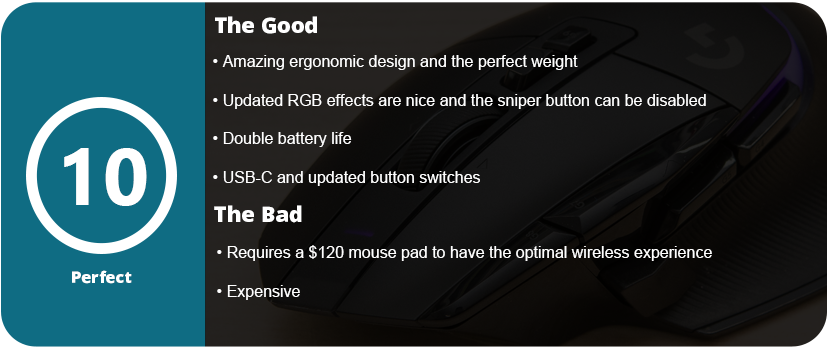
I’m not one to buy mice very often. Maybe once every 2-3 years, just like keyboards. I already had the G502 Lightspeed, but what prompted me to spend $160 on a simple upgrade? Well, it’s worth it to me, but anyone who is seeking a high-end gaming mouse should look no further.
The mouse retains the signature G502 ergonomics and look. The X Plus means the mouse is a bit heavier at 114 grams over the original’s 104 grams, has better button switches, and has a removable sniper button that can be disabled this time around. Best of all, the battery life has doubled with RGB off, clocking in at 130 hours and around 40 with RGB on. The scroll wheel has also been updated. The RGB lights are now across the palm of the mouse rather than just the Logitech G logo. It’s a fantastic update and well worth the money, in my opinion.
This may seem small compared to the original Lightspeed mouse, but it feels better, and it’s the little things that matter here. The weight helps quite a bit, the buttons feel more clicky and less mushy, and the RGB effects are awesome. While the battery life has doubled, the RGB lights are very bright, so turning them down to 50% can net you upwards of 50 hours easily. If you have the Power Play mat, you don’t need to worry about charging ever again, but that’s another $120, and most may not care for that. Who plays for 50 hours straight?
The addition and update to USB-C are really nice as well. You can use any USB-C cable, as there is no weird proprietary shape for the port this time around. The software lets you customize the RGB effects, change power settings, set macros, or change what the extra buttons do. It’s nothing special, but the Logitech G Hub is nice and clean and simple to use.
The G502 series has been my favorite mouse over the last 5 years, and that doesn’t seem to be changing any time soon. With a Power Play mat, I can foresee this being the perfect wireless mouse setup. At $160, it’s high-end, but well worth the price if you want great RGB effects, good battery life, and probably the best mouse sensor on the market right now. I don’t know who is crazy enough to have a 25,000 DPI setting on their mouse, but it’s there. I only go as high as maybe 4,000. The addition of USB-C puts this mouse into 2023 and beyond. I can’t recommend this one enough.
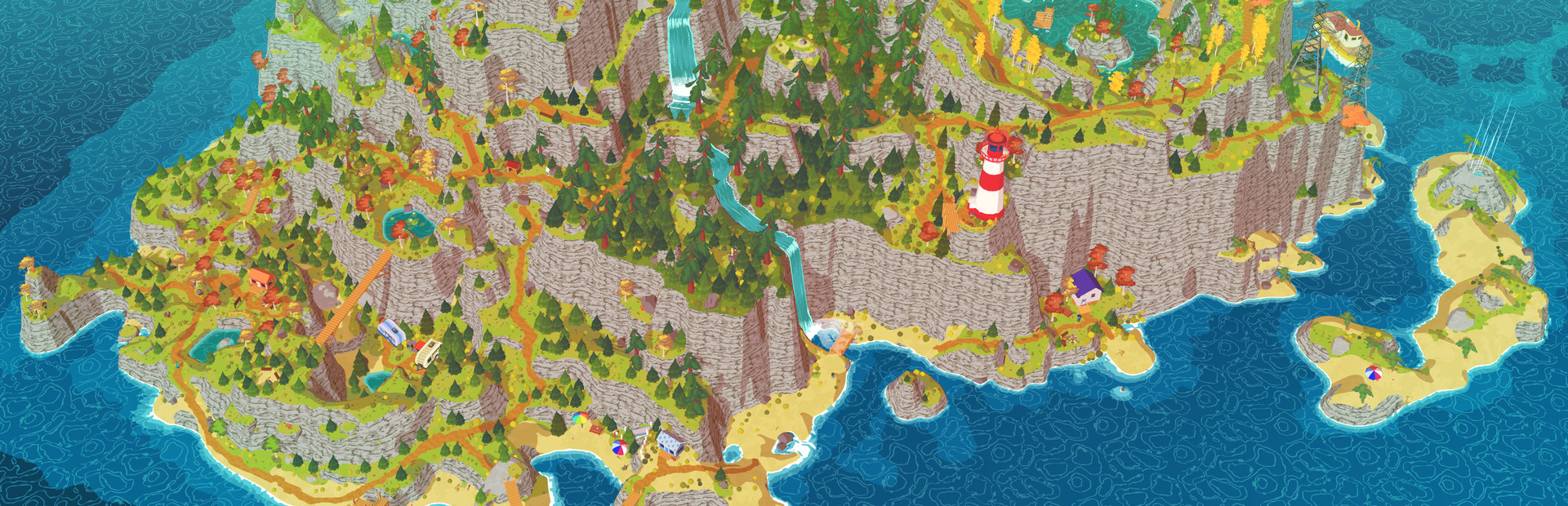
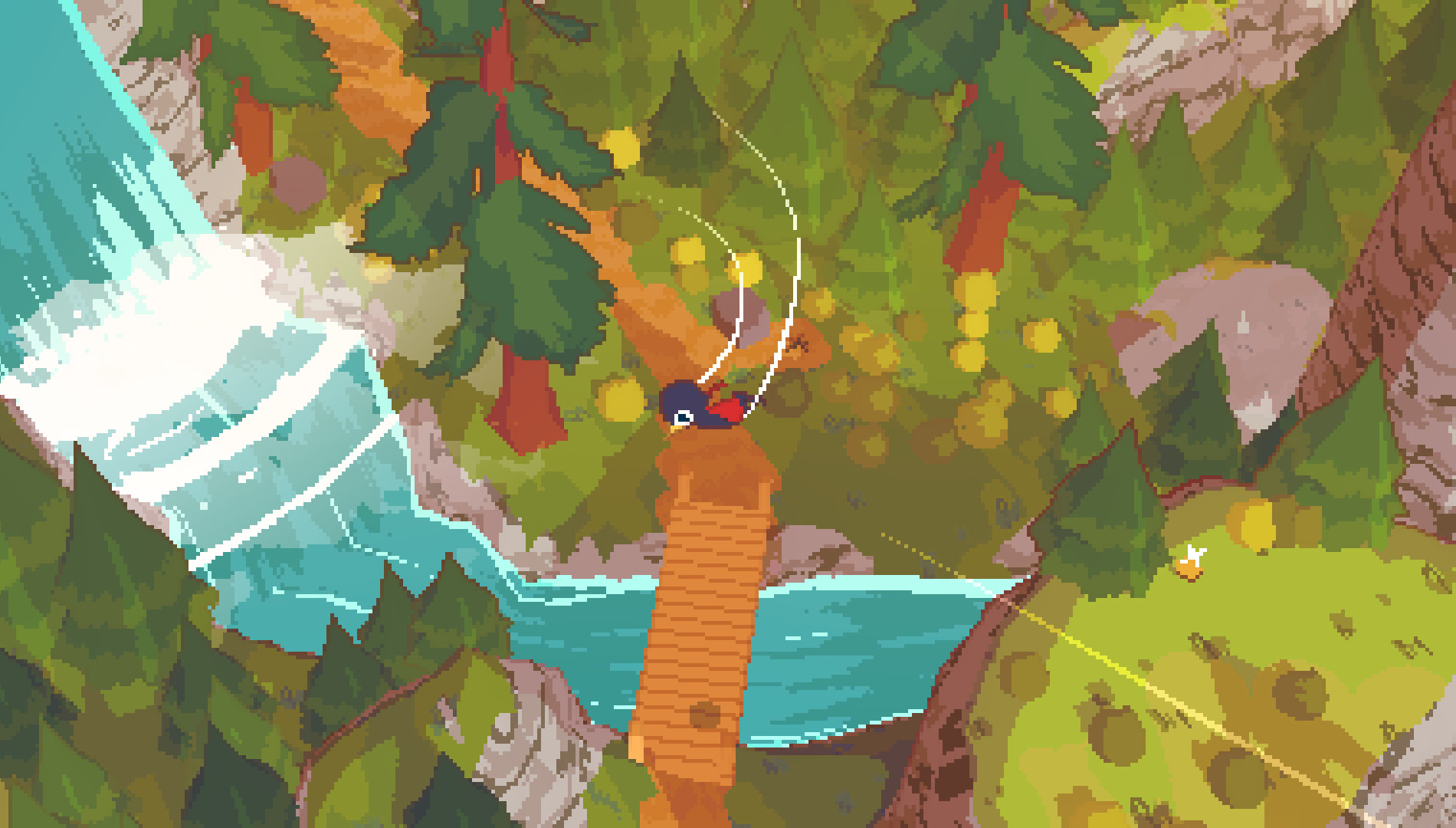
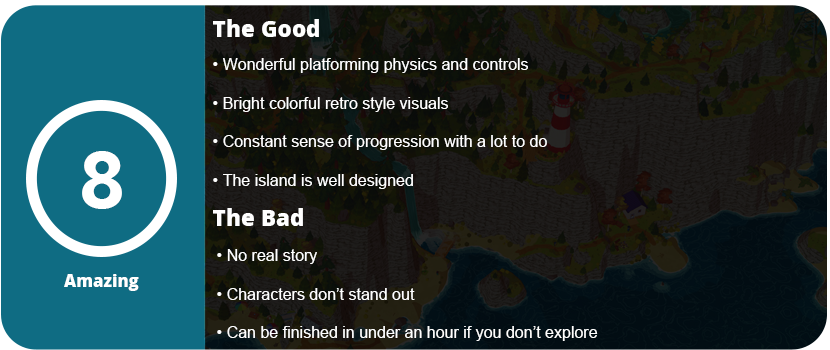
You can’t really call this a walking simulator or a platformer. It’s a bit of both. A Short Hike doesn’t have the touching story that tugs on your heartstrings that a lot of short indie “walking simulators” have, nor is it a skill-based platformer that requires precision timing. It reminded me of something familiar from the 32/64-bit era, such as Super Mario 64, Donkey Kong 64, or Kingsley’s Adventure. This is an isometric “retro pixel” style 3D platformer with tons of charm and a fun island to explore. The entire game can be completed 100% in less than four hours, and the main story can be finished in one hour, but if you just race to the top of Hawk Peak to get the cell phone reception you need to hear back from your mother, then you are robbing yourself of an entire game.
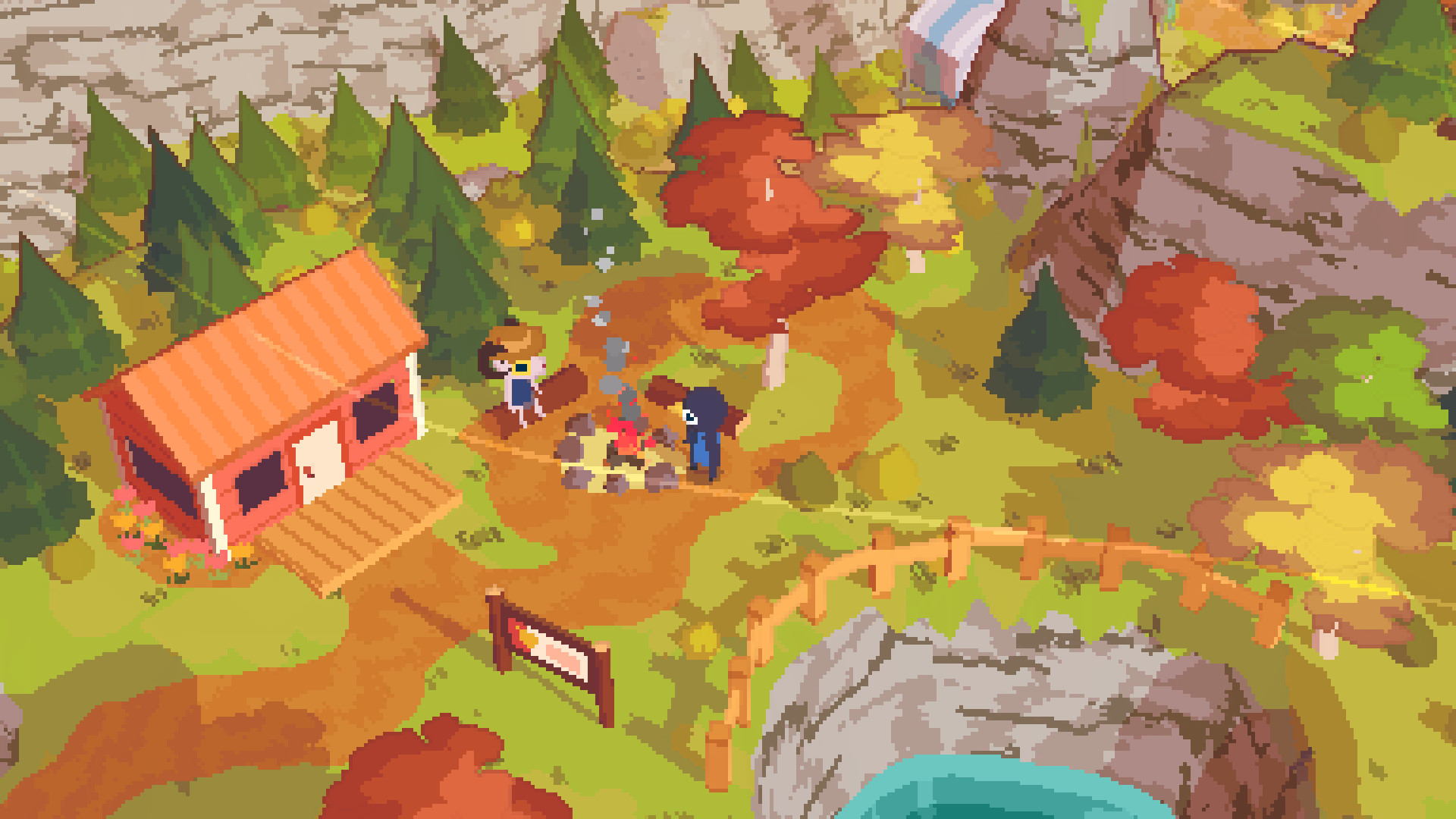
There are dozens of characters dotted throughout the island offering challenges, golden feathers, hints, and just plain silliness. The writing for the characters is very similar to that of 16-bit games of yesteryear. Your main goal for progress is golden feathers. These are single jumps or stamina for climbing. I found 11 on my journey, but there were a few more I missed. You can do more than a single hop without the first golden feather. You really should glide around the island and explore. Some characters want seashells; one runner is missing a headband; and there are treasure maps, chests with coins, digging spots, fishing spots, and a few other activities like stickball and parkour races. You won’t discover these without talking to creatures and exploring. I love the exploration in this game. It’s not overly difficult, and you can always figure out how to get to a seemingly hidden spot. Just upgrade your feathers.
Coins are used to buy feathers from a couple of characters, and you can sell caught fish to get more coins. This all sounds like a lot of fun, but it’s packed into a single hour and somehow doesn’t feel overwhelming. The island seems big at first, but you will easily remember the landmarks, and there are signs everywhere pointing to the different trails and landmarks. You eventually unlock shortcuts by watering spring flowers and using a pickaxe to knock through a tunnel. It’s incredibly satisfying to find all the objects for a creature and then run back knowing exactly where they are and get your reward, and it’s always one step further to progress. No matter what you do in the game, it will always push you closer to your goal.
Even after reaching the peak, you get an opportunity before finishing the game to complete everything. By the first full hour, I had almost all the feathers, and I could go anywhere I wanted. I didn’t 100% play the game, but I got close to it. The platforming itself is wonderful, with great physics and tight controls. I never felt slippery, and gliding never felt off or wrong. You do eventually get a sprint ability, and this helps you get around the island even faster on foot. Thanks to the short length, there’s a constant sense of progression with every action you take. The visuals are bright, colorful, and charming, and the music is fantastic. There’s not much to hate about this game other than its length and lack of an overall story.
A Short Hike is one of the highest-rated games on Steam for a reason. It’s a bite-sized chunk of gaming goodness that merges the exploration and fantasy of adventure from the early days with the better controls and tighter designs of today. It may only take an afternoon to complete, but it’s incredibly satisfying and isn’t something you will quickly forget.
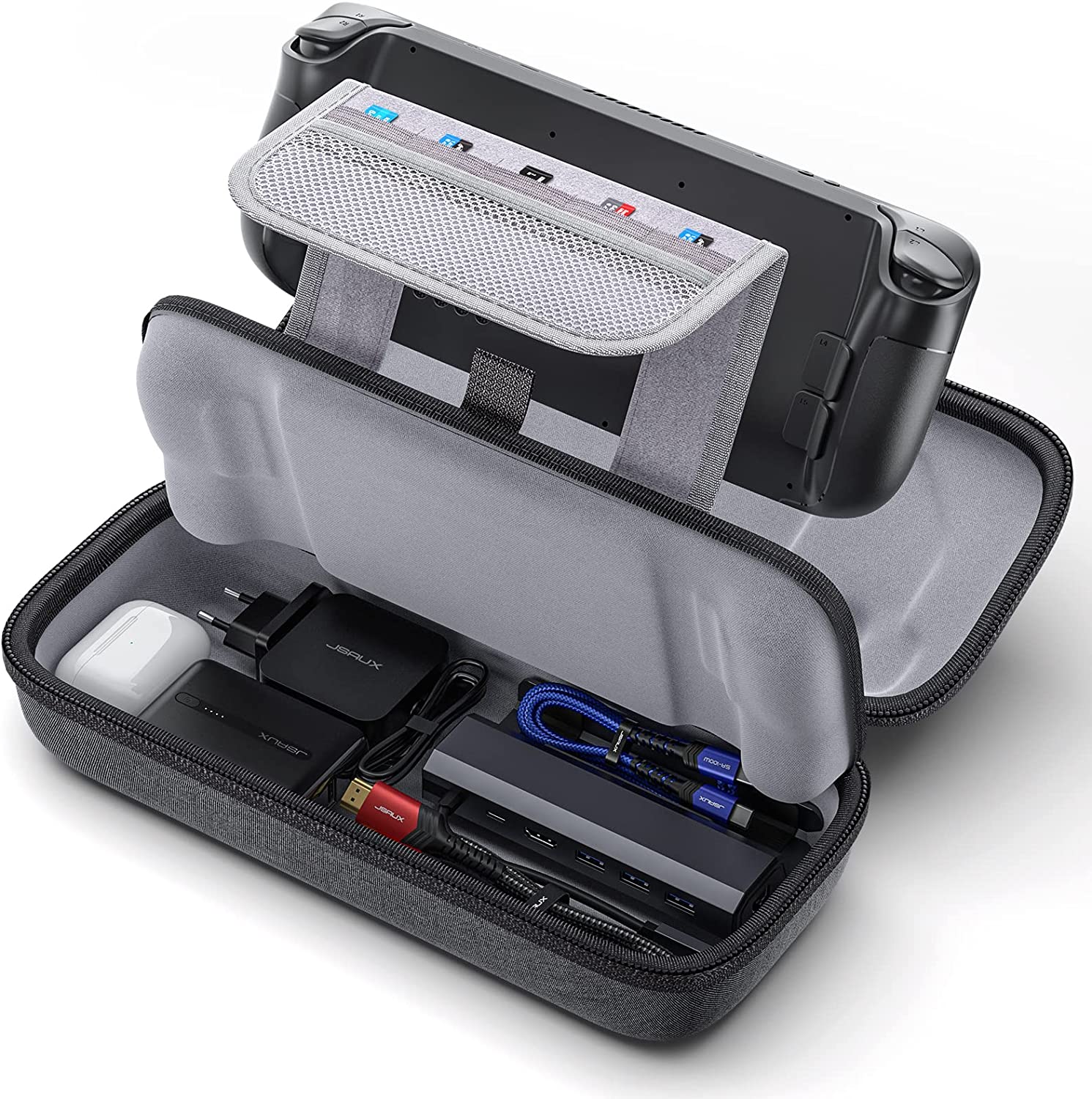
The case that the Steam Deck ships in is fine on its own. The fact that a console ship in a protective case that’s used as the packing material in the box is revolutionary and should be done more. Sadly, the case for the highest-end Steam Deck is the only one that’s really great. Even so, there’s no storage inside the case, and as time has moved on and we’re one year into the Deck’s life many accessories have come out and you need more storage. Jsaux has come to the rescue with a larger case that has more room.
The case feels similar to the standard Deck case. It’s made of a canvas-type material and feels great on the inside. There’s a fold-out piece that stores SD cards and has a molded inlay just like the original case. Everything is the same there. What makes this case magical is that this molded layer flips out and reveals the bottom of the case that can be filled with a charger, cable, dock or anything else you want. The hinge of the flip-out layer has elastic along with the edge of the zipper. This allows the case to expand when large items are put in the bottom and zipped up with ease.
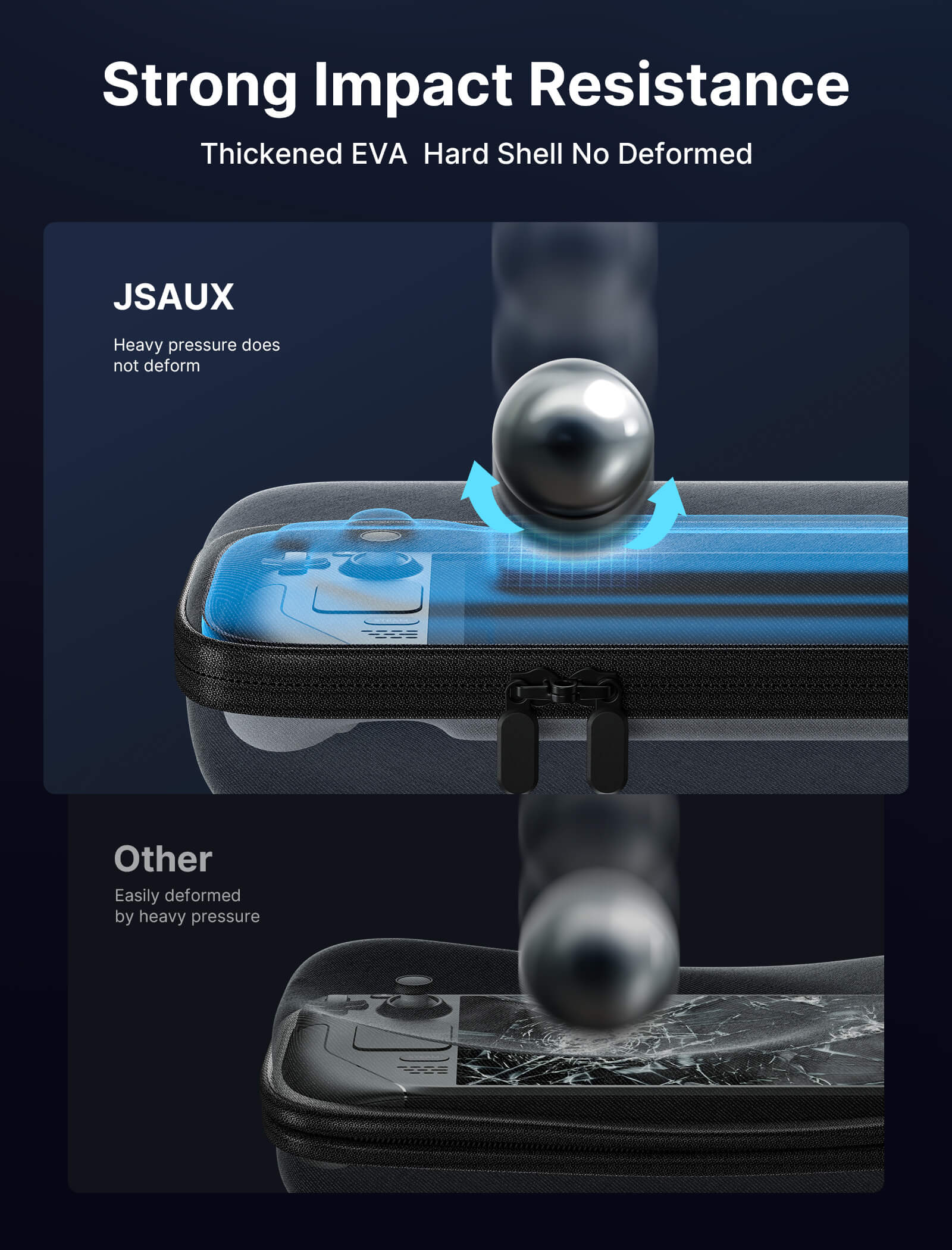
I was also to put the Jsaux dock, cleaning cloth, Anker charger, and 10′ USB-C cable and still had room inside. It all zipped up easily and didn’t put much stress on the zipper. There’s a nice rubberized handle to carry it around with and the grey color is nice too. The outer shell is also made of a tough foam so which will protect it from falls and drops so there’s no need to worry there.
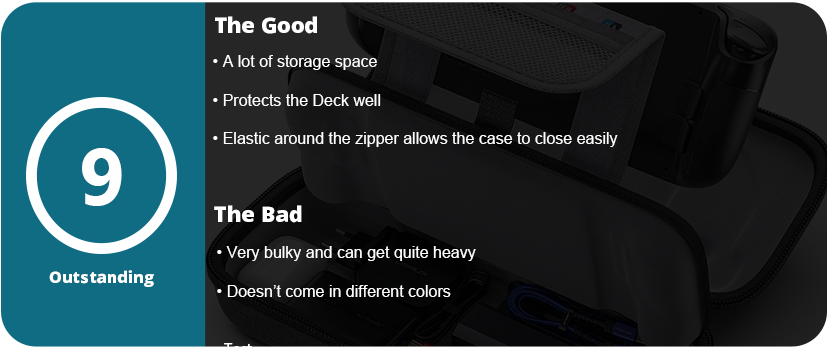
Overall, the new case is fantastic and a must-have for those who have extra accessories for the Deck. Even if you just want your charger more protected and not on the underside exposed like on the original case this would be fine as well. Just know that this makes the case very bulky and heavy. It’s massive and may not even fit into most small bags because of this, but it is sturdy and protects the Deck nicely.
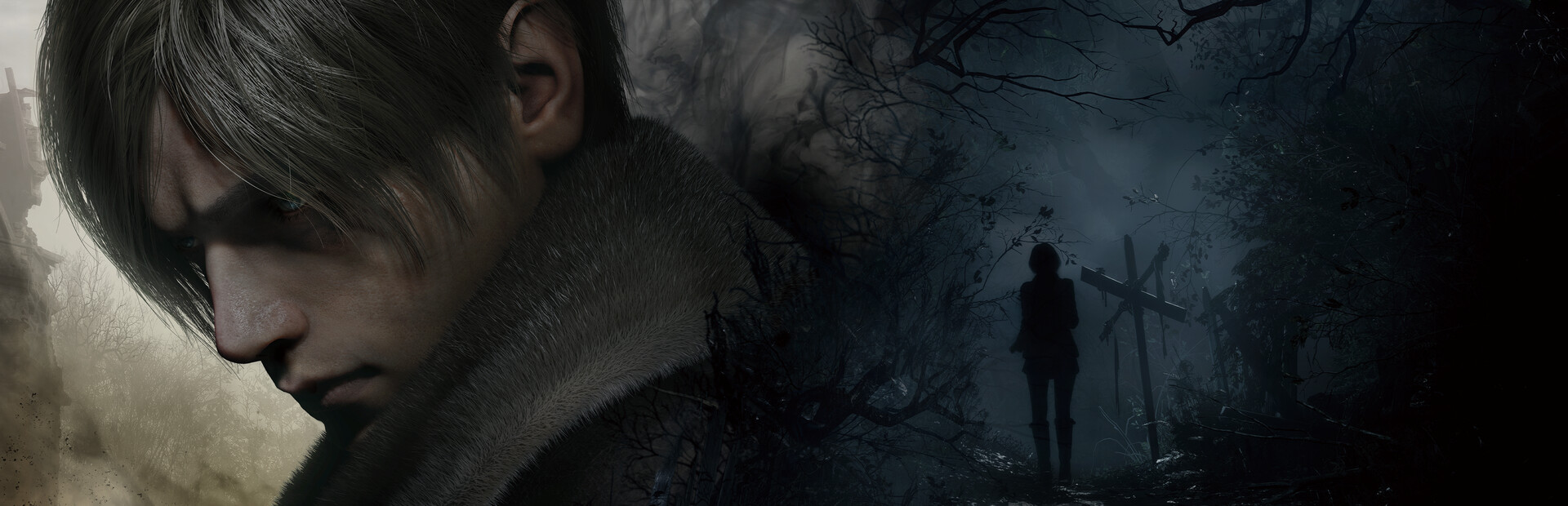
Resident Evil 4 changed the entire gaming industry. It was one of the most influential games of all time. It actually still kind of is. It showed how drastically you can reboot a game and honestly started the whole reboot craze and is the gold standard to live up to. Take a game that has tank controls and pre-rendered backgrounds and throw it into a third-person shooter with unique control and a well-balanced gameplay loop. It was talked about for years and inspired other games like Gears of War. Resident Evil 4 (2023) is a reboot of a game that mastered reboots. It has the highest standards to live up to. Thankfully the last two Resident Evilreboots were fantastic and took pages from RE4. So, what we get is just a better-remade RE4.
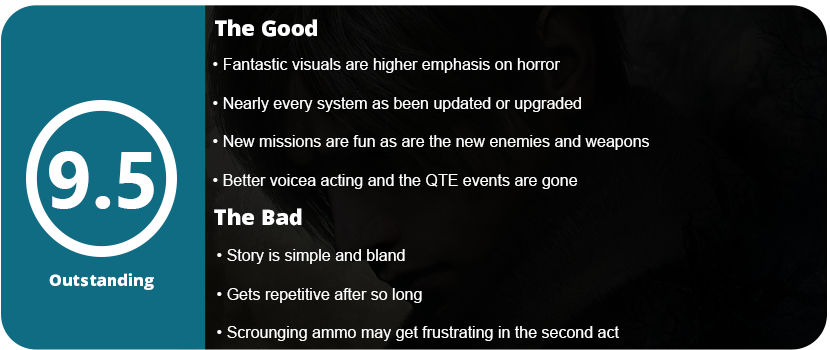
The story itself is supposed to have taken place after RE2. Leon is sent to save the US President’s daughter, Ashley Graham, and that’s about it. There is a new virus that got loose from Umbrella and the Los Plagas will come out of enemies every so often and it happens more as the game goes on. Their heads will pop off and a new tendril-like creature will come out in various forms. You can stop this before it happens when they are on the ground twitching. The characters in the game are pretty simple and have no time to become interesting. Outside of Leon and Ashley the other characters show up for just a few minutes in the game, so the story itself takes a back seat. It’s the weakest part of the whole game.
Right off the bat, you will notice an immediate change. Not only are the environments more detailed, but the opening scene has changed as well. We get an all-new voice cast (that’s much better), new music, and updated sound effects, and the overall feeling is more modern and less stiff. You can actually shoot and walk this time around which is a huge change in balance for the game. The knife has also changed as it can be broken but also upgraded. Crates can be stomped on rather than sliced so gameplay flows better. You can acquire boot knives that can be used to ward off enemy attacks up close. You will also notice that quick-time events are pretty much gone. These scenes are now fully playable with you in complete control rather than an actual cut scene.
All of these changes are for the better and add a whole new dynamic to the game. Combat mostly remains the same with enemies slowly lumbering towards you with various weapons. Enemies can throw axes, molotovs, and shoot you with crossbows. Some will shock you with sticks, others will carry shields, and then there are the bigger enemies. Rarely occurring, chainsaw-wielding enemies will appear that require explosives or heavy damage to kill. You need to constantly run and turn back to shoot. Using your surroundings is key. Lure them towards explosive barrels, or funnel them everywhere down a corridor so you can line up headshots. The level design is fantastic as you get little arenas that you can immediately scan and strategize with.
Every time an enemy dies they will drop something. Unlike the original game, this time around a whole new mechanic of crafting has been added. Enemies will always drop something whether it’s resources, gunpowder, health, ammo, or money. You need resources and gunpowder to craft various ammo types. Recipes can be bought from the merchant. You can also buy weapons, armor, resources, health, and various other items. Another new system is the side missions. These can be found posted on walls and convert the older challenges into missions. The blue medallions, tough enemies, shooting rats, or finding certain objects. These are traded for spinels which can be traded for rare items such as exclusive new weapons, treasures, and more. Cases are not just expanded now, but different case types will drop certain items more frequently and new charms can be attached to help lower the cost of sales, increase sell value, drop rates, and so on. These charms are won by completing target practice missions in one of five locations in the game.
That’s a ton of new things already and it’s so well-balanced. It’s a way to take the older systems and tweak them into something new and more fun. You can move around and technically kill enemies easier so with an added crafting system you always get rewarded. There are still treasure maps to buy and valuables to look for which are key to racking up coins. Certain valuables can have jewels inserted into them to increase their sell value so hang onto those gems! On to something much bigger is Ashley herself. Many felt she dragged the experience down. You have to always catch her when you hopped off ledges and she always got captured easily. Now you can send her away, hide her in lockers, and she does most actions on her own now. She’s much less of a burden.
Speaking of Ashely there are stealth elements in the game now by sneaking around and offing zombies, but this is easily ignored. It doesn’t work outside of a couple of zombies and then everyone sees you. The AI walking patterns are too random to sneak through areas, and this wasn’t intended in the original game anyway. While sneaking around zombies is possible sometimes there are new enemies in the game, but I don’t want to spoil anything. Original enemies are updated and look even more grotesque. That’s another theme of the remake. Horror is much more prominent in this game. Like in previous RE remakes the flashlight is added so Leon will whip it out in dark caves and there is a constant sense of tension and dread no matter where you go. The game relies less on jump scares this time around.
There are three acts in the game. The village, the castle, and the island which is split between a mine and a military base. My favorite part is act one which is the most iconic. The castle is okay, but the game gets insanely tough during the second act. Ammo is incredibly scarce. You must be very cautious about what ammo you use and when. Save more powerful ammo like grenades and magnum rounds for the mini-bosses and bosses themselves. Save your sub-machine gun ammo for large crowds and your rifle ammo for enemies are off. The pistol is going to be your main weapon throughout the entire game so always keep a stock of it.
The visuals are a nice upgrade over the previous remakes. Ray tracing has been added, but it’s not great. The RE engine is still insanely well-optimized for lower-end PCs and runs really well. However, there is still no DLSS support so it needs to be manually added through a mod, but even on the Steam Deck, the game runs fairly well. The visuals are top-notch and the art direction captures the vibe of RE4 in a more visceral and raw way. I love it. When you’re all finished with the game you can run through on a New Game+ which is a must as that’s the more fun way to play. Overall, RE4 (2023) is a massive update to an already iconic game and changes nearly everything wrong with it. I just wish the game was a little better balanced and it does get repetitive after so long. You are just walking around shooting zombies with a couple of simple puzzles thrown in. At least the exploration is fun and there’s always something new to look at.
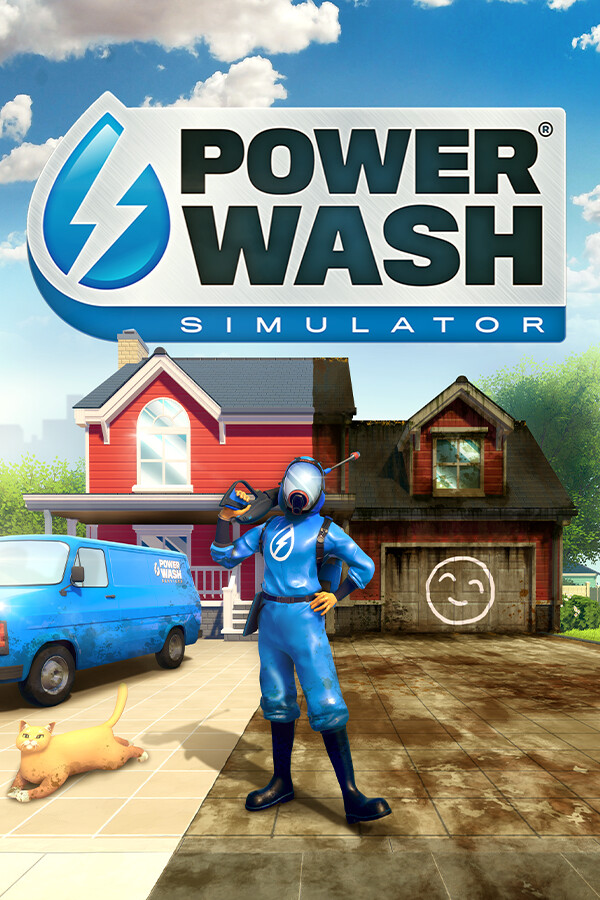
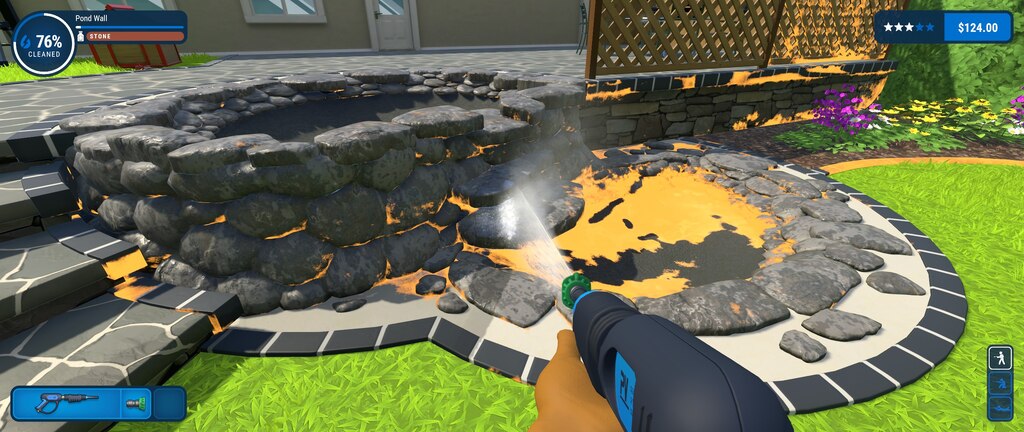
I never thought that I would have so much fun with a chore. There are various curated threads online about watching power washing. It’s satisfying to see someone turn an incredibly dirty surface into a sparkling clean one like wiping a window with a squeegee. There are many jokes about missing a spot and everyone in the comments losing their minds. r/powerwashingporn is a popular subreddit dedicated to these videos. FuturLab has done an incredible job of making this chore feel fun and satisfying. There’s even a silly story that’s evolved over the course of the Early Access phase involving gnomes.
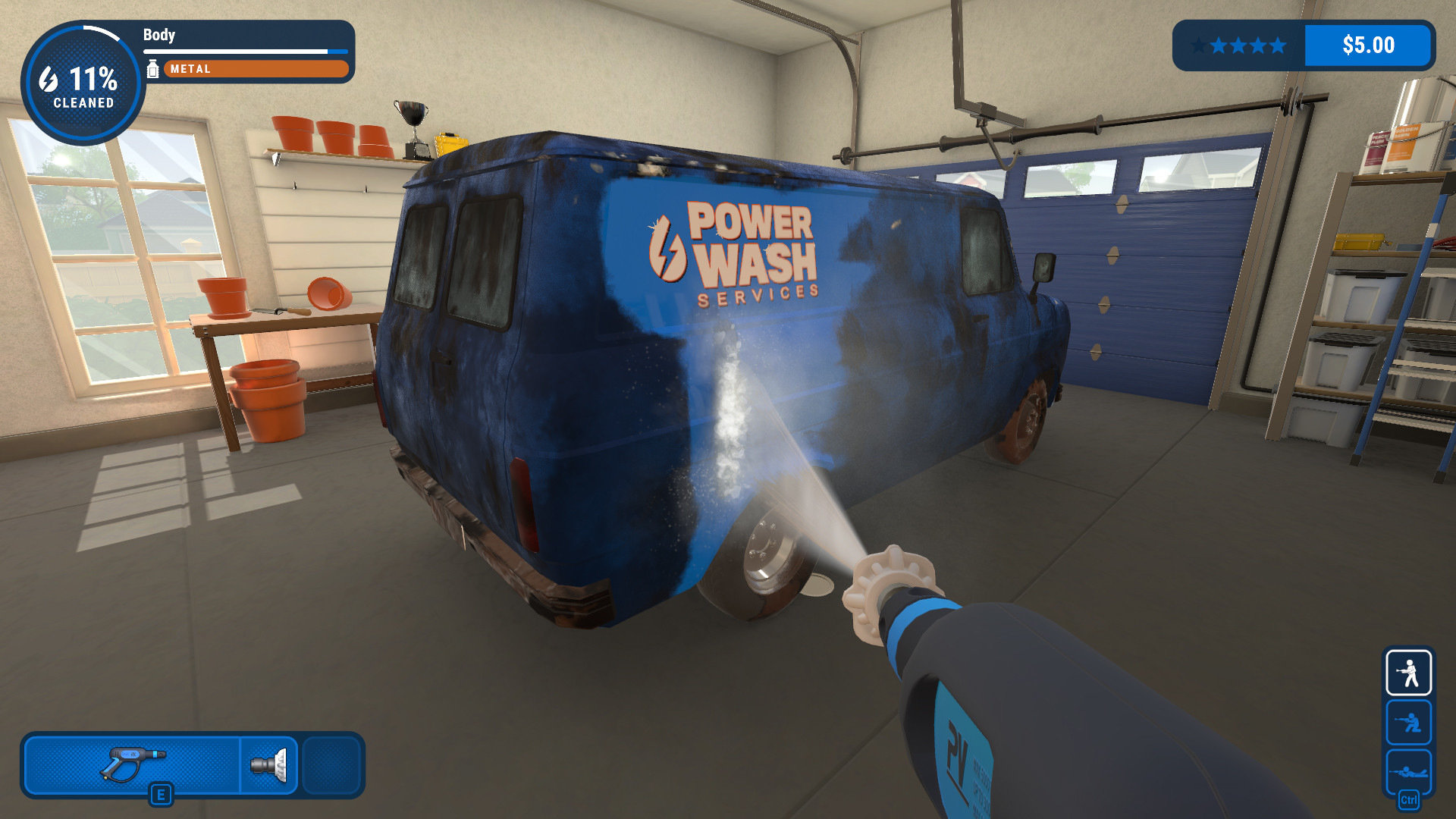
Every surface is covered in dirt, rust, mud, or some type of grime. You get a power washing nozzle and you spray things down until they turn clean. You can decide what to spray, what direction, and in what order. That’s part of the fun. Tackling each area in a certain way is satisfying and fun for you. Your tools include various spray nozzles that have different widths as well as spray liquid for getting tough areas, but this stuff is expensive and limited. You also have a spray gun that shoots various distances. These can be bought and unlocked with money by completing levels. You are paid at the end of a level and you can see a sped-up replay of your work. There are also cosmetic items such as your suit and gloves.
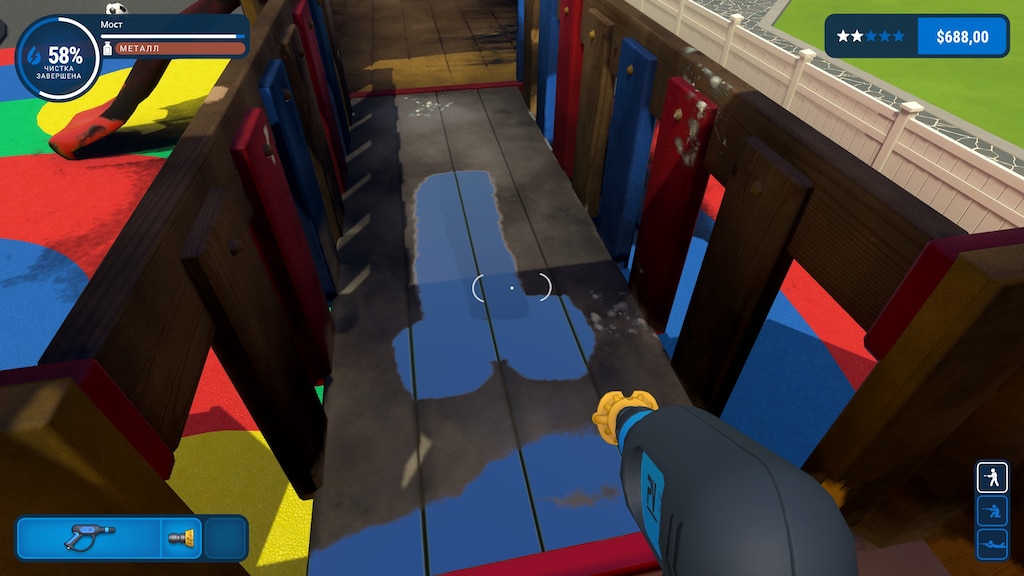
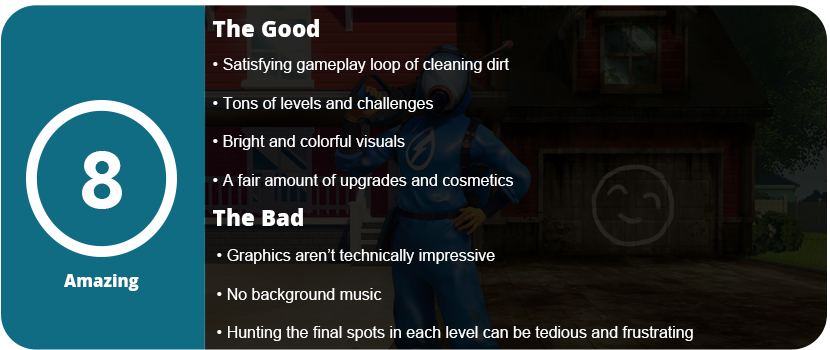
Some levels are multi-storied so you get step stools, ladders, and scaffolding that can be moved around and put wherever you need it. There are a few levels that have some frustrating buildings to clean such as the giant shoe level. There is a meter on each surface that shows how complete it is and sometimes it can be hard to find that one dirt spot that’s keeping the surface from dinging. Thankfully there is an illuminate dirt button that turns all dirt a golden yellow for a few seconds so you can see what you’re missing. Getting down the last percent in each level can get annoying as you’re just hunting down that last dirt spot. There is also a list of each surface and the percentage that they’re cleaned, so you can at least eventually narrow it down.
There isn’t any background music. You just get ambient noises like birds chirping or cars driving in the background. It’s a very silent game. You’re best just playing your own music in the background as this is a very zen game where you can veg out and not think about much. I also appreciate the control scheme on a controller too. It’s easy to control and you don’t have to move your aim camera back and forth like you used to in Early Access. You can now press a button to move your sprayer within the frame of the camera. This can reduce motion sickness and overall irritation. It wasn’t a big problem on a PC with a mouse, but it was unbearable with an analog stick. Most levels can take you 1-3 hours to complete depending on how big they are. There are smaller challenges that involve just cleaning a vehicle like an RV, alien spaceship, Mars rover, or bicycle. Levels get more complex as you go on with more small objects and more complicated surfaces. Things like planes, boats, helicopters, and the previously mentioned shoe house can get really busy. I would end up doing some levels in multiple sessions. The longest level I spent time on was nearly five hours.
Again, you have to like this kind of thing to see an appeal to it. The visuals are bright and colorful, but rather basic and simple. There is no raytracing, AI anti-aliasing, or anything complex rendering-wise. The game can technically get very repetitive, but that’s actually the point of this game. I feel many may mistake this game for a business simulator when you only do the power washing and buy upgrades and cosmetics. I had a blast (no pun intended) with this game and FuturLab is still putting out content that I need to catch up on. Overall, PowerWash Simulator is one of the most relaxing and satisfying games I’ve ever played.





































 thebinarymessiah.com
Try multiplayer. A lot of fun !