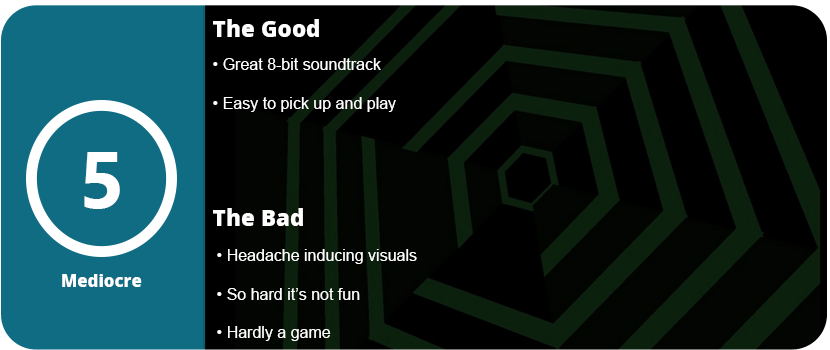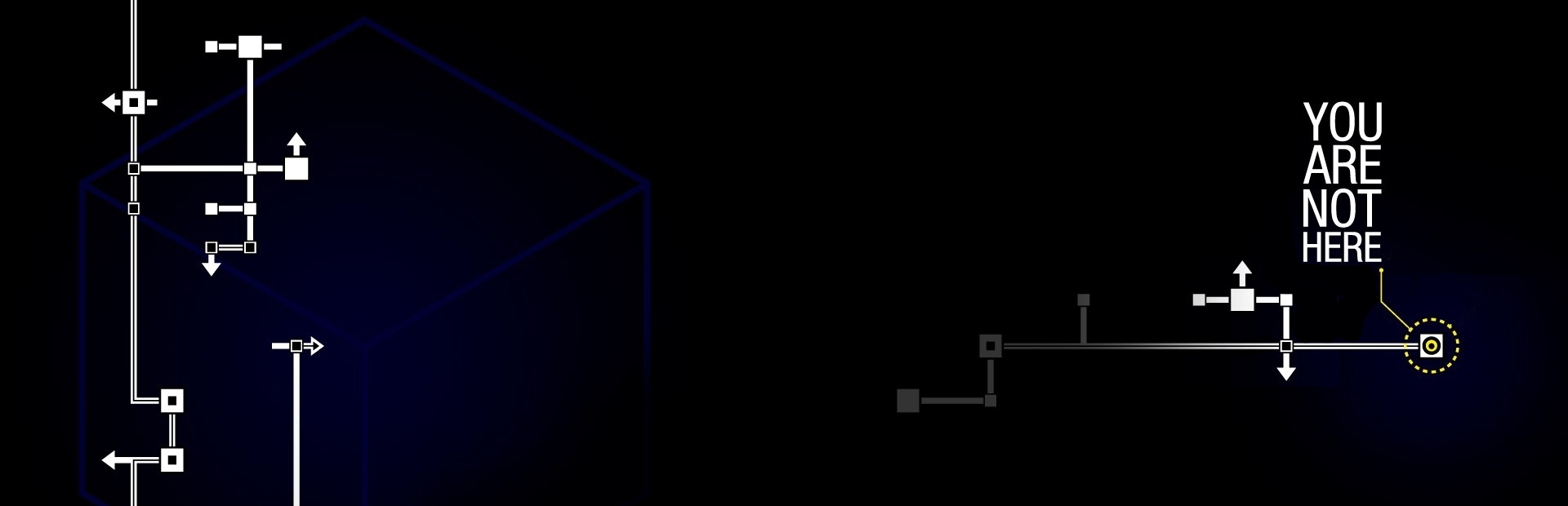

Super Hexagon is a game where I can say it’s barely that; in fact, it’s a game you might quit in less than one minute. I don’t know what the designers were thinking, but this game is so hard that it becomes no fun in less than 5 minutes. You are just a triangle rotating around a circle, trying to find your way through gaps in a giant hexagon that closes in on you. I couldn’t get past 28 seconds of survival, and that was after I memorized every stage and died about 50 times.
That’s really all I can say about this game, because it’s hardly a game at all. The graphics are so simple, with just basic colors and shapes; the only praise I can give this game is the awesome 8-bit soundtrack. The game requires memorization and super-fast-twitch reflexes to win. It doesn’t help that there are only hard difficulties; there is nothing easy to start out with. It doesn’t help that the visuals will give you a headache in less than 10 minutes, and it just hurts your eyes. I like the fact that the game is trying to be challenging, but I’m glad I didn’t pay much for this game.
With that said, I really can’t recommend this to many people unless you are seriously hardcore, but the majority of players will uninstall it in less than 5 minutes. Why play a game that takes over 20 minutes of practice just to advance past the 30-second mark? I honestly don’t understand why this game was even made or what audience it was supposed to be for. I really can’t say much else about this game because there just isn’t anything there to say; it’s hardly a game as it is.
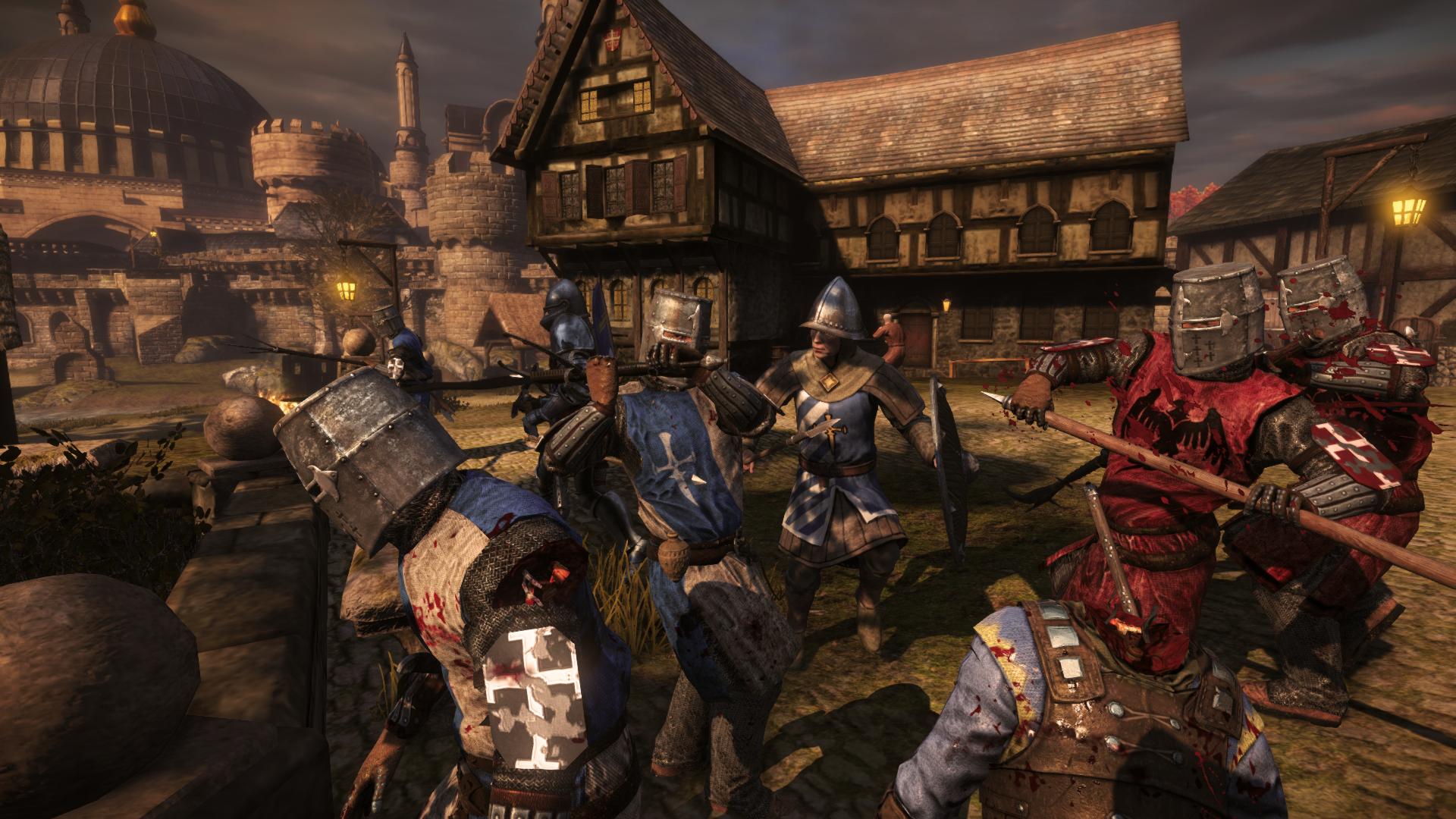
While everyone is playing Black Ops II and Battlefield 3, there is a little multiplayer game called Chivalry: Medieval Warfare. This knight-in-shining-armor online-only game pits players against each other and lets them have at it with deadly swords, crossbows, flaming pots, shields, and various other Camelot-era weapons. This is a different multiplayer game and will keep you hooked for dozens of hours.
There’s no story here at all, so don’t worry about that; this game doesn’t need a story. You open up the game, and you are greeted with a server list. There’s a tutorial that shows you the ropes of this game. There’s a bit more to it than just swinging around weapons. Each one has range, damage, and speed that you have to think about. In a small arena, you probably want a short and fast weapon, while on the more open maps, you should use a javelin and a giant polearm. There are three basic attacks: overhead, side-by-side, and jab swings. You can feint attacks as well to trick your opponent, which is a key move you have to learn to master. You block, but you have to time it, and you can’t just block aimlessly. You have to be looking at the weapon, or the block won’t really connect. This is really a knight simulator, and the game is just so much fun.
It doesn’t stop there, though; there are some projectiles. The bow is great to use and has an arrow cam that helps you adjust your aim. There’s also a crossbow, but reloading is very slow, and you can’t see around you when reloading. Larger classes get axes to throw, while smaller ones get knives and daggers. I found a strategy where I’d use up my projectiles and try to get some kills that way before going in. There are 4 classes: man-at-arms, knight, vanguard, and archer. The Vanguard is the biggest class and can kill in just a couple of hits, but it is extremely slow. He and the Man-at-Arms have a charging attack that will devastate anyone in its path. If you use a kite shield with these classes, it protects you from rear attacks, which is actually how I died the most. I would be battling an enemy, and I’d get creamed by two guys coming up from behind that I couldn’t see or hear.
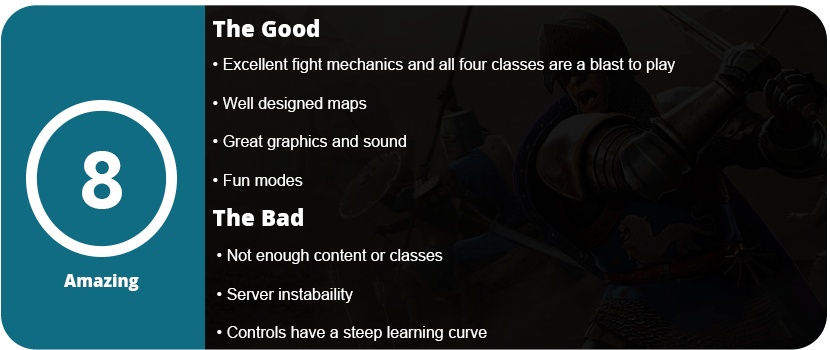
Some levels have traps in them that you can activate to help your team or whittle down someone’s health before going in for the kill. Each class is a lot of fun to play, and I found myself constantly switching between them, unlike other multiplayer games. I just wish there were more classes. Four isn’t all that much, and there aren’t enough maps. Torn Banner is putting out free content, but it’s been slow coming since the release last year. However, I still find myself coming back and playing a few rounds at least once a week; the game is very addictive.
The game modes are also lacking. There’s just Team Deathmatch, Free-for-All (Deathmatch), Capture the Flag, and Dueling, which is 1v1. There are a couple more, but these are typical modes found in other games. One mode that is unique to this game is a siege-type mode where you use battering rams, trebuchets, and various other long-range siege weapons to break into the enemy’s fortress and take it over. That is probably the most fun. On one map, my team was trying to push a battering ram through a small village. We were trying to fight off the other team, and it was a constant back and forth. Once we got to the front doors, their archers made easy work of the battering team because their moat didn’t allow us to surround the team and defend them. We just had to do archery battles or hang back and wait for people to come out.
As it stands, Chivalry has proven to be a very popular and well-made multiplayer game. The graphics are fantastic, and everything looks superb. Hopefully, Torn Banner can continue to dole out new content to make players happy and continue playing.
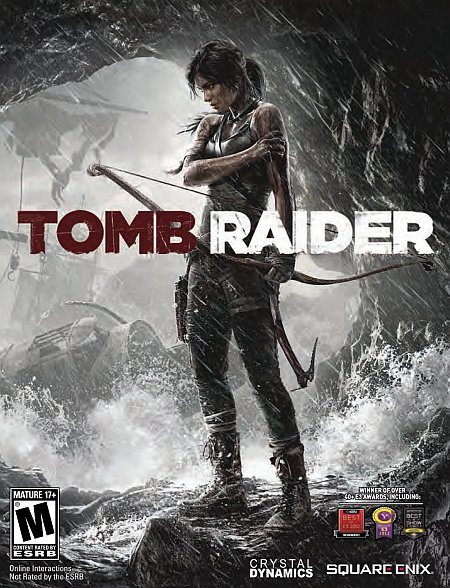
This is exactly how you do a game series reboot, right? I wish I could end my review with that, but I need to tell you why. Tomb Raider suffered through a few mediocre games during the first run of the series during the late 90’s and early 2000s. The first reboot did well for the series by maturing Lara and giving us better controls and a more cinematic experience. Now comes Tomb Raider (2013), a fantastic game that shows the more human side of Lara. The game starts out with you and a science crew on a ship on the way to an archeological site, but things go awry when Lara decides to head to the Dragon’s Triangle off the coast of Japan. A mysterious storm destroys the boat, and Lara and the team are stranded on this island. There is a mysterious cult trying to sacrifice people to a sun goddess to end these storms. Lara has to deal with this if she wants, of course.
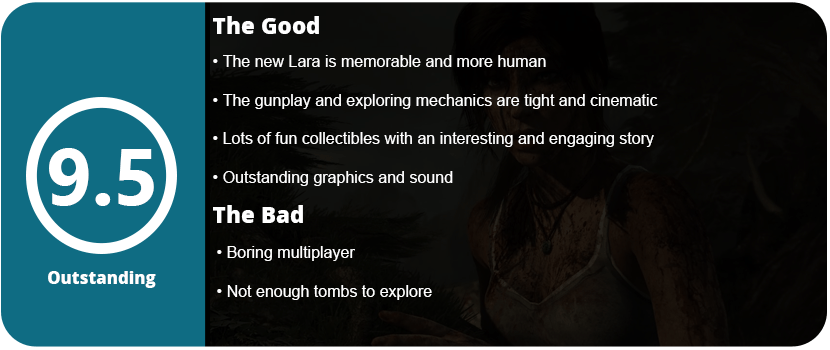
What makes Tomb Raider so memorable is the struggle she goes through while surviving. She is nearly raped, suffers tremendous injuries, and has to cope with herself, dealing with the fact that she has to kill to survive. She is not comfortable with this at first and really struggles to pull the trigger. This adds layers of depth to her character that weren’t seen before. Not only is her personality more memorable, but her looks have changed. No longer is Lara wearing the short shorts and tight shirt with her huge bust. She has been knocked down a few cup sizes and is much younger, straight out of college, in fact. It’s hard to really describe her more than this; you have to play the game to really connect.
The gameplay in Tomb Raider has completely changed, but yes, there is platforming and gunplay. Both are tight and very well crafted. Gunplay consists of using scraps to create a pistol, bow, machine gun, and shotgun. That’s it. As you progress and find salvage in crates and dead bodies, you can upgrade these to look and feel like better weapons. There are many upgrades that increase damage and accuracy, as well as adding new ammo types. Lara’s animations are very well done and realistic, and this falls into combat. She scrambles around and ducks behind cover; the guns feel great to shoot, and you can see how inexperienced Lara is; she’s not a Navy SEAL or commando. Unlike other games like this, her stumbling animations don’t interfere with the game at all. You can still move around, you can dodge, and there’s even some melee thrown in. As you upgrade your skills (done at various campfires throughout the game), you can dodge, and through quick-time events, you can do some pretty gruesome kills.
While gunplay is tight and fun, exploring is just as important. This island is massive, and you can go anywhere; there are no limits. Fast travel via camps really helps, but there’s a reason for moving around everywhere: collecting hidden items. These range from relics, GPS caches, documents, etc. There are hidden tombs found throughout the game that hold area maps for these items. These tombs consist of cleverly made physics puzzles that are really fun to complete. You get rewards like art and 3D models to view. The whole game just has an amazing atmosphere and is so much fun to explore.
On top of all the climbing around, you get a climbing axe, which is an important tool for climbing and combat. Your bow is used for shooting ropes across valleys and canyons to pull items to solve puzzles, break doors, and access new areas. The whole exploring ideal in this game is just fantastic and really fun. I did have to think about how to get to new areas and actually try to navigate and experiment with that good game design. There is a Survival Instinct ability that highlights map markers and objectives, and when you unlock the skill, you can see items through walls.
The story itself is a bit confusing; the whole spiritual thing is a bit unbelievable in such a realistic world like this, but that is what Tomb Raider is known for. Lara is the main character here, and what she goes through was the main story for me. I loved every second of the story. The voice acting is awesome, and the graphics look amazing—some of the best on PC yet. The new DirectX 11 features like Tessellation and the new TressFX technology applied to Lara’s hair look nice, but there were a lot of bugs and glitches for Nvidia users during launch (they are now fixed). You will need a monster rig to play this game on the highest settings.
The multiplayer was tacked on late in development and is pretty boring. The combat was designed for cinematic gameplay, not multiplayer. It feels just like it does in the story, but it just doesn’t suit multiplayer well. I played all three rounds and got bored of the game. Some people may like it, but there are better multiplayer shooters out there.
Overall, Tomb Raider is one of my favorite games of all time and is really memorable. The voice acting is solid, and Lara’s new personality makes her more human and more relatable. The graphics are outstanding, and the gunplay and exploring mechanics are fun and very cinematic.
Have you ever wanted to play an MC Escher sketch? Echochrome may come to mind, but Antichamber feels like a mix of Portal, using cubes instead of portals, and Echochrome’s art style. There isn’t really a story here; you just wake up in a hub with four surrounding walls. One wall has your game options, which you just interact with; one wall has the various clues you find throughout the game; and the third wall has your map, where you can jump to levels you have discovered. All you really know is that you are chasing down a gray, mysterious block and trying to escape.
These types of games are never touched by big publishers, so it is up to indie developers to make them. Antichamber has a great block-gun puzzle mechanic that really gets your gears turning. You eventually upgrade to a yellow or red gun, but the basic is blue. Once you learn how the antichamber works and how optical illusions can change the world around you, you get the gun. You walk around linear hallways, trying to discover new areas. You may see a staircase leading up, but it disappears, and a straight hallway opens up. There may be an eye on a wall, and if you stare at it long enough, it will open up. Another illusion puzzle has you going up and down a shaft three different times; each time is different. These illusions are really unique and make Antichamber stand out from other first-person puzzle games like Portal.
The block puzzles consist of shapes on walls, and you have to fill in these shapes in certain ways. Sometimes there is glass blocking certain areas, so you need to drag them around instead. Lasers are a major part of the puzzle; some need to be blocked, and some need to be activated. Figuring these puzzles out is hard because you also have to generate new blocks if there aren’t enough. Drag them around in the puzzle grid in a square shape to fill in the middle. The puzzles get harder and harder as you move along.
If you mess up, you just press Esc to go back to the map room and start that room over again. I just wish the game had some more platforming rooms thrown in and wasn’t so puzzle-heavy; even Portal made you jump around some. The antichamber uses doors as another puzzle element. You have to insert cubes into holes to open doors, but sometimes there aren’t enough cubes. Use one to hold the door open, go through it, grab the cube, and just piggyback a few cubes to gather what you need for the final puzzle. Antichamber really had me stuck most of the way because of how unique and different the puzzles were; there’s nothing else like it.
There isn’t anything else like the visuals of this game. All white and bright primary colors. You feel like you are in one of MC Escher’s sketches. Nothing fancy here at all, which is what made Echochrome so great as well. Due to this art style and the illusions, the whole chamber can be very confusing to navigate. Pathways open up to nowhere; a pit may drop you into another part of the chamber, which can be confusing. I even found the ending pointless, but the whole idea is to solve puzzles. If you don’t like puzzle-solving, stay away from this game.
Overall, Antichamber has a wonderful art style and puzzle-solving elements that are like nothing else out there. This game is making a huge splash in the indie scene for a reason. If you love quirky puzzle games, this is just for you.
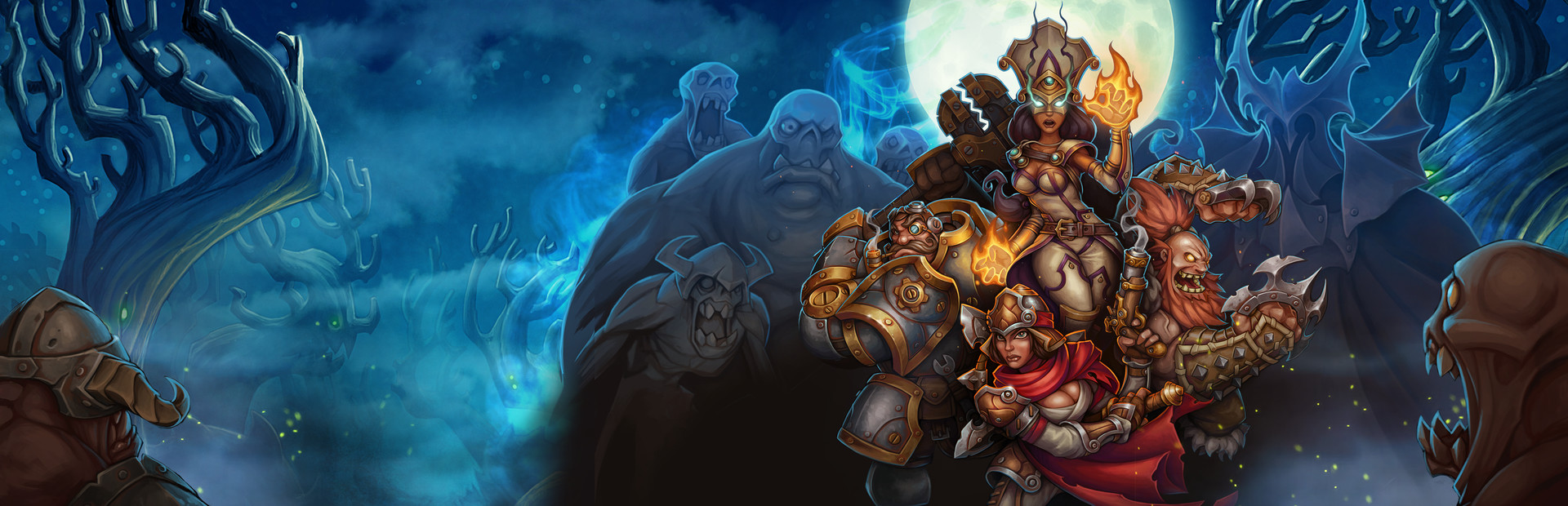
With fans being so upset with Diablo III, I have to first say, turn here. Torchlight II builds upon the already excellent engine and adds more content, a lengthy campaign, and tons of great loot. The dungeon crawler genre is all about getting great loot, leveling your character, and fighting tough bosses. Once you get to the last couple of dungeons, you will be guzzling potions like crazy. The game is non-stop action with no breaks. While Diablo III may have a larger budget in the millions, a better story, and better graphics, Torchlight II delivers on what the fans want: loot, dungeons, and bosses.
You can pretty much forget the story. It is told in three pieces and isn’t very interesting. Something about Nephilim invading the world and you trying to stop it? I honestly don’t know. I lost track because the story is broken up too much and told in between three large acts, so you forget what happens. What matters is the action. You can choose between four strong classes that are typical of the genre. Mage, duelist, warrior, and middle ground guy. Each class has a slew of great abilities that you actually won’t completely acquire in one play-through. I chose the duelist and stuck with akimbo pistols. There was even a perk called Akimbo! There’s something here for every type of player.
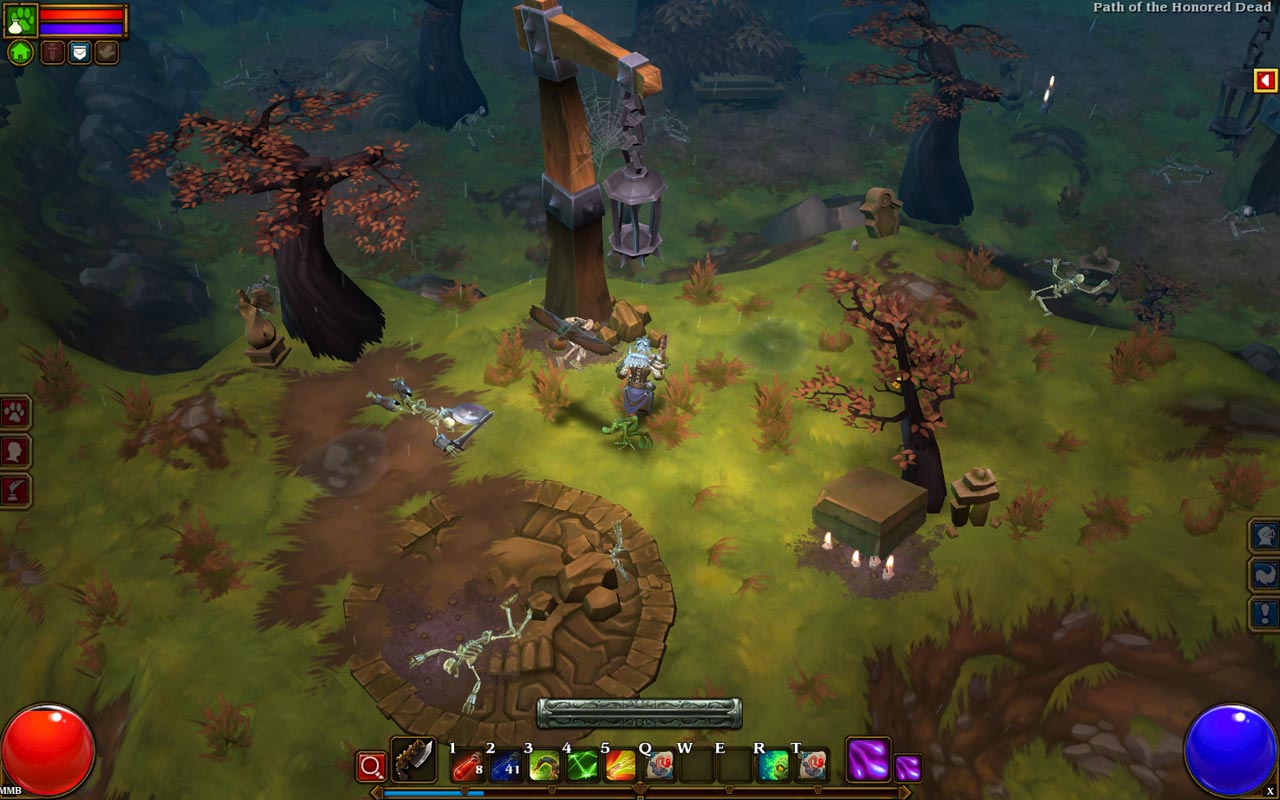
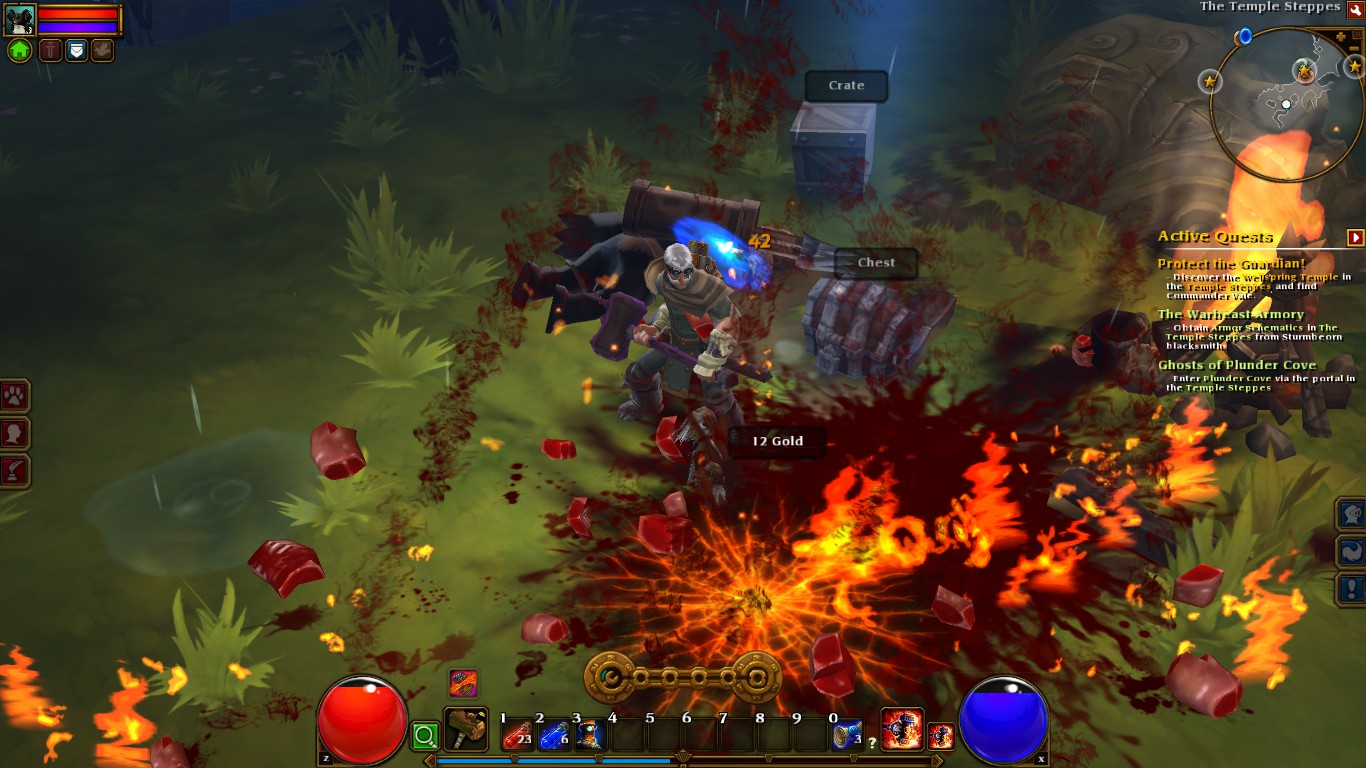
The loot feels nearly endless, and it is actually good. There are boss chests, large chests, and just regular ones spread throughout. You don’t have to worry about getting good loot. Of course, most of it ends up being junk, but when you beat a boss, you will get something good. You can equip rings, belts, shields, leg and body armor, helmets—you name it. You can enchant items that add random stat increases, add jewels, or even disenchant items to regain the money. There was even an option to use junk loot to create new items, like potions. I’m glad there are a lot of options for the main part of the game: the damn loot.
I found the dungeons and enemies to be plentiful and varied. I never really got bored. Each area has small, large, and champion enemies that get tougher to fight. Sometimes you will be swarmed by over a dozen, but that is the whole point. Every step led to an enemy, and I felt the urge to uncover every part of every map. I always found a secret somewhere or a new champion to beat. Doing this helps you level up faster, making the game easier. There are side quests that are fun, and some downright tough bosses. A couple at the very end had to be beaten 2-3 times over, which is a challenge all on its own.
When you die, Torchlight punishes you with gold instead of lame armor damage. Resurrecting at the entrance is the cheapest option, but doing so in town is free, just inconvenient. The best one is resurrecting on the spot, which costs three times as much as at the entrance. This really makes you wonder if it is worth it or not. Usually, I only resurrected on the spot in the middle of a large overworld area where backtracking would take forever.
You still get a pet this time around; you can equip armor and other items on it. You can have your pet take your loot back for you and sell it, and now you can give it a list of items like potions and scrolls to bring back for you. You lose your pet for two minutes, but this is a lifesaver. Let your pet do the tedious work while you continue fighting. I found this almost revolutionary for the genre, which is already one of the least updated in the gaming world. If you want one reason to play this, the loot is what kept me going. I wanted to acquire new abilities and get the best weapons and armor. There is also great balancing in multiplayer, which is what most people are going to do.
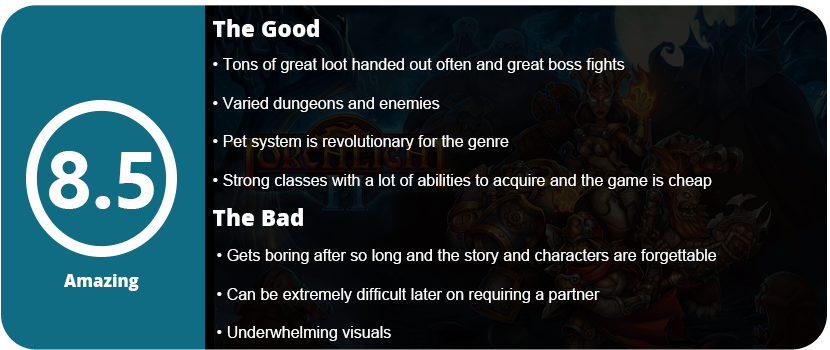
Overall, Torchlight II is a lot of fun and has all the genre staples that people want: lots of great loot that is dished out often, tough boss fights, and a lot of strong, varied enemies. Sure, the game isn’t a technical hound, but who needs that for this type of game? The story kind of stinks, but in the end, we just want to click away and kill stuff. Diablo III and TL2 are always being compared for a reason. TL2 did everything everyone expected D3 to do, and it didn’t. For even a fraction of the cost of D3, this game is a steal.
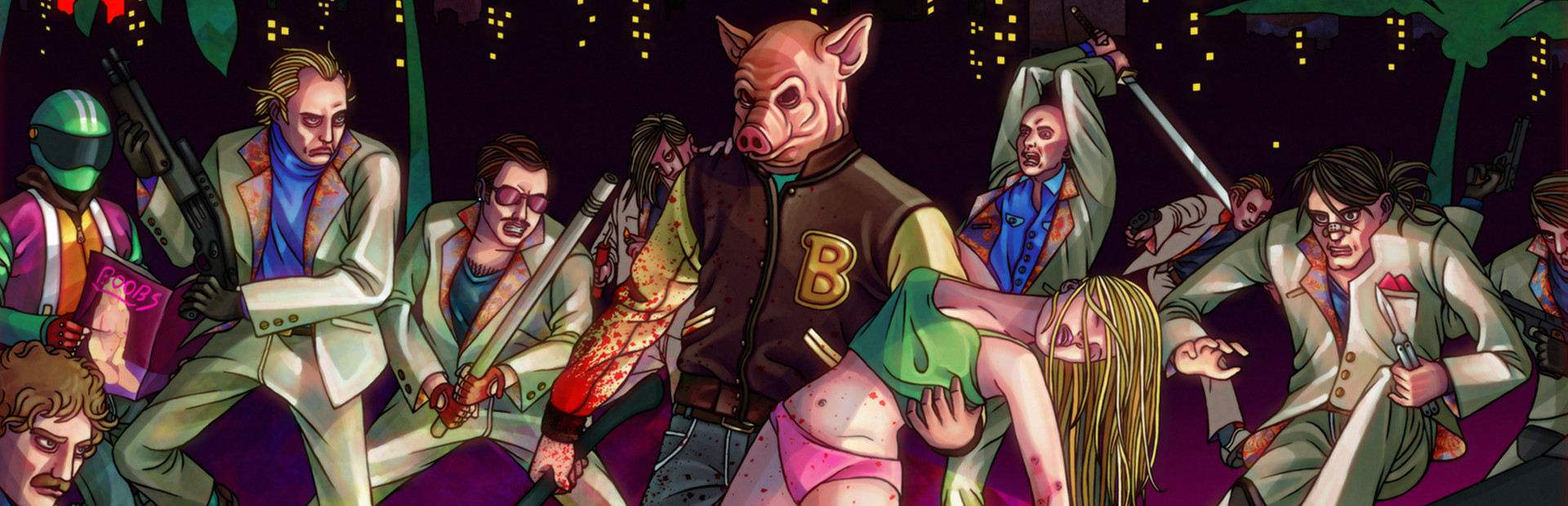
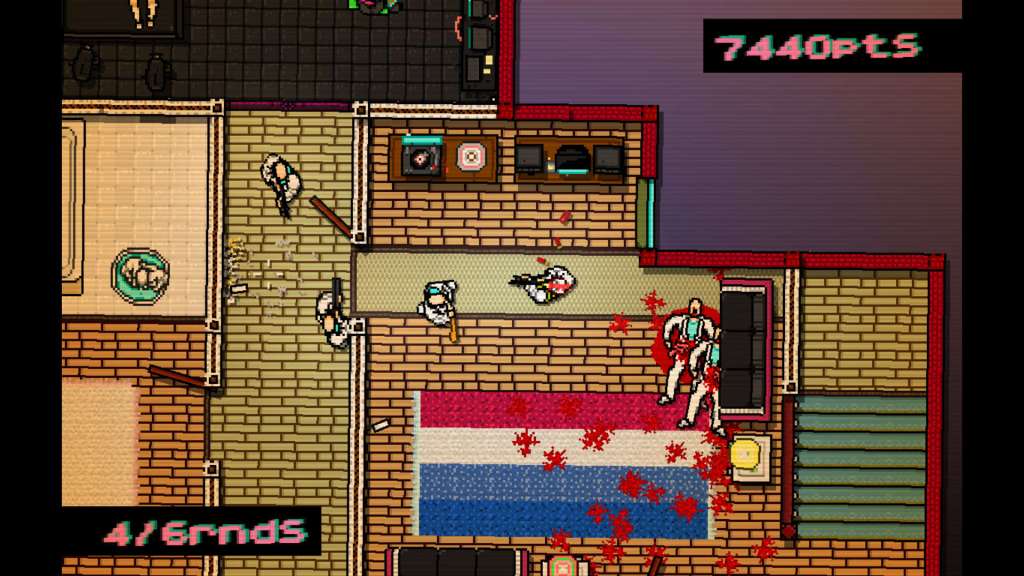
This game was a complete surprise to everyone. An old-school action game with 8-bit graphics that has a very weird story but is still fun and interesting? It can’t be possible! Well, it is because of the genius-level design and over-the-top perspective where special game mechanics were worked in. Enemies can shoot through windows, you can use doors to your advantage, and there are so many different weapons that the fun is endless!
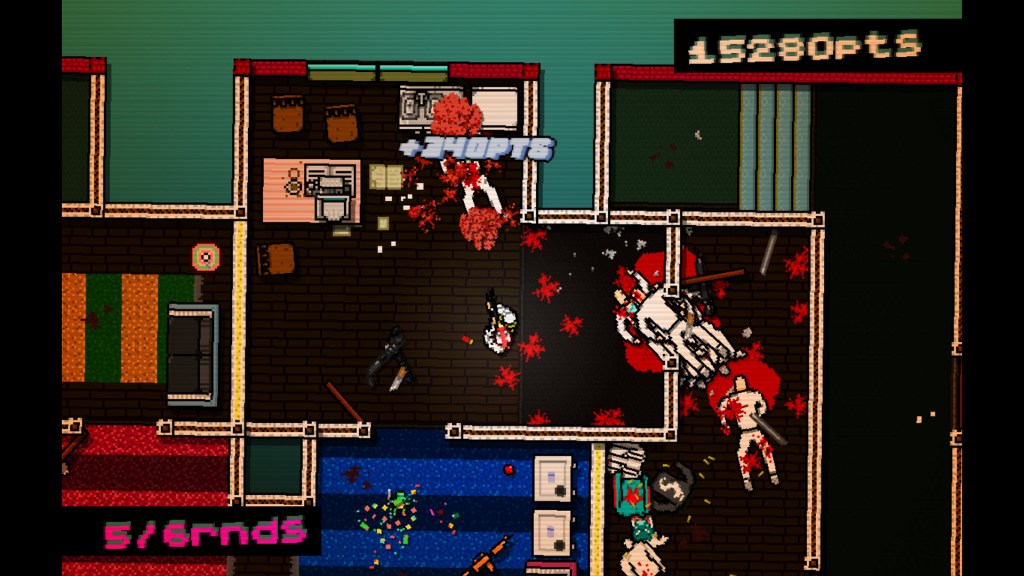
The game is based on cheesy 80’s snuff films where you are a hitman that goes to different spots and just kills everyone in the building. The story is very weird yet entertaining; it doesn’t make sense, but it doesn’t need to. That’s how great this game is. You start out by picking an animal mask that you have unlocked, then you go in and try to clear the stages without dying. One hit and you’re dead in this game; let me make that very clear. You get a split-second window to kill someone before they kill you, whether they are facing you or not. If you are behind them, you get an extra split second, but you won’t clear a hallway before they shoot you. Enemies who have melee weapons are easier because they have to come toward you. The strategy is to see where the enemies are placed in each room and clear the stage accordingly.
It starts out simple, but you will see how addictive and fun it is when your character slices open a neck, smashes ahead into a carpet, or blows someone’s brains out. The second genius thing about this game is that you are punished for using guns, which makes the game very easy. Shoot someone, and every enemy on the level comes after you. You are to clear the rooms quickly, not quietly, which is the key here. There are a few different types of enemies, like dogs, which are really fast, and big, fat guys with scarves that can only be killed by gunfire. Save these guys last, so the entire level doesn’t come after you. A good strategy is to step out of a corner, hide again, and just stick out enough so you can whack anyone who walks by. This is another key strategy for winning the game.
The boss fights are really tough and require thinking outside the box to beat them. One enemy has two wild cats that come after you, a female ninja, and then he has two uzis that will pulverize you. You have to eliminate each one in sequence without dying. Remember, one hit, and you’re dead. Trial and error are very rewarding because it just feels good to clear a whole level without alerting anyone. The game is very fast-paced, so a level can be cleared in less than a minute or just seconds. Learning the strategy for each level allows you to get better scores.
You need to use combos to rack up scores, and gunfire is frowned upon in this game. Switch up weapons, use doors to knock enemies down, be bold and lure enemies around corners, and kill several enemies at once; it is all based on skill and not luck. This game just feels so good to play, and I couldn’t put it down. There are 18 chapters in this game, and in the end, I wanted more (hopefully DLC will follow).
There are some major issues that keep this game from scoring higher, though. When the game was released, it was nearly unplayable. Even now, the controller layout stinks; before, there wasn’t even controller support, and the keyboard and mouse controls are terrible. There are game-breaking bugs and glitches that don’t let you progress in the game, and while the music is pretty original, it repeats way too often, and you end up muting your speakers. The game should have just gone through some more testing or a couple more months of development before being released. Even now, there was a bug that kept me from advancing past Chapter 16. I finally tried it one more time, and I passed it—no idea how or why.
Hotline Miami is a fast-paced action game that has a genius-level strategy design. The graphics work very well for the setting, and the mechanics are just extremely solid. I just wish it was more stable and had better controller support. People with Alienware computers will get AlienFX support here, which is unheard of in an indie game. As it stands, this is one of the best games of the year.
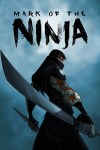
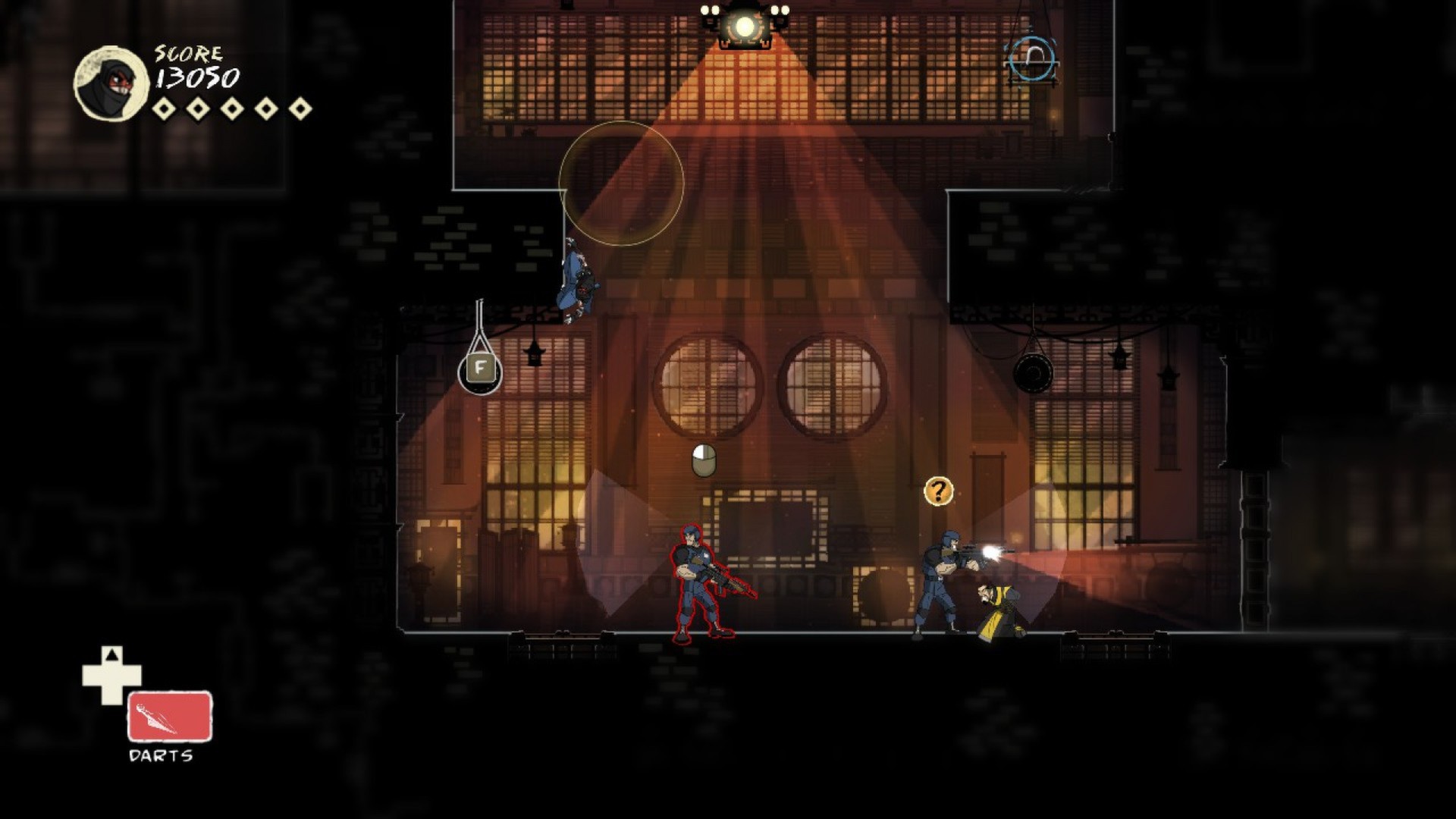
Klei Entertainment has had a pretty bad reputation with the not-so-great Shank series. It is a huge surprise that Mark of the Ninja turned out so well; in fact, it is probably one of the best indie games to come out this year. Mark of the Ninja succeeds in making you feel like a true ninja with great stealth mechanics, puzzles, and skill moves. However, Klei still needs to hire a new story writer because it isn’t very interesting. You are a ninja who is going after someone, and you have tattoos that give you powers, and that’s pretty much it. You should play this for the action because that’s all you will care about anyway.
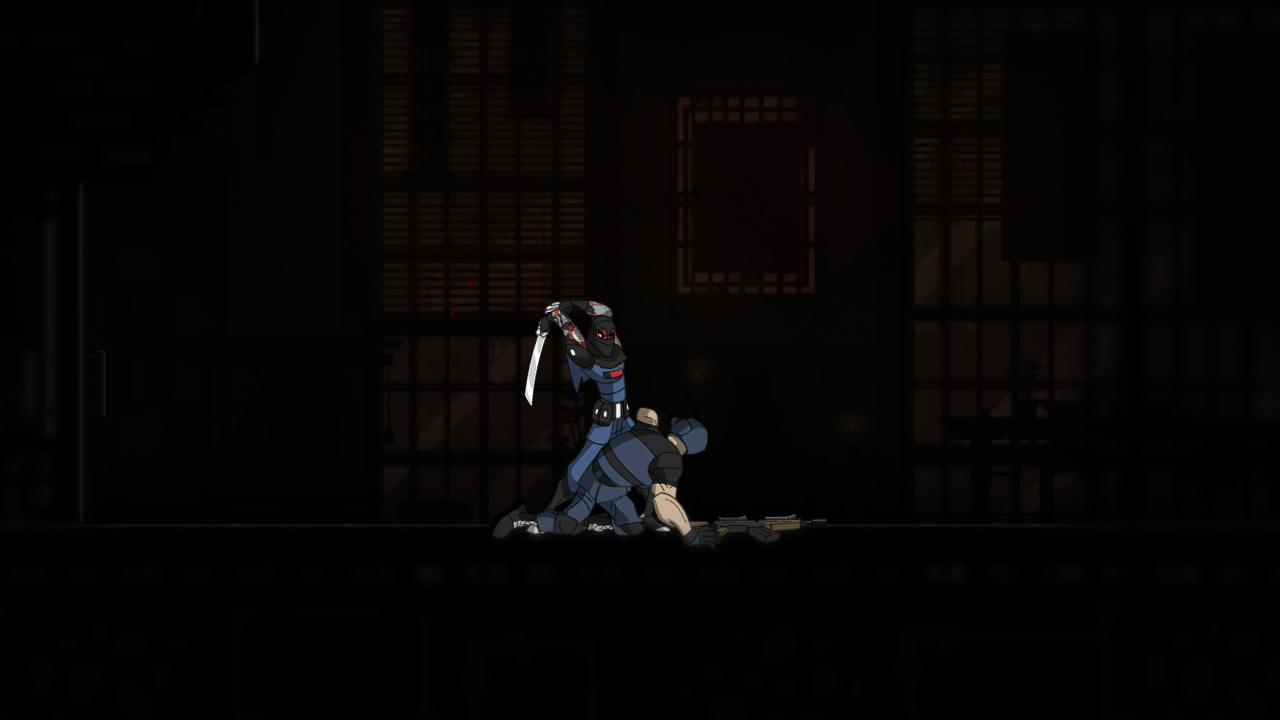
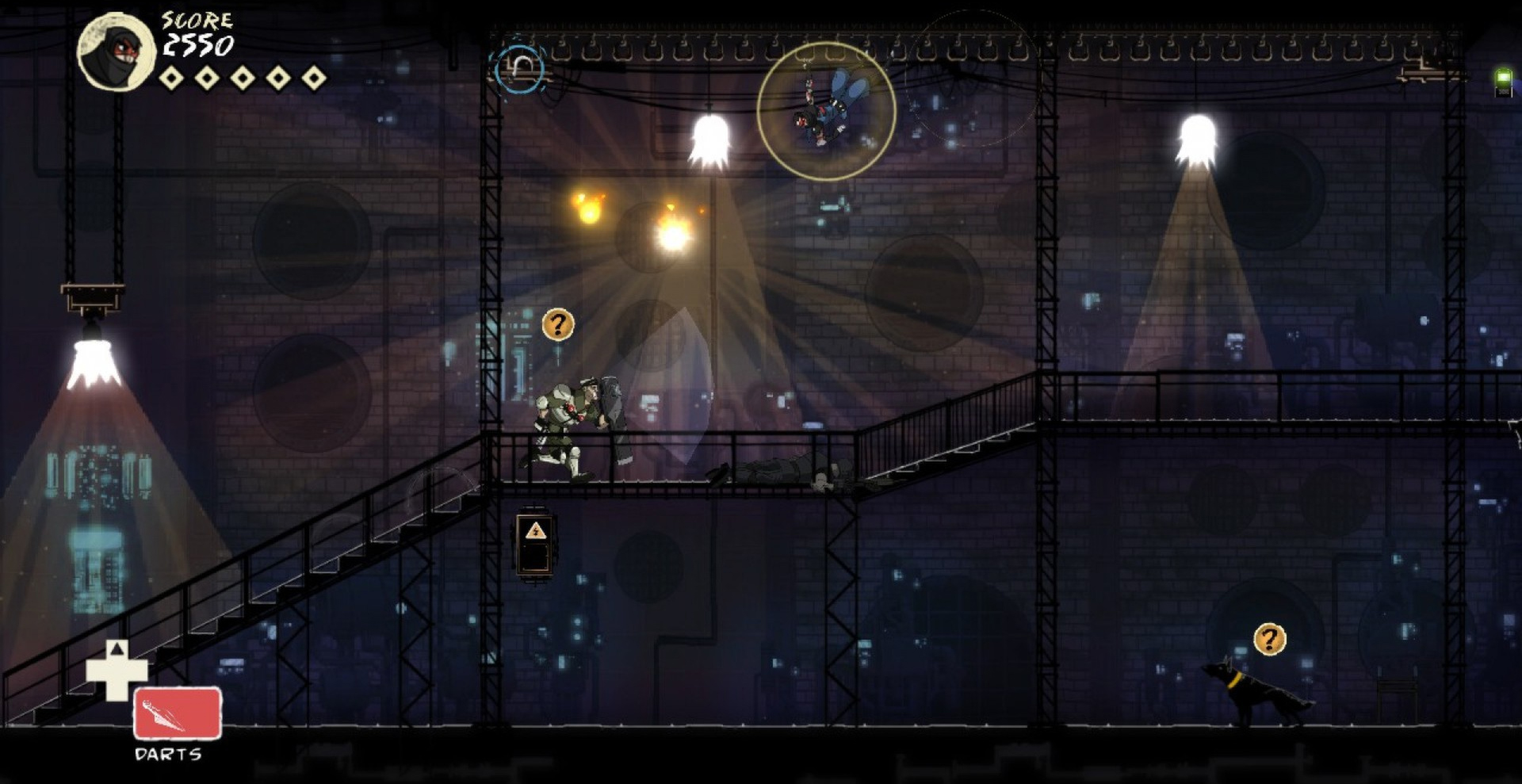
The game uses light and dark very well. The game is in 2D, so everything around you is dark. You have to avoid enemies by climbing up walls and ceilings, hiding in ducts, and even in objects. The game has a great kill mechanic where you press the kill button, but time slows so you can press a combo of a direction and the kill button that pops up on the screen. This feels very satisfying and should be incorporated into more games like this. You have some weapons in your arsenal, such as darts, that can be used to distract guards by taking out lights, luring them into traps, and many other things. You get smoke bombs, mines, and even the ability to see everything around you and teleport. That is what a ninja is really like, and I haven’t played a game yet that makes me feel like one (sorry, Ninja Gaiden).
The controls are silky smooth, if a little sticky when clinging to walls and objects. As you progress, you can level up by completing optional objectives and finding hidden scrolls throughout the levels. You can acquire new moves like killing from above, snagging enemies while hiding, etc. You can even unlock more ninja weapons and gadgets for your arsenal. The whole system works really well, and the gameplay is just so addictive. There are multiple ways to approach objectives, but you can never fight head-on. That is what I like about this game. If you are caught, you need to flee and hide until the enemies settle back down. Just a couple of shots will kill you. Thankfully, checkpoints are very fair, unlike the Shank games, and don’t set you back too far.
Puzzles are pretty fun in this game because they require reflexes more than anything. Hitting tripwires may send arrows flying at you, but there’s a crank that pulls a box up along a wall to block them. Cranking it up as you climb the wall is the way to go, but some get really tricky but are fun to solve. This game is just pure fun, and I felt like a ninja the whole way through. No guns, no super-fast martial arts, just stealth, sneaking, and being a part of the shadows.
The graphics are beautiful and are actually part of the gameplay. Everything seems dark and shadowed, but when things are in the light, they are fully revealed. The only thing visible to you in the shadows are your glowing red tattoos, which are really neat. My only complaints are the story and the fact that there really isn’t enough variety in enemies. I wanted to see more, and the overall game just gets repetitive towards the end, but if the story were better, you wouldn’t feel that way.
With great ninja gameplay, smooth controls, fun stealth mechanics, and interesting puzzles, Mark of the Ninja proves to be one of the best indie/arcade games this year. For the low price, you have nothing to lose except a few hours of having a lot of fun.
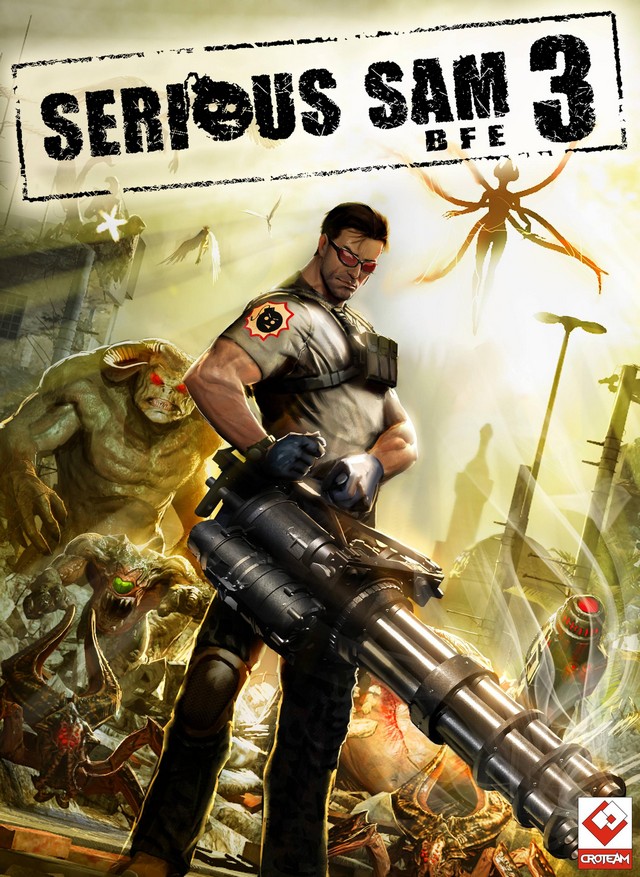
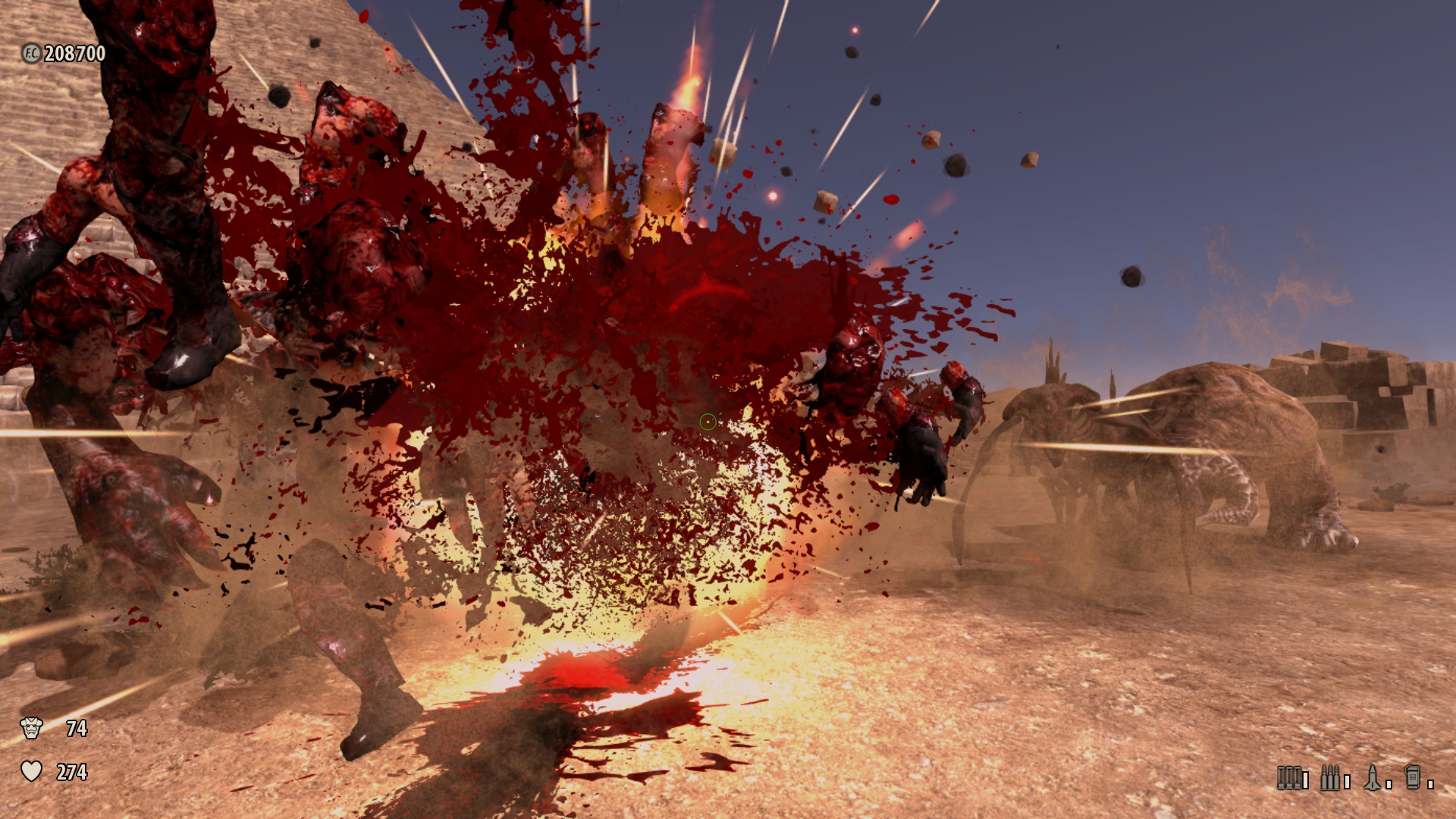
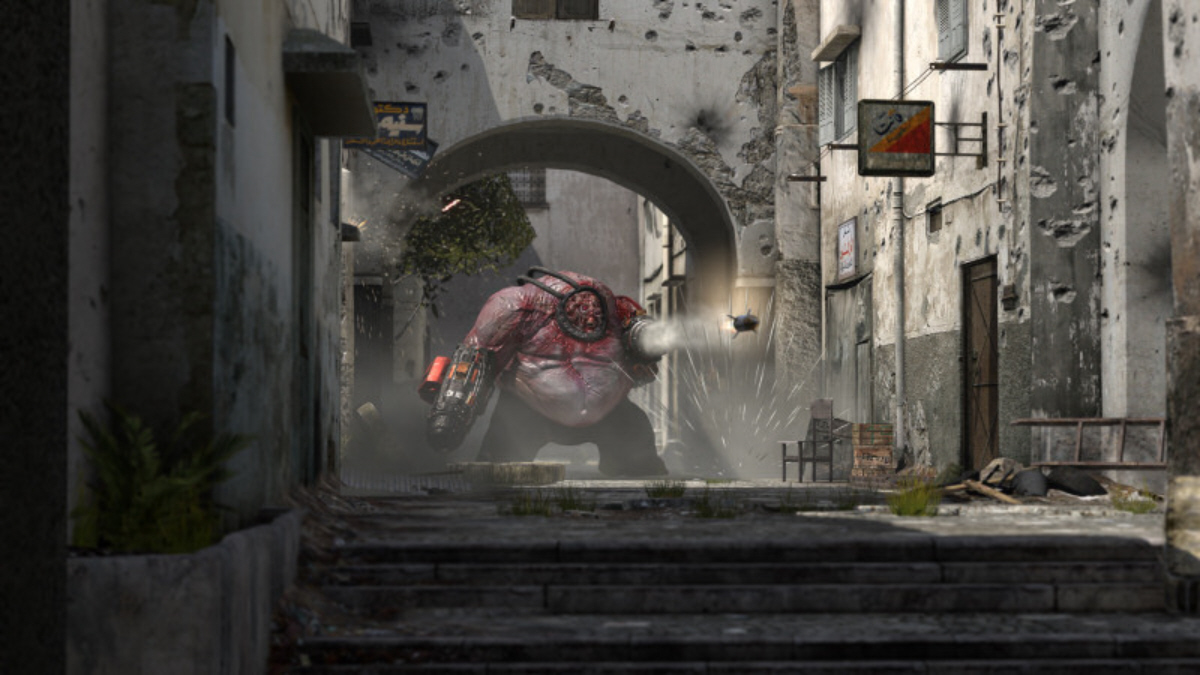
Serious Sam is one of the original old-school shooters where you just shot everything on sight. Forget about the story, gameplay, cinematic events, or anything else. Serious Sam is one of the less popular FPS series that is shadowed by Doom, Quake, and Duke Nukem. BFE doesn’t really do anything new or add anything new except a spiffy new engine, which is seriously wasted. The game is repetitive, lacks any awesome guns (except a couple), and has the same handful of enemies thousands of times over. BFE is mainly for newcomers because only the super-hardcore fans will truly enjoy this (if that).
The story is paper-thin, with Sam trying to stop an alien invasion. That’s it. This is the prequel to First Encounter, but who really cares? The game tries to be a bit different by starting off slow with a sledgehammer and introducing awesome melee attacks to show off the new engine. You acquire a pistol, then a shotgun, and then more guns as the game goes on. There are dozens of secret areas everywhere (I couldn’t find a single one for some reason). You shoot thousands of enemies throughout the game, but in extremely difficult waves that can be in the hundreds.
I honestly felt that my arsenal was underwhelmed by the vast amounts of enemies the game throws at you. The most effective weapons were the cannon, C4, and Devastator, but the ammo for those is pretty rare (except C4). All the rest were pretty useless except the minigun, which was good at reducing crowds in a wide area but ate up ammo quick. I can’t tell you how boring the game got by the end, and it will really test your endurance. I played on the easy setting and still got my ass kicked sometimes. For the hell of it, I tried it on the hardest difficulty, and it was impossible. I couldn’t get past the third level; it was that hard. By the last level, you are thrown probably a few thousand enemies with wave after wave that takes you about 45 minutes to chew through. The waves get so big that I backpedaled half the level to get some breathing room in some areas.
When it comes to looks, BFE is impressive for a DirectX 9 game. This is the most customizable PC game ever made when it comes to graphics options. There are options here I have never even heard of! There are about 45 options, but when you max the game out, it looks amazing, but it is sadly wasted on a bland and boring art style. Everything is brown and dead, with nothing interesting to look at. Halfway through the game, I couldn’t take it anymore but finished it anyway. I do have to say that I am disappointed that Sam’s macho quips aren’t as funny this time around as in previous games. They just seem stale and are pretty mellow. Oh well.
Multiplayer is where BFE shines, but no one is playing online. During my entire week of playing the campaign, I logged in at different times of the day and night and maybe got 1 or 2 people playing if I was lucky. The server list is almost always empty, which is sad. This is a game that you will have to get buddies to go LAN on. When I did get a tiny game going, it was addictive and felt very old-school with fast movement, lots of jumping, and twitch reaction shooting. There are some neat modes, but I never got to play most of them because this game is nearly abandoned despite Croteam releasing a patch about 2 weeks ago.
I can only recommend this to hardcore FPS fans and hardcore fans of past Sam games. The campaign is nothing special and gets incredibly boring and monotonous halfway through, not to mention freaking tough as nails. The weapon arsenal is disappointing, and there are only a handful of different enemies. There isn’t enough new here to make it a true sequel, but the game looks damn good. For the low price, it is worth a fun play-through, but don’t expect tons of people to be playing online.
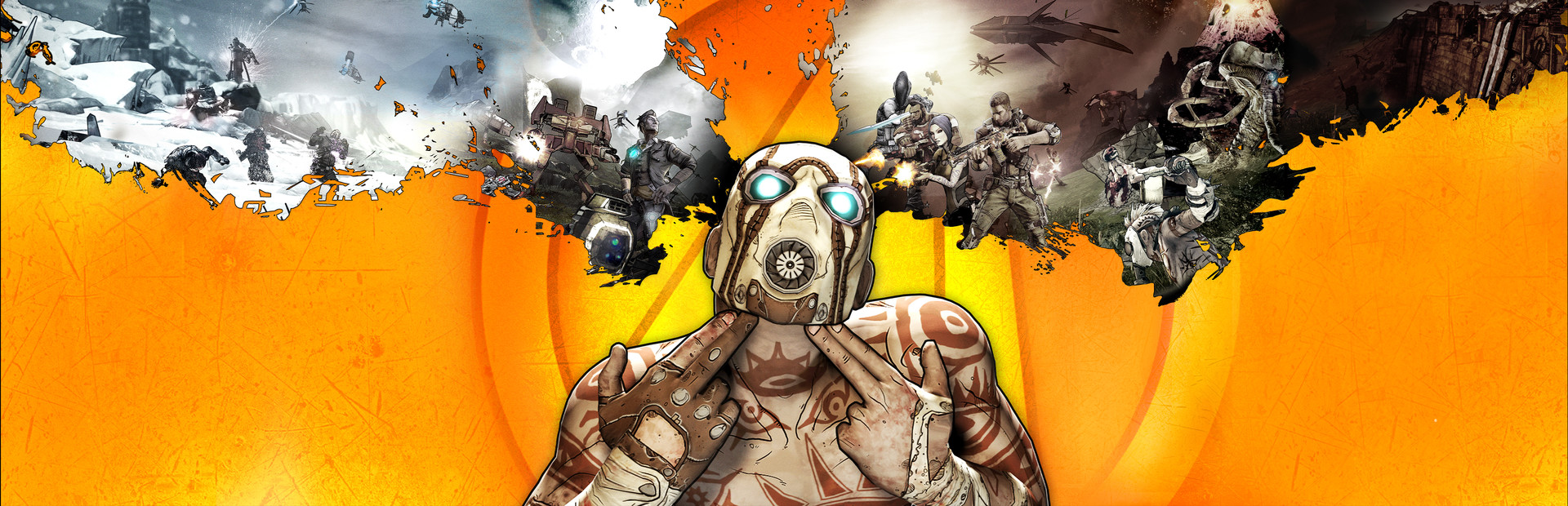
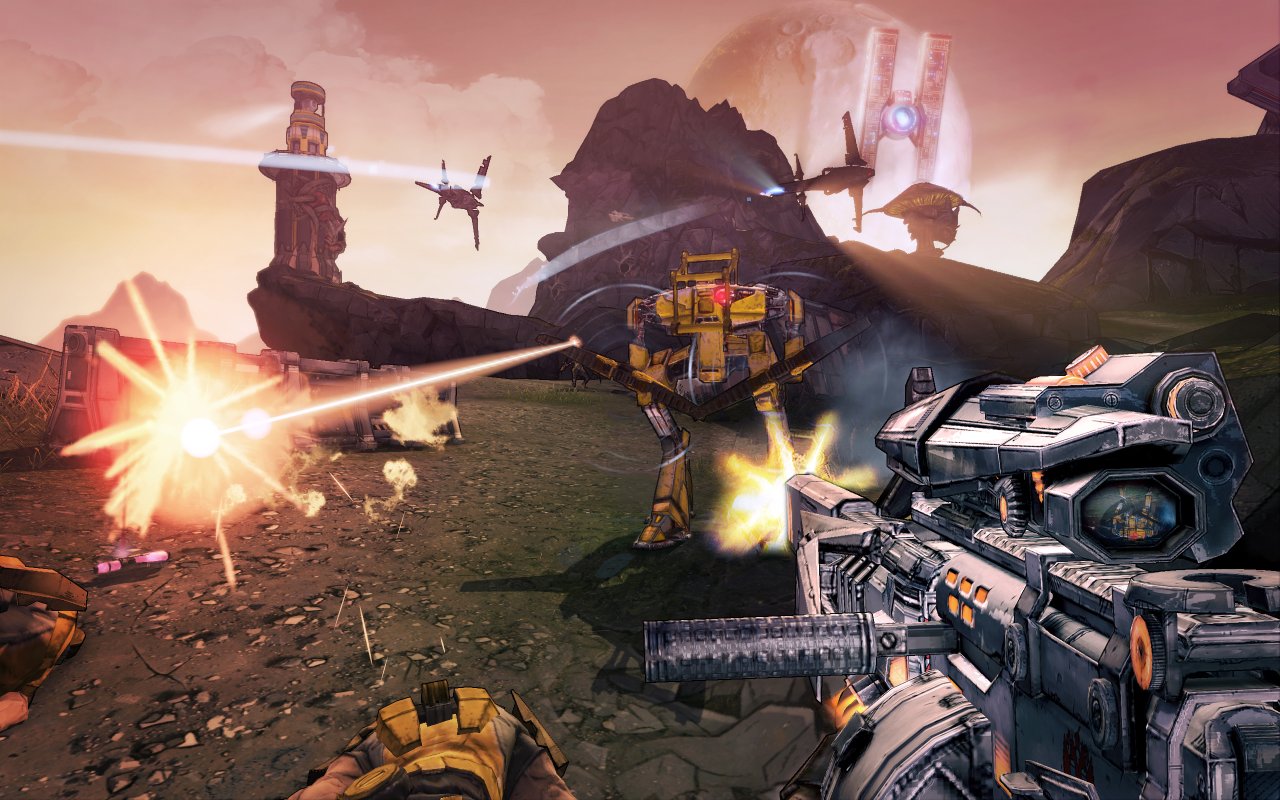
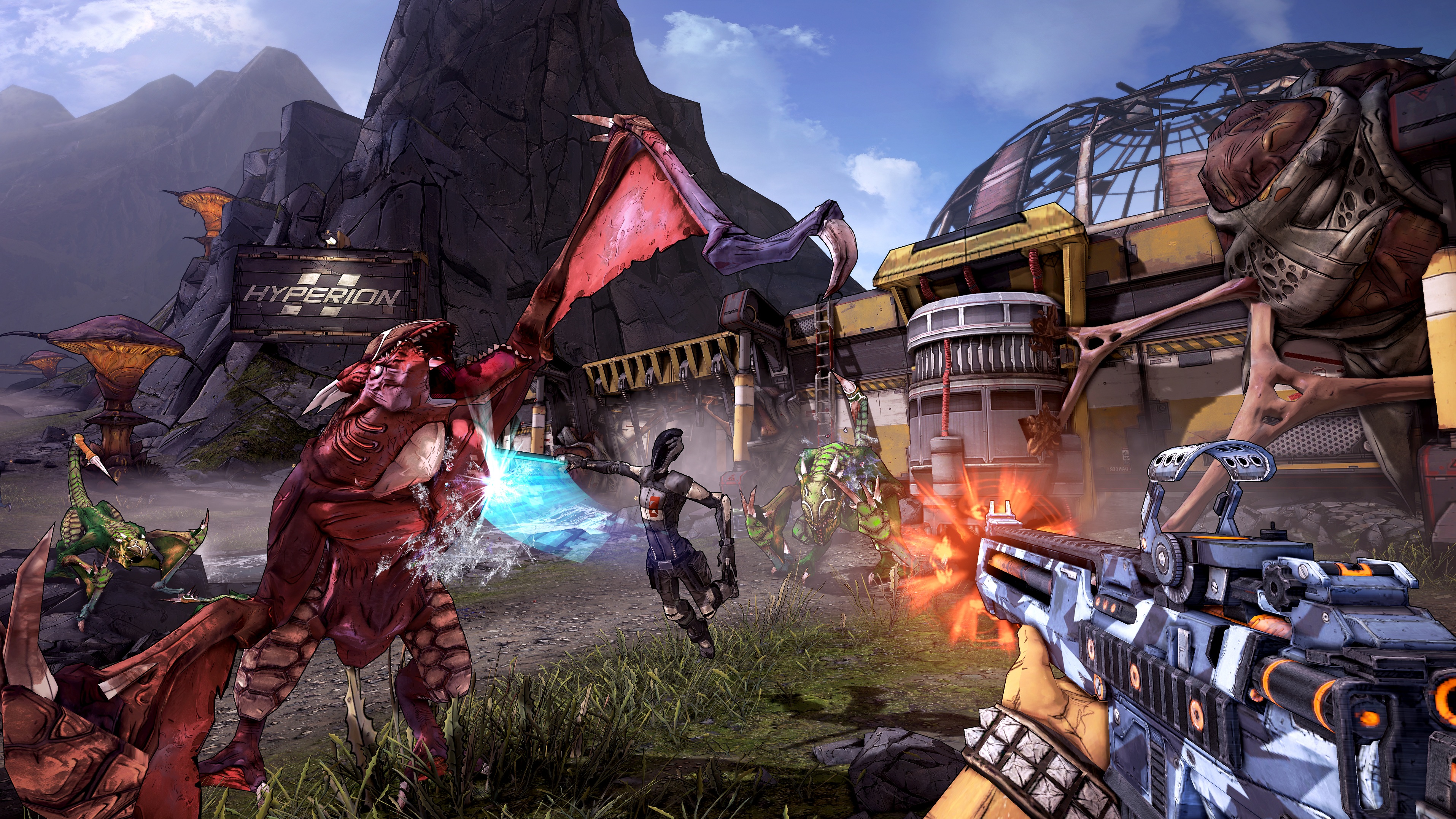
Shooting things is what this game is all about, and I mean all about. Borderlands is highly successful in mixing RPG with FPS, bringing the best of both worlds to the table. Borderlands 2 is more of the same, just bigger and more badass. If you didn’t like the first game, you won’t like this one either. Fans of the last game will be very happy with this second installment.
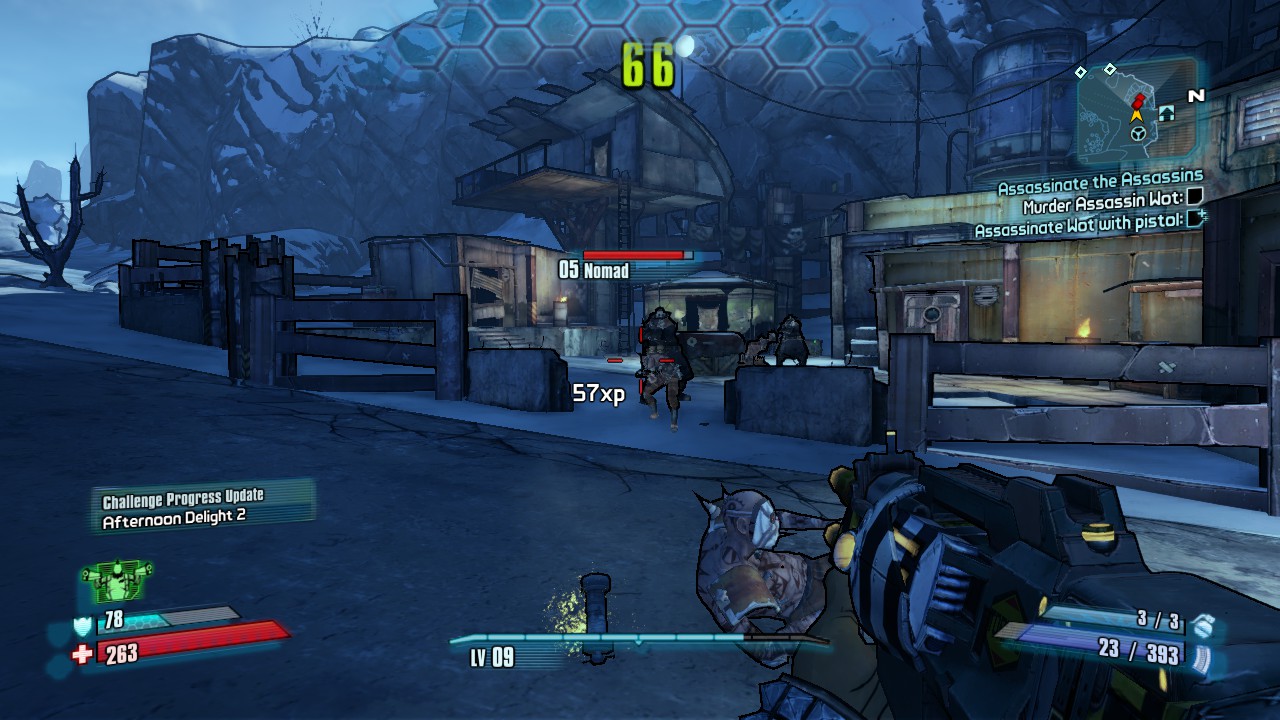
There is actually more of a storyline here, with more main quests. Of course, there are 50+ side quests that you will pour dozens of hours into. You get to play as a new set of characters, but in the same classes. I stuck with Maya the Siren again in this one, and I loved her phase-locking ability, where I could make enemies hover in the air for a bit or do damage to large enemies. You will also be happy to know that you can customize your character’s head and skin as you find new ones as loot, but I would have liked a more detailed character customization system; it just feels a bit tacked on.
There are just so many different enemies and guns in this game that I couldn’t even count. The guns are all varied with different stats, but you will be micromanaging them again, and it does become annoying. I wound up selling or dropping about 80% of the guns I found because a lot of them are pretty useless. This goes for shields, relics, grenade mods, and other things. There are six different classes of weapons: rocket launchers, pistols, assault rifles, sniper rifles, sub-machine guns, and shotguns.
You will always be switching between different weapons in your four slots (that you slowly unlock). I never stuck with a single weapon for too long because I was always finding better ones. Enemies are constantly dropping loot, and some weapons are rarer than others. Some do elemental damage, which is actually a huge factor in Borderlands. Armored enemies are weak against corrosive weapons, and shielded enemies are weak against shock weapons. The new slag weapon coats enemies in purple goop that makes them weak to any weapon fire. Some of the weapons are pretty unique; I never found two that looked the same. Some have unique abilities like faster reload and better accuracy as you fire, and even one gun was cursed that slowed me down and made obnoxious noises when I fired. Some guns you can throw when you reload, and they will explode like grenades and regenerate in your hand. The guns are just awesome in this game, and you will be looking for new ones every second you play.
Of course, the game is tough as nails, but as you level up, you can unlock new abilities. This game is designed for multiple playthroughs because you will probably reach around level 30 and maybe a bit further even after you complete every single quest in the game. You won’t unlock all the abilities or even get the best loot until you do. In fact, Borderlands 2 is more designed around co-op this time around because the best loot is only available to more players on board. The game is also extremely tough without someone playing with you. The game keeps enemies leveled up with you, so that makes the game even more difficult than the last. One thing that I really loved was the badass tokens that would raise stats just a smidgen for completing in-game challenges.
This leads to the biggest complaint I have about the series: Respawns. You respawn at certain points, but you will die hundreds of times in this game. When you do, you have to backtrack to where you died, and these maps are huge. Some maps let you use Catch-A-Ride vehicles, but most of them don’t. This was just so frustrating when I would die 15 times while clearing an area, suffer through the long respawn animation, backtrack, and sometimes die in just one hit. You go into Fight for Your Life mode, which allows you to revive with full shields if you can kill an enemy. This alleviated the frustration a tad, but if there are no enemies nearby to kill quickly, you’re screwed. On top of this, the enemy that killed you will regain full health if you die. That includes bosses. This is just so frustrating and makes me want the game to end. The second thing I really hate about this series is the constant enemy respawning. Once you leave an area and come back, all the enemies respawn. This made doing missions annoying because I just ran by them all. I understand they have to respawn in a game like this, which is focused on large maps, but I personally found it a nuisance.
If you have friends, this isn’t so bad, but be warned when playing by yourself. Besides that, the game keeps the tongue-in-cheek humor of the last game with more characters and returns to the past characters. You really get to know them more this time around with about ten times the amount of dialog. The story is decent but has a pretty crappy ending. It is predictable and isn’t anything special. Just know that you are here to kill everything, and I mean everything. I found myself entertained throughout the whole game with double the number of areas to explore, more side missions, and just more of everything. I really wanted to see more change in the series, so in the end, this game just feels like Borderlands 1.5.
At least PC gamers get enhanced visuals with some nice touch-ups. Higher resolution textures, further draw distance, FXAA, and higher FPS, which can be capped at 120, This is the superior version over the consoles because you can’t get pinpoint precision while aiming with a joystick. I could snipe like I never could on a controller, and it made the game a tad more tolerable in terms of difficulty.
I only have a few major complaints, but they are just staples of the series. If you can tolerate the monotonous trekking around, respawning enemies, and constant death, then pick this up. Fans of the last game know what they are getting into, so this is a warning for newcomers. I recommend playing this with at least one friend because the game is brutal. Lots of enemies, lots of dying. I also didn’t quite care for the constant micromanagement of all the loot. This is a great mix of FPS and RPG elements and should be played by fans of either genre.
If you loved Super Meat Boy, you should check this game out. Will you love it as much? Probably not. TBP is all about a little girl who picks up some mysterious cursed book that turns her into a demon in her dreams. The game has a Lovecraftian style but the same 8-bit graphics as Super Meat Boy. The game features twitch reflex platforming and combat.
The platforming is simple enough, with abilities to double jump and cling to walls, but the game requires mastering the controls to maneuver through nigh-impossible paths that require pixel-perfect timing. The combat is actually what brings this game down so much. The developers tried to make it too complicated. Hitting the attack button doesn’t really do much damage to enemies, which is stupid. You also don’t get a multiplier if you use a standard attack. They want you to be “creative” and use the dash attack, knock them into obstacles, and use the high kick. I know these kinds of moves don’t belong in this kind of game. The combat system is convoluted and requires too much thinking for a game that relies on instinct and muscle memory responses. After a platforming section, I start wailing on an enemy and realize I have to think about this combat system. It hurts my brain and really messes with the momentum of the otherwise solid platforming and controls.
There is a neat checkpoint system that allows you to put it wherever you want. If you get enough purple orbs, you can fill up your checkpoint meter and stay still for a while. This will place a checkpoint at that spot, allowing you to save them for complicated platforming sections. This alleviates the frustrating combat that leads to some cheap deaths. If you do well enough on a level, you can unlock special stages that are from the iOS version and user-created.
With all of this combined, They Bleed Pixels would be great if it weren’t for that combat system. You just can’t stop and think about fighting when you are on a good platforming run. The custom checkpoint system helps remove some of that frustration, but in the end, I just want to hit an enemy a few times and be done. Even having to do the complicated moves just to flip switches is pretty annoying. If you can look past this, you will enjoy this game, but most people will just stick with Super Meat Boy.
Yep! The fact that I forgot about this game until you made a comment proves that.