Whenever Valve releases a new in-house first-party game people pay attention. They are masters at storytelling and world-building. Aperture Desk Job is set in the world of Portal. You’d think this is a Steam Deck exclusive Portal game, but it’s not. This short 30-45 minute tech demo shows you the Steam Deck’s unique features.
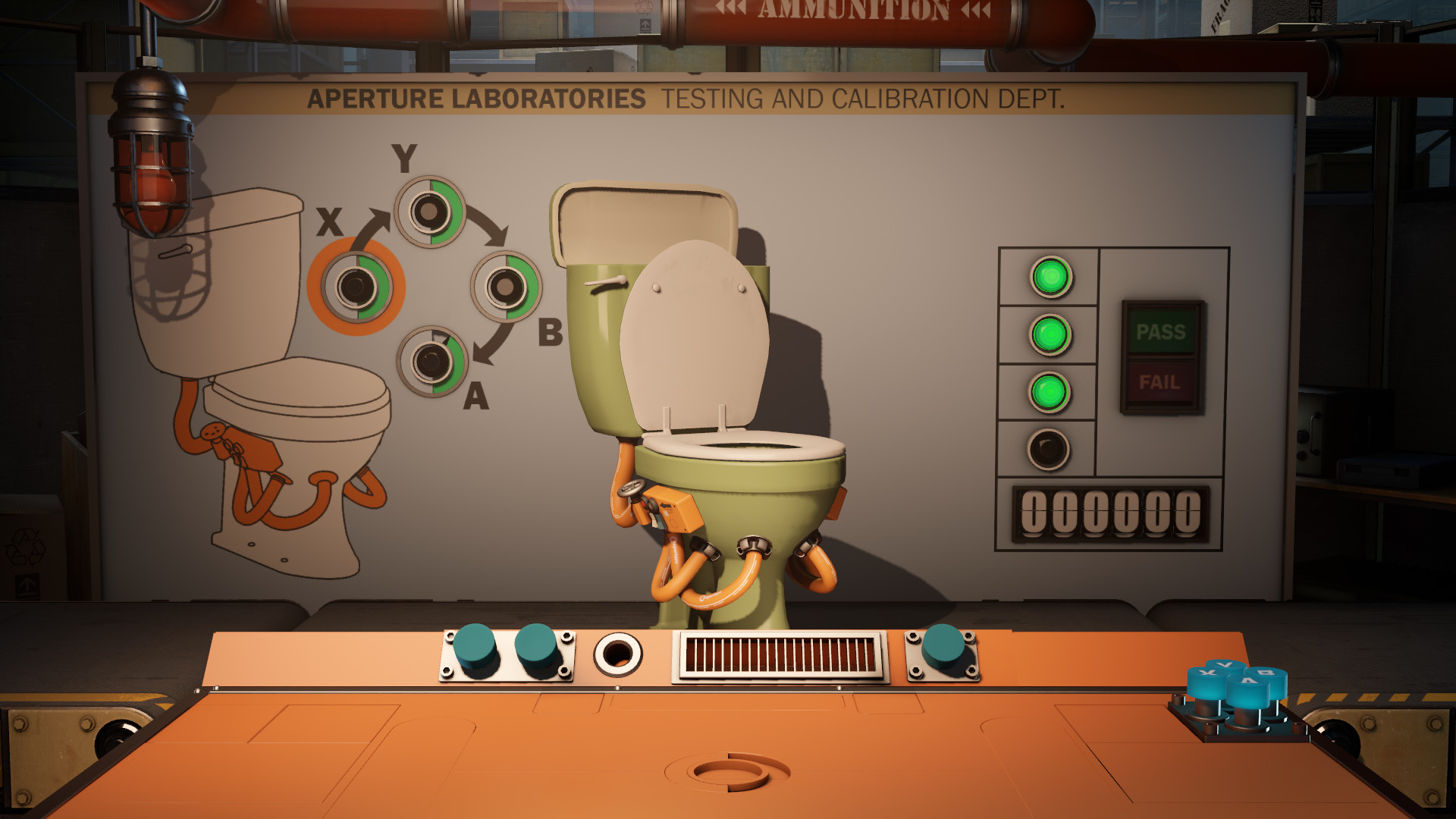
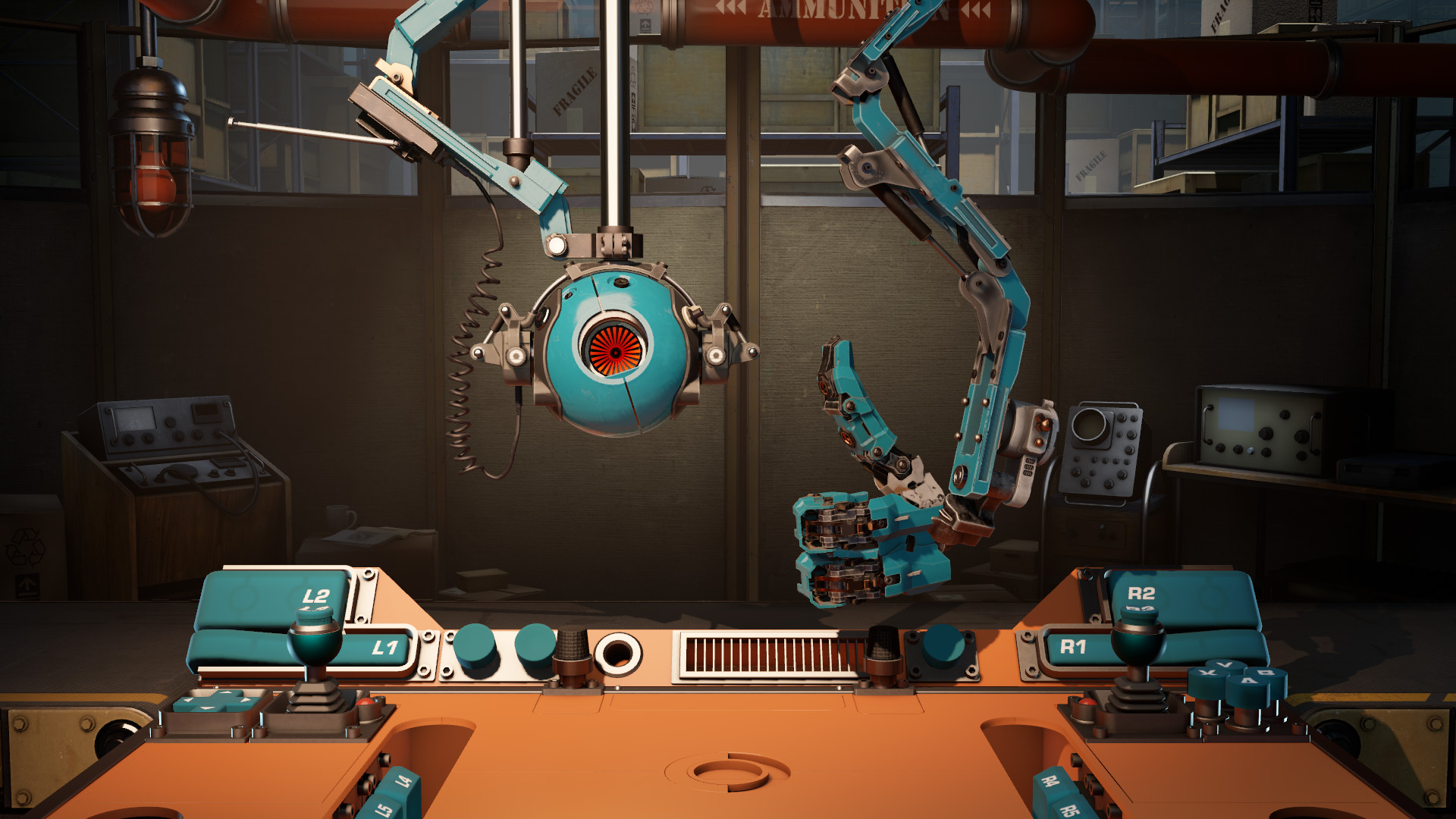
Desk Jobopens up with Cave Johnson giving a riveting motivational speech to his employees (J.K. Simmons retains his role) and the game pans down a factory level by level. You arrive at your desk with a new Wheatley-type character. He’s funny and got some laughs from me, but he isn’t as energetic. He’s a bit masochistic and Valve did a great job with his writing for the short time he’s on screen. Your desk has the exact layout as your Steam Deck and the short story unfolds with you as a toilet tester. Valve’s on-point humor hits here with the subtly they’re known for. You test a few toilets and then time goes by and you see some ridiculous number on the counter board.
You eventually turn the toilets into turrets which is pretty funny. Here you learn about the right stick’s touch sensor inside the Steam Deck for gyro controls. It’s calibrated pretty well, and I haven’t used good gyro controls before. It’s done right here. Without telling too much more of the story you take a ride back through the factory and you get a fun turret song at the end. The humor punches throughout and I had a good time. There are a lot of missed opportunities here like just a longer game or even some mini-games. It almost seems pointless for Valve to go through all this effort to create such a well-produced tech demo. I’m hoping this means more is coming along, but knowing Valve, it’s not.
The visuals are great and run well on the Steam Deck. 60FPS throughout with great textures and lighting effects. I don’t see the point of playing this on PC unless you just want to enjoy the writing and characters. In Valve’s defense, handhelds are subject to tech demos. Sony did it with the PSP and Vita, and Nintendo loved doing this with the DS and 3DS. Anyone who has played handhelds their whole life won’t feel so shocked or hate Valve for this. They just used such a beloved IP and didn’t go anywhere with it. It’s a painful tease as we all know there’s nothing else coming from it.
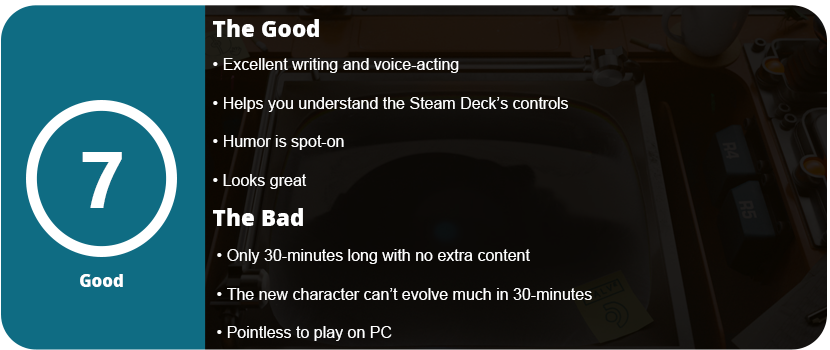
If you have a Steam Deck this is a no-brainer. It’s a fun 30-minute demo to play while you wait for other downloads or something. While the main character didn’t get enough time to fully mature like in other Valve IPs just the fact that they got laughs out of me in 30-minutes says a lot. Most games can’t get a smile over the course of hours.
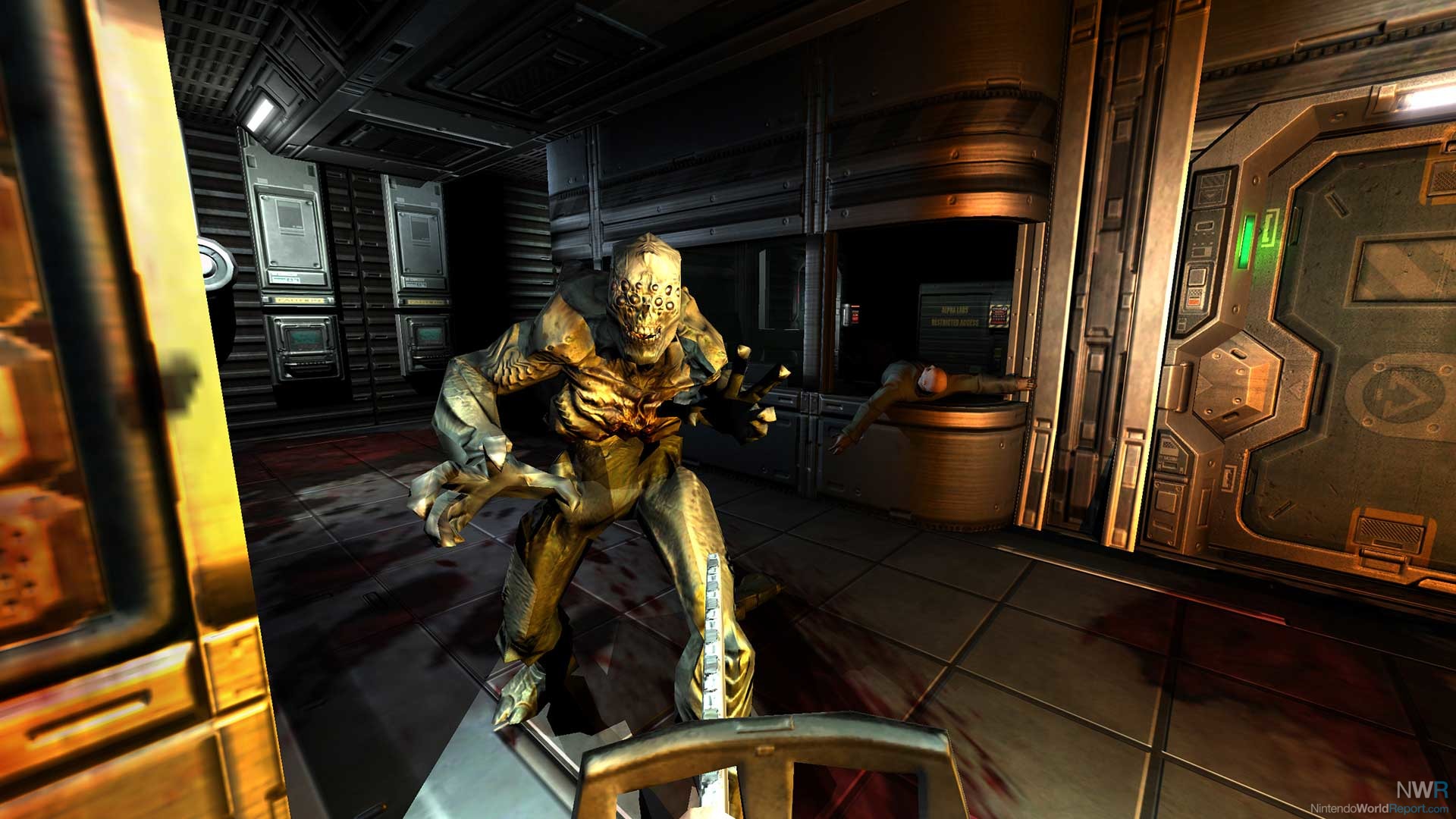
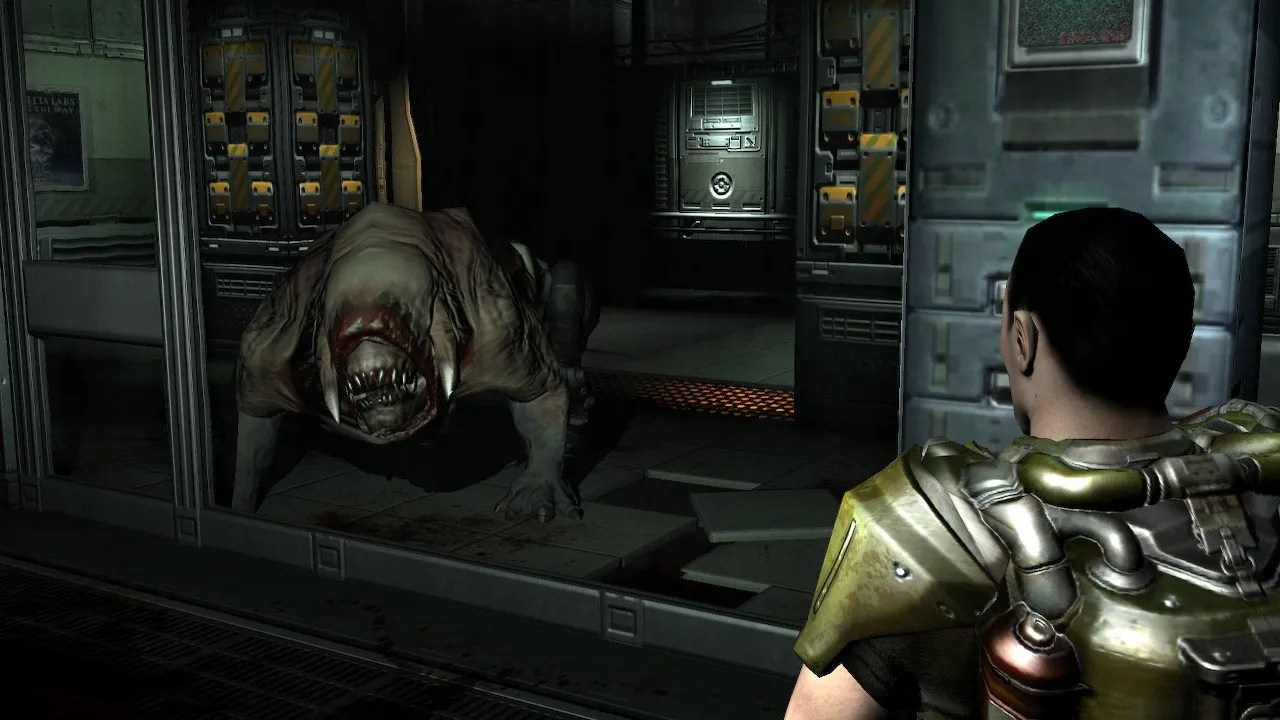
The original release of Doom 3was a huge deal. It was a technical marvel with fantastic new lighting effects and textures that could fill the latest GPU and all of your RAM. It split fans due to the slower pace and focus on jump scares (that honestly don’t really work these days anymore) and a bigger focus on the story (if you can call it that). The game retains the same dark visuals and monsters from before, but being the first game in full 3D it had a lot of problems.
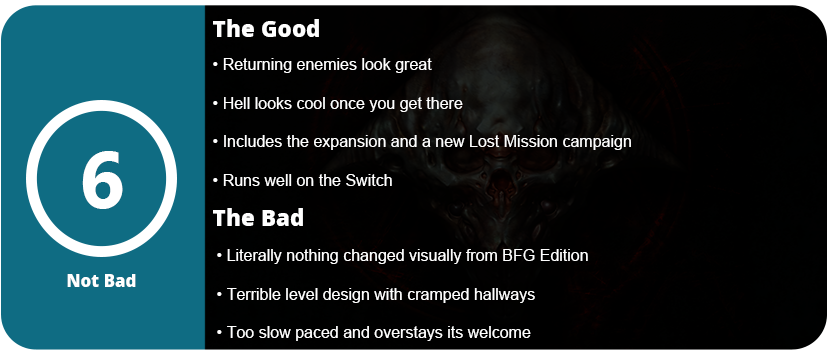
The first thing you will notice is that this release has no visual upgrades outside of some texture filtering and anti-aliasing and slightly better lighting. The textures still look muddy and the models are still low-poly. With this being the third official release of this game I’m surprised more work hasn’t been done to it. You play as a marine who is stationed on Mars when things suddenly go wrong. The first couple of levels is probably the best since they slowly introduce the gameplay to you and have better-designed levels. Zombies emerge from the dark, and your flashlight is a lifeline. It does have a short battery but recharges within seconds.
The main issue with Doom 3 is its much slower pace in every part of the game. The movement is slow (you have adrenaline that’s used for limited sprinting which is annoying), and the weapons reload slowly (why is there reloading anyway?). Not to mention the weapons just plain suck. The pistol is useless outside of the first couple of levels. I never touched it after this. The machine gun is useless in later levels, and everything else just feels slow. Enemies feel slow as well. The environments are also cramped with too many enemies spawning at once and I constantly backed into walls and got stuck in corners trying to get away. Very rarely does the game ever feel like a classic Doom game with more open areas.
The level design is also terrible. The game is way too long as it is and it’s just boring hallways after hallway finding PDA access cards, running back and forth activating switches, and trying to open doors. nearly eight grueling hours of this. It felt like a chore after the first two. Eventually, you do get to Hell, but it’s such a short level with a boss fight at the end, but it still suffered from cramped areas and nothing new except a couple of enemies that finally show up such as the Hell Knight and Arch-Vile which are some of the toughest enemies in the game. I mostly stuck to the strategy of using guns that shot the fastest such as the Cell machine gun being the most powerful with the chaingun being second. I used the shotgun through most of the mid-section of the game until I got the cell rifle.
There are a few boss fights in the game that all play out the same, and in the end, the entire game is just one long boring chore. It’s fun at first, but if you are a veteran of classic Doom games then most of you may just shut this off early. This is my third play-through of this game and it’s less enjoyable each time. I originally played this on Xbox, and then PC, and then dabbled in it a bit on Xbox 360 and never finished it. Now I completed it on Switch.
Speaking of the Switch the game plays fine, but there is some slow down in the larger areas and it doesn’t always stay at 60FPS. In handheld mode, the game runs fine as well, and you have the option to turn off flashlight shadows to help, but overall it’s great to just have another FPS on the Switch. These don’t come around often. Included is the Resurrection of Evil expansion which I already finished once on Xbox and a new Lost Mission short campaign which I will get around to eventually. It’s nice that there’s some new content. Overall, this could have easily been a remake from the ground up or a mode that made it feel faster-paced like the classic games. If you are itching for a mid-2000s FPS game then go ahead. Don’t come into this thinking it’s like the newer Doom reboots. This game was a specific era of id Software at its lowest point (Quake 4, Rage)
I recently picked up the Complete Edition on Switch as I never got around to The Kid’s DLC, Secrets of the Maw. I replayed the original game and will post my original review below and address further thoughts with the DLC review.
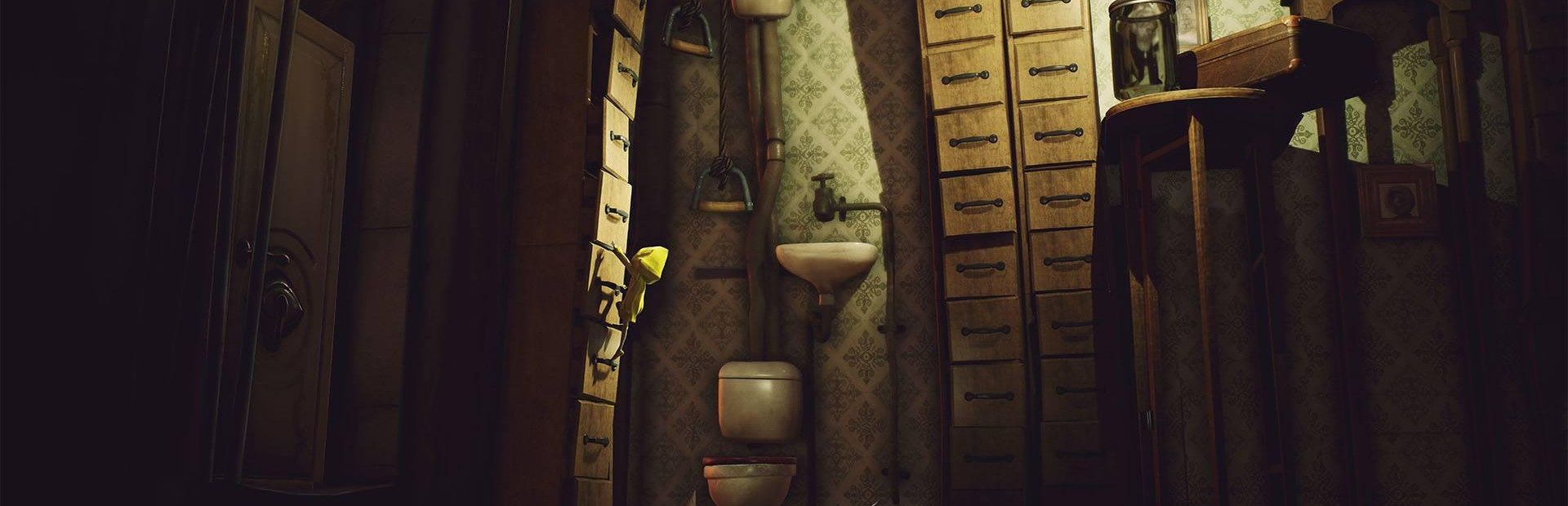
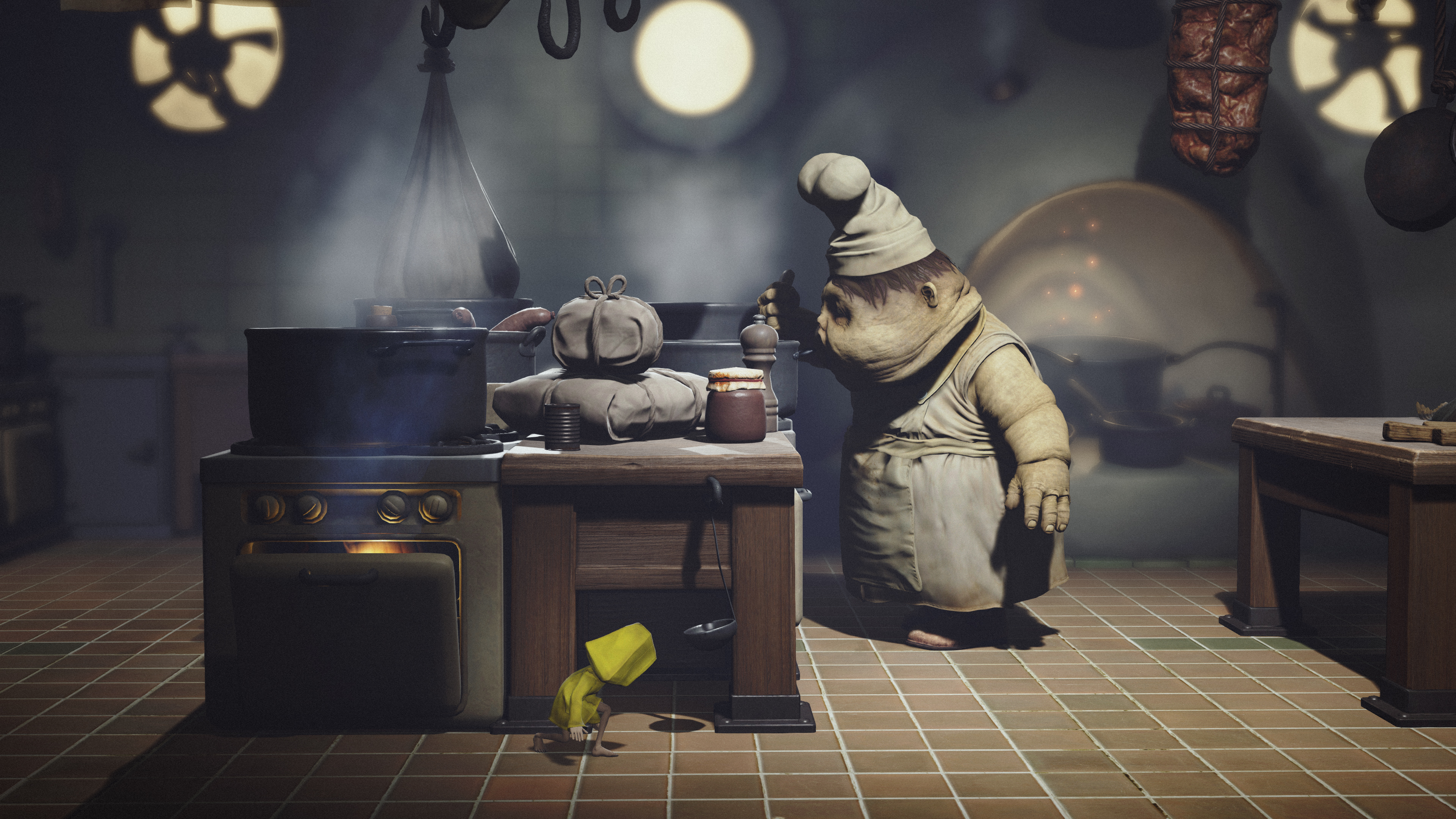
Minimalist side-scrollers have become very popular in Limbo. Inside is just another example of these horror side scrollers done right. Little Nightmares doesn’t really tell a story through voices or words, but through actions. Unlike Inside, Little Nightmares doesn’t have too much of a story to tell. You play as a child trying to escape a ship from humongous fat monsters trying to eat you. That’s all we get really.
Sadly, the story doesn’t really explain much as the art direction, monster design, and backdrops are wonderful and beg for more storytelling. The beginning of the game is made up of basic platforming with simple physics puzzles and a lot of atmosphere. Eventually, you start seeing the occupants of this ship and that’s when things get creepy.
Little Nightmares does a fine job of creating a tense atmosphere and suspense. Grabbing and sneaking are tied to the shoulder buttons, so when you grab something you must hold the button down. This makes things more intense as you are running away from a monster with a key to unlock a door and if you let go of that button it’s all over. The middle of the game is made up of outsmarting these monsters and the puzzles get bigger, but not really harder.
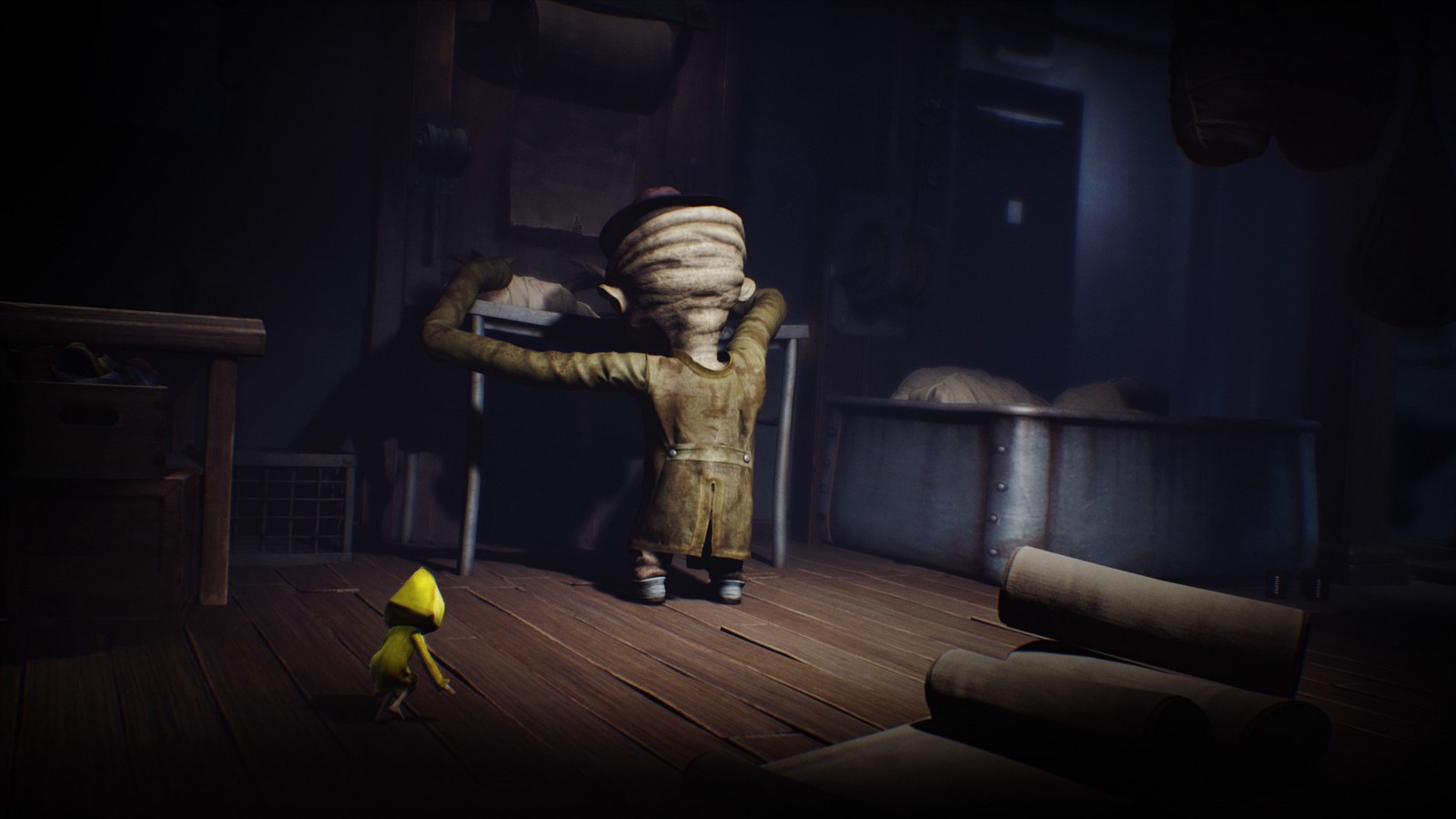
There’s not much to really explore outside of lighting lanterns for checkpoints and breaking porcelain dolls to unlock achievements. The game is definitely intense throughout the 3 hours it takes to complete, there wasn’t a dull moment that I can remember. I always felt like I was running and overpowered and small. From climbing stacks of dishes and escaping on meat hooks to chopping off the arms of a doll maker. The game gives players something that most don’t and that’s solid gameplay while combining excellent visuals and touching moments.
Overall, there are some of the best 3 hours you will spend. From beginning to end,Little Nightmares has something interesting to offer and it’s never boring. The graphics are gorgeous with art styles that reminded me of Box Trolls mixed with Coraline. If you love horror games and platformers then this is for you.
Secrets of the Maw DLC
After replaying the original game I still felt the same about it. The game portrays a really creepy atmosphere and digs into the fears of children and well – their nightmares. TheSecrets of the Maw DLC tells the adventure of the kid you see in the cage when you first start the game up. The DLC is about as long as the original game and is divided into three chapters as well, however, there are more gameplay elements mixed into each chapter to make it more interesting gameplay-wise.
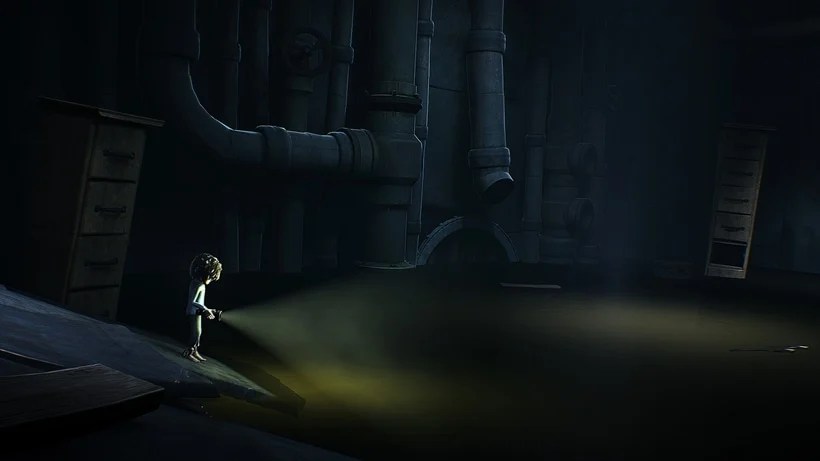
The DLC still gives off that creepy and dark atmosphere and sense of dread that the Kid has to go through. Sadly, we only get one new monster known as The Granny in the first chapter. You spend this chapter at the bottom of the ship in the sewers escaping her grip in the water. The main gameplay loop here is jumping around platforms in the water and swimming for your life to the next segment. I wish we could have seen her more instead of just bubbles in the water. She does appear at the end of the chapter, but with this being the only new monster it’s a bit of a letdown.
Overall this chapter focuses mostly on platforming and the DLC didn’t address any issues such as the camera problems and not being able to line up your jump correctly. The Switch version suffers greatly from long load times so dying often can be a frustrating mess on the Switch. Loading can take up to a minute between each death and sometimes I died shortly after loading just to wait another minute to try again.
The second chapter brings back The Janitor which was the first monster in the main game. This is a very long chapter that consists of three puzzle areas. Here you also get to solve puzzles with the little gnomes from the main game to push things around and activate levers. I found several bugs here such as gnomes disappearing through floors which required checkpoint restarts. Overall, running from The Janitor again isn’t as terrifying as the first time.
The last chapter brings back The Geisha which was the final monster in the main game. This one mostly focuses on a new flashlight combat system in which you shine your light on phantoms and they turn to ash. I found this frustrating as the closer they are to you the less effective the light is which doesn’t make sense. The smallest point of the cone of light is what causes this and it seems like an oversight. I found there were too many phantoms coming after you at once and it became overwhelming. The puzzles in this chapter are the best in the entire game, but again it’s another monster we’ve seen before.
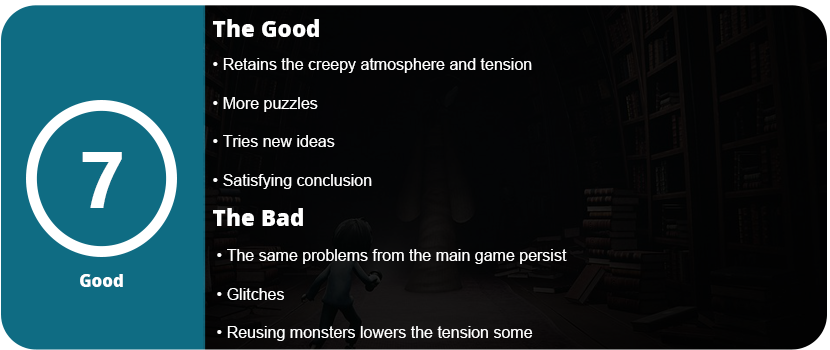
Overall, Secrets of the Maw is a great DLC that doubles the length of the entire collection. It feels more like a game and less like a haunted house ride and just feels more thought out. There were some glitches, the platforming and camera need work, and reusing monsters brings the tension down too much. With the entire package wrapped up, you have about 3 hours of fun creepy atmosphere here.
I absolutely love Japanese survival horror games. Even the worst ones usually nail the atmosphere and scare factor and this goes all the way back to the PS1 era which is where they pretty much became mainstream. From the best ones like Silent Hill 3 to some of the worst each title is unique in its own way. I collect survival horror games because of the unique factors in each game. Some may have terrible visuals, voice acting, controls, or obtuse puzzles, but they usually always scare and have great monster designs and a great atmosphere.
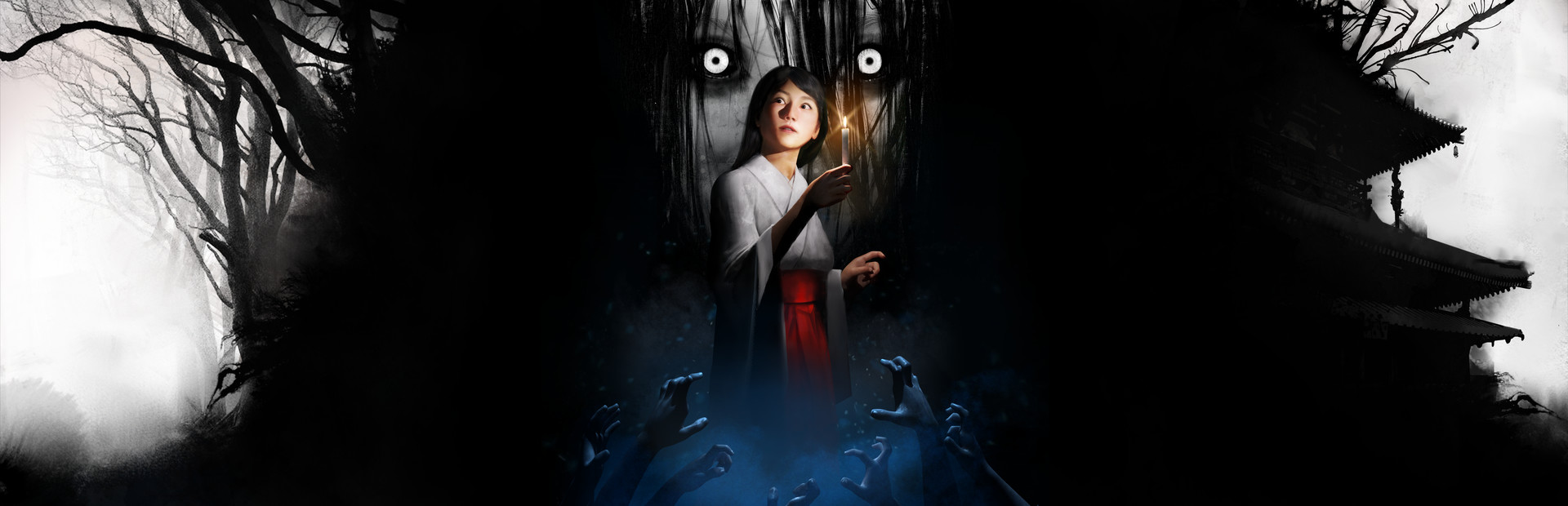
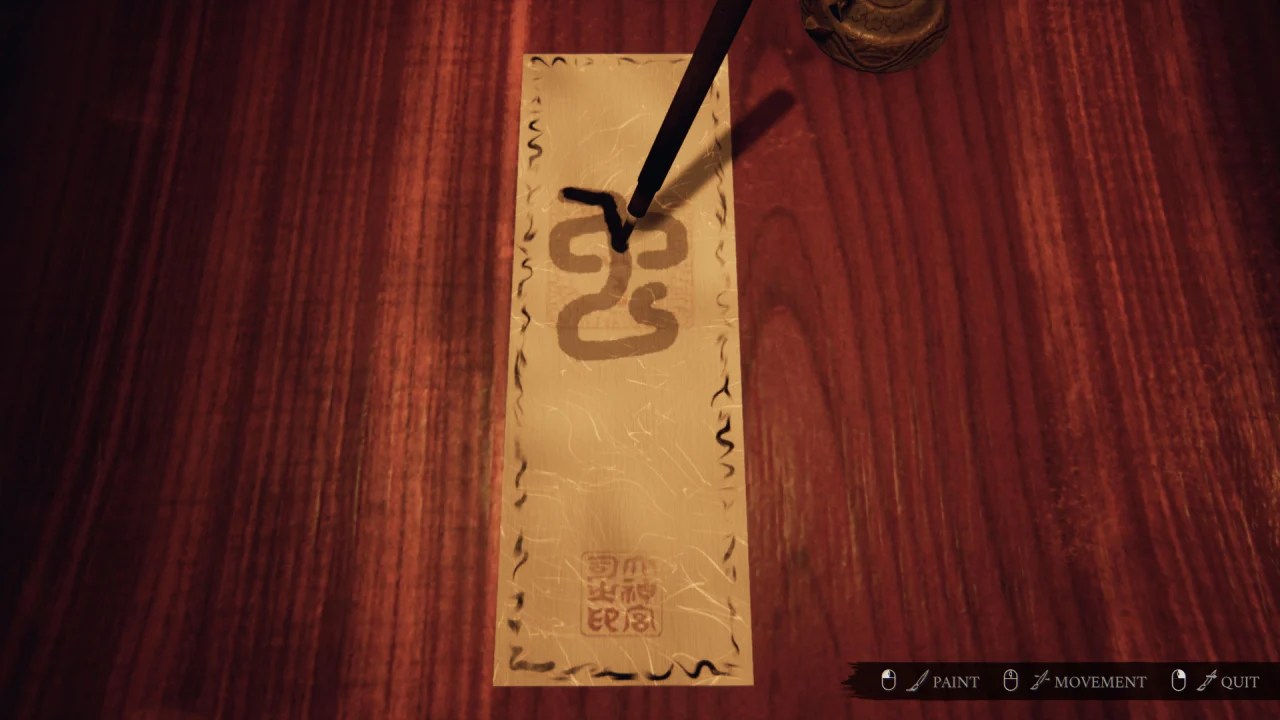
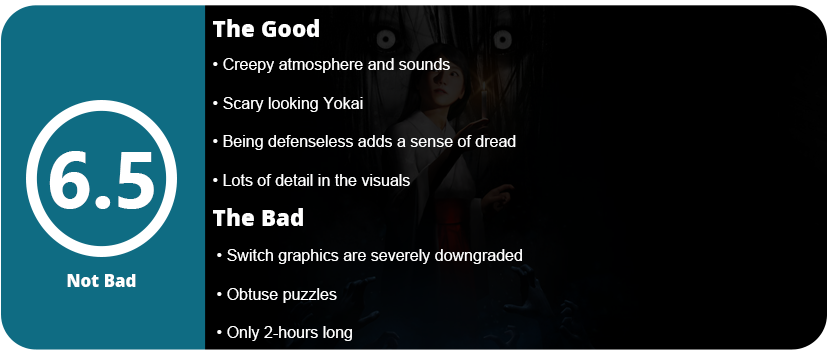
Ikai only got my attention due to its physical release. I usually don’t pay attention to digital-only survival horrors as most are pretty bad, and rarely nail even the atmosphere. Ikai does struggle in some departments such as the story, characters, and visuals, but it’s really creepy and has a haunting atmosphere. You play as Naoko who lives in an ancient Japanese village. You are a priestess whose uncle leaves the village and leaves you in charge. Yokais take over and it’s your job to rid them before they take over the shrine, and there’s something about a wedding and an abusive fiancée. Yeah, it’s not clear and even the game’s description doesn’t say much about the story. There’s a mechanic in which you can draw Japanese symbols on paper to make seals to rid of the Yokai, but once you get to the library tables you have to stop every 5-10 seconds as they will pop up and kill you. It helps add a sense of urgency and dread.
Like most games that take less than two hours to complete you don’t get a chance to develop characters or stories. Your main goal is breaking four Yokai seals via puzzles and exploration. Naoko is defenseless so you can’t fight, but just run and hide. Most of the game is easy to figure out minus a few obtuse and obscure puzzles. The village itself is really small so it’s hard to get lost, but you usually have to find context hidden within. Bloody footprints, opening the right door to trigger an event – that kind of thing. The few puzzles involved are slider puzzles and putting objects in the right place. Some more frustrating exploration bits were being lost at the bottom of a well and having to find bamboo to use as climbing posts amongst tons of bones. I spend 45 minutes running around examining every inch of bone until I found them all.
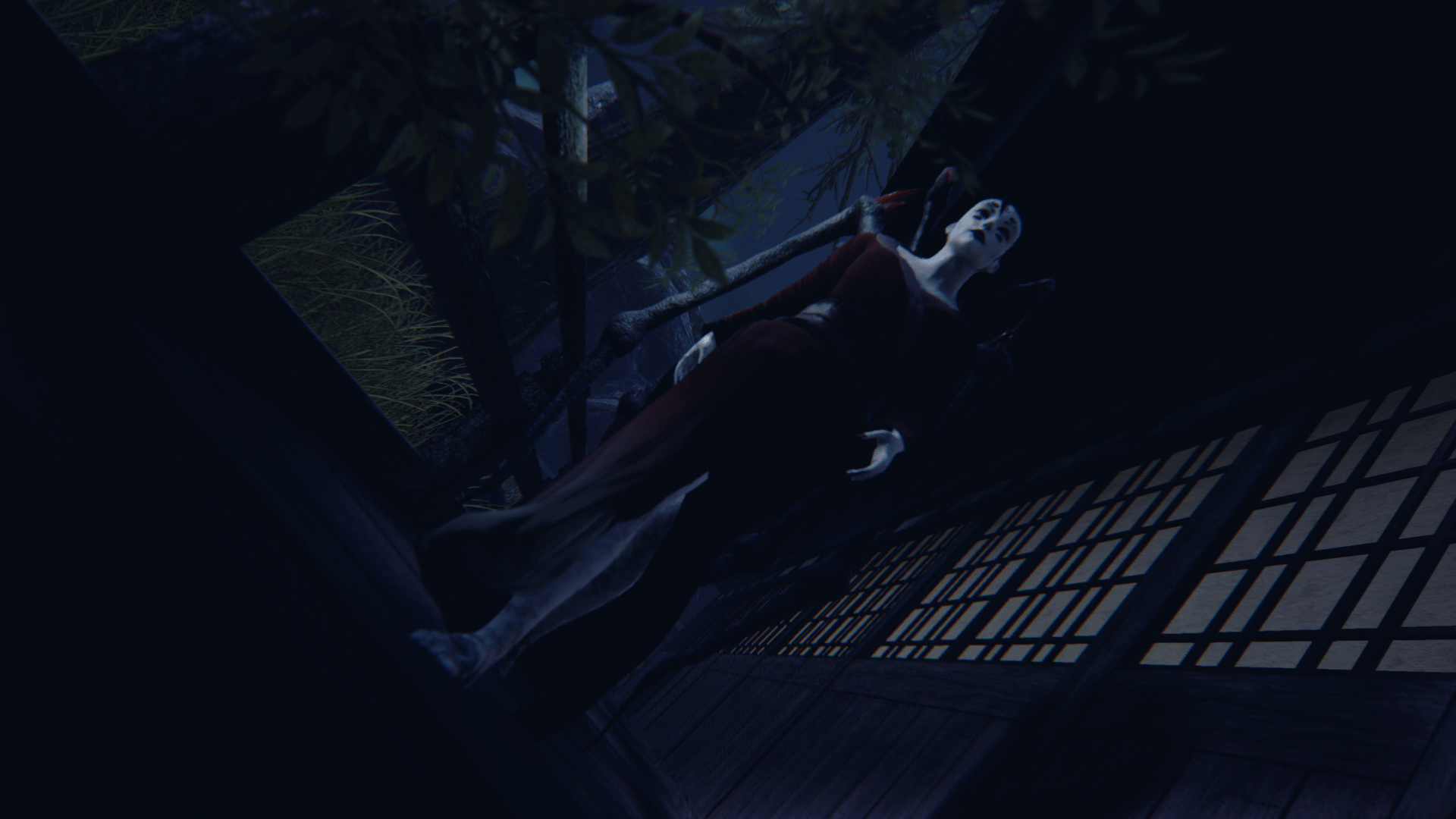
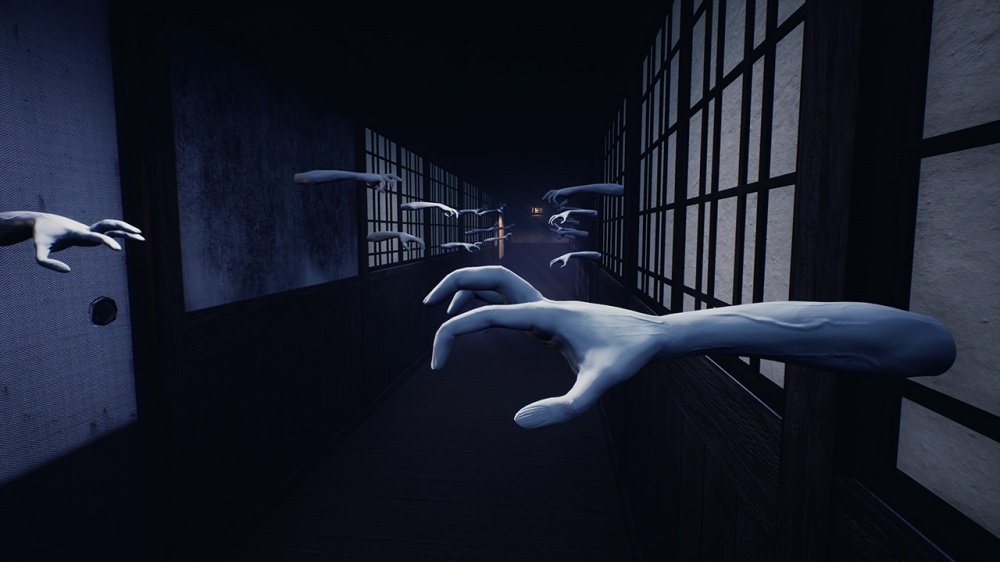
Some events have you hiding from Yokai which wasn’t too bad. They are really creepy designs and can pop up at you out of nowhere. Ikai really gets the sound design down. Creaking floorboards, moans, whispering wind, and bumps that come out of nowhere can make you jump. The game is intense all the way through. It’s just too bad the Switch version suffers from serious graphical issues such as incredibly blurry visuals due to resolution downgrade. It also runs less than 30FPS a lot of the time, but it doesn’t look bad other than this. There’s lots of detail, great lighting effects, and good-looking textures otherwise.
Despite the visual downgrade the game still sounds great, and I can only recommend it if you find it on sale. The $35 physical price tag might be a bit steep for a two-hour game, but anyone who loves classic PS1/PS2-era Japanese survival horror games will find something to like here. I do have to knock it for it’s an almost non-existent and incoherent story and obtuse puzzles, but playing this in the dark with the lights off and headphones on could make for a fun and scary evening.
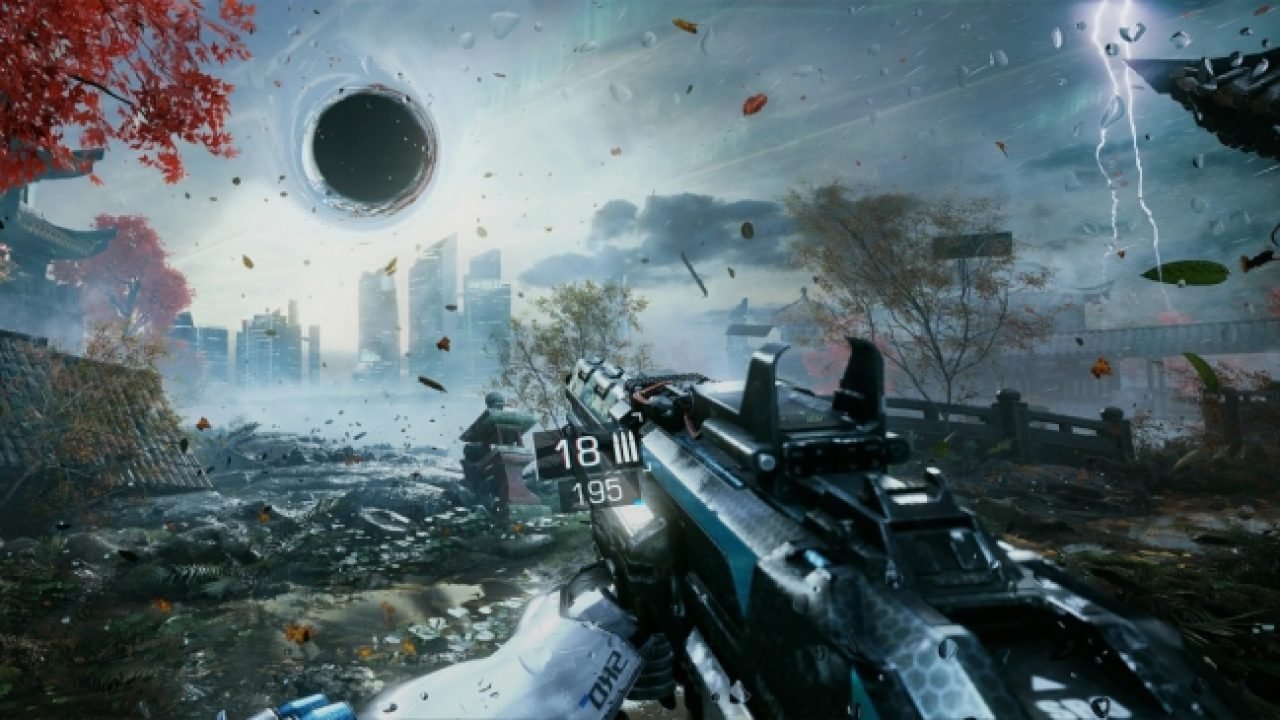
Bright Memorywas an impressive tech demo that was in Steam Early Access a couple of years ago. It had a scantily clad female protagonist (which doesn’t do anything for the game honestly) and a mix of sword and gunplay in the first person which felt fast-paced and punchy. Infinite is the fully released game, and it’s basically a much longer tech demo. You can finish the game in 90 minutes and this leaves nothing for story or character development which is almost non-existent. All I gathered is that there’s a black hole forming near-Earth and you must stop an evil military guy from taking some sort of artifact that will bring Earth back to Feudal Japan? I’m honestly not even sure.
The best part about the game is the gunplay. The swordplay kind of takes a back seat and is only needed in certain situations. You get a standard arsenal of four weapons. Automatic pistol, auto-shotgun, assault rifle, and sniper rifle. Each weapon has an alternate ammo type that’s usually explosive and does massive damage which is best saved for larger enemies and bosses. The weapons feel heavy and punchy, and they are fun to shoot and use. The gunplay was so good that it kept me wanting more from the game. It had a AAA budget quality to it that’s not seen in many indie shooters. The swordplay consists of mashing a single button or launching enemies into the air. There’s a tacked-on afterthought of a skill tree that lets you unlock abilities and upgrade your alternate ammo firepower, but in 90 minutes you upgrade almost everything pretty quickly so it feels trivial.
There is a grapple line for traversing long distances which are scripted, and you can wall run. These ninja acrobatics feels a bit stiff and not as refined as the actual gunplay. In fact, all of the animations feel stiff and like they were hand done. The faces almost don’t animate and thankfully there are less than 10 minutes of total screen time where the camera shows any faces. Your main character, Shelia, is questionable in the sexy department since you hardly ever see her and there are DLC costumes that seem pointless due to the short run time. You can go through the game again on higher difficulties, but I don’t see the point.
The issue with a short game like this is there is no incentive to come back. There are no modes, no multiplayer, and hardly anything to aim for. The visuals in the game are fantastic with great use of ray-tracing, but again the animations are weird. There’s a short scene where you drive a car and it feels really janky and half-baked. Overall, the boss fights are fun, but there are literally only four types of enemies in the whole game so it gets repetitive quickly. At a sale price, this could be a fun evening, but that’s about it.
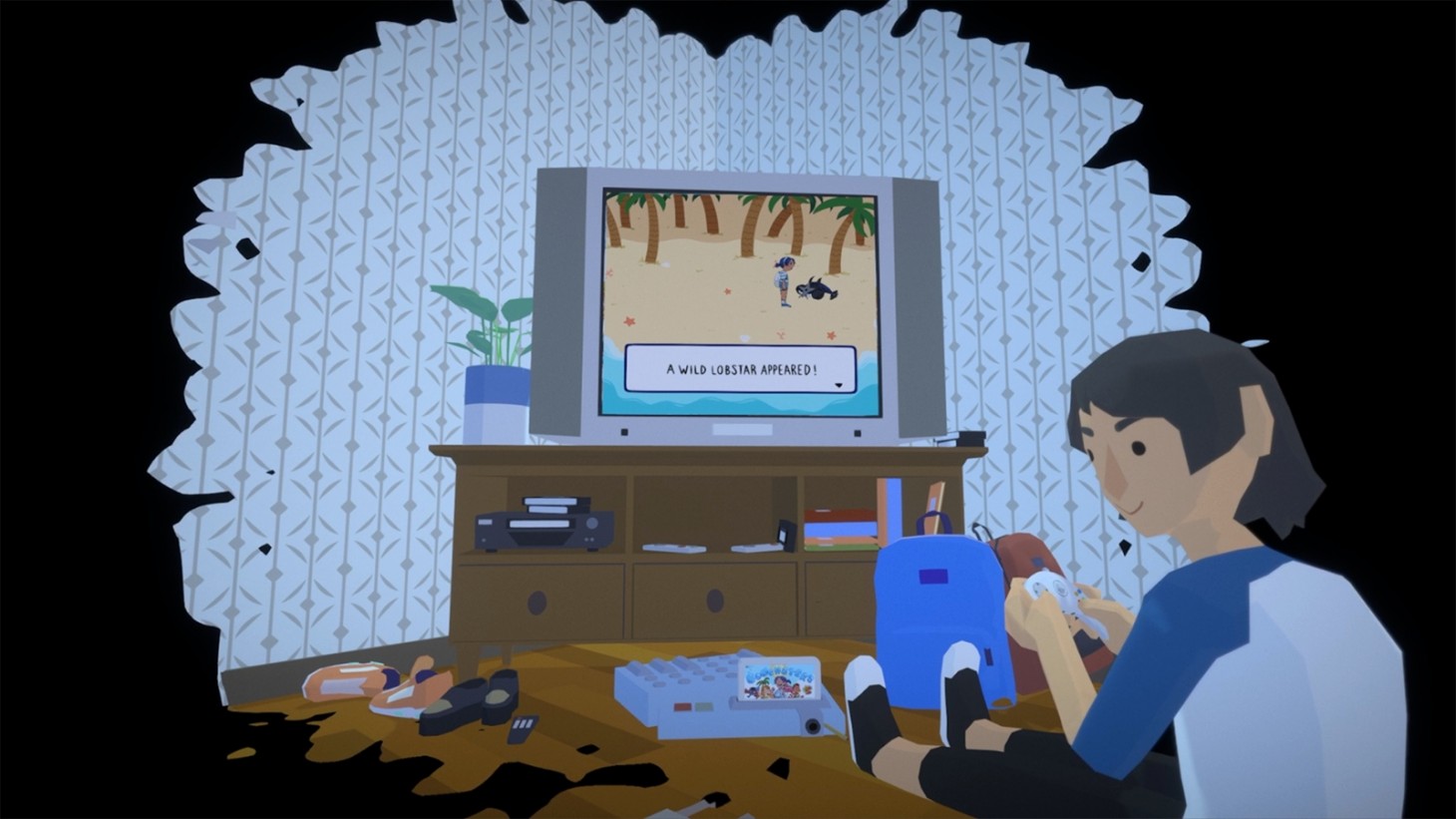
Gimmicks that use various types of hardware are nothing new since the days of the Wii made that mainstream, but very few games use your camera outside of a home console for gameplay. While it’s wholly gimmicky and can be played with a controller, the game uses your webcam to see your eyes blinking to determine when to change scenes in the game or interact with objects. Not often does the gimmick feel like it’s influencing something important, but when it does it works well.
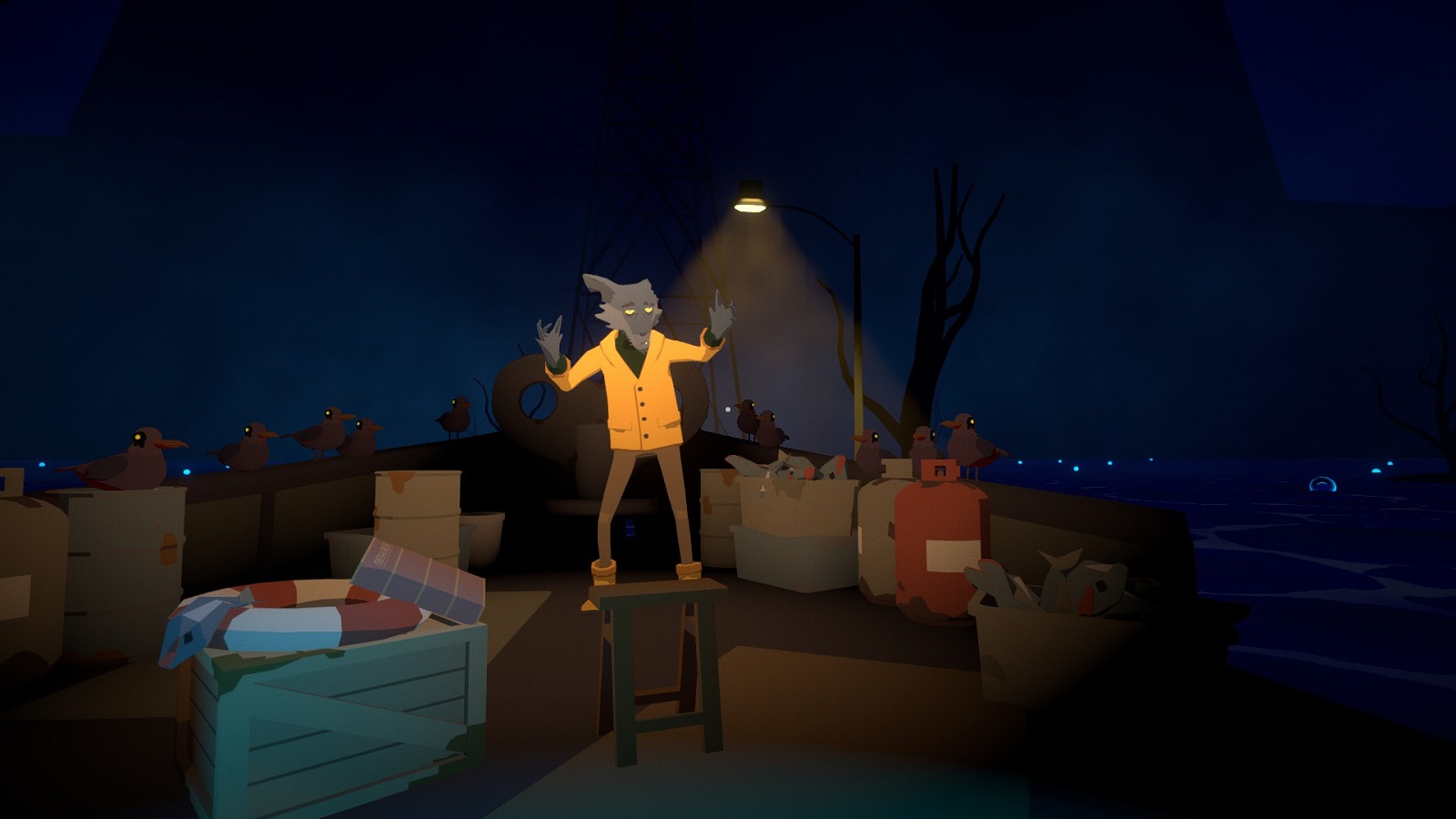
You play as a boy named Benjamin Brynn floating along the river of death in a boat with a wolf as a ferryman. He’s to be taken to a being in a large tower whom he has to sell his life story so he can pass on and the ferryman can be paid. You start out as a child and you eventually learn your mother is an accountant and failed music composer and wants you to follow in her footsteps. Each scene is full of mostly black with just what you can remember being in view. Sometimes an eye will appear on objects for you to blink at and interact with. When a metronome appears you can blink and jump to the next scene or try to hold your eyes open and see the scene to the end. Most of the time I couldn’t do it (it’s very dry where I’m at here in the summer).
You slowly progress through the story only to find out that you need to retell the story correctly. I won’t spoil anything as to how or why, but the only times the blinking gimmick felt right was when you had to close your eyes to focus on someone talking. With headphones on this is a great effect. The game does a great job detecting your eyes even in low light, and I was using a laptop webcam which isn’t that great. There isn’t much else to this game. It’s an interactive adventure with interesting visuals. The whole game reminded me a lot of That Dragon, Cancer, but I can’t connect to this game as much as it’s shorter and at the time I was expecting my first child so that game hit home quite a bit. A big fear is your child being born with some sort of debilitating disease.
You’ll most likely not really feel the game’s impact until the last 20 minutes when things get really dark and sad. It didn’t make me tear up, but it was really sad for sure. You can finish the game in about 90 minutes, but I did connect with the character to an extent, but not wholly. The scenes rush by too fast and you’re meant to understand the moral of the story more than connect with the characters and get behind their motives and feelings. I feel a game like this misses the mark due to its short run time, but the gimmick would get tiring for more than 90 minutes.
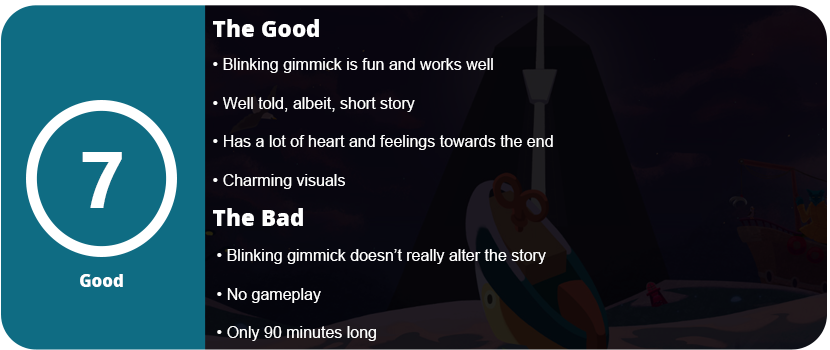
Overall, Before Your Eyes is a charming game with a lot of heart and a fun gimmick that works well when it wants to. It’s a very short game and doesn’t let you really connect with the characters enough. It’s forgettable in the end, and not as memorable as some other short adventure titles I’ve played in the past, but it’s fun and worth a look.
Growing up, I wasn’t into Star Trek, and I also didn’t have a gaming PC. The computer we had for the family was for website development and it didn’t run any type of 3D applications well. PC gaming was pretty much out of my mind until the mid-2000s, but I also passed this up on PS2. I just felt Star Trek was a boring grown-up show and didn’t care at all. I now love the series and have caught up to halfway through the Voyager series so the characters and flow of the story actually made sense to me.
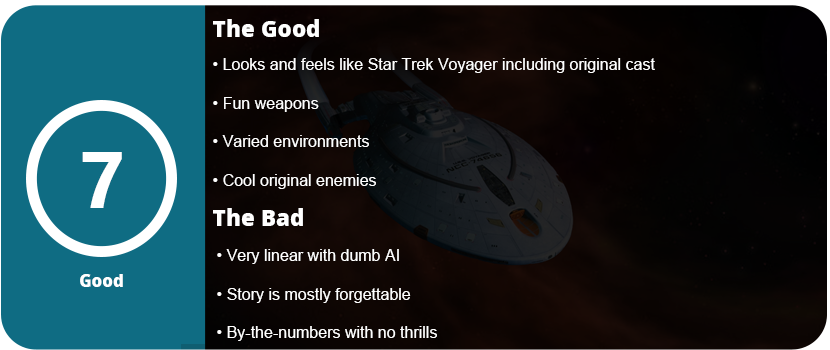
You play as a brand new Hazard Team thrown together by Tuvok to surgically strike enemy ships. The Voyager gets stuck in space and can’t repair itself or warp out due to something dampening its engines. It’s your job to find out what this is. It plays out just like a Star Trek episode. There is great voice acting from the show’s cast which is really nice. There are a fair amount of cut scenes, but of course, this isn’t anything stellar or memorable. It’s interesting enough to get you through the five hours it takes to finish the campaign and that’s all.
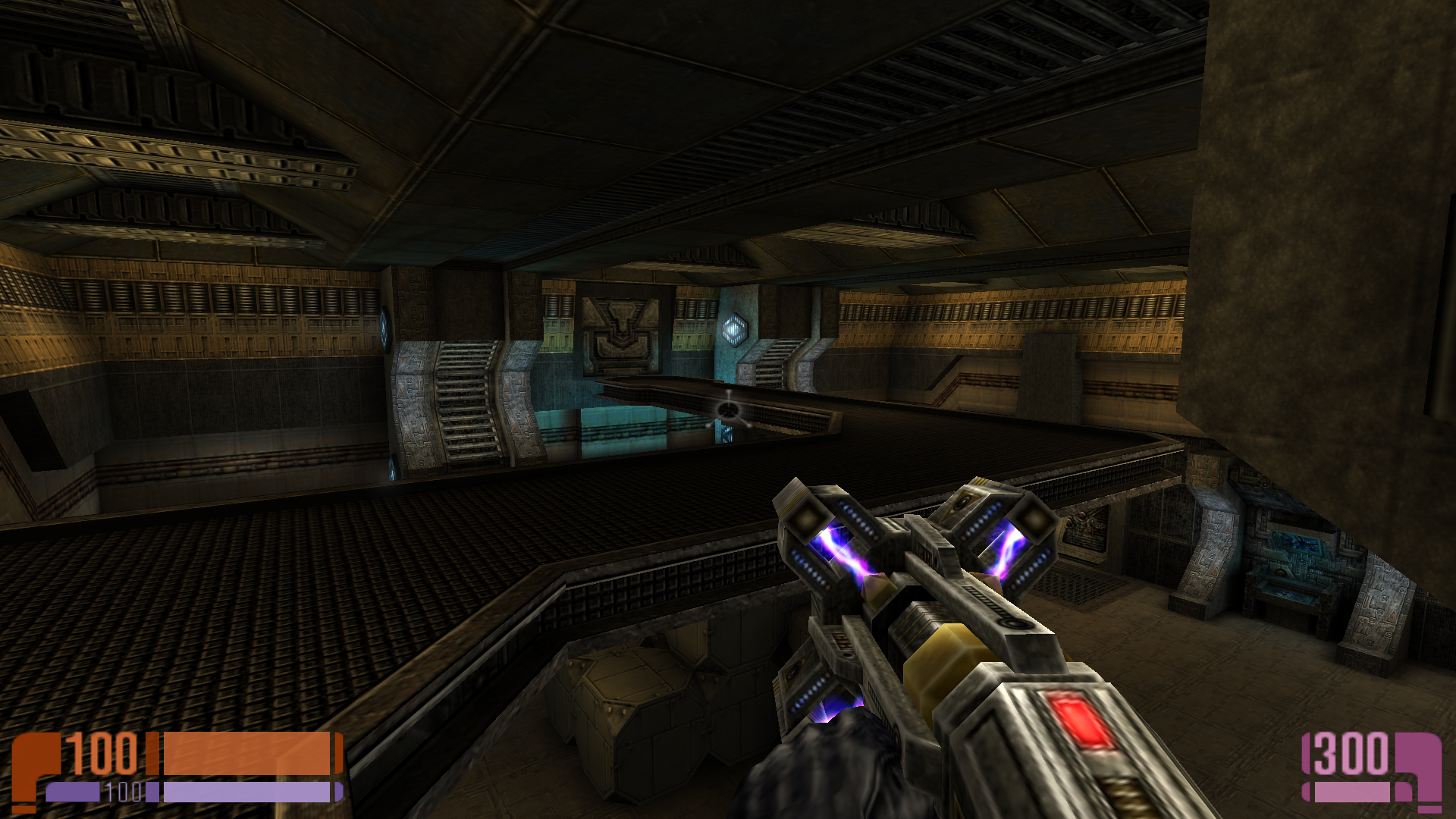
What is nice is the Star Trek experience is here. Weapons that feel like they fit in the universe, you get to explore parts of the ship, and it’s nice to see a 3D interactive world of something you see on TV a lot. Missions are varied thanks to the environments that change up. Sadly, there are no worlds you are plopped down in. Just lots of different types of ships and a few different enemy types. These range from Klingons that we all know to new original species just for this game. This is a typical id Tech 3 shooter with nothing special to it. Enemy AI is pretty dumb and the game is extremely linear. There are no puzzles or thrills. Just blast your way past wave after wave to get to the next cut scene.
There are two different types of ammo types. You pick up ammo crystals for one and regular blue energy for the other. There are nine different weapons in the game including your phaser which has unlimited ammo and does the least amount of damage. The weapons, while original and cool looking, aren’t anything special and their alt-fire modes are pretty bland. I understand this was the early days of shooters, but Half-Life proved you can have a small arsenal and make them have weight and feel unique. It got to the point that I just stuck to two different weapons at all times because the enemies are just bullet sponges. They swarm you head-on and don’t take cover or dodge or strafe. I could stand in one corner and just knock them all out and advance to the next room. The game is fairly easy because of this.
There are only two boss fights in this game and they are both pushovers because you can exploit their dumb AI. Throughout most of the game you have AI companions that do a decent job killing everything, but they usually just stand around and can’t die anyway. There is a single stealth section that felt completely pointless as the AI is so dumb you can walk right behind them and they won’t notice you. Gameplay-wise there’s literally nothing else. Just lots of elevator switches and control panels to press.
Visually the game looks the part artistically. You won’t mistake this for another game, but the graphics themselves are obviously really dated and didn’t look the best even when it was released. However, you know what you’re getting into with a two-decade-old game. It still looks clean and there is a lot of detail in making this look and feel like Star Trek. It’s worth a short play-through on a late-night gaming session, but it’s mostly forgettable.
I’m not the biggest Postal fan as I didn’t grow up with it. With Postal 4being another turd in the series, I can easily say this is the best game in the whole series despite being a spin-off. It takes the meta-humor, gore, and whacky character designs of the main series, puts them into a Doom clone, and does it quite well. You are put into the shoes of the main protagonist who falls asleep on this couch and end up playing the levels of his nightmares. There are plenty of locales, fun weapons, and tons of enemies.
You start the game out like you do in the main games. You are in a lively neighborhood and go, postal because your TV is broken. The game ramps up the difficulty quite nicely as this first level has simple enemies like redneck shotgun MAGA hat-wearing enemies, dogs, and innocent people to slaughter. These people give you Wal-Mart bags that give you health. Later on, you run into floating fat enemies that chuck McDonald’s burgers and cups at you. Mind you they don’t use the actual names in the game, but you can easily tell what they’re making fun of.
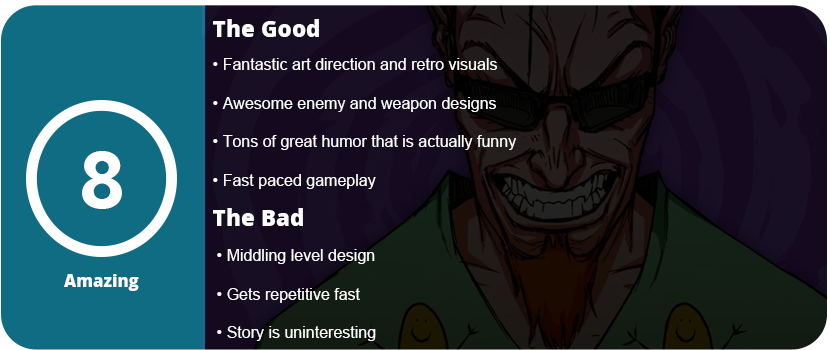
Later levels bring on various enemies and there are three main bosses in the game. There are three different campaigns to play in. You eventually go through the desert, asylum, sewer, forest, and swap levels to eventually get to the F4 Expo campaign to take on Leon Dusk (har har) and his space program. Each level consists of mostly linear hallways to shoot through but there are many blocked doors that require certain items or colored keys. Finding these can sometimes be a bit of a pain as the levels can be quite long and labyrinthine and the level design overall isn’t the best among these Doom clones. I honestly felt a lot of the time that the pacing was off with arenas being way too large for the loadout you get (you frequently lose your entire arsenal and have to gain it back again) and it can sometimes feel overwhelming just in terms of getting your bearings. The enemy designs are well done as you know what enemies are weak against what types of weapons. You have enemies that mob you, strong enemies that stand back, and some with long-range weapons.
The humor in this game is a bit different from the main entries as it stays meta and makes fun of current global issues. Coronavirus (it’s literally a boss), various memes like Elon Musk, the toilet paper shortage, and various one-liners that poke fun at what’s been going on for the last five years globally. No racism, sexism, chauvinism, or anything like that is needed to be a fun game. The game pokes fun at things rather than promoting them. Anyone saying “Twitter will end this game” is just creating fake outrage. It’s funny no matter who you are and isn’t offensive. The developers got with the times and actually had to make an effort to be humorous. What a crazy idea right?
With that aside, the game does get really repetitive after the first campaign is over. Previous enemies cycle in, the same 8 weapons can only do so much, and most of them are pretty basic weapons, but a few are unique like the Pussy Blower that shoots cats out and you can recall them to do damage on the way back. Most other weapons are just clever or funny renditions of normal weapons with alt-fire modes. You do get items to use such as slowing down time, refilling a weapon’s ammo, and refilling health, and you also get a piss button. Peeing on things is useless unless you have fire or nitrogen bottles to burn or freeze enemies with your pee. Yeah, it’s pretty funny. There is also an Akimbo item which is probably the most valuable in the game.
Overall,Brain Damaged has excellent art direction and retro visuals that harken back to the 64-bit era of games like Quake II and Unreal Tournament. The controls are great, the game is fast-paced, the weapons and enemy designs are awesome, there is varied level design, and the humor is actually funny and not offensive just to be offensive. There are plenty of nods to video games, gaming culture, and world events from the last five years that everyone can relate to. If you can get past the repetitious design and so-so-level design problems then you will have a great 5-6 hours on your hands.
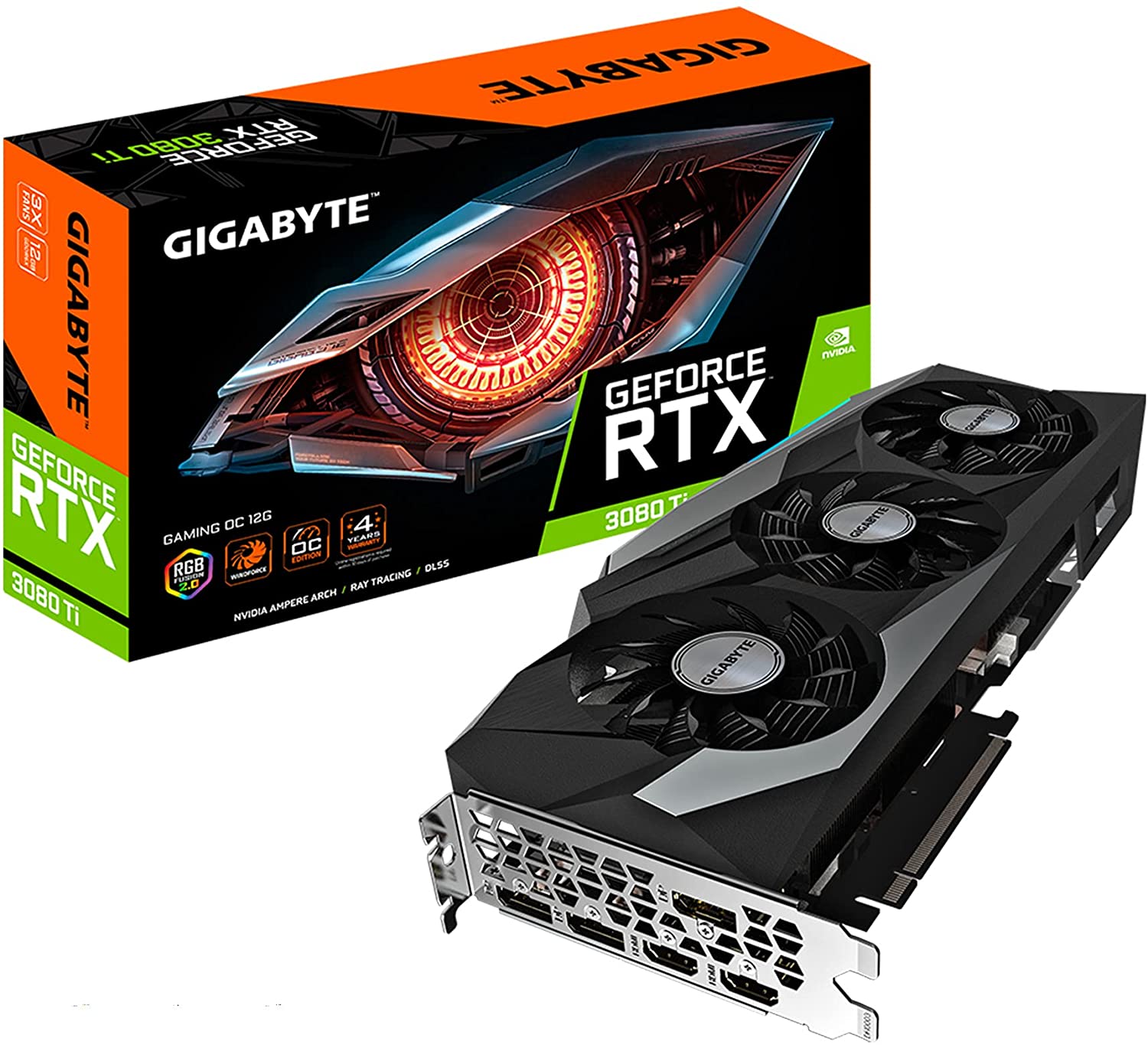
This is going to be a “normal” hardware review. I know people like tons of graphs, comparisons, and benchmarks, but I don’t have the extra PCs for this to be time-efficient, and other sites do this better. You will get here a “gamers” review based on the experience of using the card for two weeks.
Installing the GPU was as simple as it gets these days. This card only requires two 8-pin power connectors while some others require three. I did initially install this with a 750W PSU (Thermaltake Toughpower Gold RGB to be exact) and at first, it worked pretty okay for a few days. More on that later. It fits in a mid-size tower just fine. I put this inside of a Corsair 680X and it just barely cleared. There’s maybe 1 or 2mm between it and the front fans. My RTX 2080 was a bit smaller it seems, but this card is quite the beast. It takes up two rear slots (like most cards do these days) and has more Display Port connectors than HDMI which is needed for anything with a super high refresh rate and high resolution. I’m running two monitors. One 1080p 280Hz and one at 3440×1440 120Hz, however, to use G-Sync I have them both capped 3FPS lower than their max refresh rate. I didn’t have any issues upon boot. I did use DDU uninstaller on my 2080 driver and shut the PC down, and I disabled automatic Windows driver updates. So, upon boot, I installed a fresh 3080ti driver and I had zero issues.
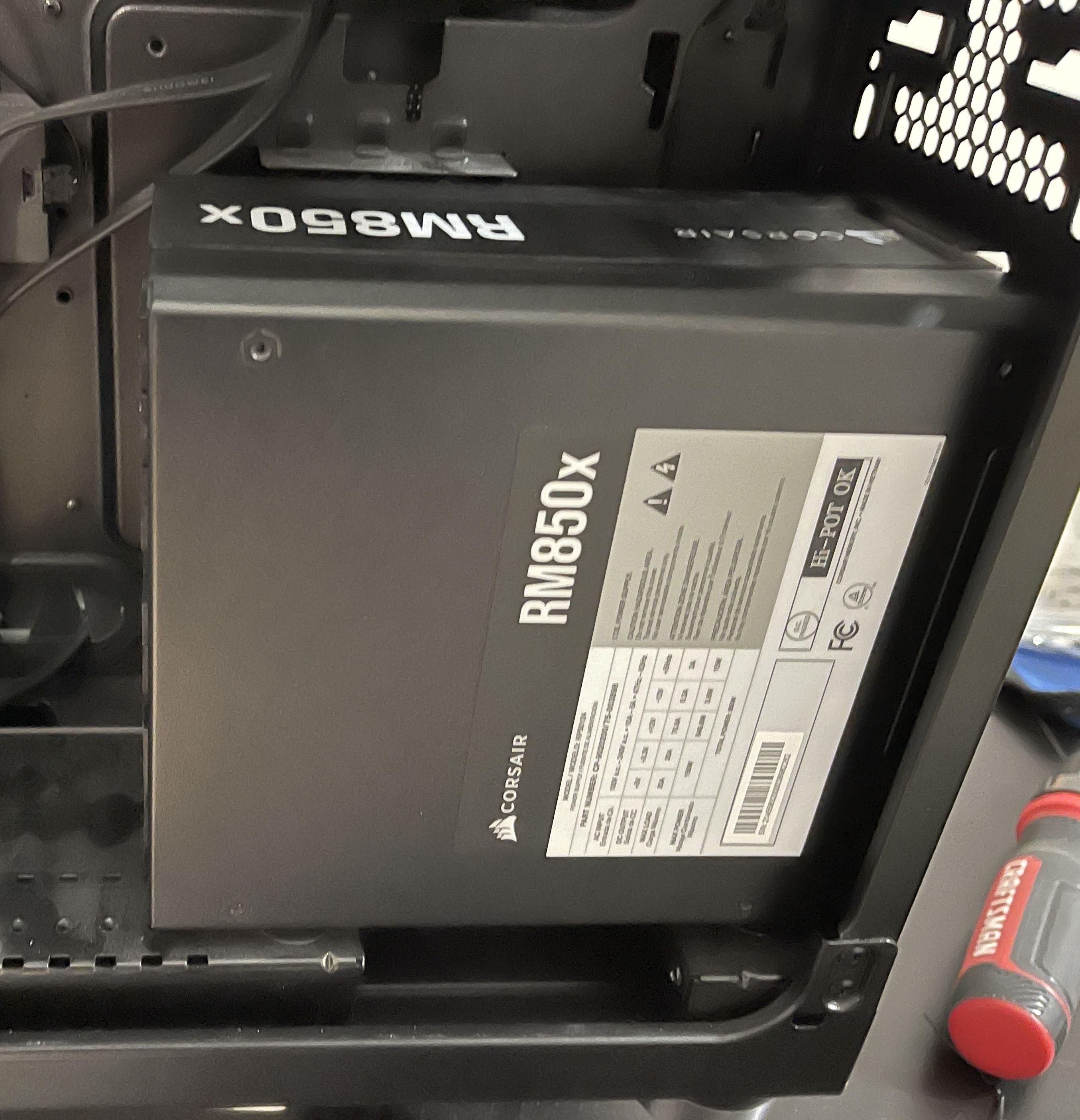
This architecture, Ampere, is not very overclocking friendly. This particular third-party card comes overclocked from the factory (1710Mhz compared so stock 1665Mhz) so gains using MSI Afterburner’s OC Scanner yielded negligible results that would warrant more heat from the card. As it is, this GPU is power locked so you can’t increase it past 100% power so that leaves little room for anything else. With my 750W PSU, I was getting shutdowns in almost every game that pushed the card, so while it will use a bit more power than the stock card, my PSU didn’t like this. Even without overclocks, I was still getting shutdowns in certain games so I had to run out and get an 850W PSU. I have an Intel i7-8700 and 9 RGB fans plus a cooling pump, 3 M.2 drives, 2 2.5″ SSDs, and tons of USB devices (which are all RGB) so there’s quite a bit of extra draw outside of the CPU and GPU TDP combo. With a more powerful CPU that has 100+W of TPD, I doubt 750W would work even without lots of RGB, drives, and devices connected. I can’t test this thoroughly, but in my experience this just makes sense. The shutdowns stopped after the extra 100W was added.
Now there could be other reasons for this. The PSU could have been dying (it’s about 5 years old), there could have been some capacitors going out, and the PSU could have been designed to just not like sudden spikes so close to the wattage limit. I’m not sure, and I can’t test this out properly, but for anyone else having this issue or buying this card think about upgrading your PSU as well. Hardware-wise these were the only issues I had. Now for temps, I’m getting around 48c at idle and full blast gaming with ray-tracing on I never pass 65c. I also don’t have my fans at full blast either. The fans on the GPU seem to do a great job and it runs cooler than my RTX 2080 which would get into the low 70s, but it does have a higher idle temp. My ambient temperature is rather mild all year round maybe around 50F or 10C and during testing, I did have outside temp increases due to summer coming along to around 75F or 23C and it still ran in the mid-60s. This might change if temps get blisteringly hot.
As for gaming. Yeah, this is what the 2000 series should have been. The second-generation RT cores make a huge difference. The 2080 couldn’t do ray-tracing for squat outside of 1080p and even then it was iffy. The 3080ti can do 2K ray-tracing maxed out and get above 60FPS with no sweat. Contro, Shadow of the Tomb Raider, Quake II RTX, Amid Evil, and a few others went close to 100FPS at 2K. Other games like Dying Light 2, Metro Exodus,Hellblade: Senua’s Sacrifice, and Cyberpunk 2077 still dipped under 60 or stayed right at 60. Cyberpunk 2077 was probably the worst performing ray-tracing-wise. Non-ray-traced games fly on this thing and only Fallout 76 dipped below 60FPS, but that’s because it’s an unoptimized piece of crap so it doesn’t count (it’s still a fun game these days, but seriously screw the Gambryo AKA The Creation Engine engine to Hell and back). Games like Horizon: Zero Dawn Complete Edition, God of War, Far Cry 6, Days Gone, and Borderlands 3 all ran well above 60 shooting past 100 in some cases at 2K.
I can tell you that many of those games didn’t hit 60FPS maxed out in on the 2080 which is stupid. However, it now comes down to price. I paid below MSRP for my card. I waited until the supply came back up as I refuse to pay scalpers a dime. I got mine for $1,149. That’s the price of two next-gen consoles or a low-end gaming PC alone. These prices are insane, and I only paid them because I can afford to, but 5 years ago it never would have happened. There are many who are priced out of these better cards. Is it worth the difference from the 3080 or even the 3070? It depends on how you game. If ray-tracing is super important to you or gaming above 1080p then yes, this is what you should be getting. If you just have a 1080p monitor then smaller cards would be fine. If you want higher frames then this would be a great buy, but again I don’t have the fancy charts and graphs like other sites do. This is just one PC gamer’s opinion and experience compared to the previous generation. I think it’s worth the purchase, but that doesn’t mean I like the price by the way, but if you paid the $2,000+ for scalping prices shame on you and I don’t have one ounce of pity.
RGB-wise, the card is sad. It just has a small logo in the corner that lights up and can easily be blocked by power cables. Gigabyte has terrible software and hasn’t been updated or revamped in almost 10 years. Their software is basically a terrible clone of what MSI Afterburner can do. There’s a silent mode you can switch to, but I don’t see the point in this. You do need it to change the RGB colors of the card, and it just barely works. So shame on Gigabyte for never updating their terrible software.
Shadow Warrior has been a series that’s just all over the place. The first game in this new reboot was really great. well-balanced weapons, enemies, and great visuals. The second game took a nose dive, adding too much to the game, and Shadow Warrior 3 strips it too far back. Flying Wild Hog just can’t find a good balance for this series. This can almost be a reboot within the trilogy itself. It’s nothing like the first two games at all. It feels more arcade-like. Gone are all the pointless upgrades, chi abilities, and huge arsenals of weapons. The series takes a cue from the first game by giving us a set of six weapons, just a simple chi-blast (that ends up mostly being useless), and more story than ever before.
Lo Wang has hit rock bottom and has lost his ninja mojo because a giant ice dragon god defeated him. The story is told mostly through pre-rendered cutscenes and banter from Lo Wang, Hoji, and Zilla. The cast is really small this time around, and also gone are the hub world and open-level mission structure. This game is incredibly linear and only consists of two gameplay loops. Combat arenas and tons of platforming This consists of grapple swinging, wall running, and jump dashes across chasms. It’s pretty fun if it’s too simple and overused. Some levels are over half of just this. The levels are pretty nice, with a fun new cartoon-like art style that pretty much just sticks with ancient Japanese architecture and demons. With the weapons cut back to just six, you get a varied arsenal and can really get to know them. Yes, there are upgrades, but each weapon gets three upgrades, which adds a menial upgrade to each weapon. The first upgrade increases all ammo by a little bit, and the second upgrade adds some sort of elemental upgrade, while the third is usually the best, but you won’t ever access the third upgrade by the end of the game. It’s just too short.
During combat arenas, you can run around and blast enemies away, but each unique enemy has a finisher. This is a Mortal Kombat-style Fatality, but it gives you a temporary weapon you can use to devastate enemies. This is a really neat system and the best part of the game. You need to fill your meter, as each enemy type requires a certain amount of chunks of your meter. Some weapons vary from melee, explosives, giant machine guns, or a passive portal that sucks everyone into one spot. There’s still not as much of a strategic element to the weapons and enemies in a game like DOOM, but it’s way better than the last game. At least I know what enemies die fastest with what weapon, and smaller enemies can just be hacked away with a sword. It’s faster-paced, and even though the shooting doesn’t have the weight of the last two games, this really feels more arcade-like. It’s like how Ninja Gaiden 3 was compared to the first two games. more arcade-like, more cinematic, and simplistic, but still fun.
That’s all there is to this game. You just platform your way to the next arena, where there are maybe five or so on each level. There are only two boss fights in the entire game, so it does get repetitive super quick, and there just aren’t a lot of enemy types either. The game can be finished in about 4–5 hours. I finished it in two sittings. Each level looks pretty good, despite the visuals not being mind-blowing or anything on a technical scale. The departure from the RPG stuff from the last game makes this one more enjoyable. This game felt like popcorn. I enjoyed it while it was there, but I won’t think about it tomorrow. It’s great as a cheap sale and a weekend gore fest. Lo Wang’s jokes are still pretty lame, but the writing is a bit better than the last game as well. I did get a couple of chuckles out. At this point, the series needs another complete reboot with maybe a different developer.




















































 thebinarymessiah.com
good