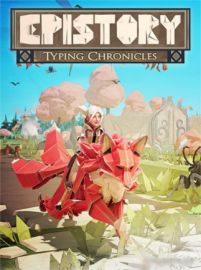
I absolutely love typing games. Why? Because it’s a skill everyone needs to learn, and it’s a unique way to play a game that you can only do on PC. I remember Mario Typing Tutor back in the ’90s and various programs on the Apple II and original iMac back in the early ’90s in school. Then there was Typing of the Dead and Typing of the Dead: Overkill. These games were so much fun, and there just don’t seem to be enough of them. Epistory is a Zelda-like adventure in which you type for every action. It’s a game unlike any other, and no other typing game does something like this. Rather than an on-rails shooter or just a series of exercises, you go on an adventure, trying to cleanse the land of evil and darkness. The story doesn’t really make much sense, and there’s not really much of one, but it’s the adventure that counts here.
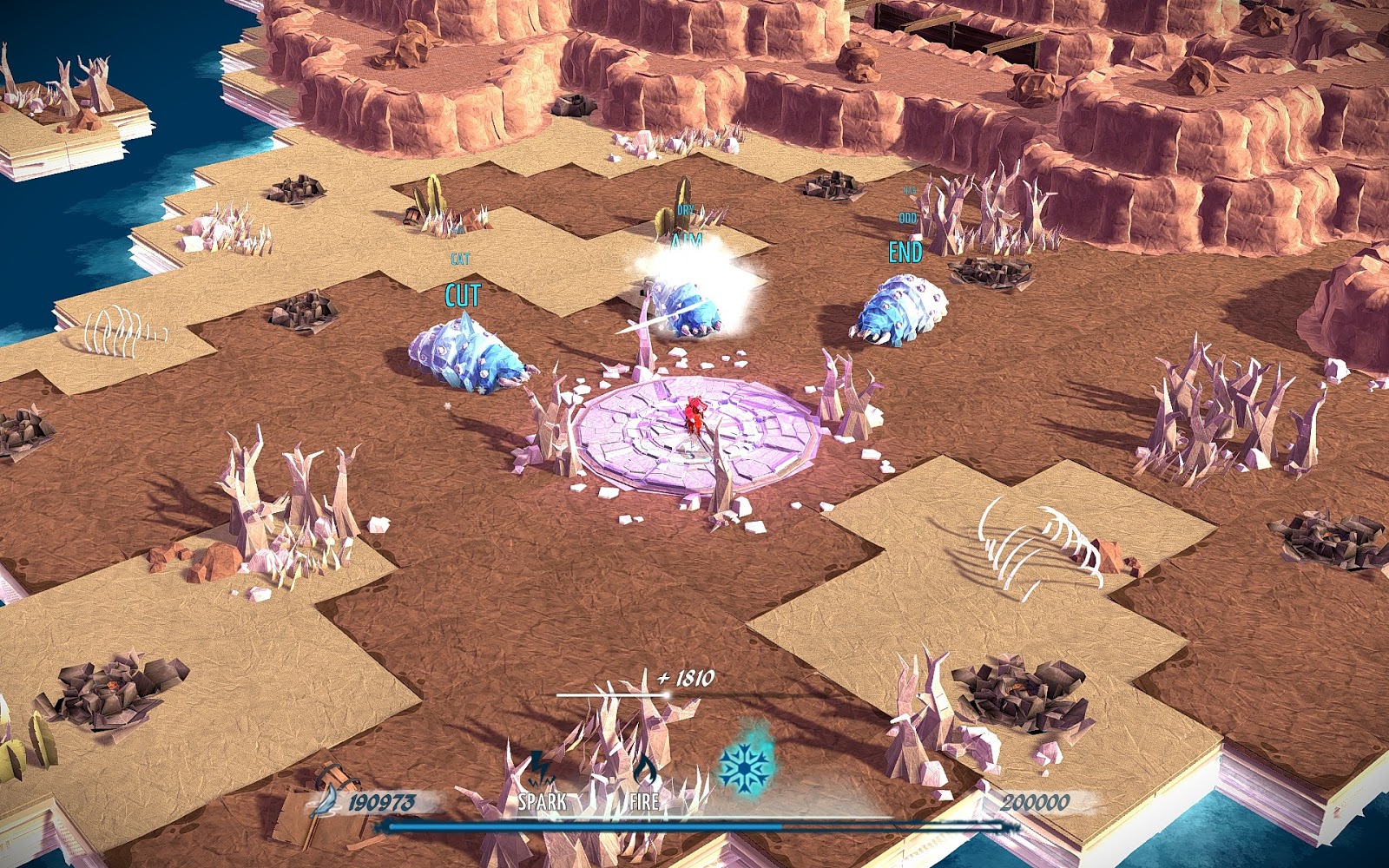
There are also not really any characters to get attached to, as you are the only one. You are a girl riding a three-tailed fox, and whenever you see something flashing, like a log, stone, chest, or anything like that, you press space and enter combat mode, in which you type the words shown above the item. It’s a lot of fun running around gathering chests, increasing your score count, and in the dungeons, solving extra puzzles to collect fragment pieces. While these just unlock art pieces that are mostly meaningless, the game’s adventuring is highly addictive, and the challenge slowly increases as the game goes on. When you see bugs on-screen that slowly crawl towards you, that’s when you can press space and type the words above them to attack them. In the beginning, it’s rather easy and slow-going. Some smaller bugs just have a letter, while larger enemies have larger words. The largest word of them all is actually an optional “arena” with a boss that has something along the lines of a 30-letter word, and it was the hardest arena in the game.
That’s not all, though. You go around collecting four different elements in these dungeons to progress further in the open world. Fire, ice, wind, and electricity. You can switch between each ability by typing the name, such as fire, ice, spark, and wind. These also need to be used in conjunction with strategy, and the game’s arenas throw more and more waves at you. Some enemies can only be hurt with a certain element, and your upgrades can make combat much easier and are essential to even finishing the game. Even if you can type 100 words per minute, you won’t finish the later arenas without upgrading items such as spark, which will burn a word on the adjacent enemy, or fire, which will burn the next word for that same enemy. This is a great strategy for enemies with long words strung together. It lets you type as little as possible, so you can deal with smaller enemies. If there are a lot of small enemies coming at you, Spark will jump around, knocking them out as they only have one or two words each. Wind allows you to blow enemies back, and ice will freeze them in place for a second.
You also need these elements to solve puzzles in dungeons, but not every puzzle requires typing. Some require sliding on ice in a certain pattern to press buttons, and some require deciphering a code in a certain order. The puzzles are mixed up nicely, and the dungeons are all different. One dungeon is full of darkness, and you must type a word above a crystal to light up the area for a few seconds to proceed. Each dungeon was a blast, and the open world was also really fun to explore, with lots of hidden chests and optional arenas. I highly suggest trying to complete the game 100%, as you will have a lot of fun, but the game does have some issues.
For one, the map is terrible, as you can scroll around the map or hover over something to see the description. You can only zoom in on yourself and zoom out all the way. The enemy variety is also atrociously small, as the same bugs repeat throughout the entire game and get old. Like I mentioned earlier, there’s pretty much no story outside of a woman narrating your adventure in broken-up sentences that don’t really add up to much other than feelings of what the girl on the fox might be thinking at that moment. However, I found the visuals to be strikingly gorgeous. Papercraft art similar to Tearaway scatters across the screen with bright, vivid colors and a lot of detail. It’s not something I expected, but the game never got old to look at.
Overall, Epistory has a great typing adventure mechanic that’s highly addictive, with great dungeons, fun puzzles, and challenging arenas. The game looks fantastic with gorgeous papercraft art, but it lacks a story or any characters to care about. The overworld map is also mostly useless and hard to navigate, and there’s no real reward for finding everything outside of Steam achievements. My biggest gripe is the severe lack of variety in enemies that just repeat for 5–6 hours straight over and over. At least the game provides a fun challenge and uses typing in a way that we haven’t seen before.
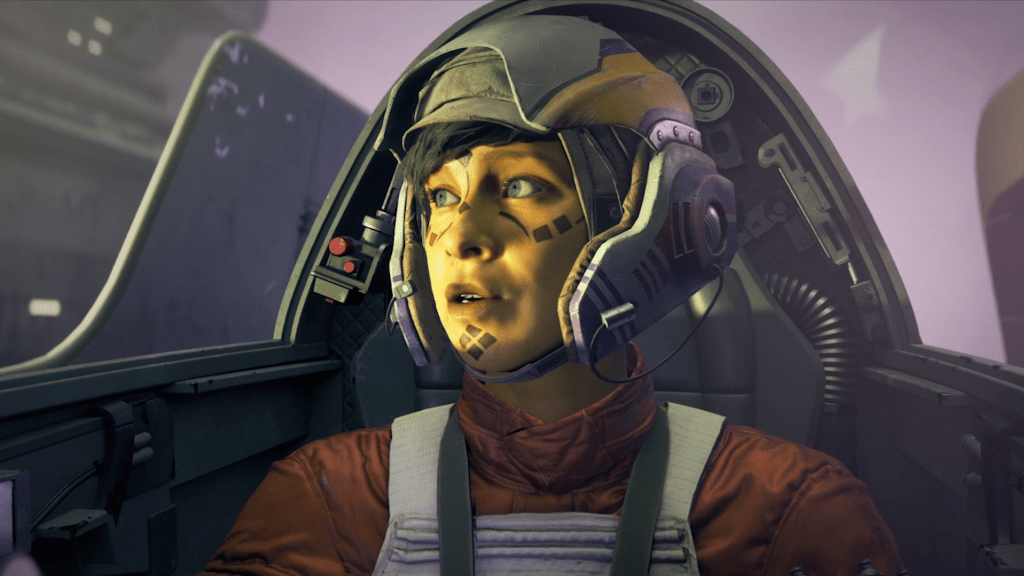
X-Wing vs. Tie Fighter is a PC flight classic. It was chaotic, a great mix between sim and arcade gameplay, and a blast to play, and you felt like real Star Wars pilots. Squadrons try to re-capture this lightning in a bottle by letting you play as both New Republic and Empire pilots. You fly in the Vanguard Squadron for the New Republic and the Titan Squadron for the Empire. You play as an unnamed pilot in each squadron, and the story is set between movies VI and VII after the battle on Endor. The New Republic is trying to build a new starship, and they needed empirical parts for it, while an empirical captain is trying to stop them and wipe them out. The characters are interesting and well written, and the story is rather tense, with a constant tug-of-war on who keeps getting the advantage. While you’re playing on one side, you don’t know what’s happening on the other and won’t find out until you switch back after a few missions. It’s really intense, and I loved it.
That’s not to say the story is memorable or anything, but it’s a good start, as I’m sure more of these games are to come. Once you create your pilot, which is rather basic, you jump into the base of either side, and this is where things differ from other Star Wars games. You stand still and can only spin the camera around and click on contextual items. Outside of inspecting your ship, you can talk to the other squad members optionally, which gives you insight as to what’s going on in the war and a more detailed context of what is just going on in the Star Wars universe. The voice acting is great, and each character has a great personality, but there is still nothing super memorable. Once you get your briefing and select your craft, you head on out. The first time you start up, you are launched out into space in real-time, and it’s exhilarating. Flying never gets old, and it’s a shame the story is only 14 missions long. Each side has the same controls, but the Empire ships have more firepower and the Rebel ships have more shielding.
Controls are slowly unlocked and dished out over the first few missions, but it’s the same all around. You can shift power between engines, lasers, and shields (if they are equipped) to allow more speed or firepower. This is essential, as you will constantly flip between these as well as divert more power to either engines or weapons when you are the Empire. Sometimes when you destroy capital ships, you want to go slower with more power, but fighting Tie Fighters, Reapers, Bombers, A-Wings, etc. will require more finesse and speed. The steering feels rather smooth, and each ship feels different. Either slow, long, or even zippy, the ships are well designed. Shooting something down is rather satisfying, as there is a button to flip between enemies, and once you track them, the system can lock on for missiles or you can shoot them down with lasers. The system will tell you if you are out of range, and you can’t just lay down fire forever. There are meters for refilling everything from lasers, missiles, repair kits, scatter flares, etc. You can call in for refills, but this also has a refill meter. It’s a delicate balance of using your resources wisely, and this is where the simulator part comes in. The arcade part is the instant lock-on, the less obtuse flight controls, and not doing insane stuff like pre-flight checks, fuel, etc.
While I’d love a full-on simulator version of this game, what we get is fine, as the balance is nicely done. I just wish the mission was more varied. I know the game is about shooting things down, but rarely does anything new come up outside of shooting these things down. It was fun attacking a giant Star Destroyer or the Starhawk itself, which loomed overhead and felt like a planet. Targeting ship systems was fun, and even flying inside one here and there was a blast, but most of the game is just shooting small ships down, and it got old after a while. I wanted more scripted events or something, as I can shoot down small ships all day in multiplayer. The final two missions were also a serious pain, as you need specific weapons and ships to complete certain objectives, and I constantly died until I figured it out. They dragged on for far too long, but the rest of the missions were entertaining the first time around. The ambiance is also very Star Wars-y, with chatter and banter during flights, iconic ship sounds, blasters, explosions, and great music.
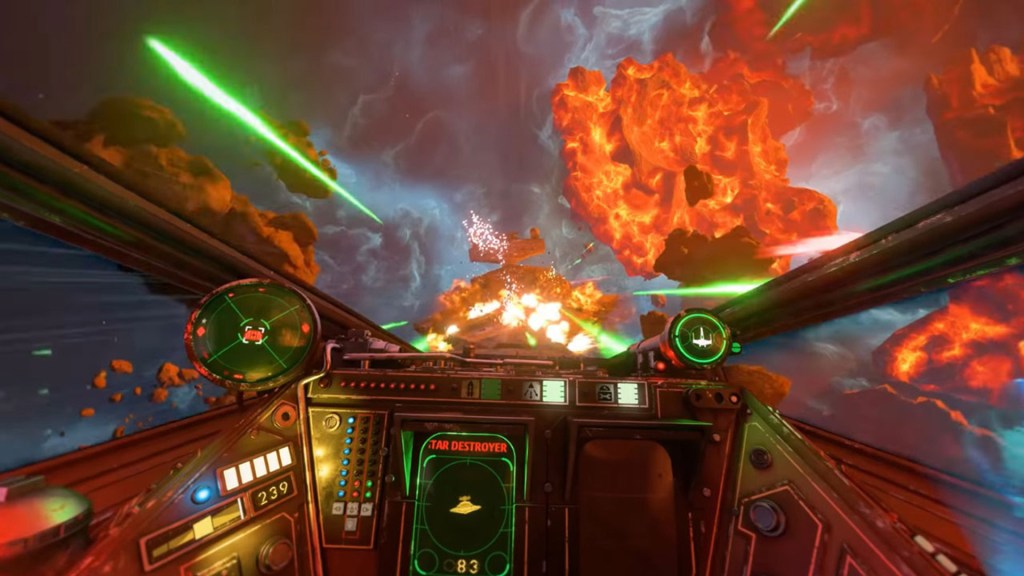
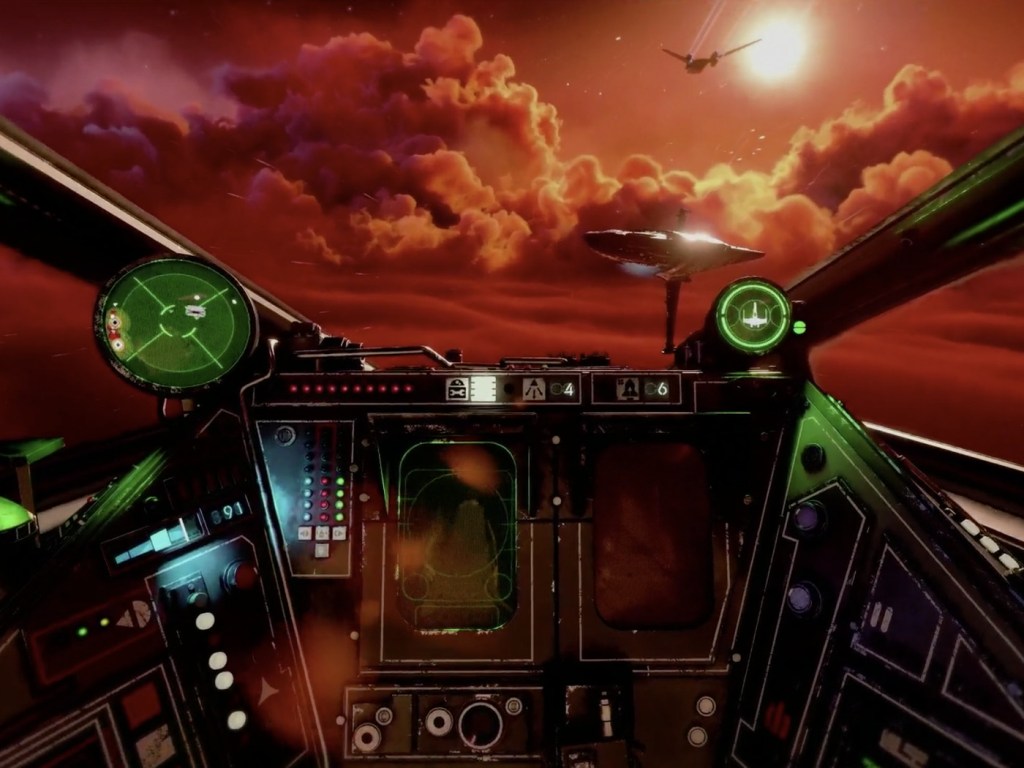
The game also looks amazing. The character models are detailed, and the ship cockpits look like they were ripped right out of the movies with a lot of glowing lights and strange shapes, but I would love to walk around the base more and just have more variety in missions. The four or five ships per side were fine; you can change the load-outs for various items like ion blasters to knock down shields faster; various engines and hulls that sacrifice one aspect to gain another, such as acceleration, maneuverability, shield recharge time, etc.; and there are a lot of options that mostly become useful in multiplayer. I feel like what we got was just part of a huge design document, and a lot of stuff got cut. I wanted a grander story, maybe some missions where you fly inside a planet and not just in space, more interior levels, and more scripted events. The space battles look great with giant asteroids, huge planets in the background, and beautiful space backdrops, but I wanted more.
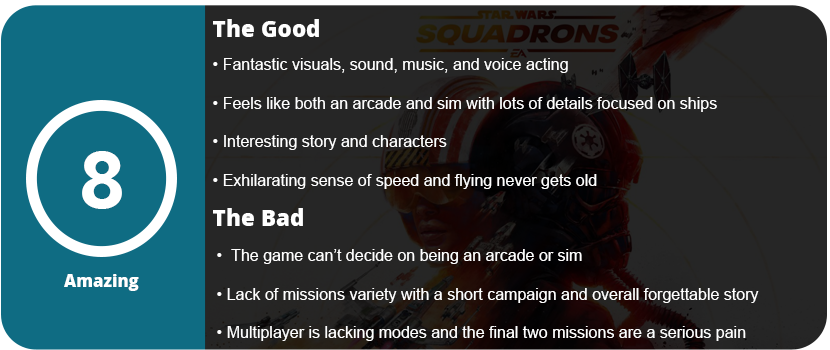
The multiplayer is something that I felt wasn’t fun for too long. Unless you master the controls and a specific ship, you’re going to die a lot. There are dogfights and missions that have you taking down larger ships and working together. I found the dog fights boring after some time, but the bigger battles were a lot more entertaining, but I still don’t see this game having longevity in the multiplayer department for very long. Overall, the game plays, looks, and sounds great, but it feels like it wants to be more of a simulator than an arcade game sometimes, and in others, more arcade. It needs to either balance these out better next time or pick one. I wanted more mission variety, a more epic story, and the ability to walk around the shipyards. What’s here is fantastic and should be played by flight game fans or Star Wars fans.
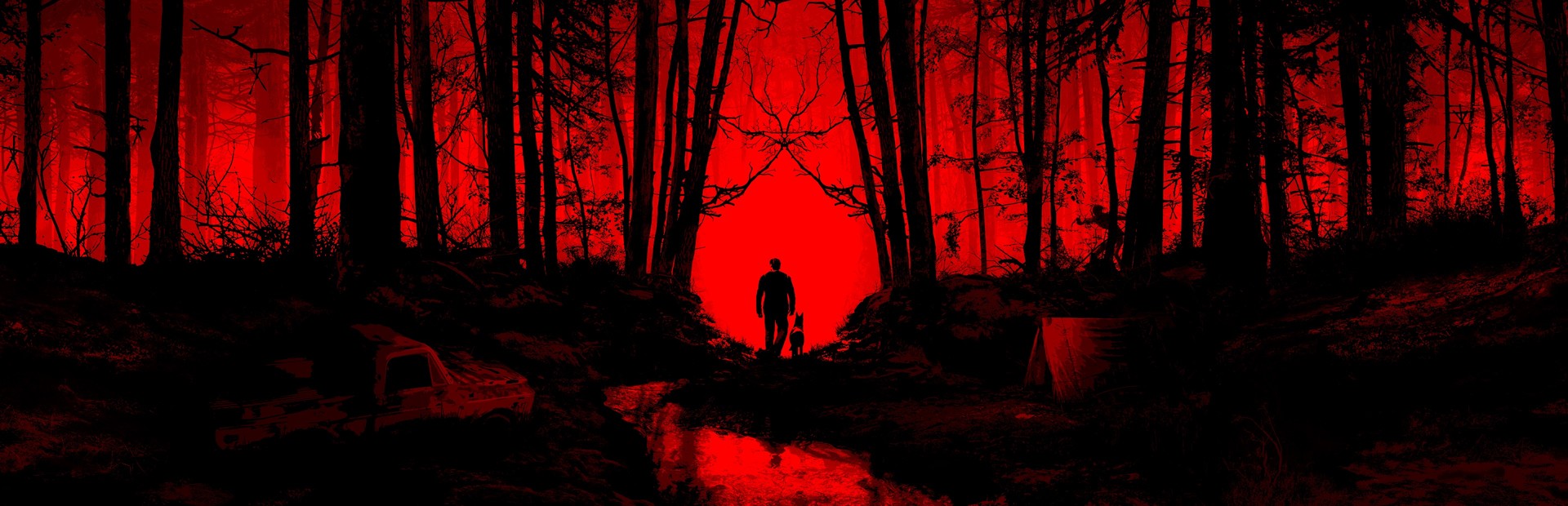
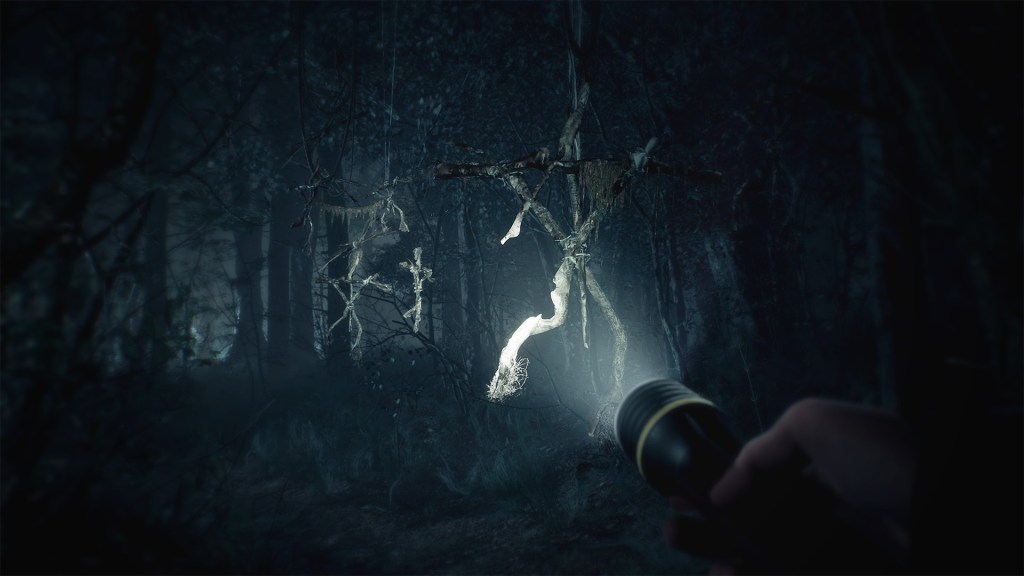
The Blair Witch Project was a movie that scared the living crap out of me as a child and is still scary to this day. The mockumentary-style film was done very well and was so convincing that my own mother thought the movie was real lost footage for the longest time. The iconic effigy of the stickman, the child handprints standing in the corner, the cabin in the woods with the basement—all of it is in this game. You play Ellis Lynch, who is a sheriff in the town where the Black Hills Forest lies. You are trying to find a lost or kidnapped boy named Peter Shannon. Ellis ends up fighting his own demons and becoming another victim of the witch and the forest.
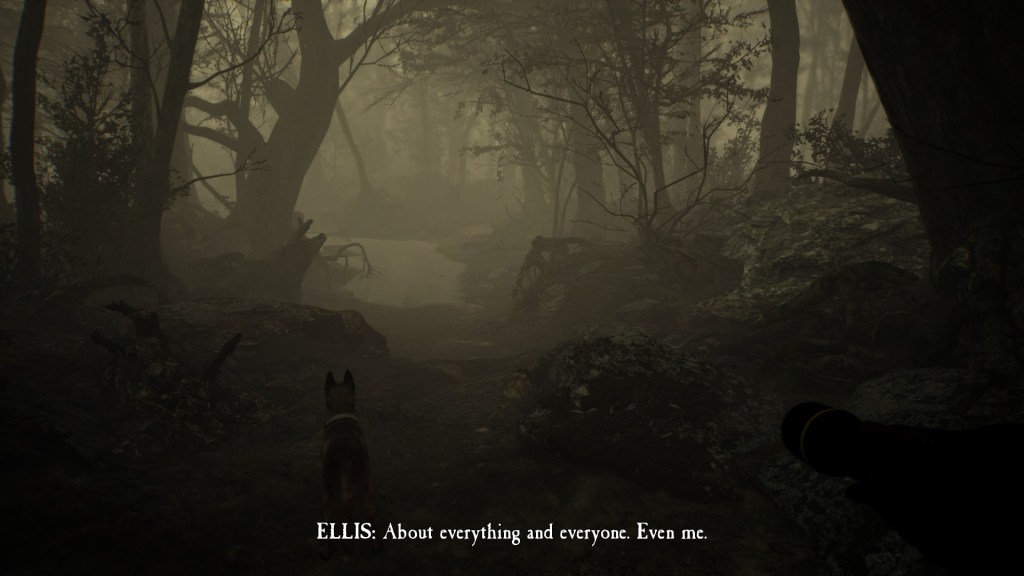
The game starts out easy enough and scare-free. You get introduced to the game mechanics, and the walking simulator begins. Within the first 20 minutes, the first scares start, and you are already lost in the forest. Throughout the entire game, you have a canine companion named Bullet, who is used to sniffing out clues when you find items in the forest to progress further to find Peter. You get a few tools, such as an older camcorder, a flashlight, a cell phone, and a walkie-talkie. These are all used in the game for scares and jumps, and they’re used really well. You can hail Bullet and call him towards you or have him seek to find the next area to explore, but this stops about halfway through the game. A weird “combat” mechanic is introduced and only used a few times by shining your flashlight on ghosts or demons that run around and circle you. Bullets will growl in their direction, and if you don’t flash them to death quickly, they will kill you. It’s only been used a few times, and I felt it was scary the first time, then underwhelming thereafter.
Most of the game is comprised of walking around, collecting photos, breaking effigies, and finding tapes. The camcorder is well used here as it is both a gameplay tool and used for story purposes. Red tapes allow you to manipulate time by rewinding events so they open passages or leave items around Ellis. It’s not super hard to figure out as each clip is less than 20 seconds, and it’s very obvious what the game wants you to pause on. The blue tapes just add story context, but the camera is used later in the game as a way to see hidden objects such as trails and enemies, as your flashlight eventually becomes useless. The game isn’t an open world, but the areas are large, and you will spend each section solving some sort of puzzle, but exploring the game is downright frightening. Bloober did a phenomenal job scaring you with real terror and fright. They use the unknown as a fear factor, and you never know what’s lurking in the woods. You feel isolated, alone, and scared, and for the longest time, I didn’t’ want to play the game because I was really scared. One scene in the middle of the game with Ellis trying to clear a path in a sawmill and running around the area in the dark with the only lights that make you feel safe, even for a few seconds, die on you and go out makes the terror that much better.
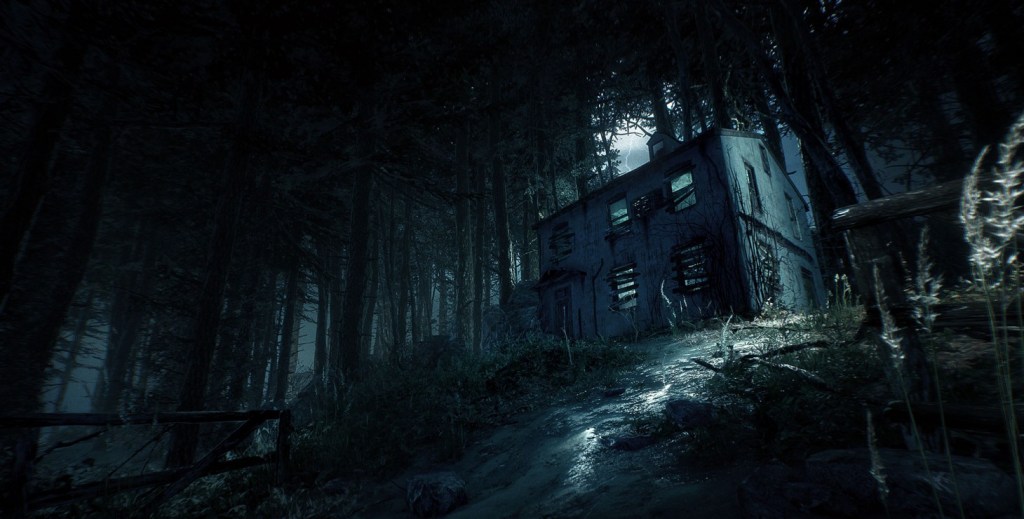
However, as the story progressed, I didn’t understand what was going on at all. There were scenes where Ellis was having flashbacks of war, but it never stated he was in one, at least not that I remembered. He’s obviously struggling with depression and PTSD, as he’s constantly fighting with his wife on the phone and has a record of going crazy. I just never understood how the forest worked or how the Blair Witch was incorporated into all of this. It’s obvious the 90’s film’s influence is present with a campsite that has the tent the crew used in the film with the flannel shirt. The cabin at the end of the game is almost a spitting image and is the scariest part of the game, but this section drags on way too long, lasting 45 minutes. I was running down endless hallways with my camera, and the story pretty much stopped here. I didn’t learn anything new about Ellis or the Witch or what was going on. It was just random events that we already know and jump scares. Having to creep around parts of the house to avoid enemies was scary, and using the phone’s messages to tell you not to look up or writing that said look away was sending chills up my spine, but this endless rat’s maze is one of Bloober’s largest problems in their design. Both Observer and Layers of Fear suffered from the endless hallway syndrome with no story progression and random events.
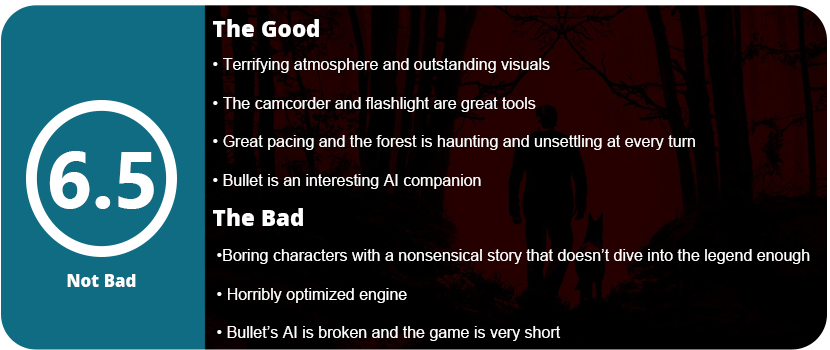
When it was all said and done, the game had an amazing atmosphere and should be played during October, a sleepover, or something. It’s very entertaining, the puzzles are very light, and there are tons of scares here for most people. I would have liked a better story, stronger characters, and more explanation of the witch, the forest, and the entire legend overall. The game has a very short ending in about 4 hours, and there are zero reasons to go back outside of scaring new friends. The game looks really good with great lighting effects, but it has an overall stiffness to it that I didn’t like. Bullet’s AI is dumb as dirt, as it actually broke my game a few times, requiring restarts as he couldn’t find a certain path or would blip out of existence and break the game. The game is also horribly optimized and runs poorly on PCs, even with high-end hardware. There is also no ultrawide screen support. Overall, the game is a fun and scary afternoon, but don’t expect a good story or anything like that.
Serious Sam has never been my favorite FPS, and there’s a single reason for that. The game is incredibly repetitive, and every campaign overstays its welcome. I’m bored before the game is even over. The entire appeal of Serious Sam is to shoot everything that moves and massive waves of enemies, and I mean massive. There are more enemies than any other shooter would dare throw at you, and that’s part of the game’s challenge and incredibly frustrating difficulty. Even on easy, Serious Sam 4 was tough, and I died numerous times. I had to switch to easy on the fifth level because I just wasn’t making progress. Serious Sam 4 also lacks in story, character, and many other things, but we’ll get there.
You play as Sam Stone, a badass dude who shoots everything that moves. The game starts off with a giant battle with thousands of characters on screen. I mean thousands. It’s something I have never seen in a game before, and it’s amazing to mow down these endless hordes, but the impressiveness ends there. The game starts at the end, and then you jump forward at the beginning. Nowhere else is there any amount of enemies like this outside of maybe 100 on-screen at once. I wanted to see these thousands on the screen that the game kept advertising, but only at the beginning and very end of battles do you see this. How disappointing. The game does up the ante as you progress, with the final level having you mow down a few thousand but in smaller waves. That’s literally all there is to the game. There are a couple of mech sections that are awesome and a few driving sections that are lame and boring, but they’re there. It’s not nearly enough to break up the 8–10 hours of monotonous shooting, however.
The arsenal of weapons Sam gets is actually quite entertaining, especially when you get skill points and can unlock dual-wielding. The skill tree is actually rather useful, and I enjoyed what I unlocked. To be honest, dueling is the only way to progress through the game. Guns like the cannonball, electric gun, rocket launcher, grenade launcher, devastator, and double-barrel shotgun are just a few that you will switch between depending on what calls for them. A horde of smaller enemies may require more rounds, so the mini-gun is one of the most useful in the game. Yes, you can duel-wield mini-guns, and it’s a blast. Have a horde of larger enemies? Throw the cannons at them and watch them explode. Now, this was fine and all, but there’s a huge issue I take with locking most weapons away as side objectives. This includes items such as the mini-nuke, black hole, gas grenade, and various boosters. I finally got over that and did all the side objectives I ran into, but then you get to a level where the weapons are all taken away from you and you have to re-acquire them by doing more side objectives?! What?! It’s absurd and not fun. I just went through all this effort, and the developers seemed to have done this to somehow extend playtime. It doesn’t end there, as they do it a third time! It’s incredibly frustrating, and by the final level, you don’t even get all the items and weapons back that could be useful.
Let’s talk about level design. It’s awful. The game has not evolved a single iota since its inception, and other games of the era such as Doom, Zelda, Mario, and various other series have evolved with the times, but Serious Sam just cannot. The levels feel haphazardly designed with random buildings and terrible open maps in which you drive a vehicle for no apparent reason except to waste time and bore you to death. It doesn’t help that the game is trying to tell the story of an alien named Mental trying to take over Earth, but the characters are so unlikeable, and the dialog is eye-rolling and misses the mark every time. The heroes harp on one-liners for a third of the game, and it ends up being the main focus of banter between them. I love the humor in shooters; Doom 2016 did it very well, but this isn’t it. The writers just drop the ball or can’t land a joke, and when they do, they don’t run with it. There are subtle things in the game that were kind of funny, like when Sam asks a less-than-funny Russian soldier where the battle is and he just points his finger in a direction, and there is dead silence. That’s funny! But then they gave Sam a lame one-liner and ruined the follow-up. Sometimes less is more, and the writer doesn’t see this. Not even breaking the fourth wall kind of humor is present. It’s almost there, but not quite. None of the writing ever makes sense or seems pointless.
Let’s talk about visuals, as Serious Sam has always pushed PCs with impressive engines. While SS4 does push PCs to their limits and beyond, the game isn’t well optimized. The game would drop down to 30FPS during cut scenes, and then there would be massive texture pop-in every time the camera changed angles. The game eats up VRAM like crazy, and yes, there are a ton of graphics options, even some for controls, motion sickness, and a bunch of others that need to be standard in PC games, but no matter how much I fiddled with the options, I could never get a steady framerate. I would dip into the 40s in large cities, but in the battle with thousands of enemies on screen, I got 80FPS? Then, in large open areas with just trees, I would bounce between 70 and 60 with every step. The game looks fantastic and is impressive, but it’s also boring and sterile. The game looks real, and maybe too real, but for the silly zaniness of aliens and monsters, the game just looks boring. The environments mostly never change, and everything is just white buildings, boring trees, boring open maps, and the occasional cramped hallway. Outside of all the shooting, there’s literally nothing else to do, and every single battle is exactly the same. You wind up seeing all the enemies by chapter 5, and there’s nothing new except a few new weapons down the pipeline. This is what Serious Sam is, which is shooting massive hordes of aliens, but the developers need to find a way to evolve this. Sam has the potential to be a funny character, but the writing isn’t there, and the game just lacks character.
Overall, the game is fun for a while but also lacks multiplayer and co-op, which are musts for this series, and they are missing. After you beat the campaign, there is no point in replaying, as there’s no new game plus or anything like that. The game has interesting monsters, but the game looks sterile and boring with no life, boring open maps, lame characters, and writing that always misses the mark. The engine is poorly optimized, and you constantly have to re-acquire your arsenal throughout the game. I just don’t think anyone is missing anything by not playing this game. It’s intense during the firefights, but there’s a whole lot of nothing in between, and that’s where the game needs to change.
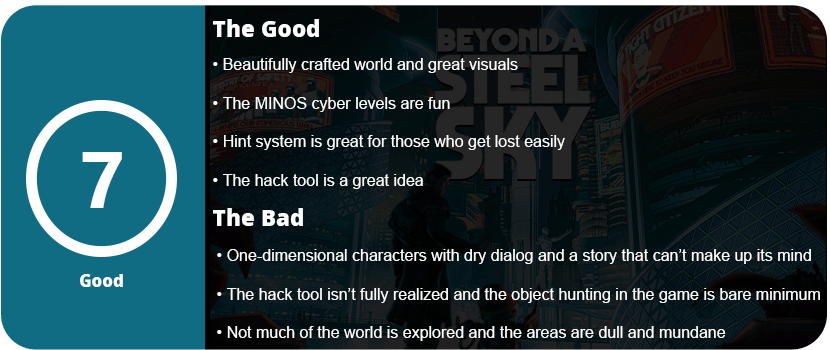
Adventure games are always hit-or-miss. The fundamental thing that needs to be focused on is characters and story, as that’s the main reason why people play these games. It takes away the action and gameplay, so you can enjoy an interactive story. This has been done really well and, sadly, really badly more times than anyone can count. Beyond a Steel Sky is the long-awaited sequel to Beneath a Steel Sky, which was released in 1994. It wasn’t very well known, and most people know it today as “that free game that GOG.com gave away when you opened an account” for the longest time. Beyond a Steel Sky has the potential for greatness, but it falls flat in many ways, as I’ll explain.
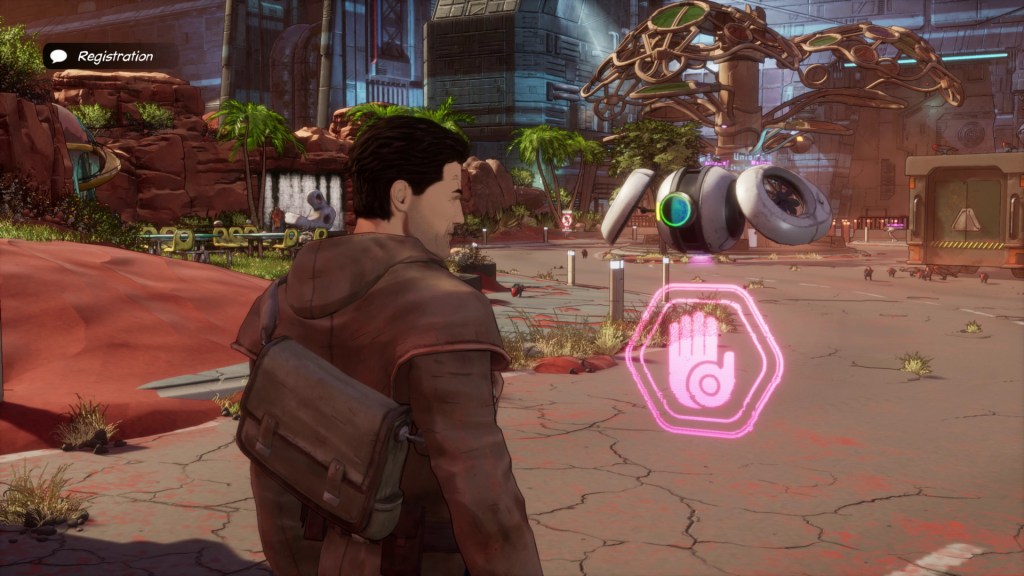
You play as Robert Foster, who was the main protagonist in the first game. You are living your life in the Gap, which is basically a nomad town, and someone’s kid named Milo gets kidnapped by a walking mechanical dog thing. Yeah, there’s no context here, and you are literally told to care about someone and risk your life who has zero backstories. A chapter or two inside the Gap where Foster was living would have built that up, but instead, we jump right into heading into Union City, which is the dystopian town from the first game. Here you are introduced to controls and game mechanics that aren’t any different from other adventure games. You find objects that go into other objects and click on stuff. The only difference is a cool gadget, which is a hack tool, but even that isn’t living up to its potential as I thought it would. It shows various devices with a puzzle-like grid, and you can swap stuff around to make these devices do different things. Of course, one puzzle piece from Action for that device must fit, but the issue here is that each device has a different type of puzzle piece, and if you are in proximity to multiple devices, the game purposefully makes those pieces different, so you can’t swap whatever you want around. Instead, this is mostly reserved for main mission puzzles.
As you progress through the story, there’s always a sense of why. Why am I doing this? The characters are one-dimensional and just don’t have good writing. The dialog is very dry and unimportant, and there’s no reason to explore the world. I even wound up finishing the game with items in my inventory that I never even used, so what’s the purpose? The writing is just awful or passable at best, and the voice acting is so spotty. Even Foster sometimes sounds like he’s reading from a high school play, and sometimes he nails the line. It’s so inconsistent, it drove me insane. Once you eventually team up with the city’s AI, Joey from the first game, the story then turns from saving kidnapped children to taking down the entire city council. I don’t understand why the narrative has this tug-of-war, and that’s not even mentioning the fact that this beautifully created world is never explored. This game could have been something like Beyond Good and Evil with a great city to explore, but instead, we only see a few mundane and boring areas with this huge, beautiful backdrop that I wanted to explore more of. Beyond a Steel Sky does a great job of creating an atmospheric and lived-in world, but this isn’t how you explore that world.
The most entertaining part of the game was exploring the MINOS cyber world, which had a Vaporwave/Cyberpunk aesthetic. Collecting the various programs to progress was fun, but again, the puzzles had zero challenges. The entire game just has you matching items to others, and it’s very obvious, and there’s zero challenge throughout the entire game. There’s even a hint system that basically tells you where to go, and while that’s a good thing, it doesn’t make you work for the hints either. I also think this game would have done better as a multi-part series or just something that isn’t an adventure game, as there’s so much missed potential around every corner.
Overall, Beyond a Steel Sky builds a great atmosphere and a wonderful city to explore, but you can’t explore it. The story doesn’t know what it wants to do, and the characters are one-dimensional with dry dialog and humor that lands wrong. The puzzles aren’t challenging, and even simply exploring the game is boring. I wanted to care about everything in the game, but it’s hard when the developers only push their world a little bit instead of shaking it and letting the fruit fall.
I never played the first game, but Distraint 2 caught my eye due to the visuals and atmosphere it portrayed. You play as a man who is faced with severe depression from the guilt of evicting tenants from their living spaces. While this is his job, he can’t take the guilt anymore and tries to commit suicide. You then play the split second that flashes through your head before doing so to regain hope and fight the darkness within. It’s a touching story that really shows people the process of grieving and depression and helps spread the message that mental health is a serious issue.
The game is played on a 2D plane and involves puzzle-solving. The puzzles are light and simple, with the most complicated being a slider puzzle (which I despise), but overall, the puzzles aren’t tough. There is a lot of finding this object and placing it in the right spot, but the three chapters are short, and it’s hard to get lost. You move from room to room, just discovering what can be examined or talked about, and then remembering where that piece goes. The game’s enjoyment is mostly in the atmosphere and horror. Every so often, a creature of fear will appear, and you must hide until it passes. The sounds are eerie, and the visuals are a treat.
There’s honestly not much game here. With each chapter, there are a lot of dialogs to move the story forward; there’s a small green orb to save your progress; and then you just move from room to room to find all the objects to move on to the next chapter. At least the areas didn’t overstay their welcome, and it was some labyrinthine complicated mess that some 2D horror games end up being. Each room was easy to remember and was distinct, so once I found an object, I had that “A-ha!” moment of where it would go. It’s pretty satisfying, and the game pushes you through at a steady clip, not being too slow in any one spot.
The visuals are a mix of 8-bit pixelation, lots of grainy filters, eerie music and sounds, a lot of camera tricks, and overall just a foreboding sense of dread. The game pulls this off well, and it was rather intense through most of the game, with a little reprieve in between. The problem is that the game is about 2 hours long, and there’s really no gameplay. I love these “walking simulators” that tell great stories, but rarely have they been done well and are memorable. If you have a short run time and there’s really no game, you are totally relying on characters, story, and atmosphere, and if those aren’t out of this world, it won’t impress most people. While the game itself and message were fine, I didn’t care about the characters and pretty much forgot about the game after turning it off.
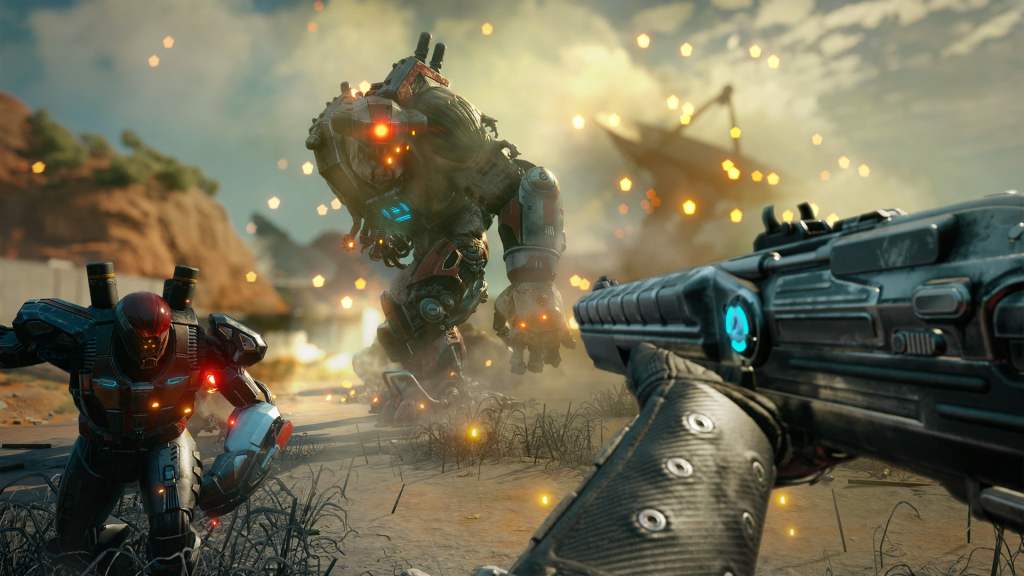
Rage was all the…well, rage back in the day on PC. It featured “super textures” and fantastic gunplay that hadn’t been seen since Doom II or Quake 3 and various other claims from id Software. Upon release, it was a lifeless husk of bugs and glitches, and the only thing that was actually any good was the enemies and shooting itself. The open world was wasted and devoid of life and forget about the story as it was hardly there at all. Fast forward a decade later and we get Rage 2 developed by Avalanche Software known for the Just Cause series. What did we get? Well, a game that’s playing catch up as this should have been the game the first wasn’t. If this released 10 years ago it would have been a smash hit, but today it feels dated and well, still lifeless.
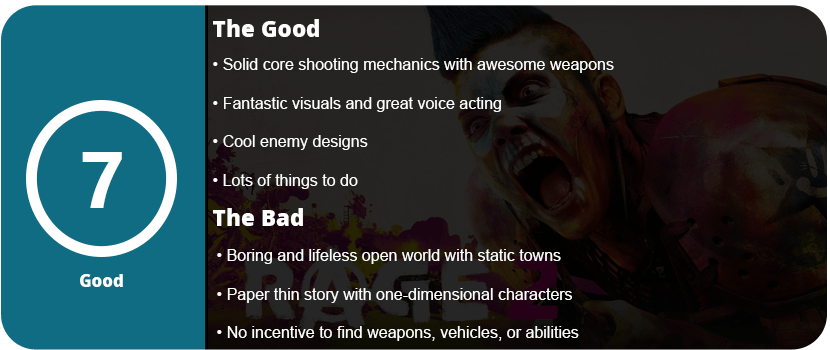
You play as The Ranger named Walker. There’s something about The Authority trying to wipe out humanity and a General Cross is the big bad guy. There are three major players who have main missions for you to ultimately bring about Project Dagger which is to eliminate the machines and genetic monsters roaming the Earth. Yeah, it’s very paper-thin, and the story still barely exists. Some of the main missions have slightly entertaining scripted events, but that’s about it. The voice acting is solid, but the characters are one-dimensional and don’t grow or mature, and you literally have no reason to care for any of them ever.
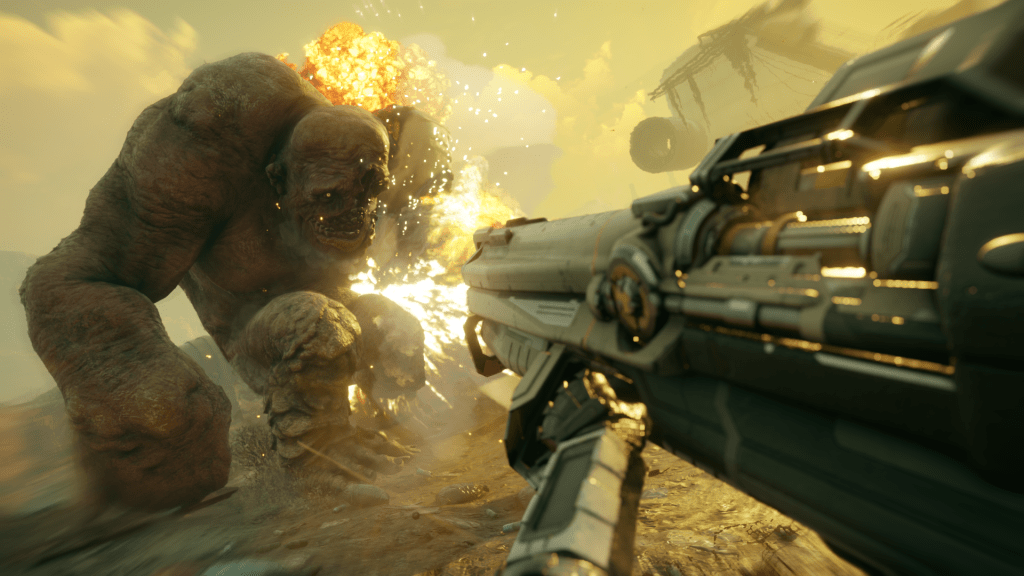
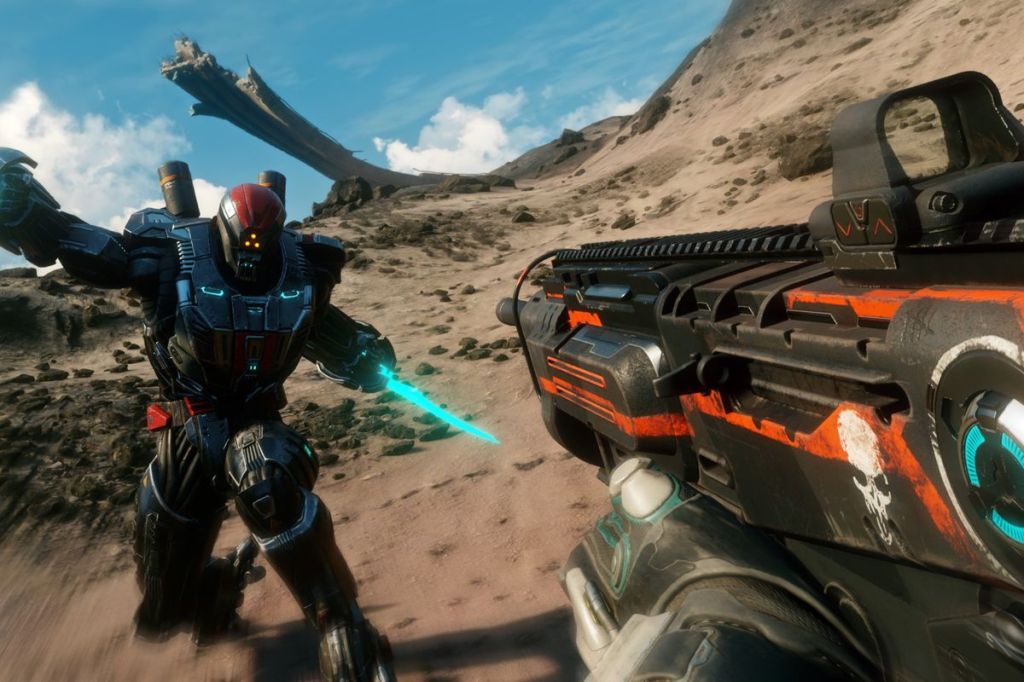
That brings us to the actual meat of the game, and that’s the shooting. Yes, Rage 2 feels and plays really well. The shooting is satisfying and bombastic, and there’s a wonderful arsenal of weapons to find and unlock, as well as abilities. Yes, I said to find. The weapons aren’t just handed to you. You have to find out where they are, explore the world, and find the Arks that contain these weapons. It’s a neat idea and rather satisfying once you find them, but I played 75% of the game with just the assault rifle and shotgun. That’s not a good thing, either. There was no urgency to get new weapons until I finally got tired of the same two and needed more weapons for harder enemies. Each area has a level from 1 to 10, and this is based on how much armor enemies have, or their faction, and boss health bars.
Once you do start shooting around, the game is a blast. Each weapon has an alt-fire mode, such as the shotgun having an air blast that knocks enemies off their feet. The Fire Revolver has ammo that sticks, and then you can snap your fingers and blow them up. The rocket launcher will lock on to enemies, and then the pulse cannon has a manual cooldown mode. I never got all the weapons, to be honest. There just wasn’t any need to, but what I did get was pretty cool. Even the BFG 9000 was an absolute blast to use but was rarely needed. You have abilities that are also supposed to be found, but I honestly rarely ever used them, as the weapons were enough. I had a shield, a dash, and a push, but that was it. Some abilities are passive, but the overdrive ability is the most useful. This unlocks a third alt-fire for each weapon, but you aren’t invincible or anything like that. You just do more damage. For projectiles, you get wing sticks, which are honestly completely useless despite being a staple weapon in the first game, and grenades. You also get three injectables for health, overdrive, and to recharge your abilities faster. Once you die, you get a defibrillation quick-time event to gain some health back one time until the next death. So, with all of this combined, there is a decent amount of stuff in the core shooting mechanic. It’s solid, but it’s sad that you don’t get the weapons in a way that makes them meaningful or makes you want them.
Once you’re ready to drive around the Wasteland, there’s not much to do outside of small side missions. These are all basically the same, with different names. You essentially kill everything in each outpost, and there are things to find inside them. Containers with cash or filtrite, which is used for upgrades, datapads, and Ark chests, which hold upgrades for mods and vehicles, These are peppered all throughout the game and honestly make up the bulk of the playtime. If you only told the main story, it would be over in about 10 hours. The issue is that after completing maybe 60–70% of the other stuff in the world, I stopped caring. You just run in and shoot everything, collect stuff, and move on to the next one. There’s no incentive to do this once you’ve fully upgraded everything. You need cash to buy ammo, mods, etc. from shops, but filtrite is used for weapon and ability upgrades, and that is taken from enemies. The only really interesting side missions were the Mutant Crusher nests. These are giant bosses, but they are all the same. In fact, every boss in the game is the same. Just blast it to death or blast it until it’s vulnerable, and then blast it some more. It’s very one-note with the action, and the game heavily relies on it rather than using the action in smart and inventive ways.
I also had no incentive to acquire all the vehicles in the game, so what’s the point? Your main vehicle, the Phoenix, is just fine, as it has a gatling gun and homing missiles, and it does the job. Some vehicles are just for fun, such as a giant monster truck and a hovercraft, but honestly, there’s not much out there in the world. There are a few towns, but these are all static and lifeless. There are no interesting characters, as NPCs repeat often, and the dialog is uninteresting. There’s just no reason to care about anything in this game, and most players won’t stick around long enough past the main story. It just grows incredibly repetitive, and you just go on autopilot, driving from one side of the mission to another, just checking them off of your map. One question mark to the next, blasting everything, and then doing it again for 50+ hours. Again, the shooting is solid, but you can only do it in this fashion for so long. It works in games like Doom because it makes the world around it adjust to the constant shooting. I honestly wish Rage 2 was a linear story-driven shooter, and then it would have worked really well. Rage just doesn’t do open-world gameplay right. That was the major flaw in the first game, as it was a pointless, open world devoid of anything. Shooting caravans every so often doesn’t justify an open world. It’s also way too big for its own good. It can take over half an hour just to drive from one side to the other. It’s part of the reason why it took me an entire year and a half to finish this game. It’s daunting and feels like a chore rather than something I can’t wait to see, like The Elder Scrolls or Fallout, which have interesting open worlds stuffed full of lore and interesting things.
So, we just get a boring, empty world with static towns and blast everything to death with a paper-thin story, uninteresting characters, and weapons that are hidden and locked away with no incentive to go get them except out of sheer boredom. That’s not good. Despite all of this, though, the game is fairly entertaining for a good 30 or so hours until you explore most of the map and finish the story, and I was just done. There’s a good core here that Rage 3 should keep and ditch the open world entirely. I liked the enemy design; the graphics are phenomenal and look amazing, but this isn’t it, guys. The series still needs a lot of work and fine-tuning to become a top-notch FPS.
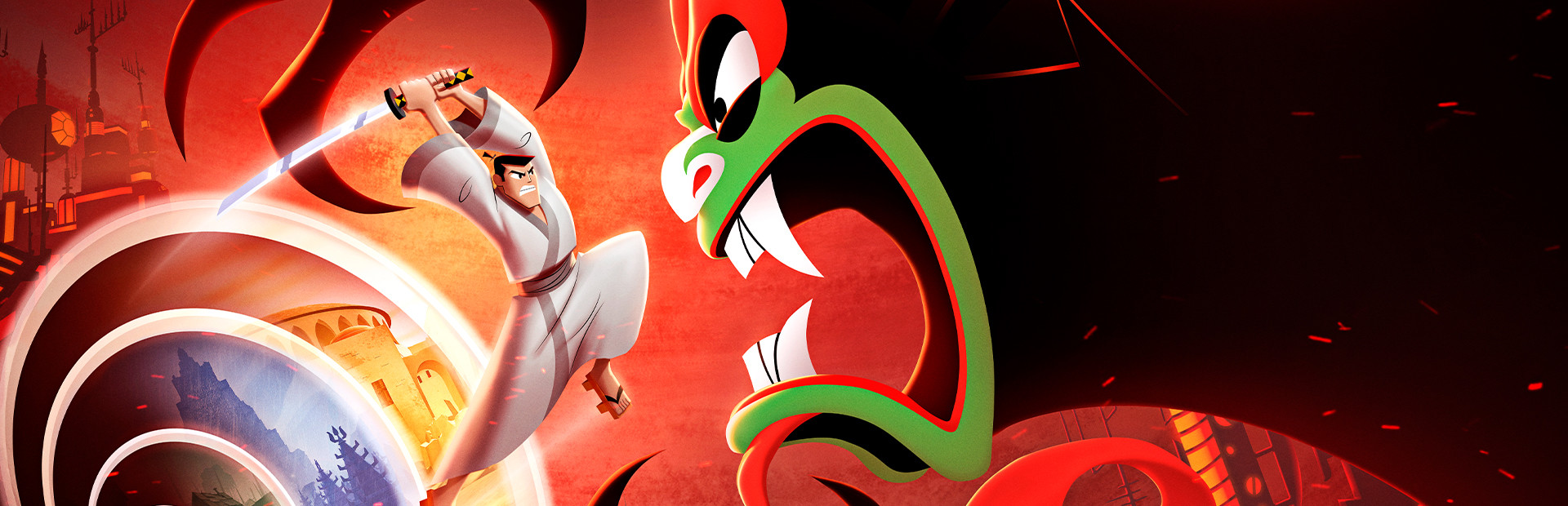
Action games during the PS2/Xbox era are an entire evolution of their own. This is a pocket of the game that has evolved and also evolved itself at one point. Linear levels with simple combat were a run-of-the-mill action game back in the day, and a game released like that in 2020 is a bit of a gamble. While I’ve never seen Samurai Jack, the gameplay style from 15 years ago is what drew me in.
I have to emphasize right now that this game is mostly for Samurai Jack fans. The art, story, characters, and everything else are meaningless to anyone. While I appreciated all of this, I couldn’t follow the story and had no idea what was going on. An evil entity named Aku has sent Jack back in time through multiple dimensions, and Jack must stop him. It seems rather simple and bare-bones, but fans of the series will get it more. I won’t judge the game on that merit, but even for a show tie-in, the story is rather simple and basic.
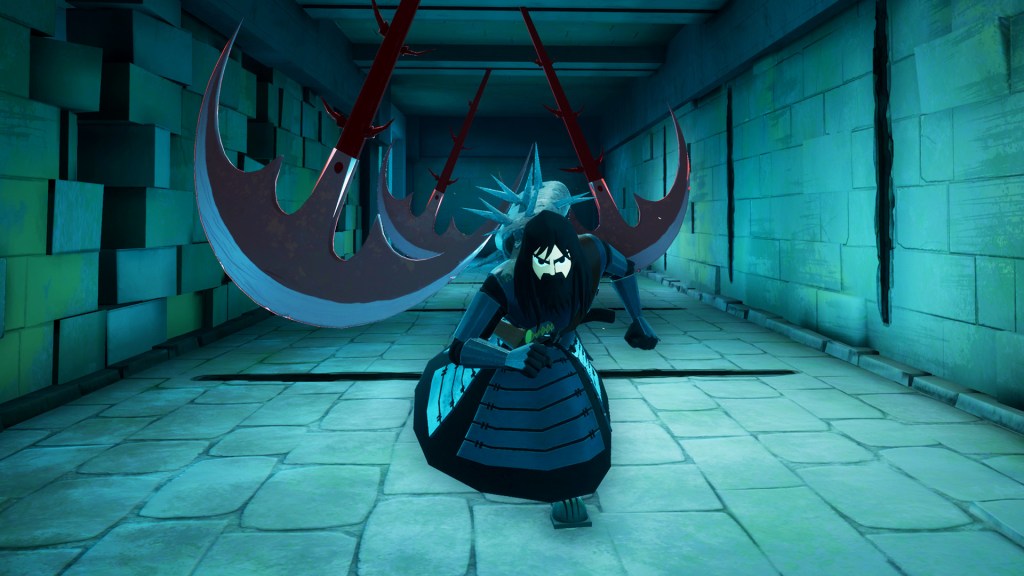
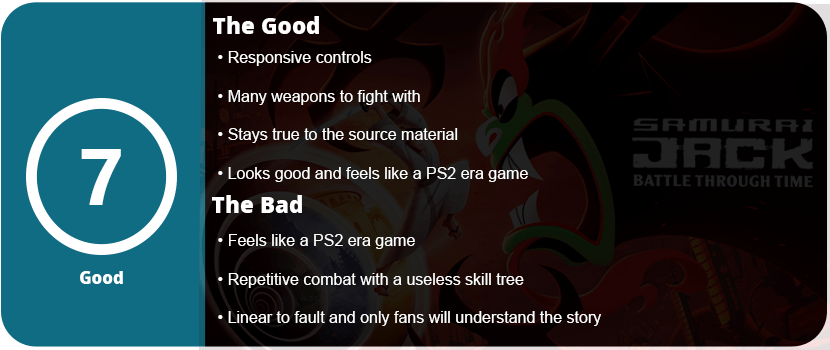
Controlling Jack is a lot of fun. He double jumps, swings a weapon, throws projectiles, and has a special move. He can wield heavy and light weapons such as staffs, swords, sickles, clubs, hammers, and axes. It seems like a large arsenal, but there’s not much difference between this and damage and speed. I honestly stuck with the sword through most of the game, as I also dumped most of my coins into training for that. Jack can also throw various things like knives, shurikens, axes, pistols, and machine guns, as well as bows. It’s a large arsenal, and different projectiles do different damage, and ammo is scarce, so I mostly saved them all for boss fights.
Jack also has a light and heavy attack and can dodge and block. Acquiring spirit fire allows him to unleash a powerful attack, and each weapon has its own attack. It’s a decent enough system, and I felt like I was playing a game from 2005, which is both good and bad. If this game were to have come out back then, it would have been considered amazing, but today it’s just a nostalgic trip that feels rather average. While everything works and the controls are responsive, I just felt the game’s repetition and linearity hurt it quite a bit. I don’t need every game in the open world, but these games are freakishly claustrophobic, and the only way forward is straight. There are side paths to take to find chests that have various items in them, but the extra effort usually isn’t worth it.
You can find shops that allow you to buy and train weapons as well as repair them, as they are breakable outside of your magic sword. This is why I just spent and saved for training the sword. It’s kind of a broken system, just like the upgrade tree. There are three categories for physical, combat moves, and spiritual things like spirit fire recharge, but you’re going to eventually get most of them. Each one is locked off, so you have to buy the one before it anyway. This almost feels useless, as you don’t get a direct choice.
The game is also sickeningly repetitive. After level 5, I couldn’t take it anymore. You just fight wave after wave of enemies with various health bars and then a boss at the end. It’s nothing special and gets rather dull quickly. Sure, the game looks good and has lots of detail in the characters and environment, but only fans of the show would truly appreciate this. Once you finish the first level, you have pretty much seen everything. You just play it like that eight more times. The game also isn’t very challenging, as most enemies are dumb and rely on their annoying attacks (like zombies burrowing underground and popping up under you) or swarming you until you die.
Overall, Battle Through Time is a love letter to early PS2-era action games, but there are games from that era that still do it better. Overly linear, repetitive, mindless combat, a useless upgrade tree, and a story that only fans would appreciate aren’t enough to save this game. It looks good, sounds good, and plays well, but the overall package is just meh.
Tony Hawk’s Pro Skater was a huge part of my childhood. It made me want to go out and skate, which I actually did. Between the ages of 9 and 13, I skated almost daily. I wanted to become a professional skateboarder, and well, that never happened, but the countless hours sitting in front of my Nintendo 64 or PlayStation (depending on what time period we’re talking about) were memorable. I still remember how to complete every level in the first two games like it was yesterday. The countless lines I’d find, replays I’d save, and learning every real-life trick all thanks to THPS. It was a huge part of my generation’s childhood, was influential, and rang loud throughout the gaming industry. Activision had a juggernaut on its hands, and while the series’ last great entry was Tony Hawk’s Underground 2, I wanted the series to come back. It took 20 years, but we finally got some reprieve, and the series is back better than ever.
Let’s talk about the core of the game’s menus, as they are used in both games. The entire main menu has been redesigned but is still familiar. You can pick your skater, either a real-world one with all returning skaters plus new ones, or create your own. Creating a skater has quite a bit of an option, but I felt the amount inside each option was limited. This really could have been expanded upon, but there’s a good amount of gear, as you can customize your board, wheels, trucks, grip tape, deck, and all of your clothes to your heart’s content. Everything is, of course, skateboarding-branded, so no Disney or video game-related stuff here. Once you pick your skater, you can head off to either of the two games, but there’s a bit more here than you think. There are new challenges that unlock cash that can be used in the Skate Shop, which is nice as there’s some incentive to complete each level 100%.
Once inside THPS1, I didn’t need a single tutorial. I literally landed a 100,000-point combo without breaking a sweat, thanks to the perfect controls that I remember to this day. It’s like riding a bike, to be honest. Newcomers will be treated to one of the best control schemes ever created, with countless action sports games ripped off for years. Grind, grab, and flip are all assigned to a button as well as an ollie. You can press a button to do a trick, and the skill is all up to you. THPS is 100% skill-based. If you don’t master the controls and get quick with your fingers, you won’t have fun. My fingers flew across the controller, going from a grind to a manual to a flip trick just before hitting a rail, back to a manual, hitting a pipe, manualing out, and so on until my stamina ran out. It’s a blast, and the game feels just as good as it did 20 years ago.
Nearly every skating trick in the book is here, but what makes THPS fun are the special moves. Do some tricks without falling, and you will get your meter up almost all the time. Each skater has an assigned special that is pulled off with a button combo, and then a special sound plays, and your trick is in yellow in your trick combo text. This racks up massive points and looks really cool. Each level is incredibly iconic and shows some of the best level designs of the era, but somehow it doesn’t feel dated or stale. The new updated visuals breathe new life into these levels and add as many details as I could never imagine. The game looks amazing with great lighting, detailed textures, and current-generation flair.
There are four levels that are objective-based and three competition levels. The objective-based levels get tougher as you go on, with some requiring precise movement and accurate tricking. These later levels can be very frustrating, even for seasoned players like myself. The rooftop gaps in the downtown level? Forget it. While I eventually did it, it took an entire night to actually complete this level. It was the bane of my existence when I was a kid, and I finally completed this entire game 100% in just a few days. Once you do land these insanely hard stunts, it feels so satisfying. I stood up, shook my fist at the screen, and felt relief. It’s a style of game that you just don’t get anymore these days. It’s just you, the controller, and the levels and objectives, and you just need to focus on completing them and honing your skill. No handholding at all here.
I honestly can’t find many flaws with the first game. The levels are varied; they look and feel amazing, and veterans will feel right at home. I like the newly added V logos, which add an extra challenge. Collect them all to unlock special gear. I also love the sound design, which is also iconic. The sound effects like the camera flash when you complete a gap, the sound for the special move, the grinds, flips, crashes, and the record scratches—it’s all here and updated with current technology. Even the majority of the original licensed soundtrack made it back with some great new additions. THPS had one of the greatest licensed soundtracks of all time. It was iconic, and many other games just couldn’t stop it. From hip-hop to rock to punk, there are so many great songs on here that I could listen to them all day. While I wish there were more songs, at least we get most of the classics.
Tony Hawk’s Pro Skater 2 offers more of the same as the first game, just with new levels. While back in the day it was more tricks, skaters, better controls, etc., with the remake, they took the best of both worlds, so each game is essentially level packs. Once you complete both games 100%, there’s nothing left to do outside of Create-a-Park mode, which was a big deal back in the day and was introduced in the second game. It’s a ton of fun, and this is where most people will spend their time after finishing the main games. I wish there was a way to share parks, as skating people’s creations would add tons of hours of longevity to the game, but what’s here is fine.
Overall, THPS 1+2 is a fantastic remake for fans of old and newcomers. This game defined sports games and helped push skateboarding among kids. While it may not do that these days, what we get is an amazing package of memorable levels, fun goals to accomplish, and a good amount of news to spice things up. While the main games are rather short and nothing new was added to them, they are beautifully remastered and are a blast to play through. The create-a-skater and park modes are rather robust, and the new challenges will keep you going back for more than a year after 100% completion. The visuals are not groundbreaking but true to the originals, and there’s lots of love and detail everywhere.
Every PC gamer has envied the perfect build whether it’s on a desktop or laptop. While I have finally achieved my ultimate high-end gaming PC build, I’m always one to strive for more or want the latest and greatest tech. Most of us have sat upon a PC manufacturer’s site building our dream build and watching the dollar amount rack up fast or sitting there waiting for the perfect deal. Me, since I was 15 years old, I have done this on Alienware computers and still do to this day. They are gorgeous machines and you can love them or hate them for various stigmas like being a Dell, having terrible customer service, questionable build quality in the past, and charging more for a name brand, but it doesn’t change the fact that these machines are amazing feats of engineering. Alienware has always strived for the best gaming technology in their PCs and usually lands mostly dead-on.
For me though, it’s always been their laptops that fascinate me the most. I’ve had two previous laptops from them, and they were great for their time, but laptop technology has come a long way in two years. We can now get desktop hardware inside these things, and that was a distant dream ten years ago. Alienware has evolved their laptops so much since I last had one, which I donated to a thrift store about 2 years ago, and it’s clear how much. So much of the latest tech is now available in mobile form and not to mention Alienware’s unique striking visual design. These laptops are just dead sexy and stunning to look at. There’s literally nothing else like them out there. The Area-51m R2 is Alienware’s latest flagship high-end gaming laptop with better cooling, desktop CPUs, the latest GPU tech, USB-C Thunderbolt ports, Tobii Eye-tracking, and two, yes two! power supplies bricks.
The Unboxing
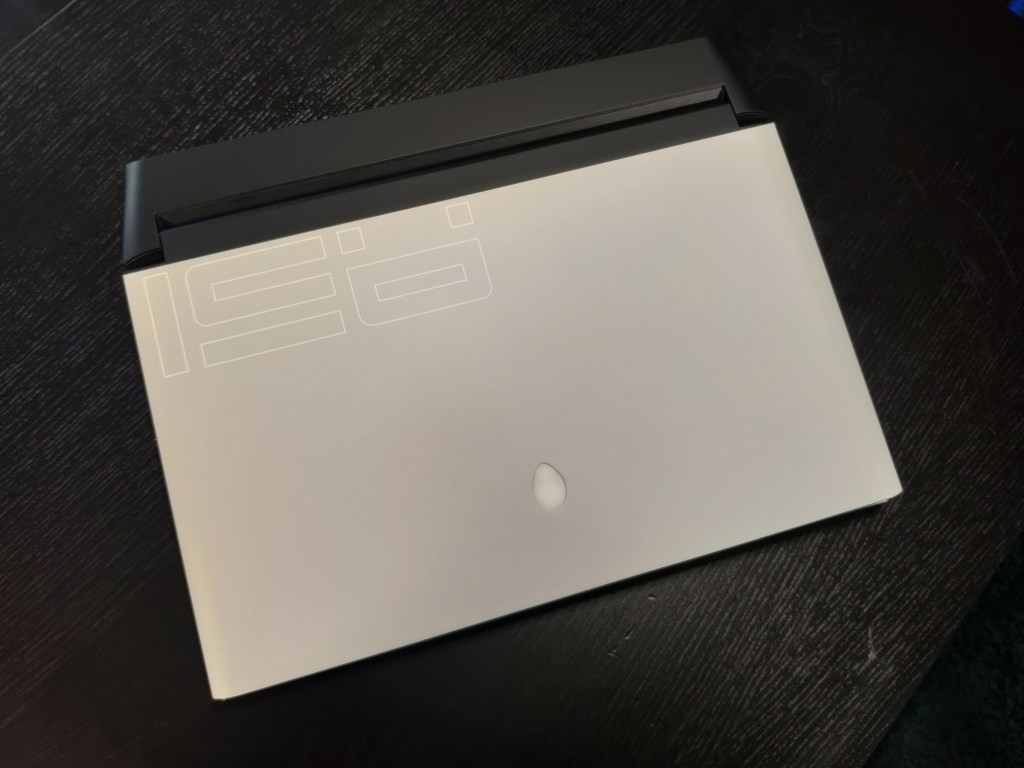
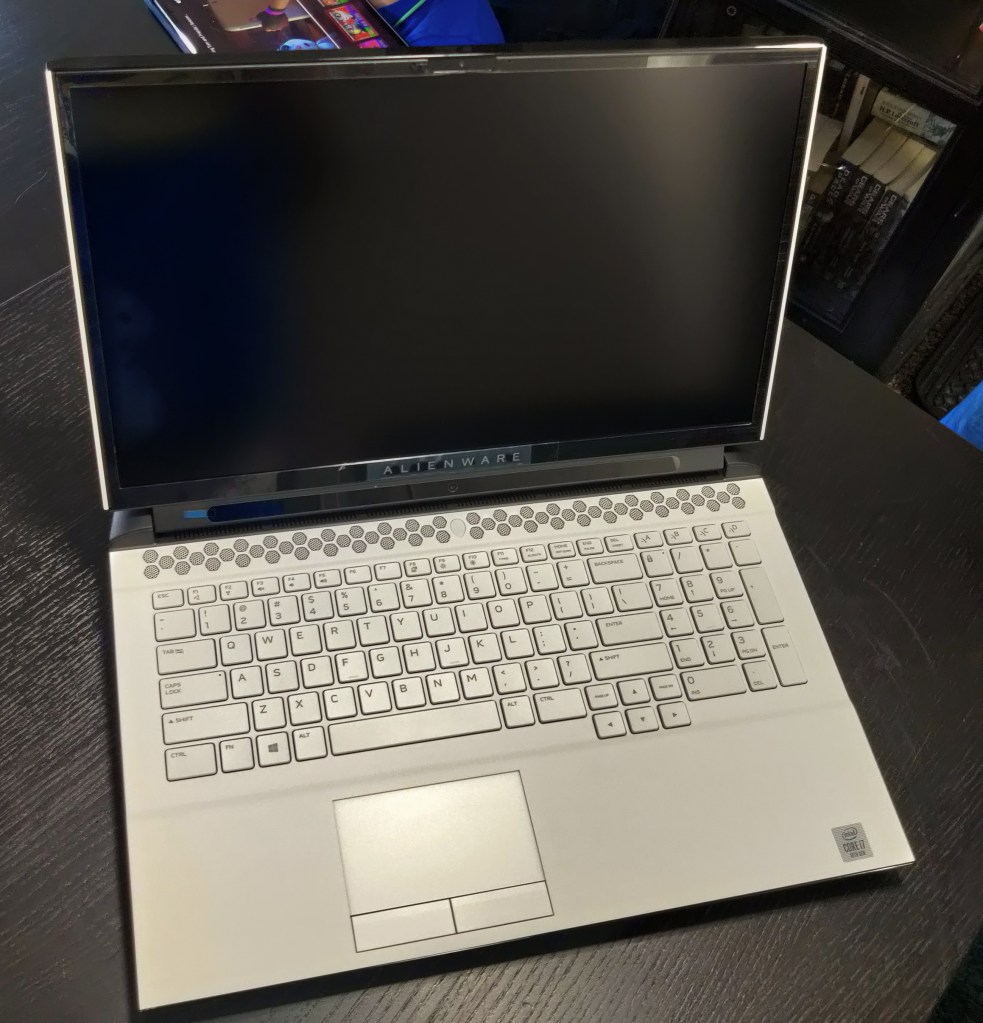
Enough back story and on to the hardware. Let’s first talk about the unboxing experience. Again, this is a once in a 5-10 year thing for me so it doesn’t happen very often. The box is a lot slimmer this time around and opening it up unveils the laptop, a slip of paper explaining the history and goal behind Alienware, a quick start guide, and a compartment with both power bricks. Not very exciting. Where are the goodies and extras? Despite all that, the laptop’s design drew my eyes immediately and it is the single most beautiful piece of engineering I have seen go into a laptop period. The sharp lines, the large vent that comes out of the rear with the oval RGB ring, the honeycomb vents, the color also amazing, and the feeling of the system too. It’s heavy, but not as heavy as it looks. My model came in at just under 9lbs and it requires two hands for sure. The material also has a nice matte finish that doesn’t attract fingerprints. It feels slightly rough but also smooth.
Once you plug in both bricks and lift the lid the keyboard lights up along with the touchpad and you start the typical Windows 10 startup experience. I spent several hours installing my favorite programs, optimizing Windows 10 and disabling almost everything that runs in the background, and downloading games of course. The system felt as snappy and fast as my desktop and the screen is gorgeous with the 300hz display really shining here. Typing on the keyboard is better than most laptop keyboards thanks to the Cherry switches and the 1.7mm actuation. The keys are a bit higher than most keyboards and I could feel them as my fingers flew across the keys like a desktop keyboard. They are a bit clicky and the material is the same matte finish as the rest of the laptop so there was no slick shiny nonsense that most laptops are subject to. The spacebar in particular clicks loud and is very satisfying. This is probably the best laptop keyboard I have ever used. The F1 keys have functions attached such as screen brightness, volume, touchpad, AlienFX lighting, and the graphics amplifier if you have one attached. One thing I wish this keyboard had was multimedia controls for music, but the FN+an arrow key works just fine.
The touchpad is also a huge improvement over any laptop I have used including my old Alienware. It has a nice rubbery feel to it, and I can hear my finger slide and scrape along with the pad, which is satisfying. The right and left click buttons have a nice deep actuation (seems like 2mm or more) and don’t rock left or right like my old laptop did, which drove me nuts. I actually hated the old Alienware touchpad. This touchpad uses Microsoft’s touch drivers, so you can use multiple fingers to swipe around, which is so nice. The touchpad has a decent amount of adjustment for acceleration and sensitivity, among others. It’s actually a great touchpad, and the backlighting just makes it that much more enjoyable to use, but a mouse is still always preferred.
Technical Stuff
Let’s jump into some of the technical aspects of the laptop. The BIOS is, sadly, very limited. There was no option for XMP profiles, as I believe you have to use Dell-branded 3200 MHz RAM to use the XMP profile. I also can’t say anything about CPU overclocking as I had a non-K CPU installed (not really necessary for gaming in my opinion), but there was a lot to control compared to previous Alienware laptops and just most in general. Don’t get too excited about advanced BIOS features like on desktops, which is quite a shame for the price you’re paying. That was my first major decision for this laptop, but not a crippling one.
Most of the overclocking will happen in the Alienware Command Center, and it works well enough. ACC is very limited in terms of lighting control and overclocking, but it works, and the results were fine to me. ACC allows you to change lighting effects from pre-installed presets or a limited change of colors. Previous versions of ACC allowed actual timelines of colors and morphing and pulsing, but somewhere in the last 10 years that vanished. What is here is fine, and thankfully the Area-51m R2 has multiple lighting zones on the keyboard for WASD, the Numpad, the F keys, and various others, or you can do one unified profile. You can control the light on the power button, rear alien head, RGB ring on the exhaust, and touchpad. It’s a decent amount of lighting, and the RGB ring is the most eye-catching and striking of them all. That’s what will turn heads and bring people over.
ACC also allows you to manage your power settings in a limited fashion. Mostly just screen timeouts and sleeping. The macro feature is also a tad limited, as I couldn’t map Windows functions to make the four macro buttons multimedia keys, but it works, and you can do quite a bit with them, like record key presses and add program shortcuts. The Fusion section also allows auto or manual fan control. There are five profiles that I find are just fine and keep the laptop cool. Even overclocked, my GPU never really gets above 70 c, and the CPU does stay below 80 c on the Performance option, which kicks the fans to 80%. Balanced drops them to 35%, which is rather quiet. I don’t really hear these things unless the fans are above 60%, and they are not annoying to listen to. Overclocking was a little limited as all I could do was bring the thermal limit up and then push the core clock and memory clock up to 300+, which the 1660ti easily did in the memory. I started noticing crashes and artifacts on the core clock above 190+, which is pretty good. I wish I could increase the power limit, but I still get a 10% boost in power with this OC. To use the fan profiles, you can add games to the library (which is an ugly mess of stretched-out icons) and it won’t detect Windows Library games, so for those, you have to manually set the fan speed each time; however, the OC profile has to be manually set no matter what. ACC is limited, but some quality-of-life improvements could make this software pretty robust. At least it works, right?
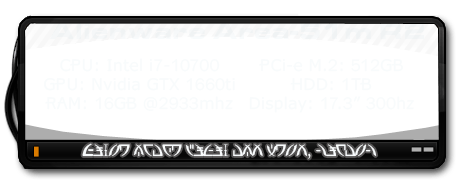
Once overclocked, I got a 3DMark TimeSpy score of 6017, which is pretty amazing for a laptop. The 1660ti is no pushover either. Actually, gaming on this thing surprised me, as I could run every game with maxed-out settings above 60FPS, with most being above 100 or just around there. Shadow of the Tomb Raider, The Witcher 3, Call of Duty: Modern Warfare, Borderlands 3, Forza Motorsport 7, Mortal Kombat 11, Wasteland 3, The Outer Worlds, and many more all ran without an issue at maxed-out graphics settings. Now I will say this: the laptop does get hot on the right side where your hand is, as that’s where the CPU is. It didn’t get uncomfortable, but your hand does heat up, and that’s kind of expected. You have a 10700 desktop CPU mere inches below your hand. The 1660ti never really got too hot, but I’m sure the RTX GPUs do.
Conclusion
The upgradeability is questionable, though, as you can put an i9 CPU in here straight off the shelf, and getting into the laptop is rather simple and easy compared to most laptops. You can add 4 M. 2 drives if you wanted with one 2.5″ drive. There’s also an option for 64GB of RAM, which is more than anyone would ever need on a PC these days. My question is about the GPU. These are slotted, but Dell isn’t selling upgrades, and you have to rely on the Alienware Graphics Amplifier instead right now. I would love to later on just plop a 3070 into this thing, as Dell is using their own proprietary socket for these GPUs.
After over a week of using this laptop as a daily driver, I have to say I love it. It’s the best laptop I’ve ever used, and I can’t really find any faults. The laptop stays really cool, the fans aren’t all that loud, and if you have headphones on, you won’t even hear it. If I were to nitpick, I would say the ACC software suite is lacking. There’s not a lot of customization with the lighting, and the BIOS is mostly locked away. These aren’t major problems, but enough to knock it down half a point. The laptop also gets very warm on the left side, where the CPU is, but that’s probably expected with a machine like this. I also don’t particularly care for hauling around two power bricks, but this is a portable desktop.
On a side note, I would not recommend buying an Alienware computer or any new electronic device like a computer or tablet right now. As of this writing, and due to COVID, it was a nightmare getting my laptop to me. With $80 expedited shipping, it still took a week to receive my laptop, and it made numerous stops along the way, and they are all being shipped right off the assembly line in China. When I got my tracking number for UPS and saw it left China, I knew there were going to be some issues right away. UPS and FedEx pilots are currently refusing to fly into China, so the shipments are stopping in Japan or South Korea first, then Alaska, then the major distribution hubs in the US for customs release. I’m not sure if it’s due to the new tariff laws or just the sheer number of orders being made, but my computer was held in Ontario, CA, by customs for 2 days with no reason as to why. It just said it was held in a warehouse until a transaction agreement could be made. I’m not sure if the volume is causing paperwork errors in China or if Dell just didn’t pay the correct fees. It then took 12–24 hours at each stop to depart, and then another 12–24 hours to arrive. It was a prolonged and painful shipping process, one of the worst I have ever had.


















































 thebinarymessiah.com
Try multiplayer. A lot of fun !