It goes to show that a smaller focus can create a great story and atmosphere. You don’t need a multi-million-dollar budget to create something great. Gone Home starts out oddly because you are given no direction, but after about 15 minutes, you realize what you are supposed to do. You arrive home from a school trip, and no one is home. You find a note on the front door from your little sister, Sam, that says she’s gone and won’t come back. With the dark atmosphere of lightning and rain, you expect this to be a murder mystery. In fact, that feeling changes throughout the game.
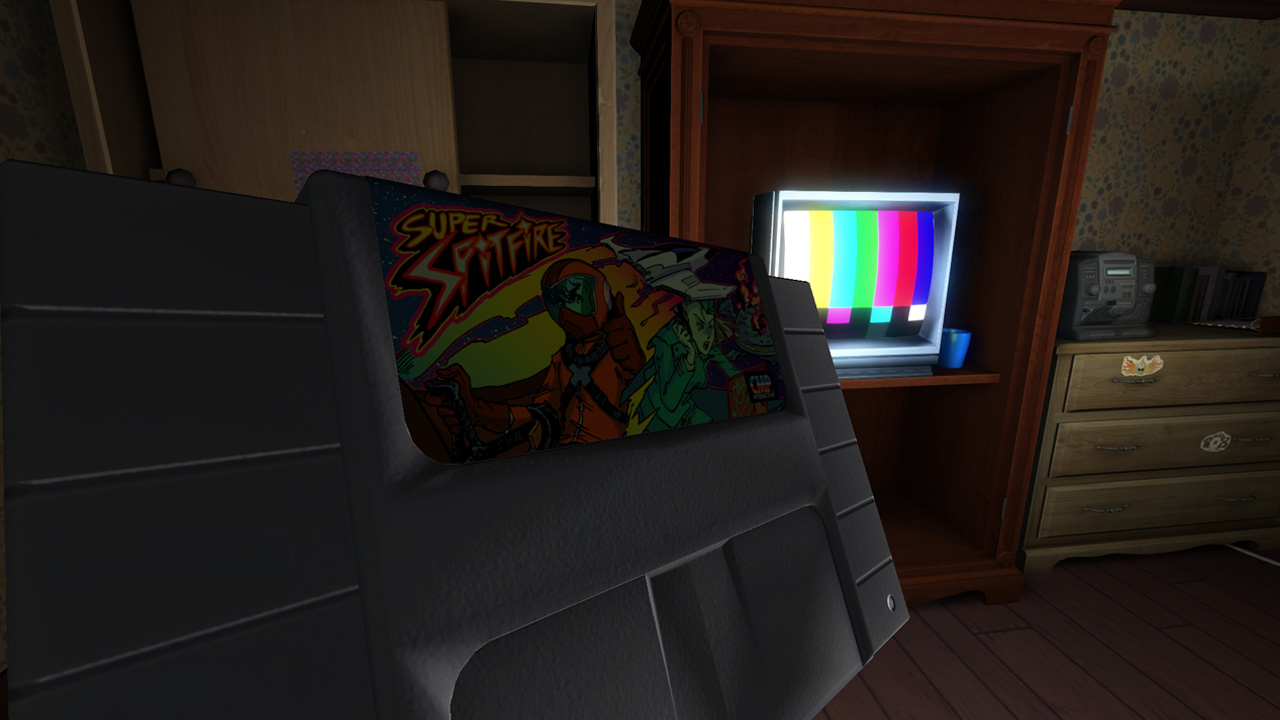
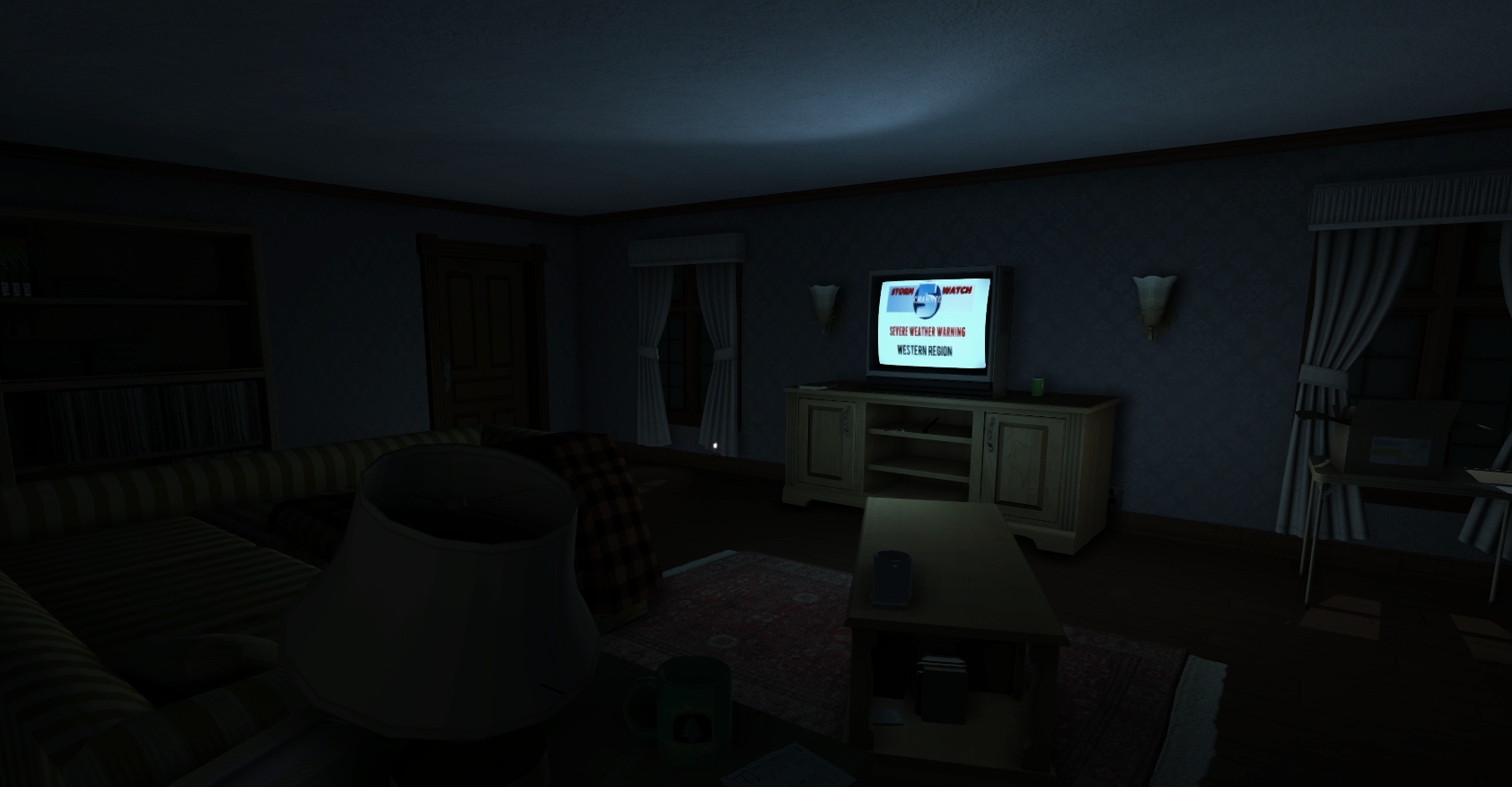
Once you find the key and go inside, you just wander around, examining everything. There are letters to read and interesting objects to look at. After a while, you start finding key items that activate journals narrated by your sister. The home itself is a great recreation of a ’90s home. It actually brought back a lot of childhood memories with CRT TVs, cassettes, VHS tapes, and various items from the 90s. It gave me a warm feeling, and I felt at home in this house, but I wasn’t sure what was going to happen. Was it haunted? Was there a murderer in the house? I went on to read more letters and items to see that the mom was a park ranger and the dad was a tried and failed author and magazine writer. I later discovered a few locked areas and three different cabinets that had lock combos on them.
Honestly, you don’t need a walkthrough for this game. It’s all pretty easy to figure out. I just went from room to room looking at everything and realizing that this lesbian relationship with Sam and her friend Lonnie is actually pretty heartbreaking. You see signs throughout the house that it’s a bit of a broken home, and Sam is a problem child. Little things like good report cards from you and then disciplinary notices from the school for Sam. It all brought back memories for me from my school days and my childhood. Anyone who grew up in the 90s will feel the same way. As I reached the end of the game, I was pretty emotionally stirred up. I couldn’t wait for the end.
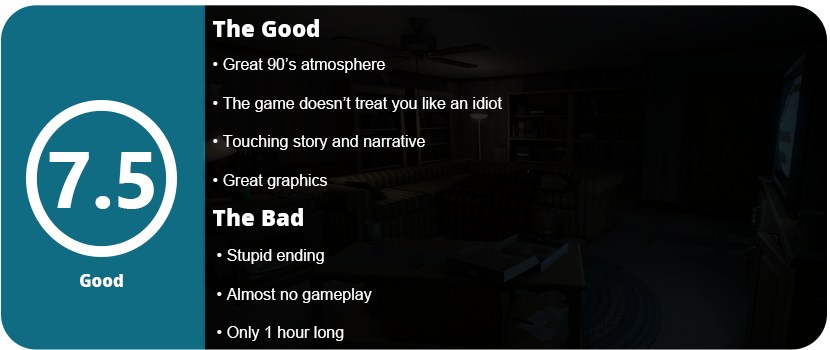
Once I got to the final room and saw the ending, I was really disappointed. I felt the entire 1-hour journey was for nothing. Sure, the story was sad and will tug at your heartstrings, but the ending was predictable and lame. There are signs everywhere of Sam studying the occult and various things about the house being haunted, but nothing ever happened. I was never spooked; there was no murder; it was just a few journals narrated by a gay sister, and that’s it. 90% of gamers will find this game extremely boring, and even if you don’t, it’s not worth $20. You get about an hour of gameplay with a lame ending. I expected the sister to have committed suicide and you would find her body upstairs, something like that, but no, just a lame ending.
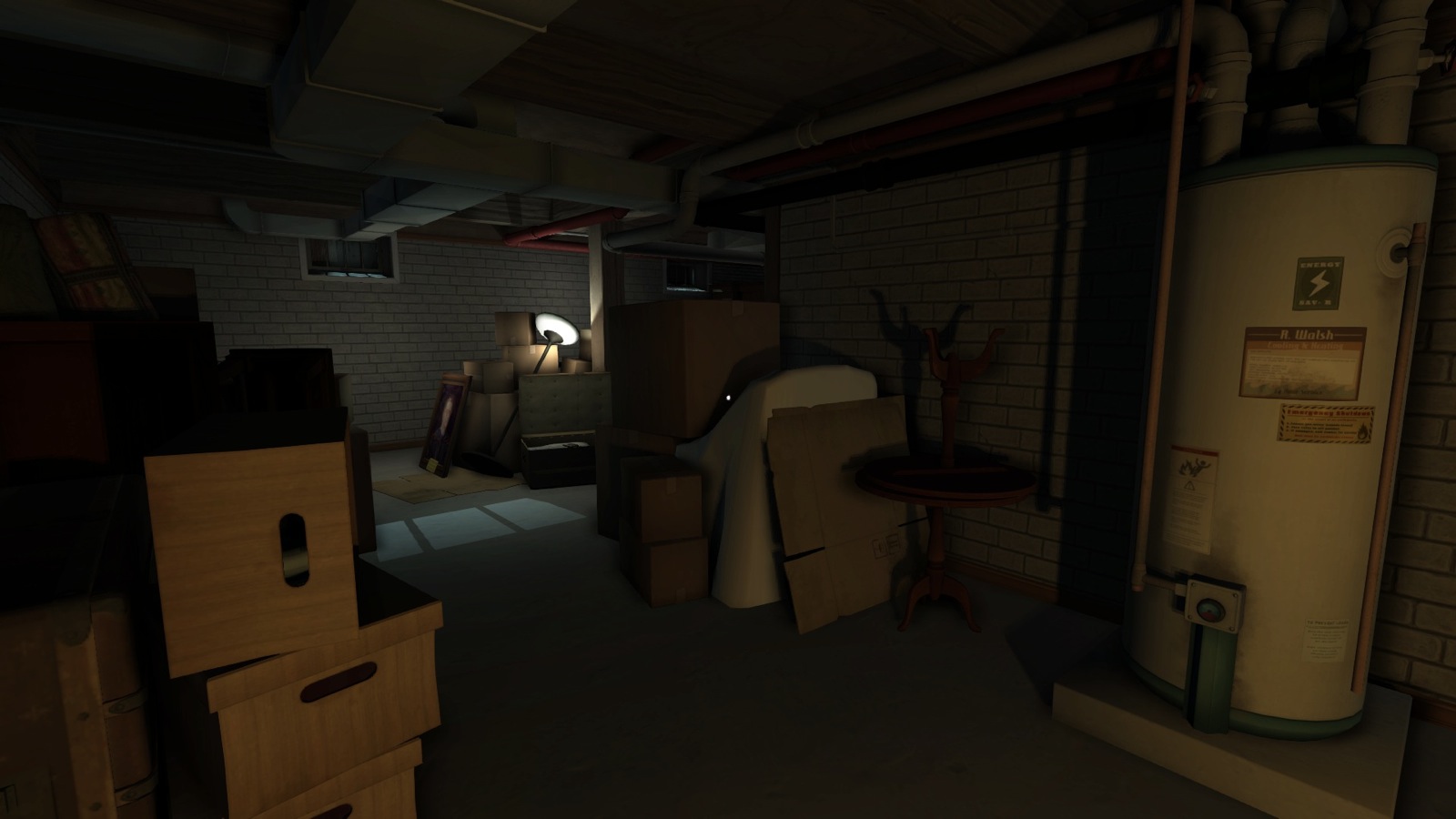
The game has decent graphics, but nothing too impressive. There’s a lot of attention to detail everywhere to create this great 90’s atmosphere, but you still need a pretty powerful rig to run it due to the complex lighting effects. As it is, Gone Home is a great narrative and a trip down memory lane, but the ending and lack of gameplay are disappointing.
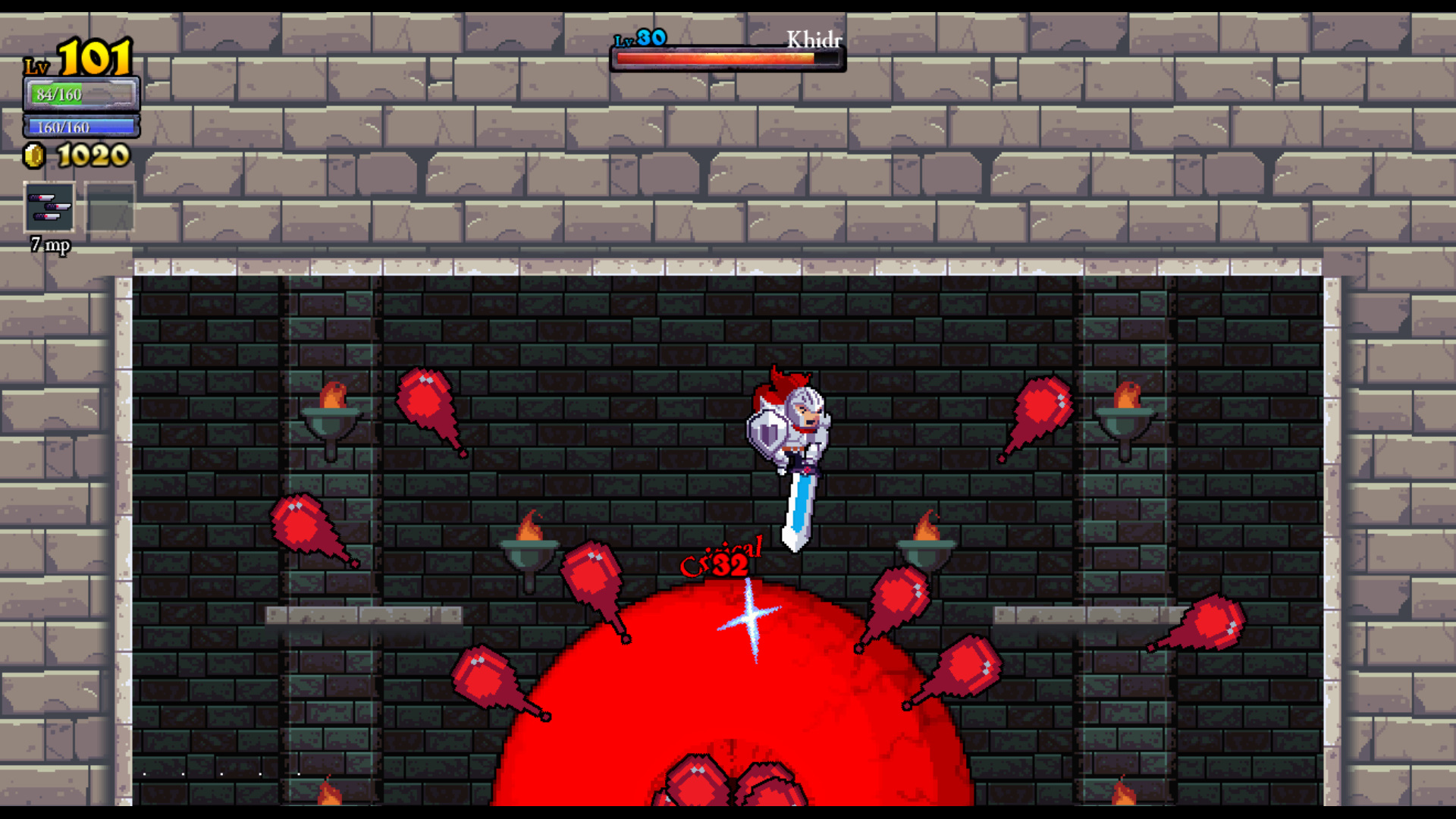
2D platformers have had a huge comeback in the past 5 years, but none of them really offer a great challenge. Rogue Legacy offers a lot of replay value thanks to the randomly generated dungeons and characters. I love Rogue’s character selection system. You get to pick between three different people, and when you die, their attributes make an offspring that is similar. Some characters walk upside down, and some have extra strength, health, MP, HP, and various other passive effects. This is really neat, and sometimes you are forced to choose one particular character so the other bad genes are wiped out on your next death. You can upgrade your weapons at each rebirth, and you can give up 30% of all the gold you find to lock down the castle if you liked the previous layout. When you enter the castle, you must forfeit all your gold, so you start from scratch. This is a cool feature and doesn’t really get in the way.
When you actually play, you will be greeted with great controls and fast-paced and challenging combat that’s similar to Mega Man and Castlevania. Breaking open objects gives you gold or items, and enemies can be really tough and fast. You have to stay on your toes because you can die really easily. I died around 15–20 times before I even got to the first boss. You also get items that use MP, kind of like in Castlevania. Honestly, this game felt like Castlevania meets Infinity Blade, which isn’t a bad influence. I wasn’t frustrated because sometimes the rebirth was for the better. After a while, it gets kind of hard, so it’s only fun in short bursts. I found the game very addictive, and the variety of enemies kept me coming back for more.
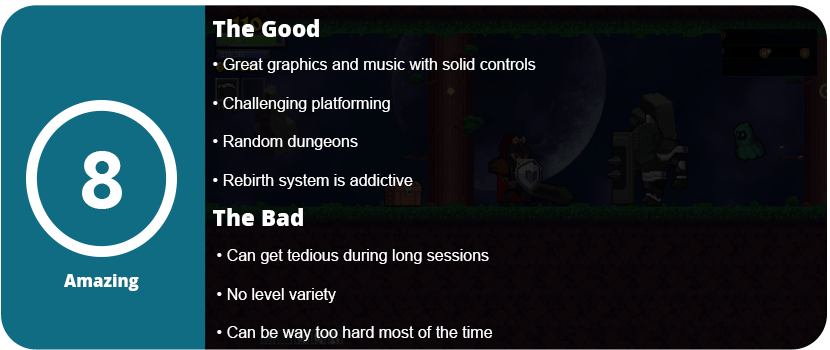
The whole point is that you become more powerful every time you die, so it’s not like other games where all your progress resets. You are always progressing, no matter how good or bad you are at the game. After a while, you start learning the enemy patterns and eventually even a favorite layout. The graphics are actually pretty good with nice 8-bit sprites; this is actually one of my favorite platformers in a long time since ‘Splosion Man and Fez. There’s really not much wrong with the game other than the lack of level variety, and the game can be way too hard. This game relies solely on skill to advance, and the better you are, the longer you can survive.
Don’t let the simplicity and small scope of Rogue Legacy turn you away. If you love platformers and challenging games, this is for you. The game has a great chip-tune soundtrack, nice graphics, and solid controls. The constant dying and respawning can get tedious sometimes, and the progress you made before can feel like it’s all for nothing. Thankfully, there are many upgrades and items to buy to keep you coming back for more.
Nothing is true. Everything is permitted. This is a saying heard throughout Assassin’s Creed, and it really sticks with you. So does the thick plot that has come to take the game industry by storm, as well as one of the greatest game characters of all time: Altair. The plot is actually weird at first because it’s a sci-fi story. You are actually Desmond Miles, captured by modern-world Templars. They stick you in an animus and use your DNA to access your ancestor’s memories to find the Piece of Eden, which can be used to control people’s minds. That one ancestor is Altair, set during the crusades. The second story is of Altair, who ends up losing his rank and status among the Assassin Brotherhood by failing a mission due to his eagerness and stupidity. Your master, Al Mualim, sends on special missions to assassinate key leaders throughout the holy land (Acre, Jerusalem, and Damascus) to keep them from taking the Piece of Eden and using it to win the war.
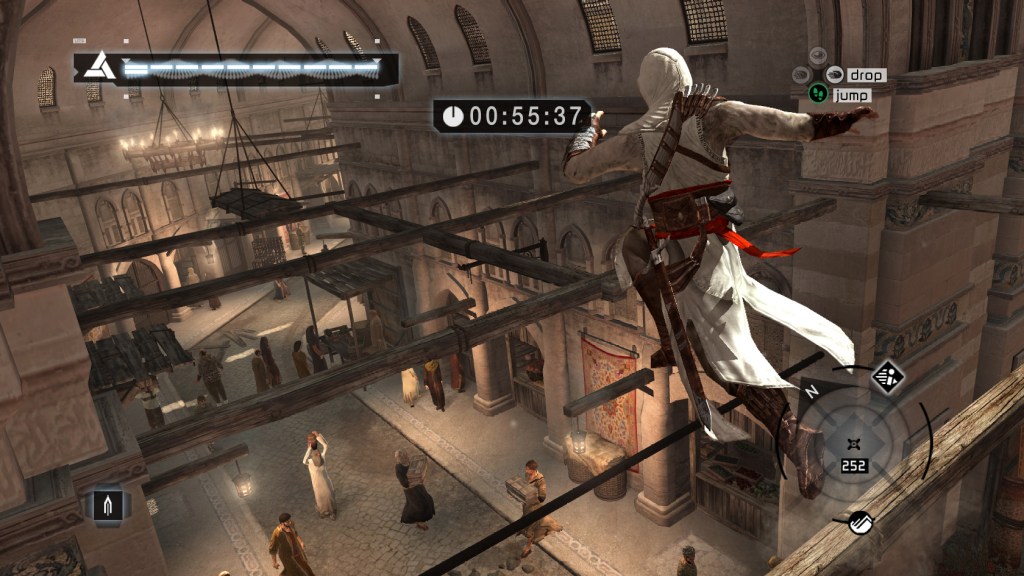
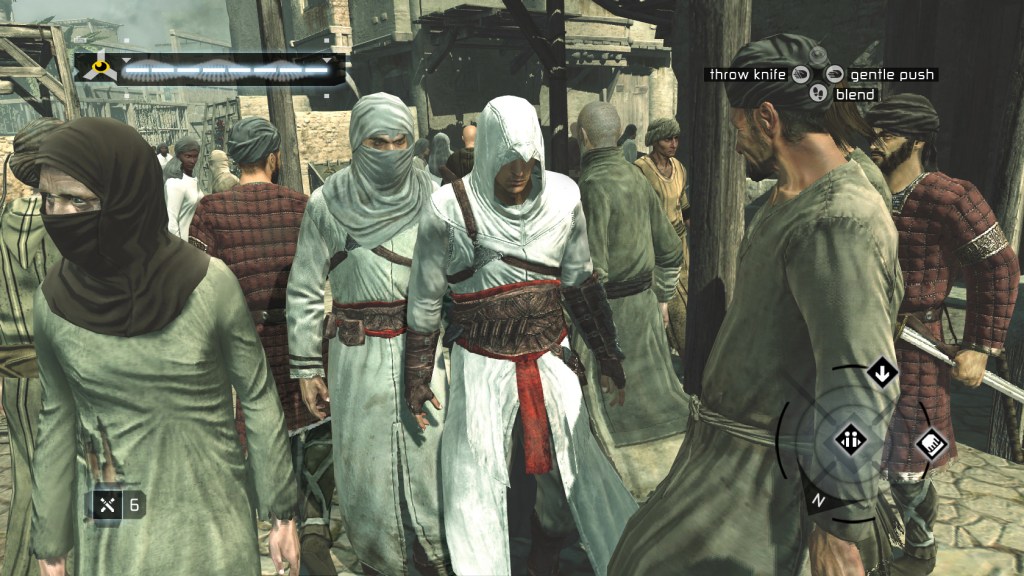
As you can see, the plot is very interesting, with a lot of twists. How is the game, though? You have a huge open world that is full of side missions and hundreds of buildings to climb. Assassin’s Creed has a parkour climbing system as well as a puppeteering system. You control each of Altair’s limbs in two different states. The “socially acceptable” state allows you to use eagle vision, which can show enemies and key targets. You can gently push people away from you, and this is key because if you’re running around the city knocking people over, the guards will come after you, and towards the end of the game, everyone is highly suspicious of you, and just a few people knocked over will have the entire guard on your tail. The third thing is obviously combated, but if you hold down the run button, you start climbing buildings, grabbing people to toss them, and jumping around.
Assassin’s Creedreally tried to introduce crowd psychology into the game, and it works here but does feel limited. If you climb buildings, people will react by stopping, staring, and saying things accordingly. If you use ladders, people don’t mind so much. While using rooftops is faster and keeps you away from most guards, you must watch out for guards on rooftops who will shoot you with arrows if you don’t get down, kill them, or move away quickly. The climbing works well enough, but there are some control issues, clipping issues, and other issues with the camera. When Altair is facing a different way than the camera, he will jump in his direction instead of the way you’re telling him to. Also, if you run around a pole or near a crate, he’ll start climbing it instead of just jumping over or going around. This can get downright frustrating when you are running away from a dozen guards and trying to find a hiding spot.
The game also introduces anonymity via a symbol near your health bar, which stays white when no one suspects you but will turn yellow when you are watched and flash red when guards are on you. When it does this, get away quickly or kill whoever is watching you. Don’t just kill out in the open, or people will run around screaming and calling guards. Get away from dead bodies quickly because guards will come by and try to find out who killed them, or citizens will give you away. If you are caught, you need to kill all guards after you or hide. To do this, you must break their line of sight, and the symbol will flash yellow. When it does find a hiding spot quickly, it turns red again. You can hide on benches between people, on stacks of hay, in groups of monks praying, or on draped boxes on rooftops. Stay there for a few seconds, and you will be anonymous again. You can avoid all this chaos by just jogging, staying calm, not flailing around and jumping around like a monkey in crowded areas, etc.
This whole crowd system is really something else and works well, but it feels repetitive and predictable because of the recycled sayings and animations, and it always happens the same way. The combat is the same way because, while you can gain new abilities, it feels like a counter-festival. You can attack with a sword or short sword and throw daggers, but most guards always block, so you just stand there with the block button held down and wait for someone to attack and then counter, which is usually an instant kill. This gets repetitive, and the combat isn’t as deep as it could be since combos are limited and animations are repeated often. It does control well and feels smooth, so I guess that’s better than broken.
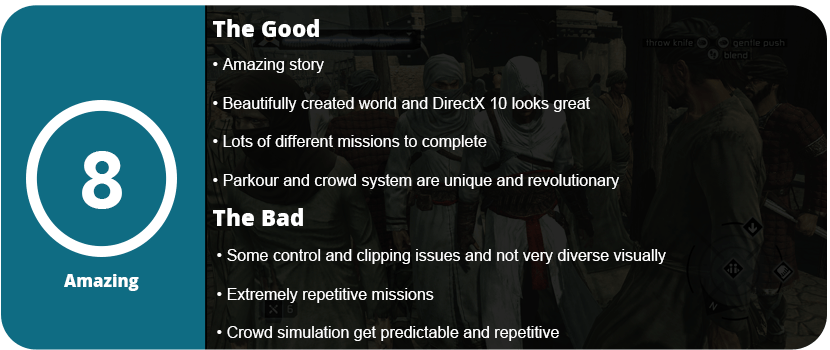
The most repetitive thing and the game’s biggest flaw are the constantly repeated missions that repeat dozens and dozens of times. You can save citizens, do some time-trial flag gathering missions, escort missions, assassination missions (probably the most fun), interrogation, eavesdropping, pickpocketing, and climbing tall buildings to find viewpoints to put more missions on your map in that area. Sure, they are fun at first, but after you have saved the 30th citizen or climbed the 50th building, it gets old, and you just want it to end. Some more mission diversity would have been nice.
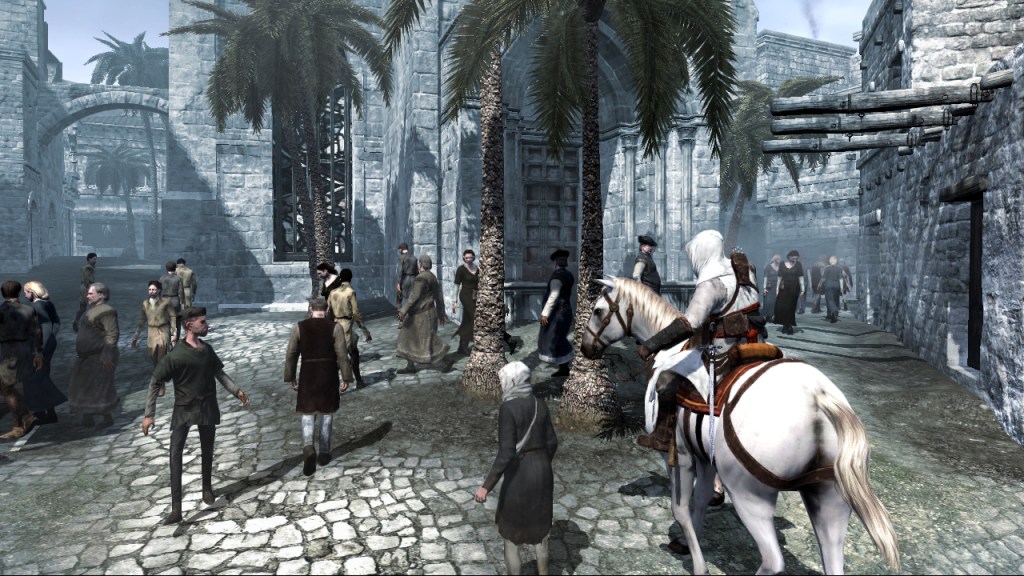
While it’s cool to be an assassin, sneaking up behind a guard and shoving a punch dagger in his gut and then running away while he falls to the ground without anyone suspecting otherwise is satisfying, and you must look good doing it too. Assassin’s Creed looks amazing, even today, and the PC version sports DirectX 10 graphics with some slightly higher resolution textures. The game looks a lot better than console versions and is well worth another play-through just for that alone. While the graphics are amazing technically and artistically, the game feels very Middle Eastern, with a great soundtrack to support that and voice acting, and the whole game feels true to its time. The architecture is great, as are the clothing, lifestyles, and jobs people do in the game, but it all kind of looks the same with a lot of grays, browns, and whites.
Overall, Assassin’s Creed is an amazing experience with a story you will talk about long after you finish the game, great crowd simulation, and the true feeling of being an assassin. If there was some more mission diversity, visual diversity, and smoother controls, the game would be perfect. This is a game you cannot miss, and every gaming fan should play it.
Developer: Right Square Bracket Left Square Bracket Games
Release Date: 4/26/2013
Available On
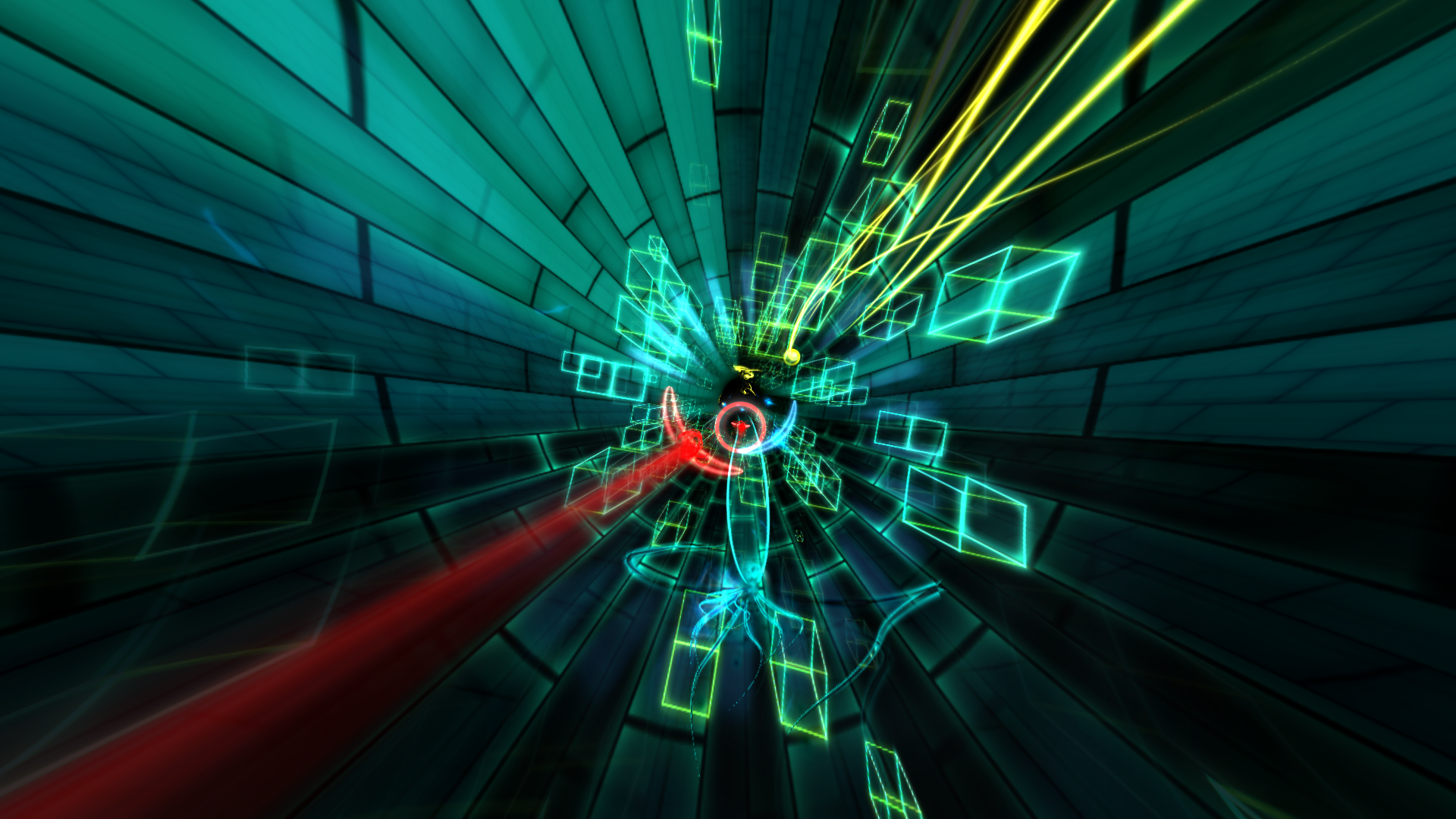
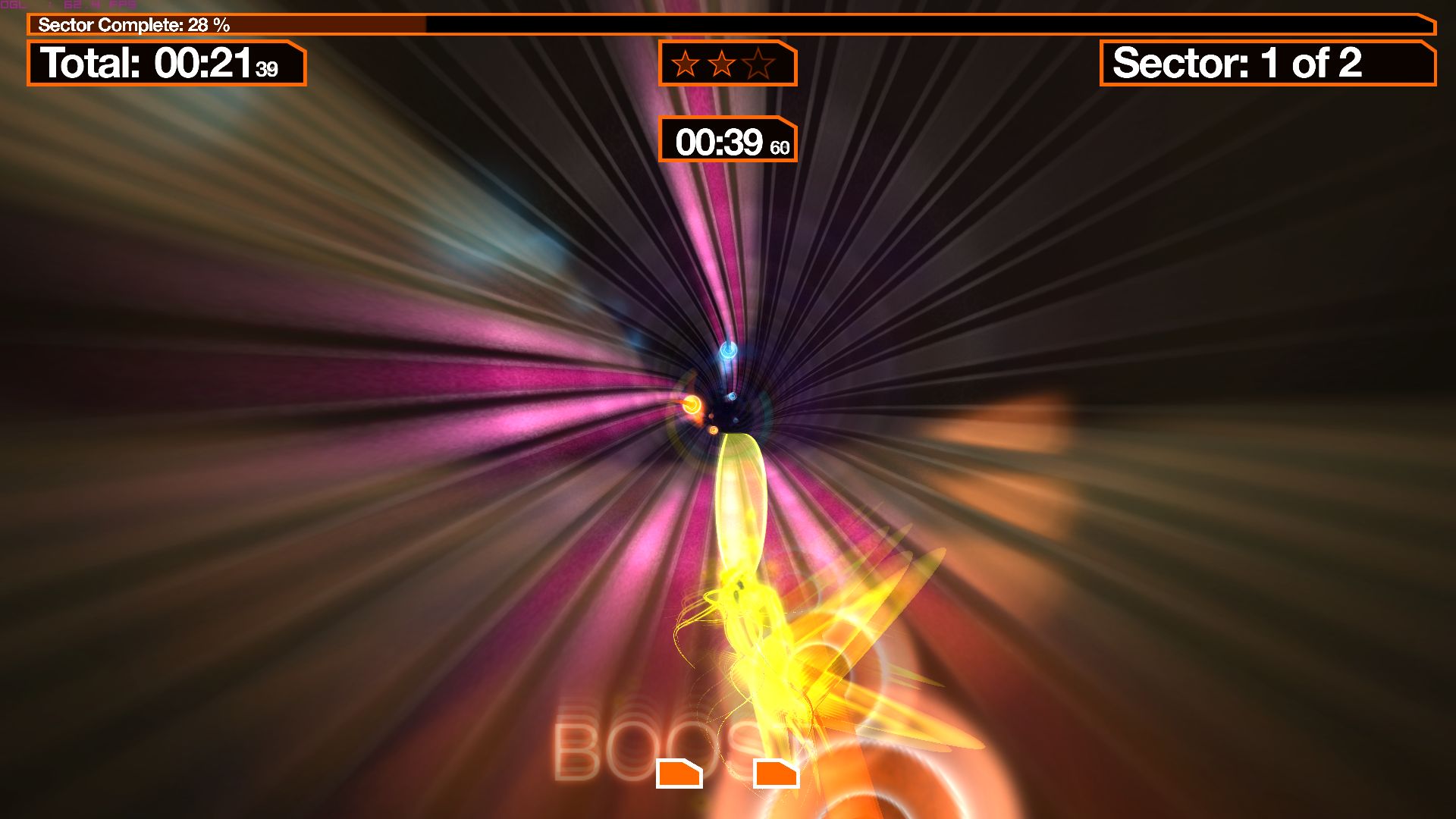
Dyad is a game where you do things in a spiral tunnel. That pretty much sums it up. You are a thing, and you shoot things like the tunnel whizzes by faster and the tempo of the music picks up. Each stage has an objective, such as getting through levels as fast as possible by chaining together the same colored orbs, which will give you a speed boost. Running into these orbs slows you down. I felt the shooting levels were the most fun, and there are a lot of levels here, so don’t worry.
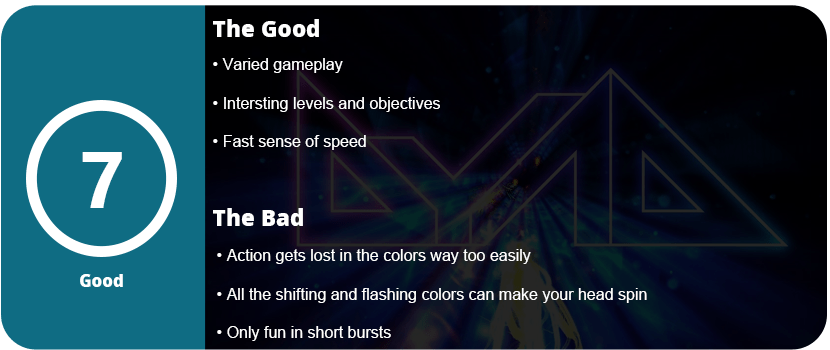
The biggest issues are the constantly changing colors and the sense of speed. It will make some people small or dizzy. When you’re focusing on something, even for a couple of minutes, it will make you dizzy. There can be so many colors on the screen that you get lost in the craziness, and that’s a serious problem. I couldn’t play for long sessions because my eyes would hurt or I would get so confused that I would need a break. Thankfully, the environments vary from stage to stage, and the enemies get changed up.
It’s not as easy as blasting everything. You need to avoid some things because if you shoot, it will hurt you. Some missions just end up being way too difficult, to the point that you can barely pass the minimum requirements. This is all due to the crazy colors and the weird sense of speed. You can see your lane as far as the game will let you. At least you don’t have to wait for things to come up right in front of you to shoot. This adds a bit of strategy as you spin around the tunnel, trying to think ahead of your moves. For a while, it feels pretty awesome to think on your toes and line up the perfect path for the highest score. There’s really nothing much else to say here; you have to play it to see how fun it can be. This game isn’t for everyone, though; if you are sensitive to motion sickness and flashing colors, I would stay away.
Dyad is a rare game that doesn’t come around very often. While it may slip under everyone’s radar for that big blockbuster title, it reminds us how simpler games can still be fun. The action can be too hectic and can get lost in the ocean of rainbow colors swirling around the screen, but there are plenty of levels here to keep you busy and a great soundtrack to listen to.
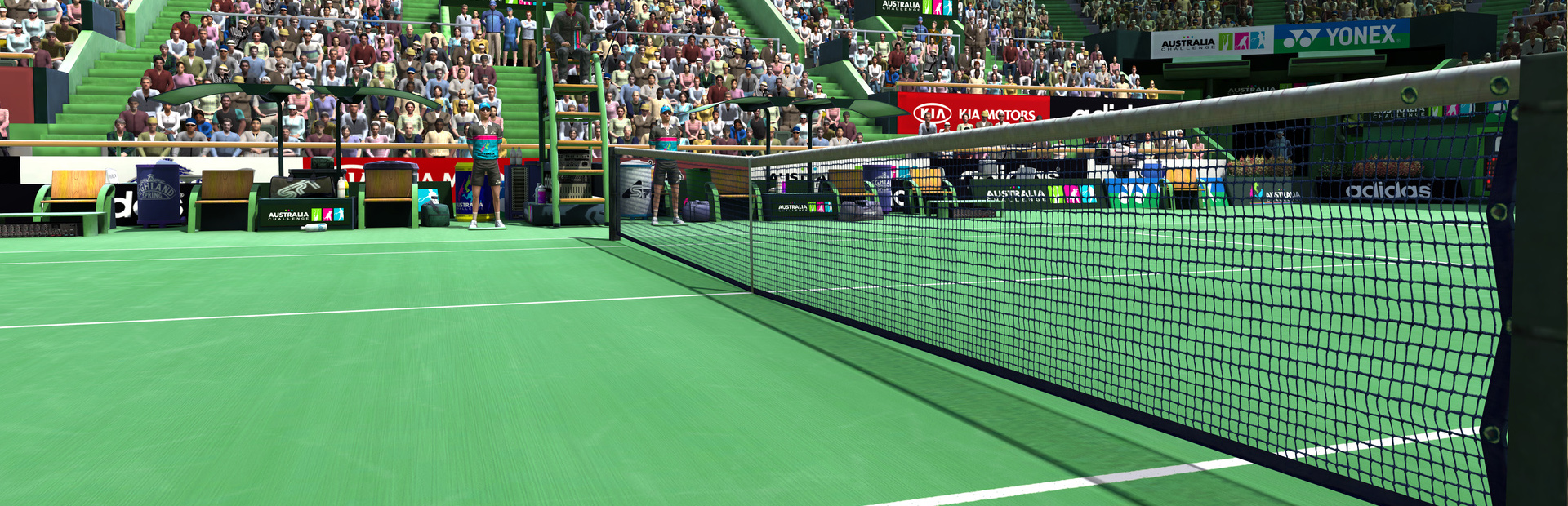
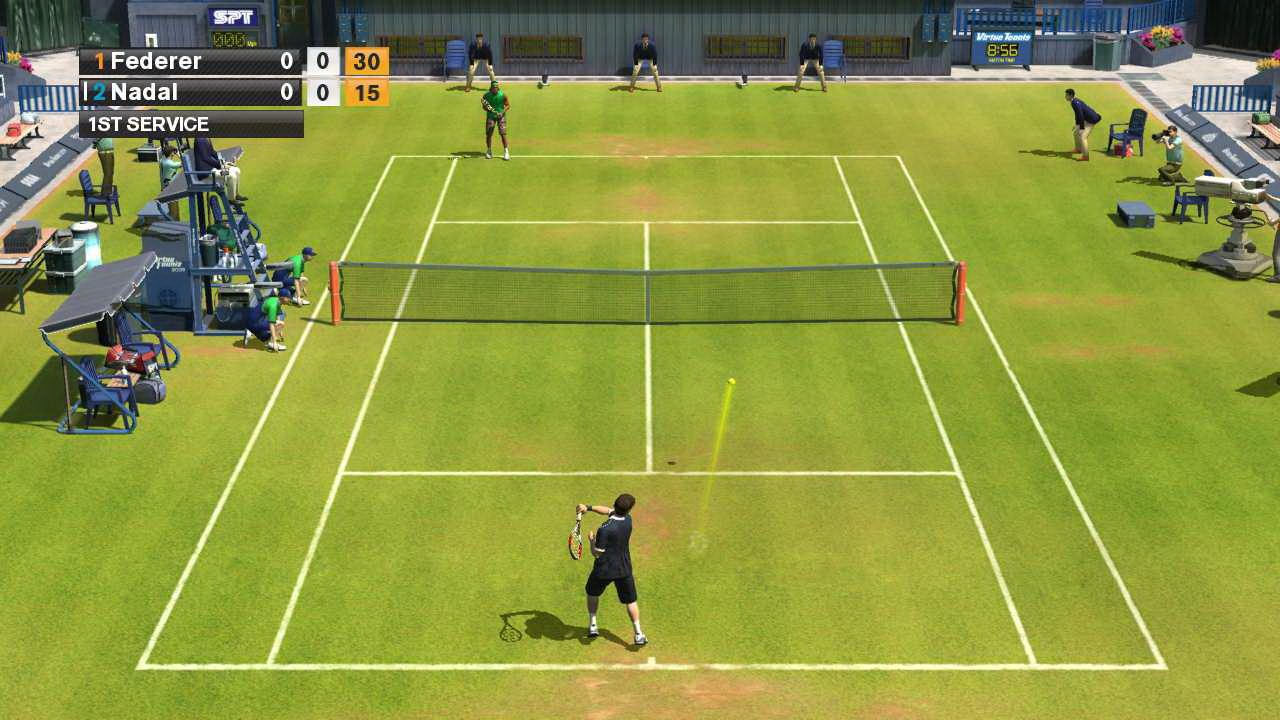
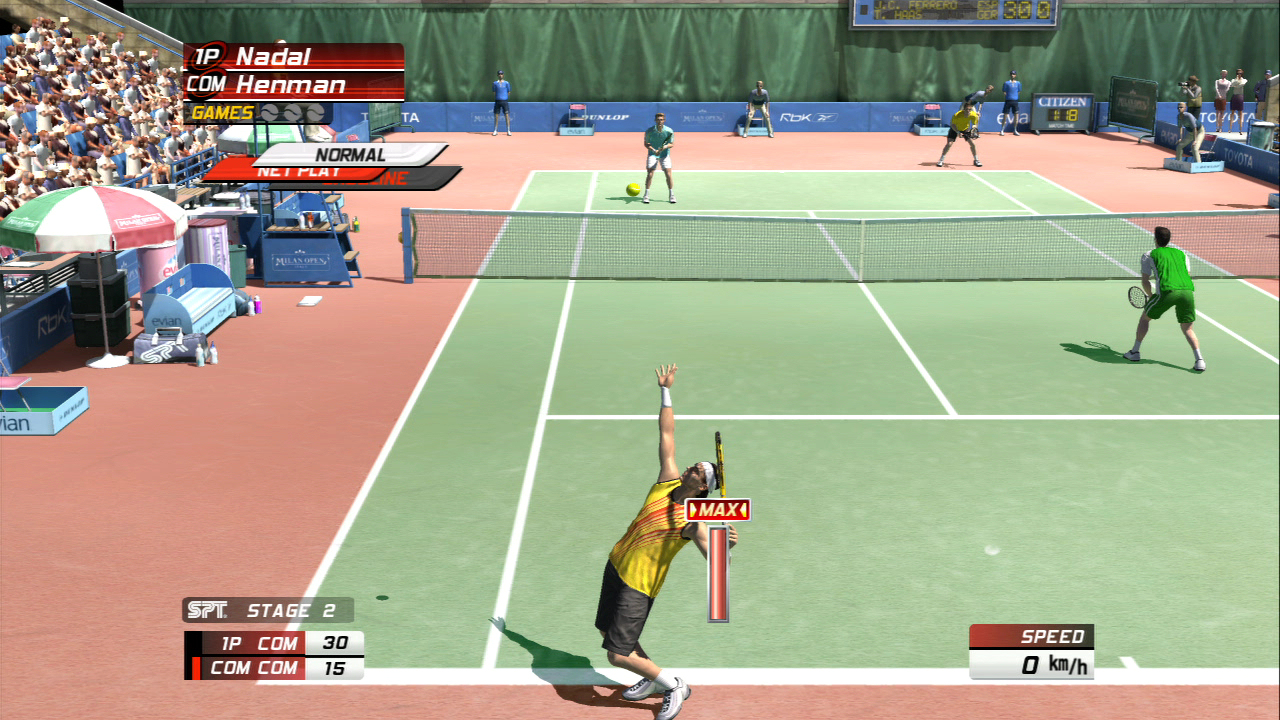
First off, I’m not a tennis fan. I just like playing the occasional game, such as Hot-Shot Tennis. I just like the competition and the strategy behind it. You need to trick the player into going where you want so you can set them up for failure (or, at least, I think that’s how you play tennis). I don’t know! I’m not a pro player! Secondly, Virtua Tennis 4 isn’t the best tennis game I have ever played; it’s very dull and lacks any excitement or flair. It doesn’t need to be a crazy arcade-type game, but give us more than just green, two players, and a ball.
The game is very confusing to start. The career mode is pretty lame, and I didn’t like it. You move around a world map with a piece of paper and markers. You get random move cards instead of dice. Some spots are for training; others are clothing shops, tournaments, face-offs, and various other things. Every time you get into a match, whether it’s for training or not, your condition decreases, and this apparently affects how you perform. I honestly didn’t notice a difference, or the AI was just so bad that it didn’t affect anything. This board game idea is nice, but it’s so dull. The menus look like absolute crap and are flat and lifeless. There’s no tutorial on how to play, and each move pretty much felt the same. The only one that felt different was the lob.
During a match, I felt every player played the same. You serve with a power meter, and I could never figure out where my ball was going. Some sort of reticle on the ground would have been nice. I would smack the ball for 10 minutes, and nothing would happen. It was so hard to trick the AI into doing what you wanted, and it took so long. I wound up losing match after match trying to outbeat the AI; otherwise, I was stuck in an endless volley. The matches themselves, outside of swinging, are boring. There’s no commentary, the characters look horrible, the pros don’t look like their real-life counterparts, and the graphics look about 5–6 years old.
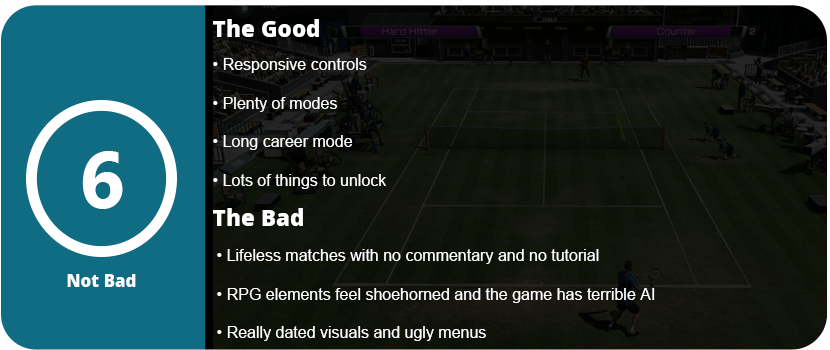
I understand this is supposed to be a tennis sim, but you can still make it fun. Even after playing 10 tournaments, I still didn’t unlock any new clothes; my character was taking forever to level up, and it just felt like the same thing every freaking match. It felt like it would never end. During career mode, the stupid reps and managers would pop up with lifeless dialog that you just didn’t care about. The only real way to go is multiplayer, but no one is playing online at all. I just feel that the game is a huge, boring mess with terrible AI and lifeless characters. The controls respond pretty well, but I didn’t feel a difference between any of the hits. The game could have been so much more. As it stands, this is the worst tennis game I have ever played. Even major tennis fans will be disappointed in this lifeless borefest.
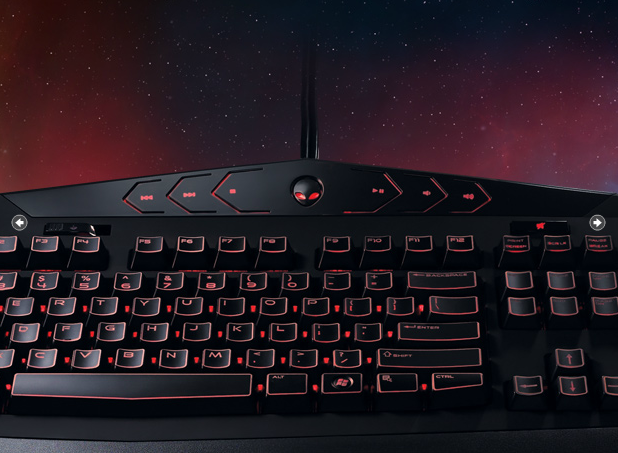
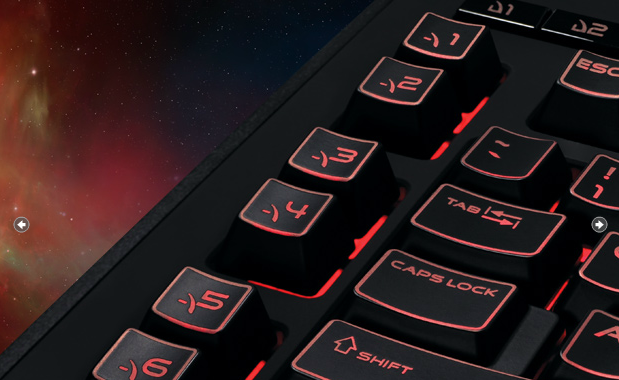
There are better keyboards out there, I won’t lie. However, if you have an Alienware computer, this keyboard is perfect. It mainly has to do with AlienFX. You can sync your FX with your laptop or desktop along with the keyboard; non-Alienware owners may not care for this. With that aside, this keyboard is great. The keys are nice and deep, the ergonomics are very comfortable, and the keys are fairly quiet. The design is just so appealing, but any keyboard has a few flaws.
Firstly, the keyboard isn’t separated into zones like the Alienware laptops are. There are only two: the keys and the media bar up top. I also hate that the alien head logo doesn’t do anything. I was hoping it would open the Command Center before I got it, but alas, it’s just a logo. There’s a dedicated mute button that sits above the print screen button and a gaming lock switch that disables the Windows key and menu key during gaming. Some may find this useless, but it’s there for those who need it. The big thing about this keyboard is the TactX keys. There are 18 in total. You can switch between three different profiles. With these, you can open programs, set weblinks, and set macros. There’s even a macro recording button! They are lined upright on the left side of the keyboard, which is a nice and neat line. The optional palm rest is really nice, and there are feet standing underneath as well.
The key placement is just perfect. I tested it playing Battlefield 3 and Max Payne 3, and I didn’t have to look down once. My fingers fell right on the keys they needed in the heat of the battle, and that’s the important thing. The keys are much deeper than most keyboards and even laptops, but it feels nice because you get responsive to feedback. While the complaints are minor, I would have liked to see other features, like an LCD screen of some sort for shortcut applications. For $80, you are getting a pretty sweet keyboard, but that may be just me being picky. You also need two USB ports; this may be a deal-breaker for some who are limited. Those with desktops probably won’t care, but laptop owners may. You need one for the lights and one for power.
Alienware fans should be perfectly happy with this board, and even non-fans can enjoy this thing. I just love the key placements and how nice they are to press. I haven’t had a keyboard this nice before. The software is simple and easy to use, and it gets the job done well. It also comes with a command center for non-Alienware owners.
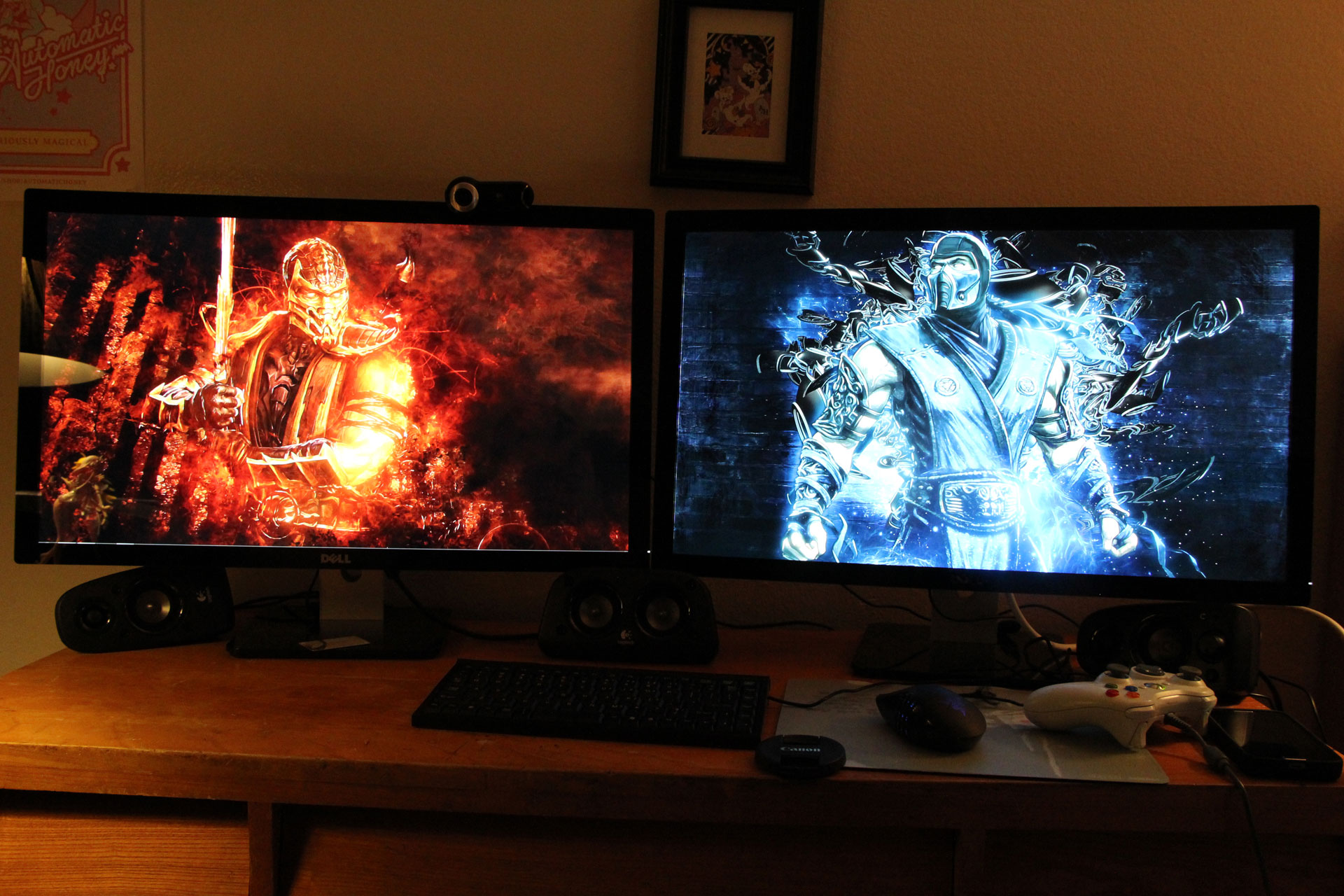
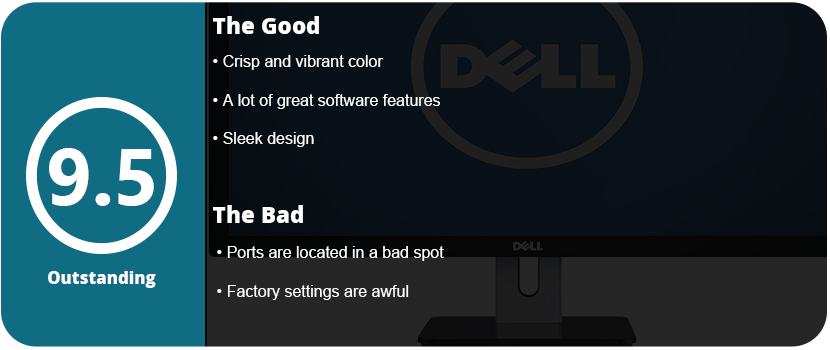
A good monitor doesn’t just look good, and every monitor looks different to other people. You need features, stability, and clarity. A very bright monitor isn’t exactly good. The models in the store are in torch mode, which means the contrast and brightness are set all the way up. This is to make the monitors look bright and vivid, yet when you come home with them, they aren’t. The Dell S2740L is all of the above. Crisp, vivid, and full of features. When I saw the install disc, I rolled my eyes. Some crappy buggy software is thrown in as a gimmick or to “help” control the 2 USB slots that are underneath the unit. I was surprised that the software auto-controls the presets for when each program is opened. This shocked me. You can drag exes into the window and decide what preset you want for them. You can also turn it off, but I prefer this method. The monitor is crystal clear through both DVI and HDMI. However, the factory settings are terrible. Turning the image enhancer on makes everything look like it was overly sharpened in Photoshop. I actually thought something was wrong with the monitor; I had to switch out the DVI cables to see. Once that was off, the monitors looked so crisp and clear.
The software allows you to arrange grids on each monitor you have. When you drag a window into that region, it will auto-resize it for you. This is great if you are dragging and dropping around folders or switching between programs a lot. The software also allows you to easily make separate settings for each monitor. Even with great software, a monitor can still suck. This monitor was tested on movies and games, and the colors just popped. They were so bright and colorful. Once you get used to the brightness, you can start turning it down bit by bit to save energy. There is an energy meter when you turn the brightness and contrast down. Eventually, you can get it down to 60% without it bothering you.
One thing that did annoy me is that the ports are too hard to get to. They are directly underneath the unit in the back, so you need to crouch down, pull the monitor towards the edge of the desk, and fiddle around until you get the plugs in. This was a bad spot for the USB ports as well; why couldn’t they be on the side? One thing you may wonder about is the gap between multiple monitors. It isn’t seamless like an edge-to-edge display, but it isn’t so bad either because the monitor is completely flat without a plastic bevel to bother you. There aren’t many issues here except the initial setup, and the ports are in weird spots.
For the price, this is a damn good monitor, and I highly advise you to get a 2. I have two myself, and they are gorgeous. I can’t explain how beautiful this monitor is unless you get one yourself. This may be one of the sharpest 27″ monitors out there.
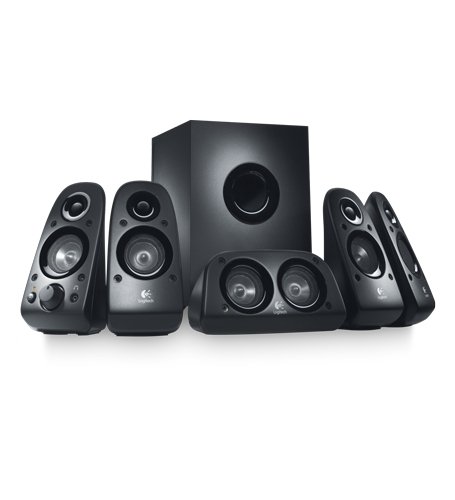
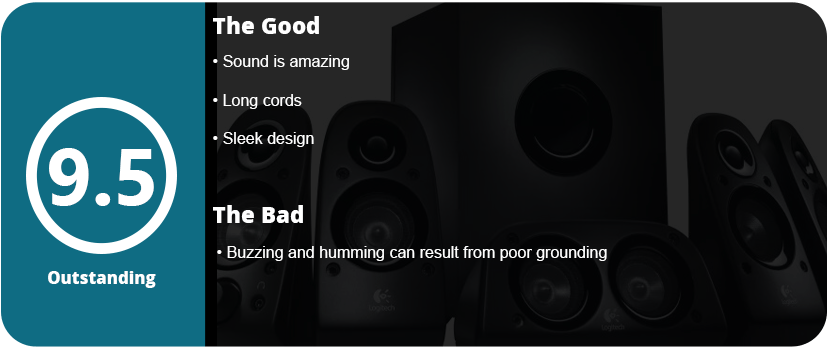
It has been a long time coming, but I finally got a surround sound system. I had never really heard of one before, so I wasn’t sure what to expect. After opening the box and seeing about 20 cords, it felt pretty daunting. Thankfully, the Alienware X51 that I hooked them up to had 5.1 audio jacks, and the colors matched perfectly. There’s also only one power cable coming from the subwoofer, which is really nice. I thought I had to plug every speaker into the wall! Once you get everything set up cord-wise, you then have to position every speaker. There are five in total, so you’re going to need a lot of room. Plan ahead of time and decide where to put them. Some probably should be on a shelf above your monitors; the subwoofer can sit nicely next to your desk, while the center speaker should be in front of you. It’s the rear speakers that are tricky. They are supposed to be on either side of you, but most people don’t have that kind of setup. Thankfully, I had a bookshelf and table on either side of me, so the trickiest part is positioning these monsters.
Once you get them plugged into Windows, they should automatically set your sound to 5.1. Once I started playing music on Windows Media Player, I was blown away. It sounded like I was in a theater, and these speakers get really, really loud. During gameplay, I heard enemies coming from behind me (literally) and crashing off to the side like you are in a theater. The same goes for movies as well. Being surrounded by all these speakers, it feels like the sound is coming from all angles. The speakers have great clarity as well and don’t rattle or sound tinny like some cheaper models. For $100, this is a great deal.
My only issue is that there is buzz and hissing when no sound is coming out. This is pretty common for speakers, but you need a well-grounded home or an expensive surge protector to prevent this. I tried a few methods, such as plugging it into the wall by itself and turning the volume up high and the device volume down. At least the buzzing stopped once I started playing something through them. This will drive you nuts, though, and you will resort to turning them off if you aren’t listening to anything. On the other hand, there’s a headphone jack on the front speaker, so you don’t have to use your PC jack, and the power button is on there as well. No reaching behind the subwoofer to flip a switch.
With all that said, the Z506 are fantastic speakers for the price. They blow you out of your house and are of great quality. The only problem is the constant buzzing and hissing if you don’t have good grounding. It takes a little while to get set up and seems daunting at first (even for someone who’s knowledgeable about all this stuff). Once you get everything set up, it’s well worth it, and you won’t be disappointed one bit.
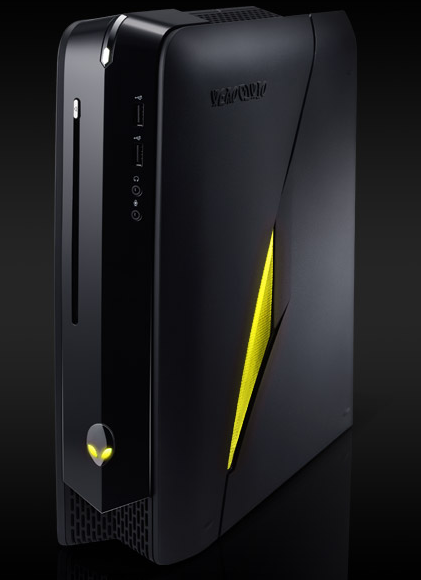
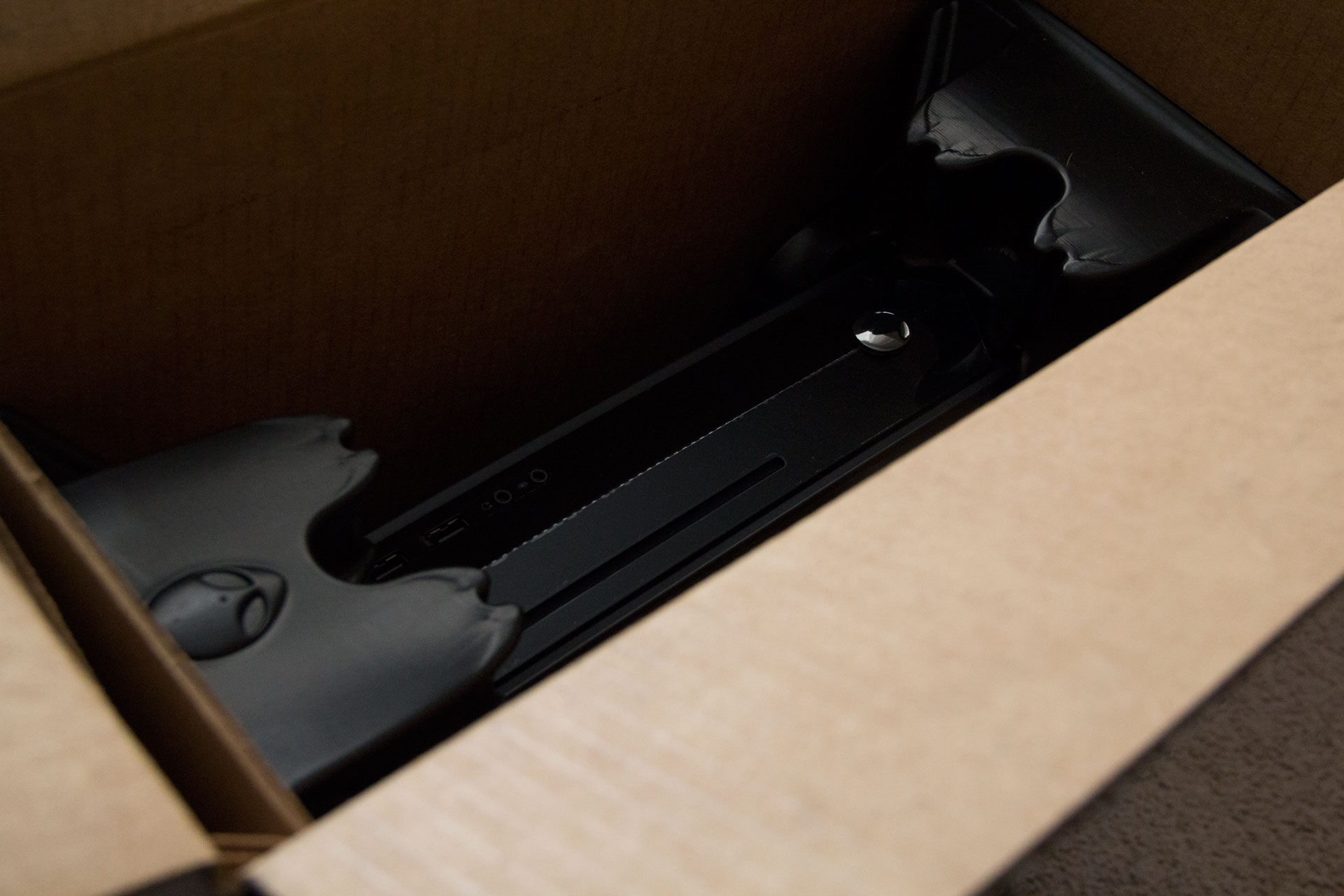
It’s been 3 long years since my review of the Alienware M17x-R2 laptop. I love the thing, and it can still play the latest games, but it is starting to show its age. I wasn’t too fond of Alienware laptops because they used to be so expensive. Since their redoing of their entire lineup, they have become much cheaper over the years. With the new 14, 17, and 18 laptops and the Area-51 desktop being dropped for the X51, they have come a long way. They still offer the monster Aurora desktop, and maxing it out won’t cost you $6,000 anymore. The X51 is a console-sized, compact, small-form-factor desktop that is very affordable yet still offers a lot of power for gaming.
My specs for this setup are as follows:
Motherboard: Intel H87
CPU: 4th-Generation Intel i7 4770 @3.9Ghz
GPU: Nvidia 2GB GTX 670
RAM: 8GB DDR3-1600Mhz
HDD: 2TB @7200RPM
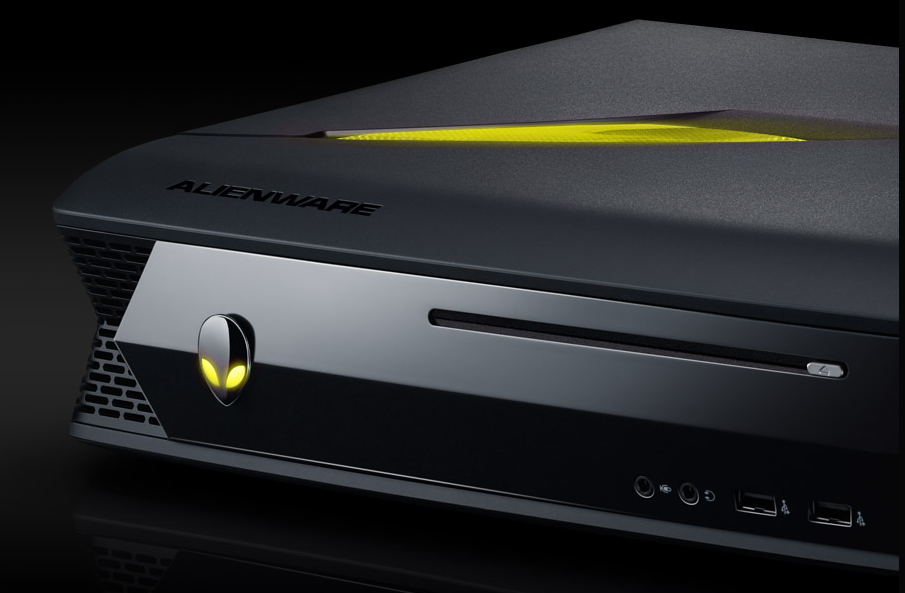
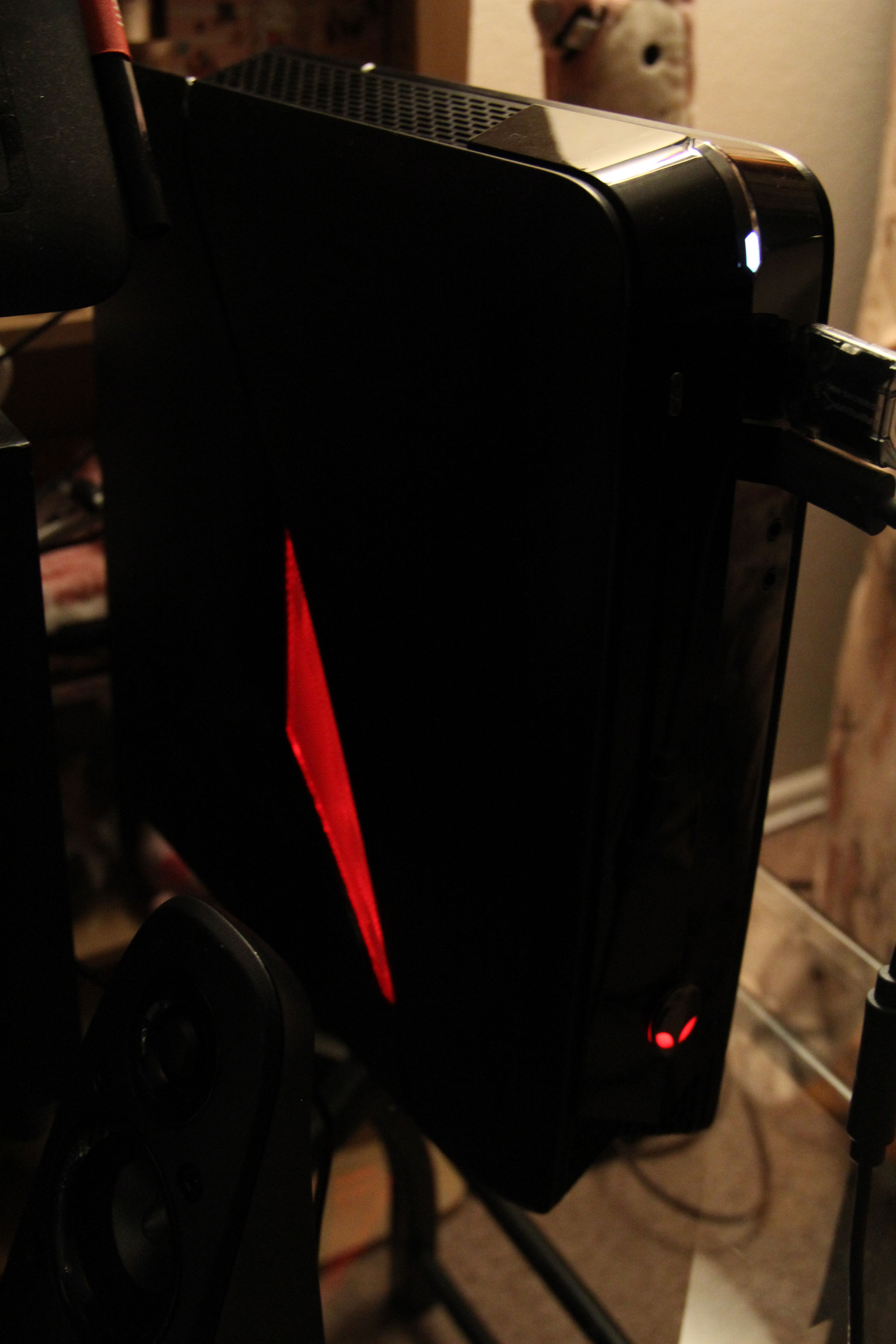
That’s a pretty powerful rig for something the size of an Xbox 360. The chassis itself looks amazing. It’s all about the custom design; what sets gaming rigs apart from others is the chassis; the more unique, the better. The AlienFX slits on each side give it a sleek look. The beveled top and front plate make it look sleek. The rotatable alien head on the front gives it that extra little bit of uniqueness to set it apart from other rigs. There are plenty of ports here as well. 2 DVI and 1 HDMI, 8 USB 3.0 ports, surround sound hookups, a headphone and mic jack in the front, another HDMI port on the onboard chip, and a projector port. That’s a lot of ports in one small tower. While looks are important, performance is even more important, so let’s see how it stacks up to the most graphically demanding games today.
Metro: Last Light
Advanced PhysX: On
Quality: Very High
Resolution: 1920×1080
SSAA: 4x
Tessellation: Very High
Texture Filtering: 16x
The game hovered around 15-20 FPS on these settings. That’s pretty much unplayable. You’re probably wondering why the GTX 670 can’t handle these settings, and it was from one simple setting: SSAA. At 4x, the scene is aliased quite heavily, and you need two cards to be able to handle the load. Once you drop it down to 2x, the frame rate shoots up to 35. On FXAA, the frame rate is even higher, but it looks a bit blurry. That’s pretty impressive, as Last Light is one of the most graphically demanding games out there, right next to Crysis 3. The 670 was obviously designed to handle stressful loads in DirectX 11.
Tomb Raider
Anti-aliasing: 4x SSAA
Depth of Field: Ultra
Exclusive Fullscreen: On
Fullscreen: On
Hair Quality: TressFX
High Precision Lighting: On
Level of Detail: Ultra
Post-processing: On
Reflections: High
Resolution: 1920×1080
Shadow Resolution: High
Shadows: Ultra
SSAO: Ultra
Tessellation: On
Texture Filter: 16x
Texture Quality: Ultra
That’s everything at its absolute maximum. I was getting the same frame rate as Metro at 10–15 FPS. Once again, it was the 4x SSAA. That is really for 2 cards to handle, but once I dropped it to 2, it went to 40 FPS. The game looks amazing, and the frame rate stayed pretty steady and didn’t jump around too much. If you turn off tessellation, the frame rate goes up to around 50 because tessellation is pretty demanding. Surprisingly, the TressFX will give you a 5–10 frame hit just for Lara’s hair.
Batman: Arkham City
Ambient Occlusion: Yes
Anti-aliasing: 32x CSAA
Detail Level: Extreme
DirectX 11 features: MVSS and HBAO
Distortion: Yes
DX11 Tessellation: High
Dynamic Shadows: Yes
Fullscreen: Yes
Hardware Accelerated PhysX: Yes
Lens Flares: Yes
Light Shafts: Yes
Reflections: Yes
Resolution: 1920×1080
Here’s another GPU-demanding game. Arkham City is one of the most tessellation-heavy games out there, and the 670 runs it like a charm. Here’s a game where you can run everything higher than GeForce Experience tells you. It says to put the anti-aliasing at FXAA, yet I can run it on 32X just fine with 60 FPS. This just goes to show the true power of the 670 and the 4770 working in tandem.
The Witcher 2: Assassins of Kings
Anti-aliasing: Enabled
Bloom: Enabled
Blur Effects: Enabled
Cinematic Depth of Field: Enabled
Dangling Objects Limit: Disabled
Decals: High Spec
Depth of Field – Cutscenes: Enabled
Depth of Field: Gameplay: Enabled
Fullscreen: Enabled
Light Shafts: Enabled
LOD Distance: Far
Motion Blur: Enabled
Number of Shadowed Lights: Ultra
Resolution: 1920×1080
Shadow Quality: Ultra
SSAO: Enabled
Texture Downscaling: None
Texture Memory Size (MB): Very Large
Ubersampling: Enabled
Vignette: Enabled
Wet Surfaces Rain Effect: Enabled
This is a game where, when it came out, you needed two GPUs to turn on Ubersampling. My 5870 on my laptop has a hard time running the game maxed out, even without Ubersampling. The game has a smooth 60 FPS with all the above settings; not a single hitch was seen even in huge open areas.
Crysis 3
Anisotropic Filtering: 16x
Anti-aliasing: 4x TXAA High
Fullscreen: Yes
Game Effects: Very High
Object: Very High
Particles: Very High
Post-Processing: Very High
Resolution: 1920×1080
Shading: Very High
Shadows: Very High
Texture Resolution: Very High
Water: Very High
Another game where the anti-aliasing stressed the 670 a bit too much. Using Tessellation anti-aliasing drops the FPS by about 10; in fact, any high version of the AA drops the FPS by 10. Medium is by 5, and there’s almost no drop in low on any of the three AA options. You really need two cards, or a 680/690/Titan or 7xx series card, to get high FPS with those AA options. Everything panned out well, especially since the water tessellation kicks most cards’ butts, is very tessellation heavy, and the shadows can really bog down most cards. The 670 was able to run all this at around 40 FPS. That’s damn good for just one card.
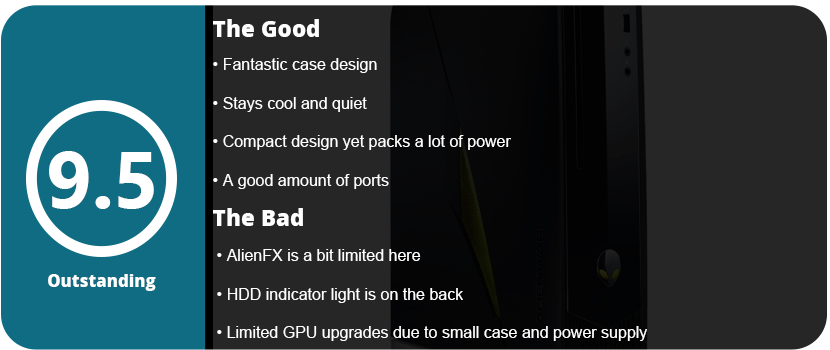
During all this testing, the X51 stayed nice and quiet; I barely heard it. After 3 hours of steady gaming, I felt the back of the tower, and it was barely warm. That’s some damn good cooling in such a small space. This means you don’t have to worry about games crashing or shutting down from GPUs getting too hot or the CPU overloading with heat.
Alienware computers always come with their own awesome suite of software, the Alienware Command Center. Command Center 3.0 was launched in February and features AlienAdrenaline. Say you like drawing a lot, and you listen to music or your favorite YouTube playlist in the background. You can create a shortcut that will launch Photoshop, your playlist web link, your media player, and even change the AlienFX to match the mood with a single click. That’s really awesome. Adrenaline also has system monitoring in real-time and allows you to record it. Of course, AlienFX allows you to change the colors on your tower, but I was disappointed here. You can’t morph or allow pulsing like with the laptops, and the alien head marquee on the front isn’t a hard drive light. The light is on the back of the PC, and I like to know when my computer is active. You can change each side of the tower and the head marquee individually, but I would have liked more options available. On top of that, there’s AlienFusion, which allows you to change all your power settings, which is great.
In the end, the X51-R2 is the perfect balance between power and compactability, as well as price. The 670 is a very powerful card, and the 4770 is an awesome CPU. The 8 threads make a huge difference over the 4 thread quad-cores out there. If you want a pre-built desktop at an affordable price, the X51 is the way to go.
Forget about the last Shadowrun FPS. That game was a disaster. This HD remake of Shadowrun Returns with a great story, but the combat is lacking just a bit. You are basically a runner who watches a tape of your best friend before he dies. You suddenly become his insurance collector, and you need to find his killer. The story is pretty engaging, and I was sucked in from the beginning. You basically just follow mission after mission, unraveling this mystery.
Of course, you get to pick your class at the beginning. Go from ranged weapons to melee to magic. There’s also a fourth decking ability that makes you stronger during hacking battles. Once you complete some missions, you get to The Union, which is your underground hideout. You can buy weapons, cybernetic enhancements, magic, first aid, weapons, and various other things. Make sure you take plenty of health with you and stock up on the latest before the next mission. Usually, you have to hire out mercenaries to help you in a fight. I found the majority of the story fairly challenging, but later on, it got downright unfair. The biggest issue is the unfair savings system. The game is autosave only. The game will only save at the beginning of each level, so if you die, it’s game over. This is so infuriating towards the end when you have really long and tough fights.
The combat is fairly decent. You can select between ammo types (or magic types), special powers, and items. With this variety, you are sure to win battles. I was just so upset at how often I missed. I could be at point-blank range, and I would miss three times in a row. The accuracy and rate at which you hit enemies seem completely random, and I hated that. Decking battles are interesting but boring because they aren’t as deep as regular combat and there are only a few types of enemies. Once you complete the mission in the hacking area, you have to run all the way back to the opening. If no one’s out there defending you, the enemies shoot up your body, and you can die. That’s really frustrating, and it drove me nuts.
I also wish there was more exploration, but you’re stuck where the missions take you. Sure, there are a couple of side missions, but you can’t explore anywhere. This is a really interesting world with interesting characters, but you’re limited to where the story takes you. That will turn a lot of RPG fans away, but the entertaining combat and story should keep you for a while. I also wish there were more powerful weapons and armor in the game. Even when I was almost done, the same armor from 10 missions ago was still the best. The game is pretty unbalanced, but some may overlook it. The graphics are decent, but nothing special. They won’t make your system sweat.
In the end, Shadowrun is a fun RPG for fans of Fallout and earlier top-down RPGs. The story is great and is a fun murder mystery, but the combat feels too thin, and decking just isn’t fun. The real deal-breaker here is the unfair and punishing save system, and some may quite early on because of it. If you can stomach the unbalanced gameplay and save system, you will be in for a great story.





















































 thebinarymessiah.com
Super, thank you