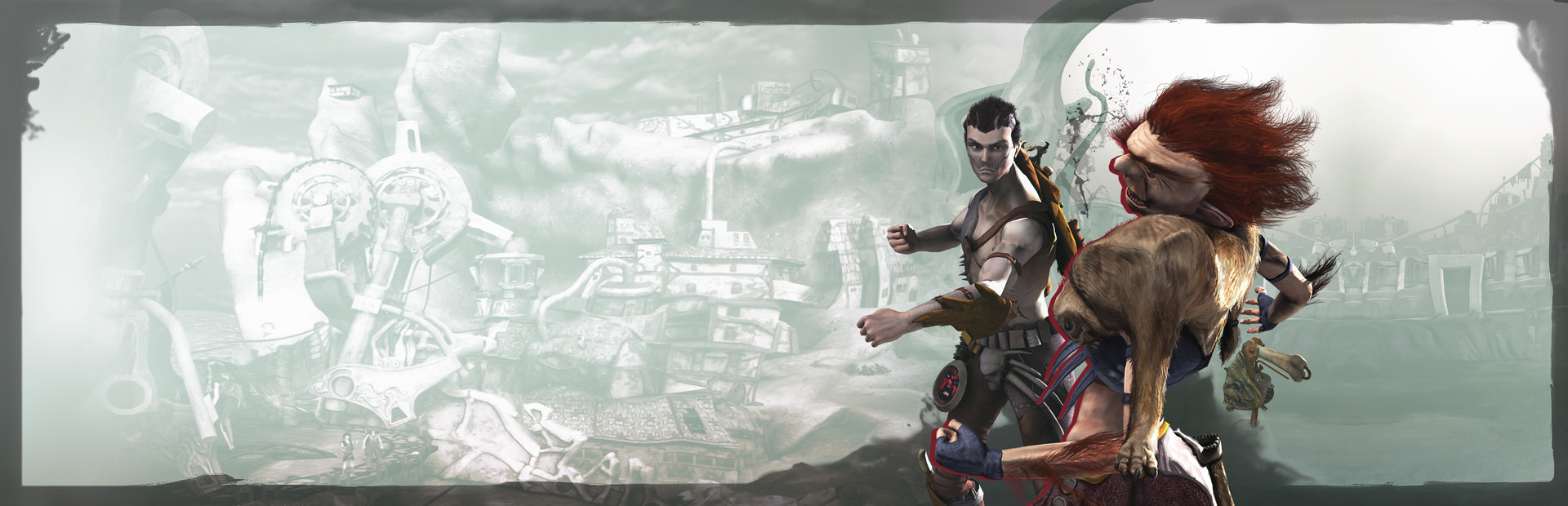
These indie games just keep getting better and better and more like full-budget titles. Zeno Clash is no exception, with an original, wonderful art style, fun gameplay mechanics, and a very intriguing story. ZC puts you in the mind of Ghat, a runaway man who is hunting his “Father-Mother” and wants to release his or her secret.
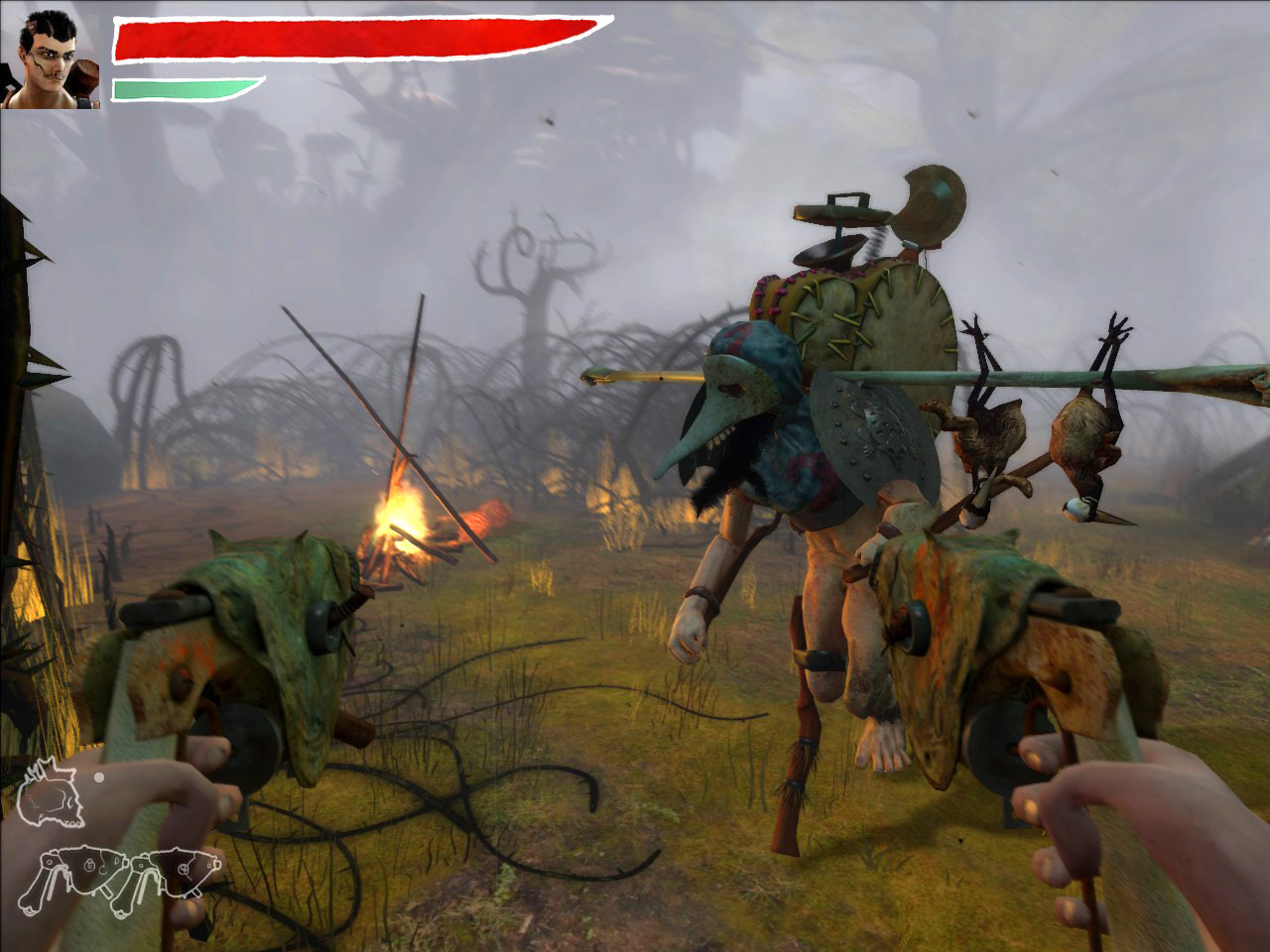
During your meeting, you meet a few interesting characters, and you play through flashbacks occasionally. The game is an FPS/melee game with some pretty deep combat mechanics. You use your fists by using the left mouse button and right mouse button (for strong attacks), which you can lock on by using E and using space as a block. While you’re blocking, you can dodge attacks by hitting D or A, and if you time it right, you’ll get a slow-mo queue to punch. You can create combos, and then when the enemy is stunned, you can knee-bash them or throw them around. I found the best tactic was to charge your strong attack while backstepping and then let it go. This is a bit repetitive (just like the whole game), but it’s effective and works when you are up against four-plus enemies. All enemies have a health gauge, and so do you; thus, having to eat orange flowers will give you health.
Sometimes you’ll get weapons to use, and these are neat little things that can be used to shoot the enemies, causing massive damage. Most guns have no more than a few shots in them (this game has a tribal theme to it), so you’ll have to aim very well since reloading can take longer than you want (sorry, this isn’t Call of Duty). While most of the game consists of this pattern: Run, fight a batch of enemies, cutscene, rinse, and repeat. Thanks to the short length (about 5–6 hours), you won’t get too bored. One level, however, is a lot different from the rest: You are running through a foggy plain (the fog will kill you since it bites!) and you have a crystal torch. You must keep it lit with candles littered throughout the level and use it to shoot fireballs as shadows that come after you.
Zeno Clash has a wonderful premise to all of its gameplay, but ultimately it’s all the same and can actually be really frustrating towards the end. If there are too many enemies, you can get boxed in and beaten to death, and I found the most frustrating part about the game to be that if you get hit while you have a weapon in your hand, you drop it. This usually happens during a reload and can piss you off a lot. There aren’t too many weapons, but you have a single-shot rifle, a dual-shot crossbow, a sledgehammer, a bone bat, and a grenade launcher. But these are tribal-looking weapons, so everything is made from what you see around you, which is pretty slick.
The game uses the Source Engine (the updated one, not the old one), and the graphics are just bizarre and way out there. The creatures are something straight out of nightmares, and some of the speech is pretty odd too. Nonetheless, it makes the game even better, and the visual splendor is probably what saves this game. If you think there’s something to come back to (there isn’t), you can play challenges, and there are a bunch of Steam achievements to unlock. I highly recommend Zeno Clash to any FPS or indie game fan.
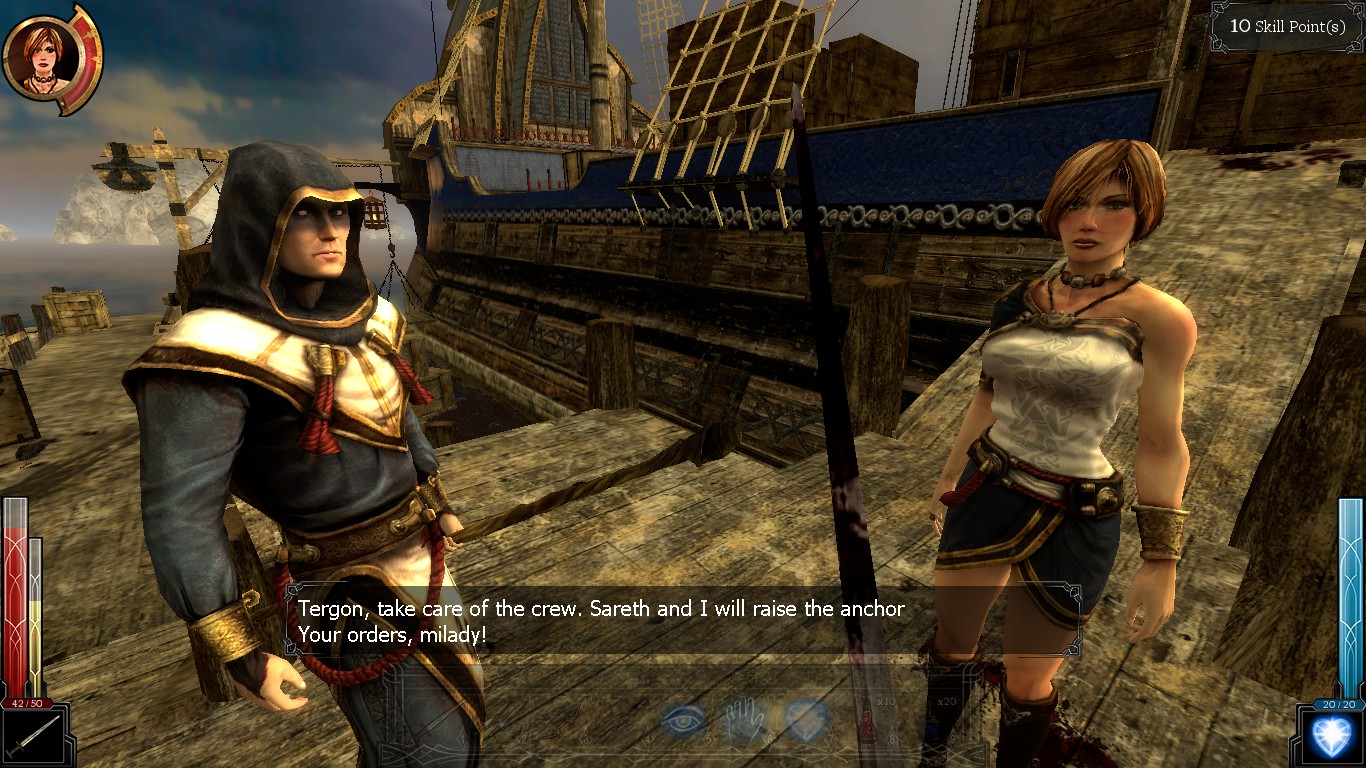
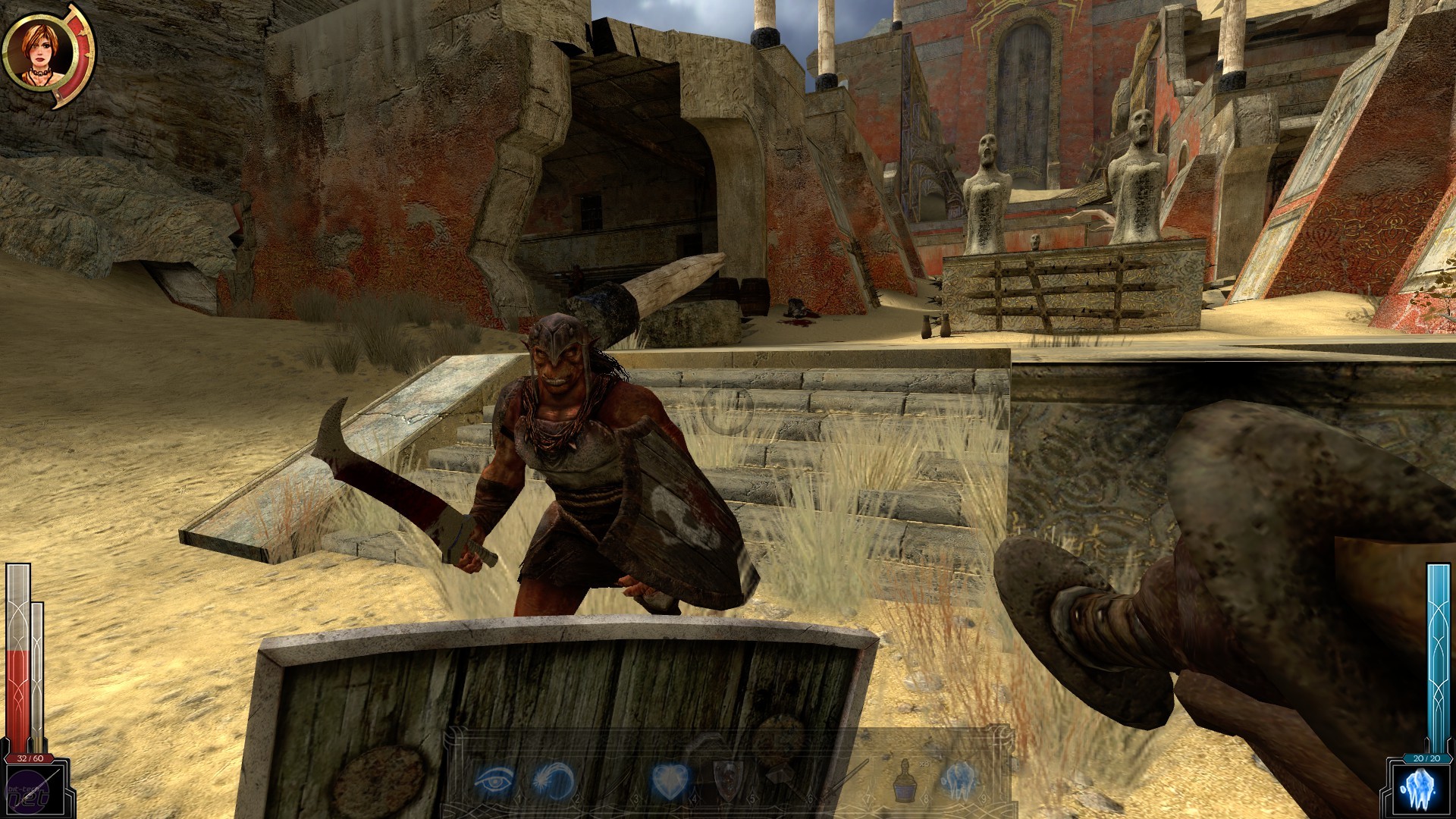
Before I start here, Dark Messiah suffered bad reviews because of all the terrible bugs that launched with the game. Now that 2 1/2 years have passed, Dark Messiah’s bugs have been pretty much ironed out, and you now have a pretty fun action RPG. Before I start explaining the game, DM uses the Half-Life 2 engine, so you can expect some wonderful graphics and effects. DM uses the HL2 engine very well, but the engine is a bit supped up, so you’ll need a fairly beefy rig to run this game. If your computer was being pushed with HL2, then your computer will have a hard time running this game. I also have to mention that DM felt a lot like Oblivion Lite in the sense that it is set in medieval times, melee combat is in the first person, and the art style is a little like Oblivion (not as unique, of course).
You play as a young protagonist named Sareth, and you must stop the evil Arantir from using the Skull Crystal and bringing the Dark Messiah back to life. You have a choice: either stop him yourself or let the Dark Messiah live on. The story is actually fairly interesting and will keep you on the edge throughout this 15-20-hour adventure. Now DM is a linear RPG (it’s not free-roaming like Oblivion), but it makes up for it with an intricate combat system. You have about 30–40 different item slots, and you can carry things from health, mana, weapons, magic, etc. As you progress through the game, you will earn skill points for completing objectives, and you can upgrade a variety of things from endurance, health, stealth, and archery skills to learn new skills such as heal, fire arrow, freeze, sanctuary, etc. There’s a lot to learn, and you won’t upgrade 100% in a play-through. You can either concentrate on being a knight, mage, or archer or just go down the middle.
There are a variety of unique weapons you can pick up throughout the adventure, such as the awesome rope bow (shoot an arrow at any wood overhanging and a rope will come down), ice staffs, flame swords, poison daggers, and even a cool electricity shield that stuns enemies when they attack you. Now there are no shops where you can buy things, so everything has to be picked up throughout the world. This keeps the action constantly going but will disappoint people who are used to having stores in their RPGs.
Combat consists of left-clicking for your basic attack, but if you hold it down, you do a power strike, and whether or not you strafe, move forward, or backward will determine whether it’s a sideswipe, impale, or overhead strike. This can let you easily dodge an attack and quickly strike back. You can use the right mouse button to block (and, when you get the ability), left-click to knock enemies back. Hit enough bad guys and you’ll get your adrenaline bar up, and this results in a gory, slow-mo instant kill. This applies to all weapons, and each of them has its own unique advantages. You have a kick button, and this is great when you are on a ledge, so you can just kick them off. Every so often, you’ll find spike beds on walls you can impale enemies on, and you’ll also find traps that can be kicked down to crush enemies.
While the combat is really fun and you can do a lot with it, it will get repetitive after about halfway through unless you use different weapons and toss things up. Every so often, you’ll find a blacksmith room where you can add bars of metal and forge your own weapons. Now, when it comes to enemies, there aren’t too many of them (knights, undead, spiders, necromancers, evil demons), and that’s about it. They are mixed up a lot, but you can still get bored of them after a while.
Every so often, though, you will get a great boss fight, and these are huge creatures that require key items in the environment to kill them. These are pretty awesome and very satisfying to take down. My biggest complaint must be the level design. A lot of times, you won’t find most of the hidden secret areas since they aren’t even in places you’d remotely think they’d be in. There will be times you’ll wander around for over 30 minutes in the same place wondering where to go, and this has to do with poor-level design. The levels are very linear, most of the time dark, and really hard to navigate. Other than this, Dark Messiah is a pretty good game, and you can even get it off Steam for $10! I highly recommend Dark Messiah to any action RPG fan.
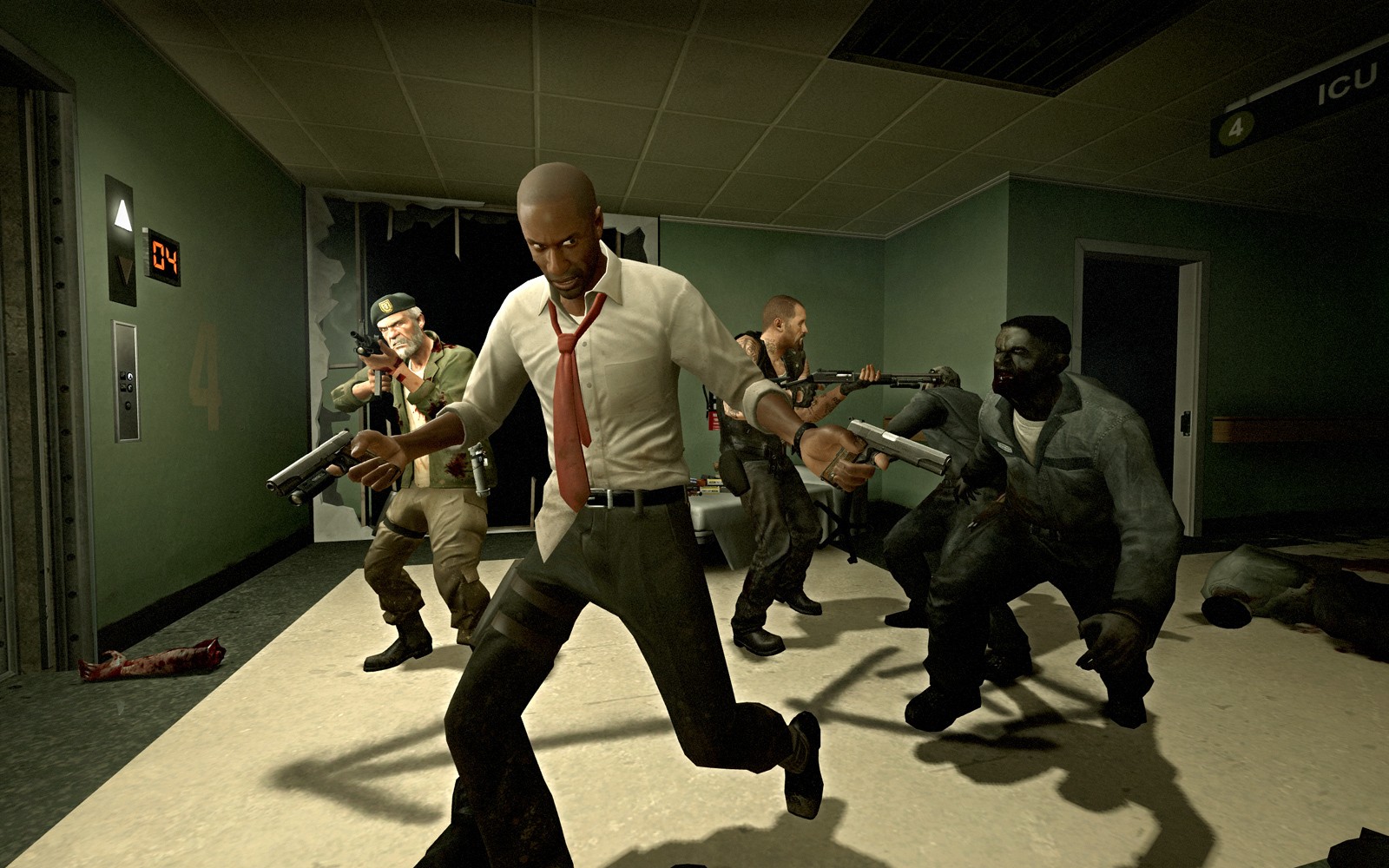
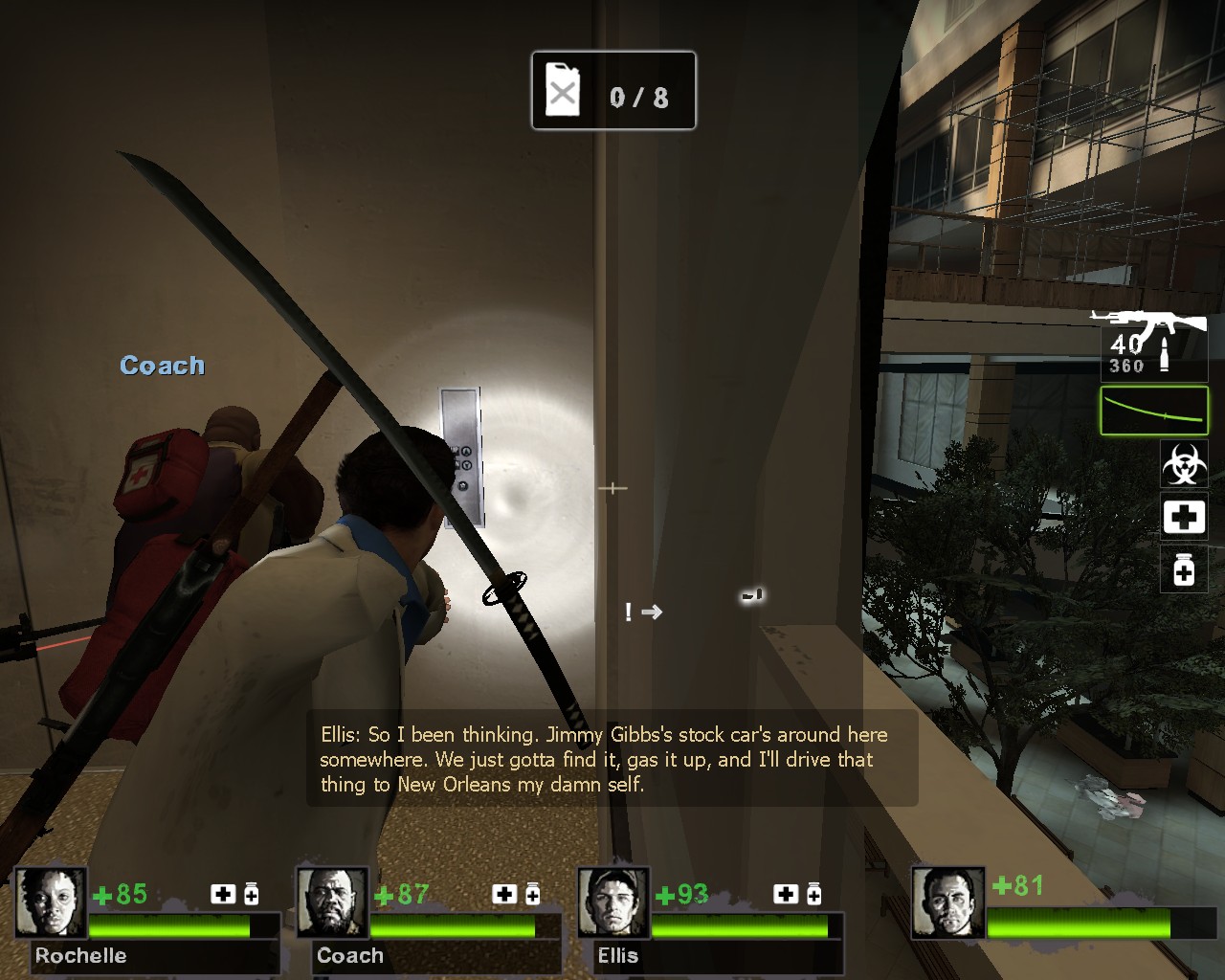
Once again, Valve brings us another great game using their source engine that brings all the elements of Left 4 Dead to life (or death???) The first thing you’ll notice (mainly Valve fans) is that the Source engine has had a next-gen upgrade (even more so than Portal), and everything looks amazing. While HL2 fans will notice some sounds and elements of the engine from those games, it doesn’t really bother you. The game looks stunning with excellent lighting effects, awesome AI (enemy and friendly), great character models, high-res textures, and just everything you’d expect out of the source engine. L4D, however, isn’t really a single-player-only experience; in fact, you won’t even see the full potential of this four-player game unless you play online.
The game is comprised of four campaigns, and each campaign has five levels. Each level gets longer and more and more difficult, with a final level where you have to face off hundreds of zombies until your rescue transport arrives. At the start of each campaign, you get to choose the four characters (each character just starts out with a different weapon). Speaking of weapons, I was disappointed in the small selection that there was (just pistols, shotguns, machine guns, and a sniper rifle, along with bombs and Molotov). The basic idea is that these four characters have to cover each other’s butts through these levels while you face off massive hordes of zombies. The whole idea is a bit more in-depth, with some gameplay elements thrown in there. For example, zombies are attracted to noise and light, so if you keep your flashlight on near zombies, they’ll charge you. Shoot a car that has its headlights on, and you’ll have to face off with dozens of zombies charging at you because you set off the car alarm. Killing these zombies is fairly easy since a few shots will bring them down, but it’s sheer numbers that make up for this.
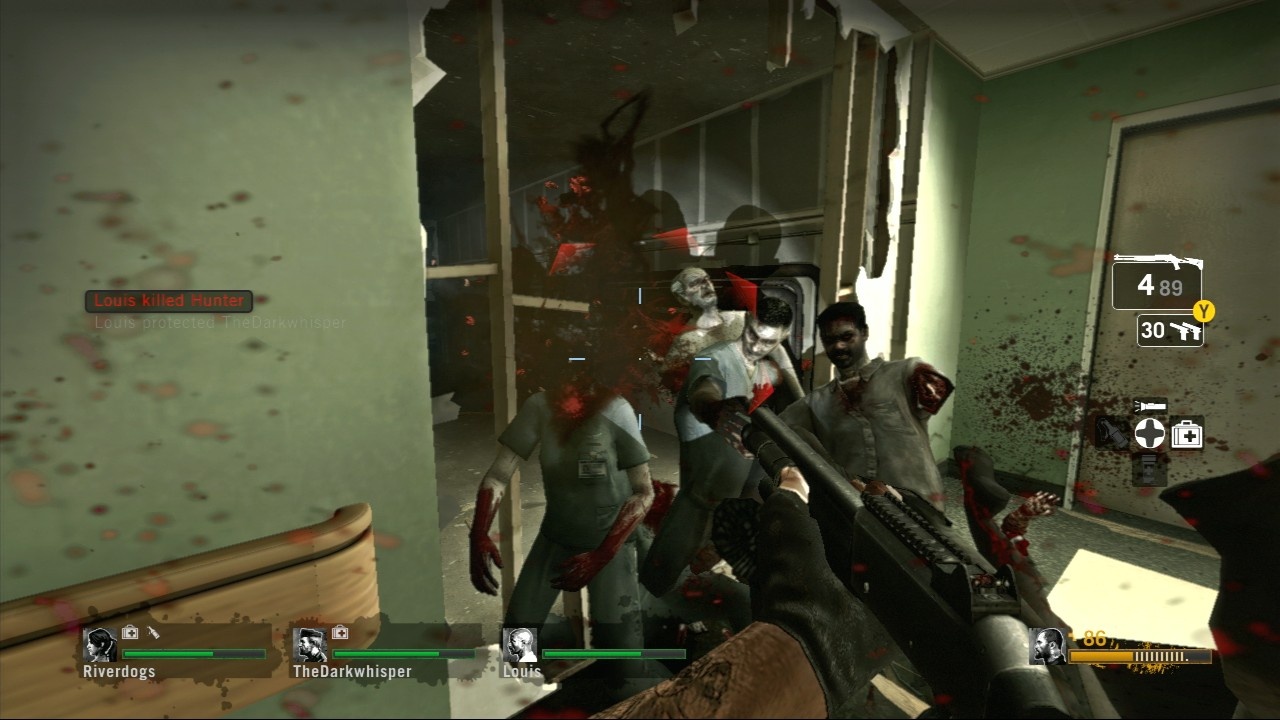
There are over 150 different zombie types, but there are a few “special” zombies that are harder to take down. These are the Tanks (massive zombies that will take all four people to bring down), Smokers (these guys have super long tongues that snatch you up), Boomers (no, not like in Gears of War, if these guys vomit on you, they attract more zombies, and the same if you blow them up if they’re too close to you), Witches (you hear them cry through levels, and if you disturb them, they’ll take you down and you are down until someone revives you), and Hunters (which are super fast-moving zombies that pounce on you and eat you until someone saves you). This changes the gameplay up, along with certain sections requiring you to do something, such as hit this switch to move this, and while this is happening, you have to fend off hordes of zombies. The game is probably the only “zombie simulator” out there because they just act and look so real, and you really do feel helpless in the middle of nowhere with hundreds of zombies around you.
Of course, you’ll blow through the four campaigns in about 3–4 hours, but it’s the great online play that extends the replay value. The way levels are played out is very original as well since you have to get everyone into a “safe room” at the end of the level (look for the red door) and close it, thus the next level loads and you get to restock on health and ammo. Throughout the levels, you may find rare ammo stocks, pipe bombs, etc. It’s the final levels that really are hard since you have to fend off so many zombies, and this can be hard for a single player since the AI won’t go anywhere unless you do. When your transport arrives, you must start heading towards it before it gets to you, because if you’re surrounded by dozens of zombies, you’re dead. If your teammates die, they tend to respawn in closets or behind closed doors. Once you run out of health, you can be healed by other teammates or take pills to temporarily fill your void. L4D is a wonderful game, but it’s tight on content and lacks more maps that we need (Valve sucks when it comes to DLC). I highly recommend this game as a great online multiplayer game.
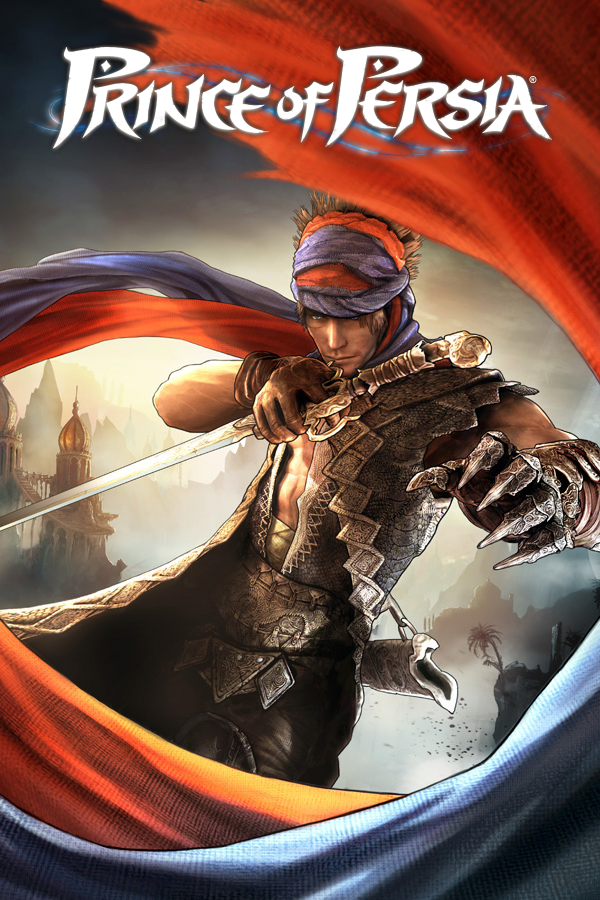
The Sands of Time trilogy was probably one of the best game series ever made, let alone a few diverse series, with each game completely evolving from the other. When the series started with The Sands of Time, everyone completely freaked out on their consoles with the game’s great acrobatic moves, enticing story, and beautiful graphics. The game just felt so good and played so well that the controller almost melted in your hand. The return of Warrior Within the Prince kind of went to the dark side with a grungy, heavy metal, gory sequel that was either hate or love it type thing. I, however, considered that one my favorite, but fans were pleased again with Two Thrones when the Prince actually got a dark side and went back to the style of the first game. If you loved this game, you should go back and play the previous trilogy, because I promise you’ll fall in love with it.
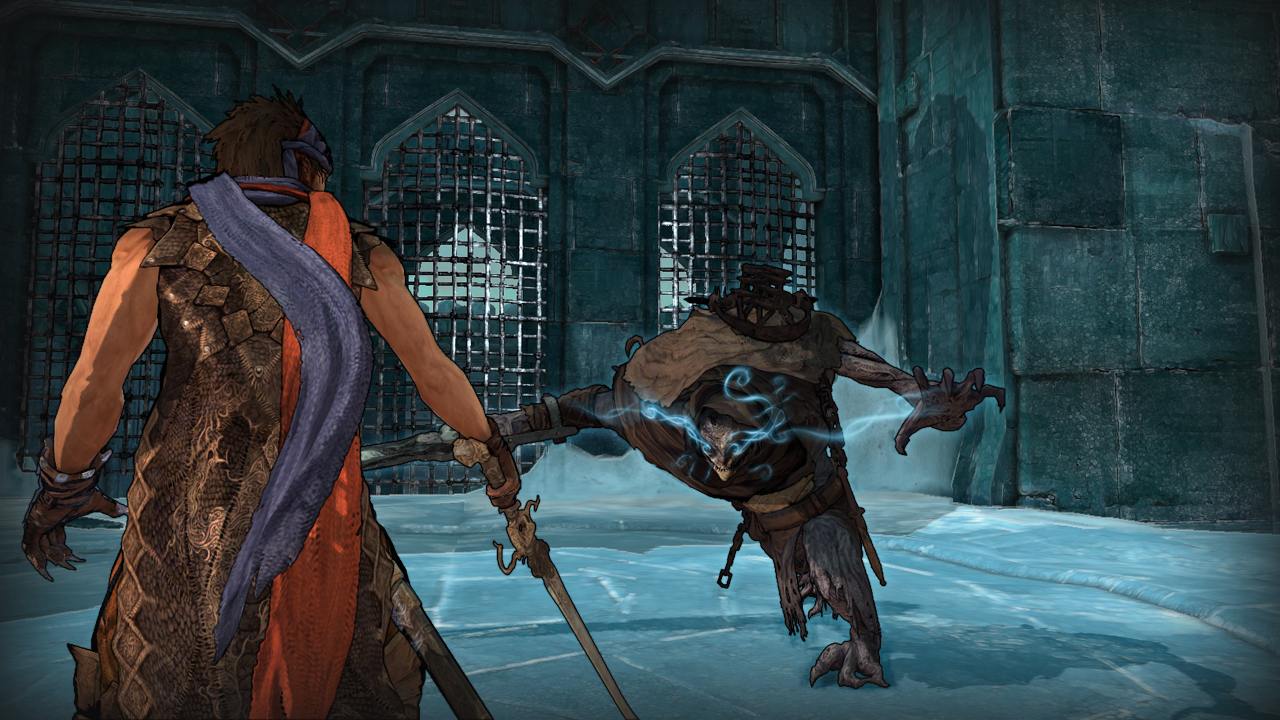
The PoP we are playing has a completely different story, and hell, the Prince isn’t even a prince; he’s a thief who wound up in the wrong place at the wrong time whilst running into Princess Elika. The Prince and Elika play major roles in this wonderfully made game, and it all actually works. The first thing I need to explain is that the core of the gameplay is like the previous PoP games, with the whole acrobatic aspect still intact. However, the prince now has a gauge that he uses to help him with all of this. The controls have been simplified so that everything is just one button press. Yes, let go of that analog stick because you just use it to point the Prince where you want to go, not guide him. He can run across walls, run up walls, swing around poles, climb on vines, shimmy across ledges, etc. The game controls so incredibly well, and with a few minor issues, you really won’t hate the controls. Another major change is that the game is open-world, so you can go anywhere you want in this huge world.
The point of the game is to stop Arihman from destroying the world with corruption and, in turn, save Elika’s father, Ormazd. While there are over 30 areas to explore, you can go to them however you want using the acrobatic moves. Yes, this can get tedious after a while because once you discover everything, you’ll have to backtrack to the temple to acquire new powers. These are four powers that are activated on various colored power plates on walls, and they are key to accessing new Fertile Grounds. Each section is a “mini-level” with various obstacles to cross, and just before fertile ground is a boss fight. Navigating the world can be a bit confusing in the beginning since you’ll be relying on a “compass” that’ll guide you to where you want to go depending on what area you select on your map. The point of healing for each area is to rid itself of the corruption killing that piece of land. Of course, you can’t touch this corruption, or, well, you don’t die in this game. Elika saves you if you fall off a ledge, so consider any flat ground a checkpoint.
During combat, you cannot die either, and you may think this is absurd, but it is a blessing. Trying to find light seeds (after you heal a ground, you go back and collect these to gain new powers) can be kind of hard, so you jump off a cliff to reach one, and if you fail, no big deal. This is better than restarting a level, but of course, if it’s open-world, you can’t technically restart a level. Elika is also a big part of your acrobatics because if you can’t reach a ledge, you press Y when you jump, and she’ll give you a boost. This is also true in combat, where she is basically your “magic” attack. Moving through the levels is fairly easy, and I didn’t once have to resort to an FAQ of any kind. The compass is a great way to find out where to go since it’s a little light that kind of goes along a path, and you can follow it. Of course, finding all 1001 light seeds isn’t necessary since you’ll find plenty to acquire all powers without having to hunt and search for each seed.
Now, when it comes to combat, you’re in for quite a treat since combat is very cinematic. Everything is “one-on-one,” and each enemy has a life bar that you may deplete. You have four major attacks: magic, acrobatics, grab, and sword. You can combine any four of these to make huge combos. Of course, corruption plays a huge role, so if the enemy changes status, you can only use a certain attack to break through it. While each character technically plays the same, you have to use time-button presses to fend off their attacks. This can make things fun and challenging at the same time. The combat is very rewarding with the dramatic sweeping camera angles and beautifully scored music. Of course, after a while, it starts feeling really old, but not enough to really bore you since it always keeps you on your toes.
If you want to talk about cosmetics, PoP is probably one of the best-looking games ever made so far. The game is just stunningly beautiful, and there are high perches you can stand on and just look out to this beautiful vista that is amazingly rendered in real-time. I don’t know how Ubi did it, but they pulled off some amazing stuff to get the game to look the way it does. The soundtrack is really stunning as well (even though there’s not much of it), and the voice acting is top-notch. You are really in love with these two characters, and they struggle with the world around them and with each other. The Prince tends to be a sarcastic, hot-headed wannabe hero, and Elika is a confused woman/goodie-two-shoes who is always putting the Prince’s fire out. There are so many amazing elements to PoP; you just have to play it to really know it all. With a great cliffhanger ending, a great way to control the ending, great controls, cinematic combat, and beautiful graphics, you will spend a good 10 to 12 hours exploring this world.
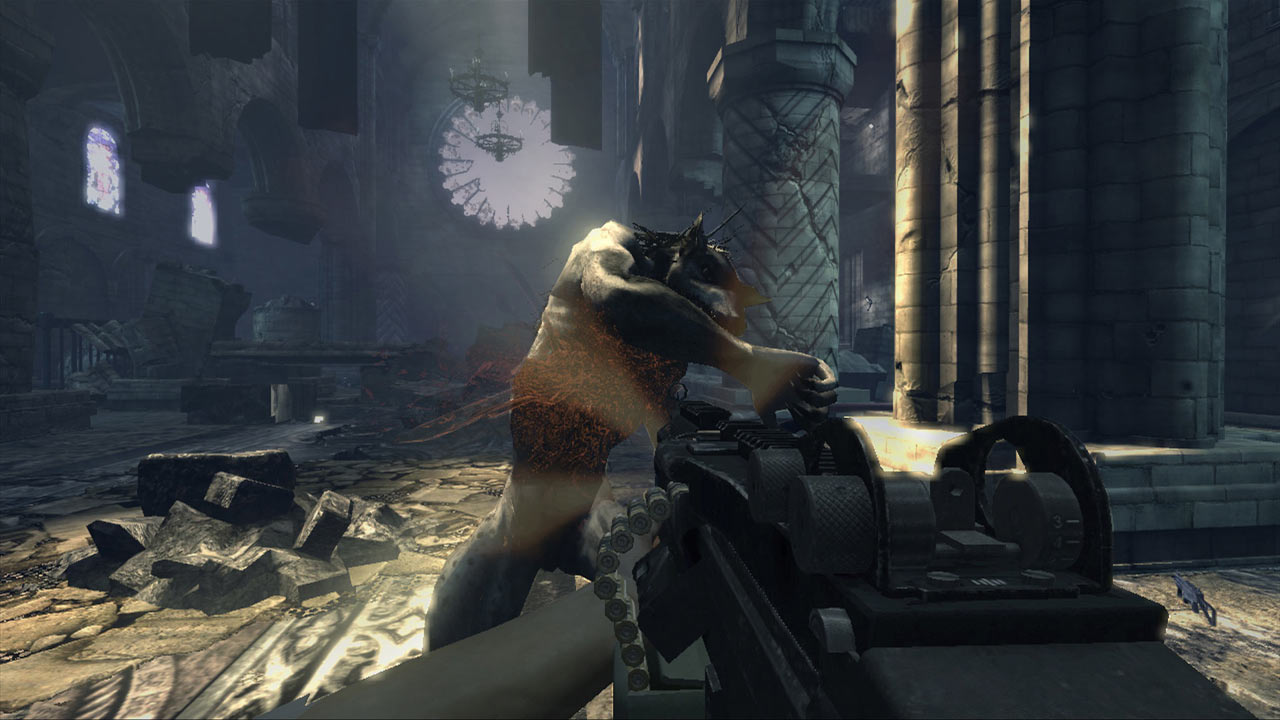
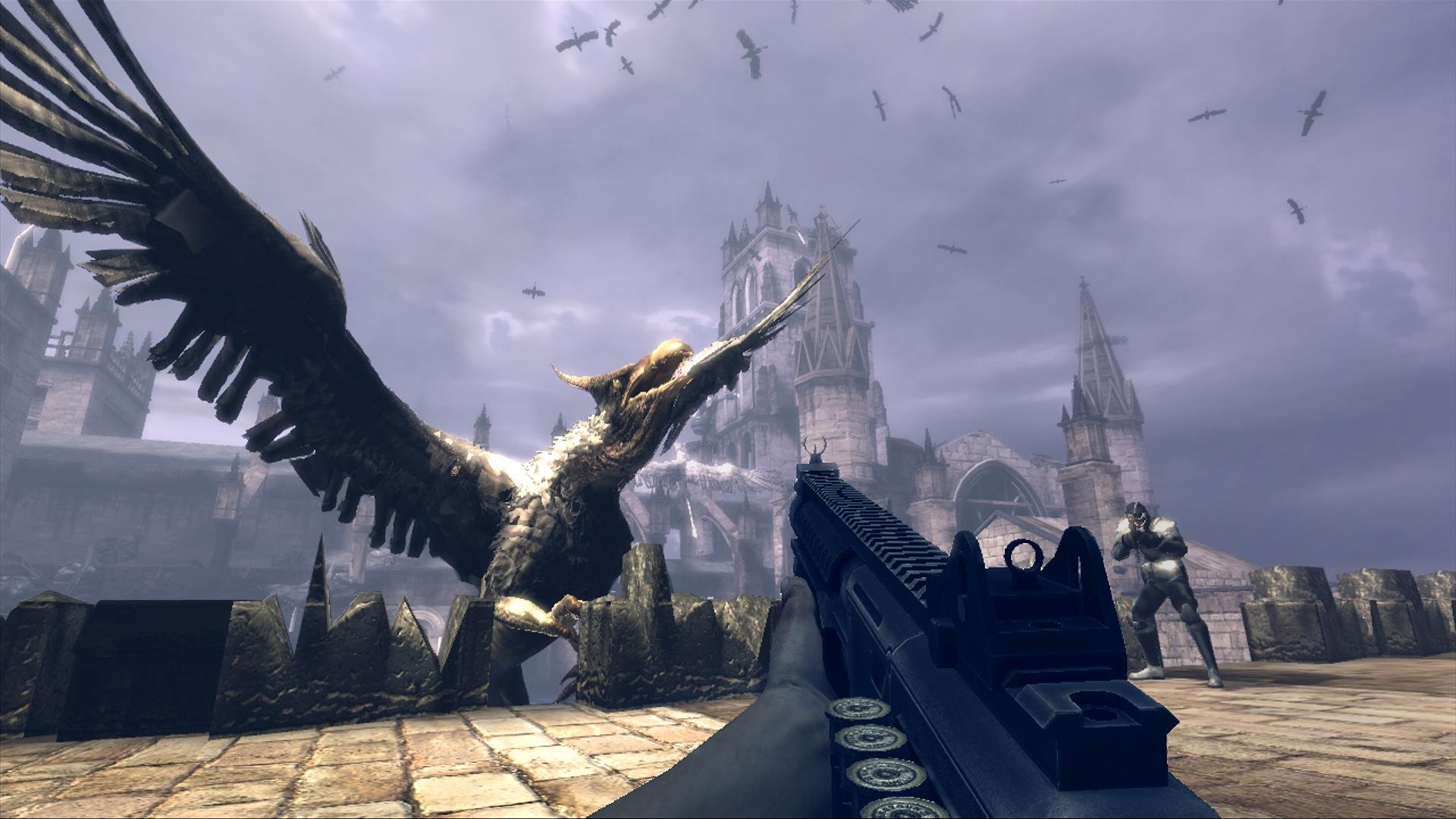
Legendary is yet another game this year that has been released and has totally let all of us FPS fans down, but what a surprise, right? FPS games are probably the most prone to failing terribly due to lazy level design, bad stories, bad physics, and anything else you put in an FPS. Unfortunately, Legendary does almost everything wrong and hardly anything right, but you can still squeeze a few drops of fun out of this weekend rental. Legendary puts you up against Pandora’s Box’s creatures that start taking over and destroying the world while trying to be controlled by the evil LeFey.
While the plot sounds semi-interesting, it takes a face dive right into a mud pit once you start playing since you don’t really give a crap after about thirty minutes. If playing the game is hard enough as it is, the mechanics the game is built around are totally slapped together and not very well done. Even when I saw videos of this game, I knew it didn’t look complete, and they actually shipped the game unfinished. First and foremost, the main culprit is the Unreal 3 engine. Now, I’m not bashing the engine at all; it’s just that many developers tend to think U3 will make the game for them, and they just have to tell it what to do, which is not the case. There are a lot of similarities to BioShock, in fact, from the animus powers shooting out of your hand (with almost exact animations) to the same glowy look on everything you interact with. While the game looks halfway decent, everything looks like it was copied and pasted into the game instead of built there. You’re wandering around a war-torn London and New York, and you don’t even feel like you’re there since the game doesn’t replicate the cities at all, not even famous landscapes for Christ’s sake! On top of this, the physics are way off, and everything seems to stick like glue or something, and it’s just really weird. There’s terrible collision detection where enemies will go through walls, stick there, and start flopping around.
This is also coupled with cramped levels and linear levels, and everything just looks the same. Turn this wheel here, kill these creatures here, shoot these wire suspensions here, and bypass this keypad here. The game is very tedious, completely retarded, and put together so poorly. Even moving your character is a pain since when you get hit on one side, you stop moving that way for some strange reason, and I have no idea why. You’ll be strafing left and then get attacked by your left, but you just stop dead in your tracks, and you have to jam the stick left a few times before even moving again. The guns don’t feel powerful at all and are just completely retarded with almost no recoil; they are all standard, such as shotguns, machine guns, rocket launchers, and a weak pistol that does NOTHING. The most original weapon is probably an axe, but even the more powerful weapons take a while to tear down foes coming after you. The enemies are just absurdly difficult to bring down, even in the easiest setting. For some unknown reason, the weakest enemy (blood spiders) just swarms after you, and you have to find the sac holding them. Getting there can be a pain since this leads into the lame healing system. Other enemies range from werewolves, minotaurs, and griffons—you name it.
These are cool enemies and shouldn’t have anything go wrong, but it does anyway! They throw so many enemies at you, and you never feel powerful enough to take them down, so you’re constantly scrounging your health with the difficult healing system. You have this power from your hand called Animus, so you take Animus Clouds from dead creatures, and you use this for health. You hold down Y to take it, but it takes so long to absorb it all, and this is not good when you have a ton of guys shooting at you or creatures clawing at you. You hold down Y again to heal yourself, but as you can see, using the same button to heal and absorb is not going to work very well. When you’re near clouds, you absorb them instead of healing, and vice versa. If you double-tap Y (why are we double-tapping with so many buttons?) you can do an animus push to stun enemies, and this does absolutely nothing. Now, when it comes back to combat, you can’t use any melee attacks; there is no cover system. NOTHING, ZERO, ZILCH, SQUAT! You have to hide behind everything and peek out like a stupid old PlayStation game from six years ago. This makes things ridiculously annoying during the unbalanced levels that are badly designed.
This game just has so many things wrong that you wonder what there is to like. Well, it’s for the sheer epicness that the game seems to pull off with a 300-foot Golem, a HUGE Kraken you fight in London, and even the giant Griffons are cool to kill. If you can bear through this 6-7-hour campaign, you can find some fun in this game. With a different story, decent graphics, cool enemies, and lots of big bosses, you can have fun all at once. Legendary, this definitely is not.
Ahhh…here we are again with the cunning, brave, smart, posh, sexy, and beautiful Lara Croft. Most people overlook the game when they see a half-naked chick on the cover, but Tomb Raider is one of the few (only?) “chick” games that are actually good. Everyone and their mothers have heard of Tomb Raider or Lara Croft as “the game about shooting animals in ruins and sex,” so if you’re reading this, you’re either a fan or one of the latter. While Tomb Raider has absolutely nothing to do with anything sexual, Lara’s skimpy style can contradict that.
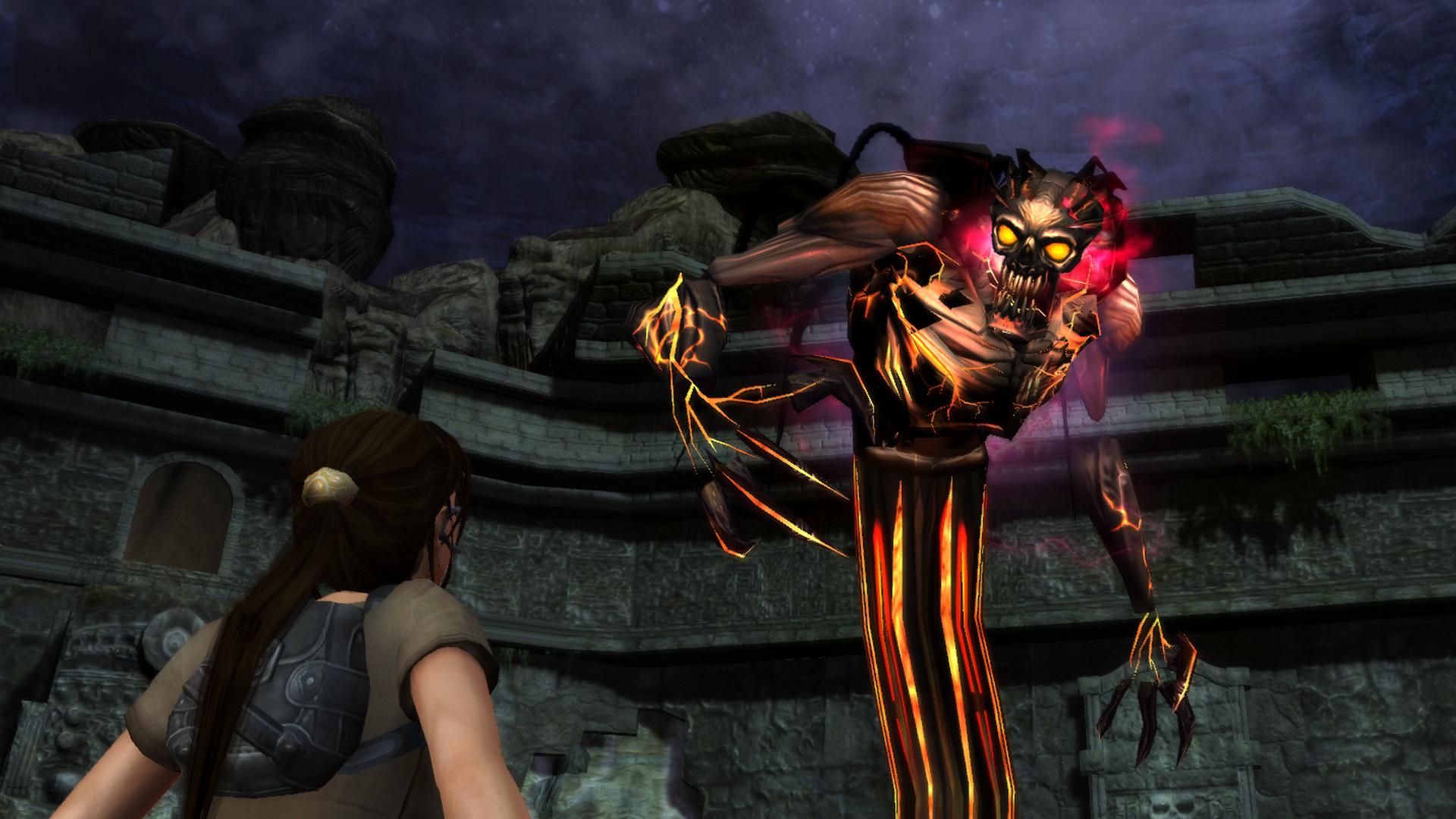
The series has always been known for its intricate puzzles, great platforming, and beautiful tombs, ruins, and vistas to explore. Tomb Raider: Legend is the first TR game since the PSX days to be actually good and worth playing. With the first 2 TR games being great, the series started falling with 3, got saved with 4 (The Last Revelation), and just went downhill with 5 (Chronicles) and 6 (Angel of Darkness). TRL revives the series by making us feel familiar and redoing everything we’ve grown to love. The game’s story is also very interesting, mainly for fans of Lara who want to know more about her past. Lara is trying to find the pieces of the Excalibur sword that killed her mother, and she runs into ghosts of her past that come back to haunt her. While the story is teeter-tottering on the edge of bleh, it does get interesting and saves itself at the end with a twist. TR has not been famous for its stories, so let’s get right into the adventure! The game seems to have tried too hard to bring the series back since the game is really short (6 hours you can beat the game) and there are too many levels to explore, so you don’t get a lot of feeling for one level.
Everything about TR’s platforming is still here, so you can either stop reading now or carry on if you are a skeptical action/adventure fan trying to find a new series to get into because you’re bored. The whole game is about puzzles that use the environment and include hanging, swinging, jumping, pole climbing, rope swinging, and zip-lining. Most of the game is pretty easy to figure out where to go since you get a grapple that lets you pull boxes off ledges, bring certain things down to climb across, and even use it to swing across chasms. A lot of items you use with the grapple hook have a shiny gold bit on them, so you know to grapple there; otherwise, you’d spend hours trying to grapple every object in the game. A lot of puzzles are usually lever and switch puzzles, with you pulling statues onto this pressure switch to lower this bridge and pulling this block across onto this switch to raise the gate. Most are simple, but some are unique and fun and have you climbing huge cliffs, walls, and statues to push giant balls (haha!) off ledges to use down below. A lot of the platforming is fun and awesome, with ledges crumbling away, swinging across poles onto ropes, etc.
Not one situation is the same, and that’s what’s so great about the TR series; you’ll have something new to figure out. Jumping around these beautiful environments is easy thanks to the responsive controls, great animations, and a good camera (most of the time). When you jump to a ledge and there’s a wall behind you, the camera will swing out to the side so you can see the whole 30-foot pillar you’re supposed to climb. This works in every type of situation, and the camera does a good job following you. The only time it gets weird is when you’re in tight spaces, when the camera doesn’t know what to do and has seizures. You wind up exploring places such as Japan, Bolivia, Nepal, Kazakhstan, and others. These range from jungles to dark tombs, snow, and even the city. What I found odd was Lara climbing around in buildings like in Japan (she wears a damn sexy dress on that level) and a military base in Kazakhstan, so this can be weird for longtime fans. The whole thing fits well, but it just seems out of place compared to past games.
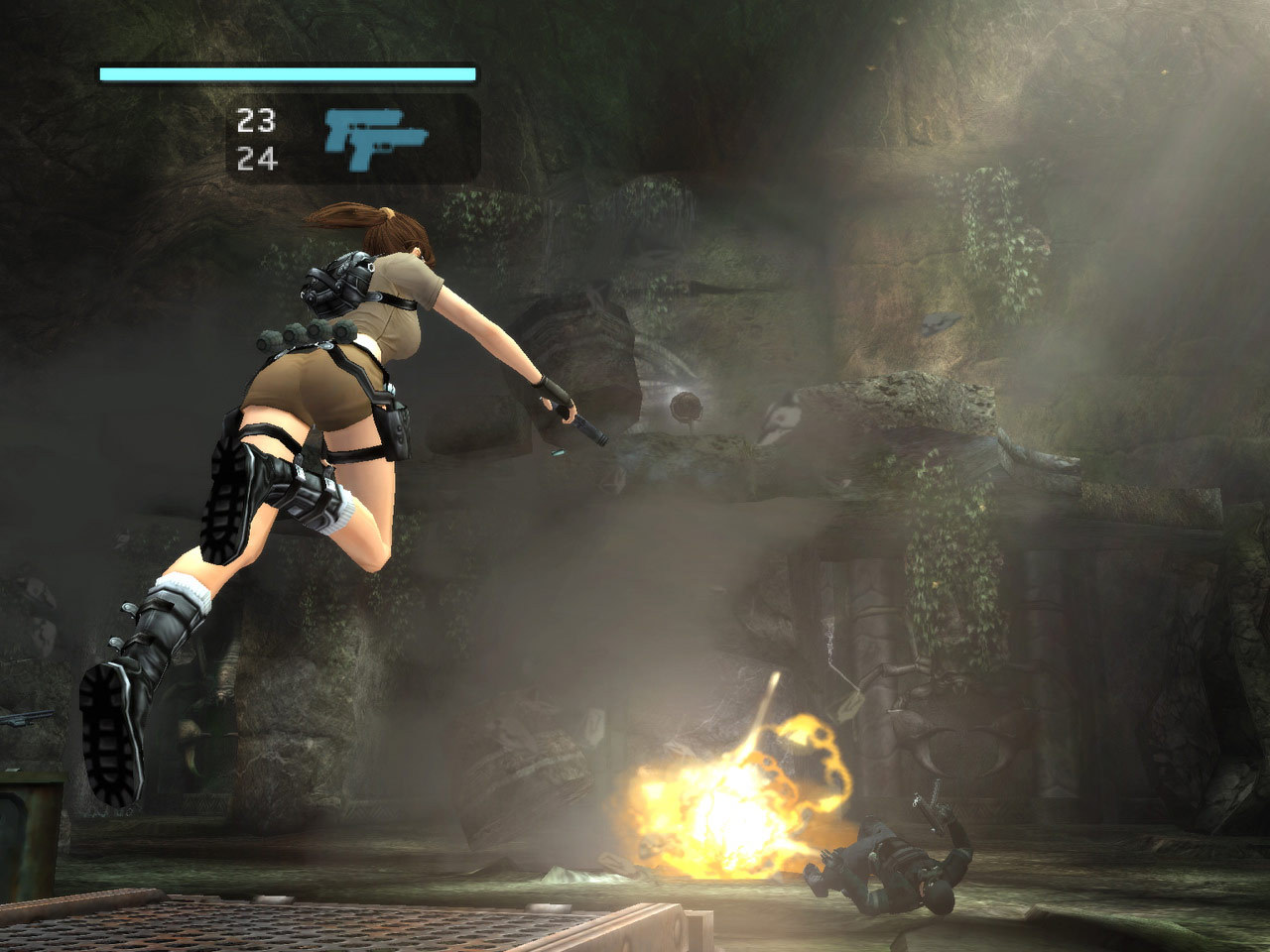
Combat is also the second thing you’ll be doing the most, and while it’s easy, repetitive, and not amazing, it works and you won’t get annoyed. You just lock onto an enemy and fire away with your pistols, machine guns, or shotguns you find lying around off of enemies. If you get too hurt, you can use health packs lying around as well. While you’ll spend most of your time fighting brain-dead enemies that just stand there and fire at you, you can use the objects in the environment to kill enemies, like barrels, tanks, and even snapping things to make them fall. So while the combat is nothing interesting or fantastic, it’s there, and it works well for what the game can offer. The camera stays behind you well enough when you’re locked on, but Lara will lock onto enemies off-screen a wee bit too often, forcing you to target them yourself.
A new part of TR is the motorcycle driving section. These can be fun and annoying since the physics are a bit weird and the checkpoints are punishing. You just shoot baddies off their bikes while you go off jumps and make your way through. Another added idea is button-pressing cinematics, which are cool to look at and a lot of fun. What makes them so fun is why you have to do them. A lot of the time, it’ll be the most intense part of the game, so you really get into it. The boss fights are also another cool part of the game since they are a bit easy, but they are big and cool, so you’ll have tons of fun with them.
Now that we have two main elements out of the way, let’s talk about cosmetics. Lara’s whole appearance has changed, and she looks so much better. Gone are her sunglasses and the F-size boobs, along with her usual outfit. Lara has different outfits she wears throughout the game, and they are all hot and sexy, and they make Lara look smart and sharp as well. Her breast size has been reduced to DD (boohoo…), and her main outfit is now a brown belly top with shorts, and I prefer this over the old one. She wears an earpiece now, and she no longer has a braided ponytail. Along with Lara looking amazing, she also gets dirty and wet (oh, if only…). When she climbs out of the water, her clothes look wet, and dirt sticks to her as well, so this adds to the realism. She also has a personal light now, so exploring dark places is no longer a problem. The sound is also great with Lara’s charming British accent, and everyone’s voice acting is top-notch.
With new characters aplenty, you’ll expect to like them all, but actually, you won’t. They are underdeveloped and wind up annoying you with their stupid comments over the radio, so the only character you’ll love is Lara. Apart from all of this, the game has replay value with a time trial mode, Croft Manor (where you unlock certain areas to get rewards), and cheats. Doing all of this will grant you new costumes, concept art, profiles, and more. So, as you can see, there is so much to love about TRL, and fans who have hated the series can come back since TR is getting better and better as time goes by. Give the ‘ol girl a second chance and explore her tombs (awww, yeah).
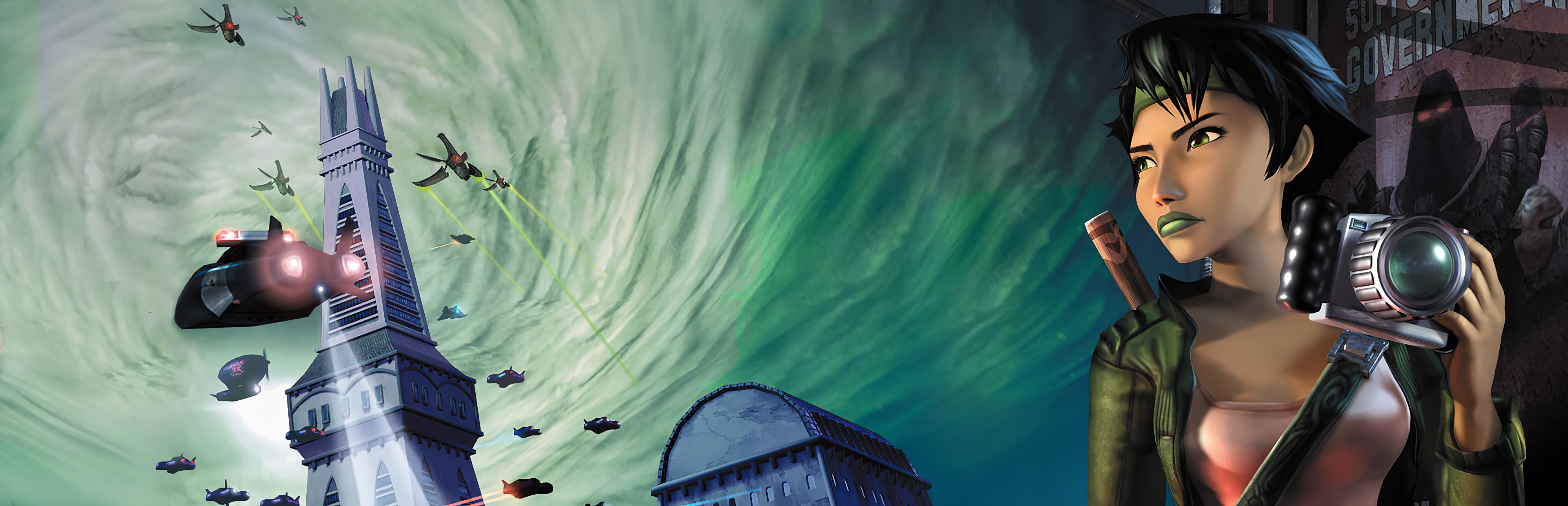
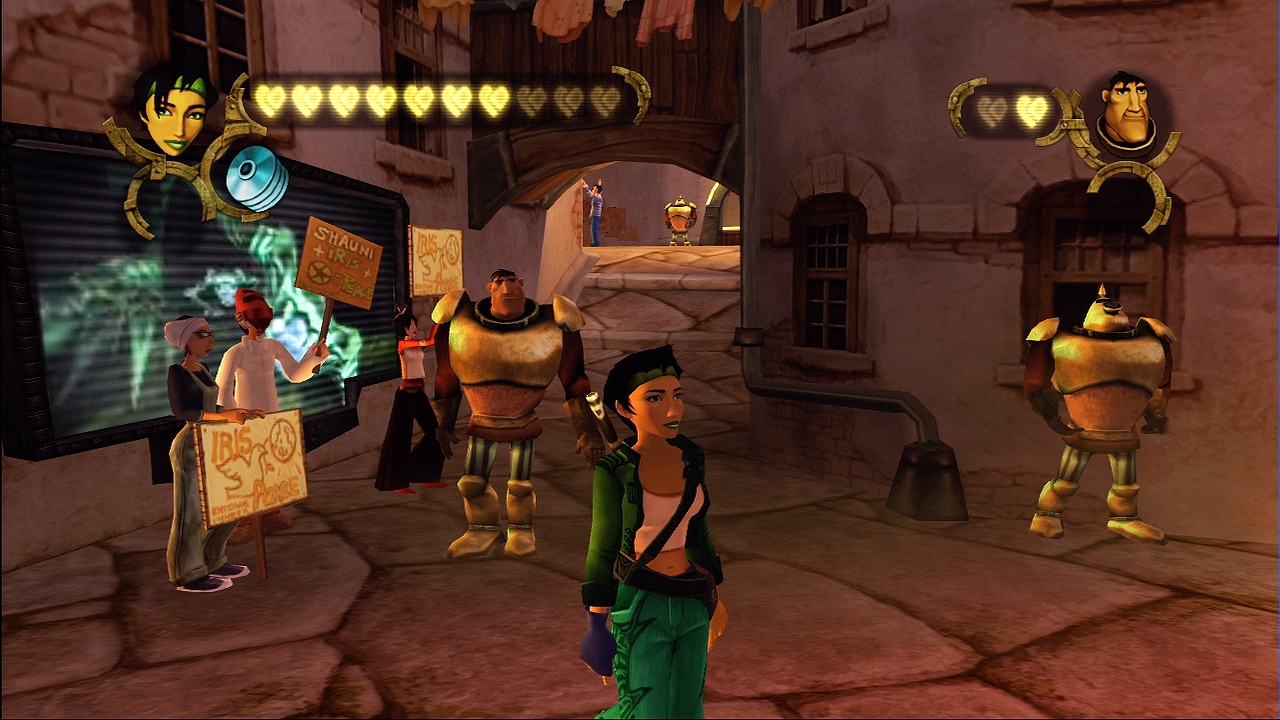
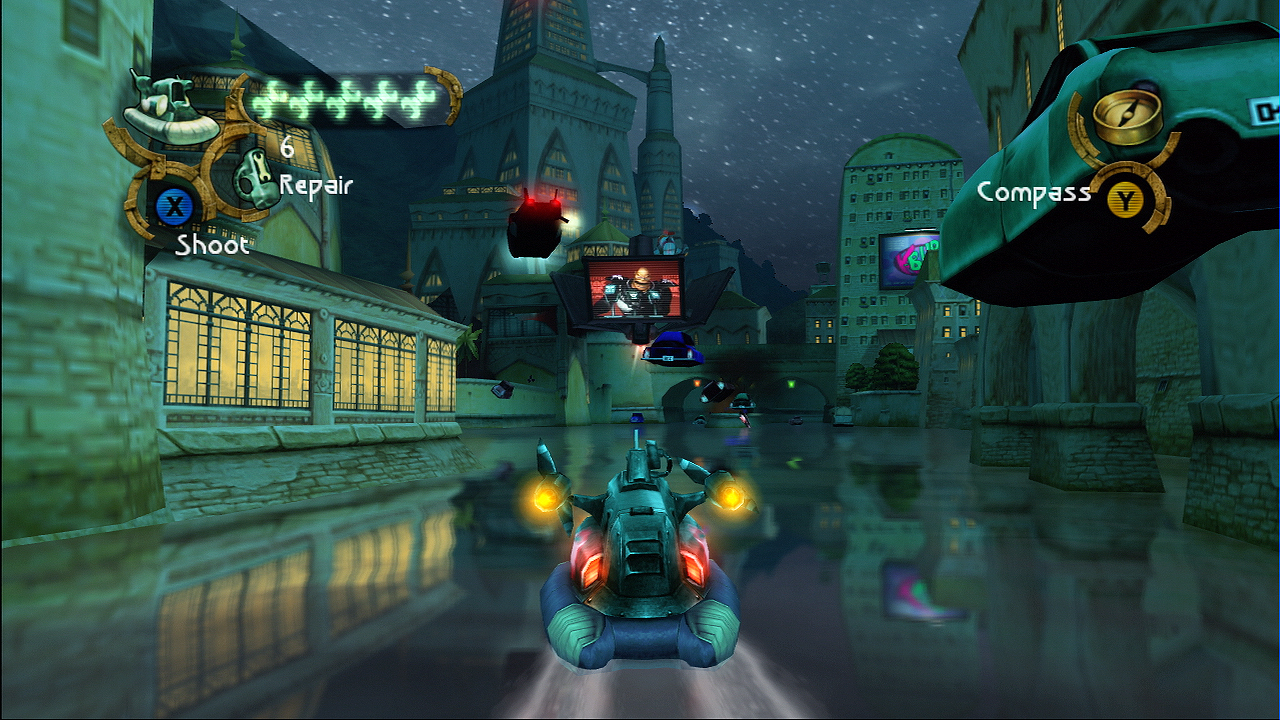
Beyond Good & Evil…yes, I remember that, but for some reason, a certain game called Prince of Persia: The Sands of Time was plastered all over TV and stores, and BG&E was disappointingly overshadowed. BG&E is a lovely and wonderful action/adventure game that was released during the peak of the last generation in 2003. BG&E’s premise is something along these lines: You are Jade, who is the caretaker of an orphanage on a futuristic (has a Star Wars feel to it) planet called Hillys. The Alpha Section is fighting a so-called war against the alien invasion known as the Domz. Jade and her pig uncle Pey’j must find out the conspiracy behind the Alpha Section and the Domz in order to bring peace and freedom to the planet of Hillys. You take on a job as a reporter or spy for the IRIS Network, and along the way you take pictures of animals, take part in speedboat races, and play a familiar air hockey game to earn pearls and credits (the game’s two currencies) to find your way through the world.
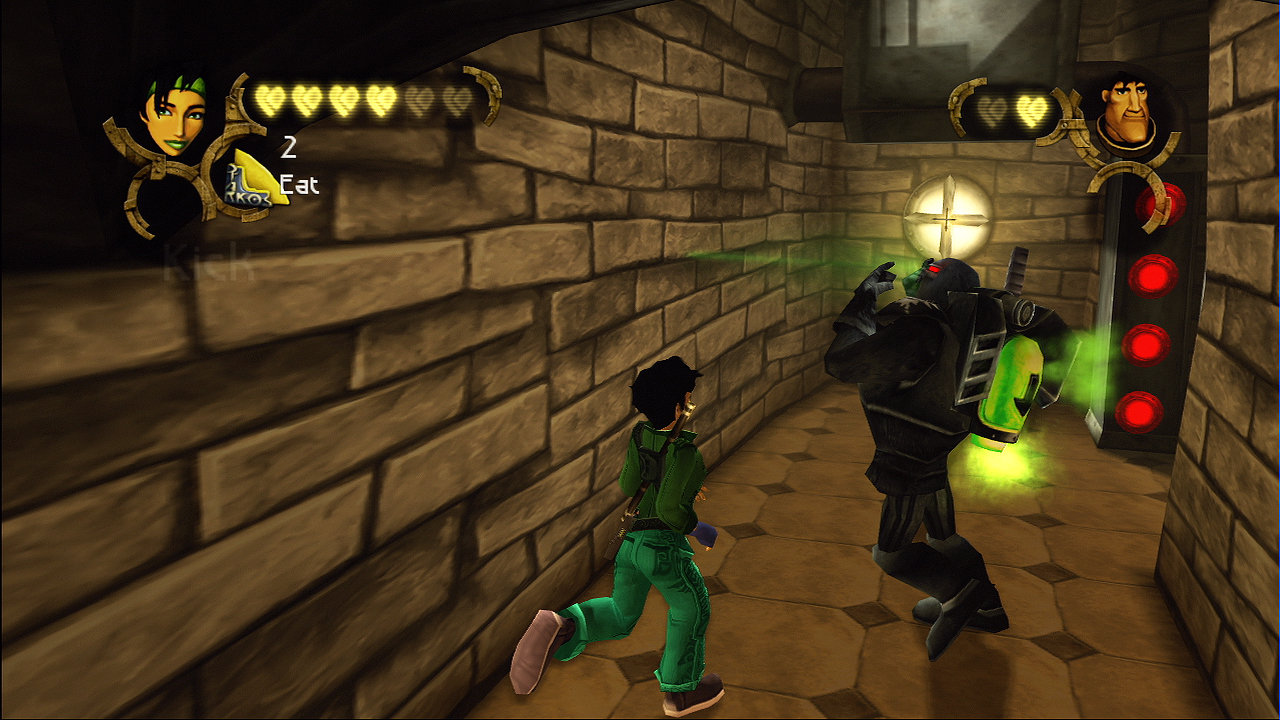
A lot of the game is set up around two gameplay elements: stealth and combat. While the stealth is stronger than the combat, both are enjoyable and evenly balanced throughout the game. Sneaking around the two major parts of the game to take pictures of the Alpha Section’s activities is rewarding and easy to do. Crouching around corners and learning the guard’s patterns is a typical element of stealth, but the great part about the game is that there’s no jump button. Yes, this makes the gameplay a lot more smooth, and you actually know what to do. If you see a ledge Jade can hop up on, you know to go there instead of hopping around like an idiot trying to, hopefully, find some collision detection glitch and get up onto that ledge. Sneaking around the guards is also like a puzzle in itself since you have to figure out a way to open certain doors, hit certain switches, and even get items without anyone seeing you. The stealth isn’t brutal and is pretty forgiving since if you run out of the area, everything will calm down and go back to normal. Most guards have a weakness on their backs (a yellow jetpack), so this can blind them and make things a little easier. Sneaking around the place is pretty typical, and there’s not much to describe, but it is very fun squeezing between walls, ducking in vents, and whatnot. Thanks to the no-jumper button, dodging lasers is really fun since you have a run button and a dodge button, so you just run and jump over lasers and obstacles, and it can be really fun.
The combat, however, is a bit weak since it’s so simple. You just mash the mouse button, and Jade will beat the S out of everything with her magical staff; hold it down, and you get a supercharged spinning attack. While you can dodge and roll around while running, the camera is one of the major flaws of the game, and the combat can get so tedious and boring. Thankfully, there isn’t much fighting, and you mainly just sneak around and do a lot of traveling. The only thing that keeps the combat from being a snooze fest is the unique way of having to kill certain enemies. Double H or Pey’j may be with you, so you can order them to do their special attack, which will stun enemies or shoot them in the air. When they are in the air, Jade will spin around and knock them across the room, and this is good for taking out certain obstacles in your way.
Traveling around the world can be fun and frustrating since the map is useless and the game is very labyrinthine. Since you’re sneaking around everywhere, you don’t really remember where you’ve been, so if you forget to take a certain picture, you don’t know where it was since the map is just a bunch of white blobs that don’t tell you where to go. Finding things like animals, pearls, and other items is pointless since they are big dots on this useless white map, so hopefully you have enough pearls (used only at Mammago’s Garage to upgrade your speedboat) to finish the game. Finding all of the animals can be almost impossible since a lot of them are in spots you never knew you could even access, so earning a lot of money in the game is a bit hard and can make you go hunting for items you have to know are there. This being the game’s biggest flaw, it can easily be overlooked since you’ll usually get just what you need by just playing normally. You can partake in four separate races, but they are impossible to beat since there is no speed upgrade for your boat, and playing flawlessly and using speed boosts won’t get you first place.
The races are seriously impossible, even if you drive perfectly, so this is just retarded. You can play air hockey at the Akuda Bar or a cup game, which can be fun and challenging. There are items called MDiscs, which you put in save machines to help evolve the story. Increasing your health is done by finding PA1s, Kbup, and Starkos, which are foods that give you health. As you can see, the game tries a lot of original things and is just a fresh world that has been overlooked by many people. With the game’s unique story, great voice acting, and wonderful yet simple gameplay design, you’re sure to spend a great number of hours on this short, yet sweet, adventure.
Picking up the game for any system has its ups and downs. The PC version’s controls are kind of funky for this type of game; the PS2 has a slowdown; the GameCube’s controller requires a controller to play; and the Xbox version isn’t backward compatible on the 360, so take your pick. Either way, you’re going to have a blast with this wonderful yet overlooked game. Look forward to the anticipated game next year as well.
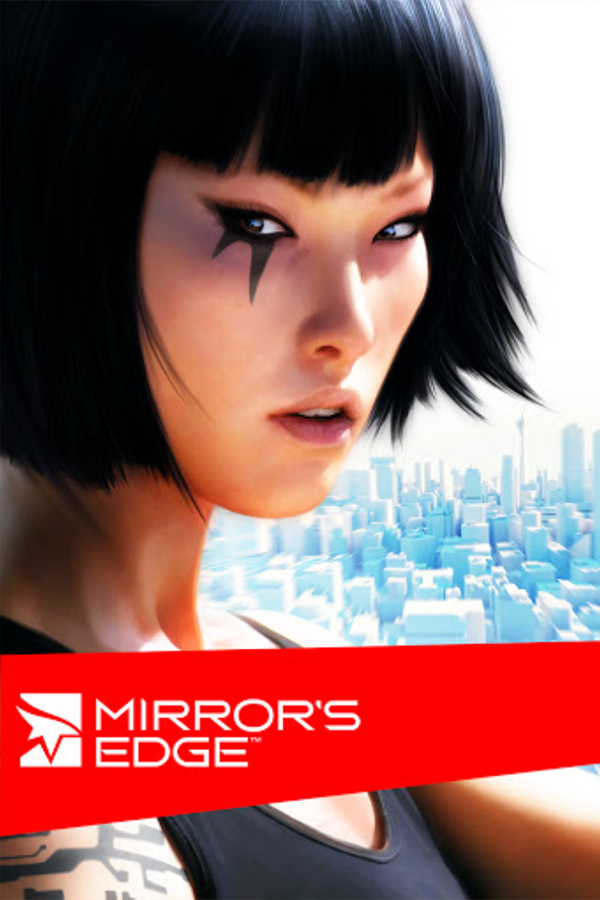
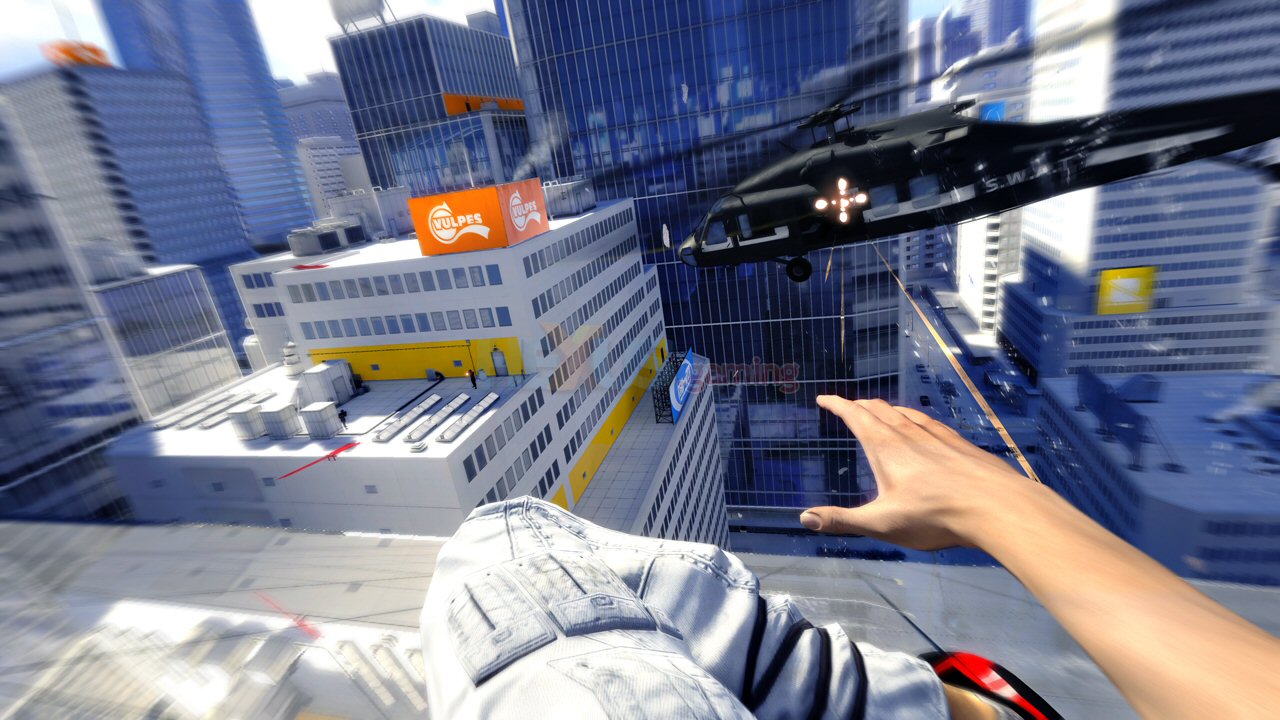
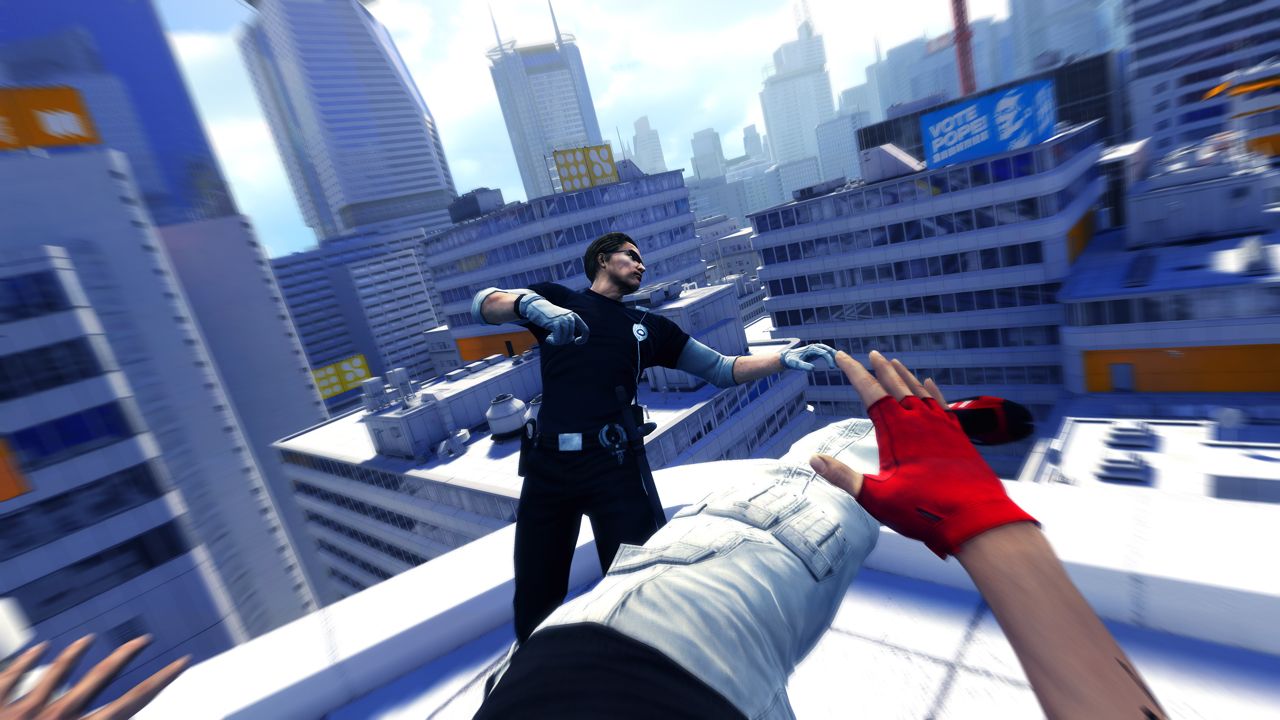
For one, I rarely buy games like this on day one without knowing that I’ll at least want to play them 2 or 3 times, and Mirror’s Edge was a great buy, but I wish I would have waited for a price drop first. Now don’t get me wrong, go spend $60 on this and you’ll have one hell of a time, but for the length and content, ME cuts it a bit short. ME is a parkour/free running/building jumping/limber skinny people running around like monkeys on rooftops game and is very well executed.
The first thing I’d like to mention is the warming soundtrack EA created for this game. EA has finally listened to the fans and got rid of the horrible EA Trax, a bunch of wannabe punk and metal bands mixed with lame hip-hop and R&B that everyone with half a brain and decency turns off. EA’s new IPs (Dead Space and ME) have an original, rich soundtrack that fits the game very well. ME has a slow, soothing OST with lots of low basses and some poppy techno thrown in. The game’s main theme by Lisa Miskovsy (ironically titled “Still Alive”) is a charming song that really gets the feeling of the game across. A woman and message deliverer for the resistance named Faith, who’s sister was framed for murder, must find the killer of the person her sister, Kate, was framed for, and must bring all of this to an end. In a rebuilt city corrupt and full of backstabbers, Faith must scour the rooftops to find entrances into buildings to find her targets.
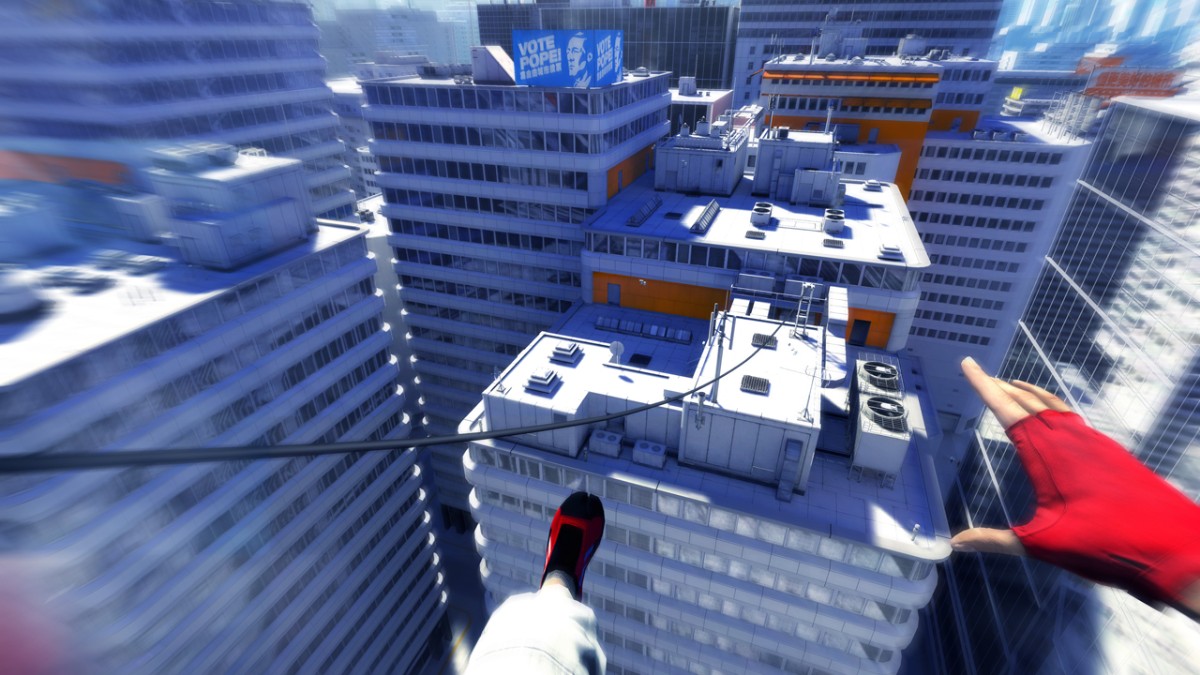
Scouring these rooftops is both fun and beautiful, thanks to the game’s amazing graphics. EA’s next-gen engine (used and updated from Skate.) makes ME one of the best-looking games ever made. Everything is highly detailed, with buildings as far as the eye can see, reflections off of windows, and everything is just highly detailed. The game looks similar to Portal (hmmm…just mere coincidences here?) with lots of HDR lighting and lots of blinding whites, blues, reds, and oranges. The art style really helps the game’s feel and works brilliantly. The cut scenes, however, are a bit different and detract from the feel of the game with cell shading similar to those Esurance commercials (with that hot pink-haired Esurance chick that has tons of porn available everywhere). While this style works, it really is a detraction from the actual game. The voice acting is really good here, and the characters are decent except Faith, who is the only character you get attached to thanks to the game’s absurdly short length (6–8 hours, depending on how you play).
Now back to how the game plays: it plays well and feels well, with a few flaws. The game’s control scheme has its plate full of lots of different button combos that take a little while to get used to, let alone master. You have all of the parkour moves available to you, such as building jumping, wall running, pole swinging, zip lines, three-step jumps (LB, RB, LB), wall climbing, shimmying, etc. Additionally, you can make runs faster by pulling your legs up instead of double-stepping jumps or hopping over rails. This makes time trials go faster and keeps your speed up. Finding your way in ME is fairly simple since you have “runner’s vision,” which makes certain items turn red, and you use them according to what they are. Boards leading off buildings usually mean to jump down; small objects in front of a larger object mean you double-step your jump and vault to a ledge; you can crawl in vents; and a lot of the time you must climb poles attached to walls and even jump to them! The game is fast and very smooth, and you don’t have to be afraid of sluggish controls. The whole game is responsive and reacts to your commands.
The biggest flaw in the game, however, is the combat. Most of your enemies have guns, and you don’t. This always proves a problem. Most of the time, you just run away, but when you’re forced to fight, you must take on 5+ enemies in one room using melee combat, jumping kicks, sliding kicks to the nuts, etc. The combat itself works well, but actually using it against enemies with machine guns, shotguns, etc. doesn’t work out too well. Try taking down five guys in one room with shotguns just with your fists—not too easy. This requires disarming (timing is a must, of course) and either using their guns against other enemies in classic FPS action or just being very fast and outsmarting the enemy with kicks off of walls and all that. While the combat is manageable, it’s flawed and makes up most of the trial-and-error in the game. The game has little trial and error outside of combat since most of the deaths are on the player. Try finding out where to go without a runner’s vision while 10 guys are shooting at you; that can be very tough to do, and in some spots, I had to try 20+ times just to get it all right.
With that flaw aside, ME proves to be an amazing game and should be played by all FPS fans, Parkour fans, or just action-adventure game fans (PoP fans can come out of hiding now!) With ME’s wonderful soundtrack, graphics, art style, story, and gameplay, you will stay busy with the time trials and speed run. I hope ME2 improves upon all of this, and I will be there when it comes out.
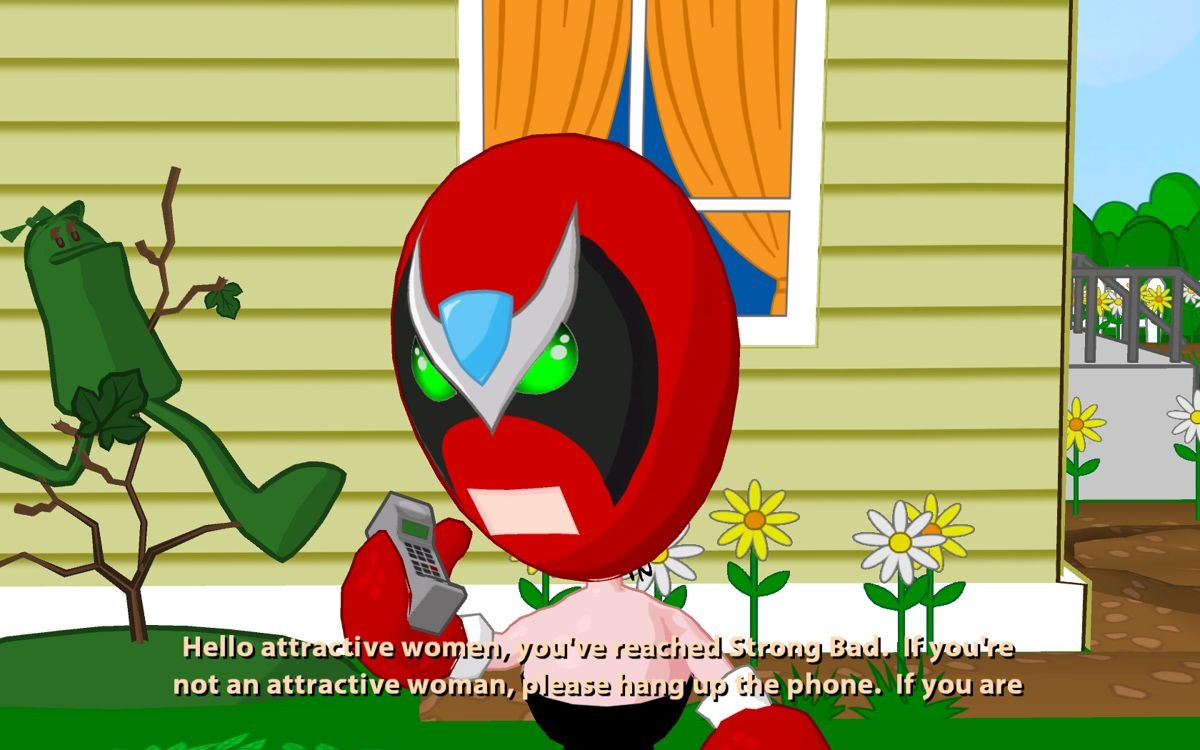
Everyone knows Strong Bad from their famous song on Guitar Hero II!!! What have you never heard of them? Well, that’s ok, we all forgive you, but now’s your chance to meet the almighty only-cool-enough-to-look-at-unless-you’re-an-attractive-women, sometimes known as “Flexapecs” Strong Bad. The game’s main attraction is the crazy humor and the nice graphics style. The game is basically a flash point-and-click adventure where you try to show off your strong badness by making Homestar (the town’s “cool guy”) look like a total jack. With great voice acting to support these neat characters, the basic gameplay element always stays the same: click on this thing, hear what Strong Bad says, laugh, wander around aimlessly trying to figure out where to go next with no hints, rinse, and repeat.
My biggest gripe is the fact that you never really know where to go, and most of the game is really a guessing game. You slowly unlock different locations, and warping to these places on the fly is easy via your map. Go around collecting special items and even take photos! But seriously, even though the game has strong humor, it doesn’t save the gameplay. Just double-click and hold the mouse button to make Strong Bad run here, go into your inventory, and try to make certain things work, but I guarantee most of the time you’ll resort to an FAQ. The beginning of the game starts out easy enough where you just follow the plot of the game, then about halfway through it lets go of your hand and you sort of get lost in everything. Trying to spoil Homestar’s fame isn’t really easy since it takes lots of different running back and forth to and fro collecting things to make this work over here. With no quest log or anything like that, you never know what to do, and there are really no hints to help you. Some parts of the game I didn’t even know existed until I resorted to a FAQ, and that was after over an hour of trying to figure out where this one inventory item goes. Trying to go around experimenting isn’t really fun and makes you really annoyed and frustrated.
With all of that aside, the game’s dialog and writing are hilarious and fit the characters very well. The humor is more random, stupid, and full of bathroom jokes than witty and smart. This works just as well, and somehow the game pulls it off cleverly without making you feel like you’re playing something lame. I just really like all of the details that went into this game, like the Snake Boxer 5 mini-game and all of the extra dialogs when you talk to someone more than once. It just really makes things that much more interesting. Now, this is meant for young teens and kids, so there is no mature humor, even though you’d expect it from this kind of character. I really feel these characters should have been given more mature dialog, but what’s here works and works well if you can get around the annoying hunt and seek. I really do recommend this game on the Wii or PC because you’ll love the hilarious dialog, great art style, and funny characters.
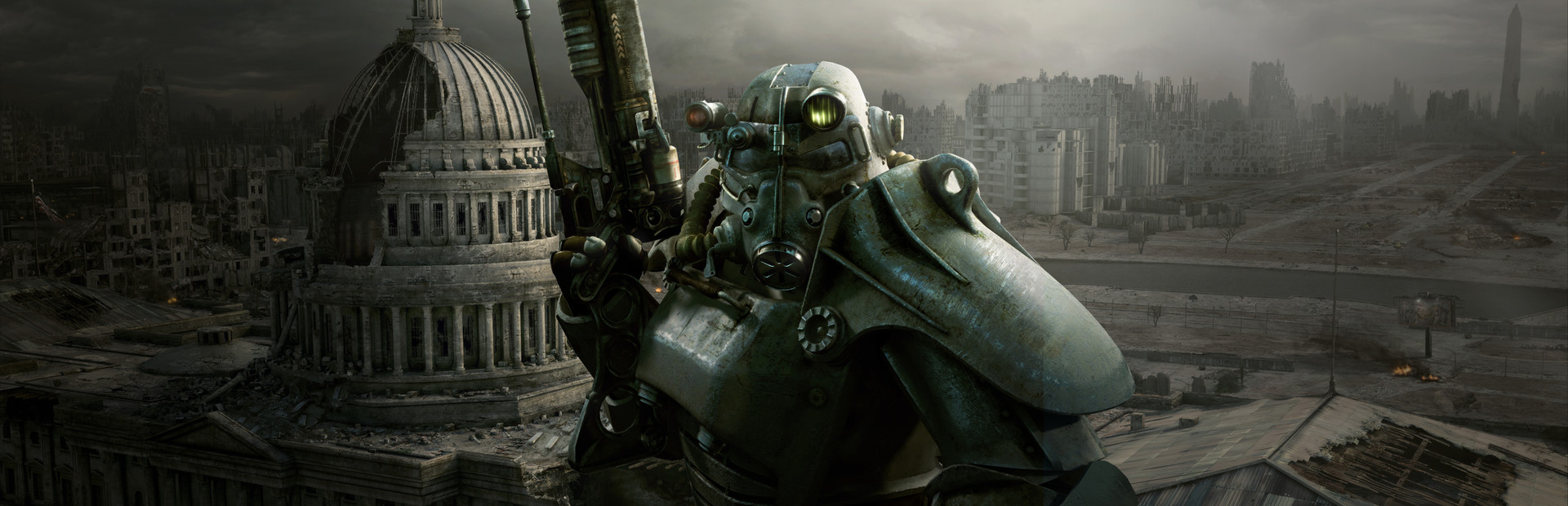
The only way you’re going to like Fallout 3 is for two reasons. 1. You loved Oblivion, and 2. You love the Fallout series. Otherwise, you’re probably going to hate the game and think it’s “boring.” I say this because the game relies a lot on you finding out what to do and where you should take your next steps. The game is 100% nonlinear and features a perfect balance of FPS action and RPG stat building. The game is more than just “Oblivion with guns,” and the reason people say this is because Bethesda uses the Oblivion engine for this game. Just like in Oblivion, you take quests from people and complete them as you wish. You can be good, bad, or neutral in the world. You can find mini-encounters or free-form quests that are separate from the main and side quests to unlock achievements. I don’t want to spend this whole review comparing this game to Oblivion since it is its own game.
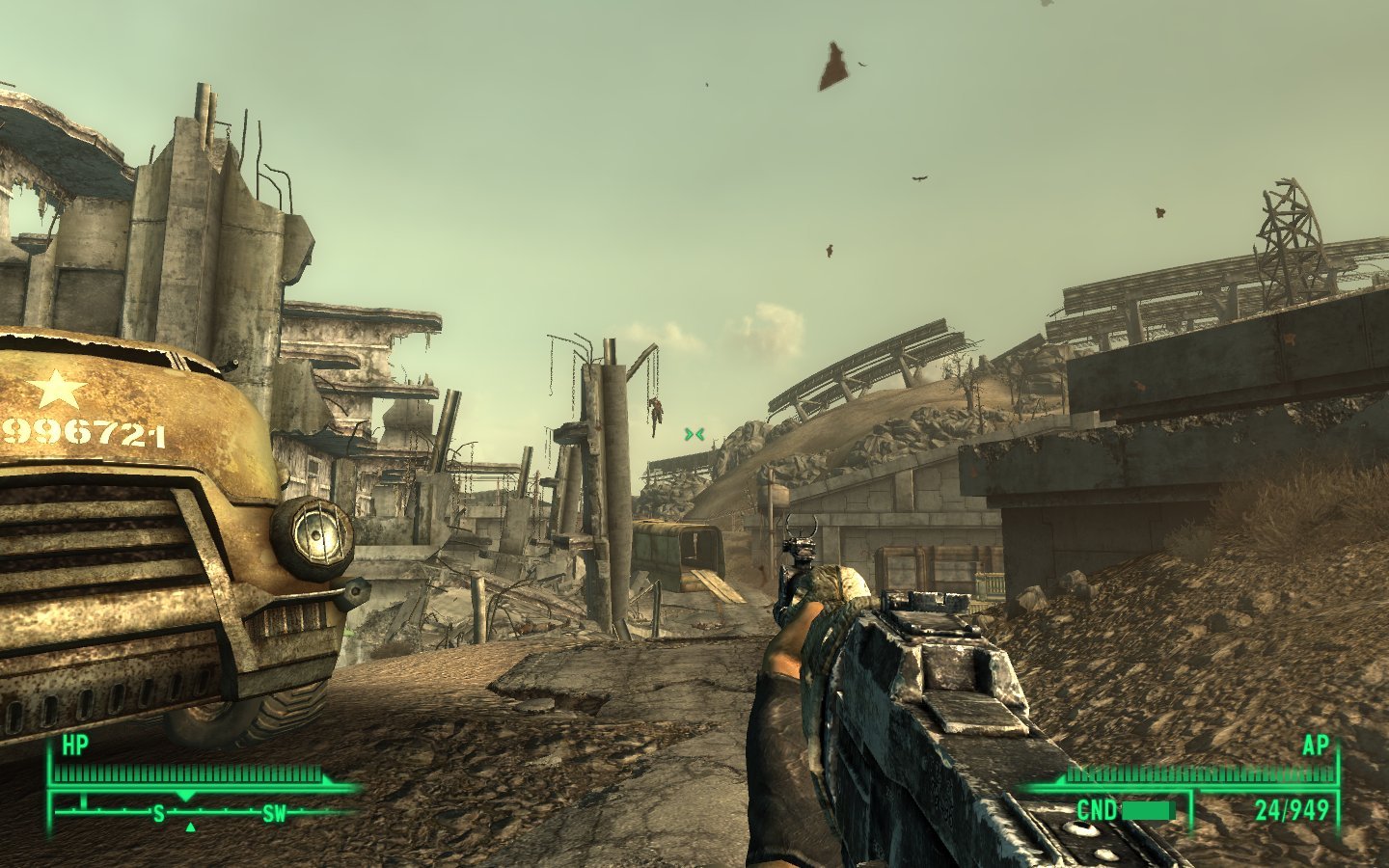
The first thing you’ll notice is how amazing the graphics are. The Oblivion engine has been refined, and everything looks amazing. Step out of Vault 101, and your eyes will adjust from the dark, and you’ll witness a beautiful yet desolate wasteland that leaves you wondering, “Now what?” Don’t be scared since the game does guide you a little bit, so you aren’t completely lost. Just wander around to find Megaton and just talk to people, and you’ll get quests eventually. Of course, you always know where to go for the main quests, and every quest has arrows on your map that point to where to go. You may see places on your map, but you can’t fast-travel there unless you actually walk around and discover them yourself. This forces players to explore the vast world of DC and really get to know the place. There are two sections to the game: the Wasteland, which takes up about 70% of the game, and DC, which is cluttered with metro stations, fallen buildings, and all the main landmarks like the White House, the Library of Congress, the Pentagon, etc.
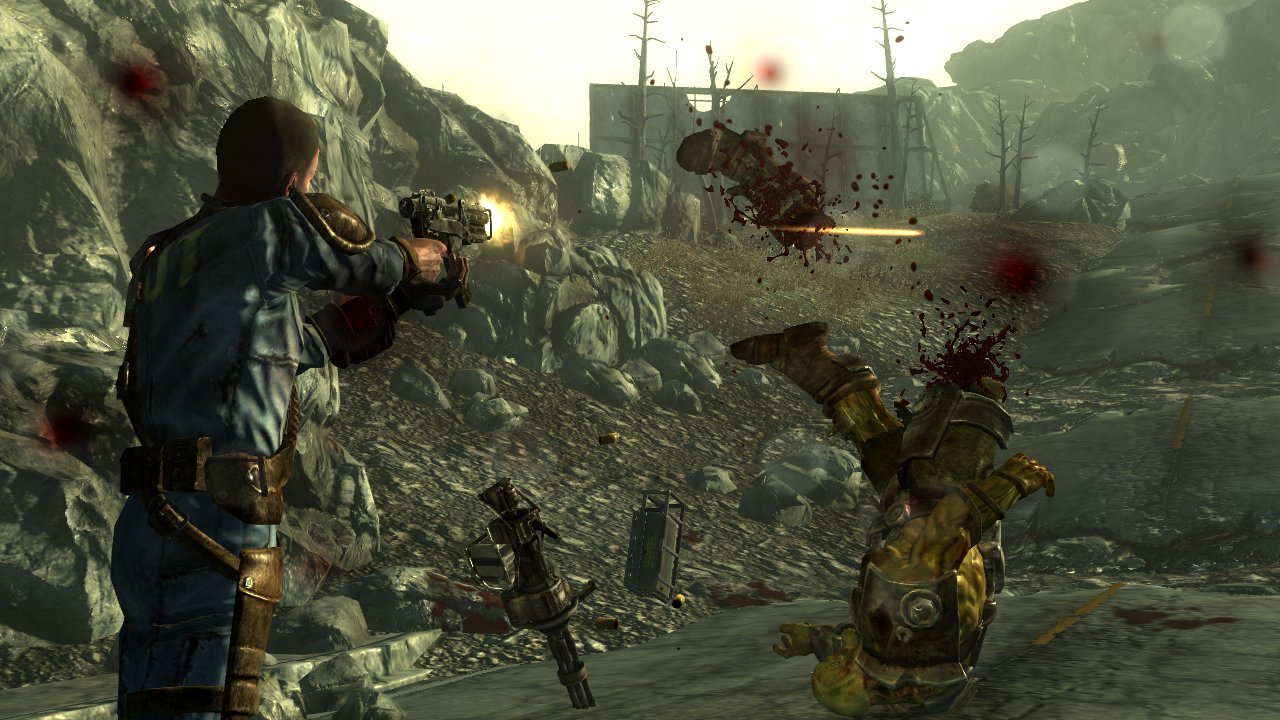
The only way to travel around in DC is through the metro tunnels, and I found this kind of annoying since it may be tough to figure out which tunnel goes where. I just really can’t express how amazing the game feels, and you really do feel alone and empty when you go through stores and buildings that are completely trashed. With the melancholy music, you sometimes get a bit depressed since it’s just so amazingly surreal. Thankfully, Bethesda injected a bit of dark humor to keep you from feeling this way, and one way is with VATS. The Vault-Tec Automated Targeting System is one of the main gameplay elements. Hit RB, and you’ll pause time and zoom in on your enemy, and there will be parts of his or her body you can hit. The percentage is your chance of hitting that target, your AP is your action points, and each weapon takes a certain amount of them every time you queue up attacks. If you do enough damage, you can cripple a limb and either make your enemy drop the weapon, lower their accuracy, or make them walk slower. Once you get to higher levels, a few shots and you can blow their heads off in a heaping gory mess, and it never ever gets boring. Sniping someone from 200 feet away, watching the camera follow the bullet, and having someone’s head fall off their neck is just so satisfying. I played for 54 hours and never got bored with it.
Of course, you can fight in real-time combat, but you don’t get the advantages of VATS like critical hit strikes, etc. The game has many weapons, from mini-nuke launchers to rocket launchers, 10mm pistols, combat shotguns, sledgehammers, hunting rifles—the list just goes on and on. You can also make your own weapons by finding schematics and collecting the items you need to build various weapons, like the Rock-It Launcher, which lets you shoot anything you find, and the Railway Rifle, which lets you shoot railroad spikes and impale limbs on walls. The game is huge, amazing, and awesome, and all of the combat is very satisfying, and there are endless ways to approach a situation. Don’t you like fighting? Use a Stealth Boy to sneak your way through places, plant live grenades in enemies’ pants, and watch them explode! Like fighting with your fists? Walk around with a power glove and bash your way through the wasteland. Now that combat is out of the way, let’s get to stats. Your menu is your Pip-Boy, which is attached to your arm, features an easy-to-navigate interface, and makes it really easy to find what you want. You can level up to level 20 (which is lame since you’ll get to level 20 way early in the game and be maxed out), and you have several options once you level up.
You can add points to yourself for things like your medicine, small guns, big guns, explosives, speech, barter, energy weapons, lockpicking, science, etc. Then you get to pick a perk (say that five times fast!) and these are another unique gameplay idea in Fallout 3. There are over 40 perks, but you can only pick up to 20 throughout the game, so choose wisely! Perks range from giving you more health, increasing your regular abilities, automatically giving you another level, making animals in the world your friends, revealing every location on your map, making you a law bringer, and if you bring every finger off a bad enemy to a special HQ, you get caps (currency in the game) and good karma. The stats are also affected by items such as Buffout, Jet, Mentats (post-apocalyptic drugs!), etc. These have temporary effects and will get you out of a tight situation. You can trade and repair your items with people around the city and become rich. You can also just shoot everyone in the cities and get bad karma, so as you can see, there are no restraints.
You can also pass time by “waiting,” which skips hours. You can heal your crippled limbs by sleeping or going to a doctor. Getting too irradiated? Take some Rad-Away! Getting addicted to a certain drug? Go to the doctor! You can eventually get your own place in Tenpenny Tower, and you can buy things like a workbench, doctor stations, etc. I just can’t express how HUGE this game is, from its vast size to being able to pick up anything you see to use as ammo, trade, or sell. You really do feel like you’re struggling to survive in a hostile wasteland, and that feeling never goes away, even after 100 hours of play. Of course, you’ll eventually conquer the wasteland and not be afraid of even the strongest enemies in the game.
Now there are issues with the game, but they’re minor. There is loading between each section of the game, such as going from the main world into buildings, etc. The level 20 cap is extremely annoying and makes you quit trying really hard to find places to fight in. The game is really similar to Oblivion, and people who played the F out of that game will feel too familiar here. That’s why this game didn’t get a 9.5 from me like Oblivion did because I’ve kind of “been there, done that” with this engine. While there are so many subtle things in the game, like having followers (including a dog!), the many types of weird enemies, and all the different people you can talk to, it’s insane. I could spend hours telling you about every location and person you meet. Just stop what you’re doing and go play Fallout 3, and you’ll spend dozens and dozens of hours surviving the vast wasteland! Go grab an Ice Cold Nuka-Cola and watch out for the hostile factions (Raiders, Talon Company Mercs, Slavers, etc.), and good luck out there!

















































 thebinarymessiah.com
Super, thank you