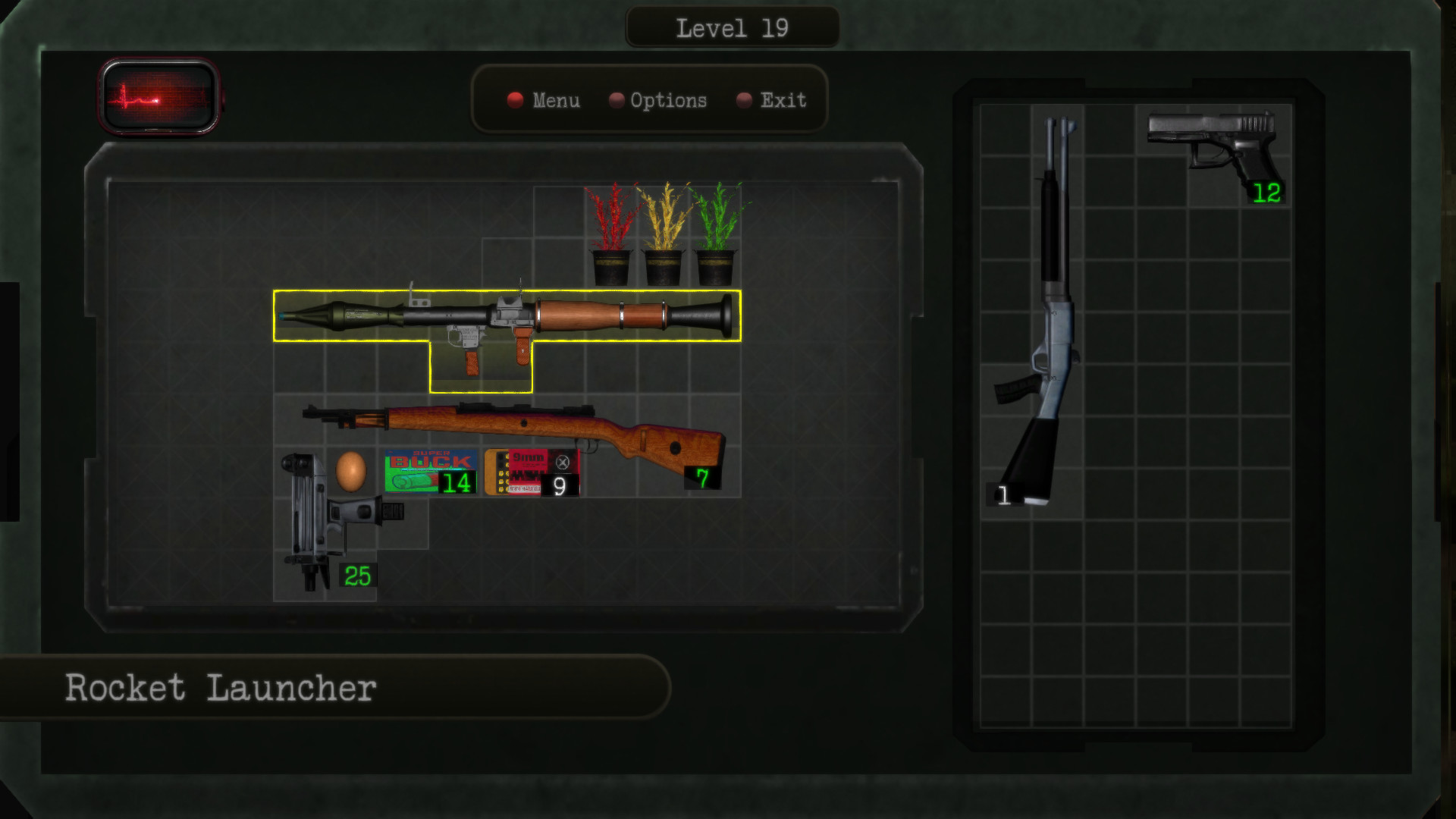
Did you ever play Resident Evil 4 and want to just organize that inventory? It’s kind of satisfying getting all your items in the right spot, so someone thought that should be its own puzzle game. In Save Room, you organize weapons, health, and other items ripped straight from the game it’s inspired by.
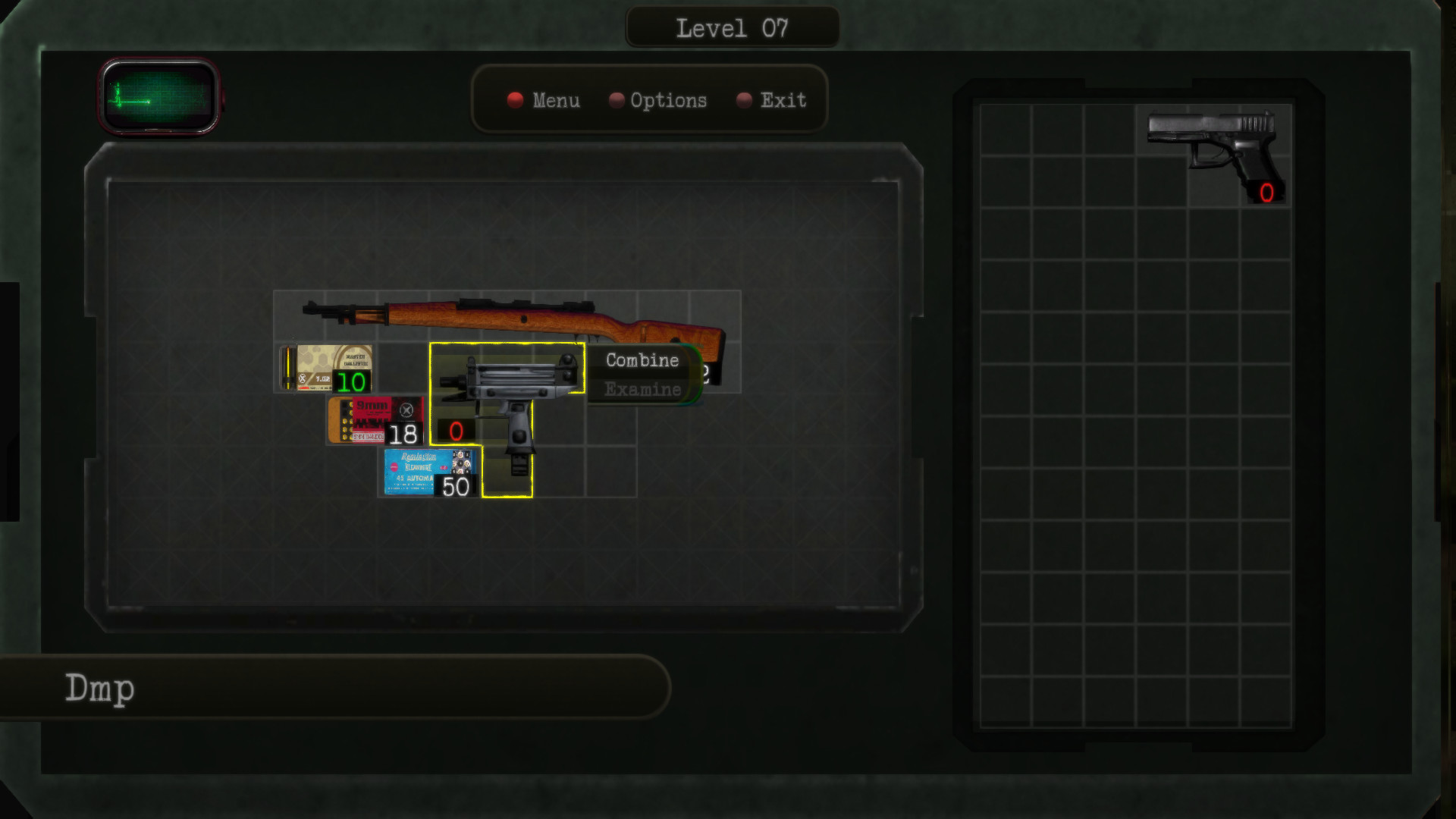
There are only 40 puzzles in total and you can blow through them in just about an hour. On the left is a cache with a grid and on the right are the items you need to fit in there. There are just enough squares to fit every item exactly. You begin with just fitting small pistols and then larger weapons like shotguns and rifles. Shortly after this, you need to organize health items and grenades. Things get more complicated when you start out with too many items.
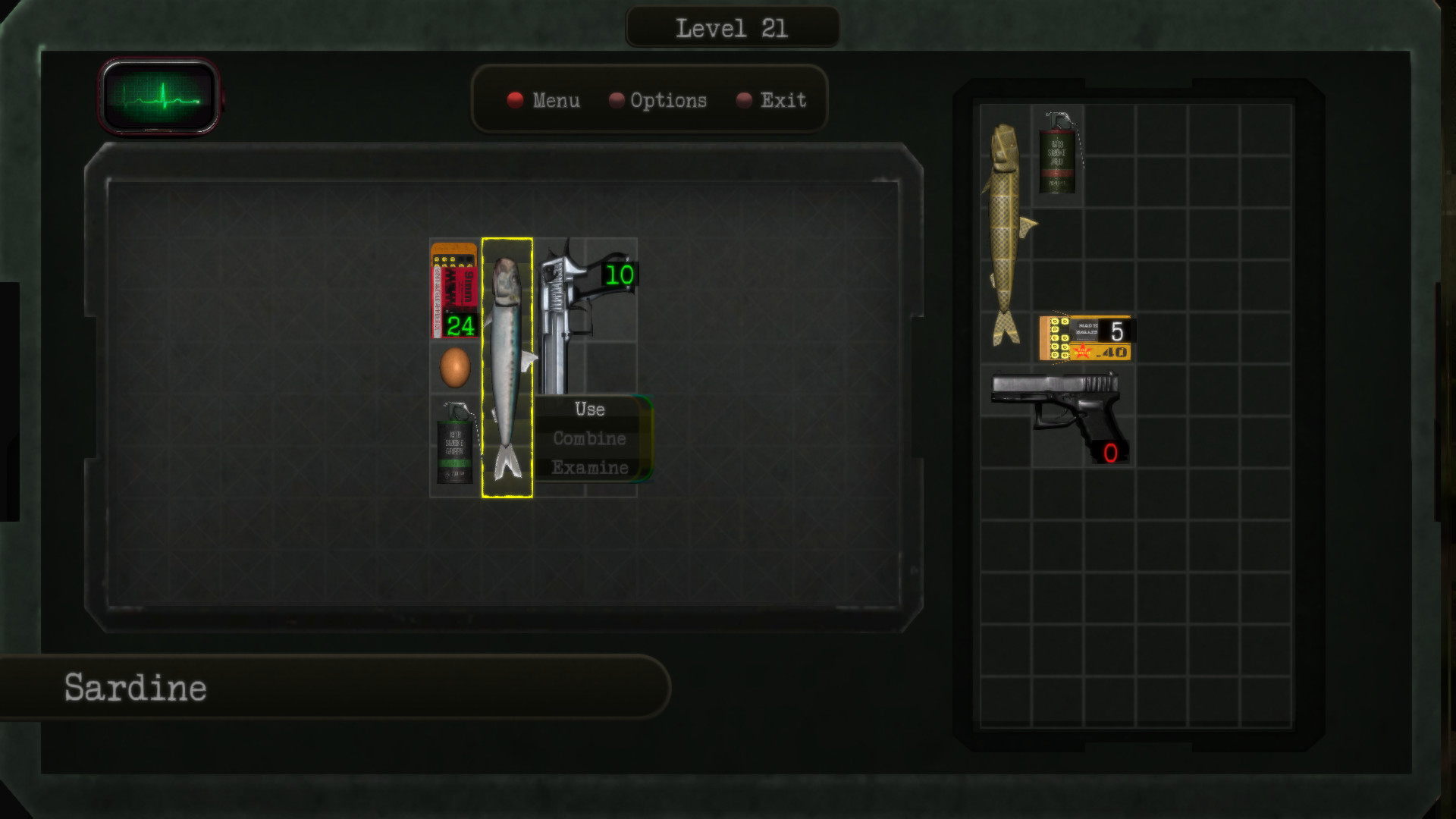
Well, just like in RE4, you have a health meter and need to refill your guns. You need to do this in a certain order as this is also part of the puzzle. You may have three health items, but can only use two so you must figure out how to combine herbs and also hurt yourself with poisoned eggs and fish to be able to use more health items. Later on towards the last dozen puzzles you start crafting ammo in addition to stacking ammo and reloading weapons.
This all sounds complicated, but if you ever played RE4 you know exactly what to do already. A few puzzles will get your brain juices flowing. Mostly the ones that needed me to combine certain types of ammo and reload or stack ammo in a certain order. I only had to look up a few puzzles online, but most are quick trial and error levels and you will be breezing through them.
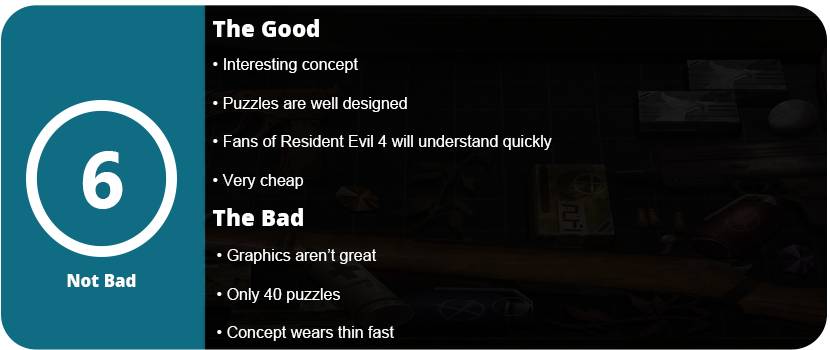
This sounds like a great concept, but in the end, it gets old really fast and it makes you just want to play RE4 instead. The visuals are pretty ugly, there’s a single track that loops in the background, and that’s all there is to this. For the low asking price, I can’t really complain. I had my hour of fun, but it’s totally forgettable. This isn’t on the same level as Portal or even something like The Room series. You won’t be talking about this 10 years from now. I honestly can only recommend this to RE4 fans who want some sort of weird spin-off. Anyone else who never played RE4 just won’t care about this or even get the idea.
Obsidian Entertainment lit the world on fire with Fallout: New Vegas. Many considered it superior to Bethesda’s own offering, Fallout 3. The Outer Worlds was considered a spiritual successor to New Vegas. The same type of play style. A first-person RPG with shooting elements, a large story, companions, quests, and worlds to explore Many were calling it New Vegas in space, but is it really that, and does it live up to New Vegas?
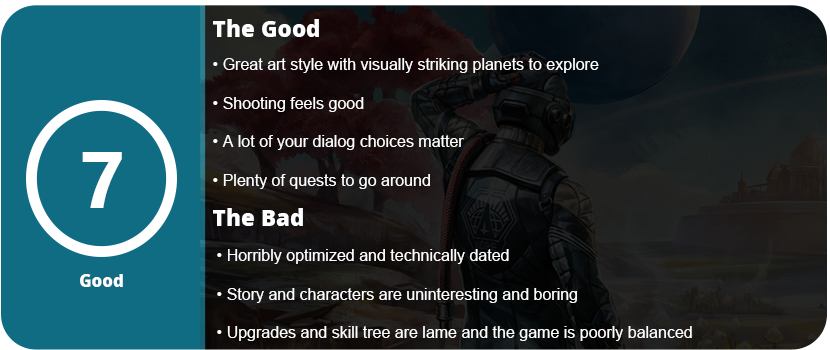
The short answer is no. It falls short in nearly every way. The game really does feel like it’s trying to be New Vegaswith the funny humor in the propaganda posters and the overseeing mega-corporation that’s trying to take over the Halcyon colony, and you’re trying to get factions to agree with each other or side with them. The overarching story is pretty much forgettable, and that goes for most of the game. The story, characters, and side quests are mostly boring. I hate to really say this, as this game has sat installed on my PC for a couple of years now, and I would do a mission or two and quit because of just how dull the game is. The characters aren’t memorable; there’s no personality that stands out, and the overall mega-corporation humor that overshadows the game just feels like it’s in the background.
The game is also incredibly short. I did several companion quests, dealt with all the factions, did multiple side quests, and still clocked in at around 12–13 hours. If you blow through the main story, you can finish it in 4-5 hours easily. I feel that contributes to the problem of the story and characters being uninteresting. There’s not enough time for them to develop. Your entire crew is all humans, and they all just feel like generic Bethesda faces that were run through a random generator, and nothing stands out. I wound up skipping through a lot of dialogue because I just didn’t care. I loved the characters and overall story of New Vegas. It was fresh and interesting, but this just feels like a generic space odyssey.
So what about the gameplay? It’s tighter and more refined than New Vegas, but not by much. I hated the upgrade and skill tree systems. They felt generic and half-baked. The game’s poorly balanced, where it’s either way too easy and you mow down enemies, or they swarm you and kill you on the spot. I felt like none of the items you can use helped at all; stats didn’t seem to matter, and the only thing that really did matter was your level in each respective category. You really want to get your speech levels high, including in engineering, as you can bypass a lot of battles with speech checks. Most of the weapons in the game felt pretty generic, and their weapon power didn’t seem to matter.
Weapons can be tinkered with and modded at workbenches. Mods can be picked up and attached to various parts of guns. They can add elemental damage, increase clip size, add scopes, and do damage to different types of enemies, but outside of this, you can just tinker with the weapon’s level, and future weapons don’t matter. There were no cool, unique weapons found on bosses or for getting into hard-to-hack safes. Looting, like in Fallout, feels pointless as there is so much given to you. By the end of the game, I had thousands of rounds of ammo for each weapon type. You can specialize in long, pistol, or heavy weapons, but I just wound up dumping points into all three. Add a few good mods and tinker with the weapon up to your level, and you will stick with the same weapons through most of the game, rarely trading them out. You can equip up to four weapons, and I rarely ever used healing items until the final showdown, where you are swarmed by enemies in every room you go into.
Another balancing issue is with the factions. You can gain and lose reputation, and this will make guards attack you on-site in certain towns, locking out quests and not being able to finish any in this case. I wound up pissing off a couple of factions, had to abandon the quests there, and couldn’t go to the shops either. This is really frustrating, and there’s usually no way to get the reputation back. This can lock off companion quests and many side missions. Throughout the entire game, I mostly just mowed down every enemy in my way and used my companion’s abilities when I was swarmed on occasion. You get a single ability to slow down time, which is useless because it slows down time too much.
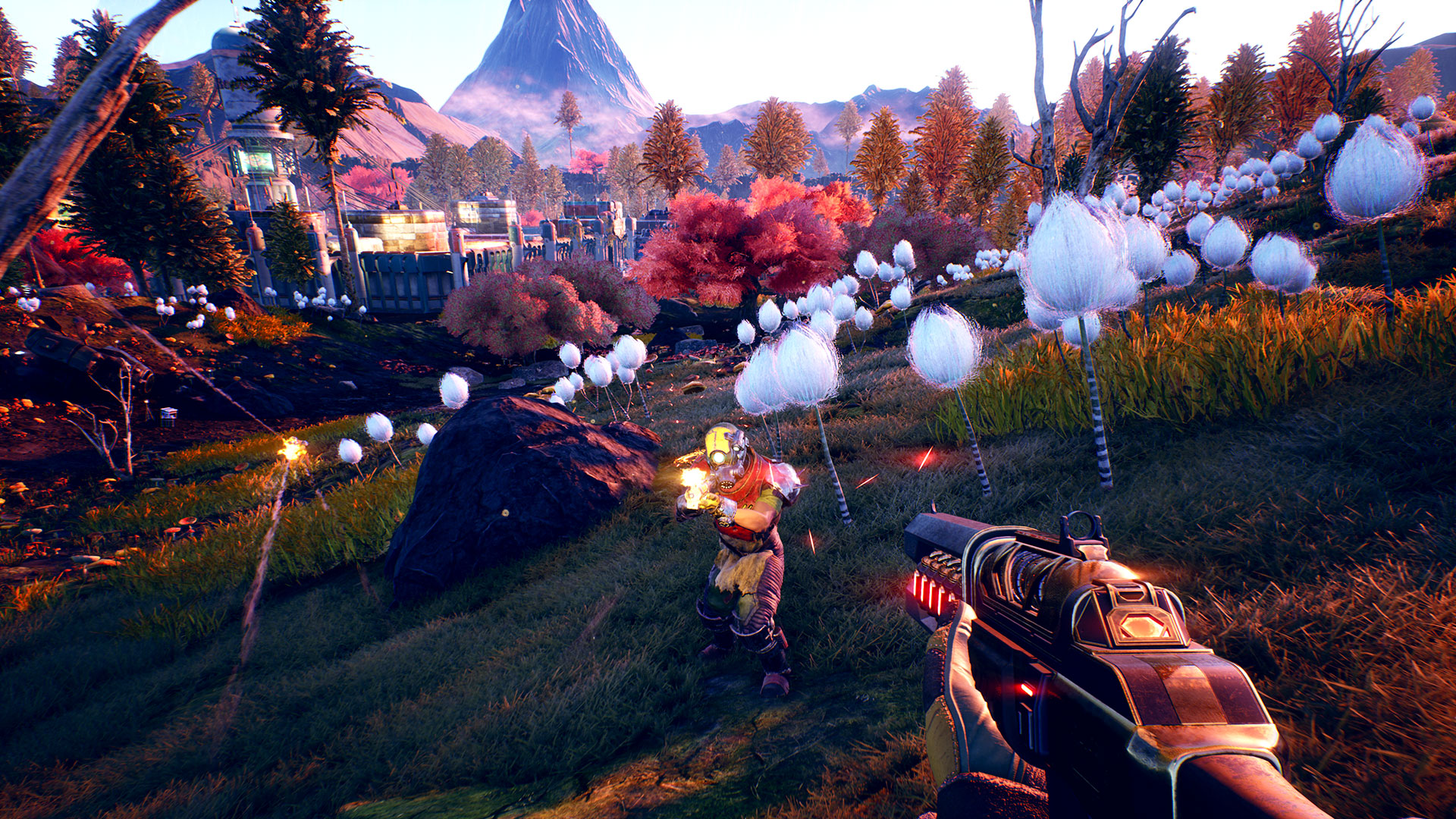
The only thing I really enjoyed were the visuals. The game looks like a last-generation title, but the worlds are unique and look really good. I was interested in discovering new towns and new enemies, but that was really it. Everything else was either ignored, forgotten, or skipped because of how uninteresting most of the game is. I don’t feel like this is Obsidian’s best work or their love letter to New Vegas. The game is horribly optimized, looks dated, and feels dated because it is too safe. The game lacks any depth, and most may not even enjoy the shooting. The story and characters are boring and unoriginal, and the game’s length doesn’t justify this type of game in general. Who wants to play a 4-player RPG with supposed vast worlds to explore? You might enjoy blowing through the main story, but that’s about it.
The 8-bit era of Atari was before my time. I started the next generation with the Sega Genesis and Super Nintendo as a young toddler. I still respect and have enjoyed iterations and ports of Atari 8-bit games over the years. What hasn’t been done well is anything outside of bundles of seemingly random collections. They’re nearly countless at this point and have spanned nearly every console imaginable. Atari anniversary collections, various Atari-themed packs, and various retro packages with fancy UIs or presentations However, no single retro package has been as cohesive or beautifully created as the Atari 50. Even Sega’s recent Genesis Collection, with its retro 90s bedroom and bookshelf display, can’t beat this.
The entire game is presented like an interactive history lesson. You go through four timelines. Atari’s origin story and their arcade routes You get to see photos, printouts, commercials, and interviews with various Atari developers and industry veterans such as Tim Schafer (Psychonauts) and Cliff Bleszinski (Gears of War). These are presented in chronological order. A game is presented when its release comes up in the timeline. Some games have cover art, photos, and even comics underneath them to view. As you advance in the timeline, you get the feeling that you’re playing an interactive museum tour. There are no fancy 3D menus or anything, but the clean and simple UI works well. There are a few surprises peppered in, like unreleased prototypes and Digital Eclipse’s own recreations of iconic games like Yar’s Revenge and Haunted House.
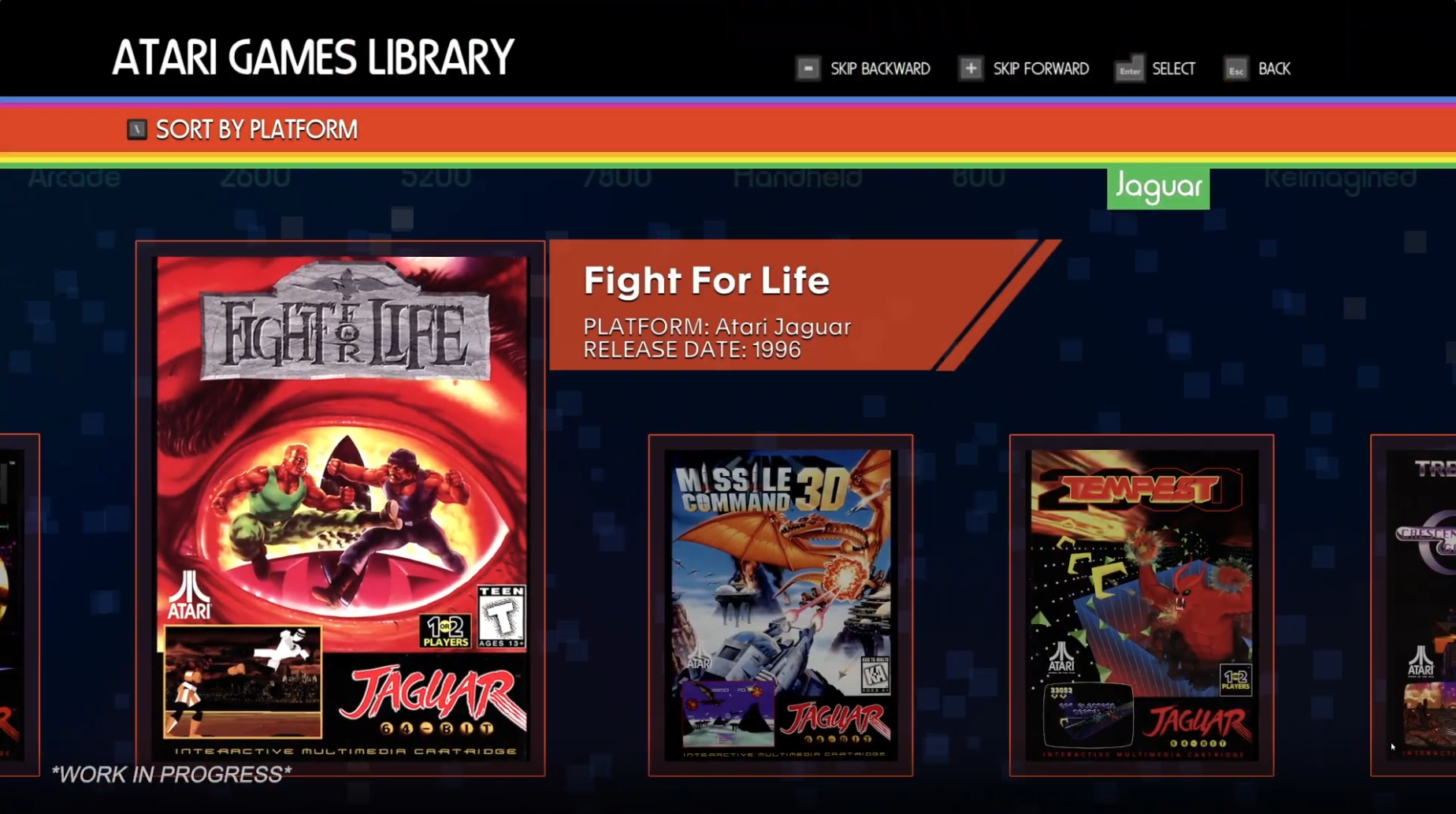
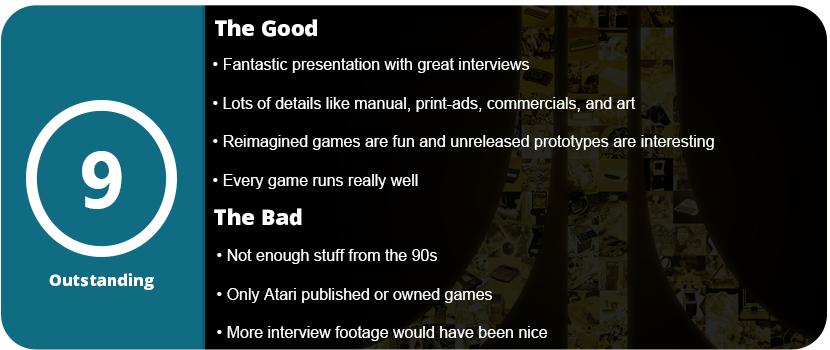
As you advance to the home console and PC timelines, things get more interesting. You will eventually get to the Atari 5200 and 7800 games, which are a bit more advanced. You will also get to play a few PC games for the Atari home computers. Then you will finish up in the 1990s with the Atari Lynx and Jaguar. Sadly, there aren’t many games in this timeline, and the biggest issue with this entire game is the lack of third-party titles. You only get to play Atari-published and owned games. That’s very limiting, and while I understand this is Atari’s own history, there are many games that helped make their systems great outside of internal developers. The few Jaguar games range from Cybermorph to Tempest 2000 and Missle Command 3D. They aren’t great, but they are interesting to dive into. That’s another thing about this whole collection. Very few games are fun to play for longer than five minutes. Some are pretty clunky and bad. This isn’t a “greatest of” collection, which I really appreciate. You will most likely go back to the more fun games like Missle Command, Centipede, Millepede, Tempest, or their latest versions in this game. You get special bezels, backgrounds, overlays, and control options for every game as well. You can also select various modes, and some games support save states, which is cool. You also get a digital view of every manual for the game, including the arcade operator’s manuals. They didn’t leave anything out.
By the time I spent around 5 hours in the game, I got to the end of the timelines. You can go back and play any game in the library view and pick your favorites. These games run really well and look great, but many gamers who didn’t grow up in the 80s will probably find this nothing more than a history lesson. Even more, will find pretty much every game boring or uninteresting. However, that’s not a knock to the games, but just a warning to younger audiences. Anyone younger than 30-35 will most likely not find this game interesting or fun. If you have a curiosity about Atari’s history or games then this is the best place to get that. If you have an itch for trying out 8-bit games or want to go back without emulating anything then this will give you nearly 100 games. I also appreciate how few ports and copies of the same game are in here. Each game was hand-picked and placed with relevancy.
Overall, the Atari 50 is one of the best retro packages you can ever play. Telling an entire developer’s history with games placed in their correct time slots and even including unreleased games and reimaginings of some is just fantastic. The videos are entertaining and interesting, and you will learn a lot. There are so many details added from commercials, print ads, posters, manuals, customizable controls, save states, and more. It’s a complete and cohesive package for Atari lovers out there. Just be warned that there are no third-party games and less of the 90s stuff.
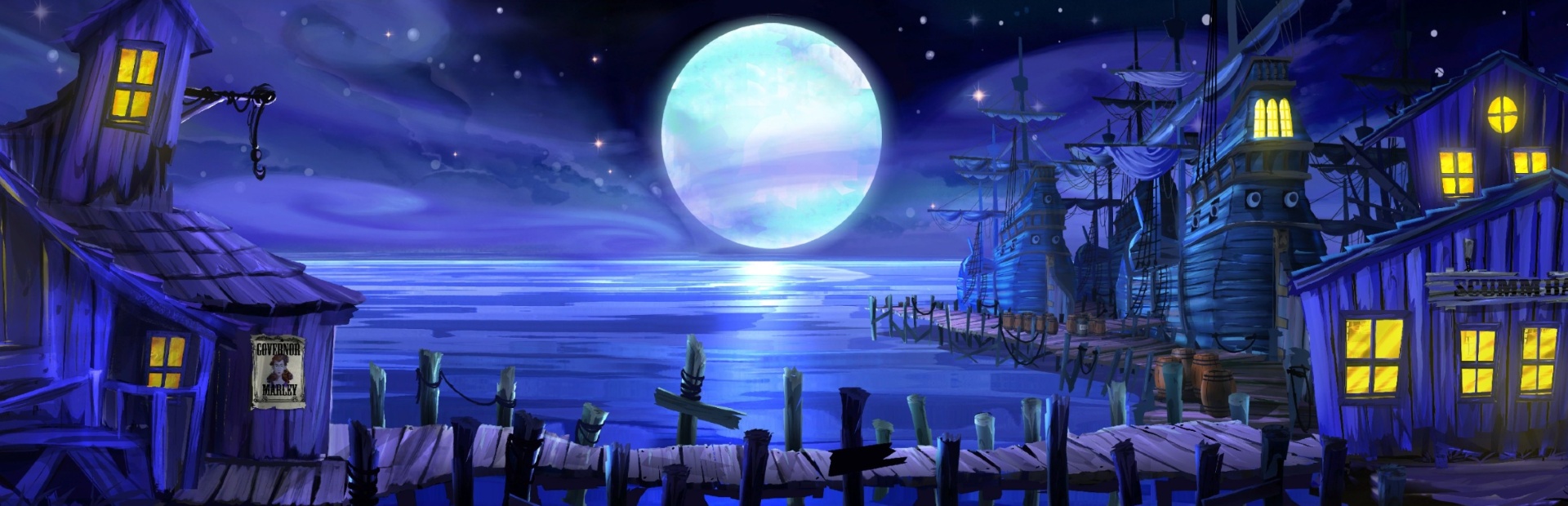
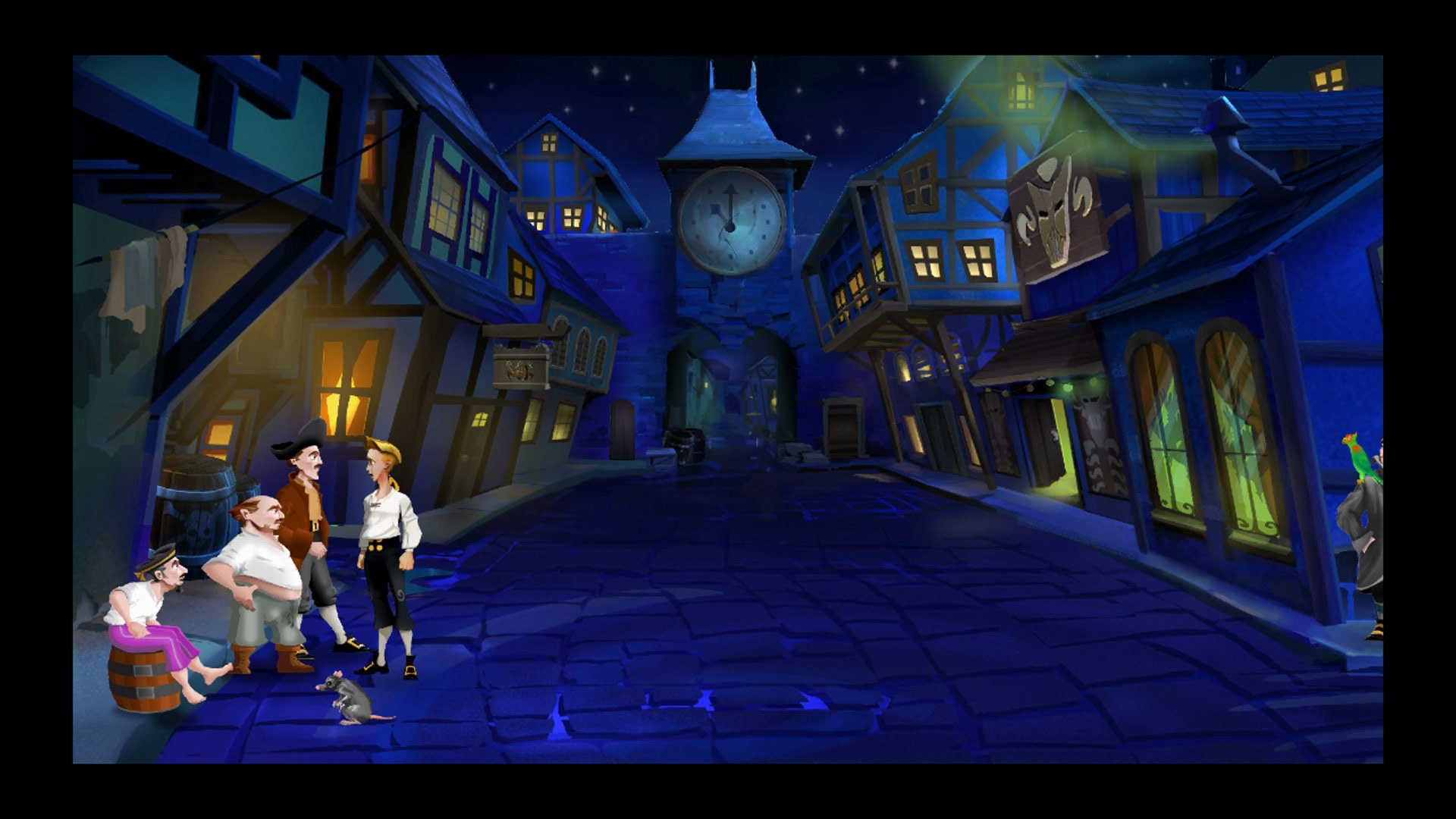
LucasArts’ SCUMM engine games hold a great fanbase for those who grew up in the 80s computer gaming scene. They were bright and colorful. revolutionary for their time in terms of gameplay and art. They were also later updated with voice acting, which was some of the first of its kind. While the games were short (running around 6 hours per game), they were memorable and had a special sense of humor that was considered top-notch. The series got a much-anticipated remake, starting with the first game. While not much was really added, the entire game was redrawn from scratch with all new lines of dialog recorded by the original cast.
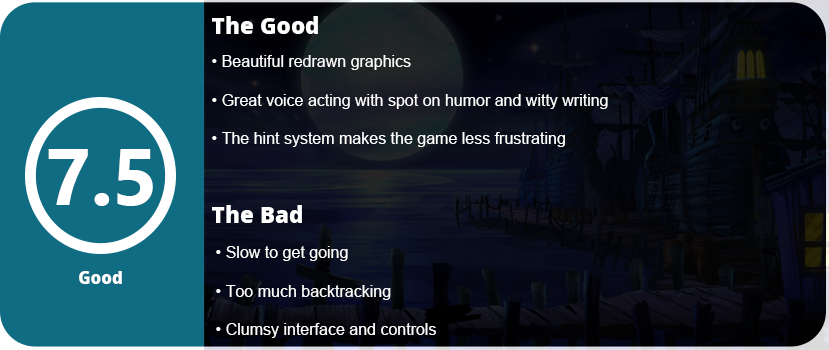
The game definitely plays like an old point-and-click adventure of yore. Clumsy controls (which were never really fixed), slow pace, obtuse object hunting, and no puzzles That’s not to say the game is bad. While it doesn’t feel as modern as The Longest Journey or even David Cage’s games with quick-time events and button pressing, that’s part of the charm. Thankfully, the game has a hint system that slowly gives you more specific hints, including full-on arrows pointing to the exact spot you need to be. This was really helpful and a must-have for first-time players or those who aren’t familiar with this era of adventure games.
The game has two main areas. The first one consists of some small areas, a town, and a large overhead map to get to these areas. Most of the game is spent gathering items and figuring out where and how to use them. You have multiple commands, such as talk to, push, pull, look at, use, open, and close. These are used by pulling up an action command menu, and then you have your inventory. To use these commands, you need to pull up the command menu and then the inventory. This is cumbersome and took a while to figure out. You control Guybrush by clicking around on the ground, but his walk cycle is pretty slow. There’s a lot of backtracking in this game, and this slowed the progress a bit. One thing I didn’t like was the insult for sword fighting. You have to lose to pirates to learn their insults and comebacks. You need to learn enough to defeat the first “boss”. There was a lot of trial and error doing this, and it got really frustrating.
The stars of the show are the characters and the writing. The salesman Stan, for example, is hilarious. Using overexaggerated arm waving and an obnoxious coat to look like a sleazy salesman. The pirate LeChuck doesn’t get much on-screen time, but neither do most of the characters. The main character, Guybrush, is who you will get to know the most. There is an optional dialog for most characters to get to know their personalities more than their backstories. There just isn’t enough time to get to know them more. So, it makes up for funny writing and witty humor, which the game does solidly.
I liked the visuals in this game. The hand-drawn art is beautiful and still captures the classic LucasArts look. Some of the animations feel a bit stiff still, but again, that all adds to the charm. The voice acting is awesome, and there are some funny uses of items and small tidbits of humor thrown in that did make me chuckle. I have to say that this game won’t hold everyone’s attention. It is slow to build up and takes a while to get going. A lot of people might feel lost clicking on everything and not realize what order to do things in, but the hint system makes this game much more enjoyable. I highly recommend this classic remake, but it won’t be to everyone’s taste.
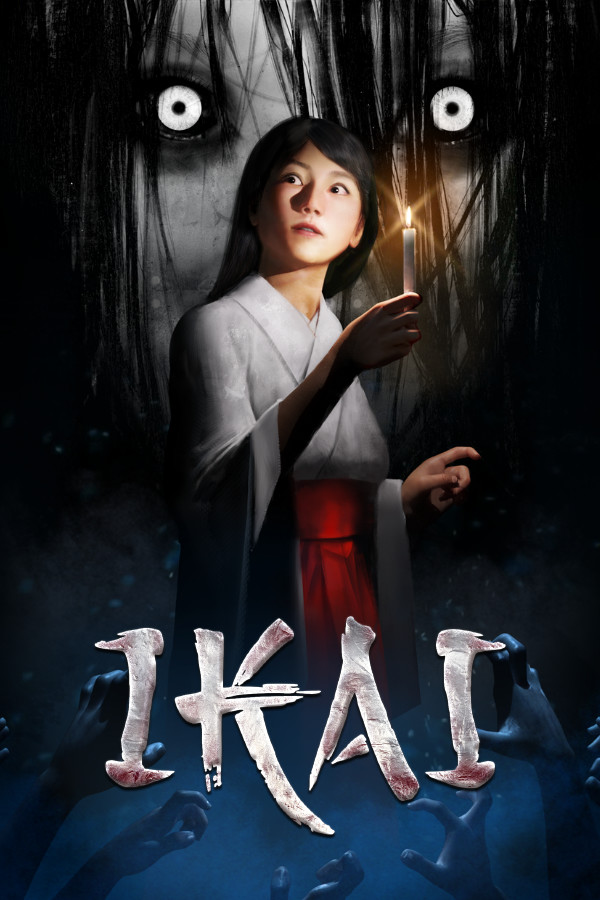
I absolutely love Japanese survival horror games. Even the worst ones usually nail the atmosphere and scare factor and this goes all the way back to the PS1 era which is where they pretty much became mainstream. From the best ones like Silent Hill 3 to some of the worst each title is unique in its own way. I collect survival horror games because of the unique factors in each game. Some may have terrible visuals, voice acting, controls, or obtuse puzzles, but they usually always scare and have great monster designs and a great atmosphere.
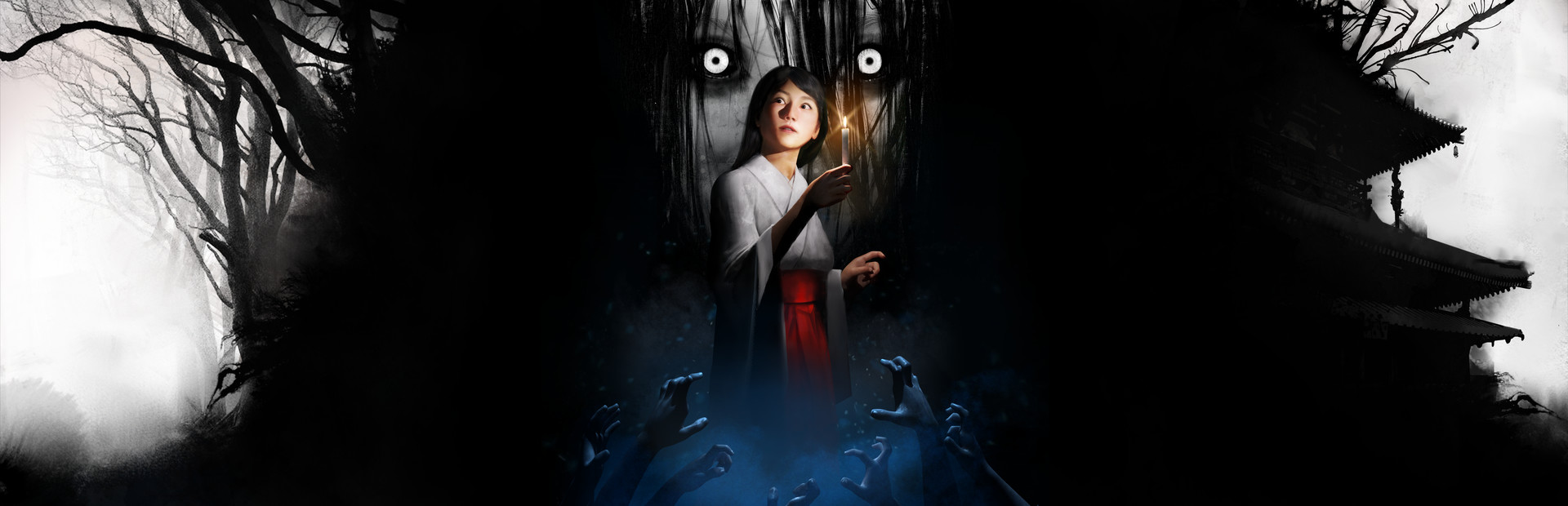
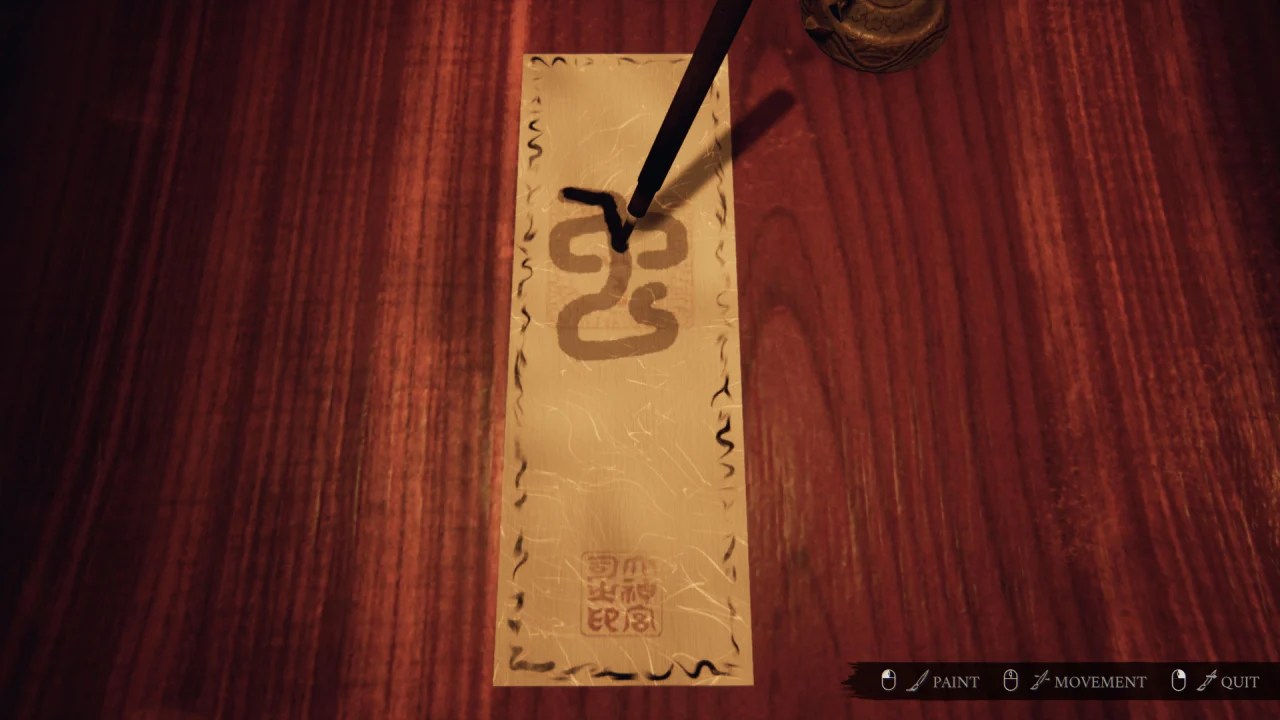
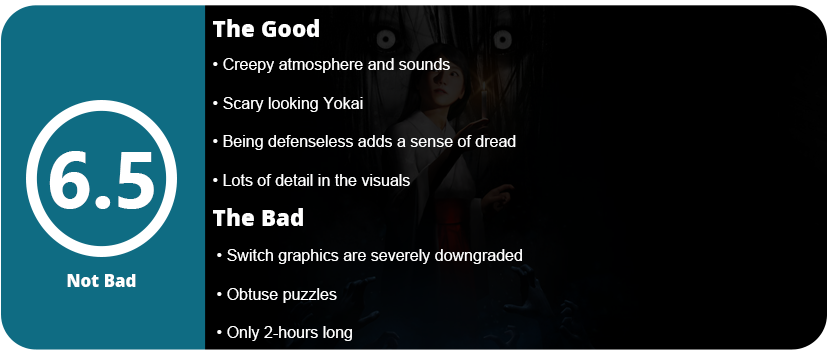
Ikai only got my attention due to its physical release. I usually don’t pay attention to digital-only survival horrors as most are pretty bad, and rarely nail even the atmosphere. Ikai does struggle in some departments such as the story, characters, and visuals, but it’s really creepy and has a haunting atmosphere. You play as Naoko who lives in an ancient Japanese village. You are a priestess whose uncle leaves the village and leaves you in charge. Yokais take over and it’s your job to rid them before they take over the shrine, and there’s something about a wedding and an abusive fiancée. Yeah, it’s not clear and even the game’s description doesn’t say much about the story. There’s a mechanic in which you can draw Japanese symbols on paper to make seals to rid of the Yokai, but once you get to the library tables you have to stop every 5-10 seconds as they will pop up and kill you. It helps add a sense of urgency and dread.
Like most games that take less than two hours to complete you don’t get a chance to develop characters or stories. Your main goal is breaking four Yokai seals via puzzles and exploration. Naoko is defenseless so you can’t fight, but just run and hide. Most of the game is easy to figure out minus a few obtuse and obscure puzzles. The village itself is really small so it’s hard to get lost, but you usually have to find context hidden within. Bloody footprints, opening the right door to trigger an event – that kind of thing. The few puzzles involved are slider puzzles and putting objects in the right place. Some more frustrating exploration bits were being lost at the bottom of a well and having to find bamboo to use as climbing posts amongst tons of bones. I spend 45 minutes running around examining every inch of bone until I found them all.
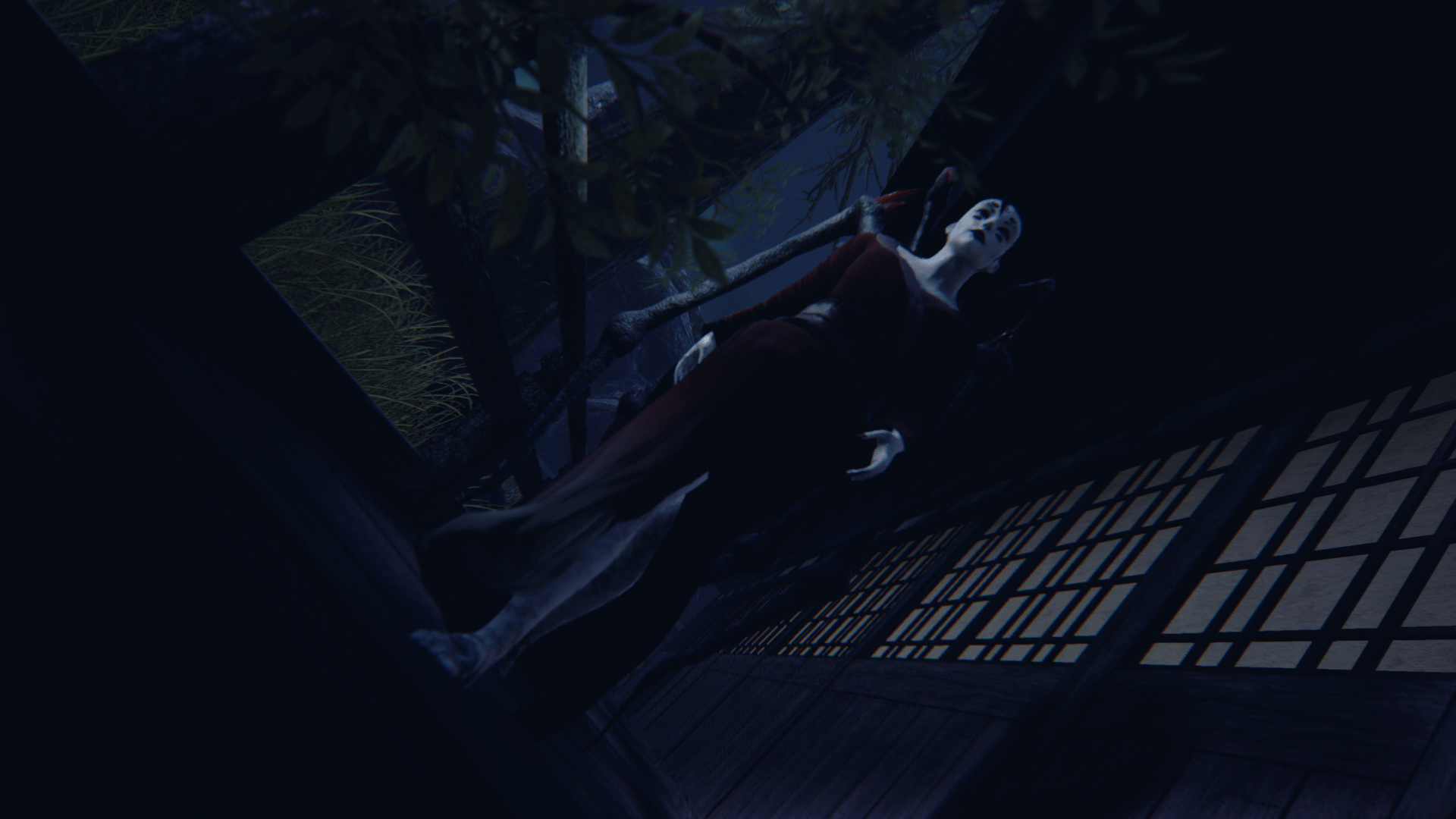
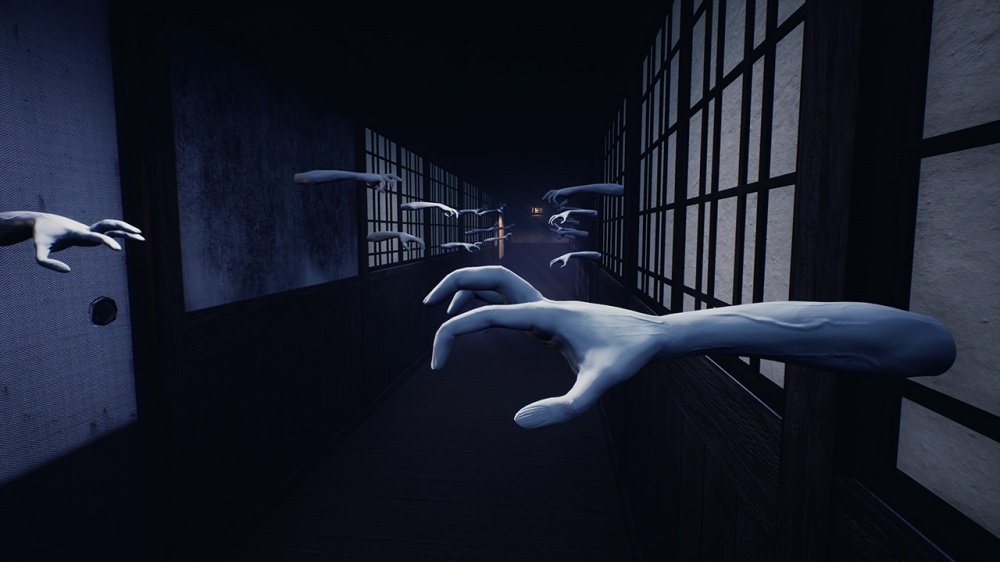
Some events have you hiding from Yokai which wasn’t too bad. They are really creepy designs and can pop up at you out of nowhere. Ikai really gets the sound design down. Creaking floorboards, moans, whispering wind, and bumps that come out of nowhere can make you jump. The game is intense all the way through. It’s just too bad the Switch version suffers from serious graphical issues such as incredibly blurry visuals due to resolution downgrade. It also runs less than 30FPS a lot of the time, but it doesn’t look bad other than this. There’s lots of detail, great lighting effects, and good-looking textures otherwise.
Despite the visual downgrade the game still sounds great, and I can only recommend it if you find it on sale. The $35 physical price tag might be a bit steep for a two-hour game, but anyone who loves classic PS1/PS2-era Japanese survival horror games will find something to like here. I do have to knock it for it’s an almost non-existent and incoherent story and obtuse puzzles, but playing this in the dark with the lights off and headphones on could make for a fun and scary evening.
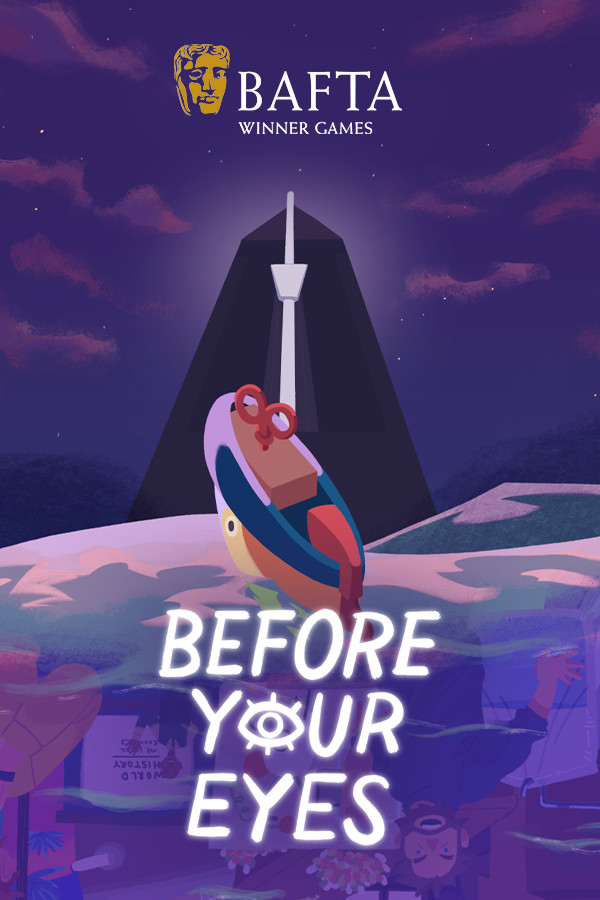
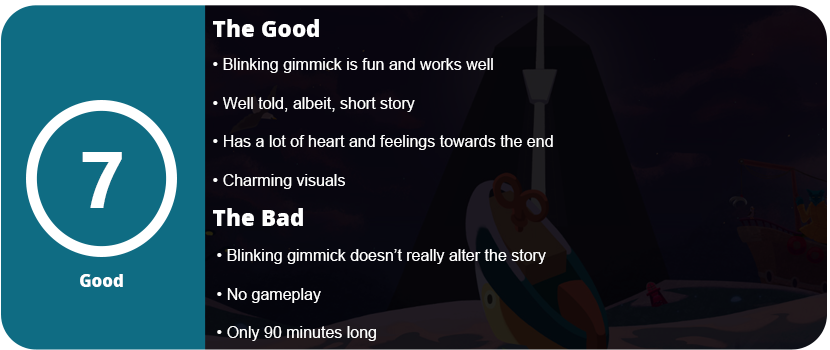
Gimmicks that use various types of hardware are nothing new since the days of the Wii made that mainstream, but very few games use your camera outside of a home console for gameplay. While it’s wholly gimmicky and can be played with a controller, the game uses your webcam to see your eyes blinking to determine when to change scenes in the game or interact with objects. Not often does the gimmick feel like it’s influencing something important, but when it does it works well.
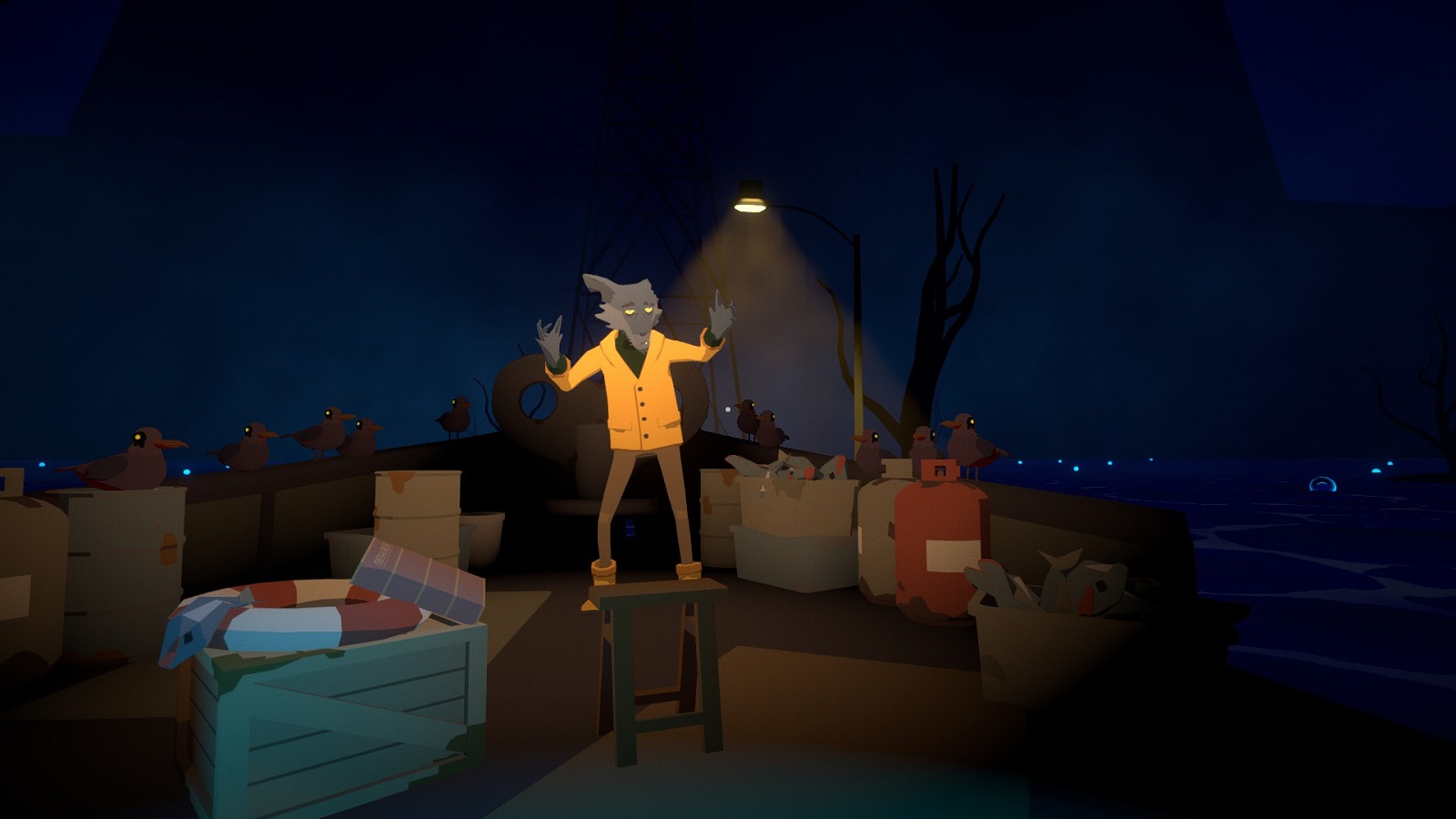
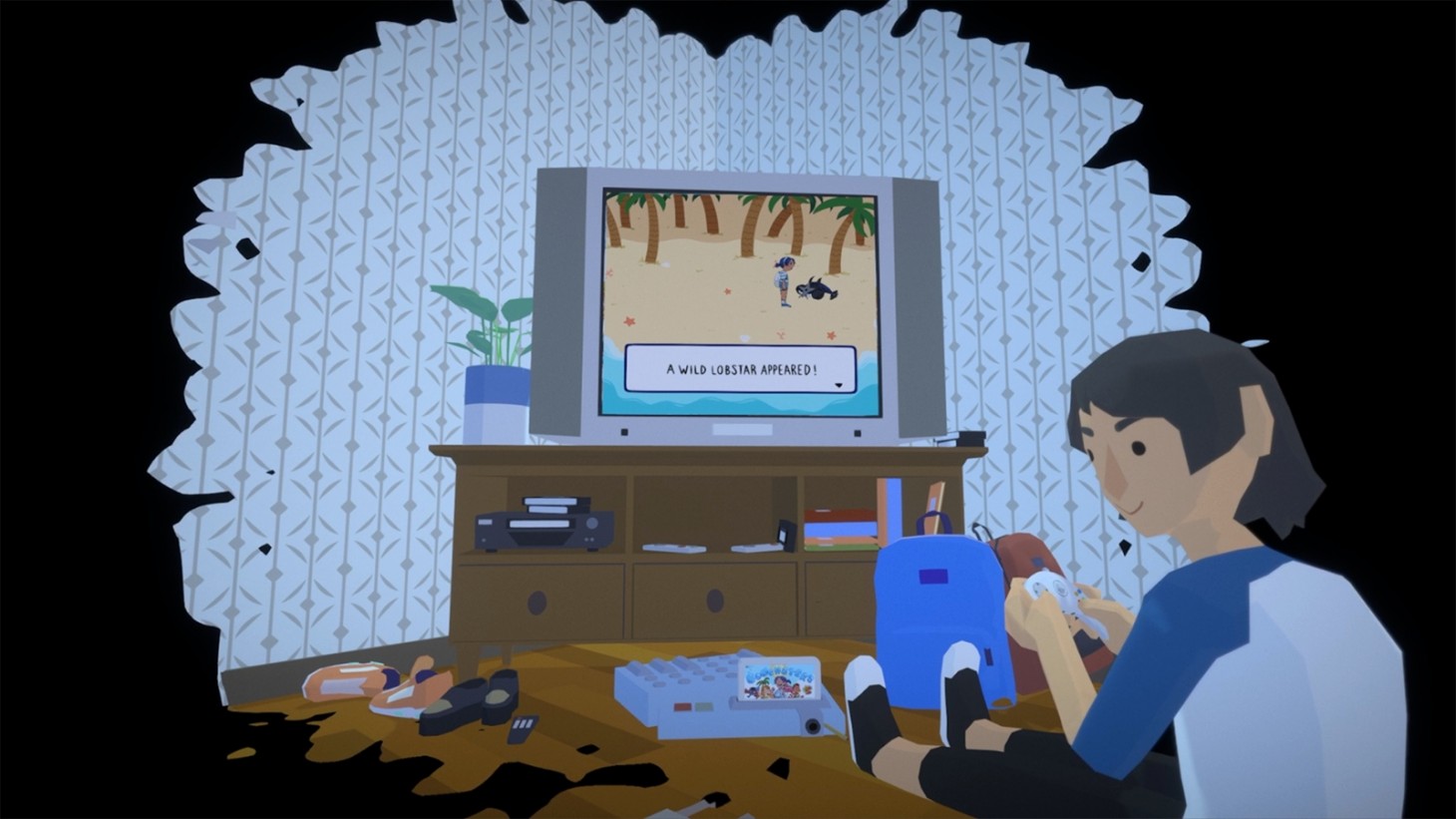
You play as a boy named Benjamin Brynn floating along the river of death in a boat with a wolf as a ferryman. He’s to be taken to a being in a large tower whom he has to sell his life story so he can pass on and the ferryman can be paid. You start out as a child and you eventually learn your mother is an accountant and failed music composer and wants you to follow in her footsteps. Each scene is full of mostly black with just what you can remember being in view. Sometimes an eye will appear on objects for you to blink at and interact with. When a metronome appears you can blink and jump to the next scene or try to hold your eyes open and see the scene to the end. Most of the time I couldn’t do it (it’s very dry where I’m at here in the summer).
You slowly progress through the story only to find out that you need to retell the story correctly. I won’t spoil anything as to how or why, but the only times the blinking gimmick felt right was when you had to close your eyes to focus on someone talking. With headphones on this is a great effect. The game does a great job detecting your eyes even in low light, and I was using a laptop webcam which isn’t that great. There isn’t much else to this game. It’s an interactive adventure with interesting visuals. The whole game reminded me a lot of That Dragon, Cancer, but I can’t connect to this game as much as it’s shorter and at the time I was expecting my first child so that game hit home quite a bit. A big fear is your child being born with some sort of debilitating disease.
You’ll most likely not really feel the game’s impact until the last 20 minutes when things get really dark and sad. It didn’t make me tear up, but it was really sad for sure. You can finish the game in about 90 minutes, but I did connect with the character to an extent, but not wholly. The scenes rush by too fast and you’re meant to understand the moral of the story more than connect with the characters and get behind their motives and feelings. I feel a game like this misses the mark due to its short run time, but the gimmick would get tiring for more than 90 minutes.
Overall, Before Your Eyes is a charming game with a lot of heart and a fun gimmick that works well when it wants to. It’s a very short game and doesn’t let you really connect with the characters enough. It’s forgettable in the end, and not as memorable as some other short adventure titles I’ve played in the past, but it’s fun and worth a look.
Shadow Warrior has been a series that’s just all over the place. The first game in this new reboot was really great. well-balanced weapons, enemies, and great visuals. The second game took a nose dive, adding too much to the game, and Shadow Warrior 3 strips it too far back. Flying Wild Hog just can’t find a good balance for this series. This can almost be a reboot within the trilogy itself. It’s nothing like the first two games at all. It feels more arcade-like. Gone are all the pointless upgrades, chi abilities, and huge arsenals of weapons. The series takes a cue from the first game by giving us a set of six weapons, just a simple chi-blast (that ends up mostly being useless), and more story than ever before.
Lo Wang has hit rock bottom and has lost his ninja mojo because a giant ice dragon god defeated him. The story is told mostly through pre-rendered cutscenes and banter from Lo Wang, Hoji, and Zilla. The cast is really small this time around, and also gone are the hub world and open-level mission structure. This game is incredibly linear and only consists of two gameplay loops. Combat arenas and tons of platforming This consists of grapple swinging, wall running, and jump dashes across chasms. It’s pretty fun if it’s too simple and overused. Some levels are over half of just this. The levels are pretty nice, with a fun new cartoon-like art style that pretty much just sticks with ancient Japanese architecture and demons. With the weapons cut back to just six, you get a varied arsenal and can really get to know them. Yes, there are upgrades, but each weapon gets three upgrades, which adds a menial upgrade to each weapon. The first upgrade increases all ammo by a little bit, and the second upgrade adds some sort of elemental upgrade, while the third is usually the best, but you won’t ever access the third upgrade by the end of the game. It’s just too short.
During combat arenas, you can run around and blast enemies away, but each unique enemy has a finisher. This is a Mortal Kombat-style Fatality, but it gives you a temporary weapon you can use to devastate enemies. This is a really neat system and the best part of the game. You need to fill your meter, as each enemy type requires a certain amount of chunks of your meter. Some weapons vary from melee, explosives, giant machine guns, or a passive portal that sucks everyone into one spot. There’s still not as much of a strategic element to the weapons and enemies in a game like DOOM, but it’s way better than the last game. At least I know what enemies die fastest with what weapon, and smaller enemies can just be hacked away with a sword. It’s faster-paced, and even though the shooting doesn’t have the weight of the last two games, this really feels more arcade-like. It’s like how Ninja Gaiden 3 was compared to the first two games. more arcade-like, more cinematic, and simplistic, but still fun.
That’s all there is to this game. You just platform your way to the next arena, where there are maybe five or so on each level. There are only two boss fights in the entire game, so it does get repetitive super quick, and there just aren’t a lot of enemy types either. The game can be finished in about 4–5 hours. I finished it in two sittings. Each level looks pretty good, despite the visuals not being mind-blowing or anything on a technical scale. The departure from the RPG stuff from the last game makes this one more enjoyable. This game felt like popcorn. I enjoyed it while it was there, but I won’t think about it tomorrow. It’s great as a cheap sale and a weekend gore fest. Lo Wang’s jokes are still pretty lame, but the writing is a bit better than the last game as well. I did get a couple of chuckles out. At this point, the series needs another complete reboot with maybe a different developer.
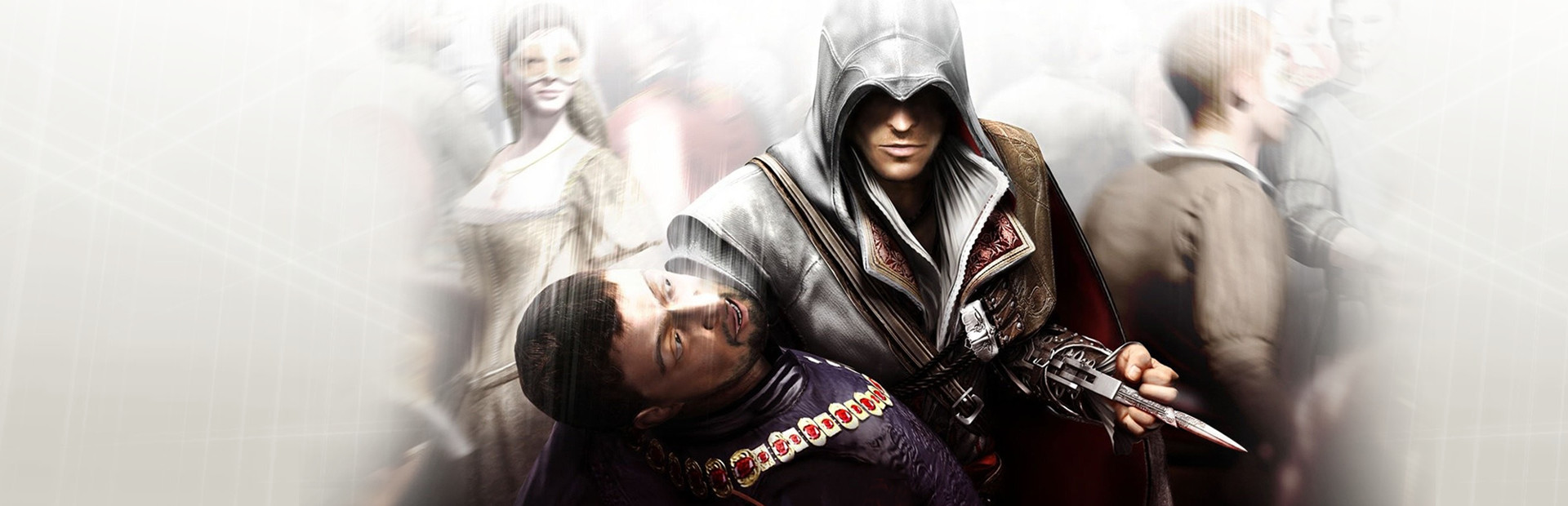
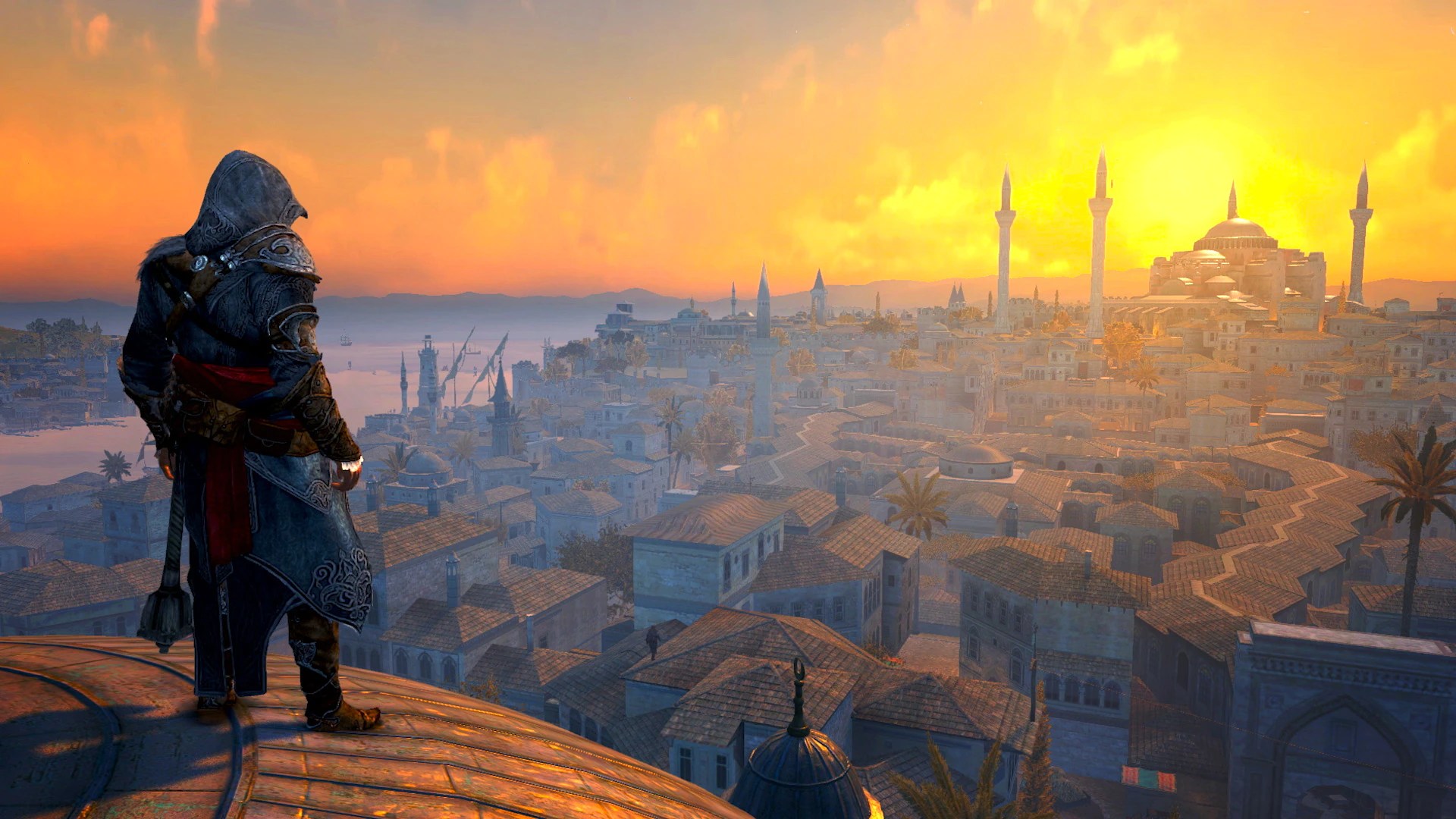
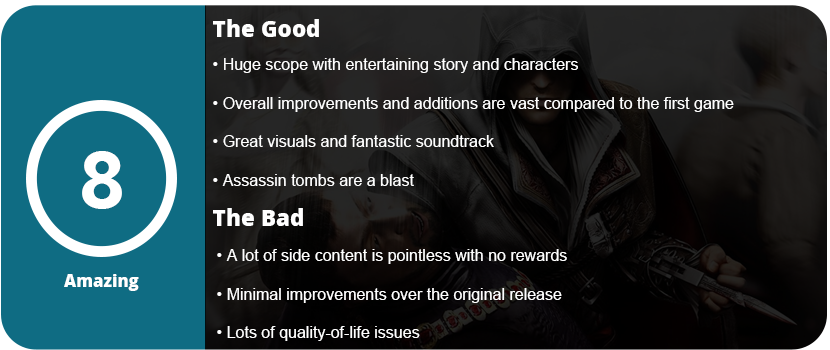
Assassin’s Creed II is by far one of the biggest sequels in video game history. When it came out, everyone was blown away by the scope and ambition put into this game. It made the first game feel like a concept demo. It felt like just the core of the first game was present, and so much was built on top of that game. The world was five times as big; there were new mission types, cinematic story missions, and tons of overall additions and improvements; however, the game did suffer on its own for various reasons.
This game starts the epic saga of Ezio Auditore de Firenze. one of the most iconic video game characters of all time. It was a surprise that Ubisoft scrapped Altair and his story so quickly, but we are greeted with 15th-century Italy and various historical characters that appeared during that time, such as Catarina Sforza, Leonardo Di Vinci, and Machiavelli. The story itself is fairly easy to follow and has a few twists, but most of all, it has a really surprising ending. Ezio works his way up as an assassin, knocking down templars, to retrieve the apple of Eden and keep it from the templar’s hands. The main villain, Rodrigo Borgia, is a nasty snake, and overall, all the characters are well written, and I wound up really liking most of them.
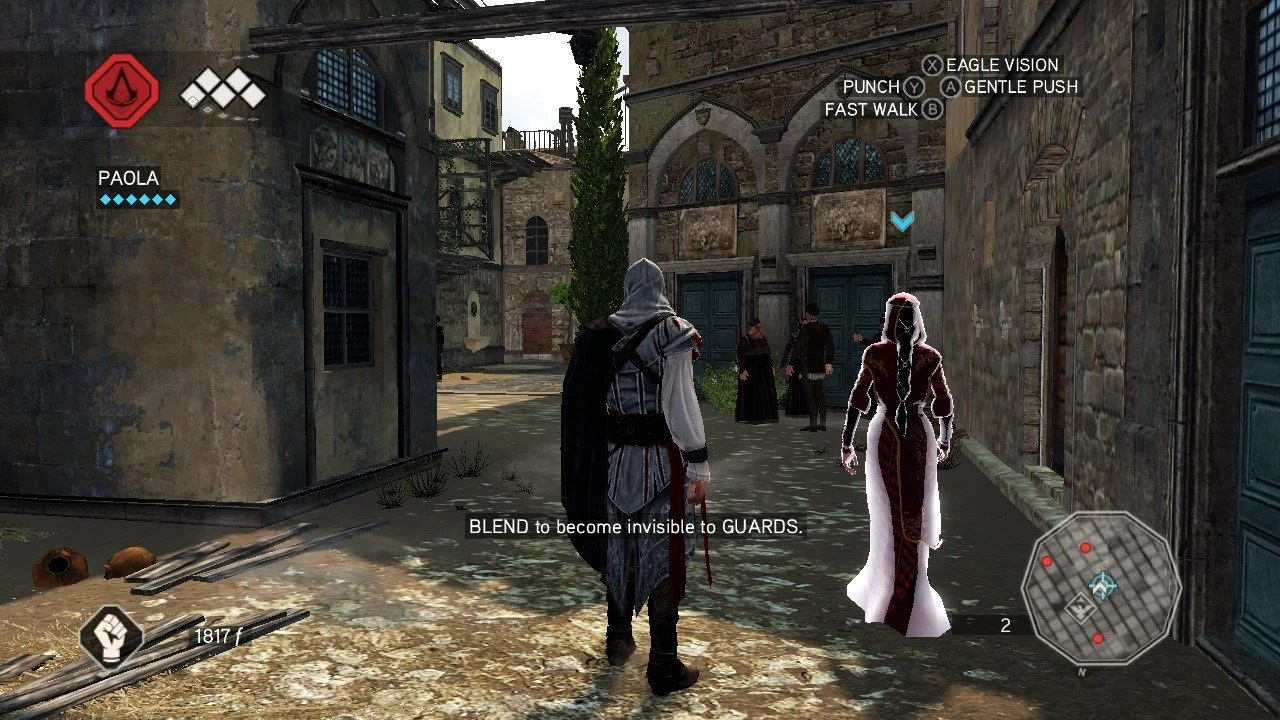
First off, the overall way you maneuver has been improved slightly, but more things have been added. While you can swan dive into haystacks and climb ladders, the entire game has been built with parkour free-running in mind. You can climb every building and stay off the streets by staying on the rooftops. Overall, the system was impressive back in the day, but it has a lot of quality-of-life issues. The overall parkouring feels too sticky. Ezio will jump around like a rabbit sometimes, so fine-tuning your turns makes it difficult to forget any type of mid-jump change. Once you get close to a wall or object, Ezio will climb, and quick button presses just aren’t responsive. I would start climbing a wall and then try to tap the descent button, but instead, he would just fall to the ground. Other instances had guards chasing me while I was trying to round a corner, and Ezio would cling to the wall and get stuck or jump onto the wall or object nearby instead. This can get incredibly frustrating as the system just doesn’t allow fine tuning or sudden changes.
That’s not to say the parkour system is bad. When you have a good line of sight, it works well, or you just want to climb broadly over a building. There were other instances in which precise jumping became a chore during Assassin’s Tomb missions. There is a fast walk button, and holding down the run button together allows Ezio to scale things quickly. If you are holding that run button after each jump, Ezio will just go in that direction, whether there’s something to grab on to or not. For small jumps across beams, I had to let go of the run button after each jump to re-align myself for the next jump. Quickly parkouring around just isn’t possible due to this finicky system.
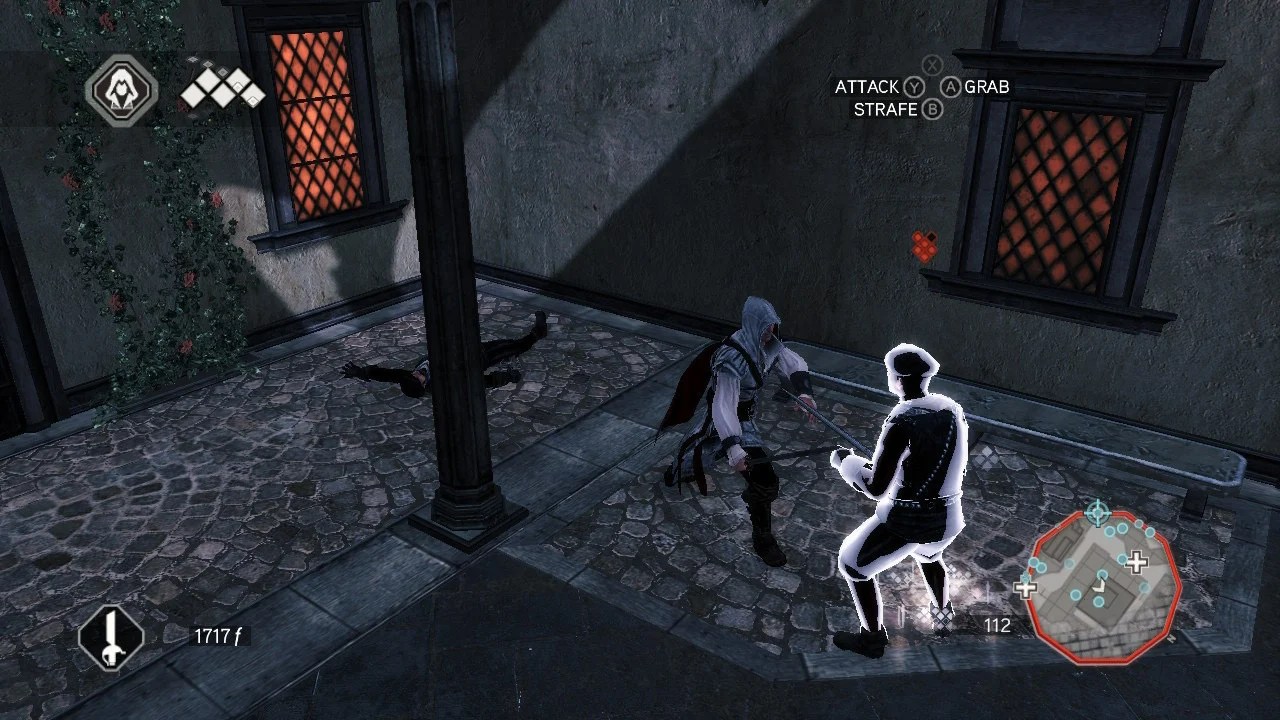
Some other frustrations stem from combat. Firstly, the system is mostly the same as the first game, as it can be easy due to the whole system being a parry-fest. You can whack away at enemies, but instead, just hold the block button and parry when enemies strike, and it’s a one-hit-kill city. Once I acquired my wrist blades, I didn’t even use my sword anymore and never once used my secondary dagger weapons. This is a flaw in the combat itself and needs serious overhauling. It makes open combat boring and sometimes too easy. What is challenging and annoying is trying to lose guards and become anonymous. Sure, you can blend into crowds, benches, and haystacks, and you can now hire prostitutes or mercenaries to distract guards and get them off your tail, but the combat and finicky parkour system make losing guards incredibly frustrating. You have to lose their line of sight by rounding corners or jumping off buildings, and if you can get far enough away, it will create a search radius. You can hide in that radius or continue escaping. There is an anonymity meter, and once it’s solid red, every guard will recognize you, and it’s a frustrating mess to find a town crier to bribe and take 50% of the meter away.
With those two major things out of the way, that leaves content itself. The sad thing about all this new content is that it’s meaningless in the end. There are no rewards for any of it except for achievements or completion’s sake. There are 73 viewpoints to find that are actually fun, as most of them are climbing puzzles on their own. Now it does still feel like overkill, as each viewpoint only reveals the surrounding buildings and not much else. I felt there were just too many. There are races, assassin contracts, courier missions, and fights. These are boring and pointless, and they are just there to add filler. You can really tell this is where the Ubisoft plague of too much crap to do in a game starts. The only rewarding side content is The Truth Puzzles. There are 20 hidden glyphs throughout the game, and finding them will grant you puzzles to solve. These get increasingly hard—absurdly hard, in fact—in which the clues become obtuse and impossible to decipher. However, what’s revealed is a cool video.
The story missions themselves are mostly varied, with various tasks such as assassinations, tailing, fights, horseback riding, and the occasional scripted mission. I really liked the story and characters enough to stick around and wound up completing all viewpoints, The Truth puzzles, and finding all the codex pages that max out your health. I do need to mention the various gadgets you get, which are mostly useless. Poison darts can make enemies go berserk and attack each other, but you also have smoke bombs, throwing knives, and a pistol, and that’s about it. I mostly used the throwing knives to take out rooftop guards, and smoke bombs were great to get away from large groups of enemies and become anonymous. In fact, they’re required to reduce frustration.
The visual upgrade for the Ezio Collection is minimal. There aren’t any actual improvements outside of some draw distance gain, anti-aliasing, and texture filtering. The lighting is slightly improved as well, but not by much. The game runs incredibly well with no slowdown, but I did run into a few crashes and glitches. I wish we got a full remaster or remake, but what’s here is fine. It’s crazy how well this plays so many years later and just shows how far ahead the game was at the time. There are a lot of quality-of-life improvements that need to be made, and most of the core mechanics have frustrations you will need to forgive or work around, but the story and characters are worth sticking around for. There is also a lot of bloated side content that has no meaning or rewards, including fully upgrading your villa, which literally just generates more income and isn’t used for anything besides dying armor, buying weapons, and armor itself. The assassin and templar tombs are a lot of fun as well.
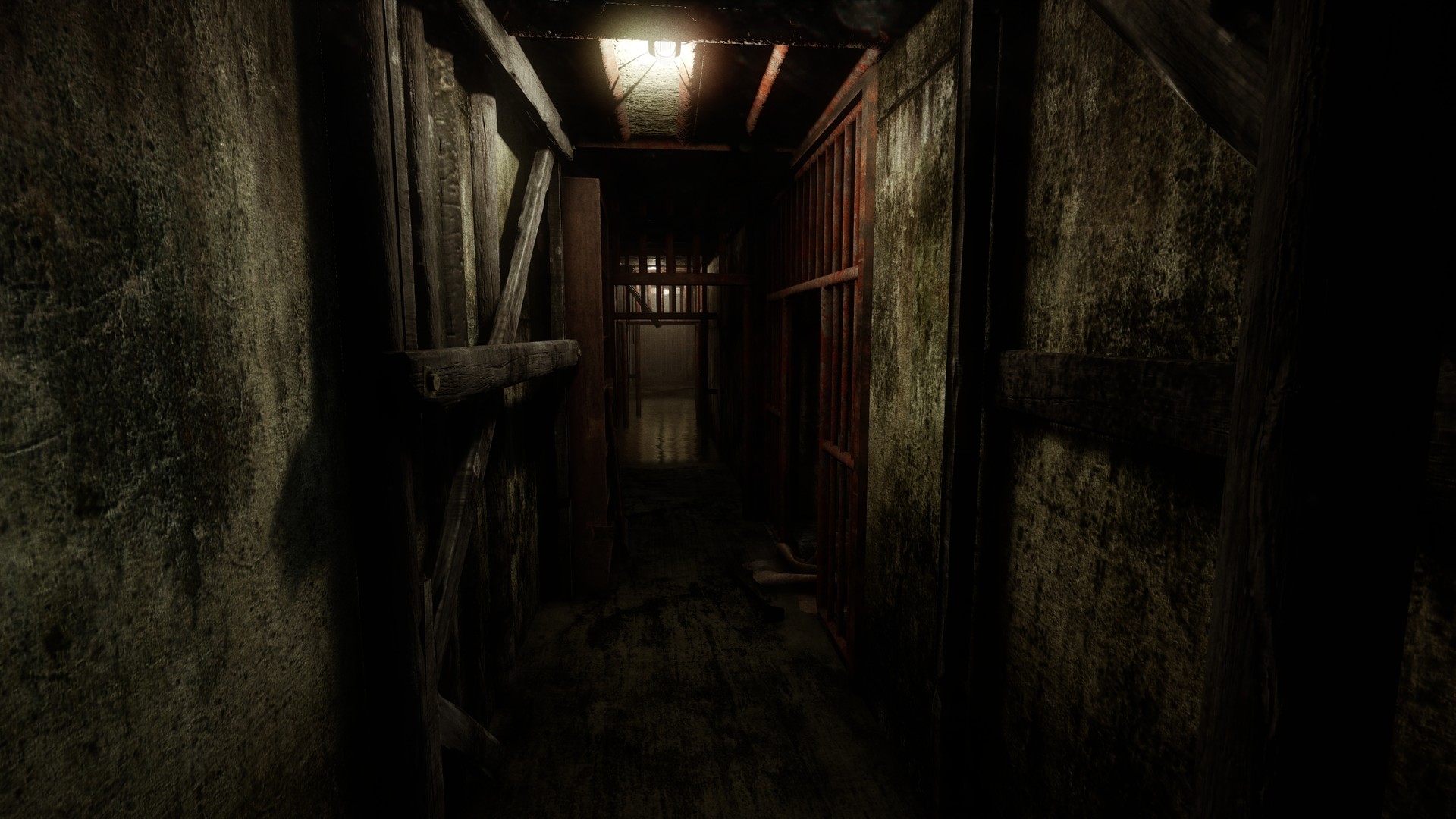
I absolutely love Lovecraftian horror. There’s something about it that’s so incredibly mysterious and still leaves it that way after the story is told. There isn’t much in terms of monsters or jump scares, but mostly just really weird imagery, atmosphere, and psychological effects on characters. The Alien Cube nails the atmosphere and strange landscapes and imagery, but sadly, not much else.
You start out in a forest where you find a weird cube that crash-landed from the sky. It’s obviously extraterrestrial, but after getting this cube, it’s just one weird, trippy event after another. There is a weird occurrence after the cube, and you’re trying to keep it from them while also following clues left by your uncle. That’s it as far as the story goes. Most of it is told through journal entries, but don’t expect deep lore, character development, or world-building here. This is straight-up your typical “walking simulator,” with just decent graphics and strange imagery.
There are different environments you’ll end up in, from indoors to outdoors. There aren’t any puzzles here, but there are roadblocks that require you to find an item to advance, such as bolt cutters to break a lock, a shovel to clear a path, an axe to chop down a path, etc. These items usually aren’t hidden at all, so there isn’t a challenge to this game either. It’s really just a rollercoaster of weird images. There is some minor backtracking, such as visiting areas from before just to pass through them, and it’s hard to die. There are a few areas that require you to make it to a certain other area before you freeze to death, and there is one long swimming session towards the end, but nothing crazy. You will run into monsters here, but these are scripted chase scenes, and unless you stop to take in the sights, you can’t really die.
The sad part about this game is that it doesn’t break the Lovecraftian video game stereotypes. Usually, they’re clunky, void of any type of cohesive or interesting story, no character development, and just really weird imagery. The Alien Cube doesn’t help this at all. I still feel Dark Corners of the Earth is the best Cthulhu-based game so far, and it hasn’t been beaten. While it’s clunky by today’s standards, it’s a much longer adventure and actually has somewhat of a story. Outside of just walking forward forever, the graphics are rather decent using the CryEngine, but not on a level we’ve seen in the past. Most of the game is very dark and foggy. It can also be finished in less than three hours.
Overall, The Alien Cube is a decent Cthulhu game but doesn’t do anything we haven’t already seen. Thanks to its short length, it’s an enjoyable rollercoaster of weird imagery, but nothing
Video games that are considered moving art are rare and don’t happen as often as they used to. Games like Shadow of the Colossus, Okami, Journey, Monument Valley, Echochrome, and various games from large to small budgets would be among that crowd. Lost in Random takes visual and character design inspiration from the likes of Tim Burton’s The Nightmare Before Christmas, Alice: Madness Returns, and Psychonauts. Now, I don’t know if those are exact inspirations, but it sure does feel like it. I feel like I’m playing a Tim Burton cartoon.
You play as a girl named Even. The world-building in Lost in Random is very well done. By the end of the game, I completely understood this world and the horrible things people have to go through. There is an evil queen who rules a black die. When she rolls a die, it determines where a child gets sent. There are six realms in the world of random. You are, of course, starting out at the bottom and have to work your way up to Sixtopia, where the evil queen resides. Children are used for something, and the queen also takes your sister Odd back to Sixtopia with her. The people of Random used to have their own dice, and the evil queen didn’t like this, so she took them all away, and only she can decide anyone’s fate.
Each realm is very well done. They all look different, and each realm plays an important role in serving the queen. One realm makes the cards, one realm offers the garbage to create the evil robots, and so on. As you climb through the realms, you meet people and can do side quests, which, surprisingly, aren’t that annoying. You mostly finish them all just by completing the main quests in each area, and I rarely felt any made me go out of my way. Exploring is one of two major parts of the game, and it’s quite enjoyable; in fact, I enjoyed it more than the combat, which there is more of. I loved seeing the beautifully crafted areas, talking to the crazy NPCs, and learning how each realm is dealing with everyday life. This kind of detail isn’t put into games as much these days unless they’re strict RPGs.
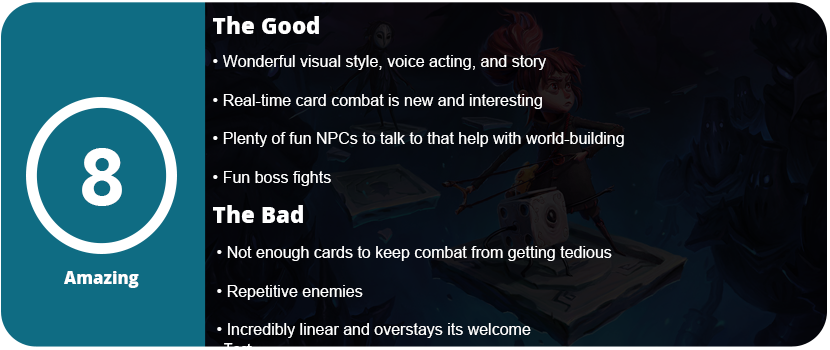
As you explore the realms, you can shoot down pots to earn coins to buy cards. Cards are used in combat, but it’s not like Hearthstone or anything like that. This is real-time combat with cards that give you what you need in the battle. You can carry a deck of 15 cards, and there are around 30 or so in the game in total. You can usually carry 2–3 of each one in your inventory. The deck is varied and broken down into categories. Weapons, traps, hazards, assists, and so on. The problem is that because the combat is in real-time, it can drag on and take a while to get any battles over with. You start out with just you and your death. You only get to roll a one at the beginning, and as you climb realms, you get more sides. This is an issue because until you get at least four sides, you can’t roll very high. You must run around the arena, shooting crystals off of enemies, to build up your hand. I find this whole process tedious, which really dampens the combat a lot and nearly kills the fun. Once you have gathered enough crystals, you can roll your die, and that determines the spending points you get. Each card has a number from 0 to 3. The strategy is picking the right cards for the situation and making sure you have a varied deck. You don’t want to be caught without a melee weapon or health, for example.
Once you play your hand, you have to shoot crystals all over again or “blink” through enemy attacks. An important card is Blink Attack, which damages enemies as you dodge because, without a melee card, you’re weaponless. This also drags out combat, as I wish the slingshot would automatically do some damage. You’re stuck just running around shooting crystals and hoping a hazard or weapon card comes up so you can attack and do some damage. This also makes for cheap deaths, especially in the board game areas where there are no checkpoints. Board games have various rules in which a game piece is moved around, and your roll determines the moves. There are hazards, enemies, traps, and obstacles to overcome, and I absolutely hated these. They dragged out the already dragged-out combat, and if you died towards the end, it was another 20 minutes to fight your way back to the end.
As you can see, the combat has some great ideas, like real-time combat mixed with card battling, but getting to that sweet spot is a chore. There is also so much combat in this game. Once you left a town, you just went into one arena after another, and it felt like it would never end. The only reprieve in combat was the boss’s fights as they changed things up. The same five enemies repeat throughout the entire game, and then, after a while, it just becomes a game of survival rather than strategy. You already know how to kill these enemies after the 50th time, so the strategy is gone early in the game. I wound up just equipping the cards that did the most damage, dropped my spending requirements down, gave me more spending points, and required fewer crystals to get to the cards. I stuck with melee weapons, bombs, healing, blink attacks, and poison, and that was about it. Most other cards end up becoming useless as the game gets harder.
Overall, the game also overstays its welcome. The combat isn’t interesting enough to last 10 hours. As you battle your way through six worlds, each with multiple bosses, quests, side quests, and cards to buy, the game grows tiresome towards the end. I just wanted to explore the beautiful worlds and enjoy the scripted events towards the halfway point. Every time another board game came up or another arena, I groaned. That’s not a good thing. I liked the mix of combat types, but getting to that point with the crystal shooting is just such a chore and slows the whole game down. What’s here, though, is a wonderful story, great characters, fantastic voice acting, and a beautiful world to explore.







































 thebinarymessiah.com
Super, thank you