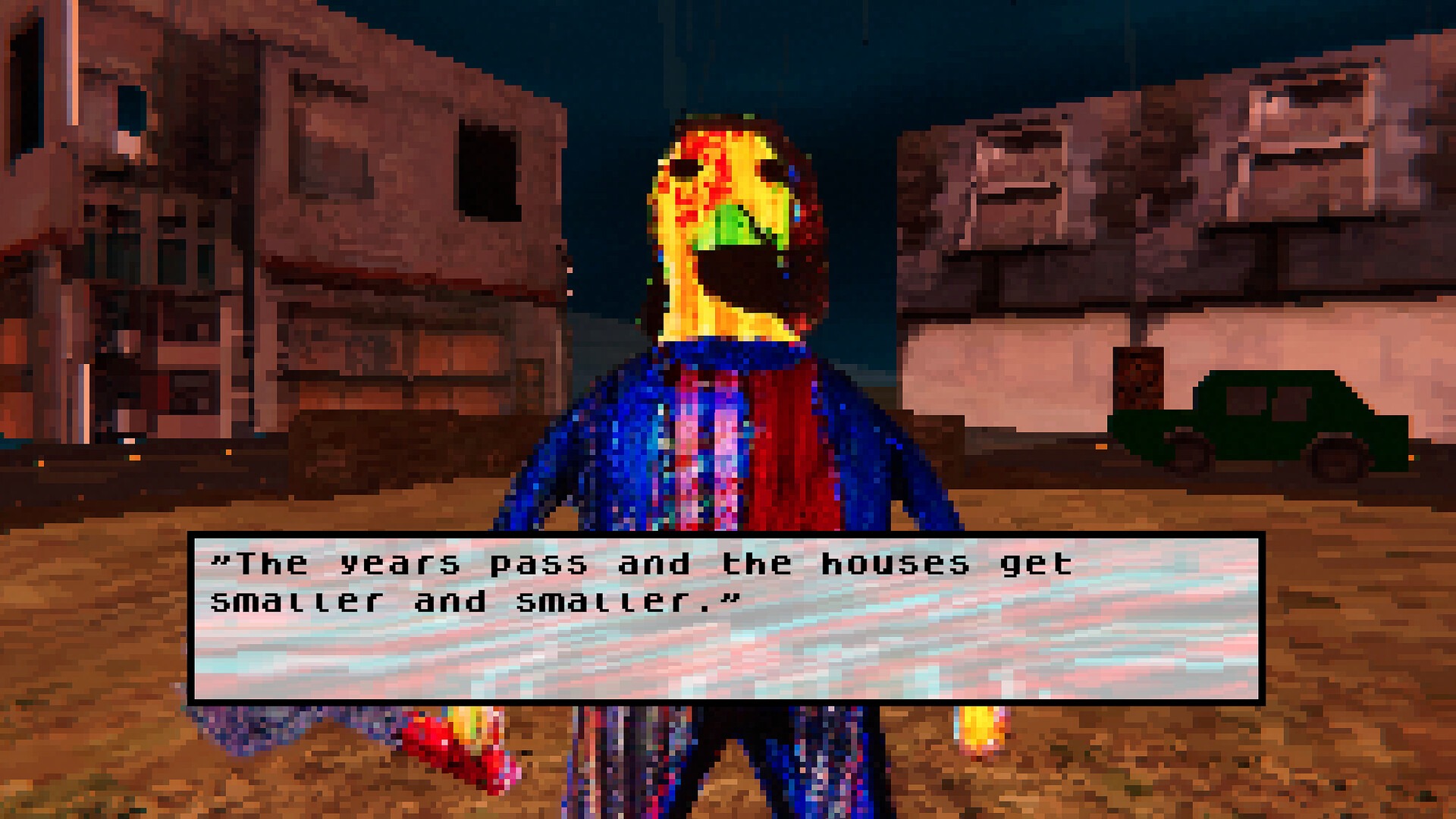
The idea of AI taking over the world is an intriguing subject, and it is becoming more and more of a reality with current deep-learning AIs. Ever since Isaac Asimov touched upon the thought of machines becoming closer to humans, we have thrust this into science fiction. The Enigma Machine does just this. The Enigma Machine tasks you with a simulation of entering a rogue AI’s “dreamscape” and finding the hidden code to terminate it. The story moves very fast as there are only four levels, and despite being able to type in pre-baked commands, I would have loved to see some hidden words give interesting results.
A level thrusts you into a first-person view with PS1-style graphics. You can interact with objects and sprint. That’s about it. Your goal is to find hidden codes in the level, either written down or audibly given. You must enter these codes in the correct order, as they are somewhat obscure. The levels are small, with only a couple of rooms. Upon reaching level three, the game requires you to combine all three codes in a specific sequence. The lighting is odd, and the textures warp and shift just like on the original PlayStation, but the game takes this a bit too far. The textures will stretch farther than they should, and the final level is a glitch fest of walls disappearing and textures overlapping each other. It can be an attack on the senses, but given the setting, it’s acceptable.
The story itself, which unfolds as text on the terminal, captivated me beyond the haunting sound effects and the suspense of not knowing what will happen next. Unfortunately, the short length of the story prevents us from learning more about the program and its AIs. You have the ability to type in words enclosed in brackets, and each time you re-enter the terminal, you receive additional information about each item, though the list is not extensive. I tried typing in random words, cuss words, and various other things, but the game doesn’t seem to have any hidden Easter eggs in that regard.
Even though the horror elements are minimal, the computer’s deception and the mystery surrounding your presence and participation in this simulation remain. The game’s four levels limit our learning opportunities, and the ending text largely explains the game’s mechanics. I did find some of the puzzles too obtuse to understand, such as the fact that there’s a hidden gun and you need to complete the last level. This is a game that puzzle enthusiasts will find enjoyable; however, it is not suitable for those who prefer pure horror or a game that revolves around terminal text.
I have yet to play Iron Lung, but I know it created a whole new genre of horror games set around claustrophobic spaces and minimal visuals. The PS1-inspired graphics are not much to look at, sadly. The cockpit you are in is almost non-existent, with only some hoses and a monitor. The plot revolves around the disappearance of a spacecraft, and you embark on a 30-to-60 year journey on Voyager-19 to unravel the mystery. The only gameplay is clicking around on buttons on the monitor with various creepy sound effects playing around you. The game is deceptively unnerving and, sadly, doesn’t capitalize on anything that adds up to much.
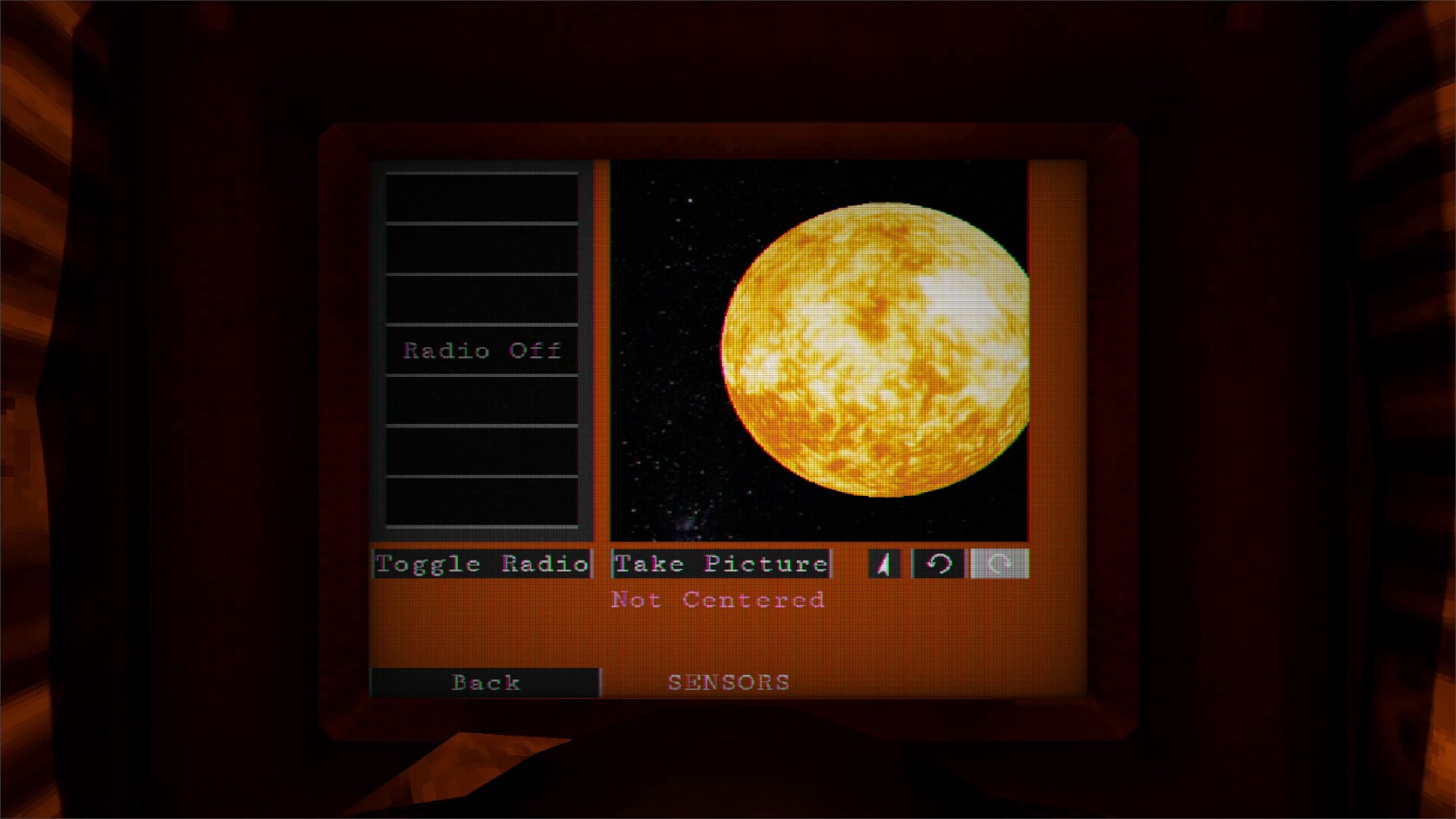
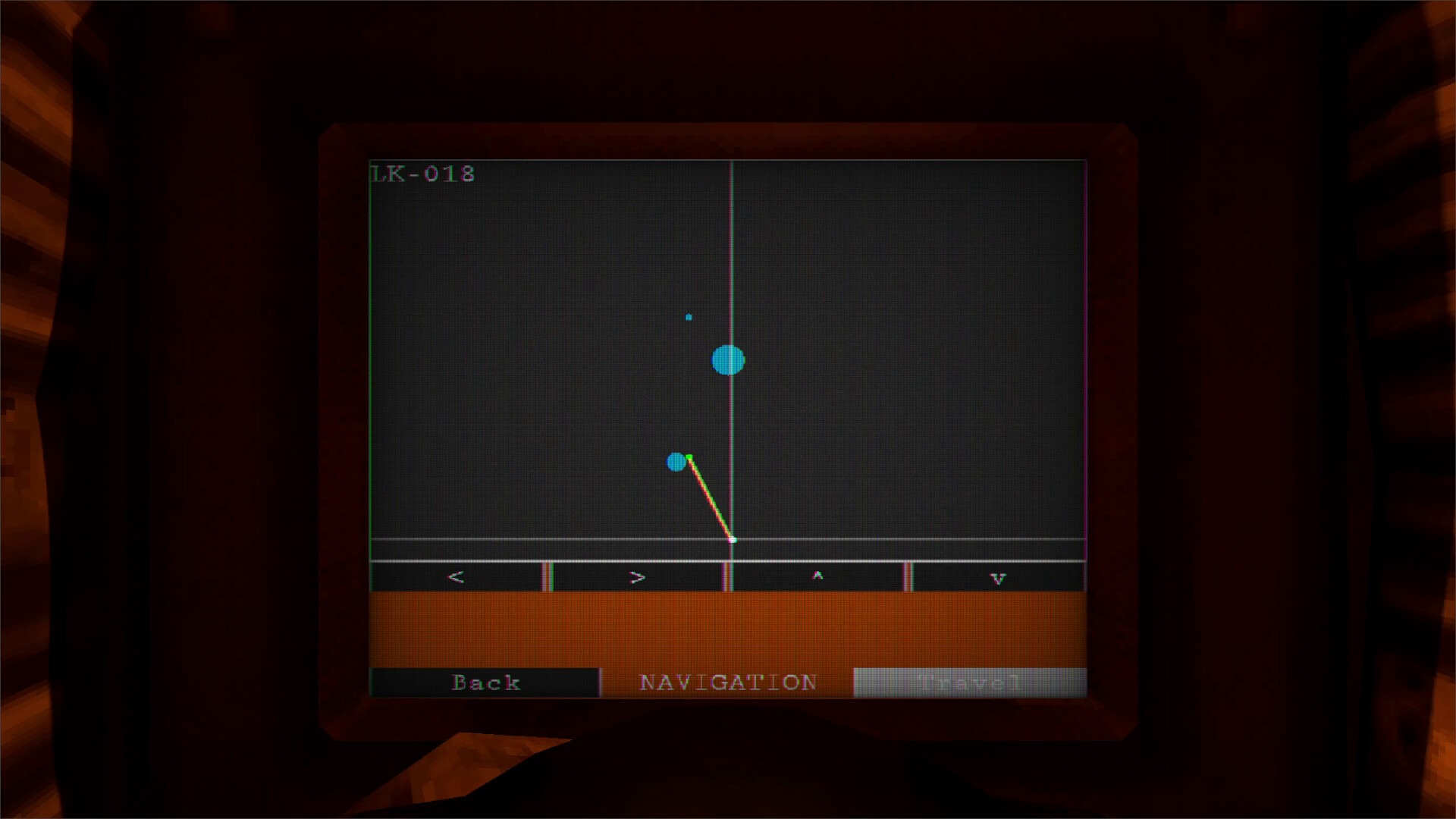
You have to maintain a certain level of power. You must keep life support on at all times, but you also have power for your camera, radio, navigation system, and thrusters. You have to complete seven missions to finish the game, and these are all exactly the same. Photograph various planets on their lit sides, and record five seconds of radio. On the navigation screen, you will see large orbs, which are suns, and small orbs, which are planets. You’ve got to move your ship to the left, but you can turn while in camera mode to face the planet and adjust. This necessitates the use of thrusters. Once you snap the photo, you record your radio piece, which can be the haunting sounds of planets, and move on.
After each mission, you wake up from hibernation and need to complete the next one. The screen becomes harder to read (in a not-so-fun way, I might mention), and you lose more and more power. This is when the game gets very tedious. The last couple of missions only give you two power bars, so you constantly have to flip around menus, turning things off and on. Occasionally, you may encounter objects in space, yet the game fails to provide further details or allow you to investigate their nature. The game’s limitations shouldn’t constantly leave the player wondering if something interesting will happen, especially when almost nothing ever does.
The game has a lot of potential. Perhaps the game could benefit from varying the missions and providing us with more background information. You have to decrypt a file after every mission, but towards the end, the screen is so hard to read that most people may actually not be able to complete it. There’s too much distortion and effects layered over to make it enjoyable. I liked the atmosphere up until there was no pay-off. I yearned for more reading, seeing, and especially hearing, as these are the primary senses in this type of game. Overall, Voyager-19 will kill an hour of your time if you want an Iron Lung-style adventure, but even for the low price, the game just doesn’t pay off much.
Are you afraid of dentists? Most of us are, and the developers even warn you of dentaphobia at the beginning of the game. Your dentist informs you that you have six days to improve the cleanliness of your mouth. This is a very surreal and trippy game that attacks the senses at every second. You can only explore a limited number of levels, and an object that you must find locks each level away. There are multiple endings. You need to meet specific objectives for each ending, but you can’t finish them all at once. It’s imperative to have multiple saves at different stages so you can go back and branch off to another ending.
Even if you explore everywhere and try to figure things out on your own, it’s very difficult to know what to do. Even when your eyes adjust to the insane visuals and haunting sound effects, you will have no idea what to do. Some endings you may stumble upon by accident, while others are more obscure. There is a main area, located inside your mouth, that functions as a kind of branching hub. Once you figure out how to get there, you will only have one of four doors unlocked. Each door has a requirement to be unlocked. Some doors have items you need for certain endings, while others lead to new areas without any items at all. The game lacks significant dialogue and a compelling storyline. This game feels a lot like the LSD Dream Emulator. The PS1-style graphics and audio are a pleasure to behold, and that’s what kept me going. I also sense a hint of humor in the mix. The items are hardly recognizable as belonging to this world.
Once you have explored each area and identified the items present, reaching the endings only becomes a tedious task. While you can do it, the final scene requires you to complete it in three different ways to get all of the true endings. It’s a very slow and tedious ending, and you can’t skip ahead. I found the lack of a cohesive story or characters not very problematic, as the world and the overall ideas in each area are incredibly entertaining. I wish these surreal-style games didn’t rely on being obscure and difficult to understand. This game is nearly impossible to play without a guide.
Overall, if you want a far-out PS1-style game with insane visuals and a weird atmosphere, then this is for you. This is one of the few games in this style in which I actually tried to see all the endings and explore every area. It’s memorable and will stick with you for a long time.
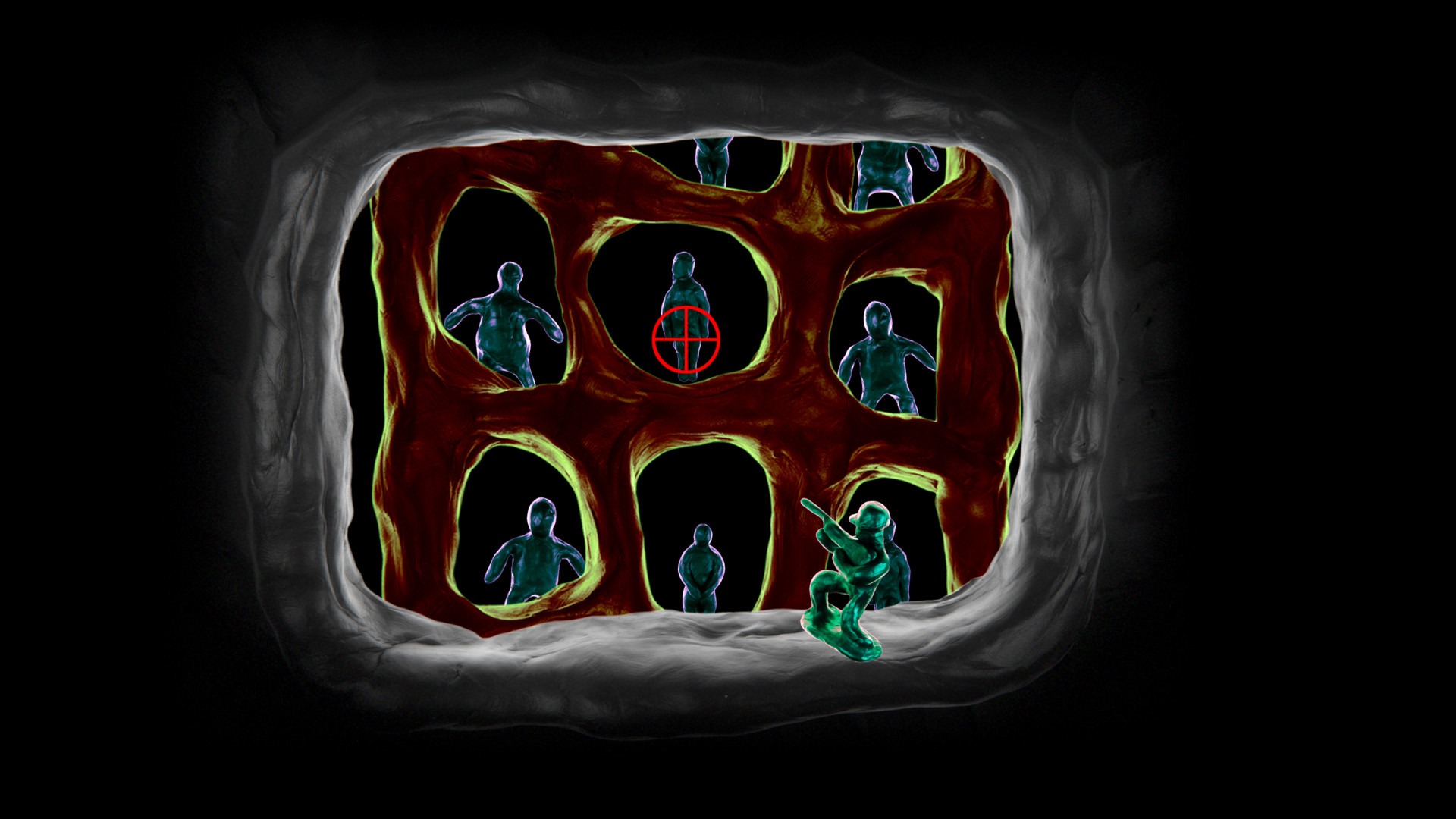
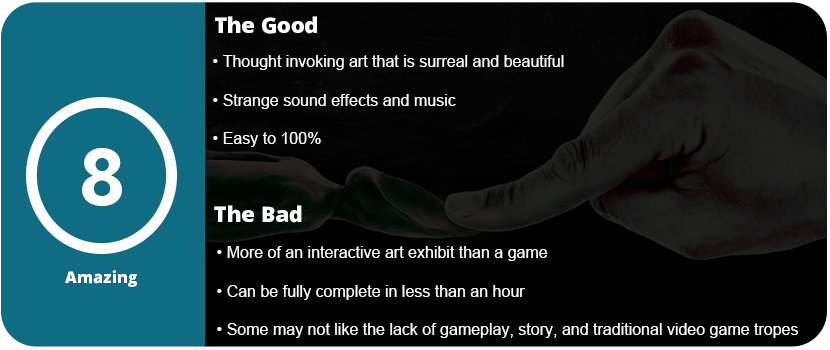
Surrealism in gaming is fascinating to me. It’s one thing to see a painting or photo, but to see it moving and interacting with it is a whole new scale. In my bottomless hunger for the surreal, dreamlike, and psychological in gaming, Isolomus fits a few of these categories. This claymation interactive art exhibit is not for those looking for a full-on game, puzzles, or even a story. There is a lot the player needs to interpret or just be square with not having an answer to. This is a game that can be completed 100% in less than an hour. My interpretation of the game is that it represents humans being slaves to our daily schedules and needs. I will leave it at that.
Each “cycle” of the game starts out the exact same, and there are two different endings. You just start clicking on objects on the screen. Squishing green men into blobs and then watching the “hub” of the day and night cycle as a man does a task you select. This can be eating, using a computer, looking out a window, brushing your teeth, etc. Each task is shown in full during the first cycle, and then you sleep. Once you sleep, you can choose two different doors. Once you start the next cycle, each activity is an interactive scene. I don’t want to spoil them too much, but you need to figure out how to advance the scene by interacting with their objects in a certain manner. Each scene has two different endings, and how you interact determines that ending.
The entire game barely represents anything human or discernible to the human eye. Strange shapes, sounds, and the eerie, dreamlike soundtrack playing in the background will keep you glued to the screen just to see what whacky thing comes next. The animations are uncanny, inhuman, and downright bizarre, but that’s what I love about this game, if you can even call it that. The gameplay here isn’t much, but you still need to be curious and find new ways to interact with the game, which I found a lot of fun.
There is no dialog in the game or even any written text. Just grunts, sounds, and ambient music. Sometimes this is just what the doctor ordered. You can vibe out and relax in a game like this that doesn’t require any skill to even interpret a story. This is a game that will stick with you. Maybe even more than a 50-hour-long AAA game. It’s so strange and surreal that you will need to talk about it with somebody just to make sense of it all. Isolomus may not get the players or attention it deserves, but for $1, what more can you ask for? You can’t buy anything for $1 anymore.
While the main next-gen console version of the game is considered to be an all-time classic and helped revolutionize the online FPS genre, the lower-powered hardware versions were completely different games. While they share the same name, you wouldn’t know these were Call of Duty games if you played them and no one told you.
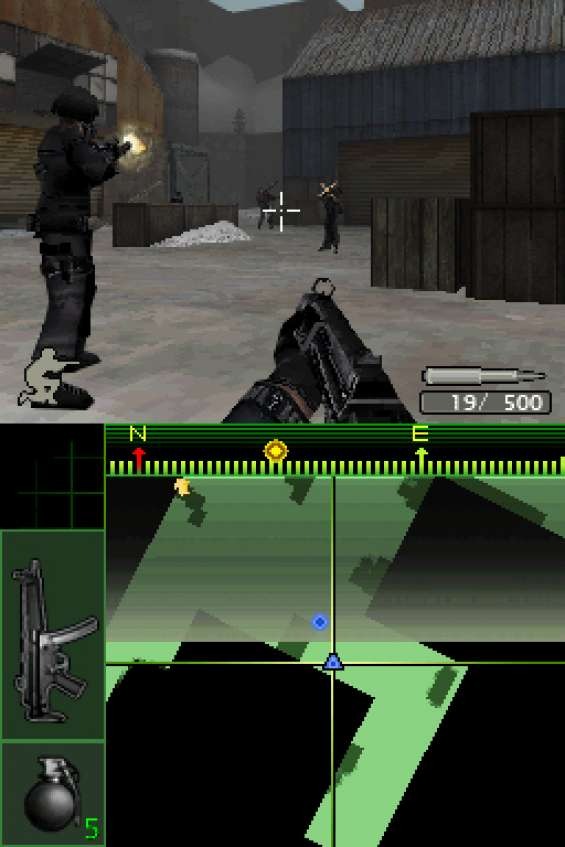
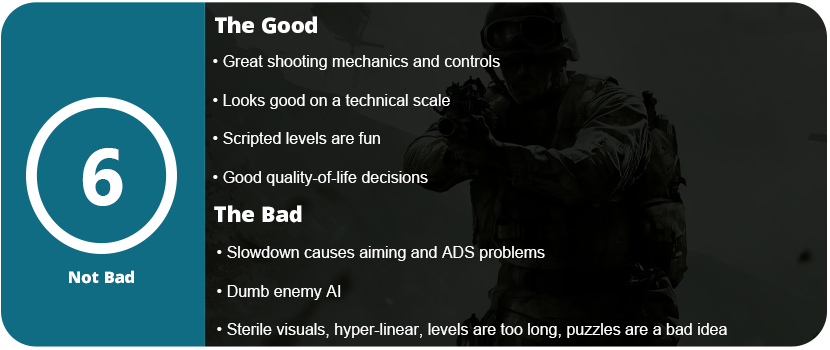
Modern Warfare for the DS loosely follows the plot of the main game but instead takes liberty with its own unique levels and design choices. Obviously, we are working with barely better-than-PS1-level hardware here. n-Space really had to be creative and make entirely new games, mostly “themed” around the franchise. The game is still in first-person view, and you can switch between two different weapons. By default, you always start out with a pistol and another firearm. You can pick up weapons with the touch screen (a hand icon) and use that as your main weapon will not have any extra ammo available when you run out unless you die. When you die, you start out with your default weapons again and lose whatever you picked up, but your ammo is refilled. Weapons in this game feel decent, but the slowdown from the DS being pushed too hard (especially when enemies pop in) makes aiming a bit sluggish and janky.
Aiming with the touch screen feels fine. Using the D-pad or face buttons to strafe isn’t an issue either, but using the R or L button to fire can give you massive hand cramps even with larger DS systems. Most everything is controlled by the touch screen. Double-tap to bring up the ADS (Aim Down Sights), switch to grenades, and tap the weapon icon to reload. There are a few quality of life things that n-space did think of, such as when you reload, you go back to ADS if you are in that mode already, and spriting pulls you out of ADS mode. My issue with ADS is that while it’s more accurate, there’s a delay in bringing it up on screen, and that delay can cost you your life. When enemies pop in and the slowdown happens, it won’t respond to my double-taps fast enough, and I would constantly bring up the ADS and back out a few times caused by the delay. It’s not game-breaking, but very annoying.
There are two mini-games when setting explosives and defusing bombs. I found the pipe puzzles annoying, and following the wires to defuse bombs isn’t really fun or challenging. These were just thrown in here to make use of the touch screen. Honestly, who wants to solve puzzles while playing Call of Duty? It’s weird and just doesn’t fit. It really breaks the flow of combat. The enemy AI is also pretty dumb. Enemies just stand there and shoot at you; don’t take cover or move out of the way. This is literally an on-rails shooting gallery and is insanely linear. Levels are way too long, and some objectives have unfair checkpoint placements or none at all. Objectives range from collecting something to planting a bomb or just shooting everything in sight. I found the scripted mounted machine gun levels pretty fun, but the AC-130 level (similar to the console version) is awful and boring. You can barely make out any enemies, and you can’t use larger weapons against smaller enemies. There are only a couple of buildings to blow up, and you just mow down dozens of enemies over and over again in almost complete silence. It was a bad level, for sure.
The visuals are decent for what the system can do. They are definitely sterile and boring to look at, with no artistic flair. The game tried capturing the hyper-realism of the consoles, and the DS just can’t quite do this. It’s a very brown and beige-looking game. There’s no personality put into this game. It feels like a copy-and-paste FPS that you could attach any name to. Multiplayer is the same as single-player, but with another person. It’s not very exciting, and your friends will get bored fast. I appreciate n-space for trying to capture the excitement of the console versions on the limited hardware, but it needs something else. Better enemy AI, less linear-feeling levels, more interesting scripted levels, and fewer storyboard-cut scenes. It’s a great first start, but it has a lot of work before it becomes a staple DS shooter.
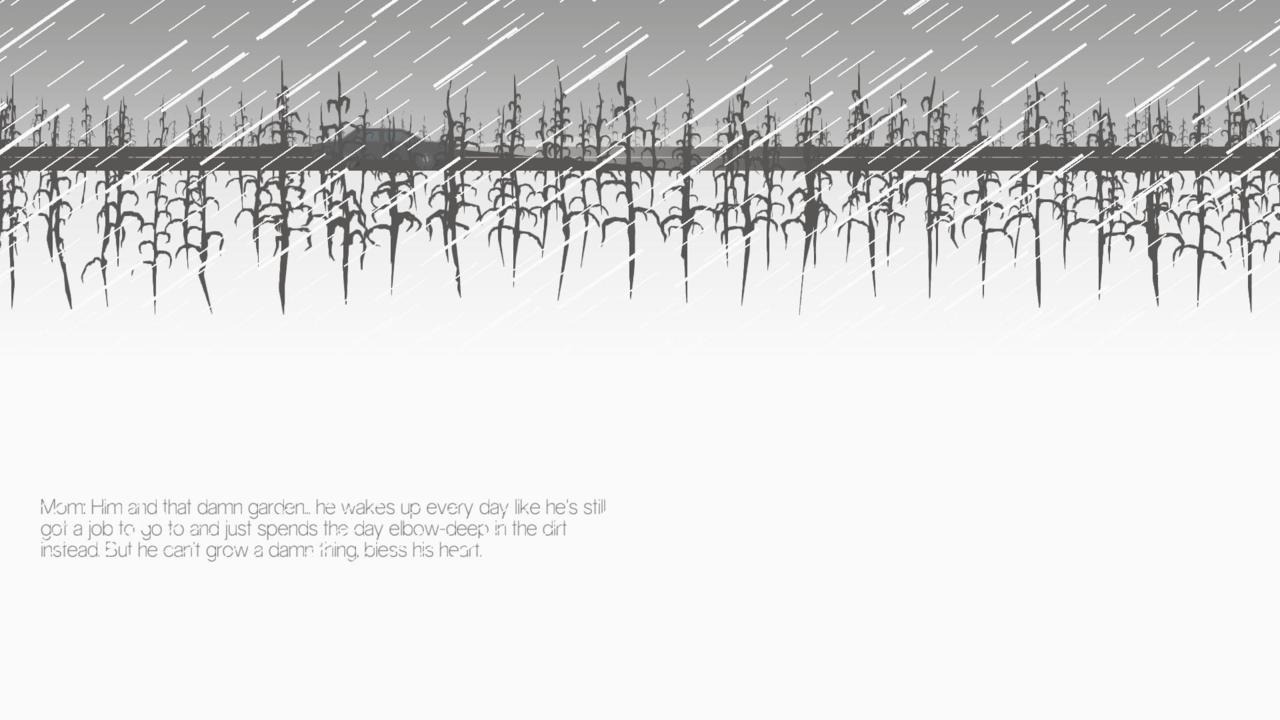
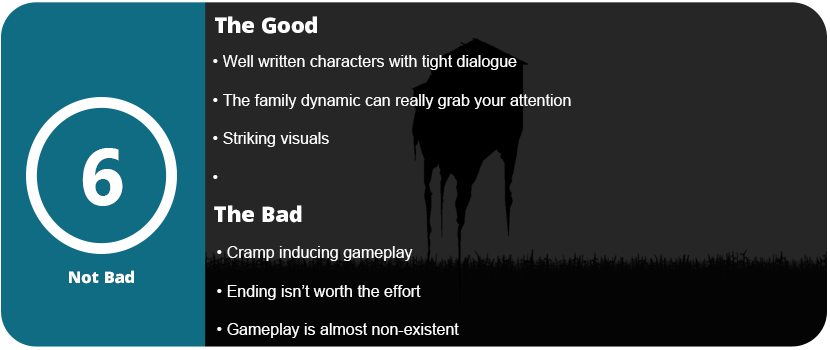
Minimalistic, story-driven games can be quite memorable and fantastic. The lack of gameplay requires you to have a laser focus on the story and characters, and the subtle gameplay can bring a visual element that no other medium can provide. Three Fourths Home isn’t one of these, sadly. While the visuals are striking and minimal, the story and writing have so much potential, but they are let down by a short and disappointing ending.
You play a teenage girl named Kelly who is driving home in a violent storm in rural Nebraska while talking to her family on the phone. Gameplay consists only of holding down a button to continue driving and choosing a few dialogue options. Holding down a single button for the entirety of the game is a really dumb idea. It introduces hand cramps and constantly breaks your focus on the story. You can honk your horn and turn off your lights, which is entirely pointless, and you can’t move the car at all. You can also choose to turn the radio on and off. There is no spoken dialogue in the game, but this requires you to make up voices and visuals for the game in your head. This may sound really dumb to most people, and some might argue that you should just read a book, and in this specific context, this would be a better medium for this story.
Choices in dialogue don’t seem important at first, but your response to your family plays into how they react to you on the phone. I guess multiple playthroughs could be worth it as there are a couple of different endings, but with how mundane the gameplay is, no one will want to sit through the hand cramps to make it worthwhile. I had issues with the controls, causing me to choose the wrong option as well. You need to skip through dialogue with a button to advance each line while holding down another to keep driving, and some times you wouldn’t know that a dialogue option would be coming up and you would just advance forward.
See, with minimal games like this, you need some sort of gameplay hook to keep it interesting enough. Three Fourths doesn’t do this at all. The mom, dad, and brother are all interesting characters, and you slowly learn about this family dynamic through this phone call. You learn about why you “ran away,” what kind of person the dad is, whether or not this is a broken home, etc. The dialogue is tight and interesting enough to keep you glued until the end, that is, if the hand cramps don’t send you packing first. I also wish more was going on visually. Occasionally, a background object will be brought up in the conversation, but it’s just black-and-white visuals without any type of payoff. The visuals, gameplay, and everything else are just an excuse to call this interactive story a game, and it does the bare minimum to qualify as that.
Most games like this have a story that ends in sudden tragedy to flip the entire thing on its head and stun the player, but this one doesn’t really do that either. If it did and the pay-off was incredible, all of this could be worth it, and there are plenty of games similar to this that pull that off. As it stands, Three Fourths Home is a well-written story in a terrible game with an even worse gameplay mechanic.
Analog horror is a huge fascination for me. After exploring this idea on YouTube and seeing Local 58 and Gemini Home Entertainment, I became hooked. It’s a mix of 90’s nostalgia, analog media, and that feeling of older technology being unclear and playing tricks on your senses. Home Safety Hotline tries its best to be the next analog horror viral sensation, but it doesn’t quite hit the nail on the head like the above-mentioned videos. While this is a video game and not a series of videos, I will say that it captures the atmosphere well.
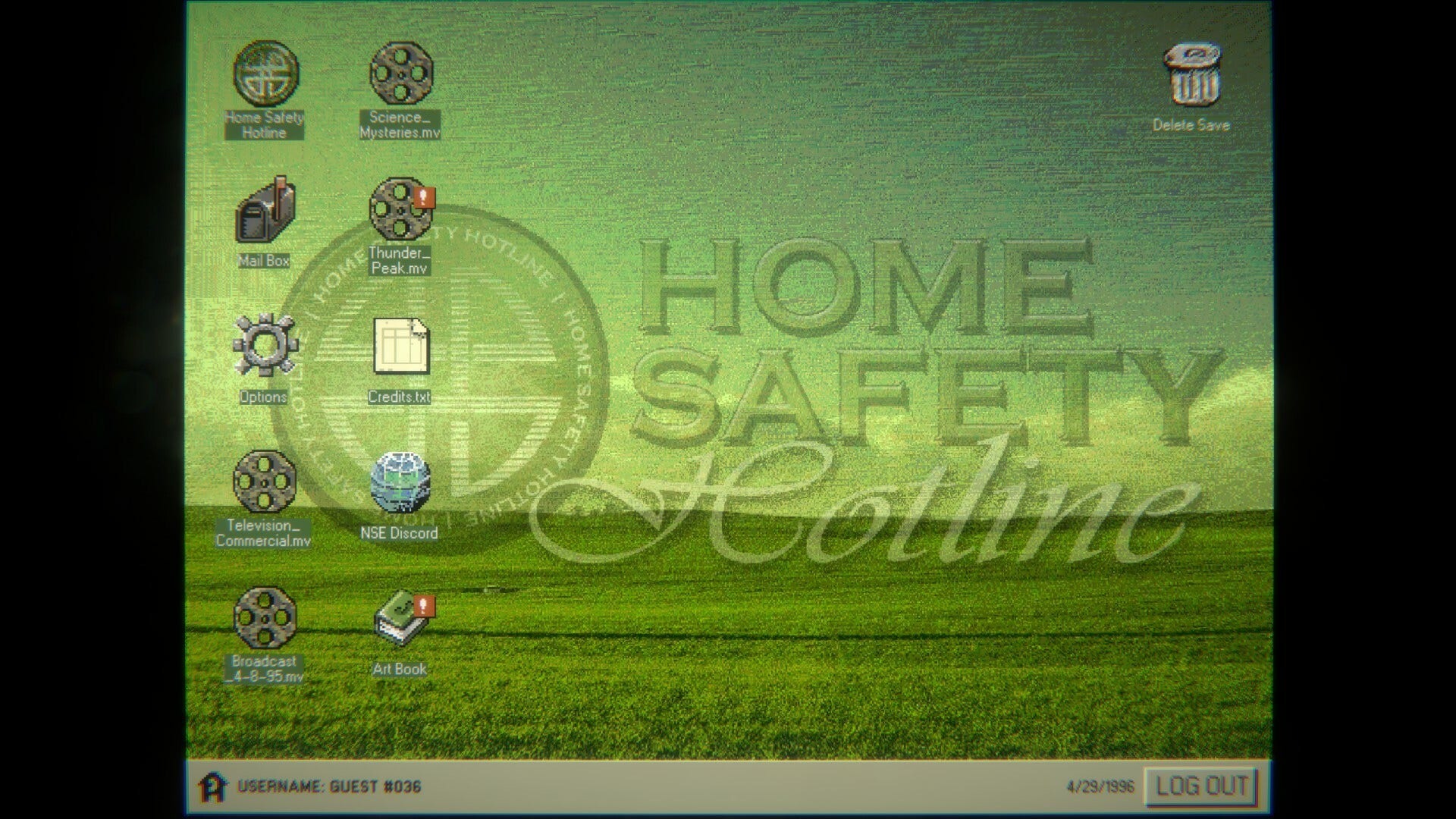
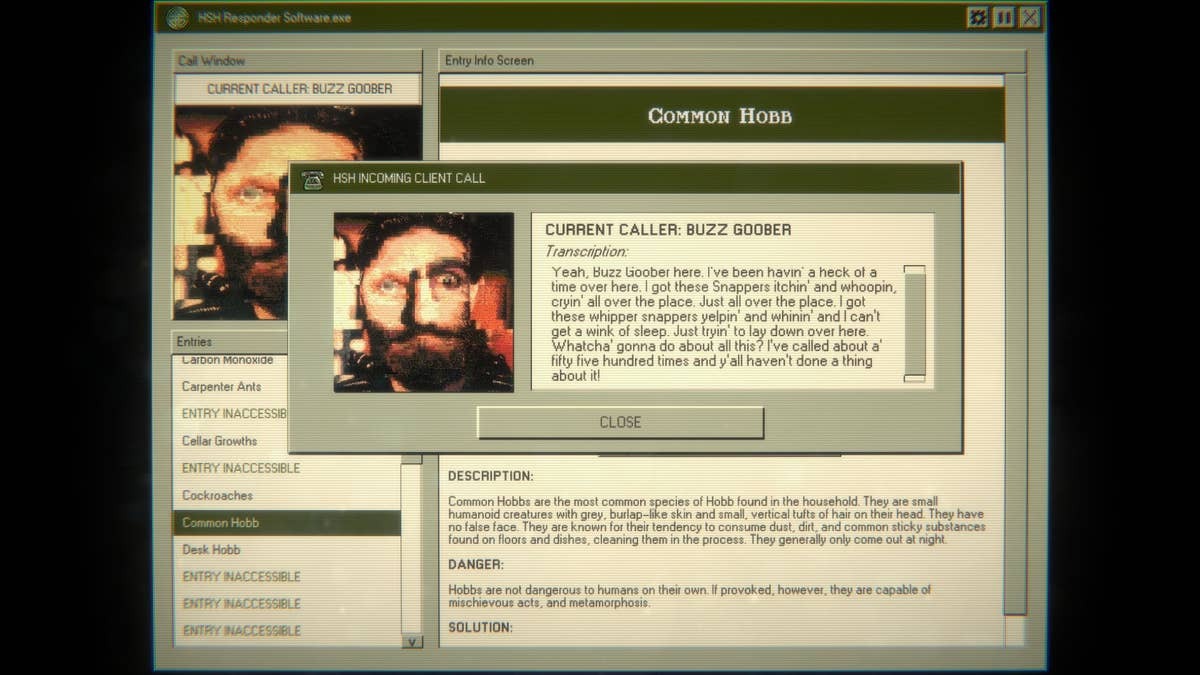
You are an employee, plopped down in front of a 90’s beige box, and you are presented with a desktop. You will see exclamation marks on items that have new information. There are videos you can watch on the desktop as well as check your email, and then the main program is where you will spend most of your time. Once you launch this program, you clock in and are presented with a series of informational links. You are answering calls and have to prescribe the correct Home Safety Hotline information package to the caller regarding their problem. Entries are locked until you progress through the days of the week and give the correct answers.
It’s incredibly important to read every single entry thoroughly and actually remember it. You want to remember the symptoms and signs these things cause people. At the beginning, you get basic information about things like ants, bats, moles, and flies. As the days move on, the analog horror part starts to come into play. Stranger and stranger entries for things like Spriggans, Hobbs, Cellar Grottos, and Reanimations. The artwork is superb and accompanies these entires as well as some audio entires. It’s creepy for sure, but never quite the same. Turn on the lights and get goosebumps vibes. There’s some cheese added to this game that takes away from the realism factor. Analog horror is so great because it seems like it could be real. Some of the drawings, while good, don’t look like they were captured on video or with a crappy digital camera. They look drawn-in. The videos on the desktop are some of the best parts of the game that capture that analog horror atmosphere.

This is a riddle or puzzle game, so you have to guess the correct answers or get fired and have to restart the day. After each call, there is a ten-second pause until the phone rings again, but when you put the caller on hold, there is no time limit or penalty. You can take your time, read all of the entries, and make your decision. Some calls are obvious, while others are vague, and they can get quite tricky towards the end. There are anomalies and disturbances that accompany analog horror, such as weird phone calls, network interruptions, and strange messages. While I would have liked more of this, what’s here is fine for a short horror game.
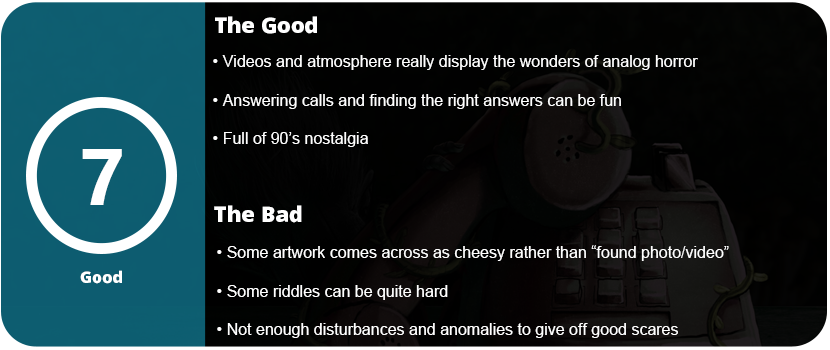
Overall,Home Safety Hotline starts out pretty disturbing and odd, but slowly evolves into cheese, and it kind of ruins the whole vibe. Being an employee at a mysterious hotline is fun, and there is a lot of potential for a sequel or something more. Solving the riddles is fun, and the artwork and entries created give a slow trickle of “what the hell is going on here?” vibes, but it never quite peaks like some of the classics in the genre.
Kingdom Hearts has a special place in my heart. I remember when the first game came out, and it was talked about by a lot of people on the school grounds. I was in junior high when it was released, but I didn’t get it until it was a Greatest Hits release at $20. I found it hard at the time and never finished it. When the second game came out, I rented it from GameFly and actually cried at the ending. It was so memorable and engrossing for me as a teen.
Here we are, almost 15 years later, with the third installment in the mainline series. I was insanely excited and didn’t follow any previews or reviews for the game leading up to actually getting around to buying this game. I played the first area of Hercules (again?) and got to Toy Box (Toy Story!) and lost interest. Yeah, the game hasn’t really evolved all that much. My biggest problem with Kingdom Hearts III is the lack of imaginative level design and the use of mostly modern Pixar movies. The best part about a new Kingdom Hearts game is discovering what the next Disney movie will be that you get to explore. It’s like a surprise each time, and I loved that with previous entries. This was the first time I was praying it wasn’t another modern Pixar movie.
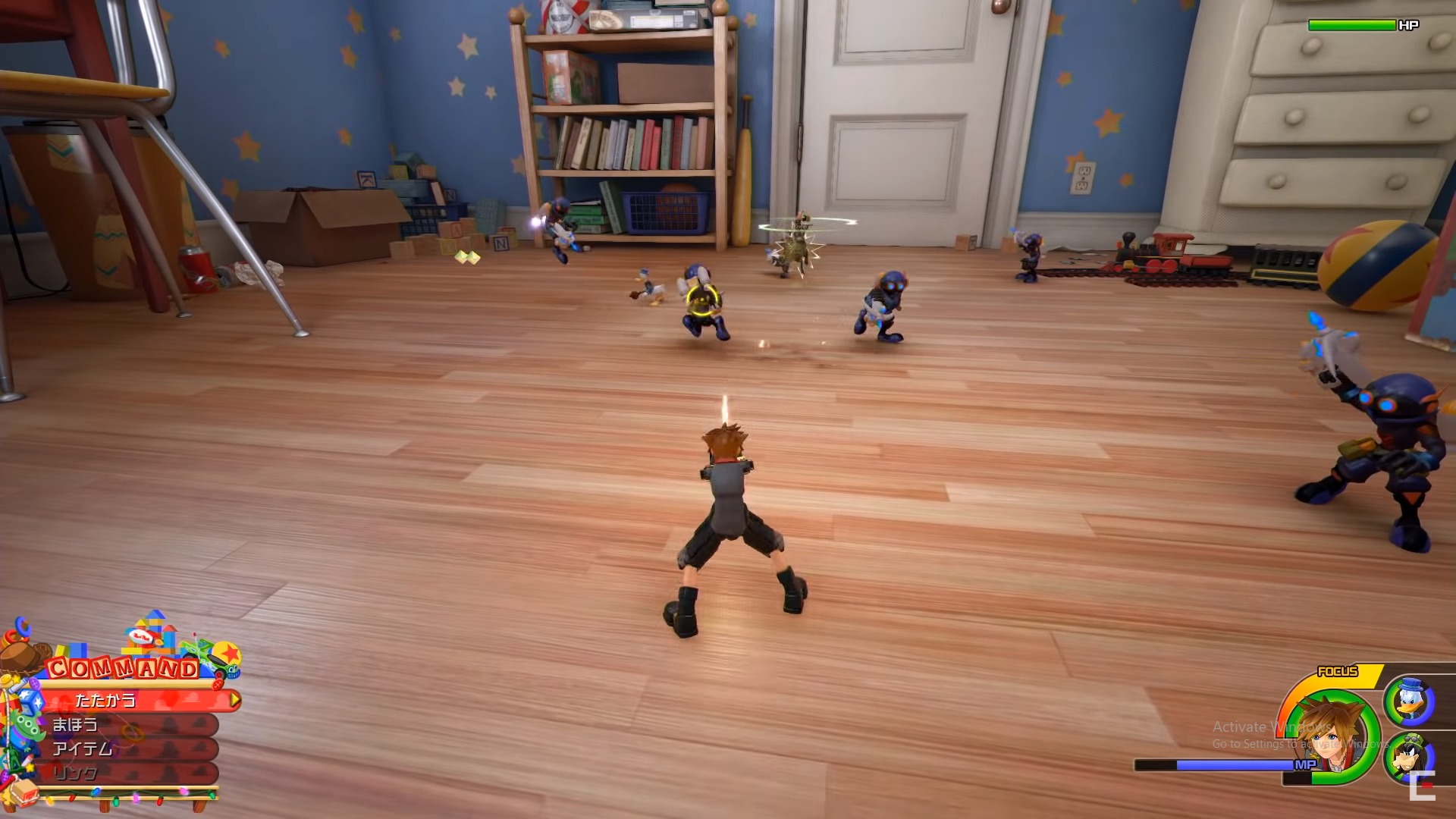
While Hercules was very cinematic, scripted, and looked great, it’s an overused Disney movie in the series. Toy Story was exciting, especially when we were in Andy’s room, but we wound up in a generic boring mall? It was such a boring level to get through, and I didn’t feel anything like the movie. We then move on to Repunzel. Why? Another issue with this game is playing each movie scene by scene around the second act. We’re stuck at a generic forest level here. After this, we get into Monsters Inc., which is actually pretty cool, but it’s a generic monster factory. Then it’s…FROZEN?! Why Frozen? We even get a literal, scene-by-scene, shot-by-shot rendition of the “Let It Go” song. If I wanted that, I would just watch the movie. A generic snow level awaits us here.
Then we go back to Pirates of the Caribbean, of all movies. I appreciate that the visuals are improved enough to give us realistic versions of this movie and not the cartoony one we got last time, but I didn’t care as the original voice cast wasn’t present again. And it’s based off of the third film for some reason. I liked the fact that you get to sail an open ship and go find crabs to upgrade your ship, but I skipped all of this. The ship steers like a hot-wheeled car, and the generic seaside town and ship battles weren’t very interesting. Then we finally arrive at Big Hero 6, which is also pretty cool, but it’s a generic large map of San Francisco, and it is incredibly boring. That’s it. No more worlds, and you are stuck in the last level for about 10 hours doing boss rushes like every other RPG has done, and this seriously needs to stop to just bloat game time.
Even if you like or dislike these Pixar movies, the fact is that the levels are incredibly boring, and each one plays out the same way. You get through several mini-bosses, fight waves of enemies, collect some stuff, and fight the movie’s main antagonist. Every world is a generic feeling with no life from the movie injected into it. The reliance on playing through scenes of these movies isn’t what I want in a Kingdom Hearts game. I want a unique experience at each level that makes me feel like I’m part of that world. Not just some character who crashed the movie in the middle of its runtime.
I can go on and on about how much I hated the uninspired level design and repetitive nature of each world, but then there’s the Gummi Ships. I hated these in the first game, and I really don’t like them here. I like that the Gummi Ship part is a large open map that you can explore freely between worlds, but there’s nothing interesting here. You fly around collecting parts, Munni, and you can find shooter waves flying around that have levels and stars attached to them. Upgrading your ship but being able to buy parts to put together blueprints is a staple of the series, but I just don’t find it interesting. A new alpha Gummi part can be attached now to help fight in battle. It’s essentially a satellite ship flying around yours. There are speed tunnels all over the place, asteroids, and various obstacles, but I just wanted to get to the next world.
Finally, there’s the combat itself. I never really cared for Kingdom Hearts‘ combat. It works, it’s fine, and it can be fast-paced, but you fight the same Heartless over and over again, and the game is heavily reliant on keyblade transformations. Actual attacking and magic have taken a back seat. I rarely touched magic, and it felt useless. I was just attacking until I got my three pips and I could transform my keyblade into a more powerful weapon and execute its finishing move. This does the most damage and is a must for bosses, or you won’t survive at all. The final act of the game pits you against around a dozen bosses, one after another, and it’s a frustrating chore. You can still use Link commands, but they aren’t that great this time around, and I felt like they hindered battle more than anything. The goal was to attack and get a few combos in, transform my keyblade, execute attractions that put you on famous Disney park rides that do damage, and just rinse and repeat. Items are useful for sure, and it’s important to keep abilities tagged, as adding combos and modifiers to combat really gives you an edge. However, this all gets so repetitive, and you just stop caring before you get to the third world.
Then there’s the story, which I haven’t even touched on yet. It makes zero sense, even to people who have played the series up until now. My main interest was in the little stories inside each world. I never cared for the overarching Kingdom Hearts story. It’s a bloated, overcomplicated mess involving Organization XIII, and Final Fantasy isn’t even a part of this story anymore. Xehanort was the X-Blade. Aqua is trapped in a world, I think, where there are multiple versions of everyone. Yeah, I don’t know. Go watch a comprehensive timeline explanation on YouTube instead. Sadly, each world is just a retelling of each movie, which I could just go watch if I wanted to. At least the visuals are really good, and everything is bright, colorful, and full of life.
The voice acting is also hit-and-miss, but mostly terrible. Haley Joel Osment as Sora again was a bad choice; he’s just not a good voice actor. Outside of some of the mainline Disney characters, the voice acting is just wooden and awkward. Most Disney films don’t retrain their original voice actors. Especially in Pirates of the Caribbean…again. What’s worse is the writing. The script feels like it was written by a grammar school student. It’s just the most basic lines, replies, and banter. It’s just enough to get through each scene. There’s a lot of nothing being said by most of these characters. Shouting each other’s names a lot, and a lot of “You will never stop us!” or “I will defeat you!” over and over again. Yawn.
So, there’s a lot I don’t like here. The lack of older Disney movies, the complete absceneness of Final Fantasy stuff, and the fact that each movie is just a scene-by-scene replay of the original movie are boring. The levels feel generic, uninspired, and repetitive, and the combat, while flashy, uses an overreliance on keyblade transformations, attraction attacks, and links and magic. Enemies repeat far too often, and the final act is nothing but a frustrating slog of a boss rush. The story is insanely and wildly confusing and unnecessarily complicated, but at least the visuals are a nice treat. If you didn’t like previous games in the series, this does nothing that will convince you to like it now.
Side note: I was incredibly disappointed by Utada Hikaru’s song with Skrillex on this one. Both Simple and Clean and Passion/Sanctuary are classics and some of Utada’s best work. This song was terrible and wasn’t a good start to the game for me.
P.T. started the trend of subtle horror games. No scary music, looping hallways and rooms, or needing to notice any changes to move on. Exit 8 is exactly this. A single white hallway in a subway tunnel has a couple of turns, and it loops endlessly unless you notice changes. There is no story, no background, and no character development. Just this single white hallway, and you need to get to exit 8.
Your only sign of progress is the yellow exit sign, which increases in number as you make your fourth turn. If that sign goes back to zero, you missed an anomaly. When you see it, you are supposed to turn around and go back the other way. Anomalies can be really obvious, like lights being turned off, open doors, or a single man walking towards you doing something different. Other subtle ones can be the floor tiles, a security camera light, or a poster changing. You might get really frustrated at first, but keep going. Memorization is the key to getting the job done. Once you know exactly where everything is supposed to be—how many doors, posters, etc.—you will finish in under an hour.
The horror elements are subtle and not forced. A moving object, no music, and just the hum of the lights and footstops. Maybe a creaking door might make you jump. You can stop, take your time, and check the main hallway for changes. Running full force all the way through will make you miss things. You have to turn around to see a few anomalies anyway. If there aren’t any changes, you keep moving on, and sometimes this can really make you feel like quitting. You will think time after time that the hallway is fine, but then you will notice something new and just keep moving on. Don’t let that sign resetting to zero keep discouraging you.
The graphics use Unreal Engine 5 and are nothing special, but the atmosphere of the sterile white hallway makes it creepy. A lack of music and most sound effects makes you feel on edge all the time. The single-footed man makes you very uneasy every time you pass him. All you want to do is get to exit 8, and the intensity might make you miss things as you become more and more anxious to get out. This single-looping hallway might drive some people nuts.
Overall, The Exit 8 is a fun game that lasts a couple of hours at the most. There are only two achievements, and once you see all the anomalies, there is nothing left to do except maybe do self-timed speed runs. Some may find this a simple tech demo, but I think more horror games need to go this route. It’s only a few dollars, and possibly getting some friends around to help spot things can make this a fun party game as well.
When a studio says they take inspiration from adventure games like Life is Strange, I pay attention. We follow a maid during the late 1950s, working in a hotel for a crass boss. You are basically a snoop and end up getting involved in a mystery of a love triangle, and you take it upon yourself to get co-workers involved, and the entire thing spirals out of control. Is this game a lesson on minding your own business or doing what you think is right?
You play as Ms. Roy. You start out by getting to know your co-workers, learning the game’s mechanics, and starting your amateur sleuthing. There’s not much to the game’s mechanics. You can interact with dozens upon dozens of objects, mostly letters you end up reading, and either throw them away or just inspect them. You spend your time between three floors. The fifth floor, the basement, and the lobby You eventually pick a male or female co-worker to help you dig into other people’s business, but you also have a job to do. You need to clean and tidy up each room, and all of your actions have consequences towards the end of the game. I don’t want to say what can or can’t cause these, as it can really spoil the ending, but just know that picking things up and keeping them is something the game tells you to think about the most.
Inspecting items doesn’t really matter as you’re putting them back down, but scouring all the drawers, every item, no matter how simple it seems, might give you a clue to figure out what’s happening in the love circle you want to so desperately be a part of. Sometimes you need to go to the basement and get items you don’t have, and there are a few puzzles thrown in. These aren’t difficult either. matching up pieces of paper, deciphering a code, or just finding a few clues here and there. You can hear Roy’s inner dialogue to help give you hints, and you can read everything you picked up in your inventory.
Outside of interacting with objects and solving the occasional puzzle, there isn’t anything else to do. There’s no exploring, character interactions are scripted, and there are only three characters in the entire game. This is a very short game with a runtime of about 3 hours. I do have to give credit to the developers for creating such a tense mystery at that time and actually giving the characters some depth. It’s not long enough to really give an entire backstory like other adventure games, but they cut out the nonsense and get to the meat of what they want to do and the story they want to tell. The writing is well done, and the voice acting is pretty excellent too. Your choices also really do matter, but the physical interactions with objects make you realize what you could have done differently as the final moments of the story pass.
The visuals aren’t anything impressive, but the game looks period-correct, and it’s not ugly. The lip syncing is off, but the characters look good, and they have a unique look and a lot of character in their personalities. Sadly, my biggest complaint is that I wanted to know more about these characters. The game focuses solely on this mystery, but just enough personality in the characters pokes through that this could have been a much longer game. I wanted to know more about Ms. Roy and who she is as a person. That’s what made Life is Strange so great. It focused a lot on the characters, who they are as people, and their lives. There’s a lot of potential here for something greater, but the end product of an interesting and gripping mystery is done well enough. This makes for a fun evening with choices that really matter, but that’s about it.
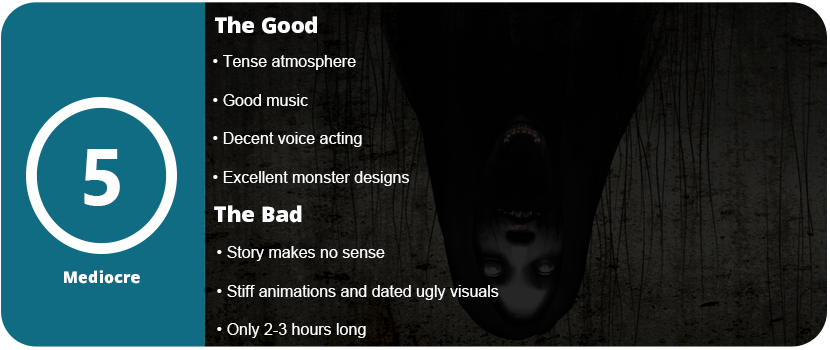
Yeah, it's pretty damn awful. Notoriously one of the worst games on the PSP. A 4 was actually being generous.…