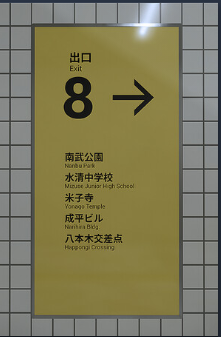
P.T. started the trend of subtle horror games. No scary music, looping hallways and rooms, or needing to notice any changes to move on. Exit 8 is exactly this. A single white hallway in a subway tunnel has a couple of turns, and it loops endlessly unless you notice changes. There is no story, no background, and no character development. Just this single white hallway, and you need to get to exit 8.
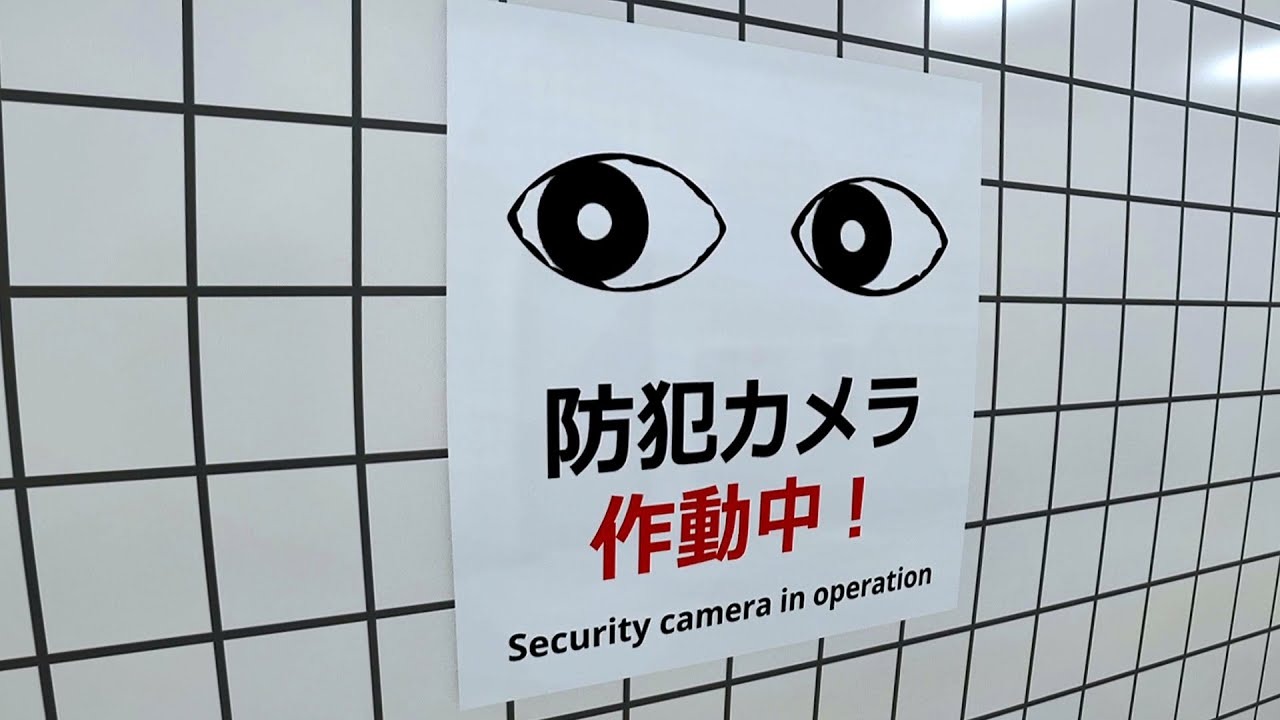
Your only sign of progress is the yellow exit sign, which increases in number as you make your fourth turn. If that sign goes back to zero, you missed an anomaly. When you see it, you are supposed to turn around and go back the other way. Anomalies can be really obvious, like lights being turned off, open doors, or a single man walking towards you doing something different. Other subtle ones can be the floor tiles, a security camera light, or a poster changing. You might get really frustrated at first, but keep going. Memorization is the key to getting the job done. Once you know exactly where everything is supposed to be—how many doors, posters, etc.—you will finish in under an hour.
The horror elements are subtle and not forced. A moving object, no music, and just the hum of the lights and footstops. Maybe a creaking door might make you jump. You can stop, take your time, and check the main hallway for changes. Running full force all the way through will make you miss things. You have to turn around to see a few anomalies anyway. If there aren’t any changes, you keep moving on, and sometimes this can really make you feel like quitting. You will think time after time that the hallway is fine, but then you will notice something new and just keep moving on. Don’t let that sign resetting to zero keep discouraging you.
The graphics use Unreal Engine 5 and are nothing special, but the atmosphere of the sterile white hallway makes it creepy. A lack of music and most sound effects makes you feel on edge all the time. The single-footed man makes you very uneasy every time you pass him. All you want to do is get to exit 8, and the intensity might make you miss things as you become more and more anxious to get out. This single-looping hallway might drive some people nuts.
Overall, The Exit 8 is a fun game that lasts a couple of hours at the most. There are only two achievements, and once you see all the anomalies, there is nothing left to do except maybe do self-timed speed runs. Some may find this a simple tech demo, but I think more horror games need to go this route. It’s only a few dollars, and possibly getting some friends around to help spot things can make this a fun party game as well.
When a studio says they take inspiration from adventure games like Life is Strange, I pay attention. We follow a maid during the late 1950s, working in a hotel for a crass boss. You are basically a snoop and end up getting involved in a mystery of a love triangle, and you take it upon yourself to get co-workers involved, and the entire thing spirals out of control. Is this game a lesson on minding your own business or doing what you think is right?
You play as Ms. Roy. You start out by getting to know your co-workers, learning the game’s mechanics, and starting your amateur sleuthing. There’s not much to the game’s mechanics. You can interact with dozens upon dozens of objects, mostly letters you end up reading, and either throw them away or just inspect them. You spend your time between three floors. The fifth floor, the basement, and the lobby You eventually pick a male or female co-worker to help you dig into other people’s business, but you also have a job to do. You need to clean and tidy up each room, and all of your actions have consequences towards the end of the game. I don’t want to say what can or can’t cause these, as it can really spoil the ending, but just know that picking things up and keeping them is something the game tells you to think about the most.
Inspecting items doesn’t really matter as you’re putting them back down, but scouring all the drawers, every item, no matter how simple it seems, might give you a clue to figure out what’s happening in the love circle you want to so desperately be a part of. Sometimes you need to go to the basement and get items you don’t have, and there are a few puzzles thrown in. These aren’t difficult either. matching up pieces of paper, deciphering a code, or just finding a few clues here and there. You can hear Roy’s inner dialogue to help give you hints, and you can read everything you picked up in your inventory.
Outside of interacting with objects and solving the occasional puzzle, there isn’t anything else to do. There’s no exploring, character interactions are scripted, and there are only three characters in the entire game. This is a very short game with a runtime of about 3 hours. I do have to give credit to the developers for creating such a tense mystery at that time and actually giving the characters some depth. It’s not long enough to really give an entire backstory like other adventure games, but they cut out the nonsense and get to the meat of what they want to do and the story they want to tell. The writing is well done, and the voice acting is pretty excellent too. Your choices also really do matter, but the physical interactions with objects make you realize what you could have done differently as the final moments of the story pass.
The visuals aren’t anything impressive, but the game looks period-correct, and it’s not ugly. The lip syncing is off, but the characters look good, and they have a unique look and a lot of character in their personalities. Sadly, my biggest complaint is that I wanted to know more about these characters. The game focuses solely on this mystery, but just enough personality in the characters pokes through that this could have been a much longer game. I wanted to know more about Ms. Roy and who she is as a person. That’s what made Life is Strange so great. It focused a lot on the characters, who they are as people, and their lives. There’s a lot of potential here for something greater, but the end product of an interesting and gripping mystery is done well enough. This makes for a fun evening with choices that really matter, but that’s about it.
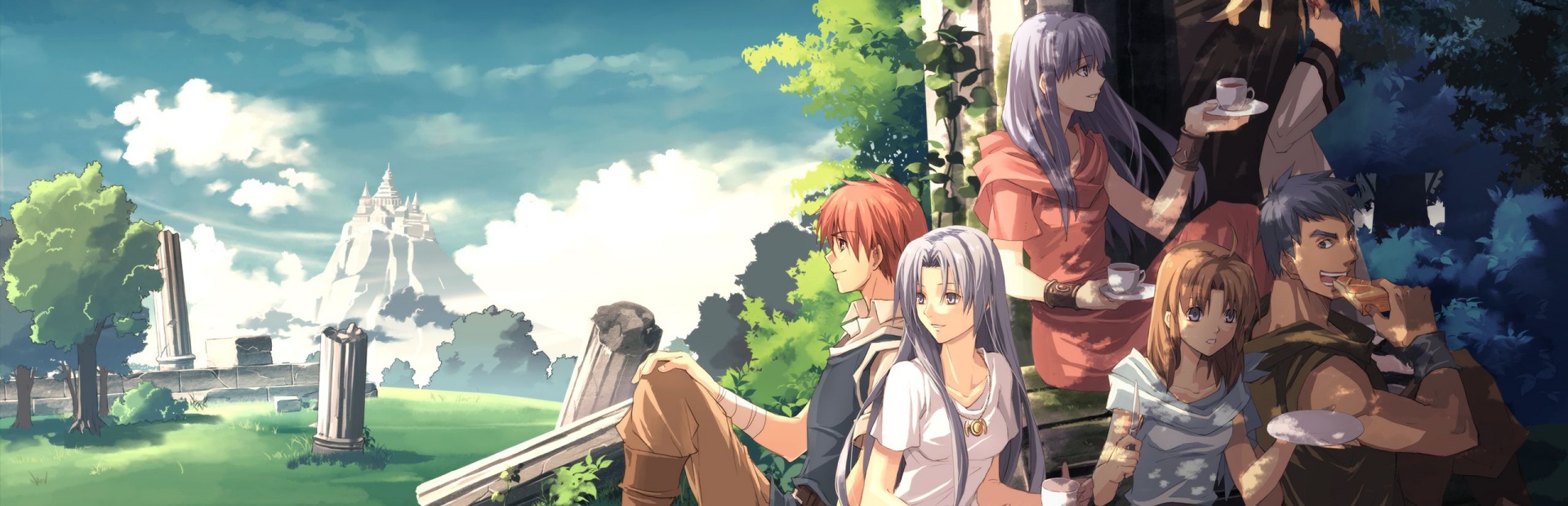
Ys is a series I have barely dabbled in. I rarely finish JRPGs, either due to their insane difficulty spikes, incessant grinding, or boring story and characters. Ys I is a game that’s older than I am. It’s also incredibly short because of this, and due to the cryptic nature of games from the late 1980s, I decided to play this game using a walkthrough guide. This is sadly one of those JRPGs that has a specific way to play, or it becomes an incredibly hard game. There are so many things you can miss, but it also encourages multiple play-throughs. For a game this old, I don’t see any reason to play it other than to complete the Ys series from the beginning. It is as basic as JRPGs come due to its age as well.
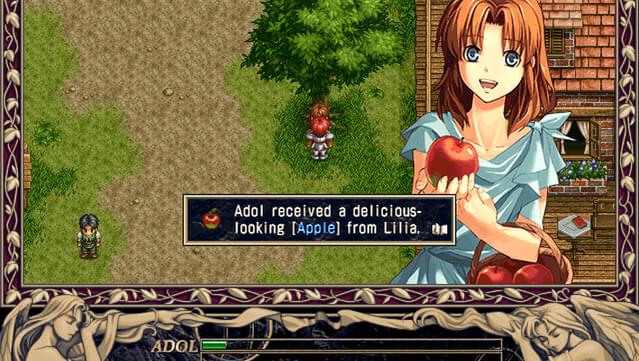
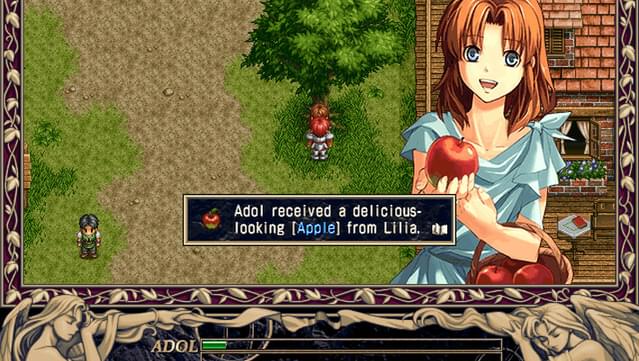
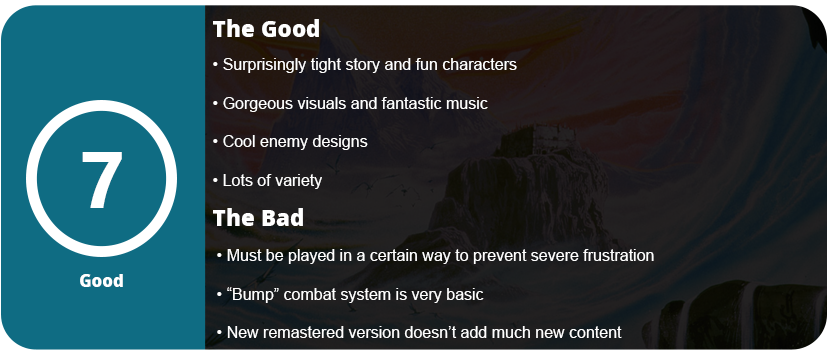
The story is pretty decent, despite the short playtime. I actually enjoyed the characters as well. There isn’t a lot of talking that drags on forever. The game does get to the point with some short and sweet dialog. You play the series’ main protagonist, Adol Christin, who must collect the books of Ys to save the world from evil. It’s pretty typical, but I enjoyed the little world they built around the books of Ys. They were interesting to read, and I felt this was a world you could get sucked into if it were to progress (which, surprise, it did). The art is amazing, with beautiful backdrops. The music is also fantastic, thanks to legendary composer Yuzo Koshiro. There is lots of rock and beautiful orchestral music. The Chronicles+ version contains both the chiptune versions and the arranged versions.
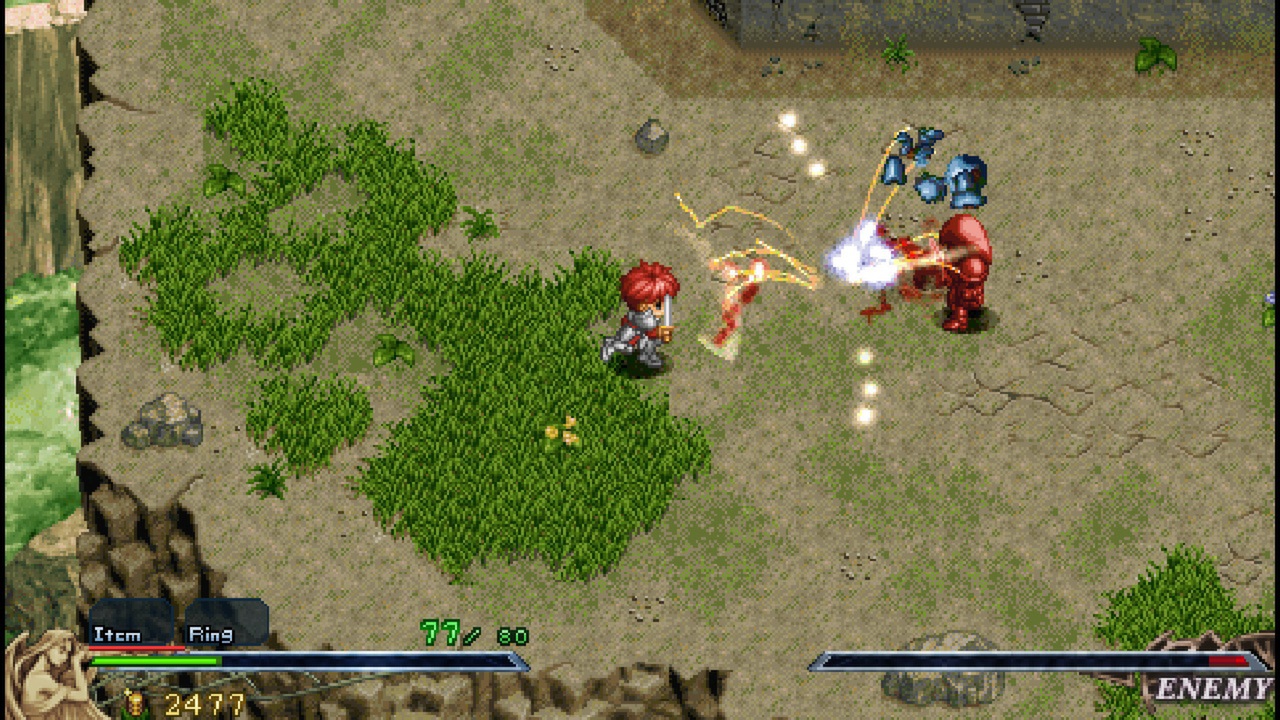
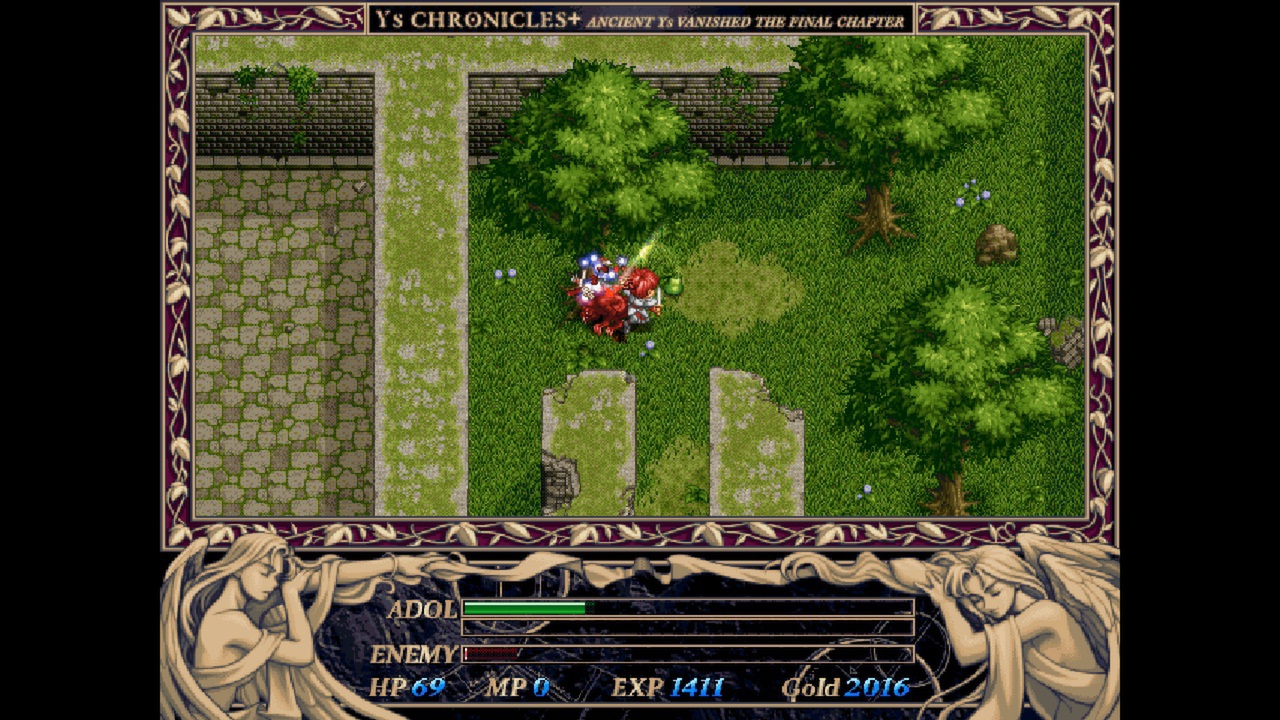
Ys’ main combat system is called the “bump” system, in which you just walk into enemies and are dealt knockback damage if hit straight on. The idea is to hit them on the edge of their sprite, kind of like speed jousting. It’s a weird system, but it keeps the pace of the game moving, and I like that. Again, the game is really hard unless you quickly level and are constantly acquiring the best equipment. You can get some for free if you do things in a certain order or find a certain key for a certain chest. These are JRPG tropes that I absolutely hate because, most of the time, no one will know them without a guide or accidentally coming across them. Easter eggs and extra dialog are fine, but essential things to play are something that really irks me.
Due to the short length, you can easily hit the level cap in a few hours. The cap is 10, and you quickly acquire money and XP as you advance to more powerful enemies. For such a short game, there is a large variety of them as well, and their design is really cool. I always looked forward to seeing what was next. The dungeons are also varied, such as a mine (which is dark), an ice floor with mirrors, a 20-floor tower that you must climb towards the end, forests, and other places. It’s crazy just how much unique content was crammed into a 4-5 hour game. One thing I was relieved by is that if you keep up with the equipment and level up to maybe 4-5 before the first boss, you can easily fight each boss with just a few hits. I know that sounds crazy, but there’s only so much balancing in a game this short. The final boss is notorious for being impossible to beat, and even with the best armor and weapons, level cap, and Easy, I still had to try nearly a dozen times to beat him. You can also only fight him with a specific weapon.
Overall, Ys I is a memorable JRPG if you play it the way it was supposed to be played. Many will get frustrated due to the need to constantly level up fast and always have the best weapons, and the weird boss difficulty spikes will turn many away. I only recommend this game if you’re a fan of the series or really want to start from the beginning, like I am. It has fantastic art and music and is a well-contained and fun JRPG, if you play it right.
Ys II Chronicles+
Being a direct sequel to Ys I and being in my late 80s, I came into this not expecting much. While content-wise it’s completely new, with new locales, new characters, new weapons, and armor, otherwise it looks the exact same and plays the same way. You still play as Adol Christin, trying to save the world of Ys from another evil source and rescue the goddesses Reah and Freena.
The game even starts out the exact same way. You wake up in a house in a quiet village and must start your adventure in a green forest area, like before. Sadly, the game is just as cryptic and obscure when it comes to figuring out what to do. I followed a guide through my entire playthrough, but if I hadn’t, there would be so much backtracking and aimless wondering. Some of the dungeons are more improved layout-wise, but the final two dungeons are a labyrinthine mess, more so than anything in the first game. I had to resort to a map online to figure out where to go, especially when I had to backtrack and start learning shortcuts.
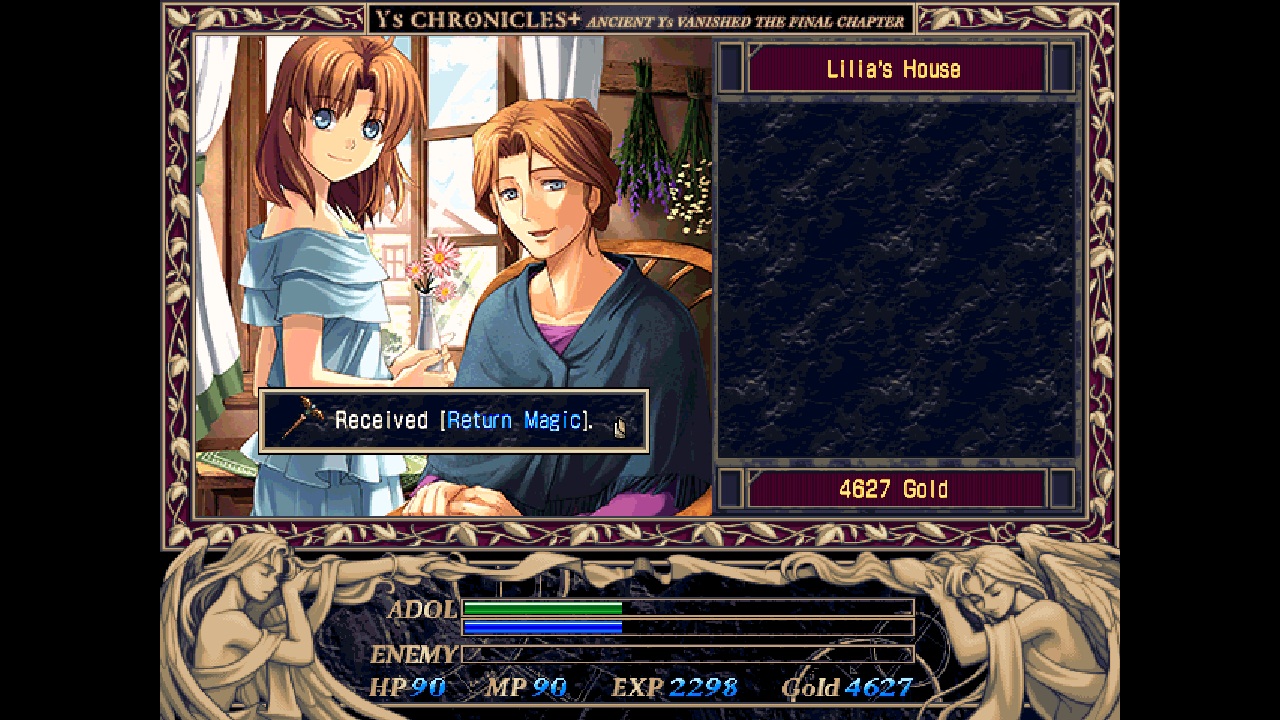
The bump system still exists, but seems a little easier and more forgiving this time around. You don’t need to hit enemies off-center, but it’s still not a fun combat system. It makes the game fast-paced, and I like the lack of random battles, but it’s still not engaging in any way. Thankfully, this time around, you don’t need to rely on hidden, obscure equipment and can just buy stuff as you can afford it. Only the short sword, in the beginning, can be had for free in the first dungeon, but everything is to be purchased. I liked the addition of magic wands in this game. It helps add a layer to combat, but sadly, it’s abused with boss fights. All but the final boss need to be beaten with magic only, and the only offensive magic is fire. Which I found a bit weird. Everything else is passive magic, such as being able to turn into a Roo to talk to enemies to pass certain areas; light magic, which is used to see secret doorways and light dark areas; and time magic, which slows enemies down. Unfortunately, a lot of items, required or not, are hidden in obscure areas and can be easily missed without thorough exploration or a guide.
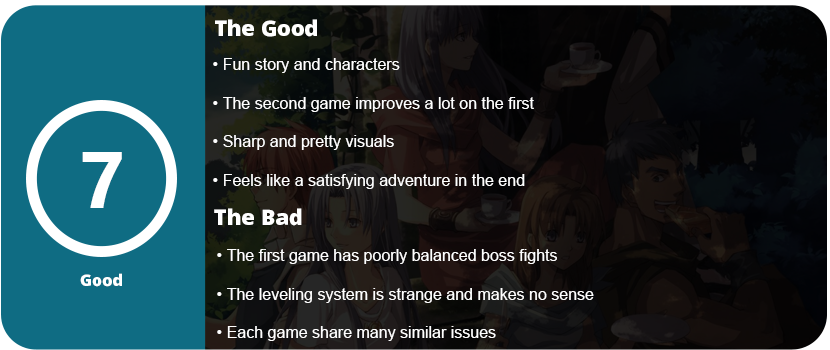
I did find the boss fights more manageable this time around and less frustrating. The leveling system is also improved, but only slightly. While the cap this time around went from 10 to 55, you can easily reach the first 30 levels in the first two hours of the game. Before the first boss, I was already almost level 20. Bosses are a lot more reasonable, and I only struggled with a couple of them, but once you learn their attack patterns, it becomes much more manageable.
Overall, YS II is a good sequel to the first game. With enough new content to explore, an interesting story, and fun characters, while I wouldn’t say the story itself is memorable, the adventure itself is fun. I just wish the magic system was more expanded and there was less backtracking. Most of the game’s fault comes from the cryptic items and confusing dungeon layouts, but it’s manageable with a guide. It’s a fine Ys game to send out with the 80s and still remains a solid RPG today.
The entire series is well worth playing, but only if you’re curious about the beginning of the series, want to start the series from the beginning, or just like 80s JRPGs. Expect basic combat, cryptic progression, confusing dungeons, and unbalanced bosses in the first game. If you play with a guide, you will most likely have a great time.
Being a direct sequel to Ys I, and being the late 80s, I came into this not expecting much. While content-wise it’s completely new, with new locales, new characters, new weapons, and armor, otherwise it looks the exact same and plays the same way. You still play as Adol Christin trying to save the world of Ys from another evil source and rescue the Goddesses Reah and Freena.
The game even starts out the exact same way. You wake up in a house in a quiet village and must start your adventure in a green forest area like before. Sadly, the game is just as cryptic and obscure when it comes to figuring out what to do. I followed a guide through my entire playthrough, but if I hadn’t there would be so much backtracking and aimless wondering. Some of the dungeons are more improved layout-wise, but the final two dungeons are a labyrinthine mess, more so than anything in the first game. I had to resort to a map online to figure out where to go, especially when I had to backtrack and start learning shortcuts.
The bump system still exists but seems a little easier and more forgiving this time around. You don’t need to hit enemies off center, but it’s still not a fun combat system. It makes the game fast-paced and I like the lack of random battles, but it’s still not engaging in any way. Thankfully, this time around, you don’t need to rely on hidden obscure equipment and can just buy stuff as you can afford it. Only the short sword, in the beginning, can be had for free in the first dungeon, but everything is to be purchased. I liked the addition of magic wands in this game. It helps add a layer to combat, but sadly it’s abused with boss fights. All but the final boss need to be beaten with the magic only, and the only offensive magic is fire. Which I found a bit weird. Everything else is passive magic such as being able to turn into a Roo to talk to enemies to pass certain areas, Light Magic which is used to see secret doorways and light dark areas, and Time Magic which slows enemies down. Unfortunately, a lot of items, required or not, are hidden in obscure areas and can be easily missed without thorough exploration or a guide.
I did find the boss fights more manageable this time around and less frustrating. The leveling system is also improved, but only slightly. While the cap this time around went from 10 to 55 you can easily reach the first 30 levels in the first two hours of the game. Before the first boss, I was already almost level 20. Bosses are a lot more reasonable and I only struggled with a couple of them, but once you learn their attack patterns it becomes much more manageable.
Overall, Ys II is a good sequel to the first game. With enough new content to explore and an interesting story and fun characters. While I wouldn’t say the story itself is memorable, the adventure itself is fun I just wish the magic system was more expanded and there was less backtracking. Most of the game’s fault comes from the cryptic items and confusing dungeon layouts, but it’s manageable with a guide. It’s a fine Ys game to send out with the 80s and still remains a solid RPG today.
Ys is a series I have barely dabbled in. I rarely finish JRPGs either due to their insane difficulty spikes, incessant grinding, or boring story and characters. Ys I is a game that’s older than I am. It’s also incredibly short because of this and due to the cryptic nature of games from the late 80s, I decided to play this game using a walkthrough guide. This is sadly one of those JRPGs that has a specific way to play or it becomes an incredibly hard game. There are so many things you can miss, but also encourages multiple play-throughs. For a game this old, I don’t see any reason to play it other than to complete the Ys series from the beginning. It is as basic as JRPGs come due to its age as well.
The story is pretty decent despite the short playtime. I actually enjoyed the characters as well. There isn’t a lot of talking that drags on forever. The game does get to the point with some short and sweet dialog. You play as series’ main protagonist Adol Christin who must collect the books of Ys to save the world from evil. It’s pretty typical, but I enjoyed the small little world they built around the books of Ys. They were interesting to read and I felt this was a world you could get sucked into if it were to progress (which surprise, it did). The art is amazing with beautiful backdrops. The music is also fantastic thanks to legendary composer Yuzo Koshiro. Lots of rock and beautiful orchestral music. The Chronicles+ version contains both the chiptune versions and the arranged versions.
Ys‘ main combat system is called the “bump” system in which you just walk into enemies and are dealt knockback damage if hit straight on. The idea is to hit them on the edge of their sprite kind of like speed jousting. It’s a weird system but keeps the pace of the game moving and I like that. Again, the game is really hard unless you quickly level and are constantly acquiring the best equipment. You can get some for free if you do things in a certain order or find a certain key for a certain chest. These are JRPG tropes that I absolutely hate because most of the time no one will know this without a guide or accidentally coming across it. Easter eggs and extra dialog are fine, but essential things to play are something that really irks me.
Due to the short length, you can easily hit the level cap in a few hours. The cap is 10 and you quickly acquire money and XP as you advance to more powerful enemies. For such a short game there is a large variety of them as well and their design is really cool. I always looked forward to seeing what was next. The dungeons are also varied such as a mine (which is dark), an ice floor with mirrors, a 20-floor tower that you must climb towards the end, forests, and other places. It’s crazy just how much unique content was crammed into a 4-5 hour game. One thing I was relieved by is if you keep up with the equipment and level up to maybe 4-5 before the first boss you can easily fight each boss with just a few hits. I know that sounds crazy, but there’s only so much balancing in a game this short. The final boss is notorious for being impossible to beat, and even with the best armor/weapons, level cap, and on Easy I still had to try nearly a dozen times to beat him. You also can only fight him with a specific weapon.
Overall, Ys Iis a memorable JRPG if you play it the way it was supposed to be played. Many will get frustrated due to needing to constantly level up fast and always have the best weapons, and the weird boss difficulty spikes will turn many away. I only recommend this game if you’re a fan of the series or really want to start from the beginning like I am. It has fantastic art and music and is a well-contained and fun JRPG…if you play it right.
I’m really glad people are bringing back games that look and feel like original PlayStation games. There was something about the games on that system that just had a great feeling, and the limited tech was perfect for horror games. It’s why that genre is so coveted on that platform and why every PS1 survival horror game garners high prices. Sure, they’re flawed, a little clunky, and some might say ugly, but if you grew up with that system, you would know what I’m talking about. The hardware limitations helped add to the mystery and creep factor.
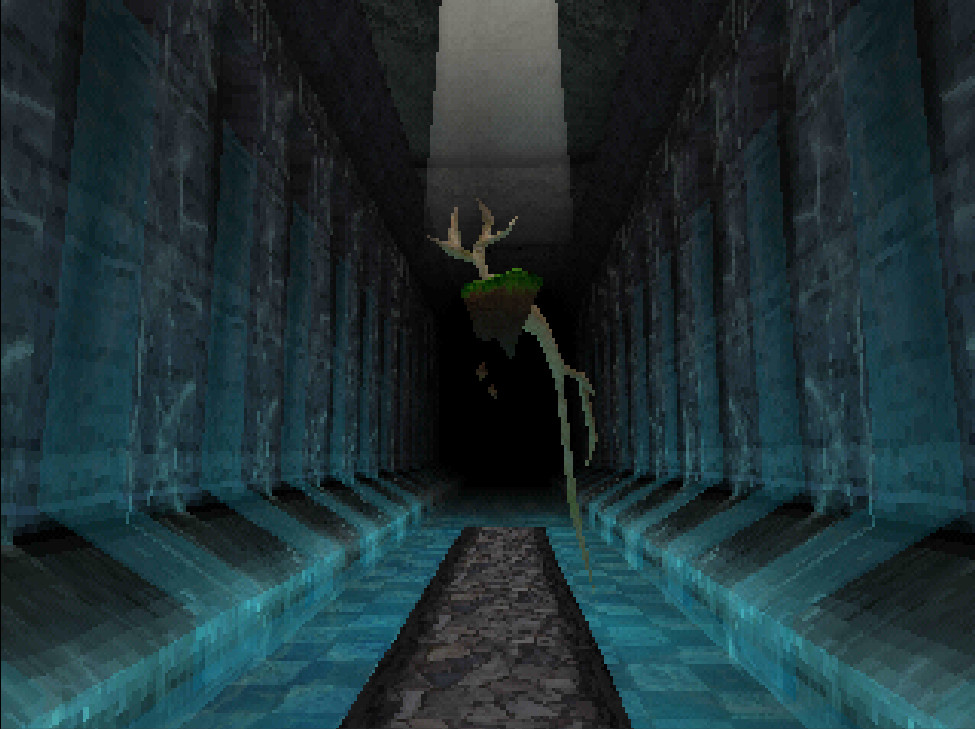
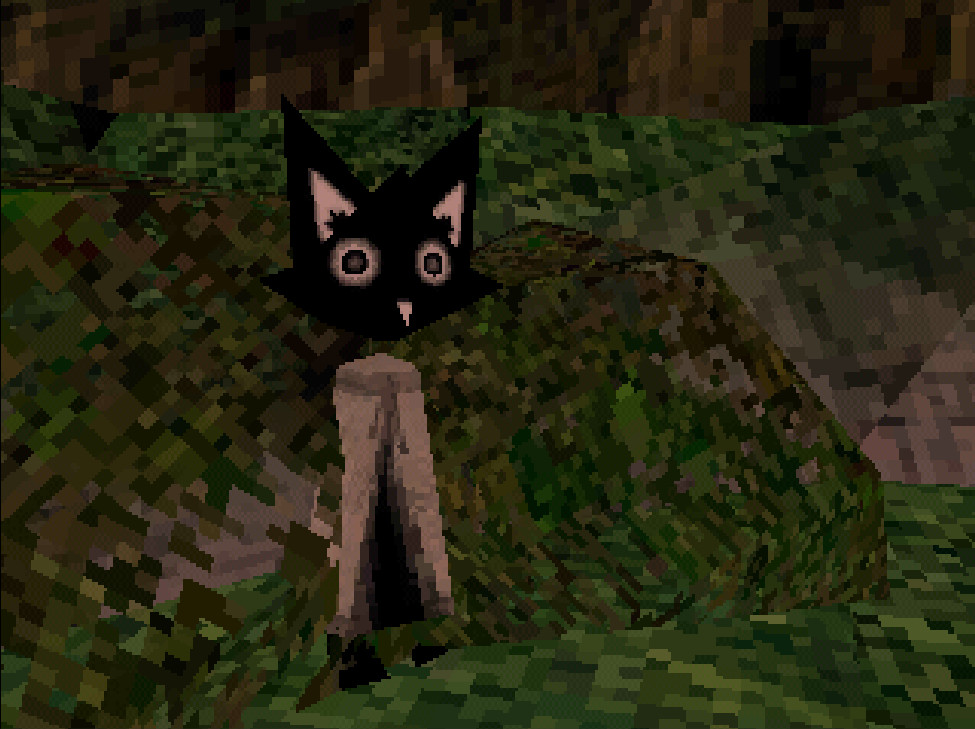
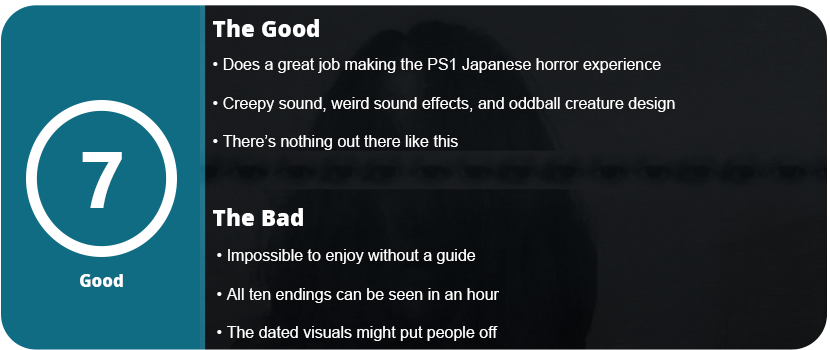
Fatum Betula is one such game made like it was on the system. There’s no story, no characters, no goals; you just wander around the limited areas and try to get all 10 “endings.” There is a singular goal, if you can call it that. You might put liquid in the water where a tree grows inside a church of some kind. Each liquid gives you a different ending. The way you acquire these liquids is very abstract and confusing, and honestly, you need to play this game with a guide or you will never understand what to do. It’s almost a piece of art rather than a game.
When I first started out, I climbed the stairs inside the main “hub” and couldn’t figure out what to do. The controls are purposefully annoying, with just a menu, save, and action button. The inventory menu looks like a PS1 game, and I love it. The graphics are pixelated, blocky, and do the shifty thing that PS1 games did when moving the camera. It turns out that you’re supposed to stand still and stare into the void by the tree, and a weird creature will come up and drop off the vials you need for the liquids. Then I had no idea what to do without a guide. There’s one section where you are walking over a lake and must sleep inside an ancient Japanese hut. When you wake up, the entire game is glitched out on purpose, with just a red Japanese symbol texture as the skybox, and it’s very disorienting. You then have to get a knife and cut a rope, and the character will give you the liquid you need to give to the tree.
Once you do drop the liquid off the tree, you get a weird ending of stock footage that’s pixelated and low-res with some sort of message. It’s bizarre but also so cool to see. This is where the guide is needed because, technically, you can beat the game in about 10 minutes. It took me an hour with a guide to get all 10 endings, and for a sale price of a couple of dollars, this was a weird and interesting ride that I quite enjoyed. Part of what the guides have you do is get a certain amount of items and then save them because you need to reload to do something different. There’s a cat you can kill, feed, poison, etc., and each time that gives you a new liquid. It’s better to save before doing each action.
Fatum has eerie sound effects, creepy music, and random noises, and it’s just a super weird experience. If you have ever played LSD Simulator on PS1, you may have an idea of what this is about. Don’t go into this expecting a linear adventure, a horror story, or anything like that. It plops you in, and you must figure out what to do by thinking very abstractly and outside normal video game conventions. The final ending would most likely be impossible to figure out as you must put immortality liquid in the autumn river, then enter the church, exit, and at random the moon will appear behind the church, but you must reload and try again if that didn’t work. Things like this would make 99% of curious players just delete the game and get a refund, but use a guide and just enjoy the visual treat.
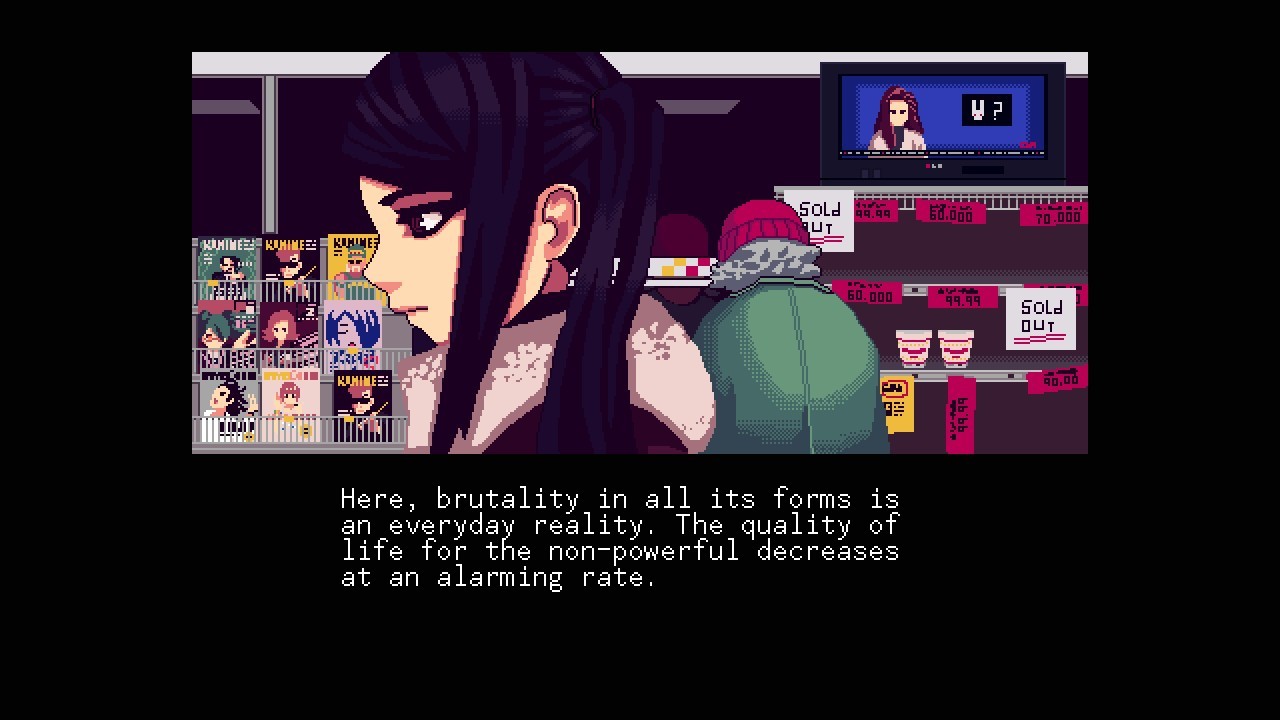
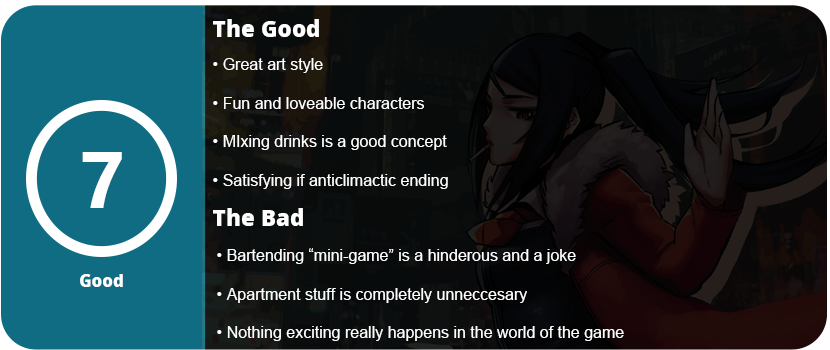
I’m not much of a visual novel fan. I love reading books and grew up reading a lot, but visual novels are basically just digital manga, and I prefer traditional manga. I bought the VA-11 Hall-A years ago and never got around to it because there’s so much reading. What got me interested was the bartending aspect. It seemed like a fun time-management mini-game mixed in, and I was completely wrong. However, the strongest point of this game is the fun characters and how invested I became in their stories.
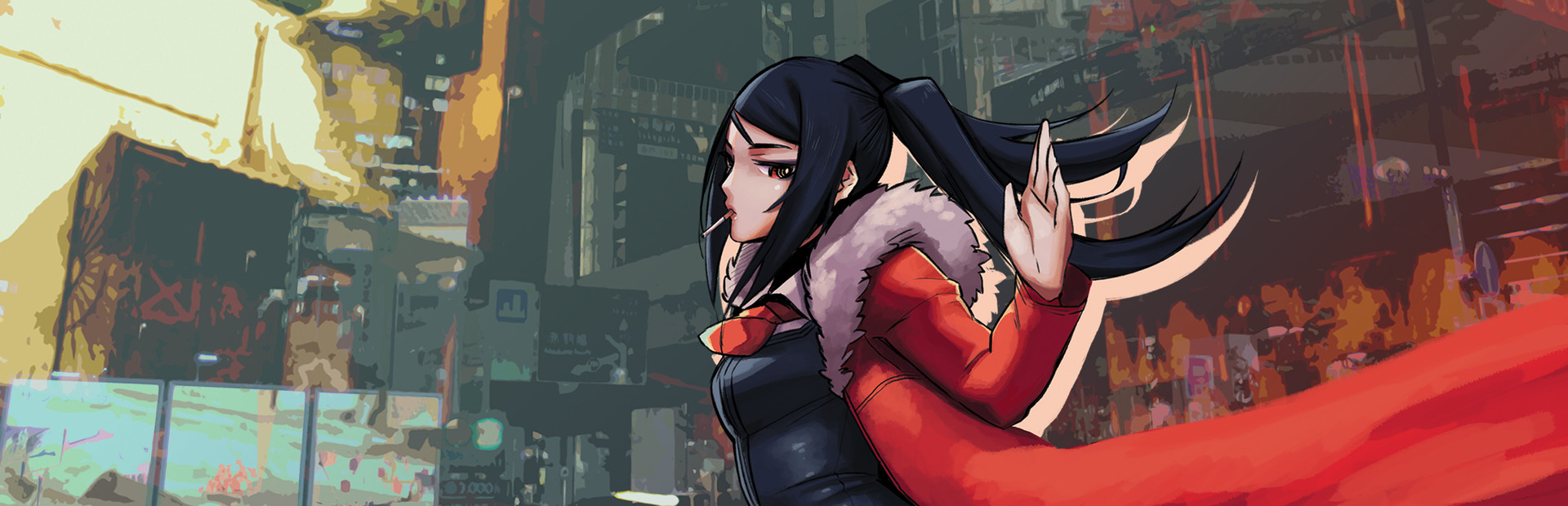
You play Julianne Stingray, a bartender in a cyberpunk world set nearly 100 years in the future. The bar is close to getting shut down, and you’re just living life day-to-day until that time comes. The game is pretty slow-paced and takes quite a while to pick up and get interesting. There’s a lot of character setup, and it takes such a long time, so it feels natural and organic rather than rushed. There isn’t really any gameplay. I spent more time clicking through dialog than anything else, but I did like all the characters. They were fun, unique, and had great personalities that I got attached to. If I were to say there was an ultimate goal, it would be to make amends with your ex-girlfriend who you got into a fight with years ago and need to apologize to, but honestly, this is a slice-of-life type of game. You really only need to read through everything.
You do earn money at the end of every day, and this can be spent on items to keep Jill focused at her job. There will be a hint when you get to your apartment as to what she might want. If you don’t buy this item, she won’t remember what customers ordered, and you have to remember yourself. There are also major bills that have to be paid, so you need to spend wisely. There is also an optional phone where you can view various news apps. Just some insight into the world, really, and nothing that matters towards the main story. There is an option to customize your apartment a bit, but it seemed superfluous in the end and pointless.
As you talk to patrons, you have to make their drinks. This seemed fun at first, but it quickly became dull and stale by day three of the game. There is a recipe book full of 24 different drinks you can make, and you can filter them by flavor and type. Patrons will give hints as to what they want, and you sometimes even have to read the descriptions to get the cryptic ones correct. Drinks are made with artificial chemicals in this world, and you have five. There are squares that fill up with each measurement, and you can mix or blend the drink, age it, or add ice. That’s literally it. I thought you could upgrade the bar and add new flavors and devices, but this is it. You end up cycling through all 24 drinks early on, and maybe 10 repeats constantly. It ends up no longer being fun to make these drinks and just interrupting the story. There are also no instructions on the difference between mixing and blending. You need to count how many times the shaker wiggles, and if it starts going fast, that’s blended. If you mess up a drink, you lose a bonus at the end of the day. However, you can’t serve messed-up drinks, as the game won’t let you. Some drinks allow you to add synthetic alcohol as much or as little as you want, and this is supposed to somehow change the story by making characters spill things when they’re drunk, but I never saw this happen.
The one game mechanic in an otherwise interactive visual novel is boring and somewhat pointless. If there was a much larger selection of drinks, or if I could add some later or upgrade equipment, that would be fun, but what’s here feels half-assed and tacked on. I also don’t like how we never get to know what’s going on in the world. The game hints at things happening politically and with various corporations and even a hacking group, but we get nothing in that regard. It’s mostly just what’s going on inside the bar and the characters you meet; it stays very local and centralized. I also felt the visuals, while artistically beautiful, were boring to look at. There isn’t any change in scenery, and the static anime-style characters just change facial expressions. It’s very hard to stare at the same background for nearly a dozen hours and make dozens upon dozens of repeated drinks just to stay invested in a character’s story. If it weren’t for the great characters, this game would be utterly boring nonsense.
With that said, VA-11 Hall-A is only worth getting into if you love anime, visual novels, or just like reading books. The bartending aspect is a poorly thought-out afterthought that hinders the progress of the story rather than helps it due to the small recipe size and laughable mechanics. I really liked the characters here, and the story ended on a nice note. I expected some sort of twist ending where the bar would close early or the hackers would take over all the androids and something interesting would happen, but we just get a slice-of-life anime-style bartending experience.
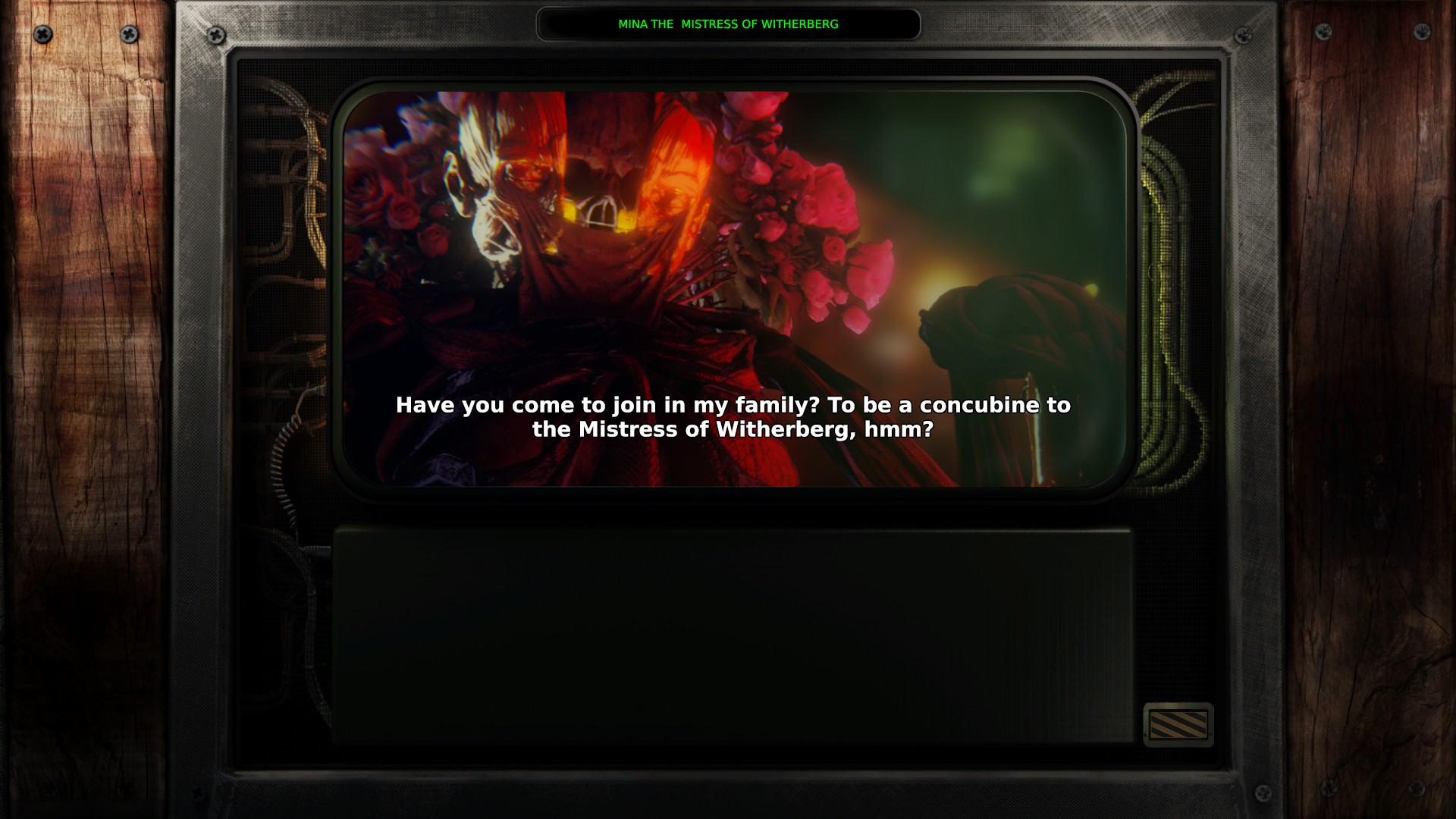
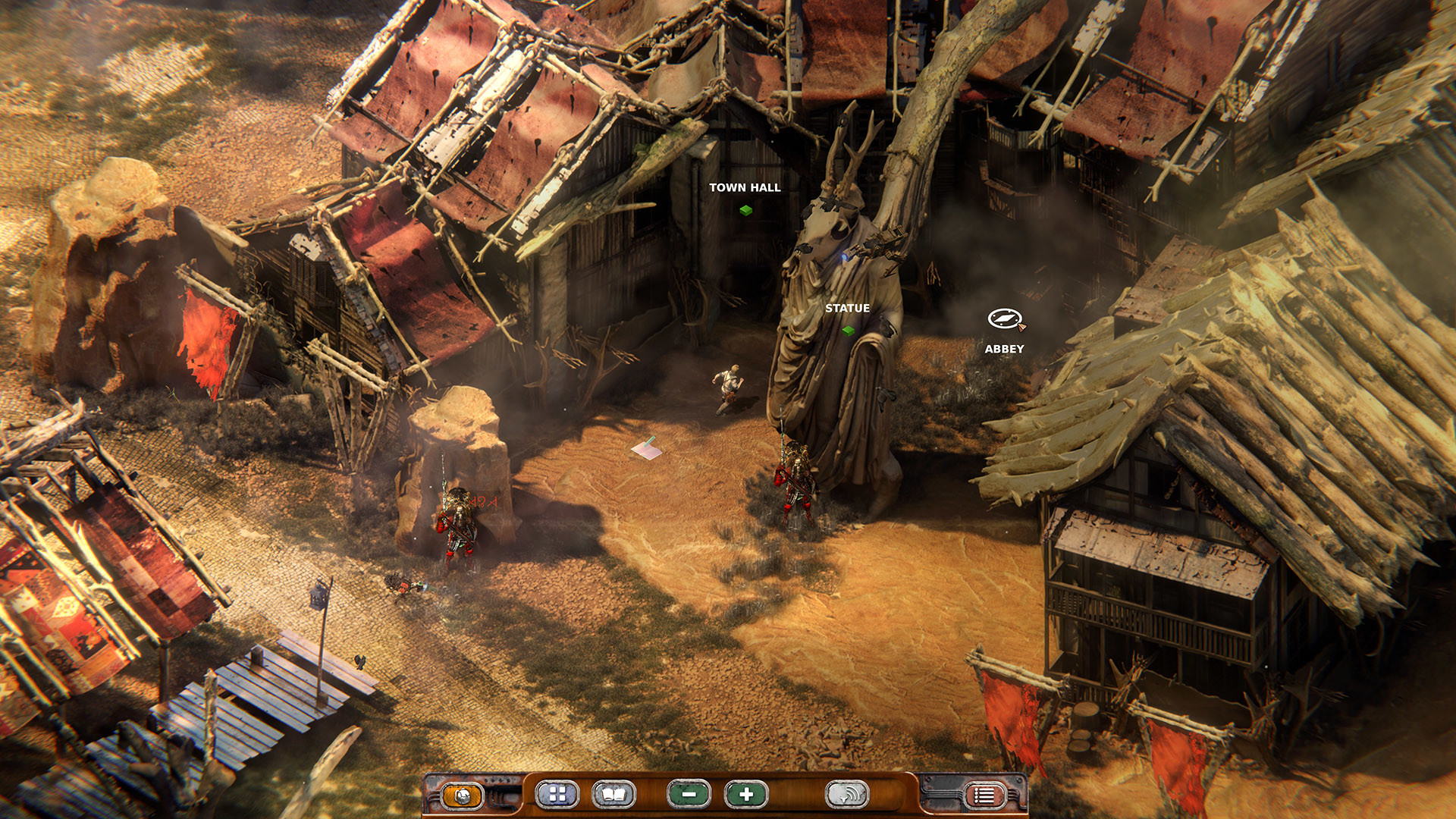
I love post-apocalyptic anything. Just the curiosity of wondering what would happen when a man is on the brink of extinction is morbid yet fascinating. Beautiful Desolation takes the isometric point and click of yore and brings it to life with over 40 fully voiced and wonderfully designed characters and a time-warping story. The game starts out with you, Mark Leslie, arguing with his wife about someone whose emotional mess you have to clean up. Suddenly, a giant object slams into the ground from the sky and brings about the apocalypse with machines. You are now trying to find a way to figure out what the Penrose, the giant object, is and how to stop it from changing the world. The only issue is that it doesn’t go as planned, and you are warped an unknown amount of years into the future and must stop factions from fighting and choose between groups of characters.
Choices mostly matter before the ending of the game. There are several groups of characters, some warring with each other and some just single characters that don’t offer any rewards, and you must decide what happens to them all. You fly around an overhead map in your Buffalo transport, and objectives are obtained by talking to characters. Each area is small and linear, and there’s usually only one person to talk to in each area. The characters are really well done, and the style of the game feels like a mid-90s Fallout with pre-rendered animations in a box and the text appearing below it. The characters look amazing, from robots to weird fleshy things to plants and various lifeforms. There’s tons of imagination in this game, and even the environments look amazing. However, there’s not much else when it comes to exploring.
When you land in an area, you will most likely find things that need to be used or find things that need something to be used with. Sometimes a character might need an item, or they might need you to solve a large issue that decides the fate of their race or faction. The issue here is that objectives are so obtuse and cryptic, and you can easily miss an option to solve a large problem. For example, you need to ultimately find three items to restart the array to let you back on the Penrose to go home. One item needed is red mercury. There are two ways to obtain this, and depending on your choices, one will always be cut off. There is also one route that lets you fight a few bosses via a weird arcade game. You need tokens to put combatants in this machine. You need at least three tokens to even bother, and that’s never explained. To get these tokens, you must choose one of three outcomes for a few factions, or the fourth outcome gives you Red Mercury for the array. I wound up missing two of these and only got two tokens in the game, so the item I needed from the final boss for the arcade game to get Red Mercury was cut off.
This long string of outcomes that are hidden is a little unfair. I also accidentally decided my fate without even knowing that option would do that, and I wasn’t given a second chance. I decided the fate of two factions early on and wound up doing the opposite because I didn’t realize clicking a certain option would launch that decision, and it was too late. There are also some items that need to be bought to progress, and you need credits that are exchanged for gold. To acquire gold, you need to find it hidden in certain areas by just wandering around. This was also something I never explained, and for a while, I couldn’t figure out how to get credits. There are also some bogus items that you can waste credits on, so I’m not sure if you can end up not finishing the game because you have found all the gold and don’t have enough credits. There’s only so much gold in the game, and there’s not much.
One of my biggest gripes is needing to talk to certain characters before something advances. Icons on the map flash if there is a new dialog for a character, but that’s if you have already done something to trigger that. It won’t flash for items not discovered or anything like that. I had to use a walkthrough through most of the game because there were times I felt I made progress and the next character would give me zero hints on where to go next. Some objectives I could figure out alone, but 90% needed a walk-through. Just because the game looks mid-90s doesn’t mean it needs to play like it. It still didn’t stop me from looking forward to the next area and character to talk to, as they are so unique and interesting.
Overall, Beautiful Desolation is a well-written and very stylized post-apocalyptic adventure game with lots of nostalgic feelings of the mid-’90s. However, the insane number of cryptic and obtuse objectives makes the game very frustrating without a guide. I also didn’t like how often you would start feeling like you’re making progress and then get stopped dead at every turn with the only option to wander around every area until you noticed something you missed, and as the game progresses, that can take forever. You end up unlocking over 50 areas towards the end, and going back to them all is insane. I love the voice acting, the art style, and the story itself, but it’s so unfair and stops you dead in your tracks at every turn. Progress is incredibly grindy here, and not to mention, the major decisions in the game can easily be missed or skipped over.
The morals of AI behavior have always been a question. How close should they get to human emotion? Would they be considered people? Should they be considered and treated like machines? What happens if one becomes rogue and starts feeling outside of their programmed emotions? Many games, books, and movies have explored this concept. The movie A.I., Bicentennial Man, I, Robot, Isaac Asimov’s novels, and most recently, Detroit: Become Human. It’s a fascinating concept that becomes closer to reality as technology advances. With cloud-based AIs like Siri, Google, Bixby, and Cortana and realistic-looking robots that have been created, this could be the future within the next 10–15 years.
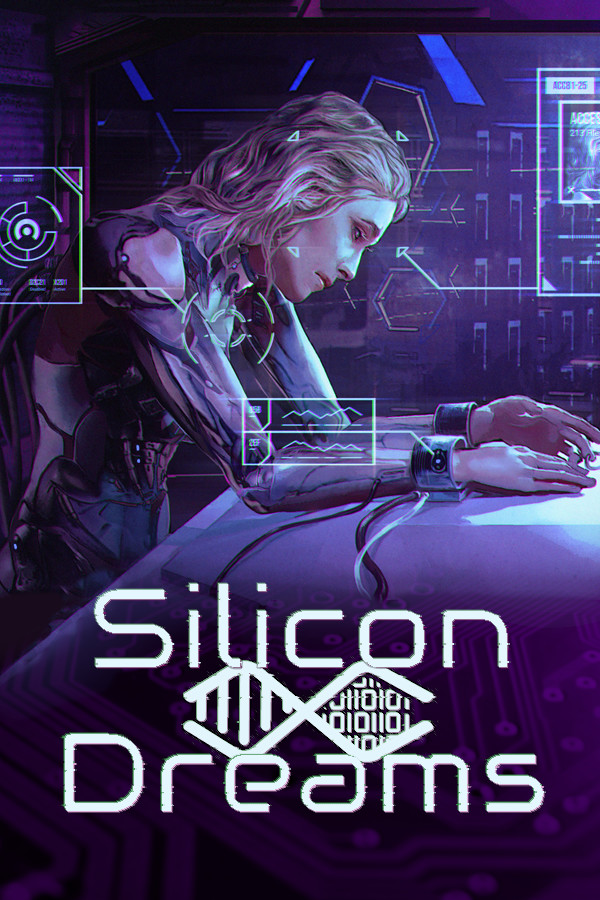
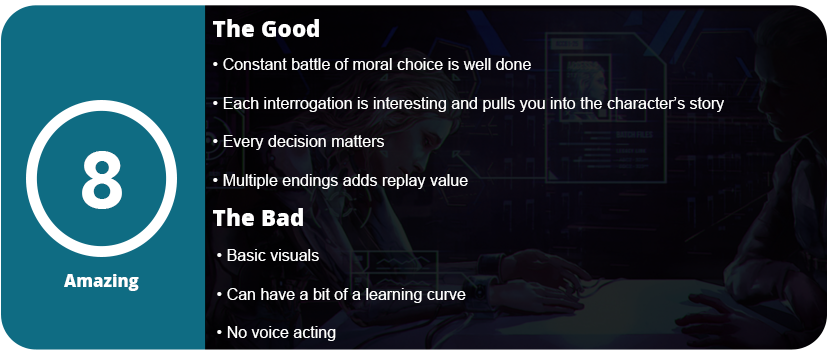
Silicon Dreams puts you in the eyes of a robot interrogator for a megacorporation called Kronos. Kronos creates bots for service and work and must keep a close eye on any that might be considered rogue. The game is mostly basic visually, but you spend 90% of your time on the interrogation screen. You click around on questions and try to gain the responses and information Kronos asks of you. Each case is different, and you also interrogate some humans. At first, this will become confusing, and you won’t be sure what the strategy is. As time goes on, you are contacted by a rogue robot who wants to start a revolution. You end up interviewing robots that have gone rogue, or what Kronos thinks has gone rogue, and it’s your job to get as much information as possible. Some robots are easy to crack, and some require trust.
As you go on, you will realize that emotions are the main way to get what you want. There’s a wheel pie chart with different emotions, and as you talk to the subjects, that slice will flash and the graph will adjust. Some robots aren’t supposed to feel certain emotions, and Kronos might ask you to observe this, and the end report you fill out might ask this question. Of course, your own morals come into play here, and it’s one of the few games I’ve played where I was torn between helping out Kronos and wanting to help the robot revolution. Every single interaction will sway you either way, as you will be afraid of being decommissioned yourself and getting caught if you help, and you never know if what you’re doing is correct in either direction. The mystery is good, and it’s akin to how you might navigate these situations in real life. Kronos promises private quarters and a more lavish lifestyle if you cooperate, but then you see a news article at the end of each day talking about the robot revolution, and you sympathize with the stories and situations of the subjects. You want to just do your job and keep your head down, but you also have a chance to change the world.
This leads to different outcomes as you play. I was so torn between not wanting to help either side that my company points kept dropping to the point where I was interrogating myself. I also screwed up that interview by playing the neutral party, and I got a bad ending. There’s tons of replay value here, and I intend to be on either side solely so I can see what end I get. However, this also goes for interviews. I would exhaust all my options and be unable to invoke the emotion I needed to get the correct information. I had to choose to either let the subject go, send it to maintenance for a memory wipe, or decommission. This is one of the hardest choices to make and what eventually can piss off Kronos the most. They want to keep a clean image, and if you let deviant robots go, it makes them look bad. I did eventually get my company points to 60/100 and acquired the ability to invoke and sway the robot’s emotions. You also get to cuff them to invoke fear and anger, and sometimes this is the last resort if you end up choosing the wrong responses and wind up not getting everything you need.
Outside of all the interviews, there’s nothing else to do. The visuals are very basic; while not ugly, there’s no voice acting, which would have added some character to everyone, and the Blade Runner-style Voight-Kampff iris vision is just for show. Same thing with the option to show camera angles. You’re never close enough to see emotion visually, which would have added another layer to the overall gameplay. As it is, your only indicators are the text itself and the emotion pie chart.
Overall, Silicon Dreams is a fantastic text adventure that pushes the moral boundary of AI as humans and makes you think with every mouse click. I had to make sure I even talked about certain topics in a certain order to open up trust first before talking about the actual reason why the subject was with me. Sometimes this worked and sometimes it didn’t, but that’s part of all the fun in this game.
Dread X is a fun series of small, indie-made games using the Unity engine. Most of them can be finished in 20 minutes or less, but sadly, the majority of them in this collection are neither all that scary nor incredibly tedious and not very fun. I will go through the list of ten games.
Carthanc is a weird first-person game set in an Aliens-type setting. You’re on a space station with weird hieroglyphs, and your goal is to set up your lamp to shine on symbols to open doors. You must complete the mummy statue to run from the final monster. I never made it through the first section. The platforming is horrible and really floaty. The visuals are too murky with too much grain, and the overall setting just isn’t scary. Pass.
Pay is Nice is an interesting tank-style adventure game. You play as a salaried employee of some top-secret government facility. As you make your way through the beginning of your workday, you are narrated through how your life and job currently are. It’s a great setup that is sadly stopped when things get interesting. There’s a single puzzle in this game that seems really complex at first, but after some reading and experimenting, it’s solvable. I loved the atmosphere and mood here. It is very haunting and surreal, yet it just ends after 20 minutes. I would have liked to see a full game in this setting. Play.
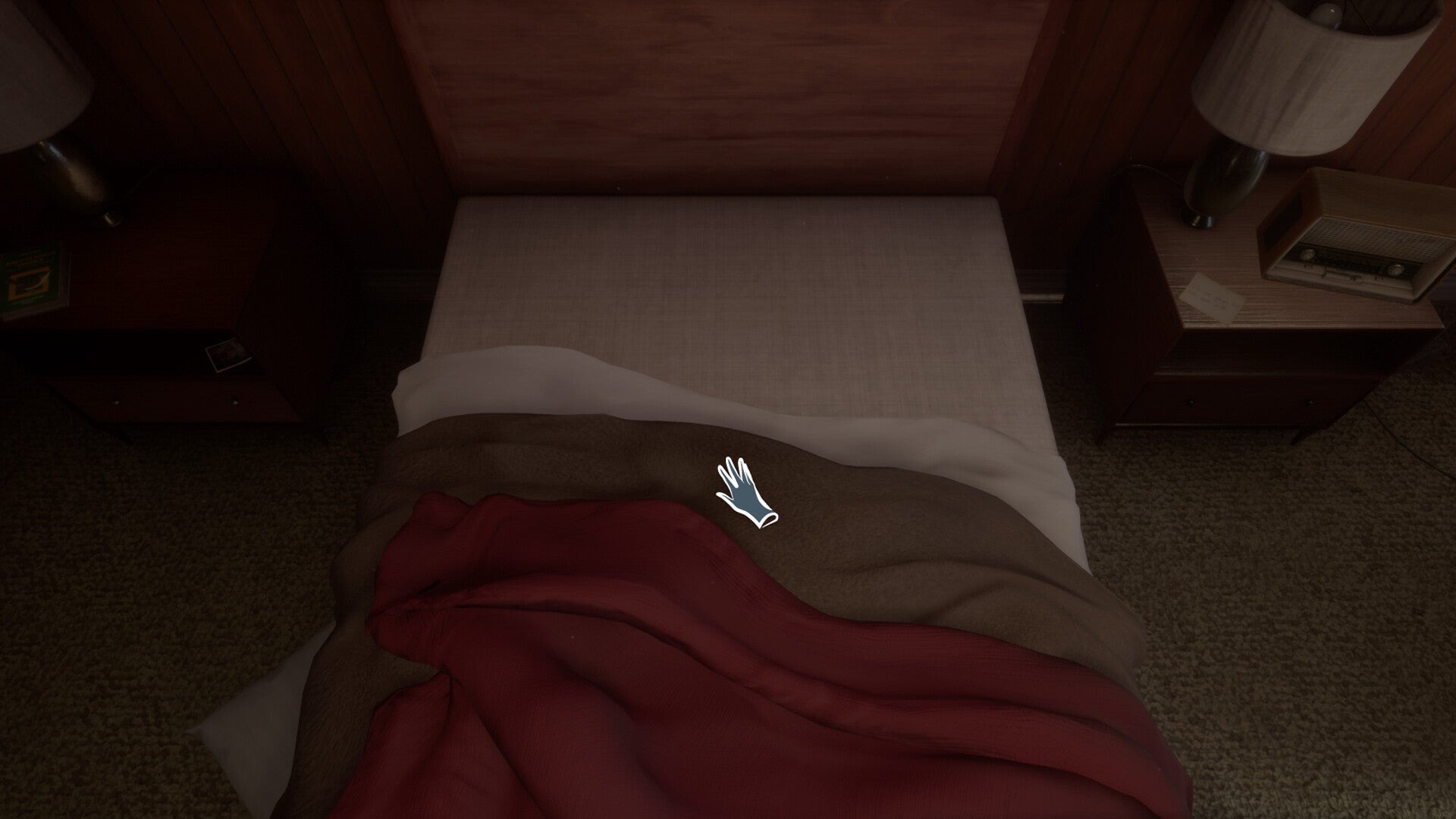
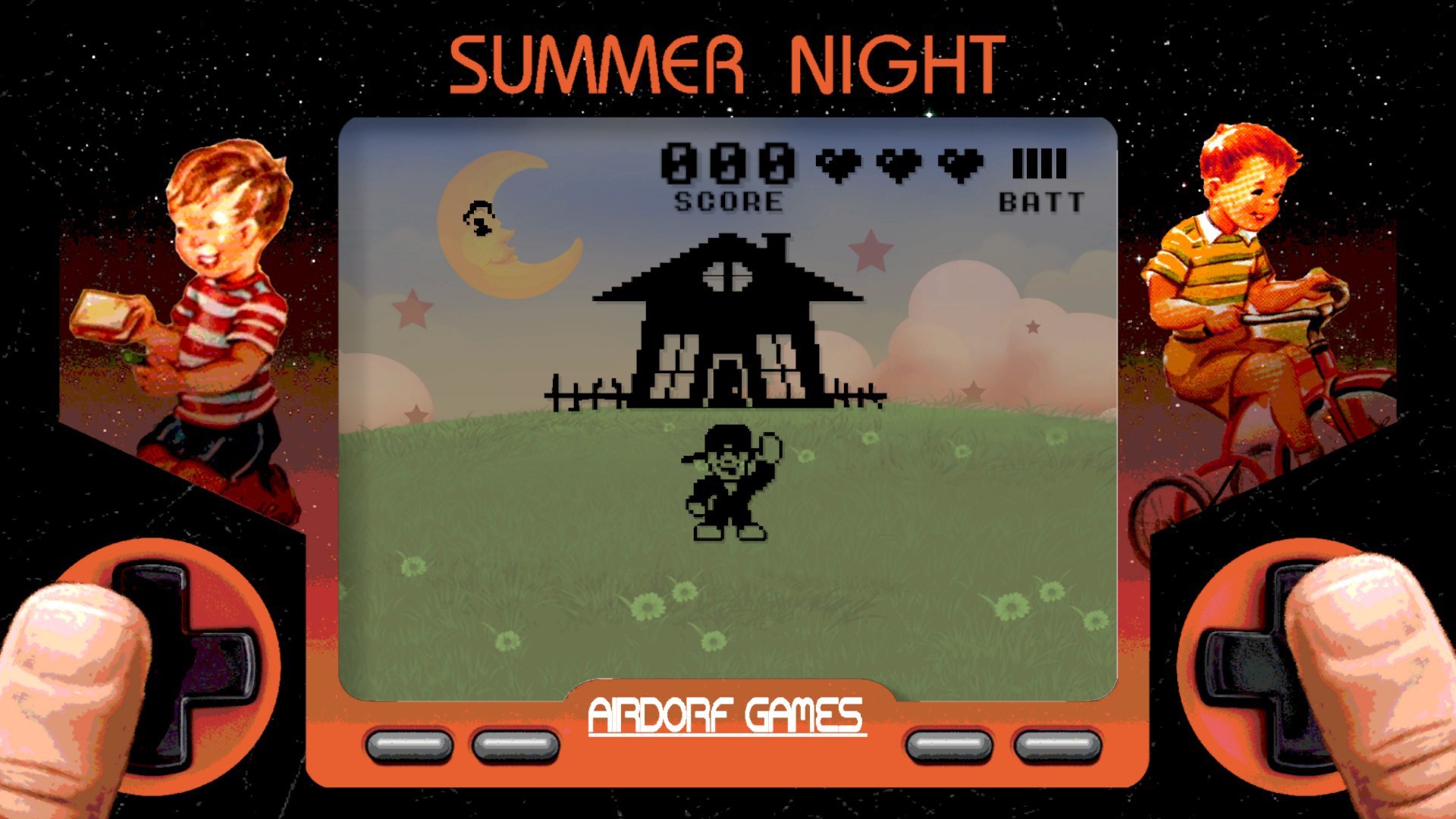
Summer Night: Easily the scariest game in the bunch. You are a kid playing a Tiger Electronic-style LCD game in your bed. All you see is the LCD game and your hands. It’s a simple game of catching mushrooms that pop up in the four corners of the screen, but after each level, you get a small narrative piece, and the LCD changes over time. I won’t spoil the game, but it really is terrifying and scary. The developers made good use of audio in this game, and it’s easily my favorite of the bunch, but it only lasts about 10 minutes. Play.
Rotgut: A terrible adventure-style game that’s way too slow and glitchy to even bother with. The visuals are interesting, but it’s not really scary. I felt like I was fighting the controls and just never went past the first five minutes. Pass.
Don’t Go Out: An RPG card-style game that ends in 8 rounds. Your goal is to run from a tentacle monster as its tentacles creep inward on the map. Most of the map is dark, and you can use cards to light up the area, add new characters, or slow the monster down. Sadly, there’s only a single strategy here, and that is that it survives outside for four rounds and then heads into the house with the monster during the last three. The door is supposed to shut at the end and keep the monster out. It’s not very fun, as there’s tons of trial and error to get the only winning strategy down right. Pass.
Outsiders: This is the longest and most involved game in the collection. It can take a couple of hours to finish, as it’s an obtuse P.T.-style game where the house attacks you as time goes on. You get six minutes per “round,” and the goal is to activate six buttons on a hidden wall by finding various objects. A hammer, a few keys, and a couple of hidden buttons, but there are no clues until you start dying numerous times. There’s also a murderer on the loose that can attack you, as well as the ghosts in the house towards the end of each round. I found it tedious and boring, and the fact that you can’t progress much without pixel hunting is beyond boring. Pass.
Mr. Buckett Told Me Not To: A Castaway-style game with some rather polygonal graphics. You must spend three nights “surviving” watching your waste, thirst, hunger, and stamina meters. At the end of each night, you wake up with random effects on your overall meters. However, at night, you must sacrifice a survival item. Each day becomes a little more difficult, but the ending is well worth the time. This one takes about 20 minutes to finish. Nice and sweet. Play.
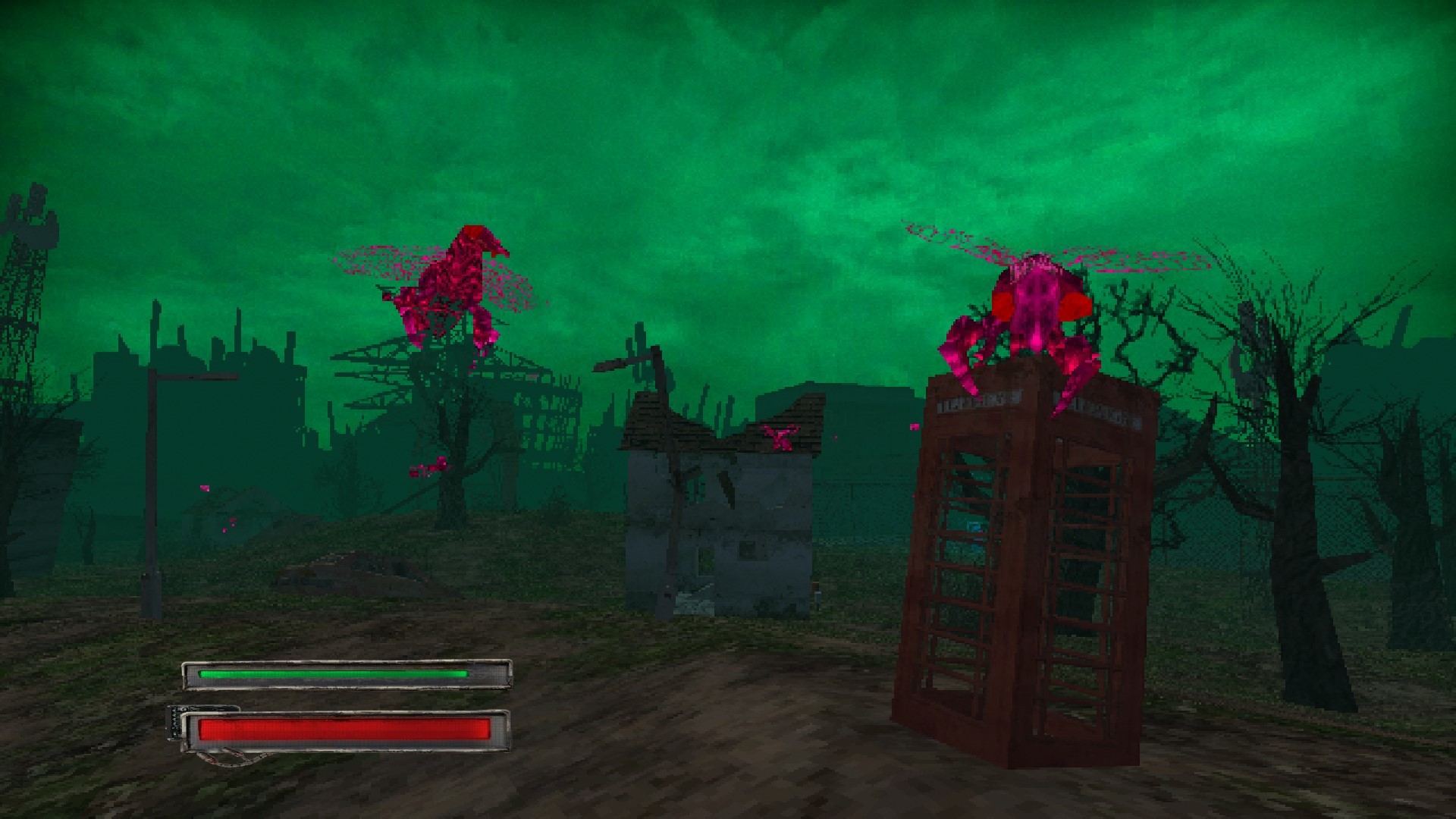
Shatter: A PS1-era-style game with horrendously slow walk speeds and a sprint meter. You are supposed to get a special pupa that belongs to some fly overlords and gain access to a building. I don’t know. It’s so weird and makes no sense, and you’re in some sort of cyberspace? The issue here is that the game is really cryptic, and walking around the large area is so boring due to the slow speed. The sprint meter is to make running away from enemies harder, but this is only a fraction of the 20-minute game. Pass.
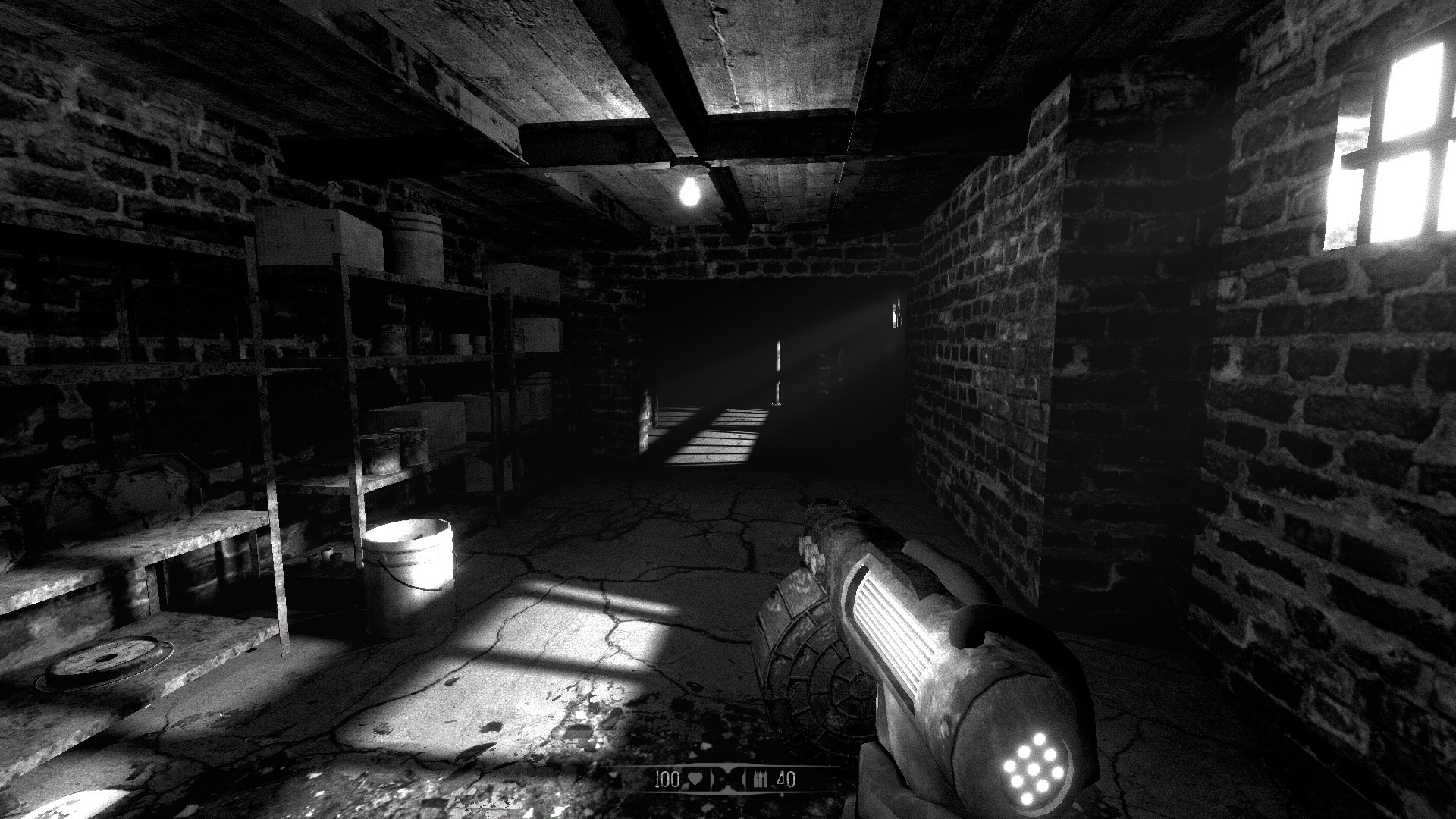
The Pony Factory: The only shooter in the collection. It’s an FPS where you’re in a factory that’s been abandoned. You run through seven levels, and the only gun is a bolt gun. You collect ammo and health and shoot pony skeletons. The graphics are really rough, and they’re in black and white, so even the art style can’t save it. Really dull all around and not really scary. Pass.
Hand of Doom: An FPS that harkens back to the Saturn and Jaguar eras of console games. It looks great and feels like Heretic in some ways. You are a wizard who is going to beat a grand wizard of sorts. You have to walk around the area, opening doors, using your spell incantations. These are acquired as you explore each area. The game is really short, running about 30 minutes. Using the incantations is a lot of fun, and you have a journal that tells you what the order is for each spell. Play.
That’s about it! As you can see, the majority of the games aren’t worth playing, but if these game types are for you, then you may find some enjoyment. The issue with most of these is that they are slow, boring, or just not very scary. My favorite game is the simplest and shortest, and it’s also the scariest. For the asking price, you can’t go wrong here, and you are bound to find a few hours of fun no matter what games you end up liking.










































 thebinarymessiah.com
Try multiplayer. A lot of fun !