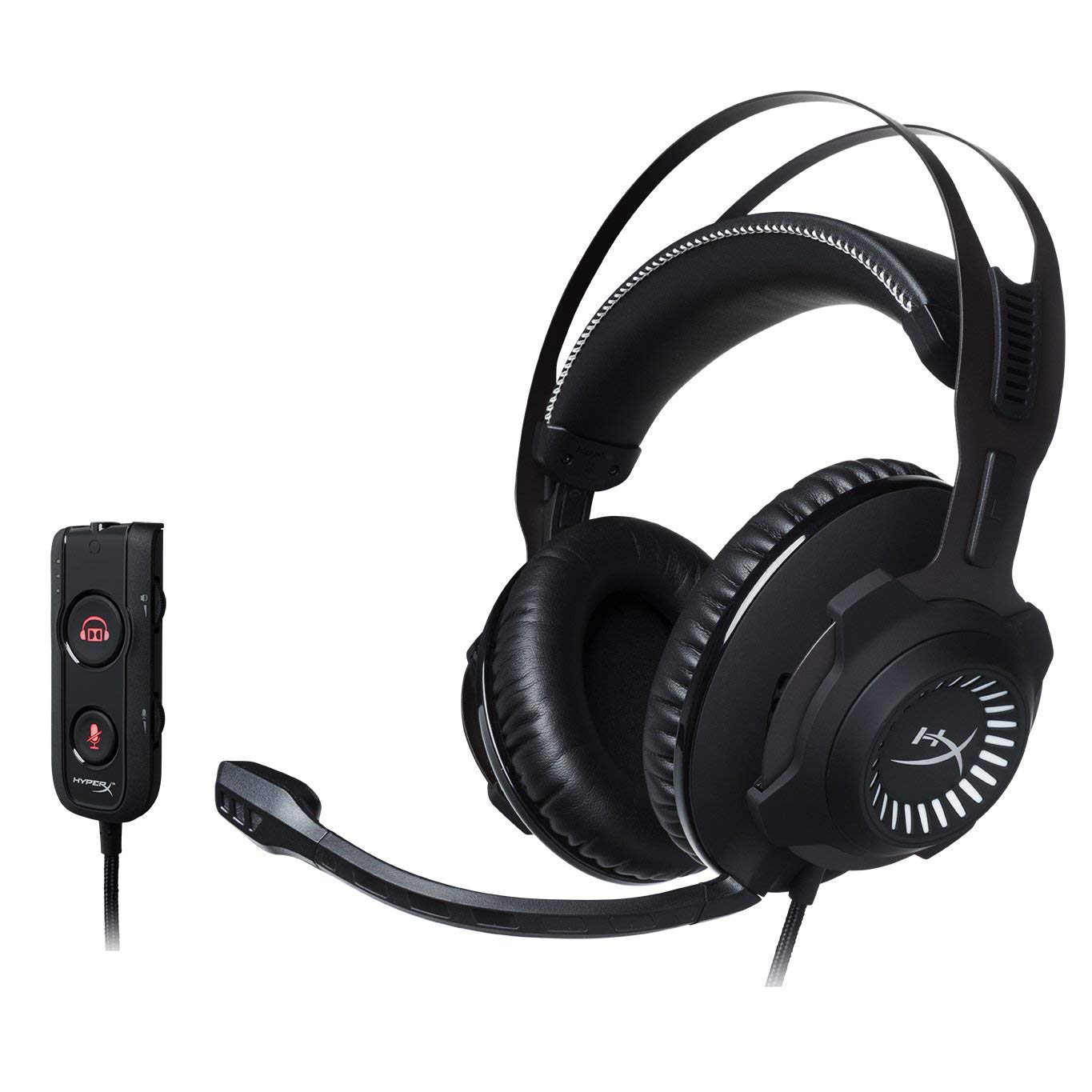
I’m not really big on gaming headsets, as I don’t need to use them often as I have my own place, but when I do, I want something amazing—something that can deliver the quality and power of large speakers inside some cans. After having the Razer Man O’ War for about 18 months, I switched over to some wired headphones and moved brands. Why Kingston? Well, the reviews are great, and it’s plug and play, which may sound iffy to some, but it works out well in the end.
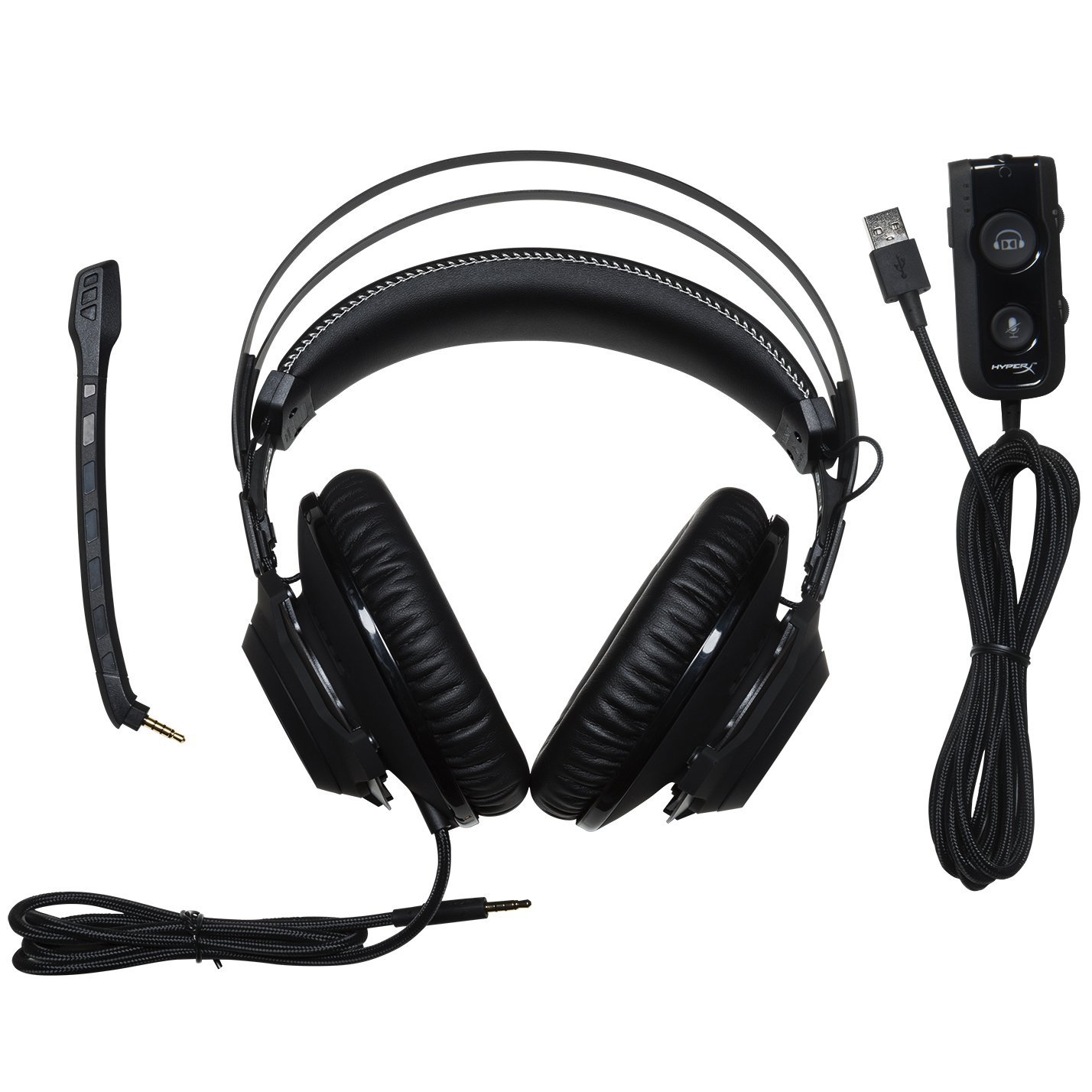
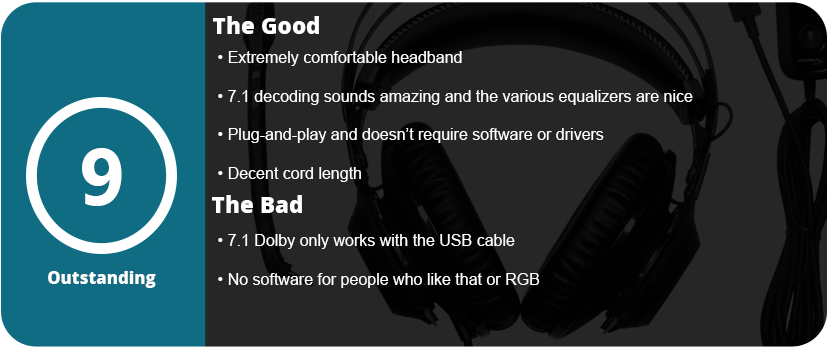
Some people want fancy software, RGB lighting, and crazy controls, but Kingston went a different route here. Most PC headsets are not compatible with a console, but these are thanks to a proprietary USB 7.1 audio card built into the cable with Dolby. Now the downside is that these are only stereo headphones with the 3.5mm jack adapter, but they still sound amazing. The USB port has a three-part equalizer for flat, bass boost, and vocal. For gaming and movies, you can activate the Dolby 7.1 surround sound with just a button, allowing the headphones to control everything without the need for any software.
The mic is completely removable, which is a nice feature, and it works just as you would expect. There’s a button to mute the mic on the control box, but for consoles, you will need to remove it completely to mute it through the hardware. Outside of these features, the headset itself is extremely comfortable and feels like a cloud sitting on your head. Instead of adjustable bands, we get a tension-sensitive soft band under a hard outer band. This means the band adjusts to your head shape easily without any fiddling. The ear cups are super soft, and no sound escapes. Since these are wired headphones, I had to figure out where to clip the control box, which wound up going on my keyboard cable to keep it nearby so I could access the controls easily. The cord behind that is rather long, which is needed for console use.
Here’s the big question: How does 7.1 audio sound in games and movies? Well, it works surprisingly well. The built-in sound card does a good job decoding the audio and making it sound incredible. I could hear gunshots behind me, people talking next to me, and explosions that sounded epic and amazing. Games with 7.1 options sound even better and more realistic, but sadly, there aren’t many games with this built-in.
With that said, the HyperX Revolver S is a solid wired headset without the flash and fancy software accompanying most headsets these days. They are extremely comfortable, give an amazing sound output that is crisp and clear, and also have great 7.1 audio capabilities. There are a few minor gripes, like the control box being in a weird spot on the cable, only three equalizer settings, and missing software for those who like to fine-tune, but what’s here works surprisingly well straight out of the box and is plug-and-play. This is a versatile headset for any gamer, but sadly, the 7.1 only works through USB, and the 3.5mm jack is strictly stereo. For the price point, you get bang for your buck that you won’t get with most other headsets.
While I’ve played the arcade original, there were many Spy Hunter games released when I grew up, and all of them were terrible. This version is no exception, as somehow it doesn’t translate to 3D very well.
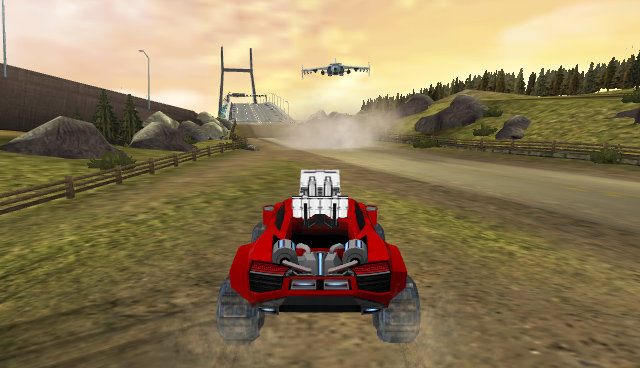
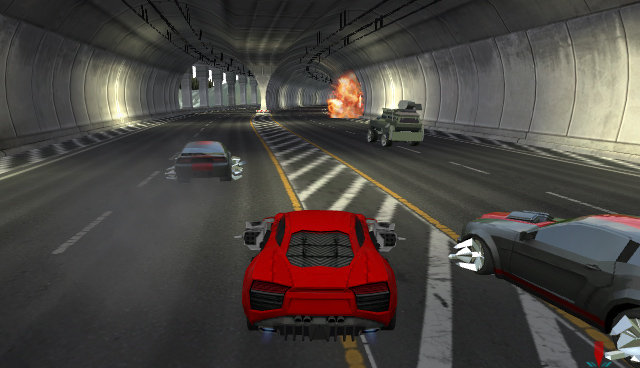
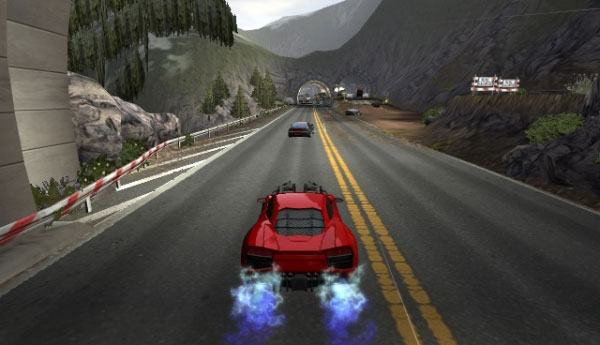
With the power of the Vita and being a launch title, I figured Spy Hunter could finally be done right, but boy was I wrong. The game starts out by taking a photo of you for your license and throwing you out onto the street with four weapons. Each weapon is assigned to a face button, and I started out with a flashbang, flamethrower, machine gun, and shocker. As I drove along, I was ambushed by generic-looking cars that rammed me, some that dumped explosive barrels, and some that had machine guns. The action itself was quite dull, with little going for it as the game already looked extremely ugly and boring.
Even with new upgrades and morphing into a boat, things did not get any more interesting. Driving the car feels like sliding on ice, and crashes are uninteresting. For a game that is supposed to be so high-octane, it doesn’t feel that way at all. The story is also pointless and pretty stupid, as there are no established characters or reasons as to why you are doing anything in the game.
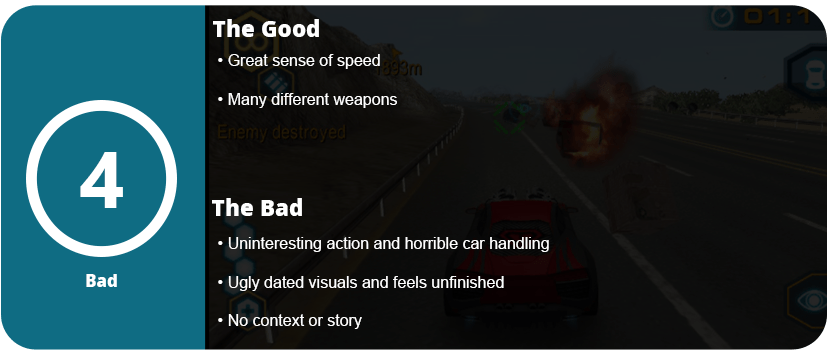
If only the game looked better and felt more polished, I feel it could have been something. As it is, this feels like a beta or an incomplete game. Physics is awful; the weapons seem cool, but the results are uninteresting, and then when you repeat this a dozen times, it’s enough to make your brain melt. I can’t recommend this game even to hardcore racing or action fans. This isn’t even worth a bargain bin purchase because there are other bargain bin games worth buying instead.
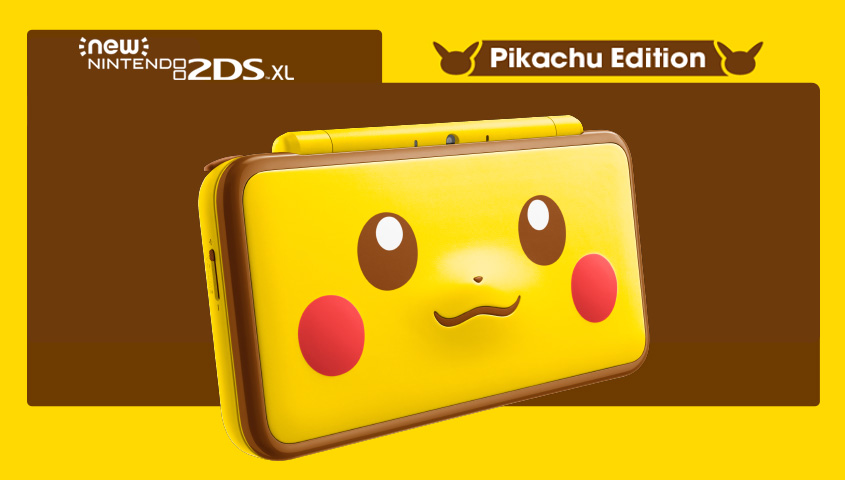
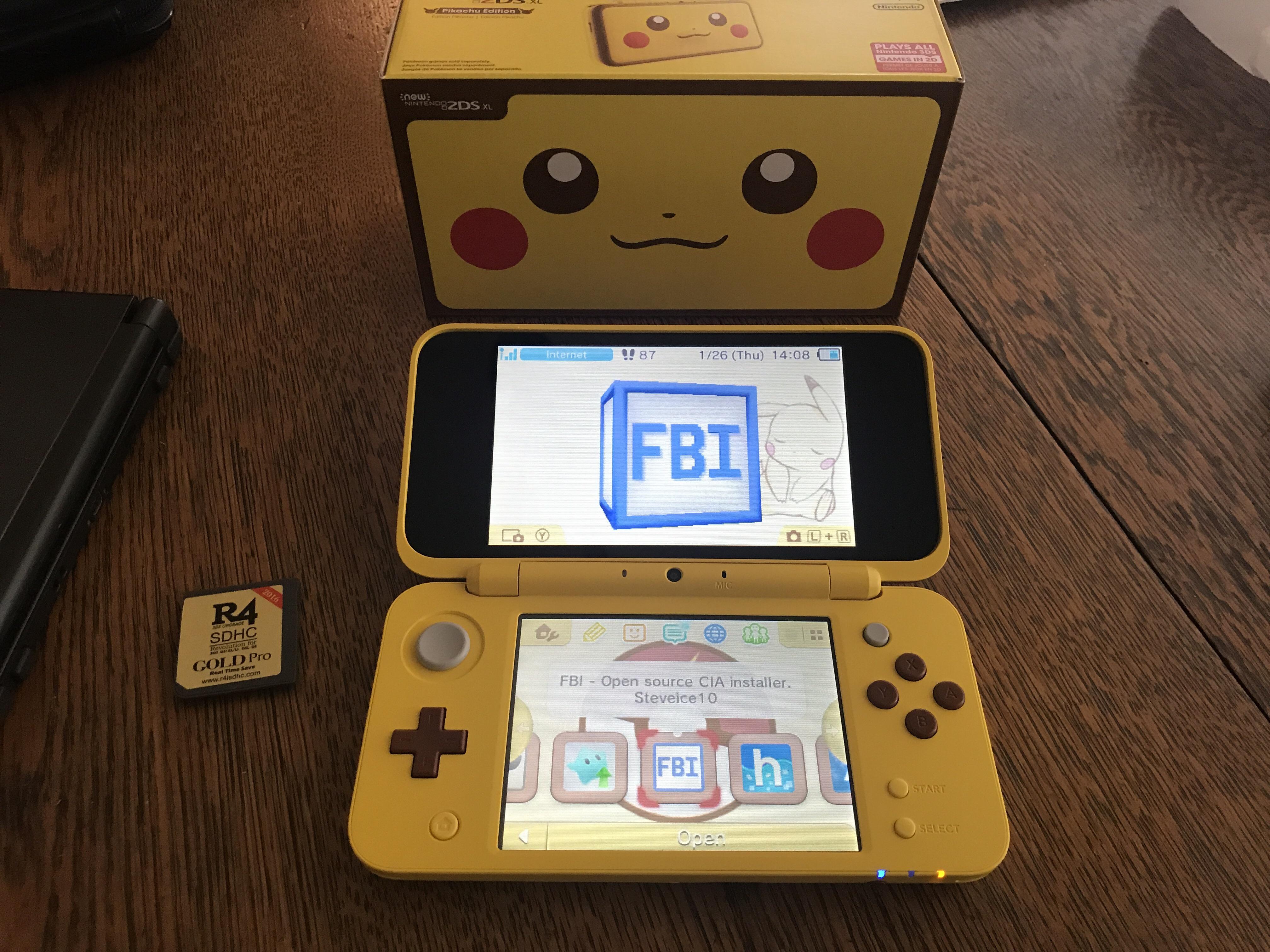
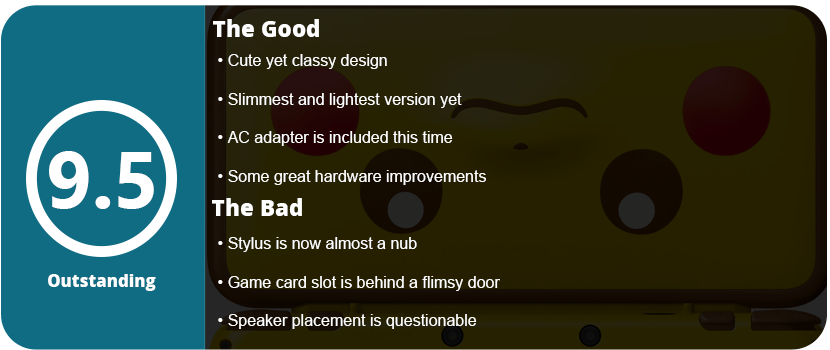
Oh, Pikachu, you’re so cute and cuddly and one of the most recognized characters in entertainment history. Nintendo sure does plaster your cute yellow face all over their consoles, and the 2DS XL version is the best yet. Nintendo went all out and went simple: just stick to Pikachu’s. With a raised 3D nose and cheeks on the top lid and lightning yellow all around, the system gives it a simple, minimal design and isn’t so over the top that it looks like a child’s toy. This is a nice, elegant way to show your love for Pikachu and Pokemon in general.
As for the system itself, this is Nintendo’s latest iteration of its 3DS hardware, which has undergone some drastic changes. Just like its DS cousin, the 3DS went from small to big to new over the last several years. We saw the original 3DS turn into the 3DS XL, which was expected as the DSi XL was a huge deal back in the day. Then we got a weird 2DS system that stripped away the foldable efficiency and the 3D model. So people were left wondering if it was an all-new system and if there were 2DS games just for the system. Then came the New Nintendo 3DS and XL, which was the best version yet as it included a C stick for camera control, better screens, sound, and overall design. So, here we are at the end with the New 2DS XL, which is a much lighter and slimmer version of the New 3DS XL, just without the 3D effect.
Honestly, I hesitated on the 2DS XL as I love my 3D effects, but as I play more and more games, I realize there are very few that utilize this feature well, and it just turned into a huge gimmick. The 2DS XL also has better-looking screens, a more comfortable form factor, and the weight was cut down. The New 3DS XL was a heavy beast and would leave hand cramps just for the sheer weight pulling on your wrist. The 2DS XL just feels so good in the hands and feels more sturdy. The 3DS XL had issues with loose hinges, weird-feeling buttons that kind of felt loose, and an overall clunky design despite looking nice. The 2DS XL has great-feeling buttons, with the shoulder buttons having nice soft clicks and the face buttons having small hard clicks, and it’s just a good system to play for long periods of time.
There were some things moved around, and not all of them were good. The stylus was shortened by half and has a weird tab that allows you to prop it up next to the headphone jack. The top of the stylus is curved in the same shape as the DS, almost like it was an afterthought. The game card access is now behind a door, which worries me as these things break over time. At least the SD card is here too, instead of behind a panel you have to unscrew like the New 3DS XL. The speakers were moved to the outer bottom edge, where the card slot has little slits, rather than on the top screen. It seems to sound better and a little clearer, but the location means it will get muffled when playing if you aren’t careful. The volume slider is now on the left side on the bottom half rather than on the top screen like before, and obviously, the 3D slider is absent.
Software-wise, nothing is new here. It’s just the same as the new 3DS XL, and that’s perfectly fine. There are no new additions to the firmware or anything special for this system except the exclusion of any 3D stuff. The system also includes the AC adapter, which is strangely missing from the new 3DS XL systems, so that’s a plus. Overall, the New 2DS XL is the definitive version of the system and cuts out all the experimentation and issues that were found in the earlier versions. If you like your 3D effects, then the New 3DS XL is your system, but if you don’t care, this is definitely it, Pikachu or not.
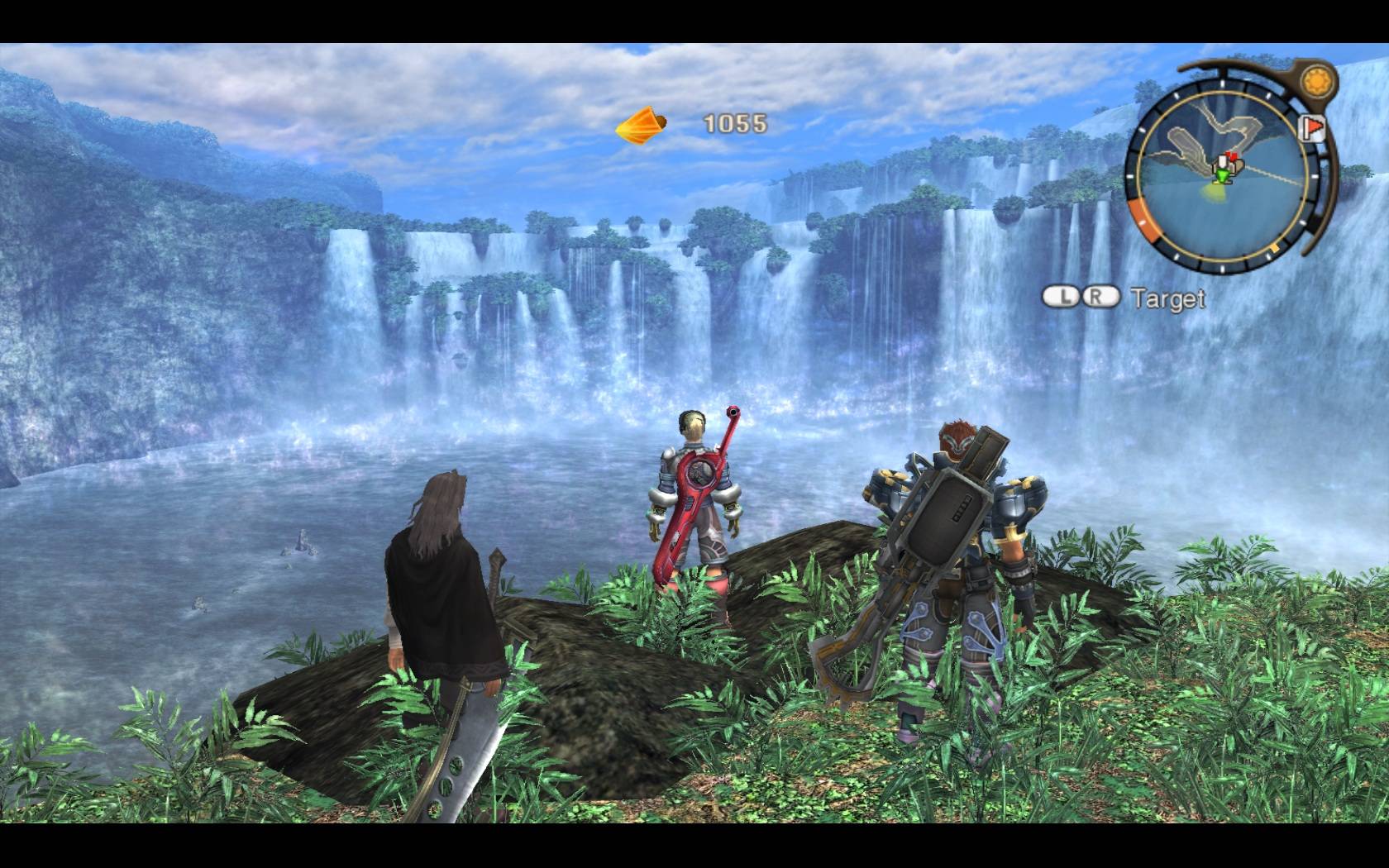
Highly ambitious open-world RPGs don’t really exist on handhelds. There just hasn’t been the technology to support them. Porting an open Wii game over to the 3DS was a bold move, and nothing has really been done before. Using the more advanced CPU in the New 3DS, Xenoblade Chronicles shines and becomes a nearly perfect port.
The game has actually quite an entertaining and deep story—definitely something you will want to stick through and see to the end. The story of the Xenoblade Chronicles starts off by showing the battle between Mechonis and Bionis, two gods fighting for all eternity. They continue to fight until Bionis cuts off Mechonis’ left hand, and then both of their swords pierce each other at the same time. Over time, life flourished on top of these gods, but the battle waged between Mechonis and Bionis would be continued by their progeny, Bionis’ Homs and Mechonis’ Mechon.
Eons later, in Sword Valley, the Homs army is fighting off a Mechon invasion. The Homs are quickly losing ground and are forced to retreat to Colony 6, where they will put up a last stand. Dunban, the current wielder of the legendary Monado, decides to ignore orders and engages the Mechon forces with Dickson and Mumkhar. Mumkhar runs away and plans to return after Dickson and Dunban have died to collect the Monado; however, he is killed by the Mechon after running into their base. With the Monado, the only weapon that can pierce Mechon armor, Dunban and Dickson are able to push back and destroy all the Mechon, leaving the Homs victorious and earning Dunban the title of “Hero of the Homs.” Unfortunately, Dunban was not able to fully control the Monado, and after the battle, he was unable to use his right arm and almost died from his injuries.
The story just gets deeper and more involved as it goes on, and it’s fantastic. Outside of the story, this is an open-world RPG that allows you to traverse massive areas around Bionis. These massive areas have stunning vistas and can sometimes take up to 10 minutes just to walk across from end to end, and again, that’s just one area out of dozens. One of the game’s biggest downfalls is that there’s not much to do or see in the massive areas. In towns, you can pick up side quests; however, these suffer from standard JRPG tropes and become almost too monotonous and repetitive to do them all. There are spots where you can get to know your characters better, but you have to meet weird conditions to do so. There are items to pick up all over the place to sell, and that’s about it. I loved these open areas, but they were so boring to traverse through. There are enemies spread all over the place, and that’s when combat comes in.
The game has quite a unique combat system that revolves around executing set moves in a strategic way. You can control any one character at a time, and executing moves that range from passive to defensive to offensive is key to winning boss fights. This is one tough game, and I have had it for nearly a year and still haven’t beaten it. The game requires an insane amount of grinding and finding skill books to level up your powers. Characters learn moves through combat, and you can level them up, but each skill has a cap, and you have to increase that by buying books at certain stores to make them more powerful. Nowhere in the game does it explain this, and I learned the hard way later on. Finding these stores is nearly impossible on your own and requires internet research. This type of JRPG is just frustrating and annoying and makes the game less enjoyable.
While the combat system is fun and fast-paced, it just feels limited in scope. You have to balance out your party members, or you will die often. You need a healer and at least one power-heavy character, or you will be annihilated. However, you can’t just spam moves and win, as you need to hit enemies from certain angles. There are linked chain attacks, but the monado is your secret weapon. You can use the power to protect allies from main attacks, and most of all, you can predict when an enemy will use a powerful attack, and it will tell you who it will hit and how much time you have. It’s then your job to warn that character or use the Manado to protect them. The downside to this is that it messes with the flow of the battle as it stops everything dead, shows you the attack in slow motion, then goes back to the battle. The battles got interrupted over a dozen times, and it drove me insane as I had a good flow going and the controls would get yanked from me.
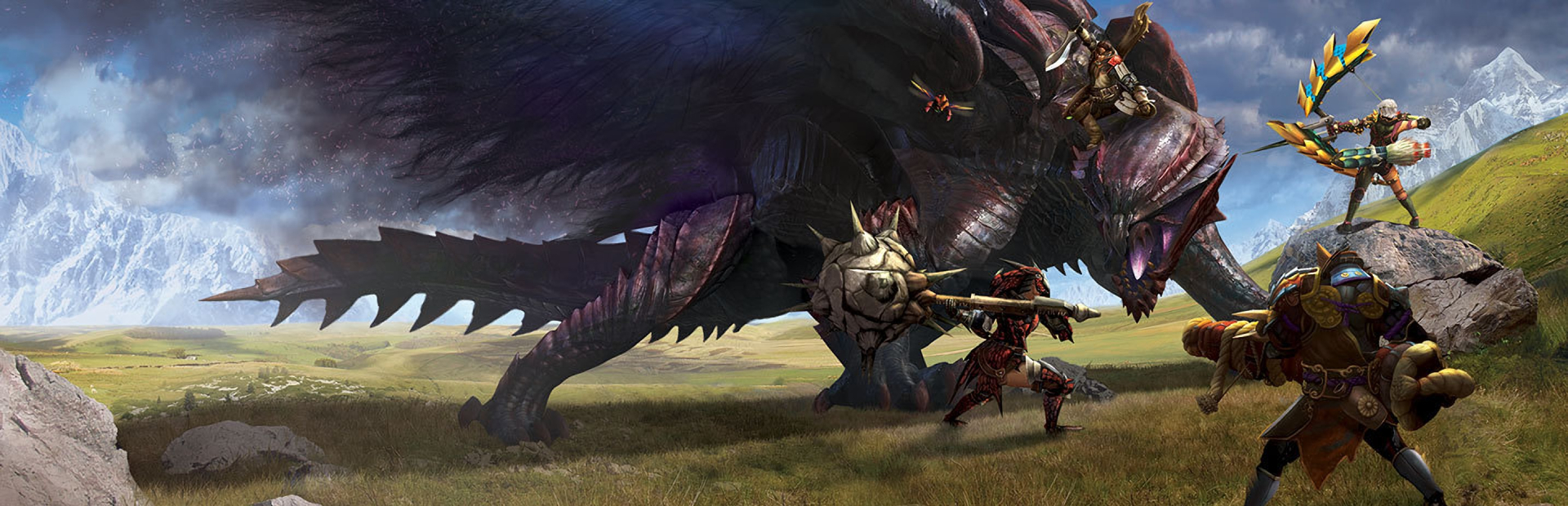
Battles also tend to drag out, as this isn’t an easy game. Some monsters will actually be 10x your level and show red health bars, so you know to stay away and come back much later in the game. This is just a hardcore RPG through and through, and you must devote several dozen hours of your time to finish this game as it is quite long. This isn’t exactly designed for handheld gaming sessions, but most fans of the genre will appreciate what is being done here.
Actually knowing where to go is also not a problem, as you always have a quest arrow, and if you hit a level wall, you can backtrack and grind, which is the worst part of the game. Outside of all that, the graphics are quite nice, with huge draw distances and lots of detail, but everything was just ported over and smushed down rather than being remastered. The game has muddy, ugly textures that are some of the worst I have ever seen, and the character models are just so bad. From a distance, when you’re playing normally, you won’t notice, but during cut scenes, the ugliness ensues, and it’s cringe-worthy. There are some nice street pass options that will transfer items to your collection, and you can save anywhere, which is another plus.
Overall, Xenoblade Chronicles 3D is a game that is too ambitious for its own good, as you can clearly tell. From beautiful open vistas with nothing to do with them to heavy-level grinding and slightly clunky combat that is a bit too involved for this type of game, The game is butt ugly up close, and the added 3D effect is completely useless and doesn’t work with the game at all. The story and characters are pretty amazing, but the length and investment in this game are so over the top for a handheld that only hardcore JRPG fans will carve out time for it.
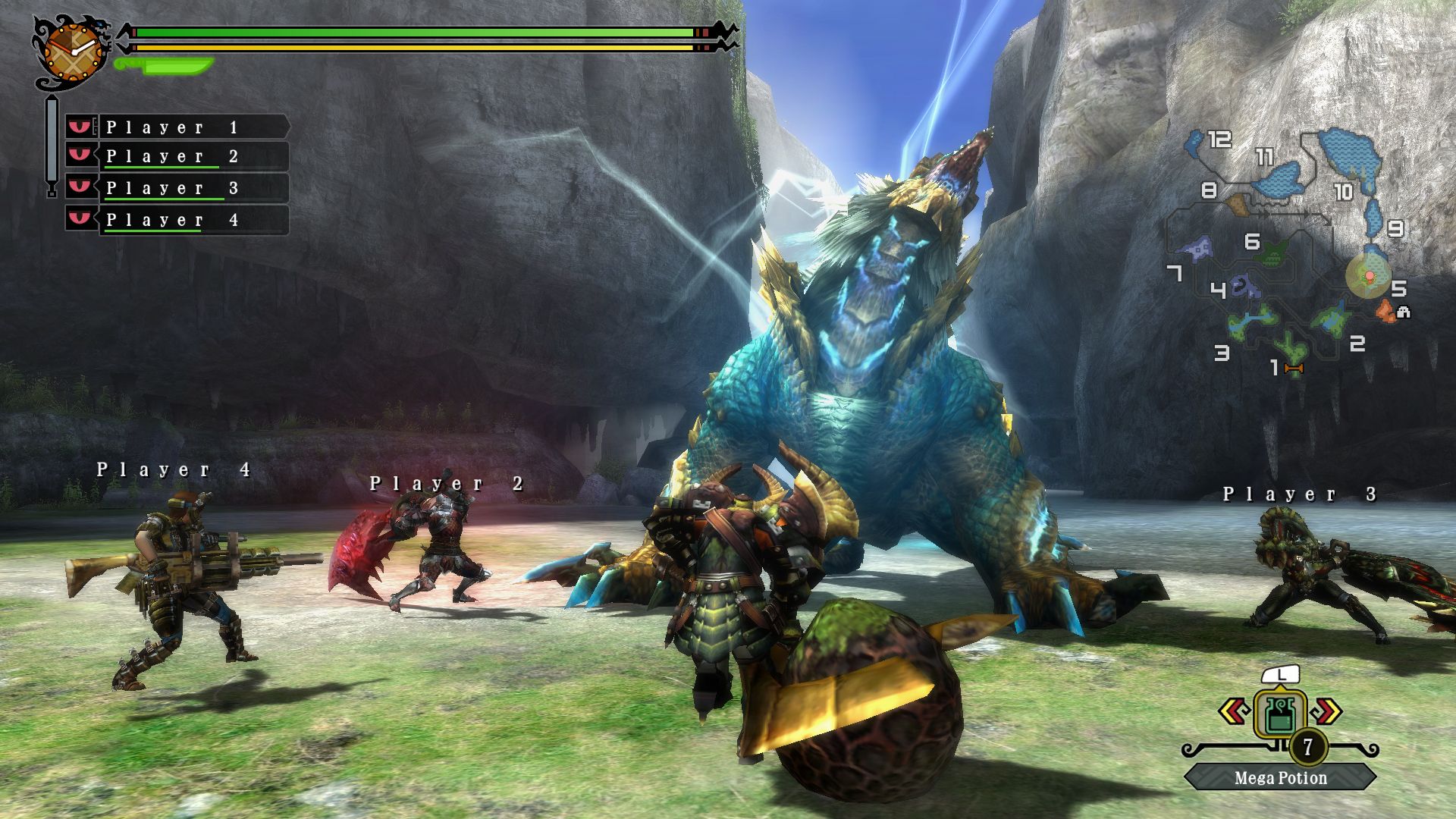
Monster hunting games have always been a niche genre. Running around linear levels with limited combat gameplay to take down ferocious monsters is just tough. I could almost say it’s as hard as a roguelike game without the rogue. Monster Hunter has been a very difficult game to get into for the common gamer. It’s hard, has a very high learning curve, and takes a lot of grinding to get the better gear to defeat a tough monster. Monster Hunter 4 is the first game in the series where it feels more accessible, fine-tuned, and fun while still keeping what made the series so tough.
I have played previous games in the series, but not for very long as they were cumbersome, somewhat clunky, and not quite enjoyable. Monster Hunter 4 has finally started to get the formula down. Right off the bat, the game has a much easier tutorial and feels more cinematic thanks to the added combat elements and new locations. You aren’t just stuck in one area, like in MH3, but get to travel to new towns and even fight on ships.
I found the combat to be much better, which is what kept the series down for so long. Animations are cleaner, interruptible, and more varied, and it’s now easier to dodge and move around. However, without the Circle Pad Pro or New 3DS, you’re still controlling the camera with one button, and that is why the PSP versions put me off. Thankfully, I played with a new 3DS XL, so I didn’t have that issue. Being able to control the camera is just amazing and makes the game more enjoyable. Circling monsters and keeping track of the environment has never been easier, and I felt like I was better at the game and learned quicker.
The whole point of Monster Hunter is simple: kill monsters, gather their parts, and use those parts to create better armor and weapons. Missions are dealt out in ranks, starting with one-star missions. There are also guild missions you can complete with friends or players online. This is the first handheld Monster Hunter that’s truly online, and I had a blast. The game uses StreetPass features by transferring guild cards to one another that have quests and acquiring items. It adds to the longevity of the game, including the frequently updated and free DLC.
The game’s combat isn’t much different from previous games. You have a light and heavy attack button, but the added aerial combat is great. You can jump from walls or heights to try and take down enemies with heavy attacks. This isn’t just a hack and slashes either, as you have to carefully plan your items and how you use them, and taking down the main monsters isn’t a breeze. Each level is divided up into sections, and each section has items unique to it, so there’s a pattern and you can start to remember where certain resources are. The main monster will randomly show up, and that’s what your main target is.
There are so many awesome items in Monster Hunter to help you take down this monster, but you have to learn their weaknesses, strengths, attacks, and how much health they have. Items range from various traps such as electrical, fire, bombs, and snares. There are health items and various other drinks for environments that drain your stamina, etc. Some monsters are small and fast and require a different weapon, while others are big and slow and can take massive damage. It’s so satisfying to take down the main monster that you just want to go back and fight it again as you learn new things about it.
The downside to all this is that it requires a lot of time investment, as you may have to play the same areas multiple times to gather enough materials to make the next-best weapon and armor set. Thankfully, there are various buffs you can acquire, such as eating from the feline chef who can make you food. This can give you temporary stamina or health increases, attack power, and even defense. There are a lot of strategies involved in combat, so it’s smart to play around and experiment. Sticking to just one method will get you nowhere in this series.
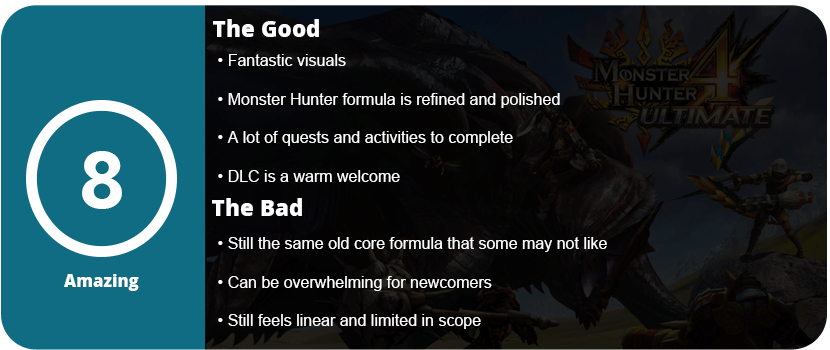
Outside of fighting, you can visit a store, blacksmith, customize the felines that fight alongside you, and do various other activities. There’s a lot of meat packed into this game for a handheld title, so you won’t get bored anytime soon. Thankfully, this game is more accessible, and while not easier, it is more manageable and easier to chew. There are still issues with the game that persist over the years, including the same UI, multi-part levels, weapons, and even some recycled monsters. The core game has actually never changed, but thankfully this version has enough newness and polish to not consider it a rehash of previous titles.
The visuals in the game are some of the best you will see on the 3DS, despite the muddy textures. However, even as refined as this title is, it is still not for everyone. I only recommend this to hardcore gamers who are into roguelikes or games that you grind into. It can still feel overwhelming and too much for the average gamer today, but if you give it time, you will have dozens of hours of amazing gameplay that you can’t get in any other handheld title.
Cover-based third-person shooters weren’t really a thing until the last console generation. Third-person shooters took quite a while to evolve into something truly stunning, and the best example of this is Gears of War, which is third-person shooting perfected. Kill Switch was actually a sleeper hit back in the day and was widely talked about due to the great shooting and cover mechanics.
Kill Switch has a story that sees a male protagonist (I can’t even remember his name; the story is so lame) trying to stop a dude named Archer from launching a nuke. In the process, you are trying to recover your memory of your wife being murdered by him. I don’t even know. The game is so short that it doesn’t allow any type of story to evolve, let alone a bad one. The story is completely forgettable, and I skipped all the dialog towards the end because it was a confusing mess.
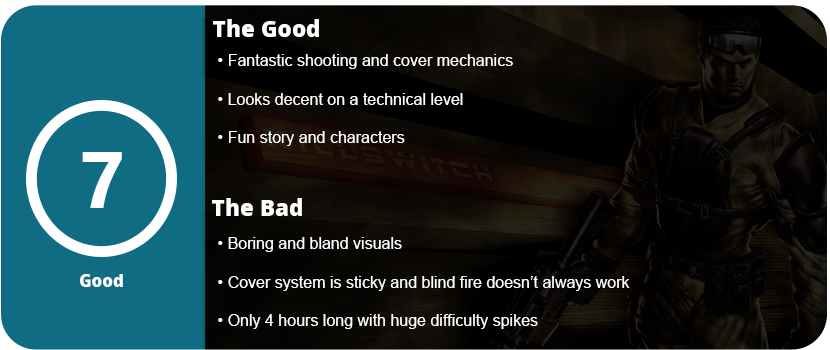
The gameplay is where it’s at here. The controls are simple, and the game is run-and-gun at its finest for the time. Holding R allows you to buckle against a wall or obstacle, and you can blind fire over it, or you can pop up and shoot more accurately. I found that blind firing doesn’t quite work well if the obstacle is higher than you can raise your gun. Most of the time, it did not work, so I stuck to pop-up shooting. You can throw grenades and flashbangs, as well as dodge rolling and melee attacks. It’s a pretty standard affair, but at the time, it was done so well that there was nothing like it.
I have to say the level design is just plain bad and boring. Every level is a stereotypical military base with boring blank walls, stairs, and rooms. There is absolutely nothing to look at here, despite the game being technically quite good-looking. The textures are sharp, the models are nicely made, and the animations are pretty good. It just goes to show that you are literally just coming into this game for the shooting, and that’s it.
Maybe it’s a good thing this game is so short. Clocking in at about 4 hours if you don’t die a thousand times over trying to get through the hordes of enemies. There were issues with major difficulty spikes and draw distance. I would have a guy shooting at me accurately beyond where I could see, even with a sniper rifle. The weapons are nothing to write home about either, just your typical military machine guns and your token shotgun.
Overall, Kill Switch is worth a buy for its great gameplay that is fun and addicting. Just don’t expect a story or anything nice to look at. Is there a reason for there to be a sequel? Well, the story somehow manages to say that it hasn’t ended yet, but Kill Switch has no relevance today with better cover shooters like Gears of War. If it were rebooted into something fantastic, that’s another story, but I honestly can’t see that happening. Kill Switch belongs in 2003 and should stay there—nice and snug.
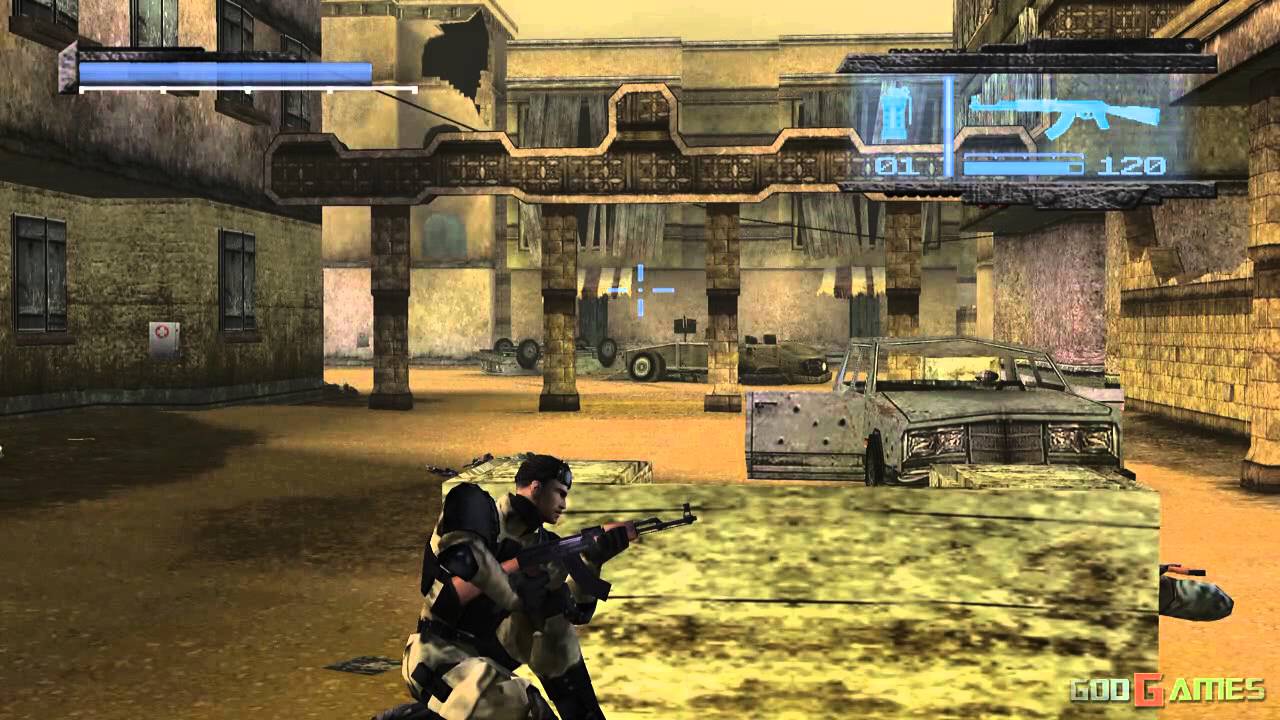
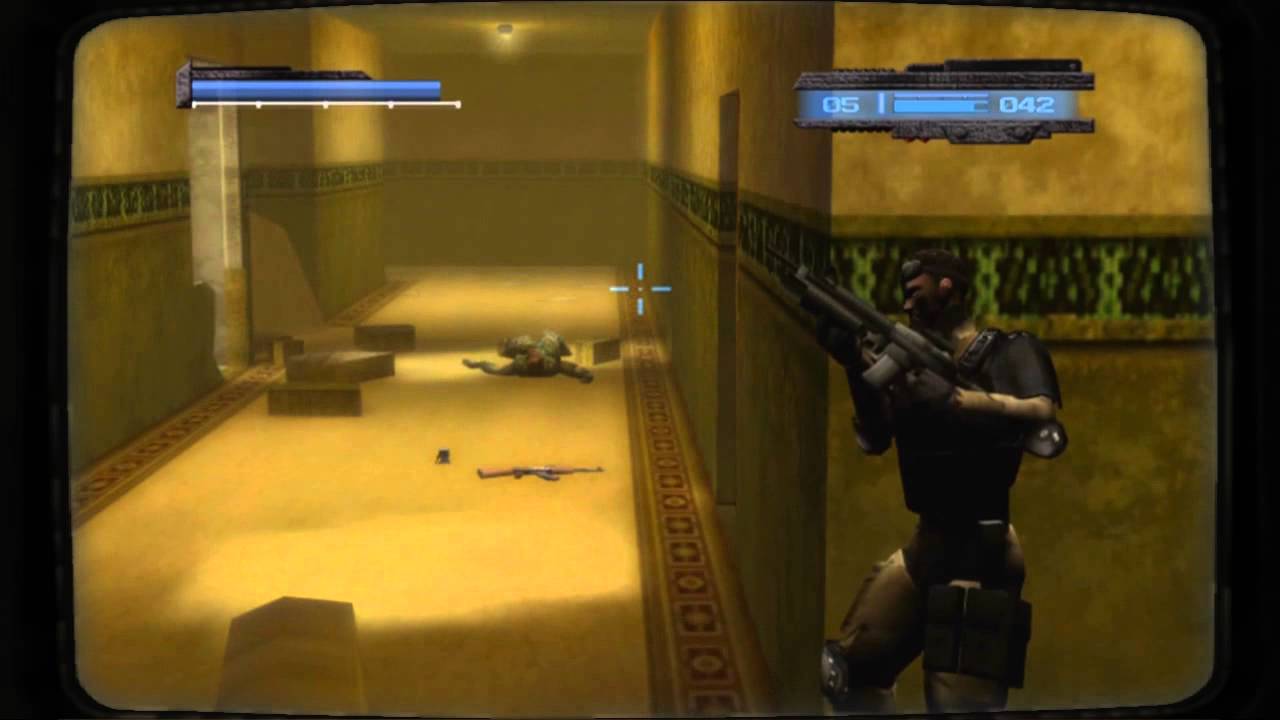
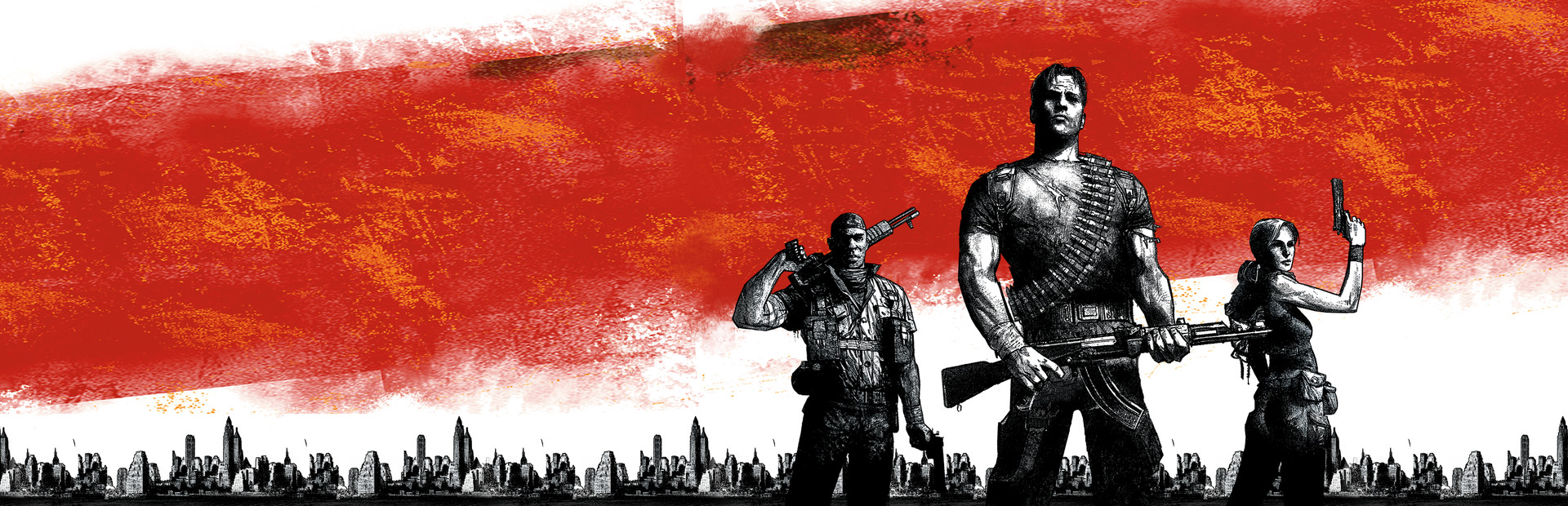
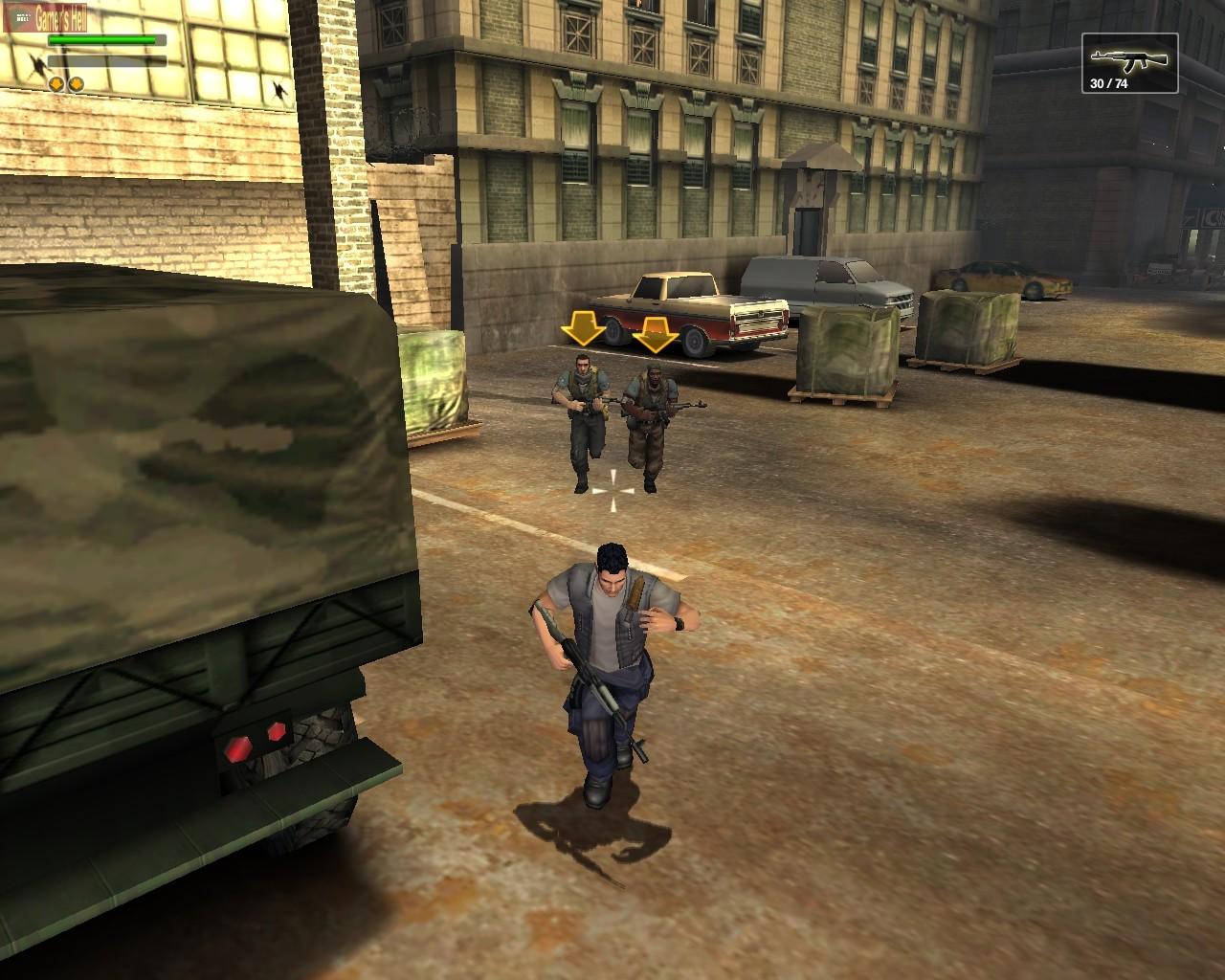
This is actually a game I knew was a big deal back in the day and ignored until now. I don’t know if it was because I was too young to understand the concept, it seemed like another shooter, or something else told me to overlook it, but I’m glad I finally dove into one of the most popular and talked about games of the early 2000s. Freedom Fighters is a squad-based third-person shooter where you control the main protagonist, Christopher Stone, and help the rebel fighters take back the United States from Soviet control.
The story isn’t really anything memorable, but the game does have a decent atmosphere about it. You feel the suppression of Russia as you run around the war-torn stages and view the cut scenes. Real-time scenes are mostly made up of news propaganda and the quick unfolding of the rebels winning. The game moves at a really fast pace, isn’t that long, and feels fairly average today, but back in the day, it was something new.
The game is structured around rebel bases that act as hubs, and each set of levels is accessed via a map. Once you get to a level, there are a few objectives to complete, and then it’s on to the next one (in any order). If you find yourself hurting for supplies, you can find manholes that act as checkpoints and can either quick-save or go back to your base (but you lose all your squad members). The game actually doesn’t explain any of this, and I had to figure this all out myself, which was very confusing and frustrating.
When you complete objectives, you get Charisma, which gives you a squad member slot at every level. It’s imperative that you do most of the side objectives, as later in the game you will need as many members as you can get. When you actually start shooting and playing the game, it feels extremely unbalanced and very difficult. The sheer number of enemies that are thrown at you is insane. There are probably over 200 enemies in each level, and the levels aren’t that big. The game uses an auto-aim mechanic, which actually works with how many enemies they throw at you. Just pull the trigger, and Stone will auto-switch enemies on the fly without any issues. There is a manual aim mode, but it’s finicky, and you can’t move while you aim. I would have liked fewer enemies and a more robust cover-shooting mechanic instead.
This shooting mechanic is what makes the game so difficult to begin with. I actually had to turn on cheats for rocket launchers as helicopters would come after me and there were no rocket launchers in the entire level. I was probably supposed to run from them, but the constant restarting was infuriating. Checkpoints are far and few between, and the last thing I need is to mow down the same five waves of enemies over and over just to try a different zig-zag path with the helicopter.
This extreme balancing issue brings the fun of the game down quite a bit, and after about three or four levels, it all starts to feel the same again. There are not that many weapons to choose from with just the standard assault rifle, submachine gun, and heavy machine gun nonsense that has been done many times over. Squad member control was decent, as they followed you around, but send them out to fight on their own, and they drop like flies. I’m actually glad the game was as short as it was, as it got so repetitive and numb that I wanted it to all end.
The visuals and audio in the game are actually impressive for their time. There’s a lot of detail everywhere, and the voice acting is rather excellent, but there are a lot of slowdowns when too much is happening on-screen at once. Overall, Freedom Fighters is a fast-paced third-person shooter on steroids, but the balancing issues, repetitive objectives, and overall frustrating difficulty bring the fun down quite a bit.
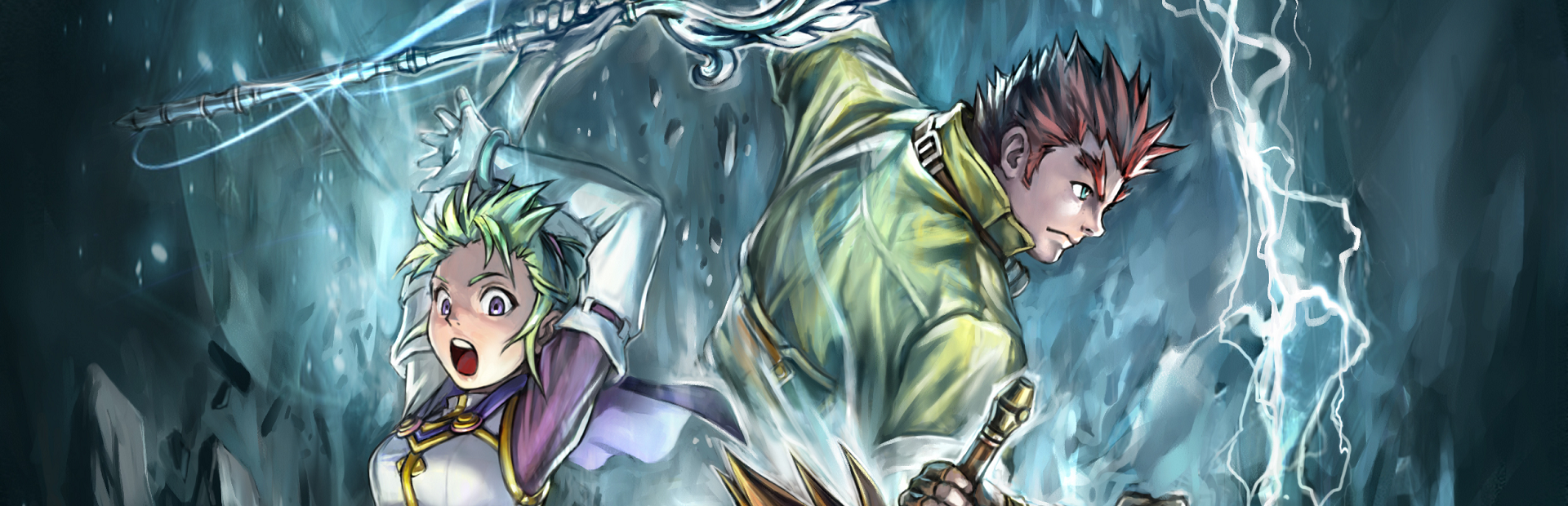
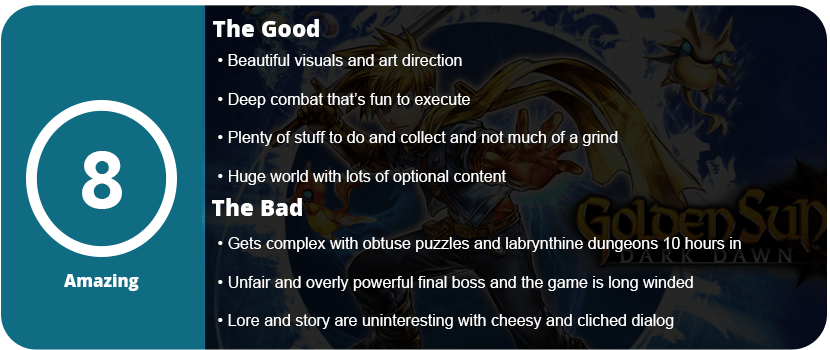
I can count on two hands the number of JRPGs I have actually finished from start to finish. I’m not a completionist with these games, as they are long-winded, difficult, and usually very complicated and complex. The Golden Sun is no exception. It starts out as a light-hearted, easy-going JRPG, but then things turn around quickly once you get into the meat of the game.
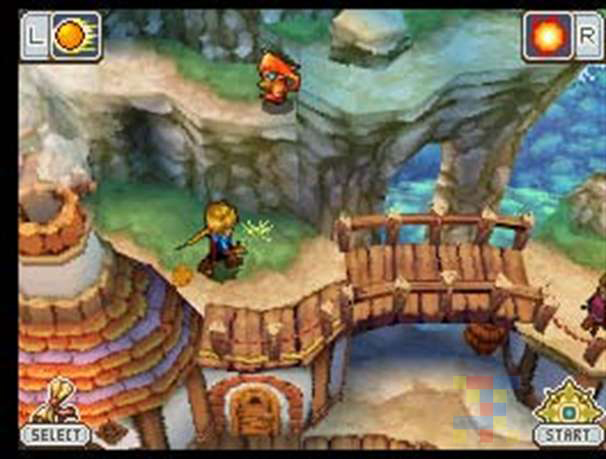
That’s not to say Dark Dawn is bad at all, but it’s the only Golden Sun game I’ve actually played. I dabbled in the first game a bit but never got through it. The first things that got me hooked on Dark Dawn were the visuals, some of the best on the system, and the deep combat system. Golden Sun isn’t just about attacks and magic powers. The lore uses elements of the earth to create psynergy that each hero can harness and unleash, which you will use more than regular attacks. Djinni are little creatures that you can equip to enhance stats, add new synergy powers, and summon giant creatures. The combat system requires quite a bit of strategy, and you can’t ignore this Djinn system. You must go around collecting at least half of them, or you will never be able to finish the game. This is part of where my issues started to set in.
While combat is deep, complex, and quite fun, the exploration part of Golden Sun is just as deep. Every dungeon is full of puzzles that require you to use your psynergy powers to pull blocks, grow vines, smash rocks, and slap stuff around. You unlock these powers as you acquire new party members and go along in the game. The game is actually quite large, spanning a huge map and a couple dozen dungeons, which is quite a lot for a handheld title. Once you get a third through, you unlock your ship, which allows you to access the rest of this world. There are many towns to explore, people to talk to, and weapons and armor to acquire. I never had an issue always having the most powerful stuff, as the game is generous with money during battles. I also found this was the easiest game to level up in, but more on that later.
So, while the first few dungeons were easy and just the right amount of hard to figure out, they became obscure, downright confusing, and labyrinthine later on. I actually needed a walkthrough for the last half of the game. I had no idea where to go or what to do, and the game requires certain objects to be obtained before you can even continue the story. I would never have known this without a walkthrough. When I got to the final boss, I actually had to level up 20 whole levels to beat him because I didn’t acquire all the Djinn in the game. I had to compensate with much higher base stats, even though I had the most powerful weapons and armor in the game. Thankfully, in the final dungeon, the enemies are really easy, and I could level up every two battles, which is something I’ve never seen in a JRPG. The 20-level climb took only about 2 hours, which is fast compared to most.
How about the story? Well, there’s a lot of lore here, and I appreciated all of it, but it’s just really forgettable and not all that interesting. You start out trying to find a bird feather to power a flying machine you broke, and then you end up saving the world? The dialog and writing are extremely cheesy and cliche, and I just wanted everyone to shut up. The characters are nice, but once again, forgettable. I had higher hopes for the story in this series, the lore, and everything else, but it’s just not very fulfilling.
Overall, Dark Dawn is still one of the best games on the DS and one of the best-looking. The graphics are fantastic, with clean texture, high-res models, and so much detail. The game is just brimming with variety and beautiful locales. I can only recommend this game to the hardest of hardcore JRPG players. The game is so complex and full of optional bosses, hidden weapons, and armor that it won’t appeal to most players. It’s fun and pretty straightforward until about 10 hours in, when it gets complex and overwhelming.
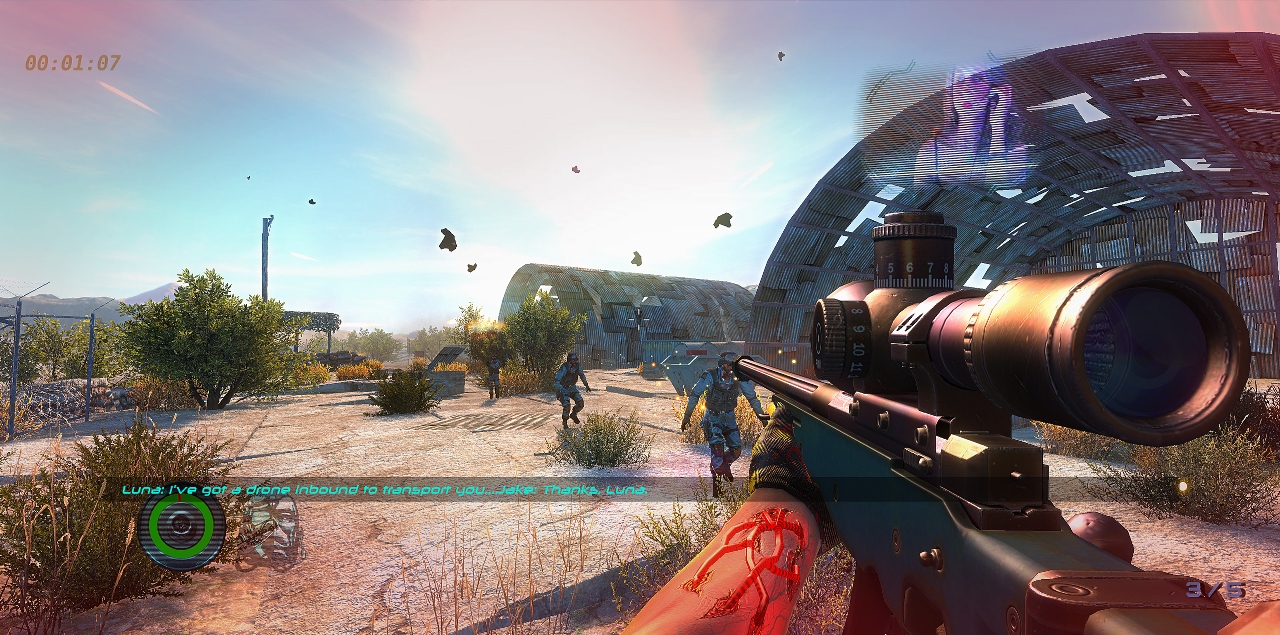
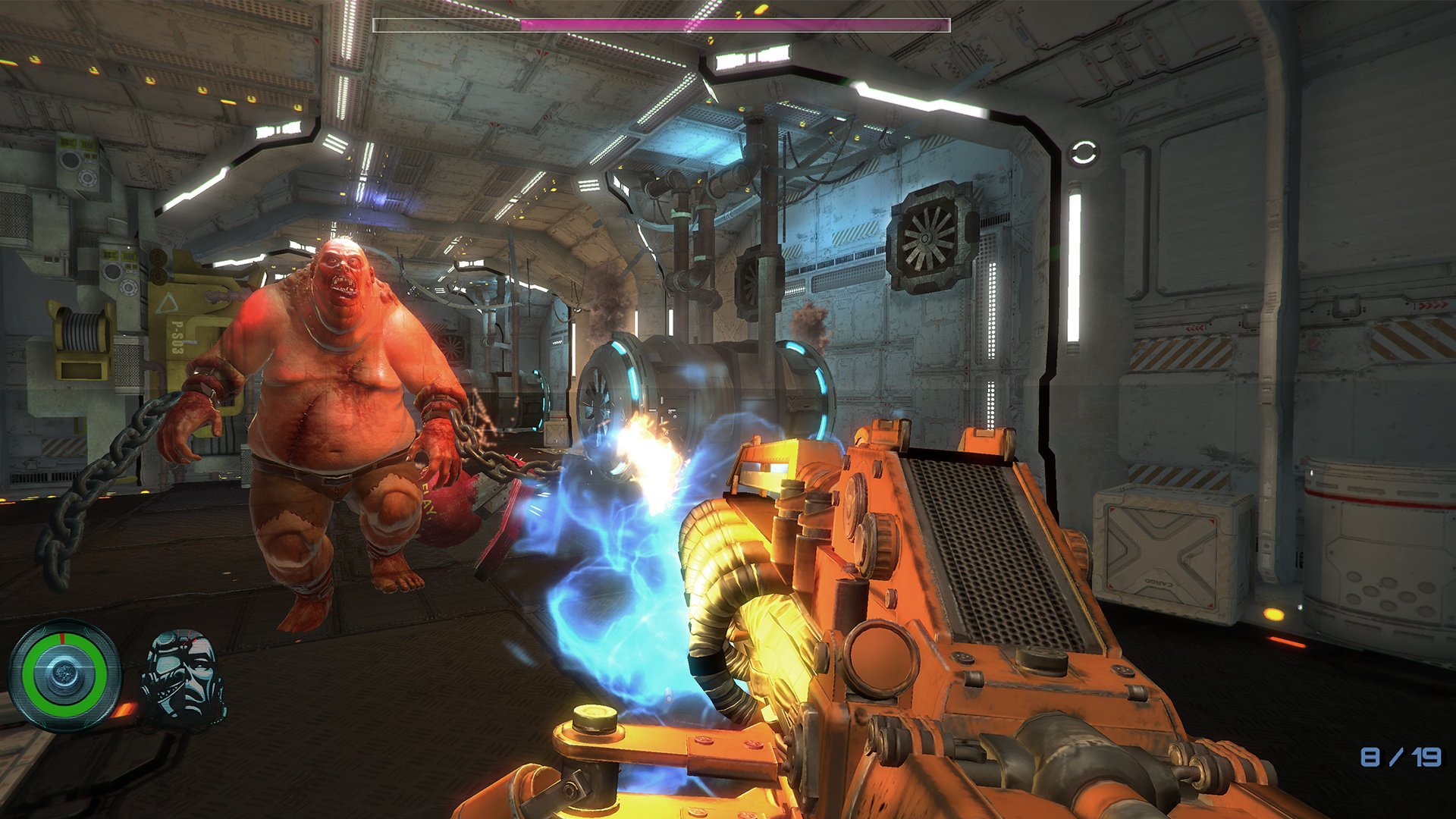
As if zombie games weren’t already in abundance, we get yet another crappy indie zombie first-person shooter. This game caught my eye due to the live-action cut scenes, and the screenshots looked decent, but man, I was wrong. Not only are the story and the main character, Jack, laughably bad, but the live-action cut scenes are just downright hilarious.
The game starts out with you ejecting from a spaceship for some unknown reason and then crashing into a plane on Earth. You need to stop the plane from crashing, but on your way are zombies. As I picked up the revolver and started shooting, I immediately knew what I was in for. The aiming is bad, the guns feel awful to shoot, the AI is bad, and the physics are stupidly overexaggerated. Sure, some of the zombie models look decent, but this looks like a first-gen Xbox 360 game at best. The textures are muddy and pixelated, the models are awful, and the overall design of the levels is just plain bad and cramped.
So, let’s have an open mind and overlook the bad gameplay design, overly stupid story, bad AI, and awful gunplay. But if you do that, there’s nothing left to forgive, right? The game is already too long, clocking in at about 4-5 hours, but I couldn’t make it to the third level; it was so bad. Even if you just want to enjoy the awful live-cut scenes, that’s not even an option. Hell, even the menu is bad, and as soon as I booted this game up, I knew what to expect. Could this game even be a little good? Maybe for a laugh with a couple of friends, but you won’t get any value out of this game at all.
Overall, Chasing Dead may have had something with live-action cut scenes if it was done right, but there’s not a thread of hope for any part of this game that the developers could build off of. It’s a typical bad zombie shooter to please 12-year-olds who have $10 to blow on Steam.
Colors: Black, Red, Silver (Monster Hunter 4 Ultimate), Gold (The Legend of Zelda: Majora’s Mask 3D)
MSRP: $199.99, $229.99 (bundles)
Nintendo is known for constant hardware iterations, and they finally got the 3DS right with the New XL. Despite the confusing name, it actually does feel all new. The entire system is streamlined, and it feels like Nintendo finally wrapped their minds around how they want the 3DS to be, and this is the final (hopefully) result. All of the features implemented into the 3DS up until now are present on the 3DS, from hardware changes to the software.
The first thing you will notice, obviously, is how big the unit is. I had a DSi XL, and while it was bigger, the larger screen made games look pixelated. The new 3DS XL isn’t just a 3DS on steroids like the 3DS XL; it has all new features. Secondly, it is just how sleek it looks. This is probably Nintendo’s sexiest handheld since the GBA SP. The round edge, accompanied by the slim form factor, just made it look sleek and impressive. Once you flip it open, you will notice something. What the hell is that rubber nubby thing on the top right corner? It’s the “C-Stick,” and I put quotes there because it’s not a stick but a nub—well, not even that. It’s like a rubber nipple. The addition of a second stick is an absolute must-have on the 3DS. I can’t make this point any clearer. Nintendo pretty much took the Circle Pad Pro and melted it onto the New 3DS XL, as it includes the ZR and ZL buttons as well. The first handheld with two shoulder buttons built-in—now we just need more games that support them! More on that later.
Everything else is pretty much in its proper place, button-wise, except there is no longer a WiFi switch on the side. WiFi is a software toggle now, and the power, wifi, and charging lights are all grouped up in a row on the bottom right corner. You can see them easily with the lid flipped down. One of my favorite features is the SpotPass LED located on top of the right hinge. It lights up green when a SpotPass notification is available and is also your low battery light. The game card slot is tucked away on the bottom of the device, along with the stylus and power button. The power button is a small button under the LED lights, so you don’t accidentally hit it.
I actually like the new 3D slider on the right side of the screen. It’s symmetrical to the volume slider, like older models, but is more flush with the system and doesn’t feel so cheap. One minor gripe is that the New 3DS XL does not use a standard SD card, so the one in your older system is useless here; instead, it comes with a 4GB microSD card and is not accessible from the outside. You must unscrew the bottom plate to get to it near the battery. That part I don’t really care about, as most people will either never need to upgrade because they buy physical games, or you will upgrade once with a 32 or 64GB card if you are a digital person. There is also an NFC battery in this thing for the amiibos, but everyone will use that feature. That’s pretty much all there is to the new hardware. Well, it’s actually a complete 90% overhaul, but for the better.
Let’s talk about the screens. They look great, and while not as high resolution as you think, they work fine for 3DS games. For people with bigger hands, the XL size is perfect, and honestly, the 3D is much easier on your eyes as it’s a bigger target. The 3D effect is much improved thanks to the head tracking built into the system via an IR sensor. Now it’s not flawless; it doesn’t work well when you are lying down and gets finicky in the dark if you move around too much. The hardware has a faster CPU, mainly double that of the original model, as well as double the RAM and 1GB of internal memory. The CPU is clocked at 268 MHz and is dual-core, with one core reserved for OS operation. It also has 256MB of RAM and 10 MB of VRAM. You may laugh at this compared to, say, the Vita, but Nintendo is known to keep older hardware for cheaper prices. That’s not to say the New 3DS could have benefited from an entirely new chipset as seen in newer phones, which makes this the biggest downfall of the New 3DS.
Playing games on the system using the C-Stick is weird at first. It doesn’t move around as it reacts to pressure. You just push it—mush it? You move your thumb around on it, and the camera turns. It’s hard to explain, but it works well, and after an hour, you forget it’s not a moveable stick. Playing games like Monster Hunter 4 Ultimate and Resident Evil Revelations makes the games much more enjoyable. The extra shoulder buttons are a little hard to get to as they aren’t contoured into the system, but rather just sit on top and are rather small. The other complaint is that this system does not come with a charger. Yeah, you heard me. Nintendo banked on previous 3DS owners buying this system, so you’re going to have to throw down $10 or so for a generic charger if you have never owned a 3DS before. Stupid move on Nintendo’s part, but there’s nothing we can do.
With all that said, the new 3DS XL is what the 3DS should have been in the beginning. The larger screens look crisp and bright, the battery lasts a whopping 7.5 hours (with WiFi off and power save mode on) during most games, the faster CPU will bring in better-looking games, and the entire form factor is sleek and gorgeous.
Yeah, it's pretty damn awful. Notoriously one of the worst games on the PSP. A 4 was actually being generous.…