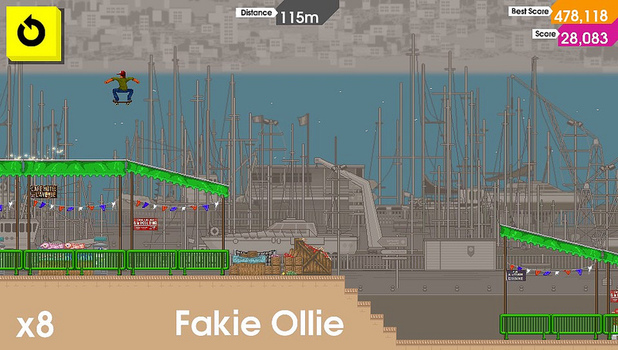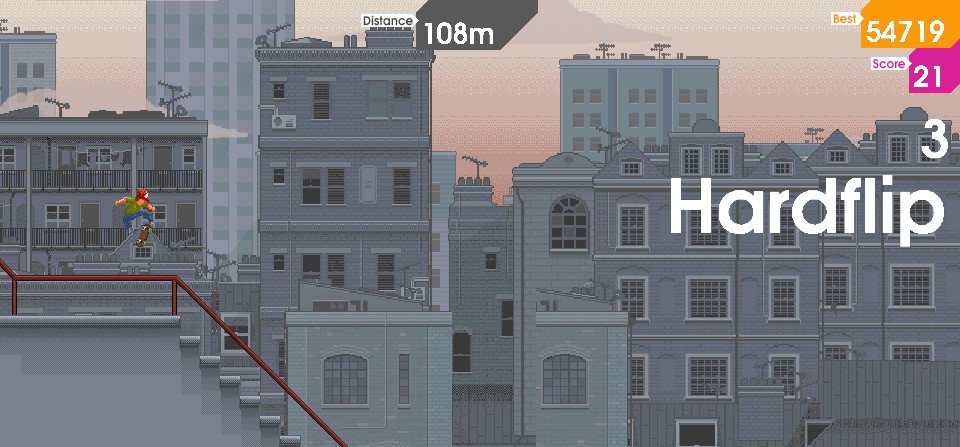
Skateboarding games have kind of died out over the past 5 years. With the last decent one being Skate 3, everyone yearns for the days of classic Tony Hawk’s Pro Skater. OlliOlli brings back those arcade-like twitch reflexes on a 2D plane. There’s no story to speak of, and there shouldn’t be. It’s just you, the ground, and your board.
OlliOlli features a trick stick similar to EA’s Skate series, but it’s better (yes, a 2D indie skateboarding game does a multi-million dollar game’s trick system better). You use the left stick to do all the tricks, and there’s no ollie button. Pressing down and up will make your ollie, while pressing X just before you land will give you a perfect landing. This rearranging of buttons is perfect and exactly what this genre needs. Grinding is as simple as just ollieing on top of a rail; there is no need for extra buttons. The trick stick consists of grinds and flip tricks only; there are no grabs here because the game is all about completing goals on a short course with the highest possible score. On a 2D plane, grab tricks would just get in the way. A great change that’s small but big is keeping your speed by landing everything perfectly. You will eventually start slowing down, like in all skateboarding games, but perfect landings will give you speed boosts, allowing you to trick across an entire level if you are good enough.
There are quite a few levels, and each stage is completely different. The only major downside to this game is the constant trial and error because some goals require perfection. The game is very challenging and will push your skills to the limit. Thanks to the great animations and silky smooth controls, it can be somewhat forgiving in that aspect. Outside of the career mode, you can partake in daily challenges where you get to practice a run as many times as you want, and once you go for the real thing, you get one try only. If you fall within the first 10 meters, that’s too bad. This makes things super intense and really makes that one perfect run feel amazing.
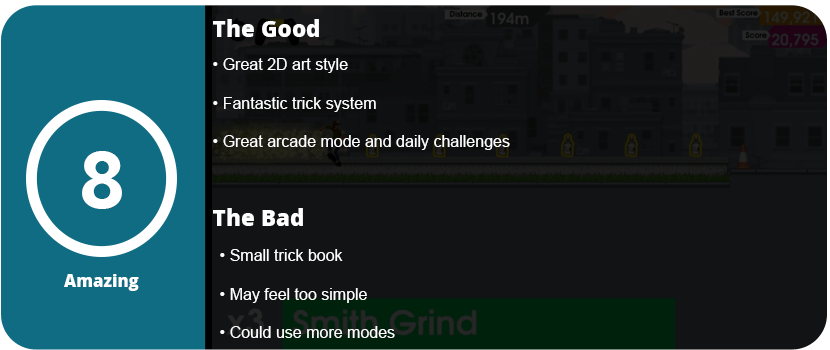
OlliOlli may have a small trick book, but the way you pull these off is nearly revolutionary for the genre, and the accompaniment of smooth controls and animations just makes it that much better. The various goals, score attacks, and collecting of items can be downright tricky, but arcade skateboarding enthusiasts will have no problem pressing that restart button for the 25th time, knowing this time they will get it.
DJ Max was the best rhythm franchise on PSP and helped jump-start that genre on Vita. Technika is a reboot in a way, but it still feels familiar. The game uses the touchscreen and rear pad exclusively, ditching the button interface. This may take a while to get used to for DJ Max PSP vets like myself, but after a while, you will see the difference in challenge and pace when playing.
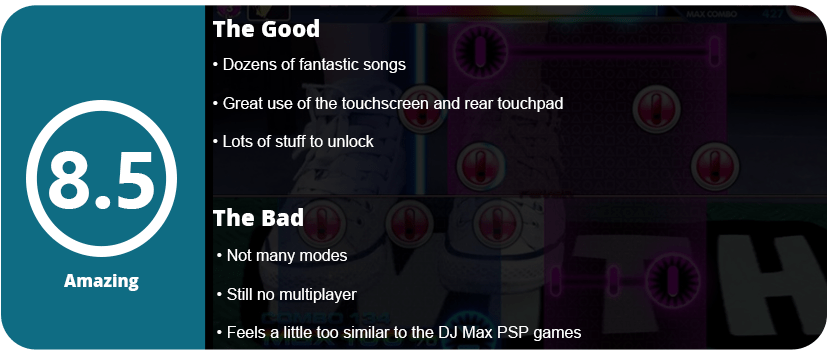
One thing I did notice right off the game is the continued lack of multiplayer and modes. There is star mixing (3 songs using the touch screen), pop mixing (4 songs using front and rear), club mixing (a choice of genres), and freestyle. There’s the usual album that shows your wallpapers and unlocked videos, but that’s it. Why Pentavision insists on having no multiplayer is a mystery, but I’d like to have it in future installments. Thankfully, the game is packed full of songs featuring both licensed and original music, from J. and K. pop to rock. Kara makes a huge appearance in the game since they are one of the biggest female K-pop groups in Korea. They have five songs on here, and they are fantastic. I actually listen to them outside of the game now.
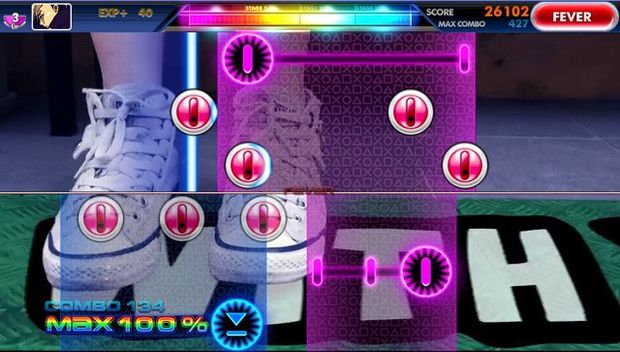
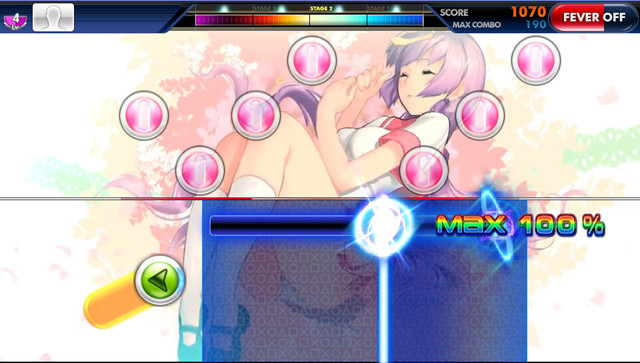
The songs still feature various DJs and mixing masters from previous games, like ND Lee and NieN, and vocals by So Fly and various other Korean singers and rappers. Getting into the gameplay, videos are now played full-screen in the background and look gorgeous on the Vita’s screen. Colorful dots are displayed, and you must tap them to get Max 100% with the timing of the beat, but there are long strands you have to hold down and follow the bar along with the screen. The playfield is split horizontally into two sections, and you will be going back and forth between them. Some notes require quick flicking of the touch screen as well, and it all adds to the tense fun. The rear touchpad notes look different, with purple and black borders around their notes, requiring you to tap and hold. After a few hours, you will get used to the system and slowly increase your difficulty.
As you level up, you will unlock equipment that gives you passive abilities like extra XP gain, HP, and even free breaks. There’s also an option to add a modifier to increase the speed of the notes coming in, which is sadistic, but it’s there. Even after playing for a good 10 hours, I’m still unlocking stuff and increasing my score. The songs are so great and fun to listen to that I can’t get enough of the game. If you loved previous games, you must get this; anyone who hasn’t should jump in any way. Technika Tune is the best rhythm game on Vita right now, and hopefully future installments will improve upon the franchise further.
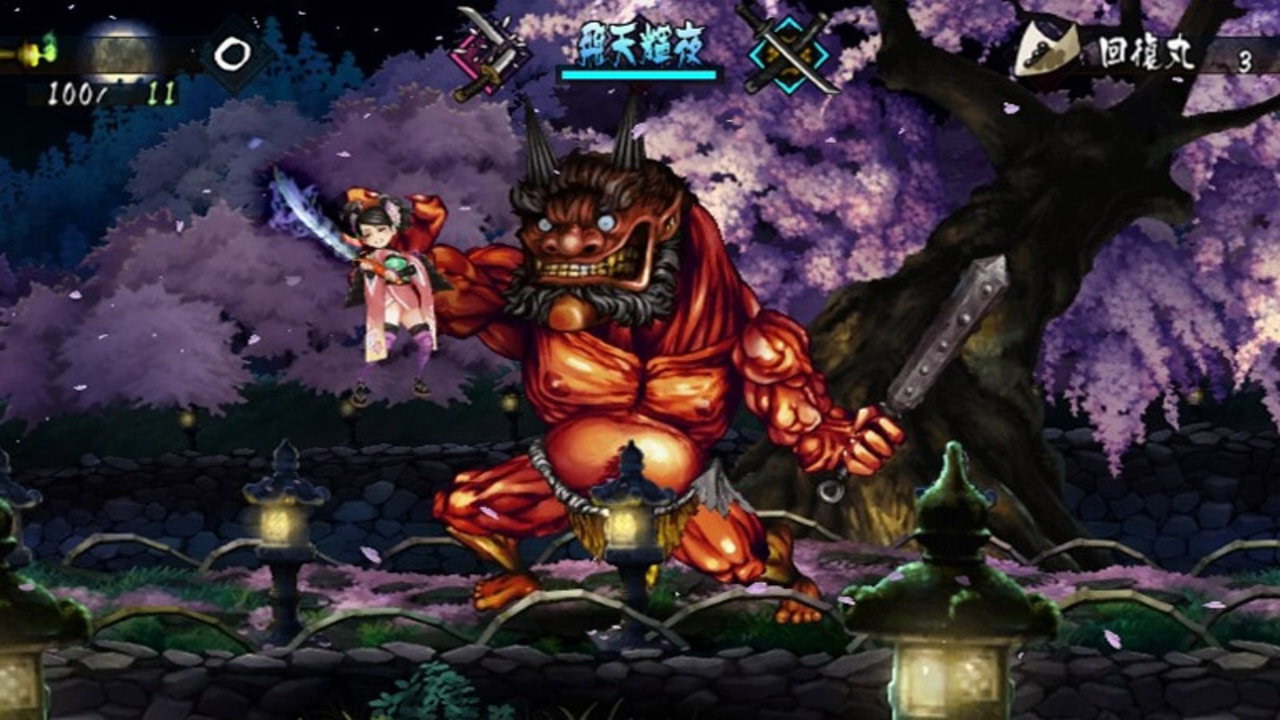
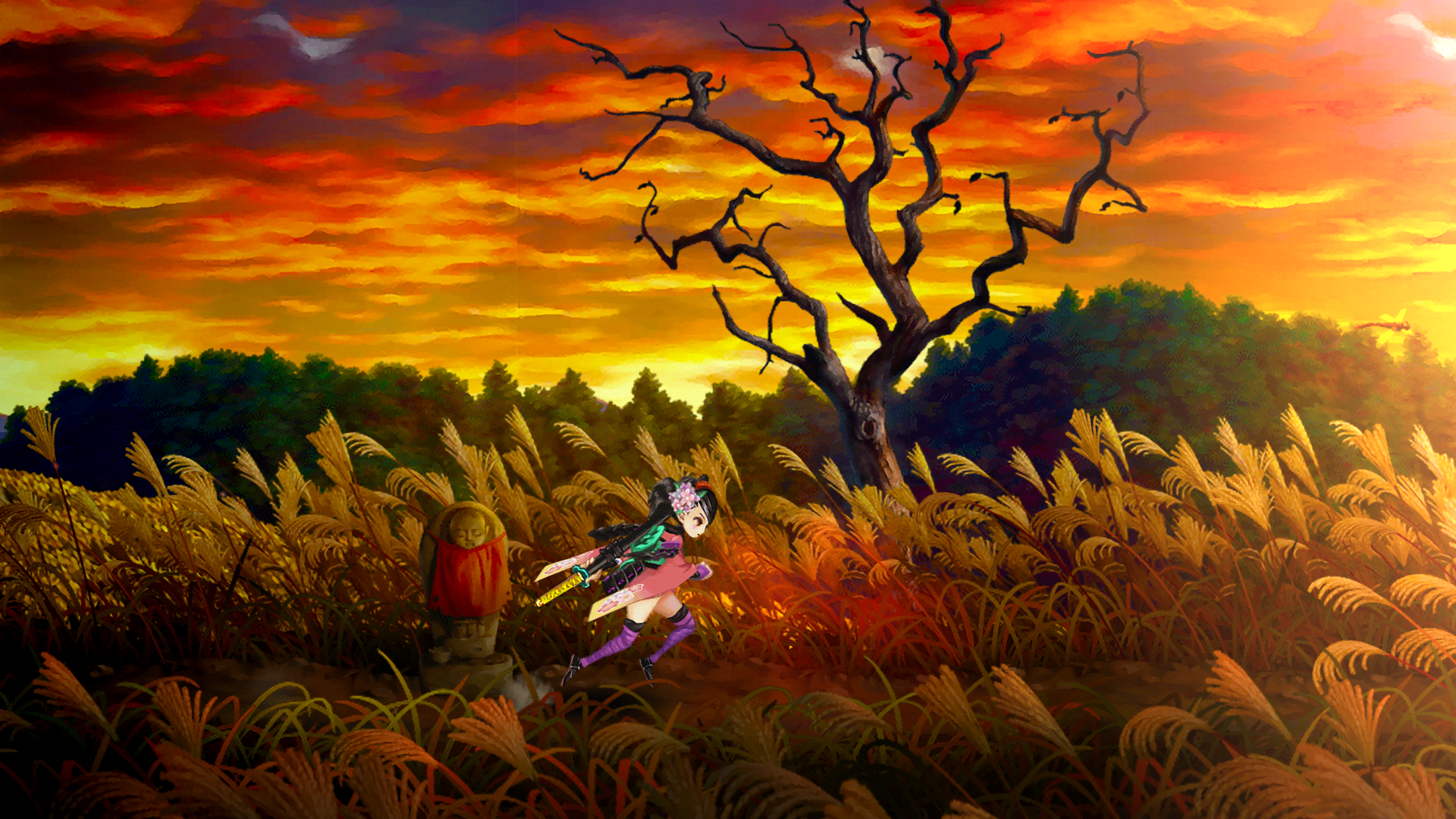
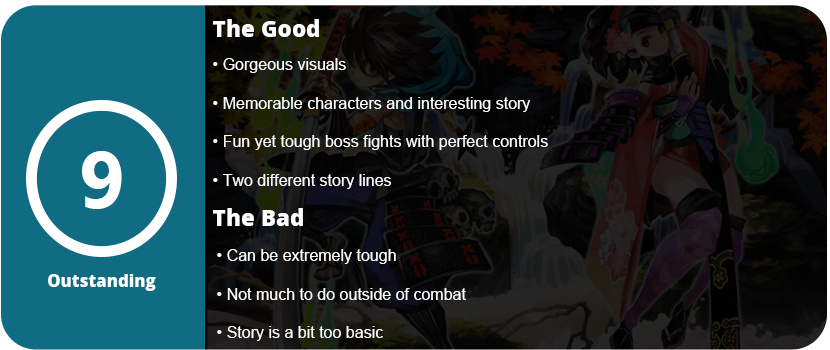
Muramasa was a highly acclaimed Wii game from Vanillaware of Odin Sphere(and now Dragon’s Crown fame). It had high speed and fancy fight moves, but it was extremely challenging and had memorable characters. It now makes its transfer to Vita in HD with bright, gorgeous graphics and two whole storylines to play through.
I played through Momohime’s (Peach Princess) storyline, so my experience is based on that. Momohime is possessed by a spirit who wants the infamous Demon Blade and will cut anyone down in her path. She goes from hell to heaven and even cuts down gods. The game is 90% combat, and man, is it tough and fun. You can equip three different blades at once and switch between them with a triangle. When your blades are flashing, you can press triangle to unleash a powerful full-screen attack. Each blade has its own special power, which is key to winning hard fights. If you use the blade too much or block it too often, the blade will break, and you will need to switch to a different one and wait for it to recharge. You can use whetstones to hasten this, but as you level up and forge new weapons, they will break less often.
This is basically all there is to combat: you press the attack or use special powers combined with directions. It may seem simple, but the game is so tough that you can’t just button-mash. You have to use strategy, mixing up dodges, blocking, and special and regular attacks. The game constantly kept me on my toes, and I had to learn every boss’s moves and sometimes restart dozens of times. When I finally beat a boss, it was so satisfying. In between, there’s some platforming and item hunting, but you travel from locale to locale and get stopped by fights between each screen. I had a lot of fun navigating the gorgeous environments and even stopping to shop for health items and various other things to help out in fights.
One other small feature is being able to cook with items you find. These are used to heal you, which you will use often. Always make sure you are stocked on health items, or you will never make it through the game. Outside of all the fighting, the dialogue is interesting, and the Japanese voice acting is fantastic. The characters are memorable (I have already purchased a $145 figure of Kongiku), and you will stay hooked. With two stories to play through, there’s a lot of content here.
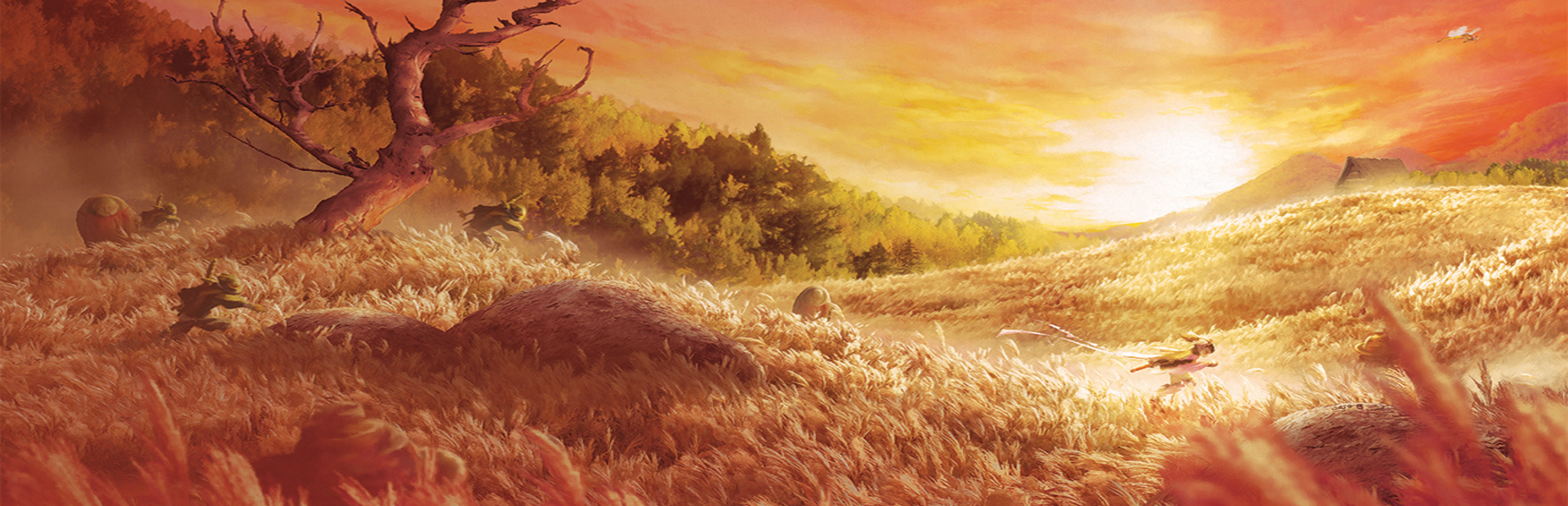
Vanillaware is known for its unique high fantasy mixed with the ancient Japanese art style, and it really shines here. The game pops to life on the Vita’s OLED screen and just makes your eyes water; it looks so crisp. The controls are perfect and extremely responsive; honestly, even though this is a port, it’s one of the best Vita games available right now. That makes two Vanillaware games on one system. If you love 2D games or action hack and slash games, this is a must-buy.
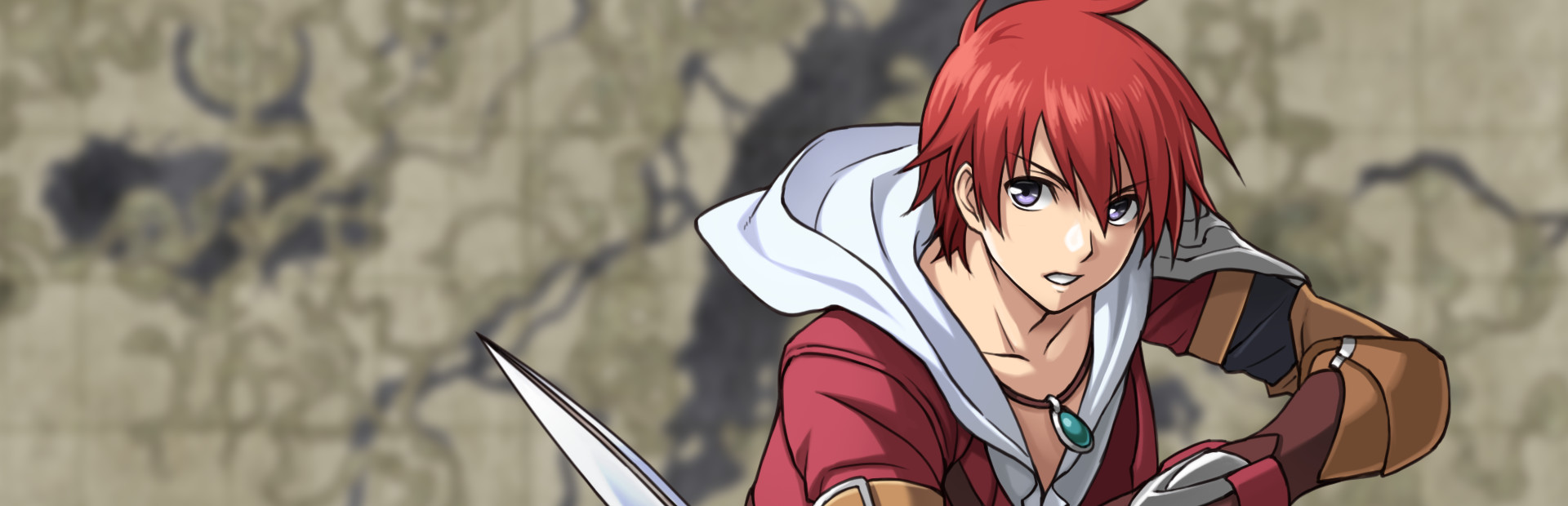
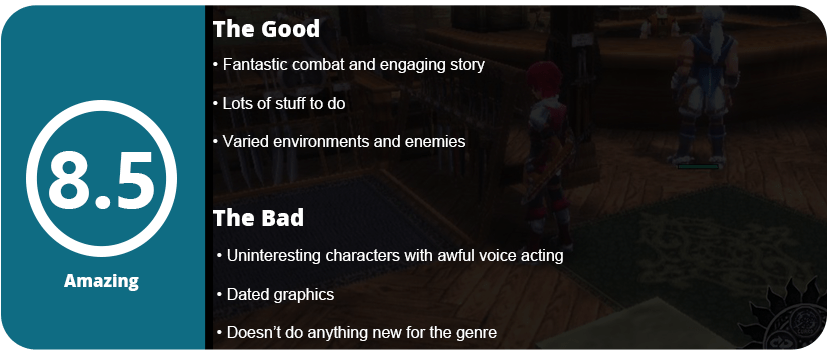
I have never been much into Ys, but I have played past games. Memories of Celceta is the biggest Ys yet and the best traditional JRPG available on Vita right now. You play as Adol Christin, a red-haired boy who loses all his memories and must find them again. Of course, the story is much deeper than that. A god named Eldeel ends up creating a mask called the Mask of the Sun, and other people want it for its powers. The story gets pretty deep, yet the characters are completely uninteresting. They all have generic dialogue, and their personalities all feel stereotypical for JRPGs. While the game isn’t anything new, it does what has been done before really well.
The combat in Ys has always been real-time, and this helps alleviate the boredom that has come in JRPGs over the decades from random battles. The combat is fast-paced and fun, with skills you can use; guarding, dodging, and switching between three characters on the fly add a bit of strategy and depth. Each character has a weakness it can deliver to enemies, so you will always change who you put in your party. Aside from fighting regular monsters, the bosses are a lot of fun and quite challenging, but not so hard that you can’t beat them. Honestly, the game is perfectly balanced in that you will acquire the strongest weapons and armor by the end of the game, so you’re always one step ahead of your enemies.
The whole point of Celceta is exploration. Your main secondary goal is to discover the entire area and complete the map 100%. The sense of exploration is one of the greatest assets of Celceta, and you have a hard time putting the game down just to explore one more dungeon. When you’re in towns, you can buy items and exchange stuff you find in the wild. Minerals, beasts, and plant materials can be exchanged for larger and higher-quality items to reinforce armor and weapons. You can also craft items out of these materials as well. There are quite a few towns in this game, and each one has three quests you can complete. Some are hard, some aren’t, but they aren’t hard to figure out. In fact, I never really got lost that much in this game, which is normally common in a JRPG. There was a sense of direction without having to hold your hand, which is wonderful.
On another note, there are a few puzzles thrown in, but nothing that really takes advantage of the Vita’s features, which aren’t expected in a JRPG. I do wish the game had local or online co-op for up to 3 people, but that’s all right. The graphics look detailed but are dated, even for the Vita. It looks like a decent PS2 game at best and could have used some more detail. The textures can look really muddy and grainy, which is unacceptable on the Vita. At the end of the day, you will just love Celceta for the engaging story, fun gameplay, and combat. There are a good 20 hours just in the story alone, and another dozen if you want to get 100%.
Overall, Memories of Celceta isn’t perfect, but it has some great combat, bosses, and a sense of exploration that will keep you glued to your system. The graphics are dated, the voice acting is awful, and the characters are uninteresting, but that’s expected from a JRPG. Could Celceta have broken this trend? It may have been one of the best JRPGs in a long time. What’s here is solid and well worth a purchase for any JRPG fan.
I’m not sure what it is with the Spider-Man series, but the movie-based versions are always the best. This is usually the opposite with video games, but it doesn’t deny this strange truth with Spider-Man. The best Spidey game, in my opinion, was Spider-Man 2, based on the Sam Raimi movie. The huge open world was unheard of in a game like this back then, and the graphics, at the time, were astounding. It felt high-budget, and despite copying the movie, it was really amazing. TASM follows suit as well, with some tricks up its sleeve.
This game is actually a sequel to the recent movie and is highly entertaining. You play as Spidey and are trying to take down the cross-species that Oscorp created. The bad guy here is Alistair Smythe, who runs this place, and this is how the movie ties in. Spidey needs Doctor Connors to create a cure, but he’s locked up in an asylum after the events in the movie. The story is entertaining, but none of the actors from the movie take it apart here, which is probably good. The characters resemble the movie characters but look a little different. This is how you do a movie-based game, right?
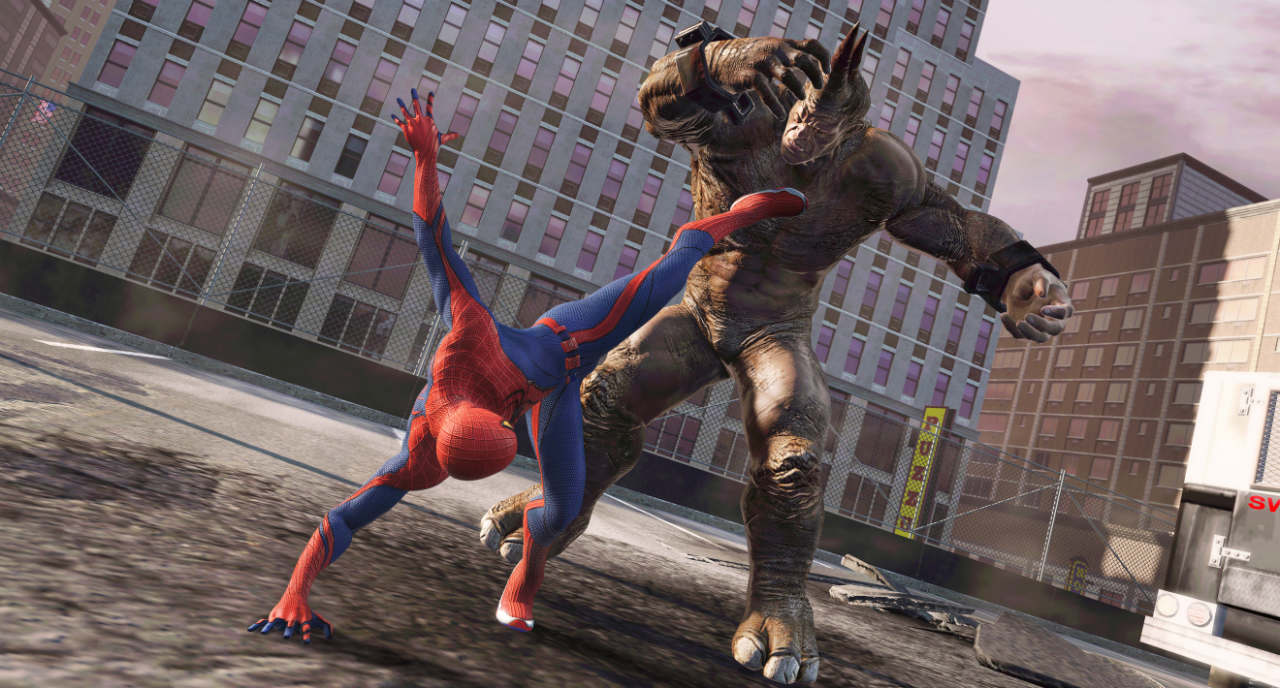
The game is more cinematic than previous entries just by the way the camera is angled. The combat is pretty satisfying with just one attack button, but the animations are so fluid and entertaining that you won’t care. Spider-Man doesn’t have a health bar but regenerates health. When you take too many hits (he can only take a few), you have to use the retreat feature, which has Spidey flying off into a corner away from enemies to heal. Use Web Strike to immediately go right back into the fight, which is awesome. Once enemies are stunned, you can use special moves, and all these moves are upgraded by finding tech pieces throughout the game. One of my favorite things is the stealth mechanic, which is done right for the first time in a Spider-Man game. Crawling on the ceiling shows a purple web radius under you, and when guards are on it, Spidey will drop down, wrap them up, and hang them from the ceiling. The health system makes you use this feature because you can’t dodge enemies with guns. Your spy sense will turn red, and this means the attack isn’t dodgeable. Use a quick web retreat and try the stealth again. Very satisfying and well done.
Of course, this wouldn’t be a complete Spidey experience without a huge open Manhattan to explore with side quests. Like Spider-Man 2, there are many missions like saving citizens from crimes, various timed side quests, collecting comic pages, police chases, and various others. They are a lot of fun at first but grow repetitive towards the end. Swinging around as Spidey is just so much fun, and the well-done animations help this a lot.
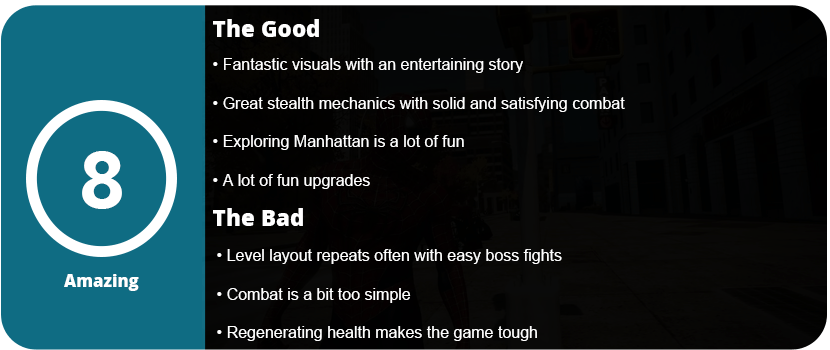
The only big issue is that the layout of levels repeats often. Disable this lock, take down these turrets, beat up these enemies, and turn this valve. It’s all very mundane, and even the boss fights are really easy with little challenge. Thanks to all the other elements being very solid, you can look past this enough to get through the game. At least the graphics are fantastic, especially on PC. Beenox took the time to give PC users higher-resolution textures and better-looking everything. This is rare in a movie-based game to see such attention to detail. There are some game-breaking bugs and glitches that were never addressed on PC, and that is a real shame.
Overall, TASM is a solid Spider-Man game and probably one of the best yet. This is how you do movie-based games, right? The story is entertaining, the combat is solid and fun, and exploring Manhattan is a lot of fun. The graphics are amazing, but I can’t help but feel annoyed by the repetitive level layout and easy boss fights. This is well worth a purchase, and even if you don’t like the movie, you will enjoy it.
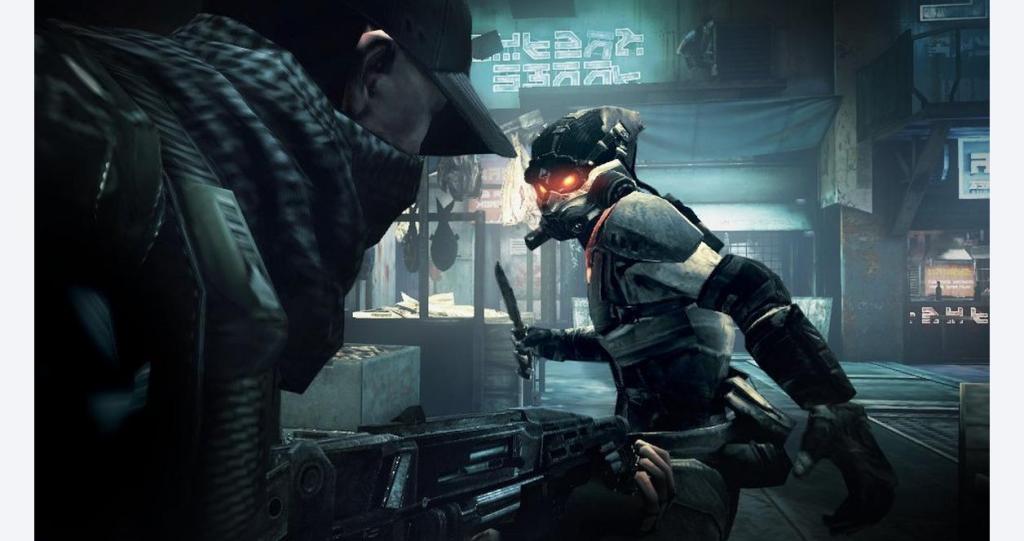
The PS Vita has been really struggling with great games lately, and with the dual analog sticks, everyone has been chomping at the bit for a good FPS. Resistance: Burning Skies was decent, but nowhere near the quality of the console games. Along came Black Ops II, which could have been an amazing experience but instead was a literally unfinished game and has been deemed the worst Vita game ever made. Now that Killzone has come along, we finally have the great portable FPS experience we have all been wanting. While it’s not exactly up to par with the PS3 Killzone games, it’s still a great game.
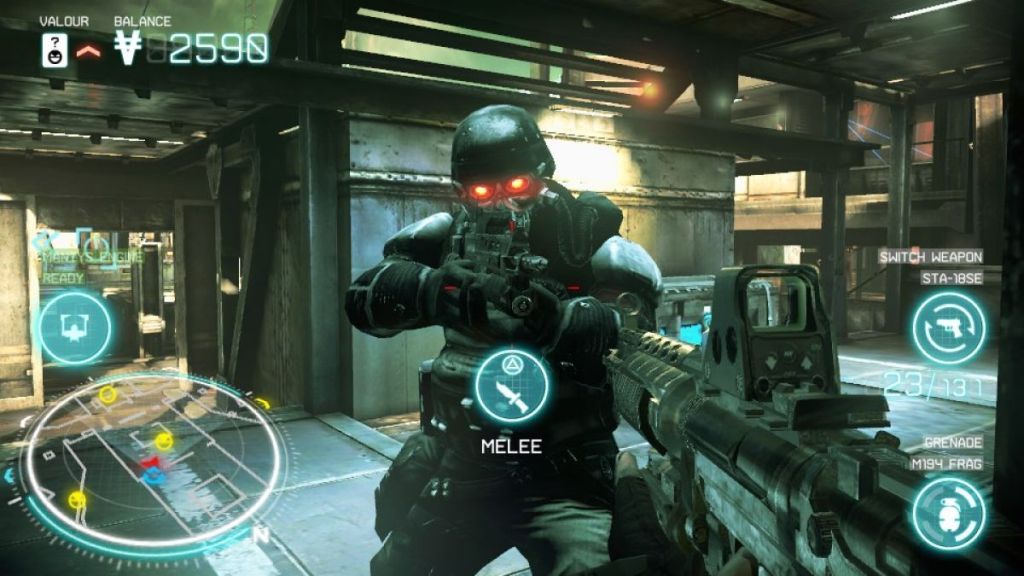
Killzone has never been famous for its story, but the whole universe of Killzone is interesting in and of itself. You play a mercenary working for both the ISA and Helghast; you basically want the war to go on longer for more money. The story picks up right after Killzone 3, but this isn’t a direct sequel to the events between the warring nations. The game also plays a little differently from other Killzone games. It feels a bit faster, yet still has the heavy-feeling weapons and gunplay fans have grown to love. The game is definitely optimized for portable play and for the Vita. You switch weapons with the touch screen (one secondary and one primary), as well as using grenades and your drone. The controls are actually cleverly laid out, utilizing the entire system without compromising comfort.
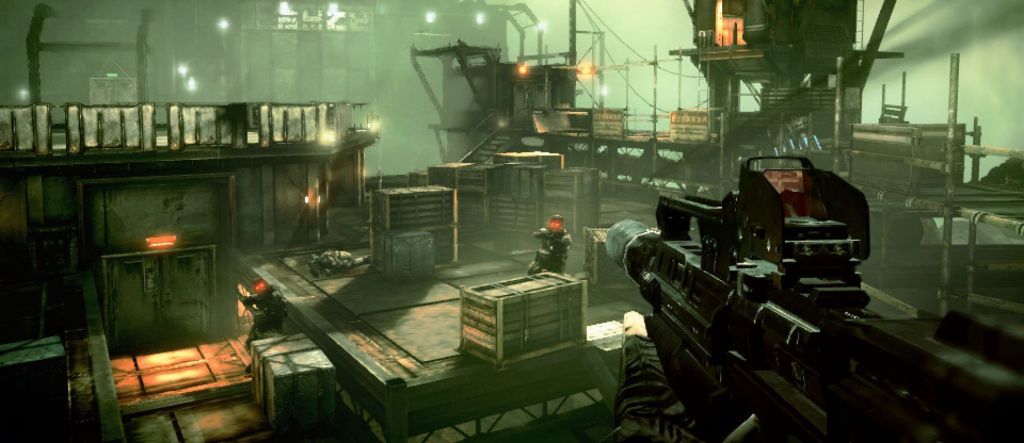
Weapons aren’t picked up via enemies this time around; you get access to a black market where you buy them and equip them. You earn cash by picking up ammo, stealth kills, melee kills, multiple kills, or any other way you can think of. This is a brand new feature to the series, and it works well. The only thing about the weapons that I was disappointed about was that they are the same ones we’ve seen through the entire series, and there aren’t that many of them. Even so, the campaign levels are very linear and mostly in enclosed areas, so you will stick with a shotgun and a sub-machine gun most of the time. Speaking of the campaign, there are only 9 short levels. While they are fun, they aren’t anything special and lack the epic set pieces of the console games. However, most people are going to pick this game up for the multiplayer suite.
Mercenary has a brand new valor system that uses decks of cards. You rank up and earn new cards by doing things in the game; most will be earned in multiplayer. This is to extend the longevity of the game and to keep you coming back. The online play is a bit more fast-paced than the PS3 games and is a lot of fun. This really feels like a console game in your hands. It’s so satisfying to sneak up behind someone and execute a brutal melee kill or start getting a kill streak going. Be warned: there is a lack of modes and maps here. I hope more are introduced through DLC, but what’s here is fun for quick bursts of online shooting action. Another new system introduced is drones. These are weapons that can launch missiles down on enemies, put up shields, make you invisible, or even be used as a mobile auto-turret. This adds a whole new level to the series and is a lot of fun.
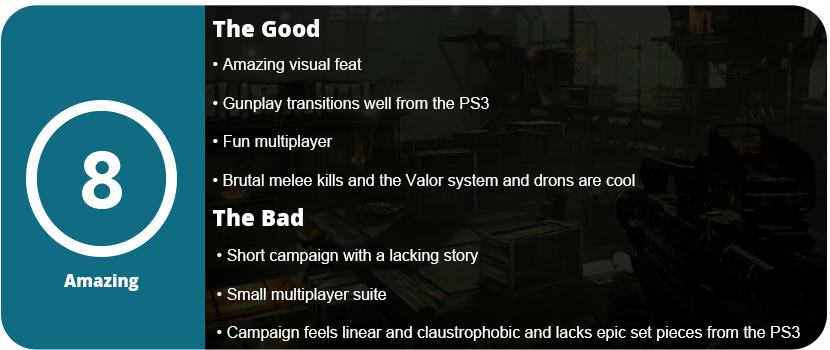
The graphics in Mercenary are phenomenal. The best portable graphics to ever grace a handheld device. They look nearly as good as the PS3 games. There is so much detail everywhere that it’s nearly impossible to imagine how the Vita can render this or have this much power. Thankfully, the frame rate keeps up with the action, which could have seriously hampered the game. As it stands, Killzone is the best portable FPS game out there, but it isn’t the best Killzone game. It could have been a lot more with more time, but what we get is a decent package with an entertaining, yet short, campaign and a fun multiplayer mode.
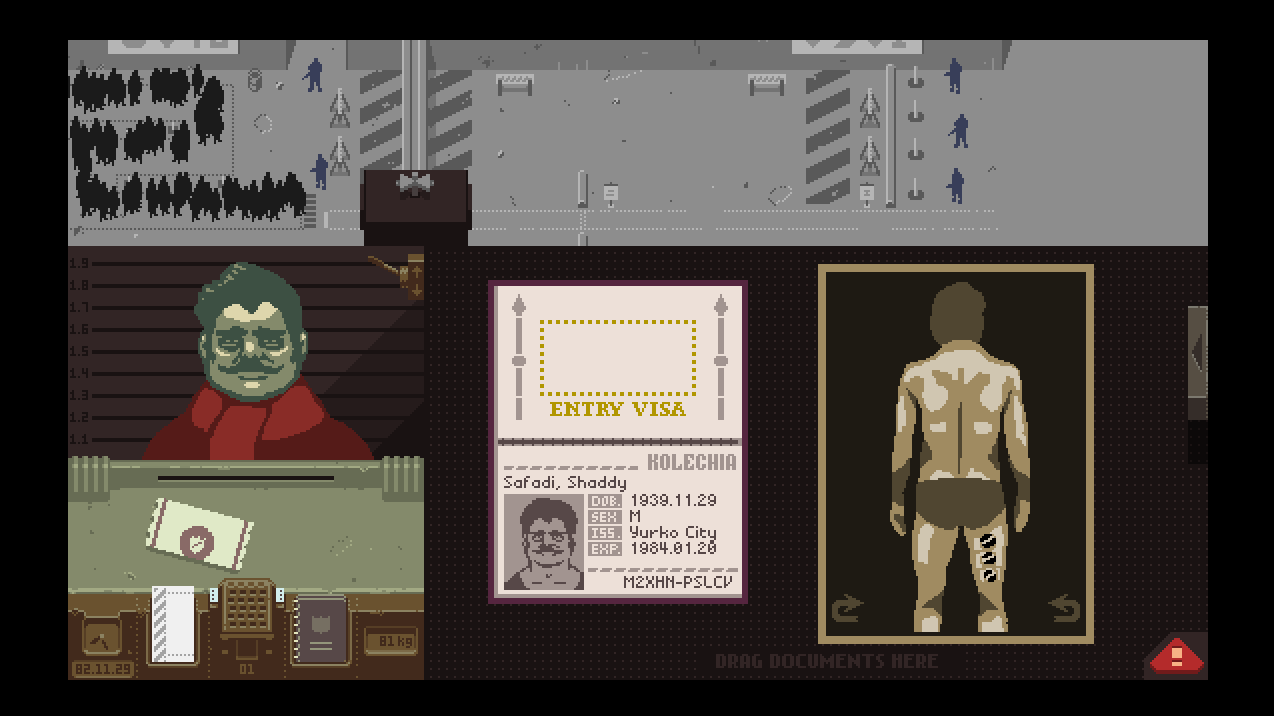
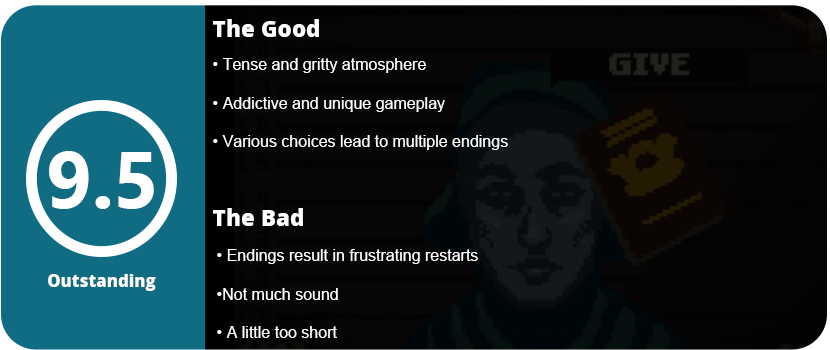
I honestly went into this game not expecting much. It is an 8-bit-style game where you stamp papers for people. Sounds boring, right? Far from it, and I mean very far. This is one of the most addictive and fun indie games I have ever played. This game kept me away from Skyrim, Splinter Cell Blacklist, and Saints Row IV. How can a $10 game keep me away from such high-budget splendor? It’s unique and so much fun. I honestly don’t even know if it’s a puzzle game, an adventure game, or something. It’s something, but so original that it creates a new category all on its own. You play as a Russian citizen who gets his name drawn in a labor lottery to work the customs booth at a border check. The story isn’t exactly deep, but the atmosphere is tense and gritty.
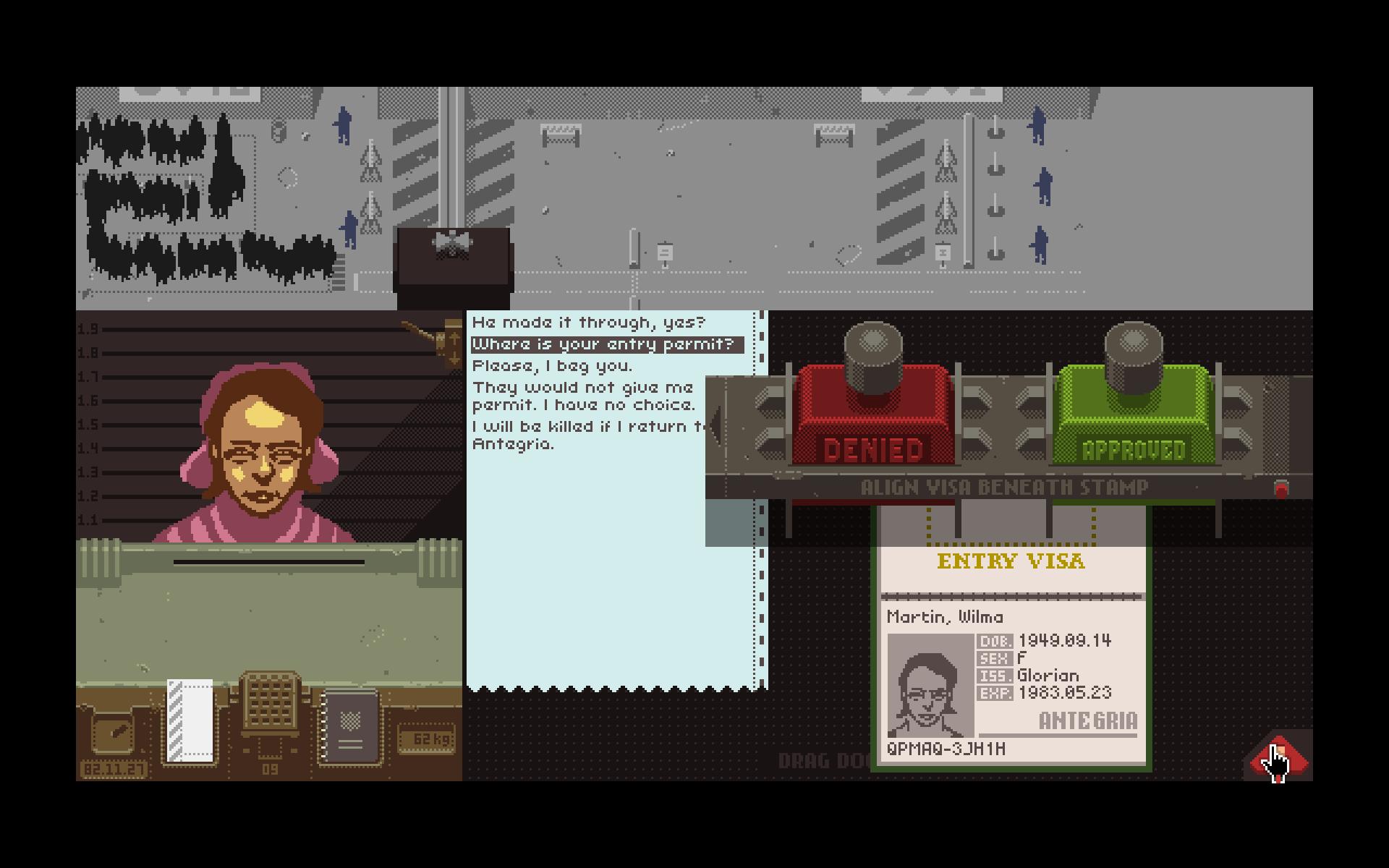
You start out every day by reading the headlines in the paper and walking to work (you don’t actually do the walking). The top half of the screen is the line at the border, and everything is going on. Guards are patrolling, cars are passing by, and you will occasionally witness terrorist attacks. The bottom part of the screen is split into two parts. On the left side are your counter and window. This is where you receive everyone’s passports and various papers, as well as your rule book and bulletin for the day. You must make sure everyone’s credentials match before you stamp their approval. You start out with the simple task of just making sure the issuing city matches the right province. You check this in your rule book. If this doesn’t match up, you go into inspection mode and click on the information you see wrong with the corresponding contradictory information. This gives you a personal touch to the game and makes you feel like you are in control of these people’s lives.
Before you roll your eyes, this isn’t some sort of Burger Builder or any other type of mobile game. You get more and more papers to check as the game progresses. You get special assignments such as confiscating certain citizens’ passports, stamping the reason for denial, cross-checking shot records, matching up ID numbers, height, weight, birthday, and expiration date, and you need to do all this fairly quickly. You’re not in real time, but the more you process, the more you get paid. This just gets so fun and addictive because of all the hands-on stuff you get to do. Sometimes people will try to bribe you or ask you to deny or pass certain people, and guards will bribe you if you detain more people. Later on, you get to even scan them for contraband and fingerprint them. There’s a lot involved, but it’s doled out slowly so you aren’t overwhelmed.
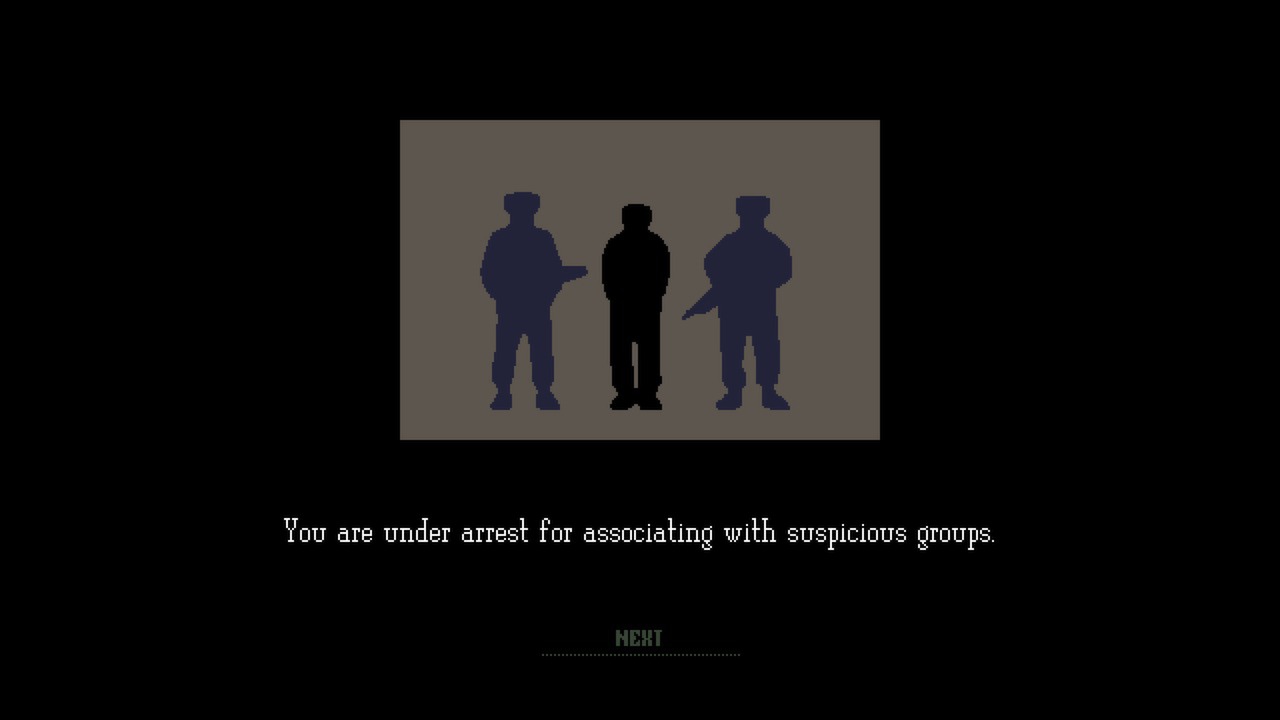
If you mess up, you get penalized; this goes against your 10-day inspection. You get plaques you can hang on the wall, but if you are caught with anything else on the wall, you get docked pay. If you are involved with the terrorist group EZIC, you get fired. It’s up to you to be loyal to your country or betray them behind your back. There are 20 different endings to get for different choices. Thankfully, the game saves before the start of each day, so you can change your choice. Things, like accepting certain bribes and spending that money, will trigger an audit, leading to an ending. You can burn the money and continue to save, but it’s all up to you. By the end of the day, you need to help your family with food, heat, and various other things using your pay. You need to be very careful and only get them what they need, or you will end up with a game over and your family dying.
The constant lash and tension between countries are tense, and you get the full brunt if you let known murderers in. Sometimes being the good guy will get you lots of penalties. Too many will lead to a game-overcoming inspection every 10 days. The game is just so much fun with a lot of replay value, and there’s a lot of content here. I honestly don’t have too much to say that’s bad except I wish the game was longer and you didn’t get all these endings and have to restart whole levels as a result.
Papers, Please is one of the most unique games ever made, period. I normally don’t care for these indie games since they are a dime a dozen, but when games like Fez, Braid, Limbo, and Papers, Please come up, they get my attention. Any gamer can play this since it really isn’t designed for a set crowd. This will be the best $10 you will spend on a game.
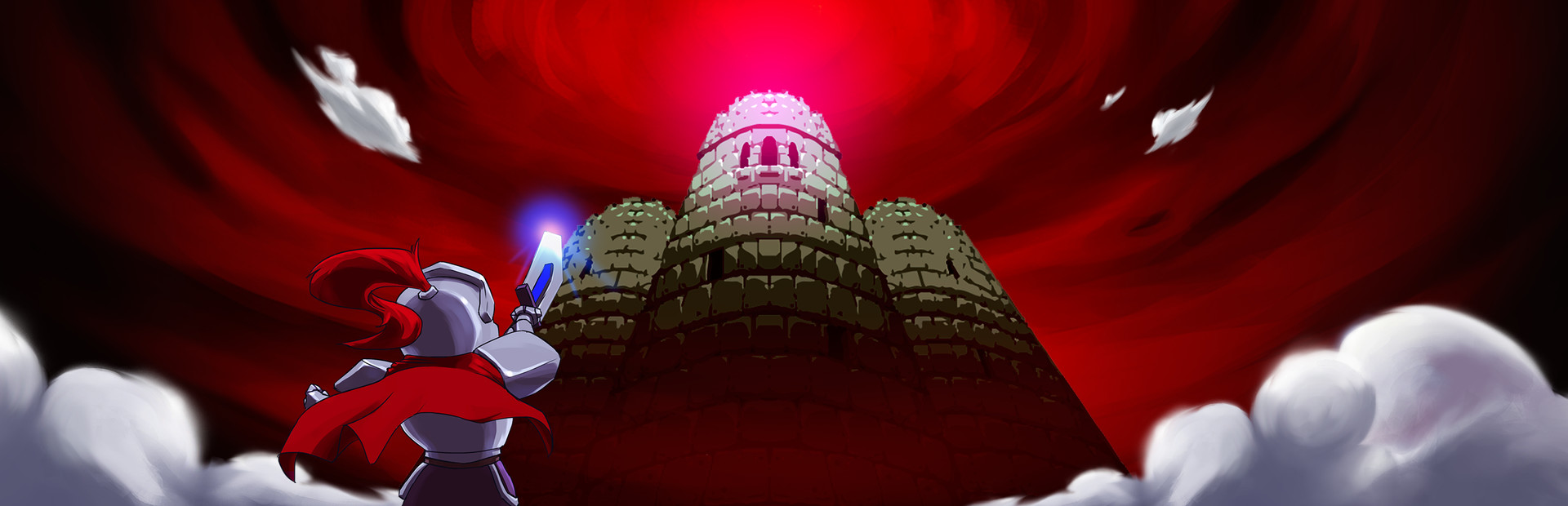
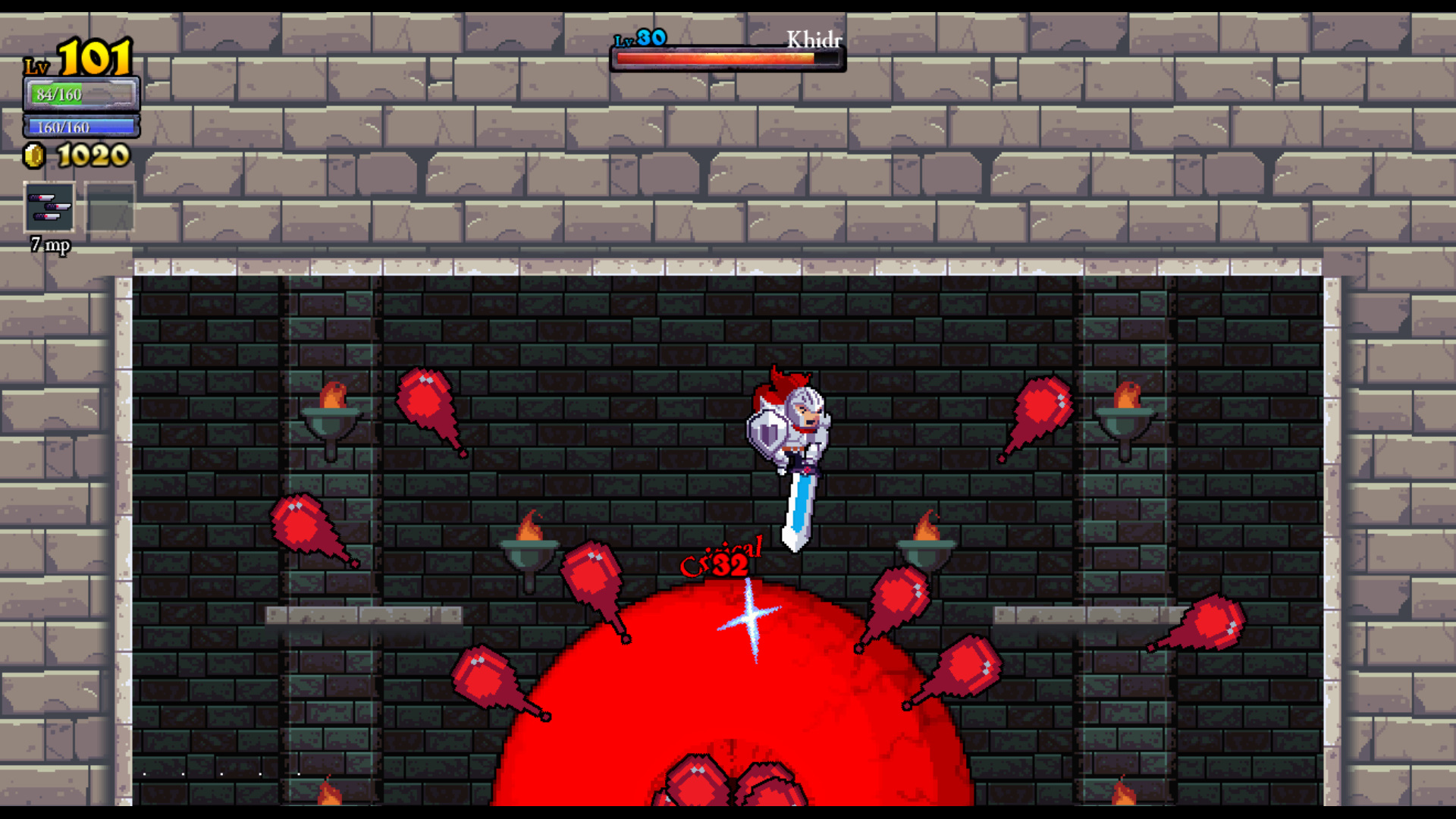
2D platformers have had a huge comeback in the past 5 years, but none of them really offer a great challenge. Rogue Legacy offers a lot of replay value thanks to the randomly generated dungeons and characters. I love Rogue’s character selection system. You get to pick between three different people, and when you die, their attributes make an offspring that is similar. Some characters walk upside down, and some have extra strength, health, MP, HP, and various other passive effects. This is really neat, and sometimes you are forced to choose one particular character so the other bad genes are wiped out on your next death. You can upgrade your weapons at each rebirth, and you can give up 30% of all the gold you find to lock down the castle if you liked the previous layout. When you enter the castle, you must forfeit all your gold, so you start from scratch. This is a cool feature and doesn’t really get in the way.
When you actually play, you will be greeted with great controls and fast-paced and challenging combat that’s similar to Mega Man and Castlevania. Breaking open objects gives you gold or items, and enemies can be really tough and fast. You have to stay on your toes because you can die really easily. I died around 15–20 times before I even got to the first boss. You also get items that use MP, kind of like in Castlevania. Honestly, this game felt like Castlevania meets Infinity Blade, which isn’t a bad influence. I wasn’t frustrated because sometimes the rebirth was for the better. After a while, it gets kind of hard, so it’s only fun in short bursts. I found the game very addictive, and the variety of enemies kept me coming back for more.
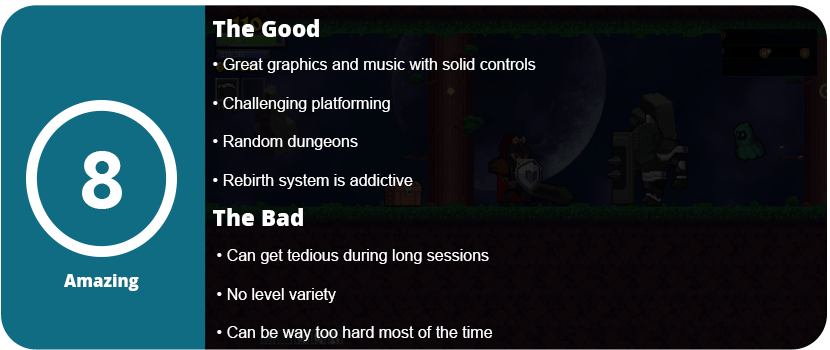
The whole point is that you become more powerful every time you die, so it’s not like other games where all your progress resets. You are always progressing, no matter how good or bad you are at the game. After a while, you start learning the enemy patterns and eventually even a favorite layout. The graphics are actually pretty good with nice 8-bit sprites; this is actually one of my favorite platformers in a long time since ‘Splosion Man and Fez. There’s really not much wrong with the game other than the lack of level variety, and the game can be way too hard. This game relies solely on skill to advance, and the better you are, the longer you can survive.
Don’t let the simplicity and small scope of Rogue Legacy turn you away. If you love platformers and challenging games, this is for you. The game has a great chip-tune soundtrack, nice graphics, and solid controls. The constant dying and respawning can get tedious sometimes, and the progress you made before can feel like it’s all for nothing. Thankfully, there are many upgrades and items to buy to keep you coming back for more.
Soul Sacrifice is one of those games that looks cool, but when you start playing, you will be completely lost for a while. The game starts out with you being captured and put into a cage with bones everywhere. A book wakes you up and starts talking to you. It’s the journal of a mad sorcerer, and he later explains that you need to stop this powerful sorcerer, but in the meantime, you need to level up, gather strong weapons, and learn about his past. The story never really pans out, and it is just stretched so thin that you lose track of what’s going on. The presentation is interesting, with literal storybook pages and an ominous narrator, but I would have liked something more.
You basically just select a mission, and it will tell you what you’re supposed to kill. There is tons of fantastic and memorable lore wrapped around every enemy and battlefield. These stories read out like Grimm’s Fairy Tales, and I was really hooked and couldn’t wait to read the next one. The enemy designs are really neat and unique, as well as the bosses. You can customize your character’s looks, albeit not by much, and then it’s off to equip your weapons. Weapons are arranged in several categories: armor, arm, blood, power, shield, etc. You get weapons for defeating monsters, and they are awarded to you. These weapons can be combined with dupes to give you a higher cast count, or they can be fused into new weapons. This is a great idea if the game doesn’t constantly throw crappy weapons at you. Halfway through the game, I was still dying several times per boss because I just couldn’t get any powerful weapons. It’s like they all did very little damage. Some bosses and enemies are weaker to certain elements and types. Some bosses you can’t get up close to at all, so you need powerful projectile weapons. If you don’t know that going in, you have to restart and re-equip. This trial and error is frustrating and one of Soul Sacrifice’s many flaws.
If that wasn’t enough, you are limited by how much you can use each item. You can equip up to six different weapons for each match. Some can be passive for healing, but if you run out of casts, you break your weapon, and it’s gone forever. You have to use a special vision mode to find hidden regen points for your weapons, but they are limited. Several times I ran out of casts for all my weapons and had to restart because I couldn’t beat the boss. Thankfully, a special sacrifice power allows you to do massive damage, but at the cost of sacrificing something. One power lets you burn everything around you, but your skin becomes burned and your defense is halved. To get rid of these conditions, you need Librom’s tears, and these are only granted every so often by exiting the book and checking his eye. A neat idea, but frustrating nonetheless.
That’s the combat, and that is the sole focus of the game. It’s great and fun at first, but very frustrating and monotonous early on. You just fight the same types of battles over and over again, and you have the same enemies as well. The only thing keeping you going is to see more of the story. I honestly got tired of the side quests and just stuck with the story to get it over with. Another major part of the game is leveling up your health or magic. You can sacrifice or save enemies after they fall by holding L or R. This is a unique idea, but you can be stunned and killed while doing it. Your teammate can fall, and you have to resurrect them or sacrifice them for a boost. Once you do this, you need Librom’s tears to bring them back. They can revive you, thankfully, but many times they died right when I did, or vice versa. There’s also an online co-op to solve this issue, which really helps, but most people aren’t going to do this.
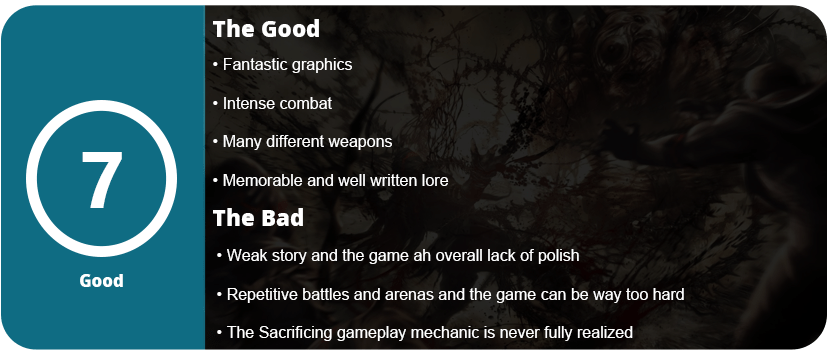
As it is, Soul Sacrifice suffers from constant repetition and a lack of polish. Not having powerful enough weapons, lackluster customization features, and a weak story kind of hurt this game. The graphics are fantastic, but that isn’t what makes a game good. I was hoping for more variety and more of a cinematic story, not a menu-driven battle selector. If this game had more variety and something else besides killing the same enemies forever, it would have been one of Vita’s best games.
This game kind of haunted me growing up. Everyone was raving about it; it was always rented out at Blockbuster. I saw commercial after commercial for it but never understood it. I finally bought it when it was in the bargain bin years after its release and was still too young to understand the game. It was confusing, and I didn’t have the patience for stealth games. Now that the HD version has been released, I figured I would give it another go. The game is fantastic, has a memorable story and some of the best stealth action out there, and holds up well for today. Honestly, if this game had current graphics, you wouldn’t be able to tell the difference.
The game is made up of two chapters, one on a tanker and one on Big Shell. The tanker section is the shortest, and this is the only time you play as Snake. You are introduced to the basic controls and gameplay, which is pretty simple. The controls are a bit hard to get used to and aren’t planned out very well, but they work. The whole point is to get to your objective without being seen. You can knock out guards through the melee, drag their bodies into lockers to hide them, use tranqs, or just plain old head shoot them with a silenced pistol. This stuff isn’t just handed to you, though; you have to go find these weapons. The game also has exploration elements, but this can really frustrate some people because you have to use a lot of trial and error to get through some spots and find out where to go. The level design is really great, though, and each section is small enough to memorize very quickly. If you die, you restart that one section instead of going back away. I really liked this a lot, and you are allowed to save anywhere you want. The stealth elements really take getting used to and feel stiff in spots. You can’t kneel and walk at the same time. If you crouch and move forward, you go into a crawl. You can hang from ledges with a stamina meter, go into first-person mode for accuracy, climb boxes, etc. This all adds up to being tools to use for the stealth experience. How you use them determines how well you get through each section.
Each section is completely different, but you can’t just run around killing everything. There are guards that have to check in every minute or so, and if you knock them out and they don’t respond, a response team will come check it out. If you are spotted, your radar disappears, and you have to go into a cool-down mode while the enemy searches for you. The AI is great in this game, and you can really tell how far ahead the game was for its time. It gives you a sense that you can’t screw around, you can’t exploit the AI, and you can’t exploit the levels; you just have to do things the right way. You have to memorize enemy patrols, figure out where the cameras are placed, use chaff grenades, hide in boxes, etc. Don’t worry, though; there is some action in the game in the form of great bosses.
Fighting Vamp, Olga, Metal Gear RAYs, and a Harrier II are all exciting. The bosses are great, and you can tell they don’t make them like they used to. Health slowly widdles down; you have to stay on your toes, and healing items aren’t thrown at you constantly. You have to memorize the enemy’s moves and patterns and then find what weapons work the best. The Metal Gear RAY fight is extremely tough, yet somehow very fun. You have to constantly dodge and roll, quickly switch to the first person, and then roll around again. Using the high-frequency blade uses the right analog stick to swing the blade around, which was very unique at the time. The game is highly cinematic and was probably the most cinematic game ever made at the time. One thing I have to mention is the long-cut scenes. They can be over 10 minutes long toward the end. You will go through real-time cutscenes and then 5 minutes of radio dialog. It’s not necessarily boring, but the ADD in you will want to do something else while you listen.
Metal Gear Solid is also known for extras that are hidden from fans. Things like Zone of the Enders boxes and posters, strange little things that you can do that will trigger dialog from your radio—these things aren’t really seen these days. Most developers don’t put the time or effort into doing these things, even though a select few will only see them. Most people may not care, but I like seeing little, hidden Easter eggs everywhere. This game will only be enjoyed by the patient, though. Running around everywhere trying to kill everything isn’t going to work in this game, but I did hate the lack of direction. If you don’t know any better or check the FAQ, you will run around aimlessly, not knowing what to do. Especially when you try to disarm the bombs in Shell 1. There are quite a few, and each bomb is tough to get to. Half of them I just couldn’t find, and the other half was a pain to get to. If the game had a bit more guidance, it would pretty much be perfect, and don’t forget the weird controls.
As it stands, MGS2 is one of the greatest games of all time for a reason: it’s a perfect symphony of story, cinematics, stealth action, action, great boss fights, pacing, and character development. The HD upgrade for Vita and PS3 adds texture filtering, some aliasing, and even some reworked textures. It looks very smooth and crisp, but still looks dated. If you can look past all that, you are in for one great game.
Yep! The fact that I forgot about this game until you made a comment proves that.