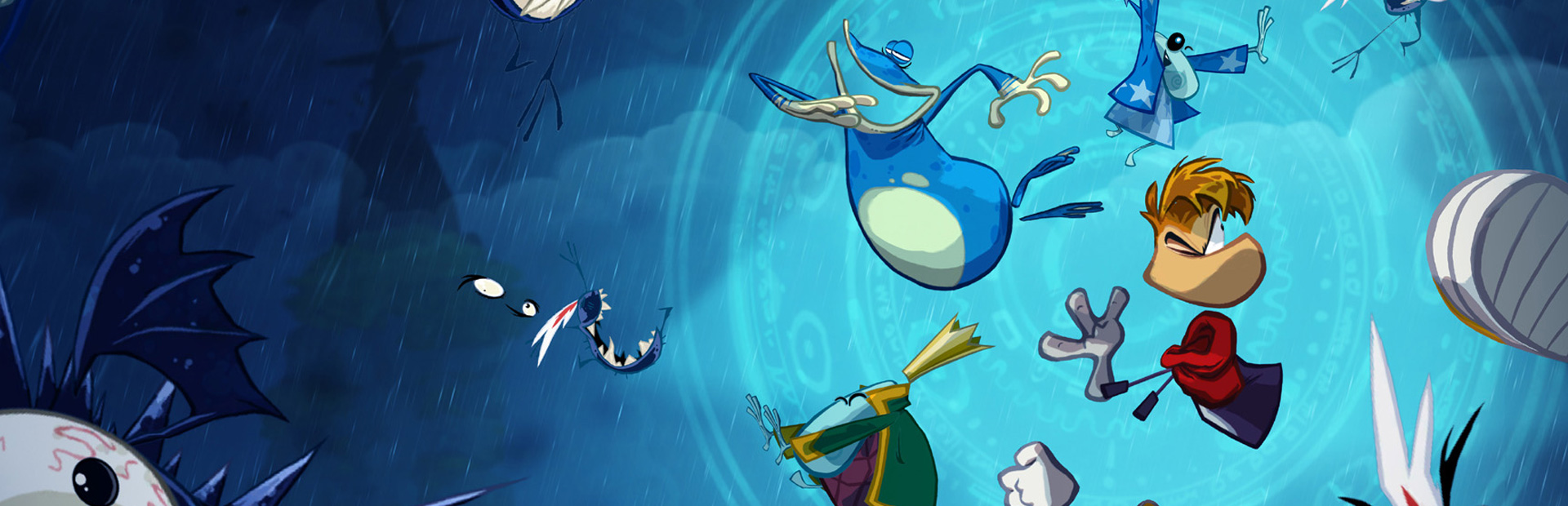
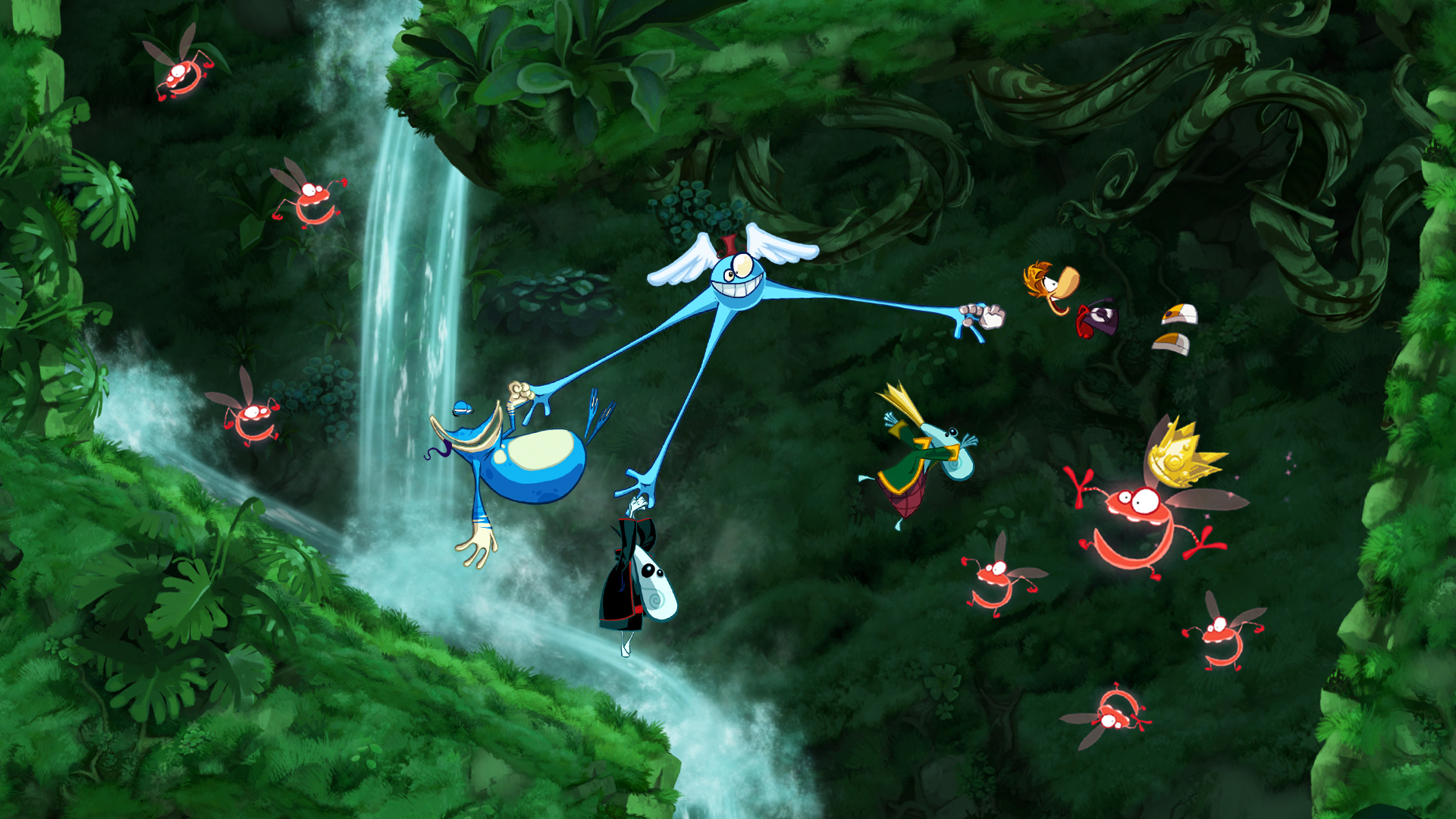
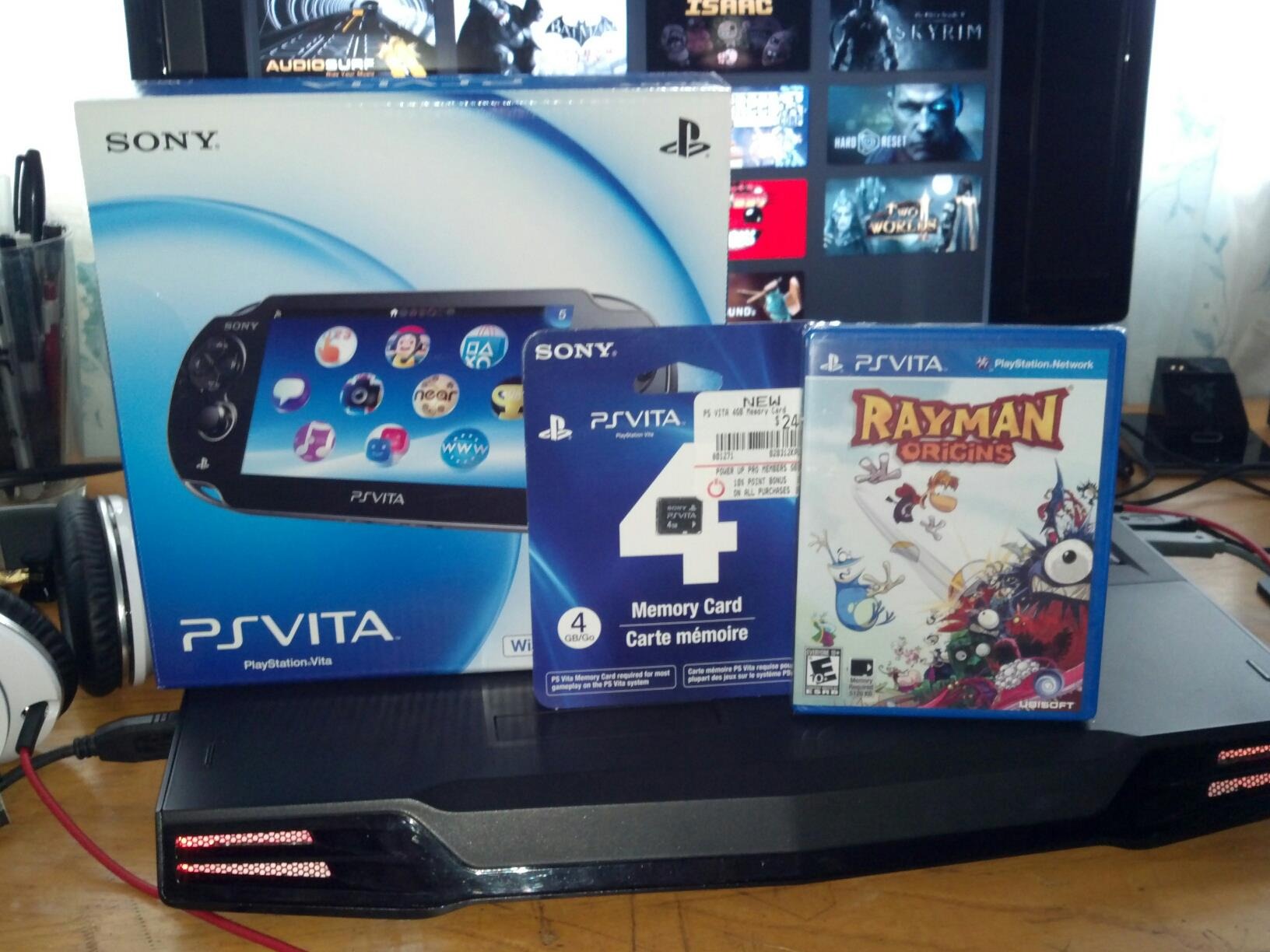
Rayman has been a struggling series since the PS1 games came out. There have been spin-offs, ports, and terrible sequels since then, but Origins redeems the series. There isn’t really a story here except that you’re saving lums and princesses of different lands to earn powers. There aren’t any cut scenes or voiceovers because this goes back to its old-school roots, and yes, the game is hard.
The controls are silky smooth, and so are the animations. It helps that the controls are responsive, as well as that you can jump around the levels that require focus and skill to navigate. Obstacles lay in your paths, such as treacherous waters, enemies, and fire. Each new area has unique enemies, hazards, and an overall layout that is very nice to look at. Enemies can be jumped on or punched, and after that, they inflate. You can use the Vita screen to touch them so they pop to get the light inside, which actually makes this version more forgiving than the consoles. When you jump around to find lums, you will see them in hidden objects, and some will be trapped in bubbles. You can touch them to pop them up to add to your collection, which is much easier. While you’re bounding about the cleverly laid-out levels, you can find hidden areas with cages full of lums that you can find by hearing their cries for help.
The game is just so cleverly designed, with levels that are tricky but not so tough that you can’t forgive the game. You may restart a few times, but it actually requires skill instead of luck or exploiting the game’s faulty controls (if they were). Sliding around on the ice, dashing towards an enemy and punching them, grabbing onto a ledge, and then jumping up on top of an enemy can be tricky, but it can be done with a little practice and a quick reaction. The levels slowly get harder, but the whole point is to collect the lums and get medals at the end of each level. Save enough, and you can unlock special treasure missions where you have to chase one down through a series of tricky obstacles.
Origins is just so clever and charming that you can’t really hate it. There are plenty of characters to unlock, as well as extras. This game is perfect for people who love exploring levels and finding secrets. There are plenty of levels and things to find to keep you busy for many hours. I do wish there were some more features for the Vita besides just using the touchscreen. However, what is here works, and nothing got downgraded from the consoles. I can only really recommend this game to hardcore platformer fans because of the difficulty.
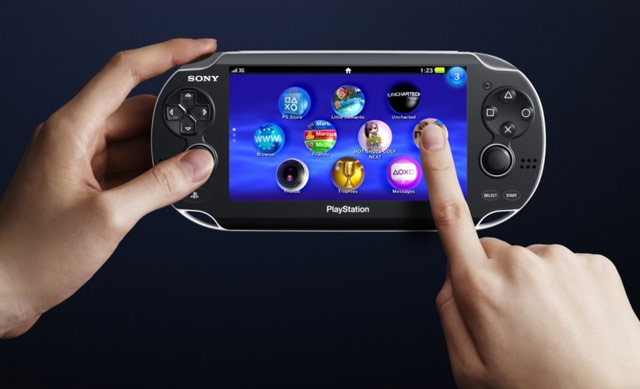
It’s hard to believe that it has been 8 long years since the PSP came out, but it’s true. Those long years gave us some of the best portable games ever made and were the first true attempt at a portable console experience. Unfortunately, the system was doomed from the start with proprietary disc media, no second analog nub, and a slew of other things, but the system was a powerhouse at the time and had a lot of potential. The Vita is Sony’s second phone, and it fixed all the issues of the PSP plus some, and one of those is noticeable as soon as you pull the shiny new device out of the box.
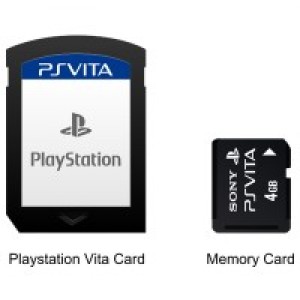
A second analog stick. An honest-to-God stick and not a nub or pad. These things feel like they moved straight from the DualShock controller and just shrank a little. They feel great, even in-game, and I couldn’t believe that the second stick was there; it was like a wish coming true from God himself! This opens up the Vita to a whole slew of games that couldn’t be done on the PSP just because of this one little piece of hardware. While playing Uncharted: Golden Abyss, I actually forgot the second stick was there a few times because I’m so used to the single nub on the PSP. It may take some PSP vets some getting used to before truly adapting to it. The next big thing that Sony fixed was no disc media! Thank you very much! Those UMDs were irritating and sucked up precious battery life, as well as limiting the memory size. Now we get nice little carts, like the DS, or you can download the game digitally via the PlayStation Store.
Sony made one fatal flaw with the Vita, and that is the proprietary memory cards. What in God’s name was Sony thinking? Everyone thought the memory stick pro-duos were bad for the PSP, but at least those were regular memory sticks. These tiny little things only work on the Vita and cost a fortune. A 32GB will cost you $100, which is a complete rip-off, but guess what? You don’t have a choice! Thanks a lot, jerks!
The next big thing Sony did was add a touchscreen. Copied the DS, you say? Not exactly; it’s more like it copied smartphones, but flip this guy over and you have a touchpad on the back, which is Sony’s little way of saying, “Hey, we’re trying to be original too.” It’s an odd thing to have, and not many games use it yet, but it adds a whole new dimension to touchscreen gaming, and it’s just as responsive as the touchscreen, so it doesn’t feel like a dead limb. However, it’s up to game developers to use this odd mechanic, but only time will tell.
The screen is one of the best things about the device because it’s an OLED (Organic Light Emitting Display), so you’re looking at some of the best display technology out there. Now you don’t have to worry about dead pixels! Yeah, remember that launch fiasco, Sony? The screen is 5″, which is the biggest portable gaming screen ever made and even tops the PSP’s 4.3″ screen. This allows for lots of detail in your face and tons of room for touching things on the screen.
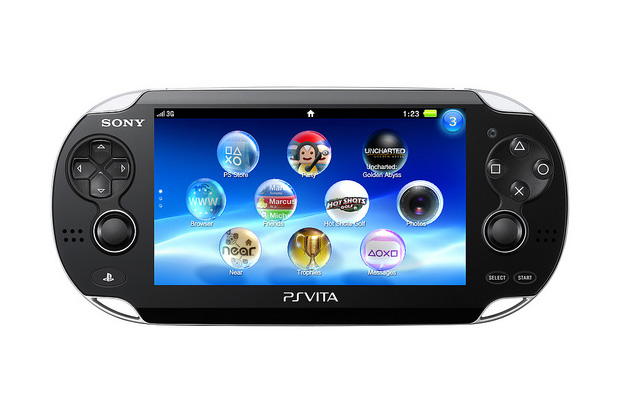
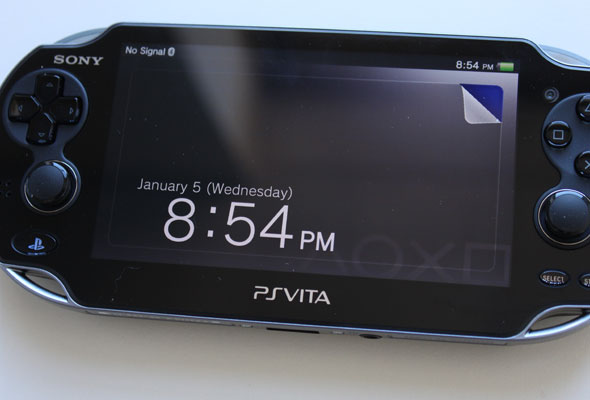
Once you get over how gorgeous the screen is (I can’t stop staring at it!), you will start hitting those buttons on the device. Sure, they don’t do anything unless you are in-game (the Live Area is all touchscreen-based, but more on that later), but the button layout here could have been a disaster. Sony had to be really careful because of those new sticks, so the D-pad and face buttons shrank about half their size and got moved up. Blasphemy! Actually no. Despite the higher placement and smaller size, I still hit them accurately, like the PSP, even with my really big thumbs. The D-pad is way better than the PSPs and works well with fighting games (yes, relax! ), so no worries there. But there is one problem with these buttons. The start and select buttons are way too small and are level with the system instead of sticking out. What! Did Sony fall asleep at the drawing board here? They are also placed all the way at the bottom of the right side, so you have to move your hand down. C’mon, what happened there? Other than that, the L and R buttons are nice and huge, and you get a nice big PlayStation Home button the size of Venus on the left side, but hey, it glows!
Anyway, the buttons are just fine, so how about everything else visually? Sony made the little “compartments” more subtle this time around, so the memory slot is hidden at the bottom as well as the game card slot on top, so the whole system just looks like a big oval. Don’t be worried about the size of the thing, either. Sure, it’s big and not exactly pocket-sized, but for what is under the hood, this thing is compact and pretty light.
Now that the visual stuff is out of the way, let’s talk about it under the hood. This thing is the most powerful handheld on the market, only being rivaled by devices powered by the Tegra 3 processor. The thing has a quad-core Arm-9 Cortex CPU, which is freaking powerful. This allows for PS3-quality visuals that no other portable device on the market has. It also has a quad-core GPU, which is over four times as powerful as the iPhone 4S’s GPU. The system also packs 512 MB of system memory and 128 MB of VRAM (video memory), which is astounding (the Xbox 360 has 512 MB of memory for comparison). We also get two cameras that are front and back-facing, which can track head movement, a six-axis gyroscope, Bluetooth, a microphone, and a 3G wireless card. Holy crap, that’s a lot of stuff. This is one powerful device, but we have yet to see what it is fully capable of.
Now let’s get down to the software and how the thing plays. Every PlayStation fan by now is used to the XMB (Cross Media Bar), thanks to the PSP and PS3. Get ready for change because the new live area is made of bubbles. You like bubbles, right? This is to make use of the touchscreen, which takes a while to get used to. You can rearrange these bubbles to your liking, kind of like on a smartphone, and even change the background for each “page.” The Vita can multitask, which is something the PS3 can’t even do. You can play a game, hit the home button, go online and look up an FAQ, then flip back to your game without having to quit. Why can’t you do that on the PS3? Someone at Sony was dropped on their head as a baby one too many times, but it’s nice to have it here.
Once you start playing with the Welcome Park, which gets you used to Vita’s new features, play around with Near, which is like the 3DS’s StreetPass, but worse and more confusing, and you will really start liking this guy. The browser works like the PS3 but has fewer features for some reason, but we get trophies! Oh my God, trophies! These are also great for games that are cross-platform, so you can start working on a trophy on Marvel vs. Capcom 3, then pick it right up on the Vita and finish unlocking that trophy.
The Vita uses a remote to play a lot better than the PSP, mainly because it’s more powerful and can do what the PS3 can do. Right now, the remote play is still pretty weak, but the potential is there. Right now, only 3 games support cross-play (MvC3, MLB 2K12, and Hustle Kings), but I’m excited about what this can bring. Overall, the Vita has a lot of software potential but is lacking a lot and feels kind of thin. Sony’s attempt at augmented reality comes to life with the Vita with AR cards (yes, they ripped off the 3DS), and it works really well thanks to the system’s more powerful hardware and gyroscope.
Overall, is the system worth $250? Yes, it is if you are a hardcore portable fan or console fan. This is the first real console experience in portable form, and Sony nailed it perfectly. The other big issue I forgot to mention is battery life. You get about 3–4 hours on a powerful game, 9 hours for music, and 4-5 hours for video, so don’t expect huge play sessions like on the DS. The battery lasts forever in sleep mode, though! Sure, what good does that do you? For what this system does, the battery life is actually pretty long because you’re running a mini-supercomputer off of it. Cut it some slack! The games for the system right now are OK, but not as awesome as the PSP launch (considered the best launch ever), but the games are reviewed separately. I would pick one up if you love portable consoles, because this thing has so much potential. It just has a few major flaws and is quite lacking software-wise, but Sony will probably pick up the pace over the next year.
Over the next 5 years, I see the Vita as the model for portable games. We’ll start seeing games push the system graphically, like God of War did for the PSP. I think we’ll see games that give us more than just touchscreen smartphone games, thanks to the rear touchpad. In 5 years, I expect the library to grow beyond ports, and we’ll probably see the Vita’s first killer app by the end of this year that redefines portable gaming, kind of like Syphon Filter and God of War did for the PSP. Those games showed that even with major flaws, the system can be something incredible and helped people look past them all. Something like that will pop up for the Vita in the next year or two, and then we can start talking about moving forward in the portable market.
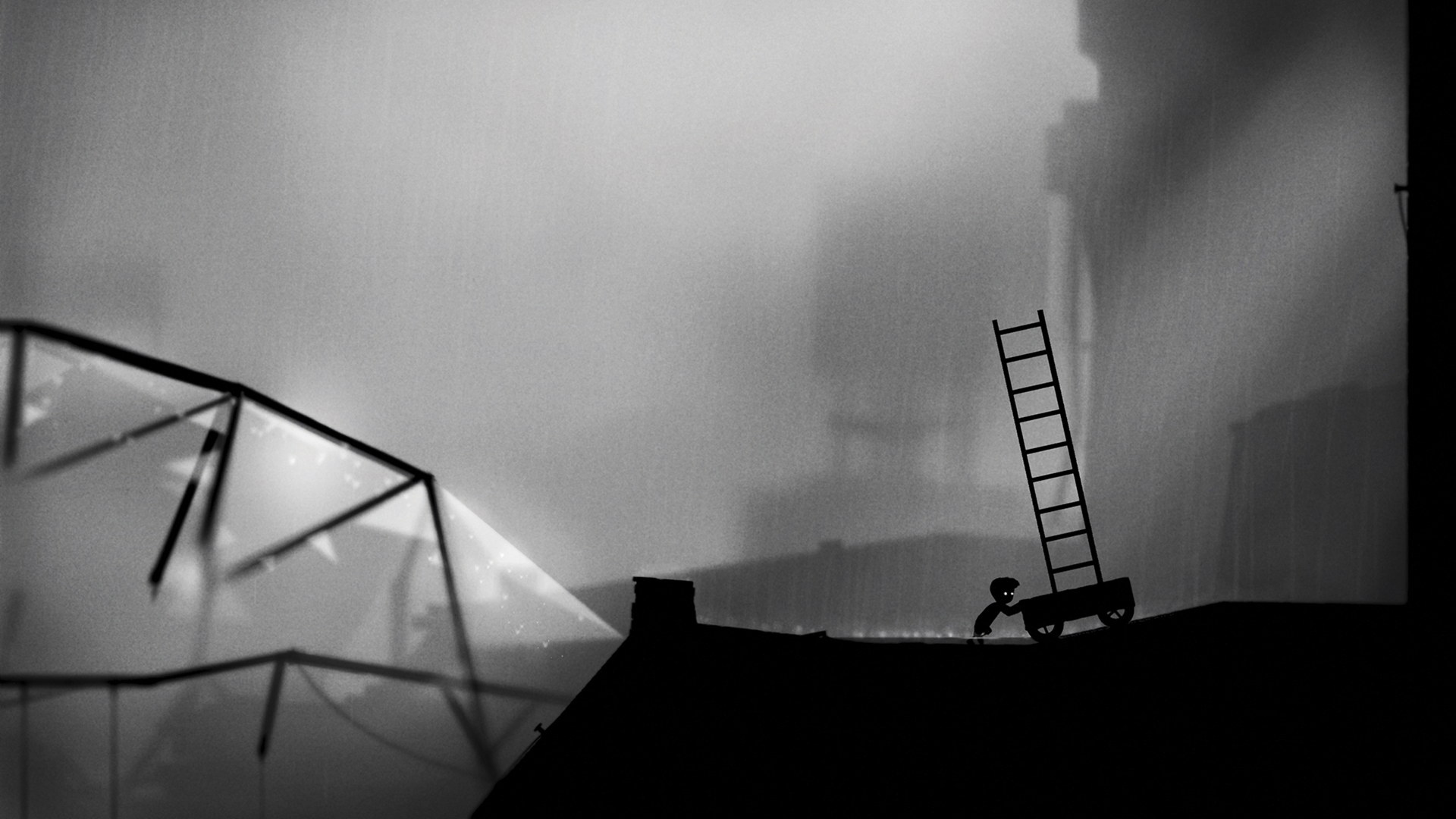
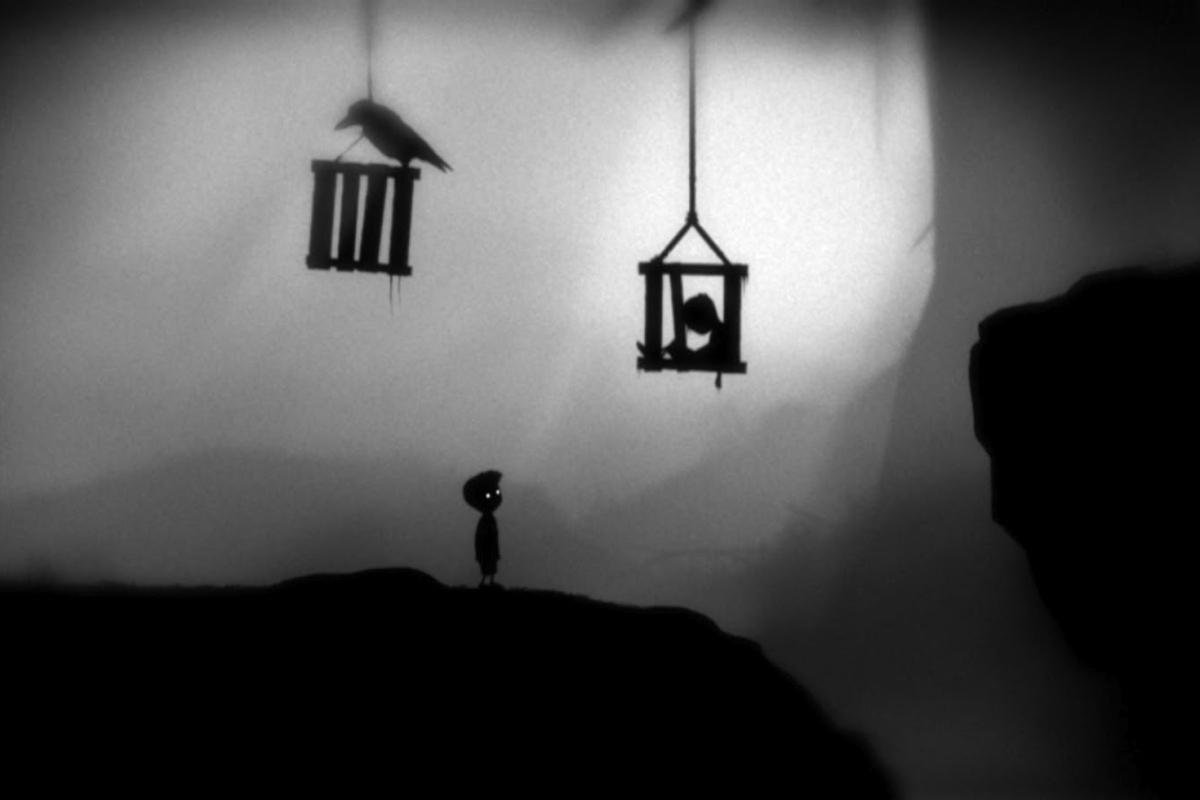
Leave it to an indie game to be clever, atmospheric, and do things that AAA titles wouldn’t dare do. Limbo starts out with just a simple message: Find your sister. No voice acting, no characters—just a black-and-white 2D platformer and a nameless little boy. This can be risky because why would you care about it with none of those elements? You won’t need to, because the game makes you care for the boy through your actions. He can be dismembered and killed in every way possible via deadly and horrific obstacles and traps like getting caught in a saw blade, getting hung, or being impaled by a giant spider leg. You cringe at every death because this is a little boy and not some nameless soldier or thug.
Limbo offers tons of atmosphere thanks to the great ambiance and visual cues that make you just wander through the whole game. The puzzles start with simple ones that deal with gravity, pushing stuff around, and pulling switches and levers. Later on, you have to manipulate gravity, and these puzzles get pretty complicated, but the game also gets darker and more dangerous as you go on. Limbo approaches typical platforming elements like bosses, enemies, and puzzles differently. Enemies are few and far between, but there is such a unique way to eliminate them that you wish there was more of it.
This short, 3-hour game feels like a sample because you really want more. The sudden and seemingly unsatisfying ending is made purposefully to just make up your own ending in your head. Yeah, this isn’t for the narrow-minded, but keep in mind that the game is juicy and gives you tidbits along the dark journey to make you feel satisfied at the end. Limbo delivers a lot more creativity and atmosphere than a lot of top-budget titles because it uses subtly over the explosion and big scares. My only issues are that some of the puzzles are pretty obscure, and the game can be very difficult in spots that will frustrate you to no end.
I also didn’t like such an abrupt ending that didn’t solve anything for you. However, this is a case-by-case basis for whether you like this sort of thing or not. The game has a lot of variety, but I wish there were some more of the unique scripted events that made Limbo feel really fun and intense.
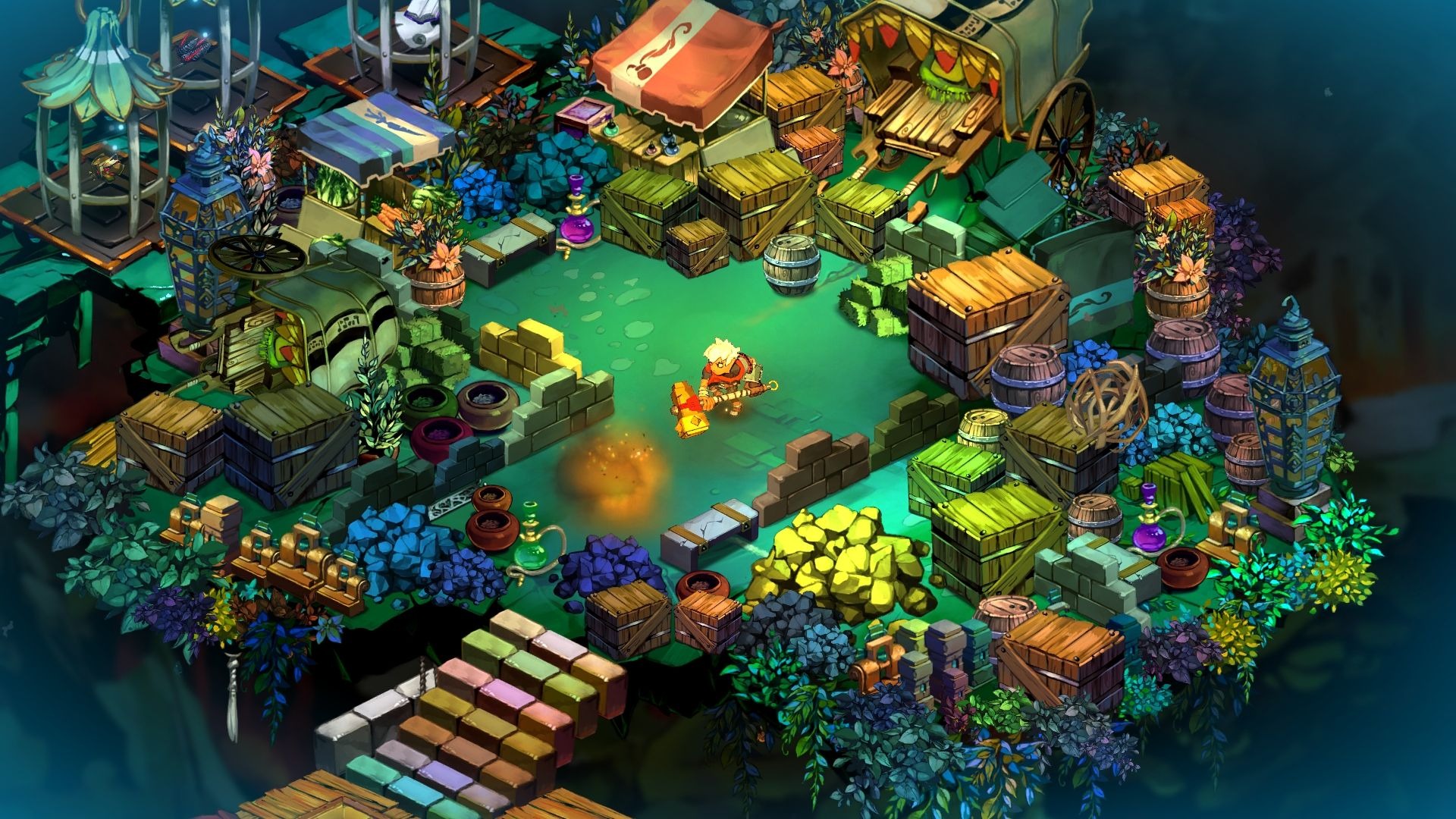
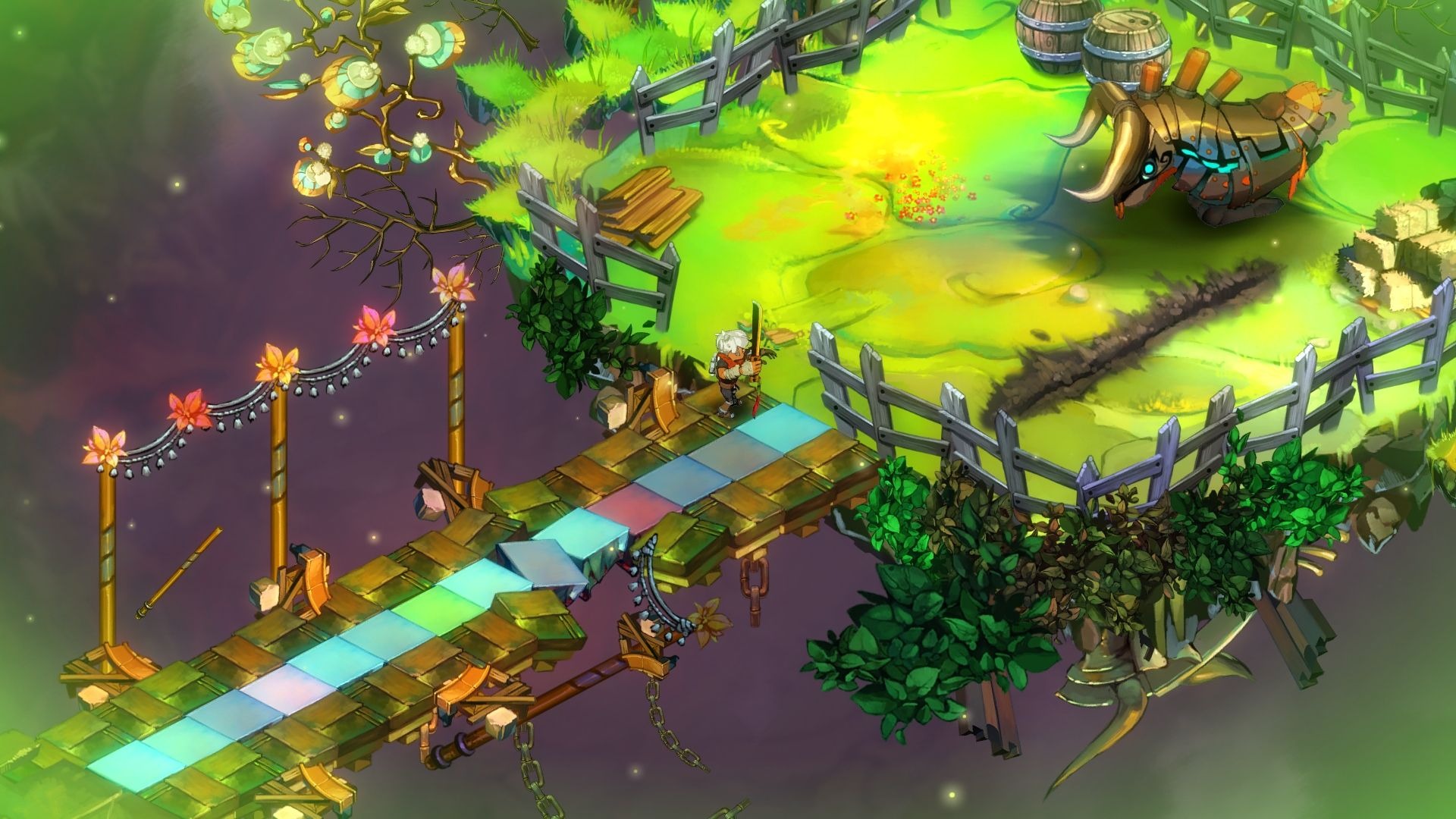
One thing that Bastion does differently from most games is its strong and unique narrative. A man narrates the boy’s every step and action in Bastion, and this is a very interesting way of telling a story. It’s like you’re playing an interactive storybook, especially since it looks like one too. You are trying to re-build The Bastion, which is a safe spot to run from The Calamity, and throughout the story, you find out what this is and why this boy is trying to find these shards to build this thing. Rucks (the narrator) guides you through the story as it unfolds, so you don’t know anything until it actually happens, like a storybook, but it’s happening while you’re doing it.
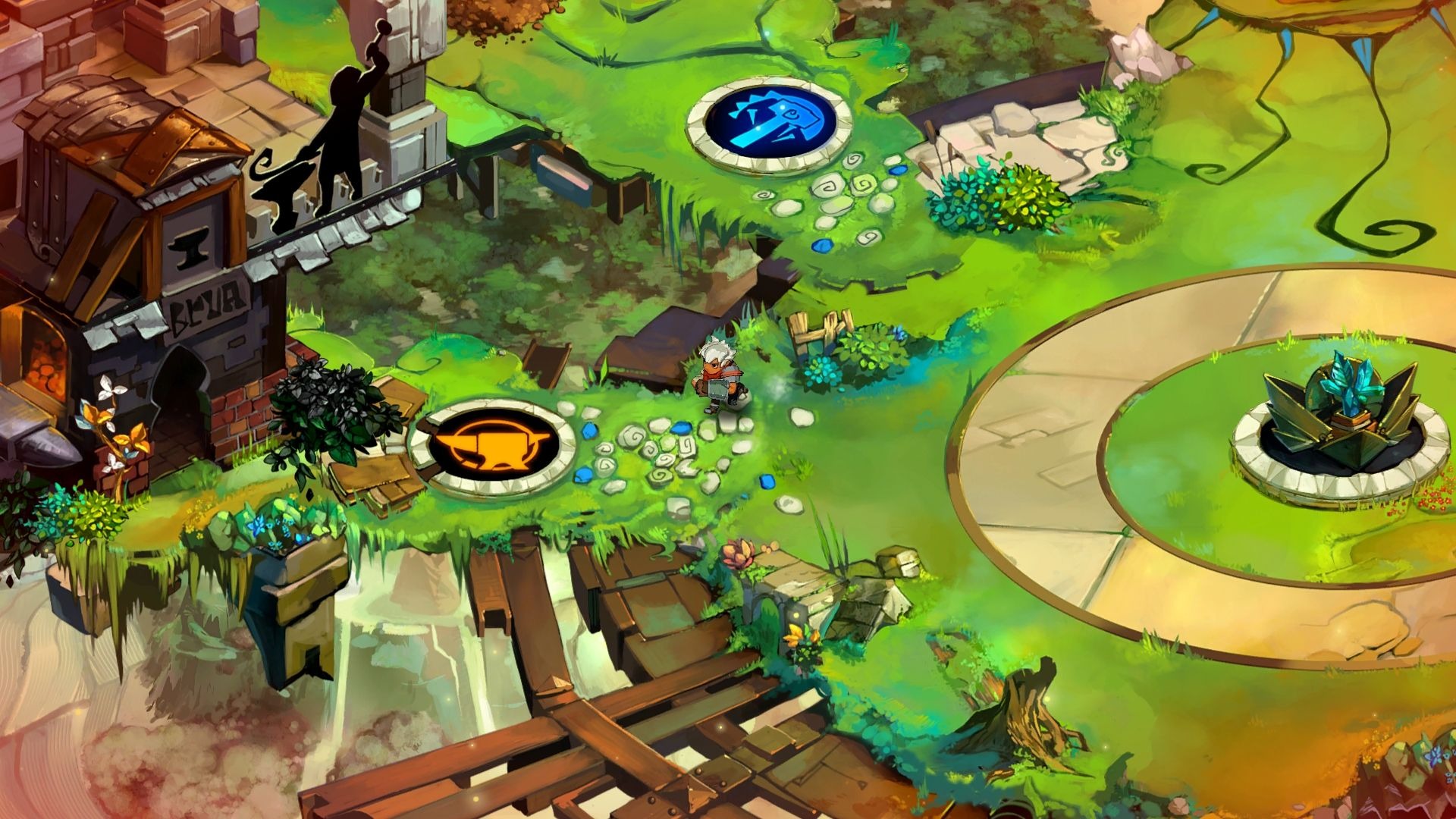
With the excellent narrative aside, the combat is top-notch and responsive. You can use a regular attack, a special attack, a block, or a projectile weapon. There are plenty of weapons, and you can upgrade them to add different attributes and bonuses. As you progress through the game, you unlock six different areas, which include an arsenal to swap weapons, a forge to upgrade your weapons, a shop to buy upgrades and special powers, a shrine to make the game harder, and an “achievement” area where you can meet requirements for extra shards (in-game currency). The customization and upgrades are deep and will keep you busy for a long while thanks to the proving grounds, which are unique challenges for each weapon. If you meet certain criteria, you get prizes based on your performance. These are not easy by any means, and a few were almost impossible to beat for me.
Combat is very responsive and challenging. The enemies are quick and smart and vary from stationary, fast-moving, slow-moving, heavily armored, etc. I should probably say that the balance is perfect, and you slowly get introduced to tougher enemies as the game progresses. You really have to use a combo of everything to stay alive because you will gulp health tonics constantly if you don’t use block and dodge a lot, so stay on your feet. The action gets hectic, and you start realizing this game is for hardcore action fans and not the casual gaming crowd that the visuals might seem to cater to.
There are a lot of levels, and the length varies from 5 minutes to 15, but one thing I can’t get over is the visuals. As you run through the levels, the walkways appear under you and seem to float in the air. The levels vary so much that not a single one looks the same. The hand-drawn visuals are just gorgeous, plus you can’t forget about the amazing soundtrack, which is something you stick on your MP3 player and listen to. This feels like a high-budget game, but only an indie game can deliver something on this side of creativity and originality. Bastion is a unique game, and nothing is quite like it in terms of narrative and visual delivery. Every action fan should own this because it’s $15 well spent.
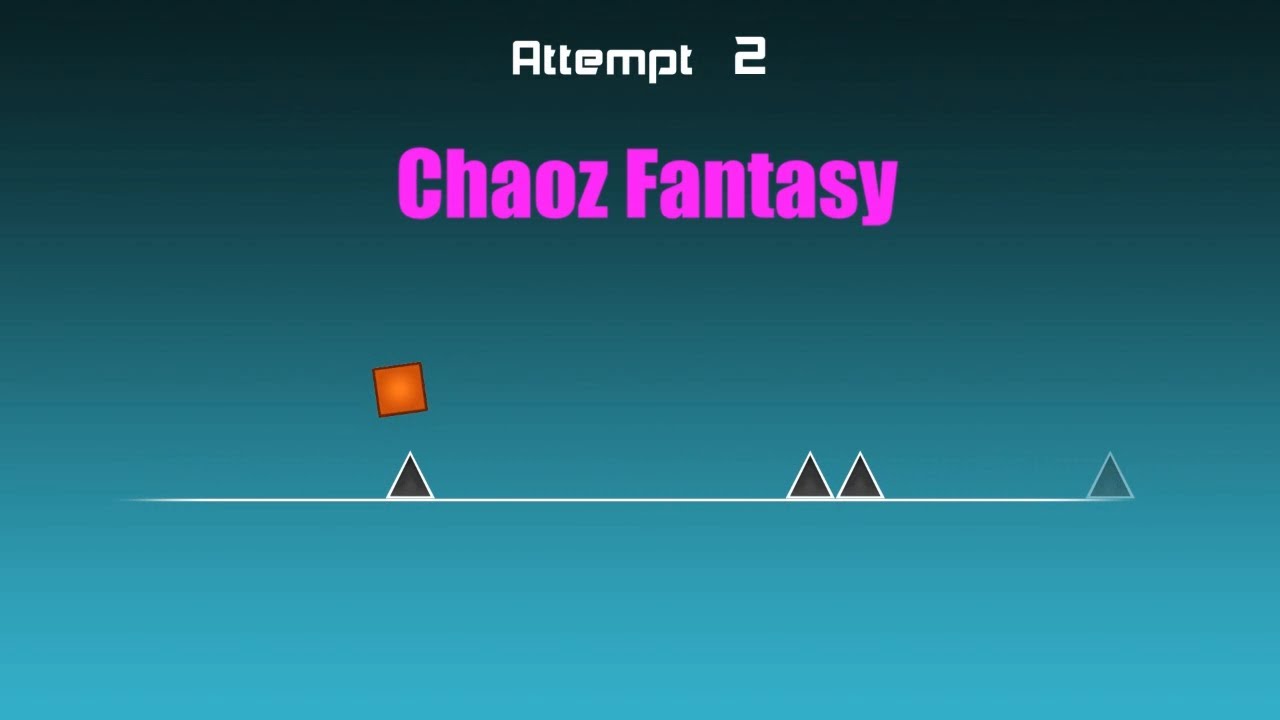
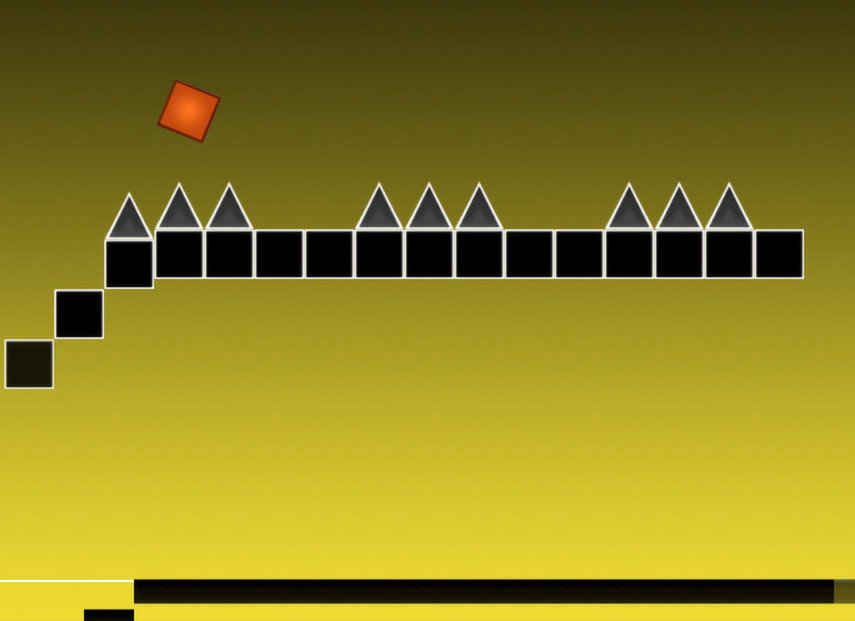
Remember those super-hard games from the 8/16-bit era? Well, it’s come back to haunt with this little game that is so simple in design yet so hard in execution. You guide an orange block over spikes and pits to the end of the level. All you do is tap to jump and hold to do quick jumps. It sounds simple, but the levels are brutally hard because they require precise skill and focus. There is a practice mode that lets you drop the flag with a touch of a button, and when you die, you respawn there instead of at the beginning of the level.
Of course, you can delete these flags if you spawn one in the wrong area, but man, this game is almost impossible! The game has a nice soundtrack that flows with your jumping, but most people will hate this game due to its high difficulty level. All I have to say is that hardcore platformer fans will die for this game and love it. All I wish is that there was an easy mode or something, but there’s a lot of great game here for a buck.
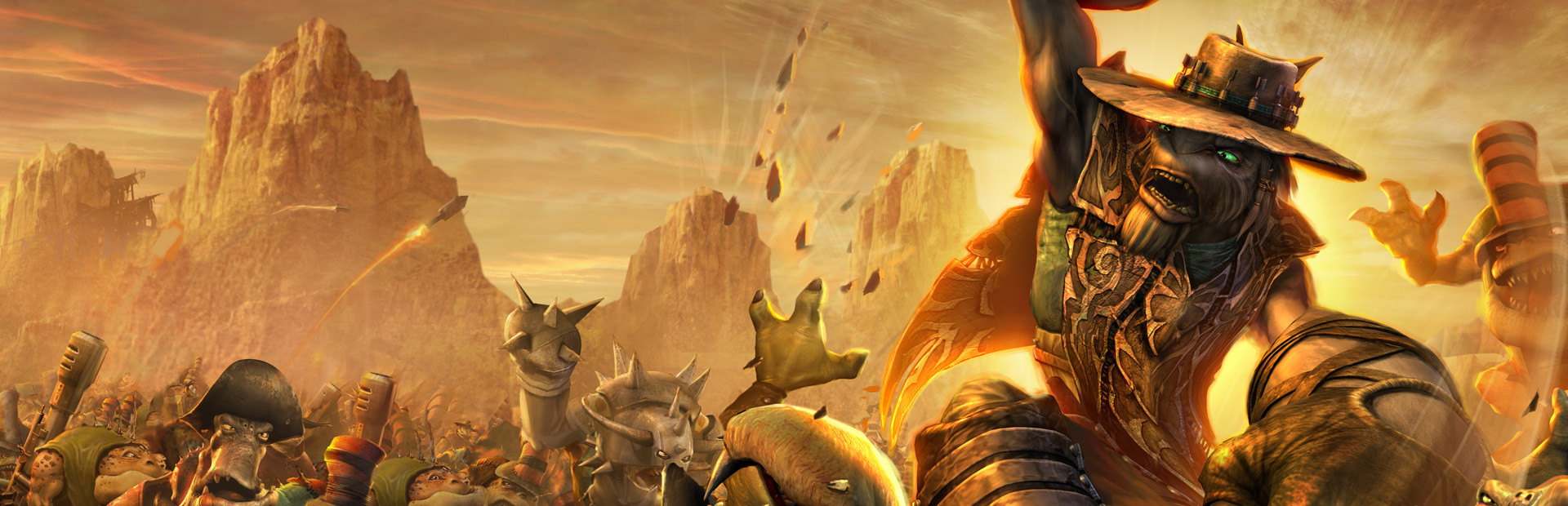
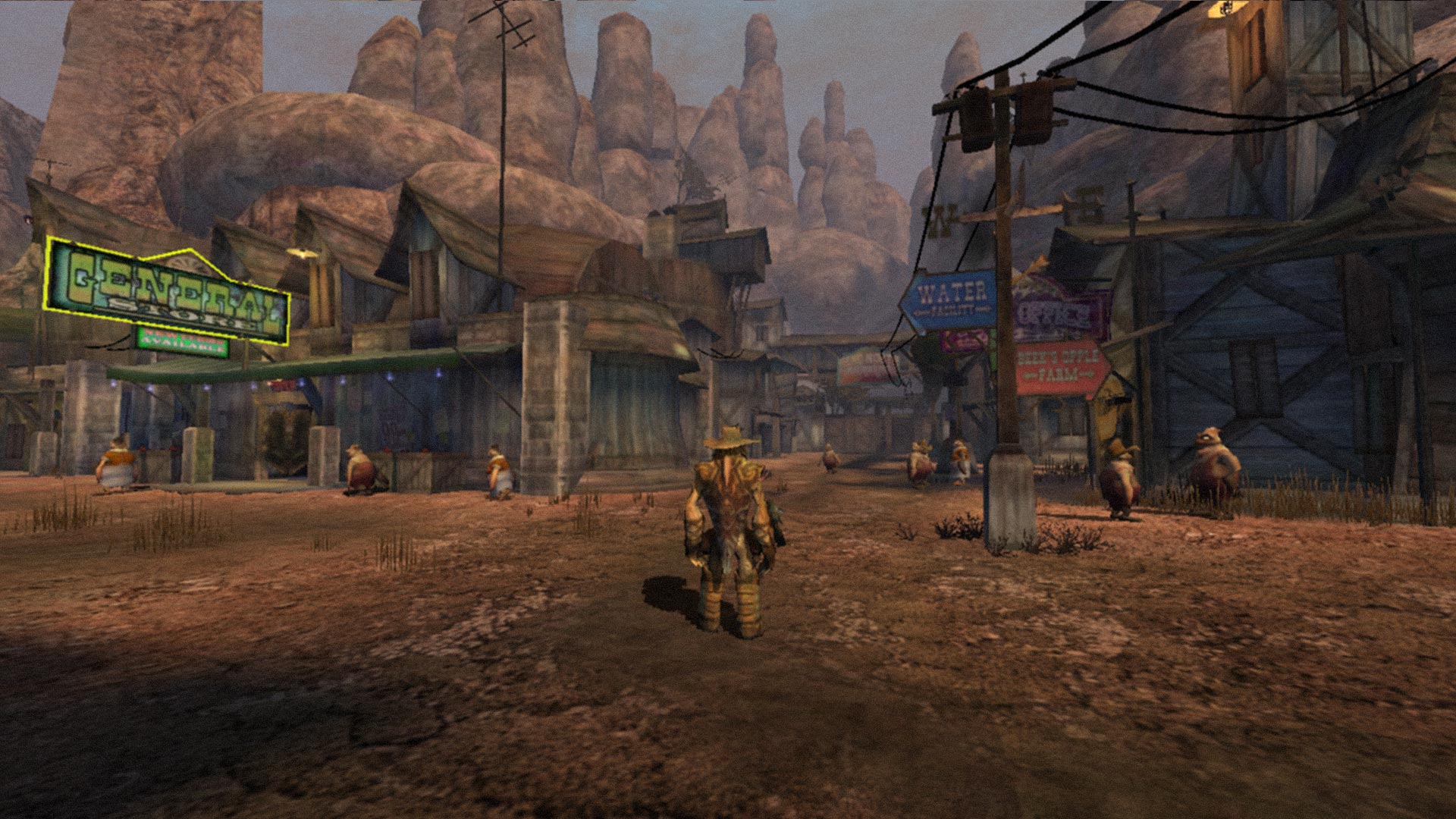
While the Oddworld series may have been dead for years now, the last creation from Lorne Lanning is a great opus. While the series hasn’t been perfect gameplay-wise, it instills great characters, humor, and a unique art style that can be recognized from the series. Stranger’s Wrath was a cult classic Xbox hit but saw poor sales (as did most of the Oddworld games) due to its quirky style. You play as a bounty hunter named Stranger, trying to collect enough Mulah (money) to get a mysterious surgery performed. The story doesn’t get interesting at all until the end, but there are two key plot twists that really throw you for a loop and make the story worthwhile.
The game is split up into two parts. The first half of the game has you finding 12 different wanted bad buys and wandering around the linear world to find them. The thing that made Stranger’s Wrath so unique was its shooting mechanic. Unlike most shooters, Wrath has you shooting critters as your ammo, and you even have to gather them in the wild. A few ranges from Zap Flies have unlimited ammo and can be charged. Boombats are explosive, Thud Slugs are like shotgun shells, and so on. Each critter will eventually be upgraded in the game, but this is a unique approach to shooters that has never been done since.
Most of the time, you can try to sneak your way around and bounty up bad guys, but the stealth mechanics are pretty broken. You can hide in tall grass and lure the bad guys to you, then wrap them up to get them alive (for more bounty), or just run and gun and kill them all, but you get less bounty. While the shooting may be unique, it doesn’t really know what it wants to do. There’s ammo for stealth, but it’s not good enough for run-and-gun action. Finding ammo in crates helps, but you will constantly try to decide which ammo type is best suited for the situation. You can equip any two at the same time for combos, but you can’t shoot them at the same time. I would have liked to see some sort of combo element implemented with that.
The second part of the game lets you have more powerful melee attacks and is all about running and shooting, really. You get the upgraded ammo types, so this is possible, but the game’s difficulty is ruthless, and you will die a lot. Thankfully, the game has a quick save feature, so this alleviates it a little bit. I just felt that this game should have stuck to either a platformer or a shooter because switching from first to third constantly can be a bit disjointing, and even jumping around and climbing is difficult because it feels like all the physics in the game are very floaty.
The second part of the game lets you have more powerful melee attacks and is all about running and shooting, really. You get the upgraded ammo types, so this is possible, but the game’s difficulty is ruthless, and you will die a lot. Thankfully, the game has a quick save feature, so this alleviates it a little bit. I just felt that this game should have stuck to either a platformer or a shooter because switching from first to third constantly can be a bit disjointing, and even jumping around and climbing is difficult because it feels like all the physics in the game are very floaty.
Overall, the shooting mechanic is very unique but works against itself, and the game doesn’t know if it’s a third-person platformer, stealth game, or run-and-gun first-person shooter. If it stuck to just one, the game would be better, but it is a cult classic and shouldn’t be missed if you never owned an Xbox.
“Fatality!” “Finish Him!” “Flawless Victory!” “Get Over Here!”. These are just some famous quotes from the infamous Mortal Kombat that everyone knows and remembers. What everyone mainly remembers is the fast-paced fighting that has been missed since 1995’s Ultimate Mortal Kombat 3. It’s been over 15 years since we got a really good and classic-feeling MK game, but it’s finally here and back with all its bloody gore. Yes, the game is still in 3D, but it’s what fighting fans like to call “2.5D.”. The game plays with a 2D feel, and as soon as you start hammering away on those classic moves and combos, you feel the nostalgia seeping into your blood.
The most surprising part of the game isn’t the new level of gore, but the amazing story mode. Yes, Mortal Kombatactually has an awesome story mode that plays out far better than last generation’s story modes. Instead of some ridiculous adventure mode or scrolling text, we get a fully acted, scripted, and voiced story about the actual Mortal Kombat tournament and a backstory on almost every classic character. The voice acting is actually good, and Netherealm Studios actually took the time to bring out each character’s personality, such as Johnny Cage’s smart lack of Hollywood attitude. Liu Kang’s eagerness, Kung Lao’s jealousy, and Sonya’s hotheadedness. The story is done beautifully, despite picking up where Armageddon left off. Raiden travels in time to his past self to stop the destruction of Armageddon. There are plot twists and even some seriously tense moments in the story that are quite gripping. I can actually say it’s the best story mode in any fighting game ever made.
However, fans came for the fight, and this seriously delivers. Not only are the animations smooth and great to look at, but the controls are as tight as ever. The game responds without any delay, and that’s what a fighter is all about. Not only is the usual gore back, but the game just packs a serious punch and feels punchy. The hits transfer amazingly well into feelings, and that’s never been done in an MK game before. The newest things brought to the series are X-ray moves. Fill your supermeter up all the way, and you can execute an extremely brutal move that shows your opponent in X-ray vision, and you can see bones crunch, snap, and organs burst. The anatomy is done superbly well, with muscles, organs, and everything else in the right place. Each character has its own special skeletal structure, so it stays true to the anatomy. I say bravo on Netherealm’s part instead of doing it cheaply.
This supermeter actually does one other thing that I love, and these are enhanced moves. Forget the crap from the DC Universe completely. When you fill one section of the meter up (it fills up faster when you are getting your butt whooped), you can do the special move while holding down the “Attack Modifier,” and it’ll change the super move up a little bit and make it more powerful. For example, doing Jax’s Gotcha Grab will only do two hits, but if you enhance it, he’ll punch them five or six times and do more damage. Do Scorpion’s Spear Throw, and he’ll throw two out for extra damage. These are great, and each special attack has its own unique enhancement. This is great for strategists who want to give their fight a little extra kick. The second thing you can do with the meter is the usual breakers, but this requires two pieces to be filled.
For the first time, tag teaming was put into the game, and it works just as great as you’d think. Each character has a special tag-out move, and it makes the game more intense and just that much more fun. Of course, the single-player story mode will have you fighting against two people for a challenge, but when you play online or with a friend, it’s an absolute blast. Of course, this could have gone all wrong, but the team learned from games like Marvel vs. Capcom to get it right. This is just one more feature the team got right but could have gone horribly wrong or made the game too unbalanced.
The Fatalities are gory, and each character has two plus a stage fatality combo. Each character’s fatality can be viewed in the move list in the pause menu, but you have to unlock the second one in the krypt (more on that later). One thing I have to mention is that Babalities were brought back, but only certain characters can do these. These haven’t been since UMK3! When it comes to fighters, there are no characters in here past UMK3. Classics are only here, and that’s for the better. You won’t see Kenshi, Kira, Drahmin, Hsu Hao, or any of those guys, but there will be DLC add-ins later on, so who knows? Each character is beautifully rendered, and they fight just like you remember, so fans can feel relieved about that. There is one new character, and that is Cyber Sub-Zero, to tie into the story mode, and he plays differently from the regular Sub-Zero and has some unique moves. Kratos is also an exclusive character for PS3 owners, and he plays just like he does in the games, complete with some quiet time buttons and moves from God of War III. He even has his own unique stage, with three different stage fatalities to choose from.
Mortal Kombat has always been known for adding a ton of content since Deadly Alliance, but this time you’re going to like the extras. The Krypt is back with just one type of currency this time around, and the Krypt has five different sections. Each one has uniquely animated item containers, and some are extremely gross, brutal, and gory. I won’t spoil it, but it’s very creative. My favorite extra is the Challenge Tower. There are hundreds of challenges that consist of fights that have different parameters, such as zombies coming toward you, and you have to use Johnny Cage’s special Energy Ball move to kill them before they get to you. There are so many that I would spend days explaining them, but they are great fun, and you earn currency doing them. One thing I wanted back so bad were the mini-games Test Your Might and Sight last seen in Deadly Alliance. They are back, just as great as before, but two new ones were added. Test Your Strike is just like Might, but you have to hold the meter inside a box for a few seconds before striking. Test Your Luck has you spinning a wheel and deciding the fighter and fighting conditions for you.
Lastly, Kombat Kodes was brought back last seen in UMK3. For people who don’t know, each character gets three boxes during the loading screen, and there are different codes such as headless combat, armless combat, dream combat, upside-down combat, X-rays disabled, blocking disabled, and it just goes on and on. These are used a lot in the challenge tower that I was talking about, but having them in VS is a blast. Lastly, the online modes are a must-have for any fighter these days, and MK was the very first one and seems to be one of the best. While Tag Team and regular 1vs1 are expected, a new King of the Hill mode lets you pick an avatar and puts everyone in a room that looks like a theater. The winner keeps fighting everyone in the room until he loses, but people can rate the fight based on a number score and can even cheer or boo the fight. This is a fun mode and is greatly welcomed.
My only big issue with the game is that the combos aren’t as crazy as in MK3, and you still have to memorize most of them, and a lot of people don’t like that. This still really isn’t a button masher, so strategic minds are still needed to fight well here. I really wanted to see more crazy combos that aren’t complicated to pull off, but if you are hardcore enough, you will find a way. Besides that, there really isn’t too much to complain about unless you want to gripe about characters from MK4 not being included.
Besides all this amazing content, the game looks superb using Unreal Engine 3, and every background is greatly animated, and they are all from classic MK games all the way back to the first one. The classic Stage Fatalities are also back, but they are upgraded to pack more punch and are gorier. Overall, the game looks and sounds amazing, with lots of content to unlock and many modes to play. This is probably one of the best fighting games of this decade so far, and it is definitely my pick for the best fighting game of the year.
Kollector’s Edition: For hardcore fans, an extra $40 gets you two beautifully crafted bookends of Scorpion and Sub-Zero in gory Kombat, Ermac’s classic outfit, a well-put-together art book, and PS3 themes and avatars. The big box is also nicely made if you want that too.
Tournament Edition: For an extra $90, you get a wonderfully created arcade stick, but it does not come with any of the other stuff besides the extra outfit. It’s up to you which one you get, but I preferred the Kollector’s Edition since the stick can be bought separately elsewhere.
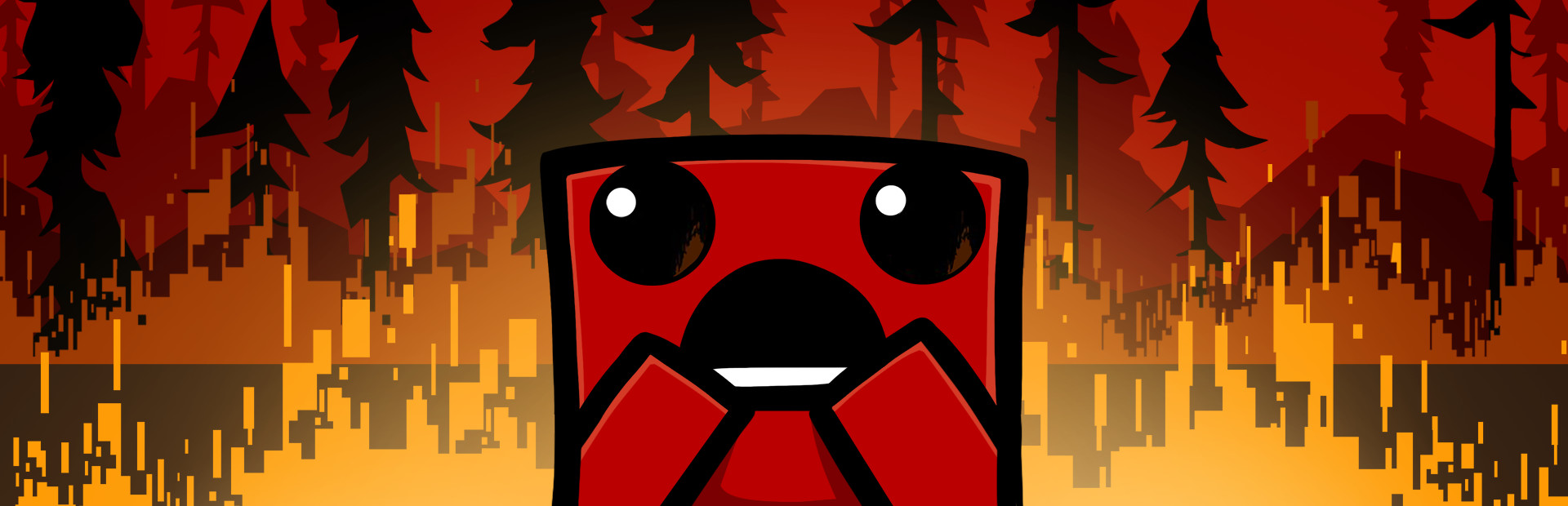
2D platformers are always compared to a 20-year-old game known as Super Mario Bros., and they have every right to. That game was flawless and literally created the 2D platforming genre. Super Meat Boy is probably the only game in recent history that comes close to that kind of pixel-perfect jumping and tight, responsive controls. SMB also has a ton of humor infused with it, and the game is a blast to play and highly addictive.
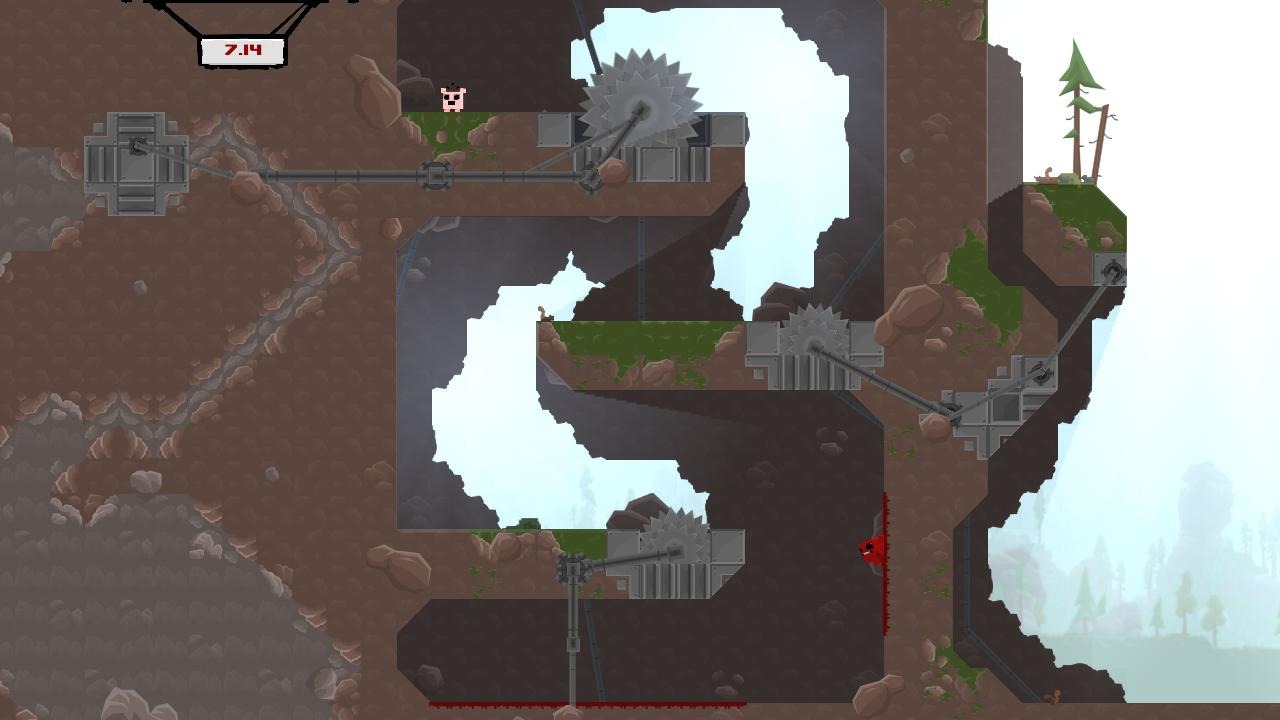
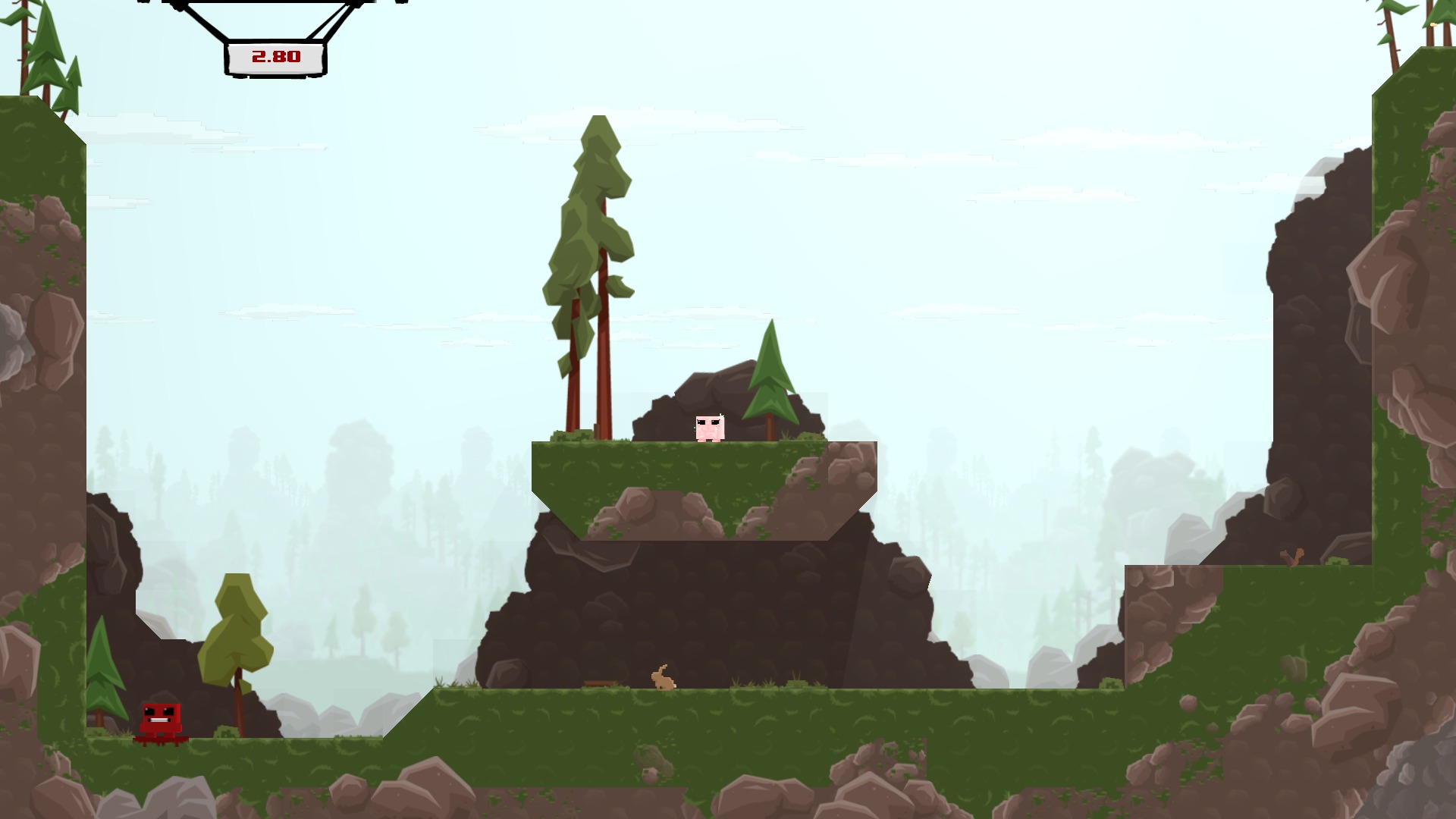
You play Super Meat Boy, who is trying to save Bandage Girl from Dr. Fetus. It’s a simple story, but it’s hilarious, and the cut scenes are drawn beautifully. The art style is very unique, and there’s so much detail infused in this game that it’s nuts. When SMB gets destroyed, he splatters his meaty goodness all over the walls, and it stays there. He makes a splooshing sound when running, and his facial animations are very funny. There are other characters you can unlock by completing warp levels, and these guys are just as detailed and have their own unique abilities.
The controls in the game are what really surprised me. They’re just absolutely perfect. They are super responsive and tight, and it feels like you’re controlling the characters with your fingers instead of buttons. Using the Games for Windows controller (or any other) is essential, but the keyboard works too. Jumping around corners and maneuvering through the game’s brutal levels can be conquered thanks to these tight controls. I’m dead serious about the game being hard because every corner and jump require extreme precision, or you will die 30+ times. Oh sure, you’ll die that many times thanks to a quick reset button that has zero loading. What’s cool is that after you beat the level, you get to see a replay of every time you died, so every SMB goes off, and you can follow them until the last one makes it. It’s awesome, unique, and makes you want to watch every replay and save them for friends to laugh at.
The warp levels bring the graphics back to 8-bit with amazing music and tend to be more challenging than the regular levels. Usually, you get to play the characters you unlock, but gameplay varies at these levels. You can also find bandages in the regular levels, but these require extra-extreme precision (if that’s possible), so this game is really for hardcore gamers only. Casual gamers will give up quickly, and there are no difficulty levels to set. From the frantic boss fights to the constant dishing out of new obstacles to overcome, the game ramps up after the first few stages, so you must stay on your toes.
With a crap ton of charming visuals, catchy music, and perfect controls, the game shines above all other 2D platformers. It wouldn’t hurt to say it’s probably the best 2D platformer in the last decade, but the brutal difficulty is very forgiving thanks to the feeling of accomplishment once you trump that level. Try beating the record time to feel even better about that victory! I highly recommend SMB to any platforming fan or even fans of the 16/8 bit eras.
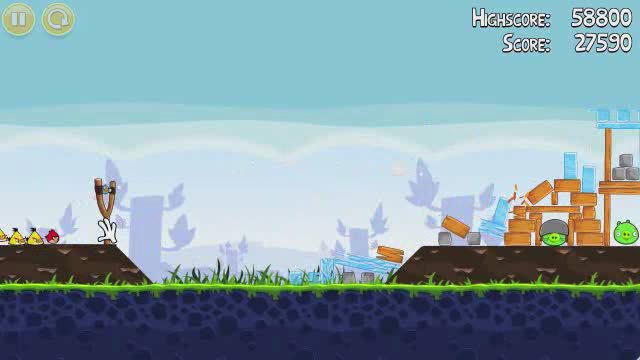
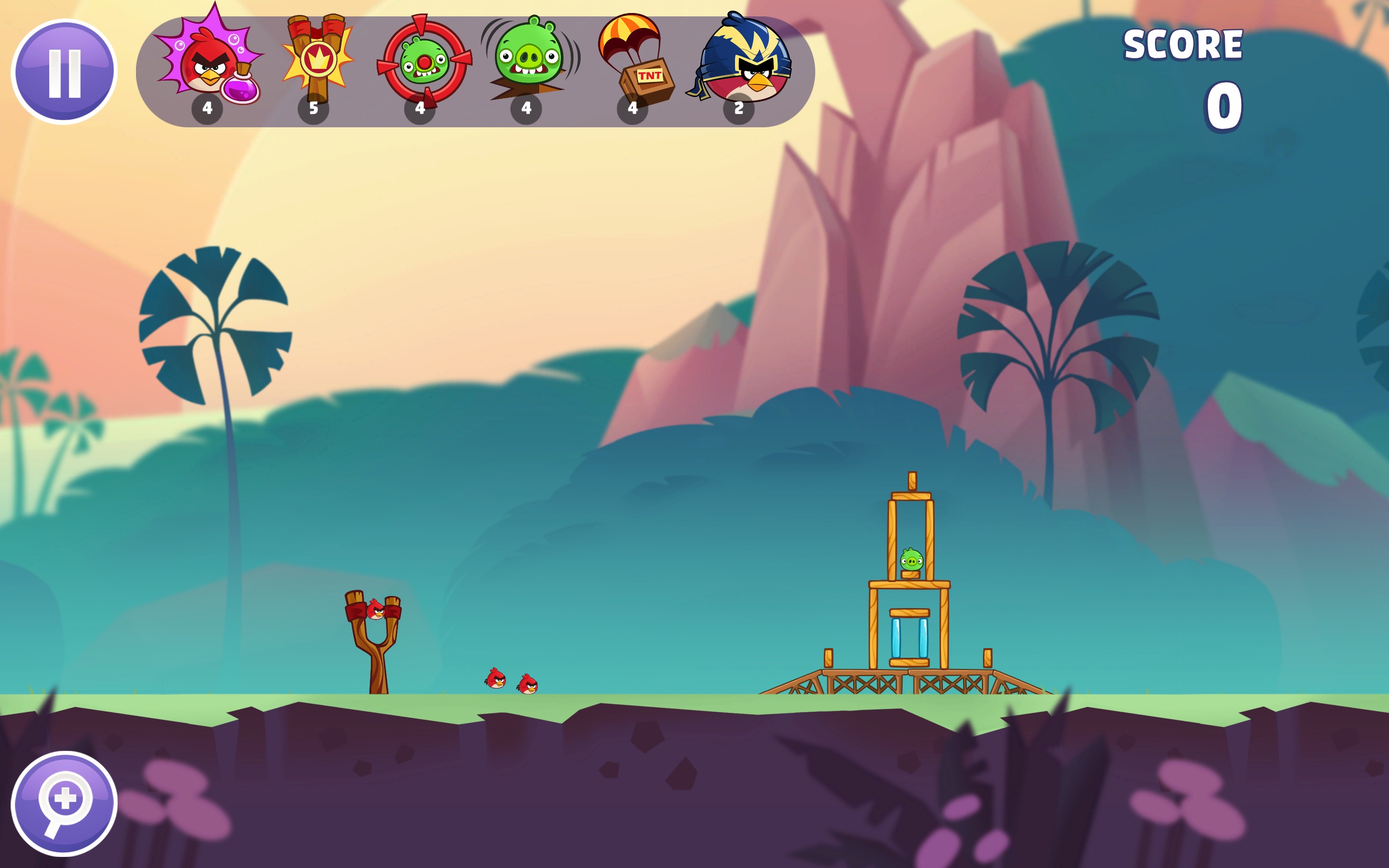
Physics games tend to be very popular on the App Store, and Angry Birds is one of the best among them. The idea is to flick birds off a slingshot and have structures crash down around the evil pigs. There are various types of birds, such as one that spreads into three when you tap it, one that goes really fast, one that doesn’t do anything but cause damage, and a few other types.
At the start of each level, you get shown what you have to bring down, and then you drag your finger to move to the slingshot. You can’t see where the structure is when looking at the slingshot, so this provides a challenge but also a lot of trial and error. Trying to find the weakest points in the structures can be painful and tedious since you never feel like your birds are strong or heavy enough to do a good deal of damage.
You get rated at the end of each puzzle for how many birds you have left and how much damage you have caused. Once all the pigs are dead, you clear the level and move on to the next. It seems that there is no consistent difficulty increase, and it just seems to be all over the map. The art style is nice and it feels fluid, but the sounds are really annoying.
Overall, Angry Birds is an excellent physics game and well worth your dollar.
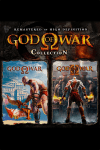
What happens when you put two of the best action-adventure games created on one disc? Ultimate satisfaction. Both God of Wars have been updated in widescreen format with slightly polished visuals for HD display and running at a lightning-fast 60 FPS. If you bought the game new, you will have received a code to download the God of War III demo, but as of now, this code is useless since the demo is now on PSN and the game is due out in just over a week. Other than that, nothing else has changed for the PS3 except trophies, which were the main drive for me to purchase these games all over again. So here is a separate review for each game.
God of War
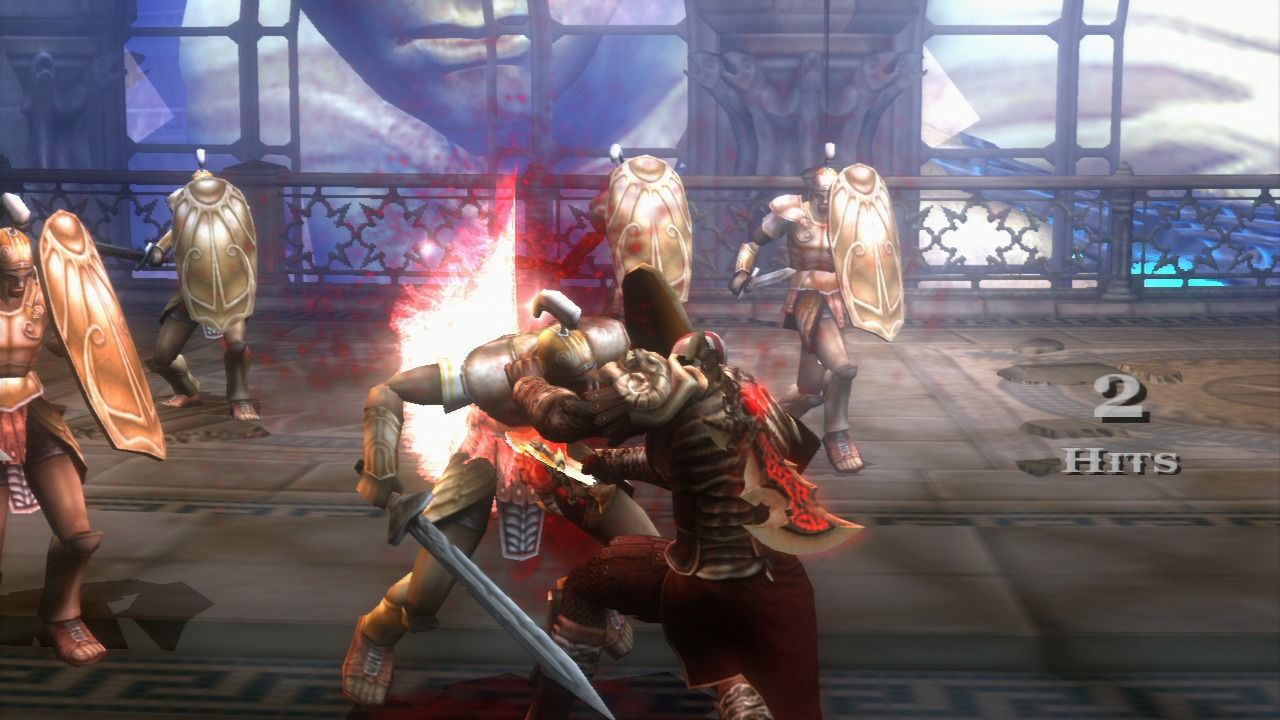
Being released in 2004, it does feel a bit old. There are more flaws in this game than in the first, but let’s start with the good things. Apart from revolutionizing games and the action-adventure genre single-handedly, the game is amazing and epic. The game is full of huge towering bosses, waves, and waves of enemies, a deep, dark story full of Greek mythology, a fluid, almost perfect combat system, and boobs. Yes, that’s right, boobs. At the time of release, I had never seen a game with so much nudity before, but it shouldn’t really shock gamers as much these days. The game also has some very intricate puzzles that end up being whole levels that you have to solve, such as Pandora’s Temple. The combat system is pretty fast and fluid on its own.
With Kratos whipping his Blades of Chaos around, you feel like you have complete control over him. Another combat element that revolutionized games was quick-time events. After weakening an enemy enough, you press the corresponding button (usually a circle) over them, and a series of buttons flash on-screen. If you don’t press it on time, the enemy knocks you down, and you have to start over. Of course, you can just kill them normally if this gets dull for you. The best QTEs, however, are during boss fights. It just feels awesome to plow a mast through a 200-foot-tall Hydra. Now you do need to realize that there is magic here as well. You get four different powers throughout the game, such as Medusa’s Gaze (freeze enemies), Poseidon’s Rage (shock), and Hade’s Army (souls that continuously attack enemies). These, plus your weapons, can be upgraded by collecting red experience orbs. As you upgrade all your items, you get new moves and increased power. If you’re asking about your health and magic, you can collect Phoenix feathers and Gorgon eyes for magic and health, respectively. These are all found in hidden chests throughout the game, so keep an eye out.
The camera is fixed, so it frees up the right analog stick for dodging moves. The camera does a perfect job of following the action without any problems. Sometimes you can scale up walls and even fight there or on ropes. Combat is pretty much anywhere Kratos goes, and this keeps things mixed up. The level’s traps and puzzles are very well designed and require you to really think or be on your toes.
The story is very deep and memorable. We see Kratos as a fallen Spartan leader who gives his life to Ares if he slays the barbarian leader who is about to behead him. Ares makes Kratos his servant for eternity, but Kratos becomes a raging killer who kills the wrong people. He becomes set on a path to free the nightmares from his mind and kill Ares in the process.
If I were to nitpick about what’s bad about the game, it’s that the game looks kind of dated from today. The textures are a bit low-res and blurry, and there are some collision detection problems when jumping around. The game is also extremely difficult to play, even in the normal setting, so God Mode becomes virtually impossible. The game has a decent length of about 8–10 hours, but other than that, the game is great for the first outing. If you finish up the game, you get to unlock hidden costumes, Challenge of the Gods, and some other hidden treasures.
God of War II
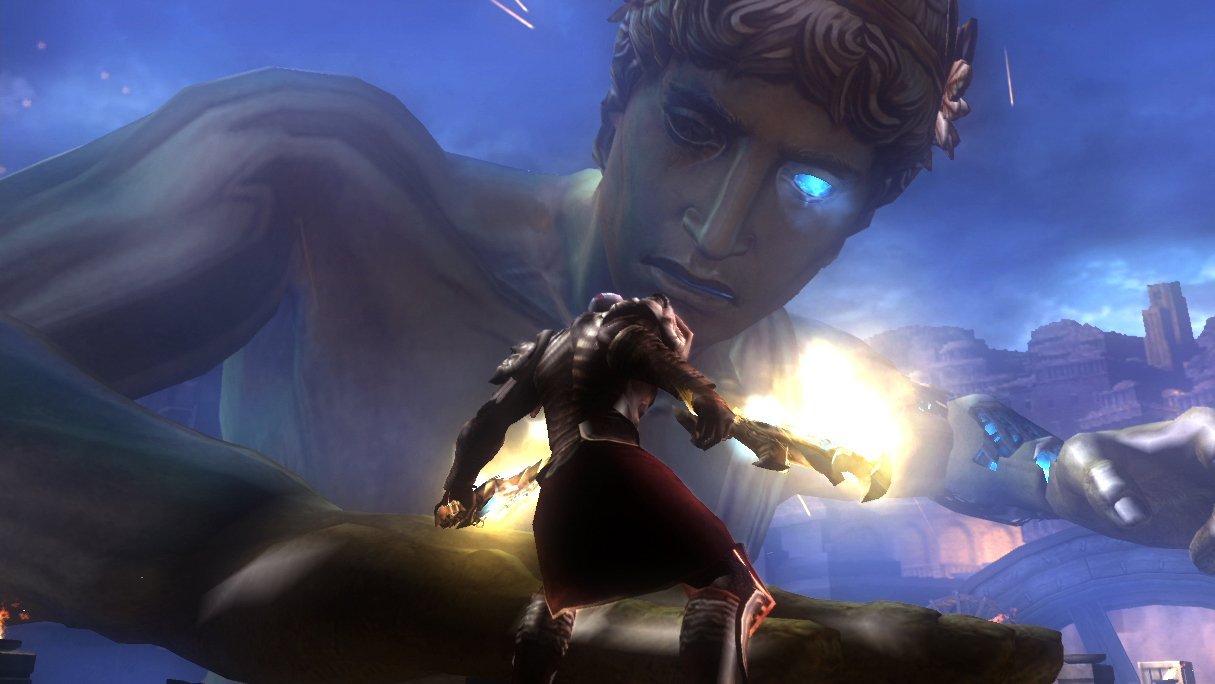
If you think the first game was epic, wait until now. With visuals that surpass the first game twofold and even more huge epic bosses, God of War II became the best game to ever grace the PS2. The story follows just after the events of God of War. Kratos is still sent on a warpath to avenge his nightmares and kill Zeus for killing and betraying him. He must find the Sisters of Fate, turn back time to the moment Zeus betrayed him, and kill him.
The combat system is slightly upgraded but pretty much the same. It feels a bit more fluid, and we even get some more moves. The controls are a bit more refined, and we get new powers. We get some new secondary weapons, such as a hammer and staff, that can be upgraded. The puzzles aren’t as hard as in the first game, but there are a lot more of them this time around. The game also seems to be a bit harder, with even tougher enemies. We get a new grapple hook for swinging around, so this adds a lot to the gameplay. The game also feels more fluid and has a lot more epic moments than the first game, but most of these come towards the end of the game.
While God of War II is pretty much like the first, all the new content makes it an epic and thrilling sequel. The only issues with the game are that it looks a bit dated, and the game can be very tough at times as well. The game is about the same length as the first, but the game obviously feels and plays five times better than the first game. There are plenty of extras, as well as a full-length version of the section on the disc for God of War II.
So if you think all this sounds good, you can now pick up the game brand new for $30. $15 apiece for two of the best games ever made is a great bargain to me. With a separate set of trophies for each game, HD resolution, and faster FPS, this is a huge package that is exploding with awesomeness. God of War Collection is probably one of the best deals to grace consoles since The Orange Box, so don’t hesitate; every PS3 owner has to have this collection or you aren’t a true gamer.



















































 thebinarymessiah.com
Try multiplayer. A lot of fun !