The echo series is a very cerebral puzzle series that really is not for everyone, and echoshift is no exception. The game just makes you really think and screws with your perspective in a way that requires a lot of trial and error, and mainly memorization.
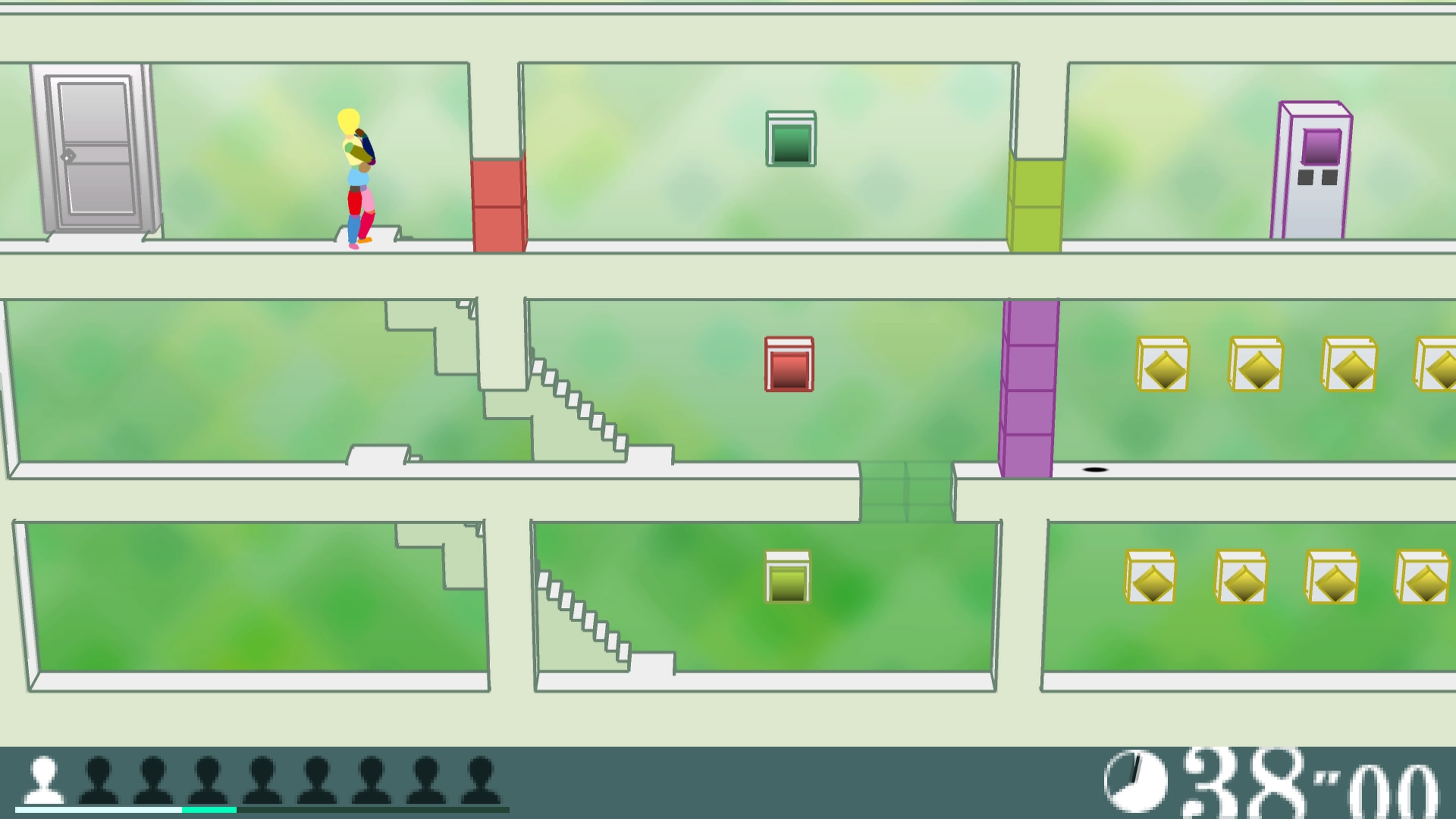
echoshift lets you directly control your echo, but this game uses a time mechanic instead of perspective. Every level is a 2D side view, and you are mainly pressing switches, walking through doors, and basically trying to find the fastest route to the exit. You get 50 seconds for your first echo to try and clear the way. Then your echo will do what you just did. This is the key element in echoshift to solve puzzles, since you can’t always solve them in 50 seconds.
Let’s say you have five sets of switches, but you can only do three in 50 seconds. There are 5 blocks on each set, and only one is the right switch. You would have your first echo solve three, then while that echo redoes what you did, you go solve the third (the final switch your last echo will press), and then you solve the last two. Confused? I don’t blame you since it takes a lot of critical thinking to get these 50 or so levels solved. You get rated on how many echos you had to use, and if you beat the level, you can go back and solve the version to find the key, which really has no purpose.
The graphics are very simple, just black and white, and all the items you interact with are in color. The game is also very slow-paced, so only the patient will find any fun in this game. Echoshift is one of those rare puzzle games that makes you think so much that your brain will explode, and I can’t stress this enough. There were times when I was too tired to think to play this game, but it gets the thinking juices flowing and can be a good exercise to get into the flow of school or any office work.
Real-time strategy games are one thing, but when you add the words fat, princess, and cake to the title, it becomes something magical. Fat Princess is an RTS that really makes your adrenaline pump. You have different classes such as warriors, wizards, priests, workers, etc., but call this game an RTS lite because the game is all about action.
The main story consists of 15 levels, and each one is different and super fun, with a very interesting fairy tale story that is being told. You slowly unlock different units to use, but how you use them is key. Each unit can be upgraded to use different weapons, such as the warrior, who can use a halberd, the archer, who can use a gun, and the worker, who can use bombs to blow up structures. Your main goal is usually getting the enemy’s princess into your dungeon, so think of this as capturing the flag. You can feed your princess cake to fatten her up so it is harder for the enemy to take her away. The enemy will also try to build ladders near your castle or find shortcuts, so watch out.
Workers have two different resources for upgrading “Hat Machines” or completing different objectives that require them. You can gather wood and metal by hacking away at it and carrying it to your base. Most resources will grow back after a few minutes, but it’s a fight for the best areas. You can capture command posts as well to keep a firm hold on the map.
But like I said, the game is about action, so unit building and all the resource gathering are faster. Each unit is AI-controlled, and you can call some guys to fight by your side and help you escort the princess. You can call an archer, a warrior, or a priest who will have hearts under them, and you can move faster. If the enemy’s princess is too fat, however, you can’t carry her at all.
The fun part about Fat Princess is how the tide of the battle is a tug of war and can be really intense. Choosing what to do is up to you. Do you want to help heal everyone as a priest? Help upgrade the hat machines. Do you want to charge right into the castle yourself and get the princess? While the AI-controlled guys may have some issues going online via infrastructure, that is the icing on the cake. Playing against real people can be a blast since they pretty much know what to do.
Besides all this, you can customize the units of your people and do skirmishes, but other than that, the game is light on modes and extras. Fat Princess is chock-full of internet quotes and game-related nuances, so there are laughs all around. Fat Princess is a wonderful light RTS for pick-up and plays action. Plus, the game looks and sounds great on the PSP and doesn’t lose anything from the PS3 port.
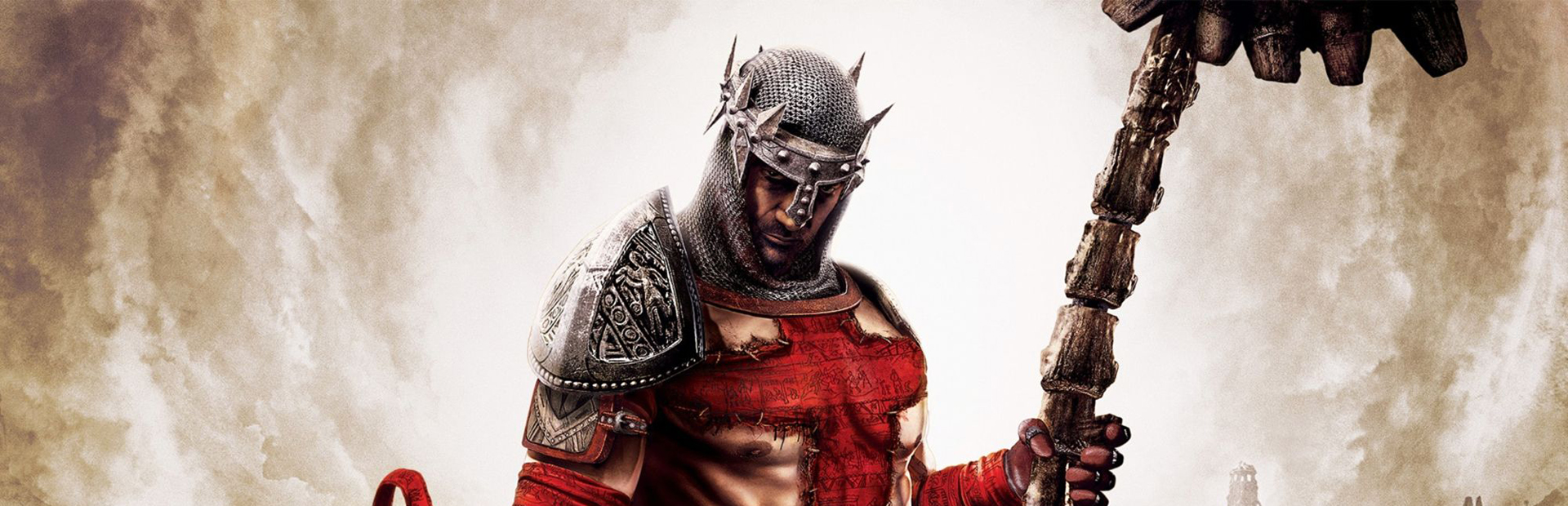
The first thing you will notice when you play Dante’s Inferno is that it’s a bold game. The game is one of the darkest, nastiest, and most mature games ever created, and it makes Christianity look like a damned fool. The game is about a man named Dante, who is a crusader and betrays his love, Beatrice. Upon his return to Florence, he sees her dead and watches as Lucifer takes her into hell, and Dante follows. The story is pretty good and keeps you interested, but it’s predictable. The game goes extremely deep into Christian and Greek mythology and pulls out names only hardcore followers would know, but enough of the story, let’s get to the gameplay.
The game has a pretty damn solid combat system. You use your scythe as your main weapon, and you have a cross-projectile attack. You can do aerial combat, launch enemies into the air, and use your magic. You can unlock moves by following the holy or unholy paths (which don’t actually affect the story), and each tree has a different set of moves. You can have four different magic items equipped, and all are useful and powerful. One of the first elements you’ll find that they took away is the relics. They are gone! These really helped you in the console versions, but they are nowhere to be found here. Anyway, the combat system is fluid, fast, powerful, and very deadly. Another element they took away from combat was the redemption meter. Geez, guys, why did you butcher this?! With those two things aside, the combat is fast and as fluid as it is on the consoles.
When it comes to exploration, Inferno both satisfies and disappoints. The game has you descending into the nine circles of hell, and each is harder, more deadly, and more brutal. Some levels are pretty epic, like The City of Dis and Limbo, and some disappoint, like Lust (just an ascending tower) and Gluttony (just fight Cerberus and a few baddies, and you’re down to the next level). The levels are varied in length, and I wish they would have been fleshed out more. Puzzle-solving is pretty rare, and when you do get some puzzles, they are pretty easy to solve. However, most of the puzzles have been solved for you. Yeah why?! Not only this, but a lot of the game’s intense sections are videos of gameplay from the PS3 version. One example is the part when you kill Charon and ride the giant minotaur up the crumbling bridge. You don’t get to play this part; instead, you watch it.
One thing I have to get straight is that the game is pretty epic. Not a God of Warepic, but enough to keep it very cinematic. There are QTEs in the game, such as when you take down a minotaur to ride it, take down bosses, etc. You can punish or absolve most enemies to get fed your tree paths. There are famous historical figures that you find throughout the game that you can punish or absolve upon reading what they ended up in hell for.
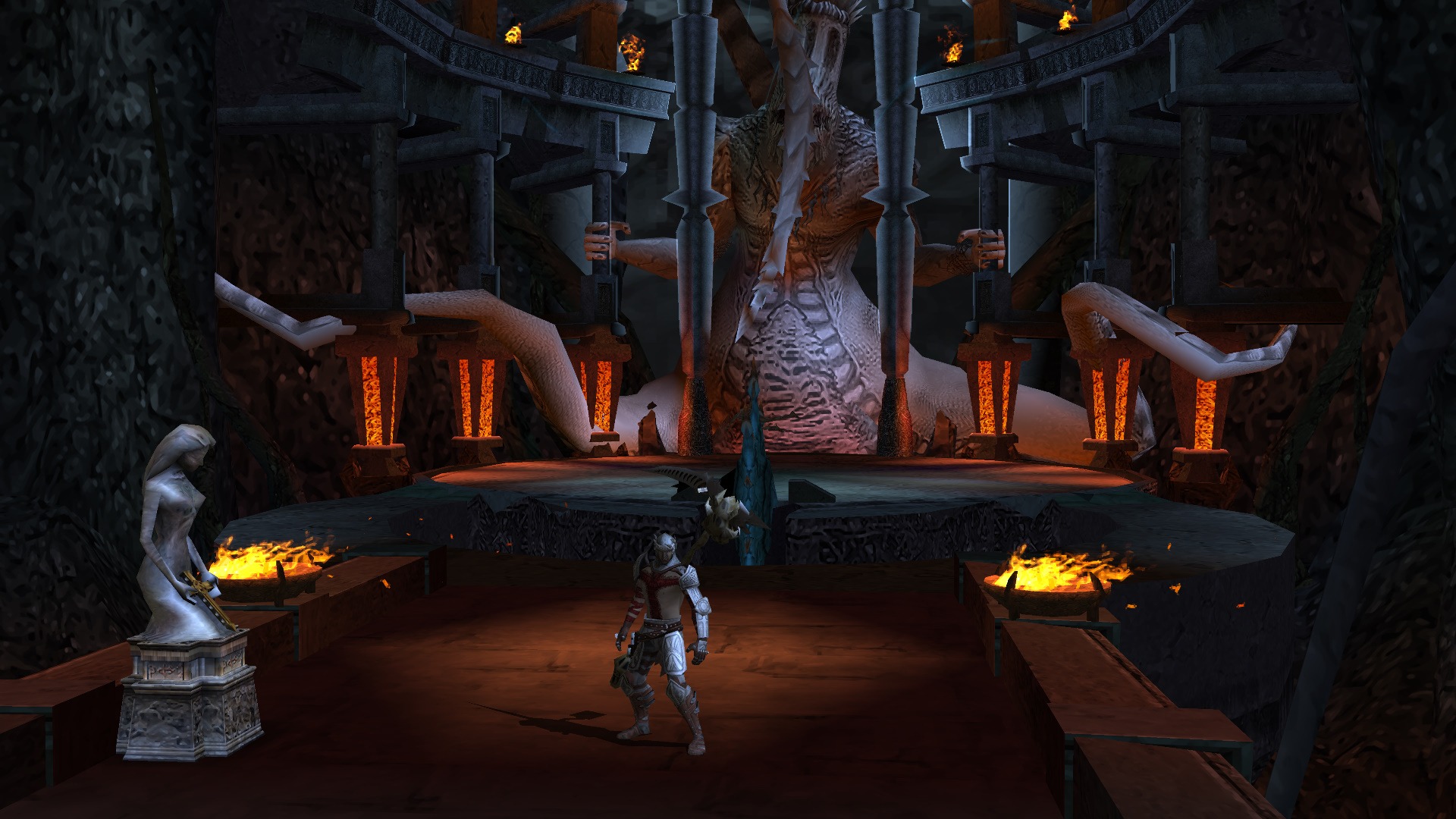
The game’s visual style is very impressive. It’s what you think hell would look like—dark, disgusting, and evil. The gluttony level is a good example since you are walking through the intestines, bile, puke, and so forth. The Lust level has female enemies’ wombs coming out of them to attack you. A giant Cleopatra with tongues coming out of her nipples and evil babies—yes, it’s bizarre, but it works, and it’s amazing to look at. However, on the PSP, it’s obviously downgraded quite a bit, and a lot of the beauty from the consoles is lost in translation.
The game is also extremely difficult, even in an easy setting. Wave after wave of enemies come at you from all directions, bosses are extremely hard to beat, and the game can be very frustrating often. However, the game’s major flaws are mainly the length, difficulty, and the fact that the levels weren’t developed to their fullest potential. So with the flaws of the console still here plus relics, redemption, puzzles, and a lot of other things removed from the game, you still get a solid Dante’s Inferno Lite for people who are on the go or don’t own an Xbox 360 or PS3 (you should!).
The first thing you will notice when you play Dante’s Inferno is that it’s a bold game. The game is one of the darkest, nastiest, and most mature games ever created, and it makes Christianity look like a damned fool. The game is about a man named Dante, who is a crusader and betrays his love, Beatrice. Upon his return to Florence, he sees her dead and watches as Lucifer takes her into hell, and Dante follows. The story is pretty good and keeps you interested, but it’s predictable. The game goes extremely deep into Christian and Greek mythology and pulls out names only hardcore followers would know, but enough of the story, let’s get to the gameplay.
The game has a pretty damn solid combat system. You use your scythe as your main weapon, and you have a cross-projectile attack. You can do aerial combat, launch enemies into the air, and use your magic. You can unlock moves by following the holy or unholy paths (which don’t actually affect the story), and each tree has a different set of moves. You can have four different magic items equipped, and all are useful and powerful. You can also find relics throughout the game that benefit Dante in certain ways. For example, one relic allows Dante to have more powerful throw attacks, one lets him instantly break fountains, one lets him take less damage, etc. These are found by talking to Virgil or in secret areas. Anyway, the combat system is fluid, fast, powerful, and very deadly. If you feel you are getting whomped, you can use your redemption meter, which is kind of like Rage of the Titans in God of War.
When it comes to exploration, Inferno both satisfies and disappoints. The game has you descending into the nine circles of hell, and each is harder, more deadly, and more brutal. Some levels are pretty epic, like The City of Dis and Limbo, and some disappoint, like Lust (just an ascending tower) and Gluttony (just fight Cerberus and a few baddies, and you’re down to the next level). The levels are varied in length, and I wish they would have been fleshed out more. Puzzle-solving is pretty rare, and when you do get some puzzles, they are pretty easy to solve.
One thing I have to get straight is that the game is pretty epic. Not a God of War epic, but enough to keep it very cinematic. There are QTEs in the game, such as when you take down a minotaur to ride it, take down bosses, etc. You can punish or absolve most enemies to get fed your tree paths. There are famous historical figures that you find throughout the game that you can punish or absolve upon reading what they ended up in hell for.
The game’s visual style is very impressive. It’s what you think hell would look like—dark, disgusting, and evil. The gluttony level is a good example since you are walking through the intestines, bile, puke, and so forth. The Lust level has female enemies’ wombs coming out of them to attack you. A giant Cleopatra with tongues coming out of her nipples and evil babies—yes, it’s bizarre, but it works, and it’s amazing to look at. The game is also extremely difficult, even in an easy setting. Wave after wave of enemies come at you from all directions, bosses are extremely hard to beat, and the game can be very frustrating often. However, the game’s major flaws are mainly the length, difficulty, and the fact that the levels weren’t developed to their fullest potential.
DIVINE EDITION: Exclusively to the PS3 is the Divine Edition, which includes a different cover, a fully digital version of Dante’s Inferno, and a free code for the Trials of St. Lucia (which is still not out yet). All of this for the same $60 price tag. The only disappointment was that there was no special book that came with the game that included Inferno. Reading the poem in a small window that is over 30 chapters long is not fun at all.
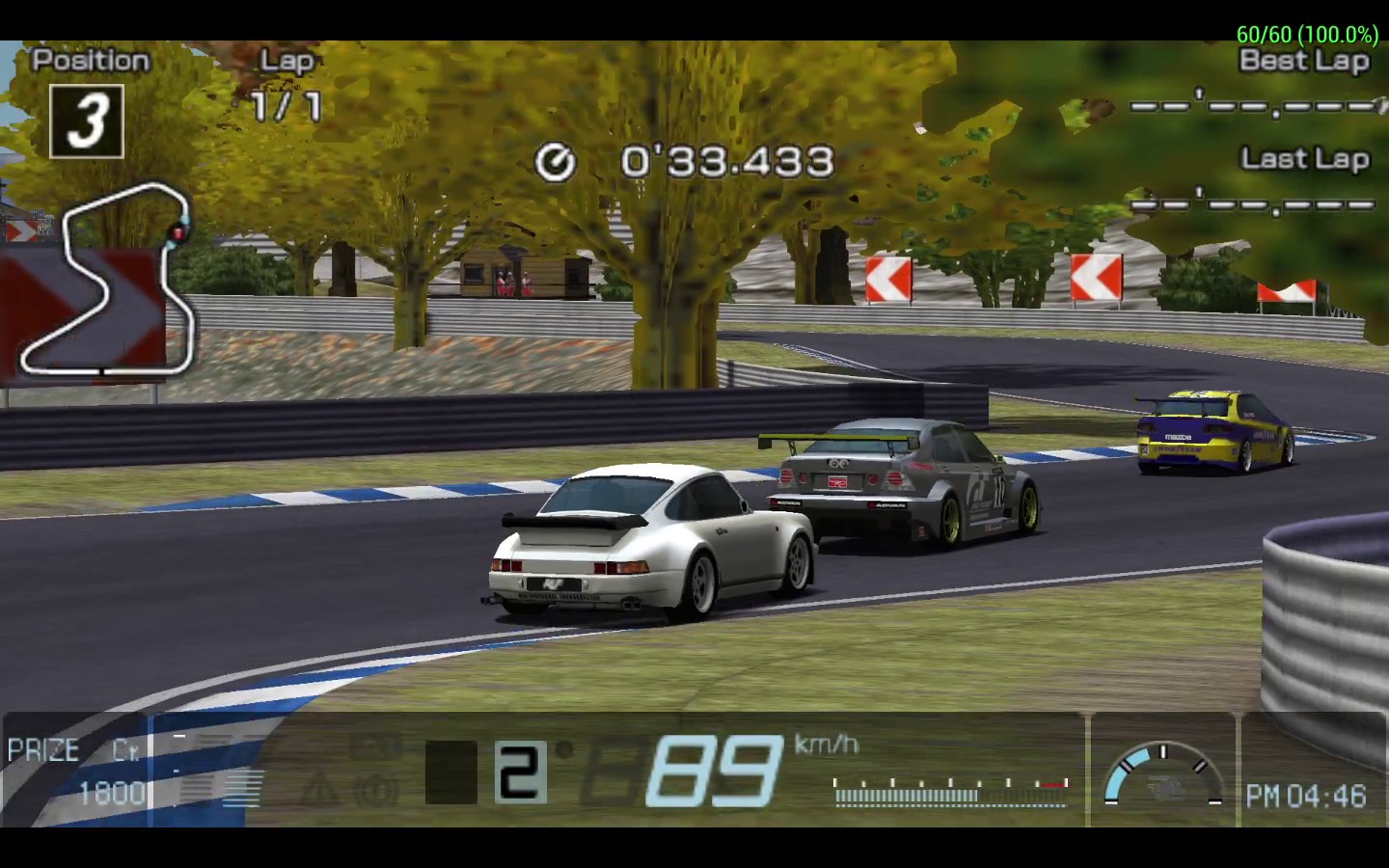
Hate me all you want, but Gran Turismo on the PSP is a huge disappointment. Why? Well, first off, this game has been floating around the vaporware bin since 2004, and now, five years later, we have a half-done game. Where’s the career mode? That’s my biggest question. Instead, we are forced to pick everything ourselves. This doesn’t have anything to do with laziness either. I like my career modes in Gran Turismo, and this is the first game in the series that doesn’t have one. Another thing you’ll notice missing is that there’s no way to upgrade your cars.
Like every GT game, once you start the game, you head to the dealership, but that’s where the problems already start. It’s random. Yeah, you get four or five random dealerships every day in the game. Do you see a car you want? Sure! Normally you just save up for it, but then when you go back, the dealership is gone. Why Polyphony chose this stupid idea is beyond me.
The game also lies in the fact that there are 500 different cars. There are a few models of each different car, so you’re only looking at about 200 or some oddly different types of cars. The game gives you some interesting backstory on each car, but viewing the stats is a nightmare since they just scroll by without a still datasheet or something of the like.
Once you start getting into a race, it’s simple enough. Choose your track, number of laps, and the car from your garage. You can use quick-tune options or do a bit of fine-tuning, but the default works just fine. The number of laps and length of track determine your winning outcome, so you can always change accordingly. If you want money faster, try the license tests. They range from passable to impossible thanks to the game’s new and weird slipstream system. This is only normally seen in street racing games, but GT doesn’t even give you any visual clues as to if you are doing this right or not. The point of the slipstream is to stay behind the opponent so they block the wind for you, giving you a small boost in speed. While it works on paper, it’s very hard to execute in the game.
Once you start racing, you are in for a treat because the cars feel very close to their console counterparts, and it feels like our beloved GT. The game even sports an impressive cockpit view for the tiny handheld that could, not just the floating rearview mirror view we’ve been accustomed to seeing pre-PS3. Each car handles differently, and buying and stocking is a lot of fun, but without a career mode, vehicle upgrades, or even an online mode, it makes you wonder why they even bothered. All of the most beloved features of GT have been stripped out as a joke to us fans waiting for GT5.
When it comes to the looks the game delivers, I know it could be pushed just a bit further. The vehicles look like no other racer on the system, but the tracks are lacking a bit. Still, the game accomplishes a lot more than most PSP games ever have. The audio, however, is also a bit of a disappointment, with a dull soundtrack, and a lot of the engine sounds sound the same as well as sounding a bit tinny. This is probably for hardcore fans only, so fans of other PSP racers should stay away.
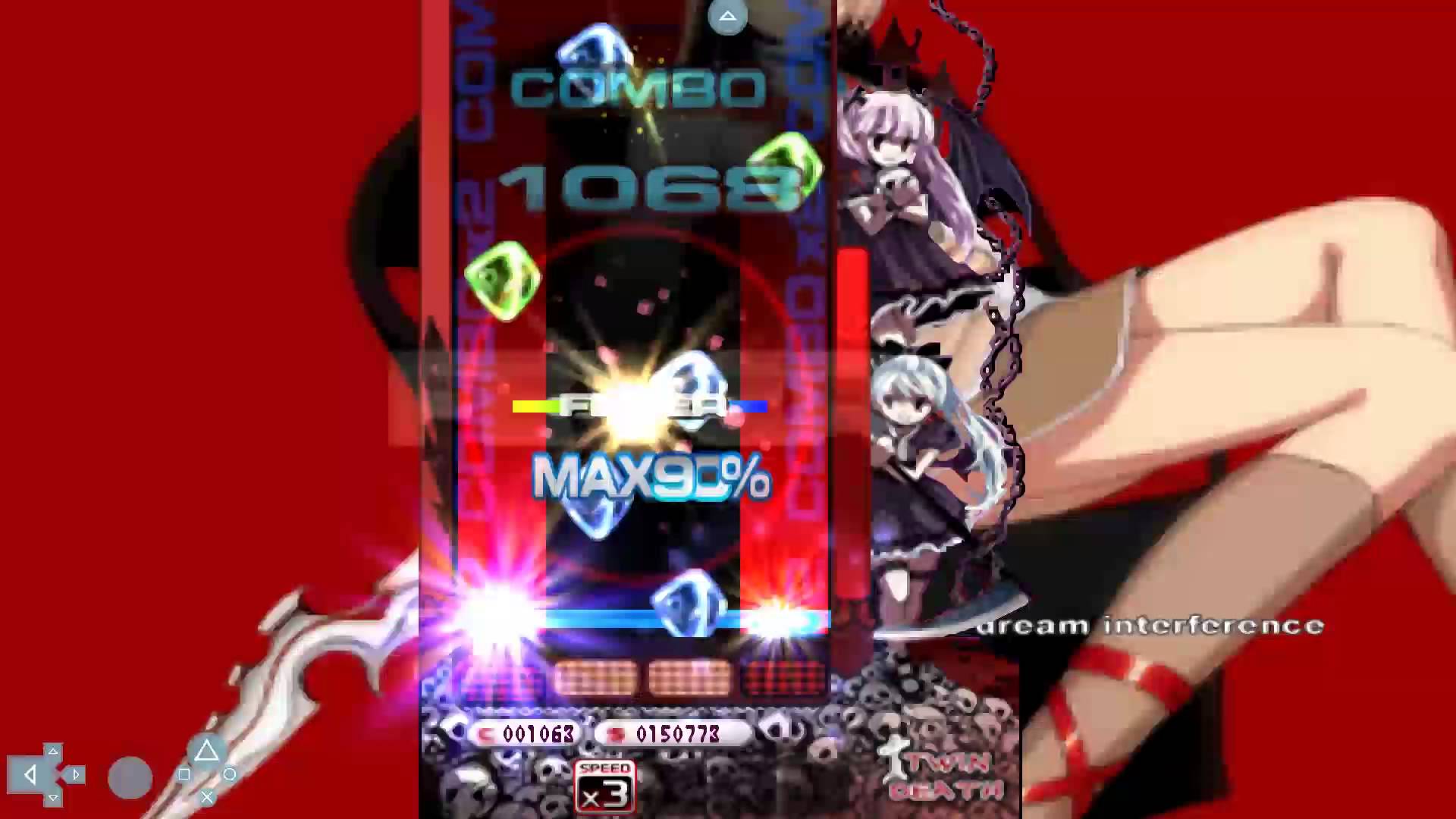
DJ Max is a huge rhythm game hit in Korea that uses a DDR-type gameplay style. There is obviously no dance mat, so you have to use the face buttons, and this works out just fine. There are 4-button, 5, 6, and 8-button modes. While 4 is the easiest, 8 can be damn near impossible. You select a song for each of the four stages, and each stage has harder and harder songs.
The game has some RPG elements, such as leveling up to unlock more gear, images, songs, etc. Notes, gear (the whole box in which the notes fall), and your character can have certain attributes that earn you more exp, gold, etc. There is even a speed modifier for people who want more of a challenge or if the game is going too fast for them. This can be changed during the song or before it.
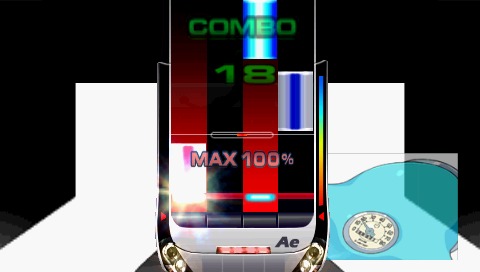
After you get a certain score on a song, you can play a harder version of that song on the same stage by pressing left or right. During play, you must hit each note when it hits the bottom. Depending on your accuracy, a percentage will appear. If you miss a note, you will break your combo, but if you fill your fever bar and use it, your combo will double for a short amount of time. You don’t just hit single notes, however; there are held notes and even “scratched notes” that require you to spin the analog stick.
Once you finish a song, you are scored on how well you performed and given a grade, some experience, and gold. Gold is used to buy more gear. There are 50 songs, and each one has a wonderfully illustrated music video that streams in the background. If you get bored with the main mode, you can complete challenges that have set goals. Reach this score, don’t break more than this many times, etc. If you really love the music in here, you can even listen to the OST or watch the videos. There are dozens of images to unlock and lots of goodies for fans to keep playing.
The game may sound perfect, but it has flaws. There are already four other DJ Max games (including Clazziqai and Black Square Edition), and this is exactly the same as those. Fever takes some of the more popular songs from those games, but it is still missing some key gems. Playing with more than four buttons will frustrate most players; there’s no way to transfer the OST to your memory stick, and you can’t transfer songs from the other versions like you can within those. Other than this, newcomers won’t know a difference and will have a blast with DJ Max Fever.
There was a good reason why I avoided the original Army of Two, and this was because of the terrible single-player AI. The game was only fun with another person, but even then, it was flawed. The 40th Day tries to improve this, but it fails. You would normally expect the console experience on the PSP, but all we get is a top-down, clear-the-room-type game.
The story is even retarded in the sense that it doesn’t make any sense. You are in China on a mission, and something goes wrong, and you have to escape. Why not just call for air support? I don’t know; the game never explains. At first, the game is pretty fun with its fast-paced gameplay. You can switch between a primary and secondary weapon (assault rifle and shotgun), which you have to use in different situations. You have a melee attack, and you can command Rios to hold or go into Aggro mode. This is supposed to make him more aggressive, but all it does is piss you off. You can duck behind cover (but you can still get shot most of the time) and upgrade your weapons, as well as buy new ones. If Rios ever goes down, you can revive him, but if you die before you get to him, it’s game over, and vice versa.
So what makes the game not fun? Too much, in fact. First off, the AI is absolutely dumb. Once the screen moves to a new area, you can’t go back, but sometimes Rios will still be back there, and he’s stuck for good. If you die and need him to revive you, you’re screwed. A lot of the time, Rios will just charge out at enemies and get his health depleted quickly. This is especially annoying during boss fights. There are also a few glitches where you will get stuck in objects, which can be very frustrating. Upgrading weapons takes forever since you can’t accumulate cash fast enough. By the time I got 2/3 through the game (and I stopped there, by the way, because the game just became unbearable), I had only bought two guns and upgraded my first two. The only other things you can do are press buttons and hack turrets to use against the enemy. The game just isn’t exciting anymore after the first level.
Does the game at least look good? Kind of is your answer. Some of the environments look OK, but everything just looks too cartoony. The game sounds OK, and it has good voice acting, but it can’t save this piece of garbage. Does co-op save it? More so, yes. If you have a buddy, the game can be quite enjoyable, but the redundant gameplay makes it a borefest very quickly. The awesome bro-li-ness of the console games doesn’t come across here, and this makes the game a flop.
Fighting games just seem to get less and less popular these days, with just the big guys coming out with new sequels every year, and Tekken is no exception. Probably the second most popular Japanese fighter (under Street Fighter), Tekken has some of the most memorable characters, and it caters to button mashers and combo memories. One thing that Tekken is famous for is how gorgeous it looks. Tekken 6 may not have the glitz that the PS3 versions do, but it is one of the best-looking PSP games made this year.
If you don’t know the story behind Tekken, I can’t really tell you since there are dozens of them. Everyone enters the Iron Fist Tournament to stop someone with a hand-drawn beginning story and your typical pre-rendered ending movie. Fighting games aren’t really famous for their stories (with Mortal Kombat probably having the most in-depth story of any fighter), so don’t come into this as a newbie and expect something spectacular. The story is just something to keep you playing in story mode, nothing more or less.
There are a lot of characters in Tekken 6, and if I’m correct, they pulled Mortal Kombat: Armageddon and included every Tekken character ever made. This should keep you real by unlocking all their stories and giving you gold to upgrade the characters. It takes a while to get enough gold to buy anything, but once you do, you get some pretty neat stuff. Each fight consists of four battles for each character, and they vary depending on their story. The main boss, Azazel, is a real bitch to beat since he is so big, and the game is so damn hard. I mean, really hard. I was on the easiest setting and still had my butt handed to me. I don’t suck either; the game is just based more on pure luck than skill, thanks to the ability to button-mash so much.
When you’re actually fighting, the controls are very tight and responsive. You block by backing away; you have high punches, low punches, high and low kicks, and grabs. It’s your bare-bones setup, but it works well on the PSP and feels natural and smooth. If the difficulty wasn’t so painstakingly difficult, I would be more forgiving of the game overall, but the hair-tearing difficulty drops points on this one.
Tekken is really just an arcadey, eye-candy fest with bare-bones combat. The whole setup is great, and it’s simple, so fans and newcomers will rejoice at how well the game is executed. All I wish for is more modes and online multiplayer, and it would be perfect.
Ahhh…good ‘ol Jak & Daxter are back at it again in their first return since Jak 3 in 2004. Lost Frontier is a great addition to the series and has a lot to offer. For starters, you will notice how beautiful the game is in the traditional J&D art style with great controls, story, and voice acting. The Dynamic Duo is trying to stop the evil space pirate Skyheed from taking the Eco Core and using it to destroy the world. With some great plot twists, this 6–8-hour adventure will leave you hooked and guessing at every second.
When it comes to Jak & Daxter games, it all boils down to combat and platforming, but Frontier adds some mini-games in the bunch that are very fun and satisfying. Jak uses his guns and shoots away, but he also has an array of melee attacks that can be upgraded. There is quite a bit compared to previous games, and you can easily mix up shooting with combat to keep yourself out of danger. Another great addition is the Eco powers you pick up, such as a burst you can shoot, slow-down time, a shield, teleportation, and even Eco crystal manipulation. Sound awesome? Well, most of them are passive, but there are quite a few, and it keeps things mixed up.
The biggest addition is being in the air almost all of the time. You get three different planes, and you can buy and upgrade weapons, armor, and other mods with the scrap you find from shooting down enemy planes. Daxter can actually attach to planes mid-flight to initiate a mini-game, so he can tear off mods to add to your collection instead of having to buy them. This mini-game is fun but gets tiring very fast. Flying the actual plane is easy since the controls are great, and you can fire three different weapons to your liking.
Like in all Jak & Daxter games, there are useless tidbits of side stuff you can do that I always find useless. At the beginning of the game, you can do this hunt-and-seek precursor orb thing, but I could never figure out what you do with all those orbs. You find them throughout the game, but nowhere does anything come up where you can use them. Another useless tidbit is that in the open world (which, by the way, is huge), you can shoot dark eco crystals and take them to this statue thing, and it gives you precursor orbs. makes no sense, but I guess it’s for hardcore fans. Another mini-game that is new is Daxter, which now finally gets infused with Dark Eco and gets put in a top-down mini-game.
My biggest gripe about this game is the difficulty. The game can be so hair-pulling and frustrating, and this includes the boss fights. You can die so easily in the game, and the enemies have so much health no matter how much you upgrade. It really gets tiring, and that’s the problem with this game. It gets tiring after a couple of hours and starts to lose its charm. The game is pretty much the same: just destroy this ship or go down here and beat up these guys. There are some puzzles throughout, but they aren’t really all that special. Lost Frontier is worth maybe a weekend rental, but it is great, and five years was way too long before a new J&D game sprouted. I’m hoping the duo can make it to the PS3, but the formula feels almost 10 years old and needs a major upgrade.
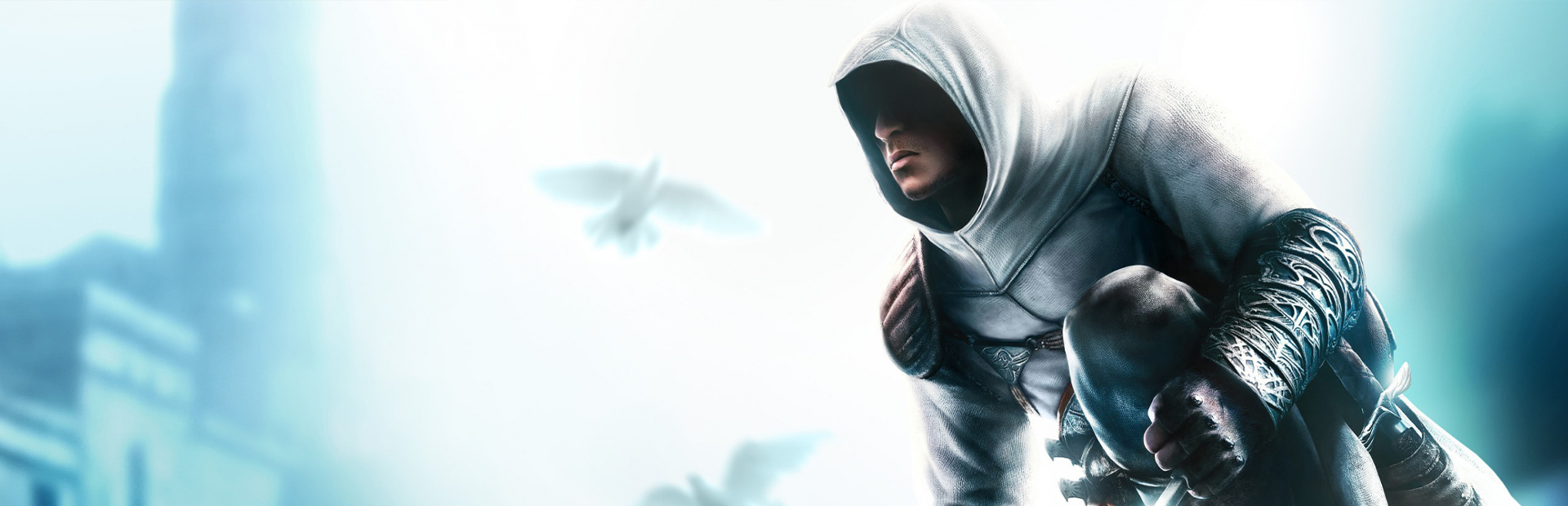
It’s 1191 A.D., and Acre is still not safe from the clutches of the Templars. Altair is once again at war with the seemingly never-ending Templars to find the Apple of Eden. No one knows what this strange artifact can truly do, but Altair doesn’t want them to be the first to find out.
If you were disappointed to find out that Assassin’s Creed II wasn’t a true sequel to the first game, look no further. Bloodlines are the first game’s only and true sequel. Those who played the original will be on familiar ground, as Bloodlines is almost exactly like the first game—both in good and in bad. You still play as Altair and can run, hop, and skip to your heart’s desire as you play the story through. The main difference, however, is that Desmond Miles is nowhere to be seen, as Bloodlines only concentrates on Altair’s story. There are some other rather interesting differences here as well, so you’d better read further.
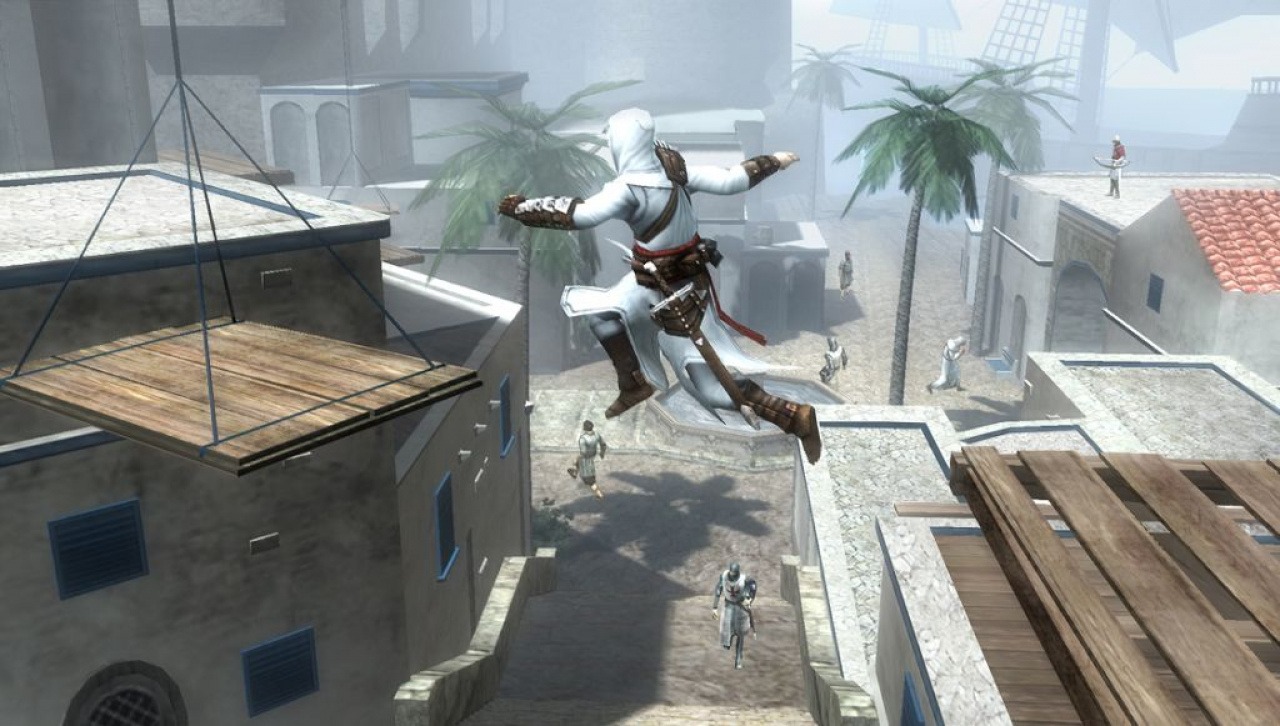
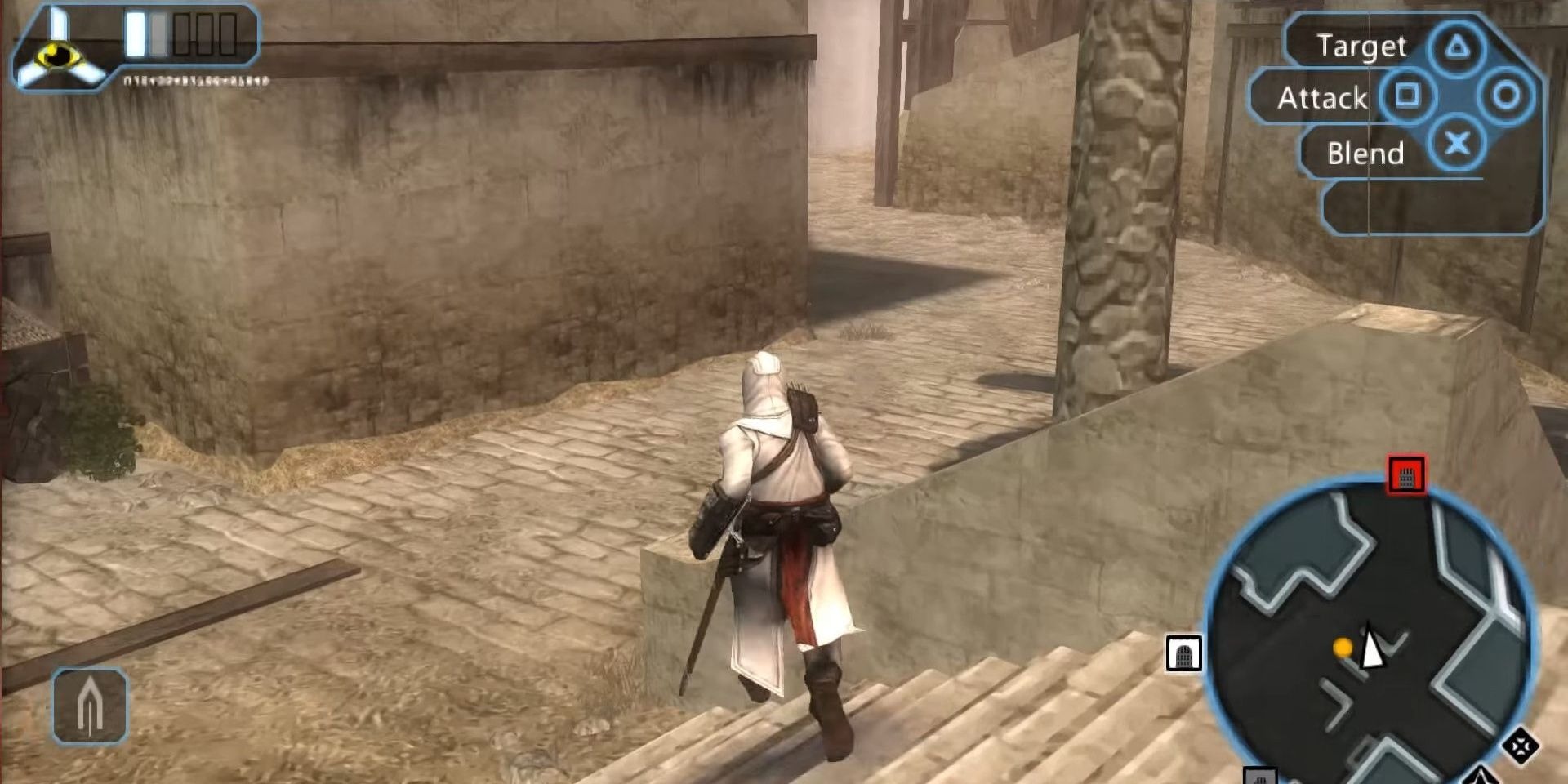
There are two different sets of controls: low-profile and high-profile. In low profile, you can walk, blend, attack, etc., while high profile allows you to sprint, run, and free run up walls and buildings. You can run up practically anything that has a ledge or some sort of foothold. However, the PSP controls seem to be a little too sticky for my liking. If you are only one or two paces away from anything, Altair will cling to that object even if he can’t climb it, and this can be extremely frustrating when running from guards in order to find someplace to hide. Free running isn’t too hard, but just a bit finicky.
The combat system is simple and pretty easy to use, and it is exactly like in the first game. Holding down your block button and waiting for a soldier to attack, and then counter-attacking, is the best route; just rinse and repeat. You can also attack first, but since you’re usually surrounded by a superior force, it is usually wiser to wait and counter-attack when attacked. If the guards are not on alert, you can naturally assassinate them by sneaking up behind them with your hidden blade or throwing knives at them.
The world in Bloodlines is not ‘open’ in the same sense as the world in the original was. Instead, it is formed of small, little areas. Also, the layout of these areas is often a little too restrictive. While in the original, you could find alternate ways to your target, the routes in Bloodlines are often too restrictive, and you end up having to fight groups of enemies with no place to hide or run and no way around the enemies. You end up having to fight them all off. The restrictive world is also evident in the lack of high points on the maps. While in the original, you could climb on the specially marked high points in order to synchronize your map and unlock new areas, these are few and far between in Bloodlines.
As far as it comes to side missions, there are not many of them available. The available missions range from delivering messages to assassinating targets to helping citizens being bullied by guards. Unlike in the original, some of the side missions in Bloodlines are timed. Another small addition that is different from the original is that after each main chapter, you can upgrade items using the gold coins you find throughout the game. This is slightly similar to Assassin’s Creed II, but the economic system isn’t present.
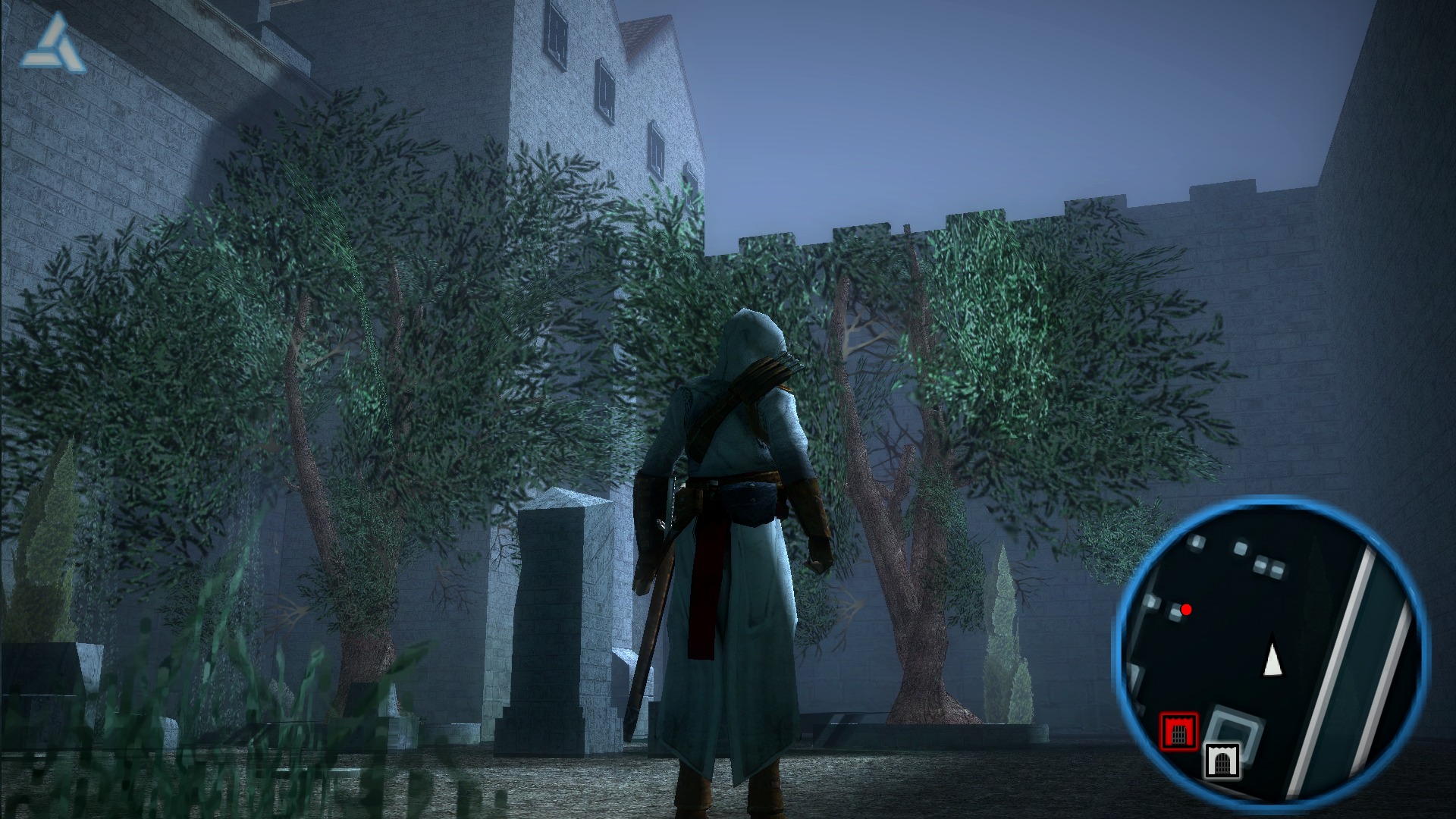
Simply put, the game is gorgeous. However, it doesn’t look like the first game. Bloodlines look like what the first game would be if it were ported to the PS2: there is no bump mapping, no HDR (high dynamic range) lighting, and the graphics certainly aren’t in HD. But even with these limitations, the graphics are highly detailed, with great-looking models and menus. There is no evidence of a slowdown, and the voice acting is terrific.
Overall, the gameplay in Bloodlines is perfect for portable standards, and running around in the small areas is pretty fluid, even if the controls are slightly awkward. Bloodlines is a great first attempt to get an Assassin’s Creed game on the PSP, despite the subtle flaws that make it feel like it was a bit rushed. Nevertheless, I found sneaking around and assassinating people very satisfying, and there were enough areas to keep me occupied. The game takes about 6 hours to finish, depending on your play style, so I found it well worth my money.




























 thebinarymessiah.com
Try multiplayer. A lot of fun !