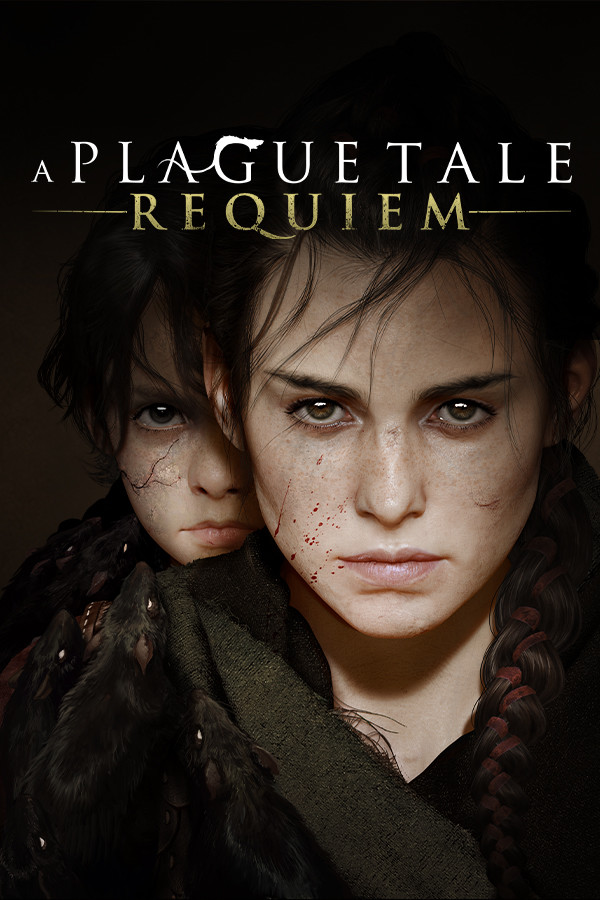
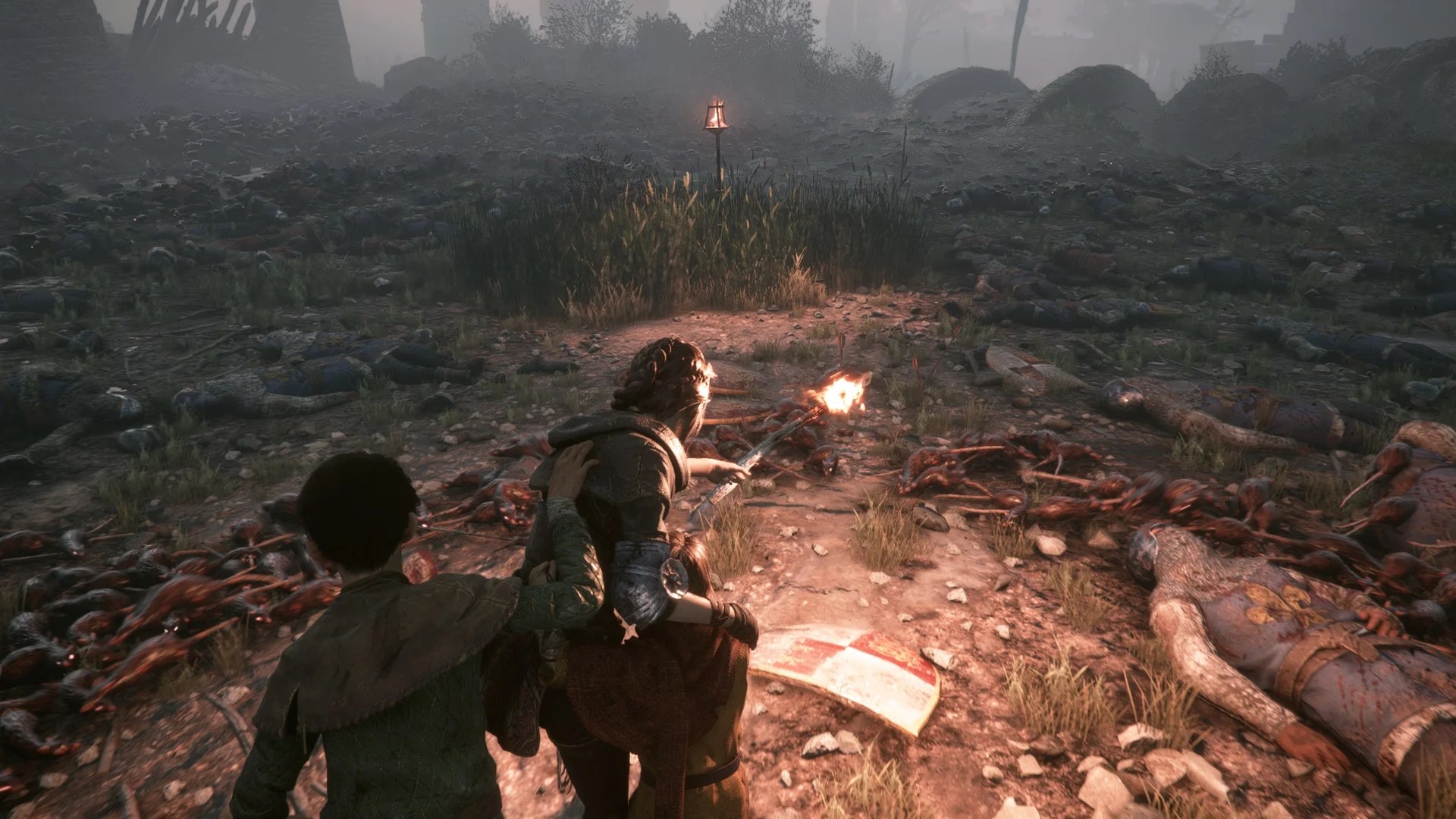
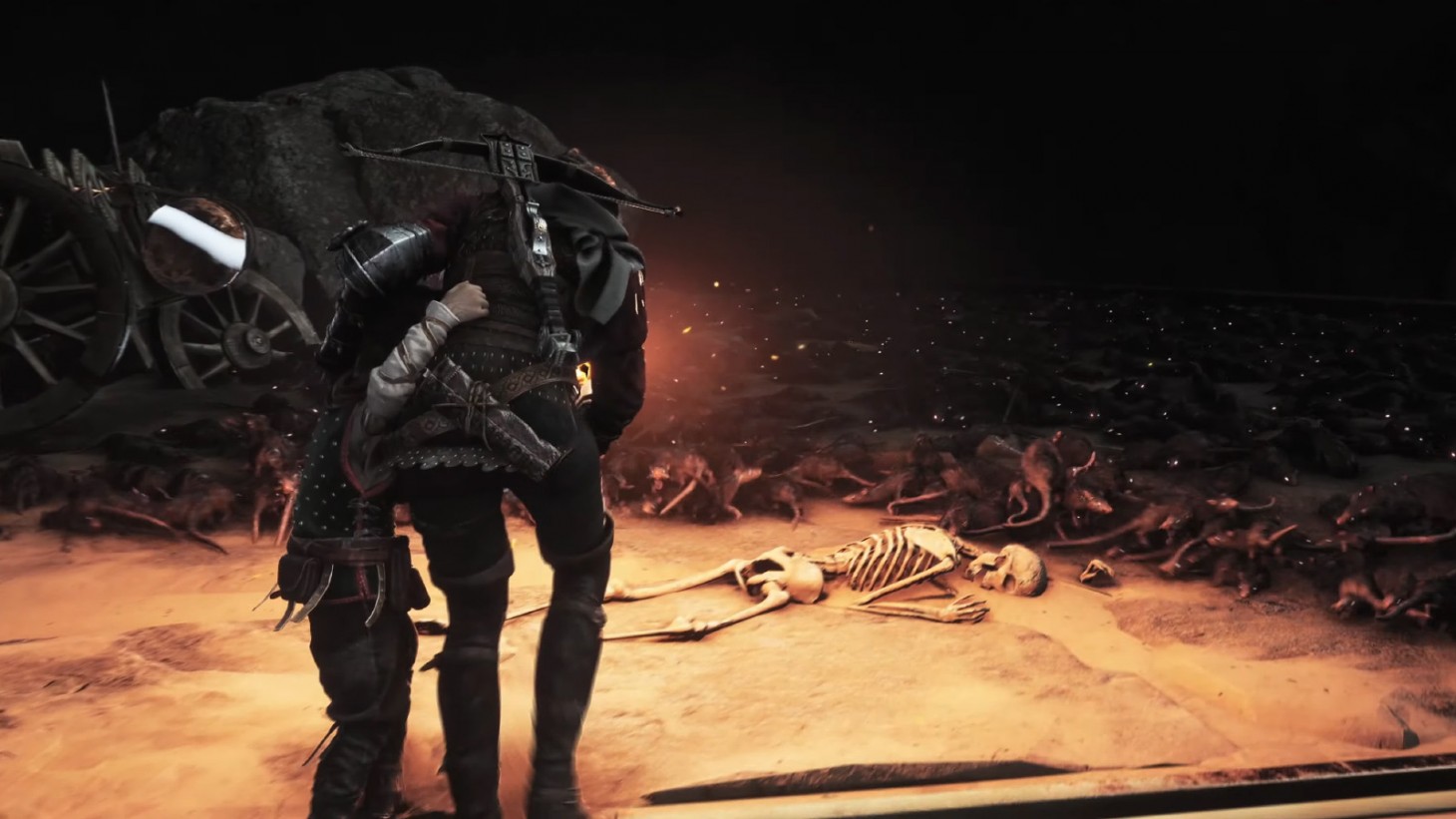
A Plague Tale: Innocence was a massive surprise hit for me. I didn’t expect much from it coming from an unknown indie studio. It seemed pretty, and that’s about it. I was shocked at the fantastic acting, gripping story, well-designed enemy encounters, and unique combat system. Requiem does what sequels normally do. Improve in some areas and step backward in others. While it’s not as shockingly impressive as the first game, it does deliver an even better story with insanely good acting and a couple of new characters. Amelia, Hugo, Beatrice, and Lucas are still trying to cure Hugo’s macula and stop the plague from spreading further. A lot more details arise, and we learn the true origin of Macula and Hugo’s fate.
The first third of the game takes place in the new town that Amelia and co. have settled down in. One thing I love about this series is that there’s one thing that always lingers in your mind when playing. Lose all hope. Hope is something that doesn’t exist in this world. Amelia and Hugo are constantly betrayed in this game, and it isn’t always apparent. You might think they finally settled down in a nice town or met nice people who would keep them safe and love them, but nope. Not in the world of A Plague Tale. There’s constant dread, pain, and death, and it’s wonderfully portrayed thanks to the amazing acting on screen. I do want to mention that while the acting is amazing, the facial animations are really lacking, including lip-syncing being stiff. That’s a minor complaint, but overall the story is awesome and it has a satisfying ending.
That’s the game’s strongest point outside of its amazing visual presentation. The first game was well-loved for its well-crafted enemy encounters. Each area felt like a puzzle, and it was the perfect difficulty. Not too hard, but not so easy that you would just run straight through. I always felt like I could figure out where to go and how to get around each enemy. It was so good that I played that game twice. Requiem adds a lot of new layers to the slingshot and alchemy, which makes it a bit overcomplicated. There are more elements added in, such as being able to hold pots and a crossbow. The crossbow is obtained shortly after the halfway point, but you can add four different alchemic elements. Tar, fire, and rat-attracting crystals This can make fumbling around to change your weapon and add the right alchemical property cumbersome on the fly. The tar can be used in pots to slow down enemies, but it can also be set on fire with the slingshot fire. So this requires switching to the pot, and then tar, and then switching to the slingshot and equipping fire. I died a lot trying to fumble around and figure out what to do on the fly. This becomes infuriating during open combat events in which I had to restart one section nearly two dozen times because I ran out of materials and had to figure out how to preserve everything in the right order.
Guards come in more variety this time. There are helmeted guards who can’t be killed with the slingshot. These need to be avoided or taken out from behind, which causes a lot of noise, and the animation is very long. You will, more than likely, always be seen. You get to hold disposable knives that are used to get you out in a pinch. There are guards with shields now that require being blinded with powder, which is another element to flip through. Fire is still a big gameplay element here, and you have rat sections that are also mixed with guards. I found these sections with rats more fun in this game because I could be more creative. You can put the guard’s flames out with the powder and watch the rats. Then there are puzzle sections with just the rats, and these were the most fun. I really enjoyed these sections, but there aren’t enough of them. Thankfully, combat in the game is spread pretty far apart, with entire chapters of just storytelling thrown in between to give you a break.
It’s a shame the combat went from perfectly balanced to overly difficult and cumbersome. The puzzle sections use the new elements as well. There are now different types of fire, from haystacks that only last a few seconds to fire bolts that stick to wood objects. You have unique partner abilities, such as Arnaud’s shield that bolts can stick to and Sophia’s crystal that can refract light. These are new changes I really liked and fit in. You can throw tar on flames to increase their brightness for a bit and spread light out more to solve puzzles and reach extra chests. This was the stuff I really enjoyed. Flipping through all these items and alchemy stuff during combat was just too much and hurt the already perfect flow from the previous game.
The last thing I want to touch on is the upgrade system. It’s been simplified and almost seems pointless now. You need tools and parts to upgrade, but they’re so rare and hard to come by that I barely upgraded a single skill to the max by the end of the game, and this is a 15-hour game. It takes a new game plus to continue maxing out your skills, which can really help if you can get to them, but it takes so long that I never relied on these. Even if you found every hidden chest, you wouldn’t be able to upgrade much.
With that said, the pacing of the game is all over the place. Going from entire chapters of combat to entire chapters of walking around and letting the story play out. An hour or two would go by with no combat or puzzles, or you would get an entire hour of puzzle-solving with 10 minutes of combat. I also didn’t care for the open combat sections. This combat system isn’t designed for running around and taking enemies out in droves. The first game did this well by just letting you slingshot enemies. You now have to run around and fumble with the weapons and elements to decide which enemy needs what thing to take it down. It’s incredibly frustrating.
The game looks fantastic, at least. This is the first “next-gen” game, I think, that’s been released so far. It’s not on previous-generation consoles, and sure as hell, it wouldn’t run on them. My 3080ti struggled at 1440p with maxed-out settings with DLSS turned on. It did dip down into the 40s at times. While it’s not perfectly optimized, anyone outside of an RTX GPU won’t have a great time running this game. It really is a next-generation-looking game. I can’t stress enough how amazing the game looks. Beautiful vistas, lots of color, and tons of dark visuals as well. It’s a sight to behold.
With all that said, Requiem does a lot of good in the story and visuals department but falters when it comes to combat and pacing. I enjoyed the puzzles and sections where you had to get through rats, but the open combat is infuriating, and fumbling through all the elements
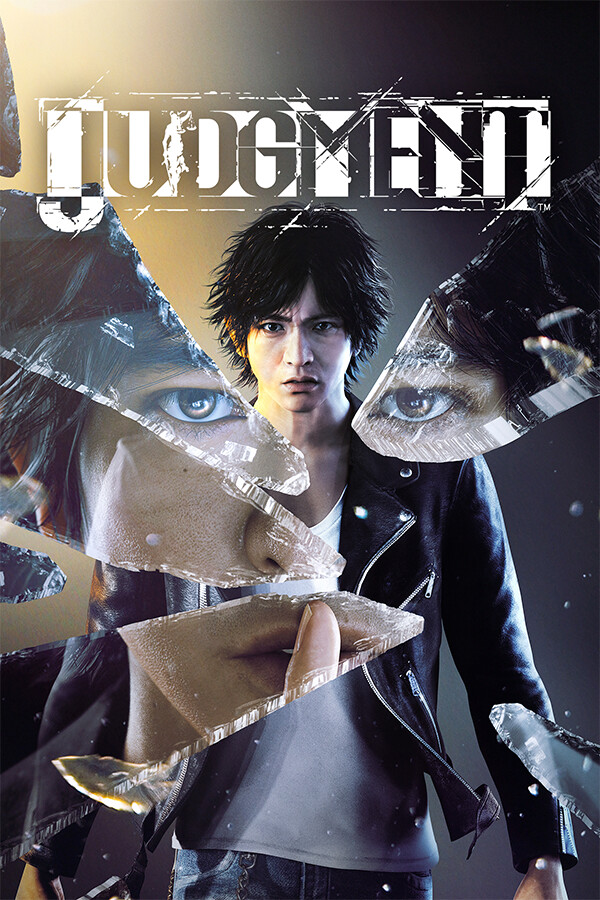
The Yakuza series had massive success with its spinoff, Like a Dragon. While it had flaws, it was entertaining and had great characters and a detailed story. The entire Yakuza franchise excels in the storytelling and character development departments. Judgment is no different. You play as the lawyer turned detective Tavo Kagami, trying to rid himself of his demons and upturn a bunch of corrupt politicians. An Alzheimer’s cure and a murder mystery are at the center of this. The story is well constructed and kept me on the edge of my seat at every turn. The entire story has chapters ending on cliffhangers like addictive binge-worthy TV shows. I always wanted to know what was going to come next. At many points, it felt like Yagami and co. were backed into a corner, and I didn’t see any way out, only for the story to twist and turn in crazy ways.
I don’t want to say too much about the story, as any small detail can spoil it. Just know that this is the strongest point of the game and what makes it worth sticking through the 30-plus-hour game. The second reason is the characters. There are many, and they are well-acted and have great backstories. They are slowly introduced throughout the game, and by the end, I either loved them or hated them. Tavo himself is a well-rounded character who’s stubborn and unwilling to back down from anything. I really liked the personalities of each character. They were unique and interesting, and they all stood out in their own way. For such a large cast, this is usually hard to pull off or not done well enough.
Judgment_20190619220949
As for the gameplay, this is where Judgment falters, and the entire Yakuza series lacks here in every entry in some way. You get to run around in this open map called Kamarucho. I don’t want to say open world because it’s just a small city that can be run across in about 2–3 minutes. It’s a city full of crime and underground misdeeds. What’s the point of the open city? I don’t really know. Mostly for side quests, but I always found these to be underwhelming and repetitive in the Yakuza series. There are a few types. First off, there are actual side cases that net you more SP and cash. That’s about it. They are mostly uninteresting and don’t advance the story or characters at all. There are friend events spread throughout that net you skills that can be unlocked, SP, and cash. These are the two main types of side quests you can partake in, and I did finish most side cases just for the SP and cash. You really need cash to buy healing items and stay stocked up.
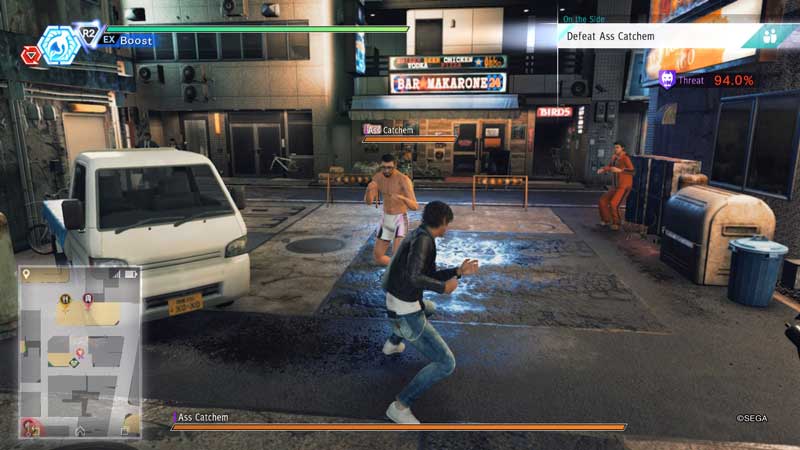
There are taxis spread throughout to help with fast travel. With such a small area, you would think it’s pointless, but it’s great to avoid fights on the streets. These are randomly occurring, and you can usually run from them. I felt it hindered progress, and after the third chapter, it didn’t net enough SP to be worth bothering with. Eventually, you will be wanted by street gangs, and your threat level will increase unless you stop a boss-type enemy. This never goes away and will always go back to 100%, so I just ignored them. There are also side activities that are mostly used for dating. That’s another side quest that I didn’t find interesting. You can meet girls through friend events or side cases and later date them by presenting presents. Side mini-games like batting, darts, and gambling can be fun to an extent, but when are mini-games like this ever fun to go back to? It’s just filler content, and for achievement hunters, really. It doesn’t advance the story or add to it in any way; I just felt like all of these side activities and missions were chores to complete.
Let’s get into combat. It’s flawed, for sure. While it looks cool and is easy to understand, it suffers from unresponsive controls and animations that don’t interrupt when you input a command. I always felt like my button presses were delayed. There are two fighting stances. Tiger for one-to-one fights and Crane for multiple enemies. You can pick up objects and hit people with them, and there’s a special EX finishing move that you can perform, which is key to winning tougher fights. You also have an EX boost, which unlocks more powerful combos and increases your defense. Again, a key thing to use to win fights I just felt like no matter what I did, I couldn’t master the system. There is a block and dodge button, but it seems that the enemies are magnetized to you because no matter how much I dodge or run away, they always follow me and connect their attacks. It makes boss fights especially infuriating. While I had plenty of items I could use at my disposal to help, I wish I could rely more on my skills, but the fighting system just doesn’t allow it.
There are other small annoyances, such as mortal wounds. These lockout parts of your health bar, and the only thing in the game that can fix this are med-kits, which are rare and cost a lot of money. There’s only one person that can heal you, and they’re sold underground in a sewer. Of course, you have to go through the animation of opening the sewer, sliding down a ladder, running down the sewer, and then the same thing going back up. Just cut all of this out! I also found the game way too long. It’s padded with a ton of fights throughout the main story, and I wish a lot of this was cut out. There are easily 10 hours of fights just in the main story. Nothing breaks this up, however. There are repetitive detective events like searching for objects in first-person, chase scenes, and tailing people. My god, do these get old quickly? Tailing missions are never fun in games, and these are dragged out for sometimes over five minutes. You can hide behind objects, and that’s about it. Just don’t fill out the suspicion meter. All of these mini-games are just incredibly repetitive and could have been cut out.
The game at least looks decent. It’s a PS4 port, so some parts look rough. There are some textures that look like PS3-era stuff, but at least the facial animations and character models are really good. There’s lots of detail everywhere, but don’t expect this to push your hardware to its limits. It mostly looks very realistic and sterile, with not much in the way of artistic flair. It looks like a modern-day Japanese city.
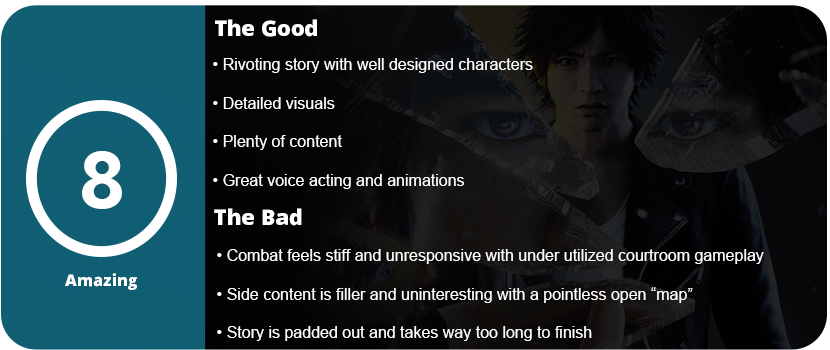
Overall, Judgment excels in storytelling and character development but falters in gameplay. The fighting is stiff and unresponsive, the mini-games are repetitive and pad out the hours, and I felt the detective work in the courtroom was a missed opportunity. The open city is an excuse to throw side cases and missions at you that are meaningless and just pad gameplay. Random city fights are annoying and get in the way of progress, and the visuals aren’t much of an upgrade. What’
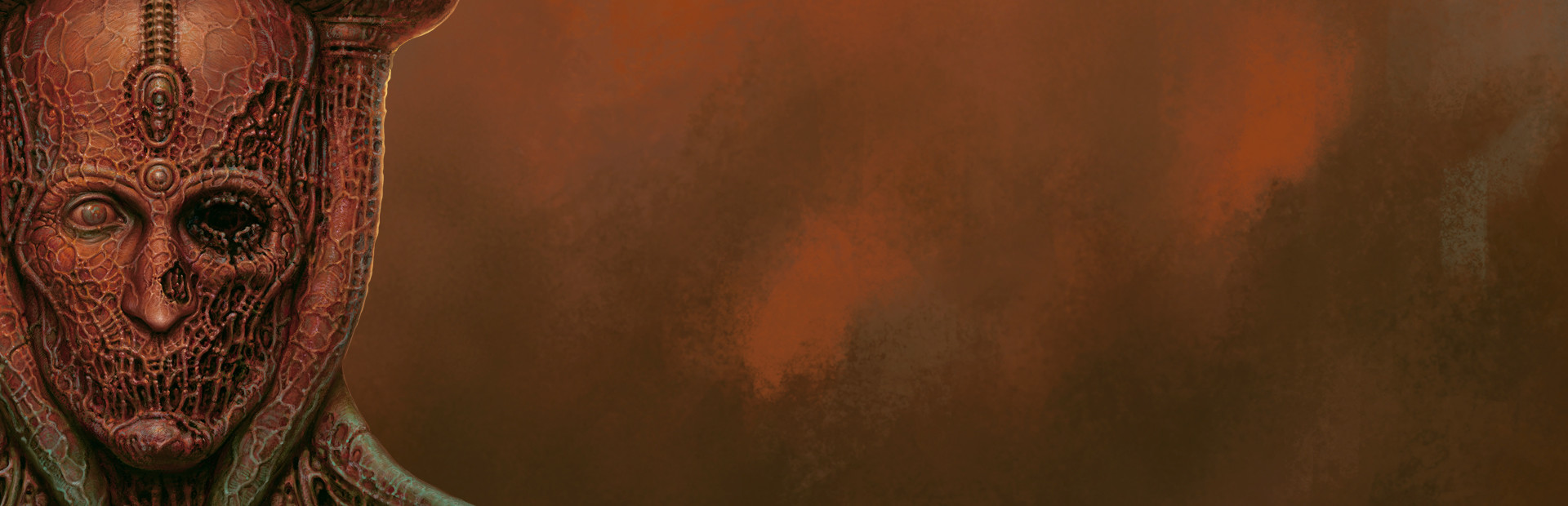
Scorn is a game that’s been in the making for a long time, despite my only knowledge of it being shown at E3 earlier this year. I’ve been hyped for this game since and stayed up until 3 a.m. on launch day to play it. The gameplay videos were misleading. It looked like a very atmospheric and macabre FPS; however, nothing was said about the heavy puzzles, short length, or complete lack of story or context.
The opening is similar to God of War. The menu is in real-time, and when you start a new game, you awaken from the main menu. I didn’t suspect anything during the first hour of the game. I expected the game to open up slowly and thought the slow pace, long hallways, and lack of any story, voice acting, or context were just the beginning. Sadly, this is the entire game. There are five main acts in the game, and each one is just a giant level full of puzzles, backtracking, and terrible combat. Combat isn’t actually introduced until Act 3, but I digress.
The game doesn’t start out well, with an incredibly frustrating slider puzzle. You must move pods around a wall, and I had to look up how to try and solve it right away. The first act took an hour to complete because of all the backtracking and trying to explore the level and see what parts of this puzzle I should tackle first. This quickly takes your focus away from the fantastic art design, infrastructure, and alien mystery of the game. I was running around pulling switches, pushing carts, and sliding puzzles for an entire hour. There was no reward to this except an incredibly disturbing and gory-cut scene of a poor creature pleading for help only to be sacrificed to progress to the next level. I thought during the E3 videos that this was what Scorn was full of. Incredibly gory scenes, but there were only a few of them spread throughout.
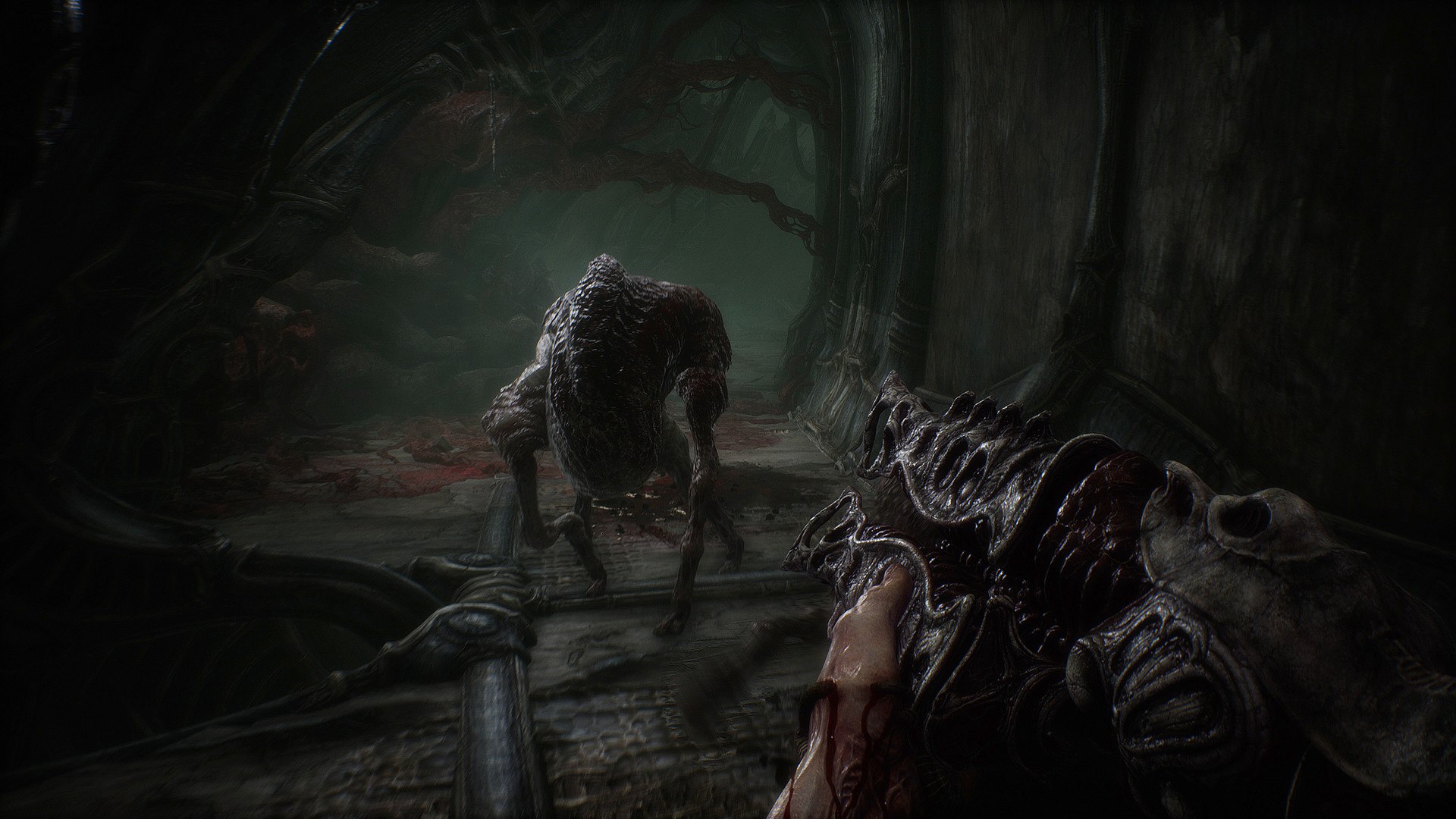
As you progress on to Act 3 to pick up your first weapon, you realize that this is all the game is. Puzzle after puzzle, endless rooms and hallways, no exploration, no side quests, nothing. The first weapon is some sort of jabber thing that gives you two hits before it needs to charge. This is where combat falls apart. The enemies are fine. There are three or four different kinds, ranging from weak two-hitters to massive dog-like ones that need projectile fire. The combat is just so slow. You need to aim, jab the creatures, then run away and let them recharge just to turn around and do it again. It’s clunky, I died way more than I wanted to, and health is way too scarce for this type of combat. Later on, you get a pistol and then a shotgun, but ammo is so scarce for them that I often just had to run from enemies. You eventually have to take everyone out, as there is a lot of backtracking needed to find keys, go back and insert them into the correct spot, then go back and do something else.
Reloading is really slow, and you’re vulnerable. If you thought Killzone’s reloading animations were long, this is worse. There’s no jump button, no crouch, but there is a sprint button. You can just run away, turn around, shoot, and hope your shots don’t miss. If you’re caught with an unloaded weapon, you’re dead. Normally, this would be forgivable, but there’s no reward for doing anything. The occasional gory torture scene doesn’t cut it, and they are short and spread very far apart. I actually enjoyed the smaller puzzles more than the large level-size main puzzle, but some were just way too complicated and difficult. I frequently got lost in maze-like hallways, and Act 4 was excruciatingly difficult due to all the enemies around and scarce ammo. I had to strategize what ammo to use on what enemy.
There is a final boss fight, which was more annoying than frustrating, and I did find several bugs in which I couldn’t activate switches, and my game crashed my whole PC once. Checkpoints are unfairly spread apart, and you are forced to restart entire sections and go through the same animations and small scenes just to die again. Even the ending didn’t save this game at all. There’s no satisfying conclusion. I kept telling myself, Okay, this is the moment! This is it! We’re going to see why you’re in this alien world trying to survive!” Only to get nothing. The game pretty much just ends without spoiling it.
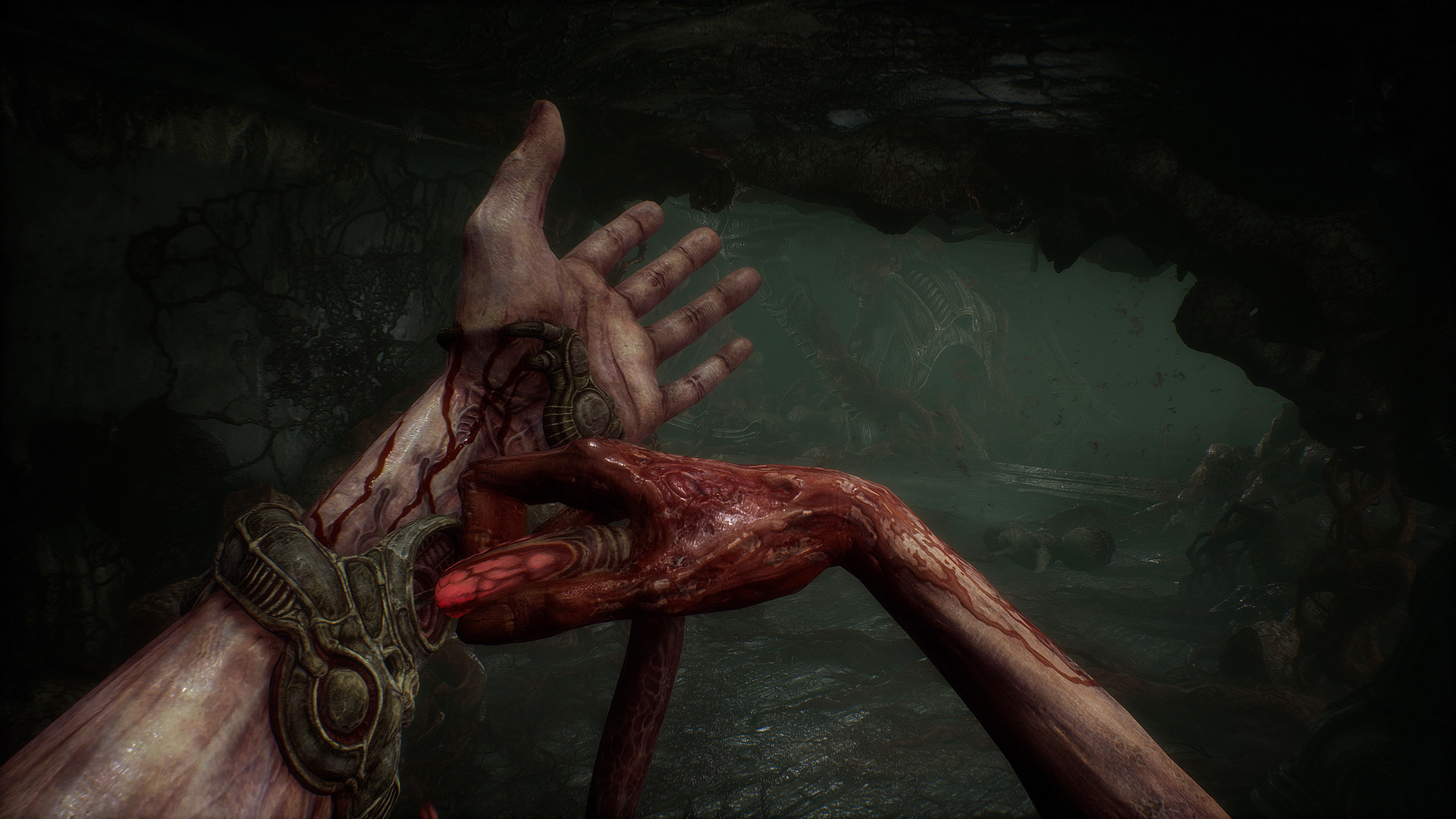
I did enjoy seeing this game, though. Playing it again is another story. The game has some of the best art design, technical visuals, and sound design I’ve ever seen. The late H.R. Giger (Alien)-inspired architecture is fascinating to look at, and I wanted to stop and look at every new thing I came across. This game is a work of art, and I feel if they either went all-out with the combat Quake style or cut it out completely, it would have helped this game immensely. The combat doesn’t add anything to the game at all. It just hinders puzzle-solving and backtracking and makes the game take longer to finish.
Overall, Scorn is a pretty big disappointment with many shortcomings. The complete lack of story or context, awful and sluggish combat, scarce gory scenes, and maze-like levels hinder the game at every turn. The game’s only saving grace is the amazing sound and art design. It’s a visual masterpiece. The game’s short length is in its favor because of these issues.
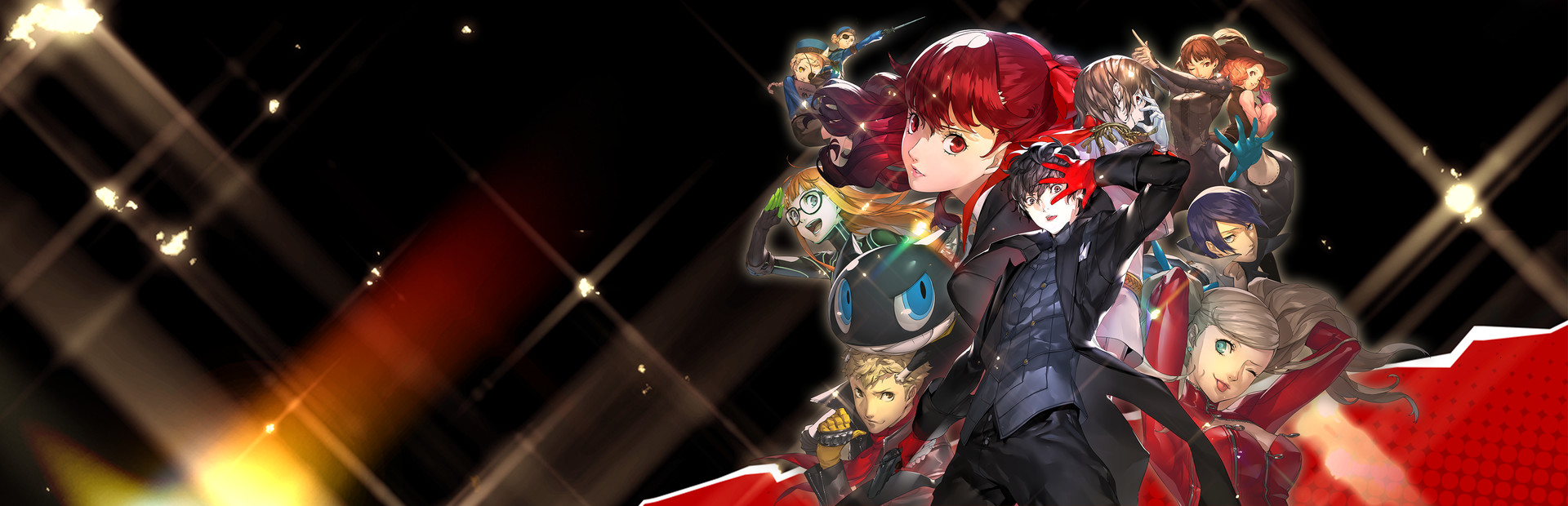
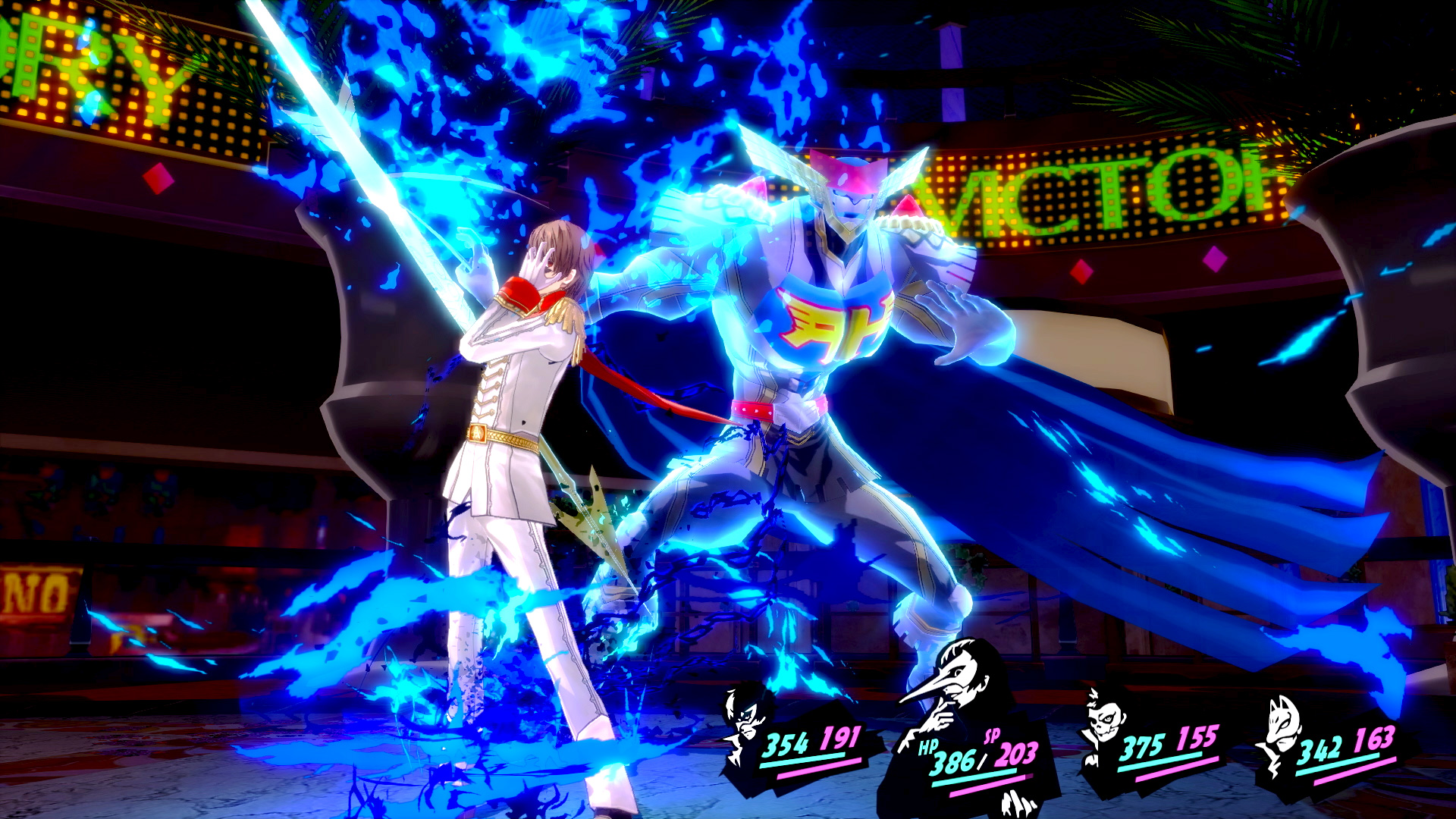
I really like the Persona and Shin Megami Tensei series, but they are insanely long and challenging. These are hardcore JRPGs, not meant for casual players. Most won’t have the stamina needed to sit through 150+-hour games, and the PlayStation Trophy data shows that. Less than half of all Persona 5 players finished the game. Thankfully, for people like me, Atlus put me in an extra-easy mode called Safety that let me finish my first-ever Persona game. I tried the third and fourth games several times and just couldn’t do it. While I eventually did well in battles, the games were too long. The story in Persona 5 is fantastic, and there are plenty of great things about this game, but a few key issues may drive most players away, even more casual JRPG fans.
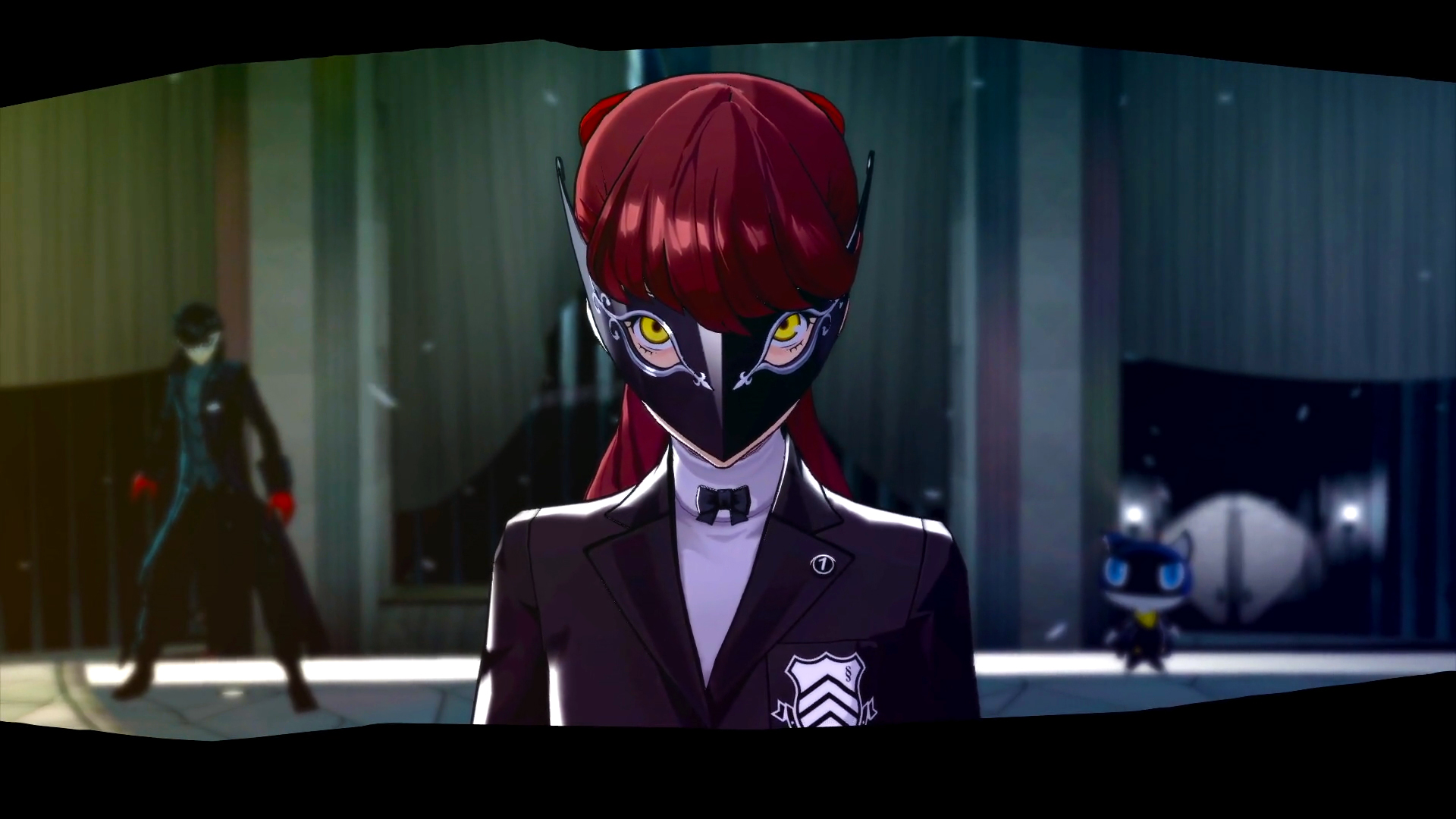
The story is insanely deep and detailed. There are plenty of mysteries, twists, and turns that kept me trucking on because I wanted to see what happened next. The characters are compelling, well-written, and very likable; however, you still need to like anime to enjoy the characters in this game. There are some typical anime tropes that leak in, but I think people who play JRPGs are already aware of this. Your character is Joker, a teenage boy wrongfully convicted of assaulting a high-profile individual for just trying to save a woman from harassment on the street. You end up living with someone who volunteered to take in a convict and watch over you so you can get rehabilitated. This game plays just like previous persona games, with a time limit, days going by, social rankings, and acquiring personas.
The game will introduce things to you throughout the entire game, and I mean throughout. 40 hours in, I was still getting tutorial messages. The game is an incredibly slow burn. I didn’t get to do any battling until the fifth or sixth hour. This was all story and world-building, introducing the idea of personas, your purpose, and your back story, and showing you how to go about the day-to-day. The game is mostly dialog, to be honest. Out of the 80 hours it took me to finish the game, maybe 25 of those were spent actually exploring the dungeons and fighting. There is a lot of character-building and slice-of-life stuff in here. You also have a time limit to finish every palace, which is the main dungeon in the game.
When you’re not battling, you are living your everyday life. You need to go to school, and the day is broken up into sections such as early morning, which is reserved for dialog you hear on the train going to school, talking to friends at the train station, etc. Morning and afternoon are reserved for things happening at school during the week or random quizzes that you can answer to increase your social stats. These stats are knowledge, proficiency, charm, kindness, and guts. These are needed to finish confidant arcs and max out that persona category, so you can get stat boosts when using that type of persona. These stats can be increased by doing certain activities like watching movies, playing games, doing chores, and other everyday activities. It’s important to use your downtime to increase these stats, as the game is balanced by not just level grinding but having these extra stats for each persona type.
After school time is reserved for doing things around the city, such as said activities, and getting together to enter Momentos, which is a secondary dungeon with a few dozen levels that you need to descend to complete requests from people. In the end, it’s required to descend fully for the final dungeon, but before that, it’s optional. I recommend doing these late-game activities so you can just barrel through the levels at the end. The evening is reserved for nighttime activities and jobs, even to earn more money. After the activity is done, you advance to the next day and do this all over. Some days are interrupted by story elements, scripted scenes, and other events. It’s important to hang out with confidants when you get texts from them to advance their persona ranking. These are where the side stories for each character are held. They can be long-cut scenes too. Usually, you get 30 odd days between each major palace to fill the time. This time period can take hours to finish.
When you do actually battle, your persona is based on finding the weaknesses of your enemies. This can be both good and bad. If you find the weakness, you get one more turn. This can be elemental or physical. The downside is that the entire game can be over if you don’t find these quickly. It’s trial and error as to finding the weakness, and some just don’t have one. You waste precious turns trying to figure this out, and it can make some boss fights grueling. You can save within these palaces and return to the real world to buy items and increase your persona rankings more, but if you don’t find the treasure and beat the boss by the deadline, it’s game over. I’ve always hated this about the series, and it makes the game more difficult and frustrating than it needs to be. You can capture personas by talking to them when they’re weak in battle. If successful, they will join your ranks. It’s important to keep a good variety of personas leveled up and acquire new ones with better skills. You can fuse and itemize them in the Velvet Room, as well as sacrifice weaker ones to strengthen others.
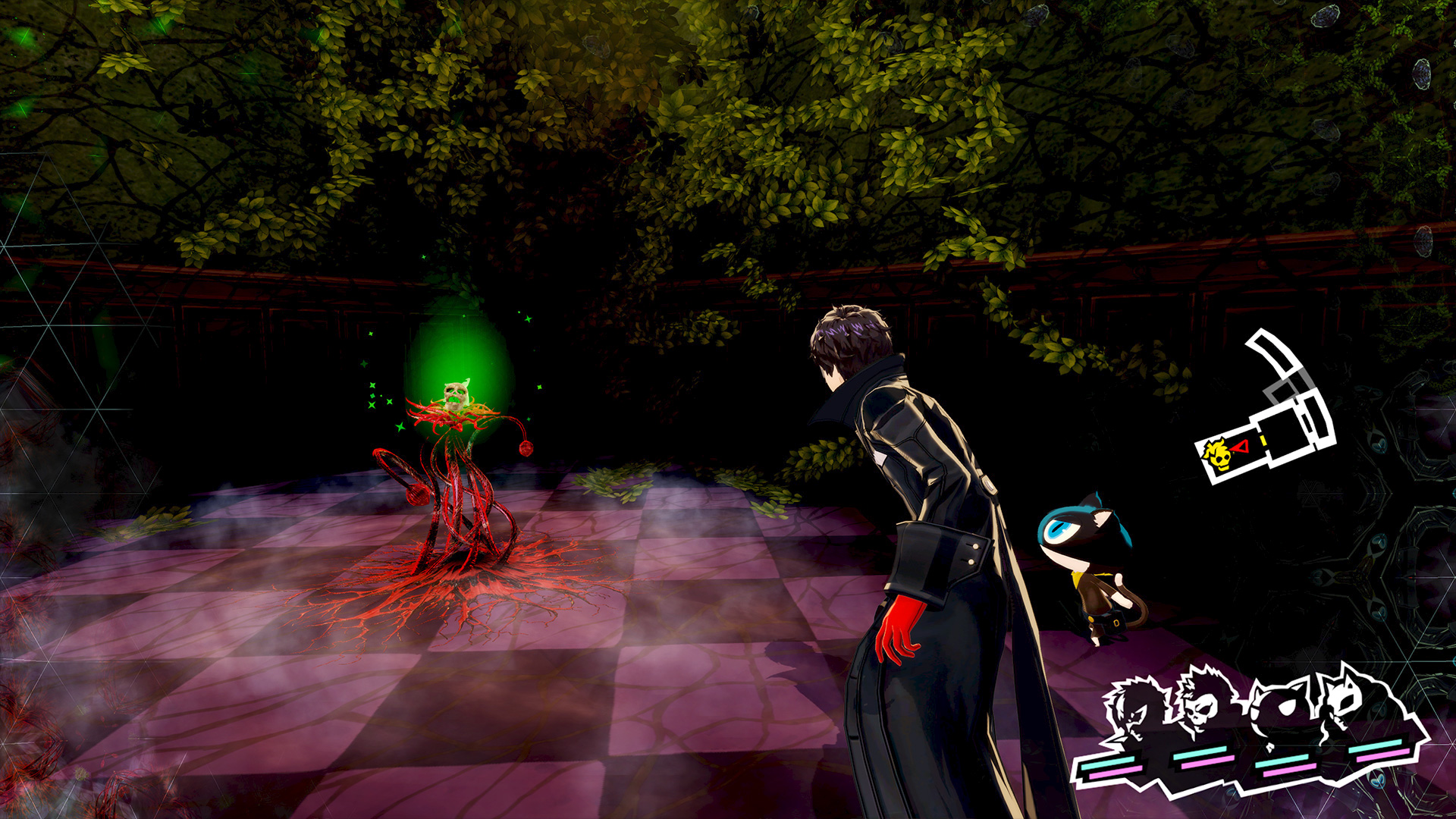
While you can use multiple personas, your party members are stuck with one. Every few levels, they will gain new abilities for their personas, and you have a limited number of slots, so it’s important to keep them balanced. Inside these palaces, you can acquire items, treasures to sell, and powerful equipment that you can buy in the airsoft shop. These palaces are huge, with multiple levels, and can take hours to complete. I played the game on safety difficulty so I could beat each palace in a single sitting, but if you need to level grind and fuse personas, you could take the entire time limit. Each palace has a different theme, and they look cool, but the weak puzzles and labyrinthine halls of some of them are really annoying. Enemies walk around in real-time, and because you are a thief, you can get behind cover and dash around them stealthily or take them head-on. Some palaces are a really confusing mess, and I found some just went on for too long.
Those are your two main parts of the game. Battling in Momentos or palaces and living your everyday life to increase social stats and play mini-games I personally don’t like the trial and error of exploiting weaknesses to win each fight. The graphics are decent, while stylistically they look great with lots of flash and color, but technically it looks like a typical JRPG and borderline last generation and not too much of a step up from the PS3 version. While it seems there is a lot to do in the game, there actually isn’t. You’re so focused on visiting confidants and maxing out social stats in the real world that it feels like a chore after a while. You have to realize there are nearly 250 in-game days you have to get through on top of the palaces and moments. The game just feels like it never ends. 80 hours to finish safety difficulties, and it can take 150–200 hours for higher difficulties. I had to dedicate every free minute I had over the last three weeks to finishing this game and not playing any other games in between. I wish there was a warning at the beginning of the game letting players know how long the game can take on average, or even put it somewhere on an official source of information for the game. I have played and bought many JRPGs, not realizing just how long it takes to beat them.
Overall, I don’t want to talk too much about the story because I can easily spoil something. The Phantom Thieves and trying to change the hearts of criminals is a great story. It can be very dark at times when talking about child exploitation, abuse, murder, money laundering, and many other crimes. It’s a dark game, and I felt it had a very memorable story, but it takes way too long to tell it. Many will balk at the trial and error of weakness exploitation to win battles, insane amounts of grinding, and the constant need to micro-manage your personas to get a well-balanced, always leveled-up arsenal, which might seem like too much. That doesn’t include dozens upon dozens of hours of reading dialog and watching cut scenes. I recommend this only to the hardest-core JRPG fans. This game is not to be taken lightly. While I complain about some of these things, fans of this genre embrace it, and that’s okay, but for only around 40% of players to have finished the game says something about the length.
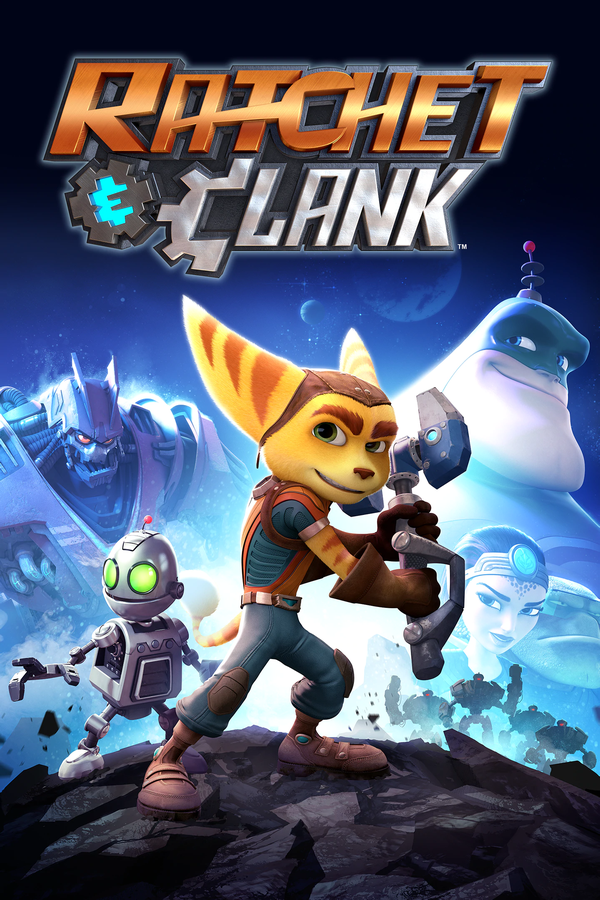
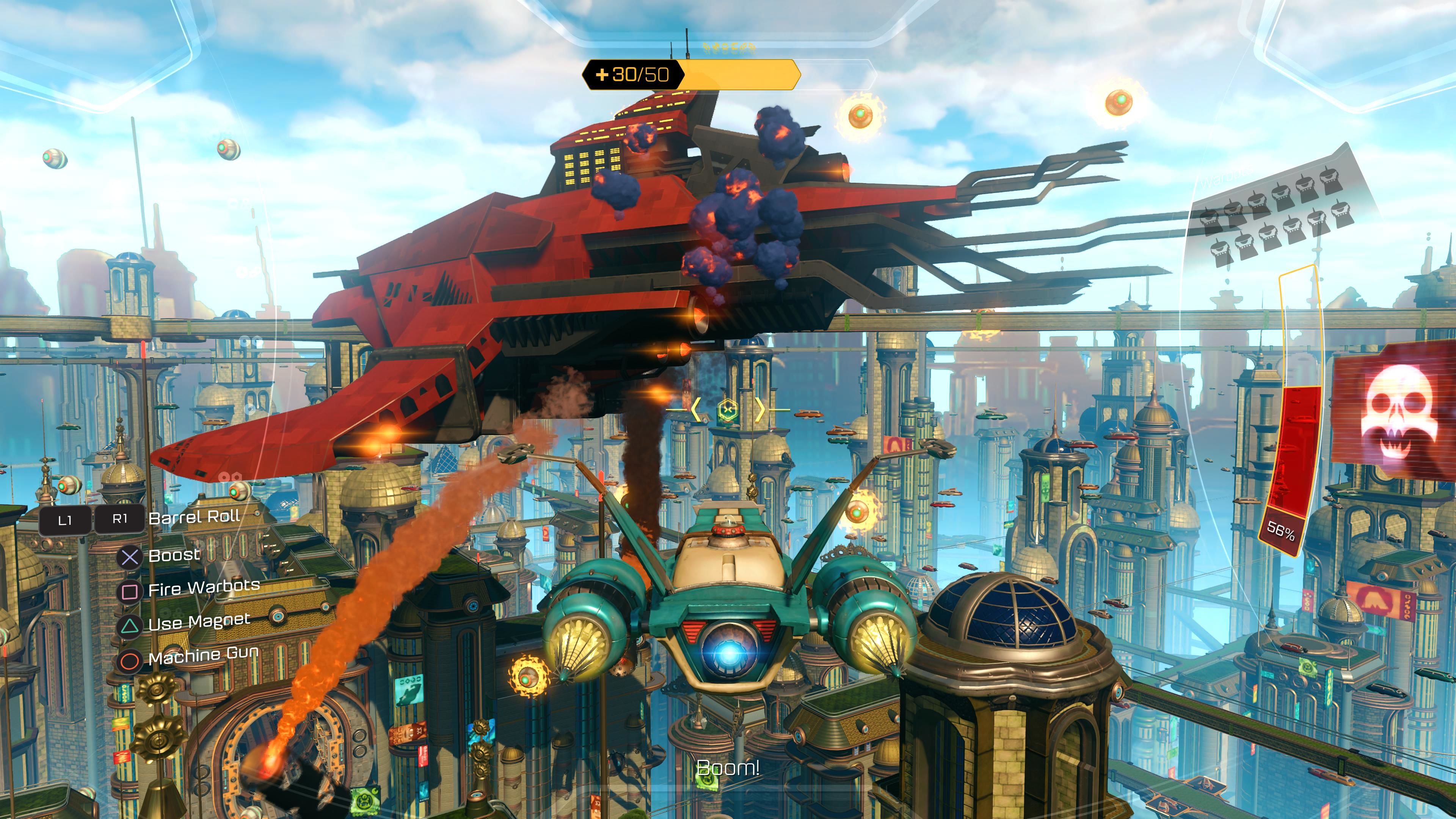
Ratchet & Clank was a series I never got into growing up. My youngest sister was a diehard R&C fan and played every game as they came out, but they seemed “kiddie” for me at the time. While I knew they were good, they seemed too easy and straightforward. Fast forward nearly twenty years later, and I wish I had played them. R&C is a complete “from the ground up” remake of the first game with fancy next-generation visuals and polish. If you didn’t know anything about the series, you would think this was a brand new series. I say brand new, as this isn’t just a 1:1 remake but a complete redo of the first game. Characters were added and taken away; Quark’s story is redone, and so is the entire story. A couple of enemies are missing, and even a couple of levels. However, what’s left looks amazing and is still a blast to play.
You play Ratchet and Clank. Ratchet is a Lombax obsessed with glory, and Clank is a defective robot that escapes Dr. Nefarious’ factory. Together, you gather weapons and explore planets to help the Galactic Rangers and Quark take down Chairman Drek and Dr. Nefarious’ planet-killing device. The story is simple and not very memorable, but the characters are, and they were iconic staples back in the day. Quark is a dimwitted superhero, and all the other characters have sharp and witty writing. You will definitely chuckle a few times throughout. The characters and enemies are well designed, with fun animations and lots of variety on each planet. Most of the game is mostly just completing objectives in linear levels and then moving on to the next one. There are a few planets with optional objectives, such as a trading card-collecting game, collecting 90 brains, and exploring certain parts of levels. These will award the player with new gadgets, weapons, and, of course, trophies.
Shooting in the game is fun and one of the series’ unique mainstays. The weapons are what make R&C so unique and stand out among other shooters outside of the tame presentation. The Groovitron is a weapon that shoots disco balls and makes enemies dance, so you can get some breathing room. The Pixelater (my favorite weapon) turns the enemies into 8-bit sprites for a short time and acts as a shotgun. Mr. Zurkon is a shield and satellite weapon; the Glove of Doom releases a bunch of angry robots; and the Photon Drum is a bomb that pulses and causes damage. While the weapons are cool, I did find them unbalanced. I felt there were too many of them, and a lot just never saw any use, such as the Sheepinator and various others. I wanted more weapons that shot projectiles that weren’t just missiles, maybe more rapid fire, and more close-quarter weapons. While these weapons are cool and unique, I just didn’t find many uses for many of them.
You can buy new weapons from the Gadgetron vendors and upgrade weapons with Raritanium. Upgrading is a must for getting max damage, more ammo, and extra bonuses. I recommend you upgrade all the weapons you mainly use first, as one play-through will let you upgrade maybe 2-3 weapons to 100%. Outside of weapons, there are a few passive gadgets that let you progress through levels, such as the Trespasser, which involves solving puzzles that can get rather tricky. There are a few hoverboard race sections, and of course, you need to acquire bolts in the game by smashing boxes, defeating enemies, and completing objectives. I do want to mention one aspect of R&C that’s fun and unique: seeing hundreds of bolts on screen fly around as enemies explode and boxes blow up, and going around and collecting all of these. It’s something in the game I’ve always thought was fun.
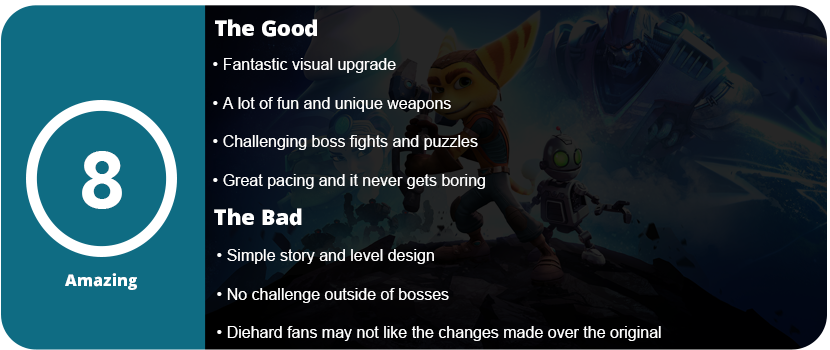
Despite the simple design of the game, it never gets boring. Each planet is beautifully crafted and has a huge graphical upgrade over the first game. There’s just so much more detail two console generations later that couldn’t be done before. Each level is completely different, and all have great pacing. You will never get bored or tired of playing at all. If you really want to keep going, you can collect all 28 gold bolts and all the trading cards in the game. Don’t worry; towards the end of the game, you can get a Map-O-Matic that displays all collectibles on every level. It can add a good five more hours of fun if you want.
Overall, Ratchet & Clank is a fine remake of the first game, and only diehard fans will notice the changes to the story, characters, and missing levels. The game is unique, helped define the PS2, and has that PlayStation DNA that stands up today. It’s a fantastic series, and I hope future games get remade in the same fashion. The game is a bit on the easy side and only offers a challenge during the boss fights, but it’s a fun dozen hours that you can’t get on any other system.
We all love a good scare, right? Horror games are some of gaming’s greatest past times. Usually booming in October, horror games from the past and present are played all around the world. The problem is, there just aren’t a lot of them made, and the best ones are far and few between. Usually, this is a great time to dig up old classics rather than trudge through recent crap. While the PS1/PS2 era was the golden age of horror games, the HD era, or the seventh generation of consoles, struggled and was probably the most anemic when it came to horror games, especially the good ones. There’s a reason why some of the rarest and most coveted physical games are horrors. It’s the genre that’s been the least explored and not done well enough most of the time. If you can look past clunky controls and awkward gameplay, most retro horror games do provide good scares, atmosphere, creepy monsters, and good visuals. I’ve compiled a list of the best and the worst.
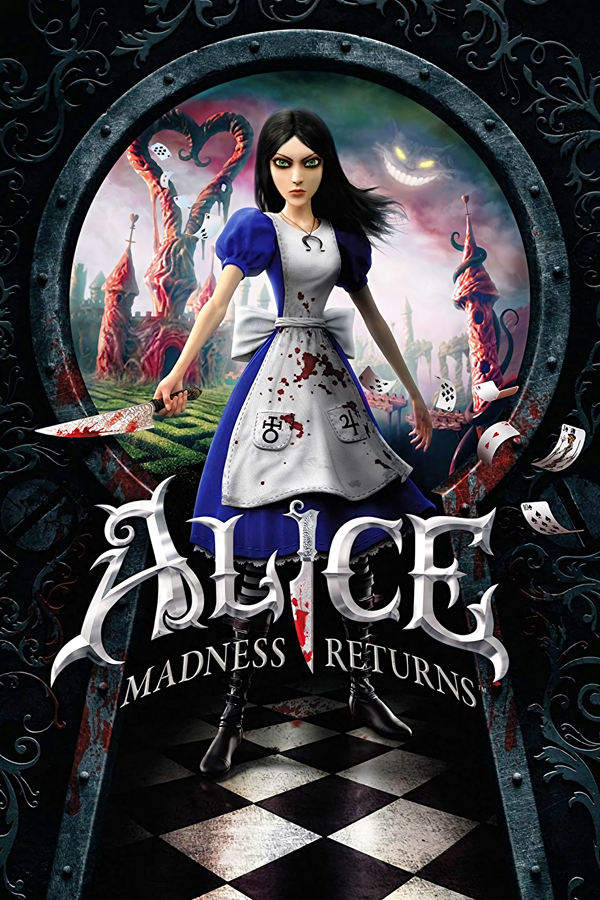
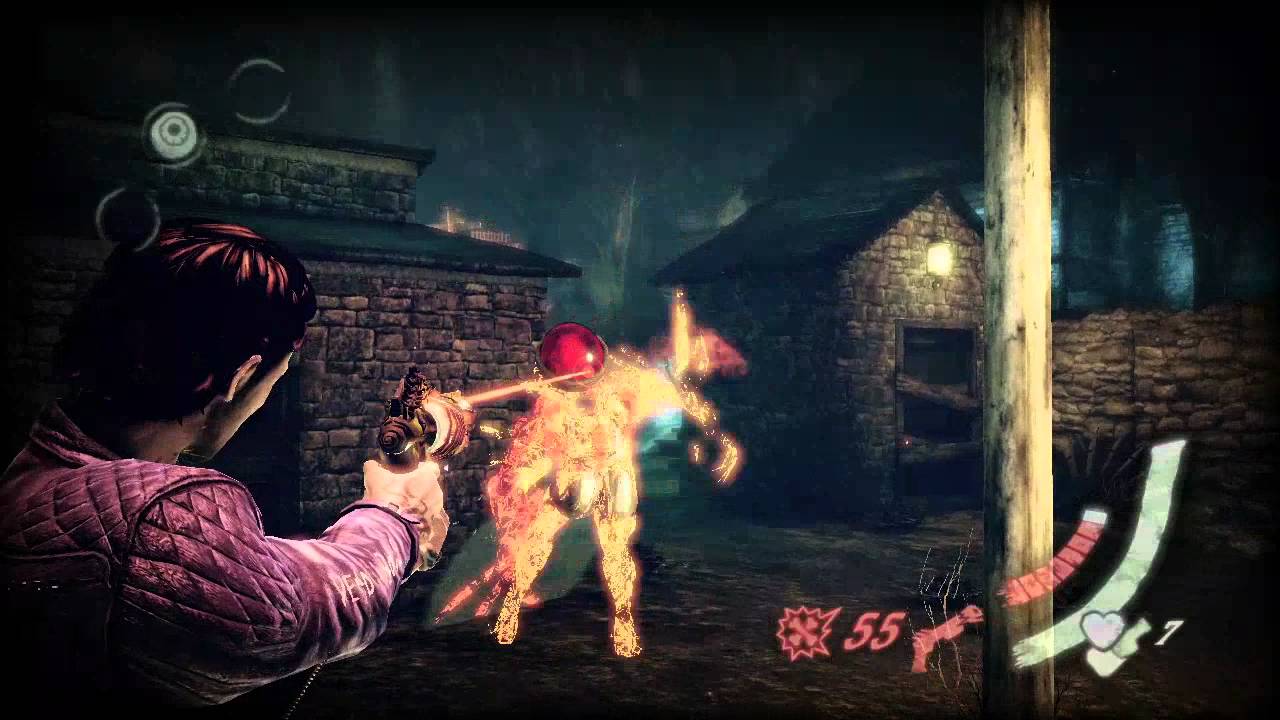
American McGee is well known for his dark interpretation of the Alice in Wonderland series. The first game, American McGee’s Alice, was clunky mechanically but was a visual treat. The same goes for the sequel. It’s a gorgeous game with a lot of dark themes dealing with mental illness. The enemies are fantastically designed, and the levels themselves are living art. Despite the incredibly repetitive gameplay, this one is a blast to play through.
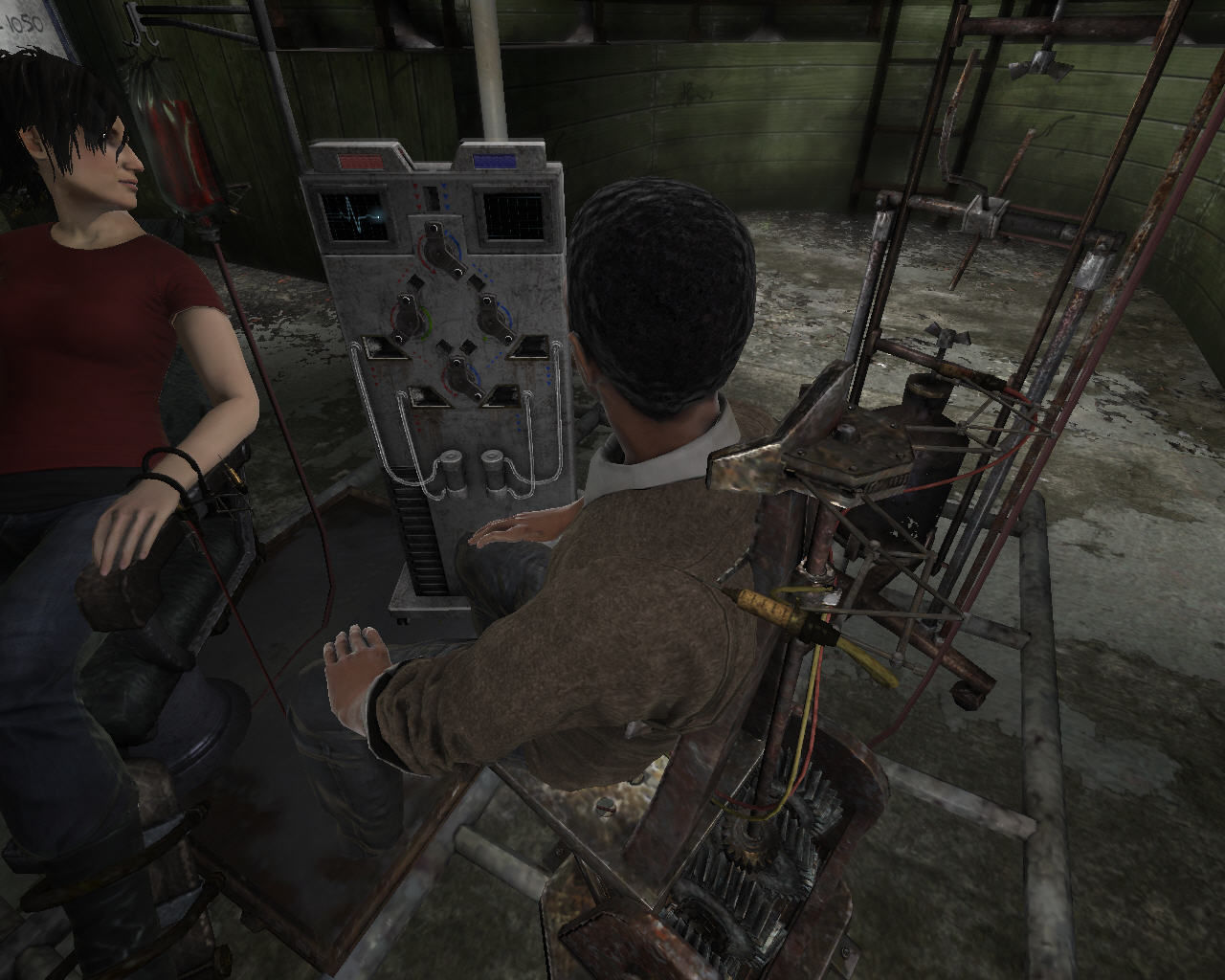
A lot of people didn’t like Homecoming due to its more action-oriented combat, but I actually quite liked it. I feel it was the last good Silent Hill game in the series, and it still retains the creepy atmosphere and insane creature design. The haunting music is still present as well. While it’s not as tense as the original trilogy, Homecoming does have better combat, despite being the wrong focus here. This was the first game in the series that was part of the jump to the next generation. The next game in the series, Downpour, would be considered the worst in the series, and I personally hated it. These would be the last games in the series to date.
Metro 2033 and Last Light were some of the best horror games to grace the seventh generation of consoles. While they played and looked best on PC, the console versions still looked great and did a good job giving us scares. The post-apocalyptic horror series had an intriguing story and a tense atmosphere, along with crazy creature designs. The final game in the trilogy, Exodus, would be on next-generation systems and receive mixed reviews.
While not inherently designed to give you nightmares, Shadows has a lot of horror elements in its design, such as creepy enemies and an overall atmosphere of dread. It’s more of a comedy-horror title, but it has tons of style that helps make swallowing the shallow substance a bit easier. It’s also not very good-looking, on a technical basis, but the art is awesome. Most of Suda 51’s games were one-shots and never saw sequels. SotD never saw high enough sales, even if he wanted to do a sequel. To date, it hasn’t seen a remaster, remake, or port.
Condemned Series
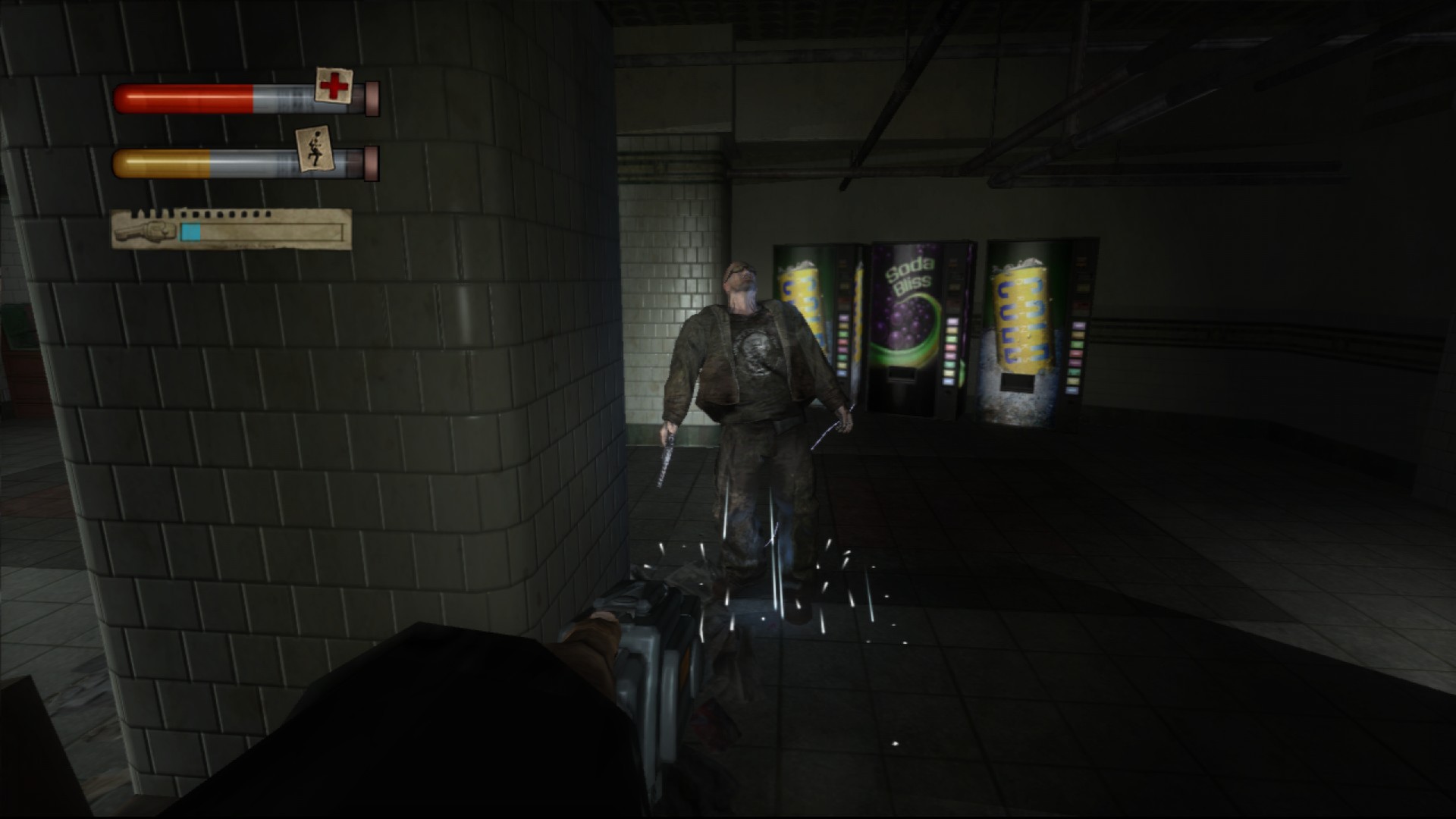
Condemned: Criminal Origins really showed us what next-generation visuals could look like. The E3 2006 demo blew me away, and it was one of the reasons I got an Xbox 360. This was one of the few games that looked the part and really pushed the industry into a new era of HD visuals. It’s a game that can be replayed many times, and you will always have a fun experience. It’s too bad the series is dead because Monolith nailed the atmosphere here. The game is intense, with crazy melee combat and incredibly dark and haunting levels. Crazy bums coming out of nowhere, breathing, panting, and trying to attack you in dark hallways is something else. The sequel, Bloodshot, was great but focused more on combat and less on the atmosphere, so it’s not quite as scary. It was also the nail in the coffin, as due to the poor sales of the sequel, Sega shuttered the series for good. To date, the series hasn’t seen a remaster, remake, or port of any kind.
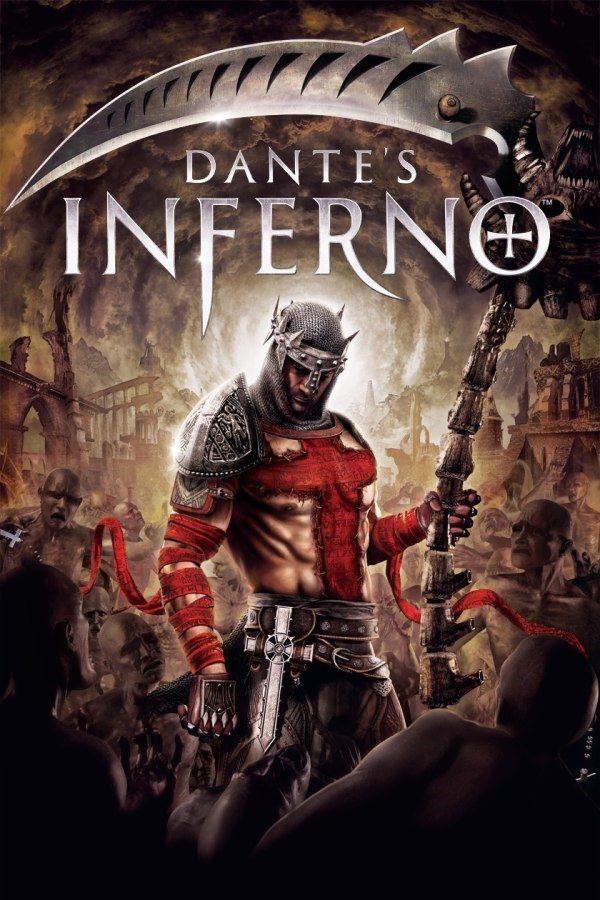
Dante’s Inferno is one of the best hack-and-slash games ever made, but EA was bound to make sure you didn’t know that. It didn’t get much attention and was considered just another God of War rip-off. While the game was short, it had incredibly responsive and fun combat, an interesting protagonist, and insanely gory and adult-themed levels. It’s just too bad the story wasn’t fleshed out enough. What’s here is a fun 4-5 hour game that you won’t find anywhere else. Sadly, the game’s low sales sealed its fate to have no sequel, caused Visceral to shutter, and hasn’t seen a port, remaster, or remake to date.
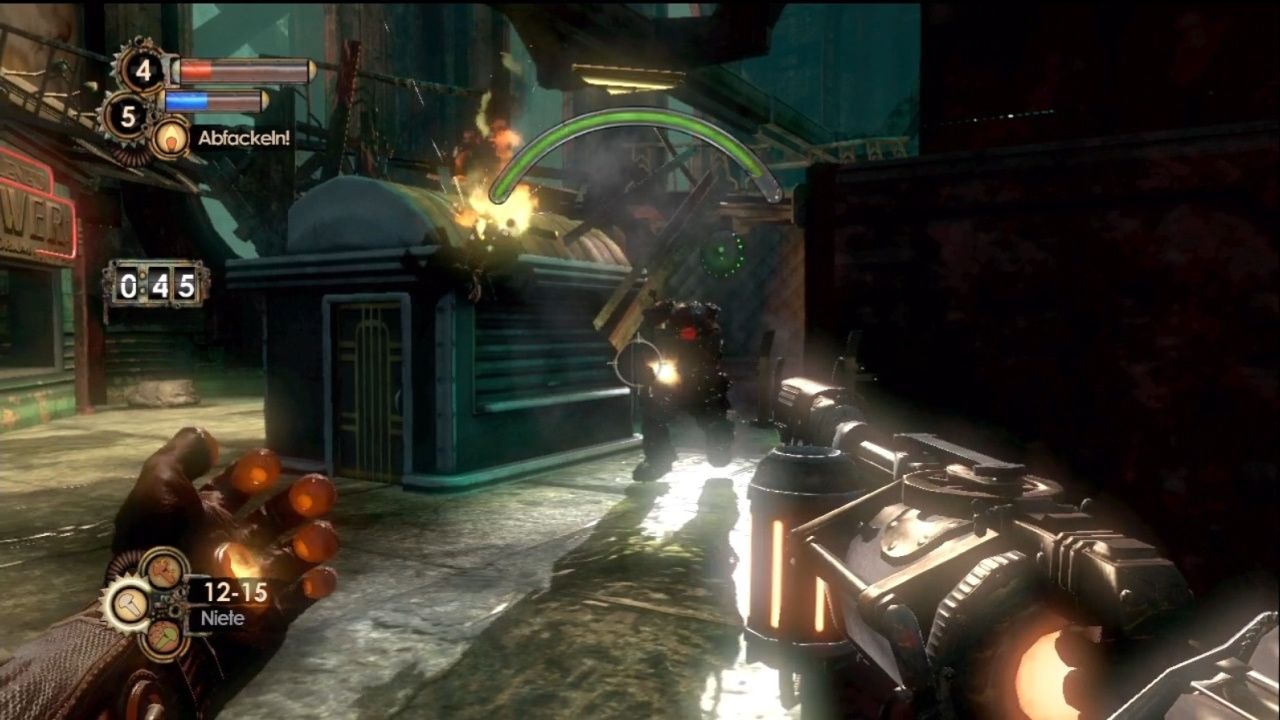
Specifically speaking about the first two games, BioShock had a crazy dark atmosphere, some creepy enemies, and horror that kind of just oozed everywhere. There were no jump scares or downright frightening scenes, but you always had a sense of dread and fear, and that’s really hard to pull off in games. The game was more about psychological horror and isolation, and it sure pulled off mostly the best in the first game. Surprisingly, the entire trilogy was released during this generation and would receive barely passable ports later on as the BioShock Collection.
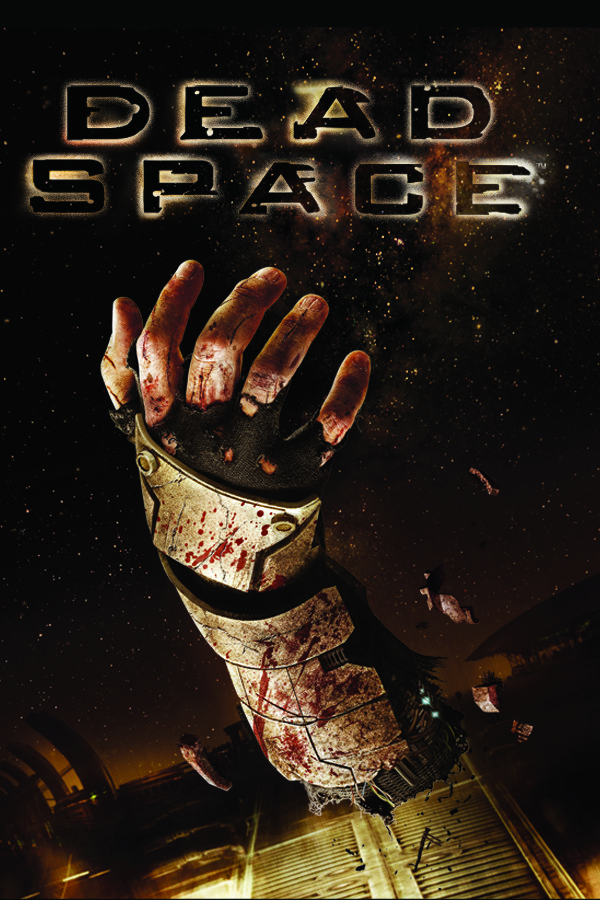
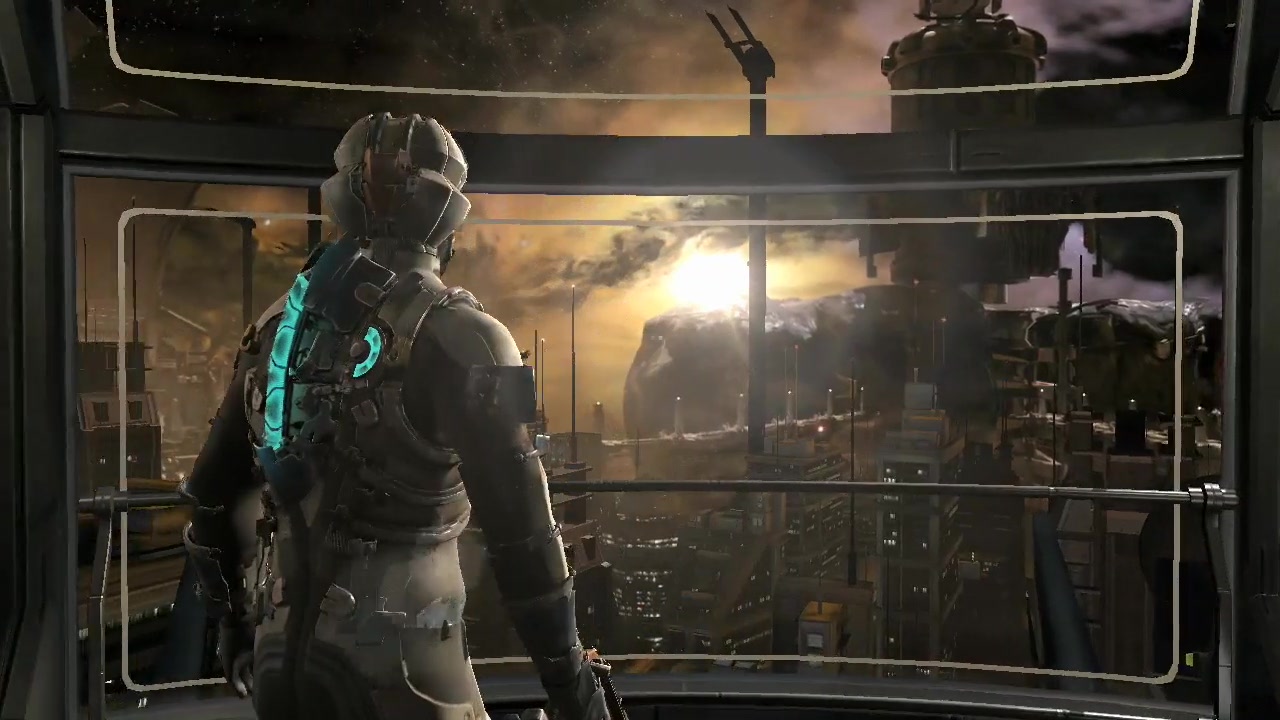
While Dead Space 3 was mostly about action and less about horror, the first two games were damn scary. I would consider them one of the scariest games I have ever played. Jump scares aside, there was a constant foreboding presence of something lurking around every corner, and the Necromorphs are some of the greatest video game enemies of all time. This was peak horror during the HD era. Another trilogy saw its ending in the same generation cycle. The series would stall here, and the first game would receive a remake two generation cycles later.
Deadly Premonition is the perfect game; it’s so bad, it’s good. The gameplay is dated and feels like a PS1 game; the graphics are terrible; and the voice acting is awful, but the writing and overall atmosphere the game presents are well done and memorable. It really feels like a PS2 game that was quickly ported over to next-gen consoles without any improvements in mind. It can be scary in the sense that its trippy Japanese horror weirdness will freak you out more than scare you. This is one of the few games you should stomach for its terrible design and weirdness. It’s worth it. It would get a sequel in the next generation, but it would not look like it and would be poorly received.
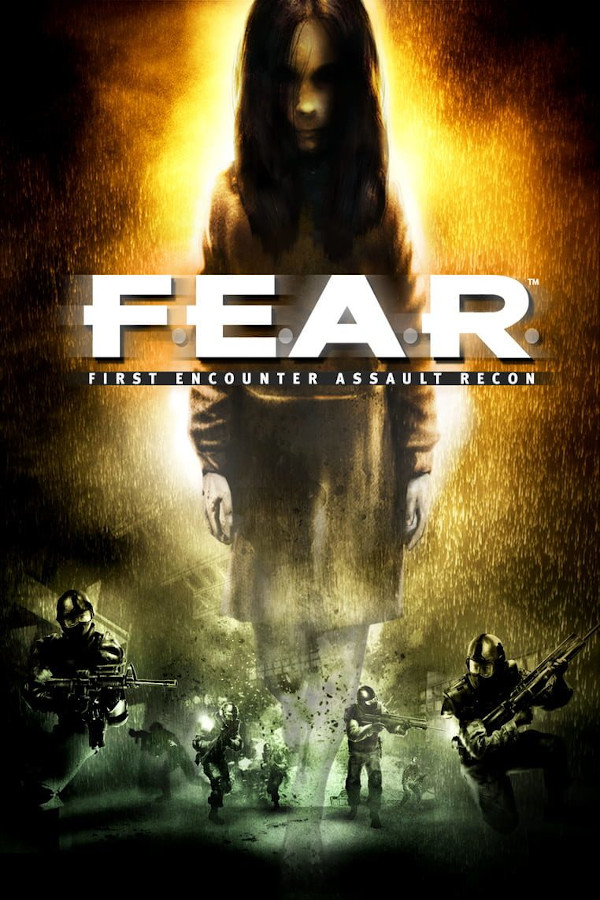
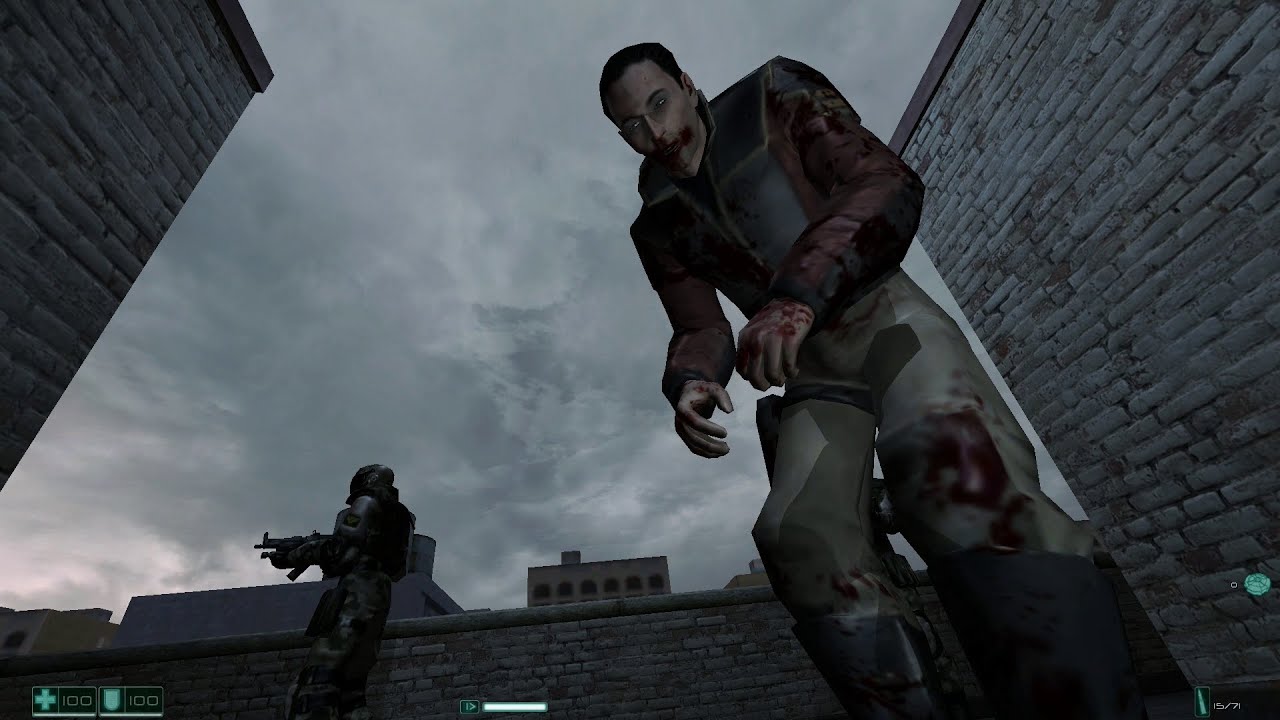
Oh, man, this one brings me back. The first game was very scary, with crazy The Ring girl vibes that were all the rage in the early 2000s. The gunplay was genuinely solid, and you needed a NASA PC to run it back in the day, but forget about understanding the story. The second game had some really scary elements but was more action-oriented and had less of a mid-2000s PC shooter Half-Life 2 style vibe to it. The third game, well, just isn’t scary at all. Another trilogy was released in the same console cycle. While the first game was a port and was released during the PS2/Xbox era, the entire trilogy would never see a remake or remaster.
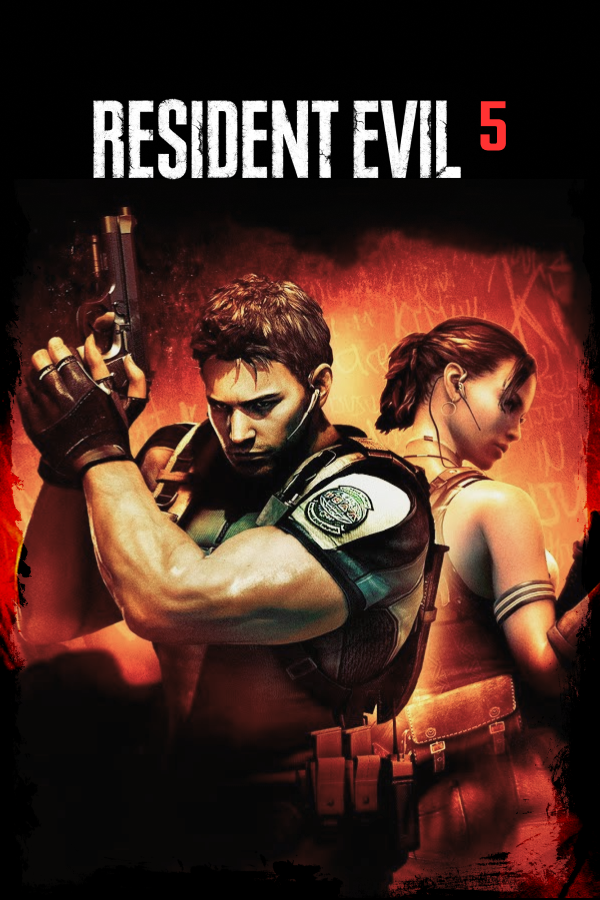
The Resident Evil series really took off after the previous generation. This generation will see the most action-focused games yet. Resident Evil 5, 6, and Operation Raccoon City were the main releases. There was also an HD port of the 3DS exclusive Revelations, as well as Revelations 2 as a sequel. Some would consider this the weakest run the series had, only to go back to its roots in the next generation cycle, starting with Resident Evil VII. The games also weren’t very scary around this time. They were just too action-focused and didn’t have the same nuanced scares and puzzles as before. Revelations would be the only sub-series to feel scary or have any tension at all. Operation Raccoon City would be lauded as the worst game in the series.
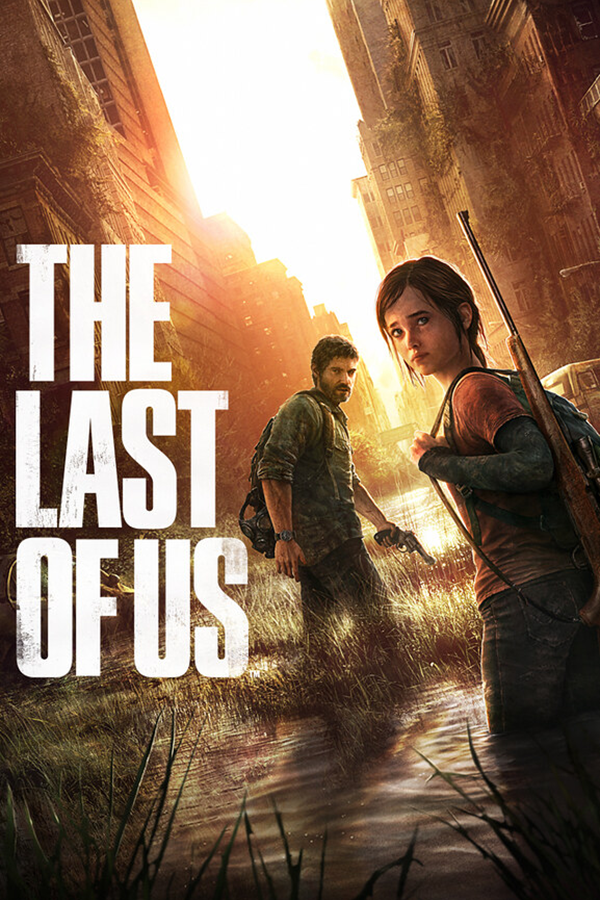
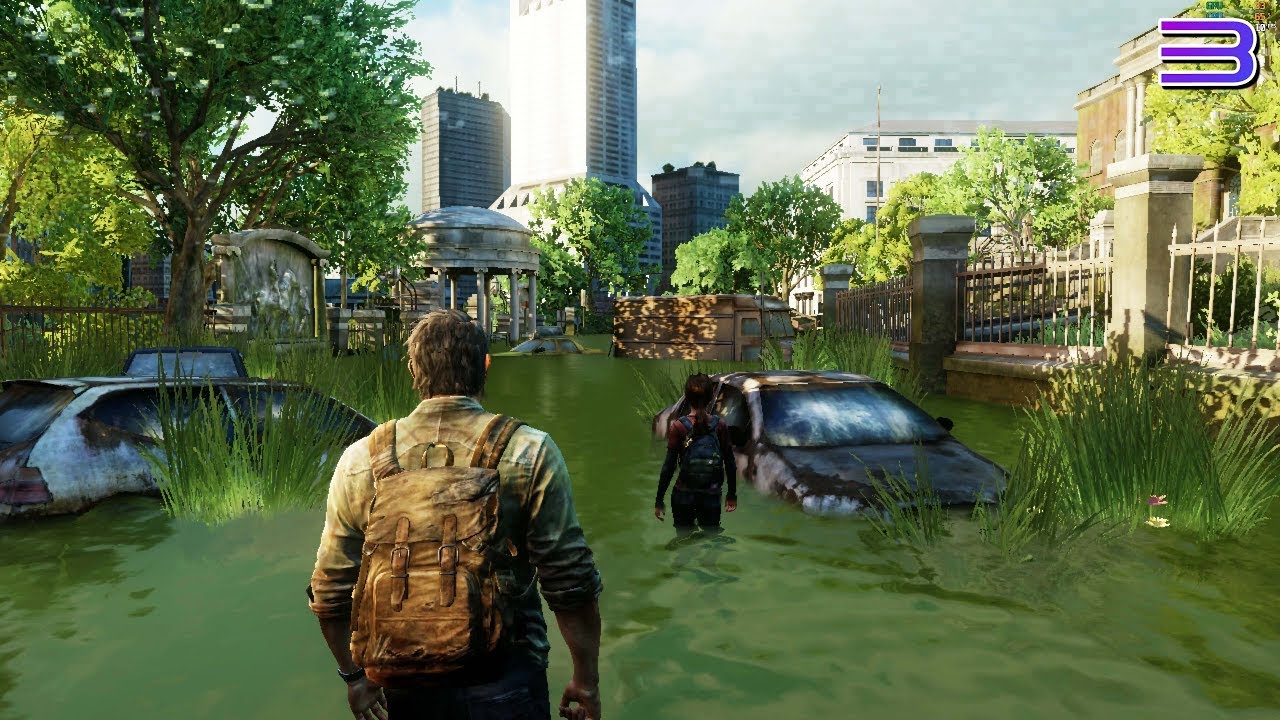
The Last of Us would be considered one of the best horror games ever made. It was wildly praised and made waves throughout the gaming industry, receiving awards and praise from all angles. The tense stealth scenes with the Clickers were awesome. These monsters are some of the creepiest and eeriest creatures ever made for a horror game. This wasn’t just another zombie game. It would receive a sequel in the following generation as well as some of the most controversial decisions ever for a game. It would also receive a full remake and remaster.
Outlast
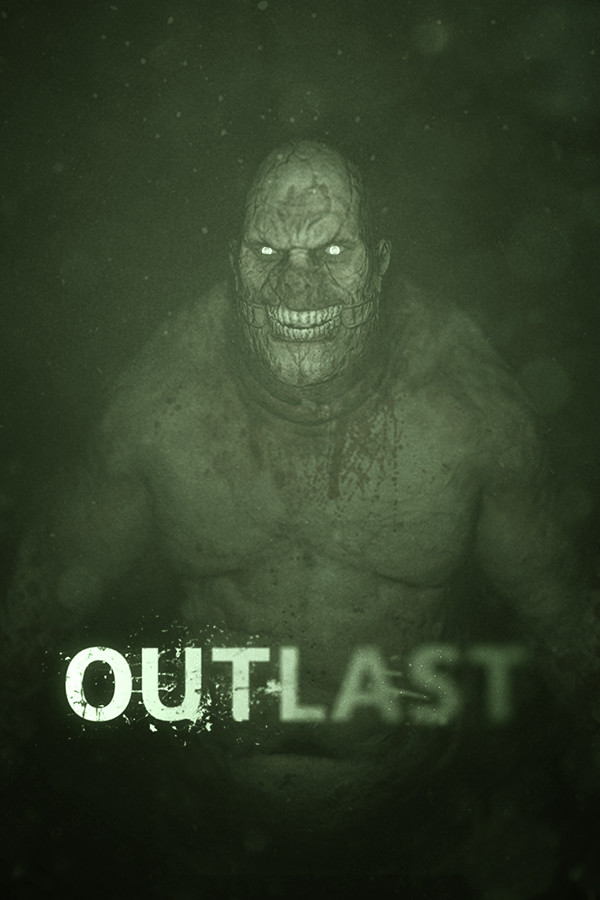
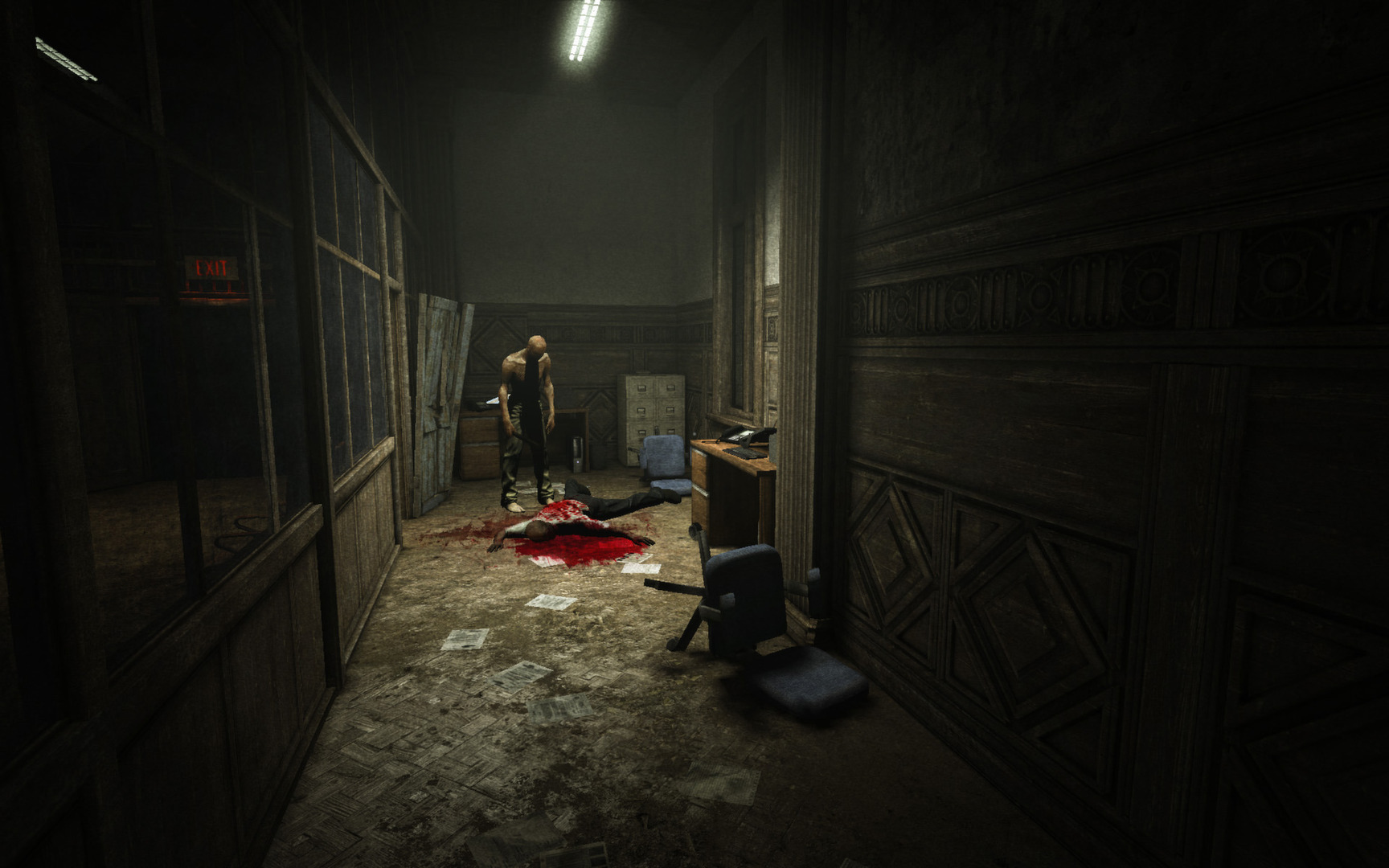
Released at the tail end of the HD era of gaming, Outlast never saw a port to consoles until the next generation. It was damn scary. This small indie game made waves and became one of the top streaming games of all time. The tense atmosphere and overall great design, in general, made Outlast terrifying. The sequel would be released several years later on PC and consoles, as well as a port of the first game released about a year later.
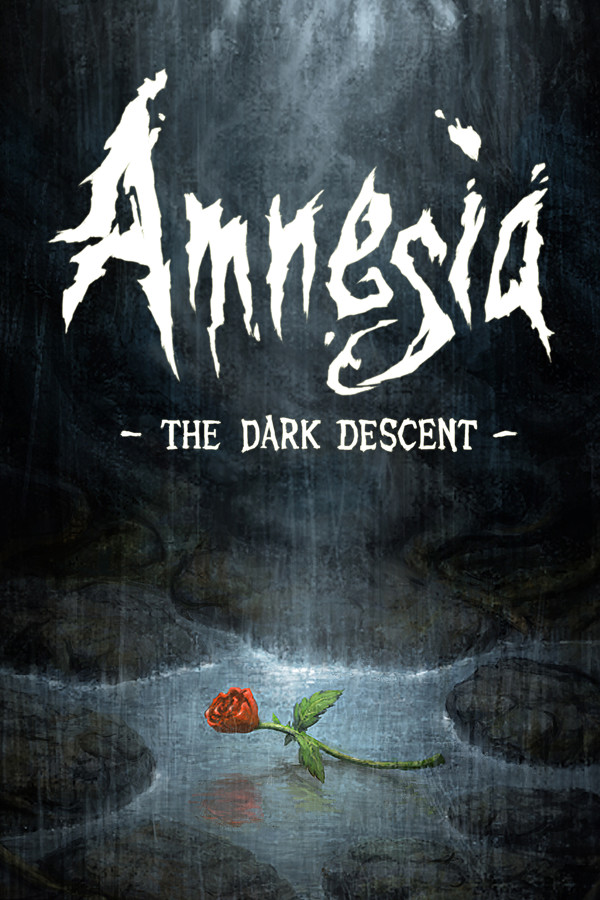
Amnesia was probably the top-streamed video game of the year in 2010. Game streaming was new, and scare reactions reached the charts on YouTube. There hadn’t been many really scary games during this generation. It was all action-focused and multiplayer-focused to generate sales. That’s why this indie game was released on PC only at the time. It had interesting puzzles and enemies you couldn’t fight. It wouldn’t receive a port until many years later and two generations later. The sequels, A Machine for Pigs and Rebirth, would be poorly received, and I personally didn’t like them that much either.
S.T.A.L.K.E.R. Series
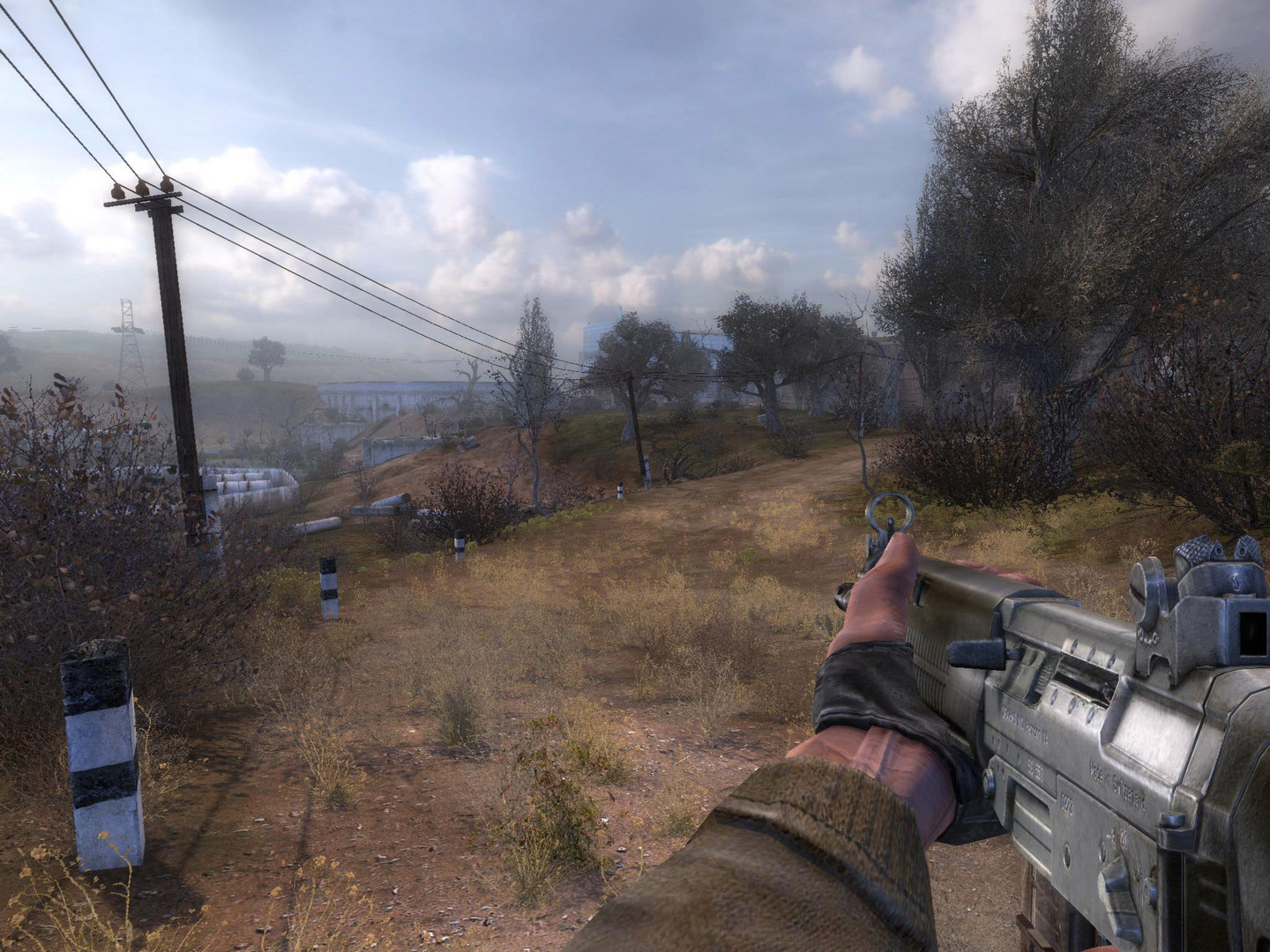
The STALKER series wouldn’t sell well at first but would gain a huge cult following. The entire trilogy was released around the mid-life of the HD era and was exclusive to PC. It’s rough around the edges, but a huge following of moderators would improve the game, and it wouldn’t be until two generations later that a true sequel would be released. The game never saw a port to consoles, and for a reason. The engine is already poorly optimized on PCs and wouldn’t do well on consoles. It would be a huge undertaking to port the entire trilogy, and it would be hard to market.
Alien Isolation
Alien Isolation wasn’t technically developed for HD consoles, but mostly for PC and next-generation systems. It came out right as the next generation was coming in, and the HD versions were quickly forgotten. Isolation is considered the best game in the Alien series and one of the best horror games of the last couple of decades. It captures the 80s aesthetic of the movies and tells a great story while being terrifying. I still haven’t completed it to this day because of how scary it actually is.
Penumbra Series
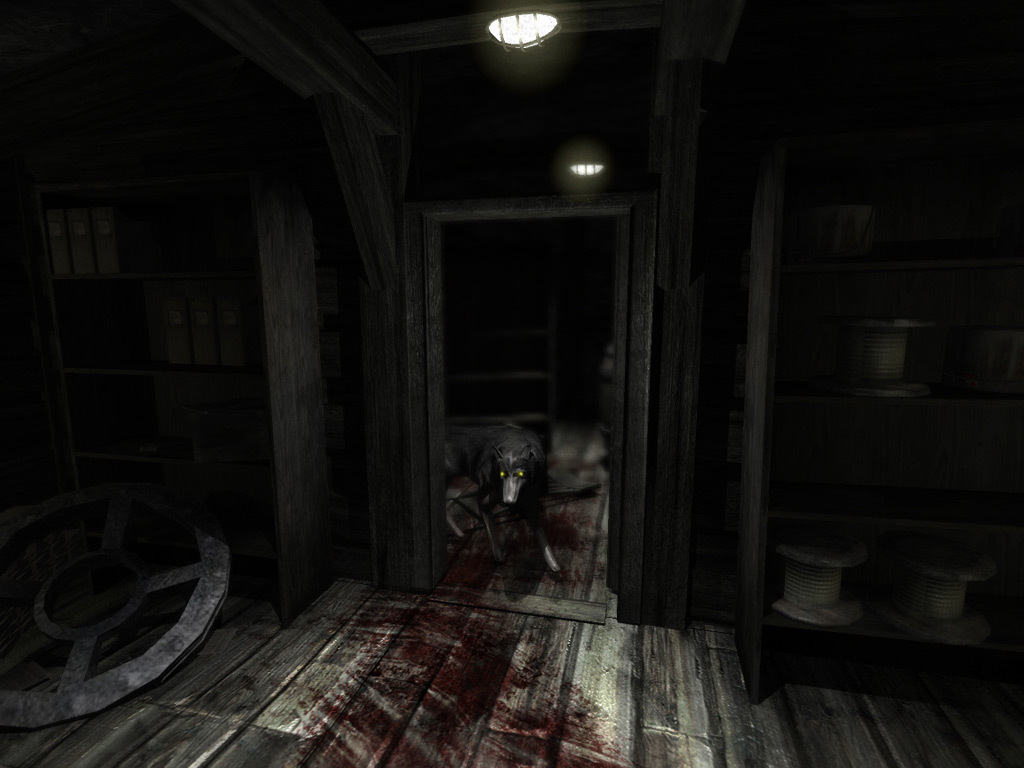
The original horror trilogy, Penumbra, was developed by Frictional Games, which would later go on to make the Amnesia series. This was released for PC only and never received a console port. It was a less talked-about indie series that was loved among horror fans, but indie PC games didn’t receive the same spotlight that they do now. Console gamers didn’t care unless they were ported. Penumbra is a slow-paced, puzzle-focused horror series all about adventure and discovery. It’s creepy, full of psychological horror, and a must-play for any horror fan.
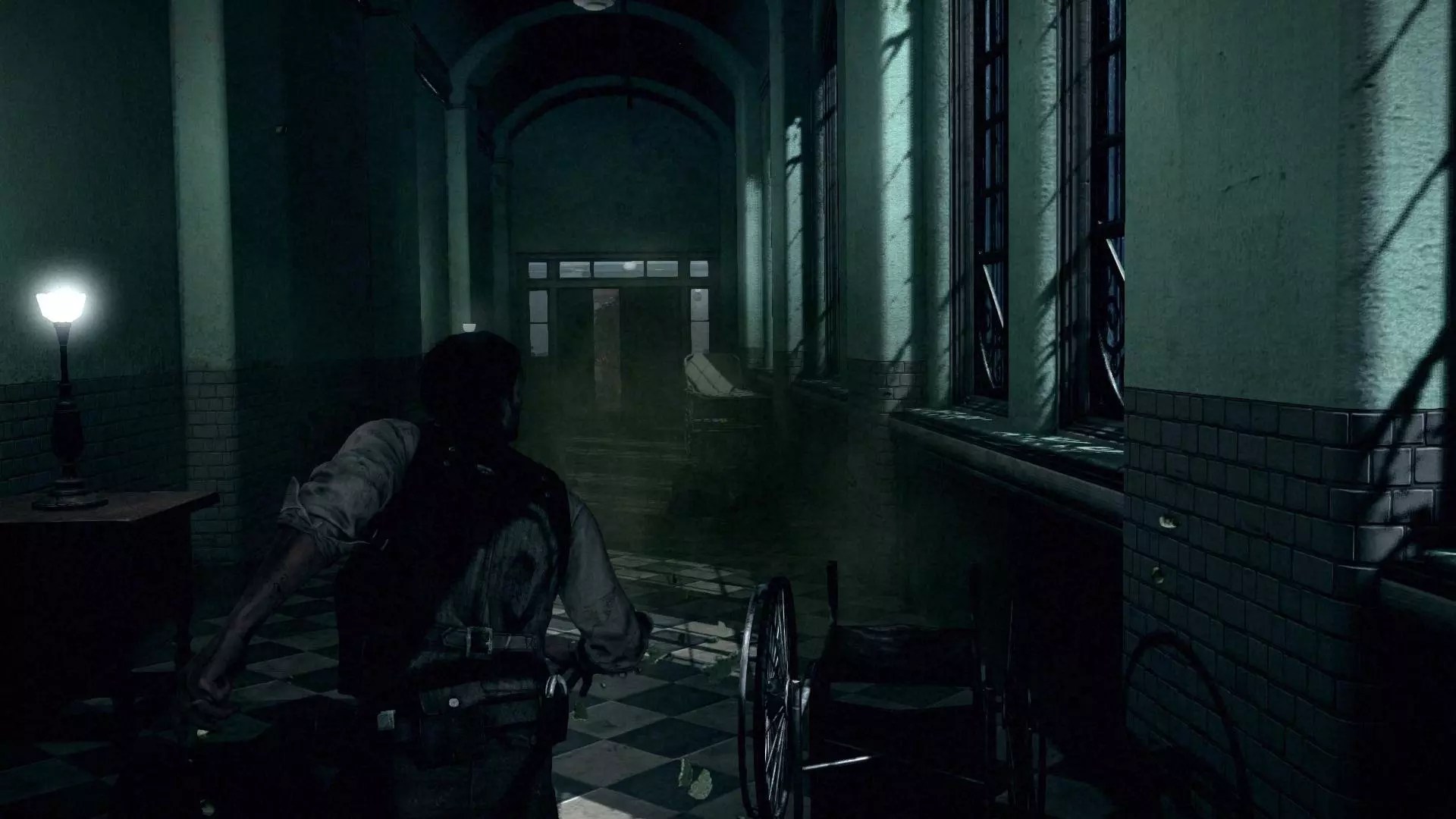
While this is stretching it a bit, The Evil Within was mostly meant for next-generation consoles and PCs. It played and looked nice on PS3 and Xbox 360, but those weren’t the intended systems. This was Shinji Mikami’s next opus and was definitely creepy and had some good elements, but it was too action-focused and unbalanced, and the story made no sense. Some say that’s the charm of survival horror games. There’s a bit of jank that’s needed. I personally just thought this game was okay, despite the amazing monster designs. A sequel would later come out, but not sell as well.
This is one of my favorite horror games of all time. It has a great story, memorable characters, and a great combat system that plays off of light and darkness. I’ve replayed this game many times, and it wasn’t an instant hit for Microsoft. The sales were slow, and it wasn’t appreciated until much later. It received a PC port and a recent remaster. It’s a must-play for any horror fan.
Siren: Blood Curse
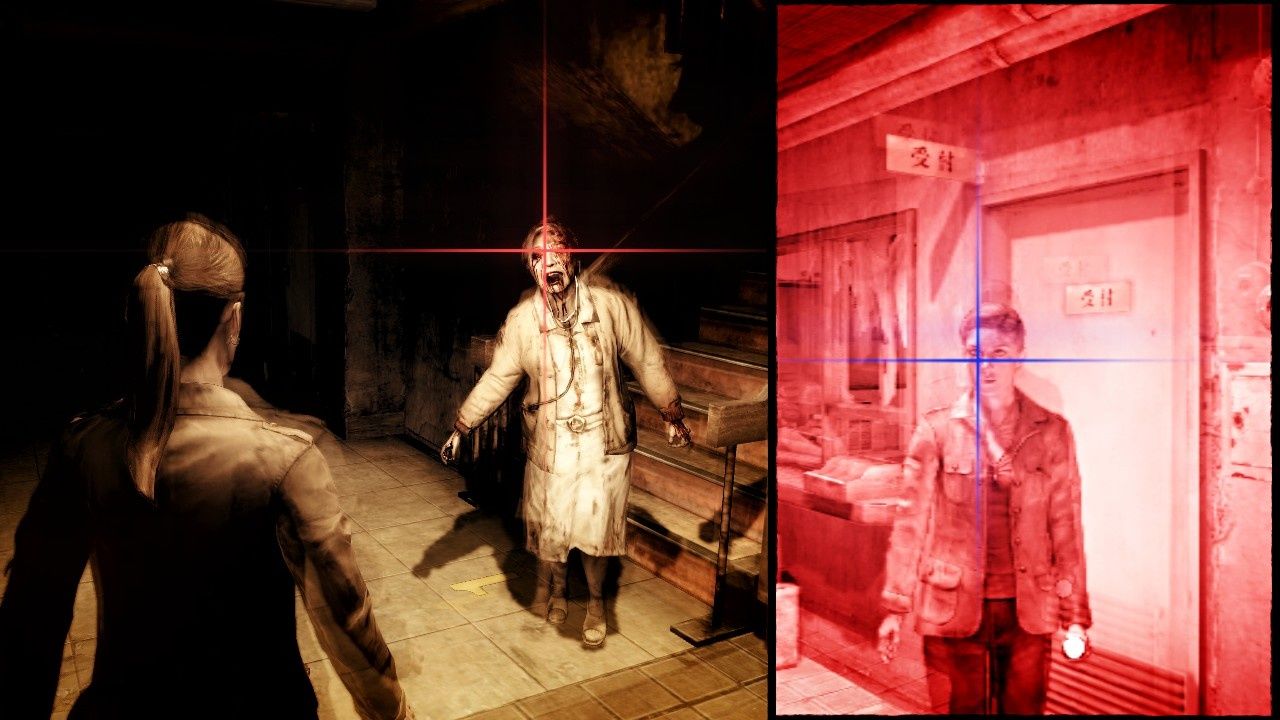
It was a surprise to see a niche and obscure horror title return to PS3. Siren didn’t sell or review well but is considered a cult classic and part of the classic survival horror era. Blood Curse was a digital-only episodic release in the US that had some great scares and an overall fun adventure. Sadly, only Japan and Europe received a physical release.
Oh man, where do I start? My favorite horror series was butchered with this release. I rented this from GameFly and had to follow a guide through most of the game. It was a confusing, convoluted mess and felt like a chore to play. It wasn’t scary, it wasn’t fun, and it was the worst game in the whole series.
While the movies were quite enjoyable despite their flaws, the games were just awful. They weren’t as gruesome as the movies and played it too safe. Pretty much every bad conventional video game flaw was present here. Awful voice acting, terrible graphics, bad puzzles, and poor level design.
Vampire Rain
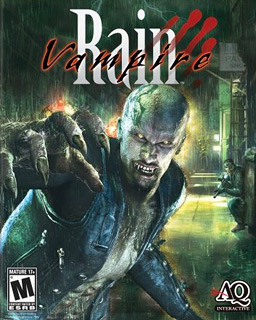
Easily considered one of the worst games of the HD era, there was no redeeming value in this game. There was nothing you could overlook. There wasn’t any “it’s so bad, it’s kind of charming” to this game either. It was just a disaster and an unplayable mess. It wasn’t scary; it felt like it was trying to be several games at once; it looked bad; it played even worse; and it wasn’t any fun despite all the hype leading up to its release.
Aliens: Colonial Marines
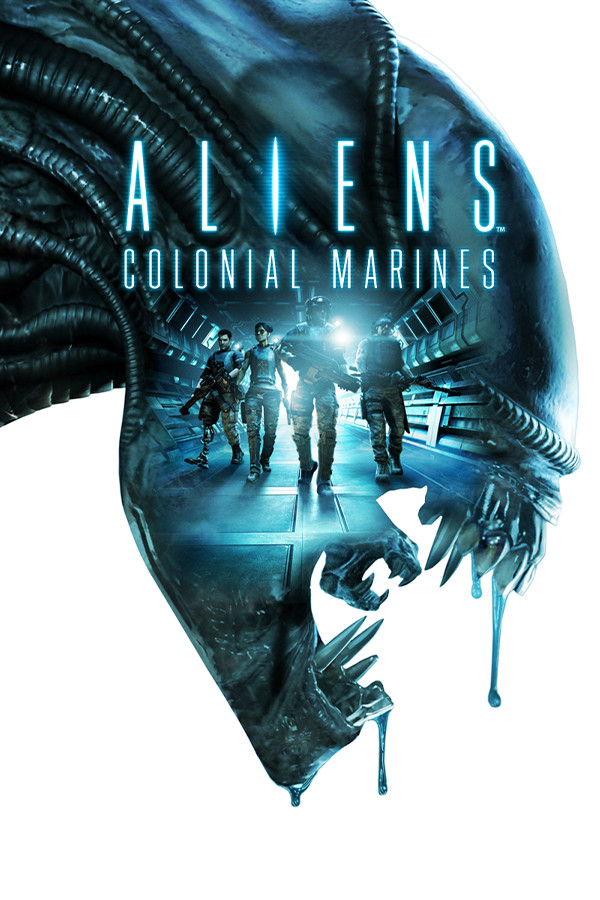
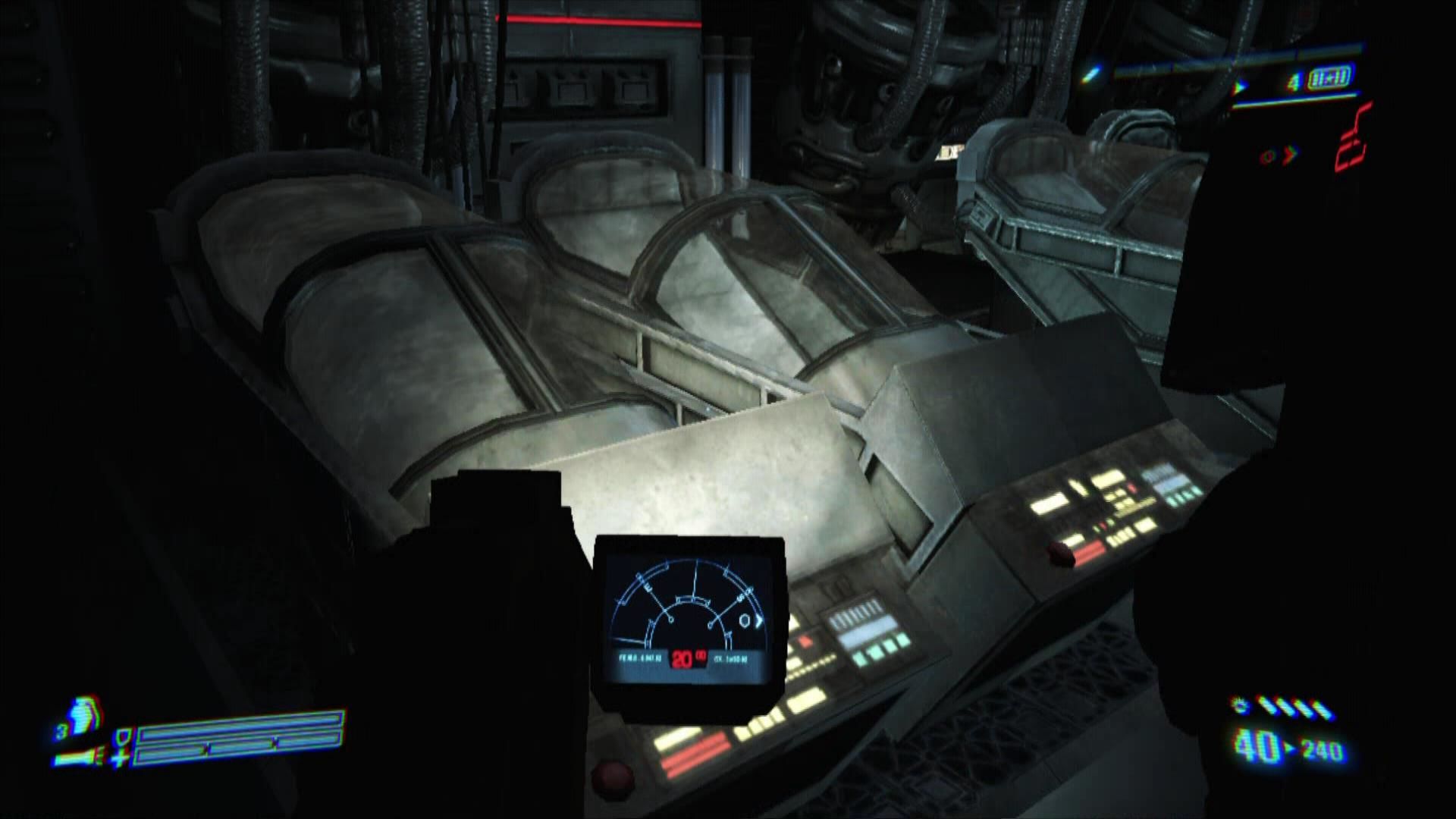
This game needs no introduction. It’s been covered by every “worst of” and “most controversial” video game on YouTube out there. Its history has been extensively documented. From broken AI to awful visuals, this is just a completely unfinished and broken game. It’s also considered one of the worst games ever made. It’s a stark contrast to Alien Isolation.
I had the displeasure of actually finishing this game when it came out. I was hoping it was going to be a great reboot of a classic horror series. I followed the developer’s diaries all the way through the release and played it without reading any reviews. The game is pretty bad. It’s one of the worst games of the HD era. It was just an awful chore and a mess of a game. It wasn’t fun. It wasn’t scary. It was just plain bad.
Amy
Probably one of the worst games ever made. This was a small indie game that was supposed to be full of suspense and horror, but instead, it’s a chore of a game with awful controls and graphics. The game was also poorly optimized and suffered terrible framerate issues. The story made no sense, and overall, it was just a stupid and lazy game.
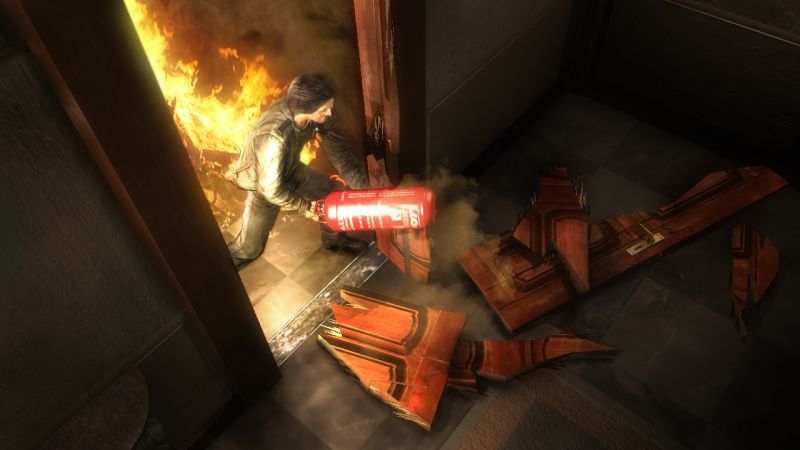
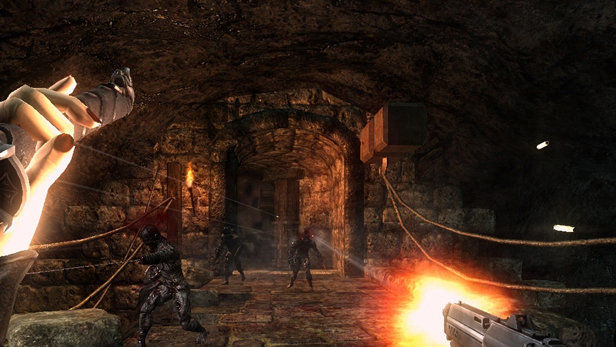
I was so excited about this game, and every time I think about or have to write about it, it breaks my heart. I absolutely love Clive Barker’s work and have had it since I was a young teen. I fawned after the figures from Todd McFarlane and loved the characters in his movies. Undying was also a cult classic. The game was just trying to do too much at once. It had cramped-level design, awful performance, dated visuals, and just felt like a chore. The only thing it had going for it was the art design. It’s one of the worst games I’ve ever played and one of the saddest scars of the HD era.
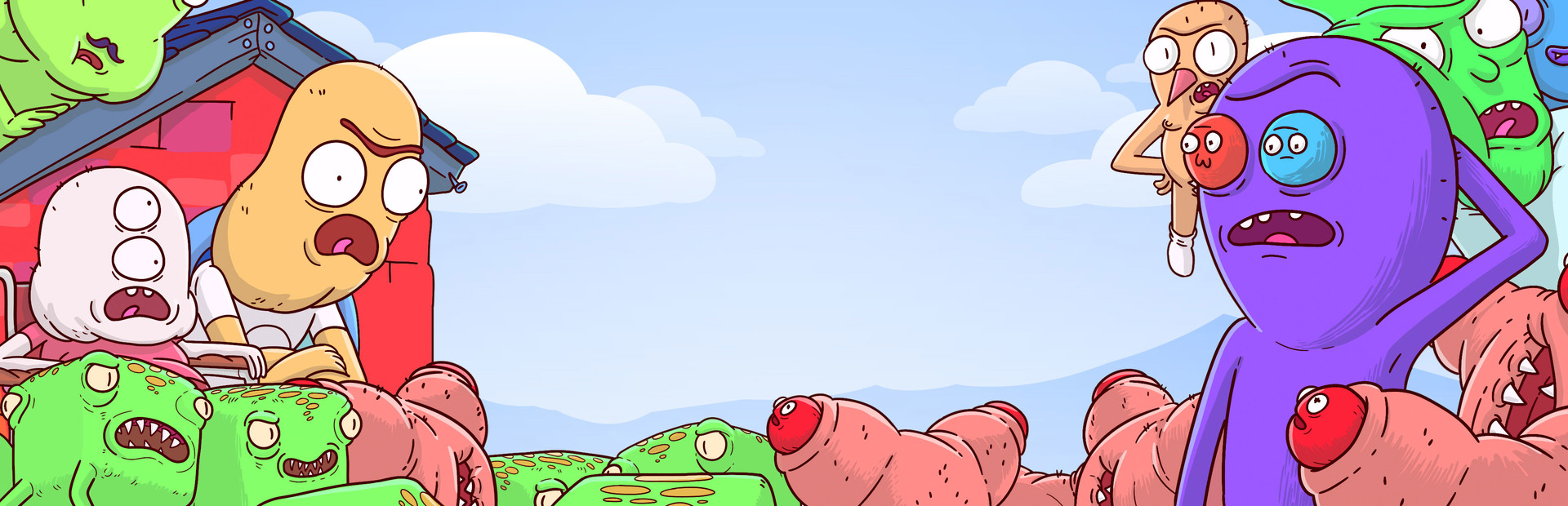
Rick & Morty became an animation phenomeon due to its quirky humor, crazy art style, and memorable characters. A lot of people don’t like the show, which is fine, and a lot of people love it. I just want to preface this review by saying if you don’t like Rick & Morty you won’t like this game. It’s basically an interactive Rick & Morty episode with the same voice actors, but with original characters. It’s the same humor, but more vulgar and mature due to not needing to tone things down for cable TV.
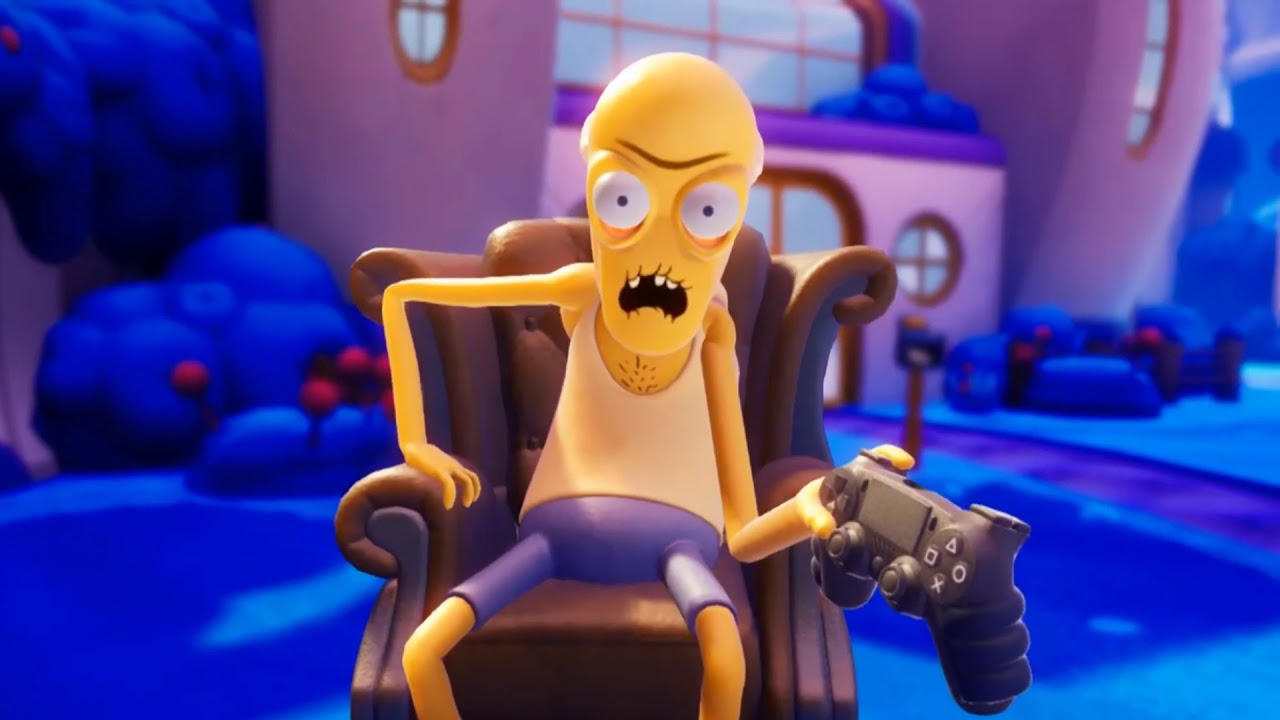
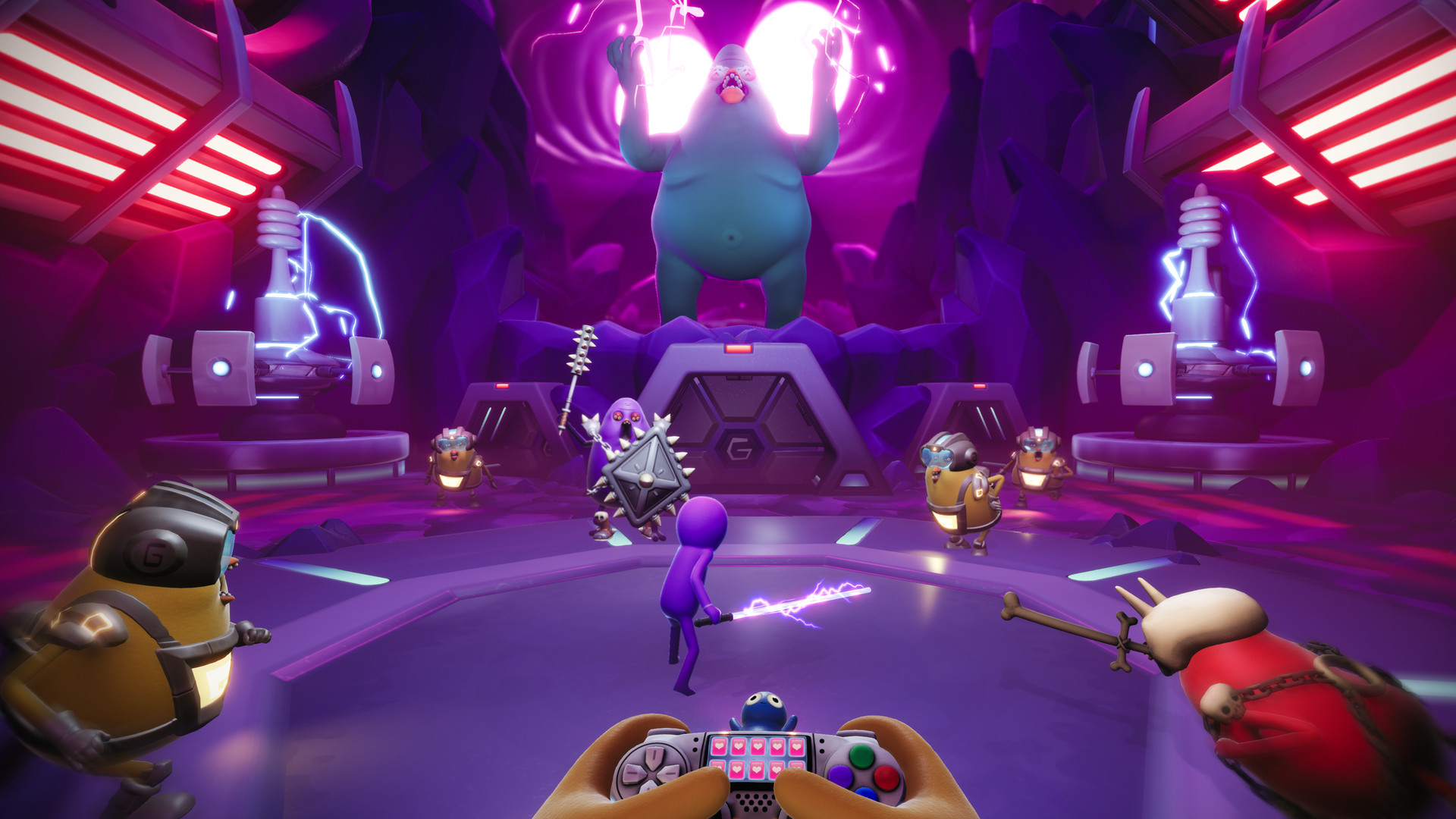
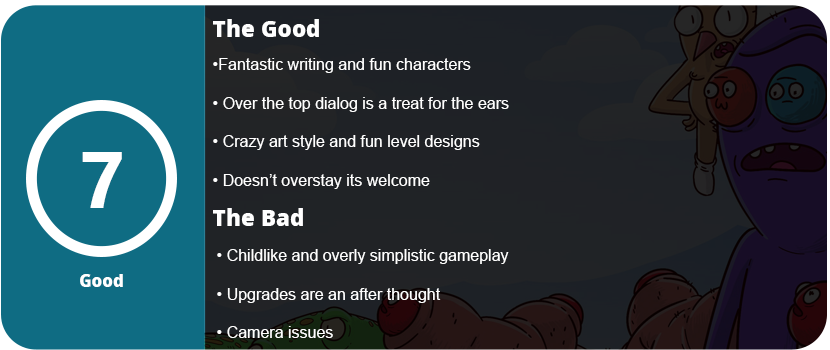
You play as a Chairorpian. A floating person in a chair holding what looks like a PS4 controller. The center part shows Trover’s health and the button presses reflect yours in real life. This is mostly for playing in VR, but it’s still funny without. Your two dogs get stolen by an evil god thing and Trover is sent to you so you can control him to save the universe. The story is insane and crazy and while it makes sense it’s as simple as an animated TV episode. It’s nothing groundbreaking. The most entertaining part about the game is the dialog. Characters break the third and fourth wall constantly and call out typical video game tropes which is hilarious. You can stand near a character and they will drone on for several minutes longer with a new dialog. If you don’t do a certain action Trover will call you out on it knowing you’re supposed to do it. The writing never misses a beat and is spot on.
When it comes to gameplay this is where Trover kind of falters. It’s incredibly simple and basic and pretty boring. Trover has a lightsaber-looking sword and he has a simple basic and heavy attack, but the heavy attack has to be acquired later on. You also have a dodge roll button which also has to be acquired. It’s an obvious stretch for gameplay time and feels necessary. Enemies are “kiddie video game” territory in terms of ease. There’s zero challenge here. Some enemies need armor knocked off which you can do by throwing objects into them, but it’s still not a challenge. There aren’t any puzzles here either. The ones that could pass as one are super easy and require no thinking. There is some platforming, but this is marred by the weird camera angles due to your perspective. There are nodes that allow you to move around and you can hover higher up to get a bird’s eye view, but it still makes some platforming more difficult than it needs to be.
There are green babies you can collect to upgrade Trover’s health, but I didn’t bother much with this outside what was out in the open. The game is so easy the upgrades feel like an afterthought. I mostly enjoyed just exploring the weird worlds and listening to all the dialog. The game gets incredibly graphic, but I personally love this kind of stuff. Too many games are afraid to dive into this territory. It’s just gross, sexual, vulgar, and super weird which I can’t get enough of. The writing of the show is elevated a bit due to not needing to censor anything. Visually, the game is fairly tame outside of some cartoony gore, but the dialog goes off the rails.
The game can be finished in about 5 hours, maybe 6-8 if you collect all of the green babies. It doesn’t stay its welcome and has a satisfying ending. However, there’s zero replay value unless you want to go back in VR. The gameplay is so basic and dull that I wouldn’t even do that, to be honest. If it weren’t for the awesome writing and characters and striking visuals this would be a pretty basic and generic game at its core. The pacing is at least great and you get pushed along the story and always see something new. A single evening would suffice and it would be well worth your time.
Overall, Trover Saves the Universe is full of Rick & Morty humor cranked to 11, but offers simple childlike gameplay. If you hate the show you will hate this even more, but fans of the show must play this. The over-the-top writing that you never see or hear in video games is a breath of the fresh air and it’s never boring. Once you finish the game there’s no reason to come back, but the time spent is worth the price of entry.
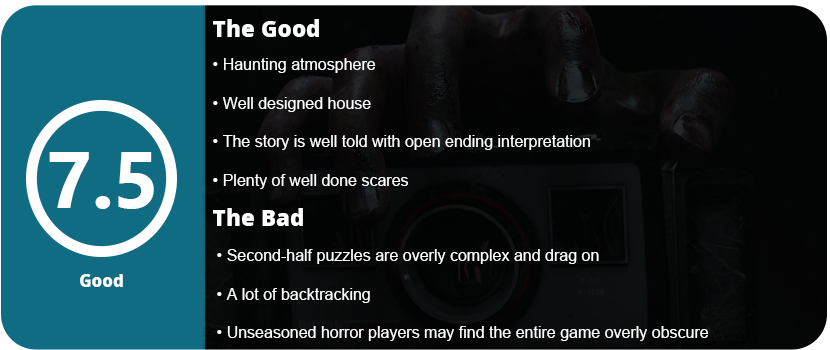
Ever since P.T. was shown and canceled it set a new standard for survival horror games. Silent Hillhas always been the gold standard to live up to and many games have since. MADiSON is one of the first games I’ve played in the style ofP.T. to actually be good and pull off the scares and atmospheres. While not inherently as frightening as P.T. or other horror games it definitely gets across a dark and haunting atmosphere with plenty of scares.
The game starts out really solid but also has foreshadowing of the game’s main weakness. You start out in a dark room with just a TV on and your dad pounding on a door. You need to use the TV as a flashlight by spinning it around and finding a handle to a cupboard on the wall to get a hammer. You get to crawl your way into the rest of the house which acts as the main area you will be solving puzzles. Madison is all about puzzle solving as that’s all you do. The first half of the game can be solved fairly easily. It’s the same affair of examining everything you can and finding that one thing you can pick up and can use on something you remembered it would go to. A lot of finding and matching at the beginning. In between, there is the main gameplay mechanics which involved a Polaroid camera. A Camera Obscura isn’t unusual in horror games. The entire Fatal Frameseries is based around one, but here it’s used to advance the story. There are Polaroids laying around objects you can photograph. When you do you can shake the photo to expose it. While most photos don’t need this some need to be exposed to show a number for a combination lock.
I have to give the developers credit for the great layout of the house. This is a huge issue with a lot of horror games. Many require tons of backtracking through the same area and they grow as you unlock new areas. The house in Madison is well laid out with lots of landmarks to memorize where certain things are. I knew the main starting point with the “ritual area” was past the dining room. The basement was in the main hallway etc. The house is laid out like all horror games should be laid out. Make it memorable with easy landmarks because you trek through the house probably hundreds of times. Most of the rooms hold puzzle areas or transport you to new areas to solve puzzles. You also have an 8-item inventory limit and need to trek to your safe often to store and pick up items. Outside of occasional scripted events, not much happens in the house outside of sounds. There is one scene in a water-filled basement that was probably the scariest in the whole game. The developers really used audio to spook the crap out of you and draw out many fears people would have. Creepy static on radios with unclear voices is haunting.
When you’re wandering around the house nothing happens in between puzzles. Just a lot of squeaking doors, wind blowing, slamming doors, etc. There’s Luca’s breathing that gets annoying as his deep sighs repeat often, but the house itself is just haunting. The sterile lighting, the ultra-realistic look to the house, and the head bobbing. If you played the P.T. demo you know what I’m talking about. This is the new-age horror style that needs to get perfected and Madison definitely sets a new bar. Here’s where things take a bit of a dive. Halfway through when you get to the infamous candle puzzle area in the church many players may turn the game off. You must find four different candles in two different time periods and match those colors that are associated with religious imagery. You also have to navigate through four different mazes and if that candle’s image isn’t there you have to backtrack, go back to the other time period, navigate the same maze again, then repeat this three more times. The one thing the game doesn’t tell you is that if you listen to the confessional too early a ghost stalks you and can kill you if you don’t place the candle down before he shows up. Thankfully he only exists in one time period. I was able to place the first three candles before doing the last one, but many players won’t know this.
Then there’s the clock face puzzle. You must match clock faces that are shown on five different walls but the correct faces are spread out around the house. It’s a lot of memorization and backtracking. And then there’s the Blue Knees ghost puzzle that was incredibly frustrating at the very end. None of this spoils the story, but the last half of the game will really try players’ patience. The game got so much right up until this point and it felt like filler to stretch a 2-hour game into 5. Horror game developers please listen. You don’t need insanely mind-bending puzzles to be a good game. I know this is a trope, but please stop it. No one liked them 25 years ago and no one likes them now. We play horror games for the atmosphere, scares, and intense scenes, not puzzles.
In the end, the story itself is open to self-interpretation. It’s not obvious or clear when the credits roll about what happens to Madison or Luca, but what is obvious are the possible reasons why the ending occurred the way it did. Props to the developers for making an open-ending without being cryptic or making no sense. The visuals are excellent and the production values are up there, but those later half puzzles really bring the game down quite a bit. If you can push past them you’re in for a treat with this being one of the best horror games in recent years.
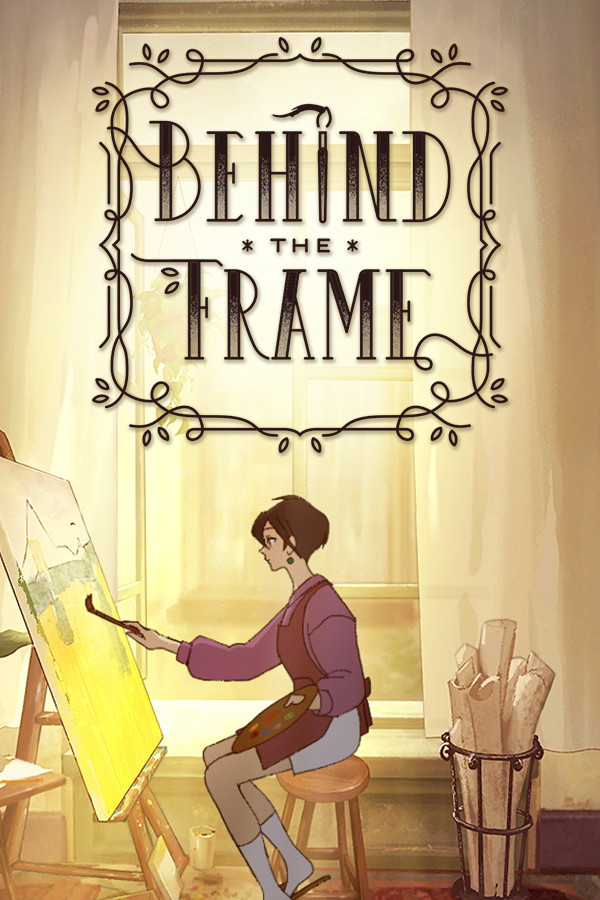
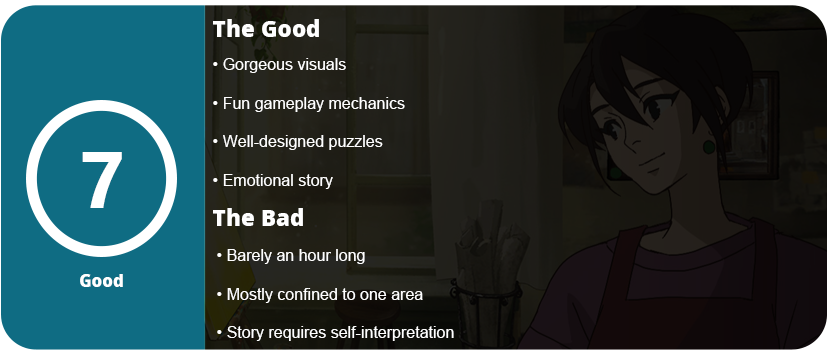
We as humans tend to dwell on death and what lies beyond. It’s only natural as we simply don’t know. Behind the Frameexplores this concept with an emotional tug-of-war of a story, but you really need to pay attention, and a lot of the story is more between the lines and not what’s really being shown in front of you. There’s a lot of assumption that you know what’s happening when the main character looks shockingly off in the distance based on the previous scene. It’s done fairly well too.
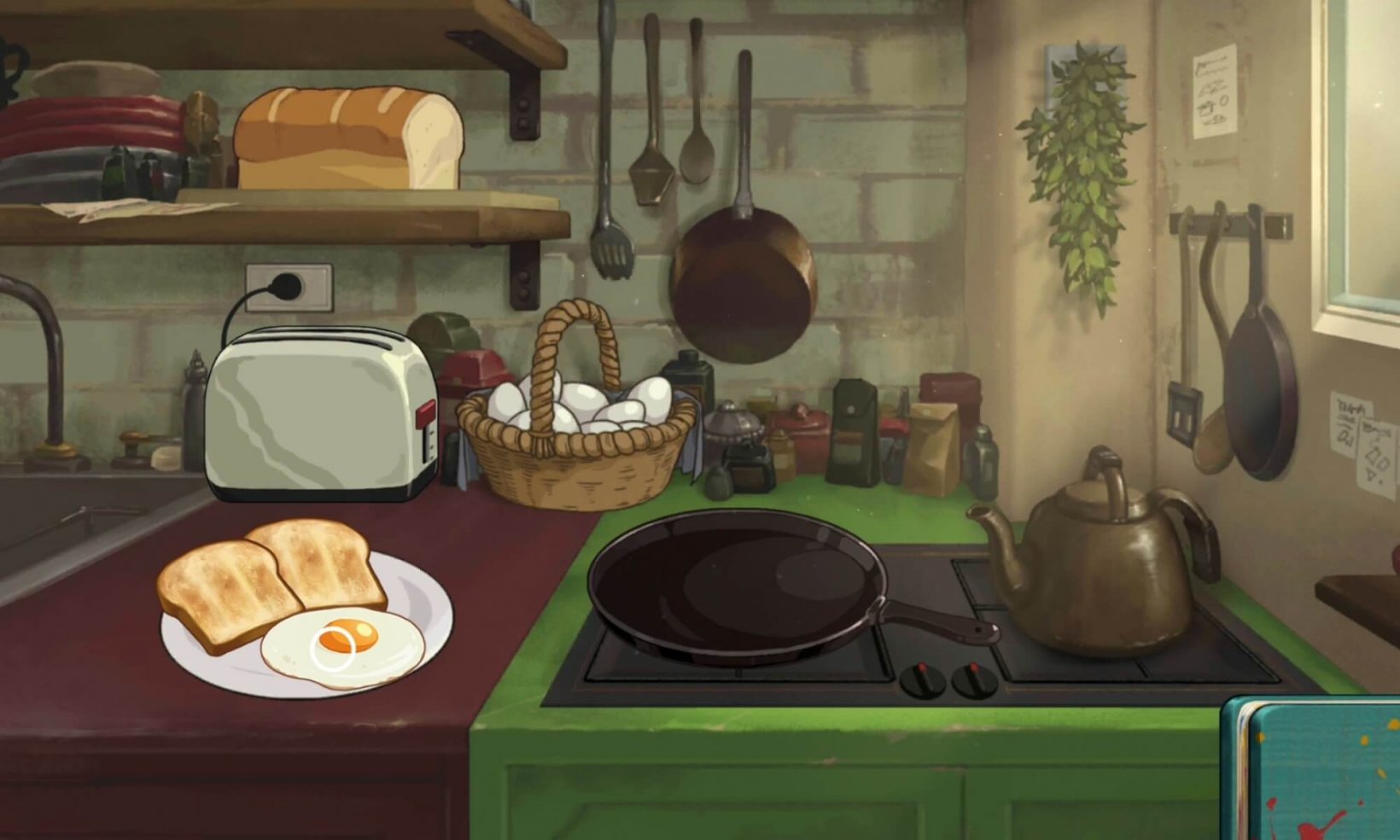
Most of Behind the Frame is puzzle solving. It takes a dark twist halfway through and it surprised me. Your goal is to acquire all five missing colors on your paint palette to finish your painting. To do this each color is locked away behind a chapter puzzle. These got rather complex towards the end, but nothing you can’t figure out without exploring and finding that key item that gives you that “AHA!” moment. Some puzzles are as simple as matching colors on a painting to memorization. Nothing is overly complex and it does eventually come together. The painting itself is a matter of scribbling enough in the empty space and it will auto-fill. Nothing extraordinary there. There are some other small tasks like making food which is as simple and dragging items around.
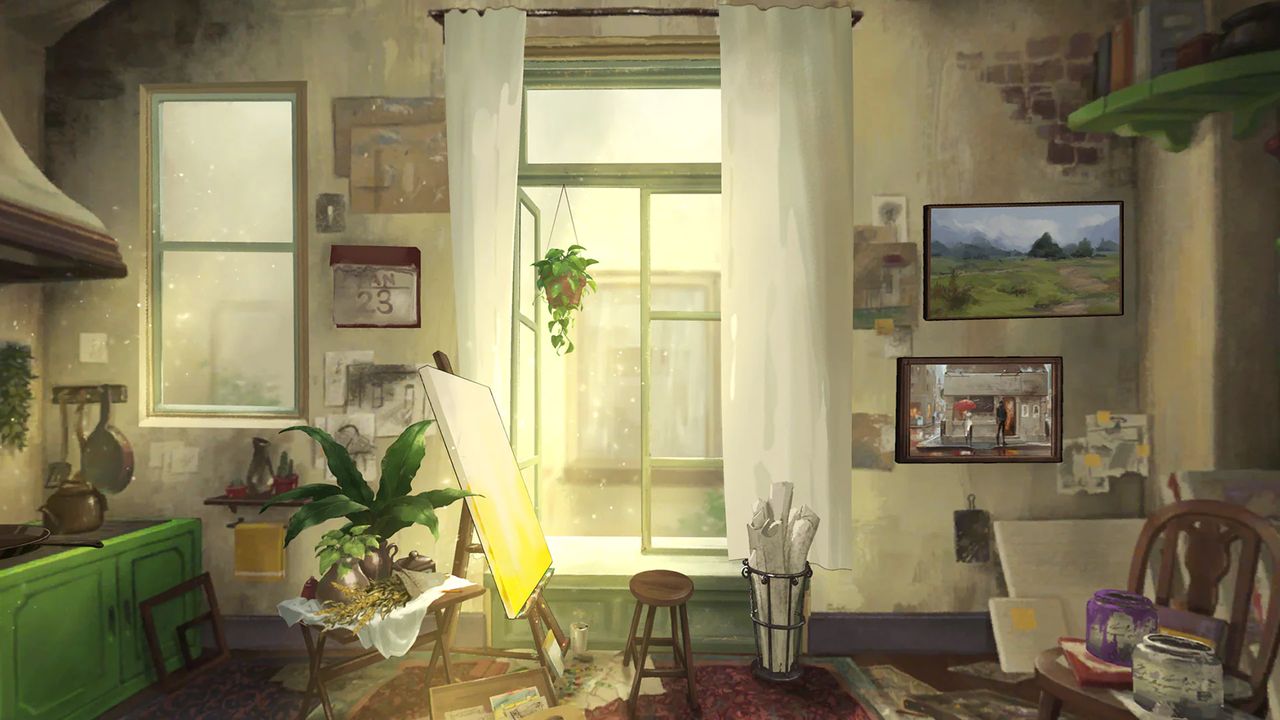
There isn’t a lot of context on the main character’s life itself through any reading of notes or anything. It’s pretty much learning about her past and her connection with her neighbor. The game has gorgeous anime-Ghibli-inspired art with a few small cut scenes thrown in. I never got tired of looking at the game, but it is confined to mostly her apartment. Every so often you “dive” into a painting, but it’s usually just for story context. There were a few panoramic scenes that were breathtaking. I actually felt like I stepped into a painting myself a few times.
In the end, the game is over in about 90 minutes or less depending on how long it takes you to solve the more complex puzzles in the final chapters. Without having to solve these this game is over in an hour. The story does unfold quite a bit towards the end and without voice acting it gets a lot of emotions across and I have to give the developers credit for that. Most of these short indie games don’t have any meaning behind them. They have some clever gameplay ideas or neat visuals and nothing beyond that. Behind the Frame actually tugged at my heart strings a bit and got me thinking at the end which is more than I can say for 60-hour-long AAA titles. If you want a puzzle-filled emotional evening with great visuals and fun gameplay mechanics then look no further.
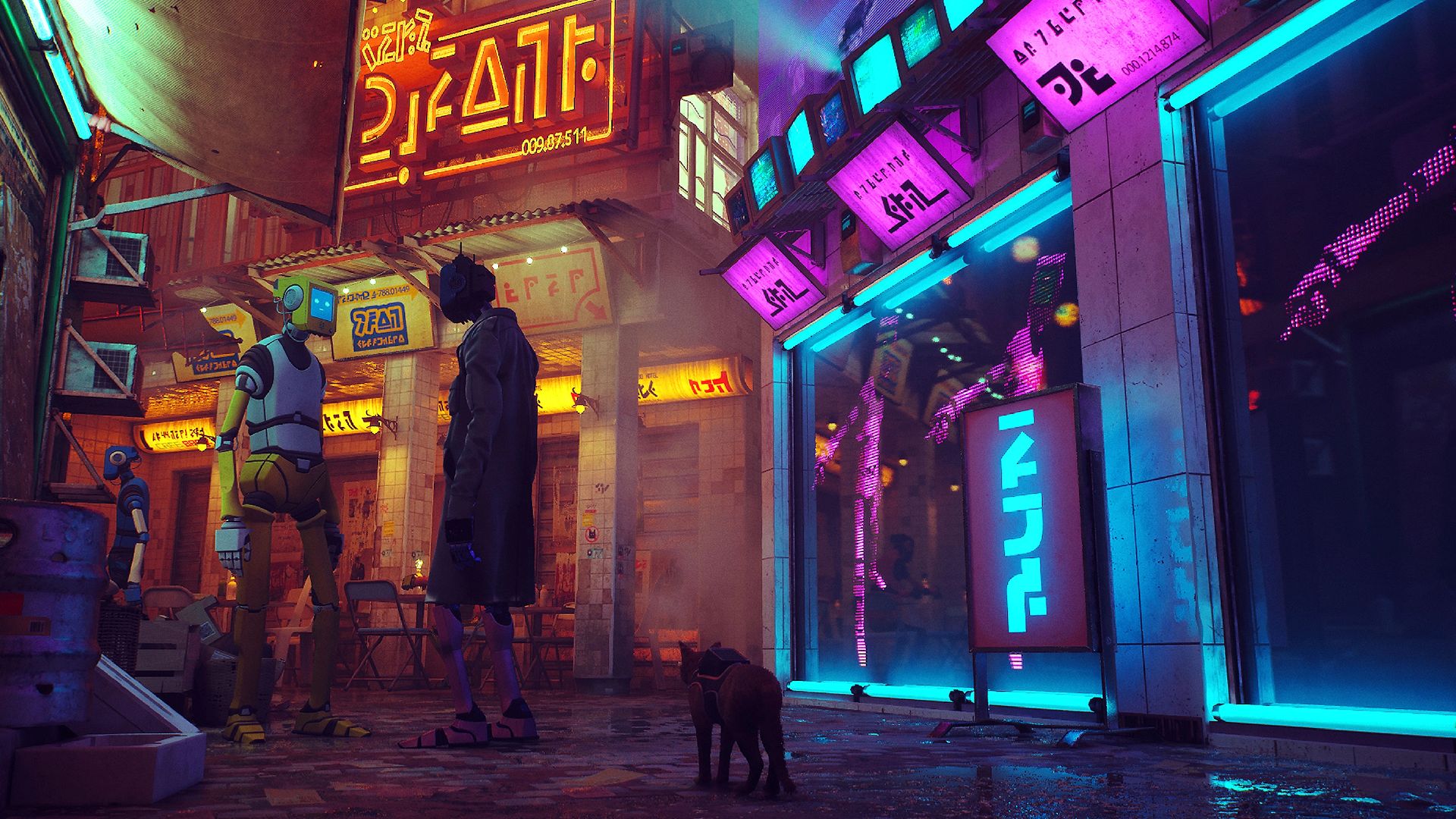
I love cyberpunk settings. There’s so much darkness and imagination that can go into the setting. It’s also a setting we could possibly be heading into ourselves with the way technology is advancing and how much we rely on it. Stray is all about exactly this issue. You play as an unnamed orange cat who ends up in the middle of trying to help a race of robots see the “Outside” again. You befriend a robot named B12 who helps you communicate with these robots and he also learns about his identity along the way.
Stray has some really good pacing. It’s a very short game that can be completed in a single sitting, but it has exploration, puzzles, scripted action events, stealth, and collectibles. That’s a lot to back into 5 hours and it’s done very well. Let’s start out with the obvious. This is the best representation of a cat in any video game. The animations are insanely realistic, you get a meow button that’s pretty much useless, but it’s there, and you can do cat things like knock stuff over, sleep, scratch on carpets and walls, and get paper bags stuck on your head that reverse the controls. While it may seem superfluous on the surface it helps add to the love of cats that the developers have even though none of these things really involve advancing the game further.
Jumping around in the game is dealt with context buttons. The jump button will appear on top of the platforms you can climb onto. Outside of this, there are no other actions except accessing B12’s menu to look at items and the flashlight. On occasion, you will have chase sequences in which you are running from a swarm of insect-like creatures, but most of Stray involves finding ways into rooms, platforming, and minor puzzles such as rolling barrels underneath things to jump up to. There are three major cities you end up in. The first one involves vertical platforming that lets you find lost music pages, B12 memories, and various item gathering to progress past certain points. The second city is a brief visit, but the last one is pretty large and looks beautiful. You can also talk to the various robots in the city to help you find out where to go or give you hints.
My favorite parts of Stray were the areas in between cities. I liked climbing around, jumping, and running from the insects. The city areas slowed the game down too much for me especially trying to gather the items needed to progress out of the city. The game looks gorgeous with lots of neon lights, and it’s surprisingly dark and gritty for a cat starring a cute cat. The story is pretty touching and tugs at your heartstrings towards the end. Despite the short length, the developers did a great job connecting you with these characters. However, there does seem to be a missed opportunity here. This is a game that would benefit from being open-world. A vast cyberpunk city with side quests and tons of areas to explore. While quite ambitious for such a small team, it would be great, and I think a lot of people are mistaking this game for something like Cyberpunk 2077 in its scope.
Overall, the game is a lot of fun and quite enjoyable despite the limitations of exploration. The game is sadly, poorly optimized on PC with lots of stuttering, terrible temporal anti-aliasing, and shader caching issues. I played the entire game on Steam Deck and it suffered from stuttering when going into new areas. When it’s all said and done, Stray is a very unique game and the love of the domestic feline companion oozes through the screen and pulls on your heart.




























































 thebinarymessiah.com
good