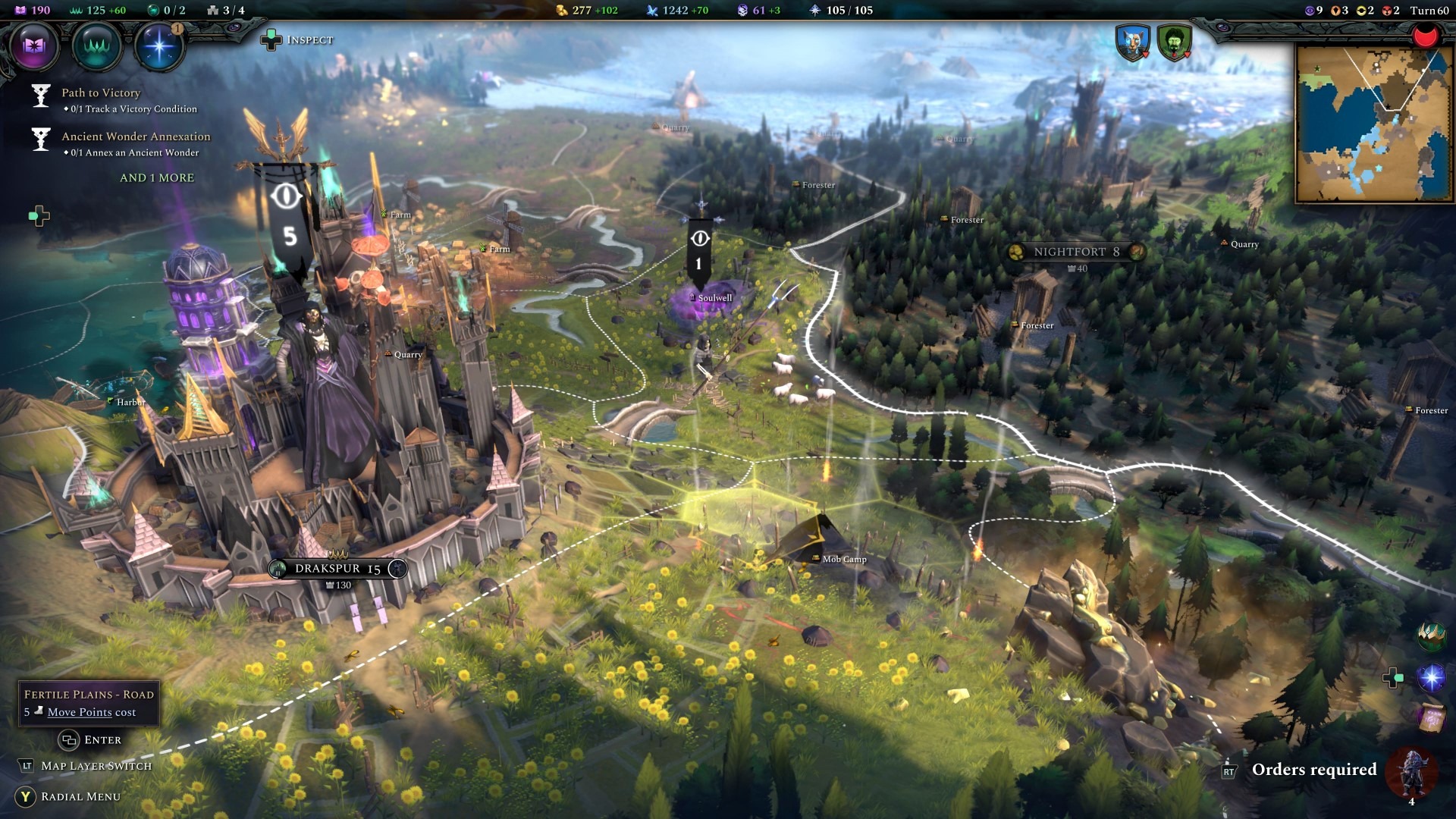
This wasn’t the best year for strategy games both turn-based and real-time. We had a lot of early access games in Steam with many turning out to be turds and the turn-based genre having a trickle of releases. While the genre is picking up steam again we are far from the days of mega strategy games duking it out on PC or even consoles.
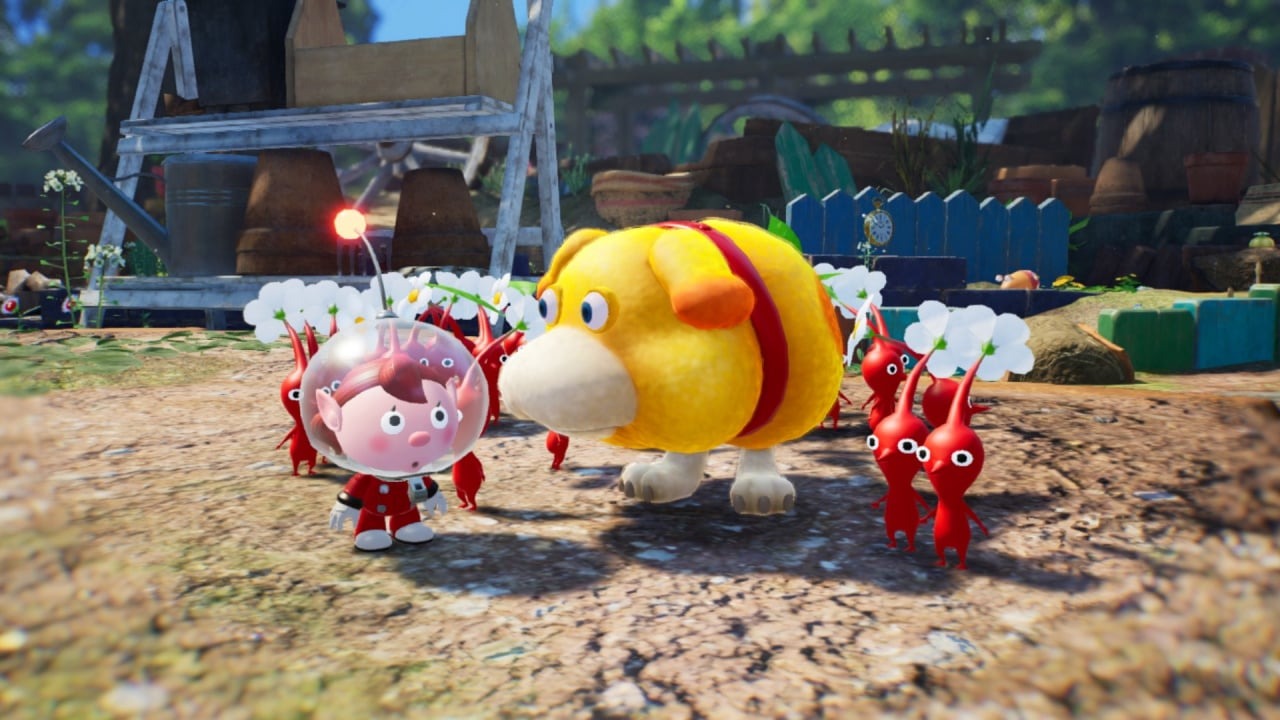
Pikmin 4
Pikmin 4 isn’t revolutionary, but it does what people wanted with the series to do. I’m surprised this Nintendo series has reached the number four at all. The third game came out over a decade ago and everyone expected the series to finally be dead. What we got was another cute addictive and whimsical adventure with new features and surprises.
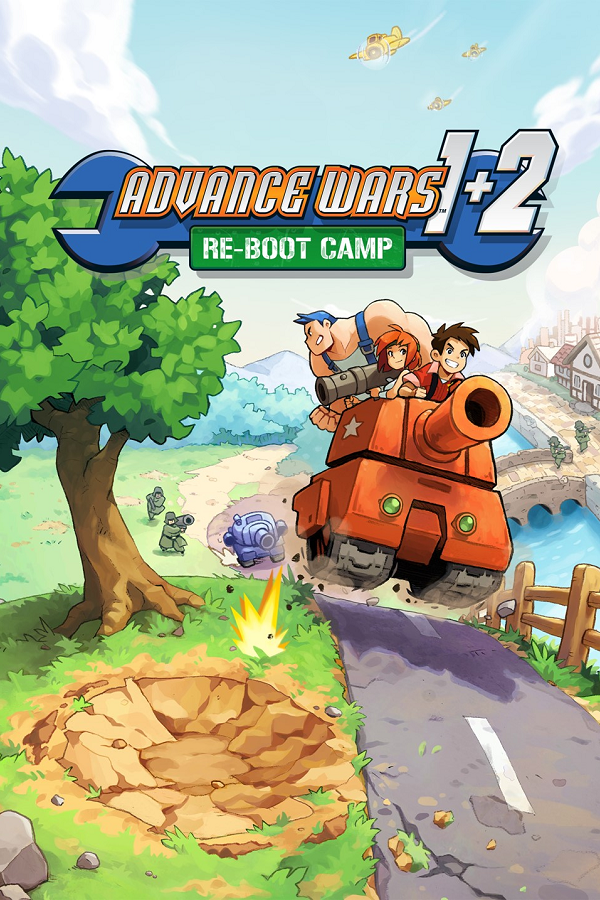
We are finally moving away from mostly HD remasters to full on remakes. These games are getting better and better every year and somehow being better than new games releasing the same year. This year was no exception to fantastic remakes and I hope this trend continues.
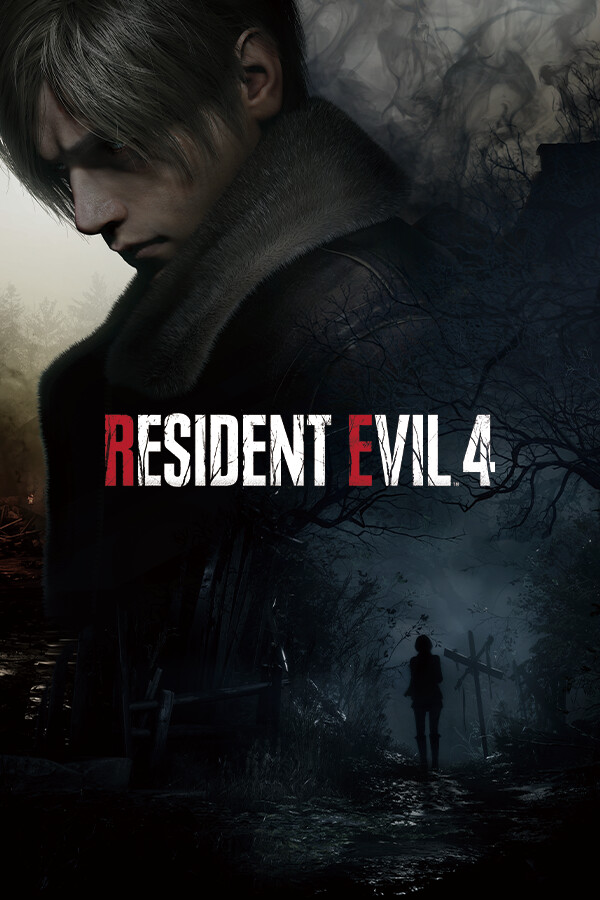
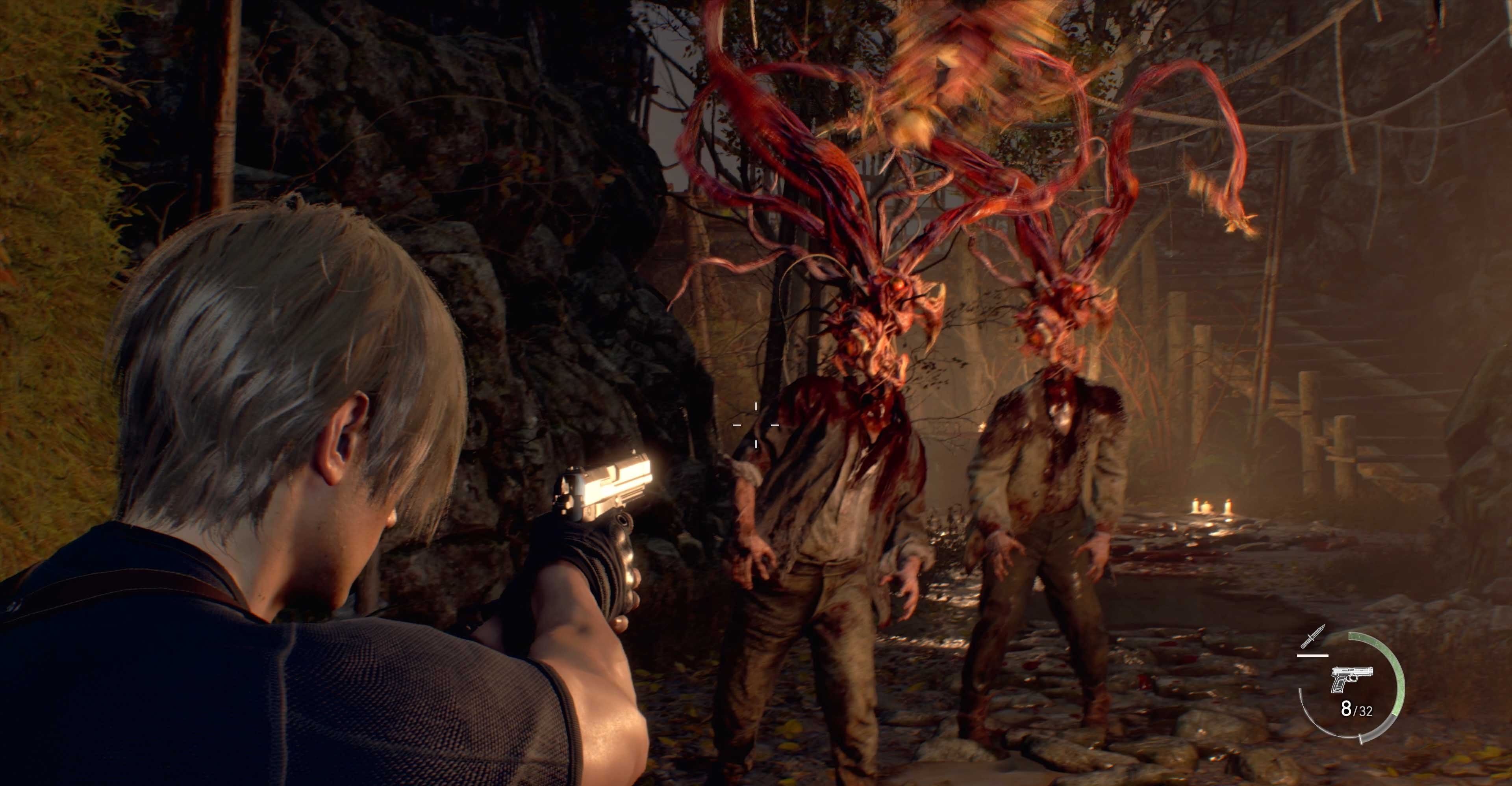
I didn’t think RE4 could be remade to be better than the original. RE2 and RE3 were both great remakes and redefined themselves once again, but RE4 was already a game that set out to redefine the series, so how can it keep improving? By being a better and tighter version of itself. Improved camera, gunplay, tighter levels, fixed bugs and issues, and new stuff thrown in made this the definitive RE4 package.
This may not be a super exciting year for hardware for gaming, but companies are starting to experiment and push boundaries. Apple is getting next-generation games to run on their phones, Microsoft is acquiring studios, Sony is experimenting with new hardware, Nintendo is still releasing solid exclusives, and Valve has created a beast.
Portable PC Competition
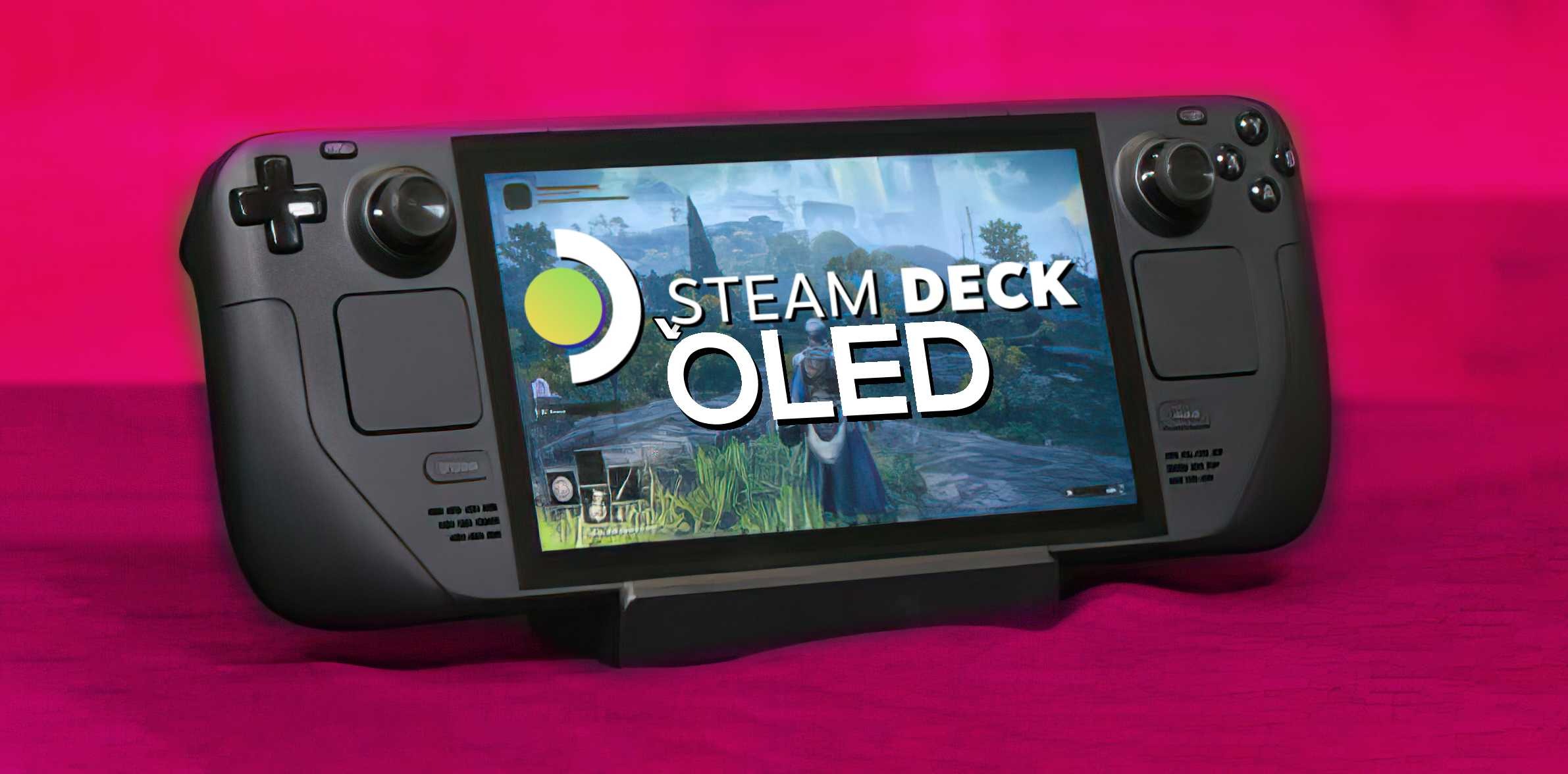
Valve release of the Steam Deck has unlocked and entirely new console war among the portable PC crowd. This year it was Valve Steam Deck vs. ROG Ally vs. Lenovo Legion Go which came out right at the tail end of the year. These three portable PCs will surely duke it out next year and with the updated Steam Deck, the Steam Deck OLED, ROG and Lenovo will surely respond in due time, but we may also see other PC manufacturers release something of their own. It’s a brand new and healthy market and I can’t wait to see what comes.
Well, this was a small year for the PS5. Not very many exclusives and a few of them weren’t all that great to begin with. The PS5 may have slowed down this year, but it seems to be picking up for an explosive 2024.
Marvel’s Spider-Man 2
More of the same isn’t really all that bad especially when it’s as good as Insomniacs pedigree. Spider-Man 2 took what made the first game a classic and expanded upon it some more. It looks even better and is more incredible fun. What more could you ask for?
With next-generation games being playable on the new iPhone 15, mobile gaming just took another leap, but we won’t really see where this goes until next year. Apple Arcade still dominates the mobile gaming space with quality titles.
Cypher 007
A mobile James Bond title isn’t something I thought I would see ever. I’m kind of surprised it hasn’t happened already, but also surprised the usually tight wadded license holders allowed. Cypher is a fantastic stealth action game with nice visuals and addictive gameplay. It was a surprise hit this year for sure.
Every year Microsoft moves further away from exclusive titles. While there were more this year, exclusives for Xbox alone seem to be long gone at this point. PC and Xbox pretty much share the same space so I feel these two platforms will forever and always be merged.
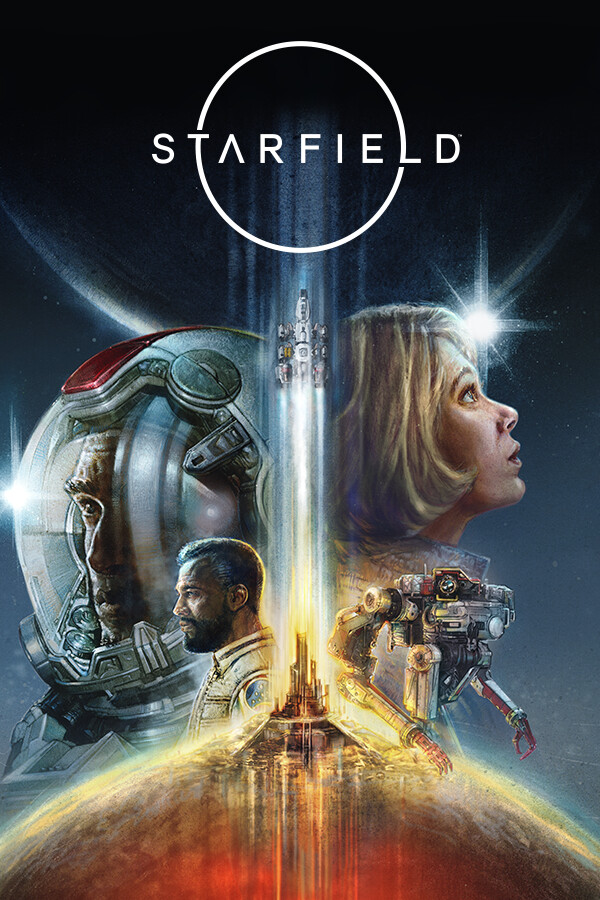
Starfield
Starfield may not have impressed everyone as much as we thought it would, but it’s also not disappointing. It’s a typical run-of-the-mill Bethesda RPG and that’s not always a bad thing. There are glaring issues with the title, but the foundation overall is a fantastic space sandbox to play in with interesting characters and environments.
Somehow, Nintendo keeps finding ways to bring great games to the Switch despite its age. We had a slew of remakes and sequels this year that made this one of the system’s best.
The Legend of Zelda: Tears of the Kingdom
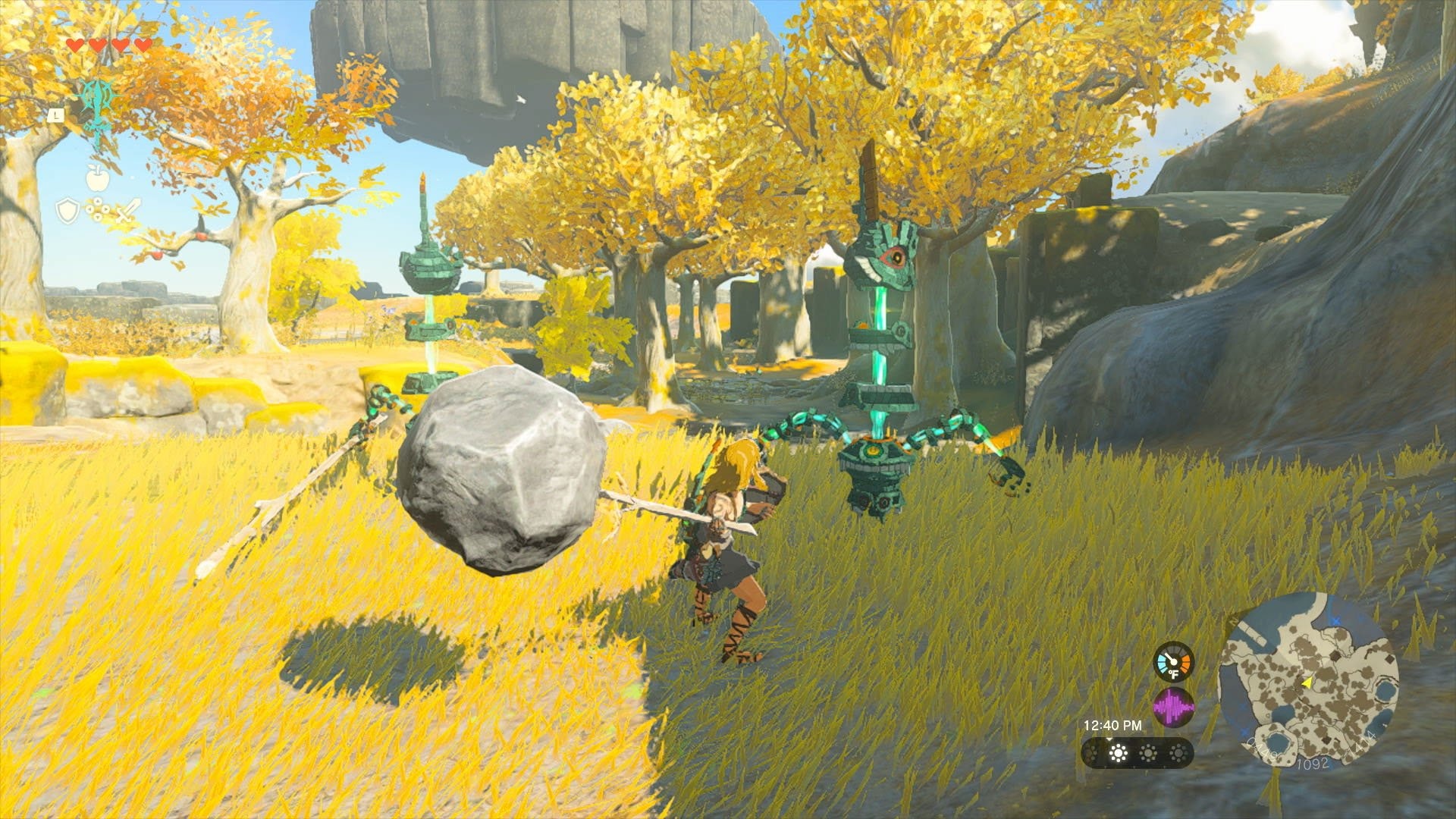
Tears of the Kingdom did more of what made Breath of the Wild great. More freedom, more choices, and just so much was added in on top of what’s already great. Where can the series go from here we all wonder. While the visuals are aging rapidly, and the game chokes the Switch beyond what is can handle, it looks great and can still feel like a magical experience.
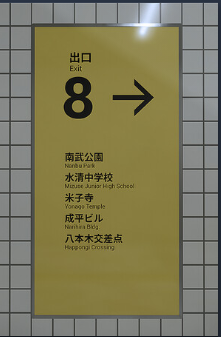
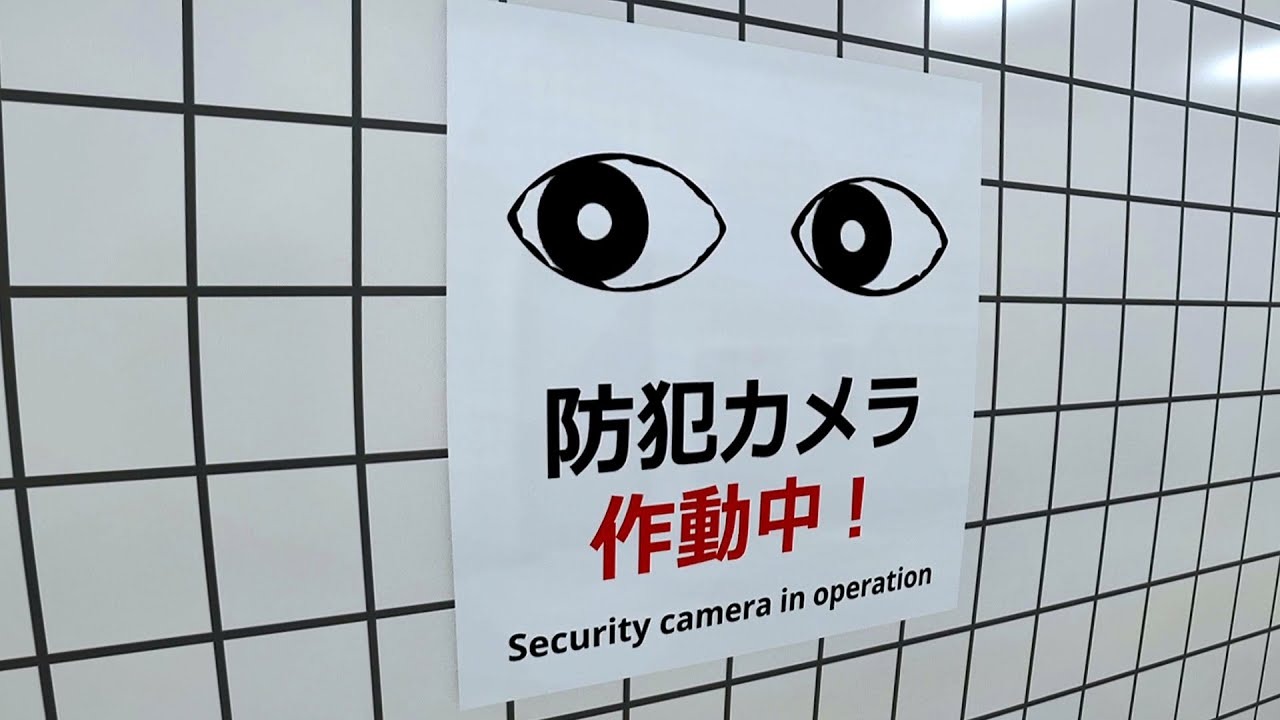
P.T. started the trend of subtle horror games. No scary music, looping hallways and rooms, or needing to notice any changes to move on. Exit 8 is exactly this. A single white hallway in a subway tunnel has a couple of turns, and it loops endlessly unless you notice changes. There is no story, no background, and no character development. Just this single white hallway, and you need to get to exit 8.
Your only sign of progress is the yellow exit sign, which increases in number as you make your fourth turn. If that sign goes back to zero, you missed an anomaly. When you see it, you are supposed to turn around and go back the other way. Anomalies can be really obvious, like lights being turned off, open doors, or a single man walking towards you doing something different. Other subtle ones can be the floor tiles, a security camera light, or a poster changing. You might get really frustrated at first, but keep going. Memorization is the key to getting the job done. Once you know exactly where everything is supposed to be—how many doors, posters, etc.—you will finish in under an hour.
The horror elements are subtle and not forced. A moving object, no music, and just the hum of the lights and footstops. Maybe a creaking door might make you jump. You can stop, take your time, and check the main hallway for changes. Running full force all the way through will make you miss things. You have to turn around to see a few anomalies anyway. If there aren’t any changes, you keep moving on, and sometimes this can really make you feel like quitting. You will think time after time that the hallway is fine, but then you will notice something new and just keep moving on. Don’t let that sign resetting to zero keep discouraging you.
The graphics use Unreal Engine 5 and are nothing special, but the atmosphere of the sterile white hallway makes it creepy. A lack of music and most sound effects makes you feel on edge all the time. The single-footed man makes you very uneasy every time you pass him. All you want to do is get to exit 8, and the intensity might make you miss things as you become more and more anxious to get out. This single-looping hallway might drive some people nuts.
Overall, The Exit 8 is a fun game that lasts a couple of hours at the most. There are only two achievements, and once you see all the anomalies, there is nothing left to do except maybe do self-timed speed runs. Some may find this a simple tech demo, but I think more horror games need to go this route. It’s only a few dollars, and possibly getting some friends around to help spot things can make this a fun party game as well.
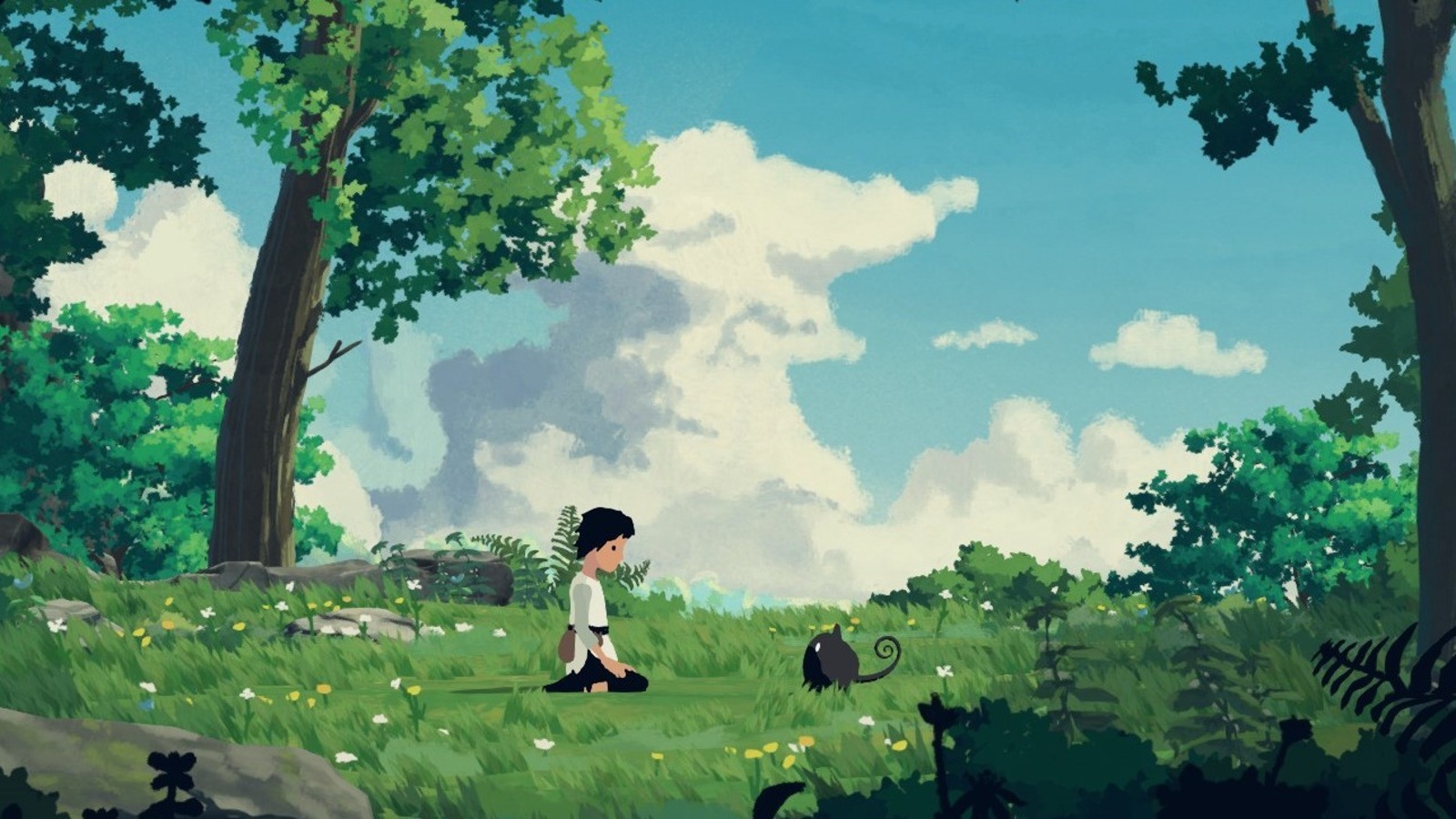
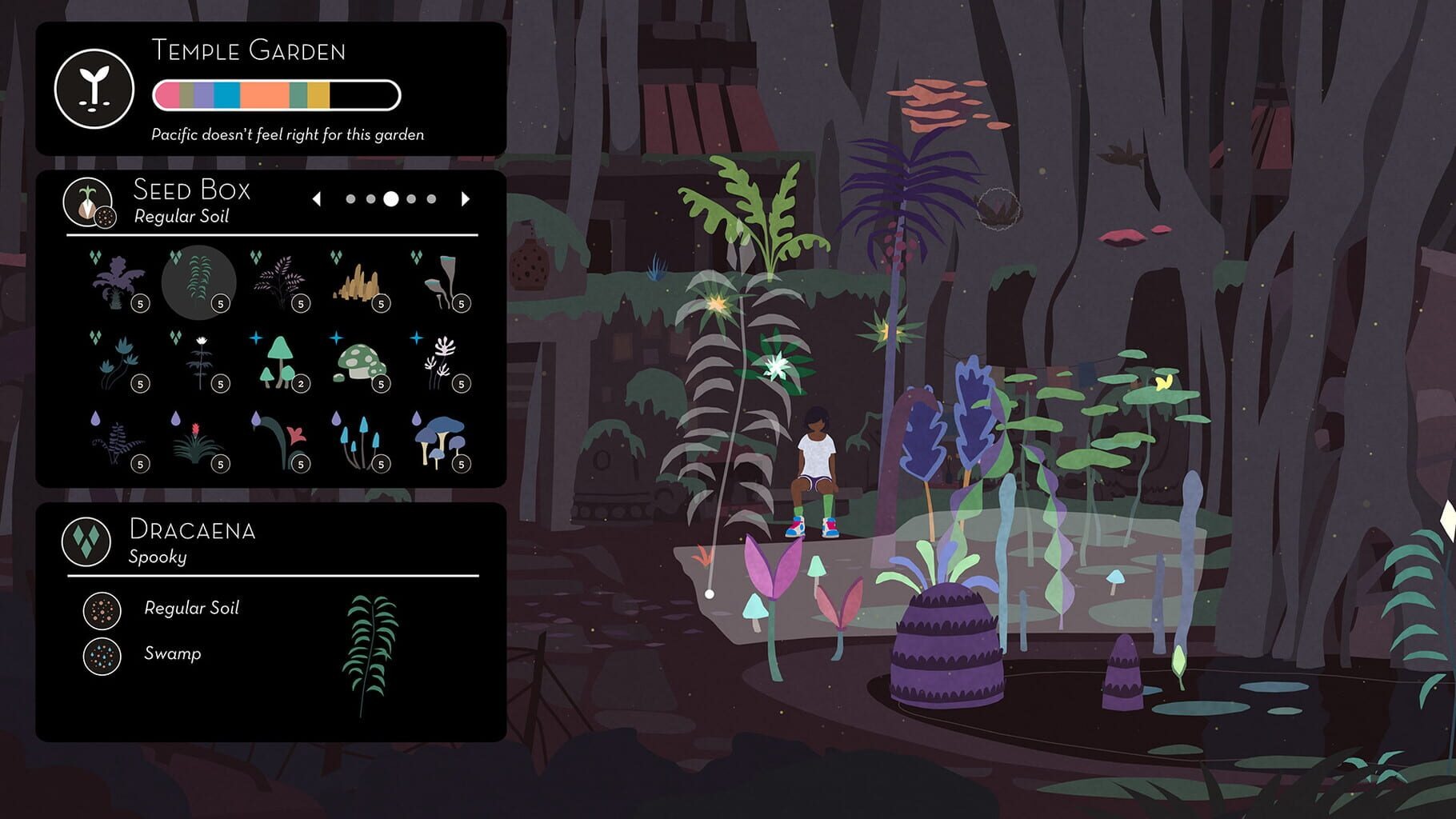
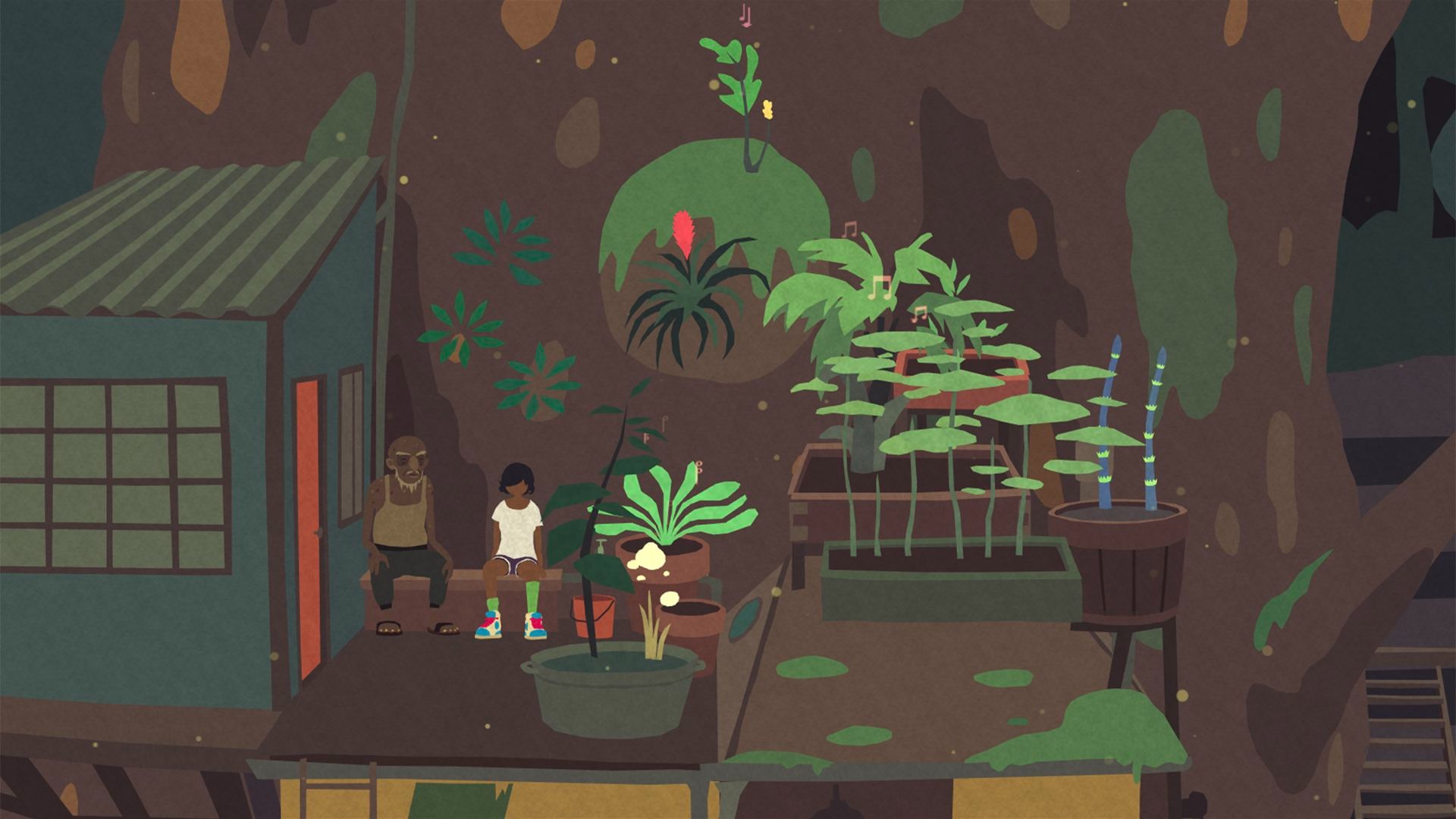
You play as Kai. A girl is sent away to a strange village in a post-apocalyptic world to re-connect with her extended family. You spend the entire game walking around to the various dozen or so screens, collecting seeds, planting gardens, and learning more about your past and the ties between the village and your family.
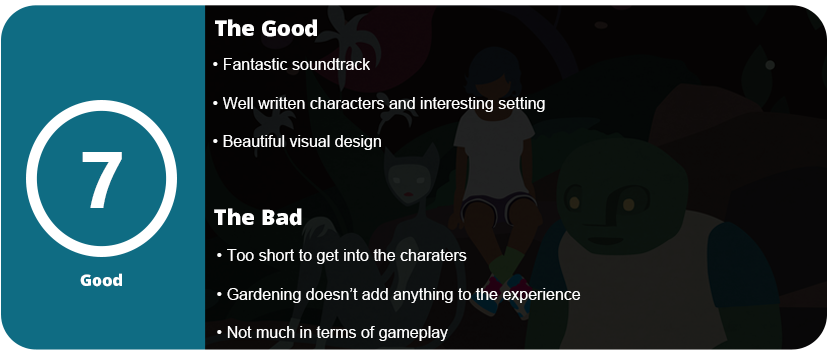
I have to give credit to the developers for their tight and well-written dialogue. The characters have, well, character. For the short time you spend in the games (under 4 hours), you really get to know these people, and the dialogue is written in a way that feels organic and like you’re listening in on a conversation. Talk of relationship issues, depression, carelessness, death, suicide, and many other emotions that we face in ourselves and amongst our own families. There’s an atmosphere that’s both uncomfortable and familiar. You will plant your own life in this game and strategize relating to certain characters or hating them. It’s just so well done.
As for the rest of the game, there’s something to be desired. As you walk around the screens, you will see a hand icon over anything you can pick up. These are usually plants, and you need the seeds to plant gardens to advance the story. There are eye icons for objects that Kai will comment on and a clock icon for an interaction that will advance the story. You never really get lost. Kai’s journal gives hints on who to talk to and what area you need to be in. Using a little common sense and learning the screens and where everyone resides helps a lot. As you pick up seeds, you learn songs that help you grow the garden. Each seed grows based on its song, so it’s recommended to plant seeds of that type. You can place the seeds with an outline of the plant that will tell you if there’s enough space for it. Sing the song a few times, plant enough seeds, and your garden grows. You can then harvest the plant for what you need to advance the story.
Don’t get this confused with something akin to Animal Crossing or Stardew Valley. This isn’t a farming simulator at all. The planting and gardening are rudimentary at best and mostly uninteresting. I just threw seeds around until I filled up the meter, spammed the correct song, harvested, and off I went. I was more interested in the characters and the story. There’s a mystery behind the village that I couldn’t wait to unravel, and unfortunately, gardening got in the way. I did love the music; it’s amazing and good enough to listen to outside of the game.
The art style is well done. It’s bright and colorful, but it can be really dark when needed. The characters have unique humanoid designs that seem familiar but are still alien, and the paper cut-out look just fits so well. I just wish the story was a bit longer, as I wanted to get to know the characters more. I can’t really complain about gameplay, as you do move around constantly and patterns change and mix up, so it never really gets boring. This is a great little adventure game that can kill an evening, and you might have a new favorite OST.
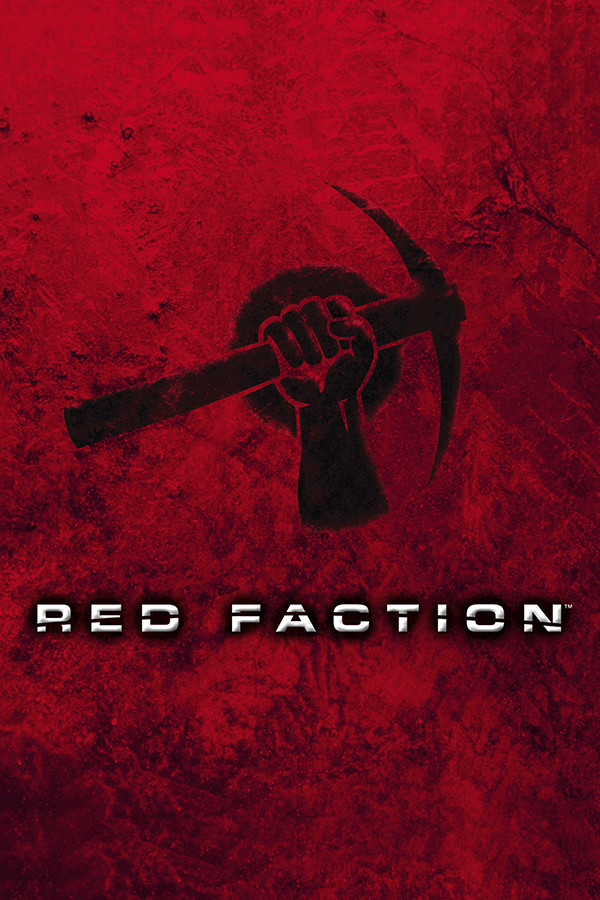
First-person shooters were new to me when Red Faction launched in 2001. I didn’t have a gaming PC growing up, so games like Doom, Wolfenstein, and Quake were nearly foreign to me. Red Faction was an overhyped game full of development issues and overpromised ambition. The “Gen-Mod” destruction model is half-baked and barely there. The visuals are dull and boring (even for the time), and the story doesn’t go anywhere at all. Not to mention zero character development. I rented this game and got bored with it maybe an hour in, and I can see why.
Sure, the game looks much better on PC, but there’s not much to really look at. Even for the time level, the design in shooters was fairly dull. Very few had interesting things to look at, such as Half-Life or Halo. Red Faction is just browns and reds with boring caves and industrial buildings. You are on Mars, by the way. You are part of a rebellion group called the Red Faction, who are miners uprising against the overbearing government. You are trying to fight your way to the top and stop a deadly plague that’s killing the miners. This story starts and stops here. It doesn’t go anywhere; there’s nothing to spoil. You end up finding the cure, and that’s really it. The voice acting is actually really good for the time, but the only thing that kept me playing was pure curiosity to finally see this game through to the end.
There are quite a few weapons in this game, but most aren’t found until the last third of the game. You have your standard array of guns. Submachine, assault, precision, sniper, pistol, rocket launcher, and rail driver There’s also a heavy machine gun and grenades. It’s a standard list of weapons we’ve used in so many shooters, and Red Faction doesn’t do anything interesting or fun with them. The shooting in this game feels pretty good and holds up well today, but the enemy AI is terrible, so don’t expect much of a fight. There are vehicles you can pilot in this game, but they aren’t anything fun or interesting. They shoot bullets or rockets, and a lot of the time I would end up stuck in weird physics glitches.
The game isn’t very long. You can finish it in under 4 hours, and thankfully there’s a quick save feature, which I suggest using often. Enemies are run-of-the mill faceless military dudes, and there’s an occasional weird creature thing to mow down in the caves. Environmental detail is what you can expect from this era. Rooms are equipped with an occasional table, chair, or monitor. Nothing stands out or looks interesting in this game. Destruction is boiled down to blowing open a wall to get to a button (there’s a lot of button pressing in this game), and that’s about it. The occasional chunk of wall breaks off, but this is far from what Volition was touting back in the day.
Red Faction is at least a solid shooter. It’s fun while it lasts, and the last act throws new enemies and weapons at you, and there are two whole boss fights in this game. Vehicles don’t feel great to pilot, destruction is minimal, the story has a strong premise but goes nowhere, and the visuals are pretty bland. I did find the stealth section of the game pretty fun. Trying to find your way around without being spotted is like a giant puzzle, but that’s all there is that changes things up. In the end, if you never play this game, you aren’t missing out on gaming history.



























































 thebinarymessiah.com
Super, thank you