Action-adventure games are my all time favorite. These have been a test to what console and gaming tech can achieve. This is one of the few genres that evolves with technology. New tech brings more gameplay innovation and ideas. This year saw some pretty big heavy hitters, but the open-world fatigue trend that has been an issue for the last decade is still a problem. There are fewer games every year trying to push the genre ahead and create fun and interesting gameplay loops, stories, characters, and worlds we actually want to explore.
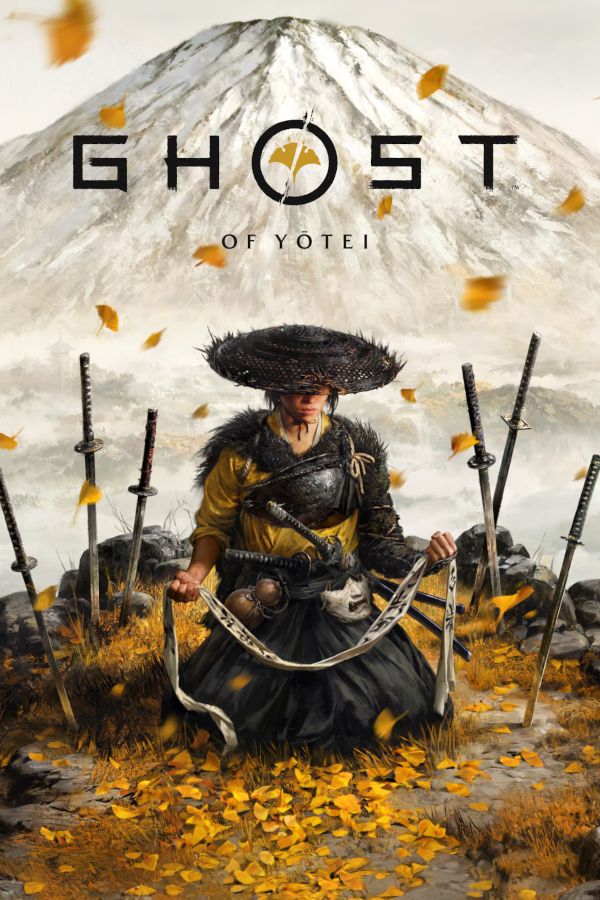
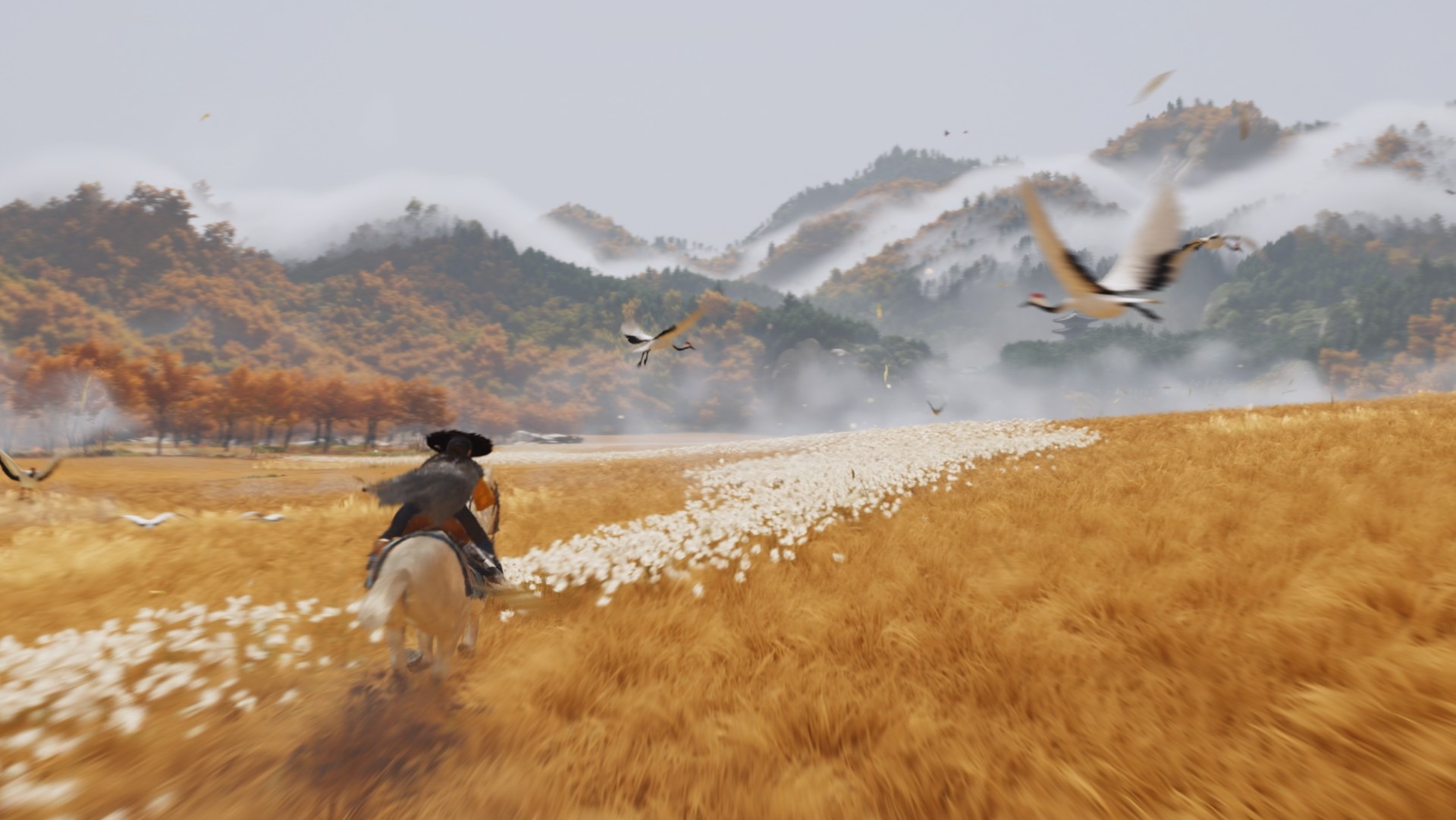
Yotei isn’t just a sequel to Tsushima. It’s a PlayStation game through and through. From the gorgeous open world that is a blast to explore and find all of its secrets to the fascinating tale of revenge and the ever growing character Atsu. Yotei captures the modern PlayStation DNA perfectly that we have been growing to love since the early PS4 days. The game pushes the console’s hardware like few others do while also running incredibly smoothly. There weren’t many open world games worth playing this year, but this was one of the few I spent dozens of hours in.
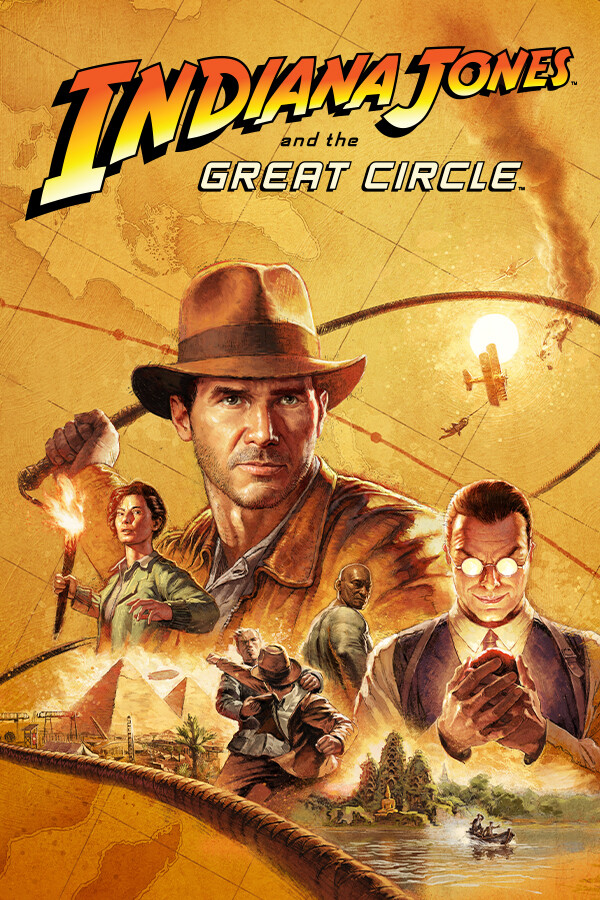
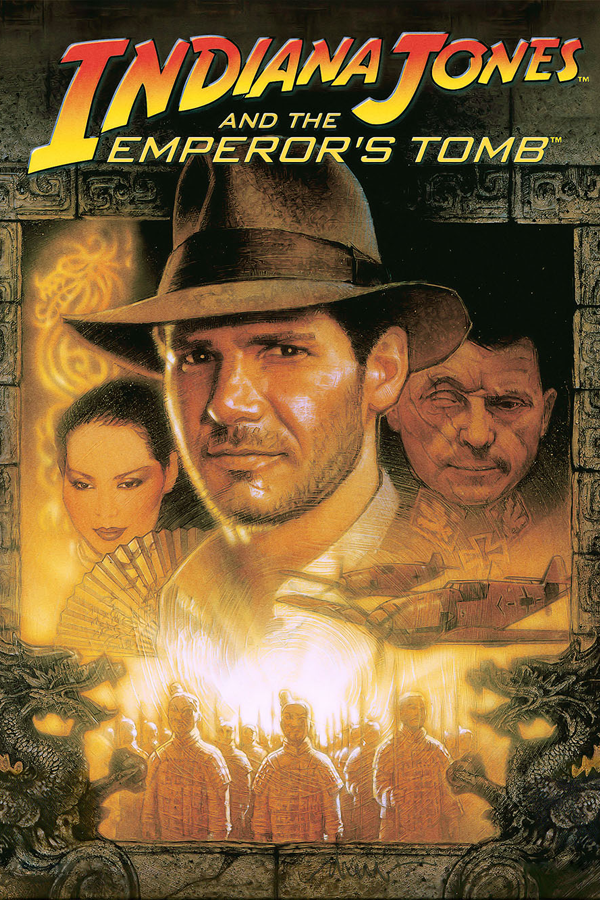
I’m not a huge Indiana Jones fan. The only one I remember is the fourth movie, Kingdom of the Crystal Skull. When I was a child, I watched bits and pieces of the original trilogy when my parents would put it on, usually when it showed up on a cable network, but that was it. This is my first ever Indiana Jones game, and I have to say that I came away quite surprised with people giving it such high praise and holding it as the best Indiana Jones game to date. The story is cheesy and corny; the dialogue is terrible, and the characters lack depth. Indy himself has no backstory or context. You clearly must already be a fan of the movies, and the developers anticipated this. The storyline suggests that Indy finds himself in the midst of a task for a client and encounters obstacles. Then, the Chinese government hired him to find the dragon’s heart. He eventually encounters Nazis who are also in pursuit of the same object. It’s pretty pointless, and there are so few cut scenes that it really doesn’t matter.
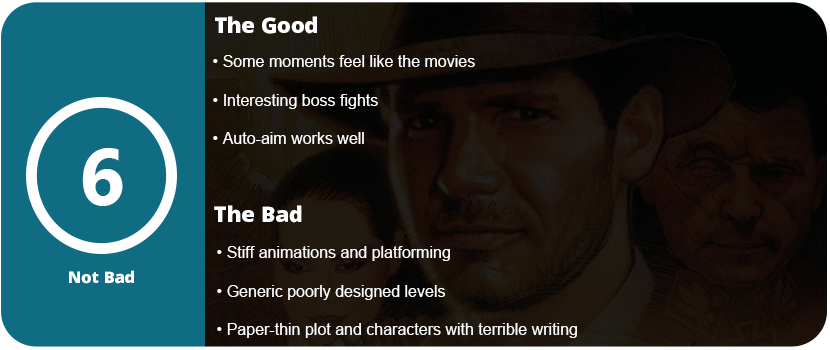
The first half of the game is actually the worst. Stiff animations, clunky combat, and terrible platforming plague the entire game. The puzzles themselves would be neat in a Tomb Raider game, but here they showcase the poor level design. Indy either climbs things, pushes levers, does hand-to-hand combat, or shoots guns. That’s all there is to the entire game. Levels in the first half mostly consist of hand-to-hand combat, as ammo is very scarce. You can replenish your health by using medkits or drinking from your canteen, which refills at water fountains, a resource that becomes increasingly scarce as the game progresses. The canteen upgrades only work for the level you’re on and don’t carry over. There are also artifacts that need to be found in order to unlock concept art, which, to be honest, is a lame idea.
The stiff animations contribute to the clunkiness of platforming. Indy is really jerky or just doesn’t respond instantly to button presses. Because of this, I ended up falling off cliffs or missing jumps more times than I can count. You can also whip-swing, but the stiff animations feel sped up during the swing compared to the rest of the jumping. Having to cold jump to a ledge right above you is a chore. Indy must be precisely aligned to secure a grip. There are ledges you can shimmy across with a dedicated wall hug button, but the combat is even worse. Idy auto-aims and works most of the time, making shooting the best part of the game, but ammo is scarce in the first half. Melee combat just drags on forever. Enemies are fist sponges, and even with a melee weapon such as a sword or bat, opponents would take 20-30 hits to die. You can use your whip to knock weapons out of their hands, which is mandatory if they have a gun and you don’t. When more than two enemies gang up on you and back you into a corner, it becomes a chore to fight them off.
The level design is generic; even for 2003, it’s pretty bad. The game is bland and void of character, with a lot of rectangular empty rooms and hallways. The game occasionally shows something more when you are outdoors, but this doesn’t happen until mid-game. The game accelerates by letting you play one of the two on-rails sections, which it needed more of. The Nazi base is less puzzle-solving and more platforming and combat, which is what I prefer. The temple level proved to be the most challenging, primarily due to its underwater nature and poor swimming mechanics. Indy can only swim fast underwater, and there are sharks that can kill you. Boss fights are also a rare occurrence, but they were one of the few more intriguing elements of the game, as each boss fight needed something in the environment to weaken them before you could take them down. They were almost a mini-puzzle themselves.
Overall, the game is a mostly frustrating and overly long affair. The game can take up to 8 hours to finish if you don’t die frequently, but the devs could have completely eliminated the first half of the game. It’s the weaker half anyway. The unfair checkpoints also don’t help; you have to restart entire long sections every time you die. There are a few fun moments, such as the boss fights and on-rails sections, and the platforming is more enjoyable than the puzzle-solving, but the generic visuals, paper-thin plot, and cumbersome controls and animations hold this game up quite a bit.
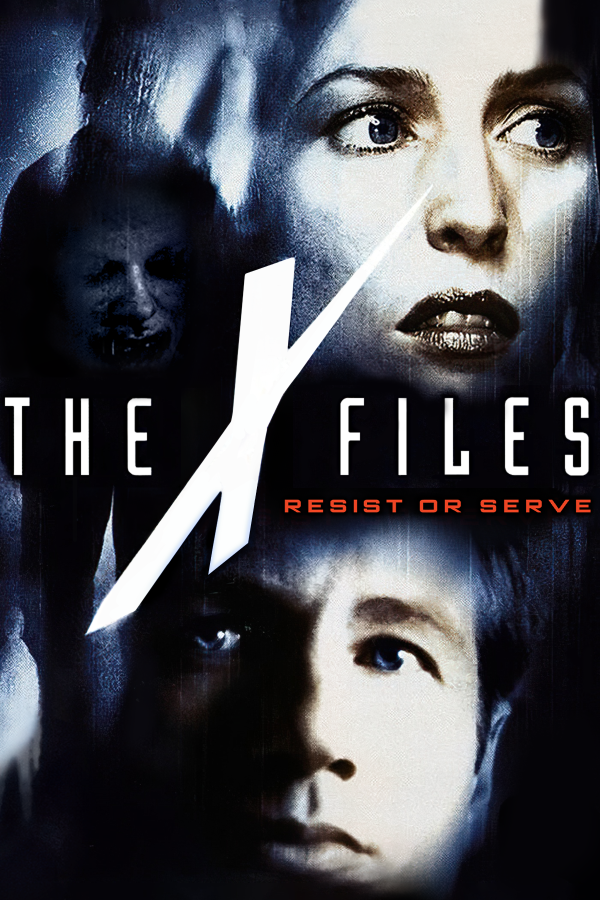
The X-Files is one of, if not the biggest, cult TV shows of all time. I was a young kid when the series was at its peak in the mid- to late-90s, so I didn’t understand any of it, but my mother was really into the show. While I caught bits and pieces, I do remember the atmosphere the TV show delivered, and this has stuck with cult shows dealing with paranormal activities for the foreseeable future. While the entire show might not have aged the best by today’s standards, it’s still a highly entertaining show that really makes you want to believe. There weren’t really any video games on the show until this one. Long after the series final season debuted and long after the series peaked in 2004, 2004 was also the end of the Sixth Generation’s life cycle, with the Xbox 360 just around the corner. What did Resist or Serve bring to the survival horror genre?
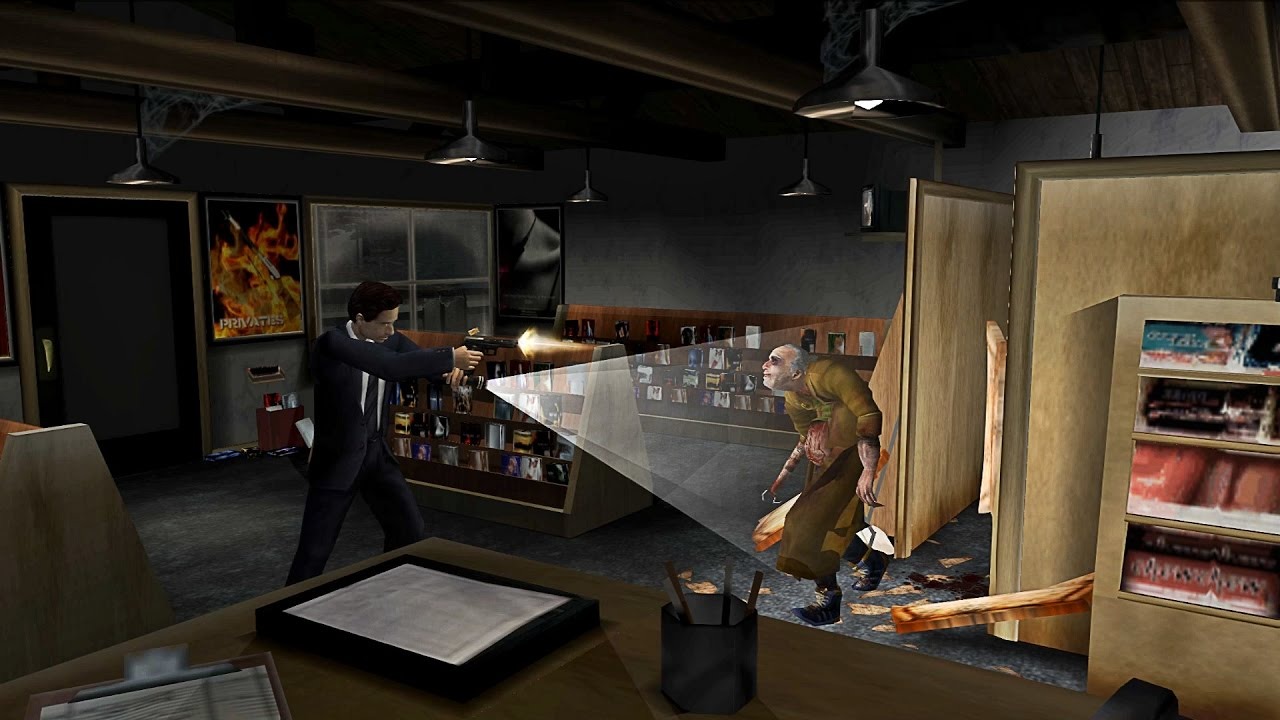
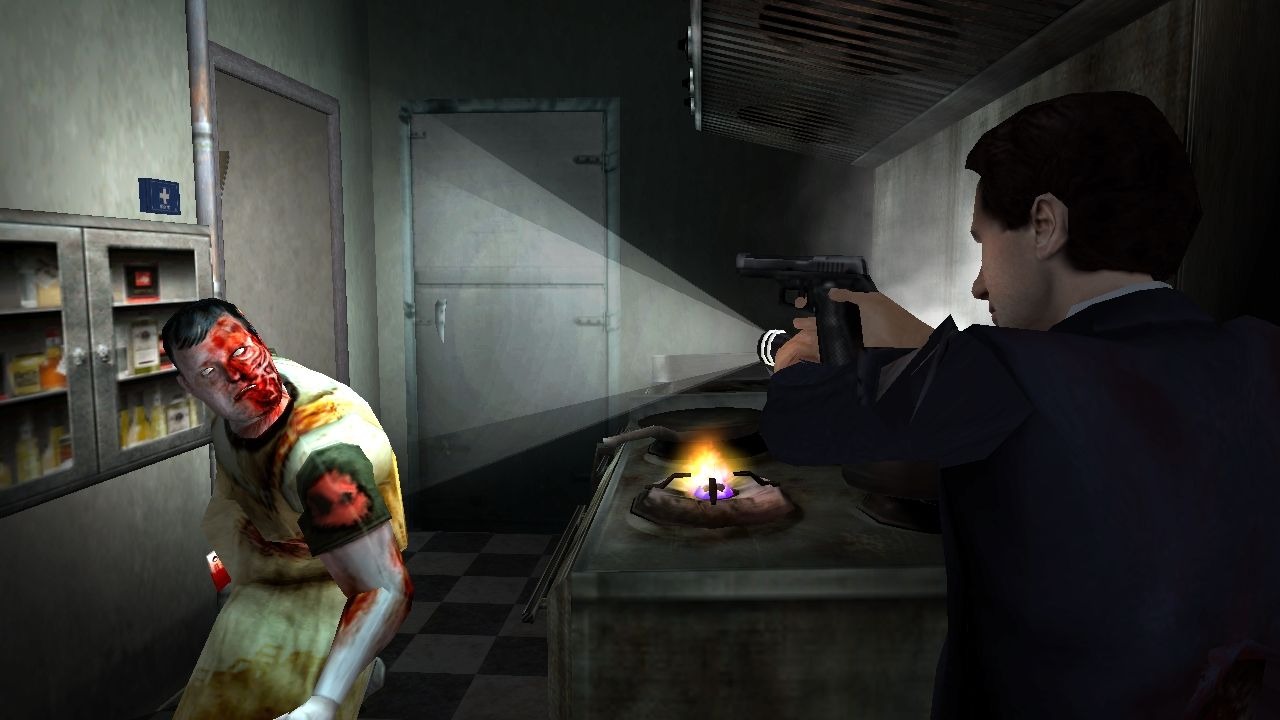
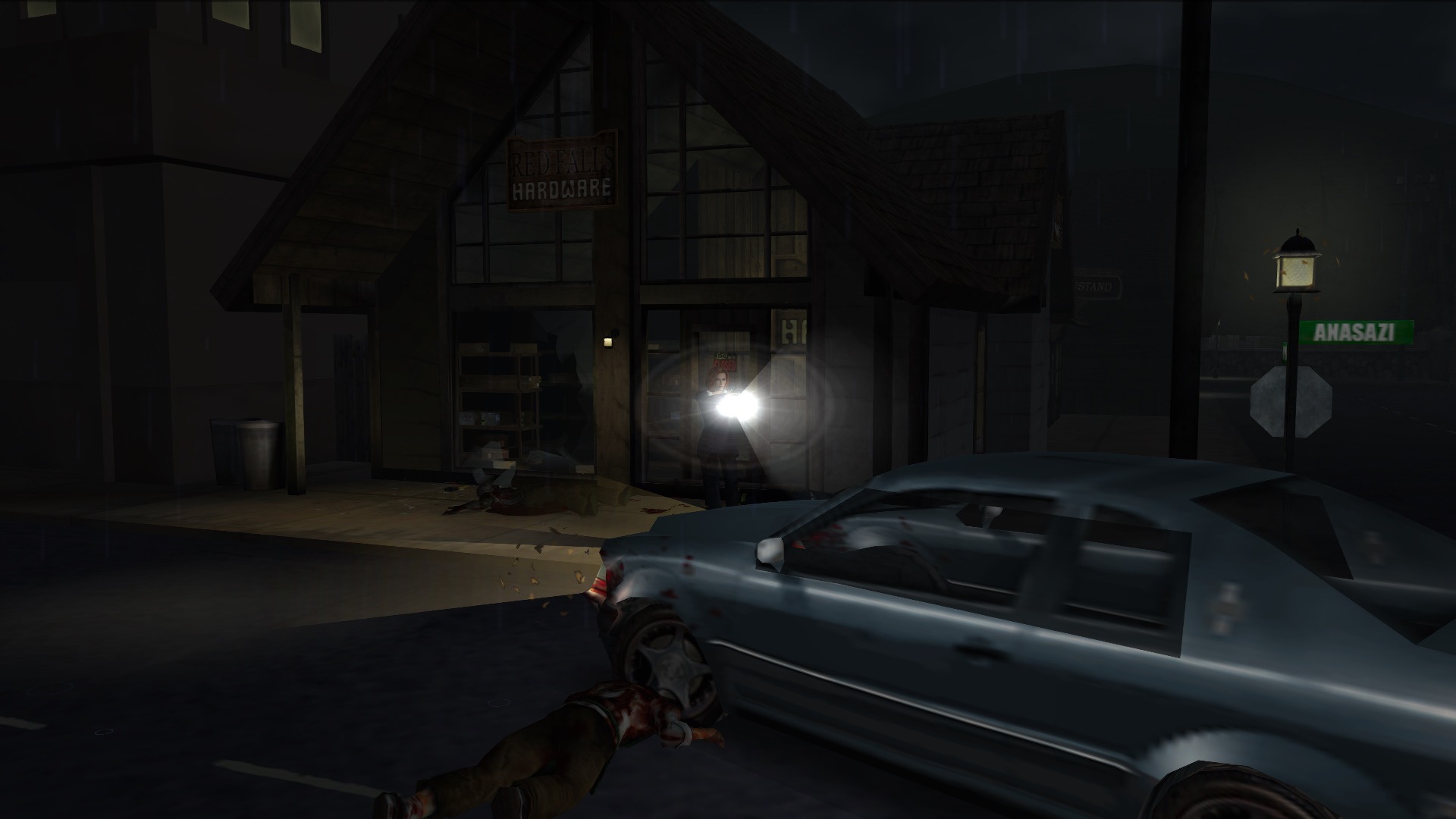
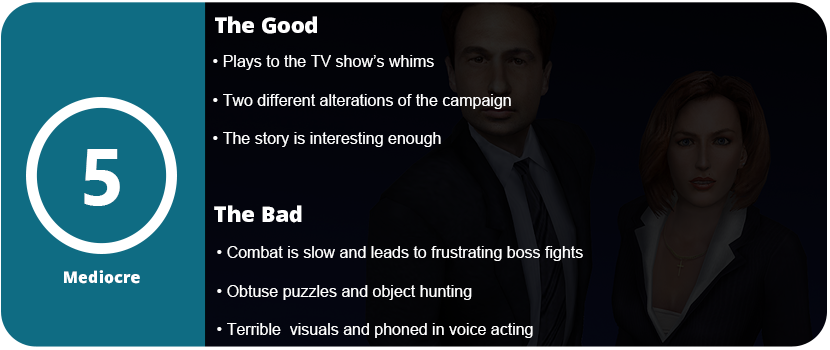
Well, the short answer is zero. I feel like fans of The X-Files would enjoy this more than survival horror fans of Silent Hill will. You can choose between Mulder and Skully (the show’s two main protagonists, voiced by the show actors as well). Each side has slightly different events in the same levels, so it may or may not be worth playing the game twice. Once was enough for me. The game has fixed camera angles similar to Silent Hill, but nothing is pre-rendered. You can move around the environment well enough, and there is some light puzzle-solving and combat. Combat is on the rougher side. You can hold a flashlight and a gun at the same time, but you can’t run with the flashlight and the gun out. If you want to run, you can just hold the flashlight. In some levels, you get nightvision goggles that help, but they’re still annoying. There’s an auto-aim feature similar to Silent Hill, and it works well enough if enemies aren’t right on top of you. Enemies will bum-rush you, and a couple shots will knock them down. One or two zombies is manageable. Although the combat system is not the worst I’ve ever encountered, the narrow level design isn’t conducive to this kind of shooting. Many rooms are barely ten steps wide. When faster enemies, such as dogs, come after you, the characters can’t run faster than the enemies to gain distance, turn around, aim, shoot, and reload, which slows you down a lot. It’s better to do the age-old reload on the inventory screen trick.
Combat only becomes a serious problem during boss fights. These guys have a longer range of attack, and I could never outrun them enough to turn around, blast them, and then get going again. Most bosses are easier if you stand still and blast them. The challenge lies more in battling the controls than in the bosses’ design. Health bars in the shape of the show’s logo serve as a health meter for these bosses. The rest of the game is obtuse object hunting, but knowing what to do with these objects can be quite annoying, especially when combining multiple objects together or deciphering notes to gain access codes. At least the game’s pace isn’t all that bad, and there are many locales to move through, from a research facility to an underground occult lair.
Three episodes, each with a couple of acts, make up the game, with the first episode being the longest. There are a few pre-rendered cutscenes, but most are in real-time, and boy are the graphics rough here. In 2004, there was no reason for this game to resemble a PlayStation 1 game. The environments are bland and boring; there are zero facial animations; and the textures are a muddy, molten mess of colors. On characters’ faces and objects, textures literally blend and bleed into each other. The animations are stiff and awkward, and this honestly feels like a budget first-gen PS2 title, not something that should be out at the end of the system’s life. When it comes to the horror elements of the game, they kind of work in the beginning, but the same screeching violin and piano banging sound plays one too many times at the wrong moments, and the theme song repeats way too often. It will work for fans of the show, but not generalized horror fanatics.
To be honest, there really isn’t that much horror in the game. There are a couple of neat scenes in which Skully dissects a human a couple of times in gruesome detail, but the hideous visuals don’t do it justice. Some very dark buildings have lighting that almost works, but it doesn’t. The zombies are cheesy and stereotypical, and the bosses are just hooded cult freaks. There’s no exploration here unless you just want to find first-aid kits and ammo clips. There are no hidden items, and the only extras are lame storyboards. I played through Skully’s story first, and I had no desire to repeat the entire game as Mulder for a couple of different scenes and altered boss fights.
Overall, Resist or Serve is worth a playthrough. Resist or Serve may take you 5-6 hours to complete, and while it has a fairly interesting story, it ultimately succumbs to the whims of the TV show’s cliches and punchlines. David Duchovny and Gillian Anderson phone in their voice lines, sounding like they are falling asleep or bored (I guess Duchovny always sounds like that), but it’s not an inherently offensive game. The worst parts are the boss fights, and it could have gotten a lot more wrong.
Resident Evil significantly established the benchmark for survival horror games and 3D gaming in general. Games were still trying to figure everything out. Camera angles, movement, pacing, and combat. It was up to these developers to pioneer 3D games for the next 20 years. Parasite Eve may have been a short-lived franchise, but it made a lot of advancements in the 3D action/survival horror genre that Resident Evil was quickly trying to dominate. Despite its late PS1 release, this game felt ahead of its time, even though I haven’t played the first one.
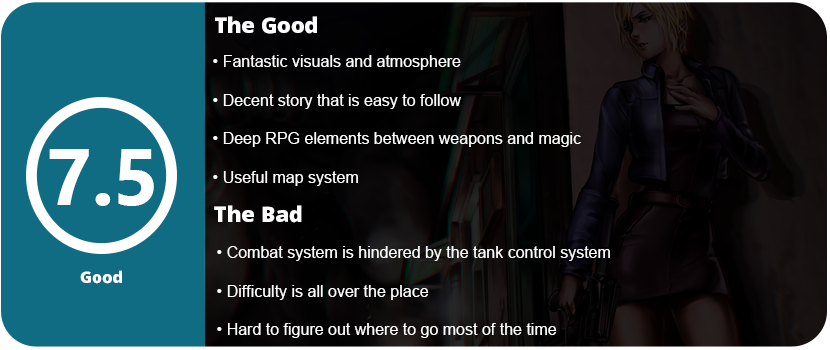
The story is surprisingly simple to follow and fairly interesting. As a MIST agent, Aya Brea, you embark on a journey to the Nevada desert and the town of Dryfield. Here, your mission is to devise a permanent solution to halt the NMC (Neo-Mitrocondira Creatures). There is a lot more to the game. You also start out in a mall in Los Angeles. There are a couple of twisty endings, and the story is well-told and easy to follow. There isn’t really any voice-acting due to space constraints. The visuals alone explain why the game spans two discs.
The game has both RPG and action-combat elements. There are plenty of weapons and magic to use, and the game is a tight balance of the two. This is also the era in which missing a key item could make the game artificially more difficult, so I suggest playing the game on easy the first time with a guide and then doing a New Game Plus on your own. Despite the game’s linear structure, the vagueness of your objectives could lead to many missed or lost opportunities. At times, your map displays the locations of your objectives, while others do not. You can pull up the help in the map menu to see Aya give you a single hint; sometimes that’s also enough, and other times it still leaves you clueless. There are only a couple of puzzles in the game, but there is still a lot of item hunting. You need to find key items that not only advance the story but also optionally unlock new weapons or items to aid you.
Parasite Eve II‘s combat is surprisingly excellent for the time. 3D movement is tank-based, but it feels more fluid thanks to better camera angles than most games in this genre. There is an auto-lock system with a large reticle that you can easily swap between enemies. The game is fairly smart and usually picks the enemy closest to you, but not always. You can fire rounds off, and reloading happens when your clip reaches zero. Secondary attachments on some weapons can stun enemies or deal massive damage. These all cost money, and it’s imperative that you acquire the best weapons as early as possible; however, this becomes a juggling act with inventory vs. your attachments. You need to upgrade your armor to increase your attachments, but you can also find small pouches on the field. You should always have a single weapon in hand and equip at least one other. It’s good to know what types of enemies are in the area to be able to balance this just right.
Weapons vary, from pistols to shotguns, assault rifles, grenade launchers, and attachments that help you miss and match. You can equip an M4A1 assault rifle with the AS1S shotgun attachment, allowing you to combine both types of weapons without requiring two inventory slots. However, you must acquire precious BP by killing enemies to purchase these attachments. Bosses give the most, but it’s important to kill everything around you so you can get as much BP and EXP as possible to level up your powers. There aren’t random battles or respawning enemies, but opponents will spawn in the same area after each objective is complete. Harder enemies start popping up, as well as more of them, so it’s really important to know their weaknesses and what weapons and magic attacks work best. Some will attack you in swarms, so stun attacks are best for these enemies. You can’t move around much, so make sure you really get the hang of the combat system.
Magic is interesting, as you will use it for stronger enemies and large groups. As you level up, you acquire new magic in different categories. You can level up Fire, Earth, Wind, and Necro magic to a maximum of three per power, and utilize the magic wheel to activate these powers. This requires MP, so you will need to boost your MP to use it in combat. You should equip some key items instead of using them, as they can significantly increase attack damage and even magic. Therefore, it’s crucial to utilize a guide during your initial playthrough, as inadvertent use of these items, such as boosting a magic point by one level or similar effects, can result in waste. While you can’t use an auto lock-on (the game pauses when in the magic wheel), magic is incredibly useful for bosses. Green vector lines indicate the path, and enemies will flash green to indicate potential hits.
The map system is rather useful. Rooms in red mean there are enemies in that room, and once they are all defeated, it will not be red anymore. When you initiate combat, the screen briefly turns white and you hear the sound of a heartbeat. Sometimes, if the enemy doesn’t see you yet, you can quickly change weapons, heal, or do back attacks that cause more damage. Aya automatically reloads after clearing all enemies in the room, and your winnings window appears. Item drops are incredibly rare. They only become more common when you start fighting the game’s most powerful enemies, the GOLEMS, towards the last fourth of the game on the second disc. There are only a few shops in the game, so this leads to a lot of backtracking. Additionally, the game does not allow you to sell items, meaning that if you inadvertently purchase something, you are unable to return it. This means you can only discard items not needed in your inventory or store them in a box. I recommend saving before buying anything; in case something doesn’t work out, you can reload.
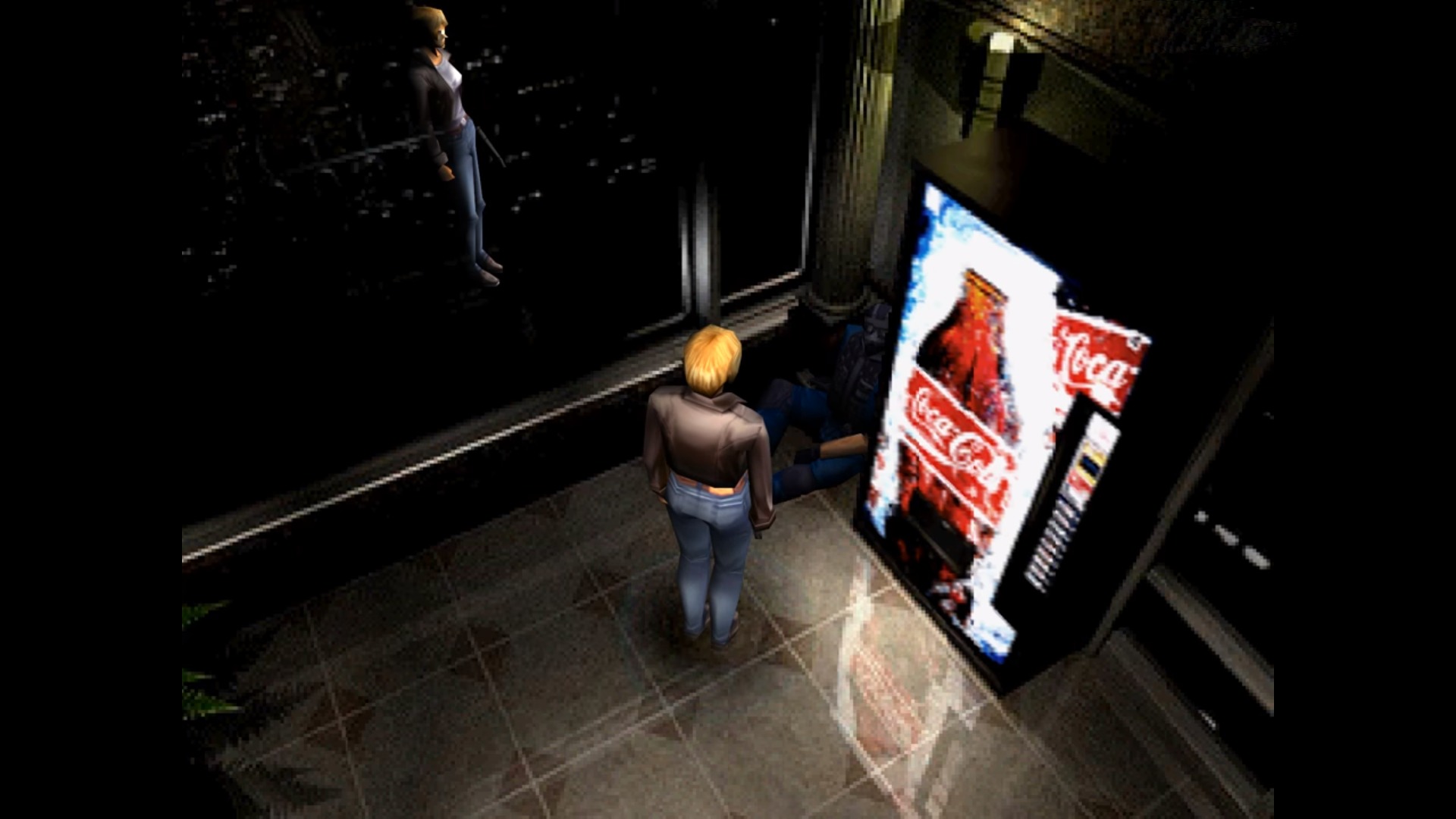
The visuals push the PS1 to its limits. We still get pre-rendered backgrounds with some 3D objects in place, but the character models look good, and there is a lot of detail in everything. While the game looks mostly generic style-wise, it is a technical showcase for the PS1. Sadly, the lack of voice work and infrequent FMVs kind of hurt the game presentation, but what’s here works. Overall, Parasite Eve II isn’t perfect. It’s a product of its time, with developers trying to figure out how to do action games in 3D. The weapon balancing act is frustrating, and missing out on key items to make the game more enjoyable can cause a lot of problems later on when you realize it’s too late. The combat system works well enough, and there are plenty of weapons and magic. The game’s main issues were mostly backtracking and a lack of knowing where to go. The story is interesting, surprising in depth for the time, and well told.
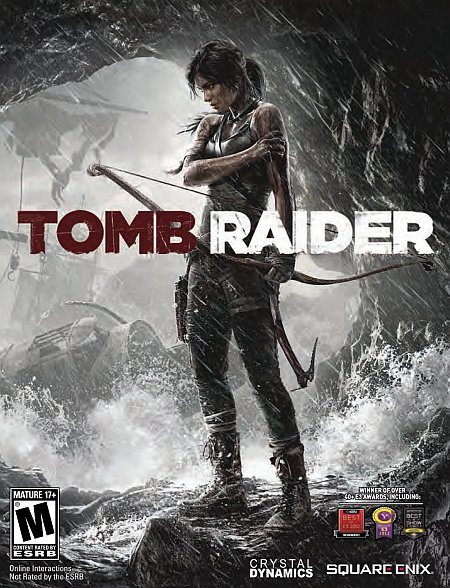
This is exactly how you do a game series reboot, right? I wish I could end my review with that, but I need to tell you why. Tomb Raider suffered through a few mediocre games during the first run of the series during the late 90’s and early 2000s. The first reboot did well for the series by maturing Lara and giving us better controls and a more cinematic experience. Now comes Tomb Raider (2013), a fantastic game that shows the more human side of Lara. The game starts out with you and a science crew on a ship on the way to an archeological site, but things go awry when Lara decides to head to the Dragon’s Triangle off the coast of Japan. A mysterious storm destroys the boat, and Lara and the team are stranded on this island. There is a mysterious cult trying to sacrifice people to a sun goddess to end these storms. Lara has to deal with this if she wants, of course.
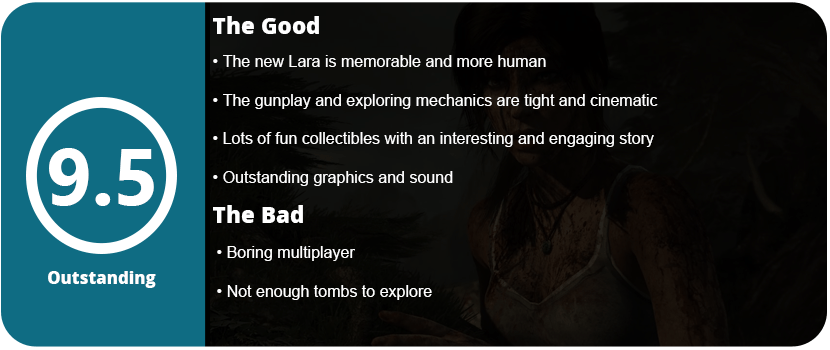
What makes Tomb Raider so memorable is the struggle she goes through while surviving. She is nearly raped, suffers tremendous injuries, and has to cope with herself, dealing with the fact that she has to kill to survive. She is not comfortable with this at first and really struggles to pull the trigger. This adds layers of depth to her character that weren’t seen before. Not only is her personality more memorable, but her looks have changed. No longer is Lara wearing the short shorts and tight shirt with her huge bust. She has been knocked down a few cup sizes and is much younger, straight out of college, in fact. It’s hard to really describe her more than this; you have to play the game to really connect.
The gameplay in Tomb Raider has completely changed, but yes, there is platforming and gunplay. Both are tight and very well crafted. Gunplay consists of using scraps to create a pistol, bow, machine gun, and shotgun. That’s it. As you progress and find salvage in crates and dead bodies, you can upgrade these to look and feel like better weapons. There are many upgrades that increase damage and accuracy, as well as adding new ammo types. Lara’s animations are very well done and realistic, and this falls into combat. She scrambles around and ducks behind cover; the guns feel great to shoot, and you can see how inexperienced Lara is; she’s not a Navy SEAL or commando. Unlike other games like this, her stumbling animations don’t interfere with the game at all. You can still move around, you can dodge, and there’s even some melee thrown in. As you upgrade your skills (done at various campfires throughout the game), you can dodge, and through quick-time events, you can do some pretty gruesome kills.
While gunplay is tight and fun, exploring is just as important. This island is massive, and you can go anywhere; there are no limits. Fast travel via camps really helps, but there’s a reason for moving around everywhere: collecting hidden items. These range from relics, GPS caches, documents, etc. There are hidden tombs found throughout the game that hold area maps for these items. These tombs consist of cleverly made physics puzzles that are really fun to complete. You get rewards like art and 3D models to view. The whole game just has an amazing atmosphere and is so much fun to explore.
On top of all the climbing around, you get a climbing axe, which is an important tool for climbing and combat. Your bow is used for shooting ropes across valleys and canyons to pull items to solve puzzles, break doors, and access new areas. The whole exploring ideal in this game is just fantastic and really fun. I did have to think about how to get to new areas and actually try to navigate and experiment with that good game design. There is a Survival Instinct ability that highlights map markers and objectives, and when you unlock the skill, you can see items through walls.
The story itself is a bit confusing; the whole spiritual thing is a bit unbelievable in such a realistic world like this, but that is what Tomb Raider is known for. Lara is the main character here, and what she goes through was the main story for me. I loved every second of the story. The voice acting is awesome, and the graphics look amazing—some of the best on PC yet. The new DirectX 11 features like Tessellation and the new TressFX technology applied to Lara’s hair look nice, but there were a lot of bugs and glitches for Nvidia users during launch (they are now fixed). You will need a monster rig to play this game on the highest settings.
The multiplayer was tacked on late in development and is pretty boring. The combat was designed for cinematic gameplay, not multiplayer. It feels just like it does in the story, but it just doesn’t suit multiplayer well. I played all three rounds and got bored of the game. Some people may like it, but there are better multiplayer shooters out there.
Overall, Tomb Raider is one of my favorite games of all time and is really memorable. The voice acting is solid, and Lara’s new personality makes her more human and more relatable. The graphics are outstanding, and the gunplay and exploring mechanics are fun and very cinematic.




























 thebinarymessiah.com
Yeah, it's pretty damn awful. Notoriously one of the worst games on the PSP. A 4 was actually being generous.…