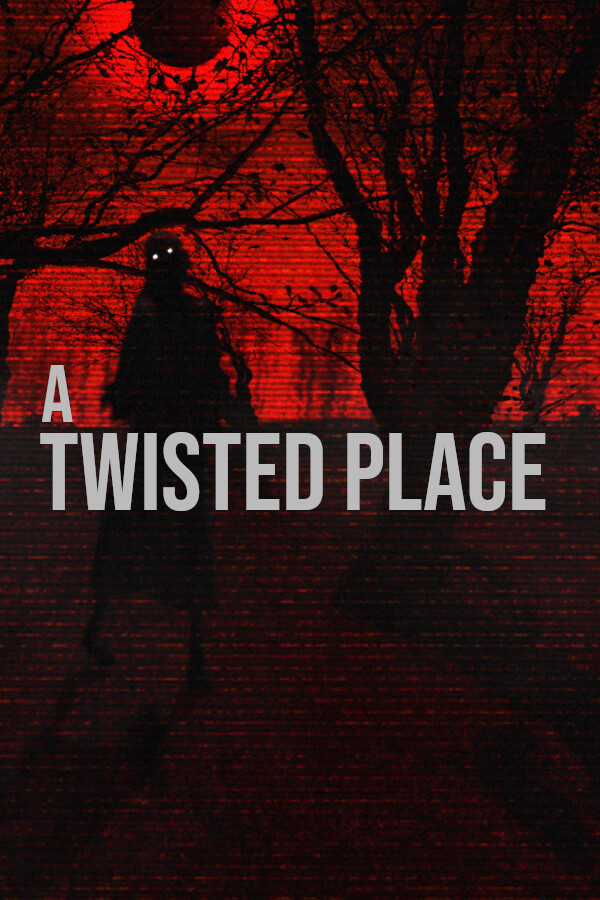
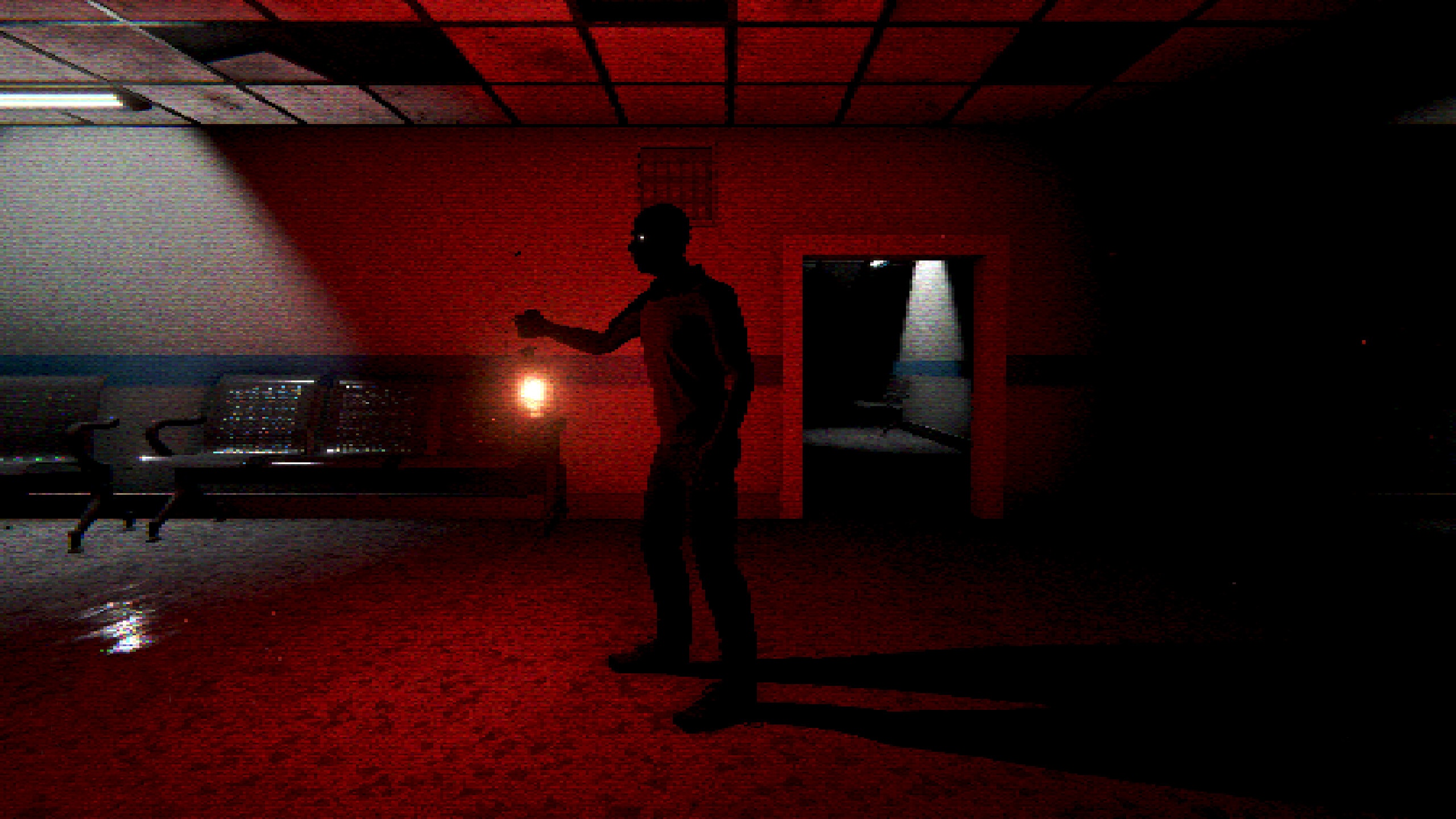
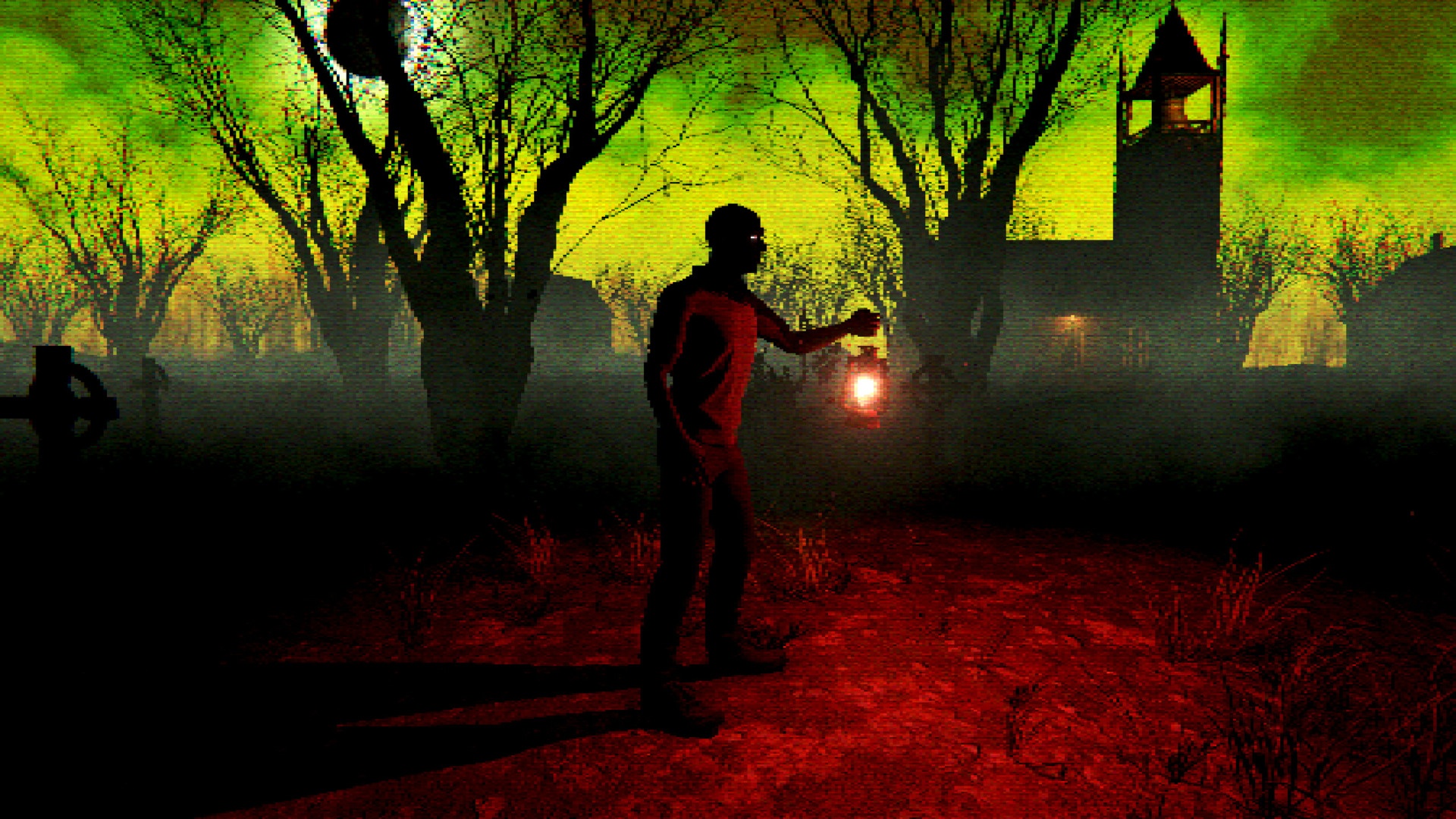
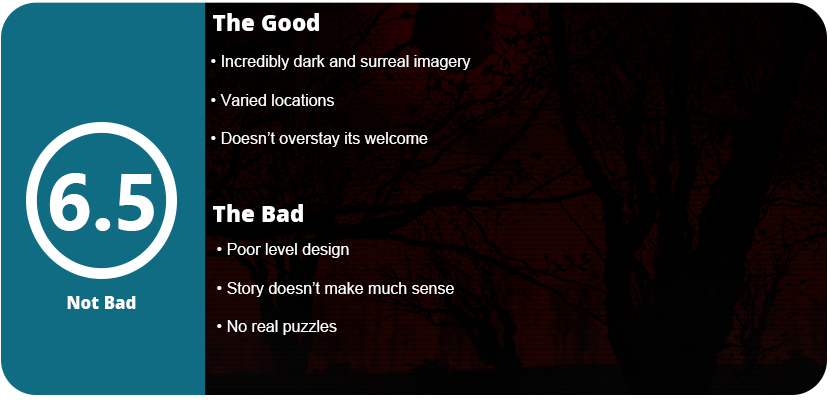
I’m still on the search for a horror game that will truly scare me, and I mean a new horror game. Something that’s not mainstream with a large budget. A Twisted Place came pretty close. If it wasn’t for the janky controls, annoying stealth, and lack of puzzles, I think this game was really on to something. You play as a generic bald dude holding a lantern, only your glowing eyes really showing in the dark. You walk around a strange and haunted house, going into weird rooms and solving simple puzzles. Most of the puzzles are object hunting that have you clicking on things to open them and find keys. The few puzzles feel like guessing games, as there are no hints around to figure them out. Most of the game consists of walking from either left to right and occasionally into the screen to navigate maze-like hallways and avoid monsters.
The ambience is the best part of A Twisted Place. The game grows into a more surreal Eldritch like horror. Going from a quiet house to a desolate basement, an abandoned hospital, and eventually some sort of cosmic desert and ancient city. There’s no voice acting or much to read, really. You move along somber hallways listening to the groans of the dead muddle by only to get caught and have to start at the nearest checkpoint. Thankfully, any progress you made is remembered. There is a specific maze of hallways towards the end that requires four hidden switches to be flipped, but getting around the monsters in a specific pattern is incredibly frustrating. While the levels themselves look great, the design is pretty poor for gameplay.
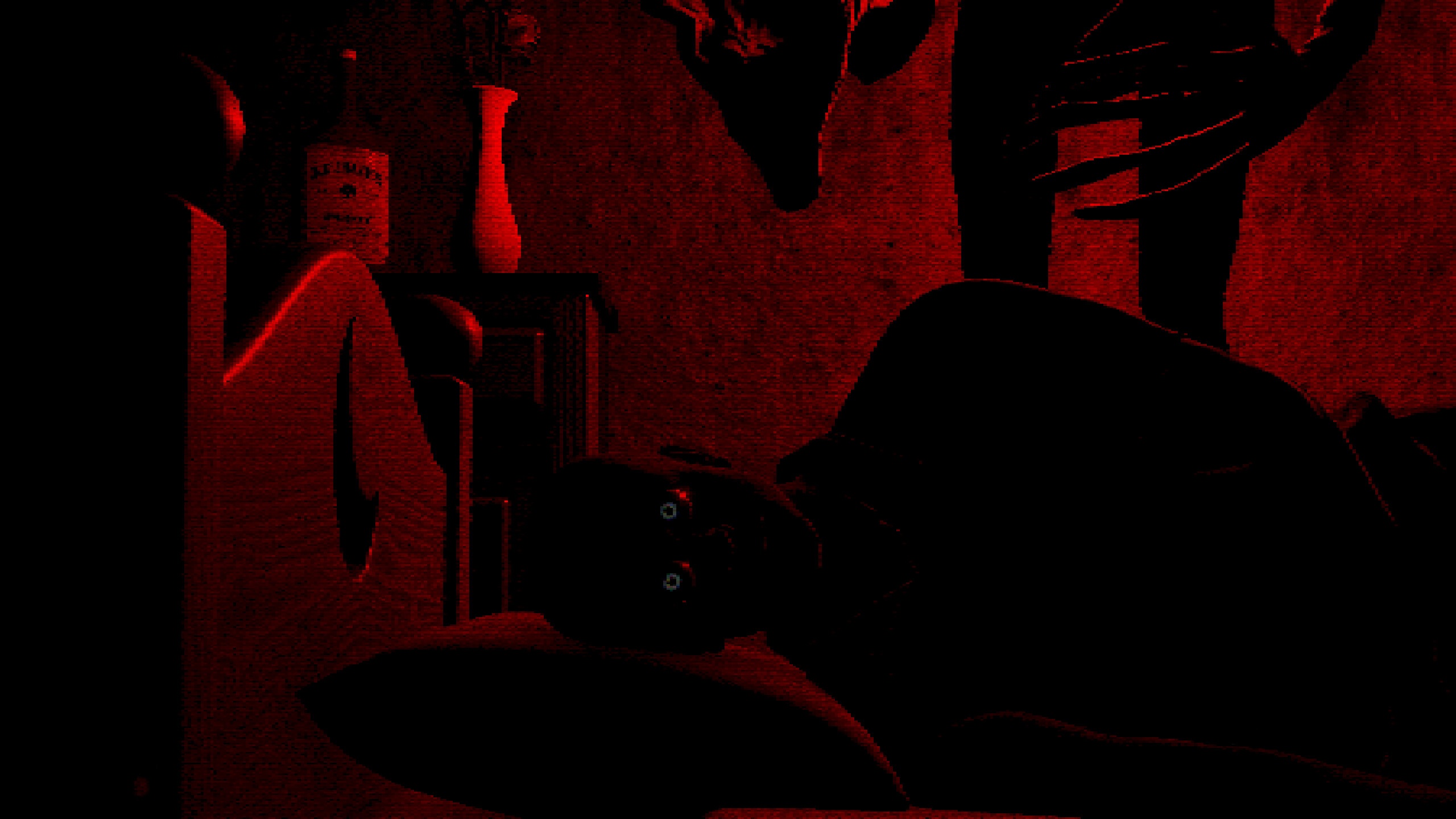
There are some rooms you can enter that put you in a first-person view. These are really neat and ratchet up the tension to skin-crawling levels as you click on items and open cabinets, hoping nothing jumps out at you. The scares are really well done here with a lot of moments and scenes that are impossible to fully digest during the brief moment you encounter them. These new levels are what kept me going. The haunting ambient noises. There’s no real soundtrack here, just sounds of the dead and unknown stirring quietly in the background, waiting to be discovered or forgotten.
The game doesn’t overstay its welcome. Only a couple of hours long, but the later maze-like levels may frustrate players into a refund. Unless you love the aesthetic and gore that the game provides, there isn’t anything else worth looking into. With that said, the game also deals with suicide and mental illness in some interesting ways. This isn’t the game I’m looking for, but it’s kind of close. For the small entry fee you’re looking at an entertaining afternoon.
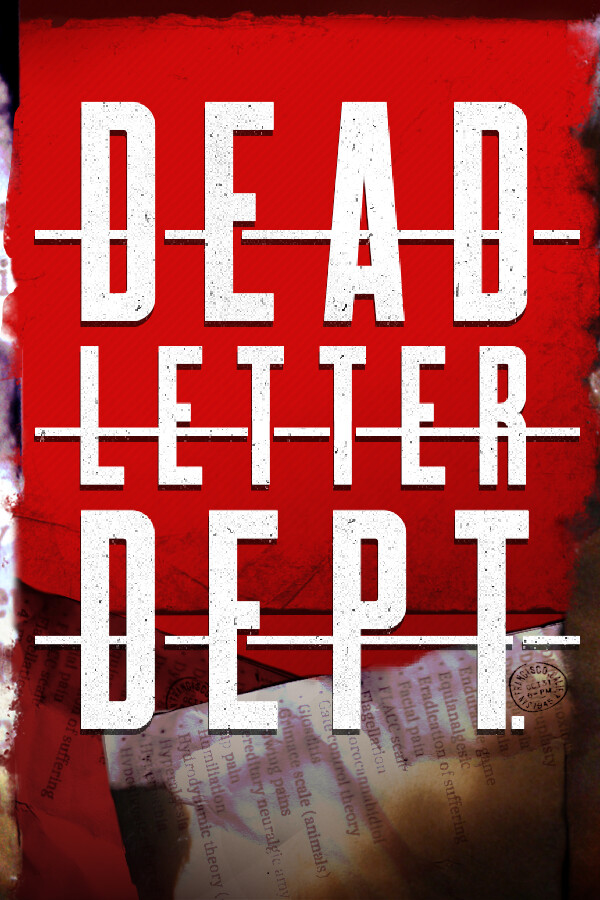
Working a mundane job, thinking something new will make things better, can just sometimes make things worse. We have all been there at least once. You start a new job in a new town trying to restart your life, run away from something, etc. The job ends up crushing your soul; you want to cry every time you wake up to go. Bills start piling up, you end up chasing due dates, and you’re always in the red at the end of everything. Denied time off, denied overtime, and you can’t catch any breaks. Dead Letter Dept. sees this loop as a game. You play as someone who is running away from someone or trying to start a new life and rents a single-bedroom apartment in a random city in the US as a data entry person. The game spirals into something sinister at the department, and the game turns into a detective-style typing game with horror elements.
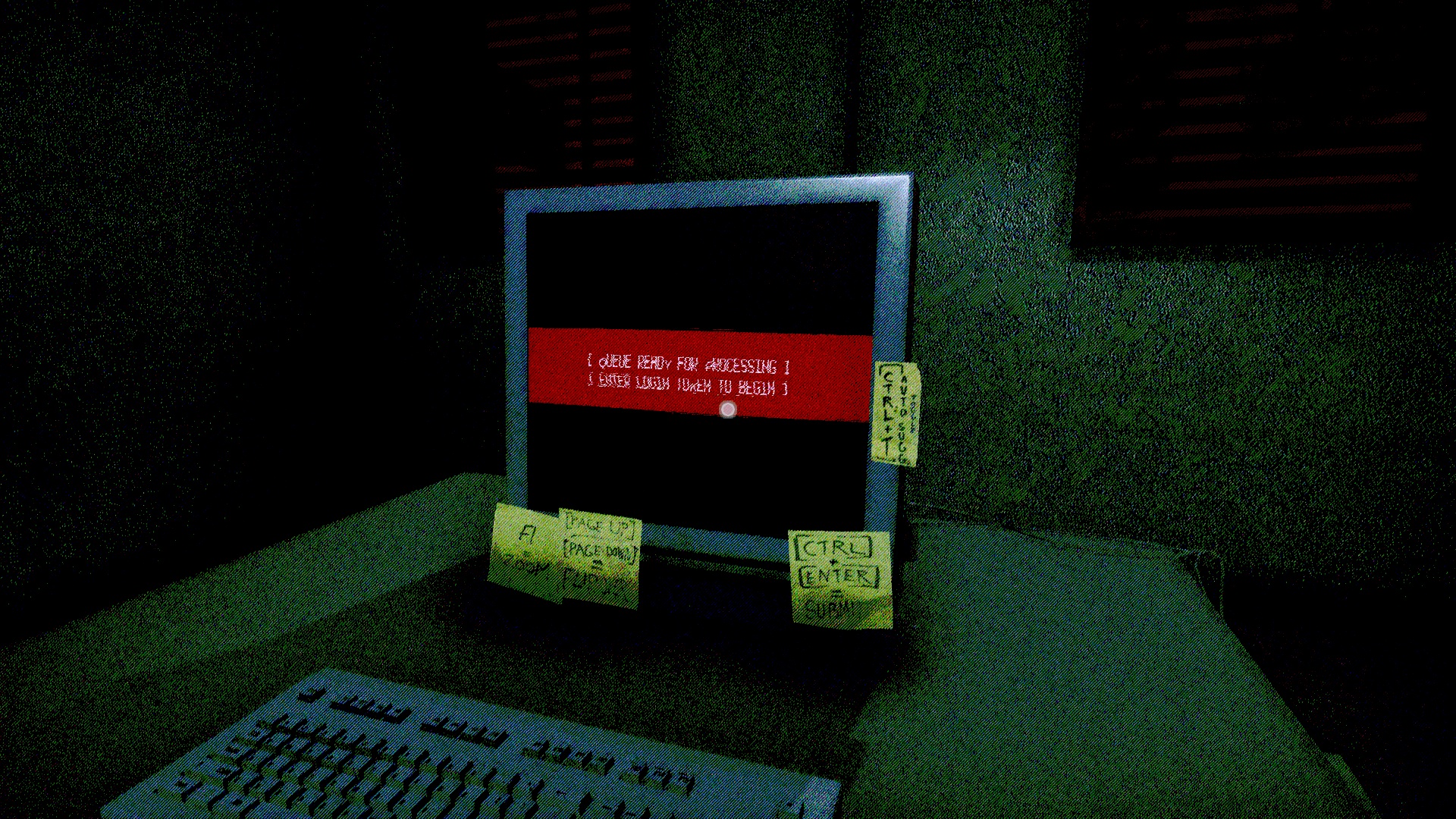
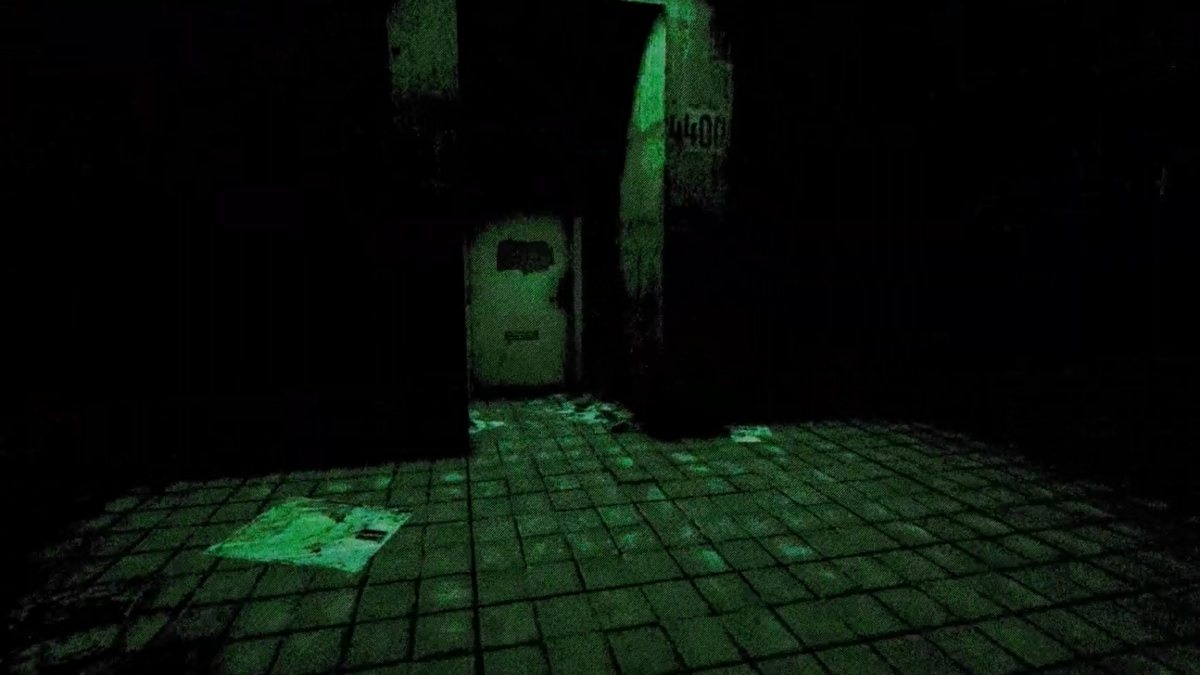
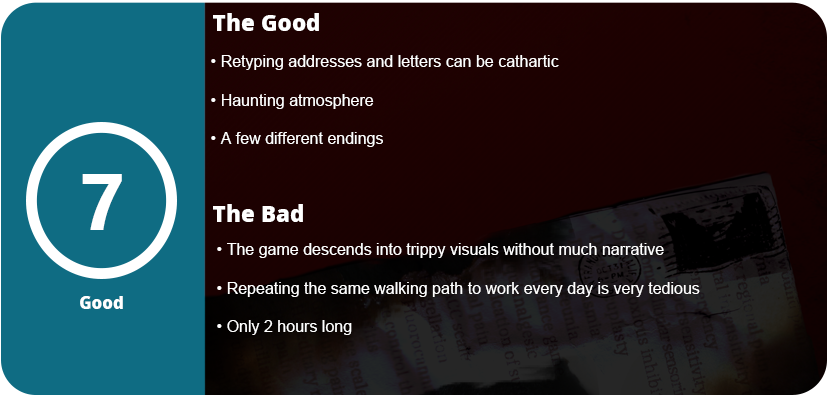
Honestly, this is another indie horror title that ends up spiraling into trippy visuals and effects that don’t really mean anything. This seems to be a trend and has been for over a decade, and I don’t get why. The game does a great job soaking us in atmosphere with a depressing sky, not being able to look out the window, commentary on the bed, bills piling up, the fridge, and so on. Then you exit your apartment and go down long hallways out to the public transit. The sad part about this is that this sequence repeats after every single day and gets old fast. Nothing really happens during this sequence outside of flickering lights and an occasional shadow. After a few days it would have been nice to just skip the job after exiting the apartment if there was nothing meaningful to tell here.
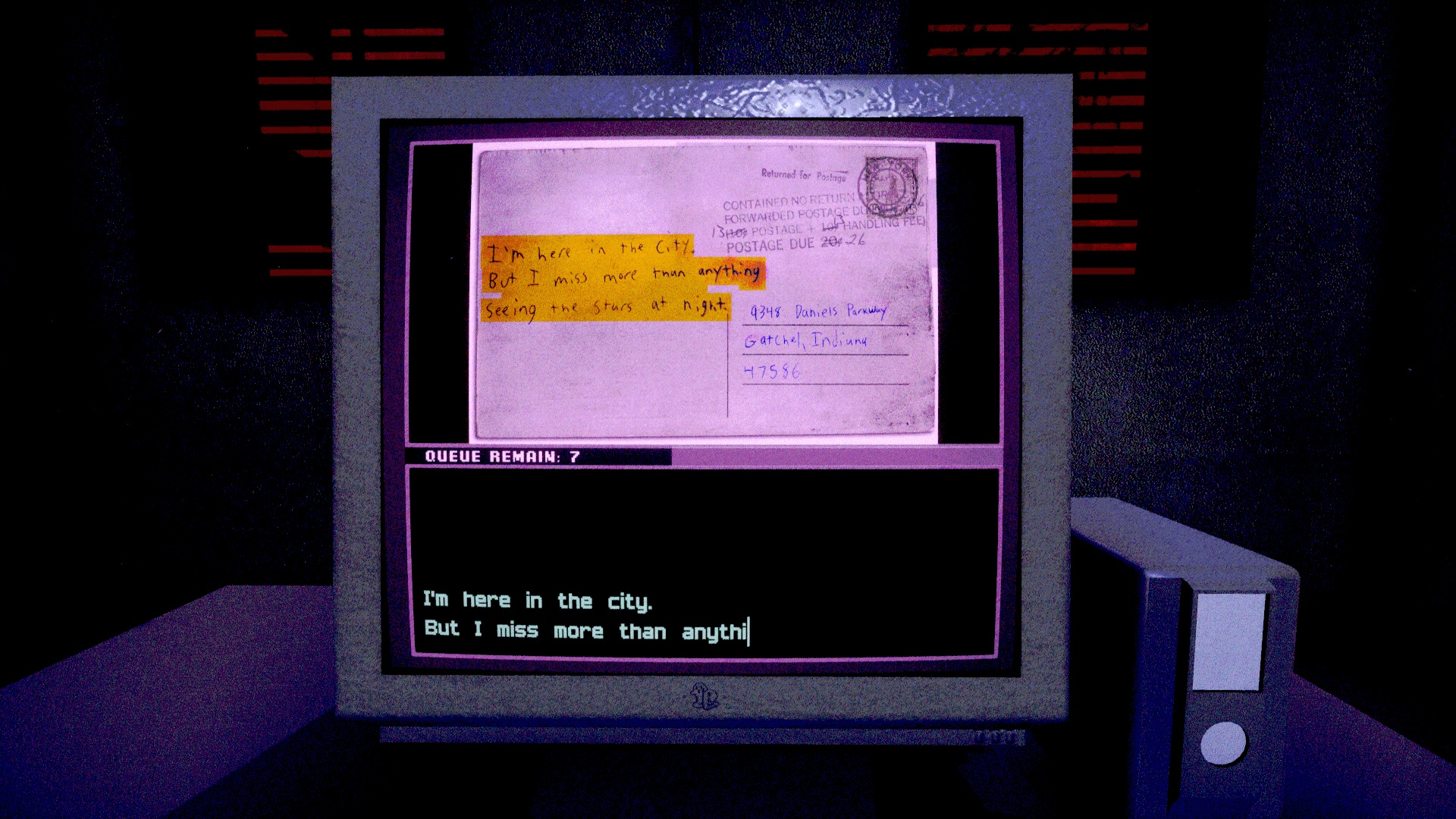
Once you sit down, the meat of the game is the typing. You are presented with letters, postcards, and various crumpled-up pieces of mail. Your job is to translate what is highlighted in yellow. Once you start typing an address, the autocomplete will pop up and can suggest addresses, but it’s mostly useless. You can assign shortcut keys to flip the mail over and zoom in. There are many different types of mail, from typing in entire passages to small greetings. You get a feel of snippets from people’s lives based on what the envelope says or the postcard. As the days move on, you can forward some stuff to different addresses to get different endings, but like most horror games, the different endings don’t really matter and aren’t interesting enough. Once you play as intended, unless you want to achievement hunt, there’s no reason to play again.
As you would expect, the game starts playing with your senses over time. Shutting power down, making you hallucinate, and various other trippy effects, but there’s no narrative here. Everything is abstract and open for whatever interpretation the player wants. You get strange messages sent to you throughout the game, but there’s no cohesive narrative. It all feels a bit random and obtuse. I still enjoyed it, though, as the game is tense and haunting and you don’t really know what’s going to happen next. There are a few parts in which you wander around through empty hallways. I felt this distracted from the overall core game and didn’t add any value to anything. I just wanted to see the dialog in the apartment, as your character’s internal thoughts are some of the most disturbing in the game. Less is sometimes more.
Overall, Dead Letter Dept. is a fun evening of typing and managing mail but doesn’t tell the best horror story. The atmosphere and happenings in the apartment are great, and what little is there tells quite a lot. The story of struggle and being alone in the world is something the developers should have held on to rather than go off onto this weird, haunted-house, trippy-effect direction. What’s here is good, and there are some frights, but there’s too much here to make it something it’s not.
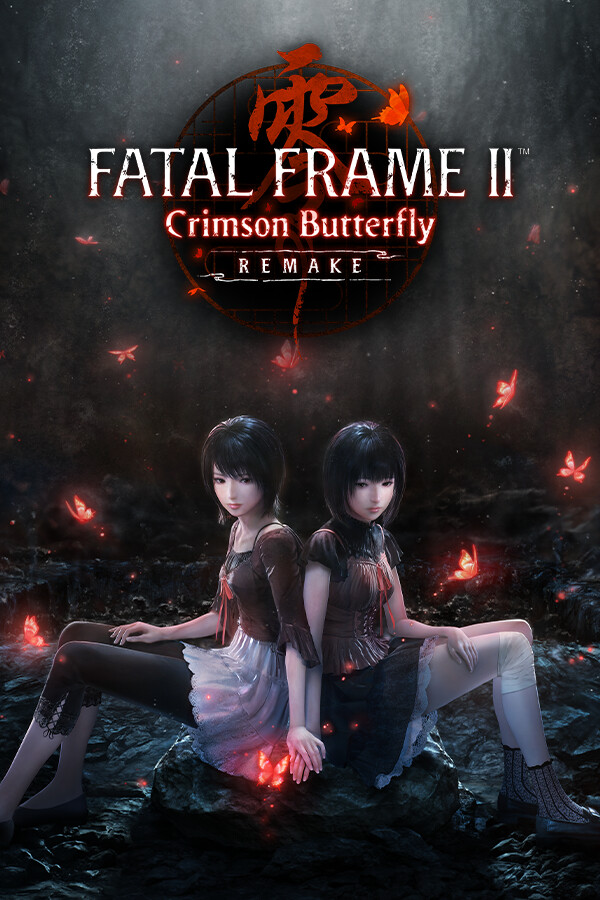
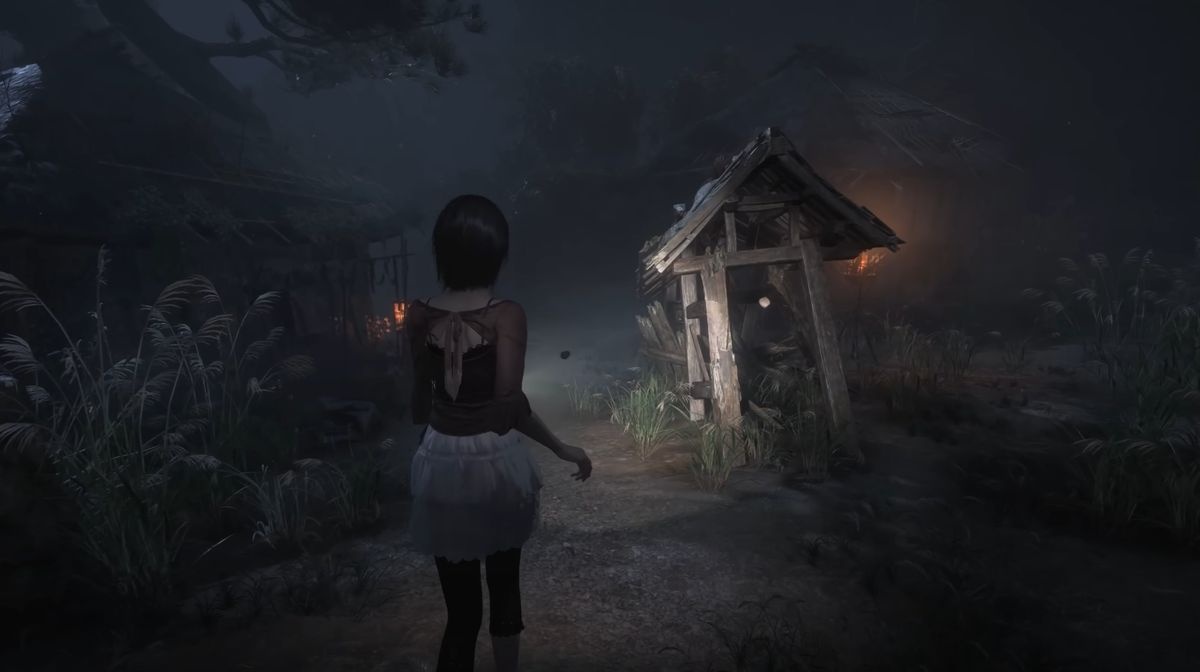
When I played Fatal Frame II for the first time on Xbox, I left both loving and hating the game. The entire series has always had faults and issues, but sometimes that’s the charm of the series. The clunky and slow controls, the cramped spaces, the linear levels, etc. Fatal Frame II Remake isn’t like Silent Hill 2. This isn’t a fully reimagined, built-from-the-ground-up experience. This is literally just the same experience remade with a third-person camera and some minor refinements. I feel like this could have been Team Ninja’s opportunity to make Fatal Frame shoot for the stars like Silent Hill has, but all we get is more of the same. That’s not completely a bad thing, but this game isn’t the remake I expected, especially since this is the second remake of this game (originally remade for Wii, called Project Zero 2, only released in Japan and Europe).
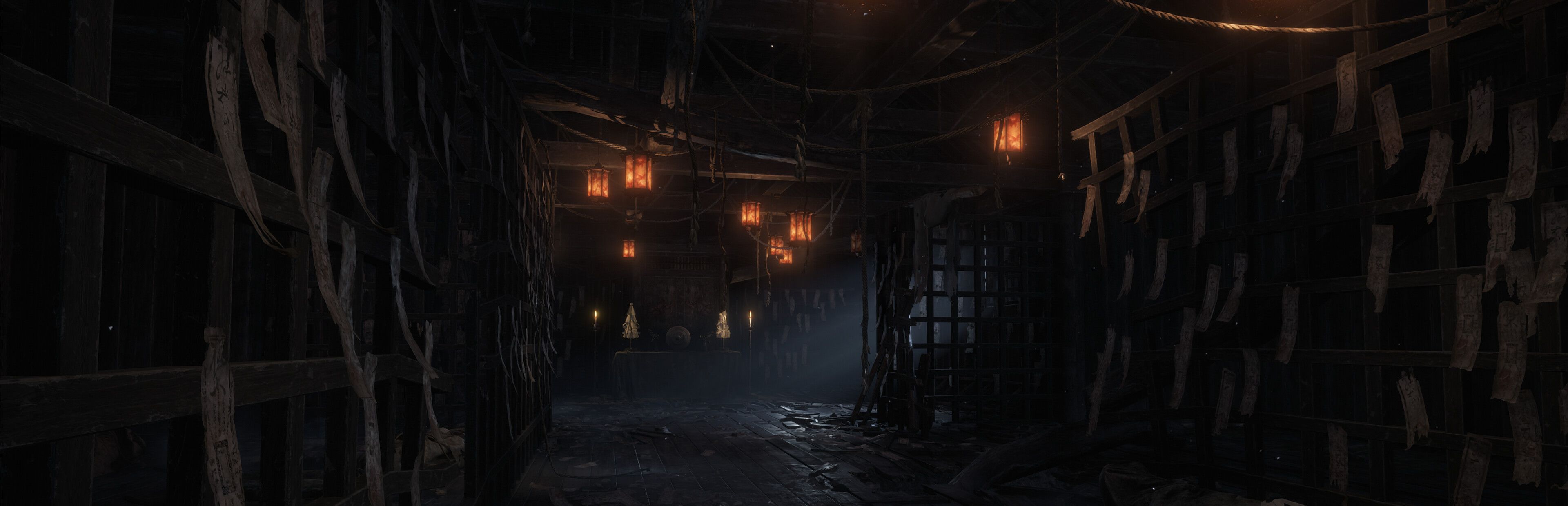
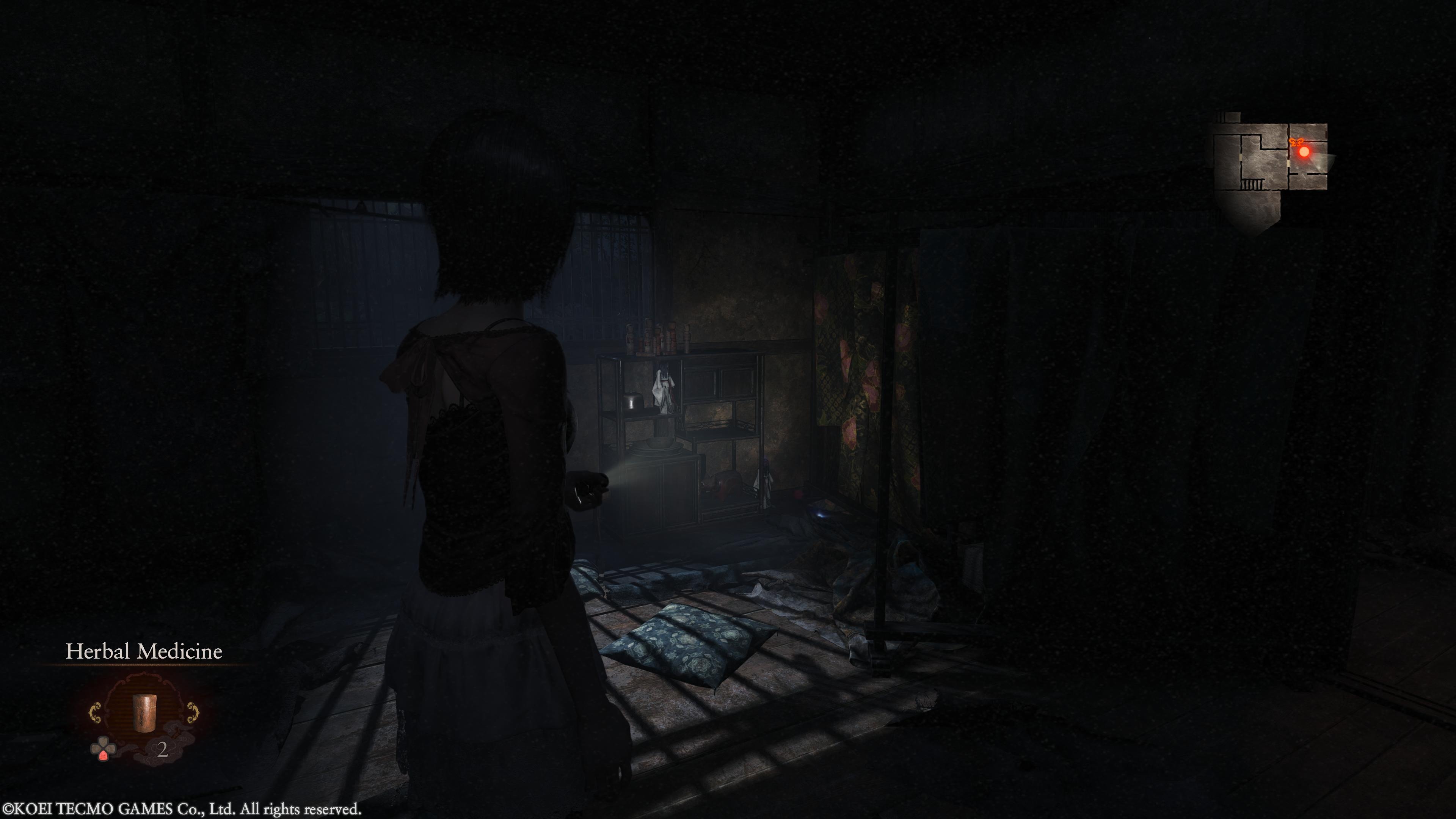
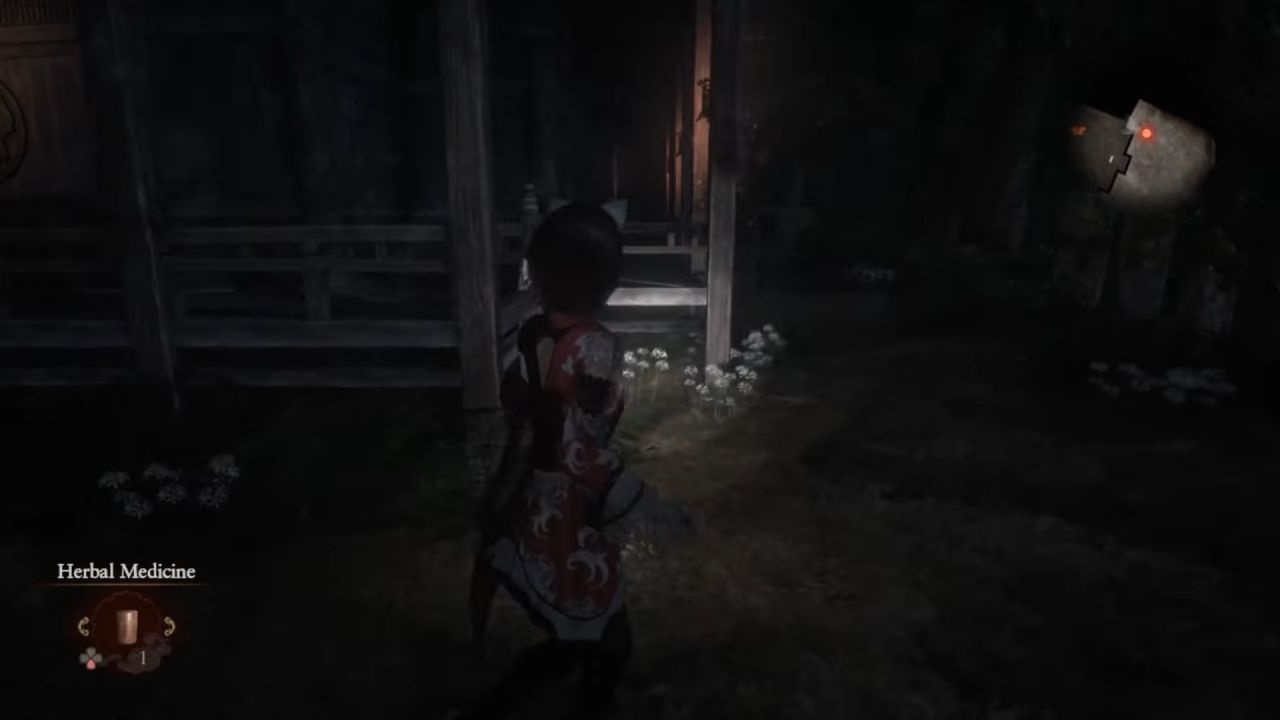
Everything visually was remade, including the cut scenes. This is mostly a scene-by-scene remake of the original for better or worse. You start out wandering into the Minakmi Village with your sister in tow and explore the first house. You pick up a flashlight, save for the first time, and get the Camera Obscura early on, and then it’s time to explore. There are a lot of items to collect that show up as blue glints on the ground; there are ghosts to capture called Specters that wander around, but you need to be quick or the shot is gone forever. Your parameter will flash the color filter you need to get certain shots. You can unlock doors and cabinets with some filters and solve puzzles with others. Film is used as ammo against the wraiths that attack you. The camera system is overly complicated and could have been redesigned from the ground up, and I don’t know why it wasn’t. The areas are exactly the same as the original but made with a lot of attention to detail. The lighting and atmosphere are fantastic here, and you always feel on the edge. There are details like Mio slowly opening a door or reaching out for an object in hopes nothing snatches your hand. Most of the time it doesn’t happen, but a rare occasion means you need to fight a wraith.
If you know how to play the original, then great. The game plays 100% like that down to a tee, with nothing changed. There are no added areas or anything we’ve grown to expect from remakes like Silent Hill and Resident Evil. Nothing was really improved, just updated for a modern audience. With that said, you do get shown where to go next on the map…sometimes. You can follow a crimson butterfly around to most of your objectives, but some will just be yellow blips on your map but not your minimap. It’s not consistent, and many times when you are exploring one of the three large houses, you won’t know where to go. This can lead to a lot of aimless wandering, refighting the same wraiths, but it does seem the difficulty is more balanced. I finished the game on normal and never ran out of film, which was a common problem in the original.
When it comes to combat, the camera hasn’t been updated or changed to be better. Just more modernized. The FOV is very narrow, and you need to keep the white circle over the wraith’s face and make the focus points turn red. The more focus points, the more damage is done, shown by a health bar on top of the screen. The health will turn from red to a washed-out red, showing the potential damage that shot will do. It’s best to shoot enemies right when they attack for more damage. This can lead to a Fatal Frame opportunity in which your film loads instantly and you can take a couple more shots. There is a white line on each health bar, and you need to get it below that line as fast as possible or the wraiths become agitated and regen health and become more aggressive. This is where the different films come into play. Type 7 is the weakest and is infinite. Type 14 does moderate damage. The Type 90 does moderate damage but loads quicker. Type 00 loads the slowest and does the most damage, and you only get a few of these throughout the game saved for bosses. Then, type 61 does heavy damage but also loads slowly. This is really confusing. Why not rename the films or put (heavy, light, etc.) next to the name? If all of that sounds complicated, the upgrade system is more bloated.
There are charms you can find throughout the game. Some of these have audio attached to them played through the spirit radio, and some are bought at the save lantern. Most of these are completely useless. This was an opportunity to revamp this system, but instead we get 50 charms with most not being effective enough. You can’t easily swap charms. You must go into the pause menu and change them. These add passive effects like more damage to certain filters, wraiths will be less aggro, stamina will recharge quicker, etc. However, most charms are just a single passive trait. Stones have two traits, but usually a positive and a negative. Most charms are things like “damage is increased when Mayu is in the shot with a wraith.” Mayu is only with you a few times in the game, and you want to keep Wraith away from her. Once you’re knocked down, you have to use your camera flash to get them off of you if you can’t shake them fast enough. A wraith can cause a game over if Mayu is attacked too many times. Switching between filters is only useful early on, but once you get the Radiant filter, you can upgrade the attack charm to level 6 and use that through the whole game. The Paraceptual Filter is good for longer range but rarely needed. You can add prayer beads to the filters and camera to upgrade them, but they are very rare, and you won’t get through many upgrades by the end of the game. It’s best to focus on a single filter (the Radiant filter) and the camera itself. You want a zoom function but want to increase film capacity and attack power on the filter. New Game+ will give you an opportunity to upgrade other filters. You can find items throughout the game to heal and recharge stamins which is needed for dodging and running in combat.
Again, I found this overly bloated and it could have easily been cut down. More prayer beads would have been nice. Once you start a New Game+, everything costs a ton of souls. Sometimes in the millions, and unless you’re playing on Nightmare difficulty, you won’t get enough souls in a single playthrough. It’s kind of a rigged game that forces you to play a certain way. Even costumes are locked behind large amounts of souls, and the original costumes are all gone, such as the Bandage, Bikini, and other more skimpy outfits. This leaves little incentive to find everything, as all the notes have to be found in a single playthrough, but the Twin Dolls (there are 47) carry across play throughs. It’s kind of a mess and makes multiple playthroughs very tedious. The linearity of the game and the fact that all of the scares are pretty much seen during chapter 1 mean playthroughs will be less fun. The game still retains the jank from the original. The slow and sluggish movement, the over complicated Camera system, and the few enemies that make an appearance are all defeated the same way. Just make the circle flash red and shoot. The bosses are more interesting, but many are fought multiple times. This is something that could have changed in the remake. You will finish the game in about 10 hours or so even if you try to find everything.
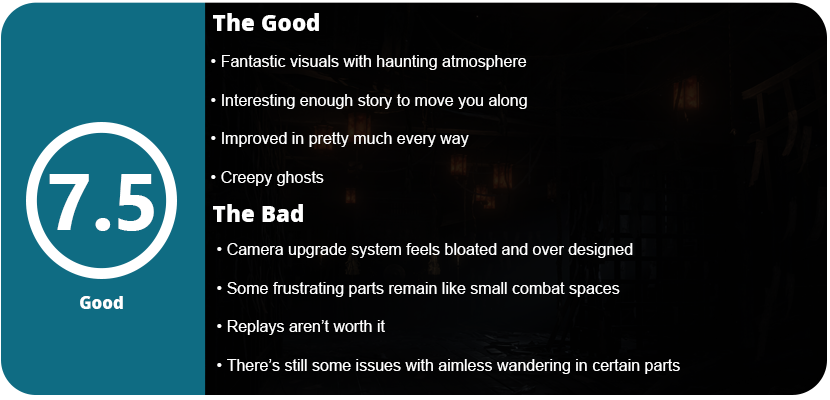
If you’ve played this game before, don’t expect much other than a more polished version of what you already know. New players will enjoy a retro survival horror in a shiny new skin, but those who come from Resident Evil and Silent Hill remakes might find this game too slow and its systems too bloated to enjoy for long. I personally like this game. The story is interesting enough, but most of it is told through diaries and journals, so if you aren’t looking for those, you will miss out on a lot. The cut scenes don’t really show much, and nothing is really explained through dialog. This is something that also could have been changed. Maybe some exposition-dumping dialog during certain scenes. I love the new visuals as well, but the claustrophobic areas will feel too cramped for some. Some may prefer the retro survival horror jank preserved, but I say what’s the point of a remake then? We can just play the original.
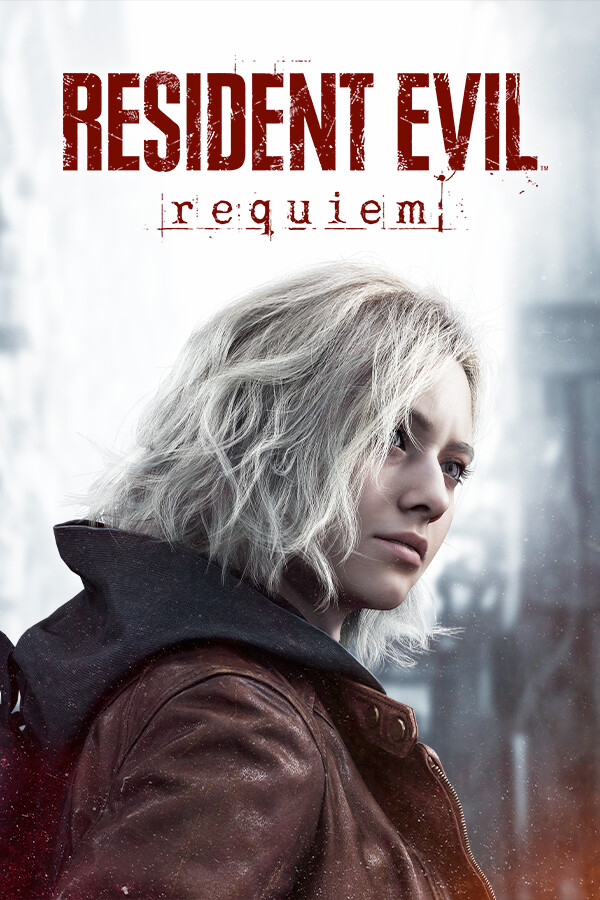
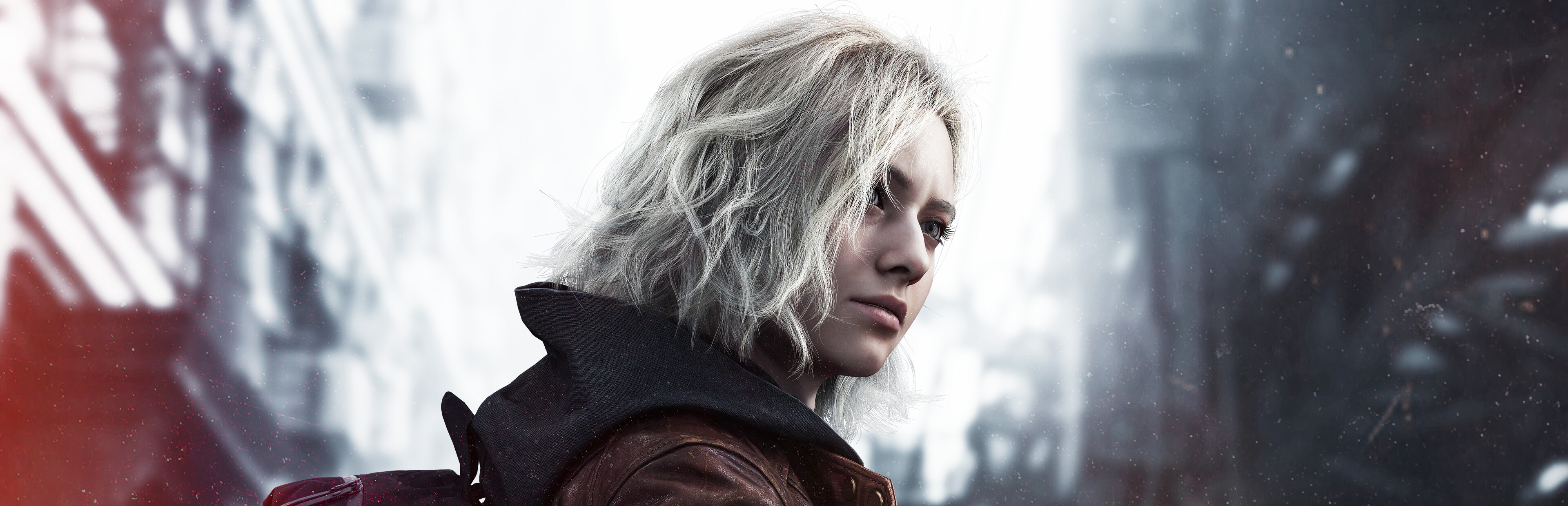
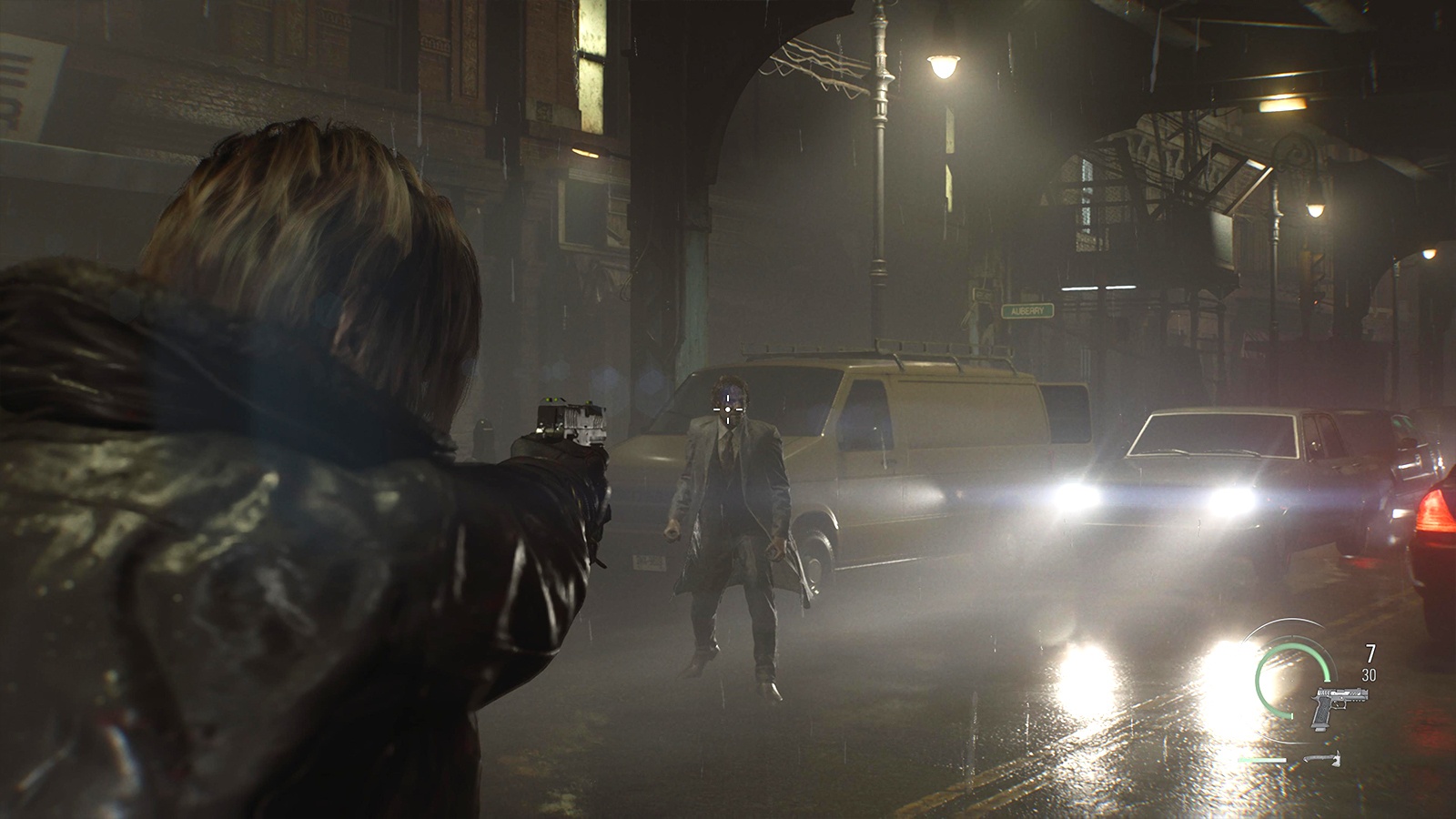
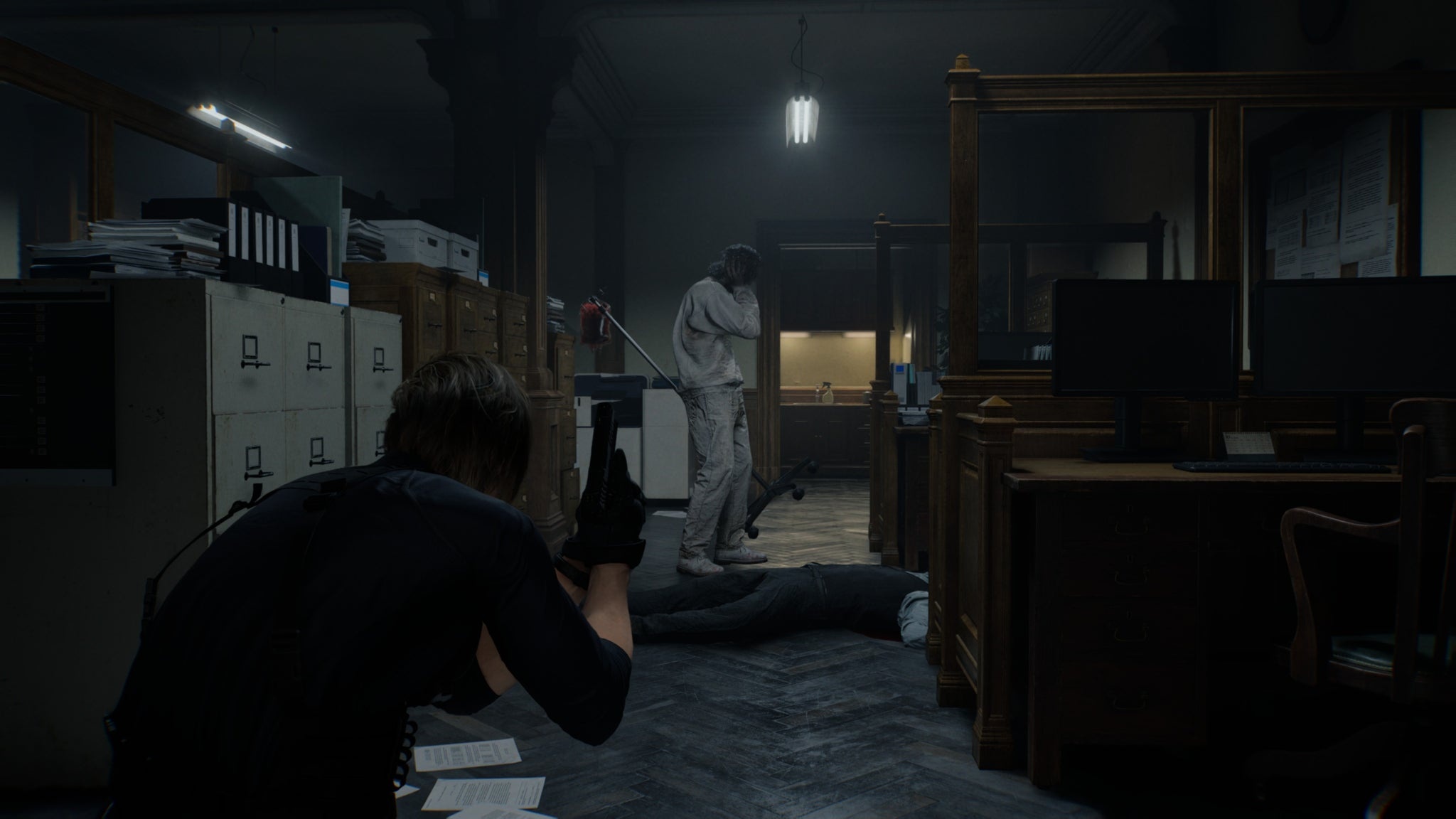
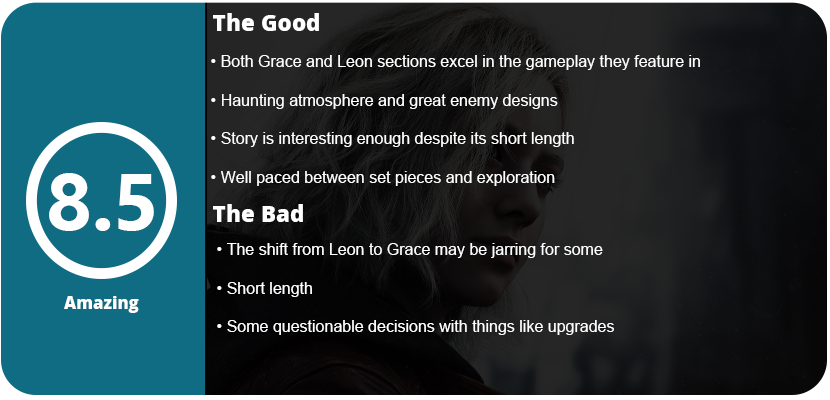
When one of the founding fathers of modern horror games has a new release, we stand up and politely pay attention. Along with other series such as Silent Hill, Fatal Frame, and Clock Tower, Resident Evil is in the upper echelon of survival horror gaming. While the series has had multiple reboots over its life cycle, the most modern version from Resident Evil VII remains intact here. Requiem feels like a blend of VII and Village but also adds elements of what made past games great. The level design and flow of Resident Evil 4 plus the slow plodding pace of the original series. The levels with Grace Ashcroft will frighten you and make you grip your controller in anticipation and fear, while Leon Kennedy’s more action-oriented level will make you do the same, but due to the intense action and strategically pulling out different weapons for each situation that comes up. One new aspect to Requiem is the haunting atmosphere and near post-apocalyptic feeling that Raccoon City has. Yes, you do revisit some areas from Resident Evil 2. I also noticed that Requiem has a different flavor of music during Leon’s exploration areas. I got Fallout 3 vibes. You feel alone and desperate, savoring any and all moments of light, safety, and quiet no matter how brief. Requiem makes you feel desperate and alone, and that’s very hard to pull off in most games.
Another aspect Requiem shies away from is less of the campiness from previous games, even VII and Village, which is a welcome change. While there is some cheesiness from the series that eeks in from some of Leon’s lines or the personalities of a few characters, the more serious nature of the series is a welcome change and works well here. While new character Grace isn’t my favorite in the series, she has enough humanity and personality (such as her stuttering a lot when she’s scared and nervous) to help bring the game closer to something more relatable. There are subtle touches in the game that a lot of people might miss, such as Grace holding her mouth when a boss character snakes by, her fumbling a lot when desperate, and little gestures that make a difference. Her sections are played in first person (and optionally third), so you are more up front with the horrors around. Requiem plays like two separate games, and it may be jarring to some. There will be a divide with fans of the slower-paced games loving Grace’s part and fans who love RE 4-6 preferring Leon’s more action-oriented parts. I feel they complement each other. When things start to feel a little too slow, you switch to Leon, and when things might feel a bit repetitive there, or you need a break, you end up back with Grace. Both Leon and Grace have three large parts of the game each that they star in. Most of Grace’s parts are in the first third of the game, giving you brief tastes of Leon’s sections through the first third.
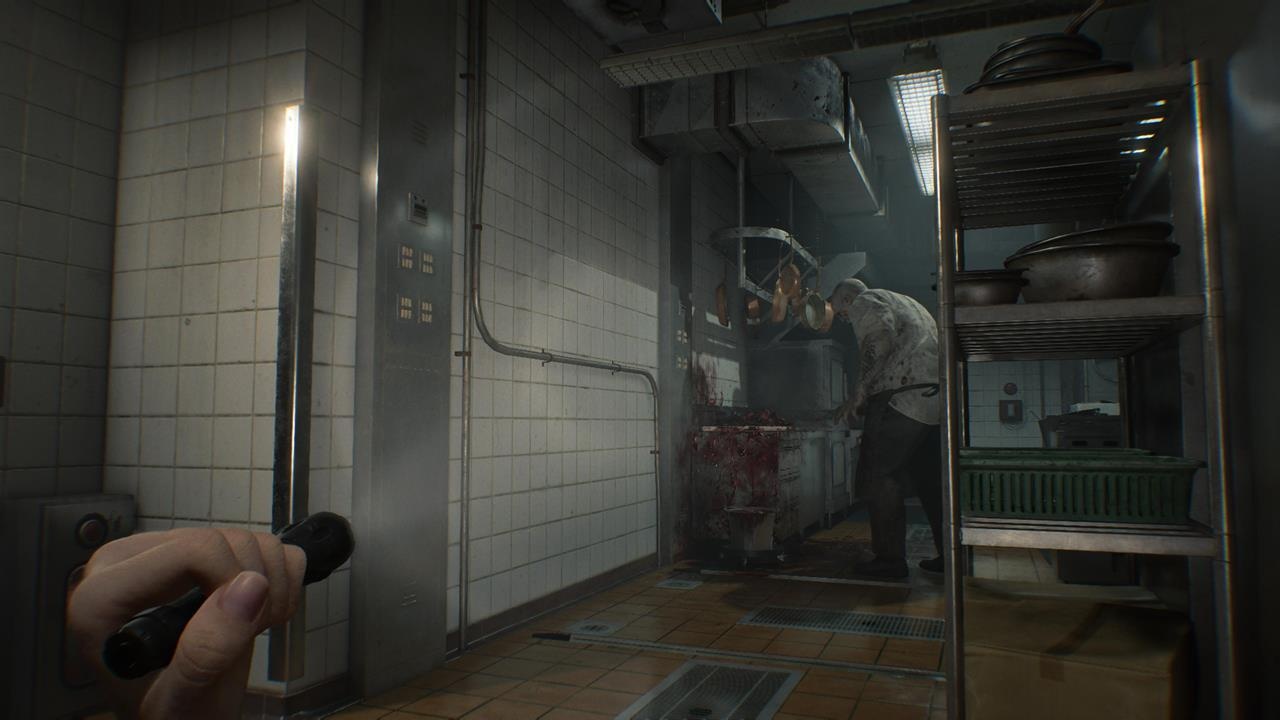
Grace’s sections are all about atmosphere and scares. There are no real jump scares here. Capcom did an amazing job delivering a lot of tension through the lighting and mood around you. Harsh white walls may seem like a safe haven, but just beyond the next door is complete darkness and zombies wandering around. Grace isn’t powerful, and her resource management is much tighter than Leon’s. In the first area every bullet counts, and you usually have to run away from most situations. I don’t want to dig too deep into the story and spoil anything, but Grace is investigating the hotel that you are in during the first part of the game, and while the overall layout may seem small, it feels huge when you can only advance little bits at a time. A fight with two zombies will feel like a herculean effort compared to Leon’s sections, who can battle a dozen or two at all once. Grace has a single pistol during her entire time in the game, and you have to acquire other things through crafting. You create things with scrap and blood. Blood is gathered with a tool that you acquire a little ways into the first area. You can craft healing items, ammo, Molotovs, and Hemolytic syringes to keep zombies from coming back to life. Yes, they come back here. Unless the heads are destroyed, that is, and Grace isn’t powerful enough to really do this on her own. It’s story-related, but the syringes cause the zombies to essentially explode. It’s important to craft as many as you can and get downed zombies before they even come back because they can come back stronger as blister-head zombies. These are fast-moving and tough to take down. A single blister head obliterates your ammo and health reserve and is hard to run from.
As you can see, Grace’s sections are meant for sneaking around, finding secrets (many notes with safe codes, for example), and a single area to level up. Yes, things can be missible in this game. Only the first section allows Grace to upgrade her abilities, such as weapon strength, increase storage (more pouches can be found later), blood storage, etc. It’s important you find the ancient coins throughout the first area and buy everything. I found it a bit odd that you can’t upgrade in later levels, but that’s the way it is. Doing so will make later parts of the game much easier. As for bosses, it’s best that Grace does not engage with them. Leon can later come through and take them out, but as Grace, you would waste your Requiem bullets and little ammo early on. Requiem is a powerful pistol that Leon carries (and gives to Grace in the beginning) that should only be used as a last-minute bail-out method. Later on, I saved it during boss fights. Ammo is insanely limited for this and hard to craft, as Grace (the recipe is well hidden).
The horror elements in Grace’s sections are fantastic. The introduction to each boss that stalks certain areas is so well done, and they are insanely grotesque. Zombies aren’t just plodding buffoons that make for easy targets this time around. They sway and fall around, which makes them hard to hit. Getting headshots isn’t easy, and their movements are unpredictable and require you to take your time and aim carefully. Certain scenes, such as when Grace is fighting off a zombie for the first time and it bites her weapon and breaks its teeth. The beginning of the game is mostly all about the horror while slowly opening up the first level to you and forcing you to explore. With each objective completed, you will be desperate to rush back to your safe room and save. Puzzles are not very complicated in this game. Most of them just want items that you have to fetch in different parts of the levels.
Leon’s sections are very similar to Resident Evil 4. Even though he’s older, he’s still tough but very much experienced. Your loadout is larger than any other RE game he stars in, and you can easily carry up to five weapons with room to spare. Leon’s first major area you explore eventually opens up to upgrades via a tracker that gives credits for kills as well as finding bonus tracking with different rarity. You can upgrade your weapons similar to Resident Evil 4. You can buy various attachments, sell weapons and items, and buy new ones. You can upgrade your armor as well. It will take quite a while to get enough credits to upgrade your favorite weapons, but by the end of the game it’s doable. Leon feels a bit heavy to control here, and his sprint is pretty fast. Melee combat is a bigger focus. Leon has a hatchet he can use to parry melee attacks. Sometimes when a zombie is staggered, you can chop off their head, do kicks (similar to RE4), and even throw melee weapons that enemies drop. It’s imperative that you switch weapons for each situation at hand. If you’re dealing with a couple of tougher enemies, grab your shotgun. If there are a lot of smaller zombies from afar, use your sniper rifle. If you have a bunch up close, whip out the SMG and spray them down. Your pistol eventually just becomes a backup weapon. Just like in RE4 you’re constantly balancing weapons and ammo to stay alive. You can craft items just like Grace, but the focus is more ammo and grenades and healing items than anything else. Weapon attachments aren’t really a thing in this game, so you end up finding a few hidden charms that can be attached to weapons. Leon’s areas are less scary and more intense during combat, but like I explained earlier, the exploration is haunting and eerie. You might enter a dark building not knowing what’s inside while searching an optional area for supplies only to get ambushed. One of the more fun moments is Leon being able to wield a chainsaw and cut everything down, but there are only a few scenes in the game that allow this.
Overall, Requiem is a fantastic Resident Evil game mixing multiple elements of what makes the series great. The evolution of the best zombies in any game that started with Resident Evil 2 Remake, the slower pace of the original games, the fast-paced action and great level design of the more modern games, and the visuals are mind-blowing. At least on PS5 Pro, Capcom’s use of PSSR 2 and ray tracing is incredible. Grace’s areas have halls with lots of white walls and light that look sterile and hopeless, with areas that are barely lit making you run for any light you can. This is one of the best-looking games of this generation, and it runs incredibly well. Requiem might feel bipolar with these two different takes on action, but it’s a refreshing take. The game isn’t too long either, only lasting about 20 hours if you get all optional items. You can easily blow through the game in about 15 hours.
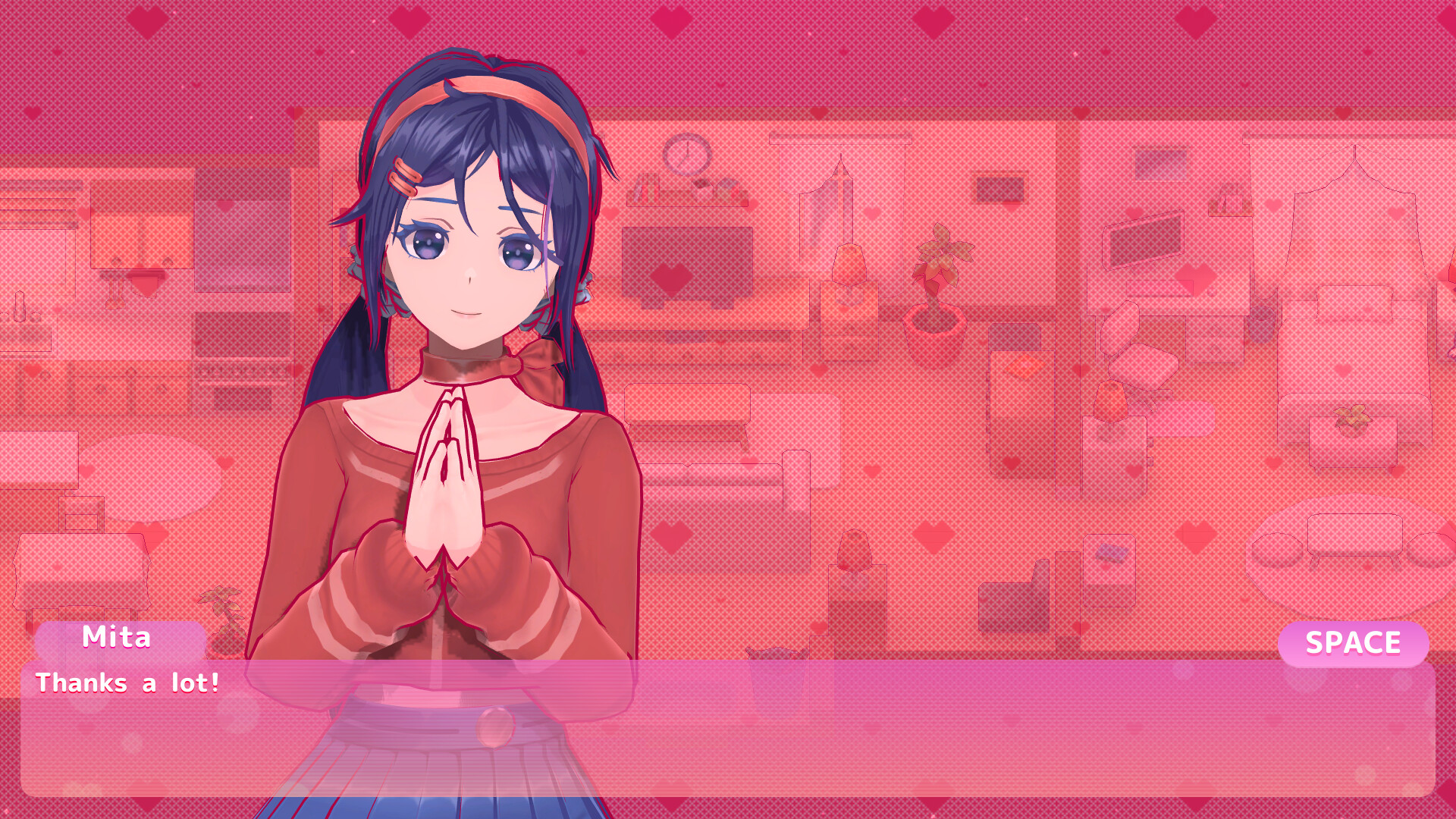
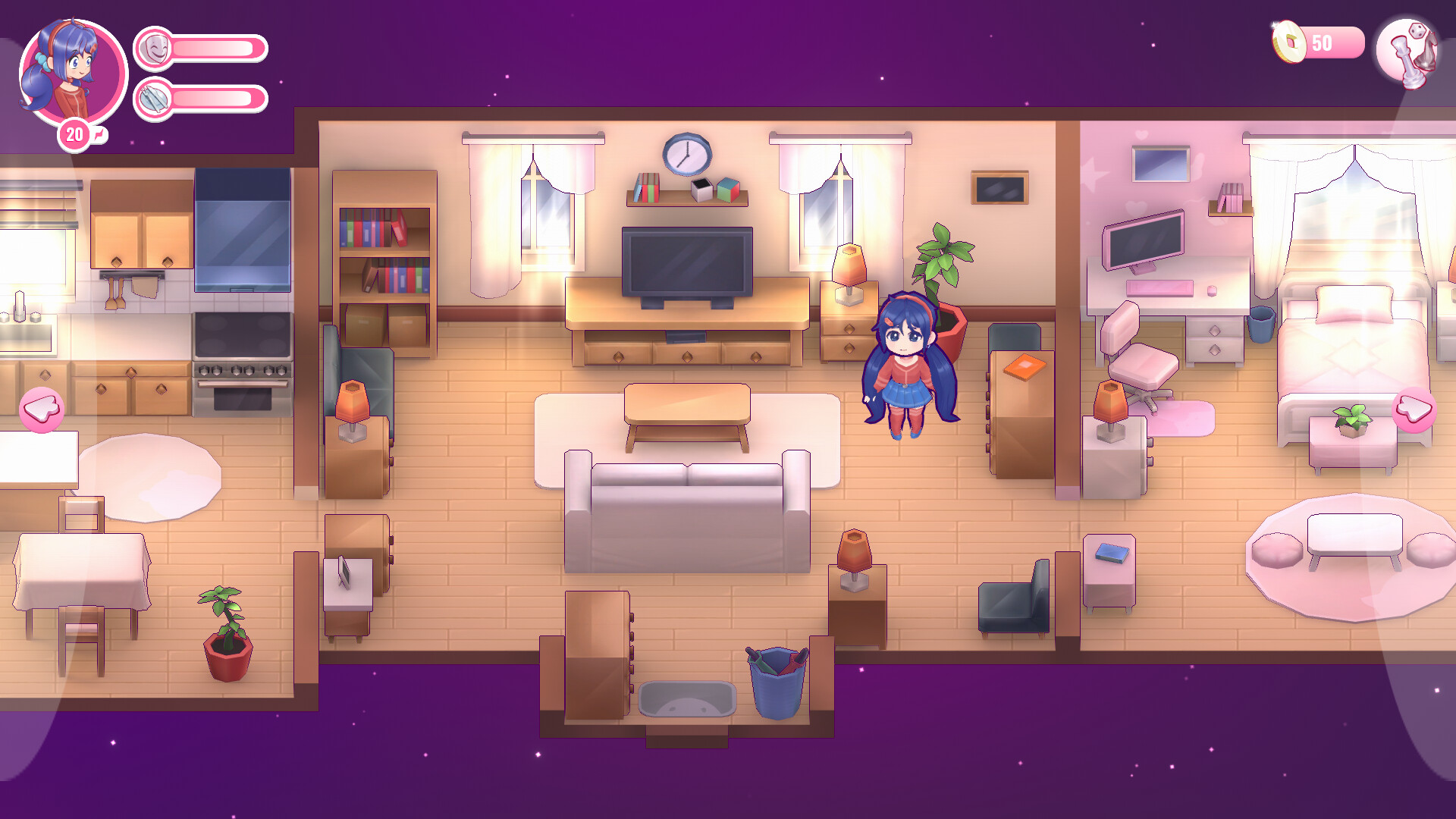
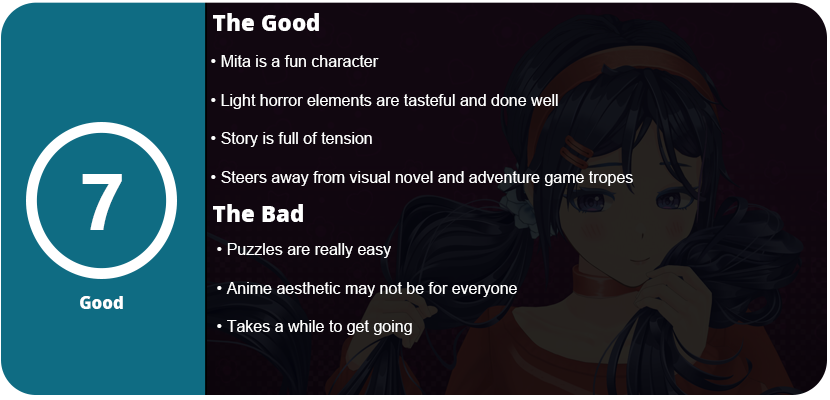
Have you ever wondered what it would be like to be inside of a mobile game? Probably not, but you can now with MiSide. This is a horror adventure title with anime vibes and a surprisingly engaging story. I originally passed MiSide off as a generic anime visual novel, but after digging further I realized there was more to this game. You play as a generic male character who ends up playing a mobile game called MiSide. The main female protagonist and antagonist is Mita. These are female characters that inhabit various versions of the game. My only advice to new players is to give the game time to build, as it is pretty slow to start. You walk around in first person, examining objects and talking to Mita. The game does a great job building up the character, as she’s the only one in the game, so everything rides on how well she is developed. The game’s biggest strength is subtle horror and the feeling that something is never quite right. Weird glitches start popping up, but Mita plays it off as if it’s normal and it’s nothing to worry about.
As the first chapter progresses, the horror elements start to kick in. I don’t want to talk too much about the story, as this is the strongest part of the game, and I don’t want to spoil much. There are some other minor gameplay elements, such as light but easy puzzles and some mini-games. You can collect character cartridges for unlockables, but overall there’s not really any reason to replay the game. Despite how repetitive the environments can be (such as Mita’s room), there are some elements when you break through the main game that really get interesting. The “behind the scenes” of the game, or breaking the game’s boundaries, is when things get super weird and fun. There are some short chase scenes, dreamlike sequences, weird monsters, and lots of walking around. The game is paced pretty well, and I appreciate how quickly the visits with each Mita are. Just enough to get an idea of their version’s personality and move on. These end up like little mini levels with a single objective inside of them.
My favorite part about the game is the intensity of escape. You need to break free of this game world before Crazy Mita gets to you. The developers did a great job of giving her some depth, and despite Mita being a single character, her different versions and personalities make her seem like separate characters. The way you interact with the game world in the first chapter determines the outcome of two different endings, and these can easily be overlooked. Interacting with the environment is really strong here, and despite not much being tangible, what you do interact with matters. Visual novels usually can drag on forever with exposition dumping, and this is something MiSide doesn’t do, which was my biggest fear. A lot of the lore and backstory is told as you move on through the game, so things never slow down and bore the player.
While the visuals have typical anime aesthetics, there are subtle things that make it interesting. It’s very sterile, and the soundtrack is brooding and haunting, like something is just always off. The game purposefully portrays a very fake happy “world,” and despite never being able to see outside of Mita’s room, you know it all feels fake and fabricated, and as you wander outside of the game’s boundaries, you realize this more and more. The game is very claustrophobic feeling, and you can feel suffocated as you feel like you are never going to escape. MiSide does something that good horror movies do, and that’s constantly giving you hope and then dashing that hope moments later. When you feel like all is lost, there’s another silver lining, and you grasp on to that and move along with the story, thinking you finally have it, just for it to happen again. It’s a great way to build tension, and while MiSide is only about 4 hours long, it doesn’t overstay its welcome.
If you don’t like visual novels or adventure titles, I recommend giving this a try. It’s different enough to never veer too far into either genre’s problems or tropes, but if you don’t like anime aesthetics, that may be the clincher for you. The subtle horror elements and constant hope dashing give the story tension and a great feeling of accomplishment. When I was outside of the game’s boundaries, I got Portal vibes, and breaking its own 4th wall is just really cool. The game overall is just fun for an evening of great storytelling.
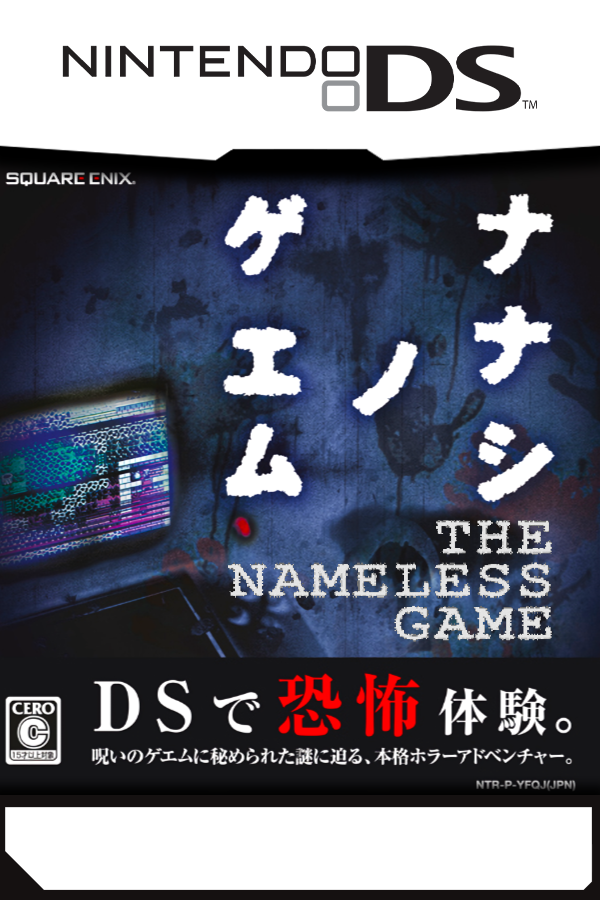
Have you ever wondered if a haunted video game exists? These permeate Japanese folk tales and were popular during the 8-bit era of consoles and computers before the internet was a widespread phenomenon. You play as a friend of a daughter whose father is a video game developer. You unravel a murder mystery involving a haunted DS game and a fractured video game development studio. It’s an interesting meta view on the terrible world of stressful video game development. I don’t want to get too involved discussing the story, as what little is here is very short, running at about 3 hours in total.
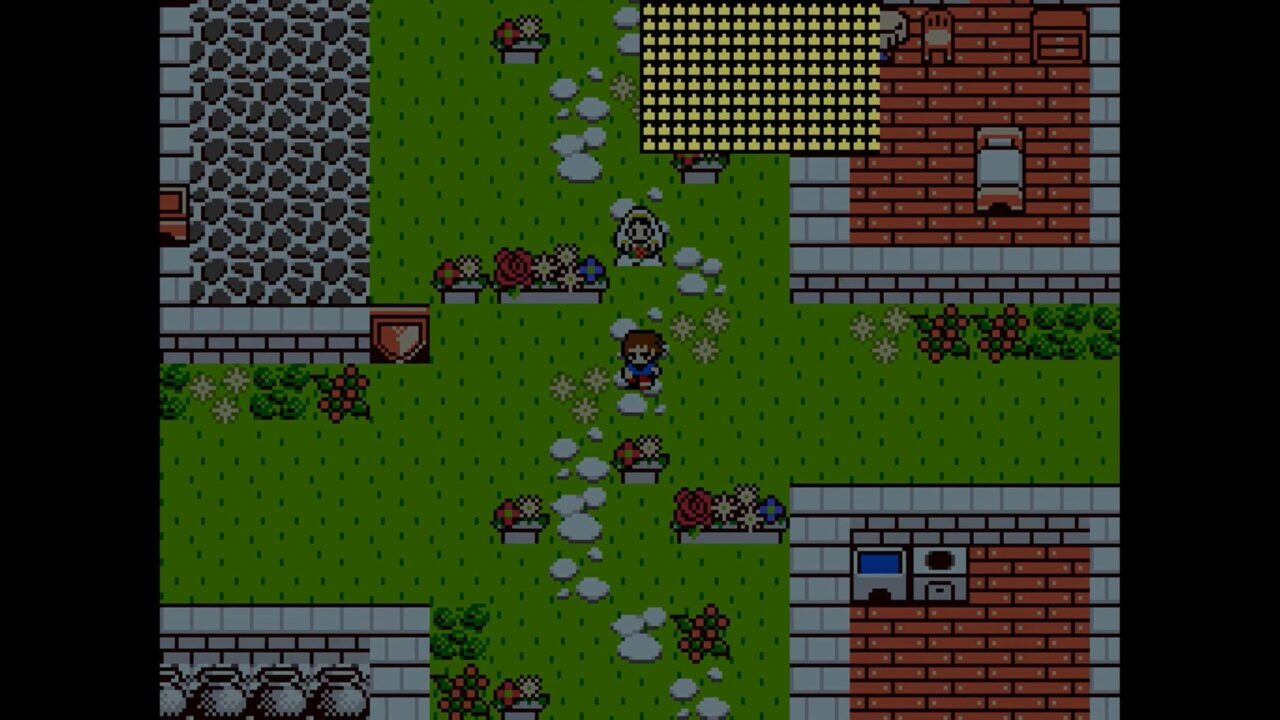
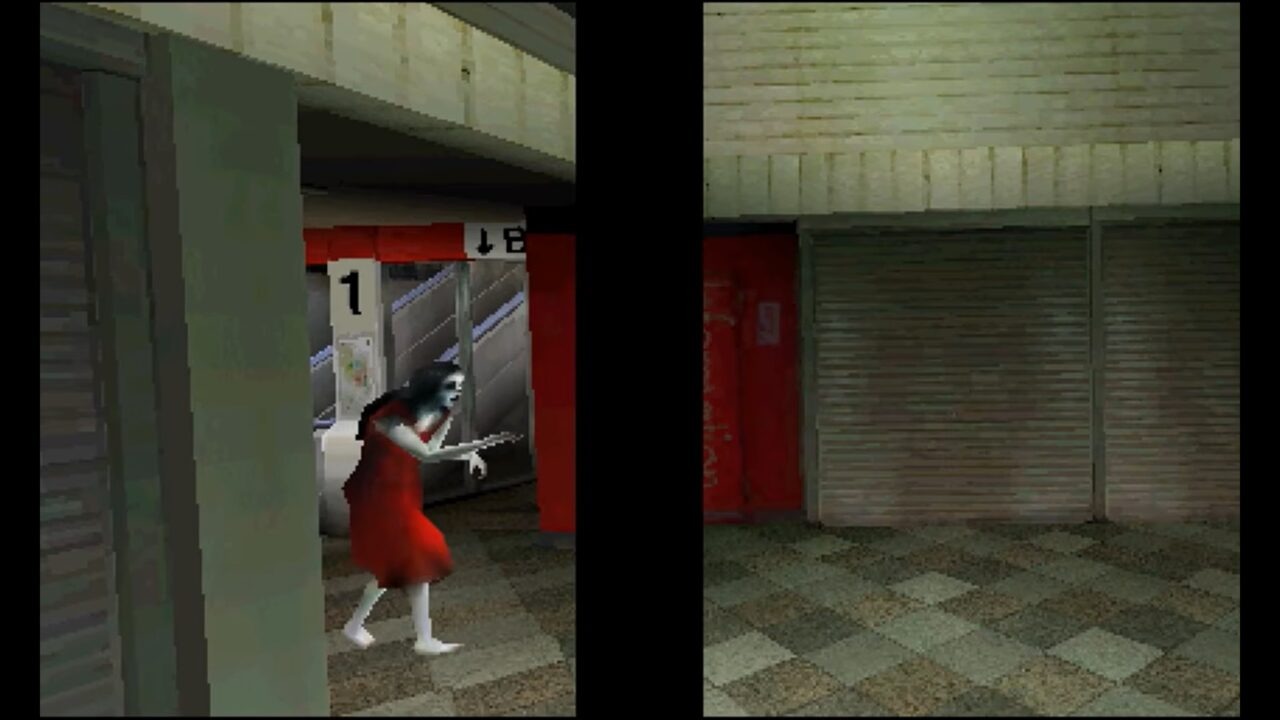
There are 7 days before the haunted game turns you into a statue. You initially investigate the disappearance of your best friend’s boyfriend, but eventually, you stumble upon the cursed TS game. Yes, for obvious reasons; the DS is called the TS in the game. This game is a 16-bit RPG title that reflects the real world. When you hear your TS jingle (it’s the startup sound for the DS), you will pull up what looks like a simulated DS home screen and play this 16-bit game. It’s not an RPG in this game. It’s just a single town that you walk around in and talk to people to trigger events. The music and graphics are glitched out and creepy, and it helps give off a good atmosphere. You don’t enter this mode but maybe once per chapter for just a few short minutes. Each day is started with a visual novel type of dialogue, as the majority of the game is held in book mode. I love games that use this feature, but there’s no option to flip the DS for left-handed people. The TS RPG style game is played in regular mode, so you are frequently flipping the DS back and forth.
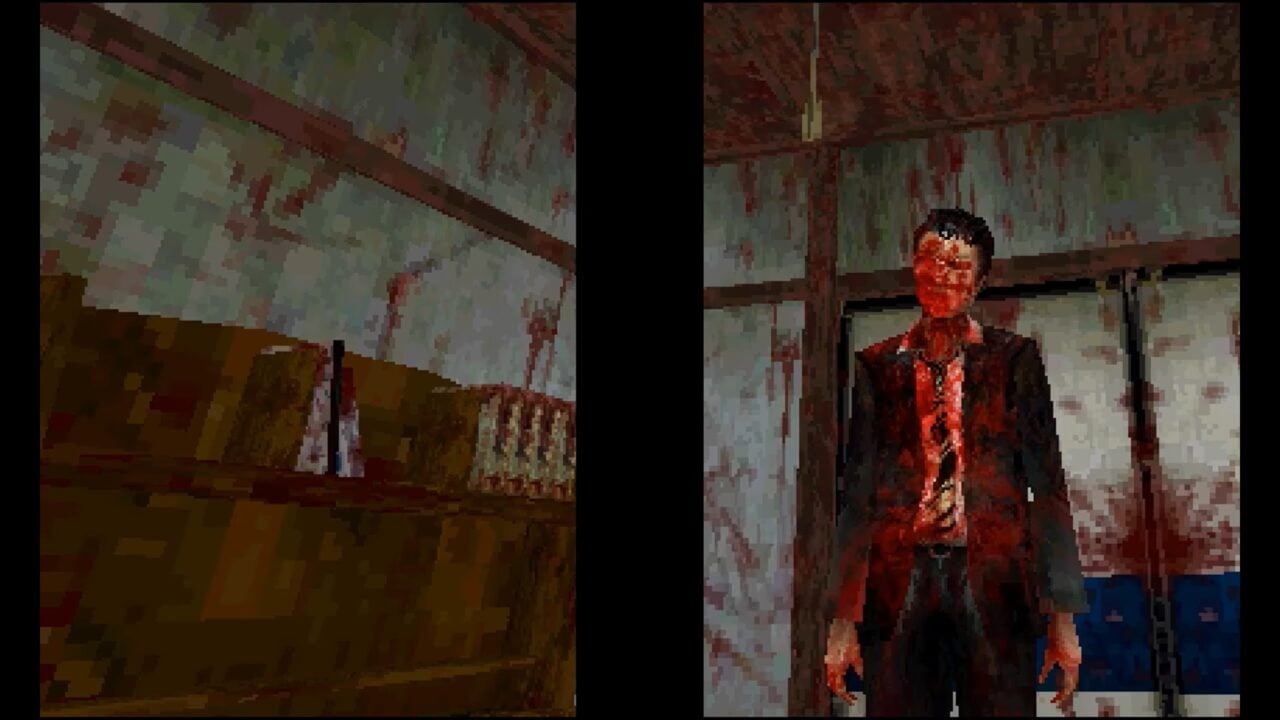
The meat of the game is the walking simulator-style touch screen-based exploring. It’s pretty bad, and my hands cramped constantly (at least using the DSi XL). There’s no option to just use auto-run all the time. The character walks at a doggedly slow speed and one that’s not practical for running away from ghosts. You need to hold the stylus in the center of the screen to run and turn faster. While doing this, you are holding down the D-pad and rolling your thumb around to strafe. This control scheme is fine, but I would prefer to use either the stylus for movement or just the D-pad. There’s little interaction with the environments outside of picking up key items and opening doors. You will be opening many doors and backtracking through many mazes. A lot of these have to be navigated in a specific order to avoid the ghosts that roam the hallways. These ghosts aren’t very scary. They’re slow and plodding and they just have black eyes and gaping black holes for mouths.
Despite the title being a horror game, there aren’t many scary moments. While the ghosts aren’t scary, there are a few jump scares that worked early on, but after day three, the game kind of gives up the horror part and focuses more on the murder mystery. The characters are meaningless, as the game is so short we can’t get to really know anyone. Every one has generic anime tropes to them, and by the end of the game there’s not much to care about. While the mystery is solved and has an actual ending, I didn’t care about anything in between. While the levels are great-looking on a technical level, they are void of detail. I liked the Silent Hill “Otherworld”-looking areas in the hospital, but these are just plain empty hallways with an occasional chair or desk. You can’t interact with anything to encourage world-building. The goal is to just open doors and get to the next cut scene.
While Nanashi no Game isn’t a good horror title or walking simulator, it’s short enough for a fun afternoon of the occasional creep-out. The music is pretty haunting, and there is tension in the game, and it uses the DS hardware well and in interesting ways. Just don’t expect anything really crazy here. If the controls were better, or at least customizable, the game would be more forgiving on that part as well.
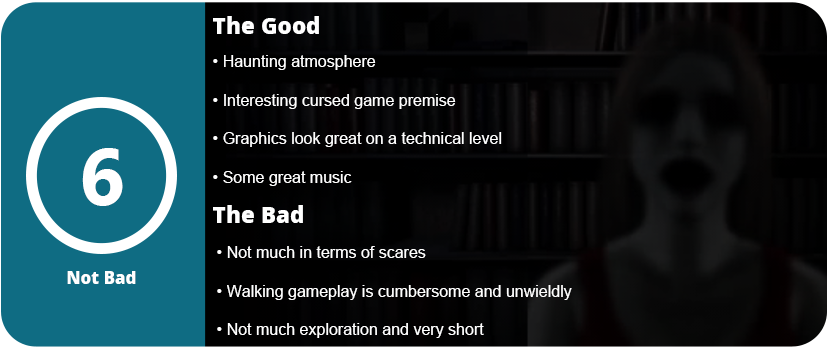
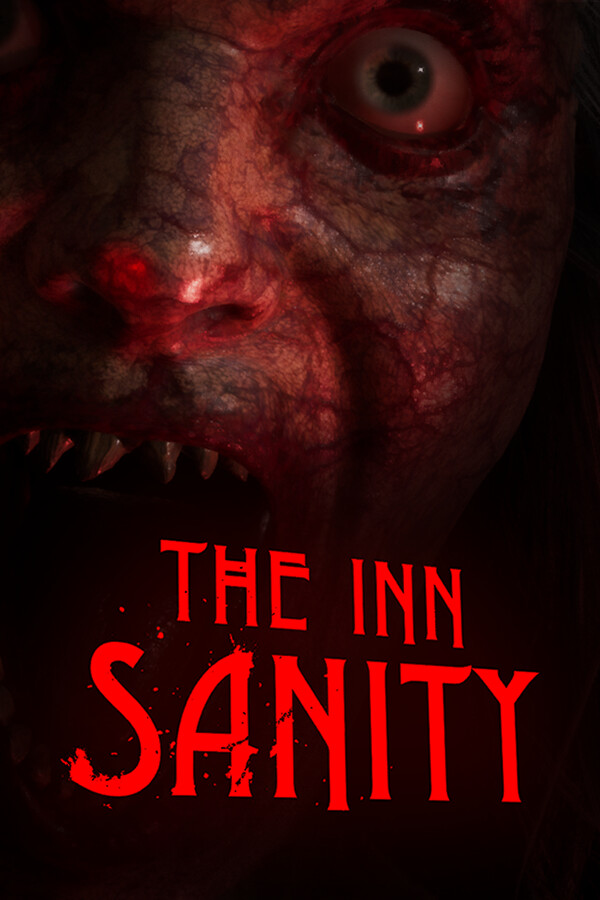
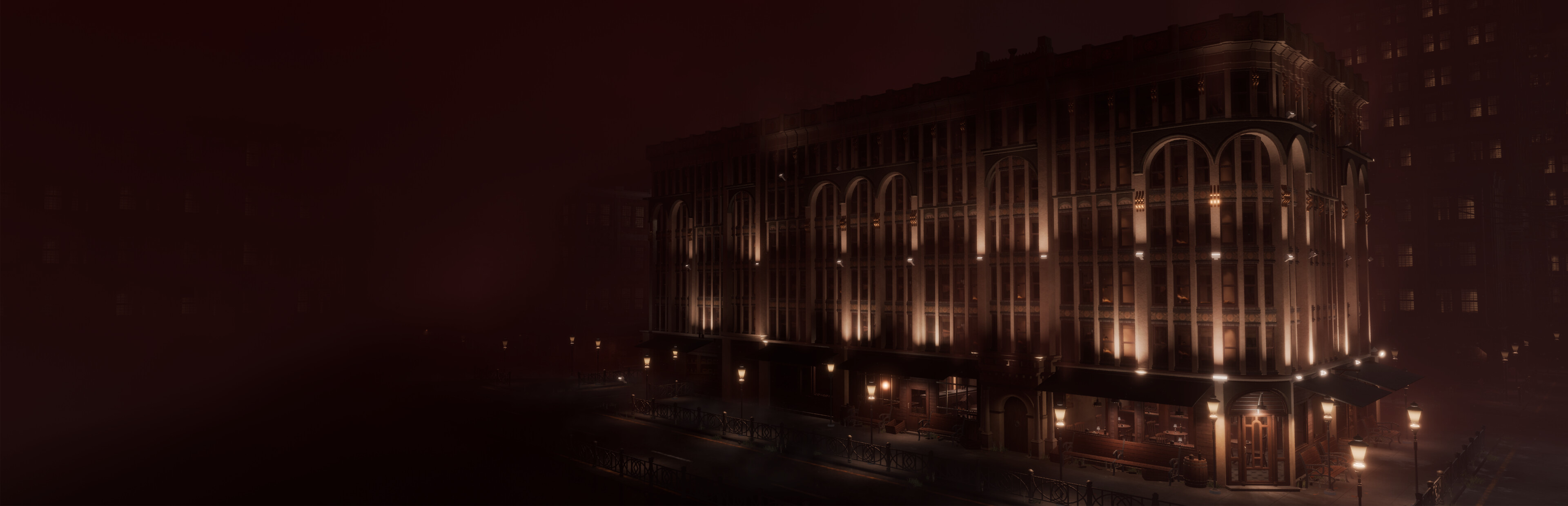
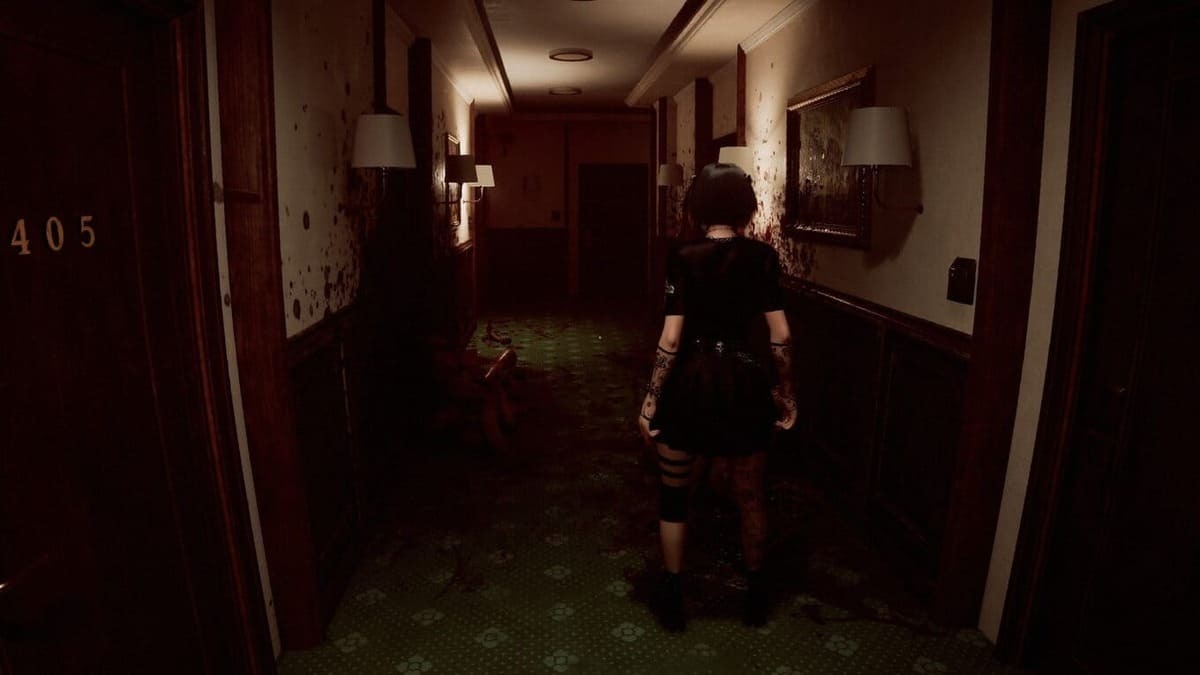
Indie horror games are not always great. In fact, most are pretty bad. There appears to be a trend of focusing on going viral instead of earning positive word-of-mouth through genuine quality. Either relying on tropes such as the “meme monster,” like Poppy Playtime, or having convoluted lore, like with the SCP series. The Inn-Sanity tries to be a self-contained horror title only trying to be good. It’s one of the better “Unreal Jank” horror titles I have played with the, probably by now, overused PS1 graphics aesthetic that mostly misses the point of them. You play as someone who visits an Inn (Sanity Inn…get it? Ha, ha). During the night there seems to be a Cthulhu mythos-style end-of-the-world scenario. You end up meeting a goth girl, who has the only voiced lines in the game, as you both try to survive the hotel and get to the roof while working with a security guard who is always hiding in the security room in the lobby. You only get phone calls from him. There’s also a monster lurking in the hotel, murdering everyone.
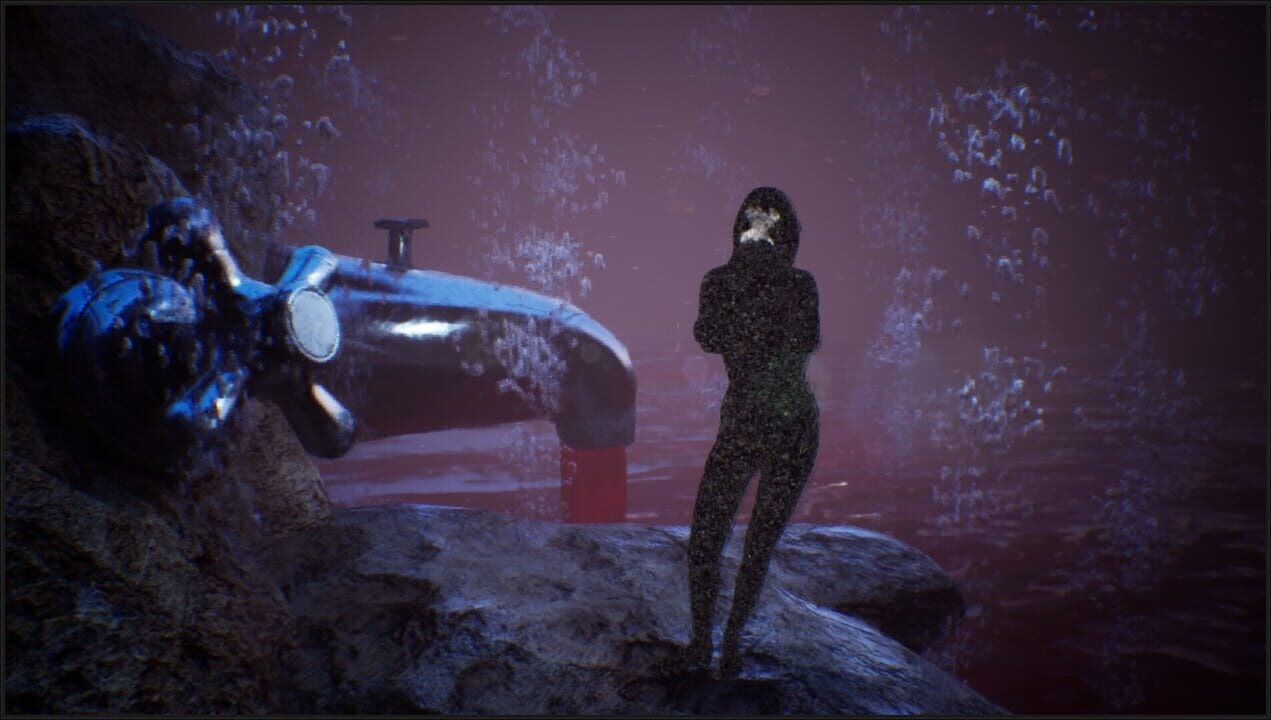
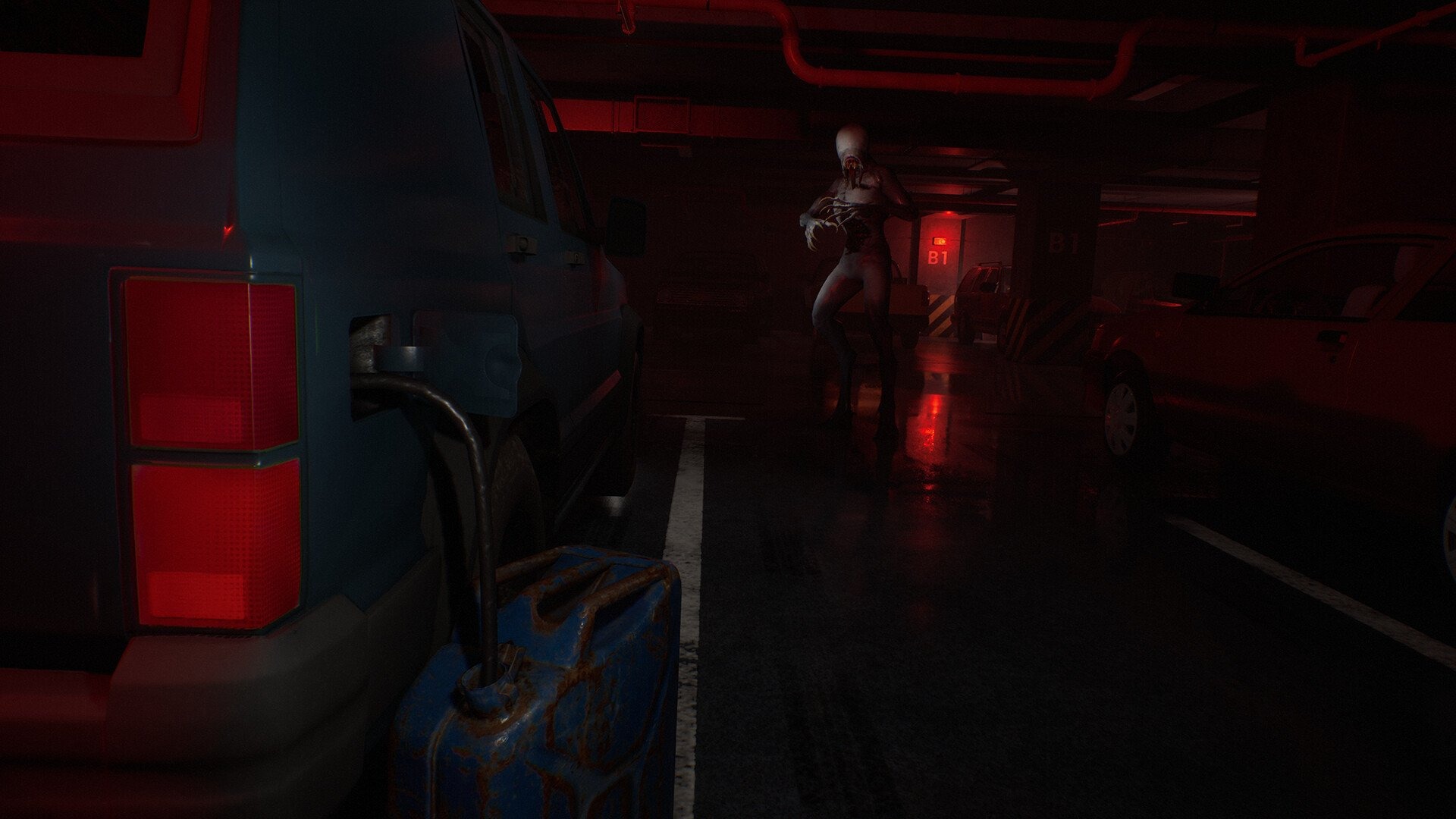
It’s a pretty cool setup, and the pacing of the story is surprisingly good. I played the game all the way through in one sitting because I wanted to see it to the end. The monster is pretty cool and scary-looking, and the scenarios you are put in are easy to deal with but still intense. There’s also a mad murdering priest wandering the hotel, killing anyone who he thinks is infected and not “pure.” The stealth sections involving the monster aren’t hard. The AI is pretty dumb, and one scene had me gathering gas in the parking garage, but the monster wound up always staying at the opposite end where there aren’t any cars. It was a breeze. Every mission will require you to go out into the halls and either up or down stairs to find someone or a supply. One puzzle has you following colored pipes to their proper PSI number to turn on the water to the hotel. It was a fun puzzle and had some intense moments.
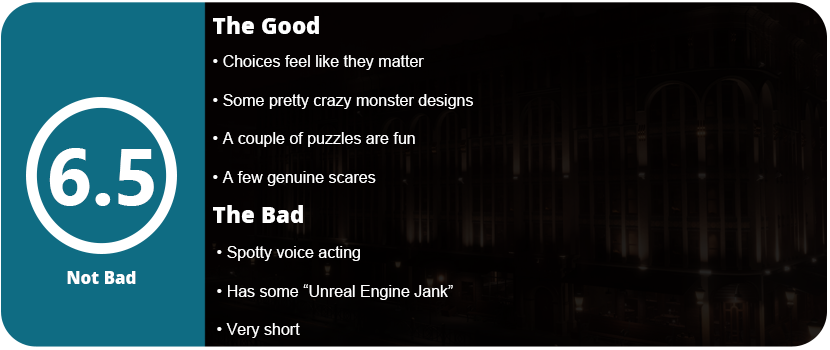
There are some intriguing elements thrown in, like being able to call various numbers on the hotel room phone to get some lore in the game. You can turn on the radio every day and hear what’s going on with the outside world. Small things like this that could be expanded upon make for a great way to make a small enclosed area more interesting. We want to know what’s going on outside and how other people are doing too. There’s enough of a world built here to convince you to investigate more, and that’s really hard to pull off in such a short run time. The girl’s voice acting is spotty. It follows the typical “cutesy anime girl” voice trope and I honestly do not like that at all. Some may be okay with it. Some lines are delivered pretty well while others are completely off in tone and intensity. She is supposed to be a beacon of light and the only human thing in this entire world and she just doesn’t feel serious enough for this.
Once you get back to your room, you are advancing the story between the girl and yourself. You keep passing out and waking up in the bathroom, not knowing why. You have strange dreams, and some choices will affect what ending you get with the girl. The story is always moving and changing, and you never get bored or feel stuck anywhere. There are some downsides to this game being very low budget. The animations are pretty bad; everything is a weird mix of high and low poly, so it has an inconsistent look. The game is also rather short, ending at around 3 hours. While I enjoyed my time with the game, I feel that these good puzzles, branching dialogue trees, and choices could be put to more use. The developers are talented and know how to make a great horror game. With a bigger budget I feel they could do something really great. This is easily one of the better super cheap indie horror titles on Steam and will get you genuine scares and entertain you the entire way through.
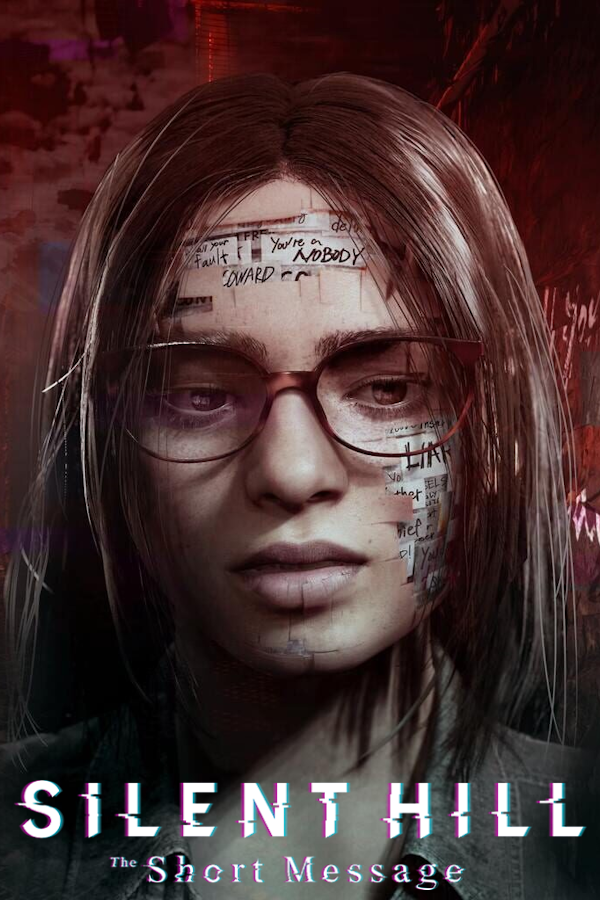
Short stories in the Silent Hill universe aren’t unheard of. Many people are unaware of their existence, except for the most dedicated fans. The comics and graphic novels on Game Boy Advance and PSP are not quite there, but they are interesting side stories. Silent Hill is more than just a town. It’s an experience. This version is set in Germany. You play as a teen named Anita who is inside an abandoned apartment complex exploring her past and trying to find her friend Maya. Silent Hill games usually explore the real world and then the “Otherworld.” In this game, if you can even call it that, there are clear inspirations taken from Silent Hill: Shattered Memories. This is the first SH game to be set in first person and the second to use a smartphone as a main gameplay device.
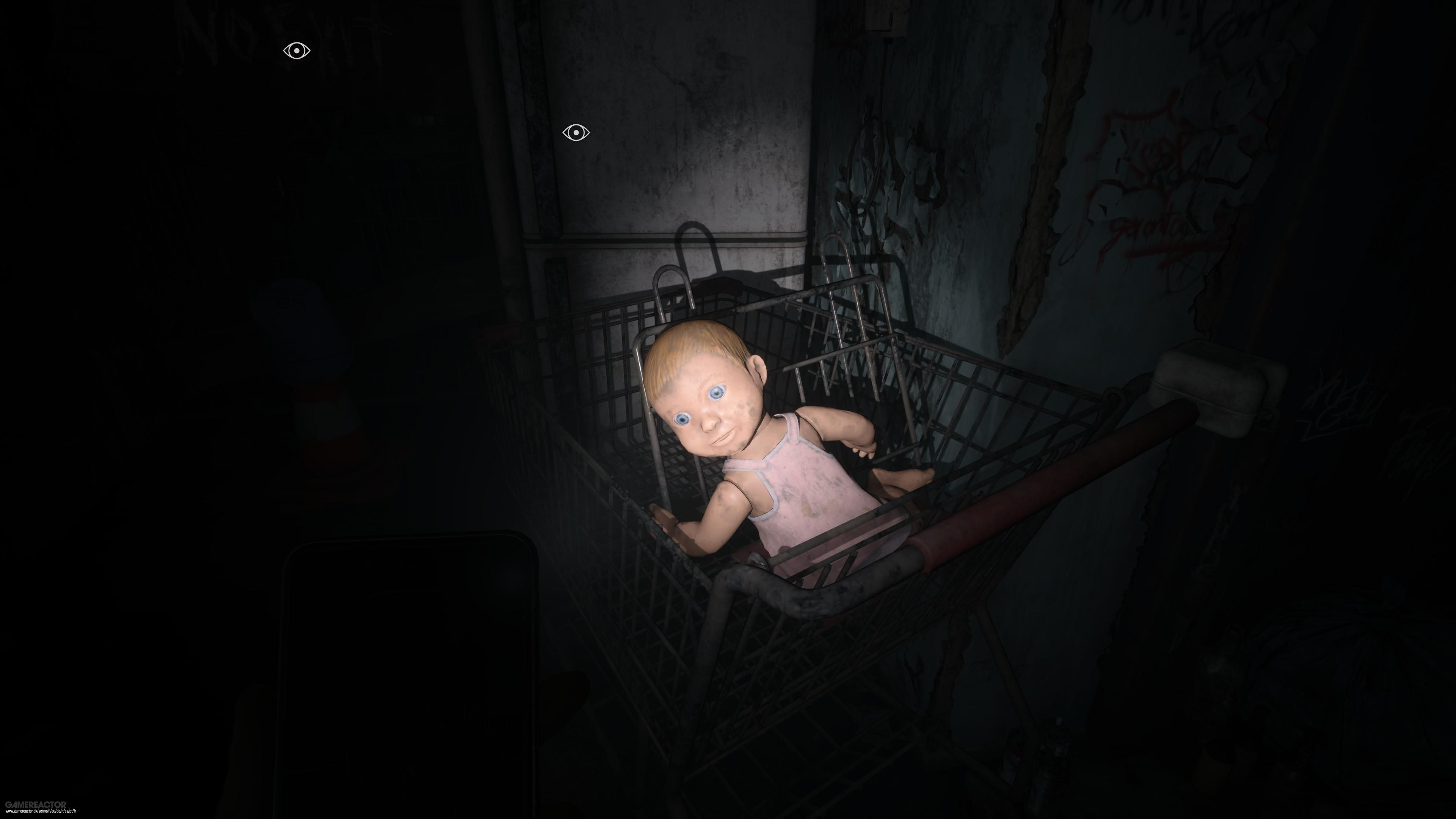
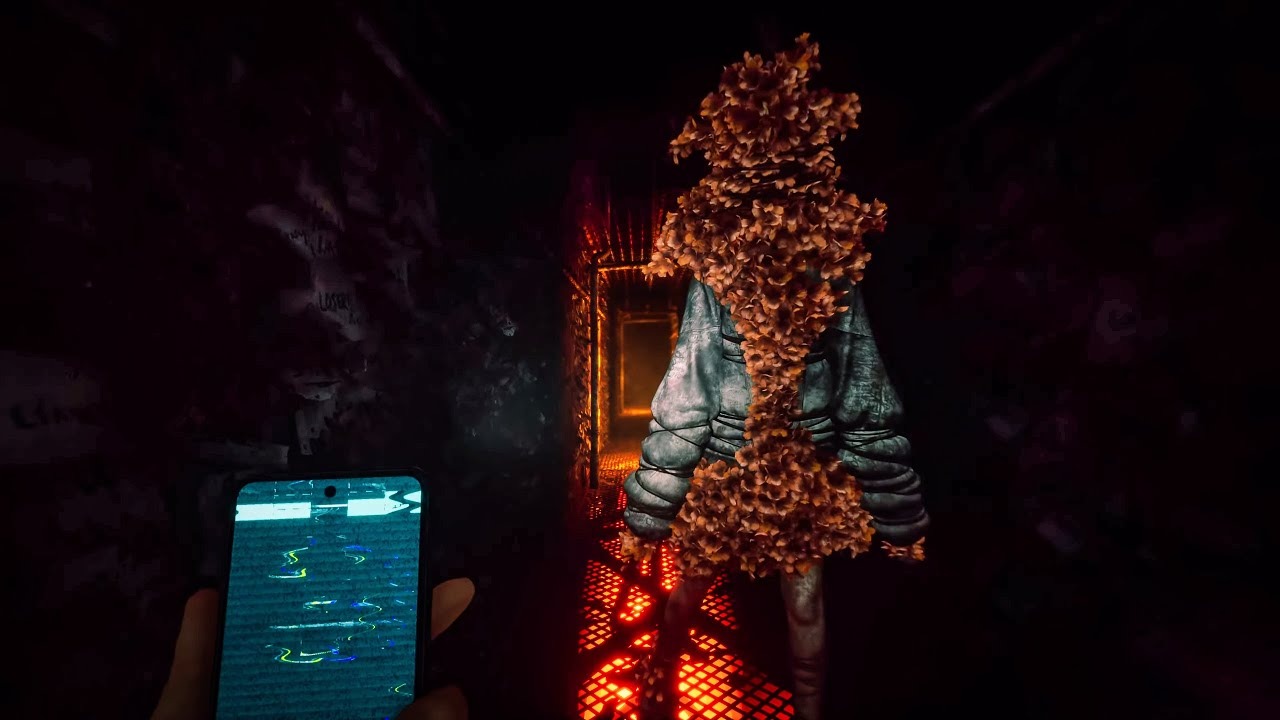
Your phone is used for its flashlight. It’s not as extensive as Shattered Memories with apps and features. Every so often your friends will text you, and you just press X to reply. The game is incredibly linear with only one clear path forward. The apartment complex is dark and dirty and does a good job of creating a horror atmosphere, but this isn’t Silent Hill. The series is never stuck inside of a building through the entire game. In fact, the only “outside” you encounter is going onto the roof and balcony a few times. This is by far the least interactive game in the series outside of the graphic novels. You will walk around examining objects, triggering cut scenes, and then entering the “Otherworld” apartment complex, which involves an annoying chase sequence from a monster. The only way you would know that the game is connected to Silent Hill is the monster track in the background and the orange hellish metal design everywhere during the chase scenes, and a single mention of the game in a note on a table. You need to run through a maze of doors and hallways to escape. They aren’t fun and have no combat.
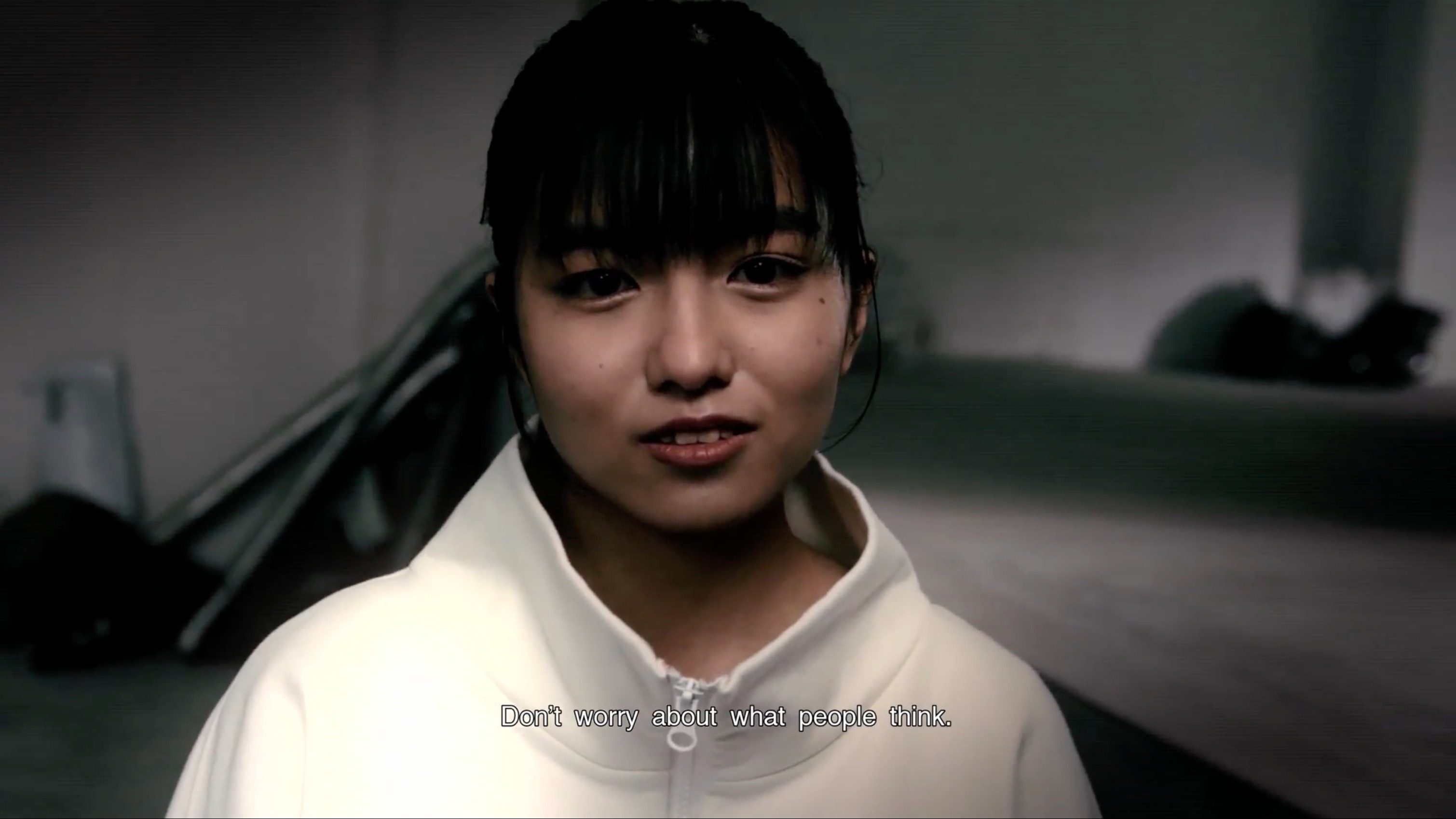
There are a couple of puzzles in the game that are actually pretty good, but it’s the only gameplay in the entire game that’s interactive. The most jarring element here is the inconsistent visual design. Anita’s model is incredibly rough and ugly. She looks worse than the rest of the game, and then there are the live-action cut scenes of a Japanese girl (Maya) talking to you in flashbacks. Sadly, the scenes were obviously shot in Japanese, but there’s only an English dub available. The actual story and message of suicide and bullying are interesting. There’s something here. Anita will walk through rooms full of sticky notes everywhere that have hateful words. We get flashbacks of her cutting her wrists, etc. These darker elements are what make Silent Hill so great. The exploration of the darkest parts of the human psyche, but instead of going with that, The Short Message drops the ball every time it picks it up. Exploring the apartment complex doesn’t bring about any scares. Lights turn off, bulbs pop, there’s weird noises, and that’s about it. The monster chasing you is the only monster in the entire game and you rarely get to see it.
What’s left is a three-hour slog through what feels like a tech demo or proof of concept. Clearly Konami didn’t like it enough to make it into a full game. Hexadrive has some good ideas here, and I wouldn’t mind seeing that they could do with a full Silent Hill game. With the series making a full return, we need more developers on board now that Team Silent has been disbanded. I recommend playing this only if you’re a Silent Hill completionist and hardcore fan, but otherwise there’s not much here for anyone else.
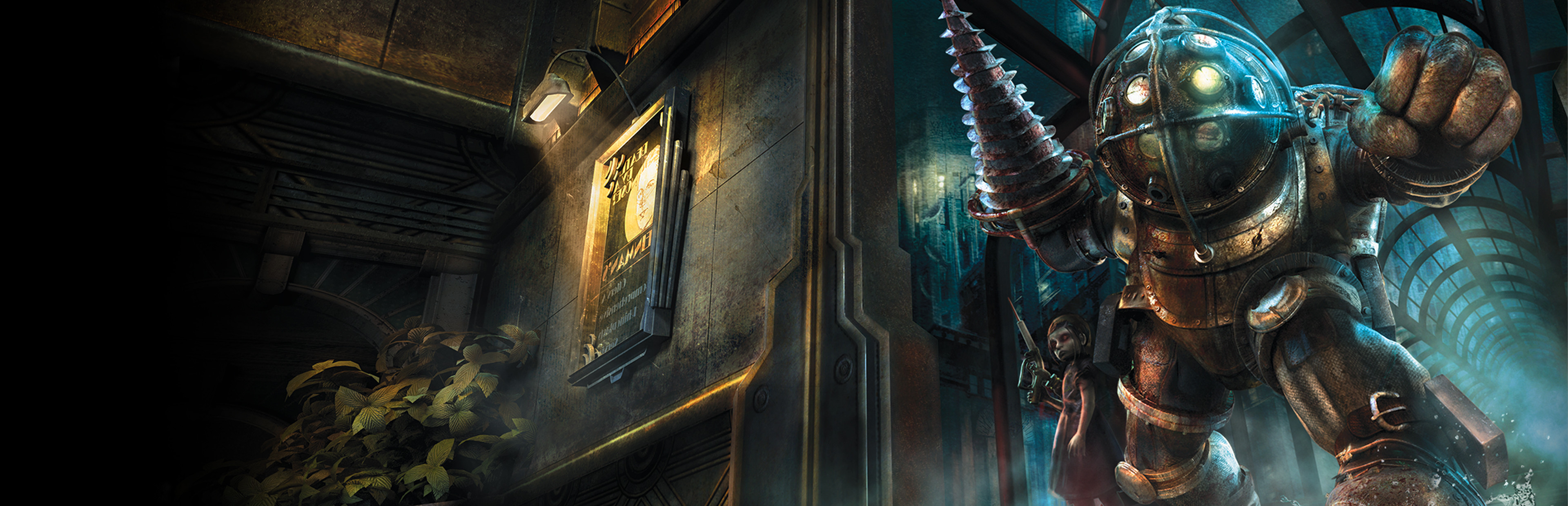
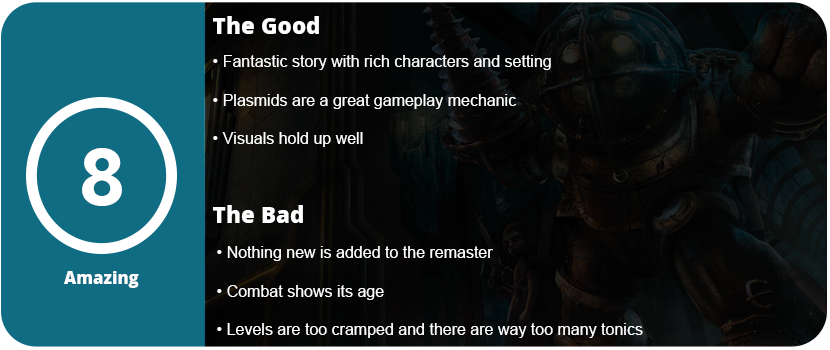
War. War never changes. Oh wait, wrong game. Clears throat Is a man entitled to the sweat on his brow? A famous quote from Andrew Ryan. The creator of Rapture. An underground utopia, or dystopia, that’s a playground for the rich. Using Adam and Eve to alter your genes and add power like fire, ice, shock, and bees. You arrive serendipitously via plane crash over the Atlantic ocean. You work your way through Rapture while being guided by a man named Atlas. There are Little Sisters, children who harvest Adam from dead Splicers, and Big Daddies that protect them. There’s quite a bit going on, and while this is a spiritual successor to System Shock, it was revolutionary for its time. Sadly, many younger gamers, like myself, had never heard of System Shock as it wasn’t a blockbuster seller.
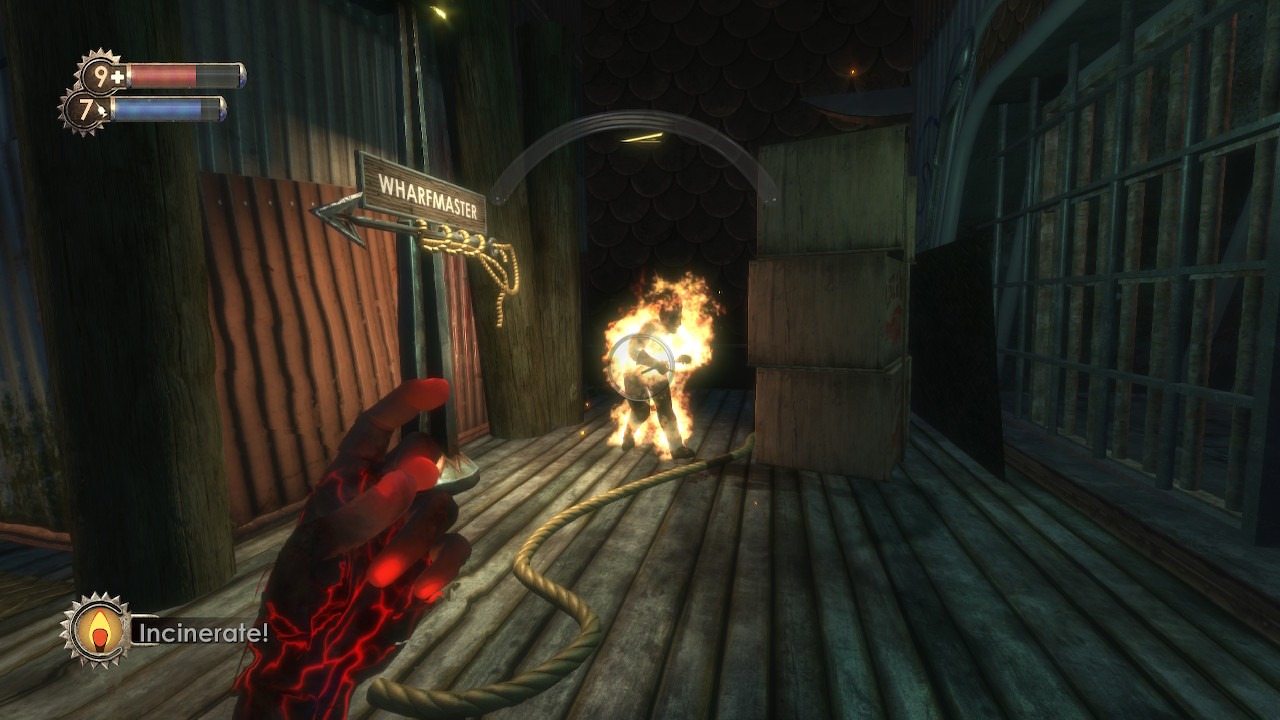
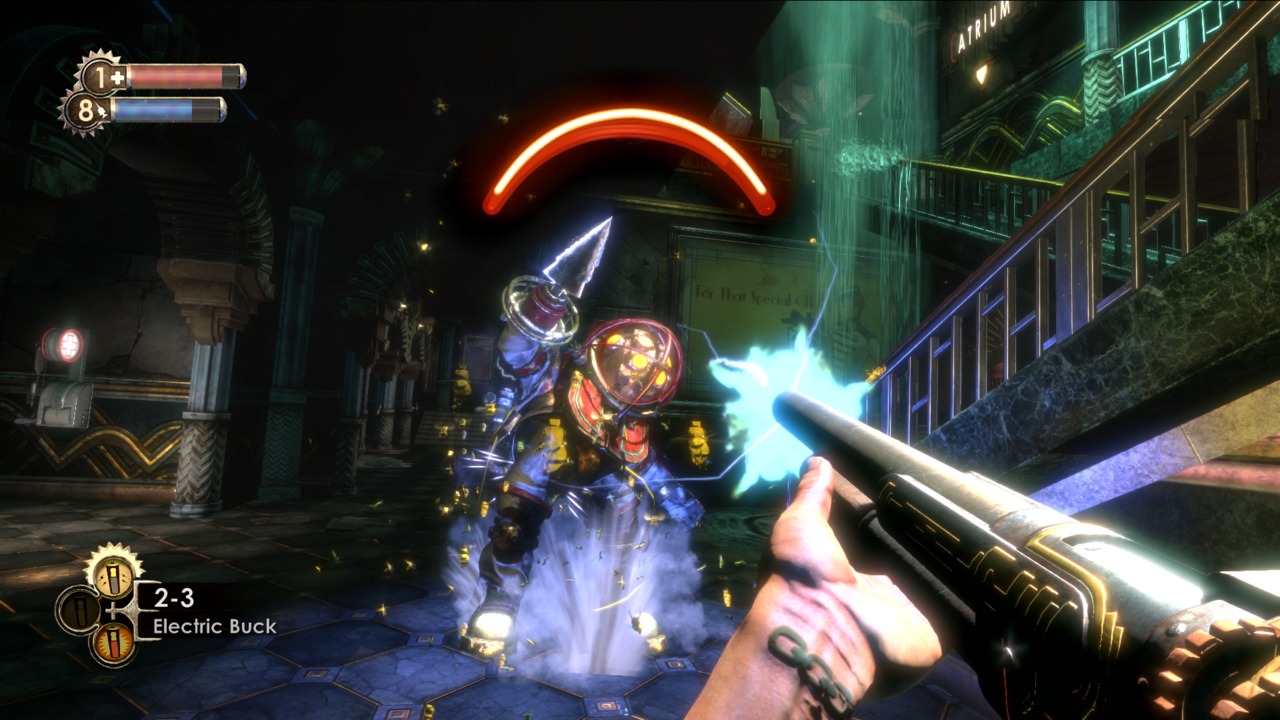
Sadly, the remaster does the bare minimum. Only making the game playable exactly as is, just in a higher resolution and frame rate. 2K Games took the PC version with the updated DirectX 10 lighting and shadows and threw it on consoles. We get developer commentary and some combat trials, but the age of the game is also present. A full remake would have been better. While the story is well known amongst gamers of the HD era, the gameplay hasn’t aged quite as well. There are many quality of life improvements that could have been made. For example, the combat isn’t the best. The reticle is a massive circle, and while guns feel pretty decent, the Plasmids are frustrating to aim. Plasmids like Shock Bolt and Incinerate converge on a pinpoint, and you waste so much Eve trying to hit enemies. There are also an awful lot of passive and combat tonics that feel mostly useless for such a short game.
While the 17 year old me didn’t really notice any of this when I played it on launch day for my Xbox 360 at the time, the game’s near perfection at the time is showing some cracks. The levels are cramped and incredibly linear, making combat hard. Many of the areas are way too dark, making it hard to see enemies and hit them at the speed they move at. It’s not the worst ever, but it’s annoying, and a remake could have remedied this. You get six guns in the game, but not all of them are useful. The Napalm launcher is something I rarely used, and the same goes for the grenade launcher. The areas are too cramped for these destructive weapons, and you end up taking a lot of damage. You will switch between the shotgun, revolver, and Tommy gun the most as your main weapons. The crossbow is the closest to a sniper rifle that you will get. Each weapon has three different ammo types. There are explosive, shock, anti-personnel (good against humans), and armor-piercing (used against Big Daddies). The combat system is fine but pretty flawed. You can upgrade each weapon twice to add things like damage and recoil reduction.
You can change your equipped plasmids and tonics at Gene Banks. You use Adam taken from Little Sisters at Adam machines to buy these. There are just too many. I used the Research one for taking photos of enemies to increase damage dealt to them. Once I get everyone researched, this tonic is useless to me. There are tonics to reduce security timers, making hacking easier, reducing the cost of vendors, etc. You can only get five slots for each track. Then there are up to three levels for each tonic. There’s too much. I felt for the short length maybe half the amount of plasmids and tonics would have been fine. You will find your favorites and pretty much stick with those through the entire game. You can finish the game in about 6 hours or less. Other vendors are for ammo and items for healing and such. There are many different healing items, from snacks to first aid kits and seemingly useless alcohol. Hey, there’s a tonic to reduce the drunkeness effect of those as they restore Eve. It’s an excuse to look around. Every container has something. Eventually you will unlock crafting at the U-Invent station to make ammo and some tonics that can’t be bought or found. Looting can be fun, but it distracts from the main story and gameplay loop.
There are just too many systems at play here for such a short game. These are all good ideas, and they work fine, but do we need five plasmid tracks (you can equip up to 15 passive tonics and five for combat) and a crafting ability? Ammo is scarce and becomes a pain to find on harder difficulties. You will need to loot every enemy and container to scrounge. This is fine, but is this now a survival horror game? The best parts of the game are the scripted events. There are few boss fights outside of the disappointing one at the end. The Big Daddys act as mini bosses themselves. They won’t attack you until you attack first. There are Bouncer and Rosie types, each with different types of attacks. Finding the 122 audiotapes throughout the game gives you backstory and fills in lore since there’s a lack of NPCs to talk to. These are logs of residents from before the city fell apart. Each level is themed after someone who ran that area, such as Cohen, who is all about theater. There’s the casino, the outdoors simulation area of Arcadia, the central core area of Hephaestus, etc. The areas are all distinct and interesting to look at despite being very cramped and their design feeling more like a video game than an actual city. It’s obvious no one could actually live in this place; it just doesn’t make any sense.
Despite not being ported over to a new Unreal Engine, the UE3 assets hold up surprisingly well thanks to the fantastic Art Deco style the game went for and have become iconic. The visuals were state of the art at release, but just increasing the resolution doesn’t do much here. The hacking mini-game gets old fast (assemble pipes) and could have been changed or removed. The enemies and characters are also well designed and iconic, but the game has definitely aged. Some areas are not so graceful, such as the combat, level design, and RPG elements. Enjoy the game for a fun evening that’s a great roller coaster ride and explore. Don’t focus too much on collecting, and just enjoy this as a stylish shooter.
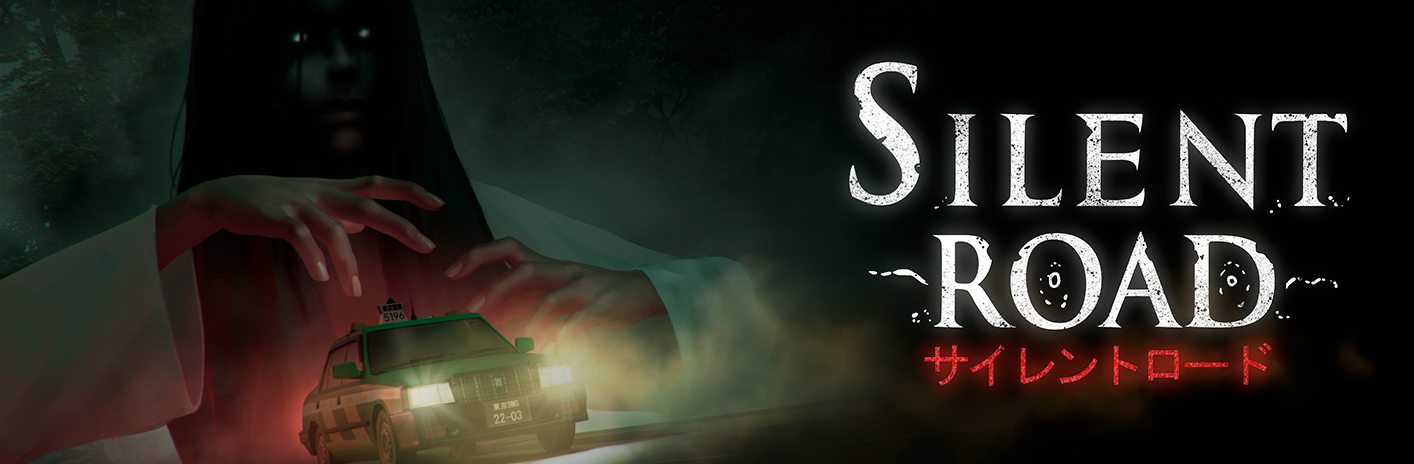
Psychological horror games need to be done right. Psychological horror games don’t solely depend on jump scares and cheesy trends to captivate players. Endflame may not have an extensive catalogue, but it’s a strong one. With their last release, Ikai, they proved they can capture that special niche of Japanese horror, diving into folktales and lore from that region. They have the pedigree for horror. That’s why I think Silent Road is not just familiar in name but speaks for what the game is. A journey on a road that’s silent literally or figuratively? There’s only one way to find out.
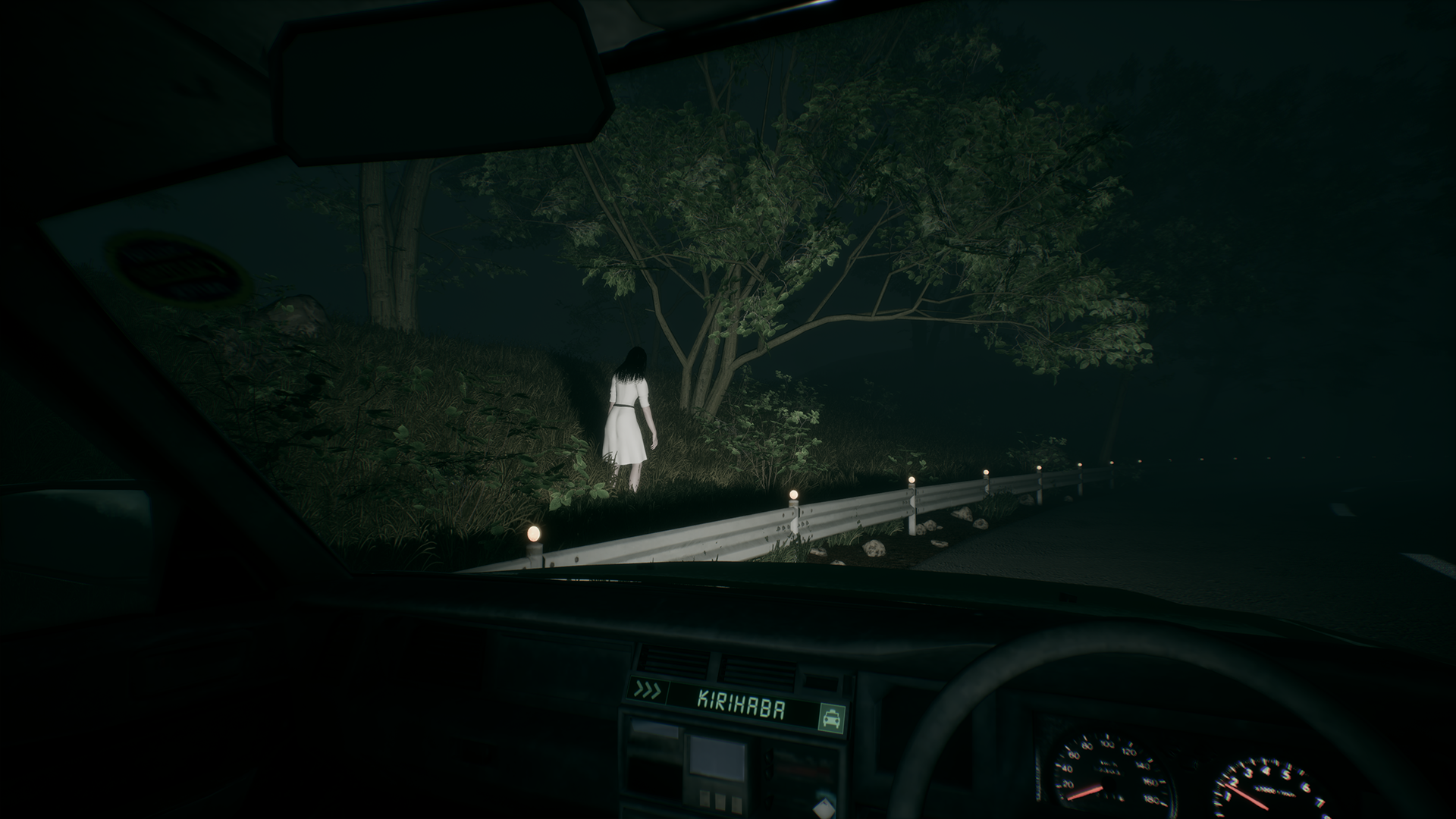
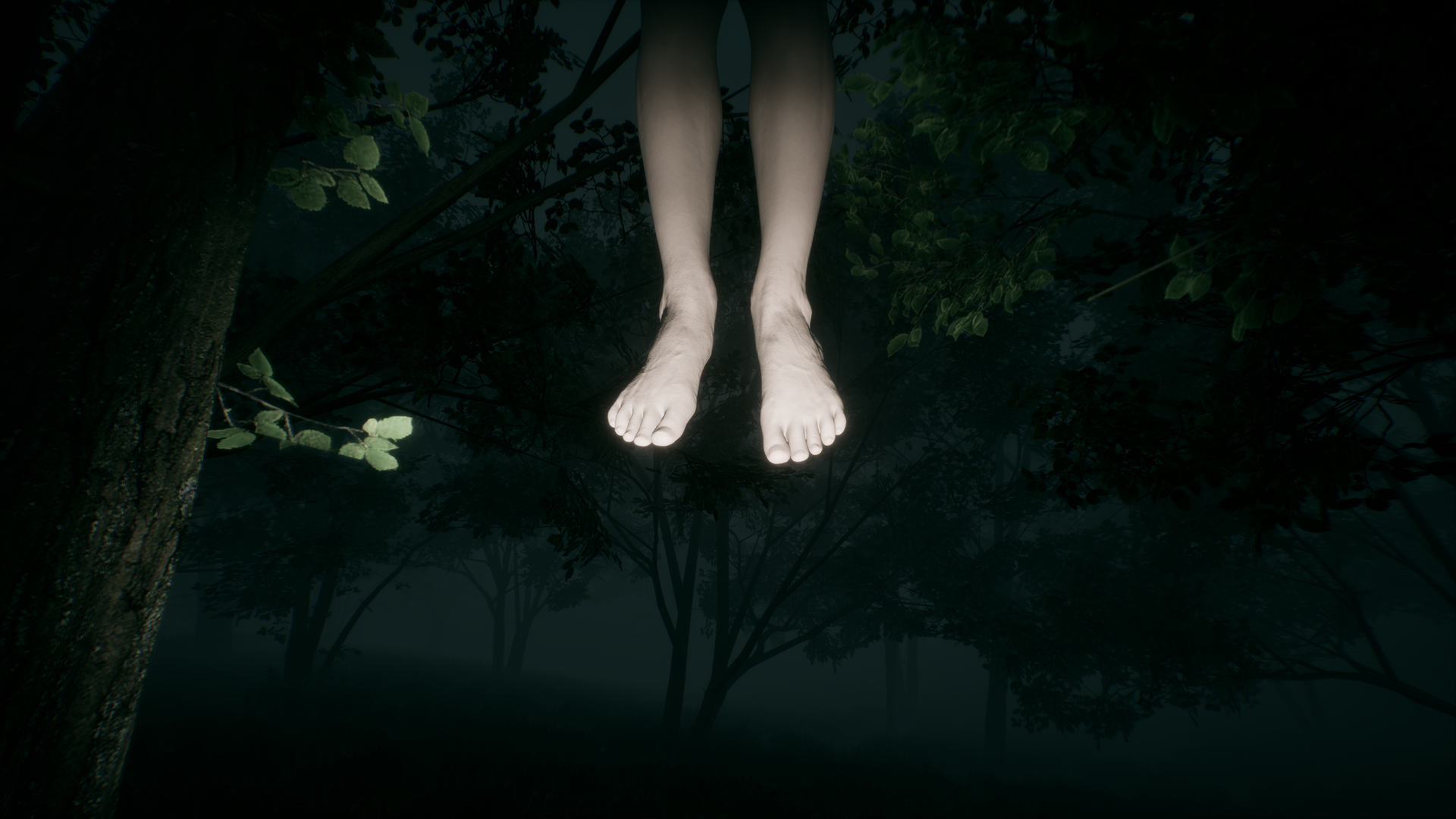
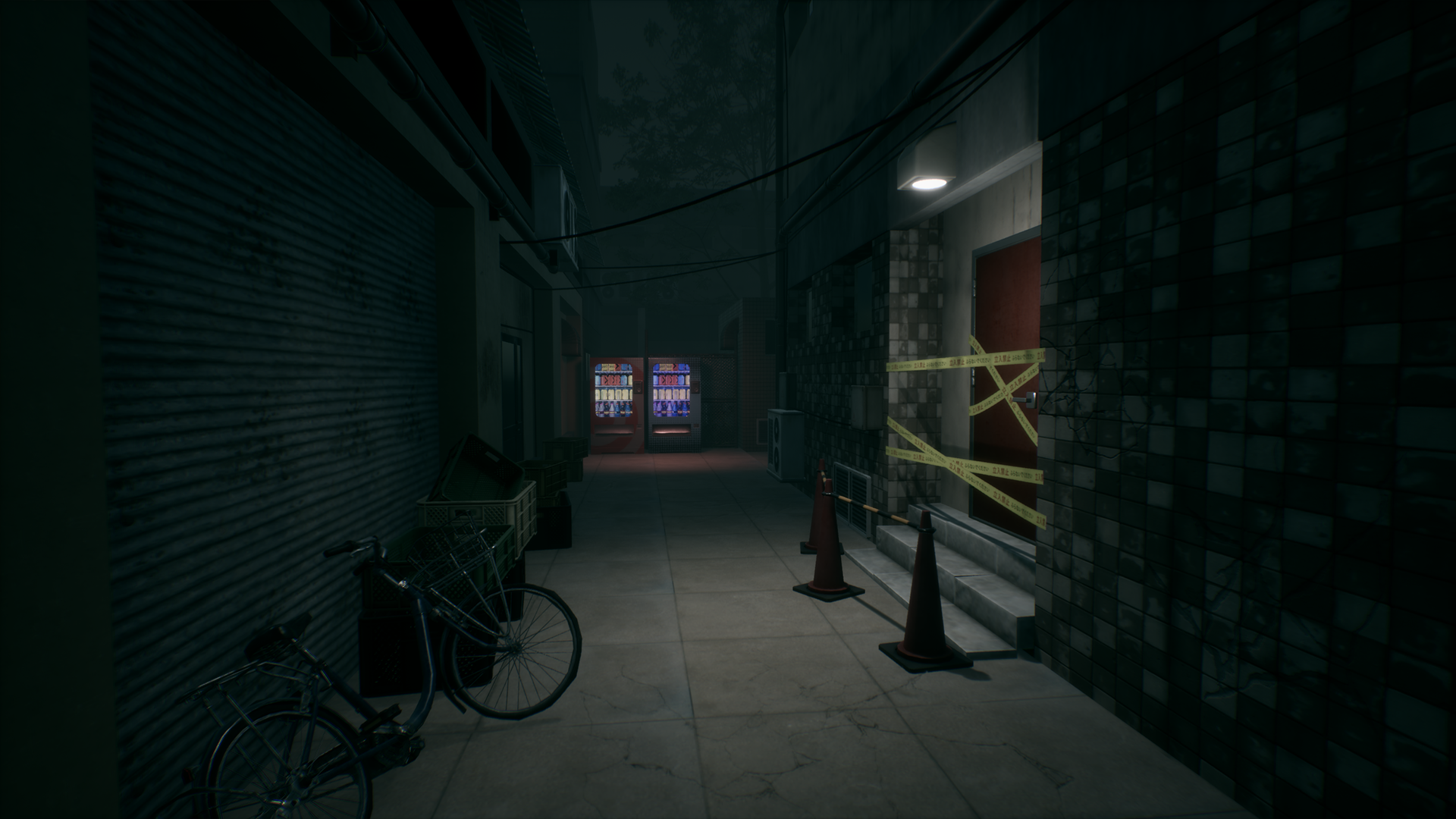
Looking at the trailer and various screenshots, you can see the clear influence of past horror games related to Japanese folklore. Fatal Frame and Silent Hill will immediately come to mind. The intense density of the forests of that region invokes many local and famous folktales, including the Aokigahara Forest, or “Suicide Forest.” Particularly the forests of Silent Hill 2, Fatal Frame II: Crimson Butterfly, Kuon, and even Siren come to mind. If you are a fan or even familiar with those games, then this might be something worth checking out. What kind of scares Endflame has in store for us will need to be seen, but after talking with them, it seems they are up to the task of slowly feeding players intense moments and building up to larger scares that pay off.
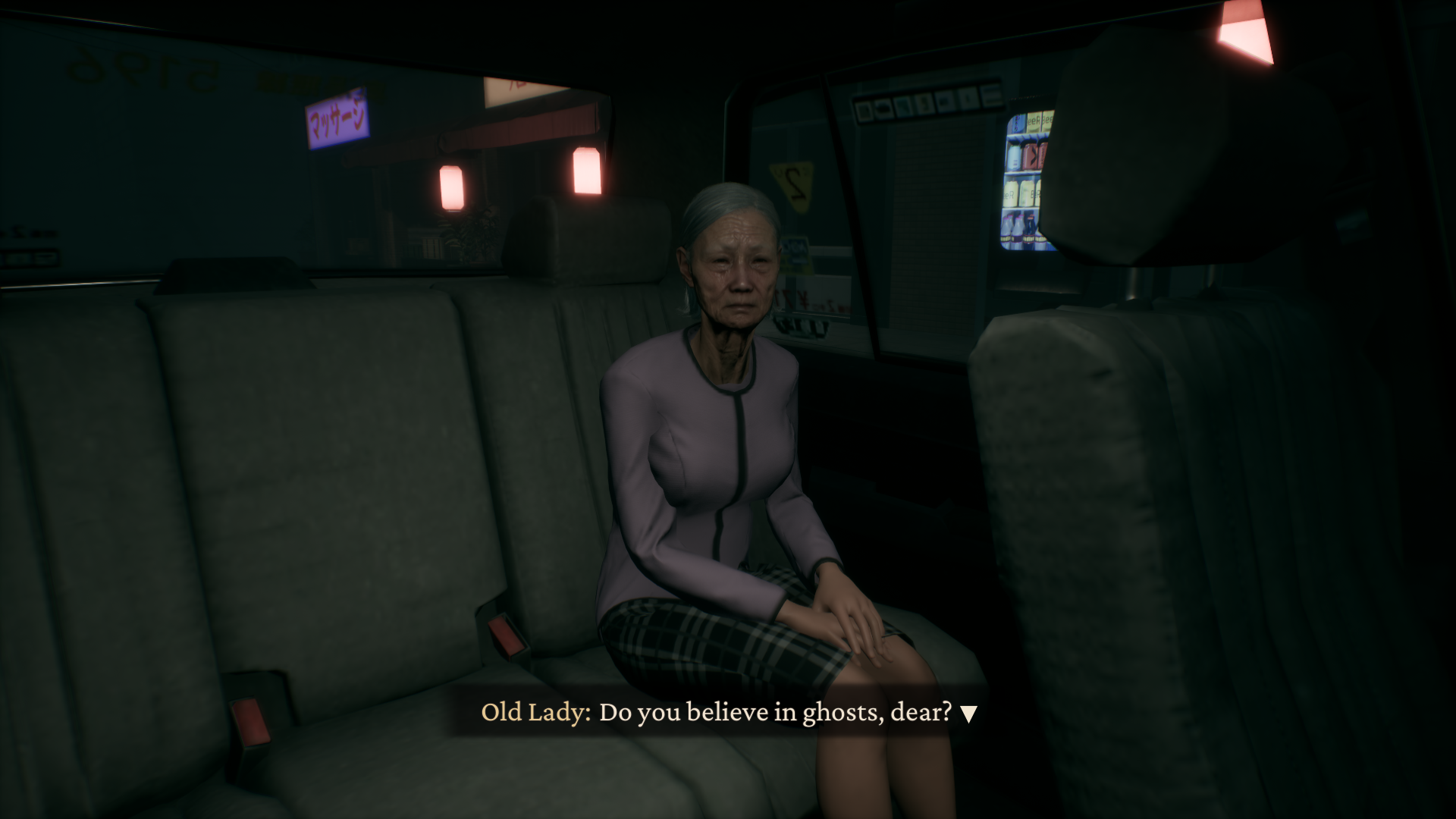
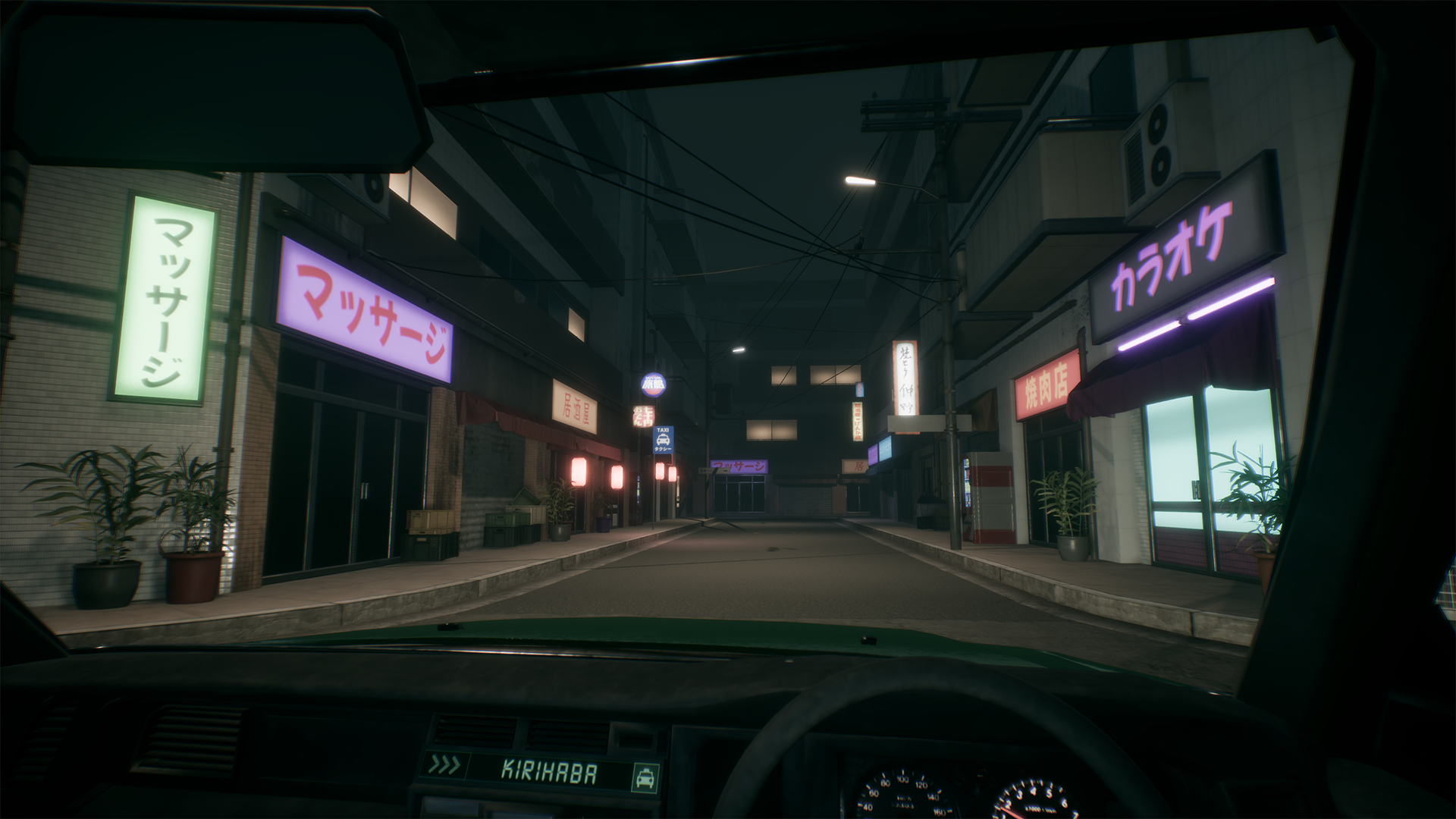
I talked with Endflame to pick their brains and get an idea of what we can expect from Silent Road. How does it compare to other games, and what makes it stand out from the ever-increasing indie horror scene? On top of that, how does it compare to their previous games, and what can we expect that’s different? The taxi mechanic is striking, as this is something that’s not really focused on as a main gameplay idea in horror games. The short stories you get from passengers are what can stick with players long after the credits roll. Check out the trailer below to get an idea of what to expect before diving into the interview.
Has any traditional Japanese folklore influenced Silent Road?
Yes, in fact, the narrative and setting are inspired by the legends surrounding Aokigahara, which is commonly known as Japan’s “suicide forest.” While the region in our game is fictional, it draws heavily from the eerie stories and lingering spirits associated with Aokigahara. We love Japanese horror, and our debut game Ikai explored yokai stories in a feudal setting. This time, we wanted to surprise players with a new angle while keeping the atmosphere they love, with a modern world haunted by the ancient legends of a forest marked by death.
As a fan of Ikai myself (I bought my copy for Switch from Best Buy on day one!), what have you learned from the feedback of that game that helped in Silent Road’s development?
Thanks for being such a loyal fan!
Player feedback from Ikai taught us what resonated most: atmosphere, memorable scenarios, and a strong creepy tone, so we’re bringing back all of that into Silent Road.
On the other hand, players also made us realize that some jump scares became predictable once they got familiar with the mechanics, which reduced the fear factor. Because of that, we’re focusing on adding more varied and unpredictable dynamics to the gameplay, with distinct twists so every ride or quest feels uniquely frightening in its own way.
What would you say sets Silent Road apart from other indie horror games of the same genre?
The Japanese theme and taxi-based gameplay are the key features that set Silent Roadapart. Very few games have explored these ideas separately, and even fewer have combined them. We feel they complement each other perfectly and let us create situations that wouldn’t be possible within the limitations of more conventional settings. You never know what might unfold beyond the windshield… but dangers can also be sitting in the back of your taxi.
Has the recent rise in Analog Horror influenced the game’s development in any way?
To a certain extent, yes. Analog Horror doesn’t rely on hyperrealistic graphics to be scary or appealing, unlike big productions. We can’t compete on that graphical level, but we can create strong experiences built on interesting ideas, atmosphere, and our own aesthetic approach.
You’ve stated that games such as Silent Hill and Fatal Frame were big influences on Silent Road. Are there any retro classics that influence the game as well, such as Sweet Home or Clock Tower, for example?
Yes, there are. Clock Tower, as you mentioned, is one of them, and Forbidden Siren [Forbidden Siren is what Siren is called in PAL regions ed.] is another major reference for us. Even though we’re not aiming for similar gameplay, Forbidden Sirenhas that creepy, quiet atmosphere and classic J-horror look that we love.
Has there been any other inspiration from other Japanese horror sources, like Junji Ito or anime or manga? When I see that Silent Road will feature short stories from drivers, the short story horror anime Yamishibai comes to mind.
We’re actually driving the story toward a single overarching plot, presented through the different perspectives of the passengers. We’re aiming for storytelling with varied points of view and personalities, which is why we added passengers as a core element. Silent Road features characters with distinct mindsets that can shift the player’s perception of events and help them form their own interpretation.
Even though it wasn’t an initial reference, I’d say the structure is closer to Death Parade, where each character has their own story linked to the main plot, guided by a central “conductor” figure who shapes the narrative.
Music and ambience play a huge role in horror titles and can drive a lot of the emotion. What can we expect from Silent Road in that aspect?
As we did with Ikai, we are paying special attention to music, but especially to sound. We learned that a strong soundscape is key to establishing a creepy tone both in the environment and in gameplay scenes.
How dark can we expect Silent Road to go? The darker the better, I say. Will there be gore or anything super graphic? Most horror fans love this stuff if it’s done well and makes sense for the story.
Silent Road is leaning more toward psychological tension, with a strong build-up driven by the stories and unsettling situations that definitely go dark. There will also be some consciously placed jump scares woven into that build-up. We feel this game is better suited to psychological horror with very dark backstories rather than graphic gore. As you said, gore needs to serve the story to work, and here it doesn’t feel necessary.
Can we expect Silent Road to be released on other platforms, such as Switch 2?
We’d love to bring Silent Roadto as many players as possible, just like we did with our previous titles. For now, we are keeping the scope small to guarantee the game’s completion. We’ll evaluate additional platforms and future opportunities as the game takes shape.
Will Silent Road be Steam Deck verified?
We are developing the game to run smoothly on Steam Deck, but verification is handled by Valve. That said, we are actively working to meet all requirements, although the actual verification process remains outside of our control.
DunkeyKong asks if the game will feature a fuel system for the taxi and if we can pet cats? That’s a big thing right now!
The game won’t have a fuel system. The main reason is that it would shift the gameplay toward management mechanics, and we don’t want players to be distracted by fuel interfering with our story plans. As for cats, I’m afraid we won’t have any, but if we did, we wouldn’t hesitate to add a petting feature!
Very interesting indeed! A preview will be incoming in the future, so look forward to that. Thank you to Endflame for taking the time to answer these questions and help connect some emotion to the game and get us excited for what’s to come. There’s no current release date, and the only confirmed platform is PC for now. If their release of Ikai is any indicator, we should hopefully see a console release and, mostly, a physical release eventually.





































 thebinarymessiah.com
Super, thank you