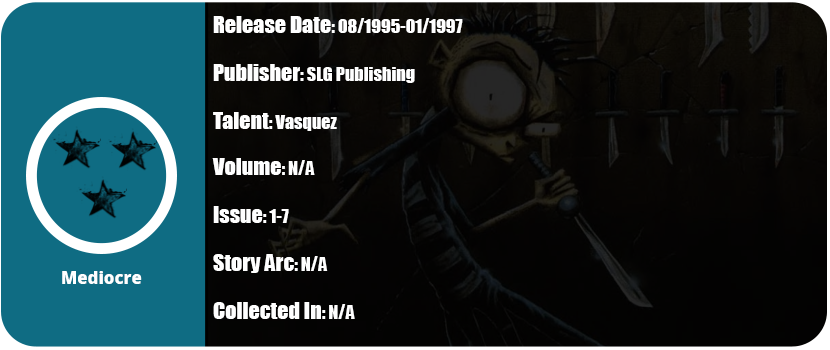
I have read very strange literature in my life, and Johnny the Homicidal Maniac (known as JTHM from here on out) probably takes the cake. It’s not the liberal use of profane language, not the blood and guts, but the way everything is put together; it’s all of these elements that make a special formula. Johnan Vasquez is a brilliant writer and artist. Invader Zim is one of my favorite shows of all time. The clever writing, excellent characters, and amazing art style all blend together to make a tasty morsel of a show. JTHM is one of Vasquez’s first outings from the late 90s, and all I can say is be prepared.
Johnny is an angsty teenage boy who lives on his own, somehow, gets away with murdering people, somehow, and quite enjoys it. He has a superiority complex, and Vasquez regularly mocks various stereotypes such as goths, emos, hipsters, and overall teenage hormones. Whether Johnny is a reflection of Vasquez himself is a mystery, but one can’t help but wonder. The seven-series comic is broken up into mini-short stories that are about 3 pages long. These tell an overarching story, but not day by day like most other comics. We see Johnny struggle with being truly happy, and sometimes you might think he’s finally a good guy until it falls apart at the last minute—every single time.
Johnny’s insanity is made apparent tenfold by his rants. That’s what this comic is all about: rants about how these characters are better than everyone else. Johnny loves punishing people for making fun of him and torturing them in the vein of Saw (before Saw was around, of course). Despite the entertaining gore value and insane language, I felt the story didn’t really develop much, and it became a chore from the end to the end. It was the same rants of superiority in every comic, and it got tiring after a while.
That’s not the only thing that became tiring. There are two short stories told in between each of the JTHM shorts. Wobbly-Headed Bob tells of a creature who also has a superiority complex and drives other creatures to suicide. It’s entertaining but easily forgettable. The second short is a comic that Johnny writes called Noodle Boy. It was funny at first, as the similes and metaphors are so insane and make no sense that it keeps you reading. However, towards the end of the series, it just became mundane, and I skipped the last few. I also understand that the typeface is Vasquez’s signature style, but it got tiring to read, and some words were illegible. It also gave me a headache against the white paper and black ink. This is an awful typeface, and I hope to never see it again.
Overall, JTHM is an entertaining foray into Johnan Vasquez’s crazy mind, and Invader Zim fans will dig the origins that inspired the series, but with no real plot development or character advancement, this series overstays its welcome after issue four.
The Batman Arkham games are some of the greatest things to grace the video game industry in the past decade. With the most advanced combat system since God of War, and not to mention the best superhero video game series ever made, Arkham Knight continues this trend. While Origins was a bit of a snag, I don’t count it as part of the Arkham trilogy. Arkham Knight is another masterpiece that any Batman fan will love.
Scarecrow and the new Arkham Knight are the main villains in this game, but don’t worry, there’s plenty of Joker as well, despite being dead. Joker is a manifestation in Bruce’s mind, and he constantly appears everywhere, putting his two senses into everything Batman does. It’s great to hear him again. Arkham Knight is also probably the best-structured Arkham game yet. Instead of a hodgepodge of little repetitive missions everywhere, the game has a Most Wanted mission wheel. Known Batman villains are to be stopped and captured through mission branches that are a blast. Firefly, Penguin, Two-Face, and various other villains have their own little subplot. This brings Arkham Knight to a meaty and well-balanced mission structure that the game desperately needed. The only other side things you can perform are AR missions that include fight and batmobile challenges and Riddler trophies. Oh yeah, I said Batmobile.
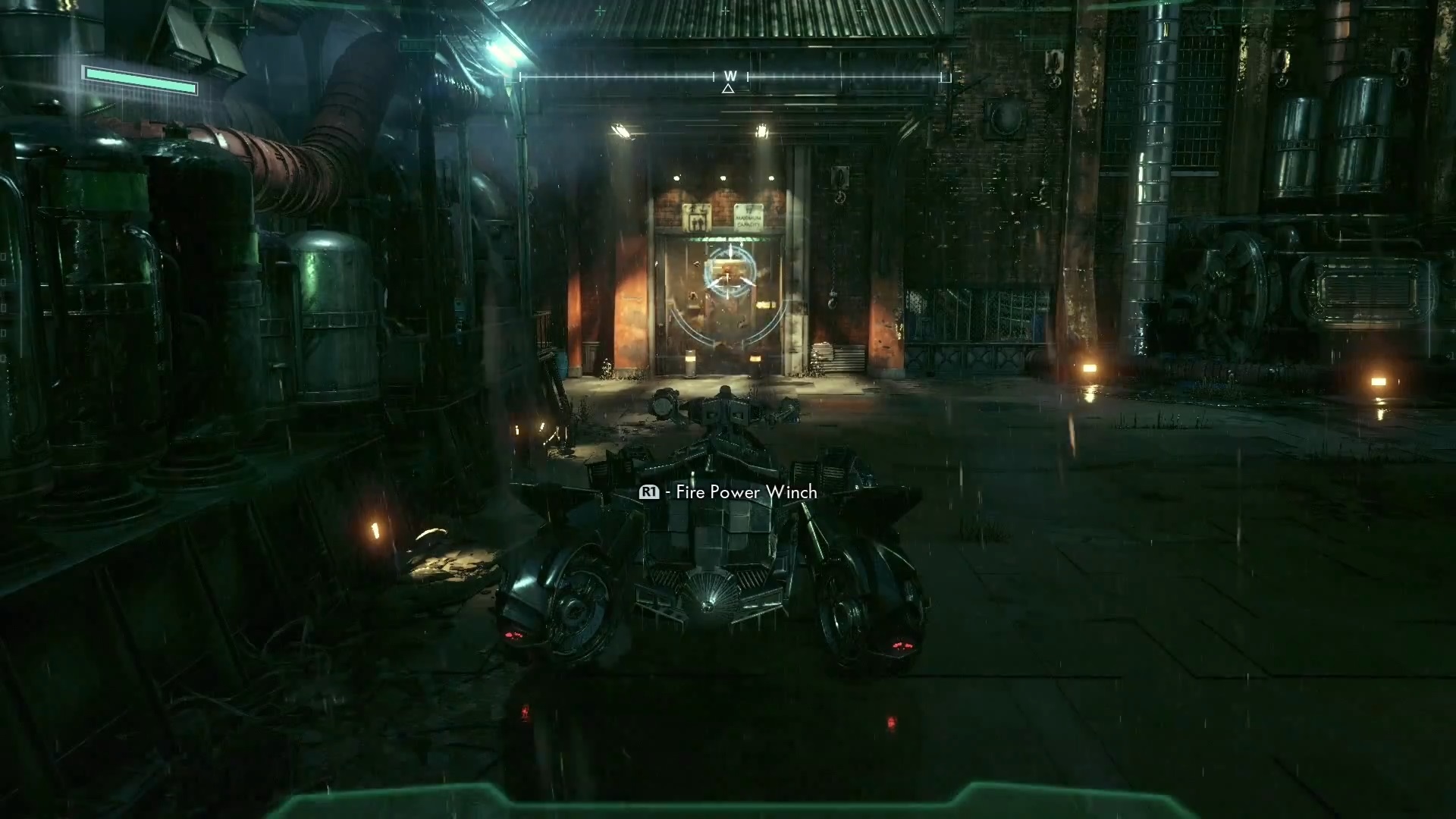
It’s finally here! The one and only Batmobile. It plays just like you think, controls like you think, and is as badass as you think. The batmobile can transform into a tank, allowing you to engage in battles with enemy tanks, but the best use of the batmobile is puzzles. Sadly, the tank battles are probably the worst thing in the game. While they work, they are the same thing over and over and over again; nothing changes. Enemy tanks will have a white line go across the screen, showing the trajectory of their shot. This allows you to dodge enemy missiles and shots. That’s great and all, but why does combat have to be this slow? Towards the end, the battles just get bigger with 50+ tanks in one area; that’s not exactly fun in my book. While the tank battles aren’t very frequent, they are happening often enough for you to sigh and wish it was over. As for the puzzle-solving, the Batmobile fits better here. Using the power wrench to crawl the downsides of buildings, using the wrench to power things up, ejecting out of the Batmobile to glide into a tunnel. All of this feels just like in the movies and comics; there is no disappointment there.
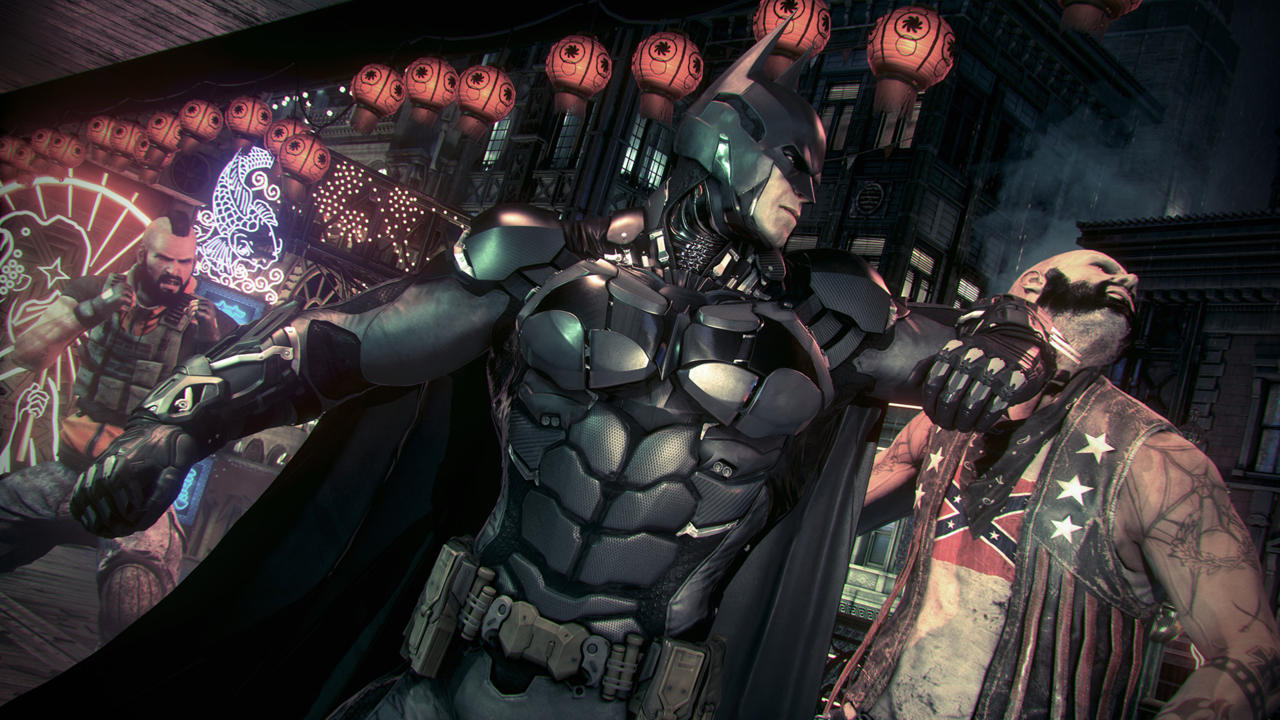
Combat has been perfected in Arkham Knight with added moves to make an extremely complex fight system that is so simple to learn. Outside of the counter system that we are all used to, new knock-out moves are introduced. Using your gadgets is much easier, as the button combos for them are easier to remember. LT for Batarang, LT+B for an electric shock to enemies with taser sticks, LT+Y for Batclaw, and RT+RT for Freeze Blast. It is very easy to remember, and the controls pop up on the screen to help you out when the option is available. The same goes for the knock-out moves, as well as fighting heavy enemies. These guys have their own system all to themselves. Do a fast punch combo, parry a guy behind you, a red exclamation pops up at a guy with a taser stick, LT+B, he’s down, continue pummeling the heavy, three more counters, then knock the heavy out. All of this is one big combo, and it’s so fluid and fast and one of my favorite fighting systems I have ever used.
The second combat system in Arkham is the stealth part. This has been expanded exponentially in Arkham Knight. There are more gadgets introduced that allow for more ways to take down opponents. The stealth areas are much larger and allow for multiple ways of taking people down. We’re used to stealth takedowns in various ways, including hanging, grating, and gliding behind people. Multi-level grate combat is introduced, as well as enemies being able to destroy grates so you can no longer use them. Using a voice synthesizer allows you to give commands to enemies and set up traps with your electric gun or disruptor. The disruptor allows you to sabotage weapons and drones to knock out enemies (yeah, I can’t say kill since Batman doesn’t do that). The stealth combat is fantastic and so much fun, and it allows for strategy over beating everyone up.
Outside of these new gameplay elements is the story. Arkham Knight has a long and well-told story that you actually care about. There are some great moments in the game that really get you hooked, and the ending is satisfying. I really felt the strengths and weaknesses of Batman come out through the story several times, as well as the other characters. My favorite part of the game is the ending with Scarecrow, but I can’t give it away except that it’s a first-person shooter sequence. WHAT?! Play it to find out!
Let’s talk about visuals. I know that the entire world knows how terribly optimized the game was for PC; however, if you have a powerful rig, it is very playable. Not perfect, but enough to not be really noticeable. This requires tweaks (there is a tool available on the Steam forums) to the game settings to get it to work. Out of the box, the game won’t run very well at all. There are some nice new effects, like RainWorks, Interactive Smoke and Fog, and various other effects. They look amazing, and Arkham Knight is one of the most detailed and good-looking games in a long time. However, a game should ship working, and this is just unacceptable. Most people don’t know how to tweak a PC game and will get frustrated and demand their money back (which happened and suspended the sales on Steam). The other issue is that you need a very new and powerful system to get the game to run well. I tried a GTX 670, and while I got 60 FPS when I was above the city, it dropped below 30 on the ground. Interactive Smoke and Fog dropped the game to 5 FPS; however, on a GTX 970, there were a few issues. The frame rate will vary constantly. You will jump between 60 and 30 a lot, but the tweaks available make it less noticeable. Anyone running a GPU older than a year will have issues for sure and should play the game on a console for now.
As it stands, Arkham Knight is a fantastic game and the pinnacle of the Batman video game franchise and superhero games in general. Taking all of what made the series great and optimizing and compiling the best of what everyone loves. More villains, more stories, more Batman. That’s what we came to see, and we got what we wanted.
Diablo is not really a game series you see making a good comic, but Sword of Justice is a pretty decent one compared to all the terrible or mediocre adaptations I have been reading lately. The story follows a boy named Jacob, who is part of the Barbarian tribe guarding Mount Arreat. However, one day his father executes his mother in a fit of rage about justice and law. It turns out that there’s some sort of rage and blood curse pouring out through the Barbarian tribes, and this specific tribe has isolated itself from the others, claiming they are better due to their righteous laws and justice.
Of course, this leads Jacob to travel the world trying to find a way to stop all this, and this is when he runs into a mage who helps him along the way. He picks up Tyreal’s sword of justice and tries to stop this blood curse. Without spoiling anything, the 5-part series does a good job bringing out the characters and fleshing out an interesting story in just a meager 100 pages. The art is fantastic and dark, and each character feels unique and likeable in some way.
What I love about this series is that it takes a small part of the Diablo timeline and shows you what these people are going through on a daily basis due to the demons from the Burning Hells. The onslaught is never-ending, and what Jacob has to go through is something that would break most people.
With that said, if you can find it, Sword of Justice is a fantastic comic series and does Diablo justice.
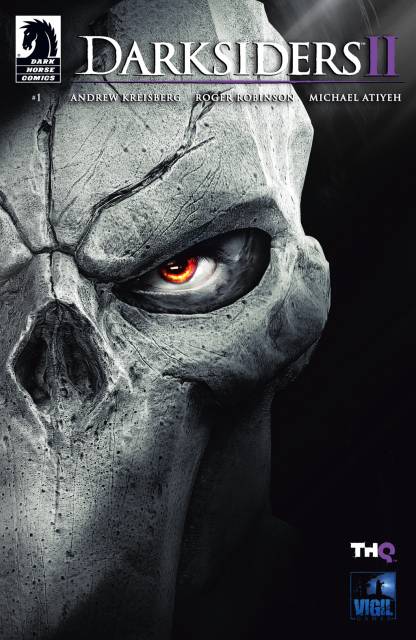
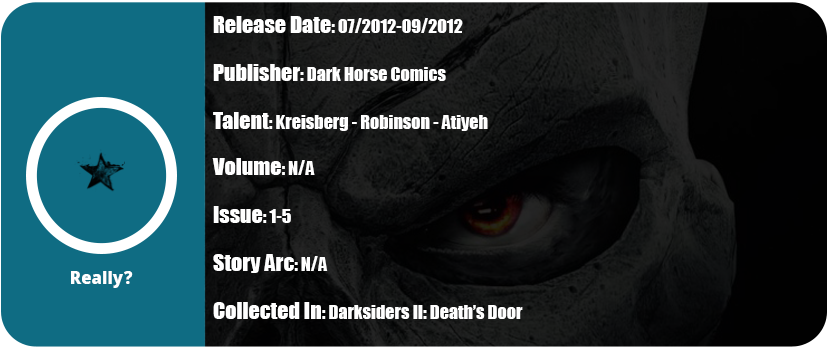
Darksiders II is a fantastic game. It’s become a trend to slowly release comics up until a game’s release, but Death’s Door proves why this is such an issue. The main reason is that most of the game’s story can’t be spoiled before its release, thus limiting the comic’s story. Death’s Door feels pointless and empty. Each of the 5 issues is only 13 pages full, maybe 10 sentences each. Sure, the art is good, but the story is seriously lacking, and there’s absolutely zero character development. We don’t even know who Death is or the other Horsemen, and the entire story is about some artifact that Death is trying to get back from an angel. Completely pointless and just plain forgettable.
What this comic also shows is that they need to be released after the game’s release. This gives the writers more freedom to advance or even divert from the game’s story while also incorporating and talking about it. Death’s Door at least looks decent, but it’s also nothing special. Nearly every page is one piece of art with a few words that Death is narrating. It’s all a bunch of foreshadowing and riddles. The entire comic doesn’t make any sense, even for people who have played the games. Sure, we know who the characters are, but this series just doesn’t do the Darksiders franchise justice.
If you see Ben Templesmith on the cover, you know the series you are about to read is going to be full of horror, death, gore, and insanity. Choker is chock-full of that. The story revolves around an ex-cop, Johnny Jackson, who gets called back by his old boss to bring a prisoner who escaped back. It doesn’t turn out well, as the department is using a steroid-type drug on their cops called Man Plus, which is somehow connected to the prisoner’s drug ring. The story takes a long time to catch your attention. It starts out with you completely lost and characters talking like you already know what’s going on. Later issues backtrack to catch you up until you hit the final wall.
Choker isn’t the best series I’ve read, but I read it mainly for Templesmith’s art. His sick and twisted watercolor drawings are fantastic and one-of-a kind. He’s one of my favorite comic artists. Sure, it looks messy and sloppy compared to most artists, but it’s unique in a way that it matches the story it’s telling. Choker doesn’t have the most memorable characters; it’s too short to keep you hooked for long, with only six issues; and the story is kind of predictable. The whole 20-minute-in-the-future setting is nice, with a scummy city like Gotham City or even Neo Tokyo. I wanted to know more about Shotgun City and its inhabitants, maybe some side stories.
If you like crime dramas, you will like Choker. It has vampires, gore, cops, mutants, and crazy characters. Just don’t expect to be in it for long because it ends before you even realize it started.
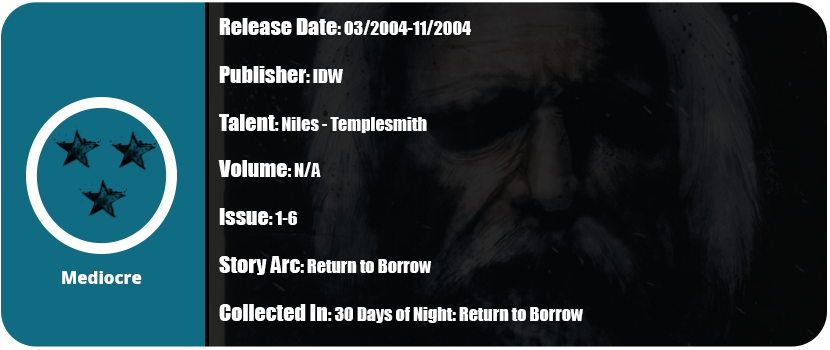
After the horrific events of the previous chapter, Return to Barrow gives us all-new characters and a whole new terrifying event in Barrow. If you thought what happened wasn’t bad enough, there are crazy people still living there, even though it’s the main target for vampires. A new sheriff moves into town with his son. Due to the events of the past volume (where the original survivor writes a book exposing vampires), the vampires are now leaderless and want everyone in Barrow exterminated.
I honestly have to say I feel this chapter is a cop-out. Why do we have to return? Sure, I can understand that the vampires want to wipe everyone out, but why fully concentrate on this event again? It feels like a re-hash, and even though these people are better prepared, it was the frightening concept of everyone not knowing what was going on that made the first chapter so memorable. I like the new characters, and the tension is there along with the dialog among the vampires (these guys are vicious bastards).
If you’ve read previous chapters, go ahead and read this. There are actually decent fight scenes, a lot of tension, and a surprising amount of atmosphere oozing out of this series. I also have to appreciate the continuous flow that a lot of comics tend to forget to provide.
30 Days of Night is a really interesting and unique take on vampires. Dark Days takes place shortly after the original series. Stella Olemaun heads to Los Angeles, where she is trying to expose the Barrow, Alaska, attack via a book. Certain vampires are after her, including the Queen, and the comic gets pretty intense.
I loved how things just happened unabashed, like the main characters dying off. It just happened out of nowhere and shocked me, and the comic just moved on. Ben Templesmith’s art continues to bring the series to life and gives it a very dark and gruesome atmosphere. Stella isn’t really on the run, which is a nice change. The vampires are afraid of her and respect her, but a change of events happens. She ends up trying to get her husband back, who died in Barrow, but I won’t say how. The whole series is so well-paced and keeps you turning pages.
I really can’t complain about this series except that it’s too short. I really wanted to see it go on, but it ended right when you were most curious. I love Stella’s attitude; she’s both brave and makes stupid choices at the same time. She’s a bit too bold and cocky, but she’s also sensitive in a way. Her undying love for her husband is really touching, and the other characters are great. I honestly recommend this series to anyone who has read the original series. Newcomers should stay away because you will have to have read the original series to understand what’s going on here.
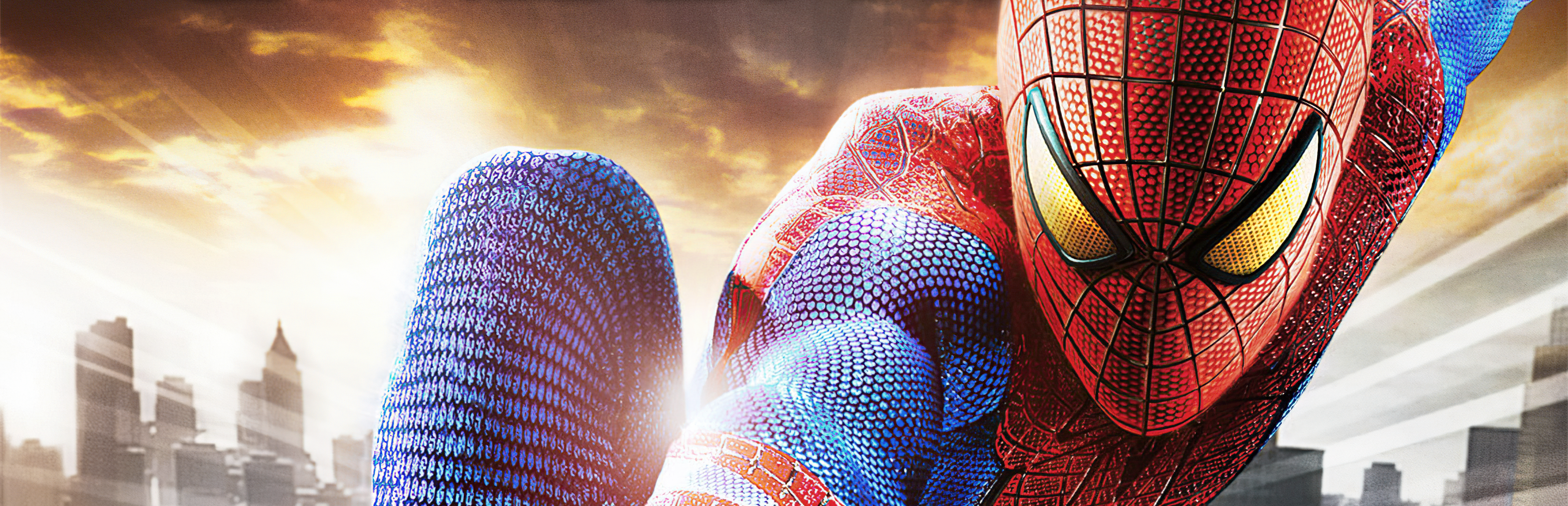
I’m not sure what it is with the Spider-Man series, but the movie-based versions are always the best. This is usually the opposite with video games, but it doesn’t deny this strange truth with Spider-Man. The best Spidey game, in my opinion, was Spider-Man 2, based on the Sam Raimi movie. The huge open world was unheard of in a game like this back then, and the graphics, at the time, were astounding. It felt high-budget, and despite copying the movie, it was really amazing. TASM follows suit as well, with some tricks up its sleeve.
This game is actually a sequel to the recent movie and is highly entertaining. You play as Spidey and are trying to take down the cross-species that Oscorp created. The bad guy here is Alistair Smythe, who runs this place, and this is how the movie ties in. Spidey needs Doctor Connors to create a cure, but he’s locked up in an asylum after the events in the movie. The story is entertaining, but none of the actors from the movie take it apart here, which is probably good. The characters resemble the movie characters but look a little different. This is how you do a movie-based game, right?
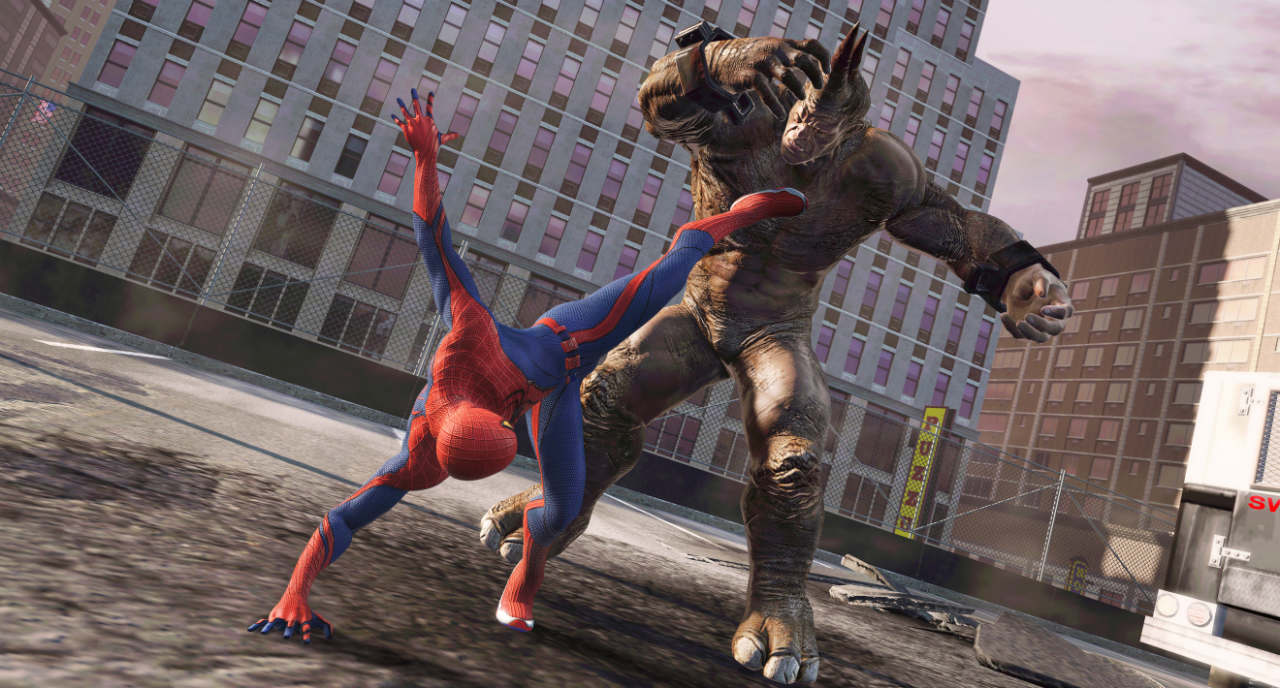
The game is more cinematic than previous entries just by the way the camera is angled. The combat is pretty satisfying with just one attack button, but the animations are so fluid and entertaining that you won’t care. Spider-Man doesn’t have a health bar but regenerates health. When you take too many hits (he can only take a few), you have to use the retreat feature, which has Spidey flying off into a corner away from enemies to heal. Use Web Strike to immediately go right back into the fight, which is awesome. Once enemies are stunned, you can use special moves, and all these moves are upgraded by finding tech pieces throughout the game. One of my favorite things is the stealth mechanic, which is done right for the first time in a Spider-Man game. Crawling on the ceiling shows a purple web radius under you, and when guards are on it, Spidey will drop down, wrap them up, and hang them from the ceiling. The health system makes you use this feature because you can’t dodge enemies with guns. Your spy sense will turn red, and this means the attack isn’t dodgeable. Use a quick web retreat and try the stealth again. Very satisfying and well done.
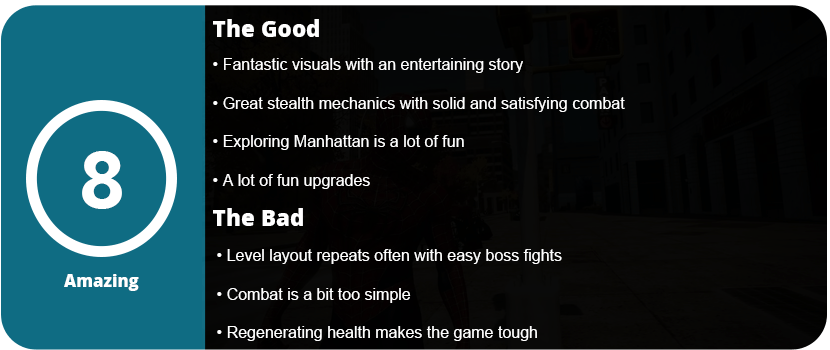
Of course, this wouldn’t be a complete Spidey experience without a huge open Manhattan to explore with side quests. Like Spider-Man 2, there are many missions like saving citizens from crimes, various timed side quests, collecting comic pages, police chases, and various others. They are a lot of fun at first but grow repetitive towards the end. Swinging around as Spidey is just so much fun, and the well-done animations help this a lot.
The only big issue is that the layout of levels repeats often. Disable this lock, take down these turrets, beat up these enemies, and turn this valve. It’s all very mundane, and even the boss fights are really easy with little challenge. Thanks to all the other elements being very solid, you can look past this enough to get through the game. At least the graphics are fantastic, especially on PC. Beenox took the time to give PC users higher-resolution textures and better-looking everything. This is rare in a movie-based game to see such attention to detail. There are some game-breaking bugs and glitches that were never addressed on PC, and that is a real shame.
Overall, TASM is a solid Spider-Man game and probably one of the best yet. This is how you do movie-based games, right? The story is entertaining, the combat is solid and fun, and exploring Manhattan is a lot of fun. The graphics are amazing, but I can’t help but feel annoyed by the repetitive level layout and easy boss fights. This is well worth a purchase, and even if you don’t like the movie, you will enjoy it.
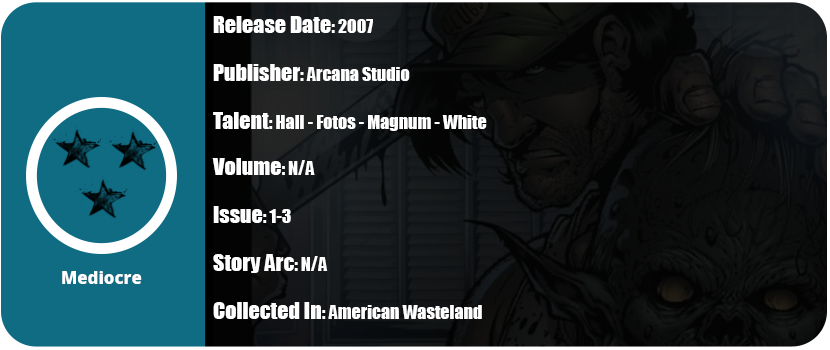
I always tend to be cautious when reading comics about rednecks and hillbillies. They tend to be predictable, full of unfunny potty humor, and lame jokes. American Wasteland took me by surprise; while it isn’t a fantastic or witty comic, it is much better than others set in the American Mid-West. We follow a truck driver who ends up being attacked by zombie vampires—that’s an interesting take, for sure—and quickly befriends locals. They fought off some zombies, but then he ends up with a mentally retarded boy who can only say “sumbitch.” That’s his only vocabulary; I’m not joking. This isn’t for comedic relief either; the comic is deadly serious. As you follow this driver’s escapades, he ends up having to fight off the leader of these zombies. You also run into a military encampment and a badass girl. The dialog itself isn’t anything amazing—just a bunch of rednecks talking smack to each other while they work out terms to exchange supplies. Everything ends up going wrong, but it is still entertaining.
There’s a lot of gore in this comic, and it’s pretty graphic. The art is fantastic, so it gets big props for that. The overall story feels very linear; the journey only goes so far, and then you end up back at the beginning. I also would have liked to have known where this zombie vampire thing came from and maybe even another character to follow. What’s here is entertaining but very forgettable in the end.
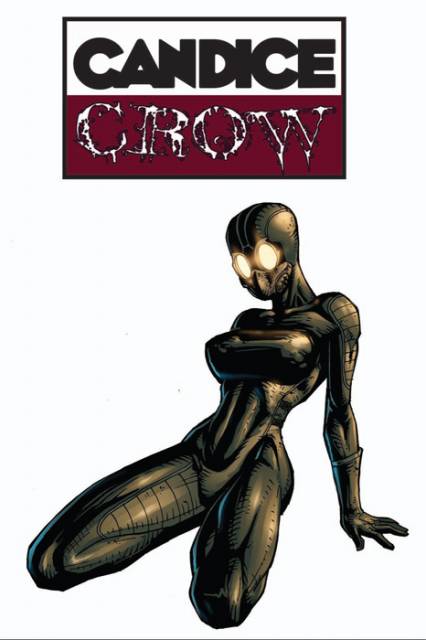
I love comics that deal with real-life problems because many people can relate to them. Candice Crow is a teenage girl growing up poverty-stricken and dealing with a drunken dad, a confused little sister, and the death of her mother, who committed suicide. She’s growing up in a bad neighborhood, trying to get through school with a part-time job, and trying to make her rock band become noticed by record labels. That’s a lot on a plate for a teenager, and Candice comes off as a very mature and responsible girl who any parent would be proud of. She also has a secret: a skin condition that requires her to step into a crazy suit for 15 minutes or she will start looking like the living dead. She also has supernatural powers that are unexplained (literally).
The comic itself flows very well, and I never put it down until the end. The writing is punchy and grabs your attention; it forgoes all the constant backtracking, flashbacks, and filler. What keeps you reading is what Candice goes through every day of her life while trying to battle this skin condition. While there aren’t too many huge twists, I finished this comic with more questions than when I began. What is this skin condition called? Was she born with it? Is it genetic? What are these supernatural powers? We know she can read people’s minds when she kisses them; where did it come from? I hate being left in the dark like that, but you end up forgiving it thanks to the entertainment value Crow brings.
There are a few fight scenes, and they are pretty tense. They are very realistic, feel pretty crunchy, and make you cringe. You end up feeling really sorry for Candice for dealing with the murder of her best friend, bailing her dad out of jail every week, and having to tell her little sister white lies to continue on with life. Even if there weren’t any superpowers, this comic would be very entertaining due to that. It feels like the writer went through similar experiences himself. I highly recommend this comic to anyone who likes very surreal reads with a touch of superhuman stuff.
































 thebinarymessiah.com
Try multiplayer. A lot of fun !