A great story is usually memorable and you will talk about it for years to come. You need good characters, voice acting, and a lot of other elements to make a good story. Usually, there has to be a great ending as well as some twists and turns, but it also has to make sense. A good story is probably the hardest thing to find in the video game world, but there were a lot of great ones this year, but there can be only one.
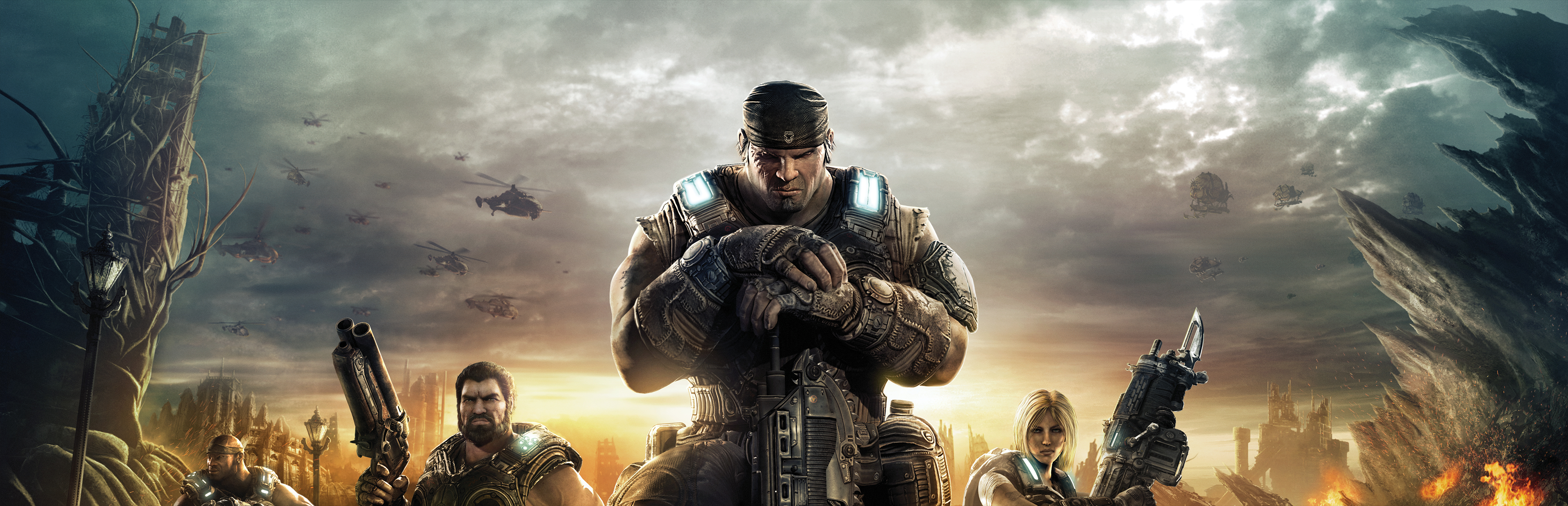
This was the toughest category this year. With so many great stories I could only choose one. Gears of War may be considered a meat head’s game, but the story branching over the three games is full of great characters and a struggle for survival that eats at your heart. These people are fighting a genocidal race of bugs, and in the meantime, they are losing their loved ones right in front of their eyes. The delivery from the voice actors just makes you care so much about Delta Squad, but overall the ending and story in Gears 3 finish the story with a tightness that most sequels can’t really pull off.
Great sound design isn’t the music but everything else you hear. Not only is variety good, but it has to match and be unique to the game and atmosphere. Everything from the wind blowing through cracks, swords clashing, breathing, grass rustling, and bullets whizzing it all makes the audio experience.
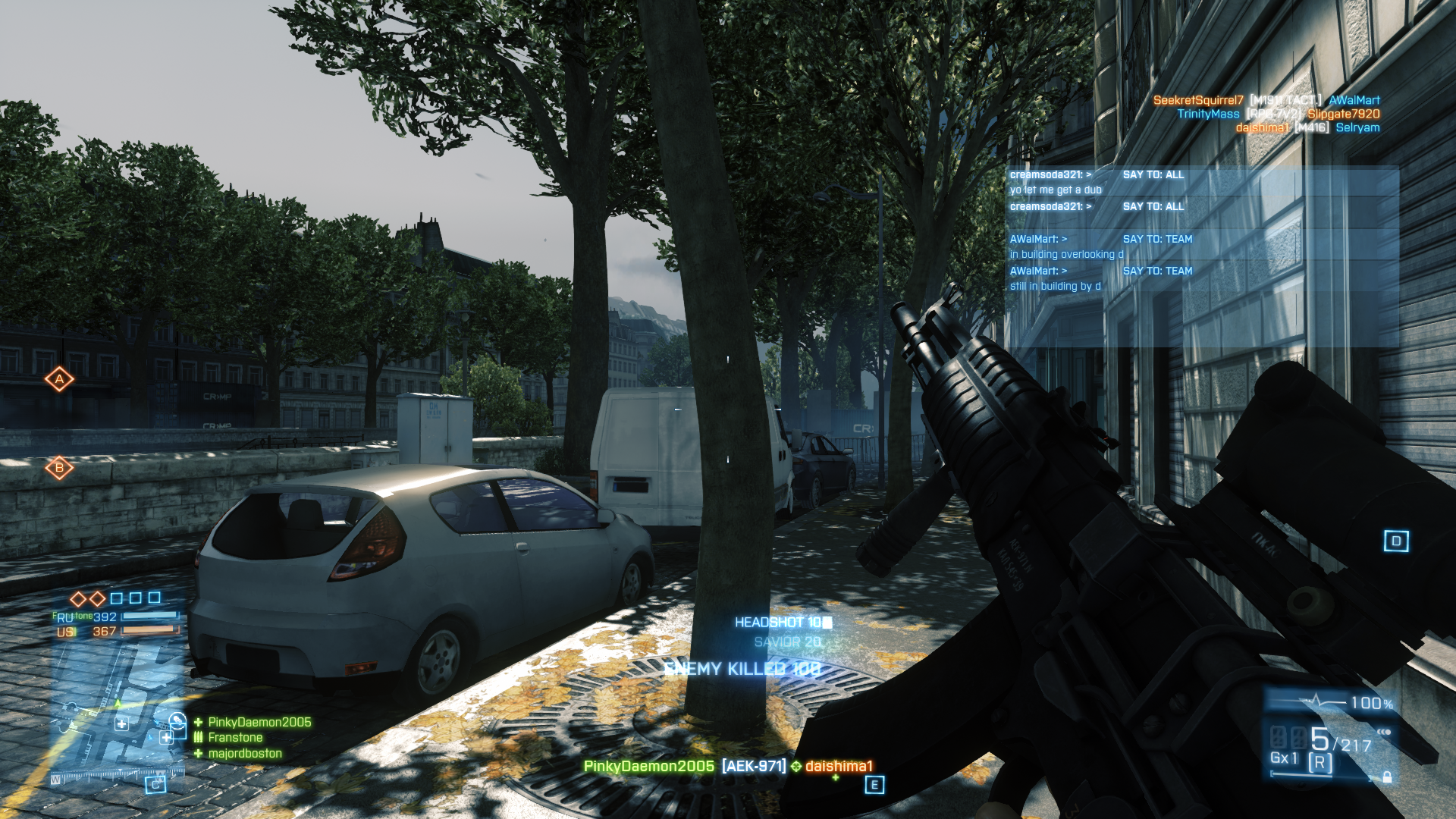
What makes the Battlefield series in the general top most games in sound design is the audio directional placement and just the sheer realism of battle. No other war game has pulled off such rich and visceral sound from bullets whizzing by your head to being able to find a sniper from distance and direction. Everything sounds hyper-realistic, but also completely ensnares you into the battle. This realistic and technically phenomenal achievement puts it over the top of everything else.
An atmosphere is what delivers emotion and overall feelings in the game. The atmosphere can make a game scary, colorful, cartoony, or make you feel alone and sad. Atmosphere much matches and represent the idea of the game. Sometimes the atmosphere isn’t delivered right and can make a game feel boring, or just look bad.
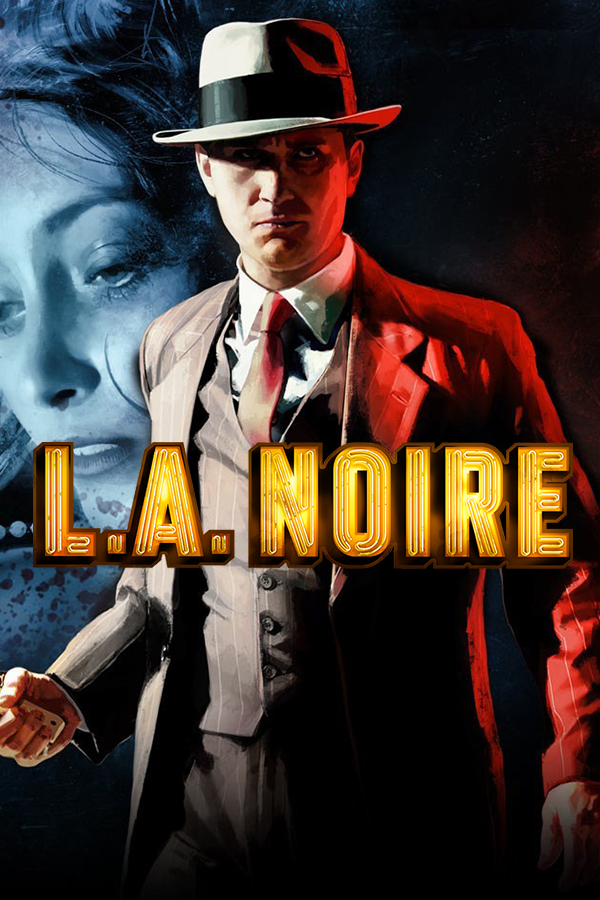
The Best Atmosphere category was even harder than last year’s because so many great AAA titles came out with strong atmospheres. There were also some games I didn’t get a chance to squeeze into the runner-up’s area so that tells you how well this category did this year. While some of the others may have better art to back up their atmosphere L.A. Noire does something that most can’t: Make an atmosphere without fancy art or licenses. L.A. Noire is a new IP and pulls off a 1940’s era in realistic detail and really pulls you in and brings you into a time period that most games don’t explore outside World War II. L.A. Noire had amazing visuals to back it, but to make the game feel so true to an era is very hard to do. You don’t need fancy art for that.
The locusts have finally come above ground. Every last effort made by the COG and Delta Squad has failed, and now this is their last stand. The lambent has mutated into vicious alien-type creatures. Marcus Fenix must find his dad, and two female COGs join the fight. What has all happened since our last visit three years ago? A lot, and more than just the story, has evolved.
Like I explained above, the lambent is a major threat, but it’s not them or the locust, not even Queen Myrrah, who is the main threat. I can’t say what, but it will totally shock you about halfway through the game when you find out. The story is just really solid and has a strong conclusion, but overall, the story makes you know and feel that the Gears are really desperate now. Their numbers are paper-thin, and they are doing everything they can to stay alive. You also feel the desperation of the Locust this time around, so it’s a huge tug-of-war between the two for the battle of Sera.
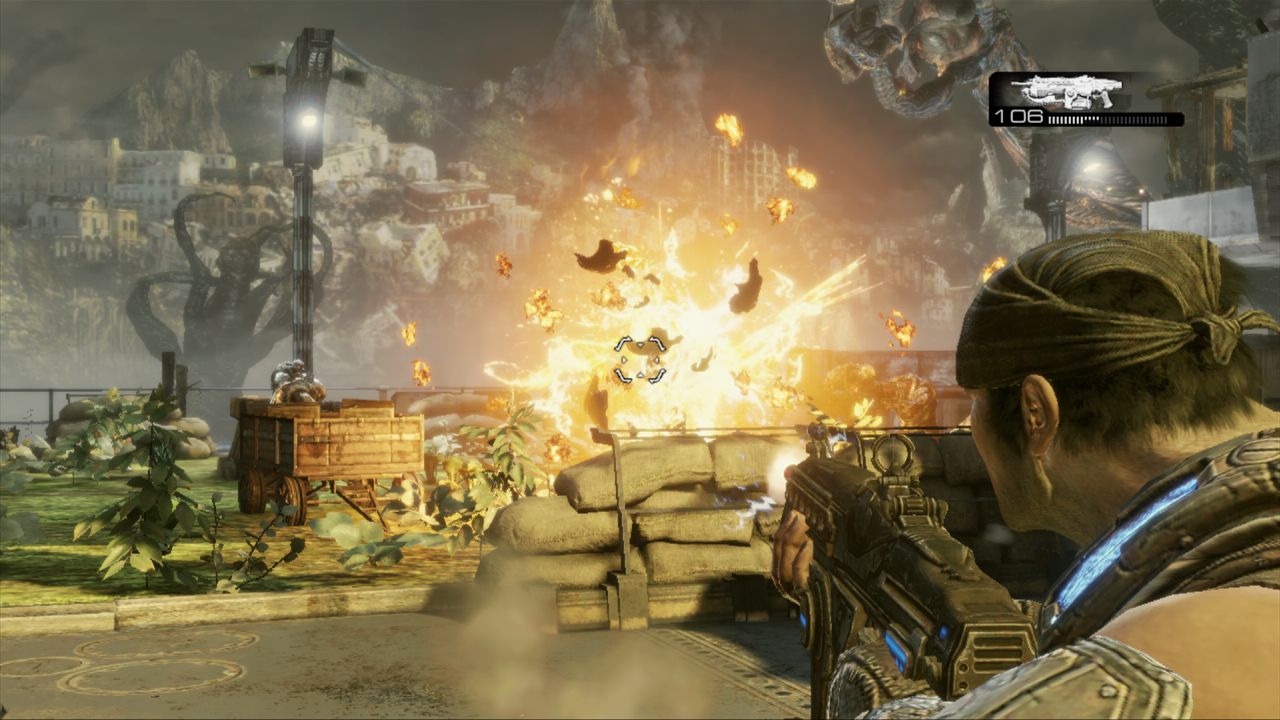
Overall, the gameplay is the same, but a lot of tweaks have been made to finally perfect and fine-tune the entire series. For example, the roadie run that everyone loves has now been changed to allow you to run forever, plus the camera shakes a lot more, adding some cinematic quality. A lot of past weapons have been balanced and tweaked, such as the Lancer, which now has more ammunition, less recoil, and takes a bit longer to rev up. Another example is that the active reload sweet spots have been moved around on some weapons like the Hammerburst, and the Gorgon pistol no longer has three-round bursts but continuous fire. Little changes like these really make the game feel fresh and new, but there is a lot of new stuff as well.
First and foremost, the new Lambent enemies have evolved, and the new stalks are your enemies as well. They will spawn lambents until you destroy the spawn sacs, but the lambents also vary in size, and some now don’t just die; they evolve into more hideous creatures. You fight them through about 1/4 of the game when you finally get to fight regular Locusts and Theron Guards. The environment has also changed because it has added some colors and new locales. Instead of just abandoned towns, buildings, and battlefields, you get to fight in lush jungles, beaches, and a huge ship at the beginning. This adds some color to the greatly bashed color scheme of the series. There are also new multiplayer features, but more on that later.
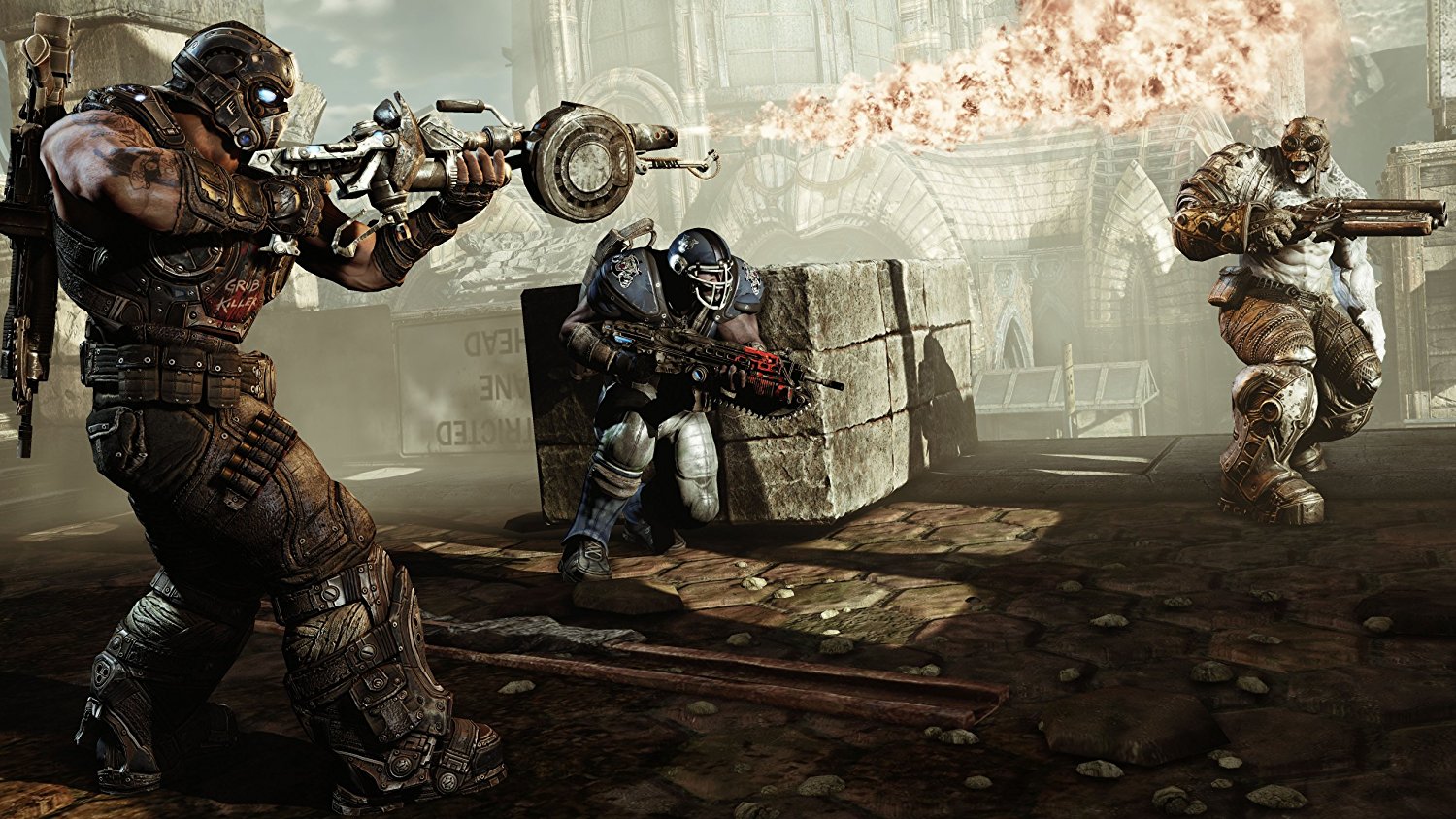
Some new weapons that you will run into are the OneShot, Incendiary Grenade, Digger, Retro Lancer, Sawed-Off Shotgun, and Cleaver. That may not sound like a huge number, but these weapons are great. The OneShot is a huge version of the Longshot and is a one-hit kill for every enemy. The Incendiary Grenade sets enemies on fire; the Digger acts like a Boomshot Grenade, in which it burrows underground and pops up near an enemy. The Retro Lancer doesn’t have a chainsaw but instead has a bayonet that you can charge into grubs, but the gun is highly inaccurate and has really bad recoil. The Sawed-Off is exactly what it is: a one-shot shotgun that can do one-shot kills at super close range. The gun has a long reload time, so use it very wisely. Lastly, the cleaver is a giant blade that you can use to swing around and chop off heads.
While the new weapons sound impressive, each one has an awesome new execution kill, so there are 24 in total. There are also some new campaign-exclusive weapons you can use as the new Beast Sieges, but your favorite Troikas are still here. Epic packed a lot of new content into Gears 3, so it makes it feel really fresh. Even the new character Sam is a great addition, but Anya Stroud is now the main Gears character and fights alongside you. I do have to mention one major change to the campaign: Revive. Yes, when you die, you don’t die; you can be revived, like in multiplayer now, so this also makes the campaign a little easier and doesn’t require much tactical and careful planning like in past games. Some may love it, and some may hate it.
When it comes to multiplayer, we finally get Team Deathmatch! All your other favorite modes are here, but we get a new onslaught of maps that are well designed, but you can now rank up and earn unlocks such as weapon skins, characters, and even crazier achievements. The new Beast mode is like a reversed Horde mode and is a huge blast, but Gears heroes like Dom and Marcus must be executed to die. One of my favorite things in Gears 3 is that it reads and recognizes your achievements for every Gears game (even Gears 1 on PC!) and gives you special unlocks. The Epic team really makes you feel like this is the final gear and awards you for being loyal and sticking around since E-Day 5 years ago.
Overall, Gears of War 3 is a finely tuned, well-balanced, and epic package, as well as a great finale to the long-running series. When it comes to visuals, Gears 3 looks like one of the best games of this generation (again) with updated lighting effects, higher resolution textures, and further draw distance. However, it does show its age a little in spots, but it does look jaw-dropping still. While this may be the last in the Delta Squad series, the Gears series will sit in our hearts as one of the best franchises of the generation and will never be forgotten.
Epic Edition: If you are a huge fan and really want to spend the extra whopping $90, you can buy the gigantic Epic Edition, which includes a massive statue of Marcus Fenix, replica documents from Adam Fenix, a huge award box replica with a cog that is Adam Fenix’s science award and has the Adam Fenix character unlock code on it, a COG flag, a weapons skin pack, and an art book that is the entire making of the whole series. The book is very well put together and gives you insight into the series that you will never see anywhere else. This is a beautiful package and probably one of the best collector’s editions ever made. Everything is super high quality and just amazing to look at.
“Fatality!” “Finish Him!” “Flawless Victory!” “Get Over Here!”. These are just some famous quotes from the infamous Mortal Kombat that everyone knows and remembers. What everyone mainly remembers is the fast-paced fighting that has been missed since 1995’s Ultimate Mortal Kombat 3. It’s been over 15 years since we got a really good and classic-feeling MK game, but it’s finally here and back with all its bloody gore. Yes, the game is still in 3D, but it’s what fighting fans like to call “2.5D.”. The game plays with a 2D feel, and as soon as you start hammering away on those classic moves and combos, you feel the nostalgia seeping into your blood.
The most surprising part of the game isn’t the new level of gore, but the amazing story mode. Yes, Mortal Kombatactually has an awesome story mode that plays out far better than last generation’s story modes. Instead of some ridiculous adventure mode or scrolling text, we get a fully acted, scripted, and voiced story about the actual Mortal Kombat tournament and a backstory on almost every classic character. The voice acting is actually good, and Netherealm Studios actually took the time to bring out each character’s personality, such as Johnny Cage’s smart lack of Hollywood attitude. Liu Kang’s eagerness, Kung Lao’s jealousy, and Sonya’s hotheadedness. The story is done beautifully, despite picking up where Armageddon left off. Raiden travels in time to his past self to stop the destruction of Armageddon. There are plot twists and even some seriously tense moments in the story that are quite gripping. I can actually say it’s the best story mode in any fighting game ever made.
However, fans came for the fight, and this seriously delivers. Not only are the animations smooth and great to look at, but the controls are as tight as ever. The game responds without any delay, and that’s what a fighter is all about. Not only is the usual gore back, but the game just packs a serious punch and feels punchy. The hits transfer amazingly well into feelings, and that’s never been done in an MK game before. The newest things brought to the series are X-ray moves. Fill your supermeter up all the way, and you can execute an extremely brutal move that shows your opponent in X-ray vision, and you can see bones crunch, snap, and organs burst. The anatomy is done superbly well, with muscles, organs, and everything else in the right place. Each character has its own special skeletal structure, so it stays true to the anatomy. I say bravo on Netherealm’s part instead of doing it cheaply.
This supermeter actually does one other thing that I love, and these are enhanced moves. Forget the crap from the DC Universe completely. When you fill one section of the meter up (it fills up faster when you are getting your butt whooped), you can do the special move while holding down the “Attack Modifier,” and it’ll change the super move up a little bit and make it more powerful. For example, doing Jax’s Gotcha Grab will only do two hits, but if you enhance it, he’ll punch them five or six times and do more damage. Do Scorpion’s Spear Throw, and he’ll throw two out for extra damage. These are great, and each special attack has its own unique enhancement. This is great for strategists who want to give their fight a little extra kick. The second thing you can do with the meter is the usual breakers, but this requires two pieces to be filled.
For the first time, tag teaming was put into the game, and it works just as great as you’d think. Each character has a special tag-out move, and it makes the game more intense and just that much more fun. Of course, the single-player story mode will have you fighting against two people for a challenge, but when you play online or with a friend, it’s an absolute blast. Of course, this could have gone all wrong, but the team learned from games like Marvel vs. Capcom to get it right. This is just one more feature the team got right but could have gone horribly wrong or made the game too unbalanced.
The Fatalities are gory, and each character has two plus a stage fatality combo. Each character’s fatality can be viewed in the move list in the pause menu, but you have to unlock the second one in the krypt (more on that later). One thing I have to mention is that Babalities were brought back, but only certain characters can do these. These haven’t been since UMK3! When it comes to fighters, there are no characters in here past UMK3. Classics are only here, and that’s for the better. You won’t see Kenshi, Kira, Drahmin, Hsu Hao, or any of those guys, but there will be DLC add-ins later on, so who knows? Each character is beautifully rendered, and they fight just like you remember, so fans can feel relieved about that. There is one new character, and that is Cyber Sub-Zero, to tie into the story mode, and he plays differently from the regular Sub-Zero and has some unique moves. Kratos is also an exclusive character for PS3 owners, and he plays just like he does in the games, complete with some quiet time buttons and moves from God of War III. He even has his own unique stage, with three different stage fatalities to choose from.
Mortal Kombat has always been known for adding a ton of content since Deadly Alliance, but this time you’re going to like the extras. The Krypt is back with just one type of currency this time around, and the Krypt has five different sections. Each one has uniquely animated item containers, and some are extremely gross, brutal, and gory. I won’t spoil it, but it’s very creative. My favorite extra is the Challenge Tower. There are hundreds of challenges that consist of fights that have different parameters, such as zombies coming toward you, and you have to use Johnny Cage’s special Energy Ball move to kill them before they get to you. There are so many that I would spend days explaining them, but they are great fun, and you earn currency doing them. One thing I wanted back so bad were the mini-games Test Your Might and Sight last seen in Deadly Alliance. They are back, just as great as before, but two new ones were added. Test Your Strike is just like Might, but you have to hold the meter inside a box for a few seconds before striking. Test Your Luck has you spinning a wheel and deciding the fighter and fighting conditions for you.
Lastly, Kombat Kodes was brought back last seen in UMK3. For people who don’t know, each character gets three boxes during the loading screen, and there are different codes such as headless combat, armless combat, dream combat, upside-down combat, X-rays disabled, blocking disabled, and it just goes on and on. These are used a lot in the challenge tower that I was talking about, but having them in VS is a blast. Lastly, the online modes are a must-have for any fighter these days, and MK was the very first one and seems to be one of the best. While Tag Team and regular 1vs1 are expected, a new King of the Hill mode lets you pick an avatar and puts everyone in a room that looks like a theater. The winner keeps fighting everyone in the room until he loses, but people can rate the fight based on a number score and can even cheer or boo the fight. This is a fun mode and is greatly welcomed.
My only big issue with the game is that the combos aren’t as crazy as in MK3, and you still have to memorize most of them, and a lot of people don’t like that. This still really isn’t a button masher, so strategic minds are still needed to fight well here. I really wanted to see more crazy combos that aren’t complicated to pull off, but if you are hardcore enough, you will find a way. Besides that, there really isn’t too much to complain about unless you want to gripe about characters from MK4 not being included.
Besides all this amazing content, the game looks superb using Unreal Engine 3, and every background is greatly animated, and they are all from classic MK games all the way back to the first one. The classic Stage Fatalities are also back, but they are upgraded to pack more punch and are gorier. Overall, the game looks and sounds amazing, with lots of content to unlock and many modes to play. This is probably one of the best fighting games of this decade so far, and it is definitely my pick for the best fighting game of the year.
Kollector’s Edition: For hardcore fans, an extra $40 gets you two beautifully crafted bookends of Scorpion and Sub-Zero in gory Kombat, Ermac’s classic outfit, a well-put-together art book, and PS3 themes and avatars. The big box is also nicely made if you want that too.
Tournament Edition: For an extra $90, you get a wonderfully created arcade stick, but it does not come with any of the other stuff besides the extra outfit. It’s up to you which one you get, but I preferred the Kollector’s Edition since the stick can be bought separately elsewhere.
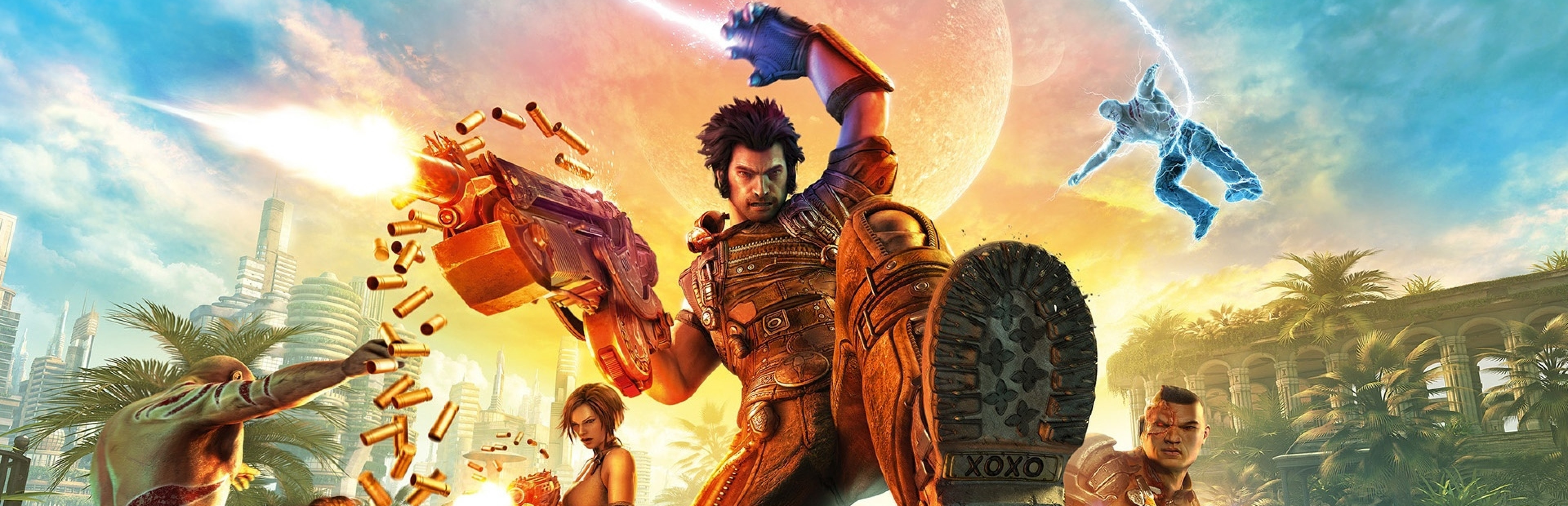
The controversy surrounding Bulletstorm’s violence isn’t actually all that bad. What everyone should pay attention to is the kick-ass new breed of gameplay it brings to the table by making it more exciting and fun again. Surprisingly, this game isn’t just brawn, thanks to a pretty snazzy storyline. You play as Grayson, who is a pirate and, with his buddies, takes on jobs as a mercenary. You take the wrong job and find out the truth about what you’ve been doing all these years, and you go on a manhunt to kill the guy responsible. You get taken to a planet that’s ravaged into ruin, and you come across some pretty strange enemies.
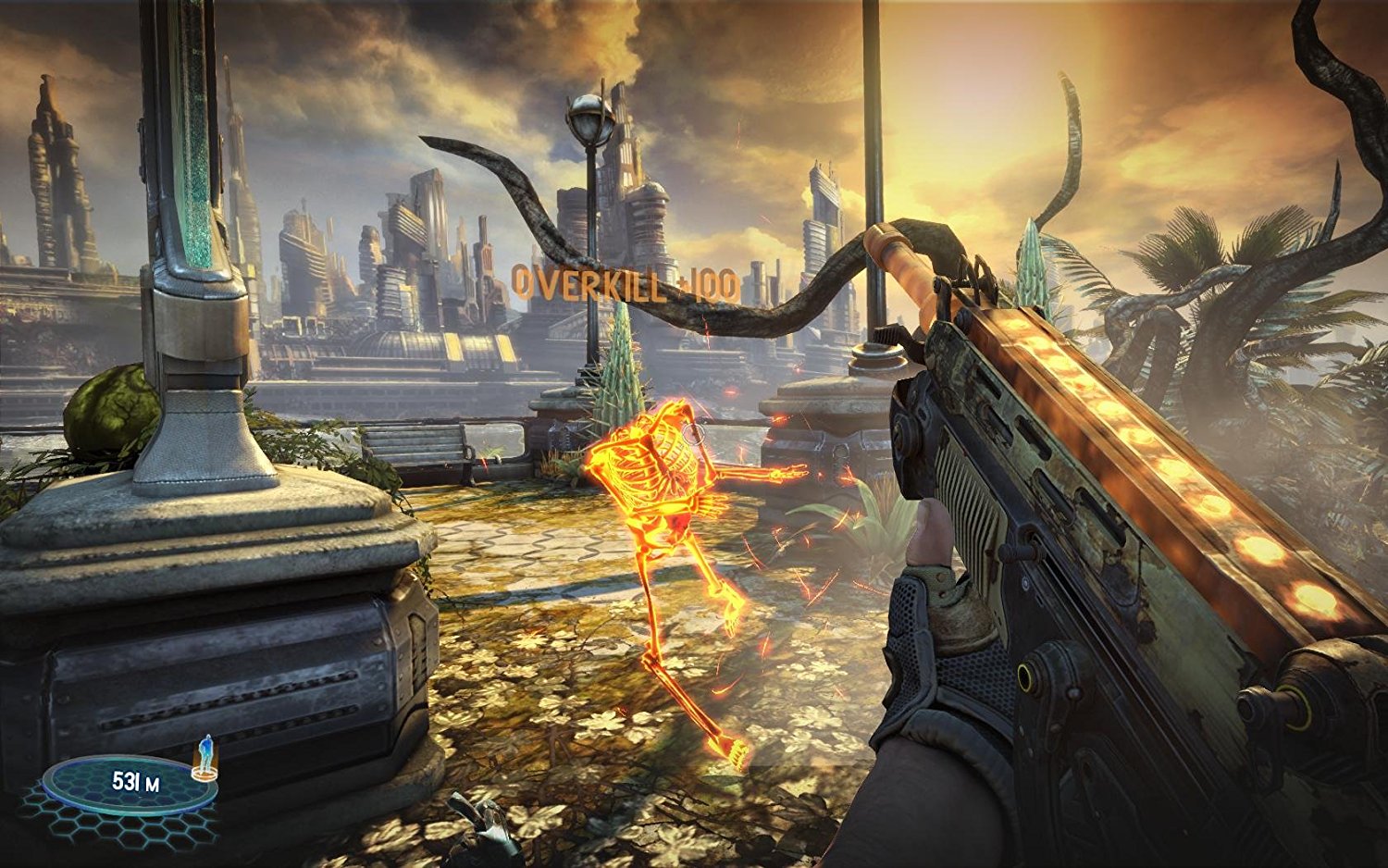
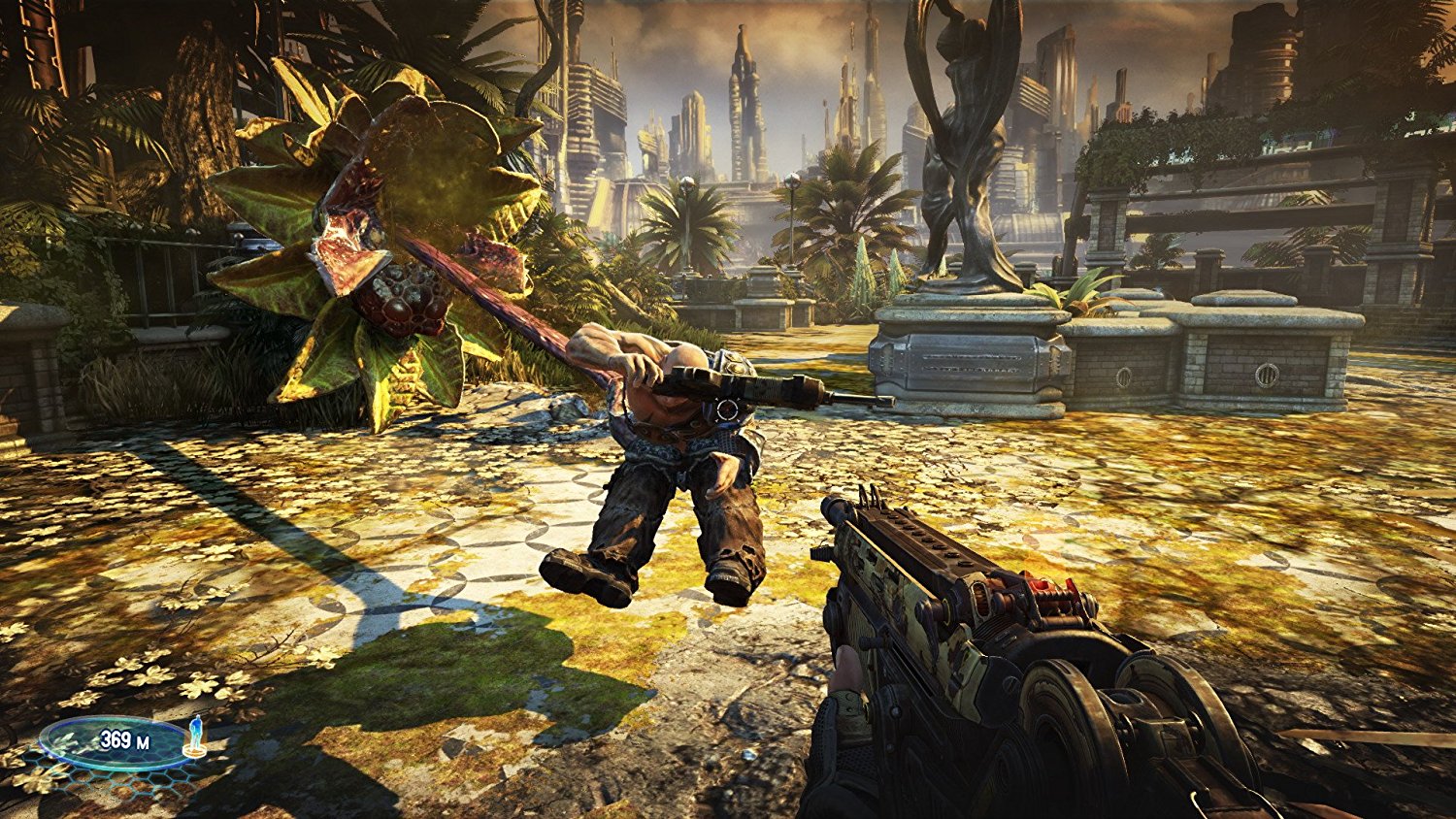
The characters themselves are great, and the dialog is hilarious, witty, and full of sharp one-liners and banter. Bulletstorm’s main campaign may have a solid storyline, but it’s the action that really counts here. The whole idea of the game is to rack up skill points, which are then spent to upgrade weapons and buy ammo. These skill points are earned by how you kill your enemies. Instead of just shooting them until they are dead, you must get creative with your weapon, the environment, and everything around you. You can shoot an enemy in the neck, groin, or head and get some skill points that way (the names of these skills are what led to all the controversy), but why stop there? How about you set your enemy on fire with a weapon’s secondary fire (called charge shots) and then kick them into a cactus plant? How about you impale an enemy into another enemy or launch an enemy into the air via your leash and kick them into danger in the environment? Still not good enough? Get intoxicated, slide down an area with your penetrator drill charged, and shred everything in your path. See a boss? Weaken him until his armor glows blue, then kick him in the butt and shoot his hole! The Fire in the Hole skill shot is hilarious and satisfying.
These are just some ways you can mix up your gameplay, and there are a ton of skill shots. Some are assigned to each weapon, some are secret, and some are story-driven. These skill shots are super fun to figure out, and they make you approach a hoard of guys in a different way instead of just tossing a grenade. Speaking of story-driven, there are some kick-ass moments in this game. My favorite part is when you get to use a remote-controlled dinosaur that shoots lasers out of its eyes. Yup, you heard right. Riding a train with a 500-foot-tall wheel rolling towards you is jaw-dropping. Bulletstorm is just full of huge, gigantic, in-your-face stuff, and it feels great to be in the middle of it.
Now there are some flaws here. While skill shots are fun to figure out and find after you unlock most of them, the repetition sets in. There will be some parts of the game where it’s just horde after horde of enemies, and then when some new environmental kill comes along, it makes it exciting again, but just for a few seconds. You constantly rely on new things to get into your hands to keep things exciting. Sure, the first few acts are super fun, but after you master the mechanics, you will start to wish for this.
That’s not to say the game’s bad or anything, but it just needs a lot more than these skill shots assigned to each weapon. The excitement also wears off quickly after a while, and that shock value only happens when new exciting things are going on. The weapons are very interesting, though I found them all fun to shoot, and I constantly swapped them out throughout the game. Each weapon has a unique charge shot, so you can constantly switch up your strategy.
This is pretty much the whole game of Bulletstorm, and it’s wrapped around this core design. Yeah, there are QTEs, and if you press the button quick enough, you get skill points for them, but it’s nothing too exciting. The campaign does start to wear itself out towards the last third of it, and the only thing keeping you hooked is the story at this point.
The game, despite using the already-aging Unreal Engine 3, looks amazing with gorgeous landscapes and vistas and some epic lighting effects. You will need a pretty hard-core PC setup to get this game to run, so otherwise stick to the consoles. The multiplayer is pretty fun and gets addictive, but it’s nothing like what you might expect mode-wise. Earning skill points in the multiplayer part of the game makes things feel fresh and actually turns out to be more exciting than for a single player because it’s less predictive.
Bulletstorm is probably there for every FPS fan, but some may not like it. There are a lot of foul languages, and the game is very gory, but I honestly doubt most gamers who play shooters will care. I just wish the game wasn’t so repetitive and added a little something else because it feels like there’s something missing. Other than that, it’s worth your dollars in skill points.
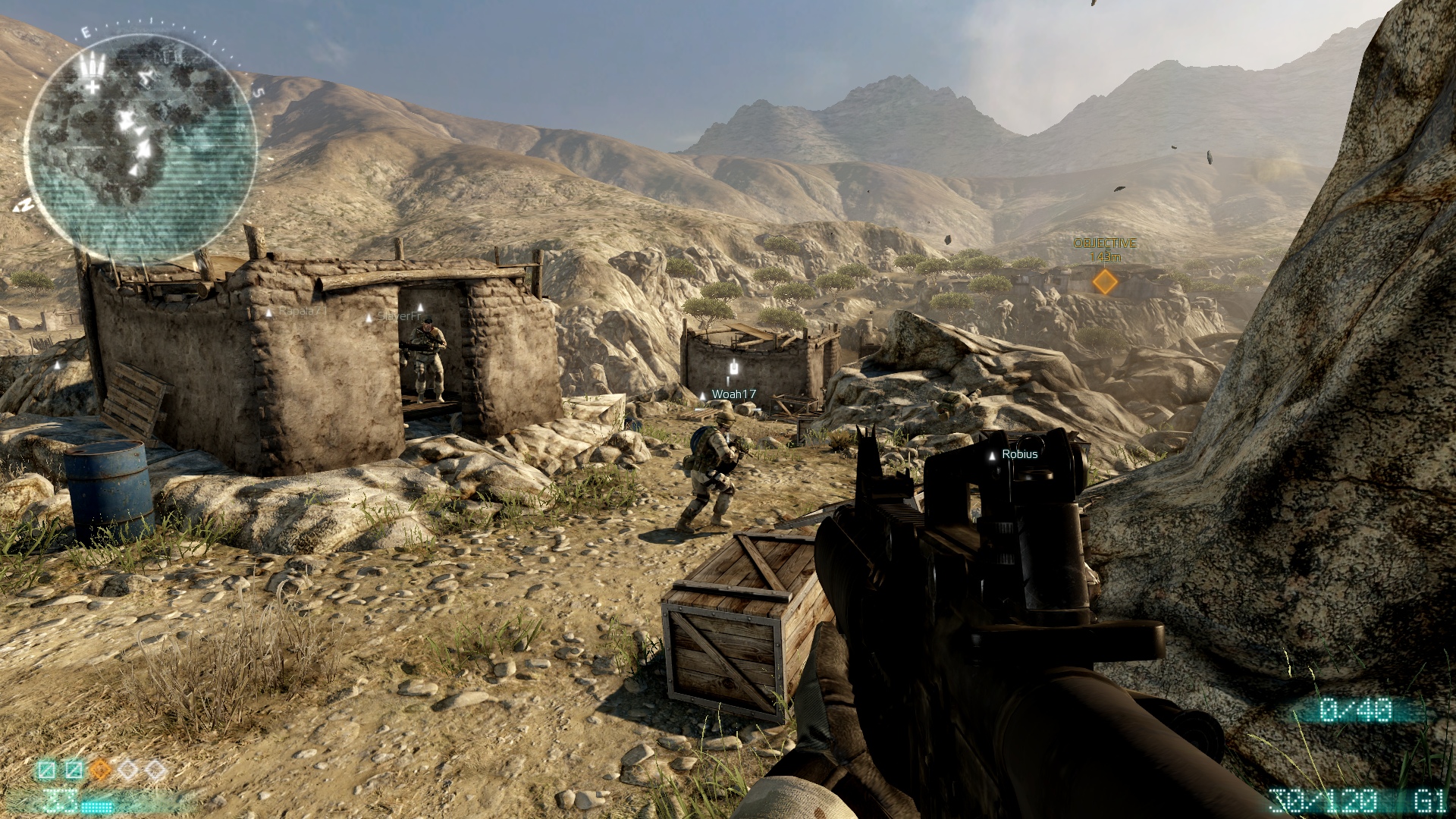
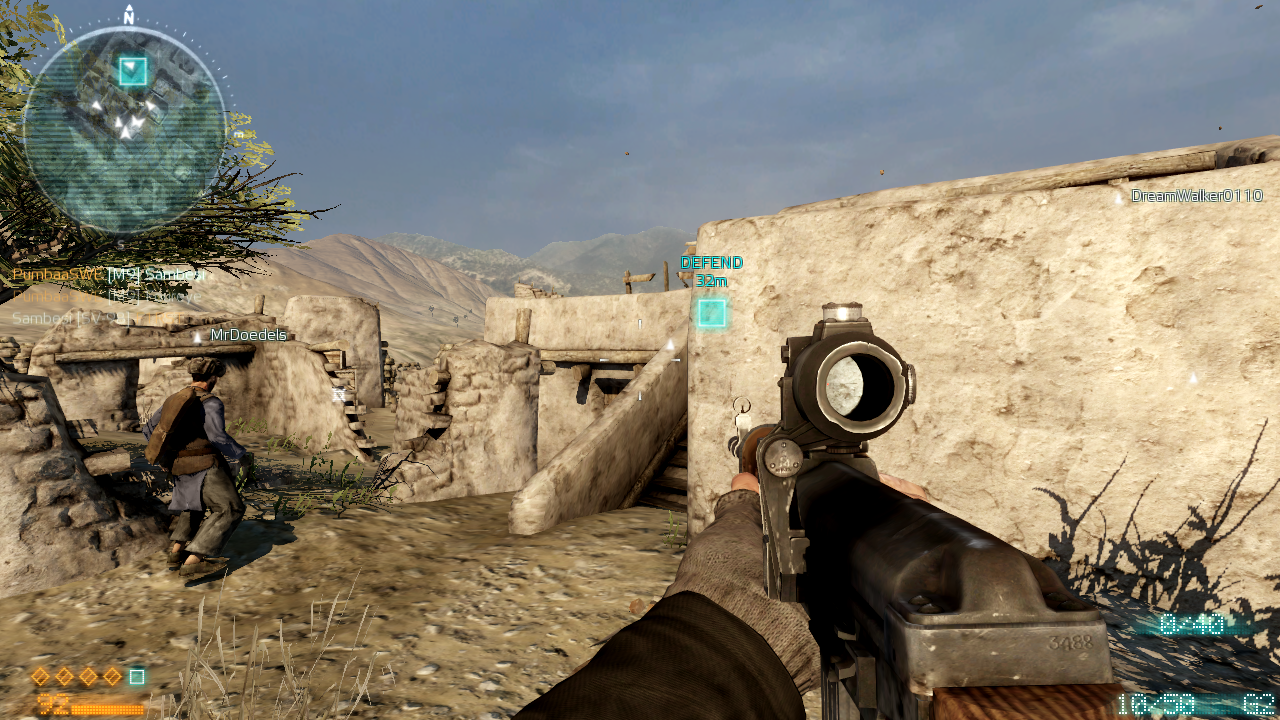
All the great World War II shooters are going away from that genre since it’s been beaten to death. Medal of Honor went the way for Call of Duty and was adapted to modern warfare, which works for this series. The single-player campaign is nothing really special, but it does showcase the realism of war and really makes you feel like a helpless nobody warrior in the middle of a Taliban shootout. It does this better than Modern Warfare, but not the multiplayer.
The single-player campaign has you playing as four different parties: a regular soldier, a Navy SEAL, a pilot, and a Tier 1 operative. Like most war games, you never get attached to the characters, but you do care for them enough towards the end. The game’s pacing is pretty good with you moving from night to day levels, and there is even an ATV level (why choose the loudest vehicle to do a night raid?), and the flying levels are pretty fun but extremely linear and limited in control. You can actually move the helicopter, but instead, just aim and shoot. There are some great moments, like the Tier 1 sniping sections and cinematic arts, but these are far and few. Most of the game consists of moving from cover to cover and shooting everything in sight. Sound familiar? Sure! Is it still fun? Why not! You seem to always be equipped with the right weapons, and ammo is unlimited since you can just ask your fellow teammates. I never had to pick up a weapon off the ground, but it’s there for variety.
My favorite moment in the game has you playing as army soldier Adams, and you and your squad are stuck on a hill inside a tiny little mud shack, and the Taliban are raining down on you from the mountain. You hear military chatter an awful lot, but it sounds more authentic and not just silly babble. Your team slowly runs dry on ammo, and after the cinematic music plays, almost all hope is lost to the helicopters! During this sequence, it seems it never ends, but the surrounding chatter makes the whole experience more intense and authentic to real-life battle warfare. But the whole game isn’t like this. There are a lot of moments that seem more like the rest of the shooters, so the pacing is off a bit, but it doesn’t fall apart.
You’ll mainly come back for multiplayer, which is your standard military shooter affair. There are only three classes, a few maps, and that’s pretty much it. It’s fun since DICE (Battlefield: Bad Company) makes it, but it’s no Modern Warfare. You have your usual three classes of ranger, sniper, and specialist, so everyone is pretty much the same person. It basically shoots whatever moves it makes and racks up a score. There is an objective-based type of game mode, but it’s essentially the same.
The game also does one of the weirdest things, and that uses two different game engines. The single-player uses an outdated version of the Unreal Engine, and it’s obvious that it looks outdated due to low-resolution textures and some low models. It uses the Airborne engine, which was a poor move on Danger Close’s part. The multiplayer uses the Frostbite engine that’s used in Bad Company 2, and it looks great! Why the weird design choices? I don’t know, but I hope MoH2 changes its engine. Is the game worth a purchase? Not really, but maybe a weekend rental. After about five or six hours of multiplayer, you’ll be bored and probably just switch back to a better shooter. If you get bored, you can go into Tier 1, which disables everything and times you. Yes, health restores slowly; no ammo refills, no reticle, nothing. So enjoy the super-hard mode.
Transformers has always been one of those licenses that has struggled in the gaming world and produced mediocre to abysmal products that were quickly forgotten. The fine men and women at High Moon Studios have finally delivered the first excellent Transformers game that brings us back to the beloved cartoons we grew to love and embrace in our hearts.
You play both the Decepticon and Autobot campaigns, but you start out as the Decepticons trying to use Dark Energon to hijack the core of Cybertron and destroy the Autobots in the process. When you start each chapter, you can choose one of three Transformers to play as, and in the Decepticon campaign (minus the Star Scream mission), you can play as either Megatron (yes!), Soundwave, or Breakdown. Each one has unique abilities and starts out with its own weapons. Once you jump into the game, controls play out like a standard third-person shooter, but the game does a bit more for us here.
You can carry two weapons at all times, and of course, you have to reload and acquire more ammo, but sometimes you’ll find a really big weapon that you can carry, but switching to other weapons will drop it. You can use your abilities, such as sucking the life from enemies or hovering, but as you can see, the abilities are pretty lackluster, and you never really use them! To regenerate your abilities, you must collect fallen energon from dead enemies. You can also transform into your vehicle form, but once again, you never really have to do this unless you’re traveling long distances or you’re almost forced to. The transformations are seamless, but there’s just no reason to really do it since your firearms are sufficient.
You can throw grenades as well, and one such grenade called the healing grenade is excellent since it creates a healing bubble that comes in handy a lot. The weapons are pretty versatile and very useful, and High Moon did a good job giving a nice selection. You really have to decide what’s the best weapon for the situation, especially during boss fights.
While the gameplay is solid, it needs to be more cinematic. The game is very straightforward and stays the same throughout. It’s just killing wave after wave after wave, then killing this boss. Each chapter replays the same formula but offers just enough diversity to keep you playing. I wanted the game to be more cinematic and varied in gameplay, but maybe next time around. The game looks very good, but some of the textures are on the low-resolution side, and it could have also looked so much better. However, the art style is spot on and really makes you feel like you are fighting this massive war on Cybertron. The voice acting is top-notch, and everyone sounds like, or almost like, their cartoon counterparts’ personalities and all. I do have to point out that the AI is pretty solid and gives you a good challenge, but the difficulty is poorly balanced due to easy sections and then a sudden section that you die in 10 times.
The multiplayer side is fun with the escalation mode that pits you against wave after wave of enemies, but the competitive side is pretty standard and not very exciting after a while. With a compelling story and solid enough gameplay and variety to keep any Transformer fan or newcomer alike busy, you won’t have a reason to come back to play through Cybertron again unless you just want to hear your favorite metal men talk.
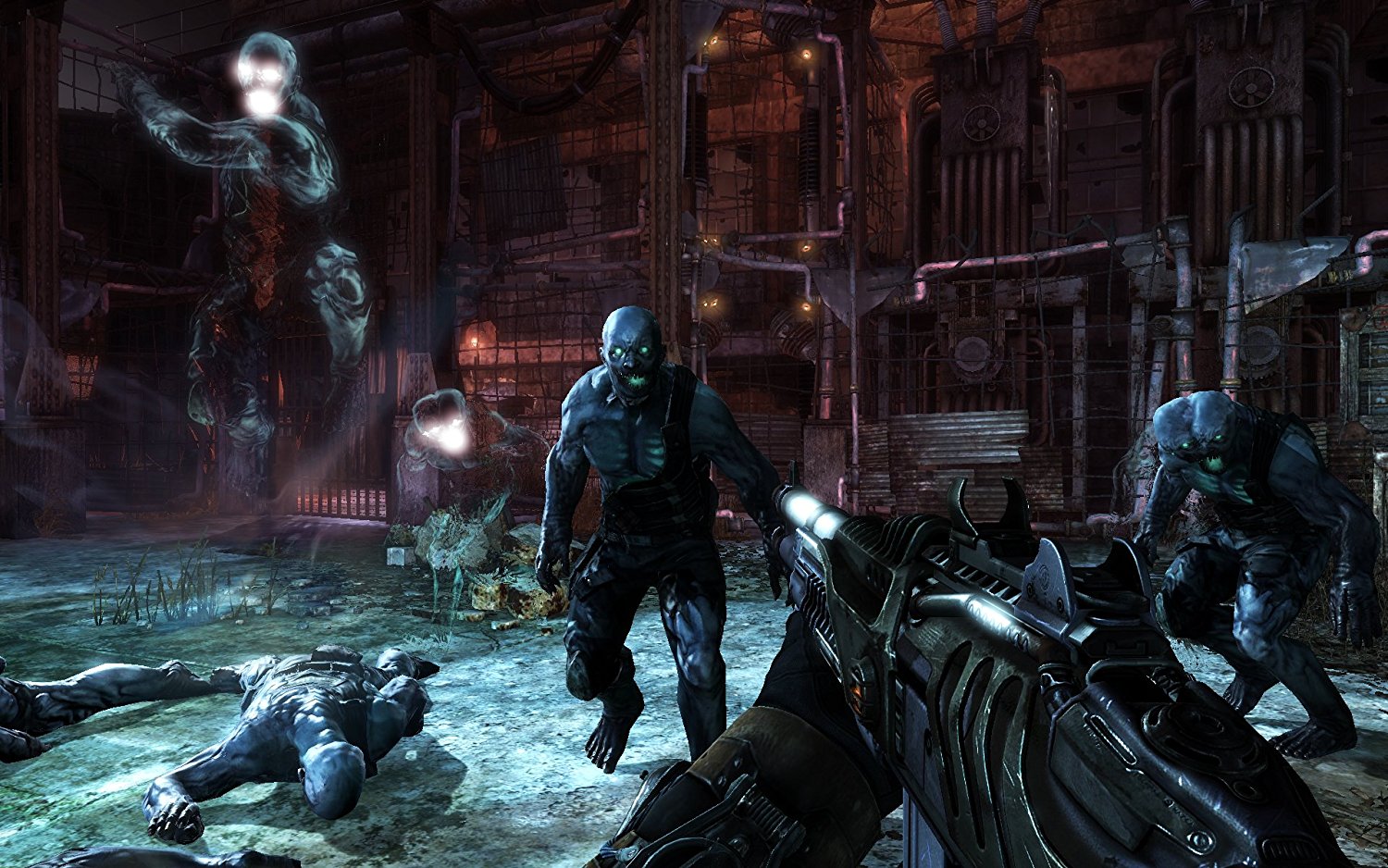
A lot of developers with risky ideas tend to get low funding, and in some rare cases, the game turns out well. Singularity is one of those games with a low-budget feel but with AAA ideas. You play as a special ops agent named Nate Renko, who is sent to an island called Katorga-12 and must stop the singularity. In 1955, Russians found a new element called E99 and tried using it as a new weapon to wipe out America. The experiments went wrong due to an evil and greedy man and a scientist who created them all. The story is pretty decent but very hard to follow, and it feels like something from a sci-fi TV series.
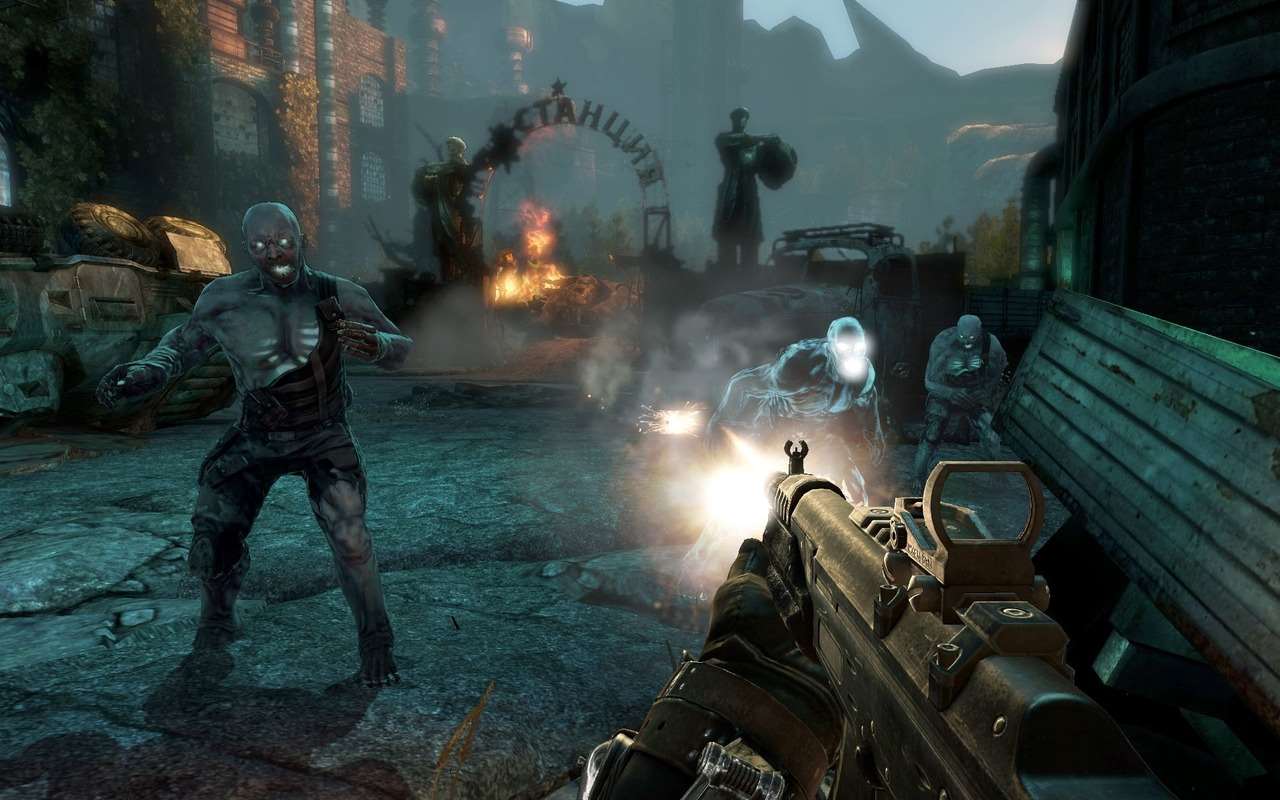
The game starts out kind of like BioShock, Half-Life, and even Fallout 3 with an introduction of excellent atmosphere, first-person real-time narrative with movie reels, and the whole destroyed apocalypse feeling. It never really strays from this, but it does wear off fairly quickly, and the game’s atmosphere loses its touch after you get further into the game.
The game has very fun gunplay, but the weapons are what draw your attention and make you want to actually shoot stuff. You get your typical pistol, shotgun, and assault rifle entourage, but there are other unique weapons like a grenade launcher that lets you control the grenade on the ground, so when you let go of the alt-fire button, it will blow up where you want. My favorite weapon is a mix of a sniper rifle and grenade launcher that lets you control the bullet and steer it. Watching enemies’ heads blow up or legs come off is very satisfying and never gets boring.
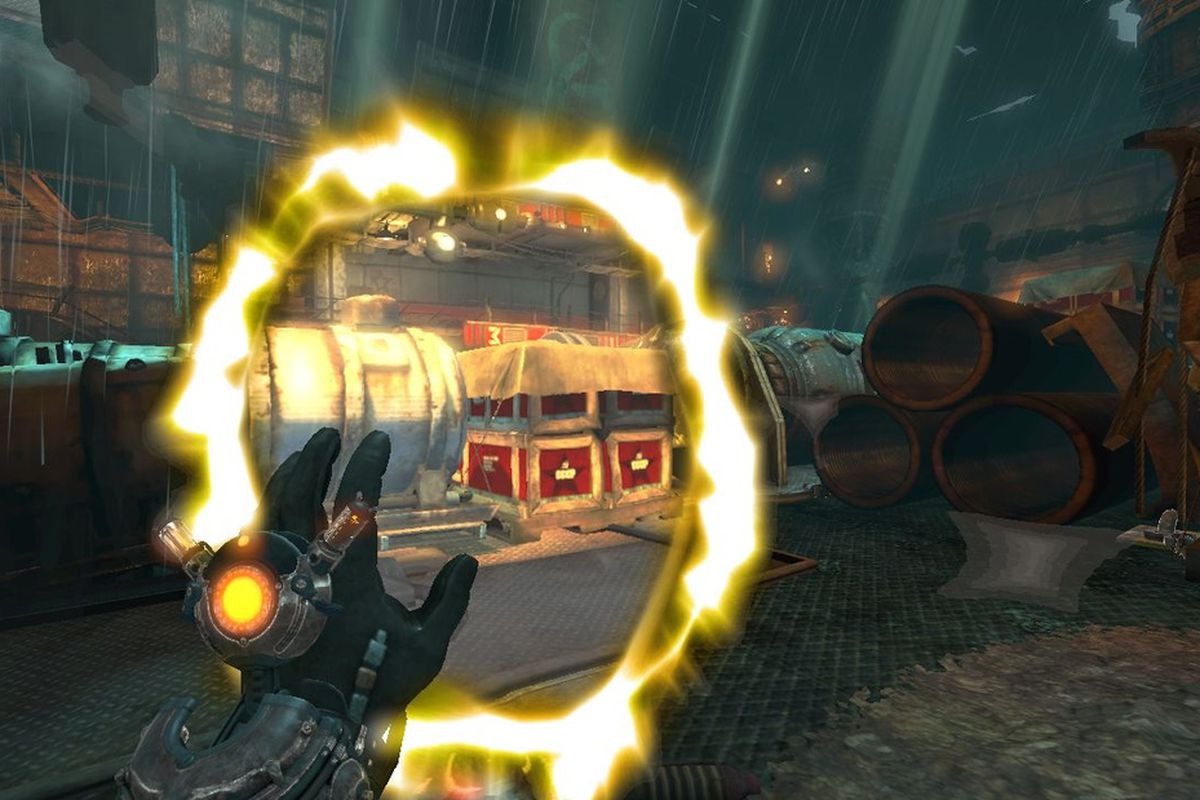
While the guns are fun to shoot and feel powerful and satisfying, it’s the time manipulation that pulls the game’s fun factor up. You find the TMD about 20% into the game, and it lets you do a slew of things. Aging enemies into a corpse, bringing back stuff from the time such as destroyed ammo crates, electrical boxes, aging safes to get inside, renewing crumpled staircases, etc. Another ability allows you to create a bubble, and everything inside is slowed down. You can also use telekinetic power to throw objects around, as well as an impulse ability that pushes enemies away. The game allows you to use the TMD in large, epic ways, such as restoring a broken-down train, but you always feel the TMD isn’t used to its full capacity.
You can upgrade the TMD with perks such as longer durations for powers, allowing extra energy when killing enemies, as well as upgrading weapons with more firepower, faster reloading, and bigger clips. While the upgrades are a nice touch, they don’t really make a huge impact like you would think, and the game adapts to these upgrades too fast, so you always feel like you’re not quite powerful enough.
While it’s neat to reverse time and go back in time to stop things from happening, then come back, you always feel the TMD, and the whole time manipulation thing isn’t fleshed out enough. For example, there is a door in front of you that isn’t quite open enough to crouch under, so you age a metal crate, slide it under, then bring it back, and it pushes the door open. Not very creative, and I feel that all of these time elements could have been fleshed out more. This isn’t the only game’s problem, but the biggest one is its looks. It uses Unreal Engine 3 but looks kind of ugly with flat, muddy textures, and the only real thing going for it is the lighting.
The creature design is pretty neat, but there’s not much variety, and the story is very confusing. The game just loses the strong appeal that you get in the beginning towards the end. Singularity is a bunch of gory fun, but it feels like it could have been a lot more if Raven had gotten a bigger budget. If you like FPS games and are a fan of BioShock, Fallout, or Half-Life, then you’ll appreciate what Singularity brings to the table and can forgive its shortcomings.
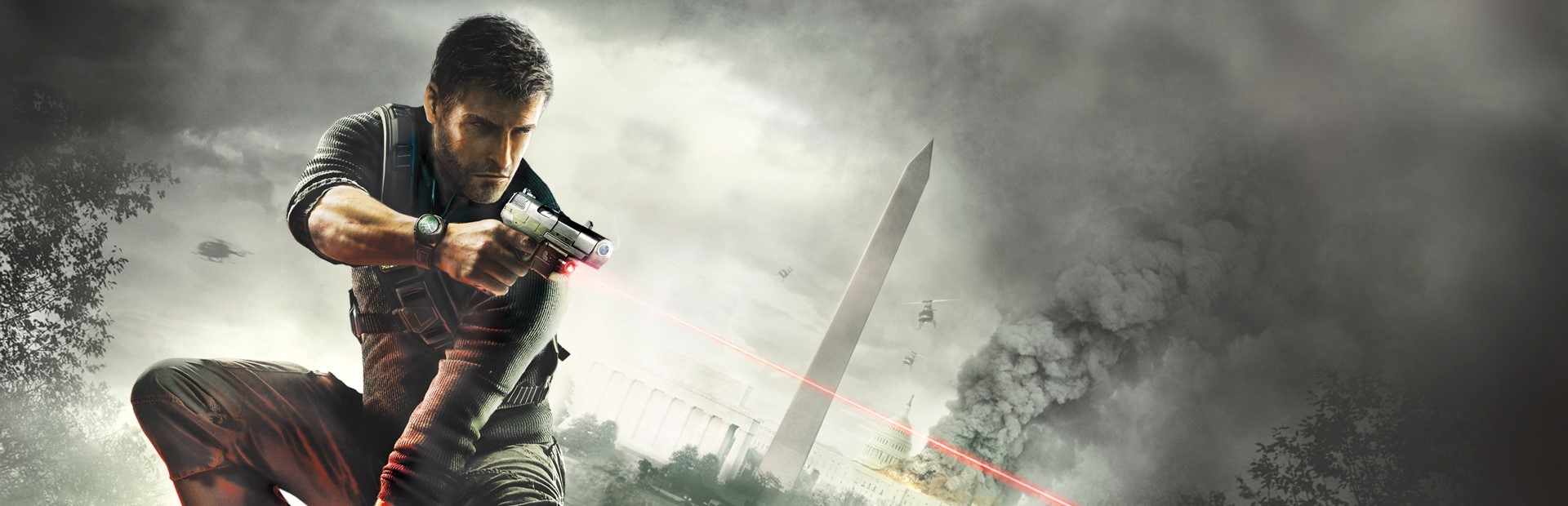
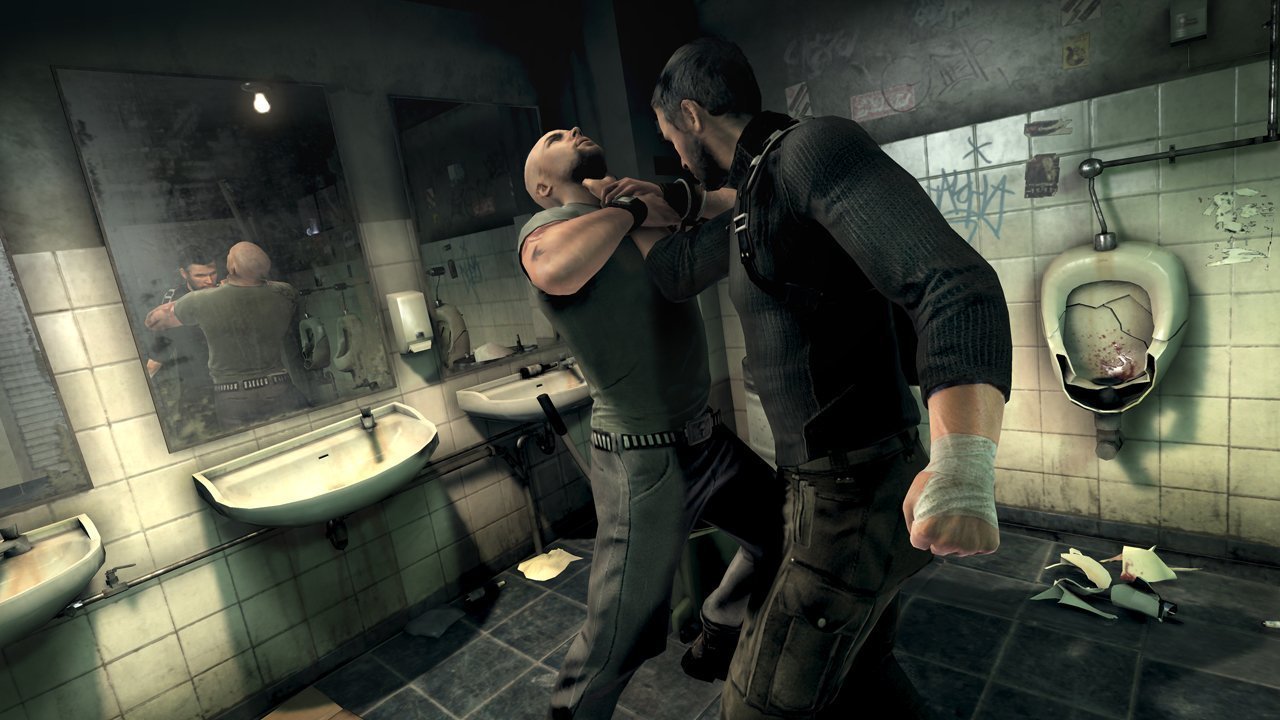
Sam Fisher is back in a more action-oriented Splinter Cell, and while this may be great for people who hated the series before, fans will be let down. Splinter Cell is known for its stealth-heavy gameplay that relies on shadows, trial and error, and patience. While Conviction still uses this, it’s quicker and feels like Splinter Cell Lite, and this isn’t really so bad.
The story is continued from the series, but only fans will really pick up on it. Sam is still trying to find his daughter after Third Echelon supposedly killed her. In the meantime, he is trying to stop a terrorist organization from setting off EMP bombs and killing the president.
To get to the meat of the game, let’s talk about stealth. Yes, you can use shadows like in previous games, but instead of some sort of meter, the screen just turns gray when you are hidden. The game’s best feature is the new cover system, which lets you jump to cover on the fly by pressing Space and aiming for a new place to hide. This can give you quick access to enemy positions, but it is a little broken. Sometimes there isn’t cover in the right spot, and it’ll force you to use your gadgets and even use headshots. This can really kill certain parts of the game and make them very difficult, especially when you have lots of enemies in the room. In previous games, you could just kill lights and sneak around in the dark, but Conviction confines you to cover. You can climb around things and hang off pipes like before, but the game mainly forces you to use cover.
The best feature by far is the mark and execute system, which lets you target certain enemies, and Sam will quickly kill these guys with headshots without giving away your position. This is great when you have multiple enemies, but you can only get a mark and execute points if you stealth kill someone. This really forces you to sneak around cover and try to kill someone up close. Certain weapons have a different amount of points you can use as well. There is also an interrogation system here, but it’s not much other than pressing C and watching Sam bash up his targets. This could have been a lot more.
The game has a weapon upgrade system, but it’s really cheap and pretty pointless. You can upgrade handguns with more powerful ammo or reflex sight to upgrade accuracy, but there are only three upgrades per weapon, and you usually stick with the same weapon throughout the whole game, so this is really wasted. You get some pretty neat gadgets, such as the sticky camera, which allows you a remote view of an area, makes noise for distraction, and even blows it up. However, the noise distraction rarely works since enemies won’t walk over and check it out, so it just feels like an irritating remote mine. You get your NV goggles late in the game, and they are the same as before, but you can see hidden lasers with them, but they just feel tacked on.
The multiplayer is what you would expect from a Splinter Cell game, but it uses the whole cover system thing, so it’s not as intense as previous games. There’s not much to talk about here, and I’m not really a multiplayer fan, so if you like Splinter Cell multiplayer, it’ll keep you busy for a while.
Conviction just feels too light and has broken stealth elements that they shouldn’t have changed. Even when you do have to shoot, the other weapons feel useless since they can’t hit anything. The story is pretty decent, and the game looks good (what you would expect from UE3). Michael Ironside does an excellent job as Sam, but it feels like Splinter Cell was cored out, and it just feels like a rush job. You still have to have patience in this game, but the elements and patience don’t really mix since this game is more like a Splinter Cell with action elements. Still, the game is worth a playthrough, and you will have a lot of fun.










































 thebinarymessiah.com
Try multiplayer. A lot of fun !