Publisher: Microsoft Corporation
Developer: Ninja Theory
Release Date: 08/12/2025
Available On



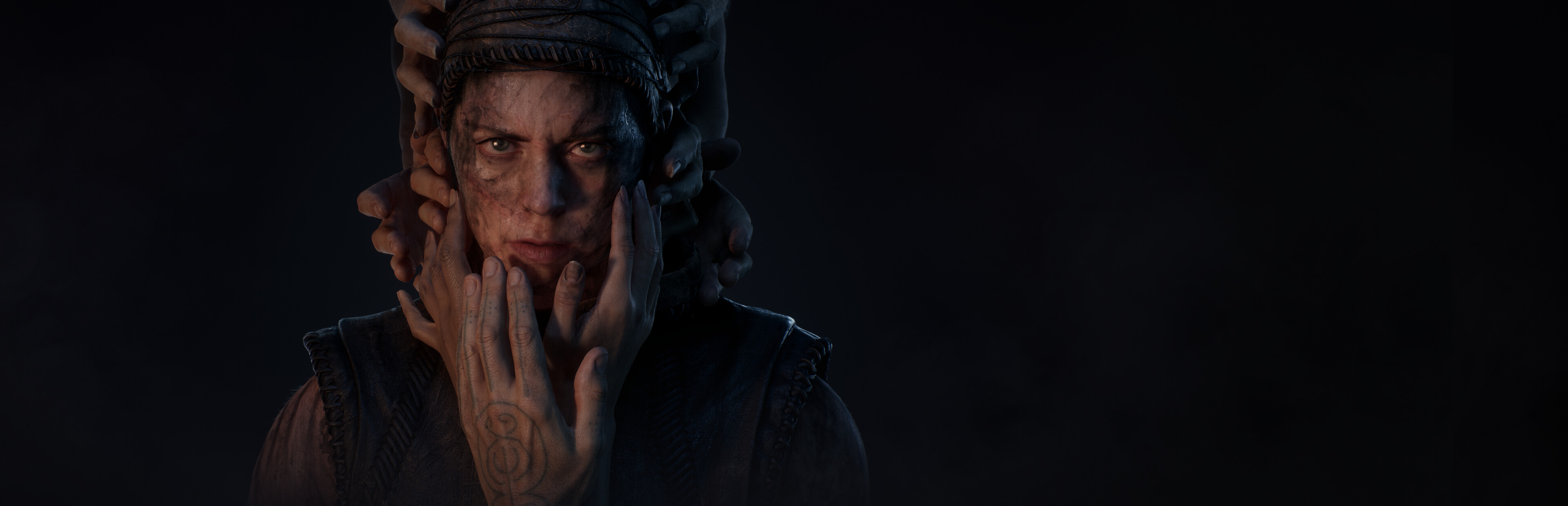
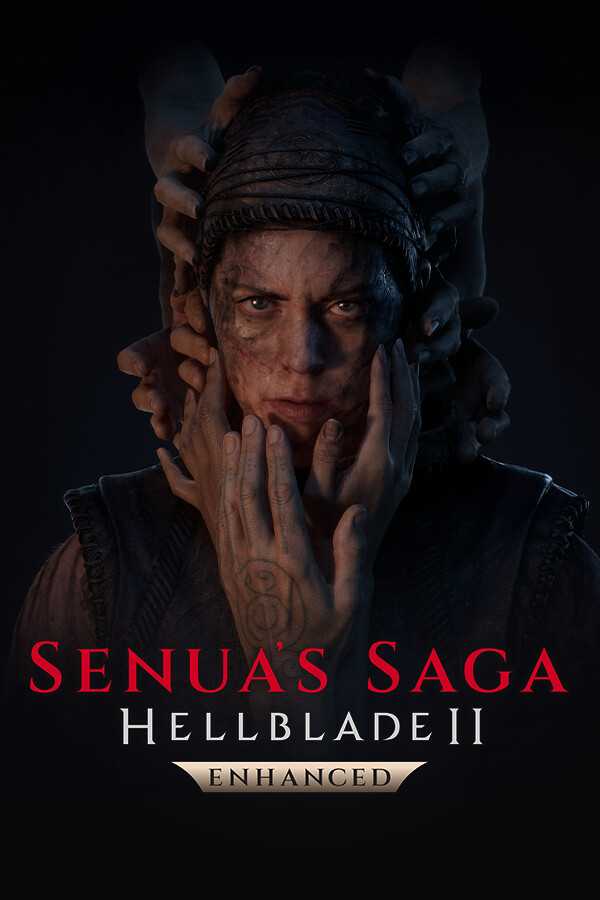
The first Hellblade was an interesting experiment by Ninja Theory. Using mental health as a storytelling element by manifesting them as gameplay and visual effects on screen. Senua is back in a game with a much larger budget and higher production values than even before. This is a fantastic-looking game, but does it have more than looks? Senua is a trapped prisoner on a Norse slave trade ship when it wrecks at sea by an unknown force. Senua fights off her slavers and meets the lead slaver. Without spoiling much, he becomes one of three other companions who accompany Senua on her new saga to fight her demons of her past and help those around her. Again, most of what Senua goes through are visual hallucinations, but she does have more control of her psychosis than before. The game gameplay loop from the previous game is present. Some combat, puzzles, and walking with storytelling dialog. Sadly, this is almost exactly the same without much improvement. The only things that set this game apart are the inclusion of new characters, a deeper narrative, and higher production values.
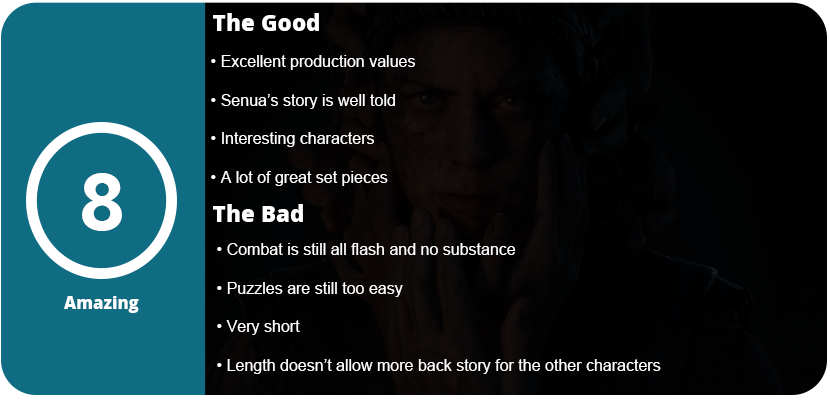
Combat is exactly the same as the previous game; in fact, it’s a bit more dumbed down. Gone are the kick buttons and the ability to run and attack. You can still do the heavy, light, and parry/block attacks, but Ninja Theory tried to make up for a lack of expansion by increasing the scripted feeling of the fights. The animations are better, and the combat feels more brutal. It looks cooler with Senua getting her sword stuck in enemies and blood spurting out everywhere, but at what cost? There are still no upgrades or new abilities learned. You get your focus mirror very early on, and this is used as a last-ditch effort right before you die to give you a leg up. I didn’t die a single time in this game; it’s so easy. In fact, even the dark rot feature is now gone. As you fight enemies, you will have other villagers run in between and interact with the fight; various animation loops play out, but by the end of the game, the excitement is gone, and it’s just a simple combat system. Thankfully, there is a lot less of it in this game, with maybe half a dozen combat arenas thrown in. The game mostly focuses on puzzles, which are still just as easy.
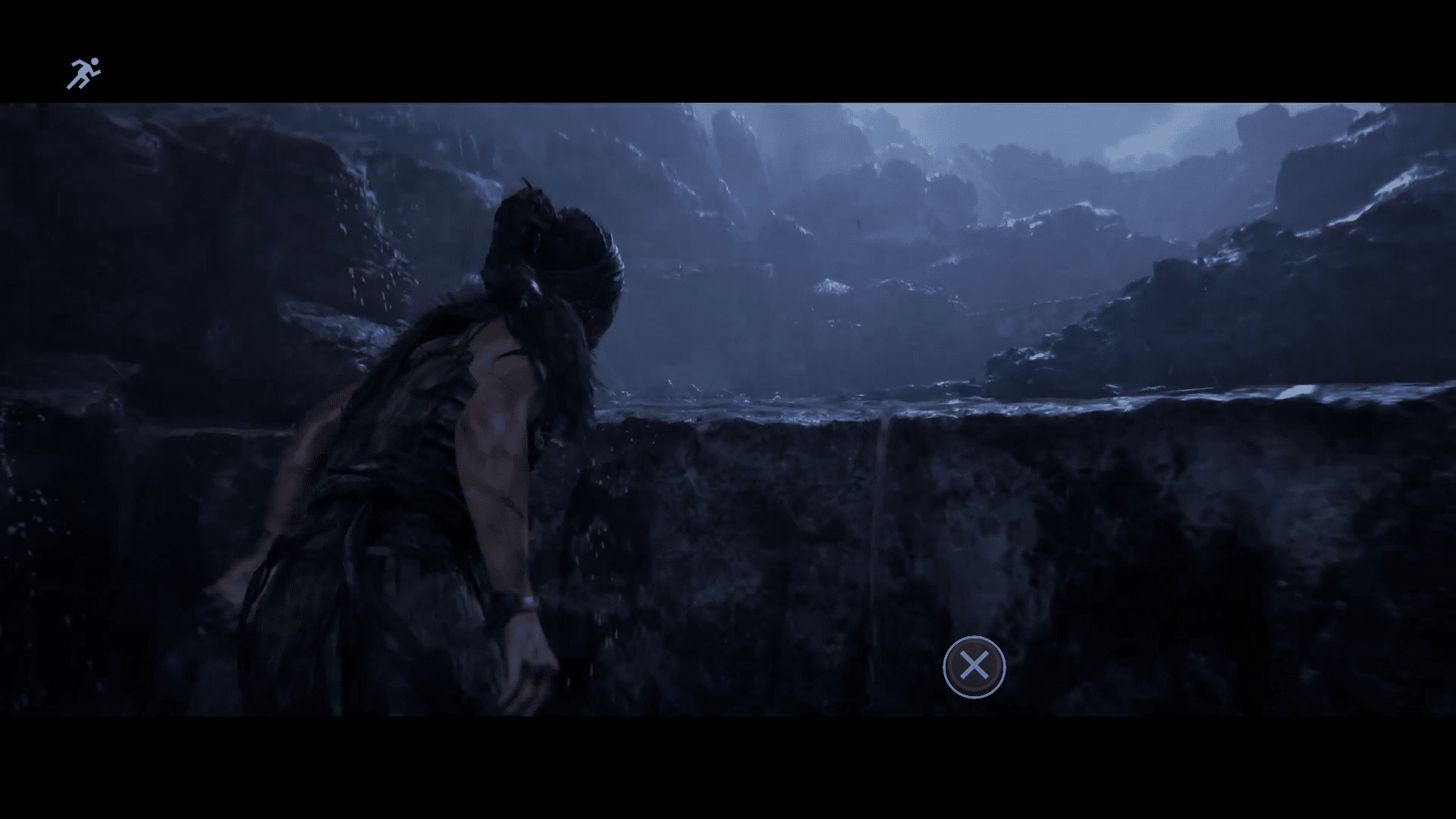
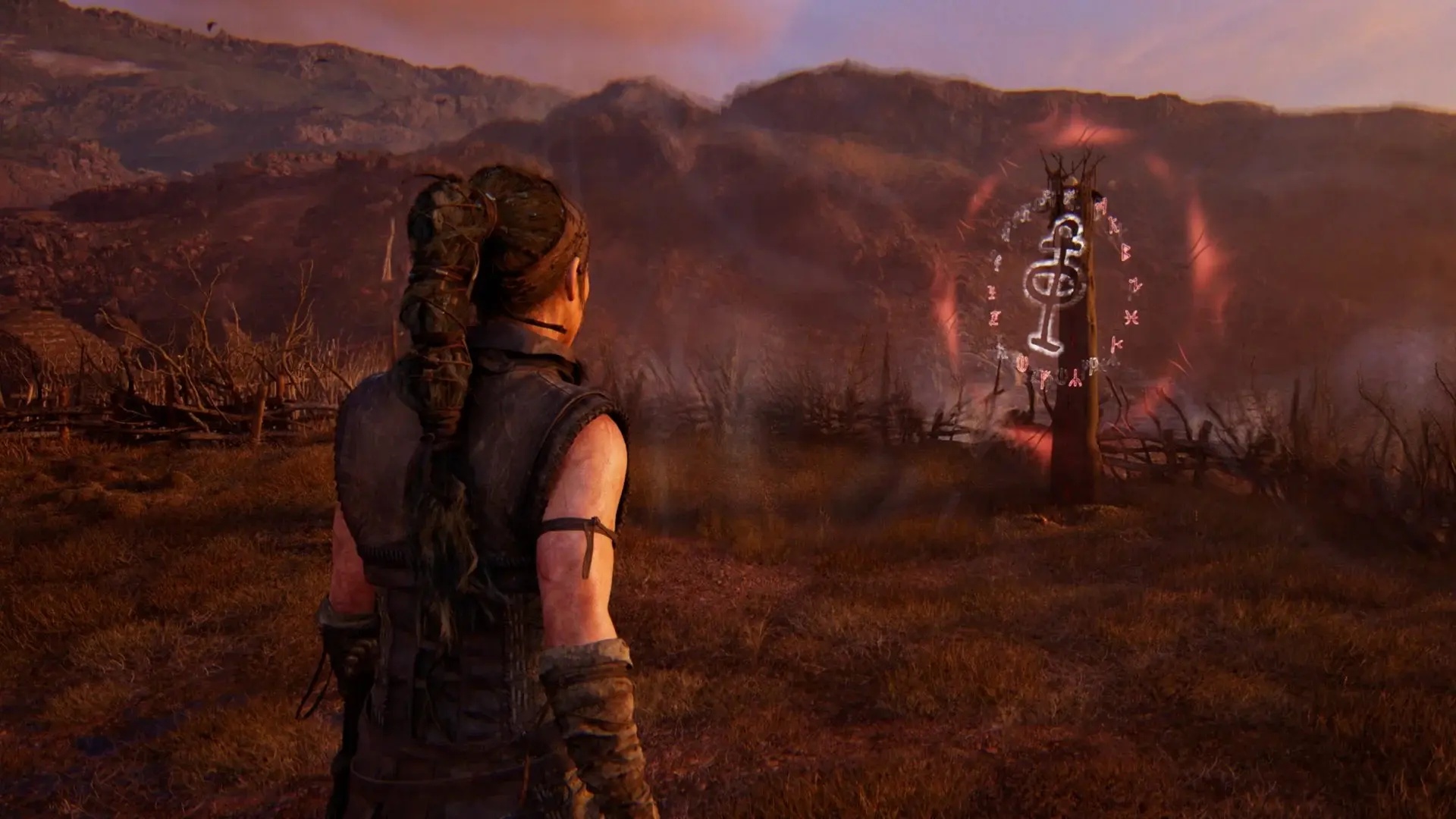
You still have illusion puzzles that use the environment, but now this is advanced with magic balls you can focus on to make geometry appear and disappear. This means they need to be activated in a certain order, but this doesn’t really make anything more difficult. There’s less emphasis on finding symbols, and some ball-on-pedestal puzzles are tossed in. These won’t keep you very invested, sadly, but they are more spread out as well. Most of the game is scripted storytelling like you see in a lot of first-party PlayStation games. A couple of scenes have you running from cover to cover, avoiding ocean waves and volcano blasts. There’s a lot of visual effects tricking the player into scripted gameplay. A lot of climbing and animations that involve that. This game is well acted, and the story is entertaining, but anyone thinking this is more action-heavy will be disappointed. If you didn’t like the first game, you will like this one even less despite its higher production values.
Senua’s story makes a bit more sense here and is less poetic and metaphorical of her past. There are the same collectibles here, just fewer of them, and at least there’s some incentive to play again. There is a Dark Rot mode, which is the perma-death mode of the first game; developer commentary; and narration from the other three characters, which adds a new perspective to the story. Is the game worth playing four times or more? Probably not. I personally liked this series, and playing them back to back is an entertaining day of gaming, but I really wish there was more to this game. It could have been longer, as it feels the story is truncated. The three new characters are interesting, and I wanted to know more about them. They just show up to help Senua in the current circumstance, and we have no reason to care for them outside of Thorgestr, as he is the first companion from the very beginning. Norse mythology is pulled back a bit and focuses more on the giants but less on the realms.
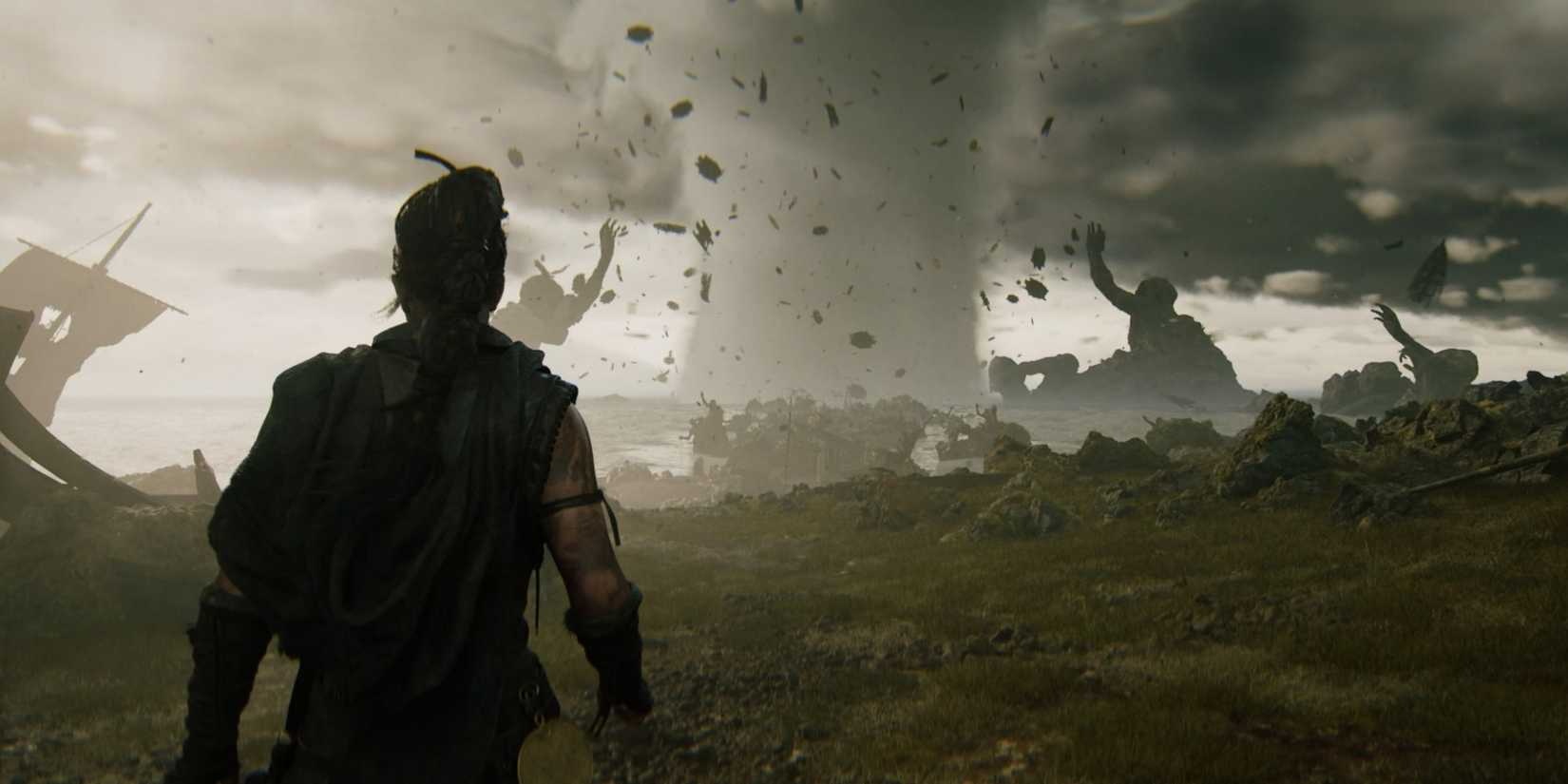
Overall, Hellblade II is a great game for an entertaining afternoon. The story is good, the characters are fun, and the production values make this one of the best-looking games of this generation. On the PS5 Pro the visuals are great, and using Dolby Atmos on a 5.1 surround system is a treat. The thunderstorm and rain are heard all around and sound awesome. When you fight helmeted vikings their muffled voices are heard in the rear speakers, and villagers can be heard running around. It may not be the best game, but it’s a great piece of entertainment, especially if you have the correct setup.
Reviewed On

Quality Mode | PSSR




 thebinarymessiah.com
Super, thank you