
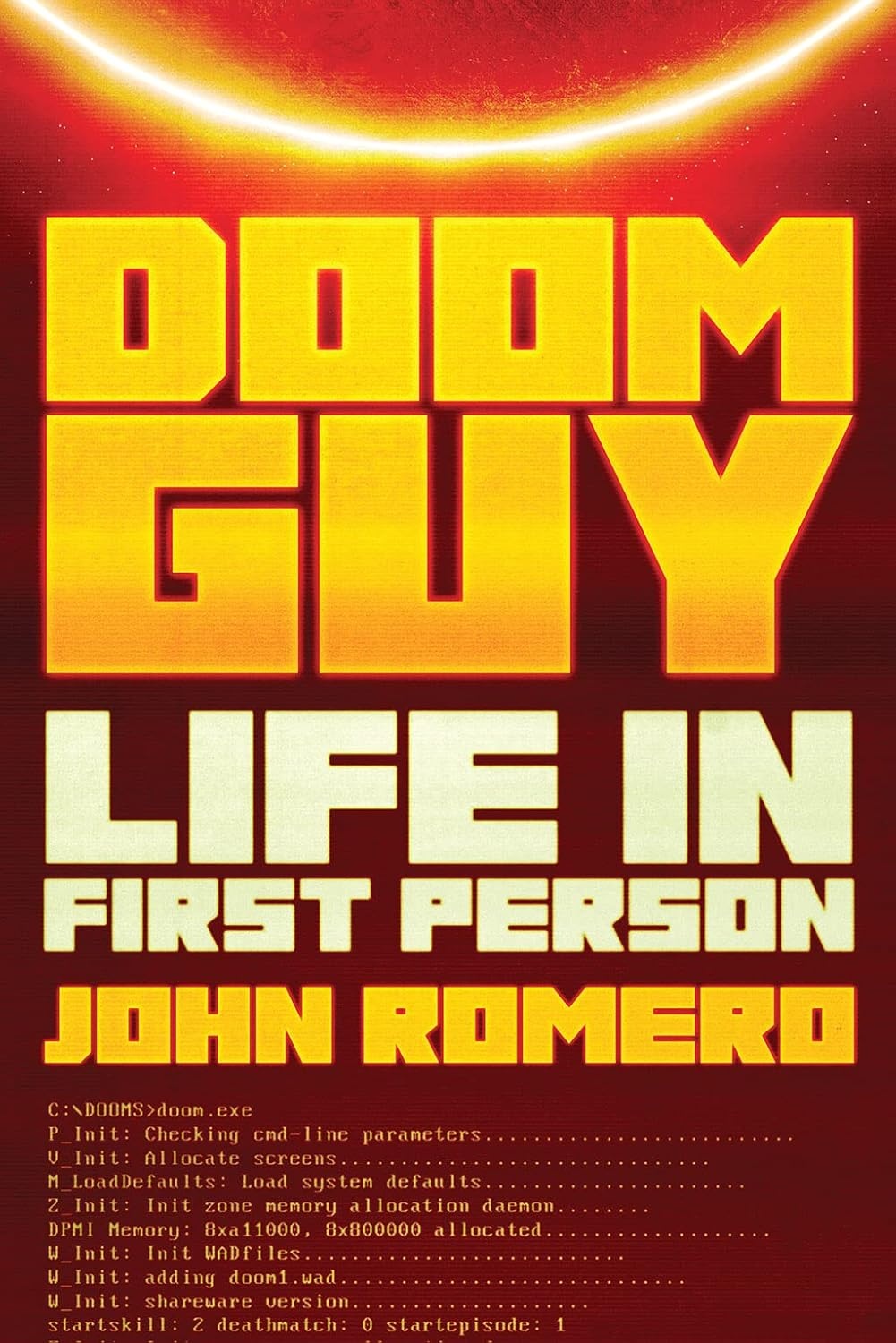
For anyone who watches long-form YouTube documentaries about video game history and facts. This is for you. For anyone who just loves tech. This is not for you. For those who just love playing Doom. This also isn’t for you. I don’t read auto biographies very often, and in fact, I can’t remember the last one I even read. However, I do know that a lot of authors of auto biographies sometimes aren’t the best tellers of their own story. I am personally fascinated with game design and peeking behind the curtains about the lives of the developers, what made them want to do this, and what makes games tick. This book is an autopsy of Doom, Doom II, and Quake, and even Daikatana. There’s also a lot of backstory about how John Romero grew up poor and had an abusive, dysfunctional family.
Before the book even gets into the development of Doom, there’s a lot of backstory that most of us don’t know who don’t watch or read every single interview John has done. He mentions quite a bit about what’s never been said or talked about when it comes to his childhood. This gives us a great lead-up to what a lot of us are buying this book for. The turmoil that is any game that John Romero touches. I walked away from this book both respecting John as a technical mastermind of coding and game design and less so as an actual person. John had no business being in charge of teams, and it seems he never learned his lessons, and he even says so in hindsight, yet this story keeps repeating even today. While John made many 8-bit titles along with Commander Keen, his fame started with Doom. The story of him and John Carmack is one of camaraderie and friendship but also lets us see the capitalist vampire that the US has pushed into all of us. Going from a humble startup to a mega-corporation almost overnight and all the problems that come from that.
John clearly always bit off more than he could chew. Refusing to get help unless it was mandatory and doing 10 jobs at once (literally in some cases). There are many names thrown around the book without much context as to who these people are on a personal level. They feel like action figures standing in for John’s conversation with us. Tom this, Adrian that, and so on. We don’t get to know any of these other people outside of a conversational context. That’s exactly what Life in First Person is. A very long and in-depth interview. There’s a lot of talk about the technical side of computers, coding, and game design which will interest those who are and bore to death those who aren’t. John also likes to repeat himself quite often and just rephrase multiple events in different ways. Some chapters just dragged because he either wouldn’t get to the point or would go off track too many times just to loop back around many pages later.
Doom Guy feels like a lot of what most have already known publicly. This book felt a lot like someone who is getting up in age and wants to tell a publicly known story his way. It felt like a conscience-clearing conversation to help John feel better about going to be at night. After Daikatana in 2001 John never made another successful game outside of the mobile and Facebook game trend stuff that most of his audience hated in the late 00’s to mid 10’s. The disaster that was Ion Storm only had a single fruit, and that wasn’t even John’s game. It was Warren Spectre’s Deus Ex. The millions upon millions of dollars that John got his hands on throughout his career only bore fruit for three successful games. Doom, Doom II, and Quake. There’s not much talk about John’s later career, including his more unsuccessful bombs from his Romero Games company. Just recently, Microsoft cancelled John’s latest FPS that he talks about towards the end of his book. Most likely because he still can not manage a team.
Overall, Doom Guy is a great read for those who like Doom or Quake and love game design and behind-the-scenes stuff. Most others will find this book dry and dull. It feels and reads like an insanely long interview, and that’s not quite what I expected. I wanted to know more about John’s later years AFTER Ion Storm, as we don’t really know much about this. A house flood, meeting Brenda, remaking Doom maps, and an awful Kickstarter that couldn’t promise anything. My takeaway from this book is that John is a great person in some ways. He loves his family, his culture, and games. That can’t be denied. However, making the same mistakes over and over again without learning and not having a single successful new game in 25 years says something. John is the common denominator, not the people around him. This book is the Rise and Fall of John Romero as he’s never reached the same heights since.


 thebinarymessiah.com
Super, thank you