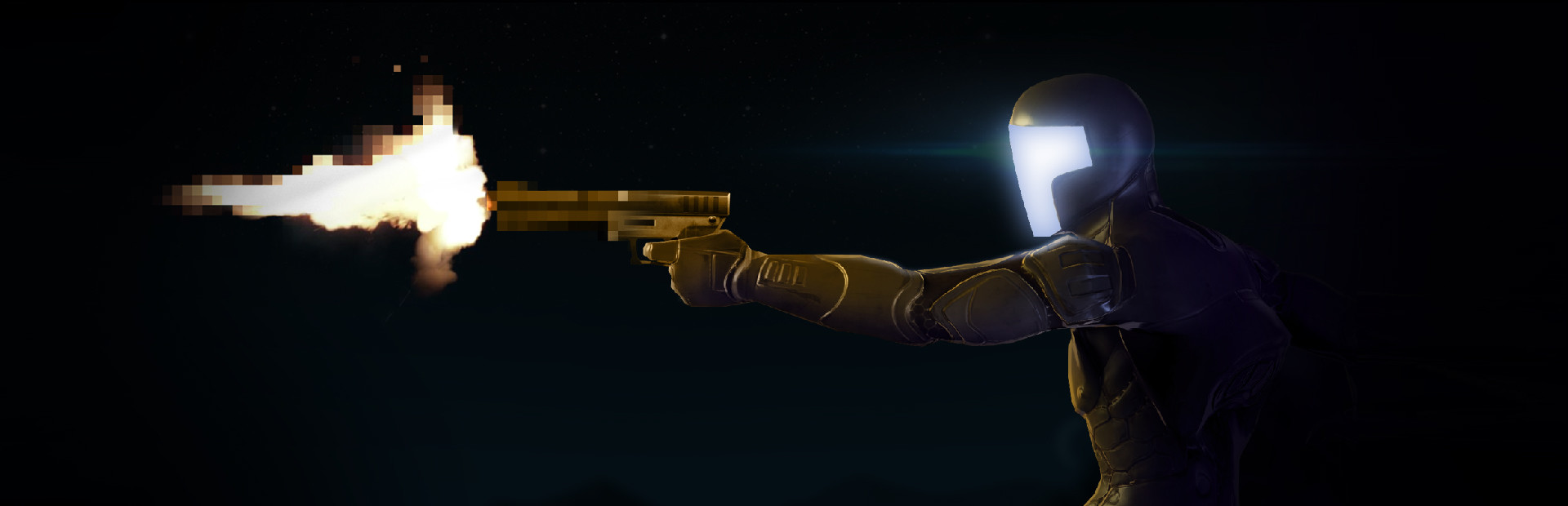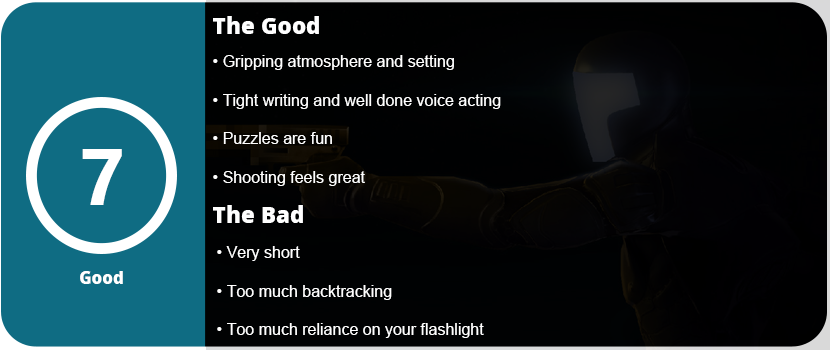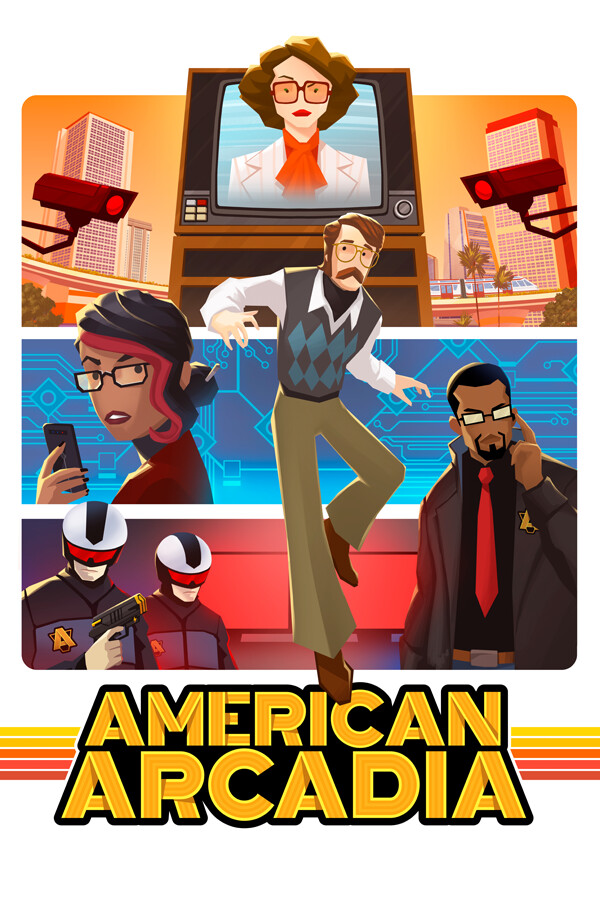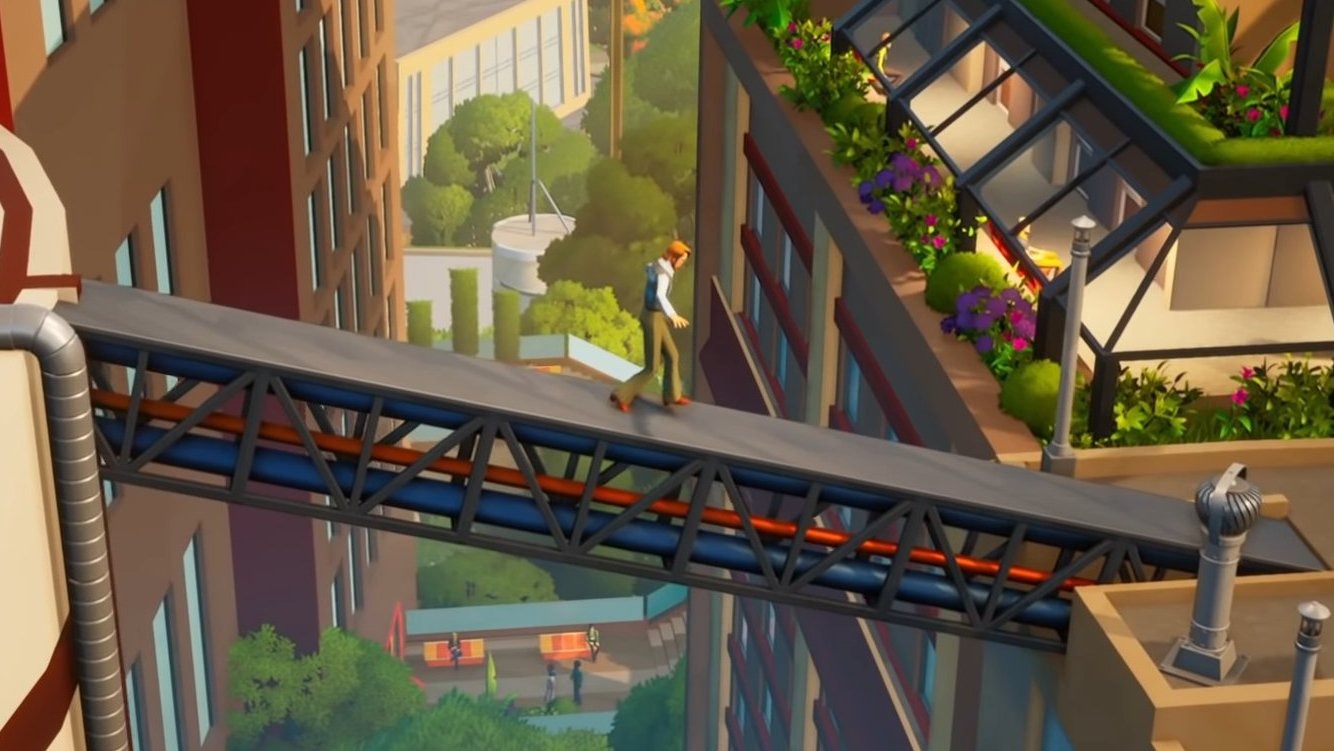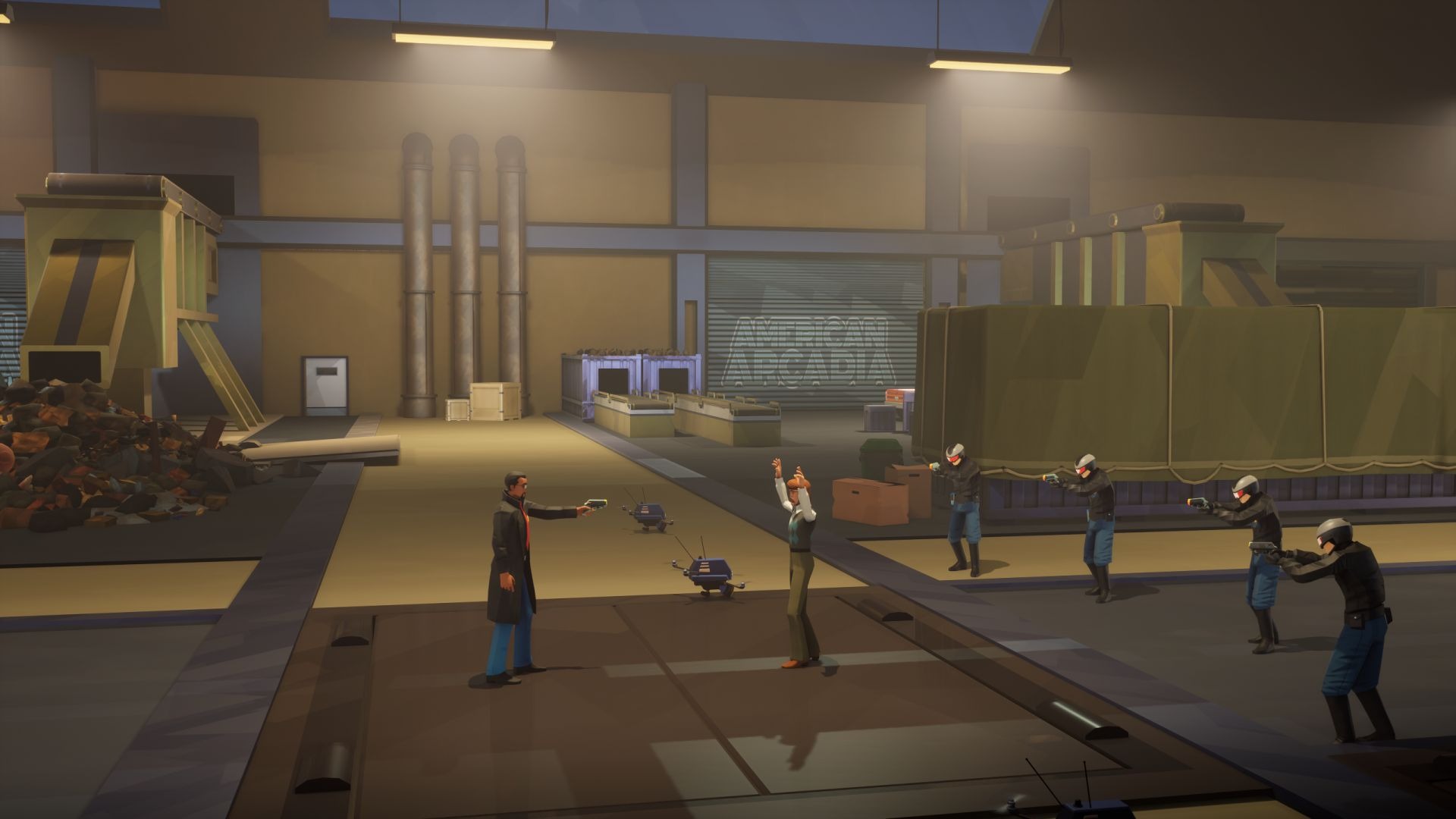
There’s been an ever-increasing discourse between the people and corporate America. American Arcadia takes the worst of the present and shows us the ugly side of being slaves to mega corporations. With clear inspiration from The Truman Show and Walt Disney’s vision of “The World of Tomorrow” and his original vision of Disney EPCOT, American Arcadia is a dystopian trip down 70’s lane with fantastic voice acting, a riveting story, and excellent pacing.
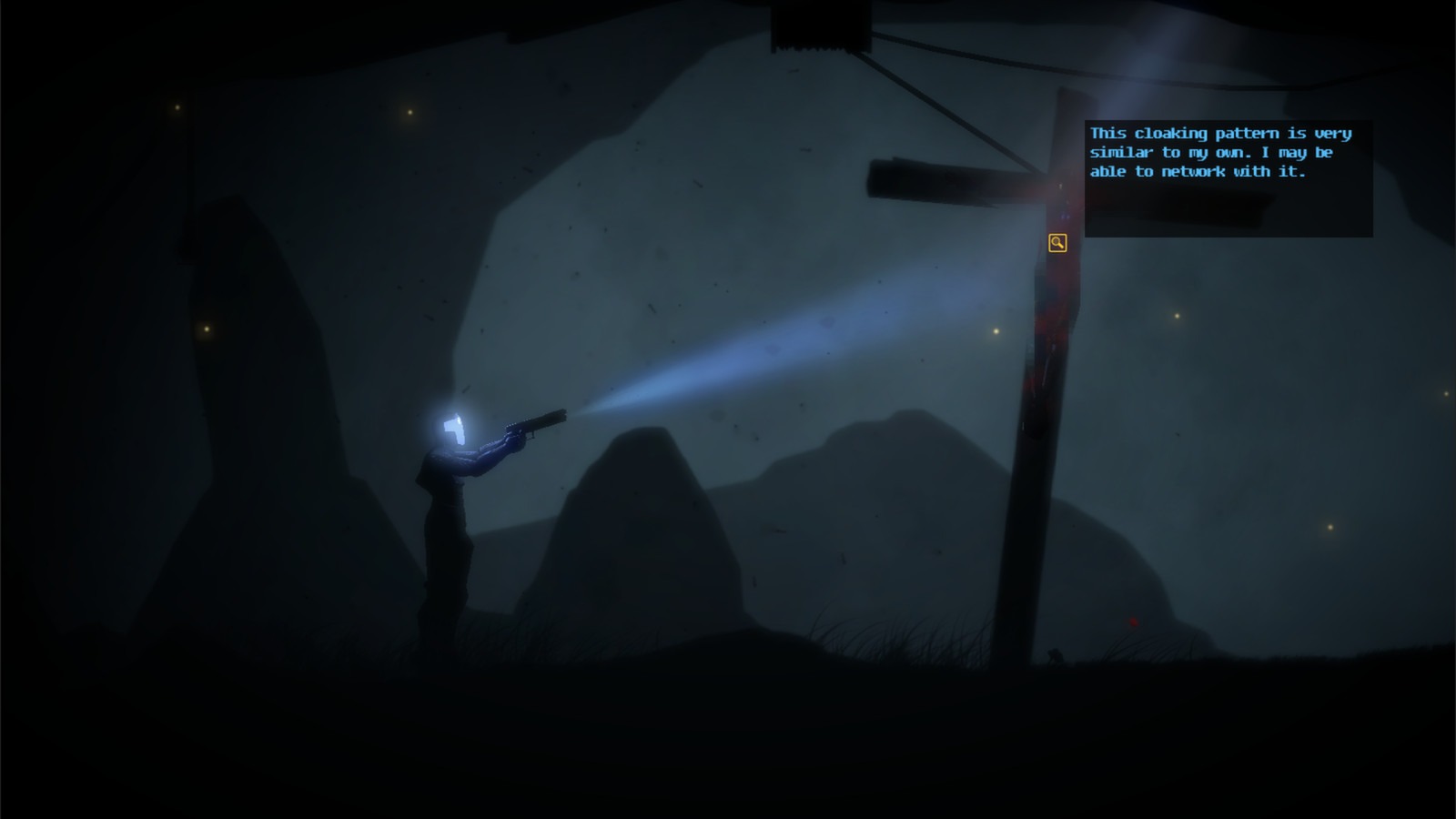
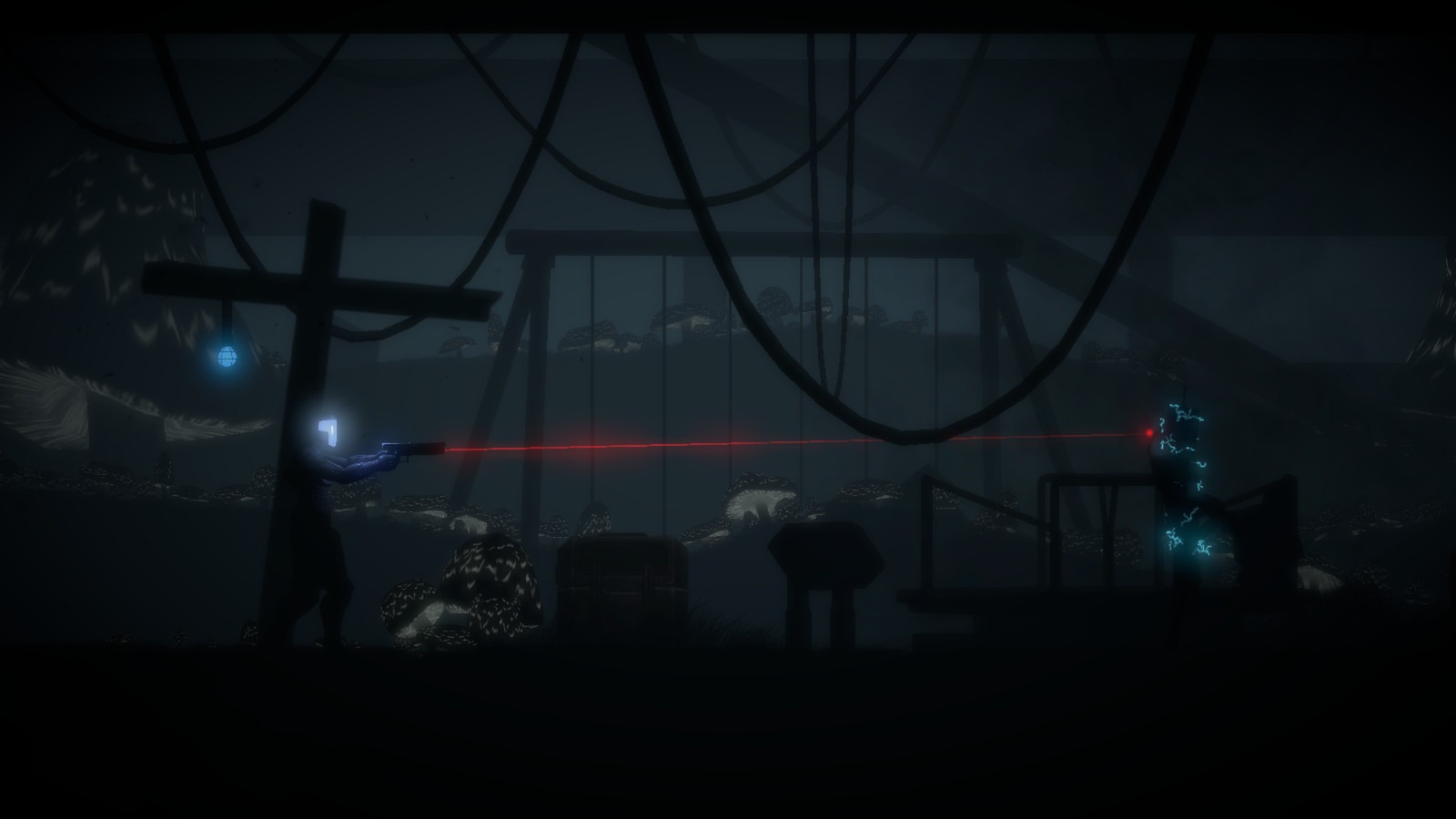
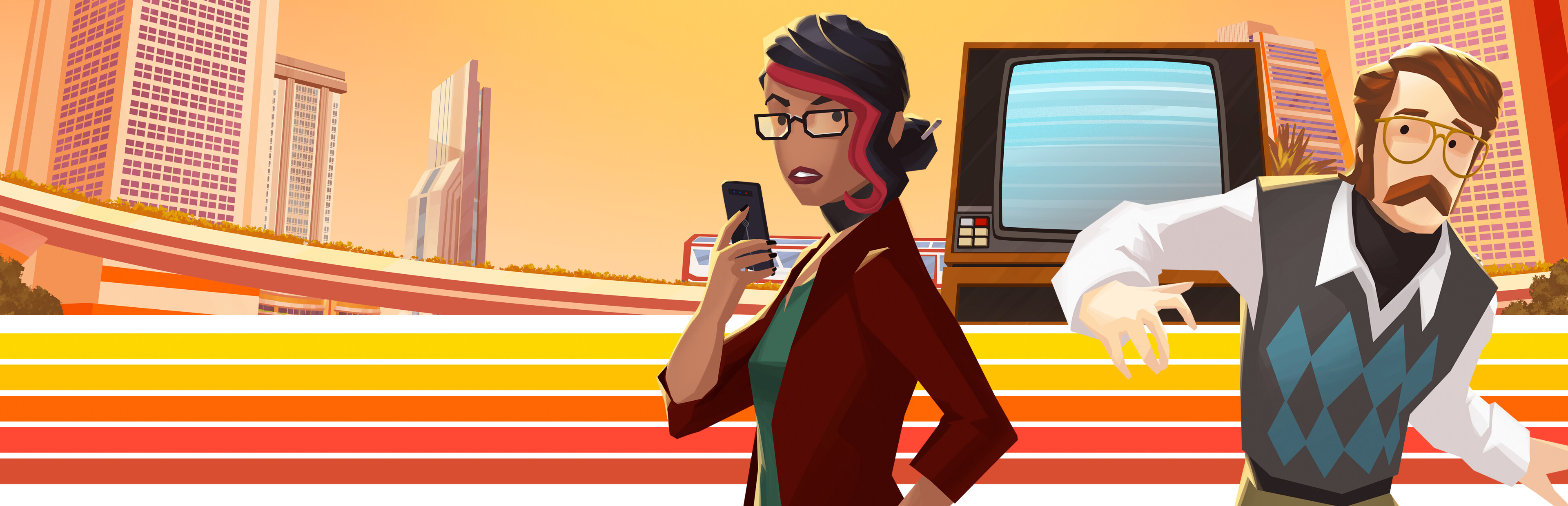
You play as two main protagonists. Trevor Hills and Angela Solano. The game has two perspectives. Trevor’s gameplay is a 2D side-scrolling platformer similar to games like Limbo and Inside, and Angela’s more puzzle-heavy first-person sections have inspiration from 70s spy movies, not too dissimilar from No One Lives Forever, but without any shooting. Angela is a stage tech for the corporation Walton Media (clearly a dig at the Walt Disney Company) who ends up being recruited by an activist group called Breakout, and you end up helping Trevor escape where he lives while trying to shut down the corporation. The game’s pacing is fantastic. The game consistently presents fresh scenarios, never growing stale or monotonous. The story continuously moves and evolves as you play, with events unfolding for each character while you control the other. Many times there will be cool split-screen sections in which you need to do tasks with Angela while controlling Trevor on her monitor. I don’t want to give away too much plot to have the explanation make more sense, but it’s really cool and well done.
Trevor and Angela are likeable characters, and while not super original, they leave an impact, including on the villains. There are sections of the game that teach you organically about the world of American Arcadia, including the lives of Angela and Trevor. Trevor’s sections are full of fast-paced platforming and push puzzles. These are not super complicated, but they are fun and help break up the chase scenes. Angela’s sections include quite a few puzzle types, from sliding puzzles and quizzes to some that are completely unique. This includes mostly hacking things to help Trevor get through areas. This was one of my favorite gameplay ideas. You can press a button to enter the camera mode. The feature changes the perspective of Trevor’s sections, and you must manipulate electronics around him to get past guards and obstacles. Every single scene gives you something new. I can’t state that enough. There were a couple of frustrating sections in which I realized I was analyzing the scene wrong. I made mistakes such as jumping onto the incorrect platform and running in the incorrect direction. Nothing was ever so annoying that I wanted to quit playing. I do think the game should have given a couple of hints if you keep doing the same thing over and over and dying, but again, it’s not a big deal.
Visually, the game has a fantastic sense of style. Inside of Arcadia, the world is stuck in the 70s. There are a lot of panning vistas of cool interior designs while Angela is in the present day, and it’s all less captivating to look at. I’m not a fan of the character designs. They are very blocky with no noses. It’s a bit off-putting, but the rest of the game looks excellent. I feel the biggest issue is that the game is too short. Depending on how much you struggle with the larger puzzles, you can finish the game in about 4-5 hours. While the entire game is explained well and feels like nothing is left out, I wanted to know more about Angela’s childhood and backstory, as we get to know mostly about Walton Media and Trevor.
As it stands, American Arcadia is one of the best games in this category. With constantly evolving gameplay ideas, fantastic voice acting, a riveting story with twists and turns, and a delightful art style, there’s not much you can’t like. Going between Trevor’s 2D sections and Angela’s first-person sections is a lot of fun, and you never know what’s coming next.
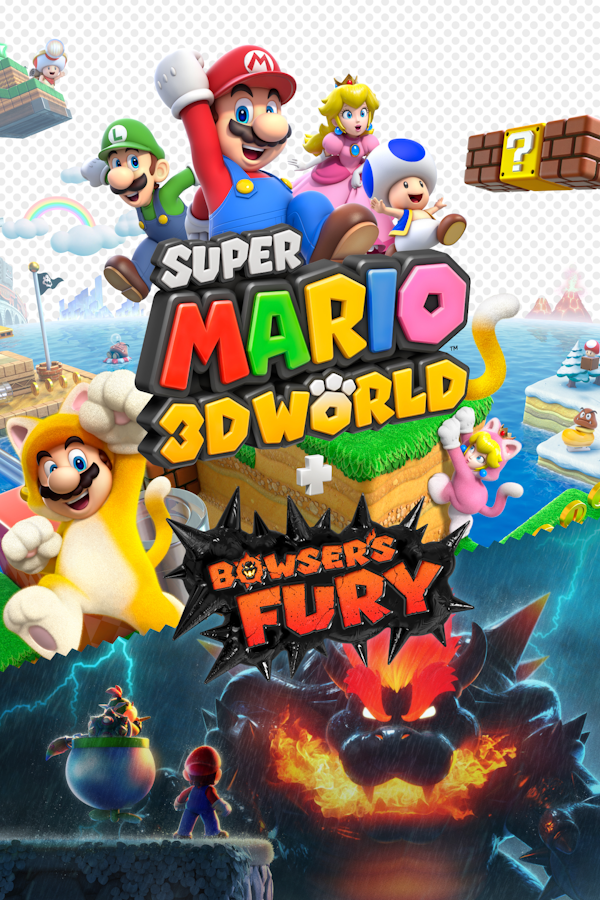
There was never a time when a mainstream Mario platformer was bad—2D or 3D. In the early 2010s, Nintendo was dialing back the more open 3D Mario adventures in favor of more linear 2.5D platforming titles. This shift was sparked by the popularity of the New Super Mario Bros. series, which then spun off two 3D Mario games that were kind of in between that and Super Mario Galaxy. Super Mario 3D Land, which was exclusive to the 3DS, was a lot of fun; however, it was too easy and seemed more suitable for children. The levels were super short; they could be completed in a matter of a couple of minutes, and overall, the game was a perfect weekend rental. Mario games are not typically ones that require 100% completion, since the only reward is personal satisfaction; however, Nintendo attempted to change this with Super Mario Galaxy. The reward is the challenge.
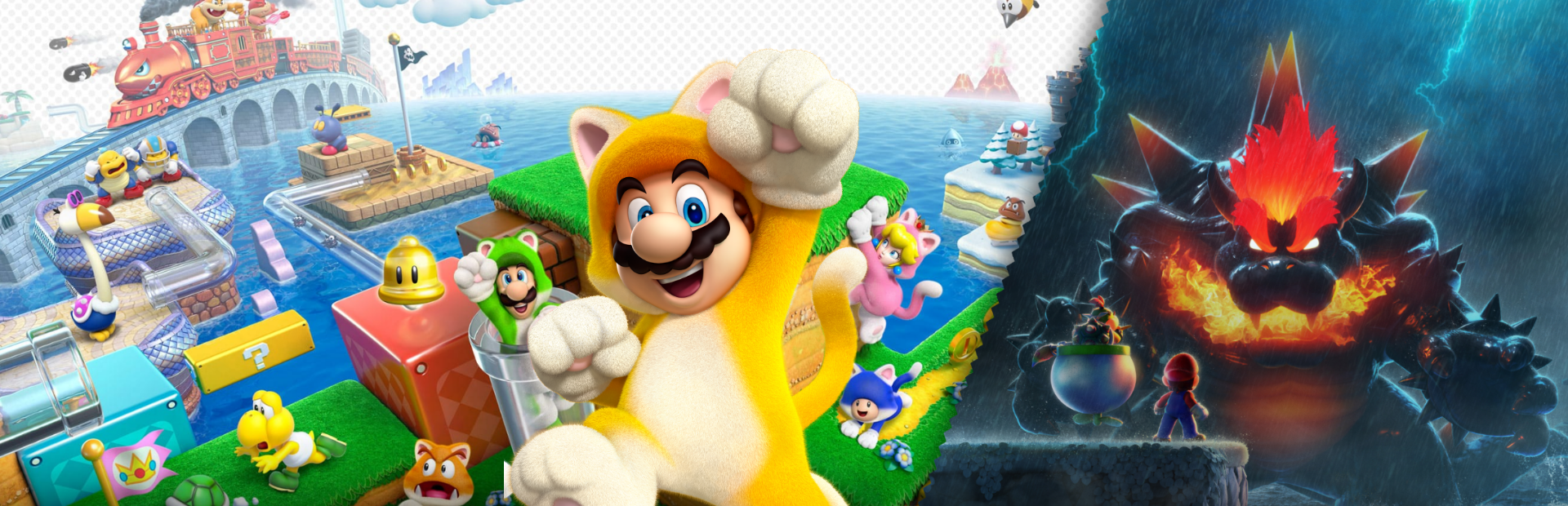
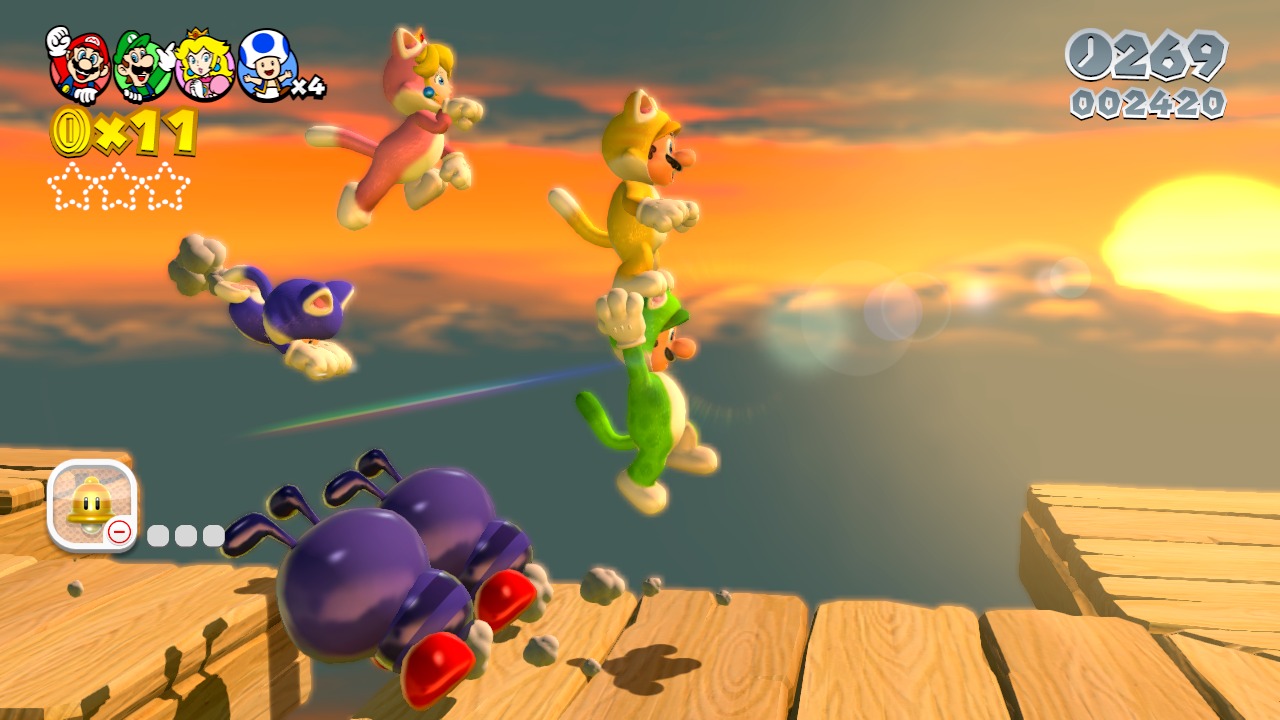
3D World is 3D Land’s bigger console cousin. Released for the Wii U two years after 3D Land, and being the only mainstream 3D Mario title on the system, it was a giant success. Implementing a four-player couch co-op mode and introducing new power-ups while maintaining the short levels from 3D Land seemed to be a perfect match for most people. The game exceeded the capabilities of the Wii U and boasted a stunning visual aesthetic, which it continues to maintain on the Switch today. Bright, colorful visuals similar to Mario Galaxy were a winning combination. The game’s world map has the same standard Mario layout we’ve seen since the beginning. You navigate a map in 3D that has each stage you can enter. There are some small things to do on the map, like enter slot machines to win power-ups and coins, bonus stages, Toad houses with presents, etc. These are neat but don’t really add anything to the game overall. The 3D map functions effectively and fulfills its purpose.
Mario can store one power-up while also using one in this game. Power-ups are suits with something old and something new, like the Cat power-up, which allows you to sprint faster, swipe at enemies, and run up walls, which not only opens up new gameplay possibilities but can also make levels and challenging spots easier. Each stage flows like a typical Mario game. There are constant obstacles to jump across, pits to avoid, enemy patterns to learn, and coins to collect. Coins are simply used to provide you lives. 100 coins equals one life, so don’t feel obligated to hit every single question mark block. Some of the later stages can be really tough, but nothing that can’t be managed if you are careful. What makes Mario games so beloved is how well balanced everything is, and there’s always something new coming at you. No two levels are the same. While many obstacles and hazards are the same, they are always used in unique ways. This is just the Mario design language that has been unable to be replicated to this day. It’s literally perfect. You also get to ride a water Plessie, which has his levels and areas. While he can be somewhat challenging to master in terms of riding and steering, the exhilarating sense of speed is truly remarkable.
There is a giant variety of levels ranging from lava, ice, clouds, mountain peaks, and many other types of terrain. There are expansive cities, shadowy mansions, eerie caverns, and underwater caves. I can’t think of a single type of level that isn’t in this game. Most levels flow similarly, though. You get a couple of sections that show you what to expect in the stage. Is there a lot of platforming, enemy stomping, running, and dashing? Each level has three hidden green stars to collect and a stamp. This is your completionist objective: to get them all. You do have to get some extra stars, as later boss stages require unlocking them with stars. Some of the stars are very well hidden or incredibly tricky to get without dying. If you die, you keep everything you found and can restart at either the checkpoint or the beginning of the stage; however, since the stages are so short, this isn’t a huge deal. Occasionally, there are levels that can be incredibly frustrating. Either a group of enemies is just in the wrong place, or something just isn’t designed well within the level.
Mario can stomp enemies, but with a power-up, he can attack from afar or swipe. The Fire Flower can throw fireballs, the Koopa suit can throw boomerangs, and the Tanooki suit allows you to jump farther; additionally, if you die at least five times, you will receive the white Tanooki suit, which grants invincibility. This optional box is located at the checkpoint. This item is great to use if you just want to power through a level and get the stars and stamp. Just remember, if you get a single hit, you lose the power-up, and another hit makes you tiny. Three hits and you’re done. The boss fights are really disappointing, incredibly easy, and repeated often, which seems to be a trend with 3D Mario games at this time. I keep saying Mario, but there are other characters, and they all feel different to play. Luigi jumps higher, Peach jumps farther, and Toad is faster. Some secret areas require specific or multiple characters to activate. In single-player, you can pick up the new cherry power-up to multiply yourself for these puzzles. However, controlling a number of characters at once is tricky.
Bowser’s Fury
If you don’t 100% the game, you can blow through the entire thing in less than 6 hours. It’s a very short game. Thankfully, the Bowser’s Fury DLC was included, and the game is like a whole new mini Mario adventure on its own. You break away from the classic linear levels and are dumped into a small 3D map that has islands that play out similar to the 3D World levels. You can explore the areas surrounding these islands for small mini-games that award Cat Shrines, which are the new stars in this DLC. You need 40 to fight the final Bowser boss, but there are 100 in total. It’s a massive DLC that’s another game all on its own. There’s no new focus on new power-ups. They just took the 3D World stuff and threw it into an open-world design, and it works.
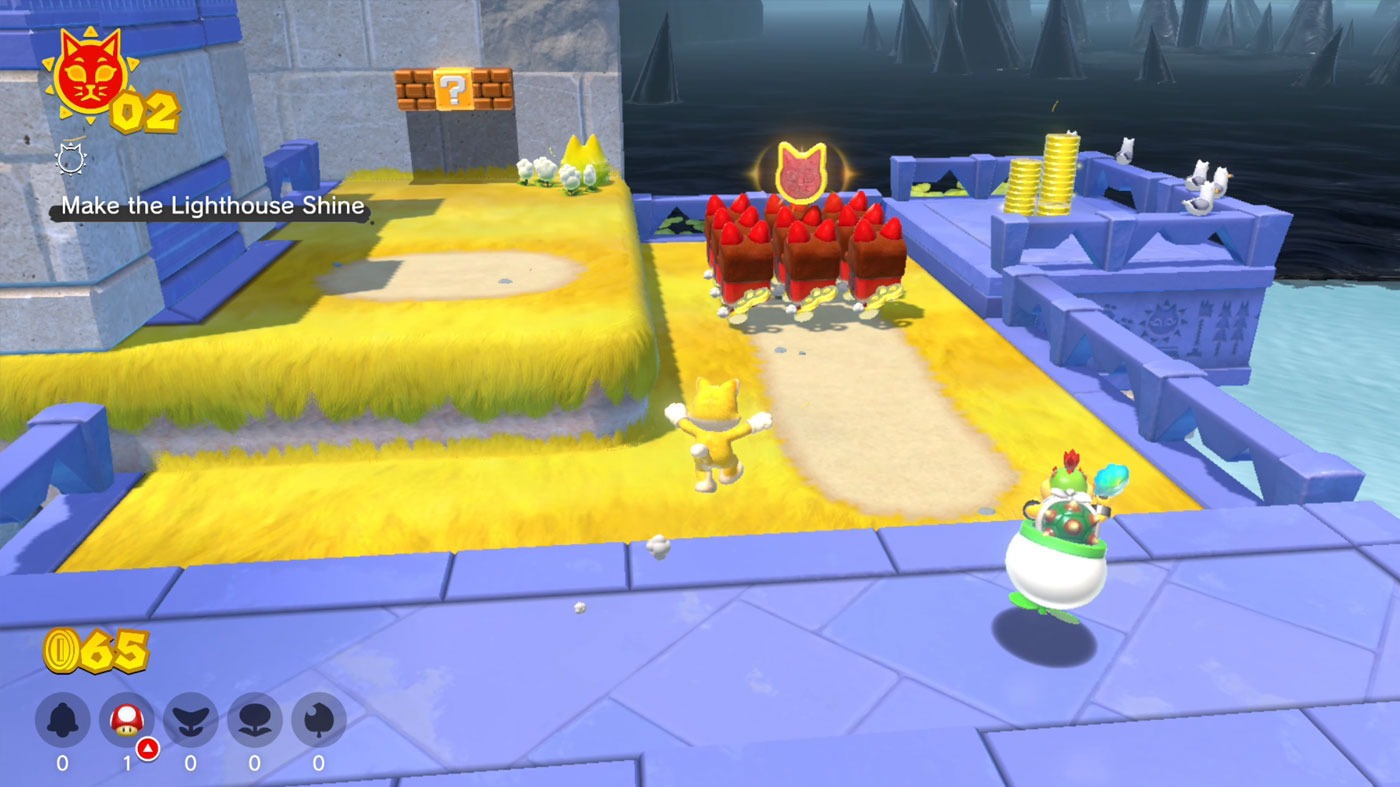
A gate marks the start of each “stage,” showing the Cat Shrine goal name and how many are left. Each island has five Cat Cards you can find, which will award a Cat Shrine. Each new run in the level allows for a new way to navigate it. One run might focus on platforming, while the next run provides a helicopter box that allows you to fly around the small island in search of a key to open the cage containing the Cat Shrine. The levels are just as well designed as the main game, and the final few stages are tough but fun. The new element here is that Bowser is a massive Kaiju monster, and every few minutes a rainstorm starts, and Bowser will start throwing stuff at you, and this also opens up gameplay opportunities. There are Bowser blocks hidden around some islands, and if you stand by them while Bowser is out, he will breathe fire on them and break them, usually revealing a Cat Shrine. The number of shrines hidden throughout this DLC is massive, and it can easily take a player 6 hours just to find all of them with a guide.
Once you get enough Cat Shrines, you can fight Bowser in a new Giga fight. There’s a massive Cat Bell at the center of each of the three islands, and when Bowser comes out, this will light up and ring. Grab the massive Cat Bell, and you will transform into Kaiju Mario, allowing you to brawl with Bowser. Here you need to dodge his attacks, swipe at him in any of the power-up suits, and power stomp him when he’s belly up. Throughout the storms, if you clear a lighthouse while he’s out, it will take some health away so he’s easier when you fight him. This innovative approach to gameplay is unparalleled in previous Mario games.
Of course, the same old bosses from the main game are found throughout the DLC, which sucks, but you get Bowser Jr. to tag along with you, and he can assist in combat, or you can tap on giant question mark graffiti icons to get a power-up. A second player can control Bowser Jr. too, so this is obviously a more single-player-focused DLC. In this DLC, you can hold as many of these powers as you want. Since you are on a giant set of islands, the entire game takes place in the ocean, so to get across large distances, you can use a Plessie, who also has his own sprinting mini-games to get Cat Shrines.
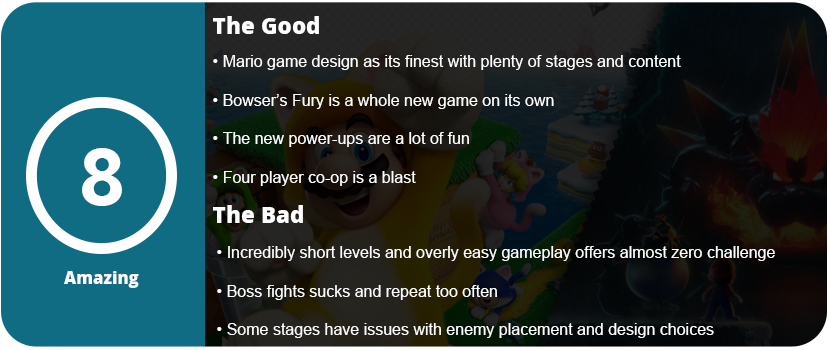
Overall, Super Mario 3D World feels excellent to play and is a lot of fun, especially with four players. My biggest gripe is that the game is far too easy and the stages are too short. After Mario Galaxy, I feel like the series hadn’t quite hit that stride until Odyssey came out. The physics of the game also feel a bit off. I often had some perspective issues where I fell off ledges and misjudged jumps because of the camera angle. The level design overlooked or couldn’t help these quirks. I also find the boss fights monotonous and simplistic. Upon reaching the 6th world, I began to feel a sense of exhaustion with the game, and the remaining areas became somewhat tedious. Bowser’s Fury, a fantastic DLC, effectively bridges the gap between 3D World and Odyssey. Overall, the result is a solid game packed with content.
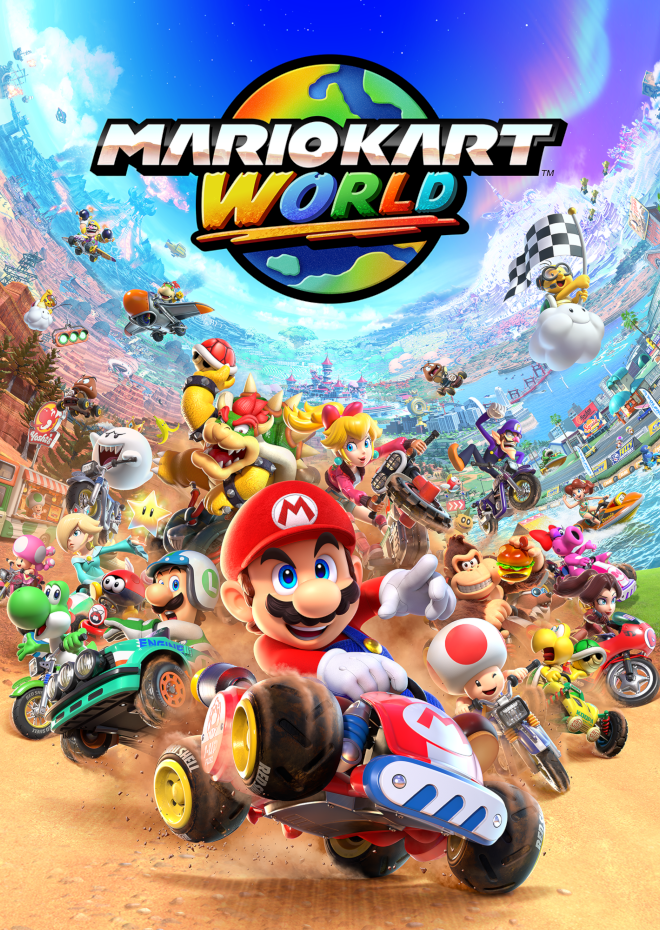
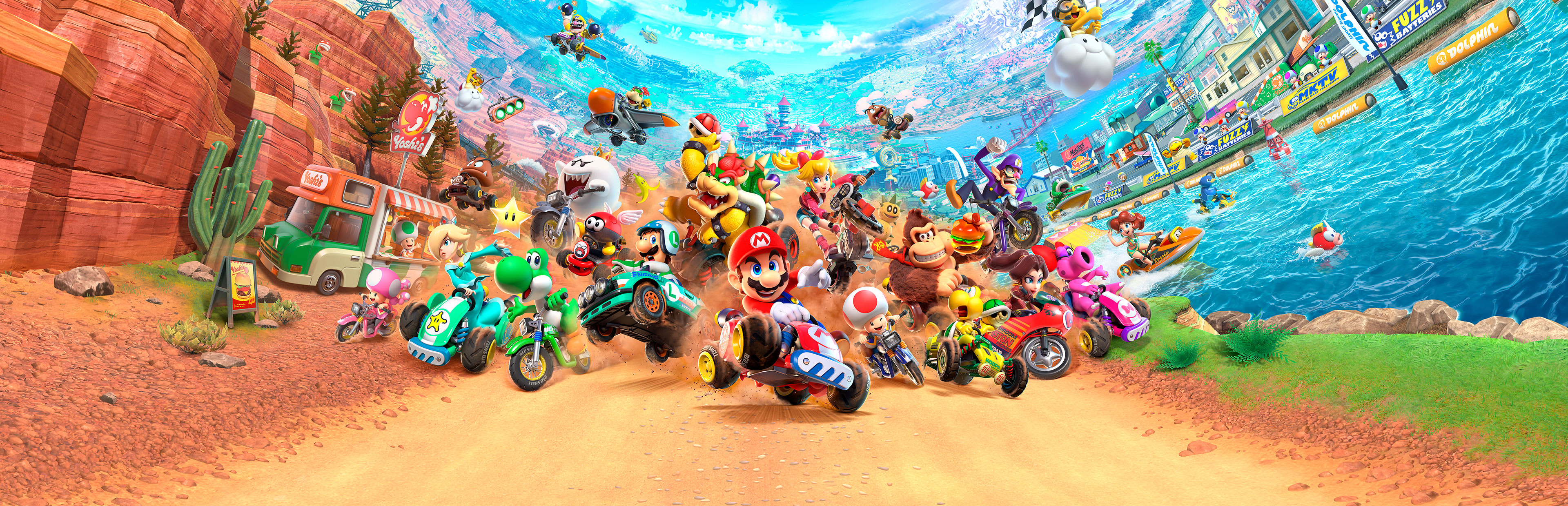
It’s baffling to see a game like Mario Kart lead a system launch, and while I’m not the biggest Mario Kart fan, I do enjoy them. They are fantastic to look at, with great controls, characters, and charm that very few other kart racing games have been able to copy. With the game being a launch title, it needs to wow everyone and sell consoles. While Mario Kart 8 was ridden on for two console generations (yikes), the present release is the first new Mario Kart in over a decade. I do understand that this is a game that will get better over time, and while what’s here feels small in comparison to Mario Kart 8 Deluxe, in due time, this will be the definitive Mario Kart game, but the design changes that Nintendo made will require me to tell you to hold on to your copy of MK8D. Don’t toss that out just yet.
Let’s address the pressing issue at hand. There is an open-world aspect to the game, but it’s not what you would think. The idea of Mario Kart World is to meld races together into one seamless track rather than having individual tracks, and this doesn’t feel like it was executed well enough. I like this idea because it helps the series evolve significantly and feels enjoyable; however, it results in some tracks feeling slightly less unique since they must conform to the world. There is more than just the track. Everything that you see outside of the track you can drive on, but at what cost?
Of course, there’s no story here, but you get plenty of new characters, returning and brand new to the series, as well as some unlockables. Your usual contenders are here: The usual contenders include Mario, Luigi, Peach, Daisy, Rosalina, Wario, Waluigi, Bowser, Toad, Toadette, Donkey Kong, and baby versions of these characters. New characters include more obscure enemies and side characters like Pauline, which makes sense, but now we have Cow, Cheep Cheep, Lakitu, Nabbit, Monty Mole, and many more. These are odd choices, and I’d rather have more guest characters, but it’s neat that they are including other characters and not just playable characters from previous games. You can also pick many new vehicles with four different stats to look for. Handling, Acceleration, Weight, and Speed. Everyone will have their favorite, and the vehicle stats determine how you drive it. Handling allows for better drifting and how well you stay on the track around corners, acceleration will get you out of crash recoveries faster, and top speed will make it more difficult to get caught up to when you’re in first place and benefit from longer stretches. Vehicles transform like before into watercraft and aircraft, but I’m sad to see there is still zero customization. Let us make our own vehicle and decorate it. We’ve missed a significant opportunity, but we can incorporate it in the future.
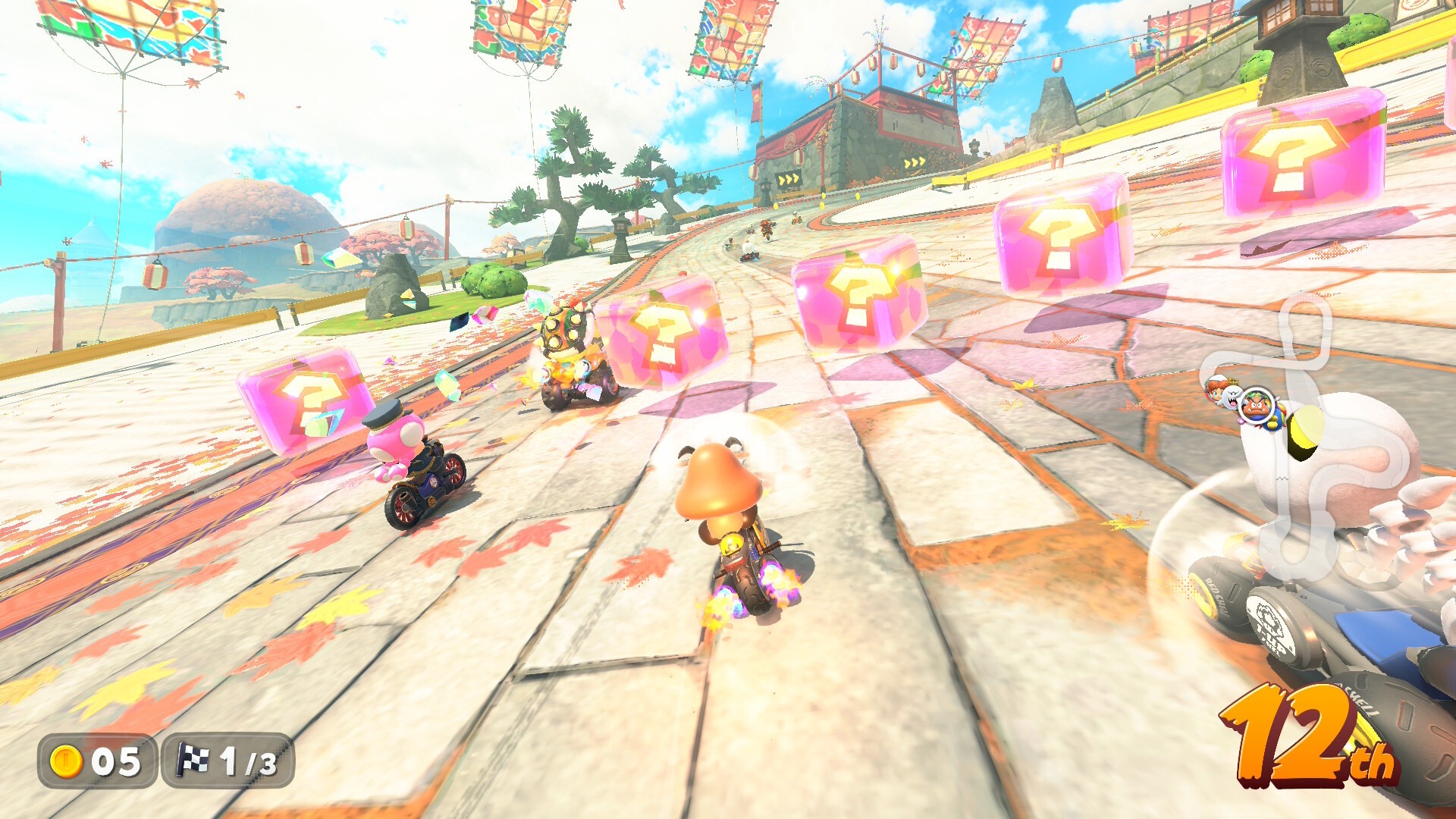
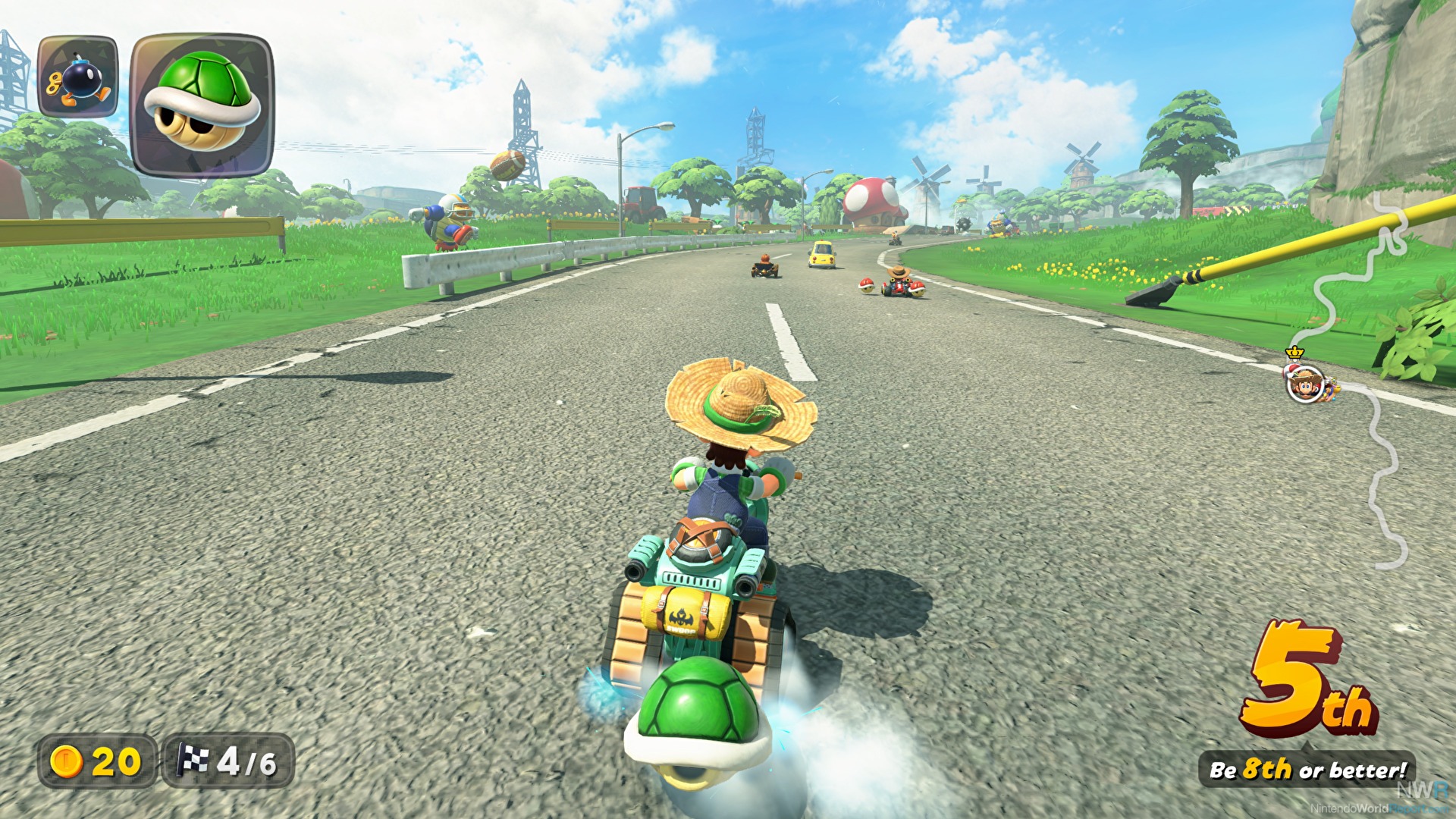
Racing itself feels as excellent as always. The sense of speed is outstanding; vehicles drift and hit objects with a satisfying feeling. Speed boosts, ramps, jumps, and everything else that you run over and smash into are here. Many power-ups return, such as the colored shells, bananas, and mega mushrooms, you name it. Nearly every item from past games makes it here, making this sequel the biggest arsenal of power-ups in any Mario Kart. New items are fun, such as the hammer, which will knock opponents out and make them road obstacles; the ice flower, which slows you down; the coin shells, which will leave a trail of coins; and dash food, which is the new major item and is related to the Free Roam mode. These items will give you a huge speed boost and change your outfit on the fly as long as more are unlocked. Power-ups give a huge strategic advantage on the road, with players having their favorites. You can still throw items in front of you or behind you to gain various advantages. Combat on the road has never been better.
There are now new platforming elements tossed in, such as rail grinding and wall riding. This allows new vertical movement on the track. You can press the left stick left or right while jumping off a rail to wall ride, so it’s simple and easy. This is also used in Free Roam to get to hidden areas. This is a more advanced movement, but it’s really satisfying when you do it. Vehicle control in general feels better than ever, and everything just feels weightier, but not in a bad way. The updated physics really help, and you can feel it everywhere, from how you hit objects to the way water makes your car bounce. A huge update is the doubling of opponents on the track from 12 to 24. This modification does feel more chaotic but makes more sense with the tracks feeling wider and larger as a whole.
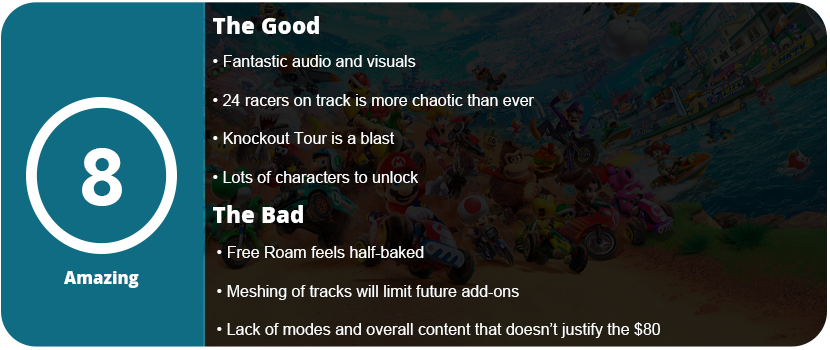
This leads me to the Free Roam mode and the Knockout Tour mode. The Free Roam mode, which unlocks new outfits by finding specific Dash Food spots with each character, is the biggest addition. You can select any character from the map, and you will instantly warp to that character. The major focus here is the P Switch missions, which kind of train you on how to play the game and learn more advanced movements and tricks. These fun switches are hidden in every course, but only stickers are given as rewards. There are also Peach coins to collect and question mark panels to find, which also give stickers. This isn’t enough for a Free Roam mode. The world, despite looking lovely, feels empty and boring. There’s nothing to do outside of the collectibles. Once you find all of those, that’s it. There’s zero reason to go back in.
This step leads to the Knockout Tour mode, which is a series of continuous races that link one track into another. This mode is similar to the Elimination mode from Burnout, assuming you are familiar with that game. It’s a long endurance race that usually lasts around 5-6 minutes, and it’s a lot of fun. It allows a longer game of tug-of-war with opponents and really puts your skills to the test for a longer session. The multiplayer mode, which is the core of the game, is a lot of fun. While finishing every cup in single-player is enjoyable and helps you learn the courses, multiplayer is where most people will come back to. This applies to both online and offline modes. This expansion also introduces the new Game Chat feature with video and audio, and it can be a blast to use. The course design is still top-notch, despite needing to bleed into other courses. This allows for terrain regions from desert, beach, snow, ice, and various other types of terrain. The map makes sense and looks like a “world,” but it’s still tiny and limits the number of tracks available. I’m not sure if the sacrifice of more tracks was worth it to have this open-world design.
Sadly, many diehard fans will attest to this open-world design. It will mean adding more sections to the world to add tracks, and maybe one day we will get all of our favorite tracks back, but in an open-world form. The maps contain many small details that often go unnoticed, such as the ability to drive through a gas station and pit stop on the Mario Bros. Circuit. The maps feature food carts, vendors, downtown shopping areas, and other vehicles driving on the roads outside of the courses. It is almost there, and in some spots, it can feel alive, but something is just missing here to make it feel like a robust, open world. Additionally, I believe that the inclusion of just one new mode is a significant oversight, as the absence of tracks and the subpar free roam mode could have been compensated for with more options.
Visually, the game is fantastic. The game clearly utilizes the majority of the new hardware on the Switch 2. Great lighting, full 1080p on handheld, highly detailed models, better textures and physics, and even HDR support. This title is definitely the Switch 2’s killer app…for now. As the game stands now, it’s also not worth $80. There isn’t $80 worth of game here, but hopefully that changes with more updates added in. Sadly, this is a game that only time will tell if it’s worth the money you paid, and it’s Nintendo’s only major console game at the moment. Free Roam is a nice touch but lacks content, and Knockout Tour is the standout mode here. There are many characters to unlock and many outfits, so there’s something here for everyone. You might want to hold onto your copy of Mario Kart 8 Deluxe for now.
Switch 2 Pro Controller Switch 2 Joy-Cons Docked/Undocked
We finally made it. It took over 8 years, and what feels like a whole life ago, to get to the sequel. Nintendo’s success has been largely attributed to the success of the Switch. 2017 was a tough year. In the first year, the console was met with little fanfare and releases, but it gradually gained popularity and surpassed the PlayStation 2 and Nintendo DS to become the single best-selling console of all time. Around 2020 people wanted a Switch Pro, but instead we got other typical iterations of the Switch, such as the Lite and OLED. We met both of these models with plenty of enthusiasm, but we saw no raw spec upgrade for the system. Ever. What people wanted was divided. Some individuals desired Nintendo to innovate, much like they did with the Wii nearly two decades ago, while others simply desired an improved version of the Switch. We got the latter.
Some Tech for Your Brain
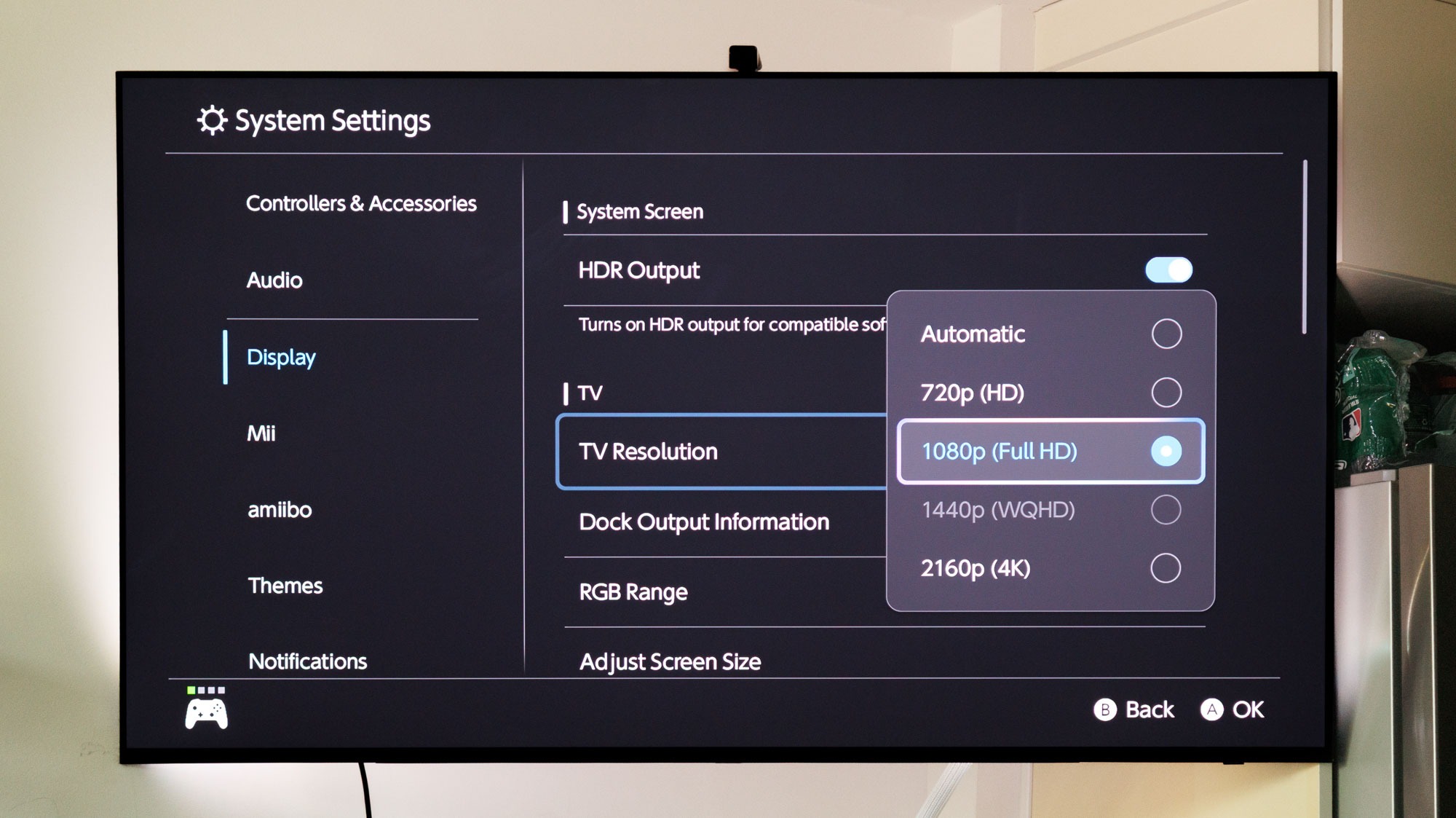
The Switch 2 wasn’t announced with open arms. Not entirely. A lot of outcry has been about pricing, game ownership, and specs. What we got spec-wise was more than expected from Nintendo. While the Switch 2 does not quite surpass the competition, it is positioned closely alongside them. The Switch 2 boasts a custom Nvidia chipset with Ampere technology. This feature puts the Switch 2 in the same ballpark as the RTX 2050 Mobile series GPUs, but it’s not a 1:1 scale. The weaker CPU, which is identical to the one in the Switch 1, is what primarily holds it back. Despite a more powerful next-gen GPU the CPU being weak means that games will need to be well optimized to push everything to the GPU as much as possible. Nintendo’s power was obviously scaled back for mobility, but the system uses more modern technology while docked, such as HDR, ALLM, VRR, and higher refresh rates, as well as PCM Linear 5.1 surround sound. We now have increased onboard storage of 256 GB, which means purchasing a micro SD card is not immediately necessary. However, Nintendo locked many users out, as you can’t go grab that 128GB SD card that’s been sitting in a drawer. You need express-rated SD cards, which are quite pricey right now. While the SD card technology isn’t a proprietary storage solution like Sony used to use, it does limit a lot of people and requires you to shell out more money for an already expensive console.
Unboxing a Slate
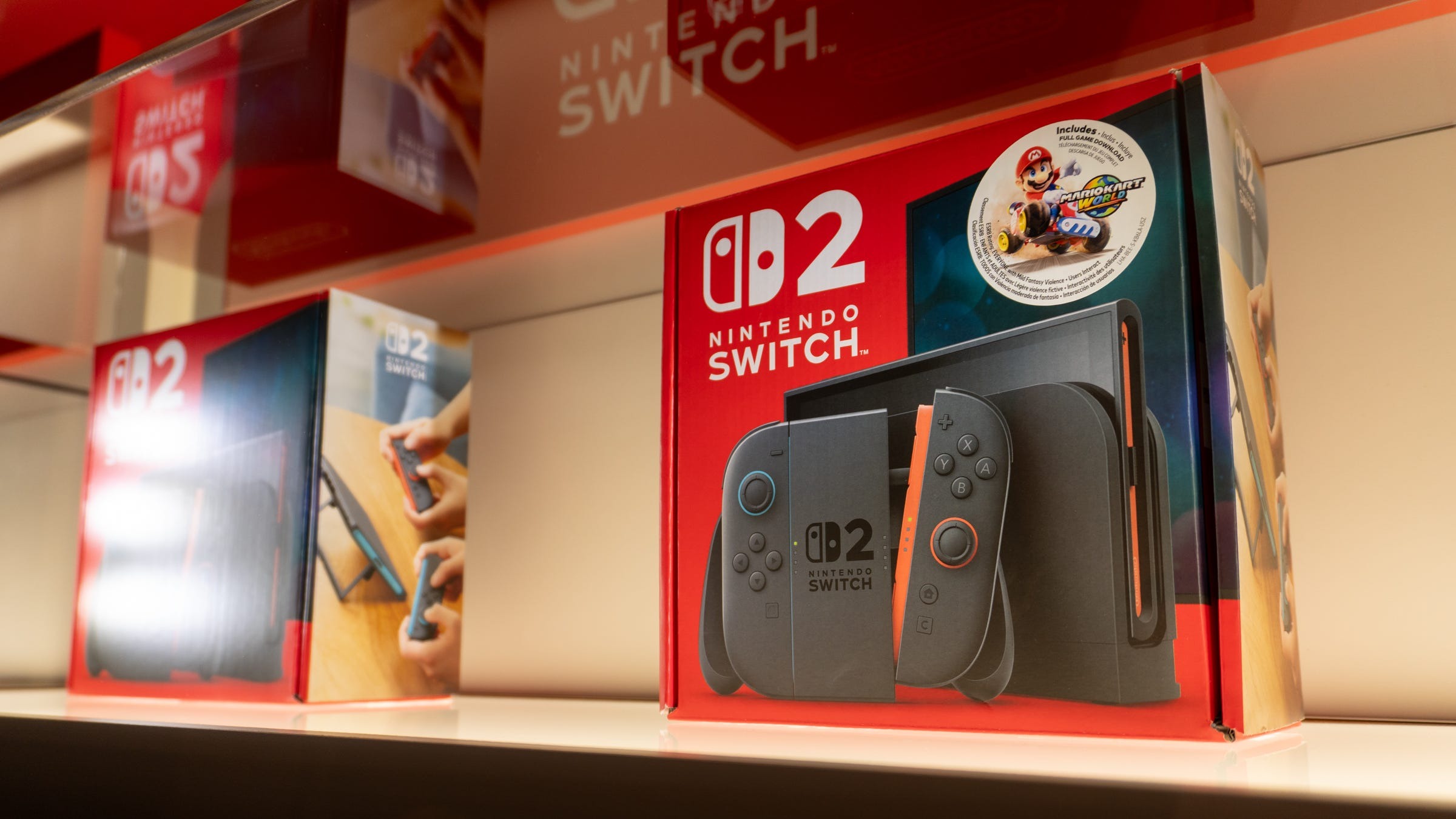
The unboxing experience isn’t anything special, and I’ve mentioned this with other modern devices. The focus is less consumer waste, less cardboard, no polystyrene, and fewer things to throw away. You receive all the same items that were included with the original Switch: Two Joy-Cons, a dock, an HDMI cable, a power cable, and Joy-Con straps. While these are essentially the same, they are also updated and new. For example, the power brick is now a detachable USB-C cable, so you can replace the cable if it fails. The Switch 2, however, needs a more powerful power supply. The Switch 1’s 15 measly watts won’t suffice anymore. The Switch 2 uses 60W, so you will need to upgrade your power banks and charger adapters. Handheld gaming PCs (usually 65W) will suffice. The dock is new and updated. The updated dock now includes a built-in fan, which makes it bulkier; however, it also features a back cover that can be completely removed, exposing the same ports: HDMI, USB-C, and LAN. We also get two USB-A ports on the side. It feels appealing and solid, but it is not backwards compatible with the original Switch.
Hardware Overview: Joy-Cons of Madness or Greatness?
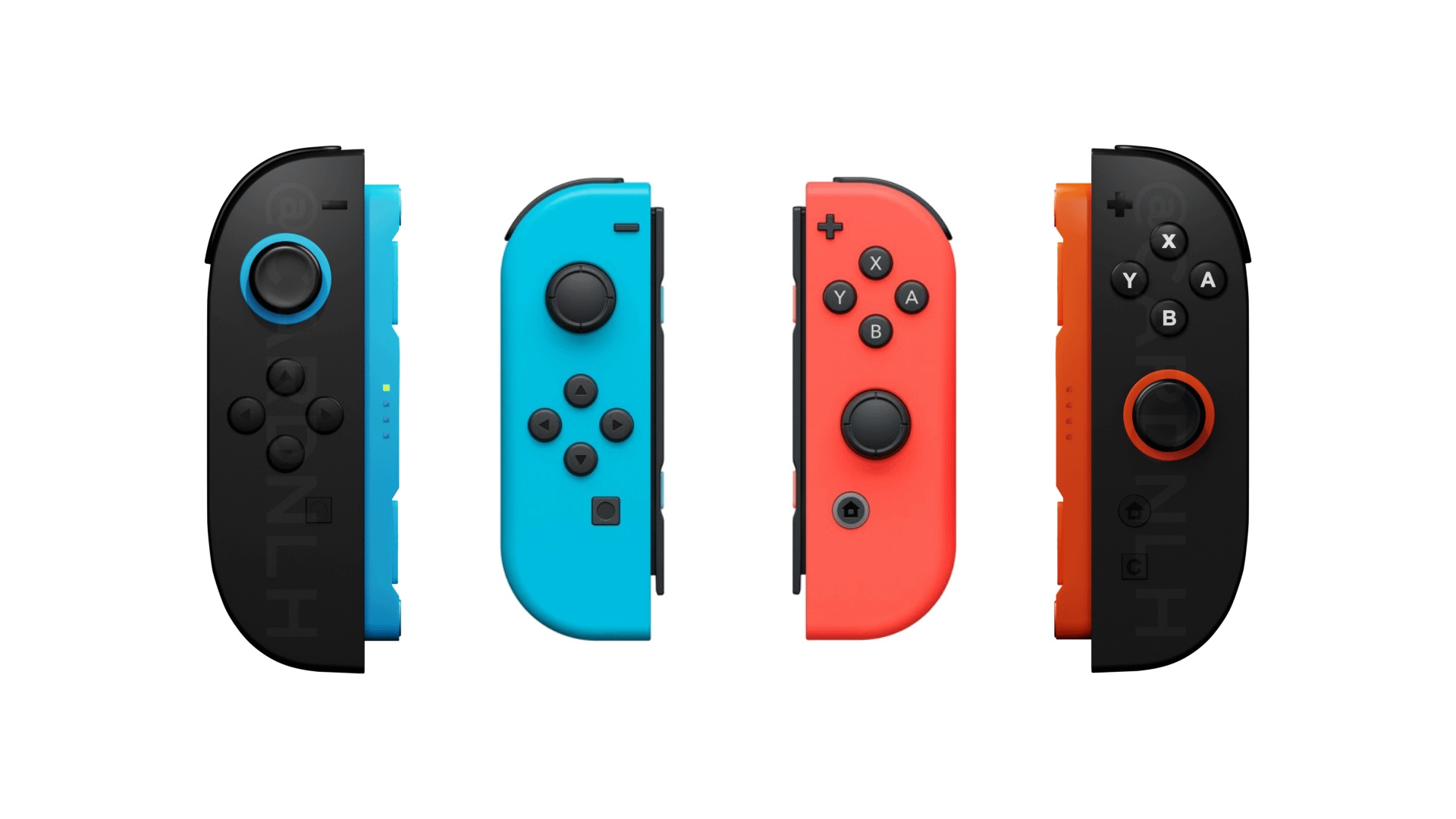
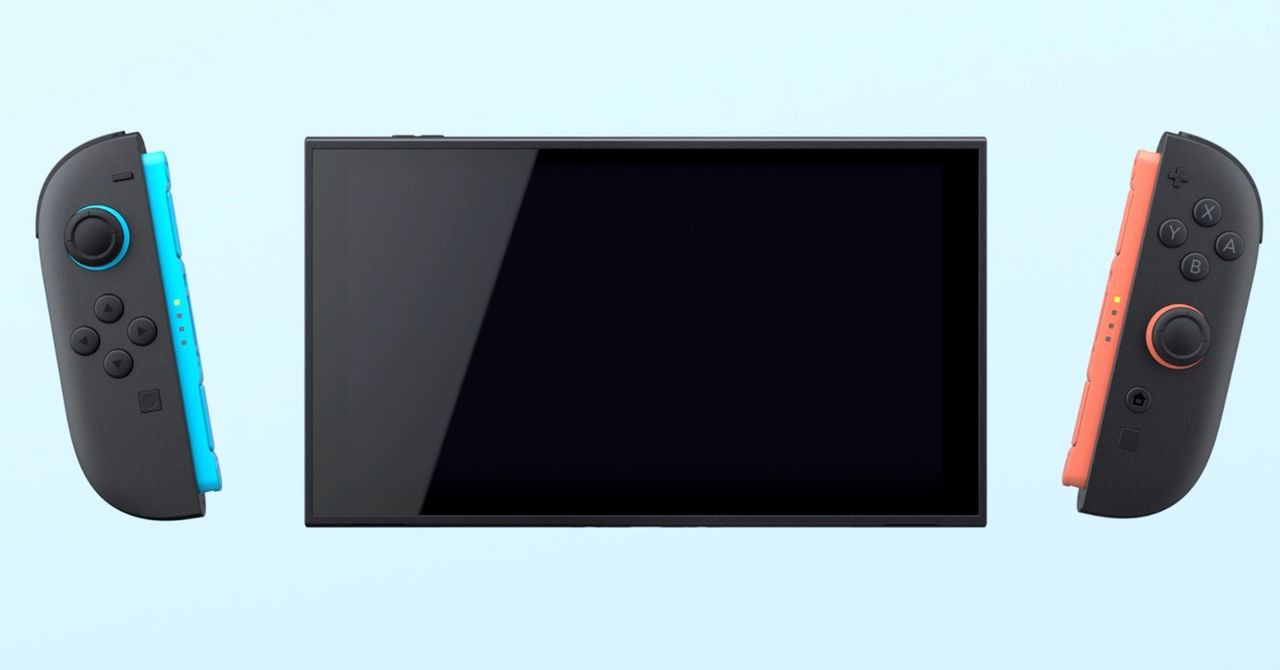
To get the biggest question out of the way, it’s uncertain if the new Joy-Cons will drift, but they lack Hall Effect sensors. They are apparently built from the ground up to avoid this, but only time will tell. With that said, they are slightly larger than the original ones and are much more comfortable to hold. The buttons are less mushy and have a more tactile click. Sadly, there’s still no real D-pad, but the clickiness of the buttons makes it feel a bit better. Here’s the other big question. What’s the deal with those magnets? It’s a real gamble, and somehow Nintendo pulled it off. They are incredibly strong. There is a new “trigger” switch on the back of the JCs that you pull, like ZL or ZR, and this activates a plunger that pushes the JC away from the console. The electrical connection is now a new connector slot that also adds stability. It’s a very satisfying feeling, and the new JC animations that play are nice. It’s such a strong magnet that you get a physical and audible snap when connecting them. There is an ever-so-slight wobble when twisting the system slightly, but it’s not noticeable when actually playing. We will see over time how these hold up mechanically. The JC’s new controller dock is nearly the same, but it’s taller than wide. I still had hand cramps when using this thing, and sadly, I never really used it for the original Switch. This accessory was reserved for people who used the JCs as a controller and, for the most part, was stored in a drawer for the last 8 years. The same fate will occur with this device.
Hardware Overview: Upgrade or New Machine?
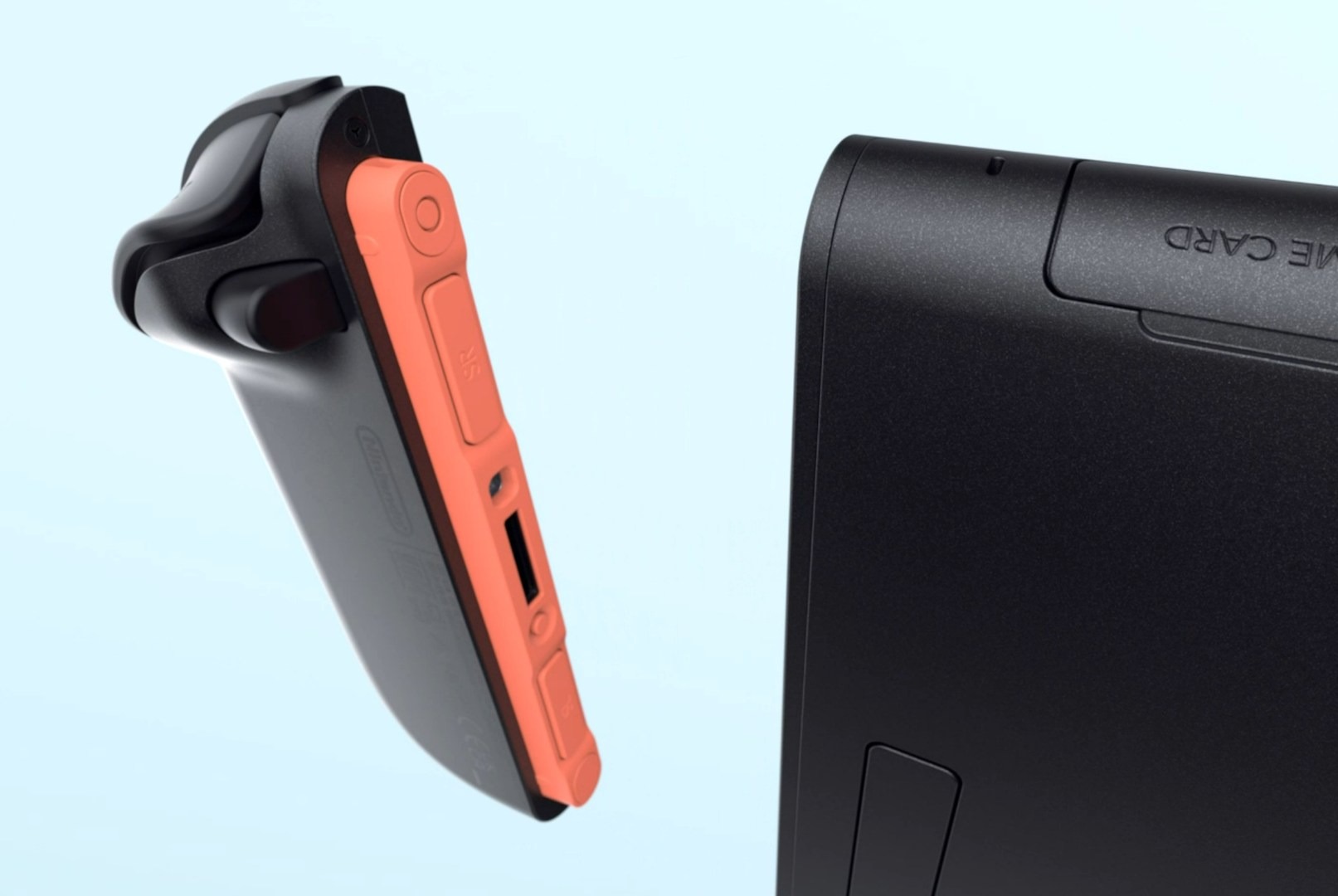
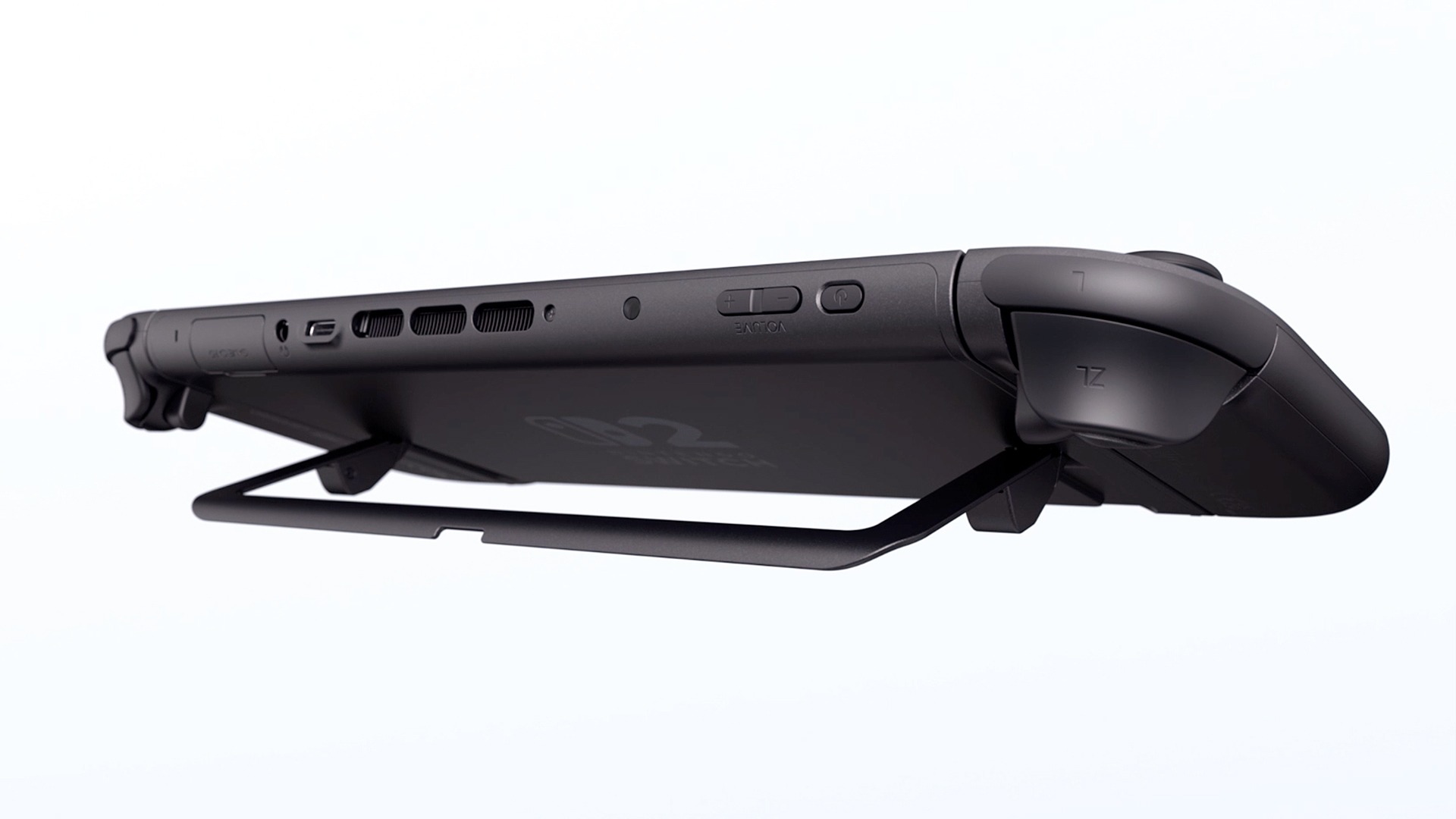
The tablet itself looks nearly identical to the OLED tablet but is larger, with a 7.9″ LCD. It has HDR and 120 Hz, like the Steam Deck, but it’s not OLED. The Steam Deck OLED has a 90 Hz OLED display with HDR, and while its screen is a very nice LCD, it’s still not as crisp and vivid as an OLED display. It feels heavier and very solid. All of the ports and buttons are in the same place as the OLED model, but there are a few tweaks. Intake vents have been added to the bottom of the system, located on either side of the USB port. This allows for more efficient cooling. The system is hushed when the fans are kicked on. The kickstand is now a round plastic piece rather than a solid flap. It extends out more, just like the OLED, so the change is a great improvement. The micro SD card slot is located behind this component, and the system now supports express micro SD cards, which are slightly more expensive than standard cards; however, I believe their prices will decrease significantly by next year. The game card slot has a pull-out flap that now has a metal box that sits over the game card. I’m not sure what this metal reinforcement was for, as I have yet to get ahold of a Switch 2 cart. One of my favorite new features is the USB-C port on top of the unit, which will help relieve strain on the bottom port when playing while charging or lying down. This seems like a feature taken from the handheld PC scene. Overall, the tablet adheres to the adage “if it’s not broken, don’t fix it,” and I appreciate their decision.
Software Overview: The Account Transplant
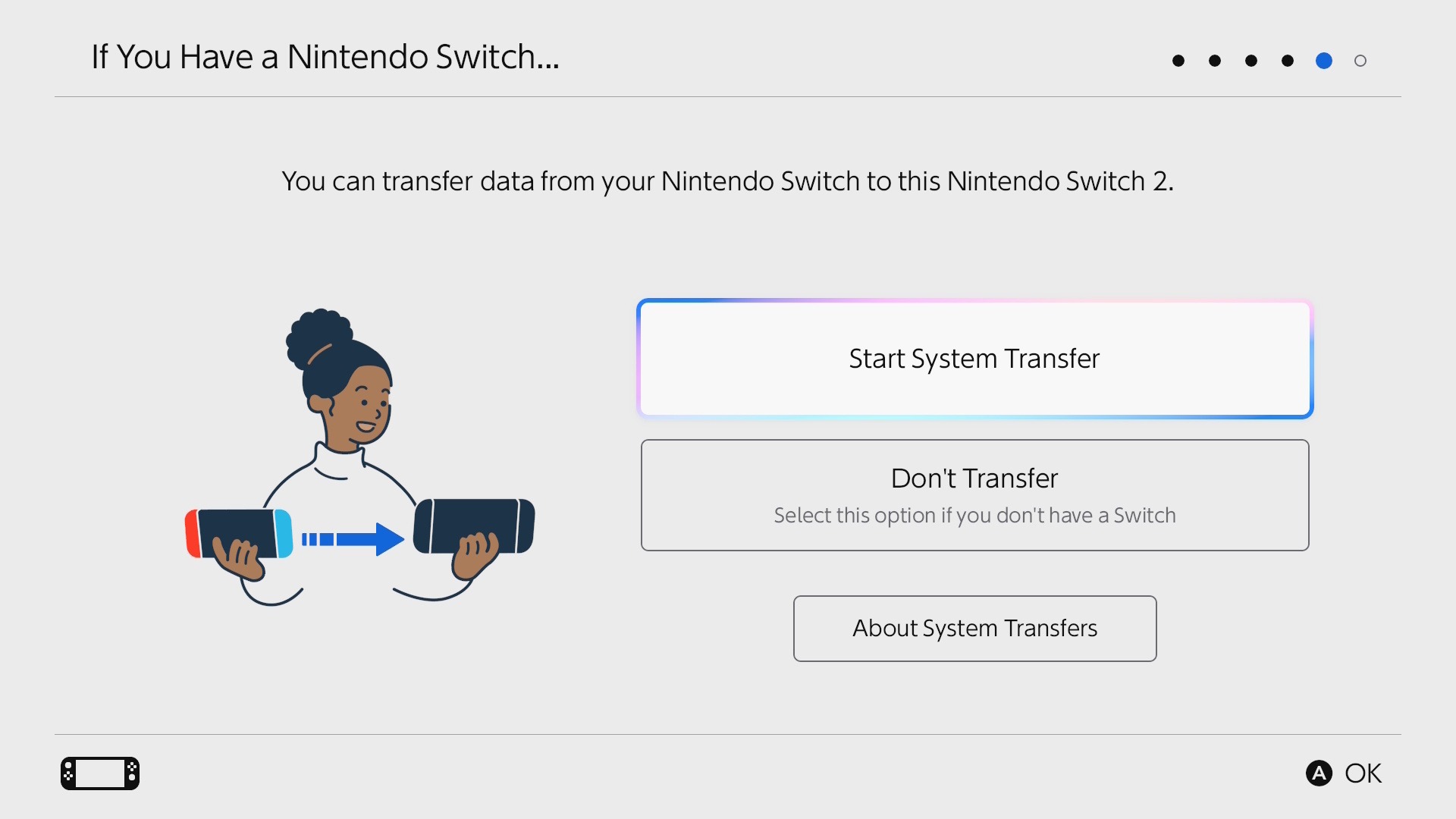
Nintendo’s online features have never been particularly efficient, and utilizing their account features presents a significant challenge. Don’t even begin to discuss the complexities of the Switch 1’s parental controls and digital game ownership. With that said, transferring accounts is similar to the process used for smartphones. You have to connect both units to a charger (super annoying), and you just begin the transfer on both devices. This initial transfer has to be done when the system is initialized. If you cancel it, you have to reset the system back to factory defaults; there’s no option in the settings to do this. You can also do a server transfer if your Switch is dead or you no longer have it. Another option is to remotely wipe your Switch 1 once it’s connected back to the internet. This process transfers all account information, offline saves, and ownership of digital games and DLC. It does not transfer actual game data. You will need to redownload everything. The third option is specifically designed for new Switch 2 owners without a Nintendo account, requiring them to start from the beginning. If you have NSO (Nintendo Switch Online), you can choose not to do a system transfer since all your saves are stored in the cloud; however, you will still need to set the Switch 2 as your primary device. This was a very painless process, and I had zero issues.
Software Overview: The Use Experience
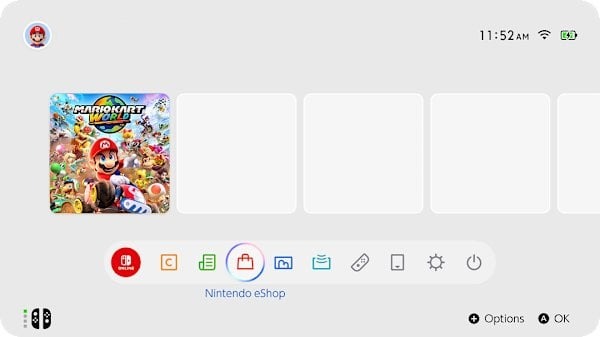
It’s to no one’s surprise that the UI is mostly the same. It’s the same boring row of icons with a black or white theme. Yeah…no themes still. The UI is more “Nintendofied” this time around with adorable sound effects for every system icon, and there’s an RGB-outlined swirl when you hover over something. It’s also snappier and more fluid, but it’s still the most basic UI of any modern Nintendo console. Thankfully the eShop has been completely fixed. It’s a new interface with videos that instantly load when hovering over icons, and it feels fluid. I also noticed the algorithm for recommended games has been immensely improved. No longer will you get shown mostly hentai or alarm clocks. While it’s refreshing to see this improvement, the overall eShop hasn’t changed much, and it didn’t need to. It worked; it was just dog slow and locked up the Switch sometimes. There are new icons at the bottom of the screen now with Virtual Cards and GameShare; these are the only two major software updates the Switch 2 got. There’s also a new button on the Joy-Con, a C button, for Chat. The button pulls up GameChat. Nintendo has finally gotten on board with live video and messaging.
Software Overview: DRM is the Future
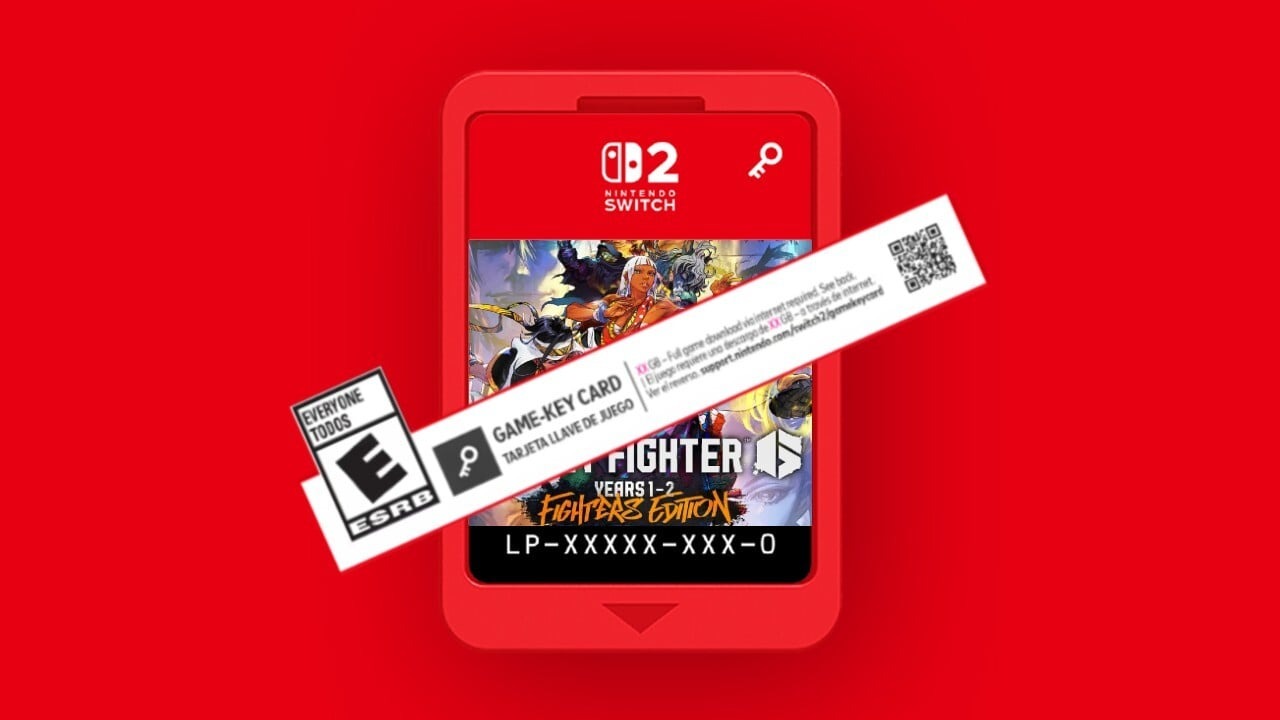
Nintendo has introduced two new features to enhance DRM; however, this solution resolves one issue. The virtual cards are both cool and annoying. This results in the introduction of new Game Key Cards, which can be obtained physically but do not contain any game data. The experience feels like Code-in-a-Box with more steps. It’s cool that you get a tangible item like a physical box, but it means nothing once the service shuts down. The Virtual Card system has fixed the parental control problems that plagued the original Switch. You now can just lend the digital game to a family member that’s in your family group. This is good for 2 weeks, and then you can renew it. This means your Switch doesn’t have to be the primary Switch that your child will use if you end up buying games on your account so they can use them. However, if you want to then play the game, you must revoke the card to load it onto your account again.
Nintendo has also implemented some way to brick your console and disable it remotely if you are caught hacking the services or modifying the Nintendo services in any way. This has been a misleading piece of info stating you don’t own your Switch 2 and it will be bricked if you modify the firmware. This procedure has been possible since consoles could connect to the internet. The Xbox 360, for example, would disable your Xbox account and ban it from the servers if you installed a mod chip and went online or hacked into games too often. Such behavior has been a standard practice since the mid-80s.
Software Overview: The Games: Updated and New
Let’s talk about why you even got this thing. The games. The launch lineup is fragile. Although the launch lineup is among the weakest of any console launch, the games themselves exhibit considerable strength. If you want to fully utilize the Switch 2’s hardware, Mario Kart World, Cyberpunk 2077, and Fast Fusion are the games to consider. Some Switch 1 games received full Switch 2 upgrades, including The Legend of Zelda: Breath of the Wild and Tears of the Kingdom, while a few others received free updates, including Super Mario 3D World, Pokemon Scarlet and Violet, and Super Mario Odyssey. The Switch 1 games aren’t always going to transition to the new system very well. If the Switch games didn’t support scaling in any way, the game could look more blurry and ugly even in handheld mode. Some games are going to need updates and will make a lot of Switch 1 games either unplayable or less enjoyable than the original console. Games that had unlocked frame rates or locked frames, like 30 or 60, will enjoy more stable gameplay. Some Switch 1 games are already getting these benefits without any update, including faster load times.
For 120 FPS there is only one game that supports this, and that’s Welcome Tour via a mini-game. The only confirmed game to have this feature is Metroid Prime 4 as of this writing. This is something that even the PS5 and Xbox Series X don’t have much of. Only 2 Switch games support HDR, VRR, and ALLM. These also have to be programmed into the game, and not many currently support this with the small launch lineup that we got. I found that games do look and play great like you would expect, and HDR works fine even on the handheld screen. While it’s not quite as vivid as an OLED it’s quite a crisp screen and looks good.
Early Adopters Need Patience
Just like with the Switch 1, early adopters need to be patient. While we have an entire backlog of Switch games to still play, there are some that don’t work, need patching, or simply will never work or get patched. Don’t throw away your Switch 1 just yet. There is an anemic Switch 2 game offering right now, and unless you really want any of those games, holding off for a year wouldn’t hurt. However, there’s also nothing wrong with getting one just to play Switch 1 games, as a lot do run better. There are other issues, like a lot of third-party controllers no longer work and need patches. All of my 8bitdo controllers don’t work or have issues, but they have already released firmware updates for many controllers. HDR isn’t perfect and needs some patching as well. The display itself only has 450 nits, which isn’t adequate for proper HDR. The HDR performance is better on the TV, but the current offerings for the Switch 2 do not look promising.
See You In 2033
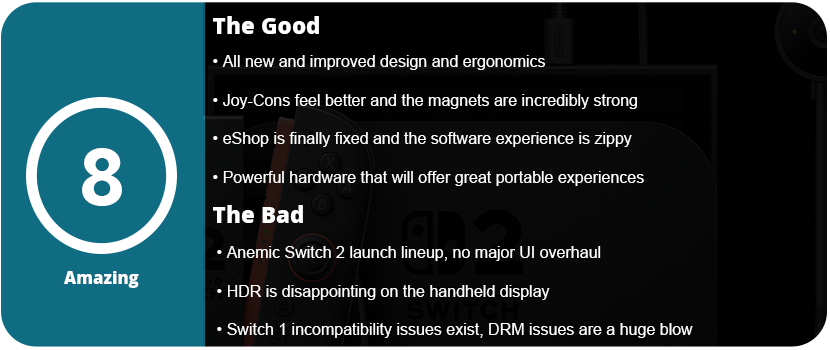
In the end, the Switch 2 currently offers a lot of value for mostly newcomers—those who skipped the original Switch. There’s also no loss in upgrading sooner rather than later because all of your games will work as long as they don’t require features from the Switch 1 that didn’t carry over. Yes, the launch lineup is weak and small, but the hardware is a massive upgrade over the original, and we should see some great things from Nintendo over the next couple of years. The sequel will be a slow burn just like Switch 1, with only a couple of first-party games announced for release this year. This is sadly due to Nintendo having to play catch-up with their tech that’s been around for five years already. The Joy-Cons are more enjoyable to use, the mouse mode works surprisingly well, and the handheld display is great. We sadly don’t get much of a UI overhaul, but at least the eShop works as intended. It’s the Switch 1, but better, which is what everyone wanted.
I have been longing for a cozy Western RPG. I can immerse myself in the lore, characters, world, and story of these games for weeks at a time. Skyrim, Oblivion, Dragon Age, Fable. These are just a few series that have given me worlds to do this with, and these are harder to come by these days. Avowed looked promising, but after Obsidian’s disappointing The Outer Worlds, I wasn’t so sure about this one. Although it appeared to play similarly to a modernized version of Skyrim, creating a completely new world is a challenging task. It was tried with Kingdoms of Amalur and failed miserably. The game world must captivate players and resemble a distinct character in its own right. For me, gameplay can normally come second to the atmosphere because without something to be invested in, there’s nothing worth playing.
Avowed has a fantastic idea. You are Godlike. You are born in Eora, the same universe set in the Pillars of Eternity series. Specifically, you are in The Living Lands. You assume the role of an Aedyran Envoy for the empire to trek across the land and negotiate ways to have them join the empire. You also need to find a way to stop the Dreamscourge. This is a disease that is turning people into mindless “zombies,” for lack of a better term. You end up gathering four party members along the way while running around four large maps full of side quests, hidden treasures, and new Godlike powers to discover. The flow of the game plays out like most modern Western RPGs. You have a main quest, but you can go to a distant landmark and find a side quest. There are also bounty hunts for extra coin and better gear.
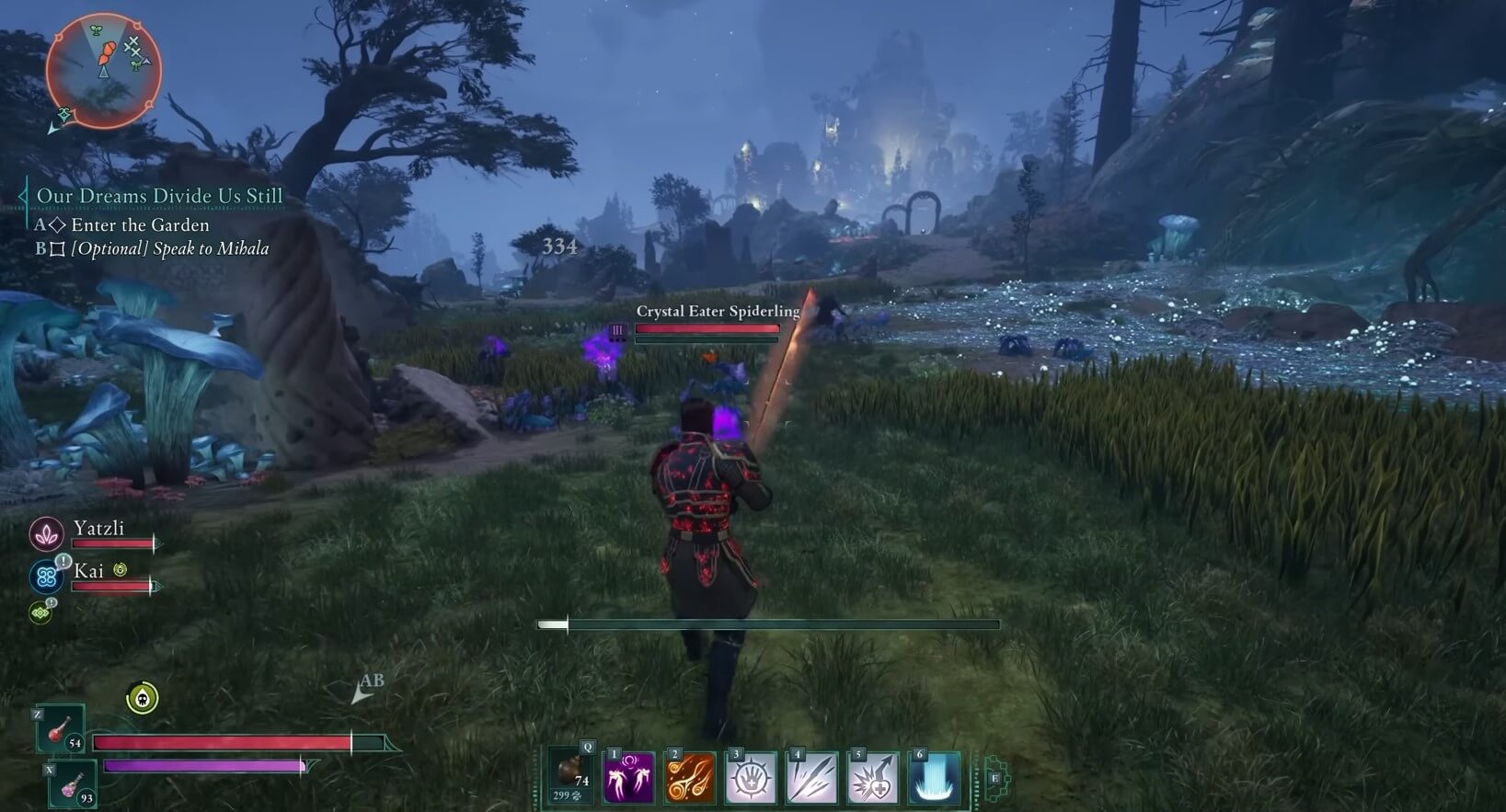
The combat system is similar to that in other first-person Western RPGs like Skyrim. You swing a sword or cast magic, hold down the attack button to do a powerful attack, and can block with a shield or larger weapon. What’s different here are the abilities you can acquire by leveling up and using ability points to unlock them. These can be bound 1-6 or by using a wheel as well as binding your companions’ abilities to order them to do things on the fly. The combat system has weight and can feel useful in the beginning of the game, but it clearly has its flaws and gets old after quite some time. This issue is due to combat happening constantly and enemies being damage sponges. Skyrim and Oblivion worked because combat was over fairly quickly, and it wasn’t too frequent unless you were in a small dungeon. Despite having varied ability upgrades like adding splash damage, poison, or having effects last longer, I never felt powerful enough in this game. The Godlike abilities even feel useless. Even with fully upgraded equipment, I always felt like every enemy was a sponge unless I fought opponents that were at a much lower level than me if I went back to early maps. The situation is worsened by the fact that abilities consume essence, which depletes quickly unless you have potions; however, potions are expensive and cannot be crafted unless you are a Druid. Lame.
This issue is all due to the game using equipment levels instead of player levels, which I absolutely hate in RPGs. This means no matter how many abilities you have, no matter how much you’ve dumped into attribute points, you will never be able to do any damage until your equipment level meets or exceeds the enemies in the area. This means upgrading armor and weapons, and each level has three tiers. Higher tiers and legendary equipment require rare items. The process means hunting these rare materials down either in shops or in drops from enemies or certain chests. This requires looking it up online and constantly halting story progress. You can craft weaker materials or rarer materials, but it’s still a grind. I hate these multi-tiered systems that are there just to add to the grind. You can also use food items to cook food for temporary boosts in battle. Legendary equipment can only be upgraded with specific items . My game was frequently halted because I lacked enough money to purchase a higher-tier weapon needed to progress to the next area. I then had to do things like side quests and bounty hunts and just sell random crap to grind for coins. The economy system in this game is significantly broken, which has led to the creation of many mods that better balance it. Rewards are piddly scraps even for beating large bosses.
On top of that, the equipment system itself is frustrating. Items such as rings and signets provide only minor stat boosts, while armor primarily serves to reduce damage and determine your stamina fatigue rate. You can use the same piece of armor through an entire map as long as you upgrade it. There’s not much fun in that. There are ranged weapons like flintlocks, bows, and rifles, but the reload time is very slow, and I found them useless unless you are specializing in those weapons. There are also elemental “grenades” that can be used to break barriers leading to hidden areas or damage enemies. Sure, it all works, but is this system fun and engaging? No. It felt like schoolwork, trying to balance out my build.
A lot of the open areas have enemy groups, but they never respawn. Once they are dead, that is it for the game, so this requires you to go everywhere in the game and forces you to pretty much complete every quest, which is annoying. There are fast travel points scattered throughout, and the campsites are an isolated instance where you craft and upgrade. Exiting here allows you to change the time of day and choose whether to warp back to the last spot you were in or continue on. Side quests show up as blue exclamation marks on the map, and these are fairly uninteresting. They are just there for enemy fodder and don’t add to the lore like Bethesda games do or even The Witcher. Some games use side quests to expand on lore, such as discovering a folktale in The Witcher or having individual quests explain smaller details of the lore through their missions. These side quests are usually well-crafted and feel significantly different from the main missions; however, in this case, you are merely running around killing enemies and collecting items for others, which results in a tedious dialogue session.
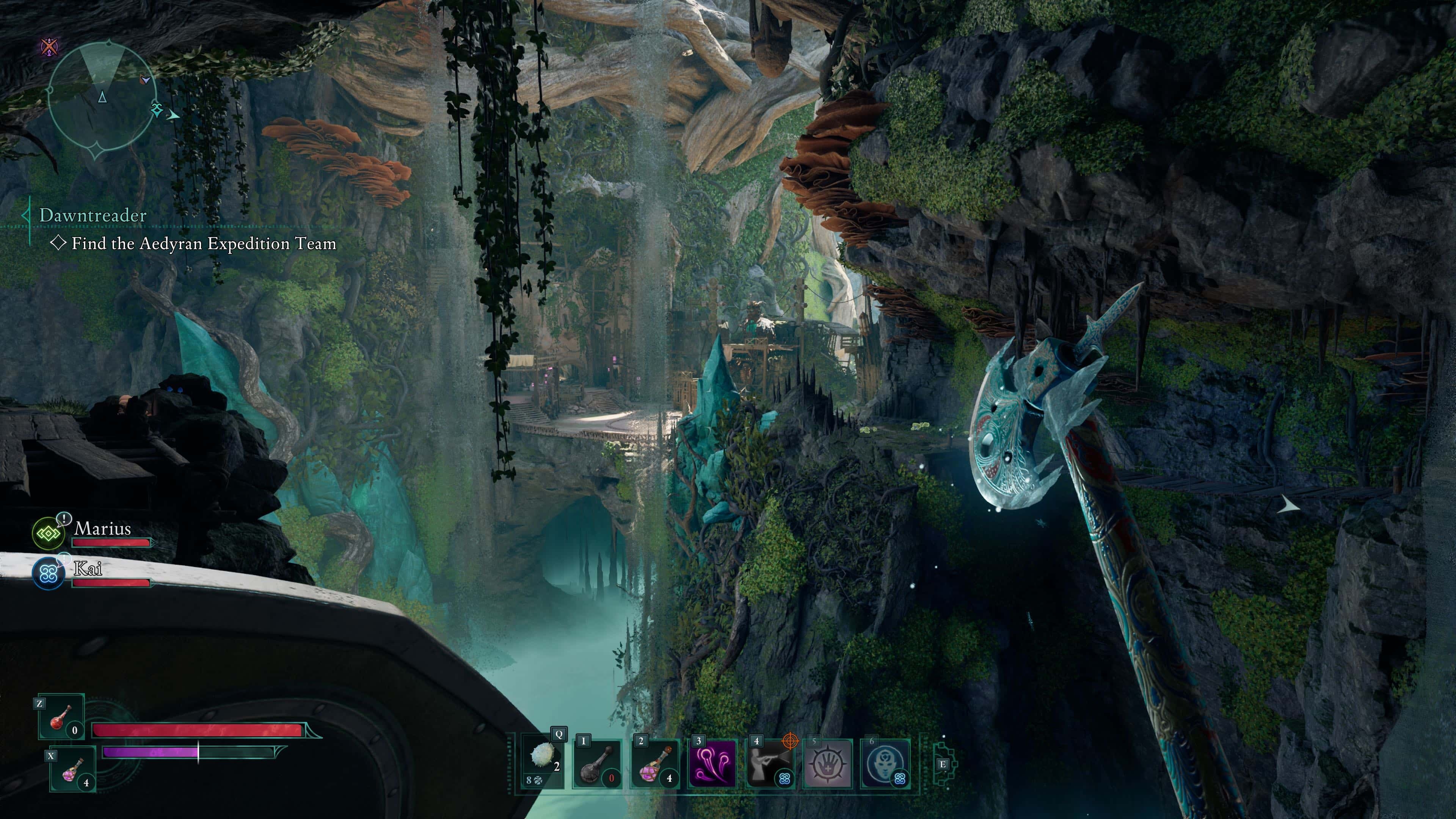
That leads me to the lore, world, and characters themselves. The Living Lands look lovely but aren’t anything special. It’s stuff we have seen numerous times in Western RPGs. The game features a volcanic region, dense forests, enormous mushrooms, medieval settlements, dwarves, and towering trees with intricate roots, among other elements. The game doesn’t have a particularly unique art style and looks like generic European fantasy. It’s not poor at all, just nothing special. The races in the game are the most original part. Outside of dwarves (who don’t look right, by the way), humans, and elves, there are the Orlans, who are a cat-like race, and the Aumaua, who are scaly, amphibian-like creatures. These two races were very intriguing to see, and the NPC companions are really interesting to learn about and talk to. You can get to know them more in camp via a very long dialog tree that you unlock after major story events. Kai is a smart-mouthed Aumaua, Marius is a disgruntled dwarf, Giatta is a proud wizard, and Yatzli is a sassy and frisky Orlan wizard. The other NPCs, including faction leaders, bosses, and various others, are largely forgettable. I never cared to finish out all dialogue options with most characters.
This title is also an Unreal Engine 5 game, so it’s poorly optimized. Despite the impressive visuals and intricate detail, if you don’t have a modern PC, the game will perform poorly and heavily depend on frame generation. Lowering settings won’t give you much room to work with, and like other UE5 games, it is very VRAM dependent, which heavily affects performance. Anything under 8GB is useless. However, if you can use frame generation with AI upscaling or just run at 1080p or lower, the game does smooth out and play fine.
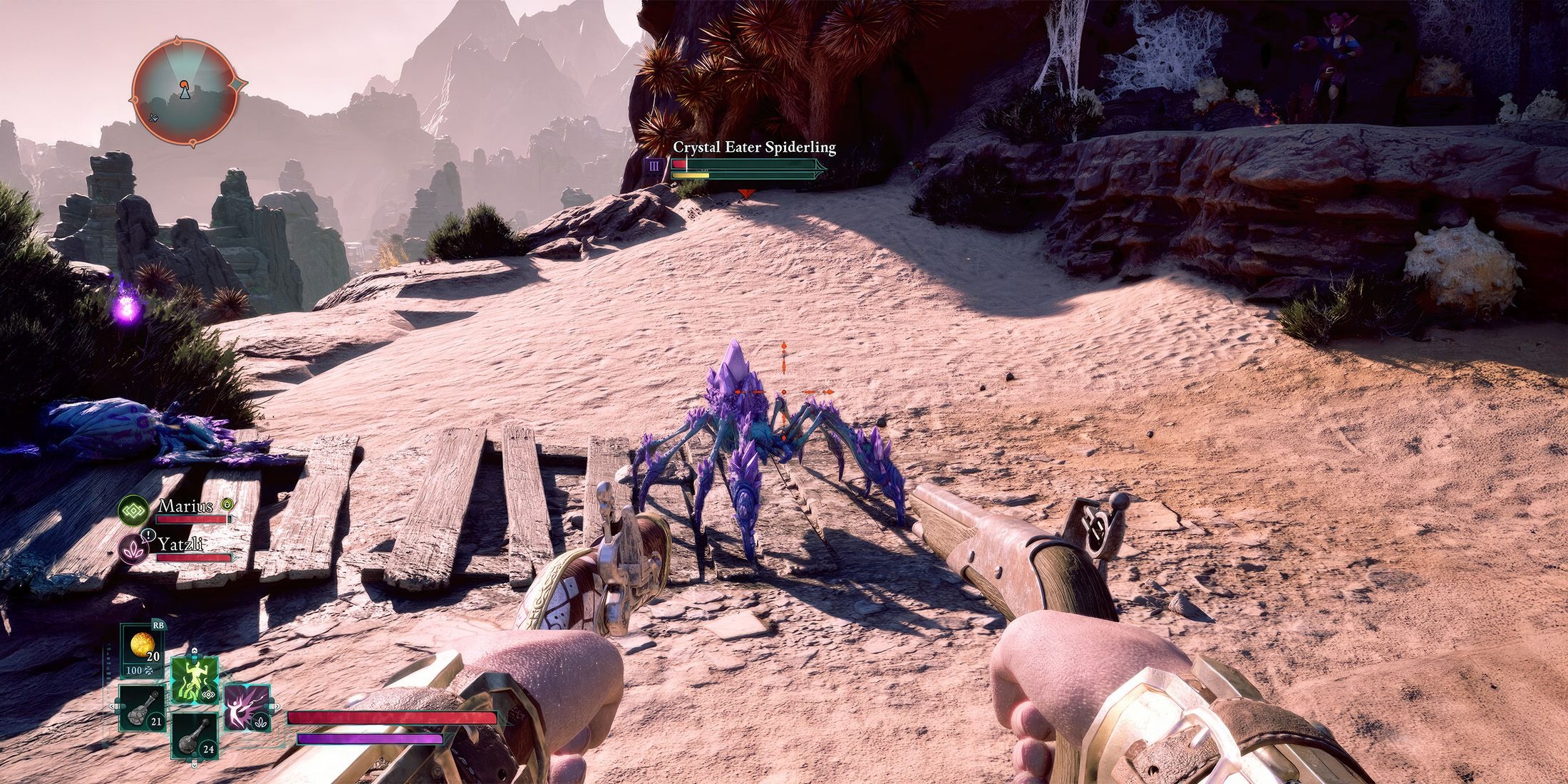
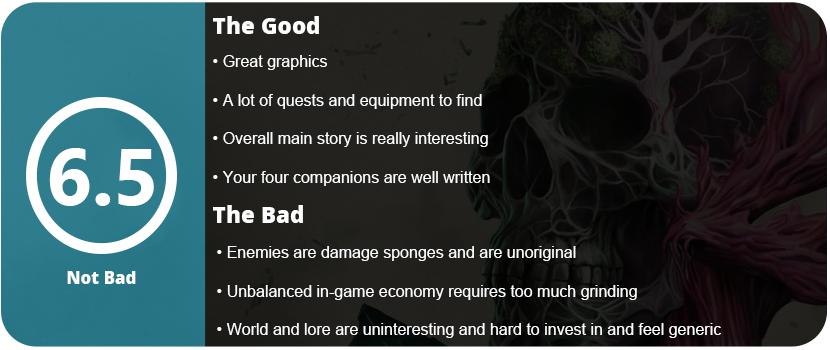
That leads to the overall world and wraps back around to the first question. Does this give me the warm, cozy Western RPG feeling from a game that I can’t wait to get back to? No. I was eager for this game to end, and it felt increasingly prolonged as I played, primarily because I had to constantly upgrade my equipment, which required a lengthy grind for resources. I never looked forward to the next area, as every 50 feet was just another group of damage-sponge enemies. While there are plenty of enemy types, they are forgettable and fall under the same European RPG tropes, such as giant spiders, golems, generic enemies in armor, elementals, bears, etc. None of the enemies really stood out, nor did the bosses. Nothing in this game feels unique. The game simply replicates elements from other games. Even with a more refined first-person combat system, the abilities don’t add much, and you just never feel like you’re getting the edge on enemies. Finding that really cool rare weapon behind a puzzle in the game doesn’t give you an edge. It might just be a weaker unique weapon that you need to upgrade more, which requires grinding for more materials. Occasionally these are worth more in gold than in use. It’s disheartening that the unique story and premise of Avowed were squandered in such an unbalanced and generic game.
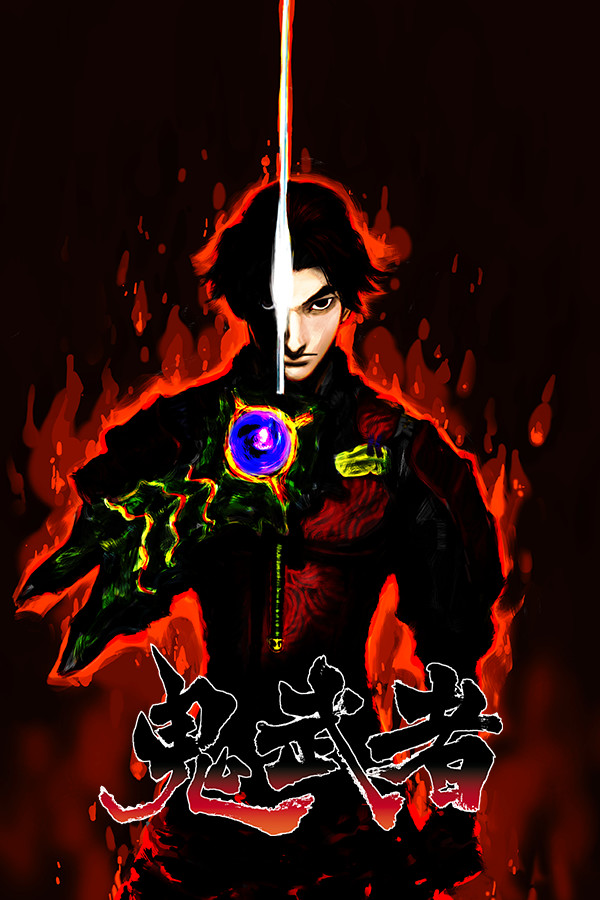
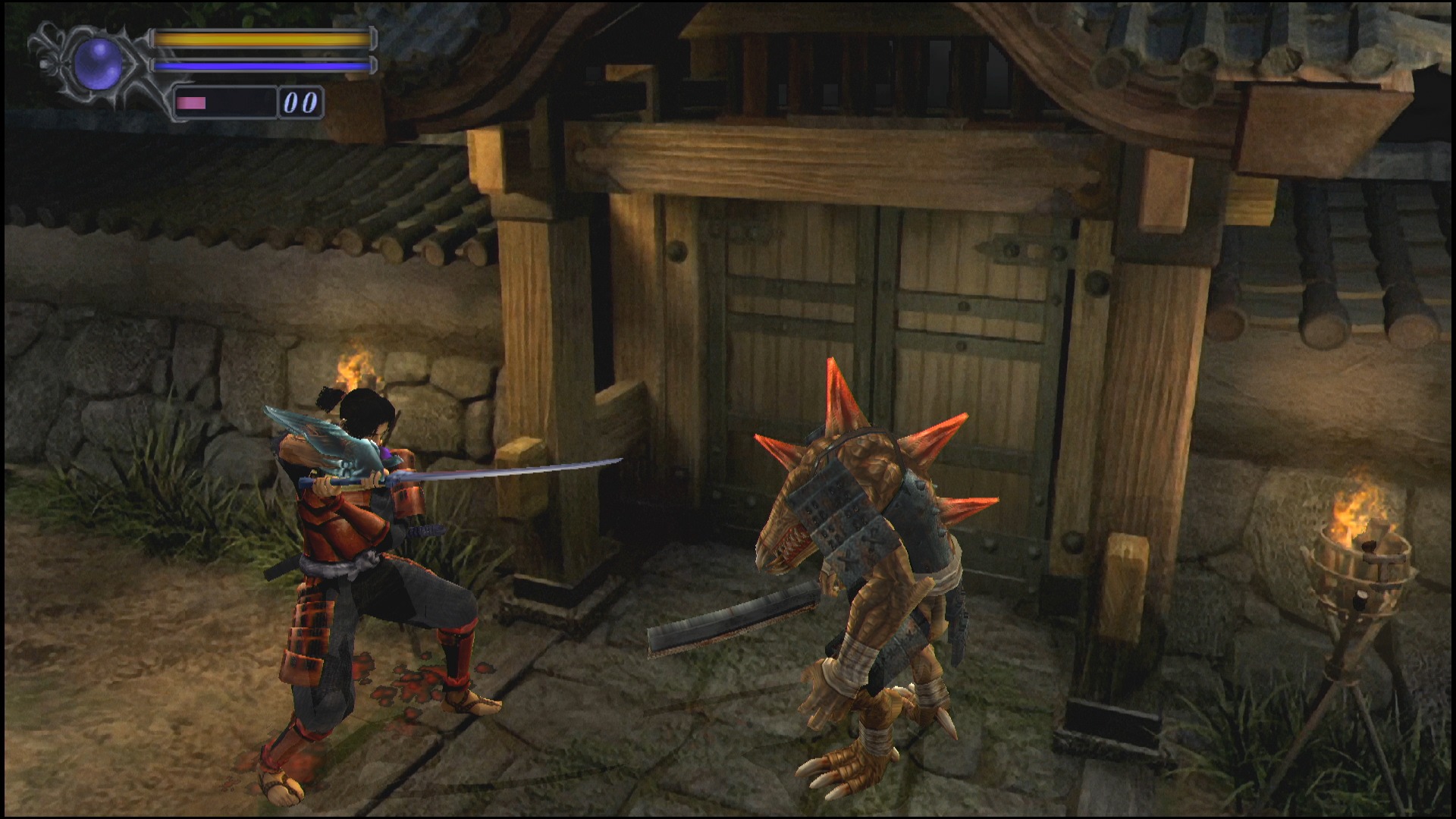
Onimusha was a third-party PlayStation 2 exclusive franchise that did very well back in the day. I remember seeing these games on shelves for years at Blockbuster and game stores, and they never caught my interest until the third entry. Onimusha can be described as a Samurai-themed version of Resident Evil, featuring 3D polygonal characters set against pre-rendered backgrounds and utilizing tank controls. In 2019 an HD remaster was released that vastly improved the game and made it more playable thanks to modern enhancements. These include things such as up to 1440p resolution, texture filtering, a 16:9 aspect ratio, re-recorded voice acting and soundtrack, and improved controls. You can now control characters with the left analog stick, which removes the tank controls. You can also switch weapons on the fly rather than through menus, like in Resident Evil. This bumps the score up quite a bit and makes it enjoyable to play.
You assume the role of Samanosuke, a samurai whose clan is engaged in a war with Oda Nobunaga. Oda is killed in battle, and he swears allegiance with demons to come back to life and take over Samanosuke’s clan. Given that a quick run-through of the game takes around 4-5 hours (3.5 hours with a walkthrough), the story is extremely thin and lacks interest. There’s not much time to tell a good story. Unfortunately, the characters lack depth and backstory, making it difficult to care about them. The boss designs are cool, but the enemies feel like generic zombie samurais and monsters. The only really cool design is Guildenstern, who feels like something straight from H.R. Giger. The enemy variety is enough for this type of game, as you need to learn enemy attack patterns, so too many enemies would make the game more unbalanced.
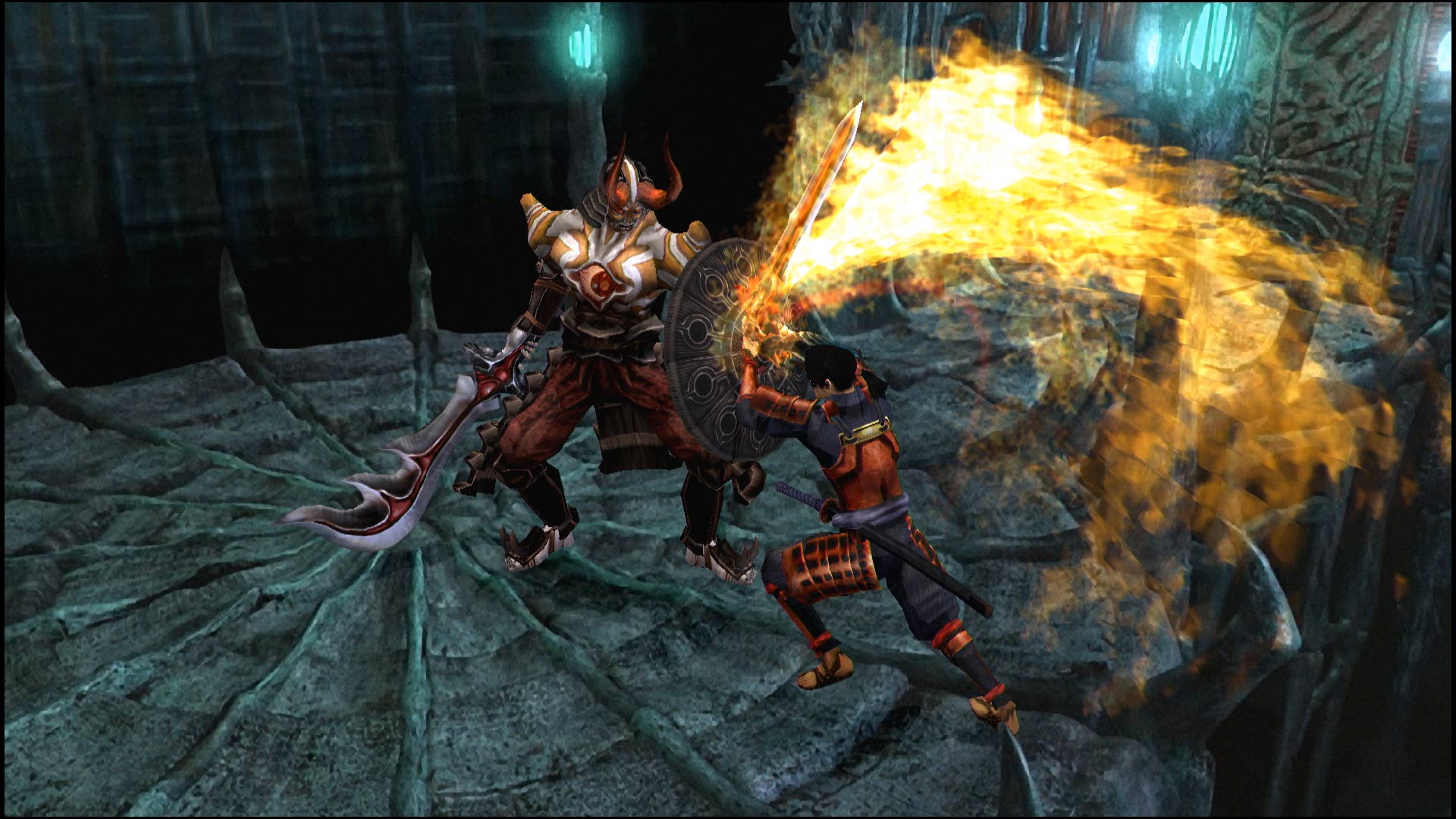
The combat consists of a single attack button. You can lock on to enemies and do three-hit combos as well as block. It’s punchy and feels excellent and each of the three weapons feels excellent to use. Enryuu is a heavy flame sword, Shippuu is a swift double sword, and Raizen is a medium-speed short sword. Each weapon has an elemental attack attached to it that does massive damage and uses blue magic, so you only get a couple of uses, and each weapon has its own meter; it’s not a shared pool. You can gain more magic only from enemies dropping orbs or magic fountains near save points. Therefore, you should utilize it sparingly against bosses or to overcome challenging situations. You also use these magic powers to unlock doors to progress through the game. You must upgrade your magic first, or you’ll be stuck and have to grind. Enemies do respawn, which is annoying, but it’s needed to gain more red orbs to upgrade magic and weapons.
Armor isn’t upgradeable, but you can find two different sets of better armor in the game, but they are locked behind some puzzles. Some of the best items and jewels, which are used to upgrade max magic and health, are locked behind puzzle boxes. Books provide clues, but they can be hard to interpret. The map system is quite adequate, allowing you to either consult a labeled map online or create one yourself. Like Resident Evil, you need to memorize landmarks to get around the game, as every room has a fixed camera angle. There is a bonus arena mode in which you descend 20 levels of waves of enemies to get a key to unlock the strongest sword in the game, but it’s not until just before the final boss, so this is mostly useful for second playthroughs. The arena is incredibly challenging, so I recommend playing the game on easy first and then doing another playthrough on a harder difficulty.
Overall, Onimusha was a good attempt from Capcom to create another sub-genre of their Resident Evil games, and it was mostly successful. A simple but solid combat system, fun and challenging bosses, and well-designed levels will give you a fun weekend. Just don’t expect a complicated story and captivating characters.
Horror games that are good are really hard to come by these days. The online stores are stuffed to the gills with short indie horror titles, mostly from Asia, that don’t really add much to what we’ve already seen. With the large amount of P.T. clones (Madison) and Asian urban legends (DreadOut, The Bridge Curse), none of it is of the same quality that everyone is trying to chase, such as the peak of horror games from the PS2 era (Silent Hill, Haunting Ground). Sadly, BrokenLore: Don’t Watch is another one to chuck into the bin of trying but failing to execute any kind of staying power in the horror genre.
You play as Shunji, a NEET (in Japan known as not in education, employment, or training) or, anywhere else in the world, a loser. He is living off of his parents’ income, and his lifestyle has clearly caught up with him. He’s behind on rent, his rent-to-own TV is ready for repossession, and he’s a complete slob. Looking around his apartment, you will see it’s pretty stereotypical for this type of person. Shelves of manga, fast food containers everywhere, anime posters of girls in lingerie, anime shirts, and trash piled up at the door. Sadly, we don’t really get to know Shinji or Junko, the only other character in the game. She contacts him via IM on his PC and warns him about not looking at a monster. Their mutual best friend is missing, and she wants him to contact this friend.
As you progress through the first 15 minutes of the game, you will slowly descend into the madness that is the Hayakuma. A monster that seems to come after deadbeats. These first moments of the game are full of progressing scares, and they are pretty cool. I don’t want to get into too much detail to spoil anything, but this is probably the best part of the game, sadly. The first time you need to stab eyes on the wall is really neat, but once you leave the apartment and venture into the hallways, the game quickly becomes tedious. The worst part of the game is when it changes to a 32-bit game a la PlayStation, and you might find 6 TV cords to unplug to get back to your apartment. I found this kind of pointless, and it doesn’t add anything to the game. You need to follow the colored cables to the correct areas and avoid a monster while you’re at it. If you get caught, you can get hit three times, and then you are reset back to the starting area of the large TV and must go back to find the plugs. It’s a good way to warp back to the beginning after you’ve found the plugs through.
Honestly, the game should have stuck with just unfolding a story inside of the apartment. The first part of the game is done really well, and I could see it being even better if they just continued creating some creative, scary moments. I was hooked during these scenes, but once you leave the apartment, I wished I could go back. The voice acting is also really well done, and being in Japanese keeps it from feeling cringy. Overall, Don’t Watch starts out really well but loses the focus and momentum that it built up and leaves you with a character you could care less about.
The first Rengoku game was the single worst launch game for the system. A repetitive, ugly, and boring mess I’m surprised Konami approved a second game at all. You control A.D.A.M., a battlefield AI android. The story is based on The Divine Comedy, but it’s so poorly told that you won’t care. Cut scenes are minimal, consisting of a few lines or walls of text over drawn backgrounds. Cutscenes are infrequent, typically occurring only before or after boss fights and upon reaching the next floor. The bosses’ names reflect the Seven Deadly Sins, which are represented by seven floors. It’s a throwaway concept and half-baked.
The most surprisingly decent part of the game is the controls. Combat consists of running around boring and claustrophobic corridors. The game only introduces color near the end. Fortunately, you receive a map that highlights all the rooms you have yet to visit. Each room locks its doors until you defeat all enemies. Your body attaches weapons to specific parts. You can attach weapons to your arms, head, torso, and legs. These can range from ranged to melee weapons, heavy and light; some you hold down, like the chainsaw, and weapons like the hammer do heavy damage. You pick up weapons by defeating enemies or finding them in capsules. These body parts also correspond to each face button. The weapon system is a unique and cool concept, and while the game forces you to do different combos to increase damage, the animations and feeling of the combat don’t reflect this. It feels like you are fighting with a four-armed octopus instead. Your android floats around the levels in a Naruto run, and once you lock on to an enemy, you just wail on them, as there’s only a dodge feature (double tap on the analog nub). You also need to watch your heat meters for each body part, as holding down the button too long will temporarily disable them until they cool down. The issue can be remedied with upgrades. Health will continuously regenerate, which is somewhat beneficial.
The game relies heavily on grinding out “skin,” which is used to upgrade everything. You can enhance your health, defense, heat, and more. Extra skin is dropped from “overkilling” enemies. When you defeat them, their green health bar will turn red. Fill this bar up with more hits to get more rewards. I honestly felt the drop rate just wasn’t high enough, as the first boss required me to go back through the same boring hallways and kill enemies until I got enough skin to withstand enough attacks to beat the boss. The worst part about the combat is the knockback effect. You can’t cancel it out, and it’s difficult to tell whose attacks are landing. The animation feedback doesn’t really exist unless the enemy actually falls down. The combat is stiff and cumbersome, and when you’re knocked back, you break your lock. Thankfully, you can press the L button at any time, and the camera will swing around and lock on. It’s a great lock-on system, and it’s too bad it’s attached to such a terrible combat system.
In theory, this combat system sounds excellent on paper. It just needed more time for better animations and polish to feel fluid and fun. You can save and upgrade at the floor’s terminal, which you can reach via warp points. When you die, you drop all of your equipped weapons and must return to retrieve them, which adds a Souls-like aspect to the game. You will accumulate so many weapons that you won’t need to worry about running out. Weapons also have “ammo,” and after so many uses, they won’t work. You will default to that part’s bare melee combat. You can upgrade your slot count, but it’s expensive, and you can have five slots per part. Once you run out of ammo for one part, it will auto-switch to the next.
Regrettably, we could overlook these shortcomings if the game had improved in terms of appearance, sound, and feel. The graphics are unattractive, featuring small and cramped brown corridors. Every room features identical metal boxes and damaged walls. The enemies all look generic and the same. The only things that change are the bosses. The music consistently plays the same terrible techno track, causing your eyes and ears to ache after prolonged exposure. If you like grindy games,
The Longest Journey is one of the best adventure titles ever created and one of my personal favorites. It’s so good that even my own mother fell in love with it, and she’s not a gamer. The world, characters, and lore that were built up in The Longest Journey were fascinating. It was well written, and the visuals, for the time, were fantastic. Gameplay-wise it suffered from the usual tropes of adventure games of the time, but Dreamfall is for a next generation of gaming with 3D visuals. The game stars a new protagonist, Zoe Castillo, who awakens in her home in Casablanca and ends up being entangled in a deep corporate conspiracy and needs to find April Ryan.
The game starts out a bit slow. Everything seems just fine, and the game needs to build up this new branch of the story with Zoe. You wake up in your room and talk to your dad, you go outside, you meet a friend at her phone store, and then you end up building towards a relationship with your ex-fling Reza, who is a secret reporter that is on to a big story to bring down the evil corporation WATIcorp, which is known for making AI and robots. April Ryan and Arcadia get involved; I don’t want to spoil how, but she is the second story branch in this game. You do end up in Arcadia for the second third of the game, running around a small town called Marcuria, going back and forth finding objects and talking to people. The last third of the game starts mixing it up, and you go back and forth between Stark (the real world) and Arcadia quite a bit. Familiar faces appear, and then the third story branch of Kian Alvane, an Apostle for a religious sect of Arcadia, sets in.
Gameplay is very minimal. Puzzles aren’t challenging and are very sparse. They consist of glyph matching against a timer and glyph spinners. They appear to have been tacked on at the last moment, a common occurrence in adventure games from this era. You can combine objects to solve puzzles, but this doesn’t happen very often. Objects are obvious and easy to come by, as there aren’t that many interactive objects in the game. Green brackets will appear over everything you can interact with, and most of them just have the character explain what it is. The first two-thirds of the game is more gameplay-heavy with a couple of stealth areas and combat. Yes, combat. It’s atrocious and shouldn’t have been put in. The animations are stiff and slow, and the controls feel like mud. There is a block button, and you can dodge, but the AI is unintelligent and just wails at you or repeats patterns. There is a light and heavy attack, but honestly you just need to mash the heavy attack and you will win. There are only a couple of fights in the game, and any others you won’t win, and you’ll essentially fail a stealth section.
The last third of the game is clearly rushed, and the game obviously wasn’t completed. This section is mostly just cutscenes and dialogue. Kian’s and April’s sections just end with no conclusion, and Zoe’s section is the only branch that feels complete in a way, with a proper cliffhanger for a sequel. I just found it odd that each chapter took nearly two hours to finish, and around chapter 7 I’m finishing them in a matter of minutes, and there are no more puzzles or gameplay. Even for what’s here, 12 hours is quite long for an adventure title. I feel this needed to be 20 to feel fully complete. Thankfully it doesn’t overstay its welcome. The writing is great, the voice acting is decent, and the world and characters are really interesting.
The visuals hold up surprisingly well even today. The large vistas look beautiful with great lighting effects. There’s a lot of detail put into everything from icicles hanging off of the bottom of bridges to detailed ornamentation in walls and stones that didn’t need to be there for a game of this era. Sadly, the PC version has terrible controller support, but this was pre-Games for Windows, so there was no universal controller standard for PC games back then. This game is still easily one of the best adventure titles ever made thanks to the fantastic lore, world-building, and writing. I couldn’t put the game down. I do recommend playing the first game, as this is a direct continuation, but the game does a good job filling you in on everything as the game goes along.
South Park has had a reputation of having terrible games in its repertoire. In fact, South Park on the N64 is considered one of the worst games ever made. The studio redeemed itself with The Stick of Truth in 2014 and delivered a fun turn-based RPG that kept the look and humor of the shows. Critics praised it for evoking the experience of playing an actual show. The Fractured But Whole carries on this tradition, introducing a fresh narrative and featuring the character of the New Kid, also known as Butthole or Butt Lord. Sadly, the game feels more like an expansion on the first game rather than an entirely new game. We get the same South Park map, nearly the same locales and shops, and the gameplay is mostly unchanged. The studio didn’t do much to address many of the concerns from the original, either.
You start out by creating your hero to look like a South Park character. You are a voiceless protagonist again, but I wish I could actually play as one of the main characters here. Once the plot is dished out, you can go explore South Park. Unfortunately, the map remains largely unchanged. Until you acquire different fart powers, various areas remain blocked. Your primary superpower is the ability to produce potent farts that have the capacity to alter the course of time and space. You eventually acquire various abilities that allow you to reach higher places by using small fans. You can use Captain Diabetes to knock over objects with green bases. You can unlock the electric door by having Butters…shove a hamster up your butt and then fart it out, which will short out the circuit. You couldn’t make this stuff up if you tried. You also have the power to have Toolshed shove a hose up your butt to act as an air compressor to blow debris away. Usually this is in the form of the lava Lego bricks that block paths early in the game. Exploration is mostly for finding crafting parts, which are hidden in various objects with gold handles or lids. You can also go around collecting Yaoi posters or find Big Gay Al’s hidden cats with pink scarves.
Exploration can be fun early on, as there are many areas to unlock, and you will always wonder how to get to certain spots. Once you get towards the end of the game, the entire town will be accessible. There are various vending machines that allow you to buy costume parts, artifacts, consumables, and crafting parts. You also have a social media presence on Coonstagram, so you can walk around and take photos with South Park characters to increase your following. This mainly just allows you to complete your character sheet. Mastery in various areas will unlock some rewards. Certain characters won’t take photos with you until you meet certain criteria, like finishing a side quest or main mission. There are also toilets you can poop in to play a mini-game. Honestly, all of these things are superficial and don’t really add substance to the exploration, but it’s better than nothing.
This game primarily focuses on combat, dividing each area into squares. Each character has different attacks that can reach certain grids based on what kind of attack it is. Some attacks move in specific lines, such as Toolshed’s drill attack, which is diagonal in both directions. Certain attacks have the ability to knock enemies back, which can result in additional damage if an enemy is standing behind them. Certain attacks have the ability to penetrate through enemies, while others require you to be in close proximity to them. To be honest, I don’t think the attacks are well balanced. There are three different power attributes: brain, brawn, and spunk. There are several superhero classes, including assassins, brawlers, plantmancers, and psychics. These are generic classes, and you can pick and choose abilities after selecting your class. Each class also possesses an ultimate ability. This ability is a yellow bar that builds up when hit, and when you are hit, you can press a button in time to give yourself a small health boost and advance the ultimate meter further. The ultimate meter is essential to winning longer and tougher battles.
Like in the previous game, there are positive and negative status effects. Bleeding, gross out (poison), attack and defense up or down, but positive status effects take a back seat over negative. There aren’t many abilities that give you positive effects. This illustrates my point about the powers being poorly balanced. There are very few healing abilities, and most of them feel useless. It is rare to find abilities that can heal your entire team, as healing individual characters becomes challenging when there are four or more characters on screen. There are consumables you can use for this, but items that give you more health as you go on are pricier and harder to come by, just like any RPG. You at least fully heal after each battle, and effects don’t carry forward. I found the attack patterns to be mostly annoying and attributed them to the balance issue. A lot of damaging attacks require you to be in front of or in line with the enemy. I wish there were more abilities that allowed you to attack from a longer distance. Some abilities feel useless when the grid layout just doesn’t work in your favor. I feel the grid needs to be wider so more characters can get in direct contact with the enemies. It’s not always a problem, but if you balance your abilities and party, you can avoid this, mostly. You can complete side quests to unlock summons, which are craftable items that can heal or do damage to the entire grid.
I also discovered that the story mode primarily focuses on boss rushes in the last half. You will run into various groups in the show, such as the Raisins, Rednecks, Ninjas, Sixth Graders, and so on. Each group has certain abilities you need to remember, and you need to pick the right party members to counter them. Some enemies will have attacks that require a countdown before they can be executed and cause splash damage. Some enemies are incredibly powerful and can swarm you. I appreciated the variety of bosses with different win conditions, such as escaping or pushing enemies toward the boss, as that is the only way to deplete its health. The biggest gripe I have about the combat is how slow it is. There are many funny quips and one-liners from every character, but the turn won’t start until they finish their line. You can’t speed up battle in any way, and ultimate animations aren’t skippable. Thankfully, a lot of the smaller battles that are around town don’t respawn, but you need to do side quests and fight everyone you can to get a high enough rank.
This game is equipment and rank-based, and you don’t acquire levels. Each rank unlocks an artifact slot, and your artifact rank determines how powerful you are. By the end of the game, you will need to be ranked at 800 or higher to fight anything. Each mission has a rank level next to it that must be met, or you will quickly die. You can obtain artifacts by fighting bosses, scrounging around, or crafting them once you find the recipes. You must fight as much as you can to increase your rank to unlock new slots. It’s really annoying how restrictive the game is, but thankfully I didn’t run into not being ranked up enough, as I did do most of the side quests and fought everyone I could see. Different artifacts will increase their stats based on the build you have. Costumes are cosmetic only.
As the story progresses, the game feels dragged out. I feel there are many battles that are just there for fan service and don’t actually add to anything. The story is also similar to The Stick of Truth in that it’s nothing special and just feels like a typical South Park episode. That’s fine and all, but for a game, I wanted something a bit grander and more original. The game’s story relies too much on fan service and rehashing old story arcs from the TV show. Overall, The Fractured But Whole is a delightful superhero take on the formula but doesn’t do enough to advance the series or change much. If you didn’t like the last game, then this one won’t change your mind at all.
Yeah, it's pretty damn awful. Notoriously one of the worst games on the PSP. A 4 was actually being generous.…