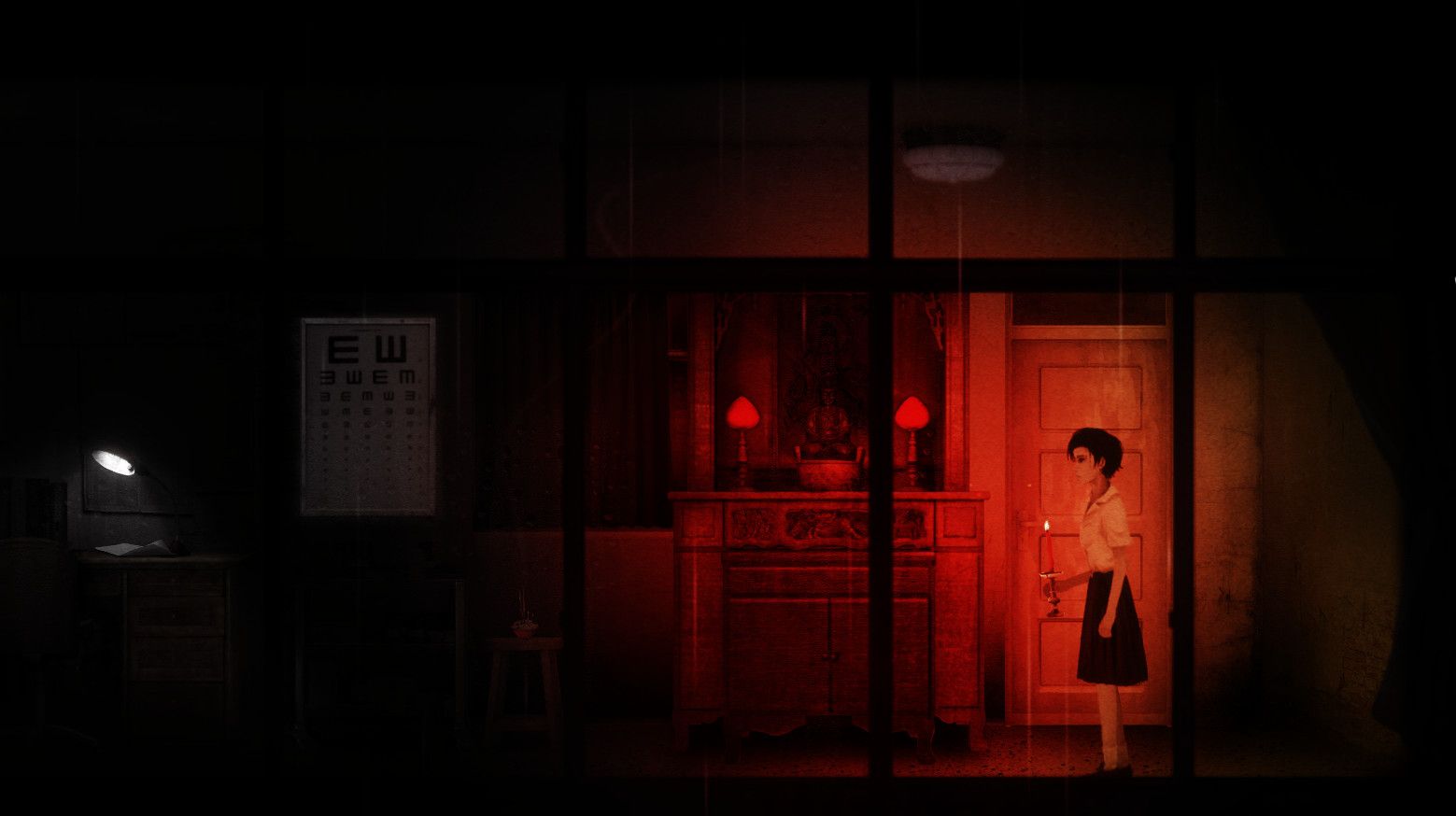
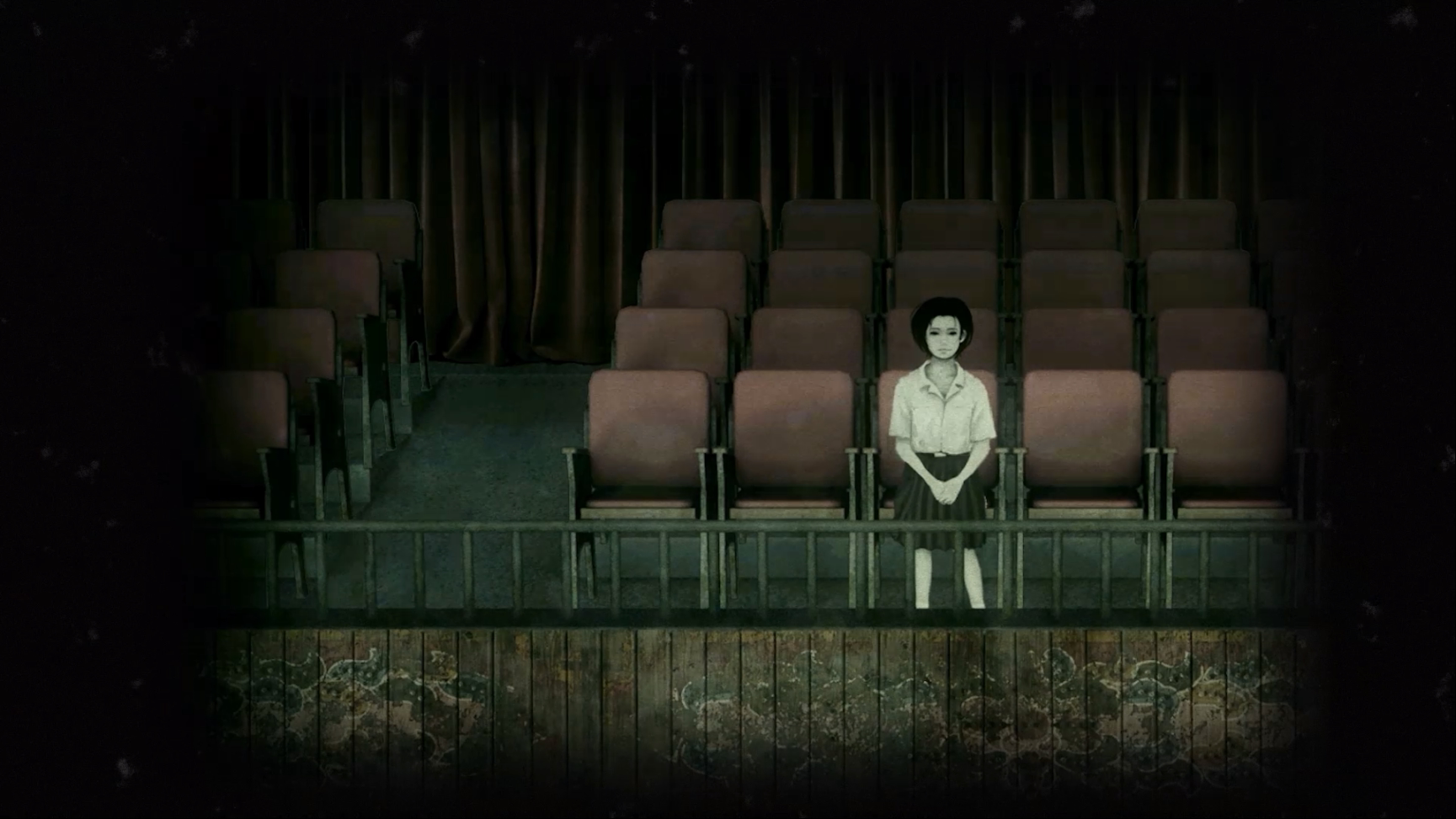
Obscure Asian horror games are something I’m a sucker for. I know the gameplay and controls will probably be awful, but you’re in for one scary ride, and that’s what matters the most. Detention is a 2D adventure game that takes place in Communist China in the 1950s. You walk around solving simple puzzles and unraveling a somewhat confusing and convoluted story. The atmosphere is very surreal, and the slow pace of the game helps drive this home.
The game begins with some strange images and wandering back and forth through classrooms in a school, trying to get to the top floor. The game involves finding items and then figuring out where to use those items. Like most adventure games, it’s best to wander through the entire area first, pick up all the items, and then place them where they are needed. There are three areas that are like this, and then the final area is actually just walking around making story choices. It’s kind of strange, as the pacing is really broken up throughout the entire game. There will be some chase sequences, a tense atmosphere, and enemies you need to avoid by holding your breath and walking past them slowly, or even turning away so as not to stare into their gaze. It’s an interesting concept and puts you on the edge of your seat with the amazing sound effects and disturbing soundtrack.
A lot of the sound effects and music remind me of Silent Hill. The pounding heartbeats, screeching static, and urgency were felt throughout. The game isn’t so gory, but just overall weird and disturbing, which is just fine. I enjoyed the gameplay and scares quite a bit, but the story was definitely lacking. I could tell there was something about the main character being involved in a forbidden book club, her inner torment of her parents fighting, and some sort of guilt about being responsible for a death, but it never worked together or meant anything. There’s a lot of poetry and ancient proverbs thrown around the game, but all this accomplished was confusing me more as to what was going on. As it is, the game can be beaten in less than 4 hours, so it’s important to get the story across as strongly as possible since you can’t drag it out.
With that said, Detention is a must-play for horror fans or anyone who likes 2D adventure games. You’re going to have to go into this expecting a lot of scares and simple puzzle-solving rather than a memorable story or characters. The art style is fantastic, and the music and sound effects all jive together to create a disturbing experience that you really can’t get in most Western horror games.
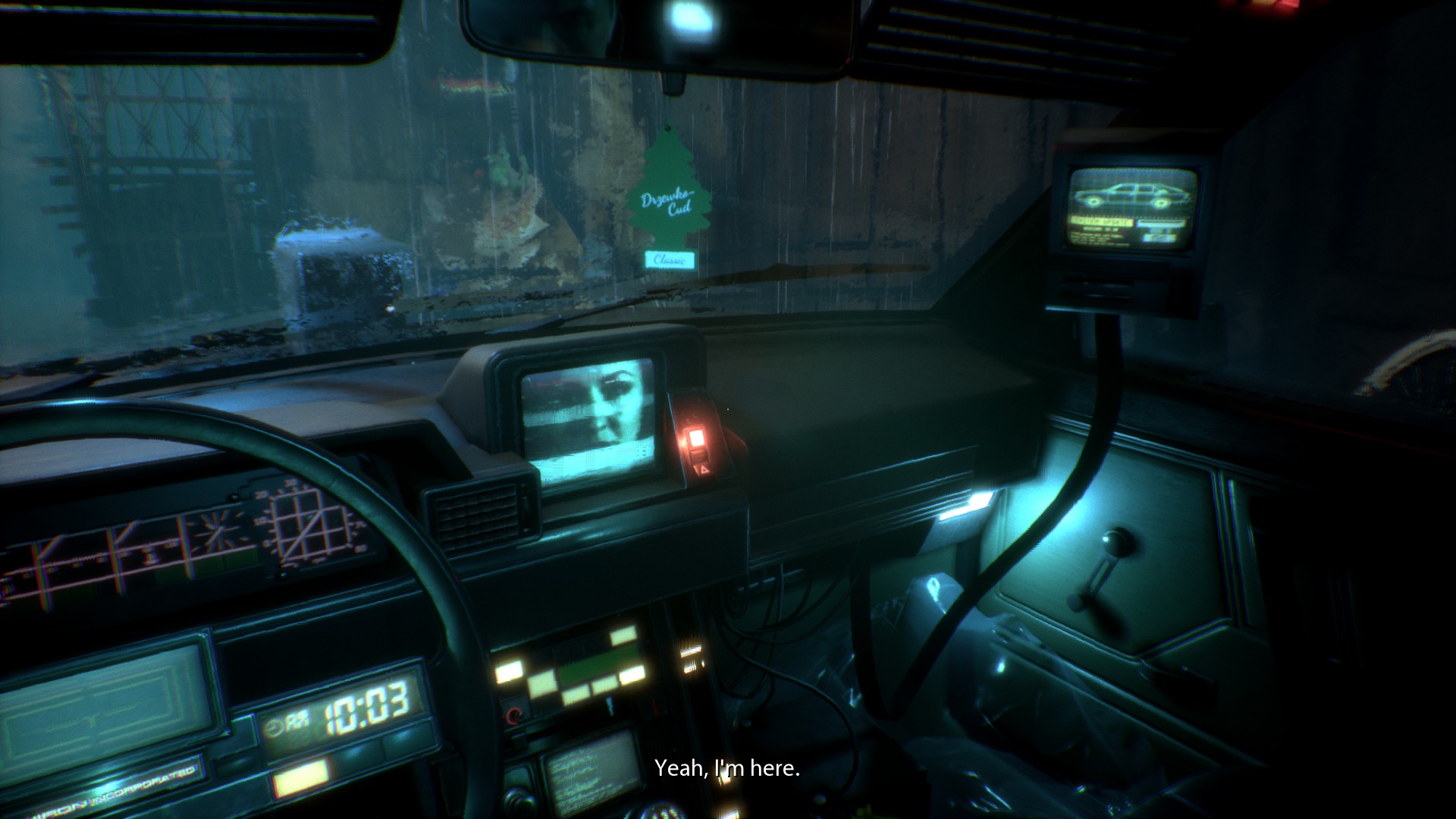
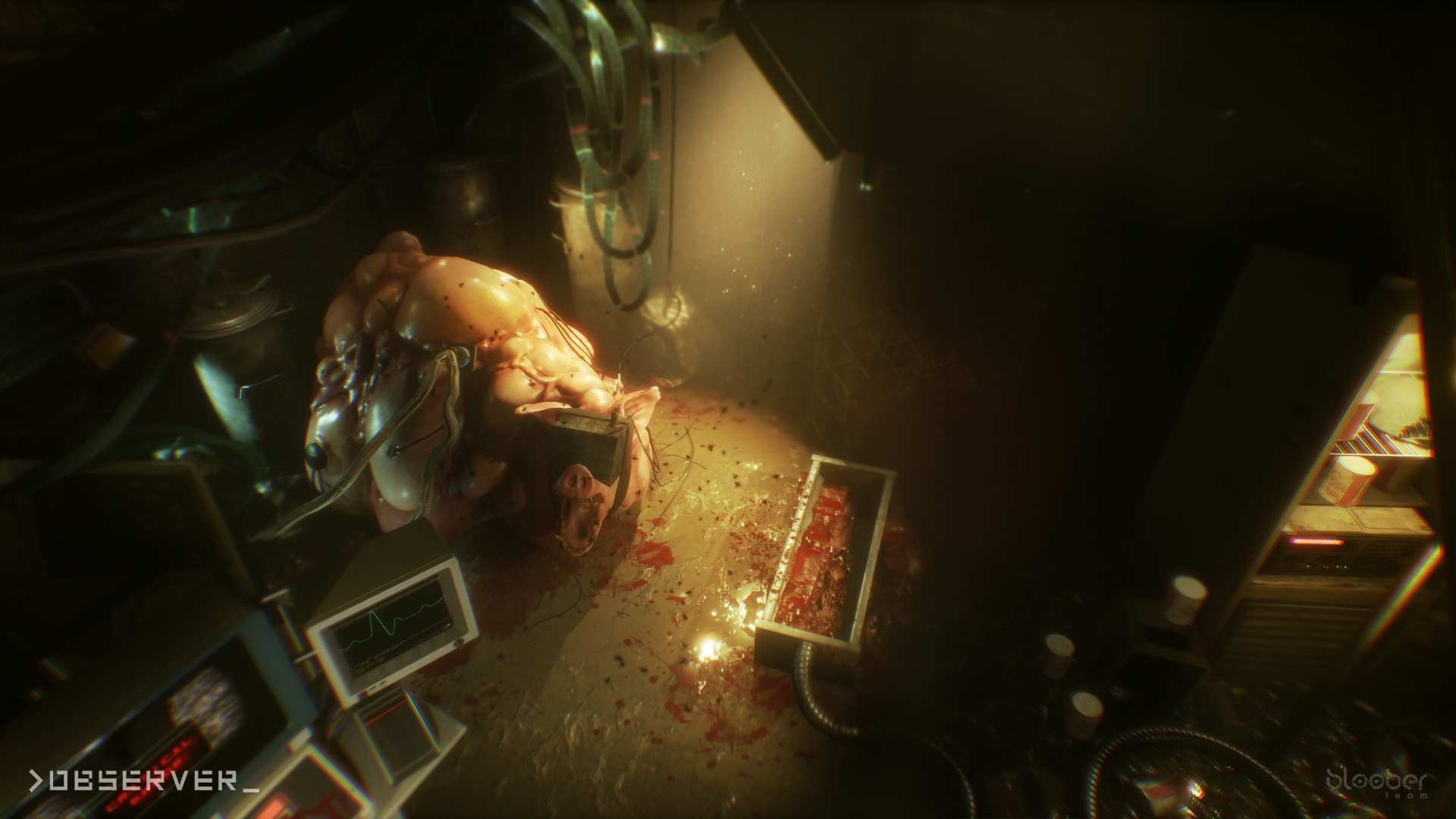
Bloober Team is quickly becoming one of my favorite game developers. You may recognize them from Layers of Fear. Their style of single-player storytelling is unlike anything that you will see today in gaming. The horror factor is also kicked up to 11 in their games with frightening and surreal moments and scenes that put you on the edge of your seat and that will make you grind your teeth. The observer ditches the early 20th-century theme and goes for 20 minutes into the future cyberpunk that is done so well. Observer’s cyberpunk setting is some of the best in gaming history, as it captures the feeling perfectly.
The game starts out simple enough, with you playing a cop named Daniel who gets a strange call from a man named Adam. He is told to investigate an apartment building that goes on lockdown. You stay in this building throughout the entire game and must solve simple puzzles and find your way through the narrative. There are two parts to the game: playing as Dan in the apartment building and jacking into people’s minds while you investigate crime scenes. Investigating crime scenes isn’t as complicated as it seems. You switch between two different visions that allow you to see electronics and organic material. You can scan items that are highlighted and slowly unravel clues that help move the story forward.
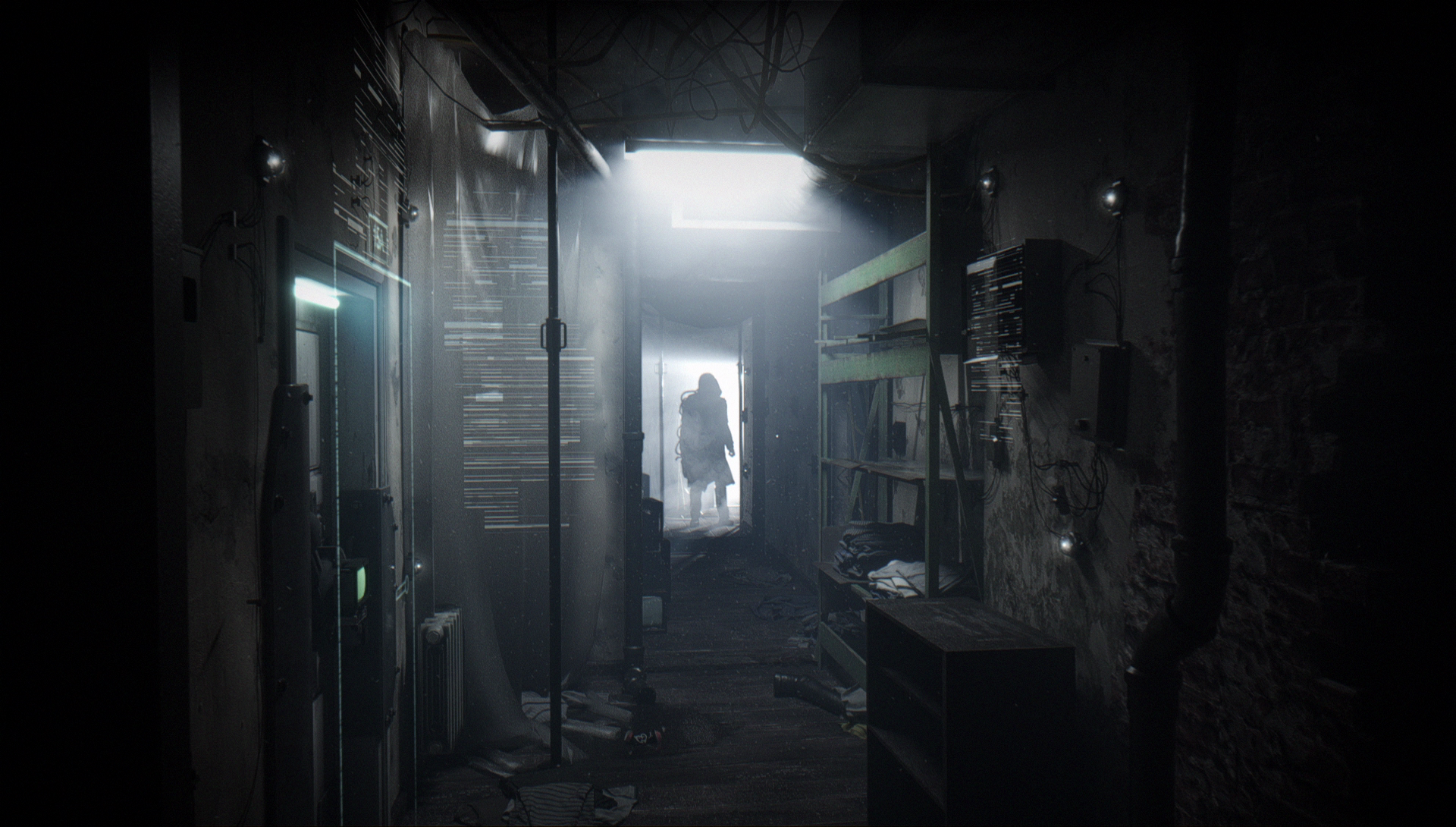
Most of the game consists of wandering confusing hallways and talking to people through the intercoms on their front doors. The dialog will give you clues as to where to go next, such as learning key codes, apartment numbers to investigate, and anything else the crazy story throws at you. This is where the game’s atmosphere really digs deeper than in most games. There is no human contact in this game as you speak to everyone through doors and walls. It helps add to the sense of loneliness and desperation that the citizens on the lower levels of the city suffer. Every corner you turn is full of wires, monitors, computer banks, and propaganda from the government and corporations that run the world. The atmosphere is done brilliantly and will definitely stick with you long after you finish the game.
Like Layers of Fear, when you jack into someone’s brain, you get to run through trippy drug-infused nightmares. Some are literally horrifying and frightening, and that’s actually a good thing. Most of these segments are story- and narrative-driven with very little interaction; there’s an occasional scary stealth sequence that adds plenty of tension, but nothing overwhelming or confusing. It was one of the things that made Layers of Fear so great, as the gameplay sacrifice gave you an amazing audio/visual experience that you won’t forget.
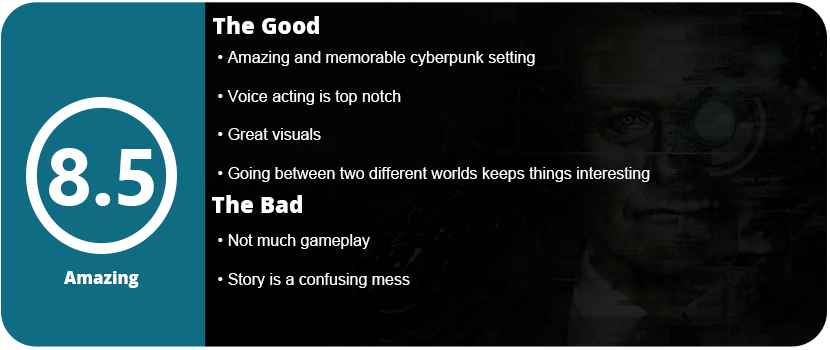
Once you finish these jacked-in segments, you enter the real world again and move on to unraveling the story. There’s not much else to the game outside of this, and it can be finished in about 5–6 hours, depending on how often you get stuck. The story itself is a bit hard to understand and is very confusing, even at the end. I was hoping it was going towards more of a Soma vibe, which is still one of my favorite video game stories of all time. Almost everything is explained at the end with a couple of different endings, and while you feel the story is concluded, the middle of the game is very confusing.
Again, the reason to play this game is for the horror and atmosphere. The scary moments are actually scary and mess with your mind, and that is very rare today in gaming. If you want a lot of gameplay, then look somewhere else, honestly. I can’t find too much to be disappointed with outside of the story not being very clear, even at the end, and you can get stuck and lost too often in the game. If you loved Layers of Fear or even Soma, then you’re going to love Observer. This is already one of the best atmospherically driven story-based games this year.
Well, this is a strange thing. I usually choose high-end, well-known brands over generic or start-up brands, but I needed something more simple as I’m not a macro type of person. Sure, I have a few fancy keyboards like the Roccat ISKU FX, Cyborg Strike 5, and even an Alienware keyboard, but I realized that the price hike is just for more keys than I don’t use. With Cyborg going out of business and their entire keyboard and mouse catalog havingn’t been updated in years, I decided to downsize and just go for something simple. I picked my favorite features for keyboards, and those were backlighting and great key feedback. After sorting through various keyboards on Amazon, I came across Pictek. They are a small German gaming company that is just starting up, but everyone is raving about their products, and I can see why.
When I got the box, I was a little worried. It’s just a generic blank cardboard box with two pieces of poorly fitted foam and a small fold-out piece of paper. I had to tell myself this isn’t Razer or Mad Catz, who can spend big budgets even on packaging. After picking up the keyboard, my worries went away, as it was very heavy and made of solid aluminum. The only plastic on this thing is the keys, which are awesome. The design itself is super sleek and doesn’t look low-budget. The palm rest is textured and raised off the keyboard, while there are various LEDs around the keyboard. The most important part is the keys, and they feel amazing. You would expect this type of quality from a $150 Razer or Corsair keyboard, but it isn’t any of those.
The lighting effects are awesome and better than any other keyboard I have owned. Yes, they are pre-set, but you get nine of them, and they all do awesome things. One preset will light up the whole keyboard every time you press a key, and another will make the keyboard dark, and each key you press stays lit up for just a few seconds and goes dark again. There are presets that light up keys for Call of Duty, League of Legends, and various game genres, which are just amazing. These are awesome ideas that the bigger companies haven’t thought of yet, and it’s a real shame. There is no proprietary software that can be good or bad, depending on how you see it. There is a way to set some macros, but you need the fold-out paper to figure it out. The keyboard settings are not intuitive at all, which is the only downside to this amazing product. But all of the things you would normally think have been done. Brightness settings for the backlight as well as speed, multimedia keys, and everything else are spaced nicely.
With that said, I have to give serious kudos to Pictek for being more than just another gimmicky generic keyboard company. The thing is even water-resistant, which is something you would expect from a $150 keyboard. They actually pushed out a quality keyboard with amazing lighting effects and functionality. Just don’t expect fancy packaging, software, or anything else out-of-the-ordinary that other bigger companies might do.
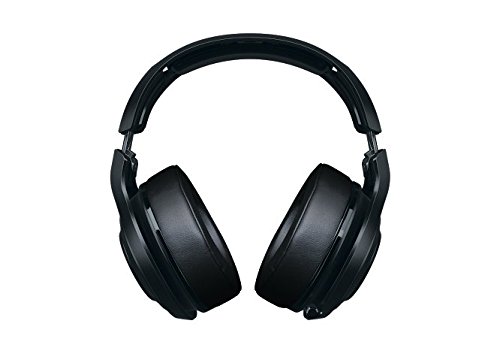
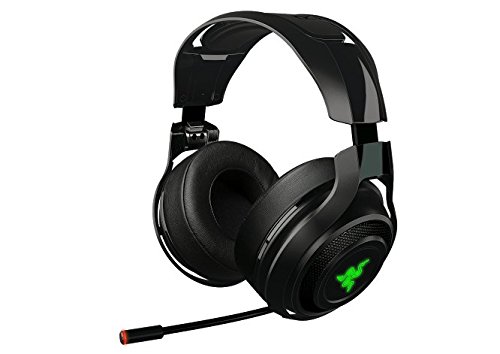
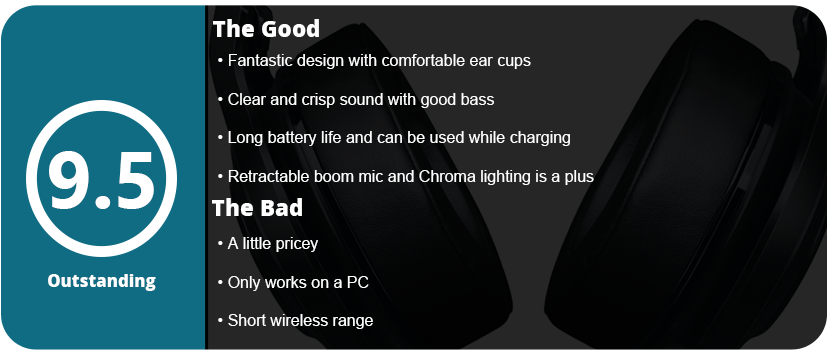
I’m not normally a headset person. I prefer to use good speakers, but with the recent move of my son into his own room, which is right next to my computer area, I had no choice. I normally shy away from Razer due to my poor experiences with their mice, software, and the Firefly. However, I know and have heard that Razer makes great headsets, so I gave the Man O’ War a try. What I was looking for was wireless, surround sound, good battery life, and a lot of software features, and thankfully, I got all of those with this headset.
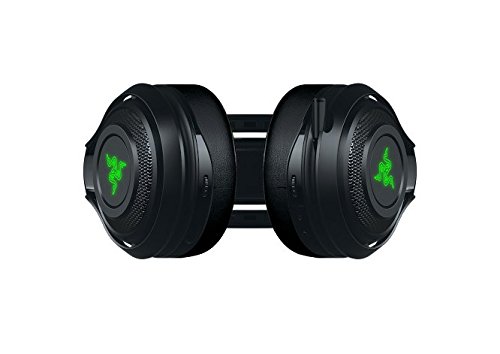
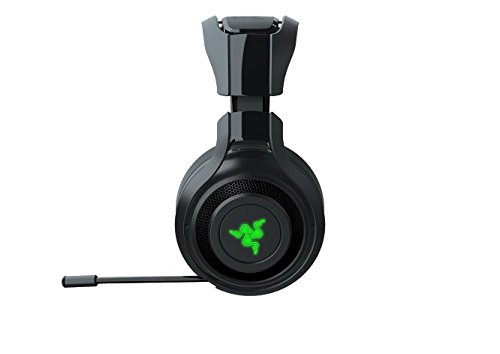
The box comes with everything you would need or don’t need. On top of the USB charging cable, you get a 6-foot extension dock, which is neat if your computer is on the other side of the room. It is also useful if you want to use the headset plugged in, but with the 14-hour battery life, this item was needed for me. The USB dongle is located on the headset cup, which is a really cool feature and keeps you from losing it. The headset itself looks amazing, with large cups, comfortable foam, and Razer logos that use Chroma through Synapse. One feature I really like is the retractable mic rather than being removable. It tucks away and is out of your face if you don’t need it, which I will rarely use.
The software is simple enough to install, and once that is done, you are greeted with a calibration setup for the 7.1 surround sound. Being able to adjust each channel for your own ears is an awesome feature, as some people hear differently or one channel may sound slightly off. The default settings were good enough for me. There are many enhancements available, such as bass boost, normalization, voice clarity, mixer, equalizer, and other features. The features are pretty robust, and I was able to tune my headset to the perfect listening environment. After wearing the headset for an hour, I didn’t get a headache and didn’t have sore ears, and this is all due to the headband being just strong enough to keep it on your head and the cup foam being very soft. The worst I get is that my ears get a little hot after a couple of hours, but this is normal for any set of ear cans.
Playing music sounds fantastic with these, but playing games is even better. I booted up Battlefield 1, turned on surround sound, and was blown away. I could hear each direction of every bullet, shout, explosion, and scream. It helped drag me into the experience more, and I forgot this was what I was missing out on with headsets. I had one back in 2009 for consoles, and now I remember why I missed it so much. It’s an experience you can’t get without spending thousands on high-end speakers and subs. Playing various other games allowed me to hear ambient sound effects, background noises, and other effects that I had never noticed before. It’s a great experience and, clearly, one you can only get with good headphones.
After using this set for 3 days, I have to say that I am completely satisfied. They don’t hurt my ears or head, they sound amazing, the software works, and the chroma lighting is just a small touch to add to that great pile. It’s a shame these aren’t for consoles, as console owners are really missing out. I should be happy with these until they break or die on me, and from the looks of it, that could be quite some time.
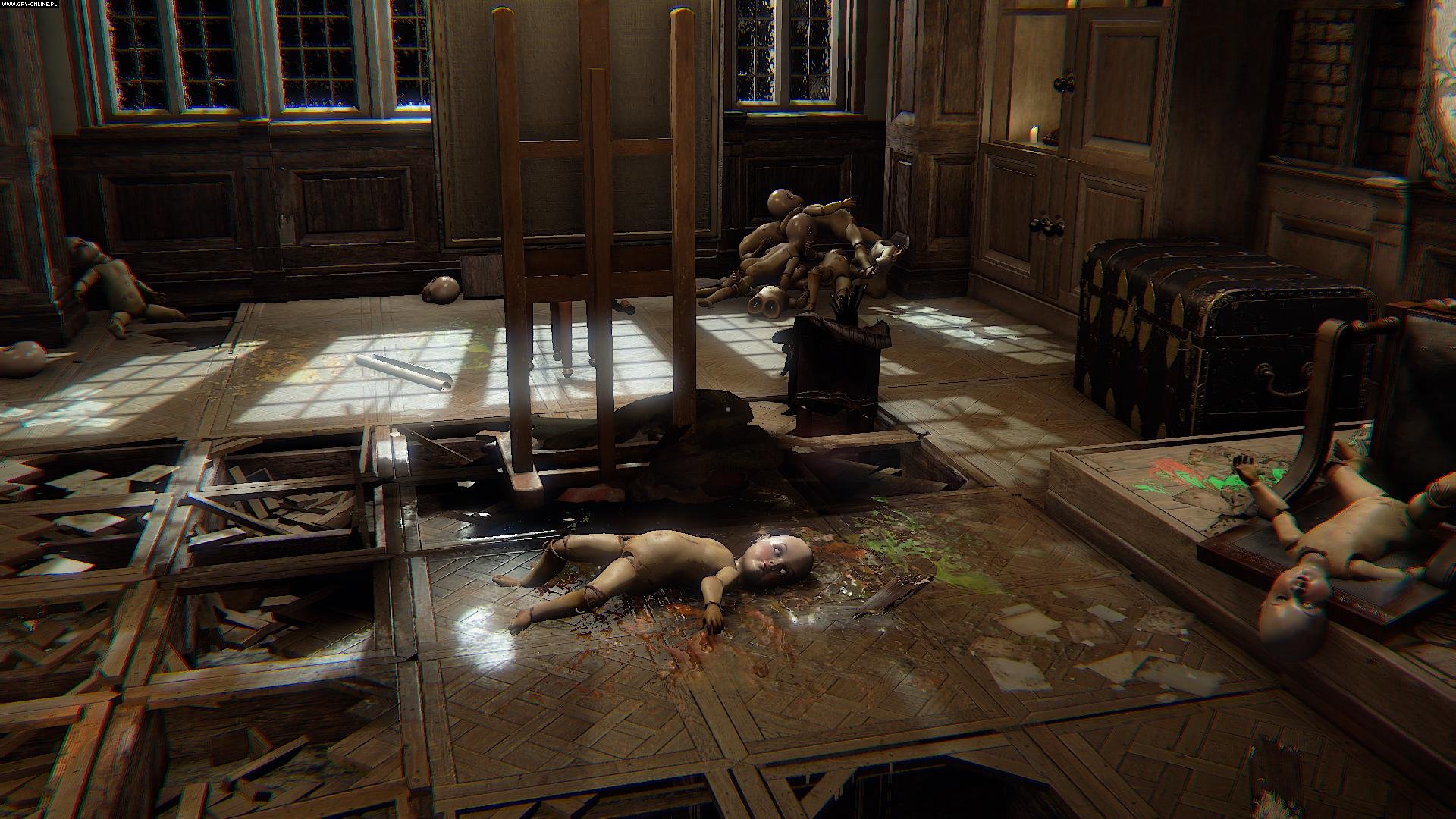
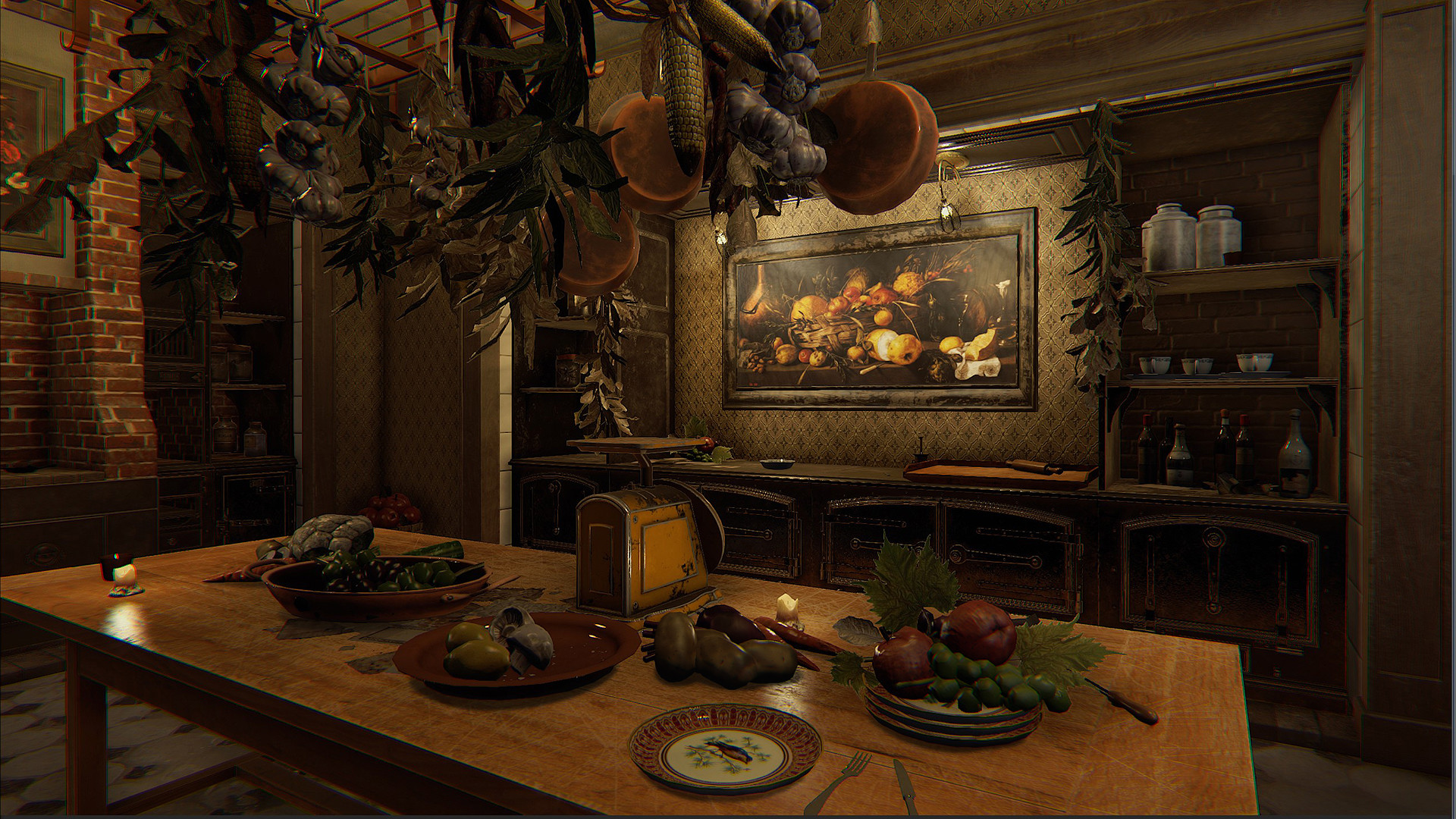
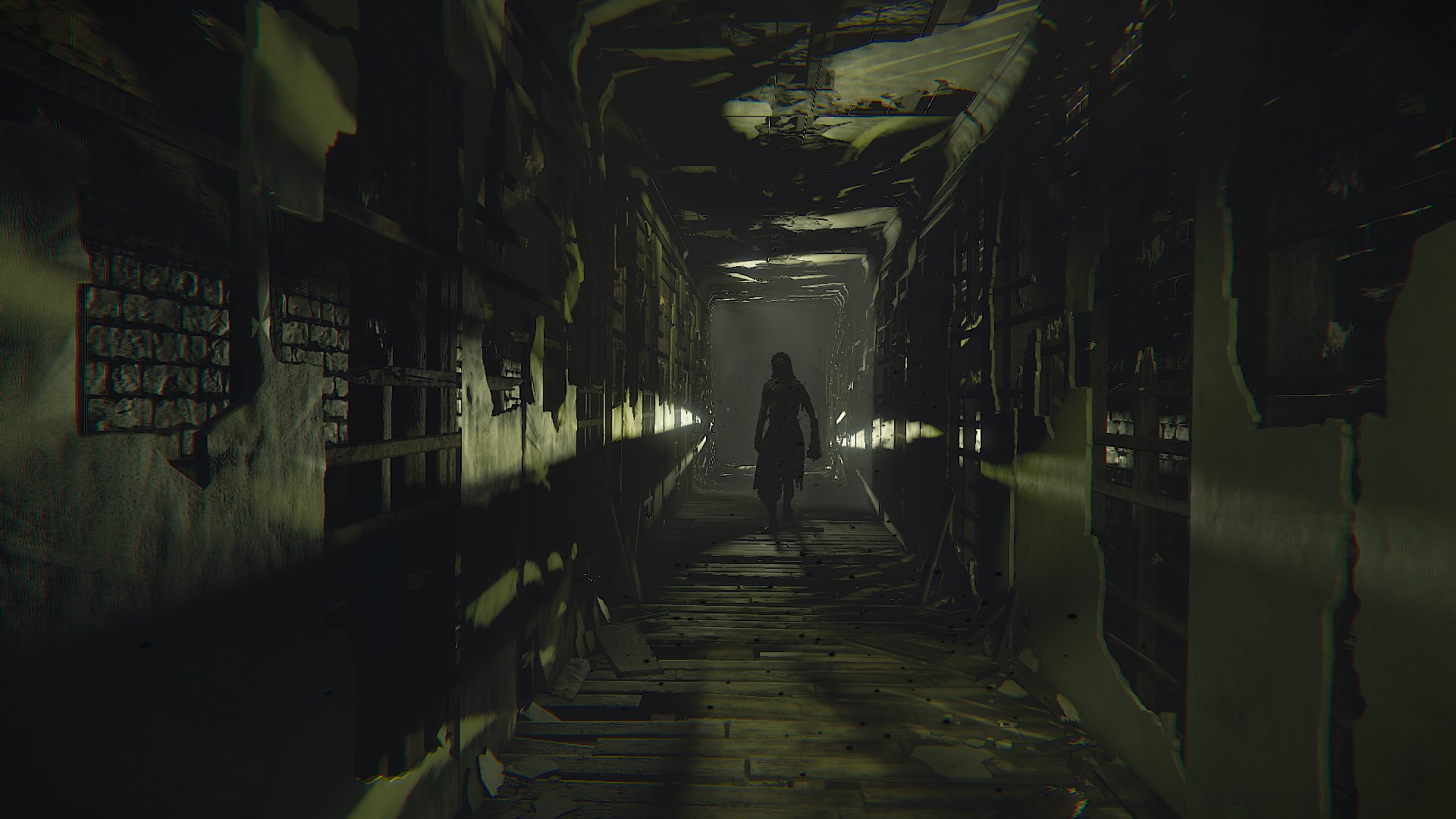
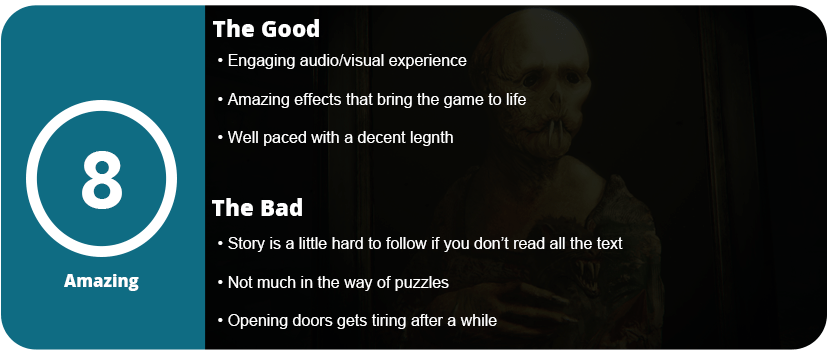
With P.T. only being a demo, it sure did imprint itself into the horror genre. Since then, games have been trying to copy their experience, but is this such a bad thing? I think not, as P.T. showed us what we have forgotten: the overall scare factor and how the atmosphere can do that. You don’t need cheesy monsters, jump scares, or even great visuals. The plain old atmosphere can do the job just fine. Layers of Fear is an indie horror game that is probably one of the most insane I have played in a long time. The game did have a forlorn and eerie atmosphere, but just the visual trip it gives you is mind-blowing.
You play a crippled painter in the early 20th century who is trying to complete his masterpiece. The game starts out just fine while you wander around an old mansion, opening drawers and finding pieces of text that help tell the story. Layers of Fear’s only goal is that you walk through doors. You will open more doors than you would like to in a video game. Once you get through your first door and into the main hub, which is your painting room, things go crazy. The game is very linear, where you walk from room to room and enjoy a visual acid trip that never stops or gives you breaks. As you think there’s no way out, you will turn around, and a painting will pop up behind you and start melting. Turn around again, and the room changes or a ghost appears in your vision. What kept me going was that I wanted to know what was in the next room. It was like a funhouse but scary. Each room was always different, and I never felt bored or that I wanted the game to stop. There are six major pieces you need to collect to finish the game, and each one is themed. For example, the one-piece is a finger, and you slowly build up the story of how you took that finger. It doesn’t tell you directly, but through crazy visual cues and clues, you can figure out what happened.
The game is also a bit of a collect-a-thon, as you can open drawers and search around each room for clues that allow you to unlock achievements. There are actually three different endings, but I can’t quite understand how to get them. There are no choices in the game, but maybe take different paths? Each area is so linear that there’s only one way to really go, so figuring out what ending you get is a huge mystery. There also isn’t much thinking in this game; there were maybe 3 or 4 puzzles, and they required almost no skill to work out. I feel there should have been more puzzles, but that would have slowed down the pace of the game. You literally run around the opening door after door and experience the next visual freak-out, like a roller coaster ride. There are also no enemies to run or hide from. The only ghosts that appear in the game are supposed to get you, as it’s part of the story.
The visuals are fantastic, as the game has amazing lighting effects and a tense atmosphere, and there’s so much detail and so many different objects everywhere. The way some of the set pieces play out is pretty insane and requires a lot of care and detail. The visual effects alone from warping, shifting, melting, and various other effects are pretty amazing, as you don’t see many of these in games. All this was done with the Unity engine, which was also pretty impressive. The audio in this game is quite amazing, with a lot of variety, and each sound effect is put in the right place at the right time.
Overall, Layers of Fear is well worth a playthrough; it’s quite scary, and you never want to stop. The great pacing, visuals, and amazing roller coaster ride of effects are something you don’t see in games very often. If you’re tired of the cheesy horror gimmicks of most indie games, then look no further. This game may be short, but it’s got a lot of soul and heart for what it is.
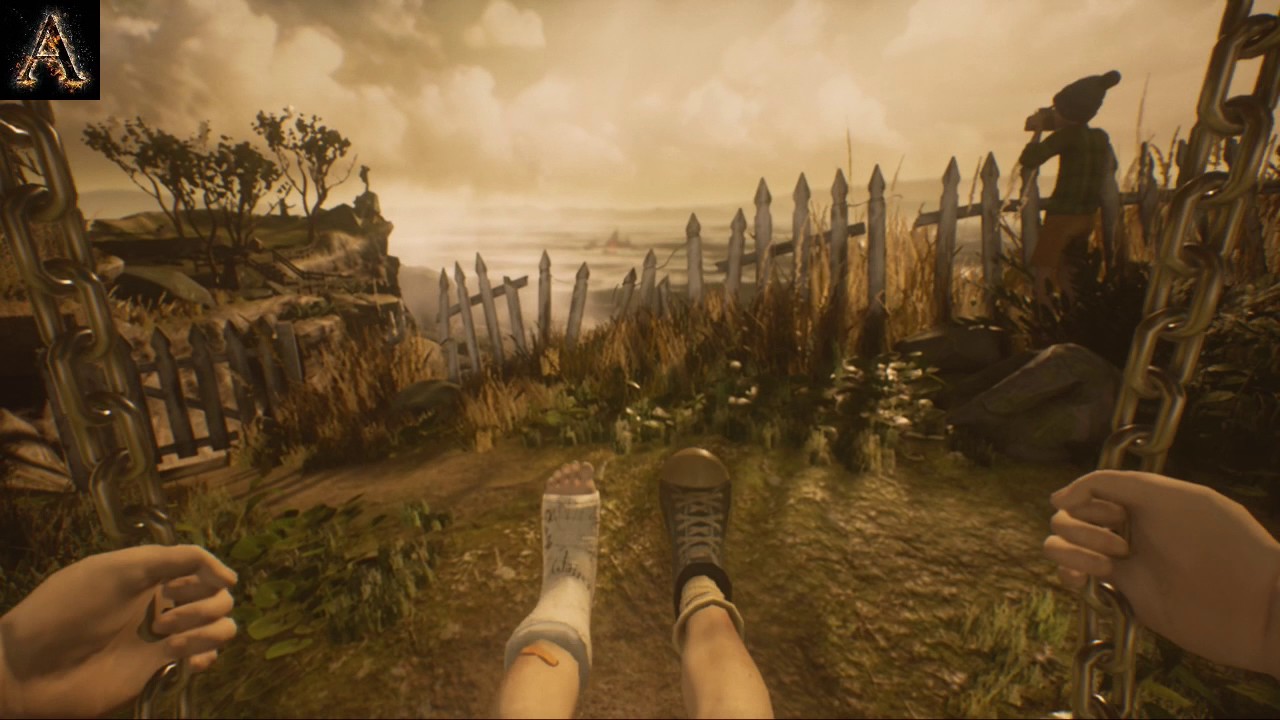
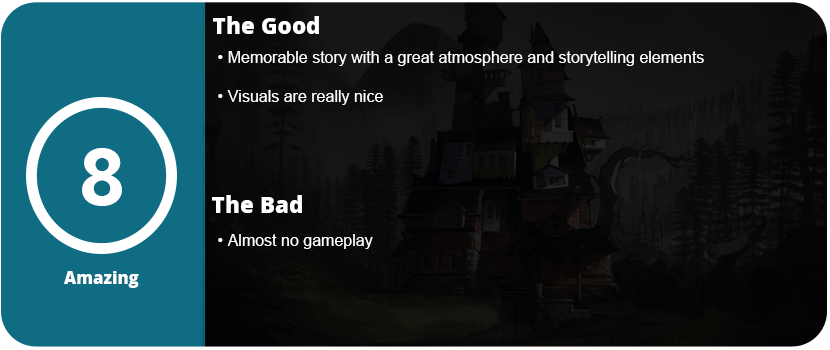
It’s surprising that over the last 10 years, it’s the indie game that has had the most touching and memorable stories. Even with AAA games’ million-dollar budgets, they can’t seem to get a decent story with armies of writers and directors. What Remains of Edith Finch may be called a “walking simulator” by the younger crowd, but these slower-paced adventure games are usually the most touching and memorable. You play as a girl who is slowly unlocking the mystery of why every member of her family died in a large house built from the ground up on the oceanside.
The game starts out simple enough: you walk down linear, winding paths, and the character narrates along the way. The text floats along where you walk, and it’s an immersive way to tell a story. Once you enter the house, you will eventually find your way through mysterious rooms through secret passageways, and in each room is a piece that will bring you into their story. The most unique part of this game is that each story is so different and is told in unique ways. One story has you playing as several animals in the first person as the boy tells his story. In one story, you are just trying to swing as high as you can so you can fly. One story towards the end has you cutting fish heads in a factory, and you play a 2D RPG on the side while still trying to cut the fish heads. As the story goes on, it gets more detailed and expands in your view. The game is very imaginative, with my favorite piece being a 1960s horror comic, and the panels come to life with you playing a character in some of them. The game never gets boring or old, and the short length helps keep the game from overstaying its welcome or doing too much.
My biggest complaint is that there’s not much to interact with outside of initially entering the house. Once you get through the first few rooms, you just go from room to room and find the main story piece. The pacing is great, as it doesn’t get too fast, so you feel the rest of the game is too slow. There are also different themes throughout the game, such as horror, adventure, happiness, and sadness, and the house itself is haunting, empty, and lonely. This game oozes atmosphere, and you get different feelings from each room as you discover the fate of each family member. There’s so much detail in this game, and the visuals are quite nice for an indie title in this manner.
Sadly, due to this type of game, it won’t be played by many people, which is a dying shame, as What Remains is probably one of the best games to come out this year. The story is memorable, the game has plenty of atmosphere and character, and there’s so much to love about the game. If you’re a fan of Gone Home or just great stories in general, then you will love this game.
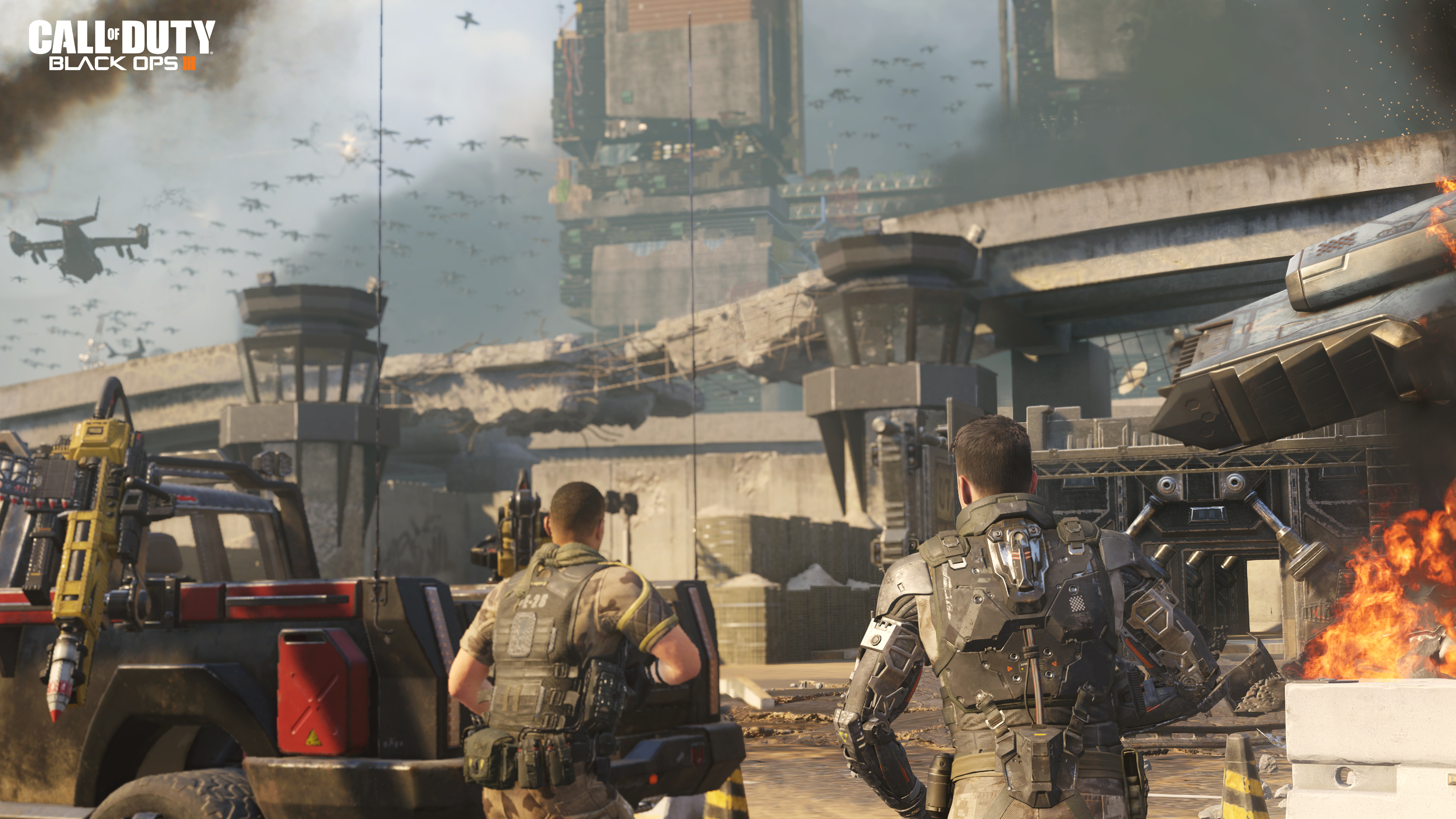
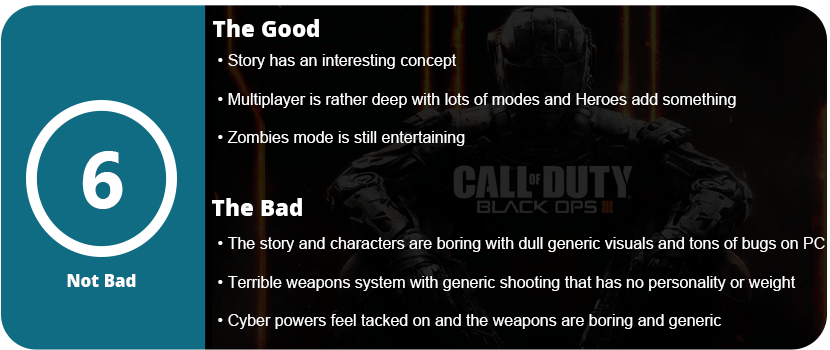
Man, where do I begin? Call of Duty was one of my favorite franchises growing up, and Modern Warfare helped kickstart FPS games into a new cinematic, next-generation universe. That Pripyat level in the first modern war still sticks with me to this day. After MW2, the series took a steep downhill slide and hasn’t stopped since. Here we are with Black Ops III, a futuristic military shooter that is a far cry from what the original Black Ops was, which was absolutely fantastic. You play as a squad of black-ops cybernetic soldiers who are trying to stop an all-powerful AI from destroying the world. See, the whole world is completely infused with technology that can read people’s minds and know our every move. The CIA has several operations around the world to keep this in check, but it all goes wrong one day. The actual concept is interesting and could have gone somewhere, but instead, we dredge through a sewer of boring, mediocre, and lame campaign levels that drag on way too long and overstay their welcome.
The game plays exactly like every other CoD since MW1. You run and gun your way through waves of enemies that are as dumb as dirt, and you face unbalanced difficulty spikes and repeat about a million times. I have to point out that I really hate the new weapon system in this game. You can no longer pick up guns from enemies but instead run into mobile armories where you can swap your loadout. This is a campaign, not multiplayer. I want to pick up weapons from enemies and keep things constantly mixed up. Several times through one level, I would need a shotgun or sniper rifle but was screwed because I couldn’t get to an armory. I can’t predict what’s going to happen next, so this is a huge mistake, and I really hated it.
Second, the enemies are as boring as ever, with generic robots and super soldiers. You get the occasional mobile armor, but that’s about it. It’s so boring that I just shrugged because I knew this was coming from a game like this. I mentioned the terrible weapon systems, but let’s talk about how terrible the actual weapons are. For one, there’s a small amount for a CoD game, and they all feel the same. Sure, you have shotguns, assault rifles, and pistols, but they just feel the same. They seem to have no weight, no bearing, and no personality. It’s futuristic shotgun A and futuristic assault rifle F. There are no real-world weapons anymore, and it’s just a borefest due to a lack of personality. The entire game has zero personality or originality. It all feels like endless metal corridors, hallways, and concrete. At least the first Black Ops felt original and had some personality and weight to it.
To make the game feel more like multiplayer, you get dumped into a central hub after every level and can change your loadout, unlock weapons with fabrication kits, and customize your weapons. There’s a new concept introduced called cybercores, which are powers that you can use against enemies. I found these almost worthless, as the game offers no opportunities to change to the standard CoD gameplay to implement them. It just felt like something tacked on to say, “Hey! We did something different! SEE?!” which I didn’t fall for. The only useful power was stunning multiple robots at once, but that’s about it. For most of the campaign, I forgot these powers were even there. I just ran around shooting everything in sight, like every other COD. I wish the series would stop pretending to be sophisticated and complicated when really it’s a dumbed-down snoozefest with no personality. It has been years since CoD has put its own fingerprint on the FPS genre, and this game doesn’t do it any favors.
I hated the campaign, but the multiplayer was at least fun for a while. It’s still the same old CoD MP that we’ve grown to either somehow tolerate or completely hate. However, Black Ops III is much more grindy than any other CoD game, and I gave up after around level 5. Even in single-player, it takes many levels before you can purchase decent weapons and load-outs. It’s part of the reason why the game gets so boring so quickly; the fast unlocks of the past are gone, and it feels almost free to play, which is a damn shame.
Graphics-wise, it’s nothing impressive except for how powerful of a PC you need to run something that shouldn’t push high-end systems. With the GTX 970, I used to have to turn down settings and still get massive slowdowns. It wasn’t until I used an overclocked 1070 that I got steady FPS with everything maxed out, and even then sometimes the game dropped down to 40 FPS for no apparent reason. The game is poorly optimized, has awful glitches that still exist after all the patches, and just doesn’t look all that original or impressive.
Overall, I can’t really recommend this game except for the hardcore CoD players, and fans of only the older games will hate this. The weapon system stinks, the campaign is boring, lame, tedious, and full of glitches, and the unlocks are a grindfest. There’s so much wrong with Black Ops III that it took me over a year to finish the campaign. It’s just boring and not fun to play, as there are plenty of other great shooters out there. I’d rather play Half-Life 2 for the 20th time or the Crysis trilogy than spend one more minute in this game. Now, that’s not to say I hate it to death, as the multiplayer can be pretty fun with new modes and playable heroes at a little depth, but it’s not enough to save the core gameplay. Zombie Mode is the final saving grace, as it still provides entertainment, but like multiplayer, it will only last so long with boring guns to use and average visuals.
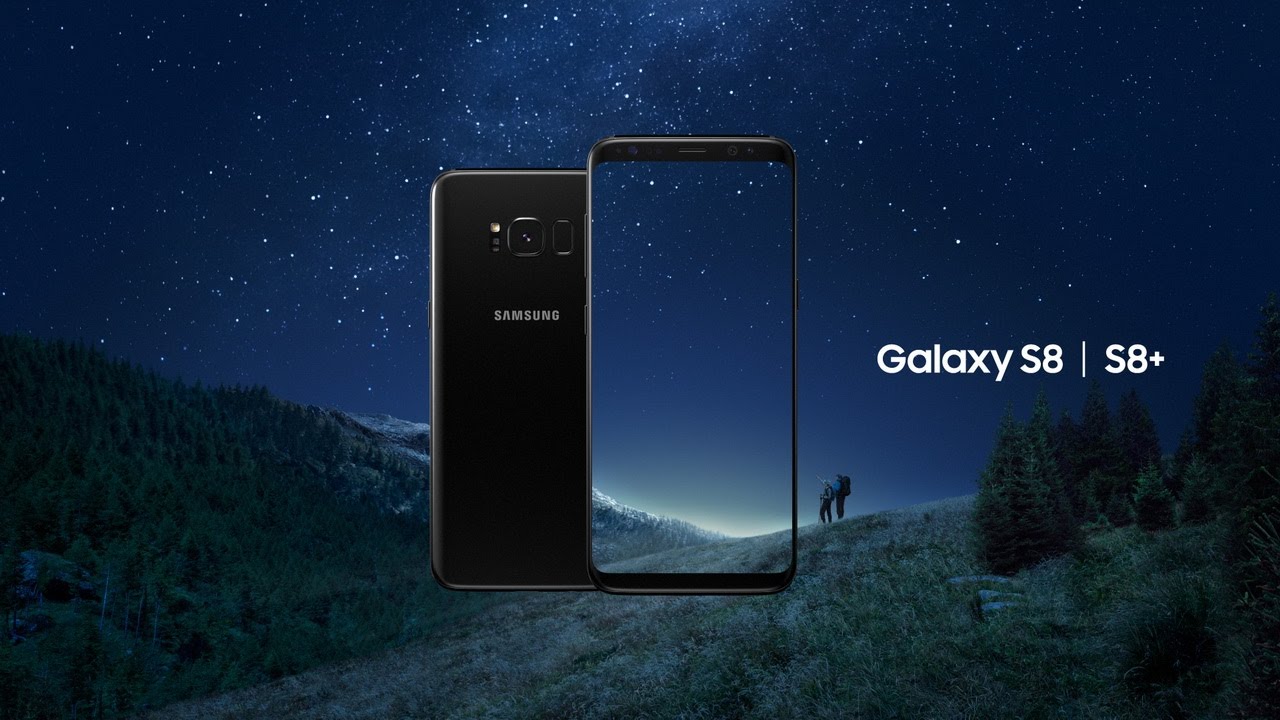
Well, this is a bit awkward. Here we are, barely 6 months after the Note 7 fiasco, and we have the all-new Galaxy S8 series that can be claimed as the final iPhone killer. The Note7 was the biggest cell phone disaster in history, and yet somehow Samsung was able to slingshot around all of this over a corruption scandal, exploding batteries, and a well-thought-out but failed recall. Relying on sales of the S7 and S6 phones, Samsung poured all the Note7 features into the S7 Edge and called it a day. It kept everyone busy while LG and other manufacturers stole the Note 7 market. The Galaxy S8 isn’t just a new and slightly updated Galaxy phone; it’s practically all new in terms of design and hardware. There are more features than the iPhone could ever imagine; it’s sleeker, slimmer, and more robust than the iPhone 7 ever could be. Did Samsung really create such an amazing phone in the span between the S7 and Note 7? Let’s find out.
The Design
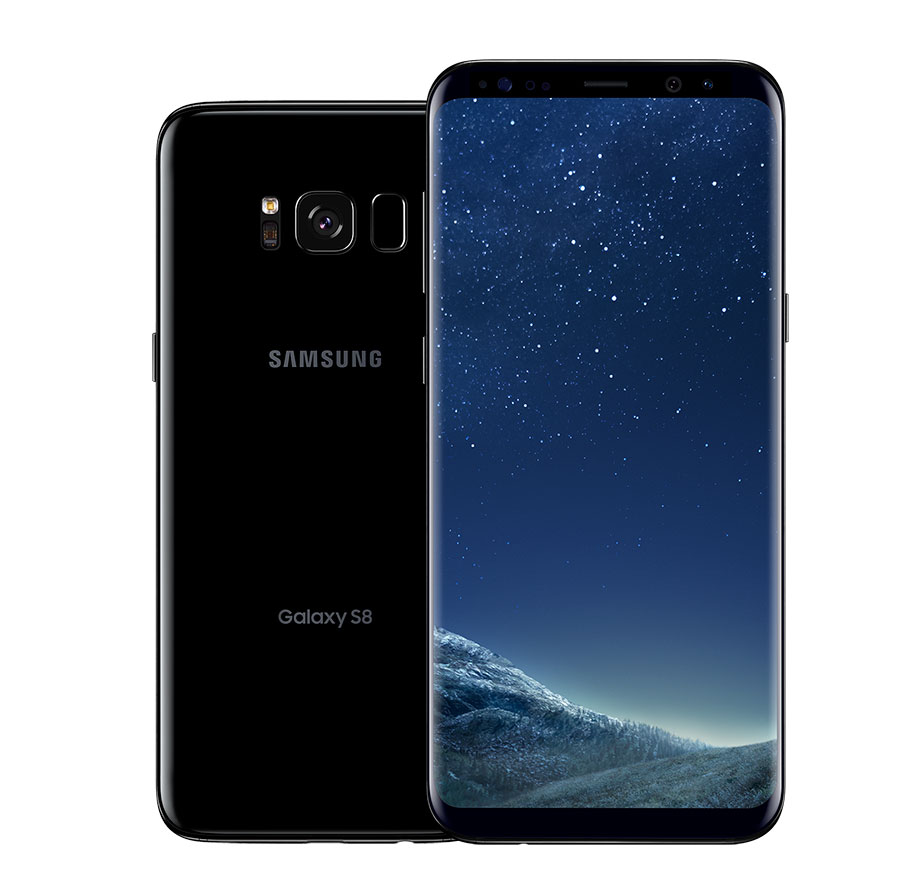
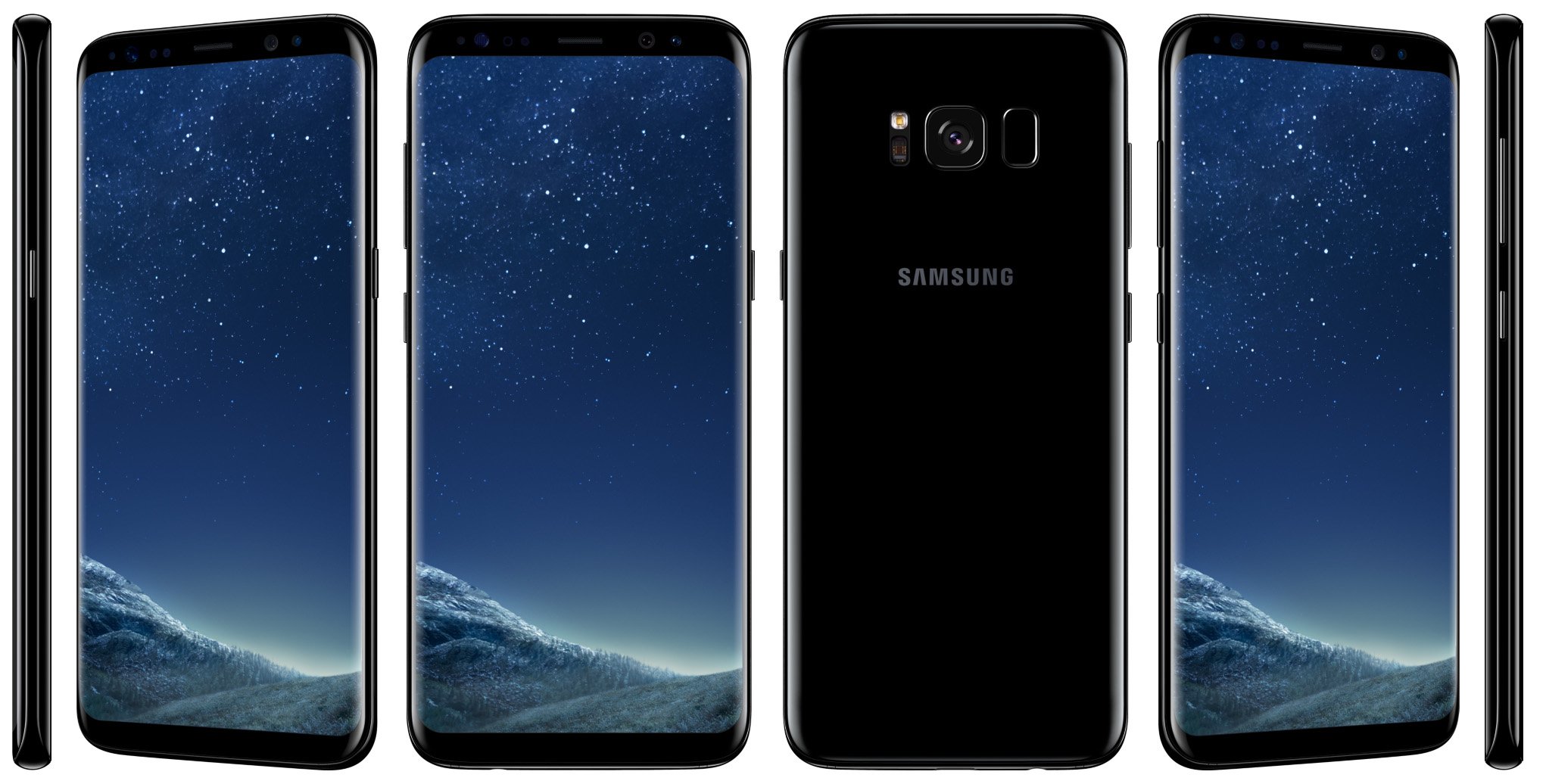
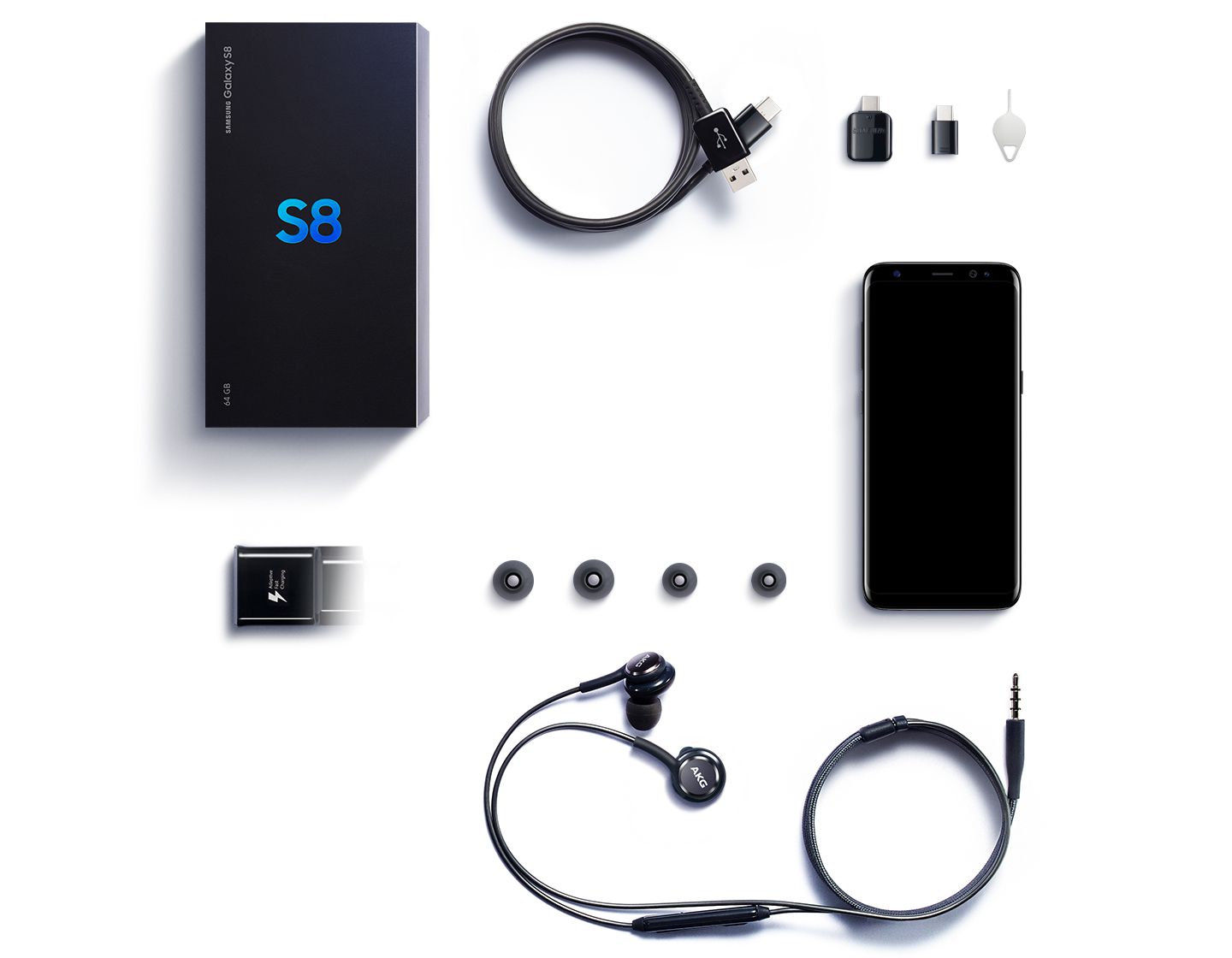
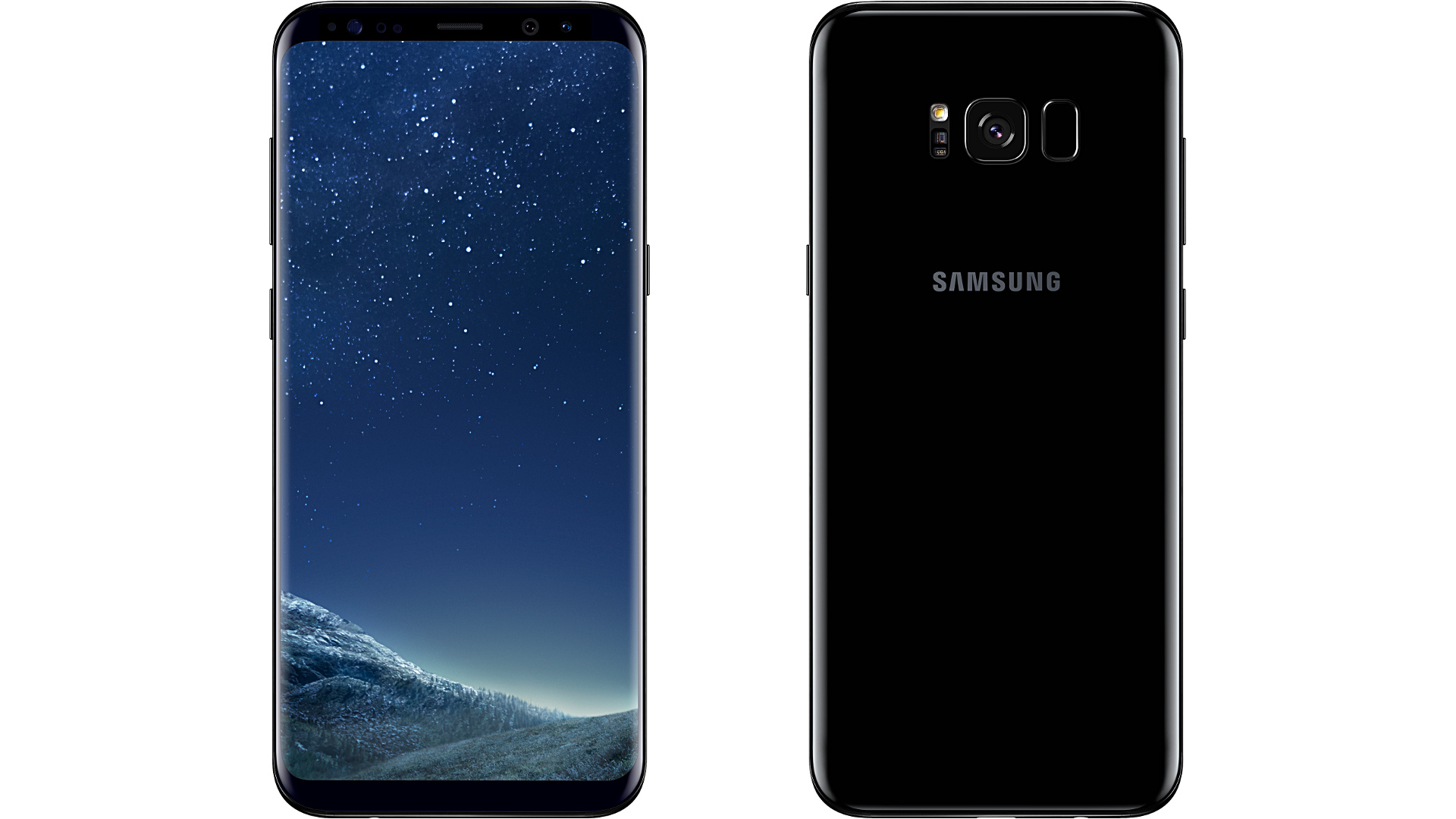
Let’s start with the unboxing of this thing. It’s similar to any recent Samsung box with a SIM tool, instructions, charger, cable, and if you had the Note 7, two converter plugs. When you hold the phone in your hand, it feels heavy but so sleek and beautiful. The Midnight Black color is by far one of the most beautiful phones to ever be made. The entire phone is glass, which is a far cry from the plastic backs and aluminum bodies of the Note 4 and beyond. The entire phone is pitch black, and I mean pure black. It looks like you’re looking into the sky on a clear, dark night. Gone is the front physical button, replaced by a pressure-sensitive home button on the screen. The volume rocker is thinner and sleeker, along with the power button. The new Bixby button (later) is smaller than the power button and underneath the volume rocker, which takes getting used to. There’s a fingerprint sensor on the back next to the camera, as well as a heart rate sensor. Now I have to tell you that the fingerprint scanner feels natural, as your finger is already resting in that area. LG phones have had their scanners on the back for a while now, so it’s nothing new. It’s just a small rectangle in the back and is more responsive than ever.
The camera is virtually flush with the phone this time, and yet Samsung was able to make the phone more powerful. Long gone are the typical Galaxy designs of flat edges and round corners. The entire phone is a seamless piece of glass, and the edges are perfectly rounded and blend in with the edged screen. When I have my phone sitting on a surface, it looks like a beautiful piece of black onyx, as the AMOLED display only turns on the pixels it needs for the Always On Display (introduced in the S7). The phone is as dark as the screen; it’s a seamless color, which is something that’s never been seen on a phone. Sadly, this illusion is broken on other colors of the phone, which is why Midnight Black is my favorite color. The loss of a physical home button and the lack of a front logo allow Samsung to create a much larger screen without making the phone larger in scope. It’s a smart design choice that Apple needs to get on board with.
The Engine
The Galaxy S8 is the first phone to be powered by Snapdragon’s new 835 SoC, an eight-core CPU that isn’t a first for a Samsung phone. 4 cores run at 2.4 GHz, while the other 4 run at 1.9 GHz, allowing for ultra-fast speeds. We get the latest GPU, which is the Adreno 540, allowing for games that would cripple the Note 7 to run at 60 fps. This is an ultra-powerful SoC, and that makes the Galaxy S8 the most powerful smartphone on the market. We still have 4GB of RAM, but this is faster LPDDR4X RAM, which allows for faster bus speeds and loading between apps. The only downside is that Samsung phones are stuck with 64GB of internal ROM, but the upside is that this phone supports up to a 256GB microSD card and has UFS 2.1 ROM, which means lightning-fast read and write speeds.
The Experience
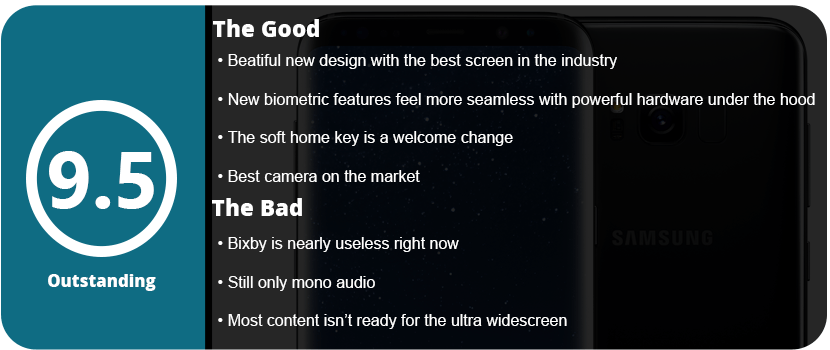
First and foremost, Samsung is the frontrunner in security, and new biometrics have been implemented. While we saw an iris scanner in the Note 7, it was slow, buggy, and made the phone run hot. There was also the issue that it took forever to line up correctly. The new iris scanner is lightning fast, has a brighter red LED light that flashes, and doesn’t slow the phone down. In addition, there’s a new face recognition scanner that works wonders, as nothing shows up on the screen to unlock your phone. When you try to unlock it, the camera recognizes your face instantly and just unlocks it as long as you are looking at your phone. It works well, and Samsung seems to have gotten these biometric scanners down pat this time around.
Along with all these security features is an updated Samsung Pay, which works like you would expect, a new edge screen, and an overall notification setup that is amazing and the least intrusive I have ever seen. Rather than a card that pops down on the drawer or on the screen, a small strip pops up with just the right amount of information. The entire edge of the phone has a rolling color that flashes, and it looks so beautiful and amazing. Samsung seems to roll major gimmicks like palm mute, swipe to capture, and various other gestures as standard features, being more creative and having these gimmicks actually be useful for everyday use. There are still some very minor issues present, however, but they don’t really hold anything back. There is still only one mono speaker, but it does sound a little better than previous phones. With this phone’s 18.5:9 aspect ratio, you’re going to get some stretching in some games and videos. You can make the content full-screen by choice, but ultra-widescreen monitor owners will understand this problem. It’s very minor, but still noticeable.
I hope that the biggest issue with Samsung phones being constantly slowed down over time is eliminated with the more powerful SoC. I have yet to have any slowdown in the three days I have had this phone, and with previous phones, it would start immediately. The last feature I want to discuss is Bixby, as many people are confused as to what it is. This isn’t your average AI that you can use voice commands with. You can’t say “Hello Bixby” and have it search things for you; Google Assistant is still there for that. Bixby is used to exploring the phone’s actual features. It’s just an app that pops up that gives you a summary of your Samsung apps, cards, and highlights, and that’s about it. It’s very basic and not too fancy, but it does do one thing that Google does not, and that’s the Bixby assistant on the camera. Aim it at an object, and Bixby can search on Amazon for the product or similar pictures online. I’m sure this will expand over time, but right now it will be useless for most people.
Overall, the Galaxy S8 is the finest phone I have ever used. Samsung continues to push the boundaries that Apple once did and refuses to do in today’s times. The smartphone business is a vicious one, and you must constantly and always evolve, or you will be left in the dust. I wouldn’t be surprised if Samsung steers toward their own Tizen OS at some point to finally have a proprietary OS that can be tailored to their own hardware, like iOS.
While this is my third smartwatch, this is my first non-Android Wear watch, and I have to admit I was very skeptical and unsure. For one, all my apps and watch faces I bought on Google Play are now gone as Samsung uses their own OS called Tizen to power their watches. Why would I plunk $400 down on a watch and be so unsure? I don’t really have a choice. A lot of smartwatch brands, like Huawei and Motorola, have paused their smartwatch lines until Google can improve and build upon Android Wear. Remember, we’re still on the first version of Android Wear, with only a couple of watches getting 2.0 as of the last couple of months.
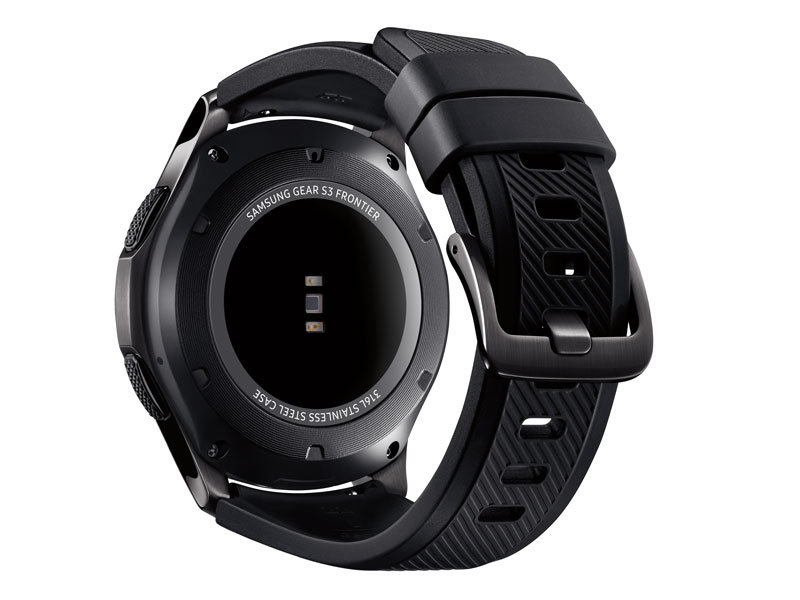
What attracted me to the S3 was that it was a 4G watch and looked like an actual watch. It’s rugged, well-built, and fast, unlike some other watches. While Android Wear performed fairly well on the Moto 360 2nd Gen., it still wasn’t enough and felt like it didn’t evolve. Samsung’s own Galaxy App Store is full of useful and fun apps and watch faces. I didn’t really have to worry there, and surprisingly, there’s even quadrupled the number of watch games on the Galaxy App Store compared to Google Play. Before we get there, though, let’s talk about the actual watch.
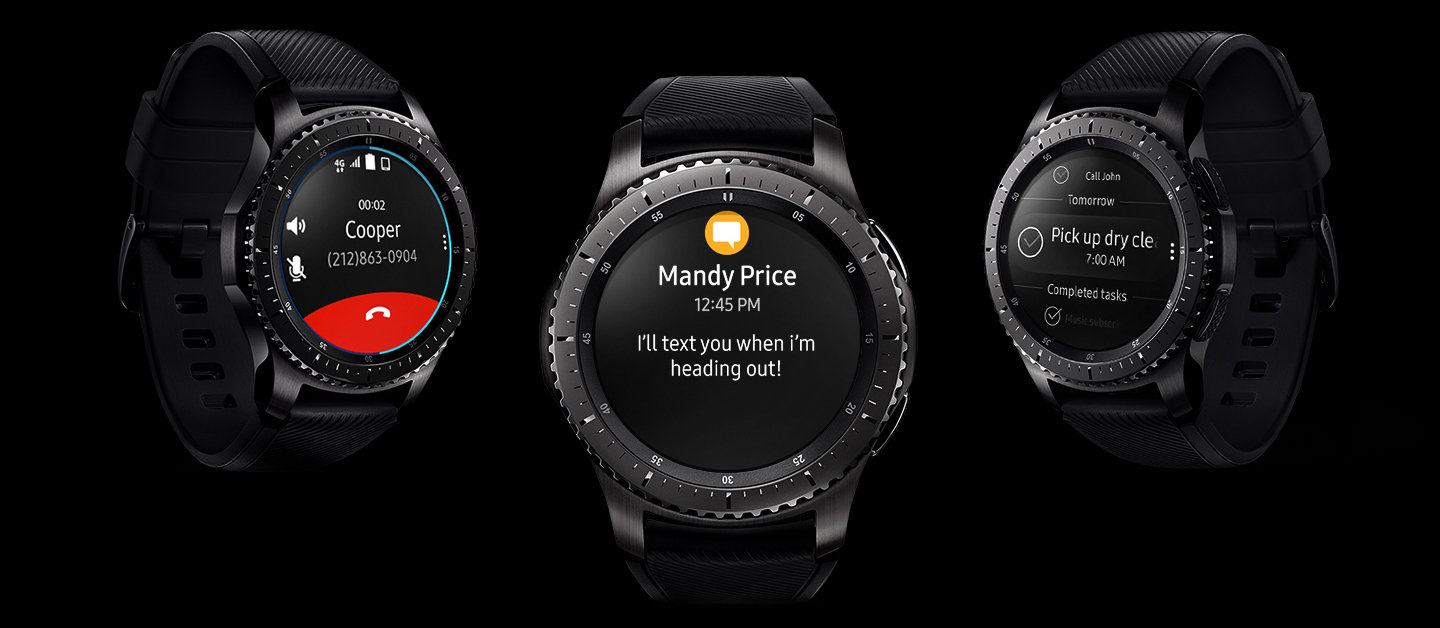
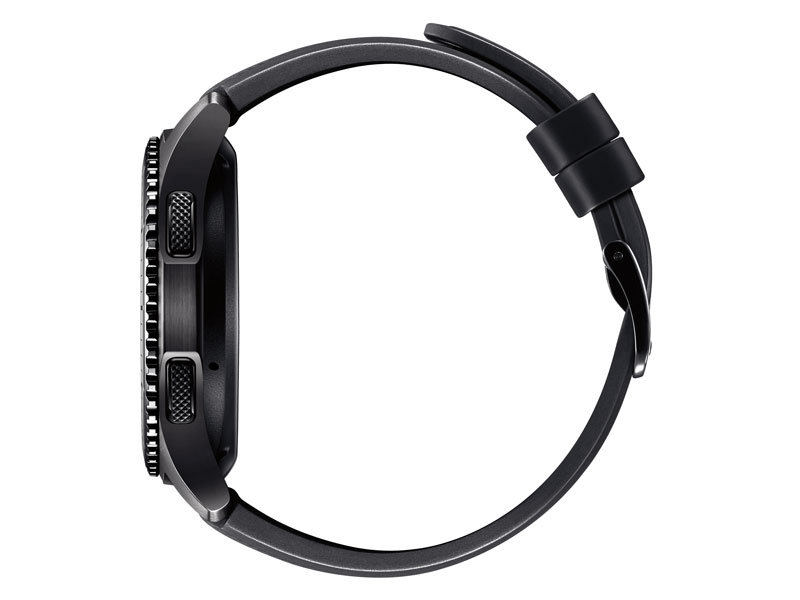
The actual body is a bit heavier than my Moto 360 2nd Gen. It’s made of military-grade material and is actually water- and dust-resistant, with an IP68 rating, which is amazing. You can wash your hands or do some dishes without worrying about ruining your watch. The silicone bands feel well built and much better than the cheap leather Motorola uses on their watches, which deteriorates in about 2 weeks of use. The clicking dial on the watch face feels great to use and is very responsive. I was afraid it would feel cheap and flimsy, but it doesn’t. The touchscreen feels nice and is extremely responsive, which is a must for something like this.
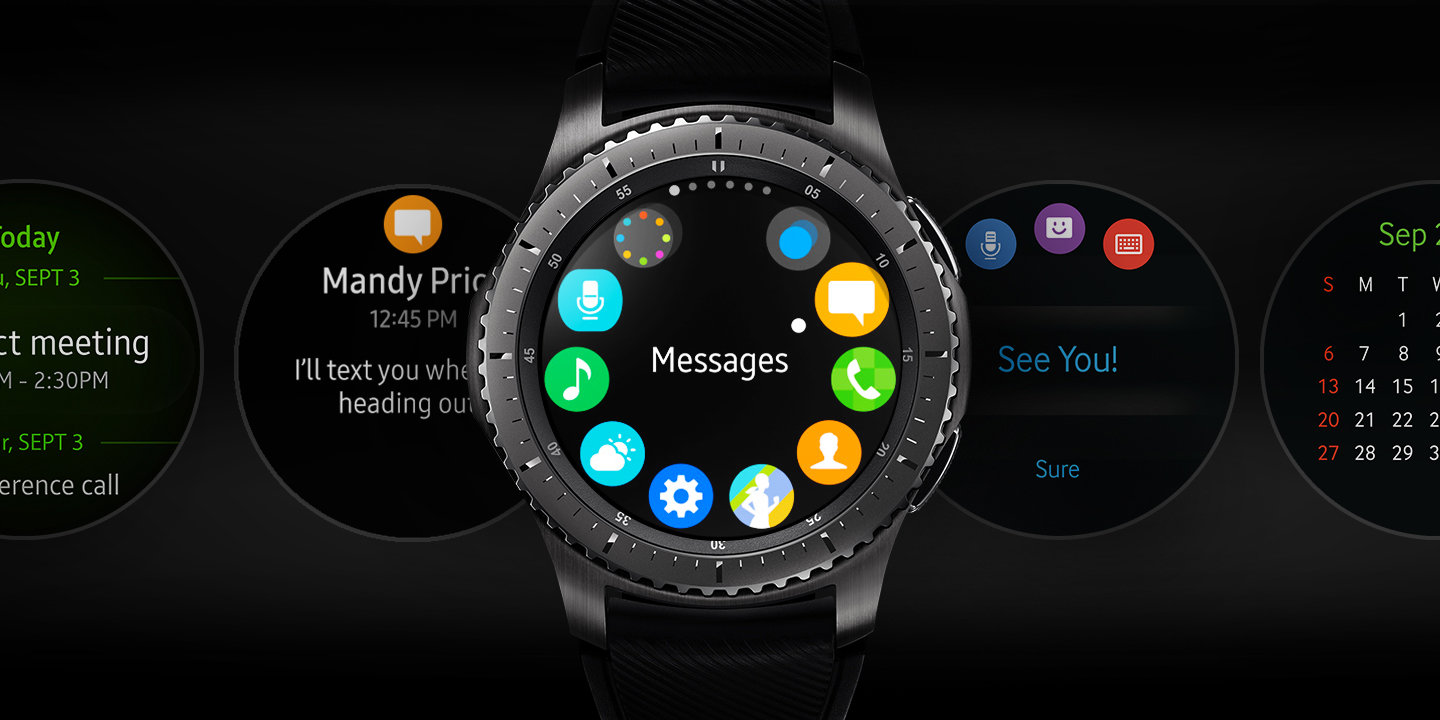
This watch has two physical buttons, one being a back button and one for power. The way Tizen works software-wise is much more convenient than Android Wear, and I was shocked and also relieved because, for now, I’m done with Android Wear until they can make some major improvements. You can swipe to change your watch widgets, which is much better than having an app drawer. One of the biggest fallbacks of Android Wear was that it felt like Android OS mushed down into a watch. All the Samsung apps have their own widgets that operate a certain way on the face at a glance, and then when you press the widgets, you go into the full app on the watch. The scroll wheel just smoothly flies around the watch and makes finding your widget a breeze, and it beats having to rely on the touchscreen and swiping a lot.
If you don’t want to scroll all the way through your widgets, you can go to the app carousel, which has the icon on the face, and you can scroll around to find what you want. It is still very fast and easy to use, and I love this feature. If you scroll all the way to the left, it will show your last-used app one click past the watch face, which is useful. The watch is equipped with Samsung Voice, so a simple “Hey Gear” will bring up a very responsive voice command to call or text anyone. This is made easier with a mic and speaker on the watch, so all calls can be done through your watch, which is a major step up over Motorola’s watches, which only contain a mic and all calls must be done on the phone. This leads to the watch having call forwarding, which is the best feature of this entire phone. You can leave your phone somewhere and still get calls on your watch. This is great if you forget your phone somewhere or don’t want to carry it around. This is only for the 4G watch and not the Bluetooth-only versions.
Surprisingly, this watch doesn’t have the insane hardware to be responsive and quick. The screen has a 360×360 resolution and is running on only a dual-core 1GHz CPU, which is Samsung’s own Exonys 7270. The screen is gorgeous, and it would be with Samsung using a Super AMOLED display, so it is the best-looking watch screen on the market. It only has 768MB of RAM and 4GB of ROM, but it seems to be enough as Tizen is hand-tailored to this hardware. The watch also never gets hot, unlike Android Wear. Snapdragon SoCs are notorious for burning up when pushed really hard, and that is what was in the Moto 360 2nd Gen.
The Gear app is fairly robust and has more features than Android Wear, which hasn’t really been updated since day one. The only thing I can’t change is waking the watch up when you bring your arm up. This is a feature that will never 100% work, as the watch can’t tell if you’re making gestures or looking at it. There is also no dim mode on this watch, which Android Wear does have, and that is probably why you can’t disable the feature. When you aren’t looking at the watch, the screen is off. You can also find your gear through the app and lock it if it is lost or stolen, which is easier to use than Android Wear. One of the best features is the native Samsung Pay that Android Wear has yet to implement. Just long-press the back button, and up comes Samsung Pay, which is really handy if you are into that. One thing that is actually quite simple that I love is that the Gear S3 connects immediately to Bluetooth without any fiddling or errors. Android Wear watches can only be connected properly if you turn on Bluetooth through the Android Wear app. If you just connect through the phone, it won’t connect sometimes. Frequent disconnects were common with my original Moto 360, but I’m happy to say the Gear S3 just connects and stays connected. It even seamlessly transitions from 4G to the phone without any problems.
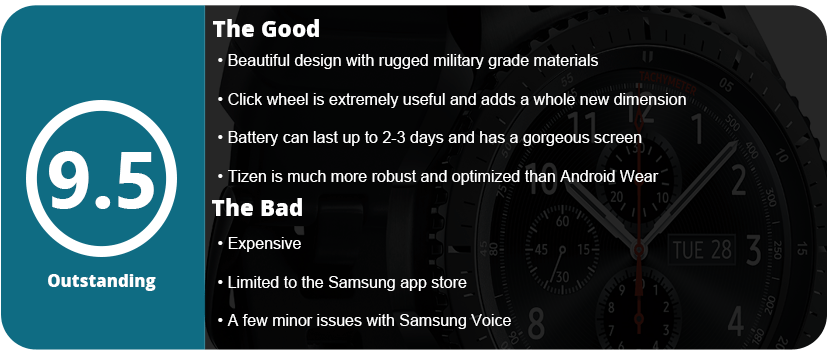
Overall, this is the best smartwatch I have ever owned, and Samsung has Tizen down just right. My fears weren’t that Tizen wasn’t as good as Android Wear, but now knowing that Android Wear is so far behind Tizen, it makes me want to never go back. Naysay what I’m telling you all you want, but I loved my Moto 360 2nd Gen, and I was also very frustrated with the bugs and problems with Android Wear and Motorola’s watches brought on. If you want one smartwatch, the Gear S3 is the way to go, without a doubt. This is the watch to directly compete with the Apple Watch, not Android Wear. Samsung has the streamlined, robust, and easy-to-use OS and design that Android Wear seems light years behind on.
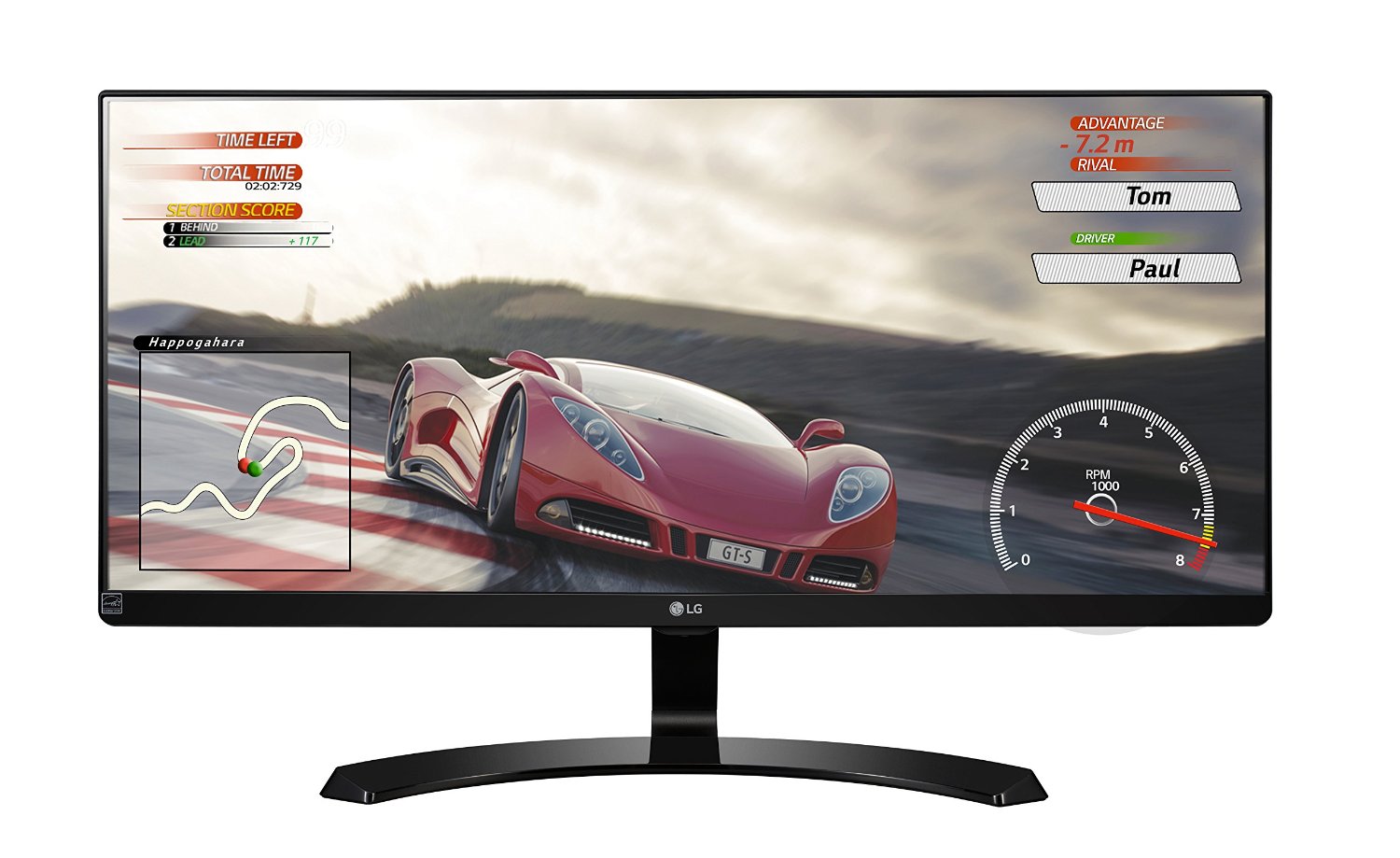
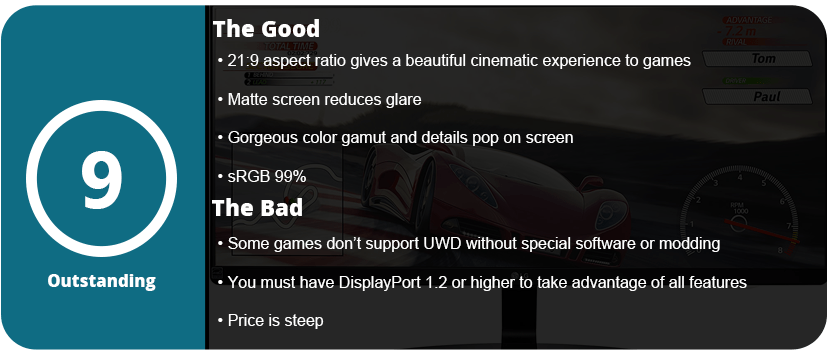
Ultra-widescreen monitors are the future of PC gaming as resolutions increase, FOV is pushed, and refresh rates skyrocket. Standard 1080p 60Hz monitors are becoming a thing of the past, and PC gaming is finally passing them up. Sure, there are amazing-looking 1080p monitors out there, but for high-end PC gaming, you need to break out the Benjamins to push your system to its limits. While Nvidia has many G-Sync UWD monitors, they start at $500 at around 27″. AMD has cheaper FreeSync monitors, which are more widely available, as they use DisplayPort 1.2 and higher to control their Vsync. I, sadly, have an Nvidia GPU and got a FreeSync monitor, which I learned is not compatible and vice versa. Instead, I get a really nice 75Hz UWD monitor.
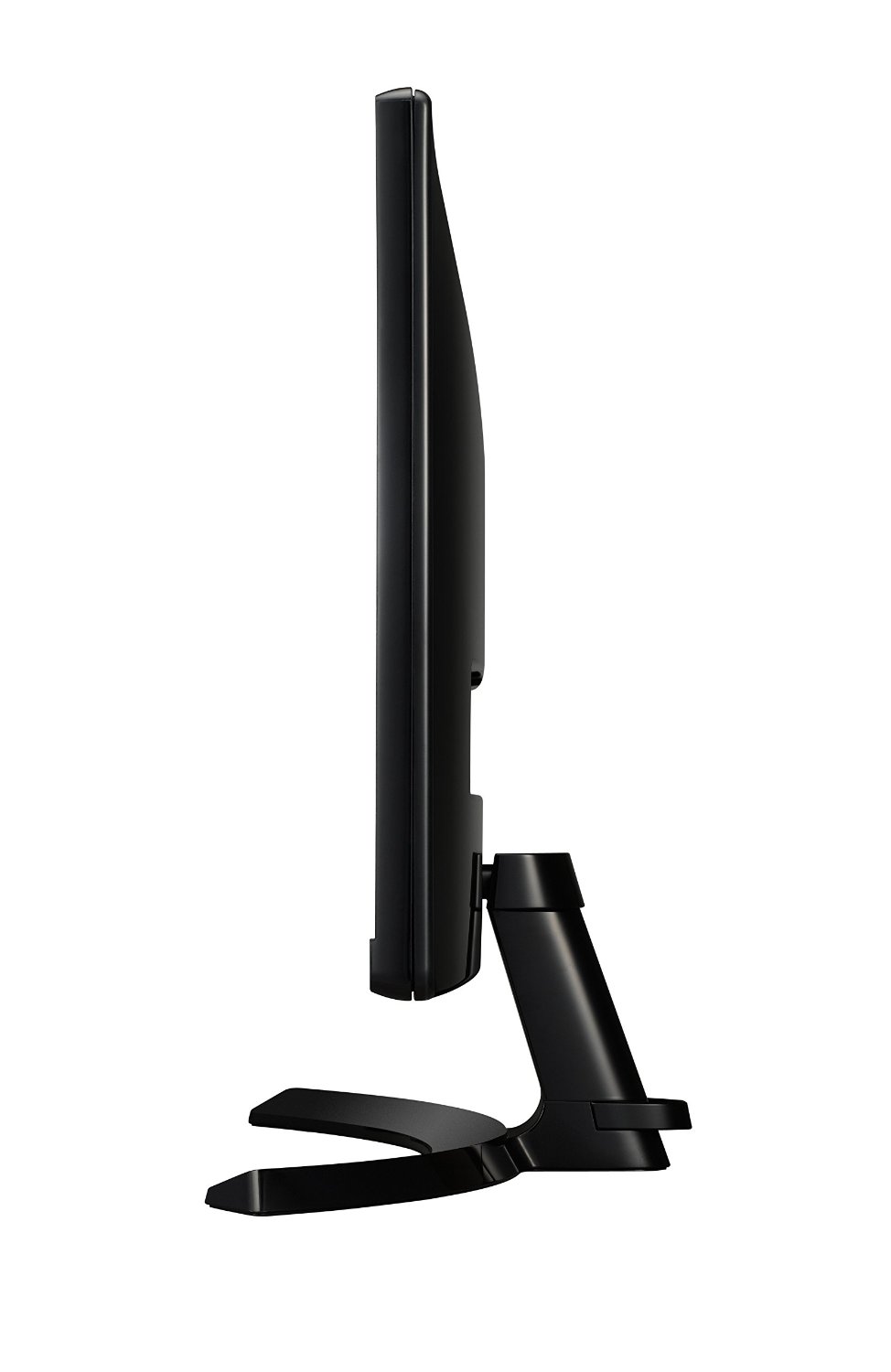
Firstly, let’s talk about the advantages that UWD monitors give you. For one, you get a much wider view of everything, which is great for pretty much everyday use in gaming. The downside is that most videos do not have a 21:9 ratio, so you get black borders. I recommend having a secondary 16:9 monitor running right next to it. An advantage is PIP, so you can split your screen into two and eliminate the second monitor altogether. This is best for monitors over 27″. In gaming, you will notice more around you as the FOV is pushed back from 70 to around 100–105. The higher resolution means a sharper and clearer image, but the disadvantage is that you need powerful hardware to render at this resolution. While the UM68 is 2560×1080, it has double the resolution horizontally, thus still needing a powerful GPU.
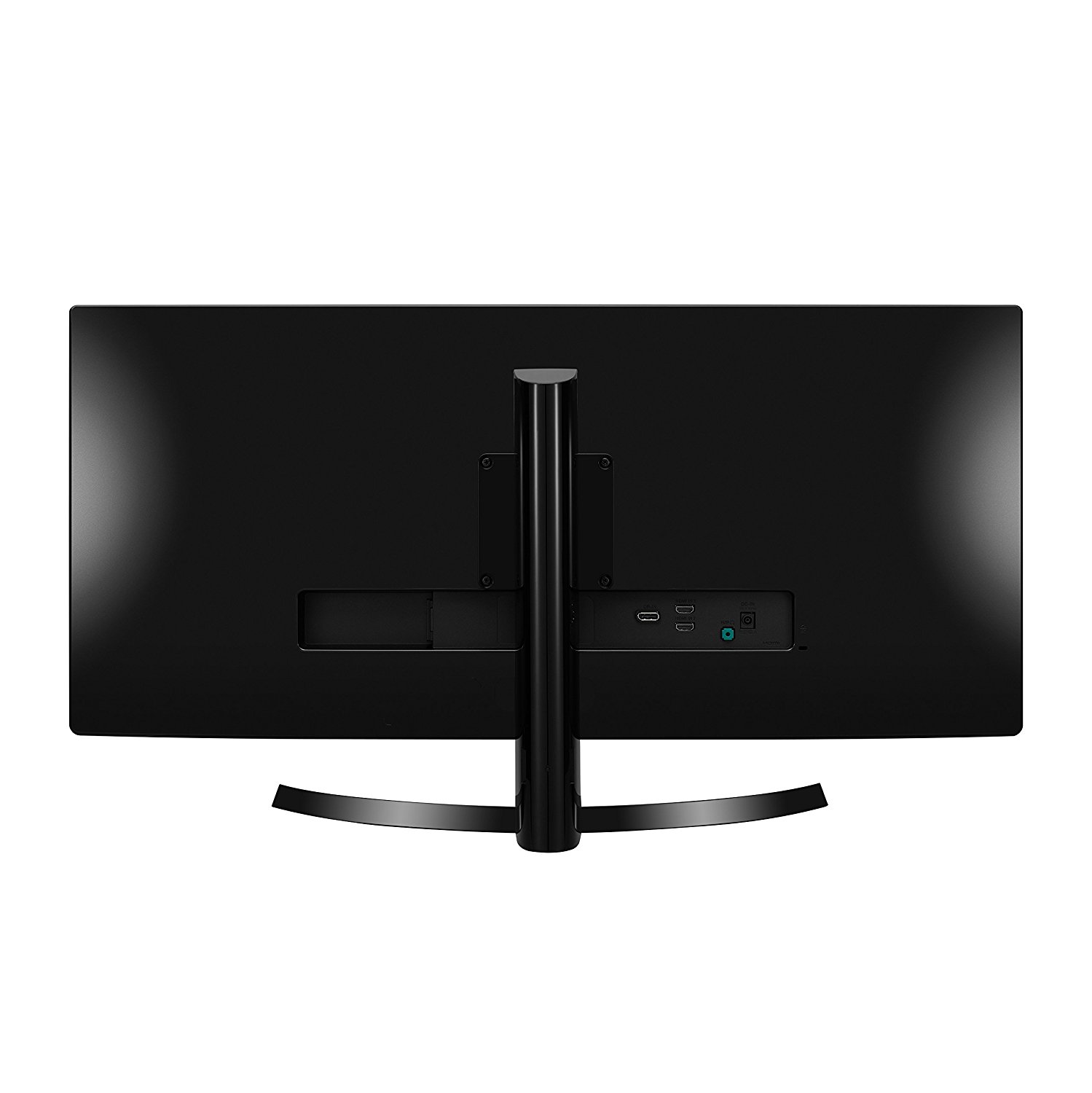
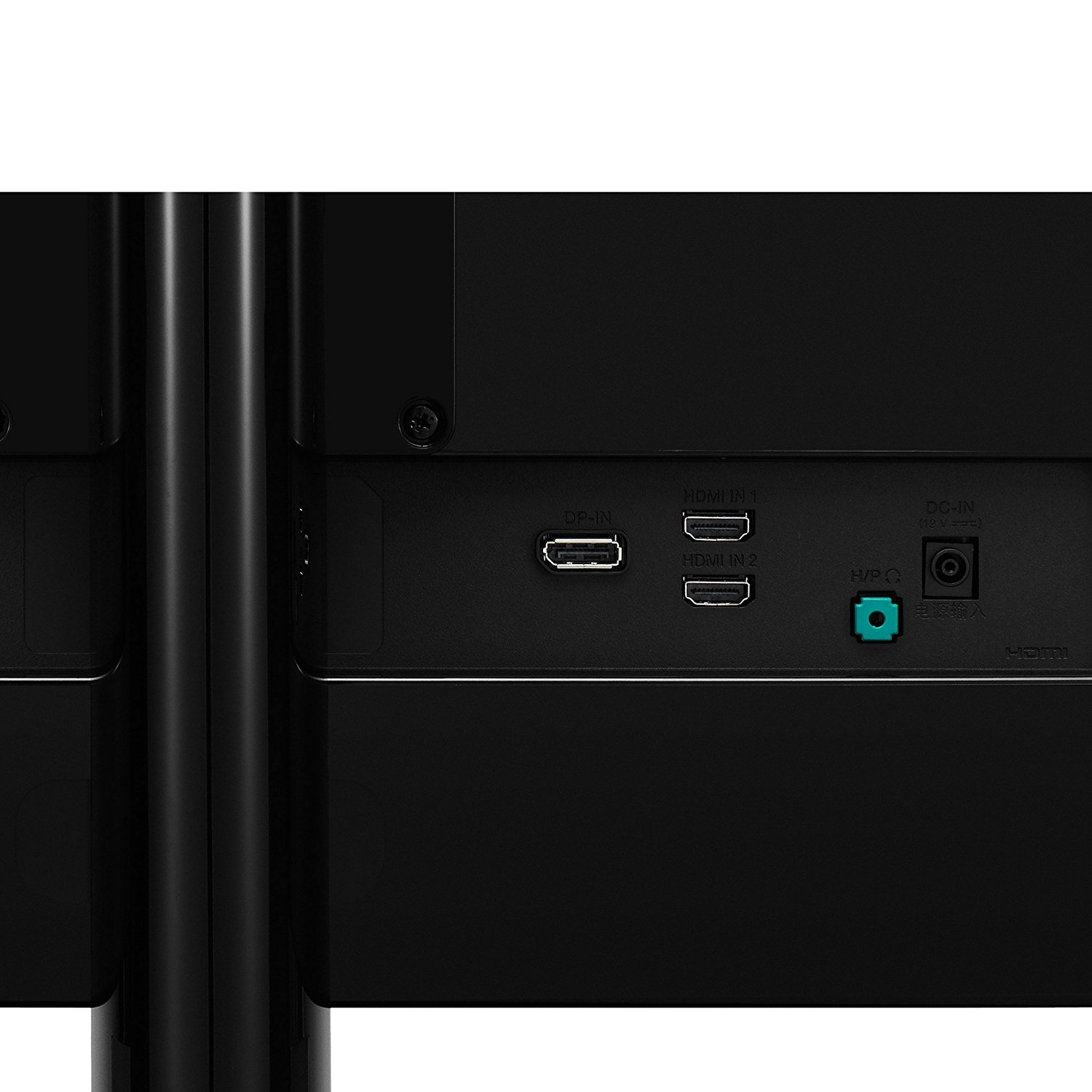
I highly recommend connecting this display to the display port, as the picture will be much better. DP is the future of higher-resolution displays and has a much faster transfer rate than HDMI. Once I set up the monitor by attaching the stand, I turned it on and noticed it had a buzzer. Yes, this monitor makes a chime when you turn it on and off, which is nice or annoying depending on the person. The first thing you need to do is go into the settings menu and decide what setting you want. I preferred the custom game mode with sharpness at 50% and everything else at default. LG monitors tend to have fantastic default settings that don’t need much tweaking. Make sure you turn on FreeSync and set the response rate too high. That’s all I needed to do, and everything looks fantastically sharp and brilliant. The monitor itself isn’t the thinnest out there and is quite thick, but it has a matte screen that is anti-glare and still looks sleek and sharp.
This is the nicest monitor I have ever seen or owned. I have it next to my older 32″ LG 1080p monitor, and I realize that there’s some blurriness to that monitor, and it’s not as crisp. Not saying it’s a bad monitor, but it shows how amazing these UWD monitors can look. In games and movies, the colors just pop and are so vibrant and alive that it’s something I can’t really explain. With 75Hz, you get more than 60FPS in games if your rig does it, and it’s a nice touch. It also allows you to dip a bit in FPS and stay close to your target 60FPS goal if you don’t have a powerful enough rig. However, the downside is that some games don’t support ultra-widescreen, and you’re stuck with a 4:3 game. The only solution is a program called Flawless Widescreen that will patch certain games to fit your monitor, and that includes FOV fixes as well. Two games I have already played that don’t support UWD are Skyrim and Mortal Kombat X. Thankfully, Flawless fixed UI, FOV, and menu issues in both games without any crashes or errors.
Ultimately, I can only recommend spending the money on a UWD monitor if you game or do art of some sort. For someone who just uses their computer as a glorified Facebook and Instagram machine, you’re throwing money down the drain. While everyday use is nice on a monitor like this, there’s no advantage over a normal 16:9 monitor that can justify the double price jump. You also need to have a pretty high-end rig to start rendering at these resolutions so you can keep your FPS up to take advantage of the monitors’ Vsync features. While the monitor changes its own refresh rate according to the FPS, it helps to keep it stable and as high as possible.
My biggest gripe is that FreeSync is not compatible with Nvidia GPUs, and the main reason why I wanted a UWD monitor was for the built-in features. Maybe soon I’ll switch to an AMD card to take advantage of this monitor’s features, but for now, I have a really crisp and sharp 75Hz UWD monitor, and I couldn’t be happier. Just make sure you really want to spend twice the amount of money.









































 thebinarymessiah.com
Try multiplayer. A lot of fun !