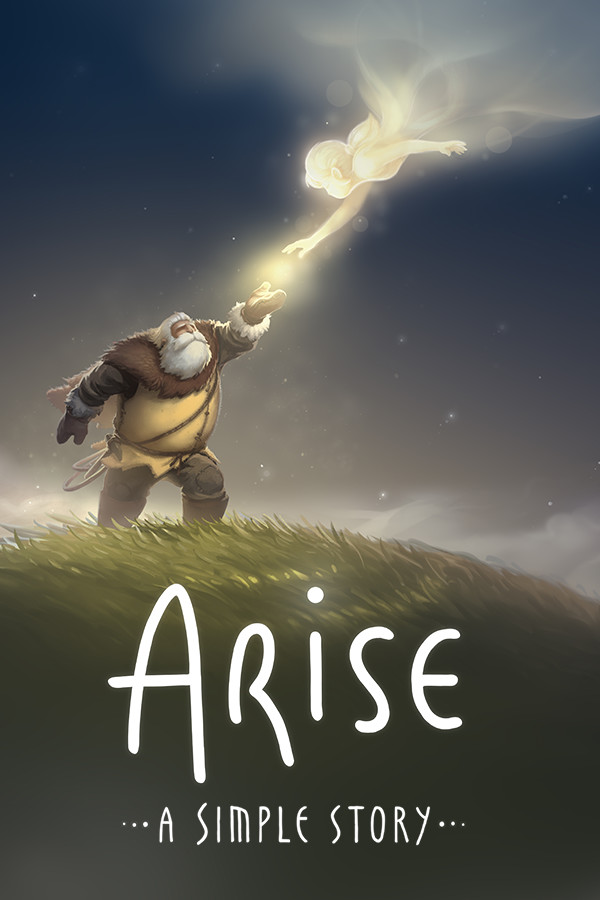
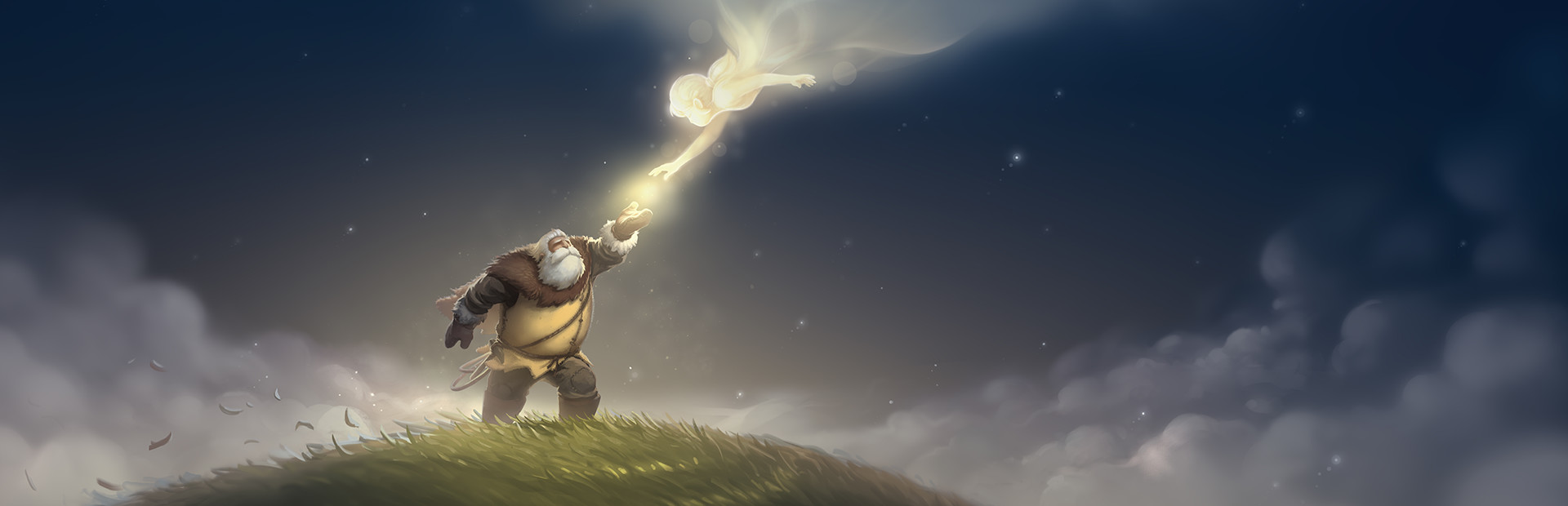
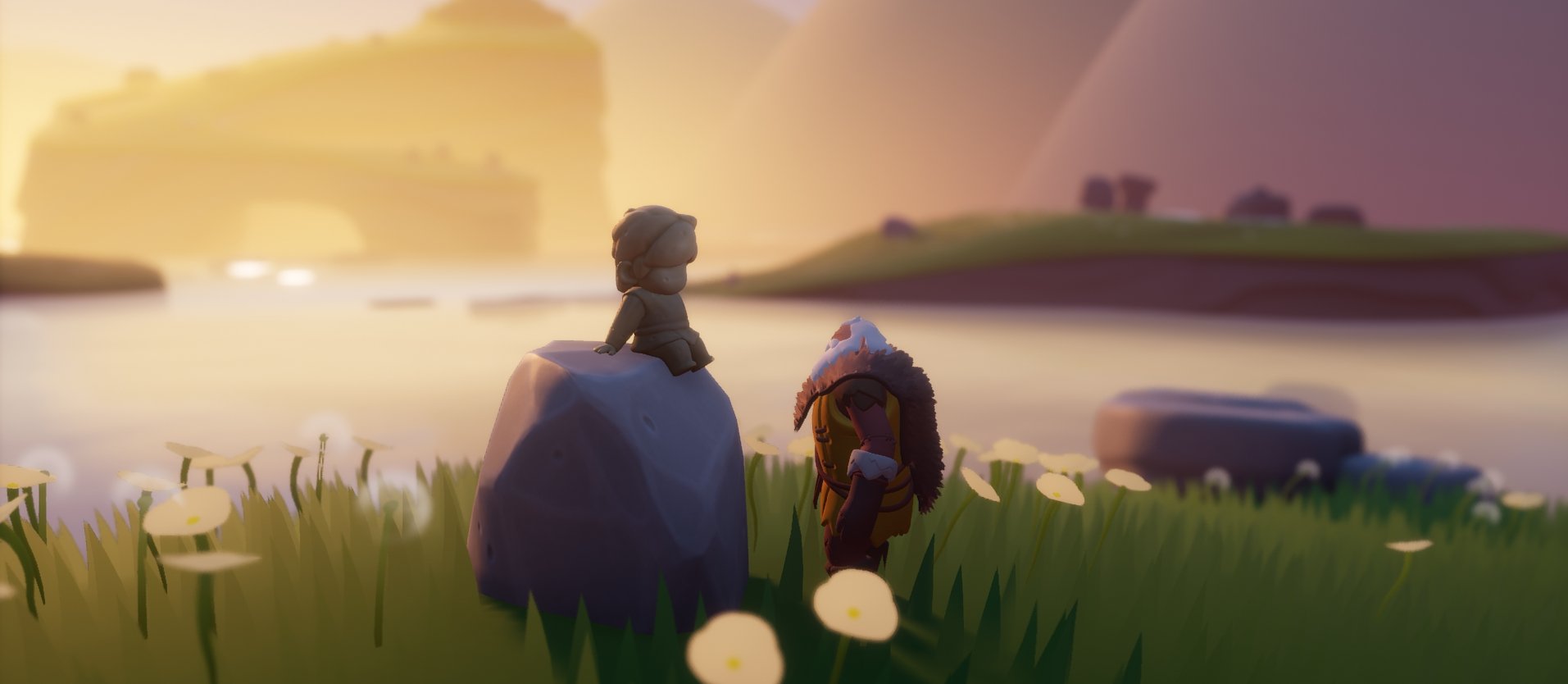
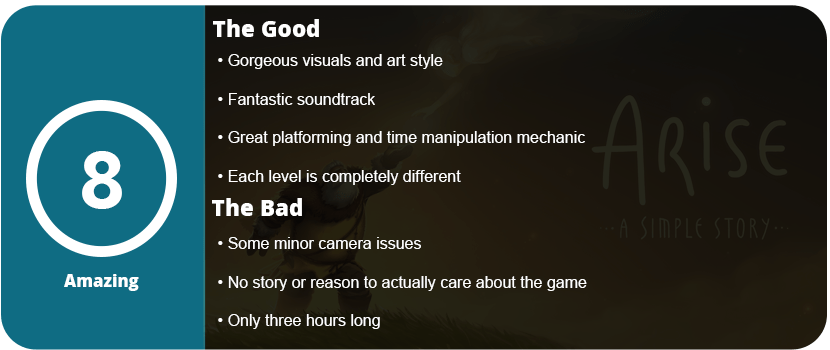
Simple is a great word to put in the title because this game is very simple—almost too simple—and it’s a continuing issue with these “artsy-fartsy” games that have been out since Echochrome was released over 10 years ago. Journey is still the game that does this best and hasn’t been topped. While Arise actually has gameplay, unlike similar games, it still has no purpose, meaning, or story. You play as an old man who is clearly remembering his past, be it meeting his wife, surviving harsh journeys as a child, or various problems that arose with his own child, but these are told with just statues posing to show an image or an idea, and it’s never really clear.
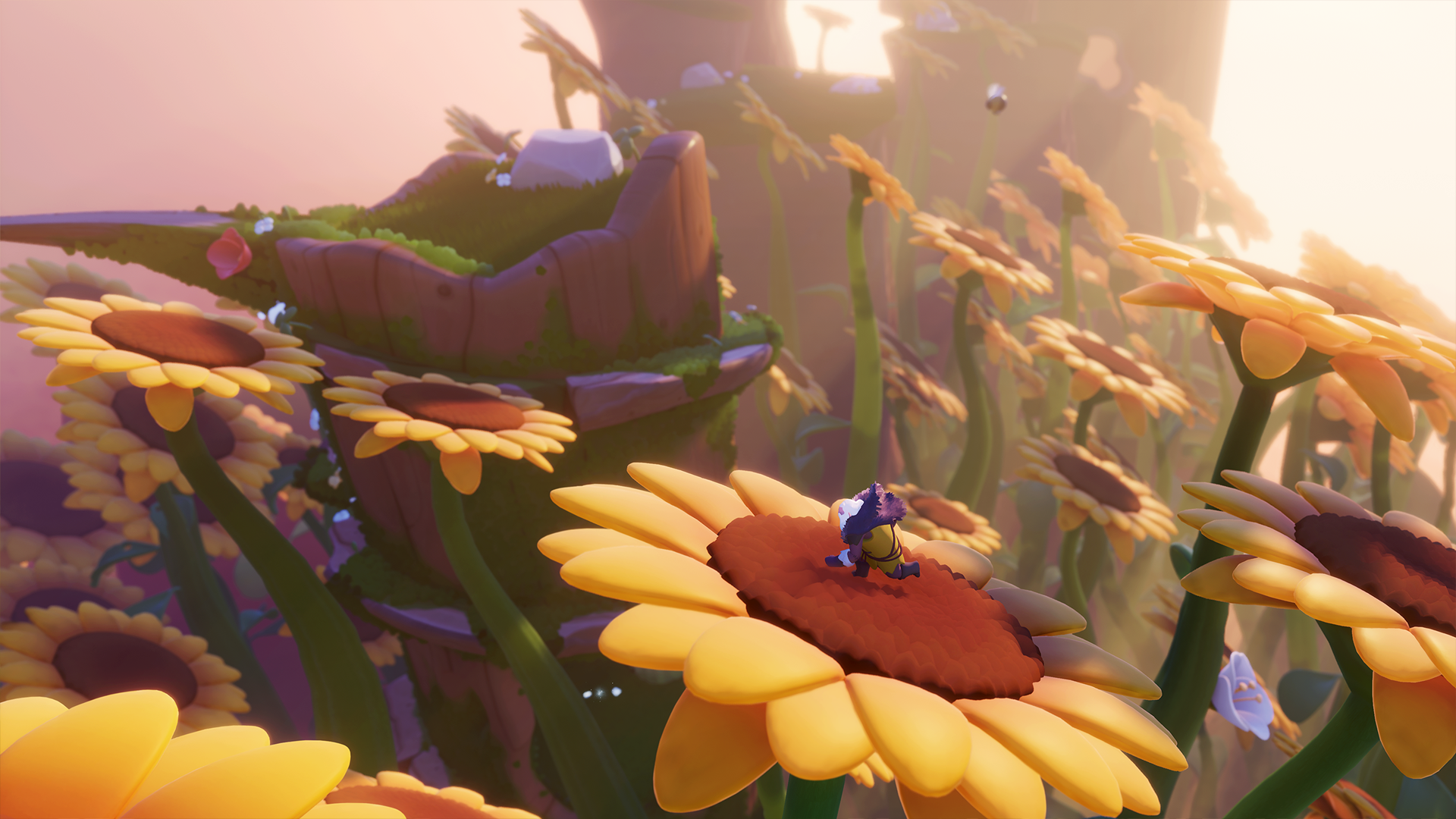
The majority of Arise is composed of great platforming, with varied environments and time manipulation at your disposal. One level has you rewinding and fast-forwarding time to freeze or thaw water, causing platforms to appear and disappear underwater. Another is a level where you just leap across lily pads, and moving time makes the pads spin around. Another level is on a mountainside, and you use the time to rewind time to use the destruction of the cliffside as platforms. It’s very unique and fun, and I had a blast figuring out how to get across each level, which has different uses from the time manipulation and varied levels, making the 3-hour adventure never seem stale.
However, a few issues arose with weird camera angles, and I couldn’t make out where I was jumping and made poor judgments. I even ran into an issue where a sparkly wind would carry me across a level and dump me on a lilypad, only to fall right through it—about half a dozen times. Outside of this, the game wasn’t hard to figure out, and I flew through the game in no time. The music is fantastic and has a sweeping orchestral score similar to Journey. But, unlike Journey, there just isn’t a purpose or story really told here, and I want this fanciful art to stick with me. I know I’ll forget Arise in a few weeks, while I still remember my three playthroughs of Journey from 7 years ago like they were yesterday.
The visuals are superb, with a gorgeous art style and lighting effects. I particularly like how each level has a feeling behind the platforms. The lilypads feel squishy, while another level’s bouncy round cells feel like rubber. There’s so much to look at and take in that on a really nice TV or monitor, the colors will pop and dazzle you. The seven levels bring something new to the game, and each one takes around 20 minutes to finish. There are even some areas where ghosts will kill you if you don’t manipulate the forest fire around you to provide light, and another level has you pausing time to light up the area with lighting strikes. It’s just such a shame there’s no reason to finish the journey other than to see the gorgeous levels.
Overall, Arise doesn’t break the cycle of artsy indie games having no story or purpose, but it at least has great gameplay, unlike the majority of them. I wanted to feel the emotions the old man was going through, but how can I when there’s no context? Developers need to understand that they may understand and feel what’s going on, but we, as players, have no clue. A few statues and an old man looking sad don’t tell us anything. Play Arise for the visuals and platforming, but don’t expect something to tell your friends about.
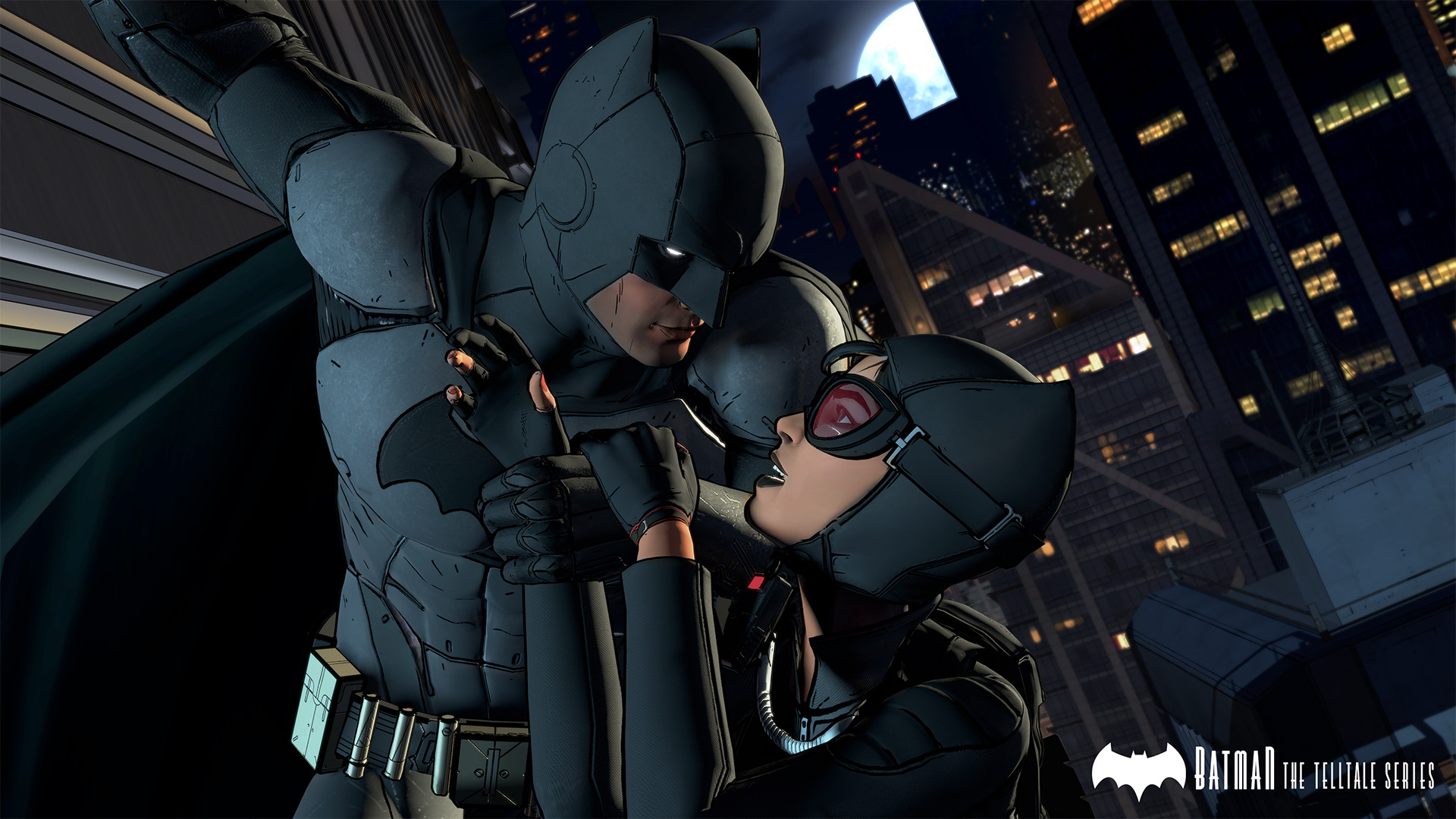
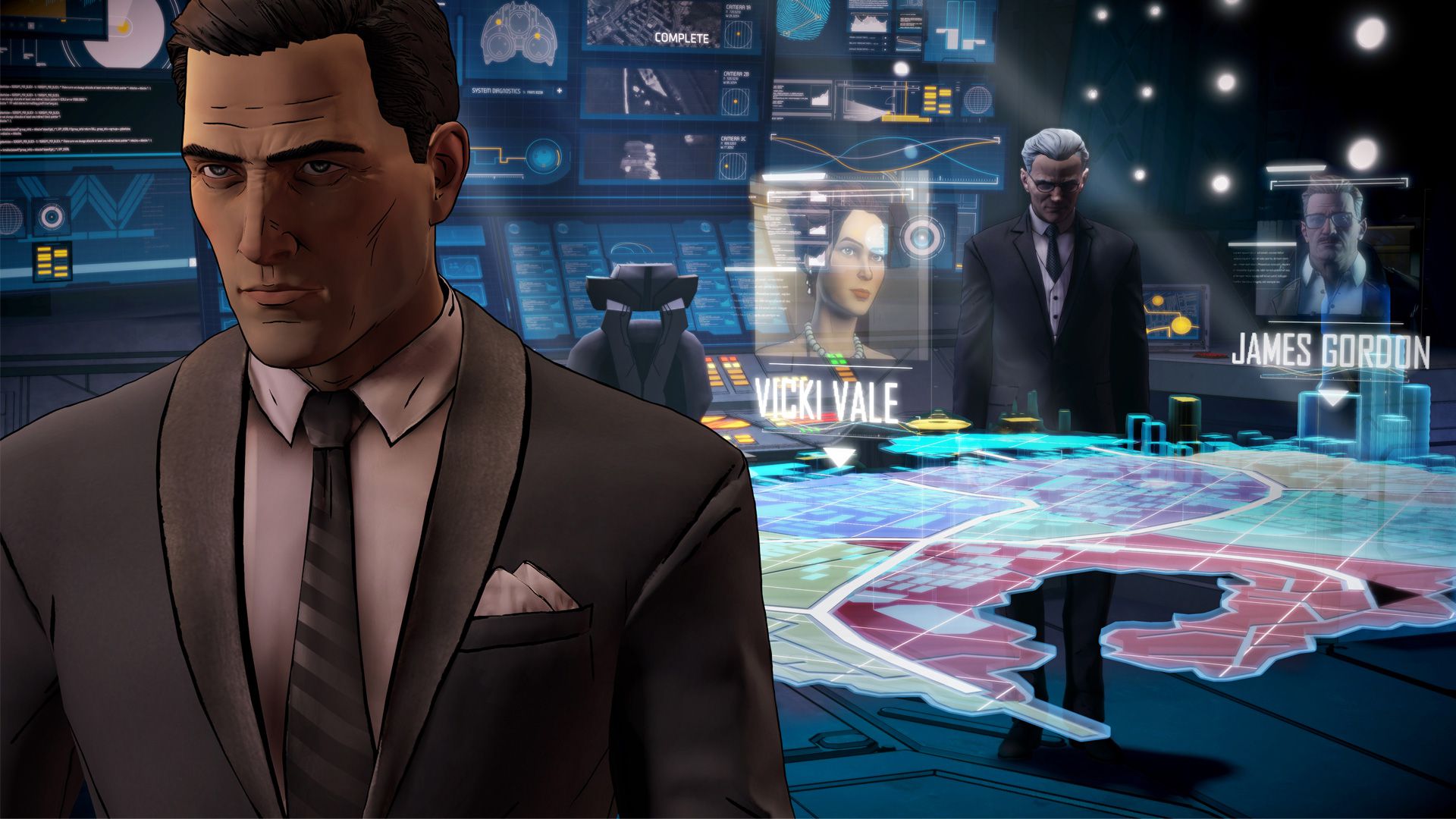
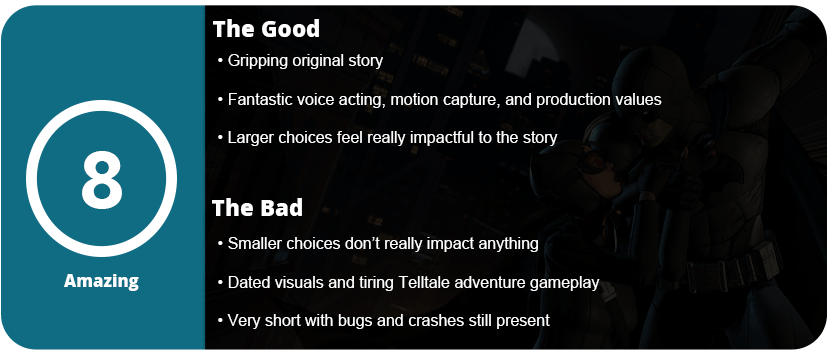
Batman has seen a great run over the last decade or so with Christopher Nolan’s film trilogy, the Arkham game trilogy, and now a story-driven adventure game. Batman tells a story I have personally never heard, with the game digging into Bruce Wayne’s darker past and finally revealing the truth about his parents and discovering their past. The game isn’t’ afraid to kill off characters and actually becomes quite violent, and I was hooked every last minute, but it’s not the story or characters that have issues, but Telltale’s tired way of telling these stories.
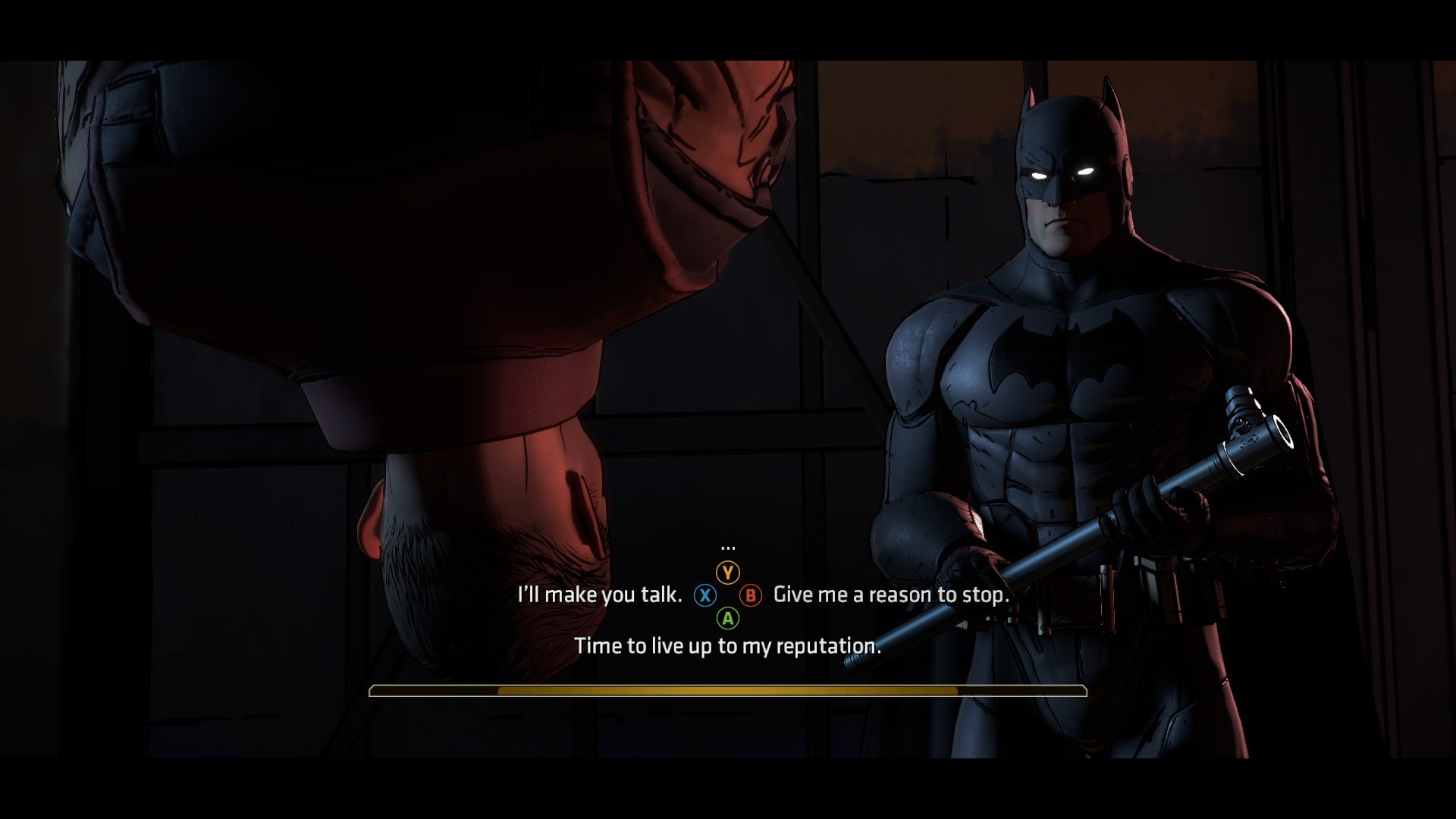
I’ll have to give them credit; they cleaned up the graphics engine a bit, and the button prompts and commands look sleeker, especially during action sequences, but the game is still an interactive movie, probably more so than any other Telltale adventure game. Rarely do you get to actually control Batman or Bruce, and only during investigative scenes do you get to link clues together. This is one gameplay element that’s been used multiple times, and I like it, but it’s not really a puzzle either. You walk around examining clues and can link two of them together to figure out what happened at a crime scene. It’s easy and obvious which clues go together, so some better puzzle-solving would have been nice.
The second gameplay segment is dialog choices, and most are timed just like previous Telltale games, but I feel the smaller dialog choices have less of an impact. The game will tell you when someone will notice or remember what you said, but unlike The Walking Dead, I don’t know when that comes into play. The Walking Dead is done so well that I can recall what I said in a previous decision that made that character act the way they do. Now either the writing is so good it’s that seamless or it was an afterthought. I want to know when my choices change things, even the little ones. There are times when you have to make two large choices that obviously will affect the story, but these are immediate changes that you see in front of you.
The third gameplay segment is quick-time events, but they’re sleek and feel like part of the action. Of course, these are incredibly easy, and I never once messed up, as the game gives you plenty of time to hit the button prompts to see the well-choreographed fight scenes play out that are actually quite cool. Outside of those three gameplay segments, there’s no other gameplay present. Puzzles are seriously lacking, as they gave the Arkham games some brainpower behind all that fighting, and I feel the game could have been better enjoyed as a game with these put in.
Thankfully, you’ll just mow through the five episodes that take less than an hour each to complete because the story is so good. Seeing the origins of Harvey Dent become Two-Face, The Joker, Catwoman, and Gordan, and seeing Bruce face his own dark past, is just cool, especially for a Batman fan such as myself. It tells a story that no other medium has told, and that’s what got me hooked. I don’t want another origin story as to how Bruce became Batman; I don’t want to see him fight more villains and fight his inner demons. The dredging up of the past and seeing Bruce and Batman actually fail and become nothing is fantastic, makes Batman seem vulnerable, and adds depth to the story arc.
Overall, Batman: The Telltale Series is a must-play for any Batman fan. I don’t think non-Batmanfans will care for this game, especially when knowing more about the lore and arc of the series makes the game that much more interesting. The visuals are decent, but I’m tired of seeing Telltales comic-looking graphics, and they are still dated and full of bugs and problems. I ran into graphical glitches and crashes, and at one point, my Xbox shut down mid-game for no reason. The voice acting is top-notch and the overall production values are good, but I’m tired of Telltale’s way of telling stories in the same manner for every game. Smaller dialog options are lost in the seamless transition between scenes, and only the larger choices stand out, which is a shame. Towards the end of the game, I stopped caring about which choices I made outside of the large ones because I wasn’t seeing any differences. Even in the last dialog scene with Alfred in episode 5, the game said, “Alfred will remember that,” but why? It’s the last scene with him, and it won’t make a difference if he remembers it or not. With that said, this is a great story and not much else.
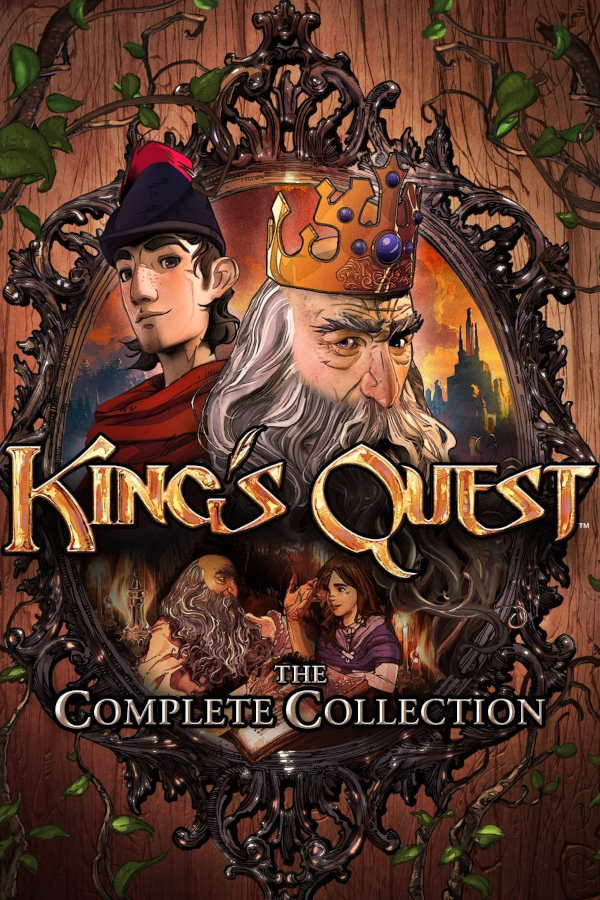
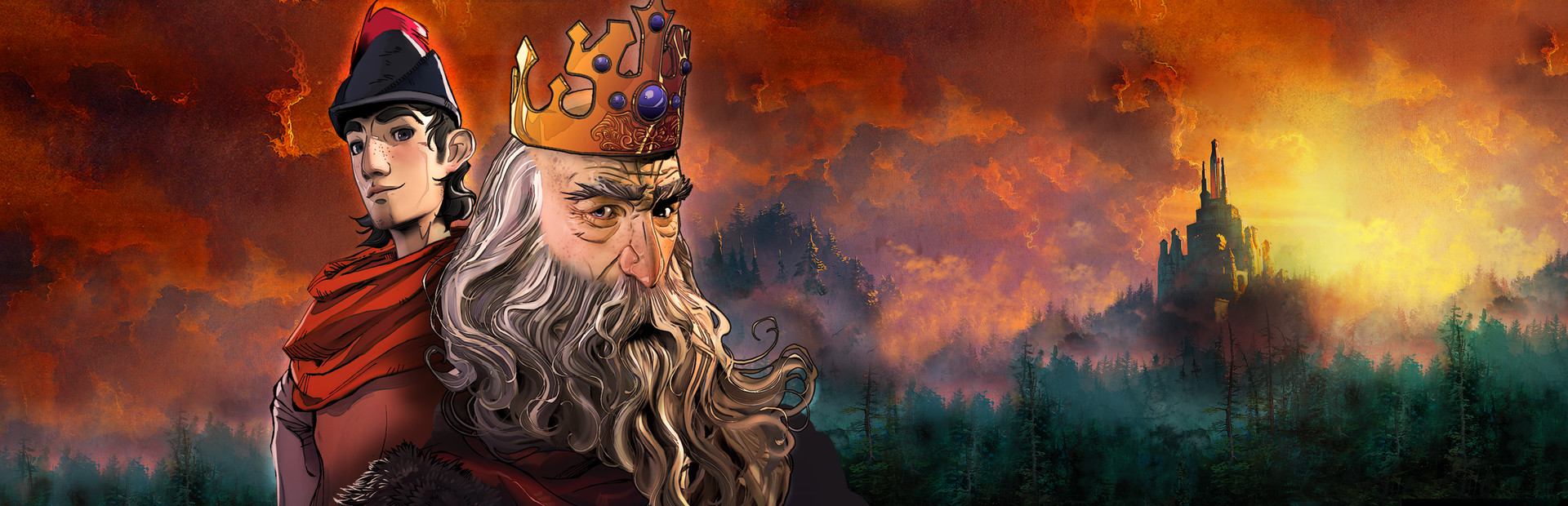
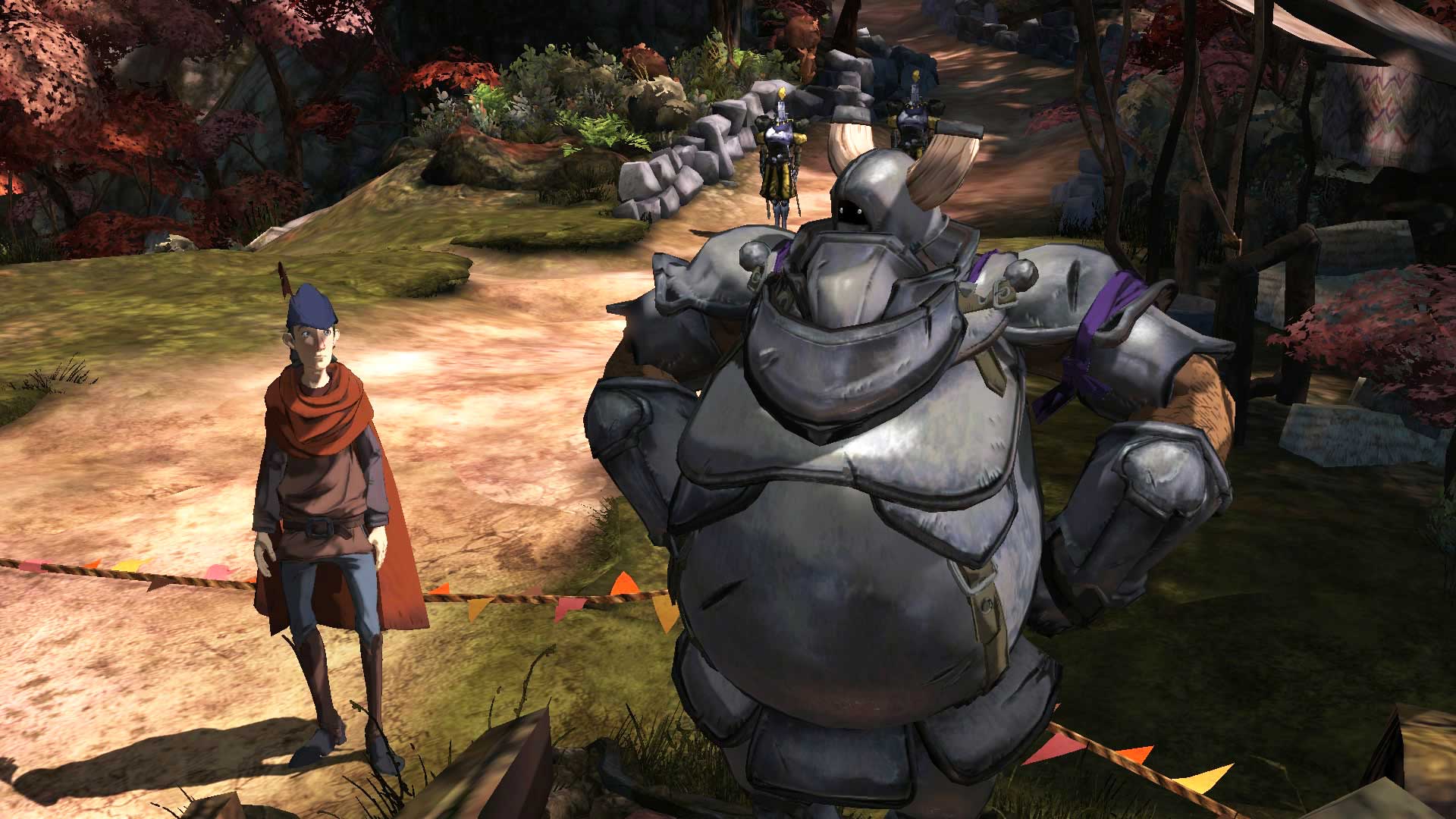
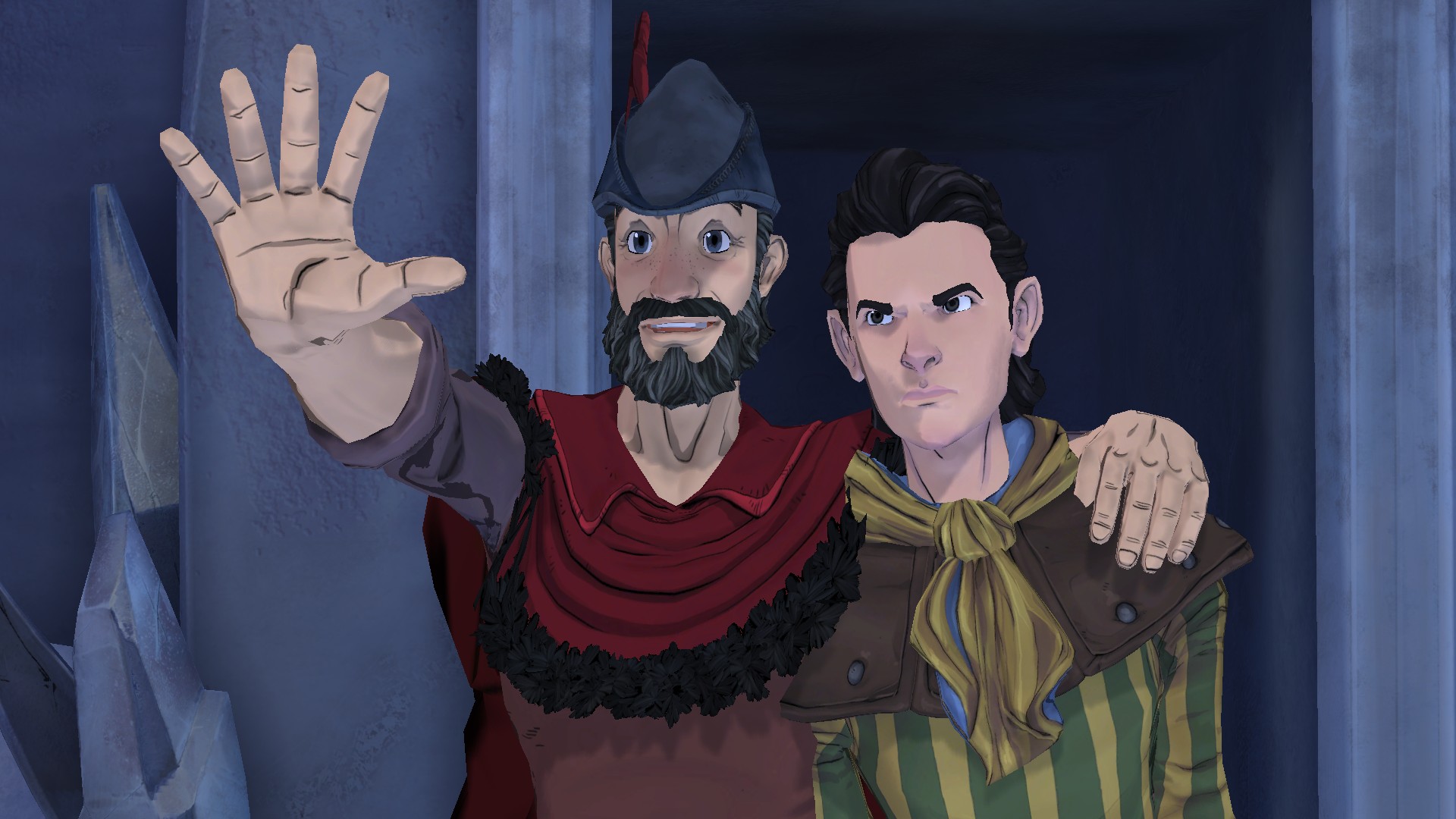
King’s Quest is one of the oldest gaming franchises, as it dates back to the 8-bit gaming era on IBM PCs and Commadore 64, but it’s not very well known for being a PC-exclusive series. It also hasn’t been updated in a couple decades, so to see Sierra themselves publish this franchise got people excited, but King’s Quest landed in an era when The Walking Dead and Telltale Games’ way of doing adventure games reigned supreme. King’s Quest is a retelling of the lives of King Graham and his family and his struggle to rebuild the kingdom of Daventry.
Chapter 1 starts out great with Graham trying to take down a dragon and steal a magic mirror. Graham’s past adventures are told through older Graham telling them to his granddaughter, voiced by Christopher Lloyd. The typical adventure game stuff happens with walking around, talking to people, examining objects, trying to figure out which objects go where to progress, and the occasional button tapping and switch pulling. Chapter 1 has an action-oriented beginning segment, and then the rest is set in Daventry with lots of backtracking and object hunting, which I am not a fan of. I prefer the Walking Dead style of adventure games in which you walk around the immediate area, discover a few things, and have dialog choices and lots of scripted gameplay. Even games like Life is Strange do the exploration just right. I feel King’s Quest relies on this too heavily, and it drags the game down in later chapters.
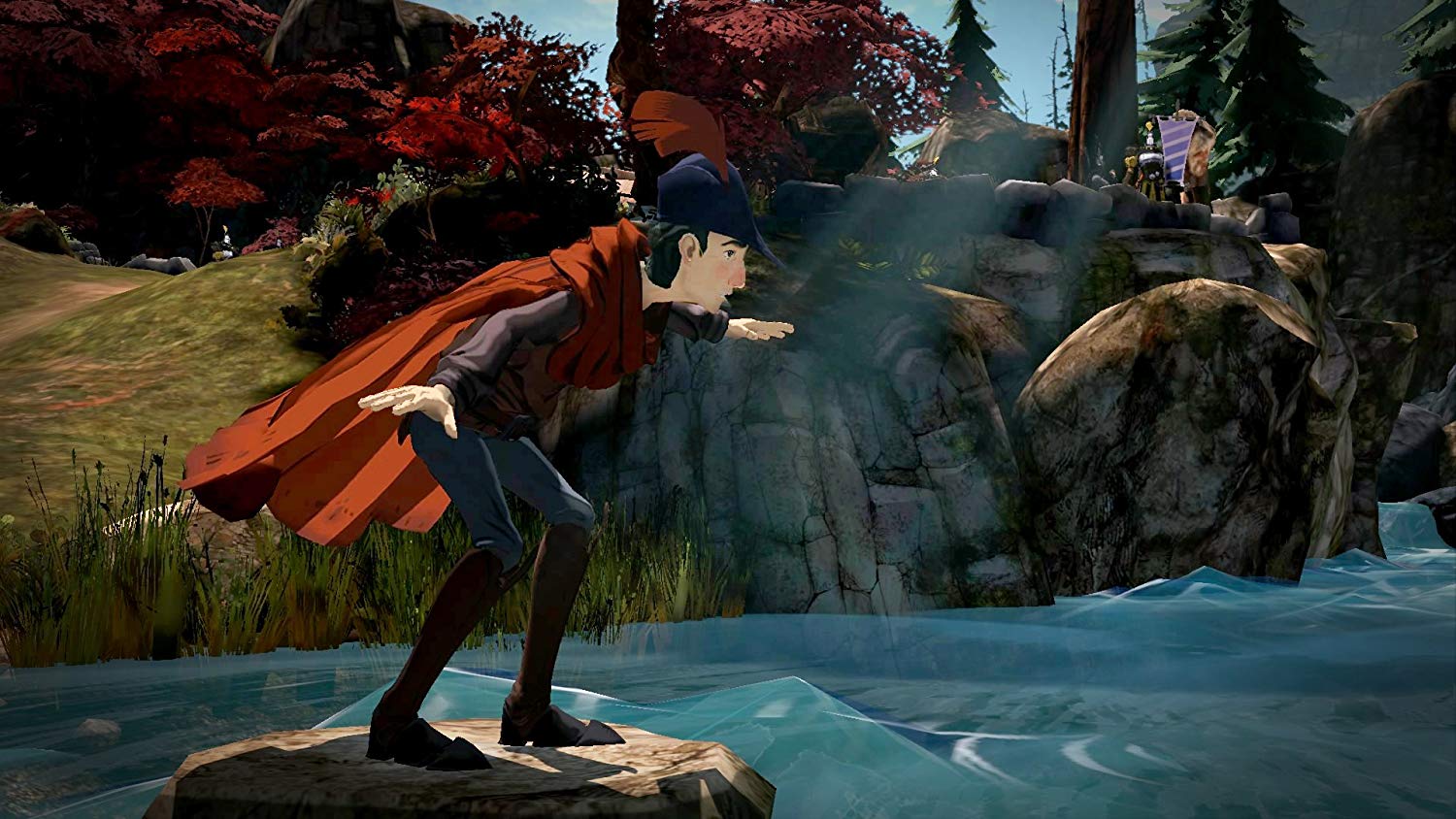
Once you get to Daventry, you have to complete a series of trials to become king, and you meet pretty much every main character in the game. I found the humor to be nice, if not cheesy; the voice acting was great; and the art style is decent, but the graphics are seriously dated. I also found some of the object hunting very vague and hard to figure out what to do, and this was present throughout every chapter. I also didn’t like how you couldn’t skip dialog and cut scenes in the first chapter only. Outside of the constant backtracking through Daventry, the game is well-balanced and fun. There are a few logic puzzles thrown in for good measure, too.
Chapter 2 is where things fall flat with just a giant cave area to explore, and you must rescue some of the characters, but it’s not explained that you can lose all the characters for the rest of the game if you don’t do things in a certain order. The object hunting vagueness is never more annoying than in Chapter 2, with the entire chapter’s completion relying solely on this. I could never figure out what objects were supposed to do what and go where, and sometimes I flat-out missed objects. You are supposed to sleep every day, and each day the characters lose health. I didn’t know this until after day 3, and I lost two characters. Eventually, I found out I did everything completely wrong and was left with one character, and the rest are out of the story throughout the entire game. It’s very unfair and difficult, and it wasn’t really all that fun.
Chapter 3 is probably the best, as it feels more like other adventure games. A little bit of object hunting, but mostly story and action sequences. It was really fun, and the story at this point was picking up and felt faster-paced. Then, when Chapter 4 hit, it slowed completely down with nothing but puzzles. There are about 20 or so puzzles in this chapter; some are easy, and some just make zero sense no matter how you look at them. It was better than object hunting, as this chapter had the least amount of that, including backtracking. Chapter 5 mixes everything up as the story concludes, but you go back to exploring the same Daventry as Chapter 1 all over again, and it’s just so tedious and boring. The ending consists of insanely difficult logic puzzles; a few are fun, but most of them make no sense. Then the game ends with an object-hunting epilogue chapter that is also a chore fest.
King’s Quest just couldn’t pick one style of gameplay. One chapter is object-hunting heavy, while another is all story and action, and the next is all puzzles. It’s very disorienting and makes the game feel like a chore to play, despite the interesting characters and fun stories. I loved hearing Christopher Lloyd speak, and there were a few nice plot twists, but nothing too crazy. The story is forgettable for sure, but it has a nice conclusion that doesn’t have a cliffhanger. But who is this game for? King’s Quest fans, for sure, and maybe adventure game fans, but fans of just modern adventure games might be turned off by the old-school shortcomings of this game.
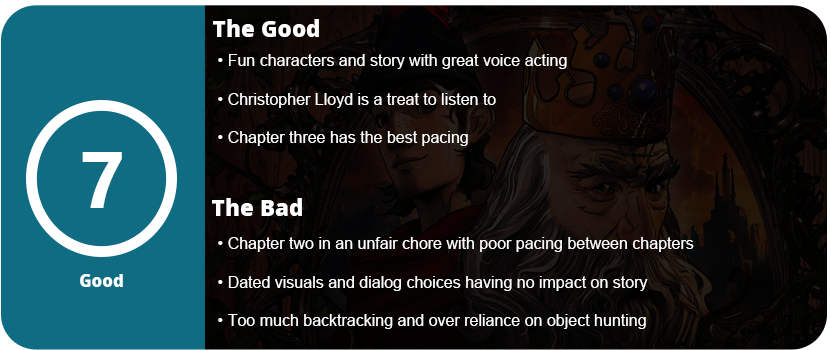
Overall, King’s Quest is a fun 10-hour romp through medieval times, and following the goofy King Graham and co. through their adventures is fun while it lasts. The game suffers from poor pacing, indecisive gameplay choices, dated visuals, and some incredibly vague puzzles. With the small price tag these days, this is a fun weekend play-through if you want something to veg out on or play with someone by your side. I would have wished the dialog choices had more meaning, as most of them are pointless no matter what you choose, and there is no real way to sway to the story outside of Chapter 2’s character-starving mechanic. I enjoyed King’s Quest, but there’s just so much more it could have been.
When you’re desperate to bring a franchise back, what do you do? Well, two things: either reboot the entire series into something new or bring the series back to its roots. Activision chose the latter, and somehow it just brilliantly worked. See, Call of Duty 4 was something groundbreaking and revolutionary in the first-person shooter genre. With a fantastically cinematic campaign, an interesting protagonist (Cpt. Price), and addictive multiplayer that had you grinding for perks and weapon unlocks, it was fast-paced and fluid with well-designed maps. Infinity Ward had created magic that took the world by storm. Of course, what do you do with a franchise that’s this successful? Milk it to death with yearly sequels for over a decade until it kills itself. That’s actually what happened to Call of Duty twice! While the peak of the series was with Black Ops 1, the latest Black Ops 4 was a complete disaster. With every iteration, there was a less than stellar campaign and boring multiplayer. So, all those wonderful memories you had with Call of Duty 4 can now come back as this is a prequel to that game. Keep those memories in mind because we’re going to come back to them later.
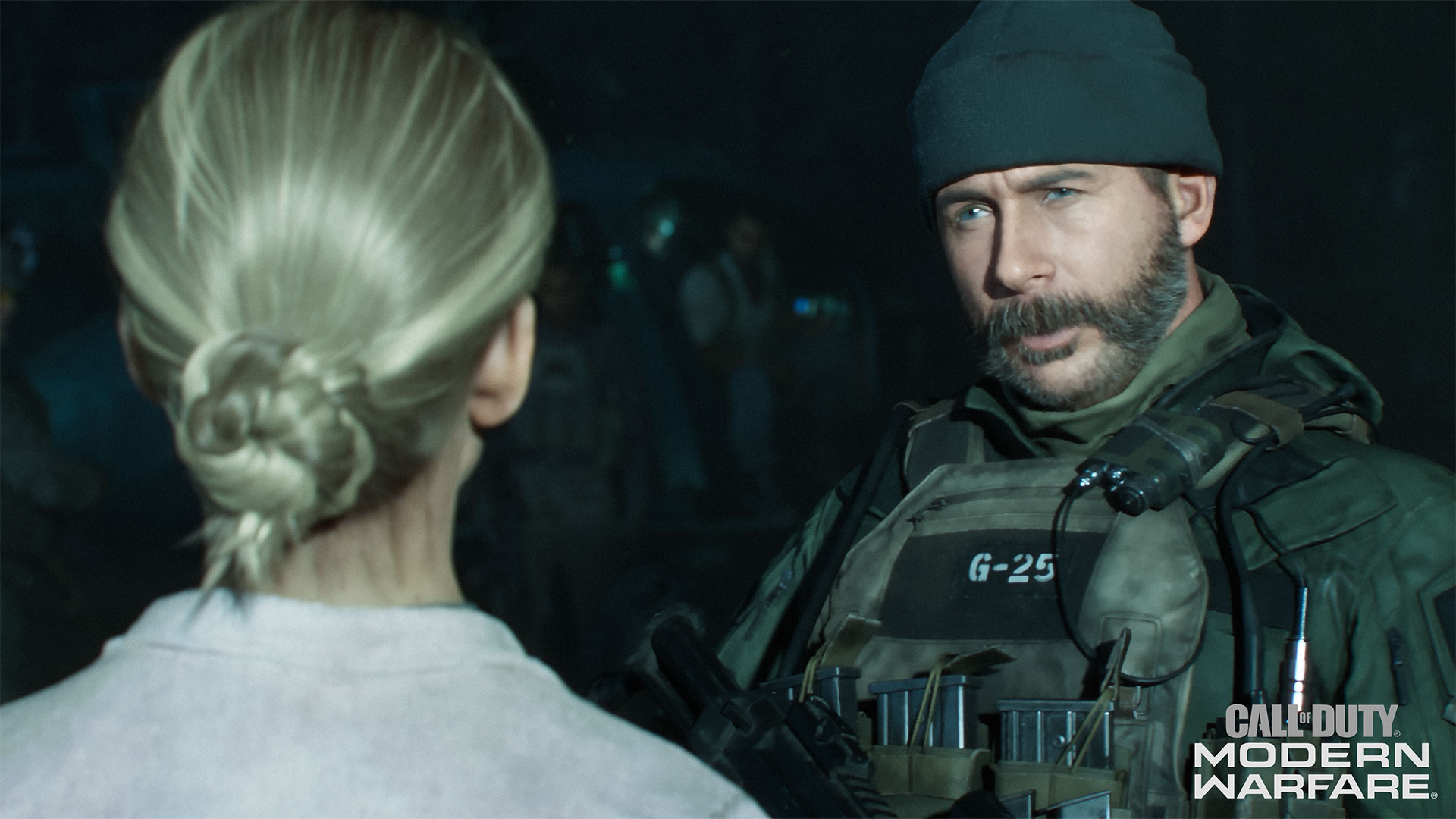
Call of Duty has never been well known for its amazing story, but Modern Warfare tries, at least with the game taking place in Russia and the Middle East. You are trying to find out who stole a toxic bioweapon, and you team up with a rebel group in the Middle East to stop the Al-Quatala terrorists from unleashing it on the world. It’s a typical modern terrorist plot, but it’s enough to get the job done. At least the characters are interesting. With you playing Adam, Garrick, and Farah, Adam is part of the US Army, and Garrick is part of the SAS. Farah is the rebel group trying to break her people free from Al-Quatala, and the Russians selling the bioweapons aren’t helping. Each character is actually really good to watch and pay attention to on-screen. Of course, Cpt. Price has this awesome presence that you can’t look away from. His voice acting and motion capture are amazing, and it’s nice that they tried to breathe actual life into these characters. Remember when I said to remember those CoD4 moments of nostalgia? Well, when Cpt. Price comes on screen for the first time or you see the ending, you get goosebumps and can’t help but smile and think, “It’s back!”
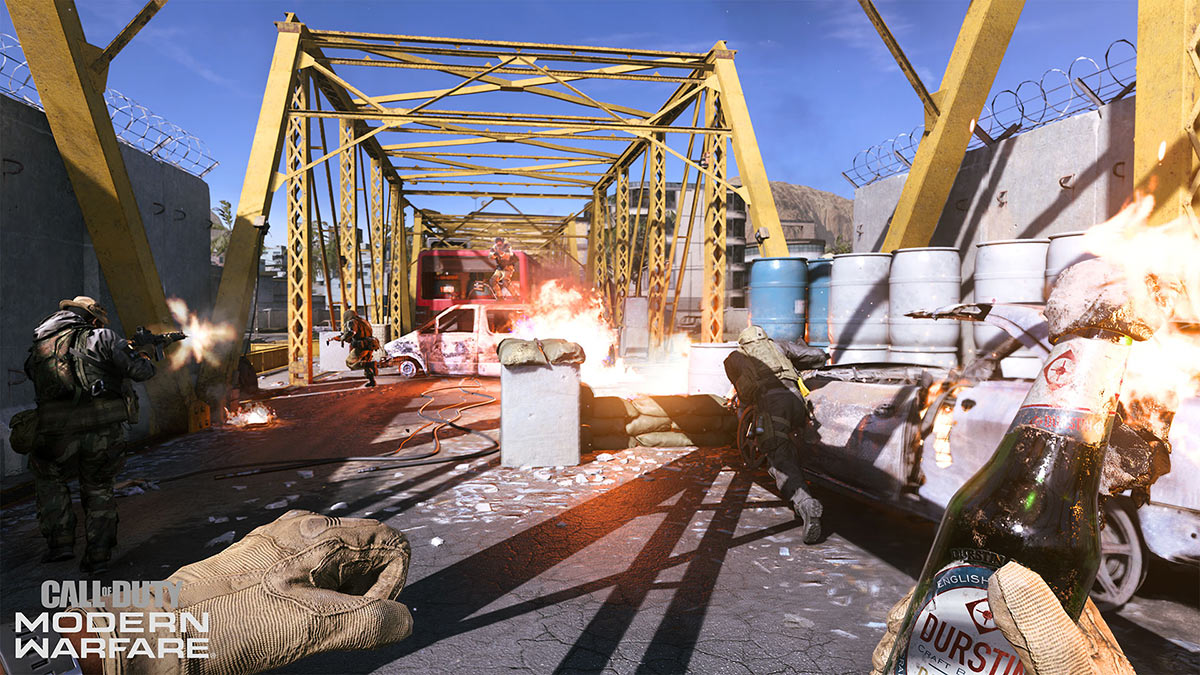
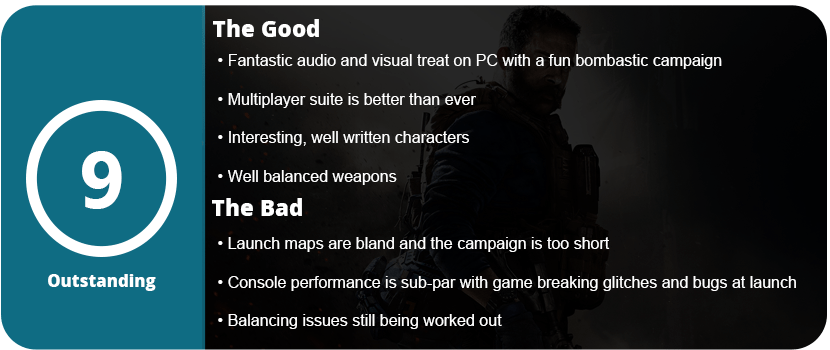
The campaign is short but sweet. Running for about 6 hours, each and every level is unique and different, with a ton of scripted cinematic moments. There’s even a level where you play as a child and have to sneak out of your village. Infinity Ward really tried with this game, and the campaign is actually replayable and incredibly fun to go through. The game is familiar to any Call of Duty fan, but you can feel the original’s fingerprint throughout the entire game. From nighttime stealth missions to explosive-bombastic firefights, modern warfare covers every base, the pacing is spot on, and it never gets boring. The shooting itself is very familiar with the first three Modern Warfare games, with various real-world military weapons fine-tuned and balanced just right. There’s a play style here for everybody, from spewing rounds with the PKM to running around corners with an M80 shogun to picking off enemies with a Dragunov sniper rifle. The balance of weapons leads to the feeling of movement and the satisfaction of bringing someone down. The four-way spread of the reticle when you’re hitting an enemy and the sound it makes to let you know you’re on target have changed the way you can now slide around corners and mount walls. It’s a formula that only works in Call of Duty, and it’s never been better than it has been here.
Once you finish the campaign, it’s off to multiplayer, which is where the meat of the game is. This also feels very familiar and brings back old Call of Duty balancing and modes such as Team Deathmatch, Headquarters, and various other modes. This is the first Call of Duty game since Modern Warfare 2 that has had me coming back over and over again for more carnage. The gameplay is perfect, and while the weapons are still being balanced through patches, the expensive map packs are now gone in favor of free maps and a battle pass similar to what Battlefield is doing.
Acquiring new unlocks comes much quicker and more steadily than in previous games. Nearly after every match, I was unlocking something, whether it was a paint job, a perk, or an attachment. There are so many playstyles available for players, and the maps allow them all. Hand back and pick off enemies, set up camp in a sniper position, or run around with a shield and shotgun like a lunatic—it’s all up to you. The Killstreaks and Perks are back to basics, with UAVs, Cluster Strikes, and Apache helicopters raining havoc down, including white phosphorus and the new Juggernaut armored suit. It’s a reason to play better and stay alive, as the best Killstreaks are for the elite players who are the best. The game can also seem frustrating at first, as you will die a lot and not get any kills when you first start out. Modern Warfare has a special feel to it that every player needs to get down. Learn the maps, every nook and cranny, the shortcuts, and how the flow of each map is laid out. That is key.
Speaking of maps, the launch maps are rather generic. While they aren’t designed poorly, they just aren’t that interesting, with just an overall generic feeling to them. While more maps are to come, the 10 maps included just don’t feel as memorable as previous games. With a few maps being specific to Ground War, which is an all-out huge battle to take over choke points, the smaller maps just leave too much room for campers with blind corners and are easy to hide in pockets. Overall, they’re still fun, and I don’t have any other complaints about multiplayer than the map quality. I do enjoy the new cross-play feature, which is a first for Call of Duty. PC, Xbox, and PlayStation players can play together with symbols indicating what system and device the players are using in the lobby before a match starts. It’s a great way to keep longevity alive, as PC activity usually dwindles towards the launch of a new game, but with three combined user bases, the game is sure to stay alive for much longer.
The last thing I want to talk about is the visuals in the game. They are out of this world amazing thanks to a new game engine and implementing RTX Ray Tracing on PC for Nvidia GPU users. The lighting is fantastic, and the engine is so well optimized that I’m able to get triple-digit frames with RTX on and the graphics maxed out in certain scenes. The textures and models look fantastic, and the lighting is just incredible. Running through certain scenes and levels just made my jaw drop, and this is easily one of the biggest technical marvels of the year, hands down. However, that is just for PCs. I did play this on the original Xbox One console, and it looks like garbage with tons of blurring, poor frame rate, and stuttering. I’m sure the PS4 looks the same if now worse, and the Xbox One X and PS4 Pro versions are better performance-wise but don’t hold a candle to the PC version.
Overall, Modern Warfare is one of the best shooters in the last decade and the best in the entire series. It took way too long for the series to get back on track, but it’s here and better than ever. With groundbreaking visuals, an addictive multiplayer suite, and tons of maps to come, there’s not much to not like about this game.
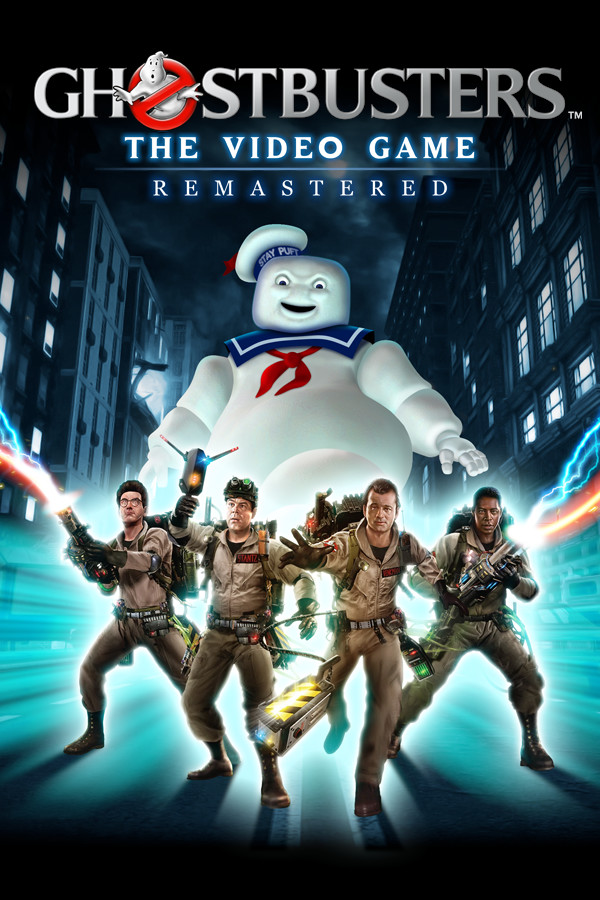
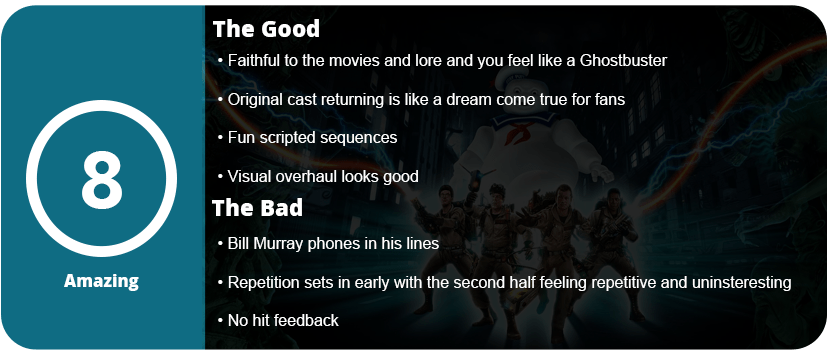
Ghostbusters is one of the few franchises out there that doesn’t get enough attention. With Ghostbusters 3 floating around for decades, most fans gave up hope completely. Then, what turned out to be the script for the third movie pretty much turned into what we have today. With all the original cast coming back to voice the game, it was like a dream come true. While not the best game ever, it was incredibly faithful to the franchise and made every Ghostbuster fan happy, including myself. This was one of my favorite movies growing up as a kid, and to play as a Ghostbuster was just awesome.
Here, we have a remastered version of the 2009 game instead of a fourth game, but this is great as it will spark new interest in the franchise. I highly recommend watching the two movies before diving into this game, because there are a lot of references to those movies that won’t make sense unless you have watched them, as they aren’t explained, including many Easter eggs. You play as a rookie Ghostbuster who just recently got hired, the fifth Ghostbuster, and fight alongside the original four, voiced in their original glory. It’s just amazing and gets my fanboy juices flowing hearing the original cast together. While the game isn’t exactly a movie, it feels like a larger evolution of the mythos and lore of Ghostbusters, taking you from the ghostly issues of New York to a global scale and bringing us into the ghost realm, which most people expected in the third movie.
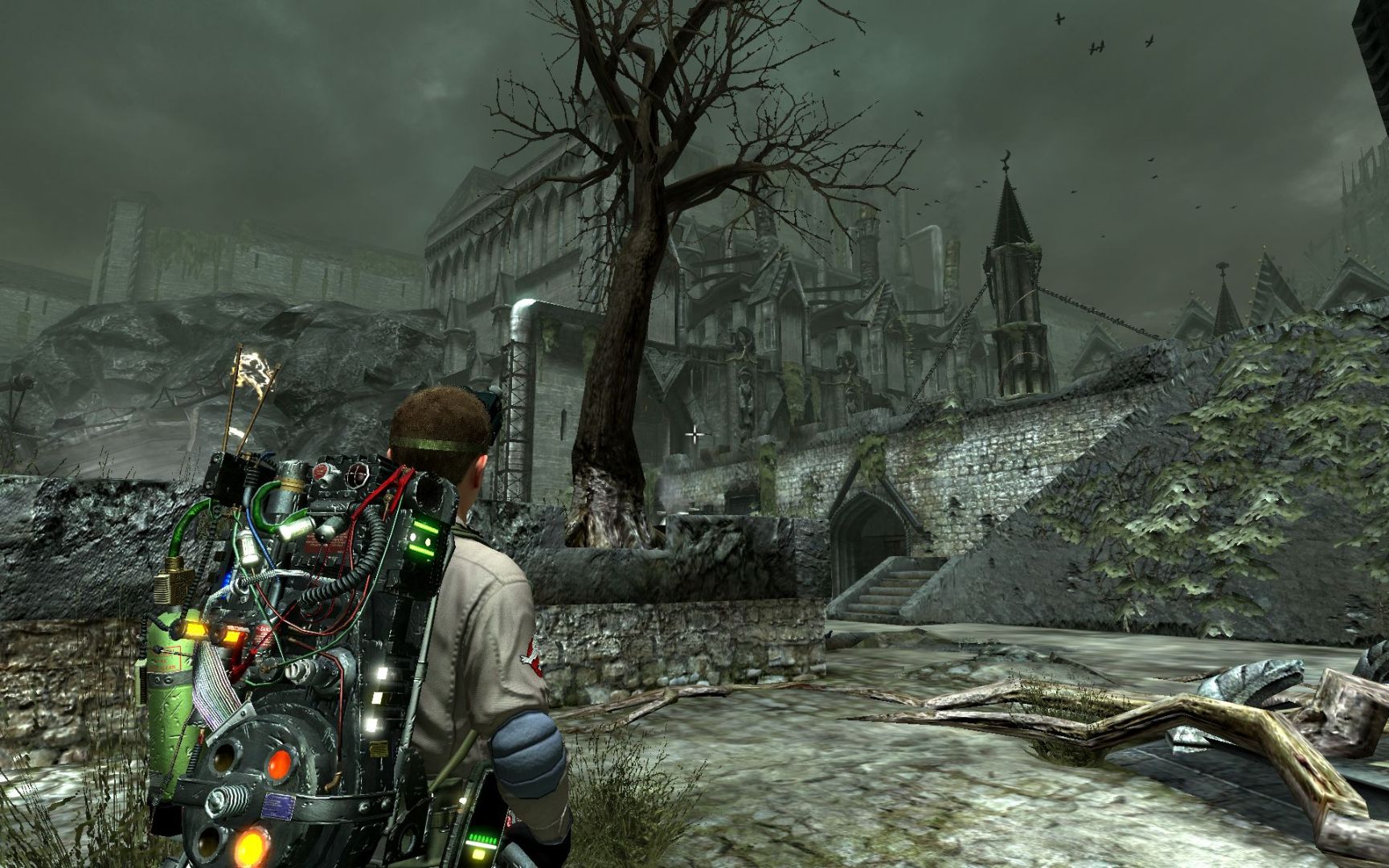
The game has many locales from the movies, such as the Ghostbusters’ headquarters, the Sedgewick Hotel, and the Public Library. Ghosts from the movies and news made it in, and it’s a blast to see. You really feel like an actual ghostbuster in this game. You have your pack strapped on with all its fictional science tech flashing and buzzing, and you can shoot your stream at ghosts to whittle down health and finally capture them and bring them into the box just like in the movies. It looks and sounds exactly as it should, and it’s pretty awesome. That is, for the first level, then it does start getting old. That’s the major issue with this game: repetition sets in early, and there’s no change in gameplay outside of a few scripted events, which I think there should have been more of.
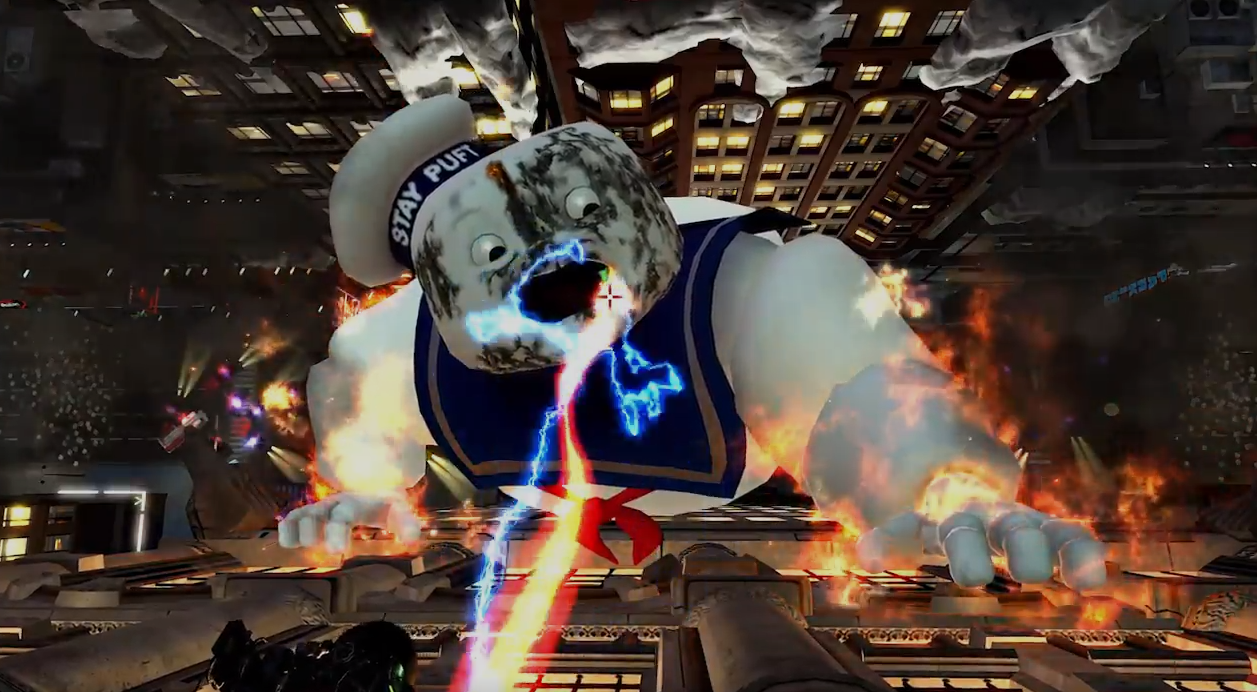
Fighting and capturing ghosts aren’t the only enemies, as there are smaller ones that can get blasted away. Then you have a boss fight at the end of each level. Of course, my favorite level in the whole game is when you fight the Stay Puft, but as you progress more in the game and get to more original content, it just isn’t as memorable or exciting as the first half of the game, which used more stuff from the movies. Locations feel generic, the ghosts aren’t interesting to look at, and there are far fewer scripted events. The game even gets downright punishing thanks to the constant need to revive teammates every 5 seconds. I spent more time reviving everyone than I did capturing ghosts. Once everyone is down and you go down, the game is over. I felt this was one of the worst parts of the entire game and brought it down a bit. It doesn’t help that shooting ghosts has zero feedback outside of a circular health bar getting smaller. There’s no hit feedback or anything, and it’s not very satisfying.
Due to the lack of a cover system, you run around shooting at these guns aimlessly, and once you bring them down into the box, it’s on to the next scene. I loved hearing the banter between the original cast, but sadly, Bill Murray phoned the whole thing in, as his voice acting is terrible and is a huge contrast to Harold Ramis, Dan Akroyd, and Ernie Hudson’s excellent work. It’s still great to hear them crack jokes and sarcasm at each other, and it breaks up the monotony of running around linear hallways shooting ghosts.
With that said, the game has aged well and is really only suited for fans of the movies, but there are things that could have been fixed, like better hit feedback, the need to constantly revive everyone, and the boring later levels. I would have liked to have driven the Ecto-1 at some point. I would have liked to explore more of the Ghostbuster’s personal life, as these are established, well-known characters that everyone loves. I don’t just want to go from scene A to Z with nothing in between. Even though there is a decent epic plot that involves the realms of reality and the afterlife colliding together, I wanted more, and Ghostbusters missed that opportunity. The visual enhancements are nice, and the game runs decently on Switch with only occasional slowdown, but what this feels like is Ghostbusters fast food and not a steak dinner.
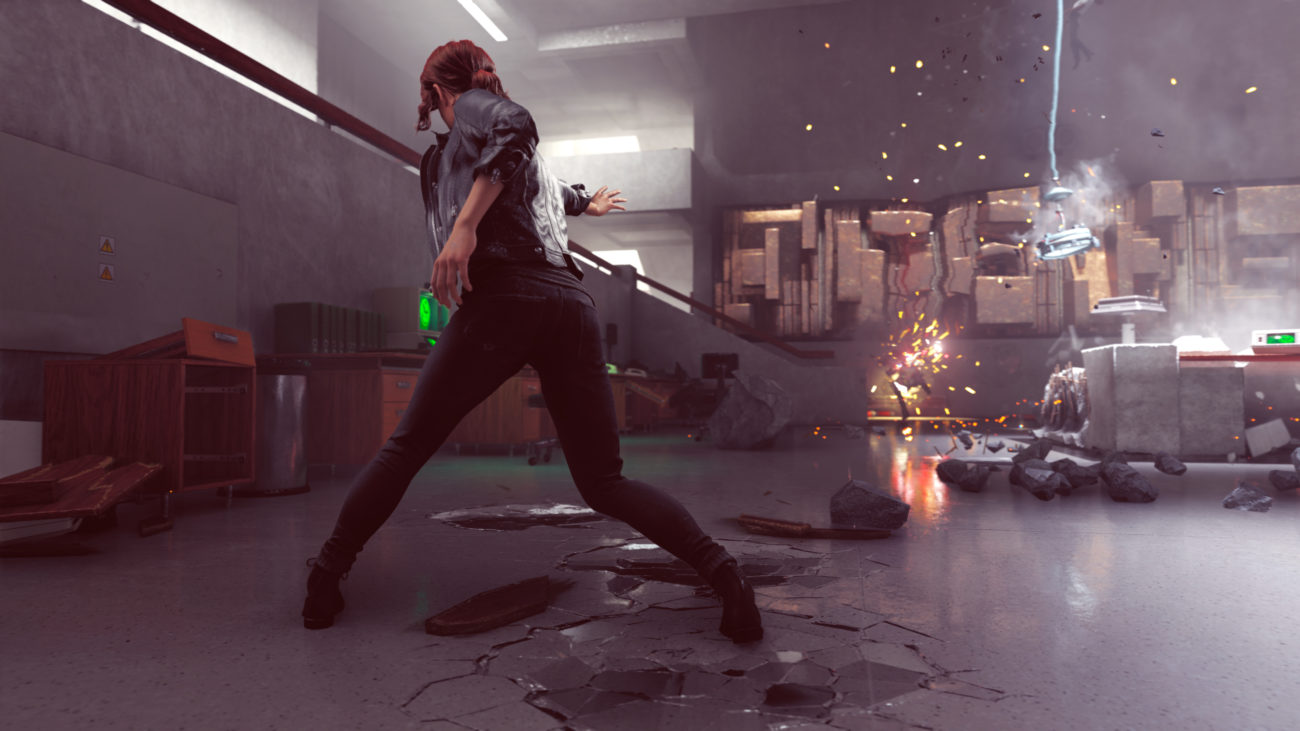
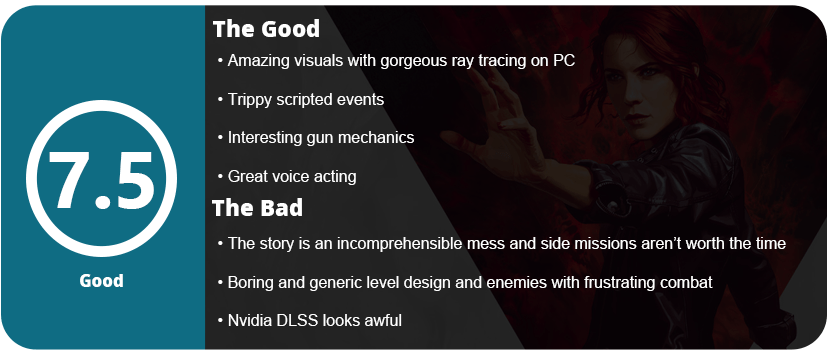
I love Remedy’s games and always have. From the first Max Payne all the way to Quantum Break, there have been ups and downs, but Alan Wake still remains my favorite game from them. Control takes place in the same universe as Alan Wake and even explains what kind of happened down there, as you play as Director Jesse, who has a crazy gun that can transform, and you fight off weird enemies called The Hiss, and your goal…well, I can’t tell you what the end goal is as this is Remedy’s most incoherent story yet, with many plot holes, and even after the credits rolled, I still couldn’t make sense of the story at all.
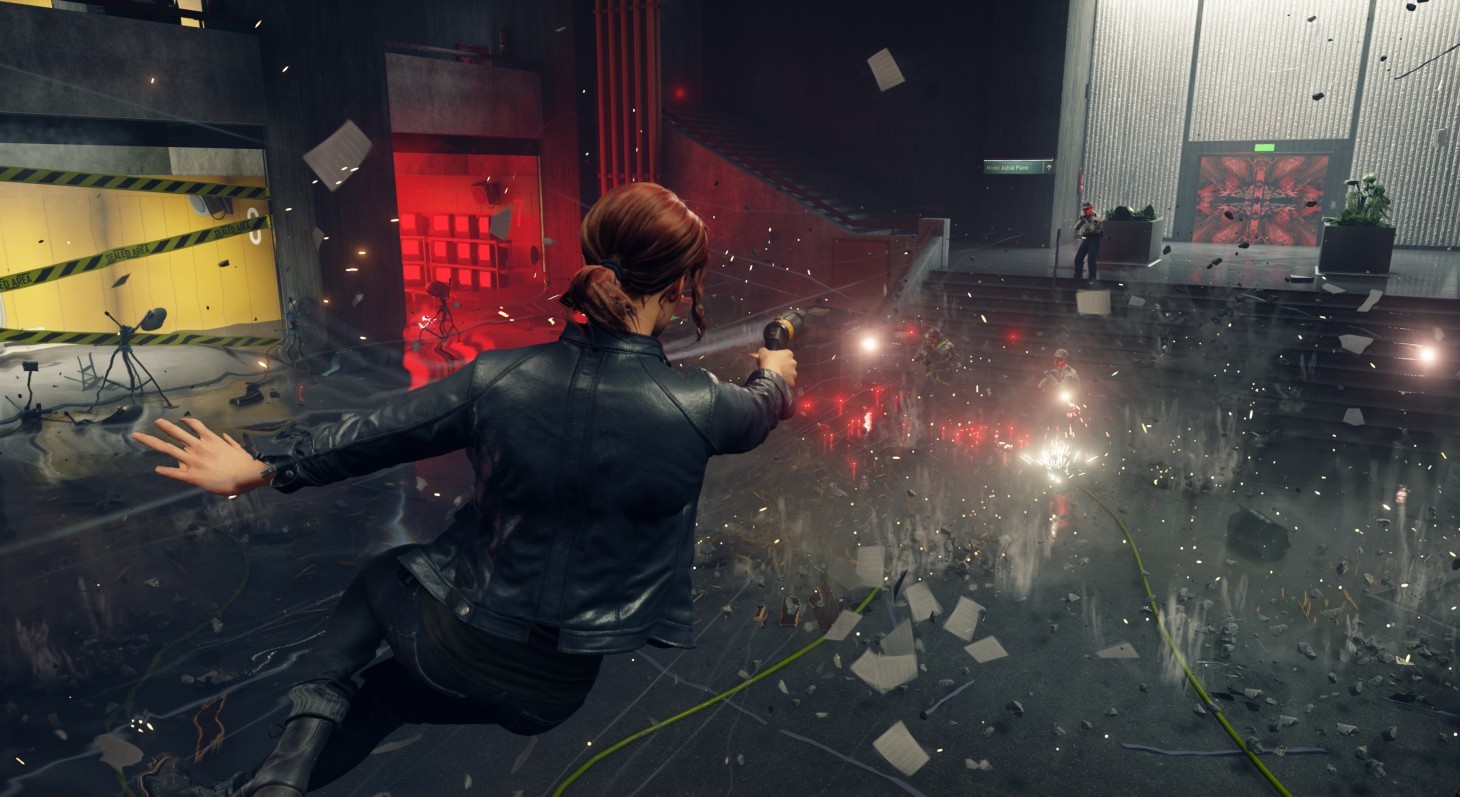
Let’s start with the exploration. Control takes place solely inside the Federal Bureau of Control and is a generic, boring, and ugly building that is basically a labyrinthine maze that requires a ton of backtracking and is a pain to navigate. There are several floors in this building, and spread throughout are control points, which you use to level up Jesse and fast travel. Even though fast travel is nice, trying to find new areas from those points is a serious pain. Throughout the game, you can find files to read and solve simple puzzles that use your telekinetic powers. Jesse can throw objects as weapons, break off pieces of buildings, and hurl them. This is a key combat mechanic, as you will swap between this and your weapon when either is recharging.
Combat in Control is pretty boring and frustrating. In fact, I would have rather had no combat in this game, and it would have been more enjoyable. Shooting enemies that float in the air, have shields, larger health bars, and some bosses are all fun, but not in Control. The game throws an insane amount of enemies at you at every turn, and there are no cover systems, so you must run around like a bafoon, trying to avoid explosive enemies, bullets, and projectiles. You don’t get to levitate until the last fourth of the game, and I never even got the dodge move or shield, as completing side missions is an absolute chore, and I didn’t care enough to see the level-up system all the way through.
Many times I died because you can’t heal unless an enemy has dropped health, and if you pick it all up, you’re screwed. This is essentially a broken mechanic, and I hated every minute of it. Not once did I enjoy the combat because instead of fun and unique bosses, you get tossed into arenas, gauntlets, and waves of enemies to chew through, and it seriously hinders progression. Not to mention they respawn in certain areas when you’re trying to cut through somewhere. The gun itself isn’t fun to shoot as it requires recharging, and there’s no ammo or reloading. There are various forms, such as a sniper pistol, machine pistol, grenade launcher, shotgun pistol, etc., but I only stuck with a couple of forms throughout the whole game. You can add perks to Jesse and each weapon that can increase health, decrease recharging, reduce energy costs, etc., and these are vital to surviving.
As you explore the game, you will notice Remedy’s signature trippiness as levels twist, turn, and transform. There’s a supernatural aspect to the game, of course, but it’s all for naught. Nothing in the game is ever explained, like why I can pull a string three times and get warped to the Oceanview Motel and have to solve the same stupid puzzles inside. Ring the front desk bell, go into a room, remember the placement of objects, ring the bell again, and move the objects to the next room. It’s stupid and makes no sense. Why is Jesse communicating with this Hadron entity, and who is her brother anyway? What purpose does the director have in all of this, and why does a slide projector harness so much power? Yeah, it makes about as much sense as it sounds, and nothing is ever explained. It’s hard to push through the boring and frustrating combat only to get another confusing cut scene that seems like a random piece from a storyline.
Control looks pretty good, but Nvidia’s DLSS anti-aliasing is awful here, and the game is a blurry mess even with MSAA enabled. The engine is decently optimized, as I got a steady 60FPS through most of the game with RTX on, and it rarely dropped below 45FPS. However, the art style is dull and stale, with concrete hallways and corridors. It doesn’t have a unique identity, and that’s sad, as Remedy is good at this.
Overall, Control is a disappointing follow-up to Remedy’s legacy. With Quantum Break being as disappointing as it was, was Alan Wake their last great game? Control isn’t the game we all wanted, and I honestly won’t remember this game a week from now, and that’s sad as there’s lost potential here with Remedy’s signature touches that just don’t quite connect. The combat is boring and frustrating and very repetitive; there is lots of backtracking, and the confusing mess of a building to explore just doesn’t strike me as fun. If the story was at least solid, it would be worth it, but it makes no sense, and when the credits roll, you just shrug and wonder why you wasted your time.
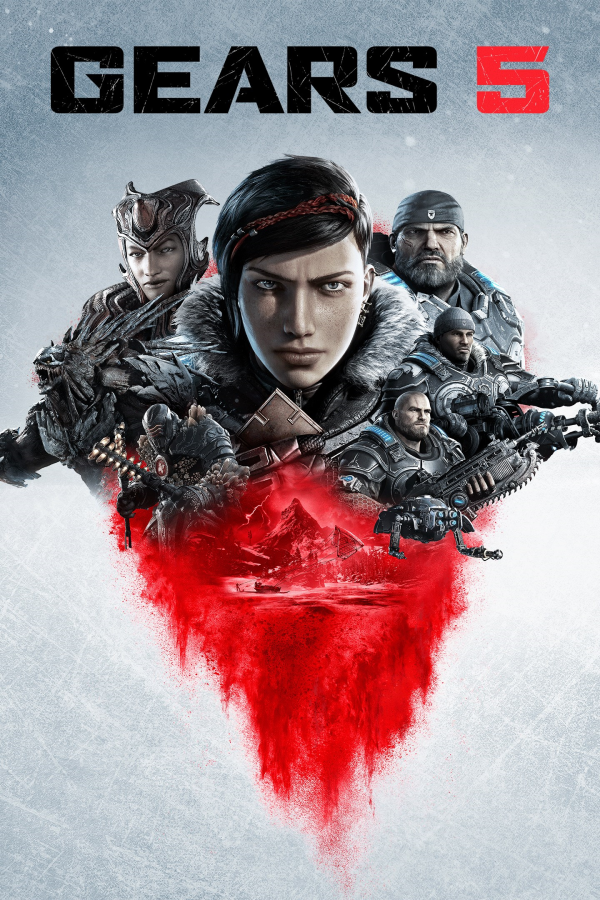
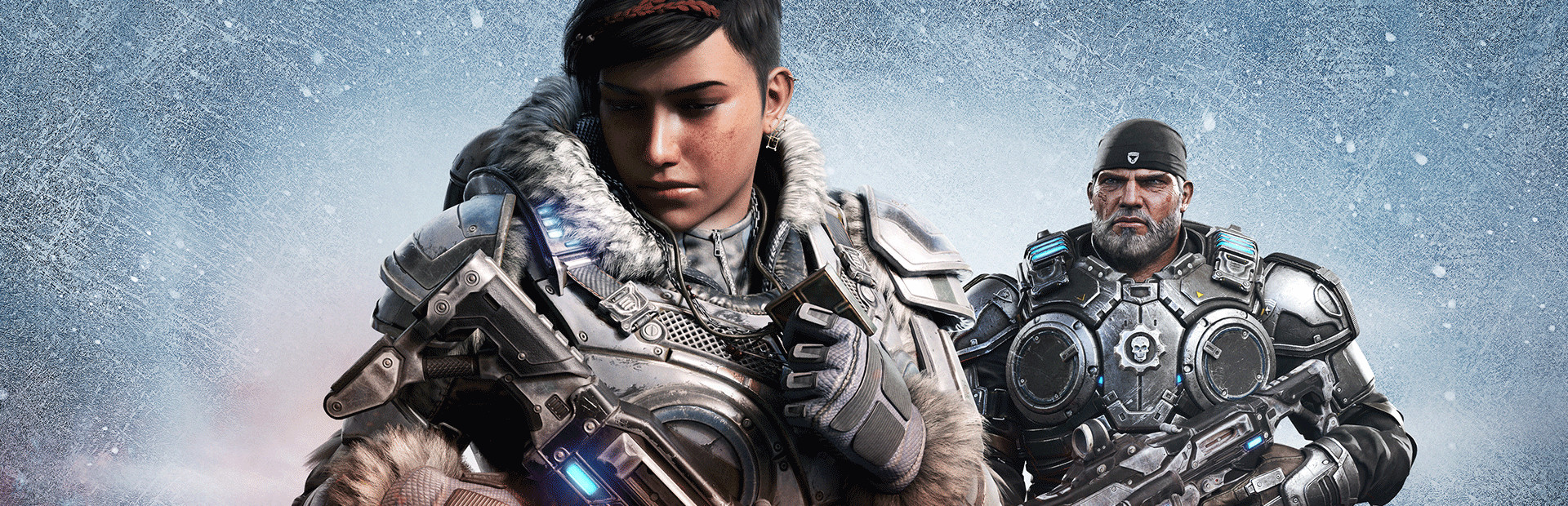
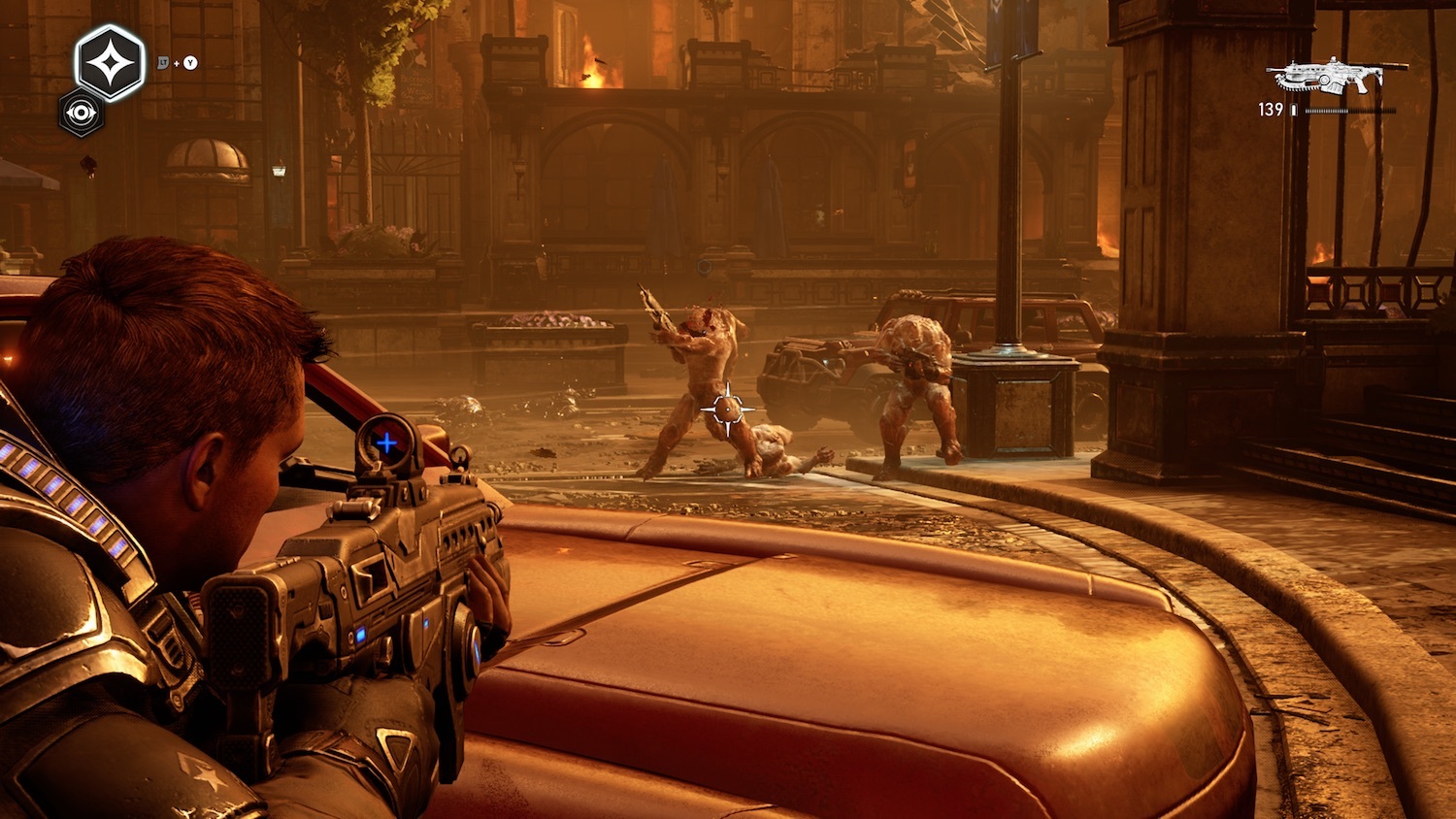
Gears of War has always held a special place in my heart, as it was the first game to introduce me to “next-generation” graphics. You know, shaders, real-time lighting, high-resolution textures, ambient occlusion, all that jazz. It was the first Xbox 360 game I ever played, and I will never forget the first time I played through that game. It’s still one of the best shooters ever made, and nothing will change that. After Gears of War 4, my hopes for the series died a bit, as it had a mediocre campaign and average multiplayer. Gears 5, however, takes the series a step further by adding open-world elements and a rock-solid campaign.
I didn’t mind the new additions to Gears 4; they were just not implemented well enough. The new weapons were lackluster, the older weapons didn’t pack the punch they used to, and the level design was bland and stale. I got tired of playing in the same areas throughout the whole game, and the entire base-building or defense gameplay was just boring to me. Gears 5 strips the base defense gameplay, tunes everything up several notches, and makes what was introduced in Gears 4 really good now. The weapons pack a serious punch, the game is more challenging, the waves of enemies are more balanced, and the entire ebb and flow of the game is like the older ones. I was glued to the game through the entire campaign and didn’t want to stop. Gone are the boring Deebee robots (they’re back as swarms now, but only sparsely) and a larger variety of locust swarms.
Gears 5 starts out like any other Gears game with story elements; it picks up right where Gears 4 left off and has a linear, bombastic level full of scripted events. This is where you get to learn about Jack, who is actually a usable partner now with various abilities that you can upgrade. Things like cloaking, shields, armor, the ability to zap people, and various other abilities. Upgrades are found throughout the game, and I only found a few of Jack’s abilities useful, mainly the armor and shield. Cloaking is useless as the game tries to force stealth for the first time, and it just does not work at all. Sneaking around knifing Locust is fine and all, but their patrol patterns are poorly laid out, and it almost seems random. Never do all the patrols perfectly line up for multiple stealth takedowns. This leads to horrific AI in both enemies and partners. When you’re down but not out, it can take forever to be revived, even if someone is right next to you. I died several times because an AI couldn’t figure out how to climb a ladder as well. Enemy AI will also sometimes get stuck behind walls or just freeze up all together, causing objectives to not clear and having to hunt down where someone got stuck.
It’s not all bad though, as stealth sections only popped up a few times and AI rarely messed up, but when it did, it was the most inconvenient time. Thankfully, the new open-world idea works well, but it’s not what you think. You drive a wind-powered Skiff sled that pulls you around on two separate “open” maps. These maps are just a huge excuse to get upgrades for Jack. Outside of going back and forth to the main objectives, you can stop by and locate 1 out of 3 of something for Jack. These are just various enemy arenas and don’t take long to complete. They’re fun as they vary and are challenging but unnecessary. It’s just an excuse to extend game time. I also don’t understand the complaint about needing to fast-travel between areas. Riding the Skiff is actually fun, and there are some scripted sequences that take place here between the main missions. The maps are not that big, and the two environments are snow and desert. They’re fun, but I wouldn’t miss them if they disappeared in the next game.
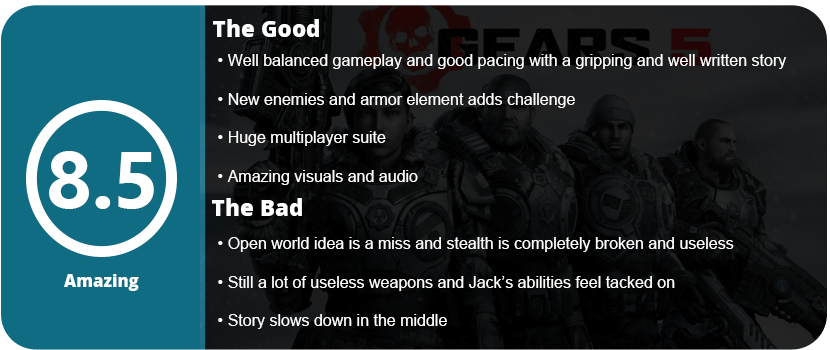
That leaves just the campaign itself with well-paced gameplay throughout, and there was never a dull moment. Enemies are better spaced out, and the addition of armored enemies adds to the challenge, as well as Scions and Wardens, which are the big baddie additions of Locust, similar to the larger enemies from the Swarm we got in Gears 4. There are plenty of scripted events, and sadly, the story doesn’t really evolve during these open-world scenes as the game is sandwiched between two large, traditionally linear chapters, and these are more enjoyable than the middle of the game. The story ends on a cliffhanger again, and there are just a few more answers that are given in the traditional Gears way.
That finally leaves multiplayer, which is bigger and better than ever. With the original modes tweaked and fine-tuned, such as Horde and Versus, the new Escape mode sees you escaping from the center of a swarm nest with two other partners, and it’s incredibly hard. You start out with a snub and must fight through waves as you make your way out. It feels more like a reverse Horde mode. In Horde mode, you also play a base defense game like inGears 4, but engineers play larger roles than before. It’s all been tweaked, and I liked it for a while, but I’ve never been the biggest fan of Gears multiplayer. That’s part of why I’m not going super in-depth into it. There are more customization features than ever before with skins and characters and, of course, microtransactions, but it’s all cosmetic. You also get ability cards and a bunch of other stuff I didn’t really care for.
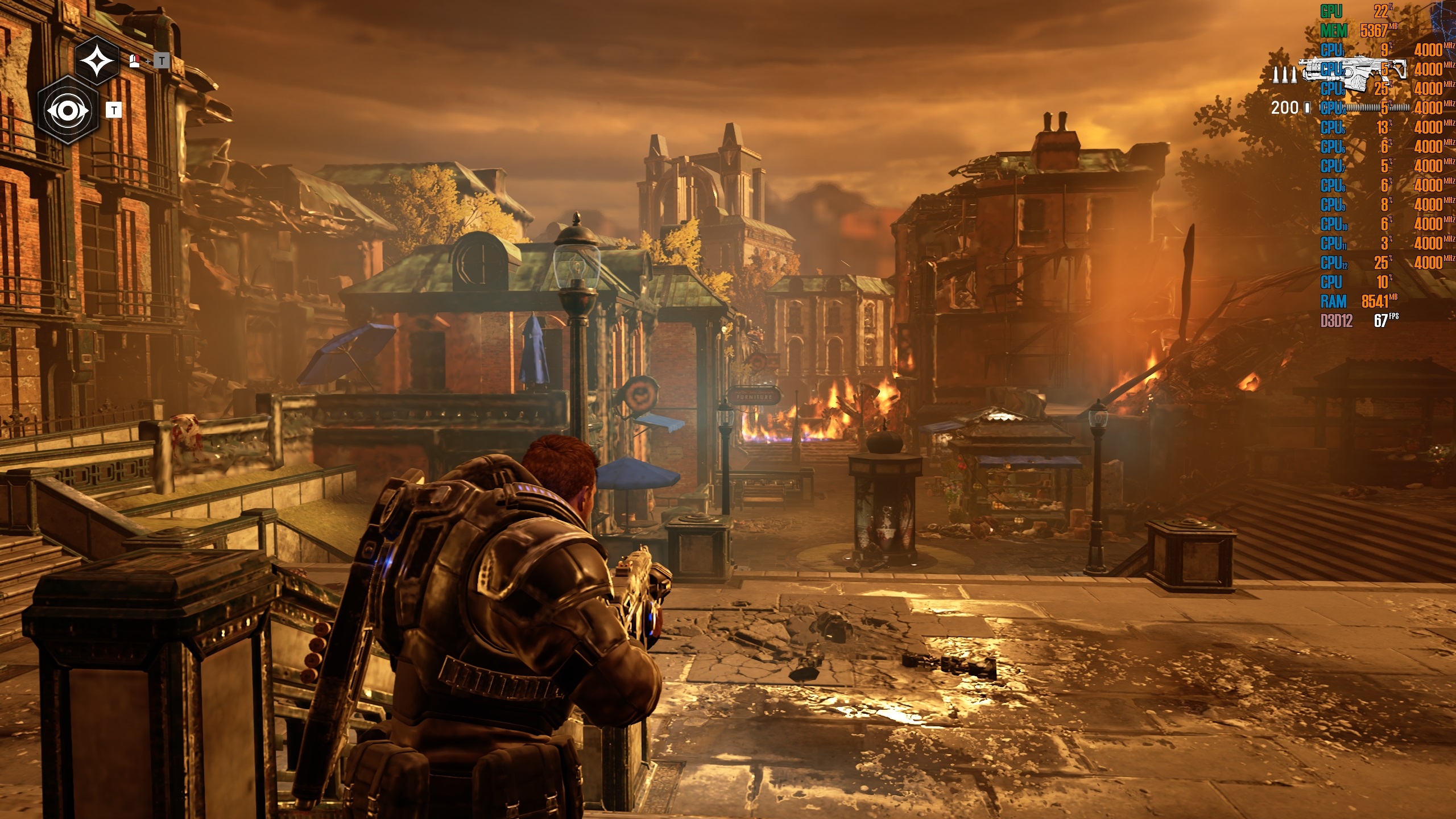
The game looks fantastic and much better than Gears 4 did. The character models are amazing, there are fantastic animations and voice acting, and everything just looks so great, and it runs well—well, at least it did after the first patch. I had constant stuttering and audio glitches for about a week, but it seems fine now. The game is well optimized for PCs, with tons of graphics options and support for ultrawide screens. The game can run on a vast variety of older hardware, which is also a plus.
Overall, Gears 5 is what Gears of War 4 should have been. Fantastically balanced gameplay, well-paced, and an open-world concept that seems to be done just right and doesn’t overstay its welcome. The enemies are fun, the new tweaks and additions are a blast, and multiplayer is larger than ever. I just wish they would concentrate on more core Gears gameplay, level design, and story rather than trying bold new ideas. This isn’t the series that really needs that.
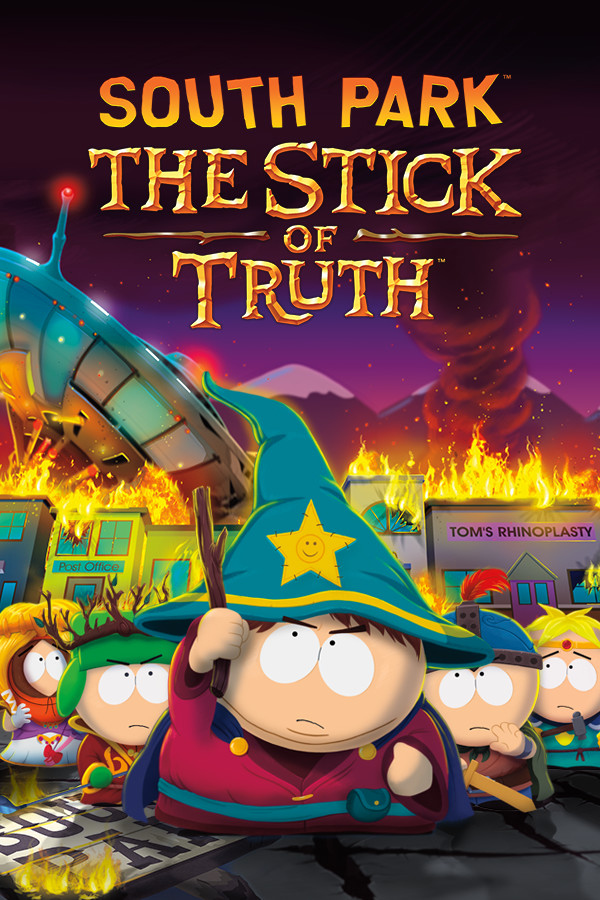
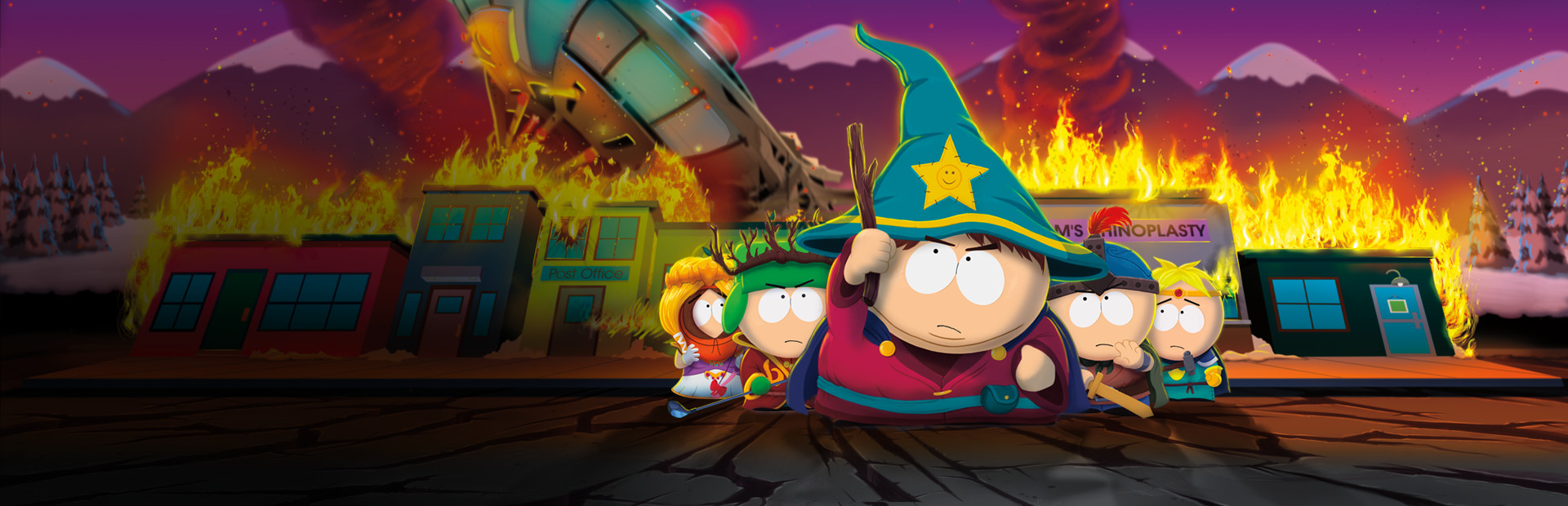
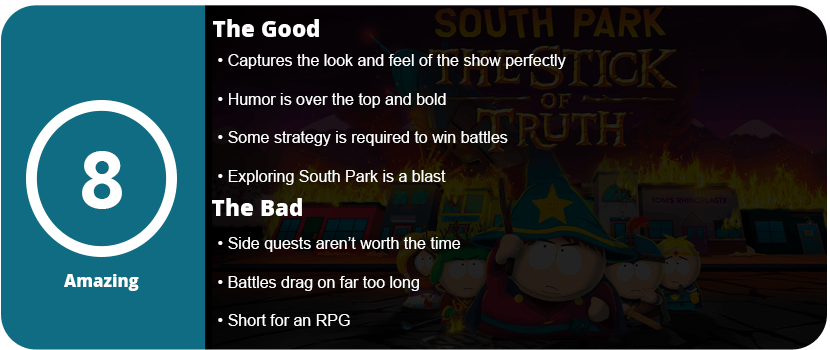
Good ‘ol South Park. One of the granddaddies of television backlash. Before, Family Guy was in South Park. An adult cartoon features four children living in the rural town of South Park, Colorado, who run into various antics and adventures. The series is still ongoing and started in 1997. I remember fondly as a kid not being allowed to watch the show unless my parents watched it first, and if it wasn’t too graphic, we could watch a re-run. The Stick of Truth is a turn-based RPG with roots in the show and features the same humor as well.
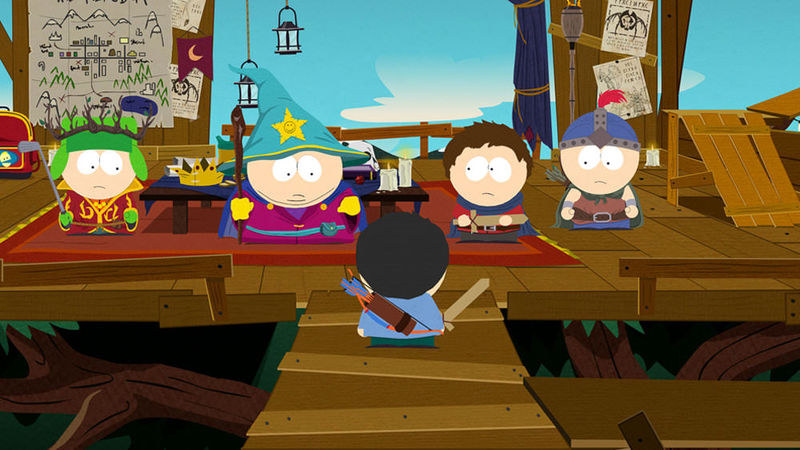
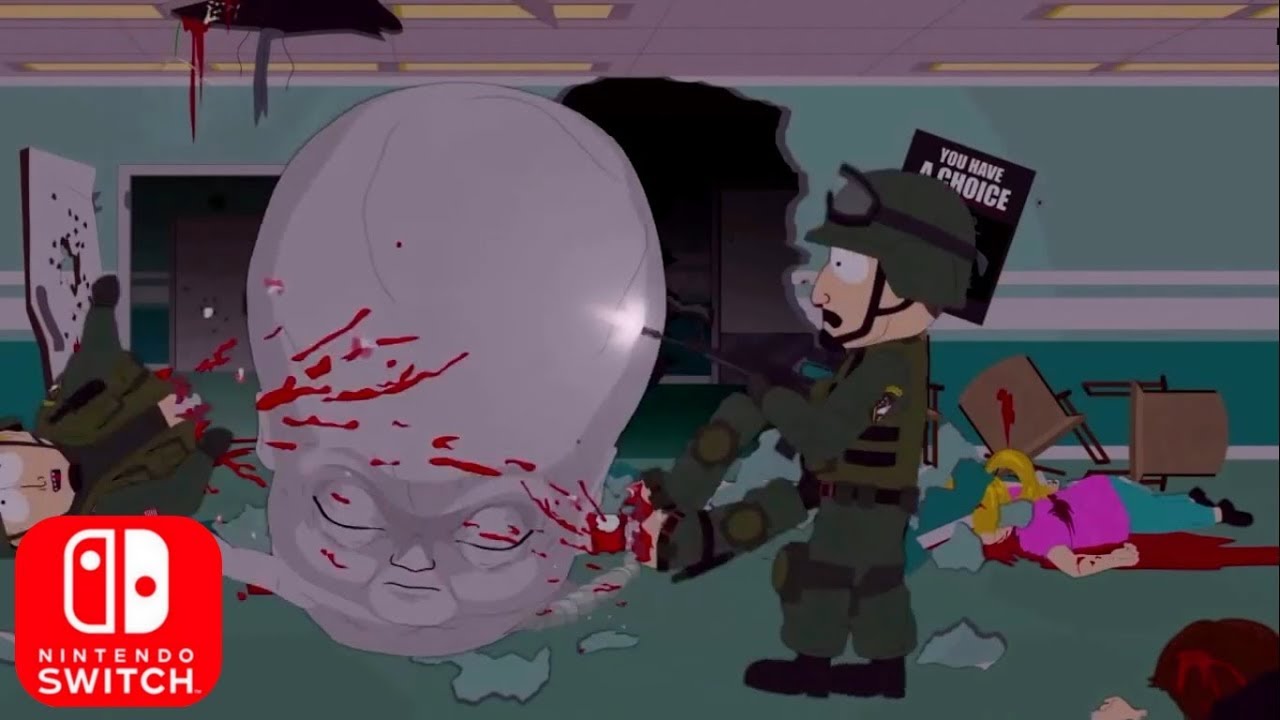
You play as The New Kid or Sir Douchebag despite Cartman ignoring whatever you name your character, which is hilarious. You’re a voiceless protagonist who is swept into the children’s D&D game of The Stick of Truth. There are two factions fighting over it: the elves and the knights. Your goal is to continuously get the Stick back from the various people who steal it and it leads to one crazy adventure. Throughout the game, you also have to recruit two factions: the girls and the goths. This leads to various interesting areas, like a UFO where everyone is getting anally probed, to shrinking down to a gnome and battling on the bed your parents are having sex on, to crawling into Mr. Slave’s anus and fighting through his intestines. Yeah, it has over-the-top humor that will offend most and is one of the most graphic games I have ever played, but that’s not a bad thing.
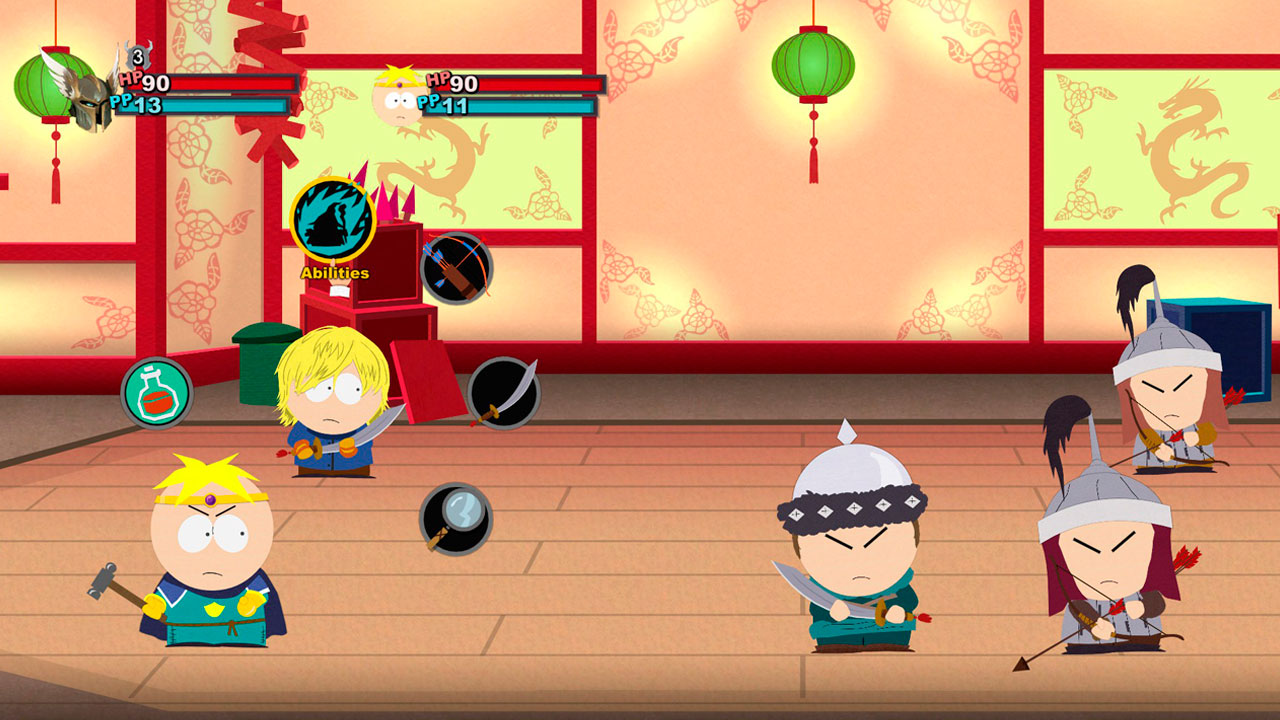
Outside of wandering around the town of South Park and discovering the few side quests there are, you can shoot things down and bash open things to find a hidden treasure. Just like in any RPG, you have armor, weapons, consumables, and cosmetic items. The weapons and armor come in steadily, and I was always happy to have a new weapon that let me hit harder. Depending on the class you choose, it will affect what weapons are available in the game, as you can only find weapons for that class. There are fast travel points, which are a lifesaver. You have four different abilities you acquire throughout the game, such as shooting, buddy commands, shrinking, and using your anal probe to teleport. These are all context-sensitive, so you can only use them when you’re allowed, but they give a sense of discovery as you can access parts of the game later on that were blocked before. Your magic consists of…farting. Yes, you fart for magic, and you have four magic attacks you learn. Dragonshout, Cup-a-Spell, Nagasaki, and the Sneaky Squeaker. These sound downright hilarious and absurd, but who still doesn’t laugh at fart jokes?
Combat is where the meat of the game is, and it’s flawed for sure, but it works. You can only have one other person in your party, but enemies can come at you in groups of six. A strategy is key here, especially during boss fights, as you need to balance consumables, magic, power attacks, abilities, and what your partner is capable of. It’s good to know that the Nazi zombies can’t be grossed out but are only weak to bleeding. You can hit them all you want, but you will only do 1 point of damage until their bleeding effects stack up. It’s not too hard to figure out, and I only died a couple of times through the whole game. Any RPG fan will be able to dive in and understand it right away. The combat is surprisingly deep, but these mystery buffs can frustrate some.
The game is also not particularly long-running at 8 hours if you just finish the main quests. It’s a fun story with awesome humor and tons of references to South Park episodes and geek culture. South Park isn’t afraid to be bold and do what it does best. The jabs at right-wing politics are especially funny, as are name-brand references and various other things. South Park’s characters have always been memorable and have stood the test of time. This is by far the best South Park game ever made and it captures the show perfectly. Of course, the game isn’t for everyone, as some of the humor may come off as childish, crude, brash, or just downright offensive, which is fine. Everyone’s sense of humor is different, but that doesn’t stop this from being a bad game. It may be too simple at times, with combat that can drag on too long, but a lot of love and effort was put into this by the guys who made Fallout 2, New Vegas, and Divinity: Original Sin. I can’t complain there.
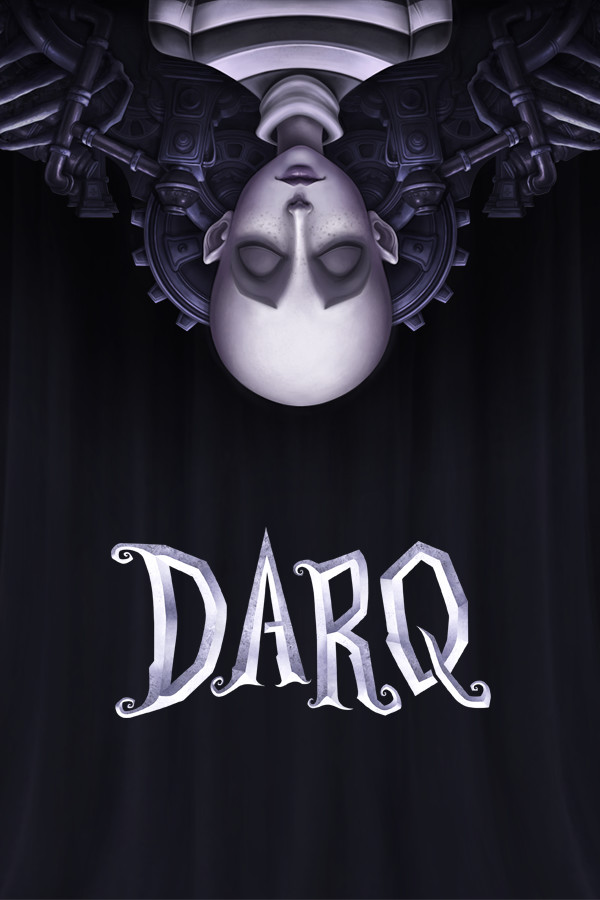
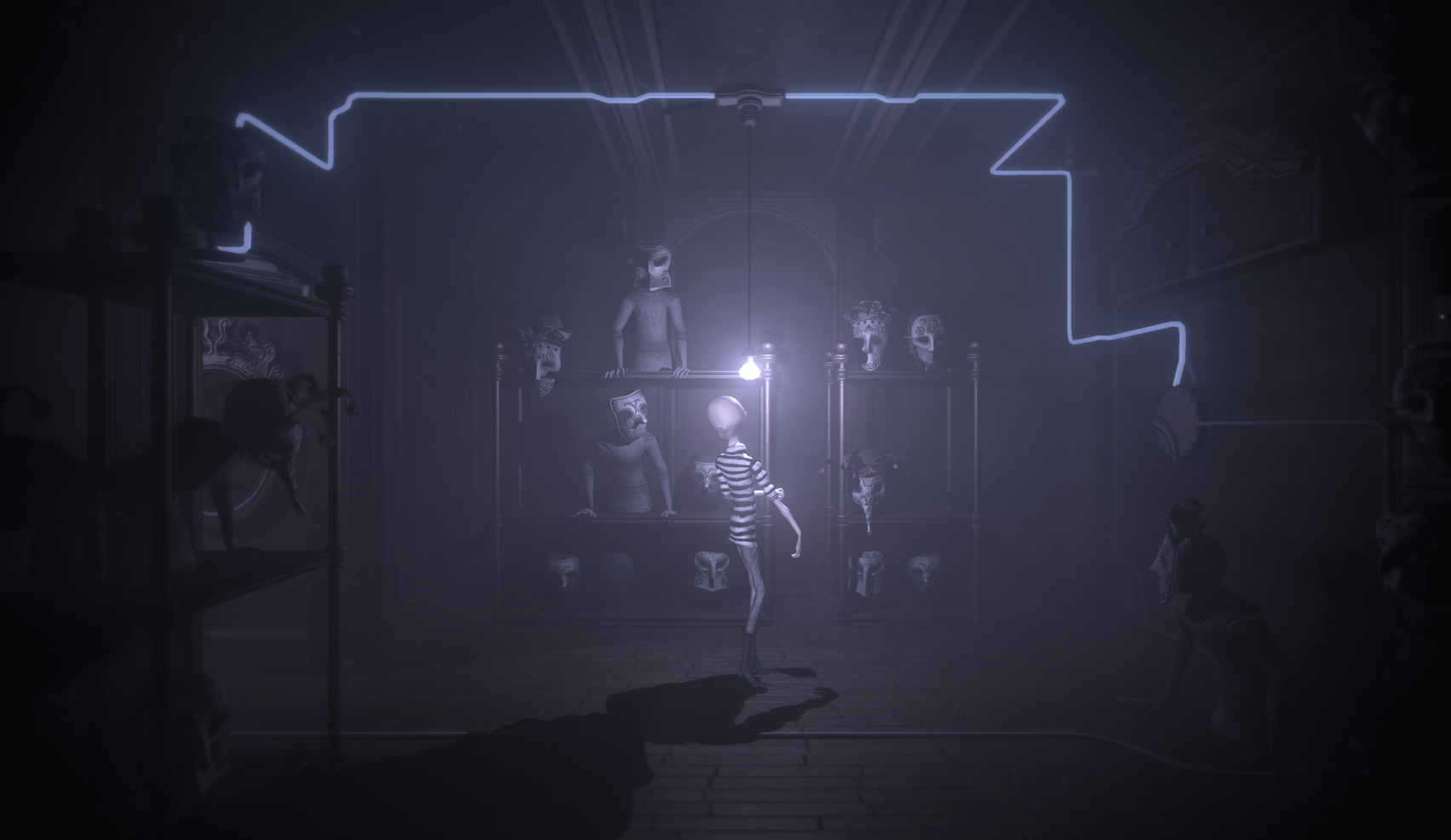
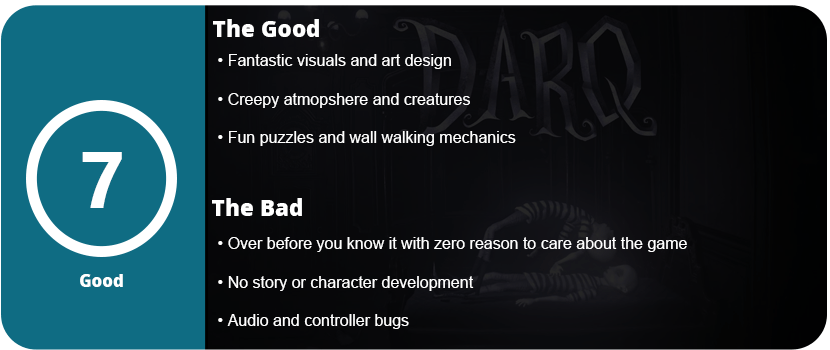
Minimalistic indie puzzle/platformer games are something I really adore. Limbo, Inside, Little Nightmares, Unraveled, and many others like it are just full of atmosphere, clever puzzle design, and great platforming. The issue with all of these games is the story. It’s nice to be minimalistic with no tutorials, simple controls, no cut-scenes, etc., but please guys, start making stories we can care about. Darq falls under the same problems as these before, with interesting character designs but no context. Why am I running around themed levels solving puzzles and running away from creatures with lamps as heads, creepy women in wheelchairs, and a guy in a wheelchair with a tuba as a head? Why am I placing severed legs into sockets to solve puzzles? What does this all mean?
I feel like the meaning of the game would mean more than the game itself. Darq is only an hour long, probably the shortest of these minimalistic platformers I’ve ever played, and yet there’s no purpose to any of it. Sure, the concept of walking on walls, flipping and switching to shooting you between areas, and all the other puzzles are done very well and are quite clever, but why am I doing it? I don’t even know my character’s name; there’s not a single piece of written dialog, and all I know is that I’m waking up in a dream to solve these puzzles.
There are 7 levels, with one being a scripted running level, and they get progressively longer and more complex. By complex, I mean the game consists of “where does this piece go?” type of puzzling, and once you figure out where it goes, the actual puzzle is fun and not very hard. I had more trouble finding the pieces than solving the puzzles, and there was an occasional section in which I had to hide from an enemy, but it was only a single section of the level. Puzzles range from switch flipping, lining things up properly, twisting things, etc. Nothing Myst-level or extremely vague. You can mow through the game in 60–90 minutes and be done, but I honestly wanted more—now only more if there was a story or something.
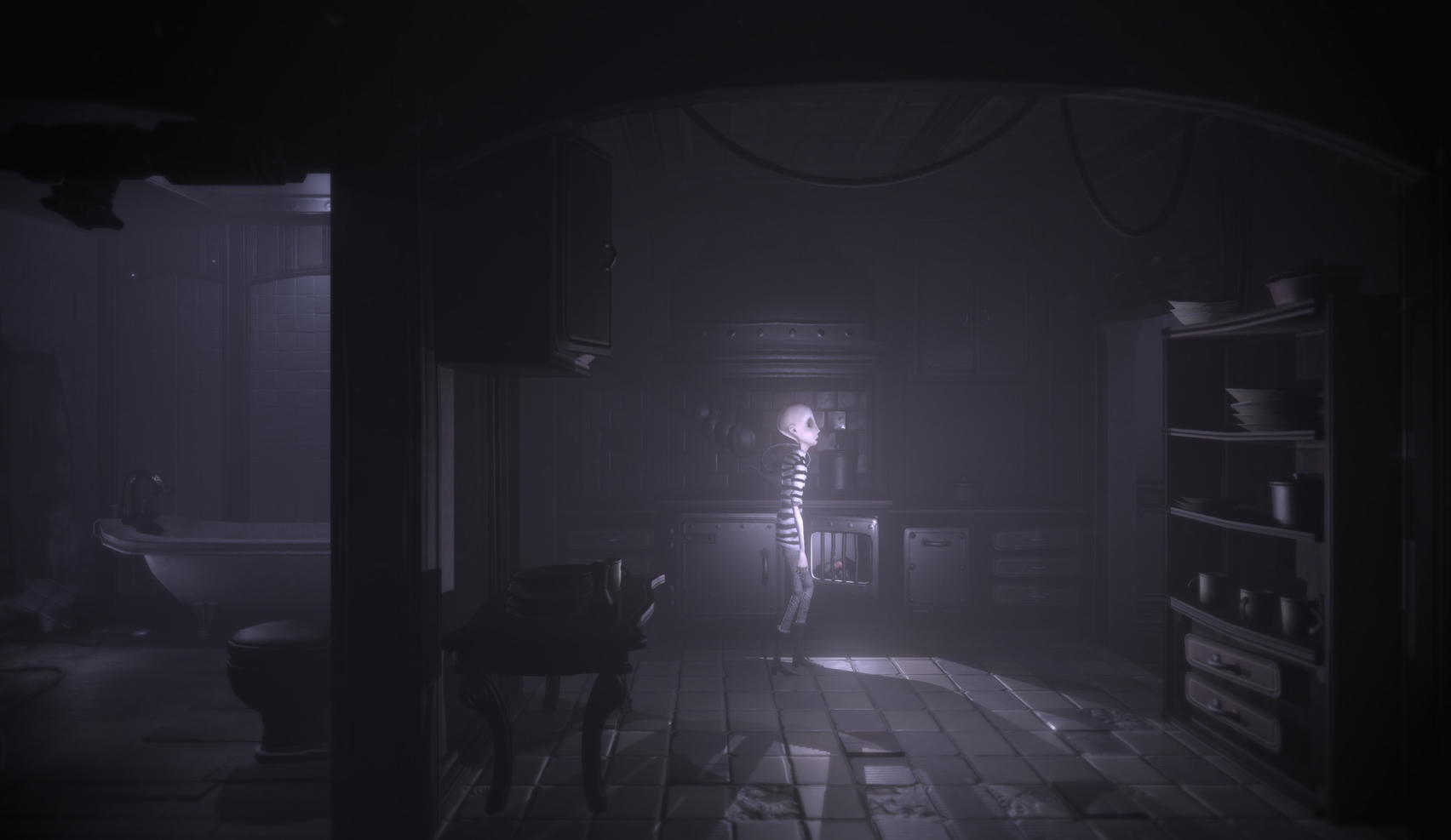
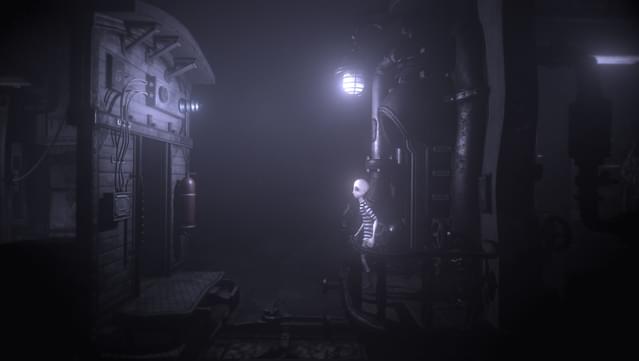
I found the atmosphere and art design to be rather fantastic. The main character looks like something from a Tim Burton movie, with everything in black and white and creatures that could fit into Silent Hill. The levels themselves range from a hospital, train, subway station, and four-way street in a neighborhood to a mine. Each level was unique and memorable, and I loved how you can walk on walls, as this game just worked your brain and really made you think, but everything made sense. There are no vague hints here; if you think it works, then it probably works. Each level can take about 10-20 minutes to solve depending on how stuck you get. I found the final level the most challenging, which is expected.
Again, the visuals are amazing, the art style is very unique, there are great monster designs, and the puzzles are well designed too, but why am I doing all of this? I’m tired of these indie developers thinking no story is some niche thing. Are developers catering to some pseudointellectual niche audience who think they “understand” these games or something, or are they just too lazy to design a story? Whatever the case may be, the flak “walking simulators” and other indie games that focus on gameplay and “story” over AAA bombastic scenes need to grow a little and maybe add a story and characters that we can care about.
I’m starting to see more and more games use Norse mythology and ditch Greek mythology. With games like God of War, Greek mythology was pretty much beaten to death in gaming, and ironically, with the new God of War, Norse mythology has made a comeback, and I also believe this has a lot to do with the Marvel Avengers movies. You play as a person who belongs in this Norse realm resurrected by a scientist, and you end up running around finding RFID keys, skulls, and upgrades for your arm.
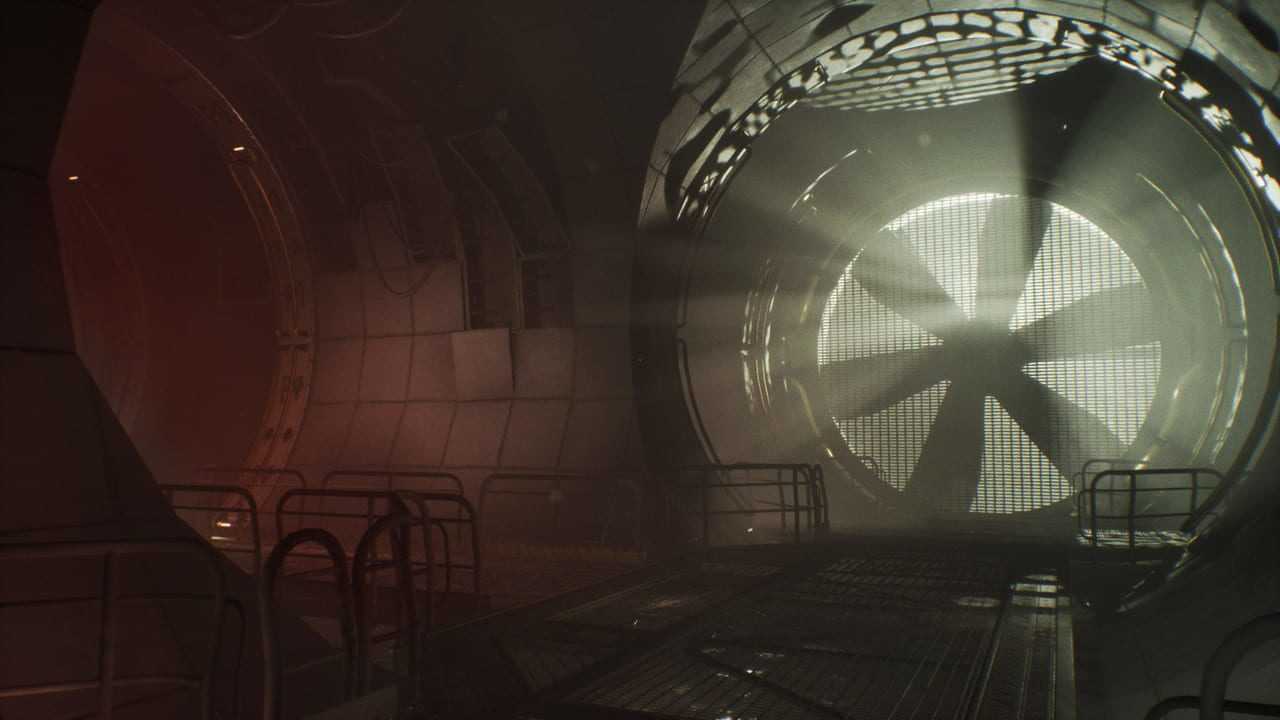
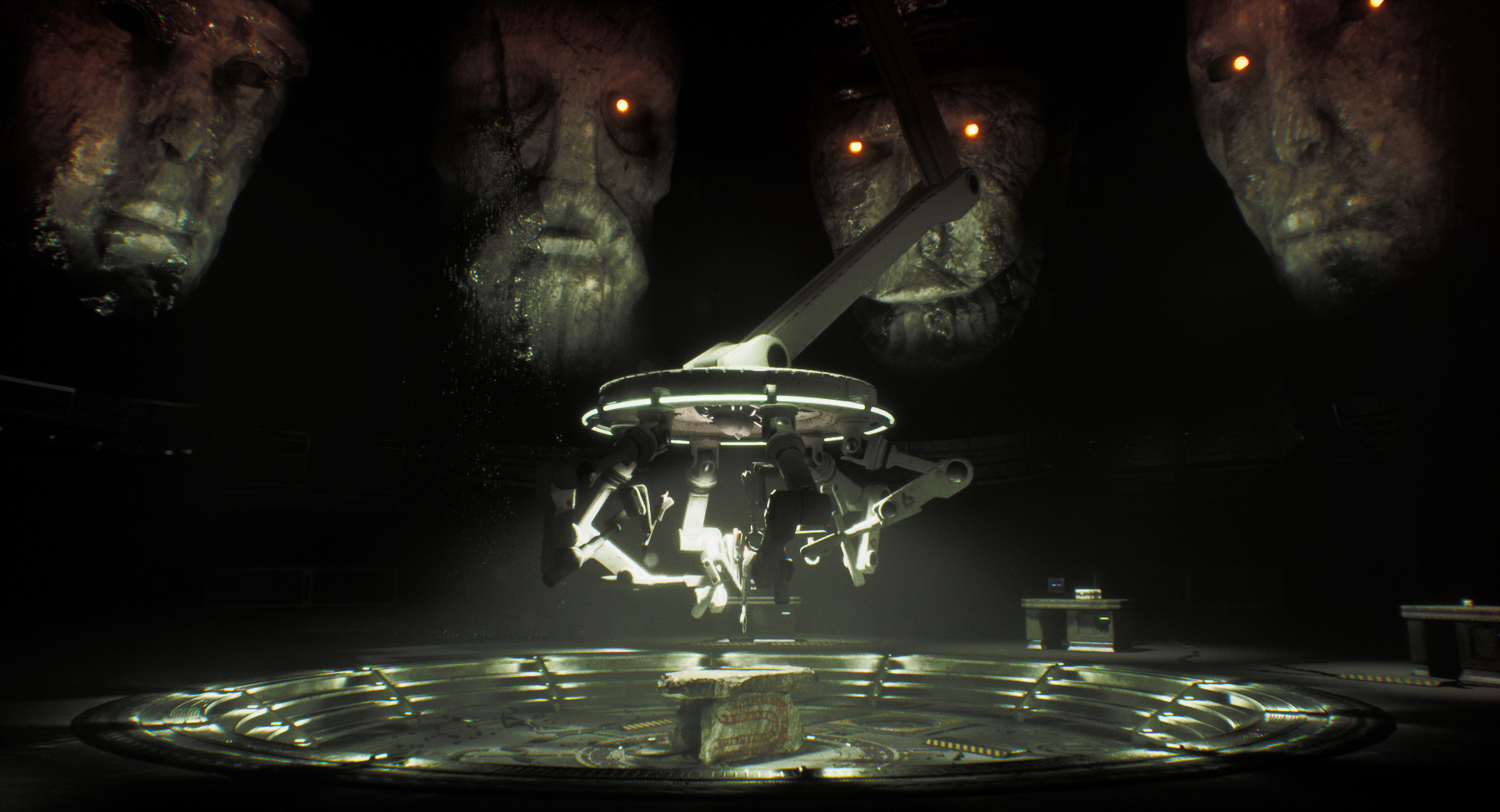
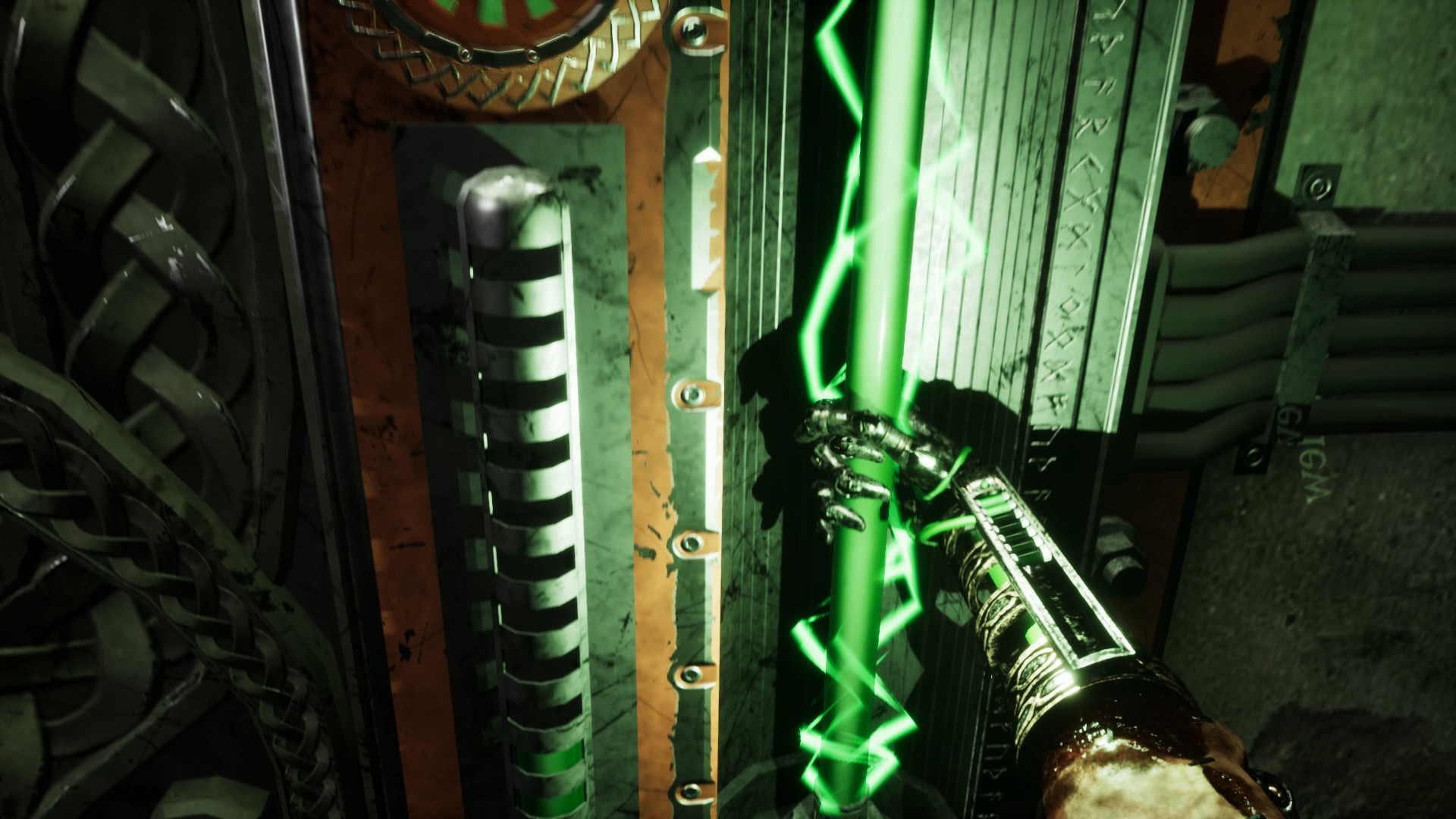
Apsulov is a first-person horror adventure with a little bit of first-person action tossed in. This scientific base created around the World Tree is your main area, and all you know is that you’re supposed to gather these things for a scientist named Henrick. The RFID keys allow you to access new areas of the base, and sometimes you will travel through the roots of the tree to other realms. These few levels consist of mostly action as you run around, avoiding ice giants, to gather the keys to lock the gate to Helheim. Some areas require stealth as you have to avoid creepy enemies, and then when you get your arm, you can shoot them with a charged shot, but upgrades are needed to add more charge. This isn’t very useful at first, but later in the game, it becomes essential and then part of the actual story.
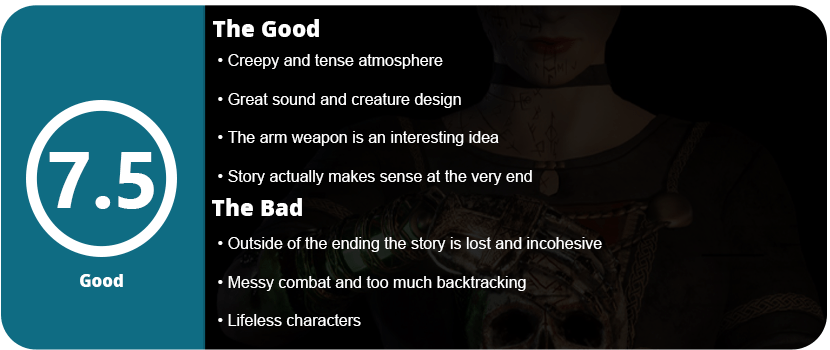
The atmosphere in Apsulov is pretty intense and scary, with fantastically done ambient sounds of people screaming, squishing, torture, and creature sound designs. I wasn’t so creeped out, but I was incredibly tense through most sequences. The base does become a bit disorienting after a while, as you actually do a lot of backtracking after the first half of the game is over, and you will need to enter areas multiple times. Towards the end, this gets really annoying, as you know you just went through this area and it’s either slightly altered or you have to creep past the same enemies again. I also didn’t like that when you die, you are brought to some room where you must insert two orbs into a socket to open a portal. The problem is that Loki is running around here, ready to get you, and once you pick up an orb, you can’t run. You have to sneak around trying to get these things, and if Loki gets you, it’s back to the last save point. If you get both orbs in, then you can pick up right where you died. It was a really strange system for sure, and I didn’t like it at all. Most of the time, I just opted to restart from the save.
There aren’t any boss fights except for the final boss, which is actually pretty fun and makes good use of the arm. I did feel more powerful toward the end of the game, and it made the ending pretty satisfying with an obvious hint at a possible sequel. I also didn’t quite understand the story until the last 30 minutes, when everything came together. The game is really bad at delivering pieces of the story until this point, and it makes playing seem somewhat pointless as audio logs tell you what’s happening around you but not what your purpose is. I wish this could have been spread out more, as the game only lasts 4-5 hours. I also felt the arm upgrades were useless as the ending changes the way your arm is used and all the upgrades are meaningless. Even if you got all the upgrades (I was short 2), it only allows one extra charged shot, and you still can’t take down more than that as you must find a charging station or charging pods to refill your arm.
Outside of these minor issues, Apsulov is an interesting adventure game that really uses Norse mythology well. I just wish it didn’t only matter in the final moments of the game, as the previous 4 hours felt pointless. I also never connected to any of the characters, as they just weren’t written very well, especially myself. The dialog is just a little sterile, and when the game ended, I knew I would quickly forget about this game in a few days. The story isn’t even all that great, despite making sense towards the end. With constant backtracking and a shooting mechanic that just doesn’t feel right, Apsulov falls a bit short of becoming a sleeper hit or even game of the year material, but adventure game fans will love this.











































 thebinarymessiah.com
Clearly you have been blocking everything you or haven't played the game at all. Maybe pay attention to the story…