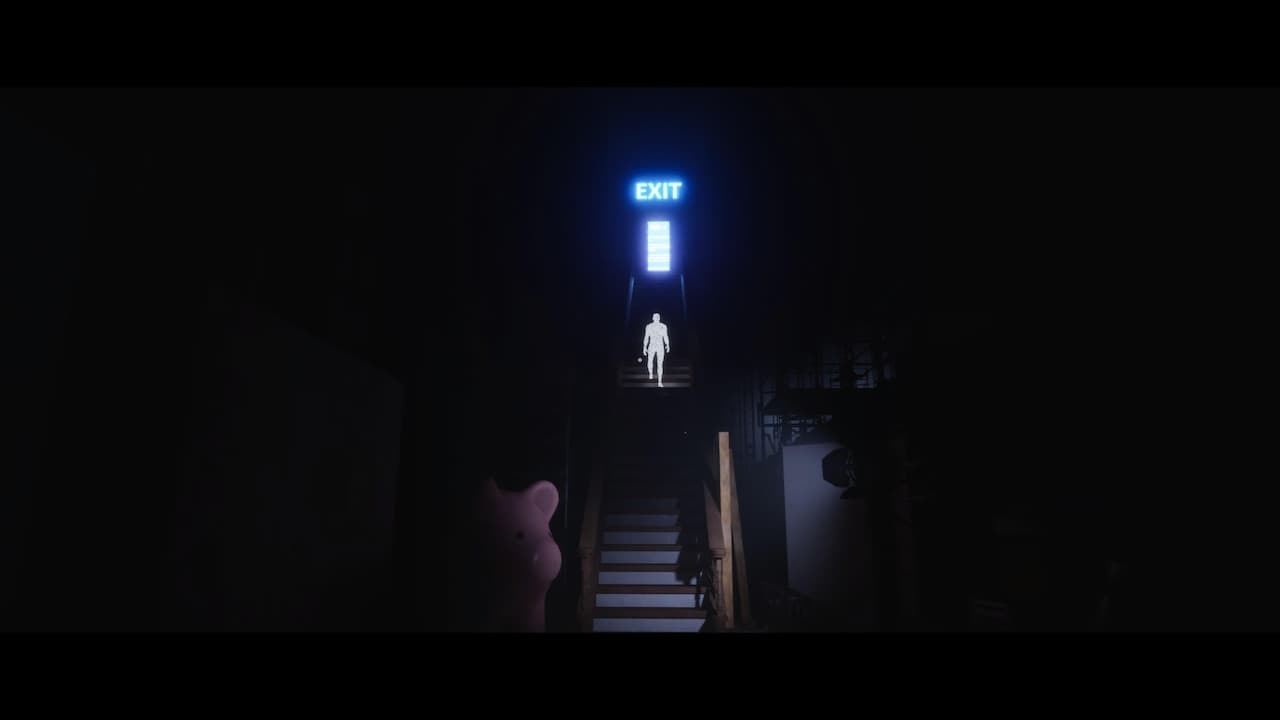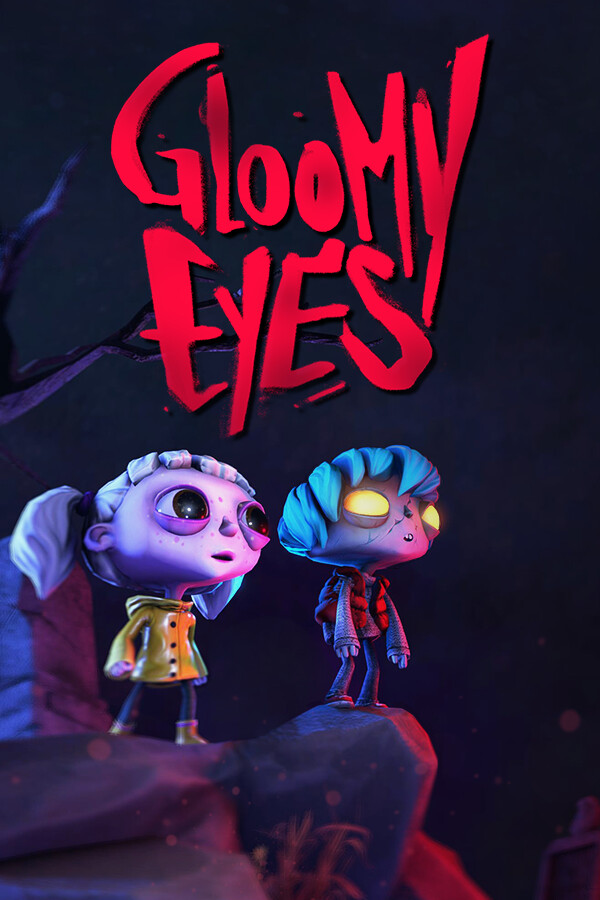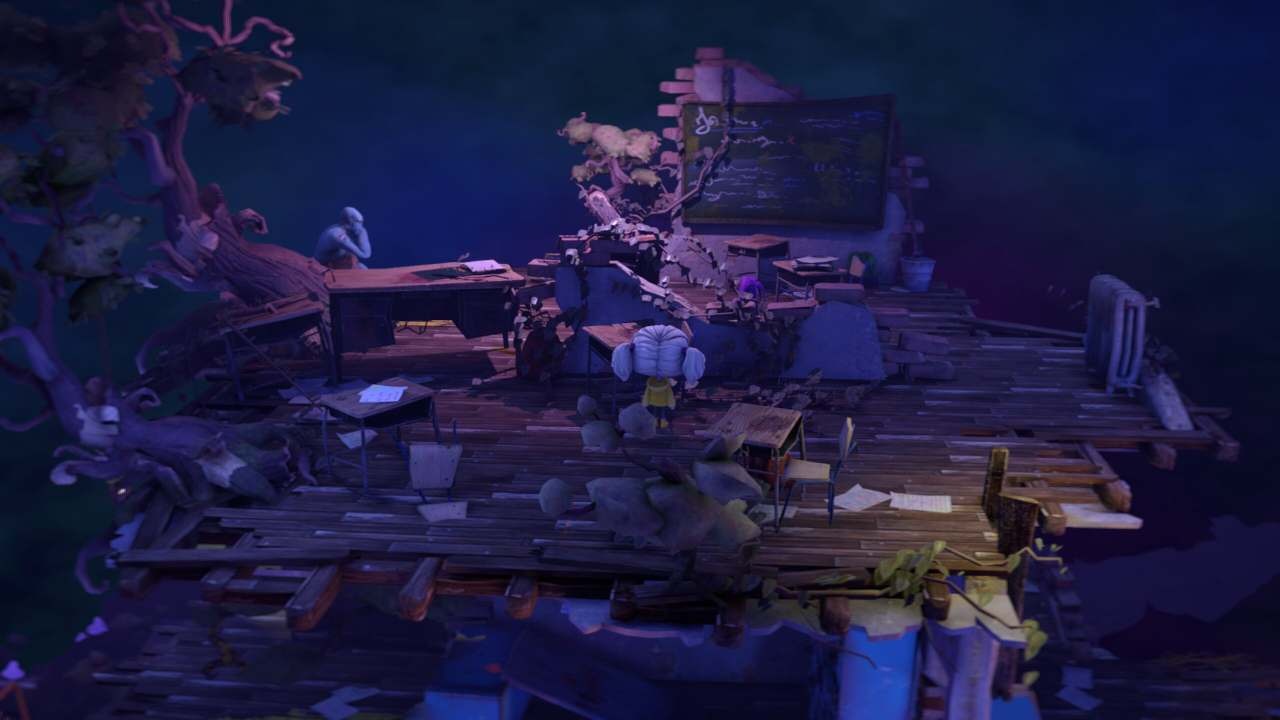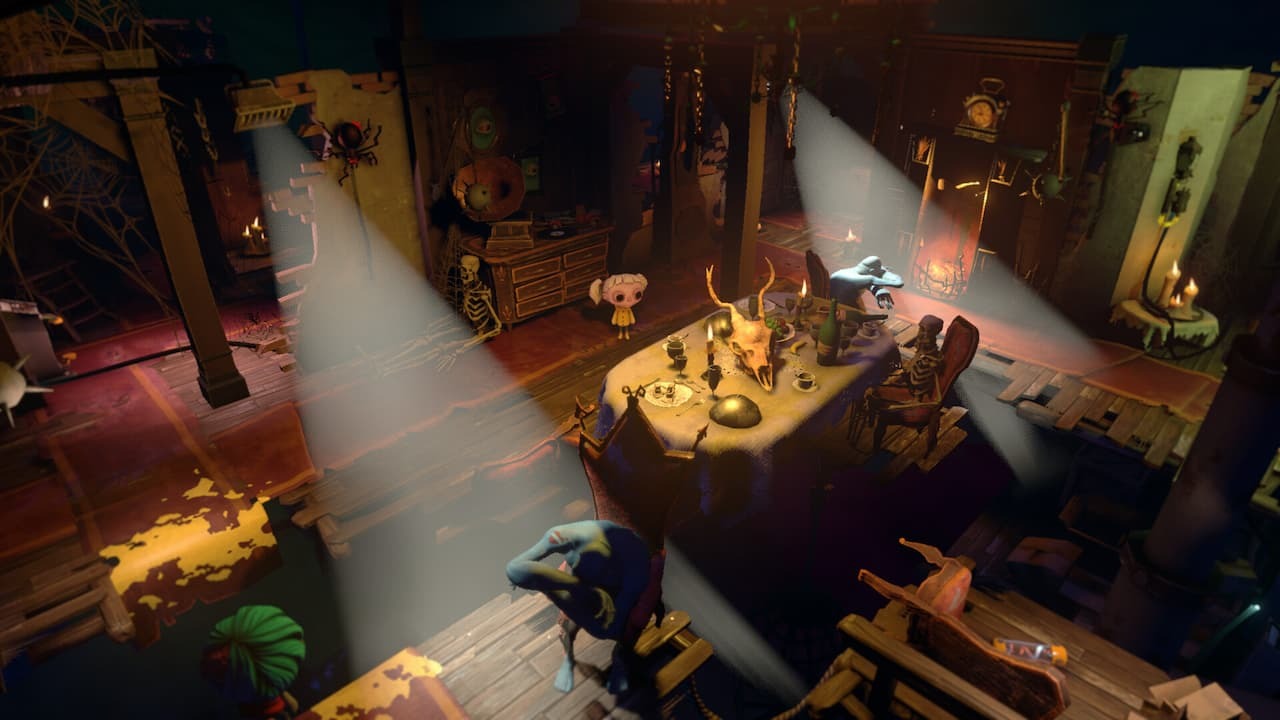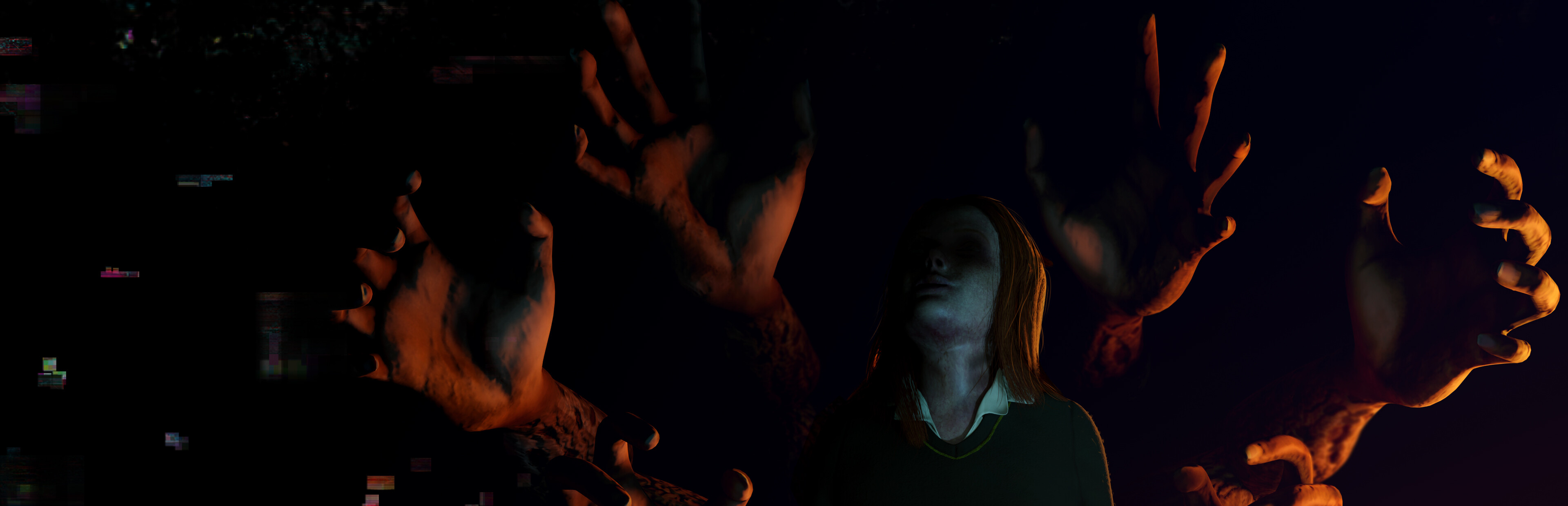

The premise of Gloomy Eyes is intriguing. It takes a post-apocalyptic zombie setting and adds a twist. Humans are living among zombies, but they are hated and are considered vile. A girl, Nena, finds a zombie boy her age who is tame and wants to integrate back into society. In the end, they are kids and just want to do kid things together, but her evil uncle, The Priest, has blocked out the sun so he can use zombies for slave labor. Nena and the zombie boy Gloomy explore levels and solve puzzles to navigate their way around to find the sun and stop her evil uncle.
The only voice is the narrator, The Gravekeeper. You can swap between Nena and Gloomy, as each has different ways of interacting with objects. Nena is the only one who can push buttons, pull levers, climb ladders and vines, and insert items into slots such as fuses. Gloomy can toss objects and push objects. Don’t think this makes Gloomy useless, as they are both needed for other reasons. Gloomy can go near zombies, while he can’t go into bright lights. Nena can’t go near zombies, or she will be eaten. A lot of levels have multiple mini-puzzles to get to certain areas. One level has you assembling a boat, and each piece is a small puzzle within the level. You need to push and pull objects, turn lights on and off, and throw bricks at generators or signs to block light. There are some stealth areas in which you need to snag keys off of the backs of enemies. They walk a single patrol route and have flashlights or trap guns. These areas aren’t very hard.
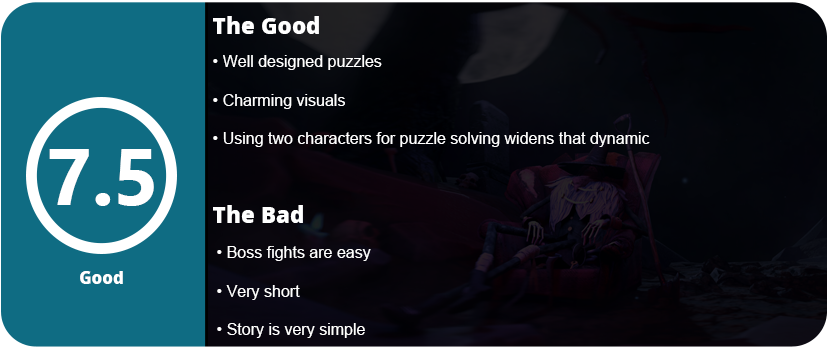
Some of the puzzles only seem challenging because of the camera. It’s not always positioned in your favor. I wouldn’t see certain paths and get stuck because I couldn’t figure out what to do, only to realize there was a hallway or door hidden because I couldn’t turn the camera enough. It’s not a big issue and rarely happened, but I still want to mention it. The levels are varied and get switched up a lot. You also have the entire game sandwiched with solo scripted levels to give your brain a break from the 10 or so levels of straight puzzles. The levels become multi-puzzle right in the middle of the game. I never got bored, and while the narrative won’t keep you going, the variety in puzzles and level design will.
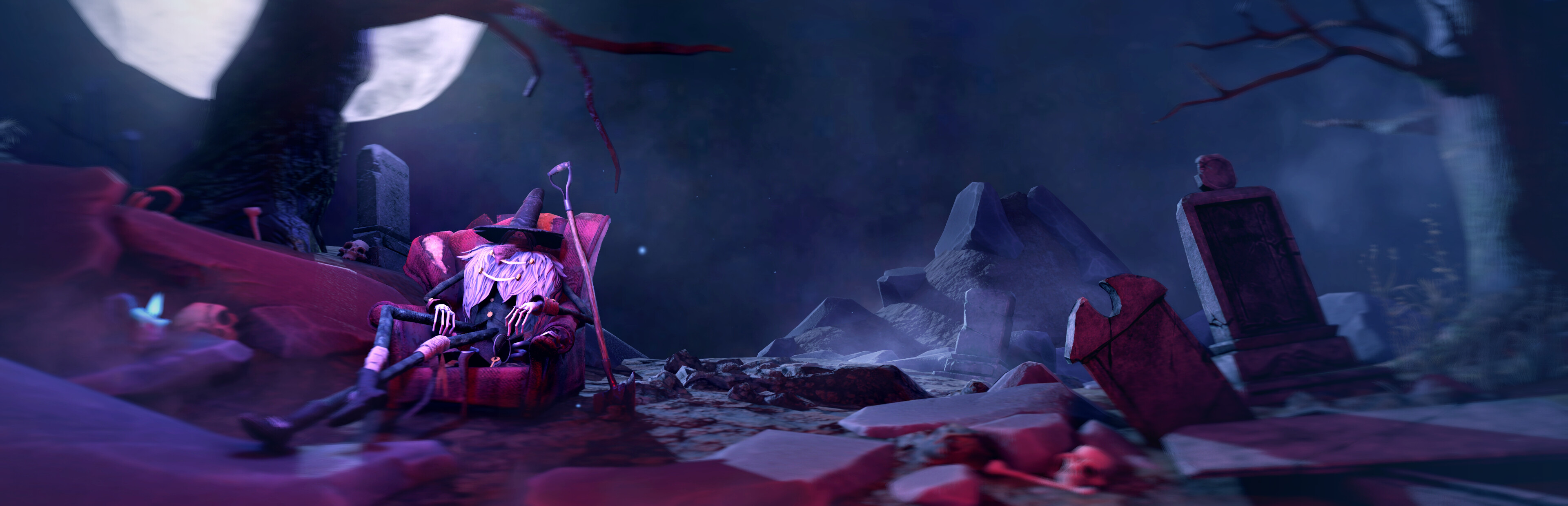
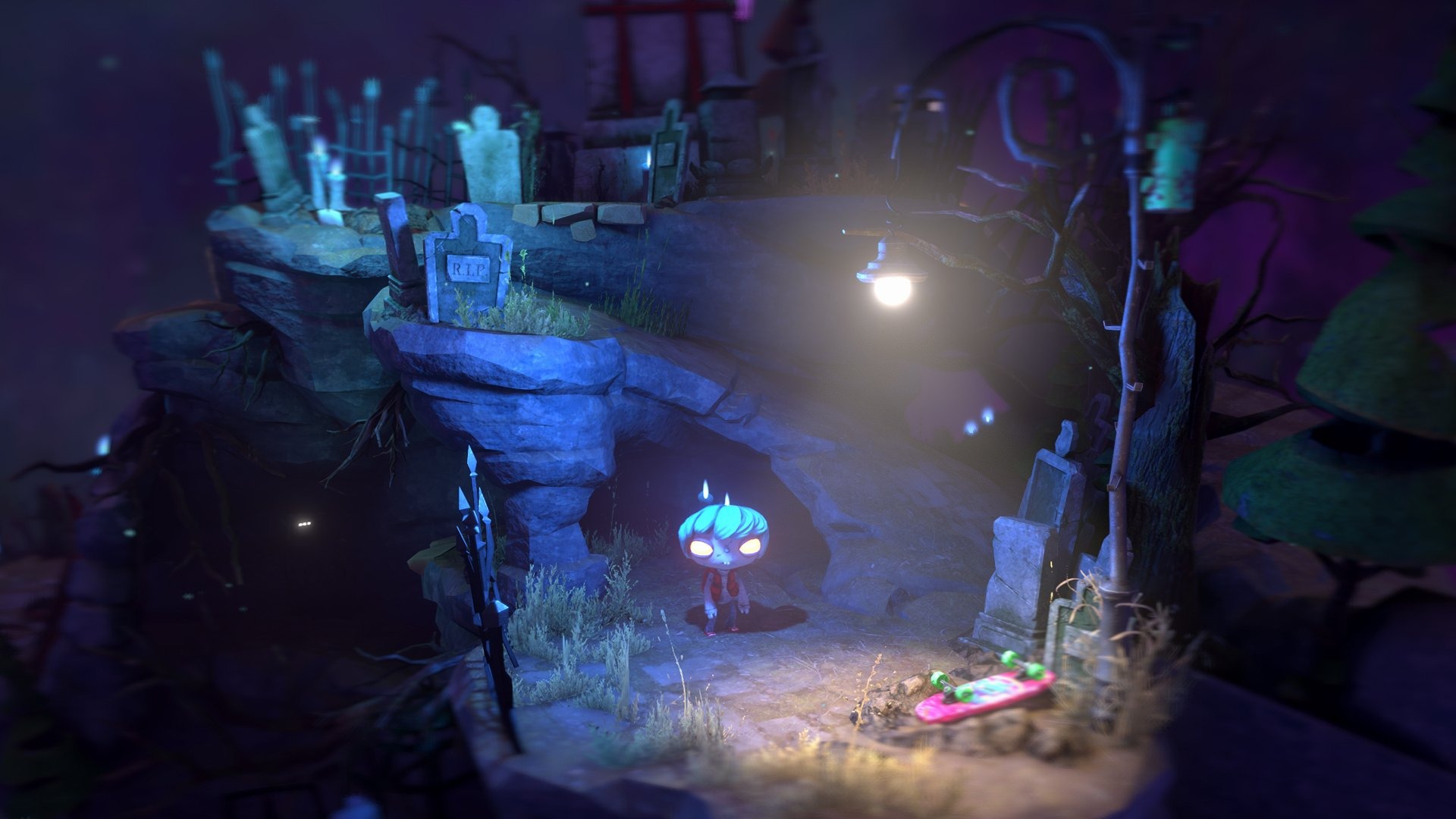
The visuals are very charming and have a Tim Burton vibe mixed with Psychonauts. It’s a very 90s Halloween vibe, and I really like it. The cheesy haunted mansion level notwithstanding. The character designs for Nena and Gloomy aren’t anything special, if not a bit grotesque in a bad way. The bug eyes and large heads didn’t do anything for me, but the overall charm and atmosphere of the game reminded me of PS2 era games, so I stuck with it. The story won’t do much for people either, but it is charming in a way. Nena is incredibly lonely and wants this zombie boy to be her best friend and will do anything to make that happen. It has a predictable ending, but the story is there to glue the puzzles together and string you along. The boss fights (there are a total of two) are Mario 3D esque being very easy and simple.
Overall, Gloomy Eyes is a charming little puzzler that will entertain you for an evening. The charming visuals, soft narration, and varied level design will keep you going. The music isn’t anything special, We have all heard this stuff before. It’s the typical mysterious Halloween music with xylophones and triangles. You’ll know what I’m talking about when you hear it. It does give me a sense of nostalgia for early PS2 games with that Halloween vibe, and I quite liked it. If you want a fun puzzle game and love Tim Burton or Psychonauts, then give this a try.
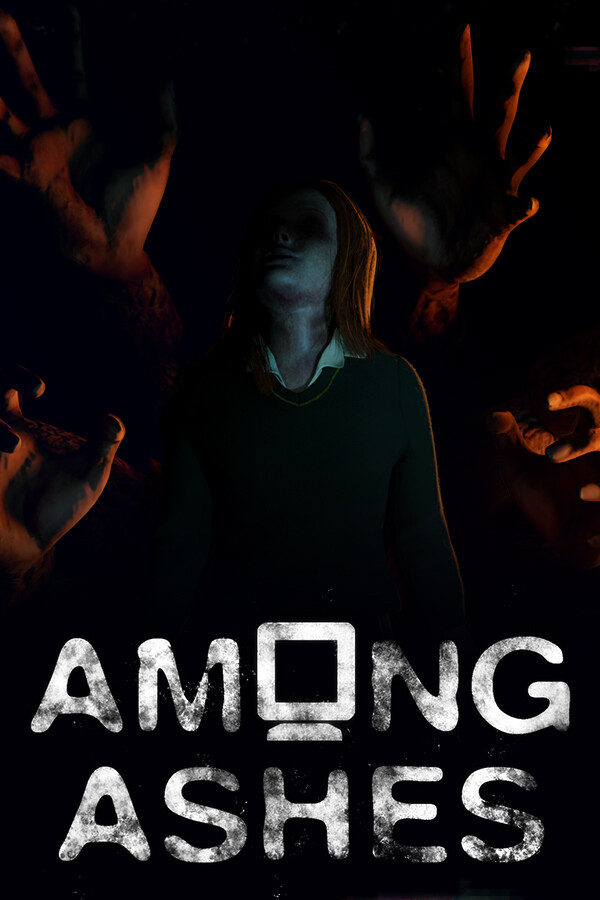
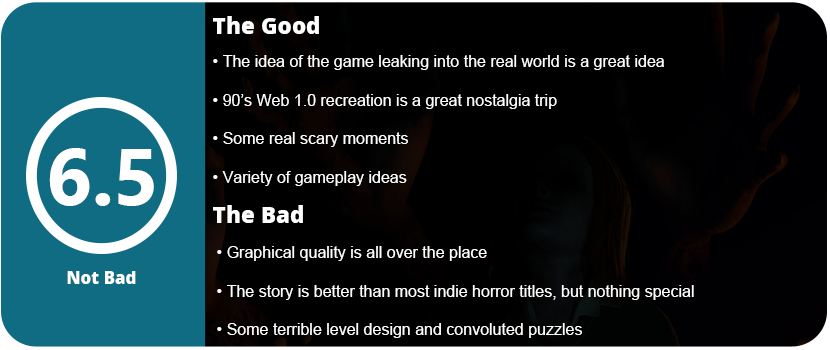
The concept of a video game taking over real life isn’t just a metaphor. There have been numerous instances where excessive gameplay has resulted in fatalities. But what about a game literally invading the real world? Is it actually real or a hallucination of the main character? Among Ashes explores this idea of a late 90s to early 2000s setting of a real game taking over the protagonist’s life. You play as a nameless gamer who ends up playing some indie game that his friend found and sends you the link over MSN Messenger (it’s MSN; it even has the same chimes and sounds). You can use the computer with a Windows 98 style setup. It’s not super interactive, but you can click links that open a web browser to a forum. The game inside the game is called Night Call. It’s a lost game from a developer that ends up putting it on this horror fan forum. You, of course, play this game along with your friend, and every so often you will go back and forth on the messenger talking about events in the game and what’s happening in real life.
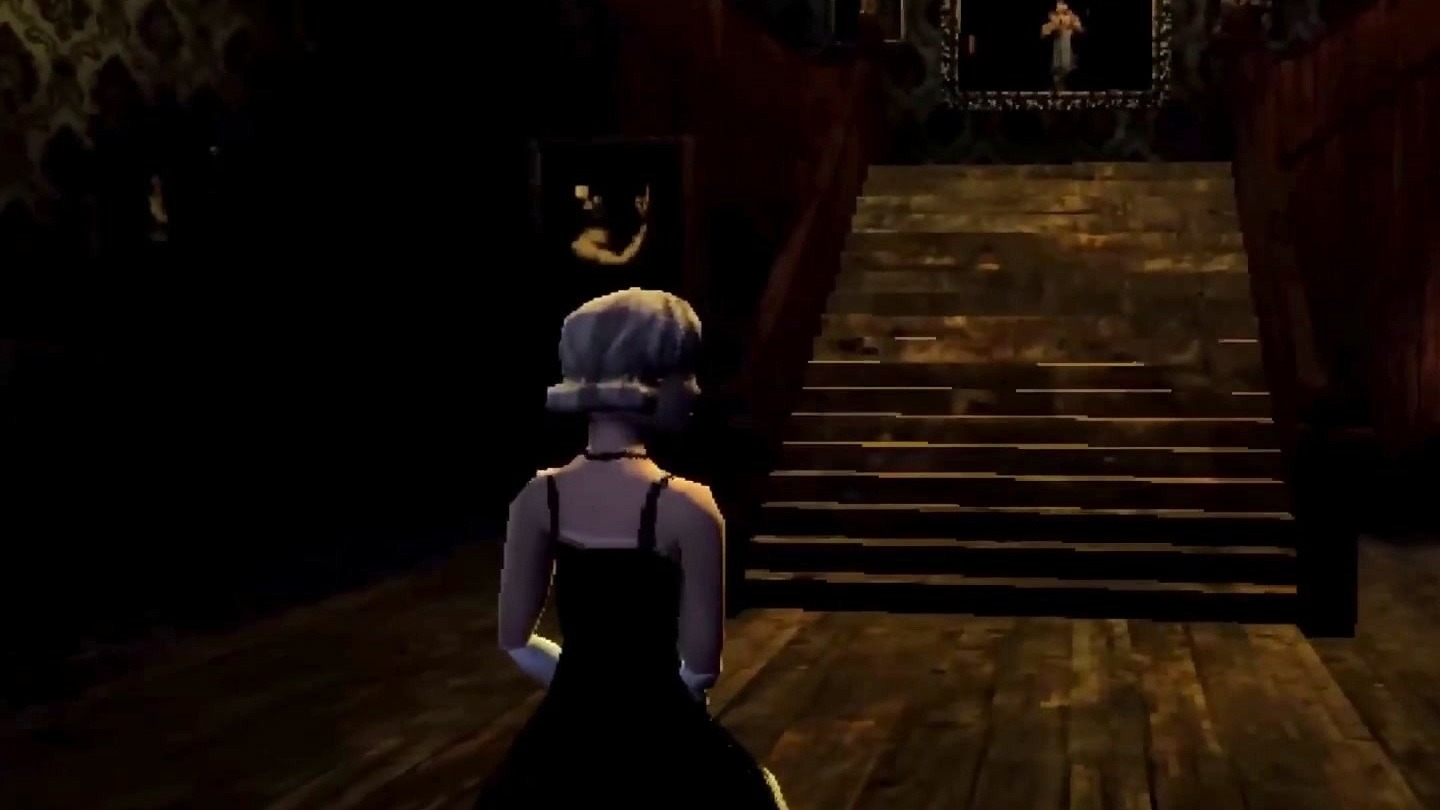
Among Ashes is a melding of genres. It starts out as a Resident Evil clone with PS1 style graphics in a first-person perspective. You arrive at a mansion and are greeted by the maid. You make your way upstairs to talk to the resident doctor about reports of a woman screaming. Of course, this leads to puzzles, wandering around aimlessly with no direction, and combat. Combat consists of beating enemies over the head with a baton. You can block, which helps, but you also get a shotgun and revolver at certain points. It’s best to save the ammo for when you are surrounded by enemies, but I also recommend playing with a guide. There is a hedge maze that’s incredibly confusing to navigate, enemies respawn (they don’t die permanently), and there are typical lock puzzles, math puzzles, gathering hints puzzles, switch flipping puzzles, and so on. There are even a few chase scenes and a maze-like cave system with an enemy chasing you towards the end, and you have to flip switches and open gates. It’s frustrating and doesn’t add the right kind of tension to the game.
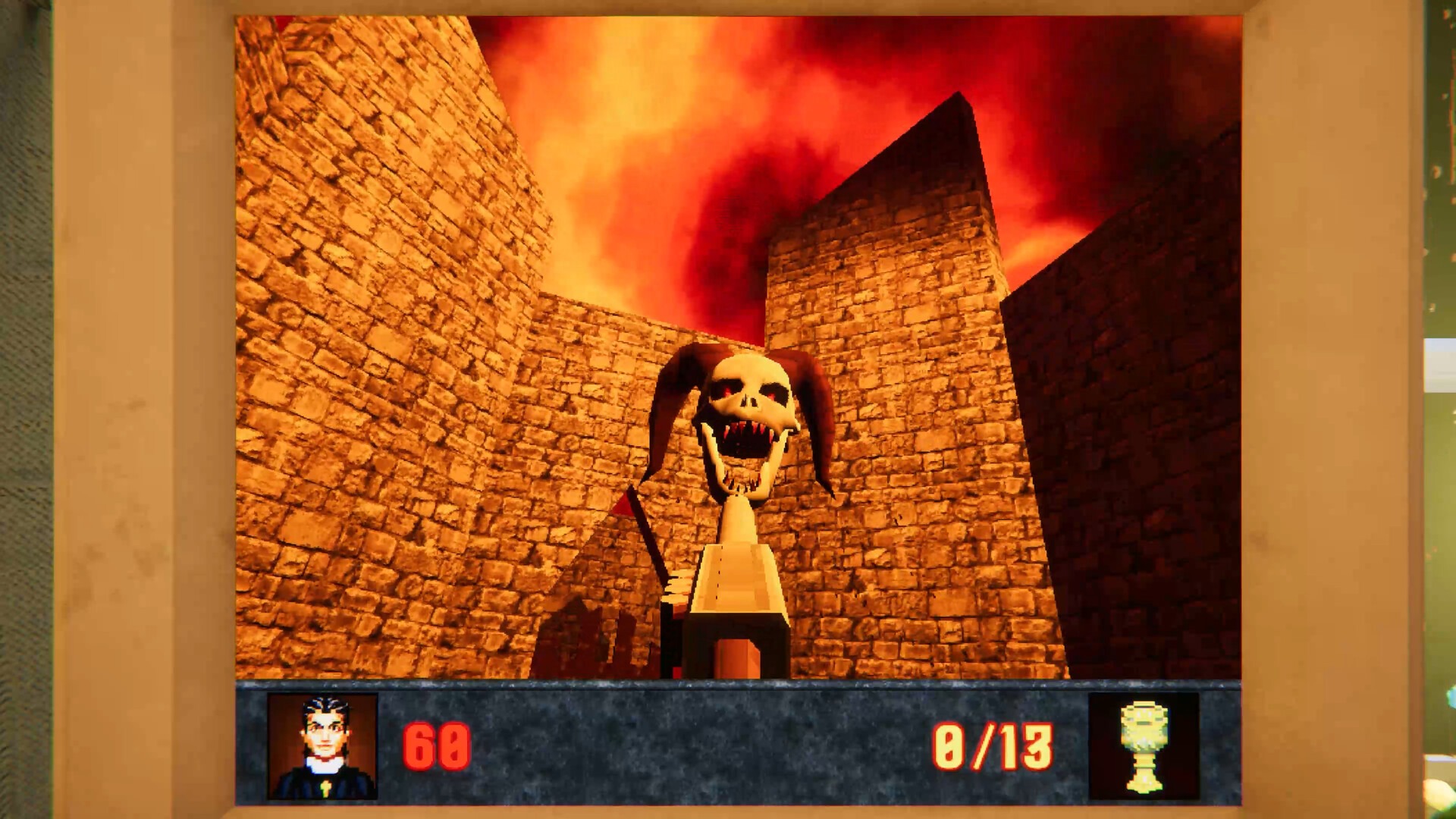
There are a couple of other game types thrown in here. There’s a game within the game of Night Call that’s for the Commodore 64. It’s an 8-bit action game that is required to play to advance the story. It’s not good, it’s repetitive, and it can get really hard sometimes. You only get three hits and you’re dead, and enemies can swarm you. There’s also an FPS Doom clone you can play inside the game, which is pretty bad, but it gets the point across. I will say that the game nails tension and atmosphere, and the monster designs are pretty insane. I love the scares here too. There are a couple of jump scares and just subtle scares, such as a monster staring at you through a gate. Not every scare is in your face. Some can be missed if you aren’t paying attention.
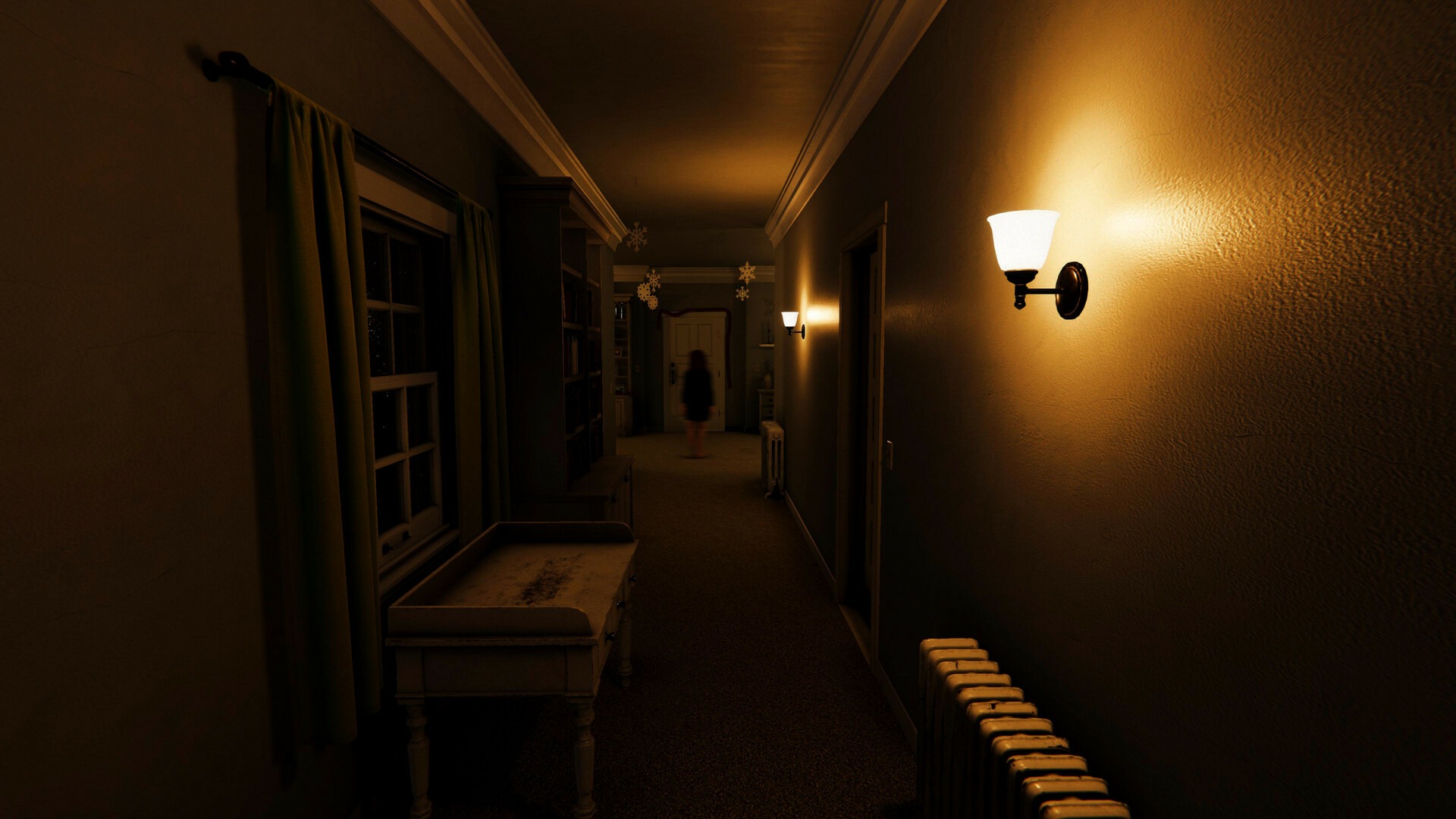
When you get up from your computer in the real world, it almost feels like a breath of fresh air, but things get crazy here too. Objects appear, things become rearranged, and you are very quiet. It was also refreshing when your friend would IM you, as the game feels very isolated, which is a good thing that it nails. I felt very alone, and any sign or hint of another person was so relieving despite how brief it was. The last act of the game falls into the usual indie horror trope of doing crazy things like constantly changing rooms, teleporting you to different locations, recycling older locations, etc. At least, the story maintains coherence throughout and doesn’t deviate significantly towards the conclusion.
Outside of the great atmosphere and tension, the game just lacks in the actual gameplay department. It’s not fun to play, and the mechanics, while trying to be purposefully bad to fit the type of game it’s trying to emulate, just aren’t done well. Respawning enemies, confusing mazes, obtuse puzzles, and weird boss fights that don’t feel good are all over the place. I liked the story; the Web 1.0 feeling on the PC is nailed perfectly, and the tension is there. I just wish this was wrapped up into an actual fun game to play. Thankfully, it’s over in 3-4 hours.
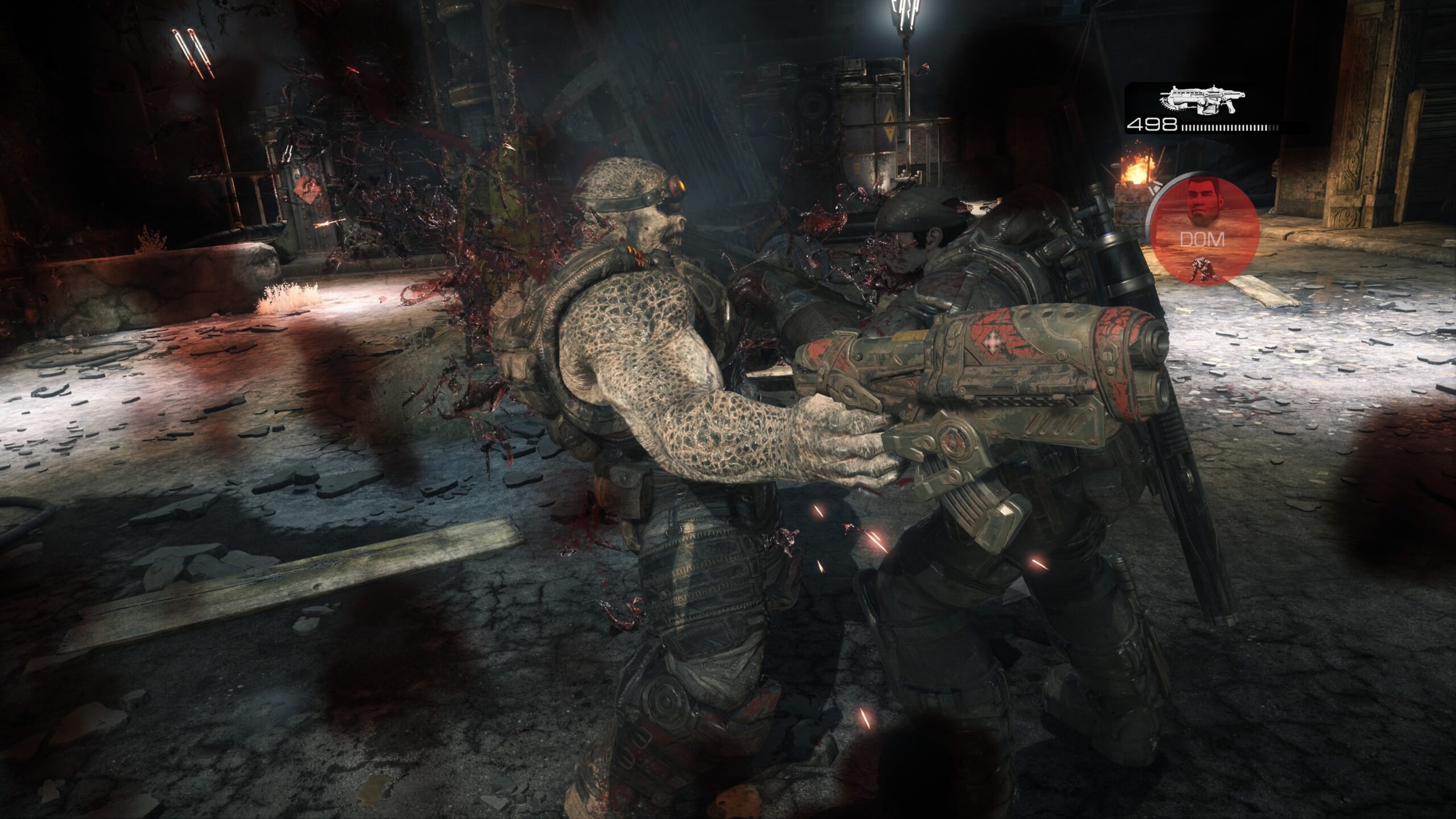
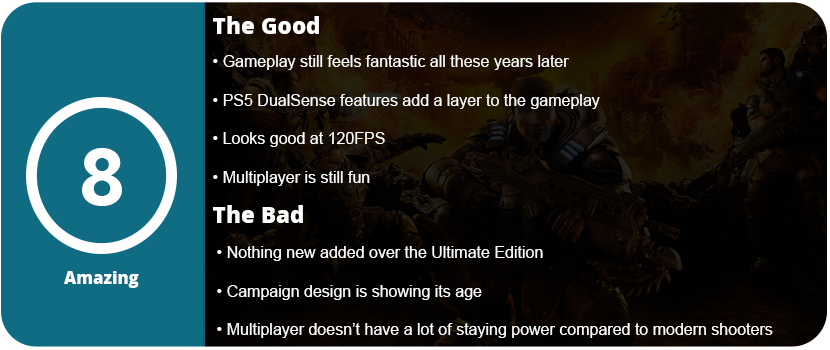
As much as I love Gears of War, and for how iconic and revolutionary it was at the time, it doesn’t need three remasters. Yes, that’s right. It was already remastered before with the 2015 Ultimate Edition release. It was originally released on PC for the first time under the Games for Windows banner and featured DirectX 10 updated visuals and a brand-new chapter in Act IV that involved taking down a Brumak. The Ultimate Edition was already disappointing to some, but having the game further remastered was still nice, and I ate it up. Here we are a decade later, and the impossible has happened. Gears of War is now on PlayStation. This is the second most coveted Xbox franchise next to Halo. How could this possibly be? What kind of timeline have we jumped to? Well, if Xbox’s current downfall isn’t enough to spell it out, then I will. Microsoft is losing money on their GamePass feature as well as the Activision buyout and needs to desperately get their games on more systems. That’s okay, as the PS5 Pro version is the best console version.
With the shock aside, at least the price tag is nice. For $40 you get a remaster and a full multiplayer suite. For those who never played Gears of War, they are in for a real treat. For me, this is the fifth playthrough (twice on Xbox 360, once on PC, once on Xbox One S, and once on Xbox One X for the Ultimate Edition). The Ultimate Edition is also currently broken on PC and the original release has long since been taken down. So, outside of Xbox, this is the best offer for PC and PS5 players. The campaign is still fantastic despite how short it is, and its age is showing. Shooters back in the mid-2000s were still maturing, and we were still in the linear hallway shooter phase. The game still looks fantastic, and while nearly every game that used Unreal Engine 3 of the era was compared to Gears of War, it was the granddaddy of “grey and brown” games. This was on purpose. You are thrust in the middle of a war on a fictional planet called Sera (Earth is never mentioned), and a new beast called the Locust has emerged, committing full-blown genocide. It’s up to Marcus Fenix and the four-man Delta Squad to deliver a lightmass bomb to destroy their tunnels and stop them for good.
Gears of War was applauded back in the day for its fantastic cover system and level design. Marcus snaps into cover with ease. He can switch covers close to each other, roll out of cover, and use the Roadie Run feature, which brings the camera down near his legs while he crouch sprints for a cinematic effect. Gears of War was all about feeling like a movie. The over-the-shoulder camera perspective was heavily inspired by Resident Evil 4, and it works well here. When you aim your gun, the camera zooms closer, right up to Marcus’ face. It was something that was never seen before at the time of release. Gears also pioneered the Active Reload mechanic in which you need to press the reload button at the right time, and any bullets reloaded in that clip do extra damage. You will eventually have muscle memory of this feature and rarely ever miss. If you do, the gun will jam, and you will need to wait a few seconds before firing or switching weapons. It’s an awesome feature.
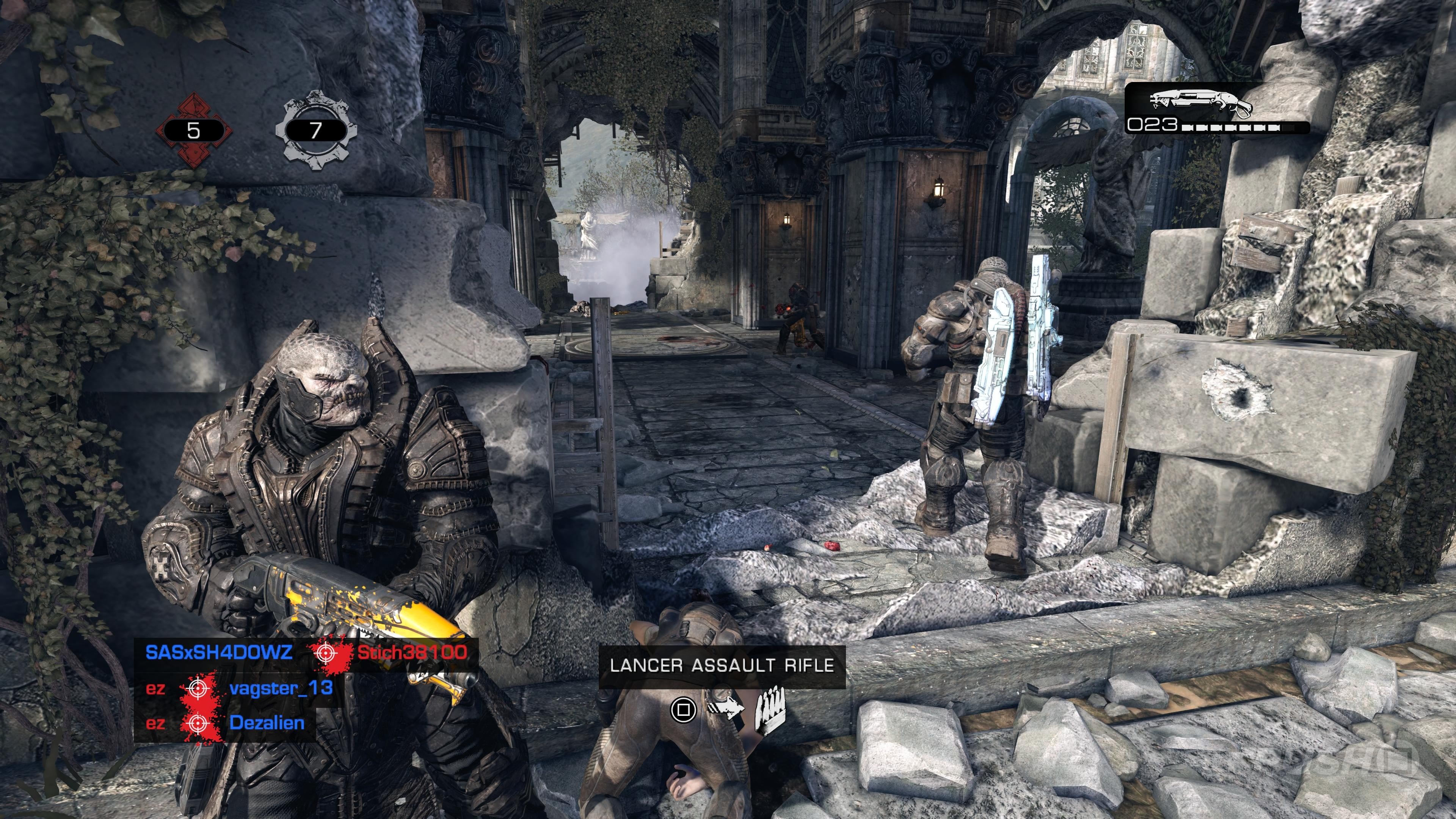
Gears‘ weapons are also well designed and perfectly balanced. The default Lancer Assault Rifle, an iconic weapon now, shoots large clips, has surprisingly good accuracy, and has a chainsaw mounted on the bottom. You can rev this up and saw an enemy in half. Even 19 years later this never gets old. The gib system is satisfying, with enemies exploding into chunks from grenades or getting sawed in half. One other feature that was well regarded was the sound effects. Gears of War has a distinct sound system and has never been replicated. The crunchy sounds of the guns, the reaction of enemies getting hit (which was a big deal) from enemies getting gibbed by grenades, or the subtle sound effect of “one more hit and you’re dead, so get into cover.” Gears of War took a page from Halo and featured a recovery system for health. A red Gears logo slowly appears in the center of the screen as you get hit. On higher difficulties (I cleared this on Hard, but not the hardest), it requires patience, careful flanking of enemies, and using the right weapons. The PS5 DualSense adds a layer to that crunchiness of the weapons. The adaptive triggers and vibration work wonders allowing to now actually “feel” how the weapons should be. This can’t be experienced on Xbox.
The level design requires you to flank enemies and close emergence holes. Tossing a chain grenade into a hole will close it up and stop respawning. They don’t infinitely respawn, but only killing two that crawled is better than waiting for all six. The Locusts are formidable foes and well designed. Not only do they look menacing, but each one has a design language that tells you how to approach them. Enemies can wear helmets, meaning headshots won’t work right away, and the Theron Guard have full armor, which takes longer to take down. The bigger Boomers have Boomshot grenade launchers and are bullet sponges. Then there are the occasional enemies like the Wretches, which are small ape-like creatures that come in swarms. There are Berserkers, which can only be taken down by a Hammer of Dawn, which is a satellite-guided laser. It’s freaking cool despite only being used three times in the game. The Berserker can’t see but can hear you, so you need to guide it around with sound to knock walls down to open up the roof for the satellite to triangulate. It’s neat.
The downside to Gears of War, and the aging part, is not only how linear it is, but also how sparse the story is and how little is explained. While the game is greatly expanded upon in the sequels, and especially the novels, it just feels like it’s over too soon. You want to get to know Delta Squad more. Their personalities are great and well written. Marcus has a dark past (why was he in prison at the beginning of the game?). Dom is trying to find his missing wife but is only mentioned a couple of times. Cole is an ex-football player, but his past isn’t talked about at all, and neither is Baird, who is the nerdy smart guy of the squad. It makes sense that in the heat of this war, going point to point with no breathing room means there’s no time to get to know anyone. Thankfully, this was changed in later sequels, but it’s just odd that this isn’t a remaster of the entire trilogy. The banter between the squad is great, and many new players will want to know more.
There are also some other things that didn’t age well, like some of the clutter in the levels. There are random chairs, stoves, and home appliances kind of haphazardly strewn about in ways that make no sense. The entire game is built like a video game and not like a world people would live in. Some areas just don’t make any sense. I don’t feel like I’m fighting in a city but a video game level. Despite how much Gears wanted to be taken seriously, its world-building is really lacking. Thankfully, the campaign is less than 6 hours long, and you can play with a buddy in co-op; that’s always fun. Just don’t give up on the series yet if you have never played it before. There is more to come. There also aren’t a whole lot of weapons in this game. The arsenal is small, and you will mostly stick to a couple of guns. I also hate how useless the Boltok pistol feels in this game. It’s the only weapon with no feedback when it hits enemies, and the snub pistol is pretty much MIA after the first act.
The multiplayer suite is…fine. I was never a fan of Gears multiplayer. I feel the gameplay doesn’t translate well when fighting against others. There are also some of the better modes from later games missing like Horde. Many will get frustrated with cheap deaths like the rolling shotgun blast. It does feel like an old-school shooter with regular modes that are missing in most of today’s games, so some players will find this refreshing in a world of Call of Dutys and Fortnites. This is an unnecessary remaster to begin with. The game runs smoothly on PS5 Pro at 120 FPS with no dips. The game uses the Pro’s PSSR and there are enhanced textures and lighting. It looks pretty much identical to the PC version. At least, I couldn’t tell the difference. If you’re new to the series or are a hardcore fan, I would say the low price is worth it. While the campaign will only last an evening, the multiplayer may be enough for people to keep coming back.
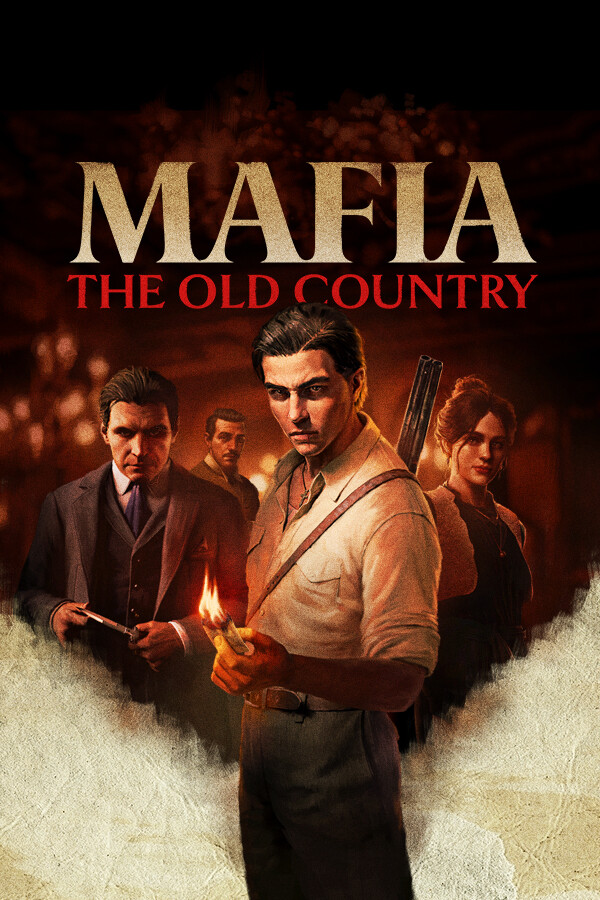
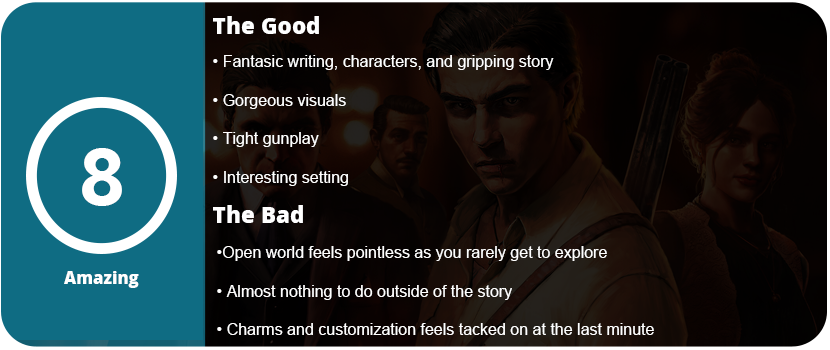
Open-world games have become stale and boring. It appears that developers are merely creating open worlds without any enjoyable activities within them. Mafia’s open world is deceptive but beautiful, refreshing but also sort of pointless. Mafia tries to go back to its roots, literally, by bringing us to the times before the Italian mafia came to the USA. The Old Country subtitle is exactly that. This is a prequel to the original game before any family made it to Empire Bay. We play as Enzo Favara. An orphan miner who has been enslaved by a mafia family to work until he seems like he will die. The first chapter of the game introduces us to various characters, combat, and essentially a tutorial area. You will notice the game is very cinematic, with a lot of dialogue and cut scenes and scripted gameplay.
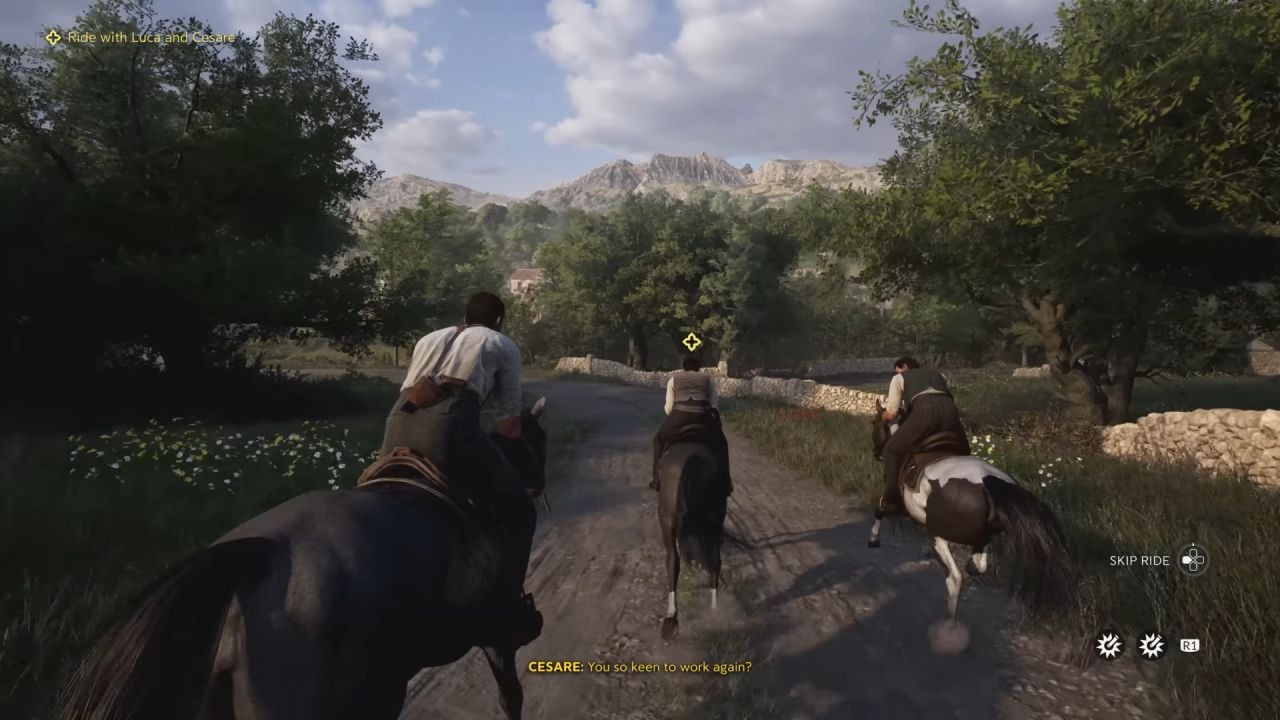
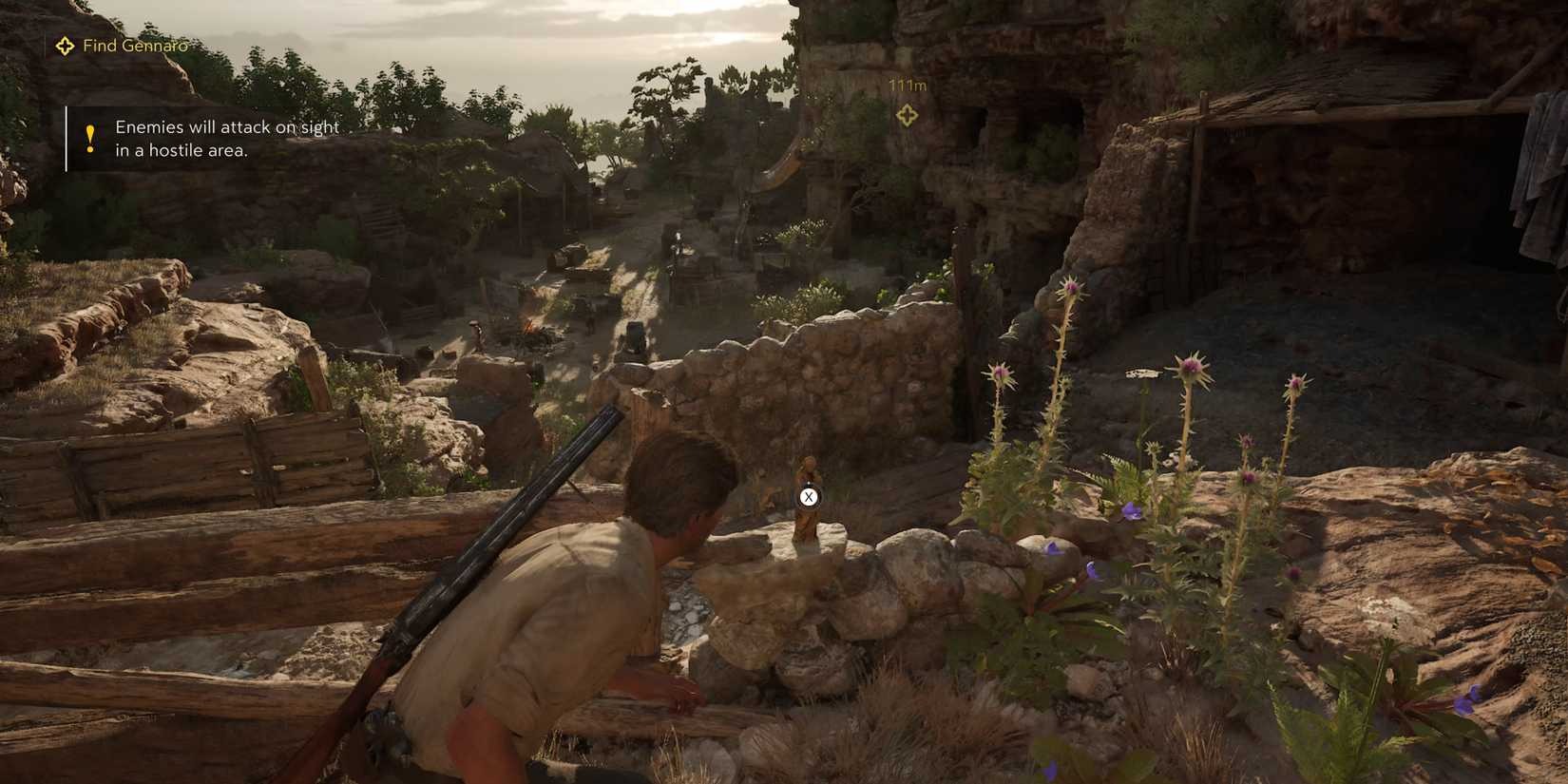
I hope you like scripted events because they are everywhere and there are a lot of them, and it’s mostly that. I personally felt this was refreshing. There was less emphasis on pointless mind numbing fetch missions. However, the game was clearly incomplete and cut off at some point during development. The open world is nothing but a tease and a backdrop to go from mission to mission. There’s nothing here. The world is literally empty of anything to do outside of a few missions, like finding new upgrades and upgrade statues. You can listen to dialogue with characters while riding in cars or on horses to missions, but after that you can just skip to the destination. This is one of the most pointless open worlds in any modern game. There’s no traffic, no people, and no real towns outside the main town, San Celeste. I honestly didn’t mind this. I was just surprised at how this game didn’t really need an open world. This is a shame because the first generation of cars around is really cool, and the horse back riding works well too.
With that said, the main attraction is the characters, and it’s some of the best this year. Every character is full of life, and I really wanted to know more about them all thanks to the tight writing and amazing script. Enzo is a great character to get behind. He’s humble, not perfect, but very loyal. His love interest ends up being the Don’s daughter, Isabella. She’s a great character to get behind too and ends up becoming the most important character in the game without giving spoilers away. The game’s story flows similarly to other mob stories such as The Godfather and The Sopranos. There’s a similar ebb and flow to everything and constant danger always being present and around every corner. Some might say that Mafia doesn’t tread new ground, but that’s okay. There are some stereotypical setups, like two rival mobs needing to make amends, love interests getting put on the back seat, the Don’s blood relative being a total douche nozzle (Cesare), and so on.
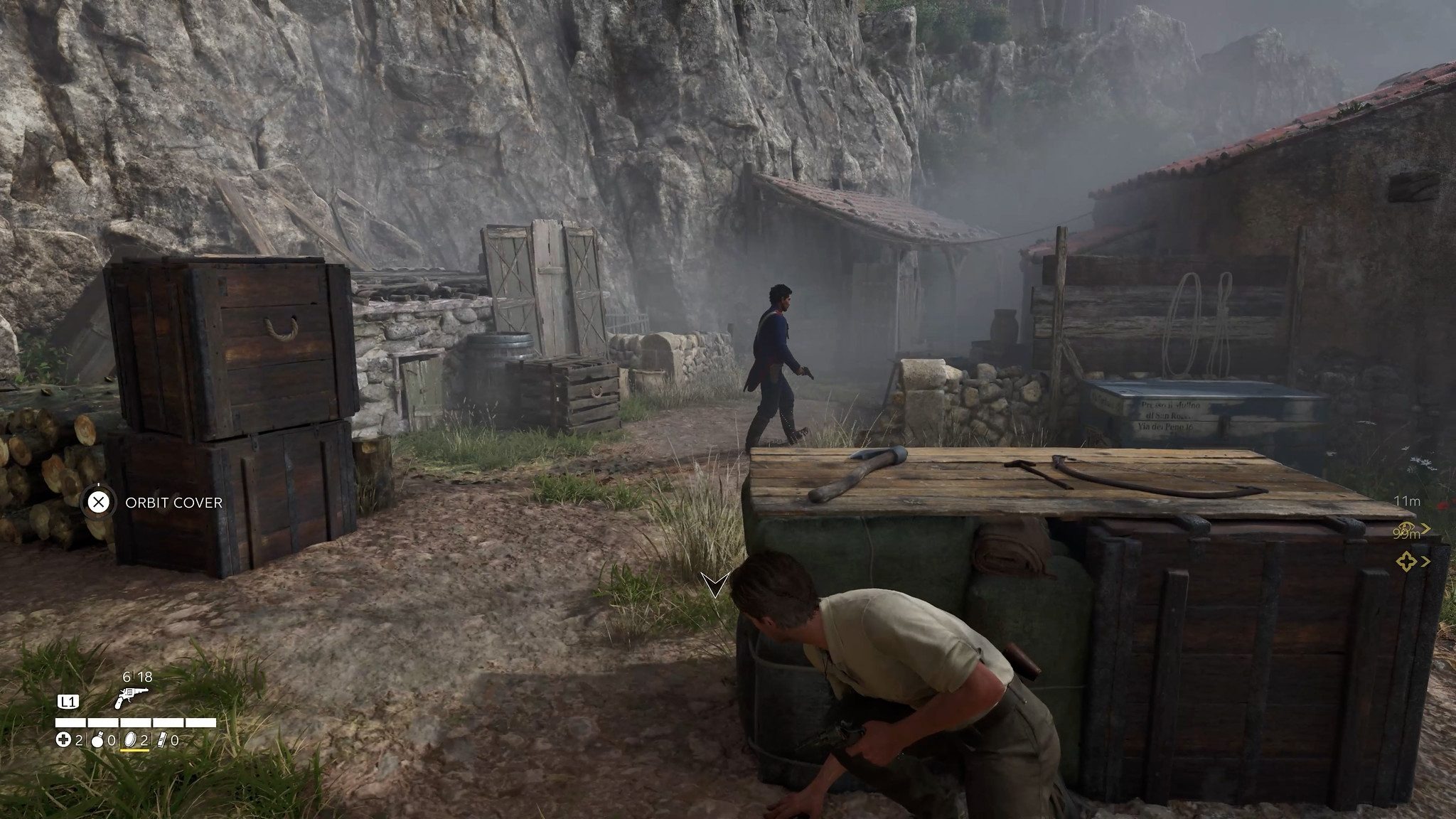
The gameplay features some excellent gunplay. There aren’t many guns in the game, but you will constantly swap between them based on your situation. Additionally, the game includes effective stealth mechanics. You can hold two weapons at a time and always have a knife on hand. The knife is a more fleshed-out mechanic than in most games, as knife fights are a big part of the combat. Boss fights consist of one-on-one knife duels similar to a sword fight. You can parry, break blocks, and do heavy and light attacks. It seems simple at first and feels more like a whack-a-mole style system, but there are enough moves here that require you to use quick reflexes. When a red flash appears, you can dodge and then counterattack. Regular attacks can be parried, and of course you can slash to your heart’s content. It’s not overused and is mainly reserved for boss fights, so I never got tired of them. In the middle of the fight, a scripted cinematic will play out too. The main focus of the combat in this game is shooting.
Shooting feels really good, which it didn’t in previous Mafia games. You can hide behind cover and blind fire as well as pop out and shoot enemies. It’s best to go for headshots here, as only a few shots will kill you. You can hold up to two bandages to heal, and you will chew through these fast. Weapons like revolvers, shotguns, and rifles are all on board, so nothing fancy or crazy. You can toss molotovs and grenades too. Once an enemy is down, you can loot their body for cash and ammo. Stealth gameplay works here because enemy placement isn’t random and you can track patrol patterns. Many areas can be done without killing anyone, but the added addition of throwing your knife is a great feature. Only a specific type of knife can be thrown. When you select your arsenal layout, you can choose different knives that deteriorate slower than others. A thrown knife must be recovered, or you lose it for that mission. You can use sharpening stones to bring your deterioration bar back up. You also use your knife for opening doors, locks, and boxes full of loot, so you need to use it wisely.
There are some minor RPG elements here. You can’t level up or anything, but you can equip charms that add passive abilities such as carrying more ammo, reducing knife deterioration rates, making your footsteps less obvious, etc. You can equip up to six, but four need to be unlocked by buying slots at the store. There is only one store in the game, and you must drive there each time, which I find frustrating. Here you can unlock weapons, clothing, and customization items for your cars. I find this all pointless, as the story missions give you weapons when they are needed, and driving cars has a minimal impact on gameplay. One of the biggest gripes I have is that the story introduces these open-world concepts to you, but you can’t drive around except during a few missions. This means you can only visit the store a few times during the game, and once the story is over, there’s no point in continuing unless you want to get every achievement in the game.
Despite the open-world portion of the game feeling half-baked, I enjoyed my 12 hours with Mafia. This may seem too short for some, but the story was satisfying, and I felt like I could go back and get the few collectibles that were left at a later time. For anyone wanting an authentic Mafia experience, they will be disappointed in everything but the story. The combat has undergone significant enhancements, and the visuals are outstanding. I also loved the authentic voice acting for the characters. They have weight and authenticity behind their roles. We don’t get video game stories like this very often anymore.
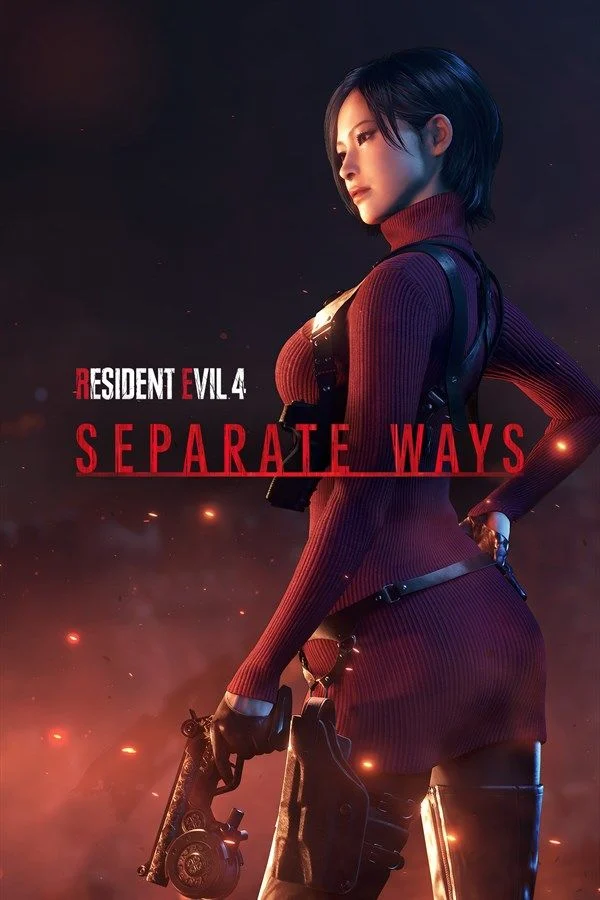
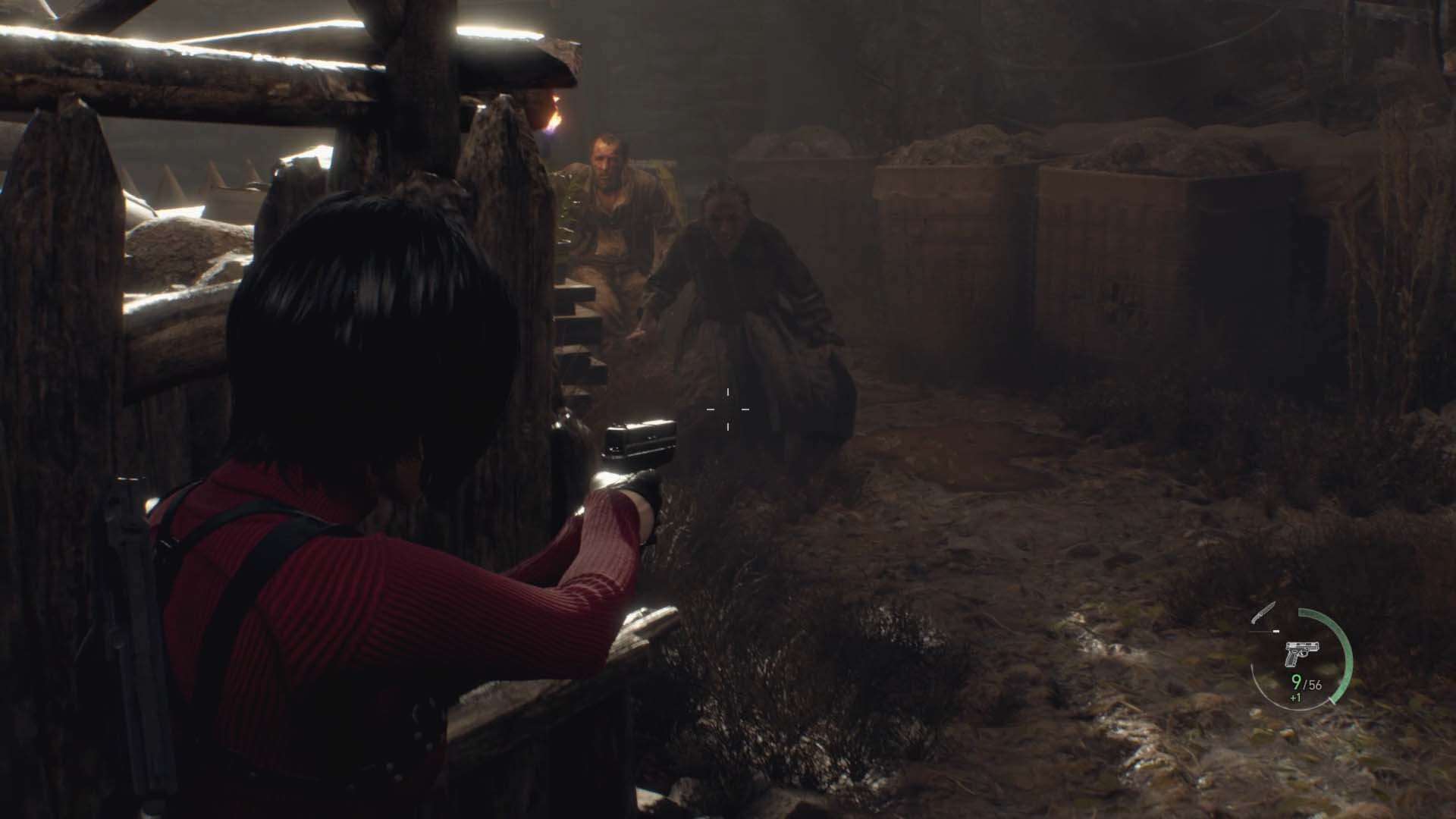
Have you always wanted to know how certain things happen in Resident Evil 4? Why did Leon escape from situations at the right moment, or why did the odds of him surviving certain encounters seem unusual? Some of those questions are answered in Separate Ways. This is the side content from the original game remade for 2023. You play as Ada Wong here. She’s such a fascinating character, and despite being an early childhood crush, I found I appreciated her more endearing qualities as an adult. She’s mysterious and bold, doesn’t take crap from anyone, but is still fighting a moral quandary within herself. She wants to be a bad guy, but not that bad. She also has a hankering for Leon, and their sexual tension ratchets up here more than any other time.
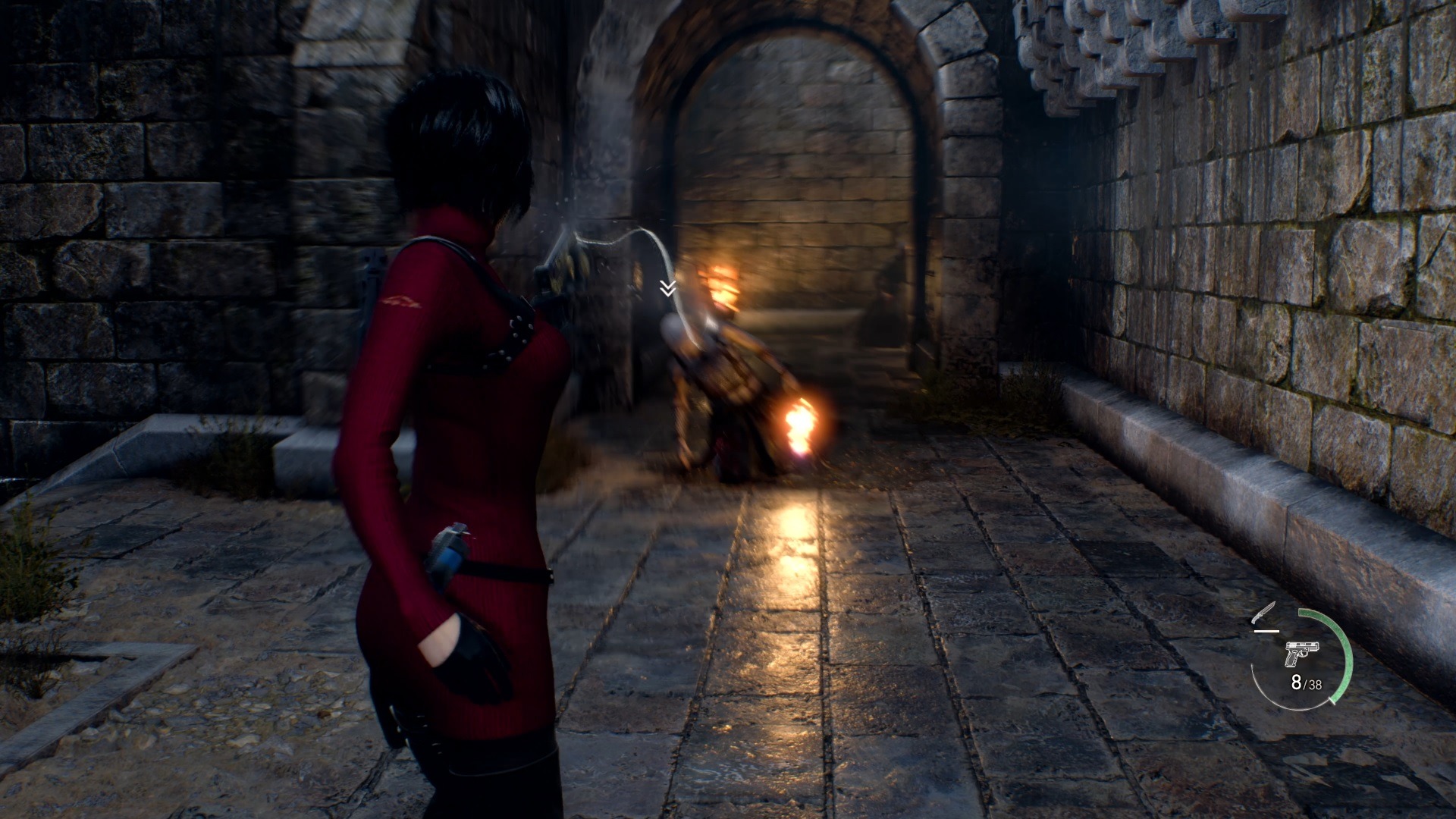
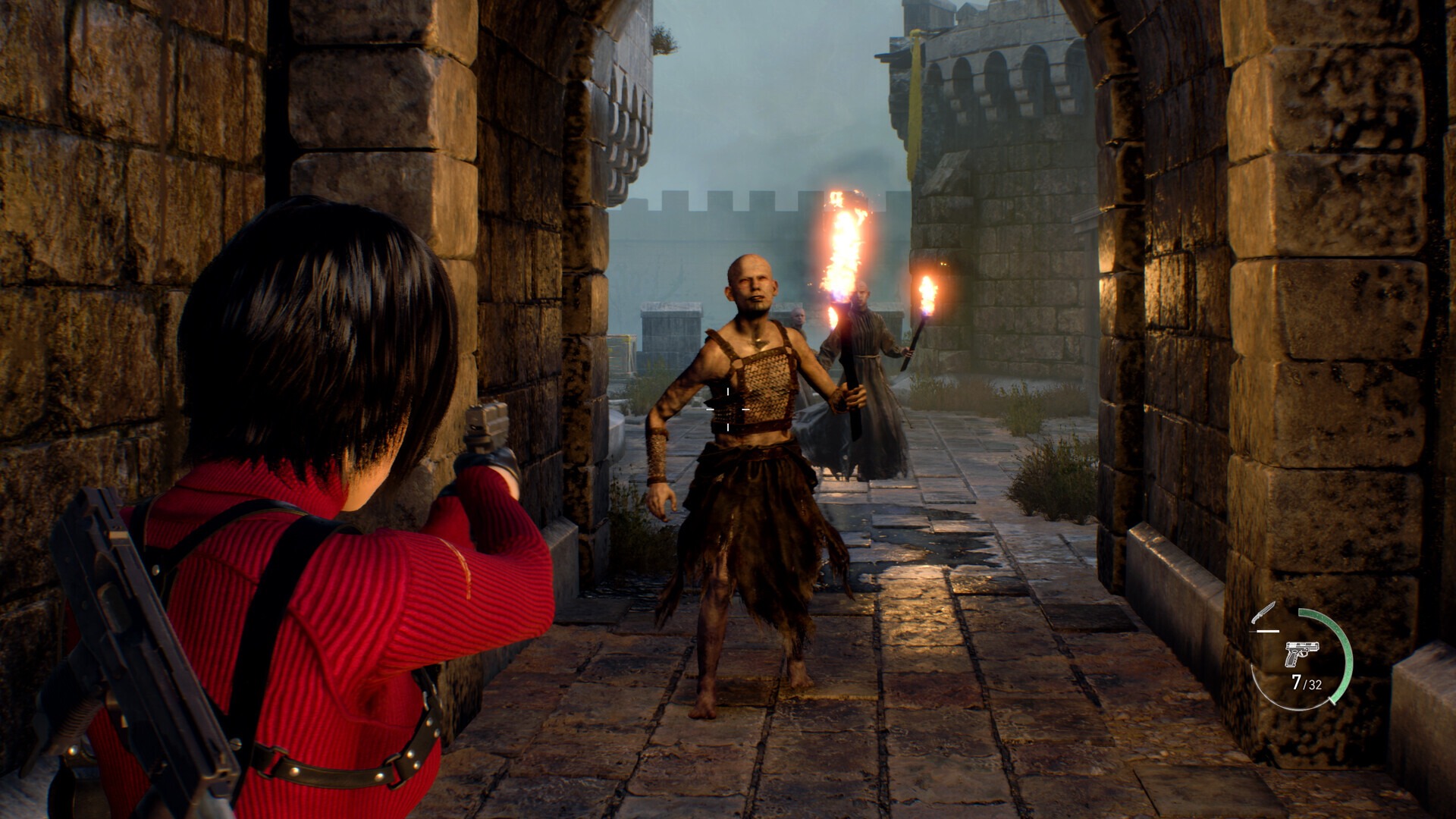
Separate Ways is more of a remix of the main game than anything really new. New battlefields are usually above or in Leon’s old areas. Sometimes you will notice he’s cleaned up the place or destroyed an area before you get there. One such area is after the church bell tower fell in the main village. You go through the game in the same order, but at a rapid speed. Ada has a grappling hook in her arsenal to traverse the high ground. She can also use this to get closer to enemies quicker for a finisher and rip shields off of enemies. This is even used during the boss fight with El Gigante. She can swing up and fight on top of buildings, giving her an advantage. Ada also has access to the shopkeeper and a small repertoire of guns. She starts out with the Punisher MC pistol and the TMP. She’s all about close quarters combat. You can eventually get the M1903 rifle and the much better Stingray toward the end, but you will most likely always be charging in to get close. You can get access to the shotgun as well, but shells are really rare and take 12 gunpowder to create just 6 shells. Although it won’t be useful frequently, it can save you in an emergency. Save it for dispersing large crowds or for tougher enemies.
Ada also gets a few side quests, such as her very own medallion mission and fetching various items. There’s plenty of treasure lying around, and gemstones can be inlaid into valuable items to make them worth more. Be on the lookout for hanging treasure pots and chests everywhere. You will need those Pesos. You can use Spinel gems to trade for passive keychains to add to your cache to increase stats such as sprint speed, damage, and defense. I didn’t end up using any of these, as they are expensive, and the DLC’s short run time means you’re better off upgrading your pistol, TMP, and buying new weapons. I did end up with the Red9 towards the end and spent most of my money on upgrading those two weapons, as the ammo is most plentiful for them. I only used the bow a few times, but bolts use knives, and these are better suited for stabbing enemies on the ground before the Las Plagas pops out of their head. You will also need to get out of tight situations, and you can sneak around some areas and pick off some enemies too. Here it’s best to be resourceful, as ammo is scarce, and so are healing items, more so than in the main game.
Ada does run into her fair share of bosses, but not all of them are attacked head-on. One boss is a chase scene through a facility, while some are recycled from the main game but remixed a bit. I found the constant scraping for supplies, upgrading, crafting, and looking for treasure to be just as fun as the main game. It was nice seeing new areas and having some questions answered. Ada is a great on-screen presence and is one of my favorite female video game characters of all time. Her new voice actress does a good job making her sound emotionless and stern, but when emotion needs to break through, she can’t quite seem to land it. Emotions like surprise and slight fear just don’t come across well. Ada is almost like a robot by design, but she does have her humanity peek through from time to time, and that makes her such an awesome character. She’s not as evil as Wesker, but a nice in-between.
Overall, Separate Ways is a fantastic DLC that does everything right. Coming in at 4-5 hours of run time, it’s enough for a nice evening playthrough and to see the other side of RE4 that Leon can’t access. There are no upgraded visuals or anything like that with this, and there’s nothing inherently new or unique. It’s a remix of RE4 and that’s fine.
I’m not really a co-op person. I do not consider myself a person who typically engages in cooperative gaming. I was raised among friends who did not share a strong interest in video games, and when they did, it was not in the genres I preferred. I have always been inclined towards single-player experiences. It Takes Two is the first co-op-only game that has motivated me to seek out a partner for gameplay, even though it took me four years to complete it. I was always a single-player kid. It Takes Two is the first co-op-only game that has pushed me to find someone to play multiplayer games with, even if it took me four years to finally finish. I started the game out with my wife and finished it off with my youngest sister. Couch co-op is something that builds bonds and memories, and this is one of those games. The story takes a backseat to fantastic gameplay that is always changing with incredible level design.
The story is the worst part of the game, and not for the reason you think. It’s poorly written. Painfully written. The idea itself is fine on paper. You are a married couple (Cody and May) going through a borderline divorce when your child gets the troubling news and uses her handmade dolls to act out her parents getting along again. Both of you drift off to sleep, finding yourself in a world akin to Pixar’s, where everything is grandiose and seemingly insignificant details are conspiring against you. One of the most annoying characters ever conceived in pixels is a therapist in the shape of a book called Dr. Hakim, who is a racist Mexican stereotype. His dialog is cringy and awful, and he’s just so incredibly annoying. Whenever he was on screen, my wife would use her phone, or my sister would walk away. I also don’t like how Cody and May’s relationship seemingly never evolves despite these harrowing acts they go through. Each level should typically show some change in their relationship, and relying on a monkey-in-the-middle remediator is quite frustrating. This is one of my least favorite video game stories ever. It’s just incredibly horrid.
Outside of that, the game is a delight to play. Each level is unique and full of charm, such as the garden level with enemies that are different flora and the attic level, which has you walking and bouncing on instruments that make real sounds. Each level gives Cody and May a unique ability they must use to puzzle-solve and use for combat. Not every level has combat, but every one has a lot of platforming and puzzle solving. The first level’s vacuum cleaner, for example, is a delight, and another level uses a honey cannon backpack. The game is played in split-screen, so you must work together to solve everything. In some areas, one character is needed to get through. The puzzles constantly change, and each ability is used to its fullest.
There are some mini-games spread out throughout the game that are more like “toys” and don’t really do anything. They are marked with a tambourine floating above them. Some range from getting points by shooting cannons at blocks to long jumps off of swings to a chess game. They are interesting but slow the game and have no rewards. These are good ideas, but the winner should get a reward, like a damage boost. Most of the time we would just play once for a couple of minutes and move on.
Combat, on the other hand, is really annoying and not excellent. Balancing is an issue here. Occasionally, an excessive number of enemies will attack you, resulting in both of you dying and necessitating a restart of the area. If one player dies, they can revive by mashing a button, but if both die, it’s over. We died more in combat than any other time, and everything is too chaotic to monitor your life meter. I would get pummeled and wailed on as a passive ability character waiting for my partner to take out the baddies or expose the weak point of an enemy or boss while smaller enemies just annihilated us. This problem isn’t a skill issue either. Additionally, the absence of a lock-on button increases frustration during gameplay.
The visuals themselves are fantastic. Each level feels unique while grounded in realism. The unique dreamlike and cartoonish visuals provide a Pixar vibe, and they are a sight to behold. The explosion of everything, from everyday objects to skyscraper-sized buildings, is truly captivating. However, some levels, like the dream level at the midway point, seem overly lengthy. There is a hub area, and you branch off to different sub-levels, but it seems to go on forever. Then, later on, I felt like a single character’s ability was underutilized. The attic level had me barely doing anything for my partner. The balancing in this game is significantly flawed, but it can be overlooked.
Overall, It Takes Two is a must-play for anyone remotely interested in co-op games. The story, characters, and writing are both awful and rote, but the gameplay is why you will stay. The visuals are incredibly charming and imaginative, and the combat requires each player to assist each other at every single turn and puzzle. Combat is too simple and chaotic to be very fun or engaging, but there’s not a lot of it. The game is a pretty decent length, clocking in at 8 hours or so.
The idea of robots taking over humans has been an age-long discussion, but what if they were designed to help us instead, no matter the cost? That’s the idea that The Fall presents to players. You play as a pilot who has crash-landed on a planet, but the AI known as A.R.I.D. (autonomous robotic interface device) activates and uses an advanced smart suit to essentially control the pilot’s body while searching for medical attention. The pilot lands on a derelict planet run by an AI called the Caretaker, who is examining and studying ARID for unknown reasons. Excellent writing and voice acting bring the story to life, despite its short length. There is not a single wasted line of dialogue or moment. This is an incredible premise and idea that I want to see more of. The Fall is a Metroidvania-lite, but with its own identity. The genre has seen little of this type of game today, especially with the explosion of indie games being produced.
Despite its simplicity, the game boasts a surprisingly complex control layout. You can walk around in a 2D plane, but jumping and combat are limited. You must use the flashlight on your pistol or light the path ahead, as the game is very dark and is mostly underground. When you shine your light over objects, a context piece of text will appear describing it or allowing you to interact with it. The majority of the game is puzzle-based, relying on an inventory system to combine and interact with the right object. The Caretaker’s testing center is the longest section of the game. Many puzzles are actually quite fun and clever, but a few can take a weird obtuse angle and make little sense in terms of how they are solved.
Combat in The Fall is crunchy and powerful but very limited. Other androids will attempt to attack you, but their actions are very limited and occur only during scripted events. You can hide behind cover and pop out to deliver a headshot. You must switch to the laser sight for better accuracy. You can sneak up behind enemies to kill them, or you can advance on them while they take cover. The shots are impactful and crunchy. The combat doesn’t overstay its welcome and is used at the right times. Of course, you can’t use your gun for the first third of the game, as abilities need to be unlocked, such as faster fire rates, the gun itself, and other suit abilities.
The game is tedious because it has a lot of backtracking, so you’ll often go from one end of a level to the other. I understand that this is part of a Metroidvania, but you aren’t going back to a level once you are upgraded and can access new parts of a level. You often find yourself running back and forth to collect parts of a puzzle, hoping you have the correct piece, only to discover that you either don’t or that it belongs to another puzzle located elsewhere. It’s not game-breaking, but it does get old pretty quickly. Once you have read all the text and discovered every part of the level, the adventure part of the game kind of disappears, and all that’s left is the tedious process of solving puzzles and running around.
The atmosphere and graphics are fantastic even today. The game has a surreal feeling of almost transporting you to the world thanks to its great sound design and visuals. While there is a lot going on in the foreground, most of the atmospheric stuff comes from what’s happening in the background. A lot of the background stuff can give you a visual cue as to what’s going on just from one glance. You can see a massive cave and the exterior of a spaceship through the windows, among other things. The few occasions where there is spoken dialogue are excellent, and the excellent writing keeps you captivated with every word.
Overall, The Fall is a fantastic atmospheric Metroidvania-lite that features great writing and tense gameplay, including gun sections that do not overstay their welcome. ARID is a wonderful character despite being a programmed robot, and the ending of the game is well worth your time. This game was one of the few indie titles that contributed to the “indie revolution” of the early 2010s and played a significant role in establishing the Wii U eShop as a prominent platform for indie games.
There’s been an ever-increasing discourse between the people and corporate America. American Arcadia takes the worst of the present and shows us the ugly side of being slaves to mega corporations. With clear inspiration from The Truman Show and Walt Disney’s vision of “The World of Tomorrow” and his original vision of Disney EPCOT, American Arcadia is a dystopian trip down 70’s lane with fantastic voice acting, a riveting story, and excellent pacing.
You play as two main protagonists. Trevor Hills and Angela Solano. The game has two perspectives. Trevor’s gameplay is a 2D side-scrolling platformer similar to games like Limbo and Inside, and Angela’s more puzzle-heavy first-person sections have inspiration from 70s spy movies, not too dissimilar from No One Lives Forever, but without any shooting. Angela is a stage tech for the corporation Walton Media (clearly a dig at the Walt Disney Company) who ends up being recruited by an activist group called Breakout, and you end up helping Trevor escape where he lives while trying to shut down the corporation. The game’s pacing is fantastic. The game consistently presents fresh scenarios, never growing stale or monotonous. The story continuously moves and evolves as you play, with events unfolding for each character while you control the other. Many times there will be cool split-screen sections in which you need to do tasks with Angela while controlling Trevor on her monitor. I don’t want to give away too much plot to have the explanation make more sense, but it’s really cool and well done.
Trevor and Angela are likeable characters, and while not super original, they leave an impact, including on the villains. There are sections of the game that teach you organically about the world of American Arcadia, including the lives of Angela and Trevor. Trevor’s sections are full of fast-paced platforming and push puzzles. These are not super complicated, but they are fun and help break up the chase scenes. Angela’s sections include quite a few puzzle types, from sliding puzzles and quizzes to some that are completely unique. This includes mostly hacking things to help Trevor get through areas. This was one of my favorite gameplay ideas. You can press a button to enter the camera mode. The feature changes the perspective of Trevor’s sections, and you must manipulate electronics around him to get past guards and obstacles. Every single scene gives you something new. I can’t state that enough. There were a couple of frustrating sections in which I realized I was analyzing the scene wrong. I made mistakes such as jumping onto the incorrect platform and running in the incorrect direction. Nothing was ever so annoying that I wanted to quit playing. I do think the game should have given a couple of hints if you keep doing the same thing over and over and dying, but again, it’s not a big deal.
Visually, the game has a fantastic sense of style. Inside of Arcadia, the world is stuck in the 70s. There are a lot of panning vistas of cool interior designs while Angela is in the present day, and it’s all less captivating to look at. I’m not a fan of the character designs. They are very blocky with no noses. It’s a bit off-putting, but the rest of the game looks excellent. I feel the biggest issue is that the game is too short. Depending on how much you struggle with the larger puzzles, you can finish the game in about 4-5 hours. While the entire game is explained well and feels like nothing is left out, I wanted to know more about Angela’s childhood and backstory, as we get to know mostly about Walton Media and Trevor.
As it stands, American Arcadia is one of the best games in this category. With constantly evolving gameplay ideas, fantastic voice acting, a riveting story with twists and turns, and a delightful art style, there’s not much you can’t like. Going between Trevor’s 2D sections and Angela’s first-person sections is a lot of fun, and you never know what’s coming next.
I have been longing for a cozy Western RPG. I can immerse myself in the lore, characters, world, and story of these games for weeks at a time. Skyrim, Oblivion, Dragon Age, Fable. These are just a few series that have given me worlds to do this with, and these are harder to come by these days. Avowed looked promising, but after Obsidian’s disappointing The Outer Worlds, I wasn’t so sure about this one. Although it appeared to play similarly to a modernized version of Skyrim, creating a completely new world is a challenging task. It was tried with Kingdoms of Amalur and failed miserably. The game world must captivate players and resemble a distinct character in its own right. For me, gameplay can normally come second to the atmosphere because without something to be invested in, there’s nothing worth playing.
Avowed has a fantastic idea. You are Godlike. You are born in Eora, the same universe set in the Pillars of Eternity series. Specifically, you are in The Living Lands. You assume the role of an Aedyran Envoy for the empire to trek across the land and negotiate ways to have them join the empire. You also need to find a way to stop the Dreamscourge. This is a disease that is turning people into mindless “zombies,” for lack of a better term. You end up gathering four party members along the way while running around four large maps full of side quests, hidden treasures, and new Godlike powers to discover. The flow of the game plays out like most modern Western RPGs. You have a main quest, but you can go to a distant landmark and find a side quest. There are also bounty hunts for extra coin and better gear.
The combat system is similar to that in other first-person Western RPGs like Skyrim. You swing a sword or cast magic, hold down the attack button to do a powerful attack, and can block with a shield or larger weapon. What’s different here are the abilities you can acquire by leveling up and using ability points to unlock them. These can be bound 1-6 or by using a wheel as well as binding your companions’ abilities to order them to do things on the fly. The combat system has weight and can feel useful in the beginning of the game, but it clearly has its flaws and gets old after quite some time. This issue is due to combat happening constantly and enemies being damage sponges. Skyrim and Oblivion worked because combat was over fairly quickly, and it wasn’t too frequent unless you were in a small dungeon. Despite having varied ability upgrades like adding splash damage, poison, or having effects last longer, I never felt powerful enough in this game. The Godlike abilities even feel useless. Even with fully upgraded equipment, I always felt like every enemy was a sponge unless I fought opponents that were at a much lower level than me if I went back to early maps. The situation is worsened by the fact that abilities consume essence, which depletes quickly unless you have potions; however, potions are expensive and cannot be crafted unless you are a Druid. Lame.
This issue is all due to the game using equipment levels instead of player levels, which I absolutely hate in RPGs. This means no matter how many abilities you have, no matter how much you’ve dumped into attribute points, you will never be able to do any damage until your equipment level meets or exceeds the enemies in the area. This means upgrading armor and weapons, and each level has three tiers. Higher tiers and legendary equipment require rare items. The process means hunting these rare materials down either in shops or in drops from enemies or certain chests. This requires looking it up online and constantly halting story progress. You can craft weaker materials or rarer materials, but it’s still a grind. I hate these multi-tiered systems that are there just to add to the grind. You can also use food items to cook food for temporary boosts in battle. Legendary equipment can only be upgraded with specific items . My game was frequently halted because I lacked enough money to purchase a higher-tier weapon needed to progress to the next area. I then had to do things like side quests and bounty hunts and just sell random crap to grind for coins. The economy system in this game is significantly broken, which has led to the creation of many mods that better balance it. Rewards are piddly scraps even for beating large bosses.
On top of that, the equipment system itself is frustrating. Items such as rings and signets provide only minor stat boosts, while armor primarily serves to reduce damage and determine your stamina fatigue rate. You can use the same piece of armor through an entire map as long as you upgrade it. There’s not much fun in that. There are ranged weapons like flintlocks, bows, and rifles, but the reload time is very slow, and I found them useless unless you are specializing in those weapons. There are also elemental “grenades” that can be used to break barriers leading to hidden areas or damage enemies. Sure, it all works, but is this system fun and engaging? No. It felt like schoolwork, trying to balance out my build.
A lot of the open areas have enemy groups, but they never respawn. Once they are dead, that is it for the game, so this requires you to go everywhere in the game and forces you to pretty much complete every quest, which is annoying. There are fast travel points scattered throughout, and the campsites are an isolated instance where you craft and upgrade. Exiting here allows you to change the time of day and choose whether to warp back to the last spot you were in or continue on. Side quests show up as blue exclamation marks on the map, and these are fairly uninteresting. They are just there for enemy fodder and don’t add to the lore like Bethesda games do or even The Witcher. Some games use side quests to expand on lore, such as discovering a folktale in The Witcher or having individual quests explain smaller details of the lore through their missions. These side quests are usually well-crafted and feel significantly different from the main missions; however, in this case, you are merely running around killing enemies and collecting items for others, which results in a tedious dialogue session.
That leads me to the lore, world, and characters themselves. The Living Lands look lovely but aren’t anything special. It’s stuff we have seen numerous times in Western RPGs. The game features a volcanic region, dense forests, enormous mushrooms, medieval settlements, dwarves, and towering trees with intricate roots, among other elements. The game doesn’t have a particularly unique art style and looks like generic European fantasy. It’s not poor at all, just nothing special. The races in the game are the most original part. Outside of dwarves (who don’t look right, by the way), humans, and elves, there are the Orlans, who are a cat-like race, and the Aumaua, who are scaly, amphibian-like creatures. These two races were very intriguing to see, and the NPC companions are really interesting to learn about and talk to. You can get to know them more in camp via a very long dialog tree that you unlock after major story events. Kai is a smart-mouthed Aumaua, Marius is a disgruntled dwarf, Giatta is a proud wizard, and Yatzli is a sassy and frisky Orlan wizard. The other NPCs, including faction leaders, bosses, and various others, are largely forgettable. I never cared to finish out all dialogue options with most characters.
This title is also an Unreal Engine 5 game, so it’s poorly optimized. Despite the impressive visuals and intricate detail, if you don’t have a modern PC, the game will perform poorly and heavily depend on frame generation. Lowering settings won’t give you much room to work with, and like other UE5 games, it is very VRAM dependent, which heavily affects performance. Anything under 8GB is useless. However, if you can use frame generation with AI upscaling or just run at 1080p or lower, the game does smooth out and play fine.
That leads to the overall world and wraps back around to the first question. Does this give me the warm, cozy Western RPG feeling from a game that I can’t wait to get back to? No. I was eager for this game to end, and it felt increasingly prolonged as I played, primarily because I had to constantly upgrade my equipment, which required a lengthy grind for resources. I never looked forward to the next area, as every 50 feet was just another group of damage-sponge enemies. While there are plenty of enemy types, they are forgettable and fall under the same European RPG tropes, such as giant spiders, golems, generic enemies in armor, elementals, bears, etc. None of the enemies really stood out, nor did the bosses. Nothing in this game feels unique. The game simply replicates elements from other games. Even with a more refined first-person combat system, the abilities don’t add much, and you just never feel like you’re getting the edge on enemies. Finding that really cool rare weapon behind a puzzle in the game doesn’t give you an edge. It might just be a weaker unique weapon that you need to upgrade more, which requires grinding for more materials. Occasionally these are worth more in gold than in use. It’s disheartening that the unique story and premise of Avowed were squandered in such an unbalanced and generic game.
Onimusha was a third-party PlayStation 2 exclusive franchise that did very well back in the day. I remember seeing these games on shelves for years at Blockbuster and game stores, and they never caught my interest until the third entry. Onimusha can be described as a Samurai-themed version of Resident Evil, featuring 3D polygonal characters set against pre-rendered backgrounds and utilizing tank controls. In 2019 an HD remaster was released that vastly improved the game and made it more playable thanks to modern enhancements. These include things such as up to 1440p resolution, texture filtering, a 16:9 aspect ratio, re-recorded voice acting and soundtrack, and improved controls. You can now control characters with the left analog stick, which removes the tank controls. You can also switch weapons on the fly rather than through menus, like in Resident Evil. This bumps the score up quite a bit and makes it enjoyable to play.
You assume the role of Samanosuke, a samurai whose clan is engaged in a war with Oda Nobunaga. Oda is killed in battle, and he swears allegiance with demons to come back to life and take over Samanosuke’s clan. Given that a quick run-through of the game takes around 4-5 hours (3.5 hours with a walkthrough), the story is extremely thin and lacks interest. There’s not much time to tell a good story. Unfortunately, the characters lack depth and backstory, making it difficult to care about them. The boss designs are cool, but the enemies feel like generic zombie samurais and monsters. The only really cool design is Guildenstern, who feels like something straight from H.R. Giger. The enemy variety is enough for this type of game, as you need to learn enemy attack patterns, so too many enemies would make the game more unbalanced.
The combat consists of a single attack button. You can lock on to enemies and do three-hit combos as well as block. It’s punchy and feels excellent and each of the three weapons feels excellent to use. Enryuu is a heavy flame sword, Shippuu is a swift double sword, and Raizen is a medium-speed short sword. Each weapon has an elemental attack attached to it that does massive damage and uses blue magic, so you only get a couple of uses, and each weapon has its own meter; it’s not a shared pool. You can gain more magic only from enemies dropping orbs or magic fountains near save points. Therefore, you should utilize it sparingly against bosses or to overcome challenging situations. You also use these magic powers to unlock doors to progress through the game. You must upgrade your magic first, or you’ll be stuck and have to grind. Enemies do respawn, which is annoying, but it’s needed to gain more red orbs to upgrade magic and weapons.
Armor isn’t upgradeable, but you can find two different sets of better armor in the game, but they are locked behind some puzzles. Some of the best items and jewels, which are used to upgrade max magic and health, are locked behind puzzle boxes. Books provide clues, but they can be hard to interpret. The map system is quite adequate, allowing you to either consult a labeled map online or create one yourself. Like Resident Evil, you need to memorize landmarks to get around the game, as every room has a fixed camera angle. There is a bonus arena mode in which you descend 20 levels of waves of enemies to get a key to unlock the strongest sword in the game, but it’s not until just before the final boss, so this is mostly useful for second playthroughs. The arena is incredibly challenging, so I recommend playing the game on easy first and then doing another playthrough on a harder difficulty.
Overall, Onimusha was a good attempt from Capcom to create another sub-genre of their Resident Evil games, and it was mostly successful. A simple but solid combat system, fun and challenging bosses, and well-designed levels will give you a fun weekend. Just don’t expect a complicated story and captivating characters.
Yeah, it's pretty damn awful. Notoriously one of the worst games on the PSP. A 4 was actually being generous.…