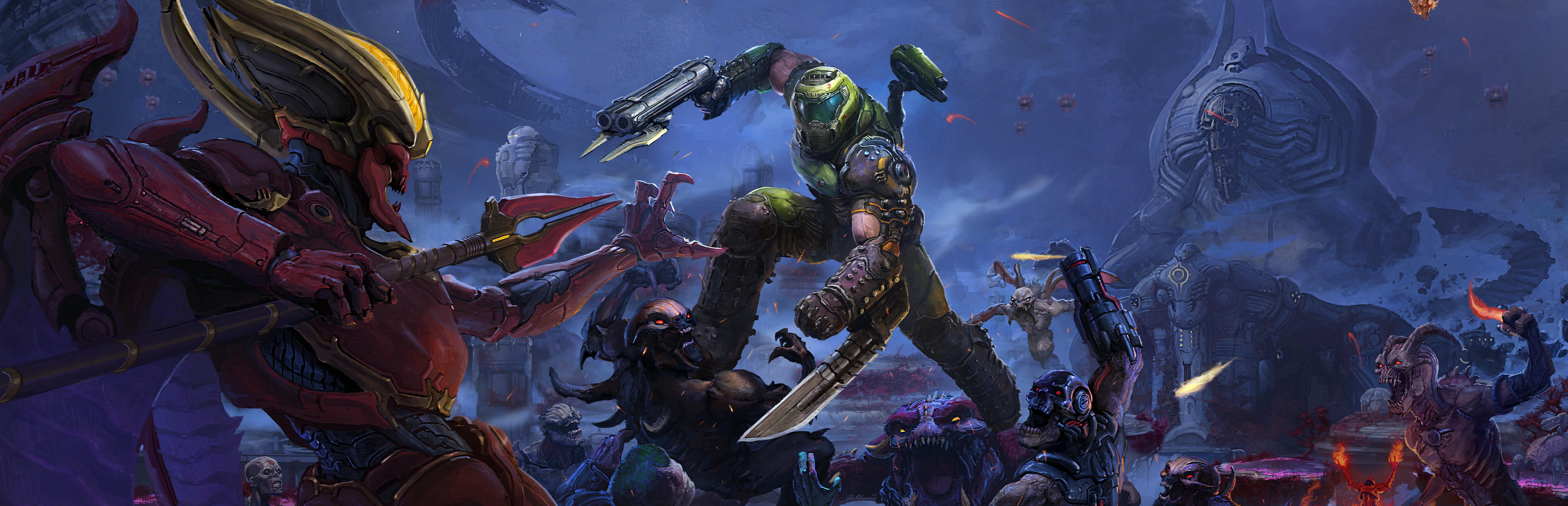
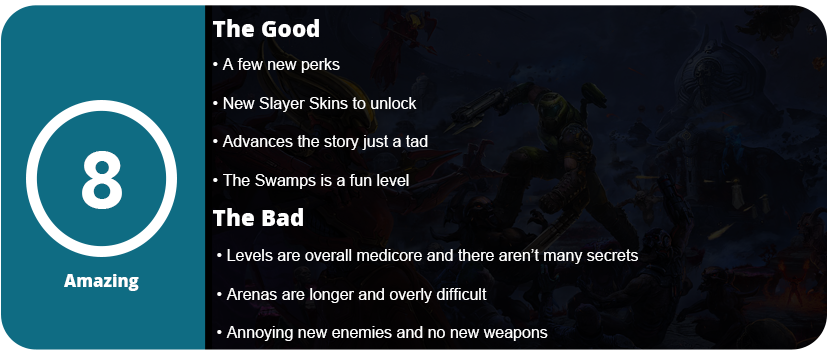
At the end of Doom Eternal, I was left with a bit of disappointment. Too many things were forced into the game, and it got tiresome towards the end. New enemies were uninteresting and slowed the pace down some—too much platforming—and the difficulty was all over the place, no matter what difficulty setting you were on. The Ancient Gods, sadly, exacerbate this by adding a new enemy that, once again, slows the pace down and is just an excuse to use a certain weapon mod. There are no new weapons, just three newish levels. I say newish as the third level, The Holt, is a recycled Urdak level. It’s boring and uninteresting, yet the first level, UAC Atlantic, is just a giant science center in the ocean. The Swamps, the second level, were the most interesting of the three, but they aren’t amazing overall.
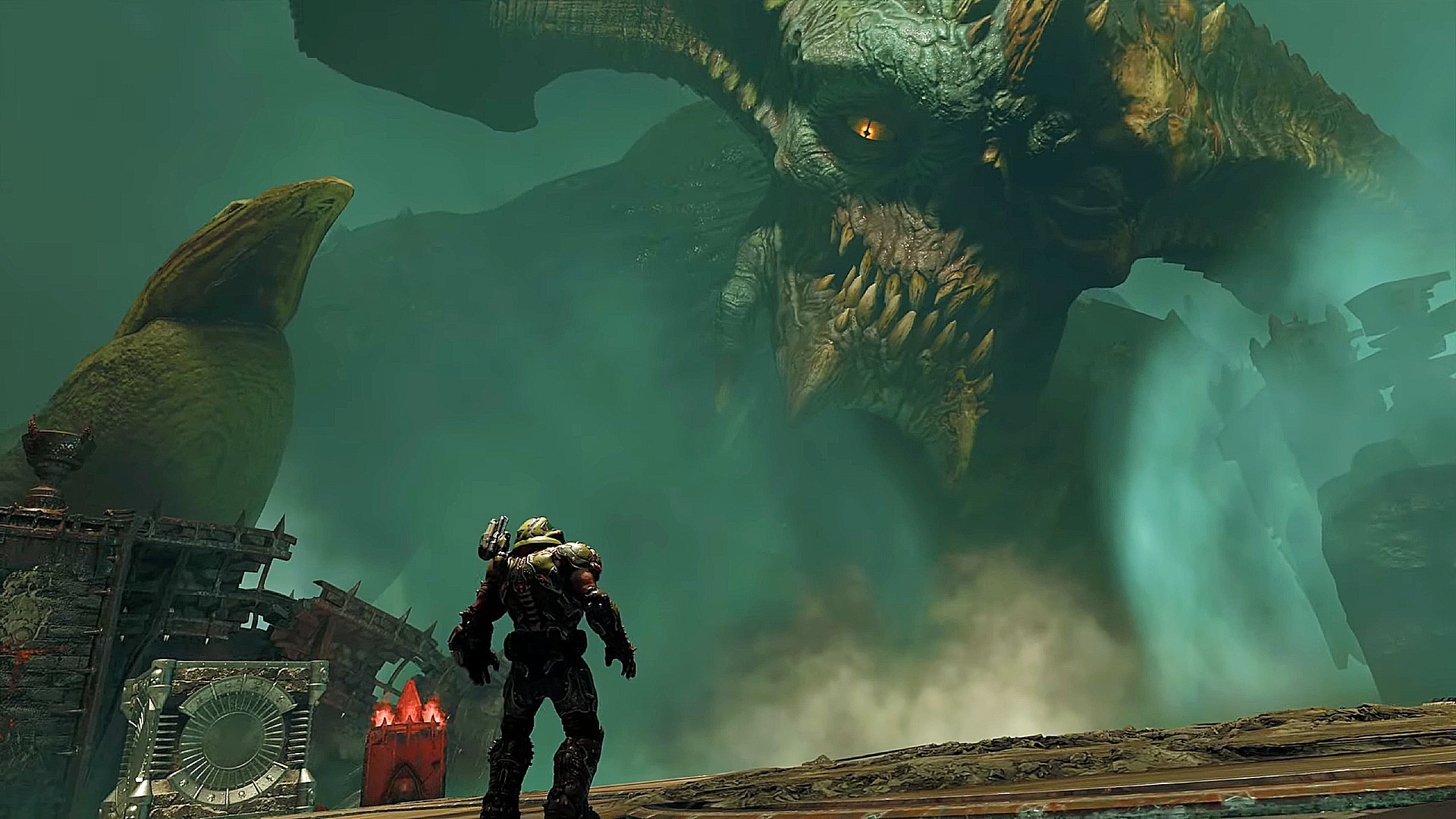
The story takes place right after the ending of Eternal, with Doomguy trying to kill the one true Seraphim God to end all demons. It’s mostly just dialog over intercom here and there and just barely advances the already silly Doom Eternal story. Outside of a few codex pages, there’s not much else to the story here. In fact, there are even fewer secrets to find. There are just 1ups, BFG ammo, and codex pages, and there are six gore nests and three slayer gates. The Gates will give you an extra perk that has been added, which isn’t very useful, and the Gore Nests reward new Slayer skins. That’s pretty much it for secrets, but the levels are very long and incredibly difficult. Combat arenas are tougher and longer, and I died numerous times in each level, even on the lowest difficulty. This is my biggest issue with Doom Eternal. Doom 2016’s areas felt hand-tailored, but Eternal’s felt randomized. Even the final boss is insanely difficult, with too much jumping and worrying about obstacles rather than just shooting.
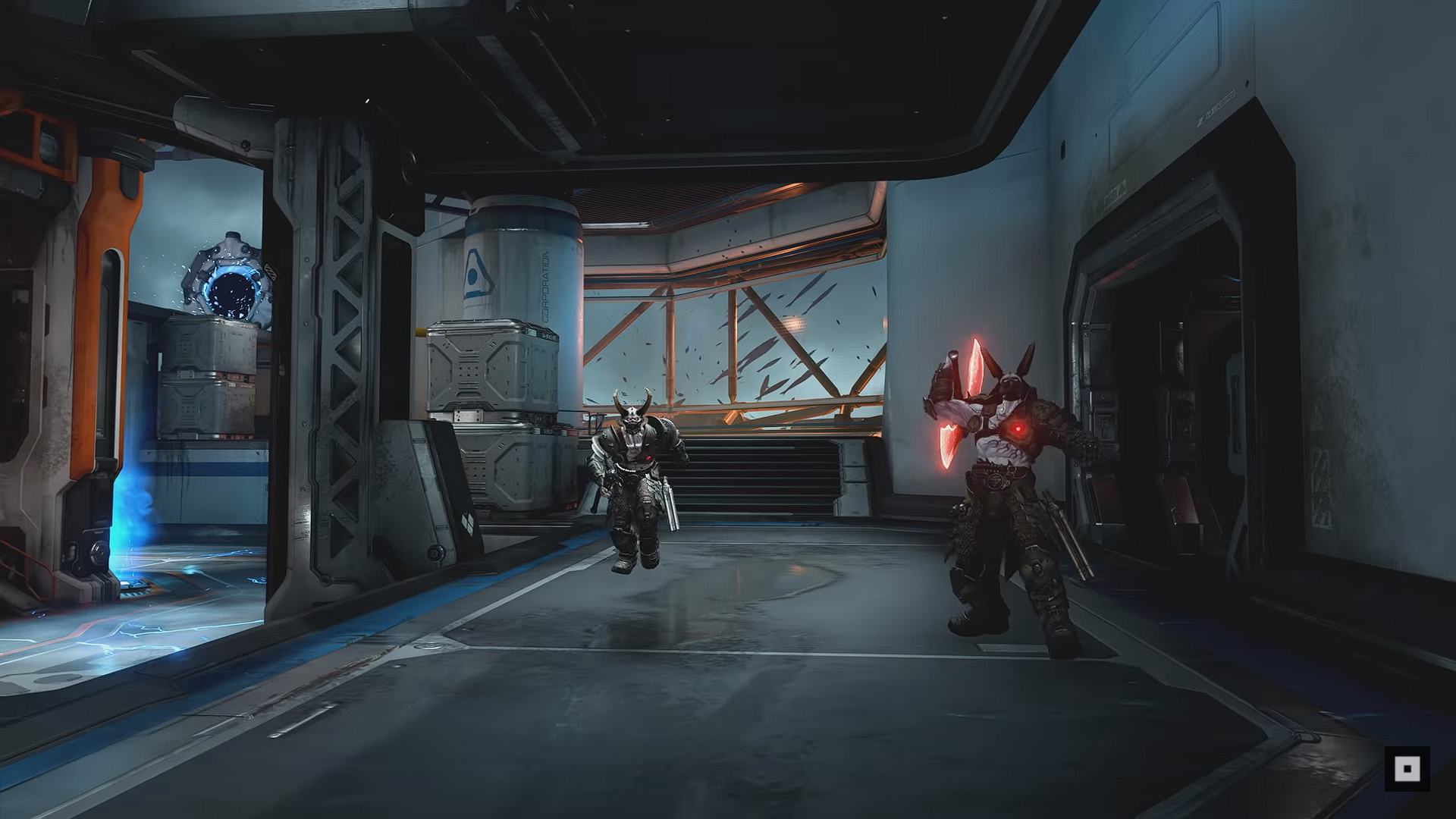
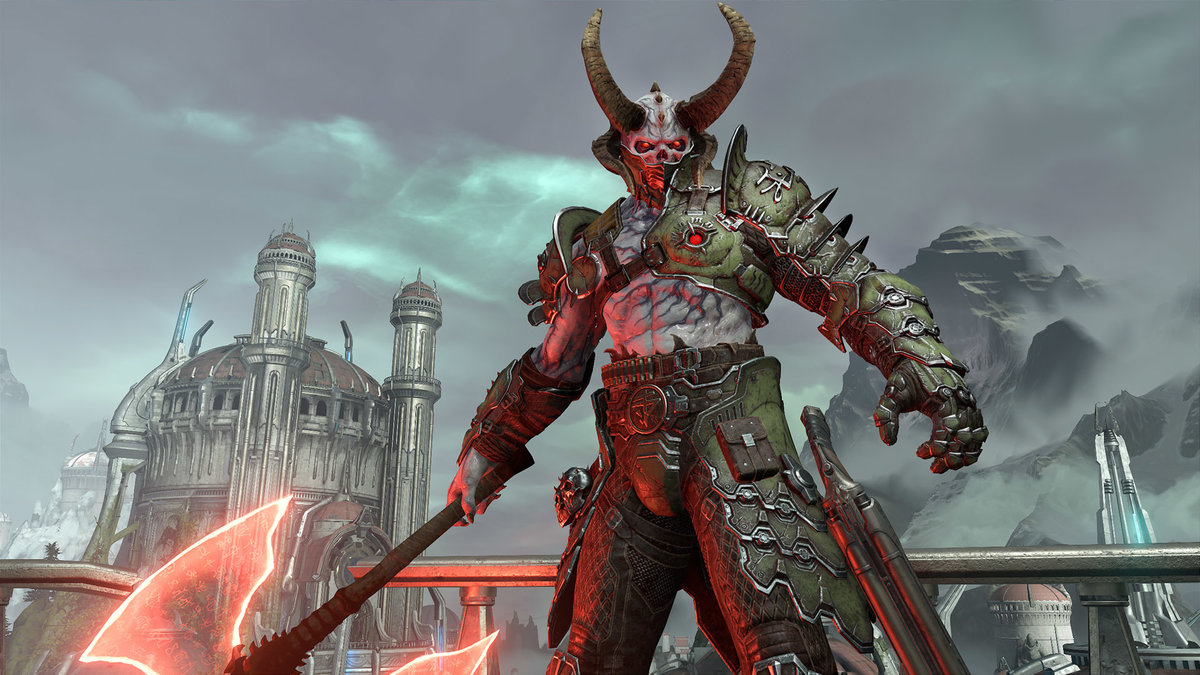
The Ancient Gods feel more like stuff from the cutting room floor than an actual expansion. There’s almost nothing new here outside of 2.5 new levels, a few perks, and two irritating enemies. Yes, like Maurader and Maykyr Drone, these enemies just slow the pace down. We get another Maykr drone that has a shield and is only vulnerable when it’s down, and then there are the spirits. These possess demons and make them stronger, and the only way to kill them is to use the microwave beam or kill all the enemies in the area so it disappears. Super annoying, not any fun at all, and just slows things down. I would have liked to see a new weapon or an actual demon.
Overall, The Ancient Gods is still fast-paced and fun in Eternal Combat, but it’s just not enough new to be considered anything more than some lost levels. Fewer secrets, new annoying enemies, insanely pumped-up difficulty, longer and less interesting levels, and only three new perks. It’s still plenty of fun, and if you finished Eternal early on, then this will give you a few hours of mayhem to get another taste, but it’s nothing to write home about.
Doom (2016) helped resurrect the aging and dying franchise. Doom 3 was scary and atmospheric but lost the fast-paced action of the original games. Doom bought this back in 2016 with a rocking soundtrack, fantastic visuals, fast-paced shooting, and what felt like Doom brought into the future, it was nearly perfect. Eternal follows in the footsteps of Doom 2016 by trying to expand the lore, story, and combat altogether. It does a great job doing this, but it does bring about some problems that didn’t exist in the first game.
You are still Doomguy, or the Doomslayer, trying to stop Hell from invading Earth. ID Software did a great job expanding the lore via a codex that has some interesting reads on the backstory of the Doomslayer, his origins, and what the world is that he’s trying to save and destroy. The locations are more varied this time around, with more back and forth between Hell and a mix thereof. Combat is basically the same as the demons you encounter, minus a few additions. A new shoulder blaster has been added that can shoot fire or ice bombs as well as a flame. I feel this was probably the most useless addition, as it’s one more thing to remember while you’re furiously trying to kill enemies. The ice bomb can freeze a group of enemies if you’re backed into a corner, and the firebomb does a decent amount of splash damage. The flamethrower, though—what was the point? On the other hand, you have a new super punch ability that can be used to knock out some demons’ armor and open walls for secrets. You also get a new dash ability, which is used for platforming.
That’s another thing that’s been added: more platforming. You can wall climb on some surfaces, and jumping from platform to platform works well enough but feels wholly unnecessary. Secrets consist of numerous items, from songs to unlock to play in the Fortress of Doom, codex pages, toys, and an all-new upgrade system for the Praetor Suit and weapons. Weapons get two mods each and can then be upgraded with weapon runes. There is also a mastery upgrade that requires certain requirements to be met, or you can skip the challenge with a mastery token. You can also upgrade your health, armor, and ammo with certain passive benefits. There’s a lot of upgrading and acquiring, and I feel this is an excuse to make the game feel artificially expanded. I preferred the simpler game of Doom 2016 with regular upgrades. I feel Eternal is doing too much for a game that’s supposed to be very simple. I also feel the new reboot series has run its course at this point. There’s not much else the game can do, really.
The combat itself feels fine and is incredibly challenging and mostly unbalanced towards the last few levels. There are 14 missions, so it’s much longer than the last game, running about 10–15 hours if you explore every nook and cranny. I found exploring for secrets quite enjoyable and fun, as everything is on the map and you just need to figure out how to get there. There are also combat challenges such as timed gore nests and crucible challenges that give you keys to unlock a hidden weapon. You can find sentinel batteries to unlock rooms in the Fortress of Doom, which is the new hub area that also has upgrade items locked away. It’s fine enough—a pain to navigate, but an interesting idea. I again feel that Eternal strays a little too far from the traditional Doom path in favor of more modern methods to make the game feel bigger and expanded, when in essence most people come to Doom for the visuals, gore, fast-paced shooting, and interesting levels.
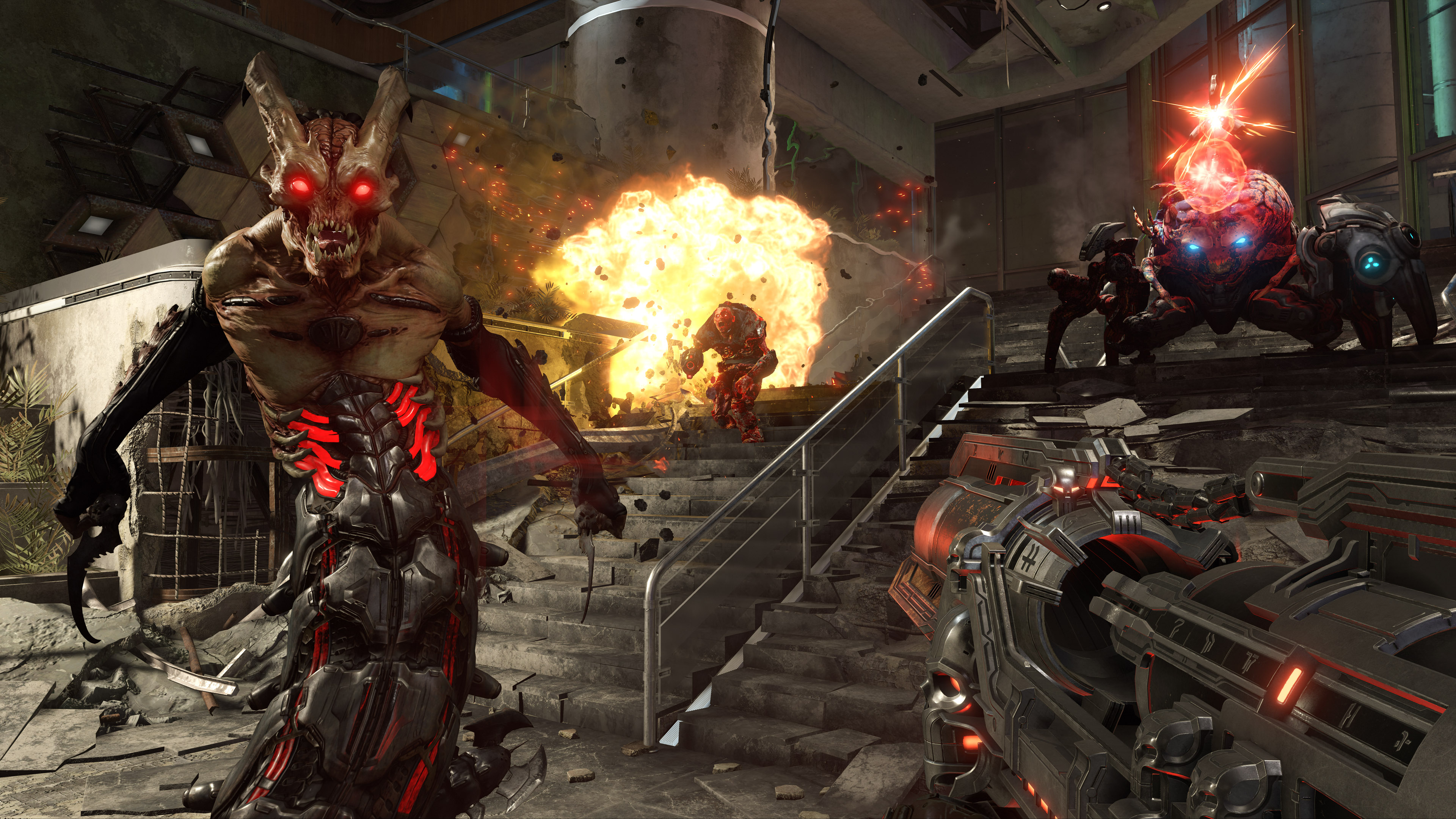
Speaking of levels, the game does overstay its welcome around mission 10 and feels like it just drags as you chase the final boss around. Not only are they incredibly difficult and almost unfair, but the levels end up being repeats of previous levels, and the Urdak level is boring to look at. I do like the first 8–10 areas, as they are interesting to look at with demonic imagery, gore, and just overall interesting atmospheres. The demons are great to look at and fun to shoot and tear apart. The quick-time event animations are much faster this time around and more varied. Each demon has its own set of front, aerial, and rear animations. Blue for health and orange for more ammo. You also have your chainsaw with three fuel cans to get yourself a large number of orbs, but this is also one of my gripes with the game. You have to rely more on using the chainsaw to acquire ammo and health from enemies than you do on picking them up around you. Instead of giving us larger ammo capacities, you have to constantly scrounge for ammo, and it drives me insane. I understand you run out of ammo sometimes in Doom, but every 5 minutes? I would die sometimes because I ran out of ammo and chainsaw fuel, so what do you do then? Use your super punch and hopefully have a weaker demon around for a scrap of ammo. This focus on ammo scrounging really needs to shift in the next game.
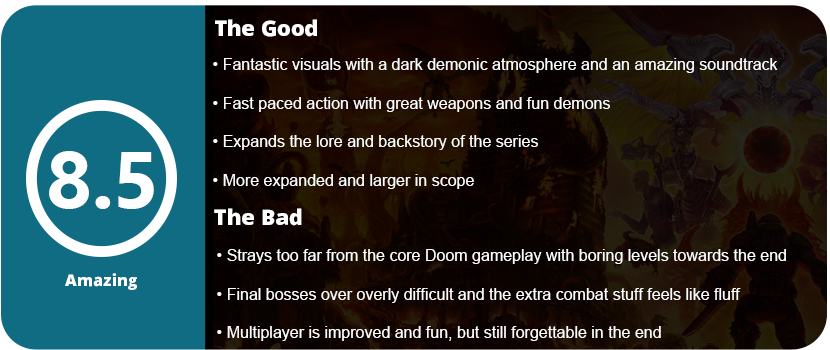
The multiplayer in Eternal is much better than Doom 2016, as PvP is out the window this time in favor of demons vs. the Slayer. Two demons and AI bots versus one slayer is kind of fun at first, but after about 3–4 hours in these modes, I was over it. It just doesn’t hold my interest like Unreal Tournament or Quake’s Deathmatches did. Doom was never really well known for multiplayer, and while it’s much better here, I wish it would just focus on single-player only. Overall, what we get is a great sequel to Doom 2016 with fantastic visuals, a rocking soundtrack, great weapons to shoot and demons to kill, and just amazing fast-paced shooting. The last few levels are boring and overly difficult, and the added stuff to combat feels like filler and fluff to pad a game that was already great.
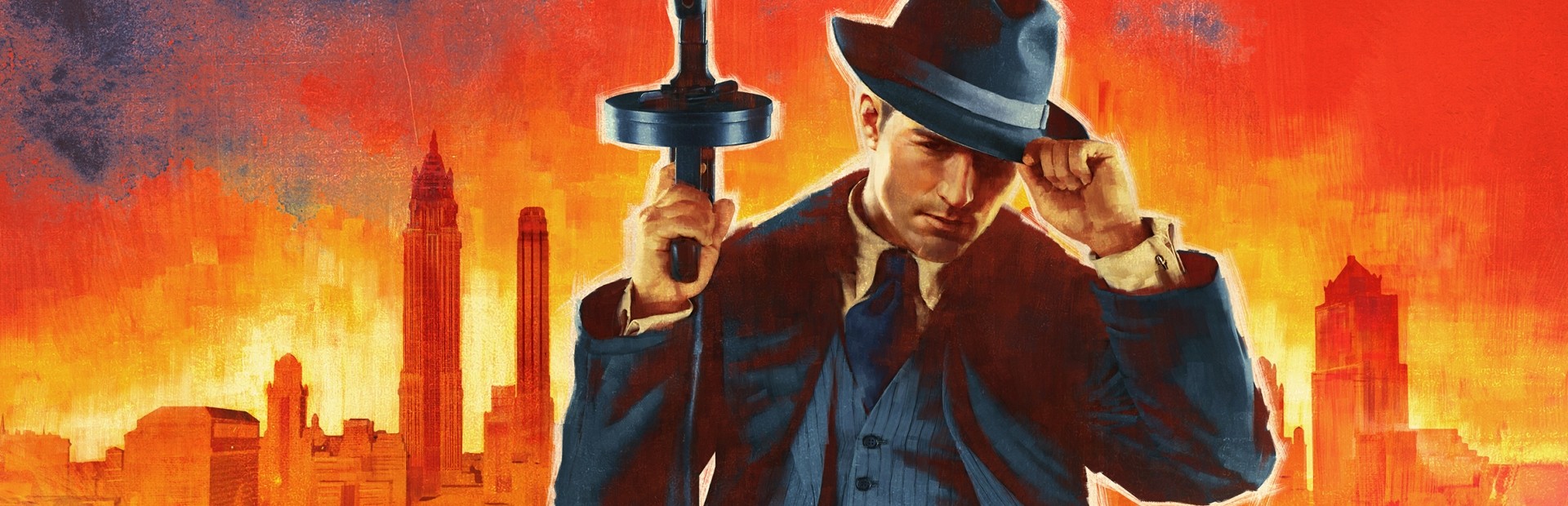
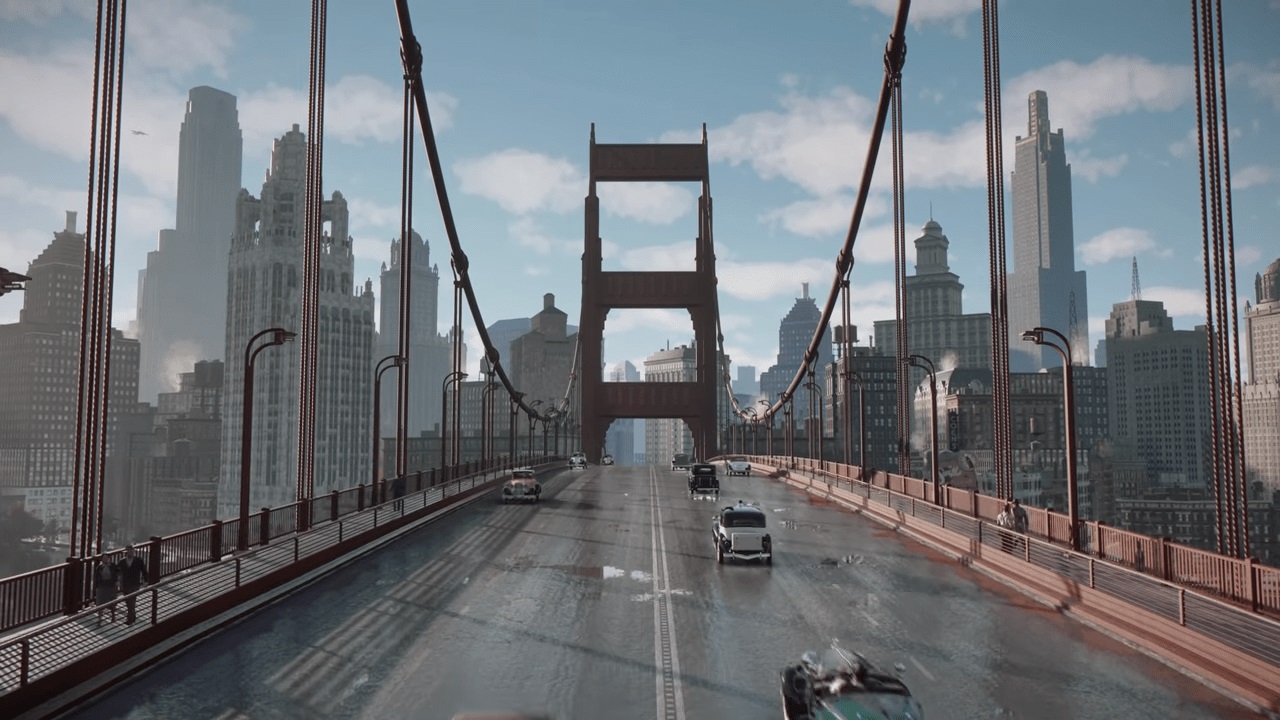
I remember Mafia back in the early days of the PS2 era. I also remember not really understanding it because I was 12 years old and probably shouldn’t have been playing a Mafia game. I also remember the game being as hard as nails, but that’s about it. 18 years later, Mafia is a classic and a surprising choice for a full-on remake. The game takes you through a story of the 1930s mafia motif as you follow Don Salieri’s family and, particularly, the story of Tommy Angelo. A simple cab driver just happens to be in the right, or wrong, place at the right time and gets inducted into the family. You and your pals Sam and Paulie go through the ebb and flow of a Don losing turf in a fantastical Chicago, Lost Heaven, and trying to gain the turf back from a rival mafia family.
The story and characters are the best part of the game and, honestly, the only reason to stick around. While the game looks and feels like 2020, it’s still structured like 2002. You see a cut scene, play out a mission, and that repeats about 15 times. The missions are at least somewhat varied, from running on foot to long shootouts to being a getaway driver. Sometimes there’s stealth involved with sabotage, espionage, and subterfuge. I was entertained throughout the entire game, but I kept feeling like I was playing an old game with a new coat of pain. While the controls work, the animations are fine, and the cover shooting is awesome, it just feels like an older game in the way it’s structured. I also felt the large open world of Lost Heaven was wasted, as the game is linear in design despite this open city. There are zero side missions or activities to complete, and the open city just acts as a living, breathing hub for you to drive around in during missions. It’s honestly a huge waste, as side missions could have been added in.
When it comes to driving, the game feels great. There are simulation and arcade modes with automatic and manual transmissions, and you also must drive on the road and follow the rules or get pulled over and cited. This was a super awesome concept back in 2002, but today it feels pointless as you can speed if you don’t see a blue blip on your map nearby. Until I understood that I got pulled over only twice early on and used my speed limiter, Once you figure all of this out, the whole “traffic law simulation” gimmick is completely out the window. You can get wanted rating stars and lose the cops like in any open-world crime game as well, but that’s literally it for the world. Shooting feels fine with a decent cover system, and peeking over and blind fire all work well, but the shooting feels loose and ancient. It has this wonky feel to it that I can’t quite put my finger on, but it still retains the stench of a 2002 third-person shooter, and while not game-breaking by any means, it’s still noticeable and just feels a bit off. The PS2-era difficulty spikes are also present, as more than a few shots will kill you. You can find pills laying around sometimes, but overall, you have to use the cover and play whack-a-mole or you will die fast.
My biggest gripe is these difficulty spikes. I will play a few fun missions, and then I get thrown into a huge shootout level with wave after wave of enemies, and I will die numerous times. The same goes for overly long chase scenes. One crash, and I would lose my chase and have to start all over again. This is more of that 2002 stench that just lingers in the air around all the 2020 glitz and glamour. Sneaking is fine as well, as you can perform takedown moves, and those missions weren’t insanely long and the levels were easy to navigate. This simple mission structure is also a piece of 2002 that Hanger 13 just couldn’t shake. I would have loved a whole new shooting system and some more stuff to do in Lost Heaven. See, the issue here lies in absolutely zero reasons to go back. There’s a “free ride” mode, but you just drive around doing nothing in the city. Again, that was fun and exciting in 2002, but today it’s a snooze fest.
Overall, the visuals are fantastic, with great lighting effects, animations, and terrific voice acting. Lost Heaven looks like a living, breathing world, but you’re just shuffled from mission to mission, unfolding a well-written story with likable characters, only to have zero reason to go back afterward. With nothing to do inside the open world and having silly collectibles distract you from mission objectives, as well as lingering issues from the original game, there’s just too much 2002 mixing with the 2020 stuff that makes things connect weird. It’s a fun ride the first time around, but after that, there’s no reason to revisit.
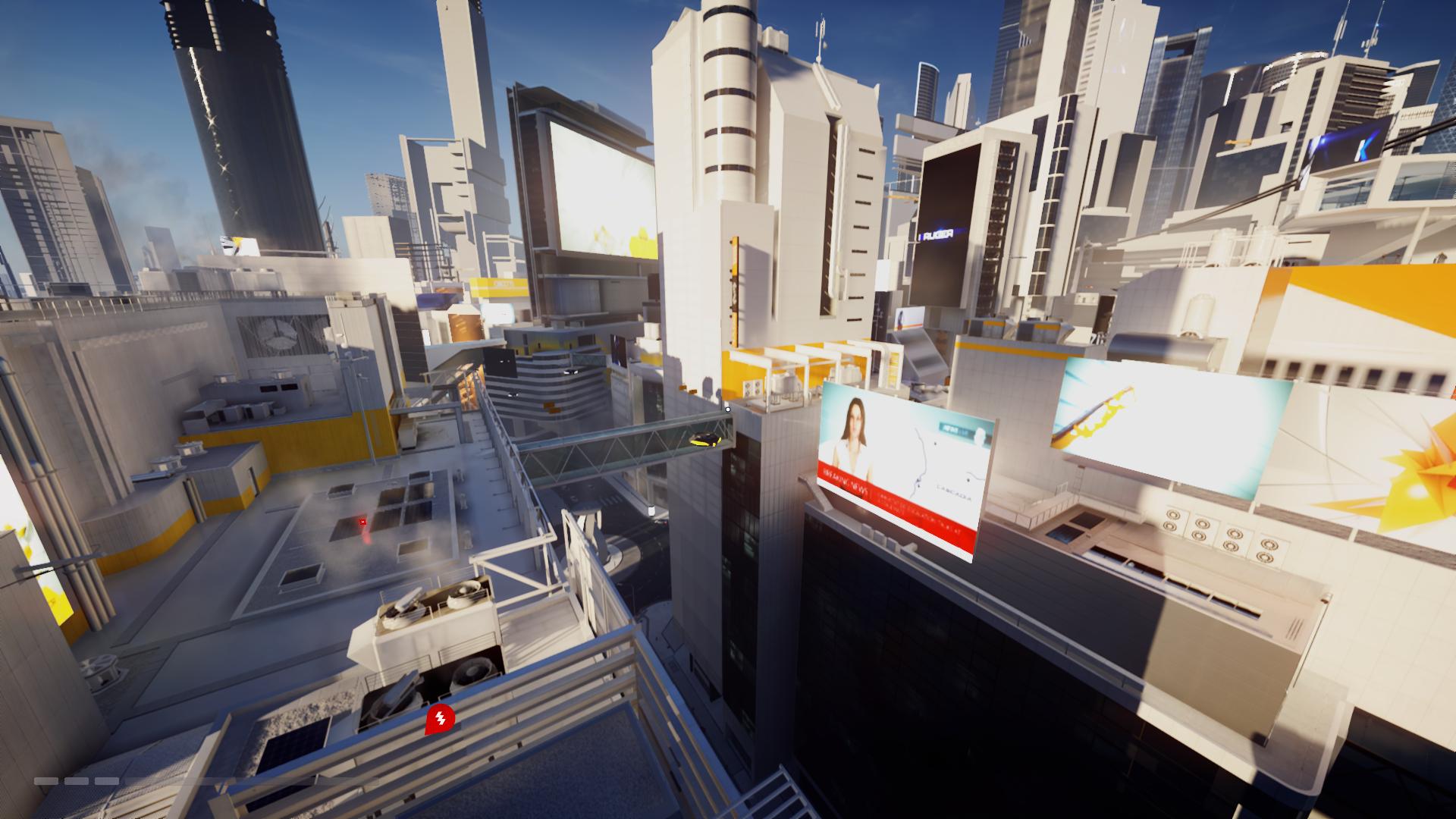
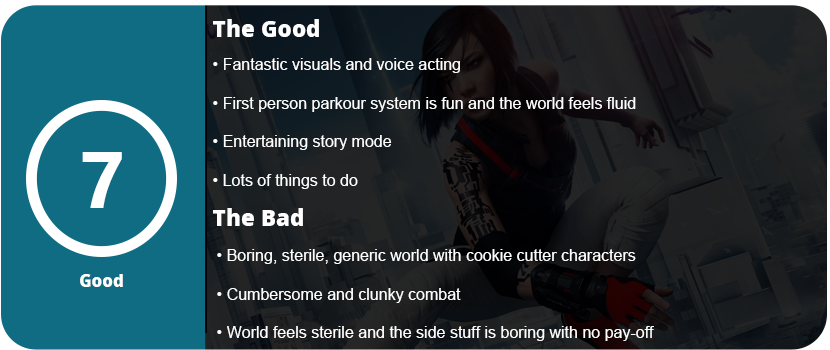
Mirror’s Edge is actually one of my favorite games of all time. It didn’t sell well, hence the near-decade hiatus, and a lot of gamers just didn’t get the game. It also had a lot of flaws, such as linear-level design, a paper-thin story, and awful combat. While Catalyst improves upon a lot of weaknesses from the first game, it also never addresses some as well. EA DICE really tried pushing the story further by showing us more of Faith’s past and how she’s tied to the KrugerSec conglomerate that’s brainwashing the entire country. Faith, along with the help of friends, must stop this evil police state and try to free the people. While this is good and all, the problem is that the world itself is sterile and boring, as are the characters. There’s no reason to really care outside of the somewhat entertaining story missions thrown at us. Icarus, Plastic, Noah, and various other characters just feel like cookie-cutter generic fill-ins for something that could be more.
This also goes for learning about the world. The majority of the game is actually filled with side missions, time trial runs, collecting things, and audio recordings. Here’s the problem with all of this: I just do not care one iota to do any of these. I spent a good ten hours trying to complete every mission as I went on, and then I just gave up. I don’t care about this world enough to bother spending more than the 8–10 hours the story missions give me. While the art style is faithful to the original with vibrant reds, blues, whites, and oranges, running around the city on top of glass just isn’t interesting. I’m glad there’s an open world here rather than linear-level design, but if it’s filled with boring filler content, just give me a better linear story mode. I don’t want to hack billboards to put my “ghost” on them for other players to see. I don’t want to create my own run trials for others to play. I have never cared less for an open world than in Catalyst. You pretty much see the entire city during the story missions, but after collecting the 100th chip, the 150th blue orb, and finishing at least two dozen trial runs and side missions, I just stopped caring. There’s no real reward for finishing all of these outside of “drops,” but you get to customize your ghost for players to see online.
Here’s something else to consider. I had this game installed on my PC for four years before finally finishing it. I wanted to complete the game as much as possible, but every time I booted it up and saw the dozens and dozens of icons on the maps and finished a few side missions, I turned it off. I have never had a game installed on my PC for that long without making frequent progress. I had a kid, went through three GPU generations, built two whole PCs, became a nurse, moved states, lost my father, and had a second kid on the way. All that happened between the release and finishing the game. The world is just plain boring, and the story isn’t interesting enough to warrant sticking around for most gamers. I really like Faith, as she’s a well-designed character, but her personality is very one-note, and she feels generic as well.
Let’s talk about what you can actually do in the game. The entire appeal of Mirror’s Edge is the parkour system. The first-person parkour system is a lot of fun and, honestly, the only saving grace for the entire franchise. You can run, jump, slide, double jump, zipline, and propel yourself around the buildings with grace. The new runner’s vision is a must, as this is a red line you follow, and the objects you need to use turn red. While running around and jumping around buildings is exciting, after 15 hours, you grow tired of it sometimes. Only the story missions provide something new to climb on or new environments to be in, as well as scripted events. The controls work for the most part, but it’s the combat that hasn’t improved much and is a real pain. I honestly wish they just nixed combat together for the series. You can do heavy and light attacks, but also while jumping off walls, off ledges onto enemies, and sliding into their legs. If they’re stunned, you can do quick three-hit combos, dodge and kick from behind, and all that jazz. It works, but it’s very frustrating when you confront more than two enemies at a time, and it’s not fun when you aren’t on the move. Most of the time, you can avoid enemies, and only a few instances require me to take them down, but combat isn’t fun at all. The guns are gone in this game, but the combat just feels clunky, heavy, slow, and cumbersome.
That’s pretty much all there is in the game. It looks fantastic as it pushed the Nvidia 10xx series cards to their limits when this game came out, and I remember my GTX 970 couldn’t run the game on Hyper settings at 60FPS. It just looks so good, but again, it is very sterile and boring to actually be in. The main missions provide entertainment for about 8–10 hours, but the extra side stuff is a pointless borefest. The parkour system combined with an open world just isn’t interesting enough to justify spending 50+ hours completing everything. Every area pretty much looks the same, and the characters are boring and generic. I feel the series needs a complete overhaul, if it even gets one. Due to poor sales of this game, we may be seeing the end of Faith. Stay for the story, and then don’t bother after that.
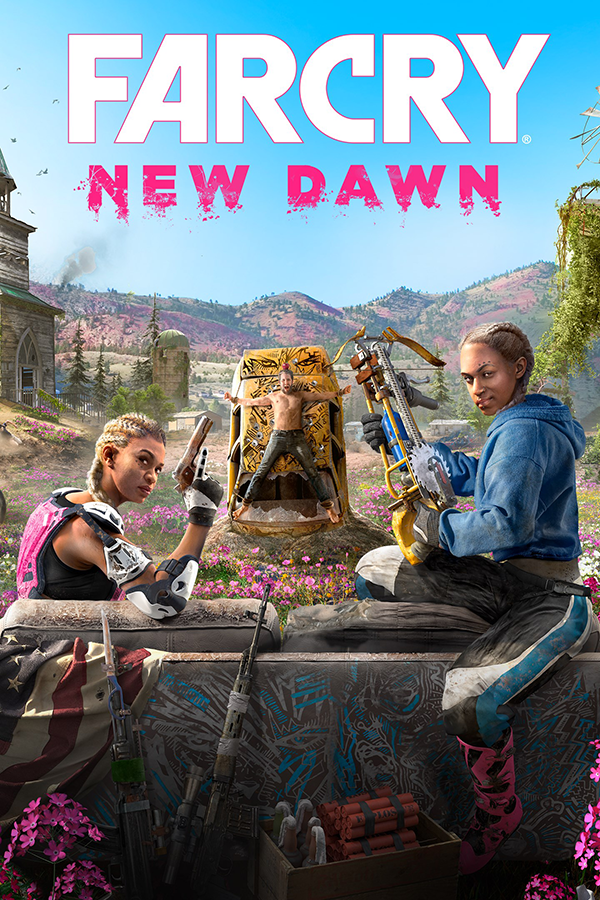
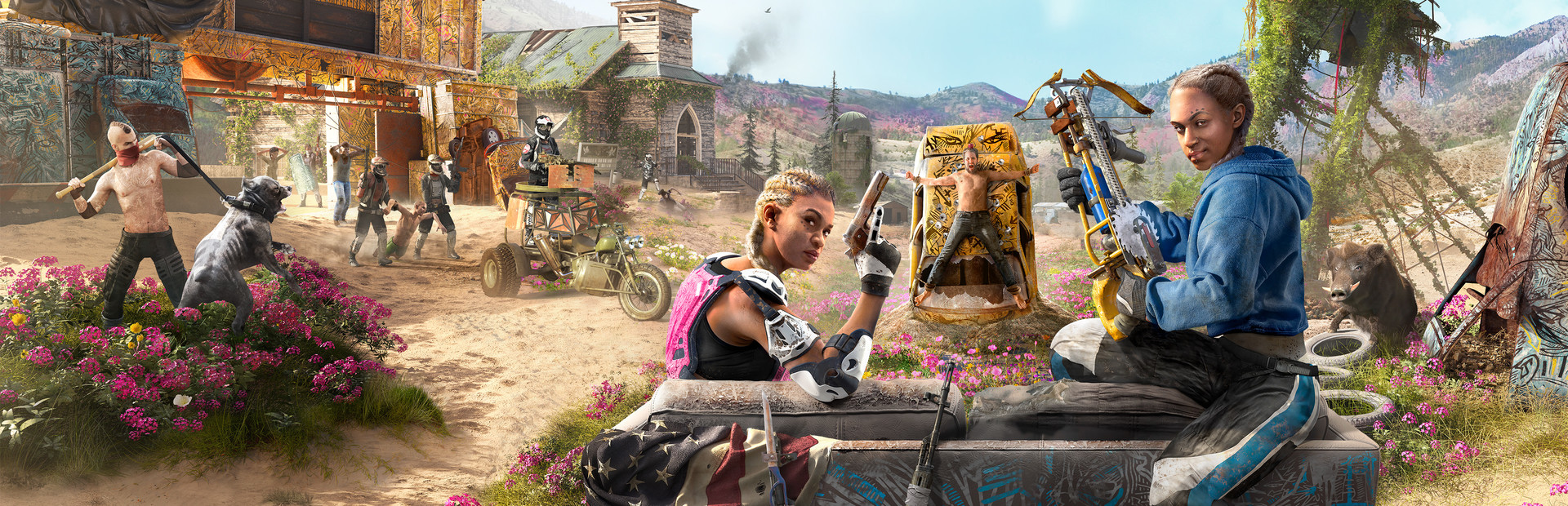
One of my biggest problems with Far Cry is that it’s too big. Every Ubisoft open-world game has become so large that it’s boring to explore. I’d rather have a smaller area with more interesting things to do. No longer does a large, open world impress people these days, as it’s nothing new. These games just keep getting larger and larger, but what you do inside has not evolved much. Running around taking out the same outpost 50 times, collecting things, hunting animals, upgrading stuff—it’s just so trite that I just don’t care for it anymore, and Ubisoft is the worst offender out there.
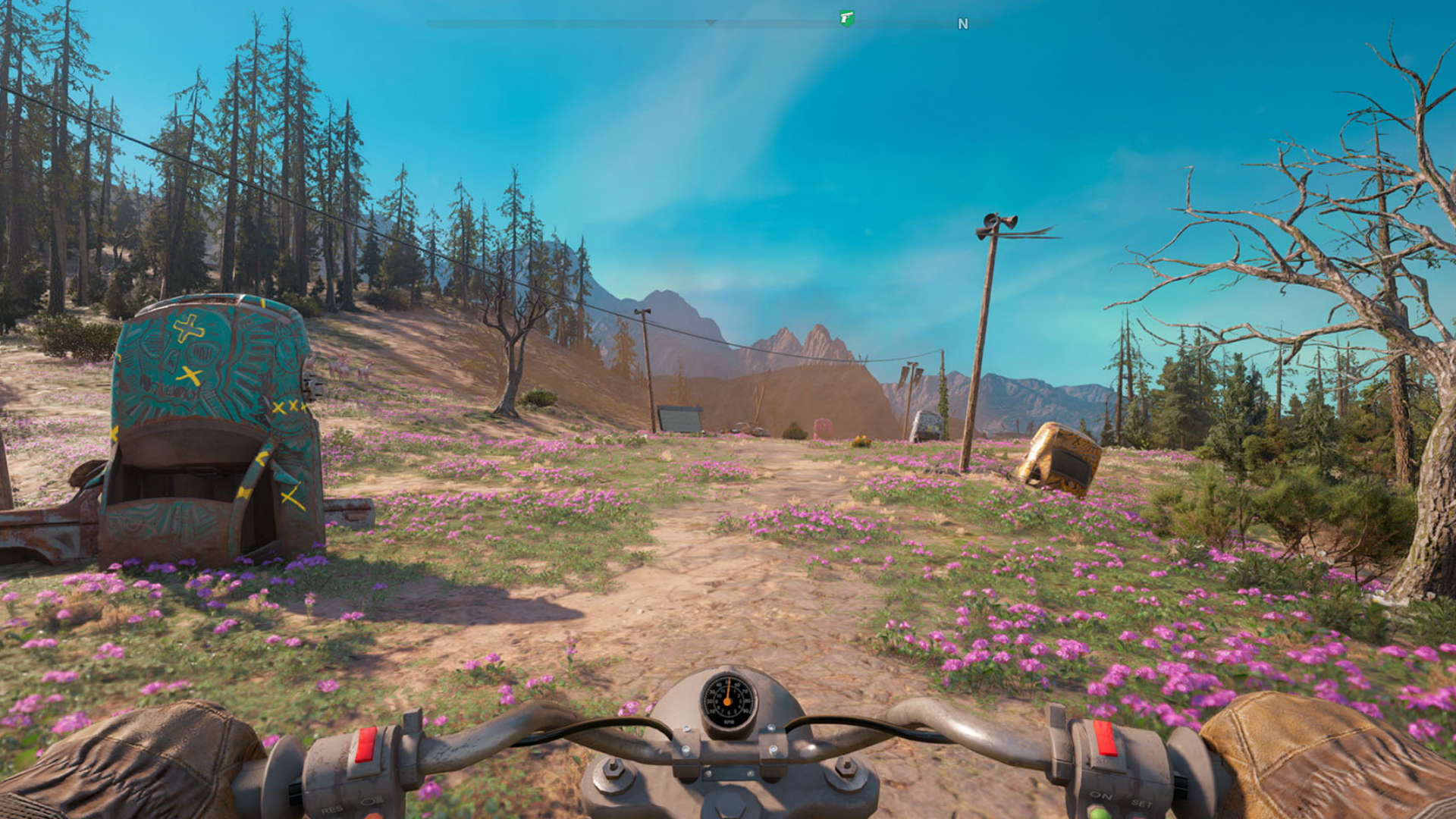
New Dawn is a direct sequel to Far Cry 5, in which you play as a nobody who has come across Hope County in its isolated post-nuclear world of Montana on a train of survivors and gets ambushed by the sisters Lou and Mickey. These are the antagonists of the game, and while they have a great personality and hit that Far Cry villain meter just right, their screen time is cut down to just a few scenes. The entire game is basically Far Cry 5, but more post-apocalyptic this time around. If you played that game, nothing has changed here outside of a new ranking and looting system that is forced upon the player to even progress in the story. It’s something that drove me insane through the entire game, and I always hit a progress wall because I had to stop and grind for material to unlock the next weapon bench level, which then unlocked the next weapon level, but to craft those weapons, I had to grind for different material. I mean, Christ! Do you see what I mean?
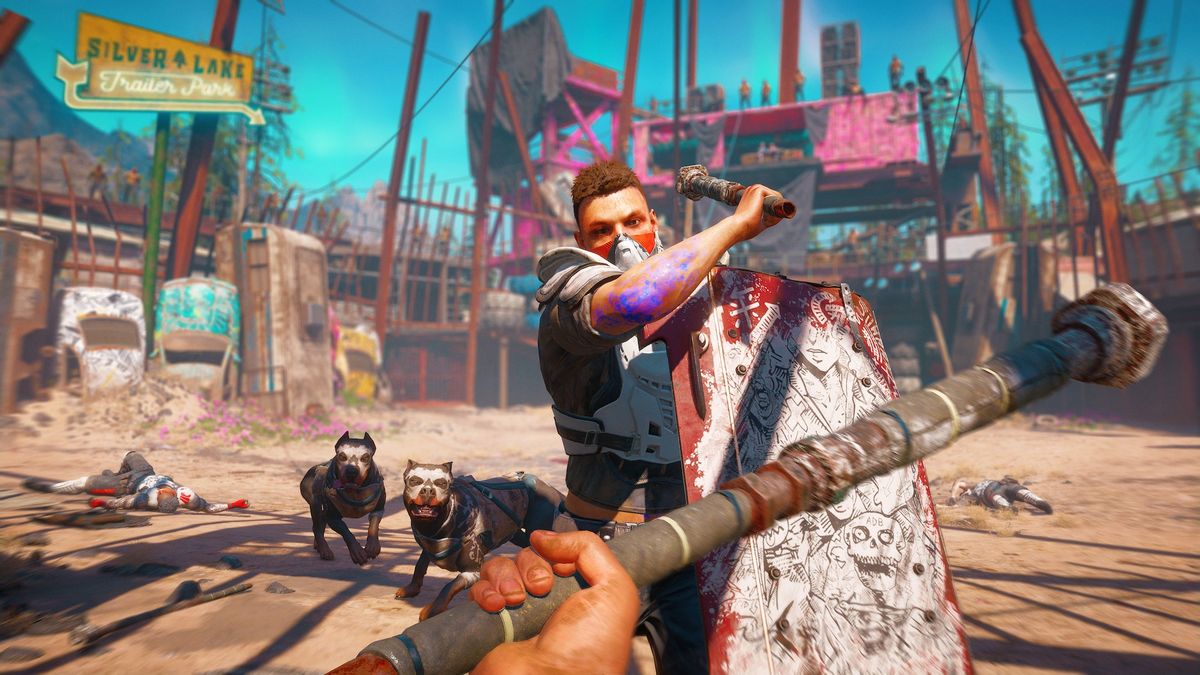
The game is broken down into four different levels, with the highest being an Elite rank. The enemies are ranked and are only immune to weapons of that rank as well. This is the stupidest system they could have used to try and make the game more interesting. I can use level two weapons on level three enemies, but I will die and dump tons of ammo into them, and I can’t carry enough even with my full ammo perks. The entire game can really only be played one way, to be honest. The main material to upgrade your main output, prosperity, is ethanol. This is acquired by liberating outposts. Oh jeez, liberating outposts? I wonder where I’ve done that before. Once you liberate the outpost, you get ethanol and a bonus if you don’t set off alarms or aren’t detected. I believe there are about a dozen outposts in the game, but the redundancy doesn’t end there. Once you liberate all the outposts, you need to re-liberate them! Yeah, what?! This is to put that rank system into play and let you take it on with the next level of enemies. Then you get even more ethanol, and the process repeats. You can’t even progress to Chapter 2 without upgrading all the stations at least once, which requires liberating all outposts. You can steal ethanol trucks, but it’s not enough to bother with.
Once you finally progress, you are at least using level two weapons, and I stuck with this for most of the game. However, I hit a wall at the end of the game as I couldn’t finish a mission without elite weapons. To do this, I had to liberate a few outposts, upgrade the station, and then grind for materials to get at least one elite weapon. To do this, I had to do expedition missions that are so boring and annoying, especially without a real co-op partner, to get the circuit boards that are needed for most elite weapons. That wasn’t enough, though! I needed to hunt the elite animal for its skin too! Just…the walls never ended, and it was just one after another after another. In between these walls, there’s really nothing to do outside of collecting materials all over the place. That’s literally it. The game is a borefest outside of the mildly entertaining story mode, as I did enjoy seeing the villains on the screen, including Joseph Seed.
The game map is also just too damn big. It’s smaller than Far Cry 5, but everything is spread so far apart that driving is a must, but I never even bothered flying anywhere as you have to grind to unlock flying vehicles. I feel like all the work I did in Far Cry 5 was reset after playing this game. The entertaining parts of Far Cry 5 are absent, like the arcade mode and the stuntman levels. There are a few side missions here to acquire allies, but they are mostly uninteresting. After I got just enough stuff to finish the game, I felt there was no point in continuing. The entire game is built around grinding to progress in the story, but once that’s done, what’s the point of finding everything? You can unlock perks for stealth kills and various other things that are mostly useless, like faster cooldown on mounted weapons. What’s the point of that? The game relies way too much on this material system to build up everything without it ever meaning anything after the story is finished.
Overall, New Dawn is worse than Far Cry 5, but taking out all the fun and wrapping the game around a grinding material hunting fest and smacking you will progression walls constantly. The map is too large and empty; there aren’t really any modes or things to do outside of looting materials; and the only really entertaining parts of the game don’t get much screen time. This feels like the most useless Far Cry game to date, as if it never existed, anyone would miss it. Even if you did play Far Cry 5, there’s no reason to even play this outside of sheer boredom. The shooting is still solid like always, and the visuals are amazing, but that means nothing when it’s inside of a boring, empty world that forces the player to play the game a certain way and then gives them the finger when the game is completely over.
I Am Dead is a curious object-hunting game about the ghost of a museum curator. That may sound boring on paper, but it’s quite charming, and the mini-stories within are nice enough to keep the game moving along. You discover you have died, of what is unknown, and you can see through objects like a ghost or “slice” objects. This is a game all about a no-clip camera! It’s pretty cool at first, as you can push the camera through an object to see what’s lying or hiding underneath. This is 100% a hidden object game with a larger budget. The goal of the game is to find a spirit that can take over, quieting the island of Shimerston as the volcano is about to erupt. You slowly learn of the island legend and the five main characters you need to try and convince to do the job.
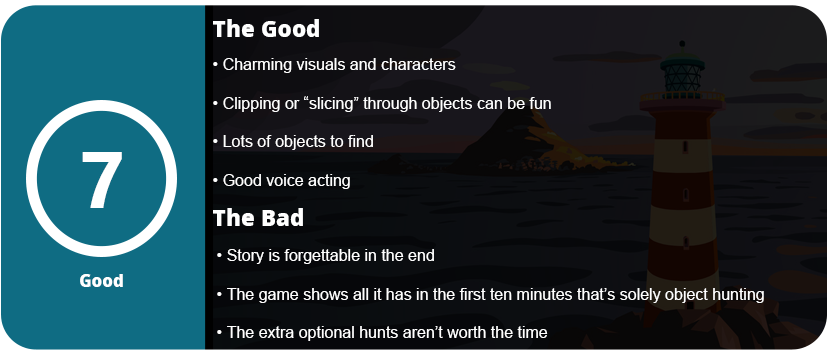
There are five objects to find on each level. You spin around an area with smaller areas to click on, and then the object hunting begins. To know what you are hunting, you click on characters with bubbles, as you will recall their memory, and the main object they are talking about in that memory is what you will hunt. The stories are the most charming part of the game. They are super short but well written, and during these stories, they rotate some sort of weird globe to focus the picture. It’s pointless, but it’s something to do during all the talking. Once you know what object you need to find, you will get a hint if that object is in the area you clicked on by the icon popping up on the screen. It was never too difficult to figure out what the items were, but the optional Grenkins objects are a lot tougher. This is a side puzzle that requires you to rotate a certain object, like a shadow game, so only part of the camera clips through and it looks like the icon. If the Grenkin object is what you clicked on Sparky, your canine companion will bark, so you aren’t aimlessly rotating every object. There are additional, tougher objects to hunt if you can find the secret list. These are tiny objects hidden inside others, such as toys or bugs, and you only get descriptive hints as to what they might be.
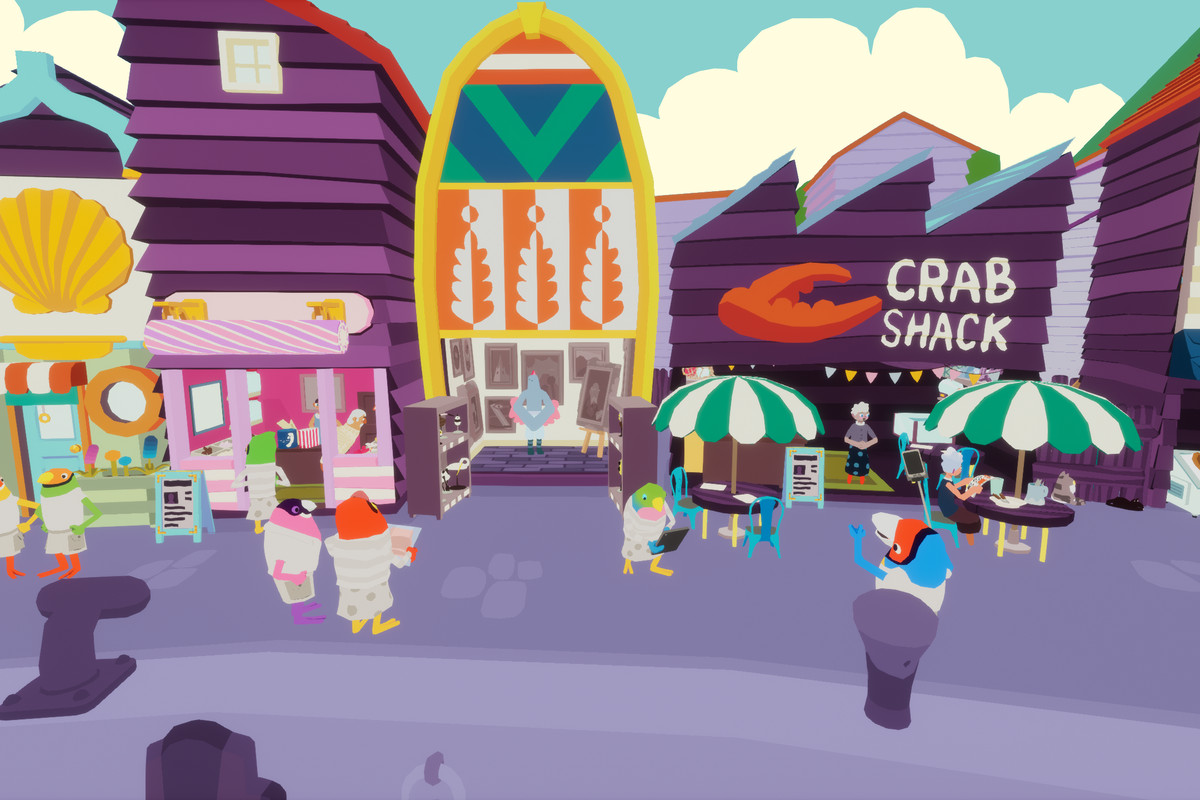
To be honest, the game shows you all it can do in the first ten minutes, and outside of hunting for the main items, I collected Grenkins for two levels and stopped. It was just too much to endlessly rotate and hunt objects forever, as the main story was already asking for a lot. If you really love the gameplay mechanics here, then it’s for you, but after so long, I got tired of it and wanted to see the story progress. There is literally nothing else to do in the game outside of object hunting, as that is the sole mechanic. At least the areas are varied, and no single object is the same. You can finish the main story in about 4 hours, but if you collect everything, you might be here for over 10. The visuals are quite charming, with a flat pastel color and low-poly objects. It has a unique look, and each item is surprisingly detailed, both inside and out. There are hundreds of objects to examine, and it’s quite impressive that the developers went through all that effort. The voice acting is also quite good, and it helps seal the aesthetic.
Overall, I Am Dead is a fun object-hunting game for a few hours, but the story, in the end, doesn’t wow you or have a twist ending. It’s pretty predictable, and the extra puzzles aren’t worth your time as there is no reward outside of just doing them. The visuals are charming, and there is a lot of detail put into the objects you examine, but the entire game shows everything it can do in the first ten minutes and never evolves beyond that. If there was something more to this game than just clipping through objects for 4 hours until I found what I needed, I would stay longer, but this game is mostly for object hunting fanatics.
X-Wing vs. Tie Fighter is a PC flight classic. It was chaotic, a great mix between sim and arcade gameplay, and a blast to play, and you felt like real Star Wars pilots. Squadrons try to re-capture this lightning in a bottle by letting you play as both New Republic and Empire pilots. You fly in the Vanguard Squadron for the New Republic and the Titan Squadron for the Empire. You play as an unnamed pilot in each squadron, and the story is set between movies VI and VII after the battle on Endor. The New Republic is trying to build a new starship, and they needed empirical parts for it, while an empirical captain is trying to stop them and wipe them out. The characters are interesting and well written, and the story is rather tense, with a constant tug-of-war on who keeps getting the advantage. While you’re playing on one side, you don’t know what’s happening on the other and won’t find out until you switch back after a few missions. It’s really intense, and I loved it.
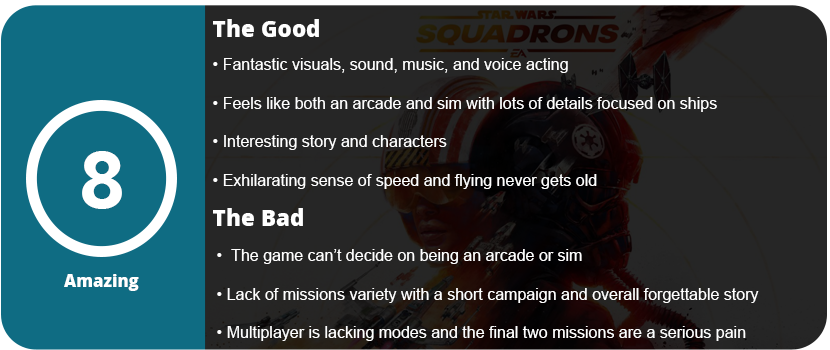
That’s not to say the story is memorable or anything, but it’s a good start, as I’m sure more of these games are to come. Once you create your pilot, which is rather basic, you jump into the base of either side, and this is where things differ from other Star Wars games. You stand still and can only spin the camera around and click on contextual items. Outside of inspecting your ship, you can talk to the other squad members optionally, which gives you insight as to what’s going on in the war and a more detailed context of what is just going on in the Star Wars universe. The voice acting is great, and each character has a great personality, but there is still nothing super memorable. Once you get your briefing and select your craft, you head on out. The first time you start up, you are launched out into space in real-time, and it’s exhilarating. Flying never gets old, and it’s a shame the story is only 14 missions long. Each side has the same controls, but the Empire ships have more firepower and the Rebel ships have more shielding.
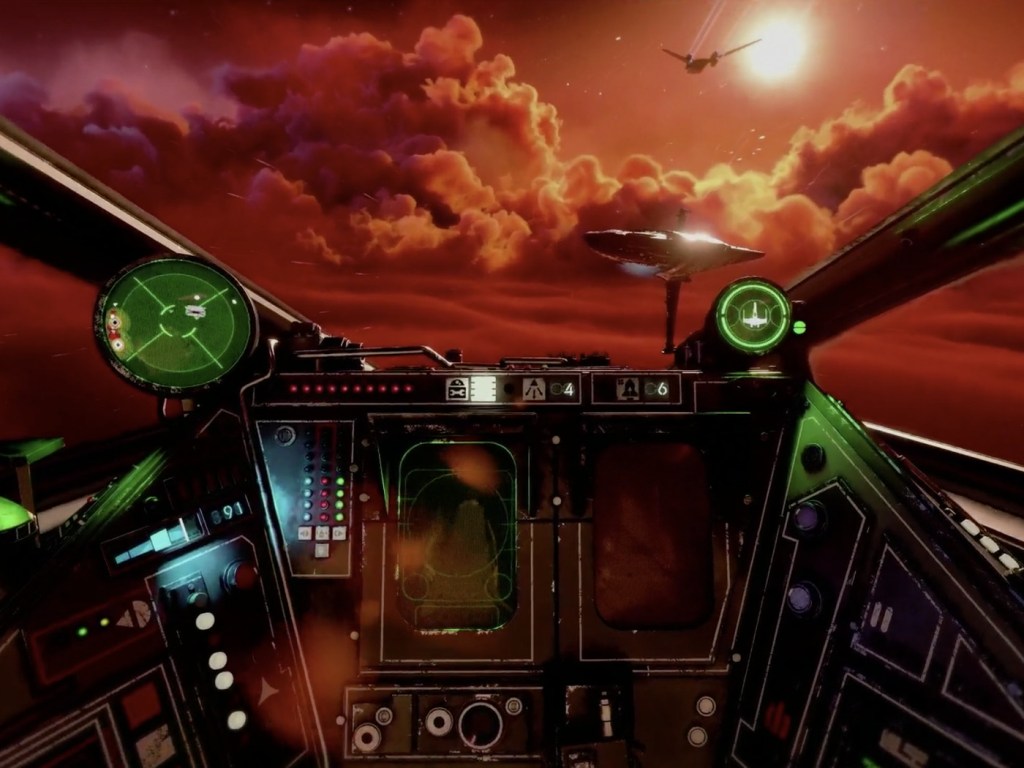
Controls are slowly unlocked and dished out over the first few missions, but it’s the same all around. You can shift power between engines, lasers, and shields (if they are equipped) to allow more speed or firepower. This is essential, as you will constantly flip between these as well as divert more power to either engines or weapons when you are the Empire. Sometimes when you destroy capital ships, you want to go slower with more power, but fighting Tie Fighters, Reapers, Bombers, A-Wings, etc. will require more finesse and speed. The steering feels rather smooth, and each ship feels different. Either slow, long, or even zippy, the ships are well designed. Shooting something down is rather satisfying, as there is a button to flip between enemies, and once you track them, the system can lock on for missiles or you can shoot them down with lasers. The system will tell you if you are out of range, and you can’t just lay down fire forever. There are meters for refilling everything from lasers, missiles, repair kits, scatter flares, etc. You can call in for refills, but this also has a refill meter. It’s a delicate balance of using your resources wisely, and this is where the simulator part comes in. The arcade part is the instant lock-on, the less obtuse flight controls, and not doing insane stuff like pre-flight checks, fuel, etc.
While I’d love a full-on simulator version of this game, what we get is fine, as the balance is nicely done. I just wish the mission was more varied. I know the game is about shooting things down, but rarely does anything new come up outside of shooting these things down. It was fun attacking a giant Star Destroyer or the Starhawk itself, which loomed overhead and felt like a planet. Targeting ship systems was fun, and even flying inside one here and there was a blast, but most of the game is just shooting small ships down, and it got old after a while. I wanted more scripted events or something, as I can shoot down small ships all day in multiplayer. The final two missions were also a serious pain, as you need specific weapons and ships to complete certain objectives, and I constantly died until I figured it out. They dragged on for far too long, but the rest of the missions were entertaining the first time around. The ambiance is also very Star Wars-y, with chatter and banter during flights, iconic ship sounds, blasters, explosions, and great music.
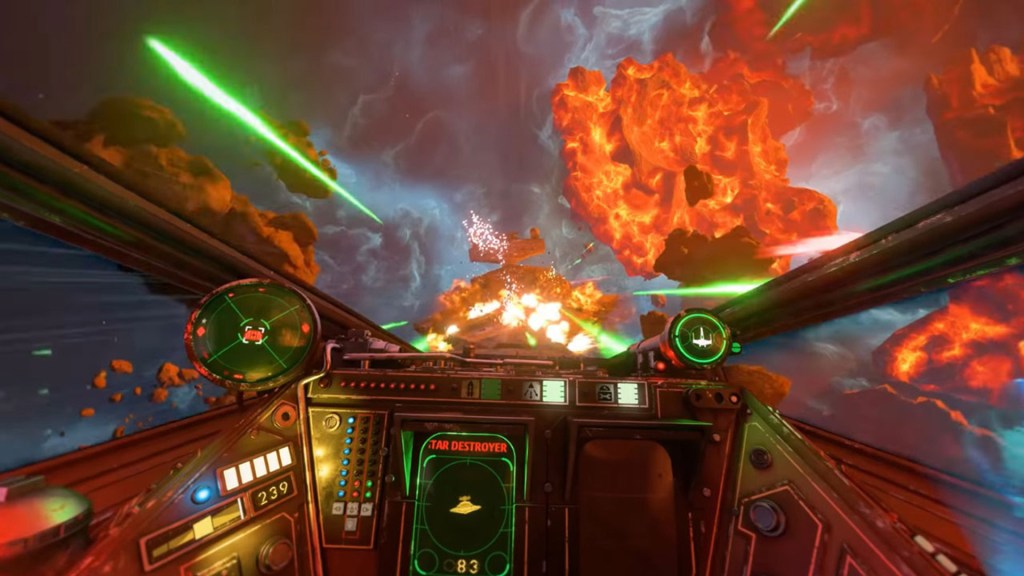
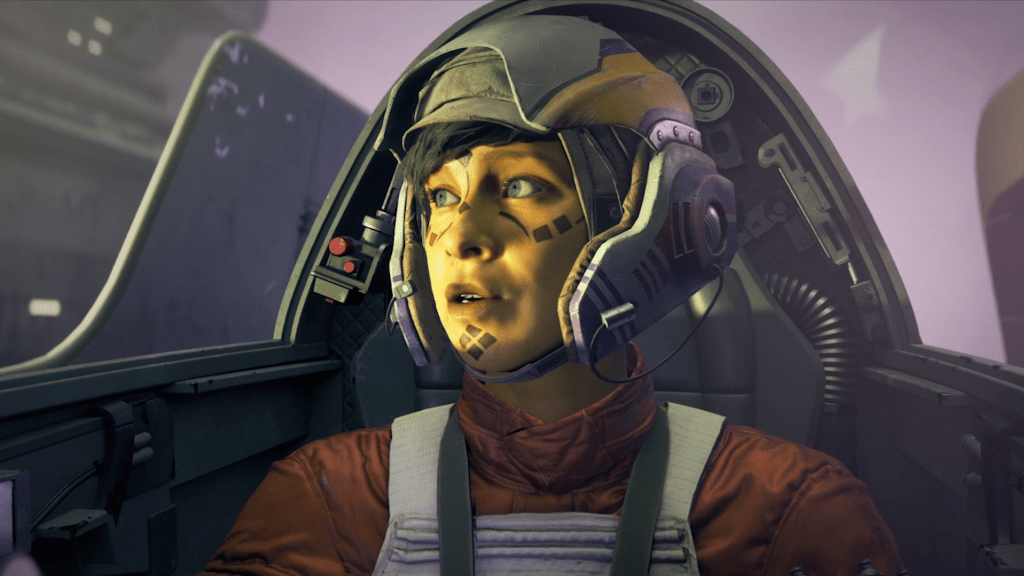
The game also looks amazing. The character models are detailed, and the ship cockpits look like they were ripped right out of the movies with a lot of glowing lights and strange shapes, but I would love to walk around the base more and just have more variety in missions. The four or five ships per side were fine; you can change the load-outs for various items like ion blasters to knock down shields faster; various engines and hulls that sacrifice one aspect to gain another, such as acceleration, maneuverability, shield recharge time, etc.; and there are a lot of options that mostly become useful in multiplayer. I feel like what we got was just part of a huge design document, and a lot of stuff got cut. I wanted a grander story, maybe some missions where you fly inside a planet and not just in space, more interior levels, and more scripted events. The space battles look great with giant asteroids, huge planets in the background, and beautiful space backdrops, but I wanted more.
The multiplayer is something that I felt wasn’t fun for too long. Unless you master the controls and a specific ship, you’re going to die a lot. There are dogfights and missions that have you taking down larger ships and working together. I found the dog fights boring after some time, but the bigger battles were a lot more entertaining, but I still don’t see this game having longevity in the multiplayer department for very long. Overall, the game plays, looks, and sounds great, but it feels like it wants to be more of a simulator than an arcade game sometimes, and in others, more arcade. It needs to either balance these out better next time or pick one. I wanted more mission variety, a more epic story, and the ability to walk around the shipyards. What’s here is fantastic and should be played by flight game fans or Star Wars fans.
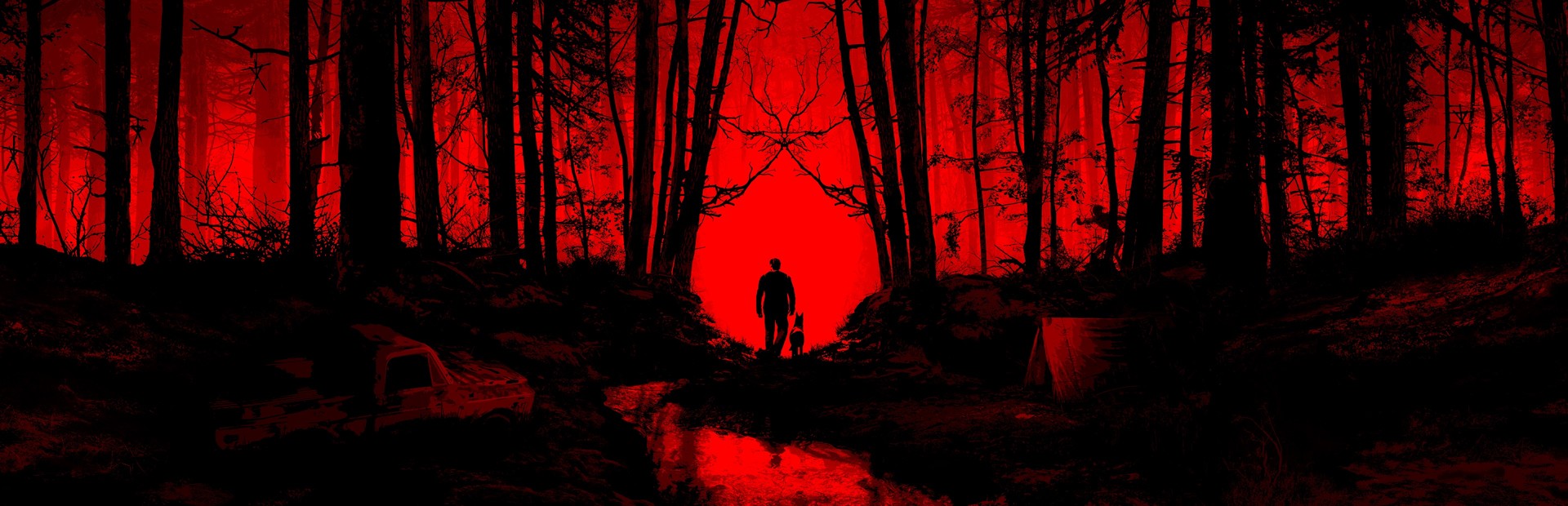
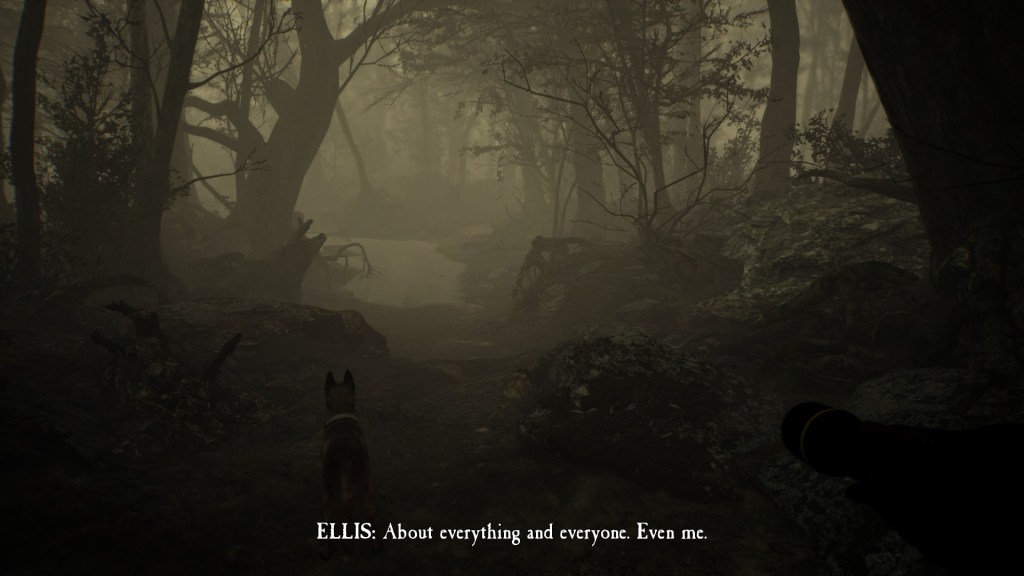
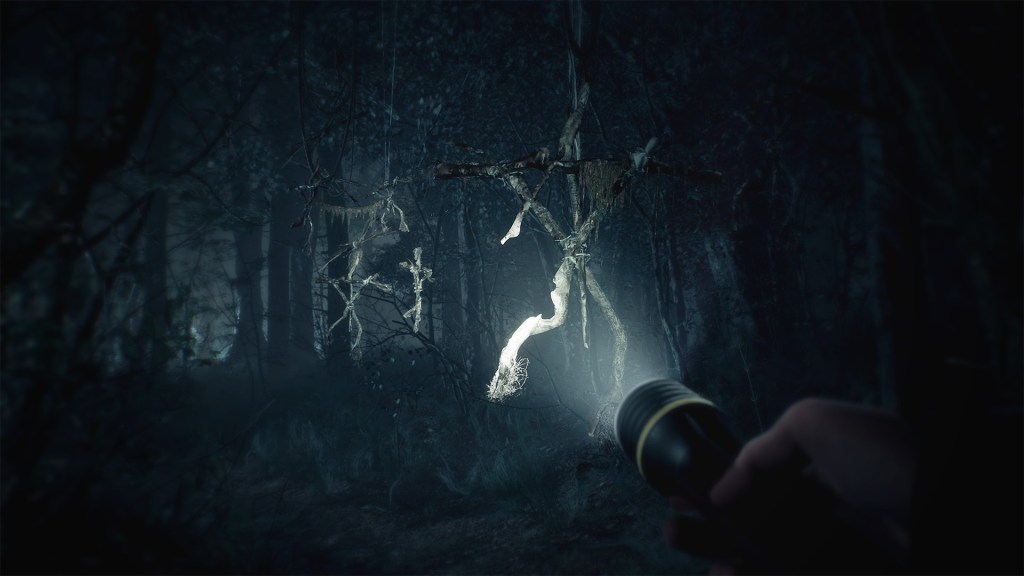
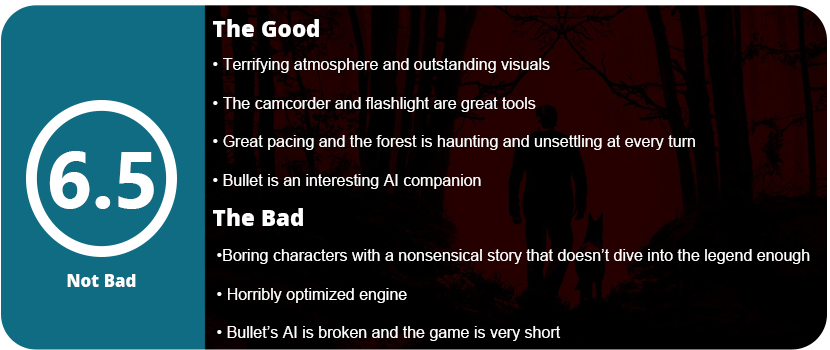
The Blair Witch Project was a movie that scared the living crap out of me as a child and is still scary to this day. The mockumentary-style film was done very well and was so convincing that my own mother thought the movie was real lost footage for the longest time. The iconic effigy of the stickman, the child handprints standing in the corner, the cabin in the woods with the basement—all of it is in this game. You play Ellis Lynch, who is a sheriff in the town where the Black Hills Forest lies. You are trying to find a lost or kidnapped boy named Peter Shannon. Ellis ends up fighting his own demons and becoming another victim of the witch and the forest.
The game starts out easy enough and scare-free. You get introduced to the game mechanics, and the walking simulator begins. Within the first 20 minutes, the first scares start, and you are already lost in the forest. Throughout the entire game, you have a canine companion named Bullet, who is used to sniffing out clues when you find items in the forest to progress further to find Peter. You get a few tools, such as an older camcorder, a flashlight, a cell phone, and a walkie-talkie. These are all used in the game for scares and jumps, and they’re used really well. You can hail Bullet and call him towards you or have him seek to find the next area to explore, but this stops about halfway through the game. A weird “combat” mechanic is introduced and only used a few times by shining your flashlight on ghosts or demons that run around and circle you. Bullets will growl in their direction, and if you don’t flash them to death quickly, they will kill you. It’s only been used a few times, and I felt it was scary the first time, then underwhelming thereafter.
Most of the game is comprised of walking around, collecting photos, breaking effigies, and finding tapes. The camcorder is well used here as it is both a gameplay tool and used for story purposes. Red tapes allow you to manipulate time by rewinding events so they open passages or leave items around Ellis. It’s not super hard to figure out as each clip is less than 20 seconds, and it’s very obvious what the game wants you to pause on. The blue tapes just add story context, but the camera is used later in the game as a way to see hidden objects such as trails and enemies, as your flashlight eventually becomes useless. The game isn’t an open world, but the areas are large, and you will spend each section solving some sort of puzzle, but exploring the game is downright frightening. Bloober did a phenomenal job scaring you with real terror and fright. They use the unknown as a fear factor, and you never know what’s lurking in the woods. You feel isolated, alone, and scared, and for the longest time, I didn’t’ want to play the game because I was really scared. One scene in the middle of the game with Ellis trying to clear a path in a sawmill and running around the area in the dark with the only lights that make you feel safe, even for a few seconds, die on you and go out makes the terror that much better.
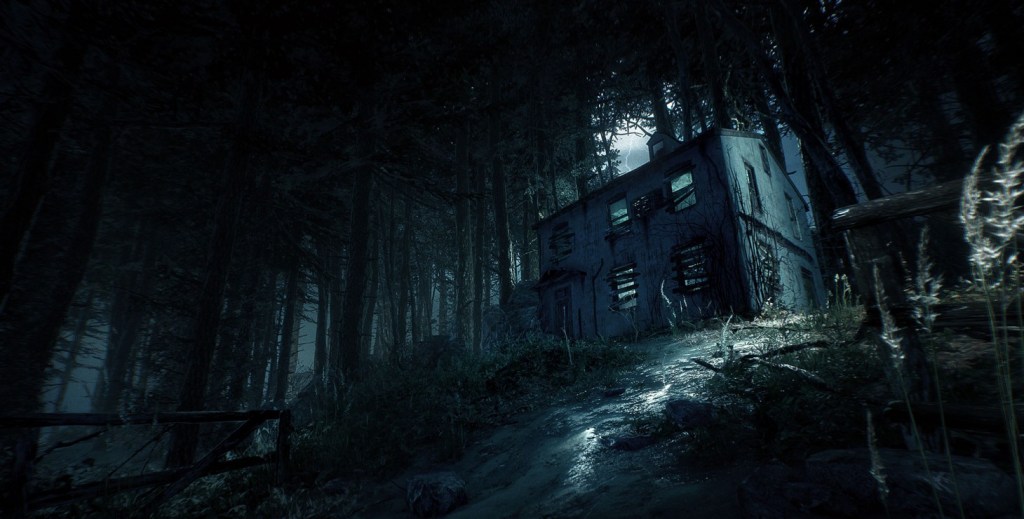
However, as the story progressed, I didn’t understand what was going on at all. There were scenes where Ellis was having flashbacks of war, but it never stated he was in one, at least not that I remembered. He’s obviously struggling with depression and PTSD, as he’s constantly fighting with his wife on the phone and has a record of going crazy. I just never understood how the forest worked or how the Blair Witch was incorporated into all of this. It’s obvious the 90’s film’s influence is present with a campsite that has the tent the crew used in the film with the flannel shirt. The cabin at the end of the game is almost a spitting image and is the scariest part of the game, but this section drags on way too long, lasting 45 minutes. I was running down endless hallways with my camera, and the story pretty much stopped here. I didn’t learn anything new about Ellis or the Witch or what was going on. It was just random events that we already know and jump scares. Having to creep around parts of the house to avoid enemies was scary, and using the phone’s messages to tell you not to look up or writing that said look away was sending chills up my spine, but this endless rat’s maze is one of Bloober’s largest problems in their design. Both Observer and Layers of Fear suffered from the endless hallway syndrome with no story progression and random events.
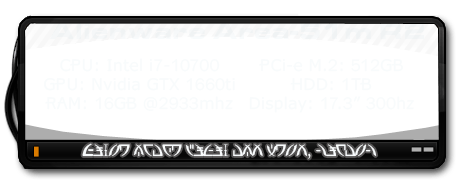
When it was all said and done, the game had an amazing atmosphere and should be played during October, a sleepover, or something. It’s very entertaining, the puzzles are very light, and there are tons of scares here for most people. I would have liked a better story, stronger characters, and more explanation of the witch, the forest, and the entire legend overall. The game has a very short ending in about 4 hours, and there are zero reasons to go back outside of scaring new friends. The game looks really good with great lighting effects, but it has an overall stiffness to it that I didn’t like. Bullet’s AI is dumb as dirt, as it actually broke my game a few times, requiring restarts as he couldn’t find a certain path or would blip out of existence and break the game. The game is also horribly optimized and runs poorly on PCs, even with high-end hardware. There is also no ultrawide screen support. Overall, the game is a fun and scary afternoon, but don’t expect a good story or anything like that.
I never played the first game, but Distraint 2 caught my eye due to the visuals and atmosphere it portrayed. You play as a man who is faced with severe depression from the guilt of evicting tenants from their living spaces. While this is his job, he can’t take the guilt anymore and tries to commit suicide. You then play the split second that flashes through your head before doing so to regain hope and fight the darkness within. It’s a touching story that really shows people the process of grieving and depression and helps spread the message that mental health is a serious issue.
The game is played on a 2D plane and involves puzzle-solving. The puzzles are light and simple, with the most complicated being a slider puzzle (which I despise), but overall, the puzzles aren’t tough. There is a lot of finding this object and placing it in the right spot, but the three chapters are short, and it’s hard to get lost. You move from room to room, just discovering what can be examined or talked about, and then remembering where that piece goes. The game’s enjoyment is mostly in the atmosphere and horror. Every so often, a creature of fear will appear, and you must hide until it passes. The sounds are eerie, and the visuals are a treat.
There’s honestly not much game here. With each chapter, there are a lot of dialogs to move the story forward; there’s a small green orb to save your progress; and then you just move from room to room to find all the objects to move on to the next chapter. At least the areas didn’t overstay their welcome, and it was some labyrinthine complicated mess that some 2D horror games end up being. Each room was easy to remember and was distinct, so once I found an object, I had that “A-ha!” moment of where it would go. It’s pretty satisfying, and the game pushes you through at a steady clip, not being too slow in any one spot.
The visuals are a mix of 8-bit pixelation, lots of grainy filters, eerie music and sounds, a lot of camera tricks, and overall just a foreboding sense of dread. The game pulls this off well, and it was rather intense through most of the game, with a little reprieve in between. The problem is that the game is about 2 hours long, and there’s really no gameplay. I love these “walking simulators” that tell great stories, but rarely have they been done well and are memorable. If you have a short run time and there’s really no game, you are totally relying on characters, story, and atmosphere, and if those aren’t out of this world, it won’t impress most people. While the game itself and message were fine, I didn’t care about the characters and pretty much forgot about the game after turning it off.
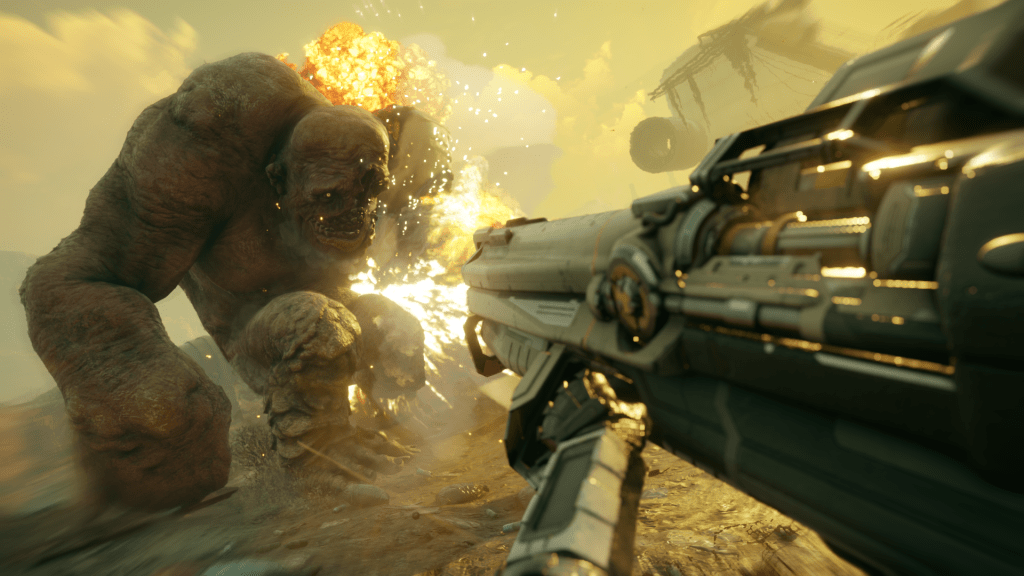
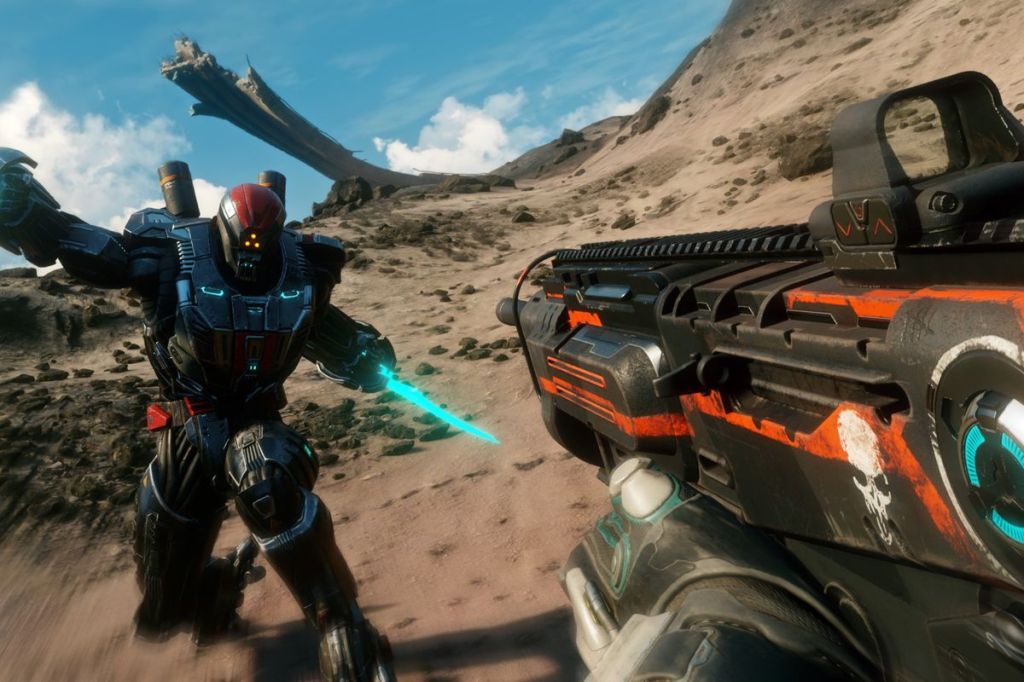
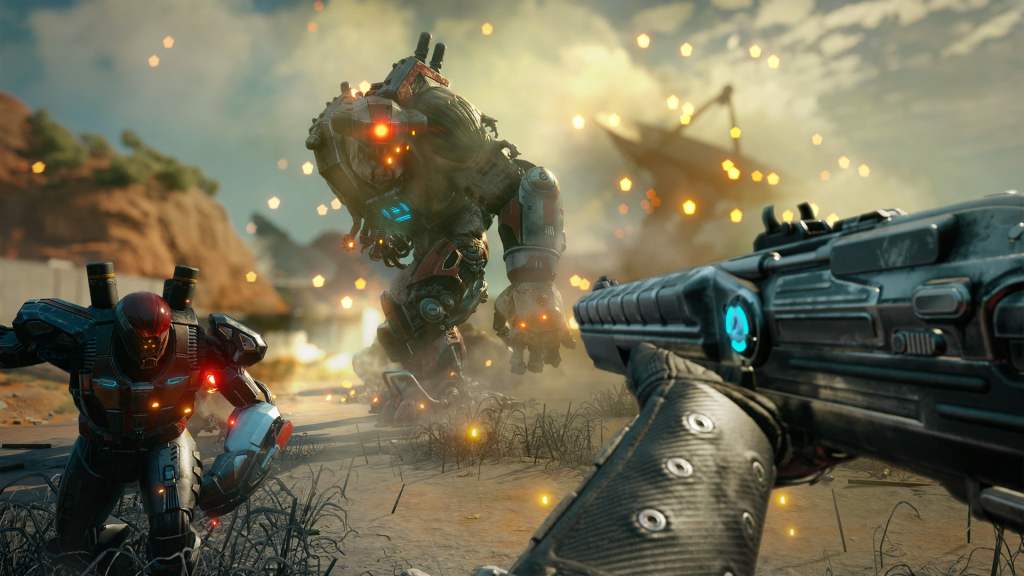
Rage was all the…well, rage back in the day on PC. It featured “super textures” and fantastic gunplay that hadn’t been seen since Doom II or Quake 3 and various other claims from id Software. Upon release, it was a lifeless husk of bugs and glitches, and the only thing that was actually any good was the enemies and shooting itself. The open world was wasted and devoid of life and forget about the story as it was hardly there at all. Fast forward a decade later and we get Rage 2 developed by Avalanche Software known for the Just Cause series. What did we get? Well, a game that’s playing catch up as this should have been the game the first wasn’t. If this released 10 years ago it would have been a smash hit, but today it feels dated and well, still lifeless.
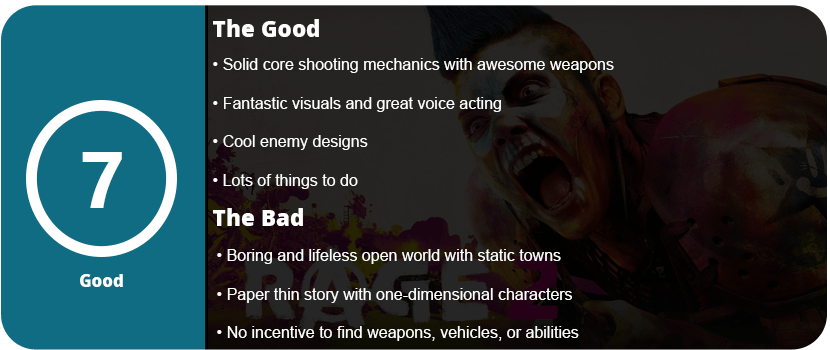
You play as The Ranger named Walker. There’s something about The Authority trying to wipe out humanity and a General Cross is the big bad guy. There are three major players who have main missions for you to ultimately bring about Project Dagger which is to eliminate the machines and genetic monsters roaming the Earth. Yeah, it’s very paper-thin, and the story still barely exists. Some of the main missions have slightly entertaining scripted events, but that’s about it. The voice acting is solid, but the characters are one-dimensional and don’t grow or mature, and you literally have no reason to care for any of them ever.
That brings us to the actual meat of the game, and that’s the shooting. Yes, Rage 2 feels and plays really well. The shooting is satisfying and bombastic, and there’s a wonderful arsenal of weapons to find and unlock, as well as abilities. Yes, I said to find. The weapons aren’t just handed to you. You have to find out where they are, explore the world, and find the Arks that contain these weapons. It’s a neat idea and rather satisfying once you find them, but I played 75% of the game with just the assault rifle and shotgun. That’s not a good thing, either. There was no urgency to get new weapons until I finally got tired of the same two and needed more weapons for harder enemies. Each area has a level from 1 to 10, and this is based on how much armor enemies have, or their faction, and boss health bars.
Once you do start shooting around, the game is a blast. Each weapon has an alt-fire mode, such as the shotgun having an air blast that knocks enemies off their feet. The Fire Revolver has ammo that sticks, and then you can snap your fingers and blow them up. The rocket launcher will lock on to enemies, and then the pulse cannon has a manual cooldown mode. I never got all the weapons, to be honest. There just wasn’t any need to, but what I did get was pretty cool. Even the BFG 9000 was an absolute blast to use but was rarely needed. You have abilities that are also supposed to be found, but I honestly rarely ever used them, as the weapons were enough. I had a shield, a dash, and a push, but that was it. Some abilities are passive, but the overdrive ability is the most useful. This unlocks a third alt-fire for each weapon, but you aren’t invincible or anything like that. You just do more damage. For projectiles, you get wing sticks, which are honestly completely useless despite being a staple weapon in the first game, and grenades. You also get three injectables for health, overdrive, and to recharge your abilities faster. Once you die, you get a defibrillation quick-time event to gain some health back one time until the next death. So, with all of this combined, there is a decent amount of stuff in the core shooting mechanic. It’s solid, but it’s sad that you don’t get the weapons in a way that makes them meaningful or makes you want them.
Once you’re ready to drive around the Wasteland, there’s not much to do outside of small side missions. These are all basically the same, with different names. You essentially kill everything in each outpost, and there are things to find inside them. Containers with cash or filtrite, which is used for upgrades, datapads, and Ark chests, which hold upgrades for mods and vehicles, These are peppered all throughout the game and honestly make up the bulk of the playtime. If you only told the main story, it would be over in about 10 hours. The issue is that after completing maybe 60–70% of the other stuff in the world, I stopped caring. You just run in and shoot everything, collect stuff, and move on to the next one. There’s no incentive to do this once you’ve fully upgraded everything. You need cash to buy ammo, mods, etc. from shops, but filtrite is used for weapon and ability upgrades, and that is taken from enemies. The only really interesting side missions were the Mutant Crusher nests. These are giant bosses, but they are all the same. In fact, every boss in the game is the same. Just blast it to death or blast it until it’s vulnerable, and then blast it some more. It’s very one-note with the action, and the game heavily relies on it rather than using the action in smart and inventive ways.
I also had no incentive to acquire all the vehicles in the game, so what’s the point? Your main vehicle, the Phoenix, is just fine, as it has a gatling gun and homing missiles, and it does the job. Some vehicles are just for fun, such as a giant monster truck and a hovercraft, but honestly, there’s not much out there in the world. There are a few towns, but these are all static and lifeless. There are no interesting characters, as NPCs repeat often, and the dialog is uninteresting. There’s just no reason to care about anything in this game, and most players won’t stick around long enough past the main story. It just grows incredibly repetitive, and you just go on autopilot, driving from one side of the mission to another, just checking them off of your map. One question mark to the next, blasting everything, and then doing it again for 50+ hours. Again, the shooting is solid, but you can only do it in this fashion for so long. It works in games like Doom because it makes the world around it adjust to the constant shooting. I honestly wish Rage 2 was a linear story-driven shooter, and then it would have worked really well. Rage just doesn’t do open-world gameplay right. That was the major flaw in the first game, as it was a pointless, open world devoid of anything. Shooting caravans every so often doesn’t justify an open world. It’s also way too big for its own good. It can take over half an hour just to drive from one side to the other. It’s part of the reason why it took me an entire year and a half to finish this game. It’s daunting and feels like a chore rather than something I can’t wait to see, like The Elder Scrolls or Fallout, which have interesting open worlds stuffed full of lore and interesting things.
So, we just get a boring, empty world with static towns and blast everything to death with a paper-thin story, uninteresting characters, and weapons that are hidden and locked away with no incentive to go get them except out of sheer boredom. That’s not good. Despite all of this, though, the game is fairly entertaining for a good 30 or so hours until you explore most of the map and finish the story, and I was just done. There’s a good core here that Rage 3 should keep and ditch the open world entirely. I liked the enemy design; the graphics are phenomenal and look amazing, but this isn’t it, guys. The series still needs a lot of work and fine-tuning to become a top-notch FPS.












































 thebinarymessiah.com
ORC is probably the worst game in the entire series. It's objectively awful. Being bad isn't different. Different is Outbreak…