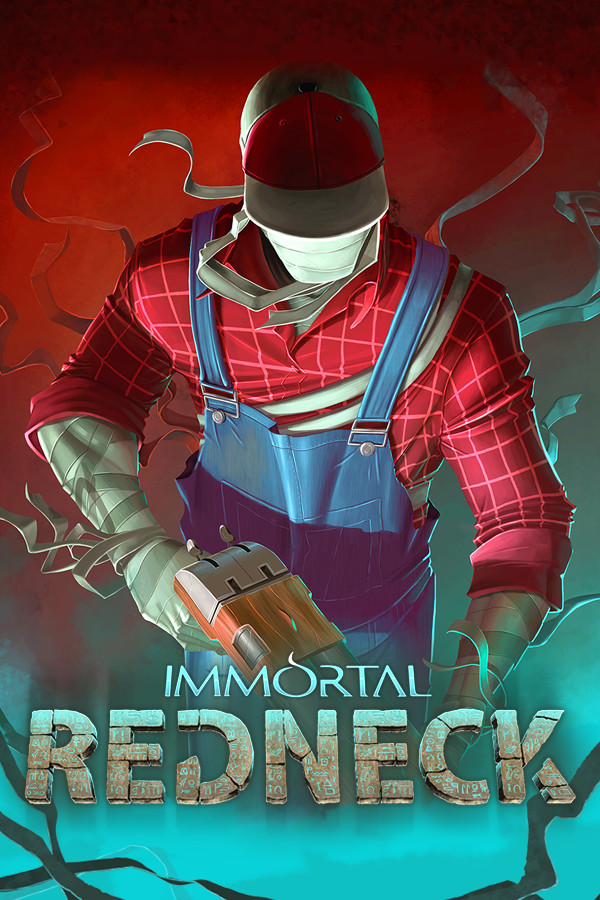
Immortal Redneck is, unfortunately, not going to get the attention it deserves. It’s neither a fantastic game nor a bad game, nor is it original in any sense, but it does combine elements from several other games into one package and does it fairly well.
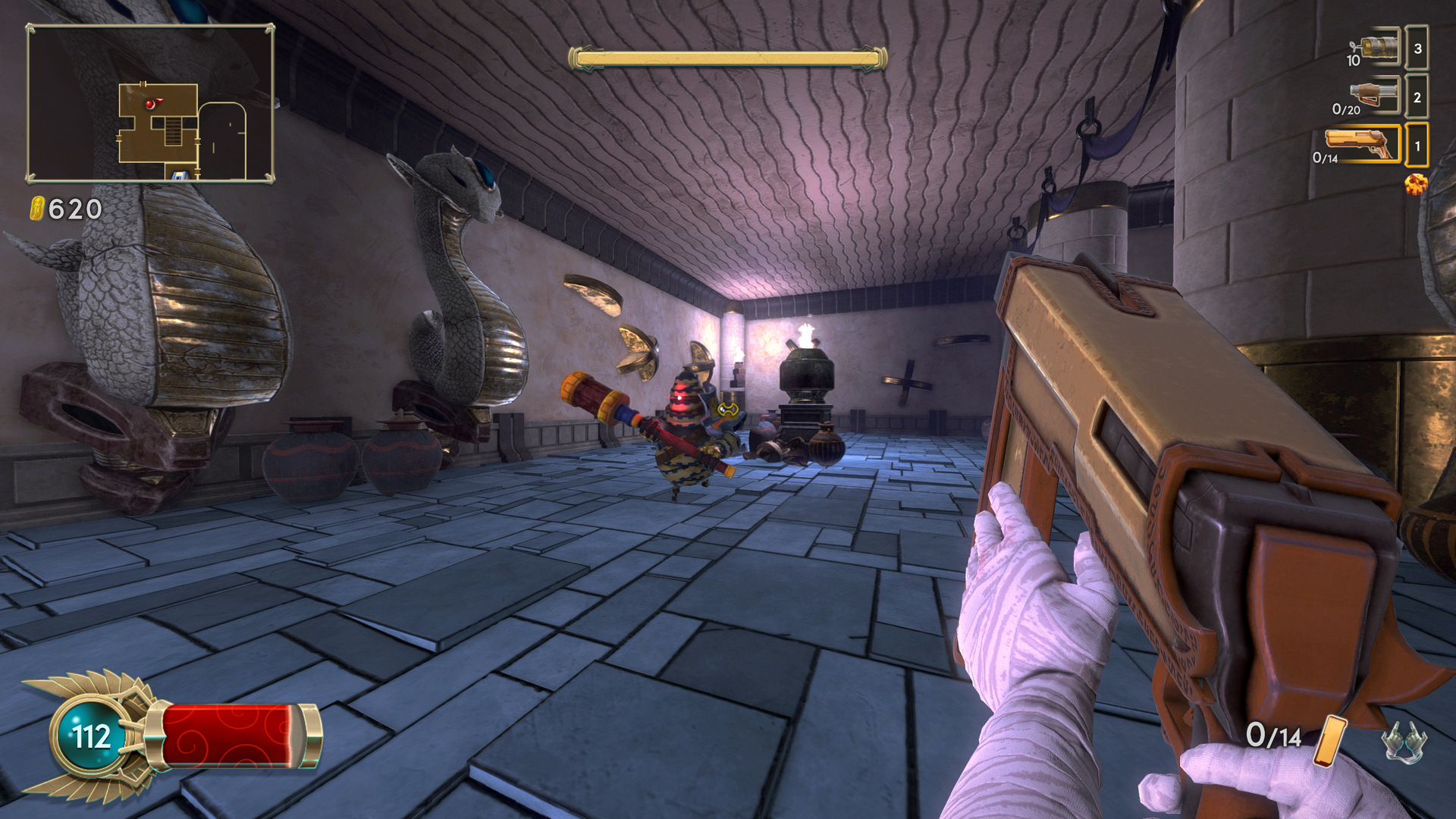
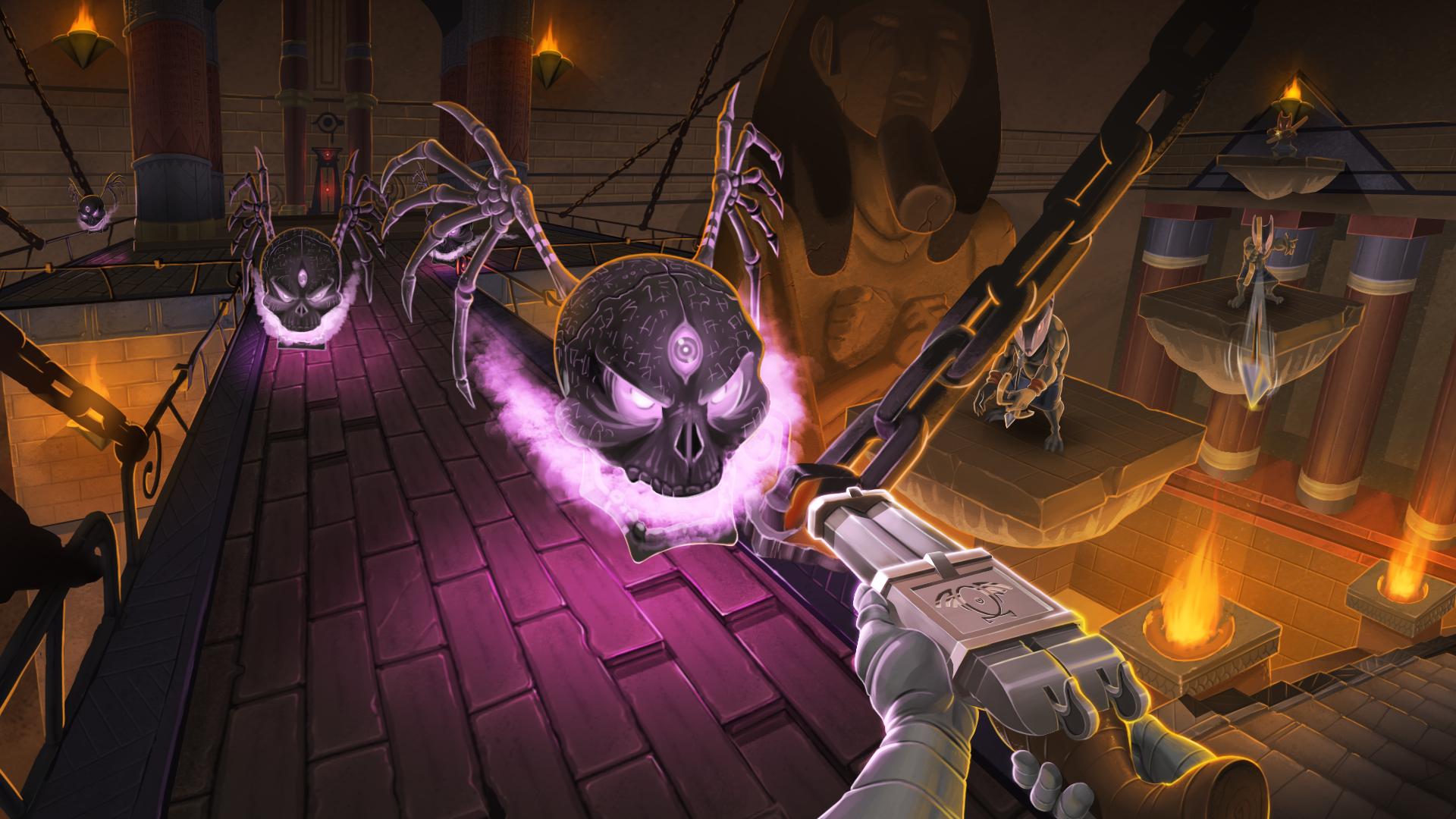
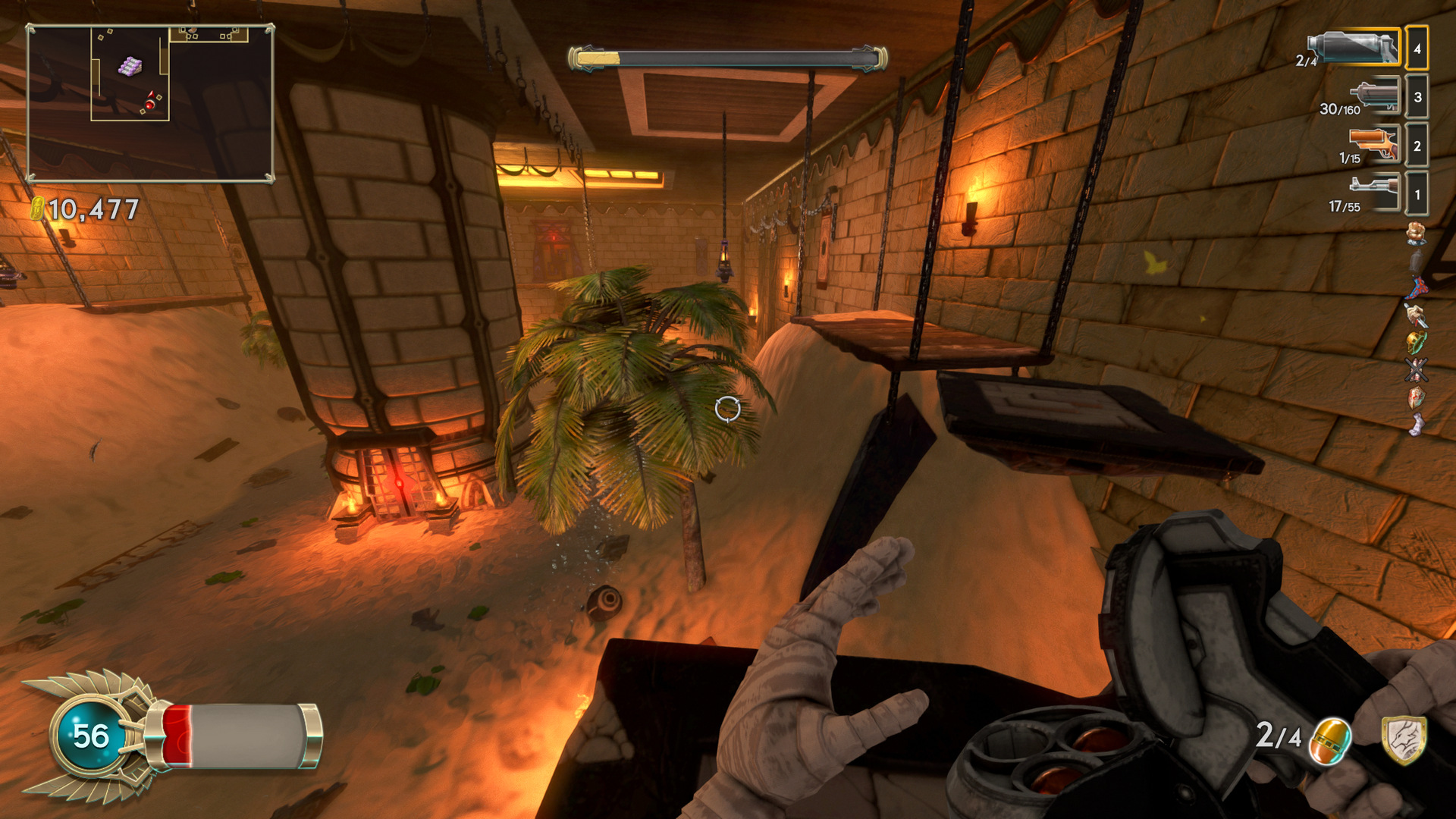
You play as, what else?, an immortal redneck mummy with a wooden pistol, shotgun, and dynamite. At least those are your starter weapons. The game is set in Egypt, and the idea is to defeat all the enemies on each “floor” to make it to the top of a pyramid. The game is a mix between Serious Sam, Rogue Legacy, and Dark Souls. Like Serious Sam, the game is set in Egypt and features fast-paced first-person shooting action with strange monsters. The game almost looks like Serious Sam as well. Like in Rogue Legacy, when you die, you actually get stronger by using the gold you collected to unlock various upgrades and buy new weapons.
Like Dark Souls, the game is extremely hard, gets repetitive, and isn’t for people wanting a linear FPS experience. Your first hour you will spend just dying a lot and obtaining upgrades until you can unlock the weapons shop, and that’s where things pick up. However, the constant repetition of going floor to floor, despite it being randomly generated, can be annoying and get boring after a while. Redneck doesn’t have much going for it style-wise that other games haven’t tried. It looks good, on a technical level, and the shooting feels just fine.
The issue would be just the difficulty alone and the grinding to achieve better weapons and upgrades until you can beat the pyramid. It’s nothing amazing, but it’s also fun enough to make you stick around to the end, but only if you like any of the above-aforementioned games. The game is just average all around, honestly, but still worth a weekend purchase. On a second note, it’s nice that the game supports modern systems such as 4K and ultra-widescreen monitors.
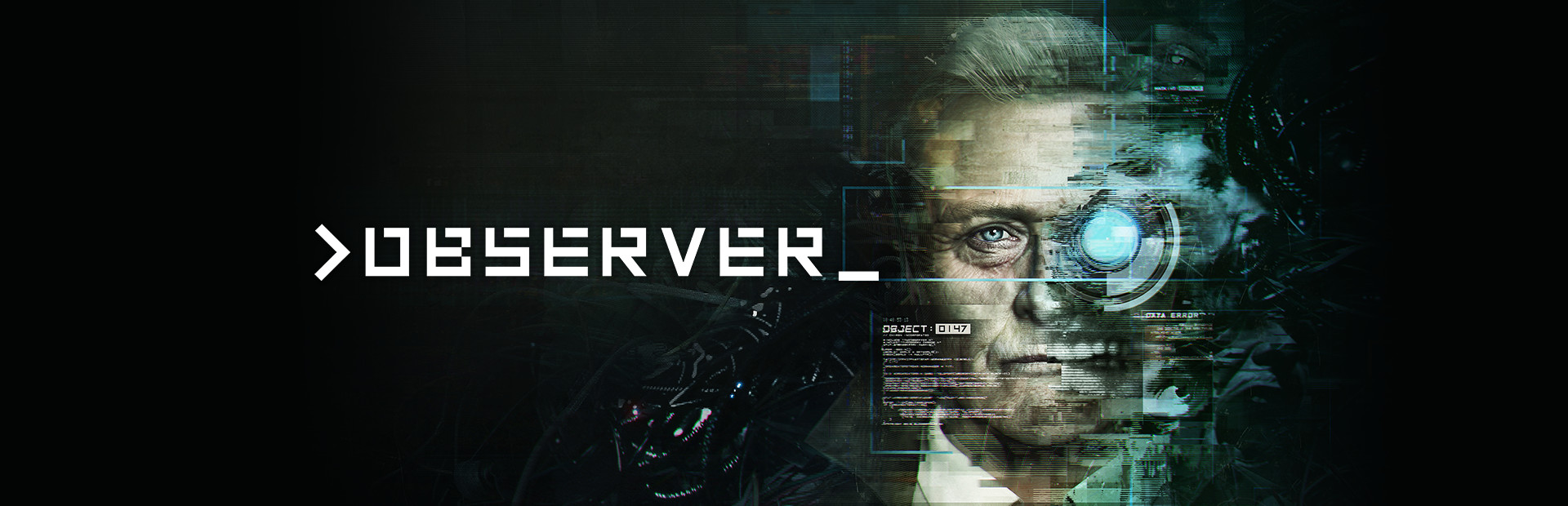
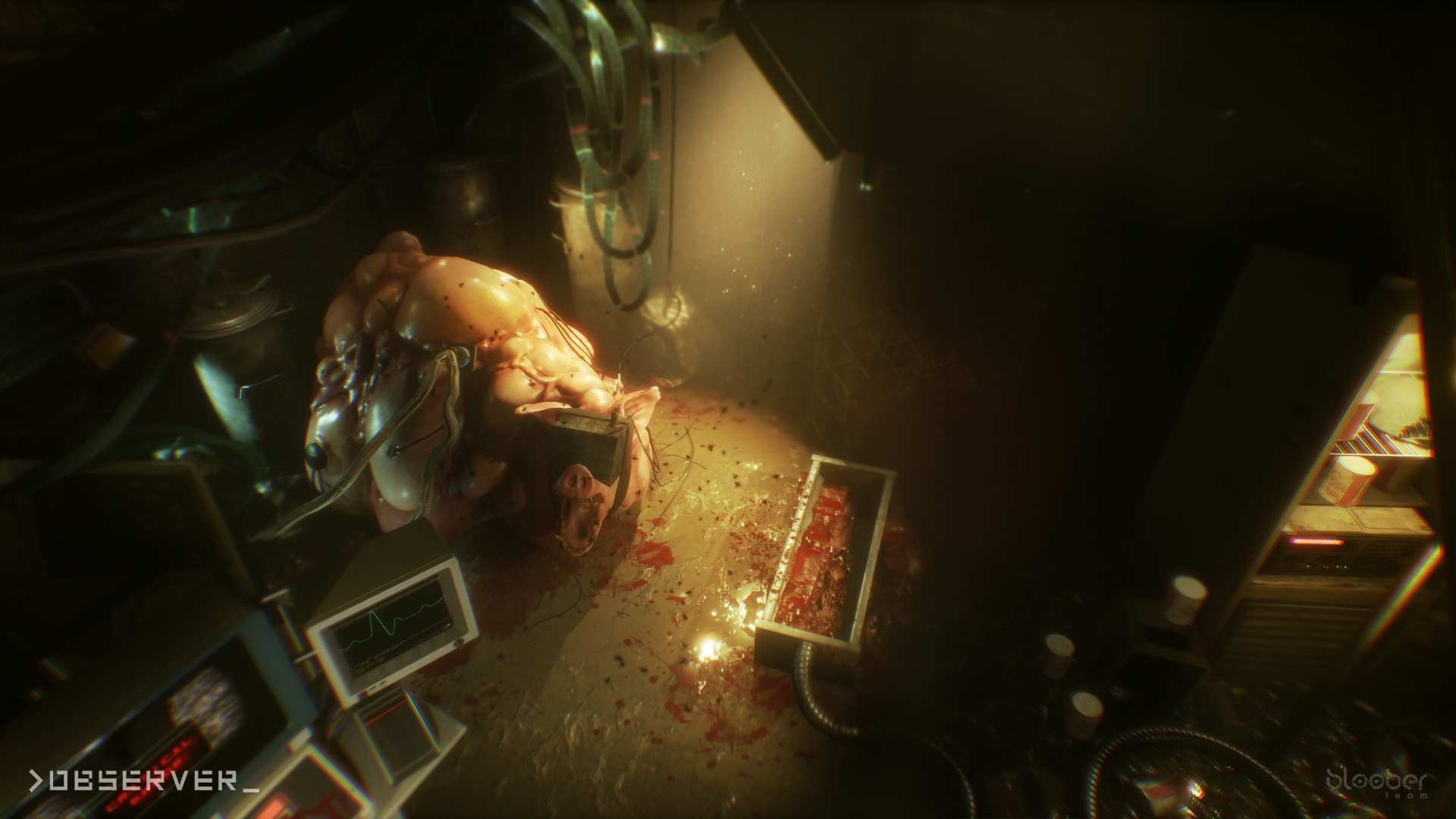
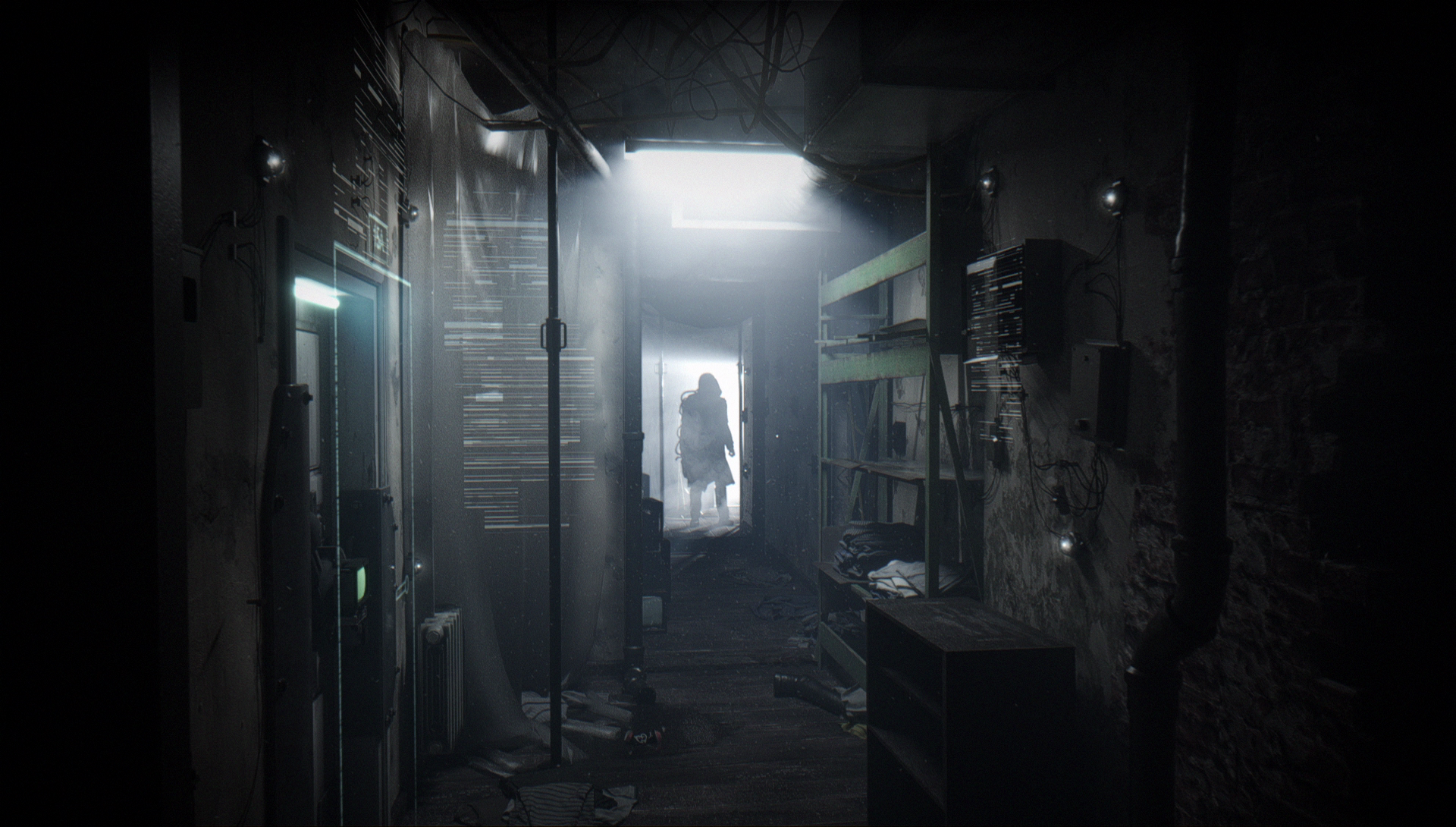
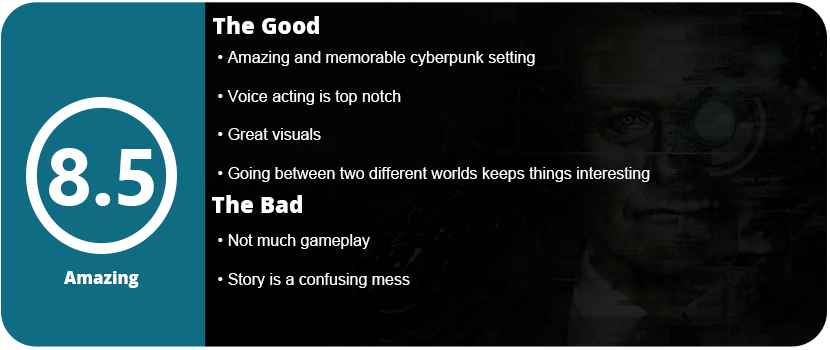
Bloober Team is quickly becoming one of my favorite game developers. You may recognize them from Layers of Fear. Their style of single-player storytelling is unlike anything that you will see today in gaming. The horror factor is also kicked up to 11 in their games with frightening and surreal moments and scenes that put you on the edge of your seat and that will make you grind your teeth. The observer ditches the early 20th-century theme and goes for 20 minutes into the future cyberpunk that is done so well. Observer’s cyberpunk setting is some of the best in gaming history, as it captures the feeling perfectly.
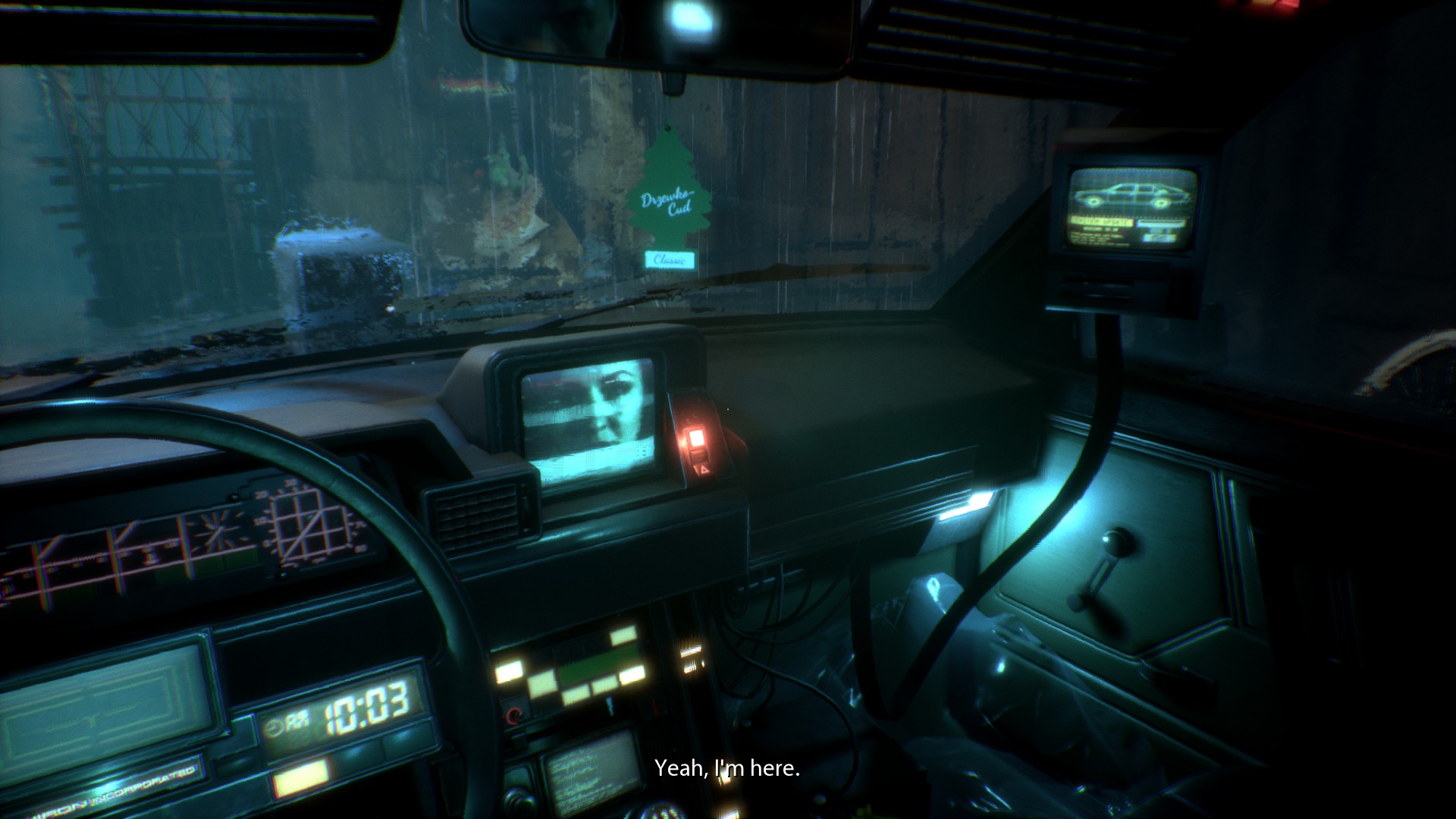
The game starts out simple enough, with you playing a cop named Daniel who gets a strange call from a man named Adam. He is told to investigate an apartment building that goes on lockdown. You stay in this building throughout the entire game and must solve simple puzzles and find your way through the narrative. There are two parts to the game: playing as Dan in the apartment building and jacking into people’s minds while you investigate crime scenes. Investigating crime scenes isn’t as complicated as it seems. You switch between two different visions that allow you to see electronics and organic material. You can scan items that are highlighted and slowly unravel clues that help move the story forward.
Most of the game consists of wandering confusing hallways and talking to people through the intercoms on their front doors. The dialog will give you clues as to where to go next, such as learning key codes, apartment numbers to investigate, and anything else the crazy story throws at you. This is where the game’s atmosphere really digs deeper than in most games. There is no human contact in this game as you speak to everyone through doors and walls. It helps add to the sense of loneliness and desperation that the citizens on the lower levels of the city suffer. Every corner you turn is full of wires, monitors, computer banks, and propaganda from the government and corporations that run the world. The atmosphere is done brilliantly and will definitely stick with you long after you finish the game.
Like Layers of Fear, when you jack into someone’s brain, you get to run through trippy drug-infused nightmares. Some are literally horrifying and frightening, and that’s actually a good thing. Most of these segments are story- and narrative-driven with very little interaction; there’s an occasional scary stealth sequence that adds plenty of tension, but nothing overwhelming or confusing. It was one of the things that made Layers of Fear so great, as the gameplay sacrifice gave you an amazing audio/visual experience that you won’t forget.
Once you finish these jacked-in segments, you enter the real world again and move on to unraveling the story. There’s not much else to the game outside of this, and it can be finished in about 5–6 hours, depending on how often you get stuck. The story itself is a bit hard to understand and is very confusing, even at the end. I was hoping it was going towards more of a Soma vibe, which is still one of my favorite video game stories of all time. Almost everything is explained at the end with a couple of different endings, and while you feel the story is concluded, the middle of the game is very confusing.
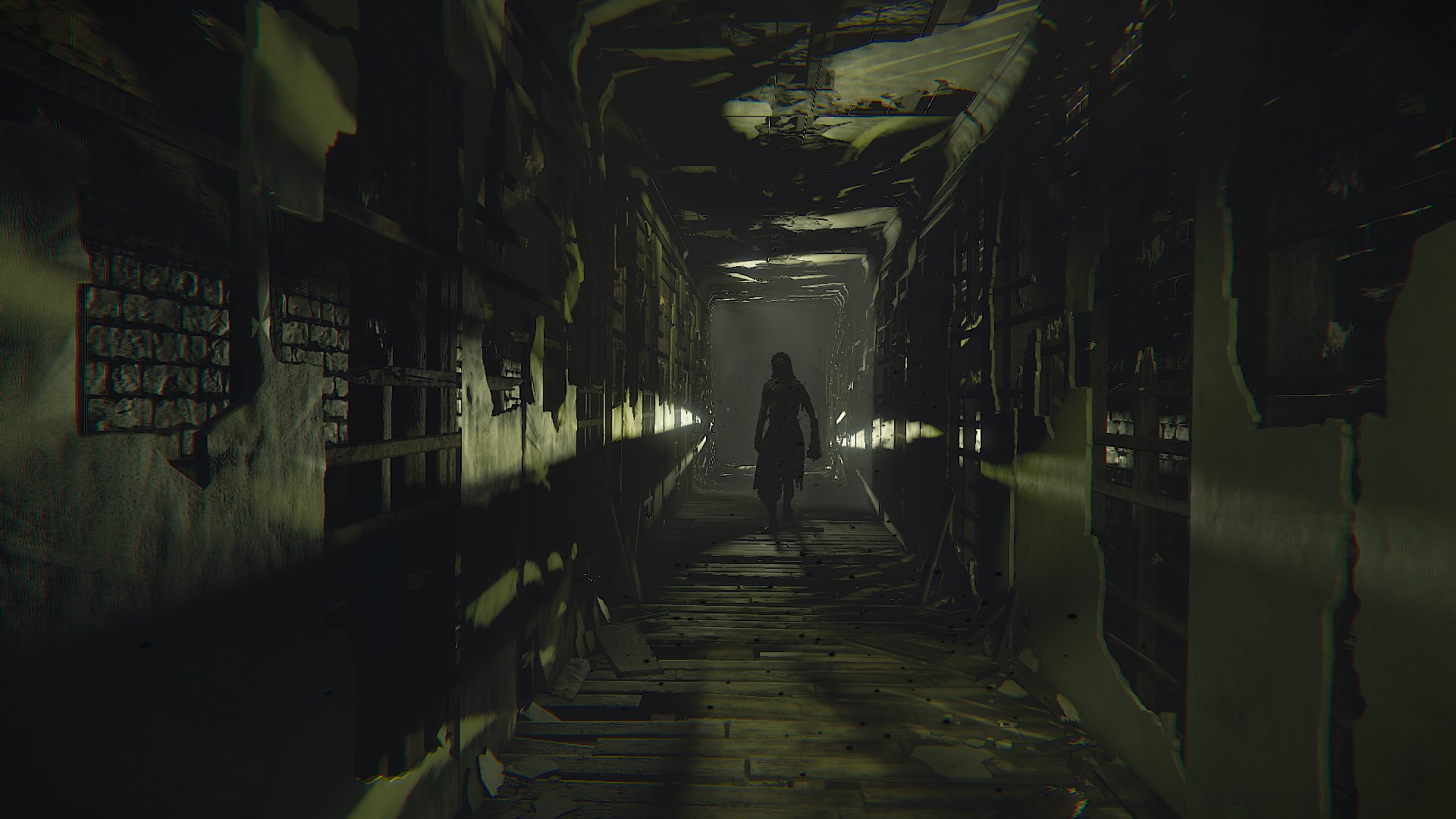
Again, the reason to play this game is for the horror and atmosphere. The scary moments are actually scary and mess with your mind, and that is very rare today in gaming. If you want a lot of gameplay, then look somewhere else, honestly. I can’t find too much to be disappointed with outside of the story not being very clear, even at the end, and you can get stuck and lost too often in the game. If you loved Layers of Fear or even Soma, then you’re going to love Observer. This is already one of the best atmospherically driven story-based games this year.
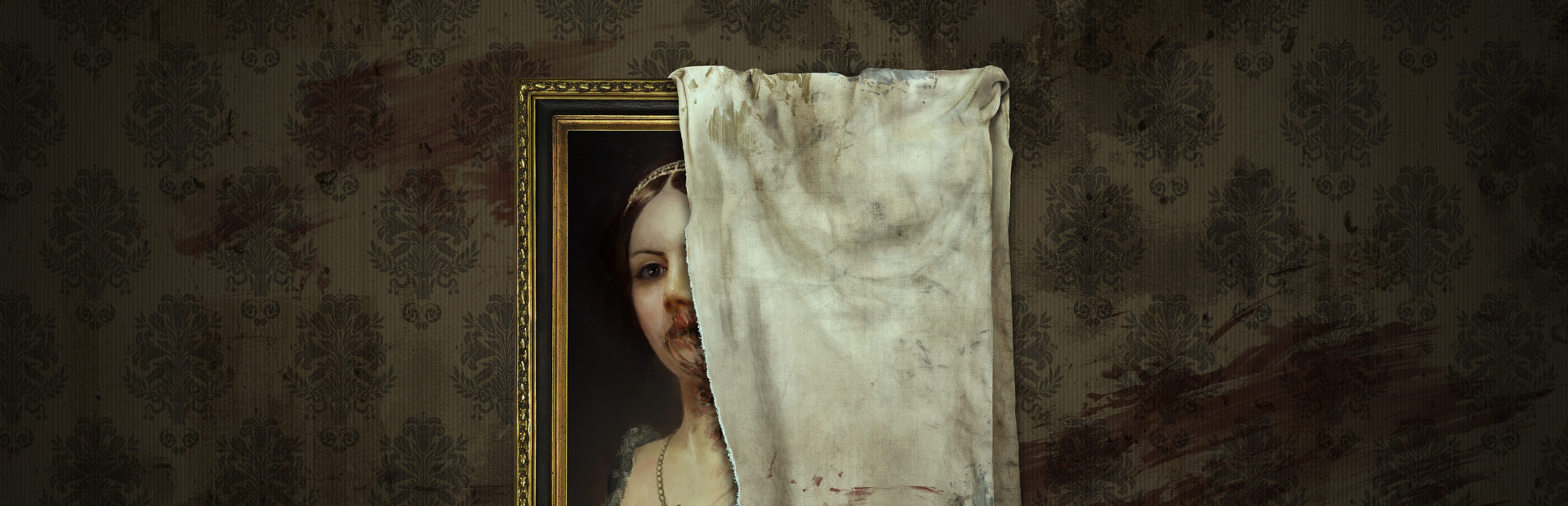
With P.T. only being a demo, it sure did imprint itself into the horror genre. Since then, games have been trying to copy their experience, but is this such a bad thing? I think not, as P.T. showed us what we have forgotten: the overall scare factor and how the atmosphere can do that. You don’t need cheesy monsters, jump scares, or even great visuals. The plain old atmosphere can do the job just fine. Layers of Fear is an indie horror game that is probably one of the most insane I have played in a long time. The game did have a forlorn and eerie atmosphere, but just the visual trip it gives you is mind-blowing.
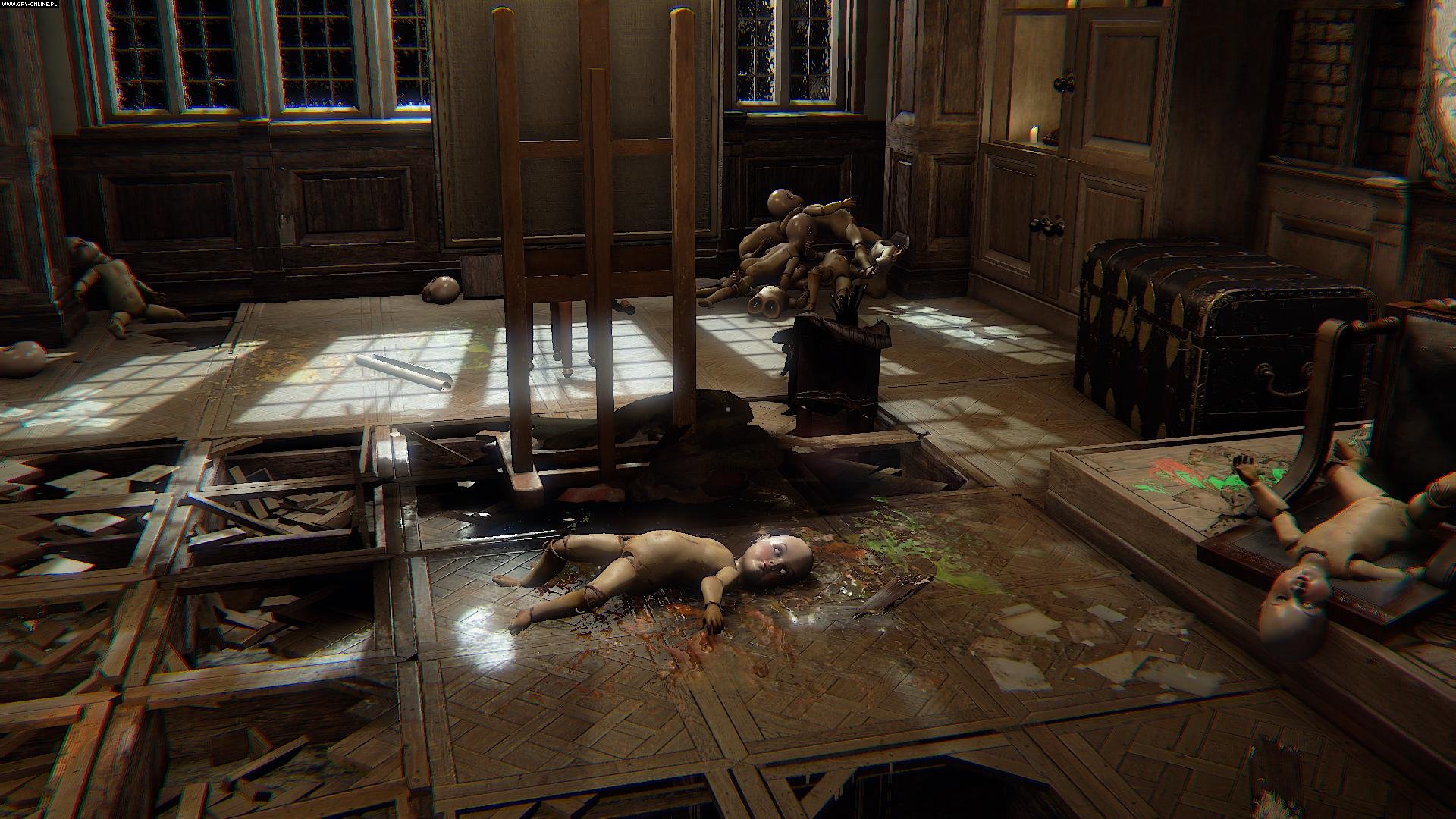
You play a crippled painter in the early 20th century who is trying to complete his masterpiece. The game starts out just fine while you wander around an old mansion, opening drawers and finding pieces of text that help tell the story. Layers of Fear’s only goal is that you walk through doors. You will open more doors than you would like to in a video game. Once you get through your first door and into the main hub, which is your painting room, things go crazy. The game is very linear, where you walk from room to room and enjoy a visual acid trip that never stops or gives you breaks. As you think there’s no way out, you will turn around, and a painting will pop up behind you and start melting. Turn around again, and the room changes or a ghost appears in your vision. What kept me going was that I wanted to know what was in the next room. It was like a funhouse but scary. Each room was always different, and I never felt bored or that I wanted the game to stop. There are six major pieces you need to collect to finish the game, and each one is themed. For example, the one-piece is a finger, and you slowly build up the story of how you took that finger. It doesn’t tell you directly, but through crazy visual cues and clues, you can figure out what happened.
The game is also a bit of a collect-a-thon, as you can open drawers and search around each room for clues that allow you to unlock achievements. There are actually three different endings, but I can’t quite understand how to get them. There are no choices in the game, but maybe take different paths? Each area is so linear that there’s only one way to really go, so figuring out what ending you get is a huge mystery. There also isn’t much thinking in this game; there were maybe 3 or 4 puzzles, and they required almost no skill to work out. I feel there should have been more puzzles, but that would have slowed down the pace of the game. You literally run around the opening door after door and experience the next visual freak-out, like a roller coaster ride. There are also no enemies to run or hide from. The only ghosts that appear in the game are supposed to get you, as it’s part of the story.
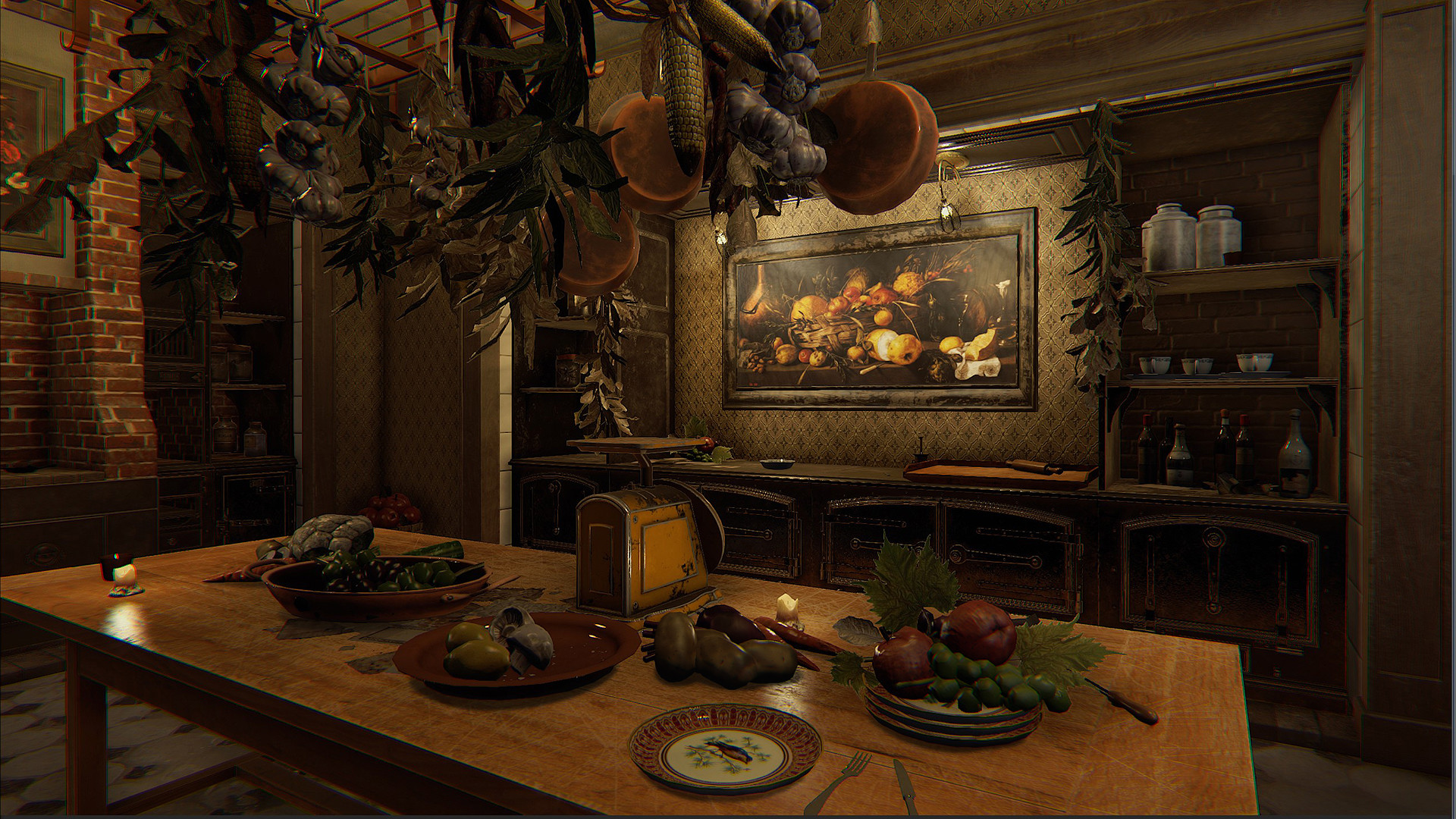
The visuals are fantastic, as the game has amazing lighting effects and a tense atmosphere, and there’s so much detail and so many different objects everywhere. The way some of the set pieces play out is pretty insane and requires a lot of care and detail. The visual effects alone from warping, shifting, melting, and various other effects are pretty amazing, as you don’t see many of these in games. All this was done with the Unity engine, which was also pretty impressive. The audio in this game is quite amazing, with a lot of variety, and each sound effect is put in the right place at the right time.
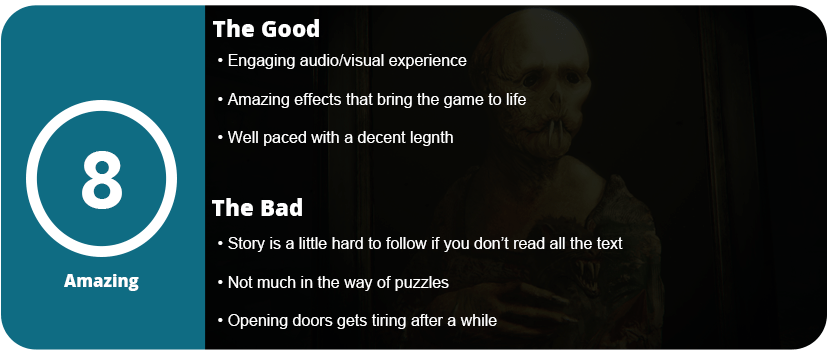
Overall, Layers of Fear is well worth a playthrough; it’s quite scary, and you never want to stop. The great pacing, visuals, and amazing roller coaster ride of effects are something you don’t see in games very often. If you’re tired of the cheesy horror gimmicks of most indie games, then look no further. This game may be short, but it’s got a lot of soul and heart for what it is.
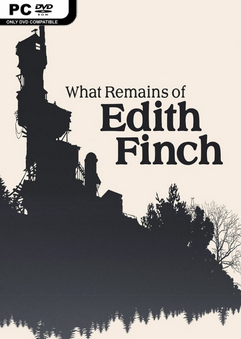
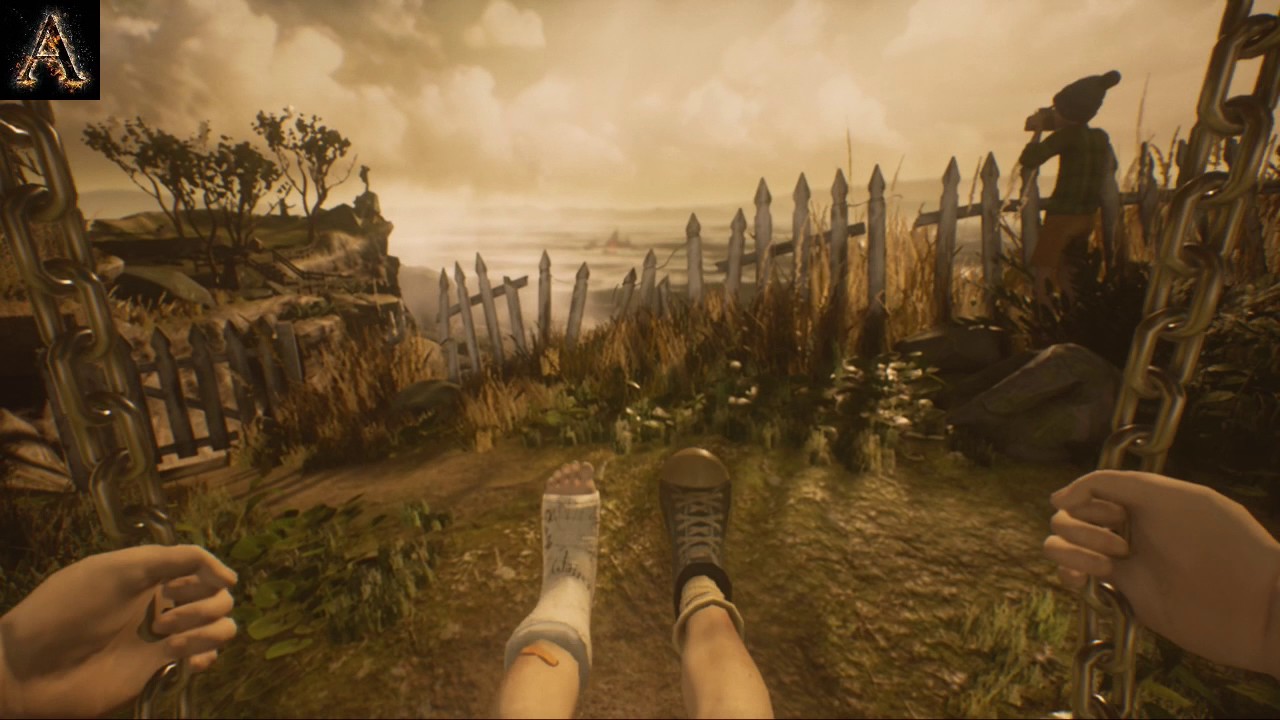
It’s surprising that over the last 10 years, it’s the indie game that has had the most touching and memorable stories. Even with AAA games’ million-dollar budgets, they can’t seem to get a decent story with armies of writers and directors. What Remains of Edith Finch may be called a “walking simulator” by the younger crowd, but these slower-paced adventure games are usually the most touching and memorable. You play as a girl who is slowly unlocking the mystery of why every member of her family died in a large house built from the ground up on the oceanside.
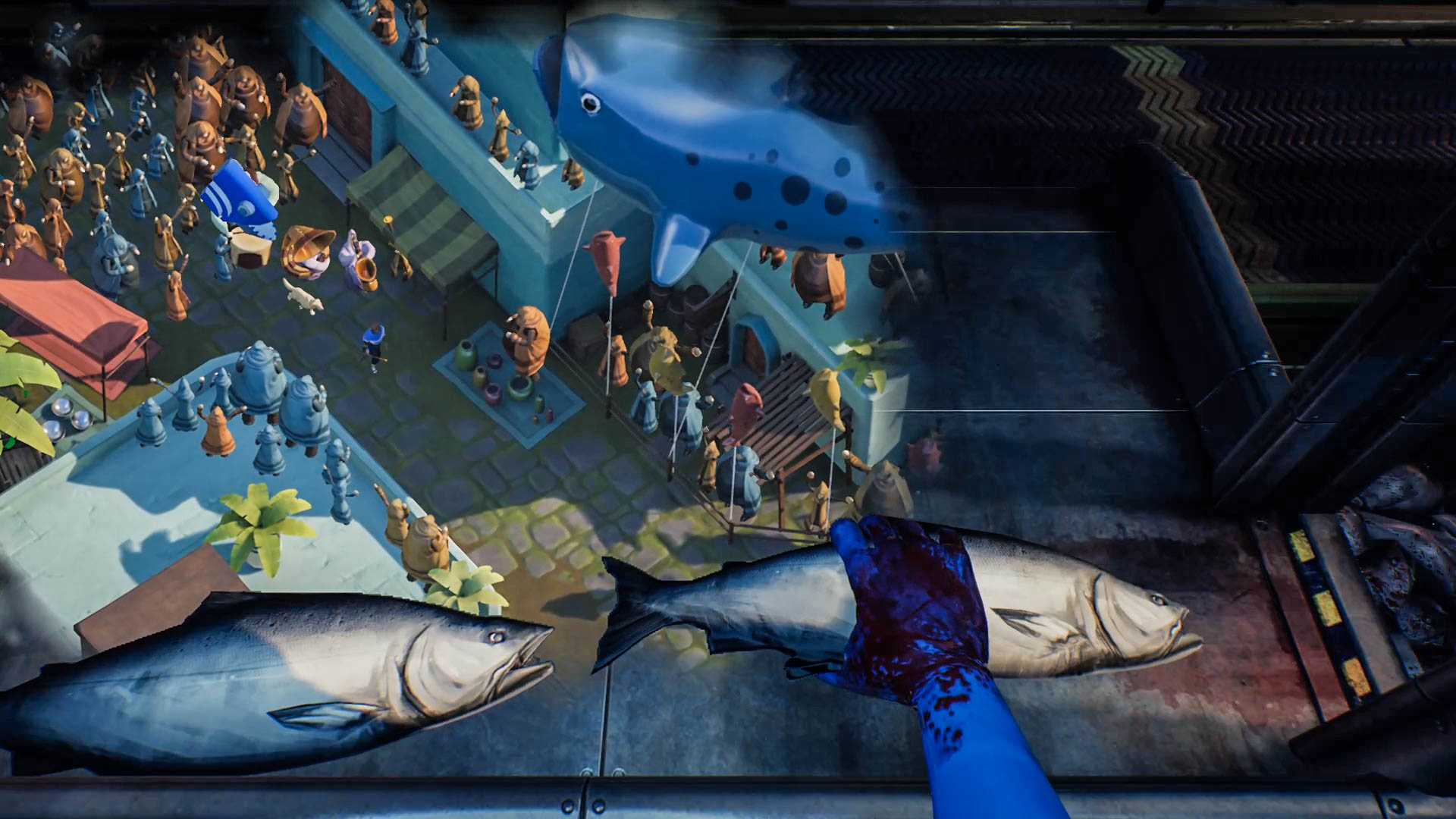
The game starts out simple enough: you walk down linear, winding paths, and the character narrates along the way. The text floats along where you walk, and it’s an immersive way to tell a story. Once you enter the house, you will eventually find your way through mysterious rooms through secret passageways, and in each room is a piece that will bring you into their story. The most unique part of this game is that each story is so different and is told in unique ways. One story has you playing as several animals in the first person as the boy tells his story. In one story, you are just trying to swing as high as you can so you can fly. One story towards the end has you cutting fish heads in a factory, and you play a 2D RPG on the side while still trying to cut the fish heads. As the story goes on, it gets more detailed and expands in your view. The game is very imaginative, with my favorite piece being a 1960s horror comic, and the panels come to life with you playing a character in some of them. The game never gets boring or old, and the short length helps keep the game from overstaying its welcome or doing too much.
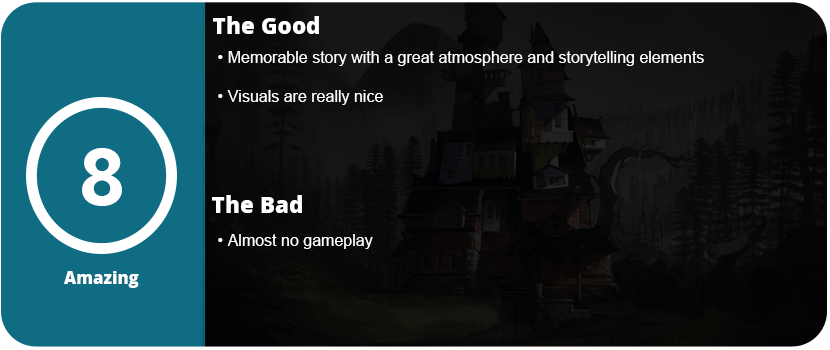
My biggest complaint is that there’s not much to interact with outside of initially entering the house. Once you get through the first few rooms, you just go from room to room and find the main story piece. The pacing is great, as it doesn’t get too fast, so you feel the rest of the game is too slow. There are also different themes throughout the game, such as horror, adventure, happiness, and sadness, and the house itself is haunting, empty, and lonely. This game oozes atmosphere, and you get different feelings from each room as you discover the fate of each family member. There’s so much detail in this game, and the visuals are quite nice for an indie title in this manner.
Sadly, due to this type of game, it won’t be played by many people, which is a dying shame, as What Remains is probably one of the best games to come out this year. The story is memorable, the game has plenty of atmosphere and character, and there’s so much to love about the game. If you’re a fan of Gone Home or just great stories in general, then you will love this game.
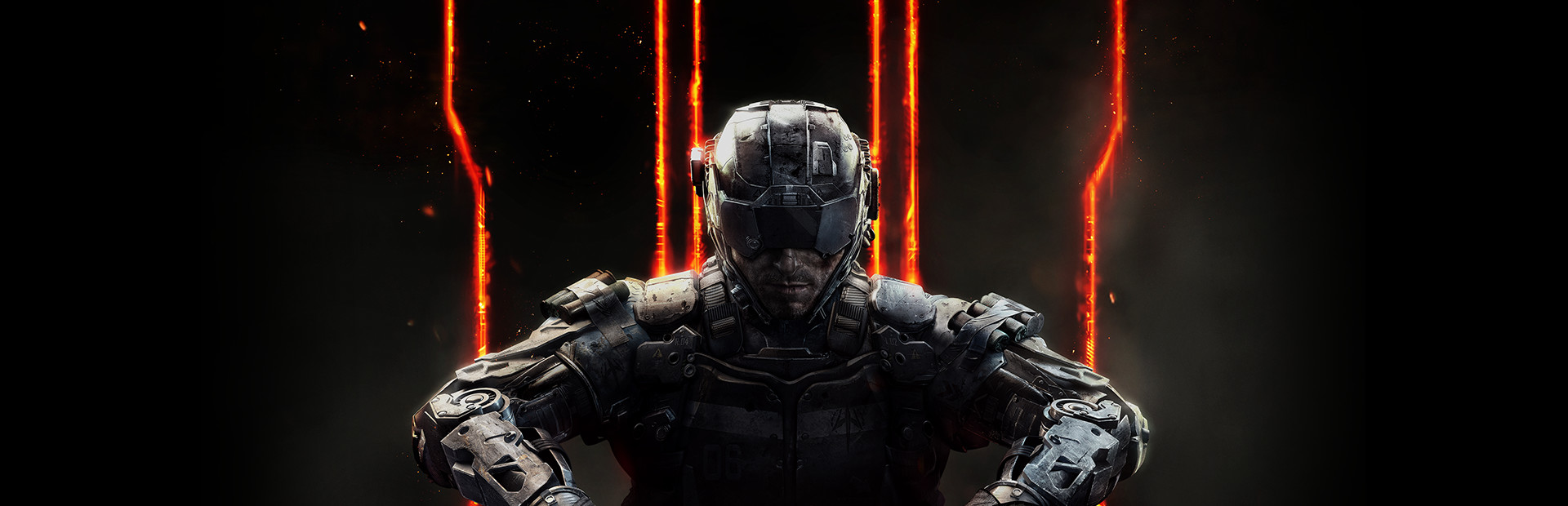
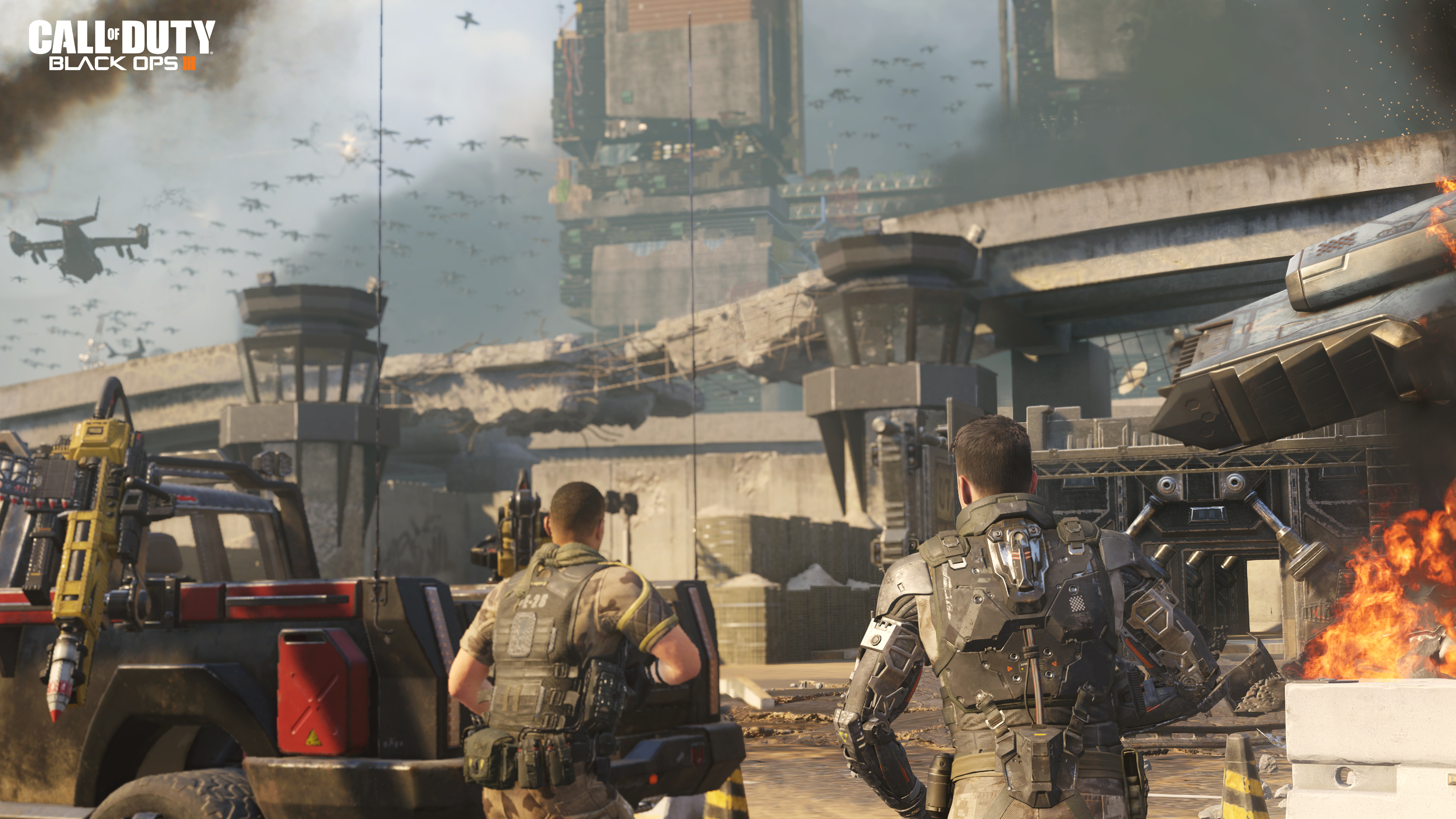
Man, where do I begin? Call of Duty was one of my favorite franchises growing up, and Modern Warfare helped kickstart FPS games into a new cinematic, next-generation universe. That Pripyat level in the first modern war still sticks with me to this day. After MW2, the series took a steep downhill slide and hasn’t stopped since. Here we are with Black Ops III, a futuristic military shooter that is a far cry from what the original Black Ops was, which was absolutely fantastic. You play as a squad of black-ops cybernetic soldiers who are trying to stop an all-powerful AI from destroying the world. See, the whole world is completely infused with technology that can read people’s minds and know our every move. The CIA has several operations around the world to keep this in check, but it all goes wrong one day. The actual concept is interesting and could have gone somewhere, but instead, we dredge through a sewer of boring, mediocre, and lame campaign levels that drag on way too long and overstay their welcome.
The game plays exactly like every other CoD since MW1. You run and gun your way through waves of enemies that are as dumb as dirt, and you face unbalanced difficulty spikes and repeat about a million times. I have to point out that I really hate the new weapon system in this game. You can no longer pick up guns from enemies but instead run into mobile armories where you can swap your loadout. This is a campaign, not multiplayer. I want to pick up weapons from enemies and keep things constantly mixed up. Several times through one level, I would need a shotgun or sniper rifle but was screwed because I couldn’t get to an armory. I can’t predict what’s going to happen next, so this is a huge mistake, and I really hated it.
Second, the enemies are as boring as ever, with generic robots and super soldiers. You get the occasional mobile armor, but that’s about it. It’s so boring that I just shrugged because I knew this was coming from a game like this. I mentioned the terrible weapon systems, but let’s talk about how terrible the actual weapons are. For one, there’s a small amount for a CoD game, and they all feel the same. Sure, you have shotguns, assault rifles, and pistols, but they just feel the same. They seem to have no weight, no bearing, and no personality. It’s futuristic shotgun A and futuristic assault rifle F. There are no real-world weapons anymore, and it’s just a borefest due to a lack of personality. The entire game has zero personality or originality. It all feels like endless metal corridors, hallways, and concrete. At least the first Black Ops felt original and had some personality and weight to it.
To make the game feel more like multiplayer, you get dumped into a central hub after every level and can change your loadout, unlock weapons with fabrication kits, and customize your weapons. There’s a new concept introduced called cybercores, which are powers that you can use against enemies. I found these almost worthless, as the game offers no opportunities to change to the standard CoD gameplay to implement them. It just felt like something tacked on to say, “Hey! We did something different! SEE?!” which I didn’t fall for. The only useful power was stunning multiple robots at once, but that’s about it. For most of the campaign, I forgot these powers were even there. I just ran around shooting everything in sight, like every other COD. I wish the series would stop pretending to be sophisticated and complicated when really it’s a dumbed-down snoozefest with no personality. It has been years since CoD has put its own fingerprint on the FPS genre, and this game doesn’t do it any favors.
I hated the campaign, but the multiplayer was at least fun for a while. It’s still the same old CoD MP that we’ve grown to either somehow tolerate or completely hate. However, Black Ops III is much more grindy than any other CoD game, and I gave up after around level 5. Even in single-player, it takes many levels before you can purchase decent weapons and load-outs. It’s part of the reason why the game gets so boring so quickly; the fast unlocks of the past are gone, and it feels almost free to play, which is a damn shame.
Graphics-wise, it’s nothing impressive except for how powerful of a PC you need to run something that shouldn’t push high-end systems. With the GTX 970, I used to have to turn down settings and still get massive slowdowns. It wasn’t until I used an overclocked 1070 that I got steady FPS with everything maxed out, and even then sometimes the game dropped down to 40 FPS for no apparent reason. The game is poorly optimized, has awful glitches that still exist after all the patches, and just doesn’t look all that original or impressive.
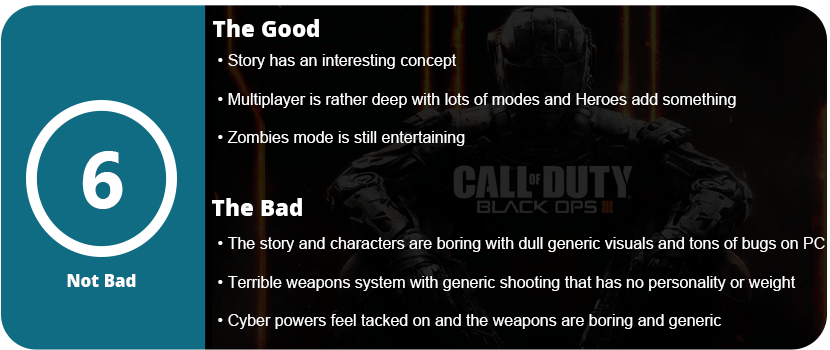
Overall, I can’t really recommend this game except for the hardcore CoD players, and fans of only the older games will hate this. The weapon system stinks, the campaign is boring, lame, tedious, and full of glitches, and the unlocks are a grindfest. There’s so much wrong with Black Ops III that it took me over a year to finish the campaign. It’s just boring and not fun to play, as there are plenty of other great shooters out there. I’d rather play Half-Life 2 for the 20th time or the Crysis trilogy than spend one more minute in this game. Now, that’s not to say I hate it to death, as the multiplayer can be pretty fun with new modes and playable heroes at a little depth, but it’s not enough to save the core gameplay. Zombie Mode is the final saving grace, as it still provides entertainment, but like multiplayer, it will only last so long with boring guns to use and average visuals.
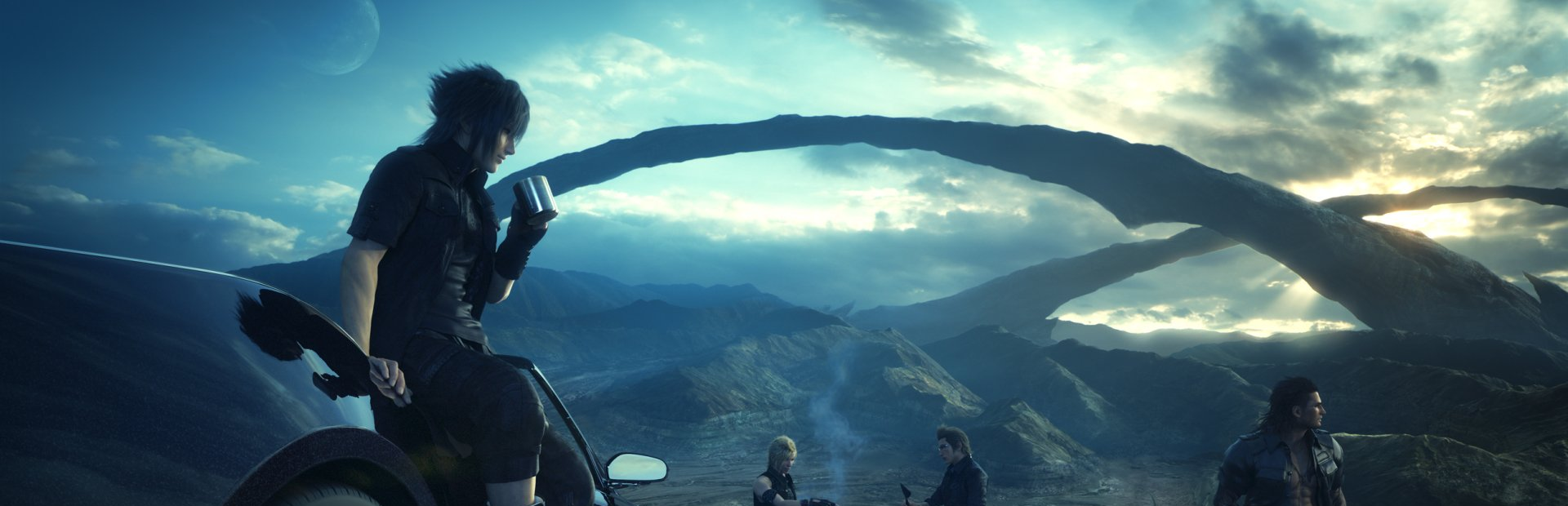
The JRPG genre, in general, is probably the stalest of them all. I understand the Japanese market is a lot different than ours, but the Western audience is always looking for something new and always interested in change. Final Fantasy is one of the most popular and highest-grossing video game franchises of all time, so it’s no wonder that Square Enix finally took the leap and made drastic changes to the series before they lose all their fans and can’t gain new ones. Final Fantasy XV takes a huge step forward and leans more towards Western RPGs such as Skyrim, Fallout, Mass Effect, and Fable.
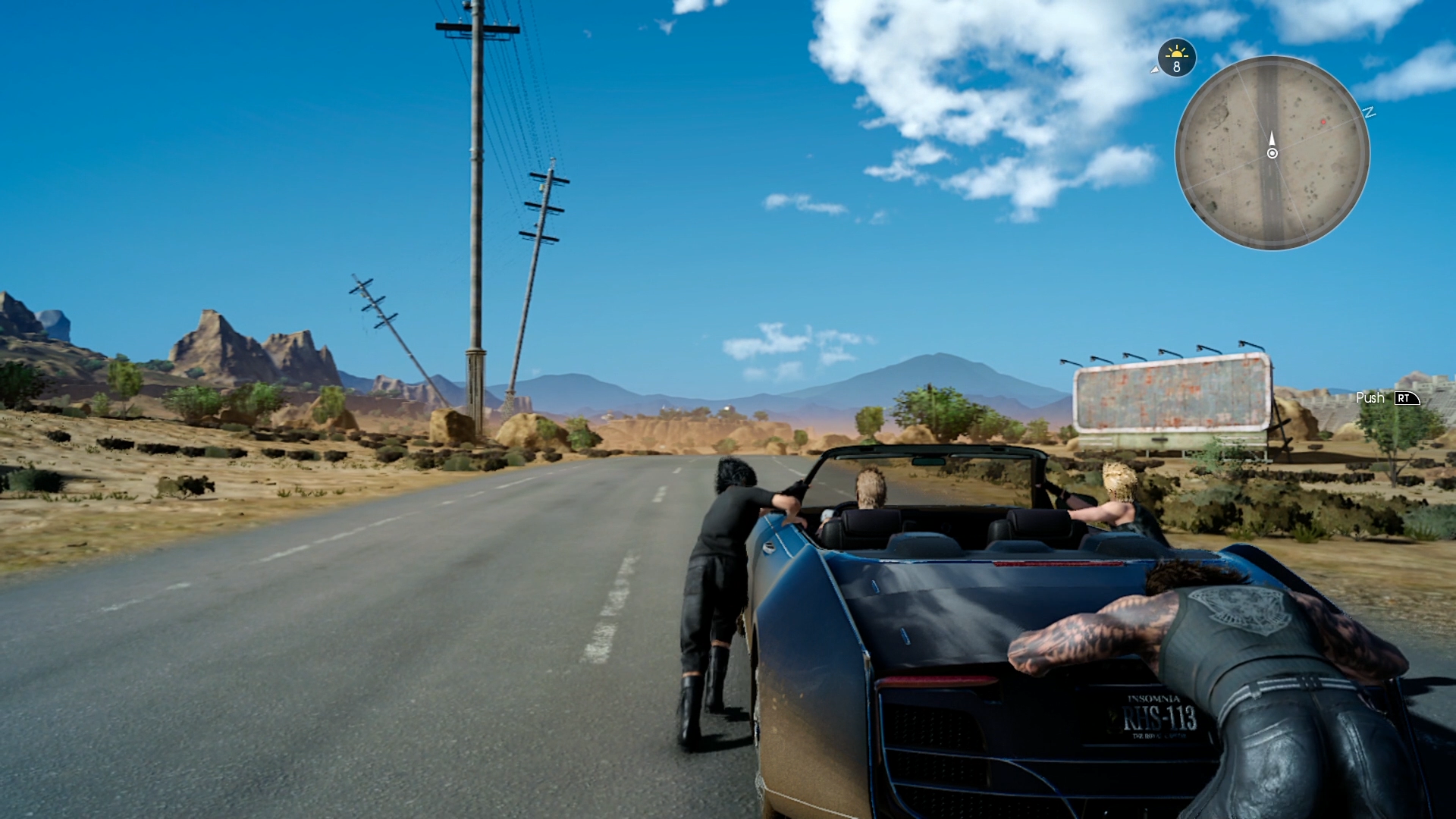
The first thing you will notice is that the game is mostly open-world. The area of Lucis is huge, wide, and expansive, and it can take over 15 minutes to travel from one end to another by car, probably over 30 on foot. But let’s back up a bit and talk about the story. The game has quite an interesting story, albeit straightforward and not as expansive or in-depth as other games in the series. You play as a team of four lifelong friends who are trying to stop an immortal from destroying the last remnants of Prince Noctis’ kingdom. You play as Noctis, and your other three companions, Prompto, Ignis, and Gladiolus, are all fighters in their prime. The story goes from very subtle pieces broken off to an unbalanced acceleration of linearity and difficulty.
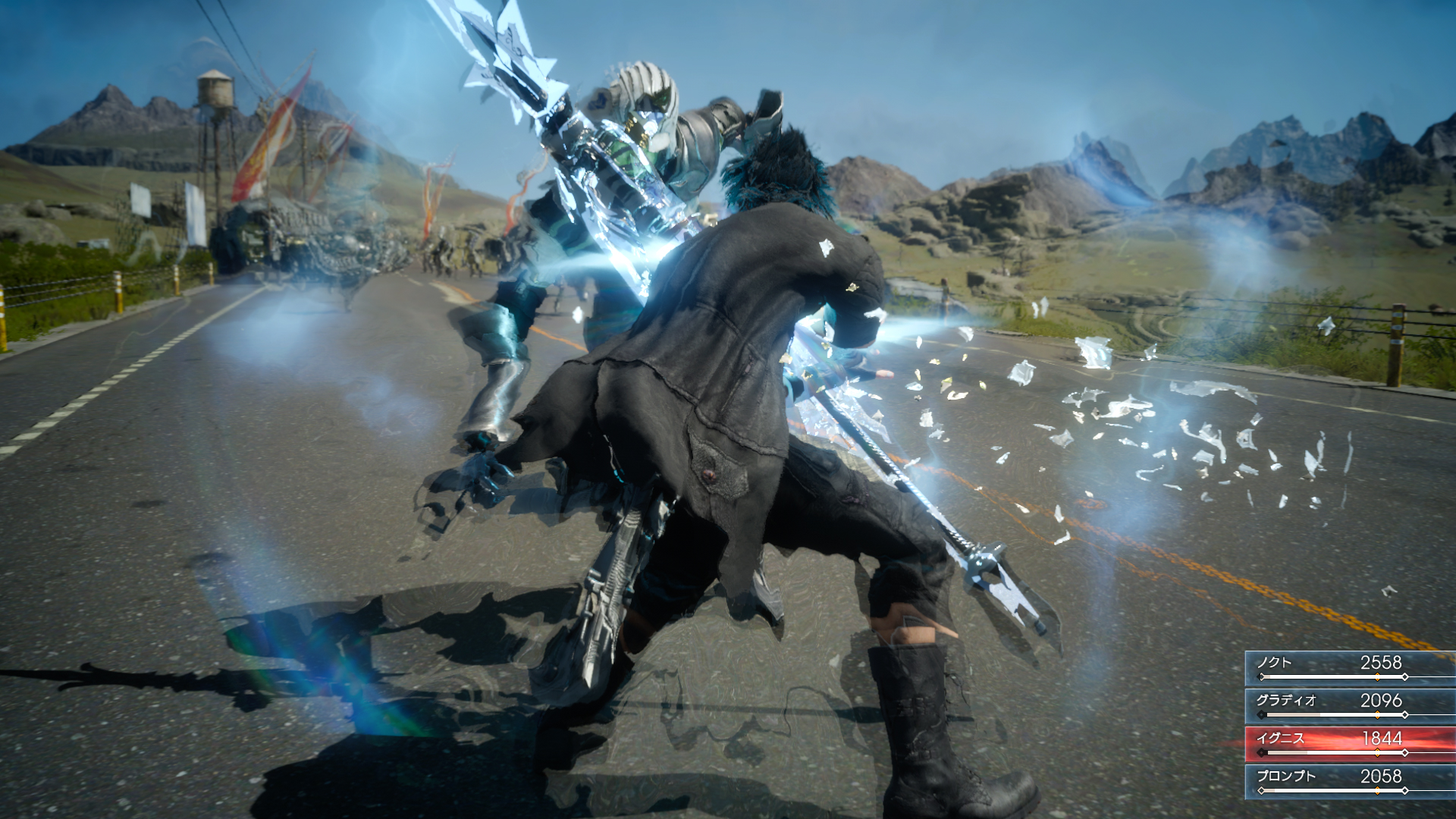
I can’t give away more of the story, or I would spoil it, so let’s get into combat. The game is not turn-based like previous games or even like Final Fantasy XII. The game is completely open combat, and if you want to run away from a battle, you just leave the red area on your mini-map. Noctis locks onto an enemy and uses a button combined with analog stick movements to slice and dice. You can equip up to four weapons, including magic (yes, it’s equippable and you have to craft it), so it’s very diverse compared to turn-based combat. The other three can use special moves when your meter goes up that can do devastating damage. Noctis can also warp to a point and hang there to recover MP and HP to take a breather. The combat is quite in-depth and fun to use, but the camera is just plain awful, and without locking it on, you won’t be able to hit anything. The camera swings around and gets stuck everywhere, forcing you to blindly fight enemies off-camera sometimes.
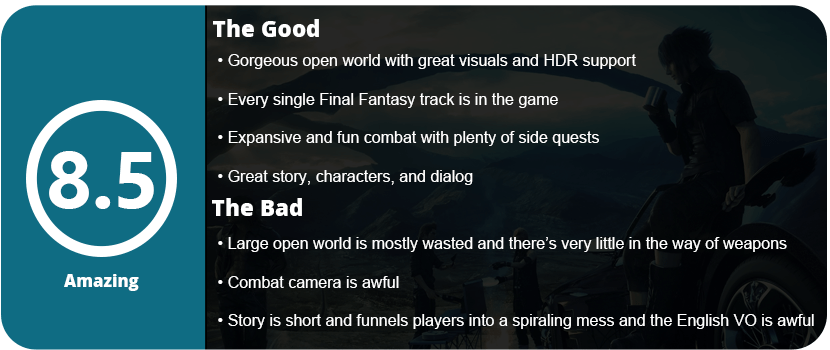
The game starts you out on a tight leash but slowly lets you out into the world. The biggest disappointment about this game is that this huge and beautiful world is wasted on side quests. While these side quests are addictive and I spent more time with them than with the main story, I still wish there was more to do and see. The only other activities are fetching items on the world map like ingredients for cooking and treasures, and that’s about it. You don’t even get achievements for these, which makes it less worth doing. You wind up with plenty of ingredients and items just from combat alone, so wasting time driving around this big world to do these mundane tasks is unnecessary. I wasted a good three hours in the beginning doing this only to realize that the items respawn, so it’s pointless. The treasures are no more than consumable items and rare weapons that you can easily buy at a store.
So what we have here is a huge open world for side quests, and the main story funnels us from the open world to a linearly scripted second half of a game that feels more repetitive than fetching useless items. Now that may sound harsh, but the game’s dialogue, story, and characters make it worth going through all this. Like most other Final Fantasy games, there is a level-up and skill progression system, but this time it is two-fold. Each character has a set skill, such as Prompto taking photos throughout your trip. This is a great feature, as when you rest, you can just pick what photos you want from what he took. As he levels up, he learns new filters, and it’s a lot of fun. Gladio will increase his survival skills by increasing item drops; Noctis can fish for ingredients; and Ignis will learn new recipes. Some may not care at all about this, but it’s optional for sure. The second progression system is a node-type layout similar to Final Fantasy X, where you use AP to unlock skills ranging from combat, teamwork, arbiter skills (basically an ultra move), and so forth. It takes forever to unlock all of these, and even with 50 hours of gameplay put in, I still didn’t acquire them all.
Once you get the hang of the entire game and get combat under your belt, you will blow through side quests, acquire items in the game, and finish the story. The story can’t be beaten without completing most sidequests, and you need to be at least level 40 before getting to the end. The strongest enemies in the game are the daemons, which come out at night, and you can’t even start tackling them until you reach level 30. Driving the Regalia around at night isn’t safe, and Ignis will always suggest you rest and not travel at night. So if you need to be level 40 before getting to the end, are the side quests really optional? They are fun and allow you to see the entire game, as this is a gorgeous world that Square Enix has built.
The visuals in the game are amazing, and the character models look great. This game supports HDR, and it looks gorgeous on a 4K TV, but there are some ugly bits, such as texture issues, and the NPCs aren’t as detailed as the main characters. While Final Fantasy XV is far from perfect, it’s also far from bad. If the camera was fixed in combat, there was more to do in this open world, and the story didn’t spiral into a linear, unbalanced mess, it could be the best FF game ever made. As it is, though, you will have to forgive the game’s shortcomings and learn to appreciate how far the series has come in 25 years.
It has been a long time since Halo was first released. Most people may not even remember it, but it was a series that almost never saw the light of day. Halo: Combat Evolved was a well-made sci-fi epic first-person shooter turned into a multi-million dollar sci-fi odyssey spanning dozens of comics, books, TV shows, and almost a movie. The first three games were absolutely fantastic, with Halo 2 being the best of the bunch. With revolutionary multiplayer and combat mechanics, Halo has been copied countless times over and over again. But how far can a series take something revolutionary and continue to build on it? Halo had three spin-offs, with ODST and Reach expanding beyond Master Chief and Wars being an RTS.
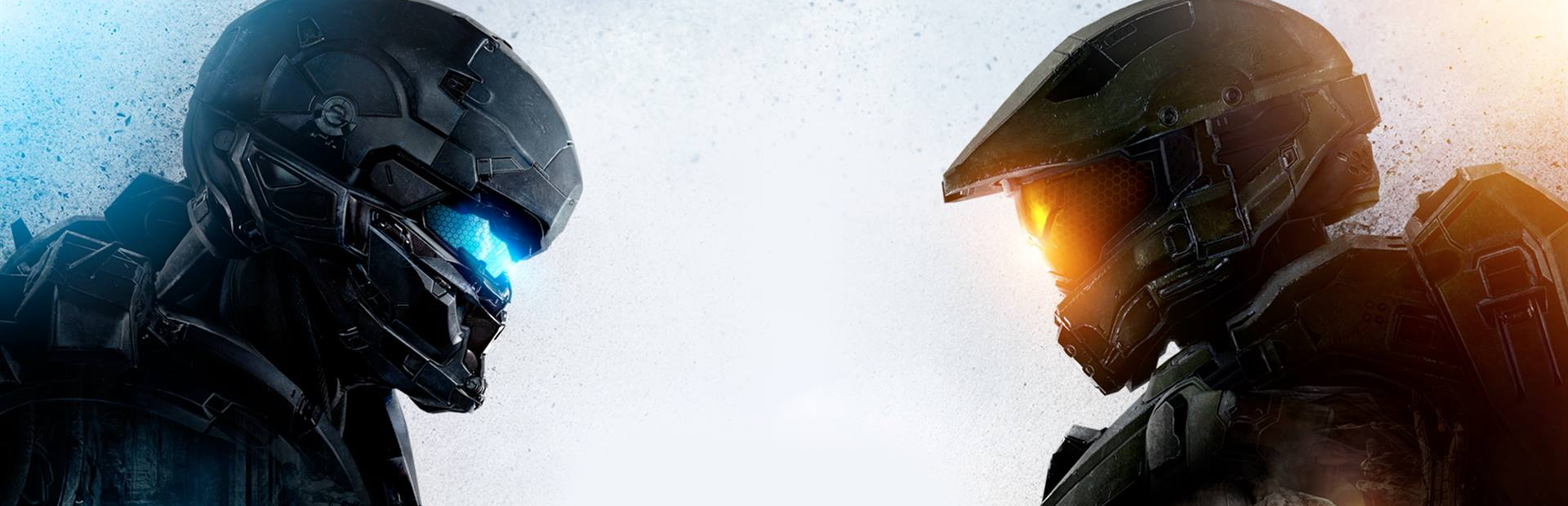
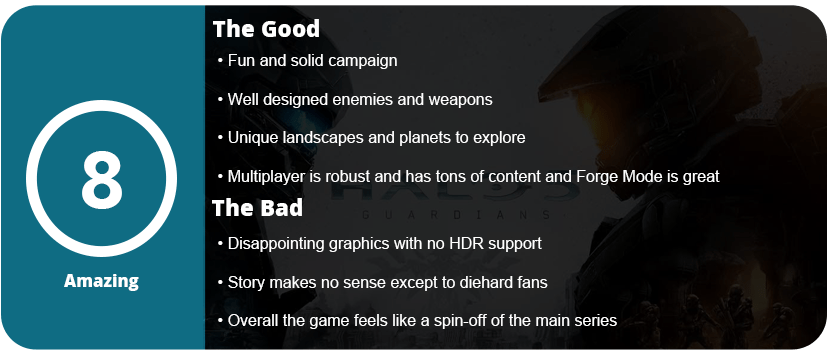
Halo 5 is the direct sequel to Halo 4, with Cortana’s rampancy going off the charts and team Osiris trying to track down the Blue Team, which is Master Chief and co. The story will make zero sense unless everyone has been playing the games recently and even reading the literature. The story has become so complex and involved that the games can’t tell the whole thing anymore. I didn’t even make much sense of it and was lost most of the time. With the story out the window for most, what we have left is just the gameplay.
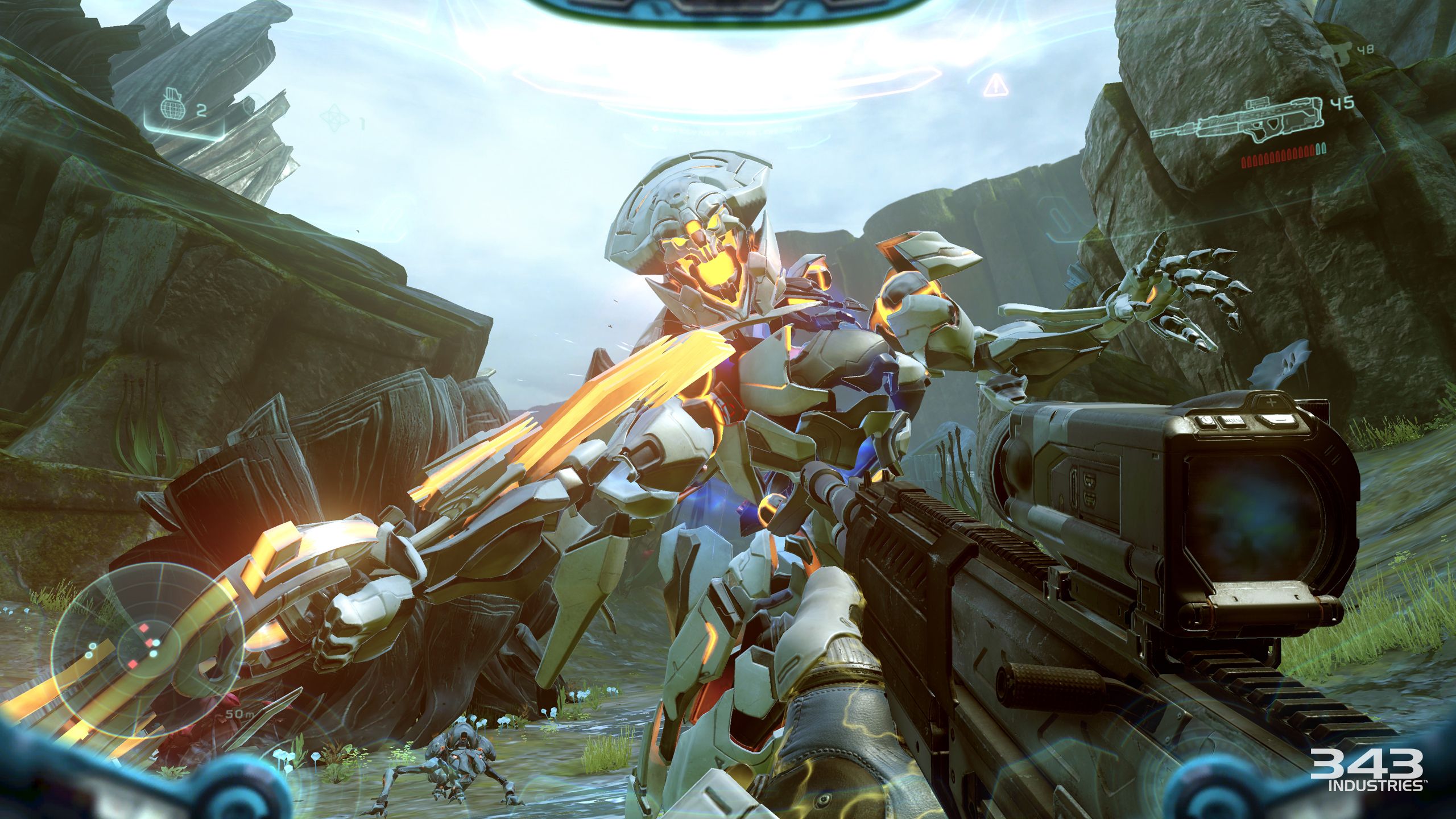
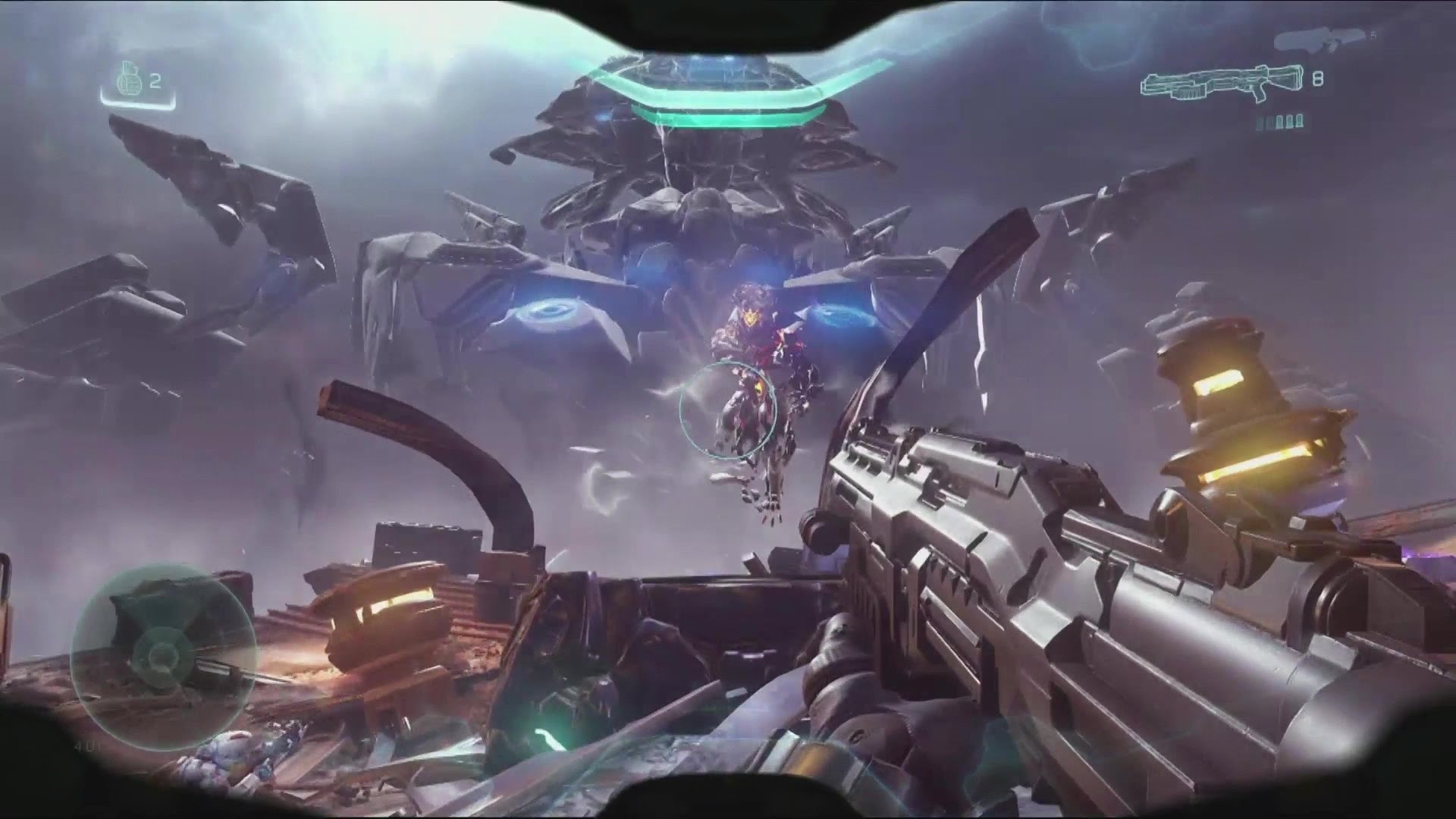
Halo 5 has a solid campaign, but it is forgettable and too similar to previous games. With the added Prometheans from Halo 4 returning and the remade Covenant, it is definitely a strange game to accept. All your Halo vehicles are here, albeit remade, and even the new mix of UNSC, Covenant, and Promethean weapons can make your head spin. The weapons are rather unique, and they all feel great and are well balanced. You are forced to switch weapons based on the situation, as each enemy plays differently and requires different tactics. This has been a staple of Halo gameplay, and it is at its pinnacle here.
Missions are sadly unvaried, with just on foot trotting through various landscapes and getting on vehicles here and there (the least amount of vehicle riding out of any Halo game), and that’s about it. You get new jetpacks and a Spartan Charge and Stomp move as Locke when you play the Osiris team. Master Chief feels like his same old self but is only played at a couple of levels in the game. This feels more like a spin-off and more on the lines of ODST and Reach than the main Halo game. The campaign has 14 chapters and will take around 8–12 hours to finish. Once you do, you’re on to multiplayer and customizing your character.
Halo 5 introduces card packs to rake in microtransaction-loving fools this time around. These packs have perks and extra customization options. There’s a lot to customize, such as your armor, emblem, narrator’s voice, weapon skins, and some other things. Outside of this multiplayer, Halo has been so involved and similar through each game that it all blurs together. I’m not a Halo multiplayer veteran or expert, but I can only tell you that it’s fun and isn’t less fun than other Halo games. There are plenty of maps and modes to keep you busy for the rest of the year. Halo is its own beast and carves its own path in the FPS multiplayer landscape. It may not be for everyone, as it doesn’t feel like the military shooter, just like with Gears of War. It’s difficult; there are people who play this professionally online or have played since the first game, and you will die more times than you can count.
Outside of multiplayer, there’s 4-player co-op and Halo Forge, which allow you to build multiplayer maps. I honestly didn’t dabble in this too much as I’m not very good at it, but it’s very robust, and map creators will be in heaven here. Let’s get sad here and talk about what I didn’t like. The visuals were extremely disappointing. With this being the flagship Xbox franchise, the graphics were more like they were ported over from Xbox 360 and touched up. The textures are fairly low resolution, and the model detail wasn’t too great. This game doesn’t look much better than Halo 4 outside of the lighting effects and draw distance. The game doesn’t even support HDR, which was a real letdown as well. The game just isn’t much of a sequel, and Halo needs a serious reboot at this point.
Overall, if you hate Halo or are tired of it, this won’t change your mind at all. Halo has declined over the years and doesn’t retain the quality it once had or the chokehold on the FPS genre. This is far from the king that it used to be and needs a passover with fresh minds and new ideas. Stay for the multiplayer, but most people will play this game and forget about it.
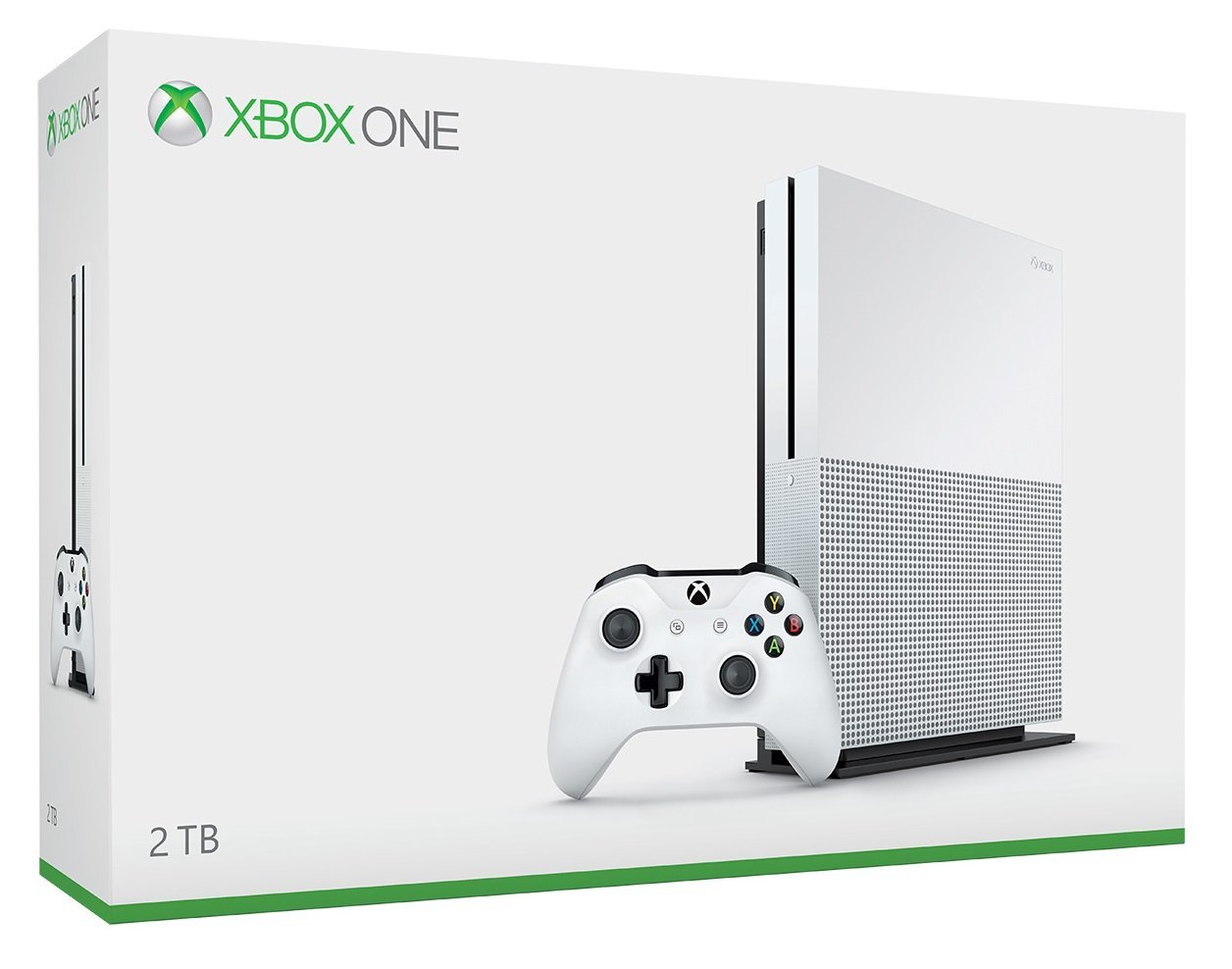
Colors: Crimson Red (2TB Gears of War 4), Storm Gray (500GB Battlefield 1), Special Blue (500GB Gears of War 4), White, Army Green (1TB Battlefield 1)
Every console generation has newer, slimmer hardware that brings about a new chapter in that generation. Usually, these are to promote blockbuster first-party games or brand new peripherals that only work with that console version. Sometimes it’s just to cut down on manufacturing costs as hardware gets smaller and easier to make as time goes on. We saw this all the way back in the 16-bit era. The most popular transition was from the Fat PS2 to the Slim PS2, which everyone has grown to love. It was one of the most attractive and compact consoles ever made and kept all the features of the PS2, minus the HDD bay.
The last generation saw three iterations for each console, and here we are with the first new transition to a smaller console. This time around, things have changed as the hardware inside has also gotten more powerful, which is a first in the console scene. Normally, everything gets smaller as the same hardware becomes cheaper and easier to make. In 2016, consoles are taking a page from PCs and getting more compact with more powerful hardware. With the PS4 Pro and Xbox One S in the spotlight, we can see a trend starting. Now the versions with older hardware also have a new iteration called PS4 Slim and Xbox One Slim. It’s a strange move, as you would think the older versions would be discontinued. This has mostly to do with a fidelity shift in the industry, where 4K is finally affordable, but most people haven’t adapted to it yet. Sony and Microsoft released a console geared toward 4K users while keeping 1080p users happy with new versions as well.
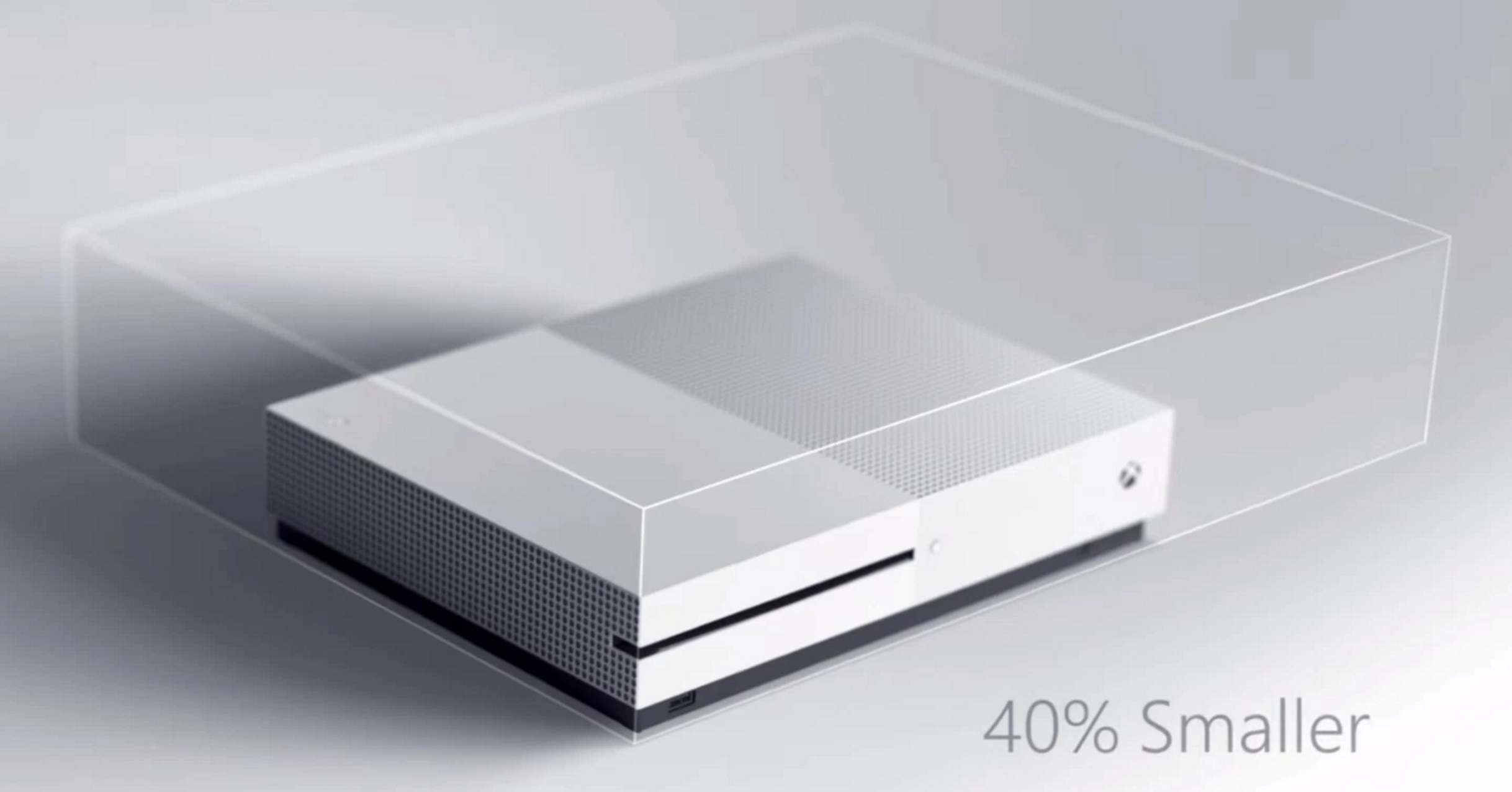
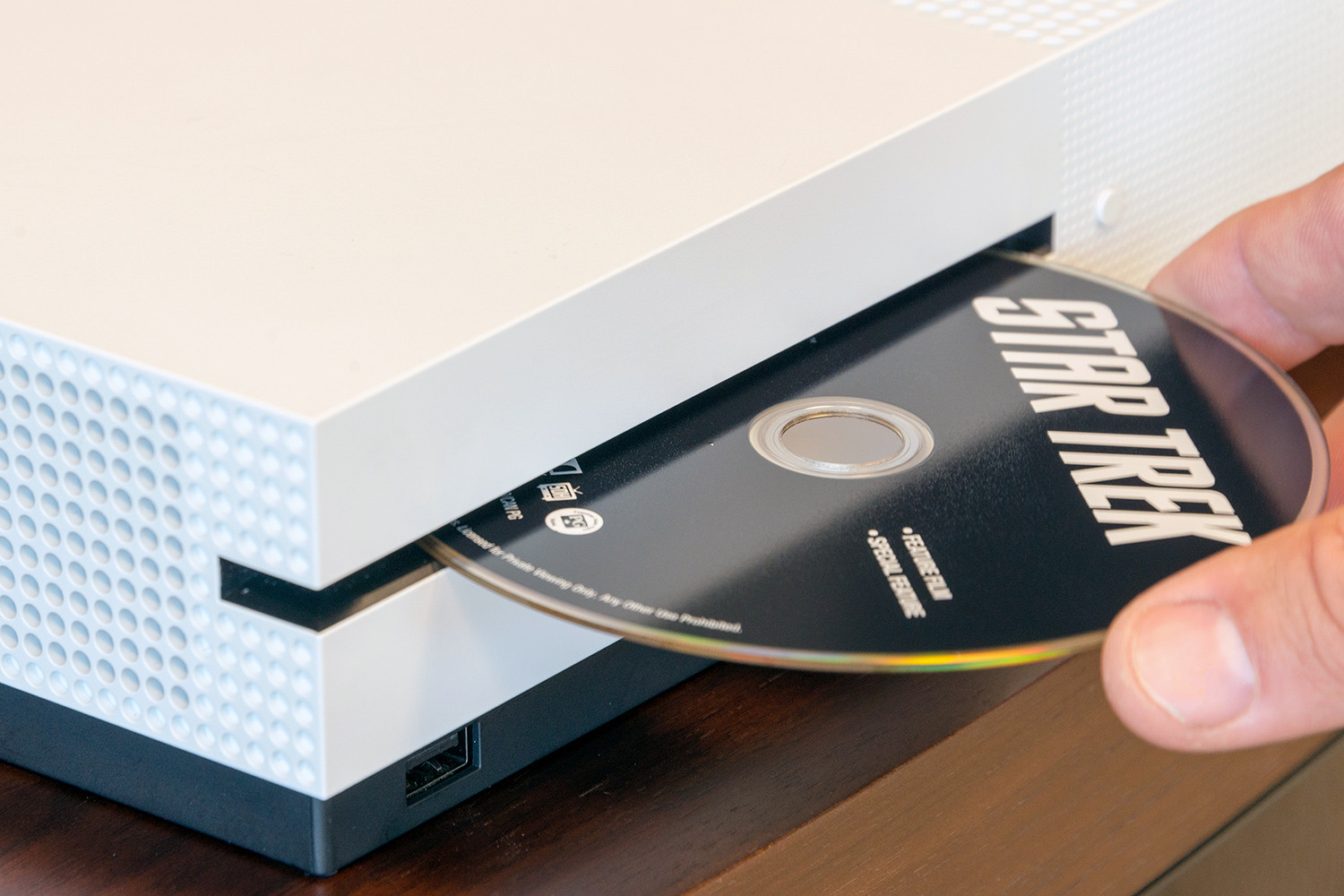
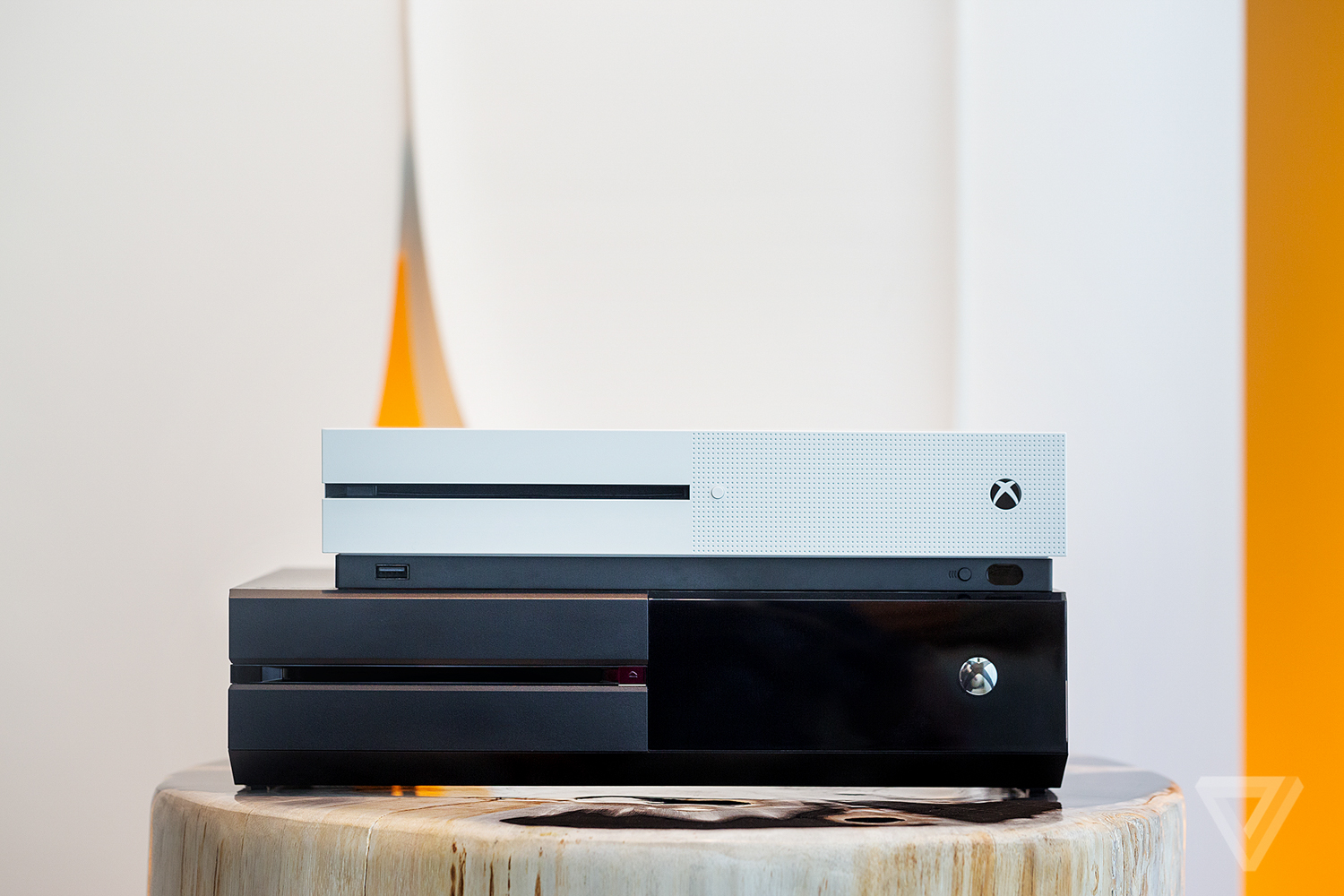
The Xbox One S is 40% smaller than the original version, and you can really tell. Even the large power brick is gone in favor of just a two-prong cable. The system looks sleeker and sharper, and the newly redesigned features are beautiful. The Xbox One is completely rectangular, with all its sharp corners. The power button is in the same spot, but it is now a physical button instead of a touch button. The disc eject button is now a small dot next to the drive, and the controller sync button has been moved to the bottom of the console in the front, out of the way. You will also gladly find a USB port up front and center instead of on the side. All of the same ports are in the back, like TV IN, optical audio, Ethernet, and other ports. The console is also much lighter and not so much of a giant building.
Once you plug the console in, I immediately ran into a major problem. There was a system boot loop every time it tried to connect to WiFi. I had to open up my wifi to allow the Xbox to connect to get the latest firmware update because it won’t let you into the dashboard without connecting. This is completely insane and needs to be fixed immediately. I only figured this out after an hour of research and trial-and-error. Outside of that, the system booted up quickly, and I was ready to set everything up.
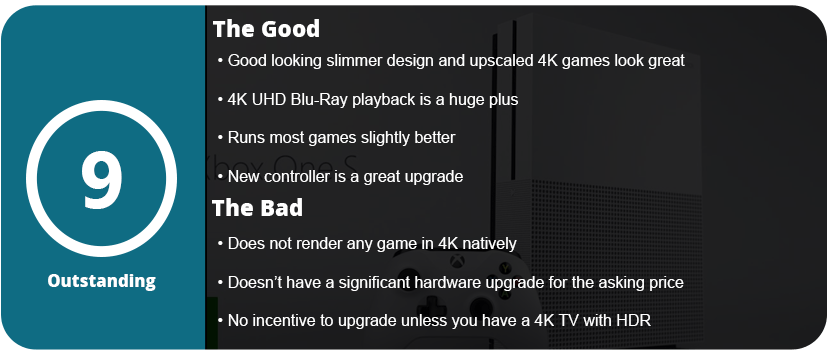
This is where I have to say that you need a 4K TV with HDR to warrant the price of the Xbox One S. If you don’t have a 4K TV, then don’t bother because you’re not getting anything besides slightly better running games. Everything is upscaled to 2160p as the Xbox One S does not render games natively in 4K like the PS4 Pro does, which can be a major turn-off for most customers. However, this is the only console that plays 4K UHD Blu-Rays, which is a major plus. The PS4 Pro does not, which is very odd. Each console has a major trade-off, so you decide which is more important to you. To be honest, even games being upscaled look fantastic, and there’s a huge difference from games rendered natively in 1080p. HDR is a huge addition to next-generation games and movies, and it adds a layer of fidelity and beauty that you can’t get anywhere else.
Even older Xbox 360 games looked pretty damn good upscaled in 4K, as it made the game sharper and less blurry. I did notice some games loaded a tad faster and ran slightly better, but most won’t notice a difference. The Xbox One S has an 11% power increase over the previous model. Microsoft overclocked the GPU to 914 MHz over 853, and the ESRAM bus speed was increased from 204 GB/s to 219 GB/s. This allows for faster load times, which are noticeable.Secondly, the system comes with a slightly redesigned controller, which is for the better. If the Xbox One controller wasn’t amazing enough, the new model has better Bluetooth, a new home guide bezel, fewer clicky bumpers, and can work on Windows 10 PCs via Bluetooth without the dongle. The back of the handles has textured plastic, and the thumbsticks have wider concaves for better grip. I love this new controller design and can feel and see the difference from the previous model.
Overall, the Xbox One S offers awesome new colors, features, and parts where they should have been, upgraded hardware, and 4K upscaling that makes games look clearer and sharper. The addition of a 4K UHD Blu-Ray player is something that will steer some people away from the PS4 Pro. However, unless you have a 4K TV with HDR, there are not enough added benefits to justify a purchase.
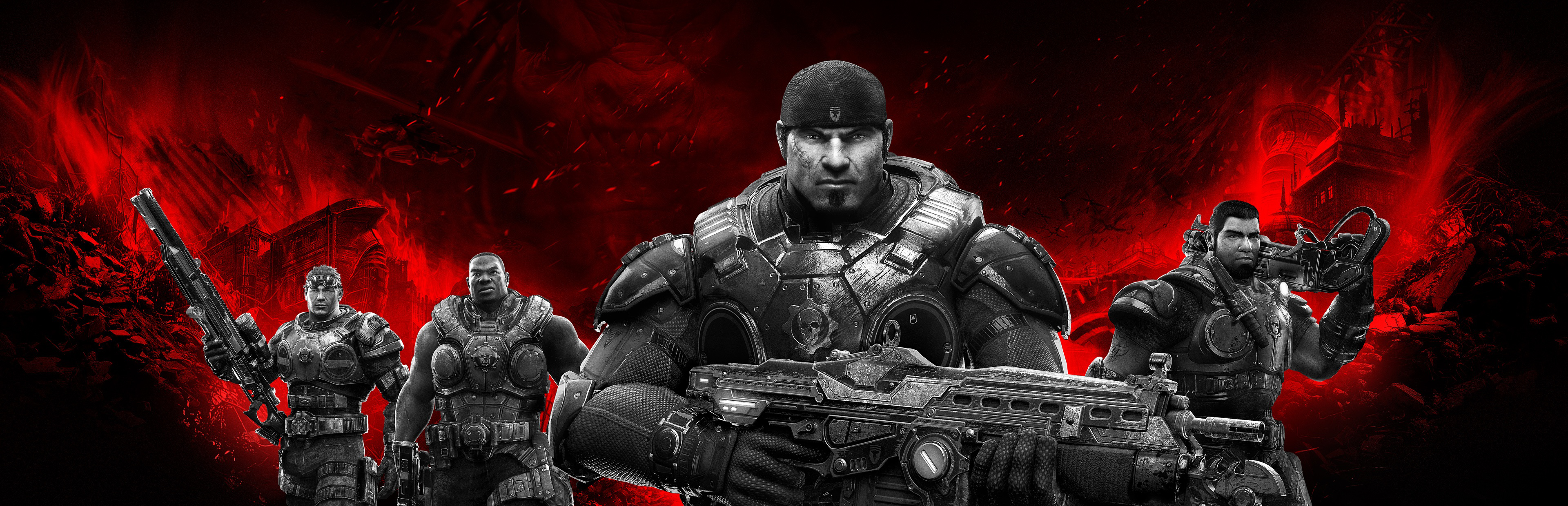
Gears of War has always had a special place in my heart, especially the first game. It introduced me to the next generation—a whole new fidelity of gaming. HD gaming was only a possibility on PC, but with Xbox 360, we could now play games in 1080p natively. Gears of War was the best-looking game made at the time, and it featured revolutionary combat, cover mechanics, multiplayer, a unique art style, well-designed enemies, and great characters. It featured traits that most shooters don’t possess, which threw it into the mainstream and made it one of the best-selling games of all time. Gears of War single-handedly helped sell the Xbox 360 during the holidays of 2006.
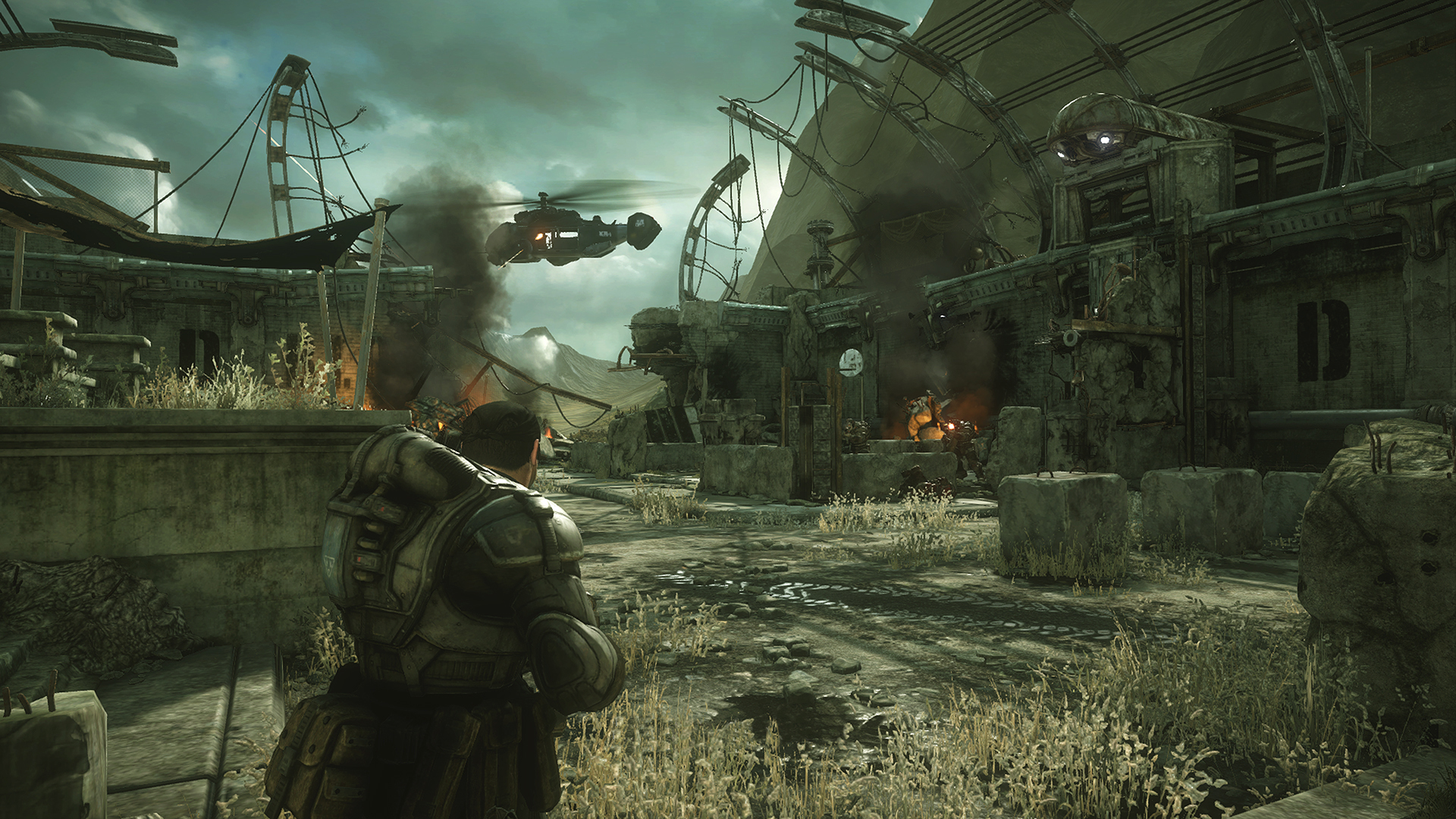
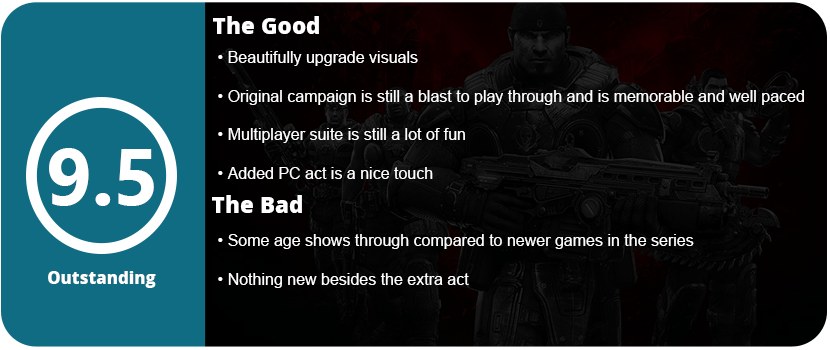
The game still holds up perfectly fine 10 years later. While it feels a bit dated compared to newer games in the series, there’s a simpler, more personal touch to this game than say Gears of War 4. Each location is unique, the game is perfectly paced, and the story unfolds in a way to keep you interested all the way until the end. Thankfully, the team kept the balancing and mechanics exactly the way they were in Gears 1 and didn’t update them. All the weapons feel the same, and the characters even move the same.
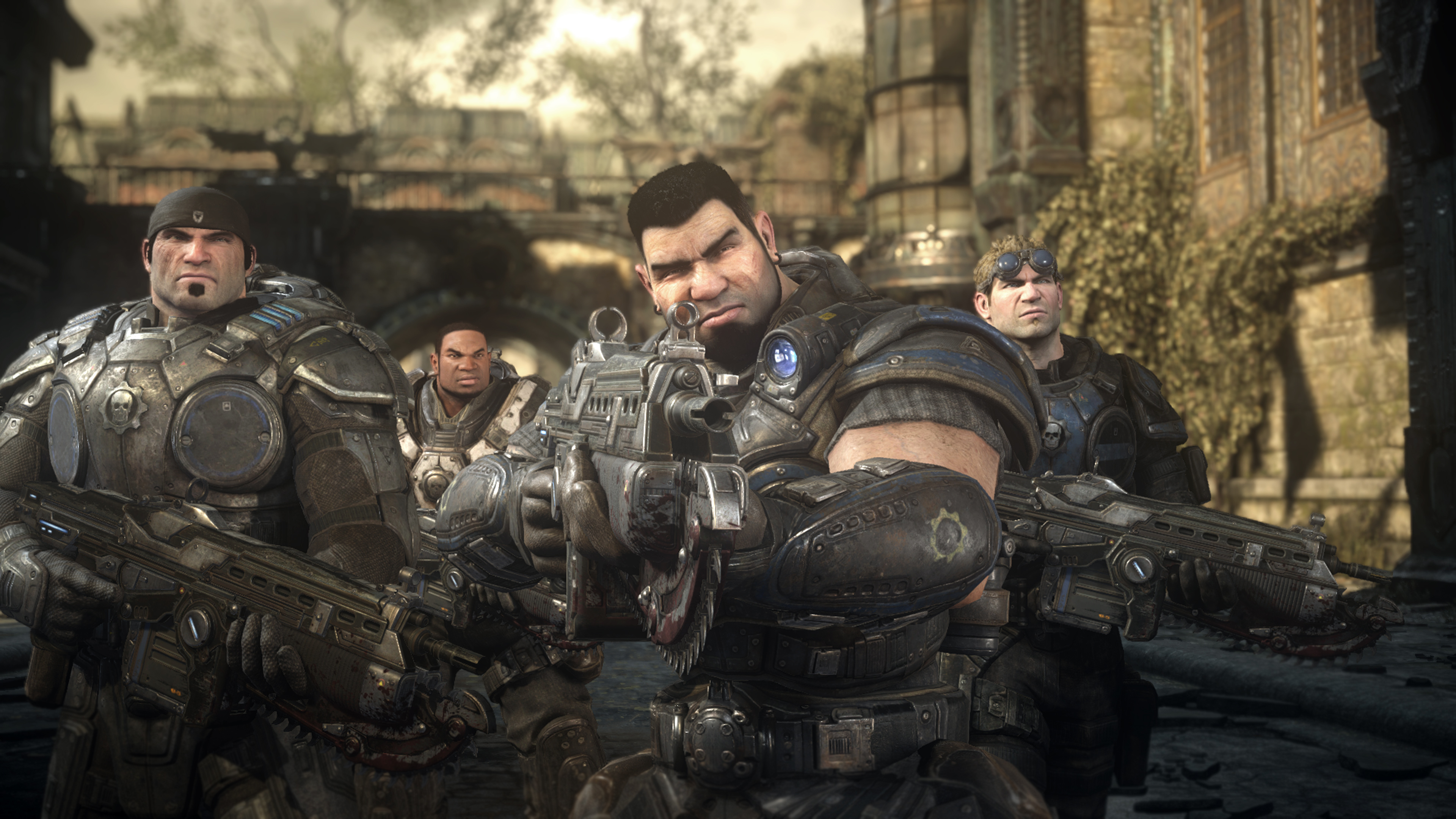
The only thing that has changed is the visual upgrade, which uses Unreal Engine 4 and makes the game look absolutely amazing. Running at 60FPS in 1080p is nice, but being upscaled to 4K on the Xbox One S is just pure eye candy. Honestly, this is the fourth or fifth time I’ve played through this game, and I never get sick of it. The original Gears campaign is just so well designed and wonderfully set up that you can’t help but play through it once a year.
I’m not going to go into too much detail on how Gears of War is played because every Xbox fan has played at least one by now. Gears do take inspiration from other games like Resident Evil 4’s over-the-shoulder camera and Kill Switch’s cover system. Unreal Tournament’s art style and heavy-handedness on weapons, as well as the gore, were also taken. Playing as Marcus Fenix in Delta Squad, you are tasked with deploying a light bomb resonator to help map the Locust’s stronghold, who are trying to kill all life on Sera. You personally feel like you are part of this war, and the game really shows the devastation and sheer loneliness thanks to epic set pieces and small, detailed cut scenes.
Gameplay consists of arena-based shooting in which you go into a large open area with cover, kill everything, then move on. Enemies vary from locust drones to giant Corpsers. Each enemy requires a special way to be taken down, and your arsenal is some of the most unique in any shooter. The Lancer is now a gaming icon with the chainsaw bayonet that helped propel Gears into the mainstream. Cutting a locust in half is one of the most satisfying things to ever do in a game. The Gnasher shotgun, Snub, Boltok Pistol, Boomshot, and various other weapons are just perfectly made and designed for this type of game. You will use each weapon and change your loadout according to the enemy type and the environment. This is hard to do for shooters, and Gears does it best.
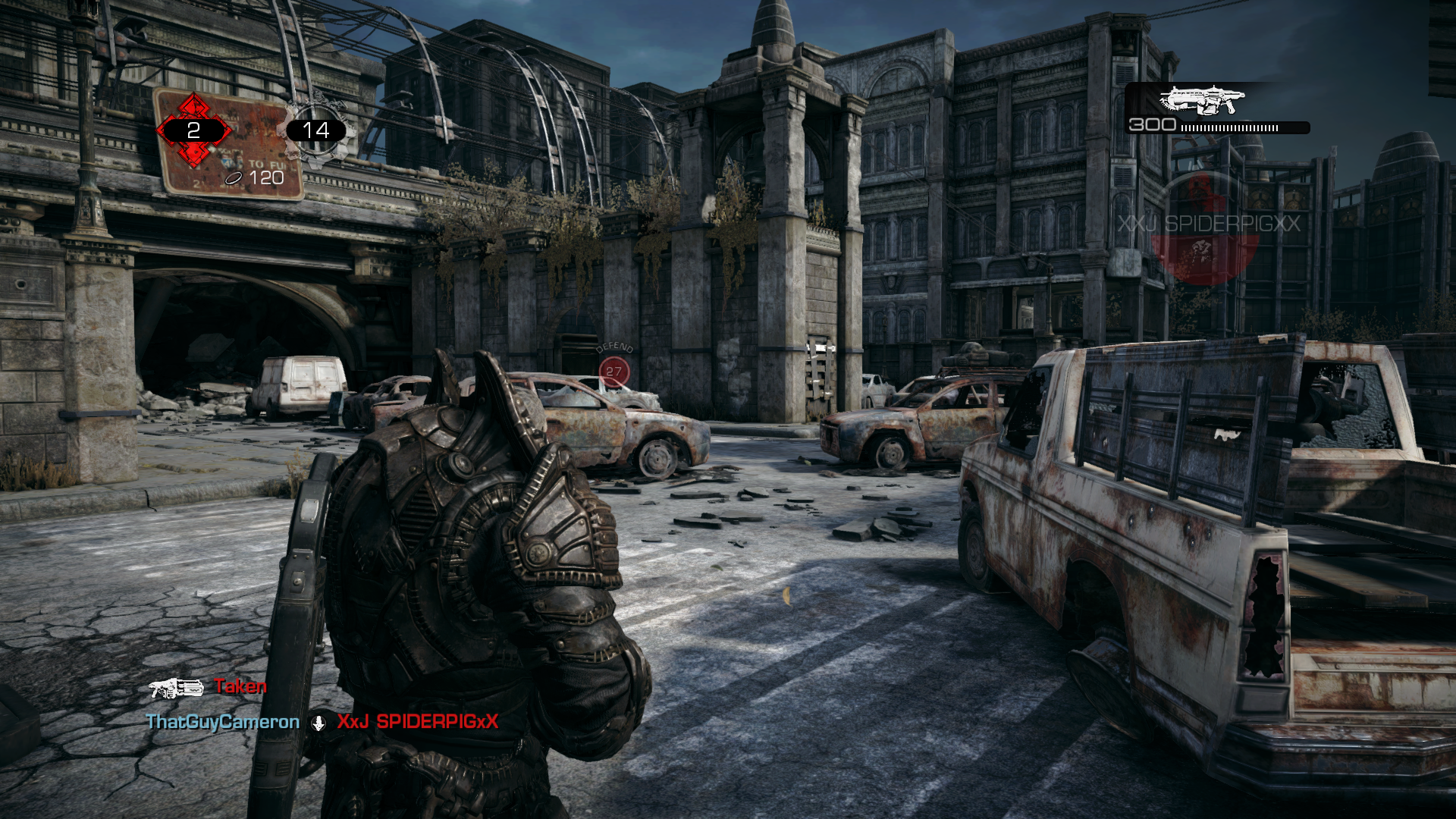
Without going into the game too much, I have to say that co-op is well worth it, and multiplayer takes a small upgrade. Added are game modes seen in sequels, and all the maps have been updated. You can also play as characters in later games. If you loved the Gears 1 multiplayer suite, then this is for you. I personally find Gears of War a hard multiplayer shooter to get into because it’s tough as nails and requires an extreme amount of skill. I also feel the mechanics aren’t right for multiplayer, but it’s still a lot of fun, and plenty of invested time will yield great results.
With that said, I still feel this is worth a purchase for long-time fans and newcomers. Just the visual upgrade alone is well worth the cost, and the added PC acts are a nice plus since that version is no longer available to purchase and is not playable anymore. To briefly sum up this new act, Delta Squad must get to Timgad Station and turn on the power to a bridge that leads to the train yard before the end of the game. During this act, they are chased by a Brumak, and the end of the act ensures a shootout with one. It’s a great piece and was sadly cut from the 360 version due to time constraints.
Overall, the Ultimate Edition ups the visuals and preserves the game just as we remembered it. With the added act from the PC version, upgraded multiplayer, and added content for it, there’s no reason not to play the Xbox 360’s best shooter. You will be playing a piece of gaming history.
First off, I have to say that Gears of War is one of my favorite game series of all time. It was the first game to really show me true next-generation fidelity when I got my Xbox 360 on Christmas of 2006. The art style, the characters, the lore, the story, and the atmosphere all drew me in with fantastic revolutionary gameplay and amazing online multiplayer. It was one of the most cloned games since Resident Evil 4 (which I know Gears took much inspiration from). Here we are, 10 years and 5 games later. I honestly didn’t go into Gears 4 expecting much after Gears 3 was so satisfying, and I accepted that it was the end. When Judgement was released, I lost hope in the series, and the Gears 4 gameplay trailer didn’t have me impressed.
I expected a huge reboot with all new characters and settings, but I’m kind of half glad they didn’t do that. Yes, Marcus and Co. are back to take shotgun on this ride, but there’s still something missing after playing through this huge beast of a game that didn’t quite click with me. You play as Marcus’ son, J.D., who is on a mission to try and stop the COG army from killing him and his friends who deserted from New Sera. On their way to steal supplies, they run into a new breed of locust, and another war ensues. Without giving too much away, the story feels more complicated than it can handle, as the linear one-mission goal from the last games worked perfectly for the series.
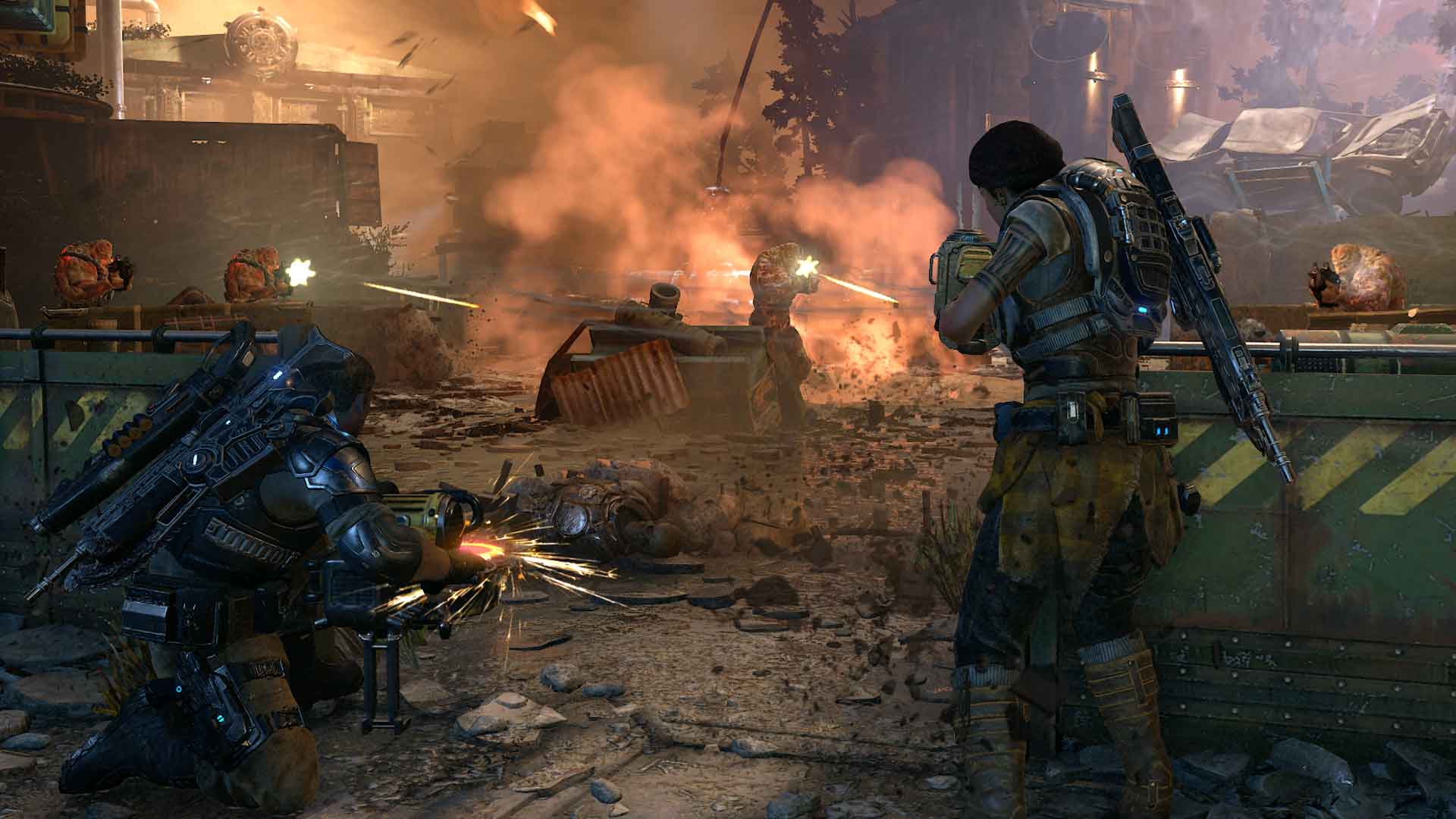
The game is instantly familiar once you get control of J.D. The Roadie Run, snapping into cover, blind fire, active reloading—it’s all there. It’s a little too familiar, and this feeling sinks in more and more as the game goes on. It almost feels like the Coalition was too afraid to venture off and try new things, which is a repeated pattern with smaller companies getting huge IPs. As I battled through the entire campaign, I felt like it just wasn’t as original or memorable as previous games. For one, the level design is sub-par. Yes, the post-apocalyptic scenes are here, but they fail to be memorable or mean anything. I remember Marcus’ mansion from the first game, the Locust stronghold and the driller scene with hundreds of Locusts from the second game, and Jacinto’s remnant from the third game. Nothing here feels unique or sticks out. It’s the same lame corridors or repeated buildings over and over again, and it becomes a blur.
Outside of that, the same locusts are back that we’re familiar with, such as Grenadiers, Soldiers, Grunts, Scions, and so forth, but I miss the other miscellaneous locusts like the Tickers. Instead, we get larger, meaner Locust, as they are mutating and can actually grow stronger in battle. Once the first two acts were over, a smile left my face as each familiar thing came into play. I realized by the third act that the game didn’t have many new things to throw at me besides a few new enemies and a couple of weapons. The campaign lacks epic set pieces that we were familiar with through the original trilogy. The ending has you riding some sort of giant robot, and that’s about the extent of it.
Weapons in Gears 4 feel very familiar with the original game, and not much has changed. All your favorite weapons are here, like the Lancer, Snub, Boltok Pistol, Gnasher, Mulcher, Boomshot, Hammerburst, and various other favorites. Some new weapons, like the Dropshot, are strange. It launches an underground missile that blows up underneath you. The Buzzkill is interesting as it shoots saw blades that bounce around. I love the new weapons that the new COG army robots use, such as the Embar, which uses hypersonic rounds that pierce through anything. The Enforcer is a fun new submachine gun, and my favorite addition is the Overkill. It’s a short-range hypersonic shotgun that devastates more than the Gnasher. Honestly, outside of this, there isn’t much that’s new. There are no new vehicles or old ones, for that matter, and the game is full of objectives that have you running around, turning on the power, flipping switches, and opening doors. It’s still an entertaining campaign, but I can’t see a reason to play through it a second time, like previous games.
The multiplayer is the reason why you’re going to come back, and it’s the first Gears multiplayer I actually enjoyed. Many old modes are back, such as Team Deathmatch, Capture the Flag, Dodgeball, and various others. The biggest addition is Horde 3.0, which perfects the mode. A brand new element to Gears is the fabricator. It’s a box that allows you to build defense items and even weapons. It’s a take on tower defense as you kill enemies, gather loot, and bring them back to the Fabricator to acquire new items. I had so much fun in Horde, as each match felt different and fun. When a teammate dies, you can get their cog tags and bring them back to the fabricator to revive them. The tactics and scenarios change so much with each wave that every minute is a surprise.
Lastly, let’s talk about the visuals in Gears. Gears of War was the pinnacle of high-definition gaming and had been up until the third game. Gears of War 4 looks good, but it doesn’t look next-generation and definitely doesn’t look amazing on PC. It feels like it was being developed on Xbox 360 hardware and was ported over to Xbox One. The textures are muddy and grainy, the models are not up to snuff, and the aliasing is awful. Even though this game uses Unreal Engine 4, it uses it poorly. Especially since Gears of War was the proving ground of that engine.
Overall, Gears of War 4 will put a smile on fans’ faces for a short while and not really impress newcomers. The story is interesting but doesn’t do the lore and/or backstory justice; there isn’t much new that we haven’t already seen; the level design is boring; and the only thing that will keep you playing is multiplayer.







































 thebinarymessiah.com
ORC is probably the worst game in the entire series. It's objectively awful. Being bad isn't different. Different is Outbreak…