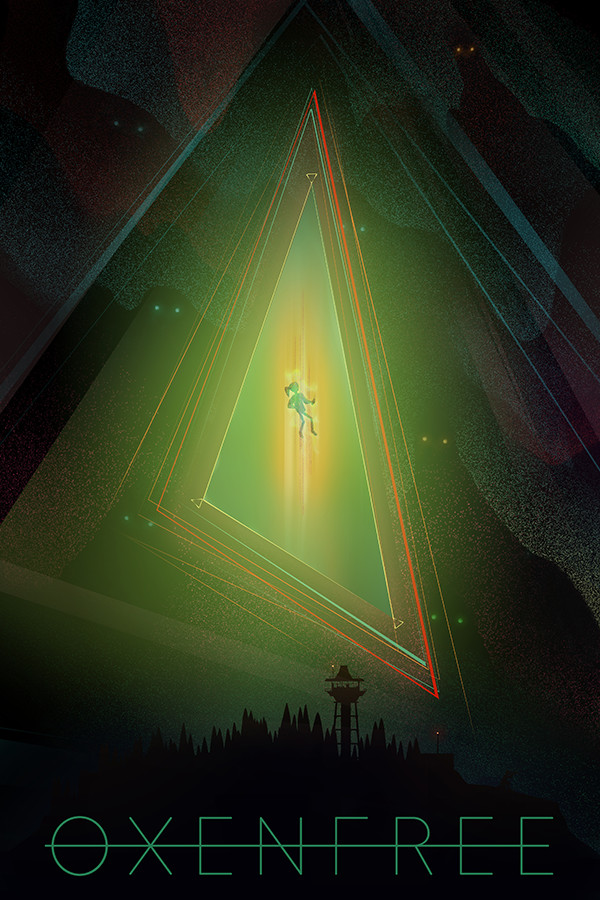
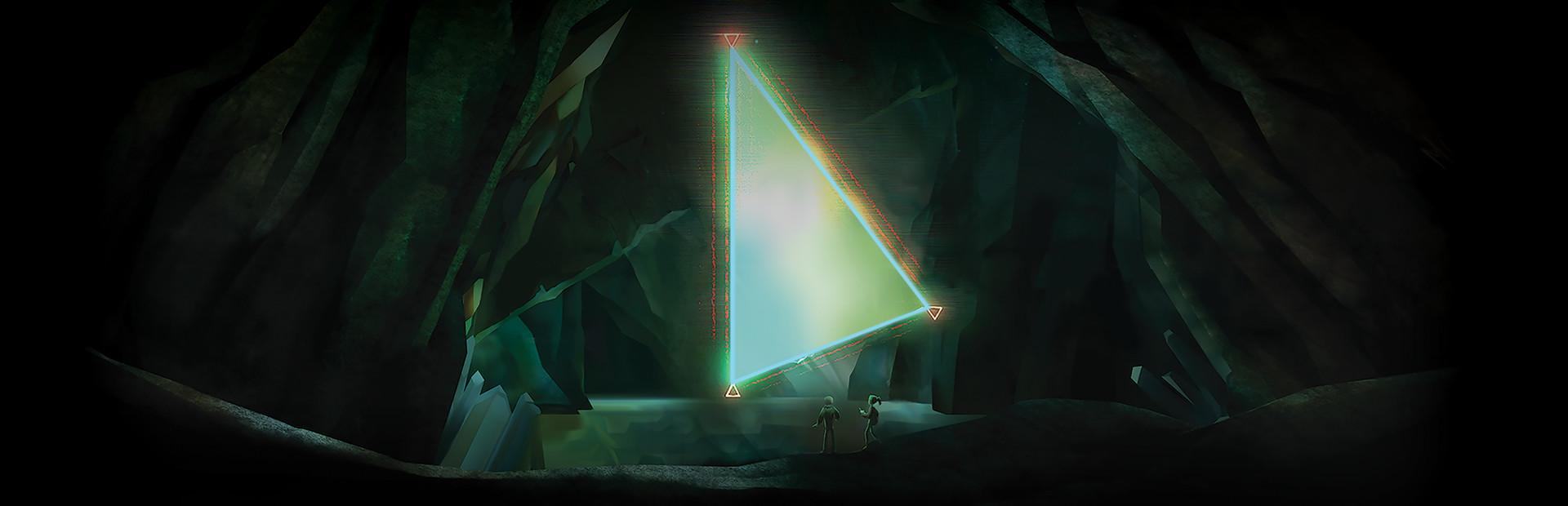
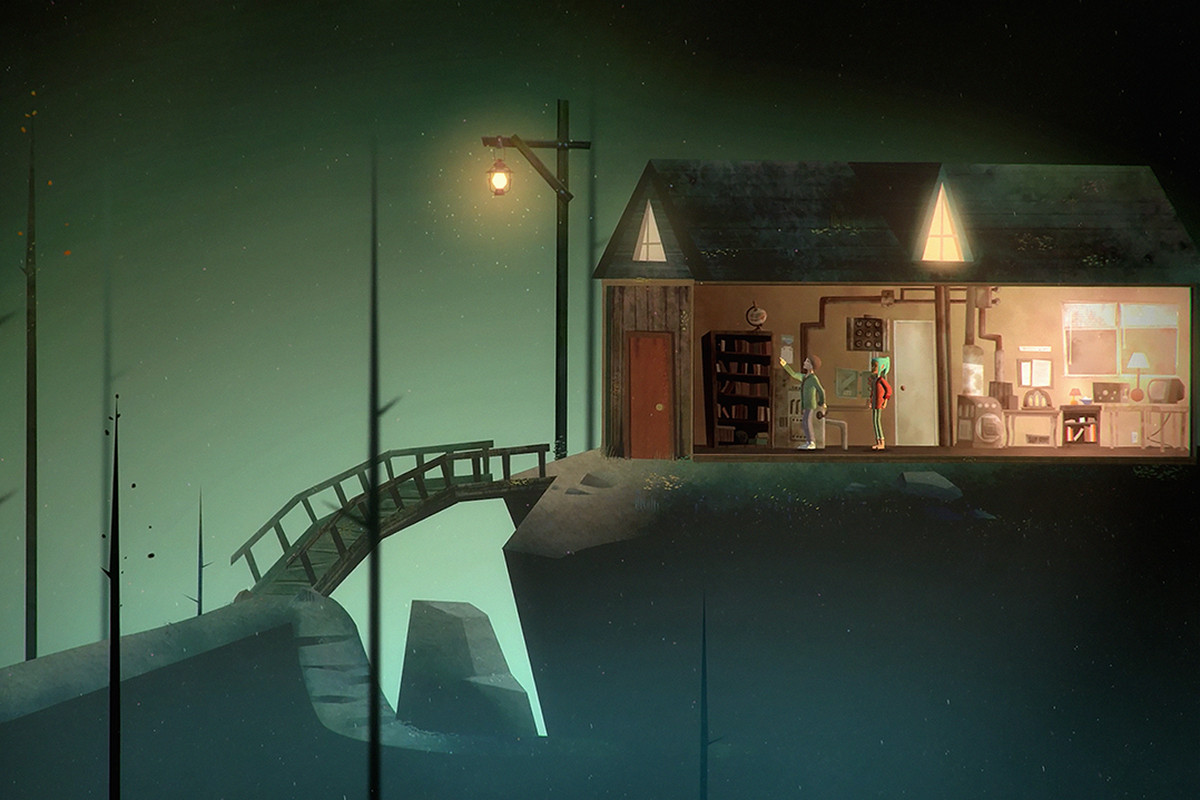
Oxenfree is all about horror and mystery. It starts out with five students in their early 20s arriving at a small town in the Pacific Northwest to discover some sort of weird thing that goes on in the caves there when you tune a radio to a certain frequency. After a good amount of dialog, plot, and character development, you tune your radio and discover a rift in time. You also discover the island is actually haunted, and you are trying to free the ghosts within. Why, how, and what they are in the mystery that I won’t spoil.
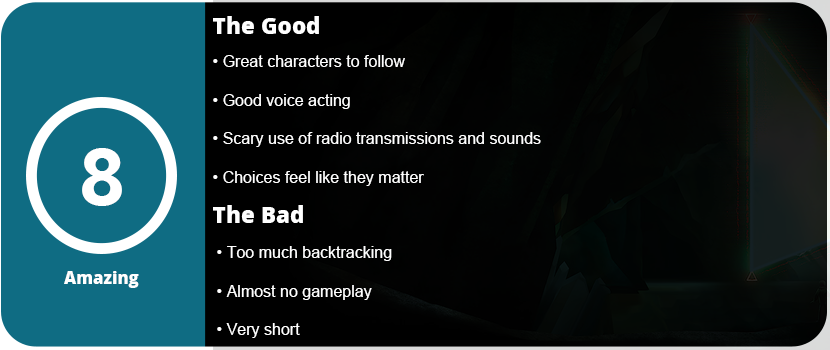
The horror elements are mostly audio-related and are something I have not really heard in a game before. The game uses the eerieness of radio static and voices. Have you ever gone down a scary YouTube rabbit hole and watched “Top 10 Scariest Sounds” or something like that? Well, if you ever heard one that was about strange radio call signs that were used in the Cold War, then you know what you will hear in this game. It made the hair on my neck stand up and was very chilling to hear. There are various stones you can find throughout the game that give you tidbits of stories about the island, and these creepy radio calls are part of this.
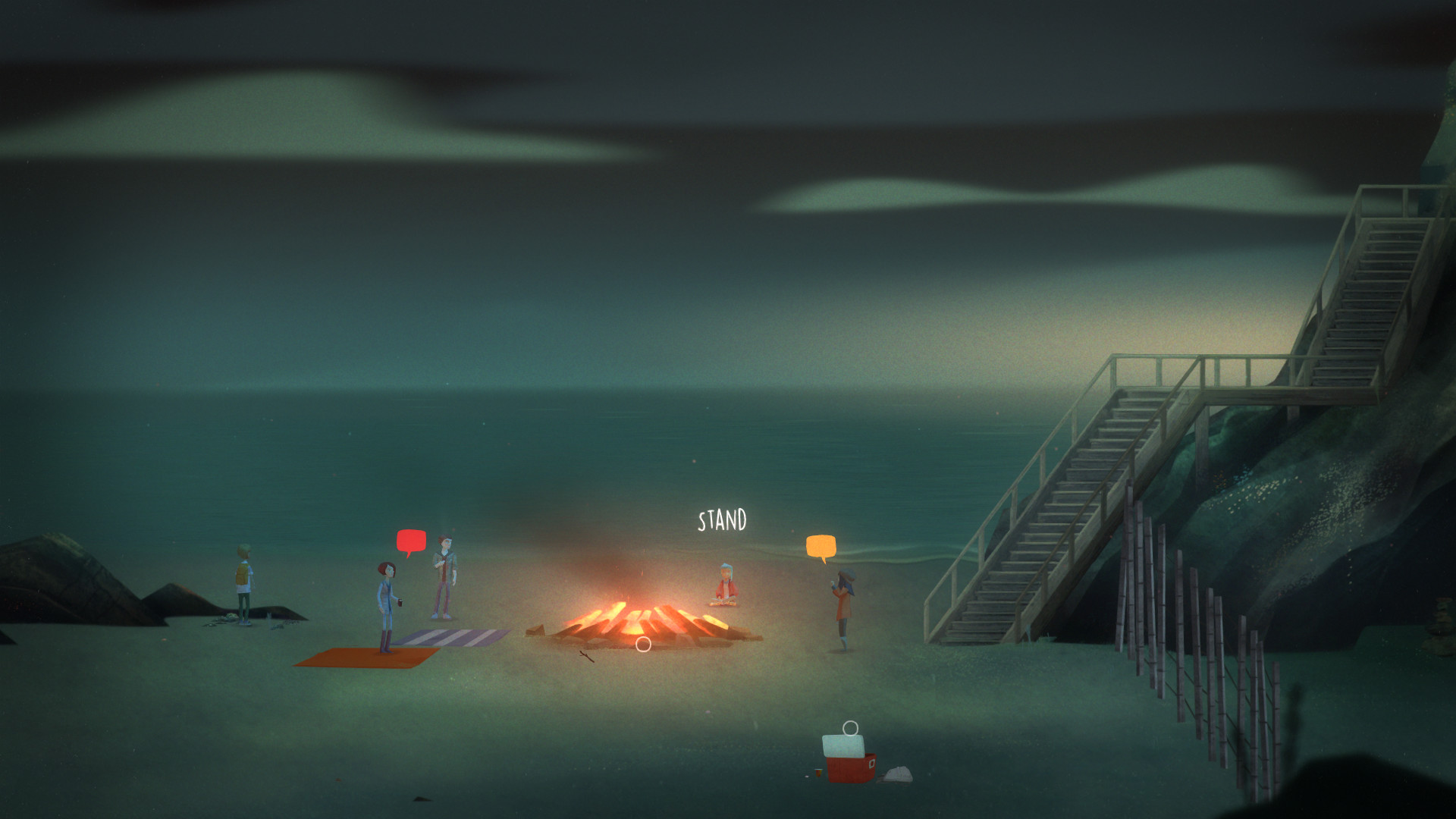
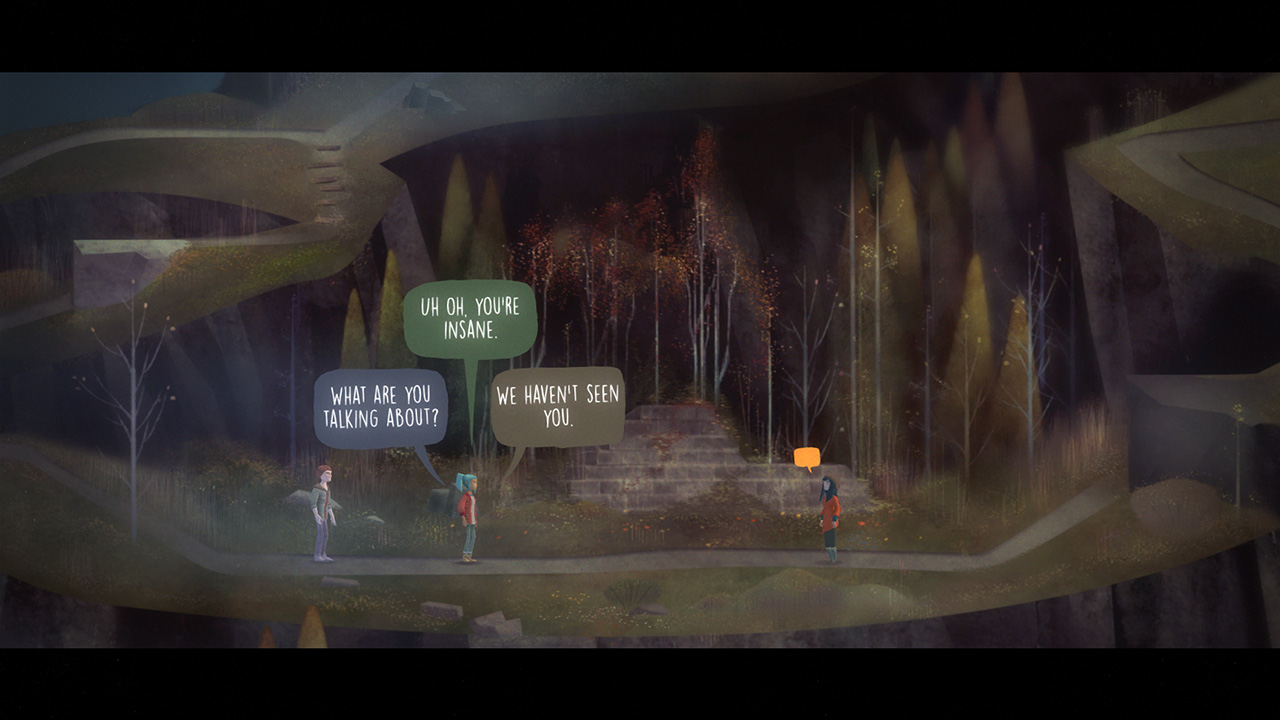
You wander around the island, listening to the dialog, as there are no puzzles in this game. It’s very much a “walking simulator,” but you walk and talk with the characters and choose from three different dialog options as they pop up in conversation. Some of these are story-altering, and some are not. These choices determine the ending you get, which I found was a little too short and disappointing. I really got to like the characters here, and the game is so short that you can’t invest a lot of time into them. Every so often, the game will bring you into a time loop, and these are when a lot of important choices are made. Even for a 4-hour game, the story is done quite well and has a beginning, middle, and clear ending, and you wind up exploring most of the island, albeit at a snail’s pace. You can wander around further to collect letters and find these frequency stones, but I honestly didn’t find the story of the island as interesting as the characters.
The voice acting is actually really well done, and I like that when you answer before someone finishes a sentence, Alex, your character, will interrupt with a correct tone and inflection in her voice. The constant bantering between the characters is the most entertaining part of the game, and I was always looking forward to hearing what they had to say. The game also looks really good with 2D backgrounds and 3D models. It’s a 2D side-scrolling adventure, so it’s hard to get lost here. I found the game’s pacing was all over the place; however, there would be sections where I felt I was progressing quickly only to get slowed down by too much backtracking or lots of cut scenes and dialog. You don’t have to really think to finish the game, and I felt collecting everything was too tedious due to the slow pace of the game.
Overall, Oxenfree is a great horror mystery game that, while not very memorable, will entertain you for an afternoon and might be something you discuss with friends as the story does have a twist ending. It looks good, has great voice acting, and the characters are interesting, but the constant backtracking, slow pace, and almost zero gameplay may put some off.
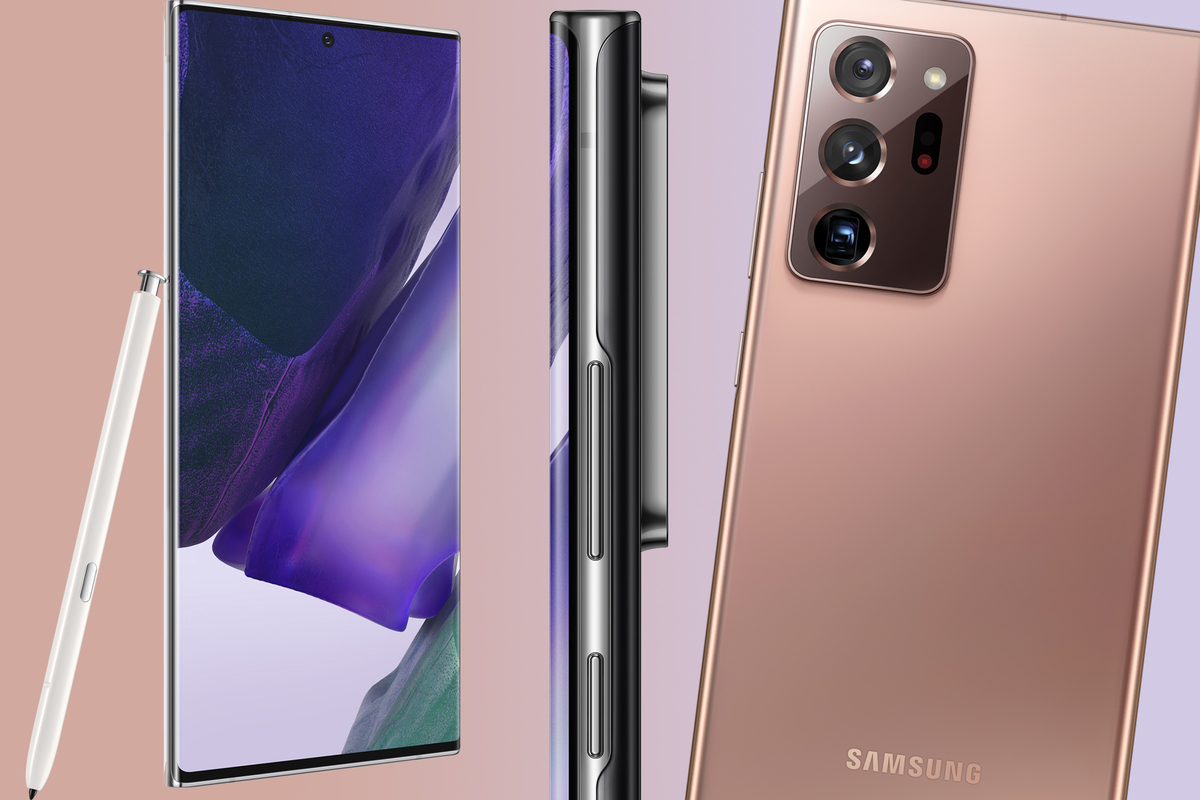
Smart phones have hit a plateau in the last five or six years, if you haven’t noticed. We went from huge leaps and bounds in software and hardware to arguing over megapixels, keyholes, and camera bumps. Phones have gotten to a point where even lower-end phones are no longer slow and can pretty much do whatever you need. The gap between a premium phone and a low-end phone is shrinking, and it’s getting harder to justify the huge price hike in premium flagship phones because of this. Samsung is one of the largest perpetrators of this issue. The Note series was their bread and butter, was easily miles ahead of the iPhone and many other popular phones, and continued to innovate with every iteration. Once the Note 8 was released, I was pretty much over it all. I switched to OnePlus and never really looked back, as it offered most of what Samsung could for over half the price.
What made me want to go back? Especially since Note phones run over $1,200 these days. The Note series has evolved enough since the Note 8 to catch my eye. The phone may not be super special to anyone who upgrades yearly, but for a jump from three generations ago, it’s a beautiful piece of hardware. The evolution of the note is still subtle, but in many ways. From the pretty much edgeless display to the return of an aluminum back and expandable storage, The series feels like it went back to its roots compared to older generations. Outside of lightning-fast response times and fantastic game performance, those are a given. I came back for the little things.
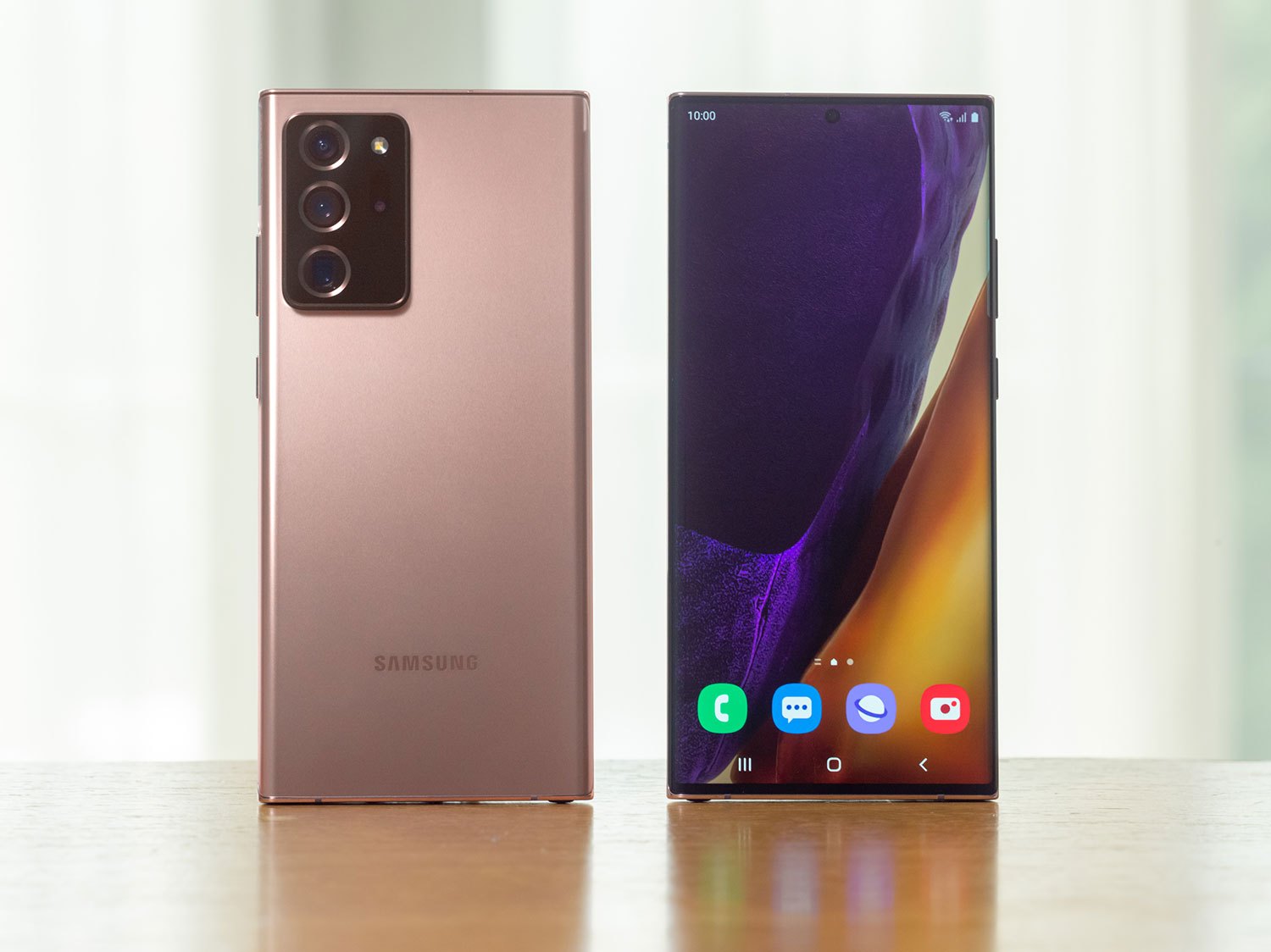
The unboxing is rather humble and minimal. Just a plain box with the S-Pen on the front and a big N20. It’s screaming, “Yeah, we don’t need to say much.” Just a charger and a phone without all those crazy adapters that the Note phones started getting since the Note 7. When you pick up the phone, the first thing you notice is a huge camera bump. Like, holy hell, this thing has grown! These things are getting so big and silly, but it doesn’t detract from the phone’s looks. The series finally feels premium again. Glass doesn’t make a phone feel premium; it makes it feel delicate and fragile. I never liked glass-backed phones, and I’m glad aluminum is back in. The brushed bronze color is gorgeous, and it continues on the top and bottom, with only the front being glass like it used to be since the Note 4. There’s also a lack of a headphone jack, but loo, it’s over. Headphone jacks are bulky, and you’re fighting for room inside the phones. You also can’t make a phone thinner than 3.5mm if you keep this.
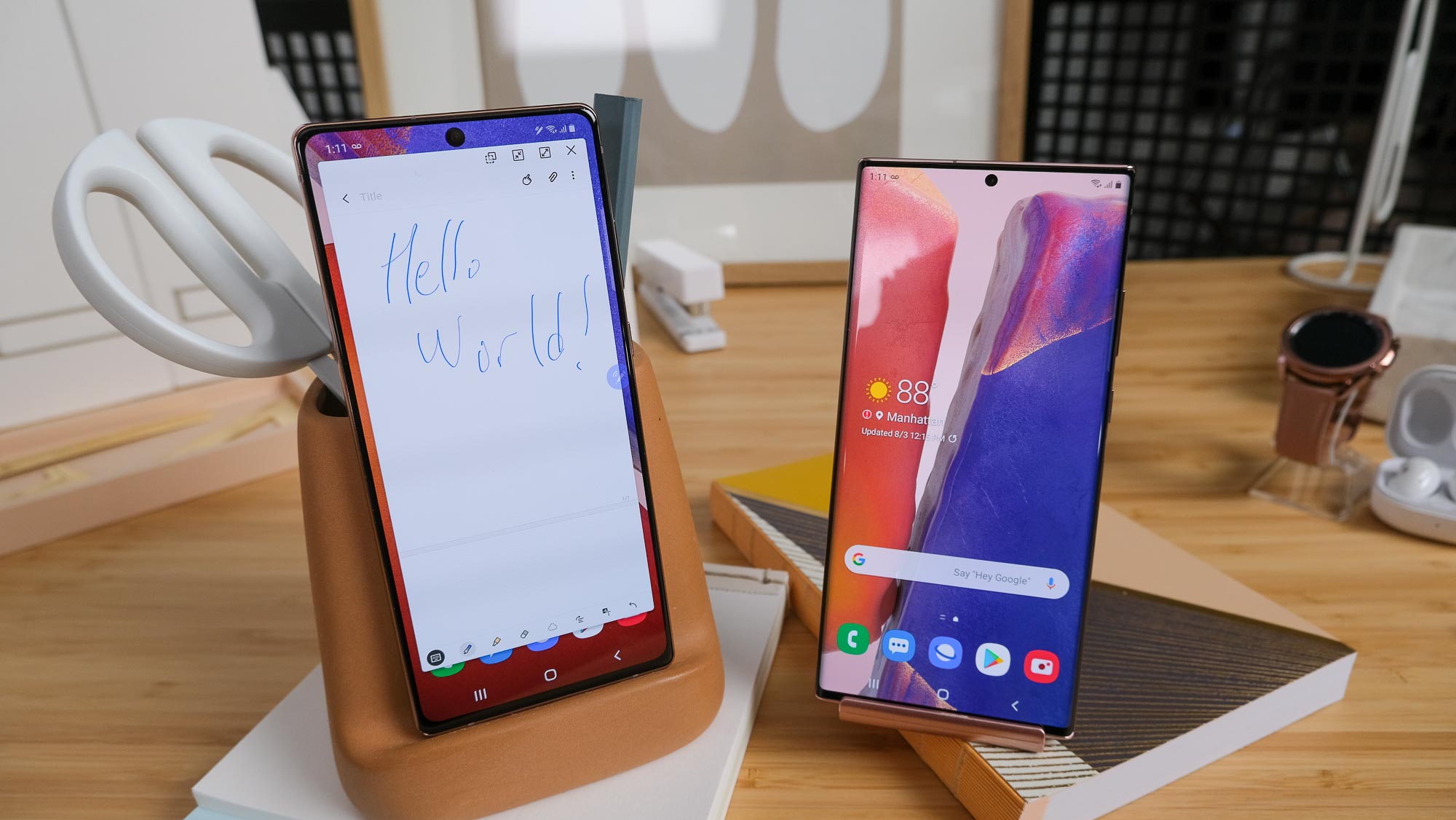
The software is a rather familiar experience, but I jumped off the Samsung train before the Galaxy One UI ecosystem was created. It feels familiar but very evolved, and there are subtle things I like. The Note20 has some of the most in-depth options for a phone I’ve ever seen, and it’s incredibly customizable down to its features. The S-Pen is pretty much the same, but has minor changes, the biggest of which is an internal battery and being able to use it for air gestures away from the phone. The phone also has lost its weird quirkiness of slowing down over time and being sluggish, which was the main problem I always had with Samsung phones, but it seems the 12GB for much faster processing has helped that.
Gaming on the phone is amazing, and it will run any game out there with no issues. Using various controllers and clips of your favorite configuration as well as emulating systems like the GameCube worked really well with not many issues outside of just typical emulator compatibility issues. The phone does get hot, but Samsung’s Game Launcher has evolved to allow performance plugins to monitor framerate, temperature, and CPU and GPU utilization. It’s great that Samsung has embraced the hardware demographic, as these are the phones power users reach for.
I do have to talk about the S-Pen and its functionality. This is a gimmick for anyone who doesn’t need to write notes or do art. My previous job found this phone useful as I was always needing to take notes on the fly, but the various software added feels more and more like there’s less of a reason to use the pen. AR Gestures, Live Messages, and various other apps like these are pure fun and gimmicky, and there’s no reason why Samsung hasn’t really advanced the Pen’s software suite much in almost a decade. The air gestures are great for presentations or something, but unless you actually need a pen on your phone, you probably will never use them outside of satisfyingly clicking the pen in and out. I love the S-Pen, and there’s no other phone like it on the market that has something like this.
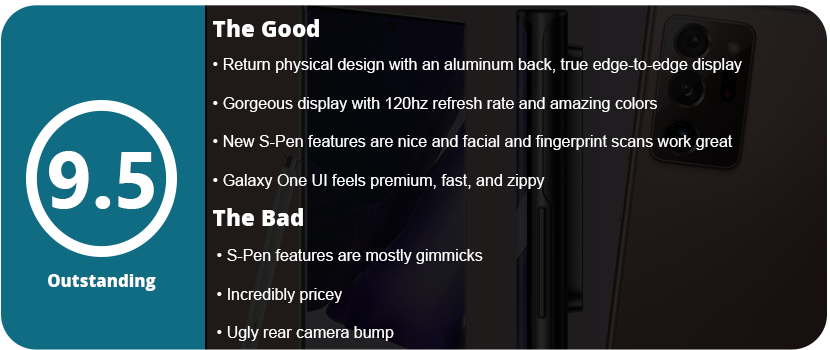
Overall, Samsung has created the most premium Android ecosystem on the market, and the Note 20 reigns supreme. With a 108MP camera, themes, an always-on display, tons of battery-saving measures and options, the best OLED phone display on the market, Dolby Atmos speakers, a 120Hz refresh rate, a true edge-to-edge display, and the return of the aluminum back, the Note20 feels like it has returned from a long run of being a copycat instead of staying true to form.
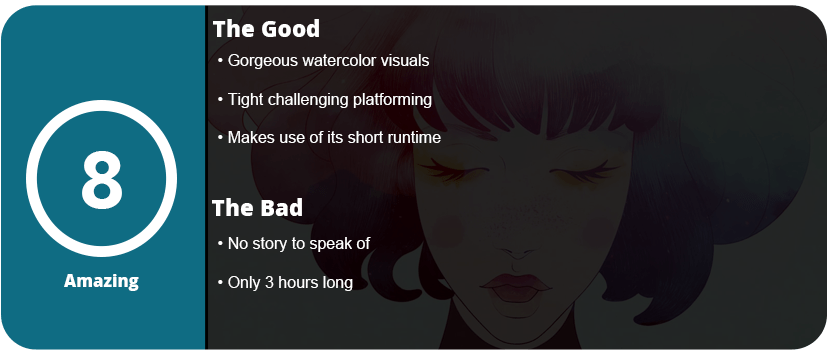
I love artsy games. Sometimes it’s nice just to sit back and play a casual game that is a visual treat. Gris is one of these games. Like many other games before it, it offers tight gameplay but a short and sweet experience. There’s really no story here, and you have to make what you can of the story based on context only. You play as a woman who loses her voice to a dark force that seems to swallow up all the color in the world. It’s your job to get that color back and your voice back. That’s the only thing I got out of this entire game, story-wise. I wanted something more; there are games that have told breathtaking stories in just context alone, such as Journey, but what’s here is fine.
The game is broken up into three levels based on colors. In the color red, you gain the ability to weigh things down. You jump around platforms and have to figure out various platforming puzzles. Using your abilities, you must navigate the area to acquire stars to unlock the next section and finish the level. These are rather clever, and I never got stuck, but I was challenged. I had to think, and it quickly clicked after a few tries throughout the game on most puzzles. The controls are great and are not floaty or slippery. The girl has nice momentum with the ability to glide, double jump, and swim, which are all acquired throughout the game.
The second level, Green, is probably the easiest and most laid-back level. There aren’t many platforming puzzles, but there are challenges instead that require good timing. You find a woodland creature companion part way through, and you use him for a few challenges, but this level was not difficult. I acquired the double jump ability here, and this opened up more challenges.
The final level, Blue, is a mix of underwater and upside-down platforming, and the levels are labyrinthine and challenging. I didn’t get too lost in this level, but I did wander around a little more than I wanted to. You have to use everything you learned to beat this level, and that includes platforming challenges that combine all of your abilities and precise timing. This game isn’t quite a breeze, as it did work my brain a bit, which is nice. Throughout the game, there are a couple of scripted chase scenes with the dark void that took your voice, which changes the pace up a bit, but overall it’s very nicely paced, and I was able to play all 3 hours in one sitting and was sucked in.
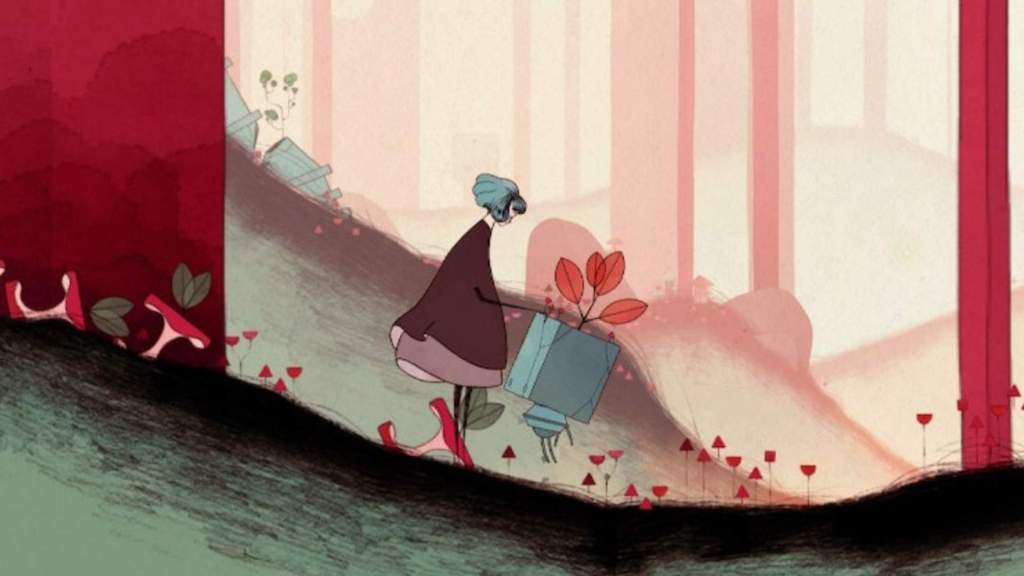
While the game lacks in story, it makes up for it in gameplay with challenging platforming, some puzzles, and a gorgeous watercolor art style that is just a joy to look at every second you are in the game. This is Gris’ main draw: his eye-catching art style. I wanted to know more about this mysterious girl, but we just got platforming instead. Oh well, as it stands, it’s a must-play for fans of games like Journey or The Unfinished Swan. I had a blast, and while the game itself wasn’t memorable, the art style is striking enough to remember.
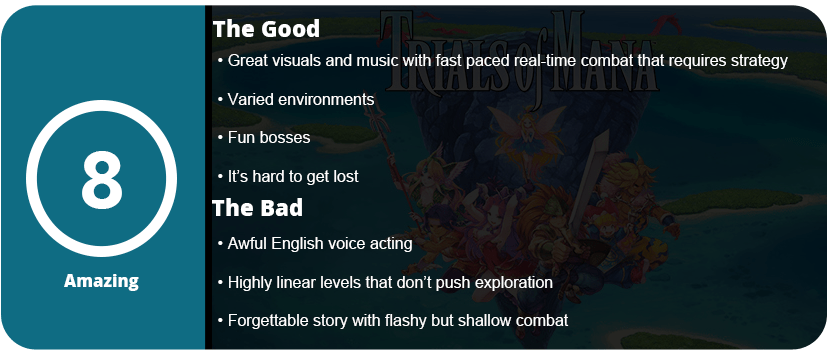
I’m not the biggest JRPG fan, as I don’t like grinding or the typical tropes that go along with them. They are usually extremely bloated, with dozens of hours added just in battles alone, and this is why I only play them if they have a particular something that stands out, albeit the story or the gameplay. Trials of Mana stands out as neither of those, but it does everything in a neatly tightened JRPG package that cuts out the fat and streamlines the genre for the modern world.
The story is nothing to write home about, but it isn’t bad either. You can choose between six different characters, with three being in your party. Each character has class specializations, and this is important when your class is balanced out. It’s recommended to have a fighter, magician, and middle ground class. I chose Reisz, Duncan, and Angela for my playthrough, and it worked out perfectly. The overall story revolves around the typical JRPG plot of saving the world from an evil entity. The Goddess of Mana is being targeted by a particular evil force and wants to be the only existing god. There are other evil kingdoms racing to get the Sword of Mana, which is said to hold untold powers. Yeah, it’s trite and barely interesting, and towards the end of the game, there aren’t many cut scenes left. The English voice acting, in particular, is incredibly bad, so please do yourself a favor and enable the Japanese voice-overs. The characters themselves are very likeable with great designs, and they stand out and are somewhat memorable. They have typical JRPG hero personalities, but I grew to like them nonetheless.
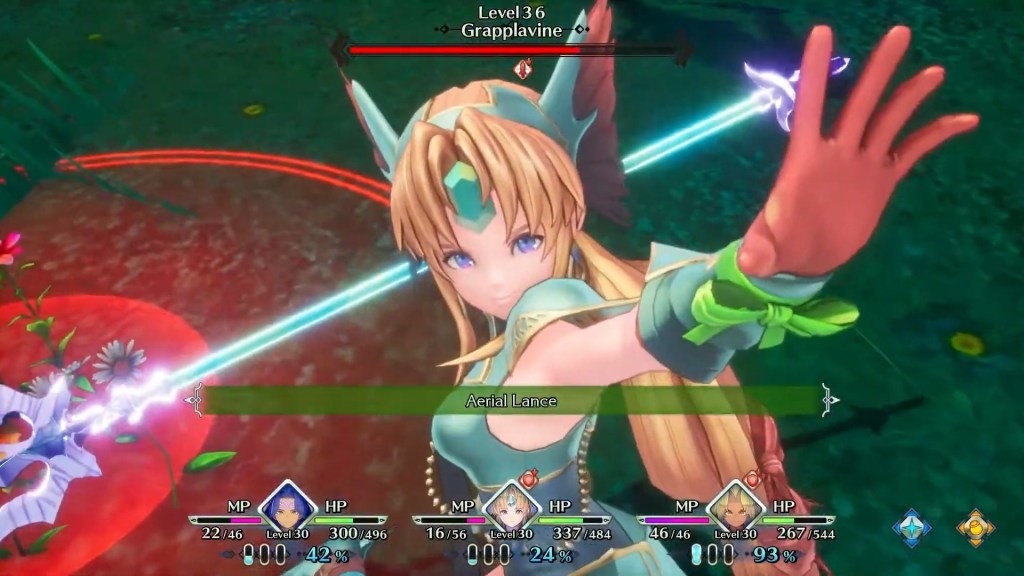
Let’s dive right into battle. Trials of Mana is a real-time battle system played out in closed-off areas. Once you are in sight of a creature, the game surrounds you with a barrier that you can escape from by running toward or just fighting it out. There are heavy and light attacks, as well as the same while in the air. Once you progress far enough and depending on your class, you will unlock moves that are class-specific and consume MP, and then there are class strikes. These strikes use up stamina that is acquired as crystals that enemies drop when attacked. These strikes are powerful, and you get a new one with each new class. These must be strategically timed with boss battles, as they are essential to winning and doing massive damage. Battles overall are intense and fun, with the ability to adjust your AI mates in the Strategy section of the menu. Here you can adjust how often they use their strikes, moves, items, and how to focus on enemies. This is really important to adjust for later boss fights.
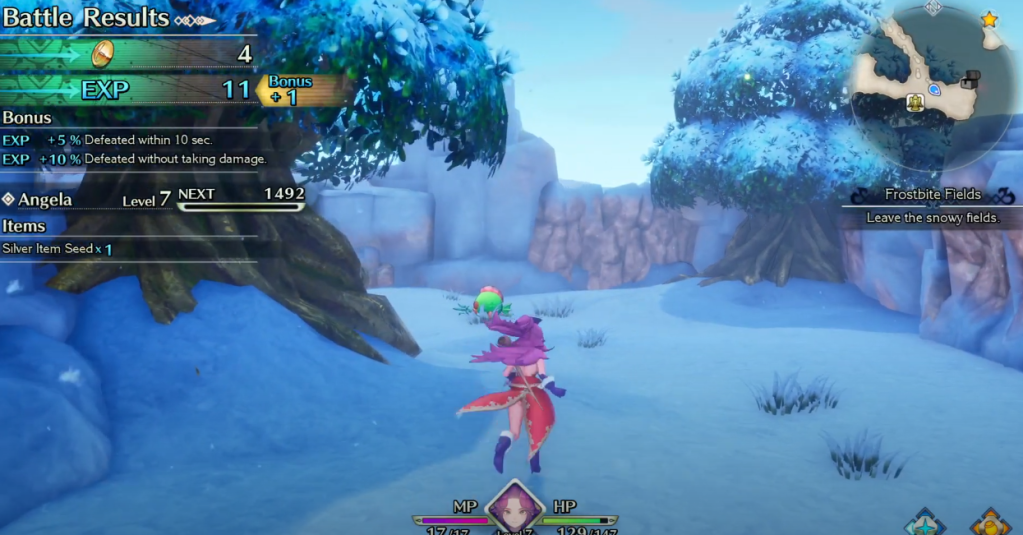
While combat is fluid, looks good, and is probably what you will be doing 85% of the time in the game, it is essentially very simple and may seem dull to people who are used to more Western RPGs with more action. While it works in the context of this game, it beats the hell out of random encounters. Leveling up also occurs rather quickly, and the use of cookies allows you to gain additional XP, but these are rare. There really isn’t much in terms of exploring or hidden items, as most chests contain standard items, seeds, and rarely armor or weapons. Seeds are actually an essential part of the game and are required in order to get Class 3. These seeds are grown in pots in inns or near certain Mana (save) statues. These range from item seeds to illusive question mark seeds that drop talismans needed to get to class 3 to rainbow seeds, which have high-end armor and weapons. You can level up the box by planting more seeds, thus dropping rarer items.
Of course, you can buy most things in towns and the single-night market, as well as reset your skill points there. Leveling up is a big deal in this game, and you can allocate points towards various stats like strength, stamina, intelligence, and so on. I highly recommend leveling up where you want your character to be strong and saving your points once you reach the cap for that class level. Once your class is up, you will have tons of points to advance your character even further without wasting them on stats you don’t need to focus on. Getting a higher class also grants a new costume and access to higher-level weapons and armor, in addition to more ability slots. Leveling up stats grants abilities that add passive stats, such as healing after battles, additional damage when entering them, sacrificing HP for additional damage, etc. The great thing is that these abilities are shared amongst all characters once unlocked, allowing you to really customize your style.
Exploring the Trials of Mana is fine, but not wholly necessary. Exploring only gets you basic items, and the very rare weapon or armor piece and the question mark seeds in Chapter 5 are needed to get to class 3. Grinding is also very minimal in this game, as you will mostly stay just behind or ahead of the current area demand. I recommend staying above two levels of the next boss; it will make life much easier, and you will chew through fewer healing items. The levels are very linear as well, and it’s hard to get lost as a golden star will always lead you to your objective as well as on the map. I have to commend Square for implementing this, as one of my biggest issues with JRPGs outside of random battles is never knowing where the hell to go. This allows you to just enjoy the game and not worry about whether or not you’ve been going the wrong way for the last hour.
With all of that said, Trials of Mana also looks fantastic. While not groundbreaking, it has bright visuals, detailed textures, high-poly models, and great animations. The effects are slick, and the bosses are very well designed. While I wasn’t the biggest fan of regular enemies as they are just standard JRPG fodder like rabbits, slime, knights, dragons, and various fantasy creatures, they do require strategy as each has different attacks and debuff effects. So with that said, Trials of Mana won’t change the minds of those who don’t like JRPGs, but those who love them will truly enjoy it. I finished the game and even continued to the additional optional chapter that can grant New Game+ if completed. This is one of two Super Bosses and requires a level 75 party. This final dungeon is about an hour long and combines a piece of every area you have visited in the game into one mega-dungeon. It’s a challenge and fun, and I recommend completing it. Trials of Mana is one of my favorite JRPGs of the last decade, and I can easily recommend it to most people.
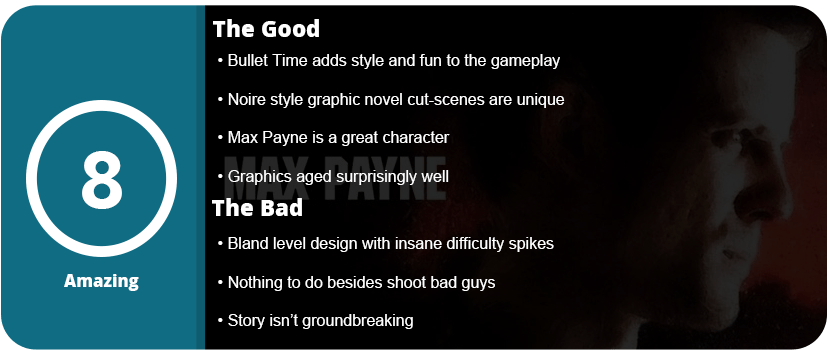
Bullet time. While The Matrix made it popular in pop culture, Max Payne started it all in the video game realm. You play a cop, Max Payne, who is framed for the murder of another NYPD cop. Your wife and newborn child were also murdered, and you are trying to get revenge on the people who did it. The story isn’t anything amazing, but Max Payne’s voice actor and the well-done writing keep you hooked long enough to find out what happened behind the scenes. The game is told in a comic noir graphic-novel style, and it suits the game well. The cut scenes are imaginative and different, and they don’t look cheap or like the developers were trying to take shortcuts.
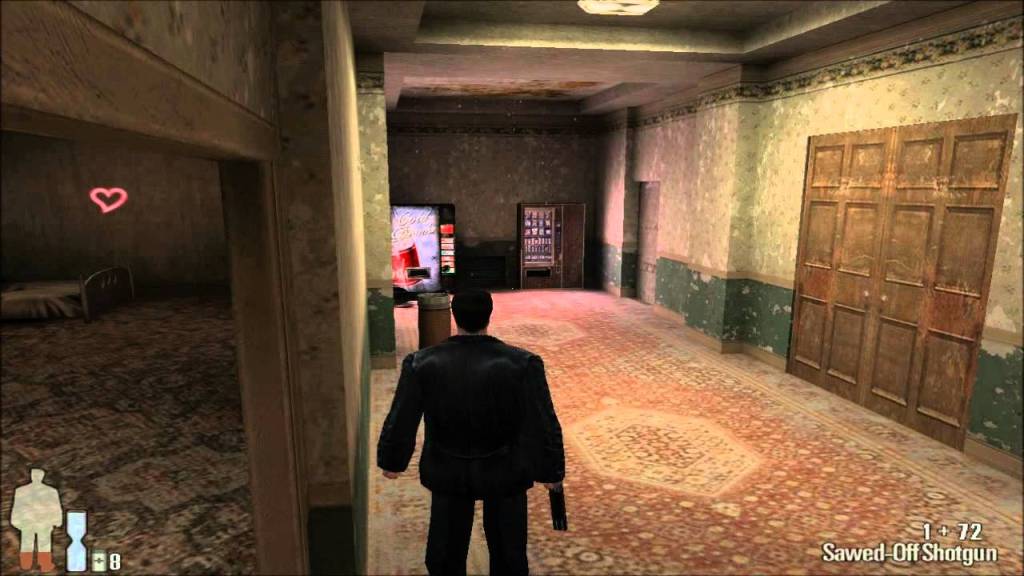
Outside of the story, the gameplay is all about shooting, because that’s literally it. Max runs around with various weapons, such as Barrettas, Ingrams, shotguns, grenade launchers, Molotov cocktails, grenades, and assault rifles, to mow down the Mafia and corrupt cops. Bullet time is the main gameplay element here, and when activated, Max does a jump dodge in the direction you move, and you can see him dodging bullets in real-time. This is actually a mechanic you must master, as most situations require you to use it to stay alive. You can’t stand in one spot, or you will be dead in a few hits, and there’s no cover system. I had to quicksave every 2-3 minutes as well because the game is so difficult. It’s cool to jump dodge around a corner, but once Max lands, there’s a delay in him getting up, and you are completely vulnerable to gunfire. I had to make sure I jump dodged behind cover or across a hallway so I wouldn’t die the second the bullet time finished. You can also activate bullet time and just run your meter down so you can run and gun with it too.
There are very few scenarios in which you do more than press buttons. One scene has Max driving a crate crane around an area, but it’s nothing special, and there are some interactive objects that trigger comic-cut scenes, but 95% of the game is just shooting. The weapons themselves feel good, and I felt I had to switch up weapons depending on the situation to make my life easier. The locales are varied, but they are a bit too stale and boring for my taste. They don’t quite capture the noir feeling of the comic-cut scenes, but there is one level early on called Ragna Rock, which was a gothic cult house that reminded me a lot of Vampire: The Masquerade: Bloodlines, so that’s a good thing. The game really does feel like a first-generation PS2/Xbox game, but it’s very polished. The game flows nicely, but the difficulty is all over the place; you will die dozens and dozens of times in this game.
The visuals are clean and look nice even 20 years later. I installed a texture upgrade patch and some other things to make the game upscale to 4K nicely and play on modern hardware, and it looks pretty good. Even in the original, the facial textures are nice and very realistic, and the aesthetic of the game stands out over most shooters of its time. The voice acting is great, and I finished the game in about 7 hours. After you finish it, there’s literally nothing else to do, as the multiplayer mode was scrapped. It’s a fantastic single-player game that holds up well even today, despite its insane difficulty and unbalanced gameplay. The story isn’t anything special, but Max is a great character to dive into, and it makes for a fun evening.
The superhero video game renaissance all started with Batman. After the Hollywood superhero films grew up and became an epic universe taking over the entire industry, the video game versions feel a little more nuanced and personable. Rocksteady really hit it off with the Batman: Arkham series, and the game just got better from there. Telltale took the storytelling of superhero comics and turned it into an epic original story.
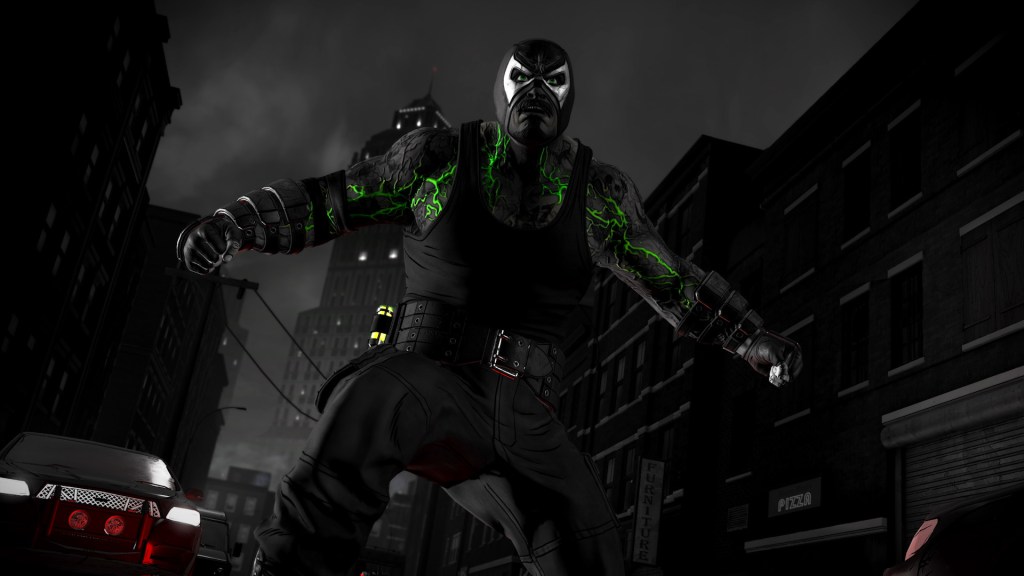
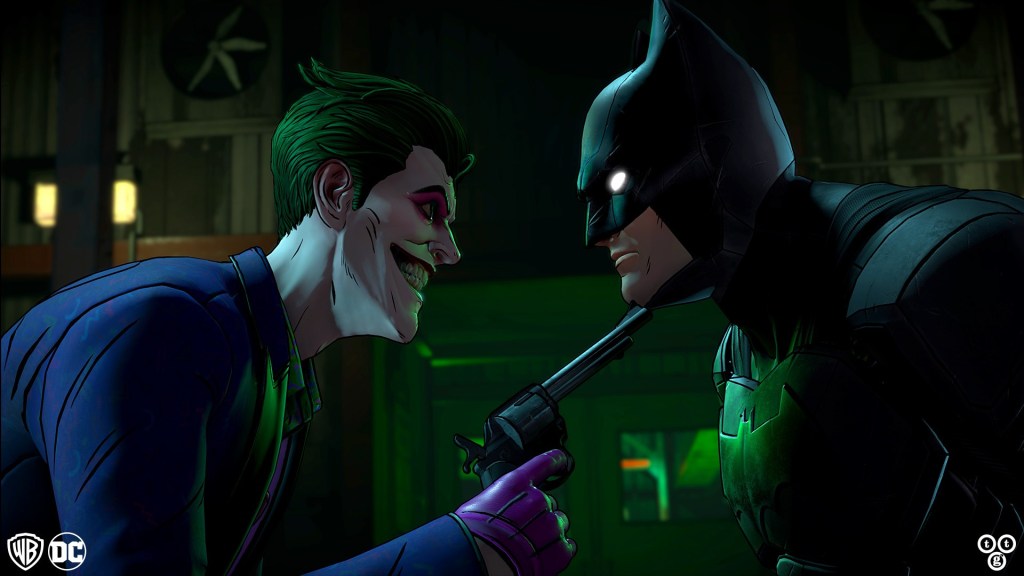
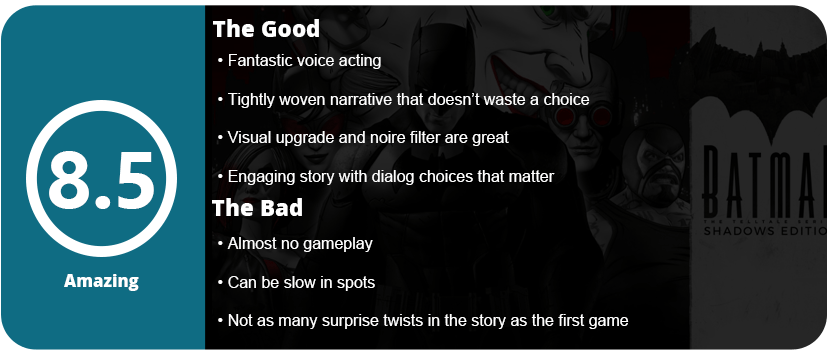
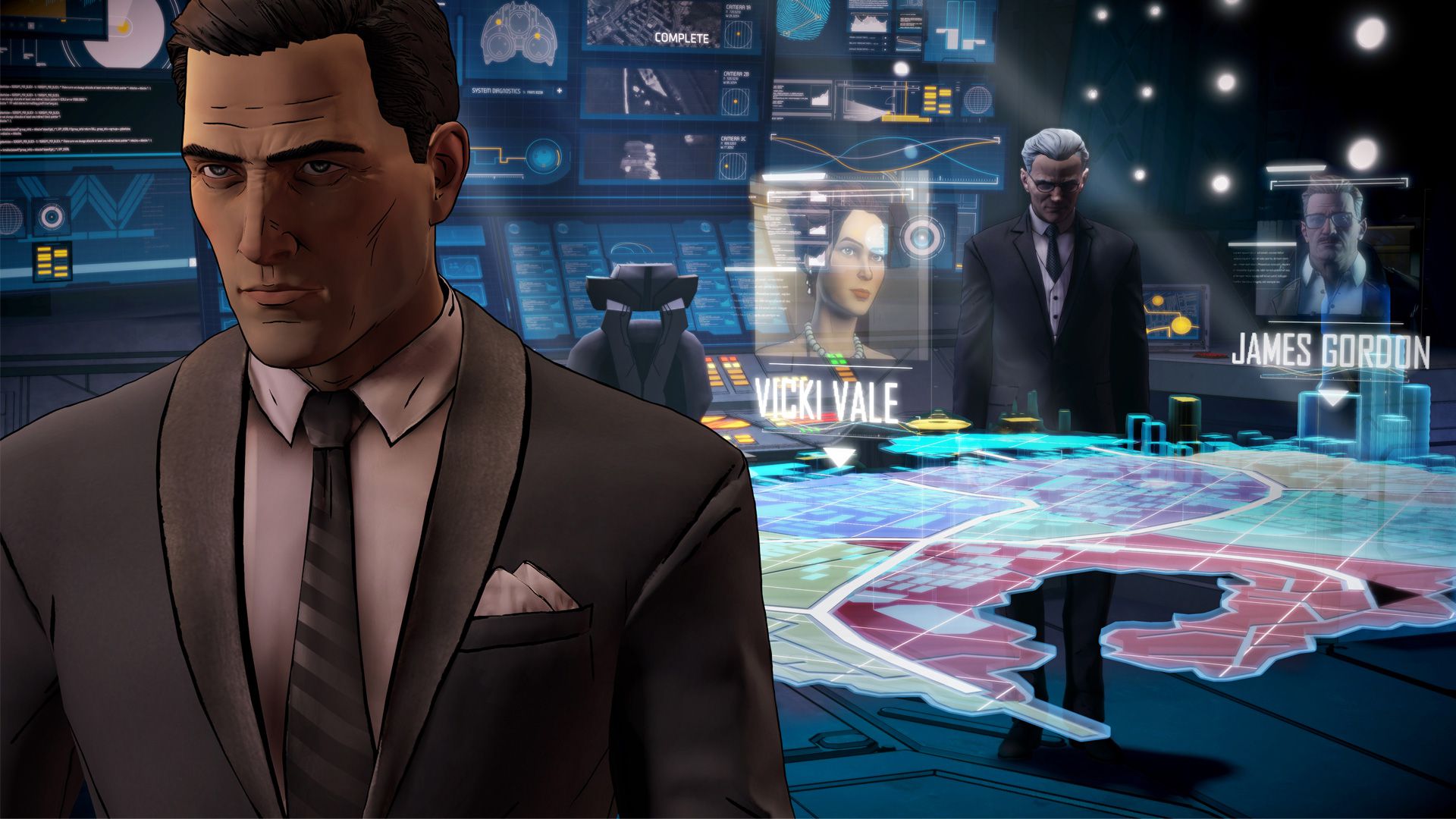
The Enemy Within follows right after the end of the first game, with Bruce having defeated Lady Arkham, The Penguin, and Catwoman. The Enemy Within feels more epic, has a larger overarching story, and has more villains in place. We get Bane, Riddler, Harley Quinn, The Joker, and Mr. Freeze all wrapped up in one big Batman package. The story from Telltale is one of the most unique and interesting I have seen in the Batman universe to date. It feels tightly knit and has resolution at the end instead of spiraling out of control into a million different spin-offs. Main characters can die, and Batman can even break his own code if you choose.
This game is probably one of the only Telltale adventure games that cuts out all the fat from the choices part of the game. Even the dialogue option has meaning and makes a difference towards the end goal. There are larger moments that can turn the story around and fewer twists and surprises in this game, but the overall story is a slow burn rather than starting and stopping as in the first game. Some episodes are slower-paced, sometimes too slow, and this game really has too few action sequences and mini-games for my taste. I like the story, but some of the cut scenes can be nearly 20 minutes long with very little input. Again, this is another “interactive movie” with very little gameplay outside of some quick-time events and even less puzzle solving.
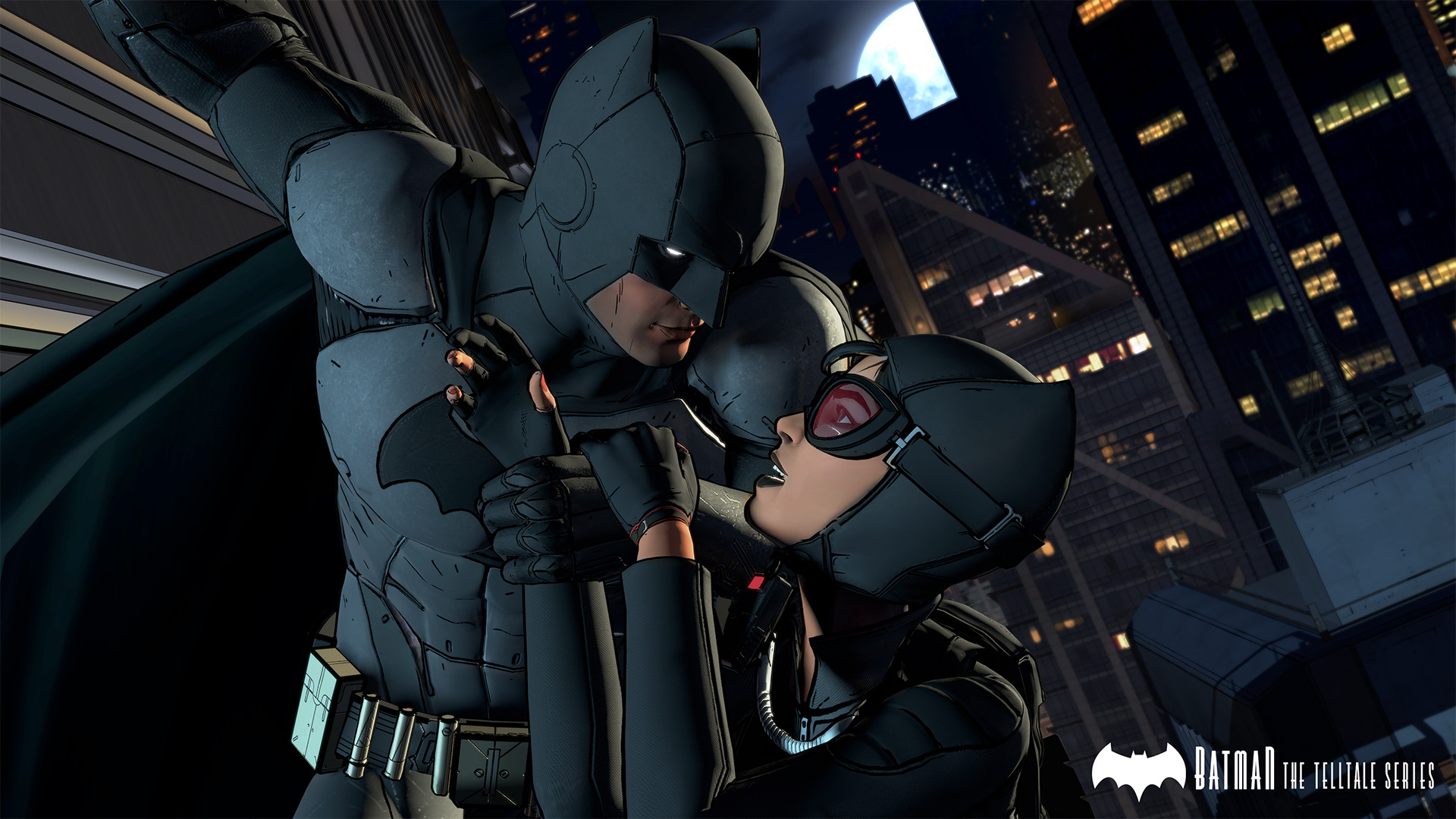
What we get is an origin story that doesn’t go too far back. We get to see how The Joker became insane and hated Batman, how Harley became a psycho herself, and how the relationship between Batman and Catwoman grows or falls apart depending on how you play. We also get to see how Riddler became the way he did, and one thing I need to point out is that this game feels more like it can happen in today’s world. Less magic and fantasy stuff from the villains. Everything looks and feels like it can be explained somehow in today’s world, which I love. All the villains are just normal humans with a slight scientific twist to them.
I will say we don’t really get a backstory on Bane or Mr. Freeze. Mr. Freeze isn’t used all that much, and Bane is just an annoying bully through the whole thing. We do get a new entity called The Agency, which is an original faction used in the game to counterbalance The Pact (all the villains), and it’s up to you to decide how The Agency is towards Batman. Amanda Waller is a love-or-hate kind of character and mostly one-dimensional, but we get to see Lucius Fox’s daughter Tiffany, and the game eventually plays into the psychological aspect of Joker and Batman’s relationship like the comics do.
At the end of the day, we really feel like we know Batman, Alfred, Joker, and Harley all too well. Telltale did an amazing job of getting you inside their heads and making you really feel like you’re controlling Bruce’s fate and story. While the game is too light on gameplay and a little slow-paced, I couldn’t stop playing as I wanted to see what happened next. I really weighed my choices and felt that at the end, everything from the first game to the end of this one was satisfying and meaningful. This is clearly the best Batman game to play if you want an amazing story.
The Shadows Edition adds some enhanced visuals, better textures, lighting, and a noir style that I played the game in that makes everything black and white except certain colors like red, green, and various accents of the character’s iconic colors. The game’s upgrades look great, and I didn’t run into any bugs like I usually do with Telltale games.
Batman has seen a great run over the last decade or so with Christopher Nolan’s film trilogy, the Arkham game trilogy, and now a story-driven adventure game. Batman tells a story I have personally never heard, with the game digging into Bruce Wayne’s darker past and finally revealing the truth about his parents and discovering their past. The game isn’t’ afraid to kill off characters and actually becomes quite violent, and I was hooked every last minute, but it’s not the story or characters that have issues, but Telltale’s tired way of telling these stories.
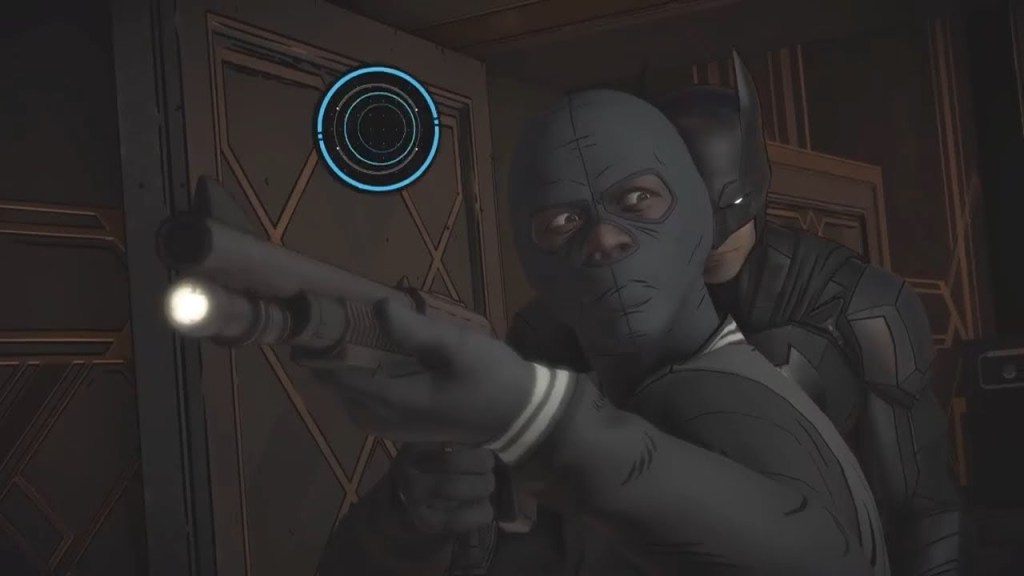
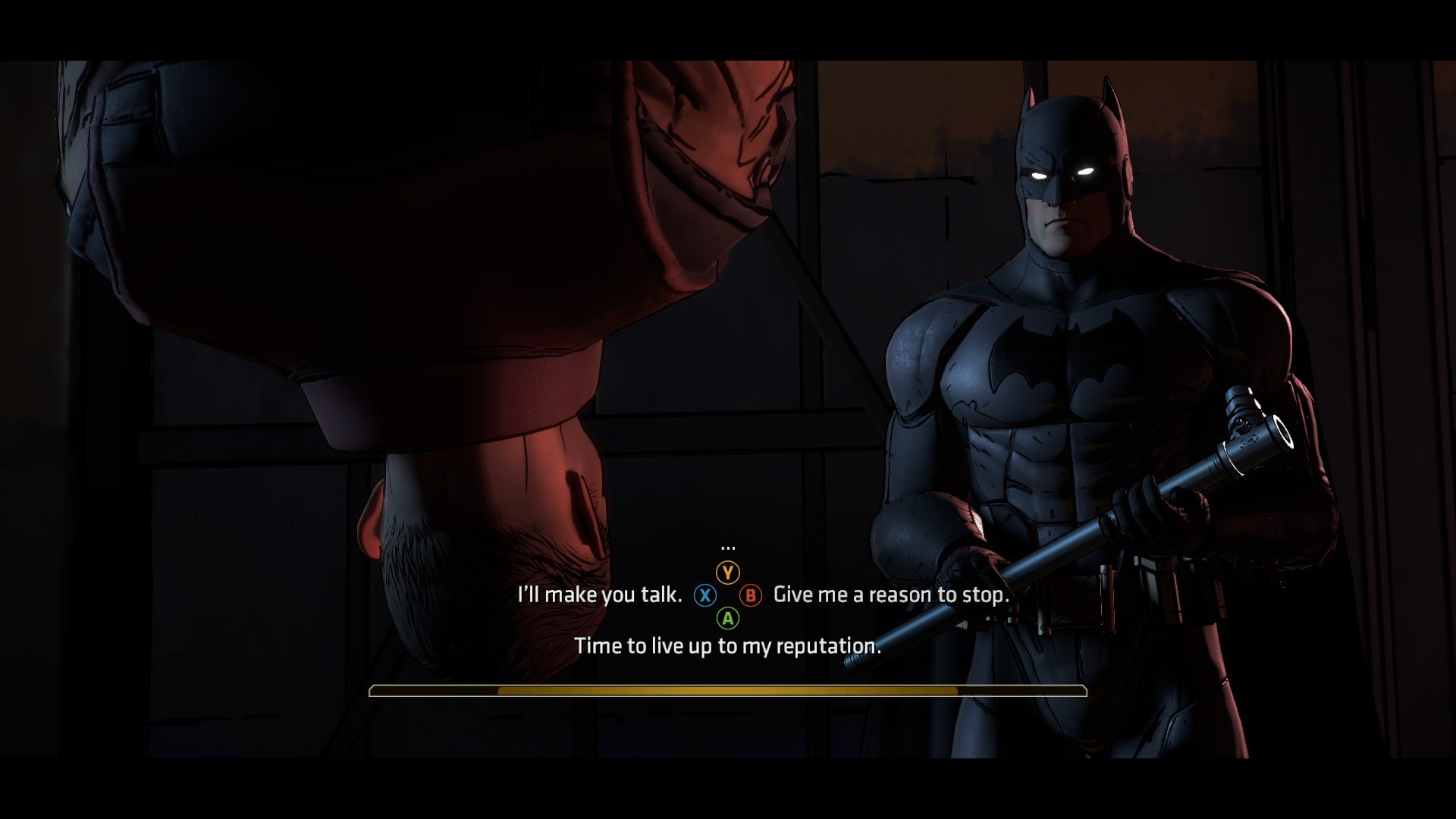
I’ll have to give them credit; they cleaned up the graphics engine a bit, and the button prompts and commands look sleeker, especially during action sequences, but the game is still an interactive movie, probably more so than any other Telltale adventure game. Rarely do you get to actually control Batman or Bruce, and only during investigative scenes do you get to link clues together. This is one gameplay element that’s been used multiple times, and I like it, but it’s not really a puzzle either. You walk around examining clues and can link two of them together to figure out what happened at a crime scene. It’s easy and obvious which clues go together, so some better puzzle-solving would have been nice.
The second gameplay segment is dialog choices, and most are timed just like previous Telltale games, but I feel the smaller dialog choices have less of an impact. The game will tell you when someone will notice or remember what you said, but unlike The Walking Dead, I don’t know when that comes into play. The Walking Dead is done so well that I can recall what I said in a previous decision that made that character act the way they do. Now either the writing is so good it’s that seamless or it was an afterthought. I want to know when my choices change things, even the little ones. There are times when you have to make two large choices that obviously will affect the story, but these are immediate changes that you see in front of you.
The third gameplay segment is quick-time events, but they’re sleek and feel like part of the action. Of course, these are incredibly easy, and I never once messed up, as the game gives you plenty of time to hit the button prompts to see the well-choreographed fight scenes play out that are actually quite cool. Outside of those three gameplay segments, there’s no other gameplay present. Puzzles are seriously lacking, as they gave the Arkham games some brainpower behind all that fighting, and I feel the game could have been better enjoyed as a game with these put in.
Thankfully, you’ll just mow through the five episodes that take less than an hour each to complete because the story is so good. Seeing the origins of Harvey Dent become Two-Face, The Joker, Catwoman, and Gordan, and seeing Bruce face his own dark past, is just cool, especially for a Batman fan such as myself. It tells a story that no other medium has told, and that’s what got me hooked. I don’t want another origin story as to how Bruce became Batman; I don’t want to see him fight more villains and fight his inner demons. The dredging up of the past and seeing Bruce and Batman actually fail and become nothing is fantastic, makes Batman seem vulnerable, and adds depth to the story arc.
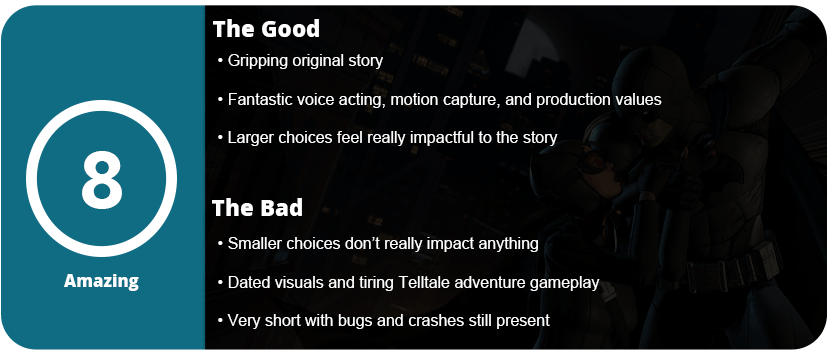
Overall, Batman: The Telltale Series is a must-play for any Batman fan. I don’t think non-Batmanfans will care for this game, especially when knowing more about the lore and arc of the series makes the game that much more interesting. The visuals are decent, but I’m tired of seeing Telltales comic-looking graphics, and they are still dated and full of bugs and problems. I ran into graphical glitches and crashes, and at one point, my Xbox shut down mid-game for no reason. The voice acting is top-notch and the overall production values are good, but I’m tired of Telltale’s way of telling stories in the same manner for every game. Smaller dialog options are lost in the seamless transition between scenes, and only the larger choices stand out, which is a shame. Towards the end of the game, I stopped caring about which choices I made outside of the large ones because I wasn’t seeing any differences. Even in the last dialog scene with Alfred in episode 5, the game said, “Alfred will remember that,” but why? It’s the last scene with him, and it won’t make a difference if he remembers it or not. With that said, this is a great story and not much else.
Coming from being a dedicated fan of one manufacturer and switching to a new one can be jarring, but sometimes it can bring in a breath of fresh air. Recently I looked at my Note8 thinking about the Note 9 and realized how little of a difference there is between the two, and about $400. Samsung’s phones have gotten more expensive over the years and have become so pricey that I now have to start putting down payments on my upgrades which I never did before. Then after I decide to wait it out for a while along comes OnePlus. I’ve heard of them before, and most of us have, but they were a flash in the pan that didn’t last very long.
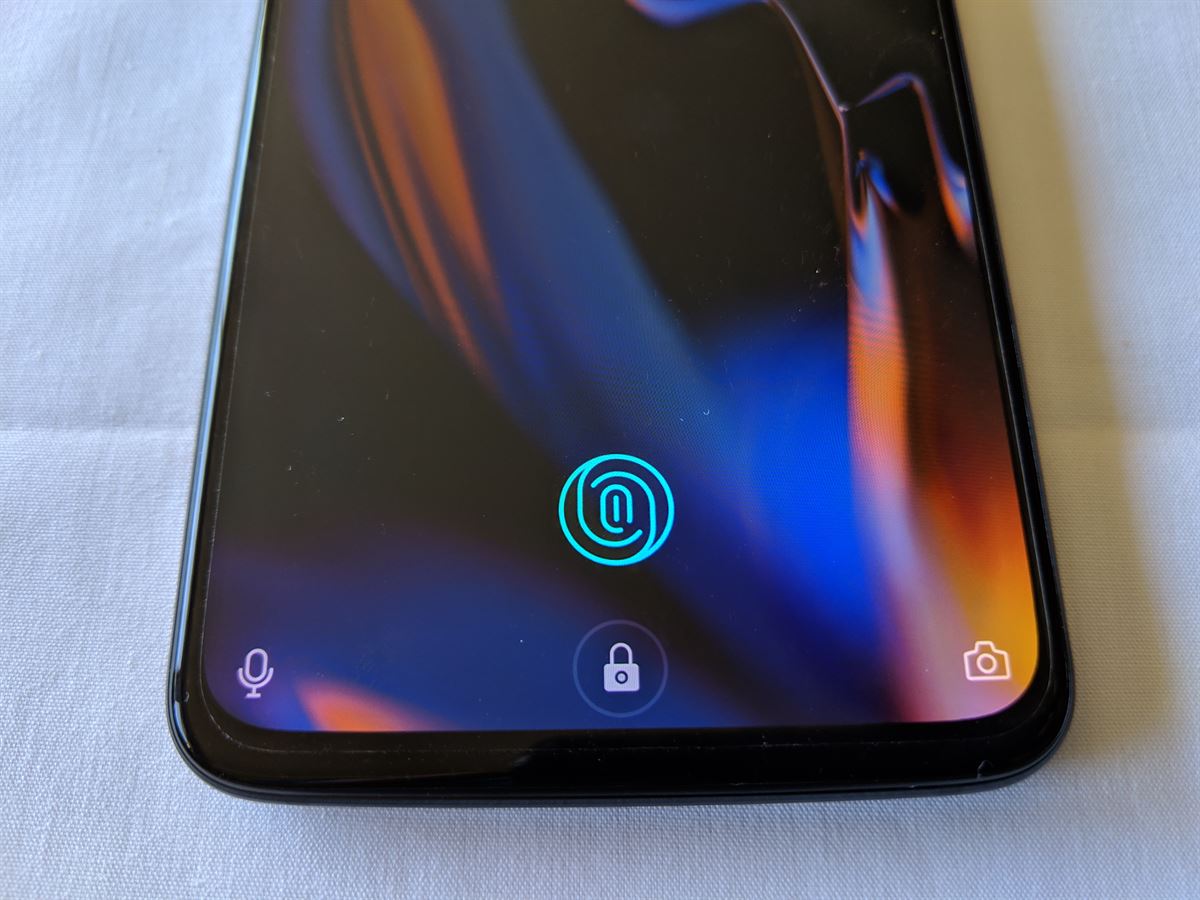
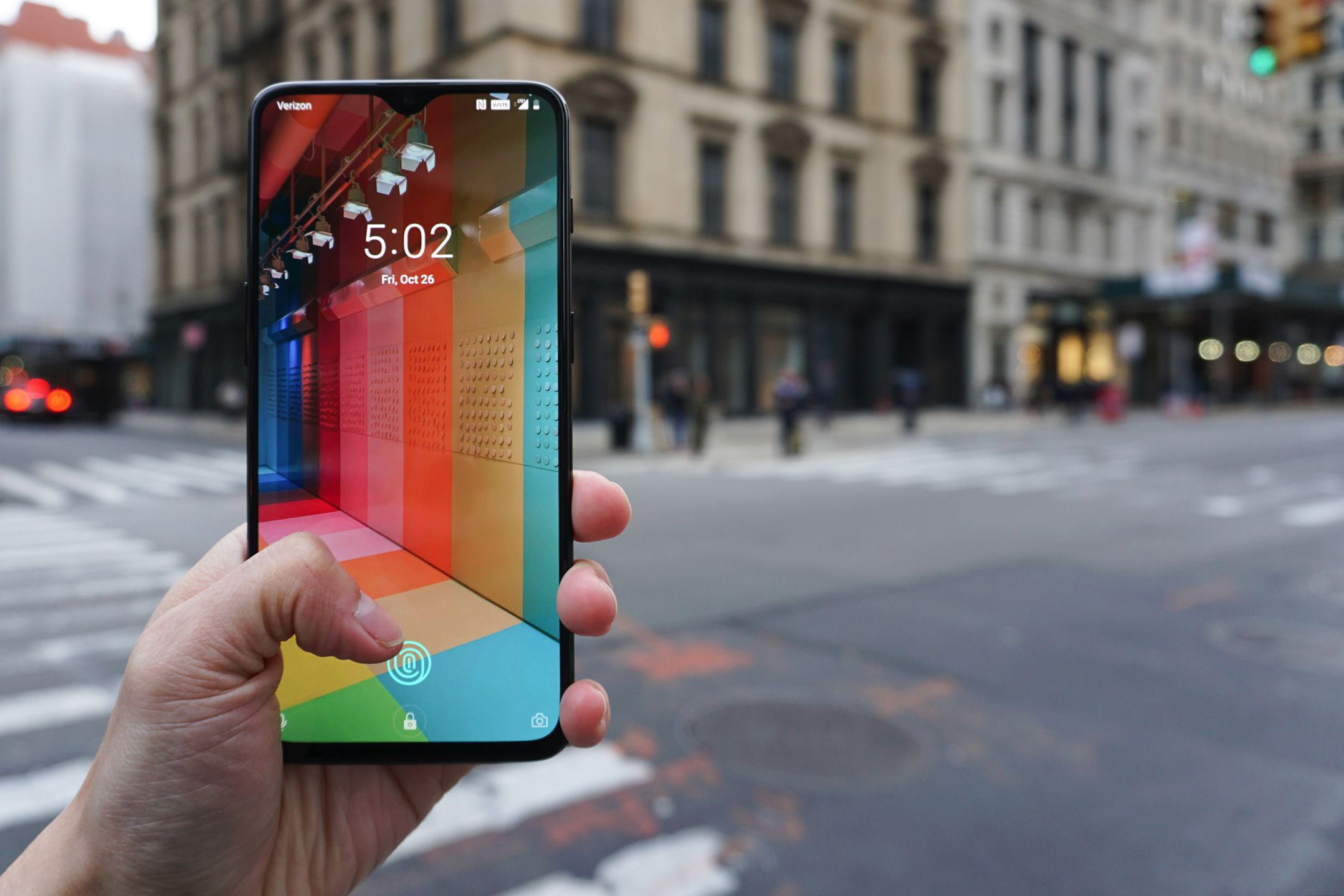
Here we are at the end of 2018 and OnePlus comes out swinging with features that both Samsung and Apple have not done yet or haven’t done right, and that’s what gets you sales. The biggest attraction by far is the on-screen fingerprint sensor and the best screen notch to date, not to mention it’s 1/3 the price of other phones. The same hardware packed into the Note 9 at a fraction of the price? Yes, please!
Looks Matter
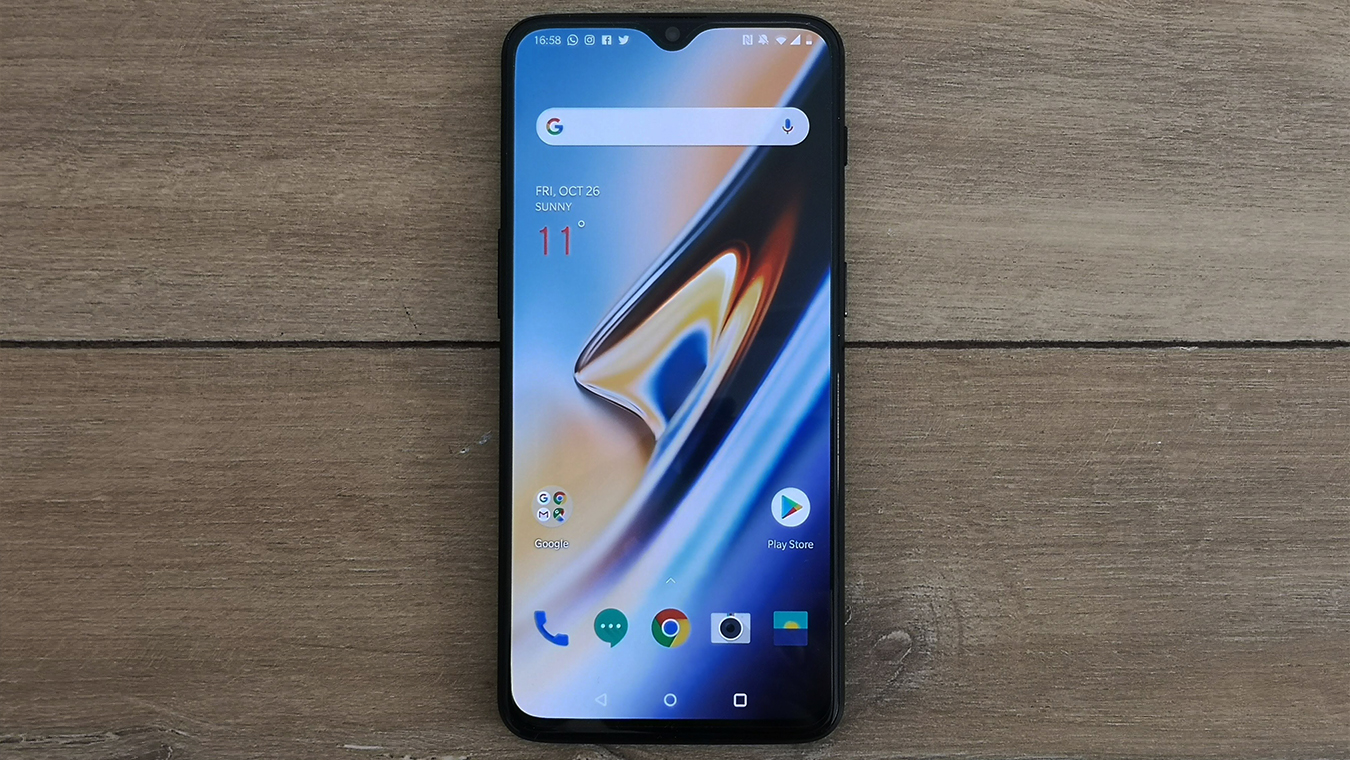
The 6T is a very sexy device and probably one of the nicest I have ever seen. The extreme bezeless display is just amazing to look at and has a look even Samsung can’t get right with their Edge displays. We finally have a phone with about 95% screen, and that’s a big deal. Gone are the days of physical buttons and large bezels for cameras and sensors. OnePlus managed to pack ambient light, a camera, notification LEDs, and everything else into a tiny spot on the front of the phone that is just about the same width as the notification bar. It’s really a sight to behold, and it looks so damn good with the AMOLED display. OnePlus did not cut any corners here, and this is clearly a luxury phone that tops some of the big dogs already.
The entire phone is also made of glass, so it feels high-end and features a volume rocker, a power button, and a volume slider that allows you to physically silence or set your phone on vibrate, and I can’t say how nice this feature is enough. I got so tired of taking my phone out to silence it, and this feels like a great addition. The phone has a USB-C connection, a vertical rear camera, and a flash. It looks sleek, minimal, and attractive at every corner, and it’s still slim with a large 3,700 mAh battery.
Underneath It All
If you go inside the hardware, we have heavy-duty, state-of-the-art hardware that makes this a high-end phone. For starters, the Snapdragon 845 is present with the Adreno 630 GPU for insanely smooth high-end gaming, and thanks to OnePlus’s OxygenOS, the Android experience is buttery smooth, and games never see any slowdown or suffer from poor OS optimization, which is something that Samsung and a lot of other manufacturers suffer from, at least in a small amount. The $580 model also comes with 8GB of RAM, which makes switching apps and loading them lightning fast, and they instantly load. This is also in part due to being the first Android phone to launch with Android Pie 9.0, which has insane optimizations and feels on par with Apple’s iOS, which is well known for being fine-tuned to their hardware.
Gone are the days of 32 and 64GB of storage, so we get 128GB and 256GB options on the 6T, which is more than enough, and the exclusion of an SD card slot is a little disappointing, but OxygenOS has the option of using OTG (on-the-Go) storage built into the OS, so your USB-C flash drives will come in handy there. The phone also has no headphone jack, but at this point, most phones are leaning that way, and it does save space inside the phone. This isn’t a deal-breaker for me at all, as I don’t use headphones with my phone hardly ever. I do have to mention that this phone does not have wireless charging, which was a bummer and probably the biggest disappointment with this phone, but it makes up for it with the fastest charge time I have ever seen. In my first test, my phone was at 30% and charged to 90% in just 30 minutes. I couldn’t believe what I was seeing, so a full charge would be about an hour or less, which is insane. Even on my Note8, a full charge from 0-100 was almost 2 hours on fast charge, and it was a smaller battery. With that said, you have to use OnePlus’s proprietary charger cables and plugs.
The phone features a 16MP+20MP rear camera, a dual-lens camera, and a 16MP front-facing camera, which is kind of unheard of. It can actually shoot 4K at 60 fps, which the Note 9 can do, but only for 5 minutes. The photos are incredibly sharp and vibrant, and I am not disappointed at all with this setup. Camera enthusiasts won’t be disappointed.
A Smooth Ride
There are quite a few options in OxygenOS that just kept impressing me, and this is clearly the most innovative and optimized Android OS variant I have ever used. I actually didn’t need my third-party home launchers for once, which was nice. There are plenty of options to change themes, accent colors, and icon packs, and the Shelf is a great alternative to Samsung’s Edge Bar as you can swipe left and have a whole area full of neatly organized widgets that allow you to add weather, app shortcuts, contacts, and various other things. I use it a lot, and it’s much easier than searching for apps in the drawer.
OnePlus’s Game Mode works well, and while not quite as robust as Samsung’s, it feels more optimized and has some options. Samsung doesn’t like the various ways notifications display and what part of the hardware you actually want optimized, rather than a universal setting. It has more options than features, which is fine with me. OnePlus also added a night mode and a reading mode, which will make apps appear in black and white and change the darkness based on the ambient light.
OnePlus is also the next phone to use something similar to Samsung’s Always On Display, as the 6T has a gorgeous AMOLED screen. However, it utilizes this feature better, as the actual notifications will now pop up with text while the phone is off rather than just an icon, which is really awesome. The ambient display is also not always on to conserve battery life but allows you to tap the screen to show it or when you pick up your phone. These are quality-of-life features that other manufacturers aren’t thinking of.
There are some nice gesture features, such as drawing letters on the screen while it’s off to launch apps, and the navigation bar is fully customizable. You can hide it and even use gestures to navigate the phone, which I am currently using, and it’s incredible. Swipe up on the bottom left corner for back, bottom right for forward, and up in the center for recent apps. It works so well, and I haven’t run into any issues with it.
Overall, the OnePlus 6T is the phone we’ve needed in 2018 when the big guys aren’t innovating anymore. Each year, phones are less and less dissimilar, and the prices are skyrocketing. OnePlus brings us premium luxury features at a budget price, and it knocks every single feature out of the park that it does have. Sure, it’s missing a 3.5mm headphone jack, wireless charging, and a higher resolution screen, but in the end, it doesn’t matter as it does everything else the others are doing better and bringing new things to the table. In-screen fingerprint scanning, ultra-fast charging, a nearly invisible notch, and a gorgeous camera are nothing to scoff at.
I’m not really big on gaming headsets, as I don’t need to use them often as I have my own place, but when I do, I want something amazing—something that can deliver the quality and power of large speakers inside some cans. After having the Razer Man O’ War for about 18 months, I switched over to some wired headphones and moved brands. Why Kingston? Well, the reviews are great, and it’s plug and play, which may sound iffy to some, but it works out well in the end.
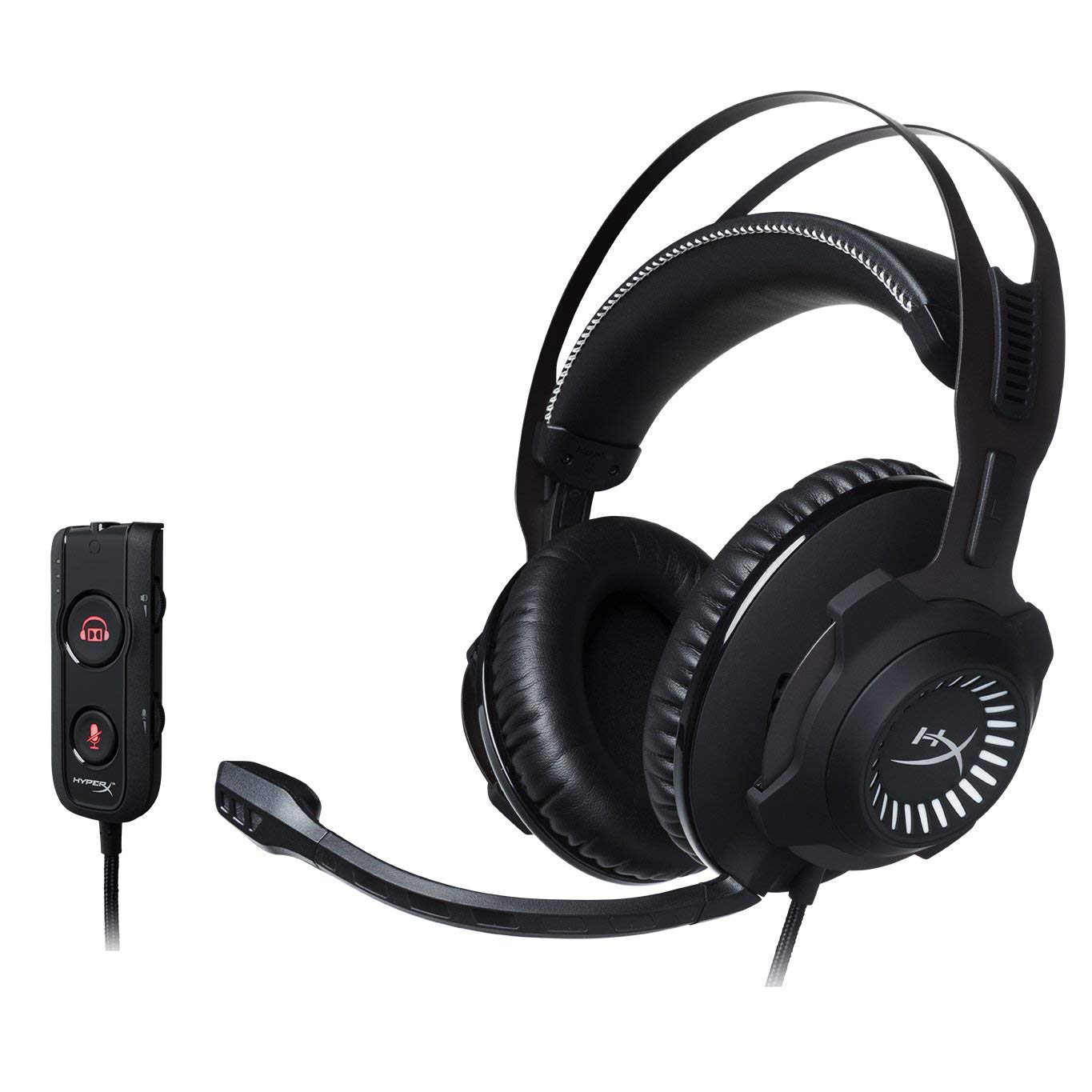
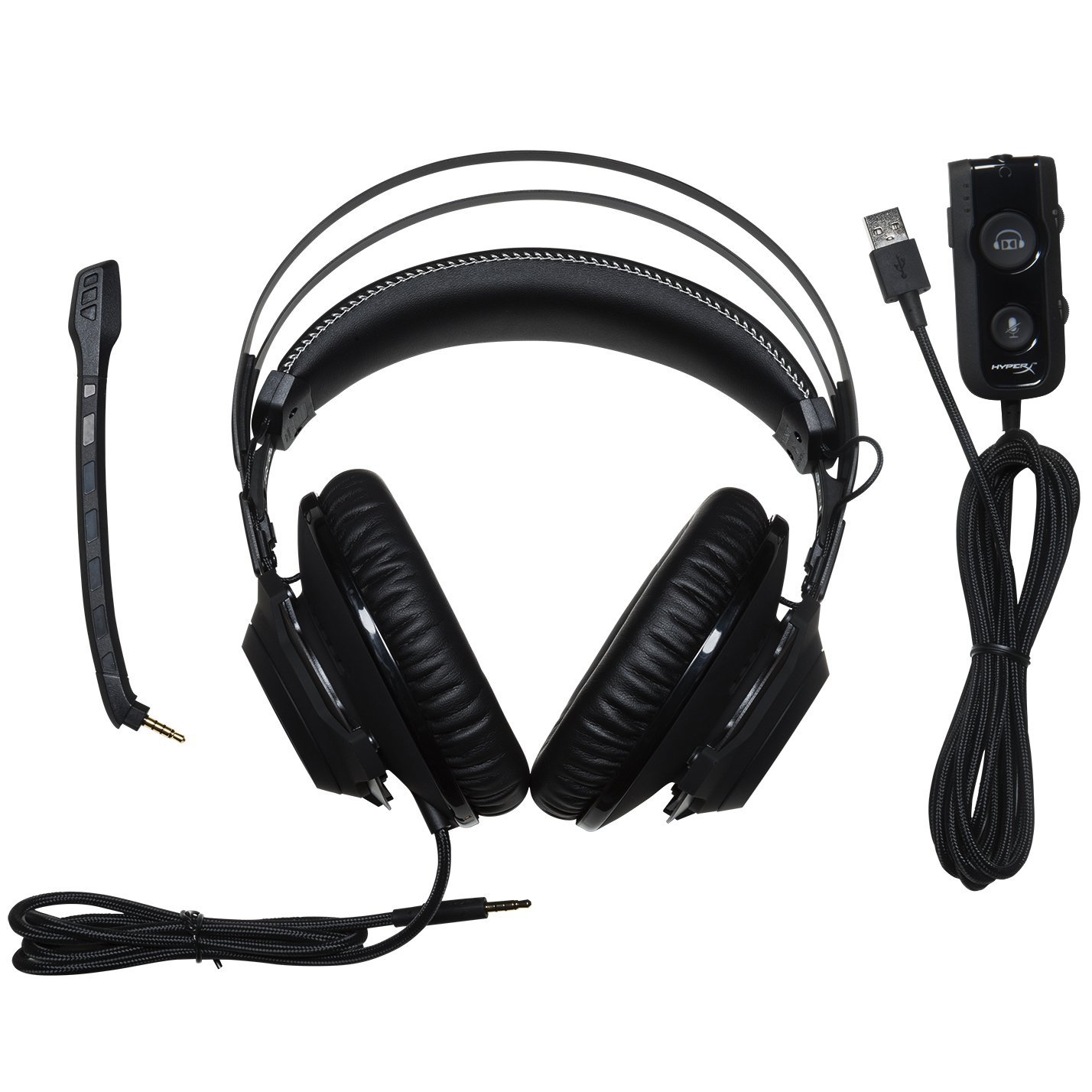
Some people want fancy software, RGB lighting, and crazy controls, but Kingston went a different route here. Most PC headsets are not compatible with a console, but these are thanks to a proprietary USB 7.1 audio card built into the cable with Dolby. Now the downside is that these are only stereo headphones with the 3.5mm jack adapter, but they still sound amazing. The USB port has a three-part equalizer for flat, bass boost, and vocal. For gaming and movies, you can activate the Dolby 7.1 surround sound with just a button, allowing the headphones to control everything without the need for any software.
The mic is completely removable, which is a nice feature, and it works just as you would expect. There’s a button to mute the mic on the control box, but for consoles, you will need to remove it completely to mute it through the hardware. Outside of these features, the headset itself is extremely comfortable and feels like a cloud sitting on your head. Instead of adjustable bands, we get a tension-sensitive soft band under a hard outer band. This means the band adjusts to your head shape easily without any fiddling. The ear cups are super soft, and no sound escapes. Since these are wired headphones, I had to figure out where to clip the control box, which wound up going on my keyboard cable to keep it nearby so I could access the controls easily. The cord behind that is rather long, which is needed for console use.
Here’s the big question: How does 7.1 audio sound in games and movies? Well, it works surprisingly well. The built-in sound card does a good job decoding the audio and making it sound incredible. I could hear gunshots behind me, people talking next to me, and explosions that sounded epic and amazing. Games with 7.1 options sound even better and more realistic, but sadly, there aren’t many games with this built-in.
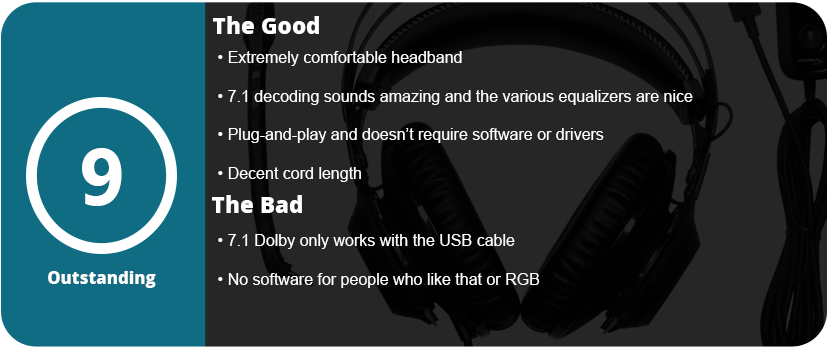
With that said, the HyperX Revolver S is a solid wired headset without the flash and fancy software accompanying most headsets these days. They are extremely comfortable, give an amazing sound output that is crisp and clear, and also have great 7.1 audio capabilities. There are a few minor gripes, like the control box being in a weird spot on the cable, only three equalizer settings, and missing software for those who like to fine-tune, but what’s here works surprisingly well straight out of the box and is plug-and-play. This is a versatile headset for any gamer, but sadly, the 7.1 only works through USB, and the 3.5mm jack is strictly stereo. For the price point, you get bang for your buck that you won’t get with most other headsets.
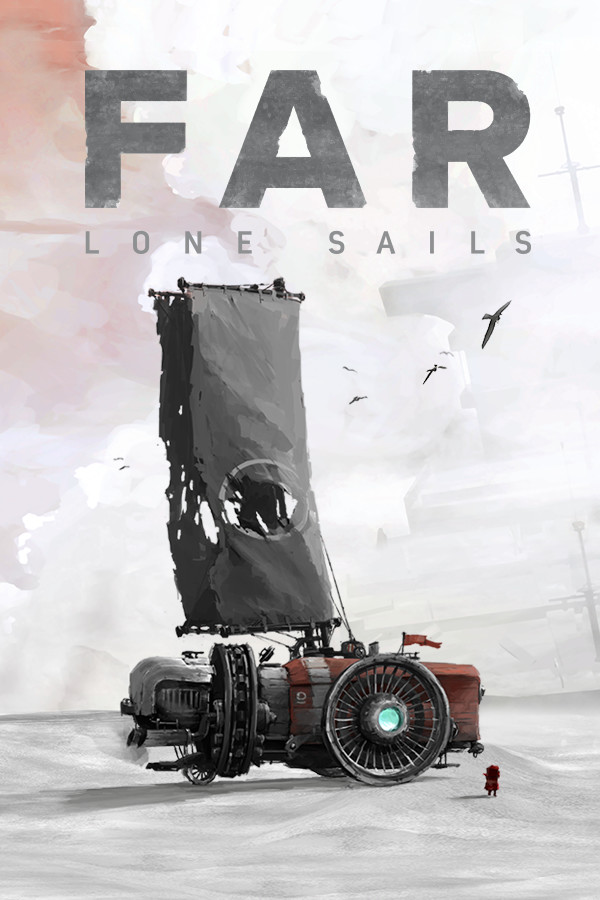
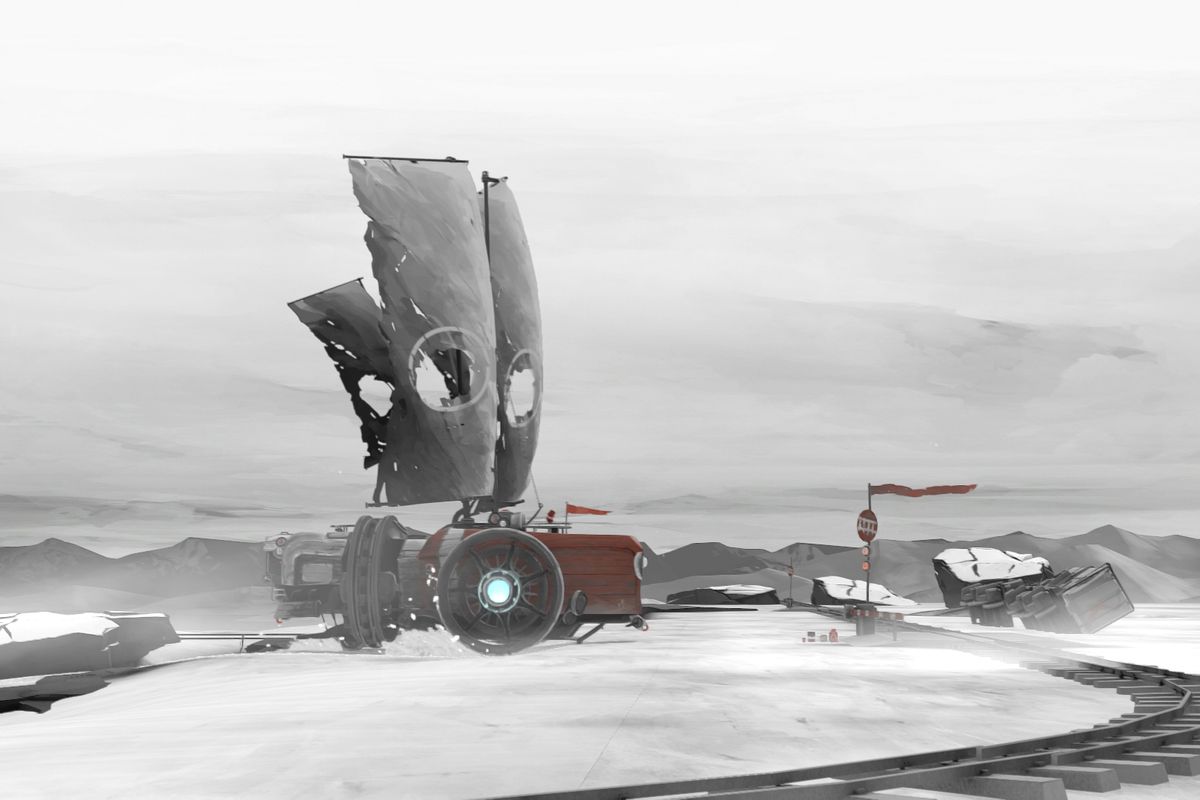
A mysterious girl in a red cloak sets sail on a strange SteamPunk-inspired machine to always move to the right. It’s never clear what your purpose is or why you’re going on this short two-hour journey, but you’re doing it, and it’s quite interesting.
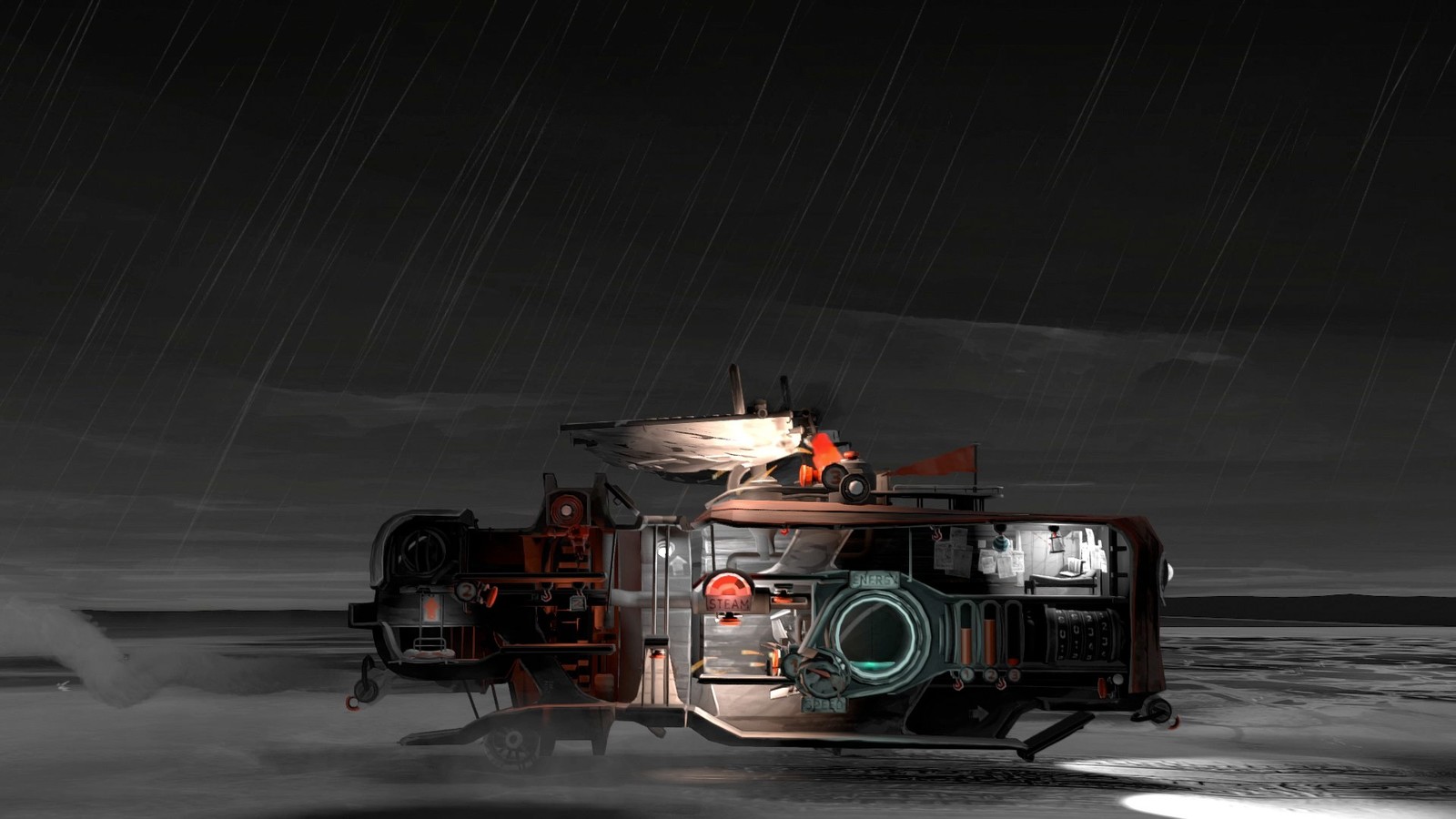
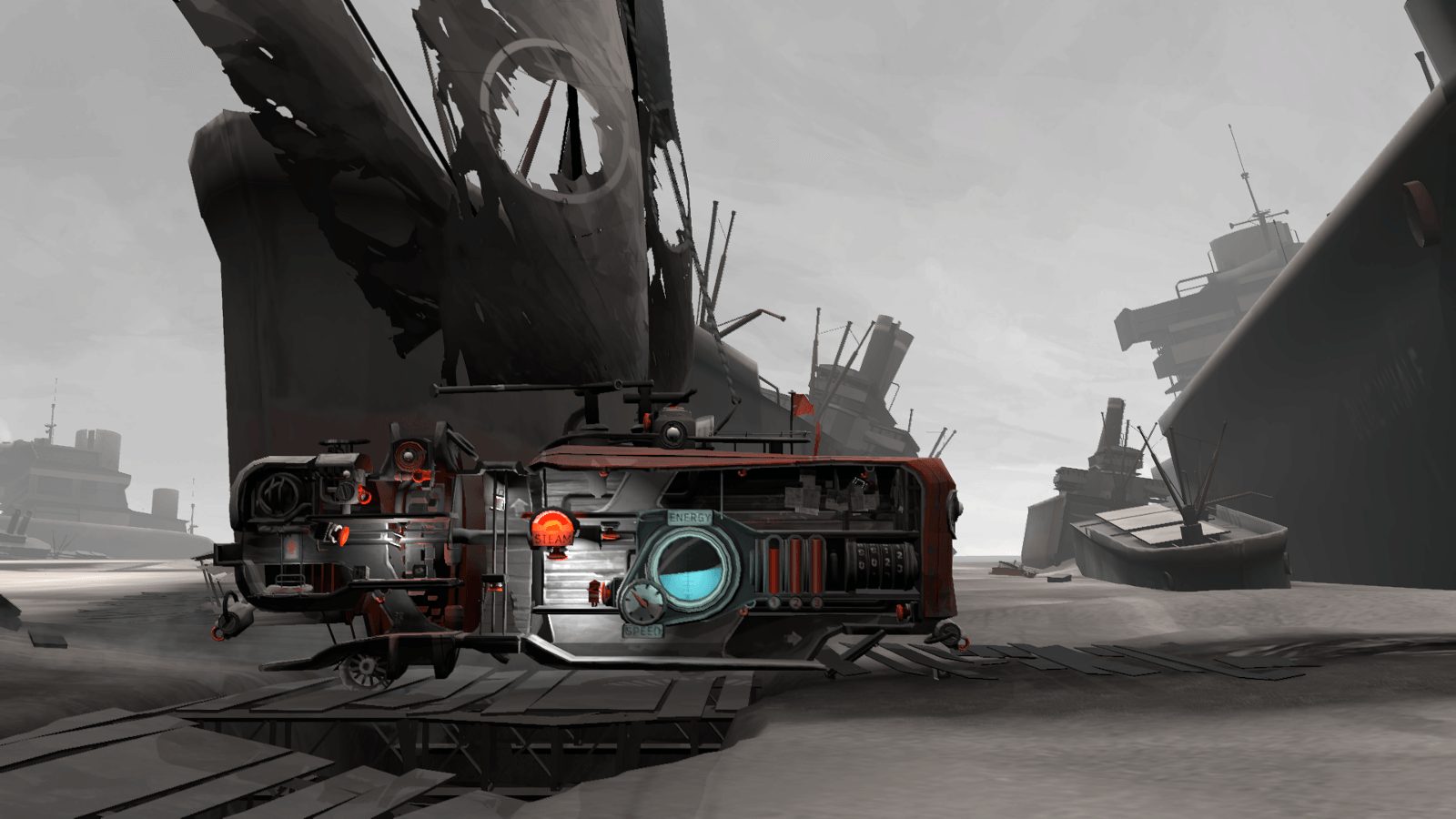
Your ship rolls instead of flies, but that’s okay. Inside the ship, there are several red buttons that do various tasks. The whole purpose of the game is to keep the ship moving by either hoisting your sails when there’s wind or using fuel and keeping the engine running. By the ignition button, there’s a steam release button and a brake. Behind the ship are buttons to suck up fuel on the road and a lift to insert objects into for fuel. The front of the ship has a pulley system, and there is a fire hose and repair torch. Most of these items you won’t get until you come across them on your journey. It’s pretty satisfying to micromanage something as simple as always stopping the machine to grab a box of fuel on the road and having a machine pull it in for you.
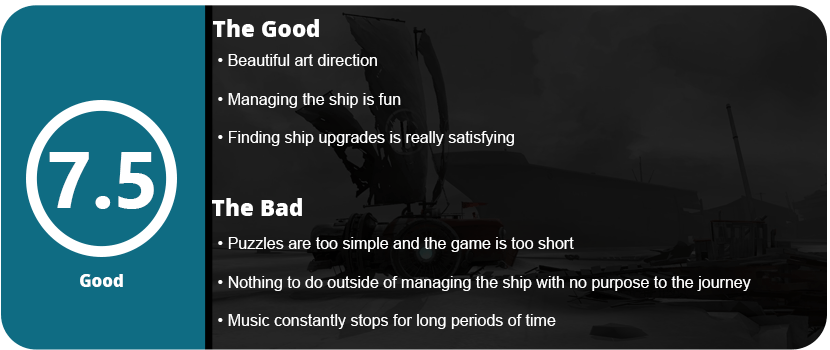
As you sail across the landscape, you will bump into a few puzzles. These require a little platforming mixed with figuring out how to get your ship through a door or across a lake. They are fairly simple, and after a little fiddling, you will figure out what to do. Outside of this, though, the game is void of anything. Once your ship is moving, there’s literally nothing to do, especially when you have full sails and don’t need to micromanage your engine. I was also annoyed that the music starts and stops so abruptly, and several minutes will go by of absolute silence.
The game looks beautiful with hand-drawn art, but it drives me crazy not knowing what the purpose of this game is, and I don’t like that. I’m all for minimalist game design, but developers who make you go on a journey with no background or story are just lazy and not cute or innovative. The various button-pressing mechanics are fun and a brand new concept I have never played before, but what’s the point at the end of two hours? Did I actually make a difference or accomplish something besides finding the credits?
Far: Lone Sails has very interesting gameplay mechanics, but it’s hard to recommend outside of sheer curiosity. Don’t expect a grandiose or heartfelt story here; just an interesting game to look at and button-pressing gameplay.




















































 thebinarymessiah.com
Super, thank you