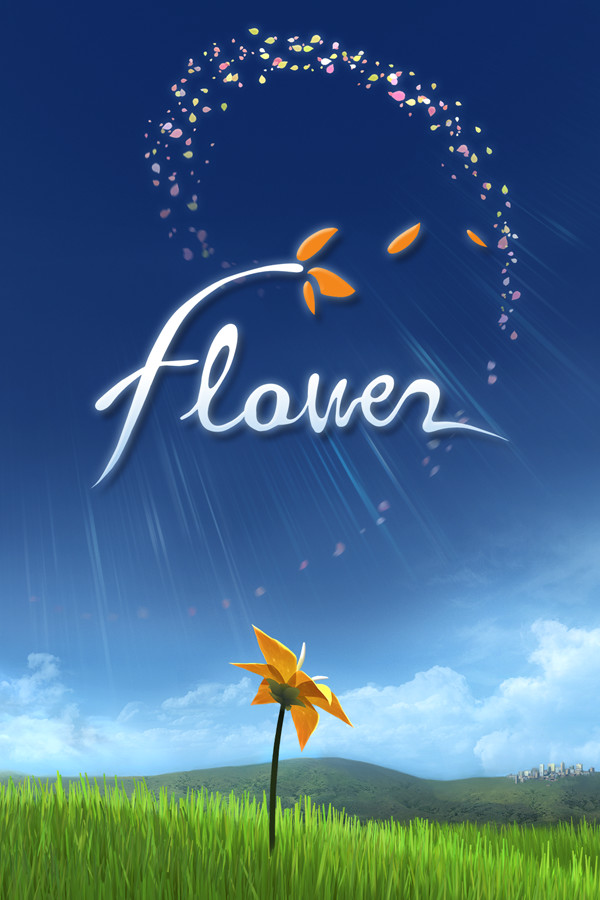
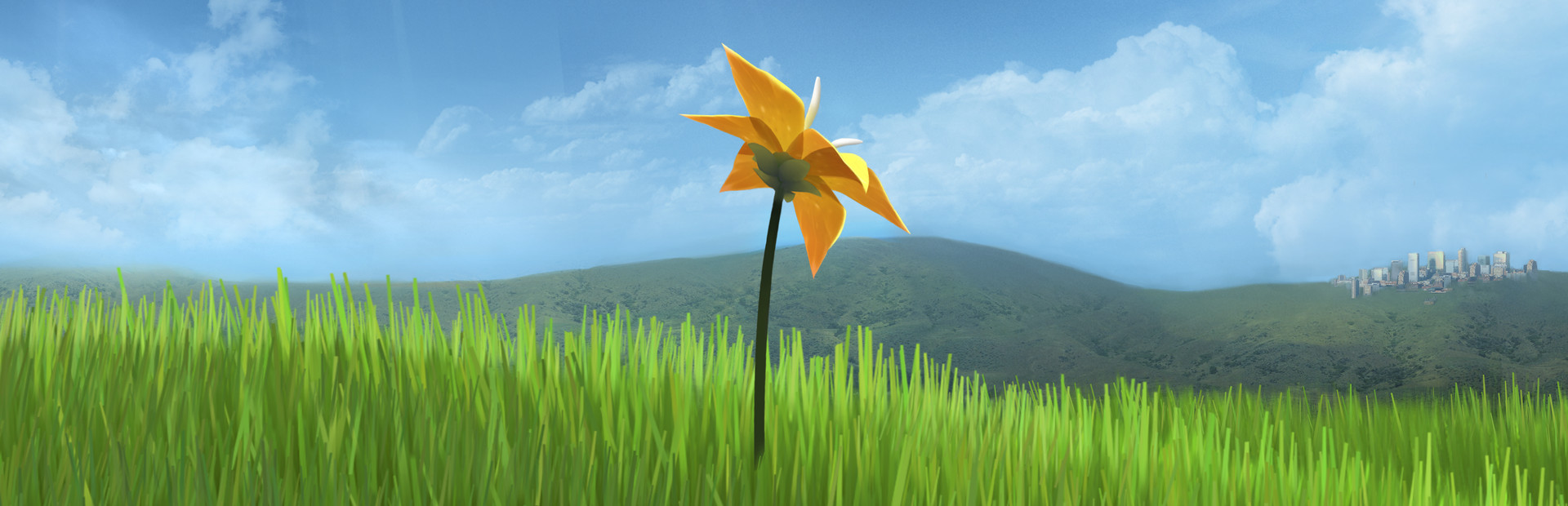
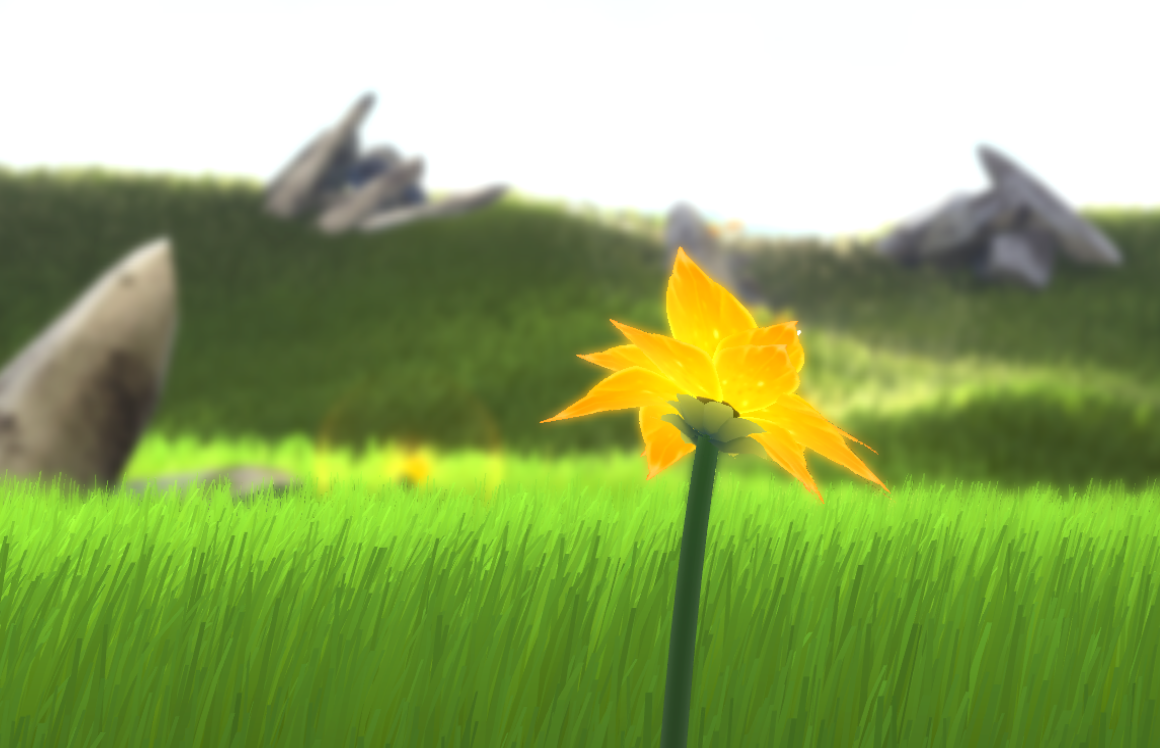
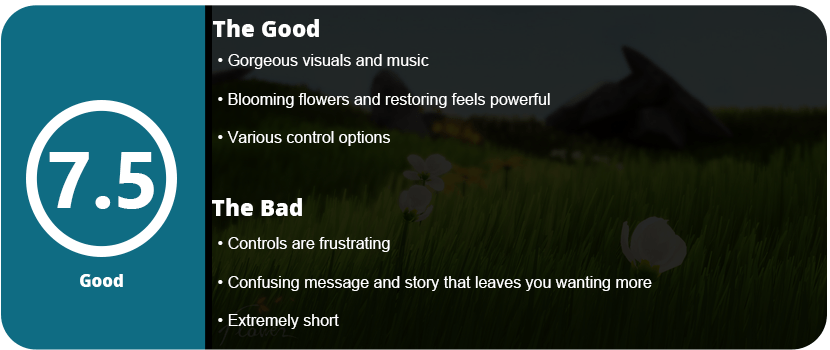
That game company is a really talented bunch. With Journey and Flow under their belt, they are known for making artistically stunning games on Sony’s consoles. When Flower was released on PS3, it amazed gamers around the world with its gorgeous visuals and music. It’s a very simple game, but that’s okay for what it does.
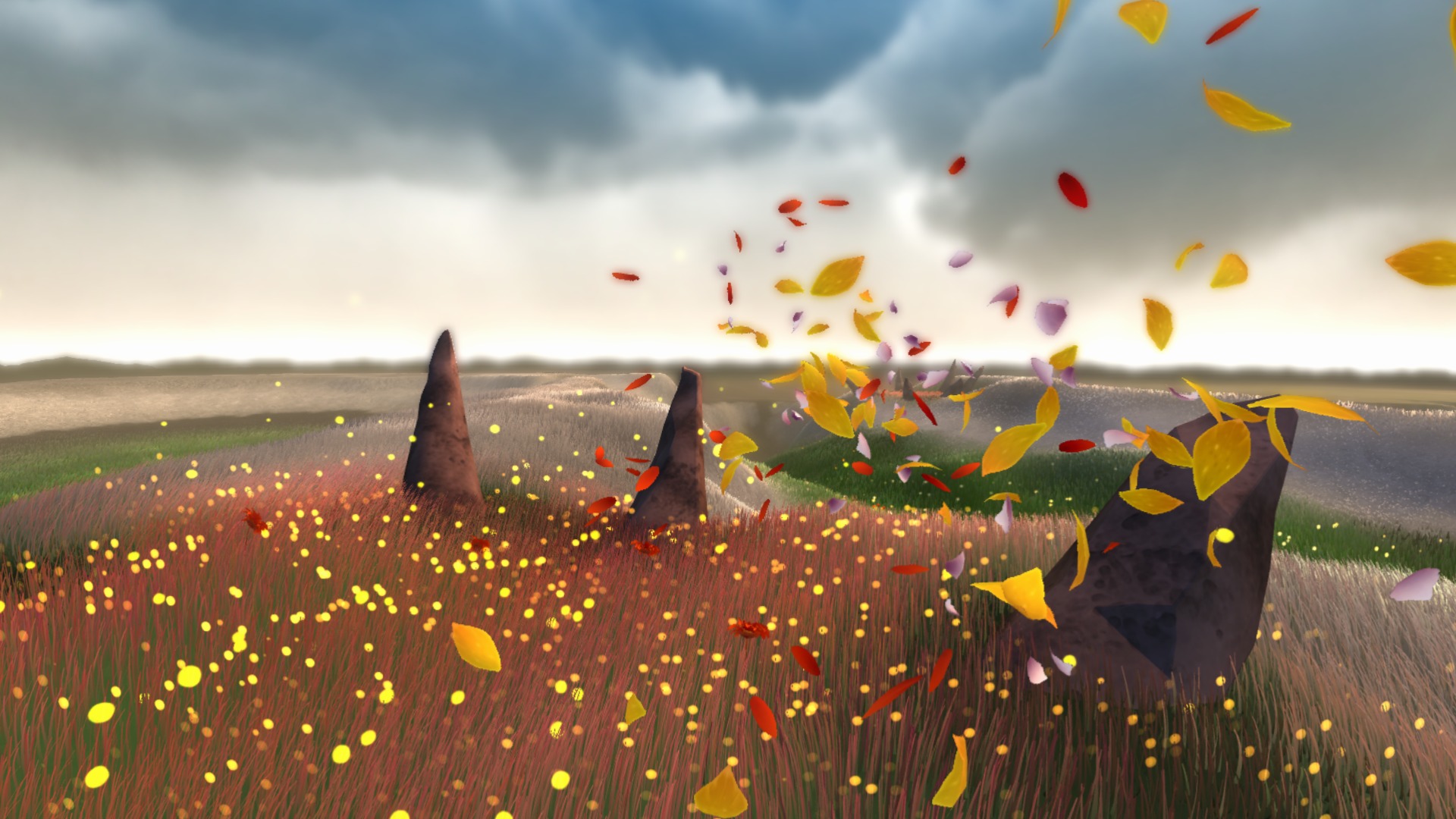
You control a single flower petal and ride the wind to help other flowers bloom and remove gloom and grayness from the world around you. You can control the speed of the petals, and the novelty came from using the PS3’s SixAxis controller to move the petals around. On the Vita, you can use the gyroscope or hold the rear touchpad. I honestly don’t like the controls and feel it is very difficult to control at low or high speeds. I always missed a set of petals in a run and had to turn around and go back, breaking the magic and flow of the game.
It was like this constantly throughout the entire game. Once I felt the game had jumped from petal set to petal set only to let me go and lose focus of the current run. As the game progressed, this became more complicated as you avoided falling electrical towers that would shock you and send you flying backward. It’s a beautiful game to behold, even on Vita, but the frustrating controls and mechanics bring it down quite a bit.
Flower also has some underlying environmental message that feels hypocritical. The game goes from green grasses to dark and dreary in a few levels, only to have you restore color to the city (which clearly represents Los Angeles), so I don’t have any idea what the story is or what the message is about.
There are about seven levels, not including the credit level, which was interesting. Flower is a PlayStation classic and should be played just for its beauty and unique gameplay that no other game can touch. The music is amazing, and I really felt sucked into the game only to be ripped out again by bad controls.
Some longtime followers of my site may actually laugh at this review, and some may have noticed I’m a hardcore Android user. Sure, I have a ton of iOS reviews from years ago, but after my last iPod Touch 4G, I hadn’t looked back at the platform. As the years went by, there were a ton of iOS games that just never made it to Android, from Infinity Blade to Civilization VI, not to mention timed exclusives. Why an iPad and not a Touch? Well, for starters, the Touch devices are being phased out and haven’t been updated since the iPhone 6 hardware. Second, the iPad series is still frequently updated and features more powerful hardware and a better experience than the Touch. Third, price. You can finance an iPad at wireless carriers, as the full price of these things is outrageously expensive.
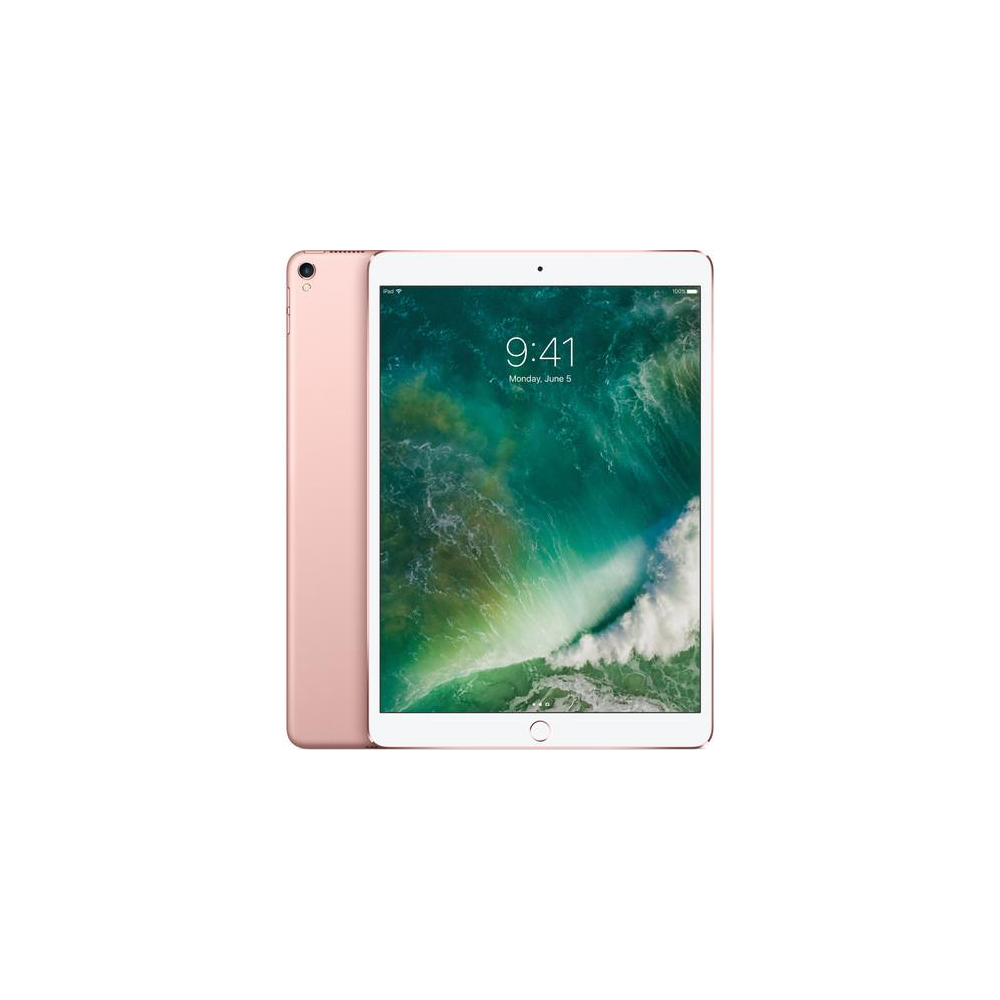
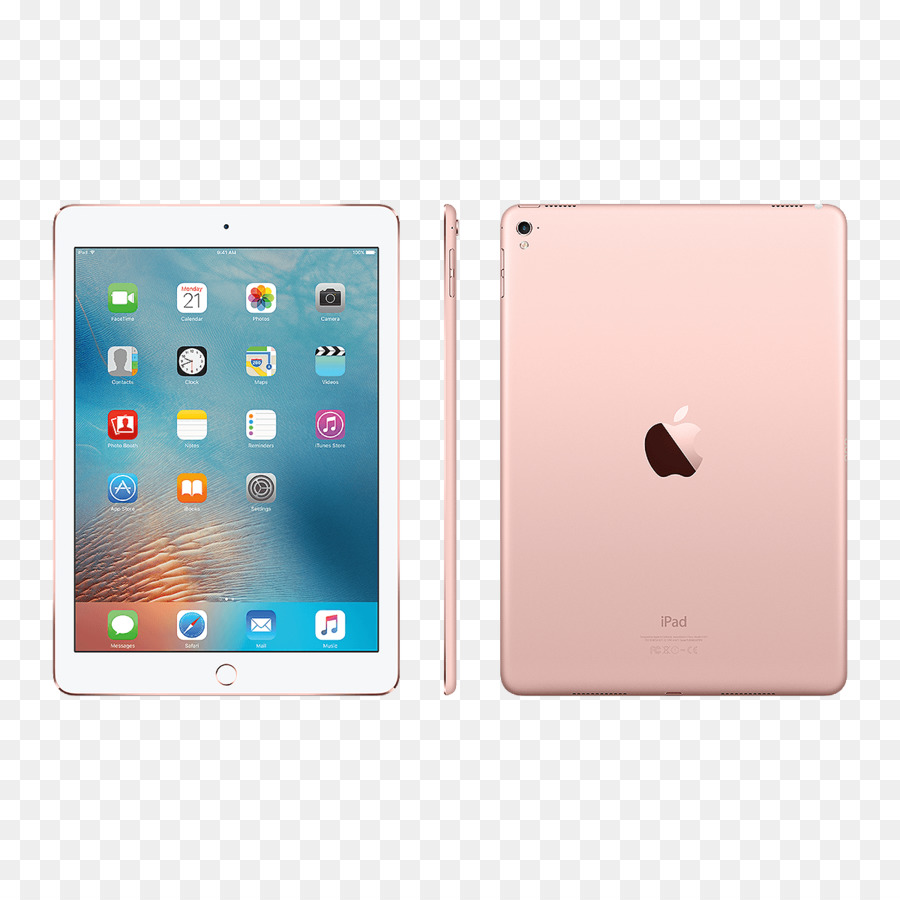
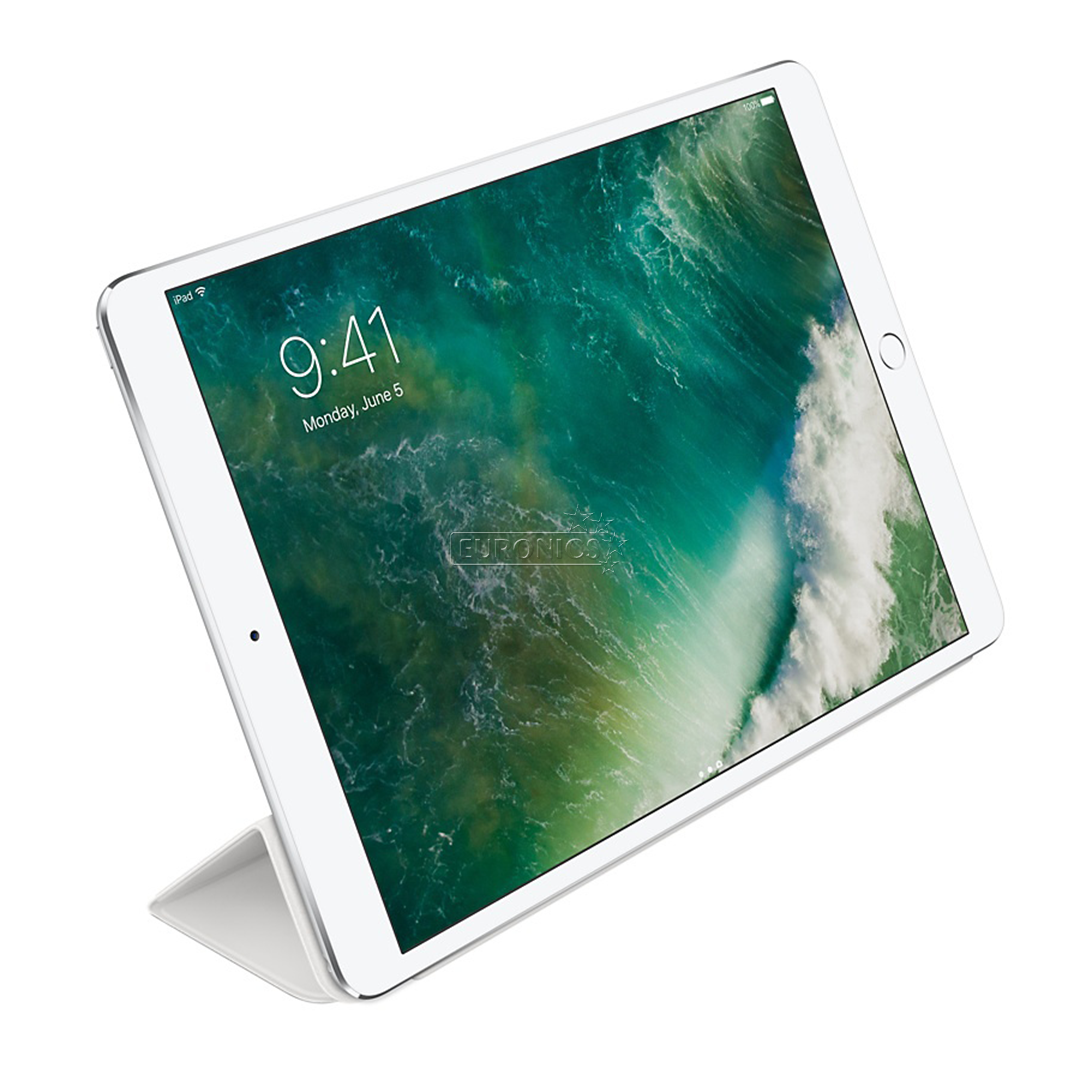
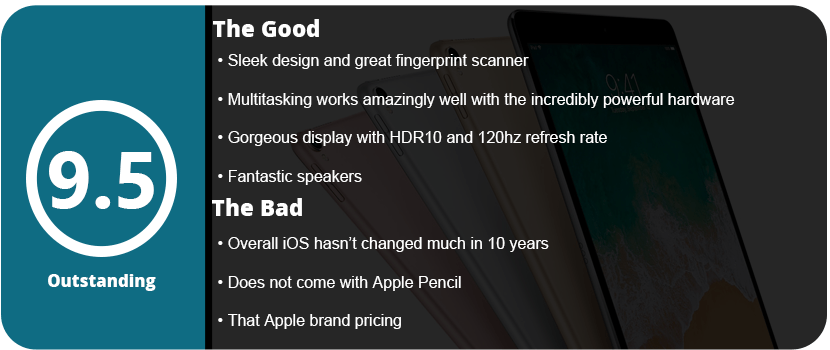
For starters, the device is about what I expected; it’s sleek and fairly slim (not as slim as the Samsung Tab S tablets, however), and the 10.5″ size makes a huge difference over the standard 9.7″ tablets I am used to. The screen is gorgeous, and the speakers are phenomenal. So what’s powering this iPad? The A10X processor is Apple’s latest and greatest chip offering and runs everything at lightning-smooth speed. It is accompanied by the PowerVR 7XT GPU, which will run the latest and greatest games at high framerates. The display has an odd 4:3 aspect ratio at 1668×2224 resolution, which is also odd, and has a 12 MP rear-facing and 7 MP front-facing camera. The iPad features HDR10 and a 120Hz refresh rate for HDR content on YouTube and Netflix, as well as lightning-fast framerates. It’s probably the best-looking tablet camera I’ve ever seen. Let’s not forget those speakers. I thought the Samsung Galaxy Tab S3’s speakers were great, but these blow those out of the water. I can actually feel the bass rumble in my hands at max volume, and the sound projects very well and actually sounds like PC speakers rather than tinny muffled garbage.
The iPad Pro also features the new lightning charger cable that was featured in the iPhone 5. It’s no big deal to longtime Apple users, but for me, coming from the older iPod Touch hardware is really nice. Sadly, the tablet has no wireless charging, which should be available by now but just isn’t due to Apple’s stubborn design quirks. With that said, the tablet features a great physical home button with a responsive fingerprint sensor that’s quite impressive. You can clearly tell the iPads aren’t second-rate hardware like some other manufacturers on the Android side.
Onto the software, and this is where the impressions kind of sizzled away; the iOS suite hasn’t changed much in 8 years. It looks nearly the same, just more streamlined, sleek, and faster. My iPad came with iOS 11.4 and the new dock and multitasking features actually impressed me as they are more intuitive than Androids. Swiping up from the bottom on any app to get to the dock and then long-swiping for the control panel is genius. Snap multitasking works so smoothly by dragging an app from the dock into the screen, having an overlay, or tapping the title bar to bring up true multitasking. It works so well, and they seemed to have gotten it right. The only downside is that you need the apps you want to snap into the dock, or it won’t work.
I do like how iTunes is dying and is no longer required to tether to your PC to download apps and music. The App Store is now separate from iTunes, which is awesome, as back in the day, these were all in one. There are plenty of customization settings and ways to tweak your device, much more than 8 years ago, and I was pretty satisfied. However, customization is still absent after all these years. No widgets, custom home launchers, or any of those awesome features that Android offers, including the more intuitive drop-down menus. What iOS offers is simple, easy to use, and very smooth, but it hasn’t really evolved in 10 years.
Games look and play amazingly well on the iPad Pro, and the Apple Pencil is the big selling point for these tablets. I don’t have one myself, but I’ve used my wife’s as she draws with it, and it’s so smooth and responsive; it’s a fantastic piece of hardware. The pencil alone has evolved the iPads into something more than just steamrolled iPhones. They are true productivity devices that can do things laptops can’t even do.
Overall, the iPad Pro is an amazing tablet and offers Apple’s best tech. It’s great for mobile gaming, drawing, watching videos, and overall everyday use.
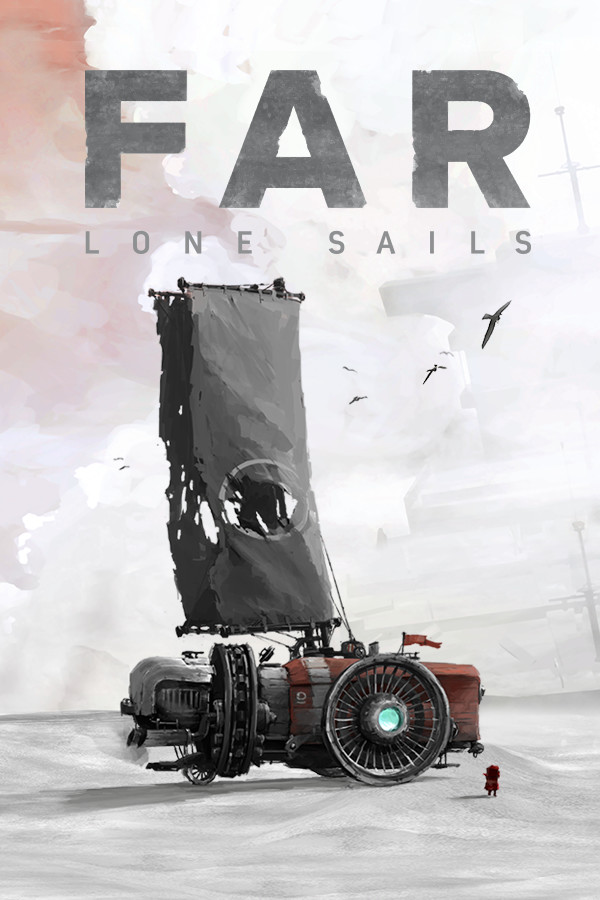
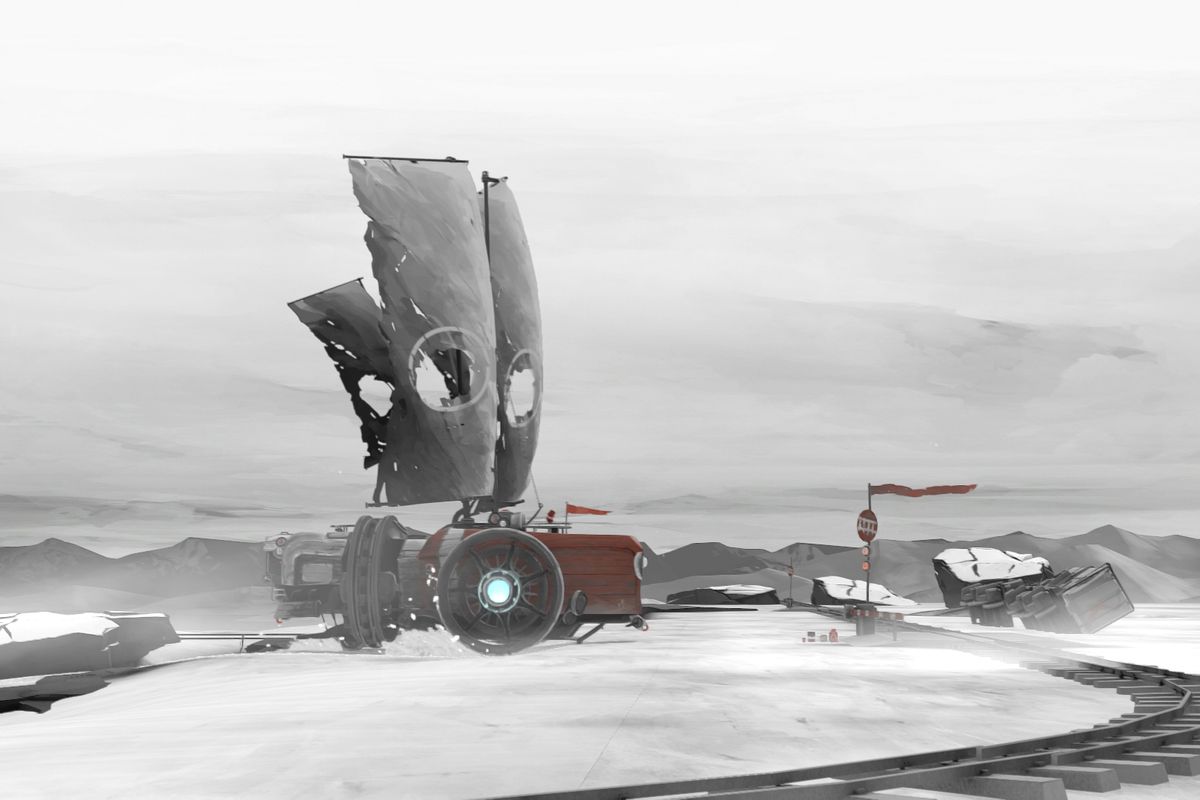
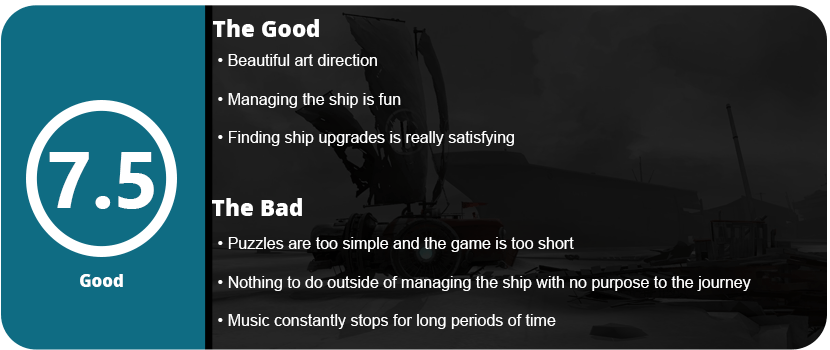
A mysterious girl in a red cloak sets sail on a strange SteamPunk-inspired machine to always move to the right. It’s never clear what your purpose is or why you’re going on this short two-hour journey, but you’re doing it, and it’s quite interesting.
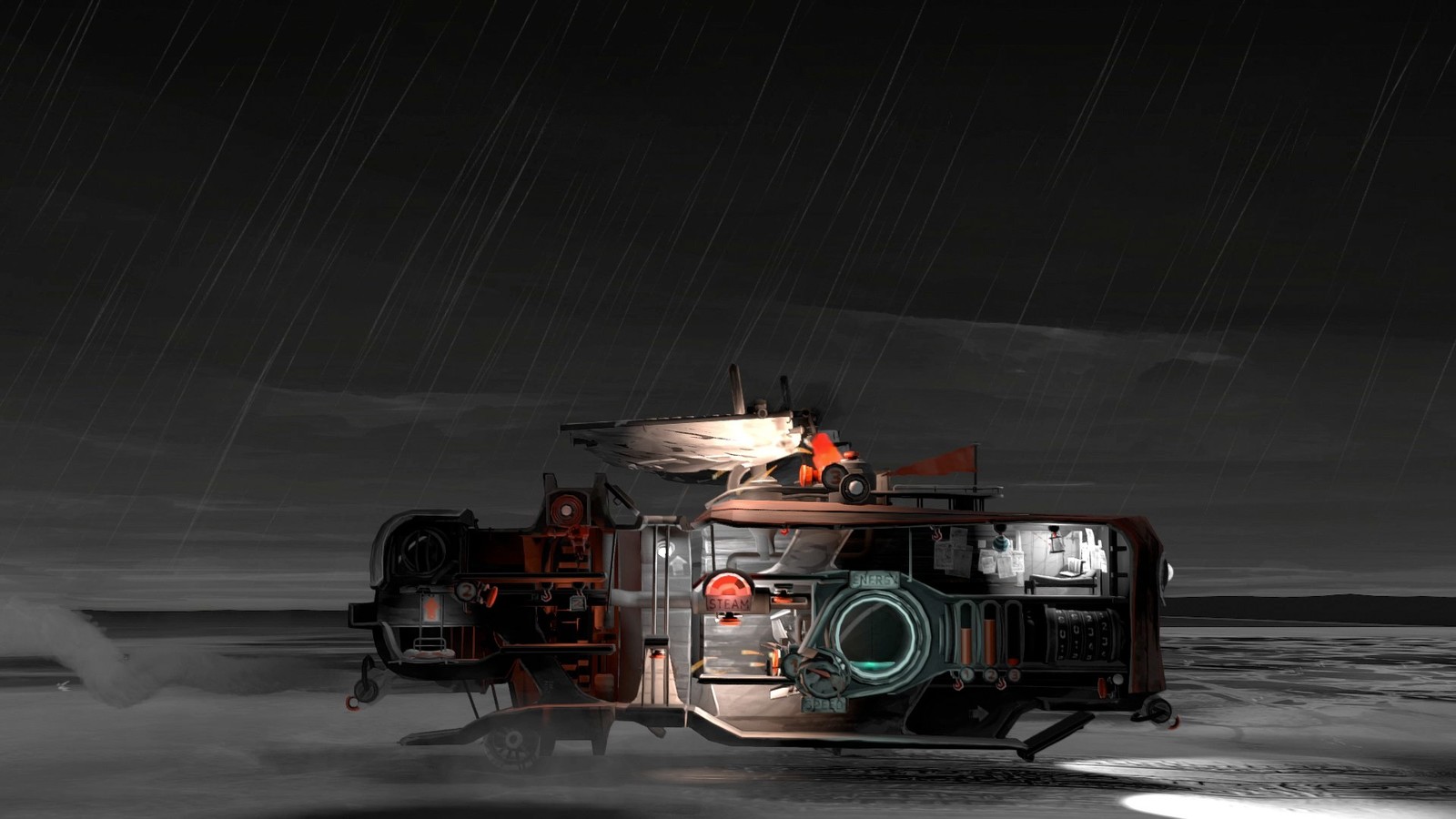
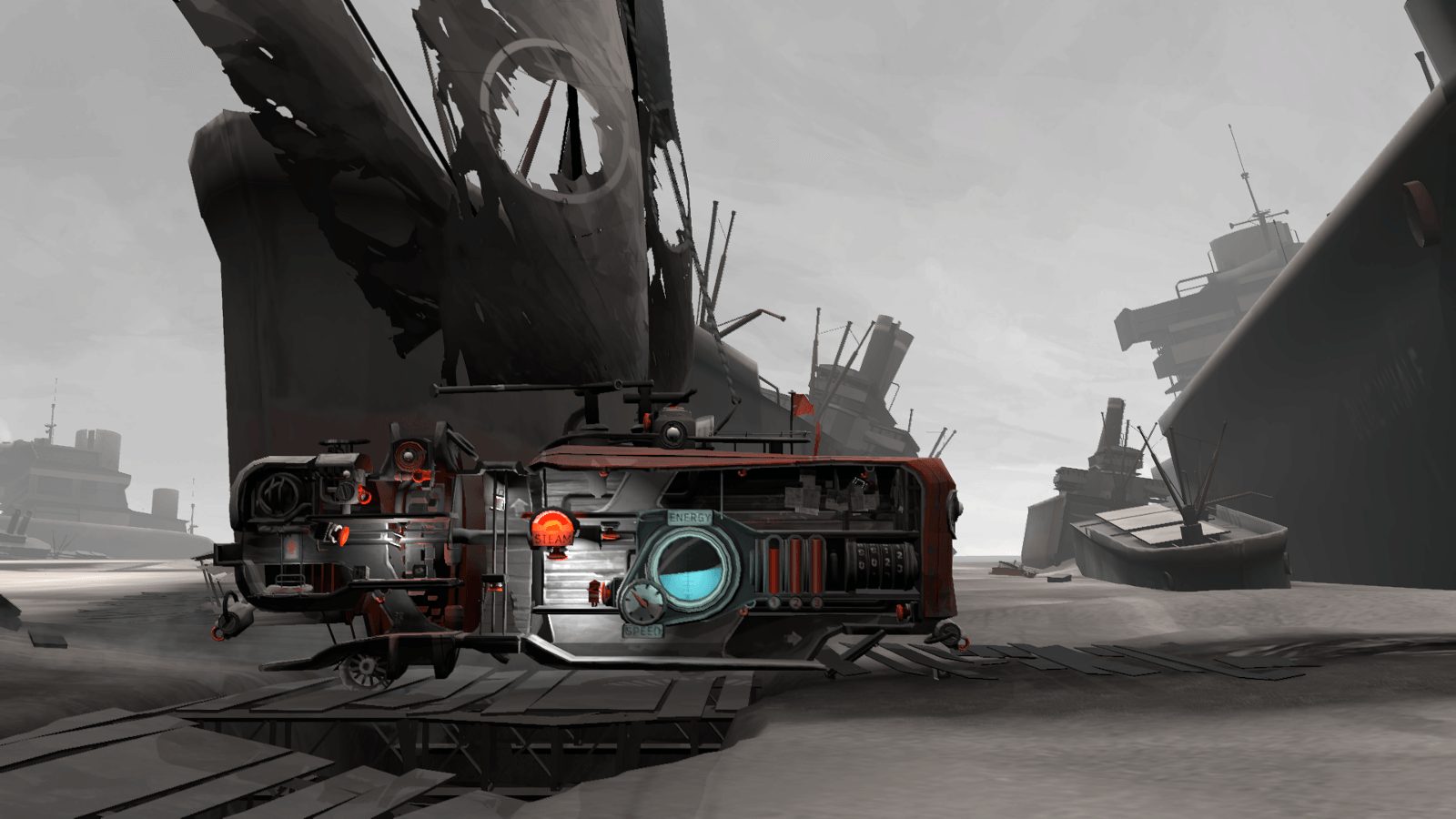
Your ship rolls instead of flies, but that’s okay. Inside the ship, there are several red buttons that do various tasks. The whole purpose of the game is to keep the ship moving by either hoisting your sails when there’s wind or using fuel and keeping the engine running. By the ignition button, there’s a steam release button and a brake. Behind the ship are buttons to suck up fuel on the road and a lift to insert objects into for fuel. The front of the ship has a pulley system, and there is a fire hose and repair torch. Most of these items you won’t get until you come across them on your journey. It’s pretty satisfying to micromanage something as simple as always stopping the machine to grab a box of fuel on the road and having a machine pull it in for you.
As you sail across the landscape, you will bump into a few puzzles. These require a little platforming mixed with figuring out how to get your ship through a door or across a lake. They are fairly simple, and after a little fiddling, you will figure out what to do. Outside of this, though, the game is void of anything. Once your ship is moving, there’s literally nothing to do, especially when you have full sails and don’t need to micromanage your engine. I was also annoyed that the music starts and stops so abruptly, and several minutes will go by of absolute silence.
The game looks beautiful with hand-drawn art, but it drives me crazy not knowing what the purpose of this game is, and I don’t like that. I’m all for minimalist game design, but developers who make you go on a journey with no background or story are just lazy and not cute or innovative. The various button-pressing mechanics are fun and a brand new concept I have never played before, but what’s the point at the end of two hours? Did I actually make a difference or accomplish something besides finding the credits?
Far: Lone Sails has very interesting gameplay mechanics, but it’s hard to recommend outside of sheer curiosity. Don’t expect a grandiose or heartfelt story here; just an interesting game to look at and button-pressing gameplay.
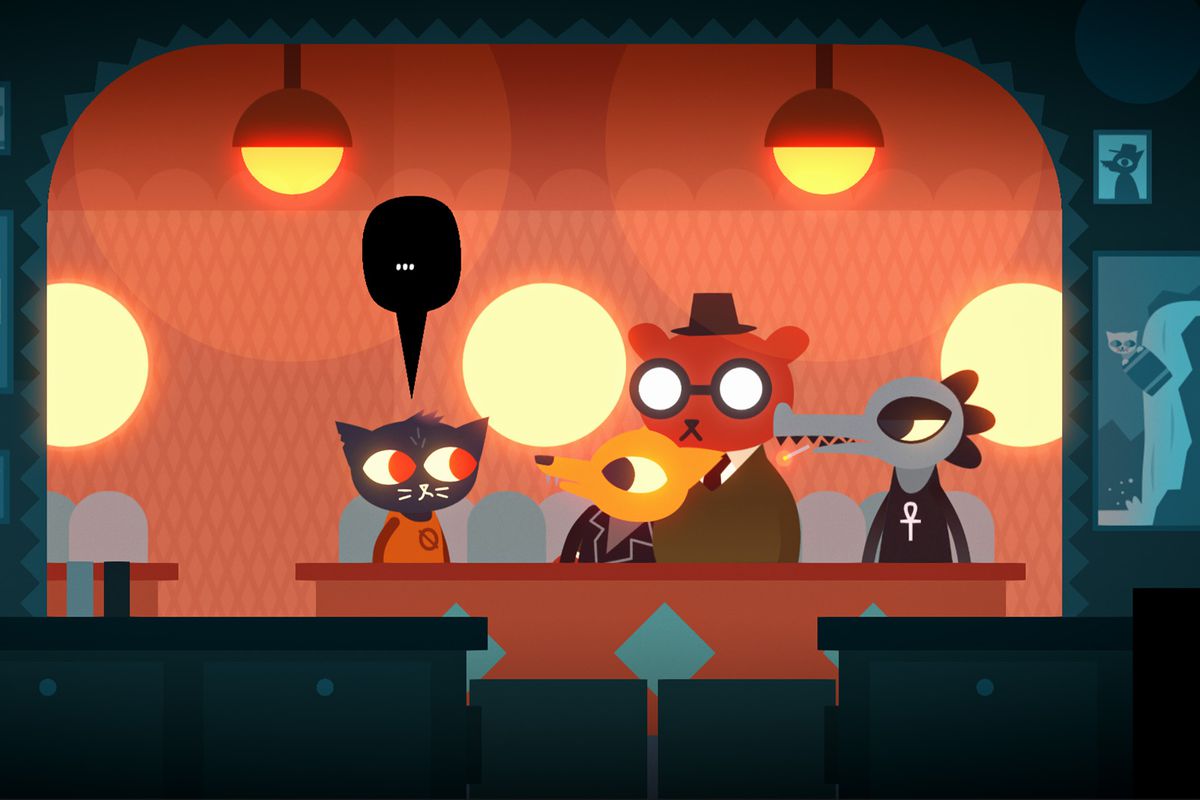
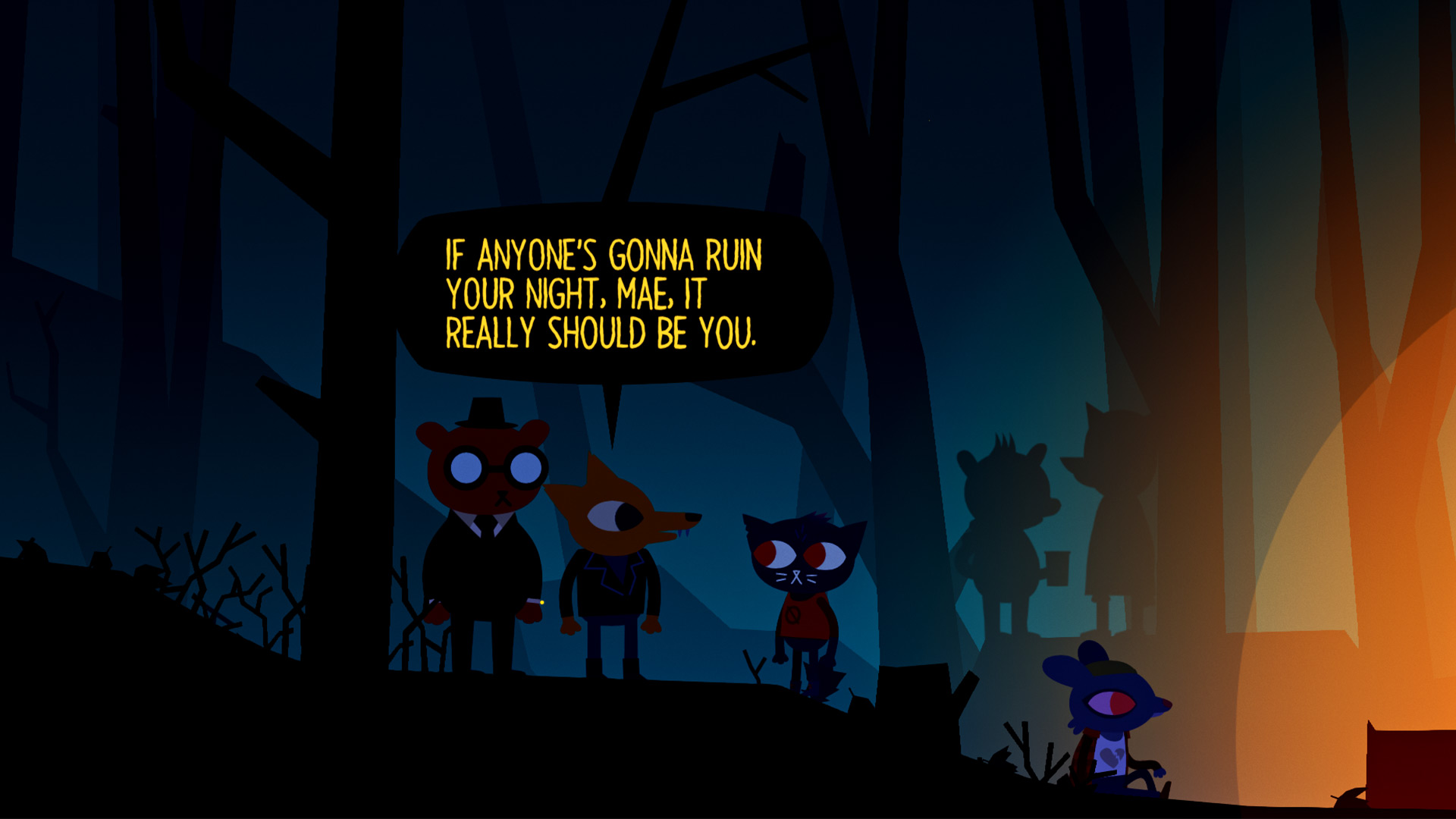
I love adventure games as they tell incredible stories with such detail that most other games can’t put out. They put action and gameplay on the back burner to bring the story upfront and into your face. They are typically slow-paced and keep you hooked with interesting characters, settings, and atmosphere. Night in the Woods is about a cat named Mae who drops out of college and comes back to her hole-in-the-wall town to hang with friends and discover a mystery plaguing her town.
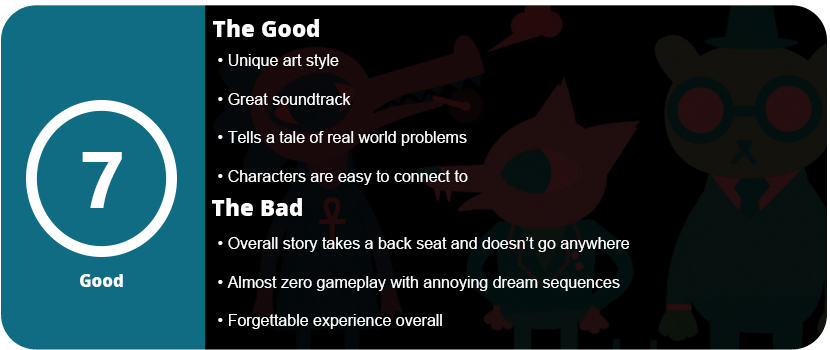
The game starts out fine with several scenes of character introductions and plot setting. Mae meets up with her four friends, and each day goes by with several activities such as talking to people, attending band practice (complete with a rhythm mini-game), and checking your laptop. This is fine and all, but this dragged on for way too long. Several days went by, and almost nothing happened outside of character development. The game talks about the real-life struggle of today’s younger generation (Millenials) and the day-to-day lives of lower-middle-class Americans. The game is set in a cartoony paper cut-out style but set in real-world problems that are very unique and interesting. I really connected with the characters, and their problems were genuine and real, but I wasn’t sure if I was playing a game sometimes.
Each night you go to sleep (after several days go by), you are presented with the only real gameplay here, which is annoying platforming on confusing “maps” to find four band members to complete the dream sequence. You go through five of these maps, and they are boring, a chore to navigate, and feel like forced gameplay. Outside of these sequences, there’s nothing but text and story. I really think this should have been a visual novel or just an animated cartoon rather than a game.
The actual relevancy of the title only comes into play during the last half-hour of the game, and it’s forgettable and almost feels forced compared to the day-to-day struggles of the characters, which are more interesting. I like how the game is written and the characters it portrays, but if you’re going to make this a game, actually give me a game to play. I started getting bored towards the end and just wanted the entire game to end.
That’s not to say I didn’t enjoy this game, but the praise it is given is a little ridiculous. It doesn’t do anything special in its own genre, and as a game itself, it’s barely that. I can only recommend this game to hardcore adventure game or visual novel fans who are okay going through hours of text and dialog with almost zero gameplay. It’s a great time killer and a fun way to burn away a lazy weekend afternoon, but nothing more than that, and there is no memorable story to care about from this.
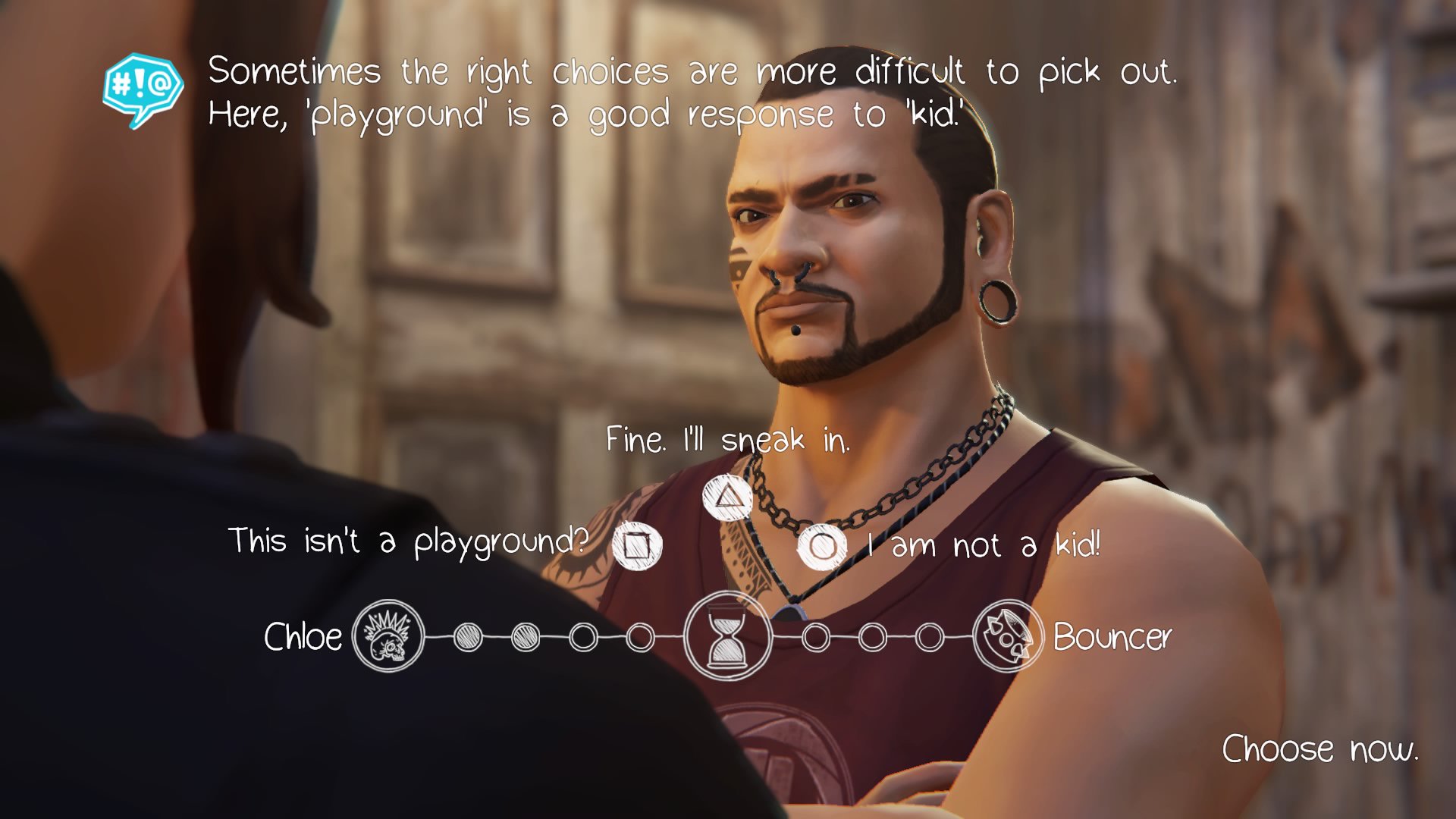
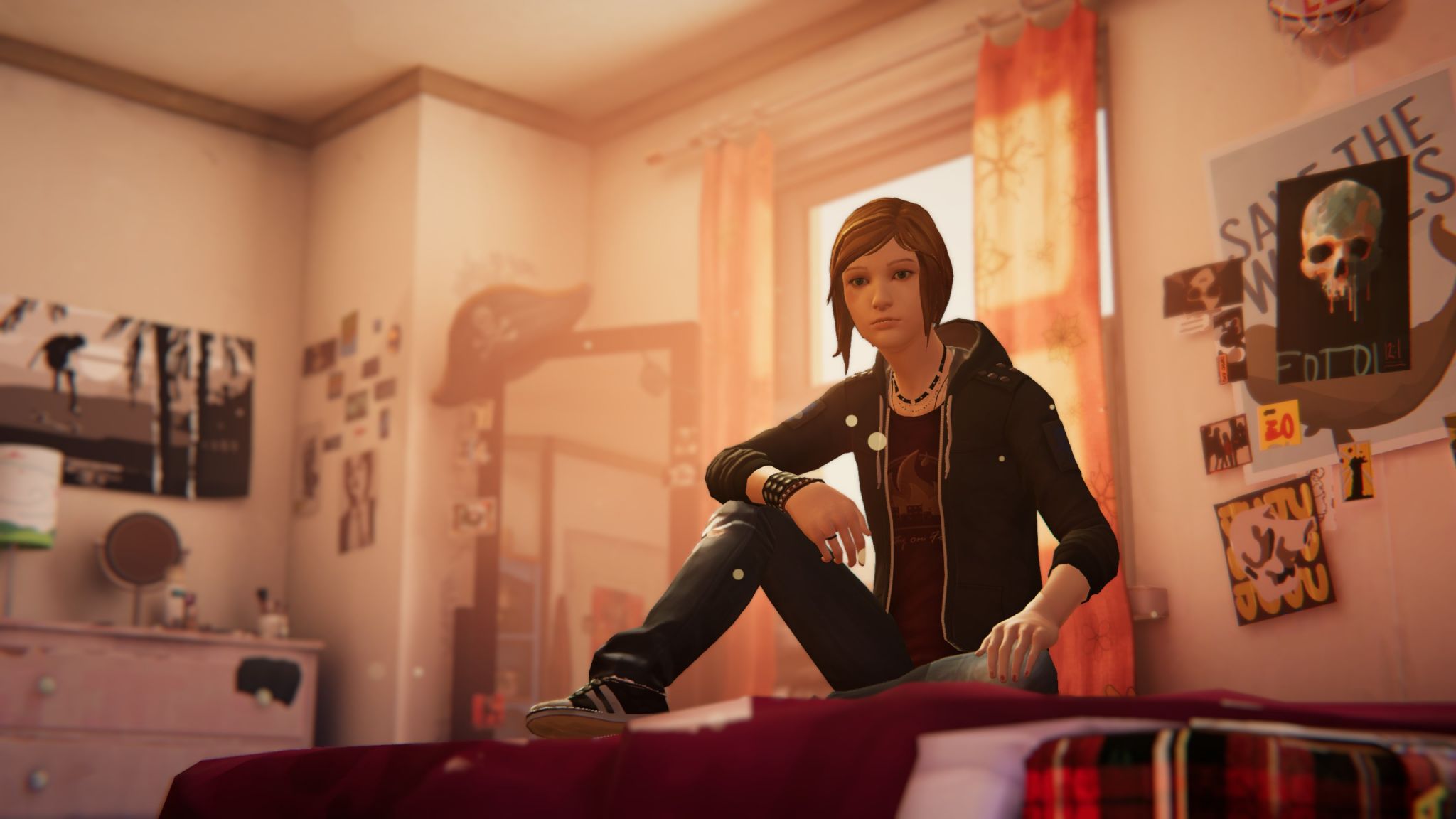
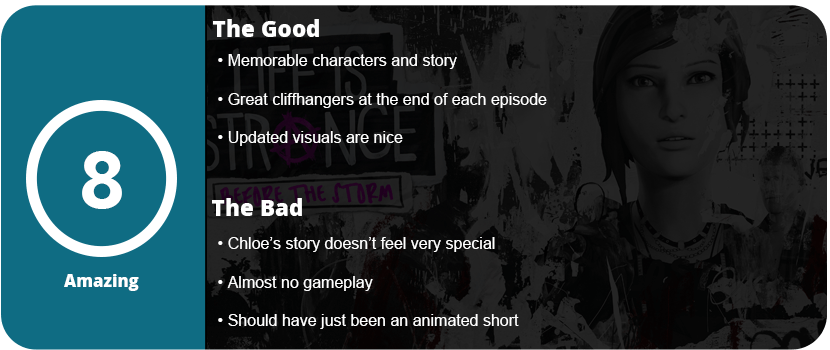
Life is Strange is one of my favorite games of all time and one of my top adventure games. The atmosphere, music, characters, writing, and story all made me feel nostalgic to be a rebellious teenager again, and it seriously sparked my imagination long after I finished playing it. Before the Storm pulls us back to Arcadia Bay as Chloe Price and helps us see who Chloe really was before the events of the first game.
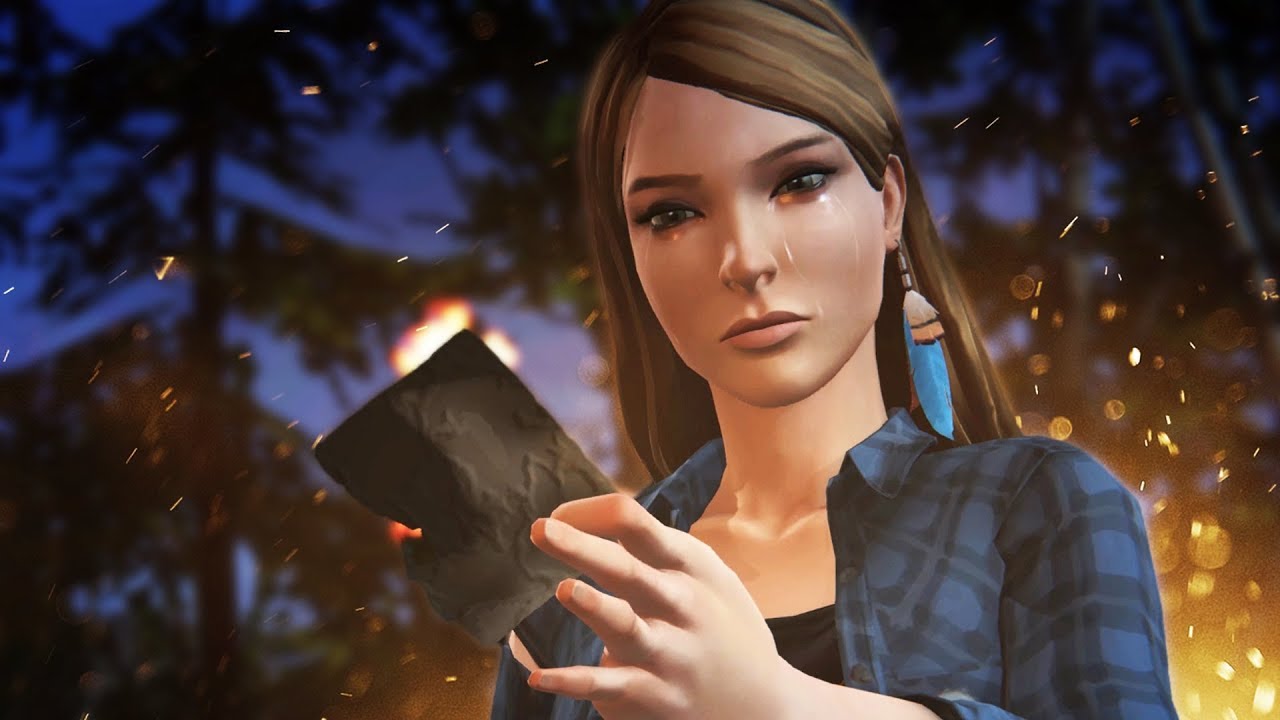
We also get to see who Rachel Amber really was to Chloe, as this was a huge mystery in the first game that wasn’t fully explored. Rachel helped shape who Chloe was in the first game, and she had a huge impact on her life, albeit a short-lived one. We also get to see the formation of the people around Chloe in the first game, such as her parents and some schoolmates. Before the Storm still captures that teenage nostalgia of being free and not having to worry about the stresses of adult life such as bills, cars, a job, and food. All we had to worry about was our feelings and friendships, which are probably the most cherished parts of our lives.
What the game fails to capture, however, is the great pace and actual gameplay of the first game. Before the Storm is very slow to start and to pick up and was almost boring for the first hour, and without the gameplay quirks of the first game, all you have is an adventure game with very few decisions to make. Most of BtS is just watching events unfold and clicking on objects. So gameplay takes a backseat, and the story kind of did too. The characters are still as strong as ever, but there’s just not much to build here, as Chloe’s life before the first game was fairly generic and not much different from most teens’ troubles.
Each episode did tend to leave a cliffhanger somehow, and I wanted to know what was going to happen next, but there was a lot of filler content, and most of the actual events that involve the first game are far and few between. If you never played the first game, this would actually be quite a boring and generic adventure game with no meaning. I could have easily settled on this game being just a one-hour animated movie to fill us in on Chloe’s earlier years.
At least the visuals were slightly upgraded with some better lighting, but overall, it’s a seriously dated game that all adventure games have seemingly been doing. I can only recommend this game to anyone who finished the first game, but don’t expect a tear-jerking and emotional roller coaster like it provided. You’ll sit through a few heartfelt moments and some laughs, and that’s about it.
The Galaxy Tab S2 was the best tablet I have ever owned. It’s sleek, powerful, includes a familiar Samsung Android OS, has a beautiful screen, and I never had a single issue with the tablet. That was three years ago, and I felt it was time to upgrade. While I understand that the Tab S3 isn’t the dramatic change that the S2 was from the original Tab S, to me at least, it’s a marginal difference to justify an upgrade, especially if you are growing tired of your S2 or realize, like I did, that Samsung is no longer supporting it.
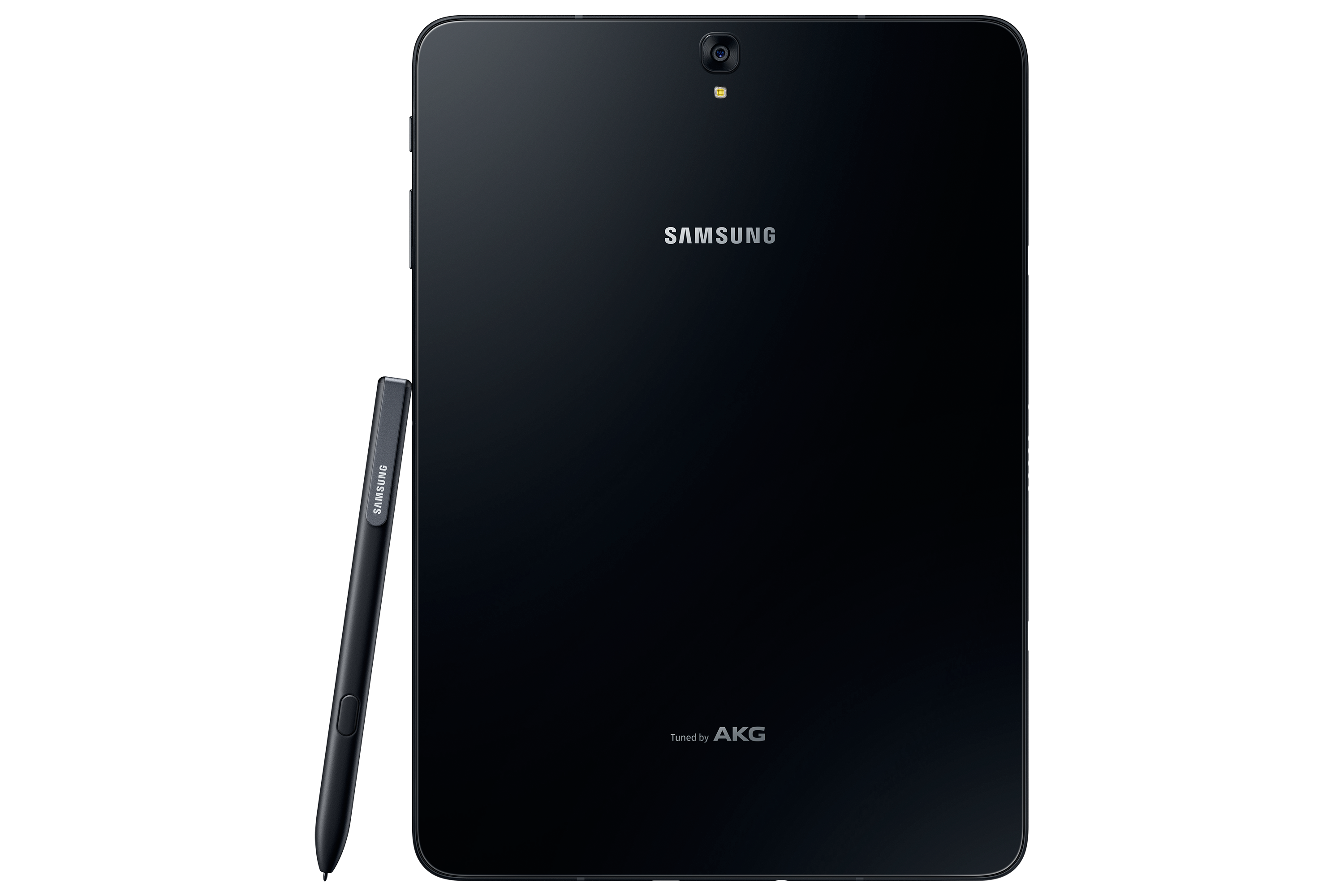
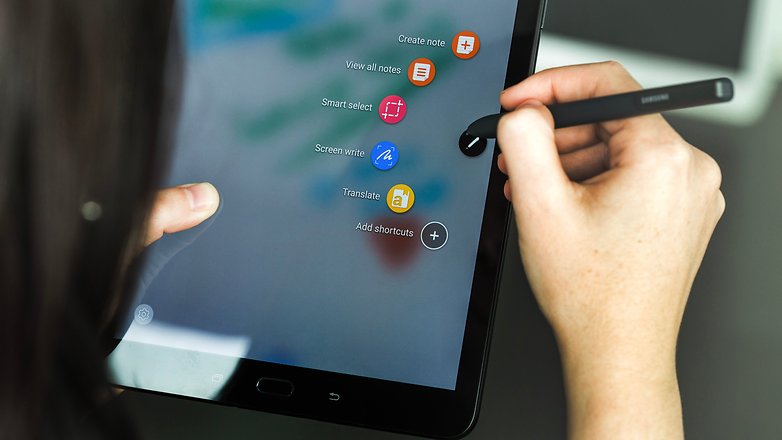
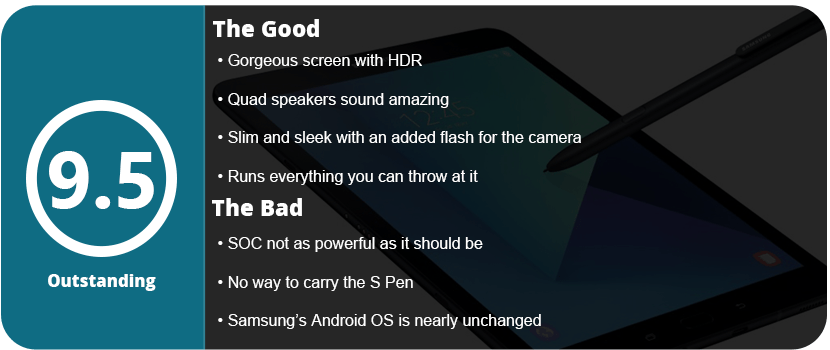
When I took the tablet out of the box, the differences were noticeable right away. While it’s shaped the same way, is the same size, and looks familiar, it’s made completely out of glass, so that plastic feeling is gone. It’s also half the weight and thickness of the S2, which is insane as the S2 was the thinnest tablet around for the longest time. The Tab S3 also includes the S Pen for the first time since the Note 10.1 tablet. The S Pen is large and full-sized, unlike the pens for the Note phone series, and it doesn’t go into the tablet. This is a bit of an issue because you always have a loose pen floating around unless you buy a case for the tablet that can hold the pen.
Once I turned on the tablet, it was a familiar experience. The Nougat OS is exactly like the S2, with a few added features. Sadly, I noticed that Samsung themes are absent from this tablet as well and seem to be exclusive to the newer Samsung phones. I did notice that everything ran a bit smoother and was more responsive overall.
The biggest change of all would be the sound and screen. The S3 features four speakers for surround sound by AKG, which sounds fantastic. As I was playing games or watching videos, I could hear the sound differential change with each speaker, which was a huge change from the S2’s stereo speakers. The screen features HDR, which was the first tablet to do so. Watching HDR videos on Netflix or just high-res videos, in general, look fantastic on this screen and almost look better than on Samsung’s high-end phones. I can’t stress enough how great everything looks on this tablet; these two features alone are worth the upgrade.
Let’s get under the hood of this beast. While there are more powerful tablets on the market, the Tab S3 is one of them. The S3 boasts the Snapdragon 820 SOC with a quad-core CPU running at 2.15 GHz. We get 4GB of LPDDR4 RAM and an Adreno 530 GPU. It’s not the biggest leap over the S2, and it disappointed a lot of people, but as a whole, it’s a worthy upgrade and still more powerful than the S2. It has a 13 MP rear camera and a 5 MP front-facing camera, which is just fine. Who really takes photos with their tablet? I took maybe a dozen with my S2 over the last 2 and a half years, and it never got used. Thankfully, the S3 has a flash on the back this time, so your photos will turn out a bit better.
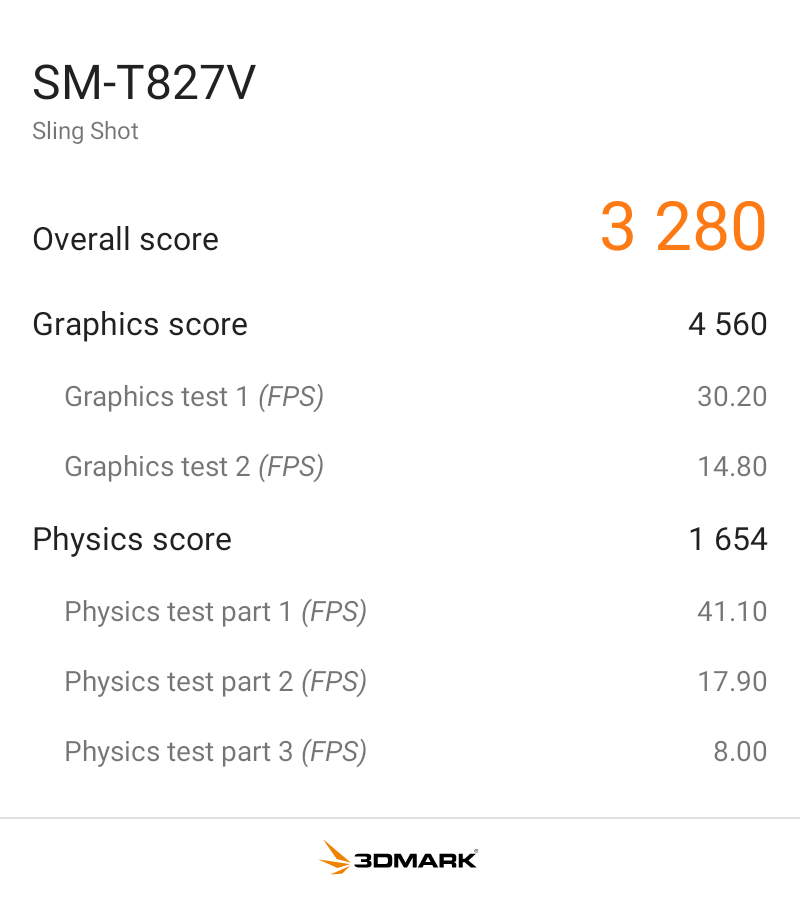
I benchmarked the S3 with 3DMark Sling Shot Extreme, and it did fairly well with the Vulkan and OpenGLES 3.1 APIs. As you can see, when the system is pushed fairly hard, it can maintain a solid 30FPS, so it’s ready for games for the next few years.
Overall, the Tab S3 is a fantastically powerful and feature-packed tablet. It’s a worthy upgrade from the S2, or if you want an all-new tablet, this is a great one to jump into. With a gorgeous screen, HDR support, a versatile S Pen, quad speakers, and a slim design, there’s nothing wrong here at all. While the SOC isn’t as powerful as I’d have hoped, it’s not enough to deter me from recommending it.
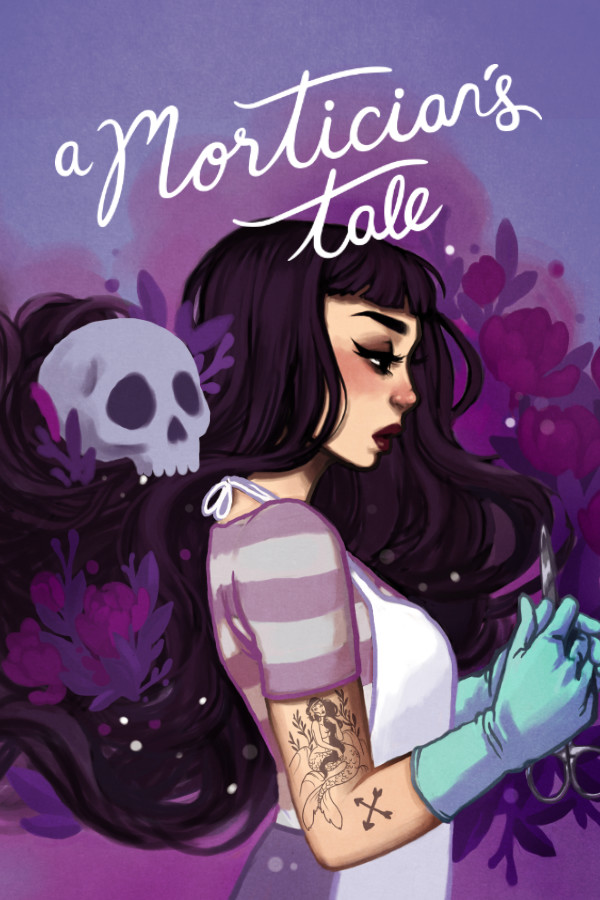
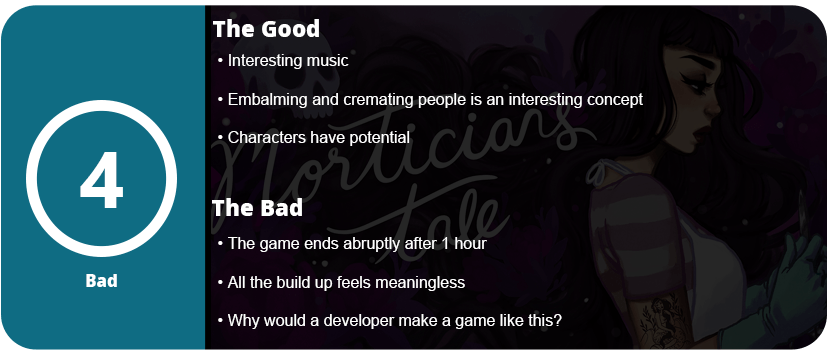
I understand everyone wants to praise indie games. I get it; I really do. It’s a middle finger to the corporate world, and developers can explore interesting new ideas without the weight of a watchful eye. A Mortician’s Tale kind of explores this exact idea, but with a funeral home.
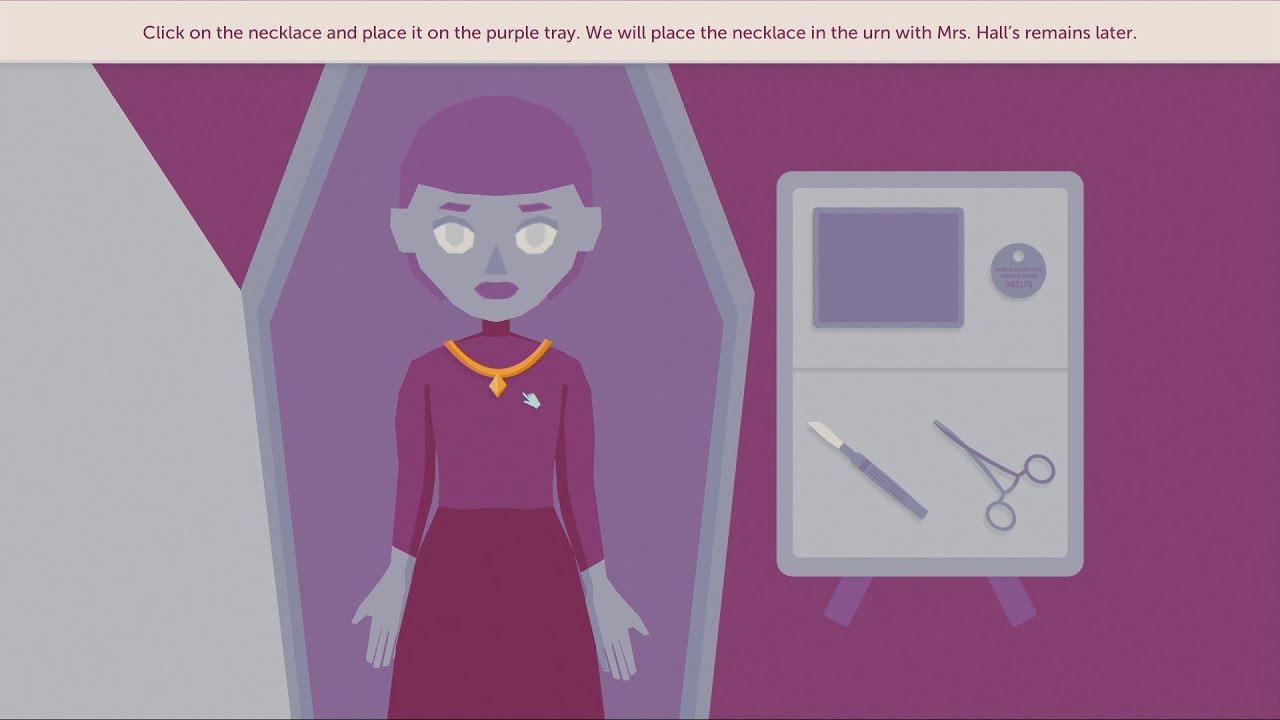
The game starts out well and gives me an idea of how the game will progress. A mortician named Rose gets a new job right out of medical school at a family-owned funeral home. You slowly perform different ways to prepare bodies, from embalming to cremating. It’s a cool concept, and things started getting weird when the game walked me through every single body’s preparation. I thought I was in for a long game, as I thought it would take a while to see everything the game had, thus the extended tutorial times.
The story is told through emails on your computer between employees and Rose’s school friend. The sad, morbid music painted an atmosphere I was starting to get into, and the emails told me that something was going to happen. Of course, the tides turned when a corporation bought the funeral home, and I was thinking this was when things would start picking up, but they didn’t. Then the game ended. Yeah, just like that.
I really admire indie games and the unique little adventures and stories they tell. Some are the most memorable I have, such as Soma, Observer, and even Journey, but this isn’t how you do it. Don’t drag the player through tutorials; build an entire game system; create characters and an atmosphere; and end the game when most would start picking up. I hate this so much, and I refuse to give these developers any credit for what they did. They literally skipped to the end of the story, and everything leading up to it had no meaning. I also understand short games; I’ve played games this short and felt very satisfied with their ending. This tale is not worth a second of your time.
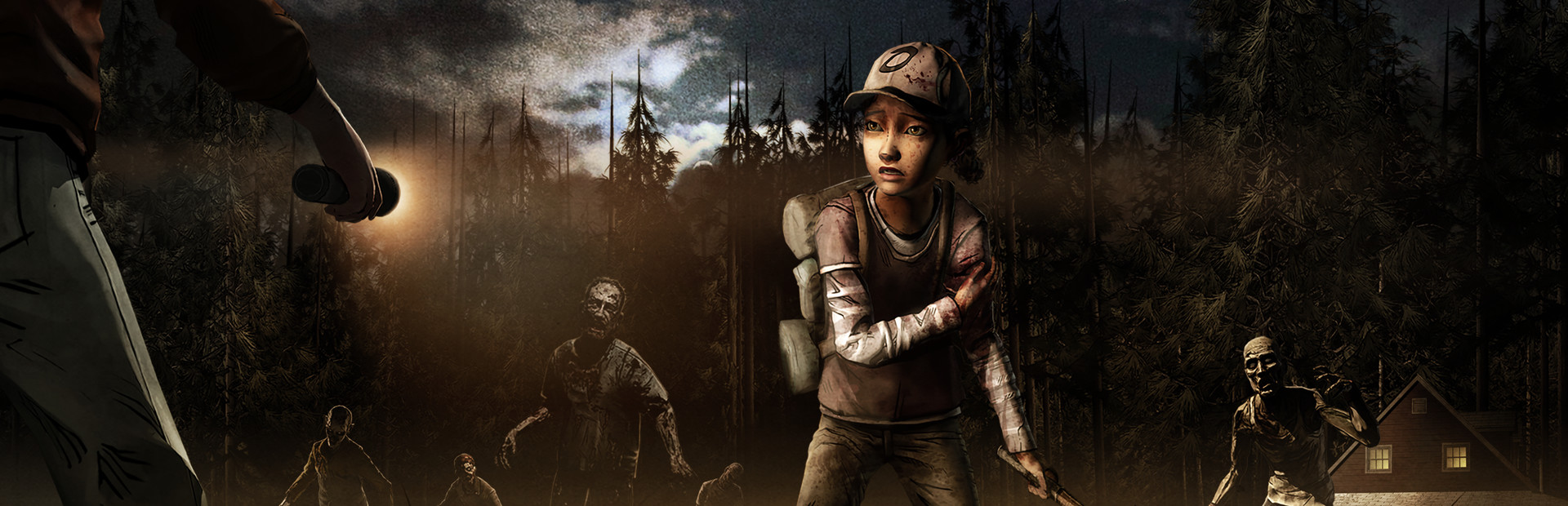
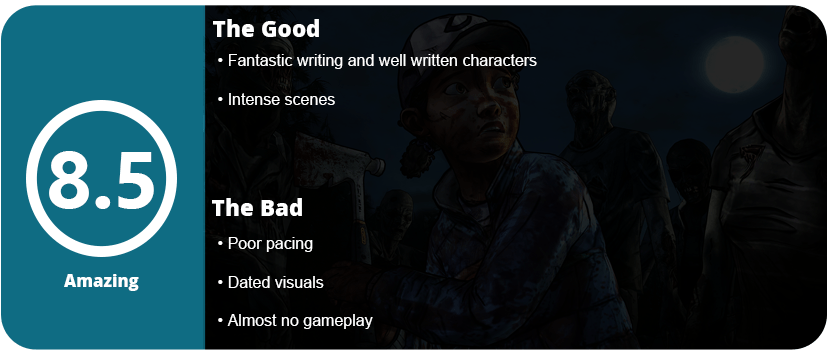
The original Walking Dead was a fantastic adventure game. It was well written, tense, memorable, and had amazing characters. The dialog choices kept the game moving, and you always felt like you were in control of every moment. Season Two adds to this while taking place moments after the end of the first game.
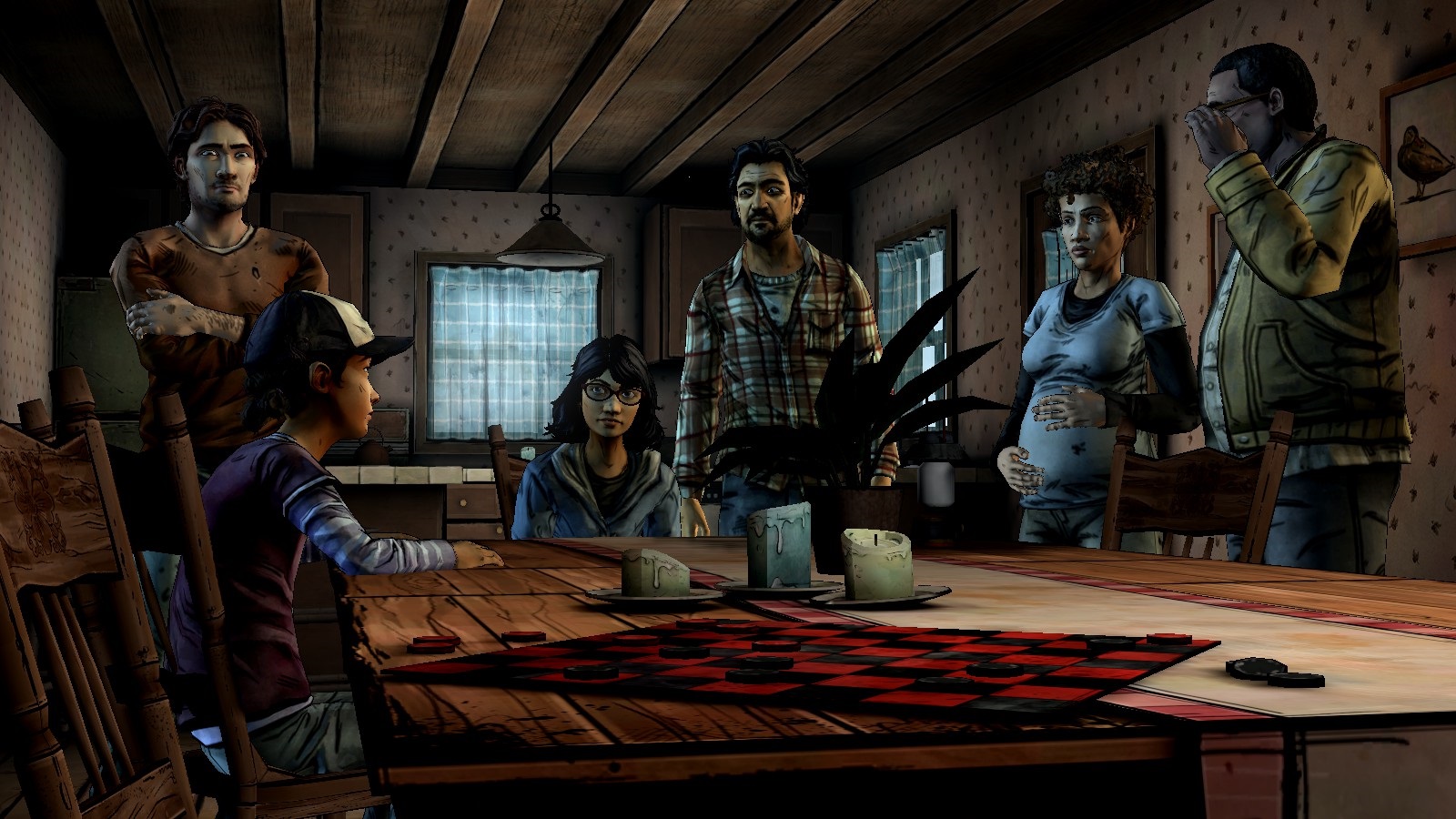
This time around, you play solely as Clementine. Right off the bat, I can tell you that your choices from the first season hardly impact Season Two. I imported my save, but I didn’t see many changes or choices I made from Season One affect anything here. We get an all-new cast, setting, and goal for Season Two that kept me going until the end.
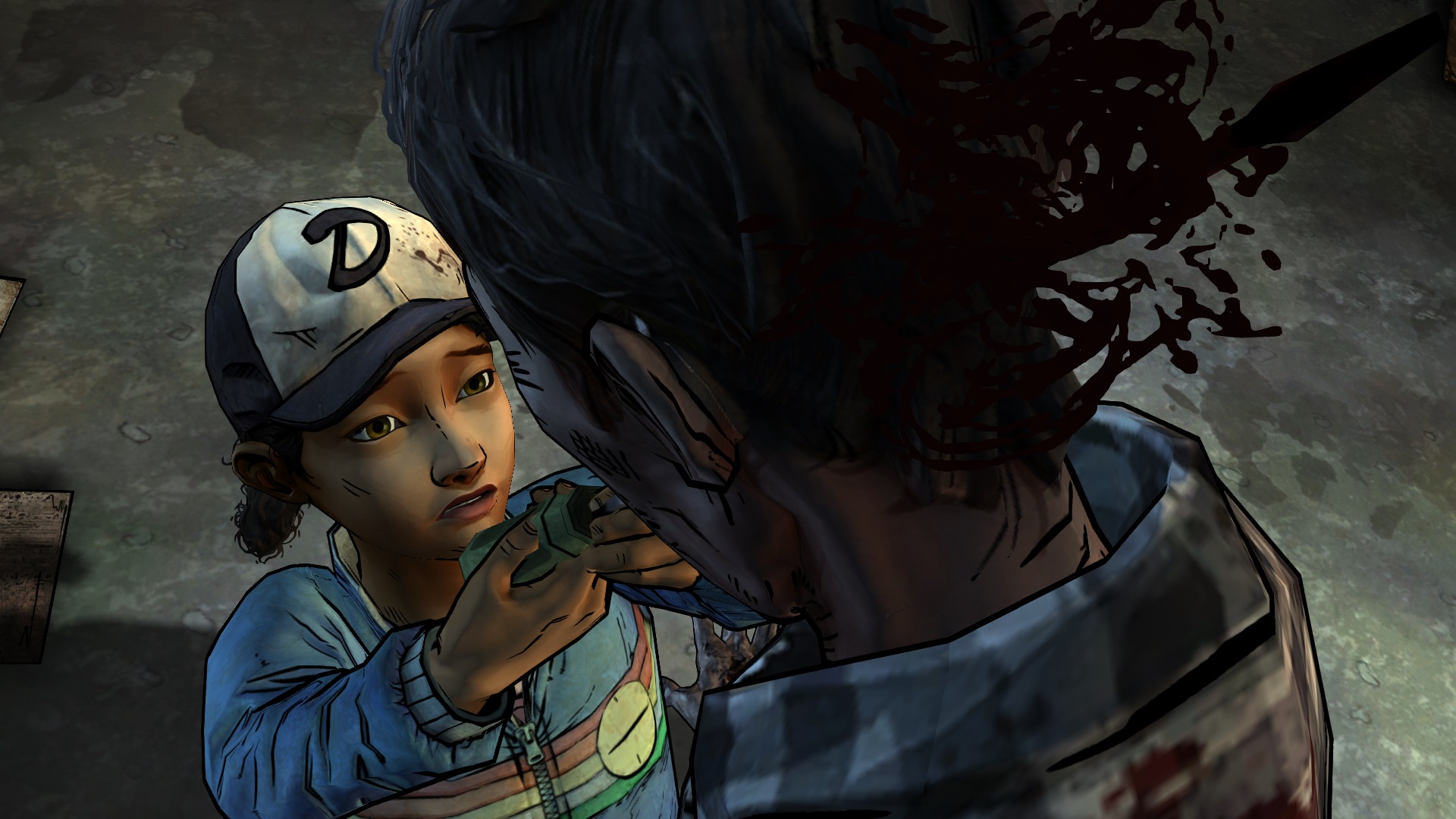
Clementine is a child, but her raw character shows this season thanks to what she went through. Going from an innocent child to a hardened killer isn’t easy, and it makes Clementine such a likable character. Adults respect her for how mature she is; she can make adult decisions, but she still has some vulnerabilities that a child would have at her age. The new characters come across as strong, just like in Season One, but I felt a slight disconnect from them. Something about these new characters didn’t quite click as well. A lot is introduced early on, so this might be the reason.
Throughout the game, we are seeing Clem get to a word-of-mouth safe haven called Wellington as she meets new friends, makes new enemies, and has to escape dire circumstances. I feel that this time around, the game is more of an interactive movie than a game. There are hardly any gameplay moments, and there is zero puzzle solving. The action sequences are somewhat entertaining, but the horrific moments of terror are far and few this time around. The few spots where you can walk around an area feel pointless, as all you do is go to the only interactive object to progress. The gameplay is seriously lacking here, but that’s not really a bad thing.
The dialog options are still strong, and many choices had me wanting to go back and change my choice, but that’s good. I always thought about what would happen if I chose something else, as some choices are designed to unfold later and some are immediate. The pacing of this game is also slower and less balanced. There are many slow moments of downtime and dialog build-up. Sometimes 20 minutes would go by with nothing but dialog options, which is a stark contrast to the first game.
I did notice the visuals are slightly improved with better lighting and more detailed textures, but overall the game engine is seriously aging and doesn’t hold up to other games. Season Two is still a memorable game with great characters, excellent writing, and tense moments. If only it were paced better and had more gameplay.
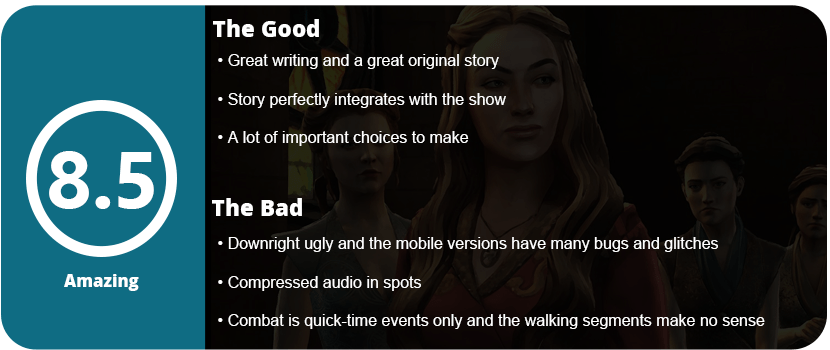
Game of Thrones is one of my favorite TV shows of all time, and for good reason. It had memorable characters, well-written scripts, fantastic actors, and so many gripping plot twists that will make your head spin. How do you copy this in a 5-hour game? Telltale somehow managed to do it, with some flaws, and I left wanting more.
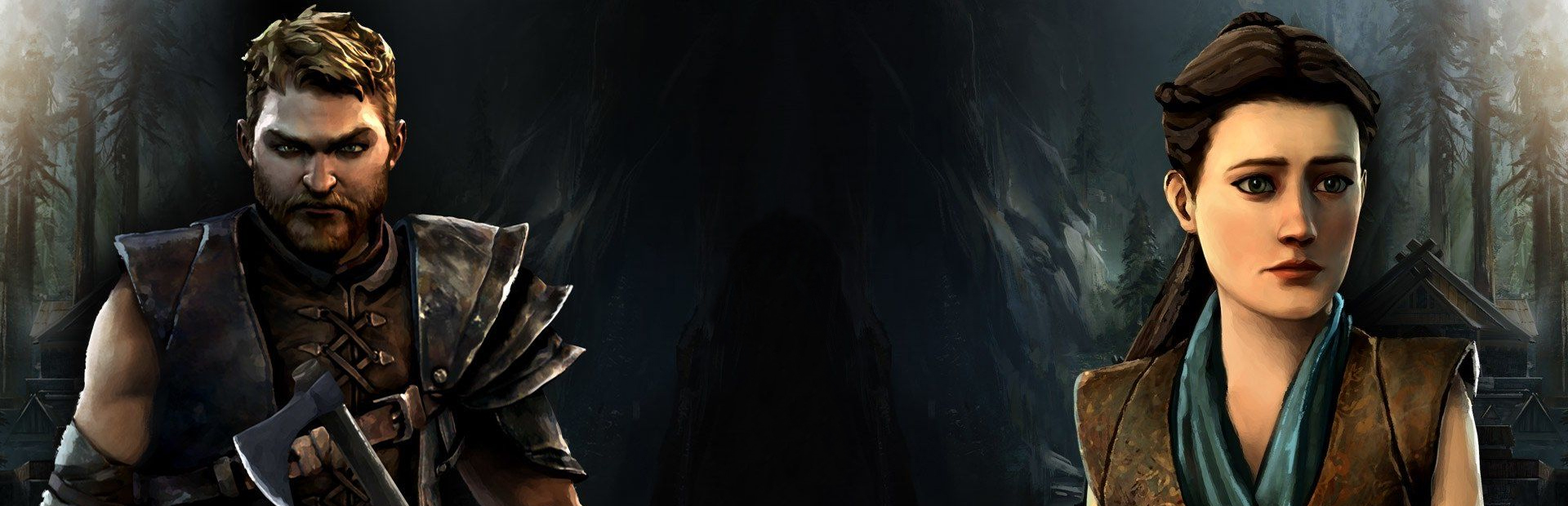
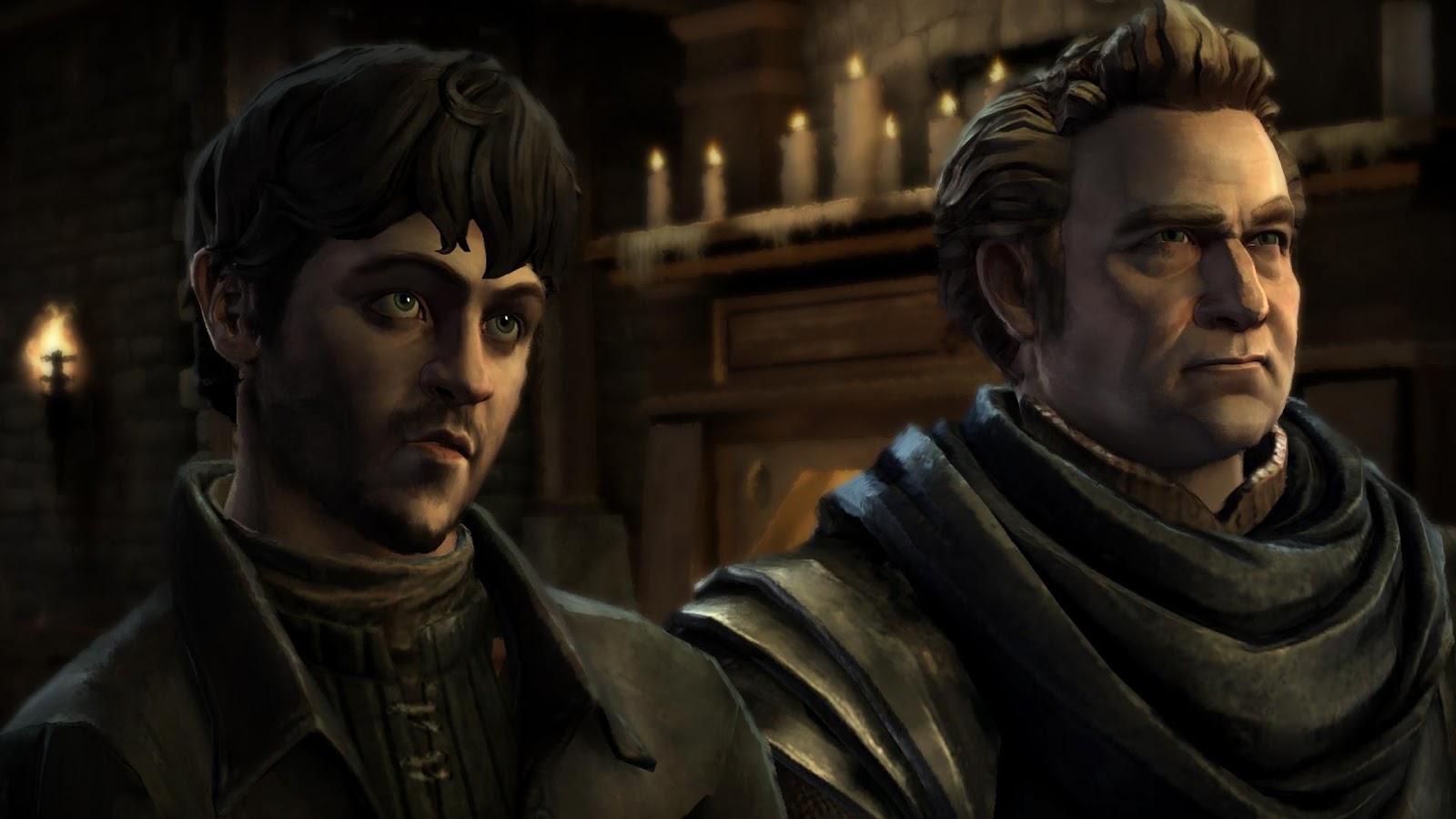
You play House Forrester, who are aligned with the Starks in the North, not seen in the show. They are trying to come out from under Roose Bolton’s foot, as the Boltons were assigned as wardens of the North after Ned Stark died in the first season. Ramsay Snow is constantly coming back to the house to “babysit” them, and this is some of where the major turning points happen.
You follow five characters in the game as our viewpoints change. Mira Forrester is in King’s Landing, trying to gain Lady Margery’s favor before she becomes queen. Then there’s Ethan Forrester, who is the new lord of House Forrester after his father dies in the hands of Frey’s ambush. Then there’s Edward Tuttle, who was the original Lord’s Steward, and he gets sent to the Wall. Asher Forrester is off in Essos, trying to gain Daenarys’s favor for an army. With all these different viewpoints, it feels just like the show with everyone spread out.
This is a much more story-driven Telltale game, and I know that sounds silly, but there’s maybe 5% gameplay here and not even any puzzles. There are some combat quick-time events, a few times where you walk around an area looking at things, and then the many, many dialog options, with some being meaningless and some having a full swing of the entire story.
I won’t get into details about the story as that will spoil it, but I was kept in for the whole game. The acting from the original characters who do appear is nice, as is the acting from the new characters. The new characters are memorable, hold their own, and feel like they would fit right into the TV show. As the episodes pick up, you spend less time with each character as all the choices you make culminate in the finale. Some choices were rather difficult to make as you decided who lived or died or how you acted towards someone. This was especially brilliant, as I thought I was doing the right thing sometimes, but it turned out it was hurting me more.
In the end, the point of the game is to gather a large enough army to fight back the Whitehills, whom the Boltons assigned to watch over House Forrester. All your choices will mean the difference between a house that lives or dies. I didn’t find the game really dull, but the scenes where I had control felt pointless. Rarely did it ever feel relevant, such as in a scene where Mira is searching for a letter in Tyrion’s office and guards are running down the hall, and she was trying to not get caught.
The game does end with a sequel in mind, but I don’t know if that’s ever coming; not all the characters’ stories were fulfilled, which is a shame. The visuals are downright ugly and still use Telltale’s decade-old engine, which needs an overhaul. The mobile version of the game is still riddled with bugs and poorly optimized, with frequent slowdowns, crashes, freezes, and bugs. The audio was terrible, as in the last 2 episodes it was somehow compressed to sound like PS1 audio. Overall, though, the game is well worth a playthrough for fans of the show; just don’t get the mobile version.
Monument Valley is one of the most memorable mobile games I have ever played. The game helped show that mobile games have a place with many of the great console games. It was smart, beautiful, unique, and a blast to play. It felt like a mix between Echochrome’s (PSP) gameplay and Journey’s (PS3) art style.
With Monument Valley 2, I got really excited to play this. I expected more and something new at the same time. That’s not entirely what we got. We just got really new. MV2 is an extremely short game and not very challenging. The MC Escher-style puzzles were a breeze to get through, which is a shame, as the first game had a few head-scratchers. Using various switches, you push, pull, spin, and align the various platforms through optical illusions to get the character to the door. At the end of each stage, the player can swipe their finger around to create a star that goes into the heavens; the meaning of this is unknown.
In the first game, we understood it was a journey, but this time around, all I know is that the character is a mother who is seeing her child off for her adventure, and they reunite. That’s it. I like subtle stories, but this one was too subtle. At least a few new elements are thrown in, such as controlling two characters at once, which creates a tad bit more of a challenge.
The game still looks amazing, with gorgeous art direction, music, and heartwarming colors. It’s just a shame it’s in such a short package with no challenge. I still recommend playing this game, but I sure did want many more puzzles than the dozen we got.
Yeah, it's pretty damn awful. Notoriously one of the worst games on the PSP. A 4 was actually being generous.…