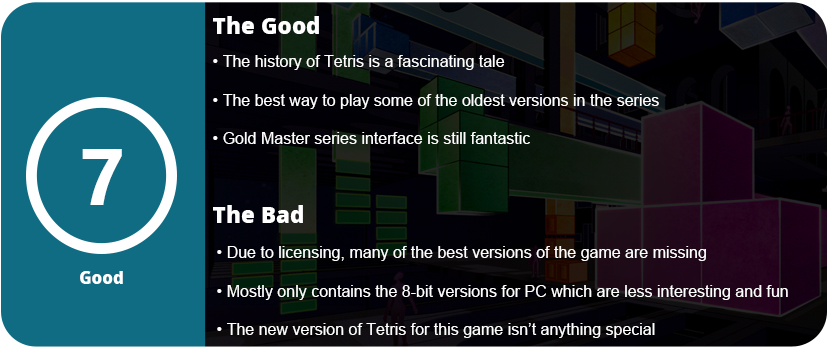
Digital Eclipse’s Gold Master series is an incredibly original and unique idea. The series focuses on creating interactive documentaries that explore interesting game stories or sagas, allowing gamers of all ages to engage with them. This is the third Gold Master game coming right after the Atari 50th Anniversary, which was absolutely a blast to experience. Tetris Forever is a great concept. The story behind how Tetris came to be is fascinating, and Henk Rogers, the person who helped bring Tetris to the West, is a great storyteller. I was floored by how Tetris came to be and the breakdown of the gameplay and nuance of what makes the game a timeless classic. The documentary clips are wonderful. Usually ranging from 3 to 8 minutes each, there’s easily over an hour of video footage, but that’s kind of where the best part of the game ends.
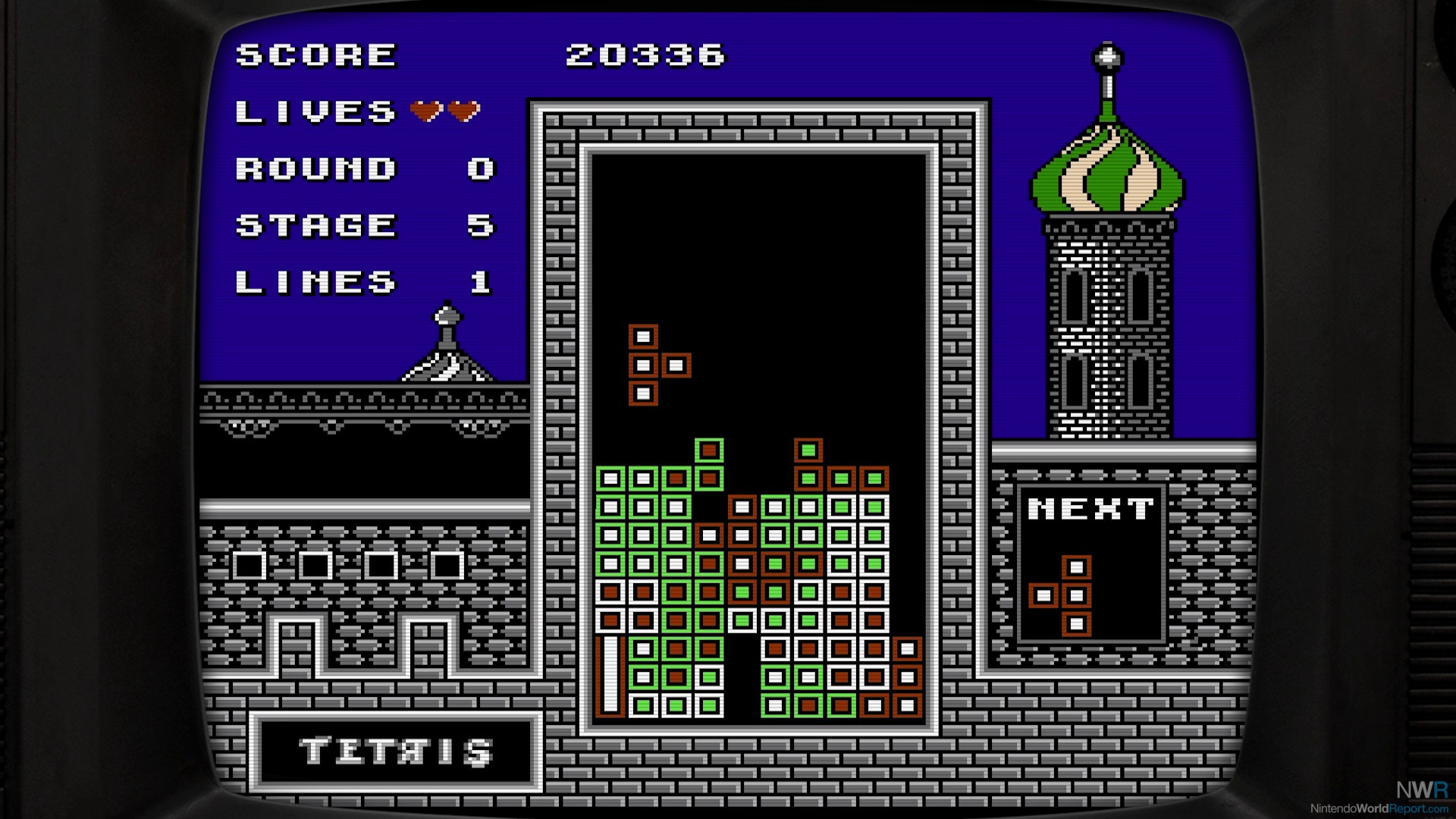
It’s difficult to call these Gold Master series “games” as they are interactive museums. Many different versions of Tetris are owned by other copyright holders. The most famous being the original Game Boy version of Tetris that shot the series into the stratosphere. It’s not here because it’s owned by Nintendo. You can see it being played in the footage of the game, but that doesn’t help us sitting here playing this game. Forever is mostly comprised of older MS-DOS and early 8-bit PC versions of the game that are historically interesting but not very fun to play. Digital Eclipse did a great job creating a replica of the computer they are on visually and adding things like a CRT curve, filter, and mapping the keyboard controls to a controller. Sadly, they just aren’t fun to play. Many versions don’t have music or much sound at all. Outside of messing around with these for five minutes, you will have no reason to go back to them.
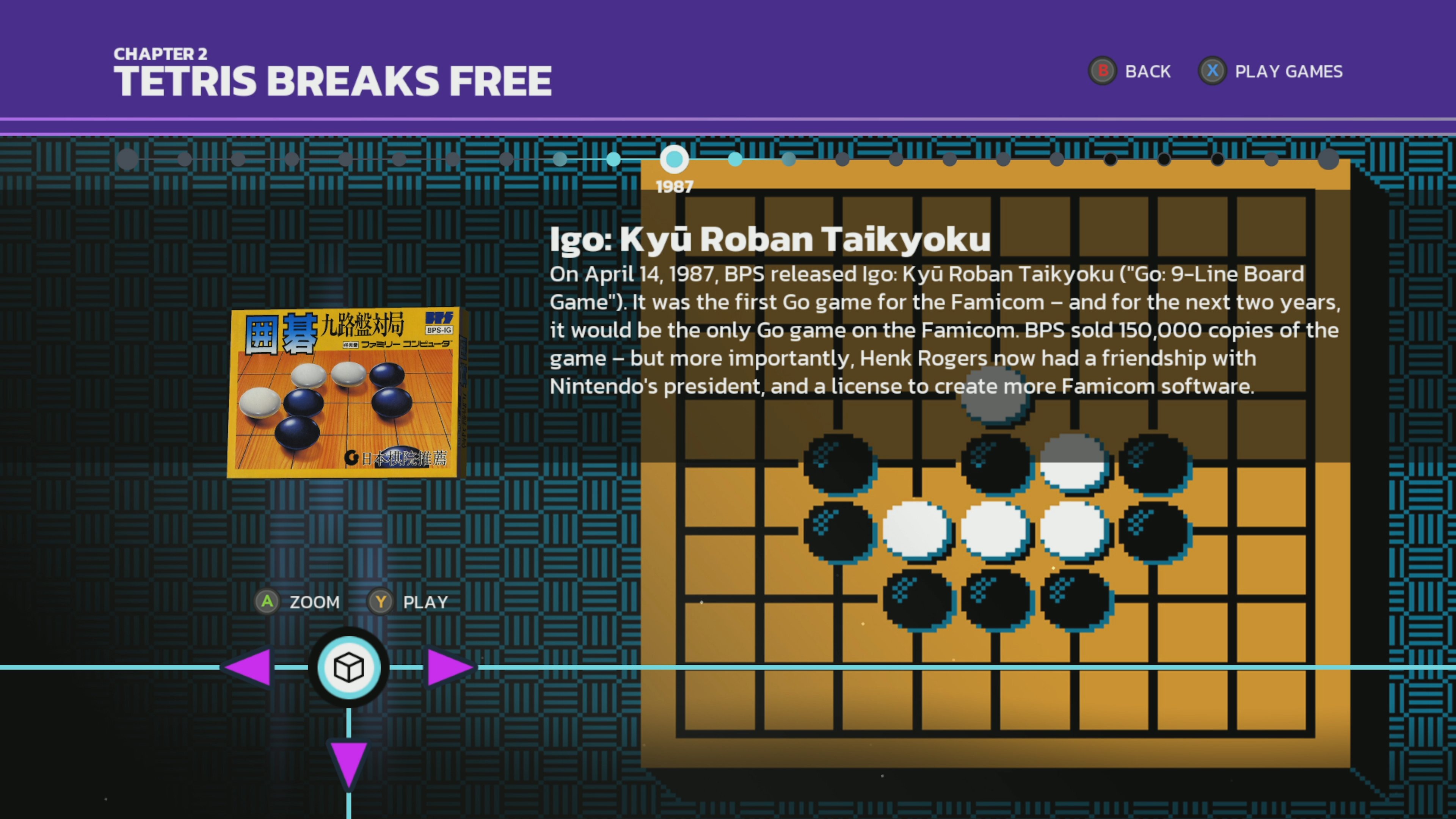
There are a few other games that aren’t Tetris included, as these are part of the Spectrum Holobyte story. Many NES games are included here, but you can play these outside of Forever on emulators through ROMs on much simpler devices that boot up quicker without a fancy interface. Again, these games are either not fun or just interesting enough for a historical reference. This isn’t like Atari 50th, where you can play every single game Atari made or held the rights to, and they were full-blown games. These are pretty much all puzzle or board games. One of the big stories that helped Henk Rogers gain trust from Nintendo was making a game of Go, which is basically Japanese Reversi. The NES version is intriguing at best, but I was not a fan. It’s not as addictive or fun as Tetris and requires much more concentration.
Sadly, only 8-bit games are included here. Nothing past the mid-90s is included. It would have been great to get DS, PS2, PS1, or other consoles on here, but there’s either a rights issue or an emulation issue on Digital Eclipse’s side. Most of the more interesting games are 16-bit and beyond. The lesser-liked sequels to Tetris are included, and a few spin-offs like Hatris, Super Bombliss, and a brand-new game made for this compilation, which is the only non-8-bit game included. This Gold Master release is mostly for those interested in the story of Tetris rather than playing it. Unless you grew up with these 8-bit games, I don’t see any reason why anyone else would enjoy them. Sadly, even the new Tetris game isn’t anything special. It’s not much to look at and just plays like any other Tetris game. The most interesting feature is the 1989 mode, which emulates the Game Boy version, and that’s as close as you will get to it. I don’t see myself booting up an entire compilation just to play this version of Tetris.
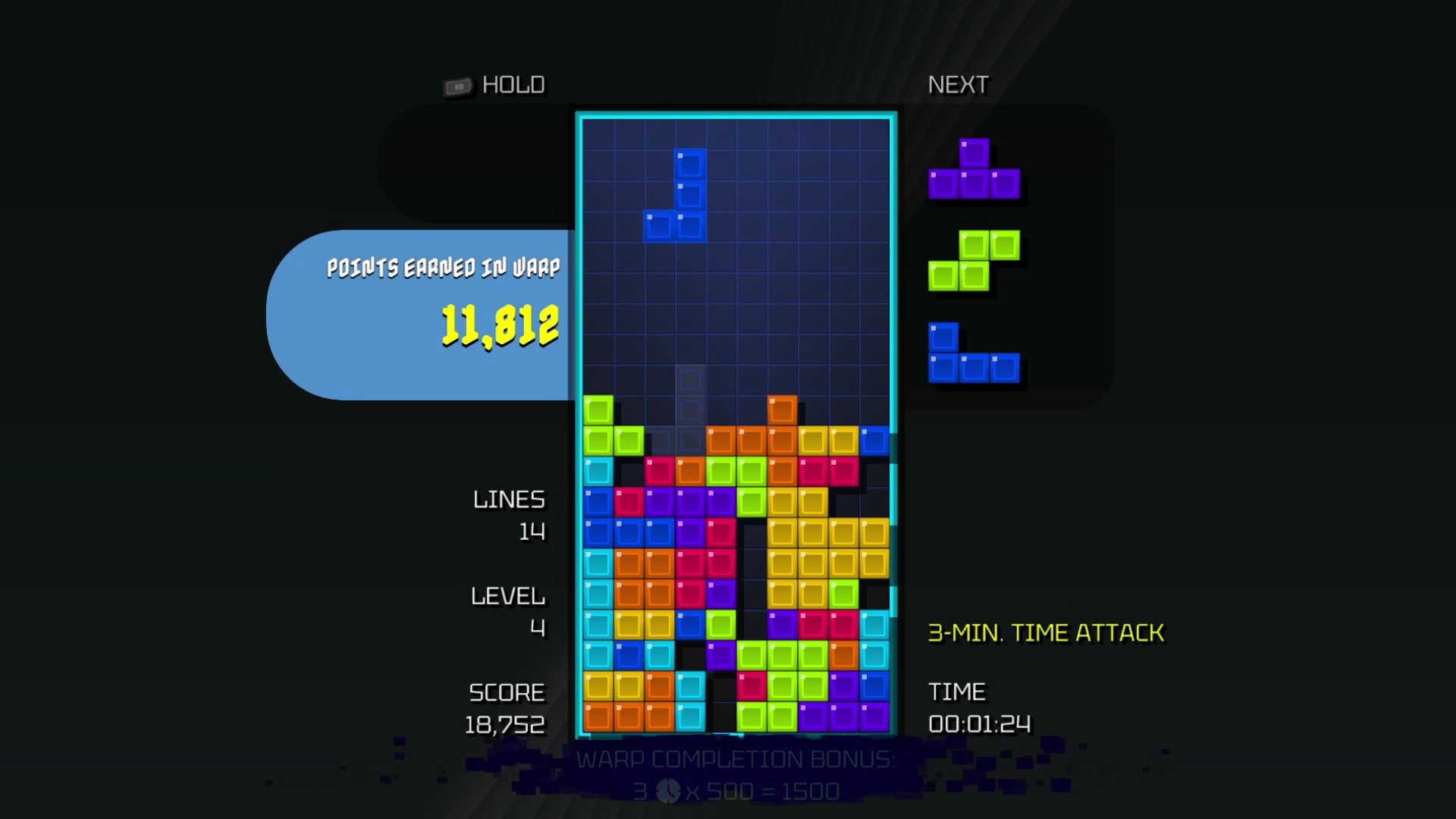
The title would have been more interesting as a cheap documentary than a game all by itself. I got more enjoyment out of the video clips than I did the games themselves. With four 8-bit versions of the original Tetris (all inferior versions) and many less interesting spin-offs and sequels, it begs the question as to who this is for. The low asking price helps, but even then, unless you are a massive Tetris fan, it’s hard to justify the cost. Tetris Time Warp is the game you will spend the most time on here, but will you come back to it? Tetris is a fascinating tale and one of the most interesting I’ve had the pleasure of listening to. Tetris is a fantastic and timeless game series, but the content included here does not represent its strongest offerings.
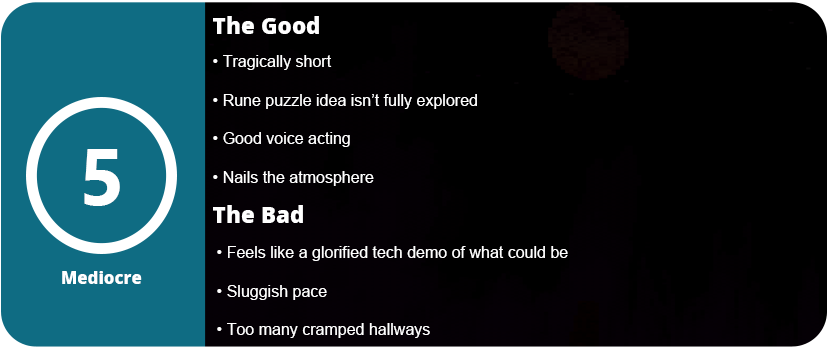
H.P. Lovecraft’s stories are difficult to translate into game form, and very few are successful. It’s almost like a curse in and of itself. Many games based off of his short stories are adventure titles, and I have played many of them, with almost none being good. The Nameless City has some good ideas. It nails the atmosphere and the setting and has an interesting gameplay mechanic, but this game feels like a glorified demo of what could be.
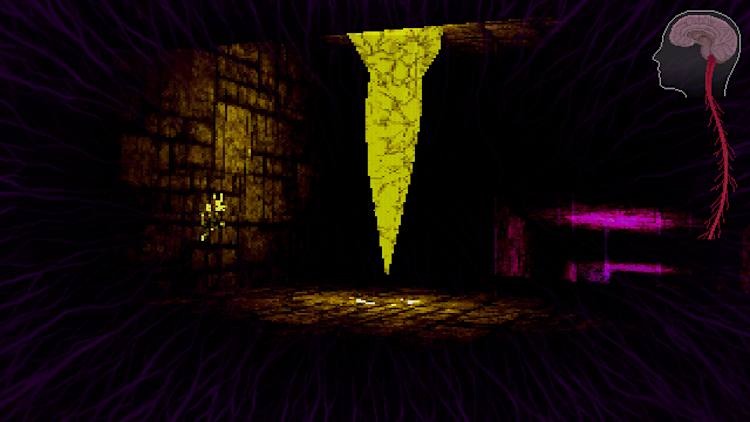
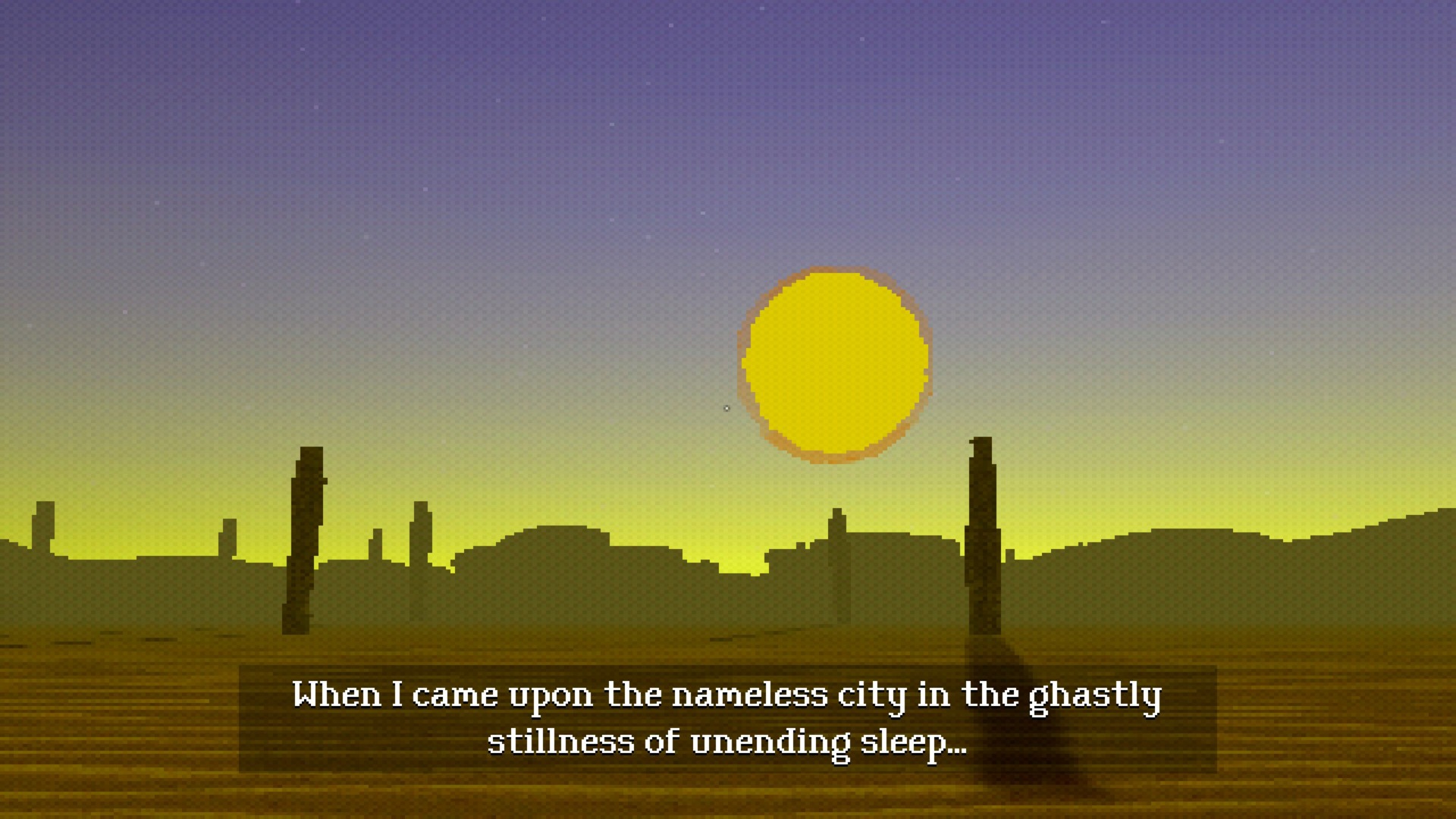
The game starts you out at a campsite outside of some ruins in a desert. The lone adventurer narrates the game with a subtle and almost depressing tone. He is quoting lines from Lovecraft’s short story of the same title. A mysterious being is said to live in these ruins, and people will hear the call in their dreams. As you make your way through the ruins, you will come across runes. These can be learned to help open up pathways further in. As night falls, however, you will lose all of your sanity and have to start back at the last checkpoint. This isn’t all that bad, as the game is so short. There are only three runes you use in the game. You can use one rune for casting and another for dispelling or casting a barrier. These spells are just for barriers, and that’s it. There are strange open holes that blow wind across a chasm that you need to navigate. These will blow you off the mountain, so you need to crouch under some.
Once you get into the cave system, it’s pretty boring. You can eventually use a spell to cast light on strange crystals as your sanity depletes in the darkness quickly. Once you get through the cave system and back out, the game is pretty much over. I did hate the maze puzzle. This entire level will take up most of your 90 minute playtime. It’s an endless maze that repeats forever. You need to use this to your advantage to activate crystals to stop a beam from blocking your path. It took me nearly 45 minutes to figure this puzzle out, and it was not fun at all. That means there’s only 45 minutes of actual gameplay outside of this awful level.
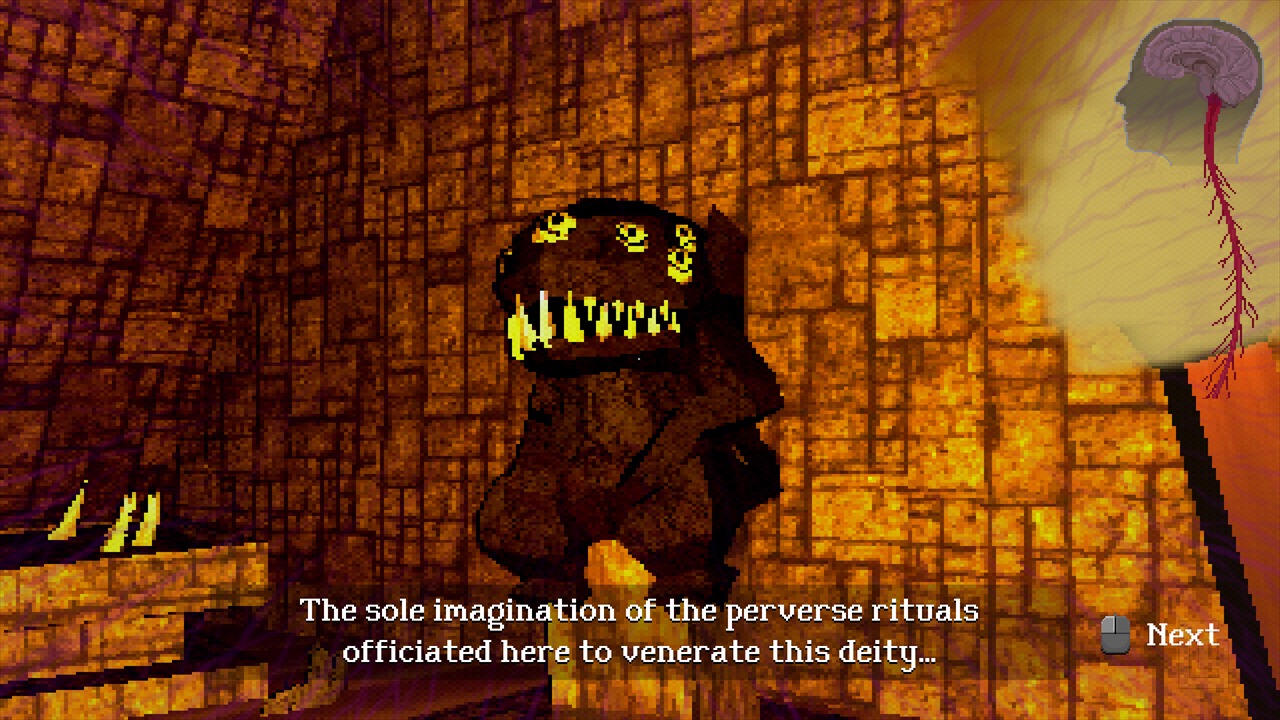
With that said, there isn’t much to say for the game even if I wanted to. The visuals use the PS1 style graphics and look appealing. The atmosphere and ominous sound effects do a good job, and the end monster is a little goofy looking. The game is very affordable and can provide a spooky experience for an evening playthrough, but don’t expect too much from it.
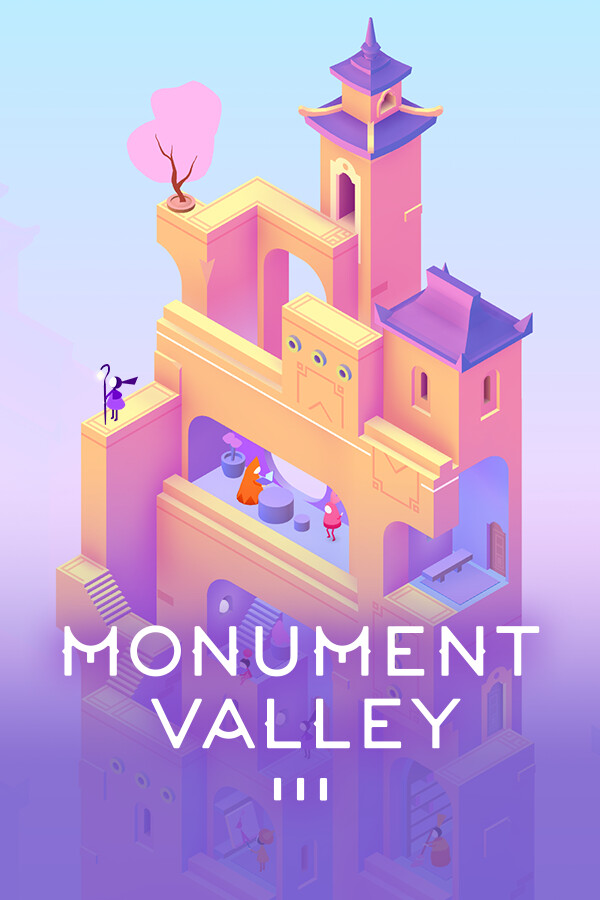
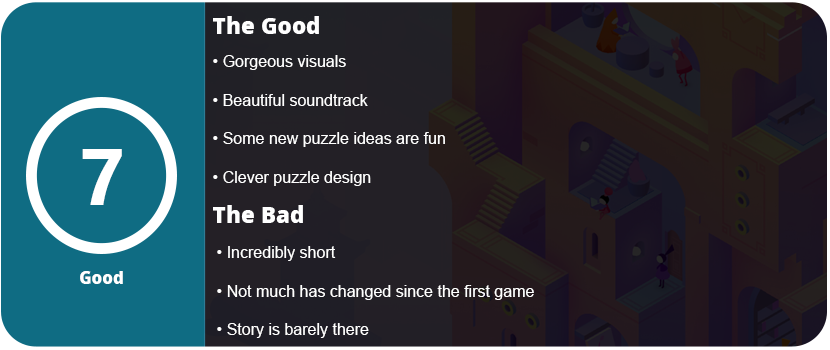
Monument Valley played a pivotal role in shaping the mobile gaming scene by demonstrating the feasibility of console-like experiences on mobile devices. With the flood of microtransaction-heavy free-to-play schlop on the app stores, Monument Valley was a beacon of hope for those who wanted to play single-player games on their phones. The MC Escher-like level design and clever puzzles were adored the world over, and USTWO was considered a pioneer of single-player mobile gaming. The second game was more of the same, which everyone wanted, but the third game here is still more of the same. That’s also what we want, but we want something longer than two hours. With the series venturing into console and PC territory, the short length isn’t as forgiving.
The overall game is exactly the same as before. If you play all three of these games back-to-back, you could be forgiven for thinking they were the same game or DLC of the first. There’s not much new here outside of a more streamlined and cohesive narrative. While it’s more visually presented with a girl named Noor trying to restore a lighthouse to a tribe that lives in the ocean (or that’s how I interpreted it), there’s nothing crazy storywise and never has been with the series. A lot of emotions are invoked through the fantastic soundtrack and visuals. The bright colors and the continuation of the MC escher style puzzles with perspective and illusions at play make this series one of my favorites of all time, right next to echochrome.
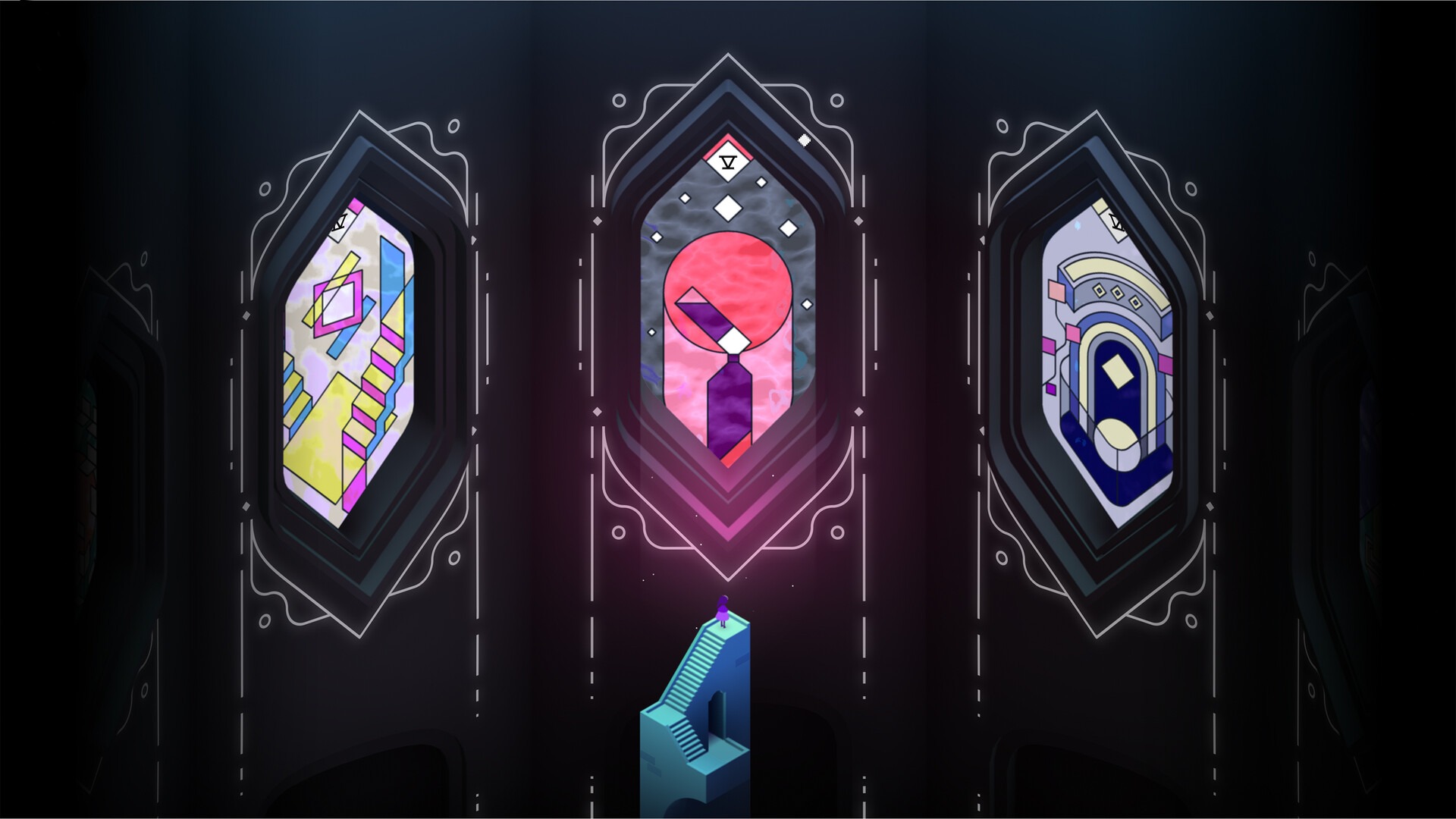
The game is easy to understand thanks to visual context. Parts of the level that can be manipulated are represented with hollow pips similar to a Lego block. You can move these freely while Noor is on them, and it’s required to solve some puzzles. You can’t always expect to just move a piece and command Noor to walk to the exit. Some pieces are moved with a spinner, and these can not be moved while Noor is on one of them. These are some of the harder puzzles, and they really require you to look outside of the box and take perspective into mind at all times. There’s a new gameplay mechanic here of being able to command a boat (it’s a leaf bug with an eye on its sail that blinks). It’s such a fantastic design. These may require moving a character back and forth between platforms to solve a puzzle. Another puzzle-solving element is a growing tree and having the leaves appear on different parts of a platform. These are subtle gameplay ideas, but they are new and welcome.
With all that said, the game is still just way too short. There are only 11 levels, and you can finish the game in a single sitting. I wanted more. I have always wanted more from this series. They are spread so far apart that when they come, you cherish them like an expensive sweet. The soundtrack is ethereal and beautiful, the visuals pop on OLED displays, and the level design is like no other. These games are well worth a playthroughif you love puzzle games. Just don’t expect a lot.
Max! Max, you’re back! It’s so good to see Max Caulfield again. This time as a grown adult. Our Max is all grown up. Well, that’s what I wanted to say, but a few hours into the game, you will realize that while Max is back, everything surrounding her return isn’t. This is a very forced game that didn’t need to get made. While all of us are curious as to what happened to Max as she grew up, we didn’t want a repeat of the original game. Deck Nine nailed the feeling of the first game. While we’re not in the same time period (late 2000s), we are in modern times, but with new friends and foes. The atmosphere of Life is Strange is here. The surreal soundtrack, being able to interact with various objects and hear Max’s inner monologue, important choices, well-made characters, etc. It’s all here, but in a very basic package to tie it all up.
Here’s the thing: Double Exposure literally tries to repeat the original game and story. It feels very forced and eye-rolling towards the end and isn’t believable one bit. Cloe has been replaced with Safi. She’s a hotheaded character similar to Cloe, but she also has a soft side. She’s goofy and has a good sense of humor, but you can clearly see this is a Cloe replacement or clone. Then you have Lucas, who is a Mark clone, etc. There’s a pattern here. He’s another creepy teacher who has a secret that rocks the whole story. It’s predictable, which is a shame. Instead of putting Max in a new situation with her old powers, she somehow has new powers. The power of Double Exposure. She can now hop timelines. It’s pretty silly and less grounded than the original game. While having powers is silly anyways, the first game being so grounded made it believable rather than a hokey superhero wannabe story. Treading the same ground just feels wrong.
Thankfully, the characters are interesting, but not as memorable as the original cast. They all have character, flaws, good and bad traits, and are not super stereotyped. Gameplay-wise, nothing has really changed. I would go as far as to say there is less gameplay here than in the original game, and that game was already lacking any. The locales are also not very interesting and are constantly repeated. There are too many mundane indoor environments, such as the Turtle bar, the school, Max’s apartment, etc. There aren’t any outdoor locations with sweeping vistas or more interesting indoor areas. You will spend up to 10 hours in these same locations over and over again. Max is now an urbexer (Urban explorer) so why don’t we get to see some cool abandoned buildings like during the intro sequence? The game just jumps straight into Max trying to save the planet, so we don’t get time to be with her and her friends living normal lives for a bit. That’s what made the first game so great.
Gameplay involves switching back and forth between timelines to solve puzzles, but this is just an excuse to extend gameplay. There are set nodes that sparkle, and you can jump between the Dead and Living worlds (one of the characters in the game dies, and you are trying to save her and stop it). You can pulse your power to see objects placed in the other timeline in real time before switching to it, but it doesn’t add anything interesting. There’s of course the usual collectible hunt, but that’s about it. Choices in the game are fewer and don’t have the mega impact that they did in the original. Story-changing sequences don’t come by often. Maybe once a chapter or none in some of them.
At least the visuals are improved. The facial expressions are great, and there’s a lot of detail in everything while still looking like a Life is Strange game. The upgraded visual quality helps go a long way, but sadly this was wasted on so few areas to explore. The ending is also rushed and feels inconclusive and too predictable. When the credits rolled, I just felt like the entire game was just not necessary. It didn’t add any value to the original game. Fans should definitely play, but you do need to play the original to appreciate what is here. Max recaps the original game throughout the story, but not in detail, so a lot is missing. There are a lot of references to the original that new players won’t understand. Some scenes in the ending aren’t explained at all, but are direct references to the original game such as when Mark strapped Max into the chair. For a cheap purchase you will have a fun couple of evening with the game, but don’t expect anything groundbreaking.
The premise of Gloomy Eyes is intriguing. It takes a post-apocalyptic zombie setting and adds a twist. Humans are living among zombies, but they are hated and are considered vile. A girl, Nena, finds a zombie boy her age who is tame and wants to integrate back into society. In the end, they are kids and just want to do kid things together, but her evil uncle, The Priest, has blocked out the sun so he can use zombies for slave labor. Nena and the zombie boy Gloomy explore levels and solve puzzles to navigate their way around to find the sun and stop her evil uncle.
The only voice is the narrator, The Gravekeeper. You can swap between Nena and Gloomy, as each has different ways of interacting with objects. Nena is the only one who can push buttons, pull levers, climb ladders and vines, and insert items into slots such as fuses. Gloomy can toss objects and push objects. Don’t think this makes Gloomy useless, as they are both needed for other reasons. Gloomy can go near zombies, while he can’t go into bright lights. Nena can’t go near zombies, or she will be eaten. A lot of levels have multiple mini-puzzles to get to certain areas. One level has you assembling a boat, and each piece is a small puzzle within the level. You need to push and pull objects, turn lights on and off, and throw bricks at generators or signs to block light. There are some stealth areas in which you need to snag keys off of the backs of enemies. They walk a single patrol route and have flashlights or trap guns. These areas aren’t very hard.
Some of the puzzles only seem challenging because of the camera. It’s not always positioned in your favor. I wouldn’t see certain paths and get stuck because I couldn’t figure out what to do, only to realize there was a hallway or door hidden because I couldn’t turn the camera enough. It’s not a big issue and rarely happened, but I still want to mention it. The levels are varied and get switched up a lot. You also have the entire game sandwiched with solo scripted levels to give your brain a break from the 10 or so levels of straight puzzles. The levels become multi-puzzle right in the middle of the game. I never got bored, and while the narrative won’t keep you going, the variety in puzzles and level design will.
The visuals are very charming and have a Tim Burton vibe mixed with Psychonauts. It’s a very 90s Halloween vibe, and I really like it. The cheesy haunted mansion level notwithstanding. The character designs for Nena and Gloomy aren’t anything special, if not a bit grotesque in a bad way. The bug eyes and large heads didn’t do anything for me, but the overall charm and atmosphere of the game reminded me of PS2 era games, so I stuck with it. The story won’t do much for people either, but it is charming in a way. Nena is incredibly lonely and wants this zombie boy to be her best friend and will do anything to make that happen. It has a predictable ending, but the story is there to glue the puzzles together and string you along. The boss fights (there are a total of two) are Mario 3D esque being very easy and simple.
Overall, Gloomy Eyes is a charming little puzzler that will entertain you for an evening. The charming visuals, soft narration, and varied level design will keep you going. The music isn’t anything special, We have all heard this stuff before. It’s the typical mysterious Halloween music with xylophones and triangles. You’ll know what I’m talking about when you hear it. It does give me a sense of nostalgia for early PS2 games with that Halloween vibe, and I quite liked it. If you want a fun puzzle game and love Tim Burton or Psychonauts, then give this a try.
I’m not really a co-op person. I do not consider myself a person who typically engages in cooperative gaming. I was raised among friends who did not share a strong interest in video games, and when they did, it was not in the genres I preferred. I have always been inclined towards single-player experiences. It Takes Two is the first co-op-only game that has motivated me to seek out a partner for gameplay, even though it took me four years to complete it. I was always a single-player kid. It Takes Two is the first co-op-only game that has pushed me to find someone to play multiplayer games with, even if it took me four years to finally finish. I started the game out with my wife and finished it off with my youngest sister. Couch co-op is something that builds bonds and memories, and this is one of those games. The story takes a backseat to fantastic gameplay that is always changing with incredible level design.
The story is the worst part of the game, and not for the reason you think. It’s poorly written. Painfully written. The idea itself is fine on paper. You are a married couple (Cody and May) going through a borderline divorce when your child gets the troubling news and uses her handmade dolls to act out her parents getting along again. Both of you drift off to sleep, finding yourself in a world akin to Pixar’s, where everything is grandiose and seemingly insignificant details are conspiring against you. One of the most annoying characters ever conceived in pixels is a therapist in the shape of a book called Dr. Hakim, who is a racist Mexican stereotype. His dialog is cringy and awful, and he’s just so incredibly annoying. Whenever he was on screen, my wife would use her phone, or my sister would walk away. I also don’t like how Cody and May’s relationship seemingly never evolves despite these harrowing acts they go through. Each level should typically show some change in their relationship, and relying on a monkey-in-the-middle remediator is quite frustrating. This is one of my least favorite video game stories ever. It’s just incredibly horrid.
Outside of that, the game is a delight to play. Each level is unique and full of charm, such as the garden level with enemies that are different flora and the attic level, which has you walking and bouncing on instruments that make real sounds. Each level gives Cody and May a unique ability they must use to puzzle-solve and use for combat. Not every level has combat, but every one has a lot of platforming and puzzle solving. The first level’s vacuum cleaner, for example, is a delight, and another level uses a honey cannon backpack. The game is played in split-screen, so you must work together to solve everything. In some areas, one character is needed to get through. The puzzles constantly change, and each ability is used to its fullest.
There are some mini-games spread out throughout the game that are more like “toys” and don’t really do anything. They are marked with a tambourine floating above them. Some range from getting points by shooting cannons at blocks to long jumps off of swings to a chess game. They are interesting but slow the game and have no rewards. These are good ideas, but the winner should get a reward, like a damage boost. Most of the time we would just play once for a couple of minutes and move on.
Combat, on the other hand, is really annoying and not excellent. Balancing is an issue here. Occasionally, an excessive number of enemies will attack you, resulting in both of you dying and necessitating a restart of the area. If one player dies, they can revive by mashing a button, but if both die, it’s over. We died more in combat than any other time, and everything is too chaotic to monitor your life meter. I would get pummeled and wailed on as a passive ability character waiting for my partner to take out the baddies or expose the weak point of an enemy or boss while smaller enemies just annihilated us. This problem isn’t a skill issue either. Additionally, the absence of a lock-on button increases frustration during gameplay.
The visuals themselves are fantastic. Each level feels unique while grounded in realism. The unique dreamlike and cartoonish visuals provide a Pixar vibe, and they are a sight to behold. The explosion of everything, from everyday objects to skyscraper-sized buildings, is truly captivating. However, some levels, like the dream level at the midway point, seem overly lengthy. There is a hub area, and you branch off to different sub-levels, but it seems to go on forever. Then, later on, I felt like a single character’s ability was underutilized. The attic level had me barely doing anything for my partner. The balancing in this game is significantly flawed, but it can be overlooked.
Overall, It Takes Two is a must-play for anyone remotely interested in co-op games. The story, characters, and writing are both awful and rote, but the gameplay is why you will stay. The visuals are incredibly charming and imaginative, and the combat requires each player to assist each other at every single turn and puzzle. Combat is too simple and chaotic to be very fun or engaging, but there’s not a lot of it. The game is a pretty decent length, clocking in at 8 hours or so.
Super Mario Odyssey was one of the best games released this last generation. It was imaginative, never got old, and was just the right length, but I also didn’t want it to end. There was something insanely addictive about Odyssey that the mainline Mario games always got right. I hadn’t felt that way since Galaxy. Bananza is made by the Odyssey team, but can they catch lightning in a bottle twice? As with all other Mario games, the story is minimal and lacks uniqueness. It’s barely there to keep the player threading through a series of levels. Essentially you play as the titular ape who wants nothing but banana gems. He works for a mining company (or so it’s implied) on Ingot Isle and ends up coming across a mysterious talking rock and Void from Void Co., an evil ape hellbent on stealing the Banana Core to make his wish come true. It’s fine. For the most part, I have no interest in Mario stories, but they are at least entertaining.
That’s not why you’re here, though. Bananza has a similar gameplay loop to Odyssey in the sense that you can just follow the main story thread and do only the main objectives, or you can venture off and discover a new challenge somewhere or how to get a hidden Banana Gem. In this game, there are 777 Banana Gems in total, while Odyssey features 880 Power Moons. Although there are fewer Banana Gems, the overall size of Bananza is significantly larger than that of Odyssey. The main gameplay element in Bananza is the terrain deformation and total destruction of entire levels. The experience is incredibly satisfying all the way to the end of the game. The game has many layers, but you start at the planet’s outer core and work your way to the center. Naturally, layers will get tougher as you dig deeper, and each level has a layer hardness rating. This means that the primary terrain you are walking on will require more hits to break through. You also have a slap power that produces waves that penetrate the ground, showing you what’s hidden underneath. This ability is essential to finding hidden items spread out everywhere.
This ability is what made this game confusing at first to me. I’m used to most Nintendo games having everything you need to find visible. You just have to figure out how to get there. This adds an entirely new element to the way you think about navigating levels. You can dig through nearly every object in the game. Of course, there are layers and material you cannot dig through to stop you from cheating. However, some Banana Gems have more than one way to get there. You can either dig straight through or find a clue on the surface to get there. These may be obvious dig spots on walls, gold veins leading to hidden items, or places where you need to use one of your five abilities to get to it. There’s a lot to this game, and it can be very overwhelming at first. The completionist within you will be utterly enthralled by the sheer size of some levels and the sheer difficulty of locating their hidden treasures. That’s also the fun of it. You feel like an excavator, an explorer, and someone on a hunt for treasure.
Your main objective will always be highlighted with a yellow exclamation. You need to talk to characters who will constantly extend the breadcrumb trail to get you to the level’s main boss. There are many different ways this can happen. You will encounter a mix of platforming and combat trials, which require you to use your abilities while navigating the current state of the world’s terrain. For instance, you can dissolve the poisonous slime in the Festive layer by grabbing and melting salt chunks. One example is Switcharoo Goo, which consists of two different colors. Hitting one color will fill the other in the opposite X and Y axis. Later levels will throw multiple things at you, such as the Switcharoo Goo, but you need to have an enemy eat it while you run around one color to climb to the next. You must constantly stay alert and respond swiftly. The game’s level design and pace are impeccable. I always eagerly anticipated the next move or the challenges the game would present.
That’s where combat and platforming challenges come in. There are multiple types, and all award Banana Gems. The Combat challenges are single banana platforms that are covered by purple Void Co tape that you need to have Pauline sing to get rid of. When you drop down, you must defeat a specific number of enemies within a time limit, and these enemies are typically of the same type found in the current level, which also includes terrain that you need to utilize. Another terrain example is in the Radiance Layer: there is light that turns certain terrain soft, and in shadow it will turn hard. Enemies can be covered in this terrain, and you must find a way to break through a wall to get the light to shine on them or cover them in shadow. Platforming challenges offer three banana gems, with one hidden somewhere on the level, but they are not timed. Each layer has a2D level in the style of Donkey Kong Country as well, usually named something clever after the SNES series.
Other challenges include Swifty challenges, which are white triangles that require you to destroy all the white wall pieces in that small area in less than 20 seconds. Usually you need to use an ability or manipulate the terrain around you in some way. There are quizzes from the Quiztone (characters in this game are called Tones); some will place a spot on your map for a hidden banana gem, and some challenges are just seeing one through a wall that you can’t get to, and you need to figure out a way around. You’re always thinking and solving puzzles when exploring. They are also incredibly clever, allowing you to solve them instantly and experience a satisfying “Aha!” moment each time. There are a few other challenges I haven’t covered, but suffice it to say despite all of the variety there are a lot of the same type, and they do eventually wear thin after 30 hours of doing them. I will delve deeper into this issue at a later time.
Bosses themselves, while designed cleverly, are effortless and barely offer any challenge. The RPG aspects of Bananza, along with the option to purchase health-restoring items from the shop, contribute significantly to this. You can breeze through bosses pretty quickly. The only real challenge was the final couple of boss fights that seemed to last forever. The situation is pretty typical with most Mario games. Boss fights in Mario games are usually not that hard despite being clever and fun. I just wish there was more of a challenge here. At least the game doesn’t go the route of a boss rush at the end or anything like that. I only fought two bosses again later in the game, so it wasn’t that bad.
As I stated earlier, there are RPG elements in this game. Those gold nuggets you acquire in the game are actual currency to buy things in the shops, construct shortcuts and gateways (rest spots), and unlock challenges. Some main objectives require gold as well. Another currency is banana chips, which are used to exchange banana gems. The third currency is fossils. Each layer has its own type of fossils. Common, uncommon, and rare fossils. These are used at the clothes shop to dress up DK and Pauline. Clothes add defense against the main element in the layer that can harm you, such as burning, poison, shock, etc. You can also change DK’s fur (no added bonus) for some fun. You can then upgrade those clothes up to level 3 with more fossils. Banana Gems are used to gain skill points (five get you a skill), which unlock things like more hearts, making it easier to break through tougher layers, and adding bonuses to your ability powers as well. DK can do a couple of interesting things with terrain, such as using it to “terrain surf” and knock into enemies to travel long distances. Softer terrain deteriorates at a fast rate, so it’s not advised to surf over terrain that can hurt you, as it will disappear quickly from under your feet. There’s an ability for DK to surf over water, allowing you to skate over hazardous surfaces like the aforementioned hot grease in the Festive layer, but this is an unlock in the skill tree.
Pauline herself is an assist character similar to Mario’s hat in Odyssey. She doesn’t get in the way and never leaves your shoulder. You use her voice to change into forms and get rid of purple tape on certain objects. That’s it. She’s a wonderful character to see that’s not shoved off to the side in a Mario Kart or Mario Party game. She has character and spunk, and her relationship with DK over time is charming, albeit nothing more than what you would see in a Pixar movie. It’s not very deep or memorable, but it’s enjoyable to see. I wish her singing was put to more use. While I appreciate the melody she employs when you unlock the purple tape and the catchy songs she sings in each ability form, they quickly lose their appeal. Hearing the same song on repeat every time you transform gets old. The songs also flip when you switch abilities quickly (you don’t need to go back to normal form and re-form into another ability), so it’s like skipping tracks on a CD back and forth constantly. The music isn’t particularly pleasant to listen to.
That’s my biggest issue with this entire game. The gameplay becomes monotonous after a while. I loved seeing all the new layers. The first time you drop into the Lagoon layer and see the sky swirling out of the hole like water into this bright, colorful world, it’s fascinating. That never got old, but as you get deeper, those bright and colorful layers are less frequent and give way to drab dark worlds with many browns, blacks, and little light. I feel the game overstayed its welcome, with too many later levels feeling too similar, and many challenges towards the end of the game felt like they were put in to extend the game time. It’s not a good thing that the final level stretches endlessly. There are 17 freaking levels in this game. It could have easily been cut in half with just the best ones, and it would have been fine. I enjoyed having a few “break” levels, such as the Racing layer, which did not include many challenges or require collecting Banana Gems. Occasionally I just wanted a cool new thing to do that didn’t require dozens of hours of exploring.
The visuals and audio are top-notch here. While the game doesn’t quite look like a full-blown Switch 2 game (it was started on Switch 1 anyway), the impressive deformation and destruction and textures that you can almost swear you know what it tastes or feels like are something Nintendo does well. The ice cubes look and sound like real ice. The burger mountain looked so good I wanted to go and get a burger. I wanted to know what the Switcharoo Goo tasted and felt like to squish. The physics and textures are so well done here. However, the game has some terrible performance issues with frames dropping into single digits when hundreds of objects are flying around or when the camera zooms away to show the entire level for a few seconds. It’s noticeable all the time, not just once in a while. I feel like Nintendo not utilizing the power of the Switch 2 is a real problem. No VRR, no DLSS, and the game doesn’t look too hot in handheld mode either. It doesn’t ruin the game, but it could have been better.
Overall, Donkey Kong Bananza is one of the best games this year. The biggest issue with this game, in my opinion, stems from its overstaying welcome, the similarity of many later levels, and the overwhelming number of challenges that eventually become monotonous. The final level could have been shortened, and while 17 levels is a significant undertaking with something new to offer in each one, the novelty does not resonate as strongly as it did in the earlier levels. Nintendo created an experience that is not easily replicated, featuring incredibly fun destruction (such as destroying a building-sized racing cup full of gold, which is one of the most memorable moments in this game), great level design, and making Donkey Kong a fun character for a new generation to play as. From the fun DK Country references (find Cranky Kong in every level for a Banana Gem!) to the fantastic and occasionally otherworldly and surreal feeling and scope of the music, there’s something here for everyone.
The idea of robots taking over humans has been an age-long discussion, but what if they were designed to help us instead, no matter the cost? That’s the idea that The Fall presents to players. You play as a pilot who has crash-landed on a planet, but the AI known as A.R.I.D. (autonomous robotic interface device) activates and uses an advanced smart suit to essentially control the pilot’s body while searching for medical attention. The pilot lands on a derelict planet run by an AI called the Caretaker, who is examining and studying ARID for unknown reasons. Excellent writing and voice acting bring the story to life, despite its short length. There is not a single wasted line of dialogue or moment. This is an incredible premise and idea that I want to see more of. The Fall is a Metroidvania-lite, but with its own identity. The genre has seen little of this type of game today, especially with the explosion of indie games being produced.
Despite its simplicity, the game boasts a surprisingly complex control layout. You can walk around in a 2D plane, but jumping and combat are limited. You must use the flashlight on your pistol or light the path ahead, as the game is very dark and is mostly underground. When you shine your light over objects, a context piece of text will appear describing it or allowing you to interact with it. The majority of the game is puzzle-based, relying on an inventory system to combine and interact with the right object. The Caretaker’s testing center is the longest section of the game. Many puzzles are actually quite fun and clever, but a few can take a weird obtuse angle and make little sense in terms of how they are solved.
Combat in The Fall is crunchy and powerful but very limited. Other androids will attempt to attack you, but their actions are very limited and occur only during scripted events. You can hide behind cover and pop out to deliver a headshot. You must switch to the laser sight for better accuracy. You can sneak up behind enemies to kill them, or you can advance on them while they take cover. The shots are impactful and crunchy. The combat doesn’t overstay its welcome and is used at the right times. Of course, you can’t use your gun for the first third of the game, as abilities need to be unlocked, such as faster fire rates, the gun itself, and other suit abilities.
The game is tedious because it has a lot of backtracking, so you’ll often go from one end of a level to the other. I understand that this is part of a Metroidvania, but you aren’t going back to a level once you are upgraded and can access new parts of a level. You often find yourself running back and forth to collect parts of a puzzle, hoping you have the correct piece, only to discover that you either don’t or that it belongs to another puzzle located elsewhere. It’s not game-breaking, but it does get old pretty quickly. Once you have read all the text and discovered every part of the level, the adventure part of the game kind of disappears, and all that’s left is the tedious process of solving puzzles and running around.
The atmosphere and graphics are fantastic even today. The game has a surreal feeling of almost transporting you to the world thanks to its great sound design and visuals. While there is a lot going on in the foreground, most of the atmospheric stuff comes from what’s happening in the background. A lot of the background stuff can give you a visual cue as to what’s going on just from one glance. You can see a massive cave and the exterior of a spaceship through the windows, among other things. The few occasions where there is spoken dialogue are excellent, and the excellent writing keeps you captivated with every word.
Overall, The Fall is a fantastic atmospheric Metroidvania-lite that features great writing and tense gameplay, including gun sections that do not overstay their welcome. ARID is a wonderful character despite being a programmed robot, and the ending of the game is well worth your time. This game was one of the few indie titles that contributed to the “indie revolution” of the early 2010s and played a significant role in establishing the Wii U eShop as a prominent platform for indie games.
There’s been an ever-increasing discourse between the people and corporate America. American Arcadia takes the worst of the present and shows us the ugly side of being slaves to mega corporations. With clear inspiration from The Truman Show and Walt Disney’s vision of “The World of Tomorrow” and his original vision of Disney EPCOT, American Arcadia is a dystopian trip down 70’s lane with fantastic voice acting, a riveting story, and excellent pacing.
You play as two main protagonists. Trevor Hills and Angela Solano. The game has two perspectives. Trevor’s gameplay is a 2D side-scrolling platformer similar to games like Limbo and Inside, and Angela’s more puzzle-heavy first-person sections have inspiration from 70s spy movies, not too dissimilar from No One Lives Forever, but without any shooting. Angela is a stage tech for the corporation Walton Media (clearly a dig at the Walt Disney Company) who ends up being recruited by an activist group called Breakout, and you end up helping Trevor escape where he lives while trying to shut down the corporation. The game’s pacing is fantastic. The game consistently presents fresh scenarios, never growing stale or monotonous. The story continuously moves and evolves as you play, with events unfolding for each character while you control the other. Many times there will be cool split-screen sections in which you need to do tasks with Angela while controlling Trevor on her monitor. I don’t want to give away too much plot to have the explanation make more sense, but it’s really cool and well done.
Trevor and Angela are likeable characters, and while not super original, they leave an impact, including on the villains. There are sections of the game that teach you organically about the world of American Arcadia, including the lives of Angela and Trevor. Trevor’s sections are full of fast-paced platforming and push puzzles. These are not super complicated, but they are fun and help break up the chase scenes. Angela’s sections include quite a few puzzle types, from sliding puzzles and quizzes to some that are completely unique. This includes mostly hacking things to help Trevor get through areas. This was one of my favorite gameplay ideas. You can press a button to enter the camera mode. The feature changes the perspective of Trevor’s sections, and you must manipulate electronics around him to get past guards and obstacles. Every single scene gives you something new. I can’t state that enough. There were a couple of frustrating sections in which I realized I was analyzing the scene wrong. I made mistakes such as jumping onto the incorrect platform and running in the incorrect direction. Nothing was ever so annoying that I wanted to quit playing. I do think the game should have given a couple of hints if you keep doing the same thing over and over and dying, but again, it’s not a big deal.
Visually, the game has a fantastic sense of style. Inside of Arcadia, the world is stuck in the 70s. There are a lot of panning vistas of cool interior designs while Angela is in the present day, and it’s all less captivating to look at. I’m not a fan of the character designs. They are very blocky with no noses. It’s a bit off-putting, but the rest of the game looks excellent. I feel the biggest issue is that the game is too short. Depending on how much you struggle with the larger puzzles, you can finish the game in about 4-5 hours. While the entire game is explained well and feels like nothing is left out, I wanted to know more about Angela’s childhood and backstory, as we get to know mostly about Walton Media and Trevor.
As it stands, American Arcadia is one of the best games in this category. With constantly evolving gameplay ideas, fantastic voice acting, a riveting story with twists and turns, and a delightful art style, there’s not much you can’t like. Going between Trevor’s 2D sections and Angela’s first-person sections is a lot of fun, and you never know what’s coming next.
There was never a time when a mainstream Mario platformer was bad—2D or 3D. In the early 2010s, Nintendo was dialing back the more open 3D Mario adventures in favor of more linear 2.5D platforming titles. This shift was sparked by the popularity of the New Super Mario Bros. series, which then spun off two 3D Mario games that were kind of in between that and Super Mario Galaxy. Super Mario 3D Land, which was exclusive to the 3DS, was a lot of fun; however, it was too easy and seemed more suitable for children. The levels were super short; they could be completed in a matter of a couple of minutes, and overall, the game was a perfect weekend rental. Mario games are not typically ones that require 100% completion, since the only reward is personal satisfaction; however, Nintendo attempted to change this with Super Mario Galaxy. The reward is the challenge.
3D World is 3D Land’s bigger console cousin. Released for the Wii U two years after 3D Land, and being the only mainstream 3D Mario title on the system, it was a giant success. Implementing a four-player couch co-op mode and introducing new power-ups while maintaining the short levels from 3D Land seemed to be a perfect match for most people. The game exceeded the capabilities of the Wii U and boasted a stunning visual aesthetic, which it continues to maintain on the Switch today. Bright, colorful visuals similar to Mario Galaxy were a winning combination. The game’s world map has the same standard Mario layout we’ve seen since the beginning. You navigate a map in 3D that has each stage you can enter. There are some small things to do on the map, like enter slot machines to win power-ups and coins, bonus stages, Toad houses with presents, etc. These are neat but don’t really add anything to the game overall. The 3D map functions effectively and fulfills its purpose.
Mario can store one power-up while also using one in this game. Power-ups are suits with something old and something new, like the Cat power-up, which allows you to sprint faster, swipe at enemies, and run up walls, which not only opens up new gameplay possibilities but can also make levels and challenging spots easier. Each stage flows like a typical Mario game. There are constant obstacles to jump across, pits to avoid, enemy patterns to learn, and coins to collect. Coins are simply used to provide you lives. 100 coins equals one life, so don’t feel obligated to hit every single question mark block. Some of the later stages can be really tough, but nothing that can’t be managed if you are careful. What makes Mario games so beloved is how well balanced everything is, and there’s always something new coming at you. No two levels are the same. While many obstacles and hazards are the same, they are always used in unique ways. This is just the Mario design language that has been unable to be replicated to this day. It’s literally perfect. You also get to ride a water Plessie, which has his levels and areas. While he can be somewhat challenging to master in terms of riding and steering, the exhilarating sense of speed is truly remarkable.
There is a giant variety of levels ranging from lava, ice, clouds, mountain peaks, and many other types of terrain. There are expansive cities, shadowy mansions, eerie caverns, and underwater caves. I can’t think of a single type of level that isn’t in this game. Most levels flow similarly, though. You get a couple of sections that show you what to expect in the stage. Is there a lot of platforming, enemy stomping, running, and dashing? Each level has three hidden green stars to collect and a stamp. This is your completionist objective: to get them all. You do have to get some extra stars, as later boss stages require unlocking them with stars. Some of the stars are very well hidden or incredibly tricky to get without dying. If you die, you keep everything you found and can restart at either the checkpoint or the beginning of the stage; however, since the stages are so short, this isn’t a huge deal. Occasionally, there are levels that can be incredibly frustrating. Either a group of enemies is just in the wrong place, or something just isn’t designed well within the level.
Mario can stomp enemies, but with a power-up, he can attack from afar or swipe. The Fire Flower can throw fireballs, the Koopa suit can throw boomerangs, and the Tanooki suit allows you to jump farther; additionally, if you die at least five times, you will receive the white Tanooki suit, which grants invincibility. This optional box is located at the checkpoint. This item is great to use if you just want to power through a level and get the stars and stamp. Just remember, if you get a single hit, you lose the power-up, and another hit makes you tiny. Three hits and you’re done. The boss fights are really disappointing, incredibly easy, and repeated often, which seems to be a trend with 3D Mario games at this time. I keep saying Mario, but there are other characters, and they all feel different to play. Luigi jumps higher, Peach jumps farther, and Toad is faster. Some secret areas require specific or multiple characters to activate. In single-player, you can pick up the new cherry power-up to multiply yourself for these puzzles. However, controlling a number of characters at once is tricky.
Bowser’s Fury
If you don’t 100% the game, you can blow through the entire thing in less than 6 hours. It’s a very short game. Thankfully, the Bowser’s Fury DLC was included, and the game is like a whole new mini Mario adventure on its own. You break away from the classic linear levels and are dumped into a small 3D map that has islands that play out similar to the 3D World levels. You can explore the areas surrounding these islands for small mini-games that award Cat Shrines, which are the new stars in this DLC. You need 40 to fight the final Bowser boss, but there are 100 in total. It’s a massive DLC that’s another game all on its own. There’s no new focus on new power-ups. They just took the 3D World stuff and threw it into an open-world design, and it works.
A gate marks the start of each “stage,” showing the Cat Shrine goal name and how many are left. Each island has five Cat Cards you can find, which will award a Cat Shrine. Each new run in the level allows for a new way to navigate it. One run might focus on platforming, while the next run provides a helicopter box that allows you to fly around the small island in search of a key to open the cage containing the Cat Shrine. The levels are just as well designed as the main game, and the final few stages are tough but fun. The new element here is that Bowser is a massive Kaiju monster, and every few minutes a rainstorm starts, and Bowser will start throwing stuff at you, and this also opens up gameplay opportunities. There are Bowser blocks hidden around some islands, and if you stand by them while Bowser is out, he will breathe fire on them and break them, usually revealing a Cat Shrine. The number of shrines hidden throughout this DLC is massive, and it can easily take a player 6 hours just to find all of them with a guide.
Once you get enough Cat Shrines, you can fight Bowser in a new Giga fight. There’s a massive Cat Bell at the center of each of the three islands, and when Bowser comes out, this will light up and ring. Grab the massive Cat Bell, and you will transform into Kaiju Mario, allowing you to brawl with Bowser. Here you need to dodge his attacks, swipe at him in any of the power-up suits, and power stomp him when he’s belly up. Throughout the storms, if you clear a lighthouse while he’s out, it will take some health away so he’s easier when you fight him. This innovative approach to gameplay is unparalleled in previous Mario games.
Of course, the same old bosses from the main game are found throughout the DLC, which sucks, but you get Bowser Jr. to tag along with you, and he can assist in combat, or you can tap on giant question mark graffiti icons to get a power-up. A second player can control Bowser Jr. too, so this is obviously a more single-player-focused DLC. In this DLC, you can hold as many of these powers as you want. Since you are on a giant set of islands, the entire game takes place in the ocean, so to get across large distances, you can use a Plessie, who also has his own sprinting mini-games to get Cat Shrines.
Overall, Super Mario 3D World feels excellent to play and is a lot of fun, especially with four players. My biggest gripe is that the game is far too easy and the stages are too short. After Mario Galaxy, I feel like the series hadn’t quite hit that stride until Odyssey came out. The physics of the game also feel a bit off. I often had some perspective issues where I fell off ledges and misjudged jumps because of the camera angle. The level design overlooked or couldn’t help these quirks. I also find the boss fights monotonous and simplistic. Upon reaching the 6th world, I began to feel a sense of exhaustion with the game, and the remaining areas became somewhat tedious. Bowser’s Fury, a fantastic DLC, effectively bridges the gap between 3D World and Odyssey. Overall, the result is a solid game packed with content.
Yep! The fact that I forgot about this game until you made a comment proves that.