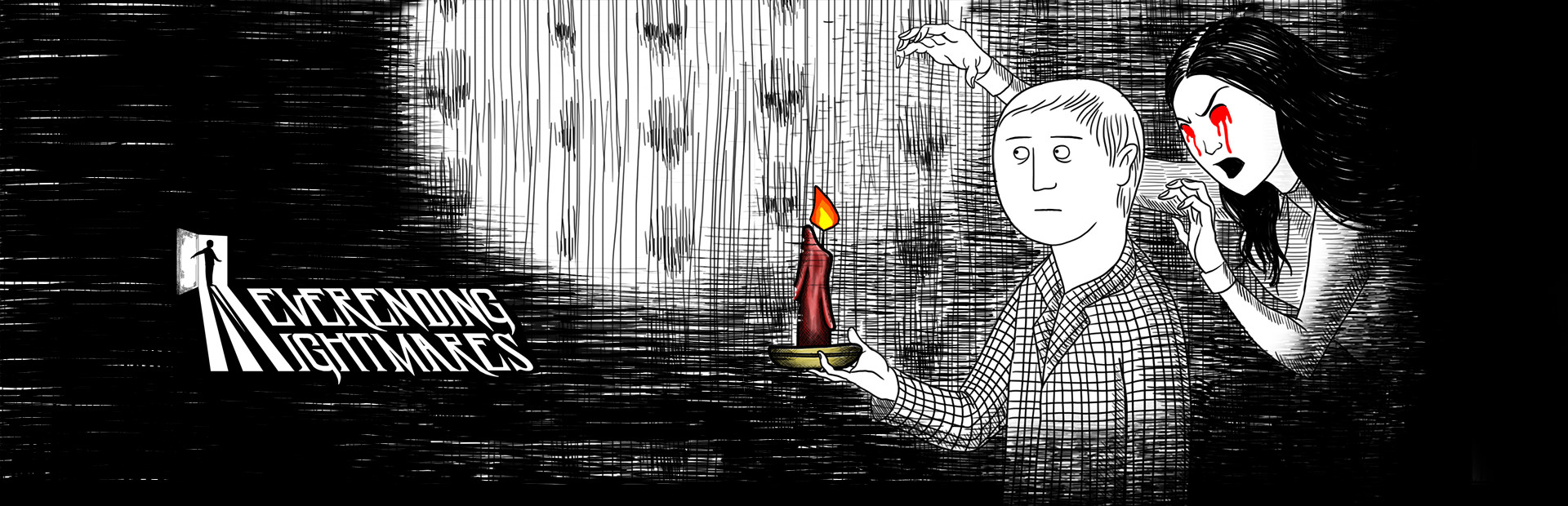
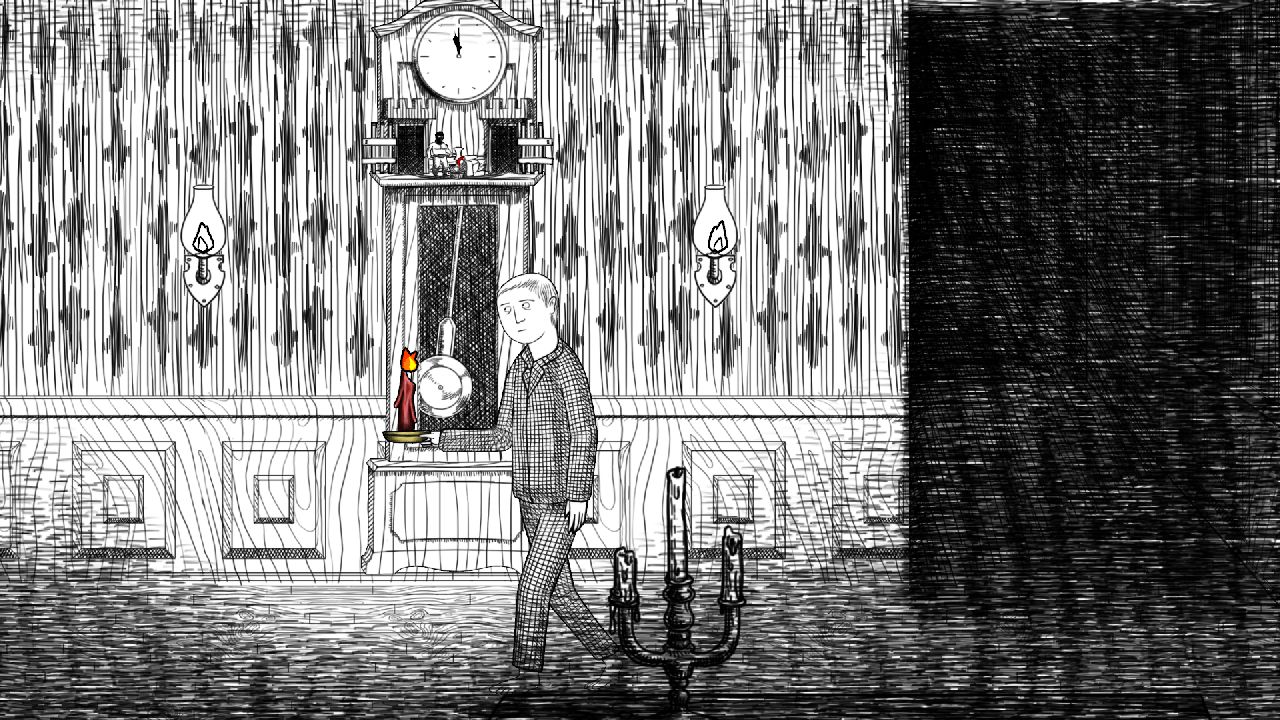
Horror games that are truly scary are far and few these days. Neverending Nightmares actually helps change that idea with an extremely intense atmosphere, which is what horror games are all about. Neverending Nightmares has you playing as a boy (or man?) named Thomas who roams the pencil-sketched hallways in his checkered pajamas trying to find his sister (or wife?) that had been murdered (or she killed herself?). There’s a lot of open interpretation of the game’s story, but that’s kind of the fun part.
The game’s pace is at a crawl; let me just say that right away. Thomas trods along the hallways with a limited—and I mean limited—sprint button. The slow pace is supposed to add to the tension, but sometimes I wish he moved just a tad faster as the game got repetitive towards the end. The point of the game is to continue moving left (or right) through the hallways, opening doors, and interacting with anything that’s colored and stands out from the black and white background. These give hints at what may have happened to the girl that Thomas is looking for. While there’s no inventory system or even a combat system, there’s really no other goal than to head downward. Sure, there are enemies in the game, but your goal is to avoid them or hide from them. The toughest of them all are the big ogre-like monsters that require you to hide in closets, or worse, run from them. I found these segments frustrating as Thomas’ sprint is limited to about three seconds, and I had to exploit this to escape from these ogres and make it to the next door. I had to tap rapidly to stretch out the sprint or time when I started perfectly. This isn’t fun, and it doesn’t add anything but frustration.
The game has three possible endings, but there are no clues as to how to get them. At the end of each level, you are approached by this girl in different ways, but it all kind of blurs together. When you die, you start off in bed again, leading to the fact that Thomas might be asleep and can’t wake up. Is he insane? Is he a ghost? Who knows, but the endless hallways are probably the worst part of the game. Sometimes I thought the game was glitching because I would go through 5–6 hallways that I swore I went through earlier, but somehow I was progressing.
Thankfully, the game is actually scary; use headphones, and you will be in for a scary night. The music is haunting, and so are the sound effects. I applaud the game for the atmosphere, but the gameplay is really something that’s lacking and needs more polish. I’m fine with just wandering around places, but give me something to do while I’m doing that.
As it stands, Neverending Nightmares is a great horror experience, but as an actual game, it’s lacking mechanics, and the story and progression need work. I shouldn’t be playing a game thinking I’m not going anywhere or giving clues as to how to get a different ending.
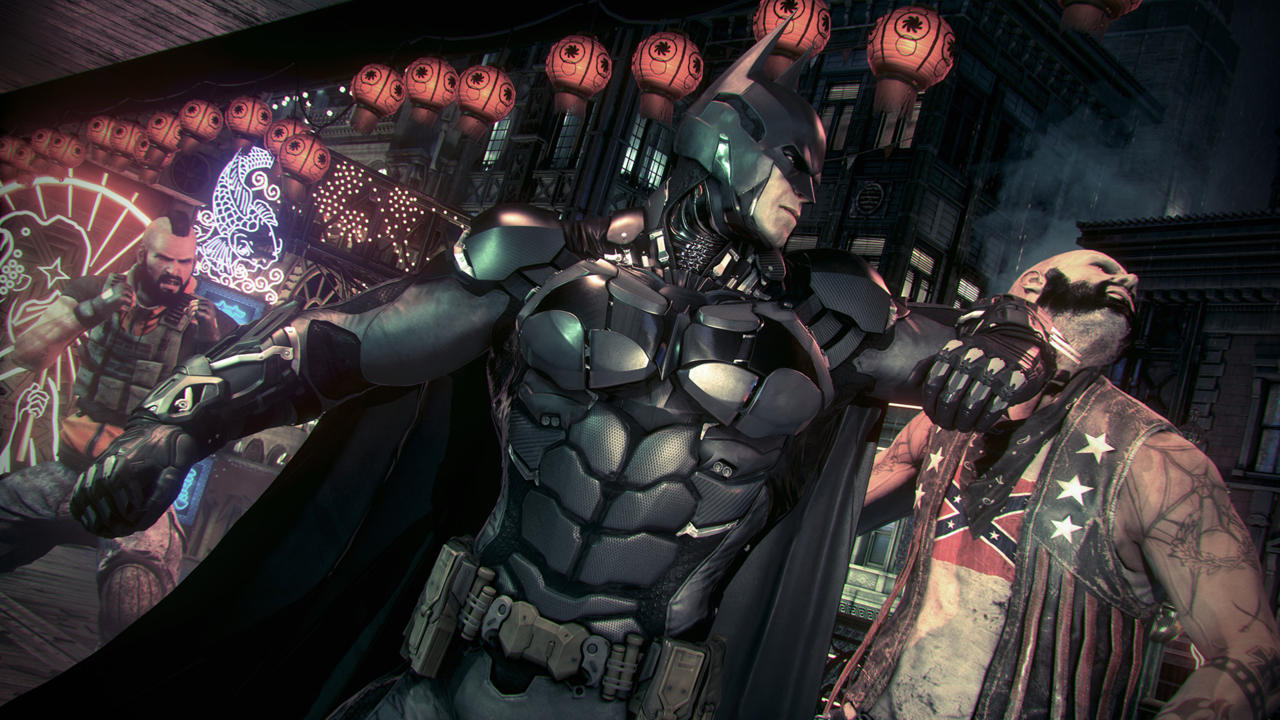
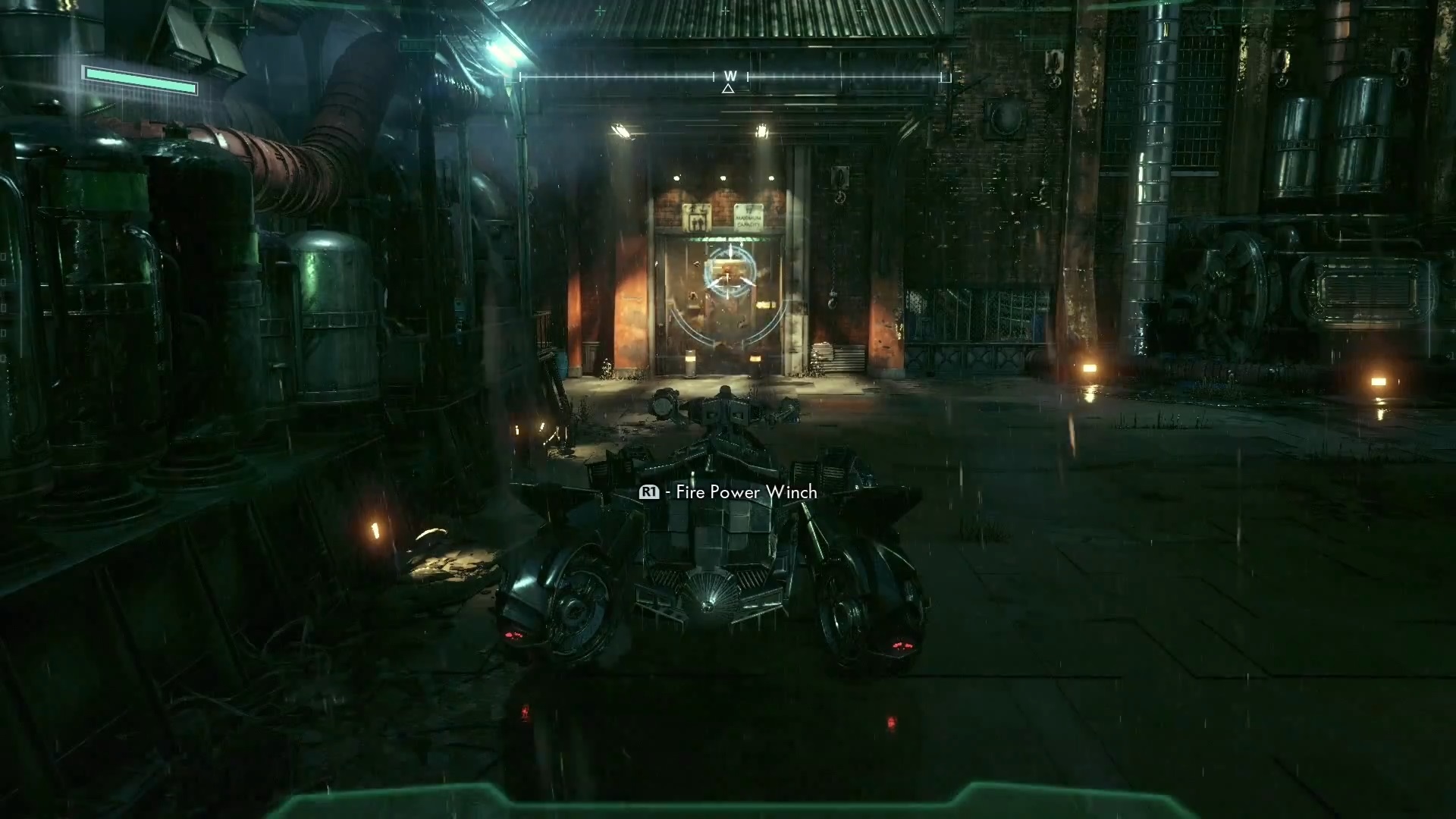
The Batman Arkham games are some of the greatest things to grace the video game industry in the past decade. With the most advanced combat system since God of War, and not to mention the best superhero video game series ever made, Arkham Knight continues this trend. While Origins was a bit of a snag, I don’t count it as part of the Arkham trilogy. Arkham Knight is another masterpiece that any Batman fan will love.
Scarecrow and the new Arkham Knight are the main villains in this game, but don’t worry, there’s plenty of Joker as well, despite being dead. Joker is a manifestation in Bruce’s mind, and he constantly appears everywhere, putting his two senses into everything Batman does. It’s great to hear him again. Arkham Knight is also probably the best-structured Arkham game yet. Instead of a hodgepodge of little repetitive missions everywhere, the game has a Most Wanted mission wheel. Known Batman villains are to be stopped and captured through mission branches that are a blast. Firefly, Penguin, Two-Face, and various other villains have their own little subplot. This brings Arkham Knight to a meaty and well-balanced mission structure that the game desperately needed. The only other side things you can perform are AR missions that include fight and batmobile challenges and Riddler trophies. Oh yeah, I said Batmobile.
It’s finally here! The one and only Batmobile. It plays just like you think, controls like you think, and is as badass as you think. The batmobile can transform into a tank, allowing you to engage in battles with enemy tanks, but the best use of the batmobile is puzzles. Sadly, the tank battles are probably the worst thing in the game. While they work, they are the same thing over and over and over again; nothing changes. Enemy tanks will have a white line go across the screen, showing the trajectory of their shot. This allows you to dodge enemy missiles and shots. That’s great and all, but why does combat have to be this slow? Towards the end, the battles just get bigger with 50+ tanks in one area; that’s not exactly fun in my book. While the tank battles aren’t very frequent, they are happening often enough for you to sigh and wish it was over. As for the puzzle-solving, the Batmobile fits better here. Using the power wrench to crawl the downsides of buildings, using the wrench to power things up, ejecting out of the Batmobile to glide into a tunnel. All of this feels just like in the movies and comics; there is no disappointment there.
Combat has been perfected in Arkham Knight with added moves to make an extremely complex fight system that is so simple to learn. Outside of the counter system that we are all used to, new knock-out moves are introduced. Using your gadgets is much easier, as the button combos for them are easier to remember. LT for Batarang, LT+B for an electric shock to enemies with taser sticks, LT+Y for Batclaw, and RT+RT for Freeze Blast. It is very easy to remember, and the controls pop up on the screen to help you out when the option is available. The same goes for the knock-out moves, as well as fighting heavy enemies. These guys have their own system all to themselves. Do a fast punch combo, parry a guy behind you, a red exclamation pops up at a guy with a taser stick, LT+B, he’s down, continue pummeling the heavy, three more counters, then knock the heavy out. All of this is one big combo, and it’s so fluid and fast and one of my favorite fighting systems I have ever used.
The second combat system in Arkham is the stealth part. This has been expanded exponentially in Arkham Knight. There are more gadgets introduced that allow for more ways to take down opponents. The stealth areas are much larger and allow for multiple ways of taking people down. We’re used to stealth takedowns in various ways, including hanging, grating, and gliding behind people. Multi-level grate combat is introduced, as well as enemies being able to destroy grates so you can no longer use them. Using a voice synthesizer allows you to give commands to enemies and set up traps with your electric gun or disruptor. The disruptor allows you to sabotage weapons and drones to knock out enemies (yeah, I can’t say kill since Batman doesn’t do that). The stealth combat is fantastic and so much fun, and it allows for strategy over beating everyone up.
Outside of these new gameplay elements is the story. Arkham Knight has a long and well-told story that you actually care about. There are some great moments in the game that really get you hooked, and the ending is satisfying. I really felt the strengths and weaknesses of Batman come out through the story several times, as well as the other characters. My favorite part of the game is the ending with Scarecrow, but I can’t give it away except that it’s a first-person shooter sequence. WHAT?! Play it to find out!
Let’s talk about visuals. I know that the entire world knows how terribly optimized the game was for PC; however, if you have a powerful rig, it is very playable. Not perfect, but enough to not be really noticeable. This requires tweaks (there is a tool available on the Steam forums) to the game settings to get it to work. Out of the box, the game won’t run very well at all. There are some nice new effects, like RainWorks, Interactive Smoke and Fog, and various other effects. They look amazing, and Arkham Knight is one of the most detailed and good-looking games in a long time. However, a game should ship working, and this is just unacceptable. Most people don’t know how to tweak a PC game and will get frustrated and demand their money back (which happened and suspended the sales on Steam). The other issue is that you need a very new and powerful system to get the game to run well. I tried a GTX 670, and while I got 60 FPS when I was above the city, it dropped below 30 on the ground. Interactive Smoke and Fog dropped the game to 5 FPS; however, on a GTX 970, there were a few issues. The frame rate will vary constantly. You will jump between 60 and 30 a lot, but the tweaks available make it less noticeable. Anyone running a GPU older than a year will have issues for sure and should play the game on a console for now.
As it stands, Arkham Knight is a fantastic game and the pinnacle of the Batman video game franchise and superhero games in general. Taking all of what made the series great and optimizing and compiling the best of what everyone loves. More villains, more stories, more Batman. That’s what we came to see, and we got what we wanted.
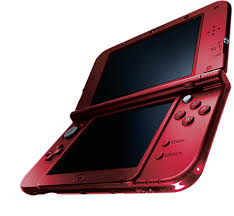
Colors: Black, Red, Silver (Monster Hunter 4 Ultimate), Gold (The Legend of Zelda: Majora’s Mask 3D)
MSRP: $199.99, $229.99 (bundles)
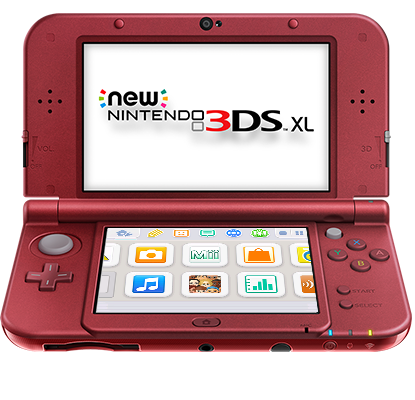
Nintendo is known for constant hardware iterations, and they finally got the 3DS right with the New XL. Despite the confusing name, it actually does feel all new. The entire system is streamlined, and it feels like Nintendo finally wrapped their minds around how they want the 3DS to be, and this is the final (hopefully) result. All of the features implemented into the 3DS up until now are present on the 3DS, from hardware changes to the software.
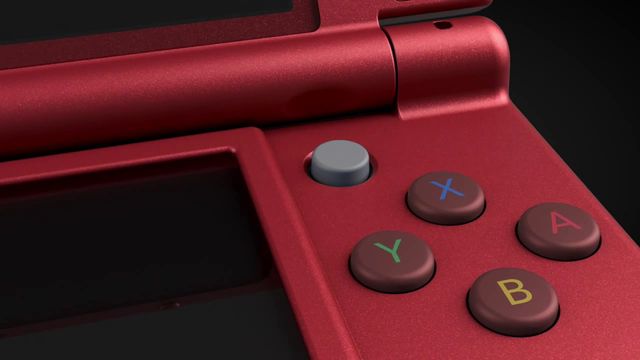
The first thing you will notice, obviously, is how big the unit is. I had a DSi XL, and while it was bigger, the larger screen made games look pixelated. The new 3DS XL isn’t just a 3DS on steroids like the 3DS XL; it has all new features. Secondly, it is just how sleek it looks. This is probably Nintendo’s sexiest handheld since the GBA SP. The round edge, accompanied by the slim form factor, just made it look sleek and impressive. Once you flip it open, you will notice something. What the hell is that rubber nubby thing on the top right corner? It’s the “C-Stick,” and I put quotes there because it’s not a stick but a nub—well, not even that. It’s like a rubber nipple. The addition of a second stick is an absolute must-have on the 3DS. I can’t make this point any clearer. Nintendo pretty much took the Circle Pad Pro and melted it onto the New 3DS XL, as it includes the ZR and ZL buttons as well. The first handheld with two shoulder buttons built-in—now we just need more games that support them! More on that later.
Everything else is pretty much in its proper place, button-wise, except there is no longer a WiFi switch on the side. WiFi is a software toggle now, and the power, wifi, and charging lights are all grouped up in a row on the bottom right corner. You can see them easily with the lid flipped down. One of my favorite features is the SpotPass LED located on top of the right hinge. It lights up green when a SpotPass notification is available and is also your low battery light. The game card slot is tucked away on the bottom of the device, along with the stylus and power button. The power button is a small button under the LED lights, so you don’t accidentally hit it.
I actually like the new 3D slider on the right side of the screen. It’s symmetrical to the volume slider, like older models, but is more flush with the system and doesn’t feel so cheap. One minor gripe is that the New 3DS XL does not use a standard SD card, so the one in your older system is useless here; instead, it comes with a 4GB microSD card and is not accessible from the outside. You must unscrew the bottom plate to get to it near the battery. That part I don’t really care about, as most people will either never need to upgrade because they buy physical games, or you will upgrade once with a 32 or 64GB card if you are a digital person. There is also an NFC battery in this thing for the amiibos, but everyone will use that feature. That’s pretty much all there is to the new hardware. Well, it’s actually a complete 90% overhaul, but for the better.
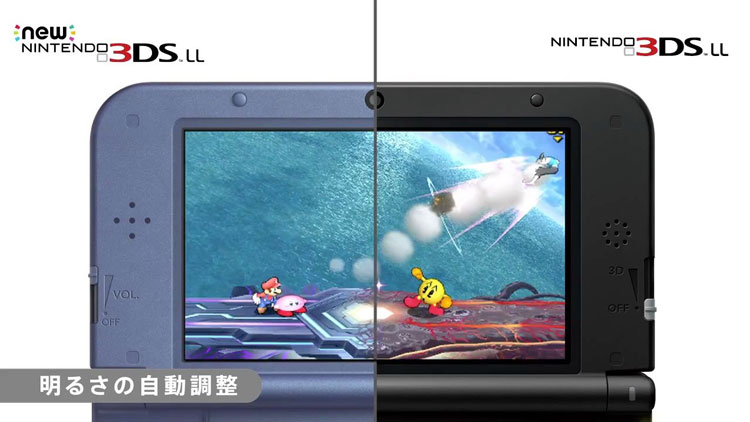
Let’s talk about the screens. They look great, and while not as high resolution as you think, they work fine for 3DS games. For people with bigger hands, the XL size is perfect, and honestly, the 3D is much easier on your eyes as it’s a bigger target. The 3D effect is much improved thanks to the head tracking built into the system via an IR sensor. Now it’s not flawless; it doesn’t work well when you are lying down and gets finicky in the dark if you move around too much. The hardware has a faster CPU, mainly double that of the original model, as well as double the RAM and 1GB of internal memory. The CPU is clocked at 268 MHz and is dual-core, with one core reserved for OS operation. It also has 256MB of RAM and 10 MB of VRAM. You may laugh at this compared to, say, the Vita, but Nintendo is known to keep older hardware for cheaper prices. That’s not to say the New 3DS could have benefited from an entirely new chipset as seen in newer phones, which makes this the biggest downfall of the New 3DS.
Playing games on the system using the C-Stick is weird at first. It doesn’t move around as it reacts to pressure. You just push it—mush it? You move your thumb around on it, and the camera turns. It’s hard to explain, but it works well, and after an hour, you forget it’s not a moveable stick. Playing games like Monster Hunter 4 Ultimate and Resident Evil Revelations makes the games much more enjoyable. The extra shoulder buttons are a little hard to get to as they aren’t contoured into the system, but rather just sit on top and are rather small. The other complaint is that this system does not come with a charger. Yeah, you heard me. Nintendo banked on previous 3DS owners buying this system, so you’re going to have to throw down $10 or so for a generic charger if you have never owned a 3DS before. Stupid move on Nintendo’s part, but there’s nothing we can do.
With all that said, the new 3DS XL is what the 3DS should have been in the beginning. The larger screens look crisp and bright, the battery lasts a whopping 7.5 hours (with WiFi off and power save mode on) during most games, the faster CPU will bring in better-looking games, and the entire form factor is sleek and gorgeous.
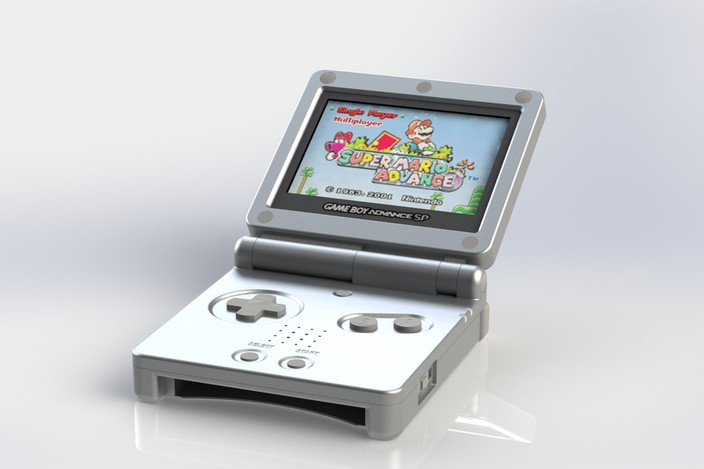
While Nintendo may have dominated the handheld market before smartphones were even aforethought, there was something about them that made them just seem…ugly. Bulky, low-end specs, battery suckers—these are just a few names that early handhelds received, from the original GameBoy, the Atari Lynx, all the way to even the GameBoy Advance. Handhelds required large casings as CPUs hadn’t quite been perfected yet and were large and bulky, not to mention screen technology was still being used in Texas Instrument calculators. LCD was extremely expensive and not cost-effective for small devices yet. The same went for battery power. Lithium-ion batteries were extremely expensive and not ideal for handhelds. Then came the GBA SP. A sleek fold-up GameBoy with a rechargeable battery. It was the first of Nintendo’s handhelds to shed disposable batteries and improve on-screen technology.
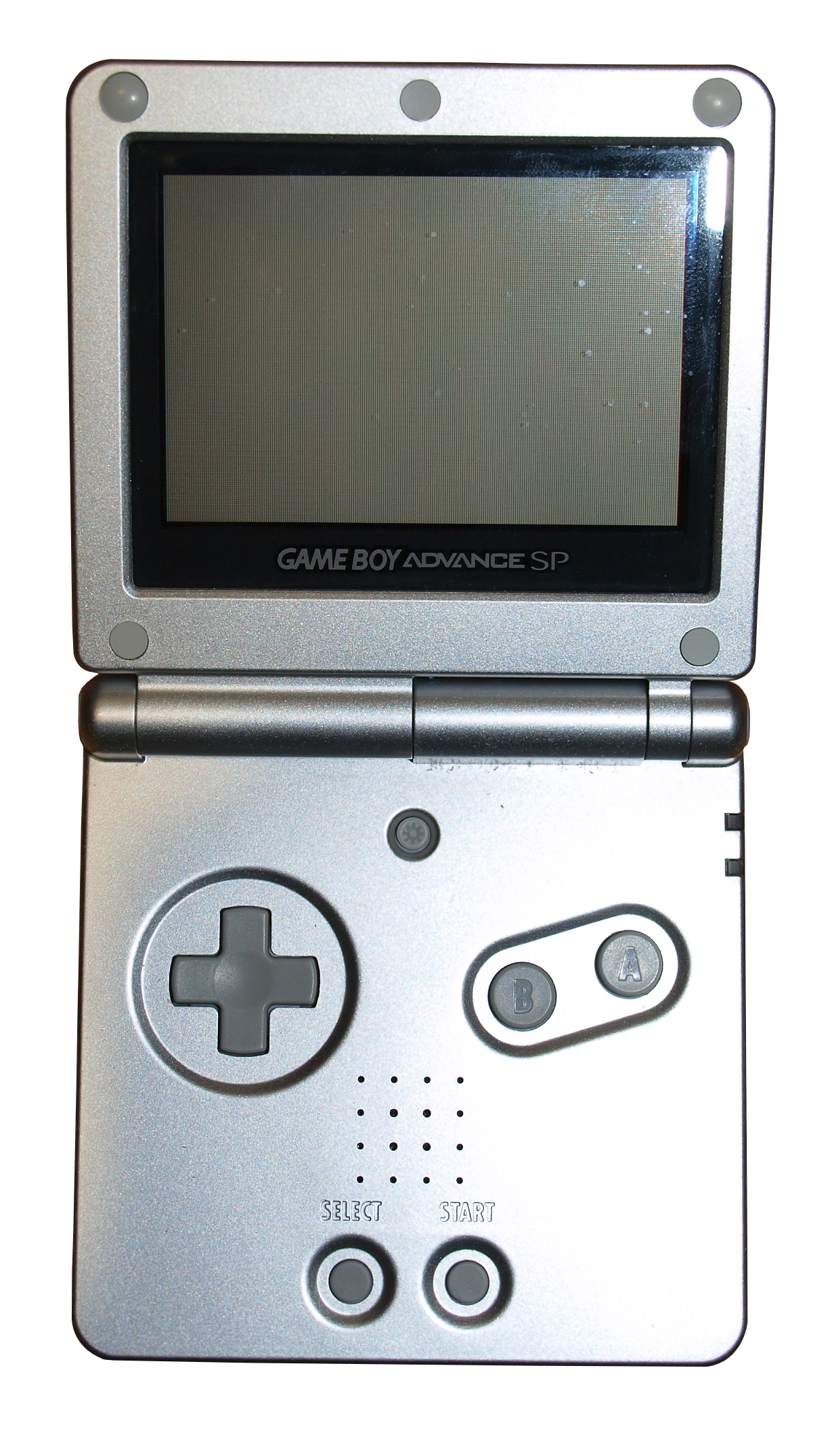
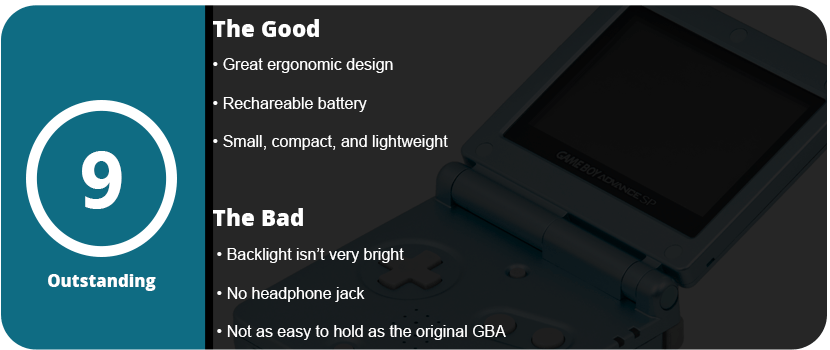
The first thing you will notice is the sleek form factor. The GBA SP is an awesome-looking device. The original model was bulky and didn’t quite fit in your pocket, so you had to walk around with those dorky GBA bags. The button placement was perfect, and the battery lasted for an amazing 10 hours on one charge (15 if you didn’t use the backlight). There was just this perfect square in your hands, and it would amaze schoolyard kids and gaming fans alike. I actually remember having one of these in junior high, and the original model owners were extremely jealous due to the form factor and the backlight.
Speaking of backlight, it was a huge deal. Self-lit LCDs were quite available yet, so Nintendo stuck a backlight in the screen to brighten it up, as the original model needed an actual flashlight clipped on top. While the screen is still quite dark, it made a world of difference and was so much better in the dark. Kids who stayed up late playing their GameBoys were grateful as they no longer needed a flashlight to see the screen and catch their parents’ attention. Later on, however, Nintendo releases a newer model, the SP, with an even brighter screen. These models are harder to find and were released towards the end of the GBA’s life cycle.
One major downfall of the SP is the lack of a headphone jack. The speaker is hard to hear in noisy areas with the volume all the way up, so headphones would be ideal. An adapter was required and went to the Link Cable port as an actual output would not have fit into the casing.
Aside from those issues, the GBA SP was the portable gamers’ dream. A strong library with backward compatibility for the GBA Color and original Game Boy—what more could you want?
The GBA SP also came in several colors, which weren’t seen too often in the States. Flame Red, Onyx Black, Cobalt Blue, and Silver were among the colors available, while a pink model and a retro NES-style model were released later on. However, due to the GBA SP’s age, it really shows its teeth. Let’s take a look at the actual specs of the machine.
Powering the entire system is an ARM7TDMI CPU at a whopping 16 MHz. Yeah, it’s ancient tech, even for 2003, but it got the job done. It had 128 KB of VRAM and 256 KB of DRAM. Yes, that’s kilobytes. The resolution was 256×160 and displayed an astounding 512 colors. However, those dinky specs were home to some of the greatest games of all time; it just goes to show that power isn’t everything.
With that said, the GBA SP is a must-buy even today. We have smartphones that are nearly as powerful as laptops now, the 3DS, and the Vita that trump the GBA in every aspect, but it’s the games that those devices cannot bring back. While the $130 price tag was well worth it back in 2003, you will pay close to that or more for one in nearly perfect condition. Honestly, they don’t exist. They are scratched up, dinged, and chewed on. I had to buy my new one with a refurbished third-party shell. If you’re a collector, go this route on eBay. $60 will get you a new-looking GBA SP. However, if you just want the games and don’t care, they run as low as $30 in pawn shops or on eBay.
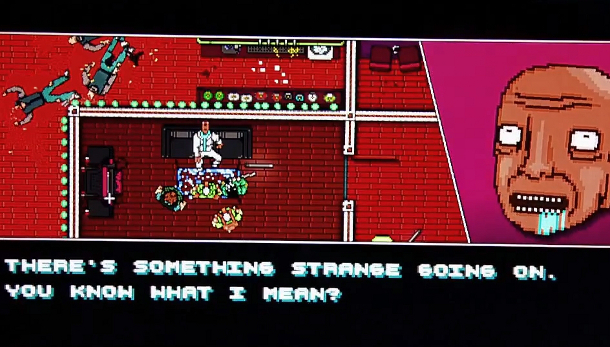
Hotline Miami was one of my favorite games in 2013. It was violent, fast-paced, had tight controls, and rocked a retro 8-bit art style like no other game has. The music was fantastic as well, but the best part was the “just one more level” appeal. Hotline Miami 2 brings back epic music, great art, violence, and, well, some other things we didn’t really want.
Wrong Number starts out by giving us some backstory. Well, it tries and miserably fails at it. The story does not make one lick of sense because you are being flip-flopped between time periods and so many different characters. Each level just starts, and the story is just there. There’s some dialog with no connection to the previous scene. It’s frustrating and makes you want the storyless original back. However, and it pains me to say this, the story isn’t the worst thing in Miami 2. The game is excruciatingly difficult. Miami 1 was hard, but satisfying. It had great replay value because it was the perfect challenge. Miami 2 is a near-frustrating mess of endless restarts and trial-and-error.
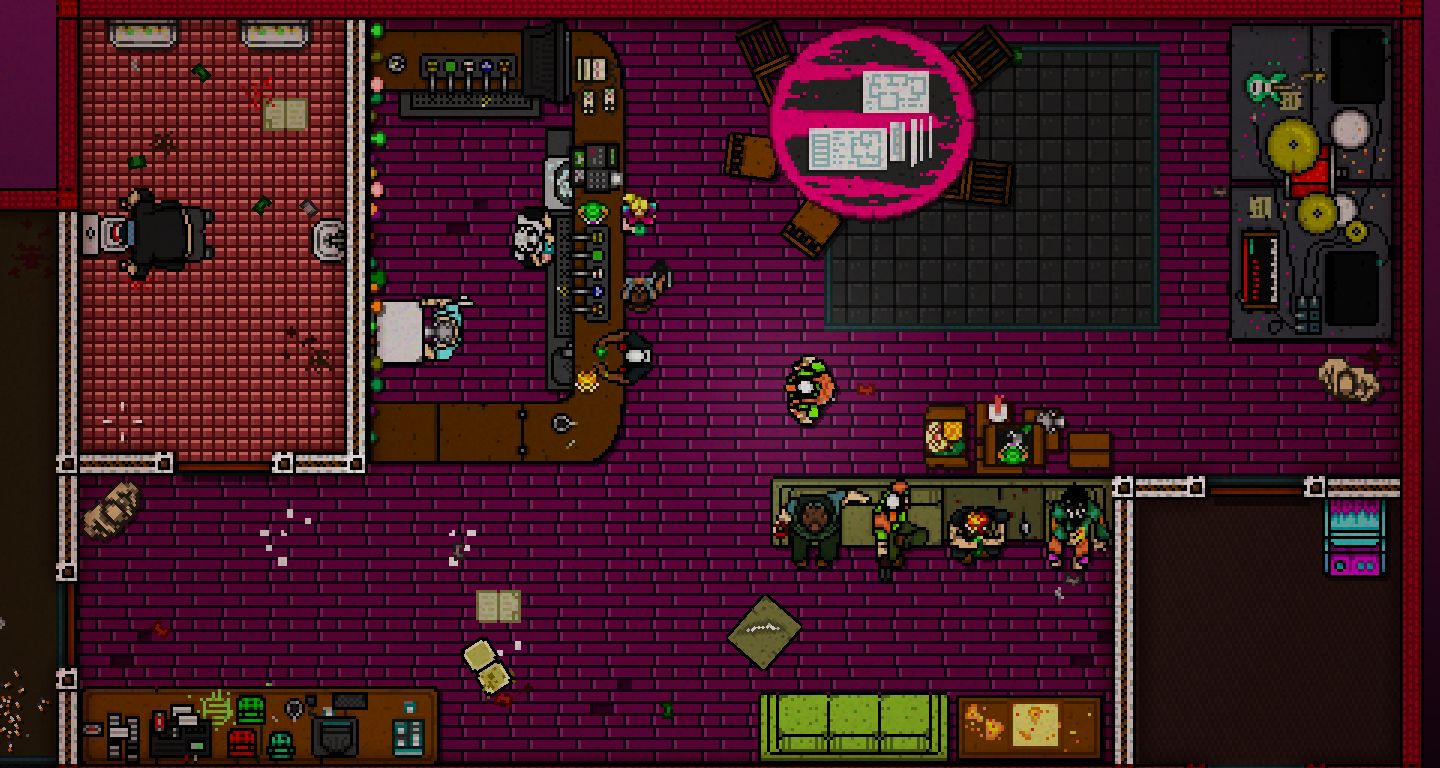
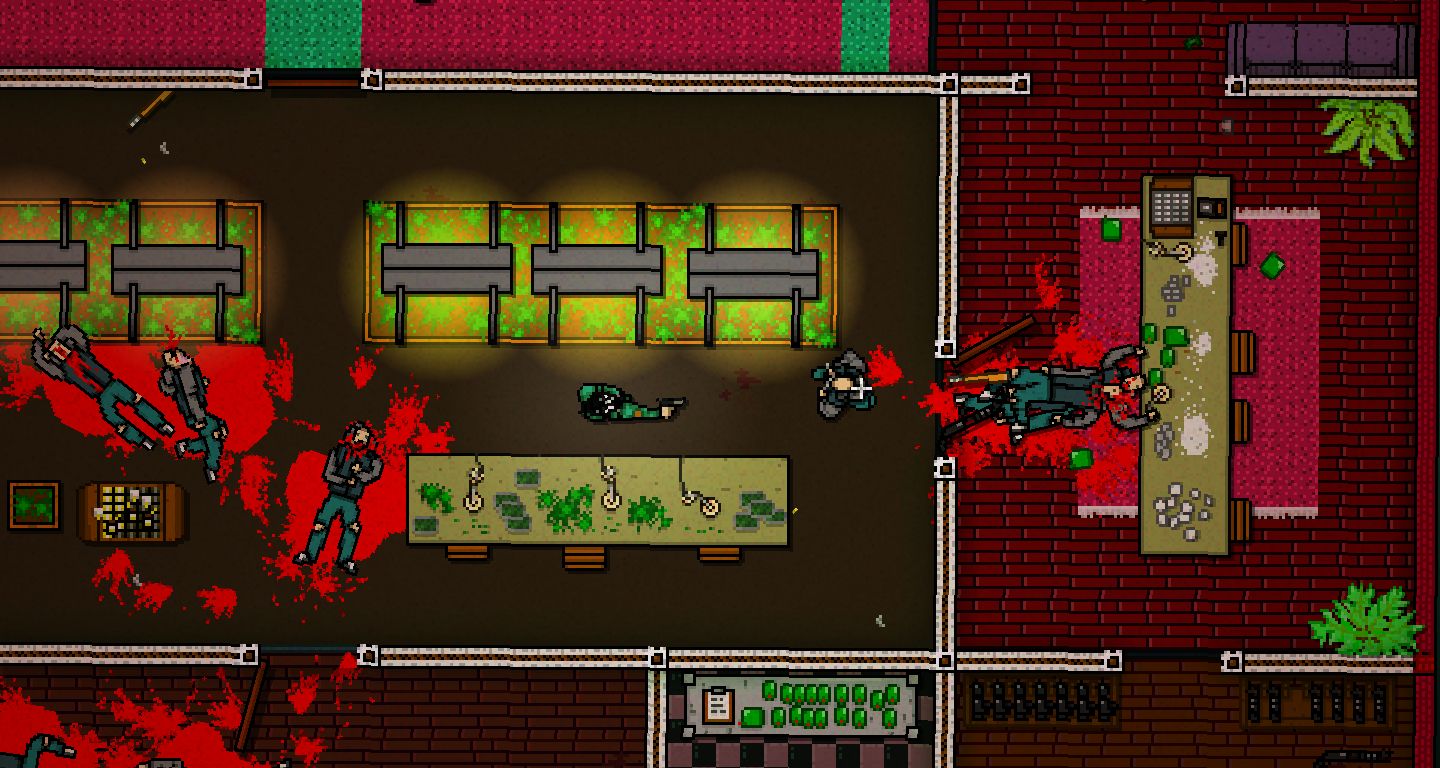
You could say it’s a worse-level design, but that’s not the case; I feel it’s more like poor enemy placement. There are so many enemies in each level, and I mean tons. They all have a variety of guns and melee weapons, and a few can only be taken down with certain weapons. I feel the placement is haphazard; we used strategies in the last game that were way overused here and ended up being used to exploit the game to advance, which is not fun at all. Enemies will see you if you can see them; this is how Hotline Miami works. If you can pan the camera further away, you can get a quick sniper shot at them and a free hit, but for fewer points. One good strategy is to move in and out of a doorway really quickly, let some enemies see you, duck back into a corner, and slice everyone up as they enter the doorway or around a corner. That was an infrequent strategy in Miami 1, but in Miami 2, this has to be done to just get partway through one area. Miami 2 is also full of long-winded levels that seem to never end.
Abusing Miami’s strategies is a crying shame here since this game could have had so much potential for more enemies and new strategies. After halfway through the game, the levels become large and hard to navigate with traditional Hotline Miami controls and gameplay. It’s almost like the game tried to go in a new direction but didn’t evolve its gameplay for it. Miami 2 is also twice as long as the first game, but it overstays its welcome after the second act. I literally felt like the game had become a chore and just wanted it to end.
However, that’s not to say the whole “one more level” thing is gone. I was hooked, and the constant trial and error had me restarting levels dozens and dozens of times to try a new strategy, but it wasn’t really an enjoyable “one more level” feeling. A lot of times I had to exploit the enemy AI. Only certain levels can really be completed one way, and if you start a level with the wrong weapon, kill the wrong guy first, or even kill all the enemies in the wrong order, you’re pretty much screwed. More often than not, I was restarting a level not because my strategy wasn’t sound, but because the enemy AI screwed everything up because he wasn’t patrolling the correct corridor or left a room he’s normally in and blindsided me when I least expected it. Usually, this is a good thing, but not when you’re forced to kill enemies in a certain way due to poor enemy placement being overwhelming.
With that said, I hate to say that there’s really no reason to come back to this game after you finish. Do I want to spend an entire week restarting level after level again and again? Of course not. I’d rather re-download the first game and enjoy the excellent Miami-ness without all the hair-pulling. All in all, Miami 2 is not really a must-play, even for fans. If you end up never playing this, you’re probably better off sticking with the first game.
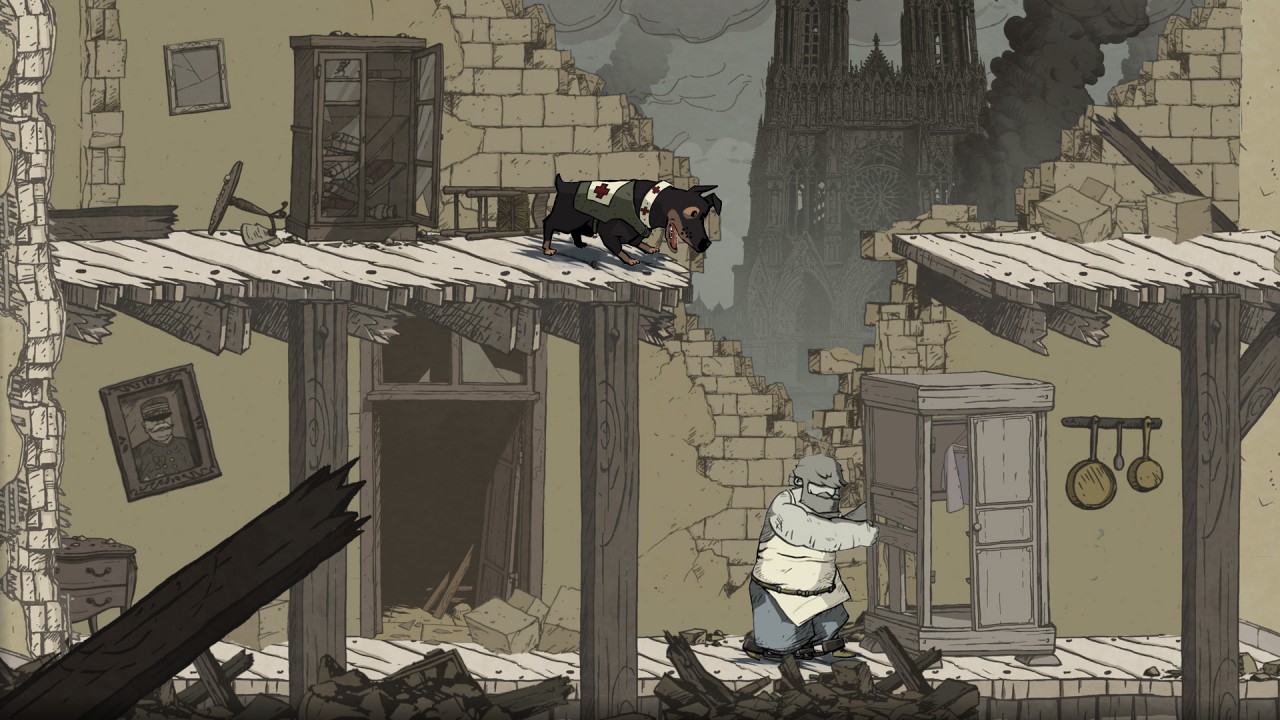
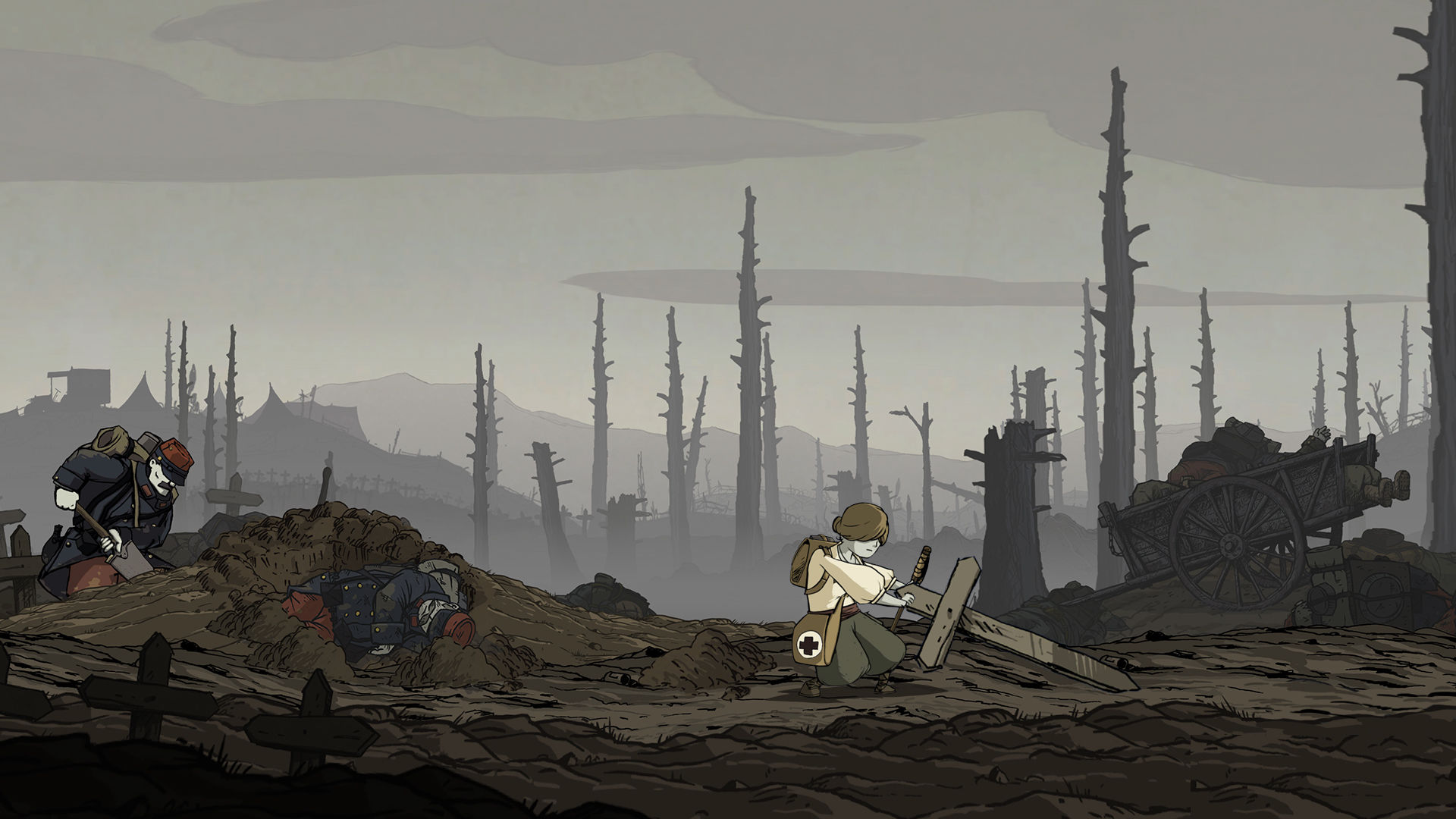
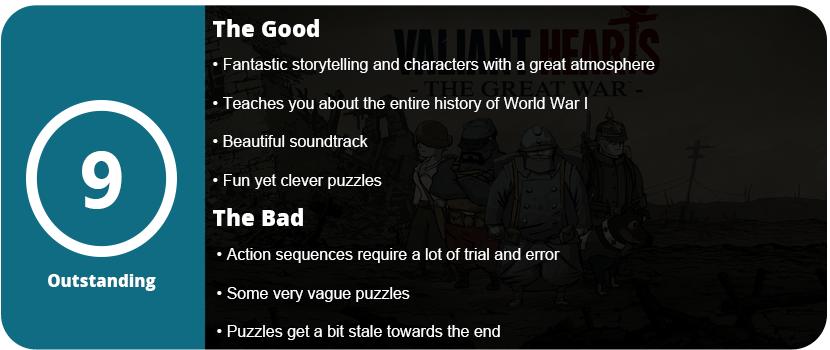
It’s been a long time since I played a game through an entire day and couldn’t put it down. Valiant Hearts will keep you instantly glued to the screen thanks to its rich history, characters, and story. Valiant Hearts is probably the only WW1 game I can remember playing. There is a huge lack of WW1 games, and I’m glad Ubisoft decided to make it a 2D platformer rather than an FPS. The game is brilliant on many levels, and fans of these types of games will not be disappointed.
You play four different characters, all fighting the tragic war in France. A German, an American, a French woman, and a Frenchman. The game reenacts major battles from World War I and also gives you a history of what really happened during that time period. You can also go around collecting trinkets that are from the war. It’s great for history buffs or anyone who’s curious about what really happened during WW1, since WWII is all anyone talks about.
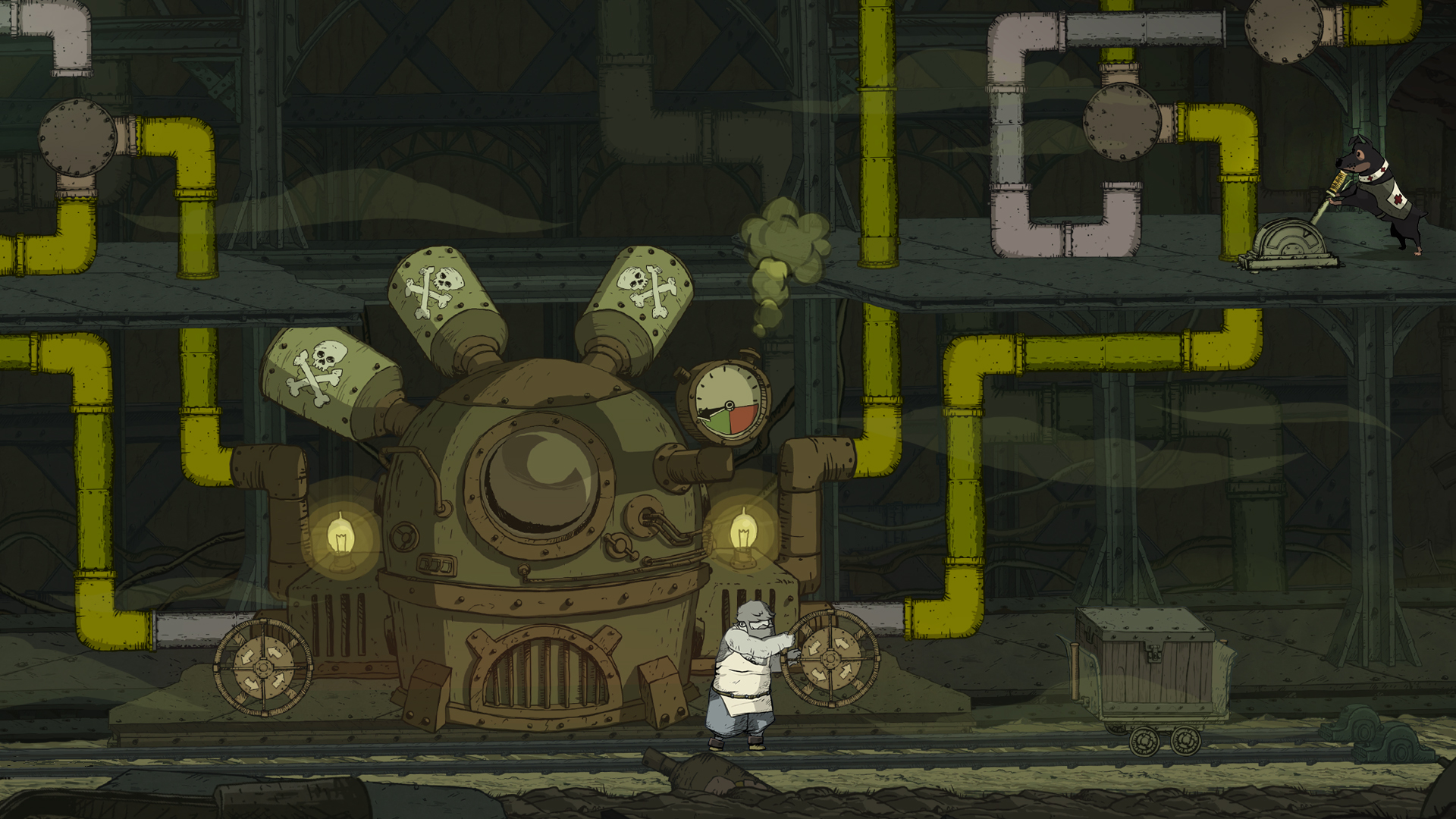
With that said, the game mixes up stealth, action, and puzzle solving, all of which are excellent. There’s no real fighting in the game; you don’t get a gun. You are mainly just trying to survive this tragic war while you watch everyone around you die. It gives you a sense of helplessness and makes you realize just how terrible and brutal World War I was. The game is played on several 2D planes. Using the background and foreground to solve puzzles, all of which are completely different, but the mechanics tend to be the same, and it gets a bit old towards the end. However, many sequences are cinematic and scripted, which keeps you glued. I can honestly say the game is well-paced and perfect for a one-day gaming spree.
I did find some issues here and there, such as a few puzzles being extremely vague, but it’s nothing that some trial and error and exploration won’t solve. There is a hint system for people who aren’t very good at puzzles, but it can also be turned off. Some of the more frustrating areas were the action sequences in which bombs drop and you have to dodge enemy fire. A lot of it is trial-and-error because the game rushes you through it. Expect to restart and die several times throughout this game.
The graphics alone are just gorgeous, and the colors pop on PS4 and Xbox One. The sound is excellent, and the music is wonderful. Many pieces are classical symphonies from the time period, so it adds even more authenticity to the game.
With that said, Valiant Hearts is probably a hidden gem that many people will pass up. It’s tragic; it really teaches and shows you every step of WWI and enlightens you on just how terrible the human race can be. From mustard gas bombings to the creation of tanks and aircraft, World War I was just a stepping stone for WWII.
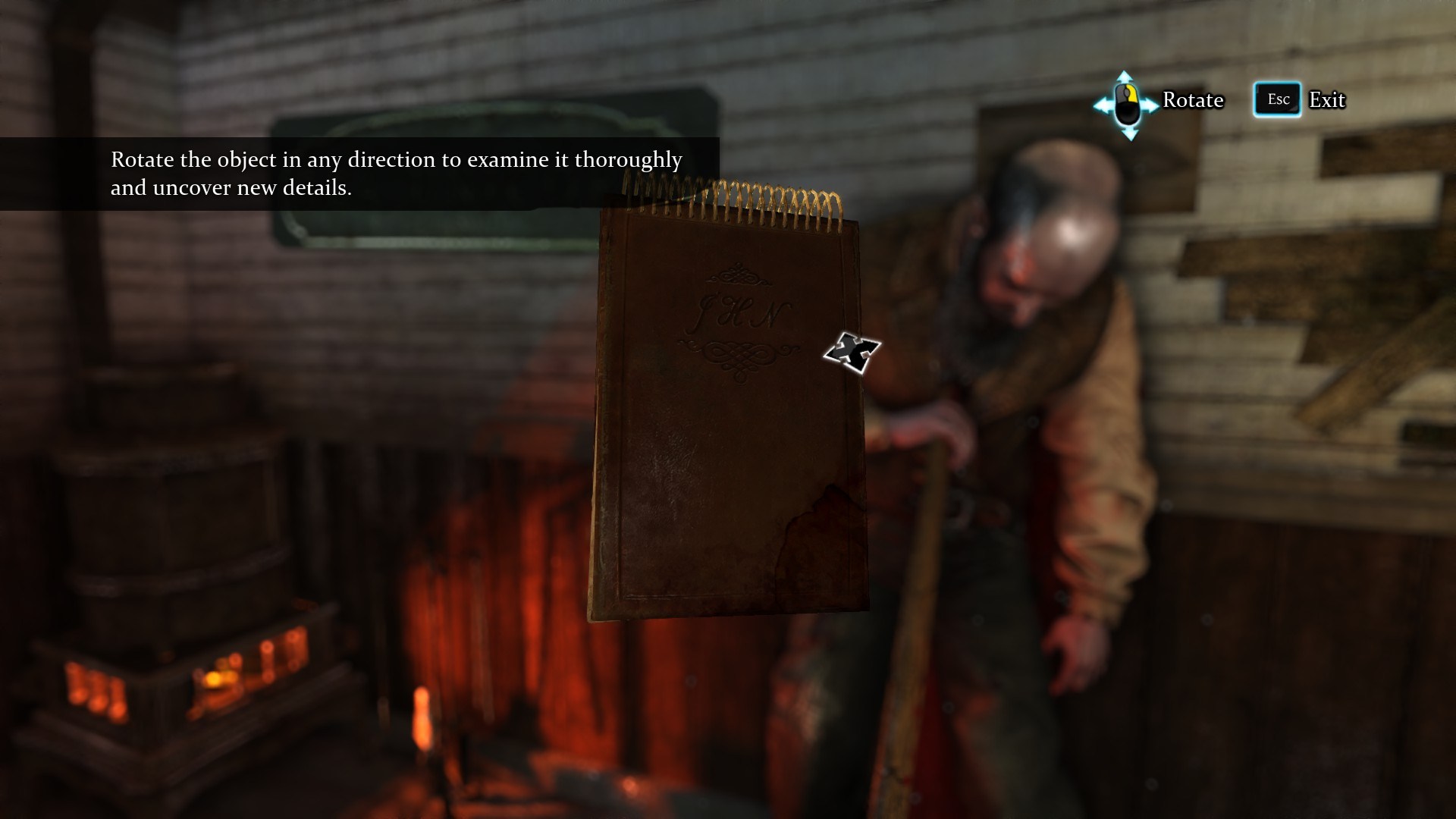
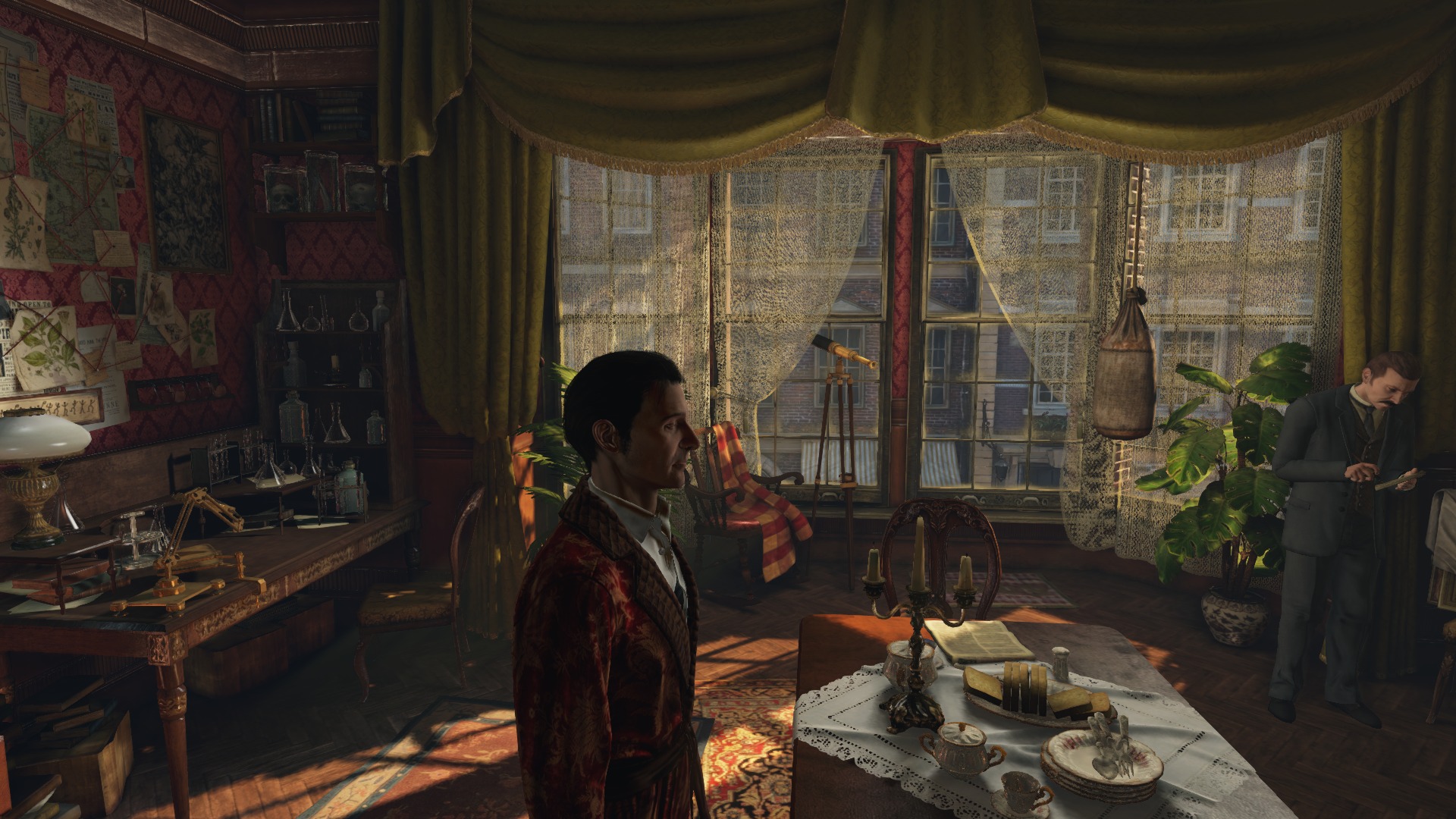
The Sherlock Holmes adventure series has had its ups and downs. If the story isn’t up to par with the show or books, it’s clunky controls or poor gameplay. Crimes and Punishments sound darker than they really are. Honestly, the game is more about the characters shining through and less about the crimes or gameplay.
The game starts out surprisingly cinematic for a point-and-click. Watson is dodging Holmes gunfire in his study as he ducks and weaves between pieces of furniture. It shows just how more nuanced the series is and just how much it has grown. Among the four cases you solve, neither of them is all that interesting. The game tries to get you thinking about big mysteries, but honestly, the dull way of going about the cases keeps you from really caring.
The gameplay consists of walking around areas and finding anything you can click on. Some items can be examined, and certain characters can be profiled, where you scan the character in slow motion to find interesting points. There are various puzzles as well, but these seem to be half-broken since pieces won’t snap in place and various objects won’t register. Surrounding is figuring out where to go and then solving clues to bring the whole thing together. Hopping back and forth between areas gets old, especially with the long load times. The character interactions are somewhat interesting, and I couldn’t help but smile at Holmes’ sarcastic way of going about things. Other than this, the game offers a dull experience of the detective mystery of old.
I played through the first two cases and, honestly, started losing interest. Each case has the same exact way of being solved. Wander around an area and pixel hunt, interview characters, run back and forth between areas, and rinse and repeat. The game looks really good, and the facial animations are surprisingly well done. Adventure game fanatics may love this game, but anyone else wanting a bit of action or suspense like in the Telltale adventure games won’t find it here.
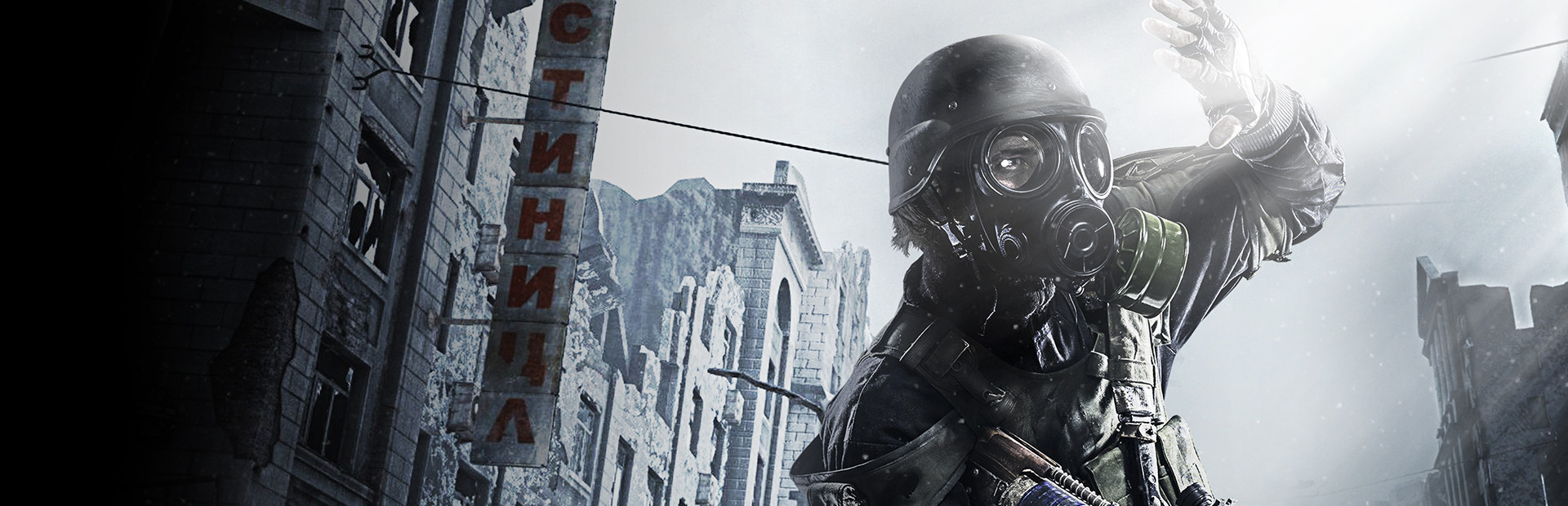
If you haven’t already read the novel, Metro 2033 is probably one of the best post-apocalyptic novels ever written. The novel really gets into your head and takes the whole post-apocalyptic Russian lore and myths and brings them to life. Metro 2033 was ahead of its time in 2010. While the game looked decent on Xbox 360, it really pushed systems on PC. The game was one of the first to fully utilize DirectX 11. As a game itself, it had many issues, such as huge AI problems and a somewhat incoherent story, but underneath it all, it oozed an atmosphere that no other game could provide at the time. This is all tidied up and wrapped up in one big next-gen ribbon. The game is worth a replay for vets and well worth any newcomers’ time.
You play as Artyom, a “chosen one” who must stop the Dark Ones that have invaded his home station in the underground Moscow metro. While his station was overrun, he was trying to make his way to Polis to get help fighting off the Dark Ones. Instead, he must find a mysterious and once-forgotten nuclear missile silo called D6. His journey is terrifying; even humans can be as horrible as mutated beasts.
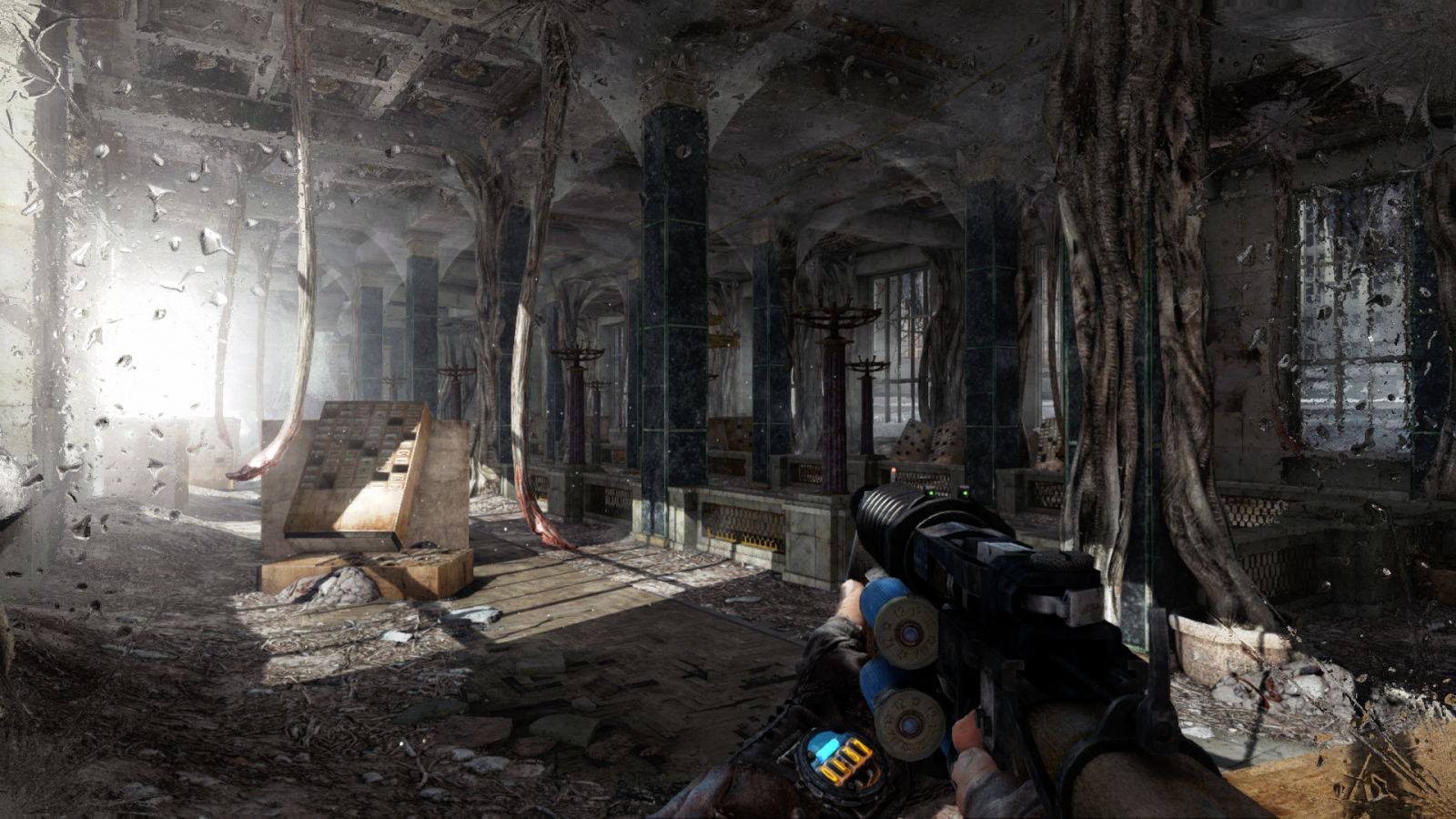
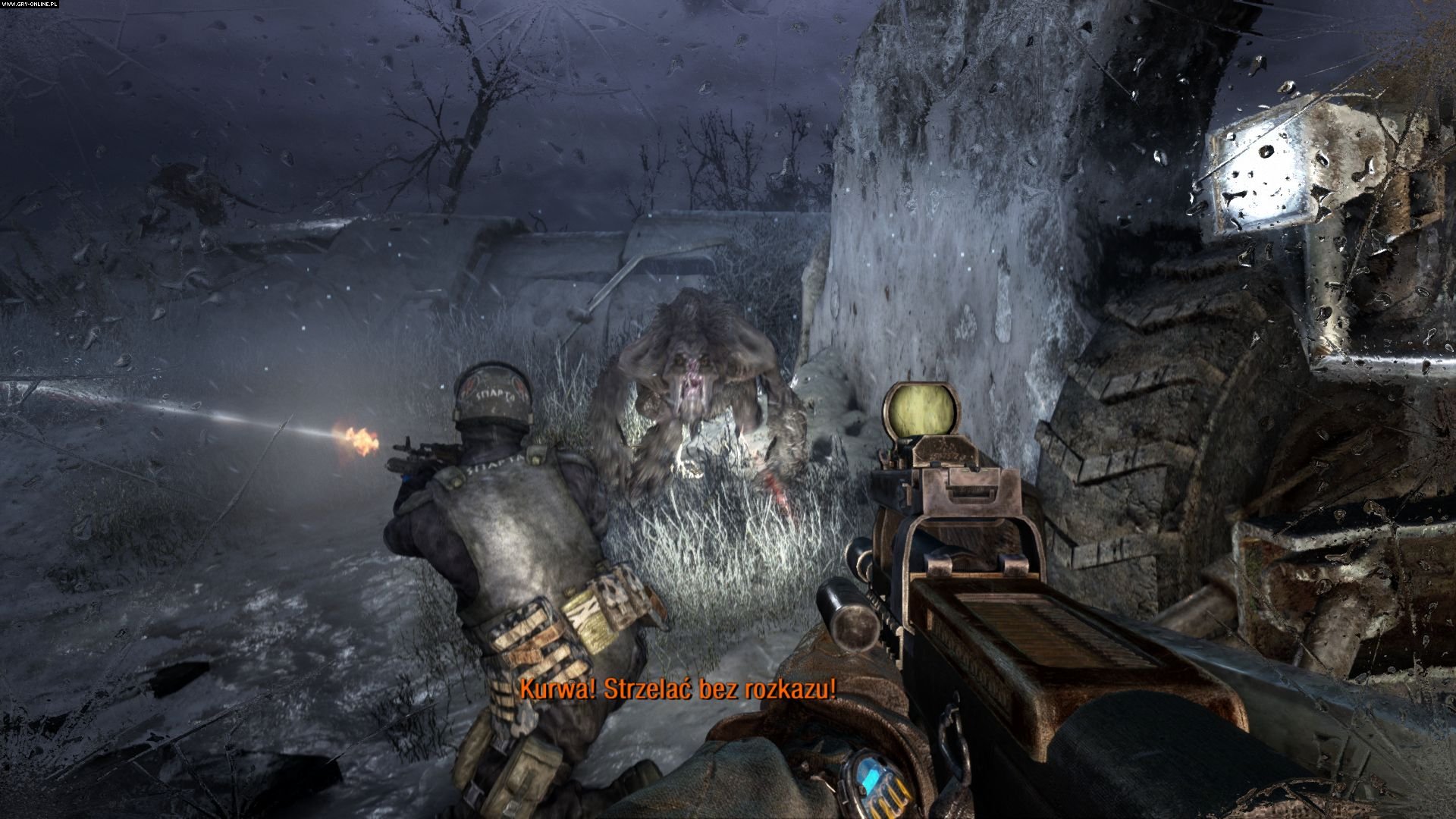
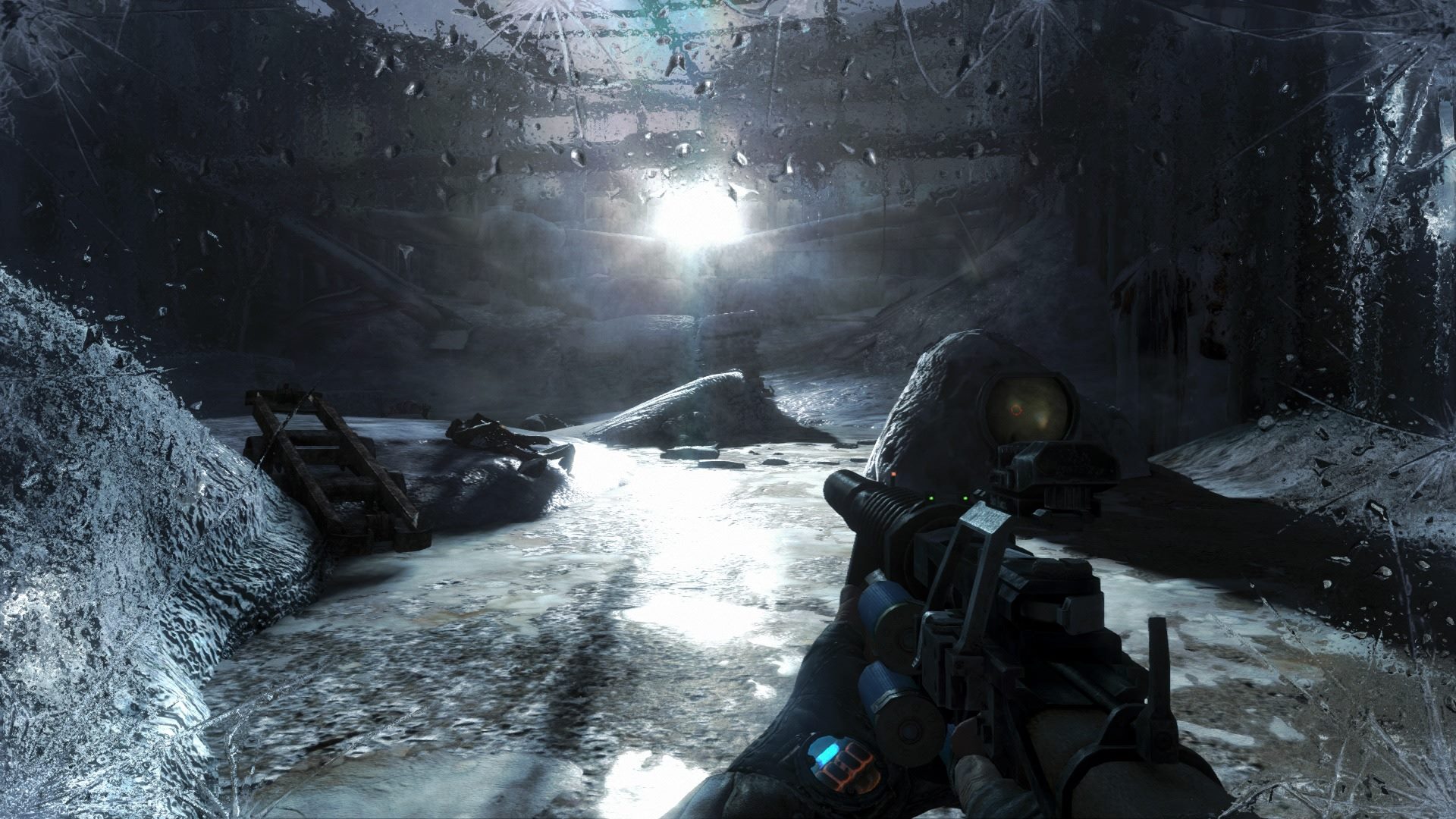
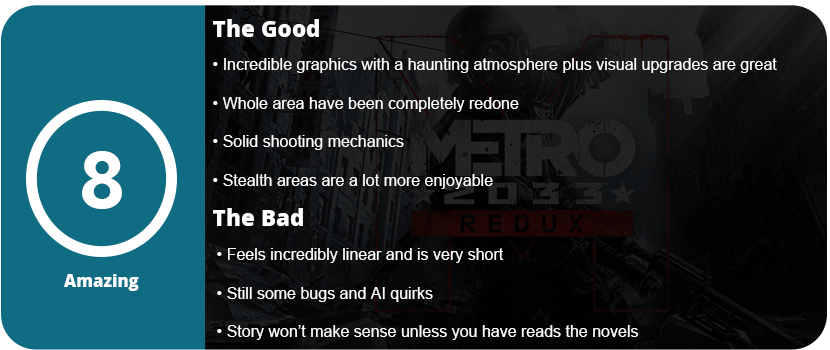
Most of the game sees you either fight your way through monsters or stealthily push through Communist or Nazi frontlines. Back when the game was originally released, these stealth sections were nearly broken due to the AI being able to detect them in the oddest circumstances. The AI has been tweaked but can sometimes still show a bit of awkwardness. While some areas have been completely reworked with even new enemy placement, I still found myself confused as to whether I could sneak through the area or shoot the place up. The stealth path would be too well hidden or in an odd place. However, this was pretty rare, and I really love how these areas were given attention. The atmosphere is just so incredible. When you get into populated areas, you actually feel “safe” and enjoy every minute of light and peace. One area that became extremely scary was the library. Mutated gorillas called Librarians that stalk are just downright scary.
The shooting mechanics themselves are fantastic. Each gun has its own personality, and you will easily find your favorite three or experiment. There is a wide variety of gun types, ranging from revolvers, assault rifles, bolt guns, pneumatic guns, and even shotguns. However, they all feel unique to the setting. Each gun looks beat up and worn and somehow piecemealed together to just kind of work. There are also a variable number of throwables, such as knives, firebombs, shrapnel grenades, and various others.
It wasn’t just the gameplay parts that were reworked. Entire outdoor areas were rebuilt to look more next-gen. Compared to the original Xbox 360 version, Metro 2033 Redux looks like a whole new game. Incredible attention to detail was taken when combing back over this game. Thankfully, due to the power of next-gen consoles, we get all the fancy DirectX 11 graphics that the PC version got, plus some. Despite being a remade game, Metro 2033 Redux is one of the best-looking games out on consoles right now.
With that said, the game is a little on the short side, and it feels a little too linear for its own good. Yes, you are in a cramped metro, but I feel like it would have been a good idea to explore this place more. The game is extremely scary, the monsters are freaky but awesome, and there are some pretty fun scripted events. For a 4-year-old game, it has held up so well to recent games and just shows how far ahead the game was back in the day. If you are a fan of Fallout, STALKER, or any other post-apocalyptic game, you should give this a spin.
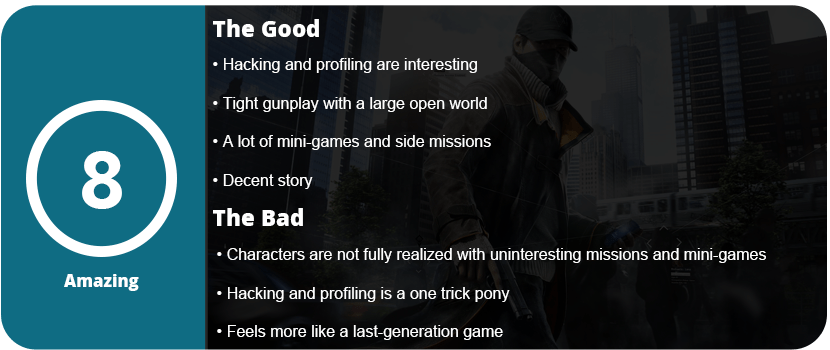
Watch Dogs is supposed to be the next Grand Theft Auto III! The next-gen revolutionary open-world game! Well, there’s one big flaw in all that hype. Watch Dogs was developed for last-gen consoles. We will never get a truly next-gen experience until a game is made specifically for next-gen consoles, is no longer ported to last-gen consoles, or has those consoles in mind. With that said, Watch Dogs is a solid open-world game, but it feels limited due to the scope that it tries to create.
You are Aiden Pearce. A vigilante hacker is trying to exact revenge on his niece’s death. You get involved in a huge blackmail hacking/drug ring while operating Chicago’s own connected grid. This online grid is called CTOS, or Citizen Operating System. Chicago has cameras everywhere (even in places they aren’t supposed to) and is storing all the data on servers. Hacker groups are battling for the data, while some have blackmailed city officials. It makes for a pretty twisty story, but that falls flat due to the story being dragged out for too long. One thing that an open world needs are strong characters, and Watch Dogs is lacking that. Each character has potential, but they are missing that certain something to make them more than generic, or they don’t get enough screen time.
Outside of the so-so story is the so-so gameplay. Now the gunplay is solid, with a great cover mechanic and a weapon wheel. You also get the electronics on your side, such as the gimmicky “camera hopping” ability. You can hack cameras around an area to stealthily blow up stuff and distract enemies. It kind of felt like something similar to the Batman Arkham games. Some enemies have grenades that you can explode remotely that are on them, disrupt their communications, disable reinforcements, etc. This stealthy way of combat is actually pretty fun but gets old in the end because it becomes predictable and almost too easy. Gunning it all the way is tough because you die so quickly. A few shots, and you’re dead.
Most GTA-like games have wanted levels and cops that come after you. Watch Dogs does something rather unique in the sense that you can use the city against the cops. With the push of a button, you can raise bridges, activate blockers, blow up underground pipes, change traffic lights to block intersections, etc. I just found that the cops can find you way too easily. You are able to craft gadgets to stop enemies. One such item is the JamComms. This is used when the police are trying to find you. When this happens, yellow circles will appear on your map, and you should avoid them until the search is called off. I only ever avoided this once in the whole game. My only option was to be found and then escape the police.
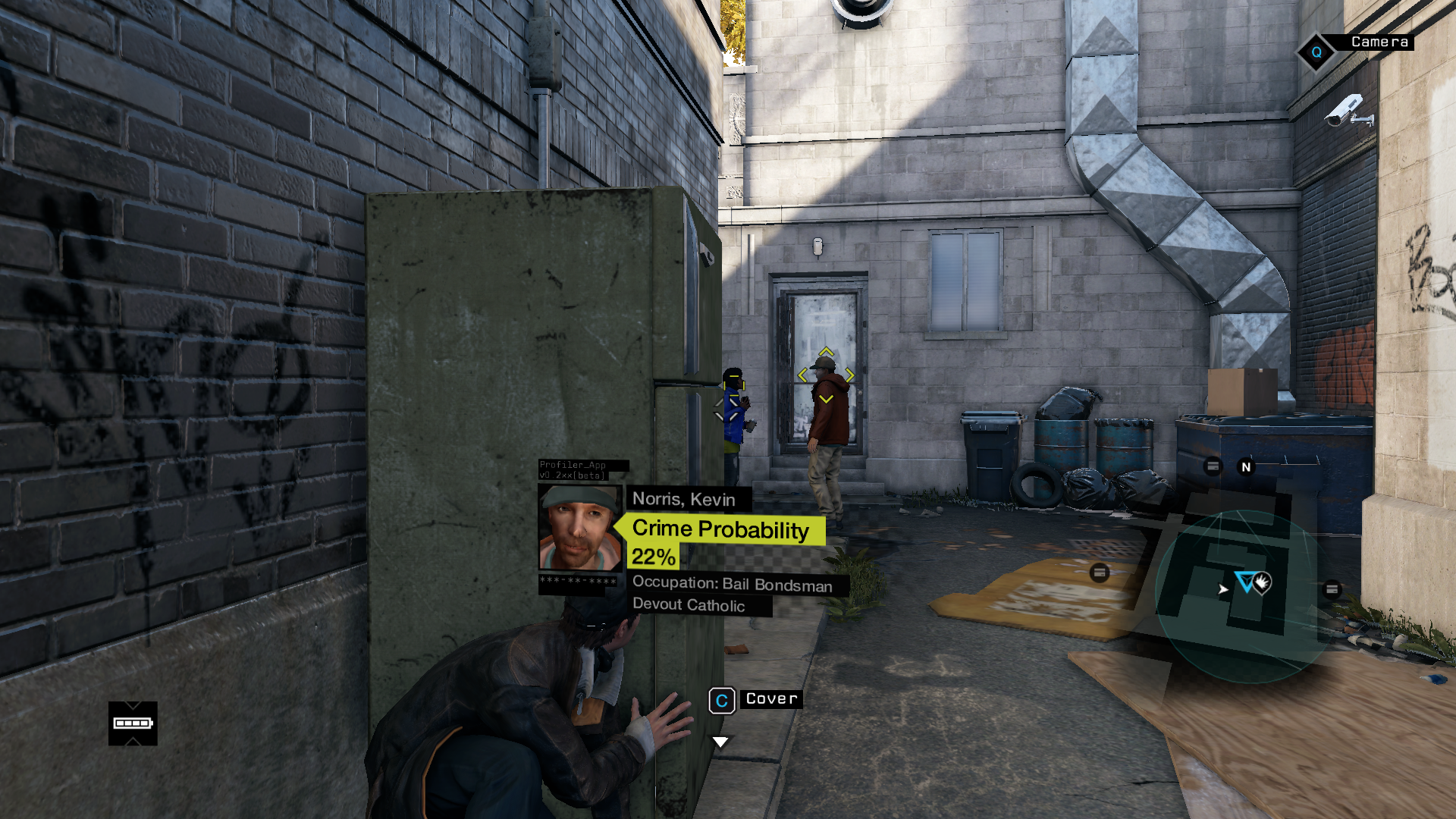
Another gameplay element that open-world games have are mini-games. Watch Dogs is full of them, but neither of them is interesting, including the side missions. Being able to prevent crimes, AR time trials, online contract hunts, etc. These were all interesting the first time, but after that, I lost interest. I have yet to talk about what caused Watch Dogs to get such hype, and that is the profiler. When you pull out your phone, every citizen’s information is displayed. Their job, income, and what they currently do are dark secrets, and sometimes you can hack their phone conversations or steal money from them. Now, this may seem like a big deal, but it’s all randomized, and after a few minutes of exploring it, you just won’t care anymore.
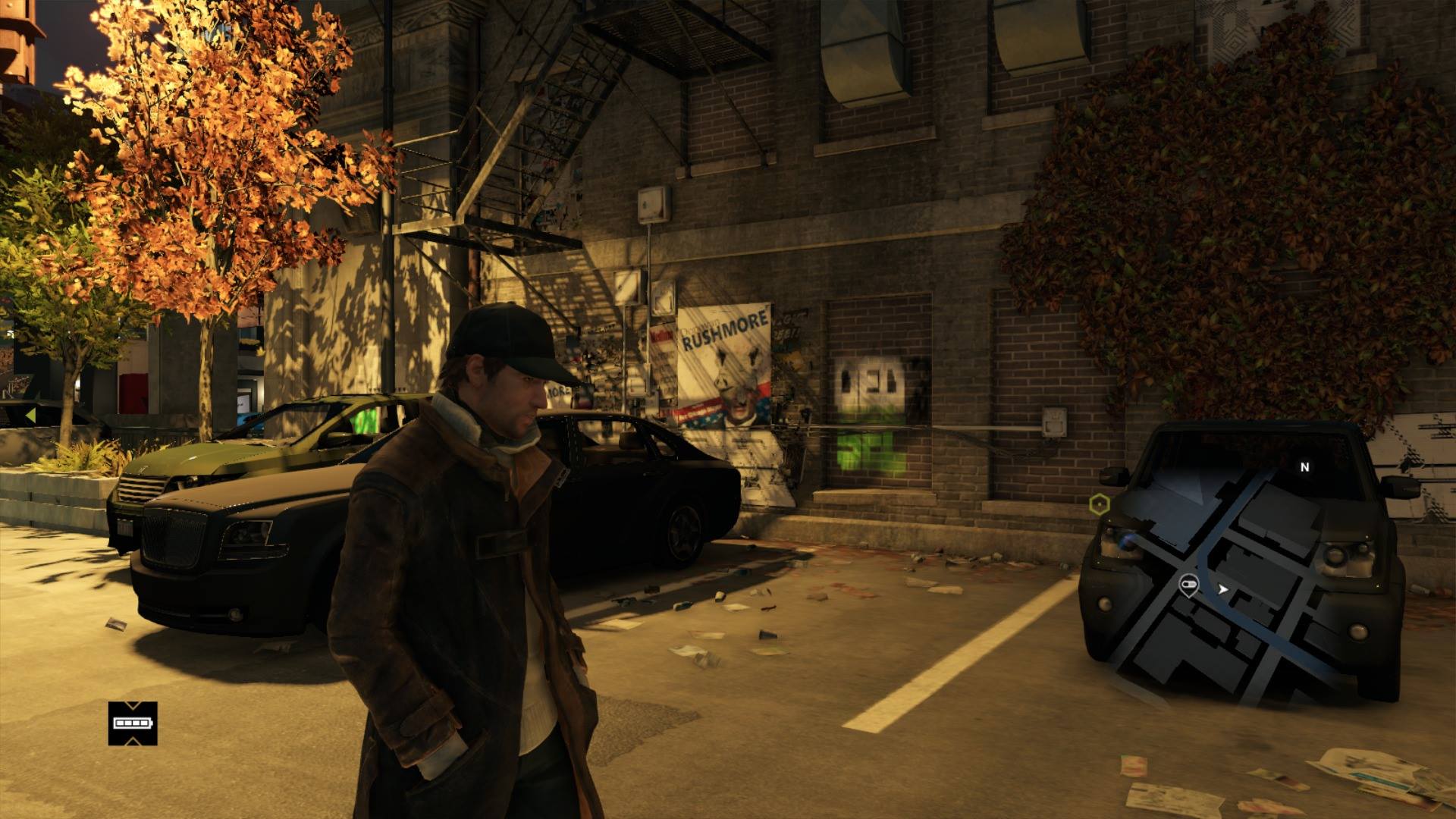
That’s the main problem with Watch Dogs at the end of the day. You just stop caring about more and more things as you play. When you start off, you’re completely confused about how to use this new hacking and profiling ability. It all seems overwhelming. Once you play for a few hours, you start checking off what’s interesting and what’s not in your head. That’s usually not a good thing for a game. Watch Dogs brings a lot to the table, but none of it is outstanding or memorable. The graphics are also decent, but even for PC and next-gen consoles, there are some ugly spots, the character models are dated, and it all just feels like a last-gen game with a next-gen coating of polish slapped on top.
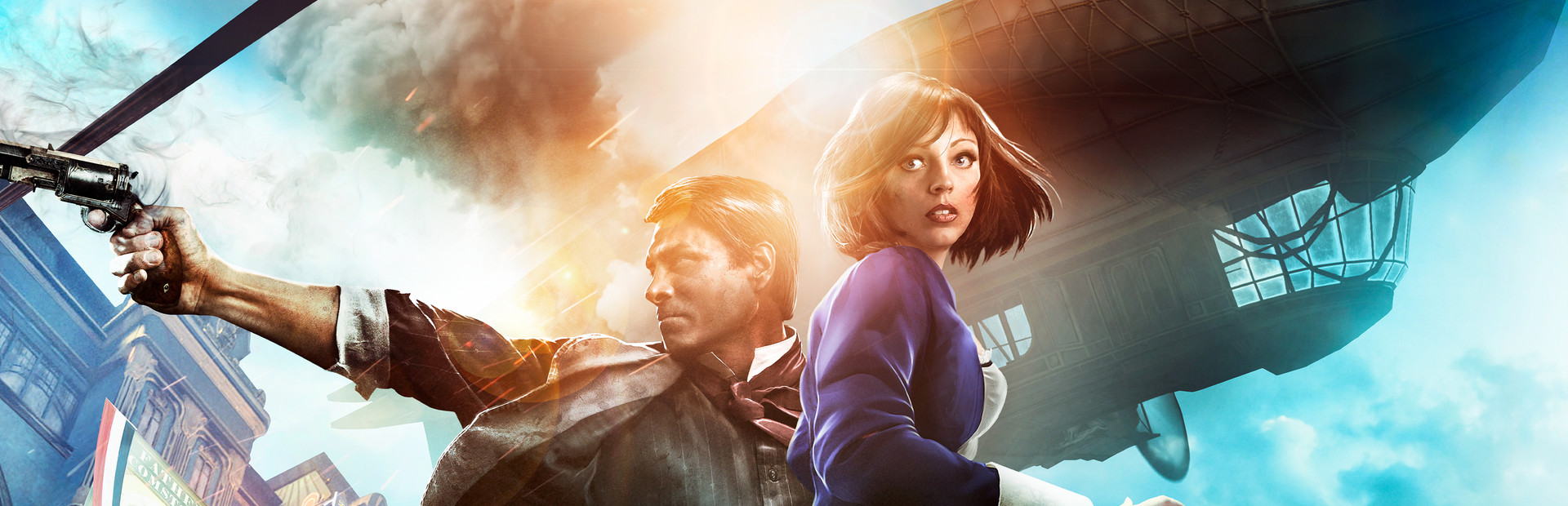
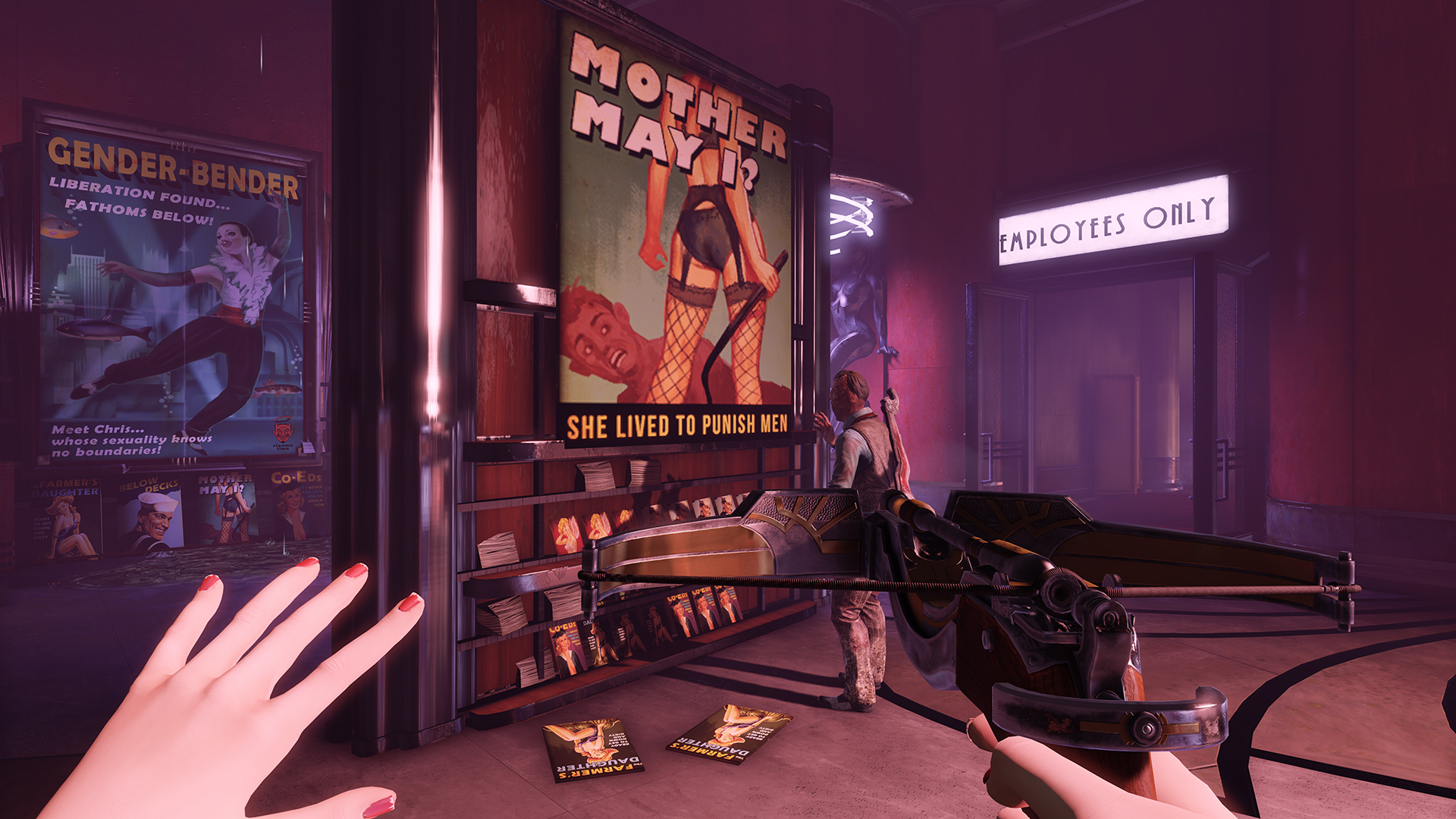
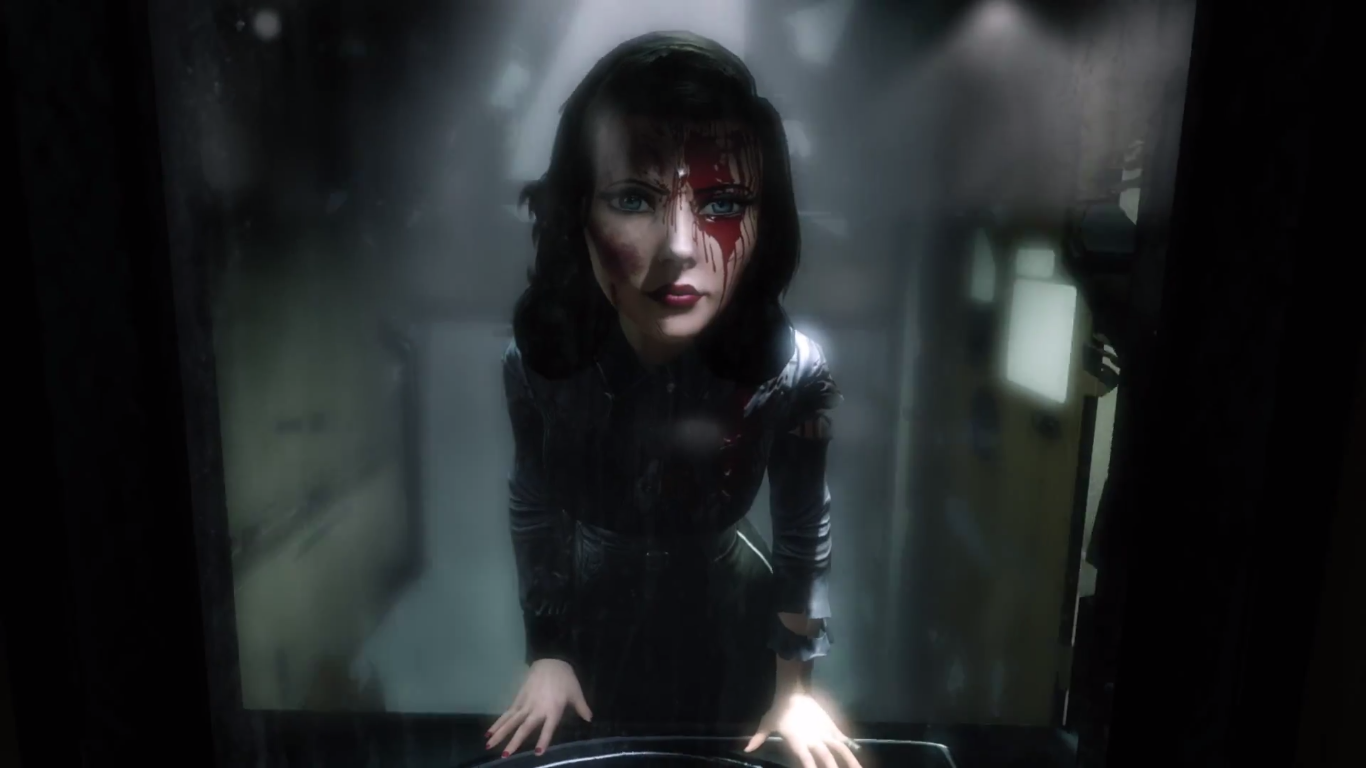
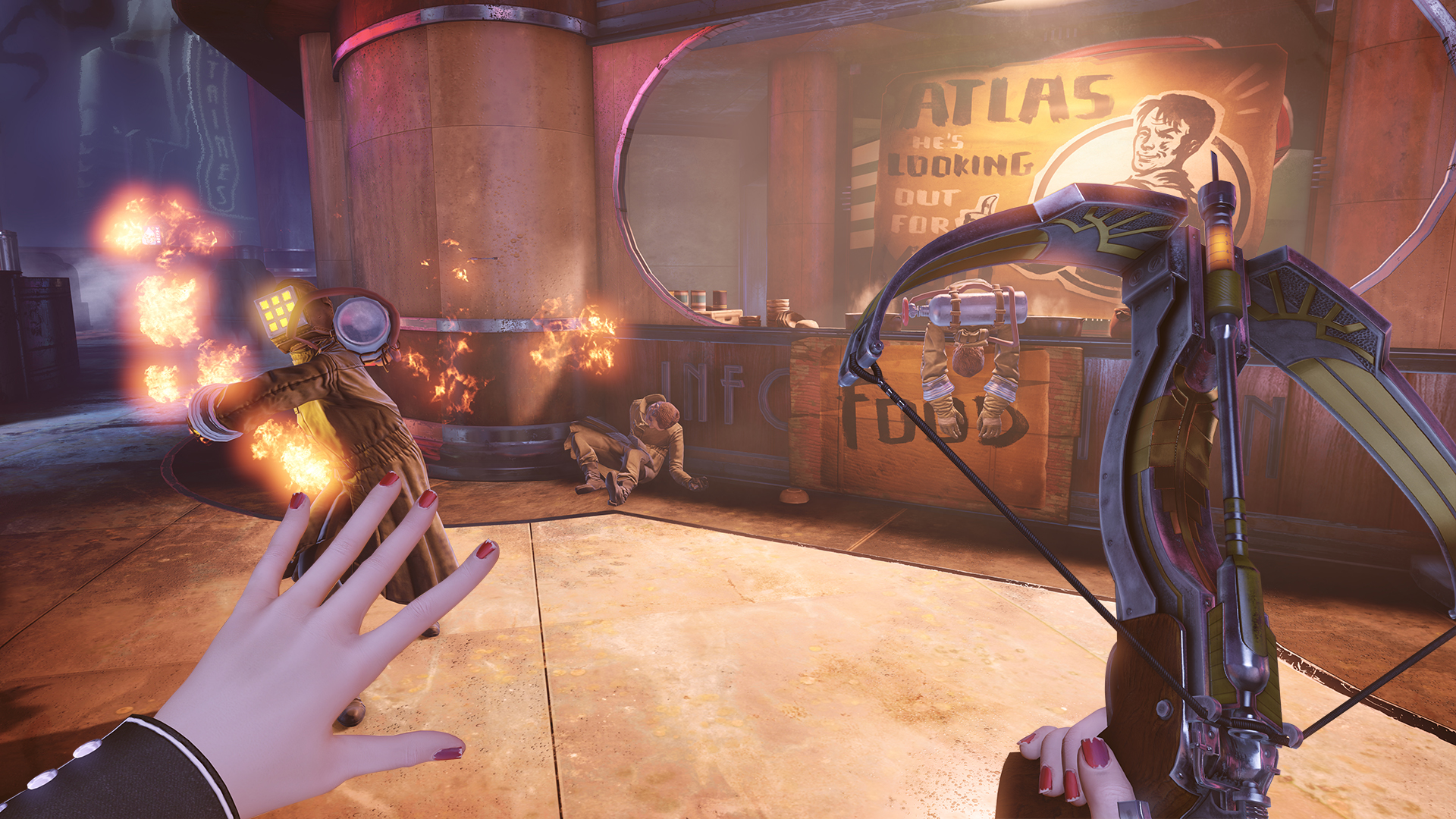
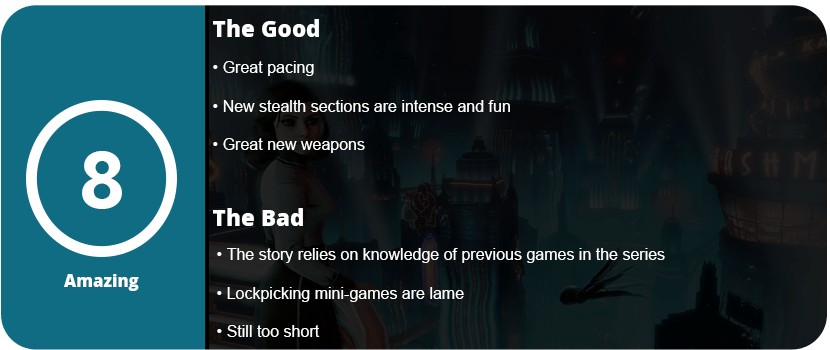
Episode Two takes place right after Episode One, but this time we play strictly as Elizabeth. I love this move-in perspective because Liz can’t fight like Booker can, and it’s noticeable right off the bat. Liz has to sneak her way around using crossbows, vigors that turn her invisible, and ones that add extra armor. She only carries a shotgun and pistol, but very little ammo. The new weapon is one that microwaves enemies, but I was only able to use it a couple of times in the whole episode.
The story still doesn’t make much sense unless you play both BioShock games. This DLC is really for the fans of those games. Elizabeth is on a mission to save Sally, the little sister you were trying to find in Episode 1. With Booker dead, it’s up to you to run from everything bad in Rapture to find her. This includes Atlas, Andrew Ryan, and even Suchong. These characters won’t mean anything to anyone who hasn’t played the first game. I loved the setting and the brief trip back to Columbia, but the atmosphere is really great in this episode, along with less backtracking. Sure, Liz can’t fight off Big Daddies in this episode, but it makes everything more intense. The game is about twice as long as the first episode but can still be finished in a few hours.
I really appreciated how the stealth sections were interspersed with just exploring and cinematic events; it felt balanced. Sneaking isn’t just as simple as ducking and hiding from enemies. They now have an alert meter above their heads, while a new lockpicking mini-game has been added but is mostly lackluster and just filler. You can even use this mini-game to hack turrets to fight against you, but there were maybe only two opportunities to do this in the whole game. The new crossbow weapon with gas, alarm, and sleeping darts comes in handy, and the shotgun does a lot of damage. I felt the revolver was nearly useless, though.
With all that said, Episode Two really feels like an extension and slight evolution of Infinite in a good way, but anyone who hasn’t played previous games will be completely lost.
















































 thebinarymessiah.com
Try multiplayer. A lot of fun !