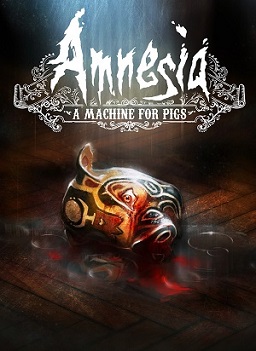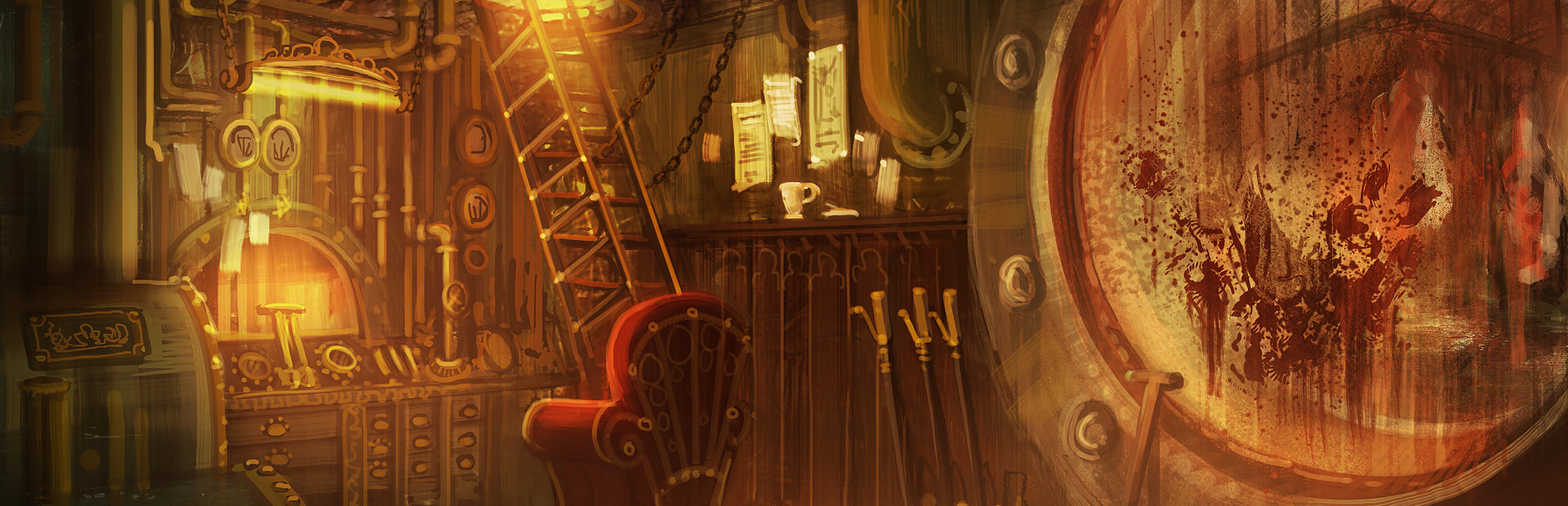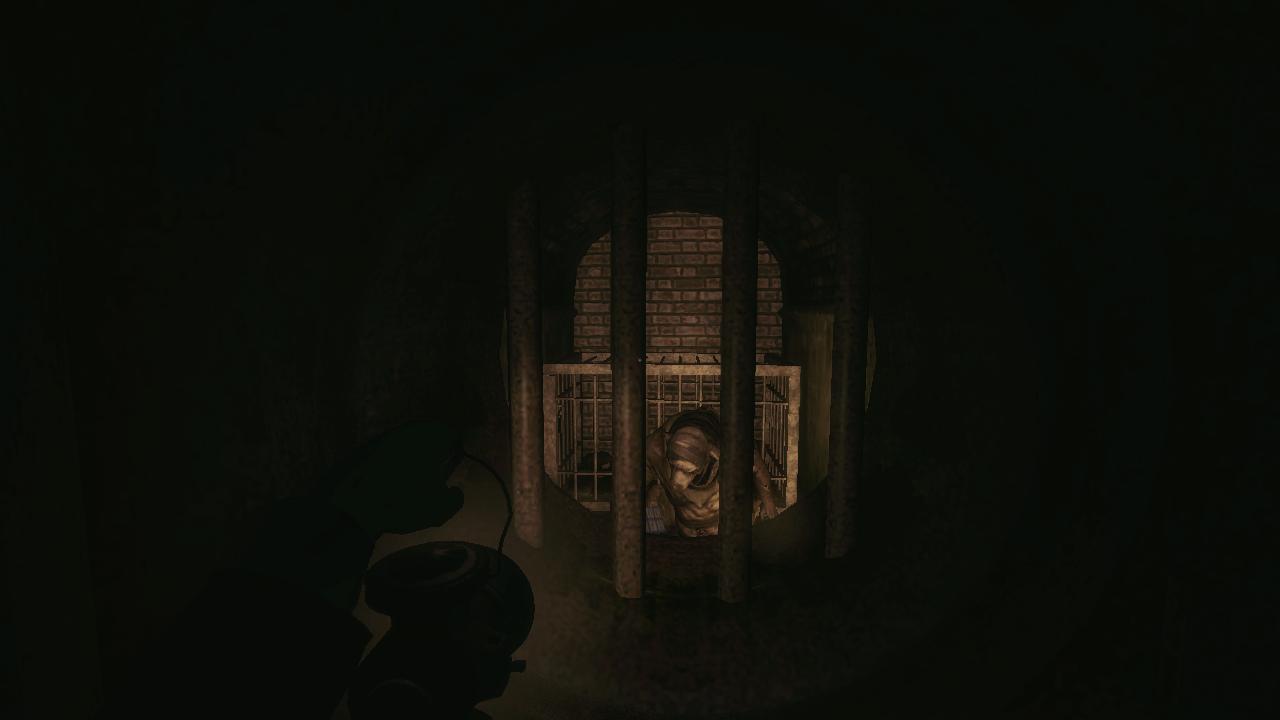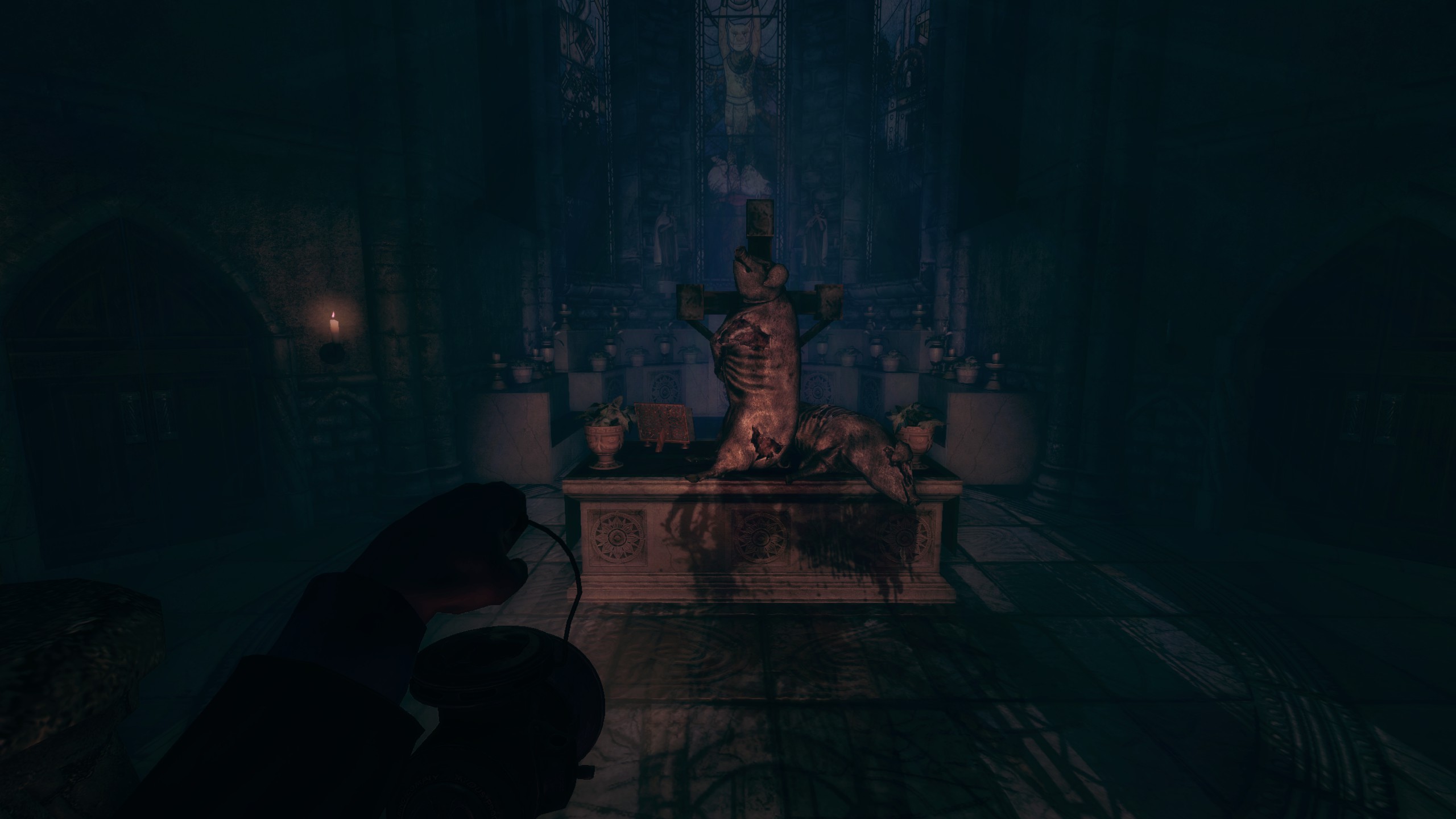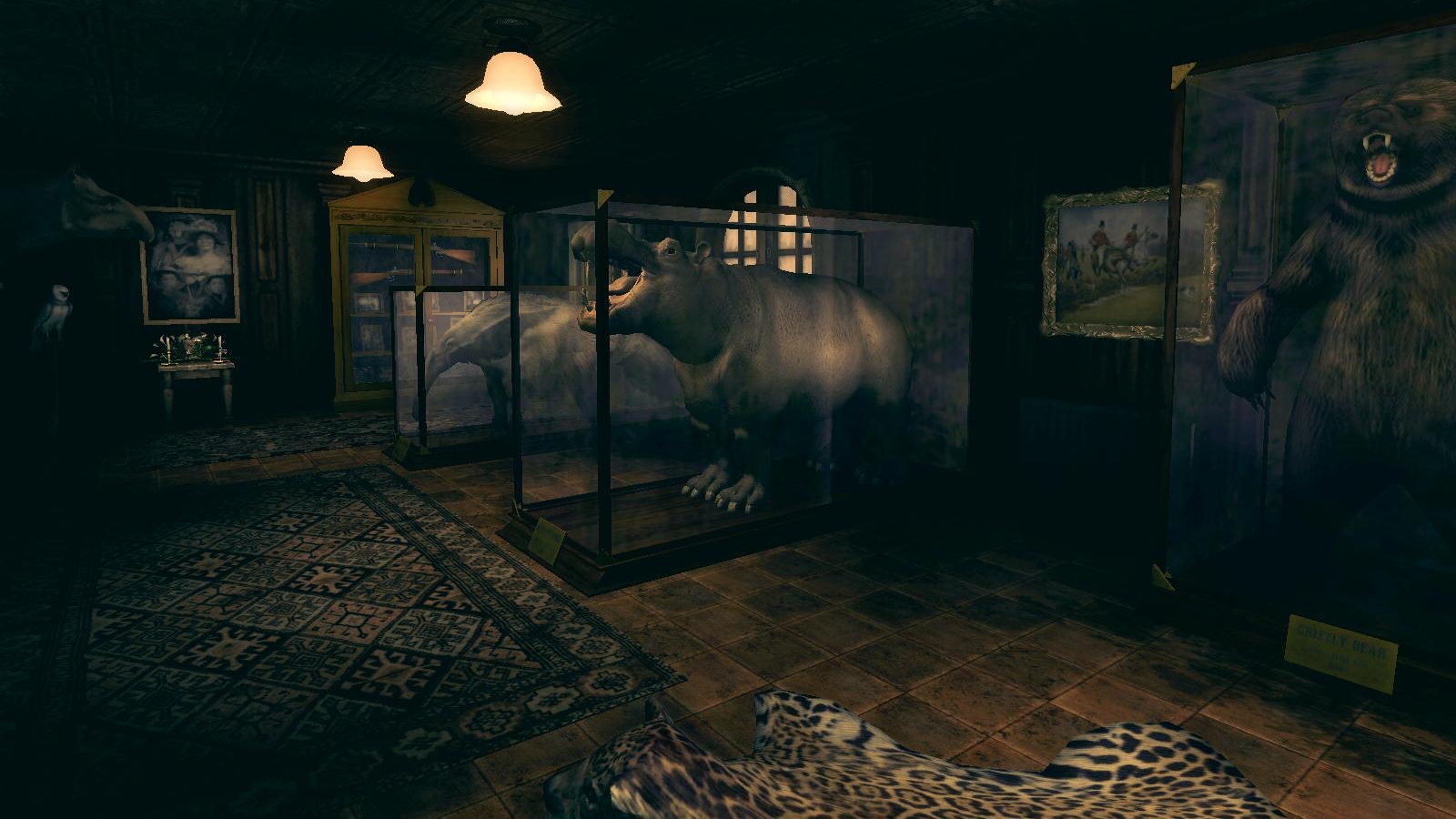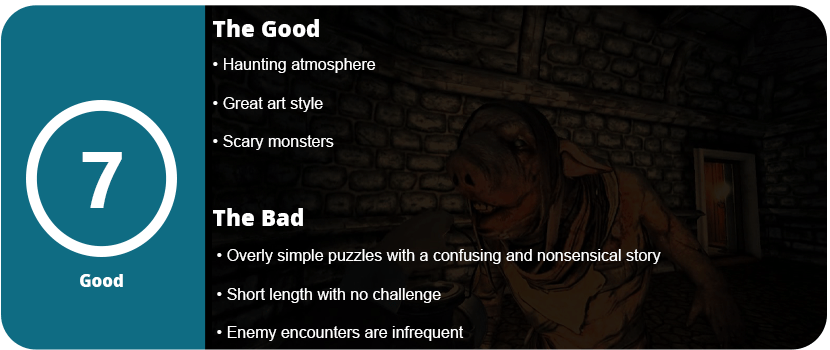
Amnesia is probably one of the scariest games ever made. I’m talking about The Dark Descent. It made you fear every sound and corner due to the fact that you couldn’t fight enemies. The atmosphere was so scary and haunting, not to mention the extremely scary monsters. A Machine for Pigs gets picked up by a new developer, The Chinese Room, of Dear Esther fame. While it’s still scary and haunting, it doesn’t make you fear every second like the first game did.

Honestly, the story is confusing and makes no sense. It’s a garbled mess, and all I got out of it was that there was a machine that processed pigs for mass consumption in 1899. You play as a man named Mandus who is trying to find his two boys who went down into the depths of this machine. That’s pretty much all I got out of it. What this machine is doing is creating man-pigs that are trying to “cleanse” the town of people for the coming 20th century. The ending sucked, and the game is overall just really short and anticlimactic.
A lot of features were stripped from The Dark Descent. You no longer use tinderboxes to light areas, and you don’t need oil for your lamp. You just run around with a lantern, flipping switches, and solving extremely basic puzzles. The Dark Descent had you really scratching your head, but A Machine for Pigs doesn’t even try to challenge you. In fact, there aren’t even that many monster encounters. Sure, when you reach them, they are scary and intense, but the first 2/3 of the game is uneventful. As you get to the last few chapters, it’s mostly story and nothing else. The whole feeling of progress from The Dark Descent is absent here, which makes no sense. A Machine for Pigs felt more like a barely interactive story than a game.
Towards the end of the game, it just feels disjointed and unbalanced. You bounce around from level to level, and nothing feels connected. Many times, in the beginning, I wandered around, not knowing where to go or what to do. The game just lacks guidance or real direction and can’t be felt from the very first level.
That doesn’t mean the game is bad. It’s not nearly as good or memorable as The Dark Descent should be. The graphics are really dated, despite the nice art style that is carried over from The Dark Descent. A Machine for Pigs feels like an average indie horror game with a story that can’t be followed. Fans of the original will be highly disappointed, but newcomers should just skip this and play the first game.
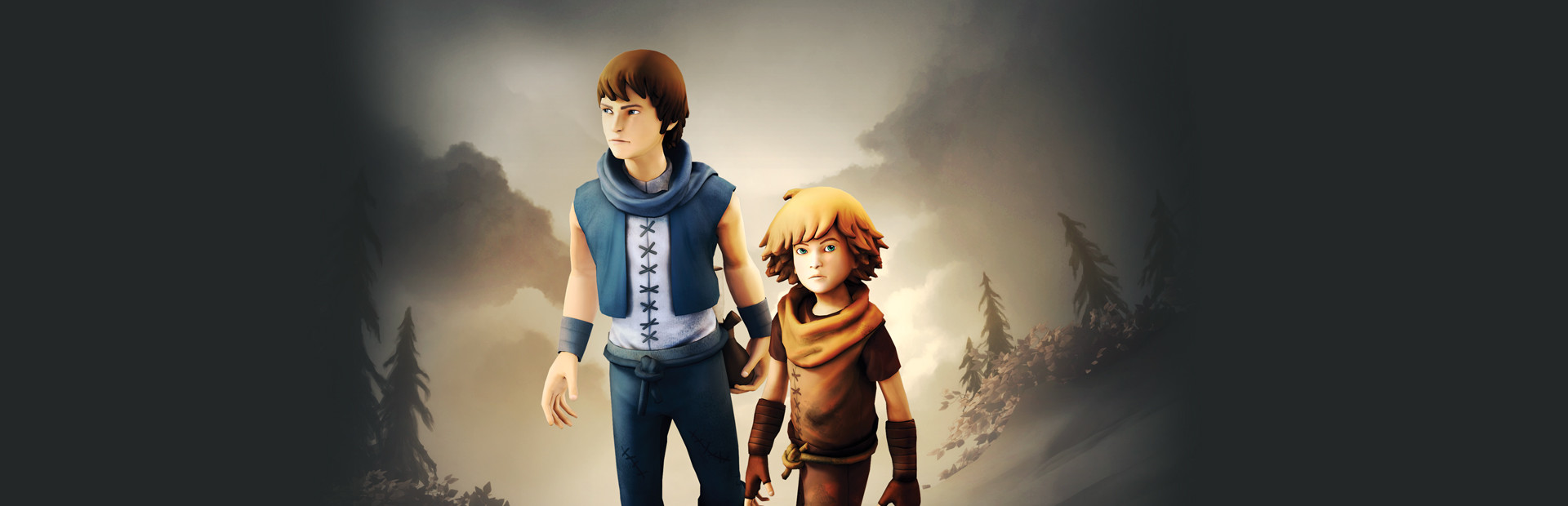
Brothers is about two boys who travel across their land to find a magic sap from a very special tree. They need this sap to heal their father, who has come down with a life-threatening illness. That’s pretty much all there is to the story. However, that’s not the touching part. Brothers don’t really start hitting your feelings until the end. Brothers have a unique gameplay mechanic where you control each brother with an analog stick. It takes some getting used to, and you never completely get used to it, but using both brothers at the same time is a unique way to play a game.
The game consists of simple puzzles. They aren’t complicated and don’t take much thinking to figure out. Some puzzles only certain brothers can solve. There may be a gate that the smaller brother can squeeze through so he can lower a bridge for the bigger brother. Sometimes they have to work side by side, such as in the water. The smaller brother can’t swim, so he needs to hold onto the older brother. The only other buttons you use are the triggers. One was assigned to each brother for grabbing stuff.
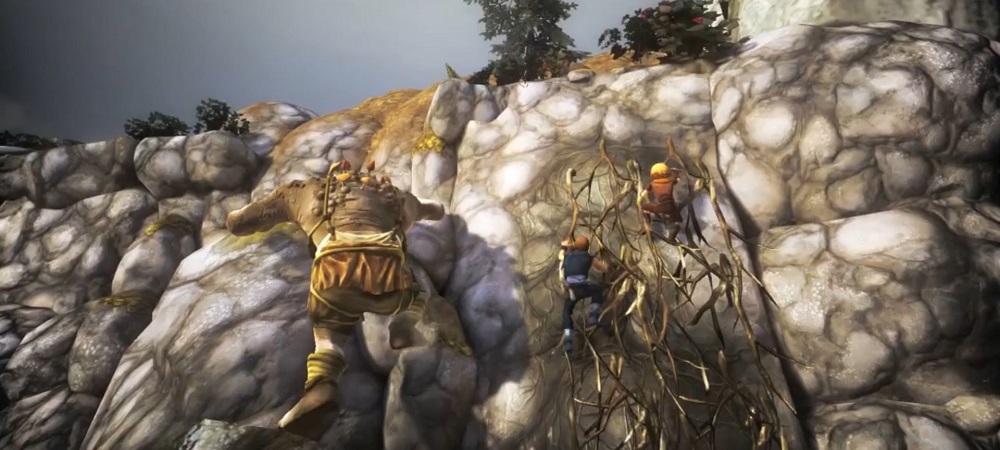
There are some boss fights in the game that are a lot of fun. One early on consists of fighting a troll. The little brother needs to lure him into a cage while the older brother closes it with a lever nearby. There’s only one way in, so the little brother has to slip through bars to escape. It’s moments like this that make Brothers shine and make you smile. Later on, in the game, it gets darker and grimmer. Puzzles involve dismembering the dead corpses of giants. The gameplay ideas change throughout the game, like when they have a rope tied to each other and you use it to swing each other around cliffs. The game feels like a grand adventure, but it’s short-lived. You can beat it in 4 short hours, wanting so much more.
The game looks really good; while not technically impressive, the art style is great, and the game has many beautiful vistas. The story lacks any depth, but it’s the adventure that counts here. If you have a free evening of gaming, Brothers is one of the best indie games you can buy this year.
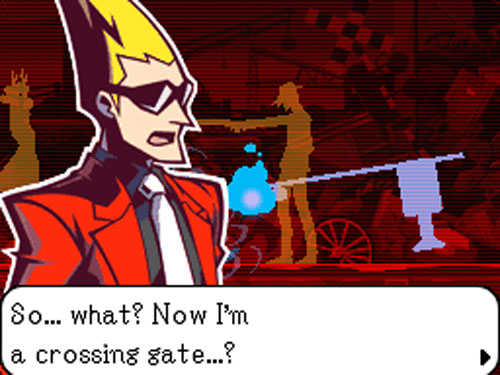
The last great game I remember playing where you were a ghost was Geist for GameCube. Ghost Trick may not be an action-packed shooter, but it does have an interesting story with whacky characters and fun mechanics. You are trying to solve a murder mystery for yourself. You wake up as a ghost out of your body and need to find out who killed you and why. As you play through the 17 chapters, the story unfolds more and more and starts out as a gripping story until the very end, where it just falls apart and becomes hard to follow. Despite that, the game has great art and animation and is worth a playthrough.
The main mechanic is playing as a ghost and being able to rewind time, change people’s fates, and manipulate objects. When someone dies, you can talk to their core, where you find out a little about them. You can then rewind time to 4 minutes before their death. Once you see the clip, it plays out again, but you must manipulate objects to prevent their deaths. This is a really neat mechanic and very original. These are all puzzles, and they get harder as the game moves on. One person may end up dying from a trap that was set up, and you have to stop one part of that trap before the person is killed. When you are in the ghost world, time stops, and you can see all the objects you can hop to. However, you have a limited reach, so you need to manipulate other objects to get closer, such as knocking stuff down, opening things, and various situations like that. The puzzles end up becoming multiple screens, and you sometimes have to travel to whole new areas mid-puzzle. You can travel around via telephone lines, but you must be on the phone when someone calls at a critical time to trace the call. This is all really neat and fun, but after a while, it kind of gets stale.
I hate to say this because this is a one-of-a-kind game on the DS. It uses the touchscreen in a unique way, but all you do is solve these ghost puzzles. There’s more talking than gameplay, which will bore impatient people. Some cutscenes can go on for nearly 20 minutes. When you do start playing, you are constantly interrupted with overly drawn-out dialogue to tell you what to do. A lot of the time, the puzzles can be nearly impossible to figure out or require constant trial and error. The occasional puzzle is thrown out there that is different—some are timed and some aren’t. Towards the end, you get to play as two different ghosts; one has the ability to swap objects. This adds another layer of depth and difficulty to puzzles, but most can be figured out after a few tries.
I actually got really attached to the characters, which is surprising. For the long length of the game (nearly 20 hours), the characters were well developed, but the big flaw was revealing everything in the final 3 chapters and then adding another complete twist at the very end to overcomplicate the story. It all flows perfectly fine until the end, when it just falls apart. It gets so confusing with all the characters and details you have to remember; they should have spread it out more. Despite this major flaw, this remains one of the most story-rich games on the DS. There are many puzzles in the game, and it is well worth a purchase, but the impatient may not like it.
Overall, Ghost Trick is a unique game with original game mechanics that are repeated way too often. The story and characters are great and memorable, but the story falls apart towards the end and gets convoluted. There is also zero replay value because there’s no collecting and no extra endings. Once you beat the game, you are done for good. I also didn’t like the poor balancing of puzzle difficulty and the high level of trial and error. If you can look past all this, you are in for one of the best games the DS has to offer.
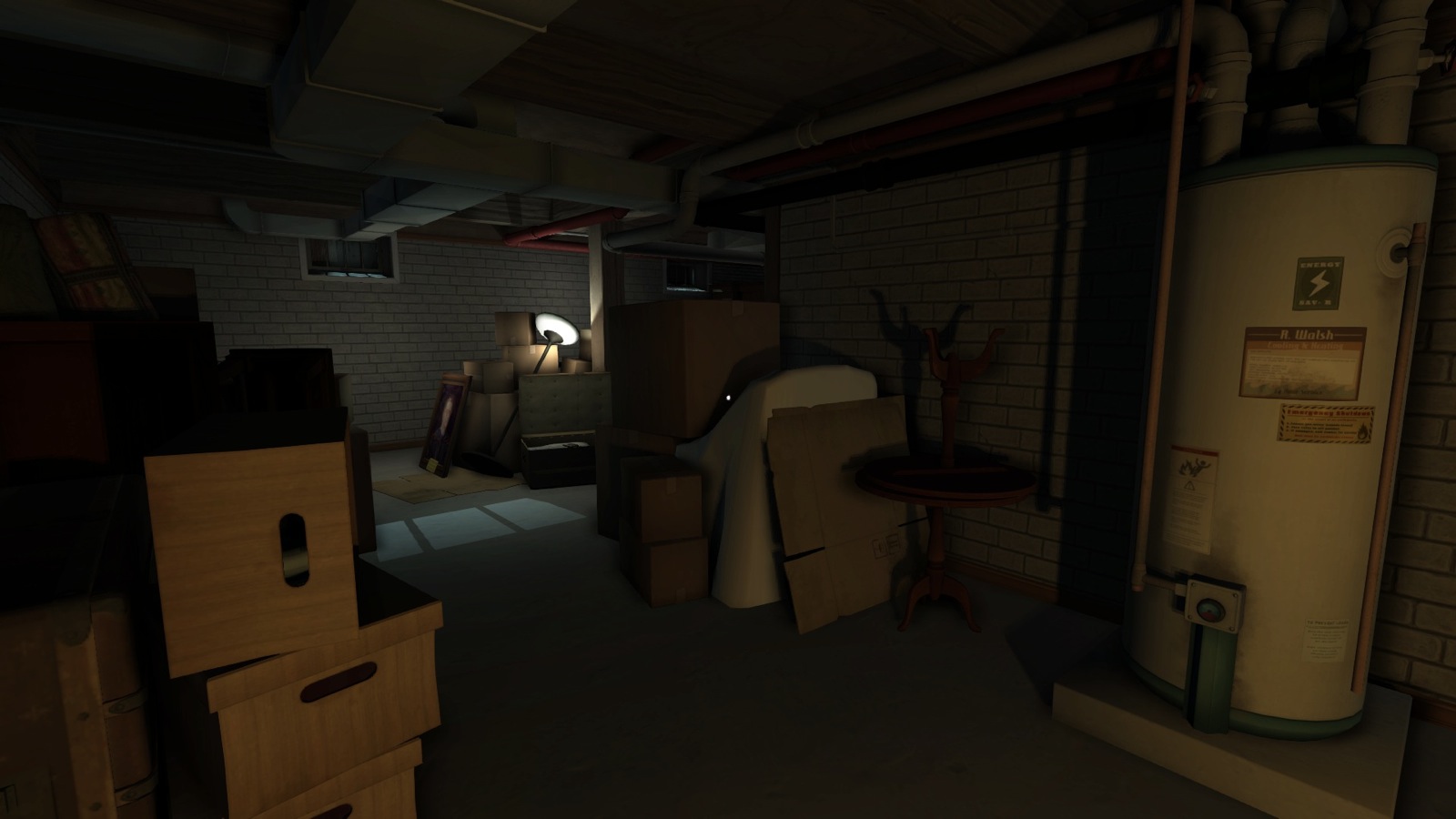
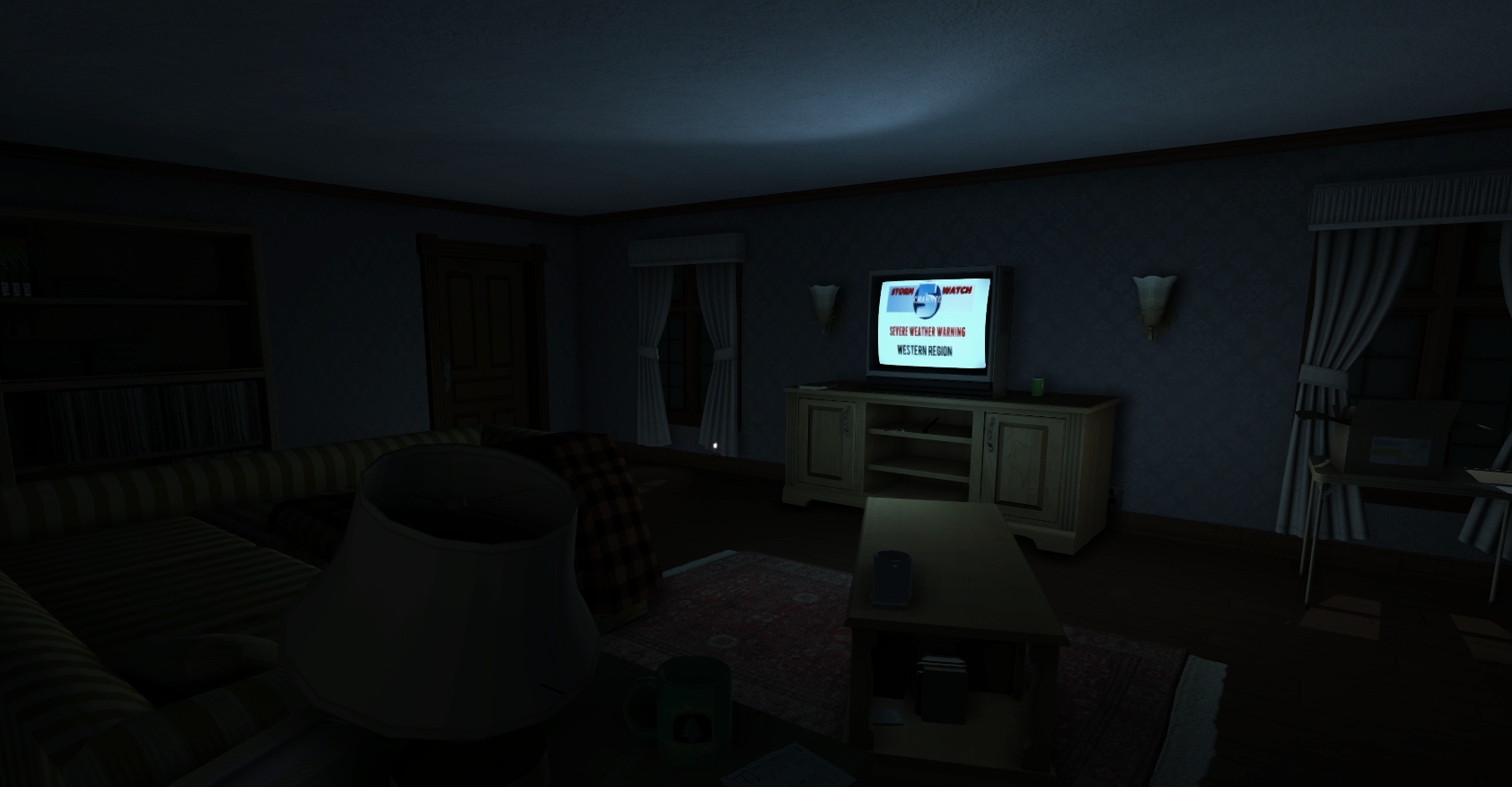
It goes to show that a smaller focus can create a great story and atmosphere. You don’t need a multi-million-dollar budget to create something great. Gone Home starts out oddly because you are given no direction, but after about 15 minutes, you realize what you are supposed to do. You arrive home from a school trip, and no one is home. You find a note on the front door from your little sister, Sam, that says she’s gone and won’t come back. With the dark atmosphere of lightning and rain, you expect this to be a murder mystery. In fact, that feeling changes throughout the game.
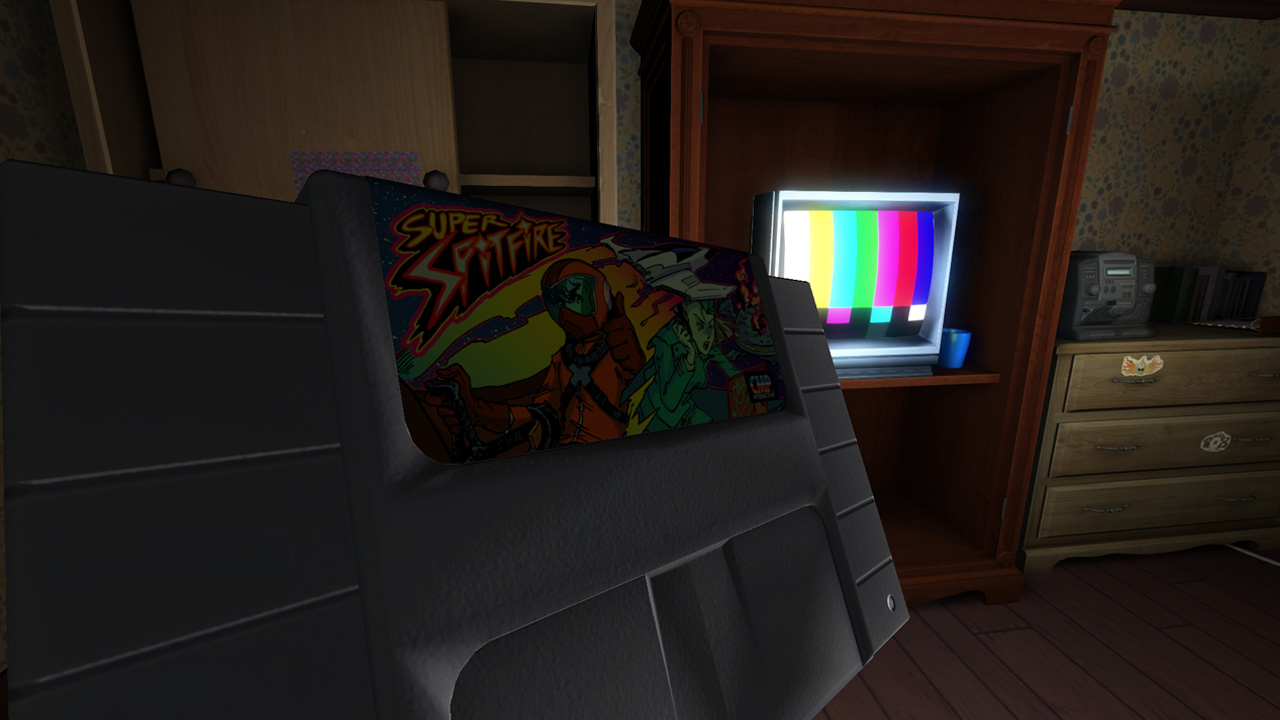
Once you find the key and go inside, you just wander around, examining everything. There are letters to read and interesting objects to look at. After a while, you start finding key items that activate journals narrated by your sister. The home itself is a great recreation of a ’90s home. It actually brought back a lot of childhood memories with CRT TVs, cassettes, VHS tapes, and various items from the 90s. It gave me a warm feeling, and I felt at home in this house, but I wasn’t sure what was going to happen. Was it haunted? Was there a murderer in the house? I went on to read more letters and items to see that the mom was a park ranger and the dad was a tried and failed author and magazine writer. I later discovered a few locked areas and three different cabinets that had lock combos on them.
Honestly, you don’t need a walkthrough for this game. It’s all pretty easy to figure out. I just went from room to room looking at everything and realizing that this lesbian relationship with Sam and her friend Lonnie is actually pretty heartbreaking. You see signs throughout the house that it’s a bit of a broken home, and Sam is a problem child. Little things like good report cards from you and then disciplinary notices from the school for Sam. It all brought back memories for me from my school days and my childhood. Anyone who grew up in the 90s will feel the same way. As I reached the end of the game, I was pretty emotionally stirred up. I couldn’t wait for the end.
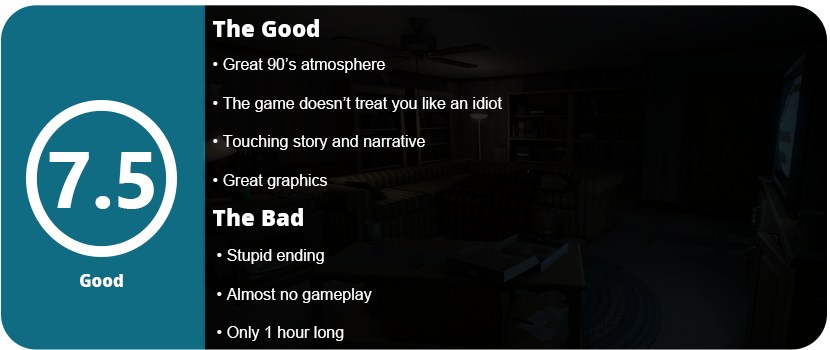
Once I got to the final room and saw the ending, I was really disappointed. I felt the entire 1-hour journey was for nothing. Sure, the story was sad and will tug at your heartstrings, but the ending was predictable and lame. There are signs everywhere of Sam studying the occult and various things about the house being haunted, but nothing ever happened. I was never spooked; there was no murder; it was just a few journals narrated by a gay sister, and that’s it. 90% of gamers will find this game extremely boring, and even if you don’t, it’s not worth $20. You get about an hour of gameplay with a lame ending. I expected the sister to have committed suicide and you would find her body upstairs, something like that, but no, just a lame ending.
The game has decent graphics, but nothing too impressive. There’s a lot of attention to detail everywhere to create this great 90’s atmosphere, but you still need a pretty powerful rig to run it due to the complex lighting effects. As it is, Gone Home is a great narrative and a trip down memory lane, but the ending and lack of gameplay are disappointing.
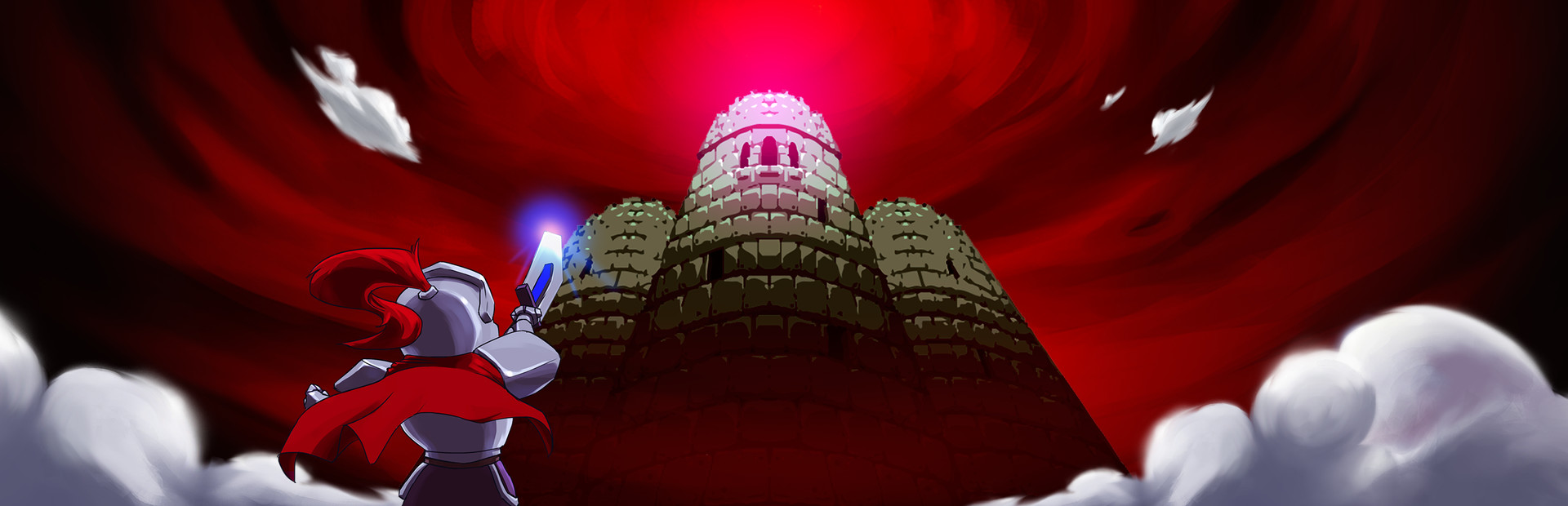
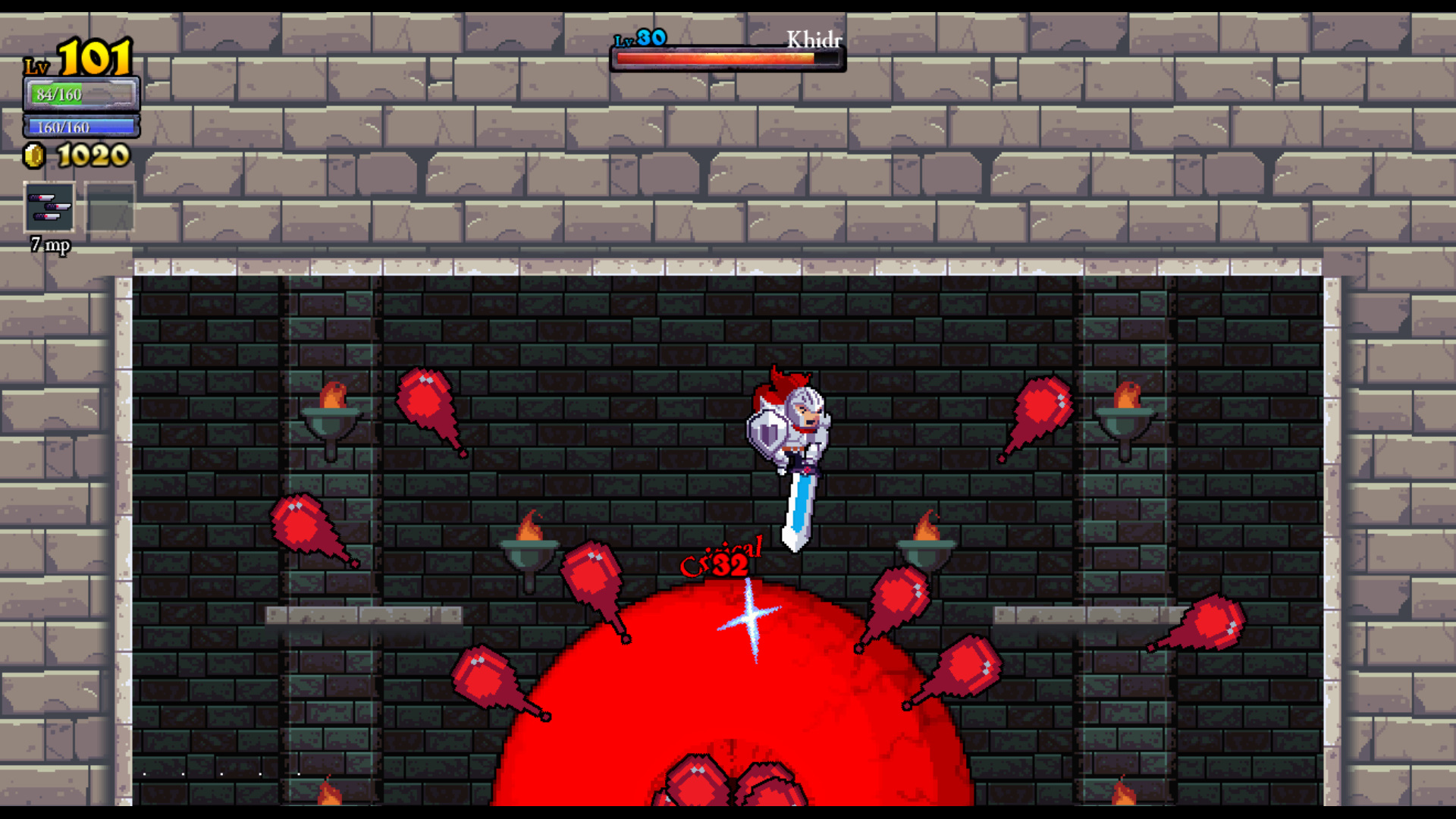
2D platformers have had a huge comeback in the past 5 years, but none of them really offer a great challenge. Rogue Legacy offers a lot of replay value thanks to the randomly generated dungeons and characters. I love Rogue’s character selection system. You get to pick between three different people, and when you die, their attributes make an offspring that is similar. Some characters walk upside down, and some have extra strength, health, MP, HP, and various other passive effects. This is really neat, and sometimes you are forced to choose one particular character so the other bad genes are wiped out on your next death. You can upgrade your weapons at each rebirth, and you can give up 30% of all the gold you find to lock down the castle if you liked the previous layout. When you enter the castle, you must forfeit all your gold, so you start from scratch. This is a cool feature and doesn’t really get in the way.
When you actually play, you will be greeted with great controls and fast-paced and challenging combat that’s similar to Mega Man and Castlevania. Breaking open objects gives you gold or items, and enemies can be really tough and fast. You have to stay on your toes because you can die really easily. I died around 15–20 times before I even got to the first boss. You also get items that use MP, kind of like in Castlevania. Honestly, this game felt like Castlevania meets Infinity Blade, which isn’t a bad influence. I wasn’t frustrated because sometimes the rebirth was for the better. After a while, it gets kind of hard, so it’s only fun in short bursts. I found the game very addictive, and the variety of enemies kept me coming back for more.
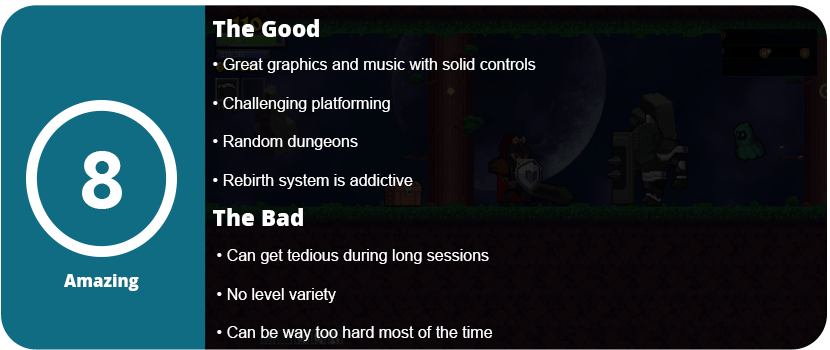
The whole point is that you become more powerful every time you die, so it’s not like other games where all your progress resets. You are always progressing, no matter how good or bad you are at the game. After a while, you start learning the enemy patterns and eventually even a favorite layout. The graphics are actually pretty good with nice 8-bit sprites; this is actually one of my favorite platformers in a long time since ‘Splosion Man and Fez. There’s really not much wrong with the game other than the lack of level variety, and the game can be way too hard. This game relies solely on skill to advance, and the better you are, the longer you can survive.
Don’t let the simplicity and small scope of Rogue Legacy turn you away. If you love platformers and challenging games, this is for you. The game has a great chip-tune soundtrack, nice graphics, and solid controls. The constant dying and respawning can get tedious sometimes, and the progress you made before can feel like it’s all for nothing. Thankfully, there are many upgrades and items to buy to keep you coming back for more.
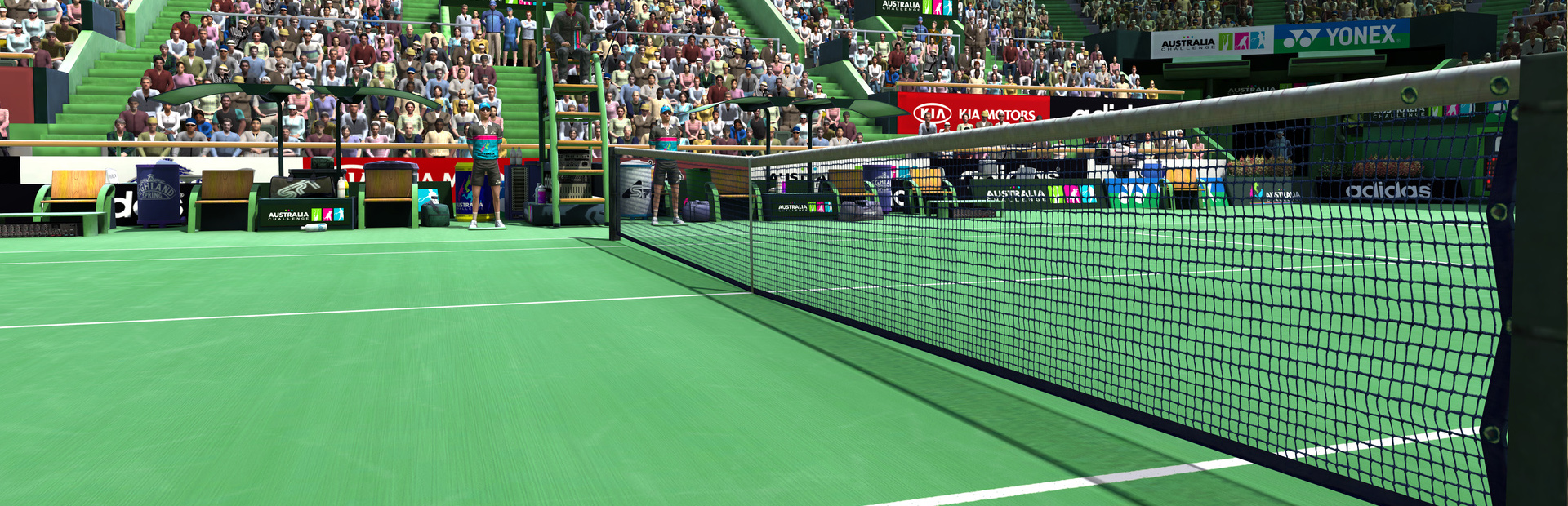
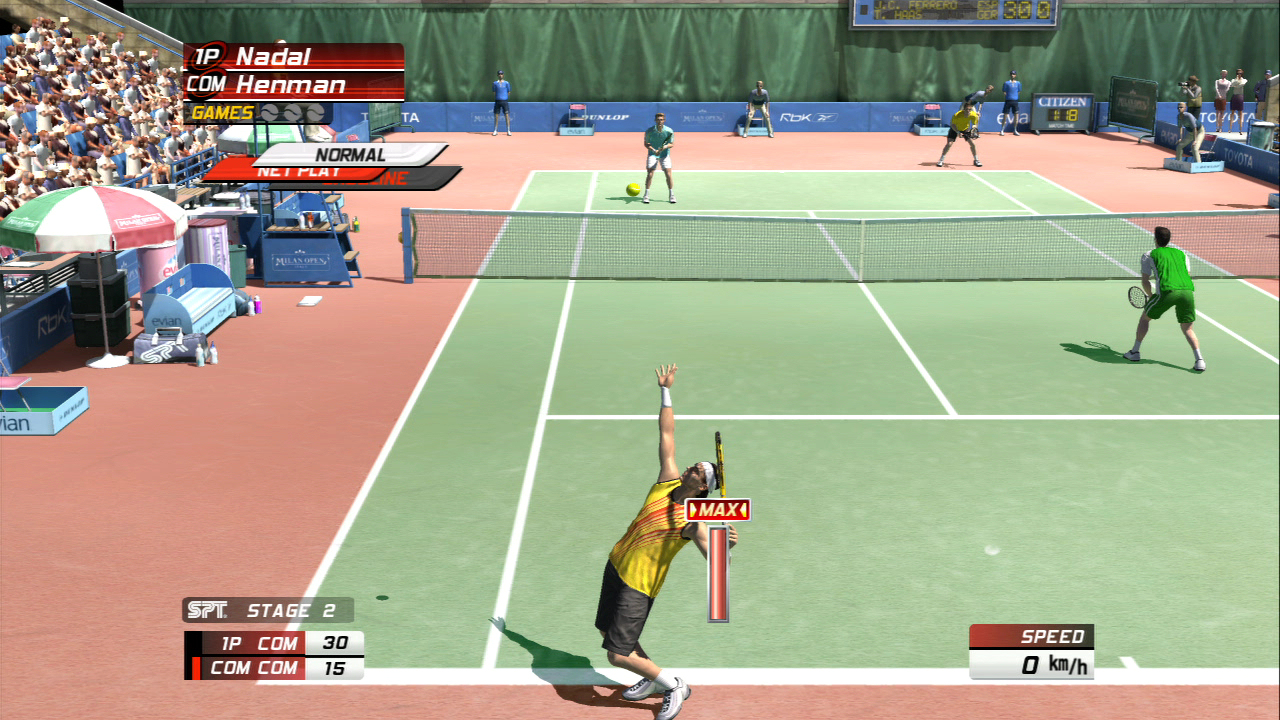
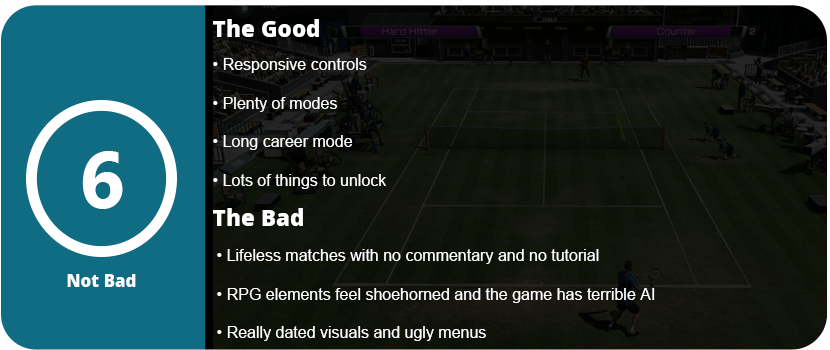
First off, I’m not a tennis fan. I just like playing the occasional game, such as Hot-Shot Tennis. I just like the competition and the strategy behind it. You need to trick the player into going where you want so you can set them up for failure (or, at least, I think that’s how you play tennis). I don’t know! I’m not a pro player! Secondly, Virtua Tennis 4 isn’t the best tennis game I have ever played; it’s very dull and lacks any excitement or flair. It doesn’t need to be a crazy arcade-type game, but give us more than just green, two players, and a ball.
The game is very confusing to start. The career mode is pretty lame, and I didn’t like it. You move around a world map with a piece of paper and markers. You get random move cards instead of dice. Some spots are for training; others are clothing shops, tournaments, face-offs, and various other things. Every time you get into a match, whether it’s for training or not, your condition decreases, and this apparently affects how you perform. I honestly didn’t notice a difference, or the AI was just so bad that it didn’t affect anything. This board game idea is nice, but it’s so dull. The menus look like absolute crap and are flat and lifeless. There’s no tutorial on how to play, and each move pretty much felt the same. The only one that felt different was the lob.
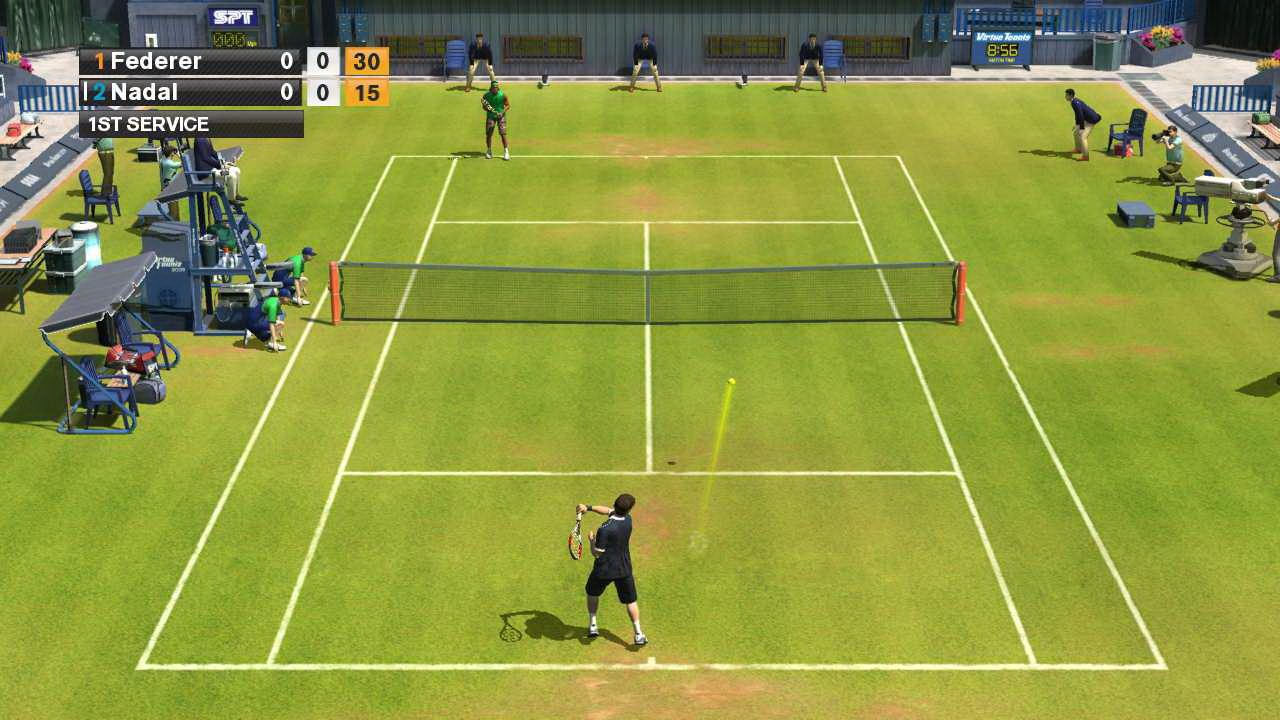
During a match, I felt every player played the same. You serve with a power meter, and I could never figure out where my ball was going. Some sort of reticle on the ground would have been nice. I would smack the ball for 10 minutes, and nothing would happen. It was so hard to trick the AI into doing what you wanted, and it took so long. I wound up losing match after match trying to outbeat the AI; otherwise, I was stuck in an endless volley. The matches themselves, outside of swinging, are boring. There’s no commentary, the characters look horrible, the pros don’t look like their real-life counterparts, and the graphics look about 5–6 years old.
I understand this is supposed to be a tennis sim, but you can still make it fun. Even after playing 10 tournaments, I still didn’t unlock any new clothes; my character was taking forever to level up, and it just felt like the same thing every freaking match. It felt like it would never end. During career mode, the stupid reps and managers would pop up with lifeless dialog that you just didn’t care about. The only real way to go is multiplayer, but no one is playing online at all. I just feel that the game is a huge, boring mess with terrible AI and lifeless characters. The controls respond pretty well, but I didn’t feel a difference between any of the hits. The game could have been so much more. As it stands, this is the worst tennis game I have ever played. Even major tennis fans will be disappointed in this lifeless borefest.
Forget about the last Shadowrun FPS. That game was a disaster. This HD remake of Shadowrun Returns with a great story, but the combat is lacking just a bit. You are basically a runner who watches a tape of your best friend before he dies. You suddenly become his insurance collector, and you need to find his killer. The story is pretty engaging, and I was sucked in from the beginning. You basically just follow mission after mission, unraveling this mystery.
Of course, you get to pick your class at the beginning. Go from ranged weapons to melee to magic. There’s also a fourth decking ability that makes you stronger during hacking battles. Once you complete some missions, you get to The Union, which is your underground hideout. You can buy weapons, cybernetic enhancements, magic, first aid, weapons, and various other things. Make sure you take plenty of health with you and stock up on the latest before the next mission. Usually, you have to hire out mercenaries to help you in a fight. I found the majority of the story fairly challenging, but later on, it got downright unfair. The biggest issue is the unfair savings system. The game is autosave only. The game will only save at the beginning of each level, so if you die, it’s game over. This is so infuriating towards the end when you have really long and tough fights.
The combat is fairly decent. You can select between ammo types (or magic types), special powers, and items. With this variety, you are sure to win battles. I was just so upset at how often I missed. I could be at point-blank range, and I would miss three times in a row. The accuracy and rate at which you hit enemies seem completely random, and I hated that. Decking battles are interesting but boring because they aren’t as deep as regular combat and there are only a few types of enemies. Once you complete the mission in the hacking area, you have to run all the way back to the opening. If no one’s out there defending you, the enemies shoot up your body, and you can die. That’s really frustrating, and it drove me nuts.
I also wish there was more exploration, but you’re stuck where the missions take you. Sure, there are a couple of side missions, but you can’t explore anywhere. This is a really interesting world with interesting characters, but you’re limited to where the story takes you. That will turn a lot of RPG fans away, but the entertaining combat and story should keep you for a while. I also wish there were more powerful weapons and armor in the game. Even when I was almost done, the same armor from 10 missions ago was still the best. The game is pretty unbalanced, but some may overlook it. The graphics are decent, but nothing special. They won’t make your system sweat.
In the end, Shadowrun is a fun RPG for fans of Fallout and earlier top-down RPGs. The story is great and is a fun murder mystery, but the combat feels too thin, and decking just isn’t fun. The real deal-breaker here is the unfair and punishing save system, and some may quite early on because of it. If you can stomach the unbalanced gameplay and save system, you will be in for a great story.
Mass Effect made such a huge impact on me and the gaming world that no one probably expected. To create such a vast universe of fans of Star Wars is just incredible. BioWare pulled it off, and each game is very memorable. Mass Effect 3 pulls all the punches this time around and is the epic climax to the Reaper invasion that is sent to wipe out all organic life in the galaxy. Of course, Commander Shepard is supposed to fix this along with his or her recruits that you brought along throughout the series. Never before has a game spread so much across a trilogy. I have never kept a game save so sacred as I have my Mass Effect save because every choice you make carries heavily throughout the whole series.
It was obvious in ME2 how choices carried over, but ME3 is huge. Main characters will die; some that died in the last games will have an impact on how ME3 turns out. Instead of going around recruiting people like in the last two games, you are recruiting entire war assets for the War on the Reapers. You are trying to bring whole nations together and making huge decisions that will impact the galaxy for the rest of time. Things like whether or not you should cure the Krogan genophage, help the Council, help Cerberus, or just say screw it and make everyone’s lives hell. You have choices here, and they will make you think a lot. Never before as a shooter have I cared about seeing certain races die or get hit. Seeing the Turian homeworld Palaven get creamed left me feeling sad and determined to make choices that helped them. In this game, some civilizations actually get wiped out due to your choices. Some are just as subtle as helping someone out on the Citadel with a side mission that decides whether the Elcor, Hanar, Batarian, and Volus survive or not. This game is so big and bold.
Aside from the obvious story, the gameplay has improved a lot. The action and shooting are more refined and feel better. There are whole new weapons, a cover system, as well as a dodge and roll mechanic that comes in handy. Everything just feels tight, and weapons hit heavy. Speaking of weapons, you can now customize them by adding mods to improve damage, stability, accuracy, and even clip capacity. You can now buy mods through shops on the Citadel in Normandy instead of running around on every planet trying to get what you need. You can also buy armor and have more customization options for your character, which is very welcome. You also can’t carry every weapon with you anymore. I guess the goal was to balance the game more. Each weapon you have will add weight, which can be reduced by upgrading weapons. Carrying every weapon with you will slow you down and reduce the recharge speed of biotic powers, so choose carefully.
The overall structure of the game is just more streamlined, less messy, and less annoying. Small side missions are usually stuck in the Citadel, where you have to find an item for someone during space exploration. Exploration in space still isn’t fun, but it’s a lot better than scanning every damn planet for resources. They have completely scrapped this time around, so everything is just bought with credits, which is how it originally should have been. You can still scan, but you do it on the map, and EDI will tell you if she finds something. Certain planets will have a war asset or an item someone on the Citadel is looking for. If you scan too much, the reapers will come after you, and you have to high-tail it out of the system before they catch you and come back after a mission has been completed.
Almost everything you do in this game is big, and I can’t think of any mission that felt small, like in the last two games. ME3 is just huge in scope, and there are some memorable and impressive moments. The story is very cerebral, but here’s the catch: If you have never played a Mass Effect game before, go back to the first one and start from the beginning. You just won’t appreciate every decision if you jump right in. The comic that explains the last two games isn’t enough and doesn’t do this excellent and amazing sci-fi series justice. Only fans who have played through the last two will appreciate this game and truly feel that every decision is personal.
The controversy about the endings is understandable. I got to use the Extended Cut DLC while playing this, and after some research, the ending would stink without it. Without any spoilers, the ending gives you three choices at the end this time around instead of two. The choices are explained more, and there are some extra shots stuck in the endings to make more sense of it all. The original endings were just sloppy and, to be honest, lazily put together. BioWare did everyone a service by offering these endings for free.
Overall, Mass Effect 3 looks amazing, plays well, and has some of the most memorable choices I have ever had to make in a game. This is about all life as we know it, not just some city or civilization. This is about all organic and synthetic life, and what ME has done for the gaming world is a huge feat that I haven’t seen since Star Wars. This is a true sci-fi masterpiece that all fans of the genre will love. If I did have any complaints, it would be the original endings, and there are some issues like collision detection and linearity; the game feels shorter than the last two games; and the space exploration pretty much stinks. These are minor, though, and don’t really bring it down much.
This game made a huge splash in the indie scene thanks to its rocking soundtrack and unique take on mobile games. I have to say that Superbrothers uses tablets and phones unlike any other mobile game out there. It is a breath of fresh air, but in the end, it is way too short and just leaves a feeling of emptiness, like there is no point in playing it.
You play as a man or boy who is on a quest to destroy an evil being at the top of a mountain called Mingi Taw. You come across a magic tome and must find three triangles to make a trifecta. The story is pretty thin, and there really isn’t much of one there. It’s all about adventure, music, and unique art styles. You tap along this countryside during the first half, trying to find your way to a cliffside. After you play for a bit, you get a sword and shield and fight your first monster. If you turn your phone or tablet sideways to fight, you can block an attack, but it’s very simple and not very complicated. There are only a few fights in the entire game. The bulk of the game is made up of using your swoony powers to solve little puzzles, but these feel easy and slightly uninspired.
You hold down on your character to enter this mode. You then have to figure out what to tap in order to get the little sprite out of the ground. You need these to advance to the next stage. Sometimes things have to be tapped in order, but it’s not all that hard to figure out. One interesting concept is that you need to find two of these triangles during the bright and dark phases of the moon—in real-time. You will have to come back when the phases of the moon are just right, and the game will tell you when. Or you can just cheat and advance your calendar on your device. If you do this, the developers are on to you, and they only give you a 99% completion rating for cheating. This is a pretty interesting idea, as no other mobile game has done this, but it’s not very significant and feels like a cheap way to extend the game’s length.
The only challenging part of the game was the three major boss fights and figuring out where to go. There are almost no hints; sometimes I wandered around forever, not knowing what to do. The boss fights require precise reaction times for dodging and attacking and can get pretty tough. You can beat the game in a few short hours if you cheat, but when I finished the game, there was no attachment. The characters are just there, and there’s not much of a story to get attached to. The music is great, but only during certain scenes or events. I honestly just feel this game is really overrated; it’s good, but not that good. I personally loved the 8-bit retro art style, and it’s beautifully done. I just wish there was better gameplay to go with it.
In the end, this is just an odd game that you play for the hell of it. It’s a unique mobile game, yet everything in it feels unnecessary, and in the end, you wonder why you played it. There’s nothing here that will keep you talking about it years later; it’s really short and lacks any challenge or depth. I just like that it took a different approach to game design, and that is greatly respected.
Call of Juarez has been a very rocky Wild West series. The first game was terrible, the second game was great, the third game was horrible, and the fourth game was great. Will the fifth game be horrible? Who knows. What I do know is that for $15, this is a very enjoyable shooter with a pretty good story and a narrative inspired by Bastion. You play as Silas Greaves, a “retired” bounty hunter who went after the most notorious outlaws in the west, such as Jesse James, Kid Curry, The Dalton Brothers, and The Sundance Kid.
The story’s cutscenes are told through black-and-white stills, but the narrative is really fun. If you have played Bastion, you will know what I’m talking about. As you play the game, it is being narrated as you go. Sometimes things will change right in front of you, on the fly, as Silas narrates his tales. Sometimes you will go through a whole section of a level; a bar patron will ask Silas if that really happened, then he will back up and correct himself. You then play that part again in a different way. It’s really fun, and as you progress, you start to question if Silas is really who he is or if he is even telling the truth. The battles get more outlandish, and even the patrons start questioning him. The story has a nice twist ending, and I have been hooked the whole time thanks to the tight gunplay and fun story.
The game is very simple and basic at heart. You get four different weapons: dynamite, pistols, shotguns, and rifles. There are a couple variations of them, but they shoot damn well, and I have to say I haven’t had this much fun as a shooter in a long time. While the enemies repeat often and it’s the same shootouts throughout the level, the environments change often, and the fun narrative keeps things mixed up so you are never bored. Every so often, you will have a duel with a boss. You need to use the two analog sticks to control the focus on the enemy and the speed of your hand. It’s tough to concentrate on two things at once, but it makes it fun and a bit challenging. During shootouts, you can slow down time and highlight enemies in red. You also get a “last chance” by being able to dodge the bullet that would normally kill you. Push both sticks in the opposite direction to save yourself. These little elements are just fun and a bit different from your typical military shooter.
Some boss fights require you to hide, sneak around, or use dynamite. There are also hidden secrets in the game that tell the real-life tales and occurrences of these real-life outlaws and skirmishes. They are pretty interesting for anyone who likes some history in their game (Assassin’s Creed fans!). That’s all there really is to it. The game is simple yet a lot of fun. You can do challenge missions afterward and a new game+ to continue with your leveled skills. There are three categories: trapper/melee, long-range, and short-range. As you advance in each section, you unlock a special gun in that category, which makes the game both easier and more fun.
Overall, Gunslinger is a really fun game. There’s not much wrong here other than it being bitten simply by some people. The graphics are fantastic, the gunplay is solid, and the narrative is a lot of fun and will keep you hooked to the end (I rarely put the controller down!). For $15, this is one of the best downloadable games you can buy this year. It may also be a good jumping-in point for anyone who hasn’t played a Call of Juarez game before.
Yeah, it's pretty damn awful. Notoriously one of the worst games on the PSP. A 4 was actually being generous.…