Well, this is a strange thing. I usually choose high-end, well-known brands over generic or start-up brands, but I needed something more simple as I’m not a macro type of person. Sure, I have a few fancy keyboards like the Roccat ISKU FX, Cyborg Strike 5, and even an Alienware keyboard, but I realized that the price hike is just for more keys than I don’t use. With Cyborg going out of business and their entire keyboard and mouse catalog havingn’t been updated in years, I decided to downsize and just go for something simple. I picked my favorite features for keyboards, and those were backlighting and great key feedback. After sorting through various keyboards on Amazon, I came across Pictek. They are a small German gaming company that is just starting up, but everyone is raving about their products, and I can see why.
When I got the box, I was a little worried. It’s just a generic blank cardboard box with two pieces of poorly fitted foam and a small fold-out piece of paper. I had to tell myself this isn’t Razer or Mad Catz, who can spend big budgets even on packaging. After picking up the keyboard, my worries went away, as it was very heavy and made of solid aluminum. The only plastic on this thing is the keys, which are awesome. The design itself is super sleek and doesn’t look low-budget. The palm rest is textured and raised off the keyboard, while there are various LEDs around the keyboard. The most important part is the keys, and they feel amazing. You would expect this type of quality from a $150 Razer or Corsair keyboard, but it isn’t any of those.
The lighting effects are awesome and better than any other keyboard I have owned. Yes, they are pre-set, but you get nine of them, and they all do awesome things. One preset will light up the whole keyboard every time you press a key, and another will make the keyboard dark, and each key you press stays lit up for just a few seconds and goes dark again. There are presets that light up keys for Call of Duty, League of Legends, and various game genres, which are just amazing. These are awesome ideas that the bigger companies haven’t thought of yet, and it’s a real shame. There is no proprietary software that can be good or bad, depending on how you see it. There is a way to set some macros, but you need the fold-out paper to figure it out. The keyboard settings are not intuitive at all, which is the only downside to this amazing product. But all of the things you would normally think have been done. Brightness settings for the backlight as well as speed, multimedia keys, and everything else are spaced nicely.
With that said, I have to give serious kudos to Pictek for being more than just another gimmicky generic keyboard company. The thing is even water-resistant, which is something you would expect from a $150 keyboard. They actually pushed out a quality keyboard with amazing lighting effects and functionality. Just don’t expect fancy packaging, software, or anything else out-of-the-ordinary that other bigger companies might do.
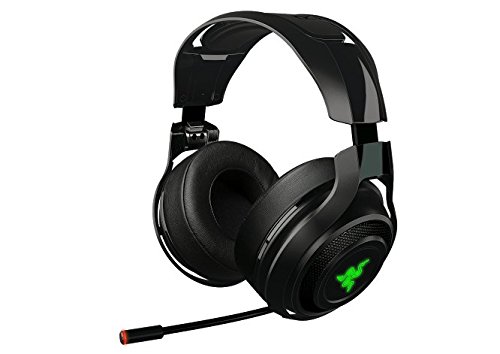
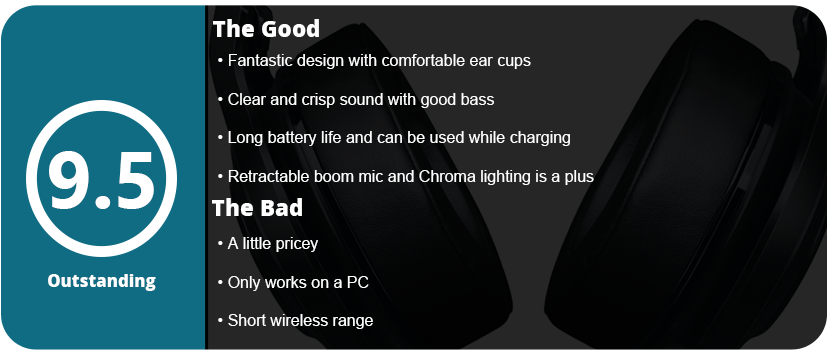
I’m not normally a headset person. I prefer to use good speakers, but with the recent move of my son into his own room, which is right next to my computer area, I had no choice. I normally shy away from Razer due to my poor experiences with their mice, software, and the Firefly. However, I know and have heard that Razer makes great headsets, so I gave the Man O’ War a try. What I was looking for was wireless, surround sound, good battery life, and a lot of software features, and thankfully, I got all of those with this headset.
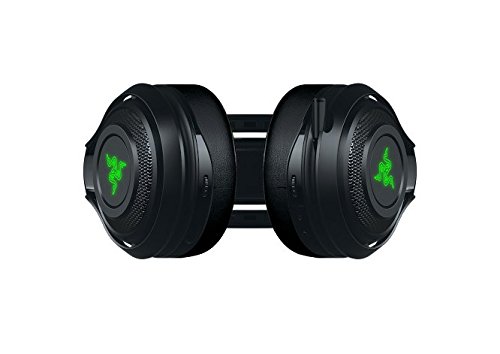
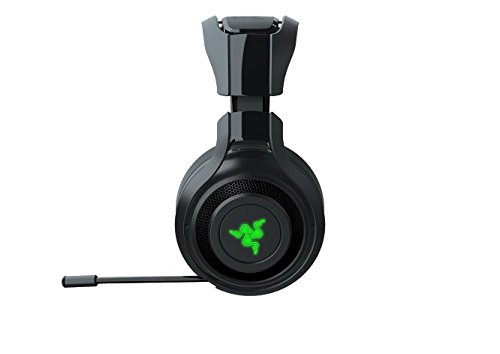
The box comes with everything you would need or don’t need. On top of the USB charging cable, you get a 6-foot extension dock, which is neat if your computer is on the other side of the room. It is also useful if you want to use the headset plugged in, but with the 14-hour battery life, this item was needed for me. The USB dongle is located on the headset cup, which is a really cool feature and keeps you from losing it. The headset itself looks amazing, with large cups, comfortable foam, and Razer logos that use Chroma through Synapse. One feature I really like is the retractable mic rather than being removable. It tucks away and is out of your face if you don’t need it, which I will rarely use.
The software is simple enough to install, and once that is done, you are greeted with a calibration setup for the 7.1 surround sound. Being able to adjust each channel for your own ears is an awesome feature, as some people hear differently or one channel may sound slightly off. The default settings were good enough for me. There are many enhancements available, such as bass boost, normalization, voice clarity, mixer, equalizer, and other features. The features are pretty robust, and I was able to tune my headset to the perfect listening environment. After wearing the headset for an hour, I didn’t get a headache and didn’t have sore ears, and this is all due to the headband being just strong enough to keep it on your head and the cup foam being very soft. The worst I get is that my ears get a little hot after a couple of hours, but this is normal for any set of ear cans.
Playing music sounds fantastic with these, but playing games is even better. I booted up Battlefield 1, turned on surround sound, and was blown away. I could hear each direction of every bullet, shout, explosion, and scream. It helped drag me into the experience more, and I forgot this was what I was missing out on with headsets. I had one back in 2009 for consoles, and now I remember why I missed it so much. It’s an experience you can’t get without spending thousands on high-end speakers and subs. Playing various other games allowed me to hear ambient sound effects, background noises, and other effects that I had never noticed before. It’s a great experience and, clearly, one you can only get with good headphones.
After using this set for 3 days, I have to say that I am completely satisfied. They don’t hurt my ears or head, they sound amazing, the software works, and the chroma lighting is just a small touch to add to that great pile. It’s a shame these aren’t for consoles, as console owners are really missing out. I should be happy with these until they break or die on me, and from the looks of it, that could be quite some time.
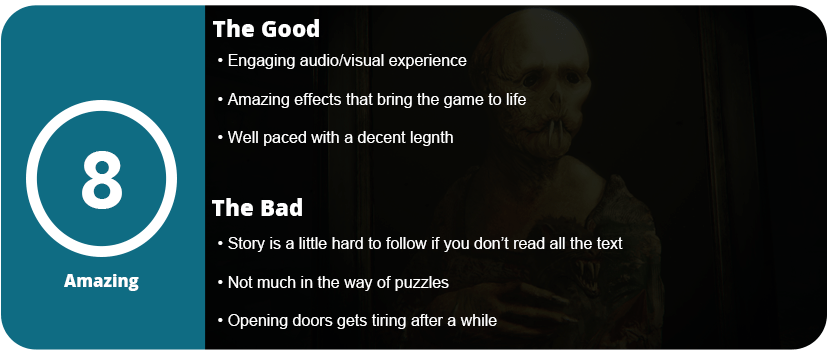
With P.T. only being a demo, it sure did imprint itself into the horror genre. Since then, games have been trying to copy their experience, but is this such a bad thing? I think not, as P.T. showed us what we have forgotten: the overall scare factor and how the atmosphere can do that. You don’t need cheesy monsters, jump scares, or even great visuals. The plain old atmosphere can do the job just fine. Layers of Fear is an indie horror game that is probably one of the most insane I have played in a long time. The game did have a forlorn and eerie atmosphere, but just the visual trip it gives you is mind-blowing.
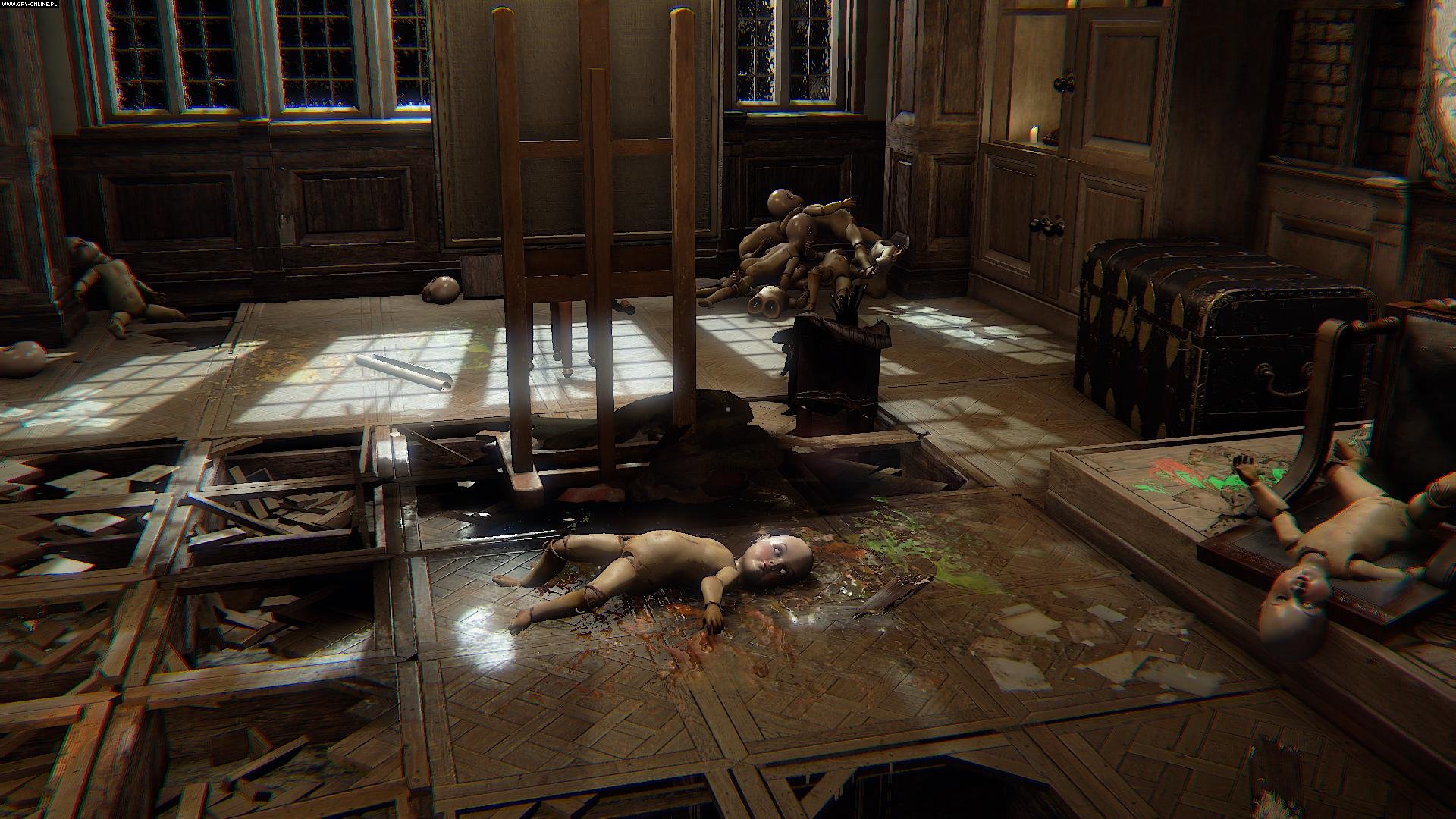
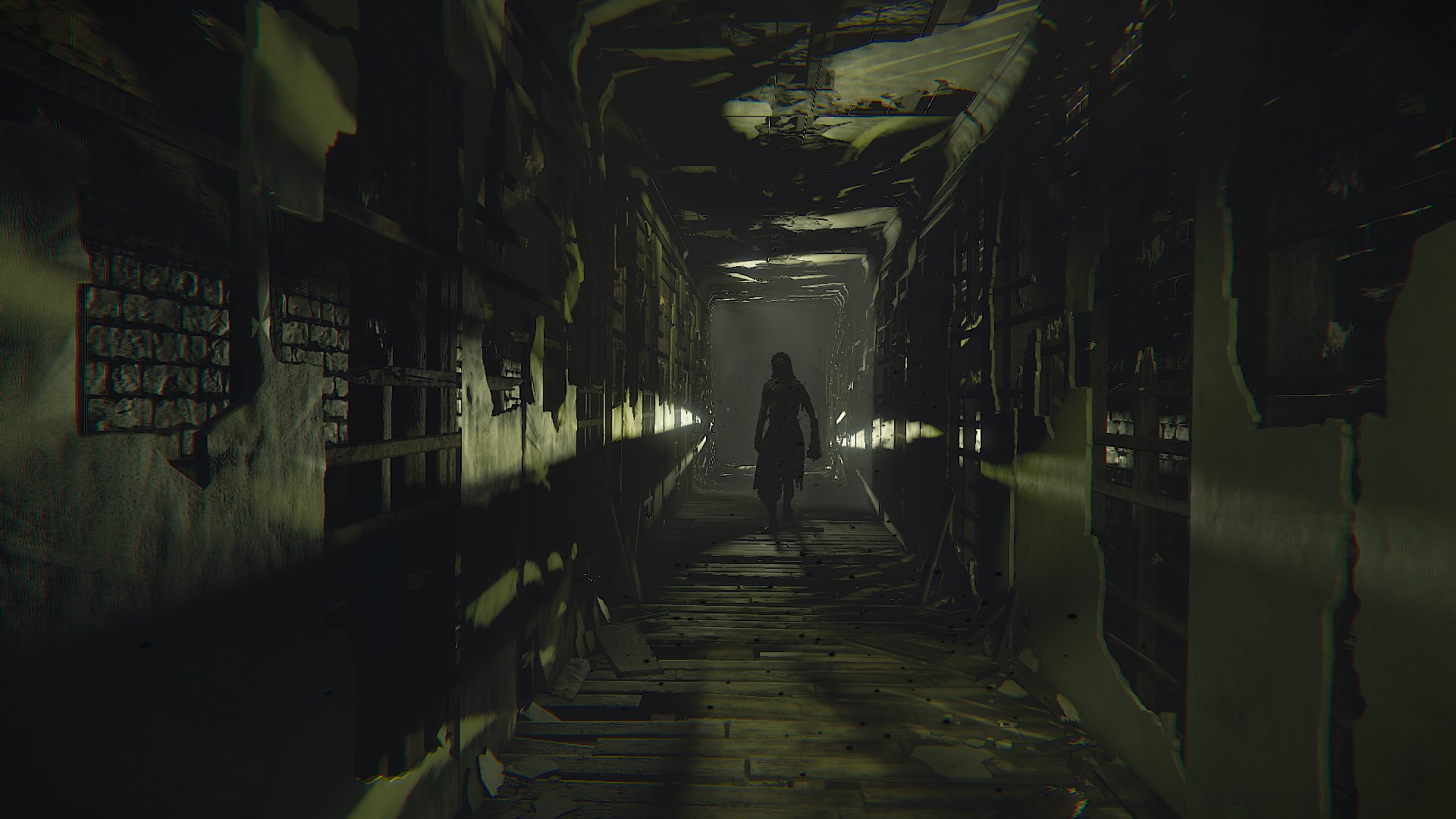
You play a crippled painter in the early 20th century who is trying to complete his masterpiece. The game starts out just fine while you wander around an old mansion, opening drawers and finding pieces of text that help tell the story. Layers of Fear’s only goal is that you walk through doors. You will open more doors than you would like to in a video game. Once you get through your first door and into the main hub, which is your painting room, things go crazy. The game is very linear, where you walk from room to room and enjoy a visual acid trip that never stops or gives you breaks. As you think there’s no way out, you will turn around, and a painting will pop up behind you and start melting. Turn around again, and the room changes or a ghost appears in your vision. What kept me going was that I wanted to know what was in the next room. It was like a funhouse but scary. Each room was always different, and I never felt bored or that I wanted the game to stop. There are six major pieces you need to collect to finish the game, and each one is themed. For example, the one-piece is a finger, and you slowly build up the story of how you took that finger. It doesn’t tell you directly, but through crazy visual cues and clues, you can figure out what happened.
The game is also a bit of a collect-a-thon, as you can open drawers and search around each room for clues that allow you to unlock achievements. There are actually three different endings, but I can’t quite understand how to get them. There are no choices in the game, but maybe take different paths? Each area is so linear that there’s only one way to really go, so figuring out what ending you get is a huge mystery. There also isn’t much thinking in this game; there were maybe 3 or 4 puzzles, and they required almost no skill to work out. I feel there should have been more puzzles, but that would have slowed down the pace of the game. You literally run around the opening door after door and experience the next visual freak-out, like a roller coaster ride. There are also no enemies to run or hide from. The only ghosts that appear in the game are supposed to get you, as it’s part of the story.
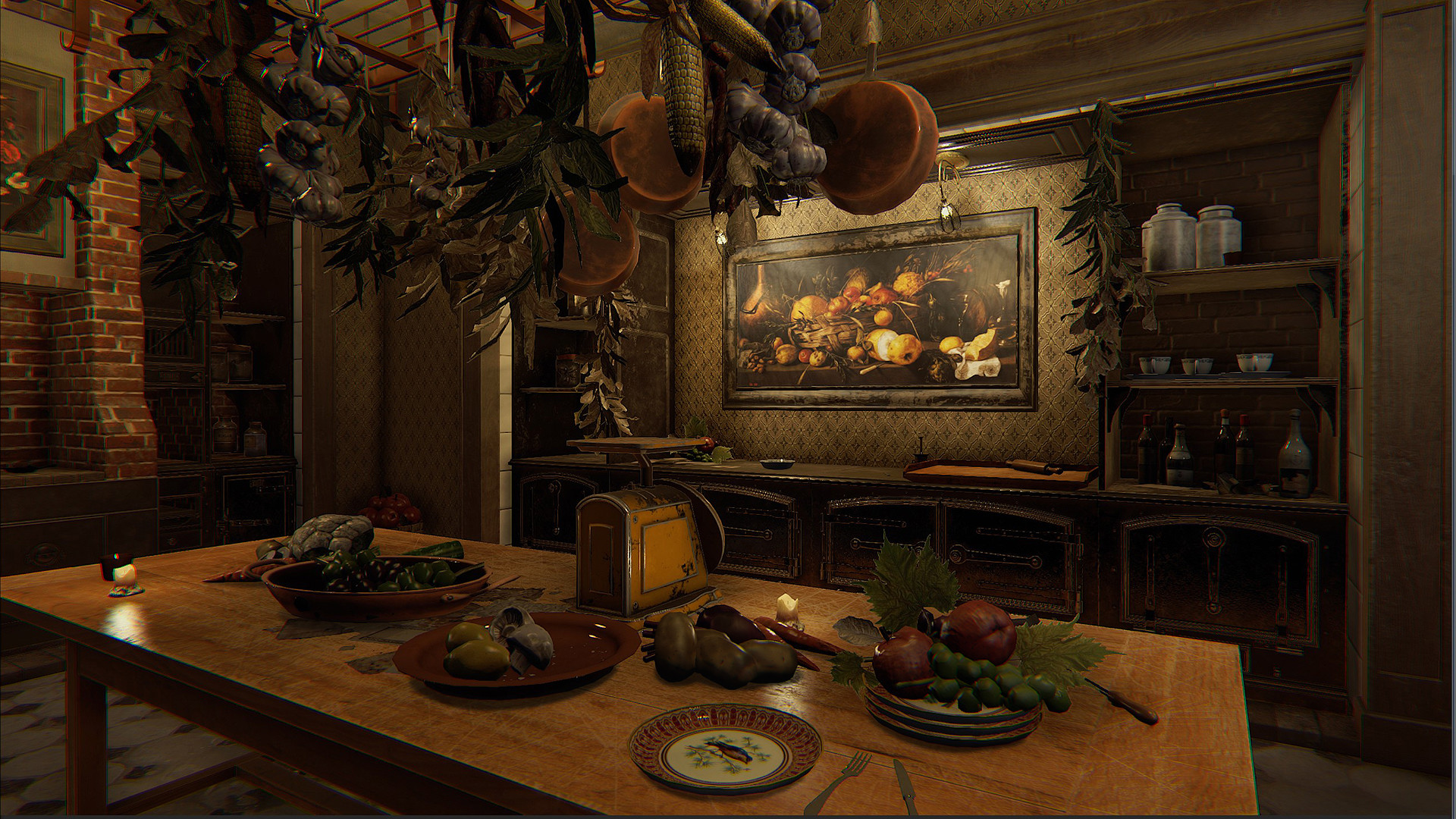
The visuals are fantastic, as the game has amazing lighting effects and a tense atmosphere, and there’s so much detail and so many different objects everywhere. The way some of the set pieces play out is pretty insane and requires a lot of care and detail. The visual effects alone from warping, shifting, melting, and various other effects are pretty amazing, as you don’t see many of these in games. All this was done with the Unity engine, which was also pretty impressive. The audio in this game is quite amazing, with a lot of variety, and each sound effect is put in the right place at the right time.
Overall, Layers of Fear is well worth a playthrough; it’s quite scary, and you never want to stop. The great pacing, visuals, and amazing roller coaster ride of effects are something you don’t see in games very often. If you’re tired of the cheesy horror gimmicks of most indie games, then look no further. This game may be short, but it’s got a lot of soul and heart for what it is.
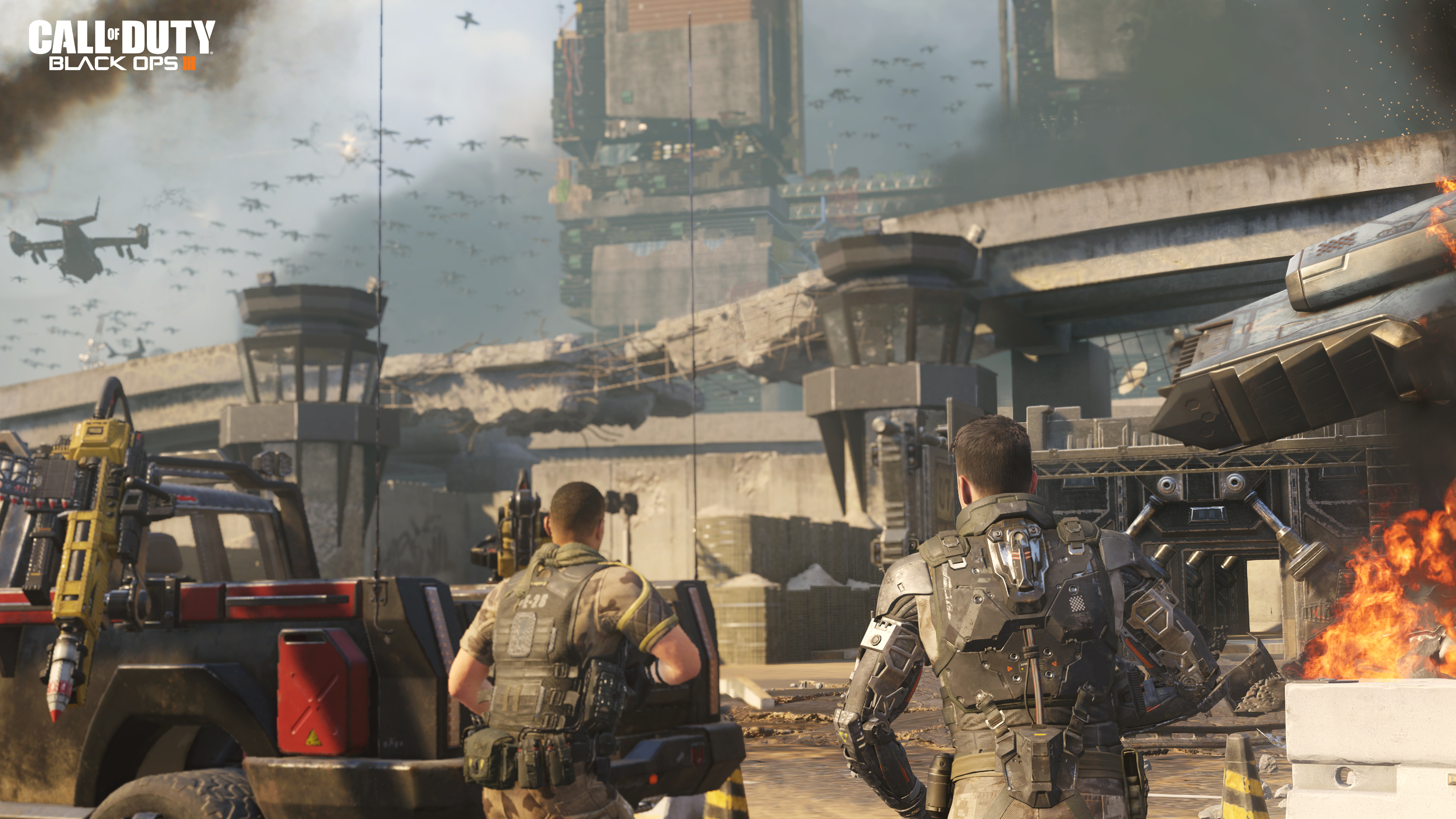
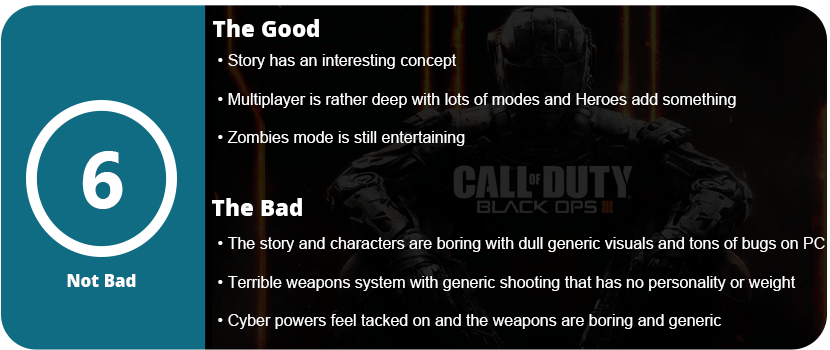
Man, where do I begin? Call of Duty was one of my favorite franchises growing up, and Modern Warfare helped kickstart FPS games into a new cinematic, next-generation universe. That Pripyat level in the first modern war still sticks with me to this day. After MW2, the series took a steep downhill slide and hasn’t stopped since. Here we are with Black Ops III, a futuristic military shooter that is a far cry from what the original Black Ops was, which was absolutely fantastic. You play as a squad of black-ops cybernetic soldiers who are trying to stop an all-powerful AI from destroying the world. See, the whole world is completely infused with technology that can read people’s minds and know our every move. The CIA has several operations around the world to keep this in check, but it all goes wrong one day. The actual concept is interesting and could have gone somewhere, but instead, we dredge through a sewer of boring, mediocre, and lame campaign levels that drag on way too long and overstay their welcome.
The game plays exactly like every other CoD since MW1. You run and gun your way through waves of enemies that are as dumb as dirt, and you face unbalanced difficulty spikes and repeat about a million times. I have to point out that I really hate the new weapon system in this game. You can no longer pick up guns from enemies but instead run into mobile armories where you can swap your loadout. This is a campaign, not multiplayer. I want to pick up weapons from enemies and keep things constantly mixed up. Several times through one level, I would need a shotgun or sniper rifle but was screwed because I couldn’t get to an armory. I can’t predict what’s going to happen next, so this is a huge mistake, and I really hated it.
Second, the enemies are as boring as ever, with generic robots and super soldiers. You get the occasional mobile armor, but that’s about it. It’s so boring that I just shrugged because I knew this was coming from a game like this. I mentioned the terrible weapon systems, but let’s talk about how terrible the actual weapons are. For one, there’s a small amount for a CoD game, and they all feel the same. Sure, you have shotguns, assault rifles, and pistols, but they just feel the same. They seem to have no weight, no bearing, and no personality. It’s futuristic shotgun A and futuristic assault rifle F. There are no real-world weapons anymore, and it’s just a borefest due to a lack of personality. The entire game has zero personality or originality. It all feels like endless metal corridors, hallways, and concrete. At least the first Black Ops felt original and had some personality and weight to it.
To make the game feel more like multiplayer, you get dumped into a central hub after every level and can change your loadout, unlock weapons with fabrication kits, and customize your weapons. There’s a new concept introduced called cybercores, which are powers that you can use against enemies. I found these almost worthless, as the game offers no opportunities to change to the standard CoD gameplay to implement them. It just felt like something tacked on to say, “Hey! We did something different! SEE?!” which I didn’t fall for. The only useful power was stunning multiple robots at once, but that’s about it. For most of the campaign, I forgot these powers were even there. I just ran around shooting everything in sight, like every other COD. I wish the series would stop pretending to be sophisticated and complicated when really it’s a dumbed-down snoozefest with no personality. It has been years since CoD has put its own fingerprint on the FPS genre, and this game doesn’t do it any favors.
I hated the campaign, but the multiplayer was at least fun for a while. It’s still the same old CoD MP that we’ve grown to either somehow tolerate or completely hate. However, Black Ops III is much more grindy than any other CoD game, and I gave up after around level 5. Even in single-player, it takes many levels before you can purchase decent weapons and load-outs. It’s part of the reason why the game gets so boring so quickly; the fast unlocks of the past are gone, and it feels almost free to play, which is a damn shame.
Graphics-wise, it’s nothing impressive except for how powerful of a PC you need to run something that shouldn’t push high-end systems. With the GTX 970, I used to have to turn down settings and still get massive slowdowns. It wasn’t until I used an overclocked 1070 that I got steady FPS with everything maxed out, and even then sometimes the game dropped down to 40 FPS for no apparent reason. The game is poorly optimized, has awful glitches that still exist after all the patches, and just doesn’t look all that original or impressive.
Overall, I can’t really recommend this game except for the hardcore CoD players, and fans of only the older games will hate this. The weapon system stinks, the campaign is boring, lame, tedious, and full of glitches, and the unlocks are a grindfest. There’s so much wrong with Black Ops III that it took me over a year to finish the campaign. It’s just boring and not fun to play, as there are plenty of other great shooters out there. I’d rather play Half-Life 2 for the 20th time or the Crysis trilogy than spend one more minute in this game. Now, that’s not to say I hate it to death, as the multiplayer can be pretty fun with new modes and playable heroes at a little depth, but it’s not enough to save the core gameplay. Zombie Mode is the final saving grace, as it still provides entertainment, but like multiplayer, it will only last so long with boring guns to use and average visuals.
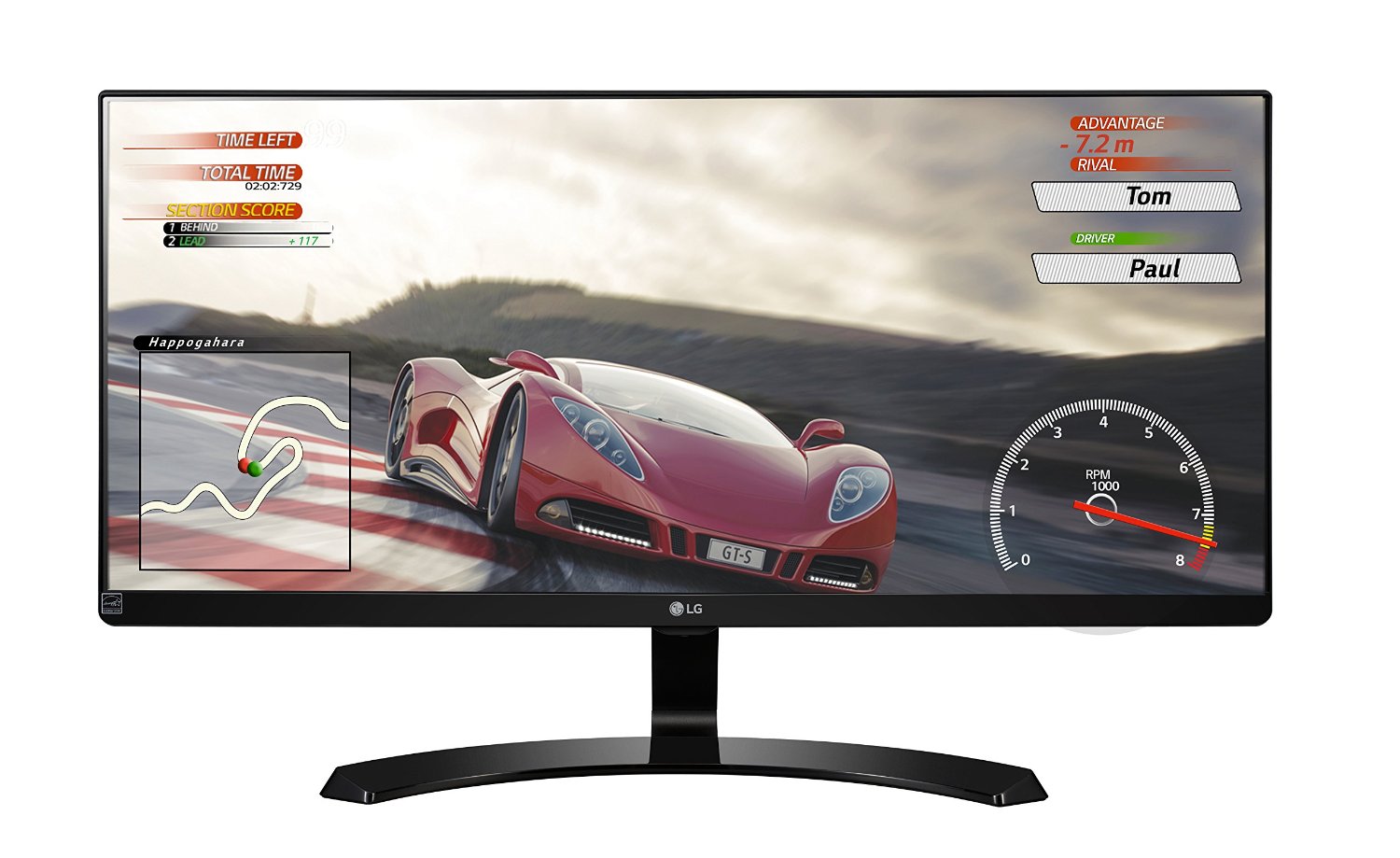
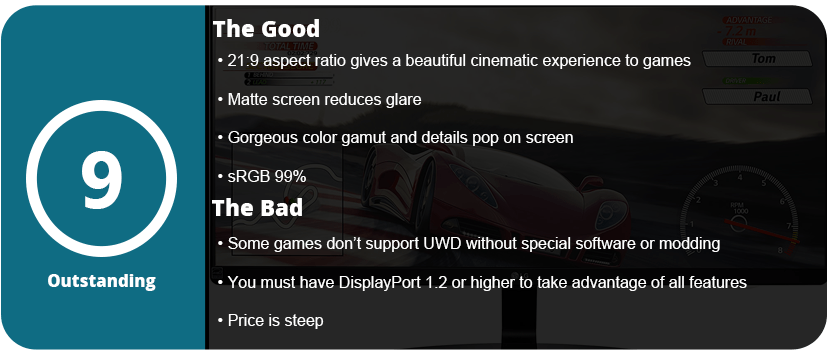
Ultra-widescreen monitors are the future of PC gaming as resolutions increase, FOV is pushed, and refresh rates skyrocket. Standard 1080p 60Hz monitors are becoming a thing of the past, and PC gaming is finally passing them up. Sure, there are amazing-looking 1080p monitors out there, but for high-end PC gaming, you need to break out the Benjamins to push your system to its limits. While Nvidia has many G-Sync UWD monitors, they start at $500 at around 27″. AMD has cheaper FreeSync monitors, which are more widely available, as they use DisplayPort 1.2 and higher to control their Vsync. I, sadly, have an Nvidia GPU and got a FreeSync monitor, which I learned is not compatible and vice versa. Instead, I get a really nice 75Hz UWD monitor.
Firstly, let’s talk about the advantages that UWD monitors give you. For one, you get a much wider view of everything, which is great for pretty much everyday use in gaming. The downside is that most videos do not have a 21:9 ratio, so you get black borders. I recommend having a secondary 16:9 monitor running right next to it. An advantage is PIP, so you can split your screen into two and eliminate the second monitor altogether. This is best for monitors over 27″. In gaming, you will notice more around you as the FOV is pushed back from 70 to around 100–105. The higher resolution means a sharper and clearer image, but the disadvantage is that you need powerful hardware to render at this resolution. While the UM68 is 2560×1080, it has double the resolution horizontally, thus still needing a powerful GPU.
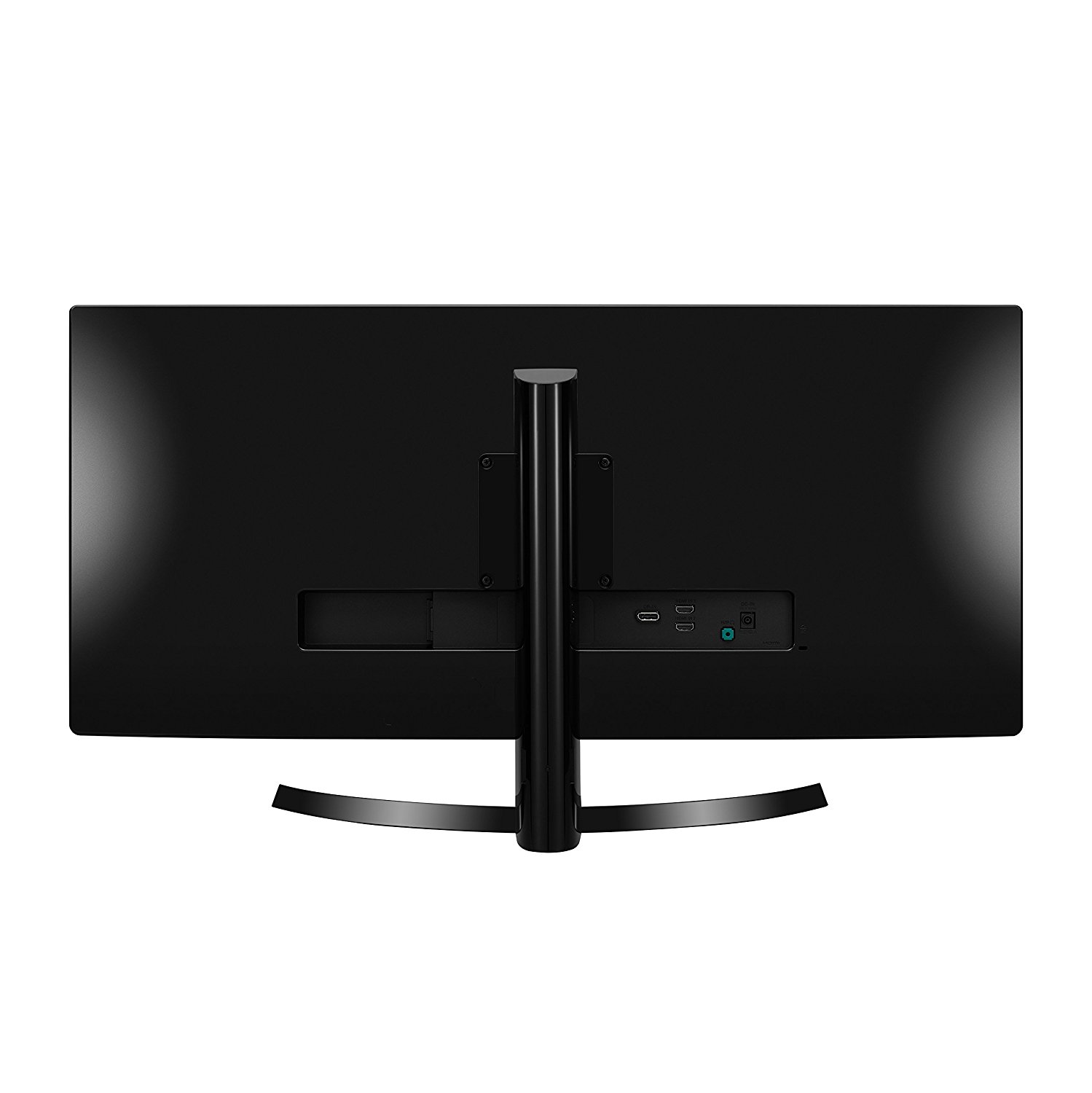
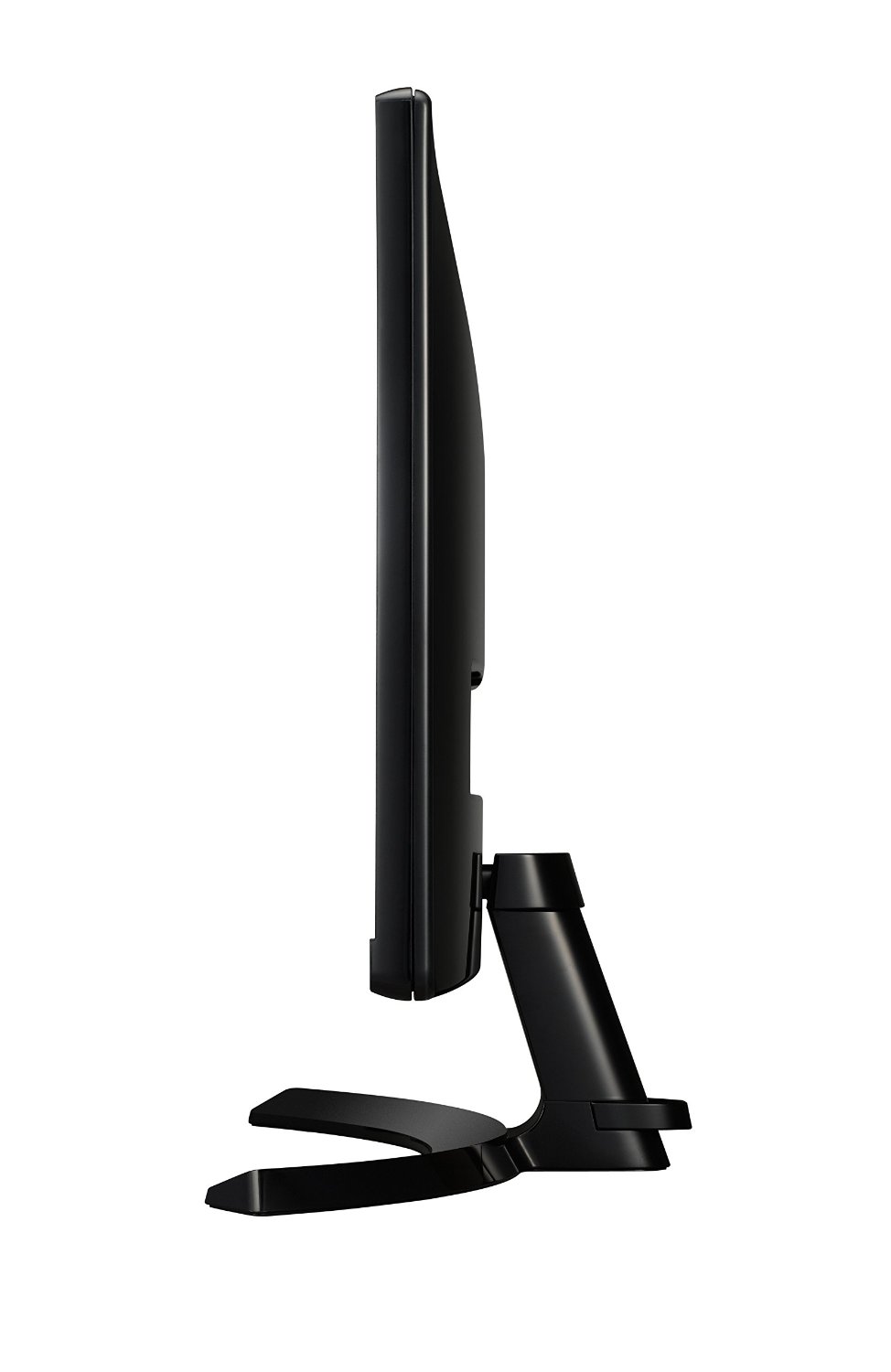
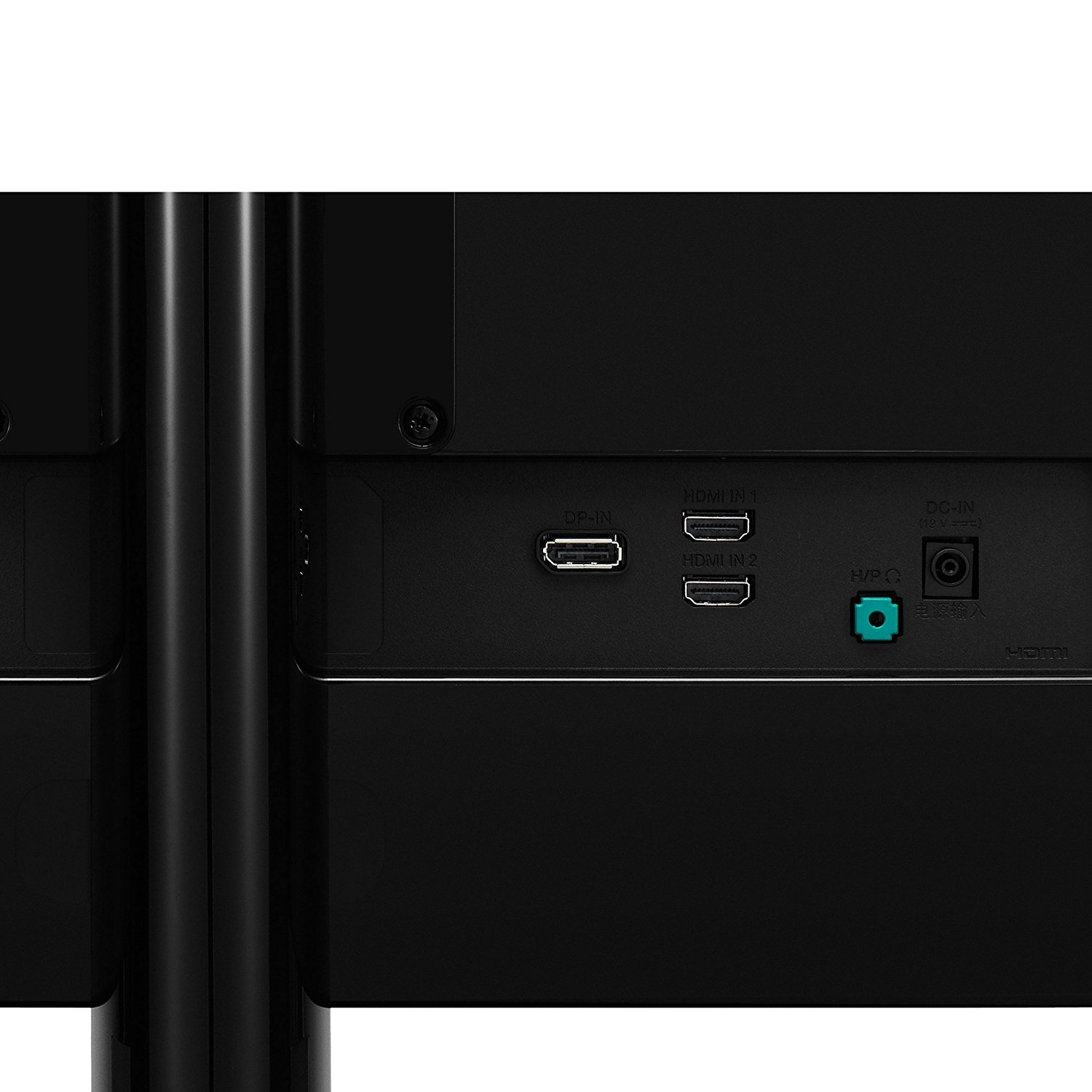
I highly recommend connecting this display to the display port, as the picture will be much better. DP is the future of higher-resolution displays and has a much faster transfer rate than HDMI. Once I set up the monitor by attaching the stand, I turned it on and noticed it had a buzzer. Yes, this monitor makes a chime when you turn it on and off, which is nice or annoying depending on the person. The first thing you need to do is go into the settings menu and decide what setting you want. I preferred the custom game mode with sharpness at 50% and everything else at default. LG monitors tend to have fantastic default settings that don’t need much tweaking. Make sure you turn on FreeSync and set the response rate too high. That’s all I needed to do, and everything looks fantastically sharp and brilliant. The monitor itself isn’t the thinnest out there and is quite thick, but it has a matte screen that is anti-glare and still looks sleek and sharp.
This is the nicest monitor I have ever seen or owned. I have it next to my older 32″ LG 1080p monitor, and I realize that there’s some blurriness to that monitor, and it’s not as crisp. Not saying it’s a bad monitor, but it shows how amazing these UWD monitors can look. In games and movies, the colors just pop and are so vibrant and alive that it’s something I can’t really explain. With 75Hz, you get more than 60FPS in games if your rig does it, and it’s a nice touch. It also allows you to dip a bit in FPS and stay close to your target 60FPS goal if you don’t have a powerful enough rig. However, the downside is that some games don’t support ultra-widescreen, and you’re stuck with a 4:3 game. The only solution is a program called Flawless Widescreen that will patch certain games to fit your monitor, and that includes FOV fixes as well. Two games I have already played that don’t support UWD are Skyrim and Mortal Kombat X. Thankfully, Flawless fixed UI, FOV, and menu issues in both games without any crashes or errors.
Ultimately, I can only recommend spending the money on a UWD monitor if you game or do art of some sort. For someone who just uses their computer as a glorified Facebook and Instagram machine, you’re throwing money down the drain. While everyday use is nice on a monitor like this, there’s no advantage over a normal 16:9 monitor that can justify the double price jump. You also need to have a pretty high-end rig to start rendering at these resolutions so you can keep your FPS up to take advantage of the monitors’ Vsync features. While the monitor changes its own refresh rate according to the FPS, it helps to keep it stable and as high as possible.
My biggest gripe is that FreeSync is not compatible with Nvidia GPUs, and the main reason why I wanted a UWD monitor was for the built-in features. Maybe soon I’ll switch to an AMD card to take advantage of this monitor’s features, but for now, I have a really crisp and sharp 75Hz UWD monitor, and I couldn’t be happier. Just make sure you really want to spend twice the amount of money.
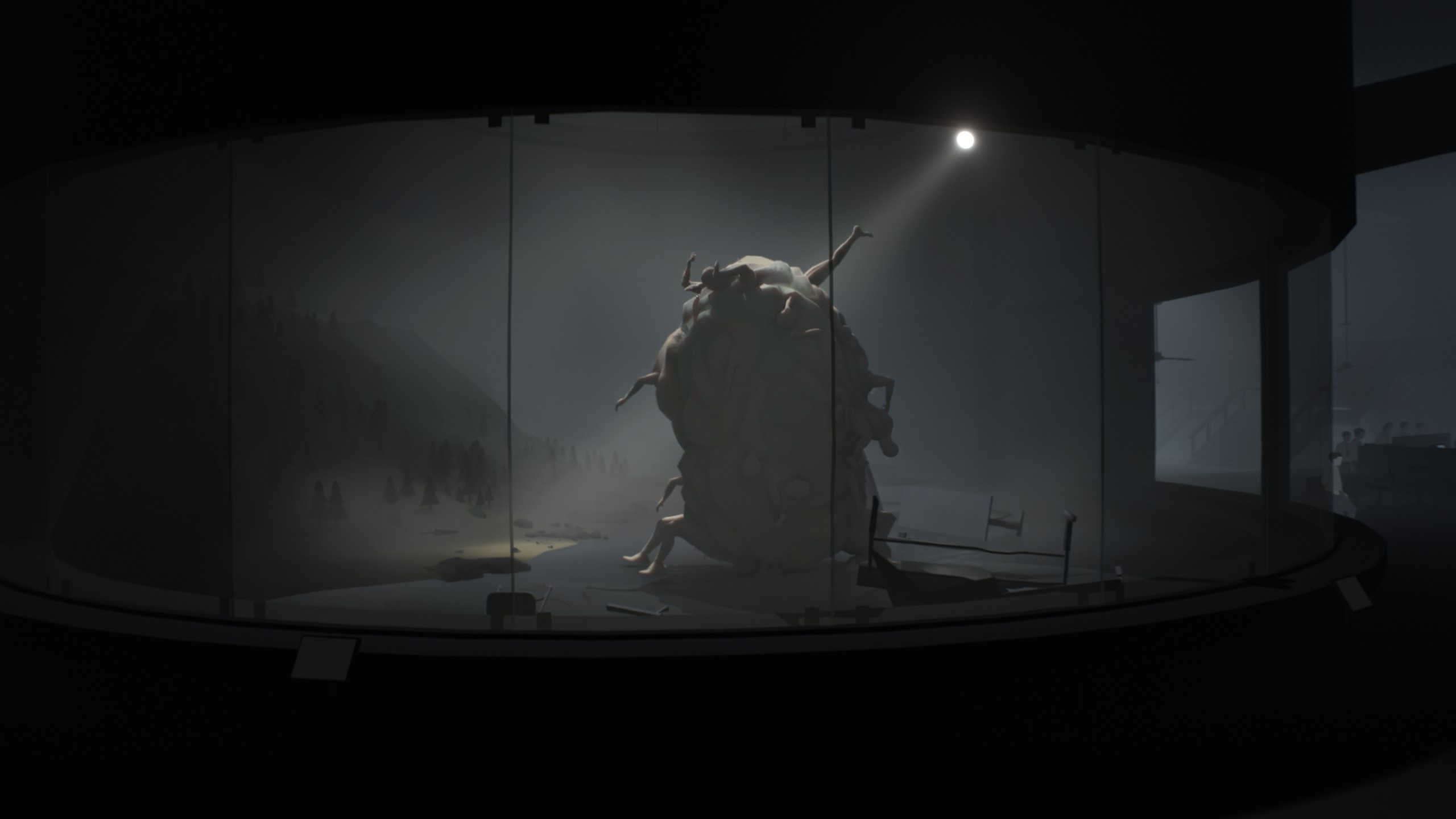
Atmospheric side scrollers became popular thanks to Limbo. With no story but an entire tale told through the atmosphere, puzzles, and platforming, this became a great way to show gamers that the platforming genre can be a little more mature. Inside are all the aspects that Limbo created and perfected.
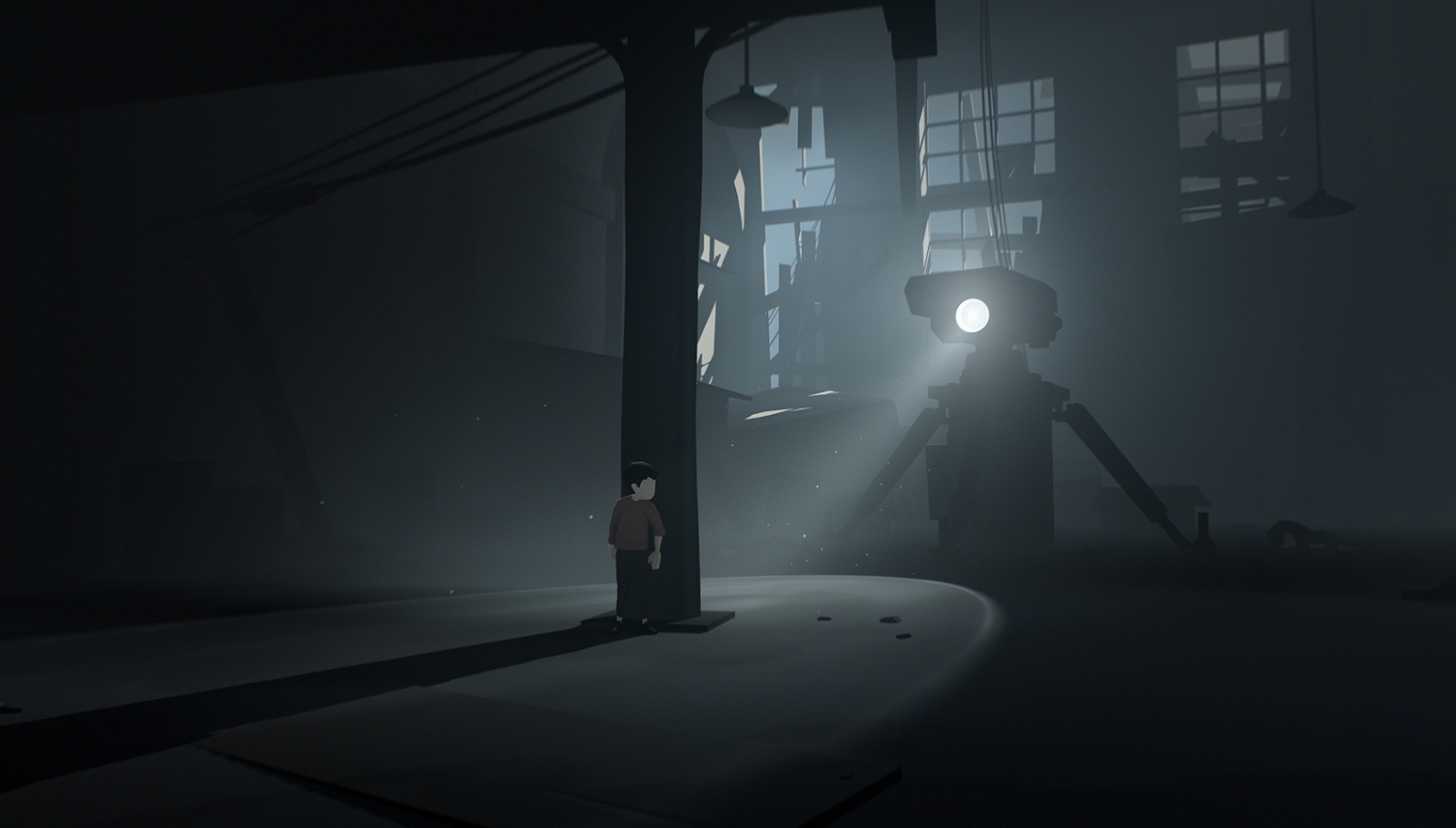
The game starts out with a little boy stumbling out of some trees and running through a forest. In the background, you can see soldiers in masks searching for something, but you’re never quite sure if it’s the boy or something else. Who this boy is and his purpose are never explained, but that’s kind of okay, as it’s up to the player to interpret this. The game has no tutorials, as there’re only two buttons to use: jump and an action button. You slowly get introduced to the game’s puzzles by pulling objects to ledges to reach greater heights, learning to keep switches open, etc. The game’s main focus is the art style and atmosphere. This game has an Uncanny Valley militaristic dystopia theme with everything in gray. It really grabs your attention, and the game can get quite tense.
Some of the more memorable scenes are when dogs are chasing you, as there’s no music but just the panting of the kids and raging, aggressive dogs at your heels. Most chase scenes actually require skill to finish, as they require precise timing of jumps and even quick-on-your-feet puzzle solving. The game is very well-paced, as I wanted to play through the whole thing without stopping. While there wasn’t a story being told, I wanted more chase scenes and sections where the boy had to sneak by these adults. The game isn’t just a flat plane, either, as the world turns and pans in accordance with the 2D playfield. It never feels like you’re going just left or right in a world that has been cut in half. There’s depth in the foreground and background, which is something that’s not done often in side scrollers.
There’s something strange going on in this world, as it seems most humans (or slaves) are mind-controlled and are being sold to other humans or possibly some type of alien. I couldn’t really tell, and again, that’s the point. Your job is to keep this boy out of danger and to keep pushing forward. From swimming, using a submersible, climbing, running, jumping, and puzzle-solving, there are quite a lot of games here for such a short length. Inside also has amazing animations and physics—some of the best I have ever seen. The way the boy runs and the people in the background interact with your every move is jaw-dropping. The boy would sneak across a floor and open a grate while everyone was starting inside some vat in the background. As soon as that grate dropped, all heads looked toward you. It’s creepy and fantastic all at the same time, not to mention the boy’s gruesome death animations and scenes.
I was amazed all the way through this game, despite the ending making zero sense and just being so abrupt. I wanted more, and hopefully we will get more. I can see that this could be a vastly expanded universe with an amazing story, but these atmospheric indie games tend to never have sequels. The game’s art style is just some of the best this year, and the graphics are also technically impressive, with amazing textures, lighting effects, and shadowing that would put some big-budget games to shame.
Overall, Inside is a wonderful must-play game. It’s oozing with atmosphere, tension, and pacing that will keep you glued during the whole 4-hour play session. When it’s over, you will sit back and remember most of the scenes and wonder what’s going on in this game. I felt more like a spectator who jumped into the middle of a movie, and I’m just watching what’s happening next, hoping to catch on. This is a unique way to tell stories and can be very hard to pull off. Thankfully, Inside will have you thinking about it long after it’s gone.
I’m a huge fan of high-end gaming mice, and I’ve had them all. I usually buy a new one every 8–10 months because the technology is changing and getting better so quickly. Recently, I switched from Razer to Logitech because Razer’s software is just plain awful. I don’t know if it’s the software causing it, but all of their wireless mice lag like crazy, and they haven’t changed up their software in years. I switched to the G700S, which was an amazing mouse, but it didn’t have great battery life and was lacking flair.
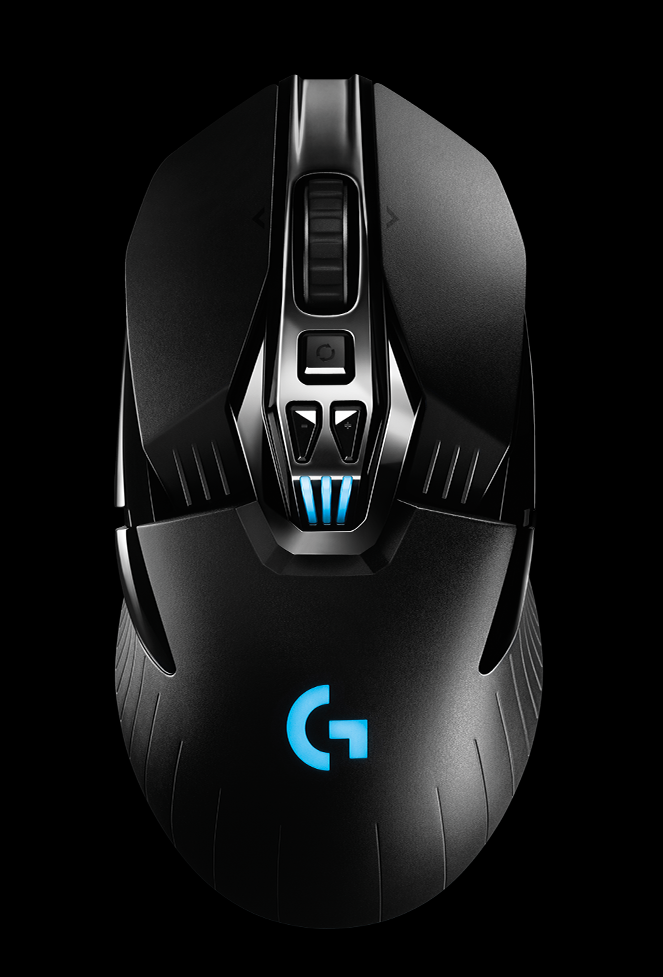
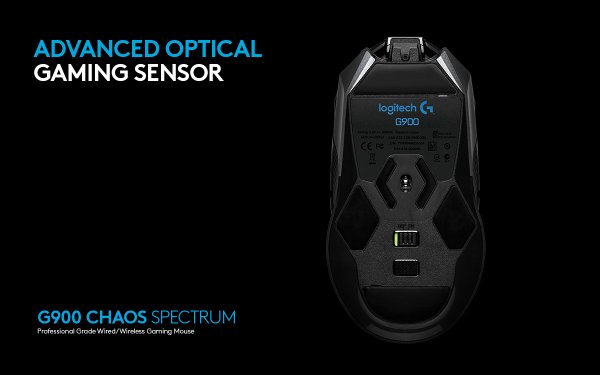
Here comes the G900 Spectrum Chaos. This is the best mouse I’ve ever had, and not just recently, but I would choose this over all my current mice that I own. It’s ultra-light, looks fantastic, and has some of the best software and hardware I’ve seen or used.
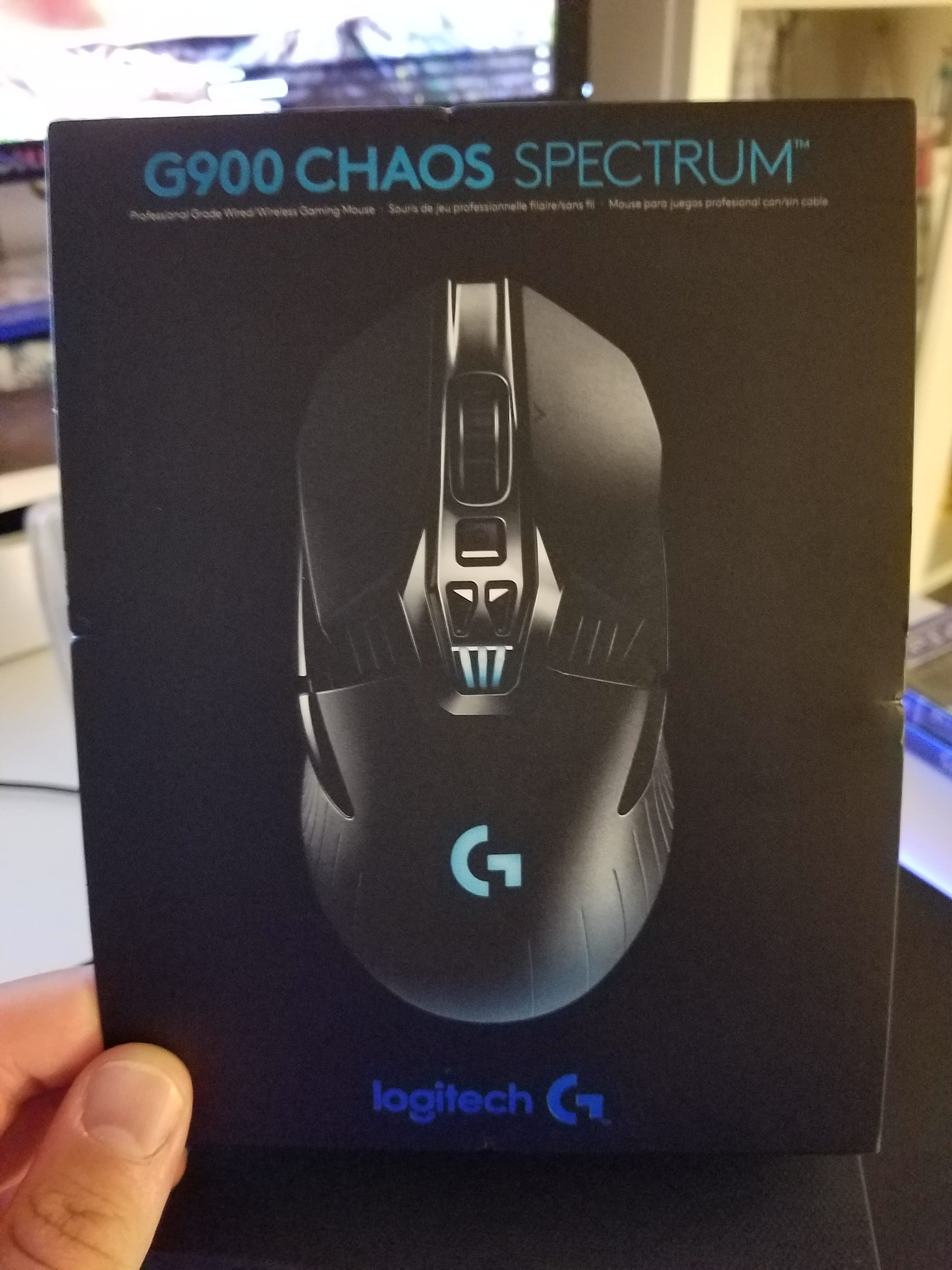
When you open the box, you know you’re in for something great, as it comes in a hard cardboard clamshell with great texture. It sits in a plastic case, which has a cool design and is so minimal and sleek. Lift up the inner plastic insert, and you have a quick guide, a USB cable, and a little plastic box with your wireless receiver and extra buttons inside. This is an ambidextrous mouse similar to the Razer Ouroborus, but it forgoes any side anti-drag fins, and that’s okay.
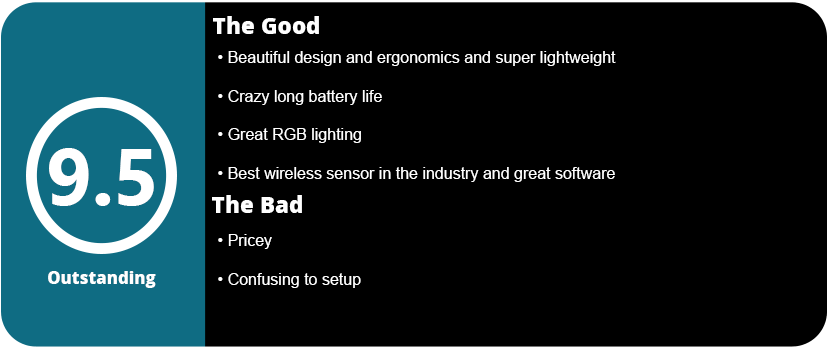
I did have one issue, and that was how to set up the mouse for wired and wireless use. There’s a wireless receiver, but the tiny part comes out of a larger piece that has a USB mini-D on the other end. I tried plugging the mini receiver piece directly into the computer and plugging the mouse in, but that didn’t work. It turns out you have to plug the whole receiver piece into the cable and then unplug that to charge the mouse. It’s actually better as the receiver is closer to the mouse, and there’s one other feature for this: So you can take your mouse with you and your laptop on the fly. Just remove the tiny piece from the larger piece, and you’re done. The battery is no longer an AA rechargeable Sanyo Eneloop like the G700s, which lasted 8 hours at best. This is a no-removable proprietary battery that can last over 30 hours depending on your settings and weighs in at 700 mAh, which is quite large for such a small piece of hardware. Gone is the heavy mouse scroll wheel, yet you still have the free scroll option. This is the lightest mouse I have ever used, but it just works and feels great. The new buttons are also pivot buttons, as you aren’t bending the plastic to press an actuator. Instead, the buttons sit freely and pivot back and forth, meaning ultra-light presses will click the buttons.
The mouse uses the PMW3366 sensor, which is the fastest and most advanced sensor ever created. This mouse can also track at 300 inches per second and has zero smoothing and zero pixel rounding. You can’t get a faster mouse. I also have to note that in 2016, even on lower-end mice, there’s no lag. Any PC gamer using lag as an excuse to not use wireless mice is stuck in 2000. It just doesn’t exist these days, so ignore anyone who tells you this.
This is the longest I’ve ever seen a wireless mouse last. The most I previously had was a battery that lasted 12 hours, but this is just amazing. Especially since this is the first mouse with 12,000 DPI tracking and dual sensors. The amount of precision this mouse wields is just insane, and most gamers won’t even use all that. This is the most advanced laser technology for mice ever created, so why do you need it? It’s aimed at professional gamers, but everyday gamers will find it useful as well. Think of the mice as a controller. You need to not think about it or know it’s in your hand.
The mouse has two buttons on each side, but it’s only designed to use two at once, but you can use all four despite how awkward it will be. They feel great and are long, so you can hit them from any angle. There are two DPI buttons below the scroll wheel, but you can program these for anything. The lack of buttons leads to a sleek and minimalistic design, and I like that. I’m not really a macro guy, so this works for me. The mouse, given its name, has three LED lights for the battery indicator and profile selection, as well as a Logitech G logo on the palm rest that lights up. It can glow the entire color spectrum, just one color, or you can turn it off. Having it on eats batteries, but if you are at home, this is no issue.
The battery life is just fantastic. I can actually use this from morning until night and still have a charge. With my other mice, I would have to charge them 3–4 times a day. With lighting all the way up, a polling rate of 1000 Hz, and using the sensor tracker, I get 22 hours. That’s damn impressive, if you think about it. I am highly impressed with their mouse pad tracker, as it’s so much better than Razer’s. You actually have to calibrate the mouse by moving it around your pad, and it detects what material and color it is as well as other variables. Razer’s tracking tech never worked and was awful and useless.
The software is your typical Logitech flair, but this mouse can track heat maps and just feels overall more fluid and tighter than the G700s software version. The mouse is fully customizable on the software side, and you can tailor this mouse to do exactly what you want.
Before I end this review, I want to show you what this mouse was like playing some games and how it compared to my other mice. Was I better in the game or worse? Let’s see!
Call of Duty: Black Ops III
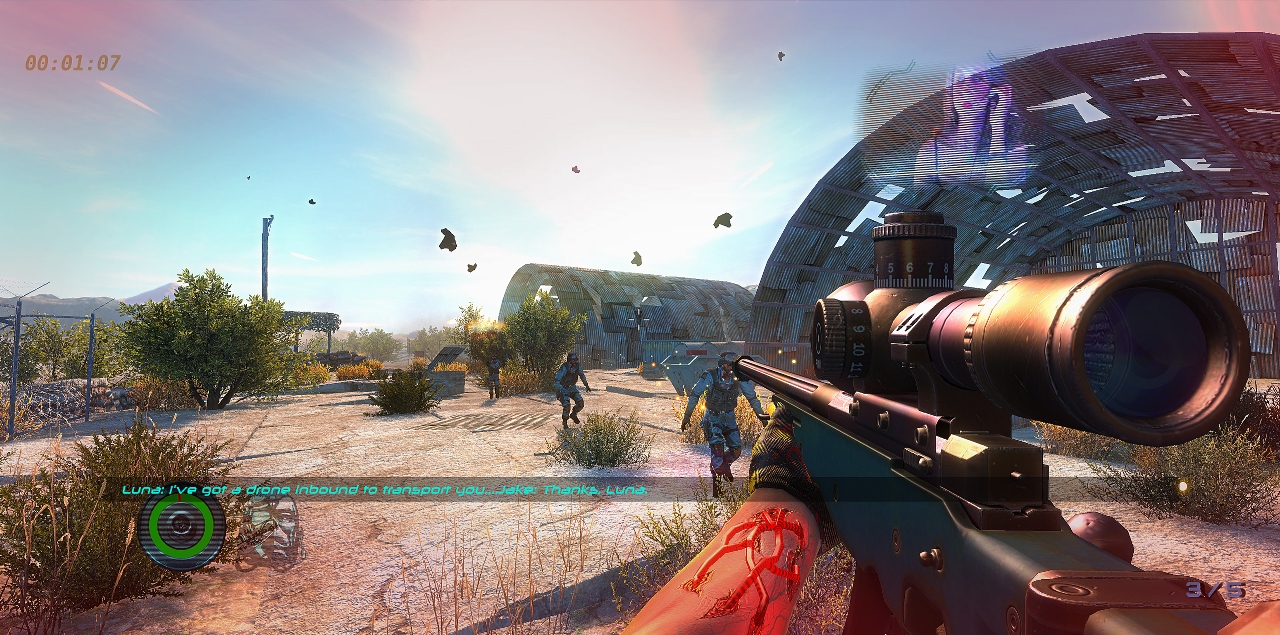
I was actually better in this game. The aiming is just so much more precise, and I mean that you feel like you’re almost pointing with your finger. It’s not just about how fast your mouse moves around like other mice; it’s about actual, real precision. I was able to stop enemies on a dime, and it felt good. I was able to use my default preferred DPI setting of 2750, and it felt perfect. There was no need to adjust in-game settings or DPI. This mouse is a perfect fit for this game.
Overwatch
My shooting skills improved slightly in Overwatch. There’s not as big of a difference as in Black Ops III, but it was there. I found I was able to track fast-moving players better, and my kill ratio went up slightly due to this. This mouse will definitely benefit competitive shooter players.
Overall, the G900 is probably the best mouse ever invented, and while it doesn’t cater to every type of gamer, it gets all the important stuff right. A highly advanced sensor, great wireless tech that doesn’t cut out or time out, a beautiful design, and, best of all, a long battery life.
Adventure games are always hit or miss, as they have many classics to live up to. There are the occasional crazy and interesting adventure games like Neverending Nightmares that are quite fascinating. Bulb Boy is one such game where you play as a, well, bulb boy who must defeat a monster to save his grandfather. There’s not much of a story here, as it’s all about atmosphere and visuals. The game is rather short, and it’s not the most cerebral adventure game out there, but it’s worth a purchase.
Like in a typical adventure game, you can tap on areas for the character to move to and examine items. Bulb Boy is very straight-to-the point so there’s not much exploring here. There’s only so much to click on and very little inventory. The game has bosses on each stage that you must defeat, but the puzzles are very easy and not really puzzles. You find an object, and it can only go in one direction, as there’s no backtracking or exploring involved. I would love to see this universe expand, as Bulb Boy is grotesque, beautiful, and full of atmosphere. It’s a horror adventure with a cartoon flair, guts, and everything disgusting all over the screen.
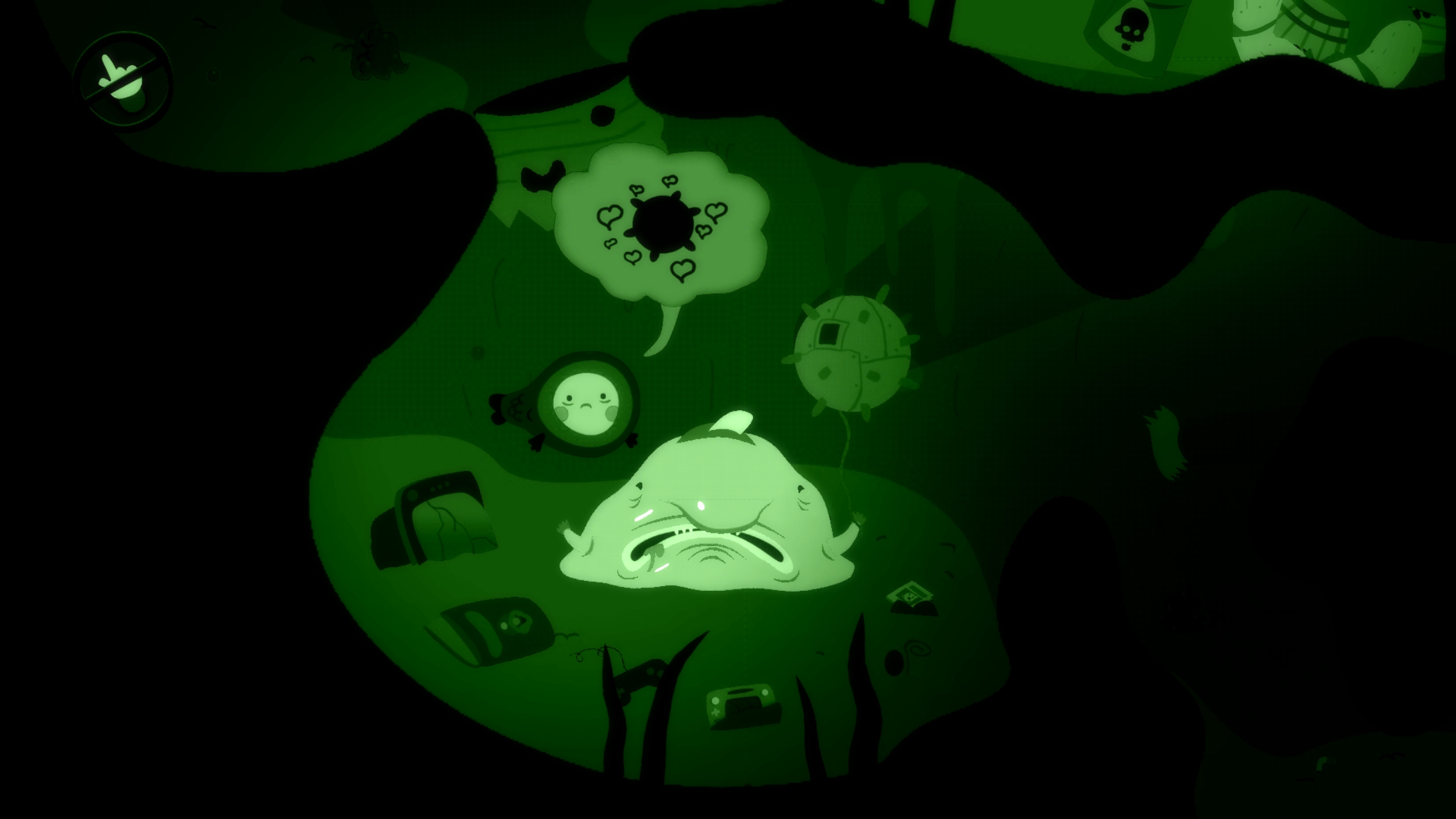
There’s a lot of green in this game, and the cut-out art style is just fantastic. I enjoyed playing through the whole game, despite only taking a couple of hours. Bulb Boy’s death animations are brutal, there’s a lot of variety, and the game has a nice, quick pace to it. Some of my favorite things about this game are the extreme closeups of areas, as they show the sickly detail of everything around this character. It’s nightmarish for sure and definitely one of the most artistic games this year.
It’s a crying shame that this is an indie game and won’t get much attention. I hope for a sequel that’s more expanded, but we’ll see. In the meantime, just feast your eyes on the beautiful art, despite how straightforward and simple the gameplay is.
As if zombie games weren’t already in abundance, we get yet another crappy indie zombie first-person shooter. This game caught my eye due to the live-action cut scenes, and the screenshots looked decent, but man, I was wrong. Not only are the story and the main character, Jack, laughably bad, but the live-action cut scenes are just downright hilarious.
The game starts out with you ejecting from a spaceship for some unknown reason and then crashing into a plane on Earth. You need to stop the plane from crashing, but on your way are zombies. As I picked up the revolver and started shooting, I immediately knew what I was in for. The aiming is bad, the guns feel awful to shoot, the AI is bad, and the physics are stupidly overexaggerated. Sure, some of the zombie models look decent, but this looks like a first-gen Xbox 360 game at best. The textures are muddy and pixelated, the models are awful, and the overall design of the levels is just plain bad and cramped.
So, let’s have an open mind and overlook the bad gameplay design, overly stupid story, bad AI, and awful gunplay. But if you do that, there’s nothing left to forgive, right? The game is already too long, clocking in at about 4-5 hours, but I couldn’t make it to the third level; it was so bad. Even if you just want to enjoy the awful live-cut scenes, that’s not even an option. Hell, even the menu is bad, and as soon as I booted this game up, I knew what to expect. Could this game even be a little good? Maybe for a laugh with a couple of friends, but you won’t get any value out of this game at all.
Overall, Chasing Dead may have had something with live-action cut scenes if it was done right, but there’s not a thread of hope for any part of this game that the developers could build off of. It’s a typical bad zombie shooter to please 12-year-olds who have $10 to blow on Steam.
Have you ever wanted to time-travel and change the past? How about just the last 30 seconds? You get that option in Life is Strange. You play Maxine Caulfield, who discovers she can rewind time by saving her childhood friend from a fatal gunshot wound in the girl’s bathroom. This changes Max’s life and everyone around her, but it’s up to you to decide if it’s for good or worse. Life is Strange tells a fantastically beautiful story with wonderfully written characters. The game will keep you hooked and have you playing all 8 hours with barely a blink.
Life is Strange tries to build on the revolutionary point-and-click adventure genre that The Walking Dead revived from Telltale Games. The game is a little more open-ended, but not by much. There’s more to explore and items to “look at,” which gives you a bigger insight into Max’s own thoughts and mind. Honestly, by looking at all these objects, you get to know Max better and the world around you more. Besides this, you just walk through every area to the next character that advances the story. There are some “time puzzles” that require you to select certain dialog choices and then rewind time to use that information to your advantage. It’s an interesting idea, but Life is Strange’s storytelling is a bit of a mess and requires you to pay attention very closely or you will miss something.
The game is broken up into 5 episodes, and each one has a cliffhanger ending. The game goes on at a good pace except for the final chapter, which is a roller coaster and kind of a mess. Without spoiling everything, you kind of “review” everything you have done through the game, which involves an awful stealth sequence. However, through the entire game, I couldn’t help but realize that no matter what I chose, the final outcome never changes, which is odd. It’s not until the last two chapters that all your choices start to unfold, but I feel they are just detours rather than different outcomes. Despite that frustration, the story in Life is Strange is amazing.
I have to talk about the atmosphere of this game. It’s so nostalgic and really reminded me of my adventures as a kid growing up, and it really makes you think about your family, friends, and what’s going on around you in your life. That small country life is something I grew up with personally, and the game really hit home with me. It sucked me in every minute, despite the slow start I had to push through. The entire game is so touching and full of emotion; it’s one of the best video game stories I have ever seen, but it still doesn’t top Soma. This is a story you will talk about long after the game is over and ponder over. The only thing that really annoyed me about the story is that it tries to turn this innocent teen drama “Where did my best friend go?” mystery into a serious murder mystery, which is kind of jarring. I loved exploring these areas out in the middle of nowhere and getting into shenanigans with Max and her best friend Cloe through their time travel events. Once the murder mystery stuff hit, it was a bit of a turn-off, but it wasn’t until towards the end.
Life is Strange also isn’t the prettiest game to look at; it’s rather ugly. The game has a nice watercolor art style, but the game’s technical level is a first-generation Xbox 360 game at best. The textures are muddy and awful, and the character models are terrible. This is just a downright ugly game, but the story and characters keep your head out of that. Overall, this is worth every dime and all your time invested.
Yeah, it's pretty damn awful. Notoriously one of the worst games on the PSP. A 4 was actually being generous.…