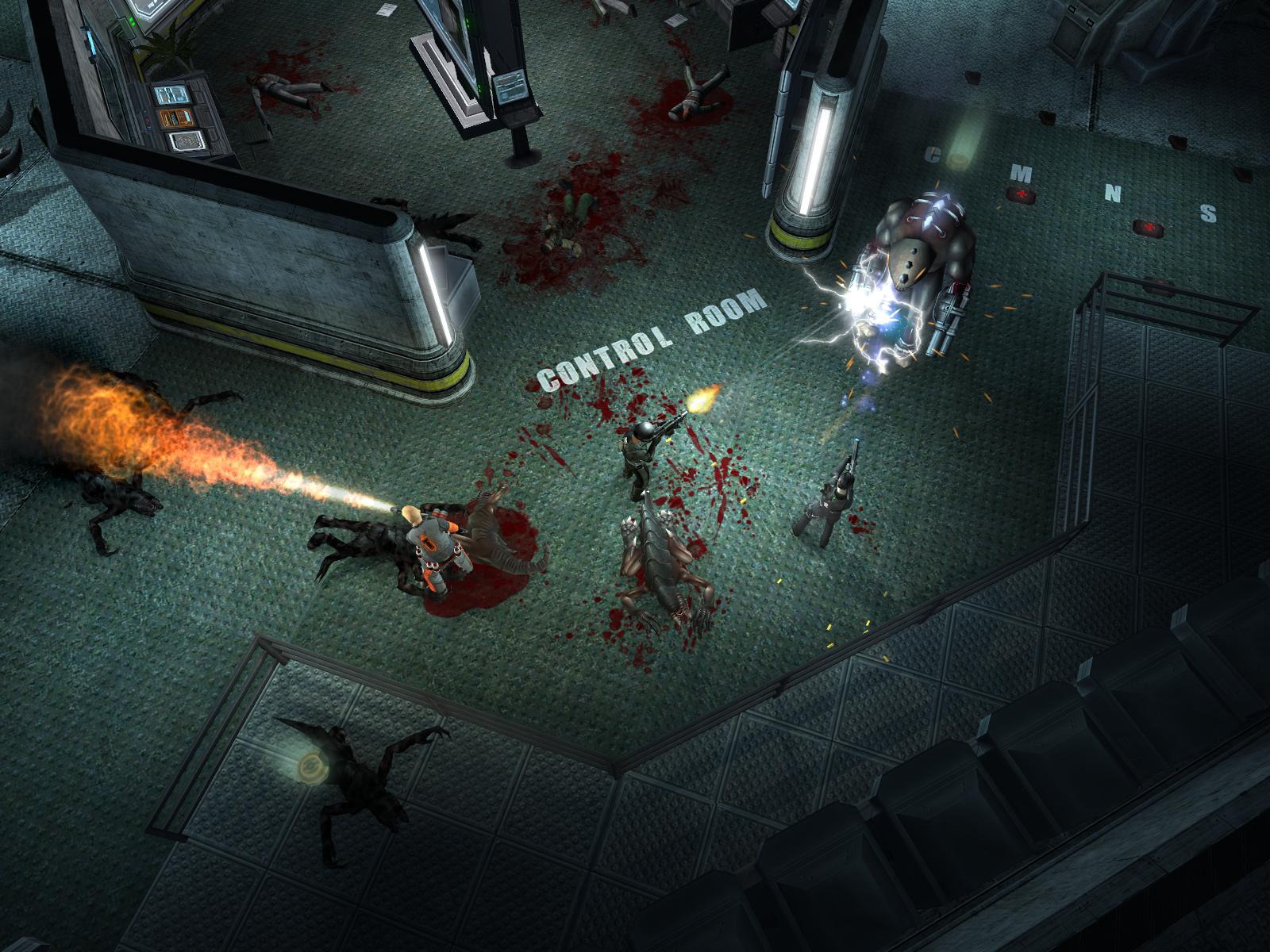
Shadowgrounds was a pretty decent shooter a few years ago, but Survivor doesn’t really do much new and is pretty boring. As a top-down shooter, you play as a marine who is trying to escape a ruined base that is overrun by aliens. The weapons are pretty generic, with shotguns, assault rifles, flamethrowers, grenades, etc. You can pick up health packs, ammo, and OK, you know this formula already.
Unlike other better shooters like Alien Shooter, the game doesn’t even offer intense moments. There are a few straggling aliens coming after you and maybe a few hard ones, and that’s it. You can easily kill these guys, and it doesn’t feel very satisfying at all. You can shoot barrels, toss grenades, or just run around holding the fire button, and you’ll beat these guys. Ammo is plentiful, so you never feel like you’re “surviving,” and it’s pretty hard to die.
There is an upgrade system that you use by finding “parts,” and when you level up, you can use points for different upgrades like sonar, health boosts, etc., and each character you play has the same upgrades. That’s pretty lame. While each character has a different loadout, there’s just nothing exciting about it at all. The game is fun, however, since it’s good for more casual players who don’t like the intensity of other top-down shooters, but even the aliens are generic-looking. Instead of creepy, deformed things, you just get the typical bug-like aliens.
The game doesn’t look or sound too good either, and the music almost seems nonexistent while the game looks pretty bland. The level design is also pretty bad since I wandered around areas and didn’t know where to go, like shooting a glass panel to open a walkway. There is no hint; the panel doesn’t even light up or flash. So this is bad level design, and the whole freaking game just feels boring! The game is a little fun if you’re bored or just want a decent top-down shooter.
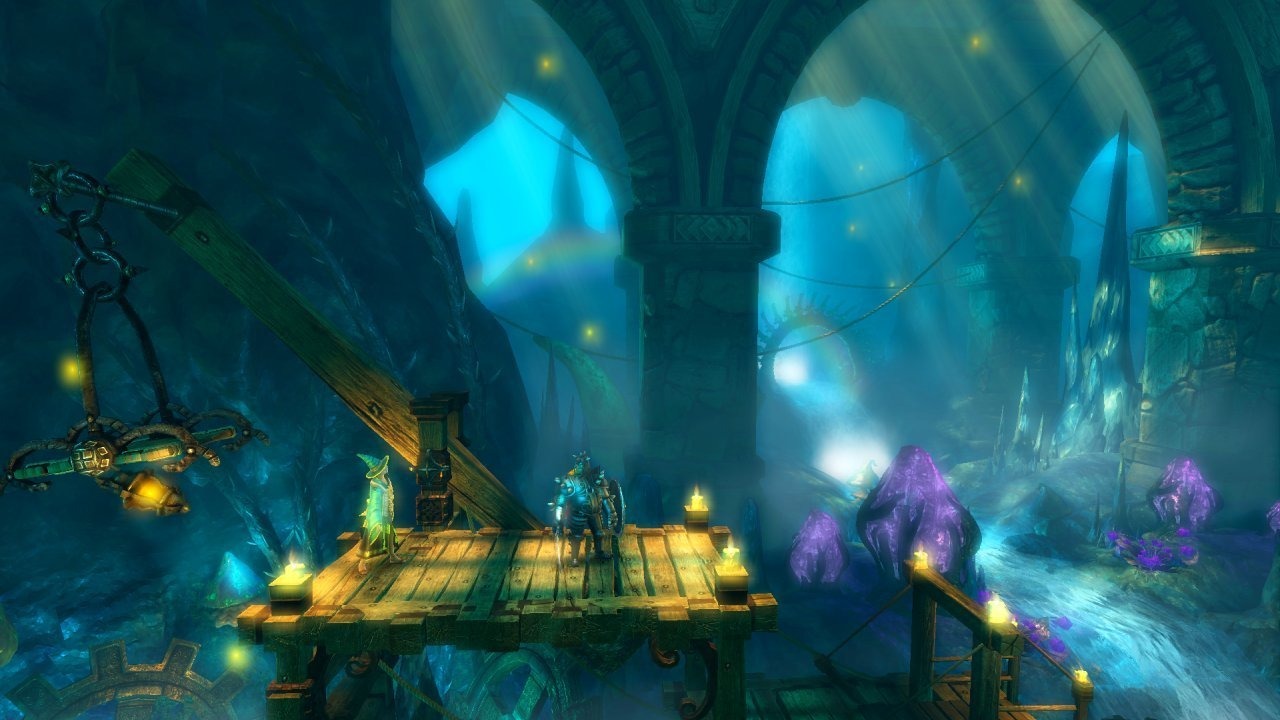
The Trine tells the tale of three heroes whose souls are tied together by the Trine, and they must find a way to break apart. While the story is simple and shallow, the gameplay is where it’s at. You can play as a warrior knight who has a sword and shield and is your combat guy; the thief has a grappling hook for getting across long distances and a bow for long-distance kills; and the wizard can create objects to climb on and levitate objects, but it is a no-go during combat.
The wizard is the most interesting character since he can create blocks to climb on and bridges to cross gaps. You can find things to add to your characters to give them new abilities as well as enhance them. The combat is pretty shallow as well, with just a hack that slashes everything that comes after you type play. It actually tends to get in the way of the tricky platforming and can get annoying after a while. The game is based on physics, so some physics puzzles are involved, but they don’t seem implemented very well.
The game looks great with a beautiful fantasy art style, good voice acting, and smooth controls. There are a few glitches in the game, but these are all wonky physics issues. The game is pretty much just getting from left to right without dying, but you can respawn characters at checkpoints, so dying seems kind of pointless since you aren’t severely punished. In fact, if you do die, you can’t use that character if the puzzle requires them, so this just seems irritating. Overall, the game is pretty good and worth a purchase thanks to its nice length, pleasing visuals, and good platforming segments.
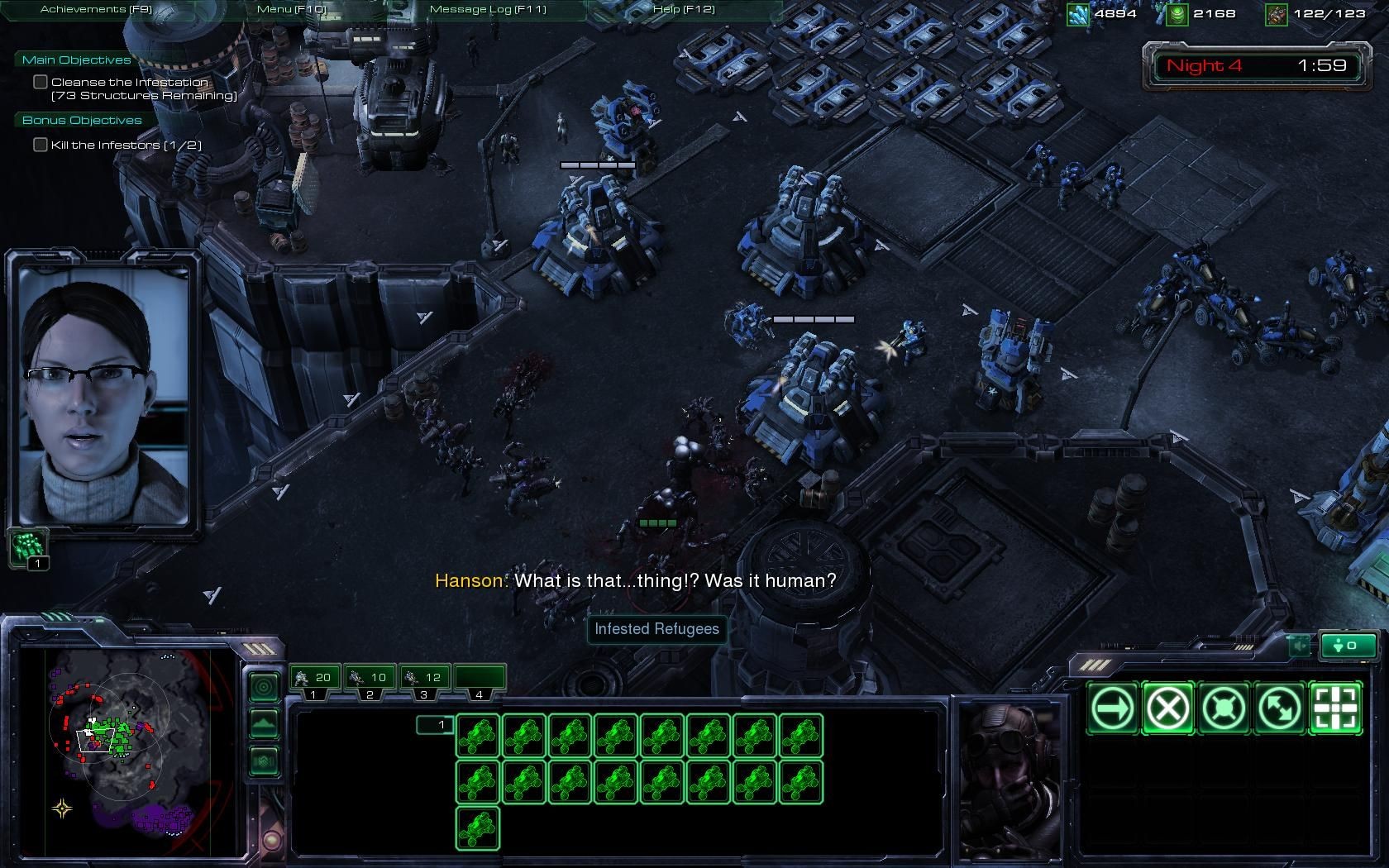
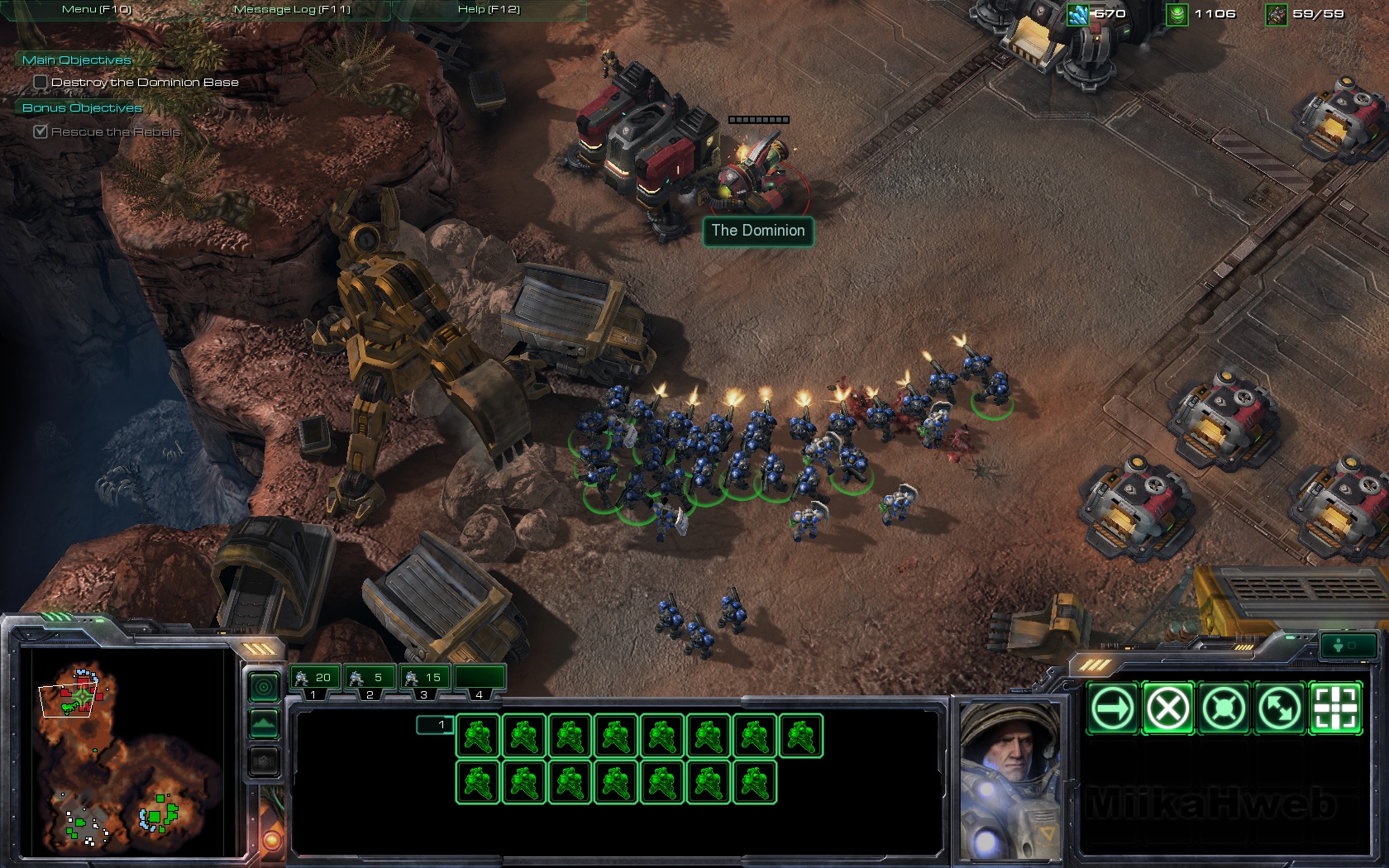
RTS games of old were just all about building units and killing the enemy, and thankfully StarCraft II keeps this in mind and lets RTS fans of the 90s get another taste. Liberty has you playing as James Raynor, who is an outlaw to the Dominion Republic and must stop the alien Zerg, the Dominion forces, the Queen of Blades (Sarah Kerrigan), and the Protoss all at once. The story is pretty riveting, especially for an RTS, thanks to excellent voice acting, dialog, and plot twists.
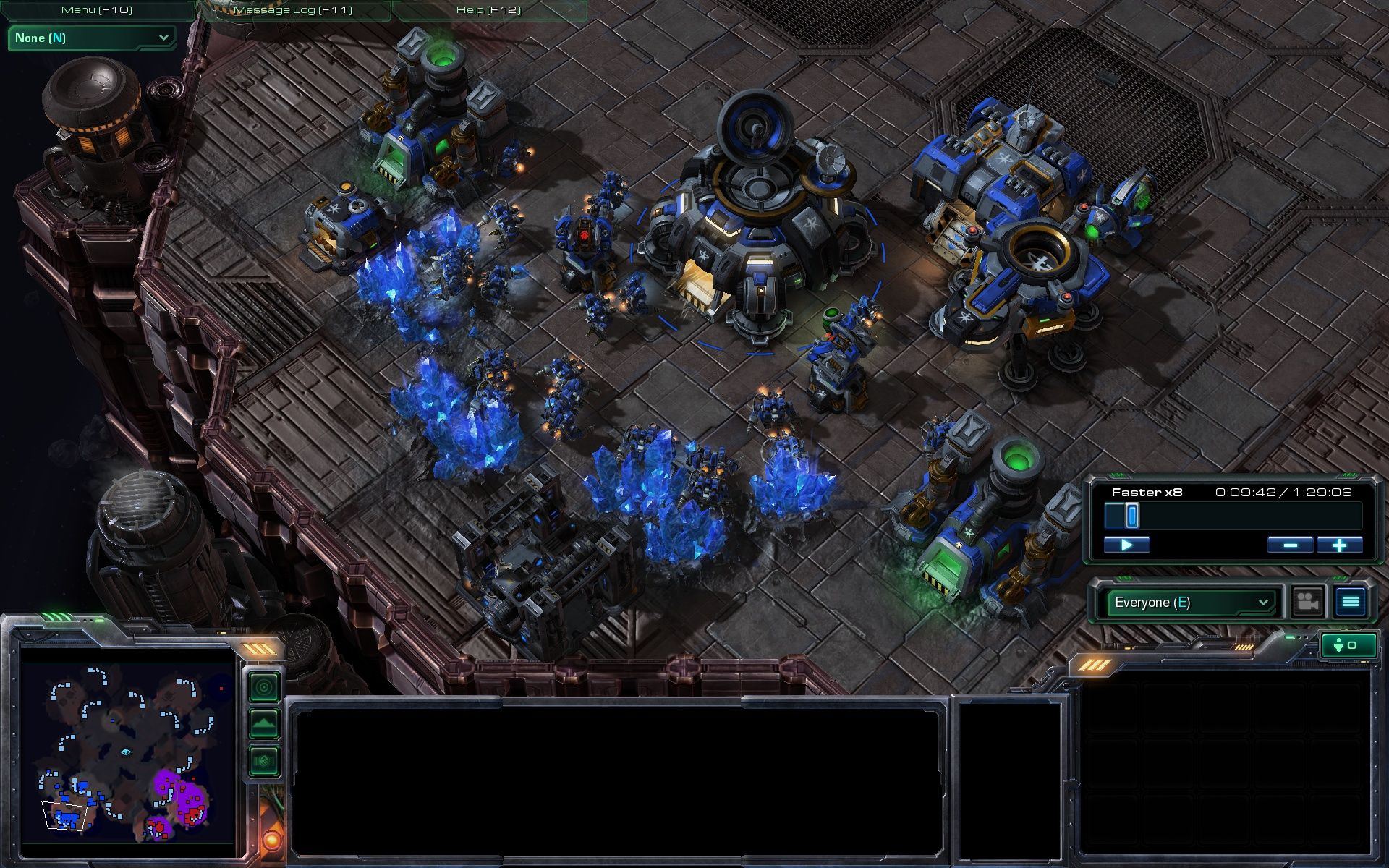
I’m not going to explain how an RTS is played, and if you played the original game, you know what you’re getting here. The game is very simple, with the premise of just building your army and completing objectives. There are only two resources in the game: Vespian gas and minerals. If you don’t like it, then go back to Company of Heroes or Dawn of War (I’m not saying those are bad games). You gather these with SCVs, and you build your main buildings, such as factories, starports, barracks, and anything else that other units require and have at their disposal. Yes, it’s that simple, but there are many changes and enhancements from the first game.
Firstly, there are a ton of different units, and you really have to think and strategize how to beat each mission. Each building has several units, but the game focuses on air and ground units. There are weaker units such as marines, reapers, and firebats, but marauders are the strongest. The factory holds goliaths, different vehicle units, or the strongest one, a Thor, which is a giant mech. The starport has several different types of ship units, with the biggest being the battlecruiser.
There are also defensive units that SCVs can build, such as missile turrets, detectors, and mind control units for the Zerg. There are so many units; you have something for every situation, and you end up using every single one quite often since they are perfectly balanced. Some units have special attacks that do extra damage but use up the unit’s energy supply. Some units can transform from ground to air or turn into defensive units. There is so much when it comes to this that it would take forever to describe it all.
The missions are great and varied, and you will never get bored. They offered a fair challenge, and even the later missions were fairly balanced. The game is just full of so much variety, but it’s so simple and easy to play and understand that it really pulls you in. Throughout the 26 missions, you will slowly earn more units to build and be able to build larger, stronger armies. The literal goal is to just build dozens upon hundreds of units, attack or defend, and complete the objectives.
The game’s only real flaw is that building units takes forever, but this also balances the game out, so you really think about what units you need and use them wisely. There are small band-aids for this, such as the mercenary compound. You can instantly call down highly skilled units for a large price, but there’s cool downtime. You can also build multiple buildings or build a different lab to build two units simultaneously, but you can’t build more advanced units without the tech lab.
You can upgrade most units with credits earned during missions, but you won’t ever be able to buy them all, so choose wisely. You can also use research points to pick one of two upgrades on a ladder. One side helps your army, and the other is research against the Zerg. Choose wisely since you can’t pick the other or go back. This upgrading system is great and adds lots of strategies, even off the battlefield.
Aside from all this, you can click around and listen to dialog from key characters, and this adds to the story and interactivity of the game, which is excellent. There are no extras, however, such as behind-the-scenes footage or anything else that would have been great. The game just has so much variety and content and is so perfectly balanced that it really feels like those 12 years were put to good use.
The multiplayer is what will keep you coming back. I’m not a huge fan of RTS multiplayer, but Liberty really shines in this area with Battle.net. With human opponents and four different factions to play, you will surely pour dozens of hours into this part of the game.
The game also looks amazing. If you have the rig to play the game with all settings set to their highest, you will be treated to beautiful visuals, excellent lighting, and well-done animations and effects. Everything looks amazing, and the game just plays brilliantly. I highly recommend this for StarCraft vets, but people who like their RTS complicated and with a lot of depth will be disappointed. But there is something here for everyone.
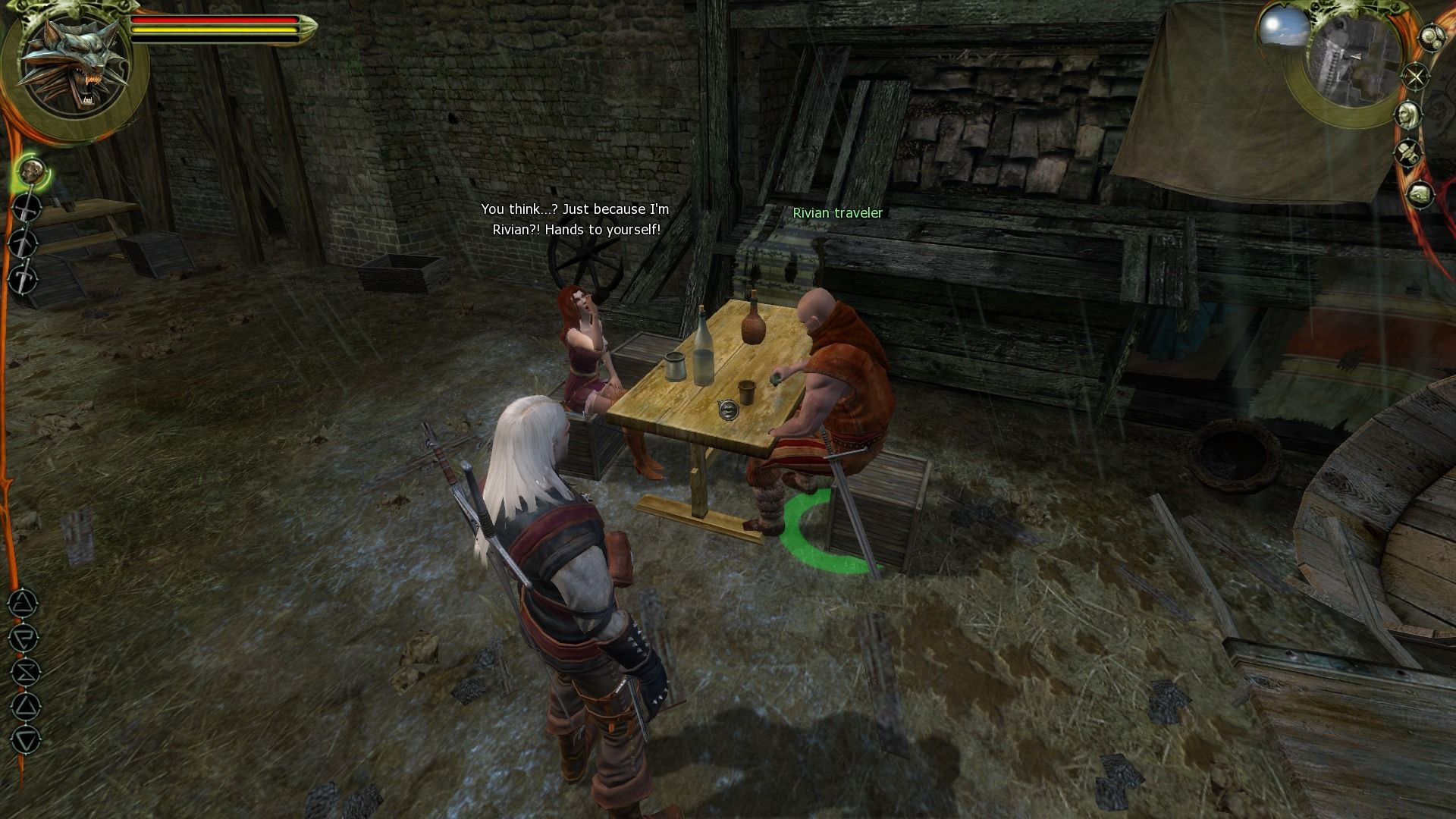
I love action RPGs, and The Witcher had a lot of promise when it came out. This game is really for the hardcore due to the fact that it relies on you to decide what to do and never really tells you what to do except what your missions are. It’s very hard to describe just what The Witcher is trying to do, but it seems to have trouble doing it. Most RPGs are simple with a map, inventory, leveling up, buying items, weapons, and armor from townsfolk, etc., but The Witcher makes this a bit more complicated.
To get started, I want to get the quest system out of the way. You can check your quests and track them on your map, but not all quests are clear, and they’re a mess. You’ll end up with over 20 quests at some point, and most of them are completed once you complete the chapter, so they aren’t really quests. This becomes very frustrating because you never know what you’re supposed to do with them except ignore them. Side quests are obtained by talking to certain people, but not all of them are clear and can really leave you clueless as to what to do. One of the most important parts of RPGs is the quests.
The Witcher has an alchemy system, and it seems RPGs just can’t get an alchemy system downright that isn’t overly complicated. You can find ingredients throughout the world by collecting herbs or finding them on dead enemies. You can’t pick certain plants until you read a book about them, and you can’t make certain potions until you obtain the recipes for them. See how this game works against you? Finding these books and potions is a real pain, since it’s like finding a needle in a haystack. Once you do get a recipe, you have to acquire the ingredients for it, which consist of a few components as well as some sort of alcohol base. This also includes health potions, and after I gave up on the game halfway through chapter three, I still couldn’t find enough ingredients to make a health potion.
While alchemy is really complicated and puts a damper on gameplay, magic is the same way. You have an endurance meter, and using one of your seven signs can drain it, so you need a potion to refill it faster, and maybe a potion temporarily increases your stats to get through a tough boss fight. You never feel strong enough. Even when I quit at level 17, I was still getting my ass handed to me, and upgrading weapons and armor is another pain.
You can collect meteorites and give three or more to a blacksmith, and you can upgrade your steel or silver blade. Finding these meteorites is a pain, and usually, not all blacksmiths will just make the weapon they need—a valuable jewel or something of the sort. Finding gold (orens) will be a huge issue since most of the quests are backtracking back and forth between places and only about 40% are fighting. Even in chapter three, I still couldn’t get enough gold to buy armor.
Besides this, the combat system is pretty solid. You have three different styles you can use, which are strength, speed, and group. You can switch to each on the fly, and timing is lowered by clicking when the icon turns into a flaming sword, which allows powerful combos. The fighting system doesn’t really go beyond that, so it gets dull after a while. When you level up, you can upgrade stats and different attributes, but you always feel the game is more powerful than you, no matter what you do. Leveling up isn’t a simple matter since you have to find an inn or a campfire and meditate, and this is also the only way you can use alchemy. Why did the developers make a game that works against you? Why can’t I just find a potion and drink it like in every other RPG? Why do I have to have flint to light a campfire?
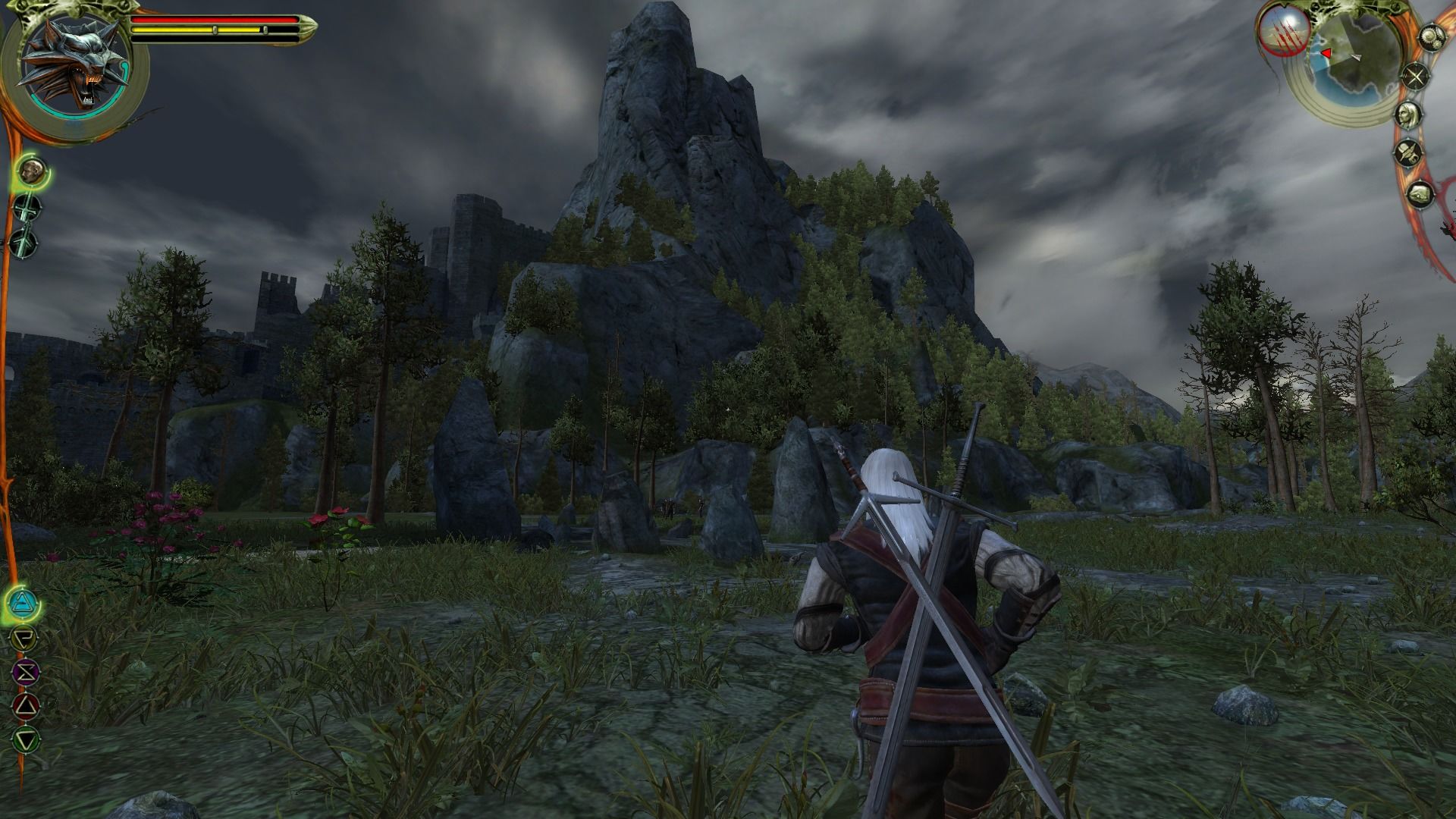
The game starts out fairly easy, but once it dumps into the world, it feels linear, and you don’t know what to do. There are a bunch of little annoying things, like you can’t see in a dark cave unless you drink a cat potion or carry a torch. A lot of the dialog is good, but the game is full of monotone voice acting. While the story is good, depicting a man named Geralt of Rivia, who is one of the last witches, trying to find a friend and kill an evil group called the Salamandra, it feels like there’s too much filler. The game is truly for the hardcore due to the open reign it gives players. The game looks pretty decent, but nothing close to next-gen, and it just feels a bit dated. For $20, you get a lot of games here, but some people may be lured in and quickly let down.
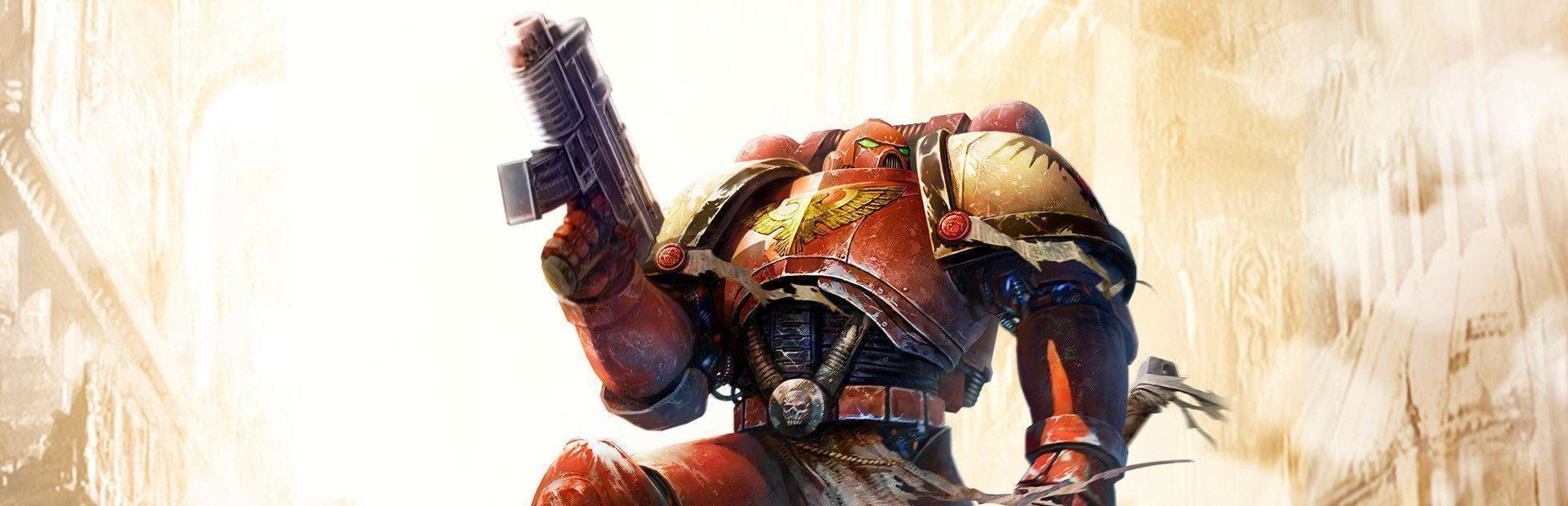
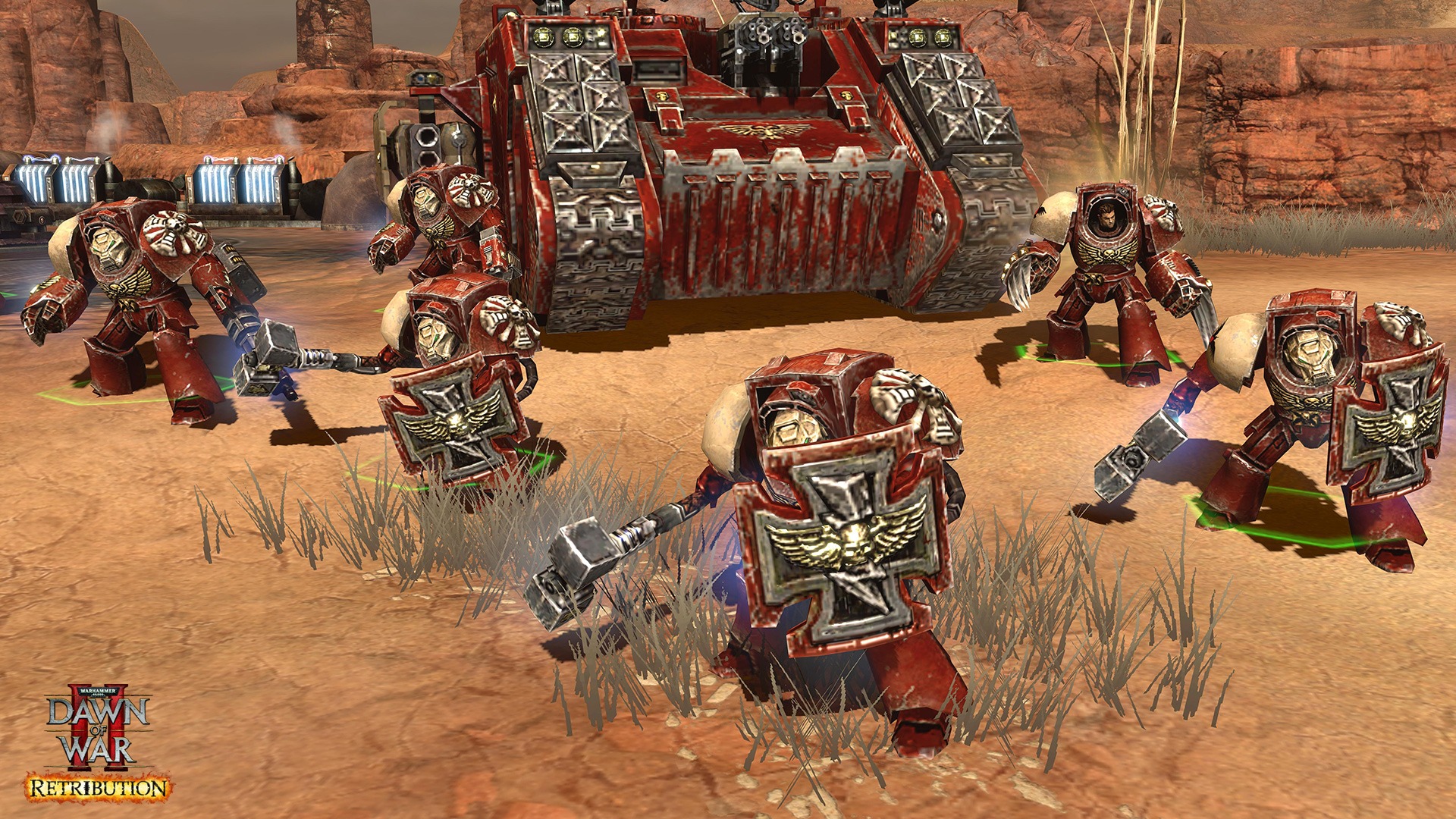
I love RTS games, and Warhammer is one of the best out there. Forget the overpriced board game stuff; the RTS game is where it’s really at. The first Warhammer was amazing and used the entire Warhammer universe in a unique symbiosis of RTS gameplay that was slick, powerful, and very addictive. Of course, with Warhammer 2 coming out, everyone couldn’t wait to get their hands on new units, new strategies, and another great story—but wait, it’s gone. Yeah, Relic took the S out of RTS in this sequel, and now it’s just an RTG (Real Time Game).
Instead of building units and sending them across maps, you just get to command key squad members around a map and enjoy dying and struggling through mission after mission. The game really isn’t any fun, thanks to the high difficulty and the fact that this game should be an RTS, not an RPG/RTS mash-up. I don’t mind the RPG elements, but they should have made it just that. Each member can have up to three members of their squad, so you get a handful of guys taking on an entire map. You can give each guy some accessories like health packs, grenades, shields, demo charges, and tons of other things, but you’re limited, and most of the time it never really works when you want it to.
If you think it sounds bad, it’s at least worth a shot. You can select each individual squad group and command them to do certain things. Each one has unique abilities, and you will use them all when taking on bosses and huge missions. You can pick up weapons and armor on the battlefield at random when dropping enemies, and later on, you can equip them. Some items have stat bonuses, and some just add firepower. After each mission, you can level up your guys in the fields they specialize in, and this is crucial to beating missions.
The game just feels like a big mess, really. You have to jump between three different worlds, and while completing story missions, there are side missions going on with timed “days” you get to complete them, and if you let the Tyranid infest an area too long, it drops your campaign score. I find this frustrating since you can only do one mission at a time, and if you fail, it lapses a day, and you can really miss a crucial mission. If they weren’t so damn hard, it would be a lot easier. Some missions had me running back and forth to a satellite drop point (you can get more troops this way) or a relic site that fully heals your squad. Running back and forth from the boss over and over to heal and chopping down a boss’s health is something you do in an RPG, not an RTS. I feel Relic had the wrong idea for this game, and I bought it thinking it was like the first game, but I feel I wasted my money.
The game just has so much back and forth; the objectives feel tedious, and sometimes you can’t complete a mission because you’re not strong enough, so you have to try another, and sometimes another, and another, then go back around and try to beat them all again until you can finally beat that story mission. It’s exhausting, not fun, and, most of the time, boring. While the game isn’t terrible, it’s just that I wanted an RTS, not a crappy mash-up. Sure, you can get a Dreadnought later on or more powerful accessories like an orbital strike and a drop pod, but you only get one during the mission, and it just never seems like enough.
With all that out of the way, the story is decent, and it follows the original. The Blood Ravens are trying to get rid of the Tyranid infestation and are trying to come up with something that can weaken the hive. The voice acting is solid, and the story is interesting enough, but it’s also missing those cool cut scenes from the original game, and it just feels half-baked. The visuals are decent, but not much better than the original, so Dawn of War II isn’t really Dawn of War; it’s something else. Go ahead and pick this game up if you are a true hardcore fan, but you will be very disappointed. You can play co-op with someone to lighten the difficulty, but without the RTS elements, you won’t really care.
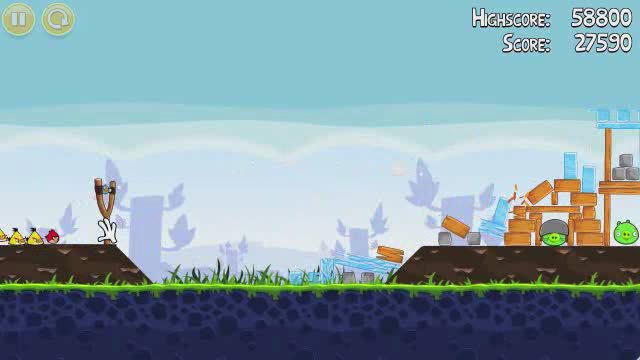
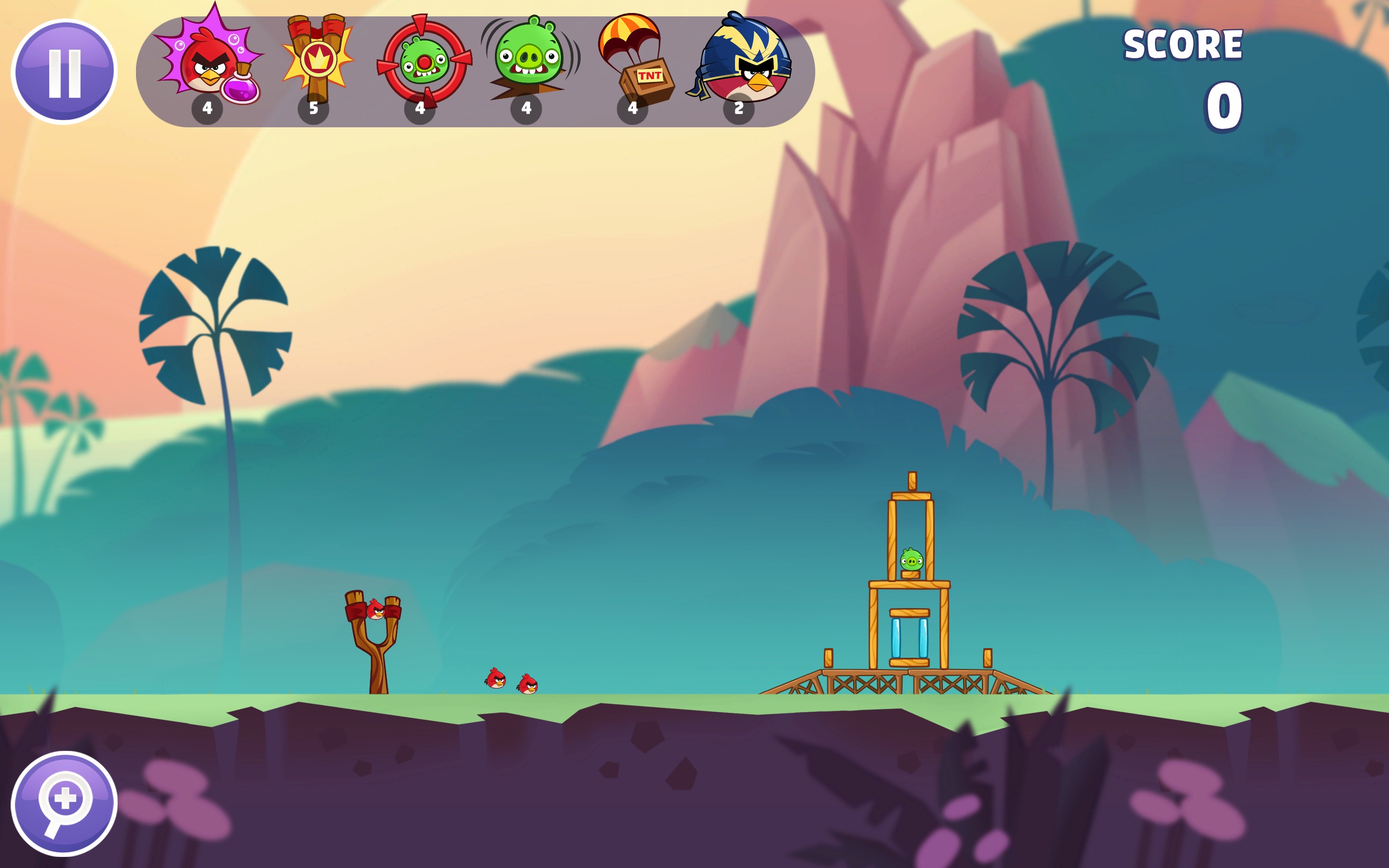
Physics games tend to be very popular on the App Store, and Angry Birds is one of the best among them. The idea is to flick birds off a slingshot and have structures crash down around the evil pigs. There are various types of birds, such as one that spreads into three when you tap it, one that goes really fast, one that doesn’t do anything but cause damage, and a few other types.
At the start of each level, you get shown what you have to bring down, and then you drag your finger to move to the slingshot. You can’t see where the structure is when looking at the slingshot, so this provides a challenge but also a lot of trial and error. Trying to find the weakest points in the structures can be painful and tedious since you never feel like your birds are strong or heavy enough to do a good deal of damage.
You get rated at the end of each puzzle for how many birds you have left and how much damage you have caused. Once all the pigs are dead, you clear the level and move on to the next. It seems that there is no consistent difficulty increase, and it just seems to be all over the map. The art style is nice and it feels fluid, but the sounds are really annoying.
Overall, Angry Birds is an excellent physics game and well worth your dollar.
The city of Rapture. Full of life, love, elegance, beauty, innovation, and Big Daddy’s. Well, that’s how it used to be before the civil war broke out for who had the most Adam. BioShock 2 takes place ten years after the initial fall of Rapture, and instead of playing as Nobody, you play as Big Daddy. Not just any Big Daddy, though you play as one of the first Delta models that helped build Rapture. After your daughter, Eleanor, wakes you up from a cold, dead sleep, you must find her and stop the evil Dr. Lamb from destroying Rapture and using the Splicers to commit her evil deeds.
The first thing I have to say is that you must play BioShock 1 before even going into this game, or you won’t know what’s going on. There are so many tie-ins to the original game that newcomers won’t have a clue. With that said, this review is mainly for fans of the original. I also have to tell those fans that BioShock 2 isn’t as good as the first one but has lots of much-needed improvements and a pretty fun multiplayer, so let’s get to it.
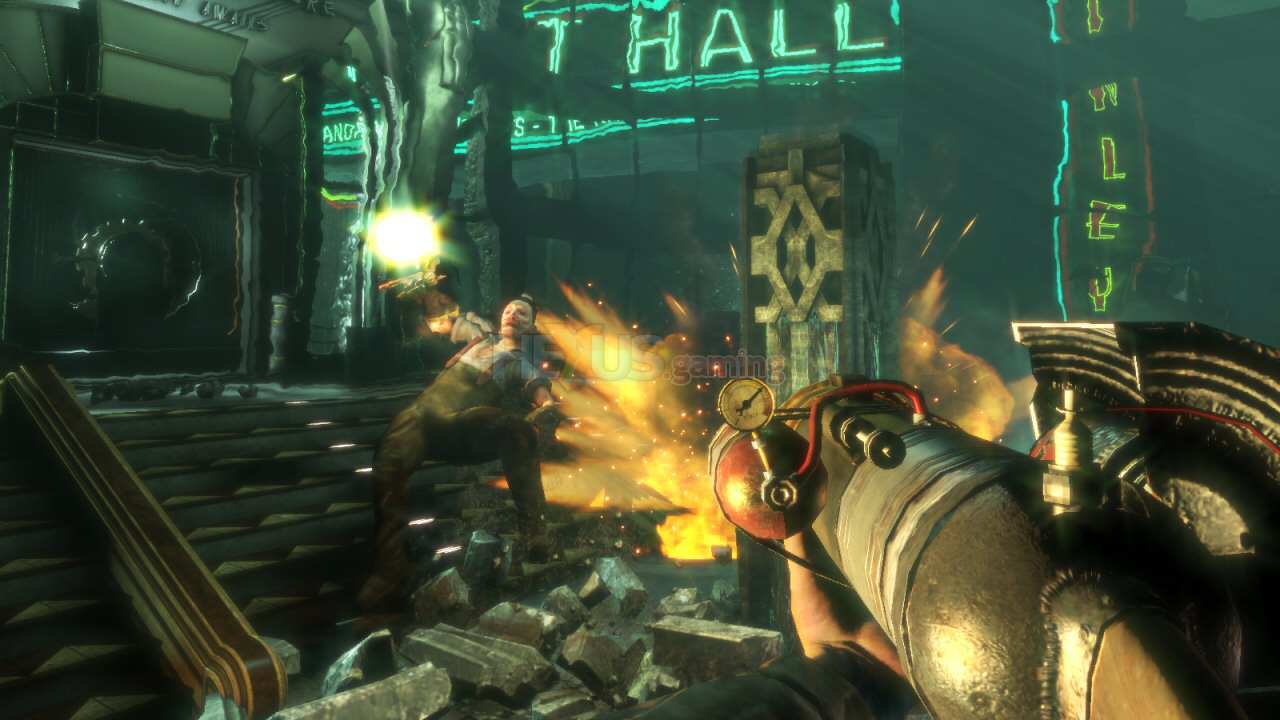
The first thing you will notice is that you have a drill. Yes, a nice big drill to cut those damn splicers up. Of course, the drill takes fuel to use (sorry, I can’t have you just drilling people away, yeah), but the biggest change is that you can use Plasmids and weapons without having to switch. Your left hand uses Plasmids (LT), and your right hand uses a weapon (RT). This is great for faster combat and makes it less cumbersome. All of your favorite weapons from BioShock have returned, but with a twist.
As you can tell, all the weapons need to be handled with one hand, so you get a double-barrel shotgun (which replaces the original pump action), a minigun (which replaces the Tommy gun), the grenade launcher, and instead of a crossbow, we get an awesome spear gun. Yes, and you can even impale enemies to walls. With that said, there are some new weapons that are very handy, such as the hacking gun (more on that later), which can also shoot out auto-turrets, which are great for defending yourself against hordes of enemies. You can lay traps with proximity mines, spear traps, and even some new traps from the rivet gun, which you can pick up later if any weren’t detonated. The shotgun has a couple of new types of ammo for you to use, and these are the slug rounds that knock enemies across the room and the phosphorus rounds, which look like sparklers that explode all over the enemy. You can use antipersonnel rounds, armor-piercing rounds, etc. for the situation at hand. When you get to Power to the People stations to upgrade your weapons, a third hidden one will become available that adds an extra “hell yeah” to your weapons. For example, the third upgrade for the shotgun adds electric charges to shots for extra damage.
One greatly improved element is hacking. In the original, we had to do this Pipe Mania-type mini-game, but that has been scrapped, and everything is done in real-time while playing via a moving needle on a meter. Green areas are good, and red areas have trip alarms. Blue areas give you bonuses, such as turrets doing extra damage or vending machines giving you free items. This is a huge improvement over the original, and it keeps the game flowing.
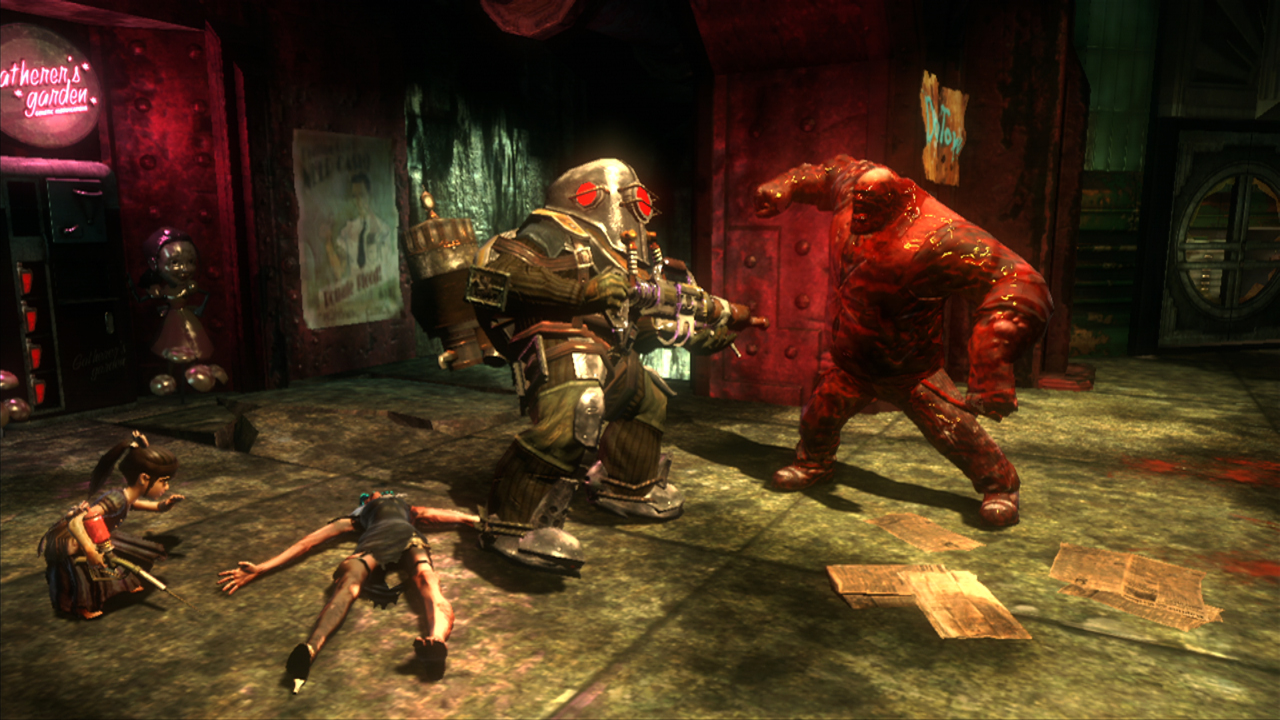
Being a Big Daddy obviously requires you to protect your Little Sisters, and that’s exactly what you do. Instead of just killing their Big Daddy and then harvesting them, you can adopt them and go find “angels” to harvest Adam out of. Once the Little Sisters are all full, you can harvest them for tons of Adam or free them. Gathering Adam isn’t an easy task because once you start, Splicers start coming out of the woodwork with no mercy. Set up traps and find a good vantage point before setting the Little Sister down, and usually you can make it through just fine. If you decide to take the merciless harvesting route, watch out for the new Big Sisters, which are fast, mean chicks who don’t mess around. They are harder to take down than Big Daddies and require a lot of firepower to be prepared.
One last little tidbit is the research. Instead of taking pictures of enemies, you now have a movie camera. You whip it out and start filming a splicer, and the faster you take it down, the higher the research rating you’ll get. Research enough, and you will get special bonuses and even a secret tonic.
Now that most of the new features are out of the way, you’re probably asking, “What hasn’t changed?” A lot, in fact, and I could boldly say the developers played it too safe with this game. Everything is pretty much exactly the same as the original; the art style, the graphics, the menus, the sounds, and even the splicers’ animations are exactly the same. The only new splicers are the Brute splicer (Tank from Left 4 Dead anyone?) and the Big Sister, but that’s about it. All the plasmids are the same tonics, with a few new exceptions. You get a ton more tonic slots, but everything is the same. The other problem, too, is that the game gets extremely repetitive. After the first level, you’ve pretty much seen all of what BioShock 2 has to offer. The narrative isn’t as memorable as the original, but the game is still excellent. All of these things staying isn’t so bad since they work, but a whole new approach would have been nice. The graphics are slightly updated, but other than that, you won’t see any changes there.
The multiplayer is pretty fun, but it’s an acquired taste. Multiplayer feels more like the first game; you can use plasmids and research other players for bonuses, level-ups, etc., but it’s kind of short-lived. You can find Big Daddy suits, and there is pretty much every game type you can imagine, including protecting Little Sisters and taking down Bid Daddies. The hype about the multiplayer was from a narrative standpoint since it’s never been down before. As you level up, you will receive messages that let you know what Rapture was like before the civil war.
All in all, BioShock 2 is a solid sequel with fun multiplayer, but the developers just played it too safe in the end. I would have liked to see some more bold moves, but what we get is a wonderful package to enjoy.
SPECIAL EDITION: If you paid the extra $40 for the special edition, you’re in for a treat. Being the biggest game box I have ever seen, SE packs in a lot of extras for die-hard fans. The SE includes a vinyl record of the soundtrack, the CD version, four posters that represent the in-game ads, as well as a 164-page book about how BioShock 2 was developed. After reading this book, you can really tell every idea was scrapped, and they just stuck with the original ideas. It seemed the developers were too scared to stray off the familiar path, which was a disappointment.
JRPGs that were the standard are now being taken over by western RPGs, and one of the main developers responsible for this is Bioware. Dragon Age: Origins is a very deep game, mainly in politics, religion, and mythology, that is reminiscent of Tolkien lore. Not only is the dialog witty and humorous, but every piece of dialogue is spoken with great acting. Each character is memorable, and Bioware really does it with their morality gameplay because it takes ten minutes to decide a choice since they change gameplay so much, more so than in any other Bioware game.
The game has different factions you can play as (dwarf, human, elf, then different classes in those races), and each takes about 50+ hours to play (my first playthrough was 41 hours). You start by customizing your character, but that isn’t the deepest part of the game. When you start out with any race, you learn the combat basics, which are pretty deep yet also very simple.
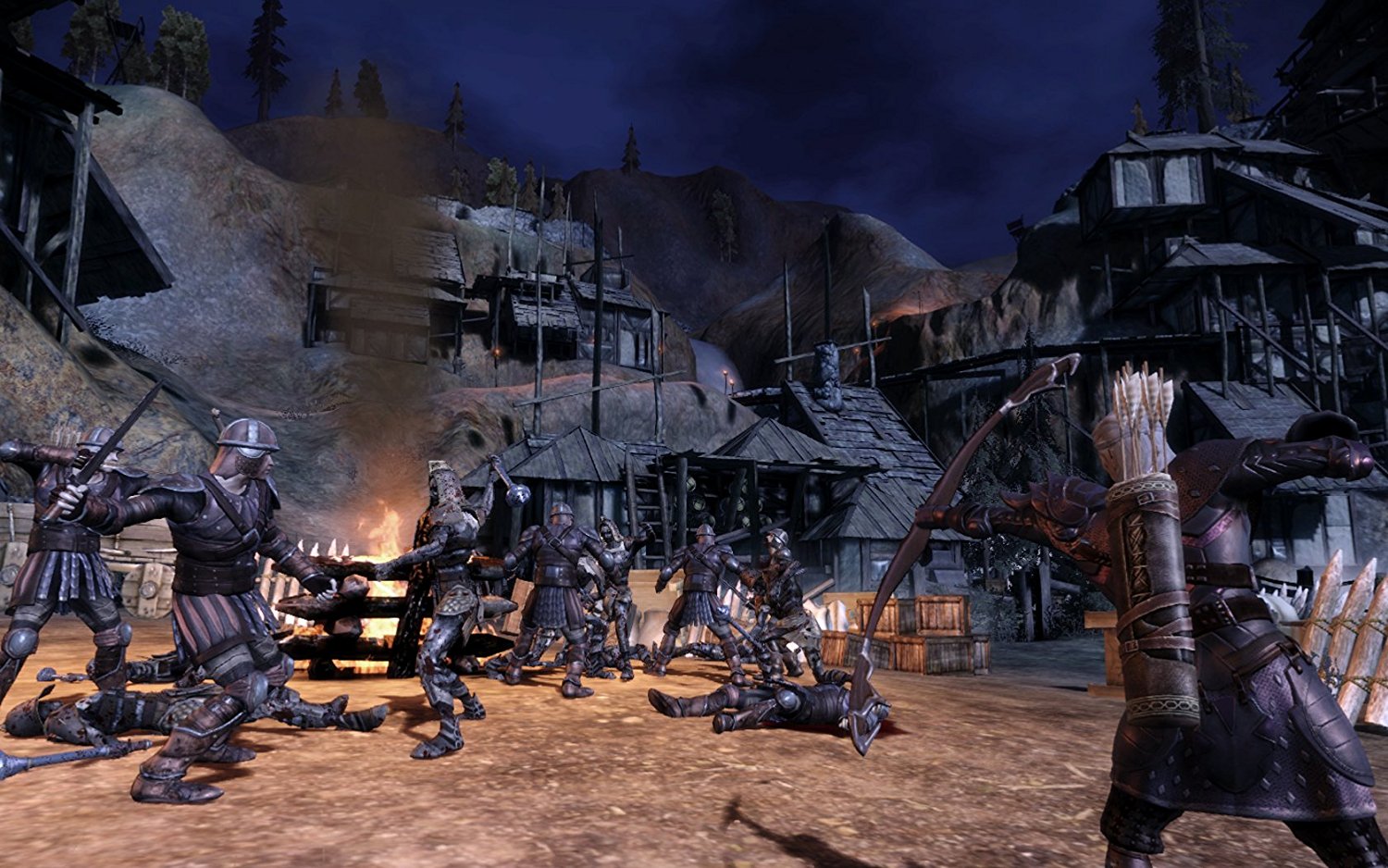
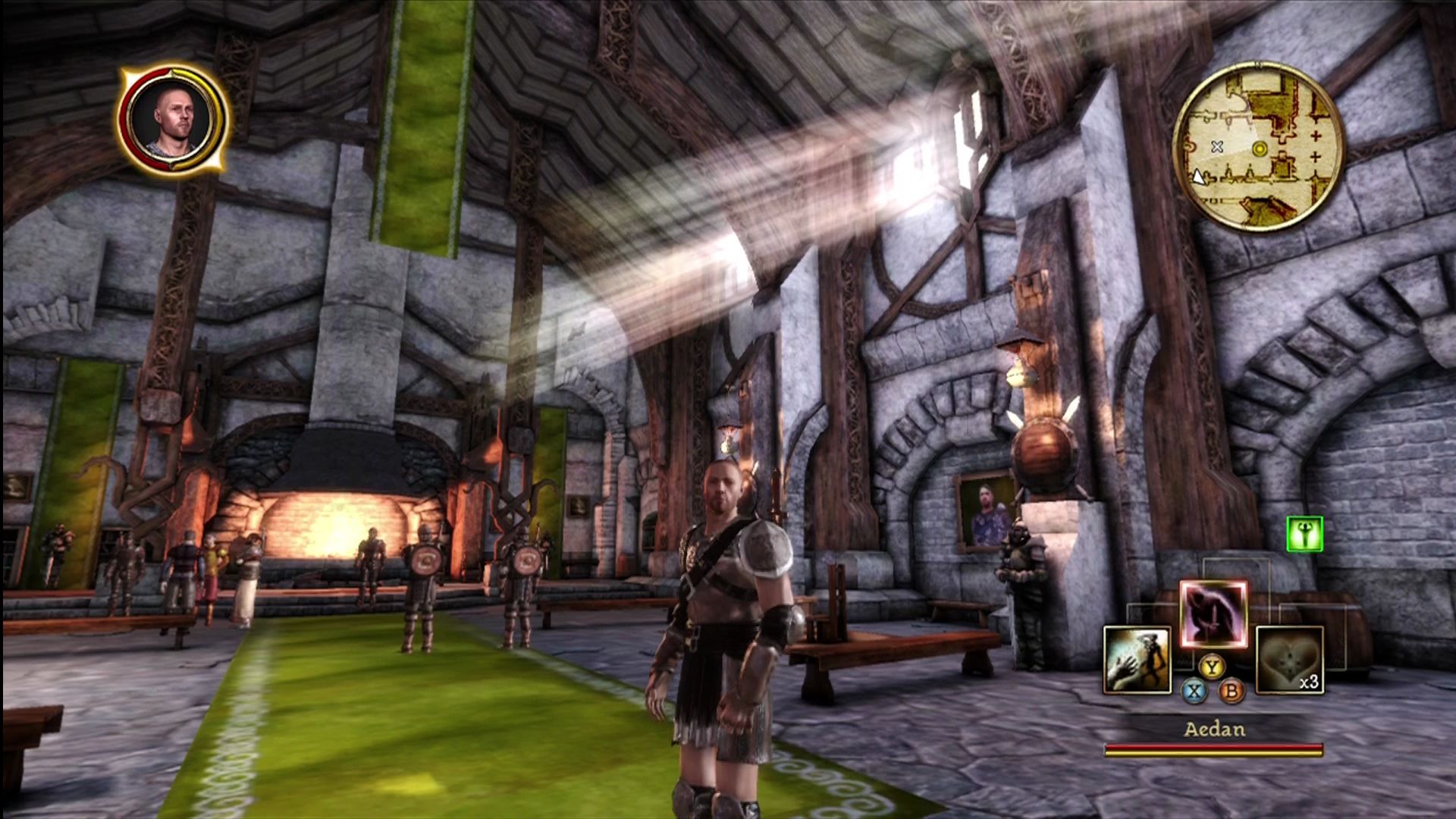
The actual combat itself is the standard Hit the attack button and watch the characters hack away. You earn experience by killing enemies and level up accordingly. The game has a radial menu that lets you access your potion and trap-making skills and techniques, as well as combat tactics. You can create traps and potions by learning the skills over time and by using ingredients found throughout the game world (I found both of these useless). Skills range differently between mages and warriors, but warriors can learn different fighting styles such as two-handed, dual weapons, sword and shield, and even archery. Each class can learn other classes’ techniques, and that’s the beauty of Origins. There are dozens of different skills to learn, and you won’t learn them all before beating the game.
The sheer depth of the game is mind-boggling, but I know one thing that people are concerned about, and that is side quests. There are dozens upon dozens of them to keep you satisfied, but of course, you don’t have to complete them all. There are also tons of Codex pages to pick up and read in this deep and wonderful lore that Bioware has created. There is enough stuff to read to fill a history book, but if you’re not the reading type, you can just skip over this. There are hundreds of different items to obtain, from armor and weapons to ingredients and gifts to make characters like you better.
After playing for about 5–10 hours, you will realize how much the game relies on your actions to tell the story. Unlike other Bioware games, you will notice these changes right away, and sometimes a decision in the beginning can progressively make things worse or better for you throughout the game, and it will make you regret what you did, and that is brilliant. The deepest part of the game is the menu itself, in which you equip your gear, check quests, codex pages, and your map, but there isn’t much to explain other than your normal inventory menu. Thankfully, the game steers away from unnecessary stats that boggle your mind and make you want to quit playing.
Playing the game is fairly simple, and the controls are easy. You can control all four party members, which gives you a nice tactical advantage, but most of the time I just played as my own character. Just remember, when a character dies during a battle, you have to wait for all enemies in the area to be killed for them to be resurrected (unless you have a mage with that skill). I found the game very difficult on the normal setting (almost impossible), so the easy setting had to be used, and that was challenging enough. Traveling between areas is easy enough since you use a world map, but you can encounter battles in between the areas.
One of my biggest gripes about the game is that it is pretty ugly. The Xbox 360 version is the ugliest, with flat, muddy textures that look like you’re playing on the lowest settings. Why this is, I have no idea, but there are also frame rate issues and long load times every time you enter a new area. There is also some sort of collision detection issue because when you press A to attack, enemy party members will sometimes dance around the enemy before attacking, and this can kill you in tight situations. This seems to be a huge issue when many characters are against one enemy.
In other words, if you love deep stories that deal with Blights, an Archdemon, and a deceitful king, then buy this game, but try to get the PS3 or PC versions since they look better. Dragon Age is probably one of the best western-made RPGs in decades, and with so many items, skills, party members, techniques, and side quests, you are in for hundreds of hours of addictive RPG gameplay.
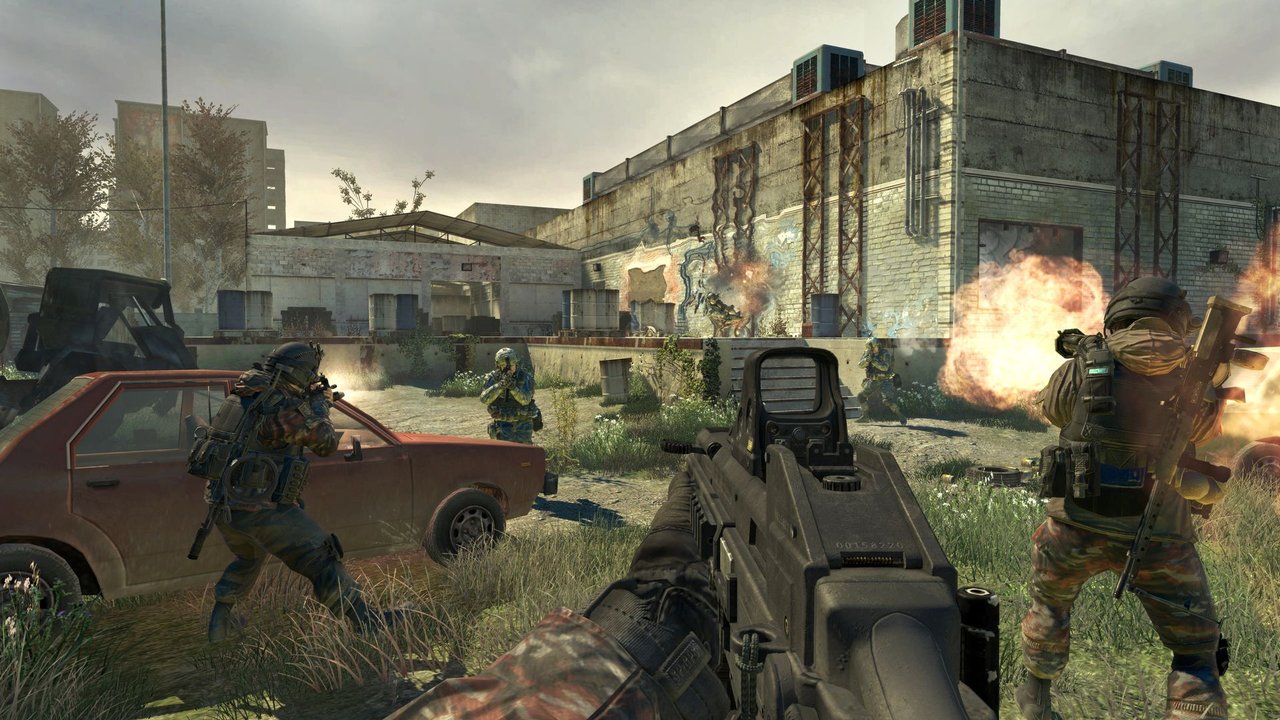
First-person shooters have always been one of my favorite genres because of the amazing stories that most tell, accompanied by the beautiful cinematic experiences that most provide these days. Modern Warfare 2 is among those, but the multiplayer is what will keep you coming back for more. Modern Warfare 2 starts after the first game, so I highly suggest picking up the Game of the Year Edition if you really want to get into Modern Warfare. You play as new recruits and follow the characters you played as in the original (Captain Price and Soap MacTavish). You are still trying to stop the Russian psychopath Makarov, who has now brought the war to the east coast of our own country.
The game is more cinematic than the original, but not as intuitive in terms of level design and length. There are things in Modern Warfare 2 that have never been done in an FPS before, like ice climbing, but you also have a snowmobile scene as well as using AC-130 attack planes. But the game just doesn’t compare to the original in terms of single-player. One of the most memorable moments is at the beginning, when you actually play as a terrorist on one level and massacre people in an airport. I am very surprised this passed the ESRB censorship without anyone complaining because they can’t control their kids’ actions. Anyways, there are a lot of things in the single-player experience for fans of the original, including flashbacks of the last game and even another sniper level with Captain Price, but nothing tops the level in Pripyat from the original. The biggest thing you will notice is the mass amount of weapons you can use. There were so many weapons that I couldn’t use them all in one play-through. One thing that just strikes me as amazing is seeing our own country, as if this happened tomorrow, as a war-torn battlefield. It’s very awe-inspiring and makes you stop and admire the scenery. While the single-player experience only has about 4-6 hours of gameplay, it’s enough to get you started and familiar with the game enough to jump right into multiplayer, and it comes out bats swinging and all.
Modern Warfare is renowned for its award-winning multiplayer, and it is probably the best FPS multiplayer I have ever played on any system. The game is about reaching rank 70 using the real-life military ranking system and earning experience points from kills. You start out using the default load-outs, but after reaching rank 4, you can make up to five custom classes. You can pick a primary and secondary weapon, equipment, special equipment, three perks, and a death streak. For each weapon, you can choose an attachment ranging from scopes, grips, silencers, and heartbeat monitors. Perks add advantages to your skills, such as steady aim, faster reloading, being invisible to UAVs, air support, etc., master melee speed, and you get the idea. There is even a new perk called Bling, which allows you to have two attachments to your primary weapon.
Once you have your classes created, you can start earning experience points with them. The multiplayer in Modern Warfare 2 is so deep that you earn points from completing challenges by using and doing everything you possibly can hundreds of times. Challenges range from getting so many kills for every weapon, attachment, perk, death streak, kill streak, etc. Just about everything you do earns you points to move on up, and this can get you hundreds of hours of online fun. If that isn’t enticing enough, 12 players may not seem like much, but on these maps, they are. My only real complaint is that there aren’t many maps, and most of them aren’t that good. A select few are well designed and very fun to play on, but some are just boring, but a map pack is due soon to fix this.
Some of the new features you have heard me talk about are new death streaks, which are a fourth perk that is enabled if you die three times, and these range from dropping a live grenade upon death to 10 seconds of extra health upon respawning. Killstreaks are now customizable and unlockable by earning ranks. There are over a dozen now, ranging from controllable AC-130 airstrikes, helicopter strikes, Hind attacks, and carpet bombing. Getting 25 kills in a row can even land you a tactical nuke that lets your team automatically win. My favorite is the care package drops (upon earning 4 kills in a row) that deliver random kill streaks or even the placeable turret.
You also now have a customizable call sign, which is a placard that displays an emblem, a mockery banner, your rank, and your gamertag. There are dozens of emblems and titles to unlock, and mixing and matching is fun while the titles can match your personality, such as ones that say “Bow Down,” “Omnipotent,” “Joint Ops,” or “Voyeur.” There is just an endless heap of options in this game, and it truly makes it the best FPS multiplayer game ever made because there isn’t one thing I would want to change about the game. I really want to give this game a 9.5, but the slightly disappointing single-player and covert ops bring it down a tad.
Covert Ops seems more like an experiment than anything else because no one plays it online. Think of these as special missions that have you killing a certain number of enemies or racing down a hill in a snowmobile to get a certain time. 90% of these are impossible to do without someone else, so you will most definitely need a buddy to beat them.
On one last note, the game looks amazing. With super high-res textures and looking close to real-life on an HDTV in all its 1080p 50” glory, you will be drooling all the time. Everything is highly detailed, and the sound is just amazing for that “in-the-war” experience. Modern Warfare 2 is just an amazing game and really shows how sequels should be: improvements upon the original in which the developer listens to its fellow community and makes changes accordingly.
Maybe once a decade we get a truly beautiful game that really represents what games are: cinematic experiences that the player can get lost in for hours. Assassin’s Creed II is one of those rare games, and it also represents what a sequel should be. Assassin’s Creed II boasts a wonderful, enrapturing story that really grabs you both in a political, historical, and science fiction sense. Never have I seen the three mixed so well with an ending that can make your head spin for hours afterward and have you talking amongst your friends about it for days. You are not Altair, but Ezio Auditore, who is on a path of vengeance for the rival banking family that killed him. In the real world, you are still Desmond Miles trying to unlock the secrets of his assassin ancestors and figure out what the Apple of Eden is really meant to do and why everyone wants it.
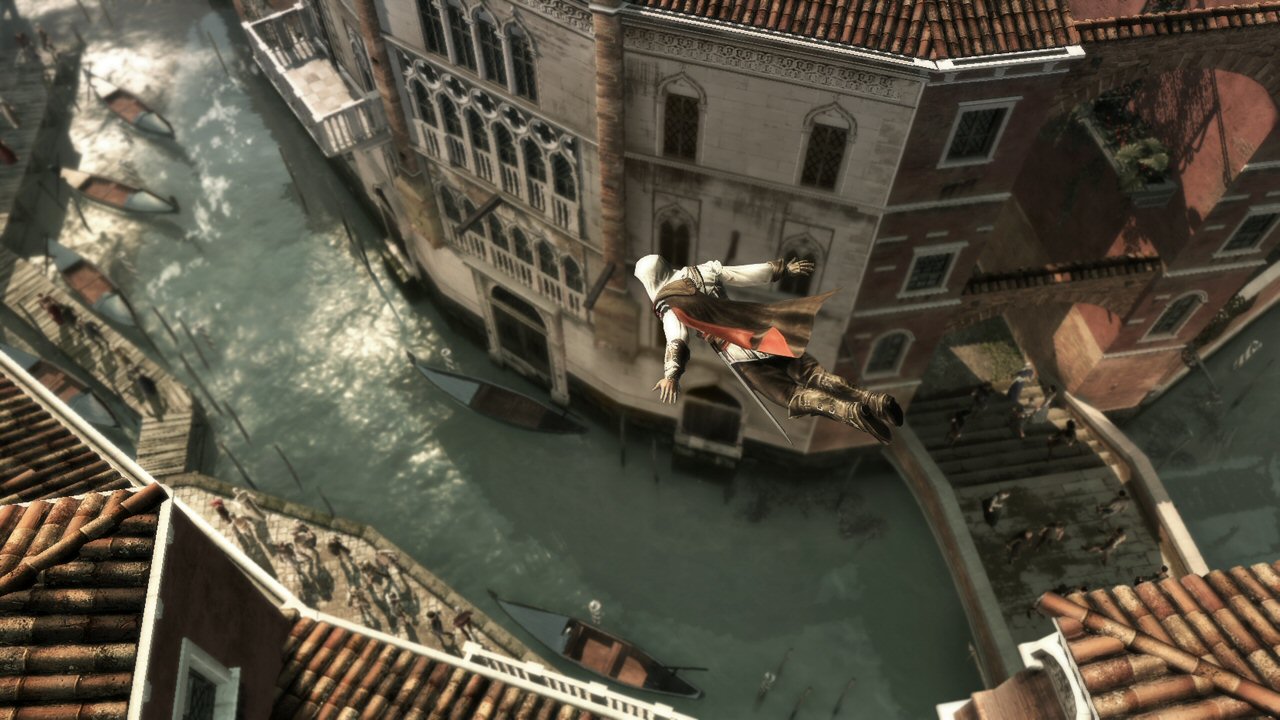
From the start, you will notice major changes from the original, and these are graphics. The game is truly one of the most beautiful of the decade, capturing the Italian Renaissance era with all of its amazing architecture, historic figures, and language, along with the social classes of the time. But before we talk more about beauty, let’s talk gameplay. As everyone recalls, the first game was very repetitive and pretty bare-bones, so expect Assassin’s Creed II to have tons of things to do. Not only are there more side missions, but there are more scripted story-driven missions, and playing Desmond isn’t so boring. You actually go to a different location with Desmond and even fight with him. Just a hint without spoiling anything. You have your Messenger, beat-up, and race events from the previous game, but gone are the “helping citizen” events. You have tons more variations, from raiding assassin tombs (interior Tomb Raider style levels) to Templar Lairs, races on horseback, assassination contracts, finding codex pages to upgrade your health, chasing down people stealing your money, chasing down messengers, solving glyph puzzles, finding statuettes, restoring your uncle’s villa, more viewpoints, and the list goes on. Yeah, there is more variety, and because there is so much to do and so many ways to do it, you really never get bored, because I never did.
You can do ten side missions, then three main missions, then fast travel back to your uncle Mario’s villa to upgrade the city to get more income for you to spend, then go find some feathers for your mother in mourning, and maybe get some Codex pages. Doesn’t that sound like enough? That’s ok. The variations in story missions never get dull with all the weapon upgrades you get. You even get to use Leonardo da Vinci’s flying machine about 2/3 of the way through the game. Want to talk about upgrades? Well, there is an economic system in play here, but don’t get too excited. It’s your simple buy stuff from merchants and upgrade your stuff type thing. You can upgrade your armor over a dozen times, buy dozens of weapons, upgrade medicine pouches, throw knives, and even poison vials. You can dye your clothes or buy paintings to increase the value of your villa. Did I mention there is every assassin weapon in this game? You have smoke bombs, dual hidden blades/punch daggers, poison blades, hidden guns, and even a passive ability to toss money on the ground to distract guards.
Fans of the original remember that the best attack was the running and jumping assassination attack. Wanted more? Well, you get more with the ability to pull guys down from hanging on a ledge, from a hiding spot, on a bench, in a crowd, jumping off something, and anyway you possibly can. You can now swim, which is a huge plus, and blending has totally changed. Instead of having a “blend” button, the previous “blend” button is now a “walk fast” button, which can be used to pickpocket people for money by just running into them. Blending now consists of using any group of pedestrians or hiring people. You can hire courtesans, thieves, or mercenaries to do your dirty work or distract guards from important posts or patrols. This allows you to walk right on by to wherever you need to be. You can blend by sitting on benches or dropping your notoriety. Your notoriety is the creed diamond that has a red bar around it. The higher it gets, the more the guards will be on your case and chase you for subtle things. Ripping down posters or bribing heralds can bring it down, but becoming anonymous first is a must.
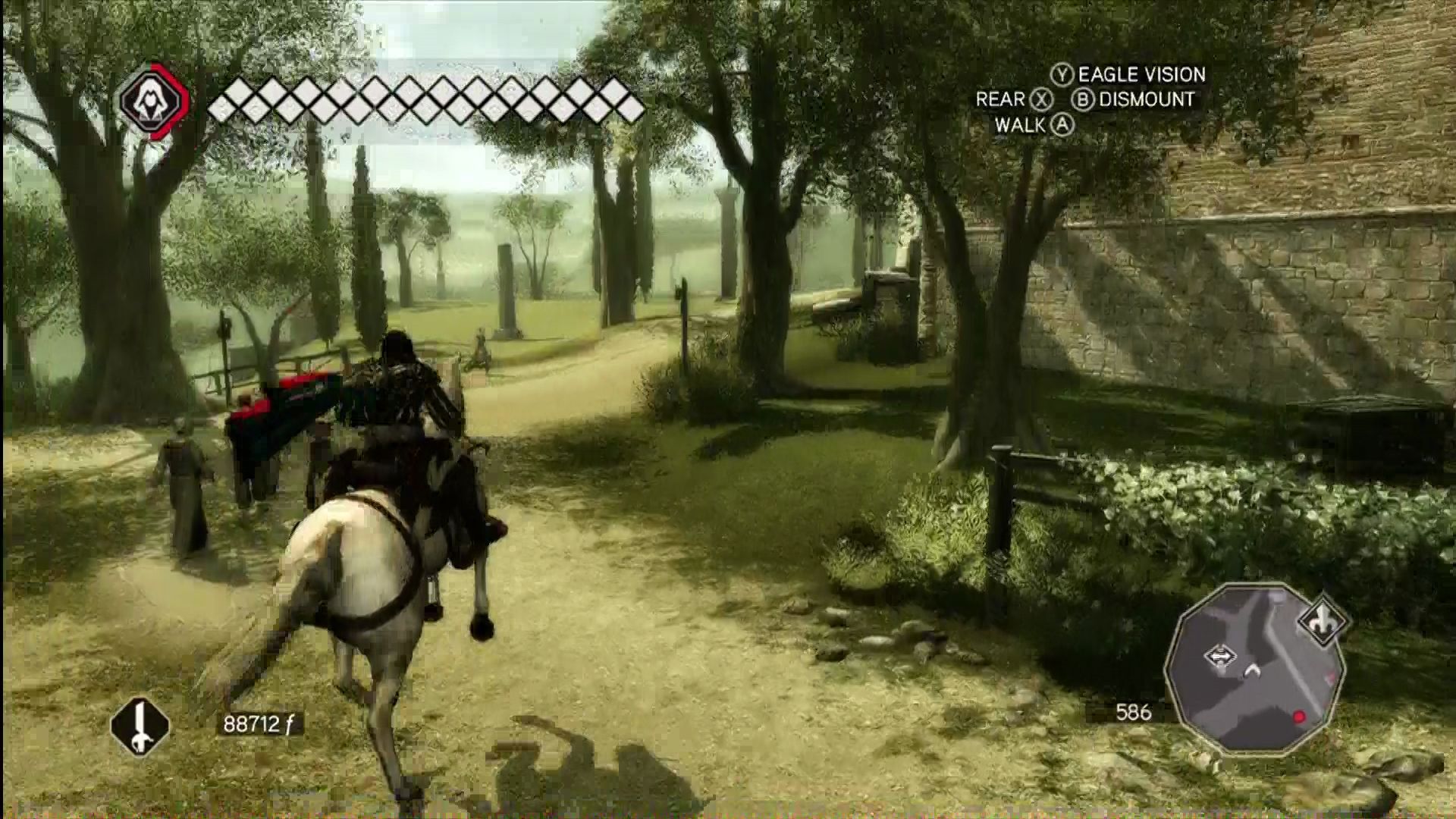
Now that we have the basic elements out of the way, let’s talk combat. The core combat system is here, but with upgrades, such as being able to counter a counter-attack, take away weapons, use your hidden blade as a weapon for instant counter-kills, and so on. The enemy AI is also better, with four enemy variants that can chase you down or kill you with their bulk and massive weapons. Free running is also slightly improved with tighter controls and better-designed levels, more climbing puzzles (viewpoints), and just more terrain overall. The game really only gets frustrating when the controls get a bit sticky and you cling too well to ledges. The world is 3x the size of Assassin’s Creed, with the towns of Forli/Venice, Firenze, the Villa, and Roma. After about ¼ through the game, you get to ride a horse-drawn wagon in a chase down a mountainside to get to Forli/Venice, which is a rich cinematic experience that the game is full of. Once you get to Venice, you can ride gondolas and swim in the water.
So with all this greatness and beauty that Assassin’s Creed II gives us, how does this soup taste? With all these ingredients, I have to say it tastes damn good. Everything works well together, and the game feels like a rich, illustrious world that doesn’t feel dead. With fluid combat, free running, plenty of stuff to do, amazing visuals, voice acting, history, and science fiction, you get anywhere from 15 to 25 hours of a wonderful game. This game will have you sitting back and savoring every moment, not just because of how amazing it looks and sounds, but because of how beautiful the game is as a whole. These games come once in a decade, and Assassin’s Creed II is it.

























































 thebinarymessiah.com
Try multiplayer. A lot of fun !