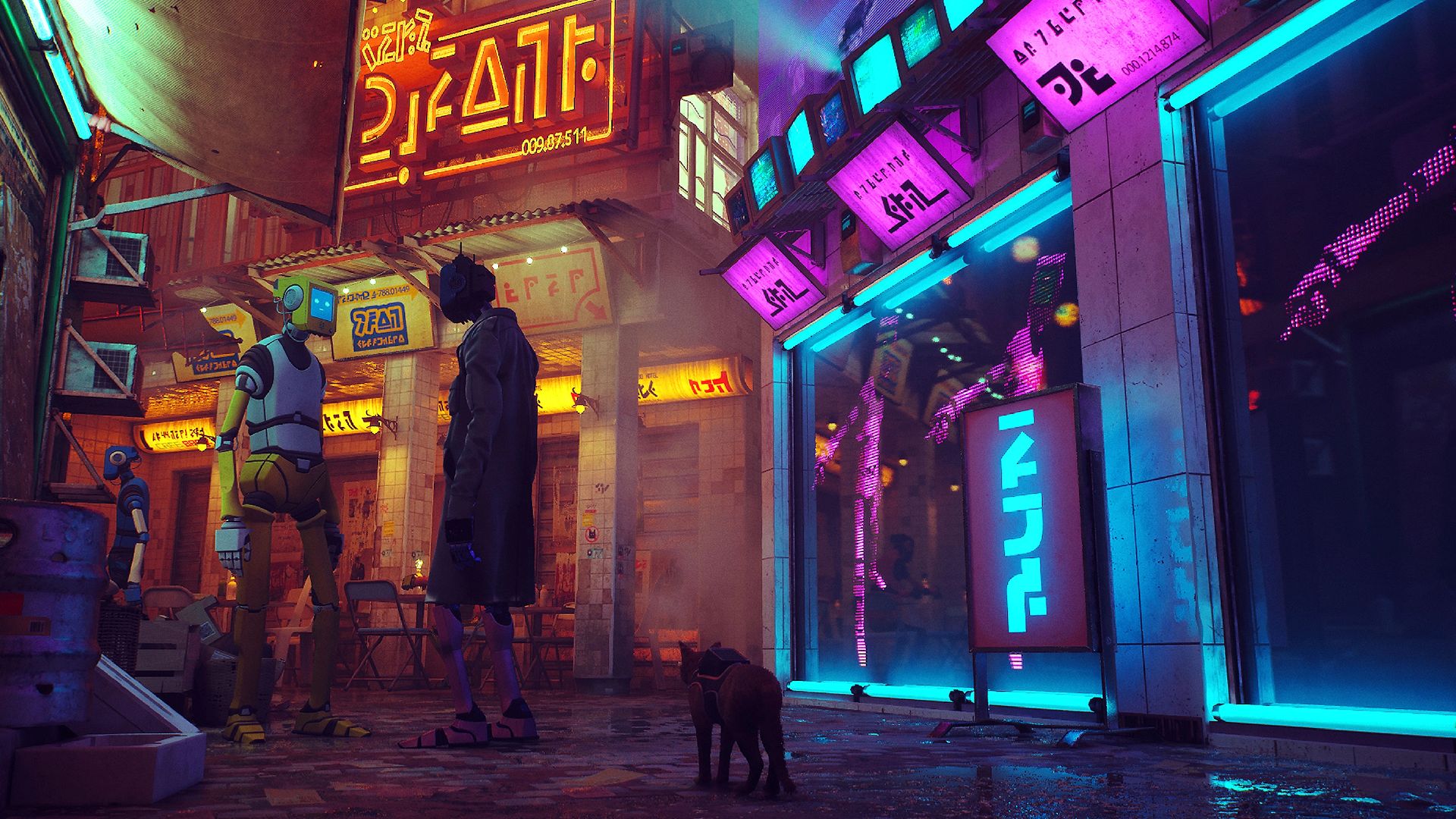
I love cyberpunk settings. There’s so much darkness and imagination that can go into the setting. It’s also a setting we could possibly be heading into ourselves with the way technology is advancing and how much we rely on it. Stray is all about exactly this issue. You play as an unnamed orange cat who ends up in the middle of trying to help a race of robots see the “Outside” again. You befriend a robot named B12 who helps you communicate with these robots and he also learns about his identity along the way.
Stray has some really good pacing. It’s a very short game that can be completed in a single sitting, but it has exploration, puzzles, scripted action events, stealth, and collectibles. That’s a lot to back into 5 hours and it’s done very well. Let’s start out with the obvious. This is the best representation of a cat in any video game. The animations are insanely realistic, you get a meow button that’s pretty much useless, but it’s there, and you can do cat things like knock stuff over, sleep, scratch on carpets and walls, and get paper bags stuck on your head that reverse the controls. While it may seem superfluous on the surface it helps add to the love of cats that the developers have even though none of these things really involve advancing the game further.
Jumping around in the game is dealt with context buttons. The jump button will appear on top of the platforms you can climb onto. Outside of this, there are no other actions except accessing B12’s menu to look at items and the flashlight. On occasion, you will have chase sequences in which you are running from a swarm of insect-like creatures, but most of Stray involves finding ways into rooms, platforming, and minor puzzles such as rolling barrels underneath things to jump up to. There are three major cities you end up in. The first one involves vertical platforming that lets you find lost music pages, B12 memories, and various item gathering to progress past certain points. The second city is a brief visit, but the last one is pretty large and looks beautiful. You can also talk to the various robots in the city to help you find out where to go or give you hints.
My favorite parts of Stray were the areas in between cities. I liked climbing around, jumping, and running from the insects. The city areas slowed the game down too much for me especially trying to gather the items needed to progress out of the city. The game looks gorgeous with lots of neon lights, and it’s surprisingly dark and gritty for a cat starring a cute cat. The story is pretty touching and tugs at your heartstrings towards the end. Despite the short length, the developers did a great job connecting you with these characters. However, there does seem to be a missed opportunity here. This is a game that would benefit from being open-world. A vast cyberpunk city with side quests and tons of areas to explore. While quite ambitious for such a small team, it would be great, and I think a lot of people are mistaking this game for something like Cyberpunk 2077 in its scope.
Overall, the game is a lot of fun and quite enjoyable despite the limitations of exploration. The game is sadly, poorly optimized on PC with lots of stuttering, terrible temporal anti-aliasing, and shader caching issues. I played the entire game on Steam Deck and it suffered from stuttering when going into new areas. When it’s all said and done, Stray is a very unique game and the love of the domestic feline companion oozes through the screen and pulls on your heart.
I haven’t been this excited about a handheld console since the Sony PSP, nor have I been as impressed. There have been many excellent handhelds by Nintendo and various Chinese third-party manufacturers, but nothing quite like the Steam Deck. If you have been living under a rock for the last year the Deck is the most powerful handheld ever made to date. Sporting custom AMD APU hardware and many fantastic and exciting features that make the Deck the next handheld that makes gamers envious.
The Deck was announced at a bad time. With the global COVID-19 pandemic driving sales of popular consumer electronics sky-high thanks to chip shortages and shipment delays, the Deck was a hot-ticket item for scalpers and general gamers alike. I set my alarm and smashed the refresh button on Steam when the pre-order went live. The server crashed and was down for 2 hours after this and I thought all hope was lost. I finally got through and placed my $5 deposit only to realize it was going to be a year or more before I got my unit. When the Deck finally started shipping in late February everyone started pre-ordering more and gamers got greener.
If you want you can check to see when your pre-order will ship thanks to a bunch of community members’ calculator. It’s not 100% accurate but gets more accurate as people input when their Deck shipped. Mine originally said the end of July, but it shipped at the beginning. Check it out here.
I got my pre-order purchase email on July 4th. Right as I hit the bed to go to sleep the email arrived. It took about 9 days to arrive after the purchase. As of my purchase, there are less than 100,000 Steam Decks in the wild (probably not including review units) and I feel incredibly privileged to get my unit so early. I feel the 4.5-month waiting period allowed the Deck to receive a lot of updates and improve some over time.
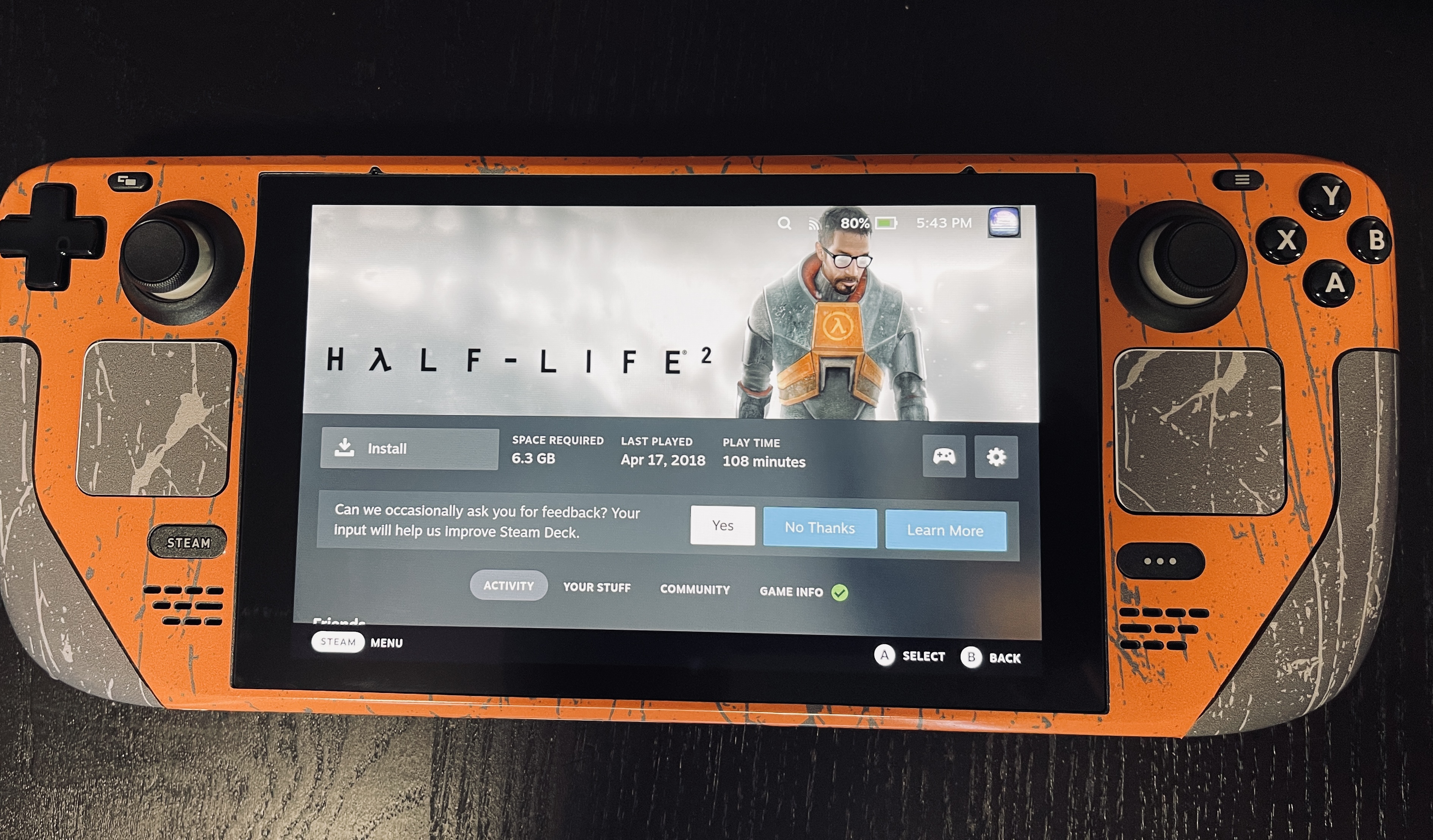
There are 3,000 “verified” games as of this review with a third of my library being verified. Being Deck verified means the game boots up and launches without any tinkering and has readable text, supports the Deck’s resolution, and can run at default graphics settings. Similar to how you would experience a game on a console. There is a “playable” flag that means it runs fine, but there’s some weirdness like default controls don’t work or the text is hard to read. Another third of my library is playable. The third flag is “unsupported” which means Valve tested the game and the developer needs to work on it more. Anti-cheat systems usually prevent launching or some sort of weird third-party stuff. Or the game doesn’t work with the current Media Runtime files (Valve’s end) or the latest versions of Proton or Glorious Eggroll Proton…yeah, more on that stuff later.
The Unboxing
The unboxing experience was odd with the Deck. It almost feels cheap. There isn’t any type of fancy retail box. The Deck comes packed inside a blank shipping box with a paper insert instructing you to plug the Deck in and turn it on in multiple languages. The charger is in a separate box next to the Deck and the Deck itself is just wrapped up in plastic with a cardboard sleeve and inside its case. Yes, every Deck comes with a carrying case which is freaking revolutionary. This needs to be a standard. I’m assuming there will be final retail packaging once these things can be shipped and stay on store shelves after pre-orders are fulfilled.
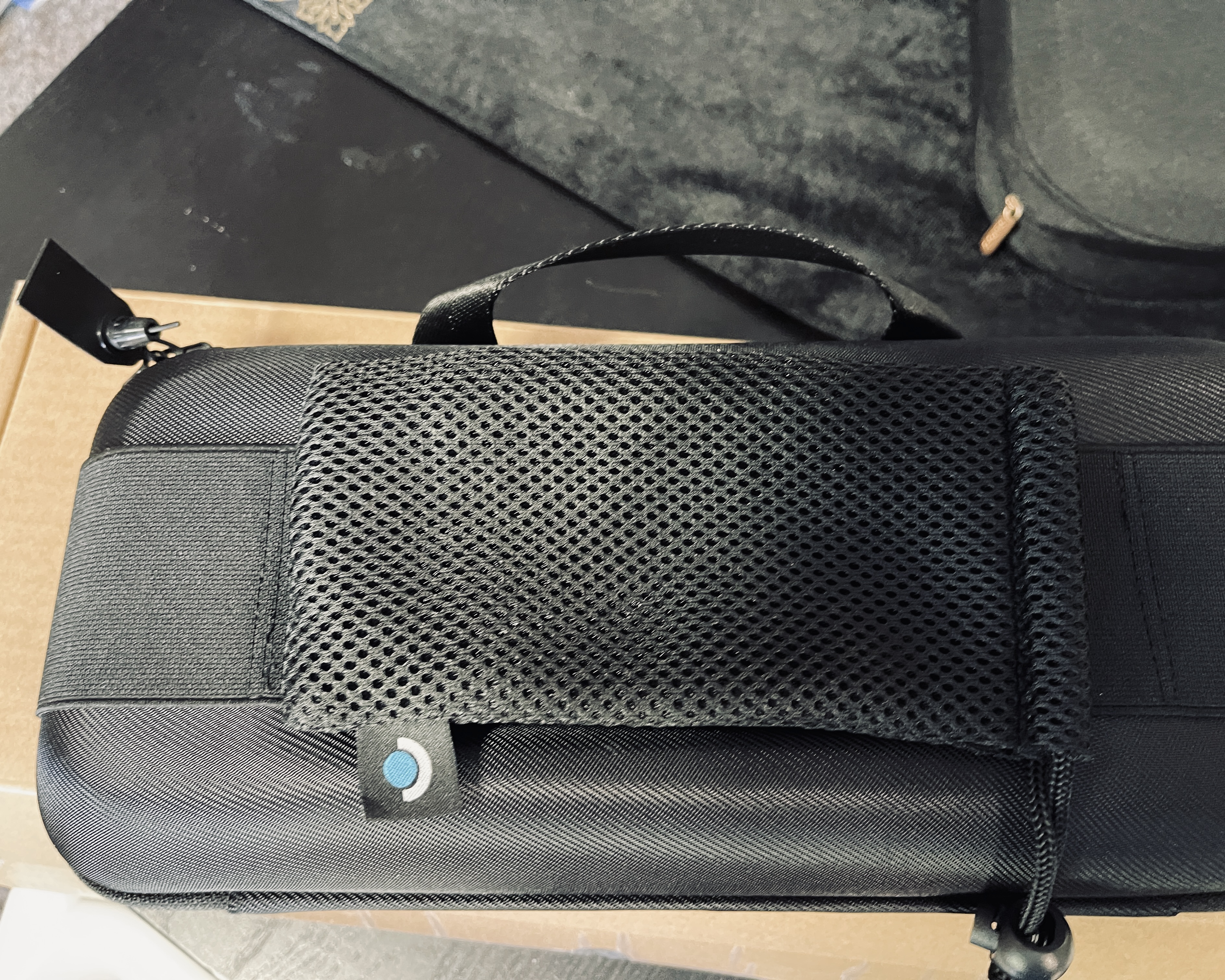
The upgraded case is well worth it compared to the other two models. The interior cloth is more premium feeling and doesn’t attract as much dust. The strap inside is also black with higher quality material. The outside has a colored Deck logo and white zipper pulls. What really got me jazzed was the underside has a scoop punched into it with an elastic strap over it. This is for the charger! It’s freaking incredible and this should be a new standard for cases. The 512GB model comes with a sinch pouch for it with a Deck tag logo. I actually love this as it’s extra protection to keep the charger from falling out. You also get a cleaning microfiber cloth that says Steam Deck. It’s pretty cheap and you can get better cloths that will fit in the case, but it’s great for starters.
The other hardware bit that the other two models don’t get is the anti-glare etched glass. This has benefits and caveats such as slightly softer edges on everything and text being slightly soft. However, the colors are more saturated and look more vibrant while the screen itself isn’t quite as bright, but it does get darker at the lowest levels. There’s an excellent comparison video here. It’s not a deal breaker for the price difference, but it’s nice to have that premium option. The main difference is the internal storage space which is a continuing problem with consumer electronics and has been for the last 20 years.
The Hardware
Holding the Deck itself feels solid and of the quality, you would expect from Sony or Nintendo. It sounds silly, but it feels like a “real” handheld. While the Chinese ones have gotten better over the years in terms of higher quality plastics and tighter molds, the Deck is leagues above any of them. There’s no creaking, no sharp edges, no corners cut here. However, it’s insanely massive especially compared to the Nintendo Switch Lite. The upside is that the system is well balanced in the hand. It feels super solid and you can get a nice firm grip on it and it won’t cramp your hands. The layout of the buttons is similar to the Wii U gamepad, but with better ergonimics (the gamepad was dog crap let’s just all admit it). Everything is up top and at the far edges for minimum reach even on tiny hands. My 6-year-old was able to play this thing with no issues.
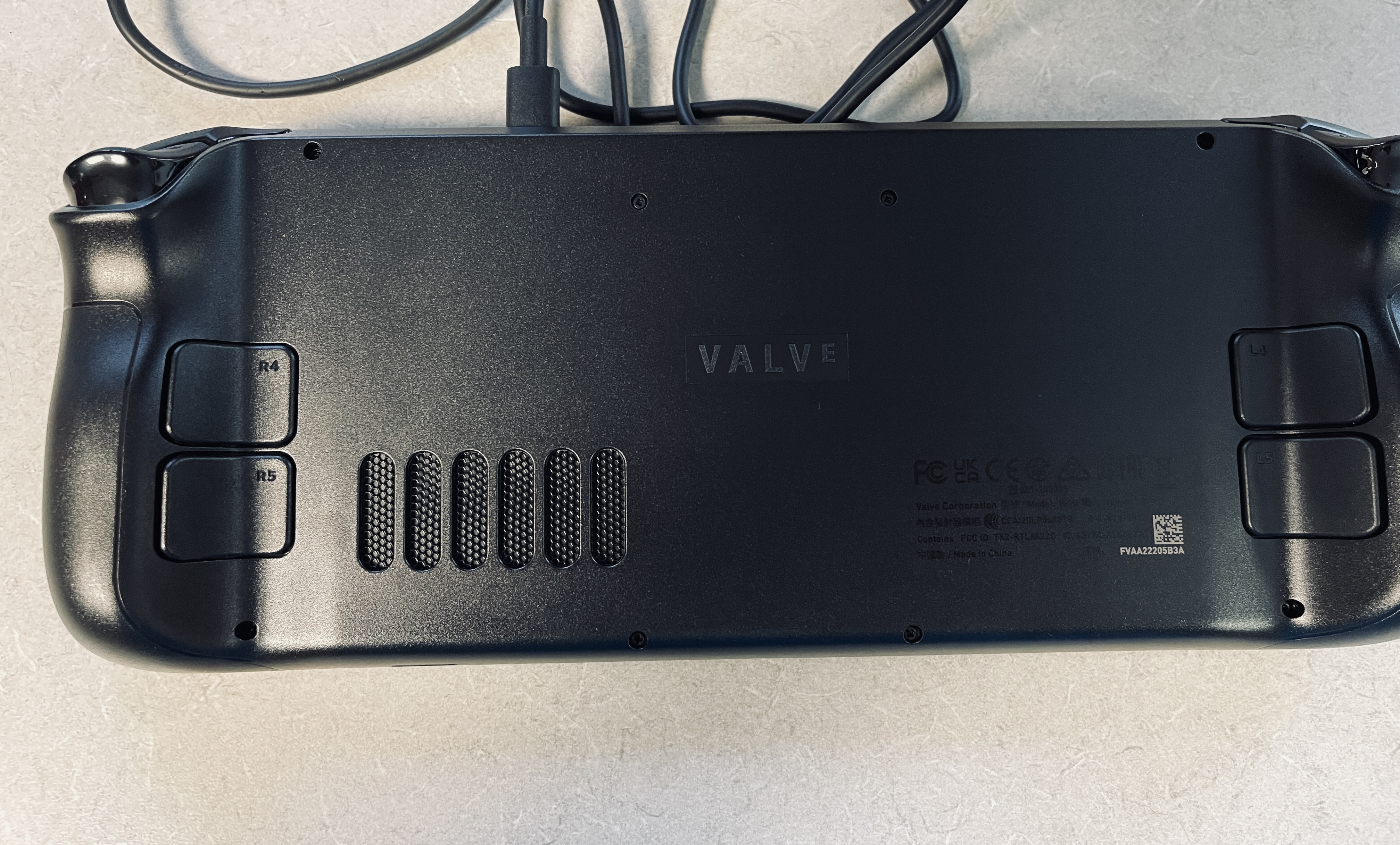
There are four rear buttons that sit right where your fingers wrap around the back but are tight enough buttons to not cause actuation by just holding the thing. You can easily squeeze your fingers to press these buttons and it freaking works. It doesn’t feel awkward or hard. I actually wanted to use these buttons in shooters because most of the weight of the console is already on those fingers. A firm, but not hard squeeze, will let you easily manipulate these buttons. A lot of R&D had to have gone into just this one feature.
There are also two trackpads below the analog sticks that also aren’t hard to reach. They are just large enough to move your thumb around on without struggling with the weight of the Deck. That’s the beauty of the ergonomic engineering that went into this thing. You can’t appreciate just photos alone. Holding this thing is a miracle and sets new standards for how larger handhelds should be made. These trackpads also have haptic feedback in them that can be adjusted in the settings. They also click which is great for using in desktop mode (more on that later) or games that need mouse control. The bumpers and triggers feel great and natural with the triggers having a good height to them similar to an Xbox controller and less like a PlayStation controller. The D-Pad needs credit as it’s great for fighters and allows rolling similar to the Xbox controller as well. The controls on this thing are absolutely perfect and I have zero complaints about them.
When it comes to I/O and various holes in the Deck it won’t let you down there. Similar to the Switch there’s a large vent up top but also one in the back with the speakers located at the bottom front below the Steam and Quick Access buttons. There’s an open SD card slot at the bottom right and the fact that it doesn’t have a door means fewer parts to break. It’s recessed just right and won’t get the way at all. Valve needs a lot of credit for putting the USB-C charging port at the top of the unit. While this means it’s not super easy to dock it means no cable is in the way when you play which I can’t stand about handhelds. The PSP had the port right where you hold it, and only the DS had the port in the rear. Sony never caught onto this. The charger port is also slightly loose by design to give it some play so it doesn’t short out and start breaking. Good on Valve for also thinking about this ahead of time. If you notice your port is loose, this is normal.
The volume buttons have a nice click to them and the power button has a white LED next to it when it’s charging. It turns off when it’s done. There is also a 3.5mm headphone jack located up top as well which makes sense. It’s already pretty thick and excluding this would be a pretty bad move. The screen itself looks fantastic thanks to the higher than usual resolution for a handheld. However, the aspect ratio being 16:10 poses issues for a lot of games as most don’t support that resolution so you get black bars on the top and bottom. While the Switch OLED has the best handheld screen ever made, the Deck is probably a good second. It’s crisp, vibrant, and has great contrast as it’s the first major handheld with an IPS display that’s normally used in gaming monitors.
The Software
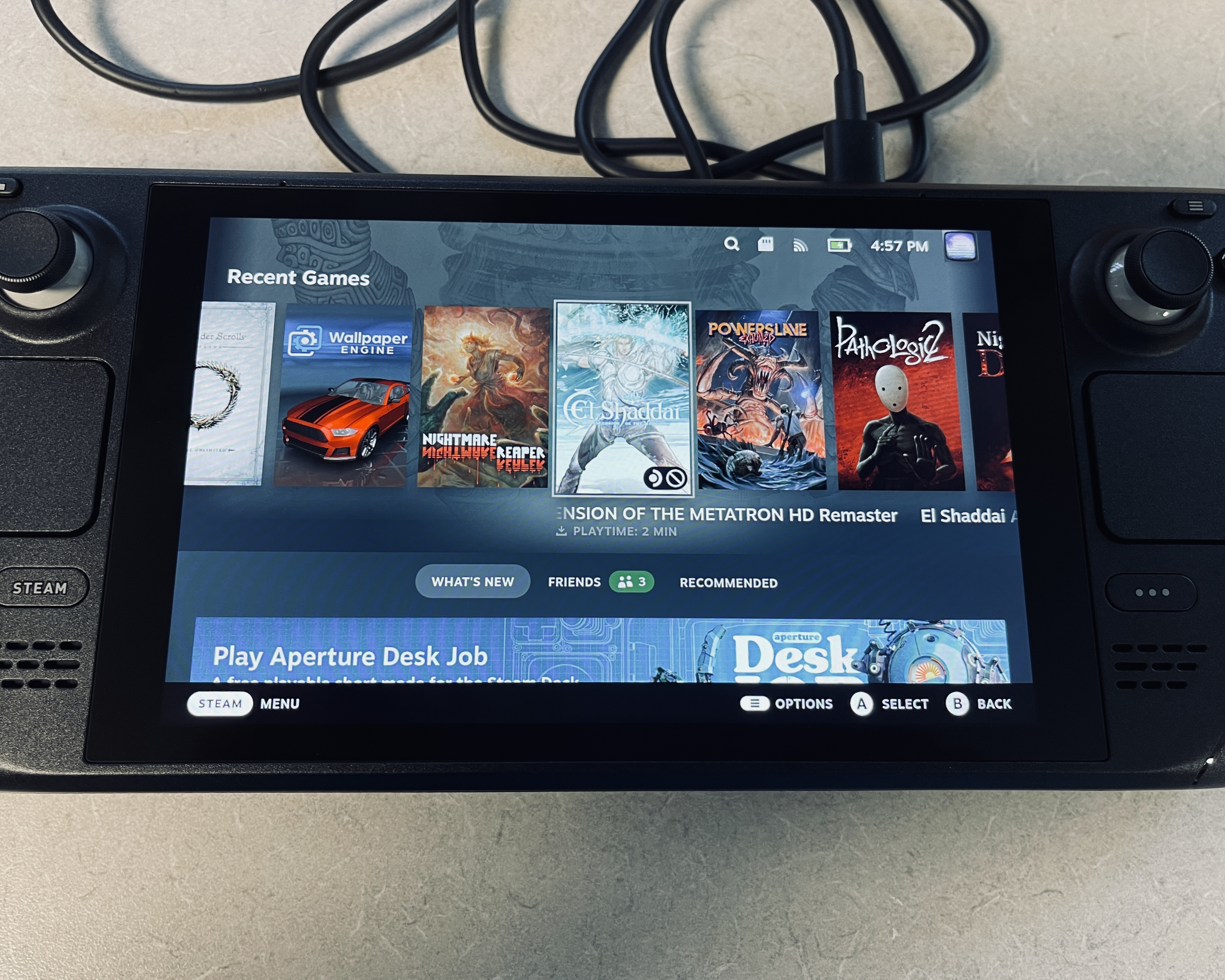
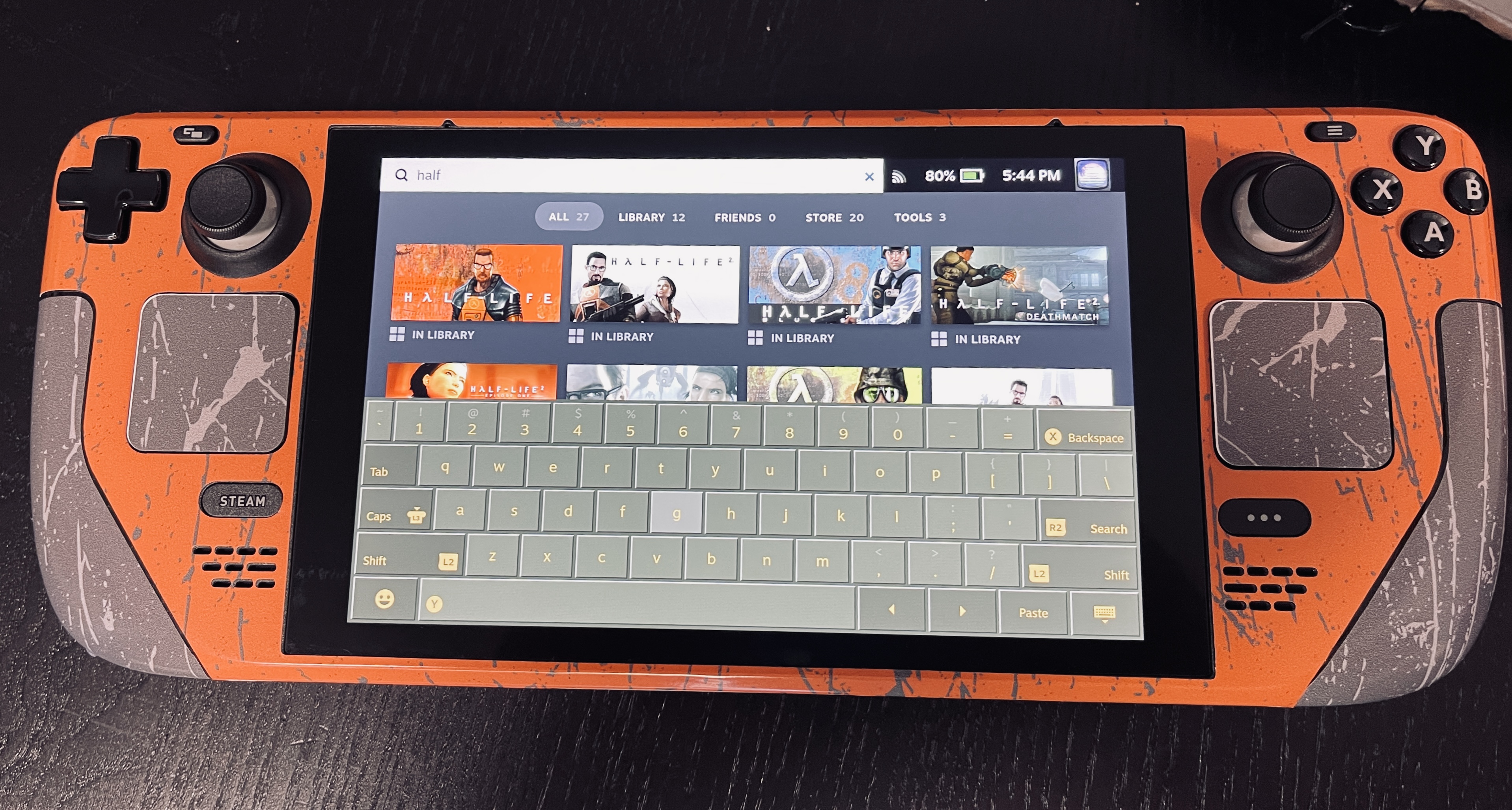
It’s no secret that Valve’s SteamOS home consoles were a flop a decade ago. SteamOS was mostly used for Linux players who were a small percent of Steam users. Thanks to the Deck and its popularity not only will Linux gaming boom, but SteamOS is seeing major improvements now and has finally found a home. Steam on the Deck is a tailored handheld experience. There is a special storefront for Deck verified games only, but you can also browse the rest of the store, access your profile, friends, inventory, and everything else you could do on Steam on desktops.
There are some issues with it. There’s a persistence bug that constantly reminds you to claim your Steam Deck awards even though I already did. You can’t remove notifications or clear them without clicking on every single one. Certain Steam pages require you to use the touch screen and scrolling through the long pages on games is a bit cluttered. It all works fine, but I hope there are many improvements made to make Steam more tailored for Deck in the future.
The settings are fairly typical for both a handheld and Steam itself. Most of your settings on Desktop are here such as family sharing, download speeds, uploading screenshots, cloud saving, and various adjustments to calibrate the thumbsticks and trackpads as well as adjusting haptic feedback. The Quick Access menu is where this makes it a portable PC. You have access to performance overlays, underclocking and under volting the GPU and AMD FSR 2.0 is available at the hardware level for every game. All you have to do is lower the game’s resolution and turn FSR on to increase your frames in power-hungry titles like Elden Ring and God of War. You can turn V-Sync on at the hardware level and turn it off and set the FPS level you desire. There’s a new 40FPS mode that helps games find a sweet spot without pushing the Deck to get higher frames to save battery life. You can also turn on VRS for pixelated games to reduce battery life. There’s a lot of tinkering involved with the Deck which we will get into more and this can both be fun for an enthusiast like myself or a nightmare for a casual gamer.
The Games
In the end, we all want to game on this thing. I will get to emulation later as that seems to be one of the main reasons that are making the Deck so popular. As for “verified” Deck games they work just fine. These are games that launch with no issues, the default control scheme works, and it can hit 30-40FPS at default settings at the minimum. You can tinker to eke out every frame by looking up guides and changing settings around paired with FSR. High-end games like Days Gone needed this. FSR is probably a boon for the Deck as it needs it. Yes, the fact that you can run these next-generation/current generation games on a handheld is a miracle itself. Even at 30FPS. A lot of gamers, however, are going to get into this expecting max settings for every game and get upset or disappointed. While my 3080ti rig can run everything at 2K with ray-tracing enabled and hit 60+FPS in every single game, that’s not the case here. This is a handheld that lets you pick up where you left off on the go. Sony tried doing this with their handhelds and it failed as it relied on the developers to implement this type of feature and release their game on both platforms. The Deck takes them out of the equation.
The caveat here is that this is Linux gaming. It’s not perfect and requires a wrapper for Windows-based games developed by Valve. Proton is needed to run every single game, but it’s still not perfect. While Valve’s current stable version works for most games some require Glorious Eggroll, or GE Proton, which is acquired through the Discover store. This is a faster-developed version of Valve’s main branch. It includes patches, fixes, and features that aren’t available yet. It’s as simple as going into the game’s properties in Steam and enabling GE Proton once it’s been downloaded and installed from the Discover store. It’s still not always that simple.
Some rare occasions need an older version, and some need Media Runtime files that are considered advanced Linux user stuff. I spent dozens of hours already tinkering and trying to get certain games to work and I can report that so far only one hasn’t worked for me. There is also a way to add other launchers such as Ubisoft Connect, EA Origin, Battle.net, and Epic Games Launcher, but it’s a bit complicated and those games aren’t always compatible with Steam Deck at all. For example, Tony Hawk’s Pro Skater 1 + 2 will not work on Steam Deck no matter what version of Proton you use. Maybe when and if it comes to Steam this can change, but then there’s the issue with older games. GOG Galaxy is available through the Hero Game Launcher and most of these games can work just fine. You can even install mods like on PC, but the paths and structure of Linux are so much different than Windows. Everything is buried under tons of folders and it can be confusing and quite daunting. Even Windows’ file structure is emulated in each and every game install. I was even able to get pirated games to work through Bottles in the Discover store to allow regular game installs to run. I will cover how to do all of this in another post as most Steam Deck deep-dive stuff is pretty fragmented right now.
Most of the time even untested or unsupported games worked out of the box in my own experience. Fallout76 is technically unsupported but works fine and runs surprisingly well on the deck gettings 30-45FPS with the graphics settings at medium-high. Castlevania: Lords of Shadow – Ultimate Edition is another unsupported game but works great with no tinkering needed. However, a game like Bulletstorm: Full Clip Edition needed an older version of Proton and specific Media Runtime files installed through the terminal to work right. Grim Dawn had save issues where I had to copy the save manually from my other PC, create a character with the same name, and then overwrite the save files for it to recognize them. On top of that Grim Dawn didn’t recognize the standard controller layout or community profiles. I had to use a specific template and painstakingly remap the controller buttons correctly. This type of tinkering may keep a lot of gamers away especially if they just focus on the negative things like this.
When it comes to battery life it wildly varies. Desktop surfing can last 6 hours while a high-end game may drain it in 2. The battery life is comparable to the Switch. When it comes to things like heat and fan noise my unit is fairly quiet even when the fan is going full bore. The air coming out is incredibly hot but surprisingly doesn’t heat the Deck up like a phone would. The Deck has a fairly accurate battery counter based on your current usage including charge time. A full charge takes around 2 hours similar to the Switch.
Desktop Mode
The Steam Deck also breaks new ground by making this a handheld portable desktop. With the official dock coming soon and unofficial ones already available you can plug a keyboard, mouse, and USB-C monitor in this thing or any other type of output that your dock supports. You can simply long press the power button and go straight into desktop mode. This brings up a Windows-like UI with a desktop, start menu, and various customizable settings like the splash screen, wallpaper, font, theme, cursor, and various other things. It’s a full desktop experience that also allows you to use a web browser like Chrome or Firefox and watch YouTube videos or type documents. This is unprecedented as even the Switch doesn’t allow this with its anti-consumer locked down system. With Valve doing this it might pressure the other parties to participate in open-source fully open firmware and UIs. This is good for the consumer.
The desktop mode is smooth and works great. You can easily switch back to Game Mode, which has another little issue. Games don’t run as well in desktop mode as the APU is underclocked here. The Deck is meant to fully run and be optimized in Game Mode only. You can’t access the Quick Menu settings for GPU control or FSR which is fine. When docked the Deck now lets you override the resolution to match your display. If you want to game with an external monitor this is when FSR will really come in handy, but I don’t see the appeal of this outside of lower-end less graphically demanding games. I use my dock for tinkering in Linux to add custom images to my Steam games, mod games, etc. I don’t think I’d game much on an external display. That’s what a desktop PC or laptop is for. For emulation, this might come in handy.
Emulation
Another huge plus for the Steam Deck is that the open software means no waiting for firmware hacks or downgrades. You can just install emulators and go. There’s already a whole suite available called EmuDeck that installs the emulators of your choice and you just need to provide BIOS and ROMs. Many emulators are already configured for the Deck control and graphics wise. There’s even a specific Dolphin branch just for Metroid Prime Trilogy that allows for dual-analog control called Prime Hack. This is a whole new rabbit hole that I think more gamers will be willing to invest in over getting Steam games to work right. EmulationStation works great and so does Retroarch.
I have put hundreds of games on my SD card and thanks to EmuDeck everything mostly works out of the box including systems that couldn’t be emulated in handheld fashion before like the GameCube, Dreamcast, and PS2. The Deck is also capable of emulating PS3, Xbox 360, Wii U, and Switch games, but don’t get your hopes up. Even on PC the emulators are still maturing and don’t run well. Don’t expect the Deck to replace your Switch just yet. It can’t even run Breath of the Wild at a decent framerate, but the Yuzu emulator is still in its infancy. Same with RPCS3. These are also not as simple as dragging and dropping an ISO file into a folder. There are keys, encryption, emulated installation, patching, and a lot of work to get these newest systems up and running. For now, just enjoy the Wii and back.
Conclusion
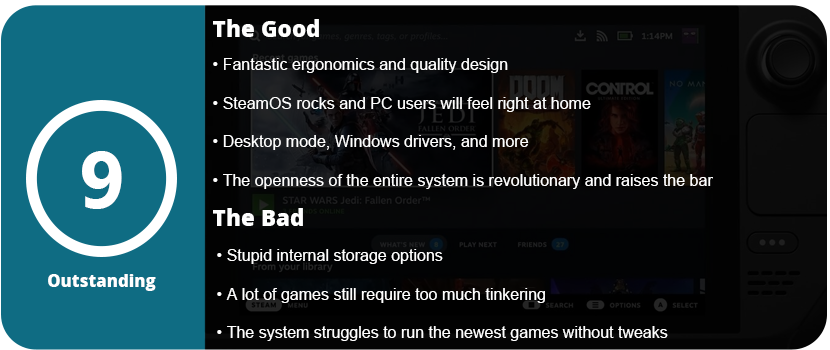
The Steam Deck is a revolutionary device in more than just its graphical power. The openness of its software is what we need to break the shackles of locked-out proprietary video game console OS. Without needing to wait years for a hacked firmware, the Deck is ready to tinker with right out of the box. While emulators will never be officially supported, we can make anything run on here. It’s essentially a Linux or Windows computer. Yeah, I didn’t mention that yet. You can have a micro SD of Windows 11 on here to play Xbox Game Pass games or others that won’t run well on Linux. While this isn’t officially supported, Valve does provide drivers. This is crazy to think about in the current ecosystem of locked-out consoles.
This is a great system if you just want to play Steam games or just do emulation. Out of the box, the verified games work great and with 3,000 titles available already that’s usually more than a console’s entire life cycle. The Steam deck really teeters on the edge of a great casual gamer’s first PC and the more hardcore hacking/downgrading/emulation market. It serves both well, but each side needs to be patient and wait for better compatibility on the software side of everything from emulators to SteamOS. For such a vast and all-encompassing system that can do so much, it does it so well and so early on in its life. This could easily have been a huge disaster with constant crashes, overheating and melting units, and other issues, but clearly, Valve tested this thing like crazy.
My biggest complaint is the internal storage and that’s Valve’s fault. I mentioned at the beginning we have had 20 years of awful internal storage options from the iPod to the PS5. The base model at 64GB is unacceptable today. You can’t even fit a full install of most higher-end games like Call of Duty or Red Dead Redemption. Even the 256GB isn’t acceptable. The base model should have been 512GB with 1TB and 2TB options. $250 extra dollars for a 512GB NVMe SSD is crazy. This isn’t like the PS5 with brand new SSD tech. This is PC hardware that we can buy and install ourselves.
Thankfully you can and that’s another revolutionary thing Valve is doing which is the right to repair. iFixIt has all of the Steam Deck parts available for purchase to repair the system yourself. This includes being able to upgrade the SSD if needed, however, game load times are fine off of the SD card. I recommend a 1TB card or at least a 512GB to start. You can also use external drives, but then you’re tethered to another device. At least there are more options available, but internal storage is key. These devices are expensive and most people can’t upgrade their storage right away.
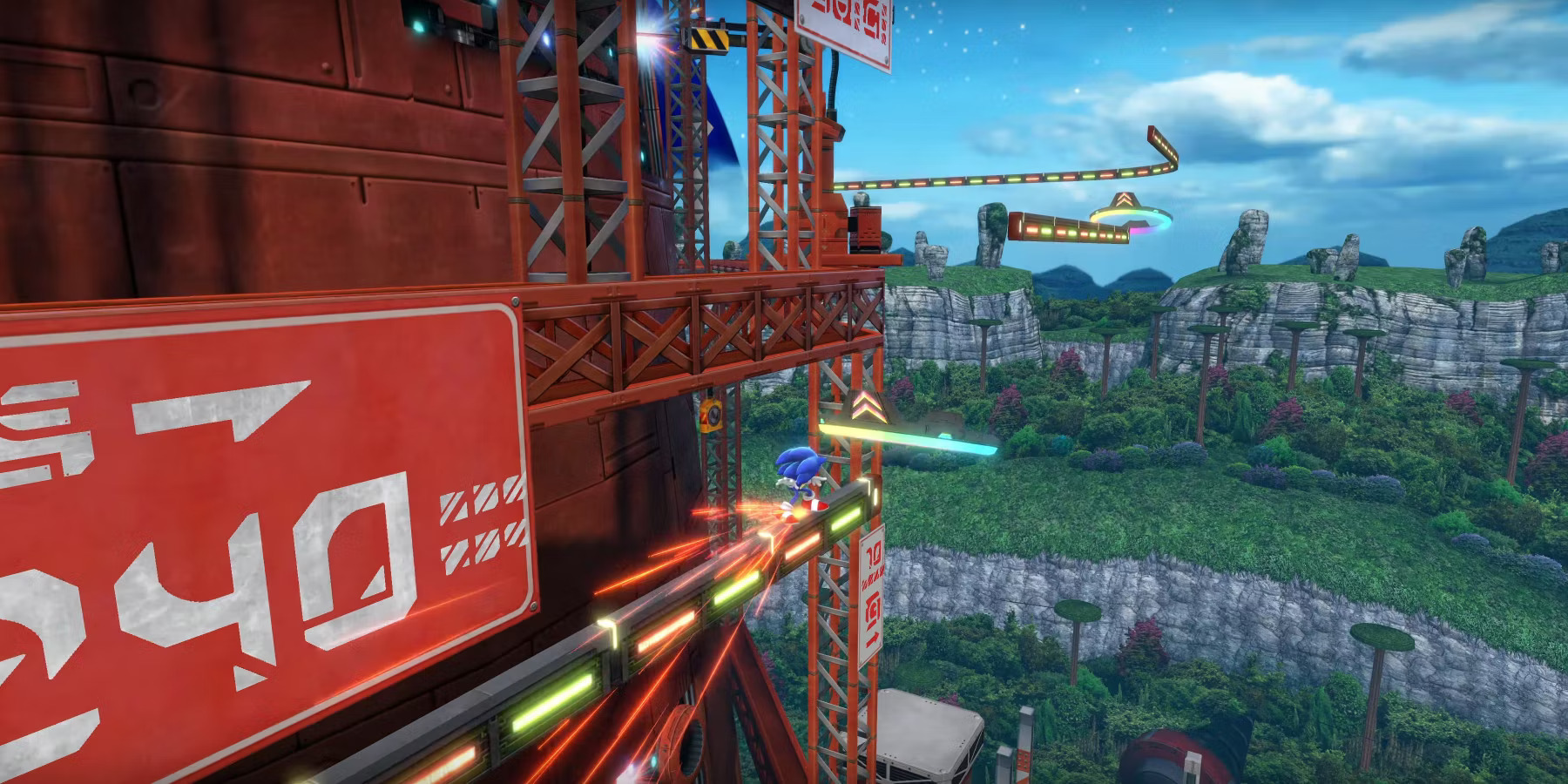
Oh man, where do I start. I’m not the biggest 3D Sonicfan and never have been. I didn’t care for Sonic Adventure even when I was a kid. My hot take here is thatSonic Adventureis awful and not a good game. Sonic Team seems to be the only developer on the planet that can’t improve their games in 20 years. Sonic Generationswas the only good 3D Sonic game because it cut out all the crap that slows the game down and makes it frustrating. Why do you need combat? Why do we need gimmicks? Mario hasn’t changed in 30 years but has somehow naturally evolved. Why can’t Sonic just do what it’s good at Going fast?
That may have made some people mad, but I don’t care. This type of stubbornness is just unacceptable today. NowSonic Colors is a better 3D Sonicgame, but it has many problems. The game is poorly balanced in difficulty, but it makes going fast still fun. I hate the combat. I don’t like homing in on enemies to speed the game up. If anything it makes jumps inaccurately. I nearly tore my hair out trying to complete certain levels due to stupid game mechanics.
Sonic’s double jump is terrible. It’s too floaty and I constantly overshot jumps or undershot them. His wall jumping is awful. You have to waggle the stick in the same direction as each jump. This is too much for a game that’s supposed to be fast. The Wisps, while interesting in their own way, just slow the entire game down. Some are neat like the drill that lets you burrow through water and dirt. The purple one that turns you into a giant monster is fun. The green one that lets you shoot around like a dart is also fun. The ghost is an awful Wisp. It’s slow, the zooming through rings mechanic just doesn’t work right, and it made some levels insanely difficult to complete. The Wisps are cute, but I don’t want them back.
Like other 3D Sonicgames, you are on a track and transition from 2D to 3D. I honestly wish the game stayed in 2D. The fun loops and speed pads are so much fun. This is where the game accelerates (HA!) and does a great job. The levels zoom by here and there are a good amount of collectibles. Red stars plus gold coins to spend in the shop to customize Sonic (which I didn’t care about at all), and it made my completionist demon itch. Sonic games have always been good at making you want to explore and retry levels and master them to know where all the goodies are. Colors kind of does this until you have to use the bad mechanics in certain levels. Why does the game need to slow down and make me bounce across a moving spring through half a level just die dozens of times to get a single jump timed right? That is what killed this series.
I also don’t care for the repeating boss fights. They are pretty dumb, to begin with. A giant Ferris wheel thing that just adds annoying obstacles later on that make it frustrating and not challenging. There’s a ship you need to take down and the captain jumps down after you get through its obstacle course. Later on, it adds missiles that need to follow you through a series of moving platforms to break a glass bubble. This slows the game down as you need to wait and guide the missile carefully. This isn’t what makes Sonic games! That’s like having Mario go through an entire level on a floating platform and jump over an occasional rotating fire bar. But that’s it. No enemies. No power-ups. Just float along and occasionally jump. It would be maddening!
There are a few levels that made the game enjoyable somewhat. They were better designed but didn’t have any obstacles or ridiculous platforming shenanigans or floating platforms to deal with. The levels that focus mostly on using Wisps also were frustrating and took dozens of tries to get through. I also never mentioned the story. Yeah, just forget it. It’s pretty basic and pointless and doesn’t really have a conclusion. The voice acting has at least improved over time.
The visual upgrade from the Wii version is decent. The game runs smoother and there are texture and model upgrades, but it’s not mind-blowing. There’s an extra mode where you can do challenges in 2D mode only, customization, and that’s about it. I don’t see any reason to replay this game unless you specifically like this kind of Sonicwith the momentum always being interrupted. It’s over-engineered gameplay when it needs to stay basic. Colors is decent to play through, but many gamers will turn it off after their first irritating level they get stuck on.
Whenever Valve releases a new in-house first-party game people pay attention. They are masters at storytelling and world-building. Aperture Desk Job is set in the world of Portal. You’d think this is a Steam Deck exclusive Portal game, but it’s not. This short 30-45 minute tech demo shows you the Steam Deck’s unique features.
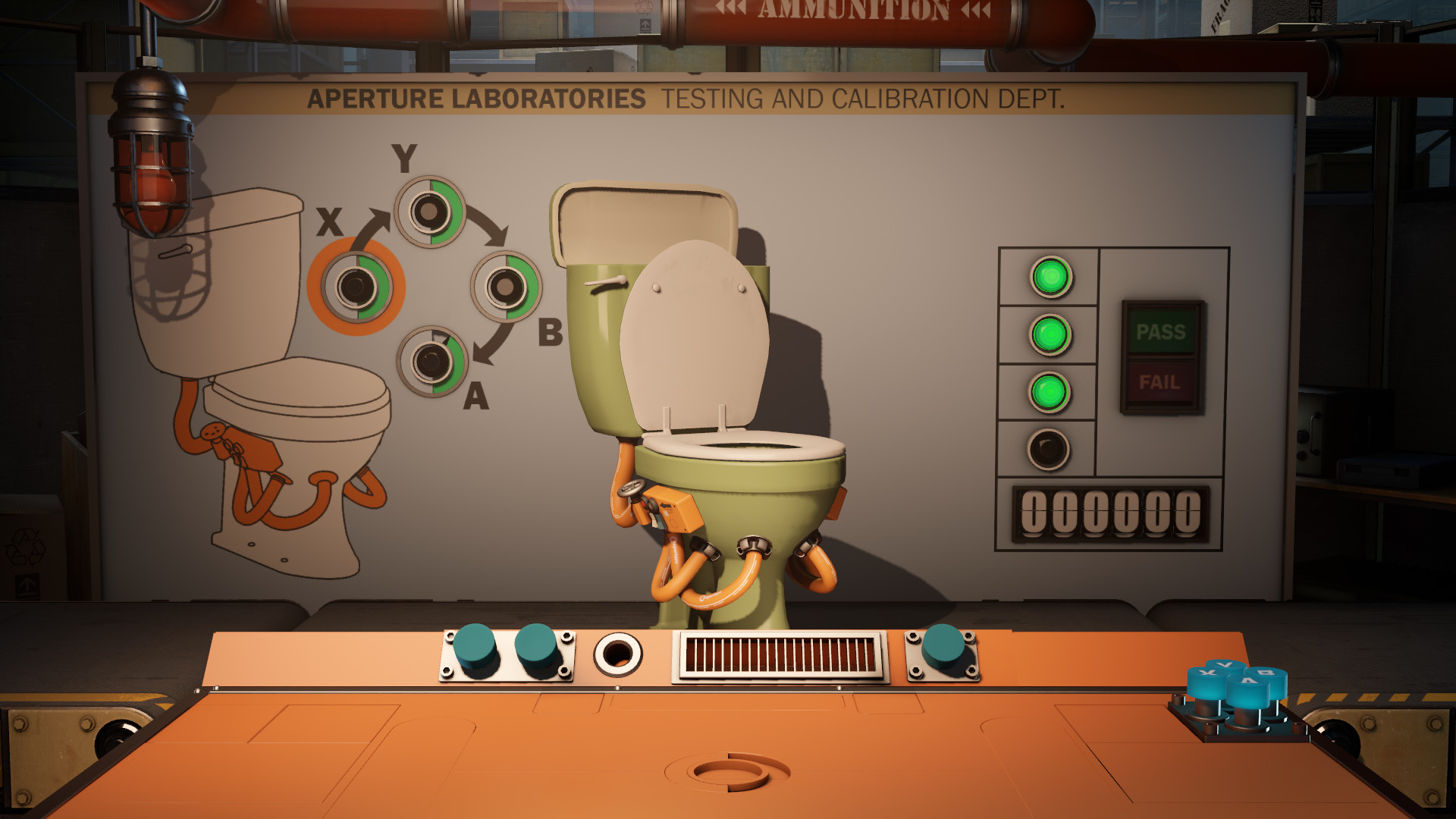
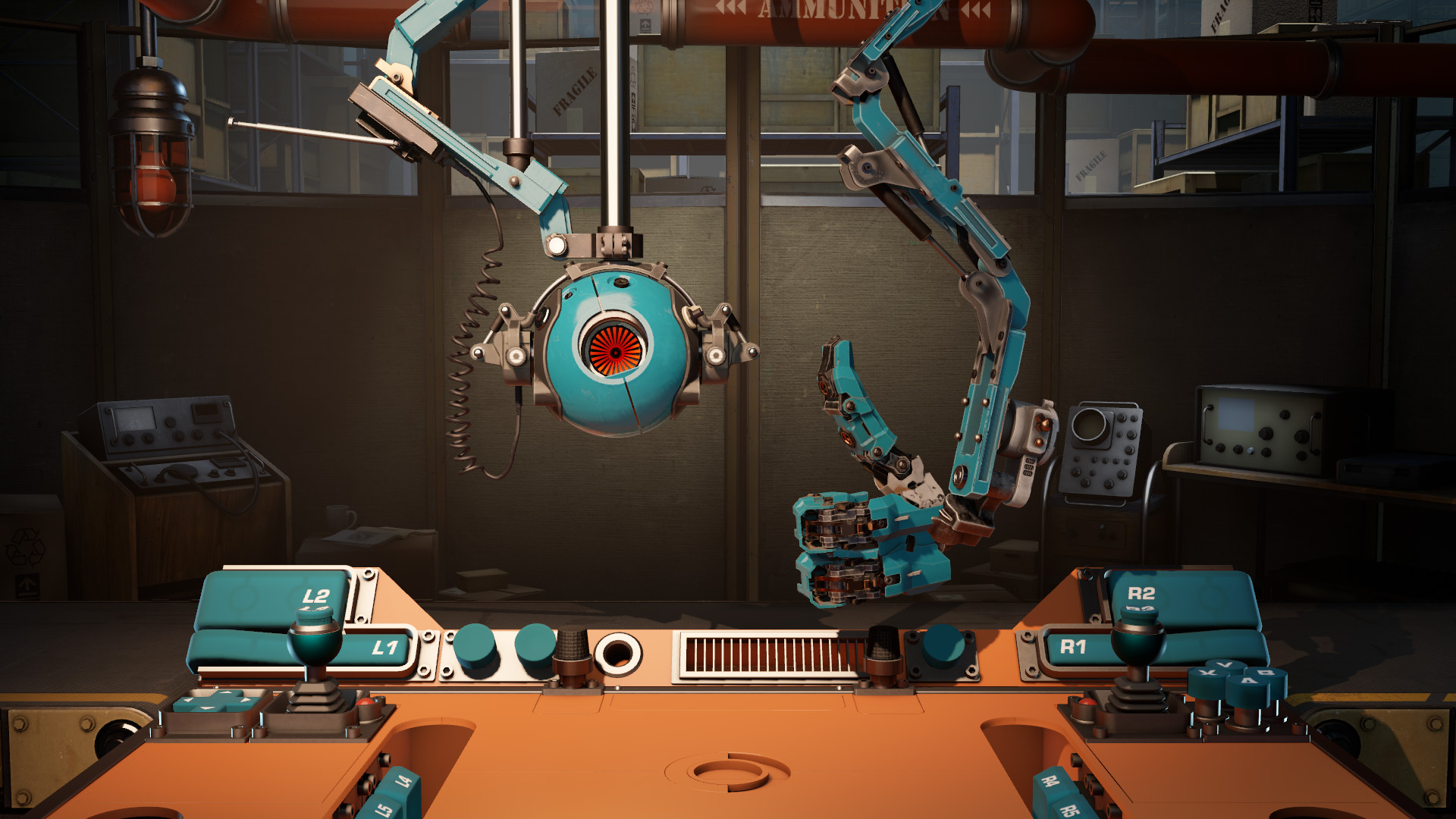
Desk Jobopens up with Cave Johnson giving a riveting motivational speech to his employees (J.K. Simmons retains his role) and the game pans down a factory level by level. You arrive at your desk with a new Wheatley-type character. He’s funny and got some laughs from me, but he isn’t as energetic. He’s a bit masochistic and Valve did a great job with his writing for the short time he’s on screen. Your desk has the exact layout as your Steam Deck and the short story unfolds with you as a toilet tester. Valve’s on-point humor hits here with the subtly they’re known for. You test a few toilets and then time goes by and you see some ridiculous number on the counter board.
You eventually turn the toilets into turrets which is pretty funny. Here you learn about the right stick’s touch sensor inside the Steam Deck for gyro controls. It’s calibrated pretty well, and I haven’t used good gyro controls before. It’s done right here. Without telling too much more of the story you take a ride back through the factory and you get a fun turret song at the end. The humor punches throughout and I had a good time. There are a lot of missed opportunities here like just a longer game or even some mini-games. It almost seems pointless for Valve to go through all this effort to create such a well-produced tech demo. I’m hoping this means more is coming along, but knowing Valve, it’s not.
The visuals are great and run well on the Steam Deck. 60FPS throughout with great textures and lighting effects. I don’t see the point of playing this on PC unless you just want to enjoy the writing and characters. In Valve’s defense, handhelds are subject to tech demos. Sony did it with the PSP and Vita, and Nintendo loved doing this with the DS and 3DS. Anyone who has played handhelds their whole life won’t feel so shocked or hate Valve for this. They just used such a beloved IP and didn’t go anywhere with it. It’s a painful tease as we all know there’s nothing else coming from it.
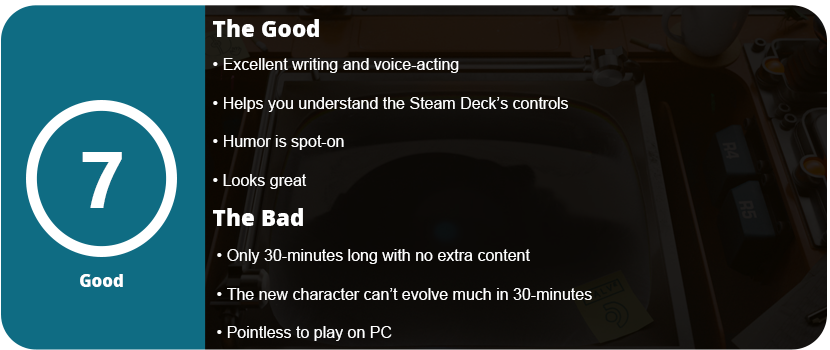
If you have a Steam Deck this is a no-brainer. It’s a fun 30-minute demo to play while you wait for other downloads or something. While the main character didn’t get enough time to fully mature like in other Valve IPs just the fact that they got laughs out of me in 30-minutes says a lot. Most games can’t get a smile over the course of hours.
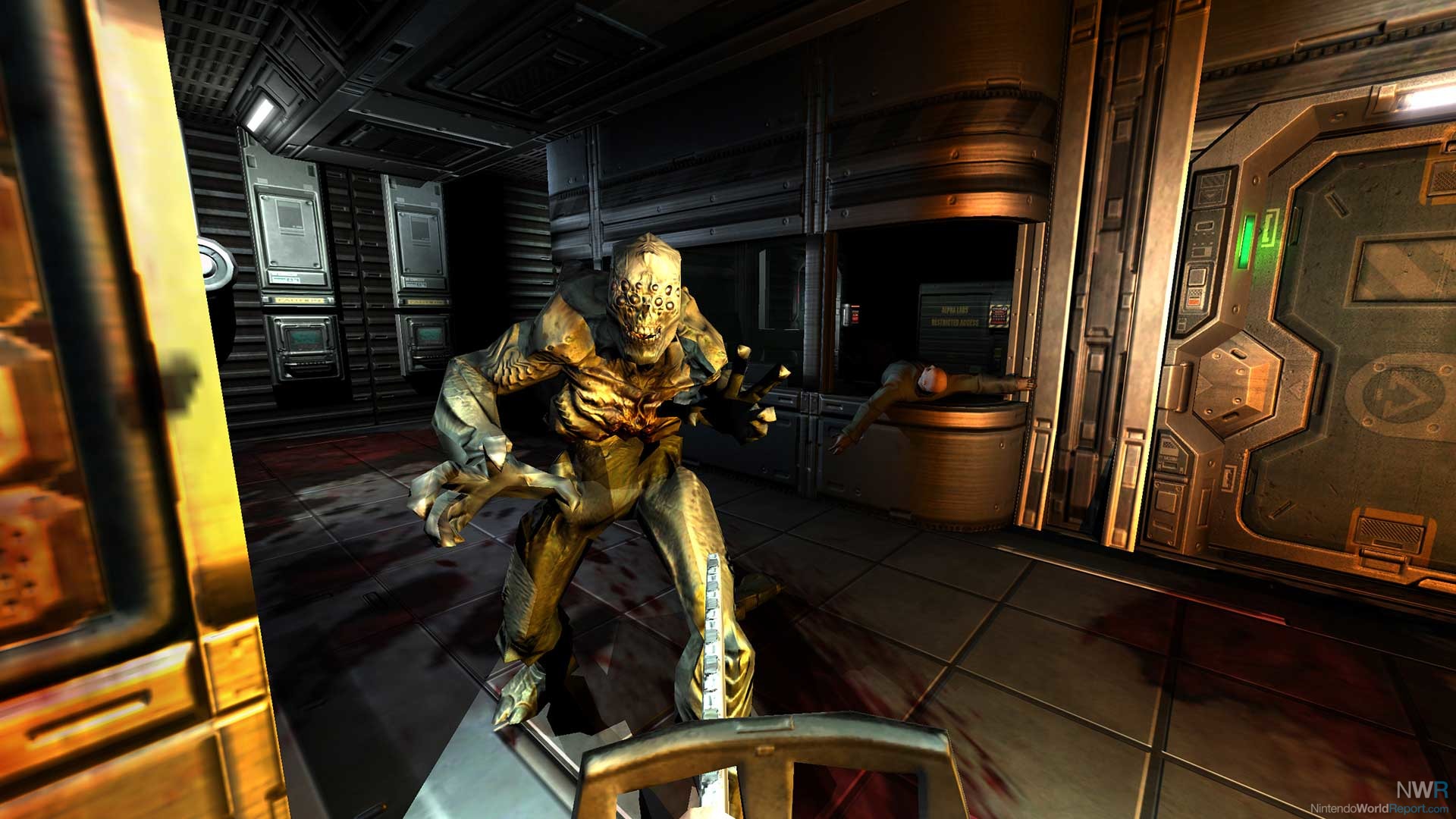
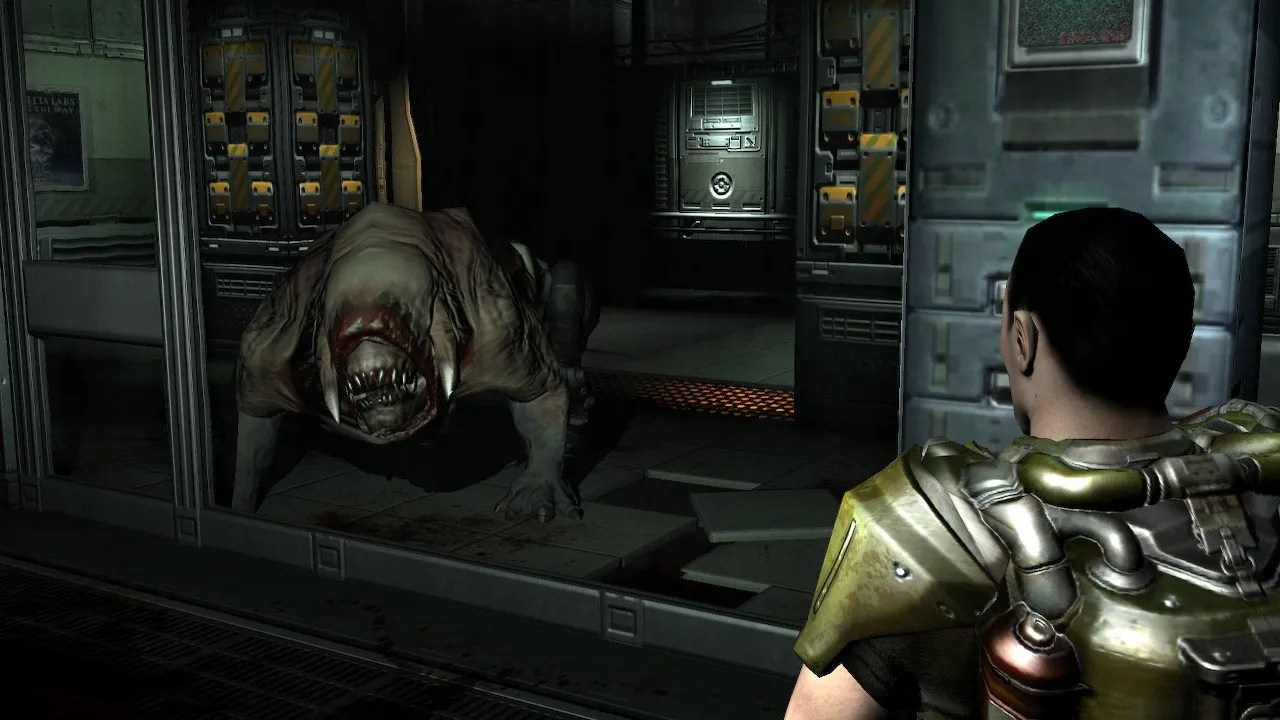
The original release of Doom 3was a huge deal. It was a technical marvel with fantastic new lighting effects and textures that could fill the latest GPU and all of your RAM. It split fans due to the slower pace and focus on jump scares (that honestly don’t really work these days anymore) and a bigger focus on the story (if you can call it that). The game retains the same dark visuals and monsters from before, but being the first game in full 3D it had a lot of problems.
The first thing you will notice is that this release has no visual upgrades outside of some texture filtering and anti-aliasing and slightly better lighting. The textures still look muddy and the models are still low-poly. With this being the third official release of this game I’m surprised more work hasn’t been done to it. You play as a marine who is stationed on Mars when things suddenly go wrong. The first couple of levels is probably the best since they slowly introduce the gameplay to you and have better-designed levels. Zombies emerge from the dark, and your flashlight is a lifeline. It does have a short battery but recharges within seconds.
The main issue with Doom 3 is its much slower pace in every part of the game. The movement is slow (you have adrenaline that’s used for limited sprinting which is annoying), and the weapons reload slowly (why is there reloading anyway?). Not to mention the weapons just plain suck. The pistol is useless outside of the first couple of levels. I never touched it after this. The machine gun is useless in later levels, and everything else just feels slow. Enemies feel slow as well. The environments are also cramped with too many enemies spawning at once and I constantly backed into walls and got stuck in corners trying to get away. Very rarely does the game ever feel like a classic Doom game with more open areas.
The level design is also terrible. The game is way too long as it is and it’s just boring hallways after hallway finding PDA access cards, running back and forth activating switches, and trying to open doors. nearly eight grueling hours of this. It felt like a chore after the first two. Eventually, you do get to Hell, but it’s such a short level with a boss fight at the end, but it still suffered from cramped areas and nothing new except a couple of enemies that finally show up such as the Hell Knight and Arch-Vile which are some of the toughest enemies in the game. I mostly stuck to the strategy of using guns that shot the fastest such as the Cell machine gun being the most powerful with the chaingun being second. I used the shotgun through most of the mid-section of the game until I got the cell rifle.
There are a few boss fights in the game that all play out the same, and in the end, the entire game is just one long boring chore. It’s fun at first, but if you are a veteran of classic Doom games then most of you may just shut this off early. This is my third play-through of this game and it’s less enjoyable each time. I originally played this on Xbox, and then PC, and then dabbled in it a bit on Xbox 360 and never finished it. Now I completed it on Switch.
Speaking of the Switch the game plays fine, but there is some slow down in the larger areas and it doesn’t always stay at 60FPS. In handheld mode, the game runs fine as well, and you have the option to turn off flashlight shadows to help, but overall it’s great to just have another FPS on the Switch. These don’t come around often. Included is the Resurrection of Evil expansion which I already finished once on Xbox and a new Lost Mission short campaign which I will get around to eventually. It’s nice that there’s some new content. Overall, this could have easily been a remake from the ground up or a mode that made it feel faster-paced like the classic games. If you are itching for a mid-2000s FPS game then go ahead. Don’t come into this thinking it’s like the newer Doom reboots. This game was a specific era of id Software at its lowest point (Quake 4, Rage)
I recently picked up the Complete Edition on Switch as I never got around to The Kid’s DLC, Secrets of the Maw. I replayed the original game and will post my original review below and address further thoughts with the DLC review.
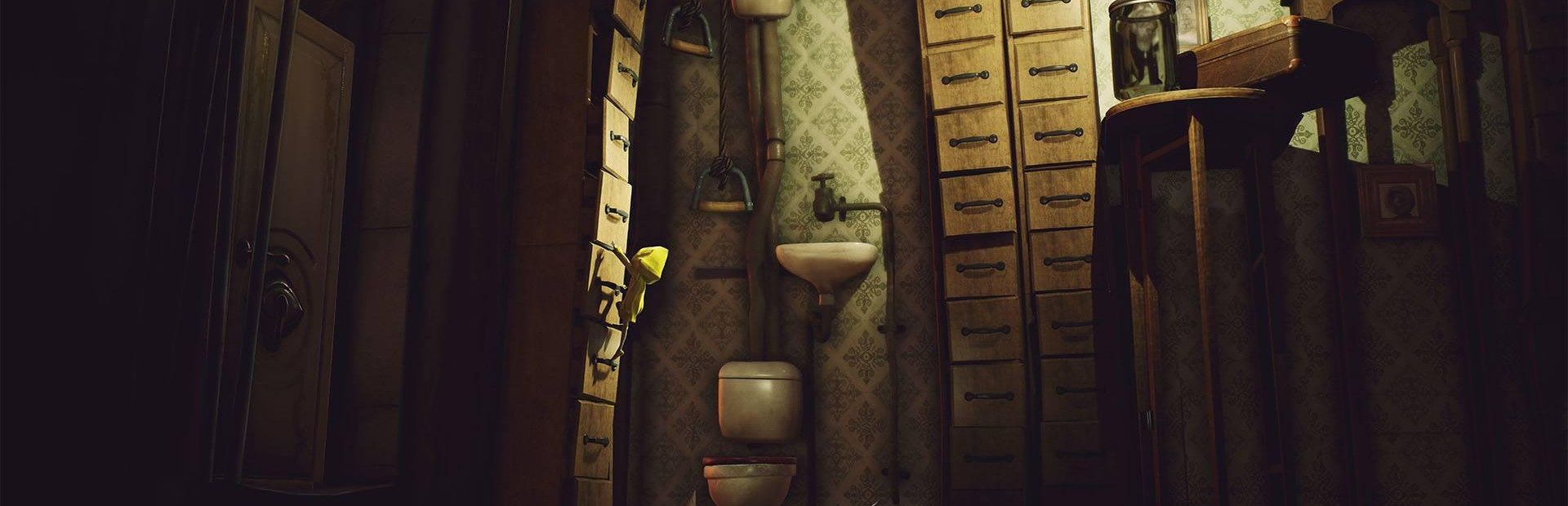
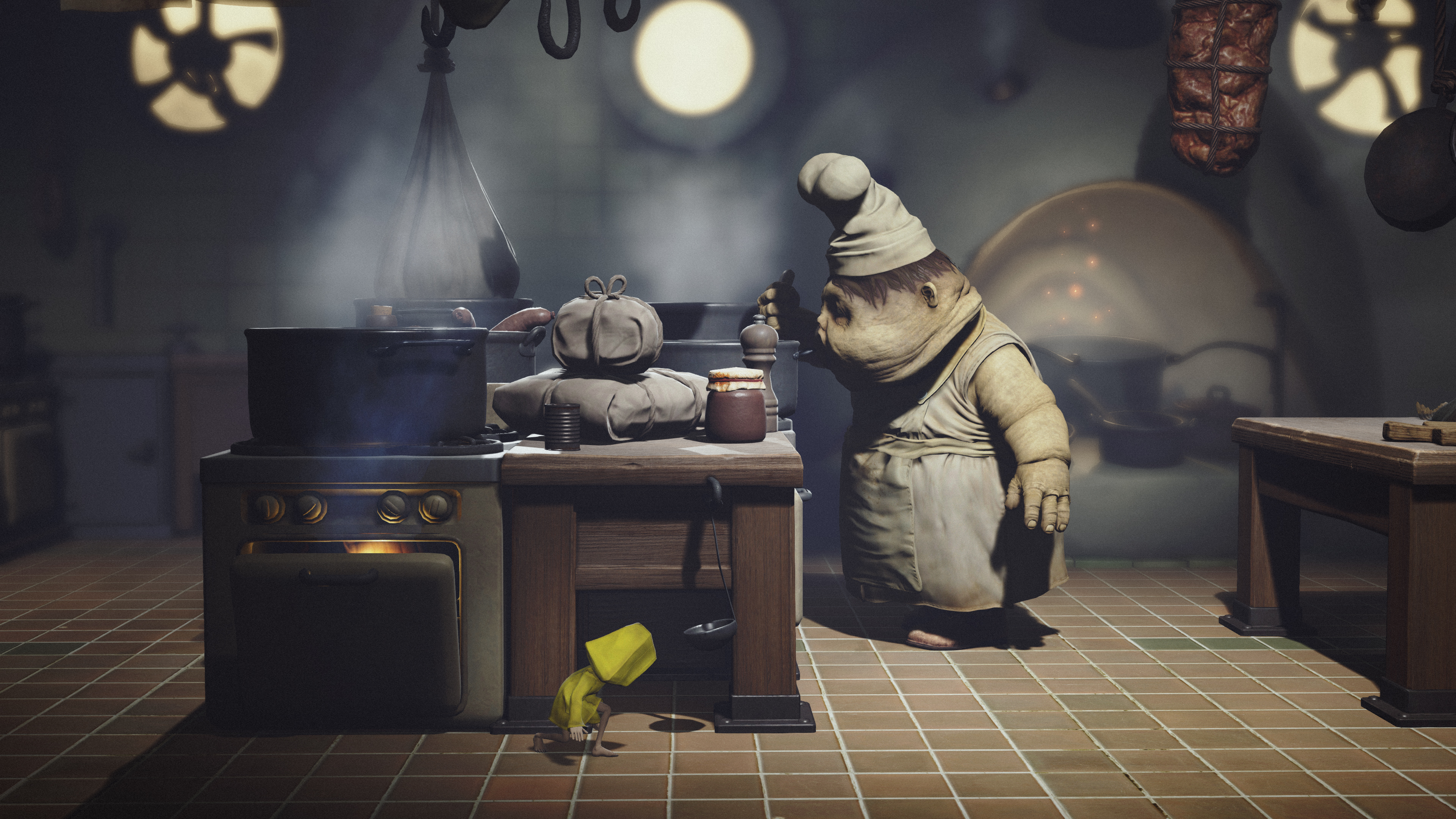
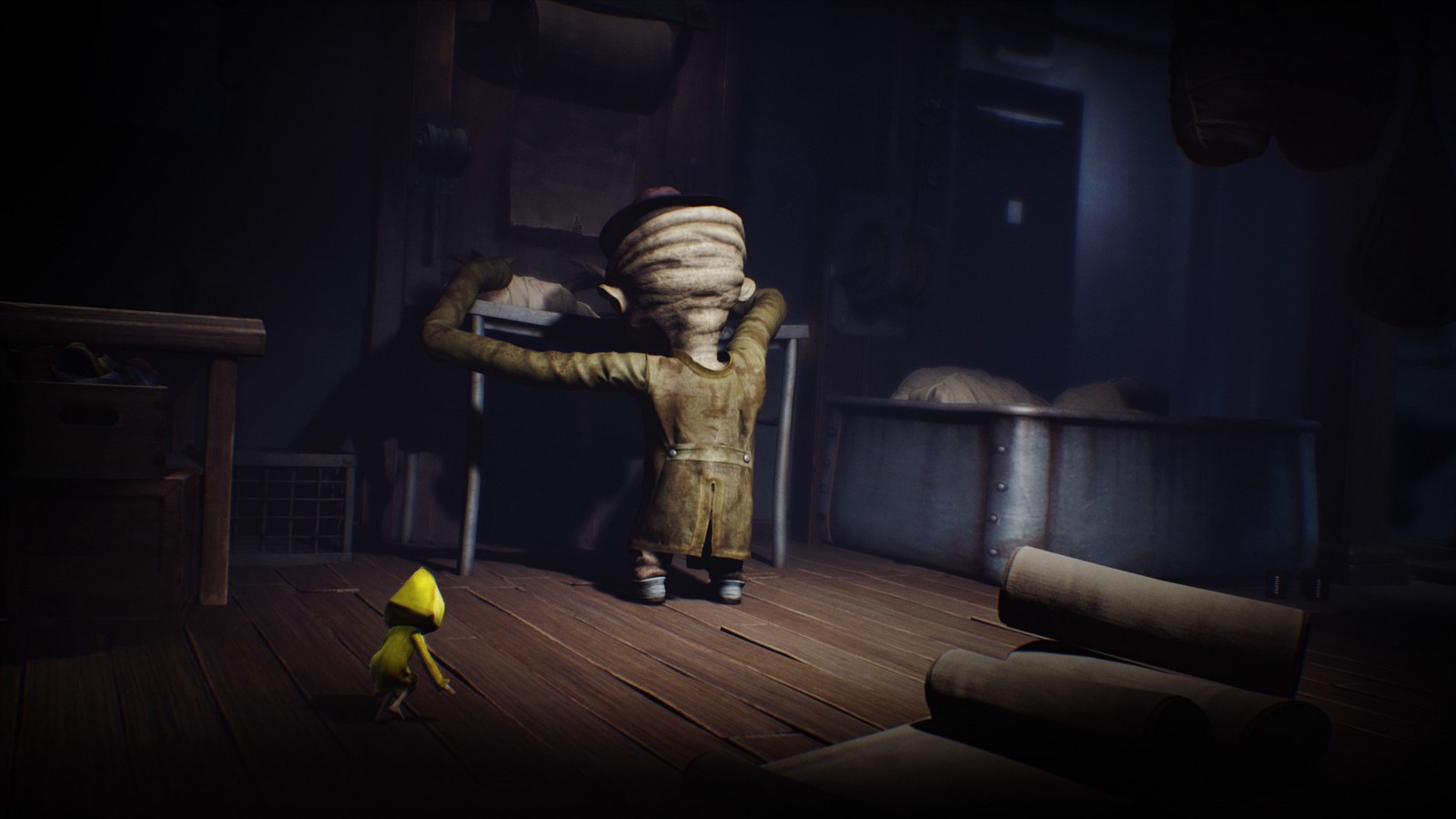
Minimalist side-scrollers have become very popular in Limbo. Inside is just another example of these horror side scrollers done right. Little Nightmares doesn’t really tell a story through voices or words, but through actions. Unlike Inside, Little Nightmares doesn’t have too much of a story to tell. You play as a child trying to escape a ship from humongous fat monsters trying to eat you. That’s all we get really.
Sadly, the story doesn’t really explain much as the art direction, monster design, and backdrops are wonderful and beg for more storytelling. The beginning of the game is made up of basic platforming with simple physics puzzles and a lot of atmosphere. Eventually, you start seeing the occupants of this ship and that’s when things get creepy.
Little Nightmares does a fine job of creating a tense atmosphere and suspense. Grabbing and sneaking are tied to the shoulder buttons, so when you grab something you must hold the button down. This makes things more intense as you are running away from a monster with a key to unlock a door and if you let go of that button it’s all over. The middle of the game is made up of outsmarting these monsters and the puzzles get bigger, but not really harder.
There’s not much to really explore outside of lighting lanterns for checkpoints and breaking porcelain dolls to unlock achievements. The game is definitely intense throughout the 3 hours it takes to complete, there wasn’t a dull moment that I can remember. I always felt like I was running and overpowered and small. From climbing stacks of dishes and escaping on meat hooks to chopping off the arms of a doll maker. The game gives players something that most don’t and that’s solid gameplay while combining excellent visuals and touching moments.
Overall, there are some of the best 3 hours you will spend. From beginning to end,Little Nightmares has something interesting to offer and it’s never boring. The graphics are gorgeous with art styles that reminded me of Box Trolls mixed with Coraline. If you love horror games and platformers then this is for you.
Secrets of the Maw DLC
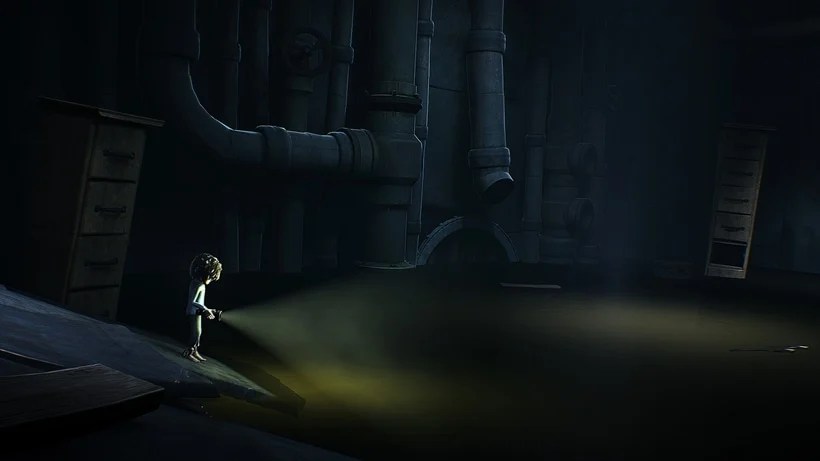
After replaying the original game I still felt the same about it. The game portrays a really creepy atmosphere and digs into the fears of children and well – their nightmares. TheSecrets of the Maw DLC tells the adventure of the kid you see in the cage when you first start the game up. The DLC is about as long as the original game and is divided into three chapters as well, however, there are more gameplay elements mixed into each chapter to make it more interesting gameplay-wise.
The DLC still gives off that creepy and dark atmosphere and sense of dread that the Kid has to go through. Sadly, we only get one new monster known as The Granny in the first chapter. You spend this chapter at the bottom of the ship in the sewers escaping her grip in the water. The main gameplay loop here is jumping around platforms in the water and swimming for your life to the next segment. I wish we could have seen her more instead of just bubbles in the water. She does appear at the end of the chapter, but with this being the only new monster it’s a bit of a letdown.
Overall this chapter focuses mostly on platforming and the DLC didn’t address any issues such as the camera problems and not being able to line up your jump correctly. The Switch version suffers greatly from long load times so dying often can be a frustrating mess on the Switch. Loading can take up to a minute between each death and sometimes I died shortly after loading just to wait another minute to try again.
The second chapter brings back The Janitor which was the first monster in the main game. This is a very long chapter that consists of three puzzle areas. Here you also get to solve puzzles with the little gnomes from the main game to push things around and activate levers. I found several bugs here such as gnomes disappearing through floors which required checkpoint restarts. Overall, running from The Janitor again isn’t as terrifying as the first time.
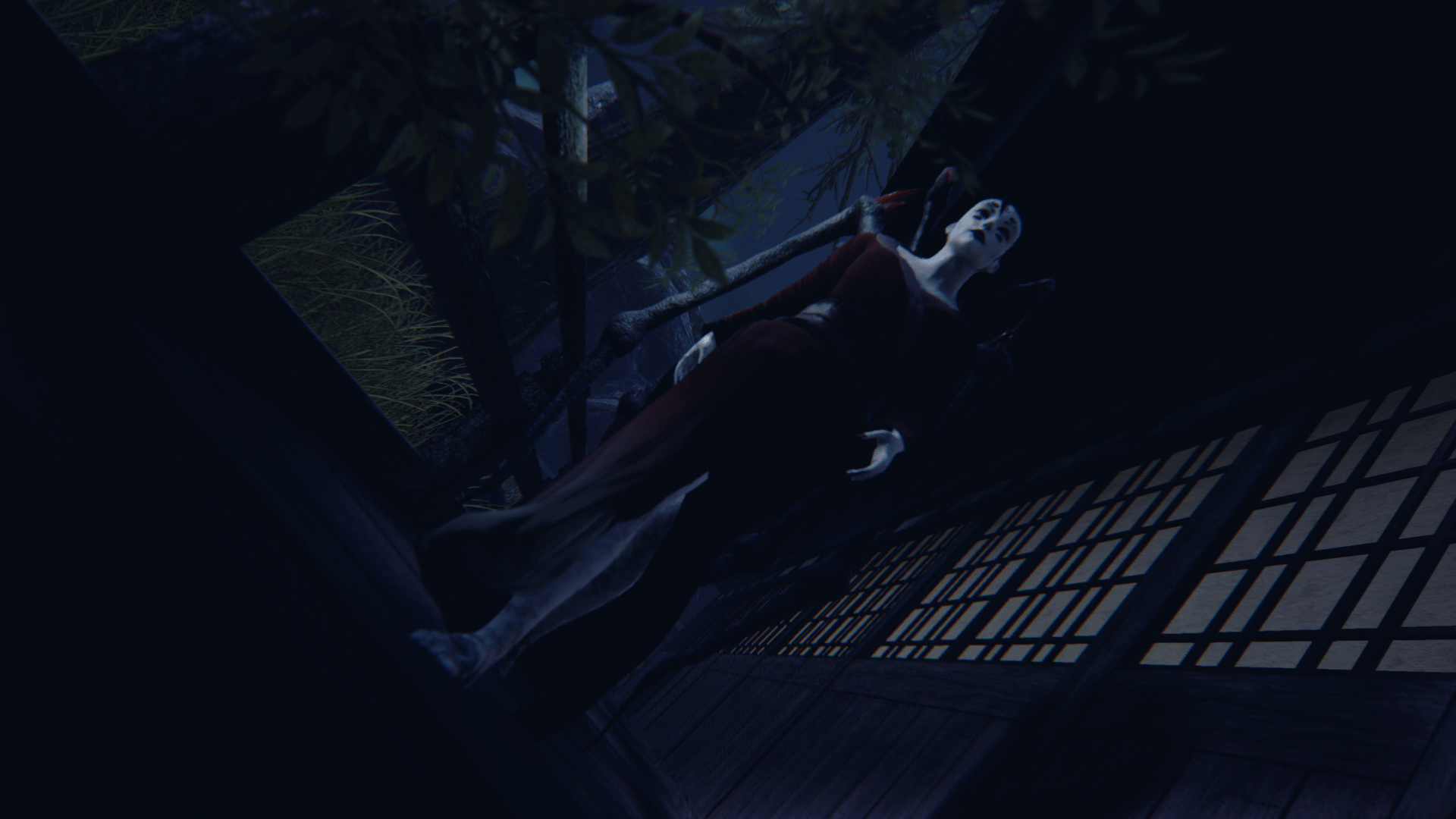
The last chapter brings back The Geisha which was the final monster in the main game. This one mostly focuses on a new flashlight combat system in which you shine your light on phantoms and they turn to ash. I found this frustrating as the closer they are to you the less effective the light is which doesn’t make sense. The smallest point of the cone of light is what causes this and it seems like an oversight. I found there were too many phantoms coming after you at once and it became overwhelming. The puzzles in this chapter are the best in the entire game, but again it’s another monster we’ve seen before.
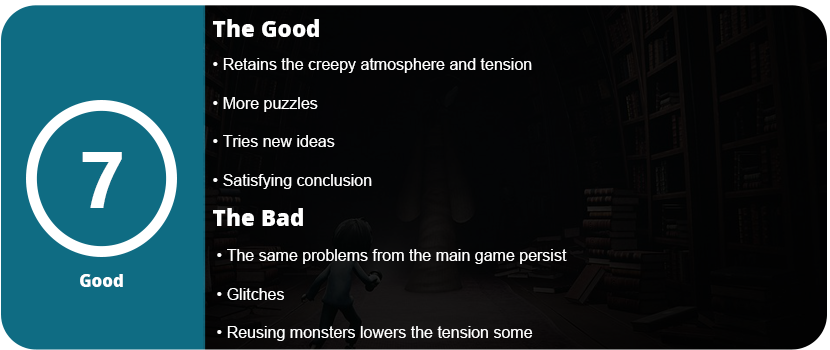
Overall, Secrets of the Maw is a great DLC that doubles the length of the entire collection. It feels more like a game and less like a haunted house ride and just feels more thought out. There were some glitches, the platforming and camera need work, and reusing monsters brings the tension down too much. With the entire package wrapped up, you have about 3 hours of fun creepy atmosphere here.
I absolutely love Japanese survival horror games. Even the worst ones usually nail the atmosphere and scare factor and this goes all the way back to the PS1 era which is where they pretty much became mainstream. From the best ones like Silent Hill 3 to some of the worst each title is unique in its own way. I collect survival horror games because of the unique factors in each game. Some may have terrible visuals, voice acting, controls, or obtuse puzzles, but they usually always scare and have great monster designs and a great atmosphere.
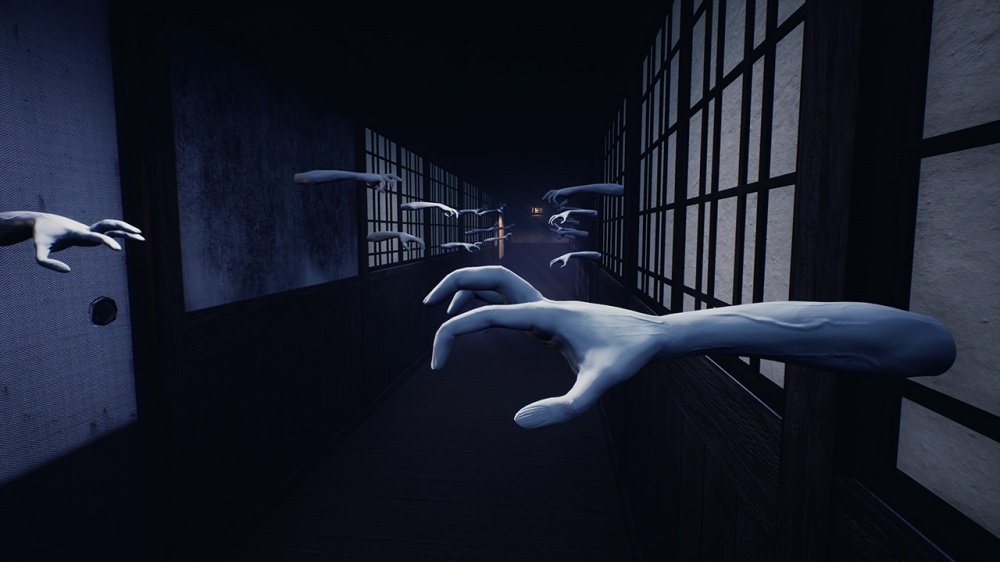
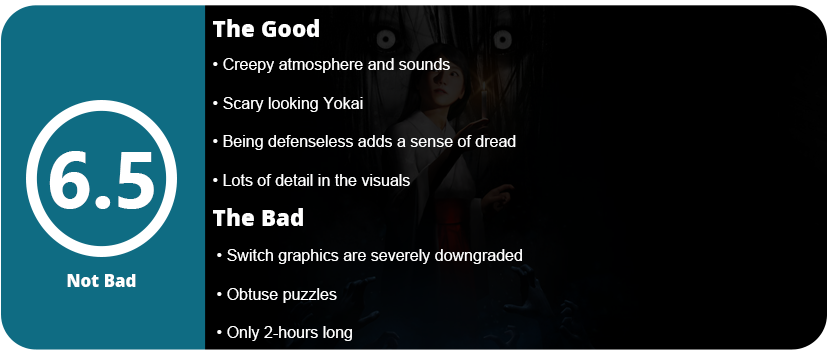
Ikai only got my attention due to its physical release. I usually don’t pay attention to digital-only survival horrors as most are pretty bad, and rarely nail even the atmosphere. Ikai does struggle in some departments such as the story, characters, and visuals, but it’s really creepy and has a haunting atmosphere. You play as Naoko who lives in an ancient Japanese village. You are a priestess whose uncle leaves the village and leaves you in charge. Yokais take over and it’s your job to rid them before they take over the shrine, and there’s something about a wedding and an abusive fiancée. Yeah, it’s not clear and even the game’s description doesn’t say much about the story. There’s a mechanic in which you can draw Japanese symbols on paper to make seals to rid of the Yokai, but once you get to the library tables you have to stop every 5-10 seconds as they will pop up and kill you. It helps add a sense of urgency and dread.
Like most games that take less than two hours to complete you don’t get a chance to develop characters or stories. Your main goal is breaking four Yokai seals via puzzles and exploration. Naoko is defenseless so you can’t fight, but just run and hide. Most of the game is easy to figure out minus a few obtuse and obscure puzzles. The village itself is really small so it’s hard to get lost, but you usually have to find context hidden within. Bloody footprints, opening the right door to trigger an event – that kind of thing. The few puzzles involved are slider puzzles and putting objects in the right place. Some more frustrating exploration bits were being lost at the bottom of a well and having to find bamboo to use as climbing posts amongst tons of bones. I spend 45 minutes running around examining every inch of bone until I found them all.
Some events have you hiding from Yokai which wasn’t too bad. They are really creepy designs and can pop up at you out of nowhere. Ikai really gets the sound design down. Creaking floorboards, moans, whispering wind, and bumps that come out of nowhere can make you jump. The game is intense all the way through. It’s just too bad the Switch version suffers from serious graphical issues such as incredibly blurry visuals due to resolution downgrade. It also runs less than 30FPS a lot of the time, but it doesn’t look bad other than this. There’s lots of detail, great lighting effects, and good-looking textures otherwise.
Despite the visual downgrade the game still sounds great, and I can only recommend it if you find it on sale. The $35 physical price tag might be a bit steep for a two-hour game, but anyone who loves classic PS1/PS2-era Japanese survival horror games will find something to like here. I do have to knock it for it’s an almost non-existent and incoherent story and obtuse puzzles, but playing this in the dark with the lights off and headphones on could make for a fun and scary evening.
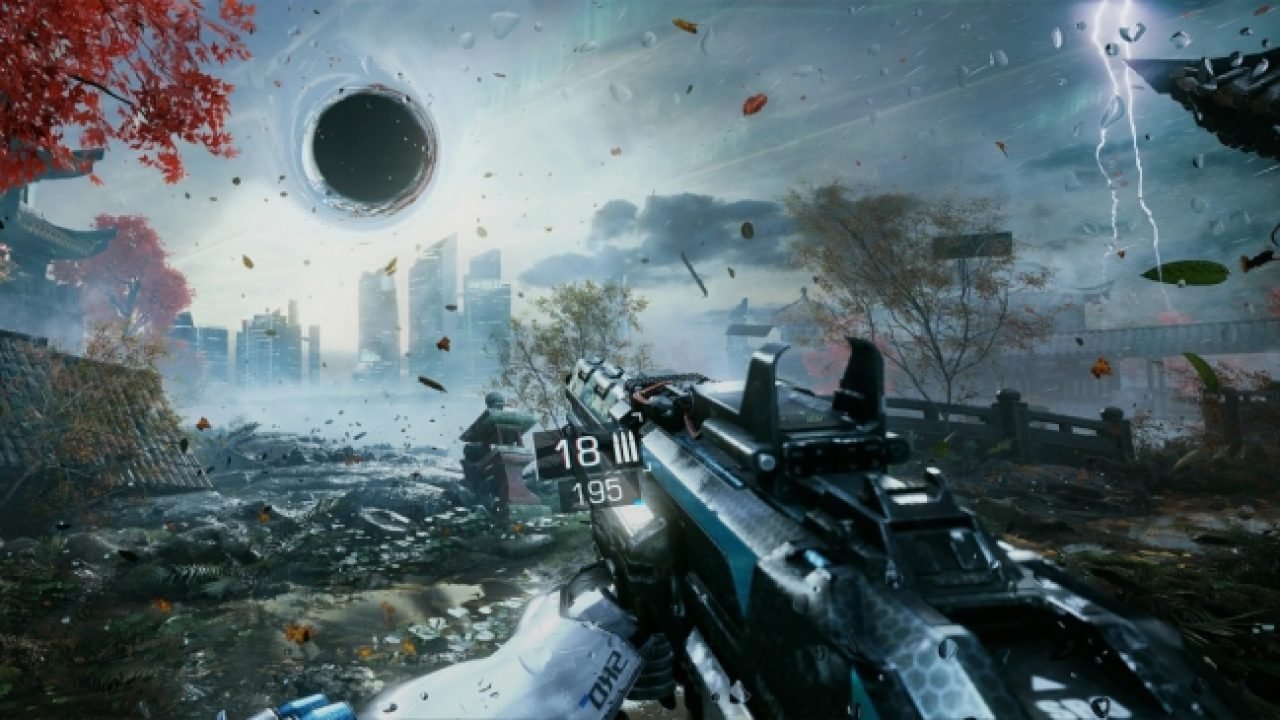
Bright Memorywas an impressive tech demo that was in Steam Early Access a couple of years ago. It had a scantily clad female protagonist (which doesn’t do anything for the game honestly) and a mix of sword and gunplay in the first person which felt fast-paced and punchy. Infinite is the fully released game, and it’s basically a much longer tech demo. You can finish the game in 90 minutes and this leaves nothing for story or character development which is almost non-existent. All I gathered is that there’s a black hole forming near-Earth and you must stop an evil military guy from taking some sort of artifact that will bring Earth back to Feudal Japan? I’m honestly not even sure.
The best part about the game is the gunplay. The swordplay kind of takes a back seat and is only needed in certain situations. You get a standard arsenal of four weapons. Automatic pistol, auto-shotgun, assault rifle, and sniper rifle. Each weapon has an alternate ammo type that’s usually explosive and does massive damage which is best saved for larger enemies and bosses. The weapons feel heavy and punchy, and they are fun to shoot and use. The gunplay was so good that it kept me wanting more from the game. It had a AAA budget quality to it that’s not seen in many indie shooters. The swordplay consists of mashing a single button or launching enemies into the air. There’s a tacked-on afterthought of a skill tree that lets you unlock abilities and upgrade your alternate ammo firepower, but in 90 minutes you upgrade almost everything pretty quickly so it feels trivial.
There is a grapple line for traversing long distances which are scripted, and you can wall run. These ninja acrobatics feels a bit stiff and not as refined as the actual gunplay. In fact, all of the animations feel stiff and like they were hand done. The faces almost don’t animate and thankfully there are less than 10 minutes of total screen time where the camera shows any faces. Your main character, Shelia, is questionable in the sexy department since you hardly ever see her and there are DLC costumes that seem pointless due to the short run time. You can go through the game again on higher difficulties, but I don’t see the point.
The issue with a short game like this is there is no incentive to come back. There are no modes, no multiplayer, and hardly anything to aim for. The visuals in the game are fantastic with great use of ray-tracing, but again the animations are weird. There’s a short scene where you drive a car and it feels really janky and half-baked. Overall, the boss fights are fun, but there are literally only four types of enemies in the whole game so it gets repetitive quickly. At a sale price, this could be a fun evening, but that’s about it.
Gimmicks that use various types of hardware are nothing new since the days of the Wii made that mainstream, but very few games use your camera outside of a home console for gameplay. While it’s wholly gimmicky and can be played with a controller, the game uses your webcam to see your eyes blinking to determine when to change scenes in the game or interact with objects. Not often does the gimmick feel like it’s influencing something important, but when it does it works well.
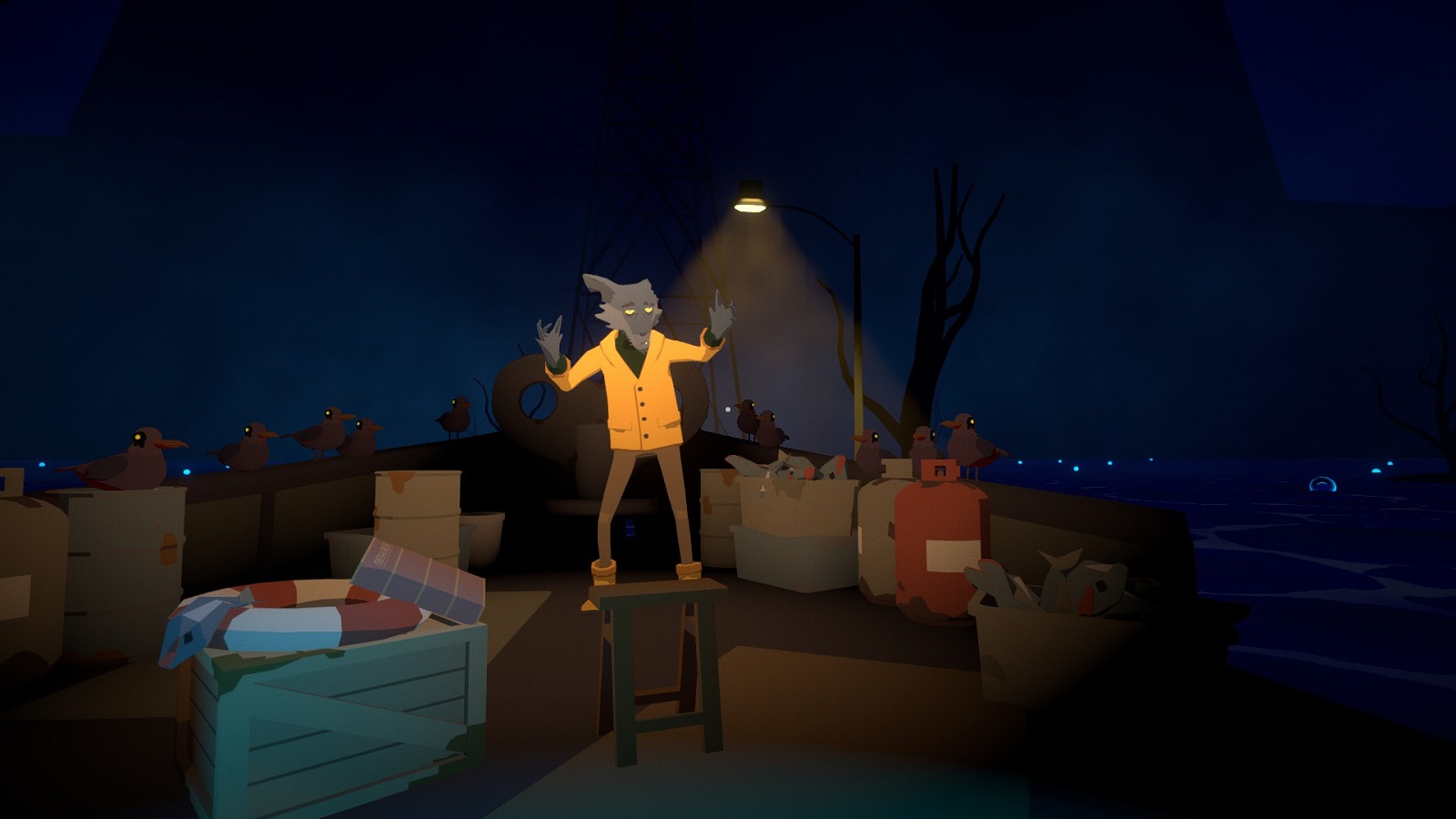
You play as a boy named Benjamin Brynn floating along the river of death in a boat with a wolf as a ferryman. He’s to be taken to a being in a large tower whom he has to sell his life story so he can pass on and the ferryman can be paid. You start out as a child and you eventually learn your mother is an accountant and failed music composer and wants you to follow in her footsteps. Each scene is full of mostly black with just what you can remember being in view. Sometimes an eye will appear on objects for you to blink at and interact with. When a metronome appears you can blink and jump to the next scene or try to hold your eyes open and see the scene to the end. Most of the time I couldn’t do it (it’s very dry where I’m at here in the summer).
You slowly progress through the story only to find out that you need to retell the story correctly. I won’t spoil anything as to how or why, but the only times the blinking gimmick felt right was when you had to close your eyes to focus on someone talking. With headphones on this is a great effect. The game does a great job detecting your eyes even in low light, and I was using a laptop webcam which isn’t that great. There isn’t much else to this game. It’s an interactive adventure with interesting visuals. The whole game reminded me a lot of That Dragon, Cancer, but I can’t connect to this game as much as it’s shorter and at the time I was expecting my first child so that game hit home quite a bit. A big fear is your child being born with some sort of debilitating disease.
You’ll most likely not really feel the game’s impact until the last 20 minutes when things get really dark and sad. It didn’t make me tear up, but it was really sad for sure. You can finish the game in about 90 minutes, but I did connect with the character to an extent, but not wholly. The scenes rush by too fast and you’re meant to understand the moral of the story more than connect with the characters and get behind their motives and feelings. I feel a game like this misses the mark due to its short run time, but the gimmick would get tiring for more than 90 minutes.
Overall, Before Your Eyes is a charming game with a lot of heart and a fun gimmick that works well when it wants to. It’s a very short game and doesn’t let you really connect with the characters enough. It’s forgettable in the end, and not as memorable as some other short adventure titles I’ve played in the past, but it’s fun and worth a look.
Growing up, I wasn’t into Star Trek, and I also didn’t have a gaming PC. The computer we had for the family was for website development and it didn’t run any type of 3D applications well. PC gaming was pretty much out of my mind until the mid-2000s, but I also passed this up on PS2. I just felt Star Trek was a boring grown-up show and didn’t care at all. I now love the series and have caught up to halfway through the Voyager series so the characters and flow of the story actually made sense to me.
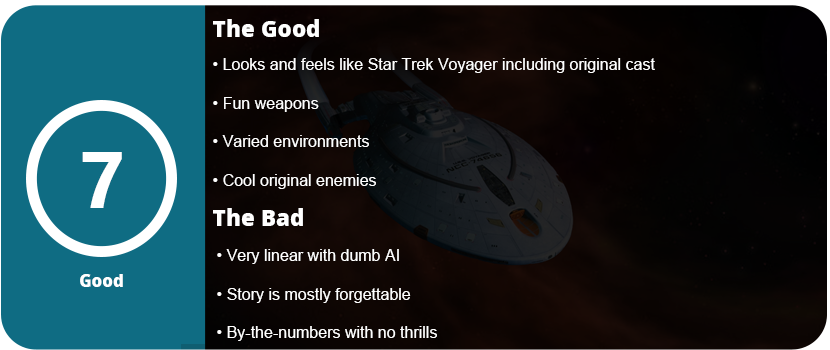
You play as a brand new Hazard Team thrown together by Tuvok to surgically strike enemy ships. The Voyager gets stuck in space and can’t repair itself or warp out due to something dampening its engines. It’s your job to find out what this is. It plays out just like a Star Trek episode. There is great voice acting from the show’s cast which is really nice. There are a fair amount of cut scenes, but of course, this isn’t anything stellar or memorable. It’s interesting enough to get you through the five hours it takes to finish the campaign and that’s all.
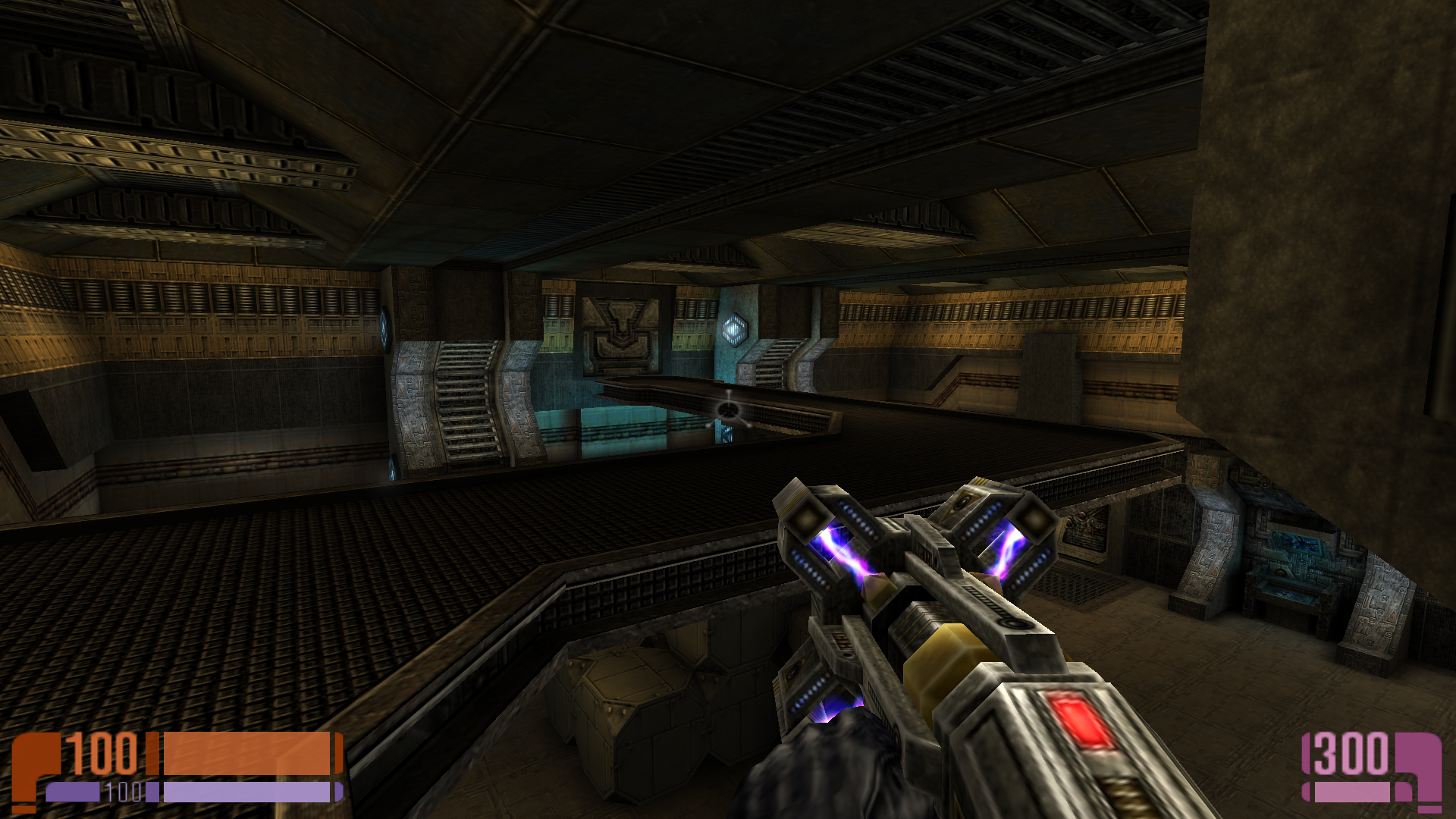
What is nice is the Star Trek experience is here. Weapons that feel like they fit in the universe, you get to explore parts of the ship, and it’s nice to see a 3D interactive world of something you see on TV a lot. Missions are varied thanks to the environments that change up. Sadly, there are no worlds you are plopped down in. Just lots of different types of ships and a few different enemy types. These range from Klingons that we all know to new original species just for this game. This is a typical id Tech 3 shooter with nothing special to it. Enemy AI is pretty dumb and the game is extremely linear. There are no puzzles or thrills. Just blast your way past wave after wave to get to the next cut scene.
There are two different types of ammo types. You pick up ammo crystals for one and regular blue energy for the other. There are nine different weapons in the game including your phaser which has unlimited ammo and does the least amount of damage. The weapons, while original and cool looking, aren’t anything special and their alt-fire modes are pretty bland. I understand this was the early days of shooters, but Half-Life proved you can have a small arsenal and make them have weight and feel unique. It got to the point that I just stuck to two different weapons at all times because the enemies are just bullet sponges. They swarm you head-on and don’t take cover or dodge or strafe. I could stand in one corner and just knock them all out and advance to the next room. The game is fairly easy because of this.
There are only two boss fights in this game and they are both pushovers because you can exploit their dumb AI. Throughout most of the game you have AI companions that do a decent job killing everything, but they usually just stand around and can’t die anyway. There is a single stealth section that felt completely pointless as the AI is so dumb you can walk right behind them and they won’t notice you. Gameplay-wise there’s literally nothing else. Just lots of elevator switches and control panels to press.
Visually the game looks the part artistically. You won’t mistake this for another game, but the graphics themselves are obviously really dated and didn’t look the best even when it was released. However, you know what you’re getting into with a two-decade-old game. It still looks clean and there is a lot of detail in making this look and feel like Star Trek. It’s worth a short play-through on a late-night gaming session, but it’s mostly forgettable.


































































 thebinarymessiah.com
Try multiplayer. A lot of fun !