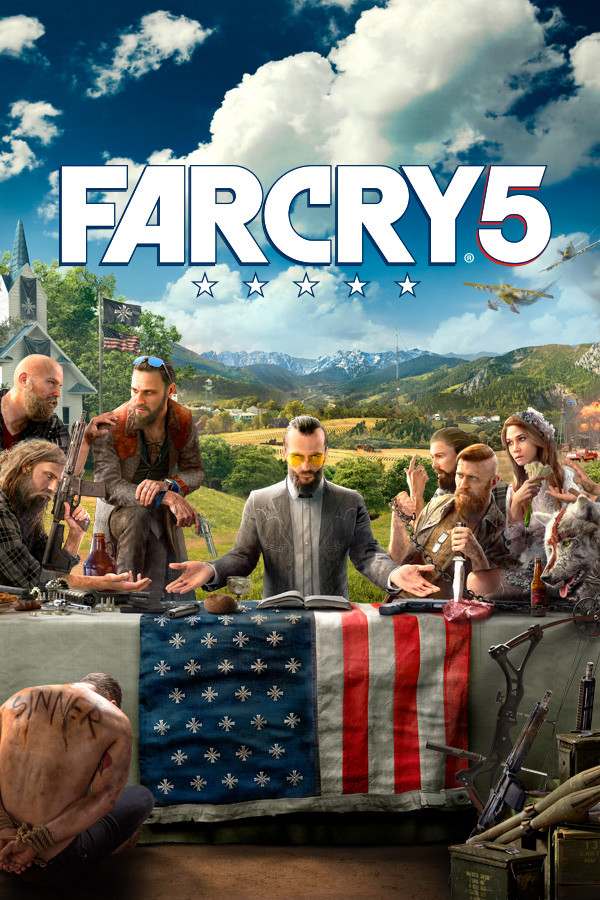
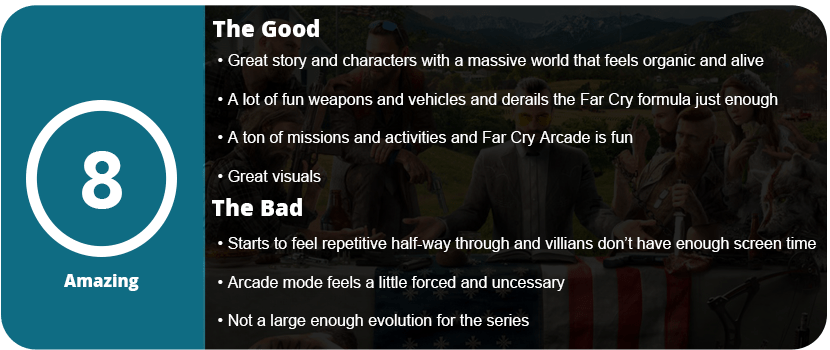
Far Cry is one of the many Ubisoft franchises that has been infected with sequelitis and “Ubisoftitis” specifically. For the last few years, their open-world games have suffered from the same stale structure and layout, and they have had a hard time finding their own personalities. Far Cry 5 is one of the first Ubisoft games in a while that has evolved a little and hasn’t quite carved its own nook in its portfolio, but it knocked out quite a few chunks to get started. It feels more RPG, and the activities and missions unfold more organically, with total freedom for the player to go about doing what they want, while some activities and missions are constantly revolving and moving a bit.
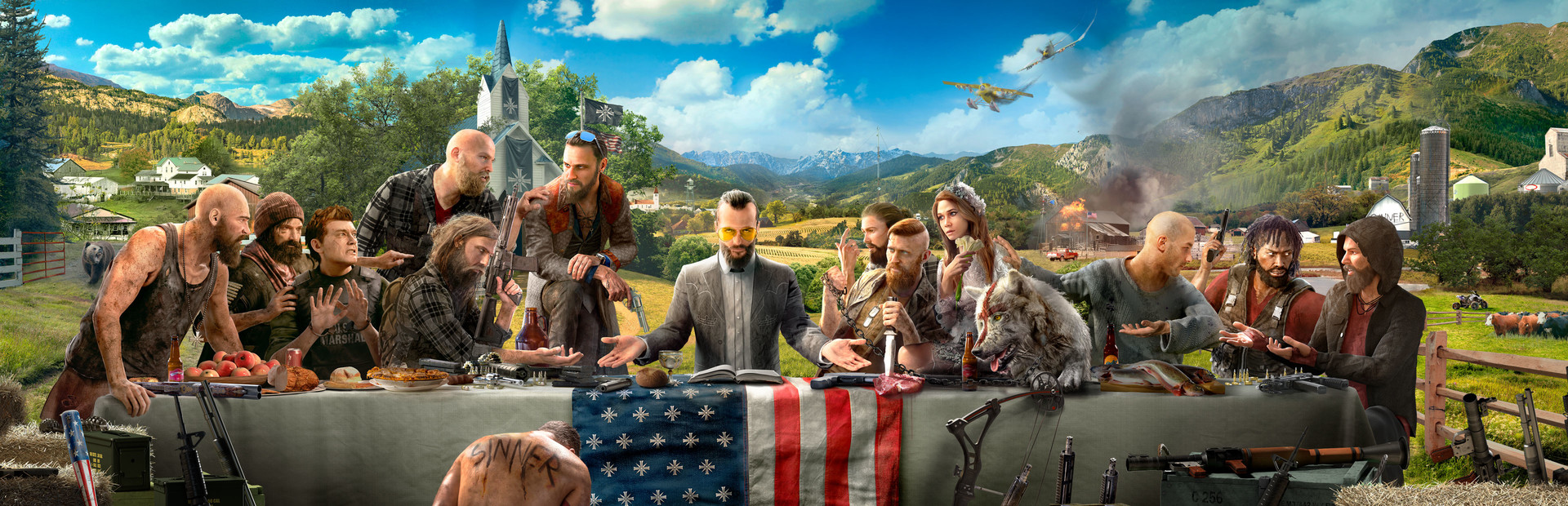
You play Sheriff Deputy Rook, who gets a call to head to a small county in Montana that is overrun by a religious cult. Things go south when your helicopter is shot down and you are taken prisoner along with your State Marshall partner. Joseph Seed is your main villain, and like all Far Cry games, he’s the main focus of the game, and he’s a great character. While not quite as good as Far Cry 3, Ubisoft unloaded their full-blown crazy bag here and made some insanely sick characters.
The main goal of Far Cry 5 is to take out Joseph’s three siblings, who have taken over a third of the map each. These story missions unfold by obtaining notoriety with each sibling as you finish missions and activities. There are three-story segments per sibling that are unlocked, and you are warped to a story area. These are some of the best parts of the games, as each sibling has their own unique way of controlling the people and has their own sick and twisted techniques. The final mission for each sibling requires you to destroy their bunker, and while this gets tedious, it’s only done three times in the whole game.
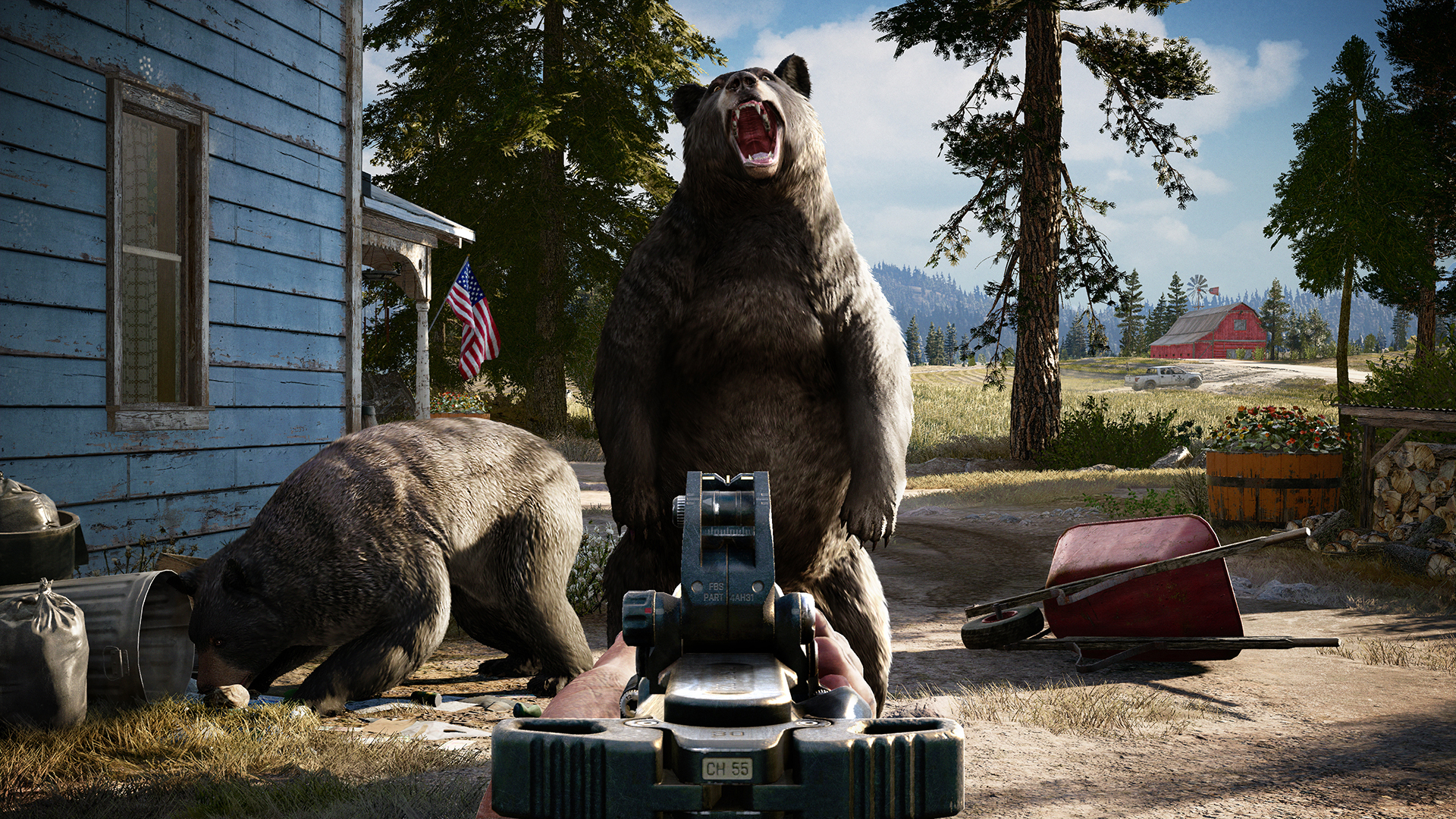
All missions require gunning Peggies down, but some side missions include freeing prisoners from roaming vans, solving Prepper Stash puzzles where you have to figure out how to get into a building or cave, stunt devil activities, and not to mention the all-new Far Cry Arcade, which has various levels scattered around the world displayed as arcade machines or posters. The level is a short variation that includes objectives that are fast-paced and insane.
While there are a lot of fun activities and missions, such as fishing and small item hunting, it just isn’t quite enough to completely clear the stale air that Far Cry has created over the last few years. I loved the villains and characters, and the shooting is solid with a massive open world, but there are other issues such as each weapon feeling the same, grinding for cash is a chore, and perk unlocks come at a snail’s pace. You can buy gold bars with real-world cash to quicken the weapon and outfit purchases, so this is probably why it’s a grind.
For the most part, I stuck with the same four guns throughout the entire game, as I never really found a huge difference between them, and around 10 hours in, I started skipping the side activities and gunning for the end of the story. While the world is fun to explore and there is a lot to do and complete, it all starts feeling the same after so long. The game is nowhere near bad, but just repetitive and requires a lot of patience and dedication to complete, but outside the main story, there’s really no drive to.
Far Cry is at its best here, and the formula has been perfected. I honestly can’t see where else this series can go. Open-world first-person shooters are notorious for getting stale quickly, and unless they have an amazing story and characters, there’s no reason to stick around for too long. The arcade mode may keep you coming back if you really love the shooting in this game, but the main story has so much to offer that I rarely dabbled in arcade mode. Overall, the game is well worth a purchase, but if you haven’t liked Far Cry in the past, then this game won’t really change your mind.
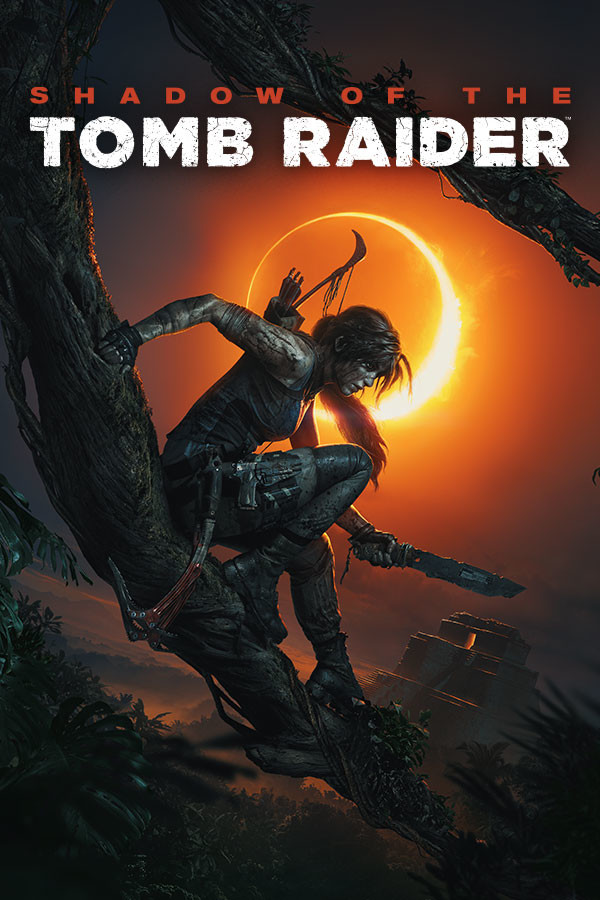
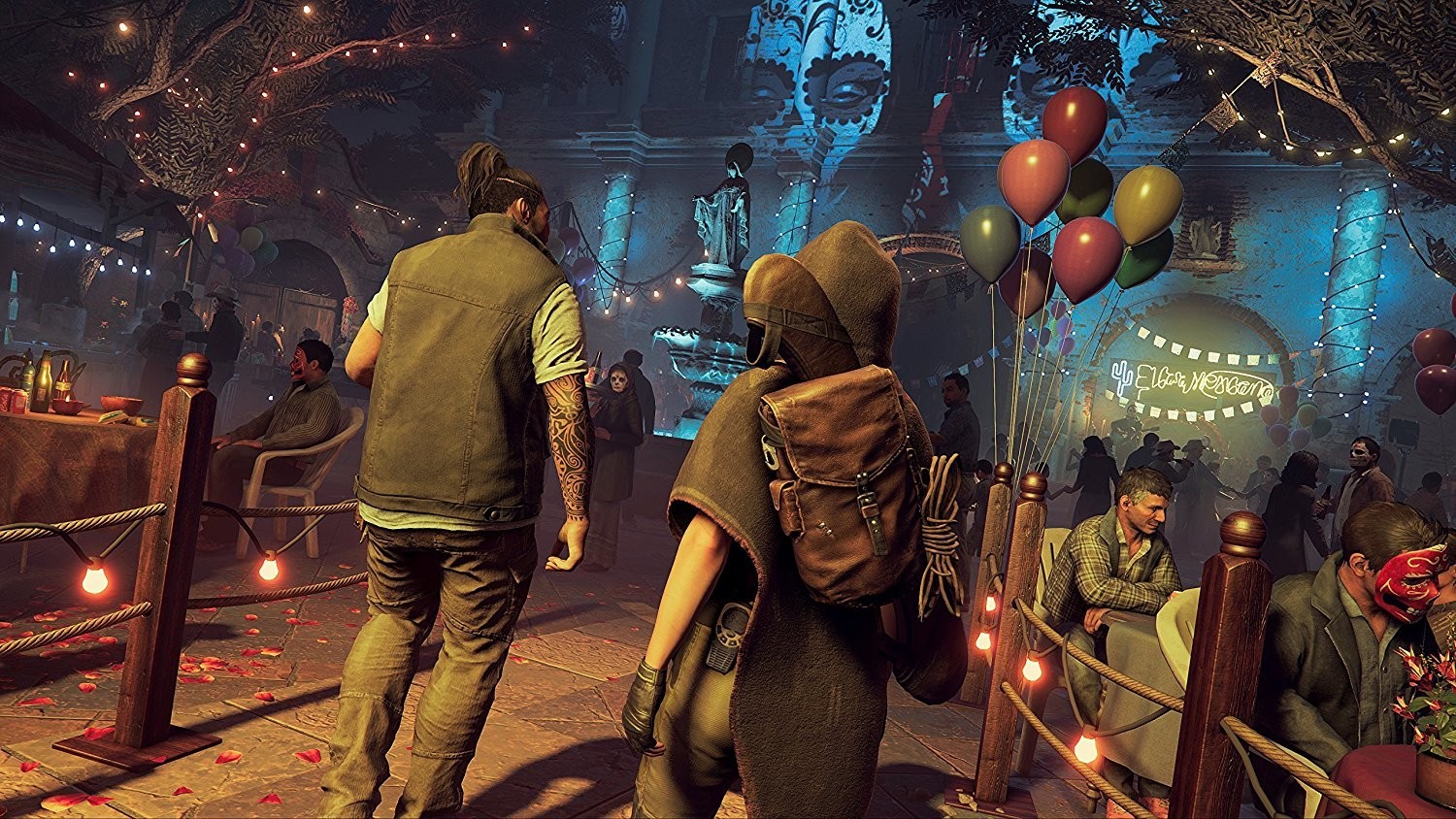
Lara Croft’s adventure since 2013 has been amazing. The reboot was one of the best in the game industry in the last decade, and it turned a sexy heroine full of corny stories and janky gameplay into an open-world, complex trilogy. Shadow of the Tomb Raider continues Lara’s saga against Trinity and Doctor Dominguez, who are trying to basically destroy the world.
The game opens up with an epic prologue, just like the last two games, and we see how hardened Lara has become since the last game. The entire game is about Lara and Jonah trying to find something called the Box, which is a Mayan object that can stop the world from ending. It’s a little more complicated than that, but the story is much better than Rise’s story. At least we get more glimpses of Lara’s past and some advancements in her character, like we saw in the first game.
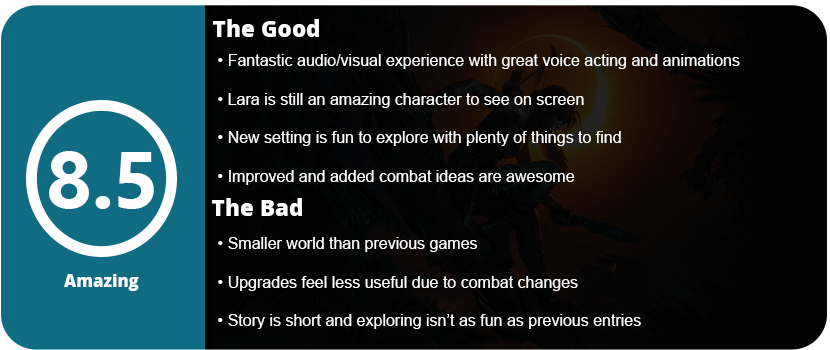
However, I feel the story is a little more unbelievable than the first game. Instead of just trying to survive and escape an island, she’s doing some crazy Hollywood stunts that are totally unbelievable, like running along with debris in a flood. It made me shake my head, but I kept pushing on as it was exciting but felt like a total departure from the first game’s atmosphere and ideas. The world also isn’t large and open like in the last two games. Instead, it’s broken up into smaller parts that can be easily traveled to, with the largest part being Paititi City, which is a pain to navigate, to be honest. I didn’t like this change very much, and as I played through the first third of the game, I was waiting for it to open up into the big open world like the last two games. It just felt more cramped and claustrophobic. I also got bored exploring some of these areas, trying to find all the secrets. It’s just not as exciting or varied as the last games.
That’s not to say the world here is bad. The new jungle theme is a nice departure, feels organic, is highly detailed, and features some new combat ideas. Lara is in full commando mode, as she can cover herself in mud, hide in trees and vines along walls, and take people down. She looks badass doing it, and the combat is much more refined here, but some of the other ideas from the last games almost feel pointless here. All of her upgrades and crafting don’t really fit in here much, as the game’s focus isn’t so much on survival. There are various upgrades for different ammo types, longer breathing, and not having to press the action button when she does long jumps. Some upgrades are repeats, and I never used any of the special ammo as there isn’t as much combat in this game as the previous two; it’s mostly restricted to the story missions. You can craft outfit pieces that grant different passive abilities, but again, these felt pointless as there isn’t much combat in the game and it’s highly focused on stealth.
The story itself is quite short at about 4-5 hours if you skip all the side stuff. It also didn’t feel as epic or as impactful as the last two games. While Rise’s written story was pretty bland, it had some great gameplay set-pieces throughout the entire story, and this game only has a few. I don’t want to bash on the game, making it sound awful, but it’s just trying to evolve while towing stuff from the first game with it, and it feels like extra baggage. I really enjoyed Shadow and wanted to get all the side stuff. I had fun solving the puzzles and climbing around the gorgeous areas, but it just didn’t have as big of an impact on me as the first game did. I loved seeing Lara again, as her character is fantastic, but it’s all more of the same and feels very safe.
As it stands, Shadow of the Tomb Raider is a safe sequel that’s shorter and tries to cut corners and do less while dragging to gameplay ideas for a larger-than-life world with it that just doesn’t fit in. The combat has been greatly improved, but there isn’t much of it, the story is short despite being a better story than the last game, and the large open world is basically gone. What we get is a mix of the last two games, with some new ideas here for a new game. It’s the culmination of the best that all three had to offer, but just not enough of it. The graphics are out of this world amazing, with beautiful animations and voice work, but it’s just not enough to make it the king of the action-adventure genre again.
Mousepads are usually something most people don’t think about, including PC gamers. Sure, there are some nice high-end hard or soft mousepads designed for gaming, but electronic mousepads are a recent thing. With Qi wireless charging pads becoming the new thing, RGB mousepads have picked up in popularity, and there are a few models out there. I had the Razer Firefly, and it died on me in a week, so I was hesitant to buy another RGB mousepad, so I switched brands this time around.
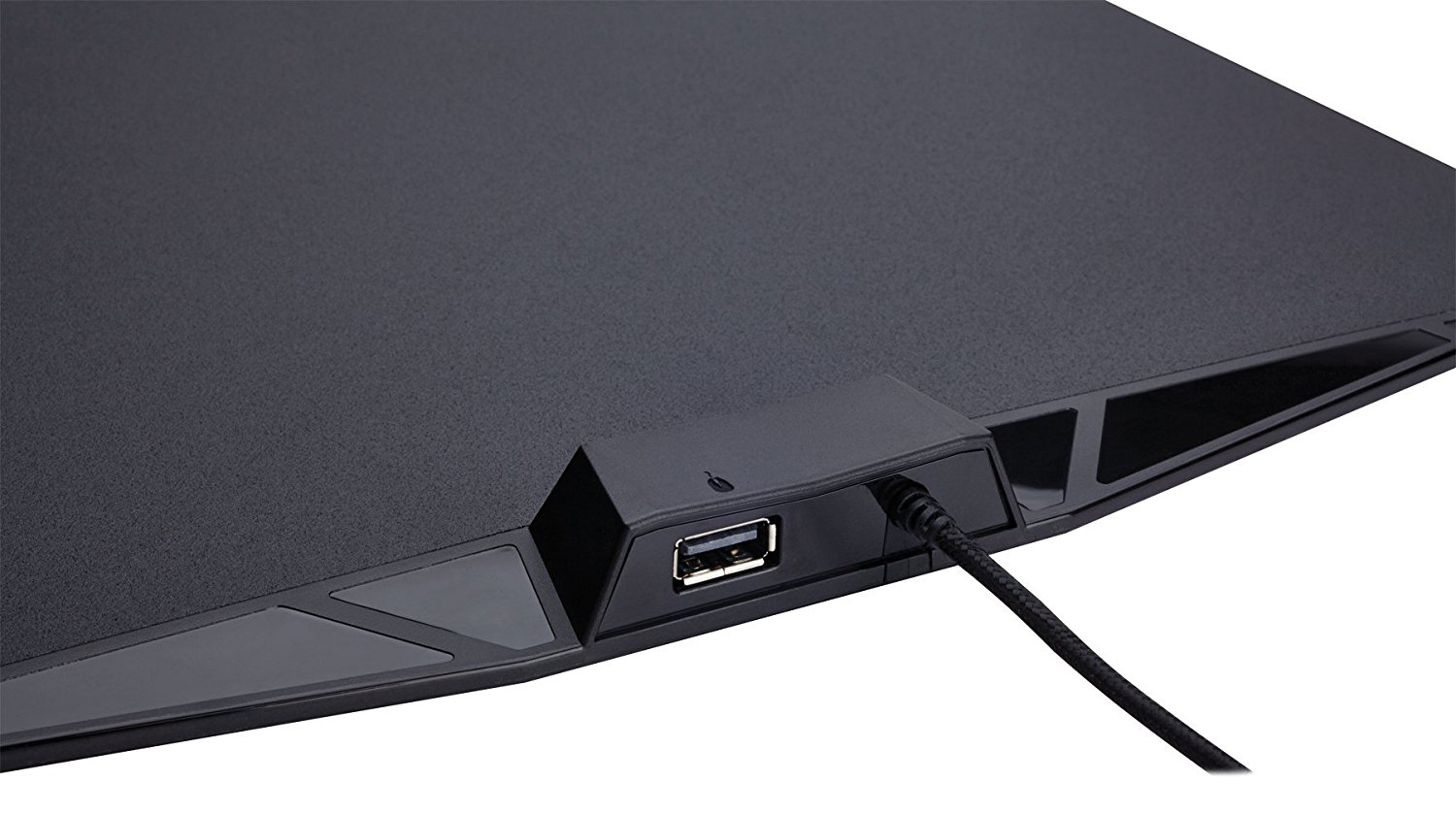
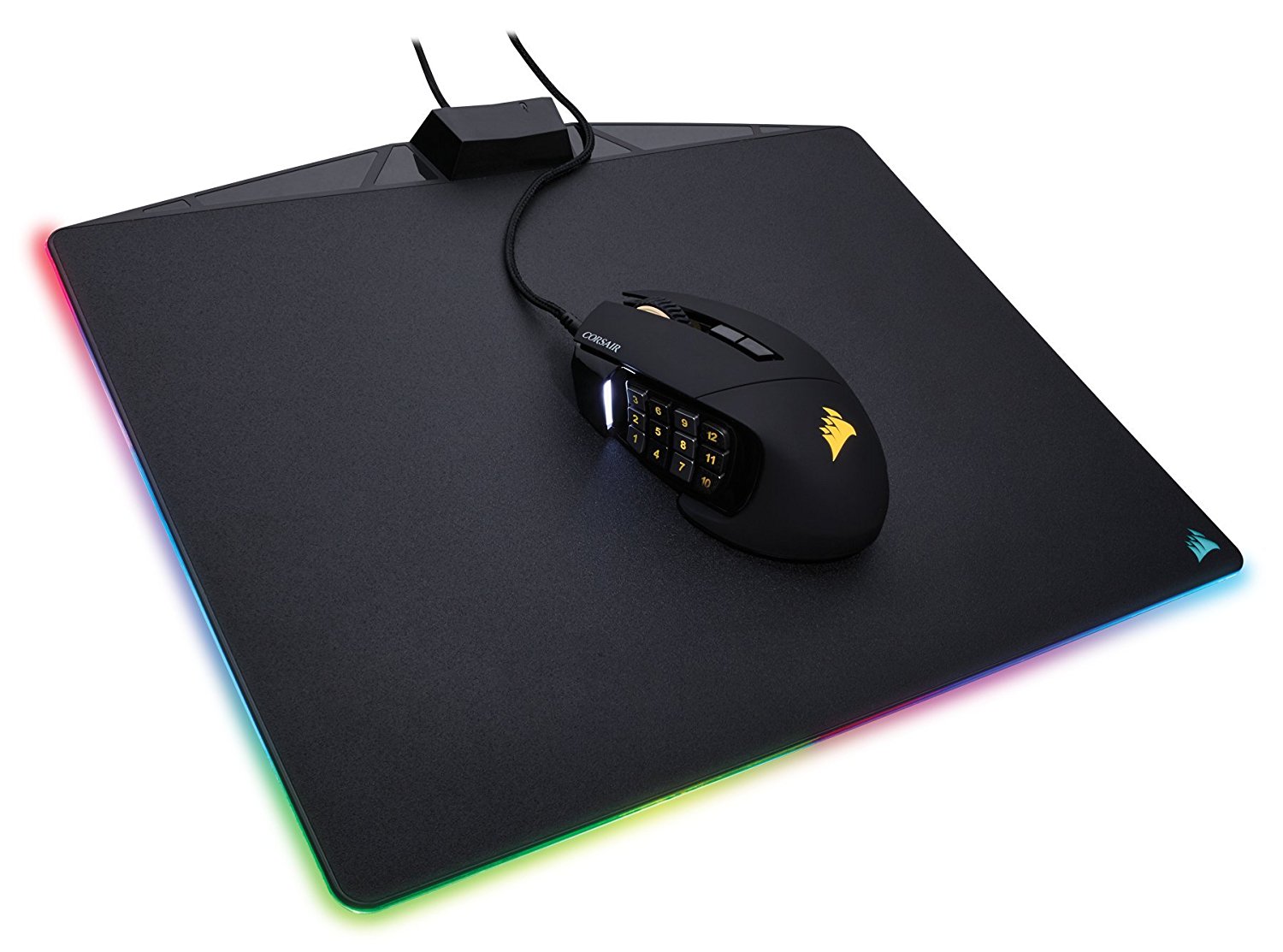
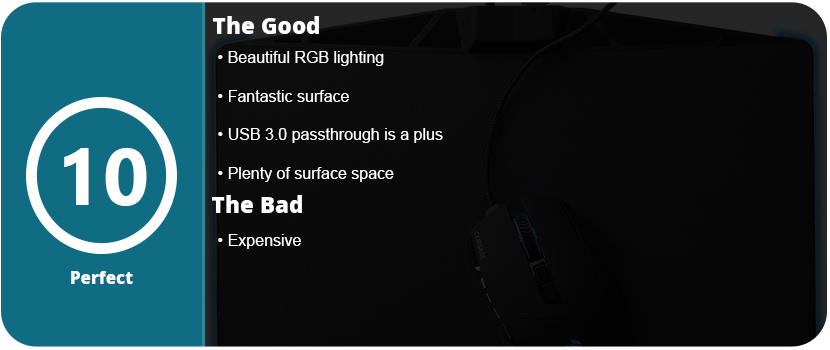
Corsair is known for solid gaming accessories, and the MM800 is no exception. It’s a fairly large mousepad and takes up quite a bit of room, but it looks fantastic. The surface has a rough material so your mouse can glide without being too slippery, and it’s ultra-thin for being electronic. At the top of the mousepad is a small box with a USB 3.0 pass-through and a power cable. Around the sides and front is a thin RGB strip, and the colors are bright, vivid, and gorgeous.
Of course, you will need to install Corsair’s iQue software, which I was skeptical about, but it’s actually quite nice and well designed and doesn’t bog down my PC. Customizing the colors is fairly easy, but there’s no option to turn off the lights when the monitors go to sleep, like with Razer products, which were quite annoying.
After using the pad for several hours, I really loved it, and the RGB lights aren’t distracting and look fantastic with my RBG setup. For the price, it’s not bad, but some people can buy the same pad without the lights for half the price, so unless you want RGB lights or are working on an RGB setup, don’t bother.
If you have an expensive pair of headphones, you probably want a way to store them, and a headphone stand is the best way to go. Yes, they take up desk real estate, but it’s worth it in the end. While you can get any cheap headset stand out there, why not go flashy and get an RGB stand? Razer has made a fantastic piece of hardware, and it looks beautiful next to your other Razer and/or RGB stuff.
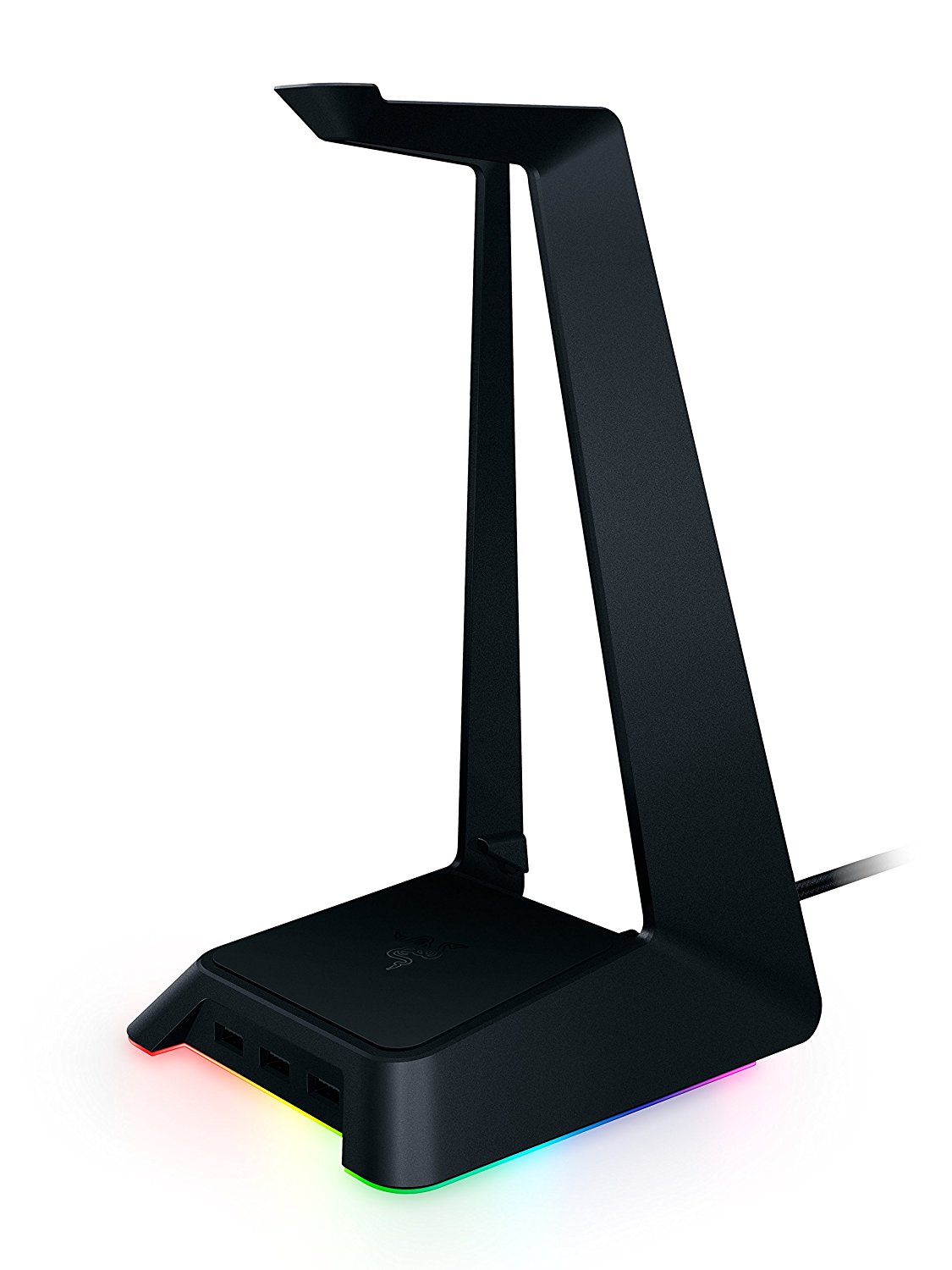
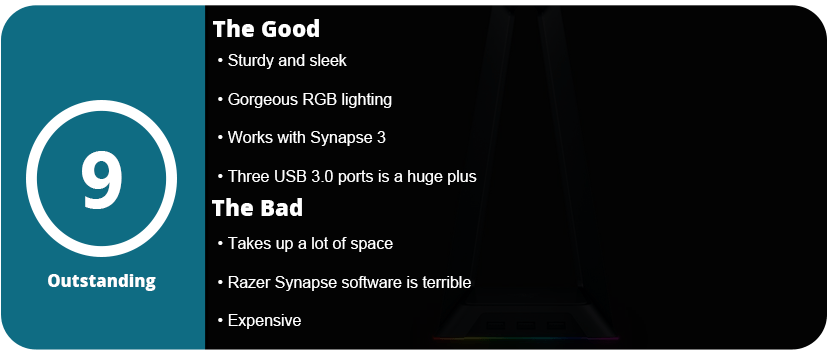
This is a simple piece of hardware with just a plastic piece that goes into the base and a USB cable, and you’re done. The base has three USB 3.0 ports, which is awesome if you need some more ports for accessories or USB drives. The RGB band around the base looks amazing, and it’s fully compatible with Razer Synapse 3, which is a huge plus in my book.
This means that it can sync with all your newest Razer products and has a fully customizable Chroma suite. The lights go all the way around the sides and front, and it leaves a nice reflective glow off your tabletop. When you set your headset on top, it holds up really well and doesn’t tip or slide around. It looks sleek, neat, and high-end, like any Razer product does.
I do have to say it’s probably a little too extra for most PC gamers, but it’s nice for people who love their RGB stuff and want more USB ports. The price is a little hard to justify as it’s the same price as a mid-range mouse or keyboard from them or a new game. This is specifically for a certain audience, and Razer knows it.
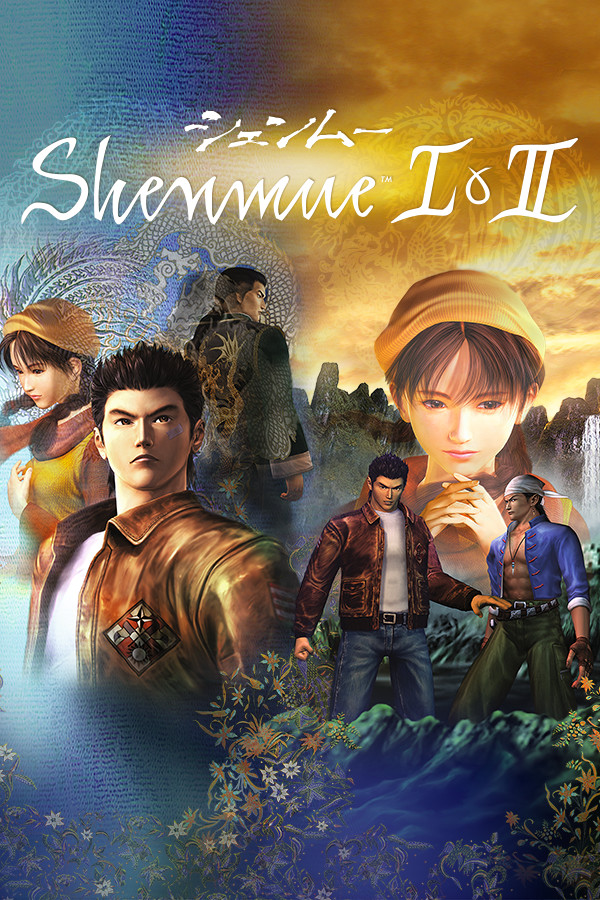
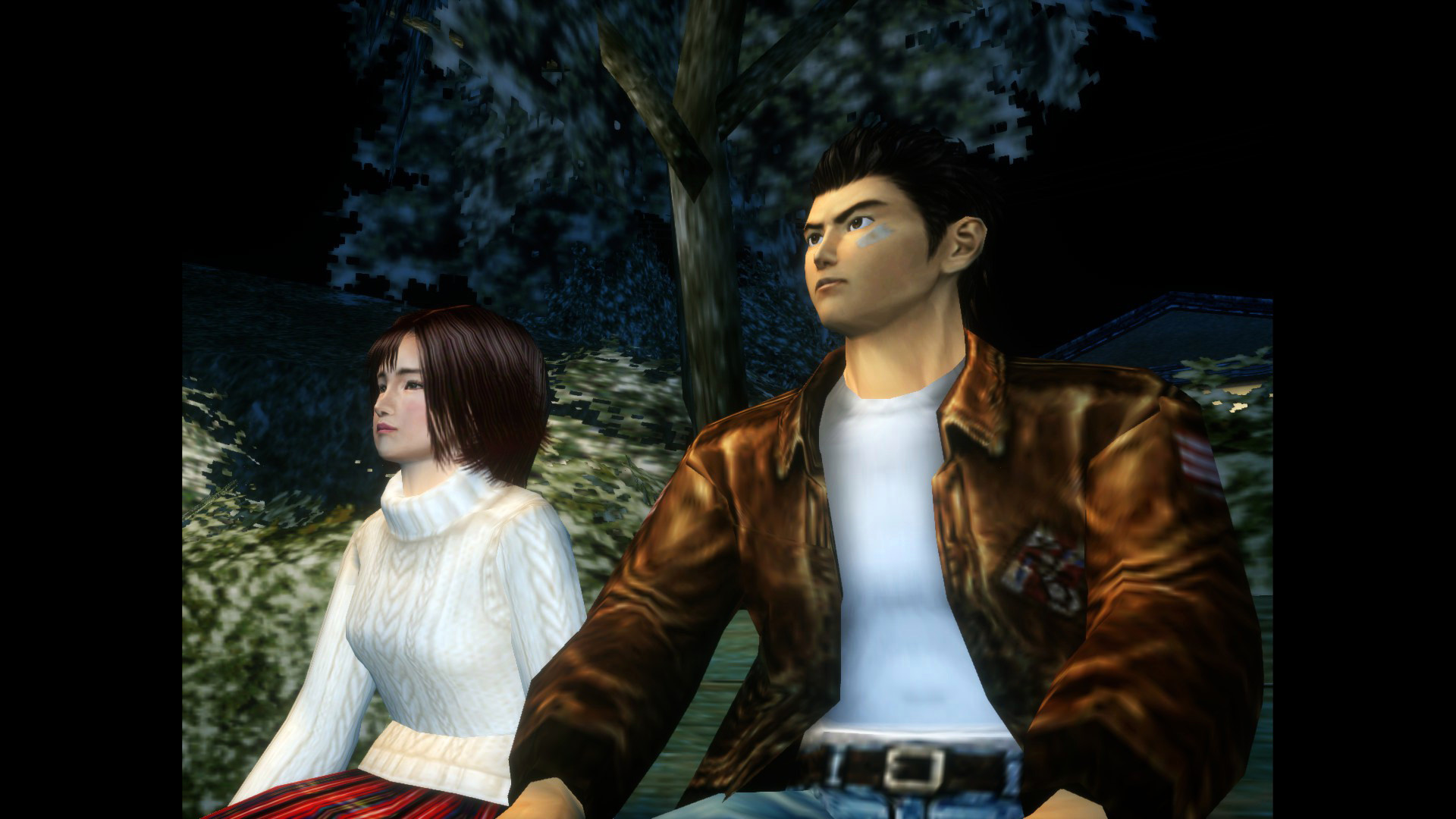
Shenmue is one of those games I never got a chance to play and have wanted to all these years. You always hear people talking about it; it pops up in “Best of” videos and “Worst of” videos, especially for the Dreamcast system itself. Shenmue was a beast all on its own back in the day, as no one had tried these gameplay ideas before. Sure, it’s an adventure game on the surface, but it’s also a life simulator, fighting game, and mini-game extravaganza all in one. It’s weird, beautiful, ugly, and frustrating all at the same time, and yet somehow it all kind of works.
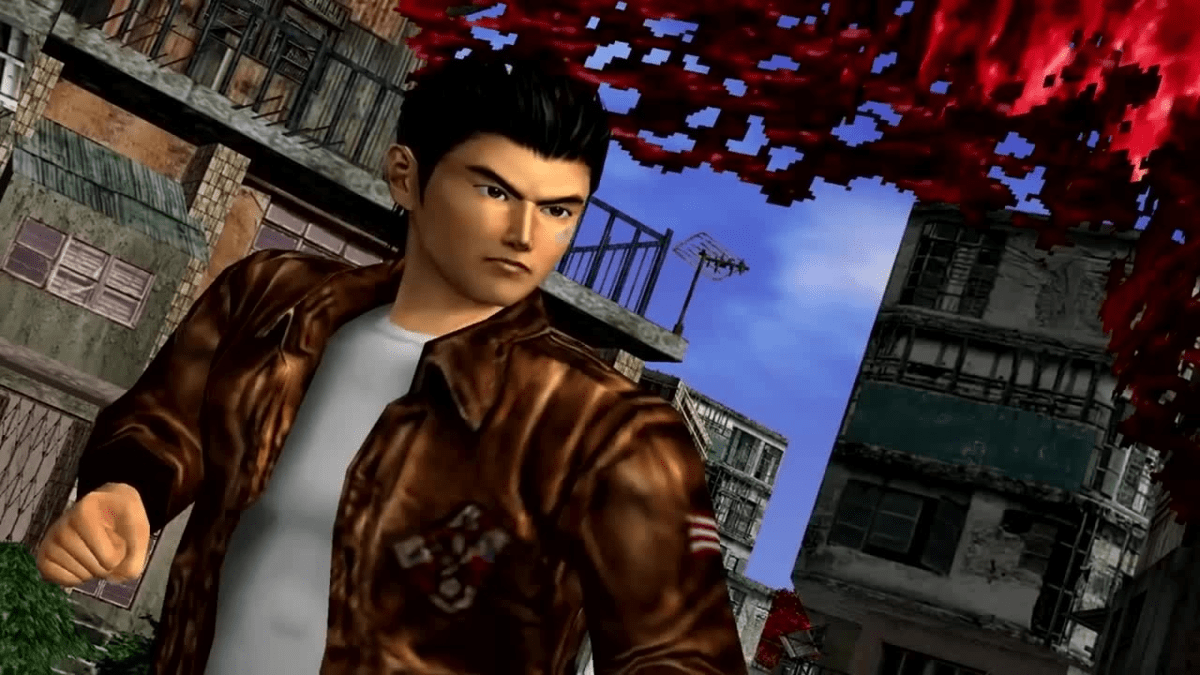
You play as a high school boy named Ryo Hazuki. He gets home one day, and his father dies while fighting a Chinese man named Lhan Di. He steals something called the Dragon Mirror, and you must somehow get it back. The weird thing about the story is that the end goal never really matters, but all the stuff in-between. What is this dragon mirror, and why does Ryo need to get it back? It’s really never explained except something about fulfilling a prophecy and the end times will come if Di keeps it… I don’t know; the story is so unbelievable and weird.
The game starts out like any other adventure game as you wake up in your room and commence rummaging around the house, pulling open drawers, finding items, and trying to figure out where to go. Thankfully, that’s something Shenmue does, as I rarely didn’t know what to do or where to go. After setting foot in the village, I watched a few cutscenes, knocked on about a dozen doors, and kept going through the town, figuring out where to go. Eventually, I ended up in the main city, where half of the game takes place. The first few hours have Ryo running around asking questions to get clues, then going to that person or place for either a cutscene or more clues. This continuous cycle of clue-finding felt satisfying as I met some interesting characters and felt connected to the world of Shenmue.
Sadly, there’s a huge, disappointingly frustrating factor about all of these events: they are time-sensitive. You have to wait for in-game time to pass before certain events unfold. That wouldn’t be so bad, but you can’t skip time, so I literally went and did other things like chores, cooking, or playing a different game while time passed. Sometimes it would take almost 45 minutes for time to pass where I needed it to be, then a small cutscene would play out, and then it’s back to waiting again once I find the next clue that requires more waiting. It would also be fine if there were things to do, but outside of a few real Sega arcade games and collecting Gotcha prizes, there are no side quests or anything to do. It’s so incredibly boring to sit and wait through all of this, and if you miss your time frame, you have to wait again. Waiting also goes for catching the bus to the harbor and working a real forklift job.
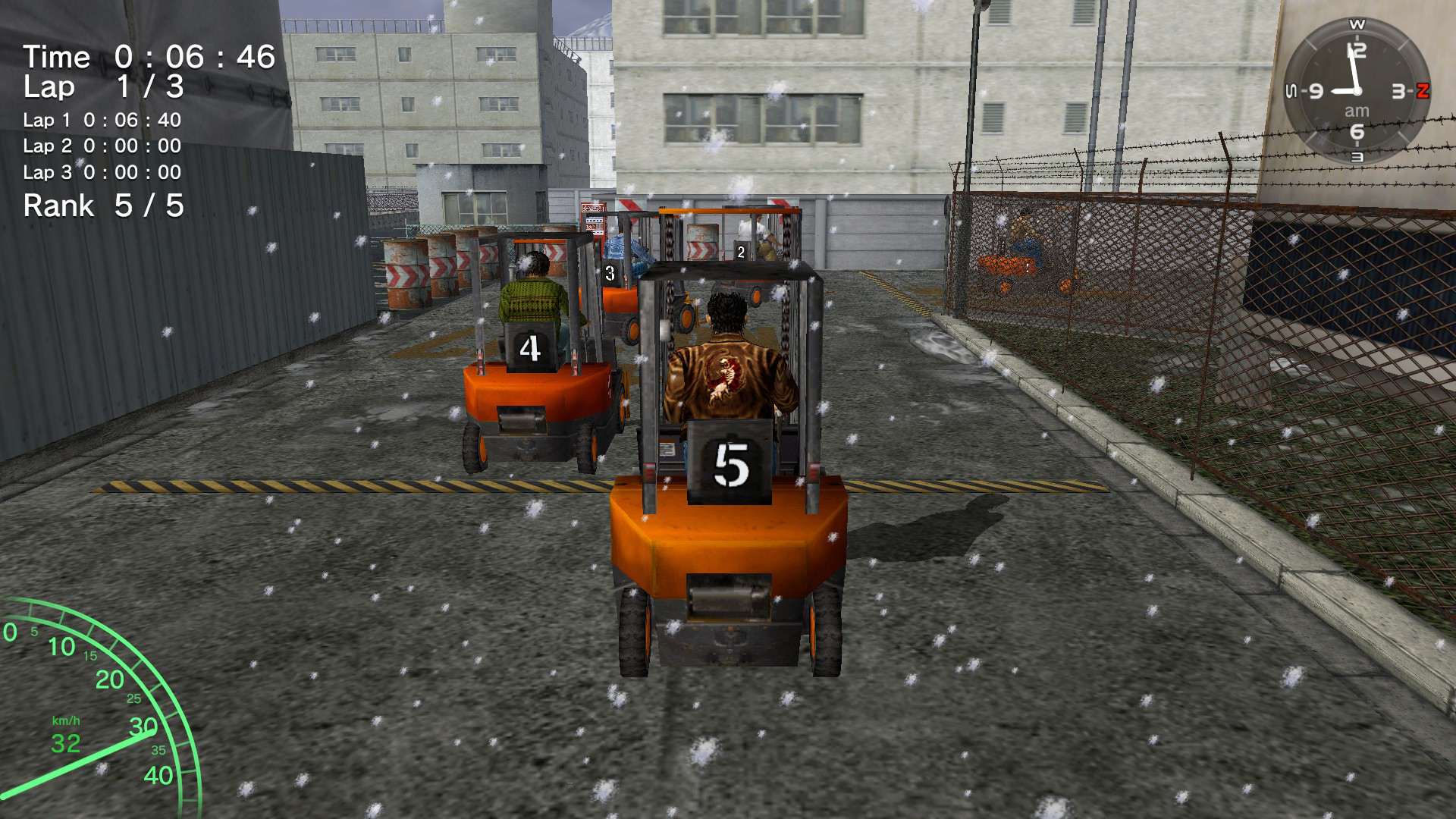
Oh my God, yes, the infamous forklift section of the game. This literally took up an entire 4 hours of the game. You work 8-5 for 5 in-game days driving a forklift from one end of the harbor and loading boxes into a warehouse. It’s both beautifully addictive and stupidly frustrating and annoying. All of this means that the Mad Angels, a drug cartel in the game, will pick on you because you’re new and you can obtain information from them after every fight. Not to mention the annoying forklift race at the beginning of each day on the same track. Man, it’s so stupid and frustrating, and I both loved it and hated it.
After the forklift section, there are a few more fights, and the game is done. The fighting itself is surprisingly impressive, with responsive controls, fast and fluid animations, and plenty of combos. Outside of the free battles, there are QTE battles, which can be hard, and the reaction time they give you is literally milliseconds. The visuals of the game haven’t been updated all that much. There are newer lighting effects and better shadows, and the characters have smoothed over textures, but overall it still looks like a 20-year-old game. There are still plenty of bugs and glitches, such as being stuck in first-person mode after driving the forklift, hard crashes, and objects disappearing completely.
The music is annoying and repetitive, with only one short track per area, and it just isn’t very good. The voice acting is awful, and even the Japanese voice track is questionable sometimes. The audio in general still sounds compressed and really bad, and the game is just really rough around the edges. So why should you play it? It’s a weird piece of gaming history on a system that died faster than it could blink. The characters are interesting, and the various activities are fun, but the long waiting and various missteps keep Shenmue from being a fantastic game.
Shenmue II
I have a weird disposition toward the entire Shenmue series. I really want to love it, but the problem is that the game is so flawed and so strange that it almost feels like a chore to complete. The first game was tolerable as it was fairly short, and the age made it more forgiving, but Shenmue II has no excuse. It was on a new generation of consoles, and I have literally never played a sequel in a series that was a copy and paste of the last game.
The game picks off exactly where the last one took off, with Ryo heading to Hong Kong, and as soon as I saw the first cutscene, I sighed, rolled my eyes, and did an entire facepalm. I expected the game to look fairly newer, have a new UI, better controls, and an all-new look, but we got a literal engine port from the Dreamcast with just new areas to explore and a story that’s four times longer than the original (the original Xbox game had four discs!).
As I got off the boat, I really realized it was the exact same game as Ryo controls, just as poorly. The gameplay is exactly the same to the T, and I buckled in for a long ride. The first third of the game has Ryo running around talking to people, gathering clues, meeting a few new faces, and trying to continue to find Lan Di and avenge his father’s death. At least more stories are explained, and we find out what every mystery in the first game means. To be honest, the first third of the game isn’t all that bad; yes, it’s more Shenmue I stuff, but it’s easy and straightforward for the most part. Once I got to the second third of the game, things got tedious, frustrating, and a little annoying. This series, for some reason, loves having Ryo work and be miserable when it comes to progress. Twice I was stuck having to work on the most boring and tedious mini-game I have ever played to earn enough money to move on. You can earn $10 a crate by helping someone move them from one side of the room to another, and it’s all about QTEs with the directional buttons. You usually never earn more than $60 as there isn’t enough time allotted for more work, and gambling is usually risky and out of the question altogether. The game favors the AI more than you, so you can easily blow all your cash and have to play that mini-game six or seven times over to earn it back again.
Outside of the awful mini-games, the second third of the game has Ryo running around inside buildings that are built like mazes with hallways that all look the same. It’s not as easy as using the elevator, as you will have to use the stairs to go up, use that elevator to go further down, then use the stairs again to go down further. In between are free battles, QTE events, and the occasional boss fight. It’s so tedious and frustrating as there are little dialog quips that are in between repetitive gameplay sections that can’t be skipped and just add to what makes the entire game annoying to play.
Once you get past that third of the game, the last third is the exact opposite of the rest of the game. It’s a 2-hour-long cutscene that lets you interact every so often via dialog or by running down a few paths, QTEs, and more dialog. Let that sink in for a minute. A 2-hour-long cutscene. All you’re doing is going through a forest and mountain pass to get to a village with a local accompanying you. This is also where most of the story unfolds and becomes more interesting.
I have a lot of things to complain about with this game and the series as a whole, but the story is still good enough to keep me trucking along and putting up with the repetitive, drawn-out nonsense the game dishes out. Not to mention the several times the game crashed and my progress was set back to my last save. The game itself is just ugly to look at and looks like a slightly updated Dreamcast game in only a few ways. The gameplay style is just too dated, frustrating, and unnecessary to get the story across. I would have rather had cutscenes and just QTEs in between than these weird gameplay “ideas” thrown in. Sure, the game is much larger in scope, but it’s still a linear maze of remembering street and building names and participating in fights.
Overall, Shenmue II is both beautiful and terrible at the same time. It’s a game out of time and should have either been less than the sum of its parts or just a 3D anime feature-length movie. As a game, it just doesn’t need to really exist, especially being so dated even at the time of release. It suffers from all the same issues as the first game, and even as an HD port, it still doesn’t look or play well. It’s a very niche game that many gamers will not even get 1/4 through before turning it off for good. It requires an immense amount of patience, time, and forgiveness to enjoy, and sometimes that’s just too much to ask for a game.
Conclusion
As it stands, this Shenmue HD port is either good or bad, depending on your stance on the series. It’s great to get a piece of gaming history playable on modern consoles, but there are so many flaws with both games and the port itself that it’s hard to justify it to anyone except really curious people and hardcore fans. The games are both full of crashes, bugs, and glitches, and they look hideous with no effort put into the game engine at all.
I have a weird disposition toward the entire Shenmue series. I really want to love it, but the problem is that the game is so flawed and so strange that it almost feels like a chore to complete. The first game was tolerable as it was fairly short, and the age made it more forgiving, but Shenmue II has no excuse. It was on a new generation of consoles, and I have literally never played a sequel in a series that was a copy and paste of the last game.
The game picks off exactly where the last one took off, with Ryo heading to Hong Kong, and as soon as I saw the first cutscene, I sighed, rolled my eyes, and did an entire facepalm. I expected the game to look fairly newer, have a new UI, better controls, and an all-new look, but we got a literal engine port from the Dreamcast with just new areas to explore and a story that’s four times longer than the original (the original Xbox game had four discs!).
As I got off the boat, I really realized it was the exact same game as Ryo controls, just as poorly. The gameplay is exactly the same as the T, and I buckled in for a long ride. The first third of the game has Ryo running around talking to people, gathering clues, meeting a few new faces, and trying to continue to find Lan Di and avenge his father’s death. At least more stories are explained, and we find out what every mystery in the first game means. To be honest, the first third of the game isn’t all that bad; yes, it’s more Shenmue I stuff, but it’s easy and straightforward for the most part. Once I got to the second third of the game, things got tedious, frustrating, and a little annoying. This series, for some reason, loves having Ryo work and be miserable when it comes to progress. Twice, I was stuck having to work on the most boring and tedious mini-game I have ever played to earn enough money to move on. You can earn $10 a crate by helping someone move them from one side of the room to another, and it’s all about QTEs with the directional buttons. You usually never earn more than $60 as there isn’t enough time allotted for more work, and gambling is usually risky and out of the question altogether. The game favors the AI more than you, so you can easily blow all your cash and have to play that mini-game six or seven times over to earn it back again.
Outside of the awful mini-games, the second third of the game has Ryo running around inside buildings that are built like mazes with hallways that all look the same. It’s not as easy as using the elevator, as you will have to use the stairs to go up, use that elevator to go further down, then use the stairs again to go down further. In between are free battles, QTE events, and the occasional boss fight. It’s so tedious and frustrating as there are little dialog quips that are in between repetitive gameplay sections that can’t be skipped and just add to what makes the entire game annoying to play.
Once you get past that third of the game, the last third is the exact opposite of the rest of the game. It’s a 2-hour-long cutscene that lets you interact every so often via dialog or by running down a few paths, QTEs, and more dialog. Let that sink in for a minute. A 2-hour-long cutscene. All you’re doing is going through a forest and mountain pass to get to a village with a local accompanying you. This is also where most of the story unfolds and becomes more interesting.
I have a lot of things to complain about with this game and the series as a whole, but the story is still good enough to keep me trucking along and putting up with the repetitive, drawn-out nonsense the game dishes out. Not to mention the several times the game crashed and my progress was set back to my last save. The game itself is just ugly to look at and looks like a slightly updated Dreamcast game in only a few ways. The gameplay style is just too dated, frustrating, and unnecessary to get the story across. I would have rather had cutscenes and just QTEs in between than these weird gameplay “ideas” thrown in. Sure, the game is much larger in scope, but it’s still a linear maze of remembering street and building names and participating in fights.
Overall, Shenmue II is both beautiful and terrible at the same time. It’s a game out of time and should have either been less than the sum of its parts or just a 3D anime feature-length movie. As a game, it just doesn’t need to really exist, especially being so dated even at the time of release. It suffers from all the same issues as the first game, and even as an HD port, it still doesn’t look or play well. It’s a very niche game that many gamers will not even get 1/4 through before turning it off for good. It requires an immense amount of patience, time, and forgiveness to enjoy, and sometimes that’s just too much to ask for a game.
Shenmue is one of those games I never got a chance to play and have wanted to all these years. You always hear people talking about it; it pops up in “Best of” videos and “Worst of” videos, especially for the Dreamcast system itself. Shenmue was a beast all on its own back in the day, as no one had tried these gameplay ideas before. Sure, it’s an adventure game on the surface, but it’s also a life simulator, fighting game, and mini-game extravaganza all in one. It’s weird, beautiful, ugly, and frustrating all at the same time, and yet somehow it all kind of works.
You play as a high school boy named Ryo Hazuki. He gets home one day, and his father dies while fighting a Chinese man named Lhan Di. He steals something called the Dragon Mirror, and you must somehow get it back. The weird thing about the story is that the end goal never really matters, but all the stuff in-between. What is this dragon mirror, and why does Ryo need to get it back? It’s really never explained except something about fulfilling a prophecy and the end times will come if Di keeps it… I don’t know; the story is so unbelievable and weird.
The game starts out like any other adventure game as you wake up in your room and commence rummaging around the house, pulling open drawers, finding items, and trying to figure out where to go. Thankfully, that’s something Shenmue does, as I rarely didn’t know what to do or where to go. After setting foot in the village, I watched a few cutscenes, knocked on about a dozen doors, and kept going through the town, figuring out where to go. Eventually, I ended up in the main city, where half of the game takes place. The first few hours have Ryo running around asking questions to get clues, then going to that person or place for either a cutscene or more clues. This continuous cycle of clue-finding felt satisfying as I met some interesting characters and felt connected to the world of Shenmue.
Sadly, there’s a huge, disappointingly frustrating factor about all of these events: they are time-sensitive. You have to wait for in-game time to pass before certain events unfold. That wouldn’t be so bad, but you can’t skip time, so I literally went and did other things like chores, cooking, or playing a different game while time passed. Sometimes it would take almost 45 minutes for time to pass where I needed it to be, then a small cutscene would play out, and then it’s back to waiting again once I find the next clue that requires more waiting. It would also be fine if there were things to do, but outside of a few real Sega arcade games and collecting Gotcha prizes, there are no side quests or anything to do. It’s so incredibly boring to sit and wait through all of this, and if you miss your time frame, you have to wait again. Waiting also goes for catching the bus to the harbor and working a real forklift job.
Oh my God, yes, the infamous forklift section of the game. This literally took up an entire 4 hours of the game. You work 8-5 for 5 in-game days driving a forklift from one end of the harbor and loading boxes into a warehouse. It’s both beautifully addictive and stupidly frustrating and annoying. All of this means that the Mad Angels, a drug cartel in the game, will pick on you because you’re new and you can obtain information from them after every fight. Not to mention the annoying forklift race at the beginning of each day on the same track. Man, it’s so stupid and frustrating, and I both loved it and hated it.
After the forklift section, there are a few more fights, and the game is done. The fighting itself is surprisingly impressive, with responsive controls, fast and fluid animations, and plenty of combos. Outside of the free battles, there are QTE battles, which can be hard, and the reaction time they give you is literally milliseconds. The visuals of the game haven’t been updated all that much. There are newer lighting effects and better shadows, and the characters have smoothed over textures, but overall it still looks like a 20-year-old game. There are still plenty of bugs and glitches, such as being stuck in first-person mode after driving the forklift, hard crashes, and objects disappearing completely.
The music is annoying and repetitive, with only one short track per area, and it just isn’t very good. The voice acting is awful, and even the Japanese voice track is questionable sometimes. The audio in general still sounds compressed and really bad, and the game is just really rough around the edges. So why should you play it? It’s a weird piece of gaming history on a system that died faster than it could blink. The characters are interesting, and the various activities are fun, but the long waiting and various missteps keep Shenmue from being a fantastic game.
I’m not really big on gaming headsets, as I don’t need to use them often as I have my own place, but when I do, I want something amazing—something that can deliver the quality and power of large speakers inside some cans. After having the Razer Man O’ War for about 18 months, I switched over to some wired headphones and moved brands. Why Kingston? Well, the reviews are great, and it’s plug and play, which may sound iffy to some, but it works out well in the end.
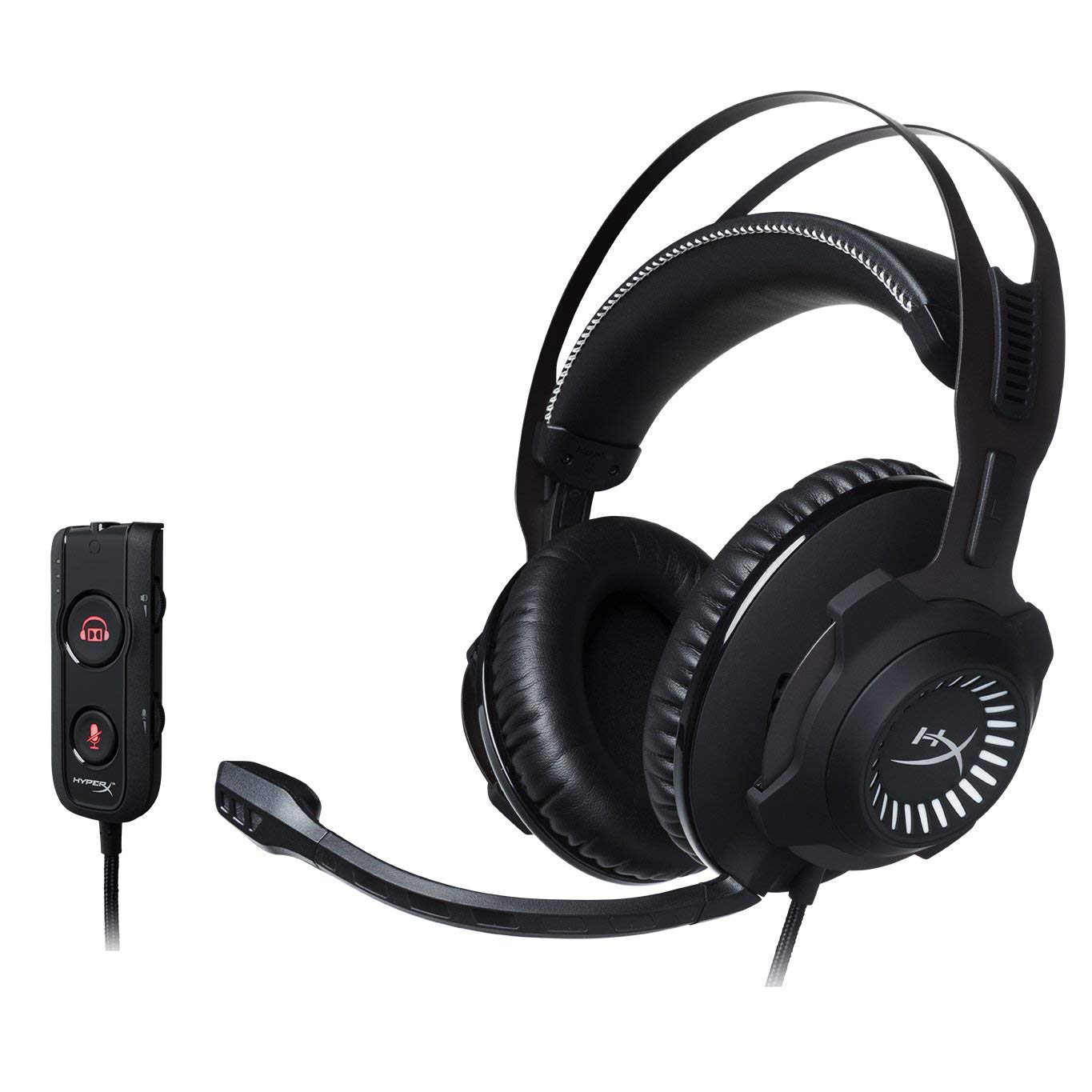
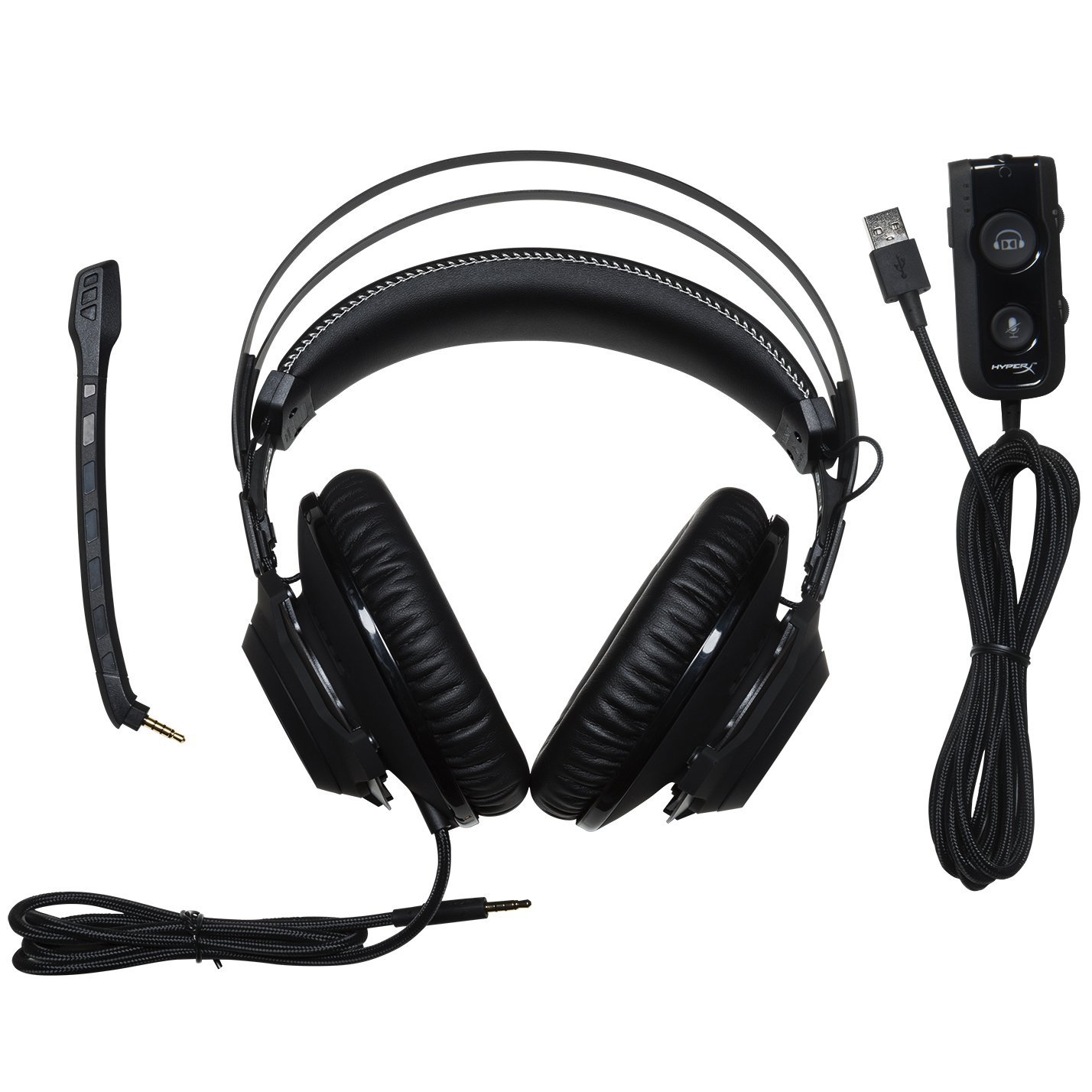
Some people want fancy software, RGB lighting, and crazy controls, but Kingston went a different route here. Most PC headsets are not compatible with a console, but these are thanks to a proprietary USB 7.1 audio card built into the cable with Dolby. Now the downside is that these are only stereo headphones with the 3.5mm jack adapter, but they still sound amazing. The USB port has a three-part equalizer for flat, bass boost, and vocal. For gaming and movies, you can activate the Dolby 7.1 surround sound with just a button, allowing the headphones to control everything without the need for any software.
The mic is completely removable, which is a nice feature, and it works just as you would expect. There’s a button to mute the mic on the control box, but for consoles, you will need to remove it completely to mute it through the hardware. Outside of these features, the headset itself is extremely comfortable and feels like a cloud sitting on your head. Instead of adjustable bands, we get a tension-sensitive soft band under a hard outer band. This means the band adjusts to your head shape easily without any fiddling. The ear cups are super soft, and no sound escapes. Since these are wired headphones, I had to figure out where to clip the control box, which wound up going on my keyboard cable to keep it nearby so I could access the controls easily. The cord behind that is rather long, which is needed for console use.
Here’s the big question: How does 7.1 audio sound in games and movies? Well, it works surprisingly well. The built-in sound card does a good job decoding the audio and making it sound incredible. I could hear gunshots behind me, people talking next to me, and explosions that sounded epic and amazing. Games with 7.1 options sound even better and more realistic, but sadly, there aren’t many games with this built-in.
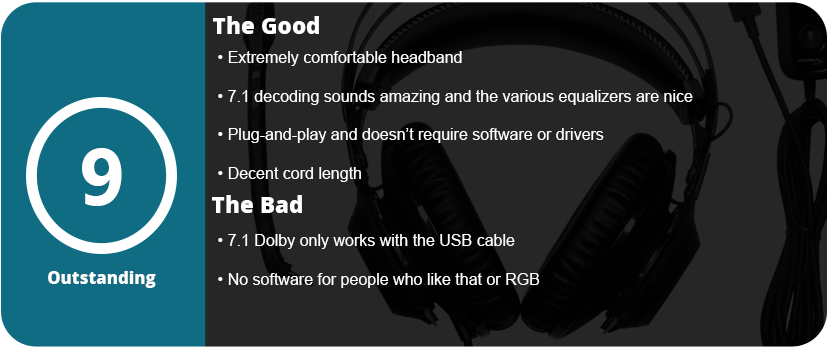
With that said, the HyperX Revolver S is a solid wired headset without the flash and fancy software accompanying most headsets these days. They are extremely comfortable, give an amazing sound output that is crisp and clear, and also have great 7.1 audio capabilities. There are a few minor gripes, like the control box being in a weird spot on the cable, only three equalizer settings, and missing software for those who like to fine-tune, but what’s here works surprisingly well straight out of the box and is plug-and-play. This is a versatile headset for any gamer, but sadly, the 7.1 only works through USB, and the 3.5mm jack is strictly stereo. For the price point, you get bang for your buck that you won’t get with most other headsets.
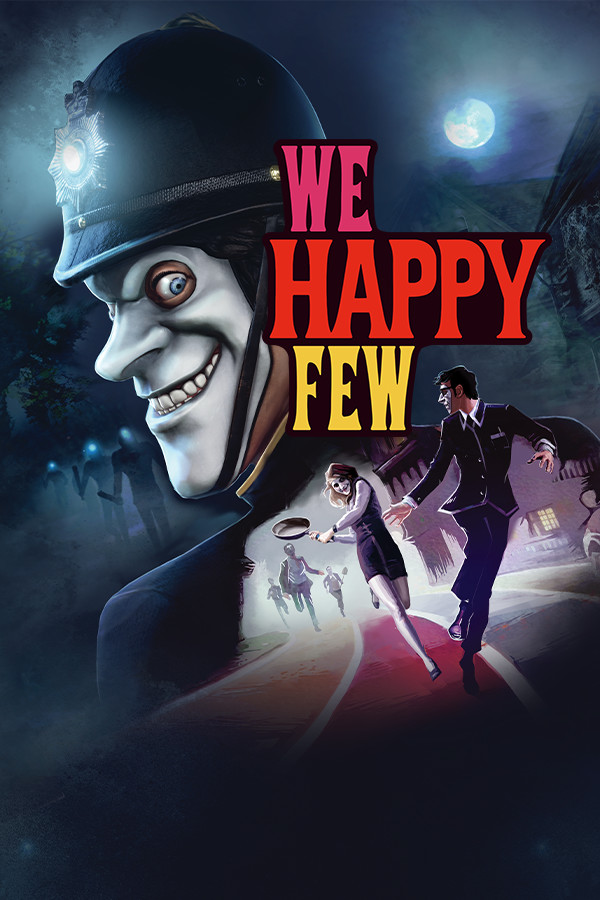
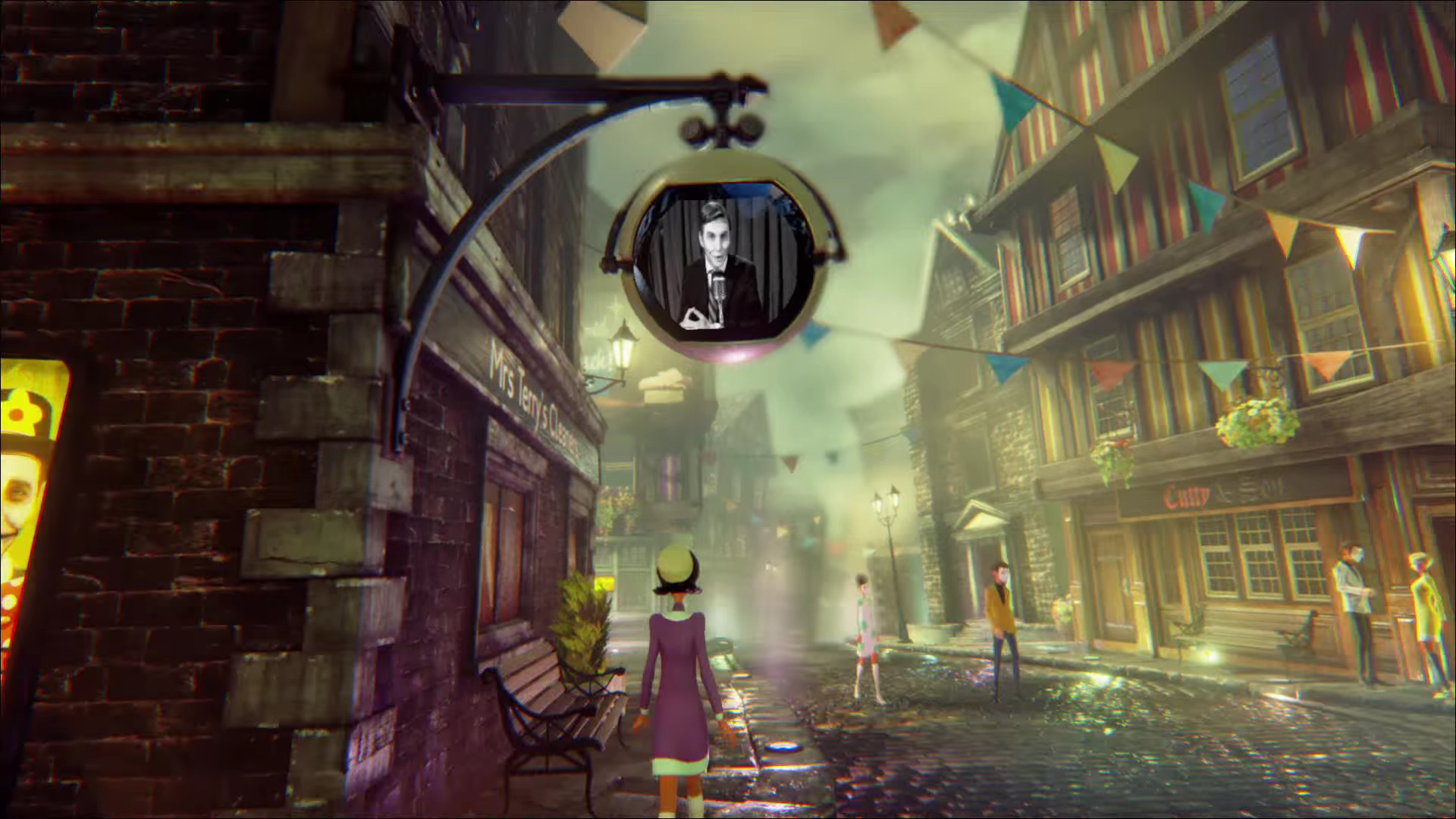
We Happy Few is a stealth action game in the vein of BioShock. The premise is actually really interesting and fresh. The game takes place post-World War II, in which the Nazis won the war and took over Britain. The citizens must take a drug called Joy that makes them see everything for what it isn’t: a cheery, delightful, and stress-free world. You play Arthur Hastings, who is a reporter who decides not to take his joy one day. People quickly catch on and start chasing you, and this is when the game starts kicking in.
We Happy Few isn’t exactly an open-world game, but there are large areas you can explore and various missions to partake in. Outside of the main quests, there are side quests. There are also two types of areas to explore. The first is outside the cities where downers are kept, and you must make sure you look trashy like they do and are off your joy. Just make sure you don’t take anything from them or run, and you should be fine. When you are in the cities, you don’t really have to take Joy, but you can’t run, jump, sneak, or do anything crazy, or everyone will catch on. It’s not as simple as this, though, as there are a lot of variables in the stealth mechanics that make the game very frustrating. There are various gadgets that can sniff you out and detect you are off your joy, and doctors roam the streets sniffing you out. You also can’t run and sneak around here either, or you will be swarmed and killed. There is also a curfew, so being out at night is a huge disadvantage, as everyone will come after you and kill you.
Sadly, other variables make this further compounded with frustrations, as you can’t skip time at night and can only do this sleeping in your own bed in your secret hideout in each area. Not to mention this is kind of a survival game with crafting involved, so many mission items must be crafted or obtained elsewhere, and it can seriously halt progress. Combat kind of takes a backseat, as you are really at a disadvantage here, as most of the time you are overwhelmed with too many people to handle. Sneaking around is a must, and being able to see footsteps through walls helps, but sometimes the game is just so overwhelmingly repetitive and has flawed AI that I died dozens of times throughout the game trying to figure everything out.
There are plenty of gadgets to craft to help you out, including weapons, distractors, healing items, and buffs, but most ingredients needed for healing are really rare, and you won’t find better blueprints until late in the game. I mainly relied on sneaking up behind people and choking them out or distracting them with glass bottles. If you get caught, you can run and hide in various places until the enemies lose interest, but sometimes this doesn’t always work. Some enemies won’t go back to their patrols, and I was stuck darting out and hiding somewhere else. I felt no matter what I did, I was always too hindered by the game’s mechanics, felt suffocated, and was always frustrated. The game rarely felt fun.
If I died, there would be weird checkpoint placements, sometimes putting me several objectives behind and requiring long stretches of repetitive nonsense. Sometimes I would be put back at night and would have to run through enemies to get to where I needed to be. I appreciate the number of gadgets and ways to sneak around objectives, but sometimes the easiest was always the quickest way through by just running through everything.
Once again, combat consists of just swinging things around and blocking until the enemy dies. It’s clunky and not very fun, but it works in a pinch. As you progress, you can level your character and add new skills and abilities, which wound up being really helpful, but then I would always have more materials to craft for things I couldn’t make than ones for blueprints I had. I was always overburdened, throwing stuff out that I could never use.
The story is enough to push me through the frustrations; the dialog was witty and the voice acting was superb, but I just felt there was something missing. There just wasn’t enough of it between long stretches of repetitive gameplay to make it worthwhile in the end. It’s a very interesting world, and I felt it got lost in the survival stealth aspect of the game. I wanted to explore more freely, but I was on a time limit; I couldn’t run and climb where I wanted, and doing anything besides being a good citizen got me caught and took five minutes to become not wanted.
Artistically, the game shines and has great-looking art and designs that look similar to BioShock, but it’s technically dated. The game looks almost last-gen and is poorly optimized, with framerate dropping below 60FPS on an overclocked GTX 1070. It’s not going to make your GPU sweat; it just confuses your drivers.
Overall, We Happy Few is a great idea that isn’t executed as smoothly as it could have been. The story, dialog, atmosphere, and characters are there, but they are held back by repetitive gameplay, boring exploration, and pointless side quests.
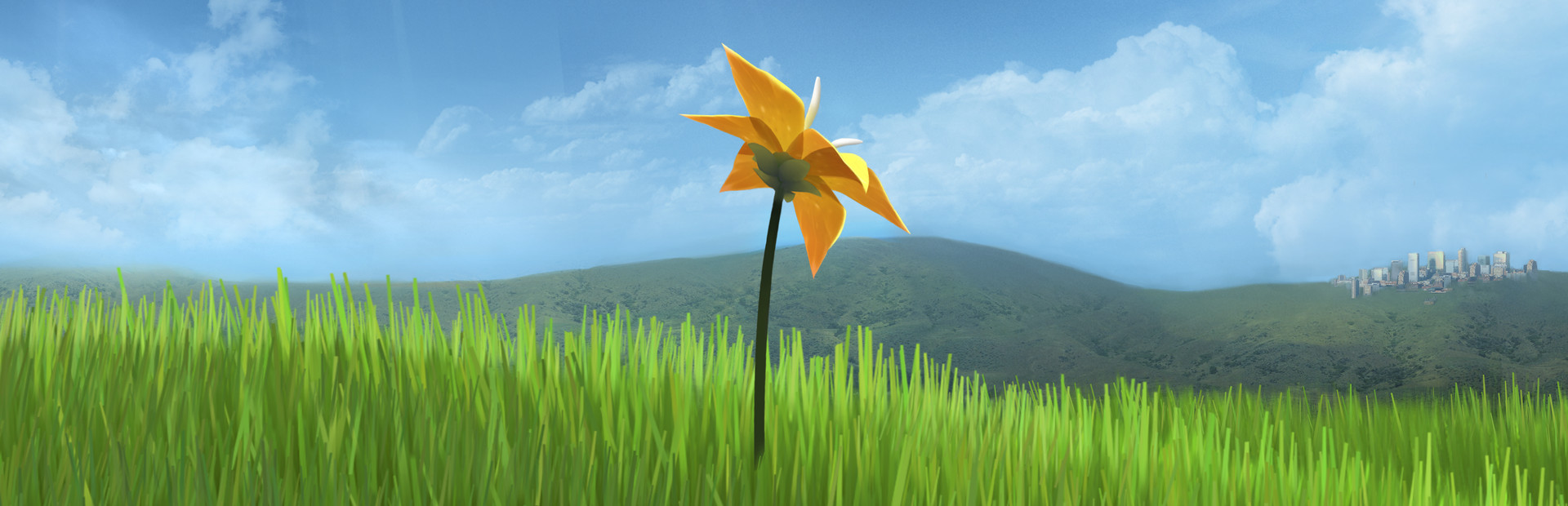
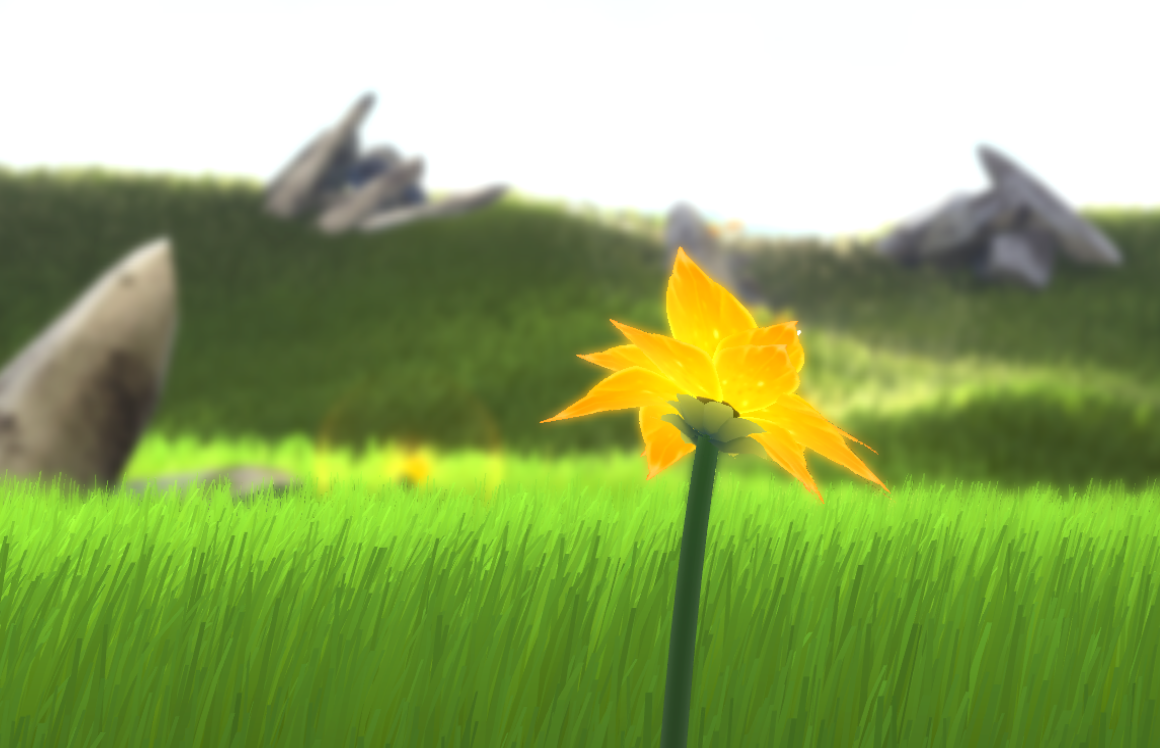
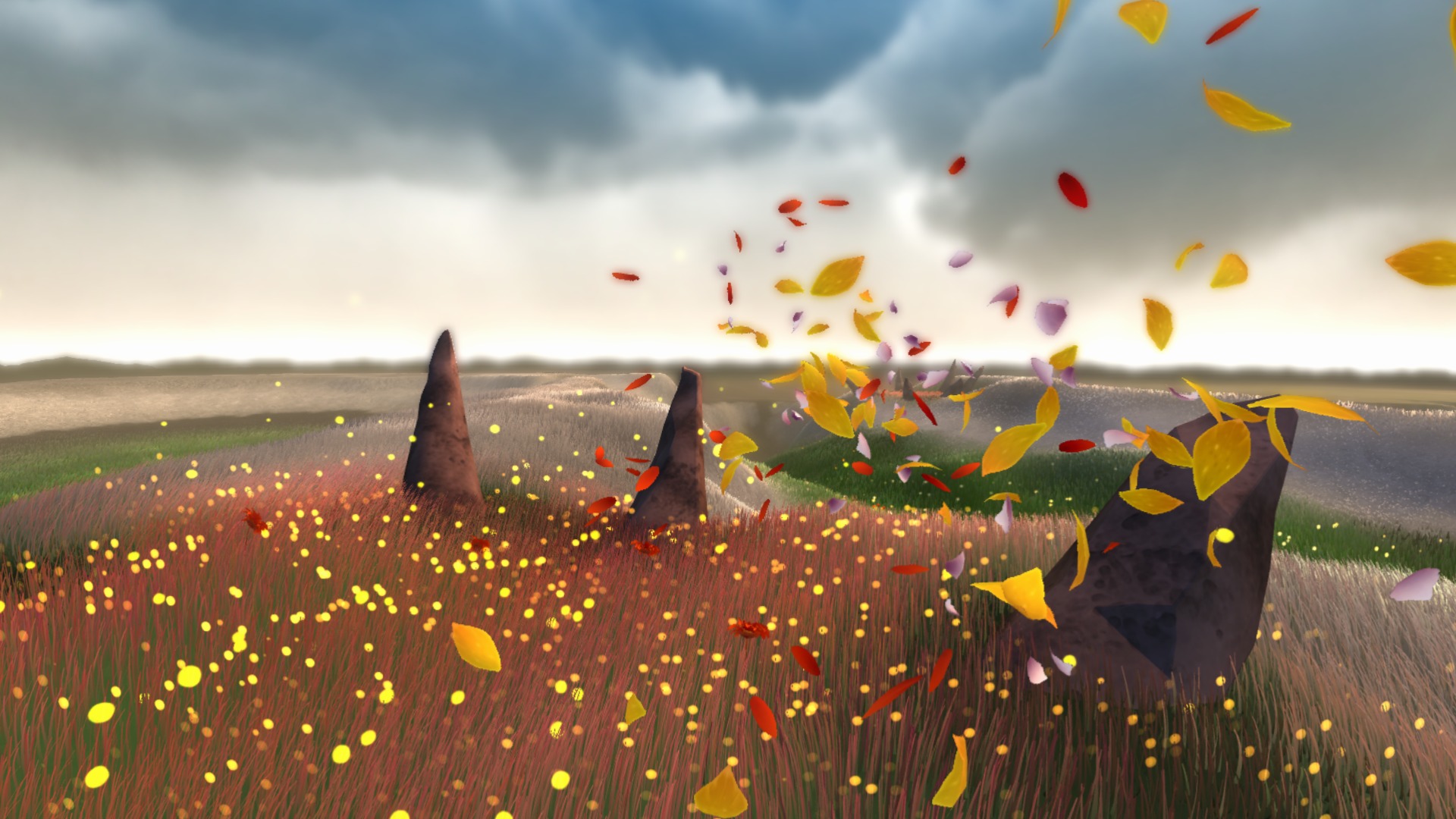
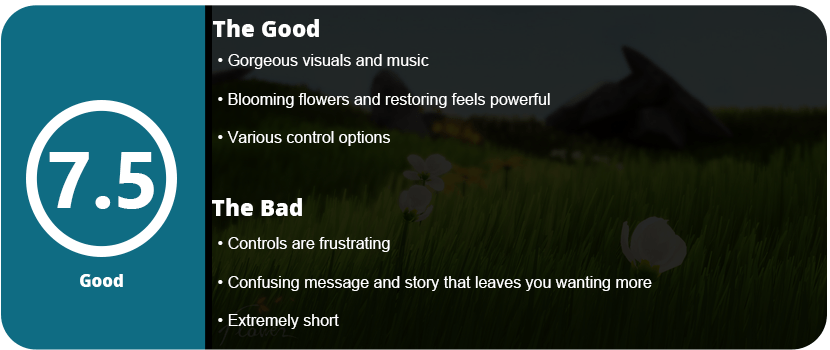
That game company is a really talented bunch. With Journey and Flow under their belt, they are known for making artistically stunning games on Sony’s consoles. When Flower was released on PS3, it amazed gamers around the world with its gorgeous visuals and music. It’s a very simple game, but that’s okay for what it does.
You control a single flower petal and ride the wind to help other flowers bloom and remove gloom and grayness from the world around you. You can control the speed of the petals, and the novelty came from using the PS3’s SixAxis controller to move the petals around. On the Vita, you can use the gyroscope or hold the rear touchpad. I honestly don’t like the controls and feel it is very difficult to control at low or high speeds. I always missed a set of petals in a run and had to turn around and go back, breaking the magic and flow of the game.
It was like this constantly throughout the entire game. Once I felt the game had jumped from petal set to petal set only to let me go and lose focus of the current run. As the game progressed, this became more complicated as you avoided falling electrical towers that would shock you and send you flying backward. It’s a beautiful game to behold, even on Vita, but the frustrating controls and mechanics bring it down quite a bit.
Flower also has some underlying environmental message that feels hypocritical. The game goes from green grasses to dark and dreary in a few levels, only to have you restore color to the city (which clearly represents Los Angeles), so I don’t have any idea what the story is or what the message is about.
There are about seven levels, not including the credit level, which was interesting. Flower is a PlayStation classic and should be played just for its beauty and unique gameplay that no other game can touch. The music is amazing, and I really felt sucked into the game only to be ripped out again by bad controls.






































 thebinarymessiah.com
Try multiplayer. A lot of fun !